


MLB Video
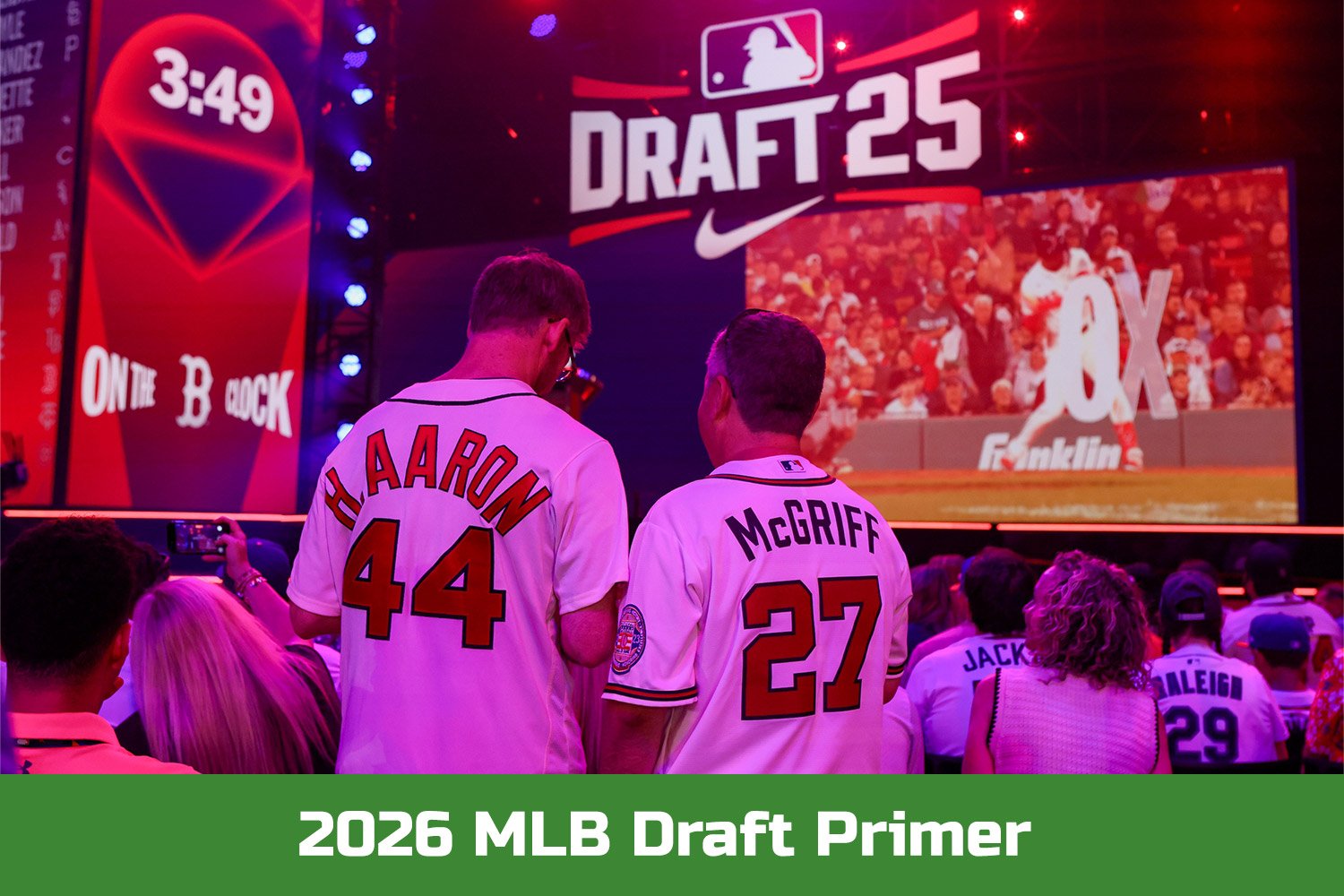
This guide is a comprehensive look at the 2026 MLB Draft. You’ll find a list of key dates for the draft cycle, including the release of bonus pools and pick values, the MLB Draft combine, and a breakdown of the draft itself. Additionally, you’ll find an overview of the draft combine and MLB draft weekend, in addition to links to other important draft resources like the consensus board.
When Is The 2026 MLB Draft?
- April 1st 2026: MLB announced draft bonus pools and pick values
- June 2026: MLB Draft Combine (Chase Field, Arizona)
- July 11th: 12th: 2026 MLB Draft (Philadelphia, PA)
- July 11th: Rounds 1-3 (time TBA)
- July 12th: Round 4 through Round 20 (time TBA)
2026 MLB Draft Combine
The draft combine is a relatively new event that began in the 2021 draft cycle. Held over a five-day period around a month before the draft itself, it serves as an opportunity for prospects to showcase their talents and boost their draft stock, while giving organizations better access to potential picks.
In addition to medical examinations and educational programming, players have an opportunity to meet with teams in advance of the draft. Additionally, there are a number of televised workouts, featuring infield and outfield drills, batting practice for hitters, and bullpens for pitchers, all of which is tracked and underpinned by Statcast data.
There is an incentive for players to attend and complete medicals, as prospects are guaranteed 75 percent of their draft slot bonus if they participate and complete medicals.
How Many Rounds Are There In The MLB Draft?
There was a design shift ahead of the 2025 draft cycle. It was shortened from a three-day event to a two-day event. Previously, day one included rounds 1 through the supplemental second round, day two included rounds 3 through 10, and day three included rounds 10 through 20. Beginning with the 2025 cycle, day one was adjusted to include rounds one through three (~100 picks). The draft will conclude on day two with rounds four through twenty.
MLB Draft Day One Explained
The first day of the draft can be chaotic, as additional rounds and picks are in play beyond rounds one and two. The top of the draft (top 6 picks) is now determined by the draft lottery. Every non-playoff team is entered into the lottery, giving them the opportunity to move up in the draft order. Non-lottery-eligible teams are picked in the order they are eliminated from the postseason, with regular-season record ties broken.
After the first round, prospect promotion incentive picks take place. If an eligible player wins Rookie of the Year, they earn their organization an extra pick immediately after the completion of the first round.
Next come compensation picks, where teams who extend the qualifying offer to a player (who rejects it) earn an additional draft pick. Compensation pick positions depend on the contract size signed by the player rejecting the qualifying offer, as well as the payroll of the organization receiving them (there are additional compensation picks after competitive balance round B and the fourth round).
After any compensation picks, comes the competitive balance round A. Teams that have one of the ten smallest markets or ten smallest revenue pools receive an additional pick in round A or round B, on an annually rotating basis.
The first day of the draft is capped by the second round, competitive balance round B, and the third round, which typically takes us through approximately 100 picks.
MLB Draft Bonus Pool Allocations & Pick Values
Prior to the draft, in April, MLB announces each team's bonus pool for the forthcoming draft cycle and the value of every pick in the top 10 rounds. Each pick in the first ten rounds of the draft is assigned a value, with the total of the slots for the picks each organization has in the top ten rounds comprising their total ‘bonus pool’. Organizations can sign a player to a deal greater than a slot or less than a slot, depending on their negotiations with the player, so it’s useful to think of the slots as ‘guidelines’ and little more.
Organizations are allowed to spend up to 5% more than their total pool without incurring a penalty, a choice many teams take advantage of. The Twins and the Rockies are the only teams that have never spent any overage on their bonus pool. Any amount over the pool by up to 5% is subject to a 75% tax on the overage. If a team spends between 5-10% more than their pool, the penalty is 75% tax on the overage and loss of a future first-rounder. Any team that exceeds its bonus pool by more than 10% up to 15% pays 100% tax on the overage and will lose a first and second-round future pick. Any team that exceeds its bonus pool by more than 15% loses two future first-round picks in addition to paying 100% tax on the overage.
Rounds 11-20 work differently from the first half of the draft. These picks do not come with an assigned slot value. Teams can spend up to $150,000 per pick without that spending coming out of their bonus pool. If they spend over that amount, any overage will be deducted from their bonus pool. For example, an 11th-round pick signing for $250,000 will result in $100,000 being subtracted from that team’s bonus pool. This is where some financial strategy comes into play. Often, teams will look to accrue some ‘savings’ from their bonus pool so they can spend over the maximum of $150,000 for a prospect in the second half of the draft.
NOTE: Slot values increased by 2.5% from 2025 to 2026.



Recommended Comments
There are no comments to display.
If you have an account on one of the following sites, you have a DiamondCentric account.
Twins Daily, Brewer Fanatic, North Side Baseball, Talk Sox, Jays Centre, Padres Mission, Royals Keep, Grand Central Mets, Fish On First.
Create an account or sign in to comment
You need to be a member in order to leave a comment
Create an account
Sign up for a new account in our community. It's easy!
Register a new accountSign in
Already have an account? Sign in here.
Sign In Now