


MLB Video
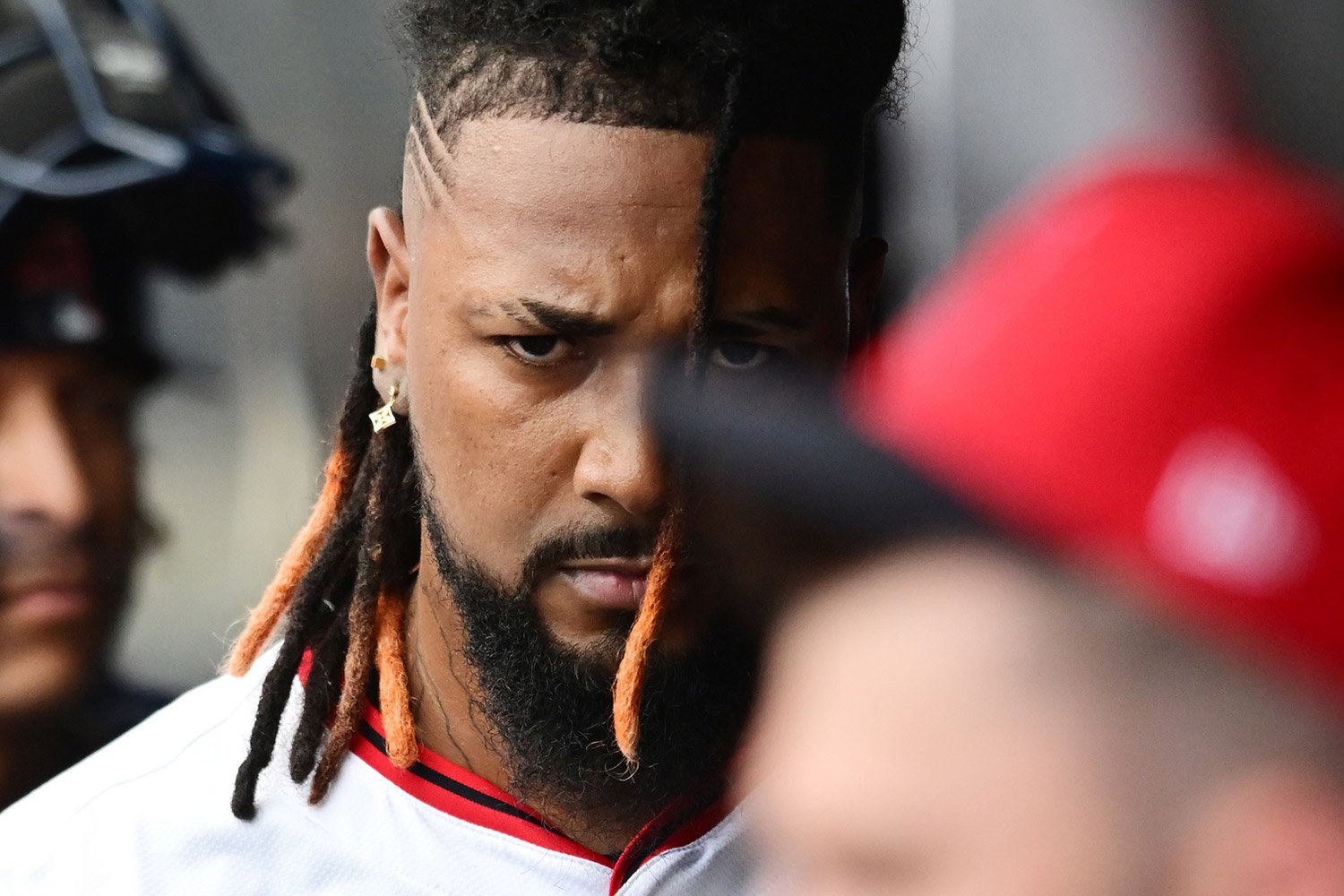
On Sunday morning, the Department of Justice dropped a damning indictment against starting pitcher Luis Ortiz and closer Emmanuel Clase. The two Cleveland Guardians had been placed under administrative leave since mid-season for purportedly tossing intentional balls in games for the purpose of fixed bets. Neither player appeared in the team’s final stretch run to win the AL Central or its wild card games against the Detroit Tigers, and until this moment, their exact fates had remained uncertain.
The DOJ charging document fills in major holes, and almost certainly suggests they will never be seen on a major league mound again (Both Luis Ortiz and Emmanuel Clase’s lawyers have maintained their innocence). Both are charged with four major counts: wire fraud conspiracy, honest services wire fraud conspiracy, conspiracy to influence sporting contests by bribery, and money laundering conspiracy.
The basics according to the indictment are this: the scheme began with Clase as early as May 2023, when the ace would often toss the first pitch of his appearance as an off speed pitch way outside the strike zone. The bettors he worked in collaboration with would either bet on the pitch under a particular velocity (slower than his fastball, which usually comes in around 98-100mph) or that it would be a ball, both schemes offered on the betting sites allow such specific bets. In total, Clase threw around 100 pitches in total according to texts and gambling site reviews investigated by the DOJ. Ortiz joined Clase in the scheme in June 2025, and Clase began sending money to the bettors to wager on Ortiz’s pitches as well. In all, the bettors earned around $450,000 for their scheme, a portion that was eventually kicked back to the two pitchers.
While every fan should review the entire 23 page indictment, there are some major takeaways from the obvious I think that should be noted.
MLB’s Cell Phone Policy Needs Enforcement
The charging document notes that during some of the games, Clase was texting with the bettors during game time. In one case, he took a two-minute phone call. MLB has been strict about the no cell phone policy, especially after the Red Sox were caught using Apple Watches to steal signs in 2017. Fans may remember Rodolfo Castro awkwardly losing his phone in a slide to third in 2022 and serving a short but at least notable suspension for it.
MLB supposedly employs Game-Day Compliance Monitors meant to stop such things as cell phone use; but it didn’t work here. If Clase was doing it near the bullpen area, it seems none of the Guardians staff or other pitchers noticed, or perhaps wanted to notice. If MLB is serious about this issue, they need to get better about not turning a blind eye toward this kind of behavior.
Gambling Isn’t About Money; It's An Ideology
None of us know the exact financial circumstances of Clase or Ortiz. We might know what their posted dollar says on Roster Resource, which is difficult to know after agencies, managers and taxes. And we have no idea about any potential trouble they may have arrived by overspending those amount.
That said, most of the pitches Clase threw netted the pitcher around $5,000 from the bettors. In 2024, Clase threw 983 pitches—under his salary that year, that was around $2,500 per pitch. He was set to make $6.4 million next year with the team securing club options for $10 million each of the following two years. On his current trajectory, his free agency could have netted something similar to Josh Hader’s $95 million contract with the Astros.
None of that seemed to factor into Clase’s decision. Ortiz was only on his second active year as a pitcher, where his career trajectory (and earnings) seemed less certain. But for Clase? This man had proven himself so valuable he finished third in Cy Young voting in 2024—the first to place in the top three since Eric Gagne's win in 2003—while still managing to waste pitches for gambling purposes.
Many gamblers have described that at some point money loses its material use, something we use every day to purchase goods and services, loses its meaning. As Dave Zirin notes, "The ubiquitous betting app commercials, which always end with a rapid repetition of the gambling addict hotline, feed the idea that you are limiting your fun by not 'getting in the game.'" Barstool Sports has made an entire subculture through the sports betting bro that extends into dating and politics.
And under our current societal structure, more and more aspects to life feel like a gamble: from “prediction markets” encouraging bets on war, to cryptocurrencies tied to the feelings of particular autocrats, to the giant bet by major financial firms on generative artificial intelligence changing our entire life. Gambling, as Benjamin Charles Germain Lee argues, is now the de facto point of American society:
QuoteWe live in a society consumed by gambling. Everything has been turned into a market to bet on, where the allure of profits and thrill are always just around the corner. If betting’s ubiquity demands a thorough treatment, so too do its purveyors—those who champion it not just as another activity but an all-consuming lifestyle that brings with it an insidious form of politics.
Clase didn’t need the money perhaps; he needed the juice.
MLB’s Sportsbook Partnerships Promised Scrutiny; It’s Falling Apart at the Seams
MLB alongside every other major sporting league has partnered with the major sports gambling apps. About a third of the league appears on an RSN named for one of them. If there has been one defense of MLB’s relationship with sportsbooks, it has been that the digital surveillance state has made “catching” players—such as the four minor leaguers booked last year—easier to monitor than if they were betting through illegal means. Just a few weeks ago, Rob Manfred noted, “Once you’re in that environment where sports betting is happening, the crucial issue is access to data.”
For example, NBA player Jontay Porter supposedly threw his game on March 20, 2024 and the NBA announced its suspension five days later.
Emmanuel Clase has been supposedly throwing pitches for over two years before getting caught. In fact, it seems had Ortiz not joined him, he could have continued to do so in perpetuity.
Why did it take so long? Or better yet: how many individuals are betting in the outcome of a single pitch that the first ball Clase ever threw away did not arise any suspicion?
MLB has no answer for what to do about this. NBA League Commissioner Adam Silver has argued that the value of the sportsbooks is at least putting in light what was previously in darkness. (Perhaps this is naive thinking, but if you, average bettor, went to an illegal bookie with a $10,000 bet on a single pitch, my sense is your night would end with some broken kneecaps).
MLBPA leader Tony Clark has advocated for the end of “prop” bets that focus on a single player or event in the game. These bets are especially dangerous in baseball, where we now know that a Cy Young candidate can allegedly scratch almost 5% of his entire year for the purpose of fixed bets and not raise an eye. Update: On Monday morning, MLB announced that in collaboration with its sportsbook partners, all pitch-by-pitch bets will be limited to $200 and banned from parlay bets.
But it won't end at the legal sports books, because even that is changing. What will MLB or any other league do about Polymarket or Kalshi where they have no partnerships? These so-called “prediction markets” are completely unregulated by individual states, instead falling under the federally operated Commodity Futures Trading Commission (CFTC). While the CFTC could take action against itheir deliberate shift toward sports betting (which is now 95% of its business), President Donald Trump’s initial nominee to run the CFTC was formerly a board member at Kalshi—only pulled because of pushback from crypto influencers. More so, Trump’s private business operation Trump Media has announced plans to open its own prediction market. If one were hoping that the federal government intervention suggested by Manfred might take shape, he is deliberately ignoring reality.
Kalshi doesn't care what you think; they truly believe that you'll eat up any slop you see, including in their ads.
There’s no end to this, really. The Black Sox scandal has been a cornerstone of baseball’s legacy. It’s quickly becoming just another Tuesday.
Baseball has so much to be excited about. Over 50 million people across three nations tuned into its Fall Classic. I heard from a significant handful of people who had never once talked to me about baseball exclaim excitement over these final games. A few years ago everyone kept nagging that baseball is dying; it's now hitting a genuine upswing.
And yet, there's one way it all fizzles: when you can't trust the thing you see in front of your eyes. What happens when you see a weird pitch, and all you can think, "Payment for a horse"?
That's when Major League Baseball might stare into The Abyss, and The Abyss might begin staring back.
Do you care more about MLB mandating a salary floor or a salary cap?

Follow DiamondCentric For Major League Baseball News & Analysis


Like what you've read here? Check out our team-specific sites and expand your fandom!











Recommended Comments
If you have an account on one of the following sites, you have a DiamondCentric account.
Twins Daily, Brewer Fanatic, North Side Baseball, Talk Sox, Jays Centre, Padres Mission, Royals Keep, Grand Central Mets, Fish On First.
Create an account or sign in to comment
You need to be a member in order to leave a comment
Create an account
Sign up for a new account in our community. It's easy!
Register a new accountSign in
Already have an account? Sign in here.
Sign In Now