


Jason Ross
-
Posts
4 -
Joined
-
Last visited
Jason Ross's Achievements


-
Image courtesy of © John E. Sokolowski-Imagn Images As the Winter Meetings begin on Monday, December 8th, in earnest, the market for third baseman Eugenio Suarez, formerly of the Seattle Mariners, looks like it will be in full swing. Just yesterday, BBWA member Francys Romero connected the Chicago Cubs to a hitter, but don't expect them to be the only team that may have interest. So what makes Suarez such a hot name? For starters, the league just doesn't have a lot of really good hitting third basemen right now. In 2025, third basemen had a 93 wRC+, lagging behind designated hitters (115 wRC+), first basemen (107 wRC+), right fielders (102 wRC+), left fielders (100 wRC+), and even shortstops (98 wRC+). Even catchers, usually the weakest-hitting position, posted a 94 wRC+ last year. What this means is that while we may traditionally consider the position to be one in which a team has a good hitter at, right now, league-wide, the position is kind of a problem for teams offensively. Last year, Suarez was 7th in wRC+ at the position and slugged 49 home runs. He stands out as a truly good hitter at the position, and he's currently available for just money, making him an attractive option for teams looking for help. e7a4424b-e97e3f23-634ab0f4-csvm-diamondgcp-asset_1280x720_59_4000K.mp4 More than just positionally, Suarez may be the best "bang-for-your-buck" player if you're a believer in his bat. Alex Bregman, Diamond Centric's #3 ranked Free Agent, is predicted to get a contract of five years and $165 million (a $33m AAV). Bo Bichette, who could step in as someone's third baseman, is our number two-ranked free agent and predicted to get a seven-year, $175 million deal ($25m AAV). Compare that to our prediction for Suarez, a three-year, $55 million pact, and you can see that, in both years and total dollars, he's far lower than the other two options at the position. Sure, part of that is because Suarez is 34 years old and the other two are much younger, but if you aren't interested in a super-long contract, Suarez offers value. He also offers a bat of similar quality to the two other premium third basemen, based on 2025 numbers. Alex Bregman posted a 125 wRC+ on the year, and Eugenio Suarez posted a 124 wRC+. Bo Bichette had the best season of any of them, posting a 134 wRC+, but his career line of 122 wRC+ is right in line with Suarez in 2025. And if you're looking for home runs, Suarez's 49 was more than Bregman's (18) and Bichette's (18) combined. Not everything, however, is peaches-and-rainbows when it comes to the slugging third baseman. First, I'd be remiss if I didn't hit on the age thing a little more: Suarez will enter Opening Day next year at 34 years old and, on a three-year deal, would finish at 37. Hitters just are not keeping their value right now, league-wide. Four hitters last year, aged between 34 and 37, outperformed Suarez's 124 wRC+, while only 11 of the 23 managed a 100 wRC+. Of those four, only Giancarlo Stanton had a strikeout rate north of 27% who had a 100 wRC+ or better. Eugenio Suarez struck out 29% of the time last year and has done so for his last 4,000 plate appearances. How much longer he's capable of being a league-average (or better) hitter while striking out this often is certainly up for debate. Beyond just the age and K% issues, another issue to keep an eye on: bat speed. Our very own Matt Trueblood brought it up in an article over on North Side Baseball when discussing fellow third baseman Alex Bregman, but the bat-speed-aging-curve is not in Suarez's favor, either. The former Mariner has fine bat-speed as of now, ranking in the 53rd percentile, but this will be something to monitor on Suarez because he doesn't offer you much outside of slugging right now; finishing with a .228/298/.526 line. Much of his power comes from his extreme pull-heavy approach, which allows him to use his fine, yet not elite, bat speed to generate power. Another red-flag indicator? Suarez far out-produced his expected data last season. While xData isn't the end-all, be-all, it can signal issues under the hood. Suarez was in the bottom third percentile of expected batting average last year, and while he posted a .347 wOBA, his xwOBA was just .316. Suarez has to generate his value offensively, and teams that look at expected data may be scared off by a player who's inching closer and closer to being a designated hitter because of his defensive limitations. This is the push-and-pull of Suarez; if you're a team in search of right-handed power and don't want to commit six (or more) years to either Alex Bregman or Bo Bichette, Suarez offers a lower level of entry and could outpace either offensively (especially in 2026). A team that is interested in his services is likely going to trade poor performance in 2028 for success immediately, but that's true of almost every contract on the free-agent market. Others may be scared off based on his age, expected dat, a and how poor defensively he regardlessss, if you're in that first group, there just aren't many other hitters who could offer what Suarez does on his contract, which creates a version of market scarcity, fueling his market and ramping up the speed in which we could see him sign. View full article
-
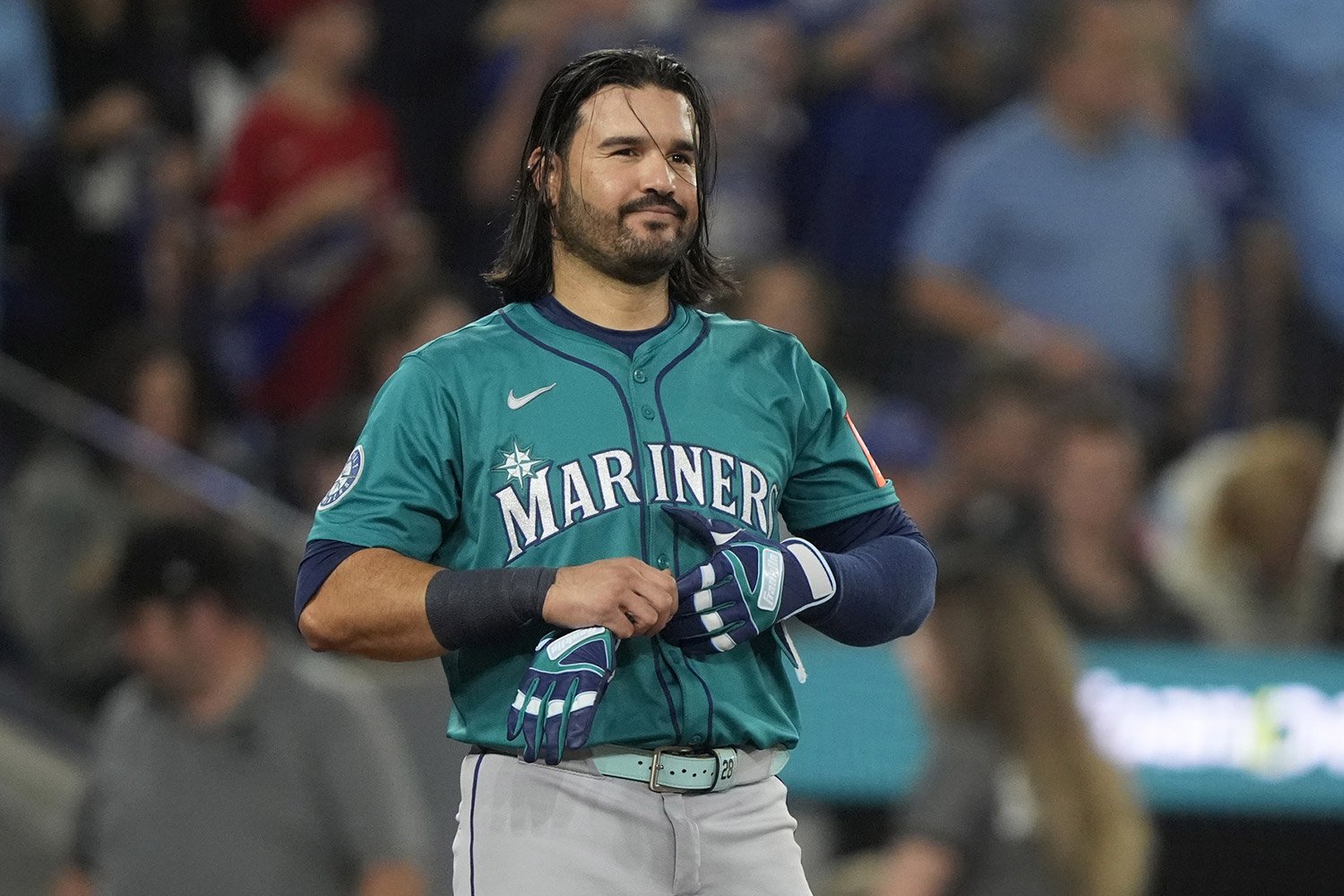 As the Winter Meetings begin on Monday, December 8th, in earnest, the market for third baseman Eugenio Suarez, formerly of the Seattle Mariners, looks like it will be in full swing. Just yesterday, BBWA member Francys Romero connected the Chicago Cubs to a hitter, but don't expect them to be the only team that may have interest. So what makes Suarez such a hot name? For starters, the league just doesn't have a lot of really good hitting third basemen right now. In 2025, third basemen had a 93 wRC+, lagging behind designated hitters (115 wRC+), first basemen (107 wRC+), right fielders (102 wRC+), left fielders (100 wRC+), and even shortstops (98 wRC+). Even catchers, usually the weakest-hitting position, posted a 94 wRC+ last year. What this means is that while we may traditionally consider the position to be one in which a team has a good hitter at, right now, league-wide, the position is kind of a problem for teams offensively. Last year, Suarez was 7th in wRC+ at the position and slugged 49 home runs. He stands out as a truly good hitter at the position, and he's currently available for just money, making him an attractive option for teams looking for help. e7a4424b-e97e3f23-634ab0f4-csvm-diamondgcp-asset_1280x720_59_4000K.mp4 More than just positionally, Suarez may be the best "bang-for-your-buck" player if you're a believer in his bat. Alex Bregman, Diamond Centric's #3 ranked Free Agent, is predicted to get a contract of five years and $165 million (a $33m AAV). Bo Bichette, who could step in as someone's third baseman, is our number two-ranked free agent and predicted to get a seven-year, $175 million deal ($25m AAV). Compare that to our prediction for Suarez, a three-year, $55 million pact, and you can see that, in both years and total dollars, he's far lower than the other two options at the position. Sure, part of that is because Suarez is 34 years old and the other two are much younger, but if you aren't interested in a super-long contract, Suarez offers value. He also offers a bat of similar quality to the two other premium third basemen, based on 2025 numbers. Alex Bregman posted a 125 wRC+ on the year, and Eugenio Suarez posted a 124 wRC+. Bo Bichette had the best season of any of them, posting a 134 wRC+, but his career line of 122 wRC+ is right in line with Suarez in 2025. And if you're looking for home runs, Suarez's 49 was more than Bregman's (18) and Bichette's (18) combined. Not everything, however, is peaches-and-rainbows when it comes to the slugging third baseman. First, I'd be remiss if I didn't hit on the age thing a little more: Suarez will enter Opening Day next year at 34 years old and, on a three-year deal, would finish at 37. Hitters just are not keeping their value right now, league-wide. Four hitters last year, aged between 34 and 37, outperformed Suarez's 124 wRC+, while only 11 of the 23 managed a 100 wRC+. Of those four, only Giancarlo Stanton had a strikeout rate north of 27% who had a 100 wRC+ or better. Eugenio Suarez struck out 29% of the time last year and has done so for his last 4,000 plate appearances. How much longer he's capable of being a league-average (or better) hitter while striking out this often is certainly up for debate. Beyond just the age and K% issues, another issue to keep an eye on: bat speed. Our very own Matt Trueblood brought it up in an article over on North Side Baseball when discussing fellow third baseman Alex Bregman, but the bat-speed-aging-curve is not in Suarez's favor, either. The former Mariner has fine bat-speed as of now, ranking in the 53rd percentile, but this will be something to monitor on Suarez because he doesn't offer you much outside of slugging right now; finishing with a .228/298/.526 line. Much of his power comes from his extreme pull-heavy approach, which allows him to use his fine, yet not elite, bat speed to generate power. Another red-flag indicator? Suarez far out-produced his expected data last season. While xData isn't the end-all, be-all, it can signal issues under the hood. Suarez was in the bottom third percentile of expected batting average last year, and while he posted a .347 wOBA, his xwOBA was just .316. Suarez has to generate his value offensively, and teams that look at expected data may be scared off by a player who's inching closer and closer to being a designated hitter because of his defensive limitations. This is the push-and-pull of Suarez; if you're a team in search of right-handed power and don't want to commit six (or more) years to either Alex Bregman or Bo Bichette, Suarez offers a lower level of entry and could outpace either offensively (especially in 2026). A team that is interested in his services is likely going to trade poor performance in 2028 for success immediately, but that's true of almost every contract on the free-agent market. Others may be scared off based on his age, expected dat, a and how poor defensively he regardlessss, if you're in that first group, there just aren't many other hitters who could offer what Suarez does on his contract, which creates a version of market scarcity, fueling his market and ramping up the speed in which we could see him sign.
 -
While the General Manager Meetings in November are always more of an amuse-bouche for the offseason overall (the Winter Meetings in December will likely be far more exciting in terms of player movement) they can give us an idea of what to expect; players are weighing decisions as to whether or not they should accept or decline their Qualifying Offers and teams have already made decisions on options. While some of these decisions have yet to be confirmed, one thing that seems certain is that the starting pitcher market will be among the deepest pools of players available to teams. Top-flight starters such as Framber Valdez, Dylan Cease, and Ranger Suarez will be free agents. In contrast, others, such as Joe Ryan, Sandy Alcantara, and MacKenzie Gore, may be available via trade. These won't be the only options for teams to spend their money on, as there are always a handful of interesting players in the international free agent pool available. Enter Tatsuya Imai, a 27-year-old right-handed pitcher from Japan's Nippon Baseball League. While we have yet to get a confirmed posting date, Imai's club in Japan, the Seibu Lions, has confirmed their intentions to allow the pitcher to come to the States this offseason. Imai is likely to have no short amount of suitors, and his contract is expected to rival those in the top tier of free agency, with the Athletic predicting his contract north of $140 million this offseason. One thing that will stand out immediately is Imai's strong strikeout numbers: he struck out just under 28% of hitters overall and over 31% of right-handed hitters in 2025. Teams that need strikeouts this offseason will likely have his name circled as a player they would like. A caveat that will have to be remembered throughout this examination: the NPB is generally not seen as as competitive as Major League Baseball, but his 27.8% strikeout rate would have ranked him top-10 of all qualified RHPs last year, which includes a number better than Jacob deGrom, Logan Webb, and Gavin Williams. To put his numbers in a better context, in NPB, Imai had the second-fastest fastball in the league, averaging around 95mph (touching 99 on occasion). When he comes over, though, his fastball will be around league average for a right-handed starter in Major League Baseball, which was 94.6mph last year. The positive for Imai is that his arm angle is funky and will likely allow him to create a level of deception and unease. While the NPB does not make arm angle public on their tracking site, his angle will likely put him around the flattest in baseball. Compare the above video of Imai to the below video of Seattle Mariners' starter, Bryan Woo. Woo clocks in around the 23-degree area in terms of angle, the 12th flattest of any SP in 2025, and I would expect Imai to be in that range when I look at the two through this lens. Uk8yeU5fWGw0TUFRPT1fVUFVSFZGUUhYd2NBWEFSVUFBQUhBVkFFQUZrRFUxa0FVRlVNVWxJRlV3b0RVVkZR.mp4 While I would hesitate to ever compare the two directly in terms of fastball value, Woo's fastball sat at 95.6 mph last year. And while the shape of Woo's fastball is good —grading out at 105 on FanGraphs' Stuff+— on shape and velocity alone, it falls short of elite. Despite that, Woo's fastball performs among the best of any fastball in the league, ranking in the 100th percentile in terms of run value according to MLB's Statcast. A team strong in fastball development may be required for Imai to realize his fastball's best version. Still, there's likely a strong enough foundation in his arm slot and velocity to make the pitch more than viable in Major League Baseball. Beyond his fastball, the most unique offering from the Japanese star is his "slider". I'm going to be careful what I call it; it's not really a slider, at least in the traditional way we think of a slider, because Imai throws his with arm-side run. What this results in is a slider that gets called a "reverse" slider (most sliders have a glove-side run; for a RHP, this would mean running away from a RHH), or even a screwball, as it runs back into a right-handed hitter. I suspect that Stuff+ models will hate the pitch, but the results in Japan were stunning. The pitch generated a 45.9% swing-and-miss rate, which, in MLB terms, would have placed it in the top 10 in whiff rate. It's fair to wonder how the pitch will play against MLB hitters due to its unique nature, but there's enough funk here to believe in it. Imai's strong slider has allowed the pitcher to be deadly against right handed hitters. This would make sense as sliders already have reverse splits, and with the funky shape couped with a strong fastball (by NPB standards) is a deadly combo. At the very least, I wouldn't expect a ton of concern as he comes over to the States in terms of how he deals with right handed hitters. One thing he did struggle with at times; lefties. This is important for Tatsuya Imai, as he worked hard in 2025, overcoming his biggest issue - left handed hitters. He had terrible walk issues with lefties, specifically, walking 11% of them in 2024. He developed a changeup in 2025, which dropped his walk rate against lefties from 11% down to 8.5% and allowed him to make major strides in terms of his production against them. A team who values the hurler is likely a team who believes in furthering his changeup profile. The pitch is in its infancy, as it was something he did not feature prior to the 2025 season. One of the things I think a good organization may do for Imai as well is give him a cutter. Pitchers who have lower arm slots generally create more glove side run on their pitches naturally. As it stands, Imai does not have an offering that would work well in on the hands of a hitter; his fastball does play up but I would be concerned challenging the best LHH on the planet that way too often and his changeup is a pitch that he locates away. A cut-fastball may come naturally to the pitcher due to his arm slot and would potentially give him an additional pitch to further attack lefties with. I don't think that the overall package that Imai has today puts him in the same tier as Yoshinobu Yamamoto was when he came over from NPB two offseasons ago, but I don't think anyone does. Even the priciest predictions has Imai around half of the $325 million that Yamamoto got from the Dodgers and significantly less years to boot. But he's also a clear step above what Shota Imanaga was the same offseason and he's proven capable of being between that of a second pitcher to a fourth-best-option. I wouldn't expect Imai to necessarily headline a rotation, but I do think there's more than enough clay to mold a front-line-option from. There's probably going to be some tweaks; Imai's fastball location leaves some to be desired, the changeup is just starting out and likely needs refinement, and it will take a good MLB organization to best use Imai's funky reverse slider, but I think a good organization is going to get excited about what they could do with him. He's also the correct age. Pitchers rarely hit the market at the age of 27. The other names on the top of the market are all much older; Framber Valdez will be 32 years old on Opening Day while Dylan Cease and Ranger Suarez will both be 30, so even if all four sign similar contracts, it's fair to expect the back end of Ima's deal to look rosier than the others. And as a player comes over, there's probably a bit more juice you can squeeze into optimizing what he can be. Sure, there's a bit of a higher risk to a player coming from the NPB, but there's always a potential reward, too. View full article
-
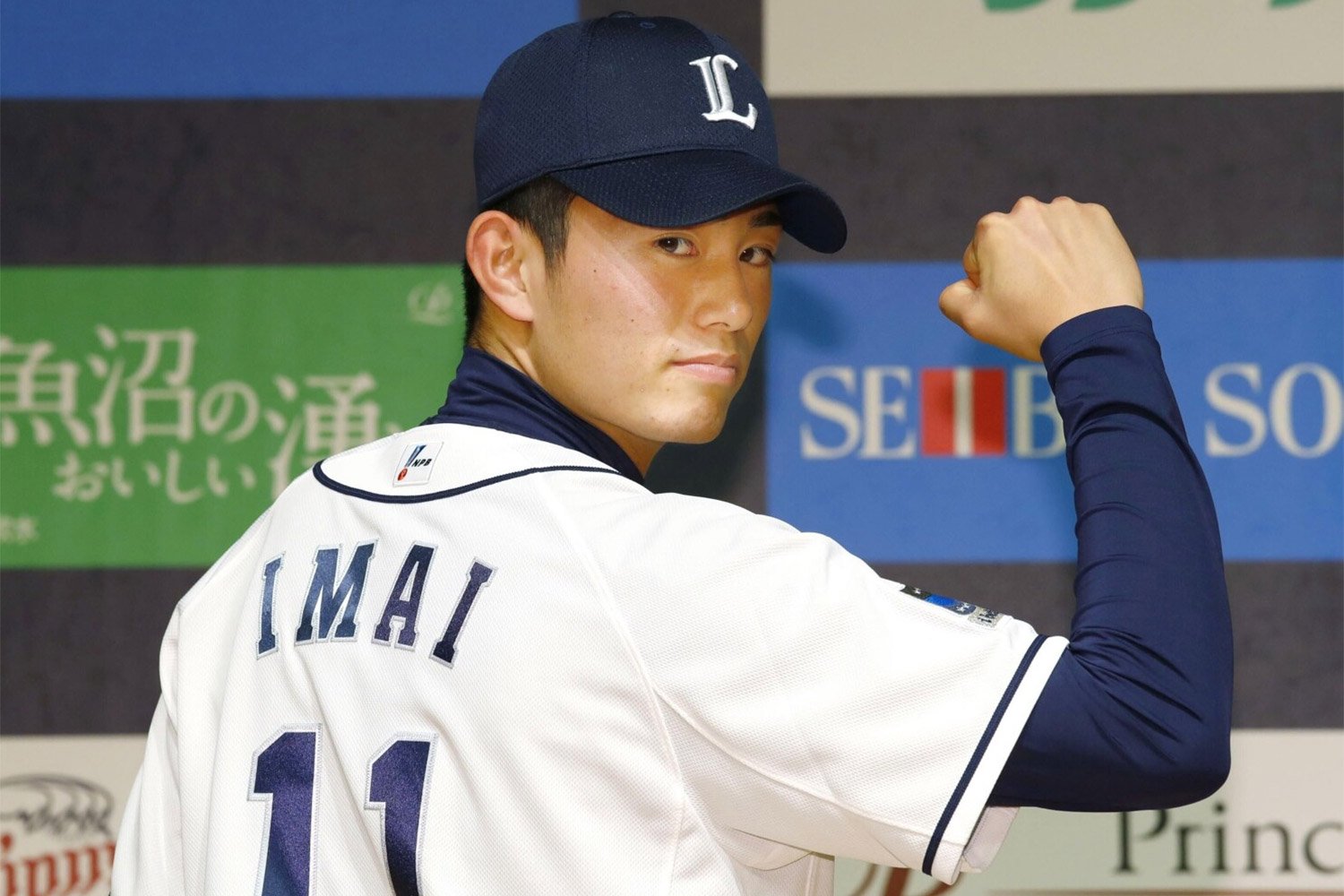 While the General Manager Meetings in November are always more of an amuse-bouche for the offseason overall (the Winter Meetings in December will likely be far more exciting in terms of player movement) they can give us an idea of what to expect; players are weighing decisions as to whether or not they should accept or decline their Qualifying Offers and teams have already made decisions on options. While some of these decisions have yet to be confirmed, one thing that seems certain is that the starting pitcher market will be among the deepest pools of players available to teams. Top-flight starters such as Framber Valdez, Dylan Cease, and Ranger Suarez will be free agents. In contrast, others, such as Joe Ryan, Sandy Alcantara, and MacKenzie Gore, may be available via trade. These won't be the only options for teams to spend their money on, as there are always a handful of interesting players in the international free agent pool available. Enter Tatsuya Imai, a 27-year-old right-handed pitcher from Japan's Nippon Baseball League. While we have yet to get a confirmed posting date, Imai's club in Japan, the Seibu Lions, has confirmed their intentions to allow the pitcher to come to the States this offseason. Imai is likely to have no short amount of suitors, and his contract is expected to rival those in the top tier of free agency, with the Athletic predicting his contract north of $140 million this offseason. One thing that will stand out immediately is Imai's strong strikeout numbers: he struck out just under 28% of hitters overall and over 31% of right-handed hitters in 2025. Teams that need strikeouts this offseason will likely have his name circled as a player they would like. A caveat that will have to be remembered throughout this examination: the NPB is generally not seen as as competitive as Major League Baseball, but his 27.8% strikeout rate would have ranked him top-10 of all qualified RHPs last year, which includes a number better than Jacob deGrom, Logan Webb, and Gavin Williams. To put his numbers in a better context, in NPB, Imai had the second-fastest fastball in the league, averaging around 95mph (touching 99 on occasion). When he comes over, though, his fastball will be around league average for a right-handed starter in Major League Baseball, which was 94.6mph last year. The positive for Imai is that his arm angle is funky and will likely allow him to create a level of deception and unease. While the NPB does not make arm angle public on their tracking site, his angle will likely put him around the flattest in baseball. Compare the above video of Imai to the below video of Seattle Mariners' starter, Bryan Woo. Woo clocks in around the 23-degree area in terms of angle, the 12th flattest of any SP in 2025, and I would expect Imai to be in that range when I look at the two through this lens. Uk8yeU5fWGw0TUFRPT1fVUFVSFZGUUhYd2NBWEFSVUFBQUhBVkFFQUZrRFUxa0FVRlVNVWxJRlV3b0RVVkZR.mp4 While I would hesitate to ever compare the two directly in terms of fastball value, Woo's fastball sat at 95.6 mph last year. And while the shape of Woo's fastball is good —grading out at 105 on FanGraphs' Stuff+— on shape and velocity alone, it falls short of elite. Despite that, Woo's fastball performs among the best of any fastball in the league, ranking in the 100th percentile in terms of run value according to MLB's Statcast. A team strong in fastball development may be required for Imai to realize his fastball's best version. Still, there's likely a strong enough foundation in his arm slot and velocity to make the pitch more than viable in Major League Baseball. Beyond his fastball, the most unique offering from the Japanese star is his "slider". I'm going to be careful what I call it; it's not really a slider, at least in the traditional way we think of a slider, because Imai throws his with arm-side run. What this results in is a slider that gets called a "reverse" slider (most sliders have a glove-side run; for a RHP, this would mean running away from a RHH), or even a screwball, as it runs back into a right-handed hitter. I suspect that Stuff+ models will hate the pitch, but the results in Japan were stunning. The pitch generated a 45.9% swing-and-miss rate, which, in MLB terms, would have placed it in the top 10 in whiff rate. It's fair to wonder how the pitch will play against MLB hitters due to its unique nature, but there's enough funk here to believe in it. Imai's strong slider has allowed the pitcher to be deadly against right handed hitters. This would make sense as sliders already have reverse splits, and with the funky shape couped with a strong fastball (by NPB standards) is a deadly combo. At the very least, I wouldn't expect a ton of concern as he comes over to the States in terms of how he deals with right handed hitters. One thing he did struggle with at times; lefties. This is important for Tatsuya Imai, as he worked hard in 2025, overcoming his biggest issue - left handed hitters. He had terrible walk issues with lefties, specifically, walking 11% of them in 2024. He developed a changeup in 2025, which dropped his walk rate against lefties from 11% down to 8.5% and allowed him to make major strides in terms of his production against them. A team who values the hurler is likely a team who believes in furthering his changeup profile. The pitch is in its infancy, as it was something he did not feature prior to the 2025 season. One of the things I think a good organization may do for Imai as well is give him a cutter. Pitchers who have lower arm slots generally create more glove side run on their pitches naturally. As it stands, Imai does not have an offering that would work well in on the hands of a hitter; his fastball does play up but I would be concerned challenging the best LHH on the planet that way too often and his changeup is a pitch that he locates away. A cut-fastball may come naturally to the pitcher due to his arm slot and would potentially give him an additional pitch to further attack lefties with. I don't think that the overall package that Imai has today puts him in the same tier as Yoshinobu Yamamoto was when he came over from NPB two offseasons ago, but I don't think anyone does. Even the priciest predictions has Imai around half of the $325 million that Yamamoto got from the Dodgers and significantly less years to boot. But he's also a clear step above what Shota Imanaga was the same offseason and he's proven capable of being between that of a second pitcher to a fourth-best-option. I wouldn't expect Imai to necessarily headline a rotation, but I do think there's more than enough clay to mold a front-line-option from. There's probably going to be some tweaks; Imai's fastball location leaves some to be desired, the changeup is just starting out and likely needs refinement, and it will take a good MLB organization to best use Imai's funky reverse slider, but I think a good organization is going to get excited about what they could do with him. He's also the correct age. Pitchers rarely hit the market at the age of 27. The other names on the top of the market are all much older; Framber Valdez will be 32 years old on Opening Day while Dylan Cease and Ranger Suarez will both be 30, so even if all four sign similar contracts, it's fair to expect the back end of Ima's deal to look rosier than the others. And as a player comes over, there's probably a bit more juice you can squeeze into optimizing what he can be. Sure, there's a bit of a higher risk to a player coming from the NPB, but there's always a potential reward, too.
