Parker Hageman
-
Posts
2 -
Joined
-
Last visited
-
Days Won
1
Content Type
Profiles
Forums
Events
News
Tutorials & Help
Major League Baseball Videos
Guides & Resources
Store
Downloads
Gallery
Everything posted by Parker Hageman
-
A Random 2010 Home Run Clip Sent Me Down a Baseball Rabbit Hole
Parker Hageman posted an article in MLB
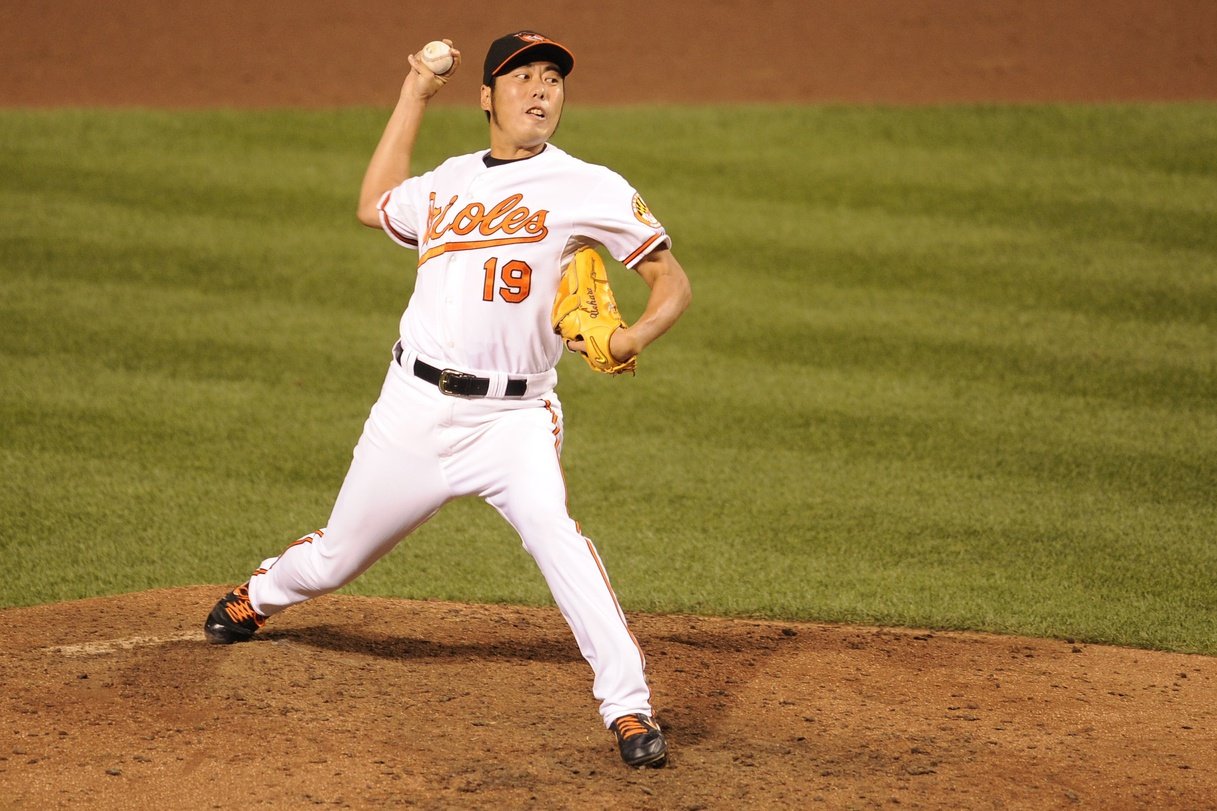 If you are one of the few real humans still exploring the flaming cesspool now known as X, the everything app, you know the tasty little algorithm will serve you posts you did not ask for but are going to be force fed anyway, like the villains in Bird Box. This is the benefit of the “For You” feed. Think of it like finding more rotten leftovers in your fridge every time you open the door. For me, the feed delivers plenty of baseball and baseball adjacent accounts. As a fan of the sport, that is not the worst outcome. These unsolicited accounts range from informative to humorous to pure AI sludge. Somewhere in the middle are highlight farms that post, you guessed it, highlights. One such account recently filled my feed without consent with random MLB home run videos. The specific clip that caught my attention showed Minnesota Timberwolves owner Alex Rodriguez facing Koji Uehara in 2010. Uehara was asked to protect a 3-to-1 Orioles lead over a division opponent. The game flipped instantly when the future NBA team owner demolished a 90-mile-per-hour cookie down the middle of the zone. The reason I am talking about this random moment from a September 2010 game instead of focusing on important things like political slants of halftime shows or my children is because the comments were fixated on one detail. Many people pointed out the absurdity of a closer in a save situation throwing 90 straight down the chute. It raises a fair question. Has today’s game truly become a parade of fire-breathing monsters with triple-digit fastballs that move like remote-controlled drones instead of under-oiled Iron Mike pitching machines trying their best? That exchange pushed me to actually look at how much the game has changed over the past 15 years. For context, back in 2010, our light beer had vortex bottles, and Apple had just released the iPad. Both inventions would save parents from being relentlessly annoyed by the kids at restaurants, but it would be a few years until hitters in the dugout would be able to review the exact moment a pitcher stole their soul with a mind-bending sweeper, a pitch that would not even get its own official classification for another decade. The Moneyball movie had not yet been released, so the general public was unaware of how difficult it was to play first base. The sporting world you grew up in is gone. At the time Uehara was sending center-cut batting practice specials to Rodriguez with the game on the line, the Driveline training movement was in its infancy and closer to a garage project than an industry pillar. Rapsodo was still years away from entering baseball. Biomechanics labs and organization-wide motion capture programs were not yet standard operating procedure. The widespread unlocking of premium velocity was still somewhere beyond the horizon. In that Driveline-light era known as 2010, when the Orioles handed the ninth inning to Uehara, it is worth noting he was not even their primary closer for most of the year. Alfredo Simon held that role until after the trade deadline, when Uehara, a more consistent and more strikeout-oriented reliever, took over. Ball-knowers will remember Uehara for his splitter, mostly because his fastball showed up with the urgency of a polite jog. In 2010, it averaged 88.8 miles per hour. Even at that speed, the then 35-year-old threw his not-especially-heated fastball 242 times in the ninth inning, which ranked 36th among pitchers. For comparison, the pitcher with the 36th most ninth-inning fastballs in 2025 was Ryne Stanek, who averaged 98.2 miles per hour on the pitch and threw it only 179 times. Another fun detail from that same game. The only reason the Yankees were within striking distance when Rodriguez stepped in during the ninth was because he had already homered earlier off Kevin Millwood. In the second inning, Millwood tried to sneak an 86.7 mile per hour fastball past him at the top of the zone. Rodriguez redirected it to center field. That pitch must have looked like a beach ball with a neon sign that flashed spank me, daddy. The main point of this exercise is to compare ninth-inning environments across eras, but we should pause to appreciate how strange it looks now to see a starter living below 87 miles per hour. In 2010, starters threw just over 31,000 fastballs under 87. In 2025, that number dropped to just under 8,000. Kyle Hendricks led the way with 1,111 of them, and he has since excused himself from the game. The 2010 season was the golden age of the sub-87 fastball. Livan Hernandez, Mark Buehrle, Barry Zito, Jamie Moyer, and Dave Bush each threw more of them than Hendricks did last season. Millwood alone tossed 287 sub-87 fastballs and lost 16 games. Those facts are unrelated but nonetheless feel consistent when placed near each other. As the chart below shows, in 2025, when hitters actually saw a fastball in a ninth-inning plate appearance, it arrived fully cooked. The velocity spike mirrors the broader trend across the sport as teams embraced methods designed to turn every arm into a biomechanical science project. fastballs thrown in the 9th inning by relievers pitches year pitch% velocity k% swing_mis 33372 2025 4.7 95.0 20.1 22.2 35310 2024 5 94.9 20.6 22.3 34591 2023 4.8 94.8 21.4 23.5 33977 2022 4.8 94.7 20.1 22.4 34856 2021 4.9 94.2 20.8 22.8 38178 2019 5.2 93.8 22.2 23.4 39991 2018 5.5 93.6 20.3 22.8 39293 2017 5.4 93.8 20.2 22.1 39126 2016 5.5 93.8 18.4 20.5 37172 2015 5.3 93.7 18.9 20.4 38826 2014 5.5 93.4 19.3 20.7 39250 2013 5.5 93.4 18.6 20.1 39150 2012 5.6 93.7 19.1 20.4 39973 2011 5.6 93.4 16.8 18.5 39394 2010 5.5 93.1 17.3 19.0 39768 2009 5.5 93.0 17.1 18.6 38503 2008 5.4 92.6 16.6 18.0 Fifteen years ago, a save situation, much like the one Uehara found himself in, might bring a modest bump in velocity out of the bullpen. The average fastball in the ninth would rise from 93.1 to 93.8 when the game tightened. This past season, managers smashed the velo button with impunity, pushing the average from 95.0 to 96.2 in save spots. One key difference between the eras is usage. Even with higher velocity, hitters now see fewer fastballs overall. Pitchers prefer to unleash a menu of spinning, diving, ducking, and disappearing pitches instead of challenging hitters with repeated velocity. fastballs thrown in the 9th inning by relievers in save situation pitches year pitch% velocity k% swing_m 13568 2025 1.9 96.2 23.3 24.3 14143 2024 2.0 96.1 22.8 24.2 13615 2023 1.9 95.8 24.0 26.0 14015 2022 2.0 95.6 21.4 24.2 14126 2021 2.0 94.9 23.0 23.8 14735 2019 2.0 94.4 25.7 25.7 16036 2018 2.2 94.3 22.7 25.3 15151 2017 2.1 94.4 22.2 23.8 15819 2016 2.2 94.5 19.9 22.4 15213 2015 2.2 94.4 20.9 22.4 16493 2014 2.3 94.0 21.3 22.6 17168 2013 2.4 93.8 21.5 21.8 16370 2012 2.3 94.6 21.1 21.7 17171 2011 2.4 94.2 18.1 20.3 16553 2010 2.3 93.8 19.6 21.1 15966 2009 2.2 93.6 20.5 20.4 15694 2008 2.2 93.1 19.4 20.4 So yes, the internet commenters were right to be stunned. A 90 mile per hour ninth inning fastball today feels like spotting a Blockbuster in the wild. The data backs that up. Ninth-inning velocity from relievers has climbed roughly two full ticks since 2010, and in save situations, it has jumped even more. When the door closes now, it closes loudly. But the more interesting twist is this. Even as velocity climbed, fastball usage in the ninth inning has quietly dropped. Closers throw harder than ever, and trust the fastball less than ever. The modern ninth inning is not just harder. It is strange. More power, more spin, fewer comfort pitches, and a lot less middle-middle at 90. Progress rarely looks subtle when you zoom out.
 -
The reason I am talking about this random moment from a September 2010 game instead of focusing on important things like political slants of halftime shows or my children is because the comments were fixated on one detail. Many people pointed out the absurdity of a closer in a save situation throwing 90 straight down the chute. It raises a fair question. Has today’s game truly become a parade of fire-breathing monsters with triple-digit fastballs that move like remote-controlled drones instead of under-oiled Iron Mike pitching machines trying their best? That exchange pushed me to actually look at how much the game has changed over the past 15 years. For context, back in 2010, our light beer had vortex bottles, and Apple had just released the iPad. Both inventions would save parents from being relentlessly annoyed by the kids at restaurants, but it would be a few years until hitters in the dugout would be able to review the exact moment a pitcher stole their soul with a mind-bending sweeper, a pitch that would not even get its own official classification for another decade. The Moneyball movie had not yet been released, so the general public was unaware of how difficult it was to play first base. The sporting world you grew up in is gone. At the time Uehara was sending center-cut batting practice specials to Rodriguez with the game on the line, the Driveline training movement was in its infancy and closer to a garage project than an industry pillar. Rapsodo was still years away from entering baseball. Biomechanics labs and organization-wide motion capture programs were not yet standard operating procedure. The widespread unlocking of premium velocity was still somewhere beyond the horizon. In that Driveline-light era known as 2010, when the Orioles handed the ninth inning to Uehara, it is worth noting he was not even their primary closer for most of the year. Alfredo Simon held that role until after the trade deadline, when Uehara, a more consistent and more strikeout-oriented reliever, took over. Ball-knowers will remember Uehara for his splitter, mostly because his fastball showed up with the urgency of a polite jog. In 2010, it averaged 88.8 miles per hour. Even at that speed, the then 35-year-old threw his not-especially-heated fastball 242 times in the ninth inning, which ranked 36th among pitchers. For comparison, the pitcher with the 36th most ninth-inning fastballs in 2025 was Ryne Stanek, who averaged 98.2 miles per hour on the pitch and threw it only 179 times. Another fun detail from that same game. The only reason the Yankees were within striking distance when Rodriguez stepped in during the ninth was because he had already homered earlier off Kevin Millwood. In the second inning, Millwood tried to sneak an 86.7 mile per hour fastball past him at the top of the zone. Rodriguez redirected it to center field. That pitch must have looked like a beach ball with a neon sign that flashed spank me, daddy. The main point of this exercise is to compare ninth-inning environments across eras, but we should pause to appreciate how strange it looks now to see a starter living below 87 miles per hour. In 2010, starters threw just over 31,000 fastballs under 87. In 2025, that number dropped to just under 8,000. Kyle Hendricks led the way with 1,111 of them, and he has since excused himself from the game. The 2010 season was the golden age of the sub-87 fastball. Livan Hernandez, Mark Buehrle, Barry Zito, Jamie Moyer, and Dave Bush each threw more of them than Hendricks did last season. Millwood alone tossed 287 sub-87 fastballs and lost 16 games. Those facts are unrelated but nonetheless feel consistent when placed near each other. As the chart below shows, in 2025, when hitters actually saw a fastball in a ninth-inning plate appearance, it arrived fully cooked. The velocity spike mirrors the broader trend across the sport as teams embraced methods designed to turn every arm into a biomechanical science project. fastballs thrown in the 9th inning by relievers pitches year pitch% velocity k% swing_mis 33372 2025 4.7 95.0 20.1 22.2 35310 2024 5 94.9 20.6 22.3 34591 2023 4.8 94.8 21.4 23.5 33977 2022 4.8 94.7 20.1 22.4 34856 2021 4.9 94.2 20.8 22.8 38178 2019 5.2 93.8 22.2 23.4 39991 2018 5.5 93.6 20.3 22.8 39293 2017 5.4 93.8 20.2 22.1 39126 2016 5.5 93.8 18.4 20.5 37172 2015 5.3 93.7 18.9 20.4 38826 2014 5.5 93.4 19.3 20.7 39250 2013 5.5 93.4 18.6 20.1 39150 2012 5.6 93.7 19.1 20.4 39973 2011 5.6 93.4 16.8 18.5 39394 2010 5.5 93.1 17.3 19.0 39768 2009 5.5 93.0 17.1 18.6 38503 2008 5.4 92.6 16.6 18.0 Fifteen years ago, a save situation, much like the one Uehara found himself in, might bring a modest bump in velocity out of the bullpen. The average fastball in the ninth would rise from 93.1 to 93.8 when the game tightened. This past season, managers smashed the velo button with impunity, pushing the average from 95.0 to 96.2 in save spots. One key difference between the eras is usage. Even with higher velocity, hitters now see fewer fastballs overall. Pitchers prefer to unleash a menu of spinning, diving, ducking, and disappearing pitches instead of challenging hitters with repeated velocity. fastballs thrown in the 9th inning by relievers in save situation pitches year pitch% velocity k% swing_m 13568 2025 1.9 96.2 23.3 24.3 14143 2024 2.0 96.1 22.8 24.2 13615 2023 1.9 95.8 24.0 26.0 14015 2022 2.0 95.6 21.4 24.2 14126 2021 2.0 94.9 23.0 23.8 14735 2019 2.0 94.4 25.7 25.7 16036 2018 2.2 94.3 22.7 25.3 15151 2017 2.1 94.4 22.2 23.8 15819 2016 2.2 94.5 19.9 22.4 15213 2015 2.2 94.4 20.9 22.4 16493 2014 2.3 94.0 21.3 22.6 17168 2013 2.4 93.8 21.5 21.8 16370 2012 2.3 94.6 21.1 21.7 17171 2011 2.4 94.2 18.1 20.3 16553 2010 2.3 93.8 19.6 21.1 15966 2009 2.2 93.6 20.5 20.4 15694 2008 2.2 93.1 19.4 20.4 So yes, the internet commenters were right to be stunned. A 90 mile per hour ninth inning fastball today feels like spotting a Blockbuster in the wild. The data backs that up. Ninth-inning velocity from relievers has climbed roughly two full ticks since 2010, and in save situations, it has jumped even more. When the door closes now, it closes loudly. But the more interesting twist is this. Even as velocity climbed, fastball usage in the ninth inning has quietly dropped. Closers throw harder than ever, and trust the fastball less than ever. The modern ninth inning is not just harder. It is strange. More power, more spin, fewer comfort pitches, and a lot less middle-middle at 90. Progress rarely looks subtle when you zoom out. View full article