


Kevin OBrien
-
Posts
6 -
Joined
-
Last visited
1 Follower

Kevin OBrien's Achievements


-
 What a home run by Caminero. Rare mistake by Skenes there.
 -
Interesting inning for Severino. Really blew Witt and Harper away. Was hitting 99 MPH so will be curious to see how his velocity fares in the coming innings
-
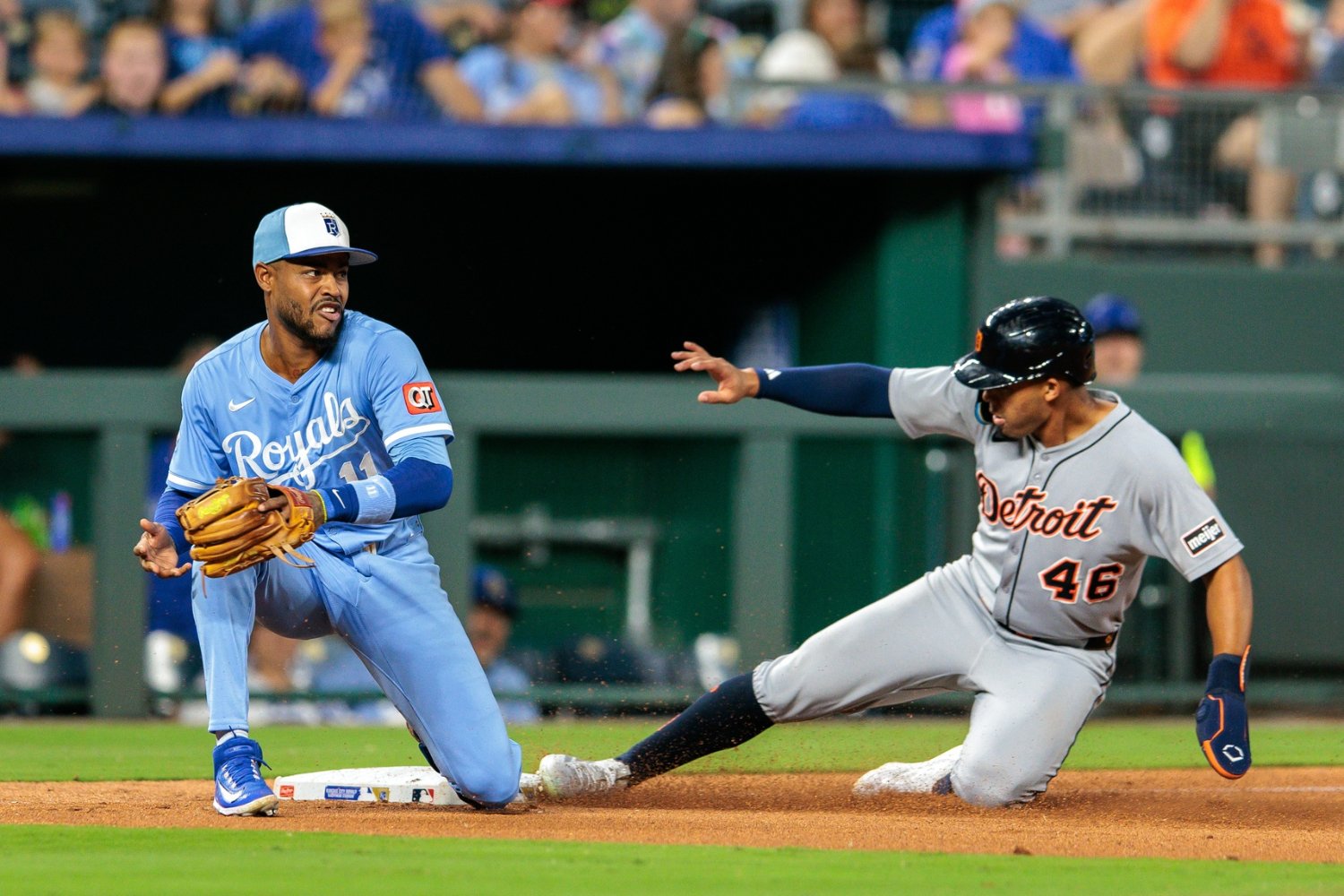 With nearly a week until pitchers and catchers report to spring training, Dan Szymborski released his latest ZiPS Projections this past week on FanGraphs, with the focus of his piece on the projected MLB standings for 2026. Steve Drumwright broke down the National League Central last week on DiamondCentric. In this post, I am going to take a look at the American League Central and what ZiPS projects for the upcoming season. Safe to say, the division should be a lot more competitive this year, even though the Detroit Tigers, Kansas City Royals, and Cleveland Guardians will be the likely favorites again to battle out for a division crown (and possible Wild Card playoff spot). Let's break down each team, their projected win totals, and what fans could expect from each team in terms of living up (or failing to live up) to their ZiPS projection for the 2026 campaign. 5th: Chicago White Sox (69-93, 3.0% chance to make postseason) After losing a MLB-record 121 games in 2024, the White Sox improved by 19 games in 2025 under new manager Will Venable. Unfortunately, while 19 games is a great improvement for most teams, it only resulted in 60 wins for the South Siders. That extended their streak of 100+ loss seasons to three (they also lost 101 in 2023). ZiPS expects some projected growth for the White Sox thanks to GM Chris Getz and his investment in the bullpen and young players this offseason. They may not be a playoff team just yet, but they are leaps and bounds better than the record-breaking squad from just two seasons ago. New reliever Seranthony Domínguez should solidify the closer's role for Chicago, which has been a revolving door despite some talented arms in the bullpen (Jordan Leasure and Grant Taylor may be better utilized in setup roles). They also added Japanese slugger Munetaka Murakami and veteran outfielder Austin Hays in free agency, who should add a lot of pop to the lineup (though some whiffs as well). The White Sox have a nice young core of hitters and should expect continued growth from Colson Montgomery, Kyle Teel, Miguel Vargas, and Chase Meidroth in 2026. They were also able to finally shed the contract of Luis Robert Jr. and, in exchange, received a high-upside (but inconsistent) player in Luisangel Acuna. The starting pitching remains a bit questionable, as Shane Smith is projected to be their Opening Day starter. He is a fine middle-of-the-rotation guy, but may be a bit out-of-position as a No. 1. Nonetheless, ZiPS projects nine more wins for the White Sox, and it's easy to see them hit that mark, maybe more if they can acquire a decent pitcher to add to the rotation before Opening Day. 4. Minnesota Twins (77-85, 19% chance to make postseason) It's been a mess of an offseason for the Twins. First, the Pohlad family decided NOT to sell the franchise after initially putting the team on the market. Then, they suddenly parted ways with team president Derek Falvey, less than two weeks before pitchers and catchers report. Lastly, they have had an uninspired offseason in terms of transactions, with Josh Bell, Victor Caratini, and Taylor Rogers being their free-agent signings of note. And yet, despite the vibes with this organization, Minnesota is set up to succeed to some extent as long as it stays healthy. They have two possible 3+ fWAR players in Byron Buxton and Luke Keaschall at the top of the lineup. Royce Lewis could be due for some positive regression (2.5 fWAR projection) after a brutal 2025. Lastly, the rotation is deep, with Pablo Lopez and Joe Ryan as a solid No. 1-2 combo, and Bailey Ober, Simeon Woods Richardson, Zebby Matthews, and Taj Bradley filling out the rest of the projected rotation. Lopez and Ryan need to stay healthy, of course, which wasn't the case last year. If they do stay on the field, then the Twins could sneak up on foes in the division. The bullpen is an Achilles heel, with Rogers slated as the closer and not much else remaining. It will certainly be a project for new manager Derek Shelton, who replaces Rocco Baldelli, who was let go after the Twins only won 70 games a season ago (though the front office did him no favors). 3. Cleveland Guardians (79-83, 30.9% chance to make postseason) The Guardians seem to do this every year under manager Stephen Vogt: their expectations are meager after an underwhelming offseason, and they end up as one of the best teams in the division by season's end. It may be a similar story this year. The best move the Guardians made this offseason? Getting Jose Ramirez to agree to a new seven-year deal that should keep him in Cleveland for the remainder of his career. Otherwise? Shawn Armstrong may be their most high-profile move. That's a shame for a team that won another AL Central title in 2025 but still fell short in the postseason (they lost to the Detroit Tigers in the AL Wild Card series). Cleveland is set in nearly every area of their roster. Ramirez and Steven Kwan are solid at the top of the lineup. Kyle Manzardo may be on his way to being another Josh Naylor at first base. They also have some intriguing young players like George Valera and Chase DeLauter who could provide punch to the lineup. Then again, we were saying the same thing about Gabriel Arias, Bo Naylor, and Brayan Rocchio a couple of years ago, and the results have been underwhelming. Gavin Williams and Tanner Bibee should be a nice combo at the top of the rotation (projected 4.6 fWAR combined), and the bullpen handled itself well after the Luis Ortiz and Emmanuel Clase gambling scandal. Thus, they have enough to stay competitive in the AL Central in 2026. However, do they have enough to make a run to an AL Pennant? ZiPS doesn't seem to think so. 2. Kansas City Royals (83-79, 44.9% chance to make the postseason) The Royals wanted to improve their bullpen and their outfield this offseason, and they accomplished both things to a degree. They acquired outfielder Isaac Collins and reliever Nick Mears from the Brewers in exchange for reliever Angel Zerpa. They also signed outfielder Lane Thomas to a one-year deal. Lastly, in terms of the bullpen, in addition to Mears, they acquired Matt Strahm from the Phillies in exchange for Jonathan Bowlan, signed Alex Lange on a one-year deal, and also picked up Eli Morgan, Hector Neris, Aaron Sanchez, and Helcris Olivarez on Minor League deals. Did the Royals get better in 2026? Absolutely. Did they get better "enough"? That may still be up for debate. The good thing is that the Royals have established their core for at least 2026, and GM JJ Picollo illustrated that with John Sherman's pocketbook. They signed Salvador Perez, Maikel Garcia, and Vinnie Pasquantino to extensions this offseason. They are joining Bobby Witt Jr., who signed one before the 2024 season, and pitchers Cole Ragans, Michael Wacha, and Seth Lugo, who signed them at various points in 2025. In addition to an established group of young studs and veterans, Kansas City also has some potential stars who could take the next step in 2026. Carter Jensen was sensational in his MLB debut. Jac Caglianone was NOT sensational, but the power is real, and he could be a 30+ HR hitter if he tweaks his approach. Noah Cameron also showed that he could be a part of the Royals' rotation for a long time after a sub-3.00 ERA campaign. The Royals made some good, affordable additions and invested in the right players for the long term. Thus, it's not a surprise that ZiPS projects them to compete for a division title, even though they didn't get the "big name" player fans were hoping for (i.e., Jarren Duran or Brendan Donovan) earlier in the offseason. 1. Detroit Tigers (83-79, 49.3% chance to make the postseason) Like the Guardians, the Tigers didn't do much this offseason. Gleyber Torres accepted a qualifying offer to stay in Detroit, which was big news after his solid Tigers debut. Other than that? Kenley Jansen was the biggest move they made. It's a nice acquisition, especially considering their bullpen imploded a bit down the stretch. However, it's not the "big" move they may have needed, especially if they want to keep Tarik Skubal in Detroit after 2026. Speaking of Skubal, his presence on this roster is why the Tigers remain the favorite in the AL Central. Yes, they have some talented homegrown hitters like Riley Greene, Dillon Dingler, Colt Keith, Spencer Torkelson, and Wenceel Perez. But make no mistake: this team will run on how Skubal pitches. It's no coincidence that in Skubal's two Cy Young-winning seasons, the Tigers have made the playoffs and won postseason series. With a projected 6.3 fWAR, Skubal should be one of the most valuable players in baseball once again. That said, the Tigers and Skubal had an egregious gap in their filings this offseason. Detroit filed for $19 million while Skubal's team filed for $32 million, leaving a $13 million gap. Not only is that a massive difference, but it likely means that they will be heading for a hearing, which could only ruffle their star pitcher, who is in his last year of team control. Ruffling Skubal is not what Detroit needs with so much riding on him in 2026 and possibly beyond. The offense (10th in runs scored; 16th in batting average) and bullpen (17th in reliever ERA) are good, not great. Even the rotation pales (11th in ERA) beyond Skubal's contribution. For the Tigers to compete for an AL Central title and make a run in the postseason, they need a 100 percent locked-in Skubal. Should arbitration affect Skubal's focus, or if Skubal somehow gets injured? They could go from first to down in the standings, maybe as low as fourth or fifth, depending on how the White Sox do.
 -
Image courtesy of William Purnell-Imagn Images With nearly a week until pitchers and catchers report to spring training, Dan Szymborski released his latest ZiPS Projections this past week on FanGraphs, with the focus of his piece on the projected MLB standings for 2026. Steve Drumwright broke down the National League Central last week on DiamondCentric. In this post, I am going to take a look at the American League Central and what ZiPS projects for the upcoming season. Safe to say, the division should be a lot more competitive this year, even though the Detroit Tigers, Kansas City Royals, and Cleveland Guardians will be the likely favorites again to battle out for a division crown (and possible Wild Card playoff spot). Let's break down each team, their projected win totals, and what fans could expect from each team in terms of living up (or failing to live up) to their ZiPS projection for the 2026 campaign. 5th: Chicago White Sox (69-93, 3.0% chance to make postseason) After losing a MLB-record 121 games in 2024, the White Sox improved by 19 games in 2025 under new manager Will Venable. Unfortunately, while 19 games is a great improvement for most teams, it only resulted in 60 wins for the South Siders. That extended their streak of 100+ loss seasons to three (they also lost 101 in 2023). ZiPS expects some projected growth for the White Sox thanks to GM Chris Getz and his investment in the bullpen and young players this offseason. They may not be a playoff team just yet, but they are leaps and bounds better than the record-breaking squad from just two seasons ago. New reliever Seranthony Domínguez should solidify the closer's role for Chicago, which has been a revolving door despite some talented arms in the bullpen (Jordan Leasure and Grant Taylor may be better utilized in setup roles). They also added Japanese slugger Munetaka Murakami and veteran outfielder Austin Hays in free agency, who should add a lot of pop to the lineup (though some whiffs as well). The White Sox have a nice young core of hitters and should expect continued growth from Colson Montgomery, Kyle Teel, Miguel Vargas, and Chase Meidroth in 2026. They were also able to finally shed the contract of Luis Robert Jr. and, in exchange, received a high-upside (but inconsistent) player in Luisangel Acuna. The starting pitching remains a bit questionable, as Shane Smith is projected to be their Opening Day starter. He is a fine middle-of-the-rotation guy, but may be a bit out-of-position as a No. 1. Nonetheless, ZiPS projects nine more wins for the White Sox, and it's easy to see them hit that mark, maybe more if they can acquire a decent pitcher to add to the rotation before Opening Day. 4. Minnesota Twins (77-85, 19% chance to make postseason) It's been a mess of an offseason for the Twins. First, the Pohlad family decided NOT to sell the franchise after initially putting the team on the market. Then, they suddenly parted ways with team president Derek Falvey, less than two weeks before pitchers and catchers report. Lastly, they have had an uninspired offseason in terms of transactions, with Josh Bell, Victor Caratini, and Taylor Rogers being their free-agent signings of note. And yet, despite the vibes with this organization, Minnesota is set up to succeed to some extent as long as it stays healthy. They have two possible 3+ fWAR players in Byron Buxton and Luke Keaschall at the top of the lineup. Royce Lewis could be due for some positive regression (2.5 fWAR projection) after a brutal 2025. Lastly, the rotation is deep, with Pablo Lopez and Joe Ryan as a solid No. 1-2 combo, and Bailey Ober, Simeon Woods Richardson, Zebby Matthews, and Taj Bradley filling out the rest of the projected rotation. Lopez and Ryan need to stay healthy, of course, which wasn't the case last year. If they do stay on the field, then the Twins could sneak up on foes in the division. The bullpen is an Achilles heel, with Rogers slated as the closer and not much else remaining. It will certainly be a project for new manager Derek Shelton, who replaces Rocco Baldelli, who was let go after the Twins only won 70 games a season ago (though the front office did him no favors). 3. Cleveland Guardians (79-83, 30.9% chance to make postseason) The Guardians seem to do this every year under manager Stephen Vogt: their expectations are meager after an underwhelming offseason, and they end up as one of the best teams in the division by season's end. It may be a similar story this year. The best move the Guardians made this offseason? Getting Jose Ramirez to agree to a new seven-year deal that should keep him in Cleveland for the remainder of his career. Otherwise? Shawn Armstrong may be their most high-profile move. That's a shame for a team that won another AL Central title in 2025 but still fell short in the postseason (they lost to the Detroit Tigers in the AL Wild Card series). Cleveland is set in nearly every area of their roster. Ramirez and Steven Kwan are solid at the top of the lineup. Kyle Manzardo may be on his way to being another Josh Naylor at first base. They also have some intriguing young players like George Valera and Chase DeLauter who could provide punch to the lineup. Then again, we were saying the same thing about Gabriel Arias, Bo Naylor, and Brayan Rocchio a couple of years ago, and the results have been underwhelming. Gavin Williams and Tanner Bibee should be a nice combo at the top of the rotation (projected 4.6 fWAR combined), and the bullpen handled itself well after the Luis Ortiz and Emmanuel Clase gambling scandal. Thus, they have enough to stay competitive in the AL Central in 2026. However, do they have enough to make a run to an AL Pennant? ZiPS doesn't seem to think so. 2. Kansas City Royals (83-79, 44.9% chance to make the postseason) The Royals wanted to improve their bullpen and their outfield this offseason, and they accomplished both things to a degree. They acquired outfielder Isaac Collins and reliever Nick Mears from the Brewers in exchange for reliever Angel Zerpa. They also signed outfielder Lane Thomas to a one-year deal. Lastly, in terms of the bullpen, in addition to Mears, they acquired Matt Strahm from the Phillies in exchange for Jonathan Bowlan, signed Alex Lange on a one-year deal, and also picked up Eli Morgan, Hector Neris, Aaron Sanchez, and Helcris Olivarez on Minor League deals. Did the Royals get better in 2026? Absolutely. Did they get better "enough"? That may still be up for debate. The good thing is that the Royals have established their core for at least 2026, and GM JJ Picollo illustrated that with John Sherman's pocketbook. They signed Salvador Perez, Maikel Garcia, and Vinnie Pasquantino to extensions this offseason. They are joining Bobby Witt Jr., who signed one before the 2024 season, and pitchers Cole Ragans, Michael Wacha, and Seth Lugo, who signed them at various points in 2025. In addition to an established group of young studs and veterans, Kansas City also has some potential stars who could take the next step in 2026. Carter Jensen was sensational in his MLB debut. Jac Caglianone was NOT sensational, but the power is real, and he could be a 30+ HR hitter if he tweaks his approach. Noah Cameron also showed that he could be a part of the Royals' rotation for a long time after a sub-3.00 ERA campaign. The Royals made some good, affordable additions and invested in the right players for the long term. Thus, it's not a surprise that ZiPS projects them to compete for a division title, even though they didn't get the "big name" player fans were hoping for (i.e., Jarren Duran or Brendan Donovan) earlier in the offseason. 1. Detroit Tigers (83-79, 49.3% chance to make the postseason) Like the Guardians, the Tigers didn't do much this offseason. Gleyber Torres accepted a qualifying offer to stay in Detroit, which was big news after his solid Tigers debut. Other than that? Kenley Jansen was the biggest move they made. It's a nice acquisition, especially considering their bullpen imploded a bit down the stretch. However, it's not the "big" move they may have needed, especially if they want to keep Tarik Skubal in Detroit after 2026. Speaking of Skubal, his presence on this roster is why the Tigers remain the favorite in the AL Central. Yes, they have some talented homegrown hitters like Riley Greene, Dillon Dingler, Colt Keith, Spencer Torkelson, and Wenceel Perez. But make no mistake: this team will run on how Skubal pitches. It's no coincidence that in Skubal's two Cy Young-winning seasons, the Tigers have made the playoffs and won postseason series. With a projected 6.3 fWAR, Skubal should be one of the most valuable players in baseball once again. That said, the Tigers and Skubal had an egregious gap in their filings this offseason. Detroit filed for $19 million while Skubal's team filed for $32 million, leaving a $13 million gap. Not only is that a massive difference, but it likely means that they will be heading for a hearing, which could only ruffle their star pitcher, who is in his last year of team control. Ruffling Skubal is not what Detroit needs with so much riding on him in 2026 and possibly beyond. The offense (10th in runs scored; 16th in batting average) and bullpen (17th in reliever ERA) are good, not great. Even the rotation pales (11th in ERA) beyond Skubal's contribution. For the Tigers to compete for an AL Central title and make a run in the postseason, they need a 100 percent locked-in Skubal. Should arbitration affect Skubal's focus, or if Skubal somehow gets injured? They could go from first to down in the standings, maybe as low as fourth or fifth, depending on how the White Sox do. View full article
-
Who Is The Better Free Agent Infielder, Bo Bichette Or Alex Bregman?
Kevin OBrien posted an article in MLB
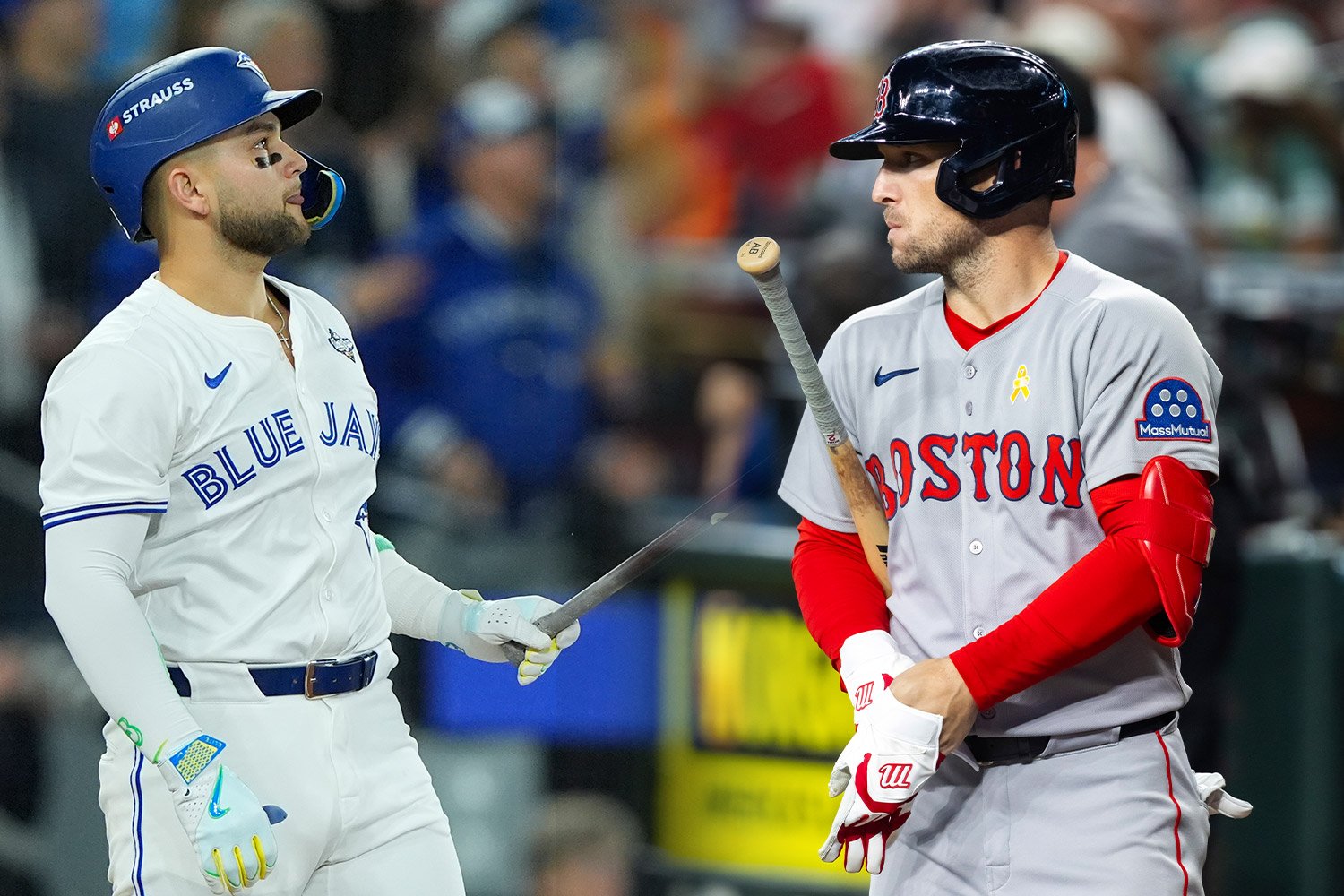 When it comes to free agency, fans have seen some big-name players come off the market quickly. Josh Naylor re-signed with the Seattle Mariners, and Kyle Schwarber also opted to stay home by agreeing to a new deal with the Phillies. Pete Alonso decided to bring his talents to Baltimore and the American League. Closer Edwin Diaz chose to move from New York to Hollywood, while fellow closer Devin Williams opted to move from the Bronx to Queens, making the Mets' void in the ninth only temporary. Despite the big moves, two big-name free agents remain: Bo Bichette and Alex Bregman. Bichette and Bregman are two players who can significantly impact a team, not only due to their bats, but also their positional infield flexibility. Bichette played shortstop in Toronto, but he has remarked that he is open to moving to second base for the right team. As for Bregman, he's a Gold Glove winner at the hot corner, but he, too, can move to second base if needed (though he doesn't seem as willing as Bichette). Both players are expected to command long-term deals in the $25+ million range in terms of average annual value (AAV), according to Spotrac. That said, which player is the better value for such a mega deal? Let's break down the candidacy of each free agent and determine who would be the better acquisition for an interested team looking to improve its roster insignificantly in 2026 and beyond. The Case for Bo Bichette Better Batted-Ball Metrics When it comes to batted-ball quality, there's no question that the 27-year-old infielder is a better fit. Last season, Bichette outperformed Bregman in average exit velocity on batted balls (91 MPH to 90.1 MPH), max exit velocity (112.3 MPH to 109.6 MPH), barrel rate (7.9% to 6.6%), and hard-hit rate (48.8% to 44.4%). Thus, it's not a surprise that Bichette posted a much better xwOBA (.352) than Bregman a season ago (.334). Furthermore, Bichette's Statcast performance in those batted-ball categories ranked in the top percentiles of the league, as illustrated in his TJ Stats summary profile below. In addition to hitting the ball hard, Bichette launches the ball well (86th percentile Launch Angle Sweet-Spot%) and doesn't whiff (83rd percentile) or strikeout much (85th percentile). While the Blue Jays' draft pick has an aggressive approach (12th percentile O-Swing% and 25th percentile BB%), he possesses the batted-ball skills that will translate to any ballpark next season and beyond. Youth and Rosier Long-Term Outlook Another positive about Bichette is that he's four years younger than Bregman. Thus, any team that signs Bichette will be getting him in the prime of his career. When looking at his projections for next year, Steamer projects Bichette to post a 121 wRC+ and 3.6 fWAR in 131 games. In that projection sample, he is also projected for 17 home runs, 75 runs scored, 70 RBI, a .293 average, and .344 wOBA. In a 152-game projection, Depth charts projects 20 home runs, 84 runs scored, 79 RBI, a .293 average, and .344 wOBA. They also project a 121 wRC+ and 4.0 fWAR. Steamer projects a 120 wRC+ and 3.7 fWAR for Bregman and 3.7 fWAR in 2026. While they project Bregman to hit more home runs (23), they also project a much lower batting average (.262) and only a nominal difference in OBP (.346 to Bichette's .341). The former Boston infielder is also coming off a 114-game season, which is 25 fewer games than what Bichette played with Toronto last season. Granted, Bichette got hurt at the end of last season, which prevented him from having much of an impact in the postseason. Nonetheless, the combination of Bichette's age and the more games he played in 2025 should give him a more optimistic outlook for staying on the field long-term for any team looking to pay him big money. The Case for Alex Bregman Better Plate Discipline One of Bregman's best traits as a hitter is that he has a sound approach at the plate and doesn't give away many at-bats in a given season. While he is known for home run power (three straight seasons of 20+ home runs from 2023-2025), he also has a strong ability to maximize walks and avoid strikeouts. Last season, Bregman generated a 10.3% walk rate, 3.9% higher than Bichette's. Furthermore, while Bichette didn't strike out a ton (14.5%), the 31-year-old third baseman still had a slightly lower K rate (14.1%). As a result, Bregman's 0.73 BB/K ratio was 29 points better than Bichette's in 2025. Additionally, Bregman chased significantly less than Bichette last year (23.4% O-Swing% to Bichette's 37.9% O-Swing%). The former LSU product also whiffed fewer times (5.5% Swinging Strike rate to Bichette's 8.9% Swinging Strike rate). Granted, the Boston third baseman took a lot more pitches, as his called-strike percentage of 20.8% was 7.5% higher than Bichette's. Still, for a team looking for an improvement in overall plate approach, Bregman fits the bill better than Bichette. That is further confirmed by his Statcast summary profile, which shows his plate discipline metrics ranking in the top percentile of the league last year. While the batted-ball percentiles are questionable (sub-20% barrel rate and sub-30% 90th and Max EV rates), his O-Swing%, Whiff%, and Z-Contact% ranked in the 90th or above percentiles in 2025. Furthermore, he also showed a strong ability to pull the ball, especially in the air (77th percentile in Pull Air%). That could make him a strong fit in a righty-friendly home ballpark. Better Defense When it comes to defense, Bregman is a significant upgrade over Bichette, primarily based on last year's metrics. In 2025 with the Red Sox, Bregman posted a +3 OAA, +3 FRV, and +1 DRS at the hot corner. Over his career, he has a +27 DRS, +27 OAA, and +29 FRV. The 31-year-old looks impressive across a variety of metrics, which is a big reason he earned a Gold Glove award (2024). It's the inverse, unfortunately, for Bichette. Last year with the Blue Jays, Bichette posted a -13 OAA, -10 FRV, and -12 DRS at shortstop. Over his career, he has a -19 DRS, -32 OAA, and -27 FRV. Over the past three years, only Washington's CJ Abrams and Seattle's J.P. Crawford have been worse in terms of shortstop FRV, as seen below. The reality is that Bichette probably can't stick at shortstop long-term, unlike Bregman, who absolutely can be a third baseman for the remainder of his career. For a team that needs strong defense, Bregman is a much better option for a long-term deal than Bichette. Final Thoughts When looking at their metrics over three years, Bregman edges out Bichette in most categories, with Bregman's defense being the most significant factor in the fWAR difference. Bregman's 12.1 fWAR is 4.1 wins more than Bichette over this three-year sample. Furthermore, his 122 wRC+ is six points better than Bichette's over these three years as well. Conversely, Bichette has the higher xwOBA, as his .344 mark is not only eight points higher than his actual wOBA, but is also nine points higher than Bregman's xwOBA. If a team is giving a contract based on past results, Bregman is by far the superior option. However, a team is not handing out a deal based on what a player did in the past, but on what they WILL do for their current team. That's why Bichette may be the slightly better option, as his batted-ball and expected metrics indicate a more positive offensive trend going forward than Bregman, especially since Bregman has to still prove himself as an offensive force without Houston's "righty-friendly" ballpark. That said, any team that signs Bichette has to understand his defensive deficiencies. He likely can't play shortstop for long, and it will be important for his next team to surround him with good infielders, even if they may not be as offensively efficient. Bregman, on the other hand, can be a better "plug with whatever team" option because his defense is not an issue. Regardless, offensive upside matters the most when it comes to a long-term deal for a free agent, and that's where Bichette slightly edges Bregman as a better long-term value for interested teams.
 -
Image courtesy of © John E. Sokolowski-Imagn Images / © Mark J. Rebilas-Imagn Images When it comes to free agency, fans have seen some big-name players come off the market quickly. Josh Naylor re-signed with the Seattle Mariners, and Kyle Schwarber also opted to stay home by agreeing to a new deal with the Phillies. Pete Alonso decided to bring his talents to Baltimore and the American League. Closer Edwin Diaz chose to move from New York to Hollywood, while fellow closer Devin Williams opted to move from the Bronx to Queens, making the Mets' void in the ninth only temporary. Despite the big moves, two big-name free agents remain: Bo Bichette and Alex Bregman. Bichette and Bregman are two players who can significantly impact a team, not only due to their bats, but also their positional infield flexibility. Bichette played shortstop in Toronto, but he has remarked that he is open to moving to second base for the right team. As for Bregman, he's a Gold Glove winner at the hot corner, but he, too, can move to second base if needed (though he doesn't seem as willing as Bichette). Both players are expected to command long-term deals in the $25+ million range in terms of average annual value (AAV), according to Spotrac. That said, which player is the better value for such a mega deal? Let's break down the candidacy of each free agent and determine who would be the better acquisition for an interested team looking to improve its roster insignificantly in 2026 and beyond. The Case for Bo Bichette Better Batted-Ball Metrics When it comes to batted-ball quality, there's no question that the 27-year-old infielder is a better fit. Last season, Bichette outperformed Bregman in average exit velocity on batted balls (91 MPH to 90.1 MPH), max exit velocity (112.3 MPH to 109.6 MPH), barrel rate (7.9% to 6.6%), and hard-hit rate (48.8% to 44.4%). Thus, it's not a surprise that Bichette posted a much better xwOBA (.352) than Bregman a season ago (.334). Furthermore, Bichette's Statcast performance in those batted-ball categories ranked in the top percentiles of the league, as illustrated in his TJ Stats summary profile below. In addition to hitting the ball hard, Bichette launches the ball well (86th percentile Launch Angle Sweet-Spot%) and doesn't whiff (83rd percentile) or strikeout much (85th percentile). While the Blue Jays' draft pick has an aggressive approach (12th percentile O-Swing% and 25th percentile BB%), he possesses the batted-ball skills that will translate to any ballpark next season and beyond. Youth and Rosier Long-Term Outlook Another positive about Bichette is that he's four years younger than Bregman. Thus, any team that signs Bichette will be getting him in the prime of his career. When looking at his projections for next year, Steamer projects Bichette to post a 121 wRC+ and 3.6 fWAR in 131 games. In that projection sample, he is also projected for 17 home runs, 75 runs scored, 70 RBI, a .293 average, and .344 wOBA. In a 152-game projection, Depth charts projects 20 home runs, 84 runs scored, 79 RBI, a .293 average, and .344 wOBA. They also project a 121 wRC+ and 4.0 fWAR. Steamer projects a 120 wRC+ and 3.7 fWAR for Bregman and 3.7 fWAR in 2026. While they project Bregman to hit more home runs (23), they also project a much lower batting average (.262) and only a nominal difference in OBP (.346 to Bichette's .341). The former Boston infielder is also coming off a 114-game season, which is 25 fewer games than what Bichette played with Toronto last season. Granted, Bichette got hurt at the end of last season, which prevented him from having much of an impact in the postseason. Nonetheless, the combination of Bichette's age and the more games he played in 2025 should give him a more optimistic outlook for staying on the field long-term for any team looking to pay him big money. The Case for Alex Bregman Better Plate Discipline One of Bregman's best traits as a hitter is that he has a sound approach at the plate and doesn't give away many at-bats in a given season. While he is known for home run power (three straight seasons of 20+ home runs from 2023-2025), he also has a strong ability to maximize walks and avoid strikeouts. Last season, Bregman generated a 10.3% walk rate, 3.9% higher than Bichette's. Furthermore, while Bichette didn't strike out a ton (14.5%), the 31-year-old third baseman still had a slightly lower K rate (14.1%). As a result, Bregman's 0.73 BB/K ratio was 29 points better than Bichette's in 2025. Additionally, Bregman chased significantly less than Bichette last year (23.4% O-Swing% to Bichette's 37.9% O-Swing%). The former LSU product also whiffed fewer times (5.5% Swinging Strike rate to Bichette's 8.9% Swinging Strike rate). Granted, the Boston third baseman took a lot more pitches, as his called-strike percentage of 20.8% was 7.5% higher than Bichette's. Still, for a team looking for an improvement in overall plate approach, Bregman fits the bill better than Bichette. That is further confirmed by his Statcast summary profile, which shows his plate discipline metrics ranking in the top percentile of the league last year. While the batted-ball percentiles are questionable (sub-20% barrel rate and sub-30% 90th and Max EV rates), his O-Swing%, Whiff%, and Z-Contact% ranked in the 90th or above percentiles in 2025. Furthermore, he also showed a strong ability to pull the ball, especially in the air (77th percentile in Pull Air%). That could make him a strong fit in a righty-friendly home ballpark. Better Defense When it comes to defense, Bregman is a significant upgrade over Bichette, primarily based on last year's metrics. In 2025 with the Red Sox, Bregman posted a +3 OAA, +3 FRV, and +1 DRS at the hot corner. Over his career, he has a +27 DRS, +27 OAA, and +29 FRV. The 31-year-old looks impressive across a variety of metrics, which is a big reason he earned a Gold Glove award (2024). It's the inverse, unfortunately, for Bichette. Last year with the Blue Jays, Bichette posted a -13 OAA, -10 FRV, and -12 DRS at shortstop. Over his career, he has a -19 DRS, -32 OAA, and -27 FRV. Over the past three years, only Washington's CJ Abrams and Seattle's J.P. Crawford have been worse in terms of shortstop FRV, as seen below. The reality is that Bichette probably can't stick at shortstop long-term, unlike Bregman, who absolutely can be a third baseman for the remainder of his career. For a team that needs strong defense, Bregman is a much better option for a long-term deal than Bichette. Final Thoughts When looking at their metrics over three years, Bregman edges out Bichette in most categories, with Bregman's defense being the most significant factor in the fWAR difference. Bregman's 12.1 fWAR is 4.1 wins more than Bichette over this three-year sample. Furthermore, his 122 wRC+ is six points better than Bichette's over these three years as well. Conversely, Bichette has the higher xwOBA, as his .344 mark is not only eight points higher than his actual wOBA, but is also nine points higher than Bregman's xwOBA. If a team is giving a contract based on past results, Bregman is by far the superior option. However, a team is not handing out a deal based on what a player did in the past, but on what they WILL do for their current team. That's why Bichette may be the slightly better option, as his batted-ball and expected metrics indicate a more positive offensive trend going forward than Bregman, especially since Bregman has to still prove himself as an offensive force without Houston's "righty-friendly" ballpark. That said, any team that signs Bichette has to understand his defensive deficiencies. He likely can't play shortstop for long, and it will be important for his next team to surround him with good infielders, even if they may not be as offensively efficient. Bregman, on the other hand, can be a better "plug with whatever team" option because his defense is not an issue. Regardless, offensive upside matters the most when it comes to a long-term deal for a free agent, and that's where Bichette slightly edges Bregman as a better long-term value for interested teams. View full article
