


MLB Video
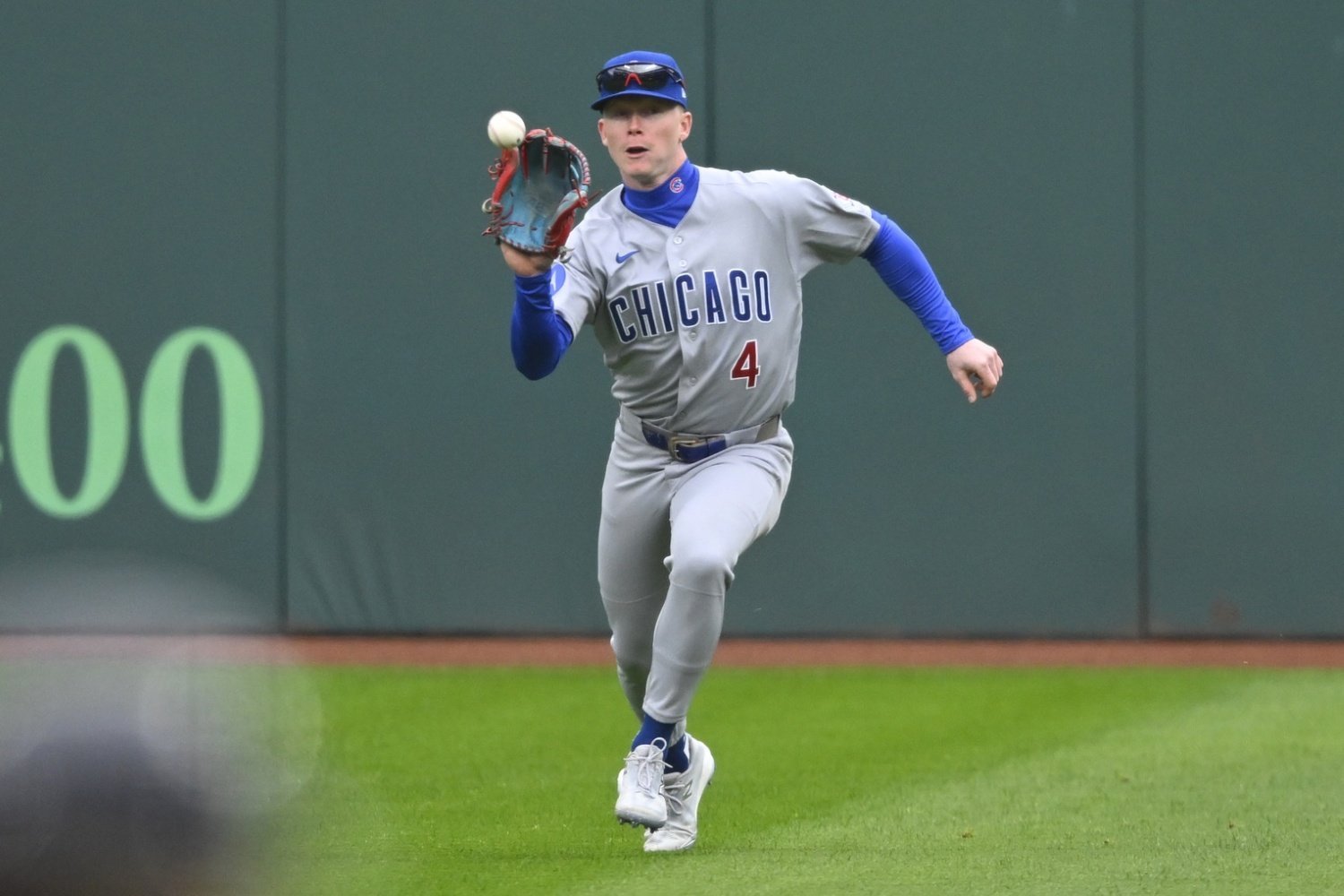
Two decades ago, evaluating defense in baseball was a largely subjective exercise. Fans and analysts relied on the eye test, highlight reels, and basic box score stats like errors and fielding percentage. If a player looked smooth and didn’t make many mistakes, he was probably considered a good defender (*cough*DerekJeter*cough*). The problem, of course, was that those tools left massive gaps in understanding. Range was hard to quantify, positioning was largely ignored, and difficult plays were rarely separated from routine ones.
Today, the game tracks nearly everything. With the rise of advanced data systems like Statcast and detailed charting services, every step, route, and reaction is recorded. Analysts can now measure how far a player runs, how quickly he gets there, and how often similar plays are made across the league. Defense has gone from a guessing game to a data-driven science, and at the center of that evolution are three key metrics: DRS, OAA, and FRV.
Let’s dive into baseball’s most common defensive metrics. What are they and how are they different?
Defensive Runs Saved (DRS)
Defensive Runs Saved attempts to quantify a player’s entire defensive performance by measuring how many runs he saves compared to an average player. It incorporates multiple defensive elements, including errors, range, outfield arm strength, and double-play ability.
How It’s Calculated
DRS uses data from Baseball Info Solutions to track where each ball is hit. For example, imagine an outfielder makes a running catch on a fly ball that is typically caught 70 percent of the time. By making that play, he earns 0.3 points for difficulty. If he misses it, he loses 0.7 points. Over time, these values are compiled, adjusted to league average, and then converted into runs saved.
Why It Is Useful
DRS provides a more complete defensive evaluation than traditional statistics. Factoring in multiple aspects of defense gives a broader picture of a player’s total impact in the field rather than focusing on just one skill.
Recent Leaders
During the 2025 season, there were three players who reached the +20 Defensive Runs Saved mark, including Ernie Clement, Steven Kwan, and Ceddanne Rafaela. That total represents a slight increase from 2024, when only two players, Brice Turang and Andrés Giménez, crossed that threshold. The year-to-year fluctuation highlights just how difficult it is to sustain elite defensive production at that level, even for the game’s best fielders.
Outs Above Average (OAA)
Outs Above Average is a range-based metric that focuses on how many outs a player converts compared to expectation. Originally limited to outfielders, it has since expanded to include infielders, with different calculation methods for each.
How It’s Calculated
For outfielders, OAA is built on Catch Probability. This accounts for how far a player must travel, how much time he has, and the direction of his movement. Like with DRS, if a player makes a catch with a 60 percent probability, he earns +0.4. If he misses it, he is charged -0.60. Over the course of a season, those values add up to produce a total OAA figure.
Statcast also provides additional context:
-
Expected Catch Percentage reflects how often an average fielder would make those plays.
-
Actual Catch Percentage shows how often the player actually converted them.
-
Catch Percentage Added shows the difference between expectation and reality.
These layers help explain not just how many plays were made, but how difficult those opportunities were.
For infielders, OAA becomes even more detailed. It considers distance to the ball, time available, distance to the base for a throw, and even the runner’s speed. Because Statcast tracks exact positioning, it accounts for defensive shifts and non-traditional alignments.
This means a third baseman fielding a ball in shallow right field is evaluated just as precisely as if he were standing in his usual spot. Every play is measured based on where the defender actually starts and how difficult the play truly is.
Why It’s Useful
Outs Above Average provides a clear and objective way to measure a defender’s range and ability to convert difficult plays into outs. By focusing on the probability of each individual play, it separates routine chances from truly challenging ones, giving proper credit to players who consistently make high-difficulty plays. Because it is built on precise tracking data, OAA also accounts for positioning and shifting, enabling a more accurate evaluation in today’s game, where defenders are rarely standing in traditional spots. This makes it one of the most reliable tools for identifying elite athleticism and real defensive impact.
Recent Leaders
Outs Above Average often paints a different defensive picture than DRS, focusing solely on range and play difficulty. In 2025, five players surpassed the +20 OAA mark, including Pete Crow-Armstrong, Bobby Witt Jr., Ke'Bryan Hayes, Ceddanne Rafaela, and Masyn Winn. That group was significantly larger than in 2024, when only two players, Andrés Giménez and Jacob Young, reached +20 OAA, reinforcing how rare it is to reach that elite level of range-based performance.
Fielding Run Value (FRV)
Fielding Run Value builds on the foundation of Statcast by combining multiple defensive components into one all-encompassing number. Instead of isolating one skill like range or arm strength, it brings everything together and expresses a player’s total defensive impact in terms of runs saved.
How It's Calculated
FRV pulls in several defensive performance areas, including range, throwing, framing, blocking, and double plays. Each of those components is converted into a run-based value using a standardized scale. For example, outs recorded through range are worth slightly less than a full run, while throwing and double play contributions carry their own specific weights. By translating everything into runs, FRV creates a consistent baseline that allows players at different positions to be evaluated on equal footing.
Why It’s Useful
The biggest strength of FRV is its ability to compare defenders across positions. Catchers, infielders, and outfielders all contribute in different ways, and traditional metrics often struggle to place them on the same scale. FRV solves that problem by turning every defensive action into a common currency. This makes it easier to identify overall defensive value, regardless of how that value is accumulated.
Recent Leaders
The 2025 season provides a strong example of how FRV captures different defensive profiles. Patrick Bailey led the way with +31 FRV, driven primarily by elite framing behind the plate, where he collected 25 runs. Alejandro Kirk, Ceddanne Rafaela, and Pete Crow Armstrong were all in the +21-22 FRV range, despite playing catcher, second base, and center field. Each player arrived at a similar level of total value, but through very different defensive strengths.
What Makes These Metrics Different?
While all three metrics aim to measure defense, they do so in fundamentally different ways.
DRS is broad and all-encompassing. It pulls together multiple aspects of defense into a single number, making it useful for evaluating overall performance but sometimes less precise at isolating specific skills.
OAA is more focused. It zeroes in on range and play difficulty, offering a clearer picture of how well a player gets to the ball and converts chances into outs. It is especially valuable for understanding athleticism and positioning.
FRV acts as a translator. It takes the detailed components measured by Statcast and converts them into a common currency of runs. By doing so, it allows for direct comparisons across positions and skill sets, something neither DRS nor OAA fully accomplishes on their own.
Together, these metrics represent how far defensive evaluation has come. What once relied on instinct and reputation is now grounded in measurable data, giving fans a clearer and more complete understanding of what truly happens on the field.
Do you like the pitch clock?

Follow DiamondCentric For Major League Baseball News & Analysis


Like what you've read here? Check out our team-specific sites and expand your fandom!











Recommended Comments
If you have an account on one of the following sites, you have a DiamondCentric account.
Twins Daily, Brewer Fanatic, North Side Baseball, Talk Sox, Jays Centre, Padres Mission, Royals Keep, Grand Central Mets, Fish On First.
Create an account or sign in to comment
You need to be a member in order to leave a comment
Create an account
Sign up for a new account in our community. It's easy!
Register a new accountSign in
Already have an account? Sign in here.
Sign In Now