


Cody Christie
-
Posts
76 -
Joined
-
Last visited
-
Days Won
6
2 Followers


Recent Profile Visitors
257,738 profile views


Cody Christie's Achievements


-

MLB Power Rankings: Brewers Drop From Top Spot, Red Sox & Marlins Slip
Cody Christie posted an article in MLB
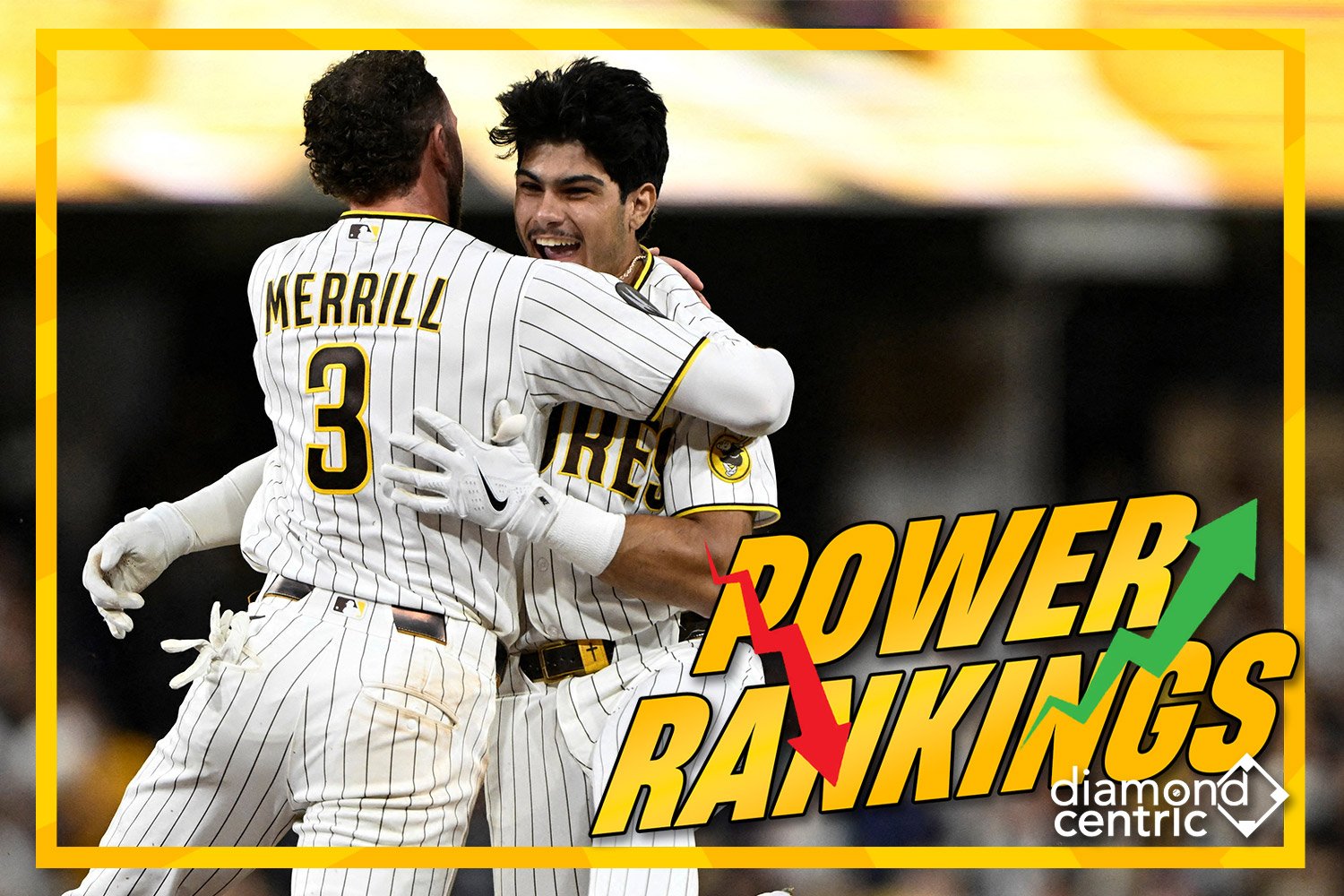 With the final week of the regular season here, there is still plenty left to be decided across Major League Baseball. Division races remain unsettled, Wild Card spots are still up for grabs, and teams are jockeying for postseason positioning. Every game carries added weight now, with just a handful of opportunities remaining for teams to change their place in the standings before October arrives. Third-order wins offer another way to evaluate where each team stands at this stage of the season. Based on Clay Davenport's adjusted standings, the metric goes beyond a team's actual record by considering run differential, strength of schedule, and ballpark effects. The result provides additional context for determining whether a team's record reflects its underlying performance. These Power Rankings focus more on sustainable performance than the results of the most recent games. The arrows show which teams are trending upward, heading in the wrong direction, or holding relatively steady as the season winds down. With October just around the corner and very little time remaining to change the standings, these final games will go a long way toward determining which teams enter the postseason in a strong position and which teams run out of time. 1. Dodgers — 96.7-58.1 (.625) ⬆️ Biggest Weekly Storyline: The Dodgers clinched their fifth straight NL West crown, but questions are swirling about whether Shohei Ohtani will be healthy enough for October. He is dealing with injuries to his right biceps and left knee. 2. Brewers — 96.6-58.3 (.624) ⬇️ Biggest Weekly Storyline: Milwaukee clinched their fourth straight NL Central on Tuesday with their ace on the mound. Jacob Misiorowski added to his Cy Young resume with seven strikeouts in five shutout innings. 3. Yankees — 89.9-64.0 (.584) Biggest Weekly Storyline: Outfielder Aaron Judge returned to the IL with a calf strain and isn’t eligible to return until the final game of the regular season. 4. Cubs — 90.0-64.9 (.581) Biggest Weekly Storyline: On Wednesday, Pete Crow-Armstrong and Alex Bregman each hit a home run, each hit a triple, and each had three extra-base hits in the 8-4 rout at Wrigley Field. That made them the first pair of MLB teammates to do that in the same game in nearly 70 years. 5. Rays — 89.3-64.6 (.580) Biggest Weekly Storyline: Richie Palacios collected a walk-off single to give the Rays a 2-1 victory on Saturday. Tampa Bay, which has three walk-off wins on its current homestand, opened a five-game lead over the second-place New York Yankees in the AL East. 6. Pirates — 85.7-69.2 (.553) ⬆️ Biggest Weekly Storyline: Rookie shortstop Konnor Griffin had four hits as the Pirates rallied past the Royals to reach .500. Pittsburgh is trying to have a winning record for the first time since 2018. 7. Red Sox — 85.8-70.0 (.551) ⬇️ Biggest Weekly Storyline: Starter Brayan Bello struck out 11 batters over eight innings pitched and allowed five hits and one earned run in his start against the Rays. 8. Tigers — 83.3-71.7 (.537) ⬆️ Biggest Weekly Storyline: Rookie Hao-Yu Lee hit his 10th home run of the year, establishing a single-season Major League record for a Taiwanese player. 9. Marlins — 83.2-71.7 (.537) ⬇️ Biggest Weekly Storyline: The Marlins used their ace Sandy Alcantara for his first career save. Even more remarkably, it came two days after he had a 101-pitch start. 10. Braves — 83.2-71.8 (.537) ⬇️ Biggest Weekly Storyline: The Braves clinched a playoff berth on Friday. Michael Harris II, Ronald Acuña Jr. and Matt Olson each hit a two-run homer in the game. 11. Padres — 80.0-75.0 (.516) Biggest Weekly Storyline: Rookie catcher Ethan Salas hit his first career walk-off as the Padres vaulted past the Phillies in the wild-card race. It was San Diego’s fourth straight win. 12. Blue Jays — 77.7-77.3 (.501) Biggest Weekly Storyline: The Blue Jays plan to start Trey Yesavage on Monday as he returns from knee surgery. Toronto sits three games out of the final AL Wild Card spot. 13. Nationals — 77.1-77.9 (.497) ⬆️ Biggest Weekly Storyline: The Nationals signed pitcher Cade Cavalli to a 4-year contract extension for a reported $47 million with a team option for 2031. 14. Diamondbacks — 77.0-78.0 (.497) ⬆️ Biggest Weekly Storyline: Pavin Smith hit a walk-off two-run home run with one out in the bottom of the ninth on Saturday. It was the sixth walk-off homer of the season for Arizona, which leads the major leagues and is a franchise record. 15. Phillies — 76.9-78.1 (.496) ⬇️ Biggest Weekly Storyline: The Phillies place All-Star Jesús Luzardo on the 15-day IL but are not ruling out a potential postseason start. Luzardo has been dealing with inflammation in his throwing shoulder. 16. White Sox — 76.6-78.4 (.494) ⬇️ Biggest Weekly Storyline: All-Star Miguel Vargas hit his 33rd homer, walked twice, and made a big play in the field in Saturday’s victory. It was a much needed win as Chicago fell behind Cleveland in the AL Central. 17. Guardians — 76.5-78.5 (.494) ⬆️ Biggest Weekly Storyline: Third baseman José Ramírez homered and reached 1,000 career RBI on Friday as the Guardians moved into first alone in the AL Central. 18. Mets — 75.3-79.7 (.486) ⬇️ Biggest Weekly Storyline: Outfielder Carson Benge recorded three hits, including a solo home run, breaking Pete Alonso's Mets rookie record for hits in a season (156) in the process Saturday. 19. Rangers — 74.6-80.5 (.481) ⬆️ Biggest Weekly Storyline: Starter Cal Quantrill departed Saturday’s game with right lat tightness. The Rangers’ bullpen covered 7 2/3 innings to push Texas into first in the AL West. 20. Orioles — 73.9-81.2 (.476) ⬆️ Biggest Weekly Storyline: First baseman Pete Alonso hit his 300th career home run at Citi Field in New York against his former team. He became the third player in MLB history to hit that milestone against a team where he played 1000+ games. 21. Giants — 73.4-81.7 (.473) ⬇️ Biggest Weekly Storyline: First baseman Rafael Devers and starter Logan Webb were both placed in the IL this week. Devers had a left-side core muscle injury that required surgery, while Webb is dealing with a blister. 22. Cardinals — 71.9-83.2 (.464) ⬇️ Biggest Weekly Storyline: The Cardinals were officially eliminated from the playoffs earlier this week. It is the fourth straight season that St. Louis has missed the playoffs. 23. Mariners — 71.4-83.6 (.461) ⬆️ Biggest Weekly Storyline: Catcher Cal Raleigh crushed the longest homer of his career (a Statcast-projected 459 feet) over the weekend. Still, the Mariners continued to drop back in the AL West and Wild Card standings. 24. Twins — 70.9-84.1 (.457) ⬇️ Biggest Weekly Storyline: Outfielder Walker Jenkins became the tenth Twin to have three consecutive multi-hit games in his age-21 season, the first since Joe Mauer in 2004. 25. Astros — 70.5-84.6 (.455) Biggest Weekly Storyline: Astros manager Joe Espada confirmed to reporters Tuesday that infielder Carlos Correa will not return this season. Correa has been sidelined since the beginning of May due to an ankle injury. 26. Angels — 70.3-84.7 (.454) Biggest Weekly Storyline: Starter Reid Detmers reached 200 strikeouts for the first time in his career Saturday, becoming just the 12th pitcher in franchise history to reach the mark in a season. 27. Royals — 67.9-87.2 (.438) Biggest Weekly Storyline: Catcher Carter Jensen has now hit more home runs in a season than any rookie in Royals history. His 25 home runs broke a tie with Bob Hamelin, who hit 24 homers in the strike-shortened 1994 season 28. Reds — 63.2-91.9 (.407) Biggest Weekly Storyline: Starter Chase Burns was placed on the IL on Sunday with a groin injury. His 238 strikeouts through his first 36 career starts rank third in Reds franchise history since 1900. 29. Rockies — 59.3-95.8 (.382) Biggest Weekly Storyline: A bronze statue honoring Todd Helton was unveiled in front of Coors Field on Saturday before the Rockies game against the Mariners. He was elected to the National Baseball Hall of Fame in 2024. 30. Athletics — 56.9-98.2 (.367) Biggest Weekly Storyline: Donovan Walton hit a two-run homer and tied career highs with three hits and four RBIs on Saturday night. It was the fifth three-hit performance in his breakout season. What storylines stood out this week? Do you agree with the rankings above? Leave a comment and start the discussion.
 -
With the final week of the regular season here, there is still plenty left to be decided across Major League Baseball. Division races remain unsettled, Wild Card spots are still up for grabs, and teams are jockeying for postseason positioning. Every game carries added weight now, with just a handful of opportunities remaining for teams to change their place in the standings before October arrives. Third-order wins offer another way to evaluate where each team stands at this stage of the season. Based on Clay Davenport's adjusted standings, the metric goes beyond a team's actual record by considering run differential, strength of schedule, and ballpark effects. The result provides additional context for determining whether a team's record reflects its underlying performance. These Power Rankings focus more on sustainable performance than the results of the most recent games. The arrows show which teams are trending upward, heading in the wrong direction, or holding relatively steady as the season winds down. With October just around the corner and very little time remaining to change the standings, these final games will go a long way toward determining which teams enter the postseason in a strong position and which teams run out of time. 1. Dodgers — 96.7-58.1 (.625) ⬆️ Biggest Weekly Storyline: The Dodgers clinched their fifth straight NL West crown but questions are swirling about whether Shohei Ohtani will be healthy enough for October. He is dealing with injuries to his right biceps and left knee. 2. Brewers — 96.6-58.3 (.624) ⬇️ Biggest Weekly Storyline: Milwaukee clinched their fourth straight NL Central on Tuesday with their ace on the mound. Jacob Misiorowski added to his Cy Young resume with seven strikeouts in five shutout innings. 3. Yankees — 89.9-64.0 (.584) Biggest Weekly Storyline: Outfielder Aaron Judge returned to the IL with a calf strain and isn’t eligible to return until the final game of the regular season. 4. Cubs — 90.0-64.9 (.581) Biggest Weekly Storyline: On Wednesday, Pete Crow-Armstrong and Alex Bregman each hit a home run, each hit a triple and each had three extra-base hits in the 8-4 rout at Wrigley Field. That made them the first pair of MLB teammates to do that in the same game in nearly 70 years. 5. Rays — 89.3-64.6 (.580) Biggest Weekly Storyline: Richie Palacios collected a walk-off single to give Rays a 2-1 victory on Saturday. Tampa Bay, which has three walk-off wins on its current homestand, opened a five-game lead over the second-place New York Yankees in the AL East. 6. Pirates — 85.7-69.2 (.553) ⬆️ Biggest Weekly Storyline: Rookie shortstop Konnor Griffin had four hits as the Pirates rallied past the Royals to reach .500. Pittsburgh is trying to have a winning record for the first time since 2018. 7. Red Sox — 85.8-70.0 (.551) ⬇️ Biggest Weekly Storyline: Starter Brayan Bello struck 11 batters over eight innings pitched and allowed five hits and one earned run in his start against the Rays. 8. Tigers — 83.3-71.7 (.537) ⬆️ Biggest Weekly Storyline: Rookie Hao-Yu Lee hit his 10th home run of the year, establishing a single-season Major League record for a Taiwanese player. 9. Marlins — 83.2-71.7 (.537) ⬇️ Biggest Weekly Storyline: The Marlins used their ace Sandy Alcantara for his first career save. Even more remarkably, it came two days after he had a 101-pitch start. 10. Braves — 83.2-71.8 (.537) ⬇️ Biggest Weekly Storyline: The Braves clinched a playoff berth on Friday. Michael Harris II, Ronald Acuña Jr. and Matt Olson each hit a two-run homer in the game. 11. Padres — 80.0-75.0 (.516) Biggest Weekly Storyline: Rookie catcher Ethan Salas hit his first career walk-off as the Padres vaulted past the Phillies in the wild-card race. It was San Diego’s fourth straight win. 12. Blue Jays — 77.7-77.3 (.501) Biggest Weekly Storyline: The Blue Jays plan to start Trey Yesavage on Monday as he returns from knee surgery. Toronto sits three games out of the final AL Wild Card spot. 13. Nationals — 77.1-77.9 (.497) ⬆️ Biggest Weekly Storyline: The Nationals signed pitcher Cade Cavalli to a 4-year contract extension for a reported $47 million with a team option for 2031. 14. Diamondbacks — 77.0-78.0 (.497) ⬆️ Biggest Weekly Storyline: Pavin Smith hit a walk-off two-run home run with one out in the bottom of the ninth on Saturday. It was the sixth walk-off homer of the season for Arizona, which leads the major leagues and is a franchise record. 15. Phillies — 76.9-78.1 (.496) ⬇️ Biggest Weekly Storyline: The Phillies place All-Star Jesús Luzardo on the 15-day IL but are not ruling out a potential postseason start. Luzardo has been dealing with inflammation in his throwing shoulder. 16. White Sox — 76.6-78.4 (.494) ⬇️ Biggest Weekly Storyline: All-Star Miguel Vargas hit his 33rd homer, walked twice, and made a big play in the field in Saturday’s victory. It was a much needed win as Chicago fell behind Cleveland in the AL Central. 17. Guardians — 76.5-78.5 (.494) ⬆️ Biggest Weekly Storyline: Third baseman José Ramírez homered and reached 1,000 career RBI on Friday as Guardians moved into first alone in the AL Central. 18. Mets — 75.3-79.7 (.486) ⬇️ Biggest Weekly Storyline: Outfielder Carson Benge recorded three hits, including a solo home run, breaking Pete Alonso's Mets rookie record for hits in a season (156) in the process Saturday. 19. Rangers — 74.6-80.5 (.481) ⬆️ Biggest Weekly Storyline: Starter Cal Quantrill departed Saturday’s game with right lat tightness. The Rangers’ bullpen covered 7 2/3 innings to push Texas into first in the AL West. 20. Orioles — 73.9-81.2 (.476) ⬆️ Biggest Weekly Storyline: First baseman Pete Alonso hit his 300th career home run at Citi Field in New York against his former team. He became the third player in MLB history to hit that milestone against a team where he played 1000+ games. 21. Giants — 73.4-81.7 (.473) ⬇️ Biggest Weekly Storyline: First baseman Rafael Devers and starter Logan Webb were both placed in the IL this week. Devers had a left-side core muscle injury that required surgery, while Webb is dealing with a blister. 22. Cardinals — 71.9-83.2 (.464) ⬇️ Biggest Weekly Storyline: The Cardinals were officially eliminated from the playoffs earlier this week. It is the fourth straight season that St. Louis has missed the playoffs. 23. Mariners — 71.4-83.6 (.461) ⬆️ Biggest Weekly Storyline: Catcher Cal Raleigh crushed the longest homer of his career (a Statcast-projected 459 feet) over the weekend. Still, the Mariners continued to drop back in the AL West and Wild Card standings. 24. Twins — 70.9-84.1 (.457) ⬇️ Biggest Weekly Storyline: Outfielder Walker Jenkins became the tenth Twin to have 3-consecutive multi-hit games in his age 21 season, the first since Joe Mauer in 2004. 25. Astros — 70.5-84.6 (.455) Biggest Weekly Storyline: Astros manager Joe Espada confirmed to reporters Tuesday that infielder Carlos Correa will not return this season. Correa has been sidelined since the beginning of May due to an ankle injury. 26. Angels — 70.3-84.7 (.454) Biggest Weekly Storyline: Starter Reid Detmers reached 200 strikeouts for the first time in his career Saturday, becoming just the 12th pitcher in franchise history to reach the mark in a season. 27. Royals — 67.9-87.2 (.438) Biggest Weekly Storyline: Catcher Carter Jensen has now hit more home runs in a season than any rookie in Royals history. His 25 home runs broke a tie with Bob Hamelin, who hit 24 homers in the strike-shortened 1994 season 28. Reds — 63.2-91.9 (.407) Biggest Weekly Storyline: Starter Chase Burns was placed on the IL on Sunday with a groin injury. His 238 strikeouts through his first 36 career starts rank third in Reds franchise history since 1900. 29. Rockies — 59.3-95.8 (.382) Biggest Weekly Storyline: A bronze statue honoring Todd Helton was unveiled in front of Coors Field on Saturday before the Rockies game against the Mariners. He was elected to the National Baseball Hall of Fame in 2024. 30. Athletics — 56.9-98.2 (.367) Biggest Weekly Storyline: Donovan Walton hit a two-run homer and tied career highs with three hits and four RBIs on Saturday night. It was the fifth three-hit performance in his breakout season. What storylines stood out this week? Do you agree with the rankings above? Leave a comment and start the discussion. View full article
-
Image courtesy of Christopher Hanewinckel-Imagn Images With less than two weeks remaining in the regular season, there isn't much time left for teams to make a meaningful move up or down the division standings. While the standings can still change, the window for gaining or losing significant ground is rapidly closing. Every remaining game becomes more important as teams fight for division titles, Wild Card berths, and better postseason positioning. Third-order wins offer another way to evaluate where each team stands at this stage of the season. Based on Clay Davenport's adjusted standings, the metric goes beyond a team's actual record by considering run differential, strength of schedule, and ballpark effects. The result provides additional context for determining whether a team's record reflects its underlying performance. These Power Rankings focus more on sustainable performance than the results of the most recent games. The arrows show which teams are trending upward, heading in the wrong direction, or holding relatively steady as the season winds down. With October getting closer and very little time remaining to change the standings, these final games will go a long way toward determining which teams enter the postseason in a strong position and which teams run out of time. 1. Brewers — 94.0-54.9 (.631) Biggest Weekly Storyline: On Friday, the Brewers clinched a playoff spot and became the first team in MLB history to record multiple shutout wins of 20-plus runs in a season. 2. Dodgers — 91.0-56.9 (.615) Biggest Weekly Storyline: Designated hitter Shohei Ohtani officially hits the IL for the first time of Dodgers career due to biceps inflammation. 3. Yankees — 85.9-62.1 (.580) Biggest Weekly Storyline: Outfielder Aaron Judge returned to New York’s lineup after a months-long rib injury. He played just six innings and struck out two times in his first game back. 4. Cubs — 86.3-62.6 (.580) Biggest Weekly Storyline: Outfielder Pete Crow-Armstrong has the Cubs' first 10 fWAR season since Rogers Hornsby in 1929. PCA is the frontrunner for the NL MVP. 5. Rays — 85.6-62.3 (.579) Biggest Weekly Storyline: Third baseman Junior Caminero launched the Rays into postseason with a 2-run homer for a walk-off win over Houston. Tampa Bay has the best record in the AL and became the first team in MLB to clinch a playoff spot this season. 6. Red Sox — 87.1-67.3 (.564) Biggest Weekly Storyline: Boston placed Eli White on the injured list Friday with a right foot ligament injury. The move comes only five days after the Red Sox placed starting center fielder Ceddanne Rafaela on the IL with a right quadriceps strain. 7. Pirates — 81.8-67.2 (.549) ⬆️ Biggest Weekly Storyline: Starter Jared Jones took a no-hitter into the seventh inning on Friday. He pitched seven shutout innings, allowed only one hit, issued two walks, and struck out eight batters on 20 swings and misses. 8. Marlins — 81.2-67.7 (.545) ⬇️ Biggest Weekly Storyline: Utilityman Javier Sanoja’s 1.5 fWAR is tied for 14th most with Fernando Tatis Jr. and Wilyer Abreu among Major Leaguers with at least 130 plate appearances since August 1. 9. Braves — 80.0-69.0 (.537) Biggest Weekly Storyline: Catcher Drake Baldwin capped a remarkable comeback for the Braves in a critical series versus the Phillies. His 11th-inning double scored the runner from first and put Atlanta in the driver’s seat for the NL East crown. 10. Tigers — 78.1-69.9 (.528) ⬆️ Biggest Weekly Storyline: Starter Justin Verlander threw to batters off the mound at Comerica Park on Saturday. He’s attempting to make one more start for Detroit before retiring. 11. Padres — 76.0-72.0 (.514) ⬆️ Biggest Weekly Storyline: In the midst of a playoff push, the Padres won their sixth straight game on Saturday. San Diego holds the NL’s final Wild Card spot by 1.5 games over Arizona. 12. Blue Jays — 75.4-73.6 (.506) ⬆️ Biggest Weekly Storyline: The Blue Jays called up 30-year-old Rudy Martin Jr. after 12 years in the minor leagues. He was a 25th-round pick in 2014. 13. Phillies — 73.9-75.1 (.496) ⬇️ Biggest Weekly Storyline: Starter Jesus Luzardo was scratched from his latest start due to stiffness in his left shoulder. The left-hander has a 1.85 ERA in his last 10 starts, including a complete-game shutout of the Braves last week. 14. Nationals — 74.3-75.7 (.495) ⬇️ Biggest Weekly Storyline: Washington ended a seven-game losing streak on Friday. As part of the streak, the Nationals set the MLB record for blown saves in a season. 15. White Sox — 73.3-74.7 (.495) ⬇️ Biggest Weekly Storyline: Chicago lost four straight games and nine of their last 12 games with a loss on Friday. The White Sox saw their lead in the AL Central drop to a half game over Cleveland. 16. Diamondbacks — 73.1-75.9 (.491) Biggest Weekly Storyline: Outfielder Corbin Carroll became the first player in MLB history with two seasons of 20+ HR, 20+ SB, and 15+ 3B. 17. Mets — 72.4-75.6 (.489) ⬆️ Biggest Weekly Storyline: The Mets and Yankees paid tribute to the 25th anniversary of September 11 on Friday. Pregame ceremonies honored first responders and the first pitch was thrown by a couple whose fathers died on United Flight 175. 18. Guardians — 72.4-76.6 (.486) Biggest Weekly Storyline: Cleveland picked up two games on the White Sox over the last 10 games to make things interesting in the AL Central. The Guardians sit 1.5 games out of first entering play on Sunday. 19. Giants — 70.4-76.8 (.478) ⬇️ Biggest Weekly Storyline: First baseman Rafael Devers hit his 35th home run this week, giving him the most by a Giants player since Barry Bonds in 2004. 20. Cardinals — 70.6-78.4 (.474) Biggest Weekly Storyline: On Saturday, Cardinals legends Albert Pujols and Yadier Molina were inducted into the team’s Hall of Fame. 21. Rangers — 70.4-78.6 (.472) ⬆️ Biggest Weekly Storyline: Starter Jacob deGrom is the only MLB pitcher in the modern era to toss a scoreless start with 12+ strikeouts and no walks and leave with a 3+ run lead but have his team lose the game. 22. Orioles — 70.3-78.8 (.471) ⬇️ Biggest Weekly Storyline: After allowing five earned runs over three innings on Saturday, the Orioles placed starter Kyle Bradish on the 15-day injured list with lower abdominal discomfort. It likely ends his 2026 season. 23. Twins — 68.7-79.4 (.464) Biggest Weekly Storyline: Minnesota called up another one of the organization’s top prospects on Saturday. Outfielder Emmanuel Rodriguez started in center field and hit a homer in his first at-bat. 24. Mariners — 68.9-80.1 (.462) Biggest Weekly Storyline: Starter Logan Gilbert pitched seven innings, allowing three runs on three hits and a pair of walks and striking out a season-high 11 on Thursday. 25. Astros — 68.0-81.1 (.456) Biggest Weekly Storyline: Astros' triple-crown contender Yordan Alvarez has been dealing with a sore right ankle. He leads the AL with a .310 batting average and is second with 38 home runs and 96 RBI. 26. Angels — 67.4-80.6 (.455) Biggest Weekly Storyline: On Friday, the Angels social media team made a disrespectful post about 9/11 before deleting it. Mike Trout hit a home run, and they captioned the post “Capital Crushed.” 27. Royals — 66.5-82.5 (.446) Biggest Weekly Storyline: Starter Seth Lugo struck out seven in five strong innings to lead the Royals to a 3-2 win over the Red Sox on Friday night. 28. Reds — 60.5-87.6 (.409) Biggest Weekly Storyline: Elly De La Cruz homered for the fifth consecutive game on Wednesday night, setting a new career high. It’s the second-longest home run streak in Reds history. 29. Rockies — 56.8-91.3 (.384) ⬆️ Biggest Weekly Storyline: Rockies rookie right-handed pitcher Mason Adams struck out five and held the Tigers to one run in five innings. He missed last season after undergoing Tommy John surgery. 30. Athletics — 55.1-94.0 (.370) ⬇️ Biggest Weekly Storyline: On Friday, the A’s played spoiler against a Mariners club looking to stay in the playoff race. Donovan Walton hit a walk-off two-run homer in a 6-5 victory in 10 innings. What storylines stood out this week? Do you agree with the rankings above? Leave a comment and start the discussion. View full article
-
MLB Power Rankings: Padres & Blue Jays Move Into Top-12, Mets Have Life
Cody Christie posted an article in MLB
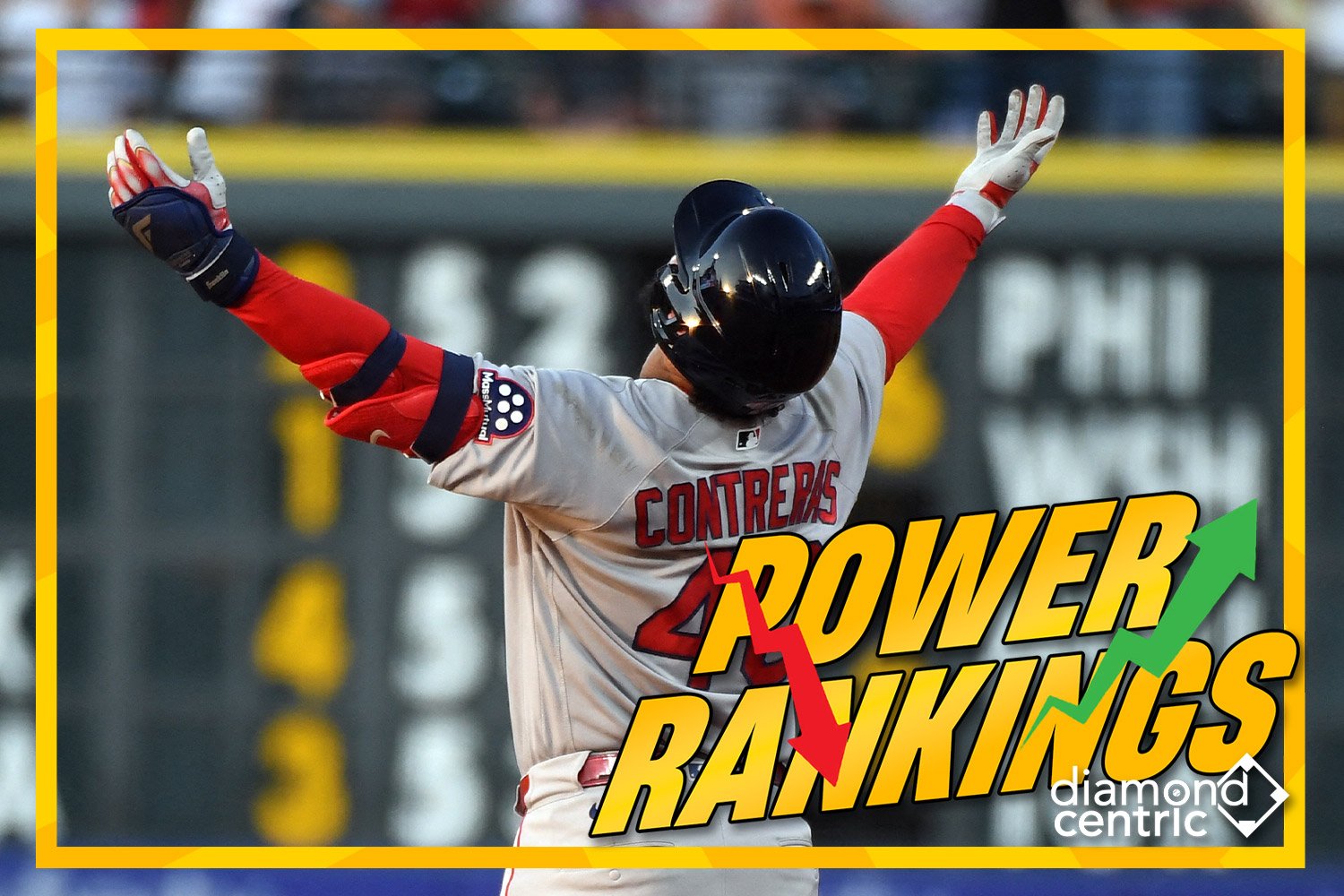 With less than two weeks remaining in the regular season, there isn't much time left for teams to make a meaningful move up or down the division standings. While the standings can still change, the window for gaining or losing significant ground is rapidly closing. Every remaining game becomes more important as teams fight for division titles, Wild Card berths, and better postseason positioning. Third-order wins offer another way to evaluate where each team stands at this stage of the season. Based on Clay Davenport's adjusted standings, the metric goes beyond a team's actual record by considering run differential, strength of schedule, and ballpark effects. The result provides additional context for determining whether a team's record reflects its underlying performance. These Power Rankings focus more on sustainable performance than the results of the most recent games. The arrows show which teams are trending upward, heading in the wrong direction, or holding relatively steady as the season winds down. With October getting closer and very little time remaining to change the standings, these final games will go a long way toward determining which teams enter the postseason in a strong position and which teams run out of time. 1. Brewers — 94.0-54.9 (.631) Biggest Weekly Storyline: On Friday, the Brewers clinched a playoff spot and became the first team in MLB history to record multiple shutout wins of 20-plus runs in a season. 2. Dodgers — 91.0-56.9 (.615) Biggest Weekly Storyline: Designated hitter Shohei Ohtani officially hits the IL for the first time of Dodgers career due to biceps inflammation. 3. Yankees — 85.9-62.1 (.580) Biggest Weekly Storyline: Outfielder Aaron Judge returned to New York’s lineup after a months-long rib injury. He played just six innings and struck out two times in his first game back. 4. Cubs — 86.3-62.6 (.580) Biggest Weekly Storyline: Outfielder Pete Crow-Armstrong has the Cubs' first 10 fWAR season since Rogers Hornsby in 1929. PCA is the frontrunner for the NL MVP. 5. Rays — 85.6-62.3 (.579) Biggest Weekly Storyline: Third baseman Junior Caminero launched the Rays into postseason with a 2-run homer for a walk-off win over Houston. Tampa Bay has the best record in the AL and became the first team in MLB to clinch a playoff spot this season. 6. Red Sox — 87.1-67.3 (.564) Biggest Weekly Storyline: Boston placed Eli White on the injured list Friday with a right foot ligament injury. The move comes only five days after the Red Sox placed starting center fielder Ceddanne Rafaela on the IL with a right quadriceps strain. 7. Pirates — 81.8-67.2 (.549) ⬆️ Biggest Weekly Storyline: Starter Jared Jones took a no-hitter into the seventh inning on Friday. He pitched seven shutout innings, allowed only one hit, issued two walks, and struck out eight batters on 20 swings and misses. 8. Marlins — 81.2-67.7 (.545) ⬇️ Biggest Weekly Storyline: Utilityman Javier Sanoja’s 1.5 fWAR is tied for 14th most with Fernando Tatis Jr. and Wilyer Abreu among Major Leaguers with at least 130 plate appearances since August 1. 9. Braves — 80.0-69.0 (.537) Biggest Weekly Storyline: Catcher Drake Baldwin capped a remarkable comeback for the Braves in a critical series versus the Phillies. His 11th-inning double scored the runner from first and put Atlanta in the driver’s seat for the NL East crown. 10. Tigers — 78.1-69.9 (.528) ⬆️ Biggest Weekly Storyline: Starter Justin Verlander threw to batters off the mound at Comerica Park on Saturday. He’s attempting to make one more start for Detroit before retiring. 11. Padres — 76.0-72.0 (.514) ⬆️ Biggest Weekly Storyline: In the midst of a playoff push, the Padres won their sixth straight game on Saturday. San Diego holds the NL’s final Wild Card spot by 1.5 games over Arizona. 12. Blue Jays — 75.4-73.6 (.506) ⬆️ Biggest Weekly Storyline: The Blue Jays called up 30-year-old Rudy Martin Jr. after 12 years in the minor leagues. He was a 25th-round pick in 2014. 13. Phillies — 73.9-75.1 (.496) ⬇️ Biggest Weekly Storyline: Starter Jesus Luzardo was scratched from his latest start due to stiffness in his left shoulder. The left-hander has a 1.85 ERA in his last 10 starts, including a complete-game shutout of the Braves last week. 14. Nationals — 74.3-75.7 (.495) ⬇️ Biggest Weekly Storyline: Washington ended a seven-game losing streak on Friday. As part of the streak, the Nationals set the MLB record for blown saves in a season. 15. White Sox — 73.3-74.7 (.495) ⬇️ Biggest Weekly Storyline: Chicago lost four straight games and nine of their last 12 games with a loss on Friday. The White Sox saw their lead in the AL Central drop to a half game over Cleveland. 16. Diamondbacks — 73.1-75.9 (.491) Biggest Weekly Storyline: Outfielder Corbin Carroll became the first player in MLB history with two seasons of 20+ HR, 20+ SB, and 15+ 3B. 17. Mets — 72.4-75.6 (.489) ⬆️ Biggest Weekly Storyline: The Mets and Yankees paid tribute to the 25th anniversary of September 11 on Friday. Pregame ceremonies honored first responders and the first pitch was thrown by a couple whose fathers died on United Flight 175. 18. Guardians — 72.4-76.6 (.486) Biggest Weekly Storyline: Cleveland picked up two games on the White Sox over the last 10 games to make things interesting in the AL Central. The Guardians sit 1.5 games out of first entering play on Sunday. 19. Giants — 70.4-76.8 (.478) ⬇️ Biggest Weekly Storyline: First baseman Rafael Devers hit his 35th home run this week, giving him the most by a Giants player since Barry Bonds in 2004. 20. Cardinals — 70.6-78.4 (.474) Biggest Weekly Storyline: On Saturday, Cardinals legends Albert Pujols and Yadier Molina were inducted into the team’s Hall of Fame. 21. Rangers — 70.4-78.6 (.472) ⬆️ Biggest Weekly Storyline: Starter Jacob deGrom is the only MLB pitcher in the modern era to toss a scoreless start with 12+ strikeouts and no walks and leave with a 3+ run lead but have his team lose the game. 22. Orioles — 70.3-78.8 (.471) ⬇️ Biggest Weekly Storyline: After allowing five earned runs over three innings on Saturday, the Orioles placed starter Kyle Bradish on the 15-day injured list with lower abdominal discomfort. It likely ends his 2026 season. 23. Twins — 68.7-79.4 (.464) Biggest Weekly Storyline: Minnesota called up another one of the organization’s top prospects on Saturday. Outfielder Emmanuel Rodriguez started in center field and hit a homer in his first at-bat. 24. Mariners — 68.9-80.1 (.462) Biggest Weekly Storyline: Starter Logan Gilbert pitched seven innings, allowing three runs on three hits and a pair of walks and striking out a season-high 11 on Thursday. 25. Astros — 68.0-81.1 (.456) Biggest Weekly Storyline: Astros' triple-crown contender Yordan Alvarez has been dealing with a sore right ankle. He leads the AL with a .310 batting average and is second with 38 home runs and 96 RBI. 26. Angels — 67.4-80.6 (.455) Biggest Weekly Storyline: On Friday, the Angels social media team made a disrespectful post about 9/11 before deleting it. Mike Trout hit a home run, and they captioned the post “Capital Crushed.” 27. Royals — 66.5-82.5 (.446) Biggest Weekly Storyline: Starter Seth Lugo struck out seven in five strong innings to lead the Royals to a 3-2 win over the Red Sox on Friday night. 28. Reds — 60.5-87.6 (.409) Biggest Weekly Storyline: Elly De La Cruz homered for the fifth consecutive game on Wednesday night, setting a new career high. It’s the second-longest home run streak in Reds history. 29. Rockies — 56.8-91.3 (.384) ⬆️ Biggest Weekly Storyline: Rockies rookie right-handed pitcher Mason Adams struck out five and held the Tigers to one run in five innings. He missed last season after undergoing Tommy John surgery. 30. Athletics — 55.1-94.0 (.370) ⬇️ Biggest Weekly Storyline: On Friday, the A’s played spoiler against a Mariners club looking to stay in the playoff race. Donovan Walton hit a walk-off two-run homer in a 6-5 victory in 10 innings. What storylines stood out this week? Do you agree with the rankings above? Leave a comment and start the discussion.
 -
Image courtesy of Brad Mills-Imagn Images With fewer than 20 games remaining in the regular season, there is very little time left for teams to make significant moves in the playoff picture. Every game carries added weight, whether a club is trying to climb into a division lead, secure a Wild Card spot, or improve its postseason position. The standings can still shift, but the opportunities to gain or lose meaningful ground are quickly disappearing as the regular season approaches its conclusion. Third-order wins remain a useful tool for providing additional context when evaluating each team. Based on Clay Davenport's adjusted standings, the metric looks beyond a team's actual record by accounting for run differential, strength of schedule, and ballpark effects. It provides another perspective on how a team has performed and whether its record accurately represents the quality of the club. These Power Rankings place a greater emphasis on sustainable performance rather than simply reacting to a team's most recent results. The arrows indicate which teams are gaining momentum, moving in the wrong direction, or remaining relatively steady as the season winds down. With October approaching and the margin for error becoming increasingly small, the final weeks will help determine which teams are positioned to make an impact in the postseason and which will be left outside the playoff picture. 1. Brewers — 89.5-54.4 (.622) Biggest Weekly Storyline: Shortstop Cooper Pratt became the first Brewers rookie with an RBI in six consecutive games since Ryan Braun in 2007. 2. Dodgers — 87.4-55.5 (.612) Biggest Weekly Storyline: Designated hitter Shohei Ohtani struck out four times on Wednesday and then sat out multiple games. He has been dealing with lingering pain in his right biceps and left knee that has prevented him from pitching. 3. Yankees — 83.3-59.6 (.583) Biggest Weekly Storyline: Outfielder Aaron Judge took on-field batting practice on Friday for the first time since May 31. He’s been recovering from a stress fracture in his right rib. 4. Cubs — 82.9-61.0 (.576) ⬆️ Biggest Weekly Storyline: Outfielder Pete Crow-Armstrong and starter Kevin Gausman teamed up for a dominant night at Wrigley. PCA hit his 39th homer, a two-run shot, while Gausman allowed one run on five hits over seven innings. 5. Rays — 81.1-61.8 (.568) ⬇️ Biggest Weekly Storyline: The Rays put starting pitcher Shane McClanahan on the IL due to left forearm tightness. He also missed two weeks in July with back tightness. 6. Red Sox — 80.1-63.8 (.557) Biggest Weekly Storyline: Catcher Mickey Gasper hit a homer on Friday that helped Boston win 1-0. His 1.541 OPS is the highest OPS by a Red Sox hitter over any 16-game span since 2010. 7. Marlins — 79.4-64.6 (.551) Biggest Weekly Storyline: Kyle Stowers left Thursday’s game with a hamstring injury that he has been dealing with in recent weeks as Miami hangs on the edge of Wild Card contention. In 10 games prior, he went 10-for-33 with two homers. 8. Pirates — 78.8-65.1 (.548) Biggest Weekly Storyline: Pirates rookie shortstop Konnor Griffin is returned to the lineup on Friday after missing time with a left ring finger injury. He went 0-for-3 and scored the team’s only run in a 1-0 victory. 9. Braves — 77.3-66.3 (.538) Biggest Weekly Storyline: Outfielder Ronald Acuna Jr. became the fastest player in MLB history to reach 200 homers and 200 steals. He did it in 25 fewer games than Alfonso Soriano. 10. Nationals — 72.9-65.6 (.526) ⬆️ Biggest Weekly Storyline: Outfielder James Wood returned from a left oblique strain. He went 1-for-4, as his single into right field broke up Atlanta’s no-hit bid with two outs in the bottom of the sixth inning. 11. Tigers — 75.2-67.8 (.526) ⬇️ Biggest Weekly Storyline: Catcher Dillon Dingler is hitting .107/.176/.131 with zero home runs and four RBI over 22 games since August 7. His -14 wRC+ is the worst mark among all qualified MLB hitters during that span. 12. Phillies — 72.5-70.5 (.507) Biggest Weekly Storyline: Outfielder Bryce Harper is on pace to become only the third player in Phillies history to post a .900 OPS at 33 years of age or older. 13. White Sox — 72.0-71.0 (.503) ⬇️ Biggest Weekly Storyline: Colson Montgomery and Miguel Vargas both joined the 30-home run club on Friday. Both players are helping push a surprising Chicago team to the top of the AL Central. 14. Padres — 71.6-71.4 (.501) ⬇️ Biggest Weekly Storyline: The Padres called up top prospect Ethan Salas earlier in the week. He became the youngest catcher to debut since Ivan Rodriguez in 1991. 15. Blue Jays — 72.1-71.9 (.501) Biggest Weekly Storyline: Starter Max Scherzer moved into ninth place on the all-time strikeout list by passing Gaylord Perry. 16. Diamondbacks — 67.9-70.1 (.492) ⬆️ Biggest Weekly Storyline: Outfielder Corbin Carroll leads MLB with 16 triples this season, 8 more than the next closest MLB players. That would be the largest gap in triples between an MLB leader and second place since 1957, when Willie Mays had nine more than second place. 17. Giants — 68.7-72.4 (.487) ⬆️ Biggest Weekly Storyline: First baseman Rafael Devers' 67 extra-base hits are the most by a Giants player in the team's first 142 games since Barry Bonds (67) in 2004. 18. Guardians — 70.1-73.9 (.487) Biggest Weekly Storyline: On Friday, the Guardians swept a doubleheader versus the Tigers on consecutive walkoffs. Brayan Rocchio scored the winning run in both games and hit a game-tying grand slam earlier in the day. 19. Mets — 68.4-74.6 (.478) ⬇️ Biggest Weekly Storyline: Catcher Francisco Alvarez tied Gary Carter for second all-time in multi-homer games by a catcher before turning 25. Johnny Bench did it eight times. 20. Cardinals — 68.6-75.5 (.476) ⬆️ Biggest Weekly Storyline: Cardinals manager Oli Marmol was ejected for arguing after umpire Doug Eddings told rookie pitcher Hancel Rincon to fix his hat in the middle of his big-league debut. 21. Orioles — 68.3-75.7 (.474) ⬇️ Biggest Weekly Storyline: Outfielder Colton Cowser saved the day with a leaping, walk-off home-run robbery to push the Orioles to .500 for the first time since April. 22. Rangers — 67.5-76.5 (.469) ⬆️ Biggest Weekly Storyline: Starter Cal Quantrill tossed seven scoreless innings to lead the Rangers to a 6-0 shutout win over the Rays. 23. Twins — 66.1-77.0 (.462) Biggest Weekly Storyline: Outfielder Byron Buxton confirmed that he will need offseason hip surgery, but is hoping to still return to the Twins this season. 24. Mariners — 65.7-78.3 (.456) ⬇️ Biggest Weekly Storyline: Mariners prospect Lazaro Montes drilled a deep home run in his MLB debut on Tuesday. He is the first Mariner with multiple hits in his MLB debut since Ichiro Suzuki's in 2001. 25. Astros — 64.9-79.2 (.450) ⬆️ Biggest Weekly Storyline: Closer Josh Hader recorded his 250th save, becoming only the sixth lefty to accomplish the feat. Over the last 100 years, Hader's .155 career opponent batting average is the lowest among pitchers who have appeared in at least 500 games. 26. Angels — 64.3-78.8 (.449) ⬇️ Biggest Weekly Storyline: Angels owner Art Moreno agreed to sell the franchise for an MLB-record $4 billion to Stan Kroenke, who owns the Rams, Arsenal, Nuggets, Avalanche, and Rapids. 27. Royals — 64.2-79.9 (.446) ⬇️ Biggest Weekly Storyline: Jac Caglianone was named AL Player of the Month for August, while Noah Cameron was named the AL Pitcher of the Month. It’s the fourth time in Royals history they have had players win both honors in the same month. 28. Reds — 60.3-82.8 (.421) Biggest Weekly Storyline: The Reds will be limiting Chase Burns’ innings for the remainder of the season despite the team chasing a playoff spot. He has thrown 145 1/3 innings after throwing 109 1/3 in 2025. 29. Rockies — 55.5-87.6 (.388) Biggest Weekly Storyline: Catcher Hunter Goodman already has 36 homers and has a chance to become the sixth catcher in NL history to reach the 40 mark. Javy Lopez was the last NL catcher with 40+ homers in 2003. 30. Athletics — 54.3-89.5 (.378) Biggest Weekly Storyline: On Friday, Max Muncy, Alika Williams, Jeff McNeil and Zack Gelof all hit home runs in the third inning. It was the first time the A’s have homered four times in one inning since 2002. What storylines stood out this week? Do you agree with the rankings above? Leave a comment and start the discussion. View full article
-
MLB Power Rankings: Cubs Closing On Top 3, Mets & Royals Slide
Cody Christie posted an article in MLB
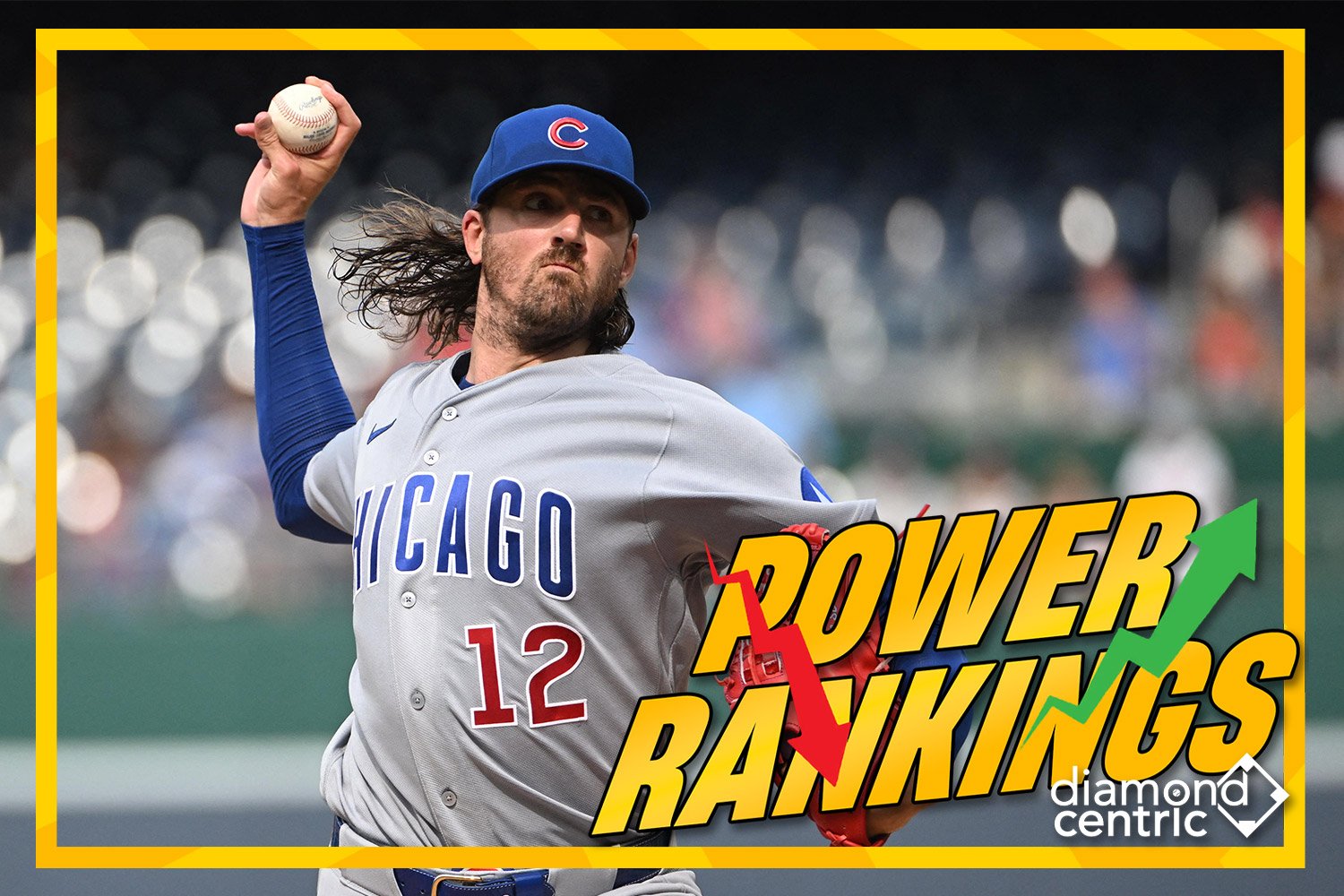 With fewer than 20 games remaining in the regular season, there is very little time left for teams to make significant moves in the playoff picture. Every game carries added weight, whether a club is trying to climb into a division lead, secure a Wild Card spot, or improve its postseason position. The standings can still shift, but the opportunities to gain or lose meaningful ground are quickly disappearing as the regular season approaches its conclusion. Third-order wins remain a useful tool for providing additional context when evaluating each team. Based on Clay Davenport's adjusted standings, the metric looks beyond a team's actual record by accounting for run differential, strength of schedule, and ballpark effects. It provides another perspective on how a team has performed and whether its record accurately represents the quality of the club. These Power Rankings place a greater emphasis on sustainable performance rather than simply reacting to a team's most recent results. The arrows indicate which teams are gaining momentum, moving in the wrong direction, or remaining relatively steady as the season winds down. With October approaching and the margin for error becoming increasingly small, the final weeks will help determine which teams are positioned to make an impact in the postseason and which will be left outside the playoff picture. 1. Brewers — 89.5-54.4 (.622) Biggest Weekly Storyline: Shortstop Cooper Pratt became the first Brewers rookie with an RBI in six consecutive games since Ryan Braun in 2007. 2. Dodgers — 87.4-55.5 (.612) Biggest Weekly Storyline: Designated hitter Shohei Ohtani struck out four times on Wednesday and then sat out multiple games. He has been dealing with lingering pain in his right biceps and left knee that has prevented him from pitching. 3. Yankees — 83.3-59.6 (.583) Biggest Weekly Storyline: Outfielder Aaron Judge took on-field batting practice on Friday for the first time since May 31. He’s been recovering from a stress fracture in his right rib. 4. Cubs — 82.9-61.0 (.576) ⬆️ Biggest Weekly Storyline: Outfielder Pete Crow-Armstrong and starter Kevin Gausman teamed up for a dominant night at Wrigley. PCA hit his 39th homer, a two-run shot, while Gausman allowed one run on five hits over seven innings. 5. Rays — 81.1-61.8 (.568) ⬇️ Biggest Weekly Storyline: The Rays put starting pitcher Shane McClanahan on the IL due to left forearm tightness. He also missed two weeks in July with back tightness. 6. Red Sox — 80.1-63.8 (.557) Biggest Weekly Storyline: Catcher Mickey Gasper hit a homer on Friday that helped Boston win 1-0. His 1.541 OPS is the highest OPS by a Red Sox hitter over any 16-game span since 2010. 7. Marlins — 79.4-64.6 (.551) Biggest Weekly Storyline: Kyle Stowers left Thursday’s game with a hamstring injury that he has been dealing with in recent weeks as Miami hangs on the edge of Wild Card contention. In 10 games prior, he went 10-for-33 with two homers. 8. Pirates — 78.8-65.1 (.548) Biggest Weekly Storyline: Pirates rookie shortstop Konnor Griffin is returned to the lineup on Friday after missing time with a left ring finger injury. He went 0-for-3 and scored the team’s only run in a 1-0 victory. 9. Braves — 77.3-66.3 (.538) Biggest Weekly Storyline: Outfielder Ronald Acuna Jr. became the fastest player in MLB history to reach 200 homers and 200 steals. He did it in 25 fewer games than Alfonso Soriano. 10. Nationals — 72.9-65.6 (.526) ⬆️ Biggest Weekly Storyline: Outfielder James Wood returned from a left oblique strain. He went 1-for-4, as his single into right field broke up Atlanta’s no-hit bid with two outs in the bottom of the sixth inning. 11. Tigers — 75.2-67.8 (.526) ⬇️ Biggest Weekly Storyline: Catcher Dillon Dingler is hitting .107/.176/.131 with zero home runs and four RBI over 22 games since August 7. His -14 wRC+ is the worst mark among all qualified MLB hitters during that span. 12. Phillies — 72.5-70.5 (.507) Biggest Weekly Storyline: Outfielder Bryce Harper is on pace to become only the third player in Phillies history to post a .900 OPS at 33 years of age or older. 13. White Sox — 72.0-71.0 (.503) ⬇️ Biggest Weekly Storyline: Colson Montgomery and Miguel Vargas both joined the 30-home run club on Friday. Both players are helping push a surprising Chicago team to the top of the AL Central. 14. Padres — 71.6-71.4 (.501) ⬇️ Biggest Weekly Storyline: The Padres called up top prospect Ethan Salas earlier in the week. He became the youngest catcher to debut since Ivan Rodriguez in 1991. 15. Blue Jays — 72.1-71.9 (.501) Biggest Weekly Storyline: Starter Max Scherzer moved into ninth place on the all-time strikeout list by passing Gaylord Perry. 16. Diamondbacks — 67.9-70.1 (.492) ⬆️ Biggest Weekly Storyline: Outfielder Corbin Carroll leads MLB with 16 triples this season, 8 more than the next closest MLB players. That would be the largest gap in triples between an MLB leader and second place since 1957, when Willie Mays had nine more than second place. 17. Giants — 68.7-72.4 (.487) ⬆️ Biggest Weekly Storyline: First baseman Rafael Devers' 67 extra-base hits are the most by a Giants player in the team's first 142 games since Barry Bonds (67) in 2004. 18. Guardians — 70.1-73.9 (.487) Biggest Weekly Storyline: On Friday, the Guardians swept a doubleheader versus the Tigers on consecutive walkoffs. Brayan Rocchio scored the winning run in both games and hit a game-tying grand slam earlier in the day. 19. Mets — 68.4-74.6 (.478) ⬇️ Biggest Weekly Storyline: Catcher Francisco Alvarez tied Gary Carter for second all-time in multi-homer games by a catcher before turning 25. Johnny Bench did it eight times. 20. Cardinals — 68.6-75.5 (.476) ⬆️ Biggest Weekly Storyline: Cardinals manager Oli Marmol was ejected for arguing after umpire Doug Eddings told rookie pitcher Hancel Rincon to fix his hat in the middle of his big-league debut. 21. Orioles — 68.3-75.7 (.474) ⬇️ Biggest Weekly Storyline: Outfielder Colton Cowser saved the day with a leaping, walk-off home-run robbery to push the Orioles to .500 for the first time since April. 22. Rangers — 67.5-76.5 (.469) ⬆️ Biggest Weekly Storyline: Starter Cal Quantrill tossed seven scoreless innings to lead the Rangers to a 6-0 shutout win over the Rays. 23. Twins — 66.1-77.0 (.462) Biggest Weekly Storyline: Outfielder Byron Buxton confirmed that he will need offseason hip surgery, but is hoping to still return to the Twins this season. 24. Mariners — 65.7-78.3 (.456) ⬇️ Biggest Weekly Storyline: Mariners prospect Lazaro Montes drilled a deep home run in his MLB debut on Tuesday. He is the first Mariner with multiple hits in his MLB debut since Ichiro Suzuki's in 2001. 25. Astros — 64.9-79.2 (.450) ⬆️ Biggest Weekly Storyline: Closer Josh Hader recorded his 250th save, becoming only the sixth lefty to accomplish the feat. Over the last 100 years, Hader's .155 career opponent batting average is the lowest among pitchers who have appeared in at least 500 games. 26. Angels — 64.3-78.8 (.449) ⬇️ Biggest Weekly Storyline: Angels owner Art Moreno agreed to sell the franchise for an MLB-record $4 billion to Stan Kroenke, who owns the Rams, Arsenal, Nuggets, Avalanche, and Rapids. 27. Royals — 64.2-79.9 (.446) ⬇️ Biggest Weekly Storyline: Jac Caglianone was named AL Player of the Month for August, while Noah Cameron was named the AL Pitcher of the Month. It’s the fourth time in Royals history they have had players win both honors in the same month. 28. Reds — 60.3-82.8 (.421) Biggest Weekly Storyline: The Reds will be limiting Chase Burns’ innings for the remainder of the season despite the team chasing a playoff spot. He has thrown 145 1/3 innings after throwing 109 1/3 in 2025. 29. Rockies — 55.5-87.6 (.388) Biggest Weekly Storyline: Catcher Hunter Goodman already has 36 homers and has a chance to become the sixth catcher in NL history to reach the 40 mark. Javy Lopez was the last NL catcher with 40+ homers in 2003. 30. Athletics — 54.3-89.5 (.378) Biggest Weekly Storyline: On Friday, Max Muncy, Alika Williams, Jeff McNeil and Zack Gelof all hit home runs in the third inning. It was the first time the A’s have homered four times in one inning since 2002. What storylines stood out this week? Do you agree with the rankings above? Leave a comment and start the discussion.
 -
MLB Power Rankings: Cubs Leap Red Sox Into Top 5, Mets Up 5 Spots
Cody Christie posted an article in MLB
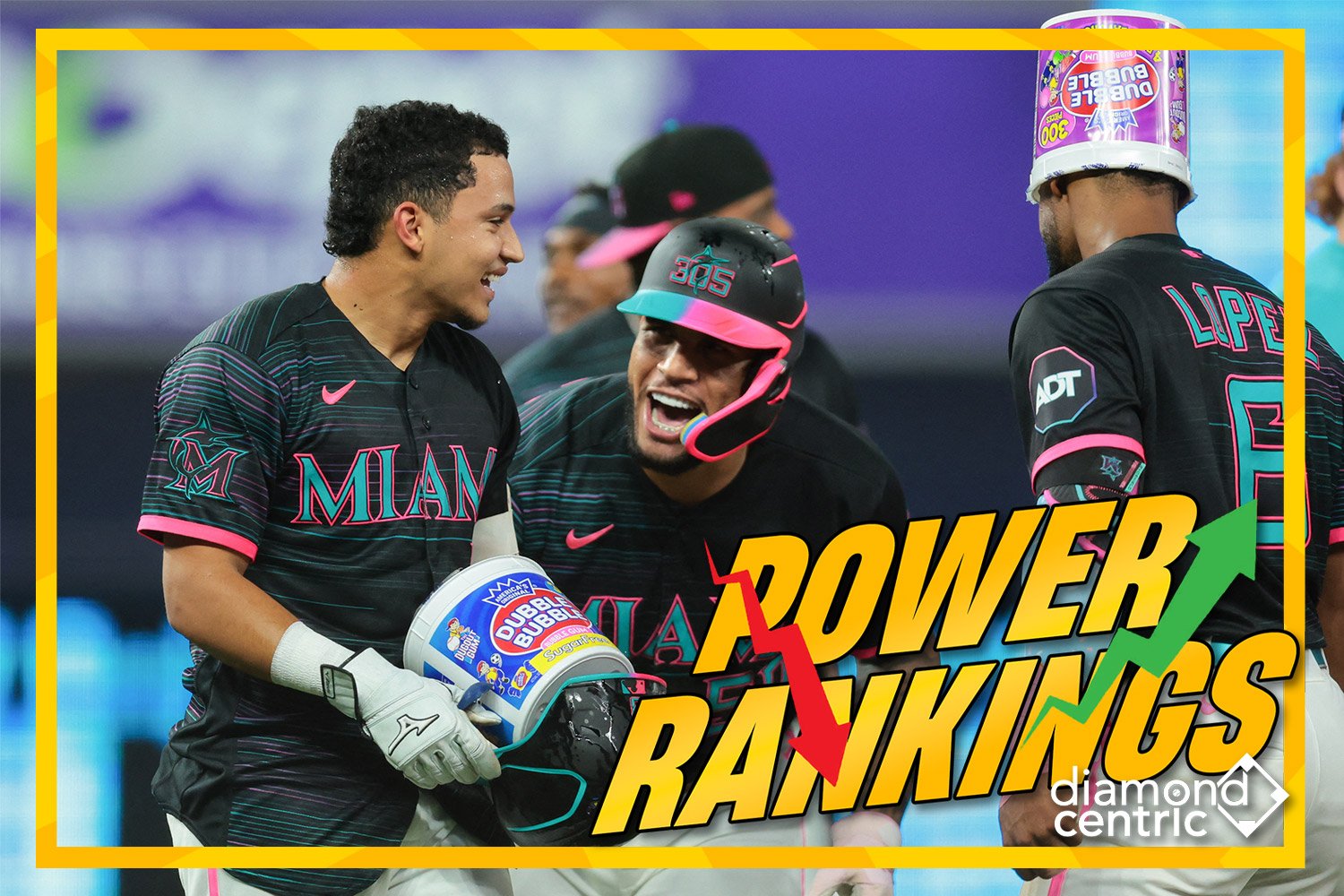 With the calendar flipping to September this week, the value of every game on the MLB schedule is increasing. The playoff races are entering their most important stretch, and teams have little time left to make up ground or separate themselves from the pack. Division races, Wild Card battles, and the fight to secure favorable postseason positioning will all come into sharper focus as the regular season enters its final month. Third-order wins remain a useful tool for adding context when evaluating each team. Based on Clay Davenport's adjusted standings, the metric looks beyond a team's actual record by factoring in run differential, strength of schedule, and ballpark effects. It offers another way to measure a team's performance and determine whether its record accurately reflects the quality of the club. These Power Rankings focus more on sustainable performance than recent results alone. The arrows show which teams are building momentum, trending in the wrong direction, or holding steady as the season moves toward its most critical stretch. With October getting closer, the margin for error is shrinking, and the final weeks will reveal which teams are built to contend in the postseason and which will fall short of the playoff picture. 1. Brewers — 86.6-47.8 (.644) Biggest Weekly Storyline: Brewers rookie Cooper Pratt was benched in the middle of an inning for lack of hustle and a missed bunt attempt earlier in the week. Pratt took full responsibility and said, “It won’t happen again.” 2. Dodgers — 84.7-52.0 (.620) Biggest Weekly Storyline: Starter Tarik Skubal returned to Detroit for the first time since being traded. He allowed one run across six innings for one of his best starts since the deadline. 3. Yankees — 73.4-54.5 (.574) Biggest Weekly Storyline: Starter Cam Schlittler recorded his 200th strikeout as part of a 1-0 shutout of the Red Sox. He became the fourth-youngest Yankee to reach that total in a season. 4. Rays — 77.4-57.6 (.573) ⬆️ Biggest Weekly Storyline: The Rays became the first AL team to record 80 wins on Friday. However, their +53 run differential ranks fourth in the league behind New York, Boston, and Detroit. 5. Cubs — 77.9-58.1 (.573) ⬆️ Biggest Weekly Storyline: Outfielder Pete Crow-Armstrong smacked a career-high three homers at Wrigley on Saturday. Cubs fans were booing when he came up for his final at-bat and a position player was on the mound. 6. Red Sox — 77.3-58.6 (.569) ⬇️ Biggest Weekly Storyline: Catcher Mickey Gasper had a 2.208 OPS over the seven games from August 18-25. Only Ted Williams had a higher OPS over a seven-game span in Red Sox history. 7. Marlins — 73.7-57.8 (.560) Biggest Weekly Storyline: Utility man Javier Sanoja joins Elly De La Cruz and Pete Crow-Armstrong as the only three players at the age of 23 or younger to record three hits and three stolen bases in a single game. 8. Pirates — 75.1-61.9 (.548) Biggest Weekly Storyline: Pirates rookie shortstop Konnor Griffin is beginning a rehab assignment at Double-A on Sunday. The 20-year-old is currently on the 60-day injured list with a left ring finger sagittal band injury. 9. Braves — 67.3-56.7 (.543) ⬆️ Biggest Weekly Storyline: The Braves swept the Dodgers thanks to a complete game shutout from Chris Sale. He struck out 11, including Shohei Ohtani on a 100.1 mph fastball, his fastest pitch since 2018. 10. Tigers — 73.0-61.9 (.541) ⬇️ Biggest Weekly Storyline: Future Hall of Famer Justin Verlander is getting closer to a potential final appearance with the Tigers. He is throwing off a mound, and Detroit hopes he can make one more appearance before retiring. 11. White Sox — 68.0-63.5 (.517) Biggest Weekly Storyline: The White Sox have opened contract extension talks with Munetaka Murakami, who has hit 29 home runs during his first season in Chicago. A two-year, $34 million contract for Murakami was one of the steals of the offseason. 12. Phillies — 68.3-64.9 (.513) Biggest Weekly Storyline: Infielder Edmundo Sosa hits a pinch-hit go-ahead grand slam in the 9th inning to lead the Phillies to a 5-3 victory over the Angels on Friday. 13. Padres — 64.7-65.3 (.498) ⬆️ Biggest Weekly Storyline: Starter Joe Musgrove is returning from October 2024 Tommy John surgery and made what could be his final rehab start. In five innings, he allowed a run on five hits with three strikeouts at Triple-A. 14. Nationals — 68.6-69.4 (.497) ⬇️ Biggest Weekly Storyline: Starter Jackson Kent threw seven innings of one-run ball to pick up his first major league win. Washington snapped an eight-game losing streak against the Marlins. 15. Blue Jays — 67.4-69.6 (.492) Biggest Weekly Storyline: Starter Dylan Cease became the first pitcher since Randy Johnson in 2001 to record 19 consecutive games with at least seven strikeouts. 16. Mets — 65.0-67.4 (.491) ⬆️ Biggest Weekly Storyline: The Mets activated star Juan Soto from the IL after a month-long stint. He had been sidelined since July 24, dealing with a calf injury. 17. Orioles — 66.0-70.0 (.485) ⬇️ Biggest Weekly Storyline: The Orioles and Trey Mancini announced he will sign a one-day contract with Baltimore and retire as an Oriole on Saturday, September 19. 18. Guardians — 65.8-70.2 (.484) Biggest Weekly Storyline: MLB reportedly suspended a Dominican prospect, who had $2.8 million agreement with Guardians, due to an age-fraud plot. Cleveland thought he was 13-14 years old and could sign in 2029, but he was actually 16. 19. Diamondbacks — 63.8-68.9 (.481) ⬇️ Biggest Weekly Storyline: Starters Corbin Burnes and Zac Gallen made rehab starts over the weekend at Triple-A. Both starters are desperately needed for an Arizona rotation in flux. 20. Giants — 59.4-65.1 (.477)⬆️ Biggest Weekly Storyline: Shortstop Willy Adames could miss the remainder of the 2026 season after he suffered an elbow injury. He’s expected to miss 3-4 weeks after receiving a platelet-rich plasma (PRP) injection. 21. Cardinals — 64.3-71.2 (.475) ⬇️ Biggest Weekly Storyline: Rookie Blaze Jordan was placed on the 10-day IL with a badly sprained left ankle on Friday. Just one day before, he hit his first homer at Busch Stadium and made a game-saving catch. 22. Mariners — 63.1-73.0 (.464) ⬇️ Biggest Weekly Storyline: Catcher Cal Raleigh busted out of his season-long slump earlier this week. On Monday, he posted his first career 3-homer game. 23. Twins — 62.1-73.9 (.457) Biggest Weekly Storyline: Top prospect Walker Jenkins made his MLB debut on Friday. He went 1-for-3 with a single and a walk, but the Twins lost to Chicago 7-4. 24. Angels — 59.2-70.8 (.455) ⬆️ Biggest Weekly Storyline: Outfielder Wade Meckler robbed a go-ahead home run with an unreal catch in the ninth inning that could be the catch of the year. The Angels still lost the game on a grand slam by the Phillies (see above). 25. Royals — 61.7-75.4 (.450) ⬆️ Biggest Weekly Storyline: Kansas City saw their nine-game win streak come to an end on Wednesday night. It was the club’s first loss since August 15 and arguably their best two-week stretch of the season. 26. Astros — 58.4-71.7 (.449) Biggest Weekly Storyline: With their club in first place, the Astros fired general manager Dana Brown. Houston is a mess and seems to be nearing the end of their competitive window. 27. Rangers — 57.0-73.1 (.438) ⬇️ Biggest Weekly Storyline: Starter Jack Leiter will be shut down for the next few days after experiencing biceps soreness during his one-inning rehab appearance at Triple-A. Texas is trying to use him as a reliever down the stretch. 28. Reds — 55.8-80.3 (.410) Biggest Weekly Storyline: Eugenio Suárez and TJ Friedl, both of whom were made available to all 29 clubs for the cost of their remaining contract values, both cleared waivers. 29. Rockies — 52.0-84.1 (.382) Biggest Weekly Storyline: Starter Tanner Gordon tossed a career-best seven innings while striking out five. He held the Nationals to one run while pitching the Rockies to their seventh victory in their last 12 road games. 30. Athletics — 50.3-85.8 (.370) Biggest Weekly Storyline: Catcher Shea Langeliers was expected to miss the remainder of the season, but he’s progressing well enough from a medical meniscectomy that he could appear in some late September games. What storylines stood out this week? Do you agree with the rankings above? Leave a comment and start the discussion.
 -
With the calendar flipping to September this week, the value of every game on the MLB schedule is increasing. The playoff races are entering their most important stretch, and teams have little time left to make up ground or separate themselves from the pack. Division races, Wild Card battles, and the fight to secure favorable postseason positioning will all come into sharper focus as the regular season enters its final month. Third-order wins remain a useful tool for adding context when evaluating each team. Based on Clay Davenport's adjusted standings, the metric looks beyond a team's actual record by factoring in run differential, strength of schedule, and ballpark effects. It offers another way to measure a team's performance and determine whether its record accurately reflects the quality of the club. These Power Rankings focus more on sustainable performance than recent results alone. The arrows show which teams are building momentum, trending in the wrong direction, or holding steady as the season moves toward its most critical stretch. With October getting closer, the margin for error is shrinking, and the final weeks will reveal which teams are built to contend in the postseason and which will fall short of the playoff picture. 1. Brewers — 86.6-47.8 (.644) Biggest Weekly Storyline: Brewers rookie Cooper Pratt was benched in the middle of an inning for lack of hustle and a missed bunt attempt earlier in the week. Pratt took full responsibility and said, “It won’t happen again.” 2. Dodgers — 84.7-52.0 (.620) Biggest Weekly Storyline: Starter Tarik Skubal returned to Detroit for the first time since being traded. He allowed one run across six innings for one of his best starts since the deadline. 3. Yankees — 73.4-54.5 (.574) Biggest Weekly Storyline: Starter Cam Schlittler recorded his 200th strikeout as part of a 1-0 shutout of the Red Sox. He became the fourth youngest Yankee to reach that total in a season. 4. Rays — 77.4-57.6 (.573) ⬆️ Biggest Weekly Storyline: The Rays became the first AL team to record 80 wins on Friday. However, their +53 run differential ranks fourth in the league behind New York, Boston, and Detroit. 5. Cubs — 77.9-58.1 (.573) ⬆️ Biggest Weekly Storyline: Outfielder Pete Crow-Armstrong smacked a career-high three homers at Wrigley on Saturday. Cubs fans were booing when he came up for his final at-bat and a position player was on the mound. 6. Red Sox — 77.3-58.6 (.569) ⬇️ Biggest Weekly Storyline: Catcher Mickey Gasper had a 2.208 OPS over the seven games from August 18-25. Only Ted Williams had a higher OPS over a seven-game span in Red Sox history. 7. Marlins — 73.7-57.8 (.560) Biggest Weekly Storyline: Utility man Javier Sanoja joins Elly De La Cruz and Pete Crow-Armstrong, as the only three players at the age of 23 or younger to record three hits and three stolen bases in a single game. 8. Pirates — 75.1-61.9 (.548) Biggest Weekly Storyline: Pirates rookie shortstop Konnor Griffin is beginning a rehab assignment At Double-A on Sunday. The 20-year-old is currently on the 60-day injured list with a left ring finger sagittal band injury. 9. Braves — 67.3-56.7 (.543) ⬆️ Biggest Weekly Storyline: The Braves swept the Dodgers thanks to a complete game shutout from Chris Sale. He struck out 11 including Shohei Ohtani on a 100.1 mph fastball, his fastest pitch since 2018. 10. Tigers — 73.0-61.9 (.541) ⬇️ Biggest Weekly Storyline: Future Hall of Famer Justin Verlander is getting closer to a potential final appearance with the Tigers. His throwing off a mound and Detroit hopes he can make one more appearance before retiring. 11. White Sox — 68.0-63.5 (.517) Biggest Weekly Storyline: The White Sox have opened contract extension talks with Munetaka Murakami, who has hit 29 home runs during his first season in Chicago. A two year, $34 million contract for Murakami was one of the steals of the off season. 12. Phillies — 68.3-64.9 (.513) Biggest Weekly Storyline: Infielder Edmundo Sosa hits a pinch-hit go-ahead grand slam in the 9th inning to lead the Phillies to a 5-3 victory over the Angels on Friday. 13. Padres — 64.7-65.3 (.498) ⬆️ Biggest Weekly Storyline: Starter Joe Musgrove is returning from October 2024 Tommy John surgery and made what could be his final rehab start. In five innings, he allowed a run on five hits with three strikeouts at Triple-A. 14. Nationals — 68.6-69.4 (.497) ⬇️ Biggest Weekly Storyline: Starter Jackson Kent threw seven innings of one-run ball to pick up his first major league win. Washington snapped an eight-game losing streak against the Marlins. 15. Blue Jays — 67.4-69.6 (.492) Biggest Weekly Storyline: Starter Dylan Cease became the first pitcher since Randy Johnson in 2001 to record 19 consecutive games with at least seven strikeouts. 16. Mets — 65.0-67.4 (.491) ⬆️ Biggest Weekly Storyline: The Mets activated star Juan Soto from IL after a month-long stint. He had been sidelined since July 24, dealing with a calf injury. 17. Orioles — 66.0-70.0 (.485) ⬇️ Biggest Weekly Storyline: The Orioles and Trey Mancini announced he will sign a one-day contract with Baltimore and retire as an Oriole on Saturday, September 19. 18. Guardians — 65.8-70.2 (.484) Biggest Weekly Storyline: MLB reportedly suspended a Dominican prospect, who had $2.8 million agreement with Guardians, due to an age-fraud plot. Cleveland thought he was 13-14 years old and could sign in 2029, but he was actually 16. 19. Diamondbacks — 63.8-68.9 (.481) ⬇️ Biggest Weekly Storyline: Starters Corbin Burnes and Zac Gallen made rehab starts over the weekend at Triple-A. Both starters are desperately needed for an Arizona rotation in flux. 20. Giants — 59.4-65.1 (.477)⬆️ Biggest Weekly Storyline: Shortstop Willy Adames could miss the remainder of the 2026 season after he suffered an elbow injury. He’s expected to miss 3-4 weeks after receiving a platelet-rich plasma (PRP) injection. 21. Cardinals — 64.3-71.2 (.475) ⬇️ Biggest Weekly Storyline: Rookie Blaze Jordan was placed on the 10-day IL with a badly sprained left ankle on Friday. Just one day before, he hit his first homer at Busch Stadium and made a game-saving catch. 22. Mariners — 63.1-73.0 (.464) ⬇️ Biggest Weekly Storyline: Catcher Cal Raleigh busted out of his season long slump earlier this week. On Monday, he posted his first career 3-homer game. 23. Twins — 62.1-73.9 (.457) Biggest Weekly Storyline: Top prospect Walker Jenkins made his MLB debut on Friday. He went 1-for-3 with a single and a walk, but the Twins lost to Chicago 7-4. 24. Angels — 59.2-70.8 (.455) ⬆️ Biggest Weekly Storyline: Outfielder Wade Meckler robbed a go-ahead home run with an unreal catch in the ninth inning that could be the catch of the year. The Angels still lost the game on a grand slam by the Phillies (see above). 25. Royals — 61.7-75.4 (.450) ⬆️ Biggest Weekly Storyline: Kansas City saw their nine-game win streak come to an end on Wednesday night. It was the club’s first loss since August 15 and arguably their best two week stretch of the season. 26. Astros — 58.4-71.7 (.449) Biggest Weekly Storyline: With their club in first place, the Astros fired general manager Dana Brown. Houston is a mess and seems to be nearing the end of their competitive window. 27. Rangers — 57.0-73.1 (.438) ⬇️ Biggest Weekly Storyline: Starter Jack Leiter will be shut down for the next few days after experiencing biceps soreness during his one inning rehab appearance at Triple-A. Texas is trying to use him as a reliever down the stretch. 28. Reds — 55.8-80.3 (.410) Biggest Weekly Storyline: Eugenio Suárez and TJ Friedl, both of whom were made available to all 29 clubs for the cost of their remaining contract values, both cleared waivers. 29. Rockies — 52.0-84.1 (.382) Biggest Weekly Storyline: Starter Tanner Gordon tossed a career-best seven innings while striking out five. He held the Nationals to one run while pitching the Rockies to their seventh victory in their last 12 road games. 30. Athletics — 50.3-85.8 (.370) Biggest Weekly Storyline: Catcher Shea Langeliers was expected to miss the remainder of the season, but he’s progressing well enough from a medical meniscectomy that he could appear in some late September games. What storylines stood out this week? Do you agree with the rankings above? Leave a comment and start the discussion. View full article
-
Image courtesy of Jon Endow-Imagn Images With the final week of August here, the MLB playoff picture is beginning to take shape. The final month of the regular season will feature several critical divisional matchups, with teams battling head-to-head for postseason positioning. With playoff spots on the line, it's time to separate the contenders from the pretenders as every game carries added weight. Third-order wins remain a useful tool for providing additional context when evaluating each team. Based on Clay Davenport's adjusted standings, the metric looks beyond a club's actual record by considering run differential, strength of schedule, and ballpark effects. It provides another perspective on how teams have performed and whether their records accurately represent their overall level of play. These Power Rankings place a greater emphasis on sustainable performance than short-term results. The arrows indicate which teams are gaining momentum, moving in the wrong direction, or maintaining their position as the regular season moves toward its most important stretch. With the postseason approaching, every win becomes more valuable, and the remaining weeks will determine which teams are ready to make a run in October and which will be watching from home. 1. Brewers — 82.1-47.8 (.632) Biggest Weekly Storyline: NL Cy Young frontrunner Jacob Misiorowski lowered his MLB-best ERA in a duel versus Chris Sale as the Brewers outlasted the Braves 2-1. He allowed no earned runs on four hits with six strikeouts to bring his ERA down to 1.68. 2. Dodgers — 80.4-49.5 (.619) Biggest Weekly Storyline: In the midst of the Dodgers’ four-game winning streak, center fielder Andy Pages broke his hand after being plunked by a 100 mph pitch. He’s expected to miss 4-5 weeks. 3. Yankees — 74.4-54.5 (.577) ⬆️ Biggest Weekly Storyline: Outfielder Giancarlo Stanton strained his left calf while running the bases as he is recovering from a strained right calf. His return to the Yankees this season is in doubt. 4. Red Sox — 73.0-55.9 (.566) ⬆️ Biggest Weekly Storyline: Starter Sonny Gray and Tim Wakefield are the only Sox hurlers in the last 50 years to win at least 16 of their first 24 starts with Boston. On Friday, he moved to 16-4 with a 2.79 ERA this season. 5. Rays — 72.0-56.4 (.561) ⬇️ Biggest Weekly Storyline: The Tampa Bay Rays, the city of Tampa and Hillsborough County reached an agreement on a $2.3 billion ballpark proposal located across from Raymond James Stadium. 6. Cubs — 72.8-57.1 (.560) Biggest Weekly Storyline: Shortstop Dansby Swanson is expected to miss 4-6 weeks due to oblique strain. There is a chance that he doesn’t return for the rest of the regular season. 7. Marlins — 72.2-57.8 (.555) ⬆️ Biggest Weekly Storyline: Miami has struggled versus teams with above .500 records. They have posted a 23-36 record when facing winning teams. 8. Pirates — 71.8-59.1 (.549) Biggest Weekly Storyline: Starter Paul Skenes turned in another concerning start this week. He was removed after just 81 pitches after Pirates gave him extra rest leading into the appearance. 9. Tigers — 70.6-58.3 (.548) ⬇️ Biggest Weekly Storyline: Starter Keider Montero had his most recent start pushed back because he isn’t recovering well enough to throw his bullpen sessions between starts. 10. Braves — 69.9-60.1 (.538) ⬇️ Biggest Weekly Storyline: Starter Grant Holmes took a no-hitter into the 7th inning on Thursday as the Braves held the White Sox to one hit in a 2-0 win. 11. White Sox — 65.5-63.5 (.508) Biggest Weekly Storyline: Catcher Jake Rogers hit a tiebreaking two-run homer off Jefry Yan with two out in the ninth inning on Friday. Earlier in the game, Miguel Vargas, Randal Grichuk and Colson Montgomery hit back-to-back-to-back homers. 12. Phillies — 65.1-64.9 (.501) ⬆️ Biggest Weekly Storyline: Philadelphia trailed the Cardinals 4-0 on Sunday and had a 0.5% win probability. Kyle Schwarber capped the improbable comeback with a walk-off two-run homer for the club's ninth straight win. 13. Nationals — 65.4-65.6 (.499) ⬆️ Biggest Weekly Storyline: Catcher Keibert Ruiz has a career-high 107 wRC+ and has worked with new catching coach Bobby Wilson to turn into a slightly above average defensive catcher. 14. Padres — 64.7-65.3 (.498) Biggest Weekly Storyline: The Padres won their eighth straight home game on Saturday. The Padres have gone 45-17 in games when they record eight or more hits. 15. Blue Jays — 65.1-65.9 (.497) ⬇️ Biggest Weekly Storyline: First baseman Vladimir Guerrero Jr. was activated this weekend after being placed on the seven-day concussion injured list. 16. Orioles — 65.1-66.9 (.493) ⬆️ Biggest Weekly Storyline: Pete Alonso stirred up a new technology controversy with a near home run that was ruled foul. Some are calling for MLB to fix fair-foul technology for critical plays. 17. Diamondbacks — 64.1-65.9 (.493) ⬇️ Biggest Weekly Storyline: Many were concerned for Ketel Marte after he didn't show up during the Diamondbacks' Monday night game despite being in the lineup. He was moved to the injured list, and this past week, he was seen liking a post on Instagram saying that he no longer wanted to play for the Diamondbacks 18. Guardians — 63.1-66.9 (.485) ⬇️ Biggest Weekly Storyline: Rookie Travis Bazzana tied a career high with four hits on Friday night. For the season, he has a 101 OPS+, a 1.7 rWAR, and 18 steals. 19. Cardinals — 63.1-67.9 (.482) ⬆️ Biggest Weekly Storyline: The Cardinals had a six-run rally in the 9th that led to a comeback win. Jordan Walker had the biggest knock with a three-run homer. 20. Mets — 62.6-67.4 (.482) ⬇️ Biggest Weekly Storyline: Right fielder Carson Benge adjusted his stance at the end of April. He has a slugging percentage of .453 since May 1, which puts him in the top 50 among qualified hitters. 21. Mariners — 61.5-68.5 (.473) ⬇️ Biggest Weekly Storyline: On Saturday, Seattle called up their top pitching prospect Kade Anderson to face the Cubs. He pitched 5 2/3 innings while allowing three runs on five hits with five strikeouts and two walks. 22. Giants — 60.6-68.4 (.470) ⬆️ Biggest Weekly Storyline: Infielder Rafael Devers got booed by Red Sox fans in his first game at Fenway Park since being traded to the Giants. He quieted the crowd a little by hitting a homer. 23. Twins — 60.0-70.0 (.462) Biggest Weekly Storyline: Minnesota completed a three-game sweep of the Braves on Wednesday. It moved the Twins into the AL’s final Wild Card spot. 24. Rangers — 60.0-70.1 (.461) ⬆️ Biggest Weekly Storyline: Starter Jacob deGrom collected his 2,000th career strikeout. He became the second fastest pitcher in MLB history to reach the milestone by both games and innings pitched. 25. Angels — 59.2-70.8 (.455) ⬇️ Biggest Weekly Storyline: Shortstop Zach Neto had a career-high five hits and seven RBIs, tying Freddie Patek for the most RBIs in a game by an Angels shortstop while going a triple shy of the cycle. 26. Astros — 58.4-71.7 (.449) ⬇️ Biggest Weekly Storyline: Shortstop Jeremy Pena missed multiple games this week. He suffered a right-hand contusion after being hit by a 100 mph pitch. 27. Royals — 56.8-74.3 (.433) ⬆️ Biggest Weekly Storyline: Despite a disappointing season, general manager J.J. Picollo told reporters that he didn't expect any "wholesale changes" to the coaching staff this winter. 28. Reds — 54.5-75.6 (.419) ⬇️ Biggest Weekly Storyline: Outfielder Dane Myers missed a routine putout in left-center field that would have ended the game. Instead, Myers dropped the final out, and the Cardinals scored the game-tying and go-ahead runs in a crazy ninth inning. 29. Rockies — 49.0-80.1 (.380) Biggest Weekly Storyline: Starter Kyle Freeman left his most recent start after clutching his back in the fourth inning. The Rockies broadcast later announced that Freeland departed due to neck tightness. 30. Athletics — 47.3-82.8 (.364) Biggest Weekly Storyline: Shortstop Jacob Wilson is expected to miss the remainder of the season due to a left shoulder injury. Wilson dislocated his left shoulder in May and has dealt with the injury, and several others, ever since. What storylines stood out this week? Do you agree with the rankings above? Leave a comment and start the discussion. View full article
-
MLB Power Rankings: Red Sox Crack Top 4, Marlins Catching Cubs
Cody Christie posted an article in MLB
 With the final week of August here, the MLB playoff picture is beginning to take shape. The final month of the regular season will feature several critical divisional matchups, with teams battling head-to-head for postseason positioning. With playoff spots on the line, it's time to separate the contenders from the pretenders as every game carries added weight. Third-order wins remain a useful tool for providing additional context when evaluating each team. Based on Clay Davenport's adjusted standings, the metric looks beyond a club's actual record by considering run differential, strength of schedule, and ballpark effects. It provides another perspective on how teams have performed and whether their records accurately represent their overall level of play. These Power Rankings place a greater emphasis on sustainable performance than short-term results. The arrows indicate which teams are gaining momentum, moving in the wrong direction, or maintaining their position as the regular season moves toward its most important stretch. With the postseason approaching, every win becomes more valuable, and the remaining weeks will determine which teams are ready to make a run in October and which will be watching from home. 1. Brewers — 82.1-47.8 (.632) Biggest Weekly Storyline: NL Cy Young frontrunner Jacob Misiorowski lowered his MLB-best ERA in a duel versus Chris Sale as the Brewers outlasted the Braves 2-1. He allowed no earned runs on four hits with six strikeouts to bring his ERA down to 1.68. 2. Dodgers — 80.4-49.5 (.619) Biggest Weekly Storyline: In the midst of the Dodgers’ four-game winning streak, center fielder Andy Pages broke his hand after being plunked by a 100 mph pitch. He’s expected to miss 4-5 weeks. 3. Yankees — 74.4-54.5 (.577) ⬆️ Biggest Weekly Storyline: Outfielder Giancarlo Stanton strained his left calf while running the bases as he is recovering from a strained right calf. His return to the Yankees this season is in doubt. 4. Red Sox — 73.0-55.9 (.566) ⬆️ Biggest Weekly Storyline: Starter Sonny Gray and Tim Wakefield are the only Sox hurlers in the last 50 years to win at least 16 of their first 24 starts with Boston. On Friday, he moved to 16-4 with a 2.79 ERA this season. 5. Rays — 72.0-56.4 (.561) ⬇️ Biggest Weekly Storyline: The Tampa Bay Rays, the city of Tampa and Hillsborough County reached an agreement on a $2.3 billion ballpark proposal located across from Raymond James Stadium. 6. Cubs — 72.8-57.1 (.560) Biggest Weekly Storyline: Shortstop Dansby Swanson is expected to miss 4-6 weeks due to oblique strain. There is a chance that he doesn’t return for the rest of the regular season. 7. Marlins — 72.2-57.8 (.555) ⬆️ Biggest Weekly Storyline: Miami has struggled versus teams with above .500 records. They have posted a 23-36 record when facing winning teams. 8. Pirates — 71.8-59.1 (.549) Biggest Weekly Storyline: Starter Paul Skenes turned in another concerning start this week. He was removed after just 81 pitches after Pirates gave him extra rest leading into the appearance. 9. Tigers — 70.6-58.3 (.548) ⬇️ Biggest Weekly Storyline: Starter Keider Montero had his most recent start pushed back because he isn’t recovering well enough to throw his bullpen sessions between starts. 10. Braves — 69.9-60.1 (.538) ⬇️ Biggest Weekly Storyline: Starter Grant Holmes took a no-hitter into the 7th inning on Thursday as the Braves held the White Sox to one hit in a 2-0 win. 11. White Sox — 65.5-63.5 (.508) Biggest Weekly Storyline: Catcher Jake Rogers hit a tiebreaking two-run homer off Jefry Yan with two out in the ninth inning on Friday. Earlier in the game, Miguel Vargas, Randal Grichuk and Colson Montgomery hit back-to-back-to-back homers. 12. Phillies — 65.1-64.9 (.501) ⬆️ Biggest Weekly Storyline: Philadelphia trailed the Cardinals 4-0 on Sunday and had a 0.5% win probability. Kyle Schwarber capped the improbable comeback with a walk-off two-run homer for the club's ninth straight win. 13. Nationals — 65.4-65.6 (.499) ⬆️ Biggest Weekly Storyline: Catcher Keibert Ruiz has a career-high 107 wRC+ and has worked with new catching coach Bobby Wilson to turn into a slightly above average defensive catcher. 14. Padres — 64.7-65.3 (.498) Biggest Weekly Storyline: The Padres won their eighth straight home game on Saturday. The Padres have gone 45-17 in games when they record eight or more hits. 15. Blue Jays — 65.1-65.9 (.497) ⬇️ Biggest Weekly Storyline: First baseman Vladimir Guerrero Jr. was activated this weekend after being placed on the seven-day concussion injured list. 16. Orioles — 65.1-66.9 (.493) ⬆️ Biggest Weekly Storyline: Pete Alonso stirred up a new technology controversy with a near home run that was ruled foul. Some are calling for MLB to fix fair-foul technology for critical plays. 17. Diamondbacks — 64.1-65.9 (.493) ⬇️ Biggest Weekly Storyline: Many were concerned for Ketel Marte after he didn't show up during the Diamondbacks' Monday night game despite being in the lineup. He was moved to the injured list, and this past week, he was seen liking a post on Instagram saying that he no longer wanted to play for the Diamondbacks 18. Guardians — 63.1-66.9 (.485) ⬇️ Biggest Weekly Storyline: Rookie Travis Bazzana tied a career high with four hits on Friday night. For the season, he has a 101 OPS+, a 1.7 rWAR, and 18 steals. 19. Cardinals — 63.1-67.9 (.482) ⬆️ Biggest Weekly Storyline: The Cardinals had a six-run rally in the 9th that led to a comeback win. Jordan Walker had the biggest knock with a three-run homer. 20. Mets — 62.6-67.4 (.482) ⬇️ Biggest Weekly Storyline: Right fielder Carson Benge adjusted his stance at the end of April. He has a slugging percentage of .453 since May 1, which puts him in the top 50 among qualified hitters. 21. Mariners — 61.5-68.5 (.473) ⬇️ Biggest Weekly Storyline: On Saturday, Seattle called up their top pitching prospect Kade Anderson to face the Cubs. He pitched 5 2/3 innings while allowing three runs on five hits with five strikeouts and two walks. 22. Giants — 60.6-68.4 (.470) ⬆️ Biggest Weekly Storyline: Infielder Rafael Devers got booed by Red Sox fans in his first game at Fenway Park since being traded to the Giants. He quieted the crowd a little by hitting a homer. 23. Twins — 60.0-70.0 (.462) Biggest Weekly Storyline: Minnesota completed a three-game sweep of the Braves on Wednesday. It moved the Twins into the AL’s final Wild Card spot. 24. Rangers — 60.0-70.1 (.461) ⬆️ Biggest Weekly Storyline: Starter Jacob deGrom collected his 2,000th career strikeout. He became the second fastest pitcher in MLB history to reach the milestone by both games and innings pitched. 25. Angels — 59.2-70.8 (.455) ⬇️ Biggest Weekly Storyline: Shortstop Zach Neto had a career-high five hits and seven RBIs, tying Freddie Patek for the most RBIs in a game by an Angels shortstop while going a triple shy of the cycle. 26. Astros — 58.4-71.7 (.449) ⬇️ Biggest Weekly Storyline: Shortstop Jeremy Pena missed multiple games this week. He suffered a right-hand contusion after being hit by a 100 mph pitch. 27. Royals — 56.8-74.3 (.433) ⬆️ Biggest Weekly Storyline: Despite a disappointing season, general manager J.J. Picollo told reporters that he didn't expect any "wholesale changes" to the coaching staff this winter. 28. Reds — 54.5-75.6 (.419) ⬇️ Biggest Weekly Storyline: Outfielder Dane Myers missed a routine putout in left-center field that would have ended the game. Instead, Myers dropped the final out, and the Cardinals scored the game-tying and go-ahead runs in a crazy ninth inning. 29. Rockies — 49.0-80.1 (.380) Biggest Weekly Storyline: Starter Kyle Freeman left his most recent start after clutching his back in the fourth inning. The Rockies broadcast later announced that Freeland departed due to neck tightness. 30. Athletics — 47.3-82.8 (.364) Biggest Weekly Storyline: Shortstop Jacob Wilson is expected to miss the remainder of the season due to a left shoulder injury. Wilson dislocated his left shoulder in May and has dealt with the injury, and several others, ever since. What storylines stood out this week? Do you agree with the rankings above? Leave a comment and start the discussion.
 -
Image courtesy of David Dermer-Imagn Images Even in the middle of August, there are still plenty of unanswered questions surrounding the AL and NL Wild Card races. The standings remain tightly packed, and one hot week of baseball could dramatically change the postseason picture for several clubs. With the regular season entering its final stretch, every series presents another opportunity for a contender to gain ground, separate itself from the pack, or fall out of the race entirely. Third-order wins remain a useful tool for providing additional context when evaluating each team. Based on Clay Davenport's adjusted standings, the metric looks beyond a club's actual record by considering run differential, strength of schedule, and ballpark effects. It provides another perspective on how teams have performed and whether their records accurately represent their overall level of play. These Power Rankings place a greater emphasis on sustainable performance than short-term results. The arrows indicate which teams are gaining momentum, moving in the wrong direction, or maintaining their position as the regular season moves toward its most important stretch. With fewer games left on the schedule, every win becomes more valuable, and teams will soon find out whether they have enough to reach the postseason and make an impact once October arrives. 1. Brewers — 77.8-47.1 (.623) Biggest Weekly Storyline: The Brewers took three of four over the weekend from the Dodgers. Jacob Misiorowski had his Cy Young moment, pitching six innings and allowing one run with six strikeouts and a walk. 2. Dodgers — 77.1-47.8 (.617) Biggest Weekly Storyline: Starter Blake Snell made a victorious return to the Dodgers with 10 Ks in six innings after three months on the IL. He had missed time with loose bodies in his pitching elbow. 3. Rays — 71.2-51.8 (.579) ⬆️ Biggest Weekly Storyline: The Rays won nine straight road games, and are the second team in MLB history with a West Coast trip of that kind. Tampa Bay joined the 1977 Boston Red Sox team that accomplished the same feat. 4. Yankees — 71.7-52.2 (.579) ⬇️ Biggest Weekly Storyline: Outfielder Aaron Judge played catch for the first time as he rehabs from a broken rib. His return date is still unclear as he hasn’t played since May 31. 5. Red Sox — 68.9-51.2 (.574) ⬆️ Biggest Weekly Storyline: MLB announced that the Red Sox and Royals will play in next year’s Field of Dreams Game. The game is scheduled for Thursday, August 12, 2027. 6. Cubs — 69.6-55.4 (.557) Biggest Weekly Storyline: Starter Clay Holmes looked at home in his second Wrigley Field start. He retired the first 16 batters he faced and finished with one hit allowed over 6 2/3 innings. 7. Tigers — 68.3-55.6 (.551) ⬇️ Biggest Weekly Storyline: On Friday, the Tigers shut out the Guardians without throwing a strikeout. It was the first time a team had done that in 12 years. 8. Pirates — 69.1-56.8 (.549) Biggest Weekly Storyline: Something isn’t right with starter Paul Skenes. In his latest start, Skenes' four-seam fastball velocity dipped to a career single-game low of 95.7 mph. 9. Braves — 67.3-56.7 (.543) Biggest Weekly Storyline: Chris Sale is one seven pitchers since 1920 to post a 2.20 ERA or better through the first 22 starts of their age 37 or older season. The others are Spud Chandler (1946), Dutch Leonard (1948), Kevin Brown (2003), Roger Clemens (2005), Max Scherzer (2022) and Justin Verlander (2022). 10. Marlins — 63.4-55.1 (.535) Biggest Weekly Storyline: Starter Sandy Alcantara's career-best scoreless run ended at 25 2/3 innings in a 1-0 Marlins loss on Friday. 11. White Sox — 62.8-60.2 (.511) ⬆️ Biggest Weekly Storyline: White Sox pitcher Davis Martin was ejected after airmailing back-to-back pitches and hitting Sal Stewart in a loss to the Reds. Cincinnati rallied after the benches-clearing hit-by-pitch. 12. Diamondbacks — 63.0-62.0 (.504) ⬆️ Biggest Weekly Storyline: Infielder Ketel Marte is day-to-day after leaving a win over the Braves with left knee soreness. The team said the knee has been bothering Marte since earlier this month. 13. Blue Jays — 60.1-60.0 (.500) ⬆️ Biggest Weekly Storyline: First baseman Vladimir Guerrero Jr. was placed on the seven-day concussion injured list. He exited Friday's game after colliding with Yankees shortstop George Lombard Jr. while sliding into third base. 14. Padres — 61.6-63.4 (.493) ⬆️ Biggest Weekly Storyline: The Padres have stormed back into playoff contention. On Friday, San Diego overcame a three-run deficit to win their sixth straight. 15. Phillies — 61.3-63.7 (.490) ⬆️ Biggest Weekly Storyline: Kyle Schwarber hit two home runs to help lift the Phillies over the Twins in MLB’s annual Field of Dreams Game. 16. Mariners — 61.1-63.9 (.489) ⬇️ Biggest Weekly Storyline: On Thursday, starter Logan Gilbert pitched six strong innings as the Mariners stopped a 6-game skid. He held the Yankees to four hits in his fifth scoreless start this season. 17. Nationals — 60.0-63.2 (.487) ⬇️ Biggest Weekly Storyline: The Nationals announced on Friday that they are going to phase C.J. Abrams out as their starting shortstop, as he will become the team's starting second baseman instead. 18. Orioles — 60.3-63.7 (.486) Biggest Weekly Storyline: On Friday, the Orioles dropped Gunnar Henderson in the lineup because of poor performance. He responded with a four-hit effort in a win over Tampa. 19. Mets — 60.3-64.7 (.482) Biggest Weekly Storyline: The Mets placed closer Devin Williams on the injured list with shoulder strain. Since joining New York, he has a 4.66 ERA and a 1.66 WHIP with 16 saves in 19 opportunities. 20. Astros — 57.2-61.7 (.481) ⬇️ Biggest Weekly Storyline: Houston's Christian Walker smacked a walk-off three-run homer with two outs in the 10th inning to cap a wild Astros comeback. 21. Guardians — 60.1-64.9 (.481) ⬇️ Biggest Weekly Storyline: In 18 games since coming back from a hamate bone procedure, infielder Jose Ramirez was hitting just .197 with a .530 OPS. Perhaps a more troubling sign is he hadn't recorded an extra-base hit over that time. 22. Cardinals — 59.5-64.5 (.480) Biggest Weekly Storyline: Cardinals prospect Joshua Baez homered in his first three big-league at-bats. He’s the first player ever to hit three homers in his debut. 23. Twins — 56.9-61.8 (.479) ⬆️ Biggest Weekly Storyline: Outfielder Byron Buxton returned to the Twins lineup for Thursday night’s Field of Dreams Game. He last played on July 28 due to a right hip impingement. 24. Giants — 58.9-65.1 (.475) ⬇️ Biggest Weekly Storyline: Infielder Matt Chapman is out for the year after undergoing surgery to repair a hernia and core muscle tear on Tuesday. 25. Rangers — 57.5-67.6 (.460) ⬇️ Biggest Weekly Storyline: Starter Jacob deGrom left his most recent start with right triceps fatigue and will undergo an MRI. He has been dealing with a left hip and glute injury since the All-Star break. 26. Angels — 55.6-69.4 (.445) Biggest Weekly Storyline: Los Angeles fired pitching coach Mike Maddux and two others on his staff (Darryl Scott, Dom Chiti). The Angels organization is a mess. 27. Reds — 52.4-70.6 (.426) Biggest Weekly Storyline: Starter Hunter Greene underwent season-ending Tommy John surgery and will be out for 2027. He also had reconstructive surgery on his right elbow in 2018 while in the minors. 28. Royals — 52.6-72.5 (.420) Biggest Weekly Storyline: Catcher Salvador Perez continues to deal with a bothersome elbow. He left a game earlier this week after being hit by a pitch, and it’s the same elbow that cost him two games in July. 29. Rockies — 47.5-76.7 (.382) Biggest Weekly Storyline: Starter Kyle Freeman pitched eight innings of one-run ball on Friday. He struck out two and walked one. 30. Athletics — 45.9-78.2 (.370) Biggest Weekly Storyline: Jeff McNeil stayed red hot and nearly hit for the cycle. On Friday, he finished 4-for-5 with three RBI, including the go-ahead home run, as the Athletics snapped a three-game slide. What storylines stood out this week? Do you agree with the rankings above? Leave a comment and start the discussion. View full article
-
 Even in the middle of August, there are still plenty of unanswered questions surrounding the AL and NL Wild Card races. The standings remain tightly packed, and one hot week of baseball could dramatically change the postseason picture for several clubs. With the regular season entering its final stretch, every series presents another opportunity for a contender to gain ground, separate itself from the pack, or fall out of the race entirely. Third-order wins remain a useful tool for providing additional context when evaluating each team. Based on Clay Davenport's adjusted standings, the metric looks beyond a club's actual record by considering run differential, strength of schedule, and ballpark effects. It provides another perspective on how teams have performed and whether their records accurately represent their overall level of play. These Power Rankings place a greater emphasis on sustainable performance than short-term results. The arrows indicate which teams are gaining momentum, moving in the wrong direction, or maintaining their position as the regular season moves toward its most important stretch. With fewer games left on the schedule, every win becomes more valuable, and teams will soon find out whether they have enough to reach the postseason and make an impact once October arrives. 1. Brewers — 77.8-47.1 (.623) Biggest Weekly Storyline: The Brewers took three of four over the weekend from the Dodgers. Jacob Misiorowski had his Cy Young moment, pitching six innings and allowing one run with six strikeouts and a walk. 2. Dodgers — 77.1-47.8 (.617) Biggest Weekly Storyline: Starter Blake Snell made a victorious return to the Dodgers with 10 Ks in six innings after three months on the IL. He had missed time with loose bodies in his pitching elbow. 3. Rays — 71.2-51.8 (.579) ⬆️ Biggest Weekly Storyline: The Rays won nine straight road games, and are the second team in MLB history with a West Coast trip of that kind. Tampa Bay joined the 1977 Boston Red Sox team that accomplished the same feat. 4. Yankees — 71.7-52.2 (.579) ⬇️ Biggest Weekly Storyline: Outfielder Aaron Judge played catch for the first time as he rehabs from a broken rib. His return date is still unclear as he hasn’t played since May 31. 5. Red Sox — 68.9-51.2 (.574) ⬆️ Biggest Weekly Storyline: MLB announced that the Red Sox and Royals will play in next year’s Field of Dreams Game. The game is scheduled for Thursday, August 12, 2027. 6. Cubs — 69.6-55.4 (.557) Biggest Weekly Storyline: Starter Clay Holmes looked at home in his second Wrigley Field start. He retired the first 16 batters he faced and finished with one hit allowed over 6 2/3 innings. 7. Tigers — 68.3-55.6 (.551) ⬇️ Biggest Weekly Storyline: On Friday, the Tigers shut out the Guardians without throwing a strikeout. It was the first time a team had done that in 12 years. 8. Pirates — 69.1-56.8 (.549) Biggest Weekly Storyline: Something isn’t right with starter Paul Skenes. In his latest start, Skenes' four-seam fastball velocity dipped to a career single-game low of 95.7 mph. 9. Braves — 67.3-56.7 (.543) Biggest Weekly Storyline: Chris Sale is one seven pitchers since 1920 to post a 2.20 ERA or better through the first 22 starts of their age 37 or older season. The others are Spud Chandler (1946), Dutch Leonard (1948), Kevin Brown (2003), Roger Clemens (2005), Max Scherzer (2022) and Justin Verlander (2022). 10. Marlins — 63.4-55.1 (.535) Biggest Weekly Storyline: Starter Sandy Alcantara's career-best scoreless run ended at 25 2/3 innings in a 1-0 Marlins loss on Friday. 11. White Sox — 62.8-60.2 (.511) ⬆️ Biggest Weekly Storyline: White Sox pitcher Davis Martin was ejected after airmailing back-to-back pitches and hitting Sal Stewart in a loss to the Reds. Cincinnati rallied after the benches-clearing hit-by-pitch. 12. Diamondbacks — 63.0-62.0 (.504) ⬆️ Biggest Weekly Storyline: Infielder Ketel Marte is day-to-day after leaving a win over the Braves with left knee soreness. The team said the knee has been bothering Marte since earlier this month. 13. Blue Jays — 60.1-60.0 (.500) ⬆️ Biggest Weekly Storyline: First baseman Vladimir Guerrero Jr. was placed on the seven-day concussion injured list. He exited Friday's game after colliding with Yankees shortstop George Lombard Jr. while sliding into third base. 14. Padres — 61.6-63.4 (.493) ⬆️ Biggest Weekly Storyline: The Padres have stormed back into playoff contention. On Friday, San Diego overcame a three-run deficit to win their sixth straight. 15. Phillies — 61.3-63.7 (.490) ⬆️ Biggest Weekly Storyline: Kyle Schwarber hit two home runs to help lift the Phillies over the Twins in MLB’s annual Field of Dreams Game. 16. Mariners — 61.1-63.9 (.489) ⬇️ Biggest Weekly Storyline: On Thursday, starter Logan Gilbert pitched six strong innings as the Mariners stopped a 6-game skid. He held the Yankees to four hits in his fifth scoreless start this season. 17. Nationals — 60.0-63.2 (.487) ⬇️ Biggest Weekly Storyline: The Nationals announced on Friday that they are going to phase C.J. Abrams out as their starting shortstop, as he will become the team's starting second baseman instead. 18. Orioles — 60.3-63.7 (.486) Biggest Weekly Storyline: On Friday, the Orioles dropped Gunnar Henderson in the lineup because of poor performance. He responded with a four-hit effort in a win over Tampa. 19. Mets — 60.3-64.7 (.482) Biggest Weekly Storyline: The Mets placed closer Devin Williams on the injured list with shoulder strain. Since joining New York, he has a 4.66 ERA and a 1.66 WHIP with 16 saves in 19 opportunities. 20. Astros — 57.2-61.7 (.481) ⬇️ Biggest Weekly Storyline: Houston's Christian Walker smacked a walk-off three-run homer with two outs in the 10th inning to cap a wild Astros comeback. 21. Guardians — 60.1-64.9 (.481) ⬇️ Biggest Weekly Storyline: In 18 games since coming back from a hamate bone procedure, infielder Jose Ramirez was hitting just .197 with a .530 OPS. Perhaps a more troubling sign is he hadn't recorded an extra-base hit over that time. 22. Cardinals — 59.5-64.5 (.480) Biggest Weekly Storyline: Cardinals prospect Joshua Baez homered in his first three big-league at-bats. He’s the first player ever to hit three homers in his debut. 23. Twins — 56.9-61.8 (.479) ⬆️ Biggest Weekly Storyline: Outfielder Byron Buxton returned to the Twins lineup for Thursday night’s Field of Dreams Game. He last played on July 28 due to a right hip impingement. 24. Giants — 58.9-65.1 (.475) ⬇️ Biggest Weekly Storyline: Infielder Matt Chapman is out for the year after undergoing surgery to repair a hernia and core muscle tear on Tuesday. 25. Rangers — 57.5-67.6 (.460) ⬇️ Biggest Weekly Storyline: Starter Jacob deGrom left his most recent start with right triceps fatigue and will undergo an MRI. He has been dealing with a left hip and glute injury since the All-Star break. 26. Angels — 55.6-69.4 (.445) Biggest Weekly Storyline: Los Angeles fired pitching coach Mike Maddux and two others on his staff (Darryl Scott, Dom Chiti). The Angels organization is a mess. 27. Reds — 52.4-70.6 (.426) Biggest Weekly Storyline: Starter Hunter Greene underwent season-ending Tommy John surgery and will be out for 2027. He also had reconstructive surgery on his right elbow in 2018 while in the minors. 28. Royals — 52.6-72.5 (.420) Biggest Weekly Storyline: Catcher Salvador Perez continues to deal with a bothersome elbow. He left a game earlier this week after being hit by a pitch, and it’s the same elbow that cost him two games in July. 29. Rockies — 47.5-76.7 (.382) Biggest Weekly Storyline: Starter Kyle Freeman pitched eight innings of one-run ball on Friday. He struck out two and walked one. 30. Athletics — 45.9-78.2 (.370) Biggest Weekly Storyline: Jeff McNeil stayed red hot and nearly hit for the cycle. On Friday, he finished 4-for-5 with three RBI, including the go-ahead home run, as the Athletics snapped a three-game slide. What storylines stood out this week? Do you agree with the rankings above? Leave a comment and start the discussion.
 -
MLB Power Rankings: Brewers Are Number One, Red Sox Unstoppable
Cody Christie posted an article in MLB
 With the calendar turning deeper into August, the margin for error continues to shrink across Major League Baseball. Every series carries greater significance as division leaders attempt to create separation, Wild Card hopefuls battle for positioning, and struggling clubs watch their postseason odds fade with each passing day. There is still time for teams to make a push, but opportunities to dramatically alter the standings are becoming increasingly limited. Third-order wins continue to provide valuable context when evaluating each team. Based on Clay Davenport's adjusted standings, the metric looks beyond a club's actual record by factoring in run differential, strength of schedule, and ballpark effects. It offers another way to determine how teams have truly performed and whether their records accurately reflect their level of play. These Power Rankings emphasize sustainable performance over short-term results. The arrows highlight which teams are trending upward, slipping backward, or holding steady as the regular season enters its decisive stretch. With fewer games remaining and every win carrying greater weight, clubs must prove they have what it takes to either secure a postseason berth or make a meaningful October run. 1. Brewers — 73.3-43.6 (.627) ⬆️ Biggest Weekly Storyline: Jacob Misiorowski reached 200 strikeouts on Sunday, the second fastest to do it in MLB history (129 1/3 IP). In 2023, Spencer Strider of the Braves did it in six fewer frames. 2. Dodgers — 72.2-44.7 (.618) ⬇️ Biggest Weekly Storyline: Starter Tarik Skubal made his Dodger debut and posted a 60% strike rate, his lowest total in four years. He went six innings and allowed two earned runs on four hits. 3. Yankees — 68.3-48.6 (.584) Biggest Weekly Storyline: New York’s top prospect George Lombard Jr. drilled a home run for his first career hit in his MLB debut. 4. Rays — 66.9-49.1 (.577) Biggest Weekly Storyline: Newly acquired starter Freddy Peralta had a disastrous first start for Tampa. In 3 1/3 innings, he allowed seven earned runs on nine hits with three strikeouts and one walk. 5. Tigers — 66.5-50.4 (.569) ⬆️ Biggest Weekly Storyline: On Thursday, Dillon Dingler homered for the third straight game and finished with three hits and three RBIs. It helped Detroit win for the fifth time in six games. 6. Cubs — 66.1-51.9 (.560) Biggest Weekly Storyline: Outfielder Pete Crow-Armstrong is starting to get some steam for NL MVP. On Wednesday, he smashed two homers and tallied 10 total bases to take down the Dodgers. 7. Red Sox — 64.8-51.2 (.559) ⬆️ Biggest Weekly Storyline: The Red Sox rallied five different times to beat the White Sox in one of baseball’s craziest games of the season. Caleb Durbin’s walk-off single in the 13th inning capped a wild finish. 8. Pirates — 65.9-53.0 (.554) Biggest Weekly Storyline: The Pirates cut ties with veteran slugger Marcell Ozuna after a nightmarish slump. He hit just .203 with eight home runs and 29 RBIs in 70 games. 9. Braves — 64.7-52.3 (.553) Biggest Weekly Storyline: A Marlins' outfield collision (between Heriberto Hernández and Esteury Ruiz) caused a deflection that gave Ronald Acuña Jr. a homer in the Braves' eighth straight win. 10. Marlins — 63.9-52.6 (.548) ⬇️ Biggest Weekly Storyline: Sandy Alcantara becomes Marlins’ career leader in innings pitched with seven shutout innings on Sunday. He surpassed Ricky Nolasco, who pitched 1,225 2/3 innings for the Marlins from 2006-13. 11. Nationals — 60.0-59.0 (.504) ⬆️ Biggest Weekly Storyline: On Tuesday, the Nationals placed outfielder James Wood on the 10-day injured list due to a minor oblique strain. The club is hopeful that it will be a minimum stay. 12. White Sox — 57.2-58.8 (.493) ⬇️ Biggest Weekly Storyline: After being acquired in a trade deadline deal with the Atlanta Braves, White Sox catcher Joey Bart appeared in just three games before he broke his hand on a hit-by-pitch. 13. Mariners — 57.6-60.4 (.488) Biggest Weekly Storyline: Mariners reliever Gabe Speier and manager Dan Wilson were suspended after an intentional hit-by-pitch on Tigers infielder Gleyber Torres. 14. Rangers — 57.0-60.1 (.487) ⬆️ Biggest Weekly Storyline: Starting pitcher Cody Bradford pitched 4 1/3 shutout innings in his first outing since 2024. He scattered five hits and struck out five. 15. Diamondbacks — 57.0-61.0 (.483) ⬆️ Biggest Weekly Storyline: Starter Mitch Bratt struck out nine and allowed one hit in seven innings for his first career victory. In his sixth career start, he set career bests for innings, strikeouts and hits. 16. Guardians — 57.0-61.1 (.483) ⬇️ Biggest Weekly Storyline: Infielder Angel Genao became the first Cleveland player with four hits in a major league debut. 17. Phillies — 56.9-61.1 (.482) Biggest Weekly Storyline: Infielder Luis Arraez knocked an RBI single and an RBI double in his Phillies debut to help the club to their fourth straight win on Tuesday night. 18. Orioles — 56.2-60.9 (.480) Biggest Weekly Storyline: First baseman Pete Alonso has his first two-homer game with the Orioles on Sunday. 19. Astros — 56.2-61.8 (.476) ⬆️ Biggest Weekly Storyline: Houston's Yordan Alvarez is the front-runner for AL MVP and has a chance to become the first Triple Crown winner since Miguel Cabrera in 2012. 20. Blue Jays — 56.0-62.0 (.475) ⬆️ Biggest Weekly Storyline: Starter Trey Yesavage landed on the 15-day IL due to knee inflammation. For the season, Yesavage has registered 18 regular-season starts, posting a 3.65 ERA. 21. Giants — 55.3-61.8 (.472) ⬇️ Biggest Weekly Storyline: Longtime Giants broadcaster Mike Krukow announced his retirement at the end of the 2026 season. 22. Cardinals — 55.2-61.8 (.472) Biggest Weekly Storyline: Cardinals first baseman Alec Burleson knocked three home runs (all two-run blasts) as St. Louis spoiled Luis Garcia Jr’s Yankees debut. 23. Padres — 55.4-62.6 (.469) Biggest Weekly Storyline: Padres starter Casey Mize gave up a career-high eight earned runs in his San Diego debut after being acquired at the trade deadline. 24. Mets — 55.0-63.0 (.466) Biggest Weekly Storyline: The Mets were sellers at the deadline and quickly turned things around by sweeping the Cleveland Guardians. Francisco Lindor smacked a three-run homer to help New York win its third straight. 25. Twins — 54.2-63.8 (.459) Biggest Weekly Storyline: Minnesota called up top prospect Kaelen Culpepper on Friday to help an offense that has struggled in the second half. He promptly homered in his first game. 26. Angels — 52.2-64.9 (.446) Biggest Weekly Storyline: Shortstop Zach Neto heard his name in trade rumors last week, but stayed in Los Angeles. He hit a three-run home run on Thursday that turned out to be the difference in an Angels win. 27. Reds — 51.1-65.0 (.440) Biggest Weekly Storyline: Starter Hunter Greene was placed on the IL with right elbow soreness, and the Reds don’t believe he will pitch again this season. 28. Royals — 50.2-67.9 (.425) Biggest Weekly Storyline: Starter Noah Cameron owned the Minnesota Twins for his second straight start. On Wednesday, he pitched eight innings, allowing one earned run on three hits with nine strikeouts. 29. Rockies — 45.2-71.9 (.386) Biggest Weekly Storyline: Starter Kyle Freeman completed the first career complete game of his 10-year career. He allowed one earned run on five hits with eight strikeouts and two walks. 30. Athletics — 42.6-74.6 (.363) Biggest Weekly Storyline: Athletics shortstop Jacob Wilson set an MLB record by going 111 straight games without an error. He surpassed the Orioles' Mike Bordick, who went 110 games in 2002. What storylines stood out this week? Do you agree with the rankings above? Leave a comment and start the discussion.
 -
With the calendar turning deeper into August, the margin for error continues to shrink across Major League Baseball. Every series carries greater significance as division leaders attempt to create separation, Wild Card hopefuls battle for positioning, and struggling clubs watch their postseason odds fade with each passing day. There is still time for teams to make a push, but opportunities to dramatically alter the standings are becoming increasingly limited. Third-order wins continue to provide valuable context when evaluating each team. Based on Clay Davenport's adjusted standings, the metric looks beyond a club's actual record by factoring in run differential, strength of schedule, and ballpark effects. It offers another way to determine how teams have truly performed and whether their records accurately reflect their level of play. These Power Rankings emphasize sustainable performance over short-term results. The arrows highlight which teams are trending upward, slipping backward, or holding steady as the regular season enters its decisive stretch. With fewer games remaining and every win carrying greater weight, clubs must prove they have what it takes to either secure a postseason berth or make a meaningful October run. 1. Brewers — 73.3-43.6 (.627) ⬆️ Biggest Weekly Storyline: Jacob Misiorowski reached 200 strikeouts on Sunday, the second fastest to do it in MLB history (129 1/3 IP). In 2023, Spencer Strider of the Braves did it in six fewer frames. 2. Dodgers — 72.2-44.7 (.618) ⬇️ Biggest Weekly Storyline: Starter Tarik Skubal made his Dodger debut and posted a 60% strike rate, his lowest total in four years. He went six innings and allowed two earned runs on four hits. 3. Yankees — 68.3-48.6 (.584) Biggest Weekly Storyline: New York’s top prospect George Lombard Jr. drilled a home run for first career hit in his MLB debut. 4. Rays — 66.9-49.1 (.577) Biggest Weekly Storyline: Newly acquired starter Freddy Peralta had a disastrous first start for Tampa. In 3 1/3 innings, he allowed seven earned runs on nine hits with three strikeouts and one walk. 5. Tigers — 66.5-50.4 (.569) ⬆️ Biggest Weekly Storyline: On Thursday, Dillon Dingler homered for the third straight game and finished with three hits and three RBIs. It helped Detroit win for the fifth time in six games. 6. Cubs — 66.1-51.9 (.560) Biggest Weekly Storyline: Outfielder Pete Crow-Armstrong is starting to get some steam for NL MVP. On Wednesday, he smashed two homers and tallied 10 total bases to take down the Dodgers. 7. Red Sox — 64.8-51.2 (.559) ⬆️ Biggest Weekly Storyline: The Red Sox rallied five different times to beat the White Sox one of baseball’s craziest games of the season. Caleb Durbin’s walk-off single in the 13th inning capped a wild finish. 8. Pirates — 65.9-53.0 (.554) Biggest Weekly Storyline: The Pirates cut ties with veteran slugger Marcell Ozuna after a nightmarish slump. He hit just .203 with eight home runs and 29 RBIs in 70 games. 9. Braves — 64.7-52.3 (.553) Biggest Weekly Storyline: A Marlins' outfield collision (between Heriberto Hernández and Esteury Ruiz) caused a deflection that gave Ronald Acuña Jr. a homer in Braves' eighth straight win. 10. Marlins — 63.9-52.6 (.548) ⬇️ Biggest Weekly Storyline: Sandy Alcantara becomes Marlins’ career leader in innings pitched with seven shutout innings on Sunday. He surpassed Ricky Nolasco, who pitched 1,225 2/3 innings for the Marlins from 2006-13. 11. Nationals — 60.0-59.0 (.504) ⬆️ Biggest Weekly Storyline: On Tuesday, the Nationals placed outfielder James Wood on the 10-day injured list due to a minor oblique strain. The club is hopeful that it will be a minimum stay. 12. White Sox — 57.2-58.8 (.493) ⬇️ Biggest Weekly Storyline: After being acquired in a trade deadline deal with the Atlanta Braves, White Sox catcher Joey Bart appeared in just three games before he broke his hand on a hit-by-pitch. 13. Mariners — 57.6-60.4 (.488) Biggest Weekly Storyline: Mariners reliever Gabe Speier and manager Dan Wilson were suspended after an intentional hit-by-pitch on Tigers infielder Gleyber Torres. 14. Rangers — 57.0-60.1 (.487) ⬆️ Biggest Weekly Storyline: Starting pitcher Cody Bradford pitched 4 1/3 shutout innings in first outing since 2024. He scattered five hits and struck out five. 15. Diamondbacks — 57.0-61.0 (.483) ⬆️ Biggest Weekly Storyline: Starter Mitch Bratt struck out nine and allowed one hit in seven innings for his first career victory. In his sixth career start, he set career bests for innings, strikeouts and hits. 16. Guardians — 57.0-61.1 (.483) ⬇️ Biggest Weekly Storyline: Infielder Angel Genao became the first Cleveland player with four hits in a major league debut. 17. Phillies — 56.9-61.1 (.482) Biggest Weekly Storyline: Infielder Luis Arraez knocked an RBI single and RBI double in Phillies debut to help the club to their fourth straight win on Tuesday night. 18. Orioles — 56.2-60.9 (.480) Biggest Weekly Storyline: First baseman Pete Alonso has his first two-homer game with the Orioles on Sunday. 19. Astros — 56.2-61.8 (.476) ⬆️ Biggest Weekly Storyline: Houston's Yordan Alvarez is the front-runner for AL MVP and has a chance to become the first Triple Crown winner since Miguel Cabrera in 2012. 20. Blue Jays — 56.0-62.0 (.475) ⬆️ Biggest Weekly Storyline: Starter Trey Yesavage landed on 15-day IL due to knee inflammation. For the season, Yesavage has registered 18 regular-season starts, posting a 3.65 ERA. 21. Giants — 55.3-61.8 (.472) ⬇️ Biggest Weekly Storyline: Longtime Giants broadcaster Mike Krukow announced his retirement at the end of the 2026 season. 22. Cardinals — 55.2-61.8 (.472) Biggest Weekly Storyline: Cardinals first baseman Alec Burleson knocked three home runs (all two-run blasts) as St. Louis spoiled Luis Garcia Jr’s Yankees debut. 23. Padres — 55.4-62.6 (.469) Biggest Weekly Storyline: Padres starter Casey Mize gave up a career-high eight earned runs in his San Diego debut after being acquired at the trade deadline. 24. Mets — 55.0-63.0 (.466) Biggest Weekly Storyline: The Mets were sellers at the deadline and quickly turned things around by sweeping the Cleveland Guardians. Francisco Lindor smacked a three-run homer to help New York win its third straight. 25. Twins — 54.2-63.8 (.459) Biggest Weekly Storyline: Minnesota called up top prospect Kaelen Culpepper on Friday to help an offense that has struggled in the second half. He promptly homered in his first game. 26. Angels — 52.2-64.9 (.446) Biggest Weekly Storyline: Shortstop Zach Neto heard his name in trade rumors last week, but stayed in Los Angeles. He hit a three-run home run on Thursday that turned out to be the difference in an Angels win. 27. Reds — 51.1-65.0 (.440) Biggest Weekly Storyline: Starter Hunter Greene was placed on the IL with right elbow soreness and the Reds don’t believe he will pitch again this season. 28. Royals — 50.2-67.9 (.425) Biggest Weekly Storyline: Starter Noah Cameron owned the Minnesota Twins for his second straight start. On Wednesday, he pitched eight innings by allowing one earned run on three hits with nine strikeouts. 29. Rockies — 45.2-71.9 (.386) Biggest Weekly Storyline: Starter Kyle Freeman completed the first career complete game of his 10-year career. He allowed one earned run on five hits with eight strikeouts and two walks. 30. Athletics — 42.6-74.6 (.363) Biggest Weekly Storyline: Athletics shortstop Jacob Wilson set an MLB record by going 111 straight games without an error. He surpassed the Orioles' Mike Bordick, who went 110 games in 2002. What storylines stood out this week? Do you agree with the rankings above? Leave a comment and start the discussion. View full article
-
Image courtesy of IMAGN IMAGES via Reuters Connect With the MLB trade deadline now in the rearview mirror, the focus shifts to the final two months of the regular season. Monday's flurry of deals reshaped rosters across the league, strengthening World Series contenders while rebuilding clubs added talent for the future. As those moves begin to take effect, the gap between baseball's true contenders and pretenders could become much more apparent. Third-order wins continue to provide valuable context when evaluating each team. Based on Clay Davenport's adjusted standings, the metric looks beyond a club's actual record by factoring in run differential, strength of schedule, and ballpark effects. It offers another way to determine how teams have truly performed and whether their records accurately reflect their level of play. These Power Rankings emphasize sustainable performance over short-term results. The arrows show which teams are rising, falling, or holding steady as the stretch run begins. With most contenders making their deadline additions and sellers turning toward the future, the coming weeks will reveal which clubs are built for a deep postseason run and which ones are already looking ahead to 2027. 1. Dodgers — 71.2-40.7 (.636) Biggest Weekly Storyline: The Dodgers acquired arguably the trade deadline’s biggest prize, two-time Cy Young winner Tarik Skubal. Now, they push for their third straight World Series. 2. Brewers — 69.7-41.2 (.628) Biggest Weekly Storyline: Milwaukee was rumored to be in multiple trade conversations for some bigger names. In the end, the Brewers added a trio of pitchers (Antonio Senzatela, Dustin May, and JoJo Romero) at the deadline. 3. Yankees — 65.7-46.2 (.587) Biggest Weekly Storyline: The Yankees surprised some by only adding to their lineup at the deadline. Luis García Jr. and Heliot Ramos can help with injuries to other outfielders. 4. Rays — 64.0-46.9 (.577) Biggest Weekly Storyline: The Rays are hoping to work some magic after acquiring Freddy Peralta from the Mets. They also added Liam Hicks to bolster their catching group. 5. Marlins — 63.4-49.5 (.562) ⬆️ Biggest Weekly Storyline: On the edge of contention, Miami traded Braxton Garrett and Liam Hicks for five prospects. Neither player fit into the team’s long-term plans, especially with Joe Mack poised to be Miami’s primary catcher. 6. Cubs — 62.3-49.6 (.557) ⬆️ Biggest Weekly Storyline: The Cubs went big by adding Kevin Gausman, Clay Holmes, Braxton Garrett, Ryan Zeferjahn, and Tyrone Taylor. It will be tough to catch the Brewers in the NL Central, but Chicago is better set up for October. 7. Tigers — 61.4-50.5 (.549) Biggest Weekly Storyline: The Tigers retreated from the playoff hunt by dealing their top two starting pitchers, Tarik Skubal and Casey Mize. 8. Pirates — 62.0-51.0 (.549) ⬇️ Biggest Weekly Storyline: The Pirates acquired Luke Weaver, arguably the best reliever traded at the deadline. In 44 innings, he owns a 1.84 ERA and 0.82 WHIP with 45 strikeouts. 9. Braves — 61.0-51.0 (.545) ⬇️ Biggest Weekly Storyline: Atlanta sits 22 games above .500 and could have made a trade deadline splash. Instead, the Braves added Tyler Mahle, Lane Thomas, Bailey Falter, Brent Suter and Tyler Uberstine. 10. Red Sox — 59.8-51.1 (.539) ⬇️ Biggest Weekly Storyline: Boston shocked the baseball world by giving up a huge prospect package for Adley Rutschman. Now the Red Sox need to continue their strong momentum from recent weeks. 11. White Sox — 56.4-54.5 (.509) ⬆️ Biggest Weekly Storyline: The White Sox are a surprise at the top of the AL Central and acted like a team trying to win. Luis Castillo, Joey Bart, Brenton Doyle, and Huascar Brazoban could be enough to win a bad division. 12. Nationals — 57.5-55.5 (.509) ⬇️ Biggest Weekly Storyline: Washington has fallen back in the Wild Card race, leading to them being sellers. Luis Garcia Jr. and Foster Griffin were their biggest departures. 13. Mariners — 56.6-56.4 (.501) ⬇️ Biggest Weekly Storyline: Seattle tried to walk the buyer and seller line. They acquired outfielder Taylor Ward, while trading away starting pitcher Luis Castillo. 14. Guardians — 55.3-57.7 (.489) ⬆️ Biggest Weekly Storyline: Cleveland added three big pieces at the deadline in starter Foster Griffin, outfielder Jo Adell, and first baseman Nathaniel Lowe. The Guardians want a third straight AL Central crown. 15. Rangers — 54.4-57.6 (.486) ⬇️ Biggest Weekly Storyline: The Rangers claimed to be open for business, but nothing major materialized. Texas added lefty Adam Macko as their only move in a very winnable AL West. 16. Giants — 54.2-57.8 (.484) ⬆️ Biggest Weekly Storyline: The Giants traded away some of the biggest names of the deadline, including Luis Arraez, Robbie Ray, and Tyler Mahle. However, they netted Marcelo Mayer from Boston as a buy-low candidate. 17. Phillies — 53.8-58.2 (.480) ⬆️ Biggest Weekly Storyline: The Phillies added Luis Arraez to their infield picture, which forces Bryce Harper to move back to right field. 18. Orioles — 53.5-58.5 (.478) ⬇️ Biggest Weekly Storyline: Baltimore got a huge prospect package in the Rutschman deal, but it has left a bad taste for Orioles fans. He was the first overall pick in 2019, and the Orioles never won a playoff game during his tenure. 19. Padres — 53.4-58.6 (.477) ⬆️ Biggest Weekly Storyline: A.J. Preller always seems to find a way to make some trade deadline noise. San Diego added Casey Mize and Robbie Ray in a move to bolster their rotation. 20. Diamondbacks — 53.3-58.7 (.476) ⬇️ Biggest Weekly Storyline: Arizona added outfield Lars Nootbaar, who is under team control through 2027. He helps to fit into an outfield that has dealt with multiple injuries. 21. Blue Jays — 53.1-58.9 (.474)⬇️ Biggest Weekly Storyline: Toronto had a wild deadline. They traded away Kevin Gausman, Jeff Hoffman, and Daulton Varsho. However, they also added Jose Soriano and Spencer Arrighetti to bolster their rotation. 22. Cardinals — 52.3-59.7 (.467) ⬇️ Biggest Weekly Storyline: St. Louis traded Dustin May, JoJo Romero and Lars Nootbar as the Cardinals continue to rebuild. 23. Astros — 52.7-60.3 (.466) ⬆️ Biggest Weekly Storyline: Houston added Daulton Varsho, a left-handed outfielder, who filled one of the club’s biggest needs. 24. Mets — 52.3-60.7 (.463) ⬆️ Biggest Weekly Storyline: The Mets traded almost one-third of their active roster ahead of the trade deadline. Their biggest pickup was top-100 prospect Jefferson Rojas from the Cubs. 25. Twins — 51.5-61.5 (.456) ⬇️ Biggest Weekly Storyline: The Twins did what they needed to at the deadline by adding two relievers (A.J. Minter, Jeff Hoffman) and a back-end starter (Dean Kremer). Will it be enough for a below .500 team? 26. Angels — 50.5-61.6 (.451) ⬇️ Biggest Weekly Storyline: The Angels traded almost everything and added eight prospects to one of baseball’s worst farm systems. It’s rebuilding time in Los Angeles. 27. Reds — 48.7-62.3 (.439) Biggest Weekly Storyline: The Reds stayed fairly quiet at the deadline, despite having seven players with expiring contracts. Nathaniel Lowe and Caleb Ferguson were their only moves. 28. Royals — 47.4-65.7 (.419) Biggest Weekly Storyline: Lefty Kris Bubic was sent to the Dodgers as Kansas City stayed relatively quiet at the deadline. 29. Rockies — 42.8-69.3 (.382) ⬆️ Biggest Weekly Storyline: Mickey Moniak agreed to a two-year, $16.25 million contract extension through 2028. He was rumored to be a trade candidate, but now stays in Denver. 30. Athletics — 41.7-70.4 (.372) ⬇️ Biggest Weekly Storyline: Two key players are dealing with injury concerns. Jacob Wilson is dealing with patellar tendinitis, and Nick Kurtz has to see a hand specialist for his right thumb issues. What storylines stood out this week? Do you agree with the rankings above? Leave a comment and start the discussion. View full article
