


MLB Video
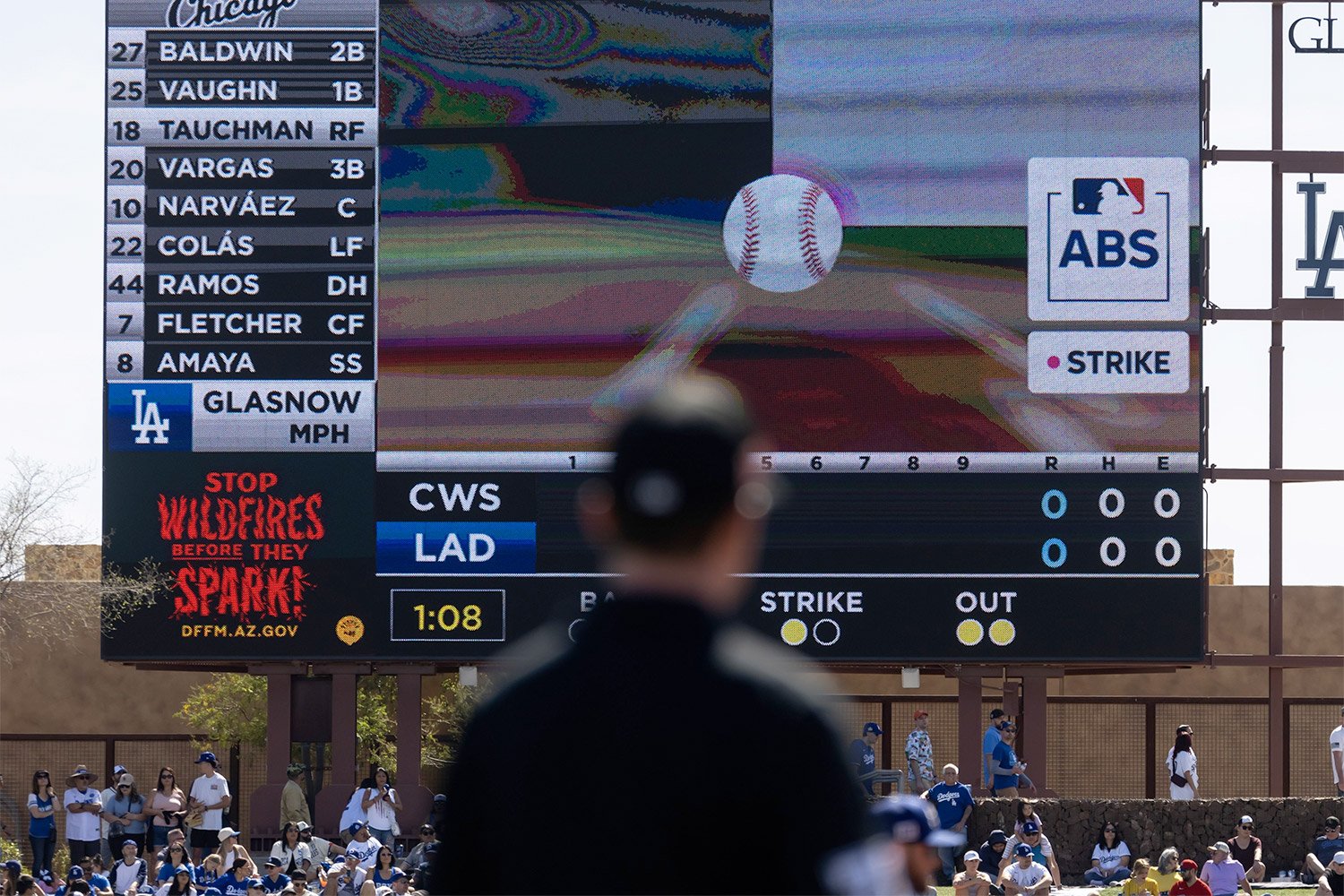
MLB is getting another rule change. The 2026 season will feature the Automated Ball-Strike system for the first time in regular-season play. Baseball has been using the system at various levels of the minor leagues for several years and gave major league players a taste of it in spring training of 2025.
How The Automated Ball-Strike Challenge System (ABS) Works
Unlike a full robot umpire system, where every pitch is called by a computer, the challenge system keeps the human umpire as the primary official. The ABS system uses 12 Hawk-Eye cameras around the stadium to track the ball's flight path with a margin of error of about 1/6 of an inch. Each batter is assigned an individualized, two-dimensional strike zone based on their measured height: the top of the zone is set at 53.5% of the player's height, while the bottom is at 27%.
MLB is going to test the Automated Ball-Strike (ABS) challenge system during Spring Training games.
— FOX Sports: MLB (@MLBONFOX) February 19, 2025
This was system was used in MiLB last year where calls challenged by players were overturned 51% of the time, per MLB.
What are your thoughts on the ABS Challenge System? pic.twitter.com/vraRdcf5WX
Under the rules for 2026, only the pitcher, catcher, or batter can initiate a challenge. They will do so by tapping their hat or helmet immediately after a call. Each team starts the game with two challenges. If the challenge is successful and the call is overturned, the team retains the challenge. If the call is upheld, the challenge is lost. To maintain the pace of play, the entire process is designed to be nearly instantaneous, with a 5G-powered graphic showing the pitch location on the stadium scoreboard and broadcast within approximately 15 seconds.
This Blake Snell challenge shows how exact the ABS system is pic.twitter.com/nIyeqOrFhi
— Talkin' Baseball (@TalkinBaseball_) March 9, 2025
The Benefit Of The ABS Challenge System Players
As with all systems and new rules, there are positives and negatives. For players with elite plate discipline, like Aaron Judge, the ABS acts as an equalizer. Historically, taller players often get the low strikes called on them that are technically balls but look like strikes to a human umpire. By using a standardized zone tailored to a player’s specific height, the system rewards hitters who truly know the strike zone and pitchers who can paint the corners with surgical precision. It removes the frustration of a high-leverage moment being decided by a clearly missed call, ensuring that the game's outcome is determined by the players' performance rather than officiating errors.
The most significant downside is the potential death of pitch framing. Pitch framing is like an art where catchers subtly move their mitts to give the umpire a good look at strikes, and to make shadow pitches (just outside the zone) appear inside the strike zone. Elite defensive catchers have built entire careers on getting as many strikes as possible for their pitchers, but since the ABS cameras track the ball as it passes through the zone -- regardless of where the catcher catches it -- this skill becomes less valuable. The shift could lead teams to prioritize offensive-minded catchers who lack defensive finesse, potentially changing the position's archetype and removing a classic chess-match element between the catcher and the home plate umpire. Pitch framing won't be fully obsolete because if teams run out of challenges early in games, catchers can still steal strikes late in games.
The ABS system is going to revolutionize the way the game is played, and fans will fall in love with it when their favorite team benefits from the calls that get changed as a result.
Do you like the ABS challenge system?

Follow DiamondCentric For Major League Baseball News & Analysis


Like what you've read here? Check out our team-specific sites and expand your fandom!










Recommended Comments
If you have an account on one of the following sites, you have a DiamondCentric account.
Twins Daily, Brewer Fanatic, North Side Baseball, Talk Sox, Jays Centre, Padres Mission, Royals Keep, Grand Central Mets, Fish On First.
Create an account or sign in to comment
You need to be a member in order to leave a comment
Create an account
Sign up for a new account in our community. It's easy!
Register a new accountSign in
Already have an account? Sign in here.
Sign In Now