


MLB Video
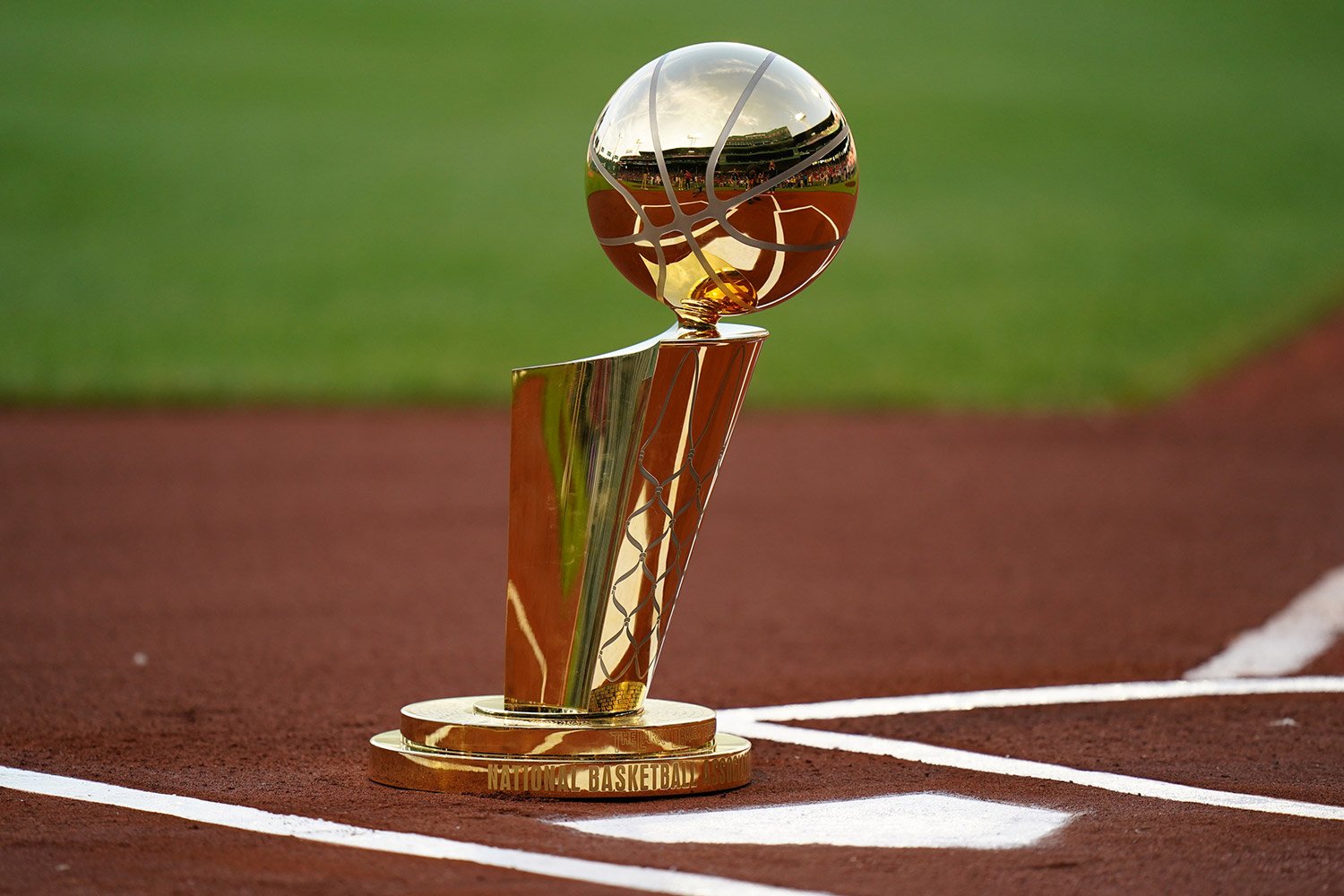
In-season tournaments are popular across professional sports. The New York Knicks recently defeated the San Antonio Spurs 124-113 in the 2025 NBA Cup. Soccer Football features several, including England’s Football Association Cup, Spain’s Copa del Rey, and Germany’s DFB-Pokal. Is baseball due for an in-season tournament?
Conceptually, an in-season MLB tournament, let’s call it the MLB Cup, would require flexible schedules and limit interleague geographic rivalry matchups to once per season. Schedule-wise, the tournament should be held towards the start of the season, say the beginning of May. The All-Star Game already dominates July, and anything afterwards would detract attention away from the trade deadline and postseason races. Ending the tournament in June would draw casual fans into the season sooner and build competitiveness early in the season.
Thanks to the inaugural Rivalry Weekend, which garnered record-breaking viewership, teams play their “cross-town” interleague rivals (cherry-picked for large market teams) over two series in a season. These inconsistent matchups are based on geographic rivalries, not classic ones.
Interleague play used to be a rare occurrence in the sport, limited to the All-Star Game and World Series. Between 2003 and 2016, interleague play held some significance; winners of the All-Star Game used to gain home-field advantage in the World Series, a rule that was abandoned in 2017.
With the balanced schedule format, multiple interleague matchups occur on any given day of the season. Rivalry Weekend doesn’t help. Is it really necessary for the Blue Jays and Tigers, Cubs and White Sox, Braves and Red Sox, Padres and Mariners, Cardinals and Royals, Marlins and Rays, and Brewers and Twins to play two series against each other in a season?
An MLB Cup would prioritize intraleague play in the Group and Knockout Stages, reduce the narrative of forced geographic rivalries, and reintroduce meaningful interleague play in the Championship Game. The tournament would require flexible scheduling for the Knockout Round and Championship Game. To minimize disruption, Group Stage games would count as regular-season games. The following proposed format incorporates some components of the NBA Cup.
Group Stage
Teams are randomly divided by league:
- National League: 3 groups of 5 teams
- American League: 3 groups of 5 teams
Each team plays two series against every opponent in their group, one on the road and one at home. Each league advances four teams to the knockout round: the three group winners, one Wild Card, awarded to the second-place team with the best record in the Group Stage.
For tiebreakers, teams will be broken out according to the following rules:
- Head-to-Head Record in the Group Stage
- Run Differential in the Group Stage
- Total Runs Scored in the Group Stage
- Previous Season Record (if necessary)
Knockout Round
For nostalgia purposes (RIP the bygone one-game Wild Card series) and heightened urgency, the knockout round will consist of single-game elimination games, rather than best-of-three series.
Quarterfinals Matchups
- Highest-ranked seed vs. third-place team
- Second-place team vs. the Wild Card team
Semifinals Matchups
- Winners of the highest-ranked seed vs. third-place team
- Winner of the second-place team vs. the Wild Card team
Championship Game
The National League and American League winners will face each other in the Championship Game, which will not count as a regular-season game. The Thursday/Friday before Memorial Day is a good target window.
Prize-wise? Money is the logical response. Each Knicks player will receive $530,933 for winning the 2025 NBA Cup, an increase from $500,000 when the tournament debuted in 2023. NBA 15-man rosters are roughly half the size of MLB’s 26-man rosters, so a baseline of $300,000 per winning MLB player is a reasonable starting point.
Teams should also receive a direct competitive benefit from winning. An extra draft pick is an obvious incentive. Let’s think outside the box for a bit. MLB’s annual revenue continues to climb, reaching a record $12.1 billion in 2024 after breaking its previous high of $11.6 billion in 2023. MLB is flush with cash and has ample means to fund a meaningful in-season prize.
Why not give the winning team a $5 million bonus on the condition that they spend the money in the same season on either:
- Major league payroll
- Draft bonus pool money for that year’s draft
Additional guardrails would apply to the bonus. The funds cannot be deferred, must be included in year-end payroll, and any draft allocation must be added to that year’s bonus pool. The money cannot be traded or rolled into a future season. Through these parameters, winning the MLB Cup provides a tangible, in-season competitive advantage rather than a novelty prize handed out early in the season. Moreover, this structure benefits both contenders and non-contending teams. For contenders, the bonus can offset the cost of acquiring talent at the trade deadline. For non-contending teams, it strengthens their farm system and could help accelerate their rebuild.
The 162-game MLB season is an arduous marathon. Opening Day by itself is a spectacle that captures fans’ attention, though some redirect their focus to football come September. An in-season MLB tournament would provide meaningful excitement early in the season, add tangible consequences to games that typically lack urgency between April and May, and help sustain fans’ attention through the season.
Do you care more about MLB mandating a salary floor or a salary cap?

Follow DiamondCentric For Major League Baseball News & Analysis


Like what you've read here? Check out our team-specific sites and expand your fandom!







Recommended Comments
If you have an account on one of the following sites, you have a DiamondCentric account.
Twins Daily, Brewer Fanatic, North Side Baseball, Talk Sox, Jays Centre, Padres Mission, Royals Keep, Grand Central Mets, Fish On First.
Create an account or sign in to comment
You need to be a member in order to leave a comment
Create an account
Sign up for a new account in our community. It's easy!
Register a new accountSign in
Already have an account? Sign in here.
Sign In Now