


MLB Video
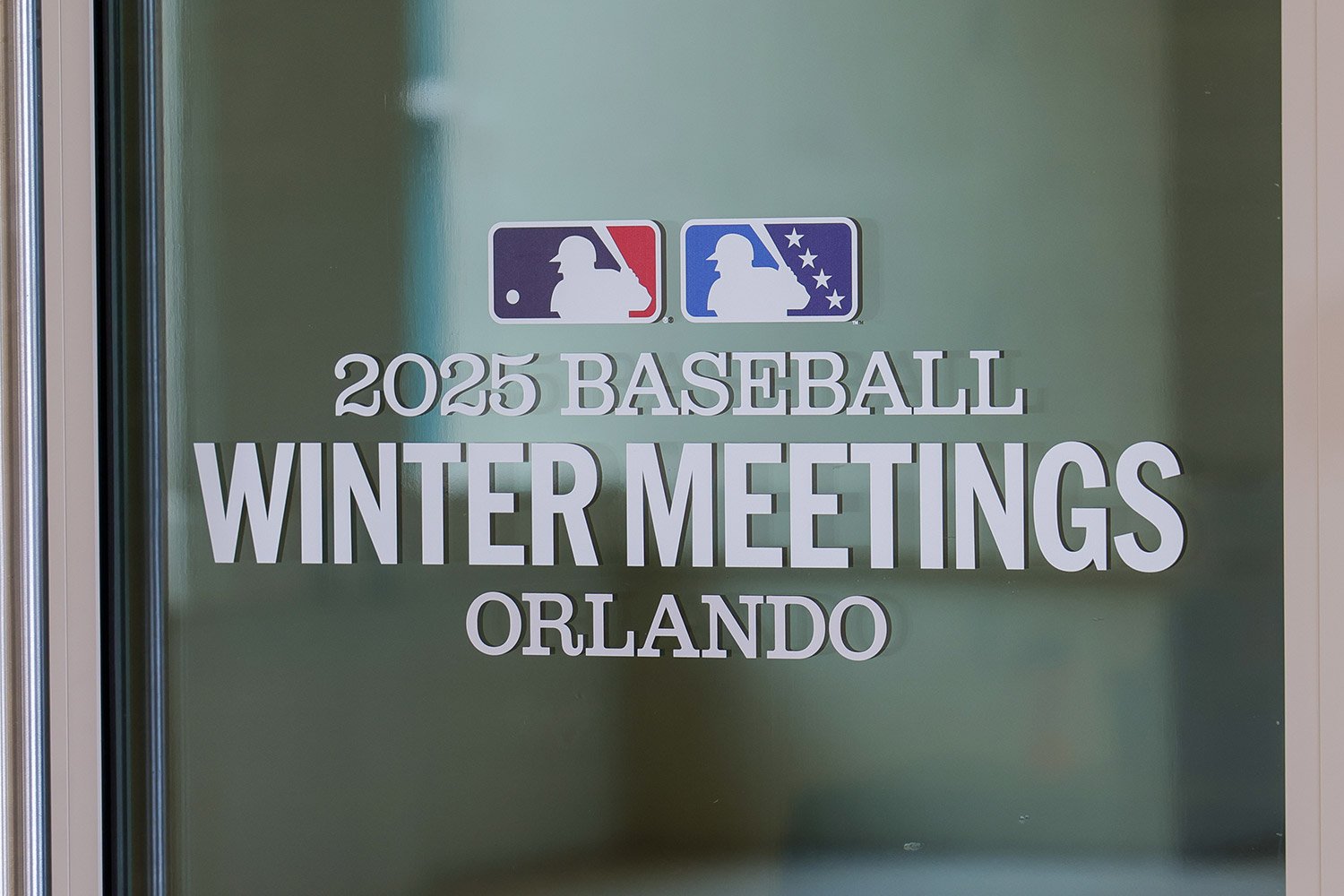
The MLB Winter Meetings are typically the most active week of the MLB offseason. It’s a week when all 30 teams meet at a destination – this year, Orlando – and formulate their offseason plans, including deals with free agents and trades with other teams. John Bonnes of DiamondCentric had a few minutes with the Twins' president of baseball operations, Derek Falvey, and they discussed preparations for the Winter Meetings.
Each of the 30 teams receives a dedicated room where their top executives meet to discuss their plans. “I do think big picture, we talked to a few agents about this today, and they agreed, at least one group agreed, that it’s felt like a lot of what happens during Winter Meetings now, there’s some big boy deals, but then there’s a lot of, you kind of get a sense for parameters or where some people are thinking, and then within like 10 days after, you see a lot of things start to happen.” Derek Falvey, President of Baseball Operations for the Minnesota Twins, said Tuesday.
Free Agents and Trades
The Twins, like many other teams in Major League Baseball, have payroll constraints that limit how much payroll they can add this offseason. In that case, teams will alert agents to those payroll constraints to help guide them to talent that can improve their teams within budget. “We’ve tried to, from GM Meetings (held in early November every year) onward, we kind of told you what we were telling teams around that time,” Falvey said. “And then subsequent to that, got a little more direction on some conversations around our direction. But not much before here. So I think it’s been a lot of work here.”
Falvey then took us into the room, what it's like when negotiating with an agent. He mentioned that depending on the player and their representation depends on the amount of people in the room. “At these meetings, it’s always been like this, my whole career, little bit of just catching up back and forth.” Said Falvey. “What they’re thinking the market is, what it looks like big picture. And we might talk about a few of their players and where they see it shaping up." Asked how many people are involved in agent negotiations, Zoll replied, "Depends which agent, because it’s usually like an army of people."
“The range of outcomes in that conversation is pretty significant. Some are, hey, it’s moving now, and if you want in, we’ve got to talk about it right now. Or we’re going to, we’re waiting on this guy and this guy and this guy, and we’ll see how that shakes out. and once we know what the market really is, we’ll move but we’re not going to move quickly. It just depends on each agency and how they want to navigate. How many players they have.”
Many fans have a common misconception about how deals come together. It often takes time. From negotiating to overall conversations, the process can stretch into weeks and then months. It’s fascinating how trades come together. Especially this offseason, when it's perceived as a weak free-agent class, trades will be essential to how teams do business.
“And it happens, like, if you think about it, it used to be, okay, GM to GM. There's so many people involved in this now.” Falvey said regarding trade development. “It could be people that, you know, report three rings down from the two of us, right? Three or four rings down that are connecting with somebody else on the other team saying, and, you know, we'll get someone, I'm just trying to think of someone, who's in our group, right? We got an outreach from... a guy they might move as, like, a bottom of the roster conversation, right?”
When talking deals, it’s not just the baseball operations people who are involved in the room. “And our scouts, like our whole crew, and like, we go through our player personnel process of, like, Okay, how's he fit? Like, where would he fit on our roster? What are the options? Option status?” Falvey added. “Like, how, you know, we go through this whole checklist of sorts, and then think about, okay, well, what? And then we might just say, yeah, we'd like to hear what the ask is, and then they come back. And if it's players, we like a little too much, we're like, Yeah, that's probably a little too rich. Like, they'll end up moving somewhere else. That can happen sometimes.”
“And they'll signal you, you know, let's use all the public prospect lists, right? Like, when they're asking you for someone that's sitting in your 26 to 35 range. Okay, we kind of get a sense where they're hunting here. And if you're engaged and you're, we wouldn't do this guy. We might consider that guy. We might float a name of another guy in that range that they might be like, oh yeah, we see him similarly. And we might just say we have a little depth there.”
Twins General Manager Jeremy Zoll was then asked about a potential trade deal surrounding starters Pablo Lopez and Joe Ryan. He responded by saying “I mean, the most, I think classic answer is it depends and it all in context matters a ton on all this stuff. But you know, I think other teams see the strength that we have there too, and that's why we're getting hit, not just on Joe and Pablo, but, you know, really through that whole group. So, you try to just evaluate every opportunity and try to understand the context as best as possible. But we feel like it's a strength and a surplus, and when you have that that you know gives you a chance to at least think through as many creative ideas as possible.”
The Twins have signaled this offseason that they are not looking to shop the rotation duo, but Zoll made it clear that they will do what is in the best long-term interest of the team.
Prospects and Prospect Value in Trades
Zoll was also asked about young players. In recent years, we have seen teams become “prospect huggers,” reluctant to deal any prospect the organization believes has a chance to be a big-time major leaguer. “Again, every player has their own story and case on that. We’re trying to make the best holistic evaluation on that knowing a lot of the guys we have have a lot of control, and in turn make them valuable for hopefully that whole control window. You’re just trying to find the right timing for those opportunities and common discussions around selling high, selling low and trying to find that right balance. You never really know. …That’s what we spend a lot of time discussing. The return and all those things play into that.”
Falvey was then asked if he changes his ask in trades based on the type of player that might be sent away (i.e., if the Twins deal a starter, are they looking for a major league replacement). Falvey responded by saying, “It’s a good question. I don’t know that it’s quite that specific. I think every team now has broadened their likes to some degree, depending on where they are.”
But what if a team values something different than the other, like one team holds a pitcher in higher regard than the team they are on? How does that impact talks? Zoll responded by saying, “I know what you’re getting at. I think we’re just trying to make the evaluation we can on what we think the market should be for any given player that we’re getting asked on. If trades happen, it’s because there was some degree of overlap and intersection, not this idea of they’re just overvaluing these players with these trades and in turn the other team is trying to take advantage of that.”
Over the years, watching transactions, it is clear that certain teams have relationships with others that help push deals across the finish line. But that is not always the case. Falvey cites that sometimes, variance in opinion helps trades get done, saying, “Despite the relationships we have in the game, and we have relationships with all the teams. It’s sometimes helpful to work with someone who just sees the world differently than you. Then you do find more overlap. It’s like, oh, this is type of player that we like, this is the type of player they like. When you like all the same types of players, it gets a little trickier to find those intersections.”
Rule 5 Draft and MLB Draft Placement
The Rule 5 Draft is also an event that takes place at the winter meetings. The Rule 5 Draft allows teams to select certain minor league players from other organizations who are not on their club's 40-man roster, provided the selected player meets specific professional service time requirements. Its primary purpose is to prevent organizations from hoarding talented players in the minor leagues who might otherwise be ready for a chance to compete at the major league level. “We’re a full 40 right now. We can make a move between now and tomorrow.” Falvey said on the Twins' plans for the Rule 5 draft. “If we do, we’ll have that conversation if someone is available. We’ve been thinking about that over the course of the week and working through some different iterations that could allow for us to have an opening.”
The MLB Draft is also an important event at the winter meetings. The draft lottery took place on Tuesday evening, and the Twins received the third overall pick. Before the placement of the pick became a reality, Zoll said, “Obviously, the higher the better, and you’re hoping for as high as possible. Once we knew — once we had an indication that it wasn’t going to be the top pick, I know Sean (Johnson) and the scouting group were really hopeful to be in the top three so to land that feels really good.”
Do you like the ABS challenge system?

Follow DiamondCentric For Major League Baseball News & Analysis


Like what you've read here? Check out our team-specific sites and expand your fandom!




Recommended Comments
There are no comments to display.
If you have an account on one of the following sites, you have a DiamondCentric account.
Twins Daily, Brewer Fanatic, North Side Baseball, Talk Sox, Jays Centre, Padres Mission, Royals Keep, Grand Central Mets, Fish On First.
Create an account or sign in to comment
You need to be a member in order to leave a comment
Create an account
Sign up for a new account in our community. It's easy!
Register a new accountSign in
Already have an account? Sign in here.
Sign In Now