Maddie Landis
-
Posts
16 -
Joined
Content Type
Profiles
Forums
Events
News
Tutorials & Help
Major League Baseball Videos
Guides & Resources
Store
Downloads
Gallery
Everything posted by Maddie Landis
-
Welcome back! Today, we're wrapping up the American League with the AL West. If you missed Parts 1 and Two, check them out! Part One - American League East Part Two - American League Central Anaheim Angels: House Florent House Florent is a prominent house without anything to show for it. Mike Trout, arguably the best player in the modern era, has spent his entire career languishing in Anaheim. Albert Pujols and Shohei Ohtani were on the Angels while Trout was in his prime, but the team has failed to post a winning record since 2015. Athletics: The Golden Company The Golden Company is a group of mercenary soldiers, wandering around without a home. (For anyone who’s watched “Game of Thrones”, they appeared in the eighth season.) After leaving the Oakland Coliseum, the Athletics have relocated to Sutter Health Park in West Sacramento. Their new stadium in Las Vegas is expected to open in 2028. This year, they played a six-game series at Las Vegas Ballpark, the home of their Triple-A affiliate. Houston Astros: House Hightower House Hightower amassed power through quiet, strategic moves rather than brute force. Thanks to their machinations, they were caught in the crossfire of the Dance of Dragons. They carry a holier-than-thou attitude, which makes the Astros a natural fit. The Astros were embroiled in a sign-stealing scandal during their 2017 World Series run. They got off basically scot-free, kept their championship title, and to this day, many fans condone the cheating. Seattle Mariners: House Velaryon House Velaryon collected wealth through maritime trade. Their colors are silver and a tealish sea green, so naturally the Mariners make sense as their MLB counterpart. The Velaryons have spent decades adjacent to the Iron Throne, but none of their direct descendants have actually sat on it and wielded power over the Seven Kingdoms. Seattle is the only team that has never appeared in a World Series. Texas Rangers: House Tarly House Tarly is renowned for its military prowess and generally unforgiving culture. The Texas Rangers take their name from the statewide law enforcement agency formed by Stephen F. Austin. Back in the spring, former Diamondcentric writer Davy Andrews discussed the Texas Rangers’ ugly racial history. Randyll Tarly disinherited his firstborn son, Samwell, because he didn’t fit his rigid definition of strength. The Rangers are also the only team in the league that doesn’t host a Pride Night in June – make of that what you will. View full article
-
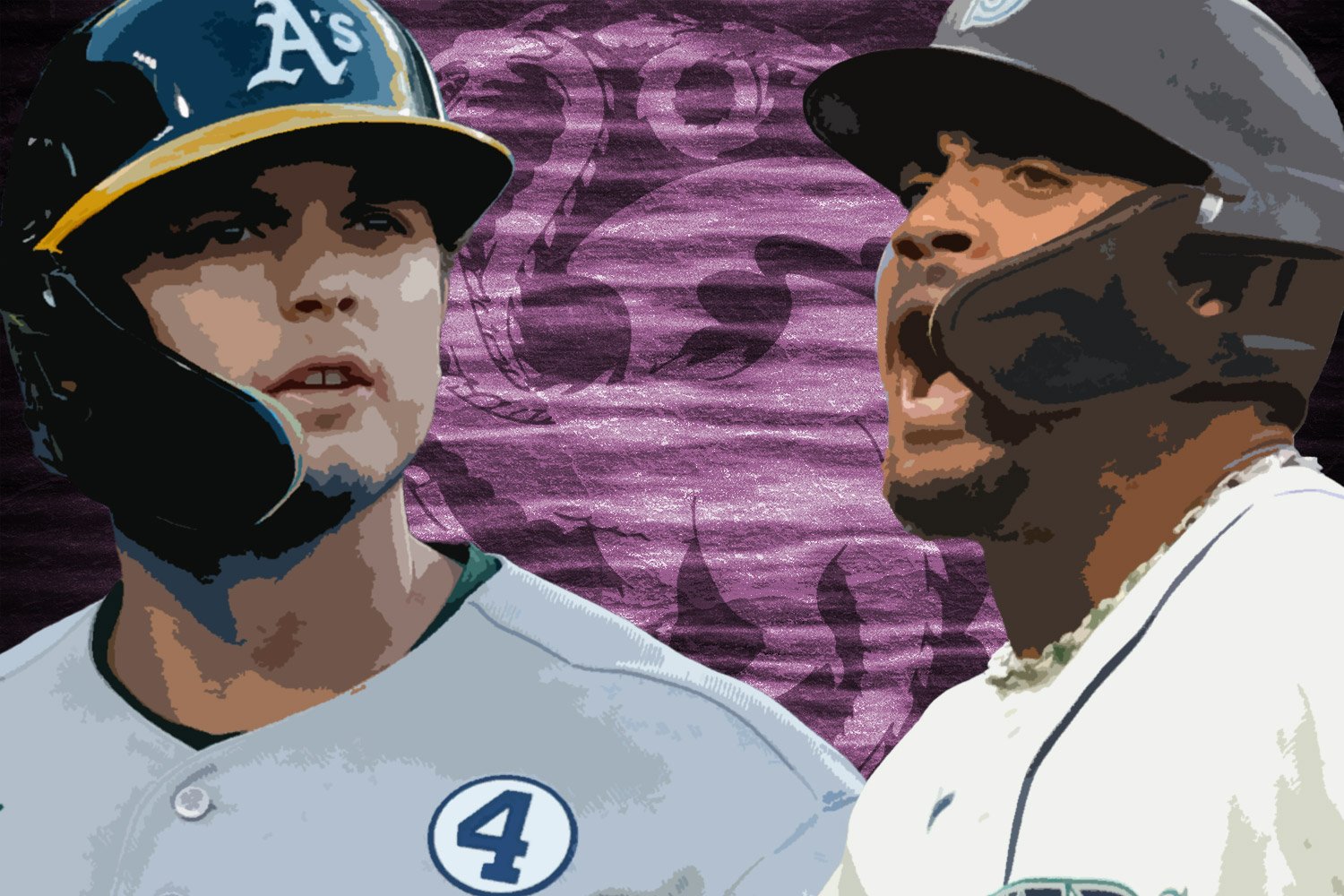 Welcome back! Today, we're wrapping up the American League with the AL West. If you missed Parts 1 and Two, check them out! Part One - American League East Part Two - American League Central Anaheim Angels: House Florent House Florent is a prominent house without anything to show for it. Mike Trout, arguably the best player in the modern era, has spent his entire career languishing in Anaheim. Albert Pujols and Shohei Ohtani were on the Angels while Trout was in his prime, but the team has failed to post a winning record since 2015. Athletics: The Golden Company The Golden Company is a group of mercenary soldiers, wandering around without a home. (For anyone who’s watched “Game of Thrones”, they appeared in the eighth season.) After leaving the Oakland Coliseum, the Athletics have relocated to Sutter Health Park in West Sacramento. Their new stadium in Las Vegas is expected to open in 2028. This year, they played a six-game series at Las Vegas Ballpark, the home of their Triple-A affiliate. Houston Astros: House Hightower House Hightower amassed power through quiet, strategic moves rather than brute force. Thanks to their machinations, they were caught in the crossfire of the Dance of Dragons. They carry a holier-than-thou attitude, which makes the Astros a natural fit. The Astros were embroiled in a sign-stealing scandal during their 2017 World Series run. They got off basically scot-free, kept their championship title, and to this day, many fans condone the cheating. Seattle Mariners: House Velaryon House Velaryon collected wealth through maritime trade. Their colors are silver and a tealish sea green, so naturally the Mariners make sense as their MLB counterpart. The Velaryons have spent decades adjacent to the Iron Throne, but none of their direct descendants have actually sat on it and wielded power over the Seven Kingdoms. Seattle is the only team that has never appeared in a World Series. Texas Rangers: House Tarly House Tarly is renowned for its military prowess and generally unforgiving culture. The Texas Rangers take their name from the statewide law enforcement agency formed by Stephen F. Austin. Back in the spring, former Diamondcentric writer Davy Andrews discussed the Texas Rangers’ ugly racial history. Randyll Tarly disinherited his firstborn son, Samwell, because he didn’t fit his rigid definition of strength. The Rangers are also the only team in the league that doesn’t host a Pride Night in June – make of that what you will.
 -
Welcome back! This week we're moving west and covering the American League Central. The division carries a reputation for being the least glamorous in baseball, though the White Sox's surprising surge and divine intervention from Pope Leo XIV have catapulted it into a semblance of relevancy. In case you missed Part One, check it out! Part One Detroit Tigers: House Mormont The Mormonts are a small, stubborn northern house. Their motto, “Here We Stand,” encapsulates the Tigers’ grittiness and stubborn on-and-off rebuild. Neither the Mormonts nor the Tigers have much, but they hold onto what they have fiercely. The Tigers have won four World Series titles and have kept back-to-back AL Cy Young Award winner Tarik Skubal (though that could change at this year’s trade deadline). Cleveland Guardians: House Royce House Royce isn’t featured heavily in the ASOIAF books or shows, and a lot of people overlook the Guardians. The Royces are a respected house that married into the Targaryen family. Cleveland’s front office builds a perennial contender without lavish spending or big moves. Kansas City Royals: House Manderly House Manderly often gets dismissed because its sigil is a mermaid. Look closer, and they’re the wealthiest northern house. While the Royals' coffers aren’t overflowing, they have Bobby Witt Jr., one of the most exciting players in baseball, who isn’t helped by the front office’s failure to build a legitimate team around him. Chicago White Sox: House Bolton Imagine the worst person you know. It could be your neighbor or your annoying relative. Heck, it could be someone in your immediate family. Among baseball teams, it’s the Chicago White Sox. The Boltons' house sigil is a flayed man, which is fitting since you might get flayed by a White Sox fan at Rate Field. Minnesota Twins: The Night’s Watch The Night’s Watch is a military group that mans the Wall in the North. It started as an honorable group of volunteer knights. Over time, it fell to waste as criminals seeking to escape punishment, bastards, and other unscrupulous men filled its ranks. The Night’s Watch is broke and is constantly refused aid by the crown. Sound familiar? I don’t think there are any corrupt players on the team, but the Pohlad family’s reticence to spend and general apathy frustrates fans. Minnesota’s $131.6 million competitive balance tax payroll ranks in the bottom third of the league (24th). Victor Caratini, their biggest offseason acquisition, signed to a modest two-year $14 million contract. Homegrown superstar Byron Buxton, who’s posted a .902 OPS, 145 wRC+, and 2.9 fWAR across 342 plate appearances, is the Twins’ Jon Snow. View full article
-
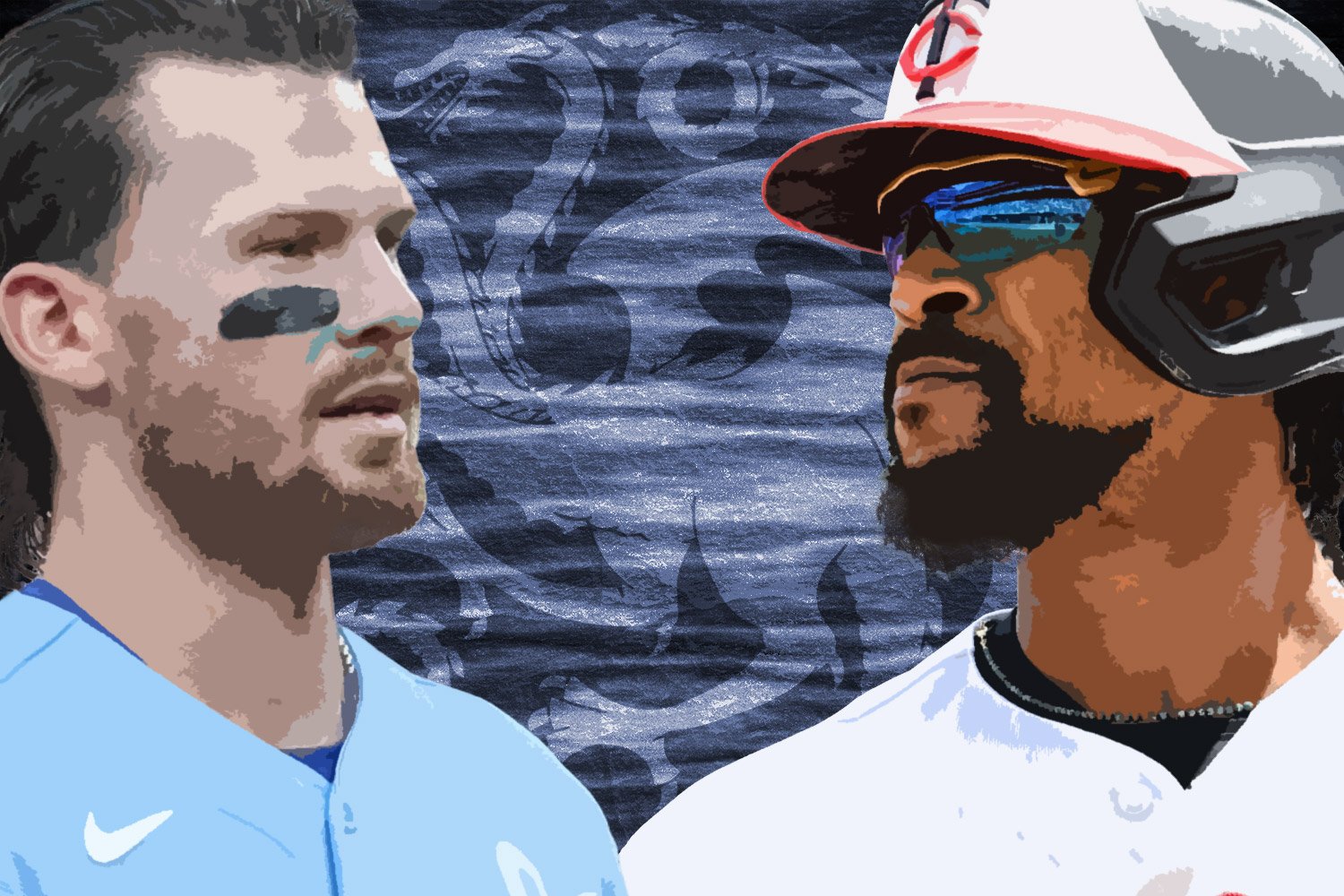 Welcome back! This week we're moving west and covering the American League Central. The division carries a reputation for being the least glamorous in baseball, though the White Sox's surprising surge and divine intervention from Pope Leo XIV have catapulted it into a semblance of relevancy. In case you missed Part One, check it out! Part One Detroit Tigers: House Mormont The Mormonts are a small, stubborn northern house. Their motto, “Here We Stand,” encapsulates the Tigers’ grittiness and stubborn on-and-off rebuild. Neither the Mormonts nor the Tigers have much, but they hold onto what they have fiercely. The Tigers have won four World Series titles and have kept back-to-back AL Cy Young Award winner Tarik Skubal (though that could change at this year’s trade deadline). Cleveland Guardians: House Royce House Royce isn’t featured heavily in the ASOIAF books or shows, and a lot of people overlook the Guardians. The Royces are a respected house that married into the Targaryen family. Cleveland’s front office builds a perennial contender without lavish spending or big moves. Kansas City Royals: House Manderly House Manderly often gets dismissed because its sigil is a mermaid. Look closer, and they’re the wealthiest northern house. While the Royals' coffers aren’t overflowing, they have Bobby Witt Jr., one of the most exciting players in baseball, who isn’t helped by the front office’s failure to build a legitimate team around him. Chicago White Sox: House Bolton Imagine the worst person you know. It could be your neighbor or your annoying relative. Heck, it could be someone in your immediate family. Among baseball teams, it’s the Chicago White Sox. The Boltons' house sigil is a flayed man, which is fitting since you might get flayed by a White Sox fan at Rate Field. Minnesota Twins: The Night’s Watch The Night’s Watch is a military group that mans the Wall in the North. It started as an honorable group of volunteer knights. Over time, it fell to waste as criminals seeking to escape punishment, bastards, and other unscrupulous men filled its ranks. The Night’s Watch is broke and is constantly refused aid by the crown. Sound familiar? I don’t think there are any corrupt players on the team, but the Pohlad family’s reticence to spend and general apathy frustrates fans. Minnesota’s $131.6 million competitive balance tax payroll ranks in the bottom third of the league (24th). Victor Caratini, their biggest offseason acquisition, signed to a modest two-year $14 million contract. Homegrown superstar Byron Buxton, who’s posted a .902 OPS, 145 wRC+, and 2.9 fWAR across 342 plate appearances, is the Twins’ Jon Snow.
 -
In honor of the House of the Dragon Season 3 premiere, DiamondCentric is publishing a six-part series on the MLB Teams as Game of Thrones Houses. We had originally planned for this to be one piece featuring all 30 teams, but realized that was a little too ambitious (though not as ambitious as smuggling a White Walker down to the King's Landing). For anyone green as summer grass, Game of Thrones is a fantasy television series based on George R.R. Martin’s A Song of Ice and Fire book series (ASOIAF). The main story primarily takes place in Westeros (also referred to as the Seven Kingdoms), a feudal society, rife with political intrigue, romance, dragons, and battles. What’s not to like? House of the Dragon takes place hundreds of years before the events in Game of Thrones. While MLB doesn’t have trial by combat (though I’d love to see it added somewhere in the new CBA), some teams share traits with the fictional Westerosi houses. This week, we’re starting with the American League East. Boston Red Sox: House Baratheon Robert Baratheon (Bobby B) led a rebellion that usurped the 283-year Targaryen dynasty. He won the Iron Throne, peaked, and let the Seven Kingdoms rot. Ownership under John W. Henry has brought the Red Sox four World Series, but since 2018, the team has rested on its laurels. House Baratheon’s words are “Ours is the Fury”, which is the mantra of the typical Masshole you encounter driving along Route 9. Red Sox fans possess mercurial tempers. One second, they’re happy, celebrating a series sweep over the Yankees in mid-June. The next second, they’re furious because ownership traded their franchise player for a bag of peanuts. The Barathons are also embroiled in a bitter rivalry with the Lannisters, represented by another American League East team (which I’ll get to in a moment). Baltimore Orioles: House Fossoway of New Barrel House Fossoway of New Barrel is a relatively new house that arose at the Tourney of Ashford Meadow (shown in the Dunk and Egg series, another prequel to Game of Thrones). The Orioles are a young team with their batter averaging at 27.1 years old, the eighth lowest in baseball. They’ve grown as their steady stream of highly-touted prospects made their debuts in the majors. The Fossoway’s sigil is a green apple over a golden field that symbolizes the Orioles' rebuild. Tampa Bay Rays: House Baelish Despite a humble upbringing, Petyr Baelish made a name for himself and schemed his way to the King’s Small Council. Baelish is often underestimated when he’s clandestinely pulling the strings. Assassinating John Arryn sparked the events in Game of Thrones. The Rays were woefully ignored in our season predictions. As I’m writing this, they’re currently in first place in the American League East and hold the best record in the American League. The team isn’t flush with cash, they don’t have any star players on their roster (though Junior Caminero has the potential to become one), and wealthier teams don’t pay much attention to them. Blink once, and suddenly they swept your favorite team. New York Yankees: House Lannister The Lannisters are obscenely wealthy because they control almost all of the gold mines in Westeros. Their house motto, “Hear me roar,” sounds like a Yankees fan reminding you of their favorite team’s 27 rings. They fought with the Baratheons (aka the Red Sox) and engaged the entire realm in a civil war before and during the events in Game of Thrones. The Lannisters' hubris is nepotism running a formerly great house into the ground. Ask literally any Yankees fan, and it sounds like the same is occurring in their team’s front office with Hal Steinbrenner, the son of the late George Steinbrenner III. The Yankees buy their way out of roster inefficiencies, and they hog the spotlight (especially on national television). Toronto Blue Jays: House Stark The North encompasses the largest territory in Westeros. As the only MLB team in Canada, the Blue Jays are considered Canada’s team. Situated far beyond the politics in the states, Toronto exists in its old little world. The Starks suffer from more top 10 anime betrayals than any other Westerosi house. As a Red Sox fan, I don’t want to say the same for the Blue Jays (I was rooting for the Dodgers in the 2025 World Series). If I squint hard enough, I can see where the Toronto matches House Stark’s honorable suffering. For example, their homegrown talent hasn’t fully developed. Left fielder Davis Schenieder looked good in his first three games, then faded into mediocrity. Pitcher Alek Manoah had one good season and turned into a pumpkin. I’ll go on a whim here and say Vladimir Guerrero Jr. has only been elite in a couple of seasons. After losing the World Series by a kitten’s whisker, the Blue Jays made an aggressive push in the offseason and have a 35-38 record to show for it. View full article
-
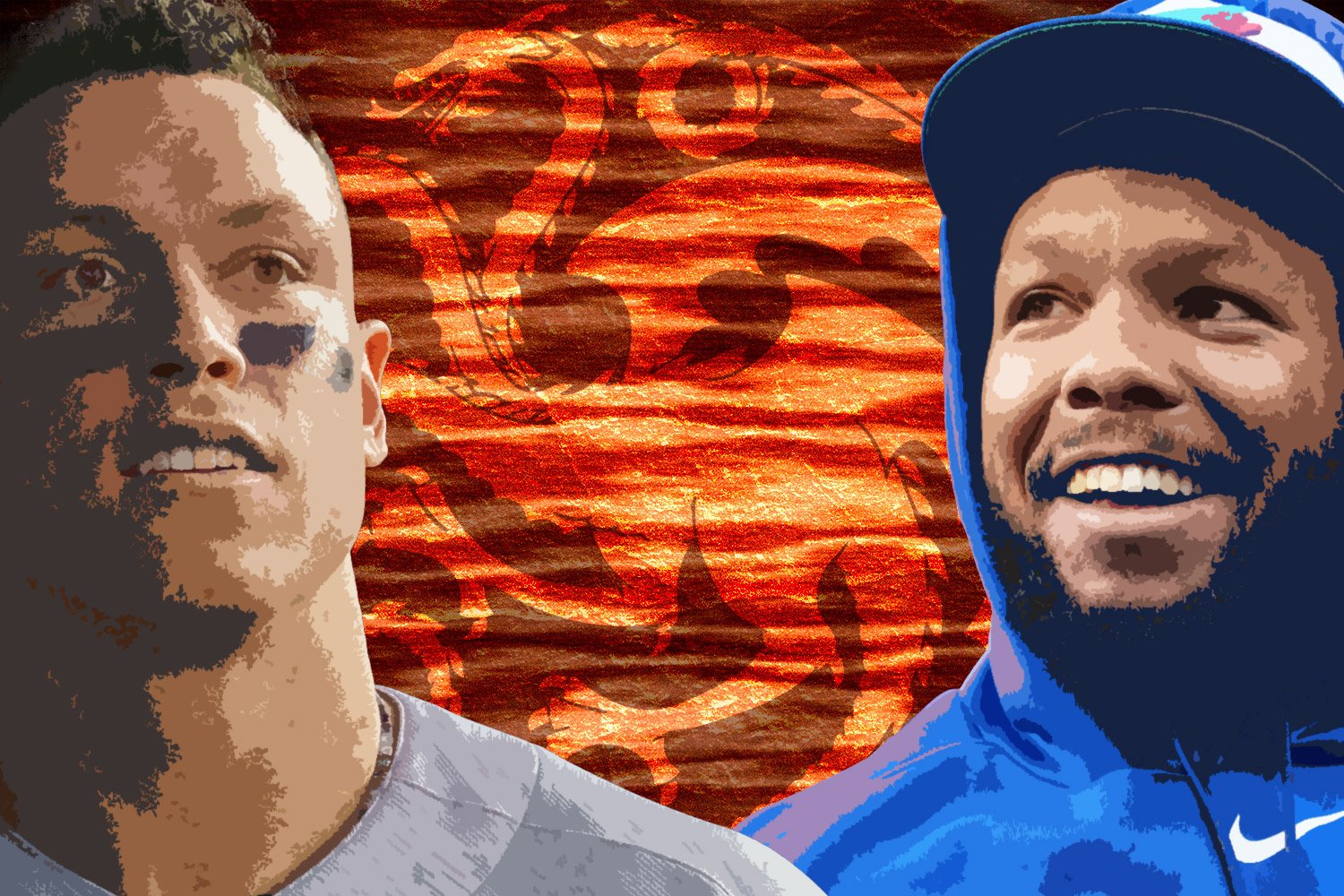 In honor of the House of the Dragon Season 3 premiere, DiamondCentric is publishing a six-part series on the MLB Teams as Game of Thrones Houses. We had originally planned for this to be one piece featuring all 30 teams, but realized that was a little too ambitious (though not as ambitious as smuggling a White Walker down to the King's Landing). For anyone green as summer grass, Game of Thrones is a fantasy television series based on George R.R. Martin’s A Song of Ice and Fire book series (ASOIAF). The main story primarily takes place in Westeros (also referred to as the Seven Kingdoms), a feudal society, rife with political intrigue, romance, dragons, and battles. What’s not to like? House of the Dragon takes place hundreds of years before the events in Game of Thrones. While MLB doesn’t have trial by combat (though I’d love to see it added somewhere in the new CBA), some teams share traits with the fictional Westerosi houses. This week, we’re starting with the American League East. Boston Red Sox: House Baratheon Robert Baratheon (Bobby B) led a rebellion that usurped the 283-year Targaryen dynasty. He won the Iron Throne, peaked, and let the Seven Kingdoms rot. Ownership under John W. Henry has brought the Red Sox four World Series, but since 2018, the team has rested on its laurels. House Baratheon’s words are “Ours is the Fury”, which is the mantra of the typical Masshole you encounter driving along Route 9. Red Sox fans possess mercurial tempers. One second, they’re happy, celebrating a series sweep over the Yankees in mid-June. The next second, they’re furious because ownership traded their franchise player for a bag of peanuts. The Barathons are also embroiled in a bitter rivalry with the Lannisters, represented by another American League East team (which I’ll get to in a moment). Baltimore Orioles: House Fossoway of New Barrel House Fossoway of New Barrel is a relatively new house that arose at the Tourney of Ashford Meadow (shown in the Dunk and Egg series, another prequel to Game of Thrones). The Orioles are a young team with their batter averaging at 27.1 years old, the eighth lowest in baseball. They’ve grown as their steady stream of highly-touted prospects made their debuts in the majors. The Fossoway’s sigil is a green apple over a golden field that symbolizes the Orioles' rebuild. Tampa Bay Rays: House Baelish Despite a humble upbringing, Petyr Baelish made a name for himself and schemed his way to the King’s Small Council. Baelish is often underestimated when he’s clandestinely pulling the strings. Assassinating John Arryn sparked the events in Game of Thrones. The Rays were woefully ignored in our season predictions. As I’m writing this, they’re currently in first place in the American League East and hold the best record in the American League. The team isn’t flush with cash, they don’t have any star players on their roster (though Junior Caminero has the potential to become one), and wealthier teams don’t pay much attention to them. Blink once, and suddenly they swept your favorite team. New York Yankees: House Lannister The Lannisters are obscenely wealthy because they control almost all of the gold mines in Westeros. Their house motto, “Hear me roar,” sounds like a Yankees fan reminding you of their favorite team’s 27 rings. They fought with the Baratheons (aka the Red Sox) and engaged the entire realm in a civil war before and during the events in Game of Thrones. The Lannisters' hubris is nepotism running a formerly great house into the ground. Ask literally any Yankees fan, and it sounds like the same is occurring in their team’s front office with Hal Steinbrenner, the son of the late George Steinbrenner III. The Yankees buy their way out of roster inefficiencies, and they hog the spotlight (especially on national television). Toronto Blue Jays: House Stark The North encompasses the largest territory in Westeros. As the only MLB team in Canada, the Blue Jays are considered Canada’s team. Situated far beyond the politics in the states, Toronto exists in its old little world. The Starks suffer from more top 10 anime betrayals than any other Westerosi house. As a Red Sox fan, I don’t want to say the same for the Blue Jays (I was rooting for the Dodgers in the 2025 World Series). If I squint hard enough, I can see where the Toronto matches House Stark’s honorable suffering. For example, their homegrown talent hasn’t fully developed. Left fielder Davis Schenieder looked good in his first three games, then faded into mediocrity. Pitcher Alek Manoah had one good season and turned into a pumpkin. I’ll go on a whim here and say Vladimir Guerrero Jr. has only been elite in a couple of seasons. After losing the World Series by a kitten’s whisker, the Blue Jays made an aggressive push in the offseason and have a 35-38 record to show for it.
 -
Image courtesy of © James A. Pittman-Imagn Images After coming off a tremendous campaign the previous season, where they finished second with a 91-71 record, the Orioles failed to meet expectations in 2025. They ranked last in the division, amassing a 75-87 record. Their young core of Ryan Mountcastle, Adley Rutschman, and Colton Cowser took a step backwards. Jackson Holliday’s performance fell short of the performance you’d expect from the former number one prospect in baseball. In an “off year”, Gunnar Henderson generated 4.8 fWAR. Their rotation was plagued by injuries. Looking to remedy these issues, the Orioles front office rolled up its sleeves and quickly got to work in the offseason. Orioles' Notable Offseason Moves Kickstarting things, the Orioles acquired outfielder Taylor Ward from the Los Angeles Angels in exchange for starter Grayson Rodriguez. Ward is coming off a career-high 36 home run season (.792 OPS, 117 wRC+). Though his batted ball and swing metrics aren’t too promising, he should fare well as a pull-heavy righty at Camden Yards. As everyone guessed, the Orioles signed free-agent Pete Alonso to a five-year, $155 million contract. The Polar Bear adds even more thump to their lineup. Alonso can drive the ball all over the field. If you’re watching a game from the Flag Court in right field, watch out. To address their pitching, the Orioles inked closer Ryan Helsley to a two-year, $28 million deal. Helsley, who infamously turned into a pumpkin after joining the Mets at the trade deadline (7.00 ERA, 5.19 FIP across 20 IP), is looking to bounce back with the Orioles. They acquired starter Shane Baz from the Rays for a haul of prospects and a competitive-balance Round A pick. Baz, an oft-injured and inconsistent pitcher, looks to stay healthy in 2026. Around the start of spring training, they signed veteran Chris Bassitt to a one-year, $18.5 million deal to solidify the back end of their rotation. Projected Orioles Lineup (MLB.com) Gunnar Henderson, SS Taylor Ward, LF Adley Rutschman, C Pete Alonso, 1B Tyler O'Neill, RF Samuel Basallo, DH Blaze Alexander, 2B Colton Cowser, CF Coby Mayo, 3B Thanks to their new acquisitions, the Orioles completely reworked the top of their lineup. If Adley Rutschman stays healthy, their one through four spots have the makings of a Murderers' Row. Injuries (neck, shoulder, and wrist) plagued outfielder Tyler O’Neill, limiting him to 54 games in 2025. When healthy, he can be a productive player. Ranked the Orioles' number one prospect, Samuel Basallo had a brief cup of coffee in the majors last year (.559 OPS, 55 wRC+ across 118 PAs). After inking an eight-year, $67 million extension, he looks to have a breakout season. Cowser, the 2024 American League Rookie of the Year runner-up, seeks to take a step forward and stay healthy after various IL stints and a sophomore slump (.655 OPS and 83 wRC+ across 360 PAs). Blaze Alexander (.706 OPS, 99 wRC+ across 266 PAs) fills in for starting second baseman Jackson Holliday, who was part of the wave of hamate injuries early in camp. Projected Orioles Rotation (MLB.com) Trevor Rogers, LHP Kyle Bradish, RHP Shane Baz, RHP Chris Bassitt, RHP Zach Eflin, RHP / Dean Kremer, RHP The Orioles enter the season with a solidified rotation. Trevor Rogers (17.5% K-BB%, 2.82 FIP) has proved to be a competent starter. Kyle Bradish (29.4% K-BB%, 2.45 FIP) looked sharp post-recovery from his June 2024 Tommy John surgery. A change of scenery could benefit Baz. Bassitt is a veteran presence with plenty of knowledge to impart to his younger teammates. Zach Eflin is a bit of a wild card due to his extensive injury history. Dean Kremer might be a safer option as a back-of-the-rotation innings eater. 26-year old Cade Povich was recently optioned to Triple-A and is an important depth piece whenever an injury arises. The Verdict The Orioles shored up their rotation, which was the biggest hole on their roster, and acquired more pop. The lack of a bona fide ace is a bit of a concern. However, the Orioles’ farm system wasn’t completely depleted after the Baz trade. If they're in the right position come the trade deadline, they could pursue a true number one or two starter. As much as it pains me to say this as a Red Sox fan, don’t sleep on the Orioles. View full article
-
 After coming off a tremendous campaign the previous season, where they finished second with a 91-71 record, the Orioles failed to meet expectations in 2025. They ranked last in the division, amassing a 75-87 record. Their young core of Ryan Mountcastle, Adley Rutschman, and Colton Cowser took a step backwards. Jackson Holliday’s performance fell short of the performance you’d expect from the former number one prospect in baseball. In an “off year”, Gunnar Henderson generated 4.8 fWAR. Their rotation was plagued by injuries. Looking to remedy these issues, the Orioles front office rolled up its sleeves and quickly got to work in the offseason. Orioles' Notable Offseason Moves Kickstarting things, the Orioles acquired outfielder Taylor Ward from the Los Angeles Angels in exchange for starter Grayson Rodriguez. Ward is coming off a career-high 36 home run season (.792 OPS, 117 wRC+). Though his batted ball and swing metrics aren’t too promising, he should fare well as a pull-heavy righty at Camden Yards. As everyone guessed, the Orioles signed free-agent Pete Alonso to a five-year, $155 million contract. The Polar Bear adds even more thump to their lineup. Alonso can drive the ball all over the field. If you’re watching a game from the Flag Court in right field, watch out. To address their pitching, the Orioles inked closer Ryan Helsley to a two-year, $28 million deal. Helsley, who infamously turned into a pumpkin after joining the Mets at the trade deadline (7.00 ERA, 5.19 FIP across 20 IP), is looking to bounce back with the Orioles. They acquired starter Shane Baz from the Rays for a haul of prospects and a competitive-balance Round A pick. Baz, an oft-injured and inconsistent pitcher, looks to stay healthy in 2026. Around the start of spring training, they signed veteran Chris Bassitt to a one-year, $18.5 million deal to solidify the back end of their rotation. Projected Orioles Lineup (MLB.com) Gunnar Henderson, SS Taylor Ward, LF Adley Rutschman, C Pete Alonso, 1B Tyler O'Neill, RF Samuel Basallo, DH Blaze Alexander, 2B Colton Cowser, CF Coby Mayo, 3B Thanks to their new acquisitions, the Orioles completely reworked the top of their lineup. If Adley Rutschman stays healthy, their one through four spots have the makings of a Murderers' Row. Injuries (neck, shoulder, and wrist) plagued outfielder Tyler O’Neill, limiting him to 54 games in 2025. When healthy, he can be a productive player. Ranked the Orioles' number one prospect, Samuel Basallo had a brief cup of coffee in the majors last year (.559 OPS, 55 wRC+ across 118 PAs). After inking an eight-year, $67 million extension, he looks to have a breakout season. Cowser, the 2024 American League Rookie of the Year runner-up, seeks to take a step forward and stay healthy after various IL stints and a sophomore slump (.655 OPS and 83 wRC+ across 360 PAs). Blaze Alexander (.706 OPS, 99 wRC+ across 266 PAs) fills in for starting second baseman Jackson Holliday, who was part of the wave of hamate injuries early in camp. Projected Orioles Rotation (MLB.com) Trevor Rogers, LHP Kyle Bradish, RHP Shane Baz, RHP Chris Bassitt, RHP Zach Eflin, RHP / Dean Kremer, RHP The Orioles enter the season with a solidified rotation. Trevor Rogers (17.5% K-BB%, 2.82 FIP) has proved to be a competent starter. Kyle Bradish (29.4% K-BB%, 2.45 FIP) looked sharp post-recovery from his June 2024 Tommy John surgery. A change of scenery could benefit Baz. Bassitt is a veteran presence with plenty of knowledge to impart to his younger teammates. Zach Eflin is a bit of a wild card due to his extensive injury history. Dean Kremer might be a safer option as a back-of-the-rotation innings eater. 26-year old Cade Povich was recently optioned to Triple-A and is an important depth piece whenever an injury arises. The Verdict The Orioles shored up their rotation, which was the biggest hole on their roster, and acquired more pop. The lack of a bona fide ace is a bit of a concern. However, the Orioles’ farm system wasn’t completely depleted after the Baz trade. If they're in the right position come the trade deadline, they could pursue a true number one or two starter. As much as it pains me to say this as a Red Sox fan, don’t sleep on the Orioles.
 -
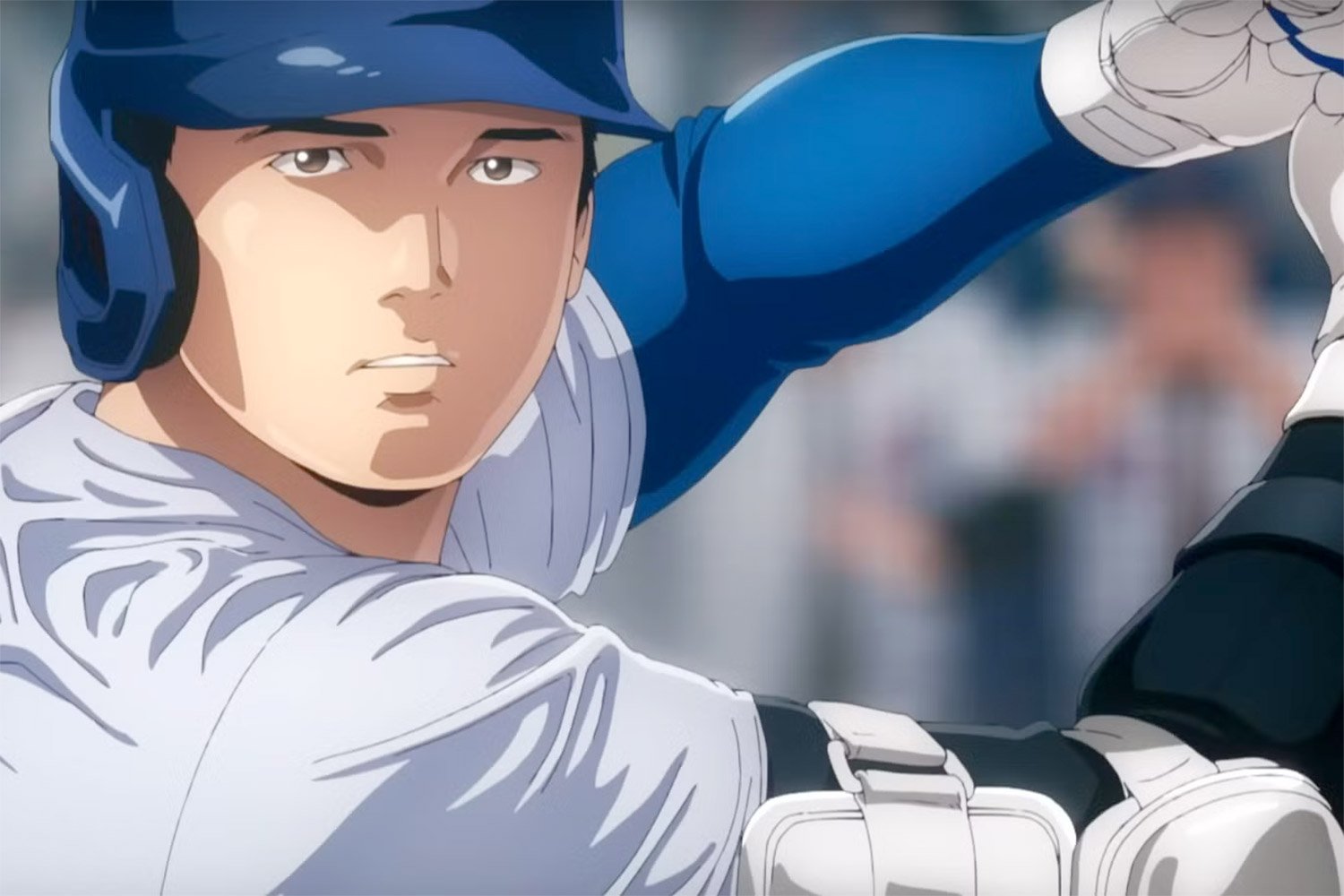 I have been a purveyor of anime for most of my adult life. (God knows I would be insufferable if I heavily consumed the genre as a young child.) Anime incites strong emotions – most people either love it or hate it. I think the genre is heavily misconstrued. The discourse centers on the otaku subculture and fandoms, not on the actual stories or the creative processes behind them. Much to the dismay of my friends and family, I actively encourage them to watch anime. I have an agenda to push forward. There’s a show for everyone. If you are a big DC and/or Marvel fan, I recommend My Hero Academia. Looking for a romance anime? Watch Your Lie in April or Makoto Shinkai's Disaster Trilogy. How about a space opera? Try Space Battleship Yamato. What about a figure skating anime? Yuri!!! on Ice debuted long before Heated Rivalry. Japan’s love for baseball, the most popular sport in the country, is reflected in Big Windup! and Ace of Diamond. If you already watch anime, I hope you get a chuckle out of this. If you do not, maybe I’ll convince you to give anime a shot. Owner | Tamaki Suoh - Ouran High School Host Club I’m building this team from the top down, starting with ownership. I want someone with deep pockets, unafraid to dish out money on big-name free agents. Enter 16-year-old Tamaki Suoh from Ouran High School Host Club. Suoh is the president of the secret host club at Ouran Academy, a prestigious private school in Tokyo. No, not that type of host club. This isn’t Euphoria. Imagine tea and light-hearted flirting over scones, biscuits, and finger sandwiches. As the heir to the Suoh empire (his father is the Chairman of Ouran Academy), Tamaki has enough wealth to pursue any player he wants. Flamboyant yet endearing, his charm easily wins over fans and players. He’s also smart enough to surround himself with capable peers who handle the day-to-day operations of the team. President of Baseball Operations | Kyoya Ootori - Ouran High School Host Club Abraham Lincoln had David Derickson. Frodo Baggins had Samwise Gamgee. George Washington had Alexander Hamilton. Sam Breadon had Branch Rickey. Tamaki Suoh’s right-hand man is Kyoya Ootori. While Suoh serves as the host club’s spokesperson, Ootori works behind the scenes, fulfilling the duties of an entire C-suite. Suoh and Ootori are a united front, with Ootori implementing Suoh’s long-term vision for the team. Ootori would be an elite data-driven executive. Not a single penny would go to waste. He’d ensure every player’s value is maximized and would avoid signing players to albatross contracts. Manager | Yang Wen Li - Legends of the Galactic Heroes My knee-jerk reaction was to name Erwin Smith from Attack on Titan as the team’s manager. Smith is the 13th Commander of the Survey Corps, an overburdened branch of the military with limited resources for protecting humanity against titans. He instills great loyalty in his soldiers, though I think his leadership style is best suited in a smaller market like the Brewers or Rays. There are too many divas on this team. Ah yes. The classic sci-fi trope: an empire spearheaded by a dictator fighting a group of scrappy democratic rebels. Legend of the Galactic Heroes has a familiar setup with a twist. Yang Wen Li is a genius military strategist fighting for the Free Planets Alliance. The rub is that the Alliance is riddled with self-serving politicians who exploit democratic institutions for their own gain. Despite the corruption surrounding him, Yang is a simple man with no interest in climbing the military ranks. While Erwin’s soldiers follow his orders without question, Yang encourages his subordinates to think for themselves. He earns respect through trust rather than blind obedience. Because of this, he can easily get a star-studded team on the same page without stepping on anyone’s toes. Mascot | Princess Kenny - South Park But South Park isn’t an anime! Technically, it isn’t. Season 17’s three-episode Black Friday arc features a console war (Xbox One camp vs Play Station 4 camp). Cartman, Kyle, Stan, and Kenny role-play as characters from HBO’s Game of Thrones series. Kenny somehow ends up dressing up as a Japanese princess. (Yes, there’s an anime scene featuring Trey Parker’s hilariously terrible imitation of Japanese.) This is close enough to anime for me. If you’ve never watched South Park, Kenny's death is a running gag on the show. This could be entertainment in between innings. Say, every time the middle of the fifth inning rolls around at a home game, Kenny-chan dies. He could be taken out by a foul ball or launched out of a t-shirt cannon – the possibilities are endless. The Washington Nationals' Presidents Race and Brewers’ Famous Racing Sausages can step aside. Starting Pitcher | Yor Forger - Spy x Family We all keep secrets from our families, right? Spy x Family follows the Forgers, who are a typical run-of-the-mill family. The dad is a spy, the mom is an elite assassin, and their child is a telepath. Yor, the mom, is the team’s starting pitcher. Facing an assassin on the mound is almost as scary as seeing David Ortiz wearing a Yankees hat. Yor possesses superhuman strength and stamina, plus her kills are clean and precise. She’s an ace who has the horsepower to throw 100+ mph pitches without breaking a sweat, combined with elite command. Closer | Katsuki Bakugo - My Hero Academia In My Hero Academia, almost everyone is born with a superpower called a Quirk. Katsuki Bakugo sweats nitroglycerin from the palms of his hands and ignites it to create explosions. His fiery personality lends itself to dominating high-leverage situations. No stage is too big for him. One run lead? No problem. Bases loaded with nobody out? He’ll strike out the next three batters with ease. Bakugo comes in to close the game and doesn’t give a damn about anyone’s feelings. Designated Hitter | Dio Brando - Jojo’s Bizarre Adventure Dio Brando’s cockiness makes Juan Soto look like an altar boy in the batter’s box. He’s immortal, so he’s on the roster for life (or until he quits). His ability to freeze time would be used almost exclusively to torment opposing pitchers. The fact that it also lets him read every pitch and adjust his swing is just a bonus. Dio is an absolute unit, and he’d easily break Barry Bonds’ single-season slugging record. Catcher | Graveler - Pokémon The ideal catcher has rock-solid defense. So why not put an actual rock behind the plate? Graveler is a rock-type Pokémon introduced in Generation 1. Catchers are supposed to squat during the game, but at 3' 03" tall, Graveler could just stand. With four arms for framing and blocking, wild pitches and passed balls are a thing of the past. Moreover, Graveler is symmetrical, so it could switch hit à la Cal Raleigh or Adley Rutschman. Graveler Pokédex reads, “A slow walker, it rolls to move. It pays no attention to any object that happens to be in its path.” Good luck trying to tag it out at home. First Base | Kenzo Tenma - Monster First basemen are typically viewed as nice guys. Kenzo Tenma from Monster might be one of the nicest characters in anime. He sacrifices his career and life to hunt down a former patient turned serial killer, and touches the lives of everyone he meets along the way. Tenma is a consistent, not flashy, player with solid defense. His primary value lies in his leadership, where he holds the clubhouse together while Bakugo, Mahito, Asuka, and Dio Brando are losing their minds. Second Base | Mikey - Tokyo Revengers Maybe it’s because he’s short (5’4”), but Mikey from Tokyo Revengers reminds me of Dustin Pedroia. He’s undersized, gritty, and will make you pay for underestimating him. His fighting style relies on his leg strength, so he’d make quick turns on double plays and explode out of the batter’s box. Shorstop | Mikasa Ackerman - Attack on Titan Mikasa Ackerman is the strongest member of the Survey Corps and the MVP of this team. She’s a five-tool player with raw athleticism, speed, range, plate discipline, and the ability to hit for contact and power. She’s quiet and leads by example, but she’s also not afraid to step up and set someone straight when necessary. Third Base | Sailor Jupiter - Sailor Moon Sailor Moon centers on a group of teenage girls who transform into magical warriors named after planets to save the world. Sailor Jupiter is the strongest of the group, with the arm strength and tough mindset to hold down the hot corner. Left Field | Denji - Chainsaw Man How do I describe Chainsaw Man without sounding crazy? Denji is a broke, orphaned teenager who bonds with his dog-like pet chainsaw and becomes a devil hunter. He’s driven by bare necessities: food, shelter, and obviously girls. He’s not refined, but he’s resilient and never quits. Denji doesn’t have the flashiest tools, but he puts maximum effort into every play. He’s the kind of player who sprints to first on routine groundouts. Think Shane Victorino, hustle triumphing over raw talent with a high upside. Center Field | Mahito - Jujutsu Kaisen Rounding out the defense up the middle is Mahito from Jujutsu Kaisen in center field. Mahito is a cursed spirit who can reshape himself and anything he touches. He’s the optimal center fielder because he can alter his body to make any play. If a ball is hit in the gap, he can extend his arms. If a ball is hit too high, he can grow a couple of inches. At the plate, this guarantees contact on every swing. He’s every pitcher's worst nightmare. Right Field | Asuka Langley Soryu - Neon Genesis Evangelion In Neon Genesis Evangelion, teenagers pilot humanoid robots to fight monsters. Among them is Asuka Langley Soryu. Similar to Bakugo, Asuka has a bulldog mentality. She’ll put up a fight every at-bat and packs an absolute cannon for an arm to nail throws to third base. Off the field, Asuka probably wouldn’t jive with Denji or Mahito. On the field, they push each other to make every play. Which anime characters would make your roster? Let us know in the comments!
 -
Image courtesy of MLB I have been a purveyor of anime for most of my adult life. (God knows I would be insufferable if I heavily consumed the genre as a young child.) Anime incites strong emotions – most people either love it or hate it. I think the genre is heavily misconstrued. The discourse centers on the otaku subculture and fandoms, not on the actual stories or the creative processes behind them. Much to the dismay of my friends and family, I actively encourage them to watch anime. I have an agenda to push forward. There’s a show for everyone. If you are a big DC and/or Marvel fan, I recommend My Hero Academia. Looking for a romance anime? Watch Your Lie in April or Makoto Shinkai's Disaster Trilogy. How about a space opera? Try Space Battleship Yamato. What about a figure skating anime? Yuri!!! on Ice debuted long before Heated Rivalry. Japan’s love for baseball, the most popular sport in the country, is reflected in Big Windup! and Ace of Diamond. If you already watch anime, I hope you get a chuckle out of this. If you do not, maybe I’ll convince you to give anime a shot. Owner | Tamaki Suoh - Ouran High School Host Club I’m building this team from the top down, starting with ownership. I want someone with deep pockets, unafraid to dish out money on big-name free agents. Enter 16-year-old Tamaki Suoh from Ouran High School Host Club. Suoh is the president of the secret host club at Ouran Academy, a prestigious private school in Tokyo. No, not that type of host club. This isn’t Euphoria. Imagine tea and light-hearted flirting over scones, biscuits, and finger sandwiches. As the heir to the Suoh empire (his father is the Chairman of Ouran Academy), Tamaki has enough wealth to pursue any player he wants. Flamboyant yet endearing, his charm easily wins over fans and players. He’s also smart enough to surround himself with capable peers who handle the day-to-day operations of the team. President of Baseball Operations | Kyoya Ootori - Ouran High School Host Club Abraham Lincoln had David Derickson. Frodo Baggins had Samwise Gamgee. George Washington had Alexander Hamilton. Sam Breadon had Branch Rickey. Tamaki Suoh’s right-hand man is Kyoya Ootori. While Suoh serves as the host club’s spokesperson, Ootori works behind the scenes, fulfilling the duties of an entire C-suite. Suoh and Ootori are a united front, with Ootori implementing Suoh’s long-term vision for the team. Ootori would be an elite data-driven executive. Not a single penny would go to waste. He’d ensure every player’s value is maximized and would avoid signing players to albatross contracts. Manager | Yang Wen Li - Legends of the Galactic Heroes My knee-jerk reaction was to name Erwin Smith from Attack on Titan as the team’s manager. Smith is the 13th Commander of the Survey Corps, an overburdened branch of the military with limited resources for protecting humanity against titans. He instills great loyalty in his soldiers, though I think his leadership style is best suited in a smaller market like the Brewers or Rays. There are too many divas on this team. Ah yes. The classic sci-fi trope: an empire spearheaded by a dictator fighting a group of scrappy democratic rebels. Legend of the Galactic Heroes has a familiar setup with a twist. Yang Wen Li is a genius military strategist fighting for the Free Planets Alliance. The rub is that the Alliance is riddled with self-serving politicians who exploit democratic institutions for their own gain. Despite the corruption surrounding him, Yang is a simple man with no interest in climbing the military ranks. While Erwin’s soldiers follow his orders without question, Yang encourages his subordinates to think for themselves. He earns respect through trust rather than blind obedience. Because of this, he can easily get a star-studded team on the same page without stepping on anyone’s toes. Mascot | Princess Kenny - South Park But South Park isn’t an anime! Technically, it isn’t. Season 17’s three-episode Black Friday arc features a console war (Xbox One camp vs Play Station 4 camp). Cartman, Kyle, Stan, and Kenny role-play as characters from HBO’s Game of Thrones series. Kenny somehow ends up dressing up as a Japanese princess. (Yes, there’s an anime scene featuring Trey Parker’s hilariously terrible imitation of Japanese.) This is close enough to anime for me. If you’ve never watched South Park, Kenny's death is a running gag on the show. This could be entertainment in between innings. Say, every time the middle of the fifth inning rolls around at a home game, Kenny-chan dies. He could be taken out by a foul ball or launched out of a t-shirt cannon – the possibilities are endless. The Washington Nationals' Presidents Race and Brewers’ Famous Racing Sausages can step aside. Starting Pitcher | Yor Forger - Spy x Family We all keep secrets from our families, right? Spy x Family follows the Forgers, who are a typical run-of-the-mill family. The dad is a spy, the mom is an elite assassin, and their child is a telepath. Yor, the mom, is the team’s starting pitcher. Facing an assassin on the mound is almost as scary as seeing David Ortiz wearing a Yankees hat. Yor possesses superhuman strength and stamina, plus her kills are clean and precise. She’s an ace who has the horsepower to throw 100+ mph pitches without breaking a sweat, combined with elite command. Closer | Katsuki Bakugo - My Hero Academia In My Hero Academia, almost everyone is born with a superpower called a Quirk. Katsuki Bakugo sweats nitroglycerin from the palms of his hands and ignites it to create explosions. His fiery personality lends itself to dominating high-leverage situations. No stage is too big for him. One run lead? No problem. Bases loaded with nobody out? He’ll strike out the next three batters with ease. Bakugo comes in to close the game and doesn’t give a damn about anyone’s feelings. Designated Hitter | Dio Brando - Jojo’s Bizarre Adventure Dio Brando’s cockiness makes Juan Soto look like an altar boy in the batter’s box. He’s immortal, so he’s on the roster for life (or until he quits). His ability to freeze time would be used almost exclusively to torment opposing pitchers. The fact that it also lets him read every pitch and adjust his swing is just a bonus. Dio is an absolute unit, and he’d easily break Barry Bonds’ single-season slugging record. Catcher | Graveler - Pokémon The ideal catcher has rock-solid defense. So why not put an actual rock behind the plate? Graveler is a rock-type Pokémon introduced in Generation 1. Catchers are supposed to squat during the game, but at 3' 03" tall, Graveler could just stand. With four arms for framing and blocking, wild pitches and passed balls are a thing of the past. Moreover, Graveler is symmetrical, so it could switch hit à la Cal Raleigh or Adley Rutschman. Graveler Pokédex reads, “A slow walker, it rolls to move. It pays no attention to any object that happens to be in its path.” Good luck trying to tag it out at home. First Base | Kenzo Tenma - Monster First basemen are typically viewed as nice guys. Kenzo Tenma from Monster might be one of the nicest characters in anime. He sacrifices his career and life to hunt down a former patient turned serial killer, and touches the lives of everyone he meets along the way. Tenma is a consistent, not flashy, player with solid defense. His primary value lies in his leadership, where he holds the clubhouse together while Bakugo, Mahito, Asuka, and Dio Brando are losing their minds. Second Base | Mikey - Tokyo Revengers Maybe it’s because he’s short (5’4”), but Mikey from Tokyo Revengers reminds me of Dustin Pedroia. He’s undersized, gritty, and will make you pay for underestimating him. His fighting style relies on his leg strength, so he’d make quick turns on double plays and explode out of the batter’s box. Shorstop | Mikasa Ackerman - Attack on Titan Mikasa Ackerman is the strongest member of the Survey Corps and the MVP of this team. She’s a five-tool player with raw athleticism, speed, range, plate discipline, and the ability to hit for contact and power. She’s quiet and leads by example, but she’s also not afraid to step up and set someone straight when necessary. Third Base | Sailor Jupiter - Sailor Moon Sailor Moon centers on a group of teenage girls who transform into magical warriors named after planets to save the world. Sailor Jupiter is the strongest of the group, with the arm strength and tough mindset to hold down the hot corner. Left Field | Denji - Chainsaw Man How do I describe Chainsaw Man without sounding crazy? Denji is a broke, orphaned teenager who bonds with his dog-like pet chainsaw and becomes a devil hunter. He’s driven by bare necessities: food, shelter, and obviously girls. He’s not refined, but he’s resilient and never quits. Denji doesn’t have the flashiest tools, but he puts maximum effort into every play. He’s the kind of player who sprints to first on routine groundouts. Think Shane Victorino, hustle triumphing over raw talent with a high upside. Center Field | Mahito - Jujutsu Kaisen Rounding out the defense up the middle is Mahito from Jujutsu Kaisen in center field. Mahito is a cursed spirit who can reshape himself and anything he touches. He’s the optimal center fielder because he can alter his body to make any play. If a ball is hit in the gap, he can extend his arms. If a ball is hit too high, he can grow a couple of inches. At the plate, this guarantees contact on every swing. He’s every pitcher's worst nightmare. Right Field | Asuka Langley Soryu - Neon Genesis Evangelion In Neon Genesis Evangelion, teenagers pilot humanoid robots to fight monsters. Among them is Asuka Langley Soryu. Similar to Bakugo, Asuka has a bulldog mentality. She’ll put up a fight every at-bat and packs an absolute cannon for an arm to nail throws to third base. Off the field, Asuka probably wouldn’t jive with Denji or Mahito. On the field, they push each other to make every play. Which anime characters would make your roster? Let us know in the comments! View full article
-
Image courtesy of © Rob Schumacher/The Republic / USA TODAY NETWORK via Imagn Images What is arbitration? Let’s zoom out for a moment. Arbitration is a binding alternative dispute resolution (ADR). Other forms include mediation and negotiation, separate from litigation. In the litigation, a judge presides over formal hearings. Litigation involves specific, structured procedures. Outcomes are legally binding, determined by a judge. ADR is less formal than litigation, cheaper, quicker, and aimed at preserving working relationships between parties. Arbitration entails parties presenting their case before a qualified arbitrator outside of a formal court. So, what is an arbitrator? An arbitrator is a neutral third party who oversees legal disputes. Arbitrators have subject-matter expertise in the areas they oversee. Arbitrators can be practicing attorneys. However, in some cases, they could be an expert in their field. The construction industry is rife with conflict; many disputes are resolved through arbitration. In a complex construction dispute, an engineer with relevant experience could serve as an arbitrator. ADR was a key component of the infamous Boston Big Dig Project. Arbitrators can work alone or in groups, sometimes called a panel. The Judicial Arbitration and Mediation Services (JAMS) and the American Arbitration Association (AAA) are two of the leading organizations that help administer arbitration hearings. Why is arbitration necessary in MLB? Arbitration is determined by a player’s major league service time. Players are paid pre-arbitration salaries (typically the league minimum salary) during their first three years of major league service time. One year of service time equals 172 days in a year. After six years of major league service time, players enter free agency. The fourth through sixth years are the player’s arbitration years. In most cases, players and their respective teams agree on a salary number and don’t have to enter the salary arbitration procedure. Super two players are an exception: If a player and their team can’t agree on a salary, they exchange numbers. The deadline changes each year and is outlined in the CBA. In 2026, it is set for Friday, January 9th. Players and teams can settle before their hearing dates, which take place between January 26th and February 20th, per the current CBA. Hearings take place in the Tampa Bay/St. Petersburg, Florida, or Phoenix, Arizona. What separates baseball arbitration from other arbitration forms is that the arbitration panel must choose one of the two figures. Unlike in other forms of arbitration, there is no “splitting the baby” or reaching a midpoint. That said, players and teams sometimes agree to settle at a midpoint. What happens during a salary arbitration hearing? The MLB Players Association (MLBPA) and MLB Labor Relations Department (LRD) annually select arbitrators for hearings. If the MLBPA and LRD can’t reach an agreement by January 1st, they jointly request a list of qualified arbitrators from the AAA. Hearings are held before a panel of three arbitrators. The MLBPA and LRD appoint one of the arbitrators to chair the panel. At the beginning of the hearing, the parties exchange their initial presentations. The player goes first, then the club. The initial presentations have a one-hour limit. After a short break, the player has 30 minutes to present their rebuttal and summation, followed by the club’s rebuttal and summation. The player may offer a brief surrebuttal to address new issues raised by the club. At the panel’s discretion, the club may also be granted a brief subrebuttal to respond to any new issues raised by the player. The panel has 24 hours after the conclusion of the hearing to inform the MLBPA and the LRD of the final decision. This period provides time to reach a settlement. Who presents the cases? Agents represent players, and front office personnel (General Manager, Assistant GM, etc.) can vary based on the organization. Some organizations hire specialty consulting services (attorneys) to assist with the salary arbitration process. What are the presentation materials? Each side presents evidence supporting their filed salary number. The CBA outlines admissible and inadmissible evidence. Admissible evidence includes: The quality of the Player’s contribution to his Club during the past season (including but not limited to his overall performance, special qualities of leadership, and public appeal) The length and consistency of his career contribution The record of the Player’s past compensation Comparative baseball salaries The existence of any physical or mental defects on the part of the Player The recent performance record of the Club, including but not limited to its League standing and attendance, as an indication of public acceptance Inadmissible includes: The financial position of the Player and the Club Press comments, testimonials, or similar material bearing on the performance of either the Player or the Club, except that recognized annual Player awards for playing excellence shall not be excluded Offers made by either Player or Club prior to arbitration The cost to the Parties of their representatives, attorneys, etc. The existence of the Pre-Arbitration Performance Bonus Program described in Article XV(D), including the criteria and any amounts earned pursuant to the Program Statistics and data generated through the use of performance technology, wearable technology, or “Statcast” Player representatives do not have access to the same proprietary data that teams do. While some Statcast data is publicly available, allowing it as evidence would give teams an unfair advantage in hearings. What are the pros of baseball arbitration? The primary advantage is that teams can’t lowball their players. Since arbitrators can’t split the baby, teams are forced to present a competitive offer. In most cases, teams and players settle before arbitration hearings, so they’re more likely to preserve their relationship. The arbitration process allows players to potentially earn more in salary, sometimes far beyond the minimum wage, before hitting free agency. For teams, the arbitration process is quicker than litigation and allows teams to resolve salary disputes before spring training. Unlike public court proceedings, the process is private and confidential. What are the cons of baseball arbitration? If a player and their team go to a hearing, both parties risk losing and being locked into an unfavorable salary. Baseball is an arduous, mental game. Teams can become very critical in their hearings, and players may feel devalued by hearing their flaws dissected in a formal setting. It’s not unheard of for a team to trade its player after a contentious hearing. Arbitrators don't issue written opinions, so there's no formal explanation or guidance behind their decisions. However, comparable players are given significant weight in hearings. For example, if Tarik Skubal were to go to a hearing with the Tigers, Jacob deGrom's 2019 salary increase would serve as a key reference point. Without official rulings to cite, fans like you and me are left to dissect and interpret hearing outcomes on our own. As corny as it sounds, baseball’s arbitration process holds a special place in my heart. I practice dispute resolution professionally, edited an American Bar Association piece on dispute resolution, and previously worked as a salary arbitration intern. I hope this breakdown makes the process a little more digestible. View full article
-
MLB Player Arbitration: How Does It Work, & Why Does It Exist?
Maddie Landis posted an article in MLB
 What is arbitration? Let’s zoom out for a moment. Arbitration is a binding alternative dispute resolution (ADR). Other forms include mediation and negotiation, separate from litigation. In the litigation, a judge presides over formal hearings. Litigation involves specific, structured procedures. Outcomes are legally binding, determined by a judge. ADR is less formal than litigation, cheaper, quicker, and aimed at preserving working relationships between parties. Arbitration entails parties presenting their case before a qualified arbitrator outside of a formal court. So, what is an arbitrator? An arbitrator is a neutral third party who oversees legal disputes. Arbitrators have subject-matter expertise in the areas they oversee. Arbitrators can be practicing attorneys. However, in some cases, they could be an expert in their field. The construction industry is rife with conflict; many disputes are resolved through arbitration. In a complex construction dispute, an engineer with relevant experience could serve as an arbitrator. ADR was a key component of the infamous Boston Big Dig Project. Arbitrators can work alone or in groups, sometimes called a panel. The Judicial Arbitration and Mediation Services (JAMS) and the American Arbitration Association (AAA) are two of the leading organizations that help administer arbitration hearings. Why is arbitration necessary in MLB? Arbitration is determined by a player’s major league service time. Players are paid pre-arbitration salaries (typically the league minimum salary) during their first three years of major league service time. One year of service time equals 172 days in a year. After six years of major league service time, players enter free agency. The fourth through sixth years are the player’s arbitration years. In most cases, players and their respective teams agree on a salary number and don’t have to enter the salary arbitration procedure. Super two players are an exception: If a player and their team can’t agree on a salary, they exchange numbers. The deadline changes each year and is outlined in the CBA. In 2026, it is set for Friday, January 9th. Players and teams can settle before their hearing dates, which take place between January 26th and February 20th, per the current CBA. Hearings take place in the Tampa Bay/St. Petersburg, Florida, or Phoenix, Arizona. What separates baseball arbitration from other arbitration forms is that the arbitration panel must choose one of the two figures. Unlike in other forms of arbitration, there is no “splitting the baby” or reaching a midpoint. That said, players and teams sometimes agree to settle at a midpoint. What happens during a salary arbitration hearing? The MLB Players Association (MLBPA) and MLB Labor Relations Department (LRD) annually select arbitrators for hearings. If the MLBPA and LRD can’t reach an agreement by January 1st, they jointly request a list of qualified arbitrators from the AAA. Hearings are held before a panel of three arbitrators. The MLBPA and LRD appoint one of the arbitrators to chair the panel. At the beginning of the hearing, the parties exchange their initial presentations. The player goes first, then the club. The initial presentations have a one-hour limit. After a short break, the player has 30 minutes to present their rebuttal and summation, followed by the club’s rebuttal and summation. The player may offer a brief surrebuttal to address new issues raised by the club. At the panel’s discretion, the club may also be granted a brief subrebuttal to respond to any new issues raised by the player. The panel has 24 hours after the conclusion of the hearing to inform the MLBPA and the LRD of the final decision. This period provides time to reach a settlement. Who presents the cases? Agents represent players, and front office personnel (General Manager, Assistant GM, etc.) can vary based on the organization. Some organizations hire specialty consulting services (attorneys) to assist with the salary arbitration process. What are the presentation materials? Each side presents evidence supporting their filed salary number. The CBA outlines admissible and inadmissible evidence. Admissible evidence includes: The quality of the Player’s contribution to his Club during the past season (including but not limited to his overall performance, special qualities of leadership, and public appeal) The length and consistency of his career contribution The record of the Player’s past compensation Comparative baseball salaries The existence of any physical or mental defects on the part of the Player The recent performance record of the Club, including but not limited to its League standing and attendance, as an indication of public acceptance Inadmissible includes: The financial position of the Player and the Club Press comments, testimonials, or similar material bearing on the performance of either the Player or the Club, except that recognized annual Player awards for playing excellence shall not be excluded Offers made by either Player or Club prior to arbitration The cost to the Parties of their representatives, attorneys, etc. The existence of the Pre-Arbitration Performance Bonus Program described in Article XV(D), including the criteria and any amounts earned pursuant to the Program Statistics and data generated through the use of performance technology, wearable technology, or “Statcast” Player representatives do not have access to the same proprietary data that teams do. While some Statcast data is publicly available, allowing it as evidence would give teams an unfair advantage in hearings. What are the pros of baseball arbitration? The primary advantage is that teams can’t lowball their players. Since arbitrators can’t split the baby, teams are forced to present a competitive offer. In most cases, teams and players settle before arbitration hearings, so they’re more likely to preserve their relationship. The arbitration process allows players to potentially earn more in salary, sometimes far beyond the minimum wage, before hitting free agency. For teams, the arbitration process is quicker than litigation and allows teams to resolve salary disputes before spring training. Unlike public court proceedings, the process is private and confidential. What are the cons of baseball arbitration? If a player and their team go to a hearing, both parties risk losing and being locked into an unfavorable salary. Baseball is an arduous, mental game. Teams can become very critical in their hearings, and players may feel devalued by hearing their flaws dissected in a formal setting. It’s not unheard of for a team to trade its player after a contentious hearing. Arbitrators don't issue written opinions, so there's no formal explanation or guidance behind their decisions. However, comparable players are given significant weight in hearings. For example, if Tarik Skubal were to go to a hearing with the Tigers, Jacob deGrom's 2019 salary increase would serve as a key reference point. Without official rulings to cite, fans like you and me are left to dissect and interpret hearing outcomes on our own. As corny as it sounds, baseball’s arbitration process holds a special place in my heart. I practice dispute resolution professionally, edited an American Bar Association piece on dispute resolution, and previously worked as a salary arbitration intern. I hope this breakdown makes the process a little more digestible.
 -
Carter Jensen, C, Kansas City Royals Carter Jensen’s Savant page is redder than a Weasley family reunion. In his age-21 season, he played a limited sample of 20 games with strong production, posting a .300 BA, .941 OPS, .250 ISO, and 159 wRC+ across 69 plate appearances. His third home run was a 456 ft moonshot at Sutter Health Park, which was coincidentally the third farthest home run hit at the venue in 2025. With a 20.4% ideal fast swing rate, 58.3% hard-hit rate, and 14.5% barrel rate, his swing and contact quality metrics are already elite. The cherry on top? Jensen maintains a patient approach at the plate (17.4% strikeout rate, 13.0% walk rate, 24.0% chase rate, and 24.6% whiff rate). Jensen isn’t just swinging hard and praying he’ll connect with the ball - he’s selective, and when he swings, he does damage. Another thing to note is that his expected stats exceeded his actual stats against all pitch types. In Jensen’s case, “underperforming” is slugging at least .500 on every pitch type. His 20.4% ideal fast swing rate is on the lower end, but his 70.7% Z-swing rate shows he’s not being passive on hittable pitches in the zone, and his 24.0% chase rate shows he’s not swinging at bad ones either. His walks are earned. With more consistent at-bats and a larger sample next season, his actual production should catch up to his expected stats. Pitch Type BA XBA SLG XSLG Fastball .308 .339 .577 .676 Breaking .300 .370 .550 .575 Offspeed .286 .312 .500 .546 Jensen possesses a rare trifecta of elite contact quality, power, and plate discipline. Due to his limited playing time in 2025, he retains rookie eligibility into the 2026 season. Just months before his major league debut, Jensen was under the legal drinking age. He still has plenty of time to develop. If Jensen becomes an everyday player and his underlying swing metrics hold, he’s a strong candidate for rookie of the year. Garrett Mitchell, CF, Milwaukee Brewers Garrett Mitchell’s profile is fascinating. He posted a 44.1% ideal fast swing rate, the third highest in baseball, but his whiff rate shows he’s missing hittable pitches in the zone. That said, his whiff rate has fluctuated over his career, but it hit a career low of 30.9% in 2025. He’s still not making consistent contact. Mitchell has never been a free swinger on pitches outside of the strike zone. Throughout his career, his chase rate has stayed below 24%, so he knows what pitches to swing at, but he doesn’t connect with them. Despite posting a career-high hard-hit rate and career-low chase and whiff rates in 2025, he had his worst season at the plate. Garrett Mitchell’s Career Season BB% K% BA ISO OPS wRC+ Whiff % Chase % Hard Hit % 2022 8.8% 41.2% .311 .148 .832 136 31.5% 22.5% 41.2% 2023 9.6% 35.6% .246 .200 .761 104 39.7% 23.5% 37.5% 2024 11.2% 31.7% .255 .214 .812 127 34.8% 17.6% 37.0% 2025 9.0% 32.1% .206 .088 .580 65 30.9% 20.9% 42.2% Health issues have derailed Mitchell’s career, so there’s a Grand Canyon-sized gap between swing quality and production. This past season was cut short by a left-shoulder surgery, limiting him to just 25 games. For a left-handed hitter, posting the third-highest ideal fast swing rate in baseball and a career-high hard-hit rate while playing through a same-side shoulder injury is impressive. When relatively healthy in 2024, Mitchell posted an .812 OPS and 127 wRC+ across 69 games. If Mitchell can stay healthy for a fullseason, the 44.1% ideal fast swing rate suggests he has significant upside. Between Sal Frelick, Jackson Chourio, and Blake Perkins, the Brewers have a crowded outfield. Mitchell has more upside than Perkins, but has’t proven he can stay on the field for an entire season. If his shoulder holds up (he’s aiming to be ready by the start of spring training), 2026 could finally be the year Mitchell’s production catches up to his swing. Addison Barger, 3B, Toronto Blue Jays Addison Barger’s 2025 numbers weren’t eye-catching, especially sharing a lineup with George Springer, Vladimir Guerrero Jr., and Bo Bichette. He appeared in 135 games and logged 502 plate appearances, registering a .243 BA, .756 OPS, .211 ISO, and 107 wRC+. Nonetheless, he was a valuable contributor for the Blue Jays in 2025. Barger registered a modest 32.4% ideal fast swing rate and an absurd 51.0% hard-hit rate, but a below-average chase rate of 31.1% (30th percentile) and a 26.1% whiff rate (37th percentile). He’s chasing bad pitches and missing more than he should, but when he connects with the ball, the contact quality is there. His 116.5 mph max exit velocity ranked in the top 3% of MLB. If he tightens up the zone, he’ll make better swing decisions, the whiff rate should drop, and the production will climb. Honorable Mentions Player Team Ideal Fast Swing% Hard-Hit% ISO Whiff% Chase% Z-Swing% Matt Wallner MIN 38.3% 45.7% .262 35.5% 28.4% 70.6% Gavin Sheets SDP 31.9% 46.8% .177 23.0% 31.4% 59.4% Jhonkensy Noel FA 30.9% 41.2% .135 34.7% 49.0% 75.7% The honorable mentions weren’t included in the main list because they possess pressing red flags that can’t be ignored. Matt Wallner has one of the most enigmatic profiles in baseball. One can argue that he’s the reincarnation of Joey Gallo. Wallner swung out of his shoes on almost every pitch, but still posted a respectable .776 OPS and 114 wRC+ across 392 plate appearances in 2025. Wallner has the sixth-highest overall ideal swing rate (38.3%) and the highest ISO (.262) in this group. His horrendous 35.5% whiff rate (1st percentile), 28.4% chase rate (46th percentile), means he’s missing a ton of pitches both inside and outside the strike zone. Yet, his 11.7% walk rate (84th percentile) demonstrates that he’s well-aware of the strike zone, but he’s not connecting with most pitches when he swings. Gavin Sheets has the highest hard-hit rate in the group (46.8%). However, his 59.4% Z-swing rate and 31.4% chase rate indicate that he’s swinging at pitches outside the zone and ignores hittable pitches thrown in the zone. Sheets still had a breakthrough season with this strategy (.746 OPS, 111 wRC+). Imagine what Sheets could do if he reversed his approach at the plate! Jhonkensy Noel has the highest risk and upside in the group. The raw power is obvious (41.2% hard-hit rate and 30.9% ideal fast swing rate), even if his .135 ISO doesn’t reflect it. His 49.0% chase rate and 34.7% whiff rate are brutal, and fixing a poor chase rate is easier said than done. At age 24, Noel is currently a free agent with no guaranteed playing time, so it comes down to whether a team will take a chance on him. If he learns to lay off, the power will come to fruition. Finding a contact hitter in baseball’s age of analytics is becoming almost as rare as a Valyrian steel sword. MLB’s decline in .300 hitters illustrates this trend. Ideal fast swing undervalues contact hitters like Luis Arráez (0.2%, 3rd lowest). Then again, baseball doesn’t value contact hitters anymore. Arráez is projected to sign a 1-year, $11 million contract, while slugger Kyle Schwarber, whose 47.5% ideal fast swing rate ranks second, signed a 5-year, $150 million deal with the Phillies. Schwarber and Arráez represent opposite ends of the hitting spectrum, with most players falling in between. Balanced lineups need both profiles. In a game increasingly centered around power in the batter’s box, identifying hitters with untapped potential to drive the ball out of the park is crucial for teams. View full article
-
Identifying 2026 Breakout Hitters Using Ideal Fast Swing Rate
Maddie Landis posted an article in MLB
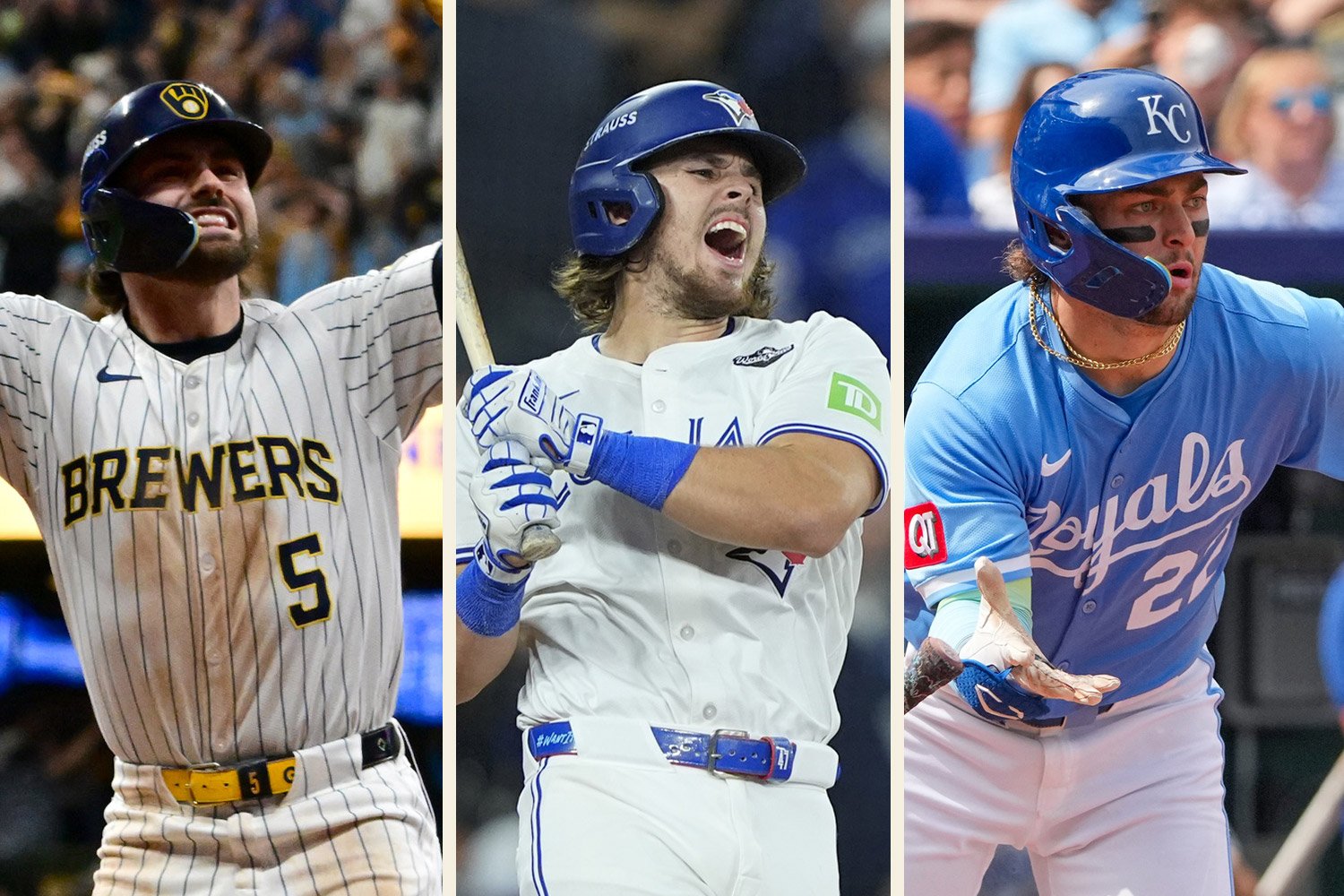 With the New Year right around the corner (as I’m starting this piece), I thought it’d be an opportune time to publish something on potential breakout candidates for the 2026 season. I initially considered reviewing OPS-xOPS differentials, but a recent find on Twitter changed my approach. Despite my attempts to limit screen time, I feel obligated to check Twitter, as most baseball pundits are active on the platform. A little over a week ago, I stumbled upon a tweet from Nathaniel Thomas that reviewed ideal fast swings. This sparked a new idea: What if I reviewed ideal fast swing rates to identify breakout candidates for 2026? Attack angle is the vertical angle of the bat’s path as it makes contact with the baseball. It differs from swing path (tilt) and launch angle because: Swing path (tilt) describes the bat’s trajectory approaching contact Attack angle captures the bat’s angle at the moment of contact (or miss) Launch angle measures the ball’s trajectory after contact Statcast lists the ideal attack angle for a swing between 5° and 20° because swings in this range generate the most value for a hitter. Ideal attack angle rate measures how often a batter’s competitive swings fall within this range. Competitive swings are defined as “the fastest 90% of a player's swings, plus any 60+ mph swings resulting in an exit velocity of 90+ mph.” Ideal attack angle rate’s limitation? Competitive swings are relative to an individual player, not a universal standard. This past season, Jose Trevino posted a 70.0% ideal attack angle rate, the highest in baseball (minimum of 200 PA), but his 87.9 mph average exit velocity, .284 wOBA, and 40.6% hard-hit rate point to a weak contact profile. Ideal attack angle rate should be taken with a grain of salt, but that shouldn’t discredit its practicality. Elite hitters like William Contreras (64.5%) and Corbin Carroll (64.6%) also posted high ideal attack rates in 2024, in conjunction with higher bat speeds. Note: Swing speed is not to be confused with bat speed. Swing speed is measured six inches from the head of the bat (aka the sweet spot), whereas bat speed averages the top 90% of a player’s swings at the sweet spot. This is where fast swing rate comes into play. Fast-swing rate shows all the times a batter’s swing reached 75+ mph, a fixed league-wide threshold. Faster swing speeds correlate with higher exit velocities, which is why filtering for fast swings matters for ideal fast swing rate. Since Statcast’s search function doesn’t allow filtering by swing speed, I used bat speed ≥ 75 MPH as a proxy. Both metrics track with one another, measuring speed at the sweet spot, so bat speed acts as a reliable placeholder for this exercise. By filtering for bat speeds ≥ 75 MPH and an ideal attack angle, we can identify batters making quality contact with elite bat speeds. A guy can swing 75+ mph every time he steps in the batter’s box, but if his timing is too early or too late, his power is wasted. Ideal fast swing rate filters for swings where the hitter combines timing AND power. I created the following scatter chart comparing ideal fast swing rates and hard-hit rate, which measures the outcome of the swing. Both metrics exhibit a moderate correlation (R-squared of 0.370). As previously mentioned, having an ideal fast swing doesn’t guarantee hard contact. When evaluated with plate discipline metrics and contact quality, an ideal fast swing rate helps identify hitter breakout candidates. Carter Jensen, C, Kansas City Royals Carter Jensen’s Savant page is redder than a Weasley family reunion. In his age-21 season, he played a limited sample of 20 games with strong production, posting a .300 BA, .941 OPS, .250 ISO, and 159 wRC+ across 69 plate appearances. His third home run was a 456 ft moonshot at Sutter Health Park, which was coincidentally the third farthest home run hit at the venue in 2025. With a 20.4% ideal fast swing rate, 58.3% hard-hit rate, and 14.5% barrel rate, his swing and contact quality metrics are already elite. The cherry on top? Jensen maintains a patient approach at the plate (17.4% strikeout rate, 13.0% walk rate, 24.0% chase rate, and 24.6% whiff rate). Jensen isn’t just swinging hard and praying he’ll connect with the ball - he’s selective, and when he swings, he does damage. Another thing to note is that his expected stats exceeded his actual stats against all pitch types. In Jensen’s case, “underperforming” is slugging at least .500 on every pitch type. His 20.4% ideal fast swing rate is on the lower end, but his 70.7% Z-swing rate shows he’s not being passive on hittable pitches in the zone, and his 24.0% chase rate shows he’s not swinging at bad ones either. His walks are earned. With more consistent at-bats and a larger sample next season, his actual production should catch up to his expected stats. Pitch Type BA XBA SLG XSLG Fastball .308 .339 .577 .676 Breaking .300 .370 .550 .575 Offspeed .286 .312 .500 .546 Jensen possesses a rare trifecta of elite contact quality, power, and plate discipline. Due to his limited playing time in 2025, he retains rookie eligibility into the 2026 season. Just months before his major league debut, Jensen was under the legal drinking age. He still has plenty of time to develop. If Jensen becomes an everyday player and his underlying swing metrics hold, he’s a strong candidate for rookie of the year. Garrett Mitchell, CF, Milwaukee Brewers Garrett Mitchell’s profile is fascinating. He posted a 44.1% ideal fast swing rate, the third highest in baseball, but his whiff rate shows he’s missing hittable pitches in the zone. That said, his whiff rate has fluctuated over his career, but it hit a career low of 30.9% in 2025. He’s still not making consistent contact. Mitchell has never been a free swinger on pitches outside of the strike zone. Throughout his career, his chase rate has stayed below 24%, so he knows what pitches to swing at, but he doesn’t connect with them. Despite posting a career-high hard-hit rate and career-low chase and whiff rates in 2025, he had his worst season at the plate. Garrett Mitchell’s Career Season BB% K% BA ISO OPS wRC+ Whiff % Chase % Hard Hit % 2022 8.8% 41.2% .311 .148 .832 136 31.5% 22.5% 41.2% 2023 9.6% 35.6% .246 .200 .761 104 39.7% 23.5% 37.5% 2024 11.2% 31.7% .255 .214 .812 127 34.8% 17.6% 37.0% 2025 9.0% 32.1% .206 .088 .580 65 30.9% 20.9% 42.2% Health issues have derailed Mitchell’s career, so there’s a Grand Canyon-sized gap between swing quality and production. This past season was cut short by a left-shoulder surgery, limiting him to just 25 games. For a left-handed hitter, posting the third-highest ideal fast swing rate in baseball and a career-high hard-hit rate while playing through a same-side shoulder injury is impressive. When relatively healthy in 2024, Mitchell posted an .812 OPS and 127 wRC+ across 69 games. If Mitchell can stay healthy for a fullseason, the 44.1% ideal fast swing rate suggests he has significant upside. Between Sal Frelick, Jackson Chourio, and Blake Perkins, the Brewers have a crowded outfield. Mitchell has more upside than Perkins, but has’t proven he can stay on the field for an entire season. If his shoulder holds up (he’s aiming to be ready by the start of spring training), 2026 could finally be the year Mitchell’s production catches up to his swing. Addison Barger, 3B, Toronto Blue Jays Addison Barger’s 2025 numbers weren’t eye-catching, especially sharing a lineup with George Springer, Vladimir Guerrero Jr., and Bo Bichette. He appeared in 135 games and logged 502 plate appearances, registering a .243 BA, .756 OPS, .211 ISO, and 107 wRC+. Nonetheless, he was a valuable contributor for the Blue Jays in 2025. Barger registered a modest 32.4% ideal fast swing rate and an absurd 51.0% hard-hit rate, but a below-average chase rate of 31.1% (30th percentile) and a 26.1% whiff rate (37th percentile). He’s chasing bad pitches and missing more than he should, but when he connects with the ball, the contact quality is there. His 116.5 mph max exit velocity ranked in the top 3% of MLB. If he tightens up the zone, he’ll make better swing decisions, the whiff rate should drop, and the production will climb. Honorable Mentions Player Team Ideal Fast Swing% Hard-Hit% ISO Whiff% Chase% Z-Swing% Matt Wallner MIN 38.3% 45.7% .262 35.5% 28.4% 70.6% Gavin Sheets SDP 31.9% 46.8% .177 23.0% 31.4% 59.4% Jhonkensy Noel FA 30.9% 41.2% .135 34.7% 49.0% 75.7% The honorable mentions weren’t included in the main list because they possess pressing red flags that can’t be ignored. Matt Wallner has one of the most enigmatic profiles in baseball. One can argue that he’s the reincarnation of Joey Gallo. Wallner swung out of his shoes on almost every pitch, but still posted a respectable .776 OPS and 114 wRC+ across 392 plate appearances in 2025. Wallner has the sixth-highest overall ideal swing rate (38.3%) and the highest ISO (.262) in this group. His horrendous 35.5% whiff rate (1st percentile), 28.4% chase rate (46th percentile), means he’s missing a ton of pitches both inside and outside the strike zone. Yet, his 11.7% walk rate (84th percentile) demonstrates that he’s well-aware of the strike zone, but he’s not connecting with most pitches when he swings. Gavin Sheets has the highest hard-hit rate in the group (46.8%). However, his 59.4% Z-swing rate and 31.4% chase rate indicate that he’s swinging at pitches outside the zone and ignores hittable pitches thrown in the zone. Sheets still had a breakthrough season with this strategy (.746 OPS, 111 wRC+). Imagine what Sheets could do if he reversed his approach at the plate! Jhonkensy Noel has the highest risk and upside in the group. The raw power is obvious (41.2% hard-hit rate and 30.9% ideal fast swing rate), even if his .135 ISO doesn’t reflect it. His 49.0% chase rate and 34.7% whiff rate are brutal, and fixing a poor chase rate is easier said than done. At age 24, Noel is currently a free agent with no guaranteed playing time, so it comes down to whether a team will take a chance on him. If he learns to lay off, the power will come to fruition. Finding a contact hitter in baseball’s age of analytics is becoming almost as rare as a Valyrian steel sword. MLB’s decline in .300 hitters illustrates this trend. Ideal fast swing undervalues contact hitters like Luis Arráez (0.2%, 3rd lowest). Then again, baseball doesn’t value contact hitters anymore. Arráez is projected to sign a 1-year, $11 million contract, while slugger Kyle Schwarber, whose 47.5% ideal fast swing rate ranks second, signed a 5-year, $150 million deal with the Phillies. Schwarber and Arráez represent opposite ends of the hitting spectrum, with most players falling in between. Balanced lineups need both profiles. In a game increasingly centered around power in the batter’s box, identifying hitters with untapped potential to drive the ball out of the park is crucial for teams.
 -
Image courtesy of © David Butler II-Imagn Images In-season tournaments are popular across professional sports. The New York Knicks recently defeated the San Antonio Spurs 124-113 in the 2025 NBA Cup. Soccer Football features several, including England’s Football Association Cup, Spain’s Copa del Rey, and Germany’s DFB-Pokal. Is baseball due for an in-season tournament? Conceptually, an in-season MLB tournament, let’s call it the MLB Cup, would require flexible schedules and limit interleague geographic rivalry matchups to once per season. Schedule-wise, the tournament should be held towards the start of the season, say the beginning of May. The All-Star Game already dominates July, and anything afterwards would detract attention away from the trade deadline and postseason races. Ending the tournament in June would draw casual fans into the season sooner and build competitiveness early in the season. Thanks to the inaugural Rivalry Weekend, which garnered record-breaking viewership, teams play their “cross-town” interleague rivals (cherry-picked for large market teams) over two series in a season. These inconsistent matchups are based on geographic rivalries, not classic ones. Interleague play used to be a rare occurrence in the sport, limited to the All-Star Game and World Series. Between 2003 and 2016, interleague play held some significance; winners of the All-Star Game used to gain home-field advantage in the World Series, a rule that was abandoned in 2017. With the balanced schedule format, multiple interleague matchups occur on any given day of the season. Rivalry Weekend doesn’t help. Is it really necessary for the Blue Jays and Tigers, Cubs and White Sox, Braves and Red Sox, Padres and Mariners, Cardinals and Royals, Marlins and Rays, and Brewers and Twins to play two series against each other in a season? An MLB Cup would prioritize intraleague play in the Group and Knockout Stages, reduce the narrative of forced geographic rivalries, and reintroduce meaningful interleague play in the Championship Game. The tournament would require flexible scheduling for the Knockout Round and Championship Game. To minimize disruption, Group Stage games would count as regular-season games. The following proposed format incorporates some components of the NBA Cup. Group Stage Teams are randomly divided by league: National League: 3 groups of 5 teams American League: 3 groups of 5 teams Each team plays two series against every opponent in their group, one on the road and one at home. Each league advances four teams to the knockout round: the three group winners, one Wild Card, awarded to the second-place team with the best record in the Group Stage. For tiebreakers, teams will be broken out according to the following rules: Head-to-Head Record in the Group Stage Run Differential in the Group Stage Total Runs Scored in the Group Stage Previous Season Record (if necessary) Knockout Round For nostalgia purposes (RIP the bygone one-game Wild Card series) and heightened urgency, the knockout round will consist of single-game elimination games, rather than best-of-three series. Quarterfinals Matchups Highest-ranked seed vs. third-place team Second-place team vs. the Wild Card team Semifinals Matchups Winners of the highest-ranked seed vs. third-place team Winner of the second-place team vs. the Wild Card team Championship Game The National League and American League winners will face each other in the Championship Game, which will not count as a regular-season game. The Thursday/Friday before Memorial Day is a good target window. Money, Please. Prize-wise? Money is the logical response. Each Knicks player will receive $530,933 for winning the 2025 NBA Cup, an increase from $500,000 when the tournament debuted in 2023. NBA 15-man rosters are roughly half the size of MLB’s 26-man rosters, so a baseline of $300,000 per winning MLB player is a reasonable starting point. Teams should also receive a direct competitive benefit from winning. An extra draft pick is an obvious incentive. Let’s think outside the box for a bit. MLB’s annual revenue continues to climb, reaching a record $12.1 billion in 2024 after breaking its previous high of $11.6 billion in 2023. MLB is flush with cash and has ample means to fund a meaningful in-season prize. Why not give the winning team a $5 million bonus on the condition that they spend the money in the same season on either: Major league payroll Draft bonus pool money for that year’s draft Additional guardrails would apply to the bonus. The funds cannot be deferred, must be included in year-end payroll, and any draft allocation must be added to that year’s bonus pool. The money cannot be traded or rolled into a future season. Through these parameters, winning the MLB Cup provides a tangible, in-season competitive advantage rather than a novelty prize handed out early in the season. Moreover, this structure benefits both contenders and non-contending teams. For contenders, the bonus can offset the cost of acquiring talent at the trade deadline. For non-contending teams, it strengthens their farm system and could help accelerate their rebuild. The 162-game MLB season is an arduous marathon. Opening Day by itself is a spectacle that captures fans’ attention, though some redirect their focus to football come September. An in-season MLB tournament would provide meaningful excitement early in the season, add tangible consequences to games that typically lack urgency between April and May, and help sustain fans’ attention through the season. View full article
-
 In-season tournaments are popular across professional sports. The New York Knicks recently defeated the San Antonio Spurs 124-113 in the 2025 NBA Cup. Soccer Football features several, including England’s Football Association Cup, Spain’s Copa del Rey, and Germany’s DFB-Pokal. Is baseball due for an in-season tournament? Conceptually, an in-season MLB tournament, let’s call it the MLB Cup, would require flexible schedules and limit interleague geographic rivalry matchups to once per season. Schedule-wise, the tournament should be held towards the start of the season, say the beginning of May. The All-Star Game already dominates July, and anything afterwards would detract attention away from the trade deadline and postseason races. Ending the tournament in June would draw casual fans into the season sooner and build competitiveness early in the season. Thanks to the inaugural Rivalry Weekend, which garnered record-breaking viewership, teams play their “cross-town” interleague rivals (cherry-picked for large market teams) over two series in a season. These inconsistent matchups are based on geographic rivalries, not classic ones. Interleague play used to be a rare occurrence in the sport, limited to the All-Star Game and World Series. Between 2003 and 2016, interleague play held some significance; winners of the All-Star Game used to gain home-field advantage in the World Series, a rule that was abandoned in 2017. With the balanced schedule format, multiple interleague matchups occur on any given day of the season. Rivalry Weekend doesn’t help. Is it really necessary for the Blue Jays and Tigers, Cubs and White Sox, Braves and Red Sox, Padres and Mariners, Cardinals and Royals, Marlins and Rays, and Brewers and Twins to play two series against each other in a season? An MLB Cup would prioritize intraleague play in the Group and Knockout Stages, reduce the narrative of forced geographic rivalries, and reintroduce meaningful interleague play in the Championship Game. The tournament would require flexible scheduling for the Knockout Round and Championship Game. To minimize disruption, Group Stage games would count as regular-season games. The following proposed format incorporates some components of the NBA Cup. Group Stage Teams are randomly divided by league: National League: 3 groups of 5 teams American League: 3 groups of 5 teams Each team plays two series against every opponent in their group, one on the road and one at home. Each league advances four teams to the knockout round: the three group winners, one Wild Card, awarded to the second-place team with the best record in the Group Stage. For tiebreakers, teams will be broken out according to the following rules: Head-to-Head Record in the Group Stage Run Differential in the Group Stage Total Runs Scored in the Group Stage Previous Season Record (if necessary) Knockout Round For nostalgia purposes (RIP the bygone one-game Wild Card series) and heightened urgency, the knockout round will consist of single-game elimination games, rather than best-of-three series. Quarterfinals Matchups Highest-ranked seed vs. third-place team Second-place team vs. the Wild Card team Semifinals Matchups Winners of the highest-ranked seed vs. third-place team Winner of the second-place team vs. the Wild Card team Championship Game The National League and American League winners will face each other in the Championship Game, which will not count as a regular-season game. The Thursday/Friday before Memorial Day is a good target window. Money, Please. Prize-wise? Money is the logical response. Each Knicks player will receive $530,933 for winning the 2025 NBA Cup, an increase from $500,000 when the tournament debuted in 2023. NBA 15-man rosters are roughly half the size of MLB’s 26-man rosters, so a baseline of $300,000 per winning MLB player is a reasonable starting point. Teams should also receive a direct competitive benefit from winning. An extra draft pick is an obvious incentive. Let’s think outside the box for a bit. MLB’s annual revenue continues to climb, reaching a record $12.1 billion in 2024 after breaking its previous high of $11.6 billion in 2023. MLB is flush with cash and has ample means to fund a meaningful in-season prize. Why not give the winning team a $5 million bonus on the condition that they spend the money in the same season on either: Major league payroll Draft bonus pool money for that year’s draft Additional guardrails would apply to the bonus. The funds cannot be deferred, must be included in year-end payroll, and any draft allocation must be added to that year’s bonus pool. The money cannot be traded or rolled into a future season. Through these parameters, winning the MLB Cup provides a tangible, in-season competitive advantage rather than a novelty prize handed out early in the season. Moreover, this structure benefits both contenders and non-contending teams. For contenders, the bonus can offset the cost of acquiring talent at the trade deadline. For non-contending teams, it strengthens their farm system and could help accelerate their rebuild. The 162-game MLB season is an arduous marathon. Opening Day by itself is a spectacle that captures fans’ attention, though some redirect their focus to football come September. An in-season MLB tournament would provide meaningful excitement early in the season, add tangible consequences to games that typically lack urgency between April and May, and help sustain fans’ attention through the season.