


MLB Video
For decades, baseball fans knew precisely where to point when the term Evil Empire came up. It was synonymous with the Bronx, with pinstripes, and with a franchise that could outspend and outlast just about anyone. That label has not gone away. It has simply changed zip codes.
The Los Angeles Dodgers have steadily taken over that role, and Kyle Tucker’s recent contract may have been the moment that removed any remaining doubt. Tucker’s four-year, $240 million deal added yet another superstar salary to a roster that already feels excessive by league standards. Shohei Ohtani, Mookie Betts, Yoshinobu Yamamoto, Blake Snell, Freddie Freeman, Will Smith, and Tyler Glasnow are all locked into nine-figure contracts. Eight players at that level is no longer a coincidence. It is an organizational identity.
The Athletic is also reporting that MLB owners are "enraged" by the Tucker deal. Because of the Dodgers' spending, owners will "100% certainty" they will push for a salary cap in the new CBA. Other owners seem to be sick of the disparity between the "haves" and the "have nots."
What separates the Dodgers from past big spenders is that the money extends far beyond the payroll line. SponsorUnited founder and CEO Bob Lynch has pointed to Los Angeles as a financial anomaly, even among baseball’s largest markets. Projections suggest the Dodgers are on pace to become the first North American sports franchise to generate $200 million in sponsorship revenue annually. Their portfolio includes 76 sponsors, with a significant international footprint highlighted by 20 Japanese brands and several new agreements signed during the 2025 season.
Those international deals are not accidental. The additions of Ohtani, Yamamoto, and Roki Sasaki did more than upgrade the roster. They transformed the Dodgers into a global brand in a way no other MLB team can currently replicate. That reach shows up in the size of their sponsorship agreements, which average roughly five times more than the league norm. Only a small group of teams clear $100 million in sponsorship revenue each year, and while the Yankees remain on that list, the Dodgers have paired their income with something New York has not delivered in a while. Championships.
Los Angeles is fresh off a second consecutive World Series title, built on the largest active payroll in baseball and a creative use of deferred money that pushes more than $1 billion in commitments into the future. To critics, that structure confirms everything they dislike about the Dodgers. The argument is familiar: a system that favors massive markets and leaves smaller revenue teams chasing a moving target.
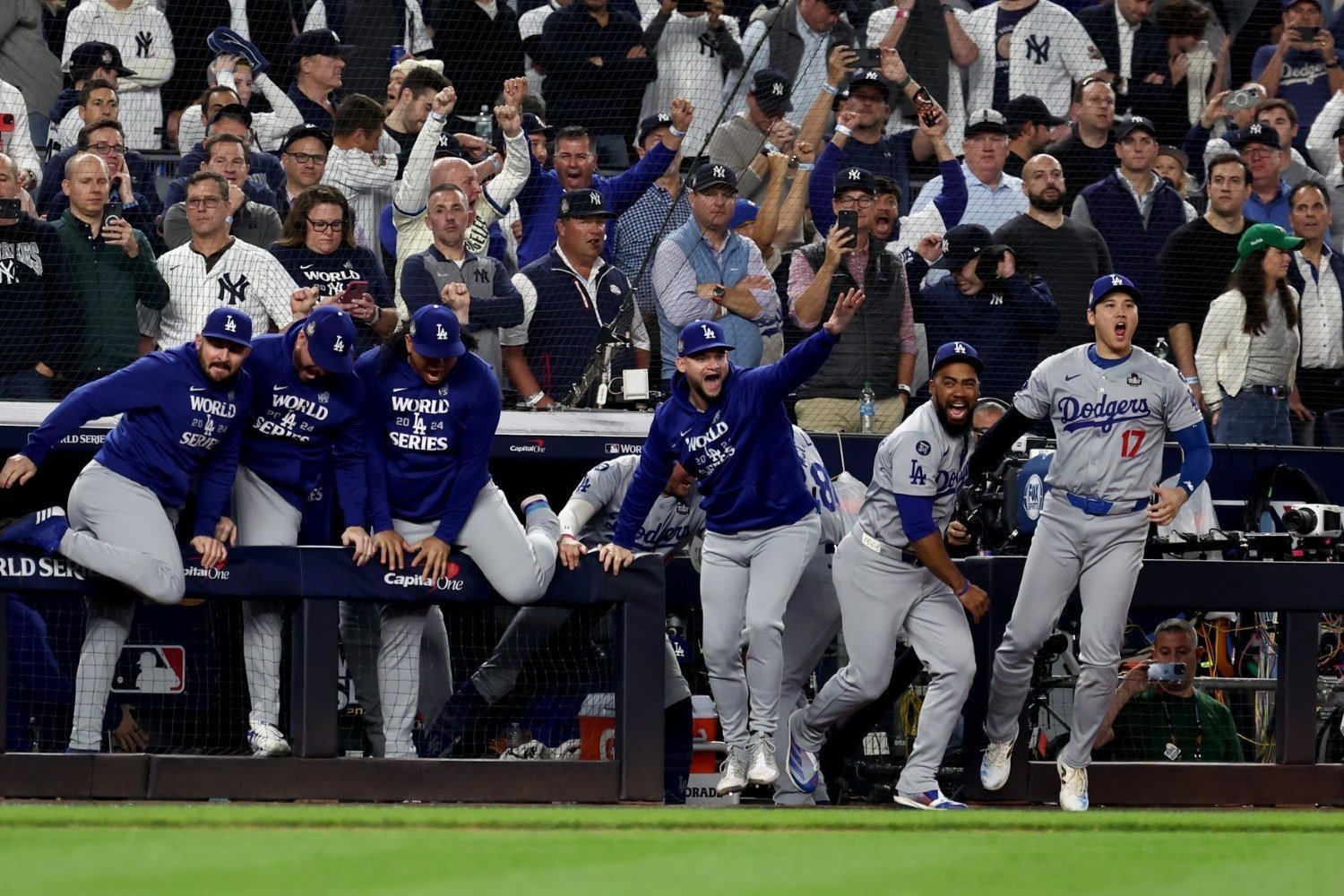
That frustration boiled over again after the Dodgers swept the Brewers in the 2025 National League Championship Series. Manager Dave Roberts did not shy away from the backlash. During the on-field celebration, he leaned into the criticism with a pointed remark: "Before this season started, they said the Dodgers are ruining baseball. Let's get four more wins and really ruin baseball."
Rather than pushing back against the villain label, the Dodgers have leaned into it. This is a franchise comfortable playing the role of the antagonist, unbothered by complaints from around the league. They understand how their success looks from the outside, and they are not pretending otherwise.
These remarks ring especially true given the ongoing narrative surrounding the Dodgers. Last season, Los Angeles had an estimated $417 million MLB Tax Payroll, $75 million more than the second-highest, the New York Mets.
It is also important to note that Los Angeles has operated within the rules. They did not invent deferred contracts or international marketing. They simply used every available lever more effectively than anyone else. By combining financial creativity, elite scouting, player development, and star power, the Dodgers have built a roster that feels unfair and entirely legal at the same time.
Meanwhile, the team that once defined the Evil Empire image has faded from that conversation. The Yankees have not won a World Series since 2009. The Dodgers have collected three championships this decade alone. For the other 29 fanbases, resentment tends to follow results, and right now that resentment is firmly aimed at Chavez Ravine.
Looking ahead, the Dodgers’ influence may extend beyond the standings. The current Collective Bargaining Agreement expires after the 2026 season, and it is hard to imagine labor talks that do not reference the financial gap Los Angeles has helped expose. Whether their model becomes a focal point in negotiations remains an open question. What is not in doubt is that the Dodgers will enter next season as favorites once again, with the resources to maintain their core and keep adding to it.
Are the Dodgers bad for baseball? Reasonable people can disagree. What is clear is that they are setting the standard, collecting titles, and embracing the role of the sport’s new Evil Empire without hesitation.
Do you like the pitch clock?

Follow DiamondCentric For Major League Baseball News & Analysis


Like what you've read here? Check out our team-specific sites and expand your fandom!








Recommended Comments
If you have an account on one of the following sites, you have a DiamondCentric account.
Twins Daily, Brewer Fanatic, North Side Baseball, Talk Sox, Jays Centre, Padres Mission, Royals Keep, Grand Central Mets, Fish On First.
Create an account or sign in to comment
You need to be a member in order to leave a comment
Create an account
Sign up for a new account in our community. It's easy!
Register a new accountSign in
Already have an account? Sign in here.
Sign In Now