


DiamondCentric
-
Posts
2,631 -
Joined
-
Last visited
Never
Content Type
Profiles
Forums
Events
News
Tutorials & Help
Major League Baseball Videos
Guides & Resources
Store
Downloads
Gallery
Everything posted by DiamondCentric
-

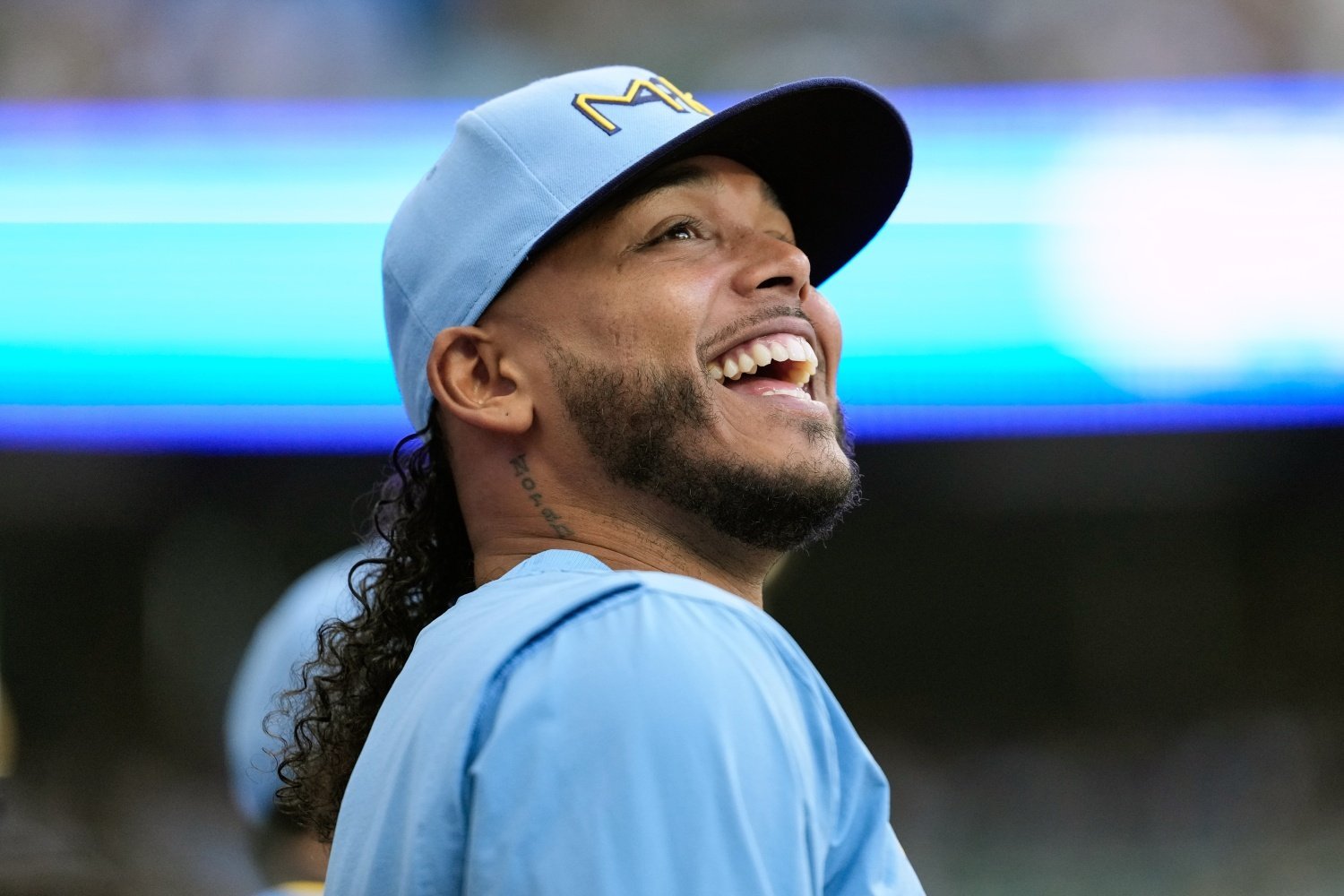 The Atlanta Braves, Houston Astros and San Diego Padres have emerged as the most interested parties in the Freddy Peralta trade market, league sources told Brewer Fanatic this week. During the MLB Winter Meetings, Washington Nationals left-hander MacKenzie Gore and Miami Marlins righty Edward Cabrera have been buzzier names, because each of them comes with multiple years of team control. Tarik Skubal remains atop the wish lists of many big-market dreamers, but so far, the Tigers have set a price tag that suggests they don't want to deal him, according to a source with knowledge of one team's conversations with Detroit. Those three players might make for more tantalizing rumors, but Peralta is very much on the radar of contenders who want to stabilize their rotations without paying exorbitant prices in free agency or in trades for players with longer-term team control attached. Because Peralta will make only $8 million in 2026 and becomes a free agent thereafter, he's a perfect fit for several teams whose budgets are tight (be it because of limited resources or having already spent hundreds of millions elsewhere). His contract leaves so much surplus value, in fact, that one source suggested it will make a trade less likely: the Brewers won't trade Peralta unless they get a haul that reflects both his talent and that efficiency. Houston, San Diego and Atlanta are all serious contenders coming off difficult seasons. None has an elite farm system, which could be an obstacle—but all three have shown flexibility and creativity in the past, to get deals just like these done. For all three, starting pitching is a major question mark, and spending on one of the top remaining free agents looks unlikely. San Diego is even rumored to be shopping top starter Nick Pivetta, despite losing Dylan Cease and Michael King via free agency this winter. Why? Pivetta's salary for 2025 was $1 million, as the Padres served as his lifeboat in a stormy free agency. In 2026, though, that number jumps to $19 million, and there are player options for 2027 and 2028. Unlike other, similar deals, Pivetta's should be movable, in the opinion of employees in other front offices, because the contract contains language granting the team protection in the event of a major injury. Still, the cash-strapped Padres might need to move Pivetta to give themselves the freedom they need to make other upgrades. Peralta, a better pitcher at a much lower price, would be an ideal fit. Injuries and age menace the rotation of the once-mighty Atlanta club, and as their team-friendly extensions with several position players reach their more expensive seasons, the team finds itself without much cash to splash around to shore up that group. Meanwhile, the Astros are losing Framber Valdez to free agency, and they're bumping up against the competitive-balance tax threshold; owner Jim Crane continues to fight to rein in their spending. Those three teams are obvious suitors, and it's not surprising that they've already begun to hone in on Peralta. Three larger-market clubs have also checked in, one source said: the Mets, the Dodgers, and the Giants. However, those teams' interest is not believed to be as serious—or, at least, as developed. New York has the most glaring need for help in the starting rotation, and might best fit with Milwaukee in terms of a return, but their top priorities appear to lie on the offensive side for the time being. Speaking of return, the Brewers are said to be setting a very high price for Peralta, on whom they're listening but not eager to make a move. A source familiar with one discussion said the team was asking for more than they got for Corbin Burnes, whom they traded to the Orioles in early 2024 for Joey Ortiz, DL Hall and a top-40 draft pick. Given that Peralta costs roughly half what Burnes did that year, that's no shock. Suitors understand that Milwaukee won't move Peralta without getting back a "plug-and-play guy," said a member of another front office, citing the examples of Ortiz, Hall, Caleb Durbin and Nestor Cortes, whom the team acquired for Burnes and Devin Williams the last two winters. Trading Peralta would, in other words, have to mean getting back someone who helps the 2026 Brewers, in addition to offering longer-term value. Constraining a market by specifying that majors-ready players be involved can ice over a market, but again, the Brewers don't feel cornered when it comes to Peralta. In addition to being cost-effective, he's one of their clubhouse leaders, and the relationship between player and franchise is much stronger than were the ones between the team and Burnes or Williams. The right deal has to come to them; Matt Arnold won't sell Peralta just to avoid losing him as a free agent next fall. However, in a survey of people in other front offices, the majority believe Peralta will be dealt—and it could be soon. One source noted the lack of overlap in the markets for Gore, Cabrera and Skubal with that for Peralta. The Cubs and Orioles, among others, are locked in on acquiring controllable pitching, so their interest in Peralta is limited. San Diego is always proactive, but neither Houston nor Atlanta are believed to be players for any of the more talked-about names of this week. Quietly, while rumors swirl and Peralta's name lies low, the Brewers have been able to continue discussions with the real players in this game. Williams went from the Crew to the Yankees two days after the end of last year's Winter Meetings. A similar thing could play out this year, though no deal is believed to be close as clubs pack up their suites and prepare to head home. If a trade happens, it will net Milwaukee their biggest haul in such a deal since they traded Carlos Gómez and Mike Fiers to the Astros in mid-2015. While losing Peralta would hurt, the motivation of the interested teams and the team-friendly deal Peralta signed years ago ensure that his departure would only push the Brewers even further forward in their pursuit of the team's first-ever World Series title. View the full article
 -
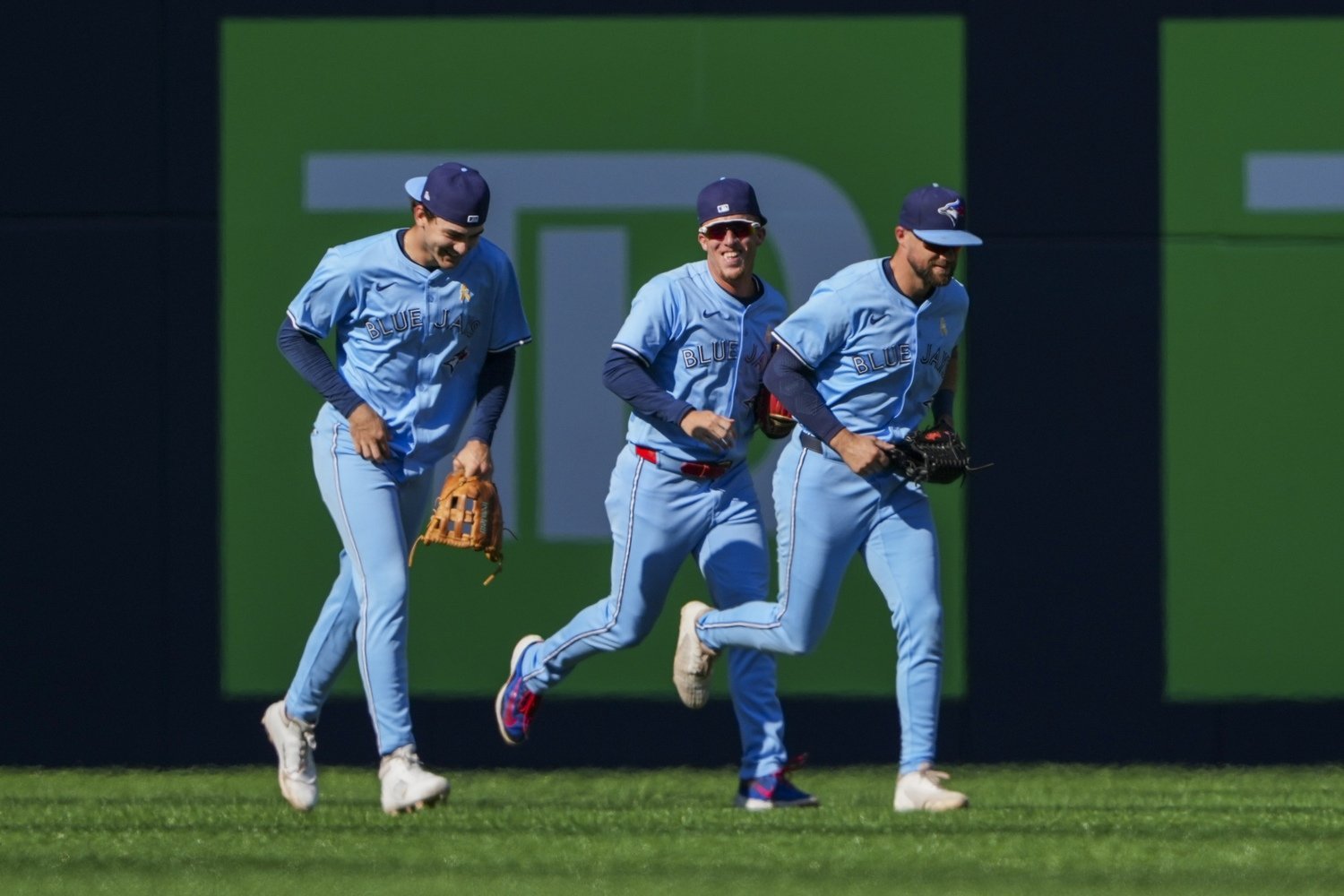 According to Ken Rosenthal and Will Sammon of The Athletic, the Blue Jays are considering trading one of their surplus outfielders for a reliever. Rosenthal and Sammon named Nathan Lukes, Myles Straw, and Joey Loperfido as the most likely trade chips. Addison Barger, Davis Schneider, or even Daulton Varsho would bring back a stronger return, but that's precisely why the Jays would be less inclined to trade them. Varsho will be the everyday center fielder in 2026, while Barger and Schneider are promising bats with the flexibility to play both the infield and the outfield. Rosenthal and Sammon's report shouldn't come as a surprise. The Jays have a bit of a logjam as it is on their outfield depth chart, and they're likely to add at least one more bat before the offseason is done. Speaking to reporters, including our own John Bonnes, at the Winter Meetings, manager John Schneider said he'd like the team to add "a bat of some sort." Schneider also identified the arm barn as an area of need. He said that adding a "high-leverage bullpen arm" is a priority. So, it stands to reason that the team would look to solve two problems at once. GM Ross Atkins could clear up the outfield logjam and bolster the bullpen in one transaction. Of course, that doesn't mean the Blue Jays will be eager to part with any of their outfielders. Lukes and Straw were key contributors to last year's squad. They would be missed on the field and in the clubhouse. Trading Loperfido would mean selling low on a former top prospect. What's more, if Atkins is really hoping to land a high-leverage reliever, he would need to throw one or more prospects into a potential deal as well. So, what do Jays fans think of this rumour? Will the team trade an outfielder this winter, and if so, which one? Share your thoughts in the comments. Featured image courtesy of Kevin Sousa, Imagn Images. View the full article
 -
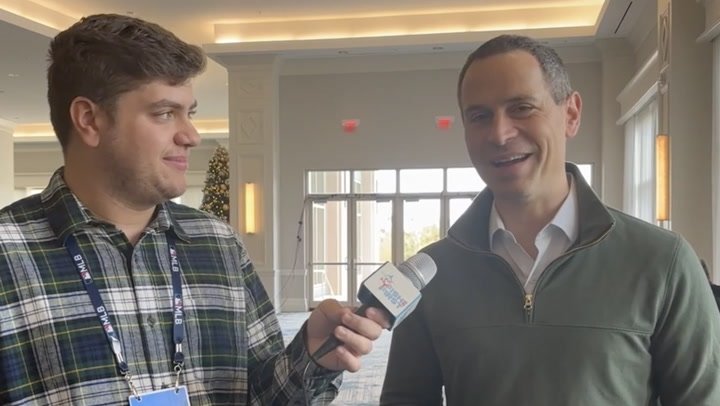 Jon Morosi of MLB Network speaks with Fish On First about what potential moves the Marlins may be cooking up and the World Baseball Classic returning in 2026.View the full article
 -
Twins Open Roster Spot for Rule 5 Pick by Releasing Carson McCusker
DiamondCentric posted an article in Twins Daily
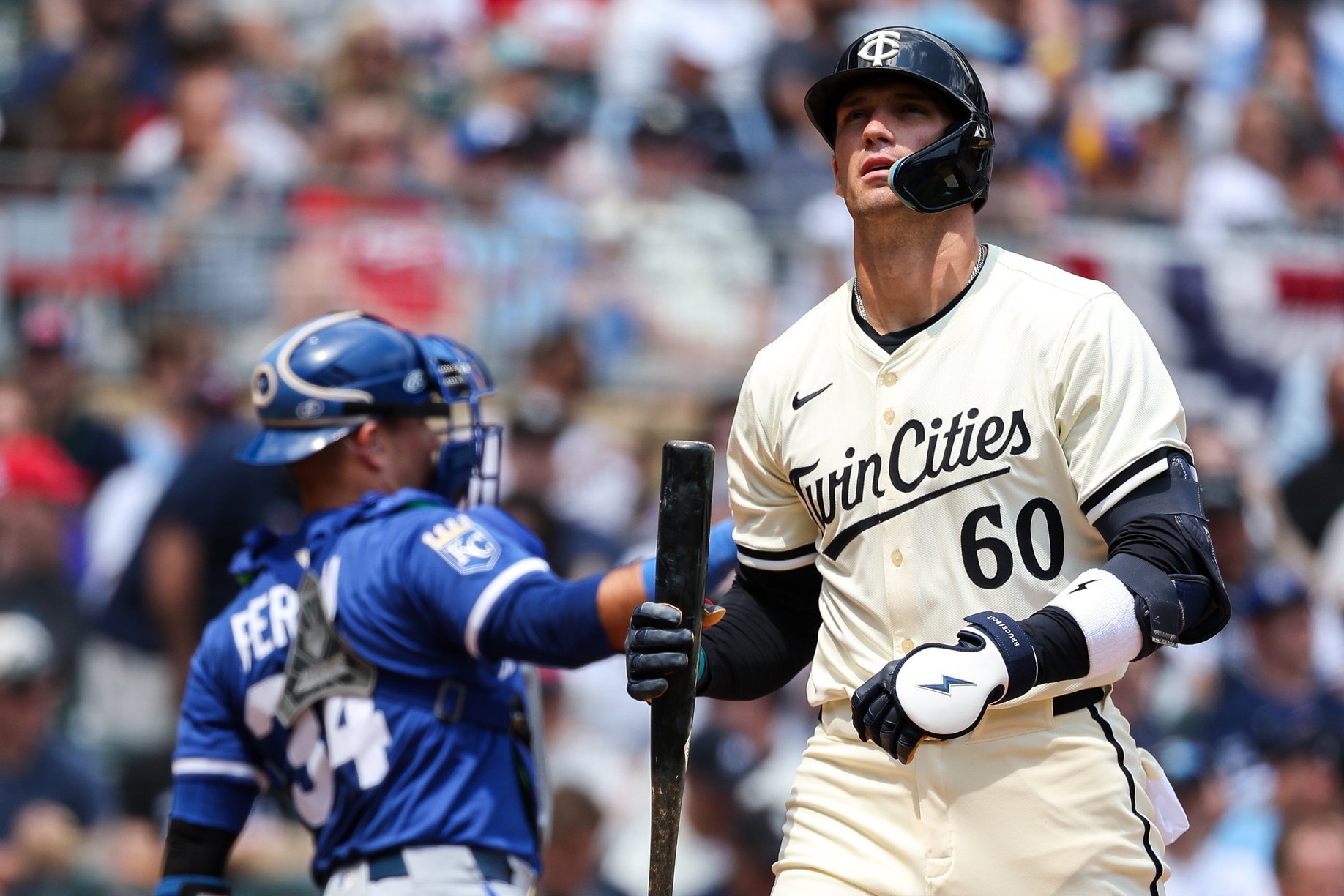 The Minnesota Twins created space on their 40-man roster on Wednesday morning, placing outfielder Carson McCusker on unconditional release waivers. The move comes just hours before the Rule 5 Draft, where the club is expected to make at least one selection. It is a procedural decision with immediate implications for roster construction, but it also marks the end of a unique and memorable chapter in the organization. McCusker’s story has been anything but conventional. He joined the Twins as a signing out of the independent leagues, a late bloomer with imposing size and raw power who needed the right environment to refine his game. Minnesota believed there was more in his swing and approach than previous evaluations suggested, and McCusker rewarded that faith with one of the better early-season performances in the system during 2025. At Triple-A St. Paul last spring, McCusker put together an impressive first half with a 1.048 OPS in April and a .948 OPS in May. He controlled the strike zone better than expected, posted strong on-base numbers, and showed the kind of damage potential that made him a frequent middle-of-the-order presence. His run of production pushed him firmly onto the radar for a big league opportunity, and the Twins eventually called him up during a stretch when they needed additional depth The opportunity, however, never fully developed. Despite earning his way to the highest level, McCusker saw limited action and never received the extended look some thought he had earned. The Twins used him primarily as a bench option and sporadic pinch hitter, a role that made it difficult for him to build rhythm or make a lasting impression. In 16 games, he went 5-for-29 with 16 strikeouts and no extra-base hits. When the roster became crowded again, he was optioned back to St. Paul and remained there for most of the second half. Even with minimal major league exposure, McCusker did enough within the organization to maintain interest from clubs abroad. While nothing is finalized, industry speculation suggests he will explore opportunities to play in Asia during the 2026 season. His size, power, and plate discipline make him an intriguing fit for teams in Japan or Korea, where a change of environment could offer consistent at-bats and a more defined role. For the Twins, Wednesday’s decision reflects the tight roster calculus that comes with balancing present depth and future investment. Opening a spot before the Rule 5 Draft signals that Minnesota sees value in adding an external player it believes can contribute in the near future. McCusker’s release is a reminder that player development paths are rarely linear and that opportunities often hinge on timing as much as talent. His journey from the independent leagues to the doorstep of a major league job was a success story in itself, even if the Twins chapter concludes earlier than anticipated. Now he will look for the next stage of his career while the Twins move forward into the offseason with another key decision ahead. View the full article
 -
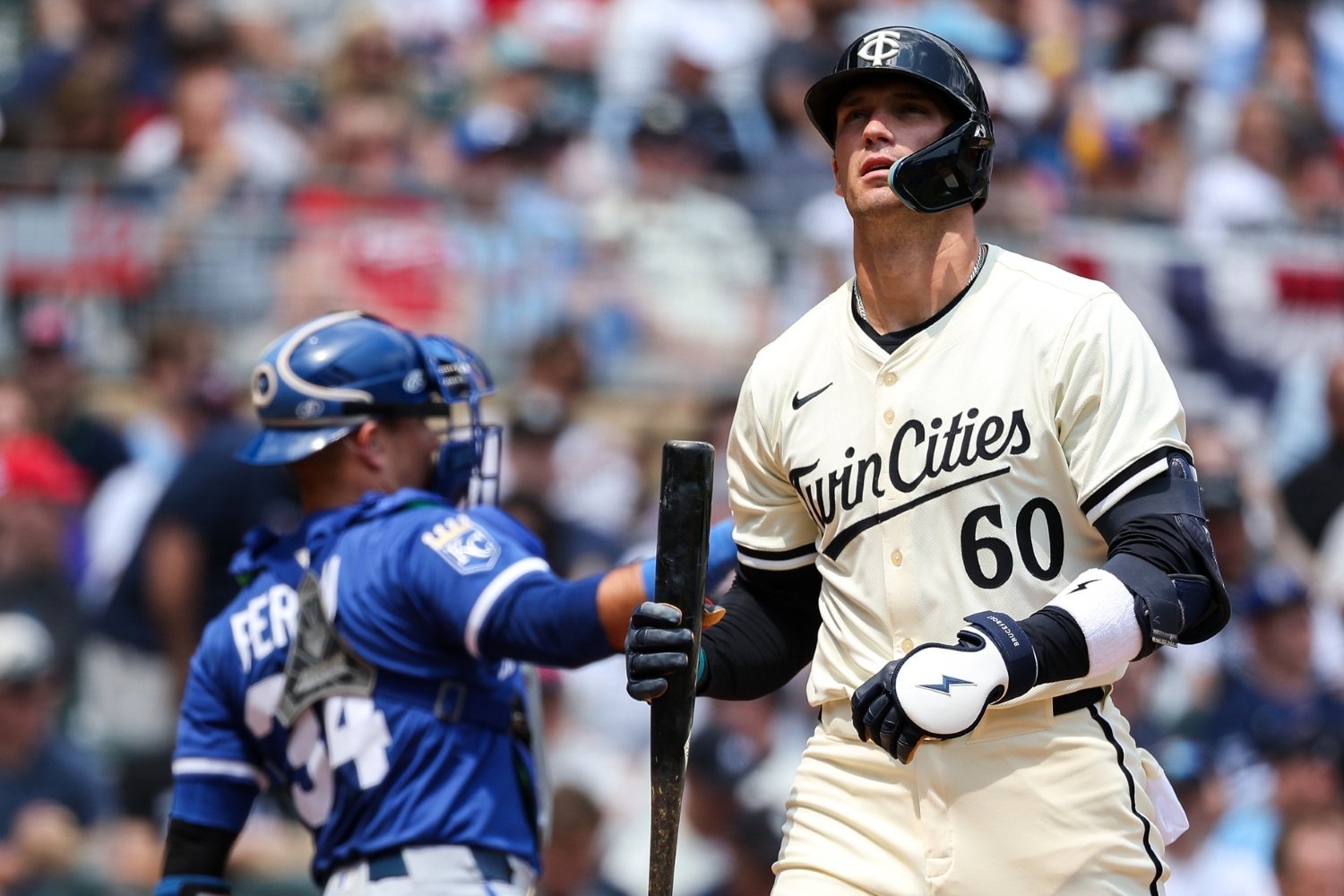 The Minnesota Twins will release Carson McCusker to pursue playing opportunities outside the United States, the team announced Wednesday. As a result, their 40-man roster now has a vacancy, clearing a logistical block as they prepare for the 2025 Rule 5 Draft, which takes place at 1 PM CT to close the Winter Meetings. For a team with a wide-open bullpen and a tight budget, the Rule 5 Draft is a great place to mine for talent. The Twins are expected to make a selection, and whichever hurler they pick up will go into the place on the 40-man reserve list cleared by releasing McCusker. That player will have to be on the team's 26-man roster throughout 2026, though, or the Twins will have to offer them back to the team from whom they select them at half the initial $100,000 acquisition fee. Neutered by a change in the Collective Bargaining Agreement in 2006-07, the draft yields fewer interesting players than it used to. The notion of a player as good as Johan Santana becoming available in the Rule 5 has become laughable, because teams can now control a player for one year longer before having to make the decision about whether to add them to the 40-man roster and shield them from the draft. Clubs have also gotten better at player development and evaluation, so fewer diamonds are left in the rough. However, the Twins' dearth of quality relief depth makes holding onto whomever they select easier than it would typically be for a team with any hope of contending in the ensuing season. Rule 5 picks rarely stick with their new team, and even more rarely become valuable contributors, but those who do are nearly all relief pitchers. The volatility and fungibility of that role means that many more semi-promising players in that demographic become available, relative to position players or starters. Minnesota didn't have much luck with last year's Rule 5 pick, Eiberson Castellano; his command wasn't good enough to merit a spot in what was then a stacked bullpen. This year, the margin for error for any draftee will be much greater—though, of course, the Twins must hope that that margin isn't needed. View the full article
 -
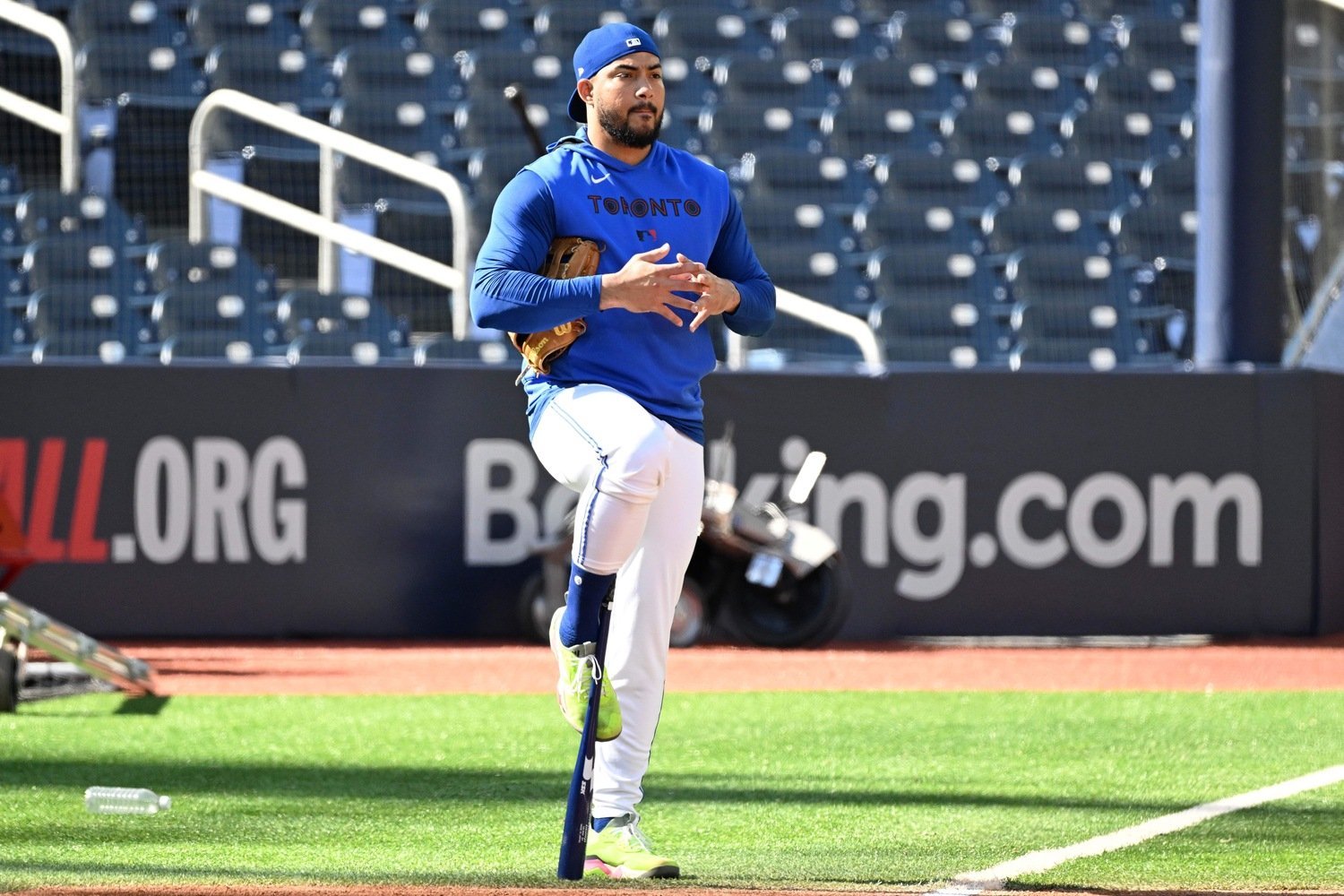 Shoulder and back injuries kept Anthony Santander out for most of the 2025 season and playoffs. It was a disappointing start to his Blue Jays tenure. From 2022-24, the man known lovingly as Tony Taters hit 105 home runs for the Orioles, posting a 123 wRC+ and 8.1 FanGraphs WAR. In his first year with Toronto, the switch-hitter swatted just six homers in 54 games, with a 61 wRC+ and -0.9 fWAR. However, the Jays are hoping a healthy Santander can look more like the Silver Slugger they signed to a five-year, $92.5 million contract last winter. Manager John Schneider addressed reporters on Tuesday at the Winter Meetings. DiamondCentric's John Bonnes was on hand for the event. "Tony is going to be huge for us," said Schneider. "He's a big part of what we're doing." The skipper continued, "I've told him this: 'I don't want you to think you have to do anything you don't do well. You don't have to come back and hit .300 with 50 homers to make up for last year.' We need Tony to fit in the way we know he can when we signed him." As for the shoulder subluxation that forced Santander to the injured list in May and the back tightness that forced him off the ALCS roster in October, Scheider doesn't seem to be concerned. "Shoulder is good. Back is good. He's just feeling normal," the manager explained. He went on to express hope that Santander will have a regular spring training. Schneider acknowledged that the veteran is a "notorious slow starter," but seemed optimistic that he can "hit the ground running" in 2026. Featured image courtesy of Dan Hamilton, Imagn Images. View the full article
 -
Tarik Skubal Isn't a Realistic Trade Target for Toronto
DiamondCentric posted an article in Jays Centre
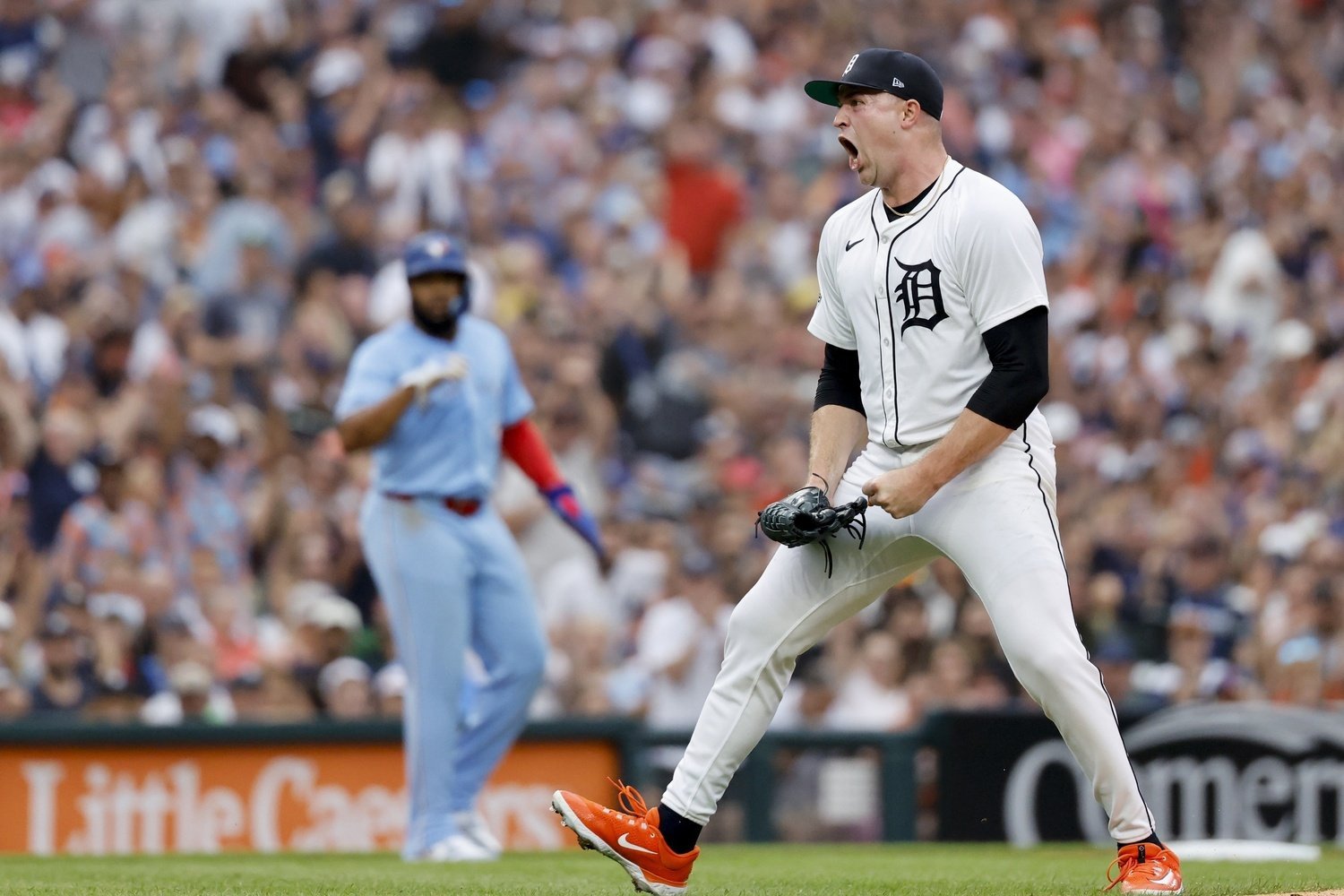 It sounds like the Tigers are mulling over their future as they approach the final year of Tarik Skubal’s arbitration eligibility. With the team still in a competitive window, it does seem a bit strange that they might be willing to part ways with Skubal, even as he enters a contract year. Skubal is one of the premier left-handed pitchers in baseball and has developed into an unquestionable ace. His dominance in each of the last two seasons has cemented him as one of the most feared arms in the American League, a pitcher capable of shutting down even the most potent lineups. On the surface, it seems crazy to think that the Tigers would even consider parting ways with a pitcher of Skubal’s calibre while still competitive. However, baseball’s economics and the realities of roster construction often demand ruthless pragmatism. You can see that even with the Jays’ offseason right now. If the Tigers believe they can’t realistically extend Skubal, then exploring trade options becomes a logical next step. The Jays won't be willing to sell many big league pieces that could help the Tigers in the present, but if Detroit is thinking longer term for returns, maybe the Jays could put together a package that makes sense. Imagine a rotation of Skubal, Dylan Cease, Kevin Gausman, Shane Bieber and Trey Yesavage. Opposing lineups wouldn’t have a chance to catch their breath in a series before having to reset to face another ace. Such a rotation would also reduce the need to lean too heavily on the bullpen. Skubal brings overpowering stuff from the left side, mixing a high-velocity fastball with devastating off-speed pitches. Cease has Cy Young-level talent when locked in. Gausman remains one of the most reliable veterans in the game. Bieber offers ace-level upside when healthy, and Yesavage has shown the potential to grow into a frontline starter under the guidance of veterans. The Jays’ front office has long emphasized balance, but recent seasons have shown that pitching and defense often carry teams deepest into the postseason. GM Ross Atkins could now consider a bold pivot: constructing an extra-elite rotation that would suffocate opposing lineups and reduce the burden on Toronto's offense. If the Jays choose to emphasize pitching and defense, the formula becomes clear: dominate on the mound, play clean in the field, and rely on timely hitting. In this model, the offense doesn’t need to be explosive. Scoring just four runs per game would often be enough, given the rotation’s ability to shut down opposing bats. Such an approach would mirror the blueprint of several recent champions. The 2019 Nationals rode their rotation and bullpen to glory. The 2020 Dodgers, though loaded offensively, leaned heavily on their pitching depth. Even the 2021 Braves, despite injuries, relied on pitching to stabilize their run. Addison Barger could help the Tigers in the short term. His 2025 campaign was a massive addition to his CV, so some teams (like Detroit) should be interested. His defensive versatility and explosive power would make him a valuable addition for a team looking to remain competitive while retooling. Johnny King, the Jays Centre's No. 4 prospect, is expected to make a quick ascent through the minors. His athleticism and raw tools suggest he could become a cornerstone player, and Detroit might view him as a long-term building block. Add third-ranked prospect, Arjun Nimmala – who is gaining recognition for his elite bat speed, plate discipline, and defensive potential – to the package, and perhaps the Tigers would give that some consideration, although the Jays would likely have to throw in second-ranked prospect JoJo Parker as well. The barrier to such a trade is that even Barger, King, Nimmala, and Parker might not be enough; the Tigers would most likely demand Yesavage. That seems like too steep a price to pay for one year of Skubal. No one expects Yesavage to match Skubal's production, but he is a potential frontline starter under team control through 2031. More to the point, he has already endeared himself to the clubhouse and the fanbase after an unprecedented debut season. He is more valuable to the Blue Jays than he would be to any other team. If the Tigers would bite without Yesavage in the deal, there would still be risk for the Jays. Losing King, Nimmala, and Parker would wipe out the farm system, and even with Skubal, reaching the World Series again wouldn't be guaranteed. A serious injury to Skubal would be a disastrous, worst-case outcome. The flip side is that adding one of the top two starters in baseball would significantly increase Toronto's odds of returning to the postseason and finishing what was started in 2025. Recent baseball history is filled with examples of teams that took the plunge and reaped the rewards. The Astros traded for Justin Verlander in 2017 and won a championship. The Cubs acquired Aroldis Chapman in 2016 and broke their century-long curse. The 2021 Dodgers added Max Scherzer and Trea Turner to solidify their dominance. What's more, adding Skubal and his cost-controlled salary could perhaps still allow the Jays to sign another impact bat for the lineup, be it Bo Bichette, Kyle Tucker, or Alex Bregman. For years, the Jays have been viewed as a team on the edge of contention, talented but not quite intimidating. Acquiring Skubal would instantly shift that perception. Opponents would enter a series against Toronto knowing they’d face relentless pitching. Baseball is a game of confidence and momentum, and a rotation stacked with aces could tilt every series in the Jays' favour. From a league-wide perspective, a Skubal trade would also reshape the balance of power in the American League. The Yankees and Red Sox would be forced to respond, perhaps accelerating their own pursuit of pitching upgrades. The rest of the teams in the AL Central, meanwhile, would recalibrate their strategies, knowing the Tigers had pivoted toward a longer-term rebuild. Nevertheless, the reality is that the idea of the Jays acquiring Tarik Skubal is a pipe dream. It would require a massive purging of the farm system, a willingness to sacrifice the future, and a belief that the present is worth the risk. For a franchise hungry to return to postseason glory, the gamble has far too many risks than rewards. View the full article
 -
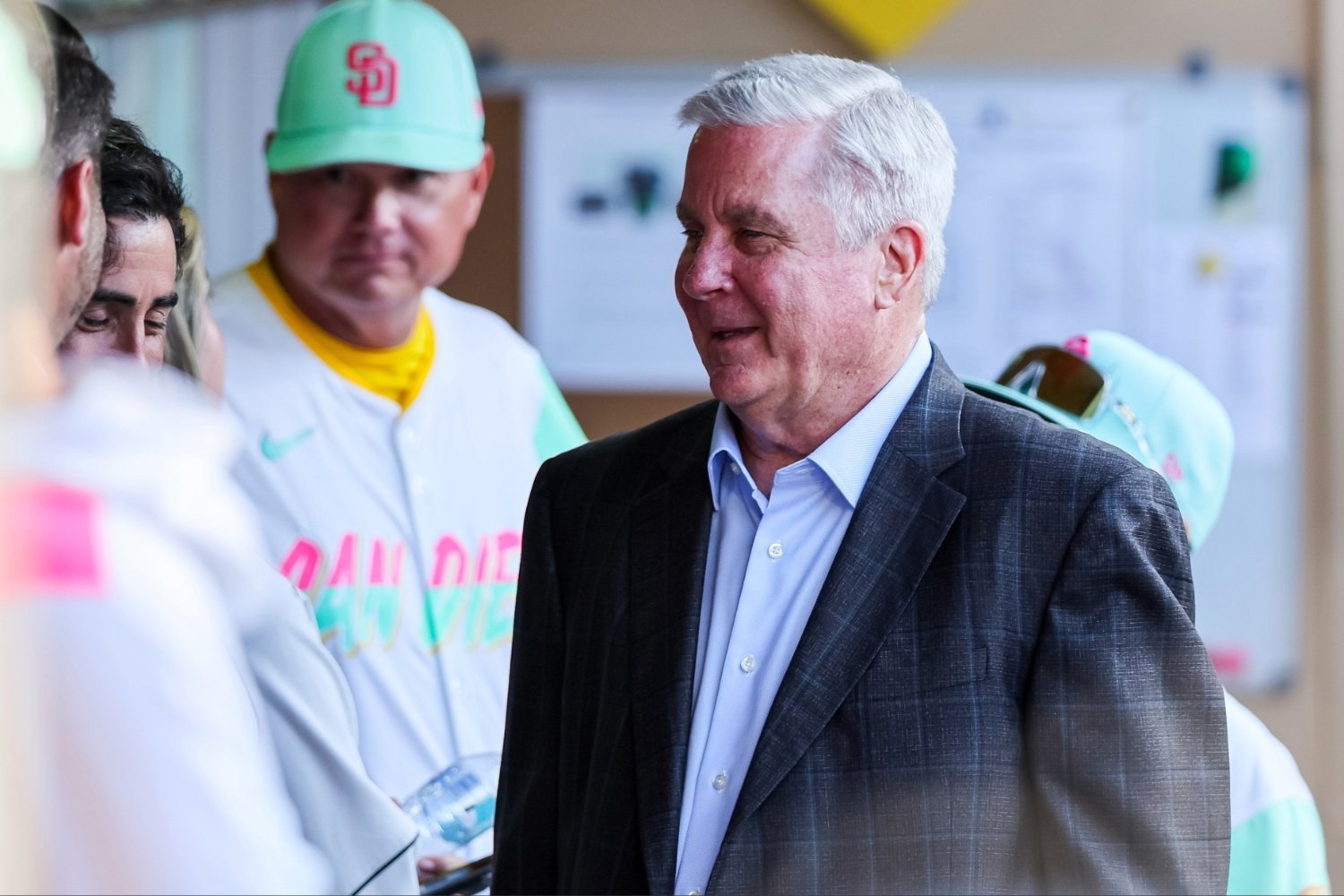 San Diego Padres ownership has been in shambles all offseason. That’s its own saga, but long story short, Padres fans are worried that their time as one of baseball’s highest-spending organizations may be over. With over $40 million coming off the books and no rumored big moves, it looked like the beginning of a slow decline back to the pre-COVID days of $80-110 million dollar rosters. No more $200+ million teams and no more superstar paydays. That was until Padres Chairman John Seidler said the team aims to keep next year’s payroll similar to the 2025 figure of $221 million. There is hope! As of now, San Diego has just over $160 million allocated for next season. After arbitration, assuming the Padres retain all their notable players (including Jason Adam and Adrian Morejon), that number will be around $190 million. That gives the Padres somewhere in the ballpark of $30 million to work with. With a highly active general manager, AJ Preller, at the helm and $30 million available, this offseason just got very exciting for San Diego. Here’s what we know: The Padres let go of Dylan Cease. I’d assume that means they don’t want to spend this money recklessly. Cease projects to be great, but he hasn’t exactly been consistent across his career. They also probably won’t retain Luis Arraez, another high-risk talent given his poor 2025 season. Then there’s Michael King, an injury prone, high-ceiling option whom the Padres are at least open to keeping. The losses of Cease and Arraez are hard to evaluate. Cease is an expensive, metric-supported arm, while Arraez is an anti-metric, cheaper bat. You can’t use those players to predict the Padres’ direction, other than to say they want to move on from 2025 underperformers. So, how can they spend their money? Add a Premier Starter San Diego’s rotation is far from complete, especially if they can’t retain King. The first name that comes to mind is, ironically, José Berríos. The 2025 Blue Jays Opening Day starter finds himself the odd man out of Toronto’s 2026 staff and could swap places with Cease. His $20 million salary in 2026 fits the Padres’ books nicely, and he brings much-needed stability. Berríos has never thrown fewer than 150 innings in a season (besides 2020) and has never posted a FIP over five. Or, they could aim higher and trade for Tarik Skubal. Every team wants him — he’s the best pitcher in baseball. That would require conversations with ownership about extending him, but Preller loves shock value. One of the weakest points of the 2025 staff was the lack of left-handers. They tried to fix it at the deadline with Nestor Cortes and JP Sears, but both struggled. Splurging on someone like Framber Valdez would also be worth it. If he’s unavailable, Ranger Suárez is another strong option who’s been dominant in both the regular season and postseason for the Phillies. Bring Back Michael King This would cost similar money to adding Berríos (around $20 million annually). Preller could weigh the pros and cons of each pitcher, or shed around $10 million in a Berríos trade and get both. The rotation certainly has room, which is why I prefer the latter. Simply retaining King and entering 2026 at roughly $210 million with a few filler players won’t get the job done. Retaining King and adding another arm is what would give the Padres a legitimately dangerous rotation: Nick Pivetta José Berríos or Other Michael King Joe Musgrove Randy Vásquez That's not necessarily equivalent to the Dodgers' world-beating group, but it is a competitive quintet with some depth. Carefully Add to the Infield With Arraez and Ryan O’Hearn entering free agency, the Padres have a huge hole in their lineup. They need more power than Arraez provided and real reinforcements at first base and designated hitter. Signing a pure platoon bat like Paul Goldschmidt or Rhys Hoskins would save money, but neither projects to perform all that well in 2026. That money would be better spent moving on from platooning altogether and adding everyday bats. Retaining O’Hearn could save salary while giving them a full-time first baseman, but he’s reportedly in talks with smaller-market teams like the Pirates and White Sox. It’s best to let those organizations overpay for mid-tier players and aim higher. A big name like Pete Alonso would solve the issue entirely. If not him, signing someone like JT Realmuto (as a catcher/DH) or trading for Yandy Díaz/Vinnie Pasquantino would fit nicely. The key is avoiding a platoon situation where no one finds their footing. We aren’t the Rays, after all. Whether through a blockbuster trade or savvy free-agent signings, San Diego has salary room to work with and clear areas requiring improvement. What do you think the Padres should do with their $30 million? Sounds off in the comments below! View the full article
 -
2026 Offseason Episode 1: Live From The MLB Winter Meetings
DiamondCentric posted an article in Twins Daily
 Lou Hennessy, Nick Nelson, and Jamie Cameron join John Bonnes live from the MLB Winter Meetings to discuss the latest Twins rumors, the MLB Draft lottery, and much more in this special episode of the Twins Off-Daily Podcast! Listen using Apple Podcasts: https://podcasts.apple.com/us/podcast/the-twins-off-daily-podcast/id1741266056 Listen using Spotify: https://open.spotify.com/show/4tb78XlurcPTYYSsARdbD7 Listen using iHeartRadio: https://www.iheart.com/podcast/263-the-twins-off-daily-podcas-167548600/ Listen using Pocket Casts: https://pca.st/nvclbt0w Watch on YouTube: https://www.youtube.com/@twinsdaily View the full article
 -
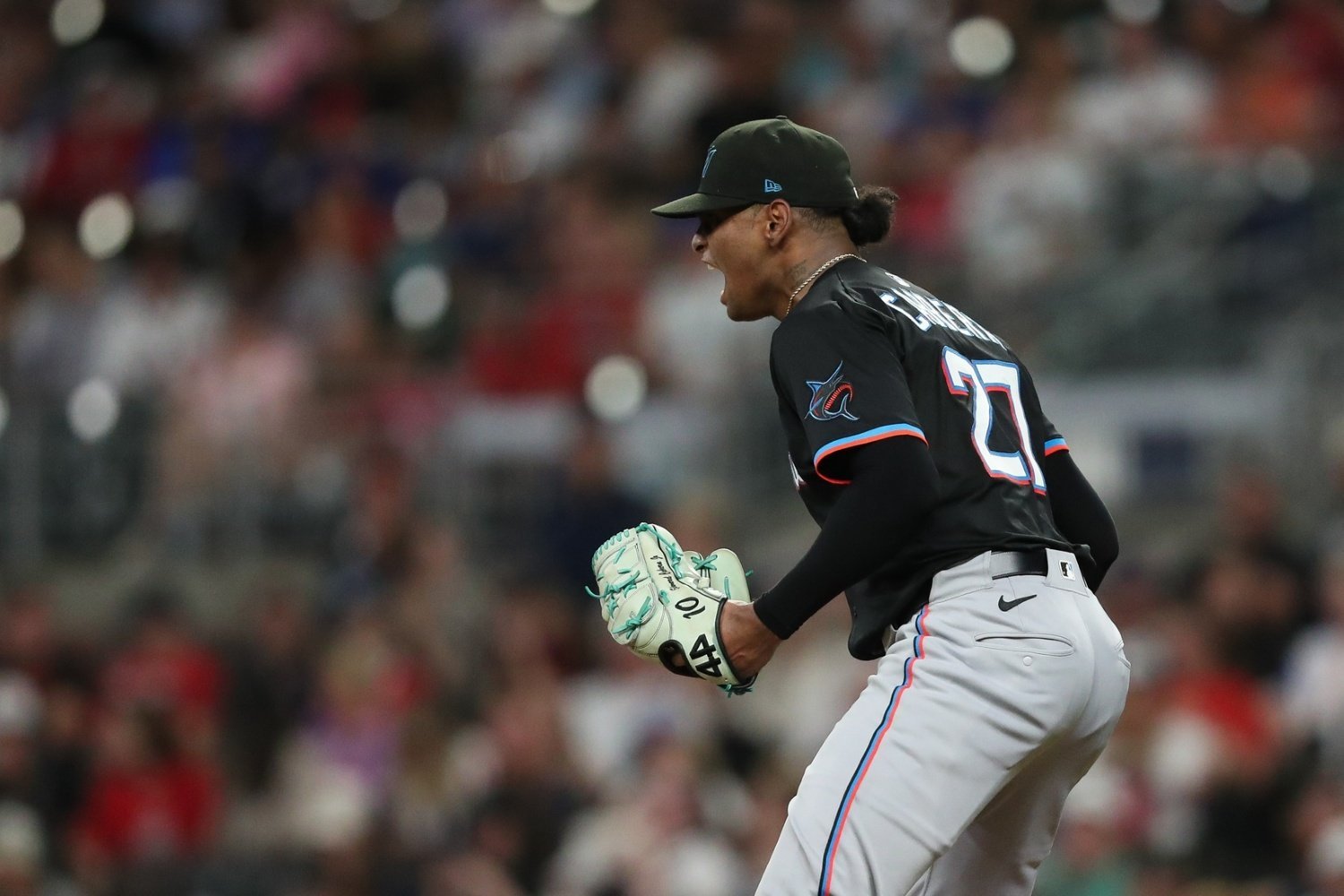 The Chicago Cubs are among the teams "involved in the mix" as the Miami Marlins entertain trade offers for Edward Cabrera, a source with knowledge of talks said early Wednesday. It's not clear whether Chicago is the current frontrunner, but the Baltimore Orioles are also pursuing Cabrera, for whom the Marlins seek multiple pieces. In July, Cabrera was the Cubs' top priority as they focused on controllable starting pitchers ahead of the trade deadline. They didn't ultimately land him (or any such player), but the talks between the teams then have rekindled this winter, according to multiple sources. Miami has long coveted Owen Caissie, the left-handed slugger and a candidate to take over right field for the Cubs in 2026. Caissie would have been the main return if the two teams had completed a deal they nearly finalized last winter, which would have sent left-handed starter Jesús Luzardo to Chicago. That deal fell apart only because of medical concerns (on both sides), and Caissie showed in 2025 that he could bounce back after the sports hernia that hampered him in late 2024 and required surgery. Cabrera has three years of team control remaining, and will turn 28 years old in April. He's the kind of hard-throwing, bat-missing starter Chicago has been missing for the last few seasons, and in 2025, he made huge improvements in his control, which had been the stumbling block for him before that. He'd walked 13.3% of opposing batters through 2024, but that number was 8.3% this year. He achieved that leap without losing the strikeouts, which stayed north of 25% of opponents. When he's on the mound, Cabrera has the ability to dominate. Unfortunately, he wasn't as successful in shaking off the other big knock on him: that he's injury-prone. Cabrera did pitch a career-high 137 2/3 innings, but he missed the first fortnight of the year with a blister and three weeks in September with an elbow sprain. In 2023 and 2024, he was hampered by shoulder impingements, though he avoided major structural damage or surgery. The elbow issue from late in 2025, in particular, could complicate the Marlins' efforts to extract top value for him. Cabrera altered his arm slot this season to alleviate the strain on his shoulder and shore up his control, but if that just passed the problem down to his elbow, he could be in danger of blowing out as he accumulates a greater workload with the new delivery. Caissie could be one piece in a Cabrera trade, but not the only one. The Cubs will have to outbid teams (including the Orioles) who also have good young bats to trade, and the years of control and upside of Cabrera will make him expensive. Therefore, even as they remain engaged with Miami, the team has made inquiries with the Washington Nationals about MacKenzie Gore. The left-handed Gore has one fewer year of team control and (perhaps) a lower ceiling, but he also has a better track record when it comes to durability. The Nationals prefer Matt Shaw to Caissie, according to one source, so a deal for Gore could be part of a two-pronged maneuver: acquire the top-flight starter in a trade centered around Shaw, then sign one of Alex Bregman or Eugenio Suárez to take over at third base for multiple years. A source within a different front office speculated, based on the Cubs' recent activity behind the scenes, that the team wants to ensure they land one of Cabrera, Gore or Zac Gallen. The latter, of course, is a free agent, and his asking price remains higher than Chicago is willing to go. They can wait Scott Boras out a while, but Jed Hoyer would prefer to make a trade for one of the team-controlled starters and spend his money on a slugger. That would seem to better balance the team's dual mandates for this winter, too. While the Winter Meetings haven't yet yielded the big trades that made them famous, the Cubs (and plenty of other teams) have gotten deep into discussions on deals that could come to fruition in the next few days. With other items on their checklist (a key offensive infusion, bench and bullpen help), Hoyer and company want to get a starter as soon as possible—but they rarely allow that sense of urgency to force them into a move. They'll be patient, at least until more of their top targets come off the board. View the full article
 -
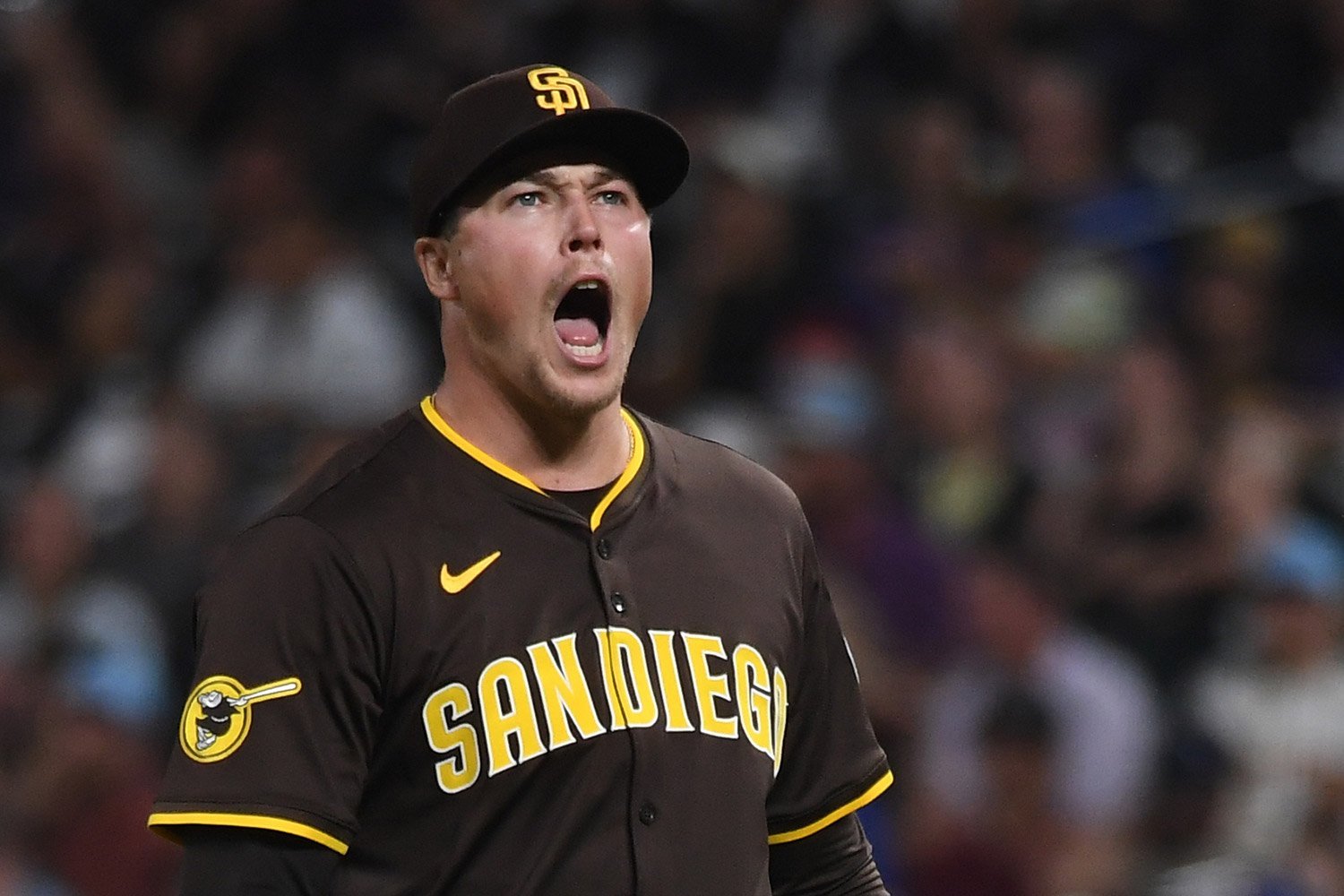 Writing for the San Diego Union-Tribune, Kevin Acee reports that Padres' president of baseball operations, AJ Preller, isn't looking to trade some of the team's high-end relief pitching to fill other holes on the 2026 roster. The 2026 Padres bullpen currently projects to look similar to 2025, minus closer Robert Suarez. Adrian Morejon threw 73 2/3 innings in relief with a 24.5 percent K%, 5.9 percent BB%, and 2.28 FIP. Robert Suarez logged 69 2/3 innings, posting a 27.9 percent K%, 5.9 percent BB%, and 2.88 FIP. Mason Miller added 23 1/3 innings with a 54.2 percent K%, 12.0 percent BB%, and 1.12 FIP. Jeremiah Estrada and Wandy Peralta combined for 143 1/3 innings with K% marks of 35.5 and 19.7 percent, respectively. Overall, Padres relievers produced a 25.8 percent K%, 9.6 percent BB%, 3.53 FIP, and 7.6 WAR over 609 innings in 2025. The 2025 Padres offense finished with a team line of .252/.321/.390 and a 102 wRC+ over 6,087 plate appearances, close to league average, but designated hitters combined for a .207/.273/.300 slash and 66 wRC+, placing San Diego among the weakest DH groups. Left field was approximately replacement level as well. Depth in the infield bench also lagged, with Jose Iglesias (.229/.298/.294, 73 wRC+) and Tyler Wade (.206/.309/.252, 69 wRC+) both below league-average production. For 2026, lineup questions center on upgrading the DH and left field, and on finding more offense from the catcher and reserve infield roles. View the full article
 -
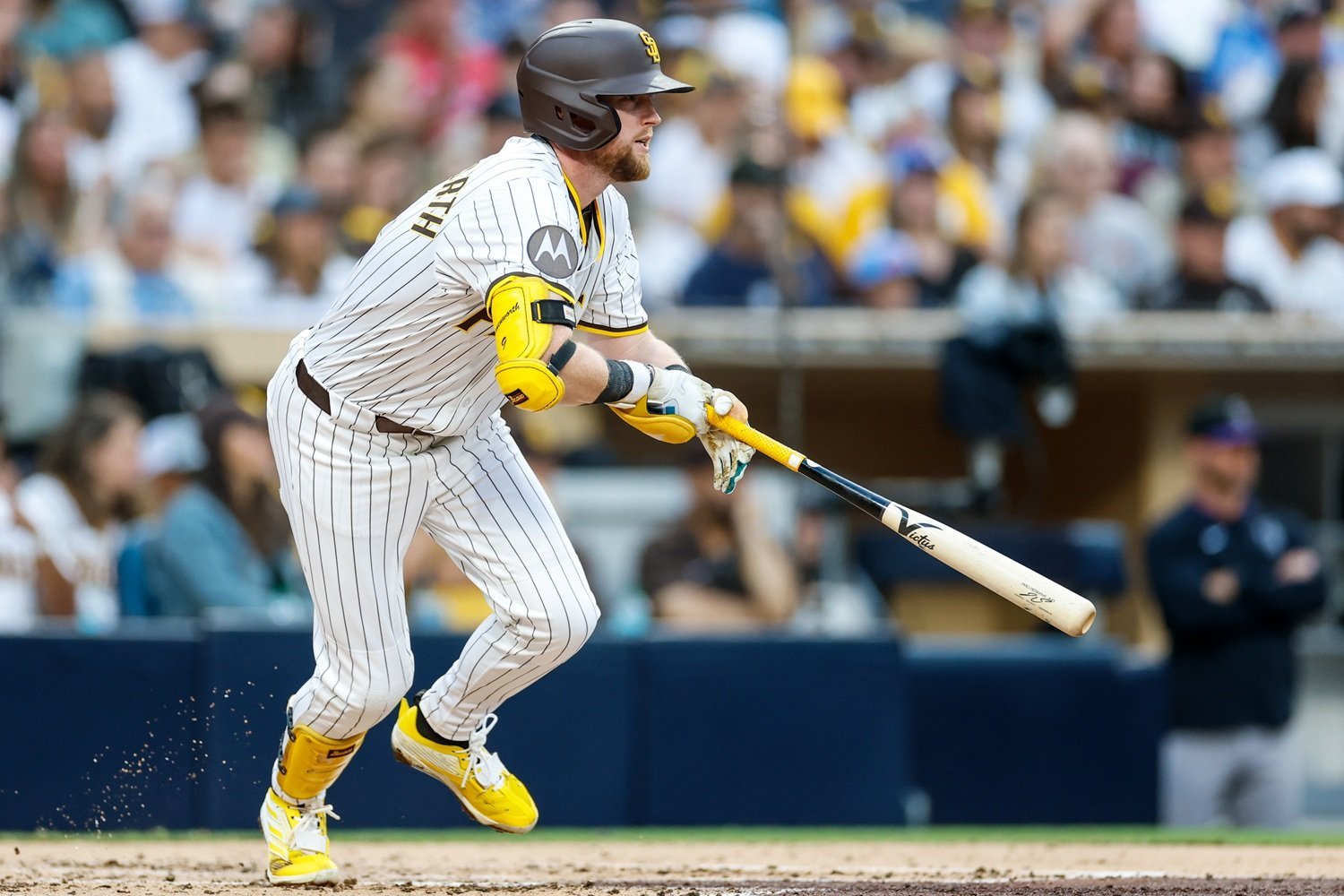 With Major League Baseball's Winter Meetings underway this week, there are certainly questions as to how active A.J. Preller and the San Diego Padres stand to be. The needs are clear: The team needs supplementary offense, starting pitching, and relief depth. Resources, however, are limited in the face of a rumored exploration of a sale of the franchise and a farm system that sits at or near the bottom of just about every outlet's rankings. Which is why the pursuit of any meaningful addition is going to require the Padres to sacrifice from their big league roster more than they have in recent years. One name floating out in the trade ether at this point is Jake Cronenworth. We know that the team was getting calls on him prior to the trade deadline. The same is true now, according to Dennis Lin of The Athletic. We also know that among the team's long-term contracts, he offers the most reasonable for a team to fit into their payroll. His contract runs through 2030 and lives in the neighborhood of $12 million. This stands opposed to someone like Xander Bogaerts, whose contract runs through 2033 to the tune of more than $25 million a year. Of the team's position players, those are the two the team would likely be most willing to move, in contrast to names like Fernando Tatis Jr., Jackson Merrill, or Manny Machado. Cronenworth brings a level of versatility to his game and an approach that teams would love to add. While he's never replicated the power output he demonstrated back in 2021 (.194 ISO), his 13.4 percent walk rate stood as one of the best in baseball last season. The blend of approach and power, even if now only occasional, mixed with positional flexibility at a reasonable price point, could provide the Padres with an opportunity to bring in a starting arm that they're so desperately coveting at present. Perhaps a team like the Pittsburgh Pirates, starved for offense and always operating within a tight budget, could be a landing spot. Mitch Keller's name was out there at the 2025 trade deadline. He offers a mid-tier option capable of eating some innings. It's worth noting that the Pirates are also one of several teams that were recently linked to Arizona Diamondbacks second baseman Ketel Marte. The Marte component becomes interesting because it indicates the market has a handful of teams looking to fill a spot at the keystone. The Boston Red Sox, Philadelphia Phillies, Seattle Mariners, Detroit Tigers, Tampa Bay Rays, and Toronto Blue Jays are all teams that have been mentioned in connection with some level of Marte interest. Not all of those teams have the starting pitching the Padres desire, but they also don't all have a clear vacancy at second base either. More than anything, this speaks to the fact that teams that miss out on Marte (should he actually be moved) could pivot to Cronenworth as a suitable backup capable of providing some stability in the lineup. A team like Toronto could be interesting given their newly-found depth on the heels of signing former Padre Dylan Cease and Cody Ponce. Would someone like José Berríos fit into that Keller mold, where you get the contract through 2028 (at $24 million in the final two years) and hope for a bit more out of the upside? You get something of a middle-tier starter from a team with a rotation logjam while, in a roundabout way, not having to invest fully in a new contract. Teams like the Mariners or Rays certainly offer some organizational depth on the pitching front, as well. Either way, a potential shipping off of Cronenworth would appear to offer the most efficient path toward acquiring a starting pitcher. It's possible the team has to take on some salary, but Cronenworth's contract should help to offset things in a way that would make an acquisition less cumbersome against the payroll. Of course, then you have to reckon with the vacancy wrought by his departure. It's a complex situation, but the Winter Meetings present the Padres with an opportunity to earnestly begin their pursuit of a much-needed starting arm. Such an avenue could very well begin with trading their infield mainstay. View the full article
 -
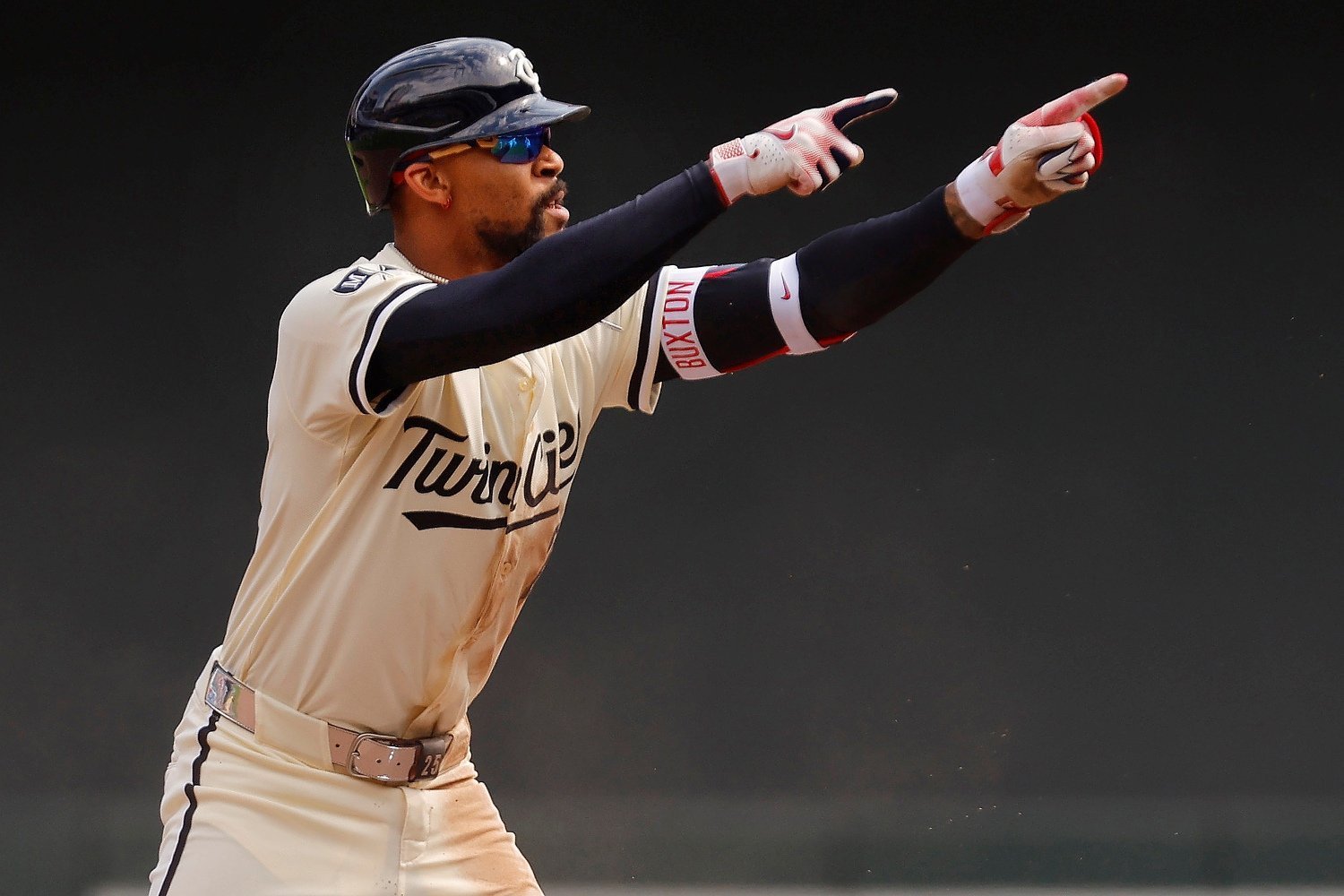 Byron Buxton has never been shy about his feelings toward Minnesota. Across multiple interviews last season, he made it clear that he wants to remain a Twin for life. His connection to the organization, the fan base, and the community is something he has spoken about with pride and sincerity. Under normal circumstances, that would make the idea of trading him seem almost unthinkable. This offseason has created a different kind of challenge. Reports have surfaced suggesting that Buxton may be open to waiving his no-trade clause if the Twins continue to move veteran players such as Pablo Lopez, Joe Ryan, or Ryan Jeffers. That possibility introduces a significant layer of complication. Even if the Twins found a strong market for Buxton, no deal could happen without his approval. Any conversation about trading him must account for whether he views the franchise as moving toward contention or slipping away from it. At the same time, the broader league context has changed in a way no one predicted. According to MLB.com, right-handed hitting outfielders have become the hardest type of player to find this winter. That reality could elevate Buxton’s value to its highest point in years. Look across free agency, and the scarcity becomes obvious. Rob Refsnyder, Miguel Andujar, and Harrison Bader headline the group. Each offers something useful. Refsnyder and Andujar can handle left-handed pitching. Bader’s defense remains elite (as Twins fans saw last season). But none of them are stars, and none profile as everyday impact players for contending teams. They are better suited for supporting roles. Beyond them is a class of respected veterans who have passed their prime. Andrew McCutchen, Tommy Pham, Starling Marte, and Chris Taylor have accomplished plenty in their careers, but they no longer have the upside or durability teams are seeking for a full season. They can help someone win, but they are not centerpieces. Scarcity has already pushed teams to surprising decisions. MLB.com highlighted the deal in which Baltimore traded four years of control over 24-year-old starter Grayson Rodriguez to the Angels for just one year of 31-year-old outfielder Taylor Ward. It shocked the industry, but it also revealed how aggressively clubs may act to secure a reliable right-handed outfield bat. If that is the current price, Buxton becomes one of the most intriguing trade pieces (semi-)available. Even with the injuries, his ceiling remains extraordinary. When he is right, he alters games with power, speed, and strong defense. Last season was the most complete campaign of Buxton’s career, as he set career highs in home runs (35), RBIs (83), runs (97), walks (41), plate appearances (542), and at-bats (488) while topping 120 games played for the second time in 11 seasons. He posted a .264/.327/.551 line with a 136 OPS+ on his way to winning his first Silver Slugger. No free-agent right-handed outfielder offers anything close to that combination. In a market starving for this player type, someone may be willing to take a big swing. Buxton has three years remaining on his deal at only $15 million per season, a very team-friendly contract for whatever team he suits up for in 2026. For the Twins, the decision is delicate. Buxton’s desire to stay carries real weight, but so does the possibility that the roster could continue to change around him. If the team moves more veterans, he might view a fresh start as a better path. If they hold firm, he may want to remain the face of the franchise. Minnesota will need to balance his preferences, his health, the market forces working in their favor, and the long-term shape of the roster. Trading a player like Buxton requires conviction and timing. This winter presents a rare confluence of events. Right-handed-hitting outfielders are scarce; Buxton’s value may be peaking; and the Twins are navigating a crossroads. Whether they act on that opportunity or choose continuity will define much of their offseason, and possibly much more of their future. Should Buxton be the first veteran traded by the Twins this winter? Can they take advantage of the right-handed-hitting outfielder shortage? Leave a comment and start the discussion. View the full article
 -
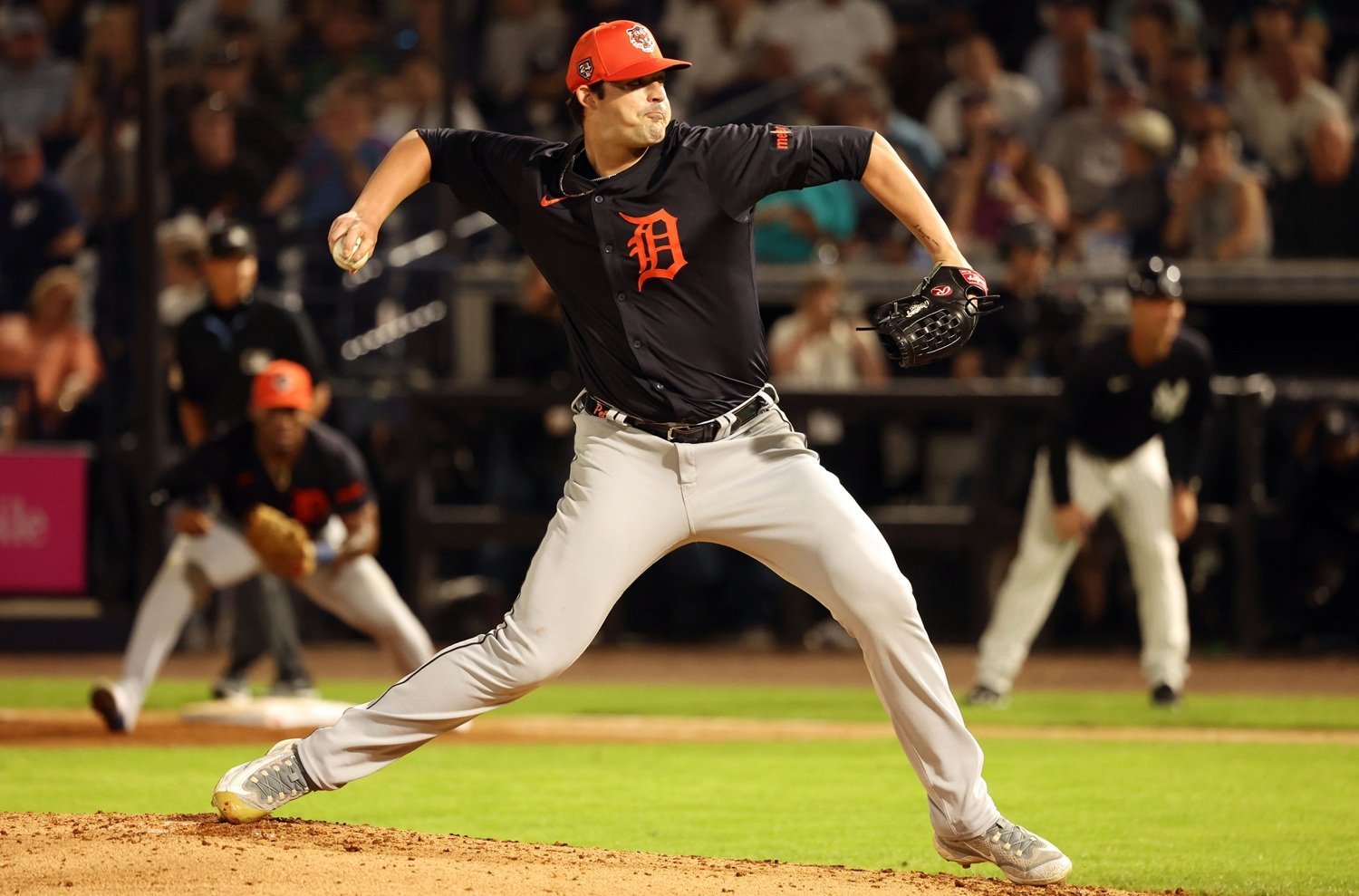 Major League Baseball is full of oddities, and the Rule 5 draft feels like a convergence of many of them, as players are not always eligible at the same ages or what even feels like the same stages of their careers. It's a leveling ground of underrated, maybe-too-young for prime-time International Free Agents, over-the-hill former prospects, and middle-round picks mixed between. It's a time for MLB organizations to gamble and find talent that another team has overlooked. While the Rule 5 draft can feel like an afterthought, coming on the last full day of the MLB Winter Meetings every year, it's a day of hope for many players looking to get their shot in the big leagues. When: Wednesday, December 10, 2025 @ 2pm ET Players the Cubs may lose: SS Cristian Hernandez, SP Brandon Birdsell (injured), SP Grant Kipp, SP Connor Noland Recent Cub Rule 5 draft picks include: 2024: Gage Workman, INF (Detroit Tigers) 2020: Gray Fetner, P (Baltimore Orioles) 2019: Trevor Megill, P (San Diego Padres) The first two names on this list, Gage Workman and Gray Fetner are fairly inconsequential names; neither was any good with the Cubs and neither have settled in anywhere else. Workman posted a 38 wRC+ between both Chicago clubs before finding his way back to the Tigers organization for whom he performed well (for an older guy) at Triple-A. Fetner, who never made an appearance for the Cubs, has been out of Major League Baseball since 2023 after flaming out with the Yankees. As with most Rule 5 picks, they rarely pan out. Trevor Megill, however, has come back to haunt the Cubs a bit. Despite not making the Cubs directly in 2020, a deal was worked out between San Diego and Chicago for the reliever to remain a Cub. Megill got his chance in 2021 with the North Siders but struggled in his 23.0 IP with an ERA above 8.00, prompting the Cubs to allow Megill to leave the organization at the end of the season. Since then, he has turned into a dominant option for the Milwaukee Brewers, pitching against the Cubs in the playoffs and shutting down opponents left and right. While most picks are like Gage Workman or Gray Fetner, there are enough Trevor Megill-types who succeed (Hector Rondon, who would pitch almost 300 innings with the Cubs and even served as their closer for a time, was a Rule 5 pick in 2012) that this can be a sneaky way to add value. What might the Cubs do in 2025? Most years, the team does not make a selection. Because you need an open 40-man roster spot to begin with and then need to be willing to carry said-draft-pick for entirety of the season for them to remain within the organization, many teams just do not have the roster flexibility to make picks. On top of that, Rule 5 picks are available for a reason. They have some warts to them; a prospect without warts would be protected from this fate, making it hard for contending teams to see the reward beyond the risk. With the Cubs currently having plenty of open space on their 40-man roster and a clear need to rebuild their bullpen, it's fair to expect the Cubs will make a selection in the Rule 5 draft this year, with that pick likely coming from the pitching side of things. Who, then, might fit what they're looking for? Option #1: RJ Petit, P (Detroit Tigers) RJ Petit might have a second career as an NFL lineman, as he is currently listed at a massive 6'8 and 300 pounds. Beyond just the novelty of his size, there's a bit of a dude here, as the reliever was in the 98th (or better) percentile in the following categories: xwOBA against, average EV against, hard-hit%, whiff %, called strike% and K%. His walk rate wasn't great, but still sat at 10.4%. He sits mid-90's and has a good slider and a changeup that grades out well using TJ Nestico's tjStuff+ grades. For a team who is clearly looking to add swing and miss to their 'pen, Petit fits the mold. Plus, because I'm always biased towards a good mustache, Petit is rocking an 80-grade lip-curtain. The hulking righty would be near the top of my personal wish list. Option #2 - Samy Natera Jr, LHP (Los Angeles Angels) Grabbing pitchers out of organizations with poor reputations for pitching is a good gamble, and why I think Samy Natera Jr. could end up being a player the Cubs hone in on. Natera is a tall, 6'4 left-handed pitcher with big swing-and-miss stuff who has a tendency to walk far too many hitters. So, while the reliever flashes impressive strikeout numbers, punching out 34% of opposing hitters, he also gives a lot of that back by walking 16% as well. Netera Jr. may fit the Cubs program, though. With it looking like both Caleb Thielbar and Drew Pomeranz will be departing the organization, their is a clear need for plenty of lefties in the Cubs' 2026 bullpen. Natera Jr. offers a strong cut-ride fastball, a pitch shape the Cubs enjoy (they cut their fastball more than any other organization in the minors), and they may think they can fix his walk issues internally. He might not survive the MLB cuts in camp, but he could be a worthwhile gamble if they believe in the raw stuff. Option #3 - Peyton Pallette, RHP (Chicago White Sox) Peyton Pallette falls into the "former-top-draft pick" territory we see at times in the Rule 5 draft, as he was once a second-round pick of the South Siders. The RHP's best offering is a curveball, and he has a developing slider and a decent enough fastball that you can see the beginnings of a useful MLB reliever. Because he's off-speed heavy, he doesn't throw a lot of strikes, though he generates a good amount of chase to offset that. As he jumps up a level, he may not ever throw enough strikes, and he may struggle with walks. But he did have a 98th-percentile whiff rate, so there's definitely a real reason to believe in the strikeout capability of the former second-rounder. Perhaps a jump to a better organization (sensing a theme?) could help squeeze a few more strikes out of the breaking-ball specialist. Honorable Mention: Tyler Stuart, RHP (Washington Nationals) Tyler Stuart is yet another team from an organization I don't really trust to develop players well, but I kept him in the HM category for one important reason: he's not going to pitch in 2026 as he recovers from Tommy John surgery throughout the year. A team can still select him, but they would have to carry him on the 40-man roster until the start of the season when they could transfer him to the 60-man IL, locking up a useful slot for months. Then the team would need to keep him on the active roster for 90 days the following year. A contending team like the Cubs may find that a big ask for an unproven pitcher. However, Stuart does offer some fun upside, as he puts all of his 6'9 frame to use. The right-handed pitcher has piled up the strikeouts across the board and while his control comes and goes, a move to the bullpen could squeeze a little added juice and maybe could help him rein in his control a bit more. Players with his size tend to struggle to repeat a motion, so while he won't pitch next year, he could be a tantalizing member of a bullpen in 2027 if you have the patience (and roster space) to help him develop with MLB coaching. What do you think the team will do in the Rule 5 draft? Will they pick someone? Punt the pick? Or maybe there's a name I didn't cover? Sound off in the comment section below and let's start a discussion! View the full article
 -
4 Twins Prospects Most Likely to Be Lost in 2025 Rule 5 Draft
DiamondCentric posted an article in Twins Daily
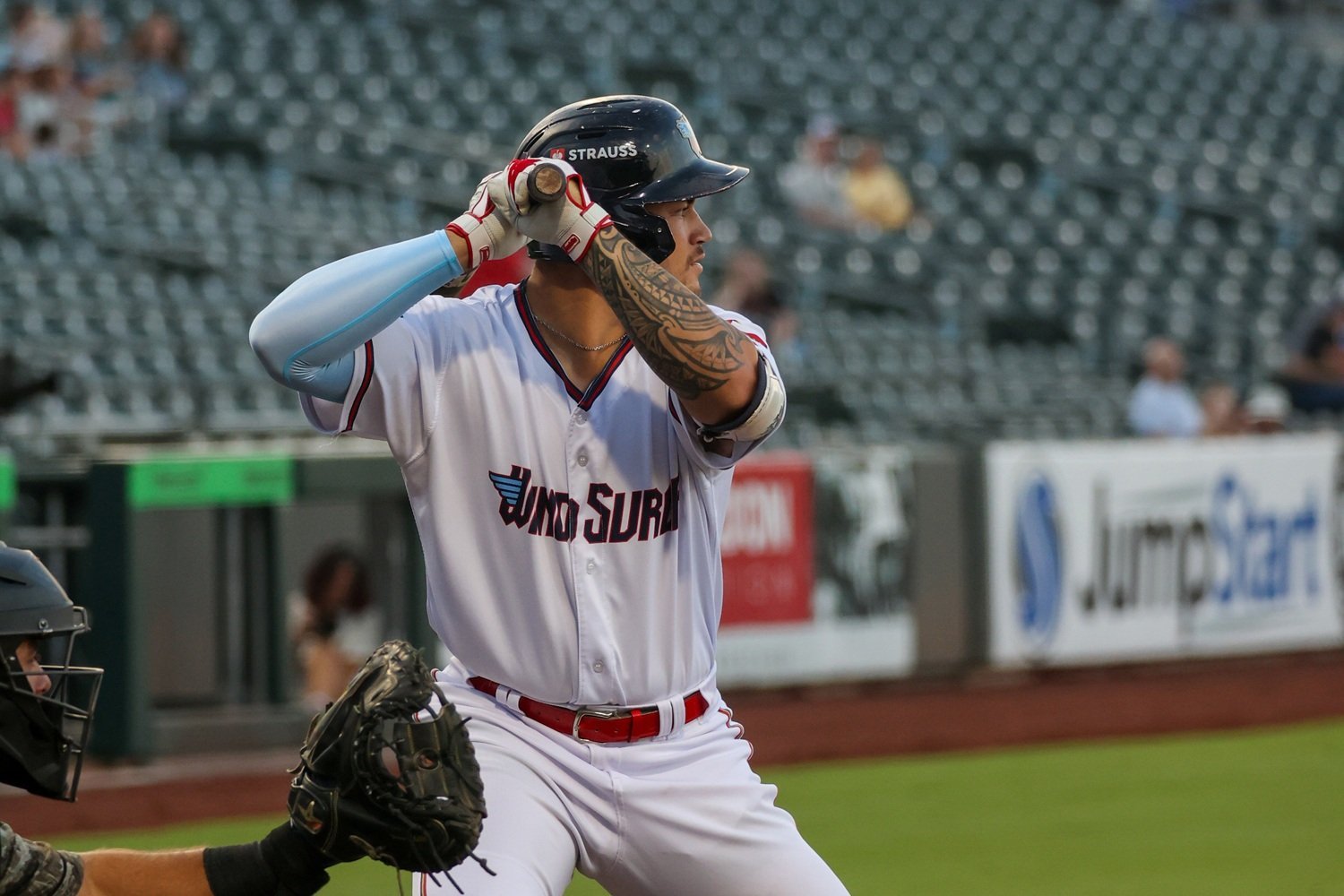 On Wednesday, as the MLB Winter Meetings wind down, teams will make their selections in the 2025 Rule 5 Draft. The Twins protected most of the expected names: Andrew Morris, Connor Prielipp, Marco Raya, Hendry Mendez, Kendry Rojas, and Gabriel González. They also chose to protect one semi-surprising player, in John Klein. However, in adding six guys to the 40-man, they left a few surprising names unprotected. Some of them may be lost to other teams. It’s been a few years since they have lost anyone, but this year's crop may be better (and closer to the majors) than anyone Minnesota has left exposed since 2020. There are four names in particular to watch when the Draft begins. 1) Kala’i Rosario - Corner OF / DH Rosario is available in this pool for the second straight season. After 2024, it made some sense. That season, he had a .726 OPS as a right fielder, and his defensive chops are lacking, even far down the defensive spectrum. Now, however, his situation is different. In 2025, he walked more, struck out less, and added power, finishing the season with an .844 OPS (though it all came in Double A). More impressively, he added speed to his game, swiping 32 bags in 39 tries. While his best position is probably DH, a team that isn’t planning on contending in 2026 could very well be tantalized by the power-speed combination and stash him at the back of the bench as a fifth outfielder and part-time DH option. While he’s not quite ready for the majors, he has spent the past two seasons at Double-A Wichita and is certainly destined for Triple A at this point. Could a team like the White Sox, Rockies, or Pirates decide to take a chance on simply skipping a step? 2) C.J. Culpepper - Right-handed Starting Pitcher It’s surprising the Twins chose not to protect C.J. Culpepper, as he looks destined to be a big league pitcher. He boasts a deep arsenal of pitches, with several having the potential to be average or better. His command has come and gone, but he's enjoyed stretches of strong results. He has struggled with injuries and illness over the past two seasons, spending two months on the IL with a forearm strain in 2024 and another two with a pinched nerve in his throwing arm in 2025. In 2025, he pitched to a 2.43 ERA across 59 1/3 innings, but his underlying metrics were less favorable. His velo was down almost two ticks; his walk rate was up; and his strikeouts were down. This led to a FIP almost two full runs worse than his on-paper results. Perhaps the question marks around the combo of health and effectiveness give the Twins confidence he won’t be chosen, or perhaps they don’t see a path to a future with the team. However, one can look to 2020 for a comp that should have given them pause. In that year’s Rule 5 Draft, the Orioles chose Tyler Wells, a tall right-handed pitcher whom the Twins chose not to protect after he'd undergone Tommy John surgery mid-season in 2019 and missed the 2020 season due to cancellation. He’s been average-ish both by results and by Pitching+, but has struggled with injuries that have caused him to miss most of the past two seasons. It’s easy to envision a scenario in which a team will select Culpepper, then stash him in the bullpen or use him in mop-up situations while letting him continue to work on refining his pitch mix or sequencing. 3) Kyler Fedko, OF Kyler Fedko was always unlikely to crack the 2026 Twins roster. After all, while he’s an outfielder, he’s not left-handed. (We kid, we kid.) He’s been a slow mover through the minors and has been old for each level, but in 2025, he put it all together. Fedko posted an .854 OPS in the highest levels of the minors, while playing all three outfield positions. He was also a force on the basepaths, stealing 38 bases in 46 tries. Saints fans had a 30/30 watch going in the last week of the season, but he ended up with just 28 bombs. More likely than not, his future is as a Quadruple-A player, even if his 2025 gains are sustainable. Yet, he’s the sort of player on whom teams sometimes gamble to be a fourth or fifth outfielder. One can look back to 2020 (again), when the Tigers chose outfielder Akil Baddoo, to see a comp. Baddoo had a good rookie season, producing 1.4 fWAR. He failed to adapt to the league’s adjustments, was worth just 0.1 fWAR over parts of the next four seasons, and is currently a free agent. 4) Cory Lewis, Right-handed Starting Pitcher Cory Lewis is a knuckleballer, but not your typical type (if there is such a thing). Most knucklers resort to it as a way to reinvent a flagging career, and they rely on the pitch’s unpredictability to get outs. Lewis throws it harder, and has decent stuff aside from that pitch. At every level, he found success—until 2025, when he lost the ability to throw strikes. That’s not uncommon for pitching prospects, or for knuckleballers. When they are off their game, it can be tough to watch. And, it often takes that pitcher type some time to be successful. That said, walking nearly a batter per inning and finishing a season with a 6.30 FIP is a good way to find oneself without a 40-man roster spot. If you are curious about his 100th-percentile outcome, though, look no further than another hard knuckler the Twins lost in the Rule 5: R.A. Dickey. In 2007, the Twins signed him to a minor-league deal, and thus didn’t protect him. Less than two weeks later, he was gone, selected by the Mariners. The Twins signed him again, to another minor-league contract, the following year. It didn’t go well. However, after the Mets signed him as a free agent, he was one of the best starting pitchers in baseball for a three-year stretch, and he won the National League Cy Young Award in 2012. It’s certainly not realistic to predict the same path for Lewis, but a team could certainly assume they can work with him on limiting walks and see where it goes. Now it’s time to stay tuned for the draft and see which of these players, if any, find new homes. View the full article
 -
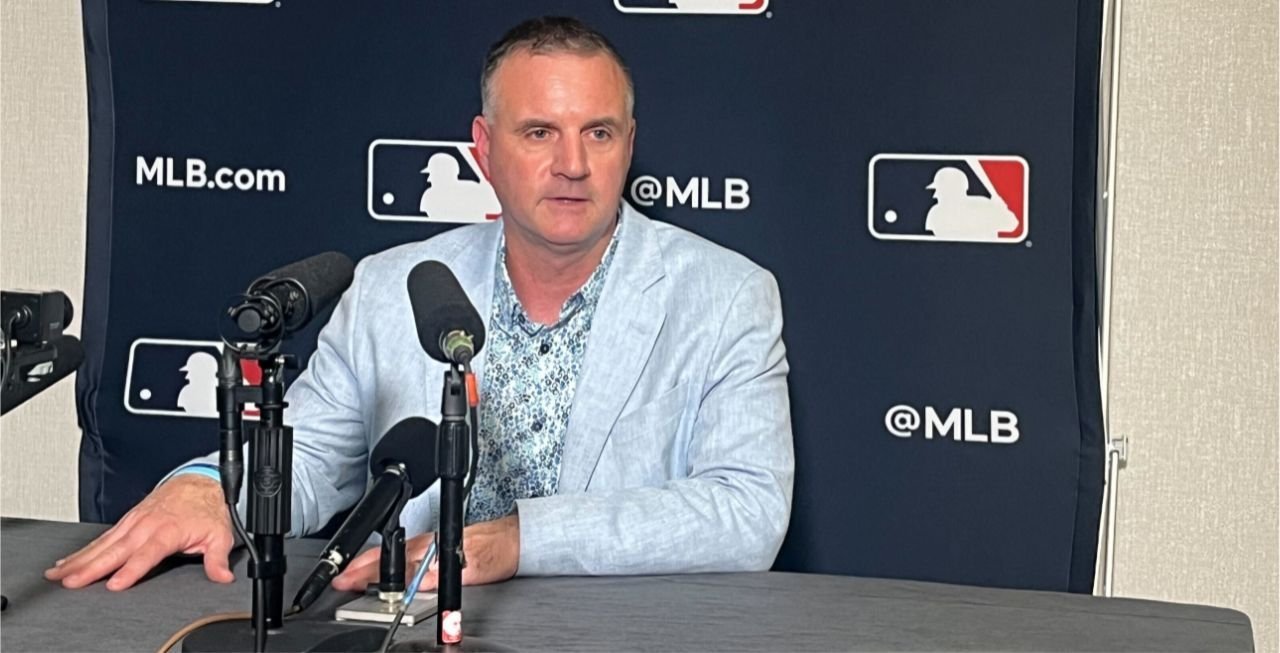 The Winter Meetings are in full swing, and that has included managers holding press conferences this week. These press conferences allow managers to reflect on the past season, while also looking forward to the 2026 campaign, with pitchers and catchers reporting in a few months. John Bonnes of Diamondcentric was able to attend the press conference of Royals manager Matt Quatraro on Monday. In Quatraro's press conference, the fourth-year Kansas City skipper touched on key players' performances from last season and elaborated on their outlooks for the upcoming season. While the Royals are still constructing their roster this offseason, Quatraro discussed four players who are likely to be key members of a 2026 Kansas City squad looking to return to the postseason. Thus, let's look at those four players, what Quatraro said about them, and what it could mean as the Royals iron out their roster this winter in preparation for Spring Training. Carter Jensen Will Be Key Part of 2026 Team Quatraro gushed about Jensen and his performance in September last season. In 69 plate appearances, Jensen hit .300 with a .941 OPS and collected three home runs, scored 12 runs, and had 13 RBI. The rookie catcher and local Kansas City-grown product didn't get a whole lot of time behind the plate in his MLB debut, as Quatraro opted to use Salvador Perez and Luke Maile as the Royals' primary catchers down the stretch (which Quatraro admitted in his press conference). However, the Royals manager pointed out that Jensen adapted quickly at the Major League level, especially defensively. Thus, it sounds like the Park Hill High School product will be a crucial part of this Royals roster next spring, as illustrated in the quote below. With Maile becoming a free agent and Luca Tresh not being added to the 40-man roster (he is eligible for Wednesday's Rule 5 Draft), it seems like Jensen is slotted to be the Royals' primary backup catcher for 2026. It will be interesting to see if Quatraro utilizes him similarly to Freddy Fermin, whose strong play the past couple of seasons allowed Perez to get more time at first base and DH, which saved his legs and energy, and preserved his power at the plate. Royals Take Blame for Jonathan India and His 2025 Struggles It seems like the Royals believe that India can bounce back in 2026 after a rough debut season in Kansas City. In 567 plate appearances with the Royals last year, India hit .233 with a .669 OPS. He hit just nine home runs and scored 63 runs, the latter his lowest mark in that category since 2022, his second MLB season. Despite the heavy regression, the Royals opted to bring India back for 2026, agreeing to an $8 million deal this offseason. In Quatraro's press conference, the Royals manager mentioned that moving him around between third base, left field, and second base contributed heavily to his offensive struggles a season ago. If India is not traded away this offseason (I mentioned it as a possibility in my Luis Robert Jr. trade piece), Quatraro will likely keep him solely at second and lower in the batting order to ease the pressure and help him get off to a better start at the plate in 2026. A strong start offensively could help him recapture the productive player that he was in Cincinnati. Jac Caglianone Is Seen As Another Bounce-Back Candidate "Cags-Mania" was all the rage when Caglianone was called up on June 2nd. Unfortunately, the 2024 first-round pick and former Royals top prospect struggled in his Royals rookie debut last season. In 232 plate appearances, Caglianone slashed .157/.237/.295 with a .532 OPS. He hit seven home runs and posted a 12% barrel rate, but he struggled immensely with pitch recognition. That was evidenced by his 38.5% chase rate, 26.8% whiff rate, and 22.4% strikeout rate. He also had lackluster Statcast batted-ball metrics, especially when it came to launching the ball. Despite the rookie's struggles, Quatraro was optimistic about the growth he made at the plate after returning from his Triple-A rehab assignment last season and his outlook for the upcoming season. He also mentioned that a slow start to his MLB career didn't help things, either. Considering he's only 22 years old, Caglianone will likely get more of a leash to prove himself in 2026 than India, who will be a free agent after next season. Nonetheless, much like the Royals' second baseman, it seems Quatraro is planning for Caglianone to be part of the outfield picture in 2026, even if Kansas City acquires a couple of outfielders this offseason (which is their offseason priority, according to reports). Luinder Avila May Be Part of Rotation Mix in 2026 Avila ranked No. 13 in our latest prospect rankings, and he is coming off a solid MLB debut in 2025. In 13 outings and 14 IP, the 24-year-old righty posted a 1.29 ERA, 0.93 WHIP, and 2.05 xERA. He showed excellent command, with a 28.7% K rate, a 10.7% walk rate, and 17.9% K-BB%. He only had a 25.2% CSW (called-strike plus whiff), but he limited productive contact, as illustrated by a 29.2% hard-hit rate allowed and 50% groundball rate. The Venezuelan pitcher was primarily utilized out of the bullpen in Kansas City, but he made 12 starts in Omaha, albeit to mixed results. With the Storm Chasers, he posted a 5.01 ERA and 1.31 WHIP in 59.2 IP in Triple-A. However, his FIP looked a lot better at 4.09. Though Avila looked stellar in the Royals bullpen in 2025, it seems like Quatraro and the Royals brass aren't shutting the door on Avila starting next season, even at the Major League level, as demonstrated in Quatraro's quote below. The Royals have been floating a lot of starting pitchers in trade talks, with Ryan Bergert, Stephen Kolek, and Noah Cameron mentioned today as possible candidates, according to MLB.com Royals beat writer Anne Rogers. Avila may be on the outside looking in when it comes to making the Royals' Opening Day rotation. However, if Royals starters are traded away or perhaps get hurt in Spring Training, it wouldn't be surprising to see Avila slide into the No. 4 or No. 5 spot in the Kansas City rotation to begin the season. The ability to seamlessly flip-flop between the rotation and the bullpen could help him make the Opening Day roster. View the full article
 -
Depth Check: What Do the Brewers Have at First Base?
DiamondCentric posted an article in Brewer Fanatic
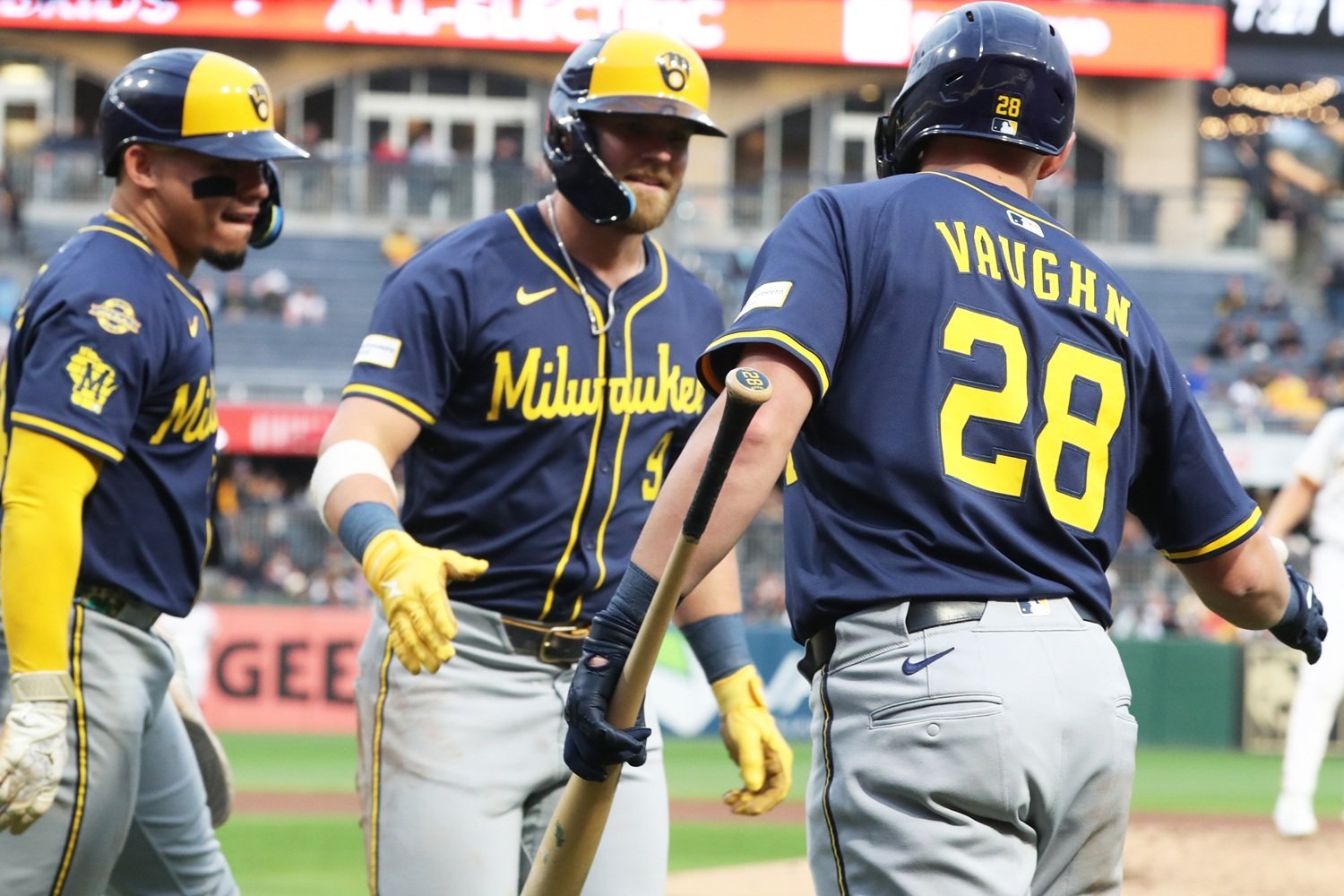 In 2025, the Brewers got excellent production (in the aggregate) at first base. Rhys Hoskins, Andrew Vaughn, and Jake Bauers each carried the team at times. Hoskins has departed via free agency, after the Brewers declined their end of a mutual option, but can first base be as productive in 2026 without the veteran? Let’s take a look. On The 40-Man Roster Andrew Vaughn .235/.333/.426 with five doubles, one triple, five home runs, and 27 RBI between Triple-A Charlotte and Triple-A Nashville .254/.307/.411 with 22 doubles, 14 home runs, and 65 RBI between Milwaukee Brewers and Chicago White Sox Vaughn was a somewhat under-the-radar acquisition, after Aaron Civale requested a trade. It worked out exceptionally well for the Brewers, with Vaughn posting an .869 OPS across 221 at-bats with his new team, a huge improvement over his totals with the White Sox. The question is, will Vaughn continue at the 141 OPS+ clip he had with the Crew, or will he fade to his pre-Milwaukee form? Jake Bauers .211/.318/.737 with one double, three home runs, and five RBI in Triple-A Nashville .235/.353/.399 with nine doubles, seven home runs, and 28 RBI in Milwaukee Bauers returned to the Crew on a minor-league deal after he was non-tendered in the 2024-2025 offseason. He was a solid complement to Hoskins in 2024, even with a batting average below the Uecker line. In 2025, his offense took a step up, and he posted a 111 OPS+. In addition to playing first base, he has also handled both corner outfield spots and taken some time on the mound. This time around, he signed a guaranteed big-league deal in November, and he's in line for more playing time than he got this season. Tyler Black .261/.388/.391 with 12 doubles, three triples, five home runs, and 39 RBI between Triple-A Nashville and Rookie League ACL Brewers .250/.538/.375 with one double and one RBI in Milwaukee Tyler Black is a one-time top-100 prospect. The problem came after a breakout 2023 season. In the 2023-2024 offseason, the Brewers acquired Joey Ortiz and Oliver Dunn, who crowded him out at third base. He moved to first base, but in 2025 suffered a hamate injury late in spring training. Now, he’s played left field, first base, and had a stint in right field for the Brewers. Nowhere, over the last two seasons, has he looked like a major contributor either in producing or preventing runs. Minor-League Players Who Could Impact 2026 Blake Burke .292/.379/.453 with 27 doubles, two triples, 16 home runs, and 82 RBI between Advanced-A Wisconsin and Double-A Biloxi Burke was selected with the Competitive Balance Round A pick acquired by the Brewers in the Corbin Burnes trade during the 2023-2024 offseason. So far, he’s made that part of the deal look very good, rapidly moving up the minor-league ladder. While he won't be on the Opening Day roster, either his sheer talent or regression by Vaughn and Bauers could see him in Milwaukee by the end of the season. Luke Adams .231/.417/.436 with 15 doubles, 11 home runs, and 42 RBI between Advanced-A Wisconsin and Double-A Biloxi .333/.471/569 with three doubles, three home runs, and 10 RBI with Surprise in the AFL Adams doesn’t get on the field much, but when he does, he’s been frighteningly productive wherever he’s playing—positionally, and in the Crew’s farm system. His stint in the Arizona Fall League was quite dominating. He’s split time at both corner infield positions and seen some limited action in left field. Adams could be a 30-30 player, if given enough playing time. Like Burke, he could force his way to Milwaukee sometime in 2026. Wild Cards Christian Yelich .264/.343/.452 with 21 doubles, 29 home runs, and 103 RBI in Milwaukee Yelich has mostly played the outfield, and is now Milwaukee’s primary DH, but the Crew could use him at first base in the event of injuries or slumps. The Florida Marlins selected him as a first baseman in the 2010 draft. The Brewers made a similar move with Ryan Braun at the start of the 2018 season, only to shift Braun back to the outfield after Jesús Aguilar caught fire. Yelich at first would be an emergency move, though. It's not a great position for a player with a recent spate of back problems on their medical chart. William Contreras .260/.355/.399 with 28 doubles, 17 home runs, and 76 RBI in Milwaukee Contreras is an anchor for the Crew behind the plate, so why is he a wild card at first base? Two reasons: First is the emergence of Jeferson Quero, who has been a top prospect on multiple lists (including Brewer Fanatic’s) for years. If the rookie wins the backup job, the team will want to play him more often than they've used previous backups, but they also won't want to lose Contreras's bat in the lineup. Second is the fact that the team looked wiped out during the NLCS, and they'll want to ease the burden on players like Contreras, whose brother Willson made the move to first this year for those fifth-rate flying rats in St. Louis. A similar shift might be good for the team as a whole. How do you think first base will shake out for the Brewers in 2026? Let us know in the comments below! View the full article
 -
John Schneider Knows Dylan Cease Made the Right Decision
DiamondCentric posted an article in Jays Centre
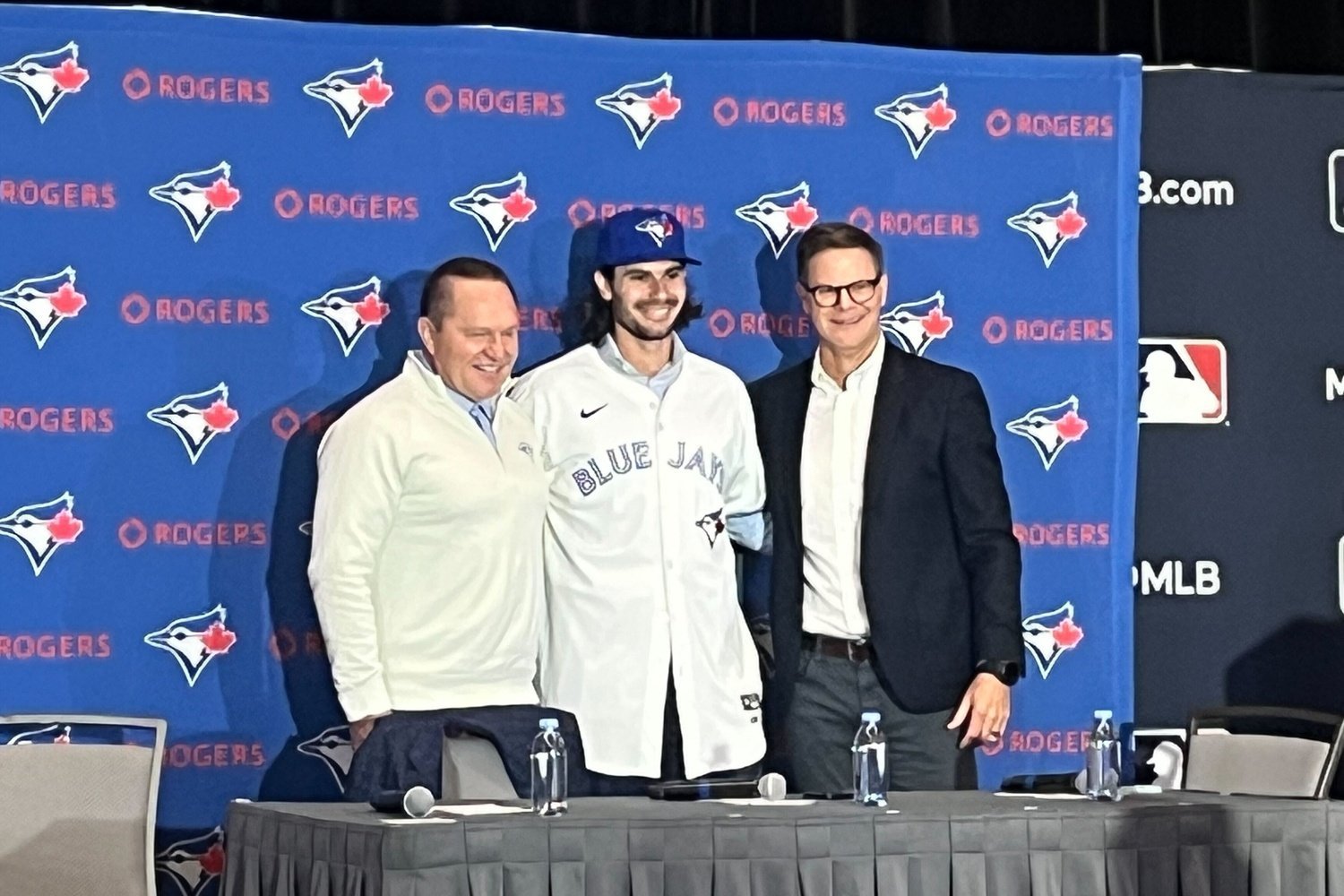 The Toronto Blue Jays signed Dylan Cease to a seven-year, $210 million contract earlier this offseason. It is the largest free agent contract they have ever given out, surpassing George Springer's deal. Manager John Schneider played a role in the entire process. He may not have forced the former San Diego Padres pitcher to sign that deal. Yet, Schneider did help out with the communications to convince Cease to come on board. The entire deal got done at an expedited pace, something that caught Schneider off guard. "Yeah, it happened really quick," Schneider said on Tuesday at the Winter Meetings in Orlando, Fla, where he addressed reporters, including DiamondCentric's John Bonnes. It was Schneider's first press conference since he spoke to the media after losing Game 7 of the 2025 World Series to the Los Angeles Dodgers. "I think just the initial Zoom call with him, you could tell he was pretty intrigued with what we were talking about." Right now, the Blue Jays can slot Cease into a probable Opening Day start. He's going to fit right in nicely with Kevin Gausman, Shane Bieber, José Berríos, and Trey Yesavage. "We obviously value him pretty highly, and it just kind of lined up," Schneider said. When it comes to Cease joining Toronto's starting rotation, Schneider was clear that he's looking forward to it. "After the initial communication -- really, I think the deal was done in about a week - which is really, really rare at that point in the offseason," he said. "I think it's important to keep some of that momentum building, building, and thrilled that he's part of our rotation. We've been in love with his stuff for a while, and I think there's a real opportunity for him to kind of continue to get better with what we can offer him." In each of the past five seasons, three for the White Sox and two for the Padres, Cease has pitched more than 165 innings. That speaks to how durable he can be for Toronto. He also totaled 200-plus strikeouts in each of those seasons, too. Last season for San Diego, Cease posted an 8-12 record, started 32 games and pitched 168 innings. He had a 29.8% strikeout rate, a 9.8% walk rate, and a 4.55 ERA. However, his FIP, SIERA, and xERA were all about one run lower. It appears that Cease wants to continue to grow and be even more consistent in his outings. Schneider truly believes that the Blue Jays' organization can help him a whole lot. "I think he's a really, really inquisitive mind, if you will," Schneider said on Tuesday. "We tried to kind of poke him with questions. Simple things like 'How has your fastball grip evolved?' It hasn't really, we learned, in quite a few years. Okay. 'Have you tried this?' He got intrigued with some of the things we were talking about. I think there's some delivery stuff that has been a little bit inconsistent, like every pitcher, over the last couple of years. "Hearing how aware of all those things he was and the openness to even start saying, 'Hey, let's start thinking more about a change-up that I've thrown a little bit and how can you help me develop it?'" Schneider said. "I think that kind of caught his attention as well," he continued. "I think Toronto is a perfect place for him to kind of spread his wings a little bit as he gets a little bit older, the city. Kind of those things, and the fact that we have the people that not only know that stuff but can really coach it, I think was appealing." After Cease's deal was announced, Mike Podhorzer of RotoGraphs took a look at how moving from Petco Park in San Diego to Rogers Centre in Toronto could affect the right-hander's numbers. "All else equal, the park switch is a slight negative for Cease's BABIP, WHIP, strikeouts, and home runs allowed, which would affect his ERA," Podhorzer wrote. "So basically, his projection should get just a bit worse after the move." Nonetheless, it will be interesting to see how Cease adjusts to his new team and new home stadium. Schneider and the Blue Jays' front office will hope that Cease can show that he's worth all that money from the get-go. View the full article
 -
Red Sox Rule 5 Draft Primer: Recent History and 2025 Player Preview
DiamondCentric posted an article in Talk Sox
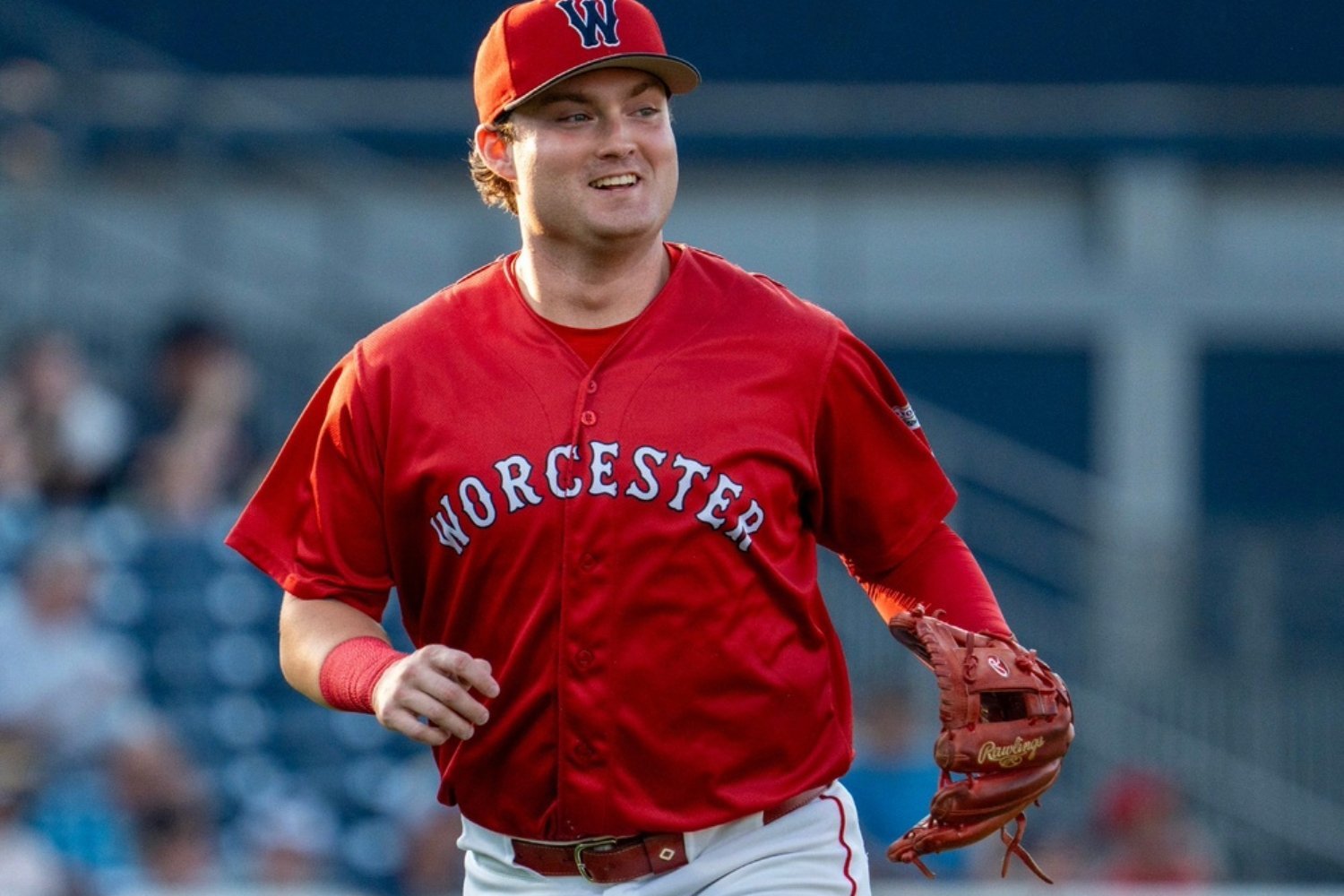 The Rule 5 Draft will take place later today, December 10, at the conclusion of the Winter Meetings. With it comes an opportunity for teams to poach talented minor league players from their competition. For the players selected, it allows them an opportunity that may not have been reachable with their former organization. The Boston Red Sox have been on the receiving end of both outcomes, having lost players due to the draft while also significantly improving their roster because of it. Taking a look back at every Rule 5 Draft in the past 10 years, Boston has selected four players — two infielders and two pitchers. All four players were influential in their own ways in Boston, with infielder Jonathan Araúz arguably being the worst of them depending on who you ask. The first of the four, Josh Rutledge, had been a part of the Red Sox organization prior to being selected. He was acquired in a July 2015 trade for Shane Victorino and appeared in 39 games before being outrighted off the roster. Rutledge would go on to sign a minor-league deal with the Colorado Rockies. only to then be selected by the Red Sox in the Rule 5 Draft. Overall, Rutledge would go on to play in 104 games across three seasons where he hit .252/.319/.313 with nine doubles, a triple, one home run and 22 RBIs. Defensively, Rutledge found playing time all around the diamond but was mainly used at third base and second base by the Red Sox. After the 2017 season, the team allowed him to become a free agent where he would go on to sign with the San Francisco Giants. The other infielder was Jonathan Araúz, who, at the time, was the Houston Astros’ 25th-ranked prospect by MLB Pipeline. Just 20 years old, Araúz was coming off a season that saw him hit .249/.319/.388 with a .707 OPS between High-A and Double-A. The Red Sox liked what they saw and picked in the Rule 5 Draft. Fortunately for them, the Covid-shortened 2020 season made it easy to keep him on the active roster for the entire season. Appearing in 25 games, Araúz wound up hitting .250/.325/.319 with a .644 OPS as a 21-year-old. He also had two doubles, one home run and nine RBIs. His time with Boston was not for long, spending most of the 2021 season in Triple-A where he provided depth for the major-league club. In 28 games with Boston in 2021, Araúz slashed just .185/.274/.369 with three doubles and three home runs to go along with eight RBIs. Though, Araúz did deliver what may have been one of the biggest hits in the second half of the 2021 season in a late-August game against the Cleveland Guardians. In need of the win, Araúz wound up hitting a three-run home run that gave the Red Sox the lead and eventually the game. He would go on to play in just six games with Boston in 2022 before being released, bringing his time with Boston to 59 games across three seasons for a stat line of .204/.280/.320 with a .600 OPS along with five doubles, four home runs and 18 RBIs. Defensively, he mainly played second base or shortstop but did have a few appearances at third base. However, it was the 2020 offseason that saw the Red Sox have their best Rule 5 selection of the bunch, as the team selected a starting pitcher from the Yankees who had injury issues. That pitcher was Garrett Whitlock, whom the team transformed into a key reliever in his rookie season. That year, Whitlock was a big part of why the Red Sox made it back to the postseason, anchoring the backend of the bullpen and being an arm that could get the ball to closer Matt Barnes. Overall, he went 8-4 with 14 holds and two saves in 46 appearances. He threw 73 1/3 innings out of the pen and struck out 81 batters. And after a few injury-filled years after trying to convert back to starting, Whitlock was back to his old self in 2025 as he appeared in 62 games, tossing 72 innings and striking out 91 batters. Whitlock in his five seasons with Boston has gone 25-14 with a 3.13 ERA in 165 appearances, 23 of them starts. He’s tossed 313 2/3 innings and struck out 343 batters. He’ll be looked to as a key figure in the bullpen for the 2026 season. The other prominent reliever that the Red Sox got through the draft was Justin Slaten, a key piece of the bullpen since his rookie season in 2024 where he appeared in 44 games and went 6-2 with a 2.93 ERA. He would throw 55 1/3 innings and strike out 58 batters proving himself to be a reliable option for manager Alex Cora. His sophomore season may not have looked as good on paper, but Slaten’s numbers were hampered by a couple bad outings in April along with some missed time due to injury. In 2025, he only appeared in 36 games because of that, tossing 34 innings and striking out just 25 batters while having an ERA of 4.24. Now healthy, Slaten will look to repeat his 2024 season and continue to build off of his first two years in Boston. Taking that into consideration, should the Red Sox draft someone on Wednesday (which isn’t a guarantee at the moment), the team could likely turn towards someone they deem as a potential impact arm or even a multi-position player. As an organization, the team has developed an affinity for versatility up and down the roster. With the way the roster is currently constructed, the Red Sox have limited options for their corner infield positions and could look for a potential diamond in the rough to fill out the back of their bench, especially if the player has showcased some in-game power. Of the players who could likely come off the bench, Nick Sogard, David Hamilton and Nate Eaton are not known for their power, and it’s very likely that Romy González could be in the starting lineup based on how the rest of the offseason plays out. With that said, the Red Sox could look to a young, versatile player to help fill out the end of their bench. Now, a potential option should he fall to the Red Sox could be their very own former prospect, Blaze Jordan. Traded to the Cardinals, Jordan struggled with Memphis after a very impressive season in the Boston organization. After hitting .198/.242/.366 with the Redbirds, the Cardinals did not add him to their 40-man roster to protect him. Jordan has potential game-altering power as he’s hit double-digit home runs in every season he’s been healthy. He has a keen eye and understands the strike zone as he only struck out in 60 at-bats last season. Should the Red Sox choose to target an arm, they could choose to go after Chicago White Sox prospect Peyton Pallette. Pallette fits the mold of both Whitlock and Slaten, being a pitcher who has a strong fastball, as it sat 94-96 mph last season. It was part of a repertoire that includes a high-spin curveball that was consistently north of 3000 rpms with break that sees it fall right off the table. He also threw a changeup that had a 50.8% whiff rate during his time in Triple-A in 2025. To compare his curve to Slaten’s, Pallette gets almost 300 more rpm than Slaten does on his. Thanks to those three pitches, Pallette posted a career-high 12.0 strikeouts per nine innings last season between Double-A and Triple-A. The Red Sox do have an open spot on their 40-man roster after trading Vaughn Grissom to the Los Angeles Angels, so they can make one pick in the Rule 5 Draft as things currently stand. However, since the draft order goes from the worst record to the best, there is a chance the Red Sox might have to trade for the player much like they did with Slaten (who was actually selected by the Mets as part of a trade with the Red Sox for 2023 10th-round draft pick Ryan Ammons and cash considerations). The Red Sox have a lot of planning to do as the Winter Meetings come to a close, and that begins with how they choose to approach the Rule 5 Draft. View the full article
 -
2 mock trade proposals sending Edward Cabrera to Orioles
DiamondCentric posted an article in Fish On First
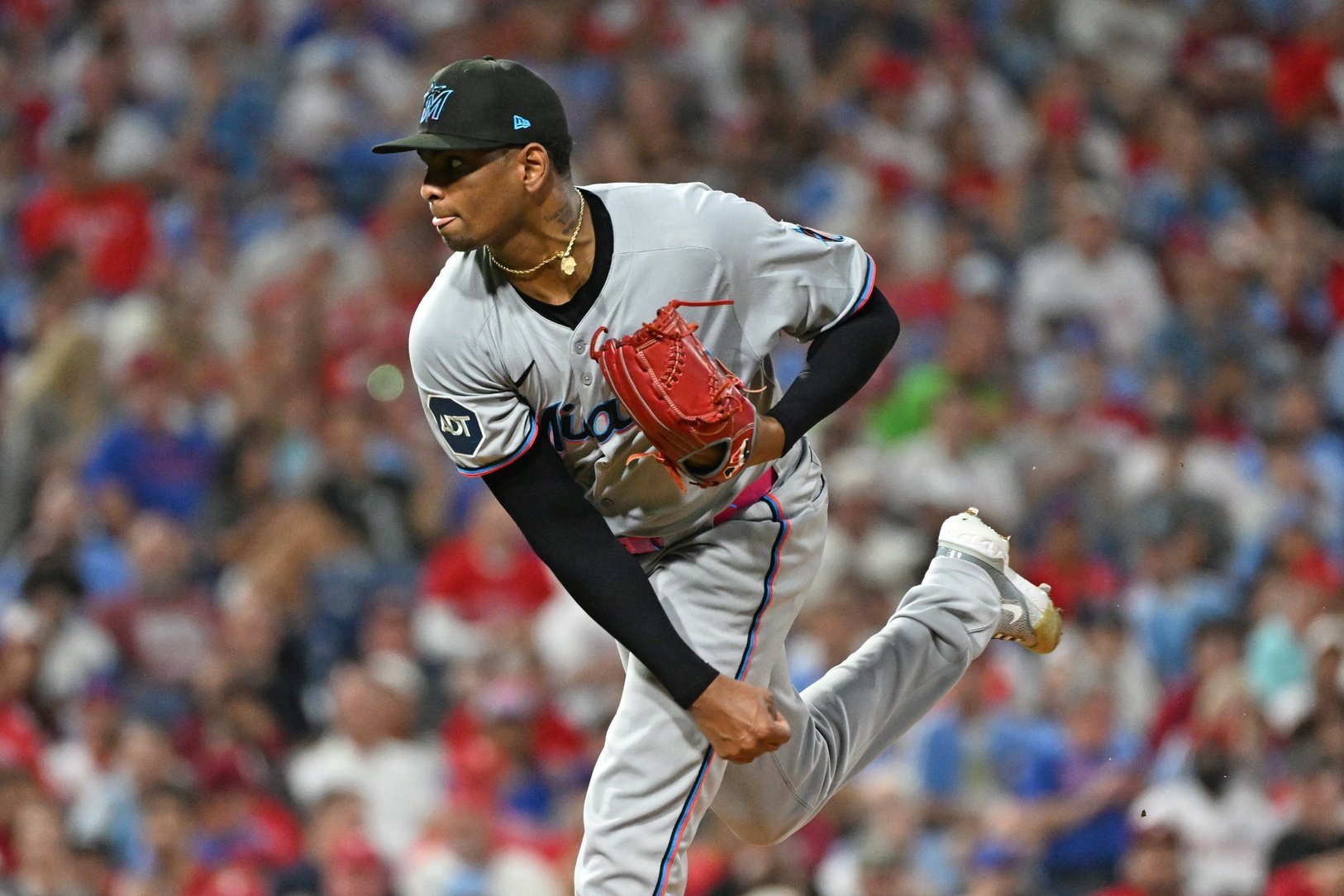 ORLANDO, FL—Edward Cabrera is no stranger to trade rumors, whether it be this past MLB trade deadline or previous offseasons. Right now, his value is as high as it's ever been. In the late hours of Day 2 of the Winter Meetings, Ken Rosenthal and Will Sammon of The Athletic reported that Cabrera's market is heating up, with the Baltimore Orioles as a possible landing spot. In 2025, Cabrera broke out, posting a 3.53 ERA, 3.83 FIP, 9.81 K/9 and 3.14 BB/9 through a career-high 137 ⅔ innings pitched. His talent is undeniable, but the Marlins already have a very deep rotation for 2026 and beyond, opening up the possibility that they could flip Cabrera to address other areas of need. These teams had a positive experience trading with each other in 2024 when the Marlins sent Trevor Rogers to the Orioles in exchange for Connor Norby and Kyle Stowers. That could lead to them once again linking up on a big deal. Mock Trade #1 Orioles receive Edward Cabrera Marlins receive 1B Coby Mayo and LHP Boston Bateman Mayo, who was selected in the fourth round of the 2020 MLB Draft, was a consensus Top 100 prospect entering 2024 and 2025. However, he hasn't lived up to the hype since being called up, slashing .217/.299/.388/.687 with 11 home runs, 28 RBI and a 95 wRC+ last season. With that being said, a right-handed hitting first baseman is exactly what the Marlins are looking for. The Marlins organization remains extremely high on Deyvison De Los Santos despite coming off a disappointing season of his own. Perhaps they could co-exist in the future with Mayo moving over to third base. The second piece in this deal, Boston Bateman was acquired from the San Diego Padres in July. Bateman spent most of 2025 at Low-A, but was promoted to High-A for his final three starts. Overall, he finished the season with a 4.14 ERA and 3.54 FIP in 87 total innings. The 20-year-old's best pitch is his slider, which is a 60-grade pitch, per Baseball America. The 6'7" lefty could have a future in the bullpen or as a back-end starter. Either way, he's a couple seasons away from contributing in the majors. Trade #2 Orioles receive Edward Cabrera Marlins receive OF Nate George, LHP Luis De León and OF Austin Overn George, who was selected in the 16th round of the 2024 MLB Draft, has gotten off to a phenomenal start to his professional career. At age 19, he posted a 158 wRC+ with 50 stolen bases through his first 87 career games. Ranked as the number four Orioles prospect by Baseball America and ninth by Just Baseball's Aram Leighton, George is still raw, but if it goes well, he can be the future at center field with a nice hit tool. In 2025 between three levels, De León posted a 3.30 ERA, 2.59 FIP, 11.03 K/9 and 4.23 BB/9 through 87 ⅓ innings pitched. After that, he did well in the Arizona Fall League, raising his strikeout rate even more with a fastball that sat in the mid-90s. He did not allow a single home run all year. Baseball America has his fastball as a 70-grade pitch and his slider and changeup as 60-grade pitches. The lefty could eventually be a number two or three starter in the rotation. De León's control/command will need some improving as he continues to develop. The final piece is Overn, who is the 30th-ranked Orioles prospect, per MLB Pipeline. Across High-A and Double-A, he slashed .249/.355/.399/.754 with 13 home runs, 43 RBI, 64 stolen bases and a 123 wRC+. With his combination of speed and swing decisions, the hope is that Overn can follow in the footsteps of someone like Jakob Marsee. View the full article
 -
2026 MLB Draft Lottery reaction, Marlins rumors & Rule 5 preview
DiamondCentric posted an article in Fish On First
 Recorded immediately after learning the results of the MLB Draft Lottery, Ely Sussman, Isaac Azout, Kevin Barral, Nate Karzmer, Hector Rodriguez and special guest Marcel Sparks discuss where things stands with the Miami Marlins in the midst of the Winter Meetings. Topics include the consequences of falling to 14th in the draft order, missing out on veteran relievers in free agency, mutual interest between the Marlins and Jakob Marsee regarding a contract extension, 2026 Opening Day being rescheduled and a preview of Wednesday's Rule 5 draft. You can find Fish On First LIVE on the Fish On First YouTube channel, Apple Podcasts, Spotify or wherever else you get your pods. Our audio programming also includes The Offishial Show, Fish Unfiltered, Swimming Upstream and more. The Marlins received the 14th overall pick in the 2026 draft. The San Francisco Giants and Kansas City Royals both leapfrogged the Fish and won top-six lottery picks despite finishing last season with better records. Follow Ely (@RealEly), Marcel (@MarcelSparks04), Isaac (@IsaacAzout), Kevin (@kevin_barral), Nate (@NateKarzmer), Hector (@Hector_Baseball) and Fish On First (@FishOnFirst) on Twitter. Join the Marlins Discord server! Complete Miami Marlins coverage here at FishOnFirst.com. View the full article
 -
'Numerous teams' involved in Edward Cabrera trade talks
DiamondCentric posted an article in Fish On First
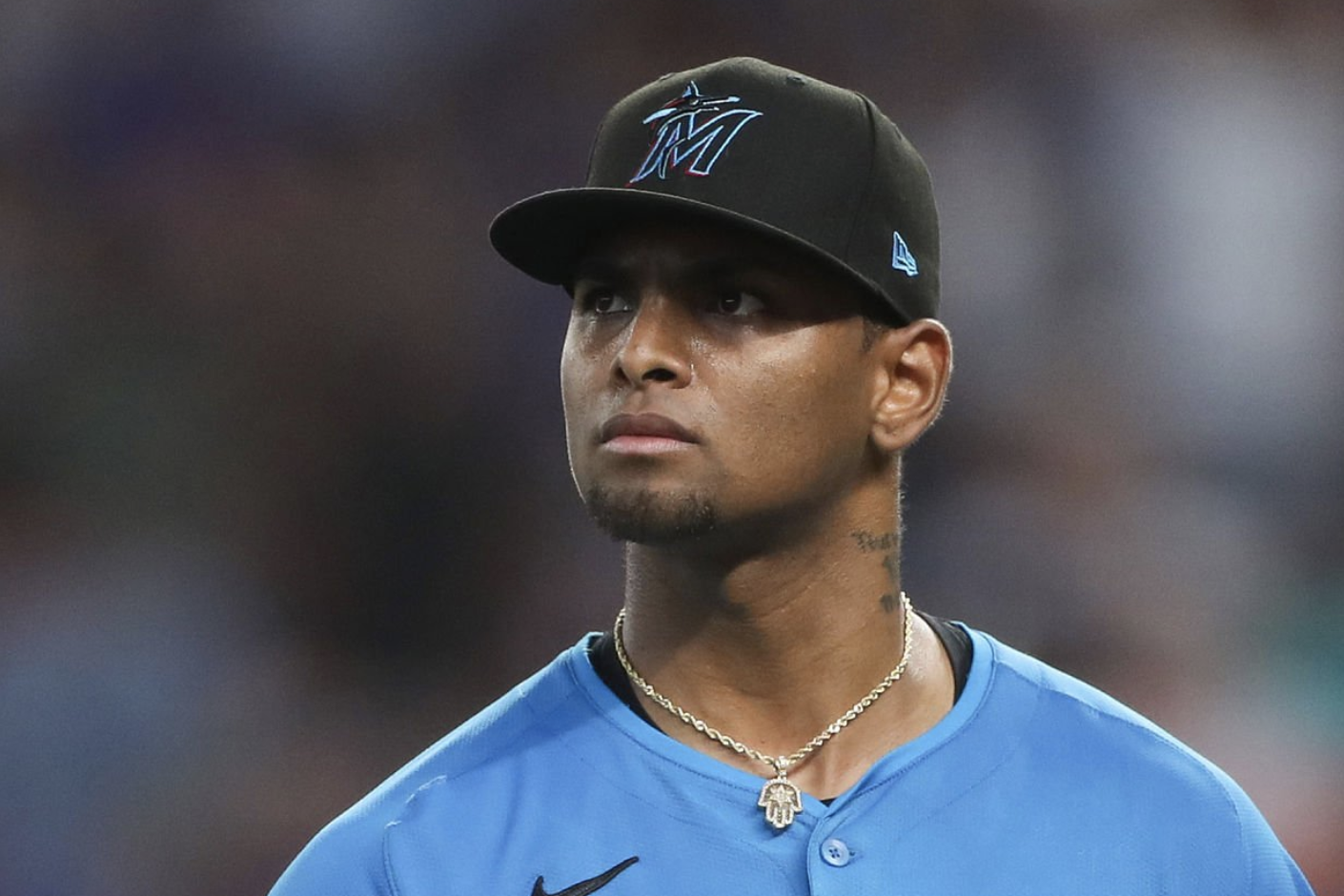 The Miami Marlins are "progressing in their efforts" to trade right-hander Edward Cabrera, Ken Rosenthal and Will Sammon of The Athletic reported Tuesday night. They identify the Baltimore Orioles as one of Cabrera's suitors, with Jon Heyman of the New York Post adding that "numerous teams" are involved in the bidding. Cabrera enjoyed the best season of his career in 2025. The 27-year-old posted a 3.53 ERA, 3.99 xERA with 150 strikeouts and 2.8 bWAR in 137 ⅔ innings pitched. As always, though, his workload was limited by injury—he suffered a right middle finger blister in spring training and a right elbow sprain in late August. He's under club control for three more seasons via arbitration. MLB Trade Rumors projects him for a $3.7 million salary in 2026. The Orioles' reported interest is unsurprising considering that these teams collaborated on a win-win trade at the 2024 trade deadline when the Fish exchanged Trevor Rogers for Kyle Stowers and Connor Norby. Rogers was Baltimore's best starter last season, but he will be eligible for free agency next winter, and regardless, the O's need more rotation depth behind him to realistically contend during this upcoming campaign. With the Marlins in need of upgrades at the corner infield spots, Jordan Westburg and Coby Mayo are among the names they could be seeking in return. Catcher Samuel Basallo is Baltimore's top-ranked prospect, but he has already been signed to an eight-year contract extension, making it highly unlikely that he'd be available. View the full article
 -
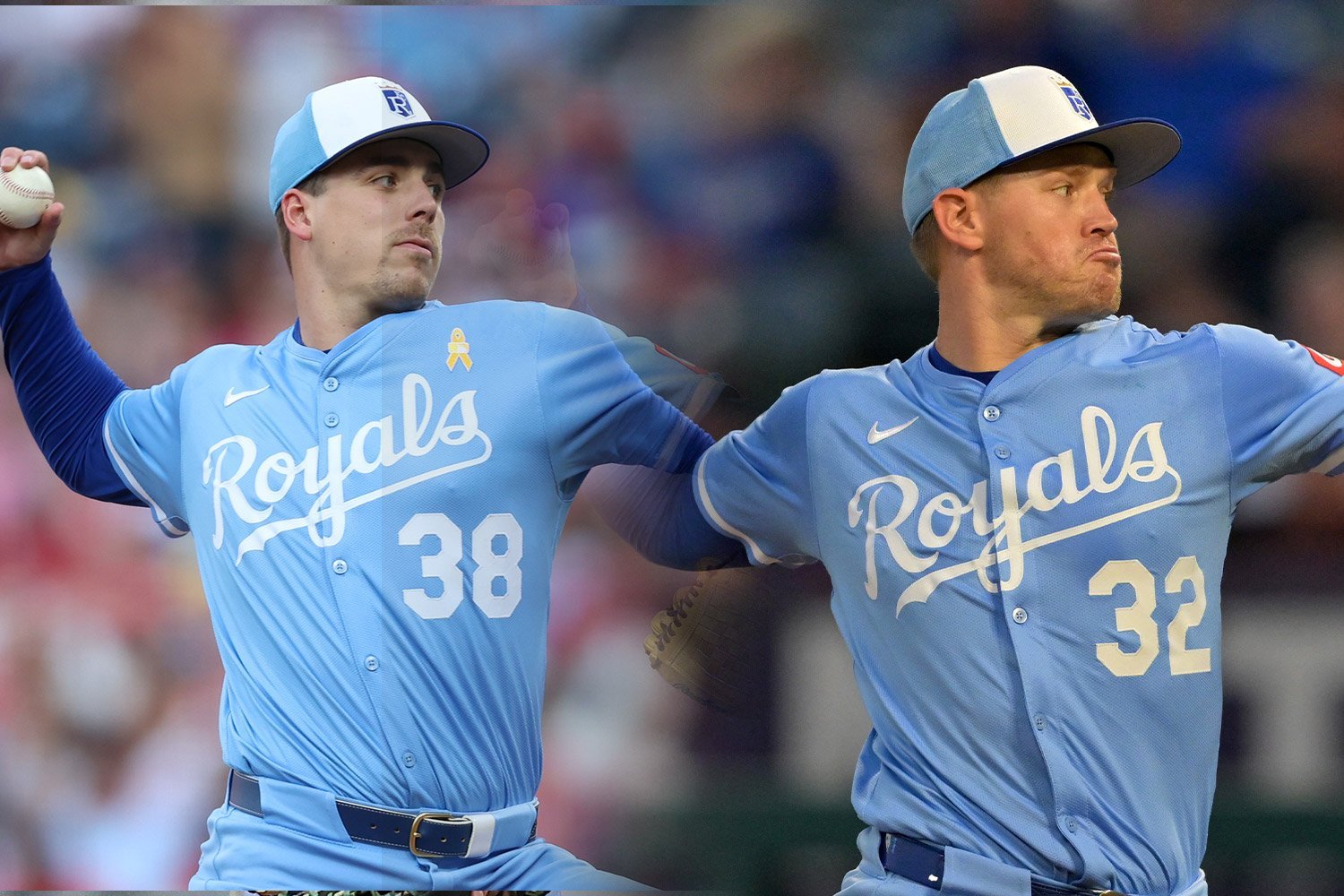 Anne Rogers, in her latest rundown from the Winter Meetings, mentioned that the Kansas City Royals are receiving interest in several of their young players. Noah Cameron, Ryan Bergert, and Stephen Kolek all finished 2025 on the big-league pitching staff. Cameron worked 138 1/3 innings with a 2.99 ERA, 109 hits allowed, 46 earned runs, 43 walks, and 114 strikeouts. His line included a FIP of 4.18, with 7.4 strikeouts and 2.8 walks per 9 innings. Bergert split his debut season between San Diego and Kansas City, totaling 76 1/3 innings with a 3.66 ERA, 4.00 FIP, 61 hits allowed, 35 walks, and 73 strikeouts. Kolek also pitched for both clubs in 2025 and finished with 112 2/3 innings, 98 hits allowed, 44 earned runs, 31 walks, and 77 strikeouts, producing a 3.51 ERA (3.82 FIP). From a team control and expense standpoint, all three are pre-arbitration. Players do not become arbitration-eligible until roughly three years of service, and do not reach free agency until about six years. As recent rookies with less than two years of service time, Cameron, Bergert, and Kolek are projected to remain under club control for at least half a decade. View the full article
 -
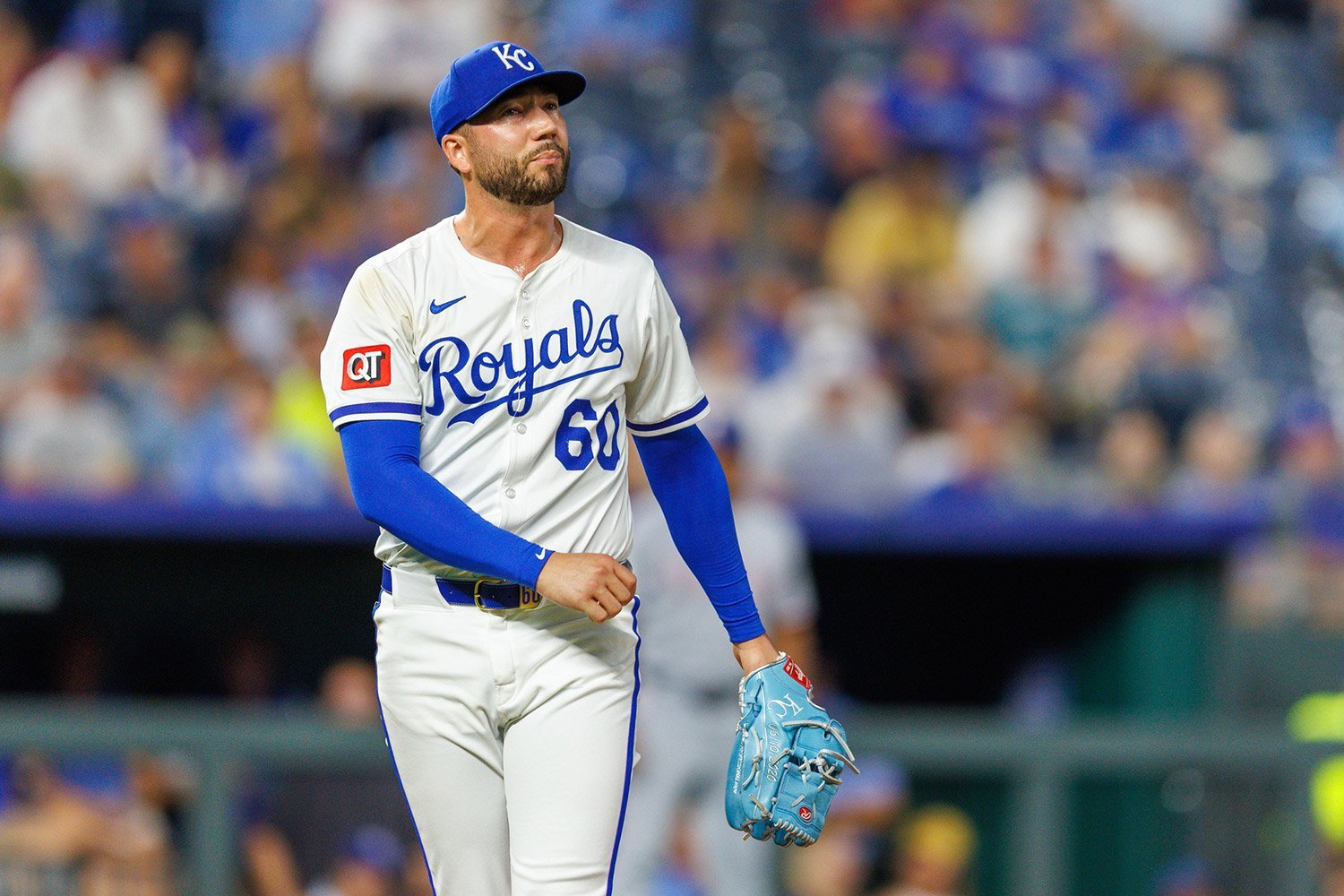 In my last article, I examined the unusual case of Tyler Rogers (Why The Royals Should Sign Quirky Submariner Tyler Rogers). As discussed there, while Rogers may be an outlier because of his unorthodox mechanics, it is not typically a good strategy to rely on pitchers who lack swing-and-miss stuff and instead rely on generating soft contact to get outs. Despite a bullpen that ranked third in Save%, and statistics indicative of swing-and-miss ability, like K% and Whiff%, paint a far less optimistic picture for repeating that success in 2026 with the current cast of candidates. According to FanGraphs, the 2025 Royals bullpen ranked 28th in K% (20.5%), was in the middle of the pack in BB% (8.3%), and ranked 24th in both xFIP (4.21) and K%-BB% (12.2). They benefited from a .284 BABIP (batting average on balls in play; 8th-lowest in MLB) and a 74.6% left-on-base percentage (LOB%; 3rd-highest), well above the league average of 72%. All of this tells me what my blood pressure metrics told me every time Carlos Estevez came in to protect a one-run lead…. The Royals' pen got more than a bit lucky and is ripe for regression. This "luck" in stranding runners and low BABIP added an estimated 0.38 runs to their ERA performance vs. xFIP and represents a major regression risk for 2026 without improvement in peripheral statistics. Estevez is the poster child of the group, posting just a 20.1% strikeout rate, a 77.6% LOB rate, and a .234 BABIP and a xFIP that was more than double his actual ERA (2.45 vs 4.95)! His K% in 2023 and 2024 were much better, at 27.8% and 23.6%, respectively. Unless those K% numbers come back to his 2024/2024 levels, Estevez’s career FIP of 3.99 is very likely a much stronger indicator of his success in 2026 than the identical 2.45 ERAs he has posted the last two years. Estevez’s slider is his best pitch by Stuff+ estimates, and he has increased his usage of it consistently since the 2022 season. His four-seam fastball is average by Stuff+ and was down slightly to 95.9 mph in 2026 from his career average of 97.1. The decrease was mainly due to lower velocity in April, and it increased as the season progressed, but it remains something to keep an eye on in his age-33 season. Also of concern, his SwStr% of 8.2% last year was a career low. Lucas Erceg, number two in Matt Quatraro’s circle of trust, similarly struggled with his peripheral stats while still somehow managing to limit runs scored. After posting strong K/9 numbers in his first two MLB seasons (10.8 K/9), he dropped off significantly to 7.0 K/9 in 2025. Concerningly, his Whiff% dropped from an elite level of 31.9% in 2024 to 24.7% in 2025. As the 2025 season progressed, Erceg never looked quite right, and he went on the injured list first with a back issue in late May and later with a shoulder impingement injury. The Royals need the healthy, bat-missing version of Erceg in 2026. If Estevez regresses, Erceg will need to step back into the closer role. John Schreiber turned in another decent season and will be counted on again in 2026. He led all Royals relievers (with over 50 IP) in K%, 23.4% and K%-BB%, 16.2%. He’s never managed to match his early career K% numbers, and his Whiff% was below average at 23.4%, but he has established himself as an above-average reliever entering his age-32 season. Angel Zerpa returns in 2026. Stuff+ metrics love his sinker and slider. He has middling 21.1 K% and 8.0 BB% numbers, but a 2nd-percentile Whiff% of 16.4. He gets by on a 99th percentile ground ball percentage of 63.7. Despite 96+ mph four-seam/sinker velocities from the left-hander, he misses very few bats. Daniel Lynch IV, like Zerpa, is a left-handed pitcher with high ground-ball rates and low whiff rates, just not as extreme as Zerpa's. His 2025 season 15.5 K% and 9.0 BB% rates are not headed in the right direction, and his roster spot may very well be in jeopardy. Steven Cruz is a big young right-hander obtained in the Michael A. Taylor trade with the Twins, who has struggled with command thus far in his career. He possesses elite fastball velocity along with good extension provided by his 6’7” frame. All three of his pitch offerings in 2025 were rated by Stat+ as well above average. His four-seamer had an average velocity of 98.2 mph and a Stat+ mark of 121, while his cutter had a 107 Stat+ value, and his slider was even better at 125. His Location+ of 83 and his 9.5 BB% demonstrate where the issues are. Despite his impressive velocity and stuff, his Whiff% and K% were both just OK (24.3%, 20.1%). Cruz took some significant steps forward in 2025 before also ending his season on the IL. Unlocking his potential will be important if the Royals' pen is to improve in 2026. The Royals signed local kid Alex Lange to a near league minimum “prove it” contract after he was designated for assignment by division rival, the Detroit Tigers. Lange was a key member of the Tigers' bullpen in 2022 and 2023, saving 26 games in ’23 before suffering a lat injury that required surgery in 2024. When healthy, Lange features a curveball-heavy repertoire along with a 96 mph fastball, a sinker, and a changeup. In 2023, that repertoire led to a whiff rate of 39.1%, which ranked in the 99th percentile. Unfortunately, it was accompanied by a 1st percentile BB% of 15.6%. The signing of Lange should be taken as a tacit admission by the Royals of needing more guys with power swing and miss stuff, even if there is a tradeoff in walks. Former 2nd-round pick Jonathan Bowlan was part of the college pitching-heavy 2018 class that included Brady Singer, Kris Bubic, Jackson Kowar, and Daniel Lynch, along with Jonathan Heasley and Austin Cox. For a time, it appeared that Bowlan might be the best of the bunch. He threw a no-hitter for Wilmington in 2019, starting 23 games between Low A and High A, and striking out 150 in only 146 innings. Bowlan lost the 2020 season to COVID and then appeared in only four games in 2021 before losing that season to Tommy John surgery. He struggled in 2022 and 2023 before regaining some level of success with Omaha in 2024. Bowlan spent the 2025 season traveling back and forth between Omaha and Kansas City and put up decent numbers at both stops. At 6’6”, Bowlan has good extension and above-average velocity. He features a 5-pitch mix from his starting days, but as a reliever, he is primarily a four-seam fastball and slider pitcher, mixing in a sinker, curveball, and changeup. His Stuff+ metrics are above average for Stuff+, Location+, and Pitching+, with his slider being his highest-rated pitch. Perhaps because he pitched mostly in low-leverage situations, I didn’t realize his metrics were as good as they were. His Whiff Rate was elite at 33.7, his K% good at 25.6, and he got a lot of ground balls. His BB% was high at 9.4, and at 29, the ceiling is somewhat limited, but he has earned the opportunity for a second look. Luinder Avila debuted in 2025 and looked good in doing so. His 2025 Baseball Savant Pitching Percentile rankings are a sea of red, with only his walk rate being poor. It should be noted that these are based on only 14 innings pitched, though. He has a good frame with nasty movement on his breaking pitches, along with more than adequate fastball velocity. He is a potential breakout bullpen candidate this year. Eric Cerantola was added to the 40-man roster last year to protect him from the Rule 5 draft after a successful season at Omaha. He’s another big kid with a big arm. He’s struck out 11.9 batters per nine innings in his minor league career, but also has had his share of command issues with 5.4 BB/9. An athletic Canadian kid with a background in hockey, he is a fastball-slider pitcher who throws an occasional curve. His slider is arguably the best in the upper-level Royals minor league system and has received 70 grades. He may be this year’s Jonathan Bowlan, shuttling back and forth from Omaha as needed. Relief pitcher performance year-over-year is inherently volatile. Undoubtedly, the Royals got lucky in 2025, which screams regression in 2026. For that not to happen, some of the internal options currently on the roster need to step up. The Royals probably also need to add more options from the free agent and/or trade market. Stay tuned for that in Part II. View the full article
 -
 Last week, the Chicago Cubs traded low-level minor leaguer Nico Zeglin to the Houston Astros, in exchange for $250,000 in spending allotments for the 2025 international free agent period. Zeglin, 25, is essentially a non-prospect, and ostensibly, the right to spend an extra $250,000 on (mostly) teenagers from Latin America is low in value, too. There's little time left to spend that money; the signing period ends on December 15. After a one-month pause, the 2026 IFA period will open on January 15, but that will be a different budget. The Cubs can't roll over any savings. Ostensibly, then, they have some plan to shell out a small amount of money (in baseball terms) to a couple of late-blooming players who are already eligible, before the window closes for 2025. As a revenue-sharing payor, the Cubs cycle only from the bottom tier to the middle of the pack from year to year, in terms of the amount they're allowed to spend in the international free-agent space. For 2026, they'll enjoy a relatively robust budget of $6.68 million, but that's about $1 million less than (for instance) the Brewers have. Interestingly, too, despite having that flexibility, the Cubs haven't been tied to any of the top 30 projected bonus earners for the upcoming class, via Baseball America or MLB Pipeline. (Those lists overlap, but not perfectly, so in effect, the Cubs appear to be frozen out on the top 35 bonus babies of the coming year.) Taken together, that small trade with Houston and the fact that the Cubs appear poised to spread their bonus money pretty widely next year point in a particular direction: the team might be looking to diversify more and chase high-end talent less in Latin America. That would be good news, because it sure seems like that's the best way to efficiently extract value from the endeavor of signing young players from those nations. Strict limits on the number of players a team can have on their roster and inside the United States make it harder than it was a decade ago to stockpile talent and get quality from quantity in the minor leagues. One remaining way to do that, though, is by signing a glut of youngsters from the Dominican Republic, Venezuela, and other countries in the Caribbean basin, who can be retained much more easily until they're ready for Stateside assignments. Furthermore, splashing money on the highest-paid players each year comes with more concentrated risk; a case of age or performance-enhancing drug fraud can bait a team into a bad spend. Teams commit to these players so young that a player's stock is sometimes on the wane by the time they actually, officially sign, even if they've been tied irrevocably to a team for 18 months by then. The Cubs would not be the first team to move away from focusing on those players who appear to merit seven-figure bonuses and toward accumulating talent at low individual costs. It's a case of "fast follow" on a trend gaining momentum throughout the league. They appear to have a player or two in mind for a last-second pickup before the end of this international signing window. When the next one opens, they'll continue to rebuild what has been an underperforming international amateur scouting and development operation—not one player at a time, perhaps, but in bunches and bundles. View the full article
