Jamie Cameron
-
Posts
7 -
Joined
-
Last visited
-
Days Won
1
Content Type
Profiles
Forums
Events
News
Tutorials & Help
Major League Baseball Videos
Guides & Resources
Store
Downloads
Gallery
Everything posted by Jamie Cameron
-
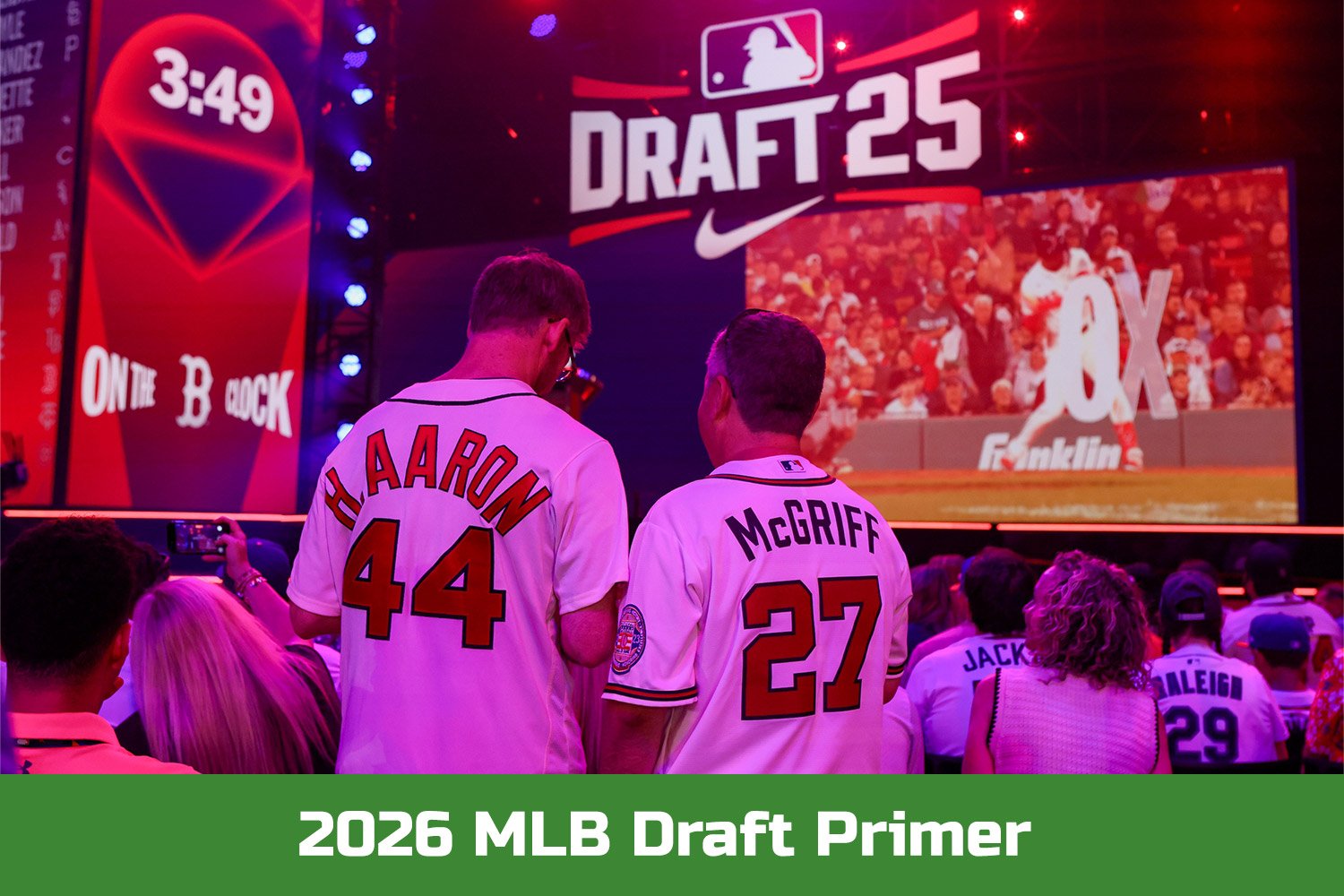 This guide is a comprehensive look at the 2026 MLB Draft. You’ll find a list of key dates for the draft cycle, including the release of bonus pools and pick values, the MLB Draft combine, and a breakdown of the draft itself. Additionally, you’ll find an overview of the draft combine and MLB draft weekend, in addition to links to other important draft resources like the consensus board. When Is The 2026 MLB Draft? April 1st 2026: MLB announced draft bonus pools and pick values June 2026: MLB Draft Combine (Chase Field, Arizona) July 11th: 12th: 2026 MLB Draft (Philadelphia, PA) July 11th: Rounds 1-3 (time TBA) July 12th: Round 4 through Round 20 (time TBA) 2026 MLB Draft Combine The draft combine is a relatively new event that began in the 2021 draft cycle. Held over a five-day period around a month before the draft itself, it serves as an opportunity for prospects to showcase their talents and boost their draft stock, while giving organizations better access to potential picks. In addition to medical examinations and educational programming, players have an opportunity to meet with teams in advance of the draft. Additionally, there are a number of televised workouts, featuring infield and outfield drills, batting practice for hitters, and bullpens for pitchers, all of which is tracked and underpinned by Statcast data. There is an incentive for players to attend and complete medicals, as prospects are guaranteed 75 percent of their draft slot bonus if they participate and complete medicals. How Many Rounds Are There In The MLB Draft? There was a design shift ahead of the 2025 draft cycle. It was shortened from a three-day event to a two-day event. Previously, day one included rounds 1 through the supplemental second round, day two included rounds 3 through 10, and day three included rounds 10 through 20. Beginning with the 2025 cycle, day one was adjusted to include rounds one through three (~100 picks). The draft will conclude on day two with rounds four through twenty. MLB Draft Day One Explained The first day of the draft can be chaotic, as additional rounds and picks are in play beyond rounds one and two. The top of the draft (top 6 picks) is now determined by the draft lottery. Every non-playoff team is entered into the lottery, giving them the opportunity to move up in the draft order. Non-lottery-eligible teams are picked in the order they are eliminated from the postseason, with regular-season record ties broken. After the first round, prospect promotion incentive picks take place. If an eligible player wins Rookie of the Year, they earn their organization an extra pick immediately after the completion of the first round. Next come compensation picks, where teams who extend the qualifying offer to a player (who rejects it) earn an additional draft pick. Compensation pick positions depend on the contract size signed by the player rejecting the qualifying offer, as well as the payroll of the organization receiving them (there are additional compensation picks after competitive balance round B and the fourth round). After any compensation picks, comes the competitive balance round A. Teams that have one of the ten smallest markets or ten smallest revenue pools receive an additional pick in round A or round B, on an annually rotating basis. The first day of the draft is capped by the second round, competitive balance round B, and the third round, which typically takes us through approximately 100 picks. MLB Draft Bonus Pool Allocations & Pick Values Prior to the draft, in April, MLB announces each team's bonus pool for the forthcoming draft cycle and the value of every pick in the top 10 rounds. Each pick in the first ten rounds of the draft is assigned a value, with the total of the slots for the picks each organization has in the top ten rounds comprising their total ‘bonus pool’. Organizations can sign a player to a deal greater than a slot or less than a slot, depending on their negotiations with the player, so it’s useful to think of the slots as ‘guidelines’ and little more. Organizations are allowed to spend up to 5% more than their total pool without incurring a penalty, a choice many teams take advantage of. The Twins and the Rockies are the only teams that have never spent any overage on their bonus pool. Any amount over the pool by up to 5% is subject to a 75% tax on the overage. If a team spends between 5-10% more than their pool, the penalty is 75% tax on the overage and loss of a future first-rounder. Any team that exceeds its bonus pool by more than 10% up to 15% pays 100% tax on the overage and will lose a first and second-round future pick. Any team that exceeds its bonus pool by more than 15% loses two future first-round picks in addition to paying 100% tax on the overage. Rounds 11-20 work differently from the first half of the draft. These picks do not come with an assigned slot value. Teams can spend up to $150,000 per pick without that spending coming out of their bonus pool. If they spend over that amount, any overage will be deducted from their bonus pool. For example, an 11th-round pick signing for $250,000 will result in $100,000 being subtracted from that team’s bonus pool. This is where some financial strategy comes into play. Often, teams will look to accrue some ‘savings’ from their bonus pool so they can spend over the maximum of $150,000 for a prospect in the second half of the draft. NOTE: Slot values increased by 2.5% from 2025 to 2026.
 -
Image courtesy of © Steven Branscombe-Imagn Images It’s been a few weeks since we checked in on the 2026 draft. Since our last entry, several industry boards have been updated. That will be the pattern from now until July. There will be beginning of June updates, beginning of July updates, and constant, final shuffling in the few days leading up to the draft. View Individual Team Mock Draft Boards: Boston Red Sox Chicago Cubs Kansas City Royals Miami Marlins Milwaukee Brewers Minnesota Twins New York Mets San Diego Padres Toronto Blue Jays A Prep Duo Form Tier 2 of the Board In our last update, we talked through the consensus top four players, made up of Roch Cholowsky, Grady Emerson, Vahn Lackey, and Jackson Flora. A second tier has emerged. Jacob Lombard, a prep shortstop out of Florida, with possibly the highest ceiling in class, is now locked into the fifth spot on the board, with a consensus ranking of 6.8. Lombard has rebounded well this spring from a rough summer. There are still hit-tool questions, but it might be 70 power, 70 run, and a 60 glove at shortstop. That won’t last long. He’s followed in sixth place by Mississippi prep outfielder EJ Booth, with a consensus ranking of 7.75. Booth has some swing work to do from this seat, but the tools are loud. He has 70-grade speed and serious bat speed that’s starting to translate into more effective in-game power. He’ll likely go inside the top ten. A Second College Catcher Ascends Arkansas catcher Ryder Helfrick has skyrocketed up industry boards this season. In fact, he’s one of the few college bats who hasn’t been a little spotty, offensively. But for Vahn Lackey, he’d be a worthy top catcher in a typical draft class. At the time of writing, he’s managed a 1.022 OPS, with 15 home runs (21 extra base hits), a 21.5% walk rate, and a measly 17.7% strikeout rate in 51 games. Helfrick has a plus arm and has the chops to stick behind the dish as a pro. He’s currently 13th on the board with a consensus ranking of 13.42 entering the final few weeks of the regular season. Prep Hitters Aplenty in the 30-50 Range There’s a fun group of prep hitters gathering in the 30-50 range of the consensus board. This cluster of prospects will likely start being selected at the back of the first round, through Comp Round B. Despite that wide range of possible pick positions, they’ll all command solid bonuses in the $1-3 million range, and it’s likely some make it to campus. James Clark (37th) is a prep shortstop out of California with excellent bat-to-ball skills but an uncertain defensive home. Bo Lowrance (39th) is a 6’5 third baseman out of South Carolina with a good chance to have an above-average hit and power combo, and Cole Prosek (49th) out of Mississippi might have one of the best hit tools in the high school side in the class. California two-way player Archer Horn (47th), Landon Thome (son of Jim, 55th), and South Carolina shortstop Taj Marchand (58th) all deserve mentions for their continual march up the board. View full article
-
MLB Mock Draft Updates: Prep Hitters Emerge In The Compensation Rounds
Jamie Cameron posted an article in MLB Draft
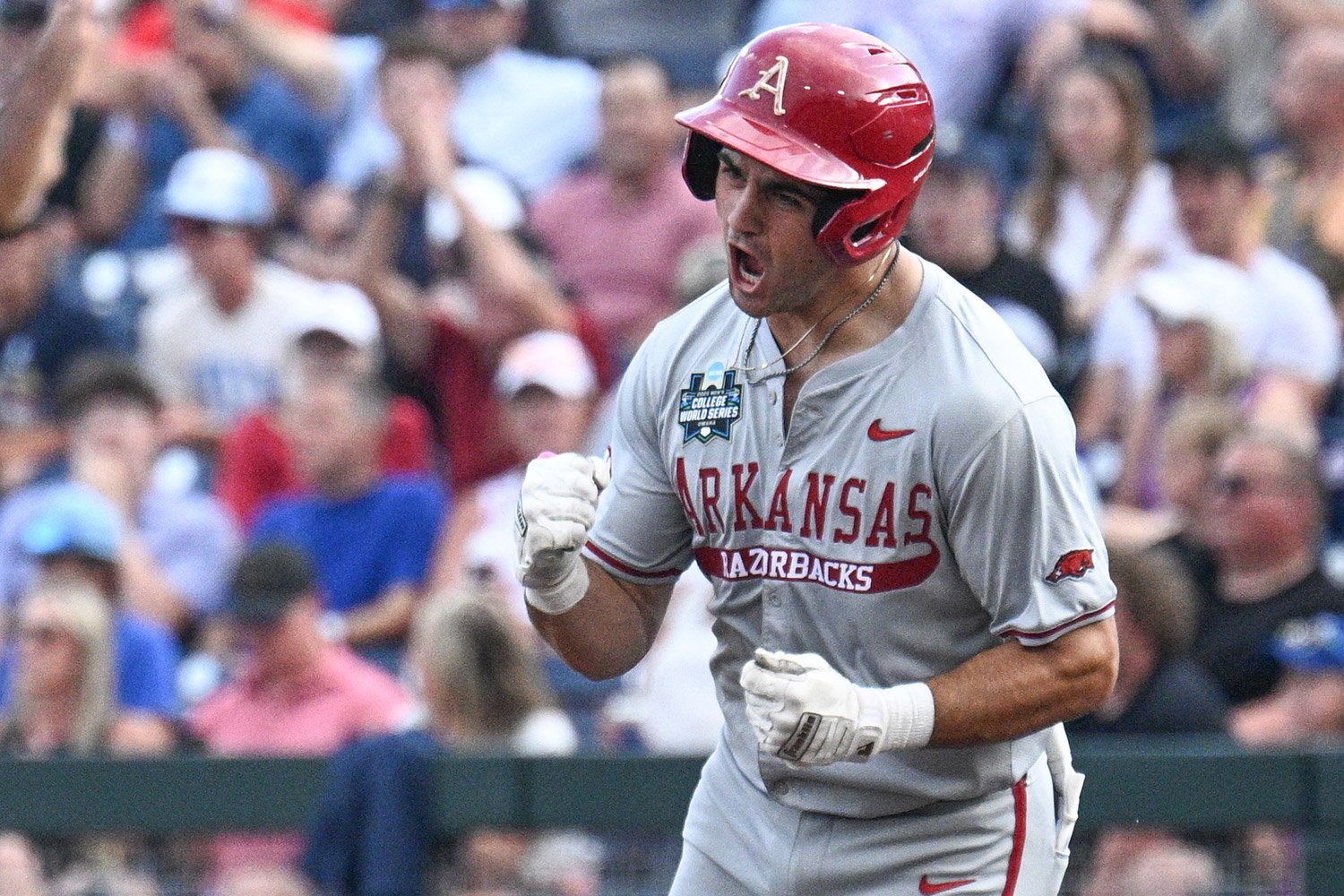 It’s been a few weeks since we checked in on the 2026 draft. Since our last entry, several industry boards have been updated. That will be the pattern from now until July. There will be beginning of June updates, beginning of July updates, and constant, final shuffling in the few days leading up to the draft. View Individual Team Mock Draft Boards: Boston Red Sox Chicago Cubs Kansas City Royals Miami Marlins Milwaukee Brewers Minnesota Twins New York Mets San Diego Padres Toronto Blue Jays A Prep Duo Form Tier 2 of the Board In our last update, we talked through the consensus top four players, made up of Roch Cholowsky, Grady Emerson, Vahn Lackey, and Jackson Flora. A second tier has emerged. Jacob Lombard, a prep shortstop out of Florida, with possibly the highest ceiling in class, is now locked into the fifth spot on the board, with a consensus ranking of 6.8. Lombard has rebounded well this spring from a rough summer. There are still hit-tool questions, but it might be 70 power, 70 run, and a 60 glove at shortstop. That won’t last long. He’s followed in sixth place by Mississippi prep outfielder EJ Booth, with a consensus ranking of 7.75. Booth has some swing work to do from this seat, but the tools are loud. He has 70-grade speed and serious bat speed that’s starting to translate into more effective in-game power. He’ll likely go inside the top ten. A Second College Catcher Ascends Arkansas catcher Ryder Helfrick has skyrocketed up industry boards this season. In fact, he’s one of the few college bats who hasn’t been a little spotty, offensively. But for Vahn Lackey, he’d be a worthy top catcher in a typical draft class. At the time of writing, he’s managed a 1.022 OPS, with 15 home runs (21 extra base hits), a 21.5% walk rate, and a measly 17.7% strikeout rate in 51 games. Helfrick has a plus arm and has the chops to stick behind the dish as a pro. He’s currently 13th on the board with a consensus ranking of 13.42 entering the final few weeks of the regular season. Prep Hitters Aplenty in the 30-50 Range There’s a fun group of prep hitters gathering in the 30-50 range of the consensus board. This cluster of prospects will likely start being selected at the back of the first round, through Comp Round B. Despite that wide range of possible pick positions, they’ll all command solid bonuses in the $1-3 million range, and it’s likely some make it to campus. James Clark (37th) is a prep shortstop out of California with excellent bat-to-ball skills but an uncertain defensive home. Bo Lowrance (39th) is a 6’5 third baseman out of South Carolina with a good chance to have an above-average hit and power combo, and Cole Prosek (49th) out of Mississippi might have one of the best hit tools in the high school side in the class. California two-way player Archer Horn (47th), Landon Thome (son of Jim, 55th), and South Carolina shortstop Taj Marchand (58th) all deserve mentions for their continual march up the board.
 -
We’re in the midst of the most prolific in-season update of the draft cycle. Leading up to the draft, all of the major industry outlets release a significant update at the end of each month through the end of June. I’ll be posting an update on a regular cadence at DC to walk through majors risers, fallers, and trends reflected in the consensus board. View Individual Team Mock Draft Boards: Boston Red Sox Chicago Cubs Kansas City Royals Miami Marlins Milwaukee Brewers Minnesota Twins New York Mets San Diego Padres Toronto Blue Jays A Consensus Top Four has Emerged Roch Cholowsky has cemented himself at the top of the draft board after a recent home run tear. He’s managed 18 home runs and a 153 wRC+ while playing outstanding defense at shortstop. Behind him, Grady Emerson has held steady at two. He has an unusual amount of polish for a prep prospect, with the most polished hit tool in the class. Vahn Lackey has been the biggest riser on the college side this season. He’s doubled his previous career high in home runs, doubled his walk rate, and rocked a 148 wRC+ with outstanding defense at catcher. He’s lining up to be a top-three pick. Finally, Jackson Flora has a cool 0.78 ERA while striking out 32% of batters. That’s not quite the level of dominance as recent highly drafted college arms, who usually strike out closer to 40% of batters, but he’s posted every week. College Bats are a Mess This class is characterized by depth over impact talent. There are a number of quality college bats in the top 40 or so, but many have performed unevenly to date in 2026. No one is more emblematic of this than Justin Lebron, who is hitting .264 and has a remarkably poor 101 wRC+ at the time of writing. Many of the hitters in the 5-15 range have been hurt (Tyler Bell, Chris Hacopian), or performed unevenly (Ace Reese, Drew Burress, Sawyer Strosnider). In general, the hit tools on the college side have performed more poorly than expected. There are 8 players with composite rankings between 8th overall and 12th overall (and similar bunching throughout the top 50), which is generally an indicator that the industry doesn’t quite know how to untangle a particular cluster of prospects. The Second Tier of College Arms has Established Itself Entering the season Cam Flukey, Jackson Flora, and Liam Peterson were the trio of college pitchers expected to rise up board. Only Flora has. Flukey just returned from an 8 week absence due to injury. It’s a testament to how he’s viewed that he’s still ranked 10th by consensus. Peterson has shown flashes of dominance but also has a walk rate close to 12%, which may scare some teams off at the top of the first round. There are always college arms who rise, and 2026 is no different. UCLA right Logan Reddemann (currently dealing with arm fatigue) has a 2.75 FIP, 35.7 K%, and a stingy 4.7 BB% in 2026; he’s up to 14th. Ole’ Miss righty Cade Townsend has an incredible arsenal on which to draw; he’s jumped up significantly on May boards. Lefties Cole Carlon, Mason Edwards, and Hunter Dietz, in addition to Tennessee right Tegan Kuhns, make up the second tier of college pitching. I’d expect all of those guys to be gone by pick 35. High School Pitching is Incredibly Deep 2026 might be the deepest class of high school pitching I’ve covered. While there’s no name at the top of the board, the caliber of Seth Hernandez from 2025, there’s high-octane arm talent throughout the top 100. The left-handed group is particularly impressive. After Gio Rojas, Logan Schmidt, Jared Grindlinger, and Carson Bolemon, Brady Bumila, a southpaw out of Mass who throws 100 mph, has jumped into first-round contention. This class is particularly rich in the 30-50 range, and I’d expect a number of additional names (Jensen Hirschkorn, Colemon Borthwick, Kaden Waechter, and Joseph Contreras, to name a few) to be selected in the comp rounds. 2026 is the furthest down the board I can remember seeing prospects touching the high-90s-to-triple digits. It’s an impressive group. View full article
-
May MLB Draft Updates: A Consensus Top Four Emerge In Deep Draft Class
Jamie Cameron posted an article in MLB Draft
 We’re in the midst of the most prolific in-season update of the draft cycle. Leading up to the draft, all of the major industry outlets release a significant update at the end of each month through the end of June. I’ll be posting an update on a regular cadence at DC to walk through majors risers, fallers, and trends reflected in the consensus board. View Individual Team Mock Draft Boards: Boston Red Sox Chicago Cubs Kansas City Royals Miami Marlins Milwaukee Brewers Minnesota Twins New York Mets San Diego Padres Toronto Blue Jays A Consensus Top Four has Emerged Roch Cholowsky has cemented himself at the top of the draft board after a recent home run tear. He’s managed 18 home runs and a 153 wRC+ while playing outstanding defense at shortstop. Behind him, Grady Emerson has held steady at two. He has an unusual amount of polish for a prep prospect, with the most polished hit tool in the class. Vahn Lackey has been the biggest riser on the college side this season. He’s doubled his previous career high in home runs, doubled his walk rate, and rocked a 148 wRC+ with outstanding defense at catcher. He’s lining up to be a top-three pick. Finally, Jackson Flora has a cool 0.78 ERA while striking out 32% of batters. That’s not quite the level of dominance as recent highly drafted college arms, who usually strike out closer to 40% of batters, but he’s posted every week. College Bats are a Mess This class is characterized by depth over impact talent. There are a number of quality college bats in the top 40 or so, but many have performed unevenly to date in 2026. No one is more emblematic of this than Justin Lebron, who is hitting .264 and has a remarkably poor 101 wRC+ at the time of writing. Many of the hitters in the 5-15 range have been hurt (Tyler Bell, Chris Hacopian), or performed unevenly (Ace Reese, Drew Burress, Sawyer Strosnider). In general, the hit tools on the college side have performed more poorly than expected. There are 8 players with composite rankings between 8th overall and 12th overall (and similar bunching throughout the top 50), which is generally an indicator that the industry doesn’t quite know how to untangle a particular cluster of prospects. The Second Tier of College Arms has Established Itself Entering the season Cam Flukey, Jackson Flora, and Liam Peterson were the trio of college pitchers expected to rise up board. Only Flora has. Flukey just returned from an 8 week absence due to injury. It’s a testament to how he’s viewed that he’s still ranked 10th by consensus. Peterson has shown flashes of dominance but also has a walk rate close to 12%, which may scare some teams off at the top of the first round. There are always college arms who rise, and 2026 is no different. UCLA right Logan Reddemann (currently dealing with arm fatigue) has a 2.75 FIP, 35.7 K%, and a stingy 4.7 BB% in 2026; he’s up to 14th. Ole’ Miss righty Cade Townsend has an incredible arsenal on which to draw; he’s jumped up significantly on May boards. Lefties Cole Carlon, Mason Edwards, and Hunter Dietz, in addition to Tennessee right Tegan Kuhns, make up the second tier of college pitching. I’d expect all of those guys to be gone by pick 35. High School Pitching is Incredibly Deep 2026 might be the deepest class of high school pitching I’ve covered. While there’s no name at the top of the board, the caliber of Seth Hernandez from 2025, there’s high-octane arm talent throughout the top 100. The left-handed group is particularly impressive. After Gio Rojas, Logan Schmidt, Jared Grindlinger, and Carson Bolemon, Brady Bumila, a southpaw out of Mass who throws 100 mph, has jumped into first-round contention. This class is particularly rich in the 30-50 range, and I’d expect a number of additional names (Jensen Hirschkorn, Colemon Borthwick, Kaden Waechter, and Joseph Contreras, to name a few) to be selected in the comp rounds. 2026 is the furthest down the board I can remember seeing prospects touching the high-90s-to-triple digits. It’s an impressive group.
 -
Image courtesy of © Tim Heitman-Imagn Images The 2026 MLB Draft Lottery is coming up on December 9th. Let’s dig into how the lottery works, the wrinkles that keep things interesting, and the implications for teams covered by Diamondcentric. When is the Lottery? Tuesday, December 9, time TBD (5:30 ET in 2025). The 2026 MLB Draft Lottery will be broadcast live on MLB Network and streamed on MLB.com. What is the Purpose of the Lottery? Introduced as part of the 2022 CBA ahead of the 2023 draft cycle, the first six picks of a given draft cycle are now determined by lottery to discourage tanking. Do Teams Actually Move Up? Yes. The Twins jumped from thirteenth to fifth in the inaugural draft lottery for the 2023 cycle, a move that allowed them to draft Walker Jenkins near the top of an exceptional class. In 2024, the Guardians jumped all the way to first overall, despite having just 2.0% odds of doing so. Their jump allowed them to select Travis Bazzana at number one in addition to stocking up on tons of prep talent with their bloated bonus pool. In 2025, the Mariners made the most significant jump, jumping to third overall despite having only the 15th-worst record. How does it work? Any team that didn’t make the postseason is eligible for the lottery, with odds decreasing for teams with superior win/loss records. The lottery is actually held in advance of the broadcast, which serves as a results show for a process completed by an independent auditor earlier the same day. Picks 1-6 are awarded in that order by a draw that spits out ping pong balls with a four-number combination that corresponds to a given team. The worse your 2025 record, the more number combinations you have in the draw. Picks 7-18 are in accordance with pre-lottery odds for non-playoff teams. Finally, the playoff teams' order is determined by their elimination from postseason play (not their regular-season records). Picks awarded by the lottery are only adjusted for round one. The order of the remaining rounds is determined by their regular-season record. What are the wrinkles? The largest is that there are teams that can’t pick in the top ten because they are ineligible. Any payor club (read: large market) is ineligible to receive a lottery pick in two consecutive draft cycles. As such, the Nationals will pick 11th and the Angels 12th in 2026. Additionally, revenue-receiving teams are ineligible to receive a lottery pick in three consecutive cycles. As such, the Colorado Rockies will pick tenth in 2026, despite finishing with an MLB-worst 43-119 record. The Mets, Yankees, Blue Jays, and Dodgers will likely receive a ten-pick penalty for being in the luxury tax. The Mets' ten-pick penalty will be deferred to their second pick if they end up in the top six. What are the team's chances of landing the top pick? You can find the team's current odds of landing the top pick listed below: White Sox (.370) -- 27.73% Twins (.432) -- 22.18% Pirates (.438) -- 16.81% Orioles (.463) -- 9.24% A’s (.469) -- 6.55% Braves (.469) -- 4.54% Rays (.475) -- 3.03% Cardinals (.481) -- 2.35% Marlins (.488) -- 1.85% D-backs (.494) -- 1.51% Rangers (.500) -- 1.34% Giants (.500) -- 1.01% Royals (.506) -- 0.84% Mets (.512) -- 0.67% Astros (.537) -- 0.34% Rockies (.265) -- ineligible Nationals (.407) -- ineligible Angels (.444) -- ineligible However, the lottery shakes out; it’s worth paying attention to. At the least, a team that moves from the middle of the first round to a lottery spot has a good chance to add a top 50 global prospect to their system. We’ll have relevant team-by-team breakdowns at DiamondCentric sites in the coming weeks. View full article
-
 The 2026 MLB Draft Lottery is coming up on December 9th. Let’s dig into how the lottery works, the wrinkles that keep things interesting, and the implications for teams covered by Diamondcentric. When is the Lottery? Tuesday, December 9, time TBD (5:30 ET in 2025). The 2026 MLB Draft Lottery will be broadcast live on MLB Network and streamed on MLB.com. What is the Purpose of the Lottery? Introduced as part of the 2022 CBA ahead of the 2023 draft cycle, the first six picks of a given draft cycle are now determined by lottery to discourage tanking. Do Teams Actually Move Up? Yes. The Twins jumped from thirteenth to fifth in the inaugural draft lottery for the 2023 cycle, a move that allowed them to draft Walker Jenkins near the top of an exceptional class. In 2024, the Guardians jumped all the way to first overall, despite having just 2.0% odds of doing so. Their jump allowed them to select Travis Bazzana at number one in addition to stocking up on tons of prep talent with their bloated bonus pool. In 2025, the Mariners made the most significant jump, jumping to third overall despite having only the 15th-worst record. How does it work? Any team that didn’t make the postseason is eligible for the lottery, with odds decreasing for teams with superior win/loss records. The lottery is actually held in advance of the broadcast, which serves as a results show for a process completed by an independent auditor earlier the same day. Picks 1-6 are awarded in that order by a draw that spits out ping pong balls with a four-number combination that corresponds to a given team. The worse your 2025 record, the more number combinations you have in the draw. Picks 7-18 are in accordance with pre-lottery odds for non-playoff teams. Finally, the playoff teams' order is determined by their elimination from postseason play (not their regular-season records). Picks awarded by the lottery are only adjusted for round one. The order of the remaining rounds is determined by their regular-season record. What are the wrinkles? The largest is that there are teams that can’t pick in the top ten because they are ineligible. Any payor club (read: large market) is ineligible to receive a lottery pick in two consecutive draft cycles. As such, the Nationals will pick 11th and the Angels 12th in 2026. Additionally, revenue-receiving teams are ineligible to receive a lottery pick in three consecutive cycles. As such, the Colorado Rockies will pick tenth in 2026, despite finishing with an MLB-worst 43-119 record. The Mets, Yankees, Blue Jays, and Dodgers will likely receive a ten-pick penalty for being in the luxury tax. The Mets' ten-pick penalty will be deferred to their second pick if they end up in the top six. What are the team's chances of landing the top pick? You can find the team's current odds of landing the top pick listed below: White Sox (.370) -- 27.73% Twins (.432) -- 22.18% Pirates (.438) -- 16.81% Orioles (.463) -- 9.24% A’s (.469) -- 6.55% Braves (.469) -- 4.54% Rays (.475) -- 3.03% Cardinals (.481) -- 2.35% Marlins (.488) -- 1.85% D-backs (.494) -- 1.51% Rangers (.500) -- 1.34% Giants (.500) -- 1.01% Royals (.506) -- 0.84% Mets (.512) -- 0.67% Astros (.537) -- 0.34% Rockies (.265) -- ineligible Nationals (.407) -- ineligible Angels (.444) -- ineligible However, the lottery shakes out; it’s worth paying attention to. At the least, a team that moves from the middle of the first round to a lottery spot has a good chance to add a top 50 global prospect to their system. We’ll have relevant team-by-team breakdowns at DiamondCentric sites in the coming weeks.