Michael Trzinski
-
Posts
21 -
Joined
-
Last visited
-
Days Won
3
2 Followers


Recent Profile Visitors
12,485 profile views


Michael Trzinski's Achievements


-
Why do you hate billionaires so? Billionaires Lives Matter
-
It's true. If there were no owners, where would the players play? Not a likely situation, but in the reductionist's world, a valid point. Maybe the players should get together and have 'player-owned' teams. That way they would only have themselves to blame if they were unhappy...😁
-
I do agree with that, to a point. But are fans really Derek Jeter fans, or New York Yankees fans? They can be both, but they can get over losing Jeter and still love the Yanks (Yes, I know he retired as a Yankee in 2014). Just thinking about how many times long-term contracts went south and cost the teams money. And probably some hard feelings between teams and players, with some that never got resolved. Don't forget, if there were no owners, there would be no players. The MLBPA seems to have forgotten that. And no, I am NOT an owner; just trying to figure out a better way, since the parties involved now can't seem to do that.
-
I didn't expect that any of these would be discussed during these talks. These are MY suggestions. A three-year deal is a win for the owners for sure, but what happens when the player has a MONSTER season in Year 3 but is stuck for three more years of $30M per? A new contract could be worth far more. But only if he is free to deal... I'm not an owner, I am a freelance writer. Check my work here: https://sabr.org/authors/michael-trzinski/. 🙂
-
Here's a couple: Limit player contracts to three years No deferred money--salaries must be completely paid during length of contract The three-year term means that teams won't get burnt as badly by injuries, age, or underperformance. From the player's view, they get an opportunity to go elsewhere more frequently (if they wish) and don't get 'stuck' in a long-term deal that could go sour between player and management or player vs. city (Looking at you, New York). 'Payment in full' makes the team's accounting much cleaner and since what was formerly deferred money goes into the short-term deal, players get paid 'now.' Tell me why a player that has a $100 million contract needs deferred money, other than for tax reasons perhaps. But that amount is 'couch cushion' money for these guys. And the guys that have smaller dollar contracts won't get deferred money, anyway. Want to learn more about the 'real history' of baseball? Read Lords of the Realm by John Helyar. This well-written tome is super informative and shows both sides of the player/management dynamic. The public flaying of my opinion begins...now.
-
Tommy John began his professional baseball career at the age of 18 in 1961 for the Dubuque Packers in the Midwest League, then a Class-D affiliate of the Cleveland Indians. He made his final appearance on May 25, 1989, pitching 5 1/3 innings in an 8-6 win over the California Angels. All told, John won 288 big-league games over a 26-year career. But in 1974, John’s baseball life was in serious doubt. He suffered a tear in his ulnar collateral ligament (UCL) in his elbow, which at that time was a career-ending injury. At the time of the surgery, Dr. Frank Jobe estimated the chances of success at one in 100. In September 1974, Dr. Jobe performed the four-hour procedure, grafting a tendon from John’s right forearm into his left elbow. The recovery included a second surgery to re-route a nerve in his elbow. John attended spring training the following year in 1975 and progressed to the point where he made a few appearances in the Arizona Instructional League in September. In 1976, John pitched in spring training for the Dodgers and made 31 starts for Los Angeles during the regular season. He made at least 30 starts in eight of the next 12 seasons until he was released by the New York Yankees midway through the 1989 season at the age of 46. He did not pitch in the big leagues again. The soft-tossing left-hander won 20 games three times during his career and was an All-Star four times. His best stretch was from 1977-1980, during which he won 20, 17, 21, and 22 games, respectively. He completed 51 games and posted 12 shutouts in that timeframe. He pitched for three different teams in the postseason—Los Angeles Dodgers, New York Yankees, and the California Angels. John made 700 starts (760 appearances), completed 162 games, and posted 46 shutouts. He had a career bWAR of 62.1, an ERA+ of 111, and a FIP of 3.38. All in all, it was a spectacular career, especially in light of his major elbow surgery in 1974. Although he fell short of the Hall of Fame, his legacy was the surgery that was named after him. In 2012, ESPN’s Lindsey Berra estimated that roughly 14% of all major league pitchers had undergone the Tommy John procedure at some point in their careers. The operation Dr. Jobe performed over 50 years ago has become a common occurrence among big-league pitchers. According to USA Today in 2024, 36% of major league pitchers had TJ surgery at one time. Many underwent multiple surgeries, including four times for Hung-Chih Kuo and three for Tejay Antone. In fact, by 2014, the American Medical Association determined that 67% of the UCL operations were performed on athletes 16-20 years old. John’s impact beyond the eponymous surgery included advocacy for suicide prevention after his son Taylor committed suicide in 2010 at the age of 28. John supported the American Foundation for Suicide Prevention and participated in fundraising efforts at various benefits. Having pitched in the big leagues until age 46, John inspired other players to compete past the ‘normal’ age of retirement. Players like Jamie Moyer (49), Julio Franco (49), Nolan Ryan (46), and Randy Johnson (46) all had effective seasons well into their 40s. John also traveled the country in support of his Let’s Do It Foundation, promoting awareness and prevention of elbow injuries in baseball. One of his most prominent points was for young players to play different sports during the year. In 2014, he told players at Bayside (NY) high school that they shouldn’t make baseball a year-round sport. “You get burned out mentally. Secondly, you get burned out physically. Play other sports. It’s called cross-training. Do something else, play basketball, play football.” Tommy John not only had an impact on the sport with the surgery that was named after him, but also on young ball players in an effort to keep them healthy, and in helping children and adults who led troubled lives. Yes, Tommy John is known mostly for the UCL procedure, but his life was much, much more. Rest in Peace, TJ. View full article
-
More Than The Eponymous Surgery: Tommy John's Impact On Baseball
Michael Trzinski posted an article in MLB
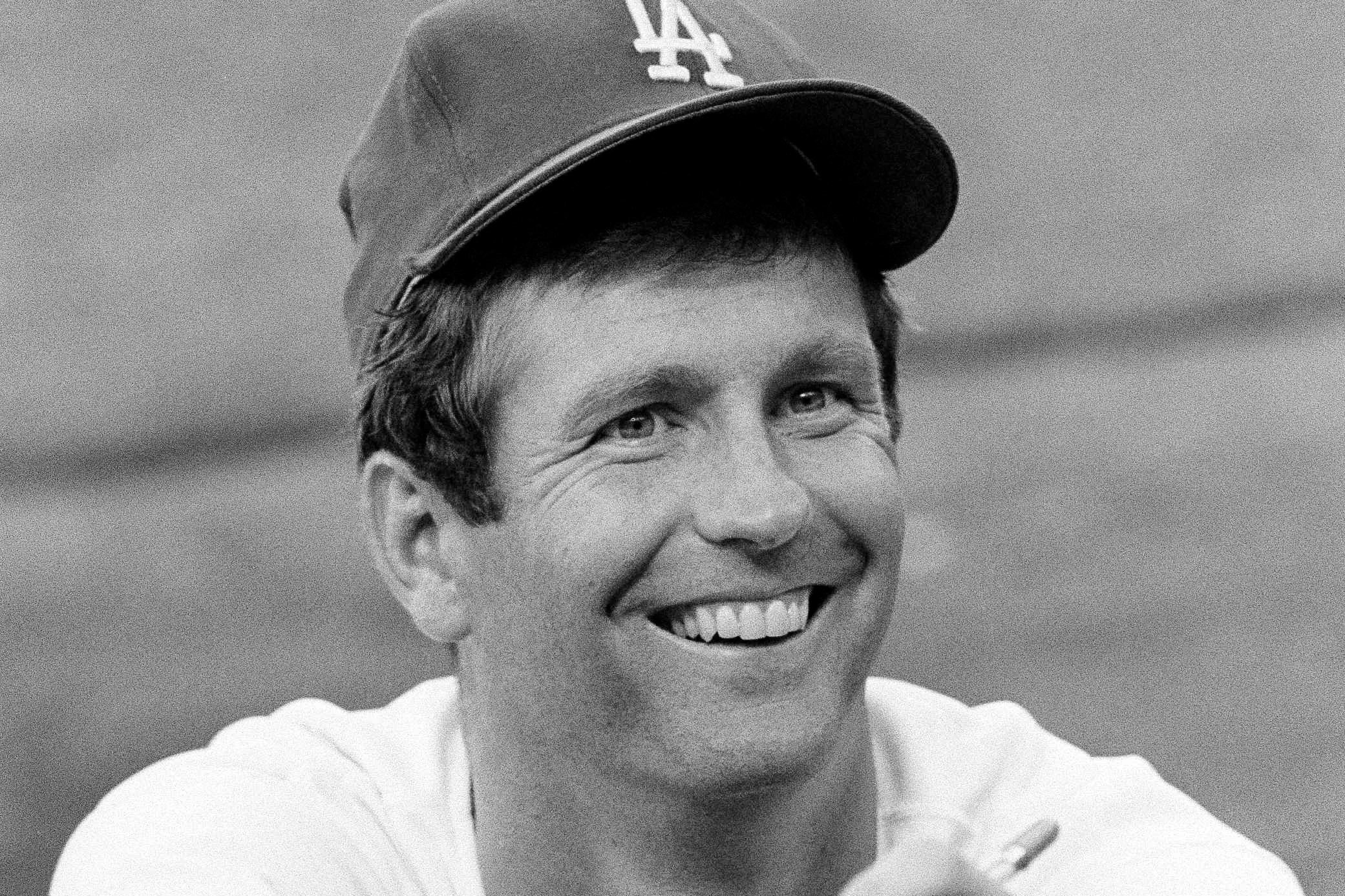 Tommy John began his professional baseball career at the age of 18 in 1961 for the Dubuque Packers in the Midwest League, then a Class-D affiliate of the Cleveland Indians. He made his final appearance on May 25, 1989, pitching 5 1/3 innings in an 8-6 win over the California Angels. All told, John won 288 big-league games over a 26-year career. But in 1974, John’s baseball life was in serious doubt. He suffered a tear in his ulnar collateral ligament (UCL) in his elbow, which at that time was a career-ending injury. At the time of the surgery, Dr. Frank Jobe estimated the chances of success at one in 100. In September 1974, Dr. Jobe performed the four-hour procedure, grafting a tendon from John’s right forearm into his left elbow. The recovery included a second surgery to re-route a nerve in his elbow. John attended spring training the following year in 1975 and progressed to the point where he made a few appearances in the Arizona Instructional League in September. In 1976, John pitched in spring training for the Dodgers and made 31 starts for Los Angeles during the regular season. He made at least 30 starts in eight of the next 12 seasons until he was released by the New York Yankees midway through the 1989 season at the age of 46. He did not pitch in the big leagues again. The soft-tossing left-hander won 20 games three times during his career and was an All-Star four times. His best stretch was from 1977-1980, during which he won 20, 17, 21, and 22 games, respectively. He completed 51 games and posted 12 shutouts in that timeframe. He pitched for three different teams in the postseason—Los Angeles Dodgers, New York Yankees, and the California Angels. John made 700 starts (760 appearances), completed 162 games, and posted 46 shutouts. He had a career bWAR of 62.1, an ERA+ of 111, and a FIP of 3.38. All in all, it was a spectacular career, especially in light of his major elbow surgery in 1974. Although he fell short of the Hall of Fame, his legacy was the surgery that was named after him. In 2012, ESPN’s Lindsey Berra estimated that roughly 14% of all major league pitchers had undergone the Tommy John procedure at some point in their careers. The operation Dr. Jobe performed over 50 years ago has become a common occurrence among big-league pitchers. According to USA Today in 2024, 36% of major league pitchers had TJ surgery at one time. Many underwent multiple surgeries, including four times for Hung-Chih Kuo and three for Tejay Antone. In fact, by 2014, the American Medical Association determined that 67% of the UCL operations were performed on athletes 16-20 years old. John’s impact beyond the eponymous surgery included advocacy for suicide prevention after his son Taylor committed suicide in 2010 at the age of 28. John supported the American Foundation for Suicide Prevention and participated in fundraising efforts at various benefits. Having pitched in the big leagues until age 46, John inspired other players to compete past the ‘normal’ age of retirement. Players like Jamie Moyer (49), Julio Franco (49), Nolan Ryan (46), and Randy Johnson (46) all had effective seasons well into their 40s. John also traveled the country in support of his Let’s Do It Foundation, promoting awareness and prevention of elbow injuries in baseball. One of his most prominent points was for young players to play different sports during the year. In 2014, he told players at Bayside (NY) high school that they shouldn’t make baseball a year-round sport. “You get burned out mentally. Secondly, you get burned out physically. Play other sports. It’s called cross-training. Do something else, play basketball, play football.” Tommy John not only had an impact on the sport with the surgery that was named after him, but also on young ball players in an effort to keep them healthy, and in helping children and adults who led troubled lives. Yes, Tommy John is known mostly for the UCL procedure, but his life was much, much more. Rest in Peace, TJ.
 -
Maybe MLB teams should become like Woodman's: employee-owned. Players buy out the owners and run their own show. That would be a great social experiment.
-
My comment about Max Clark is that he needs to worry less about the multiple pieces of bling around his neck and more about catching routine fly balls.
-
Baseball Movie Review: Major League (1989)
Michael Trzinski replied to Tyomoth's topic in Major League Baseball Talk
'Going somewhere, Meat?' 'Ninety feet.' 'Eff you, Jobu. I do it myself.' 'Forget about the curveball, Ricky. Give 'em the heater!' 'Yo, bartender...Jobu needs a refill!' -
I must be old (I am) 'cuz I don't know any of them...lol. But it 'sounds' like a 100-win team.
- 1 reply
-
- 1
-

-
I have been saying this for more years than you have been alive, Matt...long-term contracts and deferrals are bad for baseball. How many six or seven year contracts have you seen that worked out good for both parties? One-quarter maybe? Three clinkers come to mind for the Brewers: Teodoro Higuera, Jeff Suppan, and Christian Yelich. Deferrals just make it even worse. How many times have you gotten paid for work you didn't do? Why should athletes? A future 'Just for Fun' piece: If I was Commissioner for a Day.' I will discuss it in greater detail.
-
Baseball Movie Review: Eight Men Out (1988)
Michael Trzinski replied to Tyomoth's topic in Major League Baseball Talk
Now I 'll have to watch it again. Nice write-up! -
Baseball Movie Review: For Love of the Game (1999)
Michael Trzinski replied to Tyomoth's topic in Major League Baseball Talk
Tyler, you might have a future as a film critic for the New York Post. Siskel & Ebert? Nah Omoth!!