


Matthew Trueblood
-
Posts
16 -
Joined
-
Last visited
-
Days Won
4
3 Followers



Recent Profile Visitors
33,985 profile views


Matthew Trueblood's Achievements


-
Image courtesy of Troy Taormina-Imagn Images As is true whenever they make a change at your workplace, in baseball, everyone believes new things disproportionately disfavor them. Change is not welcome, and the more competitive the environment in which change is happening, the more suspicious everyone is of that change. I talked to many players about ABS this year, and while most of them acknowledged that the arrival of that system has made the game more efficient, few of them actually like it. Catchers miss the ability to politick for calls. Batters believe the system favors pitchers. Pitchers believe the system favors batters. In general, it's pitchers whose complaints you should instinctively distrust. They're whiners, and they're paranoid. They constantly believe the league is out to get them, to help hitters and goose scoring. The old joke carries a kernel of truth, though: Just because you're paranoid, that doesn't mean they're not after you. This time, the pitchers are right, although it's true in an interesting way. As I wrote at Baseball Prospectus in May, some teams immediately began asking their hitters to withhold their challenges and allow their catchers to use them, instead. Initially, it seemed to me that that was a simple response to the fact that catchers are better at challenging than batters are. That much is true, and it's important. Why not give the privilege of making ABS appeals to the guys who are more likely to win them, preserving your challenges and your right to challenge late in games, regardless of which side needs to do so in the big moments? Since I wrote that, more teams have trended in the same direction. Catchers, in particular, had freer rein early in games, whereas batters seemed to get the green light only if and when their clubs still had challenges left in the late innings. This is why, for instance, Jake Bauers told me in May that he felt like "pitchers have an extra umpire back there," and that batters get no value from the new system. The Brewers were one of the first teams to crack down on batter challenges; Bauers felt helpless. The zone could only get bigger, after the fact, for him. In reality, though, something else was happening—something that hitters might have refused to acknowledge, but which pitchers could certainly feel. The zone has shrunk. Some of this happened last year, when the league changed the way it provided feedback to umpires on their zones in preparation for the implementation of ABS. It's gone further this season, as the ABS zone has come fully into effect. Umpires are now used to calling the zone that way, and when either side challenges, that's the zone that the computers enforce. It's a zone that stops about a baseball's diameter lower than it did in the past. What does a smaller strike zone mean? Firstly, it rewards patient hitters more. Secondly, it means they can groove their swings incrementally more, without paying as high a price as they would have in the past. If the pitcher has to aim for a smaller zone, the barrel can fill up more of it. Not by coincidence, the league's in-zone contact rate ticked up this year, to 86.1%. The league has trended toward more lifted, pulled contact for over a decade, and that trend didn't abate. Surely, the league foresaw (and welcomed) the reduction in the size of the zone, on the premise that it would balance out some long-running trends favoring pitchers by increasing walks and/or forcing hurlers to throw more strikes. What they (seemingly) failed to anticipate, however, is that shrinking the zone would kill the remaining pitchers who were finding ways to win without plus raw stuff. In some former version of the league, if you'd told pitchers that the zone was getting smaller and they had to start finding it, they might have been able to adjust. They would have been punished for not throwing as hard or having stuff quite as nasty, but they could have made up for it by pacing themselves differently, hunting early outs against weak hitters, and humping up against the stronger ones. They could have accrued value by piling up pitches and innings, even if they allowed a few more runs than they did before the change to the zone. But that's not the league we have now. In the modern game, pitchers can't pace themselves and ease off the gas against certain hitters, because even No. 9 hitters can take you deep. Besides, what counts as 'pacing yourself' or 'easing up' nowadays is just what they called maximum effort a generation ago. To beat these bigger, stronger hitters and all the fly balls they hit to their pull fields, you have to miss bats, so everyone has trained themselves to work right up to their bodies' red lines. There's no finding value by substituting dominance for durability; even the durable guys get hurt. Instead, here's what happened: Stuff began to matter even more. Raw stuff—velocity, wicked movement, spin—was a markedly more reliable determinant of a starting pitcher's success in 2026 than in 2025. Correlation Factors, Qualifying Pitchers, 2025-26 R-Squared Stuff+ Fastball Velo. Metric 2025 2026 2025 2026 ERA 0.29 0.31 0.12 0.15 xERA 0.53 0.59 0.17 0.40 FIP 0.49 0.54 0.18 0.44 xFIP 0.54 0.60 0.26 0.44 Shrink the zone, and batters can't be manipulated as well by the craftsmen of the mound. You need stuff you can beat hitters with even when you make a mistake in the middle of the zone. If you don't have that, you're in big trouble—not just bigger than a decade ago, but bigger than a year ago. As you watch teams scramble to get to the fifth inning with many starters this postseason and turn to bullpen games to cover other innings, keep this in mind. Yes, part of the reason why we see more situations like those is that the playoffs have steadily expanded. That puts a higher percentage of the league's teams into the tournament, which means you no longer need a robust rotation to get there. It even means starting the games just one day after the regular season ends; that was not the way the transition from September to October worked even 15 years ago. Teams with weaker pitching staffs are being afforded less chance to rest and reset them before playing for their lives. But there's also another factor driving the shift toward more relievers and shorter outings by anyone who can't throw 97. The rules changes celebrated by so many fans have had an unintended consequence: they make many pitchers who used to be downright good fringy, and some guys who were previously usable have become useless. That's going to disproportionately affect starters, but it also disproportionately hurts any team that doesn't have a wealth of young, live arms on hand. Maybe some reform of the new system will address this in the years to come, but for now, ABS has turned junkballers and control artists into piñatas. For a while, there was an understandable but not-quite-accurate idea that the league belonged solely to guys who could throw pitches that would snatch Babe Ruth's soul and leave nothing but toenails and urine in his shoes. That sense has become more accurate this year, which might not be good for the game. Just don't expect the teams in the tournament to keep pretending things are the way they were before. They've noticed these trends, too. They're just responding to them. View full article
-
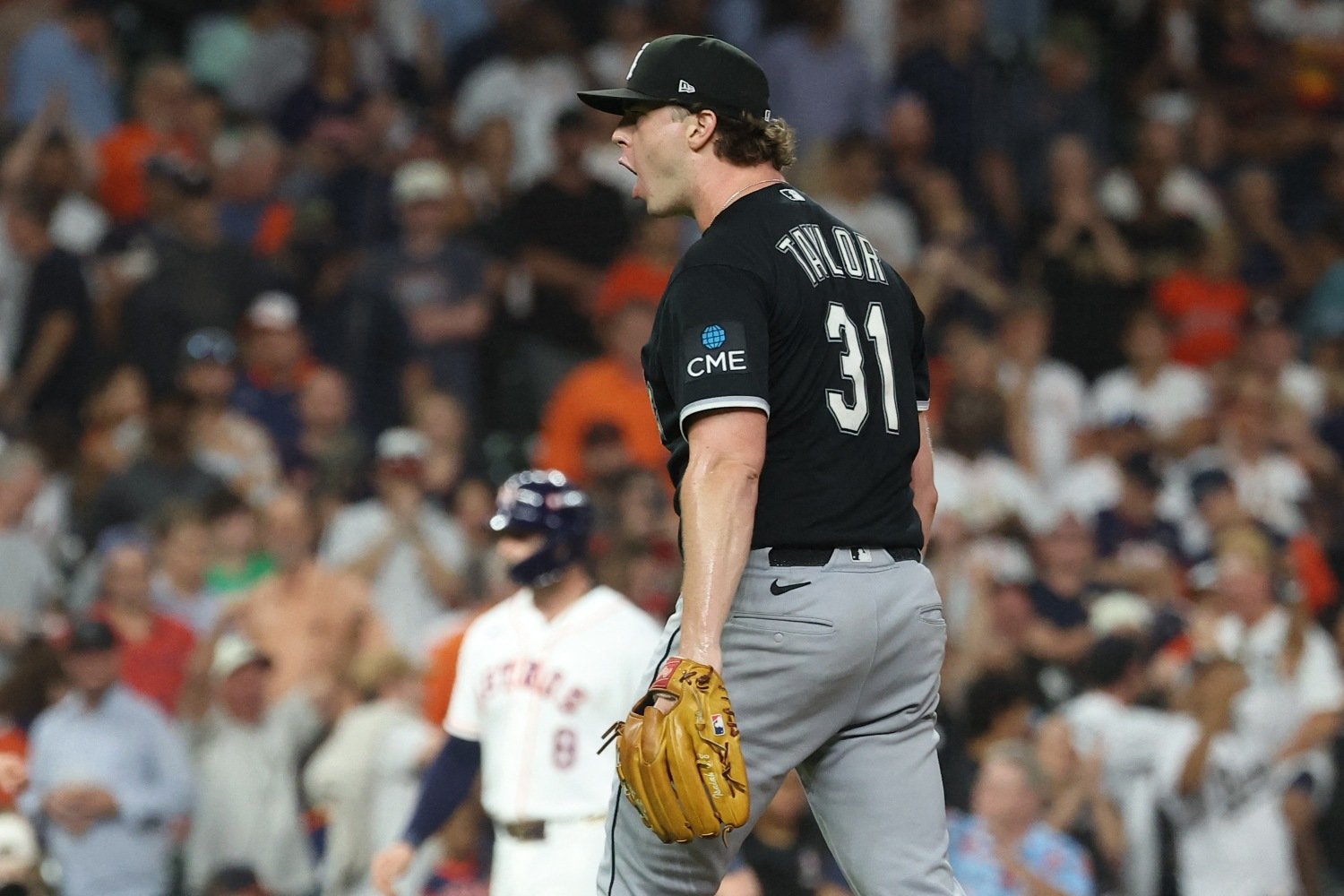 As is true whenever they make a change at your workplace, in baseball, everyone believes new things disproportionately disfavor them. Change is not welcome, and the more competitive the environment in which change is happening, the more suspicious everyone is of that change. I talked to many players about ABS this year, and while most of them acknowledged that the arrival of that system has made the game more efficient, few of them actually like it. Catchers miss the ability to politick for calls. Batters believe the system favors pitchers. Pitchers believe the system favors batters. In general, it's pitchers whose complaints you should instinctively distrust. They're whiners, and they're paranoid. They constantly believe the league is out to get them, to help hitters and goose scoring. The old joke carries a kernel of truth, though: Just because you're paranoid, that doesn't mean they're not after you. This time, the pitchers are right, although it's true in an interesting way. As I wrote at Baseball Prospectus in May, some teams immediately began asking their hitters to withhold their challenges and allow their catchers to use them, instead. Initially, it seemed to me that that was a simple response to the fact that catchers are better at challenging than batters are. That much is true, and it's important. Why not give the privilege of making ABS appeals to the guys who are more likely to win them, preserving your challenges and your right to challenge late in games, regardless of which side needs to do so in the big moments? Since I wrote that, more teams have trended in the same direction. Catchers, in particular, had freer rein early in games, whereas batters seemed to get the green light only if and when their clubs still had challenges left in the late innings. This is why, for instance, Jake Bauers told me in May that he felt like "pitchers have an extra umpire back there," and that batters get no value from the new system. The Brewers were one of the first teams to crack down on batter challenges; Bauers felt helpless. The zone could only get bigger, after the fact, for him. In reality, though, something else was happening—something that hitters might have refused to acknowledge, but which pitchers could certainly feel. The zone has shrunk. Some of this happened last year, when the league changed the way it provided feedback to umpires on their zones in preparation for the implementation of ABS. It's gone further this season, as the ABS zone has come fully into effect. Umpires are now used to calling the zone that way, and when either side challenges, that's the zone that the computers enforce. It's a zone that stops about a baseball's diameter lower than it did in the past. What does a smaller strike zone mean? Firstly, it rewards patient hitters more. Secondly, it means they can groove their swings incrementally more, without paying as high a price as they would have in the past. If the pitcher has to aim for a smaller zone, the barrel can fill up more of it. Not by coincidence, the league's in-zone contact rate ticked up this year, to 86.1%. The league has trended toward more lifted, pulled contact for over a decade, and that trend didn't abate. Surely, the league foresaw (and welcomed) the reduction in the size of the zone, on the premise that it would balance out some long-running trends favoring pitchers by increasing walks and/or forcing hurlers to throw more strikes. What they (seemingly) failed to anticipate, however, is that shrinking the zone would kill the remaining pitchers who were finding ways to win without plus raw stuff. In some former version of the league, if you'd told pitchers that the zone was getting smaller and they had to start finding it, they might have been able to adjust. They would have been punished for not throwing as hard or having stuff quite as nasty, but they could have made up for it by pacing themselves differently, hunting early outs against weak hitters, and humping up against the stronger ones. They could have accrued value by piling up pitches and innings, even if they allowed a few more runs than they did before the change to the zone. But that's not the league we have now. In the modern game, pitchers can't pace themselves and ease off the gas against certain hitters, because even No. 9 hitters can take you deep. Besides, what counts as 'pacing yourself' or 'easing up' nowadays is just what they called maximum effort a generation ago. To beat these bigger, stronger hitters and all the fly balls they hit to their pull fields, you have to miss bats, so everyone has trained themselves to work right up to their bodies' red lines. There's no finding value by substituting dominance for durability; even the durable guys get hurt. Instead, here's what happened: Stuff began to matter even more. Raw stuff—velocity, wicked movement, spin—was a markedly more reliable determinant of a starting pitcher's success in 2026 than in 2025. Correlation Factors, Qualifying Pitchers, 2025-26 R-Squared Stuff+ Fastball Velo. Metric 2025 2026 2025 2026 ERA 0.29 0.31 0.12 0.15 xERA 0.53 0.59 0.17 0.40 FIP 0.49 0.54 0.18 0.44 xFIP 0.54 0.60 0.26 0.44 Shrink the zone, and batters can't be manipulated as well by the craftsmen of the mound. You need stuff you can beat hitters with even when you make a mistake in the middle of the zone. If you don't have that, you're in big trouble—not just bigger than a decade ago, but bigger than a year ago. As you watch teams scramble to get to the fifth inning with many starters this postseason and turn to bullpen games to cover other innings, keep this in mind. Yes, part of the reason why we see more situations like those is that the playoffs have steadily expanded. That puts a higher percentage of the league's teams into the tournament, which means you no longer need a robust rotation to get there. It even means starting the games just one day after the regular season ends; that was not the way the transition from September to October worked even 15 years ago. Teams with weaker pitching staffs are being afforded less chance to rest and reset them before playing for their lives. But there's also another factor driving the shift toward more relievers and shorter outings by anyone who can't throw 97. The rules changes celebrated by so many fans have had an unintended consequence: they make many pitchers who used to be downright good fringy, and some guys who were previously usable have become useless. That's going to disproportionately affect starters, but it also disproportionately hurts any team that doesn't have a wealth of young, live arms on hand. Maybe some reform of the new system will address this in the years to come, but for now, ABS has turned junkballers and control artists into piñatas. For a while, there was an understandable but not-quite-accurate idea that the league belonged solely to guys who could throw pitches that would snatch Babe Ruth's soul and leave nothing but toenails and urine in his shoes. That sense has become more accurate this year, which might not be good for the game. Just don't expect the teams in the tournament to keep pretending things are the way they were before. They've noticed these trends, too. They're just responding to them.
 -
Image courtesy of Nathan Ray Seebeck-Imagn Images On Tuesday, Major League Baseball will celebrate Roberto Clemente Day, an annual tradition honoring one of the greatest players and humanitarians in the history of the sport. Tuesday also marks the beginning of Hispanic Heritage Month, which runs from September 15 through October 15 each year. It's not as loudly touted as Black History Month or Pride, and it seems awkward, the way it straddles two months, but this is the time of year when our country celebrates and lends extra visibility to people who have come here from Hispanic countries—especially Latin America. It's a reminder of how important are the contributions of people from those places to our society, and of the richness of the history and culture they bring here. Each year, sometime during this month, I find myself reflecting on a moment from the pilot of The West Wing, which I think is worth sharing on this occasion. One of the braided storylines that form the narrative thread of that first episode of the show is what to do with a flotilla of Cuban refugees who have made it to Miami. This was a pre-9/11 America, but immigration was already a hot-button issue, and the question of refugees seeking asylum especially so. (Two months after the episode aired, Elián González and his mother arrived on just this kind of boat from Cuba, setting off a real-life saga that spanned months of high-profile coverage.) The question of what to do about (or with) the would-be immigrants lingered throughout the episode, but it wasn't the primary story. It would be resolved by the following monologue, from President Josiah Bartlet, played by Martin Sheen. That sequence lasts barely a minute, but it strips away the flesh and drills to the bone of America. It's not perfect. It begins with an unlikely anecdote. "Annie" is Bartlet's 12-year-old granddaughter, who seems to be endlessly manipulable for series writer Aaron Sorkin. She's a preteen who happens to read the international section of the newspaper, I guess. It's also a speech given by a white man (although, famously, one whose parents were both European immigrants, and who changed his very Hispanic birth name to become more hireable in the theater) to an entirely white cast of advisers. Nonetheless, the beauty with which that articulates what makes America great always sets a lump in my throat. To whatever extent this nation deserves its self-image as a bastion of freedom, justice and progress, that identity doesn't live in the Constitution, or in any officer of the government. It doesn't come from within, because when it began, there was no single entity from which that kind of greatness could emanate. Whatever specialness America can claim has accrued, one person at a time, as people have dared to seek a better life and brought their dazzling combination of perseverance and love to this place to build it. We were not created; we've evolved. Every person who overcomes everything in front of them to come here and add their hopes and dreams to what's already here is a hero. They are co-founders of an America that is never done being established; they own it as much as any of us do. Clemente, of course, was not technically a foreign immigrant. He was born in Puerto Rico, when it already belonged to the United States. However, for much of his career, he felt like an outsider. As the first dark-skinned Latin American star in MLB, he faced discrimination based on his skin color, his ethnicity and his primary language. He stormed through all of that to become as scintillating a player as the game has ever produced, playing with tenacity and passion as well as extraordinary talent. Throughout a career that eventually brought him widespread acceptance and love from fans and communities, he used every bit of influence and privilege he accumulated to help those less fortunate. He is one of the greatest Americans who ever lived, as illustrated by the circumstances of his death: rushing so earnestly and urgently to deliver aid to earthquake victims in a country far from his birthplace, but very much part of what he saw as his community. On Clemente Day, I'm thinking a great deal about Oswaldo Pirela. The Padres' catching coordinator, who was detained by Immigration and Customs Enforcement (ICE) last month, came to the United States from Venezuela over a decade ago, seeking asylum himself. His case is still pending, which exposed him to arrest by ICE. When that story made headlines, and when Pirela's sister's most emphatic statement to a reporter was that Pirela "loves this country," I felt that same lump in my throat that I get from Sheen's soliloquy. It's astounding that so many people who have come here through so much adversity, and who have so often been treated so unwelcomingly here, still feel that passion. The same optimism—the same breathtaking, audacious hope—that pushed them out of circumstances where they worried for their family's lives or livelihoods and brought them here has kept their hope alive, even when the place they viewed as a destination has turned out to be a work in progress. Pirela still faces removal from the country. His story is not over, but the ending doesn't look all that likely to be a happy one. Then again, hopefully, it won't be an ending. Roberto Clemente Day and Hispanic Heritage Month are, right now, a call to action for baseball fans of conscience. If Clemente's community stretched from the easternmost Caribbean to Nicaragua, surely ours—in a world drawn so much closer together, anyway, by communication technology and by international endeavors like baseball—extends to Arizona, where Pirela and his family live, and to Venezuela. Sports should be bridges between people. They should unite and engender friendship between them. They should also widen our circles of empathy. Clemente knew this, and lived it. He let his circles of concern spread as far as he could reach. He lost his life in the effort to bring help where it was needed, despite the difficulty of it and the relatively remote connection between himself and that place. If the league is celebrating his legacy today, it must do so not only by issuing some custom jerseys and holding brief pregame ceremonies, but by committing itself to greater advocacy for all of its employees, and all of the communities that continue to support it. For our part, we should remember that the most remarkable human virtue is courage—the bravery to believe in something that repeatedly disappoints you, and the willingness to sacrifice where others' needs outnumber your own. Only when we draw on that bravery are we properly honoring Clemente—and when we do so, not coincidentally, we also observe Hispanic Heritage Month quite well. View full article
-
Roberto Clemente, Oswaldo Pirela, and Very Impressive Tomatoes
Matthew Trueblood posted an article in MLB
 On Tuesday, Major League Baseball will celebrate Roberto Clemente Day, an annual tradition honoring one of the greatest players and humanitarians in the history of the sport. Tuesday also marks the beginning of Hispanic Heritage Month, which runs from September 15 through October 15 each year. It's not as loudly touted as Black History Month or Pride, and it seems awkward, the way it straddles two months, but this is the time of year when our country celebrates and lends extra visibility to people who have come here from Hispanic countries—especially Latin America. It's a reminder of how important are the contributions of people from those places to our society, and of the richness of the history and culture they bring here. Each year, sometime during this month, I find myself reflecting on a moment from the pilot of The West Wing, which I think is worth sharing on this occasion. One of the braided storylines that form the narrative thread of that first episode of the show is what to do with a flotilla of Cuban refugees who have made it to Miami. This was a pre-9/11 America, but immigration was already a hot-button issue, and the question of refugees seeking asylum especially so. (Two months after the episode aired, Elián González and his mother arrived on just this kind of boat from Cuba, setting off a real-life saga that spanned months of high-profile coverage.) The question of what to do about (or with) the would-be immigrants lingered throughout the episode, but it wasn't the primary story. It would be resolved by the following monologue, from President Josiah Bartlet, played by Martin Sheen. That sequence lasts barely a minute, but it strips away the flesh and drills to the bone of America. It's not perfect. It begins with an unlikely anecdote. "Annie" is Bartlet's 12-year-old granddaughter, who seems to be endlessly manipulable for series writer Aaron Sorkin. She's a preteen who happens to read the international section of the newspaper, I guess. It's also a speech given by a white man (although, famously, one whose parents were both European immigrants, and who changed his very Hispanic birth name to become more hireable in the theater) to an entirely white cast of advisers. Nonetheless, the beauty with which that articulates what makes America great always sets a lump in my throat. To whatever extent this nation deserves its self-image as a bastion of freedom, justice and progress, that identity doesn't live in the Constitution, or in any officer of the government. It doesn't come from within, because when it began, there was no single entity from which that kind of greatness could emanate. Whatever specialness America can claim has accrued, one person at a time, as people have dared to seek a better life and brought their dazzling combination of perseverance and love to this place to build it. We were not created; we've evolved. Every person who overcomes everything in front of them to come here and add their hopes and dreams to what's already here is a hero. They are co-founders of an America that is never done being established; they own it as much as any of us do. Clemente, of course, was not technically a foreign immigrant. He was born in Puerto Rico, when it already belonged to the United States. However, for much of his career, he felt like an outsider. As the first dark-skinned Latin American star in MLB, he faced discrimination based on his skin color, his ethnicity and his primary language. He stormed through all of that to become as scintillating a player as the game has ever produced, playing with tenacity and passion as well as extraordinary talent. Throughout a career that eventually brought him widespread acceptance and love from fans and communities, he used every bit of influence and privilege he accumulated to help those less fortunate. He is one of the greatest Americans who ever lived, as illustrated by the circumstances of his death: rushing so earnestly and urgently to deliver aid to earthquake victims in a country far from his birthplace, but very much part of what he saw as his community. On Clemente Day, I'm thinking a great deal about Oswaldo Pirela. The Padres' catching coordinator, who was detained by Immigration and Customs Enforcement (ICE) last month, came to the United States from Venezuela over a decade ago, seeking asylum himself. His case is still pending, which exposed him to arrest by ICE. When that story made headlines, and when Pirela's sister's most emphatic statement to a reporter was that Pirela "loves this country," I felt that same lump in my throat that I get from Sheen's soliloquy. It's astounding that so many people who have come here through so much adversity, and who have so often been treated so unwelcomingly here, still feel that passion. The same optimism—the same breathtaking, audacious hope—that pushed them out of circumstances where they worried for their family's lives or livelihoods and brought them here has kept their hope alive, even when the place they viewed as a destination has turned out to be a work in progress. Pirela still faces removal from the country. His story is not over, but the ending doesn't look all that likely to be a happy one. Then again, hopefully, it won't be an ending. Roberto Clemente Day and Hispanic Heritage Month are, right now, a call to action for baseball fans of conscience. If Clemente's community stretched from the easternmost Caribbean to Nicaragua, surely ours—in a world drawn so much closer together, anyway, by communication technology and by international endeavors like baseball—extends to Arizona, where Pirela and his family live, and to Venezuela. Sports should be bridges between people. They should unite and engender friendship between them. They should also widen our circles of empathy. Clemente knew this, and lived it. He let his circles of concern spread as far as he could reach. He lost his life in the effort to bring help where it was needed, despite the difficulty of it and the relatively remote connection between himself and that place. If the league is celebrating his legacy today, it must do so not only by issuing some custom jerseys and holding brief pregame ceremonies, but by committing itself to greater advocacy for all of its employees, and all of the communities that continue to support it. For our part, we should remember that the most remarkable human virtue is courage—the bravery to believe in something that repeatedly disappoints you, and the willingness to sacrifice where others' needs outnumber your own. Only when we draw on that bravery are we properly honoring Clemente—and when we do so, not coincidentally, we also observe Hispanic Heritage Month quite well.
 -
Image courtesy of © David Banks-Imagn Images Major League Baseball made its latest round of proposals to the MLB Players' Association this week, as the two sides circle each other like two overserved stockbrokers in an insufferably hip country club bar after one accused the other of cheating at golf. The inevitable lockout doesn't begin for almost six months, and it won't affect the 2027 season unless it lasts at least three or four months more, but the league and the union would each like your attention, please. They're both rich. This fight is really only worth it if one of them looks cool and tough as they beat the other in a sloppy, lurching fistfight. I'm not going to lay out the points of the league's latest proposal in much detail. As usual, they're proposing reforms that look superficially sensible but which would massively favor the owners, and which are infeasible and unrealistic, anyway. This far out from the real fight, they're just marshaling support from anyone else in the bar who looks big or interested, or who might be attracted to them if they win. The players, the party being accused of misconduct (baselessly), keep making affronted noises and trying to loudly explain that they don't want to fight, while secretly hoping for the chance to land a counterpunch without consequences. I'm begging you: ignore all of this. Ignore it, at the very least, until the first week of November. There's a great baseball season unfolding around us. It's messy in places, but it's highly competitive. We have surprise contenders, transcendent individual performers, and some juicy narratives surrounding teams who need to win now and others who look like they've already missed their chance. There are cool new veins of data being tapped to deepen our understanding of the game, and there are teams who play a fun, aggressive style of baseball almost everywhere you turn. This is one of the most intriguing rookie classes in years. The baseball is great. It's my job to show you all the fascinating things I see happening within baseball, but while we're here, let me also observe that the World Cup is well underway, furnishing a bevy of shared moments of exhilaration for millions of onlookers every day. The WNBA is firing on all cylinders, as usual. The NBA Playoffs were as good as they've been in a decade, capped by the Knicks winning their first title in over 50 years. There have been few better times to be a sports fan, including a sports fan online. Savor the great baseball, and share the emotional rollercoaster of the World Cup, and get geeked about Olivia Miles highlights. Do not, however, pay attention to the peacocking, posturing and pleas of the billionaire owners about the business of the game. Do not, for that matter, spare a tear for the players, who see right through the attempts to establish exotic anchors in their negotiations by the owners and who are in no real danger of being meaningfully worse off at the end of this labor fight. Even 30 years ago, you did have to have a side, though you didn't have to attend to all the squabbling then, either. Now, the difference between a player's paycheck and yours is about the same, proportionally, as the one between a star player and the owner. I am not urging you to ignore serious matters this summer; far from it. I need not ennumerate the things going on in local communities, North America, or the world that do deserve your attention and your passion; you can think of them yourself. If your passion for sport is all-consuming, you can still advocate for justice and fair labor practices, by supporting things like the upcoming strike by concessions workers at Target Field in Minneapolis or by paying attention to which teams properly celebrate Pride Month and which take their environmental footprint seriously. Those are appropriate places to place your attention, when it comes to serious matters in sport. Defy demands from owners for huge tax breaks or taxpayer dollars to build stadia. Advocate for reforms of youth programs that put rich White kids at huge advantages and for those that exploit young, poor people of color. Here's the dirty secret about the CBA negotiations: Nothing important will change. If you dislike the competitive balance of baseball, you're out of luck. Not only would a salary cap fail to address that, but a salary cap isn't going to happen, anyway. Neither is a change to the draft that would kill early free agency. Neither is players becoming free agents after just four years of service. The eventual changes to the game will be felt, as they are after each and every CBA shifts the rules, but those changes will only make a meaningful difference to those of us already following the sport very closely—and they won't make owners much richer or poorer, or small-market teams much more or less likely to win anything. They're also far, far beyond my or your influence. It's unhealthy to stare at and/or egg on the drunken losers vying for your attention. There's something better to devote your attention to in that bar. Go play darts, or watch soccer on TV. (Hey, that one works analogically, and literally!) When the fists start actually flying, see if there's any way you can limit the damage, but mostly, keep your own drink out of the way and try not to be one of the people whose statements the cops end up taking. Please, enjoy this summer. Watch a World Cup match every day, and skeet about it with your friends. Listen to baseball on the radio while you mow your lawn or shoot hoops with your kid. There's plenty to worry about in the world. The owners and the players' union are doing their jobs by worrying about how to divide billions of your dollars over the next half-decade, but it's not your job, and have you seen Jacob Misiorowski pitch?! Have you seen what Pete Crow-Armstrong is doing lately? Can you believe the White Sox are contenders? When it comes to sports, enjoy this summer, and pay no attention to the looming CBA fight. It's all hot air right now, and you have better things to do. View full article
-
In This One, Isolated Sense, Please Pay Less Attention to Baseball
Matthew Trueblood posted an article in MLB
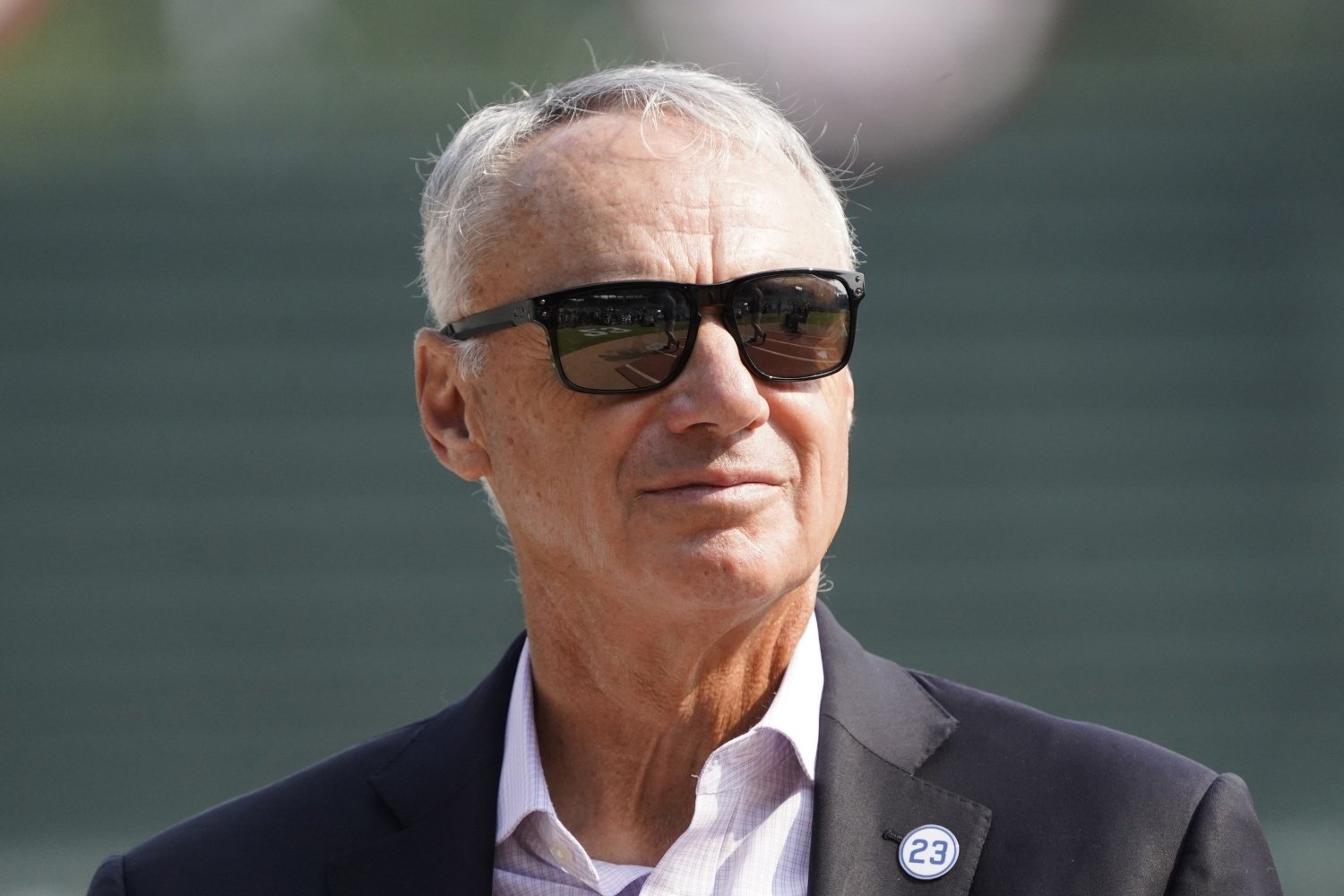 Major League Baseball made its latest round of proposals to the MLB Players' Association this week, as the two sides circle each other like two overserved stockbrokers in an insufferably hip country club bar after one accused the other of cheating at golf. The inevitable lockout doesn't begin for almost six months, and it won't affect the 2027 season unless it lasts at least three or four months more, but the league and the union would each like your attention, please. They're both rich. This fight is really only worth it if one of them looks cool and tough as they beat the other in a sloppy, lurching fistfight. I'm not going to lay out the points of the league's latest proposal in much detail. As usual, they're proposing reforms that look superficially sensible but which would massively favor the owners, and which are infeasible and unrealistic, anyway. This far out from the real fight, they're just marshaling support from anyone else in the bar who looks big or interested, or who might be attracted to them if they win. The players, the party being accused of misconduct (baselessly), keep making affronted noises and trying to loudly explain that they don't want to fight, while secretly hoping for the chance to land a counterpunch without consequences. I'm begging you: ignore all of this. Ignore it, at the very least, until the first week of November. There's a great baseball season unfolding around us. It's messy in places, but it's highly competitive. We have surprise contenders, transcendent individual performers, and some juicy narratives surrounding teams who need to win now and others who look like they've already missed their chance. There are cool new veins of data being tapped to deepen our understanding of the game, and there are teams who play a fun, aggressive style of baseball almost everywhere you turn. This is one of the most intriguing rookie classes in years. The baseball is great. It's my job to show you all the fascinating things I see happening within baseball, but while we're here, let me also observe that the World Cup is well underway, furnishing a bevy of shared moments of exhilaration for millions of onlookers every day. The WNBA is firing on all cylinders, as usual. The NBA Playoffs were as good as they've been in a decade, capped by the Knicks winning their first title in over 50 years. There have been few better times to be a sports fan, including a sports fan online. Savor the great baseball, and share the emotional rollercoaster of the World Cup, and get geeked about Olivia Miles highlights. Do not, however, pay attention to the peacocking, posturing and pleas of the billionaire owners about the business of the game. Do not, for that matter, spare a tear for the players, who see right through the attempts to establish exotic anchors in their negotiations by the owners and who are in no real danger of being meaningfully worse off at the end of this labor fight. Even 30 years ago, you did have to have a side, though you didn't have to attend to all the squabbling then, either. Now, the difference between a player's paycheck and yours is about the same, proportionally, as the one between a star player and the owner. I am not urging you to ignore serious matters this summer; far from it. I need not ennumerate the things going on in local communities, North America, or the world that do deserve your attention and your passion; you can think of them yourself. If your passion for sport is all-consuming, you can still advocate for justice and fair labor practices, by supporting things like the upcoming strike by concessions workers at Target Field in Minneapolis or by paying attention to which teams properly celebrate Pride Month and which take their environmental footprint seriously. Those are appropriate places to place your attention, when it comes to serious matters in sport. Defy demands from owners for huge tax breaks or taxpayer dollars to build stadia. Advocate for reforms of youth programs that put rich White kids at huge advantages and for those that exploit young, poor people of color. Here's the dirty secret about the CBA negotiations: Nothing important will change. If you dislike the competitive balance of baseball, you're out of luck. Not only would a salary cap fail to address that, but a salary cap isn't going to happen, anyway. Neither is a change to the draft that would kill early free agency. Neither is players becoming free agents after just four years of service. The eventual changes to the game will be felt, as they are after each and every CBA shifts the rules, but those changes will only make a meaningful difference to those of us already following the sport very closely—and they won't make owners much richer or poorer, or small-market teams much more or less likely to win anything. They're also far, far beyond my or your influence. It's unhealthy to stare at and/or egg on the drunken losers vying for your attention. There's something better to devote your attention to in that bar. Go play darts, or watch soccer on TV. (Hey, that one works analogically, and literally!) When the fists start actually flying, see if there's any way you can limit the damage, but mostly, keep your own drink out of the way and try not to be one of the people whose statements the cops end up taking. Please, enjoy this summer. Watch a World Cup match every day, and skeet about it with your friends. Listen to baseball on the radio while you mow your lawn or shoot hoops with your kid. There's plenty to worry about in the world. The owners and the players' union are doing their jobs by worrying about how to divide billions of your dollars over the next half-decade, but it's not your job, and have you seen Jacob Misiorowski pitch?! Have you seen what Pete Crow-Armstrong is doing lately? Can you believe the White Sox are contenders? When it comes to sports, enjoy this summer, and pay no attention to the looming CBA fight. It's all hot air right now, and you have better things to do.
 -
Image courtesy of © Troy Taormina-Imagn Images The culture of baseball is a vibrant, diverse, global thing, and the World Baseball Classic is a delightful reminder of that. The intensity of the players elevates the game, and the enthusiasm of the fans—playing instruments, singing coordinated songs, painting their faces and draping themselves in flags, roaring cacophonously at big moments—creates an energy fans from the U.S. can only compare to the playoffs. Even fans watching on TV, rather than in person, constantly remark on the ecstasy of the atmosphere. The event is enormously popular, growing exponentially in popularity each time it happens, and rightfully so. However, one country is excepted from virtually every expression of praise for the tournament and its milieu: the United States itself. Many people on social media spend the WBC rejoicing in the exuberance of other countries' players (their celebrations, scripted and otherwise; their underdog stories; and their obvious hunger to win) and their fans, but bemoaning the lack of the same flavor from the United States. To be clear, this isn't unfair, as far as it goes. By contrast with the irrepressible attitudes of the teams from everywhere else, Team USA has a stodgy streak. They're intense, but in a more workmanlike way, at least on the surface. Meanwhile, American fans plainly enjoy the games, but they don't demonstrate the same roaring, often desperate passion as fans from most of the other countries involved. First, let's acknowledge this much: U.S. fans have been accused of disinterest in the tournament, which is partly fair; too many of them are still awakening to the joy of it. However, there's a rational, even just reason for that circumspect feeling: fans in the U.S. have MLB to call their own. Long before there was robust international baseball competition of any kind, there was Major League Baseball. Its roots are so deep and its season is so inextricably tied to the idea of baseball itself in the States that those fans have had a much longer learning curve for the balancing of priorities between their favorite teams and the tournament that other countries' fans have had. Puerto Rico and the countries of the Caribbean basin mostly have short, festive winter seasons. Many of their best players play in the U.S. Japan, Korea, Taiwan, México, Australia, Cuba and Nicaragua have longer, fuller domestic seasons, but again, many of their heroes go to MLB to find their fame and fortune. Team Italy has been the Cinderella of this year's tournament, but it (and frequent past underdog, the Netherlands) is essentially a purpose-built outfit. The club is made up mostly of big-leaguers, and the domestic leagues in those countries are small and relatively low-caliber. Thus, the countries who play winter ball have developed cultures wherein almost every baseball game is a party, and almost every game has high stakes. The countries with longer-running but lower-caliber leagues are conscious of the opportunity the WBC affords, to show what makes their baseball great and that they have talent commensurate with that of the U.S., even though the Western superpower gets the honor of hosting the world's top league. The teams who congeal just for this tournament are savoring a special opportunity to grow the game in the countries they represent, Meanwhile, for both fans and players from the U.S., it's not immediately clear that the tournament should be more important than the long summer season to which they're looking forward. I think it should be treated with at least equal weight, and probably as more important, but it's easier for every other team and their supporters to arrive at that conclusion than for those from the States. That's related to another thing that separates the U.S. from the other teams and fan bases: that 162-game grind. I'm not sure it's fair that we expect players and fans from the States to process any form of baseball the same way other nations' and territories' players and fans do. It's the U.S. that made baseball the game of the long season, beginning in early spring and not winding down until Halloween. Everyone here now takes for granted that that's how the game works, but in much of the rest of the world, it isn't. Yes, most great Dominican, Venezuelan and Puerto Rican players eventually come to the States and play those long seasons, but the domestic baseball calendar is short and intense. The same approach is not electively eschewed in the U.S.; it's just impossible. Playing nine days out of every 10 for six full months forces an even keel and a workaday mindset on everyone who attempts it. It would be both draining and absurd to treat every game as though it will be season-defining, when the club will play 162 times. It's easier even in Japan (143 games each year), but much easier in the places where a regular season is less than half as long. This is not, to be clear, a defense of the annoyingly martial approach Team USA has taken toward building team pride and a sense of purpose during this year's tournament. The militaristic elements of their approach and (especially) the refusal by Cal Raleigh to shake hands with regular-season teammate Randy Arozarena during the USA-México game are pointless and foolish. However, the broader attitude about the game, its stakes and its rhythms are come by honestly, and I do wish we could celebrate that aspect of baseball in its own way, even during a festival in which a very different atmosphere prevails. There's a final consideration to note, too. Citizens of the United States have complicated feelings about their own country right now, which leaves many of them without the same unabashed, undivided rooting interest felt by nearly every other nation's fans. That tinges many of the matchups, and while it makes the tournament more balanced than it might otherwise be—it's sponsored and staged by MLB, and favors the U.S. in all facets, especially in that it takes place mostly in the States—it also keeps a little air out of it. Team USA's games don't always sell out, and U.S. fans are not as effervescent as many of their counterparts. Part of that is about the competing loyalties for those fans, between their team and their country, but a greater part is that many of those fans don't feel great pride in their country. Even many of the most ardent fans of the WBC in the States (this reporter included) don't want to see the U.S. win it. Every few years, this tournament comes along to remind us what a different thing baseball can be, if you change its schedule and its stakes radically. We spend multiple seasons getting used to the grind of the long season, where pitching is always scarce and the greatest challenge is sustaining winning energy and attention from day to day and week to week. Then, in this bright burst of delirium, we're shown that the game can be about incandescent talent, personality, and ferocity, without the constraints of fatigue or the restrictor plate of knowing there was a game yesterday and there's one tomorrow. It can be hard, at these moments, not to resent the staid culture of the game as we know it in the U.S. I get that, and feel it, too. Again, too, I say that some of the vibes of Team USA are needlessly buttoned-up, though some of that has been exaggerated in the popular imagination. However, I do want this tournament to celebrate all of baseball, and a big part of baseball is still the version played in the cradle of the game, the United States—with its long, everyday season, the source of hope as winter trudges into spring and the soundtrack of your summer and autumn. There is a degree to which it's ok that Team USA (and their fans) are quieter and more workmanlike about the game, because that is our baseball culture—to let the first seeds of warmth from the spring build under the baking sun of the summer and explode into fireworks in September and October. Some of the "professionalism" and combative competitiveness is put on by players who think they have to act with decorum; we should abolish that idea. But some of it is the natural outgrowth of getting up every day and performing in this game, for a very long time and with steadily rising stakes, and we can all make room for the portion of that hard-bittenness that's authentic. The U.S. has a less fun baseball culture than most of its neighbors and WBC rivals. However, we in the U.S. benefit from the infusion of those cultures into our own every spring, summer and fall. The WBC might shine an unfavorable light on Team USA and its fans at times, but that's only because the U.S. needs more time to figure out how to participate in the tournament without feeling the weight of the season behind it—as nearly every other country involved was free to do pretty instinctively. At any rate, the WBC should allow us to celebrate all baseball cultures—and, yes, even the United States has something to add to that mixture. View full article
-
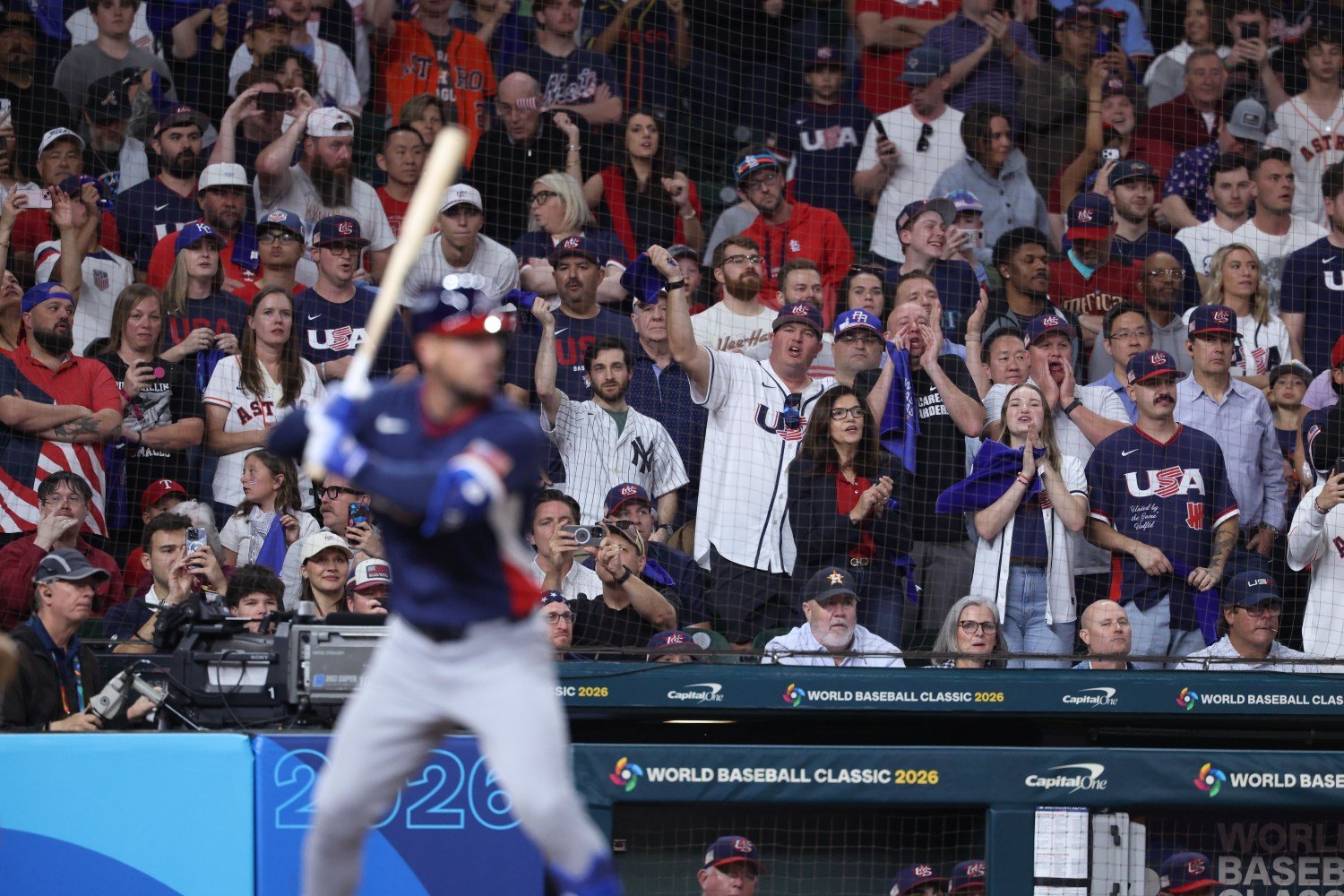 The culture of baseball is a vibrant, diverse, global thing, and the World Baseball Classic is a delightful reminder of that. The intensity of the players elevates the game, and the enthusiasm of the fans—playing instruments, singing coordinated songs, painting their faces and draping themselves in flags, roaring cacophonously at big moments—creates an energy fans from the U.S. can only compare to the playoffs. Even fans watching on TV, rather than in person, constantly remark on the ecstasy of the atmosphere. The event is enormously popular, growing exponentially in popularity each time it happens, and rightfully so. However, one country is excepted from virtually every expression of praise for the tournament and its milieu: the United States itself. Many people on social media spend the WBC rejoicing in the exuberance of other countries' players (their celebrations, scripted and otherwise; their underdog stories; and their obvious hunger to win) and their fans, but bemoaning the lack of the same flavor from the United States. To be clear, this isn't unfair, as far as it goes. By contrast with the irrepressible attitudes of the teams from everywhere else, Team USA has a stodgy streak. They're intense, but in a more workmanlike way, at least on the surface. Meanwhile, American fans plainly enjoy the games, but they don't demonstrate the same roaring, often desperate passion as fans from most of the other countries involved. First, let's acknowledge this much: U.S. fans have been accused of disinterest in the tournament, which is partly fair; too many of them are still awakening to the joy of it. However, there's a rational, even just reason for that circumspect feeling: fans in the U.S. have MLB to call their own. Long before there was robust international baseball competition of any kind, there was Major League Baseball. Its roots are so deep and its season is so inextricably tied to the idea of baseball itself in the States that those fans have had a much longer learning curve for the balancing of priorities between their favorite teams and the tournament that other countries' fans have had. Puerto Rico and the countries of the Caribbean basin mostly have short, festive winter seasons. Many of their best players play in the U.S. Japan, Korea, Taiwan, México, Australia, Cuba and Nicaragua have longer, fuller domestic seasons, but again, many of their heroes go to MLB to find their fame and fortune. Team Italy has been the Cinderella of this year's tournament, but it (and frequent past underdog, the Netherlands) is essentially a purpose-built outfit. The club is made up mostly of big-leaguers, and the domestic leagues in those countries are small and relatively low-caliber. Thus, the countries who play winter ball have developed cultures wherein almost every baseball game is a party, and almost every game has high stakes. The countries with longer-running but lower-caliber leagues are conscious of the opportunity the WBC affords, to show what makes their baseball great and that they have talent commensurate with that of the U.S., even though the Western superpower gets the honor of hosting the world's top league. The teams who congeal just for this tournament are savoring a special opportunity to grow the game in the countries they represent, Meanwhile, for both fans and players from the U.S., it's not immediately clear that the tournament should be more important than the long summer season to which they're looking forward. I think it should be treated with at least equal weight, and probably as more important, but it's easier for every other team and their supporters to arrive at that conclusion than for those from the States. That's related to another thing that separates the U.S. from the other teams and fan bases: that 162-game grind. I'm not sure it's fair that we expect players and fans from the States to process any form of baseball the same way other nations' and territories' players and fans do. It's the U.S. that made baseball the game of the long season, beginning in early spring and not winding down until Halloween. Everyone here now takes for granted that that's how the game works, but in much of the rest of the world, it isn't. Yes, most great Dominican, Venezuelan and Puerto Rican players eventually come to the States and play those long seasons, but the domestic baseball calendar is short and intense. The same approach is not electively eschewed in the U.S.; it's just impossible. Playing nine days out of every 10 for six full months forces an even keel and a workaday mindset on everyone who attempts it. It would be both draining and absurd to treat every game as though it will be season-defining, when the club will play 162 times. It's easier even in Japan (143 games each year), but much easier in the places where a regular season is less than half as long. This is not, to be clear, a defense of the annoyingly martial approach Team USA has taken toward building team pride and a sense of purpose during this year's tournament. The militaristic elements of their approach and (especially) the refusal by Cal Raleigh to shake hands with regular-season teammate Randy Arozarena during the USA-México game are pointless and foolish. However, the broader attitude about the game, its stakes and its rhythms are come by honestly, and I do wish we could celebrate that aspect of baseball in its own way, even during a festival in which a very different atmosphere prevails. There's a final consideration to note, too. Citizens of the United States have complicated feelings about their own country right now, which leaves many of them without the same unabashed, undivided rooting interest felt by nearly every other nation's fans. That tinges many of the matchups, and while it makes the tournament more balanced than it might otherwise be—it's sponsored and staged by MLB, and favors the U.S. in all facets, especially in that it takes place mostly in the States—it also keeps a little air out of it. Team USA's games don't always sell out, and U.S. fans are not as effervescent as many of their counterparts. Part of that is about the competing loyalties for those fans, between their team and their country, but a greater part is that many of those fans don't feel great pride in their country. Even many of the most ardent fans of the WBC in the States (this reporter included) don't want to see the U.S. win it. Every few years, this tournament comes along to remind us what a different thing baseball can be, if you change its schedule and its stakes radically. We spend multiple seasons getting used to the grind of the long season, where pitching is always scarce and the greatest challenge is sustaining winning energy and attention from day to day and week to week. Then, in this bright burst of delirium, we're shown that the game can be about incandescent talent, personality, and ferocity, without the constraints of fatigue or the restrictor plate of knowing there was a game yesterday and there's one tomorrow. It can be hard, at these moments, not to resent the staid culture of the game as we know it in the U.S. I get that, and feel it, too. Again, too, I say that some of the vibes of Team USA are needlessly buttoned-up, though some of that has been exaggerated in the popular imagination. However, I do want this tournament to celebrate all of baseball, and a big part of baseball is still the version played in the cradle of the game, the United States—with its long, everyday season, the source of hope as winter trudges into spring and the soundtrack of your summer and autumn. There is a degree to which it's ok that Team USA (and their fans) are quieter and more workmanlike about the game, because that is our baseball culture—to let the first seeds of warmth from the spring build under the baking sun of the summer and explode into fireworks in September and October. Some of the "professionalism" and combative competitiveness is put on by players who think they have to act with decorum; we should abolish that idea. But some of it is the natural outgrowth of getting up every day and performing in this game, for a very long time and with steadily rising stakes, and we can all make room for the portion of that hard-bittenness that's authentic. The U.S. has a less fun baseball culture than most of its neighbors and WBC rivals. However, we in the U.S. benefit from the infusion of those cultures into our own every spring, summer and fall. The WBC might shine an unfavorable light on Team USA and its fans at times, but that's only because the U.S. needs more time to figure out how to participate in the tournament without feeling the weight of the season behind it—as nearly every other country involved was free to do pretty instinctively. At any rate, the WBC should allow us to celebrate all baseball cultures—and, yes, even the United States has something to add to that mixture.
 -
3 Free-Agent Relievers Who Can Still Help Would-Be Contenders in 2026
Matthew Trueblood posted an article in MLB
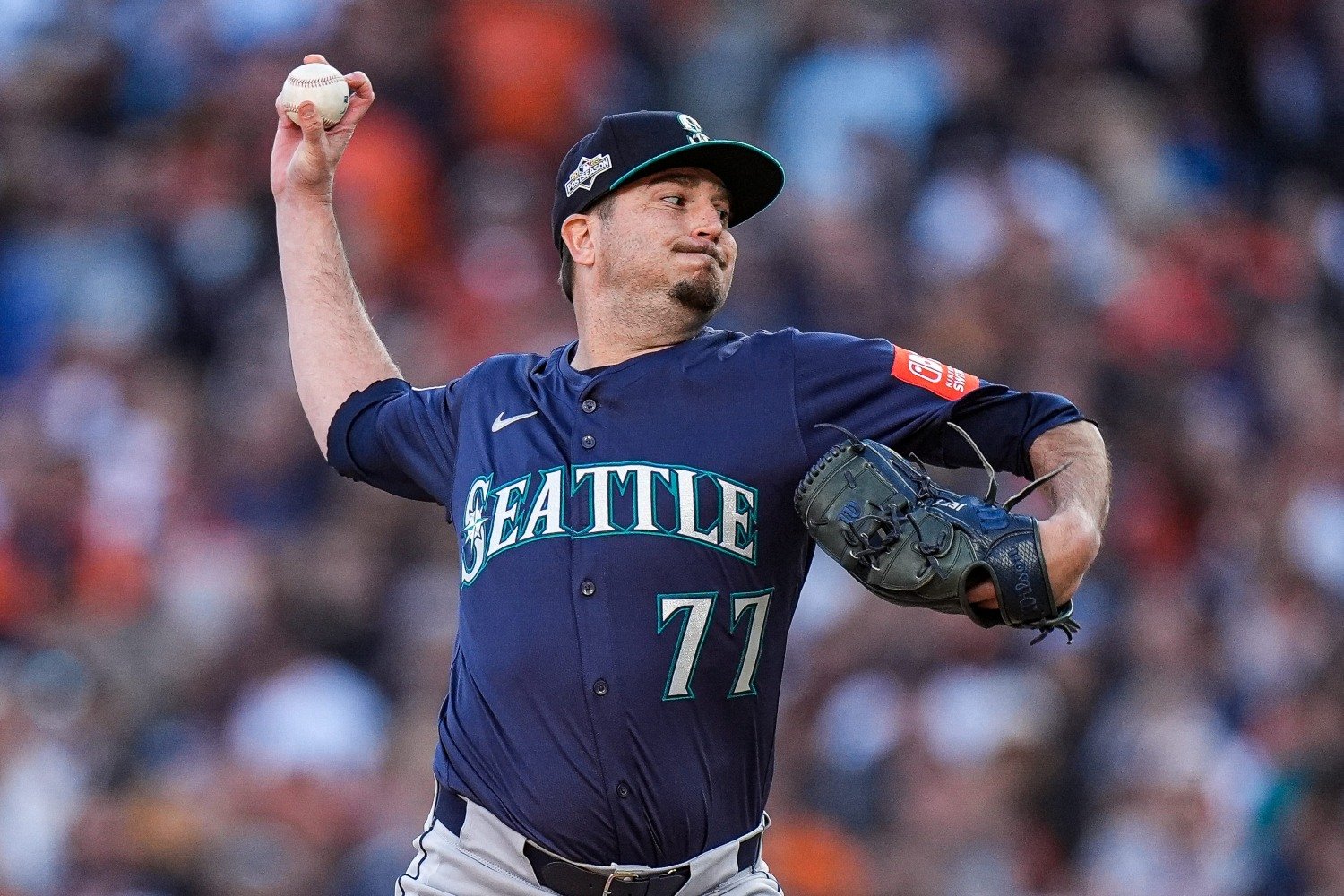 Of all the segments of the MLB free-agent market, the relief pitching one moved fastest. By the time the calendar flipped to 2026, there were relatively few high-leverage arms left on what hadn't been an especially robust market in the first place. Even as January and February progressed, there has been a steady trickle of reliever signings, such that only a fistful of pitchers with meaningful big-league experience remain unsigned as teams look ahead to the start of Grapefruit and Cactus League contests. Naturally, the best of the bunch have already found homes. To remain a free agent at this stage, one must have a significant wart on one's profile. Veteran righty Tommy Kahnle has always been so reliant on his changeup that teams slightly discounted him, and he had a woeful finish to 2025, leaving him in the cold this winter. Flamethrower Michael Kopech has tantalizing stuff, but huge health questions hang over his free agency. Apparently, no team is comfortable enough with his medical outlook to sign him to a deal he finds palatable. Some of the same things are true of these three other free-agent relievers, but they have some real promise and could be key contributors to contending teams this year, despite the knocks that have prevented them from finding homes even after camps opened and teams' roster crunches slightly relaxed. Let's briefly break them down. Luke Jackson, RHP Jackson finished the 2025 season healthy, and was even on the Mariners' playoff roster as they came within a game of the World Series. That's the good news. The bad news is that the formerly dynamic setup man saw his strikeout rate crater and his already ugly walk rate tick up last season, as he bounced from the Rangers to the Tigers to Seattle. He's not considered a reliable arm at this point, despite his upside. Nonetheless, that upside is considerable. Jackson still throws a fastball that sits on the high side of 95 miles per hour and can touch 98. With a very high arm slot, he creates some funk and gets good carry on the heater. His slider no longer functions as well as it once did, and he might be a good candidate to transition to more of a sweeper, something he's never seriously attempted in a fairly long big-league career. He has the feel for spin and supination to do it, and while sweepers are more common from pitchers with lower slots, 11 hurlers did throw a sweeper from a high arm slot at least 10% of the time last year. Exploring the sweeper is one option to fix Jackson. Another might be to move him over on the mound. He works from the third-base side of the rubber, leaving room for his fastball's natural cut to bring it over the plate, but he was often guilty of leaving the ball high and on his arm side last season. A slide to the center of the rubber would give him a better chance of consistently throwing strikes with the fastball at the top of the zone. It might also help his breaking stuff play up, obviating the need to introduce a chance to that set of pitches. Max Kranick, RHP Kranick throws even harder than Jackson, and has cut-ride action on his fastball. He doesn't have a breaking ball that he can consistently command and miss bats with, but the elements for one are there. His hard slider acts more like a cutter, playing well off the heat but not yielding many whiffs. The right team could help him perfect a kick-change or better command his curveball to unlock some strikeouts, but the fastball shape and speed alone make him a compelling arm. His big problem is health. Kranick underwent surgery to repair his flexor tendon in July and won't be back on a big-league mound until at least midseason. For that very reason, a team might be able to sign him to a minor-league deal and keep him stashed in the organization for months, without using a 40-man roster spot. He's in an uncomfortable middle range, though, wherein he doesn't have the track record or the perceived upside to profile as a high-leverage arm in a playoff-caliber bullpen, but won't be back in time to be a valuable trade chip for a non-contender. Look for a team to try to sign him to a two-year minor-league deal. If Kranick can get healthy in time, he's an interesting arm to add to even a good bullpen; he just profiles better as a longer-term move. Danny Coulombe, LHP Lingering on the market is nothing new for Coulombe, who signed with the Twins on February 7 last year. This time, he's waiting even longer, which might be a clue about how his shoulder feels. The diminutive southpaw throws from an extreme over-the-top slot, and while he doesn't throw hard, he has a huge array of pitches for a reliever. He's dealt with shoulder fatigue somewhat often over the last two years, including a stint on the injured list near the end of last season with the Rangers. He admitted last spring that he nearly always feels some nagging soreness or fatigue, and a long ramp-up in camp might not serve him well at this point. Should a team have a late-developing opening in their bullpen and/or on their 40-man roster, though, Coulombe makes a great candidate to fill it. He's smart, versatile and personable, and he has a 2.47 ERA in 124 relief innings since the start of 2023. He's 36 years old and only throws 90 miles per hour, but he might be the best remaining relief pitcher available in free agency. None of these guys will be closing games in the playoffs this season. However, each has a path to helping a team who appears in the playoffs, if they can get or stay healthy and make the right adjustments. Though camps are open and the bulk of the offseason work is done, teams will still be calling and checking in with pitchers like these. It's not too late to dream on an under-the-radar addition that might turn out to be important for a competitive club.
-
- 1
-

-
- max kranick
- luke jackson
- (and 1 more)
-
Image courtesy of © Junfu Han / USA TODAY NETWORK via Imagn Images Of all the segments of the MLB free-agent market, the relief pitching one moved fastest. By the time the calendar flipped to 2026, there were relatively few high-leverage arms left on what hadn't been an especially robust market in the first place. Even as January and February progressed, there has been a steady trickle of reliever signings, such that only a fistful of pitchers with meaningful big-league experience remain unsigned as teams look ahead to the start of Grapefruit and Cactus League contests. Naturally, the best of the bunch have already found homes. To remain a free agent at this stage, one must have a significant wart on one's profile. Veteran righty Tommy Kahnle has always been so reliant on his changeup that teams slightly discounted him, and he had a woeful finish to 2025, leaving him in the cold this winter. Flamethrower Michael Kopech has tantalizing stuff, but huge health questions hang over his free agency. Apparently, no team is comfortable enough with his medical outlook to sign him to a deal he finds palatable. Some of the same things are true of these three other free-agent relievers, but they have some real promise and could be key contributors to contending teams this year, despite the knocks that have prevented them from finding homes even after camps opened and teams' roster crunches slightly relaxed. Let's briefly break them down. Luke Jackson, RHP Jackson finished the 2025 season healthy, and was even on the Mariners' playoff roster as they came within a game of the World Series. That's the good news. The bad news is that the formerly dynamic setup man saw his strikeout rate crater and his already ugly walk rate tick up last season, as he bounced from the Rangers to the Tigers to Seattle. He's not considered a reliable arm at this point, despite his upside. Nonetheless, that upside is considerable. Jackson still throws a fastball that sits on the high side of 95 miles per hour and can touch 98. With a very high arm slot, he creates some funk and gets good carry on the heater. His slider no longer functions as well as it once did, and he might be a good candidate to transition to more of a sweeper, something he's never seriously attempted in a fairly long big-league career. He has the feel for spin and supination to do it, and while sweepers are more common from pitchers with lower slots, 11 hurlers did throw a sweeper from a high arm slot at least 10% of the time last year. Exploring the sweeper is one option to fix Jackson. Another might be to move him over on the mound. He works from the third-base side of the rubber, leaving room for his fastball's natural cut to bring it over the plate, but he was often guilty of leaving the ball high and on his arm side last season. A slide to the center of the rubber would give him a better chance of consistently throwing strikes with the fastball at the top of the zone. It might also help his breaking stuff play up, obviating the need to introduce a chance to that set of pitches. Max Kranick, RHP Kranick throws even harder than Jackson, and has cut-ride action on his fastball. He doesn't have a breaking ball that he can consistently command and miss bats with, but the elements for one are there. His hard slider acts more like a cutter, playing well off the heat but not yielding many whiffs. The right team could help him perfect a kick-change or better command his curveball to unlock some strikeouts, but the fastball shape and speed alone make him a compelling arm. His big problem is health. Kranick underwent surgery to repair his flexor tendon in July and won't be back on a big-league mound until at least midseason. For that very reason, a team might be able to sign him to a minor-league deal and keep him stashed in the organization for months, without using a 40-man roster spot. He's in an uncomfortable middle range, though, wherein he doesn't have the track record or the perceived upside to profile as a high-leverage arm in a playoff-caliber bullpen, but won't be back in time to be a valuable trade chip for a non-contender. Look for a team to try to sign him to a two-year minor-league deal. If Kranick can get healthy in time, he's an interesting arm to add to even a good bullpen; he just profiles better as a longer-term move. Danny Coulombe, LHP Lingering on the market is nothing new for Coulombe, who signed with the Twins on February 7 last year. This time, he's waiting even longer, which might be a clue about how his shoulder feels. The diminutive southpaw throws from an extreme over-the-top slot, and while he doesn't throw hard, he has a huge array of pitches for a reliever. He's dealt with shoulder fatigue somewhat often over the last two years, including a stint on the injured list near the end of last season with the Rangers. He admitted last spring that he nearly always feels some nagging soreness or fatigue, and a long ramp-up in camp might not serve him well at this point. Should a team have a late-developing opening in their bullpen and/or on their 40-man roster, though, Coulombe makes a great candidate to fill it. He's smart, versatile and personable, and he has a 2.47 ERA in 124 relief innings since the start of 2023. He's 36 years old and only throws 90 miles per hour, but he might be the best remaining relief pitcher available in free agency. None of these guys will be closing games in the playoffs this season. However, each has a path to helping a team who appears in the playoffs, if they can get or stay healthy and make the right adjustments. Though camps are open and the bulk of the offseason work is done, teams will still be calling and checking in with pitchers like these. It's not too late to dream on an under-the-radar addition that might turn out to be important for a competitive club. View full article
-
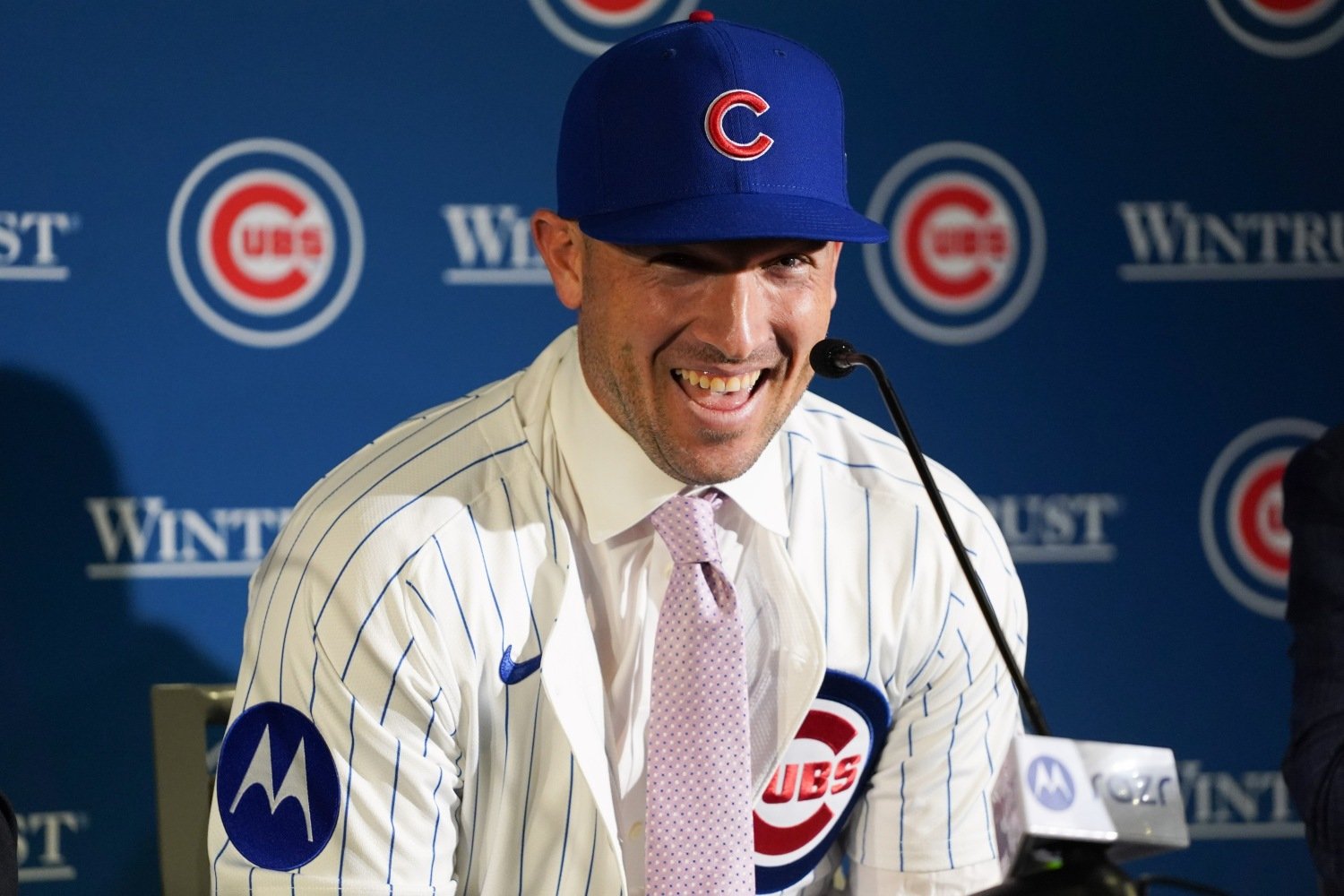 Deferred payments in big-league contracts continue to be a hot topic, even as the hot stove winds down and the season itself draws near. For many fans, ever since Shohei Ohtani signed a contract deferring over 90% of his salary each year to maximize the Dodgers' ability to build a championship-caliber team around him, deferrals have been the bogeyman: always lurking just out of sight, but always a threat. Part of the problem is that fans shouldn't be asked (and shouldn't so often volunteer) to wade into complicated financial rules to determine the full implications of their favorite team—or arch rival—signing a star free agent. However, another part of the problem is a garbled message about the nature of deferrals, coming from national sports media outlets. We can fix that second problem, so let's do so. It's time to quickly, cleanly lay out what deferrals are, what they aren't, whom they benefit, and why, so we can stop talking about them from now on. To start that process, let's peg the key things wrong with how most baseball pundits talk about deferrals. They oversimplify the issue. This is the most common problem humans have when tackling any mildly complicated process or procedure. The temptation to boil things down to a single sentence overwhelms, and the would-be explainer boils off some of their own comprehension, such that their efforts at concision are hopeless. They're not context-specific enough in their discussions of each deferred deal. There's really no time when a fan needs to know both the face value of a contract and the competitive-balance tax number assigned to it, after factoring in deferrals and balancing the annual average value. If a team is flirting with or above the competitive-balance tax threshold, the only number that really matters is the CBT one. If a team is playing far below that line anyway, the only number that matters is the face value. When reporters give both numbers and emphasize the difference between them, it implies an importance in that gap that simply doesn't exist. They treat players like teams. This, in my opinion, is the biggie. In fact, it's worth saving the guts of this part for a longer breakdown, rather than crunching it into this paragrpah. Suffice it to say, though, that teams and players look at deferrals differently—more differently than reporters tend to convey to their audiences. Here's the dissonance that must be resolved to understand contract deferrals correctly: big-league teams are huge, ravenous money monsters. They take in enormous sums, but they spend cash incredibly fast, too. Burn rate is a real and important consideration for franchises. They're richer than they want you to believe, but liquidity is a real problem for many of them. Thus, delaying large payments is a boon to their business. They get a humongous benefit from deferrals—one that easily eclipses the discount rate applied by either the player's union or the league itself to their spending. For a team, pushing $15 million of a $35-million salary five years down the road is worth millions of dollars, even though they have to fund an escrow account to ensure that that deferred money is available to pay the player in question come the payments' due dates. Teams have front-office staffers and accountants assigned solely to these projects, and they still more than pay for themselves. For a player, though, a deferral just doesn't mean anything. It might technically mean that the spending power of their $35 million is reduced to $30 million or so, but for a person—even for a family, or multiple generations of a family, and even accounting for an extravagant lifestyle—there is simply no difference between $30 million and $35 million. Perhaps a better way to put that is: there is no difference between getting $35 million all at once and getting $20 million in one year, than $15 million spread over a handful of later years. Every player accepting such a deal will make more money over that kind of contract than they could spend over a responsible lifetime, and more than their children can spend over responsible lifetimes. The cherry on the top of that sundae is that, for many players, deferrals also create tax benefits that claw back a bit of whatever nominal loss in value they suffer by taking their cash down the road. A big-league salary is taxed according to the income tax rates in each of the states in which they play throughout a season, weighed according to the games they play in each. Deferring a huge chunk of that salary until some time after one's retirement, though, can mean paying no income tax at all, if a player lives in a state without that tax. Even if a player and their family chooses not to be bound by that consideration, they can easily establish a residence in some relatively low-tax district. The spending power of deferred payments is diminished by inflation between the time when the money is earned and when it's actually received, but it's pushed back up by the ability to reduce one's tax burden. Deferrals, then, aren't easy to value in a simple, agreed-upon way. The player's union and the league don't even really try to do so. The sides agree on a formula for discounting future payments to establish the competitive-balance tax hit of contracts in each collective bargaining agreement, and the league considers that official, but the union maintains its own numbers. Deferrals are highly beneficial to teams, but they don't hurt players at all. Being a franchise with a 10-figure valuation but $400 million in annual expenses is such a different thing than being a young family that the impact of even tens of millions of dollars in deferrals is huge for one but nil for the other. Even among very smart analysts of the game, there's a strong tendency to pick a winner and a loser when it comes to each clause of a contract. An opt-out clearly favors a player; so does a no-trade clause. A club option favors the team. With deferrals, though, that kind of thinking doesn't work. Nor do dichotomies between small- and large-market teams. Clubs that end up in situations where deferrals offer substantial help don't reliably fall into one category or the other. The circumstances that make them helpful are idiosyncratic. Life is complicated, and individual situations often defy broad principles. Deferrals, like those no-trade clauses and option years, exist to make contracts more flexible and palatable to each side. To properly understand them, one must embrace complexity and eschew the oversimplified binary of contract terms favoring either the player or the team.
 -
Image courtesy of © David Banks-Imagn Images Deferred payments in big-league contracts continue to be a hot topic, even as the hot stove winds down and the season itself draws near. For many fans, ever since Shohei Ohtani signed a contract deferring over 90% of his salary each year to maximize the Dodgers' ability to build a championship-caliber team around him, deferrals have been the bogeyman: always lurking just out of sight, but always a threat. Part of the problem is that fans shouldn't be asked (and shouldn't so often volunteer) to wade into complicated financial rules to determine the full implications of their favorite team—or arch rival—signing a star free agent. However, another part of the problem is a garbled message about the nature of deferrals, coming from national sports media outlets. We can fix that second problem, so let's do so. It's time to quickly, cleanly lay out what deferrals are, what they aren't, whom they benefit, and why, so we can stop talking about them from now on. To start that process, let's peg the key things wrong with how most baseball pundits talk about deferrals. They oversimplify the issue. This is the most common problem humans have when tackling any mildly complicated process or procedure. The temptation to boil things down to a single sentence overwhelms, and the would-be explainer boils off some of their own comprehension, such that their efforts at concision are hopeless. They're not context-specific enough in their discussions of each deferred deal. There's really no time when a fan needs to know both the face value of a contract and the competitive-balance tax number assigned to it, after factoring in deferrals and balancing the annual average value. If a team is flirting with or above the competitive-balance tax threshold, the only number that really matters is the CBT one. If a team is playing far below that line anyway, the only number that matters is the face value. When reporters give both numbers and emphasize the difference between them, it implies an importance in that gap that simply doesn't exist. They treat players like teams. This, in my opinion, is the biggie. In fact, it's worth saving the guts of this part for a longer breakdown, rather than crunching it into this paragrpah. Suffice it to say, though, that teams and players look at deferrals differently—more differently than reporters tend to convey to their audiences. Here's the dissonance that must be resolved to understand contract deferrals correctly: big-league teams are huge, ravenous money monsters. They take in enormous sums, but they spend cash incredibly fast, too. Burn rate is a real and important consideration for franchises. They're richer than they want you to believe, but liquidity is a real problem for many of them. Thus, delaying large payments is a boon to their business. They get a humongous benefit from deferrals—one that easily eclipses the discount rate applied by either the player's union or the league itself to their spending. For a team, pushing $15 million of a $35-million salary five years down the road is worth millions of dollars, even though they have to fund an escrow account to ensure that that deferred money is available to pay the player in question come the payments' due dates. Teams have front-office staffers and accountants assigned solely to these projects, and they still more than pay for themselves. For a player, though, a deferral just doesn't mean anything. It might technically mean that the spending power of their $35 million is reduced to $30 million or so, but for a person—even for a family, or multiple generations of a family, and even accounting for an extravagant lifestyle—there is simply no difference between $30 million and $35 million. Perhaps a better way to put that is: there is no difference between getting $35 million all at once and getting $20 million in one year, than $15 million spread over a handful of later years. Every player accepting such a deal will make more money over that kind of contract than they could spend over a responsible lifetime, and more than their children can spend over responsible lifetimes. The cherry on the top of that sundae is that, for many players, deferrals also create tax benefits that claw back a bit of whatever nominal loss in value they suffer by taking their cash down the road. A big-league salary is taxed according to the income tax rates in each of the states in which they play throughout a season, weighed according to the games they play in each. Deferring a huge chunk of that salary until some time after one's retirement, though, can mean paying no income tax at all, if a player lives in a state without that tax. Even if a player and their family chooses not to be bound by that consideration, they can easily establish a residence in some relatively low-tax district. The spending power of deferred payments is diminished by inflation between the time when the money is earned and when it's actually received, but it's pushed back up by the ability to reduce one's tax burden. Deferrals, then, aren't easy to value in a simple, agreed-upon way. The player's union and the league don't even really try to do so. The sides agree on a formula for discounting future payments to establish the competitive-balance tax hit of contracts in each collective bargaining agreement, and the league considers that official, but the union maintains its own numbers. Deferrals are highly beneficial to teams, but they don't hurt players at all. Being a franchise with a 10-figure valuation but $400 million in annual expenses is such a different thing than being a young family that the impact of even tens of millions of dollars in deferrals is huge for one but nil for the other. Even among very smart analysts of the game, there's a strong tendency to pick a winner and a loser when it comes to each clause of a contract. An opt-out clearly favors a player; so does a no-trade clause. A club option favors the team. With deferrals, though, that kind of thinking doesn't work. Nor do dichotomies between small- and large-market teams. Clubs that end up in situations where deferrals offer substantial help don't reliably fall into one category or the other. The circumstances that make them helpful are idiosyncratic. Life is complicated, and individual situations often defy broad principles. Deferrals, like those no-trade clauses and option years, exist to make contracts more flexible and palatable to each side. To properly understand them, one must embrace complexity and eschew the oversimplified binary of contract terms favoring either the player or the team. View full article
-
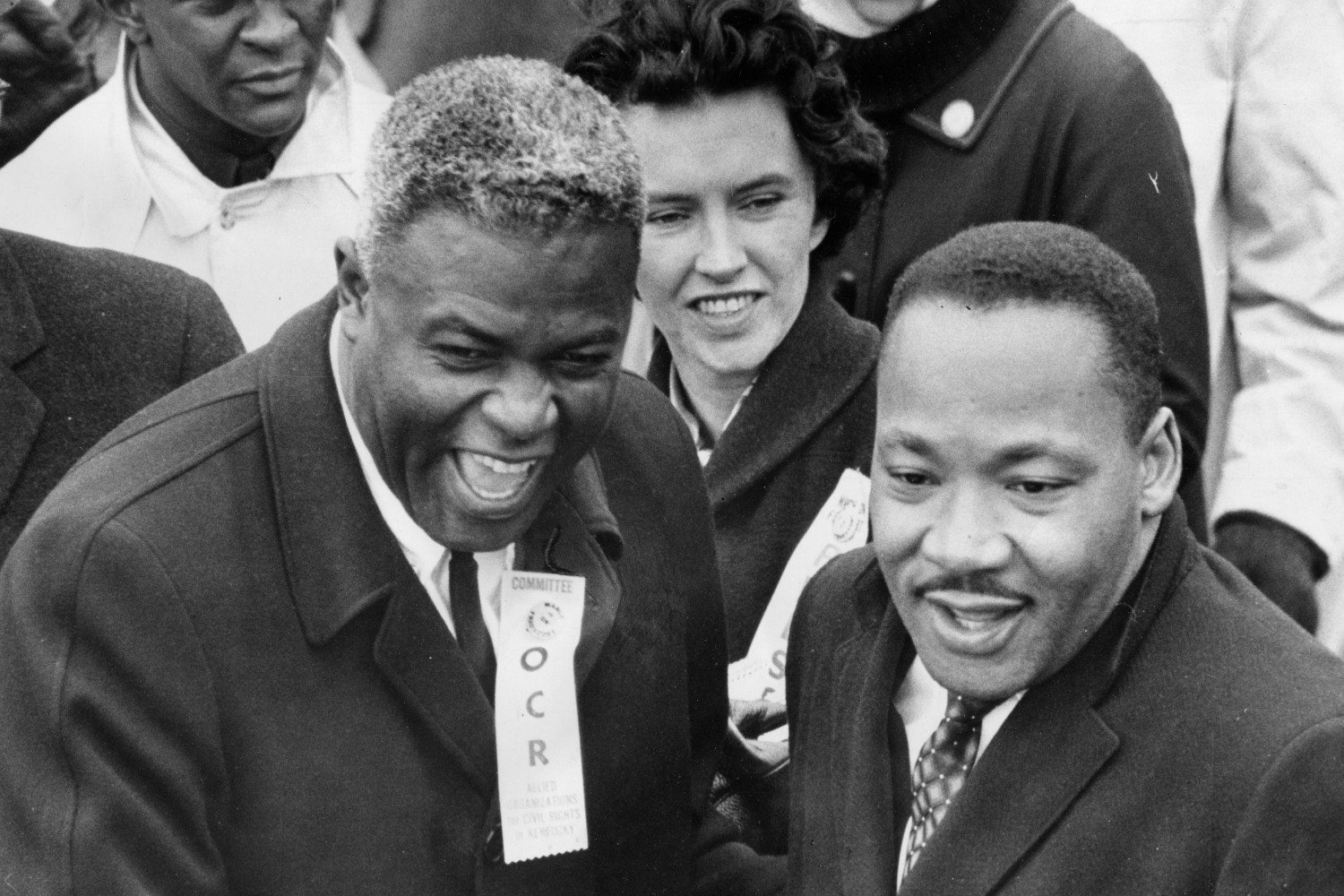 Just as America has not completed the realization of Dr. Martin Luther King Jr.'s famous dream, professional baseball—America's pastime, and the battleground on which some of the first triumphs of the post-World War II Civil Rights Movement were won—has not finished its journey from a segregated and often backward game to an engine of positive change and open-mindedness. King owed quite a bit to Jackie Robinson, but by the end of King's life, baseball (like every other important American institution) owed something to King, too. We are not finished paying that debt; we have defaulted on some of the lines of humanitarian credit taken out on our behalf by the entire movement of which King was the head. Yet, there's hope now for a better American future, because we can look to a nobler and more moral American past than King and his peers could. They had to forge a belief that the beatings and bombings and lynchings used to dissuade them from demanding basic human rights could be survived, and that America had within it enough people to sustain those demands. They had little real historical evidence in which to ground that hope, so they had to generate faith. Now, they—not only King, of course, but Malcolm X, Fannie Lou Hamer, Ella Baker, and others too numerous to name—give us that precedent, and lighten our burden. In baseball, the name most famously linked to King and to the Civil Rights Movement is Robinson's, and with good reason. Like King, Robinson had plenty of forebears and contemporaries who also deserve recognition, both for enduring the hatred and maltreatment they received for wanting equity and inclusion in Major League Baseball and for the ways in which they spoke out for or inspired people of color in other walks of life. However, Roberto Clemente is also one of the vital pioneers of racial progress in baseball. So are Alex Carrasquel and Ozzie Virgil. On this Martin Luther King Jr. Day, let's take a moment to consider both why those players' legacies are discussed in different silos than Robinson's. It might tell us something important about the racial distinctions we still draw too readily in the United States, and about the way baseball interacts with what's going on throughout the country in early 2026. There were, in effect, three or four Civil Rights Movements by the mid-1960s. King and his many colleagues, collaborators and rivals fought for justice and progress on behalf of all people of color, but their efforts focused conspicuously on the American Black population—the descendants, almost exclusively, of people kidnapped and trafficked to the States from Africa. Their message was global, which was why it was successful, but it was also deeply rooted in the experience of those enslaved people and their progeny. The experience of Black Americans was vastly different than those of American Indians, Latinos, and Asian Americans, even after slavery was abolished and as the Great Migration carried Black people across the country, where they began to encounter more of those other minority groups. King had the right words for this problem, but he never gave it his full attention. Had he not been assassinated, he might one day have landed on the right way to bridge the gap between his main constituency and the other minority groups suffering unique flavors of discrimination and marginalization, but he never did. Instead, we have only scant evidence of collaboration or communication between King and the Latino version of the Civil Rights Movement, led at that time by Cesar Chavez and Dolores Huerta. "As brothers in the struggle for equality, I extend the hand of fellowship and goodwill and wish you and your members continued success," King wrote to Chavez in 1966. "Our separate struggles are really one—a struggle for freedom, for dignity, and for humanity.” That much was true, but that the two movements never fully fused speaks to how different their experiences and chief concerns were. The movement Chavez and Huerta led was more urgently tied to the labor movement. They used the same Gandhi-inspired nonviolent approach King championed, but their rhetoric was very different, because people from Latin America conceptualize race quite differently from most in the United States. Language is, of course, an important dynamic. So is geography. Because most Black Americans were denied even the knowledge of their homeland, let alone an understanding of which nation or tribe they belonged to before being stolen and enslaved, the communal identity forged by Black people here is distinctly American. Not so for most Latino people, whose families came here from places still alive in their memories and available to visit—or who have lived where they do now since long before it was considered part of the United States. White people in the U.S. have often treated Latino people differently from Black people, too. The disease of racism that spread throughout the continent and became a parasitic but inextricable characteristic of the nation built upon it led many to think in incredibly simplistic terms, with the result being that many virulent racists held more sympathetic views of Latino people than of Black people because the former group's skin is (on average, in populations with wide ranges of hues that very much overlap) a bit lighter. Discrimination based on the fluency of a native Spanish speaker's English is common, but the language barrier often created a different kind of interaction between White people and Latinos. The aspiration King articulated lies at the heart of every rightly American endeavor. We were born, as a nation, under the banner of "Life, Liberty and the Pursuit of Happiness," but we should exchange that motto for one not hypocritically heaved forward by an owner of slaves in the construction of a country where women couldn't vote and minorities of all kinds were denied those "unalienable rights". King said we should all seek "Freedom, Dignity and Humanity," and while he never found any more forceful way to mesh his own movement with the one in support of Latino people than by inviting organizers to turn out Latinos for the March on Washington in 1965, we can use those words as guideposts in our own pursuity of the dream KIng spoke of at that March. "In a sense, we’ve come to our nation’s capital to cash a check," King said that day. "When the architects of our Republic wrote the magnificent words of the Constitution and the Declaration of Independence, they were signing a promissory note to which every American was to fall heir." That check remains valid, and has been endorsed, but it hasn't yet been cashed in the full amount. King probably knew it wouldn't be cashed on the spot, or within a few years. Sixty years later, though, the debt has only grown. This brings us to what's happening in the United States right now, and to the entanglement of the Black experience, the Latino experience, and baseball. Baseball has always been, for one thing, where those two minority groups coexisted in an especially interesting way. Indeed, in players like Roberto Clemente and Rico Carty, there were even examples from the early years after integration of players from Caribbean nations who looked as Black as many African-American players but had the same language and lived experiences as many of their lighter-skinned countrymen. In the early days of Major League Baseball's integration, most non-White players were African-American, but now, the game is powered as much by stars from the Dominican Republic, Venezuela and Puerto Rico as by any racial or geographic group—even White Americans. Baseball looks like America, even though it must borrow heavily from other countries to get the impression right. Thus, baseball is under threat, because America is under threat. In the Twin Cities, the Somali-American community—one of the few large enclaves of Black people in the United States who do have an unmuddled historical, linguistic and cultural identity, distinct from America's, but most of whom have lived and worked and gradually assimilated themselves here over the 30-plus years since war in Somalia first began to prompt refugees to flee—is under assault, and while few Somali-Americans play baseball, the impacts reach into baseball communities with both hands. The same agents terrorizing Somali-Americans in Minneapolis do so to Venezuelan and other Latino populations, indiscriminately (though very discriminatorily). Throughout the country, many people of color—including and especially Latinos, even if they be documented residents or American citizens—feel unsafe to do simple tasks or go to work or school. Baseball players fall into these categories. If the season resumes in March under the conditions many American cities face now, inevitably, a baseball player will be kidnapped and unlawfully detained by Immigration and Customs Enforcement (ICE) agents. Because the check King brought hundreds of thousands to the steps of the Lincoln Memorial to cash has still not been paid out in full, we haven't yet bought our full inheritance as a nation. We've backslid. This is neither an indictment of King's legacy, nor a sign that his movement failed, but it is proof that the dream he articulated can't come true just once. It has to come true anew every day, through a shared commitment to progress and a fierce rejection of the hallmarks of the old, bad ways: abduction and forcible relocation; extrajudicial killing without consequence; and segregation, whether by law or by default. Baseball is no longer America's pastime, but it's still a place where America comes together. America's legacy of imperialism and institutional racism is tied up in the game, but so is its long, indomitable fight to be better. We have come a long, long way since the days of Dr. King. We have also not come nearly far enough. Baseball bears an institutional responsibility to act and to speak for its players and fans, but as baseball fans, we also bear a shared, individual responsibility: to continue a struggle for freedom, dignity and humanity, for all people. At a moment when even the extremely rich young men who play this child's game for a living might not have a guarantee of those things, that struggle is as urgent as ever.
 -
Image courtesy of © Courier-Journal-USA TODAY NETWORK Just as America has not completed the realization of Dr. Martin Luther King Jr.'s famous dream, professional baseball—America's pastime, and the battleground on which some of the first triumphs of the post-World War II Civil Rights Movement were won—has not finished its journey from a segregated and often backward game to an engine of positive change and open-mindedness. King owed quite a bit to Jackie Robinson, but by the end of King's life, baseball (like every other important American institution) owed something to King, too. We are not finished paying that debt; we have defaulted on some of the lines of humanitarian credit taken out on our behalf by the entire movement of which King was the head. Yet, there's hope now for a better American future, because we can look to a nobler and more moral American past than King and his peers could. They had to forge a belief that the beatings and bombings and lynchings used to dissuade them from demanding basic human rights could be survived, and that America had within it enough people to sustain those demands. They had little real historical evidence in which to ground that hope, so they had to generate faith. Now, they—not only King, of course, but Malcolm X, Fannie Lou Hamer, Ella Baker, and others too numerous to name—give us that precedent, and lighten our burden. In baseball, the name most famously linked to King and to the Civil Rights Movement is Robinson's, and with good reason. Like King, Robinson had plenty of forebears and contemporaries who also deserve recognition, both for enduring the hatred and maltreatment they received for wanting equity and inclusion in Major League Baseball and for the ways in which they spoke out for or inspired people of color in other walks of life. However, Roberto Clemente is also one of the vital pioneers of racial progress in baseball. So are Alex Carrasquel and Ozzie Virgil. On this Martin Luther King Jr. Day, let's take a moment to consider both why those players' legacies are discussed in different silos than Robinson's. It might tell us something important about the racial distinctions we still draw too readily in the United States, and about the way baseball interacts with what's going on throughout the country in early 2026. There were, in effect, three or four Civil Rights Movements by the mid-1960s. King and his many colleagues, collaborators and rivals fought for justice and progress on behalf of all people of color, but their efforts focused conspicuously on the American Black population—the descendants, almost exclusively, of people kidnapped and trafficked to the States from Africa. Their message was global, which was why it was successful, but it was also deeply rooted in the experience of those enslaved people and their progeny. The experience of Black Americans was vastly different than those of American Indians, Latinos, and Asian Americans, even after slavery was abolished and as the Great Migration carried Black people across the country, where they began to encounter more of those other minority groups. King had the right words for this problem, but he never gave it his full attention. Had he not been assassinated, he might one day have landed on the right way to bridge the gap between his main constituency and the other minority groups suffering unique flavors of discrimination and marginalization, but he never did. Instead, we have only scant evidence of collaboration or communication between King and the Latino version of the Civil Rights Movement, led at that time by Cesar Chavez and Dolores Huerta. "As brothers in the struggle for equality, I extend the hand of fellowship and goodwill and wish you and your members continued success," King wrote to Chavez in 1966. "Our separate struggles are really one—a struggle for freedom, for dignity, and for humanity.” That much was true, but that the two movements never fully fused speaks to how different their experiences and chief concerns were. The movement Chavez and Huerta led was more urgently tied to the labor movement. They used the same Gandhi-inspired nonviolent approach King championed, but their rhetoric was very different, because people from Latin America conceptualize race quite differently from most in the United States. Language is, of course, an important dynamic. So is geography. Because most Black Americans were denied even the knowledge of their homeland, let alone an understanding of which nation or tribe they belonged to before being stolen and enslaved, the communal identity forged by Black people here is distinctly American. Not so for most Latino people, whose families came here from places still alive in their memories and available to visit—or who have lived where they do now since long before it was considered part of the United States. White people in the U.S. have often treated Latino people differently from Black people, too. The disease of racism that spread throughout the continent and became a parasitic but inextricable characteristic of the nation built upon it led many to think in incredibly simplistic terms, with the result being that many virulent racists held more sympathetic views of Latino people than of Black people because the former group's skin is (on average, in populations with wide ranges of hues that very much overlap) a bit lighter. Discrimination based on the fluency of a native Spanish speaker's English is common, but the language barrier often created a different kind of interaction between White people and Latinos. The aspiration King articulated lies at the heart of every rightly American endeavor. We were born, as a nation, under the banner of "Life, Liberty and the Pursuit of Happiness," but we should exchange that motto for one not hypocritically heaved forward by an owner of slaves in the construction of a country where women couldn't vote and minorities of all kinds were denied those "unalienable rights". King said we should all seek "Freedom, Dignity and Humanity," and while he never found any more forceful way to mesh his own movement with the one in support of Latino people than by inviting organizers to turn out Latinos for the March on Washington in 1965, we can use those words as guideposts in our own pursuity of the dream KIng spoke of at that March. "In a sense, we’ve come to our nation’s capital to cash a check," King said that day. "When the architects of our Republic wrote the magnificent words of the Constitution and the Declaration of Independence, they were signing a promissory note to which every American was to fall heir." That check remains valid, and has been endorsed, but it hasn't yet been cashed in the full amount. King probably knew it wouldn't be cashed on the spot, or within a few years. Sixty years later, though, the debt has only grown. This brings us to what's happening in the United States right now, and to the entanglement of the Black experience, the Latino experience, and baseball. Baseball has always been, for one thing, where those two minority groups coexisted in an especially interesting way. Indeed, in players like Roberto Clemente and Rico Carty, there were even examples from the early years after integration of players from Caribbean nations who looked as Black as many African-American players but had the same language and lived experiences as many of their lighter-skinned countrymen. In the early days of Major League Baseball's integration, most non-White players were African-American, but now, the game is powered as much by stars from the Dominican Republic, Venezuela and Puerto Rico as by any racial or geographic group—even White Americans. Baseball looks like America, even though it must borrow heavily from other countries to get the impression right. Thus, baseball is under threat, because America is under threat. In the Twin Cities, the Somali-American community—one of the few large enclaves of Black people in the United States who do have an unmuddled historical, linguistic and cultural identity, distinct from America's, but most of whom have lived and worked and gradually assimilated themselves here over the 30-plus years since war in Somalia first began to prompt refugees to flee—is under assault, and while few Somali-Americans play baseball, the impacts reach into baseball communities with both hands. The same agents terrorizing Somali-Americans in Minneapolis do so to Venezuelan and other Latino populations, indiscriminately (though very discriminatorily). Throughout the country, many people of color—including and especially Latinos, even if they be documented residents or American citizens—feel unsafe to do simple tasks or go to work or school. Baseball players fall into these categories. If the season resumes in March under the conditions many American cities face now, inevitably, a baseball player will be kidnapped and unlawfully detained by Immigration and Customs Enforcement (ICE) agents. Because the check King brought hundreds of thousands to the steps of the Lincoln Memorial to cash has still not been paid out in full, we haven't yet bought our full inheritance as a nation. We've backslid. This is neither an indictment of King's legacy, nor a sign that his movement failed, but it is proof that the dream he articulated can't come true just once. It has to come true anew every day, through a shared commitment to progress and a fierce rejection of the hallmarks of the old, bad ways: abduction and forcible relocation; extrajudicial killing without consequence; and segregation, whether by law or by default. Baseball is no longer America's pastime, but it's still a place where America comes together. America's legacy of imperialism and institutional racism is tied up in the game, but so is its long, indomitable fight to be better. We have come a long, long way since the days of Dr. King. We have also not come nearly far enough. Baseball bears an institutional responsibility to act and to speak for its players and fans, but as baseball fans, we also bear a shared, individual responsibility: to continue a struggle for freedom, dignity and humanity, for all people. At a moment when even the extremely rich young men who play this child's game for a living might not have a guarantee of those things, that struggle is as urgent as ever. View full article
-
 It's been a slow but steady winter thus far. At the close of MLB's Winter Meetings, we've already seen 11 of our initial top 50 free agents signed. Accordingly, we've pared down the list we created in mid-November, and here, we present the best 40 players remaining on the market, according to our panel of experts from across the network of sites that make up the DiamondCentric baseball universe. Here are our breakdowns of the players who remain available, along with (unchanged) projections of what they'll earn. 1. Kyle Tucker OF Bats: L Throws: R 2026 Age: 29 Season Batting Runs Fielding Runs Baserunning Runs Swing Speed Sprint Speed 2024 30 7 1 72.2 26 2025 30 -1 3 72.1 26.5 There's little debate about Tucker's supremacy within this class, if only because the top of the class is not especially strong. He had a strange season in 2025, after being dealt from the Astros to the Cubs last winter. When he's right, though, few hitters blend command of the strike zone with the ability to be dangerous to all fields the way Tucker does. Two straight campaigns stained by injuries have eliminated any chance that he would make $500 million, but he's comfortably in the next tier—a star still in his prime, hitting free agency with a chance to sign a decade-long megadeal. Projected Contract: 10 years, $360 million 2. Bo Bichette IF Bats: R Throws: R 2026 Age: 28 Season Batting Runs Fielding Runs Baserunning Runs Swing Speed Sprint Speed 2024 -12 -3 -1 70.4 27.3 2025 23 -12 -2 69.1 26.1 In a mild surprise, Bichette was the consensus choice of our panel as the second-best player in this class. He belongs to a mélange of players with All-Star upside, but who have either glaring warts or troublingly poor seasons in their recent history. In Bichette's case, it's both of the latter. He's no longer a capable shortstop, and the knee injury that cost him all but the final round of the Blue Jays' postseason run can't be fully blamed for the way his sprint speed plunged; he'd lost a step even before that. On the other hand, Bichette is as good a bet to hit a well-rounded .300 as just about anyone in baseball. Despite his below-average bat speed, he hits hard line drives with regularity, and he improved his plate discipline in 2025. Even as a bat-first second baseman, that will be a valuable profile. Projected Contract: 7 years, $175 million 3. Alex Bregman 3B Bats: R Throws: R 2026 Age: 32 Season Batting Runs Fielding Runs Baserunning Runs Swing Speed Sprint Speed 2024 12 6 -2 71.3 26.7 2025 17 1 -2 71 26 If you're the type to take contracts at face value, it might have shocked you when Bregman opted out of (technically) two years and $80 million to reenter the marketplace, roughly nine months after signing with the Red Sox. In reality, huge deferrals cut down the value of that deal, and without the qualifying offer attached to him, he should be able to beat that deal this winter. That's not to say that Bregman will sign an especially long-term deal. Now, though, he's in position to get the kind of long-term security he eschewed last winter. Though he missed time with a quad strain and wasn't as good after he returned from it, Bregman still profiles as a highly productive hitter and an adequate defender for the foreseeable future. Projected Contract: 5 years, $165 million 4. Tatsuya Imai RHP Starter 2026 Age: 28 Season Strikeout Rate Walk Rate Runs Above Avg. Fastball Velocity Innings Pitched 2024 26.3 9.8 17 95.4 173.1 2025 27.8 7 25 94.9 163.2 Arsenal: Four-Seamer (47) Slider (33) Change (10) Splitter (4) Split-Change (2) It's a bit of an upset to find Imai nipping at Cease's heels. On some of our individual lists, he was the top arm listed. Fascinatingly, as he prepares to come to the States, Imai brings with him what looks like a surefire plus slider, rather than (as many Japanese aces do) leaning heavily on the splitter. His velocity will settle in around the league average once he comes to the U.S., but he profiles as a plus-command, plus-stuff guy with excellent pitchability. He made much-needed strides this season toward finding the changeup that will consistently work for him. Projected Contract: 6 years, $150 million (plus roughly $23 million in posting fee) 5. Framber Valdez LHP Starter 2026 Age: 32 Season Strikeout Rate Walk Rate Runs Above Avg. Fastball Velocity Innings Pitched 2024 24 7.8 26 94.1 176.1 2025 23.3 8.5 22 94.3 192 Arsenal: Sinker (46) Curve (31) Change (17) Slider (4) Four-Seamer (1) His walk year was not as confidence-inspiring as Valdez might have liked, and will be remembered mostly for the way he appeared to target his own catcher for a cross-up after giving up a home run. However, his heavy sinker is still one of the game's dominant offerings, and his unusually high arm slot for that two-seamer sets up his curveball gorgeously. Valdez is older than you might guess, and he'll have to make some adjustments as his velocity begins to fade, but for now, he's a frontline lefty starter. Projected Contract: 5 years, $150 million 6. Cody Bellinger OF Bats: L Throws: L 2026 Age: 30 Season Batting Runs Fielding Runs Baserunning Runs Swing Speed Sprint Speed 2024 5 0 1 69 28.4 2025 17 11 1 70.1 28.2 The move from Wrigley Field to Yankee Stadium was great for Bellinger's numbers, and the Yankees' handling of him (playing him in the corner outfield spots, where he belongs, and boosting his bat speed through better coaching) genuinely elevated his game. The injuries that took him off a superstar trajectory (and the poor play that came with them, leading the Dodgers to non-tender him three years ago) are still relevant, because he's shown neither the knack for avoiding them nor the ability to play well through them. Nonetheless, he's a well-rounded, dynamic player. Projected Contract: 6 years, $130 million 7. Ranger Suárez LHP Starter 2026 Age: 30 Season Strikeout Rate Walk Rate Runs Above Avg. Fastball Velocity Innings Pitched 2024 23.2 6.5 13 90.8 150.2 2025 23.2 5.8 29 90.1 157.1 Arsenal: Sinker (29) Changeup (19) Curveball (16) Cutter (16) Four-Seamer (15) Durability comes in many forms. Cease offers a very traditional version of it: he takes the ball every fifth day and the only questions are about when you'll have to go get him. By contrast, Suárez's career has been pockmarked by injuries, each of them taking him out for chunks of time. He spent time on the injured list with back issues in 2022, 2024 and 2025, and elbow and hamstring trouble in 2023. Yet, he healed well each time, and made at least 22 starts in all four of those seasons. When he does toe the rubber, he's very capable of working deep into games; he averaged 6.1 innings per start in 2025. His heavy sinker and superb command make Suárez reliably excellent. It's just going to be for 130-160 innings in a good year, rather than 190. Projected Contract: 5 years, $110 million 8. Munetaka Murakami 3B/1B/DH Bats: L Throws: R 2026 Age: 26 Season Batting Runs Fielding Runs Baserunning Runs Swing Speed Sprint Speed 2024 35 -8 0 - - 2025 30 -7 0 - - The only left-handed hitter with more pop than Murakami can offer teams this winter is Schwarber. That's raw power, though, and a very different thing from applicable game power. Even in a league with a considerably lower replacement level in terms of sheer stuff and a lower average strikeout rate, Murakami has fanned in roughly 29 percent of his plate appearances over the last three seasons. There's a real chance that his offensive profile savors more of Joey Gallo than of Schwarber, in the States, and unlike Gallo, the stocky Murakami is unlikely to have much defensive value even in the second half of his 20s. Nonetheless, that power will tantalize someone, and his youth makes him a rare free agent, indeed. Projected Contract: 4 years, $92 million (plus roughly $14 million in posting fee) 9. Michael King RHP Starter 2026 Age: 31 Season Strikeout Rate Walk Rate Runs Above Avg. Fastball Velocity Innings Pitched 2024 27.7 8.7 24 92.9 173.2 2025 24.7 8.4 5 92.7 73.1 Arsenal: Sinker (30) Four-Seamer (24) Changeup (21) Sweeper (20) Slider (5) There's a clear separation between the tier that ends with Díaz and the one that begins here. King has flashed the ability to be a frontline starter, but too many injuries have plagued his career to instill much confidence in that outcome. Starting pitchers always become hot commodities in free agency. King, like several others in the segment we're moving into now, will be a beneficiary of the inflationary market for players who fit his profile. His stuff is essentially optimized; the only "unlock" left for interested teams is finding a way to keep him on the mound. Projected Contract: 4 years, $75 million 10. Zac Gallen RHP Starter 2026 Age: 30 Season Strikeout Rate Walk Rate Runs Above Avg. Fastball Velocity Innings Pitched 2024 25.1 8.7 13 93.7 148 2025 21.5 8.1 -6 93.5 192 Arsenal: Four-Seamer (45) Curveball (23) Changeup (16) Slider (8) Cutter (5) It's a testament to the new mode of pitcher evaluation that Gallen is still in line for a hefty payday after a fairly lousy season. He did, however, take all 33 turns in the rotation and pile up innings impressively. He hasn't lost much off his fastball, though its shape has become a bit more ordinary. With just a few inches less relative cut on the heater and a bit less velocity on the curveball, he lost the ability to miss bats consistently in 2025. Many key indices, though, suggest he's still a frontline starter underneath the ugly surface-level numbers. He can generate good spin; achieves ample movement and velocity separation on his changeup; and still throws hard enough to be effective. In large part, Gallen just got unlucky in his walk year. Projected Contract: 4 years, $75 million 11. Kazuma Okamoto 3B/1B Bats: R Throws: R 2026 Age: 30 Season Batting Runs Fielding Runs Baserunning Runs Swing Speed Sprint Speed 2024 51 5 0 - - 2025 37 8 -1 - - Though some harbor real questions about how he can handle the velocity he'll often see in the States, Okamoto has a strong case to be even higher on this list. He lacks the sheen of unrealized potential that comes with Murakami's age, but he also brings a much stronger approach (and night-and-day better contact rates) to the table. Scouts and the data agree that while Murakami is a likely first baseman/DH, Okamoto has a real chance to stick at third for the first few years of his American career. He's a dead pull hitter who needs to land in a park conducive to righties who pull it in the air, but if he does so, he could be the steal of the winter. Were he one day younger, he'd be officially listed as 29 for 2026. Projected Contract: 4 years, $68 million (plus roughly $10 million in posting fee) 12. Eugenio Suárez 3B Bats: R Throws: R 2026 Age: 34 Season Batting Runs Fielding Runs Baserunning Runs Swing Speed Sprint Speed 2024 11 -4 0 72.2 26.5 2025 20 -7 -2 72.3 26.4 To feel really good about a power-dependent righty batter in their mid-30s, you'd like to see high-end bat speed. Suárez doesn't have that. What he does have is an attacking approach that catches the ball way out in front, with a swing geared to lift the ball. After being traded back to Seattle in July, his scorching first half gave way to a frigid second. Nonetheless, the capacity for a power surge is very real with him. He's considerably older than Murakami or Okamoto, but a safer bet to crack 25 homers. Projected Contract: 3 years, $55 million 13. Robert Suarez RHP Closer 2026 Age: 35 Season Strikeout Rate Walk Rate Runs Above Avg. Fastball Velocity Innings Pitched 2024 22.9 6.2 11 99.1 65 2025 27.9 5.9 11 98.6 69.2 Arsenal: Four-Seamer (64) Changeup (24) Sinker (13) Cutter (1) Age and Williams's higher strikeout rate make him a slightly higher-upside signing, but Suarez—with a fastball he can crank up to 102 miles per hour and good enough command to consistently induce weak contact—offers teams a much higher floor. Before evolution invented strikeout nightmares like Williams, Suarez types were the very model of the star closer. Projected Contract: 2 years, $36 million 14. Merrill Kelly RHP Starter 2026 Age: 37 Season Strikeout Rate Walk Rate Runs Above Avg. Fastball Velocity Innings Pitched 2024 21 6.3 4 91.9 73.2 2025 22.3 6.4 12 91.8 184 Arsenal: Changeup (26) Four-Seamer (24) Hard Cutter (19) Sinker (14) Curveball (9) The 2024 campaign was an aberration. Most of the time, since his return from a sojourn in the Pacific Rim, Kelly has been a workhorse. He's a crafty, kitchen-sink starter with excellent command and a feel for sequencing. With all three fastballs and a changeup he can manipulate to play well off any of them as the situation demands, he can even hunt a strikeout when he really needs one—though, if you bet too many times on a 37-year-old staying healthy and outperforming his raw stuff, you'll eventually get burned. Projected Contract: 2 years, $36 million 15. Harrison Bader OF Bats: R Throws: R 2026 Age: 32 Season Batting Runs Fielding Runs Baserunning Runs Swing Speed Sprint Speed 2024 -8 -2 1 71.2 28.2 2025 10 13 -1 73.5 28.8 With some focused changes and the fresh perspective (however hard-won) of a poor 2024 season, Bader had a terrific rebound in 2025. His sheer explosiveness was back, as you can see in his bat and sprint speeds. He got around on the ball more consistently, and a part-time move to left field restored his defensive excellence. Because the track record over the previous few years was much less impressive, though, teams will be somewhat wary of giving him a high AAV or a long-term deal Projected Contract: 3 years, $33 million 16. Jorge Polanco 2B Bats: S Throws: R 2026 Age: 32 Season Batting Runs Fielding Runs Baserunning Runs Swing Speed Sprint Speed 2024 -2 -1 -1 69.7 27.5 2025 20 -4 -2 71.2 27.1 Speaking of bat speed boosts and concomitant increases in production, Polanco's career appeared to be on life support last winter—only for him to creep into the top half of this list with a resurgent season at the plate, from both sides. He lacks defensive utility, because you can barely even play him at second base, but his improvements at bat were real. His hit-over-power offensive profile and lack of traditional slugger size might make some would-be suitors a bit uncomfortable; he's not the archetype of a designated hitter. Projected Contract: 2 years, $25 million 17. Chris Bassitt RHP Starter 2026 Age: 37 Season Strikeout Rate Walk Rate Runs Above Avg. Fastball Velocity Innings Pitched 2024 22.2 9.2 -16 92.5 171 2025 22.6 7.1 8 91.6 170.1 Arsenal: Sinker (42) Curveball (16) Cutter (16) Four-Seamer (10) Sweeper (6) It came as a surprise when, after a transition to the bullpen in October, Bassitt became a legitimate late-inning weapon for the Blue Jays. He doesn't strike you as the type who will find extra velocity and start overpowering people as a result of working in short bursts, but that's what happened. Combine that unexpected bump with the durability he's demonstrated, and he probably went from being off tbis list to the top half of it over the final few months of the 2025 campaign. Projected Contract: 2 years, $24 million 18. Ryan O'Hearn 1B Bats: L Throws: L 2026 Age: 32 Season Batting Runs Fielding Runs Baserunning Runs Swing Speed Sprint Speed 2024 14 -4 0 72.4 27.8 2025 16 0 -2 71.8 27.6 A consistently solid hitter with a good glove at first base, O'Hearn was traded from the Orioles to the Padres in July and was a staple in San Diego's lineup down the stretch. He's a well-rounded hitter and an above-average athlete for his position—although that athletic baseline has led too many teams to try to get away with playing him in the outfield. If he finds a home as a full-time first baseman or the strong side of a platoon at that spot, he should thrive for another couple of years. Projected Contract: 2 years, $23 million 19. Ha-Seong Kim SS Bats: R Throws: R 2026 Age: 30 Season Batting Runs Fielding Runs Baserunning Runs Swing Speed Sprint Speed 2024 -2 2 2 69 28.3 2025 -4 -3 1 70.5 27.6 Injuries have derailed Kim's career, but the consolation prize is that he has a chance to be the best legitimate shortstop in this entire free-agent class. When right, he's a solid defender up the middle and has multiple ways to get to average as a hitter. Whether he can actually be right when needed is very much the question, as he enters free agency for the second consecutive year. Projected Contract: 2 years, $28 million 20. Lucas Giolito RHP Starter 2026 Age: 31 Season Strikeout Rate Walk Rate Runs Above Avg. Fastball Velocity Innings Pitched 2023 25.7 9.2 -1 93.1 184.1 2025 19.7 9.1 10 93.3 145 Arsenal: Four-Seamer (48) Slider (26) Changeup (23) Curveball (3) Though he did yeoman's work for the Red Sox in 2025, Giolito comes with some red flags. His strikeout rate nosed downward in 2025, as he returned from Tommy John surgery. He's never been an elite command guy, and his raw stuff looks diminished. The changeup that once made him special is decidedly less valuable these days. Between the injury history and the performance trend, he's not someone any team will want to depend on in the front half of their rotation. Projected Contract: 2 years, $24 million 21. Brad Keller RHP Reliever 2026 Age: 30 Season Strikeout Rate Walk Rate Runs Above Avg. Fastball Velocity Innings Pitched 2024 16.7 7.8 -7 93.8 41.1 2025 27.2 8 8 97.2 69.2 Arsenal: Hard Cutter (42) Slider (18) Sinker (15) Sweeper (14) Splitter (11) A starter (and occasionally a long man, after he lost starting gigs) until 2025, Keller unlocked a level of stuff improvement no one saw coming in 2025. Offseason work at his training facility near Atlanta helped there, but the conversion to short relief cemented the surge. He still has a starter's arsenal depth, and some team might take an interest in him as a candidate to return to the rotation. Projected Contract: 3 years, $30 million 22. Pete Fairbanks RHP Closer 2026 Age: 32 Season Strikeout Rate Walk Rate Runs Above Avg. Fastball Velocity Innings Pitched 2024 23.8 9.2 3 97.3 45.1 2025 24.2 7.4 6 97.3 60.1 Arsenal: Four-Seamer (51) Slider (40) Changeup (5) Cutter (4) The Rays declined an $11-million option on Fairbanks for 2025. Tampa is good at the due diligence calling when faced with a decision like that on a player, so the implication of their choice is that the rest of the league joined them in feeling uneasy about Fairbanks. Still, he's a hard-throwing righty with closer experience, who did a good job avoiding walks in 2025. Ideally, he's the second- or third-best arm in your bullpen, but if he's the third-best, you feel extremely good about that unit. Projected Contract: 2 years, $25 million 23. Tyler Rogers RHP Reliever 2026 Age: 35 Season Strikeout Rate Walk Rate Runs Above Avg. Fastball Velocity Innings Pitched 2024 17.6 2.1 8 82.4 70.1 2025 16.1 2.3 15 83.5 77.1 Arsenal: Sinker (75) Slider (25) Woefully underrated because he's so unorthodox, Rogers has been better than Helsley, Keller or Fairbanks. As you can see, they all rank ahead of him, anyway. Teams (and even our brilliant panelists) just can't shake the feeling that this will stop working any moment, now, or that they can find more value by signing the guy who throws 100 and teaching him to do something else a bit better. Rogers will have to satisfy himself with continuing to prove everyone wrong. Projected Contract: 2 years, $21 million 24. Nick Martinez RHP Swingman 2026 Age: 35 Season Strikeout Rate Walk Rate Runs Above Avg. Fastball Velocity Innings Pitched 2024 20.4 3.2 26 92.6 142.1 2025 17 6.1 8 92.6 165.2 Arsenal: Cutter (21) Four-Seamer (21) Changeup (20) Sinker (17) Curveball (11) It was a strange season for Martinez, who's approaching the practical minimum for strikeout rate from an effective pitcher. When right, he's exceptionally tough on right-handed batters, but that excellence is somewhat fragile. He has a deep repertoire, but no individual pitch that overwhelms batters. The second half of that sentence gets more important and more concerning as he enters the second half of his 30s. Projected Contract: 1 year, $14 million 25. J.T. Realmuto C Bats: R Throws: R 2026 Age: 35 Season Batting Runs Fielding Runs Baserunning Runs Swing Speed Sprint Speed 2024 5 5 -2 73.2 28.4 2025 -7 5 1 72 28.4 Realmuto is still a good athlete for a catcher, but that feels increasingly like a backhanded compliment. He's fallen off sharply at the plate recently. His bat speed sagged in 2025. Now in his mid-30s, Realmuto is in danger of becoming another in the long line of great catchers who aged very quickly. Projected Contract: 2 years, $20 million 26. Tyler Mahle RHP Starter 2026 Age: 31 Season Strikeout Rate Walk Rate Runs Above Avg. Fastball Velocity Innings Pitched 2024 17.9 7.1 0 91.4 12.2 2025 19.1 8.4 14 92 86.2 Arsenal: Four-Seamer (49) Splitter (27) Cutter (16) Slider (8) Mahle should almost be automatically awarded to the runner-up in the Giolito sweepstakes. He'd be a fine consolation prize for such a team, because anything you like about Giolito, you can convince yourself to like about Mahle. He's a poor man's Giolito because he has even worse health trouble than Giolito has had. Inducing lots of weak contact in the air is a dangerous way to live, too. So far, though, Mahle has been one of those healthy-when-good guys teams love to collect. Projected Contract: 1 year, $14 million 27. Victor Caratini C Bats: S Throws: R 2026 Age: 32 Season Batting Runs Fielding Runs Baserunning Runs Swing Speed Sprint Speed 2024 4 1 -4 71.9 24.4 2025 0 -4 0 72.3 24.3 Solid switch-hitting catchers are extremely hard to find. Caratini is the definition of a low-ceiling guy, but his positional and matchup value are not to be overlooked. He signed for $12 million over two years last time he was a free agent; he earned that and more during his time with the Astros. Projected Contract: 2 years, $15 million 28. Luis Arraez 1B Bats: L Throws: R 2026 Age: 29 Season Batting Runs Fielding Runs Baserunning Runs Swing Speed Sprint Speed 2024 4 -3 0 63.1 26.7 2025 -2 1 0 62.6 26.5 As he settles into life as a first baseman, Arraez has actually become a relatively adept defender there. He's still a poor overall athlete, but he's learned to play well at the least demanding defensive position on the field. That's the good news. The bad news is that he's now traded every secondary skill he ever had for the One Weird Trick of never striking out, so he comes nowhere near meeting the offensive standard at first. The question, which he's likely to try to answer affirmatively on a one-year deal, is whether he can correct his course and regain some balance in the box. Projected Contract: 1 year, $11 million 29. Luke Weaver RHP Reliever 2026 Age: 32 Season Strikeout Rate Walk Rate Runs Above Avg. Fastball Velocity Innings Pitched 2024 31.1 7.9 11 95.7 84 2025 27.5 7.6 3 95.1 64.2 Arsenal: Four-Seamer (59) Changeup (30) Cutter (10) Slider (1) It was a quick fall from the heights for Weaver, who was the relief ace of the pennant-winning 2024 Yankees but not the same guy for most of 2025. Still, he throws a potent fastball-changeup combo, and he fills up the zone better than most relievers. For certain teams' models, he's going to pop as a potential bargain. Projected Contract: 2 years, $16 million 30. Justin Verlander RHP Starter 2026 Age: 43 Season Strikeout Rate Walk Rate Runs Above Avg. Fastball Velocity Innings Pitched 2024 18.7 6.8 -11 93.5 90.1 2025 20.7 7.9 -2 93.9 152 Arsenal: Four-Seamer (46) Slider (23) Curveball (15) Changeup (8) Sweeper (8) It feels like we're just about done here, but Verlander refuses to walk away. That's fine. Some legends need to have the game tell them, in no uncertain terms, that they're done. That hasn't quite happened for Verlander yet, so he's going to keep pitching in 2025. He wasn't very helpful for the 2025 Giants, though, and he won't be much help to whichever team coughs up enough to engage him this winter, either. Projected Contract: 1 year, $12 million 31. Seranthony Domínguez RHP Reliever 2026 Age: 31 Season Strikeout Rate Walk Rate Runs Above Avg. Fastball Velocity Innings Pitched 2024 26.7 8.2 -4 97.7 58.2 2025 30.3 13.8 2 97.7 62.2 Arsenal: Four-Seamer (43) Sweeper (22) Splitter (17) Sinker (13) Curveball (5) Domínguez had some rough moments in the postseason this fall, and his walk rate was much too high this year for a guy you hope to trust in high-leverage setup situations. Even these days, though, guys who throw 98 and throw four different pitches out of the pen are hard to come by. The challenge for whichever team signs him will be to get Domínguez to throw more strikes. Projected Contract: 2 years, $16 million 32. Max Scherzer RHP Starter 2026 Age: 41 Season Strikeout Rate Walk Rate Runs Above Avg. Fastball Velocity Innings Pitched 2024 22.6 5.6 0 92.5 43.1 2025 22.9 6.4 -4 93.6 85 Arsenal: Four-Seamer (49) Slider (23) Changeup (14) Curveball (12) Cutter (3) Same story, different verse: Scherzer is two years Verlander's junior but at a similar stage in his career. He still has the ability to outcompete the other guys for a handful of innings a handful of times per year, but injury and inconsistency are likely to remain the defining characteristics of these final few years in his illustrious career. Projected Contract: 1 year, $12 million 33. Zack Littell RHP Starter 2026 Age: 30 Season Strikeout Rate Walk Rate Runs Above Avg. Fastball Velocity Innings Pitched 2024 21.5 4.7 14 92.4 156.1 2025 17.1 4.2 16 92.1 186.2 Arsenal: Slider (28) Splitter (27) Four-Seamer (24) Sinker (16) Sweeper (5) An elite control artist whose two most frequent pitch types are slider and splitter? That seems almost unthinkable, but that's what Littell is. The unfortunate flip side is that if you're expecting the volume of strikeouts you normally get from a guy with a slider and a splitter he can throw for strikes and two different fastballs, you're going to be disappointed. After spending his first few big-league seasons in the bullpen, Littell has been surprisingly durable as a starter for two seasons. He should make more than the likes of Verlander or Scherzer, but that doesn't mean he will. Projected Contract: 2 years, $20 million 34. Mike Yastrzemski OF Bats: L Throws: L 2026 Age: 35 Season Batting Runs Fielding Runs Baserunning Runs Swing Speed Sprint Speed 2024 4 4 1 70.9 27.2 2025 7 5 2 71.2 26.9 Quietly, Yastrzemski has been a consistently useful outfielder for half a decade or so. He needs to be shielded from southpaws and he can't play center field for a team that takes run prevention seriously, but he's always a bit better than the general perception of him. Projected Contract: 1 year, $9 million 35. Marcell Ozuna DH Bats: R Throws: R 2026 Age: 35 Season Batting Runs Fielding Runs Baserunning Runs Swing Speed Sprint Speed 2024 43 0 -2 74 25.7 2025 13 0 -3 72.9 25.3 Ozuna has been suspended for domestic violence. That makes him a suspect character to add to any clubhouse, and teams will be wary of signing him on that basis alone. He's also a lousy athlete and baserunner, which makes it hard to get excited about his medium-term future. He still rakes, though. He'll find a job, because when he steps into the box, he still rakes. 36. Zach Eflin RHP Starter 2026 Age: 35 Season Strikeout Rate Walk Rate Runs Above Avg. Fastball Velocity Innings Pitched 2024 19.6 3.5 11 91.7 165.1 2025 16.2 4.2 -9 91.7 71.1 Arsenal: Cutter (22) Sinker (19) Changeup (16) Curveball (16) Sweeper (14) Eflin is an extreme pitch-to-contact starter in the age of the swing-and-miss approach. He limits walks, but doesn't strike people out and suffers for that when he's anything less than surgical on the mound. Durability is an essential part of his value, and he wasn't durable in 2025; he's likely to end up settling for a one-year deal. Projected Contract: 1 year, $7 million 37. Paul Goldschmidt 1B Bats: R Throws: R 2026 Age: 38 Season Batting Runs Fielding Runs Baserunning Runs Swing Speed Sprint Speed 2024 3 0 0 72.5 26.3 2025 2 -1 -1 72.6 26.1 Goldschimdt's demise has been a bit overstated. He's a long way from his former All-Star (even borderline Hall of Fame) peak, but Goldschmidt still has a good approach, a good swing, and a modicum of power. The only question about his value is whether he'll be comfortable with the part-time role in which he fits best at this stage. Projected Contract: 1 year, $6 million 38. Jon Duplantier RHP Starter 2026 Age: 31 Season Strikeout Rate Walk Rate Runs Above Avg. Fastball Velocity Innings Pitched 2024 31.2 14.6 2 94.8 63.2 2025 32.4 5.7 16 93.4 90.2 Arsenal: Four-Seamer (49) Cutter (14) Curveball (12) Changeup (11) Slider (9) As with Ponce, temper your excitement as you review Duplantier's 2025 numbers; he accumulated them in Japan. He was truly dominant there, though. His fastball plays above its velocity, especially as he gets more comfortable mixing all the complements to that pitch in his arsenal. If he returns to the States, it will be on an under-the-radar deal, but he could be a steal. Projected Contract: 1 year, $3.5 million 39. Austin Hays OF Bats: R Throws: R 2026 Age: 30 Season Batting Runs Fielding Runs Baserunning Runs Swing Speed Sprint Speed 2024 0 -8 0 72.6 27.1 2025 0 -2 3 71.9 27.6 Hays is a wonderfully vivid player, when he's on the field. He hits from the front half of the batter's box, more than anyone in baseball. He makes consistently hard line-drive contact, and he's a sneakily good athlete (albeit not in center field; he must be confined to the corners). However, you have to make whatever looks you get at him last, because he misses time virtually every year due to strains in his hamstring and calf. Injury, rather than performance, is the limiting factor for him. It will keep him cheap, so some team willing to roll the dice that he'll be available come October should find a deal here. Projected Contract: 1 year, $4 million 40. Josh Bell 1B/DH Bats: S Throws: R 2026 Age: 33 Season Batting Runs Fielding Runs Baserunning Runs Swing Speed Sprint Speed 2024 4 -2 -1 70.4 25.4 2025 6 -4 -3 73.1 25.2 Bell made some significant changes at an improbable juncture of his long career, and although he didn't post huge raw numbers, it should make some suitors more optimistic about his viability as a bat-only contributor. A switch-hitter, Bell is a fine sixth hitter on a winning team—or a very nice middle-of-the-order stopgap and a trade candidate for a team mired in a rebuild. Projected Contract: 1 year, $7.5 million
- 2 comments
-
- 2
-
-

-
- mlb free agency
- kyle tucker
- (and 5 more)
