


DiamondCentric
-
Posts
2,631 -
Joined
-
Last visited
Never
Content Type
Profiles
Forums
Events
News
Tutorials & Help
Major League Baseball Videos
Guides & Resources
Store
Downloads
Gallery
Everything posted by DiamondCentric
-

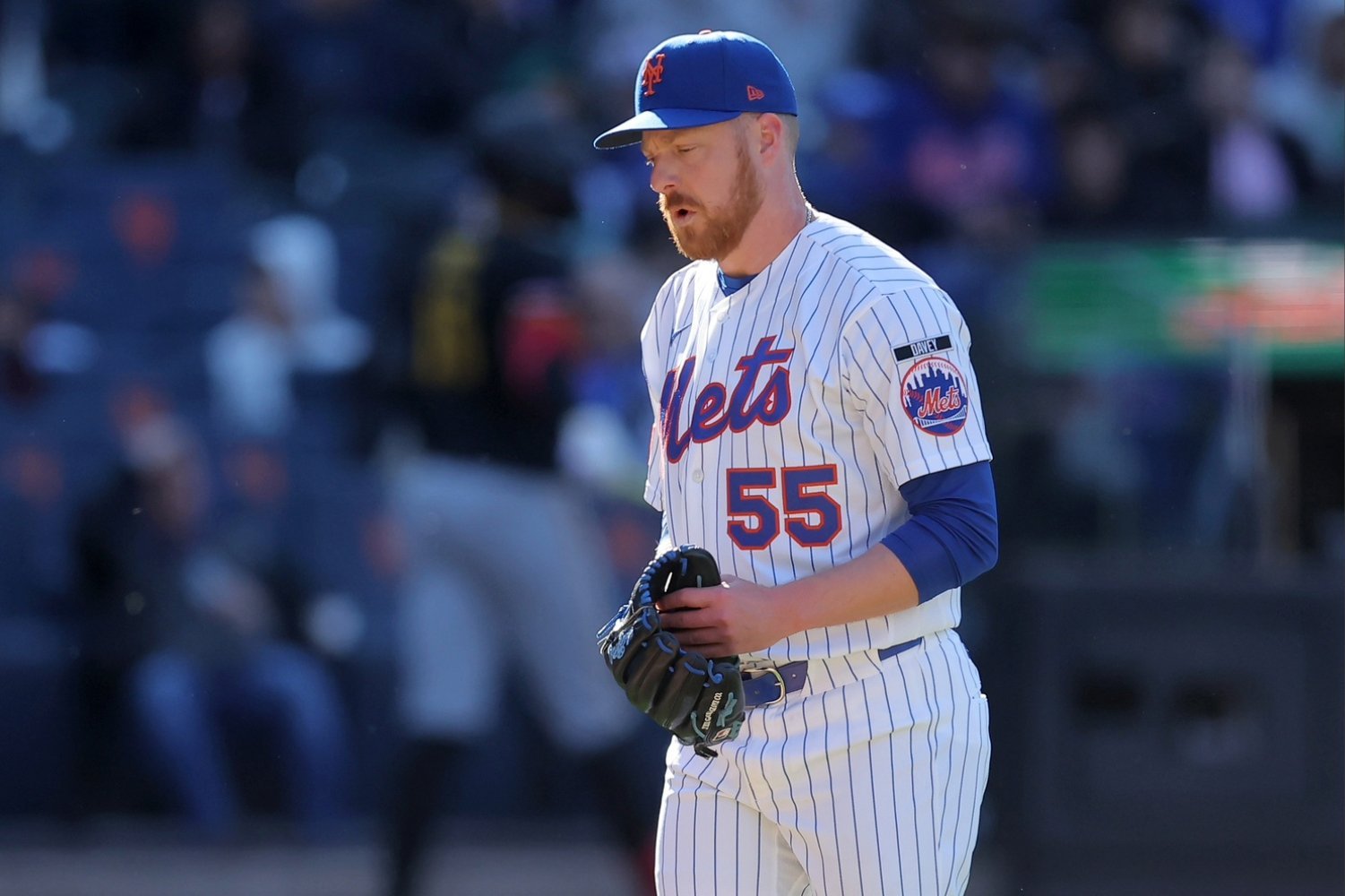 There's nothing worse than a leaky bullpen that spoils a team's best-laid plans. It's like that field-goal kicker in football who can't convert a chip-shot to win the game when every other unit of the football team has performed well. The New York Mets (6-4) are off to a somewhat encouraging start at the outset of a marathon regular season. The bullpen has been one of the most positive aspects, as Mets relievers have posted a 1.66 ERA, second only to the Atlanta Braves (1.08). However, one of the most important statistics for a bullpen is how well they manage walks. With 14 walks issued to this point already, this bullpen can reach new heights as long as they limit the free passes. Newcomers Luke Weaver and Devin Williams have steadied the relief corps. Williams, in particular, needed a strong start after the bullpen lost a huge piece in Edwin Diaz. He currently has a 16.7% hard-hit rate that sits in the 93rd percentile of baseball. He posted a 1.75 ERA over his first four full seasons in the majors despite slightly elevated walk rates. However, since September 3, 2025 (excluding postseason), Williams has posted a 2.63 ERA with 19 strikeouts and two saves in 14 appearances. Williams started to turn the corner in a Yankee uniform. The best part? Only seven walks. Williams can still use an arsenal primarily comprised of a four-seam fastball and changeup as long as his command remains strong. Still, both he and Weaver have given up two walks in their four innings thus far, and they aren't even the worst offenders in the bullpen. Sean Manaea's role will be interesting to watch, as he began the year in the bullpen. With an opening series game against the Pirates tied 1-1, Manaea issued two walks, but was able to get Nick Gonzalez to ground out and keep the game tied. Manaea admitted after his first appearance that he is still trying to figure things out. The southpaw issued walks at an 8.5% clip during his sterling 2024 season that landed right around the league average. It's a tricky balancing act because Manaea followed his middling season debut with an outing against the San Francisco Giants in which he admirably ate innings during a game in which the Mets were trailing by multiple runs. Even though he issued a pair of walks, Manaea saved the rest of the bullpen so that they were in position to pitch later in the series. Tobias Myers is an especially stingy reliever when it comes to free passes throughout his career. Myers (6.4% career walk rate) has yet to unintentionally walk an opposing hitter this season. Huascar Brazoban has likewise been flawless thus far in that regard, but he issued free passes at a 10.3% clip during a 2025 season in which he pitched well overall. A further step forward with his command would make him a far more reliable leverage reliever. First year pitching coach Justin Willard will earn his money as he watches over the development of the relievers. Walks will kill over time, even if, thus far, the bullpen has been good at escaping the jams they've created. Better command from the relief corps will lead to better command of late-game situations. View the full article
 -
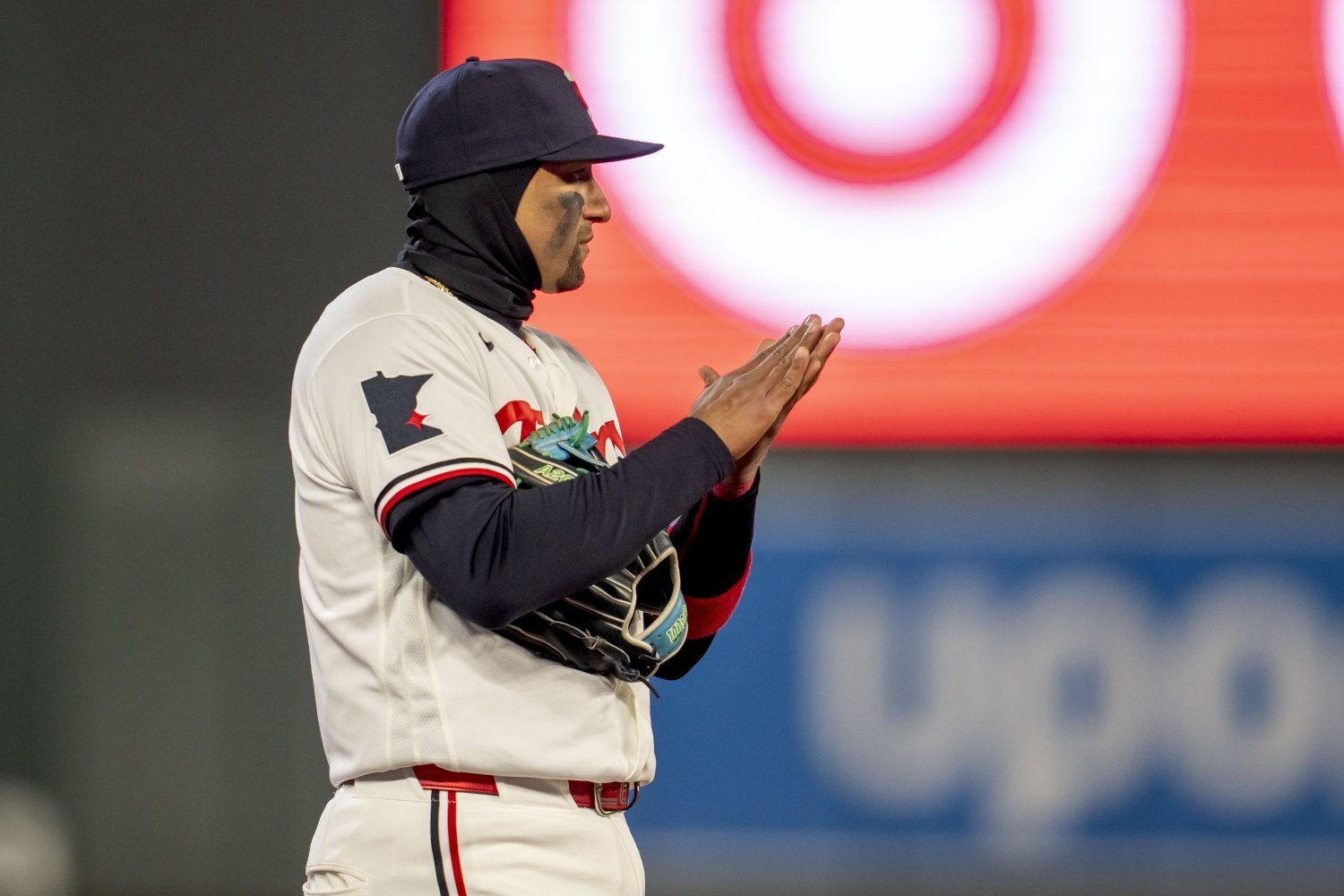 Box Score SP: Joe Ryan 5 IP, 3 H, 3 R (2 ER), 7 K, 3 BB HR: Luke Keaschall (1) Top 3 WPA: Keaschall 0.27, Lawyerson 0.17, Caratini 0.16 Win Probability Chart (via FanGraphs): The Minnesota Twins finally gave the home crowd at Target Field something to warm up about. Coming into the fourth series of the season, the Twins have yet to win a set, dropping each of their first three series two games to one. A frigid week in Minneapolis didn’t make things any easier, and a matchup with the AL Central-favorite Detroit Tigers wasn’t exactly a get-right opportunity, on paper. But behind their ace, Joe Ryan, and a much-needed offensive response, the Twins flipped a familiar script and came away with a 7-3 win to open the series. The Twins wasted no time generating offense in the third inning. Byron Buxton sparked the rally with a double, followed by a single from Trevor Larnach and a walk by Luke Keaschall to load the bases with no outs. They capitalized in methodical fashion, starting with a sacrifice fly from Victor Caratini before RBI singles from Matt Wallner and Royce Lewis gave Minnesota a 3-0 lead. Then came the moment Twins fans have seen too often. In the top of the fourth, the Tigers answered immediately. Colt Keith roped an RBI double, and Zach McKinstry followed with a two-run single to even the score at 3-3. It had all the signs of another game where early momentum would slip away. This time, it didn’t. In the bottom half of the inning, Keaschall delivered the swing of the game. After a slow start to his season, he turned on a pitch and launched his first home run of the year into the left-field bleachers, a two-run shot that immediately swung momentum back in Minnesota’s favor and put the Twins up 5-3. For Ryan, the fourth inning was the lone blemish in an otherwise steady outing. He battled some control issues but limited the damage, finishing with three runs allowed over five innings while keeping the Twins in position to win. From there, the bullpen took over and slammed the door. Anthony Banda, Eric Orze, Kody Funderburk, and Cody Laweryson combined for four scoreless innings. The Twins added breathing room in the eighth inning, and once again it was Caratini in the middle of it. With the bases loaded, he lined a two-run single to extend the lead to 7-3, giving Minnesota the cushion it had been missing in previous games. The Twins answered adversity, regained control after losing it, and got contributions up and down the roster. What’s next The Twins will look to build on the momentum as they continue the series against Detroit. They’ll face a tough test in Tarik Skubal, the two-time reigning Cy Young Award winner, who is set to take the mound for the Tigers. Opposing him will be Taj Bradley, as the Twins try to secure their first series win of the season at 6:40 PM CT. It will, blessedly, be warmer. Bullpen Usage Chart THU FRI SAT SUN MON TOT Laweryson 0 10 9 0 14 19 Topa 13 17 0 15 0 45 Rogers 4 0 23 18 0 45 Banda 0 17 15 0 17 32 Orze 0 37 0 0 12 37 Sands 11 0 0 21 0 32 Funderburk 15 2 0 3 20 20 Acton 0 0 0 0 0 0 View the full article
 -
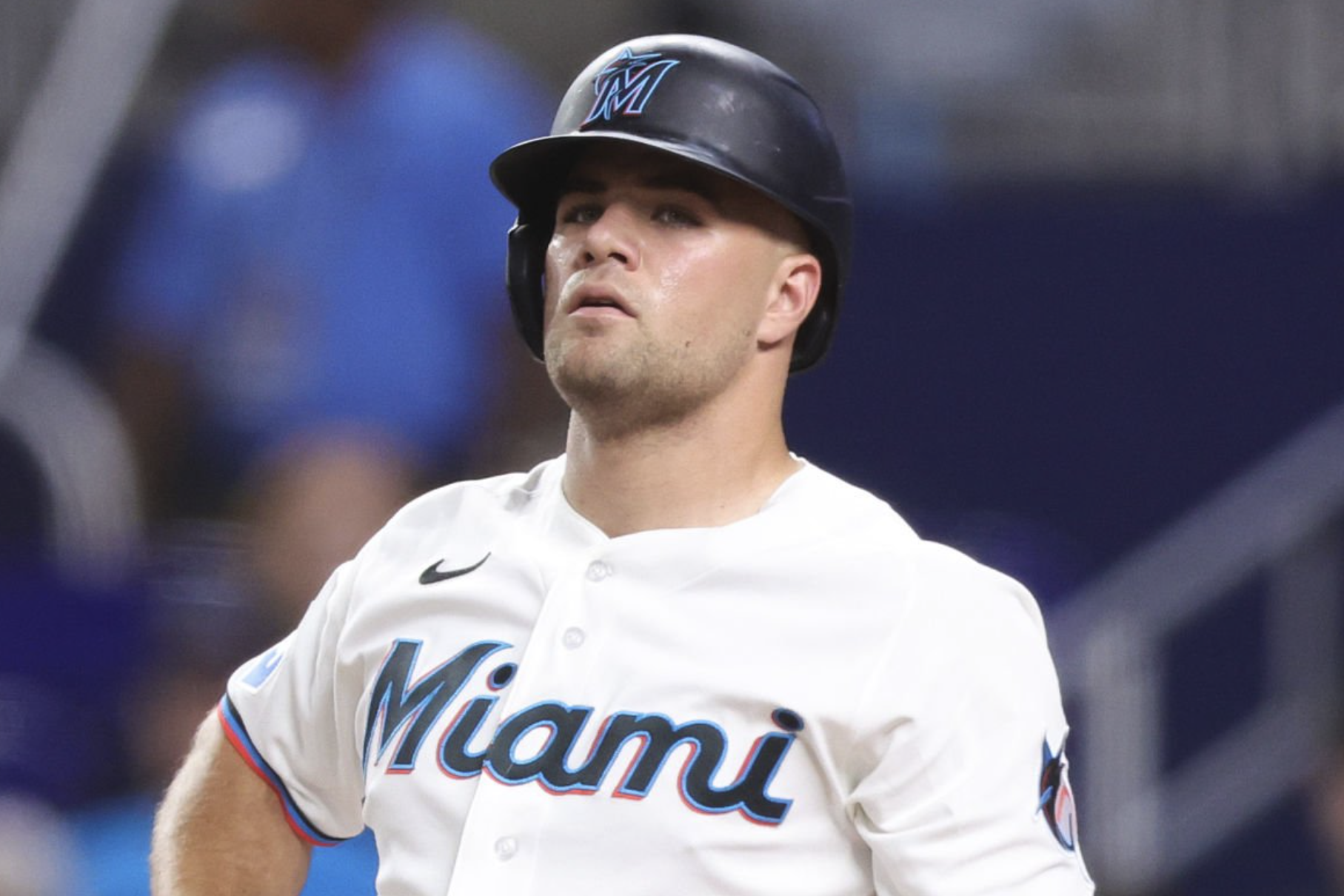 MIAMI — The Miami Marlins returned from their series against the New York Yankees to face the Cincinnati Reds back at home on Monday night. However, it seems that all of their offense missed the flight and remains back in the Bronx. The Fish struggled to put anything together against left-handed starting pitcher Brandon Williamson in their series-opening 2-0 loss. Starting pitcher Janson Junk had a very efficient outing in his second start of the 2026 season. Junk pitched 7 ⅓ innings, allowing seven hits, two runs, one walk, and three strikeouts. He improved his season ERA to 3.09. “I’m happy with what I did today,” Junk said postgame. “I feel like I did not have my best stuff, but I was able to go out there and compete and get through quick innings to get back in the dugout and give the guys a chance.” Right-handed relief pitcher Tyler Phillips took over for Junk and was able to keep a runner stranded. Phillips punched out Matt McLain and got Elly De La Cruz to ground out to Otto Lopez at shortstop. Phillips also pitched a scoreless ninth inning to keep the ballgame within reach. The Marlins offense had a putrid night. Otto Lopez was one of the few hitters who did well against Cincinnati’s pitching staff. Lopez went 2-for-4 and boosted his season batting average to .351. It was his third consecutive multi-hit game. Second-year catcher Agustín Ramírez was the only other Marlin to record a hit. Ramírez went 1-for-3 with a triple and drew a walk. His triple was about a foot or two away from being a solo home run to right field. “Unfortunately, we just couldn’t get much going offensively to back (Junk) up,” Marlins manager Clayton McCullough said postgame. “The ones we did square up, they just didn’t fall.” The Marlins totaled 12 hard-hit balls, according to Statcast, compared to 10 for Cincinnati. The Reds are now 4-0 on the road this season. The two-time defending World Series champion Los Angeles Dodgers are the only other MLB team that also remains undefeated in away games. What’s next? The Marlins will look to rebound and even the series versus the Reds. On Tuesday, Miami will hand the ball to their ace pitcher, Sandy Alcantara. The 2022 NL Cy Young Award winner has been stellar to kick off the 2026 season. Alcantara is coming off one of the best starts of his career, a complete-game shutout against the Chicago White Sox. It was also the second “Maddux” of his MLB career. The Reds will hand the ball to left-handed pitcher Andrew Abbott. In two outings far this season, the 2025 National League All-Star southpaw pitcher has recorded a 3.09 ERA, 3.80 FIP, 1.37 WHIP, and a .674 opponent OPS. The first pitch for Tuesday’s game is at 6:40 pm EST. View the full article
 -
Brewers Call Up Left-Hander Shane Drohan For MLB Debut
DiamondCentric posted an article in Brewer Fanatic
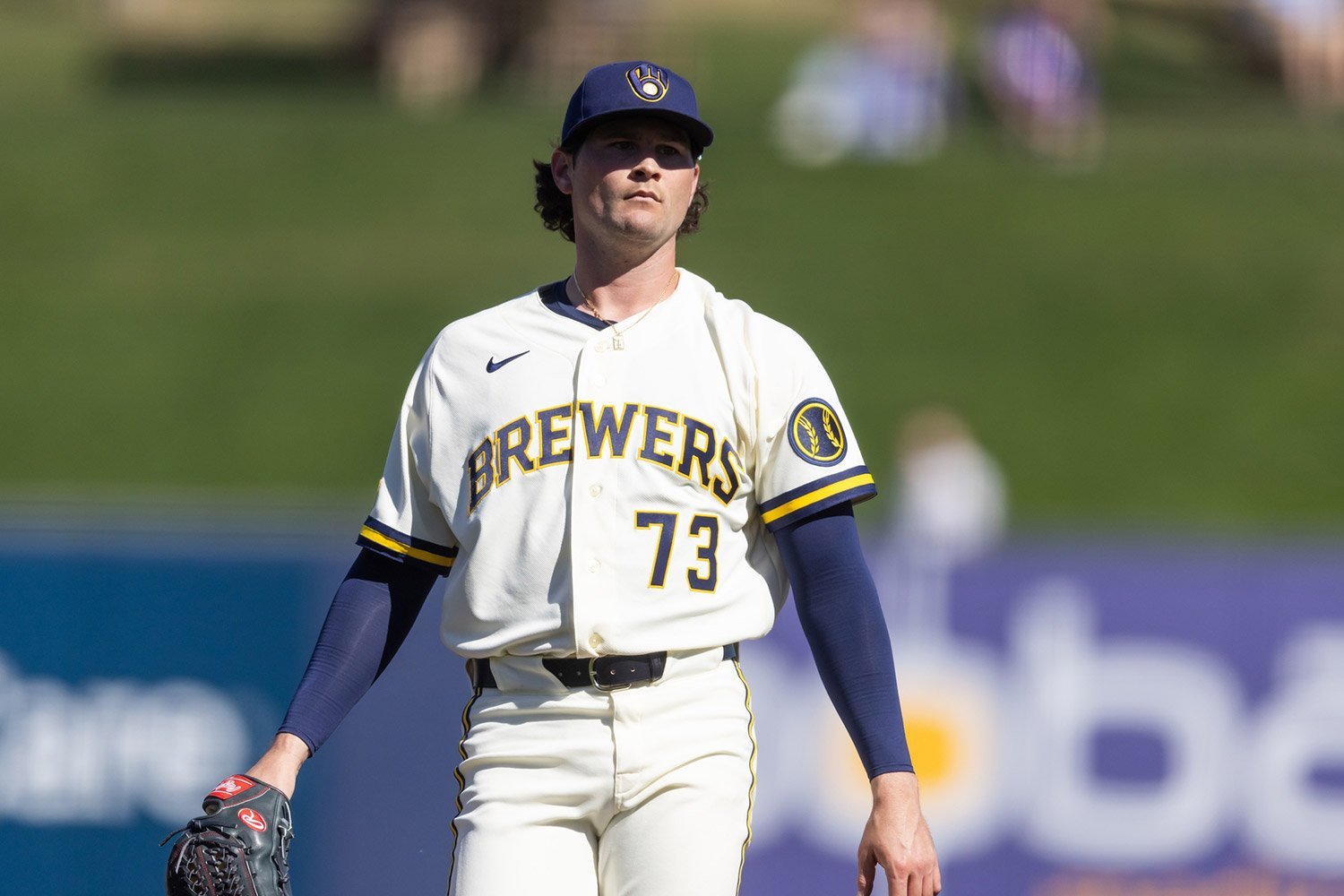 In the first injury news of the regular season affecting the Milwaukee Brewers' pitching staff, left-handed reliever Jared Koenig was placed on the 15-day injured list Monday with a sprained UCL in his left elbow. To replace Koenig, the Crew called up left-hander Shane Drohan from Triple-A Nashville. Drohan will make his MLB debut when he appears in a game. In a bit of ironic timing, Drohan will be active for the three-game series vs. the Boston Red Sox that begins Monday. Drohan was one of three players the Brewers acquired from the Red Sox in exchange for third baseman Caleb Durbin and two other infielders. Koenig is expected to be out two to four weeks. Drohan, once a well thought of prospect, had nerve decompression surgery shortly after the Chicago White Sox selected him in the Rule 5 draft following the 2023 season. The procedure was one reason why the White Sox returned him to the Red Sox the following season. Drohan had a 2.27 ERA in 14 appearances at Triple-A last season in 15 appearances, all but one a start. He appeared in one game for Nashville this season, striking out six, walking four and allowing two runs in 3⅓ innings. Right-hander Chad Patrick had been scheduled to start the finale of the Red Sox series on short rest Wednesday, but that spot is now listed as TBA, possibly an opening for Drohan if he doesn't pitch in relief in the first two games. View the full article
 -
Mets Roster Central: The Most Valuable Calf in Baseball
DiamondCentric posted an article in Grand Central Mets
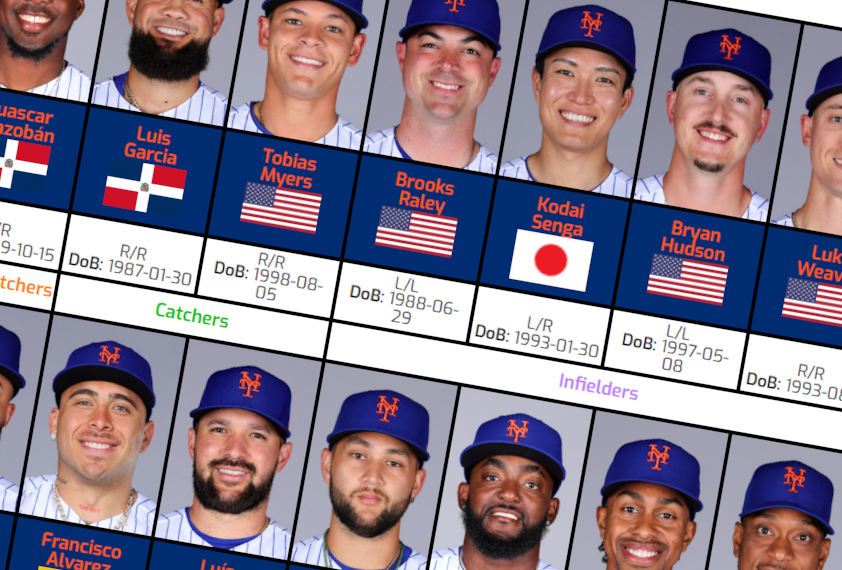 Minor-league players jettisoned from the organization? Players from three years ago finally retiring? NOPE! Mets Roster Central is here with powerful, relevant roster updates about the most powerful relevant player on their roster Transactions, 4/6/2026 GOING NEUTRAL GOING Placed on 10-Day IL, Retroactive to 2026-04-04, with Strained Right Calf Transferred from Infield Promoted from Syracuse Outfielders Outfielders Infielders Juan Soto Brett Baty Ronny Mauricio L/L DoB: 36093 High Level: MLB (2025) L/R DoB: 1999-11-13 High Level: MLB (2025) S/R DoB: 2001-04-04 High Level: MLB (2025) It's nobody's favorite hot, sinewy dose of reality, but you can put all the biggest resources to bear in securing the services of the most gifted players, but whether you wind up with Babe Ruth or Joe Shabotnik, the two of them will be worth exactly the same on the Injured List. So chase that shiny free agent, sure — and the Mets invested $765 million in chasing Juan Soto down — but the winning move is always depth, depth, depth. And then, maybe, you might want to add a little depth. While Juan's role in left field will be covered by some combination of Brett Baty, Jared Young, and Tyrone Taylor — which will almost certainly mean more opportunities for Mark Vientos at first and DH — his spot on the roster goes to Ronny Mauricio. It would be great to see delayed-launch opportunities be the key to Ronny establishing himself in the bigs, at it seemingly has been for Baty and Vientos, but right now, his role will seemingly be backing up at second, third, and short — and the guys there haven't been yielding any innings to anybody, so if this calf injury of Juan's is as quick to heal as we all hope it is, Ronny will likely have to make the most of very few opportunities. Give 'em Hell, Ronny! Your Mets Coaching Staff Manager Bench Coach Pitching Coach Hitting Coordinator Third Base Coach First Base Coach Bullpen Coach Ass't Pitching Coach Carlos Mendoza Kai Correa Justin Willard Jeff Albert Tim Leiper Gilbert Gomez José Rosado Dan McKinney DoB: 1979-11-27 DoB: 1989-07-14 DoB: 1990-09-09 DoB: 1992-08-16 DoB: 1996-07-19 DoB: 1992-03-08 DoB: 1974-11-09 DoB: 1989-06-06 Hitting Coach Strategy Coach Catching Coach Coaching Assistant Bat'g Practice Pitcher Equipment Manager Bullpen Catchers Bullpen Catchers Troy Snitker Danny Barnes J.P. Arencibia Rafael Fernandez Kevin Mahoney Kevin Kierst Eric Langill Dave Racaniello DoB: 1988-12-05 DoB: 1989-10021 DoB: 1986-01-05 DoB: 1988-08-03 DoB: 1987-05-11 DoB: 1964-07-09 DoB: 1979-04-09 DoB: 1978-06-03 Your Mets Training Staff Director of Player Health Head Athletic Trainer Assistant Athletic Trainer Reconditioning Coordinator Reconditioning Therapist Head Performance Coach Assistant Performance Coach Performance Coordinator Brian Chicklo Joseph Golia Bryan Baca Sean Bardanett Josh Bickel Dustin Clarke Tanner Miracle Jeremy Chiang DoB: 1972-07-17 DoB: 1978-??-?? DoB: Circa 1980 DoB: 1988-06-23 DoB: 1996-??-?? DoB: 1987-??-?? DoB: 1991-??-?? DoB: ????-??-?? Your 2026 New York Mets Starting Pitchers Clay Holmes Nolan McLean Freddy Peralta David Peterson Kodai Senga R/R DoB: 1993-03-27 R/R DoB: 2001-07-24 R/R DoB: 2996-06-04 L/L DoB: 1995-09-03 L/R DoB: 1993-01-30 Relief Pitchers Huascar Brazobán Luis Garcia Richard Lovelady Sean Manaea Tobias Myers Brooks Raley Luke Weaver R/R DoB: 1989-10-15 R/R DoB: 1987-01-30 L/L DoB: 1995-07-07 R/L DoB: 1992-02-01 R/R DoB: 1998-08-05 L/L DoB: 1988-06-29 R/R DoB: 1993-08-21 Relief Pitchers Catchers Infielders Devin Williams Francisco Alvarez Luís Torrens Bo Bichette Francisco Lindor Ronny Mauricio Jorge Polanco R/R DoB: 1994-09-21 R/R DoB: 2001-11-01 R/R DoB: 1996-05-02 R/R DoB: 1998-03-05 S/R DoB: 1993-11-14 S/R DoB: 2001-04-04 S/R DoB: 1999-11-13 Infielders Outfielders Marcus Semien Mark Vientos Brett Baty Carson Benge Luis Robert, Jr. Tyrone Taylor Jared Young R/R DoB: 1990-09-17 R/R DoB: 1993-12-11 L/R DoB: 1999-11-13 L/R DoB: 2003-01-20 R/R DoB: 1997-08-03 R/R DoB: 34356 L/R DoB: 1995-07-09 Also on 40-Player Roster Starting Pitchers Relief Pitchers Tylor Megill Christian Scott Jonah Tong Alex Carrillo Reed Garrett Joey Gerber Justin Hagenman R/R DoB: 1995-07-28 R/R DoB: 1999-06-15 R/R DoB: 2003-06-19 R/R DoB: 1997-06-06 R/R DoB: 1993-01-02 R/R DoB: 1997-05-03 R/R DoB: 1996-10-07 On 60-Day Injured List with torn right UCL. With Syracuse With Syracuse With Syracuse On 60-Day Injured List — right UCL surgery and nerve relocation surgery. With Syracuse On 60 Day Injured List with fractured rib. Relief Pitchers Catchers Outfielders A.J. Minter Dedniel Núñez Jonathan Pintaro Dylan Ross Austin Warren Hayden Senger MJ Melendez L/L DoB: 1993-09-02 R/R DoB: 1996-06-05 R/R DoB: 1997-11-07 R/R DoB: 2000-09-01 R/R DoB: 1996-02-05 R/R DoB: 1997-04-03 L/R DoB: 1993-11-29 On 15-Day Injured List — Left Lat Surgery On 60-Day Injured List — right UCL surgery. With Syracuse With Syracuse, on Seven-Day IL With Syracuse With Syracuse With Syracuse Outfielders Nick Morabito Juan Soto R/R DoB: 2003-05-07 L/L DoB: 1998-10-25 With Syracuse On 15-Day Injured List with strained right calf View the full article
 -
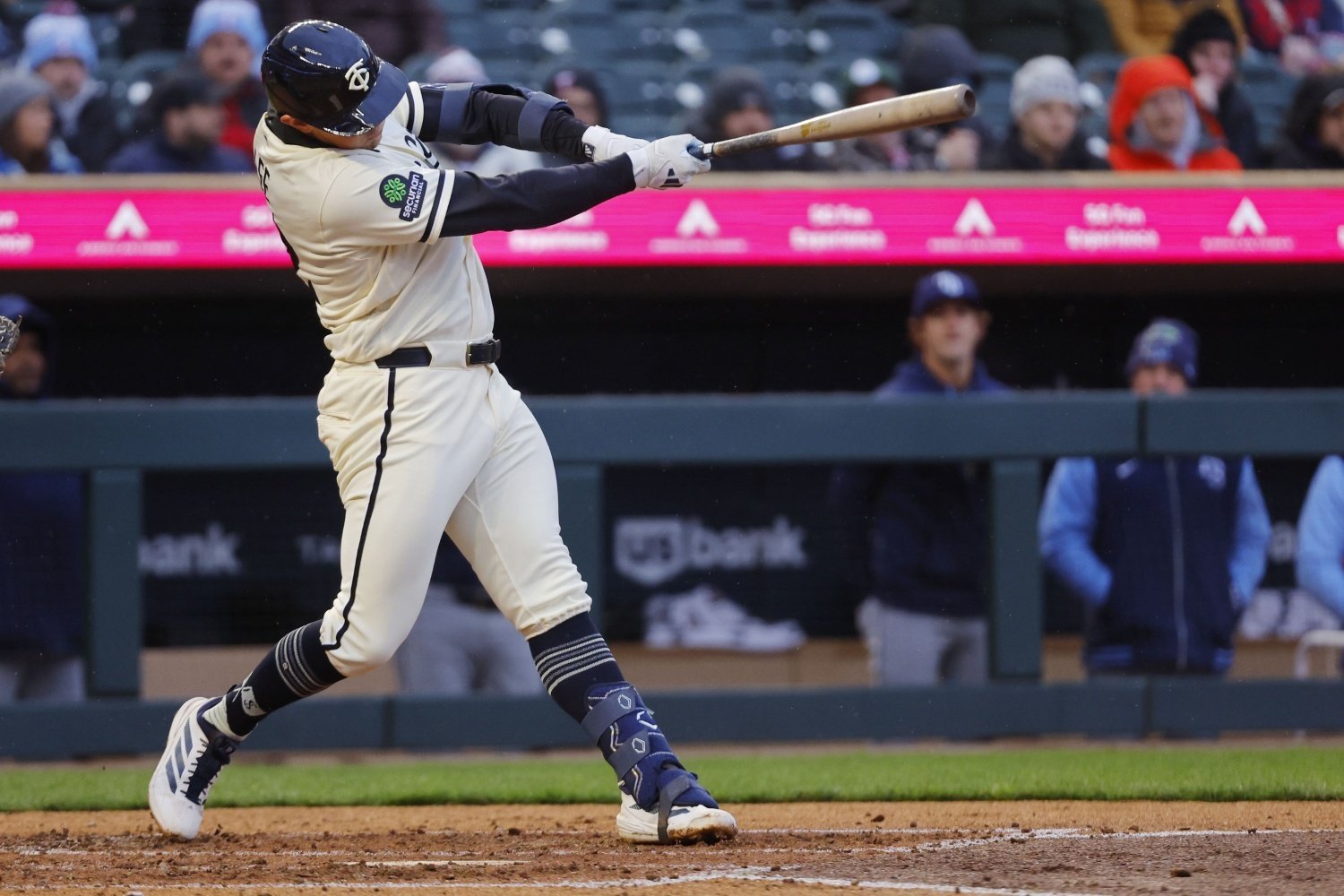 After being the 8th overall pick in the 2022 MLB Draft, Brooks Lee has failed to live up to his pedigree, struggling to sustain success in the majors so far. He hasn't shown enough improvement, and his weaknesses have been fully exposed. Opposing pitchers are taking advantage, and Lee's future with the Twins may depend on whether he can make a huge adjustment—quickly. Brooks Lee has a sub-.650 OPS so far in his career, as he nears 750 plate appearances. He fails to control the strike zone and work counts. He lacks consistent power, as evidenced by his .370 SLG in 2025, which tells a different story than the 16 homers he hit. There are plenty of reasons for concern with Lee's offense. Priority number one right now is simple: Lee can only hit fastballs, and the league has figured that out. If he can't respond by changing it, he's in big trouble. Struggling against non-fastballs isn't uncommon. Most hitters make a living out of simply surviving against the soft stuff and tearing up velocity. "The best way to hit the curveball," hitters have long said, "is to hit the fastball." The first issue is that Lee doesn't perform well enough against heaters to carry him, with a .340 xwOBA against them in 2025. The second is that Lee can't handle off-speed pitches at all. Lee posted .216 and .214 xwOBAs on breaking balls and off-speed pitches, respectively, in 2025. Pitchers took note and have adjusted accordingly. Lee's free-swinging ways are too easy to exploit with non-fastballs, and it looks like opposing pitchers are going to lean into that information until Lee gives them a reason not to. Lee has seen fastballs about one-third of the time in 2026, down about 15% from 2025. For reference, Byron Buxton and Luke Keaschall have seen about 50% fastballs. It's no secret what's going through the minds of opposing pitchers when Lee steps up to the plate. There's a real risk that this issue is too much for Lee to overcome. It requires a complete overhaul of his approach and (in a sense) his swing. He identified the need to make this adjustment last season, but hasn't shown improvement in the small sample of 2026 so far. He'll have to make the adjustment during the season, and quickly, which means changing what he looks for in the box and how he times his swing. With top prospect Kaelen Culpepper off to a hot start in St. Paul, the clock is ticking on Lee being the everyday starting shortstop at the other end of the Green Line. In addition to scuffling at the plate, he appears stretched defensively. When Culpepper gets the call, which could be any time in the next few months, Lee will be out of a job. He can roam several infield spots as needed, but if he's still posting a sub-.700 OPS, it won't be worth prioritizing him in the lineup every day. He could very well find himself back in Triple-A. The book on Lee's career hasn't been written yet, but what we've seen so far has been worrisome. We've watched how difficult it can be to make adjustments when the league finds a young hitter's weakness. Unlike players such as Edouard Julien, Jose Miranda, or Matt Wallner—hardly a murderer's row in its own right, as things turned out—Lee has yet to show signs of being an impactful part of the Twins’ future to this point in his career. His performance, paired with the turnover within the front office that drafted him, could put him at risk of being pushed aside quickly. Lee needs to figure out how to make opposing pitchers pay for attacking him with the soft stuff. It can be as simple as identifying and taking changeups off the plate, or driving an occasional hanger into the seats, but he has to show something. The clock is ticking, as other shortstop options close in on debuting this season. Brooks Lee needs to make an adjustment, and fast, and so far, he's only adjusted little by slowly in the major leagues. View the full article
 -
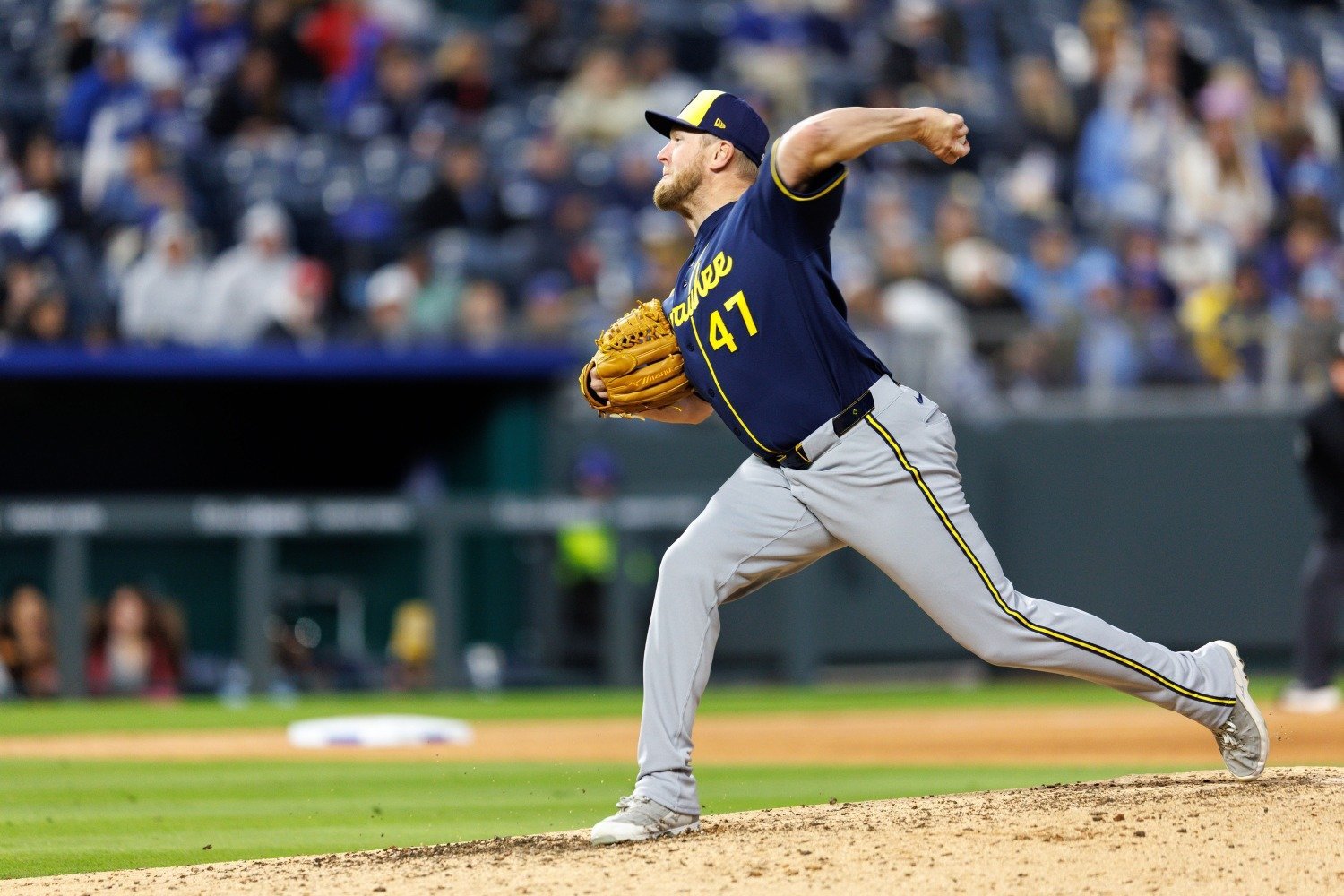 For now, the Brewers and Jared Koenig will wait and see how his elbow responds to a prolonged rest. Koenig was shelved by a sprained elbow Monday afternoon, and yes, the damaged tissue is his ulnar collateral ligament. There's always a chance that a sprained UCL will lead to Tommy John surgery, or some variant thereof that still ends a player's season. It's good news that that's not the immediate plan, and perhaps the team and the player were proactive enough to catch a sprain early. According to Pat Murphy (as relayed by MLB.com Brewers beat reporter Adam McCalvy), there's even a chance Koenig will be back by early May, That seems a bit hopeful, but he wouldn't be the first hurler to come back on such a timeline, if the damage is minor. It's important to understand a distinction here, though: this is a diagnosed sprain (which indicates some degree of tearing) in the UCL itself. Pitchers often get diagnosed, first, with strains in the forearm or the biceps muscles, or in the tendons that connect bones to those muscles. Those can be precursors to torn UCLs, but it's not uncommon for the ligament to survive if the muscle or tendon gives way first, especially because the tissues can heal simultaneously as a pitcher rests. This is different. Koenig has a tear in the ligament itself, and ligaments heal more slowly than muscles, because their blood supplies aren't as robust. If there were a major tear in that ligament, we'd already be hearing that Koenig was seeking a second opinion or being scheduled for surgery. Instead, the team will try to let him have time to heal. He could undergo a platelet-rich plasma injection. There are non-surgical interventions for minor ligament damage, and they can (if nothing else) slow down wear to reduce the risk of a full-blown tear. However, Koenig's velocity was notably down this spring. He lost a bit of weight over the winter, and didn't look as strong in camp. There are many reasons to worry that Koenig will give the Brewers little for the balance of this season, even if he's spared from the scalpel for now. Luckily, the Brewers have arguably the deepest pitching staff in baseball. They called up Shane Drohan to take the place of Koenig as the second lefty in the bullpen, which is as tidy an expression of their privilege as one could hope for. Koenig himself would be the best lefty in several bullpens throughout the league. With Aaron Ashby as the high-leverage, high-volume southpaw of the team's relief corps, though, that was never anywhere near being true of the 2026 Crew. Drohan is also a better pitcher than most teams would have to call upon in case of this type of loss, and he'll give them length in the pen for as long as needed. It's a bad break for Koenig, who has earned Murphy's trust and teammates' respect and is an important part of the team. Hopefully, he'll avoid surgery and be back on the mound soon. In the interim, though, Drohan's nasty stuff and cerebral, thoughtful approach to his job make a fine replacement for him. The Brewers will weather the loss, even as they ardently hope for the best for their erstwhile setup man. View the full article
 -
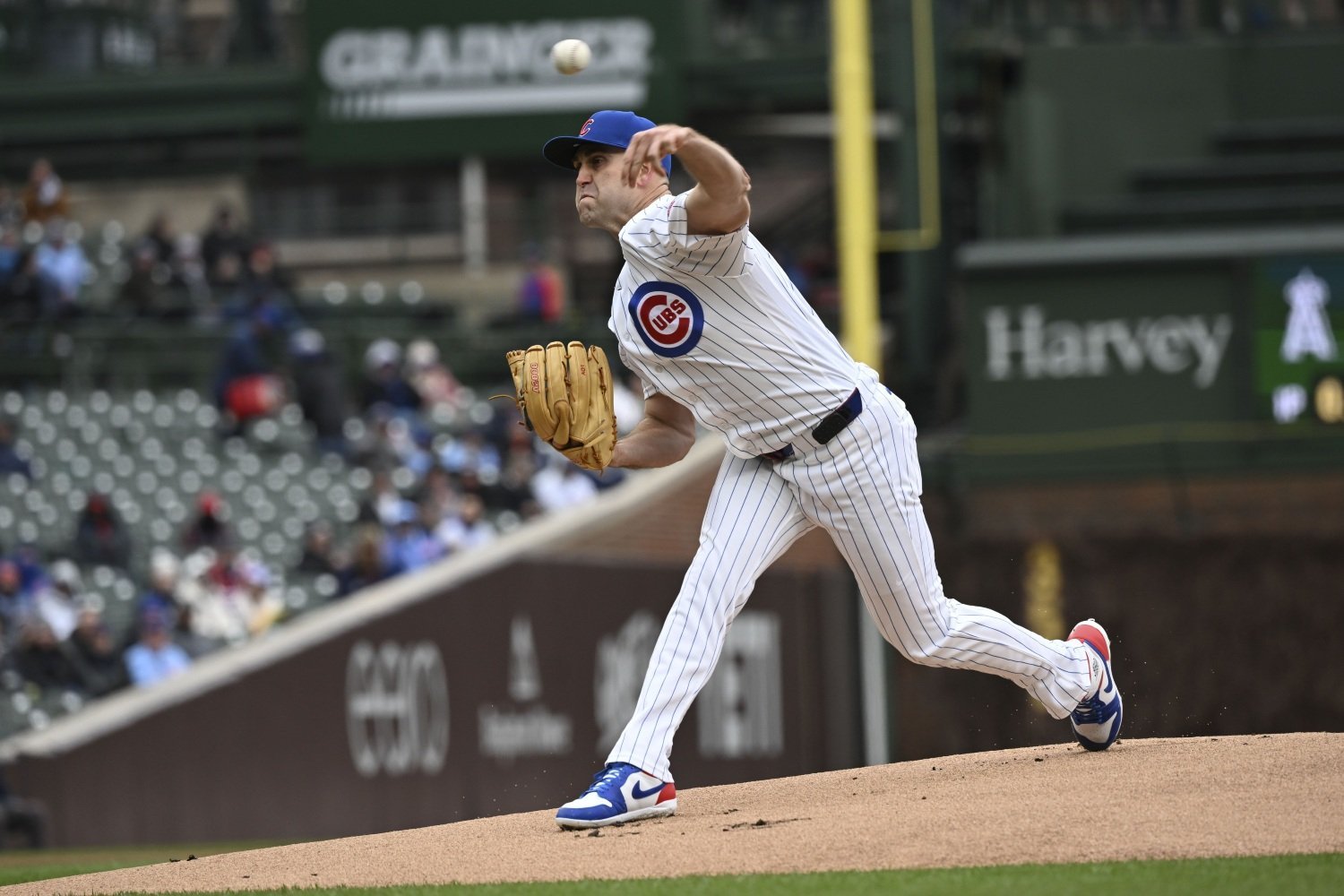 Cubs fans everywhere are spending their Mondays with a weekend-long case of the Sunday scaries that won't go away. Cade Horton walked off the mound Friday in the second inning, with what has been dubbed a forearm strain—but until the team reveals the results of the imaging Horton underwent Monday morning, the specter of that preliminary diagnosis being upgraded to a torn ulnar collateral ligament and a prescription for season-ending elbow surgery hangs grayer and gloomier over the team than the roof of Tropicana Field will throughout the next few days. To add injury to injury, the team placed left-handed starter and Opening Day assignee Matthew Boyd on the injured list Monday, with a biceps strain. Those are less likely to turn into season-ending tsuris than what Horton is dealing with, and there's no indication that the team is worried about the structural integrity of Boyd's arm. On the other hand, though, this is no minor malady. Over the last 10 seasons, biceps strains suffered during the season (eliminating those so late in the year that there were few games less to miss and those to a pitcher's non-throwing arm) have usually led to an absence of a month or more. Boyd, 35, has a long injury history and has missed long stretches during the last several seasons, so he's not a good candidate to come back on a faster-than-average timeline. Unfortunately, the Cubs should brace for at least six weeks without the starter who gave them nearly 180 innings of stellar work in 2025. Anticipating some of this trouble, the team retained Colin Rea and Shota Imanaga this winter. They also traded for Edward Cabrera, a pitcher one tier better in terms of stuff and ceiling than Rea or Imanaga, which cushions the blow of losing both Horton and Boyd at this early stage a bit. Rea and Javier Assad now step into the starting rotation, and each is likely to be there for at least a month, because that's about as soon as we're likely to see either Horton or Boyd. It's just as likely that only one of the two is back before, say, June. Rea and Assad are better depth options than many teams have, in the event of such a double-whammy. However, tapping both to join the rotation this early was miles from the planned route through the 162-game gauntlet. Rea's move to starting thins out the team's bullpen. Assad's arrival in the majors leaves only Jaxon Wiggins as a starter in Iowa about whom anyone might feel excited, and he comes with huge question marks. That's not to mention the even more daunting concern: that Horton and Boyd were the members of the initial quintet about whom one might typically have had the least worry a few weeks ago. Jameson Taillon suffered multiple injuries last year. His arm's odometer shows a higher number than anyone else on the staff, and non-arm injuries are an ever-present threat at this stage of his career. Imanaga wasn't the same pitcher after suffering a hamstring strain last May, and statistically, pitchers who suffer a hamstring strain are about 25% likely to suffer another. Cabrera's health history is perhaps the biggest reason he was available to the Cubs this winter, via trade. Ben Brown is still in the bullpen, and could be called upon if and when the team needs to plug yet another hole in its rotation. Justin Steele is on track to return some time around Memorial Day, barring a setback. The Cubs are in real jeopardy now, though. They've spotted the deeper Brewers three games in the NL Central, and Milwaukee has won those games despite dealing with injury issues of their own. More losses almost certainly lie ahead for Chicago, and their patchwork rotation has to support an offense that hasn't found its groove through the first nine games. Lucas Giolito remains available in free agency. Consider the Cubs a prime candidate to sign him, if he's healthy and can ramp up quickly this spring. That's an expensive and high-risk solution to a problem the team didn't want to be dealing with, though—so it might have to wait. Unhappily, it feels increasingly likely that the moment will come when they need to make some form of semi-desperate addition, be it Giolito or a trade acquisition. Boyd and Horton are a brutal first two dominoes to fall in the rotation, not least because they won't be the last. View the full article
 -
A Red Sox Rebound Begins With A More Aggressive Brayan Bello
DiamondCentric posted an article in Talk Sox
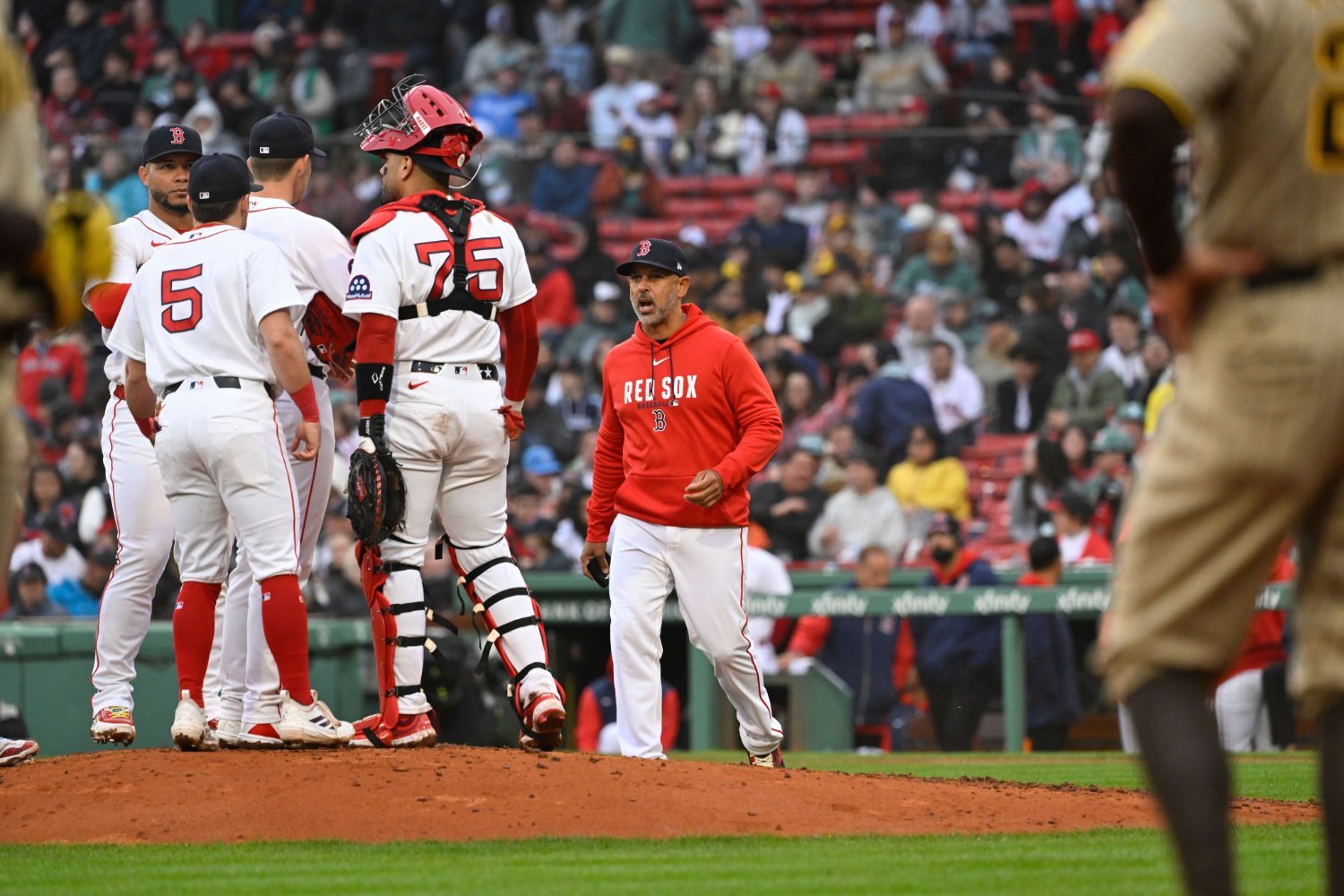
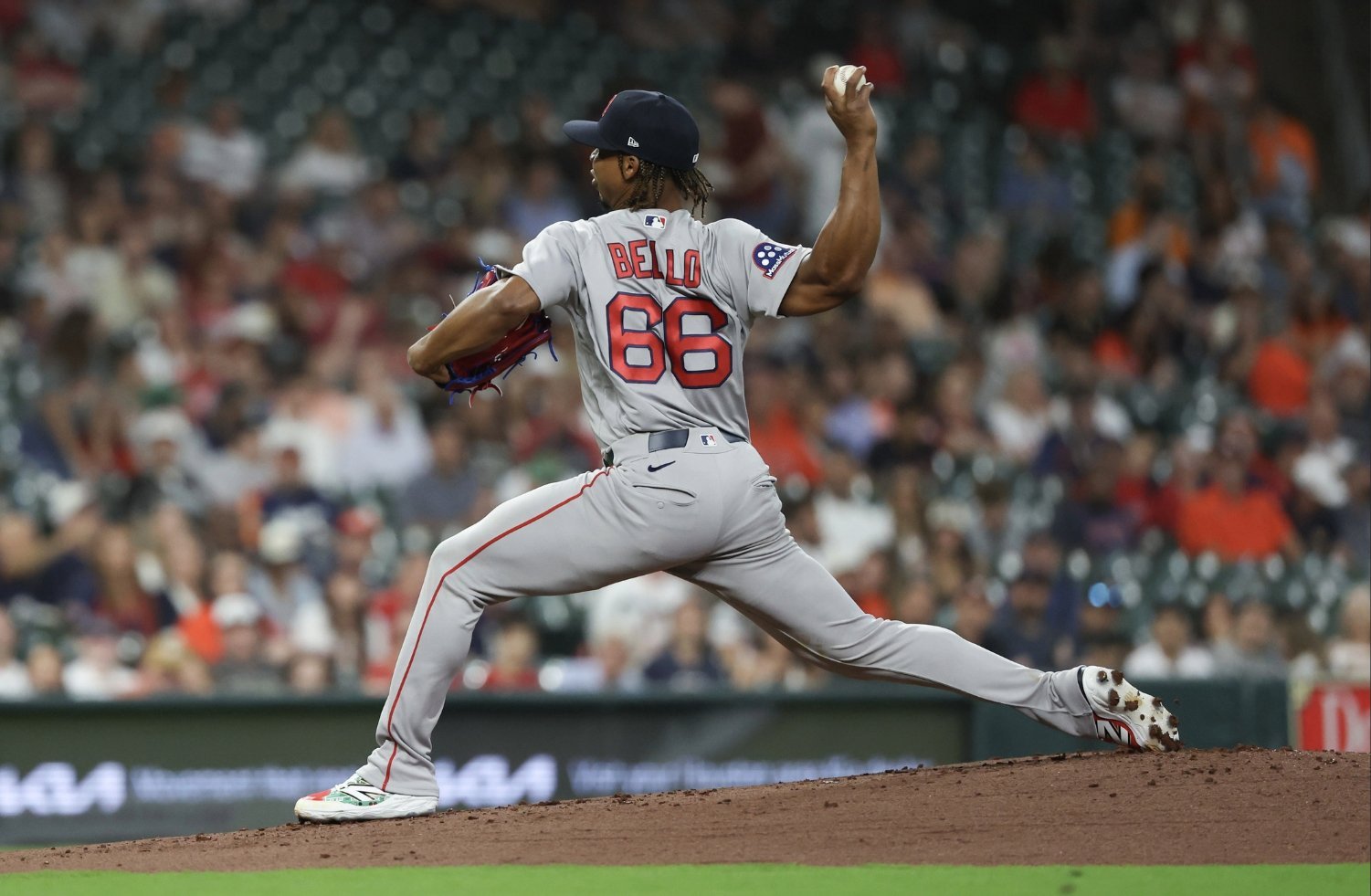 In terms of status, Brayan Bello has regressed from the Opening Day starter in 2024 to the fifth starter in 2026’s rotation, at least the first time through. Many projected him as the fourth starter for this season given that the Red Sox added Sonny Gray and Ranger Suarez in a pair of deals this offseason to slide in behind staff ace Garrett Crochet. Even when you consider the talent added to the rotation since 2024, though, this slide feels like a bit of a challenge to Bello to prove what he can bring to the table this year and the subsequent four remaining seasons he is under contract in Boston. His first opportunity of the season came last Tuesday evening in Houston as he took the mound against the Astros. To put it lightly, it did not go well. A quick look at the box score gives some of the story; he surrendered one run in the first and two more in the third, with scoreless innings in the second and fourth. But then it all fell apart. Bello gave up three more runs in the fifth, putting the Red Sox in a 6-1 hole that they would not ultimately be able to climb out of. Ultimately, Bello threw 92 pitches across 4 ⅔ innings, striking out two batters and walking three. It is safe to say that it was a pretty inefficient outing. Of his 92 pitches, 58 of them were strikes. However, that's inflated thanks to an overly aggressive Astros lineup; only 38 of his pitches were actually thrown in the zone. Part of a pitcher's job is to generate swing and miss by getting batters to chase out of the zone, but if Bello is to turn things around in his second start, he should begin by attacking the zone more. It's really the telltale sign of a struggling pitcher when they produce elite chase and whiff numbers and still can't strike anyone out. Again, a lot of that of that has to do with his inability to locate his pitches properly, but even after whiffing on more than one-third of their collective swings, Astros hitters still pummeled Bello to the tune of a .470 wOBA. They came out with intention to swing early and often; the right-hander must respond in his next start by flashing the same aggressiveness back, challenging hitters in the zone with his best stuff. Bello’s pitch mix also offers intrigue. Per Baseball Savant, he brought back a curveball not used since 2022. While he offered it up only six times, it will be interesting to see if he includes that in his arsenal consistently in 2026. Otherwise, he relied heavily on the sinker, cutter, and sweeper, with lighter use of his changeup and four-seamer offerings in a complementary role. His use of those five pitches closely mimicked the 2025 season, so fans should know what to expect. His next outing comes today as the Boston Red Sox host the Milwaukee Brewers, and the pressure is on. The Red Sox hold the league's worst record at 2-7 and the vibes might be even worse. Sunday was brutal, featuring an early lead blown en route to an 8-6 loss. Players and manager Alex Cora alike showed clear frustration in post game interviews. It's still very early in the season, but the Red Sox must turn it around soon and begin to perform to the level many expected of this talented roster. The responsibility will be Bello’s to help right the ship. View the full article
 -
Alex Bregman's Numbers Paint A Hot Start In A Poor Light
DiamondCentric posted an article in North Side Baseball
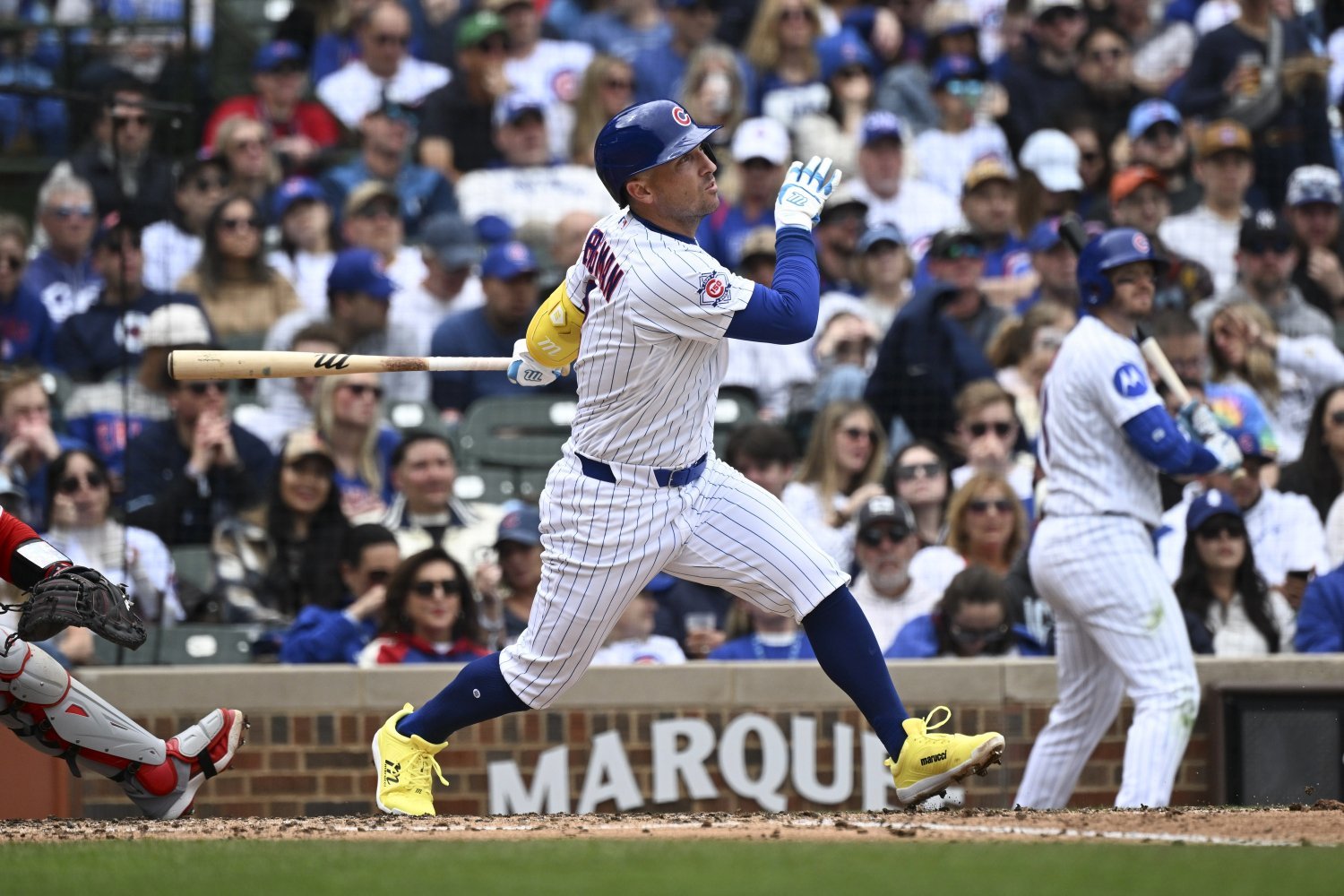 From a run production standpoint, there hasn't been much to be impressed with as far as the 2026 Chicago Cubs are concerned. Prior to the series opener against the Tampa Bay Rays, they rank 18th in runs (37), 21st in isolated power (.129), and 19th in collective wRC+ (89). In short, it's a below-average offense in the early going. Across the board, though, there are some underlying elements of the process that look quite good, and free-agent signing Alex Bregman is leading that charge. When the Cubs brought in Bregman, the book on him was a hitter who commanded the strike zone. While he wasn't going to sit up near the top of the walk rate leaderboard, he was able to drive quality contact and maintain strikeout avoidance on the strength of that keen eye. As easy as it is to be frustrated with the cumulative returns of the lineup thus far, it's hard to argue against the idea that Bregman is giving the Cubs exactly what they could've hoped for. The stats themselves are not terribly indicative of a player who has demonstrated early returns on a massive five-year contract. Through roughly 40 plate appearances, he's gone for a .167/.268/.333 line with a wRC+ of only 78. His contributions to the overall run production came in the form of a pair of home runs against the Washington Nationals in a game that the Cubs ultimately lost. But good process should, eventually, yield positive results, and Bregman has very much demonstrated such early on. It's a minuscule sample, but, to date, Bregman is exactly who the team thought he was: The most essential elements of the above are reflected in the approach and the resulting quality of contact. First is the fact that Bregman's chase rate is in the 100th percentile. His 6.9 percent chase rate is nearly three points below that of Baltimore's Taylor Ward, who ranks second in that category. When he does swing, he's making contact as reflected in a whiff rate that sits as the 18th-best and a strikeout rate that ranks 22nd. What's more is that he's able to drive quality contact as a result. Rather than use that patience to drive up his walk rate (which is still of quality on its own), Bregman is putting balls in play and doing so in an all-fields fashion: That was one of the positives with Bregman as a right-handed hitter playing his home games at Wrigley Field. He doesn't have to rely on dead pull power that could be heavily tamped by questionable park factors. Instead, his contact has found its way all over the field. And it's good contact, reflected by a 96th percentile hard-hit rate that ranks ninth in the league overall. These are all, objectively, positive things. While we can't say that this kind of process has yet contributed to a rather feeble Cubs offensive attack, it all sets the stage for Bregman to begin contributing regularly when the offense begins to find a groove for itself. After all, fortunes haven't favored Bregman in the slightest to this young point in the season. His batting average on balls in play sits at a brutal .138, which is one of the 10 worst marks in the sport. His current wOBA, at .278, would represent a career low. However, he's working with a .354 xwOBA that aligns much more with his career average from that standpoint (.362). The process is there, even if the results haven't been. Luckily for both Bregman and the Cubs, we're talking about a nine-game sample. The conditions at Wrigley, where the team has played the majority of their games thus far, haven't been super favorable to get the offense moving in the right direction. Trends like the ones Bregman has demonstrated thus far have a way of evening out over time. If history can be trusted, it shouldn't be long before the star third baseman begins dragging his stats back to where they belong. View the full article
 -
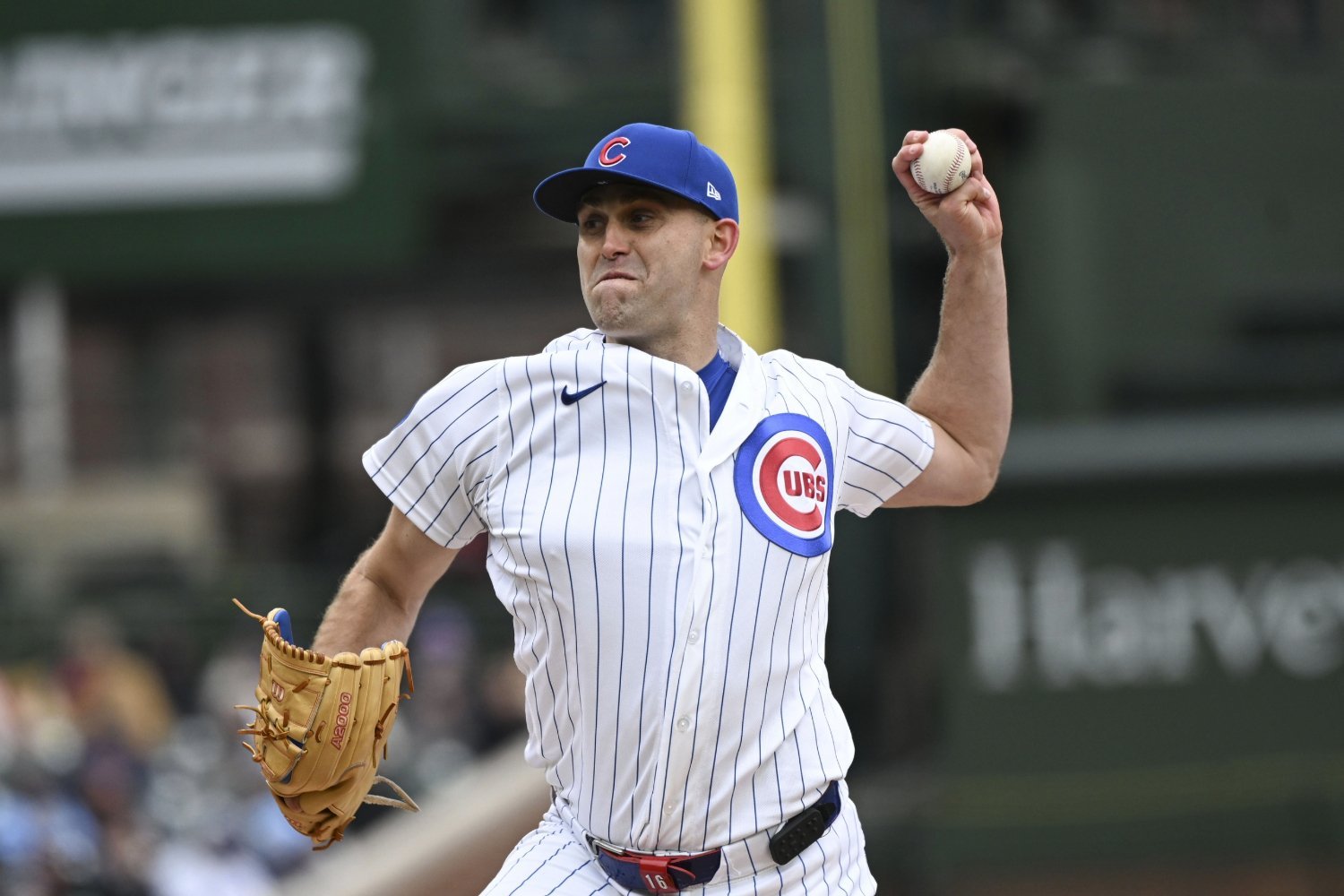 When it rains, it pours. Less than two days after Cade Horton was placed on the injured list with a forearm strain, Opening Day starter Matthew Boyd has joined him there with a bicep strain. Boyd hasn't had the best start to the 2026 season, though he's looked downright filthy at times while flashing a 45.9% strikeout rate. In his stead, swingman Javier Assad will return from Triple-A Iowa to take his place back in the rotation. Colin Rea will replace Horton. Including Justin Steele, who is still recovering from elbow surgery, and Jordan Wicks, who has been dealing with elbow inflammation since the start of camp, the Cubs are now down four starting pitchers. The next man up would be Ben Brown, perhaps followed by top pitching prospect Jaxon Wiggins. View the full article
 -
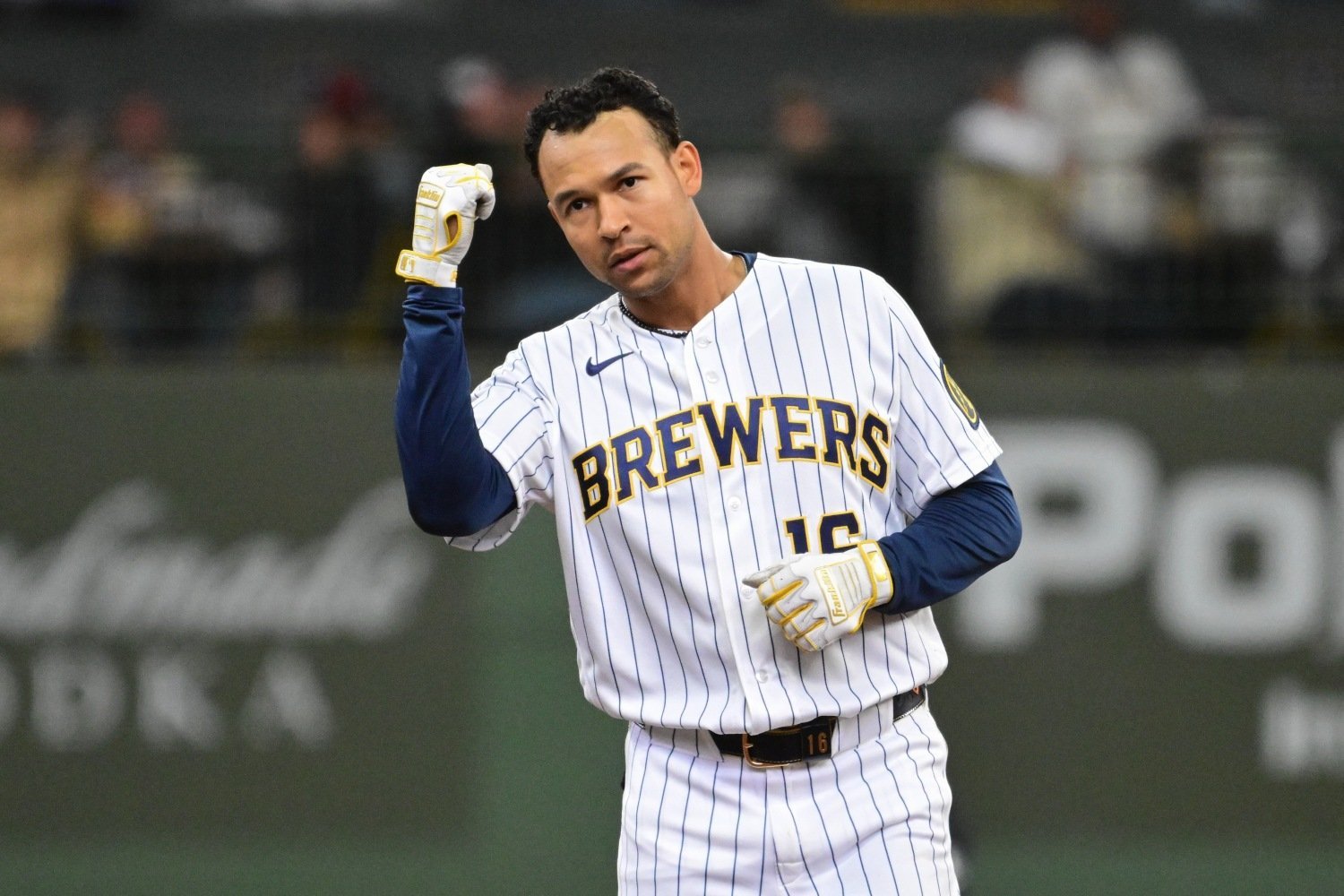 The regular season is not the ideal time to have a roster battle. For one thing, the games count in the standings, and when you don’t have a roster spot sorted out in the regular season, it can put some games in the 'L' column that may not have needed to be there. That said, in the wake of an injury to Jackson Chourio and a lack of collective faith in Blake Perkins, the Brewers have created an in-season roster battle for the fourth outfielder spot. As has been the case with some of their other roster battles, it’s hard to see how the team could go wrong. They have Perkins, who seems to have fallen out of favor but has a high floor; Brandon Lockridge, about whom the organization is more excited; and a newcomer, in ex-Giants outfielder Luis Matos. The Current Situation The Brewers found out shortly before Opening Day that Jackson Chourio had a fractured finger, suffered during a March 4 game in the World Baseball Classic. Remembering how the decision by William Contreras to tough out a similar injury had affected his offense, the team put Chourio on the injured list to recover, calling up Perkins from Triple-A Nashville to backfill the spot. The Brewers had planned to roll with Brandon Lockridge as the fourth outfielder before Chourio’s injury. Lockridge is now, of course, splitting time with Jake Bauers in left. So, how does this competition shake out? Let’s look over the three players. Blake Perkins Perkins, in one sense, is the most proven commodity. He was an elite defensive center fielder in 2023 and 2024, and his defense has been his calling card. Offensively, he's been at least intermittently competent, with his primary offensive asset being his speed. His pesky style at the plate can often draw his at-bats out, even when they end in outs. That can have an effect on the field, even if the box score doesn’t look pretty. Don’t take my word for it; just ask White Sox Opening Day starter Shane Smith what happens when a pitch count runs up. Perkins is a valuable complementary piece for the team, and while his offensive stats are weak and worsening, he sometimes enables Brice Turang, William Contreras, Christian Yelich, and Chourio to do the real damage against a pitcher he’s helped to wear down. Brandon Lockridge During spring training, Lockridge looked very impressive, powering four home runs en route to a 1.059 OPS. Not bad for a player who was picked up in a late-season rush for outfield depth after Chourio went on the injured list with a hamstring injury, in exchange for Nestor Cortes and minor-league prospect Jorge Quintana (who had been bypassed by Jesus Made and Luis Pena). Lockridge is someone manager Pat Murphy has been high on, and on teams with far less outfield depth, he’d probably be a solid starter. He’s got more speed and plays excellent defense, but it remains to be seen if he can translate his spring training breakout into regular-season results. His numbers (.348/.423/.391) so far reinforce the spring success and a big increase in bat speed hints that it's sustainable, but it's been all of 27 plate appearances. Luis Matos Matos was an intriguing pickup for the Brewers, partially because they already had a lot of outfield depth on the 40-man roster. In addition to Chourio, Sal Frelick, Garrett Mitchell, Perkins, and Lockridge, there’s also Akil Baddoo, Christian Yelich, Bauers and Tyler Black, and only after they brought in Matos and made Cooper Pratt's extension official did they jettison Steward Berroa. However, Matos is only 24, and his bat could be quite dynamic. He's shown the capacity to play above-average defense in the corner spots, too. The issue with Matos, of course, is roster flexibility. The Brewers were able to pick him up for some cash because Matos was designated for assignment and is out of minor-league options. In essence, hitting coach Daniel Vogelbach and his team will have to develop Matos in Milwaukee. That said, Matos is much younger (24) than Perkins and Lockridge (both of whom are 29), so the upside could be longer-lasting if they can hold onto him and tap into his talent. Overview It’s hard to see how the Brewers could go wrong with any of these players when Chourio returns from the injured list. With minor-league options, Perkins and Lockridge could go down to Nashville. Matos may have an edge, simply because he can't similarly be shuttled down, but he'll have to quickly prove he can make the changes the team wants to see from him. For now, Lockridge remains the obvious leader of the pack. View the full article
 -
Red Sox Week in Review: Owners of the Worst Record In Baseball
DiamondCentric posted an article in Talk Sox
 Boston Red Sox Weekly Snapshot Record Last Week: 1-6 Runs Scored Last Week: 22 Runs Surrendered Last Week: 39 Standings: 5th in AL East 5.5 GB of 1st Place Transactions: 3/31/26: RHP Angel Bastardo returned to Red Sox from Blue Jays. 4/03/26: Red Sox recall RHP Zack Kelly from Worcester Red Sox. 4/03/26: Red Sox recalled RHP Tyler Uberstine from Worcester Red Sox. 4/03/26: Red Sox placed RHP Johan Oviedo on 15-day injured list retroactive to March 31. Right elbow strain. 4/04/26: Red Sox place RHP Garrett Whitlock on the paternity list. 4/04/26: RHP Jedixon Paez returned to Red Sox from White Sox. Scores: Game 3 (3/29): BOS 2, CIN 3 Game 4 (3/30): BOS 1, HOU 8 Game 5 (3/31): BOS 2, HOU 9 Game 6 (4/01): BOS 4, HOU 6 Game 7 (4/03): BOS 5, SD 2 Game 8 (4/04): BOS 2, SD 3 Game 9 (4/05): BOS 6, SD 8 TL;DR Breakdown/Highlights Astros Series: Very little went right in the series in Houston. The team looked lost offensively for the first two games and struggled on defense as well. Ranger Suarez made his Red Sox debut and gave up four earned runs in 4 ⅓ innings pitched, walking one and striking out three. What was maybe the most disheartening part of the entire series was watching Lance McCullers Jr. turn the clock back and strikeout the Sox nine times in a nearly flawless performance. RHP Brayan Bello failed to look sharp in his debut against the Astros as well, and the highlight of his start was when he walked a hitter he previously struck out in the same at-bat (no one on the field remembered what the count was). On top of everything else, catcher Carlos Narvaez was benched in the finale of the series for reasons that both he and Alex Cora are keeping close to the vest. Padres Series: Game one of the Padres series, and the home opener for the Sox, showed that this team could hang with other professional baseball teams. Game two wasted a gutsy performance by Connelly Early who didn’t have his best stuff early on but settled throughout the game. Game three was the heartbreaker, though. Through the first three innings of the game, Suarez looked like the pitcher the Red Sox splurged $130 million on. The offense seemed to be firing on all cylinders, and a multi-run inning was finally happening to fire up Red Sox fans everywhere. Then, in the fourth, the Suarez from the Astros series showed back up. He lacked control and the Padres took advantage. In the fifth, Greg Weissert entered the game and promptly gave up the lead on a Manny Machado home run. The Red Sox rallied in the bottom of the seventh to tie the game, but the top of the eighth put all forward momentum to a stop when Uberstine was left in for a third inning in his MLB debut. The team was playing with a short bullpen with Whitlock, Aroldis Chapman, and Justin Slaten all unavailable for the conclusion of the series, but Zack Kelly was warm in the pen. At Wilyer Abreu has been red hot and looks to be the offensive leader of this team. Website Highlights Red Sox Fans Divulge Hopes & Concerns About Team As Boston Takes Home Opener by Nick John Red Sox’s Roster Manipulation Puts Spotlight Squarely on the Reserves by Ryan Painter Sonny Gray’s Red Sox Debut Was Loaded with Miscues, But His Future in Boston Should be Better by Alex Mayes Looking Ahead April 6th: Brewers (Woodruff) @ Red Sox (Bello): 6:45 PM EDT April 7th: Brewers (Misiorowski) @ Red Sox (Crochet): 6:45 PM EDT April 8th: Brewers (Patrick) @ Red Sox (Gray): 1:35 PM EDT April 10th: Red Sox @ Cardinals: 8:15 PM EDT April 11th: Red Sox @ Cardinals: 7:15 PM EDT April 12th: Red Sox @ Cardinals: 2:15 PM EDT View the full article
 -
Marlins call up Ryan Gusto to fill in for new dad Pete Fairbanks
DiamondCentric posted an article in Fish On First
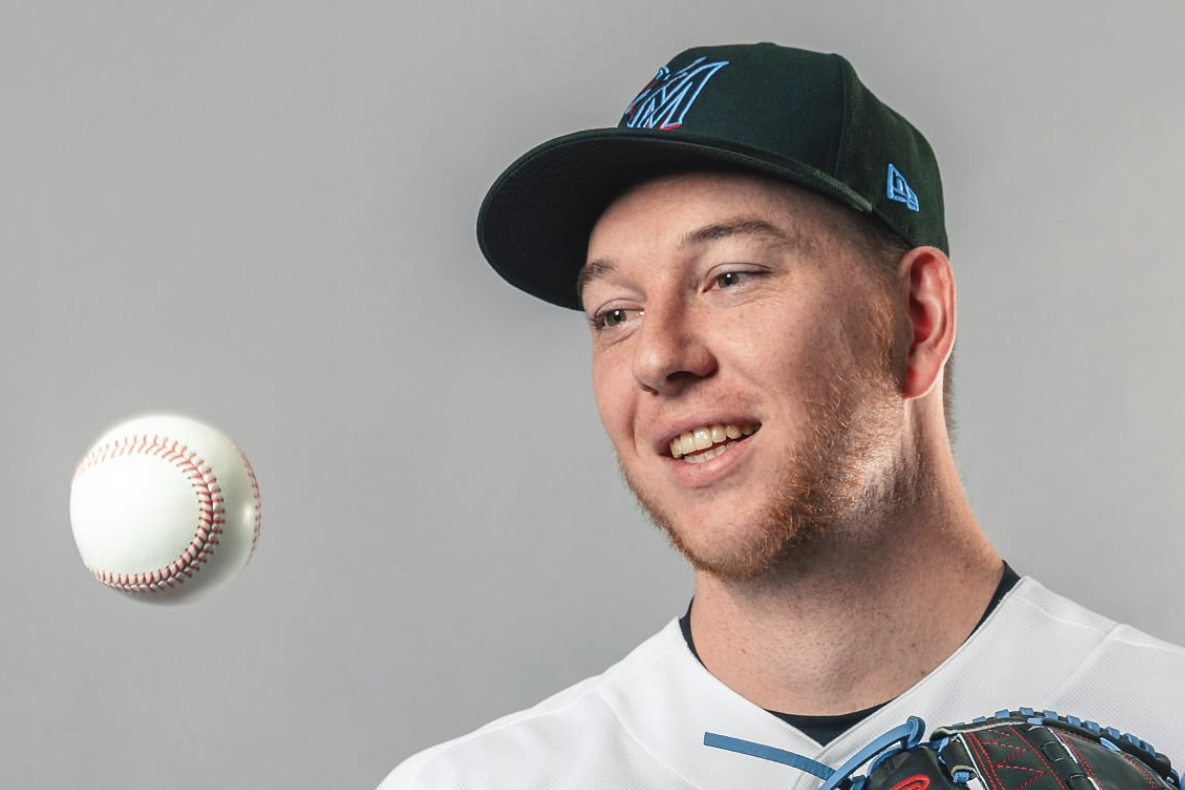 Prior to Monday's game, the Miami Marlins will recall right-hander Ryan Gusto from Triple-A Jacksonville, as Craig Mish of Marlins.TV was first to report. He will temporarily fill Pete Fairbanks' roster spot when the veteran righty reliever goes on the paternity list. Gusto, 27, has been limited to six total regular season appearances since the Marlins traded for him last July due to a right shoulder impingement. In his 2026 debut with the Jumbo Shrimp, he tossed five innings of three-run ball, racking up seven strikeouts. The Marlins have used Gusto exclusively as a starting pitcher, but their rotation is at capacity for the time being. There's a solid chance he appears out of the bullpen against the Cincinnati Reds on Monday considering that four active Miami relievers (Anthony Bender, Calvin Faucher, John King and Andrew Nardi) have worked back-to-back days. The highest-paid reliever in Marlins history on an annual basis, Fairbanks had been as good as advertised prior to Sunday's game. Chris Paddack was originally listed as the club's starting pitcher against the New York Yankees, but in the midst of a lengthy rain delay, they decided to deploy Fairbanks as an opener. That way, he could contribute while also catching an early flight to be home for the birth of his third child. Fairbanks allowed a three-run home run to Ben Rice during his one inning of action. Overall, he has a 6.75 ERA and 4.19 FIP with two saves. Fairbanks can spend up to three days on the paternity list. Expect him to be reinstated on Thursday. View the full article
 -
 Cubs Affiliate Overview (April 3rd - April 5th) Triple-A Iowa Cubs Series at St. Paul Saints (Minnesota Twins): Win 5-1 Season Record: 5-3 Double-A Tennessee Smokies Series vs. Birmingham Barons (White Sox): 2-1 Season Record: 2-1 High-A South Bend Cubs Series vs. Quad Cities River Bandits: 0-1 Season Record: 0-1 Single-A Myrtle Beach Pelicans Series vs. Charleston River Dogs: Win 3-0 Season Record: 3-0 Triple-A Iowa Cubs Season Record: 6-3 Series Opponent: Louisville Bats Series Standing: 5-1 April 3: The Iowa Cubs are back with a vengeance with their first series of the season against the Louisville Bats. Friday’s game was a dominant outing for the Iowa Cubs, overtaking the Bats 7-2. Will Sanders his first quality start of the season on the mound with 7 strikeouts and 2 home runs. The 2nd inning was the busiest for the Cub’s bats. Chas McCormick sent a rocket over the left center field wall on a 1-2 count to tie the game. Justin Dean singled with a line drive to center, scoring Christian Bethancourt and advancing Brett Bateman into scoring position. With two outs James Triantos extended the lead with a home run of his own, giving Iowa a 4 run lead against the Bats. Chas McCormick doubled on a lined drive to left field scoring Pedro Ramirez. Notably in the 9th, Jonathan Long tripled on a sharp hit fly ball to center field where he was able to score on a wild pitch, giving Iowa their 7th run of the night. April 4: It was an early and high scoring battle with Iowa’s game being cut short after the start of the 6th inning due to weather giving the I-Cubs their 4th straight win. Iowa set a strong lead in the first 3 innings running up the score to to 8 runs leading by 2. Justin Wiggins took to the mound pitching 4 innings. With increased focus following Cade Horton’s early removal from Chicago’s game against the Guardians on 4/03. Wiggins had a difficult start finding his rhythm, walking 2 batters, giving up 2 runs in the 2nd and a homerun in the 3rd striking out 4; Wiggins ERA sits at 5.63. Luke Little closed the game earning his 2nd win of the season. BJ Murray, Pedro Ramirez and Kevin Alcántara each logged their third home run of the season by the 3rd inning giving Alcántara his 7th RBI of the season and 3rd long ball in 6 games. April 5: The Iowa Cubs struck early and built a steady lead on the way to a 6–2 win over Louisville at Louisville Slugger Field. James Triantos set the tone in the first, singling, stealing second, and advancing to third on an error before scoring on Jonathon Long’s RBI single for a 1–0 lead. Kevin Alcántara added to the advantage in the third, launching a solo home run to left field. After Louisville answered with a run in the bottom half, Iowa responded with a decisive fourth inning. BJ Murray opened the fourth with a walk and stolen base, and later scored on Christian Bethancourt’s single. Triantos followed with a two-run double to left, bringing home Ben Cowles and Bethancourt to extend the lead to 5–1. Chas McCormick added insurance in the fifth with a solo home run to left center to mark his third straight games of homers. Triantos finished 2-for-4 with a double, two RBI, and a run scored, while Long added two hits and an RBI. Murray reached base twice, scored two runs, and tripled in the eighth. Bethancourt collected two hits and drove in a run. Starter Vince Velasquez worked five innings, allowing one run with two walks and six strikeouts and was named Player of The Game. Tyler Santana followed with three innings, allowing one run with one walk and three strikeouts. Gavin Hollowell handled the ninth, allowing one run and striking out one. Louisville scored once in the ninth, but Iowa maintained control to secure the win. Double-A: Knoxville Smokies Season Record: 1-1 Series Opponent: Birmingham Barons (White Sox) Series Standing: 1-1 April 3: The Knoxville Smokies started their season off with a bang wining their opener with a 9-6 victory. Jefferson Rojas for his first at bat launched a 3 run homer in the 1st inning. Rojas looked much more comfortable in the box compared to his last season appearance indicating strong offseason development. Seiya Suzuki made his first appearance on a rehab assignment going 1-2 with a sac fly and scoring a run. Suzuki looked comfortable in warm ups and batting practice prior to the game with solid plate appearances until being sat after the 5th inning. A.D. Ramírez contributed multiple hits with 2 RBIs and 2 stolen bases. Jordan Nwogu and Ariel Armas also contributed multi-hit games. The Smokies bullpen preserved the lead with Zane Mills starting pitching going into the 4th. Knoxville played well defensively with a key double play from Rojas to Edgar Alvarez to halt any rally from the Barons. Jefferson Rojas made a stellar diving play to end the 6th inning. Starter Zane Mills worked on the mound for 3 innings before the bullpen came in. Tyler Beck earned the win by holding the game with 2 hits and 3 runs with relievers Andrew Schultz and Edwin Taylor both contributing 2 scoreless innings to hold the lead and secure the win. April 4: The Smokie lost 6-2 on Saturday. An inability for the offense to get traction set the Smokies back while pitching from Knoxville took longer than desired to find a rhythm. Jefferson Rojas went 1-4 and scoring a run his only hit being a double on an outside pitch with a 2-2 count. Edgar Alvarez hit a single and earned an RBI to score Rojas and Karson Simas got on base and scored a run to give Knoxville their only runs of the game. Seiya Suzuki went 1-4 in DH with a notable punch out looking that had everyone in knoxville wishing for ABS. Starting pitching for the Smokies was Luis Martinez-Gomez who had a shaky start to his season. The first inning proved difficult for Martinez-Gomez to find the strike zone while also giving up a 2 run home run earning him the loss for this game. April 5: The Knoxville Smokies fell 10–5 to Birmingham after a decisive early stretch at Covenant Health Park. Birmingham struck quickly in the second inning, stringing together four singles to take a 4–0 lead. The visitors added to it in the third, highlighted by a two-run double from Wilfred Veras and another two-run double from Calvin Harris. Caden Connor capped the inning with a three-run double, extending the deficit to 10–0. Knoxville broke through in the fourth. Seiya Suzuki singled and later scored on a sacrifice fly from Jordan Nwogu to make it 10–1. The Smokies added more in the fifth when Karson Simas connected on a two-run home run, bringing home Andy Garriola and trimming the margin to seven. Knoxville continued to chip away late. In the eighth, Jefferson Rojas singled and scored on Ariel Armas’ double. Garriola followed with an RBI single, scoring Armas to cut the deficit to 10–5. Suzuki reached base twice and scored a run, while Garriola collected two hits and scored once. Simas drove in two runs with his home run, and Armas added a double and RBI. Starter Yenrri Rojas worked 2 2/3 innings, allowing seven runs with two walks and two strikeouts. Grant Kipp followed with 1 1/3 innings, allowing three runs with two walks and no strikeouts. Jake Bockenstedt added two innings of relief, striking out one without allowing a run. Despite late offense, Knoxville could not overcome the early deficit. High-A South Bend Cubs Season Record: N/A Series Opponent: The Quad Cities River Bandits (Kansas City Royals) Series Standing: N/A April 3: The South Bend Cubs have had a less than ideal start to their season. The opening day ceremonies, and first home opener since 2022, were cut short due to a flooded infield that was deemed unsafe for play. A disappointing day as the South Bend Cubs unveiled their double decker stadium expansion to seat more than 10,000 attendees. April 4: Saturday’s game was also postponed due to Weather and Fielding Conditions. April 5: Sunday’s game was a 7 inning double header against the River Bandits. Low-A Myrtle Beach Pelicans Season Record: 3-0 Series Opponent: Charleston River Dogs (Tampa Bay Rays) Series Standing: 3-0 April 3: Friday’s game for the Pelicans came on the heels of a 15 run blow out against the River Dogs. The Pelicans pulled through with a late game comeback win over Charleston, erasing a 1 run deficit in the 9th on a go-ahead 2 run home run from Cole Mathis to lock the 5-4 victory for the Pelicans. Cole Mathis delivered the securing swing of the night with his 2 run homer in the 9th while Josiah Hartshorn and Micahael Carico each contributed a solo homer earlier in the game. Jordan Henriquez earned the win on the mound. This win over the River Dogs delivers back to back wins for the Pelicans, scoring early in both games. The pelicans delivered a strong continuation off of thursday’s victory by clawing back the win with a multiple homerun game and a strong early offensive outing for Myrtle Beach to open the series. April 4: Break out the broomsticks for Myrtle Beach as the Pelicans held off a late game come back by the River Dogs to sweep the series at home with a final score of 4-3. Alex Lumpuy led Myrtle Beach at the plate with 3 hits and 2 stolen bases. Josiah Hartshorn, Luis Escobar, and Michael Vargas each drove in runs to bring up the Pelican’s lead. On the mound, David Bracho started, with Erisbel Melendez and Dean Jerzembeck each combining for 9 innings of solid pitching, each maintaining a 0.0 ERA for the start of their season. Dean Jerzembeck held the late game rally by the River Dogs to earn the win. On the fielding side for the Pelicans; 3 errors were earned with 2 coming in the 9th inning with a fielding error by Eli Lovich and a throwing error by Lu Espinoza that spurred the late game rally for the River Dogs. April 5: The Pelicans have April 5 and April 6 off to prepare for their stretch on the road against the Columbia Fireflies for a six-game series on April 7 at Segra Park. View the full article
 -
Ranking the Minnesota Twins' Top 5 Pitching Prospects by Upside
DiamondCentric posted an article in Twins Daily
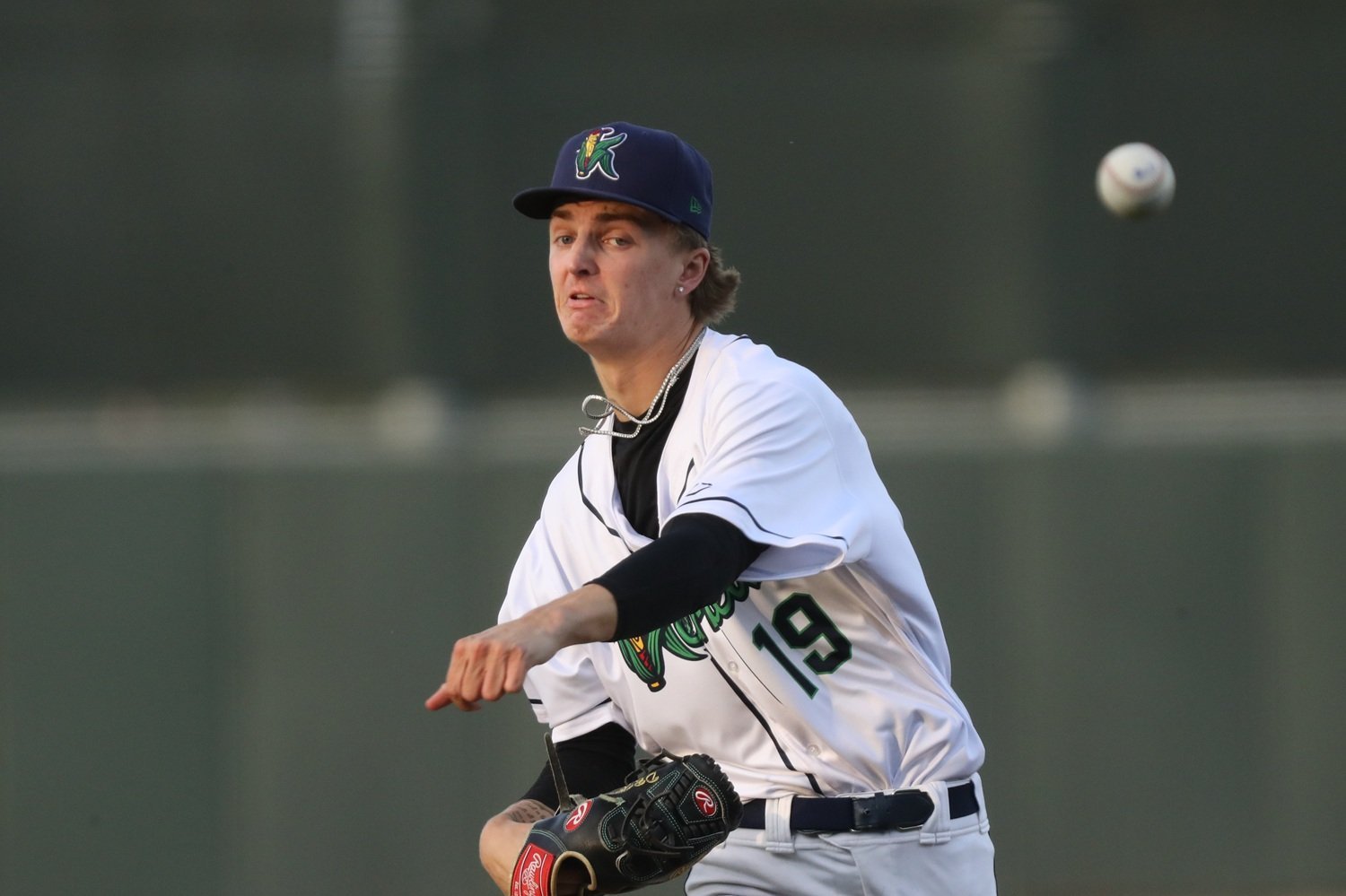 Prospect rankings are never as simple as lining players up from best to worst. A traditional list tries to balance everything at once. Upside, present tools, age, injury history, proximity to the big leagues, and even organizational need all get thrown into the mix. It's part projection, part preference, and part educated guess. This exercise throws most of that out the window. Instead of weighing floors and timelines, this ranking leans fully into ceiling. It's about identifying which arms in the Twins system could become something special, if everything clicks. That might mean ignoring risk. It might mean betting on pitchers who have barely thrown, or struggled to stay on the mound. In some cases, the floor might be never reaching Target Field. But the reward, if it hits, could be enormous. Here are five Twins pitching prospects ranked purely by upside. 5. Riley Quick, RHP Twins Daily Current Prospect Rank: 11 Quick looks the part before he even throws a pitch. At 6-foot-6 and 250 pounds, the former four-star football recruit brings rare physicality to the mound. That alone creates intrigue, but the upside comes from how quickly his stuff returned after surgery. Just a year removed from Tommy John, he was already touching the upper 90s, flirting with 99 mph. That kind of velocity rebound suggests there may still be another gear as he gets further removed from the procedure. Pair that with a legitimate four-pitch mix, and you start to see the outline of a durable, innings-eating starter with power stuff. The Twins slow-played his debut, which only adds to the mystery. Minnesota will start him in the low minors in 2026, where he should dominate the competition. There is risk in a pitcher with a limited recent workload, but the combination of size, arm strength, and pitch mix gives Quick a ceiling that extends well beyond a typical mid-rotation profile. 4. Connor Prielipp, LHP Twins Daily Current Prospect Rank: 5 At his best, Prielipp might have the most complete arsenal on this list. He's already shown what it looks like when everything is working. A mid-90s fastball, a true plus slider, and a quality changeup give him the weapons of a front-line starter. The strikeout numbers back that up (27.0%), and when he was finally healthy in 2025, the results followed. Health is the obvious caveat. Years of elbow issues have limited his workload to the point where projecting a full starter’s role becomes difficult. Even after a relatively stable season, he has still thrown a fraction of the innings typical for someone his age. But that's where upside comes into play. If Prielipp can hold his health long enough to build innings, the pitch mix is good enough to slot near the top of a rotation. And if durability pushes him to the bullpen, the stuff could play up into something even more dominant in shorter bursts. There are multiple paths to impact, which raises the overall ceiling. 3. Charlee Soto, RHP Twins Daily Current Prospect Rank: 10 Soto is the definition of volatile upside. The raw ingredients are loud. He can reach triple digits and flashes three pitches that project as above-average or better. His changeup already stands out as a legitimate weapon, and his slider took a step forward when his velocity ticked up early in 2025. That brief three-appearance stretch, before his season was cut short, is part of what makes him so intriguing. The added velocity hinted at another level, even if it came in a tiny sample. There was no ligament damage, which keeps the long-term outlook intact, but missed time and inconsistent command leave plenty unanswered. Soto does not need perfect command to succeed, but he will need more consistency in the strike zone. If that comes, the arsenal is good enough to dream on a high-impact starter. If it does not, the fallback could still be a power reliever with dominant stretches. Either way, the upside is tied to just how electric the arm can be. 2. Kendry Rojas, LHP Twins Daily Current Prospect Rank: 8 Rojas is a reminder that upside is not always a guarantee of linear development, especially after being traded to the Twins as part of the Louis Varland deal. His introduction to the organization did not go smoothly, as he struggled to find the strike zone in Triple-A. Walks piled up, and the stat line turned ugly in a hurry. For many rankings, that would be enough to push him down. For this exercise, it's almost irrelevant. Even during those struggles, the traits that matter showed through. He sat in the mid-90s with his fastball and generated swings and misses with both his changeup and slider. When he was around the zone, hitters had a hard time squaring him up. That's the key. If the Twins can help him harness the command, there is playoff-caliber starter potential, with the raw stuff to miss bats consistently. Injuries and inconsistency have limited his track record, but the flashes are loud enough to keep the ceiling intact. In a more optimistic outcome, he becomes a reliable starter. In a less stable one, he still has the weapons to thrive in high-leverage relief. 1. Dasan Hill, LHP Twins Daily Current Prospect Rank: 7 Hill is the purest upside play in the system. When the Twins drafted him, the appeal was projection. A tall, lean high school lefty with room to grow and a fastball that hinted at more. It did not take long for that projection to start turning into reality. His velocity jumped into the mid-90s almost immediately, and he began overpowering hitters in his first taste of pro ball. The strikeout numbers followed (31.1%), and both his slider and changeup showed the ability to miss bats against lower-level competition. The command, as expected, is still a work in progress. Walks piled up (15.0%), and efficiency was not always there. That's typical for a young pitcher learning to control newfound velocity and sharper secondary pitches. What separates Hill is how high the ceiling climbs if it all comes together. A left-hander with near triple-digit velocity and two swing-and-miss secondaries does not come around often. If he finds even average control, he has the ingredients of a true front-line starter. If he does not, the fallback could still be a dominant, high-leverage arm. Upside rankings are not meant to be comfortable. They require buying into uncertainty and accepting that some of these arms may never fully click. Injuries, command issues, and stalled development are all part of the equation. That is what makes pitching prospects so volatile in the first place. But it is also what makes them so compelling. The Twins system does not lack for intriguing arms, and this group highlights just how wide the range of outcomes can be. From near-ready options with frontline stuff to teenage projections still taking shape, the ceiling on this group is undeniable. If even one or two of these pitchers reach that ceiling, it could reshape the future of the organization’s rotation in a hurry. How would you rank the Twins' top pitching prospects by upside? Leave a comment and start the discussion. View the full article
 -
Royals activate Massey from IL; Option Loftin to Omaha
DiamondCentric posted an article in Royals Keep
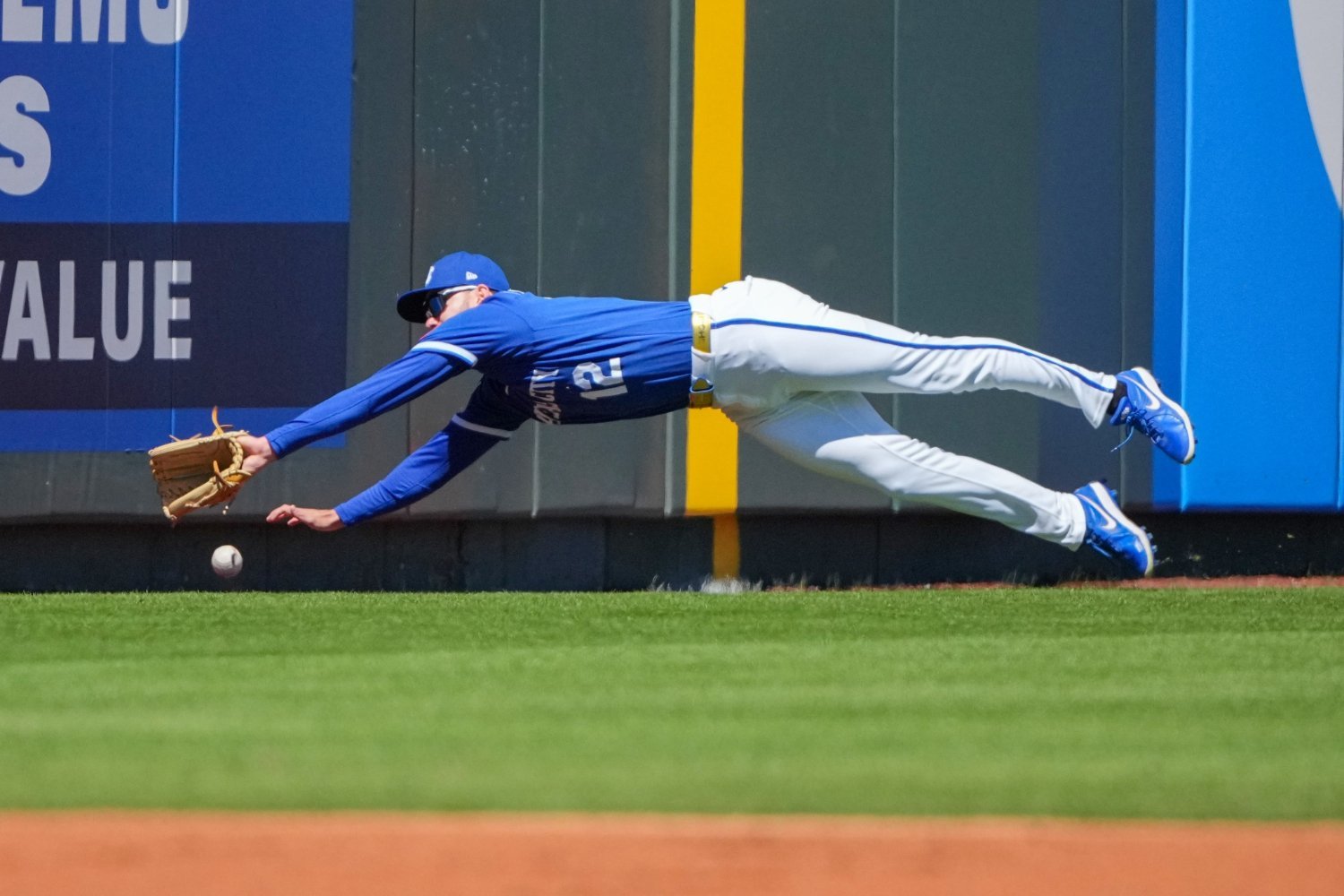 On Monday morning, the Royals announced they would activate Michael Massey from the IL. The 28-year-old second baseman/left fielder was on a rehab stint in Omaha after suffering a calf injury in Spring Training. Massey started the season on the 10-Day IL. With the activation of Massey, Kansas City optioned utility player Nick Loftin to Omaha. Massey had a solid spring until he was sidelined with a calf injury. In 24 plate appearances, the former Illinois product slashed .364/.417/.545 with a .962 OPS. He also hit a home run, had 3 RBIs, stole a base, and posted solid Statcast percentiles in Cactus League play, as seen below via TJ Stats. Massey is trying to bounce back after a lackluster 2025 campaign. In 277 plate appearances, he hit .244 with a .581 OPS. He had three home runs, posted a .069 ISO, and only had a 3.2% walk rate. The Royals are hoping that Massey can be more selective at the plate and show more power, much like he did in 2024 when he hit 14 home runs in 356 plate appearances. With Massey coming up, the Royals optioned Loftin, who was hitting .222 with a .697 OPS in 11 plate appearances. The former Baylor product showed excellent plate discipline so far in 2026. He had a .364 OBP and had solid Statcast rankings, especially in terms of whiff rate, walk rate, and chase rate. That said, Loftin struggled to launch the ball, as evidenced by an LA Sweet-Spot% that ranked in the 18th percentile. He also showed questionable defense in the field, especially in left field, where he misplayed a ball badly that resulted in the Brewers scoring. Thus, the Royals may want Loftin to work on his defense and power in Omaha. With his strong plate discipline, it doesn't seem like Loftin will be waiting in Omaha for long, especially if Massey can't show progress at the plate in 2026. View the full article
 -
 Blue Jays Affiliate Overview (April 2 – April 5) Triple-A Buffalo Bisons Series vs Omaha Storm Chasers (Kansas City Royals): 1-3 Season Record: 3-6 Double-A New Hampshire Fisher Cats Series vs. Binghamton Rumble Ponies (New York Mets): 1-1 Season Record: 1-1 High-A Vancouver Canadians Series vs. Tri-City Dust Devils (Los Angeles Angels): 0-3 Season Record: 0-3 Single-A Dunedin Blue Jays Series vs. Bradenton Marauders (Pittsburgh Pirates): 1-2 Season Record: 1-2 Triple-A Buffalo Bisons Season Record: 3-6 Series Opponent: Omaha Storm Chasers (Kansas City Royals) April 2: The Buffalo Bisons started the back half of their week-long series against the Omaha Storm Chasers with hopes of surpassing the .500 mark on the season. In a rough game for Bisons pitching, their offense gave them every opportunity to take home a win, but it was just not meant to be. With a rough outing from Grant Rogers, one which saw him only last four innings while giving up four runs, the Bisons offense was playing catch-up all day long. In the second inning, recently promoted Brandon Valenzuela launched his first home run of the season to right field off of Ethan Bosacker, a 104.3 mph blast. Eloy Jiménez continued his smoking hot stretch to open the season with his first home run in the third, a two-run shot to right center. Jiménez had himself another good day at the plate, going 2-for-3 and before being taken down for a pinch-runner in the eighth, as the Bisons mounted another comeback attempt. The comeback would fall short, but not before Jonatan Clase drove in two runs with a single to center field, bringing the score to 7-9. A valiant effort to mount a comeback, but it just wasn't enough on the day. April 3: Postponed April 4, Game 1: The Bisons faced a familiar foe on the mound for Omaha, Aaron Sanchez, and used their intimate knowledge of him to ride a power surge to the winner's circle in the shortened game. Rafael Lantigua and Yohendrick Pinango each smacked their first home runs of the season. Pinango's blast was off a changeup down and had an exit velocity of 103.3 mph, flying 411 feet over the right center fence. Eloy Jiménez collected two hits, bringing his hit streak to five games to open the season. Lantigua put the game out of reach with another RBI, this time a two-RBI single in the sixth. The scoring was more than enough for the Bisons pitching staff, as Chad Dallas got his second start of the season and continued to look impressive on the mound. He pitched 3.1 innings, only gave up two hits, and struck out two. He relied heavily on three pitches: his cutter, then his curveball to lefties and sweeper to righties. Jesse Hahn and Michael Plassmeyer came on in relief and held the Omaha bats down from there, and the Bisons took this game easily, 8-0. April 4 Game 2: In game two of the doubleheader, the Bisons spent the game playing from behind once again, this time due to Devereaux Harrison coughing up three runs in the first inning and another run in the third. Eloy Jiménez's hit streak was snapped at five, but he was still able to be productive at the plate, knocking in a run on a sacrifice fly in the sixth. The Bisons again tried to make a late comeback in the seventh and final inning of the shortened game. Josh Rivera hit a two-run home run off of Shane Panzini, but Carlos Mendoza flew out to center to end the game, with the Bisons falling 4-6. April 5: It was a rough game for Buffalo as they took the loss in a close one on Sunday. CJ Van Eyk was the starter for the Bisons, and he got hit around to the tune of four runs on six hits and a walk. He did strike out four batters, but it wasn't enough. Buffalo jumped out to a two-run lead in the first inning on an RJ Schreck RBI walk and a Charles McAdoo RBI single. Buffalo would only add one more run the rest of the game, an Eloy Jimenez RBI single in the fifth inning. The biggest hit for the Bisons was a Yohendrick Pinango 95 mph double. Other than that, it was mostly soft contact for Buffalo as they would struggle to find runs and lost this one 4-3. Double-A New Hampshire Season Record: 1-1 Series vs. Binghamton Rumble Ponies (New York Mets) April 2: No Game April 3: New Hampshire kicked off their season Thursday with one of the Toronto Blue Jays’ best pitching prospects on the mound, Gage Stanifer. Everything was looking great for the first two innings, as Stanifer was dotting his mid-90s fastball and painting it at the knees for multiple strikeouts with the batters just looking. It was a good shift in his pitching approach, with him using the lower part of the zone. Unfortunately, after a long bottom of the second inning waiting on the offense, Stanifer came out in the third a bit off with his command. He was just missing the zone at times, but not by much. He ended up allowing a walk, then a groundball double down the line for a run. He almost stranded two more hard-fought walks, but, he left a fastball over the plate, missing the bottom of the zone, and Chris Suero hit an opposite-field grand slam. It was really the only bad pitch of the day for Stanifer, but it hurt. His slider was a bit off, which made him rely heavily on his fastball. Eddie Micheletti Jr. launched a home run to bring the score closer for the Fisher Cats, and the game was back and forth until the ninth inning. Sean Keys crushed a pitch to right field for a game-tying two-run home run. The game would be decided in the 13th inning, after a New Hampshire error let up a run. They couldn't answer in their half and ended up losing a close battle, 10-9. April 4: In their second straight back-and-forth battle, New Hampshire would come out on top. Richard Gallardo and Alex Amalfi combined for 7.2 innings, only allowing one hit and zero runs. They would each strike out four batters as well. Eddie Micheletti Jr. hit a home run in his second straight game to power New Hampshire. Caleb Freeman would go on to shut the door for the save. Both teams struggled offensively in the game, with only seven hits combined. It was just enough for the New Hampshire win, 2-1. April 5: Postponed High-A Vancouver Season Record: 0-3 Series vs. Tri-City Dust Devils (Los Angeles Angels) April 2: No Game April 3: It was a back-and-forth game for each team, as Arjun Nimmala started it off with a homer in his first at-bat of the season. Landen Maroudis impressed after an aggressive promotion to Vancouver, sitting in the mid 90s with his fastball and without walking a batter in three innings. Gilberto Bastista could not find the zone, however, and did not get out of the inning after walking in two runs. Nimmala took the lead back on his second extra-base hit of the night, but the bullpen continued to struggle. Austin Marozas and Kelena Sauer gave up more runs, which ended with a Canadians loss. April 4: Daniel Guerra and 2025 second-overall pick Tyler Bremner had a pitching duel in which both starters struck out six batters. Unfortunately for the Canadians, Guerra was the one to falter, as he gave up the only run of the game on a solo homer given up to Juan Flores. Danny Thompson Jr. excelled in relief, as he pitched 3.1 innings of scoreless ball with five strikeouts, but the offense sputtered against the Dust Devils pitching, striking out 17 times on the night. April 5: Colby Holcombe took the bump for the Canadians in the last game of the series, but got hit around, as he gave up three runs in just 2.2 innings of work. The Canadians could not get to Yeferson Vargas, as he struck out six batters without allowing a run in four and a third innings. Mason Olson relieved Holcombe and pitched well, giving up only one run to keep it close, and the Canadians broke through against Max Gieg and Keythel Key, scoring five runs, including Manuel Beltre’s first homer in Vancouver. Carson Pierce returned to the mound for the first time since 2024 and threw a scoreless inning, but Juanmi Vasquez took the loss as he gave up three runs in the bottom of the ninth, leading to three straight losses for Vancouver. Single-A Dunedin Season Record: 1-2 Series vs. Bradenton Marauders (Pittsburgh Pirates) April 2: Postponed April 3: It was a battle between two of the best pitching prospects in baseball, as Trey Yesavage had his first rehab start and Seth Hernandez made his professional debut. Blaine Bullard immediately hit a triple on the first pitch of the game, and was scored on a single by a rehabbing Peyton Williams. However, Hernandez then began to dominate as he struck out eight in only three innings of work. Yesavage was also excellent, sitting in the mid 90s with his fastball, with his only blemish being an inside-the-park homer that was misplayed by Enmanuel Bonilla. The best pitcher from the 2025 FCL champion Blue Jays team, Troy Guthrie, made his debut for the Dunedin Blue Jays and did not disappoint, showing off his brand new slider to pair with a high-riding fastball, which led to three no-hit innings. Unfortunately for Dunedin, Dylan Watts struggled in his pro debut, which broke the tie in the seventh as he gave up three runs. A big inning after the Jays loaded the bases tied the game up in the bottom of the seventh, but Carson Myers took the loss as he gave up an additional two earned runs, and the Jays could not get those runs back. April 4: Recently signed Patrick Corbin made his first start in the Jays organization, as he looks to replace Cody Ponce in the big league rotation. Matt Scannell made a fielding error that allowed a run to score in the first, but the veteran went up to 74 pitches in five innings, striking out the young hitters nearly half his age. The Jays fired back in the bottom of the second, with Yorman Licourt tying it up with a solo homer at 109.4 mph, and then Austin Smith scored another on an RBI groundout. The inning after, Licourt had himself another homer at 100 mph, showing off his raw power, which scored two runners this time. Blaine Bullard hit a sac fly after Dariel Ramon tripled to cap off the scoring, and Trace Baker earned the save in the first game of the doubleheader. In game two of the doubleheader, Nolan Perry and Karson Ligon both took turns with pitching excellence. Both sat in the mid 90s with their fastballs, showing great stuff. Perry did get tagged on a solo homer by Samuel Escudero in the third, and in extras, Ligon gave up an unearned run in extra innings on a wild pitch and a throwing error from Charlie Saum, but they combined for 12 strikeouts. The offense could not support the excellent pitching, and the Jays lost in the ninth inning after Mason Davenport gave up a two-run double. JoJo Parker did get his first professional hit and steal of his career, and walked two times as well. April 5: No Game View the full article
 -
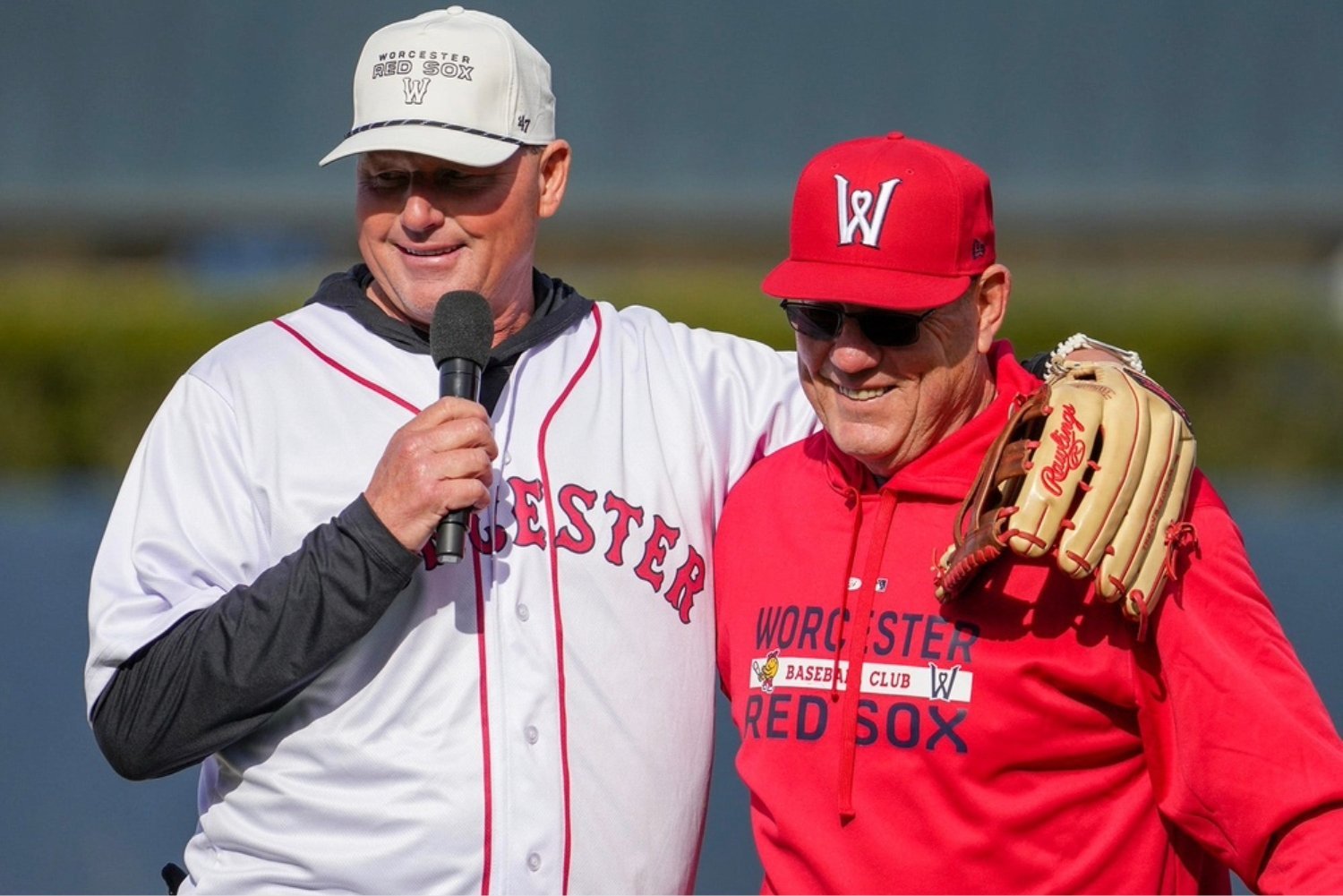 Red Sox Affiliate Overview (April 3 - April 5) Triple-A Worcester Red Sox Series at St. Paul Saints (Minnesota Twins): 5-0 Season Record: 6-2 Double-A Portland Sea Dogs Series at Somerset Patriots (New York Yankees): 1-1 Season Record: 1-1 High-A Greenville Drive Series at Greensboro Grasshoppers (Pittsburgh Pirates): 0-3 Season Record: 0-3 Low-A Salem RidgeYaks Series at Delmarva Shorebirds (Baltimore Orioles): 2-1 Season Record: 2-1 Triple-A Worcester Red Sox Season Record: 6-2 Series Opponent: St. Paul Saints (Minnesota Twins) Series Standing: 5-0 April 3: Friday's game against the Saints was cancelled due to rain. It was the second consecutive game affected by inclement weather. April 4: The WooSox beat the Saints 5-3 on Saturday behind dominant pitching and solid hitting. Jake Bennet got the start for the WooSox on Saturday and was nails through five innings of work. He struck out four and allowed only one hit in his second start of the season. His ERA remains at 0.00 through eight innings on the season. Behind Bennett was Jacob Webb, who gave up one hit in two innings in his second appearance of the season. Things started to unravel for the WooSox when Kyle Keller entered the game. The righty gave up three runs on four hits through just an inning of work. With a two-run lead, Tayron Guerrero took the bump with a save opportunity. He did just that, striking out one and sealing the game for the WooSox. At the plate, all of Worcester’s runs came via the long ball. In the first inning, Mickey Gasper took one deep off Zebby Matthews with one man on. Then, in the third inning, Nick Sogard and Nate Eaton launched back-to-back solo shots to add onto the lead. Just an inning later, Tsung-Che Cheng got to Matthews once more, the fourth home-run of the game for the WooSox. It was a well rounded effort from the WooSox, who took the third game of the series. April 5: The WooSox swept a doubleheader on Sunday, completing a series sweep. Red Sox top prospect Payton Tolle got the start in the first game of the afternoon. He turned in six innings of solid work, but isn’t yet at the same level of dominance that he was last season. He gave up two runs (one unearned) on four hits, including a leadoff home run. On the bright side, he struck out seven and got the win for Worcester. Noah Song came in in the seventh inning, holding the Saints at bay and earning the save after one inning of no-hit ball. At the dish the WooSox were solid if not a little lackluster. They recorded just seven hits, but managed to get the job done. Allan Castro went two-for-three, and Kristian Campbell drove in his fourth RBI of the season in the seventh inning on a single to left field. The second game of the afternoon made up for any lack of offense in the first. The WooSox won 11-9 in an extra-innings thriller. It was a bullpen game for Worcester, as Seth Martinez got the start. He gave up one run on a solo blast, but struck out three in two innings. Tyler Samaniego and Wyatt Olds pitched a combined three innings, giving up five runs and three hits. Devin Sweet entered the game with a save opportunity, but gave up two runs on three hits as the Saints forced extra innings. Reidis Sena came up clutch for the WooSox, pitching three innings of one run ball to seal the sweep. The offense came to life in the second game, totaling 11 runs on 10 hits and drawing eight walks. Mickey Gasper continued his excellent start to the season, crushing a 405-foot homer in the first, and a grand slam in the second to put the WooSox up 5-0. Then, Kristian Campbell launched his first homer of the year, marking the second straight day with back-to-back homers for the WooSox. Late in the tenth inning, Nick Sogard hit a ground-rule double that drove in Jason Delay, grabbing an 11-9 lead. The WooSox complete the five-game sweep and head back to Worcester for the first homestand of the season beginning on April 7. Double-A Portland Sea Dogs Season Record: 1-1 Series Opponent: Somerset Patriots (New York Yankees) Series Standing: 1-1 April 3: The Sea Dogs were dealt a drubbing on Friday at the hands of the Patriots, losing 18-2. Portland gave up 22 hits, and only had three of their own. Blake Wehunt took the mound for Portland, but didn’t last long. Over ⅓ innings of work, Wehunt walked one, and gave up three earned runs, including two home runs. It was all downhill from there for the Sea Dogs. Cooper Adams took over, and promptly gave up another five runs over one and ⅓ innings. Patrick Halligan came in next, giving up four runs on six hits in one and ⅓ innings. Micheal Sansone was the lone bright spot on the bump for Portland. He struck out four in three innings and gave up one run on five hits. To finish the game, Max Carlson gave up another five runs in two innings, capping off a disastrous outing for the Sea Dogs pitching staff. On the other side of the ball, Portland simply couldn’t get their bats going. Top-five prospect Franklin Arias accounted for two of the Sea Dogs' three hits on the day, and drove in one of their two runs. The only other player to record a hit was Max Ferguson, who hit a solo home-run in the fourth inning. April 4: The Sea Dogs avenged their disastrous Friday outing with a 1-0 win on Saturday. It was a low-scoring affair anchored by a solid five innings of work from John Holobetz, who earned the win. He gave up just two hits and walked two while striking out 3 in his first appearance of the season. In relief, Isaac Coffey and Erik Rivera were excellent, allowing a combined two hits in four innings. Rivera earned the save, registering three strikeouts in two innings. It was a slow day at the plate for Portland. They recorded only four hits, and struck out 11 times. The lone run of the game came on a third inning groundout from Ronald Rosario that drove in Tyler McDonough. No players recorded more than one hit, but it wasn’t necessary as the Sea Dogs grabbed the win. April 5: Sunday’s series finale was postponed due to inclement weather. High-A Greenville Drive Season Record: 0-3 Series Opponent: Greensboro Grasshoppers (Pittsburgh Pirates) Series Standing: 0-3 April 3: The Drive fell 11-7 in a high scoring affair in Kyson Witherspoon’s professional debut on Friday. Witherspoon worked through three and ⅓ innings, allowing four runs on six hits. The 21-year-old is fourth in the Red Sox’s prospect rankings, and is the Sox’s top right handed pitching prospect in the system. Following Witherspoon’s debut, Ben Hansen pitched a disastrous one and ⅓ inning, giving up six runs (five earned) and seven hits while digging the Drive deeper into a hole. Joe Vogatsky was solid in his first appearance of the season. Over three and ⅓ innings he gave up one run on four hits. Hudson White also made his professional pitching debut on Friday. The catcher/first baseman pitched a stellar inning in relief, giving up only two hits and no runs. At the plate, Justin Gonzales and Yoelin Cespedes provided the bulk of the Drive’s offense. The first two hitters in the lineup each had three hits in five plate appearances. Gonzales, who compared himself to Aaron Judge in Spring Training, demolished his first homer of the season in the first inning and accrued six total bases. Cespedes hit a double in the third inning, and was driven in on a two-run knock from Mason White, his first of the season. Despite the valiant efforts from Gonzales and Cespedes, the Drive left 10 men on base and lost their second straight to open the season. April 4: The Drive lost their third game in a row, falling 10-4 in the series finale to Greensboro. Anthony Eyanson got the start and had a solid outing. He struck out six in his professional debut, giving up three hits and one run over three innings. The 21-year-old is the tenth ranked prospect in the Red Sox system. Marcus Philips took over in the fourth, and only lasted ⅔ innings before being pulled. He walked three batters in the short time he was on the mound, giving up four runs (one unearned) on three hits and earning the loss. Calvin Bickerstaff came in in relief, turning in three and ⅓ innings of work, giving up two hits and striking out two. Things started to fall apart for the Drive when P.J. Labriola took over. The lefty gave up five runs on just two hits in an inning and ⅓. Hudson White took the mound for the second time in as many games, giving up one hit and striking out one to close out the game. Justin Gonzales built on his solid performance from Friday. He put his raw power on display, launching a home run for the second game in a row and driving in two runs. Yoelin Cespedes continued his streak of excellence, tallying three hits in five at-bats and maintaining .500 batting average. Despite the solid performances all weekend long from Gonzales and Cespedes, the Drive were unable to avoid being swept in their opening series. Low-A Salem RidgeYaks Season Record: 2-1 Series Opponent: Delmarva Shorebirds (Baltimore Orioles) Series Standing: 2-1 April 3: The RidgeYaks lost 11-10 in brutal fashion on Friday. They led 10-6 at one point, but allowed five unanswered runs to lose the game. Madinson Frias got the start for Salem and got shelled through one and ⅔ innings. He gave up six runs on six hits and surrendered three walks. The difficult outing was redeemed by Adam Bates and Ethan Walker, who pitched a combined five innings. Between the pair, they gave up five hits and two runs while preserving the RidgeYak’s lead. Wuilliams Rodriguez entered the game with a save opportunity, but allowed three runs over two and ⅓ innings that gave the Shorebirds an 11-10 edge. The RidgeYaks were rock-solid at the dish, scoring 10 runs on eight hits. Anderson Fermin was excellent, drawing three walks and scoring three times. His solo hit was a line-drive homer that scored two and gave the RidgeYaks a 9-6 lead. Ty Hodge and Stanley Tucker were also solid at the plate. Hodge notched two hits, three runs, and two walks while driving in one run. Tucker hit a three-run blast in the second inning, and added an RBI single in the fourth. D’Angelo Ortiz, son of David Ortiz, drove in two runs on a sac fly and a double play. The RidgeYaks drew an eye-popping 10 walks, but couldn’t score when it counted. April 4: The RidgeYaks returned to the win column on Saturday with a 5-3 win to claim the series. Salem’s pitching staff was excellent through eight innings, allowing just one hit. After a superb three innings from Christian Foutch, Devin Futrell came in and showed out. He allowed just one hit and one walk, and struck out six batters in four innings, earning the win. Harry Blum earned the hold, pitching a hitless one inning. Things began to go south once Griffin Kilander took the bump as Delmirva scored three runs in the ninth, but Kilander was able to stave off the upset. Anderson Fermin was great yet again for Salem, he recorded two hits in four appearances and maintained a .500 batting average. Avinson Pinto scored twice and Frederik Jimenez walked three times, including once with the bases loaded. The RidgeYaks bounce back from Friday’s loss with a season opening series victory. View the full article
 -
 Marcos Castañon homered and doubled, and Samad Taylor drove in two runs in El Paso’s 6-5 loss. Fort Wayne split its twin bill, winning 4-1 behind Abraham Parra’s 3 2/3-inning, five-strikeout start and scoreless relief from Clark Candiotti, Luis Germán, and Clay Edmondson. Jack Costello homered in the win, while Kasen Wells doubled and scored in the 16-1 loss. Kavares Tears drove in Fort Wayne’s lone run. Padres Transactions No Roster Moves. Castañon Homers, Taylor Drives In Two In Chihuahuas Loss Box Score The El Paso Chihuahuas carried a four-run lead into the fifth, but Tacoma came back for a 6-5 win on Sunday at Cheney Stadium. El Paso broke through in the fourth. Marcos Castañon was hit by a pitch, Carlos Rodríguez singled, and Nate Mondou brought home the tying run with a sacrifice fly. Anthony Vilar followed with a single, Mason McCoy walked, and Samad Taylor lined a two-run single to left that scored Rodríguez and Vilar for a 3-1 advantage. Castañon added to the lead in the fifth when he homered to left field, his second home run of the season. Later in the inning, Pablo Reyes walked, stole second, and scored on Mondou’s RBI single as the Chihuahuas moved ahead 5-1. Taylor finished 3-for-5 with two RBIs and a stolen base, while Jase Bowen went 2-for-5 with a triple. Castañon went 2-for-4 with a double, a homer, one RBI, and two runs scored. Mondou drove in two runs, and Reyes scored once and stole a base. Starter JP Sears pitched 4 1/3 innings, allowing three runs, four walks, and striking out four. Jackson Wolf worked 1 2/3 innings, allowing one run, two walks, and striking out three. Tacoma answered with four runs in the fifth to tie the game. El Paso had a chance in the sixth after Taylor singled, stole second, and moved to third on a passed ball, but the score remained even. In the ninth, Tacoma brought home the winning run on a two-out single. Costello Homers, Rodriguez Reaches Twice In TinCaps Win Box Score The Fort Wayne TinCaps scored early and held Great Lakes to two hits in a 4-1 win on Sunday at Dow Diamond. Fort Wayne started quickly in the first inning. Kasen Wells walked, stole second, and moved to third on Carlos Rodriguez’s single. Lamar King Jr. then reached on a fielder’s choice, which brought Wells home, and Rodriguez later stole home while King Jr. stole second to make it 2-0. Jack Costello added to the lead in the second when he hit a solo home run to left-center field, his first homer of the season. The TinCaps pushed across another run in the third after Zach Evans singled and Rodriguez doubled. Alex McCoy then reached on a fielder’s choice, and Evans scored as Fort Wayne moved ahead 4-0. Rodriguez finished 2-for-4 with a double and a run scored. Costello went 1-for-2 with a home run, an RBI, and a walk. Wells scored once, walked twice, and stole two bases, while King Jr. drove in a run, walked once, and stole two bases. McCoy added an RBI, and Evans went 1-for-4 with a run scored. Against the Loons, starter Abraham Parra pitched 3 2/3 innings, allowing one run, three walks, and striking out five. Clark Candiotti followed with 1 1/3 scoreless innings, Luis Germán worked one scoreless inning, and Clay Edmondson finished with a scoreless seventh. Great Lakes scored its only run on a fourth-inning solo homer, but the TinCaps kept the lead from there. Wells Doubles, Tears Drives In TinCaps’ Lone Run In Loss Box Score In the second game of the doubleheader, the Fort Wayne TinCaps were held to two hits in a 16-1 loss to Great Lakes. Great Lakes scored twice in the first, then broke the game open with a nine-run third. After a solo home run started the inning, Fort Wayne made a pitching change with two runners on base. The Loons added two runs on a double, two more on a single, and later in the inning, a grand slam pushed the lead to 11-0. The TinCaps got their only run in the fourth. Kasen Wells opened the inning with a ground-rule double, Zach Evans followed with a single, and Lamar King Jr. walked to load the bases. Kavares Tears then lifted a sacrifice fly to left field, scoring Wells. Wells finished 1-for-3 with a double and a run scored. Evans went 1-for-3, while Tears drove in the lone Fort Wayne run and added a walk. Fort Wayne drew two walks and struck out 12 times. Starter Kleiber Olmedo pitched two innings in a disaster start, allowing five runs, two walks, and striking out one. Will Varmette also worked 1/3 of an inning, allowing five runs, one walk, and striking out one. Vicarte Domingo pitched 2/3 of an inning and gave up one run with one strikeout. Jeferson Villabona allowed two runs in 2/3 of an inning, Igor Gil gave up one run in one inning, and Bernard Jose surrendered two runs in 1 1/3 innings while striking out two. Great Lakes added two more runs in the sixth to close the scoring. View the full article
 -
Cubs Week in Review: Not Enough Wins, and Too Much Worry
DiamondCentric posted an article in North Side Baseball
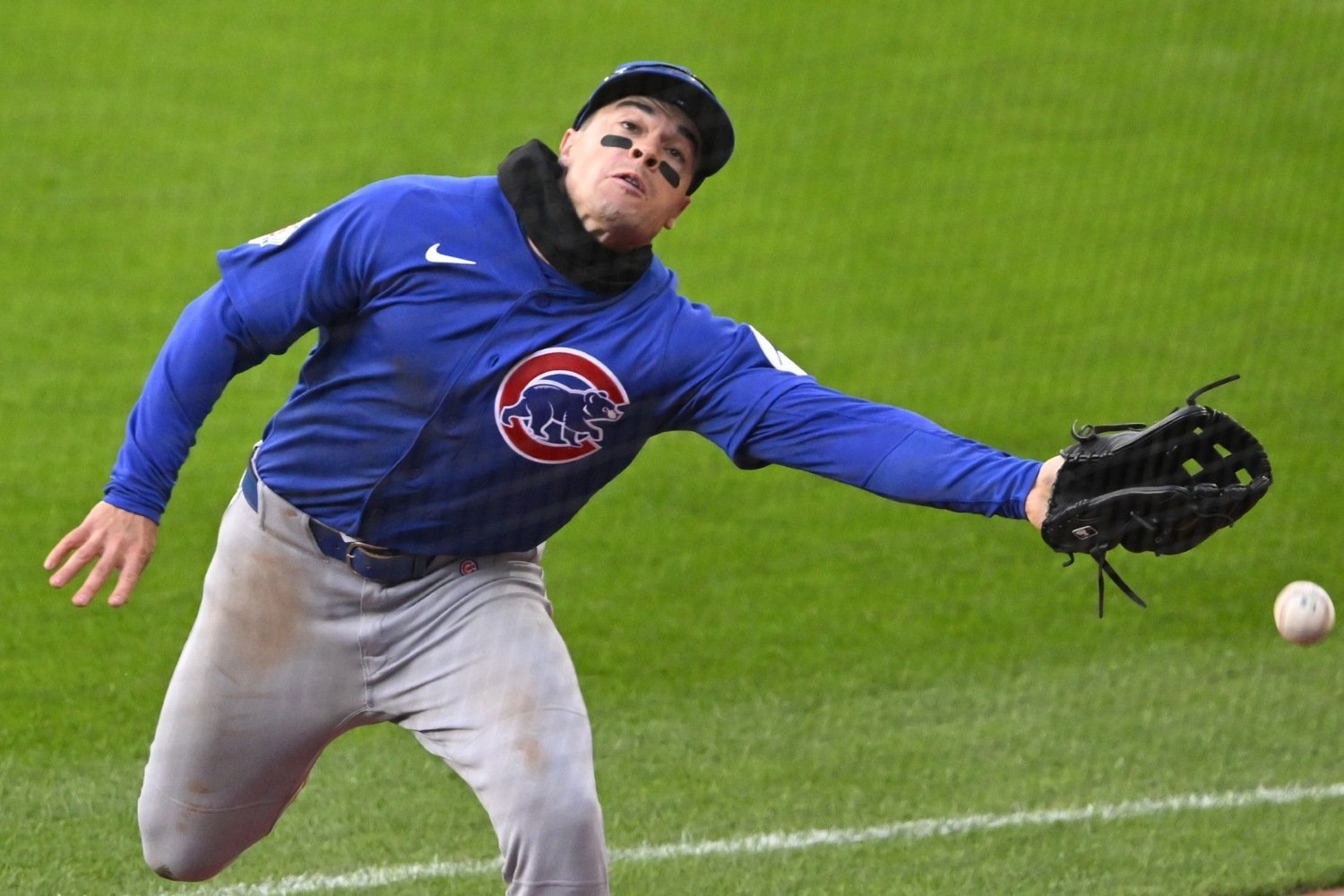 The first full week of the season started on such a hopeful note. Cubs fans got their first look at Edward Cabrera in blue pinstripes, and he did not disappoint. Using a nasty mix of stuff, Cabrera danced through six innings of one-hit ball and struck out five. The offense produced when it was necessary, including a home run from Ian Happ and RBI knocks from Dansby Swanson and Carson Kelly. It was more than enough to keep a distance between them and the visiting Angels in the opener of their three-game series. Alas: it was practically all downhill from there. Tuesday night's contest highlighted the home side's early offensive struggles. Jameson Taillon kept the Angels off the board in his 4 2/3 innings of work, but the Cubs only mustered four total hits on a cold night, facing the hot heat of José Soriano. No major-league team—even one in the upper echelon—is immune to a slow start. The expectations for this Chicago Cubs team were so high going into the season, however, that the frustrations associated with the club's collective slump were magnified. Hoping to regroup from a sluggish Opening Day start, veteran Matthew Boyd took the hill for the rubber match of the final game of the Cubs' season-opening homestand. Boyd looked much sharper in his second outing of the year, going nearly six innings and racking up 10 strikeouts. On the opposite side of the ledger, the North Siders plated six runs on 10 hits, offering a small preview of what their offense could look like when things are clicking. A fabulous day of pitching secured the club's first series win of the 2026 campaign. In a year celebrating the 10th anniversary of the team's World Series championship, the Cubs next returned to the place where it all went down: Cleveland, Ohio. The faces, fortunes, and even one of the team's names are quite different than what they were then, but the series still felt important. For one thing, it was Cleveland's home opener, so the set kicked off with some pageantry. For another, the Cubs needed to find some rhythm, and narratively, Cleveland felt like the right place to do it. Game one pitted staff ace Cade Horton of the Cubs against the Guardians' Joey Cantillo. The game glided uneventfully into the bottom of the second inning; that's when disaster struck. Horton saw his velocity sag, then left the game with forearm discomfort. He was immediately placed on the 15-day injured list, and now, it's breath-holding time until a full diagnosis of the issue is revealed. Colin Rea did yeoman's work in Horton's stead, but the Cubs dropped the game due a bullpen blowup. A Midwestern squall Saturday set up a true doubleheader at Progressive Field on Easter Sunday. Swapping the order of starters from the first turn of the rotation, the Cubs trotted out the electric Cabrera for the first contest. In almost 12 innings pitched as a Cub, Cabrera has surrendered just two hits and no runs, after shutting out Cleveland for 5 2/3 frames Sunday. The movement on his breaking pitches is devastating, and the energy he's brought in the early going is infectious. His performance led the team to a 1-0 win. The second game offered the North Siders the chance to raise their record above the .500 mark for the first time this season. It was an opportunity squandered. Shota Imanaga took the bump, and fared nicely in the face of mounting concerns over his penchant for surrendering the long ball. The Pitching Philosopher pitched five relatively strong innings and was charged with one earned run. To a degree, the Cubs' bats came to life, with home runs from Matt Shaw, Dansby Swanson, and Ian Happ. Their 3-0 lead held up until another lackluster appearance from Ben Brown, and another late collapse, this time by second-tier reliever Jacob Webb. Some of the club's regular boppers made it interesting late, bringing Carson Kelly to the dish down one with two runners in scoring position. A strikeout ended the game, though, giving Cleveland the series win as the Cubs head to St. Petersburg for their date with the Rays. Through the first week or so, the Cubs have shown glimpses of their upside, but they're in some immediate trouble. Injuries aside, this is far from a complete team. Chicago starts this week 4-5, looking up at all of their division rivals. The season isn't out of control just yet, but if you enter the season hoping to topple a team with three straight division titles in the bag, spotting them a three-game lead (while losing your ace, be it for a short time or a long one) is a poor way to go about it. It was a bad week; the Cubs need this to be a good one. The stakes might be highest off the field, though, as they await news on Horton. View the full article
 -
 Twins System Recap: The Saints lost both ends of their doubleheader today, but Alan Roden did just about everything he could have short of pitching the top of the 10th inning. Roden extended the game when the Saints were down to their final out on two different occasions. Kaelen Culpepper also had a good day for St. Paul, belting a home run in each game. One of his dingers came off Red Sox No. 1 prospect Payton Tolle. Marek Houston stayed hot for Cedar Rapids, hitting his first homer of the year. View the full article
 -
 Alex and Maddie discuss what is continually going wrong for the Red Sox during this awful start to the season. They highlight consistent issues through the Astros and Padres series while wondering what fixes could be coming. Their focus shifts to the upcoming Brewers series and why the matchup on Tuesday featuring Garrett Crochet should be must-see viewing for any baseball fan. Finally, the talk through the bullpen woes before discussing Trevor Story’s role with the organization and how it needs to change quickly. Listen on Apple Podcasts: https://podcasts.apple.com/us/podcast/the-talk-sox-podcast/id1783204104 Listen on Spotify: https://open.spotify.com/show/3qPrPXEngu0CxgTmlf0ynm Listen on iHeartRadio: https://www.iheart.com/podcast/263-the-talk-sox-podcast-244591331/ Listen on Pocket Casts: https://pca.st/4tmd121v Watch on YouTube: https://www.youtube.com/@talksox View the full article
 -
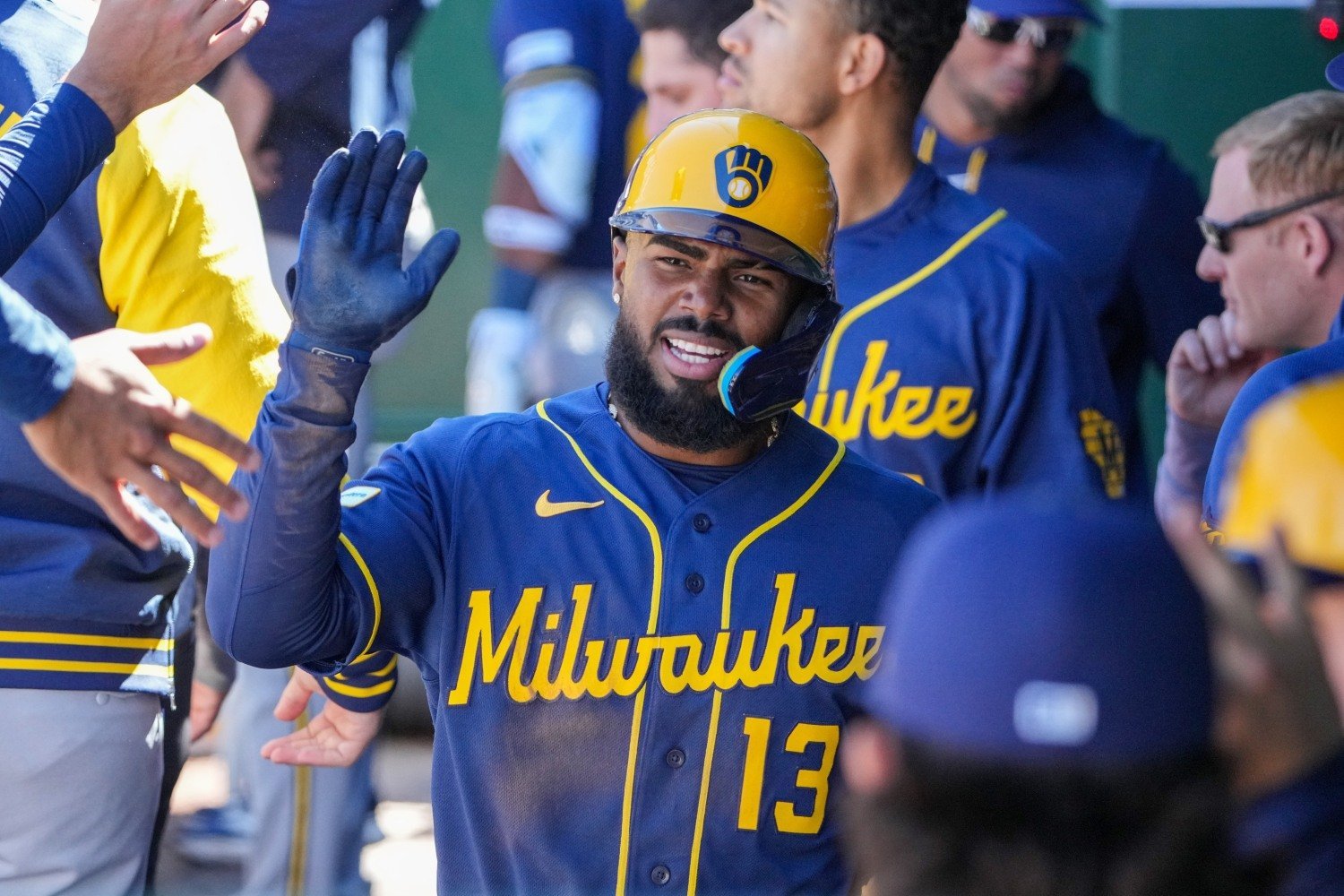 The Brewers didn’t make a lot of veteran additions to the major-league club during the offseason. One of the more surprising moves they did make was a trade with the Red Sox, sending starting third baseman Caleb Durbin to Boston. Andruw Monasterio and Anthony Seigler were also part of the deal, leaving many to wonder who the primary third baseman would be. That question was answered a few days after the trade was announced, with former Los Angeles Angels infielder Luis Rengifo signing a one-year deal with Milwaukee with a mutual option for 2027. Rengifo brought experience, with 199 career appearances at the hot corner and 567 2/3 innings there last year, and had been an above-average hitter from 2022-2024, before having a down year in 2025. Many assumed he would be the starting third baseman on Opening Day, given his significant previous playing time at the position. That wasn’t the case, though. David Hamilton, acquired in the Durbin trade, drew the start against the White Sox. Hamilton ended up going 1-2 with an RBI, two runs scored, and a walk, while Rengifo came in to pinch-hit for Joey Ortiz in the 6th inning and ended up going 0-2. Over the first six games, Rengifo looked rough. He only managed two singles and two walks over his first 15 trips to the plate. He broke through this weekend with three hits—all doubles—in Kansas City, but that still leaves his OPS at .628. His bat speed is unimpressive (especially from the left side) and he's hitting the ball on the ground too much. While his performance is not encouraging, let's look at the bright side for a second. He contributed to the Brewers’ remarkable 8th-inning comeback against the White Sox, taking a four-seam fastball from Seranthony Dominguez back up the middle past a diving Colson Montgomery to plate two runs and move the tying run to third base. Christian Yelich’s pinch-hit home run is the best moment of the Brewers’ season so far, so give Rengifo some props for getting the inning to that point. One of his doubles this weekend was in garbage time, but the other two were important, and required both solid contact and hustle out of the box. The stocky Rengifo doesn't run especially well, but he gets moving quickly and made second on two balls that other players with his speed might have allowed to become long singles. One ball didn't quite split the gap in left-center, but Rengifo took advantage of center fielder Kyle Isbel having to go a long way to cut it off there. MDRYNk5fWGw0TUFRPT1fQkZKV1ZnVUNBbFFBWFFGUlV3QUhCVk1FQUFBRFYxa0FCUVFCQndNRFV3TlZWRkZY.mp4 The other was hit down the line, but cut off well shy of the corner by left fielder Nick Loftin. Taking initiative (and benefiting from a momentary distraction, with Brice Turang heading for third and deciding not to head home), though, Rengifo just beat a good throw. Both Pat Murphy and the front office like hustle and smarts. They also like contact and plate discipline, which Rengifo has shown so far. Well-applied, those things can make up for a dearth of athleticism or power. It took a while, but Rengifo gave a glimpse of that over the weekend—perhaps just in time, with Hamilton's better defense and speed (plus the fact that he bats left-handed) threatening to marginalize Rengifo in short order. That's a question the Brewers will try to answer at the hot corner all year: can they unlock something within either Rengifo or Hamilton? Hamilton was picked by Murphy to take a “quantum leap”, while Milwaukee will try to reset Rengifo to his offensive output from his time with the Angels. The interesting thing to watch will be what the split is like going forward, which will probably continue to depend mostly on matchups—but which will certainly also be influenced by the two players' production. Rengifo showed up against the Royals, but the depth of this roster means you have to keep showing up to keep getting chances. View the full article
 -
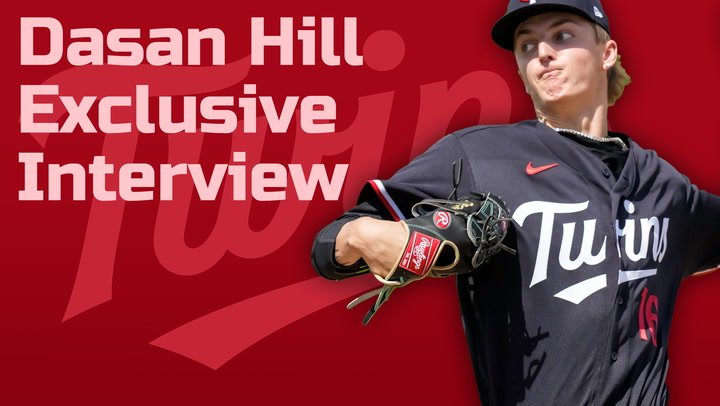 The Destination: The Show crew sits down with Twins pitching prospect Dasan Hill for an exclusive interview. View the full article
