


DiamondCentric
-
Posts
2,631 -
Joined
-
Last visited
Never
Content Type
Profiles
Forums
Events
News
Tutorials & Help
Major League Baseball Videos
Guides & Resources
Store
Downloads
Gallery
Everything posted by DiamondCentric
-

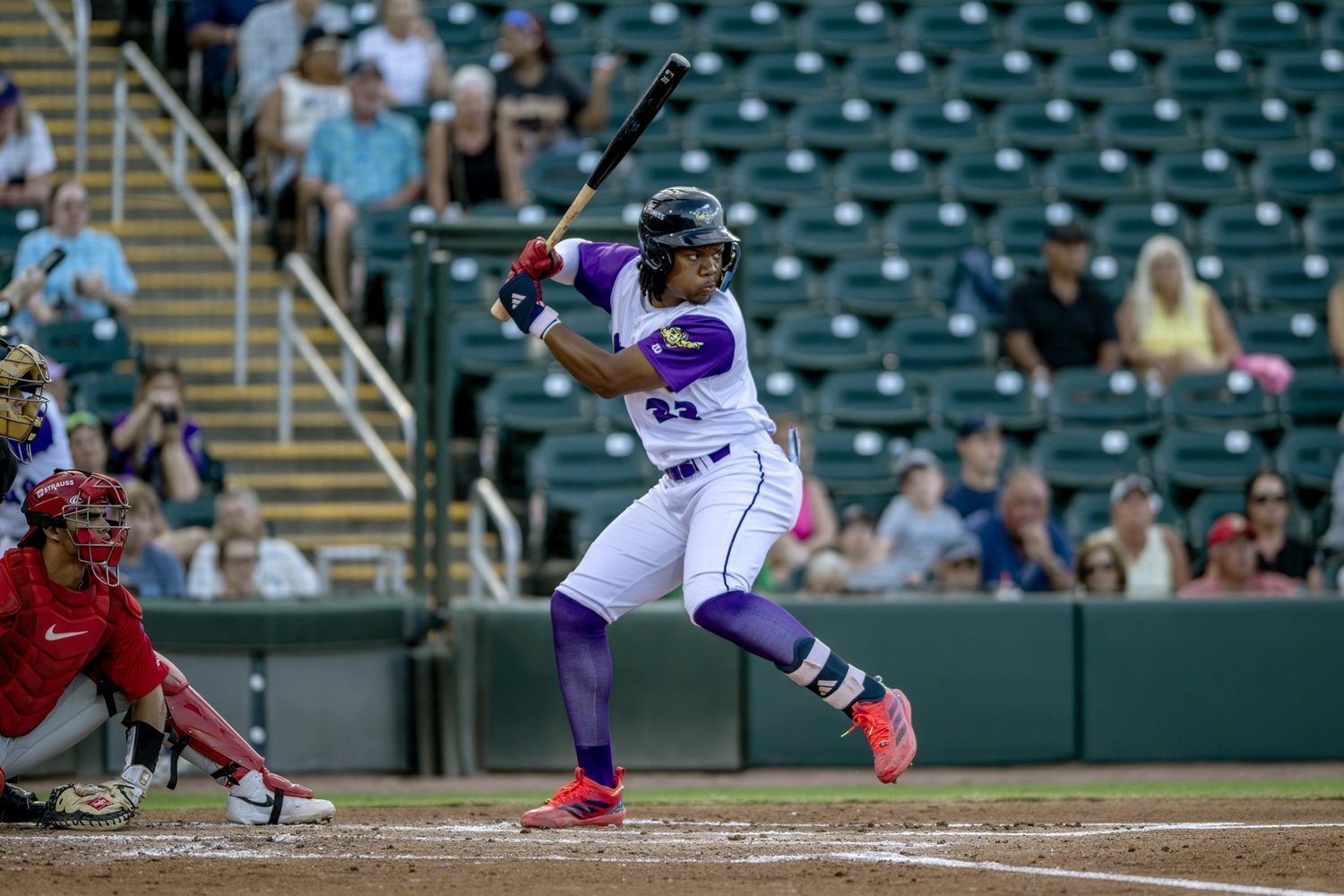 TRANSACTIONS Following their 10-4 loss in Toronto on Friday night, manager Derek Shelton announced that RHP Cody Laweryson (right forearm strain) and 3B Royce Lewis (knee sprain) will be going on the injured list. Corresponding moves will be announced on Saturday. QUESTION OF THE DAY Riley Quick made his professional debut. How long do you think he'll stick in Fort Myers? SAINTS SENTINEL St. Paul 4, Toledo 3 Box Score The Saints got Emmanuel Rodriguez back in the lineup, and maybe not coincidentally, they got back in the win column. Connor Prielipp made the start. He gave up two runs on four hits in 3 1/3 innings. He walked three and had five strikeouts. Trent Baker was summoned from the bullpen and tossed 2 1/3 innings with no runs. He gave up two hits and a walk. Matt Bowman came on and got four outs, two of them on strikeouts. Drew Smith worked a perfect eighth inning. Toledo took the 2-0 lead after three innings, but the Saints immediately responded in the top of the fourth frame. Rodriguez led off with a single and scored on a double by Oswaldo Arcia. He advanced to third on an Eric Wagaman fly out and then scored on a sacrifice fly by Aaron Sabato to tie the game. Walker Jenkins led off the fifth inning with a walk and then stole second. He advanced to third base on a single to left by Gabriel Gonzalez. Following an Alan Roden walk, Jenkins scored on a sacrifice fly by Rodriguez. Arcia walked. Wagaman drove in Gonzalez with a single to center. Roden tried to score too, but he was thrown out by Tigers uber-prospect Max Clark. Marco Raya came on to protect the 4-2 lead. He got the first two batters out, But then Clark tripled and scored on a throwing error by Arcia to make it 4-3. But one batter later, he got a fly out to end the game and record his second save of the season. WIND SURGE WISDOM Wichita 0, Arkansas 5 Box Score Wichita’s bats have been a bit cold to start the season. That remained true in this game. Sam Armstrong made the start for the Surge. He gave up three runs on four hits and two walks in 3 1/3 innings. He struck out five batters. Unfortunately, the final line doesn't show how well he pitched the first time through the lineup. Spencer Bengard came on and got three outs, two via strikeouts. However, he allowed two of three inherited runners to score. Sam Ryan came on with two runners on base, but he left them stranded. He went 1 2/3 innings and gave up two runs on two hits and two walks. Alejandro Hidalgo came on and probably couldn’t have pitched any better. He faced six batters and struck all six of them out. That’s pretty good, right? Garrett Spain doubled in the eighth inning, the team’s second hit of the day. He had also previously walked. The only other Surge player to get a hit and walk was Ben Ross. Ross went 1-for-3 with a walk. The Surge created a lot of wind with the ol’ swing and miss. The team went 2-for-30 with two walks and an incredible (but not in a good way) 19 strikeouts! Kyle DeBarge led the way with four strikeouts. Kala’i Rosario and Billy Amick each struck out three times. Three players struck out twice. A quick look at the Surge lineup shows eight players with a batting average of .200 or lower so far this season. In some cases, there is nothing to worry about. For instance, with his 0-for-4 tonight, Kala’i Rosario is hitting .074 with a .212 OPS. He’ll be just fine. Ricardo Olivar is hitting .053 with a .165 OPS. Again, he’ll be fine. KERNELS CHRONICLE Game 1: Cedar Rapids 3, Beloit 2 Box Score Dasan Hill made the start for the Kernels in the first of two games in Beloit. He gave up single runs in the second and third innings, mostly due to a lack of control. The lefty gave up two runs on one hit and four walks over three innings. He had four strikeouts. The bullpen came on and did just what they needed to do. Nick Trabacchi came in and walked one and struck one out in the fourth inning. Jason Doktorczyk gave up a hit and a walk over two scoreless innings. He struck out three batters. Paulshawn Pasqualotto pitched the seventh and collected two strikeouts and his second save of the season. The Kernels’ bats were quiet through the first four innings. Rayne Doncon led off with a walk. He was still on first base with two outs when Marek Houston singled him to second. A wild pitch pushed the runners to second and third, and that’s when the Sky Carp pitcher balked which allowed Doncon to score the first run. With one out in the top of the sixth inning, Brandon Winokur walked. Jacob McCombs was hit by a pitch. With Winokur bouncing off of second base, the pitcher turned and threw wildly toward second base and into center field which allowed both runners to advance a base. Danny De Andrade came up with the biggest hit of the game. He lined a single to left field which allowed both runners to score and give the Kernels the 3-2 lead. A lead that Doktorczyk and Pasqualotto protected well. The Kernels had just three hits in the game, and they walked four times. De Andrade had a walk to go with the two-run single. He also had two stolen bases. Winokur had a single and a walk and he stole a bag too. Game 2: Cedar Rapids 9, Beloit 6 Box Score You’re welcome, Kernels fans. I was writing this report. Last I looked, the Kernels were losing Game 2 6-5 going to the seventh inning. I typed that into the score above. Thankfully, the Cedar Rapids hitters put up four runs in the top of the seventh and made me change the final score! The seventh began with a walk by catcher Luis Hernandez. Miguel Briceno pinch ran for him. Marek Houston successfully laid down a sacrifice bunt to get Briceno to second with one out. Khadim Diaw was hit by a pitch, and Brandon Winokur walked to load the bases. Jacob McCombs, the Twins seventh round pick a year ago out of UC-Irvine, followed with a bases-clearing triple. It turned a one-run deficit into a two-run lead. Great lefty-on-lefty at-bat. After the game, McCombs told Twins Daily, “The triple was the biggest hit so far in my pro ball career.” With two outs, Caden Kendle singled to drive in McCombs and give the Kernels the three-run lead with three outs to go. Adrian Bohorquez made the Game 2 start. He gave up four runs (3 earned) on four hits and four walks. And, yes, he had four strikeouts too. Eston Stull came in and struck out five batters (and walked one) over two scoreless, hitless innings. Nolan Santos gave up two runs on two hits and three walks over 1 2/3 innings. He did strike out three batters. Ivran Romero got the final out of the sixth inning with a strikeout, and then, after his teammates gave him a three-run lead, he struck out the three batters he faced in the bottom of the seventh inning. Earlier in the game, RBI singles from Houston and Diaw gave the Kernels a 5-1 lead in the top of the second inning. They gave up that lead but didn't give up on the game or themselves. McCombs added, “Our team is resilient, and we have the will to win no matter how much adversity we face.” MIGHTY MATTERS Ft. Myers 2, Jupiter 0 Box Score Obviously, the big story from this game was the professional debut of Riley Quick. He was the Twins Competitive Balance pick from the 2025 draft. Aside from Twins camps, he had not thrown in a regular game since the end of his 2025 Alabama season. He couldn’t have been more impressive. He was limited, as you would expect. He tossed two scoreless innings. He threw 33 pitches. He got all six batters out that he faced, five of them on strikeouts. He mixed 95-98 mph fastballs with changeups in the upper ‘80s. His low-90s slider got swing and miss as did his cutter and sinker. And that’s when catcher Ian Daugherty really went to work. Fellow 2025 draft pick from Alabama Jonathan Stevens came in to start the third inning. Immediately he loaded the bases, but Daugherty went out to talk to him. The next batter lined into a double play, and that was followed by a strikeout. Stevens went 3 2/3 innings and gave up no runs on one hit. He walked five and had four strikeouts. Michael Hilker, the team’s 20th-round pick last year out of Arizona, got the next four outs, three of them on strikeouts. He gave up a hit and a walk. Brian Zeldin came in for the final two innings. He gave up three walks and a hit, but no runs. He signed with the Twins in February after pitching for Wes Johnson at Georgia the last couple of seasons. The Mussels worked themselves into some tough situations yet came up with big pitchers or big plays when they needed to maintain the shutout. That’s good because the Mussels scored just two runs. They took the 1-0 lead in the top of the second. With two outs, Harry Genth was hit by a pitch. He stole second. He scored on a line-drive single by Byron Chourio. That's where the score remained through seven innings. With one out in the top of the eighth inning, Dameury Pena knocked his fourth single of the game. He went to second on a throwing error. Quentin Young followed with his first double of the season which made it 2-0. Those two hitters combined to go 7-for-8. The rest of the lineup combined to go 2-for-26. One of those hits was a double by Jayson Bass. PLAYERS OF THE DAY Hitter of the Day Dameury Pena (Fort Myers): 4-for-4, R Quentin Young (Fort Myers): 3-for-4, 2B(1), Caden Kendle (Cedar Rapids): 3-for-4, 2B(4), R, RBI, K Pitcher of the Day Riley Quick (Fort Myers): 2 IP, 0 H, 0 R, 0 BB, 5 K, 33 pitches, 22 strikes (66.7%) Alejandro Hidalgo (Wichita): 2 IP, 0 H, 0 R, 0 BB, 6 K, 28 pitches, 20 strikes (71.4%) PROSPECT SUMMARY Check out the Prospect Tracker for much more on our Twins Top 20 prospects after seeing how they did today. #1 - OF Walker Jenkins (St. Paul) - 1-for-3, 2 BB, R, SB(1) (batted second, played CF, all 9 innings) #2 - IF Kaelen Culpepper (St. Paul) - 2-for-5, K (batted first, played SS) #3 - OF Emmanuel Rodriguez (St. Paul) - 1-for-3, BB, R, SF RBI, 2 K, CS(1) (batted fifth, DHd) #4 - C Eduardo Tait (Cedar Rapids) - Game 1: 0-for-2, BB, K, (batted second, Catcher) Game 2: Did Not Play. #5 - LHP Connor Prielipp (St. Paul) - 3 1/3 IP, 4 H, 2 ER, 3 BB, 5 K, 77 pitches, 45 strikes (58.4%) #6 - LHP Dasan Hill (Cedar Rapids) - Game 1: 3 IP, 1 H, 2 ER, 4 BB, 4 K, 64 pitches, 38 strikes (59.4%) #7 - OF Gabriel Gonzalez (St. Paul) - 2-for-5, R, K (batted fourth, played RF) #8 - LHP Kendry Rojas (St. Paul) - Injured List #9 - SS Marek Houston (Cedar Rapids) - Game 1: 1-for-4, 2 K. Game 2: 1-for-2, BB, 2 R, RBI, SH, SB(1) #10 - RHP Charlee Soto (Cedar Rapids) - Injured List #11 - RHP Riley Quick (Ft. Myers) - 2 IP, 0 H, 0 R, 0 BB, 5 K, 33 pitches, 22 strikes (66.7%) #12 - RHP Andrew Morris (St. Paul) - Did Not Pitch #13 - 3B/CF Brandon Winokur (Cedar Rapids) - Game 1: 1-for-2, BB, R, K, SB(3), Game 2: 0-for-1, 2 BB, R, K, #14 - 3B/SS Quentin Young (Ft. Myers) - 3-for-4, 2B(1), RBI, SB(1), K (batted third, played 3B) #15 - RHP Marco Raya (St. Paul) - 1 IP, 1 H, 1 R, 0 ER, 0 BB, 0 K, Save(2), 13 pitches, 8 strikes (61.5%) #16 - OF Hendry Mendez (Wichita) - Did Not Play. #17 - 2B/OF Kyle DeBarge (Wichita) - 0-for-4, 4 K, (led off, played 2B) #18 - RHP C.J. Culpepper (Wichita) - Did Not Pitch #19 - C Khadim Diaw (Cedar Rapids) - Game 1: 0-for-3, 3 K, OF Assist (batted third, played CF), Game 2: 2-for-3, HBP, 2 R, RBI, K. (batted second, DHd) #20 - RHP James Ellwanger (Ft. Myers) - Did Not Pitch UPCOMING PROBABLES Saturday: St. Paul @ Toledo (4:05 pm CT) - RHP Zebby Matthews (0-1, 12.27 ERA) Wichita @ Arkansas (6:05 pm CT) - RHP Mike Paredes (1-0, 4.91 ERA) Cedar Rapids @ Beloit (1:05 pm CT) - RHP Eli Jones (0-0, 0.00 ERA) Ft. Myers @ Jupiter (5:00 CT) - RHP Joel Garcia (0-1, 2.25 ERA) CURRENT W-L Records Minnesota Twins: 7-7 St. Paul Saints: 5-7 Wichita Wind Surge: 2-5 Cedar Rapids Kernels: 5-2 Fort Myers Mighty Mussels: 5-2 Please feel free to ask questions about the teams, the rosters, and discuss today’s games, or anything else Twins minor-league related! View the full article
 -
Padres Activate Jason Adam, Put Jeremiah Estrada On IL
DiamondCentric posted an article in Padres Mission
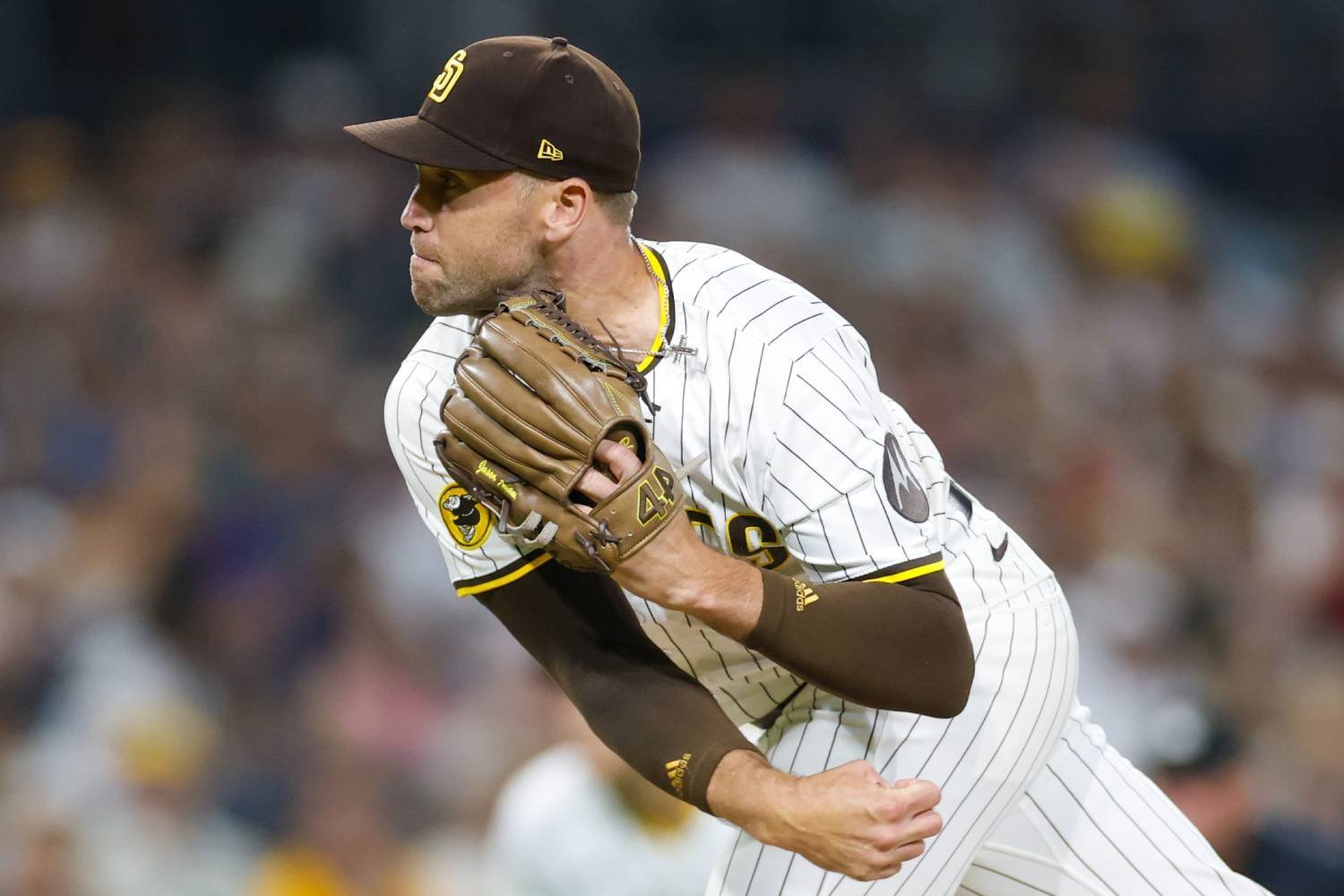 The San Diego Padres became the final MLB team to alter their Opening Day roster, activating late-inning bullpen stalwart Jason Adam from the 15-day injured list Friday. To make room for Adam, right-hander Jeremiah Estrada went on the 15-day IL with tendinitis in his right elbow. Adam, a right-handed setup man, ruptured his left quadriceps tendon in a Sept. 1 game and required surgery. He progressed well during the offseason, with speculation that he could have been on the Opening Day roster. Instead, Adam started the season on the IL and got in a few more outings during a rehab assignment at Triple-A El Paso. At El Paso, Adam made four appearances and didn't allow a run, including two perfect innings Wednesday as a final tune-up. He allowed two hits and a walk while striking out one in his five rehab innings. He rejoins a Padres bullpen that has been decent in the first 13 games of the season, albeit with a few blips, ranking 10th in MLB with a 3.05 ERA. Friars relievers have worked the fourth-most innings thus far with 56. Last year, Adam had a 3.07 FIP (1.93 ERA) in 65 appearances over 65⅓ innings as a key member of a bullpen that had the best ERA in the majors at 3.06. Estrada has battled a loss in velocity in his seven outings this season, allowing four runs in his season debut and two more Thursday. Estrada's four-seam fastball has averaged 95 mph this season after being at 97.9 in 2025. He has a 5.14 ERA in 5⅓ innings, with five walks and eight strikeouts this season. View the full article
 -
Blue Jays 10, Twins 4: Early Promise Portends Middle-Innings Muck
DiamondCentric posted an article in Twins Daily
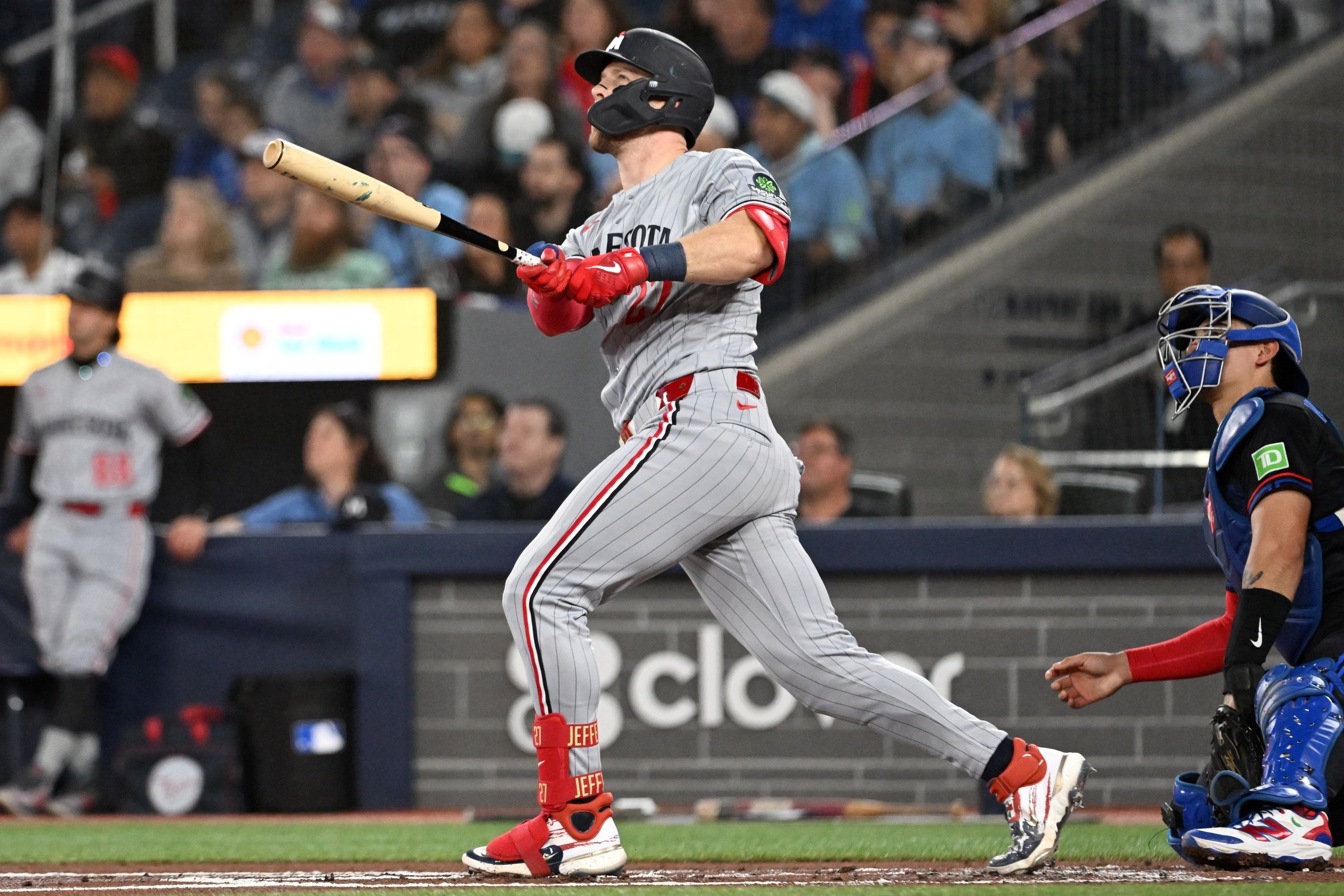 Box Score Simeon Woods Richardson: 4 IP, 6 H, 5 ER, 1 BB, 2 K Home Runs: Ryan Jeffers, (1) Brooks Lee (1) Bottom 3 WPA: Simeon Woods Richardson (-0.37), Anthony Banda (-0.18), Josh Bell (-0.11) Win Probability Chart (via FanGraphs) Ah, the yearly foray into Canada. Everyone’s favorite trip. When the team travels to a strange and foreign land less than two hours away from Buffalo by car to play a squad also full of Americans and players of Latin descent. Apparently, their Heinz ketchup is made with Canadian tomatoes. That’s cool. Simeon Woods Richardson earned the start. His mound opponent, Patrick Corbin, was set to make his Blue Jays debut. The veteran—armed with a slew of off-speed tricks—labored lethargically in an unrelenting first. He surrendered singles to Austin Martin and Luke Keaschall before offering Ryan Jeffers a cookie: a cement-mixing cutter aimed directly down the middle of the plate. The catcher didn’t miss. His blast left the bat at 107.7 MPH and landed 419 feet away. Woods Richardson—in contrast—was effective. Not quite dominant, the righty nonetheless found outs as they came, limiting the Blue Jays to just a double and a walk in his first three innings of work. Brooks Lee homered to start the fourth. Minnesota’s win probability was nearly 90%. Martin slugged a double. Keaschall nearly blasted a home run out to dead center. Times were good. The team was in a rhythm tighter than Jeff Porcaro on Toto’s “Rosanna.” That groove dissipated immediately. Toronto slugged back-to-back doubles to start their half of the fourth, Davis Schneider struck yet another two-bagger (with help from a Matt Wallner misplay), and Andrés Giménez singled to bring the game within one. No matter. The backup catcher was hitting; certainly, he wouldn’t hit a go-ahead two-run homer, his first as a big-leaguer. Anthony Banda did little to stop the bleeding: Daulton Varsho cracked a solo shot off the reliever in the fifth, and even more doubles in the sixth pushed the Blue Jays’ run total to eight. Taylor Rogers came in; Toronto scored again. Justin Topa came in; Toronto scored again. All the while, Minnesota's once potent offense fell silent, as they only put a man in scoring position one time following their fourth and final run. Martin struck out looking to cap a loss that once appeared set to be a promising victory. Notes: Post-Game Interview: What’s Next? The Twins and Blue Jays return for a Saturday matinee, as Joe Ryan is scheduled to start opposite Eric Lauer. First pitch is at 2:07 PM. Bullpen Usage Spreadsheet View the full article
 -
 The Boston Red Sox concluded their first home stand of the season going 3-3 against the San Diego Padres and Milwaukee Brewers. While the team did get some positive news in the form of the offense finally waking up, pitching issues appeared to arise as both he rotation and bullpen struggled to get outs as needed. Now, the team heads off for their second road trip of the season, beginning in St. Louis. Red Sox: Brewers (Drohan) vs Red Sox (Gray): 4/8/26, 1:35pm In an afternoon game that saw former Red Sox prospect Shane Drohan make his major-league debut, the Red Sox were carried by a second consecutive stellar outing by Sonny Gray. The right-hander tossed 6 1/3 scoreless innings, giving the offense a chance to wake up against Drohan. The Red Sox eventually won 5-0, with Tyler Samaniego also making his major-league debut and getting three strikeouts. Red Sox: ABS Accuracy With teams still getting used to the new ABS system that has been put in place, members of the TalkSox forum discussed their views on it. Discussion ranged from wondering how accurate it can truly be, especially when it uses a two-dimensional strike zone instead of a three-dimensional strike zone. Fun fact: The 3D strike zone was tested but led to too many strikeouts, and the league instead went with the current two-dimensional version. Minors: Jake Bennett Emerging as Key Left-Handed Option for Red Sox Bullpen With the Red Sox possibly needing bullpen help, especially with Justin Slaten going on the injured list, this post details how offseason trade acquisition Jake Bennett has done in his first taste of Triple-A this season. Having tossed eight shutout innings across two starts, Bennett could quickly put his name into consideration to help out in Boston at some point during the season. View the full article
 -
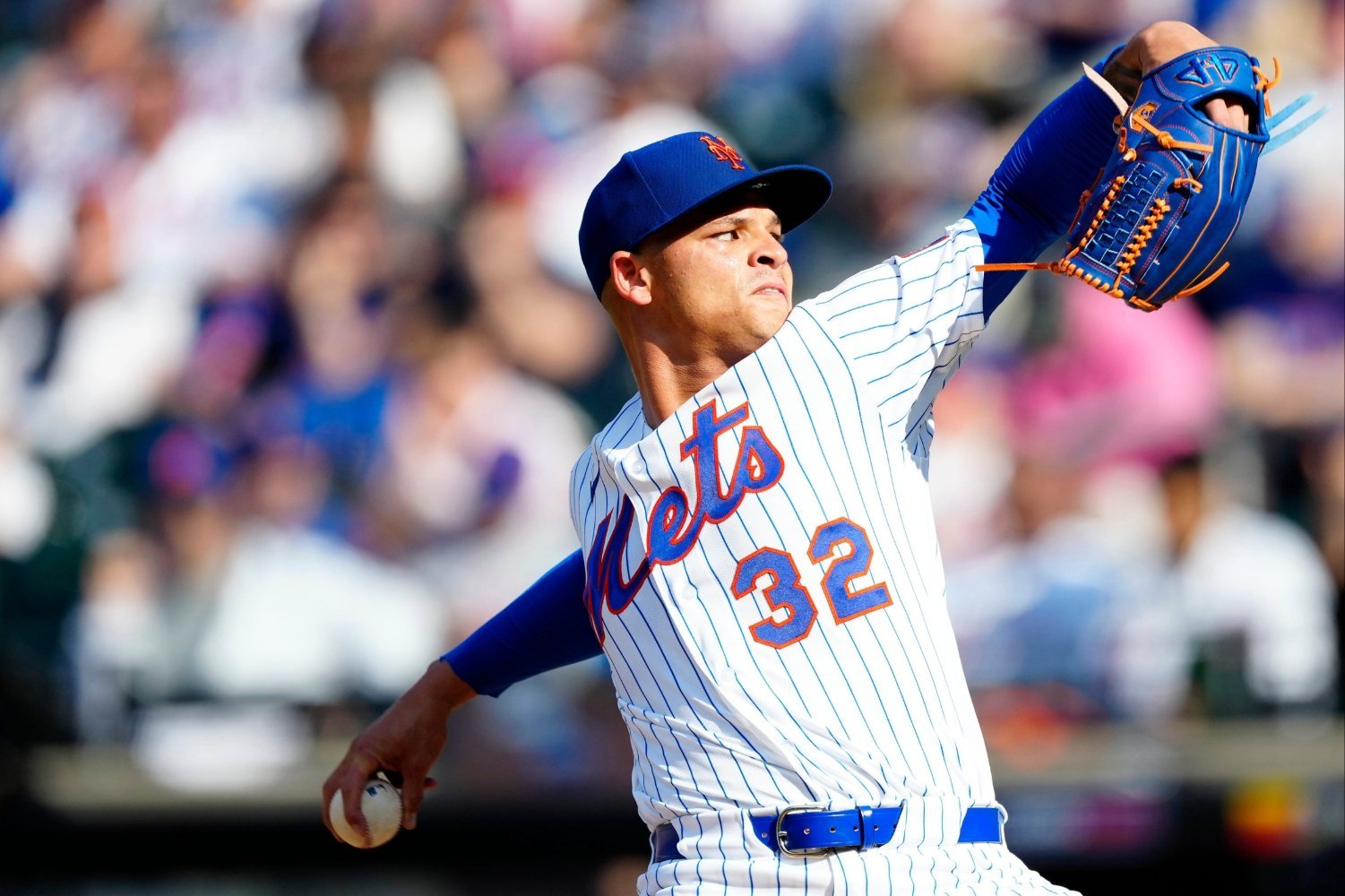 Freddy Peralta is more or less living up to his billing as the front-man of the New York Mets' remodeled rotation through three starts, but he wasn't the only pitcher they received in exchange for top prospects Brandon Sproat and Jett Williams. Tobias Myers was also included in that deal, and he's no mere throw-in. The 27-year-old right-hander has looked dominant in the early going in 2026, pitching to a 1.13 ERA over his first four appearances that have covered eight innings total. That's a small sample to work with, but relievers are always walking that tightrope; what's most impressive about Myers' performance thus far aren't his raw stats, but the steadiness and command he's displayed on the mound. Beyond wildly impressive expected metrics -- his xERA sits at 0.88 and his xBA (expected batting average against) rests at .142 -- Myers is completely owning the strike zone this year. He's issued just one walk thus far... and it was an intentional free pass offered to the St. Louis Cardinals on April 1. Crazily enough, he's actually accomplished this by throwing fewer strikes and more pitches outside the zone. This is normally the point that you'd look to a guy's chase rate and expect to see an unsustainable explosion, but Myers is actually coaxing out-of-zone swings less often than he did in 2025. So, what's happening? It may sound oversimplified, but this appears to be a case of being effectively wild. The term "effectively wild" is often applied to pitchers who rack up tons of strikeouts and walks, but it's also an apt descriptor of Myers, who is making a living near the zone in 2026. There's a few pitches in there that are huge outliers that missed by considerable margins, but look at how effectively he's pitching around the edges of the box in those heat maps. With the introduction of ABS this season, batters are more inclined than ever to protect the true corners of the strike zone, hence why they're so susceptible to taking defensive hacks when a pitcher is punishing the invisible lines we see on every broadcast. Naturally, Myers' Stuff+ (103) and Location+ (105) are both sitting at career-high levels and above league average (which is 100). As Brewers insider Jack Stern explored over on our sister site Brewer Fanatic, Myers became particularly good at building his plan of attack around his four-seamer and splitter last year, which has carried over nicely into his time with the Mets. Both his splitter and slider are responsible for a .000 wOBA this year, which means that opposing hitters have produced literally zero offensive value against either pitch. You don't need any other numbers to know how good that is. Pessimists will point out the .056 batting average on balls in play he's allowed as a sign of extremely good fortune, especially because batters have averaged more than 90 miles per hour on their exit velocities on balls in play against Myers. And while that is a fair concern for a fly-ball pitcher, it's worth pointing out that he also hasn't given up a single barreled ball all year. It's a balancing act, but one that he's become adept at performing. Eventually, he'll walk a batter unintentionally, and there may even come an outing when a particular umpire doesn't reward him for nibbling around the edges. But Myers is mastering the art of getting better while throwing fewer strikes, which is practically impossible unless your name is Mason Miller. That's pretty good company to be keeping as far as relievers go. View the full article
 -
 You can listen by downloading us from iTunes, Spotify, YouTube, iHeartRadio, Stitcher, GleemanAndTheGeek.com, click this link or you can listen to it or watch it below. View the full article
 -
Easton McGee Finally To Make 2026 Debut With Brewers
DiamondCentric posted an article in Brewer Fanatic
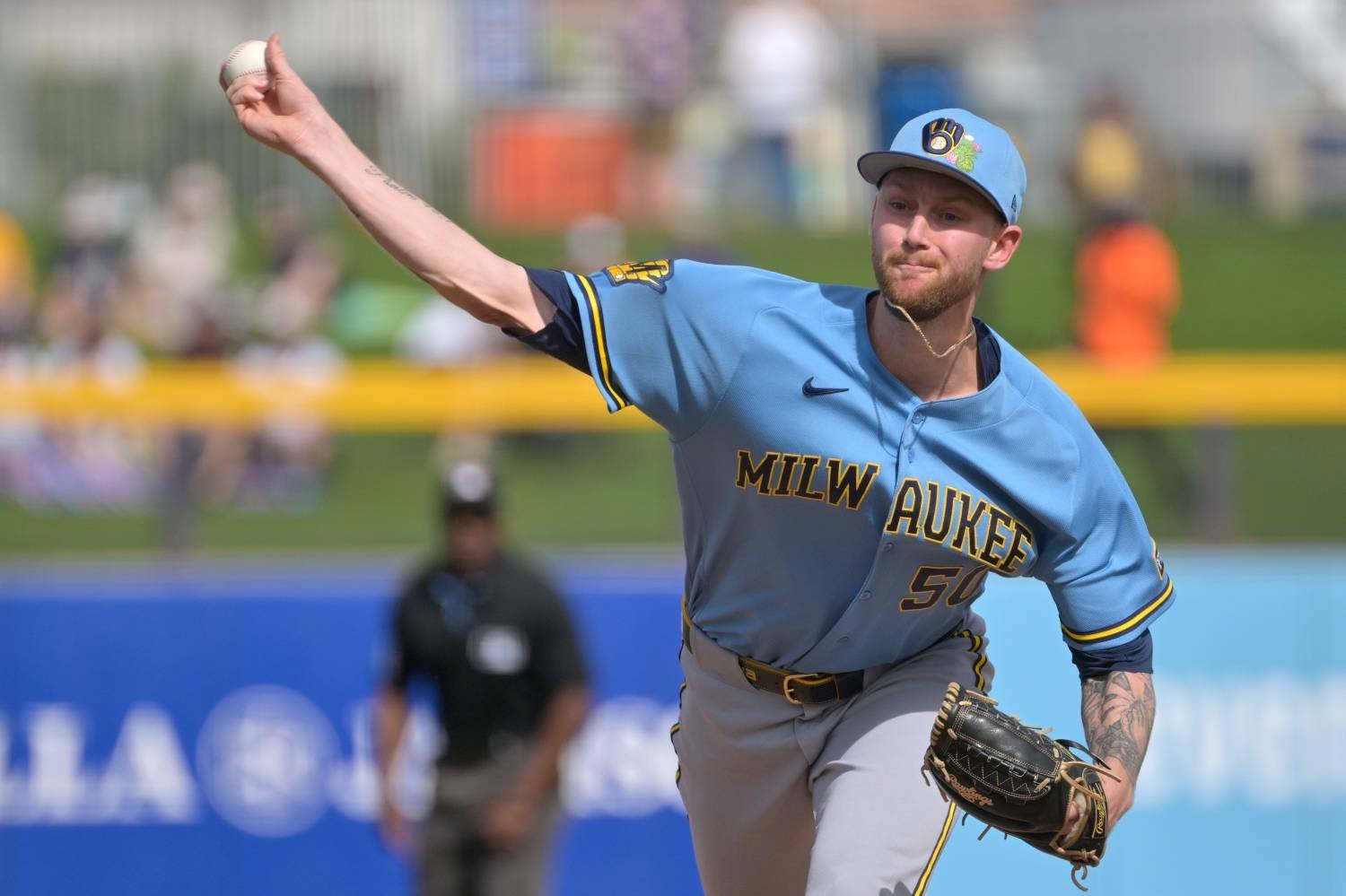 Easton McGee was the casualty when the Milwaukee Brewers made a last-minute trade for fellow right-handed reliever Jake Woodford with the Tampa Bay Rays. Woodford took the last bullpen spot on the Crew's Opening Day roster, with McGee sent to Triple-A Nashville. Now, McGee gets to join Woodford in the Brewers' bullpen. The Brewers called up McGee from Nashville to fill the spot vacated by left-handed starter Shane Drohan, who was optioned Thursday to Triple-A after making his MLB debut Wednesday. McGee made nine appearances for the Crew in 2025, with a 3.27 FIP (5.52 ERA), striking out 13 and walking five in 14⅔ innings. In four appearances for Nashville this year, McGee has a 9.53 ERA with three walks and five strikeouts in 5⅔ innings. View the full article
 -
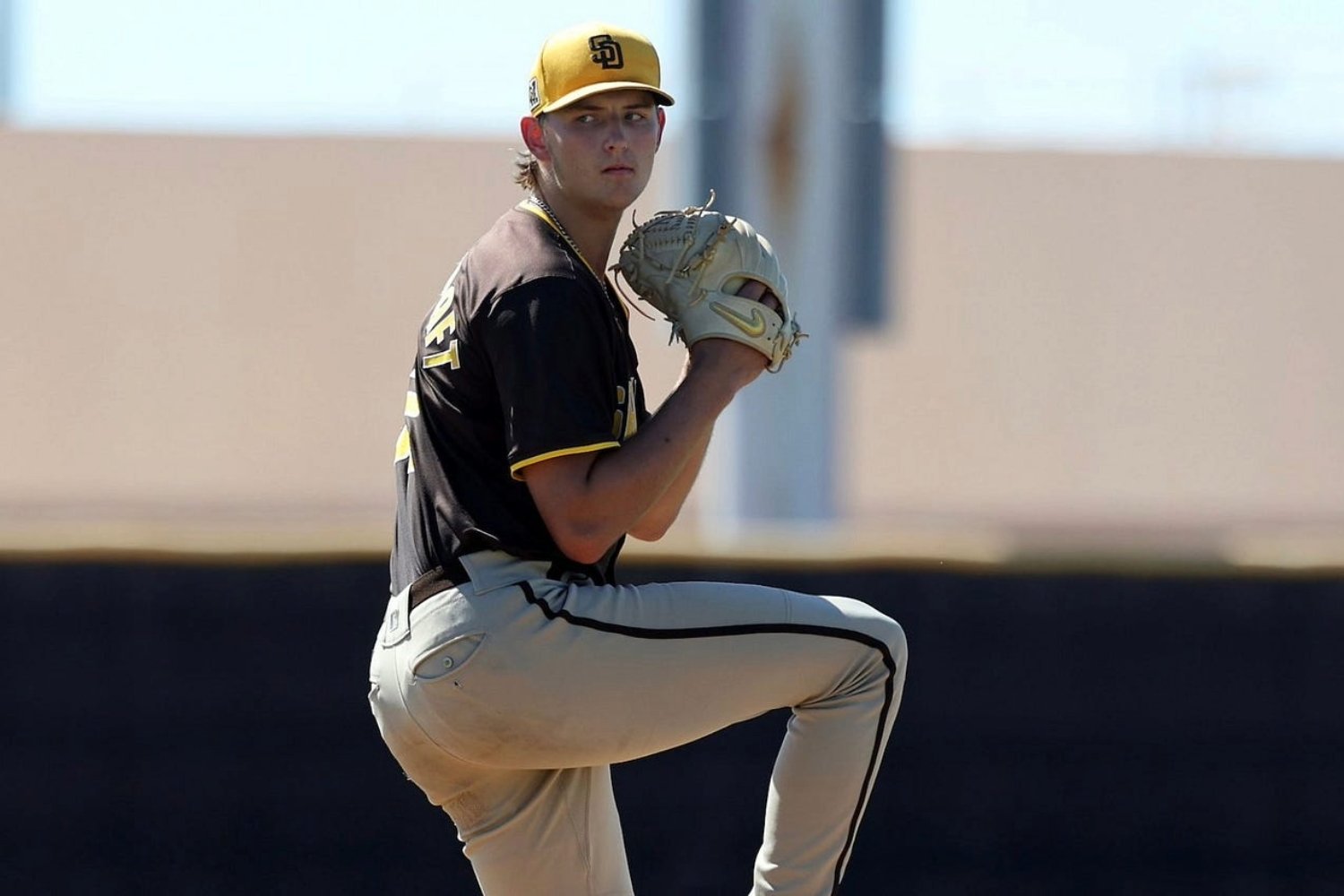 Currently, the San Diego Padres’ top pitching prospect is Kruz Schoolcraft, who was taken as the team’s first pick in the 2025 draft. It is theoretically possible that Schoolcraft will join others in playing for the Padres the year after he was drafted, although recent trends have limited the quantity of those players in the past 40 years. The 40-year timeframe is not arbitrary. Some players who reached the Padres the year after being drafted were taken in the January draft and had a full year in the minors before being on the Friars’ roster in their second professional season, but the January draft has not occurred since 1986. A reduction in the number of allowed September call-ups may also work against Schoolcraft making a September roster, and even the 1976 precedent of not calling up outfielder Gene Richards so that the Padres wouldn’t have to utilize an option year creates the possibility that the franchise will save an option year rather than call up Schoolcraft this year. Three draft picks who played for the Padres either that year or the following year are now in the Baseball Hall of Fame. Dave Winfield was the first of those followed by Ozzie Smith and Tony Gwynn. Only four players since Gwynn have played for the Padres by the end of the season after they were drafted. The National League granted San Diego and Montreal expansion franchises in May 1968. The teams participated in the June 1968 draft but did not have choices during the first three rounds. The only 1968 Padres draft pick who subsequently played for San Diego, Dave Robinson, made his major league debut in September 1970. The Padres’ final pick in the June 1968 draft, third baseman Earl Altshuler, opted to play at UCLA instead of signing with the Padres. He was not drafted out of college even though he set the UCLA single-season hits record, and Altshuler did not play professional baseball. However, in 1999 he became the Padres’ batting practice pitcher, creating a three-decade gap between when he was drafted and when he joined the Padres. Randy Elliott, the Padres’ only 1969 draft pick to play for San Diego, joined the team in 1972. San Diego had the first overall pick of the June 1970 draft and chose catcher Mike Ivie. He joined the Padres in September 1971 but did not subsequently return to the major league team until 1974. In 1971 the Padres selected third baseman Dave Hilton in the regular phase of the January draft, outfielder Johnny Grubb in the supplemental phase of the January draft, and pitcher Jay Franklin in the first round of the June draft. During the June draft, the team also picked pitcher Dave Friesleben in the fifth round, catcher Joe Goddard in the eighth round, and pitcher Mike Caldwell in the 12th round. Franklin and Caldwell were both September 1971 call-ups. Franklin pitched three games for the Padres that season and never returned to the majors. Caldwell never played in the minors again, staying with the Padres through the 1973 season before being traded to the Giants for two players including Willie McCovey and remaining in the majors until 1984. Catcher injuries in 1972 caused the Padres to call up Goddard at the end of July, and he returned to the major league club during the September roster expansion. He had a .200 batting average in 12 games. He did not return to the majors, concluded his Padres organization minor league career in 1976, and became a successful high school coach in West Virginia. Friesleben was one of the 1972 September callups, but in the era of starters expected to pitch complete games and relief pitchers hurling multiple innings he did not appear in any games with the big league club that year. After a 40-20 record in his first three minor league seasons and a 2-1 record with Hawaii in 1974 Friesleben made his major league debut in April 1974 and stayed with the Padres through the end of 1975. He had 16 Pacific Coast League starts in 1976 and 1977 while spending the rest of the time with San Diego, and he began 1978 with the Padres before being traded that June. Hilton and Grubb both made their debuts in September 1972. Hilton would play in a total of 161 games with the Padres. Grubb, who batted .308 in Class A in 1971 and .296 in Class AA in 1972, would remain with the Padres until a trade after the 1976 season. His career .286 Padres batting average at the time of the trade was the highest in Padres history at the time. Grubb closed out his major league career with the 1987 Detroit Tigers and appeared in 1,424 major league games including 513 with San Diego. The Padres have had three players named Dave Roberts. The second of those, an infielder who played collegiate baseball at Oregon, was the first overall pick of the June 1972 draft. Roberts went directly to the Padres, batted .244 in 100 Padres games, split multiple subsequent seasons between the Padres and Hawaii, and batted .240 in 509 Padres games through 1978 before playing for three other teams from 1979 to 1982. Pitcher Rich Troedson was the Padres’ first pick in the January 1972 supplemental draft. He had an 8-5 record in Class A that year but began 1973 on the major league roster. Troedson pitched 65 games for the Padres in 1973 and 1974 including 19 starts. He had an 8-10 record with a 4.74 earned run average. In the fifth round of the June 1972 draft the Padres selected pitcher Randy Jones. He was 4-5 in his minor league outings during 1972 although with a 2.71 ERA. After an 8-1 start with a 2.01 ERA in the Class AA portion of his 1973 season Jones was brought up to the Padres that June. He remained with the Padres until being traded after the 1980 season. In 1975 Jones won 20 games and led the National League with a 2.24 ERA. He won the Cy Young Award in 1976 when his 22 wins (not including his victory in the All-Star Game), 25 complete games, and 315 1/3 innings pitched all led the National League. When he was traded his 92 career victories were the Padres’ best total in history. Winfield was taken in the first round of the June 1973 draft and joined the Padres after signing. He remained with the Padres until becoming a free agent after the 1980 season. He hit 154 home runs in his 1,117 games with San Diego, batted .284 with two seasons above .300, led the National League with 118 runs batted in during 1979 (while also leading the league with 24 intentional walks), won two Gold Glove awards, and was selected to the All-Star Game four times. Winfield concluded his 2,973-game major league career in 1995. In the 13th round of the June 1973 draft the Padres selected pitcher Joe McIntosh. He was 8-6 with a 2.44 ERA in Class A that year. McIntosh began 1974 on the Padres’ roster but spent most of the season at Hawaii. He was with San Diego for all of 1975 and was traded after that season so that the Padres could acquire Doug Rader. McIntosh was 8-15 with a 3.69 ERA in his 33 starts and 14 relief appearances with the Padres. The Padres had the first overall pick in the 1974 draft and selected University of Rhode Island shortstop Bill Almon. He played in 39 Class AA and Class AAA games that year before joining the Padres as a September callup. He was also a 1975 and 1976 September callup before becoming the Padres’ regular shortstop in 1977. Smith’s ascension to the majors moved Almon to other infield positions for 1978 and 1979 before a trade sent Almon to the Montreal Expos. Almon played in the majors through 1988, and his 1,236 career games included 429 with the Padres. Richards was the first overall choice in the January 1975 draft. He spent that year with the Padres’ Class A team in Reno and led the California League with a .381 batting average, 148 runs scored, 191 hits, 85 stolen bases, a .499 on-base percentage (his 116 walks ranked second), and a .551 slugging average (he ranked third with 29 doubles, shared second with ten triples, and homered 12 times). In 1976 Richards led the Pacific Coast League with 173 hits while also batting .331 for Hawaii and scoring 102 times. Although the Padres decided not to waste an option on him by calling him up in late 1976, he was the 1977 Opening Day starter in left field. Richards would would spend seven seasons with the Padres and batted .291 in 939 games with 994 hits including 63 triples, 484 runs scored, and 242 stolen bases. The September 1976 call-ups included pitcher Bob Owchinko, who was taken in the first round of the June 1976 draft. He was 6-2 in 13 Class AA starts with Amarillo before starting two games for the Padres. Owchinko began 1977 in the Pacific Coast League before a 5-1 record and a 1.43 ERA with Hawaii led to another call-up to San Diego, where he remained until being traded to Cleveland for Jerry Mumphrey in February 1980. Owchinko pitched 526 innings for the Padres and had a 25-39 record with a 4.00 ERA in 83 starts and 27 relief outings. In the first round of the January 1976 draft the Padres selected pitcher Bob Shirley. He was 14-10 in 29 minor league starts that year. Shirley made the Padres’ 1977 Opening Day roster and was 12-18 with a 3.70 ERA that year. His wins, ERA, 35 starts, 214 innings pitched, and 146 strikeouts all led the team while Owchinko was second with nine wins, a 4.45 ERA, and 170 innings and Owchinko led the team with three complete games while posting the Padres’ only two shutouts that year. Before being sent to the St. Louis Cardinals in an 11-player December 1980 trade Shirley pitched in 197 Padres games, starting 92 of them, and had a 39-57 record with a 3.58 ERA in 722 innings pitched. In the June 1977 draft the Padres chose outfielder Brian Greer in the first round, infielder Barry Evans in the second round, and Smith in the fourth round. Although Greer batted only .188 in 50 games with Class A Walla Walla that year, he joined the Padres that September. In his only 1977 major league appearance he struck out as a pinch-hitter September 13. Greer returned to the Padres for four September 1979 games, going hitless in three September 4 plate appearances while playing defense only in the other three contests. Evans batted .358 with Walla Walla in 1977, which ranked third among Northwest League leaders, while leading the circuit with 97 hits. He spent most of 1978 with Amarillo and batted .305 in Class AA. Evans joined the Padres that September and batted .267 in 24 games. Before being sold to the New York Yankees in February 1982 Evans played in 207 games for the Padres, batted .251, and played all four infield positions. Smith batted .303 for Walla Walla in 1977 while leading the Northwest League with 69 runs and with 30 stolen bases. His 87 league hits trailed only Evans. The performance earned Smith a non-roster invitation to spring training for 1978, and that performance made him the Padres’ Opening Day shortstop that year as well as for his other three seasons with the Padres. Although Smith only batted .258 in 1978 he stole 40 bases and led the National League with 28 sacrifice hits. He was second in the league with 548 assists but would lead the league in assists his other three years with the Padres. In 1980 he set a major league record with 621 assists while also leading the league with 288 putouts and 113 double plays. Before being traded to the Cardinals in December 1981 Smith won two Gold Glove awards and stole 147 bases in his 583 games with the Padres. He spent another 15 seasons with St. Louis. In the sixth round of the June 1978 draft the Padres picked infielder Tim Flannery. He batted .350 in 84 games with Reno that year. In 1979 Flannery batted .345 for Amarillo while sharing the Texas League lead with 181 hits. That led to a September callup with the Padres. He batted .154 in 22 games, leading to a 1980 start with Hawaii prior to a mid-season callup. He split 1981 between Hawaii and San Diego but returned to the minors again only for a 1988 rehabilitation assignment. When Flannery retired after the 1989 season his 11 seasons with the Padres were a team record. During 972 regular-season Padres games Flannery batted .255 with 631 hits. He may be best known for another at-bat which didn’t produce a hit. Flannery pinch-hit in the seventh inning of the fifth game of the 1984 National League playoffs and hit the ground ball Leon Durham was unable to handle. The play was ruled an error and Flannery was not credited with a run batted in, but the tying run scored and Flannery subsequently became the go-ahead run in the 6-3 victory which sent the Padres to their first World Series. In the June 1981 draft the Padres selected outfielder Kevin McReynolds in the first round, pitcher Bill Long in the second round, and Gwynn in the third round. A seven-player trade in December 1984 sent Long to the Chicago White Sox, and he made his debut the following year. McReynolds did not play professionally in 1981, batted .368 with Reno and Amarillo in 1982, and started 1983 with Las Vegas in the Pacific Coast League before a June promotion to the Padres. Gwynn batted .375 with Walla Walla and Amarillo in 1981 and started 1982 with Las Vegas. He first played for the Padres on July 19, 1982, broke Flannery’s team record for seasons played in 1993, and retired after the 2001 season with 3,141 hits, a .338 batting average, eight National League batting championships, and several other distinctions in his 20-year Padres career. Ivie, Roberts, and Almon were first overall picks, and team improvement kept the Padres from having that dubious distinction until 1988 when the team selected pitcher Andy Benes to start the draft. Benes pitched in the Olympic Games and elsewhere for Team USA rather than in the minors following the 1988 college season. Wichita was the Padres’ Texas League affiliate in 1989, and Benes was 8-4 with a 2.16 ERA there before joining the Las Vegas rotation. After five Pacific Coast League starts he joined the Padres in August 1989 and had a 6-3 record with a 3.51 ERA in ten Padres starts that year. He had double-digit wins the next four seasons. The 1995 trade deadline ended his Padres career although not his 14-year major league career. He was 69-75 with a 3.57 ERA in 186 Padres starts and a relief appearance, and his 1,036 strikeouts stood as the team record until broken by Jake Peavy. San Diego had the third pick of the 1994 draft and chose pitcher Dustin Hermanson. His 23 relief appearances with Wichita and Las Vegas in 1994 resulted in 11 saves, 36 strikeouts in 28 1/3 innings pitched, and a 1.91 ERA. Hermanson started 1995 with Las Vegas but was called up to the Padres two weeks after the major league season began. He pitched in 26 Padres games and 31 Las Vegas games that year. He also split 1996 between the Padres and Las Vegas. In November 1996 he was traded to the Florida Marlins for infielder Quilvio Veras, and Hermanson pitched in the majors through 2006. He was 4-1 in his 34 games with the Padres. Roberts, Winfield, and outfielder Xavier Nady are the only players who were drafted by the Padres and went directly to the majors. Nady was taken in the second round of the 2000 draft. After reaching a contract agreement with the Padres that September he was added to the major league roster. In his only 2000 professional game September 30 he had a pinch-hit single and later scored. Nady spent all of 2001 and 2002 in the minors before returning to the Padres during the 2003 season. He was also with the Padres during 2004 and in 2005 before being traded to the New York Mets for Mike Cameron. Eventually Nady returned to the Padres as a free agent in 2014 and closed out his major league career with 22 Padres games that year. His 961 major league games included 291 with San Diego. Khalil Greene is the most recent Padre to have played for San Diego by the end of the year after he was drafted. The shortstop was the 13th overall pick in the 2002 draft. Greene batted .309 with two Class A teams in 2002. He played in 135 minor league games in 2003 before the major league rosters expanded. Greene played in 20 games with the Padres in 2003. In 2004 he batted .273 with 15 home runs and placed second in the Rookie of the Year balloting. Greene was traded to the Cardinals in December 2008 after playing 659 regular-season games with the Padres. He batted .248 with 84 home runs and 328 runs batted in while wearing a San Diego uniform during the regular season. No Padres player drafted since 2023 reached the majors prior to the conclusion of the 2025 season. The 2024 season included Padres games for 2022 draft picks Graham Pauley and Adam Mazur. View the full article
 -
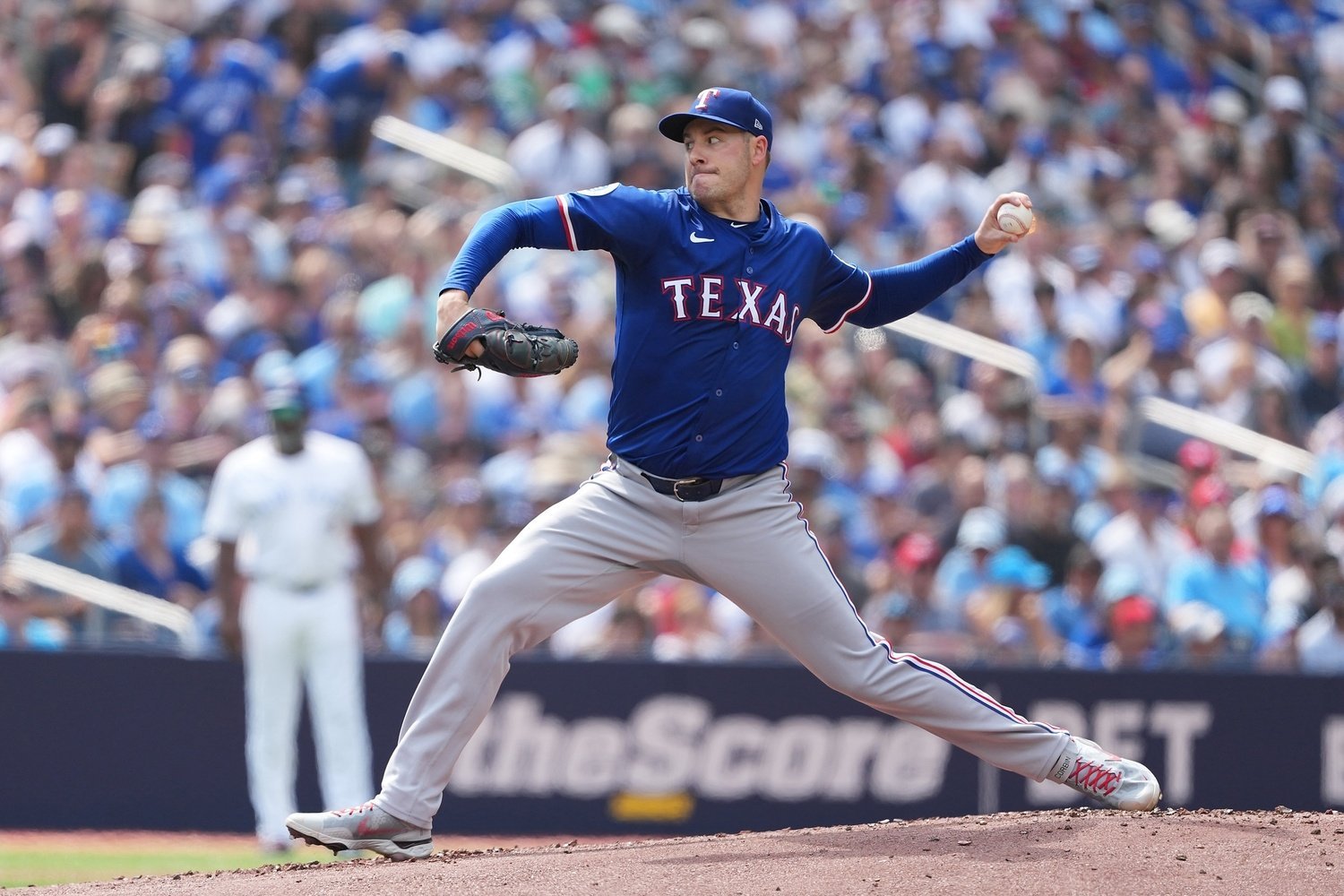 At one point in the 2024-25 offseason, it seemed like the Texas Rangers had more starting pitching than they could possibly know what to do with. There were even rumors that Jon Gray, a 10-year veteran with more than 200 starts to his name, could move to the bullpen. Yet, just 10 days before the start of the regular season, the Rangers’ depth had dwindled. In need of innings, they signed Patrick Corbin to a one-year, $1.1 million deal (with incentives) and sent him to the minors to ramp up. By early April, he was part of their big league rotation. Sound familiar? Once again, Corbin has signed a late one-year deal with incentives to join a rotation that wasn’t supposed to need him, until it did. He made one ramp-up start for Single-A Dunedin, striking out nine in five innings. Tonight, he will make his Blue Jays debut, slotting in for Toronto in place of the injured Cody Ponce. The Jays are still hoping they won’t need him for long – Trey Yesavage, José Berríos, and Shane Bieber are all working their way back – but if last year continues to be any indication, well… Corbin was one of just over 50 pitchers to start 30 games in 2025. That’s less than two per team. He wasn’t even on the Rangers’ Opening Day roster, but, by season’s end, no one had started more games for Texas. Meanwhile, the Blue Jays needed 12 different starters to get through the regular season (depending on who you define as an opener). Point being, starters get hurt. A lot. So, the ones who don’t are going to get to pitch as much as they can. It’s been a long time since Corbin was the frontline arm who helped lead the Washington Nationals to a World Series title in 2019. Nonetheless, he has remained one of baseball’s most hard-wearing starters. At a time when pitcher injuries are unremitting, and change is the only constant of a major league staff, Corbin offers a skill set that every team needs: the capacity to make 30-plus starts and pitch 150-plus MLB-calibre innings, year in and year out. He hasn’t suffered an injury since he underwent Tommy John surgery in 2014. Indeed, over the last 10 years (dating back to the start of the 2016 season), Patrick Corbin has started more games than any other pitcher in the majors. He’s six starts ahead of Kevin Gausman in second place. Corbin also ranks third among active pitchers in career starts and fourth in innings. He trails Justin Verlander, Max Scherzer, and Jose Quintana in the former, and Verlander, Scherzer, Quintana, and Chris Sale in the latter. As you might have guessed, Gausman also ranks quite highly on those lists. So, with Verlander and Quintana on the injured list right now, the current Blue Jays rotation features three of the top four active active pitchers in both starts and innings pitched. For the most part, I’m only sharing that as a fun fact. But it’s a fun fact that draws attention to Corbin’s identity in the game today. Whatever else you think of him, the man can pitch – in the most literal sense of the word. Unfortunately for Corbin, his skill set is one that every team needs, but no team wants to need it. Since 2020, he owns a 5.41 ERA and a 4.80 FIP. Not once, not twice, but three times he has ranked last among qualified NL pitchers in ERA. That’s not to say he brings no value. After all, ranking last among qualified pitchers isn’t really ranking last. A qualified season – that’s 162 innings – is an accomplishment in and of itself. What’s more, Corbin has remained above replacement level in every year of his career, according to FanGraphs. And on top of that, there is absolutely unmeasurable value in consistency and bulk. Yet, the problem for a player like Corbin, at least at the outset of the season, is that contending teams want to give their innings to better pitchers. Rebuilding teams want to give their innings to younger arms. Most teams will end up giving 150-plus innings to a combination of pitchers worse than Corbin, but that’s never plan A. Of course, the 2026 Blue Jays are well past plan A. Thankfully, by the time they knew they needed him, Corbin was still available. He may not have as high a ceiling as any of the first eight pitchers on Toronto’s starting pitching depth chart, but there are worse things than having one of the most available pitchers in baseball available for your team every five days. The Rangers discovered that in 2025. Hopefully, the Blue Jays will have the same experience. View the full article
 -
Friday Forum: Hope-O-Meter Drops, But Reasons to Believe Remain
DiamondCentric posted an article in Twins Daily
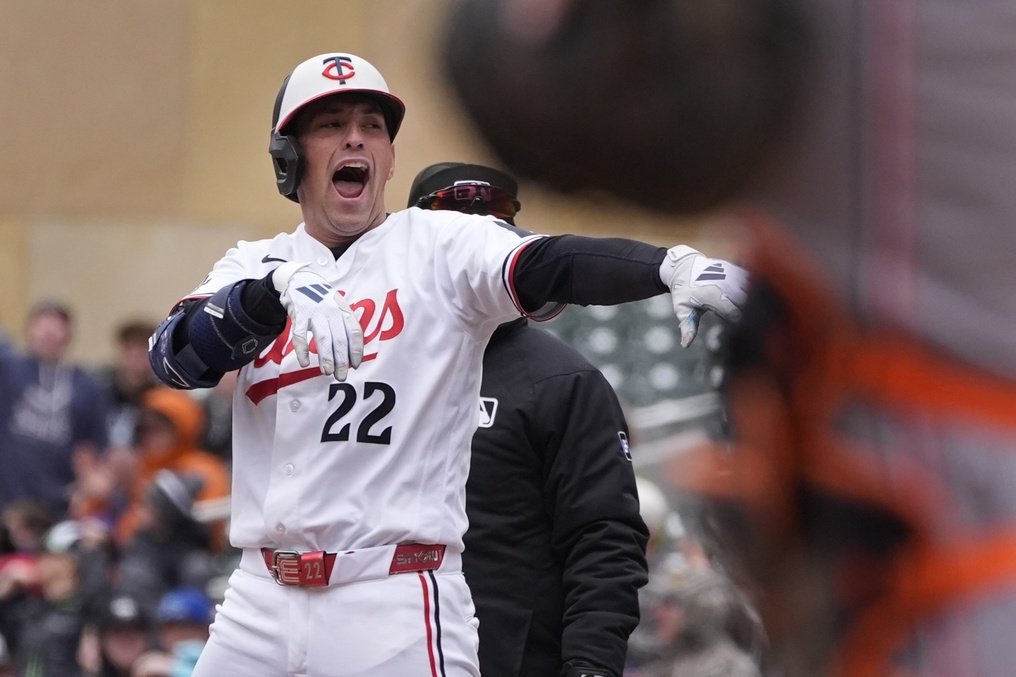 Personally, I don't have much hope for contention this year. One survey seems to indicate I'm not alone among my fellow Twins freaks. Some interesting takes here: Everybody has an opinion on last year's trade deadline. Good? Bad? To be determined? At least one asset acquired last summer is making a name for himself, at least in a tiny sample size to date. Taj Bradley ...what say ye? In my estimation, founding owner Nick Nelson is this site's best writer. Here's his review of last week's games, along with some pithy observations from our members. Nick usually stops by and responds to questions and/or comments, too, making the conversation even better. View the full article
 -
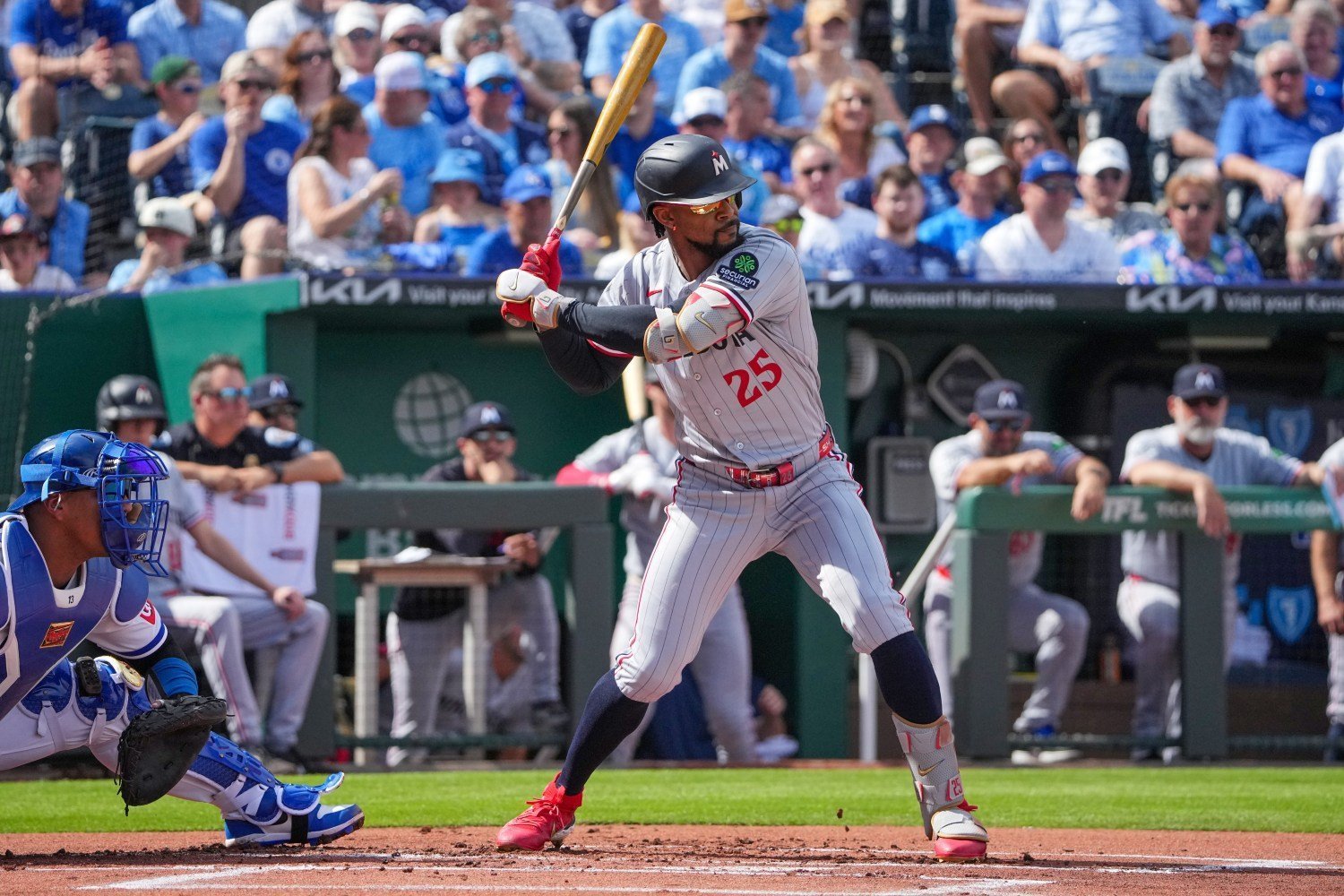 Major League Baseball released its annual snapshot of Opening Day demographics this week, and while the numbers still point to a long road ahead, there are signs of meaningful progress. After dipping to a historic low in 2024, the percentage of African American players across the league has now risen in consecutive seasons, something the sport has not seen in roughly two decades. This year, African American players make up 6.5% of Opening Day rosters and injured lists, a noticeable increase from 5.7% the year prior and slightly above the 6.0% mark from two seasons ago. It is not a dramatic jump, but it is a step in the right direction for a league that has been searching for ways to rebuild its connection with Black communities. Development Programs Beginning to Show Results League officials have pointed to their investment in youth initiatives as a key factor behind the recent uptick. Programs such as MLB’s youth academies, the Dream Series, and the Breakthrough Series are starting to produce big-league talent. Of the 62 African American players on Opening Day rosters, 20 have participated in one of those pipelines. There is also a growing presence of high-end talent within that group. Nine of those players were former first-round picks, suggesting that the league is not only increasing participation but also developing impact players. The age distribution offers additional optimism. More than half of the current group is 27 or younger, while only a small handful are on the back side of their careers. That youth movement could help sustain growth if development systems continue to feed the pipeline. Twins Among League Leaders While the league-wide numbers are trending upward, the distribution across teams remains uneven. Six organizations began the season without a single African American player, highlighting how inconsistent representation still is from roster to roster. That is where the Minnesota Twins stand out. Minnesota enters the season with six African American players, tying them for the highest total in baseball alongside the Cincinnati Reds. For a smaller-market club, that level of representation is significant, especially when considering that the Twins alone account for a sizable portion of the league’s overall total. The group is not just filling out the roster either. It includes key contributors on both sides of the ball, including starting pitchers Taj Bradley and Simeon Woods Richardson, along with Byron Buxton and Josh Bell on the offensive side. Having that presence in prominent roles matters, both in terms of visibility and impact. At a time when more than a third of the league has one or zero African American players, the Twins are providing a blueprint for what a more inclusive roster can look like. Areas Where the Game Still Lags Despite the positive momentum, representation remains limited in some areas. Certain positions continue to lack diversity, particularly behind the plate and on the mound. There are only a small number of African American pitchers across the league, a striking reality given the size of pitching staffs. Catcher is another position where representation has been historically low, making each breakthrough at that spot even more meaningful. Additionally, more than a third of MLB teams have one or fewer African American players, including several high-profile organizations. That imbalance underscores the importance of continued investment in grassroots development and access to the sport. A Path Forward The broader picture shows a sport attempting to reverse a decades-long decline. International participation continues to grow, and MLB remains a global game, but rebuilding domestic diversity is clearly a priority. For the Twins, this moment reflects both organizational success and an opportunity. Their roster composition places them among the league leaders in representation, aligning with MLB’s broader efforts to create more inclusive pathways to the majors. Progress is happening, even if it is gradual. And for a franchise like Minnesota, being at the forefront of that movement is something worth recognizing as the game continues to evolve. View the full article
 -
Forum Friday: Roster Weaknesses, Team Identity, & Nashville News
DiamondCentric posted an article in Brewer Fanatic
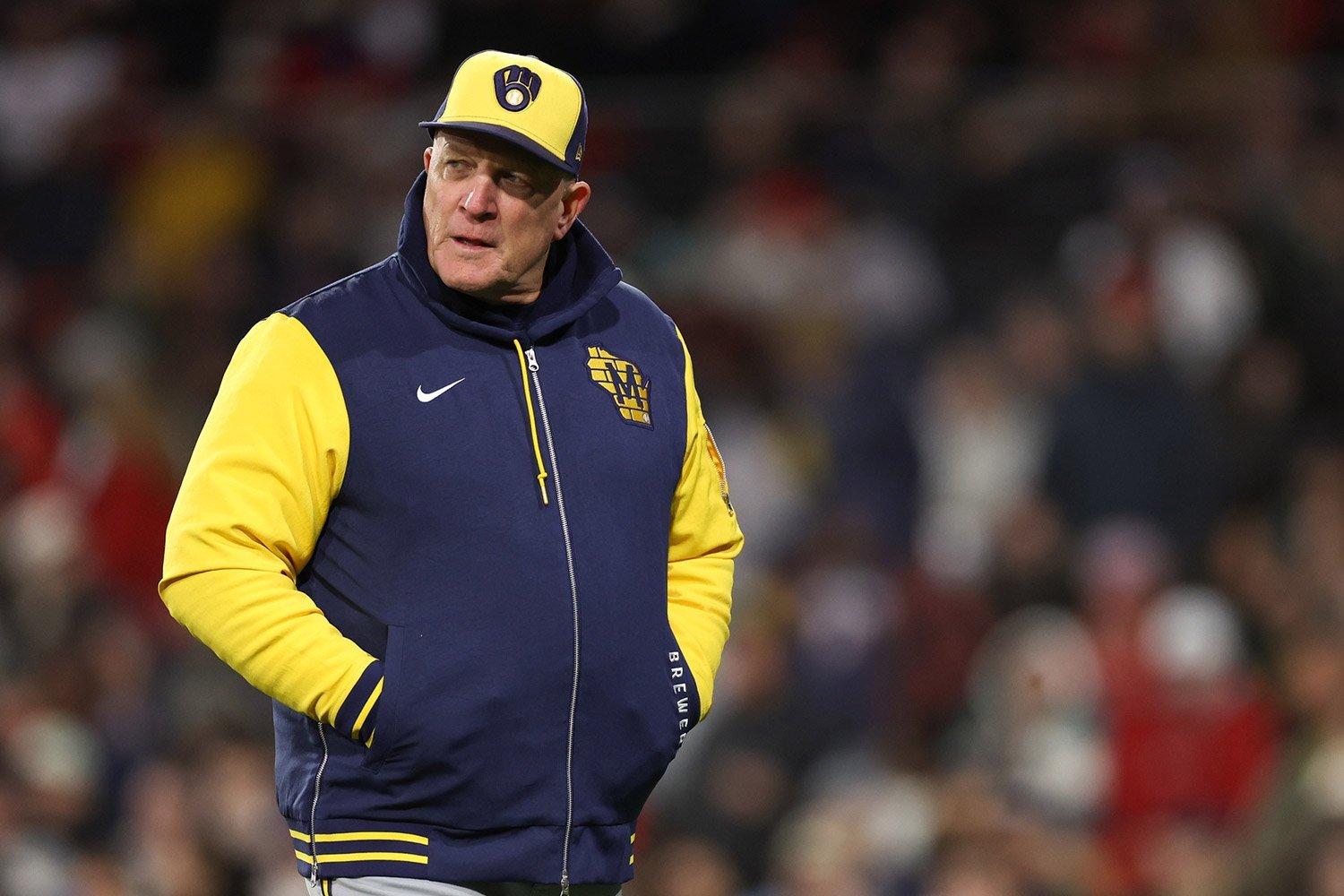 There are no scheduled off days at Brewer Fanatic. We work 365 days a year, just like Aaron Ashby. Here is a recap of three of the best community thread topics from the past week: Brewers: Our biggest weakness... Milwaukee returned much of its core from last season’s 97-win team. Injuries to position players and inexperience in the rotation have some fans wondering if the Brewers' success is more fragile this year. If Uribe or Megill misses time, who takes over high-leverage innings? Will the starting rotation steady itself? And will the team please do something about the left side of the infield? The community's consensus is excitement over the eventual return of Jackson Chourio and Andrew Vaughn. Both sluggers bring right-handed power that the lineup has been missing. Milwaukee still ranks fourth in the league in runs scored despite the offense's flaws, both real and imagined. Brewers: How Annoying Are Pat Murphy’s Brewers? Milwaukee has been one of the best regular-season teams in baseball since Pat Murphy took over in 2024. But how? The short answer: the Brewers are annoying, at least to their opponents. Willson Contreras, on the other hand... A legendary Brewer Fanatic contributor outlines where the team has excelled relative to the rest of the league. Milwaukee has the lowest swing rate, the best baserunning, the most infield hits, excellent results with two outs, and more. All told, the Brewers quantifiably do the little things better than anyone else. Minors: Your 2026 Nashville Sounds The minor league season is underway! The Arizona Complex League starts next month, too. Milwaukee boasts high-end prospects throughout its farm system. The Triple-A club, in particular, includes a number of players who are expected to become big-league contributors in the near future. Brewer Fanatic does an incredible job curating the best interviews and feature stories from every affiliate. For now, come listen to recent conversations with Robert Gasser, Luis Lara, and more Nashville Sounds players. It is a great day to be a Brewers fan at Brewer Fanatic! View the full article
 -
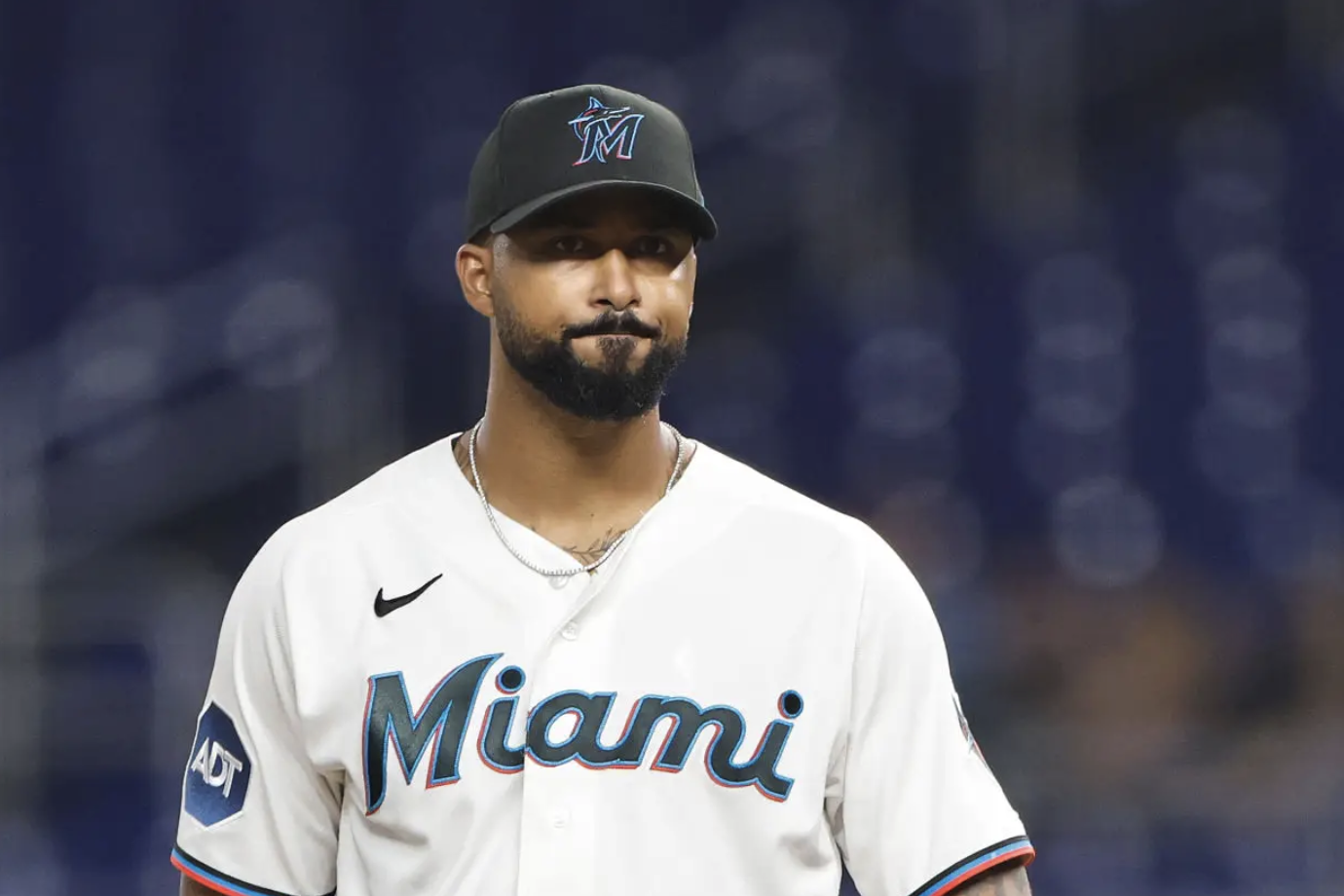 Two weeks into the regular season, the Miami Marlins find themselves in an unfamiliar spot: tied atop the National League East division. Even in such a minuscule sample, it's worth acknowledging for a franchise that for the previous half-decade had a habit of instantaneously falling out of the race. While the local fanbase can't help but feel encouraged by this 8-5 start, it is not motivating them to actually show up to loanDepot park yet. The building was mostly full for Opening Day (32,459), but hasn't even reached half capacity since. The Marlins rank 29th among MLB teams in average home attendance so far this season. At 11,713 fans per game, they just barely edge out the Athletics (11,503/game), who host games at a minor league ballpark. Below, I've compared 2026 to every other "normal" season of Bruce Sherman's ownership tenure. Fans were not permitted to attend games in 2020 due to COVID restrictions, and the ballpark's capacity was limited for the first half of 2021 to allow sufficient social distancing, so those seasons have been omitted. The last time that the Marlins got off to such a slow start attendance-wise without a pandemic to blame for it, José Ureña was still anchoring the starting rotation and Lewis Brinson was viewed as a long-term contributor. loanDepot park Attendance, First 10 Games of Season Year Fans/Game Opponents 2024 16,083 PIT, LAA, ATL 2022 15,058 PHI, STL, SEA 2025 14,595 PIT, NYM, WSH 2023 14,507 NYM, MIN, AZ 2018 12,062 CHC, BOS, NYM, PIT 2026 11,713 COL, CWS, CIN 2019 10,542 COL, NYM, PHI There are some legitimate excuses to consider in this case. Historically, Marlins attendance has been very strongly correlated to the day of the week. The numbers skyrocket on weekends. Last season, for example, 16 of the 17 best-attended Marlins home games were on Fridays, Saturdays and Sundays, with the lone exception being Opening Day (which was celebrated on a Thursday). Every season from 2022-25, Miami's first 10 home games included two full weekends. The calendar has not favored them the same way this year. The only weekend series they've hosted was March 27-29 against the Colorado Rockies, who are widely projected to be MLB's worst team. After the Rockies left town, the Marlins' next opponent was the Chicago White Sox, whose roster is similarly bereft of recognizable big leaguers. On the other hand, the Marlins have been playing high-quality baseball since last summer. How is it that their fan turnout is so comparable to 2018-19 when they fielded some of the least-competitive teams in this stadium's history? If any individual Marlin has the potential to move the needle in terms of attendance, it should be ace right-hander Sandy Alcantara. Conveniently, each of his first three starts have coincided with home games. They have failed to capitalize on the latter two—his April 1 shutout of the White Sox was the worst-attended Marlins game to date (6,505) and his April 7 encore drew the smallest crowd of the Cincinnati Reds series (8,318). The Marlins spend the next week on the road, followed by a six-game homestand against the Milwaukee Brewers and St. Louis Cardinals beginning on April 17. View the full article
 -
Cubs' Seiya Suzuki Activated, Set To Make Season Debut
DiamondCentric posted an article in North Side Baseball
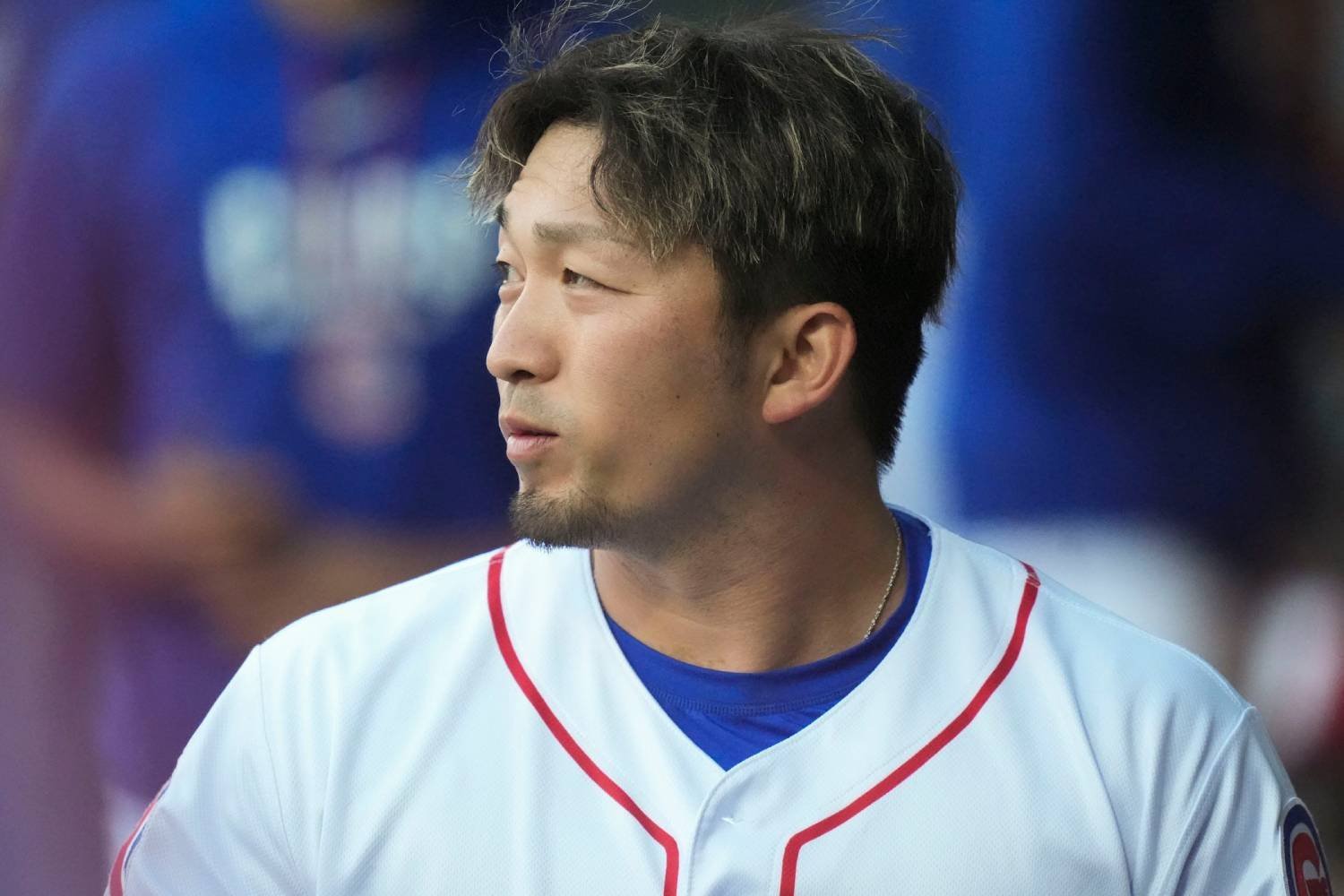 Right fielder Seiya Suzuki is making his much-anticipated return to the Chicago Cubs' lineup Friday. Suzuki was activated from the 10-day injured list following his sprained right posterior cruciate ligament during the World Baseball Classic while playing for Japan. Outfielder Dylan Carlson was designated for assignment. The Cubs also made a move in their bullpen, putting right-hander Phil Maton on the 15-day IL with tendinitis in his right knee and calling up Ethan Roberts from Triple-A Iowa. Suzuki will be a welcome addition to a Cubs offense that entered Friday's game against the Pittsburgh Pirates with a .680 OPS, which ranked 14th in MLB. He is coming off a 2025 in which he slashed .245/.326/.478 with career highs of 32 homers and 103 RBIs. Carlson signed a minor-league contract in January and made the club out of spring training primarily due to Suzuki's injury. But Carlson appeared in just three of 12 games, going 0-for-4 with a run scored and two strikeouts. If he clears waivers, it is possible that he reports to Triple-A to remain in the organization. Maton had struggled in his five appearances, posting a 13.50 ERA in four innings with four walks and five strikeouts. Roberts is back for his second stint with the Cubs this season after being the extra player for Sunday's doubleheader, getting the final two outs of the 6-5 loss to the Cleveland Guardians. View the full article
 -
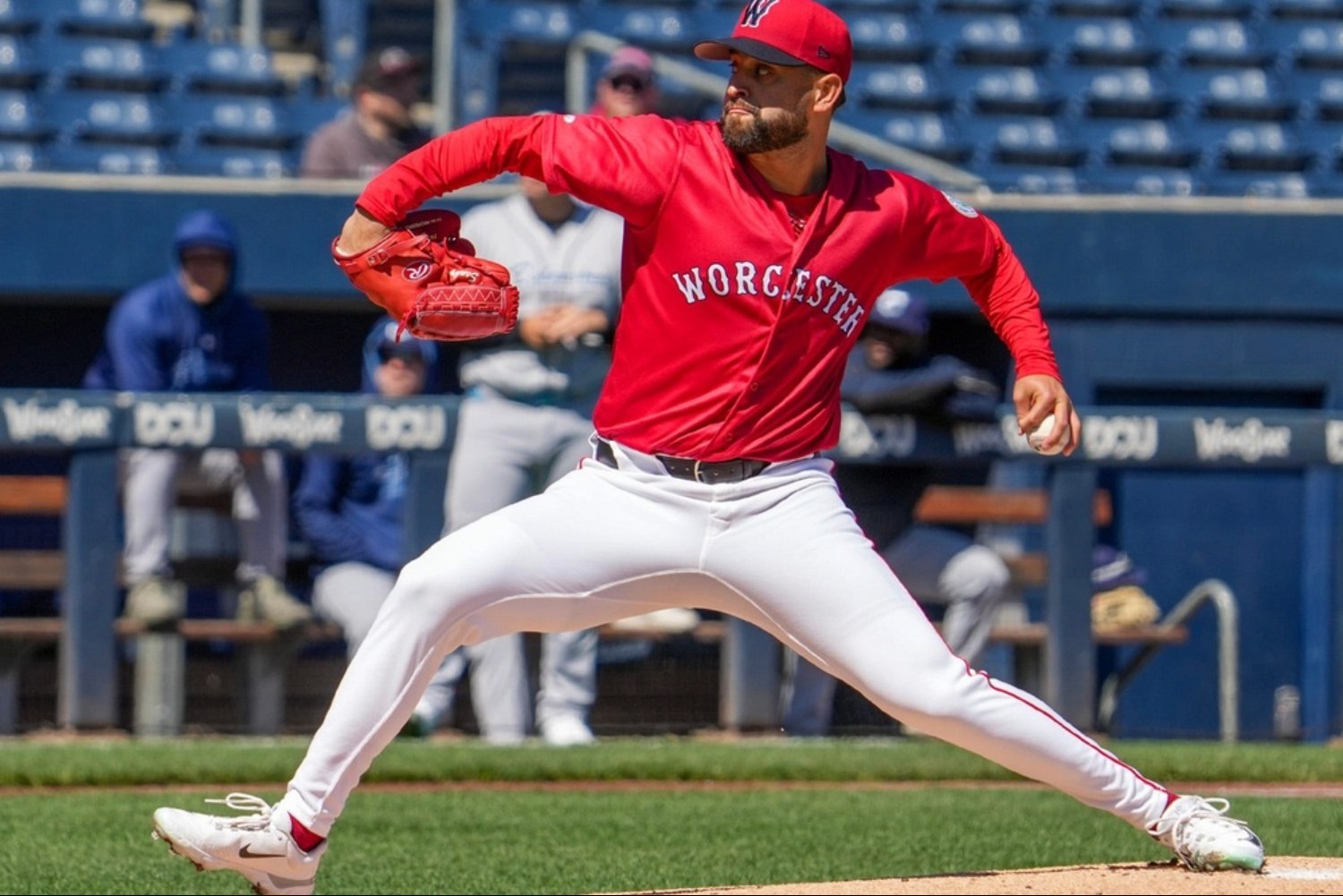 Red Sox Affiliate Recap (April 7 - 9) Triple-A Worcester Red Sox April 7: The WooSox lost in heartbreaking fashion against the Columbus Clippers 14-10. With the WooSox down the entire game, the bats broke out with a four-run 7th inning due to a double from Mikey Romero that brought in two runs and a three-run homer from Matt Thaiss to put Worcester on top 10-8. That lead would not last long as Columbus scored three runs in the 8th to retain the lead and did not look back as they scored three more runs in the 9th to make it a 14-10 final. Key Performances: Kristian Campbell: 3-for-5, 2B Matt Thaiss: 2-for-2, HR, 4 RBI, 2 BB April 8: Patrick Sandoval made his first Red Sox rehab start after almost two years recovering from elbow surgery. Sandoval pitched 3.1 innings, throwing 63 pitches and averaging 92.2 MPH on his fastball and topped out at 93.5 MPH. In 2024, Sandoval averaged 93.7 on his fastball. Worcester defeats Columbus with an 8-5 victory to even the series. Entering the 4th inning with the Clippers up 3-1, the WooSox scored four runs by drawing five walks, bringing in a run on a groundout from Vinny Capra and a sacrifice fly by Kristian Campbell to put Worcester up 5-3. Columbus showed life in the 8th, tying the game up 5-5 however the Sox answered back scoring three of their own. Braiden Ward put the defense to work with a swinging bunt that forced a throwing error by the pitcher so Capra scored a run. Campbell put on another run with a bases loaded hit by pitch while Mikey Romero followed up with a sacrifice fly to make it 8-5. Key Performances: Patrick Sandoval: 3.1 IP, 3 R, 0 ER, 3 BB, 3 K Braiden Ward: 2-for-5, 2 R, 1 RBI April 9: The WooSox took a 2-1 series lead after shutting out Columbus 5-0. Anthony Seigler’s walk and stolen base set up a pair of RBI doubles from Vinny Capra and Jason Delay while Braiden Ward followed up with an RBI single to put Worcester up 3-0 in the 2nd inning. In the 5th, Nick Sogard smoked a double to center field and Kristian Campbell brought him in with a bloop single to right field to make it a 4-0 game. Ward stole his 2nd base of the game which set up Mickey Gasper to rope an RBI single to give the WooSox a 5-0 lead. The pitching took care of business, Jack Anderson throwing six scoreless innings and Tyler Uberstine tossing three scoreless to earn his first save of the season. Key Performances: Jack Anderson: 6.0 IP, 3 H, 0 ER, 7 K Tyler Uberstine: 3.0 IP, 1 H, 0 ER, 3 K Double-A Portland Sea Dogs April 7: The Sea Dogs beat themselves up in a 12-7 defeat to the Fisher Cats. Portland got a 2-0 lead in the 1st from a wild pitch and a sacrifice fly from Nelly Taylor. The unthinkable happened in the top of the 2nd inning, New Hampshire scored eight runs before recording their first hit. After striking out the side in the 1st, Hayden Mullins would walk two guys, give up a run via the sacrifice fly, then walk three straight batters and getting pulled from the game after walking in a run. Jorge Juan would come into the game and not record a single out, instead he would give up five runs including the runs Mullins was responsible for. Juan threw two wild pitches that each brought in a run, hitting two batters with the bases loaded and putting on two more runs. Juan’s night would end after walking in two more runs. Cade Feeney then came into the game and immediately threw a wild pitch bringing in the 8th run of the inning. The Fisher Cats scored their 10th run of the inning after a two-RBI single. Portland slowly cut down the deficit during the game but it was not enough. Key Performances: Will Turner: 2-for-4, RBI, BB Patrick Halligan: 3.0 IP, 1 H, 0 ER, 7 K Max Carlson: 2.0 IP, 1 H, 0 ER, 5 K April 8: Portland had another devastating 11-3 loss to New Hampshire. Pitching could not get anything going, however, Red Sox top prospect Franklin Arias had himself a nice day, going 2-for-3 with three RBI’s. Key Performances: Franklin Arias: 2-for-3, 3 RBI, 2B Ahbram Liendo: 2-for-4, 2 R, 3B April 9: The Portland Sea Dogs walk it off 4-3 after two tough games against the New Hampshire Fisher Cats. Tyler McDonough drew a walk and stole a base which set up Nate Baez to bring him in with an RBI single to get an early 1-0 lead in the 1st inning. In the 4th, Drew Ehrhard hammers a two-run homer on the first pitch to put Portland on top 3-0. The Fisher Cats would claw their way back into the game scoring one run in each of the next three innings to tie it up 3-3 entering the 9th. Nelly Taylor hit a hustle double to leadoff the inning, Will Turner walked and both advanced a base as Ehrhard laid down a sacrifice bunt. New Hampshire intentionally walked star prospect Franklin Arias with a chance to get an inning ending double play but that did not work, Ahbram Liendo hammered a single to right field to walk it off for the Sea Dogs. World Baseball Classic standout for Puerto Rico Eduardo Rivera pitched well, throwing 4.1 innings, gave up one run and struck out seven. Key Performances: Eduardo Rivera: 4.1 IP, 3 H, 1 ER, 7 K Cooper Adams: 2.2 IP, 2 H, 5 K, Win High-A Greenville Drive April 7: The Greenville Drive earned their first win of the year by defeating the Hub City Spartanburgers 7-2. The bats were quiet up until the 6th inning after Isaiah Jackson hit an RBI groundout and Mason White hit an RBI double to tie the game 2-2. Jackson would return the favor once again in the 8th inning by hitting an RBI single, White gave Greenville a comfortable 5-3 lead after smashing a two-run homer. In the 9th, top Red Sox prospects Justin Gonzales and Yoeilin Cespedes each earned themselves an RBI, Gonzales hitting a single, Cespedes hitting a double, putting the Drive on top 7-2. Key Performances: Jack Winnay: 2-for-2, 3 BB Mason White: 2-for-4, HR, 3 RBI Jojo Ingrassia: 3.0 IP, 0 H, 4 K April 8: The Drive lose 4-1 to the Spartanburgers with the series now being tied. Not a lot went well for Greenville Wednesday night as they would only have one hit as a team (Jack Winnay) and the only run they scored was a sacrifice fly hit by Mason White. Although, a positive from this game is Alex Bouchard throwing 4.1 scoreless innings in his season debut. Key Performance: Alex Bouchard: 4.1 IP, 3 H, 0 ER, 1 K April 9: The Greenville Drive took a 2-1 series lead as they defeated the Spartanburgers 2-0, highlighted by Juan Valera’s dominant performance. Valera pitched an impressive five innings, gave up two hits and struck out nine batters while only throwing 56 pitches. Valera topped out at 102 MPH on his fastball and 95 MPH on his changeup. Greenville only had three hits, two of which were a Henry Godbout single and Isaiah Jackson RBI triple in the 7th inning that scored their only two runs of the game. Steven Brooks was impressive as well as he pitched the last two innings and struck out six batters. Key Performances: Juan Valera: 5.0 IP, 2 H, 9 K Steven Brooks: 2.0 IP, 6 K Isaiah Jackson: 1-for-3, 2 RBI Single-A Salem RidgeYaks: April 7: The Salem RidgeYaks demolished the Wilson Warbirds 10-2 in the first game of the series. Salem jumped on top in the 4th inning hitting three RBI singles each coming from Starlyn Nunez, Kleyver Salazar, and Ty Hodge to put the RidgeYaks up 4-0. Salem scored five more runs in the 5th inning thanks to some sloppy defense from the Warbirds. Stanley Tucker scored on a wild pitch, Enddy Azocar hit an RBI double, Salazar followed up with an RBI single and would then score on a throwing error after an Anderson Fermin groundout, Hodge ended the five-run 5th inning with an RBI double to put them up 9-1. Avinson Pinto hit an RBI double in the 6th inning to increase the RidgeYaks lead once again, 10-2. Key Performances: Kleyver Salazar: 4-for-5, 3 R, 2 RBI Ty Hodge: 3-for-4, 2 RBI, BB April 8: The Ridgeyaks earned their fourth win on the year and their 3rd straight win after a 6-3 victory against the Warbirds. With the Warbirds getting an early 2-0 lead in the 2nd inning, Salem answered back scoring two of their own in the 3rd inning due to IIan Fernandez hitting a sacrifice fly and Frederik Jimenez scoring on a throwing error to make it a 2-2 game. Ty Hodge ropes an RBI single in the 4th to once again tie the game 3-3. The Ridgeyaks jumped back up and gave themselves a two-run lead after Avinson Pinto reached on a fielder's choice and Jimenez hit a sacrifice fly, 5-3. Hodge earned his 2nd RBI of the game with a sacrifice fly in the 8th, bringing in Andrews Opata who hit a leadoff triple to help make it a 6-3 ballgame. Key Performances: Andrews Opata: 2-for-3, 2 R, BB Avinson Pinto: 3-for-4, RBI Brandon Neely: 2.0 IP, 5 K April 9: The Salem Ridgyaks with their fourth straight game with a close 2-1 victory versus the Wilson Warbirds. 2025 8th round pick Dylan Brown has yet to give up his first run in his first two starts of the season, throwing 3.2 shutout innings and striking out eight batters. Brown got into trouble in the 2nd inning giving up two walks and a single to load the bases with no outs, he would then strike out the next three batters he faced to get out of the jam. David Ortiz's son D’Angelo Ortiz would have a nice day at the plate going 2-for-4, including an RBI single to tie the game 1-1 in the 4th. A couple of stolen bases from Andrews Opata and Anderson Fermin, followed up with a wild pitch, gave Salem a 2-1 lead in the 8th. Wuilliams Rodriguez came back into the game in the 9th earning a win and striking out two batters. Key performances: Andrews Opata: 2-for-3, 1 R, 1 BB, 2 SB Dylan Brown: 3.2, 1 H, 0 ER, 8 K Nicolas De La Cruz: 1.2 IP, 1 H, 5K View the full article
 -
 Bryan Balzer threw five shutout innings to lead Lake Elsinore's 21-0 rout of Rancho Cucamonga, backed by Kale Fountain's 4-for-5 night with a home run. Matt Waldron delivered five scoreless innings for El Paso in a 6-1 loss. Carson Montgomery allowed just one unearned run over four innings as Fort Wayne edged Lansing, 2-1. In San Antonio, Tirso Ornelas homered, but Victor Lizarraga allowed seven runs in one-third of an inning in a 10-3 loss. Padres Transactions No Roster Moves Waldron Delivers Five Scoreless Innings, But Chihuahuas Fall 6-1 To Albuquerque Matt Waldron was sharp in his start for El Paso, holding Albuquerque scoreless over five innings. He allowed just two hits while striking out three and walking one. Waldron has not allowed a run this season. But the bullpen could not preserve the scoreless tie. Justin Yeager entered in the sixth inning and was charged with four earned runs on four hits while recording just one out, taking the loss to fall to 1-1 on the season. Ethan Routzahn relieved Yeager and surrendered two more earned runs on one hit with a walk over 2/3 of an inning, pushing Albuquerque's lead to 6-0. Jackson Wolf, Alek Jacob, and Logan Gillaspie each followed with a scoreless inning to close the game. Wolf struck out two batters in his inning of work. El Paso's offense was limited to four hits. Jose Miranda provided the team's only RBI with a double, going 1-for-3. Mason McCoy went 1-for-4 with two strikeouts and scored the Chihuahuas' lone run. Carlos Rodríguez and Marcos Castañon each singled. Samad Taylor went 0-for-4. Pablo Reyes drew two walks, while Sung-Mun Song and Rodolfo Durán each drew one. Nick Schnell struck out three times in an 0-for-3 night. El Paso fell to Albuquerque, 6-1. Player AB R H RBI BB SO Samad Taylor, OF 4 0 0 0 0 0 Carlos Rodríguez, OF 4 0 1 0 0 1 Sung-Mun Song, 3B 3 0 0 0 1 0 Marcos Castañon, 1B 4 0 1 0 0 1 Pablo Reyes, 2B 2 0 0 0 2 0 Rodolfo Durán, C 3 0 0 0 1 0 Mason McCoy, SS 4 1 1 0 0 2 Jose Miranda, DH 3 0 1 1 0 1 Nick Schnell, OF 3 0 0 0 0 3 Player IP H R ER BB SO Matt Waldron 5 2 0 0 1 3 Justin Yeager (L, 1-1) 1/3 4 4 4 0 0 Ethan Routzahn 2/3 1 2 2 1 1 Jackson Wolf 1 0 0 0 1 2 Alek Jacob 1 0 0 0 0 0 Logan Gillaspie 1 1 0 0 0 0 Tirso Ornelas Homers In Missions' 10-3 Loss To Corpus Christi Victor Lizarraga lasted just one-third of an inning for San Antonio, walking five batters and allowing seven earned runs on three hits. He took the loss to fall to 0-2 on the season with nine runs allowed across only 5 1/3 innings pitched. Fernando Sanchez entered in relief and pitched 2 1/3 innings with five strikeouts, though he walked four. He allowed one earned run on one hit. Johan Moreno also threw 2 1/3 innings, striking out three and walking none while allowing one unearned run on three hits. Andrew Dalquist pitched one scoreless inning with two strikeouts and a walk. Andrew Moore followed with one scoreless inning, recording one strikeout and one walk. Chris Sargent worked the final two innings, allowing one earned run on four hits. Tirso Ornelas led the offense, going 2-for-4 with a solo home run. He was also hit by a pitch. Braedon Karpathios went 1-for-4 with a triple, an RBI, and a run scored. Kai Murphy drove in a run, going 1-for-3 with a walk. Romeo Sanabria doubled in a 1-for-5 night. Carson Tucker went 1-for-3 with a walk, and Kai Roberts singled in a 1-for-4 night. Ethan Salas went 0-for-4 with a walk and scored a run. Ryan Jackson went 0-for-4 with a walk and two strikeouts. San Antonio lost to Corpus Christi, 10-3. Player AB R H RBI BB SO Ryan Jackson, 2B 4 0 0 0 1 2 Ethan Salas, C 4 1 0 0 1 1 Tirso Ornelas, OF 4 1 2 1 0 0 Romeo Sanabria, DH 5 0 1 0 0 2 Braedon Karpathios, 1B 4 1 1 1 0 2 Luis Verdugo, 3B 3 0 0 0 1 1 Kai Murphy, OF 3 0 1 1 1 1 Carson Tucker, SS 3 0 1 0 1 1 Kai Roberts, OF 4 0 1 0 0 1 Player IP H R ER BB SO Victor Lizarraga (L, 0-2) 1/3 3 7 7 5 0 Fernando Sanchez 2 1/3 1 1 1 4 5 Johan Moreno 2 1/3 3 1 0 0 3 Andrew Dalquist 1 0 0 0 1 2 Andrew Moore 1 0 0 0 1 1 Chris Sargent 2 4 1 1 0 0 TinCaps Pitching Limits Lansing To One Run In 2-1 Victory Carson Montgomery started for Fort Wayne and pitched four innings, allowing one unearned run on two hits with three strikeouts and a walk. He pitched the most innings among TinCaps pitchers and has allowed just one run on the season. Kleiber Olmedo relieved Montgomery and threw three scoreless innings, giving up just one hit with no walks or strikeouts. Igor Gil earned the win by pitching the final two innings, recording two strikeouts and two walks while allowing two hits but no runs. The three-man pitching staff combined to allow just one run on five hits across nine innings. Fort Wayne's offense collected seven hits but scored just twice. Rosman Verdugo went 1-for-4 with the team's only RBI and was also hit by a pitch. Kasen Wells went 0-for-3 but drew two walks and scored a run. Lamar King Jr. doubled in a 1-for-3 night with a walk and two strikeouts. Kavares Tears tripled, going 1-for-3 with a hit-by-pitch. Oswaldo Linares doubled and scored a run, going 1-for-4. Carlos Rodriguez, Jack Costello, and Jonathan Vastine each contributed a single. Jake Cunningham went 0-for-3 with a walk, two strikeouts, and a stolen base. The TinCaps' pitching staff did not allow an earned run across nine innings of work. Player AB R H RBI BB SO Kasen Wells, OF 3 1 0 0 2 0 Rosman Verdugo, 3B 4 0 1 1 0 1 Carlos Rodriguez, DH 4 0 1 0 0 0 Lamar King Jr., C 3 0 1 0 1 2 Kavares Tears, OF 3 0 1 0 0 0 Jack Costello, 1B 4 0 1 0 0 0 Jake Cunningham, OF 3 0 0 0 1 2 Jonathan Vastine, SS 4 0 1 0 0 2 Oswaldo Linares, 2B 4 1 1 0 0 0 Player IP H R ER BB SO Carson Montgomery 4 2 1 0 1 3 Kleiber Olmedo 3 1 0 0 0 0 Igor Gil (W, 1-0) 2 2 0 0 2 2 Kale Fountain Goes 4-For-5 With Homer As Storm Rout Rancho Cucamonga 21-0 Bryan Balzer started for Lake Elsinore and threw five scoreless innings, allowing just two hits with four strikeouts and three walks. He earned the win to move to 1-0 on the season. Javier Chacon followed with two scoreless innings, striking out three without issuing a walk. Nick Falter closed it out with two scoreless innings, striking out one and walking one. The three pitchers combined for a nine-inning shutout on five hits. The Storm's offense produced 21 runs on 19 hits. Kale Fountain led the way, going 4-for-5 with a home run, two RBIs, and three runs scored. He was also hit by a pitch. Bradley Frye went 4-for-6 with two doubles, an RBI, and three runs scored. Victor Duarte went 3-for-5 with a double, a walk, two RBIs, and three runs scored. Ryan Wideman drove in four runs on a 2-for-4 night that included a double. George Bilecki entered as a pinch hitter and went 1-for-3 with a home run and four RBIs. Kerrington Cross reached base six times, going 1-for-2 with two walks, two hit-by-pitches, three RBIs, and three runs scored. Conner Westenburg went 2-for-5 with two RBIs, and Jorge Quintana went 1-for-4 with two walks, an RBI, and two runs scored. Player AB R H RBI BB SO Ryan Wideman, OF 4 1 2 4 0 1 a-George Bilecki, OF 3 1 1 4 0 1 Truitt Madonna, DH 5 1 1 0 1 1 Jorge Quintana, SS 4 2 1 1 2 1 Kale Fountain, OF 5 3 4 2 0 0 Victor Duarte, C 5 3 3 2 1 0 Bradley Frye, 2B 6 3 4 1 0 2 Luke Cantwell, 1B 3 2 0 0 1 1 Kerrington Cross, 3B 2 3 1 3 2 0 Conner Westenburg, OF 5 2 2 2 0 0 Player IP H R ER BB SO Bryan Balzer (W, 1-0) 5 2 0 0 3 4 Javier Chacon 2 2 0 0 0 3 Nick Falter 2 1 0 0 1 1 Padres Top-20 Prospect Performance Kash Mayfield: DNP Ethan Salas: 0-for-4, BB, K, R Kruz Schoolcraft: DNP Bradgley Rodriguez: DNP Humberto Cruz: DNP Miguel Mendez: DNP Ty Harvey: DNP Jorge Quintana: 1-for-4, 2 BB, K, RBI, 2 R Kale Fountain: 4-for-5, HR, HBP, 2 RBI, 3 R Ryan Wideman: 2-for-4, 2B, K, 4 RBI, R Jagger Haynes: DNP Lamar King Jr.: 1-for-3, 2B, BB, 2 K Romeo Sanabria: 1-for-5, 2B, 2 K Truitt Madonna: 1-for-5, BB, K, R Michael Salina: DNP Garrett Hawkins: DNP Kavares Tears: 1-for-3, 3B, HBP Deivid Coronil: DNP Francis Pena: DNP Bryan Balzer: W, five IP, 0 ER, 4 K, 3 BB View the full article
 -
A Lingering Lineup Imbalance Continues to Haunt the Twins
DiamondCentric posted an article in Twins Daily
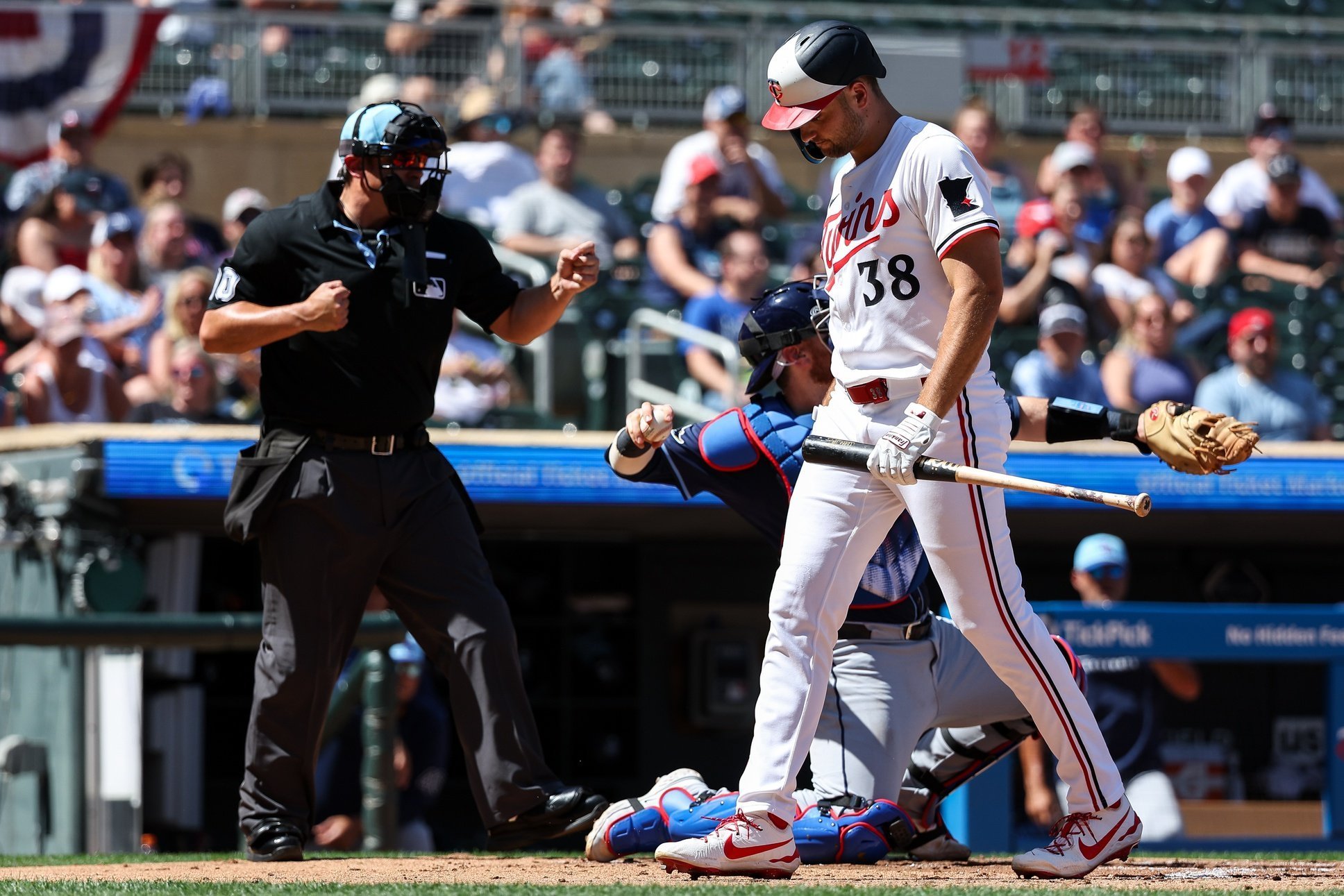 The Minnesota Twins have seemed to have a roster flaw in recent years, with a lack of impact right-handed bats. It is not an issue that has flown under the radar, either. Season after season, the lineup has leaned heavily to the left side, often prioritizing corner outfielders with power from that side of the plate. While that approach can work in a vacuum, it has created a predictable and exploitable weakness when the Twins face quality left-handed pitching. A Multi-Year Trend That Cannot Be Ignored This is not a small-sample-size problem or an early-season overreaction. The Twins have consistently struggled against left-handed pitchers over the last several seasons, and the numbers paint a clear picture. From 2022 through 2025, Minnesota’s production against lefties has been firmly middle of the pack at best and well below average at worst when compared across the league. Among 120 individual team seasons in that span, the Twins ranked near the bottom more often than not. The 2022 club posted a .701 OPS, ranking 77th out of 120. In 2023, there was a modest improvement to a .726 OPS, good for 53rd. The 2024 team took another small step forward with a .732 OPS, ranking 47th. However, that progress stalled in 2025 when the Twins slipped back to a .705 OPS, ranking 72nd. Now in 2026, the issue has become even more pronounced. Entering play on Thursday, Minnesota owns a .636 OPS against left-handed pitching, ranking 18th overall. That total has been greatly helped by positive performances this week against left-handed starters like Tarik Skubal and Framber Valdez. However, that number reinforces a pattern that has lingered far too long for a team on the fringes of contention in the AL Central. A Roster Built to Be Platooned The current roster construction only amplifies the concern. Minnesota is overloaded with left-handed hitters who are often best utilized in platoon roles rather than everyday options against all pitching. Players like Kody Clemens, Tristan Gray, Trevor Larnach, James Outman, and Matt Wallner all hit from the left side. Each brings something valuable, whether it is power or on-base ability, but asking that group collectively to handle tough left-handed starters is a difficult proposition. Internally, there is hope that right-handed hitters like Royce Lewis and Luke Keaschall can provide balance and thump in those matchups. Lewis has shown flashes of being a middle-of-the-order force when healthy, but posted a .689 OPS against lefties last season. Keaschall is an intriguing young bat with a career .547 OPS when facing southpaws. Still, counting on them to fully stabilize the lineup against lefties feels optimistic given health questions and limited track records. More importantly, the roster simply lacks enough right-handed depth to build a lineup tailored to attack a high-end southpaw. When a dominant left-handed starter takes the mound, Minnesota often has no choice but to run out a lineup that leans into its biggest weakness. Help Is Coming, But Not the Right Kind At first glance, help appears to be on the way. Four of the organization’s top five position player prospects opened the season at Triple-A, putting them one step away from the big leagues. However, their profiles do not necessarily solve this specific issue. Walker Jenkins and Emmanuel Rodriguez are both left-handed hitters with significant upside. The Twins can reasonably hope that each develops into a hitter capable of holding his own against left-handed pitching, avoiding strict platoon roles. That would mirror the paths taken by Joe Mauer and Justin Morneau, who became complete hitters despite batting left-handed. There are encouraging signs, but there are also clear gaps. Last season, Jenkins posted a .730 OPS against lefties compared to a .910 OPS against righties. Rodriguez showed an even wider split in 2025 with a .607 OPS against southpaws and a .950 OPS against righties. Both players have the talent to improve those numbers, but projecting that growth is far from certain. The organization’s best right-handed hitting prospects at the level offer a more direct solution, though they come with their own questions. Gabriel Gonzalez dominated left-handed pitching last season with a 1.022 OPS while also holding his own against righties at .869. Kaelen Culpepper, on the other hand, posted reverse splits with a .700 OPS against lefties and a .905 OPS against righties. Gonzalez stands out as a potential impact bat who could help balance the lineup, but relying on prospects to fix a longstanding major league issue is rarely a comfortable strategy. An Issue That Demands a Clear Answer The Twins have built a lineup identity around left-handed power, but the downside of that approach continues to surface in meaningful ways. Without enough right-handed hitters capable of doing damage, especially against left-handed pitching, the offense becomes easier to neutralize. This is no longer a short-term quirk. It is a multi-year roster-construction problem that has carried over across different versions of the team. Until Minnesota finds a way to add impact right-handed bats or develops internal options who can truly break the mold, opposing teams will continue to exploit this imbalance. What steps should the front office take to resolve this issue once and for all? Leave a comment and start the discussion. View the full article
 -
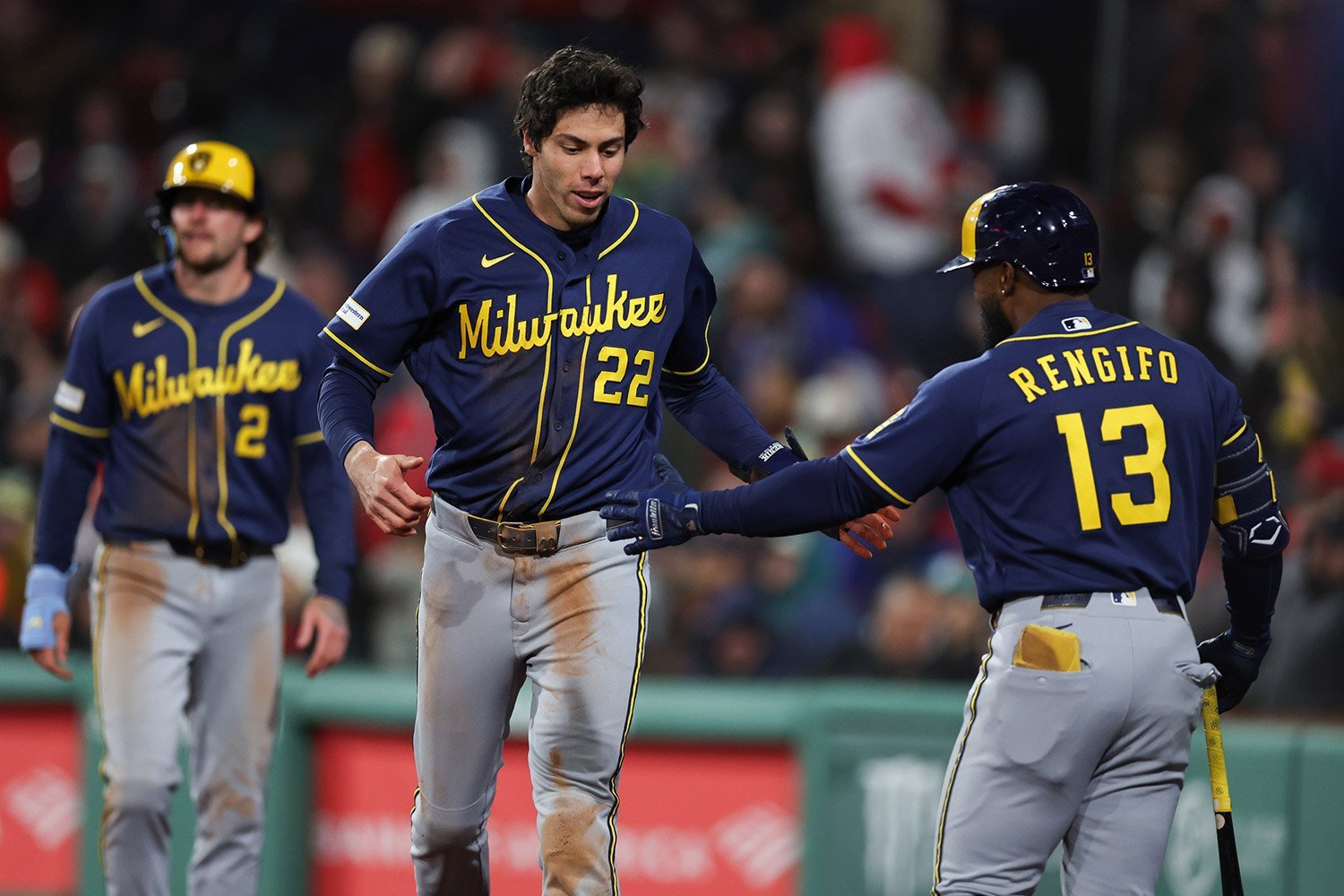 (I wrote the first few paragraphs on Monday before the Brewers traveled to Boston to play the Red Sox. After doing so well in their first nine games, Milwaukee went stone-cold batting with two outs. Part one of my story includes everything through the table. Part two begins after the table.) It was such a nice day on Sunday that I decided not to worry about the branch that had fallen into my yard (from the neighbor's tree) during the weekend's ice storm; that could wait for another day. Instead, since it was 50 degrees and sunny, I took my cat Hudson and 'grand pup' Ellie outside and let them run around while I listened to the Brewers-Royals game on Sirius/XM. I'm not sure who it was, either Jeff Levering or Lane Grindle, who talked about the Brewers' ability to have success at the plate after two outs. In fact, they said it repeatedly. The Brewers continued to score multiple runs per inning, putting up a twisted digit in three of the nine frames on the way to an 8-5 victory and a series win at Kauffman Stadium. The Brewers went 5-for-14 (.357) in the contest, including two doubles, a triple, and a home run. They also drew four walks (one of them intentional) and plated five runs during those ABs. When I ran the numbers through my abacus, the slash line came out to .357/.500/.857 over 18 trips to the plate. Pretty impressive! Then I checked out the numbers to date for 2026. The Crew is 34-for-105 with nine doubles, two triples, and six homers. Add on 22 free passes and 35 RBI, and you have some gaudy numbers, albeit in a small sample: .324/.441/.619 in 127 plate appearances. Brewers' Two-Out Batting Stats Player AB H 2B 3B HR RBI BB Yelich 16 5 1 1 5 1 Turang 7 3 1 1 3 3 Bauers 6 2 1 3 1 Contreras 8 3 3 3 4 Frelick 12 3 2 Ortiz 13 2 1 1 Lockridge 10 4 1 3 2 Rengifo 6 2 1 2 2 Mitchell 7 3 2 1 7 2 Hamilton 4 2 2 3 Perkins 6 1 1 1 1 Sánchez 7 4 3 5 Vaughn 1 Matos 2 Then came the first and only trip of the year to Fenway Park. Milwaukee went from red-hot with two outs to a dismal 1-for-16 in the first two games with Boston. Christian Yelich drew a walk in his only two-out appearance, and Garrett Mitchell went 1-for-1 with two RBIs. Eight other players went a combined 0-for-15, including 'Wild Bill' Contreras, failing to get a base hit in three trips. Perhaps he was distracted by his brother Willson's antics during the game on Monday. Bottom line: It is unrealistic to expect the team to keep hitting at the pace they did over their first three series. Yelich, for example, has a career slash line of .268/.372/.425 with two outs. Let's hope Milwaukee gets back to its exciting brand of heroics with two outs. That type of success makes the Brewers much more fun to watch. View the full article
 -
 Twins System Recap: The Mighty Mussels got strong starts on both ends of their doubleheader today. Reed Moring, who was drafted in the 15th round last year, followed up his excellent pro debut with another impressive showing in Game 1. James Ellwanger also delivered a second consecutive solid start in Game 2. Kaelen Culpepper stayed hot for the Saints, reaching base three more times as the DH. Here's info on those performances and much more. View the full article
 -
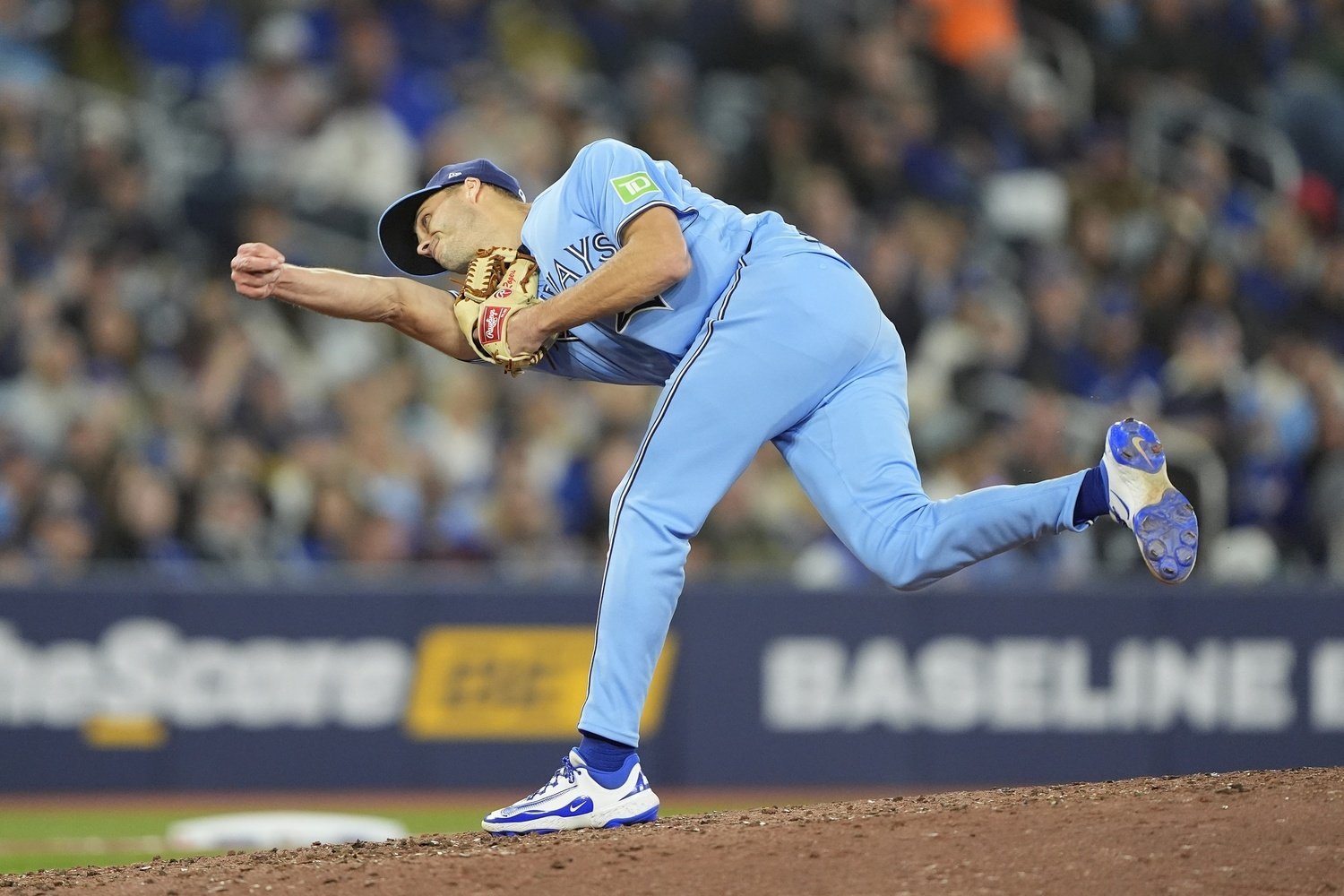 The Toronto Blue Jays have not gotten off to the start that the fans, players, or management were expecting following last year’s run to the World Series. With a 5-7 record and a laundry list of injuries to the starting rotation, the Blue Jays have been forced to rely heavily on their bullpen in the regular season’s opening weeks. Excluding Tyler Heineman, who has already been used twice this season, the Blue Jays have been forced to use 12 different relievers over the first 12 games. The results have been mixed for the group overall, but two players who have started the 2026 campaign strongly are Tyler Rogers and Louis Varland. While these relievers couldn’t be more different from one another, both have been able to stabilize a volatile group, giving the Blue Jays quality innings as they search for wins. The Blue Jays signed Rogers to a three-year, $37 million contract back in December to help lock down the late innings. Through six games, Rogers has posted a record of 1-0, an ERA of 0.00 and a WHIP of 1.05. In 6 ⅔ innings, he has struck out five batters and walked three. One of Rogers’ calling cards throughout his career has been his ability to limit hard contact, consistently ranking in the top three percent of Major League Baseball pitchers for average exit velocity allowed. In the right-hander’s past five seasons, his average exit velocities against have been 85.4, 84.2, 84.4, 85.2 and 85.8 mph, with four of those five years placing him in the top one percent. Rogers has kept that up through his opening six appearances, with an 85.2 mph average exit velocity, giving the Blue Jays what they were hoping for when they signed the 35-year-old. Another underlying statistic that continues to back up Rogers’ success is that of the 19 batted balls against him this season, zero have been barrelled by opposing teams. Varland attacks hitters with a high-octane fastball, a knuckle curve and a wipeout slider. Through six games, he is 0-1 with an ERA of 0.00 and a 1.05 WHIP. The 28-year-old has struck out nine batters across his 6 ⅔ innings, picking up where he left off during last season’s run to the World Series. Varland’s fastball velocity ranks in the 92nd percentile in MLB with an average speed of 97.8 mph. This has helped the right-hander to sit in the top eight percent of MLB pitchers in strikeout percentage (36%), routinely missing bats against opposing teams’ best hitters. Varland, like Rogers, has allowed zero barrels this season on 14 batted balls, limiting hard contact every time he’s entered a game. While the Blue Jays haven’t got off to the start anyone was hoping for, Rogers and Varland have come out of the gates on fire, giving the Blue Jays quality outings every time they've taken the mound. View the full article
 -
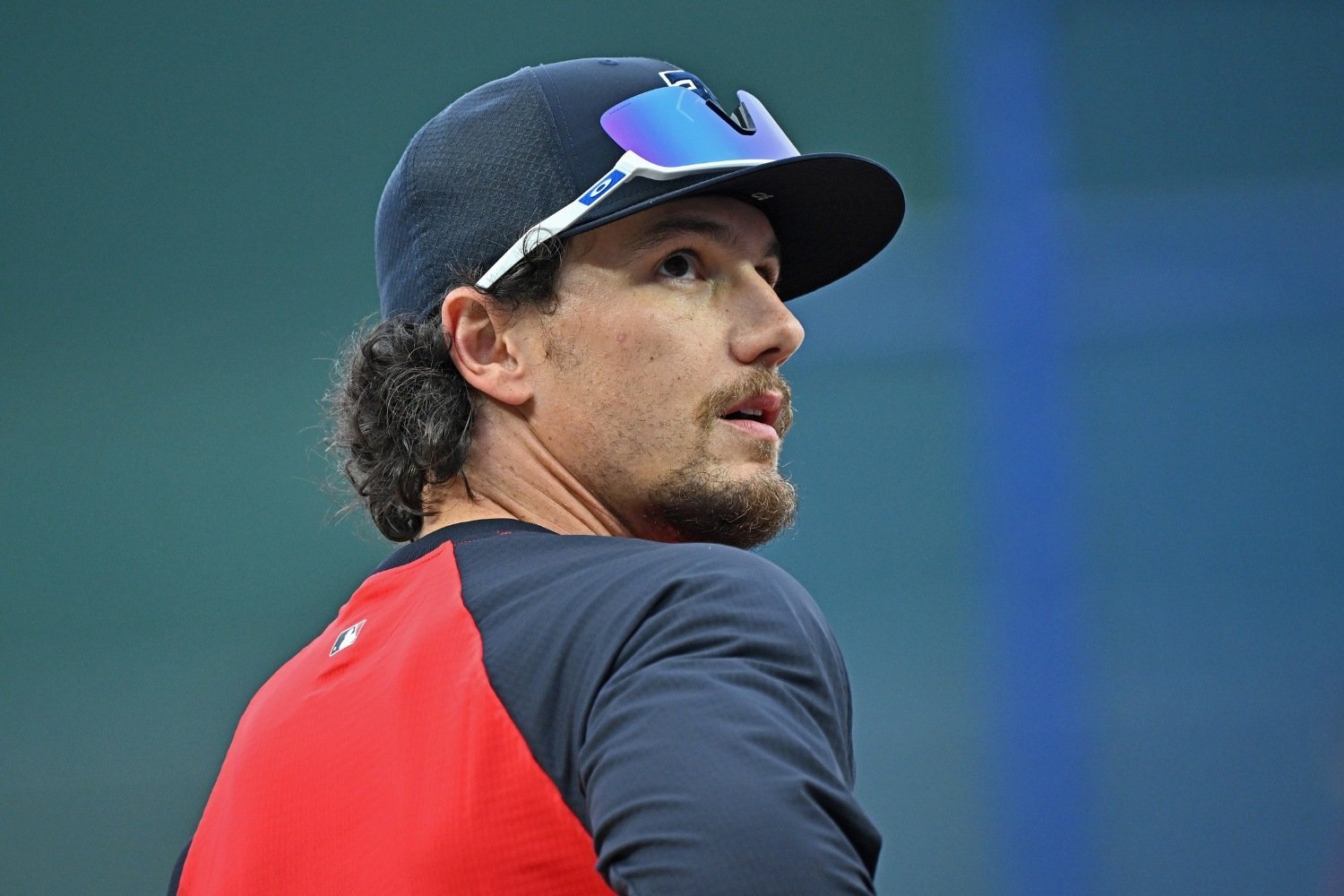 The 2025 trade deadline was an eventful one for the Twins. By letting go of some key contributors (Jhoan Duran, Griffin Jax, and more), they received a mix of prospects and controllable big-leaguers. One of those players, Taj Bradley, has already been a positive contributor. However, another acquisition from the deadline made the Opening Day roster, and it hasn’t been as fruitful a start for James Outman. Outman was acquired in a trade with the World Series champion Dodgers on July 31, in which the Twins sent Brock Stewart to Los Angeles. Stewart pitched in only four games for the Dodgers post-trade, allowing 2 earned runs in 3 2/3 innings. He’d then miss the rest of the season due to a right shoulder injury, which resulted in surgery. As for Outman, he wasn’t much better for the Twins at the back end of last year, hitting .147/.221/.337 in 104 plate appearances across 37 games. The former 7th-round pick struck out 45 times last season, while only walking 8 times. His overall advanced metrics from last year weren’t great, either. His bat speed was around league average at 72.6 MPH, but his expected slugging average, average exit velocity, Squared Up%, Whiff%, and Strikeout% were all scary. His first full season with Minnesota has begun with worse results from Outman, as many Twins fans have noticed. He’s appeared in 11 games but has only amassed 15 plate appearances, hitting .000/.067/.000 with 8 strikeouts. It's been quite a fall from grace for Outman, who was third in NL Rookie of the Year Award voting back in 2023, finishing behind unanimous winner Corbin Carroll and starter Kodai Senga. Outman hit .248/.353/.437 with 23 home runs in 567 plate appearances that year, amassing 3.4 bWAR. The advanced metrics from that year look noticeably better, though Outman did overperform his batting average, slugging percentage, and wOBA by considerable amounts when compared to the expected values. Outman is obviously nowhere near his offensive output from the 2023 season, but let's try to be positive for a moment. He's been bad, sure, but he isn’t playing every day. Byron Buxton locks down the center field spot, as does Matt Wallner in right, with Austin Martin and Trevor Larnach splitting time in left. Outman’s appearances are primarily limited to defensive and baserunning situations in the later innings, which should work to some extent. Outman has been a plus baserunner during his MLB career. He’s shown that this year, stealing two bases already, and has 21 career stolen bases. Defensively, his arm strength is his calling card, as he’s been in the 78th percentile or above in each of his MLB seasons. His other defensive metrics haven’t graded out well as of late, as his OAA has dropped each year since that impressive rookie campaign in 2023. However, Outman is almost certainly still a better defender than Larnach, while Martin is around the same defensively as the former Dodger. If he were out there more often, Outman might be showing more of what he can do. The fact that the Twins have faced a disproportionate number of lefties this spring has only made the job of all their lefty batters harder. What does the path forward look like for the Twins outfield? As stated previously, Outman isn’t playing a whole lot, and that's unlikely to change. Meanwhile, beyond the active big-league roster, the team has fellow trade acquisition Alan Roden and top prospects Walker Jenkins, Emmanuel Rodriguez and Gabriel Gonzalez waiting for a chance at Triple-A St. Paul. How soon might it make sense to jettison Outman (he can't be optioned to the minors) and turn to one of those guys? In truth, letting Outman keep trying it for a bit makes more sense. The blockage I mentioned above will constrain any new player added to the mix. Roden, Jenkins, Rodriguez and Gonzalez all need playing time. Thus, they're better off in the minors, until something changes. Should one of the big-league incumbents get hurt, the player called up to replace them on the roster is likely to leapfrog Outman into regular duty. Unless and until that happens, though, letting Outman keep sponging up the work of the last position player on the roster is the best move. As ugly as his performance has been, he's only meant to be lightly used, anyway. Still, eventually, he has to do something right, or else be shoved aside in the name of finding wins. View the full article
 -
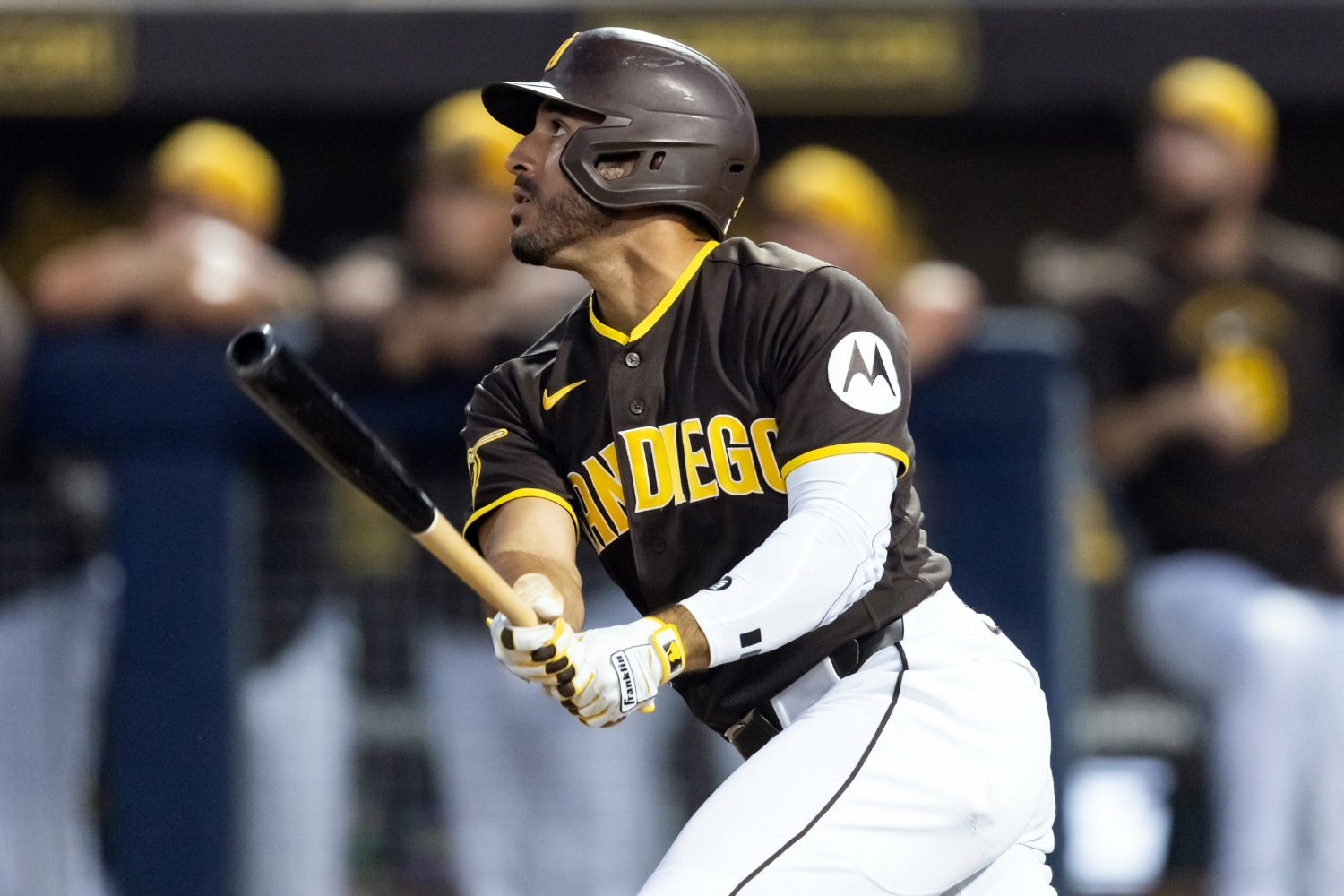 Ever since it was mentioned that right fielder Fernando Tatis Jr. might not be hitting leadoff for the San Diego Padres this season and that first-year manager Craig Stammen was going to tinker with the top half of his lineup, conversations have stirred from barstools and coffee shops in La Jolla to those down in Chula Vista. The question being asked: What is the best lineup for the Friars? While the experiment in spring training was interrupted by the World Baseball Classic, Stammen and the Padres have had two weeks of the regular season to work it out on the fly. And although days off, slumps, hot streaks and injuries will certainly play a role, there are signs of stability forming in the top five spots, even with the offense still trying to find some consistency. For now. In the first 12 games of the season, the top five has had six combinations involving eight players. Before Wednesday, the only players to appear in the top five in every game are ones you would expect: Tatis and third baseman Manny Machado. Shortstop Xander Bogaerts has done so in all but one game. Machado was given his first day off in the series finale against the Pittsburgh Pirates. The others to make appearances are left fielder Ramon Laureano, center fielder Jackson Merrill, second baseman Jake Cronenworth, designated hitter Miguel Andujar and first baseman Gavin Sheets. The evolution has been interesting to watch. It felt like Stammen was the exclusive voice putting together the first five lineups. Then, in the sixth game, the series finale vs. the San Francisco Giants, Stammen credited bench coach Randy Knorr with the batting order that produced a 7-1 win. Since then, Stammen's comments have indicated a more collaborative process. There have been two constants throughout: Tatis has hit either first or second, and Machado third or fourth in every game he has appeared. Those are the no-brainers. Who fits in around them is where the real experimentation has happened. Prior to the series against the Colorado Rockies, Laureano started the last four games in the leadoff spot, followed by Tatis, Merrill and Machado. This feels like the regular top five for the time being. Sheets replaced Machado in the cleanup spot Wednesday, with Andujar getting the start at third and batting sixth. Bogaerts has hit fifth in three of those four contests, with Andujar holding down the fort in the other. Where is Cronenworth? After leading off in three straight games on the opening homestand, the veteran infielder has been eighth or ninth in the last six games, the same spots he was in for the very first two games of the season. That is more because Cronenworth can be more effective at getting on base for the top of the order once the lineup flips. How the first five aligns also doesn't seem to matter whether there is a right-hander or left-hander on the mound to start the game. The Padres have faced four left-handed starters, with Tatis leading off three times and Laureano the other. Merrill and Cronenworth were the only left-handed hitters in the group of eight to bat in the top five before Sheets made his initial appearance Wednesday. Merrill has been in the middle of some rallies by the Friars thus far, while Cronenworth has yet to get rolling. In fact, no one in the Padres' lineup has been rolling, not even in the bottom half. Still, Machado said as recently as Tuesday that he liked the at-bats the Friars were having even if they didn't produce much. That could be the reason why Laureano has emerged as the leadoff hitter for four straight games. Tatis told Stammen in the offseason that he wasn't fond of the leadoff spot, yet that is where the manager had the superstar in his first two lineups. Tatis has hit seven times in the No. 2 spot, which seems to be where he will settle as the Friars try to get more run production out of their most talented position player. Merrill has split his time fairly evenly between third (six) and fourth (five), with Machado being in the cleanup spot in six times and No. 3 the other five. All of that has pushed Bogaerts from the No. 2 slot, where he was the first two games of the year and four times overall, down to fifth for seven games. The only time Bogaerts didn't hit in the top five was when he hit sixth against Boston Red Sox left-hander Ranger Suarez with Andujar, who has a strong track record against southpaws, in the No. 5 slot. One other interesting piece of the lineup construction has been the usage of Nick Castellanos. The first baseman-outfielder picked up after he was released by the Philadelphia Phillies in spring training has started just five of the first 11 games. Three of those have come as the designated hitter, while he made his first career start at first base and his first since 2022 in left field. He also has come off the bench as a pinch-hitter in three games. Castellanos' starts have come in spurts, not in the lineup for the first two games, then in for three straight, benched for two more, then another two starts in a row before going back to the bench. The series opener against the Rockies also marked the 13th lineup combination in as many games, so expect this long-running experiment to continue deep into the dog days of summer. View the full article
 -
 Owen and Jesse recap the Blue Jays' series loss to the Dodgers, including Josh Fleming's role in the game one blowout, Max Scherzer's forearm tendinitis in game two of the series, and the breath of life in game three from George Springer and Davis Schneider. The guys talk about the drama surrounding Shohei Ohtani and finish by previewing the next series against the Twins. Listen on Apple Podcasts: https://podcasts.apple.com/us/podcast/the-jays-centre-podcast/id1846108462 Listen on Spotify: https://open.spotify.com/show/3Bi7SzfpcqMo5xYWnbCeoL Listen on iHeartRadio: https://www.iheart.com/podcast/263-the-jays-centre-podcast-300304824/ Listen on Pocket Casts: https://pca.st/2qk9wqxd Watch on YouTube: https://www.youtube.com/@jayscentre View the full article
 -
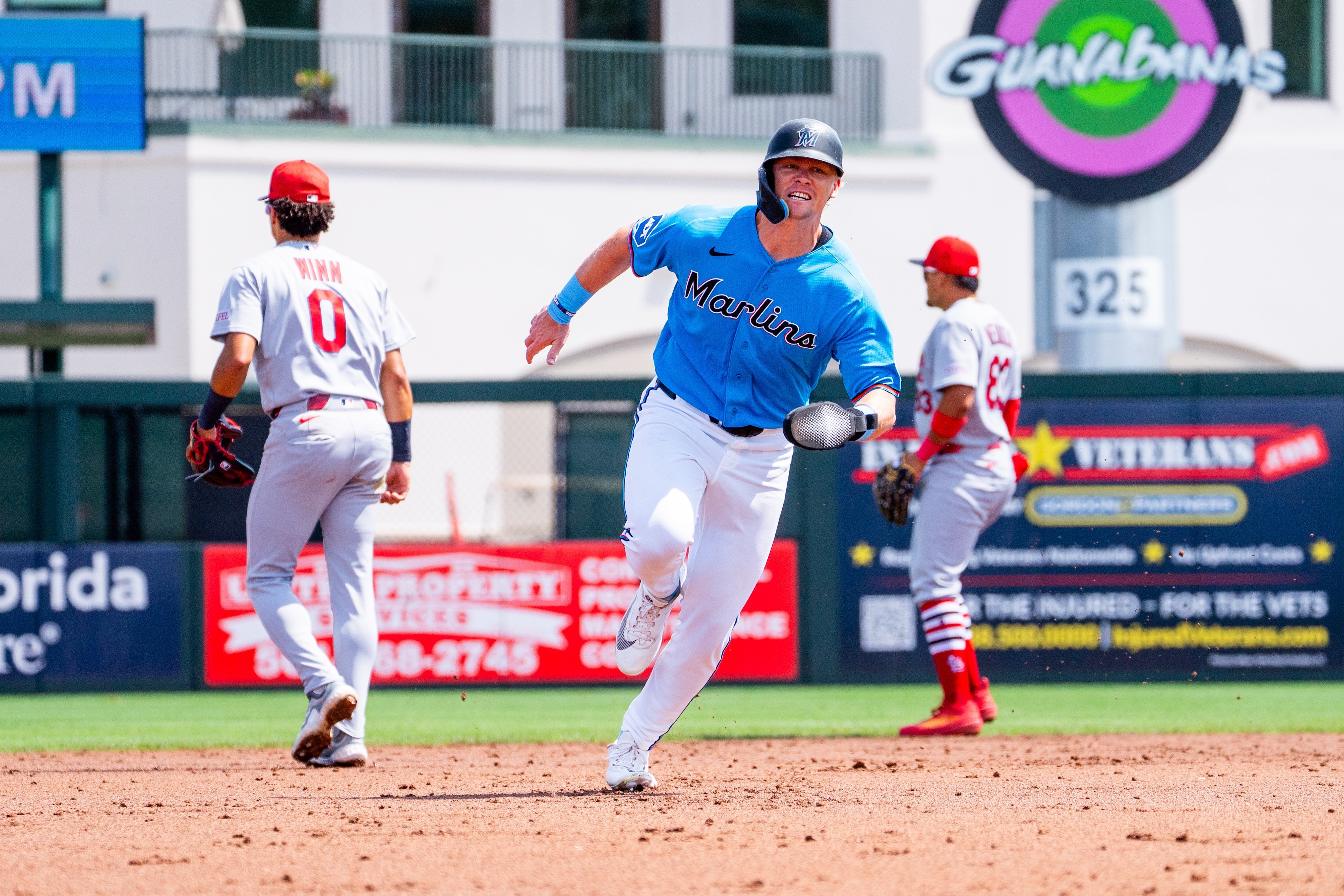 MIAMI, FL — The final stage of Kyle Stowers' recovery from a right hamstring strain begins Friday night when he is scheduled to play his first minor league rehab game with Triple-A Jacksonville. Stowers left Miami on Thursday afternoon to meet up with the Jumbo Shrimp in Norfolk, Virginia, where they're in the middle of a series against the Baltimore Orioles' AAA affiliate. Even with their All-Star-caliber hitters like Stowers, the Marlins value positional flexibility. The 28-year-old outfielder was seen earlier this week participating in defensive drills at first base, an experiment which has been in the works since November, according to Marlins manager Clayton McCullough. "Kyle potentially had a skill set to maybe do that," McCullough said regarding the idea to develop Stowers at the position. "It wasn't about this being a full-time first base and we're looking to transition. I think over the course of the year, it's something that you can pull off, and it's a day to get you off your feet a little bit. A different type of workload over there within a game." Stowers has never played first base in the minor or major leagues, though he totaled 23 games of experience as a college player during the summers of 2017 and 2018. The Marlins mainly used him in left field last season, where he had two defensive runs saved and five outfield assists. He was named a National League Gold Glove finalist at the position. First base has generally been a weakness for the Marlins throughout the past few seasons. They signed free agent Christopher Morel to be their main option there entering 2026, but on Opening Day as Morel was taking batting practice, he suffered a left oblique strain, knocking him out for 4-6 weeks. He is currently in Jupiter progressing and taking part in baseball activities. In the absences of Stowers and Morel, Connor Norby has received most of the playing time at first. Through 11 games, Norby is slashing .206/.357/.353/.710 with one home run and two RBI. Liam Hicks is off to an incredibly hot start, but his primary position is catcher. The Marlins have gotten good offensive contributions from outfielders Griffin Conine, Jakob Marsee and Owen Caissie against right-handed pitching. Stowers being able to handle first would open the possibility for him to share a lineup with Hicks, Conine, Marsee and Caissie later this season. "I want to keep Kyle in games," McCullough said. "We have some really good outfielders that I think would help us. It's a way that it can maybe keep him in games as well." This rehab assignment is expected to be longer than usual. Stowers originally injured his hamstring very early in spring training, then re-aggravated it on March 20 in West Palm Beach against the Houston Astros. Although it was diagnosed as a minor (Grade 1) strain, he needs time to get his timing right and his physical conditioning up to major league standards. Barring setbacks, he should be reinstated from the IL during the week of April 20. View the full article
 -
Episode 91: Will Mitchell Keep It Up, & What To Do With Sproat
DiamondCentric posted an article in Brewer Fanatic
 The guys break down the Brewers' road trip to Kansas City and Boston, what to make of Garrett Mitchell's hot start, and how the team should handle Brandon Sproat's early struggles. Apple Podcasts: https://podcasts.apple.com/us/podcast/the-brewer-fanatic-podcast/id1740648724 Spotify: https://open.spotify.com/show/5CY8mWsQayqjDXqw9OT2Td iHeartRadio: https://www.iheart.com/podcast/263-the-brewer-fanatic-podcast-166534588/ Pocket Casts: https://pca.st/ommzz627 Watch On YouTube: https://www.youtube.com/@brewerfanatic View the full article
