


DiamondCentric
-
Posts
2,631 -
Joined
-
Last visited
Never
Content Type
Profiles
Forums
Events
News
Tutorials & Help
Major League Baseball Videos
Guides & Resources
Store
Downloads
Gallery
Everything posted by DiamondCentric
-

The Royals Need to Move Salvador Perez Down in the Batting Order
DiamondCentric posted an article in Royals Keep
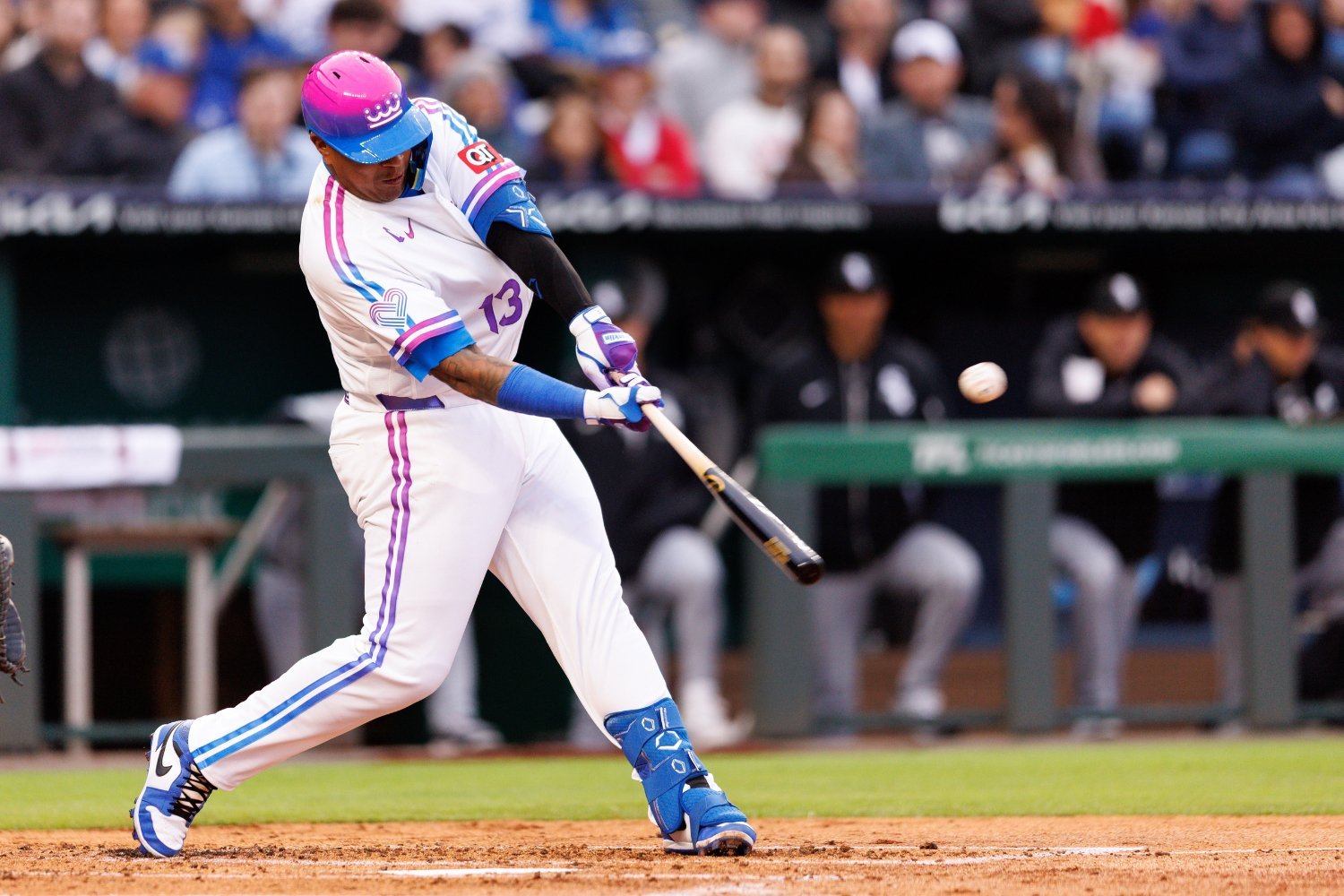 The Kansas City Royals are a team starving for run production, especially with runners in scoring position. Going into Saturday's game with the White Sox, Kansas City ranks last in Major League Baseball with a 39 wRC+ in RISP situations this season. They also rank last in ISO (.054), 29th in batting average (.196), and 29th in BB/K ratio (0.29) with runners in scoring position this year. For a team that had struggled early in 2025 in RISP situations, these issues with runners on second and third are frustrating, especially for a team that's currently 6-7 going into Saturday's afternoon contest at Kauffman Stadium. It's easy to blame the front office for the Royals' RISP struggles. There are many fans who think GM JJ Picollo should've made a bigger swing for a free-agent bat or traded for one. That said, Jarren Duran, who seemed to be the primary Royals' trade target this offseason, currently has a 51 wRC+. Furthermore, the bottom of the Royals' lineup has been fine, with Kyle Isbel (181 wRC+), Jonathan India (100 wRC+), Jac Caglianone (98 wRC+), and Isaac Collins (82 wRC+) showing decent production in those spots. However, the big issue has been the Royals' 2-3-4 production in RISP situations, as David Lesky of Inside the Crown pointed out on Twitter yesterday. When it comes to RISP wRC+, Bobby Witt Jr. sports a 17 wRC+, Vinnie Pasquantino sports an 8 wRC+, and Salvador Perez has a -65 wRC+. Royals fans read that latter number correctly. The Royals captain has been 65 runs below average with runners in scoring position this season. Of course, it's a small sample. However, his 20 plate appearances in RISP situations lead all Royals hitters as of Saturday, according to Fangraphs. Second is Vinnie with 19. The Royals can be patient with one of those hitters to get out of their funk during this stretch. However, two of them? That's a harder ask, especially with a critical series against the Detroit Tigers coming up on the road. It's not just RISP situations that are an issue for Salvy. Overall, he's hitting .157 with a 51 wRC+ in 56 plate appearances. His 12.5% strikeout rate is 7 percentage points lower than his mark a year ago, which is good. However, his ISO is 52 points down from 2025, and his xwOBA of .307 is 50 points down. It's not like last year, when he was crushing the ball and getting unlucky. He's actually showing genuine signs of regression at the plate. Therefore, manager Matt Quatraro should move Salvy (and perhaps Pasquantino) down in the batting order. Not only do Salvy's current metrics not support him being the Royals' cleanup hitter, but the historical data doesn't confirm it either. The Statcast Data for Salvy Does Not Look Encouraging There are some things that Perez is still doing well offensively this season, at least when it comes to the batted-ball and Statcast data. Salvy's barrel rate is 13.6%, and his hard-hit rate is 43.2%, both of which are above the league average. His average exit velocity is 90.7 MPH, 0.7 MPH higher than a year ago. However, beyond those metrics, the Statcast data has been concerning. Here's a look at where he ranks in certain Statcast categories, via his TJ Stats Statcast summary profile. A few particular metrics stick out with Salvy. His Pull Air% ranks in the 44th percentile. His Max EV ranks in the 38th percentile. His Z-Contact% ranks in the 35th percentile, and his LA Sweet-spot% ranks in the 25th percentile. Those are big declines, especially considering where he was in those categories a year ago, as illustrated below. Last season, his Pull Air% and Max EV ranked in the 88th percentile. Furthermore, his LA Sweet-Spot% ranked in the 65th percentile. His Z-Contact% also ranked in the 43rd percentile, not significantly higher but still noteworthy. The reality is that Perez is hitting the ball less hard, pulling the ball less, and making less contact on balls in the strike zone. Those are all signs of regression, and even though he's bound to see some positive regression in the future, he may not improve enough to match what he did a season ago in those important Statcast categories. The bat speed overall isn't all that different from 2025. His 72.4 MPH average bat speed is only 0.5 MPH slower than last year's mark. That said, his 21.2% fast-swing rate is 9.3% lower than in 2025, and his 7.9-foot swing length hasn't changed. He's blasting the ball above league average at 19%, but his squared-up date is down to 31.6%, a 0.9% decline. The Royals need a primary run producer in the cleanup spot. Right now, based on the Statcast data and his skills, I am not sure that's Salvy, unless something dramatic happens soon. Salvy Historically Hasn't Been Good in the Cleanup Spot After the Royals' 2-0 loss to the White Sox on Thursday, Quatraro mentioned that Perez had proven himself in the past in the cleanup spot, pointing to home runs and RBI as the key indicators. That said, this isn't fantasy baseball. Were his 30 home runs and 100 RBI impressive? Yes, but when looking at his cleanup-spot performance last year, the data showed he wasn't as impressive as his home runs and RBI totals suggested. In 307 plate appearances as a cleanup hitter, he hit .216 with a .621 OPS and 67 wRC+. After a slow start, Quatraro moved Maikel Garcia to cleanup and Salvy to the No. 5 spot. In 315 plate appearances in the No. 5 spot, Perez hit .261 with a .859 OPS and 130 wRC+. As a cleanup hitter, he hit seven home runs and posted a .134 ISO last season. As a No. 5 hitter? He hit 23 home runs and posted a .295 ISO. Some Royals fans may say, "Yeah, well, that's just one year, bro!" (I added the "bro"). Well, let's take a look at his career splits in the 3, 4, and 5 spots, where he's had the most career plate appearances. No. 3: 1,783 plate appearances, .270 average, .790 OPS, .215 ISO, 111 wRC+. No. 4: 2,172 plate appearances, .238 average, .695 OPS, .171 ISO, 87 wRC+. No. 5: 1,667 plate appearances, .272 average, .777 OPS, .200 ISO, 105 wRC+. The best spot in his career has been No. 3, but given how he's trending, it's unlikely Quatraro would move him up (and that may not be the best idea anyway). In 1,667 career plate appearances in the No. 5 spot, he's been solid with a .777 OPS and 105 wRC+. In the cleanup spot, however, Salvy has been mediocre, as evidenced by his posting the worst marks in those four categories. In fact, his wRC+ in the cleanup spot is nearly 20 points worse than his career mark in the No. 5 spot. Quatraro has been protective of players and their standing in the batting order. Even though Witt makes a lot of sense in the leadoff spot (gives him the most at-bats in a game and he's their best player), Quatraro (or Witt) has been averse to it because of some early struggles in that spot (particularly in 2023). It may be a similar case with Salvy. The Royals captain may be comfortable in the cleanup spot, and Quatraro doesn't have a whole lot of "traditional" options right now, either, who could easily fill in for Salvy. That said, it hasn't been working for Salvy in cleanup for more than a year, perhaps even longer. It may be good for Quatraro and his team to trust the data in this situation and move Salvy from the cleanup spot sooner rather than later. So, How Should the Royals' Lineup Look? The easiest solution with the lineup is to move Salvy down to the No. 5 spot. That said, what does the rest of the lineup look like, not just at cleanup, but at the top of the batting order in general? An easy solution could be to move Garcia back to the No. 4 spot, like a year ago, but he's been thriving at leadoff this year. The Venezuelan third baseman is hitting .315 with a 142 wRC+ and provides the kind of plate discipline and speed at the top of the lineup that they need. Another solution could be to move Vinnie down to No. 4, or perhaps move Carter Jensen up to that spot. Pasquantino has thrived in the cleanup spot, with a career .201 ISO and a 152 wRC+ in 317 plate appearances. That said, he also has a career .185 ISO and 107 wRC+ in 1,313 plate appearances in the No. 3 spot. So it's not like Pasquantino is ineffective in the No. 3 spot, and there's a lot more data that supports him at No. 3 as well in terms of plate appearances. One option could be to move Jensen to cleanup. It's a bold move for the rookie, but the Statcast data suggests he's the best power hitter on this team right now, especially in terms of exit velocity, barrel, and hard-hit rates. Here's a look at his TJ Stats Statcast profile this season. Yes, there are some contact issues with Jensen, given his 14th-percentile Z-Contact% and 7th-percentile whiff and strikeout rates. However, he has a 40th percentile BB% and a 71st percentile O-Swing%, so he has the plate discipline to make up for that swing-and-miss. However, the power is what sticks out the most with Jensen. His Max EV ranks in the 95th percentile, his barrel rate ranks in the 93rd percentile, his hard-hit rate ranks in the 74th percentile, and his Pull Air% ranks in the 98th percentile. The power tool is legitimate, and with four home runs, Jensen may have the biggest home run upside of any hitter in the Royals lineup. His home run yesterday against the White Sox shows that he could not just handle the cleanup spot, but thrive in it. Salvy has veteran presence and is the captain, which makes this decision tough for Quatraro (I'm guessing he doesn't want to throw off the clubhouse's vibe). However, Jensen can easily fill in the cleanup spot and surpass what Salvy is bringing in that place in the batting order currently and down the road, both this season and beyond. View the full article
 -
Toronto Blue Jays 2026 Top Prospect Rankings: No. 4 Arjun Nimmala
DiamondCentric posted an article in Jays Centre
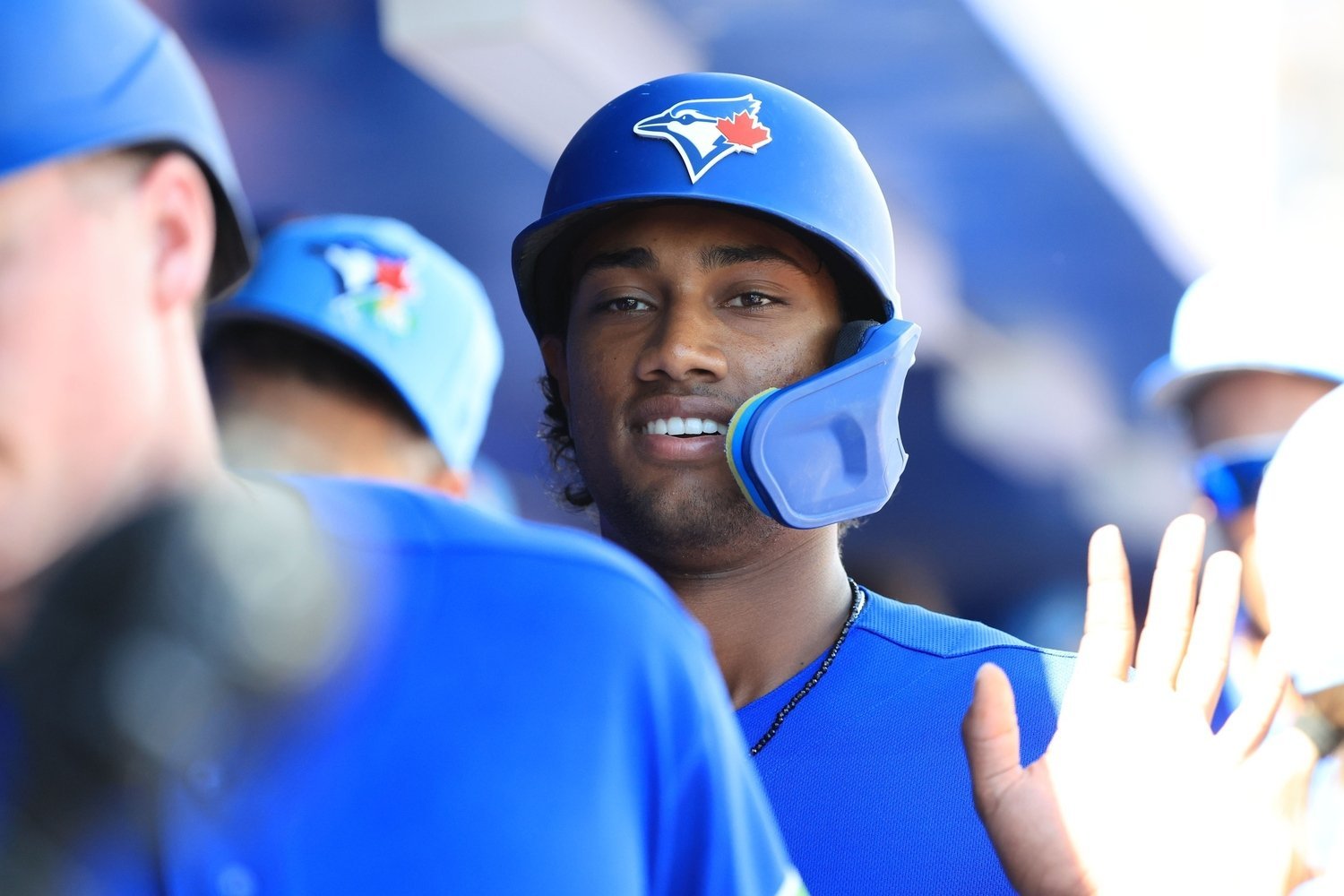 Jays Centre is counting down the top 20 prospects in the Toronto Blue Jays organization. Check out prior entries in the series here: No. 20 to 16 No. 15 to 11 No. 10 No. 9 No. 8 No. 7 No. 6 No. 5 We are entering the home stretch of our countdown of Jays Centre's top 20 prospects. We have already breezed through numbers 20-16, 15-11, 10, 9, 8, 7, 6, 5, and now we have reached inside the top five to No. 4. Starting off this coveted tier of prospects is someone who sat at the top in prior iterations of this list, but now has fallen just a little: Arjun Nimmala, a prospect who oozes talent and is ready to climb back up to the top of this list with a hot start to 2026. Let's take a look at what he has done, what he does well, where he needs to improve, and what lies next for this budding star. No. 4: SS Arjun Nimmala (High-A Vancouver) PA H 2B 3B HR OPS wRC+ K% BB% 543 106 29 3 13 .694 92 21.4% 10.1% Out of Strawberry Crest High School in Dover, Florida, Nimmala was selected 20th overall in the first round of the 2023 MLB draft by the Toronto Blue Jays. He signed for just $3 million, which was slightly under slot value, but it was more than enough for him to jump into professional baseball and forego playing in college. He managed to get into a few Rookie ball games that same year, collecting five hits across nine games, including a double, triple, and a stolen base. What was extremely impressive during the small sample was his 14 walks, good enough for a walk rate of 35%. It was a sign of his potential talent and gave Blue Jays fans plenty of optimism heading into his first full season the following year. In 2024, the Blue Jays sent Nimmala straight to Single-A Dunedin, where he promptly looked like a stud. In his first three games, he hit a home run, knocked in three, and racked up four hits. For the season, he played in 83 games at the level, slashed .232/.313/.476, and hit 16 home runs. His power was on full display, as he added 17 doubles and six triples to his home run total. In all, he had 39 extra-base hits on the year and was starting to get a ton of national attention in the prospect world. He did, however, show some worrying signs through all of the good; he had a strikeout rate of 31.3% and walked at only an 8.3% clip. His contact rate was also a little low at 69.9%. Then came his 2025 season. Last year was one in which Nimmala saw improvements in some aspects of his game, but regression in others. He played the entire year at High-A Vancouver, where he had 543 plate appearances across 120 games. Health was a bright spot for him, and so was his strikeout rate, which dropped from 31.3% the prior season to 21.4%. Despite the big change in his swing and miss profile, his slash line dipped to .224/.313/.381, and he only had 13 home runs on the season. Nimmala did make up for some of the lack of power with 29 doubles and three triples, but they just don't affect the game as much as the flashy home runs do. He did pick up his impact on the basepaths last year, swiping 17 bags in 20 attempts. His newfound speed adds an extra layer to the multitude of ways he can help his team win games. What To Like Nimmala has loads of power in his bat, and he's shown a tremendous ability to get to it, whether it is in the form of home runs, doubles, or triples. He impacts the game and can do it at an elite level. Last season, his home run total took a step back while at High-A Vancouver, but the 13 home runs he did have were good enough for the 87th percentile in all of the minor leagues. He made up for the drop in home runs by hitting a crazy amount of doubles, 29 (97th percentile). With Vancouver's ballpark being a notoriously pitcher-friendly environment, expect to see some of his home run power return when he moves up a level. However, his home ballpark may not be able to account for all of his dramatic drop in home runs per flyball last year. It could be just a matter of adjusting his swing path to tap back into the juice in his bat, but it is something worth monitoring as he moves through the minor leagues. What To Improve On Despite his budding power, Nimmala has had some issues with his bat-to-ball skills. His contact rate at Single-A Dunedin was 69.9%, and at High-A Vancouver it was 73.6%. He has made some improvements over the years in that arena, but his batting averages are really subpar at best. He's never hit over .232 in a minor league season and needs to make large strides towards improvement in that area in 2026. If he can become a much better contact hitter, his ceiling will drastically jump up into stardom status. Unfortunately, through two seasons so far, he has not shown any signs of becoming better at making more contact, let alone more quality contact. His next stage in development will really hinge on whether or not he can make the improvements needed to become a .250 or .275 hitter, or if his destiny is a profile similar to Lenyn Sosa. What's Next Nimmala is not quite ready for the Double-A level and is back at High-A Vancouver to start the 2026 season. He knows the areas he needs to improve in and what he needs to continue to do well. If he can become a better contact hitter and keep his power going, he has an elite ceiling he can reach. If not, he will be looking more like a platoon bat with power than a star. This season is extremely important to his outlook as a prospect and should give the Blue Jays organization and fans more insight as to what his future trajectory will be. View the full article
 -
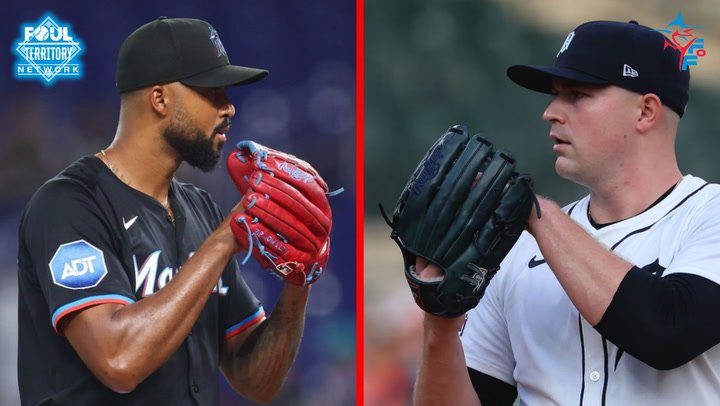 For the second straight season, we're getting a pitching matchup between former unanimous Cy Young Award winners. Fish Unfiltered previews the Marlins-Tigers series finale.View the full article
 -
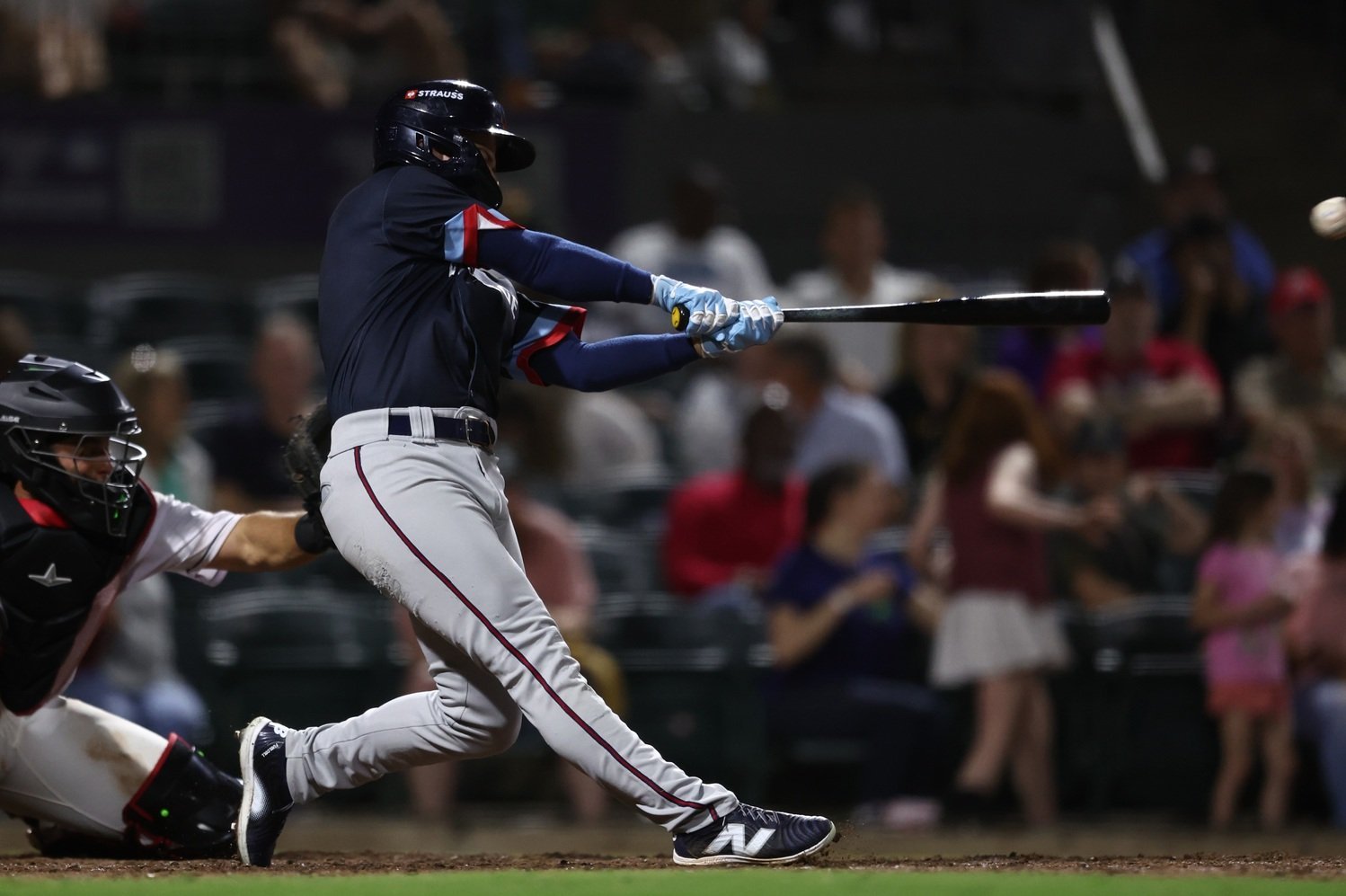 Cedar Rapids got the day started with a noon game. The Wind Surge's late offensive explosion meant that the day in the Twins minor leagues system ended well after 9:00 pm in the central time zone. Long day, but there were some intriguing storylines and performances up and down the proverbial organizational TRANSACTIONS On Friday night, it was announced that RHP Cody Laweryson (right forearm strain) and 3B Royce Lewis (knee sprain) were going on the injured list. On Saturday morning, the team reported the corresponding moves. The Twins called up RHP Andrew Morris and utilityman Ryan Kreidler. The Saints activated catcher David Banuelos from the Development List. LHP Kendry Rojas was activated from the 7-Day IL (hamstring). He will start for the Saints on Sunday. SAINTS SENTINEL St. Paul 0, Toledo 3 Box Score Of the 17 half-innings played in this game, zero runs were scored in 16 of them. The only negative was the bottom of the fifth inning when Zebby Matthews gave up three runs. Blame Ben Malgeri! No, not really. The Tigers 26-year-old right field prospect led off for the Mudhens. In the bottom of the first, he led off with a single. Matthews proceeded to get the next nine batters out. With two outs in the bottom of the third, Malgeri tripled, but Matthews got Max Clark to pop out to end that threat. In the fourth inning, Matthews gave up a leadoff single to Gage Workman, but a force out, a line out, and another force out meant another zero was placed on the board. In the fifth inning, Matthews got a bit bombarded. Teri Cruz led off with a single. Cal Stevenson followed with a groundball single. Cruz advanced to third, He scored on a bloops single to right field by Max Burt. That brought Malgeri to the plate again. This time Matthews got him to strike out. There was a way out of the inning with limited damage. But Max Clark came to the plate. Matthews got him to hit a ground ball to first base. Kyler Fedko fielded it, made a nice throw to second base where Kaelen Culpepper caught it and threw back to first base. Matthews was there, at the base, seemingly in good position, but he didn’t catch the ball. Matthews was charged with the error. Stevenson scored on the play to make it 2-0. After a wild pitch, Clark scored on a Gage Workman single that made it 3-0. In total, Matthews gave three runs (2 earned) on seven hits. In five innings, he had five strikeouts and no walks. Two-thirds of his 78 pitches were strikes. His average fastball came in at 95.2 mph, but he did hit 96.7. The strikeout he recorded to end the bottom of the fifth included three fastballs over 96 mph. He had 11 whiffs, though just one out of 17 swings at his fastball. Jon Brebbia came on in relief. He faced eight batters. He walked two of them and struck out the other six. Dan Altavilla walked one and had one strikeout in a scoreless eighth frame. The Saints offense didn’t help. They managed just two hits and two walks in the game. Emmanuel Rodriguez and Tanner Schobel each had a single. WIND SURGE WISDOM Wichita 12, Arkansas 5 Box Score This started as a very competitive game. In fact, the score was tied at 2-2 through six innings. The Surge scored two runs in the top of the seventh and then broke things open with an eight-run eighth inning. Wichita scored first with a two-run top of the fourth inning. Garrett Spain singled to drive in Hendry Mendez and Billy Amick. Mike Paredes started and worked the first four innings. He gave up one run on three hits. He walked none and had seven strikeouts. The only blemish was a solo homer by Hunter Fitz-Gerald in the bottom of the fourth. Ruddy Gomez came in and worked a scoreless fifth inning. He gave up two singles to start the bottom of the sixth. At that point, it was clear that something happened to his powerful right arm. The catcher came out. The manager came out. When the trainer came out, it didn’t take long before they took Gomez out of the game. We hope for the best. Lefty Aaron Rozek made his first appearance since rejoining the Twins organization and the Wind Surge earlier this week. Rozek walked one but got a couple of ground balls. Unfortunately, the second involved a throwing error that allowed the tying run to score. 2-2 through six innings. With one out in the top of the seventh, Jake Rucker walked and stole second. Maddux Houghton singled on a ground ball to third base. Houghton then stole second base. A wind pitch allowed Rucker to score. With two outs, Ben Ross came through with a single to left to make it 4-2. He has at least one hit in all eight Wind Surge games this season. Rozek got two outs in the bottom of the seventh inning, but he also gave up two singles and hit a batter which loaded the bases. Luis Quinones was summoned from the bullpen, and he needed three pitches to record a strikeout and end the threat. Then came the top of the eighth frame. Garrett Spain led off with a single. Ricardo Olivar doubled him to third base. After a strikeout, Jake Rucker grounded to shortstop. The throw came to the plate and Spain was safe. Houghton singled to drive in Olivar. He stole second. Rucker and Houghton scored on a Kyle DeBarge single which made it 8-2. Ben Ross lined a single to center to make it 9-2. After a pitching change, Hendry Mendez singled to right. After a strikeout, Mendez stole second. Finally, on the seventh pitch to him, Spain added a three-run homer to make it 12-2. Quinones came out for the bottom of the eighth. After a walk, he struck out the next two batter. The right-hander was charged with three runs allowed. Darren Bowen came on and gave up a two-run single that scored two of the inherited runners. He then got a strikeout to end the eighth with the Surge leading 12-5. Bowen tossed a 1-2-3 ninth to sh3531q KERNELS CHRONICLE Cedar Rapids 3, Beloit 2 Box Score The Twins used their seventh-round pick in the 2024 draft on right-hander Eli Jones from the University of South Carolina. The assumption was (by many) that he would start the 2025 season with the Mighty Mussels but move up to Cedar Rapids relatively quickly. That’s not what happened. Instead, he made 18 starts and five relief appearances for Fort Myers. He went 2-10 with a 5.13 ERA and a 1.42 WHIP. In 100 innings, he had 40 walks, 10 hit batters, and 84 strikeouts. Still, he advanced to High-A Cedar Rapids to start the 2026 season. He’s thrown in just three games and accumulated 15 innings so far, but he is 0-0 with a 1.20 ERA and a 0.40 WHIP. On Saturday, he tossed five innings and gave up one run on one hit. He walked none and had four strikeouts. He threw 71.4% strikes (44/63). The only run he allowed came in the first inning. Juan Matheus hit a one-out triple and scored on a Cam Cannarella sacrifice fly. The first time through the Kernels lineup, only nine-hitter Jaime Ferrer reached base. He was hit by a pitch. However, the Kernels got on the board in the fourth frame. Eduardo Tait led off with a single. Khadim Diaw followed with a two-run home to give the Kenels the 2-1 lead. Jacob McCombs delivered his third triple of the season on a play that saw two Sky Carp collide in the outfield. Jones was replaced by Yehizon Sanchez in the bottom of the sixth. He gave up an unearned run, but don’t feel too sorry for him. He gave up a one-out single. He made a throwing error trying to pick off the runner, and then the run scored on a wild pitch. That tied the game at 2-2. Sanchez started the seventh inning as well, but he walked the first two batters he faced.Sam Rochard came on and did what any wise pitcher would… he caused the hitter to hit a ground ball to Marek Houston who started a double play. He then got JSerra alum Cody Schrier to fly out to end the inning with the game still tied. Rochard struck out two batters in a perfect bottom of the eighth inning as well. He got to start the ninth inning as well. He got the first out but then gave up an infield single to Juan Matheus who went to second on a balk. Following a walk, Brian Meyer turned to Jacob Woskinski. On his second pitch, Brandon Compton lined a single to center to drive in the winning run for Beloit. Cedar Rapids had just four hits in the game. They also had just one walk compared to 12 strikeouts. Tait was 1-for-3 with a walk. McCombs hit his third triple of the young season, and Diaw recorded his first home run of the year. MIGHTY MATTERS Ft. Myers 4, Jupiter 7 Box Score Joel Garcia made the start for the Mussels. He gave up five runs (4 earned) on four hits and two walks over 3 1/3 innings. He had five strikeouts. He gave up three runs in the second inning, and two more before exiting in the fourth. That’s when Merit Jones came into the game. The Twins thought that Jones was ‘the quality of being particularly good or worthy’ of being drafted not once, but twice. The Twins selected him in the 20th round of the 2024 draft. Instead of signing, he returned to the University of Utah. A year later, the Twins selected him again, this time in the 14th round after an impressive showing in the MLB Draft League. In this outing, he worked four innings. He gave up two runs (1 earned) on four hits. He walked one and had four strikeouts. Mike McKenna came in to get the final two outs. Acuna was the big reason the Mussels got on the scoreboard in the top of the third inning. He walked and stole second base. With two outs, Irvin Nunez and Dameury Pena walked to load the bases. A fielding error allowed Acuna to score. Through four innings, the Mussels were down 5-1. Acuna started the top of the fifth with a single. Jorel Ortega doubled to drive him in and make it 5-2. Fast-forward to the top of the seventh. The Mussels were losing 7-2. Yilber Herrera led off the inning with his first home run of the season. Acuna followed with a single but was erased on a double play. Irvin Nunez walked and went to second on a Dameury Pena single. Ryan Sprock doubled to drive in the team’s fourth run. The Mussels had nine hits and walked seven times. Acuna had two singles and two walks and a stolen base. Herrera went 2-for-4 with a homer. PLAYERS OF THE DAY Hitter of the Day Garrett Spain (Wichita): 3-for-5, 2 R, HR(2), 5 RBI, K Bryan Acuna (Fort Myers): 2-for-2, 2 BB, 2 R, SB(1) Ben Ross (Wichita): 3-for-5, BB, 2B(4), 2 RBI, 2 SB(4), K Pitcher of the Day Eli Jones (Cedar Rapids): 5 IP, 1 H, 1 R, 0 BB, 4 K, 63 pitches, 45 strikes (71.4%) PROSPECT SUMMARY Check out the Prospect Tracker for much more on our Twins Top 20 prospects after seeing how they did today. #1 - OF Walker Jenkins (St. Paul) - Did Not Play #2 - IF Kaelen Culpepper (St. Paul) - 0-for-4, 2 K (led off, played SS) #3 - OF Emmanuel Rodriguez (St. Paul) - 1-for-3, K (batted fourth, played CF) #4 - C Eduardo Tait (Cedar Rapids) - 1-for-3, BB, R, K (batted second, DHd) #5 - LHP Connor Prielipp (St. Paul) - Did Not Pitch #6 - LHP Dasan Hill (Cedar Rapids) - Did Not Pitch #7 - OF Gabriel Gonzalez (St. Paul) - 0-for-4, K (Batted third, played LF) #8 - LHP Kendry Rojas (St. Paul) - Activated Saturday. Will start Sunday. #9 - SS Marek Houston (Cedar Rapids) - 0-for-4, 2 K (led off, played SS) #10 - RHP Charlee Soto (Cedar Rapids) - Injured List #11 - RHP Riley Quick (Ft. Myers) - Did Not Pitch #12 - RHP Andrew Morris (Minnesota) - Called up to Twins. Did Not Pitch #13 - 3B/CF Brandon Winokur (Cedar Rapids) - 0-for-4, K, SB(4) (batted fourth, played 3B). #14 - 3B/SS Quentin Young (Ft. Myers) - Did Not Play. #15 - RHP Marco Raya (St. Paul) - Did Not Pitch #16 - OF Hendry Mendez (Wichita) - 1-for-4, 2 R, K, SB(1) (batted third, played LF) #17 - 2B/OF Kyle DeBarge (Wichita) - 2-for-5, BB, R, 2 RBI, K, CS(2), E(3) (led off, played 2B) #18 - RHP C.J. Culpepper (Wichita) - Did Not Pitch #19 - C/OF Khadim Diaw (Cedar Rapids) - 1-for-3, HBP, HR(1), 2 RBI, R, RBI (batted third, catcher) #20 - RHP James Ellwanger (Ft. Myers) - Did Not Pitch UPCOMING PROBABLES Sunday: St. Paul @ Toledo (1:05 pm CT) - LHP Kendry Rojas (first start of season) Wichita @ Arkansas (1:35 pm CT) - RHP Ty Langenberg (0-1, 2.25 ERA) Cedar Rapids @ Beloit (1:05 pm CT) - RHP Michael Ross (0-0, 0.00 ERA) Ft. Myers @ Jupiter (11:30 CT) - RHP Kolten Smith (0-0, 0.00 ERA) CURRENT W-L Records Minnesota Twins: 8-7 St. Paul Saints: 5-8 Wichita Wind Surge: 3-5 Cedar Rapids Kernels: 5-3 Fort Myers Mighty Mussels: 5-3 FCL Twins: 0-0 (season begins Monday, May 4) DSL Twins: 0-0 (season begins Monday, June 1) Please feel free to ask questions about the teams, the rosters, and discuss today’s games, or anything else Twins minor-league related! View the full article
 -
Mets Roster Central: A Pen Full of Former Enemies
DiamondCentric posted an article in Grand Central Mets
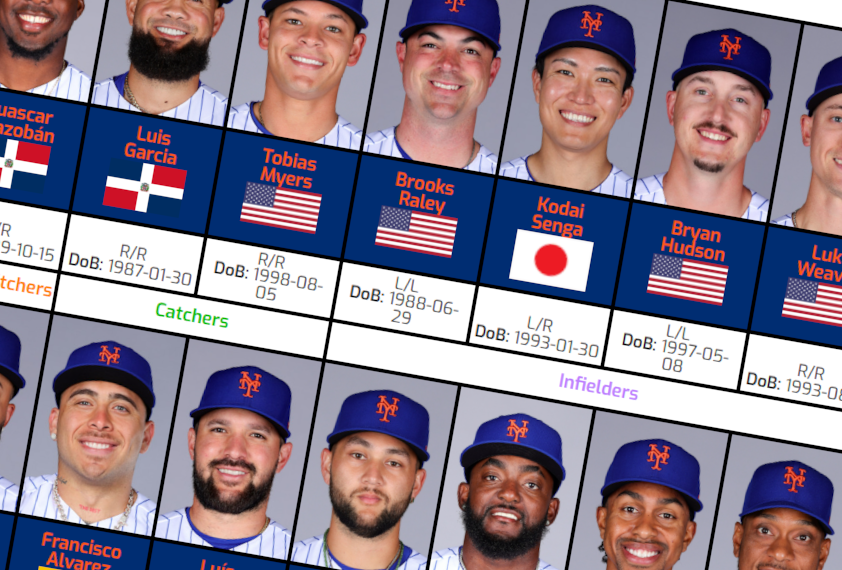 As the Mets' lineup continues to struggle, they address their issues in classic fashion — by futzing around with the bullpen. Oddly enough, they seem to be cornering the market on former Braves bullpen mainstays to add to their collection of Yankee relievers. Transactions, 4/6/2026 COMING Signed away from SEA to Minor-League Contract, Placed on Syracuse Development List Relief Pitchers Luke Jackson R/R DoB: 1991-08-24 High Level: MLB (2025) Luke Jackson was an indifferent piece of the Braves pen back in the teens, but then had an out-of-this world season in 2021. He paid for that by missing 2022 with UCL surgery and has bounced around the league since, with occasional success. That 2021 season helped the Braves to a championship, giving Jackson one more reason to be joyful following the birth of his son a few weeks earlier, leading Luke to celebrate following Game Three inviting his wife Corrine and baby onto the field for a post-game cuddle. Transactions, 4/9/2026 COMING Sent to St. Lucie on Rehab Assignment Relief Pitchers A.J. Minter L/L DoB: 1993-09-02 High Level: MLB (2025) Former Braves relief standby #2 is AJ Minter, who gave the 2025 Mets a few weeks of effective bullpenning before going down with a left lat strain that led to season-ending surgery. Mets Roster Central's mindset says that strains aren't supposed to lead to season-ending surgery, but we are not lat doctors. We are as happy to see the re-emergence of Minter, and while we are as dubious as experience might suggest with regards to how much he has left, we have to look at his rehab assignment as starting the DFA clock on Richard Lovelady, who knows a thing or two about DFAs. Transactions, 4/11/2026 GOING COMING Sent to St. Lucie on Rehab Assignment Added to 40-Player Roster and Promoted from St. Lucie Relief Pitchers Relief Pitchers Richard Lovelady Craig Kimbrel L/L DoB: 1995-07-07 High Level: MLB (2026) R/R DoB: 32291 High Level: MLB (2025) Well, that DFA clock sure wound down quickly. And the Mets squeezed as much juice as the could out of Dickie by using him in mopup duty last night. The bell was tolling for poor Lovelady the whole time. It is hard to argue that Craig Kimbrel is distinctly ready to launch himself on the 2026 season, with only a single inning of A-Level competition since he came up short of the roster in Spring Training, but they don't call him "Dirty Craig" for nothing, and he hasn't made nine All-Star Teams for nothing. He's a weirdo at the end of his career, but he finds a way to get it done. Dirty Craig will be rocking his standard 46, which has been on his back for most of his 440 career saves. It isn't expected that he will take a lot of ninth-inning leads to protect away from Devin Williams, but he is currently fifth on the all-time save list, 38 behind Lee Smith and an active Kenley Jansen. Who knows if he will get a chance to make a further run piling up saves, but if doesn't come to blows with his father-in-law under the stands at Citi, a Hall-of-Fame future is all but guaranteed. Your Mets Coaching Staff Manager Bench Coach Pitching Coach Hitting Coordinator Third Base Coach First Base Coach Bullpen Coach Ass't Pitching Coach Carlos Mendoza Kai Correa Justin Willard Jeff Albert Tim Leiper Gilbert Gomez José Rosado Dan McKinney DoB: 1979-11-27 DoB: 1989-07-14 DoB: 1990-09-09 DoB: 1992-08-16 DoB: 1996-07-19 DoB: 1992-03-08 DoB: 1974-11-09 DoB: 1989-06-06 Hitting Coach Strategy Coach Catching Coach Coaching Assistant Bat'g Practice Pitcher Equipment Manager Bullpen Catchers Bullpen Catchers Troy Snitker Danny Barnes J.P. Arencibia Rafael Fernandez Kevin Mahoney Kevin Kierst Eric Langill Dave Racaniello DoB: 1988-12-05 DoB: 1989-10021 DoB: 1986-01-05 DoB: 1988-08-03 DoB: 1987-05-11 DoB: 1964-07-09 DoB: 1979-04-09 DoB: 1978-06-03 Your Mets Training Staff Director of Player Health Head Athletic Trainer Assistant Athletic Trainer Reconditioning Coordinator Reconditioning Therapist Head Performance Coach Assistant Performance Coach Performance Coordinator Brian Chicklo Joseph Golia Bryan Baca Sean Bardanett Josh Bickel Dustin Clarke Tanner Miracle Jeremy Chiang DoB: 1972-07-17 DoB: 1978-??-?? DoB: Circa 1980 DoB: 1988-06-23 DoB: 1996-??-?? DoB: 1987-??-?? DoB: 1991-??-?? DoB: ????-??-?? Your 2026 New York Mets Starting Pitchers Clay Holmes Nolan McLean Freddy Peralta David Peterson Kodai Senga R/R DoB: 1993-03-27 R/R DoB: 2001-07-24 R/R DoB: 2996-06-04 L/L DoB: 1995-09-03 L/R DoB: 1993-01-30 Relief Pitchers Huascar Brazobán Luis Garcia Craig Kimbrel Sean Manaea Tobias Myers Brooks Raley Luke Weaver R/R DoB: 1989-10-15 R/R DoB: 1987-01-30 R/R DoB: 32291 R/L DoB: 1992-02-01 R/R DoB: 1998-08-05 L/L DoB: 1988-06-29 R/R DoB: 1993-08-21 Relief Pitchers Catchers Infielders Devin Williams Francisco Alvarez Luís Torrens Bo Bichette Francisco Lindor Ronny Mauricio Jorge Polanco R/R DoB: 1994-09-21 R/R DoB: 2001-11-01 R/R DoB: 1996-05-02 R/R DoB: 1998-03-05 S/R DoB: 1993-11-14 S/R DoB: 2001-04-04 S/R DoB: 1999-11-13 Infielders Outfielders Marcus Semien Mark Vientos Brett Baty Carson Benge Luis Robert, Jr. Tyrone Taylor Jared Young R/R DoB: 1990-09-17 R/R DoB: 1993-12-11 L/R DoB: 1999-11-13 L/R DoB: 2003-01-20 R/R DoB: 1997-08-03 R/R DoB: 34356 L/R DoB: 1995-07-09 Also on 40-Player Roster Starting Pitchers Relief Pitchers Tylor Megill Christian Scott Jonah Tong Alex Carrillo Reed Garrett Joey Gerber Justin Hagenman R/R DoB: 1995-07-28 R/R DoB: 1999-06-15 R/R DoB: 2003-06-19 R/R DoB: 1997-06-06 R/R DoB: 1993-01-02 R/R DoB: 1997-05-03 R/R DoB: 1996-10-07 On 60-Day Injured List with torn right UCL. With Syracuse With Syracuse With Syracuse On 60-Day Injured List — right UCL surgery and nerve relocation surgery. With Syracuse On 60 Day Injured List with fractured rib. Relief Pitchers Catchers Outfielders A.J. Minter Dedniel Núñez Jonathan Pintaro Dylan Ross Austin Warren Hayden Senger MJ Melendez L/L DoB: 1993-09-02 R/R DoB: 1996-06-05 R/R DoB: 1997-11-07 R/R DoB: 2000-09-01 R/R DoB: 1996-02-05 R/R DoB: 1997-04-03 L/R DoB: 1993-11-29 With St. Lucie on Rehab Assignment On 60-Day Injured List — right UCL surgery. With Syracuse With Syracuse, on Seven-Day IL With Syracuse With Syracuse With Syracuse View the full article
 -
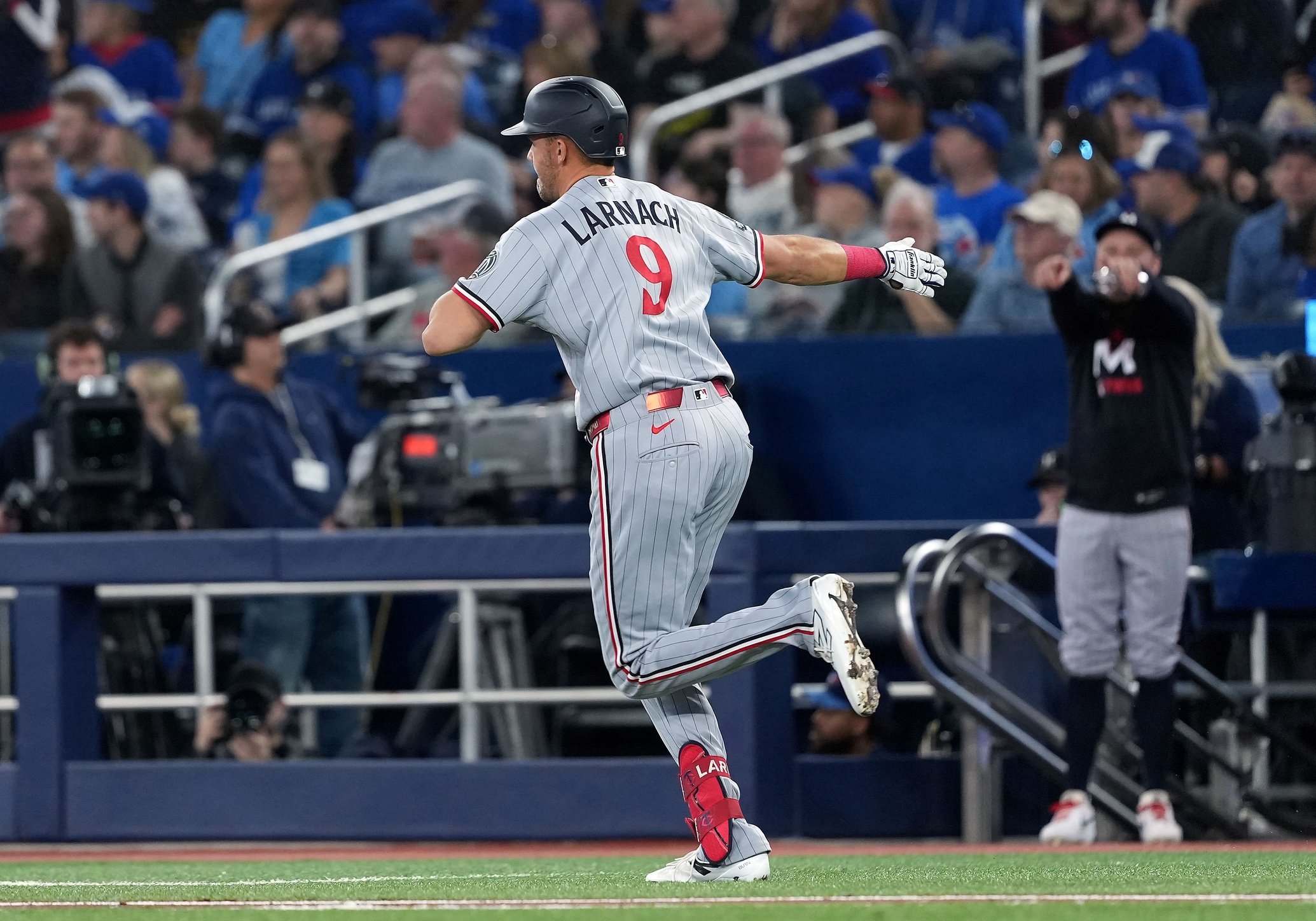 Box Score SP: Joe Ryan - 7.0 IP, 2 H, 2 ER, 1 BB, 5 K (91 pitches, 65 strikes (71%) Home Runs: Brooks Lee (2), Trevor Larnach (1) Top 3 WPA (via FanGraphs): Larnach (0.17), Josh Bell (0.12), Lee (0.11) Win Probability Chart (via BaseballSavant) Joe Ryan looked to lead the Twins back into their winning ways against the suddenly red-hot bats of the Toronto Blue Jays. Standing in their way was yet another lefty, this time Eric Lauer who has started and opened in his two appearances thus far in 2026. With Royce Lewis again on the shelf, Ryan Kreidler made his Minnesota debut at third base, and Andrew Morris and his passport also made the trip up to Canada to replace the injured Cody Laweryson. Ryan Rocked in the First, but Keeps on Slinging The Blue Jays started Saturday's game the way they finished Friday's, by ripping the cover off of the ball. Ryan walked the leadoff man George Springer, then got ahead of Daulton Varsho 1-2 before Varsho took a high fastball yard for an early 2-0 Blue Jay lead. Visions of Joe's Kansas City start began to emerge, but the ace of the Twins staff dug in and took charge from there. Ryan only allowed two more baserunners through six innings on 79 total pitches. Lauer Starts Strong, but Gives Up the Ghost in the Third Lauer cruised through the Twins lineup through the first two innings, surrendering only a two-out walk in the second. His day began to unravel when the much-maligned but recently encouraging Brooks Lee stepped to the plate to lead off the top of the third. Lee pulled an 0-1 center-cut fastball to the seats in left for his second home run in as many days, and to put the Twins on the board. After Kreidler grounded out in his first Twin at-bat, Byron Buxton kept the rally going with a swinging bunt, and he advanced to second on a single from Austin Martin. Luke Keaschall worked a walk on a full count, and Ryan Jeffers didn't have to work to walk when four straight pitches missed the zone to tie the game at 2-2. Josh Bell found himself right where the Twins want him with the bases loaded and a chance to punish left-handed pitching. While Bell didn't destroy the ball, the results sure punished Lauer and the Blue Jays as Varsho couldn't reach is high fly ball to mid-center and then he wished that he hadn't gotten as close as he did! With the Twins now in the lead at 4-2, Trevor Larnach looked to reward his skipper for putting him in the lineup against a lefty. Trevor likes 90 mph center cut fastballs no matter who throws them. Consider us all rewarded. Finishing it Off Kreidler wasn't able to collect his first hit as a Twin, but he sure got his first web gem. As Ryan was attempting to complete the seventh, Nathan Lukes crushed a ball into the hole at short. Brand new third baseman Kreidler said, "I play here now." After Ryan collected his congratulatory hugs in the dugout after dominating the Blue Jays through the seventh, the Twins turned to a bullpen that more than struggled on Friday night. Kody Funderburk got the first call out of the bullpen, and he allowed an Ernie Clement single and an Andres Gimenez walk to put runners at first and second with nobody out. Three batters and some teeth gnashing by Twins fans later, Toronto returned to their dugout without scoring a run and the game remained squarely in Minnesota's hands at 7-2. Cole Sands came in for the ninth and slammed the door shut. Unfortunately, Jesus Sanchez didn't get the memo, as he took Sands deep for a two-run blast to inch the home team closer at 7-4. That was as close as they would come, as Sands took down the next three Blue Jays, and the visiting squad leveled the series at one game apiece! What’s Next? The Twins look to take their first road series of the season when they tackle Toronto in a Sunday matinee. Twins righty Taj Bradley (2-0, 1.08 ERA) looks to continue his blazing start to the season. The Blue Jays counter with veteran Hall of Famer-in waiting, righty Max Scherzer (1-1, 3.38 ERA). First pitch is scheduled for 12:37pm CDT. Postgame Interviews Bullpen Usage Spreadsheet TUE WED THU FRI SAT TOT Banda 0 21 0 36 0 57 Sands 12 9 0 0 22 43 Rogers 12 0 0 30 0 42 Funderburk 0 20 0 0 17 37 Topa 14 10 0 12 0 36 Acton 0 0 35 0 0 35 Orze 19 0 14 0 0 33 Morris 0 0 0 0 0 0 View the full article
 -
Jays' Springer Fractures Toe, Set To Join Crowded Injured List
DiamondCentric posted an article in Jays Centre
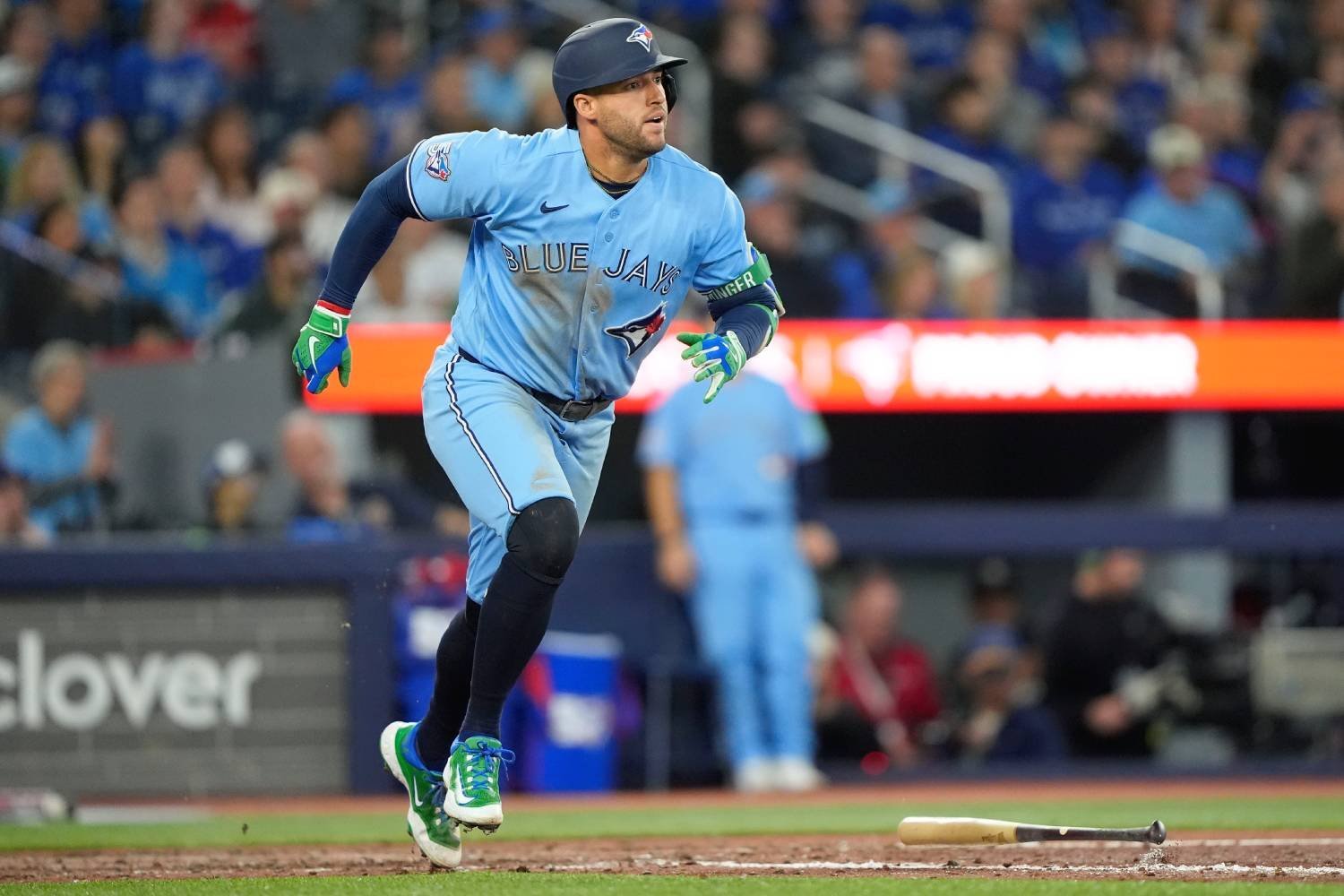 George Springer is headed to the injured list. The Toronto Blue Jays' designated hitter sustained a broken left big toe after fouling a ball off the foot in the third inning of Saturday's game vs. the Toronto Blue Jays. There are likely to be more tests done before determining the severity of the injury and how long Springer might be out. Typically, those types of injuries sideline players four to six weeks. Myles Straw replaced Springer in the lineup. Springer, the Jays' leadoff hitter, is the latest injury to hit the defending AL champions. Six players are on either the 10- or 15-day injured list with another four on the 60-day IL. Six of those 10 are pitchers. With right fielder Addison Barger still about a week away from coming off the 10-day IL with his sprained left ankle, the Jays will need to make a corresponding move before Sunday's series finale. Outfielder Jonatan Clase is the only position player in the minors who is on the 40-man roster. View the full article
 -
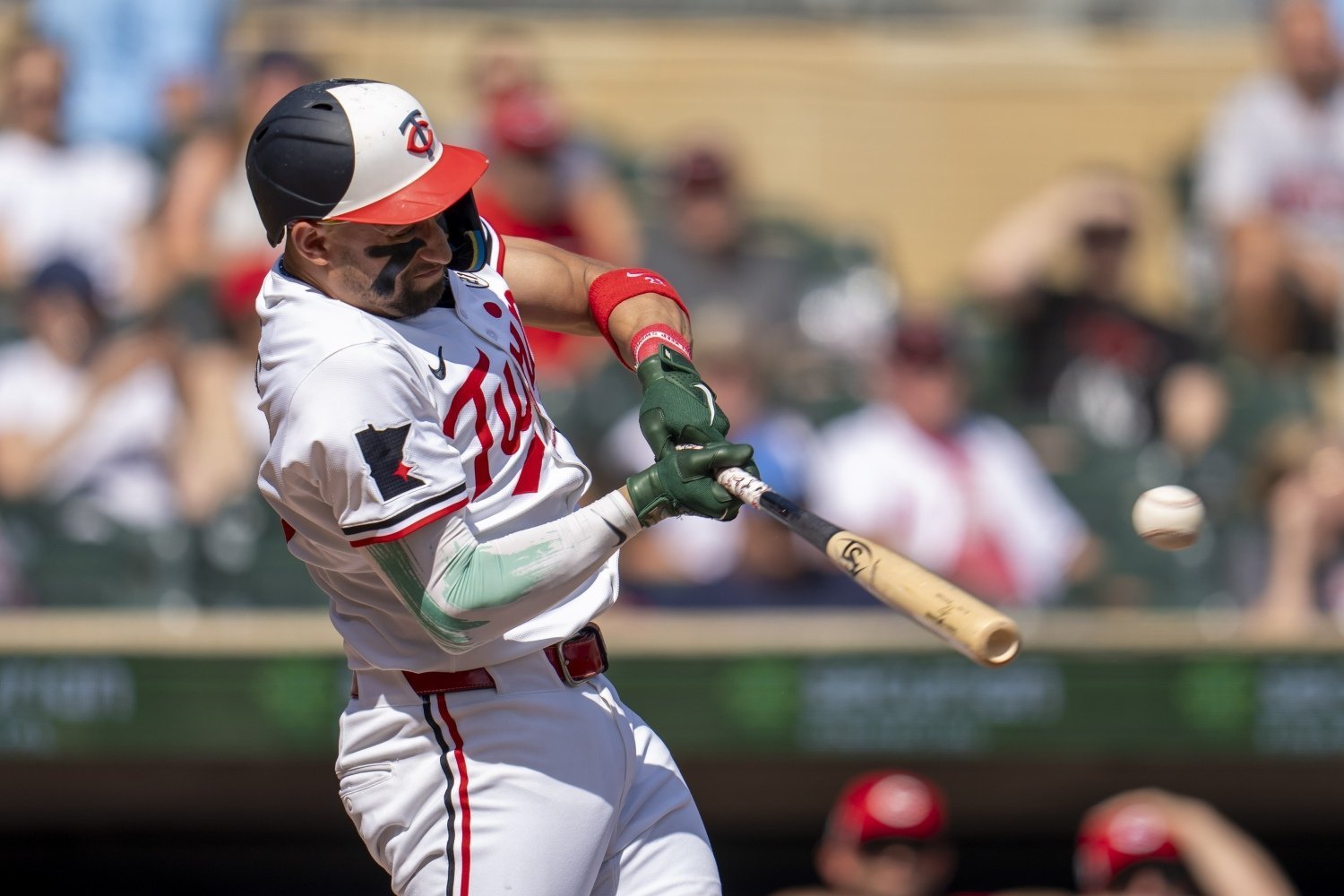 There are growing pains that come with any new technology, and Major League Baseball’s Automated Ball Strike challenge system is no exception. On Thursday, the Minnesota Twins found themselves in the middle of one of the most talked-about moments yet in the early days of ABS, a call so close that it is now fueling debate across the sport about what the strike zone should actually be. In the bottom of the second inning, Royce Lewis stepped to the plate against Jack Flaherty with a runner on first base. The count moved to 3-1, and Flaherty delivered an 91.3 mph fastball that was ruled a ball by the home plate umpire. Lewis began his routine jog to first base, shedding his gear as if the walk was already secured. Detroit catcher Jake Rogers tapped his helmet, signaling for a review. Within seconds, the Hawk Eye system took over and delivered its verdict. The call was overturned. Strike two. Not just a strike, but the closest confirmed strike yet under the system, according to Codify Baseball. Hawk Eye showed that the tiniest sliver of the baseball clipped the strike zone, enough to flip the call and send Lewis back into the box. Instead of standing on first base, Lewis was suddenly in a 3-2 count, and Flaherty finished the at-bat with another fastball that Lewis swung through for strike three. It is exactly the type of moment ABS was designed to handle, but it is also the type of moment that exposes how different a rulebook strike zone can feel compared to the one players and fans have grown used to seeing. The debate picked up quickly. MLB analyst Ryan M. Spaeder voiced frustration with how the system currently interprets the zone. He suggested a 50-50 rule, where at least half the baseball must cross into the strike zone to be called a strike. His argument centered on the idea that the current system effectively expands the zone beyond its traditional 17-inch width. When accounting for the baseball's full diameter, Spaeder argued, the zone can be closer to 22.8 inches wide. That interpretation has raised eyebrows, especially for hitters who now must account for pitches that barely graze the edge rather than clearly enter the zone. From a hitter’s perspective, the difference between a ball and a strike has never been thinner, literally. Still, not everyone sees a problem. There is a strong contingent across the league that believes this is exactly what ABS is meant to accomplish. For pitchers, a pitch that clips the zone is a perfect pitch, and the system rewards that precision without bias or inconsistency. In a sport that has long struggled with inconsistent strike zones from umpire to umpire, ABS offers a level of consistency previously unattainable. Royals reliever Matt Strahm even pushed back on Spaeder’s idea publicly, noting that if baseball is going to start redefining what counts as a strike based on partial entry, then the same logic would need to apply elsewhere. He suggests that the foul line/pole shouldn’t be fair then. For the Twins, the moment was more frustrating than philosophical. What looked like a routine walk turned into a strikeout, and a potential scoring opportunity disappeared just as quickly as it appeared. It is the kind of swing that can change an inning, or even a game, and it underscores how impactful the challenge system can be in high-leverage spots. At the same time, it is hard to argue that the system got the call wrong. By definition, it got it exactly right. That is where the tension lies as baseball continues to adapt. The ABS system is doing what it was designed to do, but it is also forcing players, analysts, and fans to reconsider what they expect the strike zone to look like. The human element has not disappeared, but it is now being checked by a level of precision that leaves little room for interpretation. Moments like this one involving Lewis are likely to keep popping up as the season unfolds. Each will add another layer to the conversation about fairness and consistency. For now, the early returns suggest that while there may be flaws to iron out, the overall reception to ABS has been positive. Players are adjusting, fans are learning, and the league is gathering valuable feedback in real time. The strike zone may not look the way it used to, but it has never been more exact. View the full article
 -
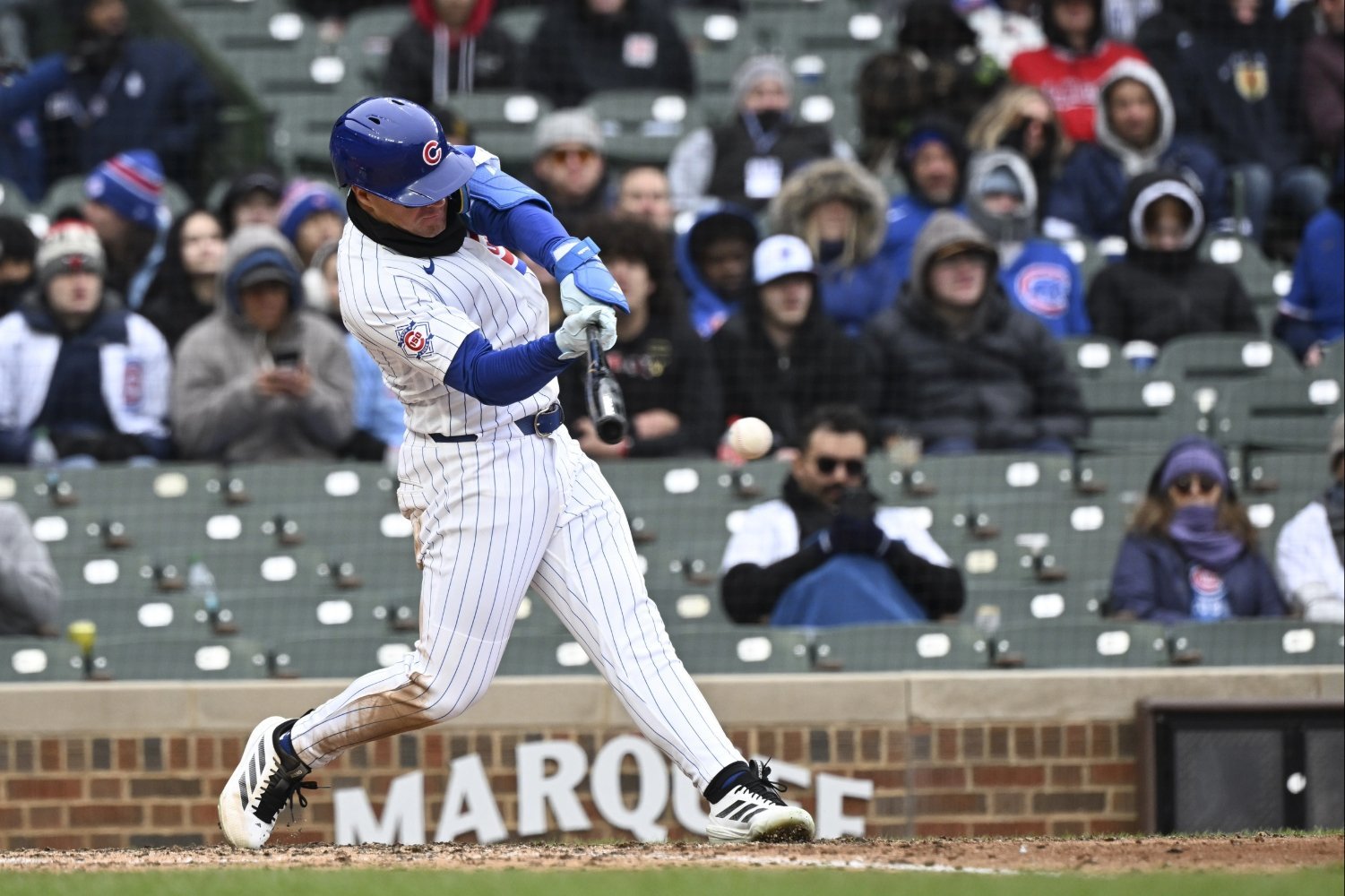 Earlier this week, our Matt Trueblood took a look at how a change in stance has allowed Nico Hoerner to tap into more practical power. However, Hoerner is not the only Chicago Cub in 2026 who has bucked conventional trends yet produced much better results based on a stance change. Enter Matt Shaw. The 2025 version of Matt Shaw was a below-average hitter, as a quick look at his Savant page would tell you. Going into the offseason, he had significant work to do to remain in the Cubs' plans in 2026 and beyond. A third baseman with third-percentile exit velocity and 16th-percentile bat speed is no one’s ideal corner infielder. When the Cubs signed Alex Bregman, Shaw was ticketed for a utility role. To say he has embraced that role would be an understatement, but not necessarily in the way you might expect. High offensive expectations generally come with playing the hot corner, regardless of size (see Bregman, Alex). Shaw spent last year trying to fill those expectations. He pulled the ball at a 40.9% clip, including 21.8% of the time in the air. Those are quality numbers, unless your bat speed is below average, which Shaw’s was at just 69.6 mph. At that level, pulling the ball in the air is going to lead to some very low xBA and xSLG figures. Shaw’s offseason plan could have consisted of a lot of work on his bat speed, and many players would have taken that path as bat speed and EV numbers have become highly valued in front offices. Shaw, however, chose an alternative route. In fact, he chose the opposite route. Instead of trying to force his way into the Cubs' plans by swinging faster, the former top prospect has made some slight tweaks and leaned into what defined his profile as a first-round draft pick: his hit tool. As a prospect, Shaw was known for his knack for finding barrels while limiting strikeouts, a very valuable combination. In 2024, Baseball America said as much: “His quick hands, strong forearms, and exceptional barrel accuracy allow him to consistently drive balls hard to all fields.” Yet that wasn't the Matt Shaw the Cubs got in 2025. With his pull rate of nearly 41% and a 21.5% strikeout rate that was considerably higher than in the minor leagues and in college, he looked like a different player altogether. This could very well be due to the difficulty jump to the major leagues, but a 63rd-percentile whiff rate hints otherwise. It could also be due to a change in approach at the big-league level, namely trying to pull the ball in the air and be a slugging corner infielder. The evidence from the early returns on the 2026 season point to the latter. Shaw has moved back in the box more than three inches; only a dozen players are deeper in the box in 2026 than him. That depth has in turn moved his intercept point of the ball back nearly five inches, from 1.9 inches in front of the plate to -2.7 inches in front of the plate. Instead of spending the offseason swinging faster and catching the ball out front, he is letting the ball travel deeper and trusting his barrel accuracy to produce higher EVs. These changes have completely transformed his profile from last year. His pull% has plummeted to a sub-30% mark and he is back to spraying the ball all over the field. In fact, his intercept point looks eerily similar to Luis Arraez, as does his batted ball profile, but with 5 mph more bat speed than Arraez. If that sounds like an unfortunate comparison, think of it like this: Shaw is performing like three-time batting champion Luis Arraez, but with more pop, 90th-percentile sprint speed, and far better defense. That sure sounds like the prospect the Cubs expected to get, and this development should have them very excited for the future. View the full article
 -
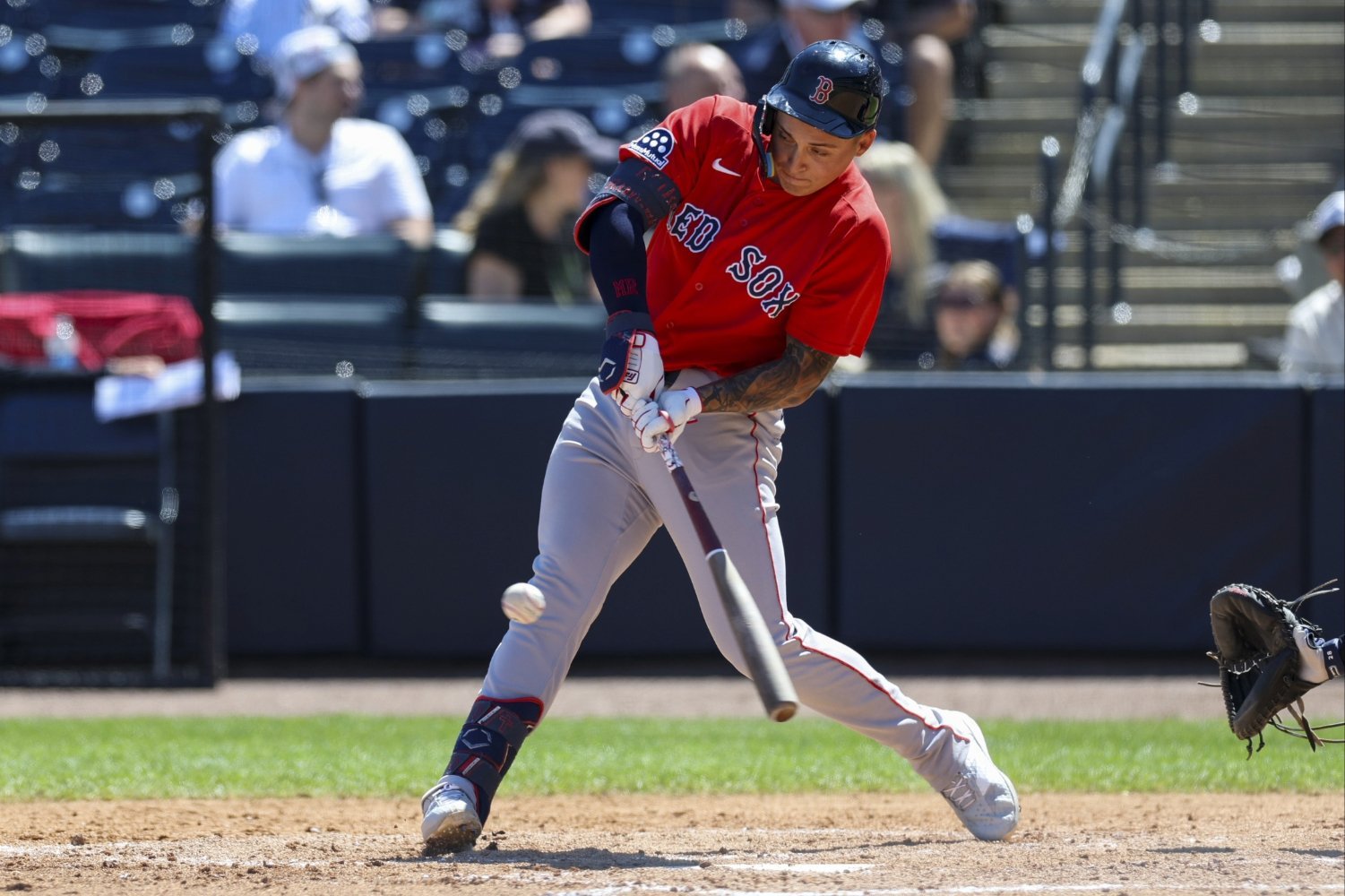 Worcester, MA — Mikey Romero is no stranger to overcoming adversity. Selected in the first round of the 2022 MLB Draft, his career immediately hit a rough patch when he got hurt heading into spring training of 2023. What was originally seen as back stiffness worsened until it finally became a stress fracture that limited him to just 34 games. Since that moment, Romero has continued to overcome one challenge after another. After missing nearly two months in 2024, he hit .271/.312/.509 in 78 games, putting himself back into conversations pertaining to the Red Sox's top prospects. Then, 2025 introduced a new challenge for Romero: a new position. But despite the learning curve, Romero embraced the change as he learned both second base and third base. And despite learning two new positions, he continued to hit, being one of the top offensive players in the organization. In 111 games, the infielder slashed .245/.300/.452 with 33 doubles, 17 home runs and 76 RBIs. “Honestly, I think third and second [base] are easier. Third base is such a reactionary position that if the balls hit to you, you’re using one hand for the majority of the time. And that’s where [third base], I spent most of the time so I got really comfortable. And then at spring training I was at second base which I think was good for my development,” Romero explained when asked about his change in positions. While it isn’t easy to learn the nuances of every spot on the infield, the 22-year-old did have two excellent teachers around him during the spring. “There were a lot of things that AC [Alex Cora] helped me with. Turning the double play, fielding the ground ball then turning it. So a lot of little things I picked up on." Overall, Romero has used that experience to get himself ready for 2026 and a hopeful promotion to Boston. And while he’s planning to play second base and third base primarily, he’s willing to do whatever it takes to get the call. “Whatever the team needs me to do. Outfield, DH, first base, I don’t really care. I just want to be helping the team however I can,” Romero answered when asked about where he prefers to play. The infielder has shown a team first approach throughout his career, and it continues to be a big part of his profile as he knocks on the door of the major leagues. Beyond his glove work, Romero remains an excellent hitting prospect. His exit velocities have been impressive and during the Spring Breakout game, he had two of the hardest hit balls across the league, though both resulted in outs. That hard hitting has carried over to the regular season, where in 11 games with Triple-A Worcester, he’s hitting .298/.340/.468 with five doubles, one home run and 11 RBIs. And throughout it all, the infielder has put up remarkable exit velocities. “It’s a culmination of a lot of things. Obviously, our bat speed program and then I think it’s the culmination of the work I put in [during] the offseason. I don’t want to be cocky but 109 [miles per hour exit velocity], I feel like I’ve done it before. My hardest [in 2025] was 115 [miles per hour]. So, 109 is cool but it’s still an out,” Romero explained while talking about his Spring Breakout performance. This year, his average exit velocity sitting in the 99th percentile for Triple-A players at 95.8 mph. His max exit velocity is also in the 99th percentile at 113.8 mph. It isn’t the quite the peak he reached in 2025, but to put up those exit velocities while playing in the frigid temperatures of Massachusetts and Minnesota in March and April, you can’t help but be impressed. But even when his hard-hit baseballs don't land for hits, he knows how to laugh it off. “The [Orioles] first baseman Ike Irish, I grew up playing with [him] and when he got to third base [later in the Spring Breakout game], I was talking to him. I was like, ‘Bro, what are you doing catching those balls? You have no business catching those.' It was also his first game ever playing first. It’s baseball, sometimes you hit it hard right at people." With his stellar play at the plate and his defensive versatility on display in Worcester, fans have already thought of the idea of a call-up for Romero. It isn’t out of the question either, as the Red Sox will need to make a decision about the young infielder by the end of the season; this upcoming offseason, he will be Rule 5 Draft eligible for the first time. If his play continues at this pace, he’ll need to be protected. View the full article
 -
Former Closer Craig Kimbrel Promoted To Mets' Bullpen
DiamondCentric posted an article in Grand Central Mets
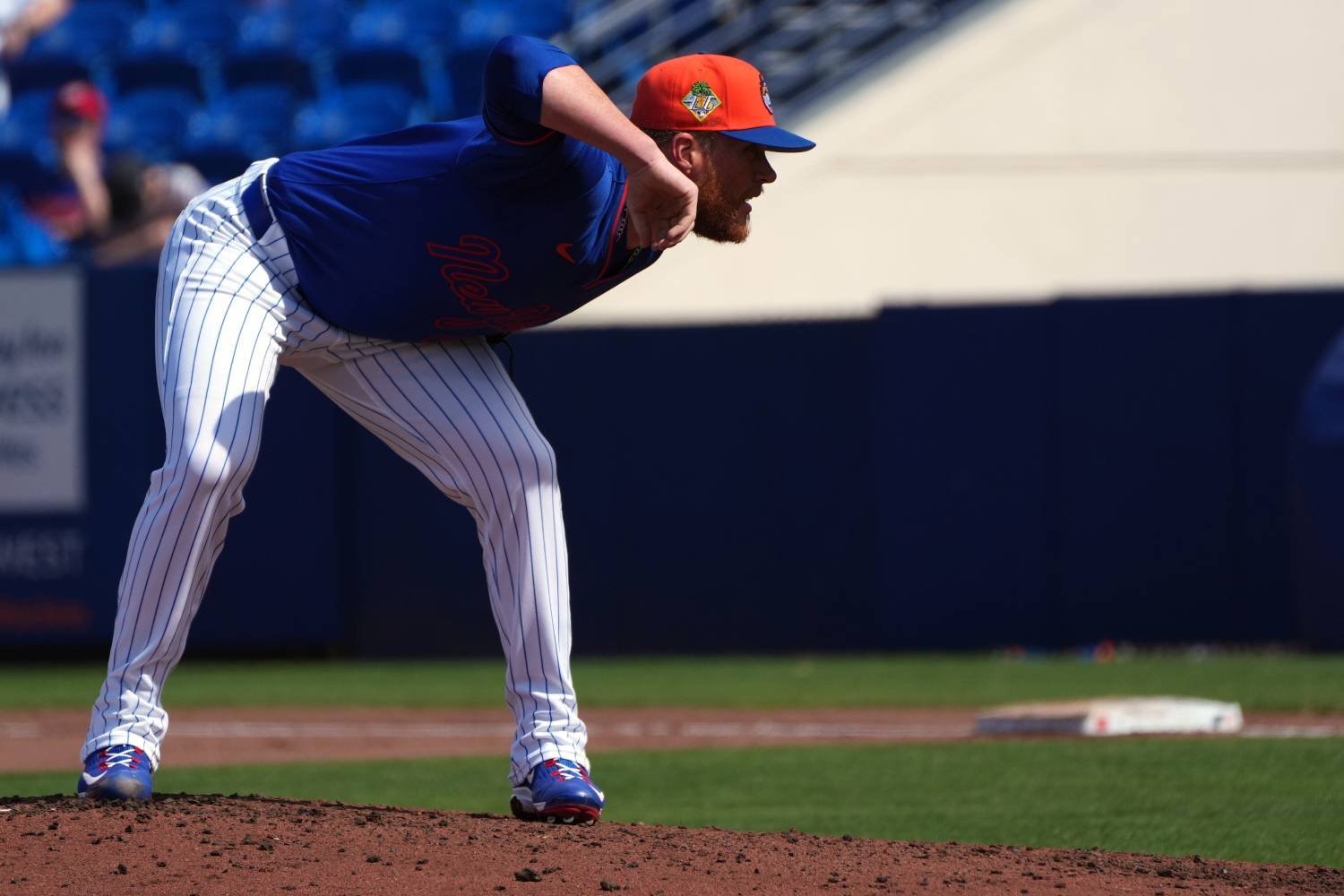 The name draws a lot of anticipation, but can right-handed reliever Craig Kimbrel turn around the perception of the later stages of his career? The New York Mets are about to find out. The 37-year-old Kimbrel was called up Saturday, with left-handed reliever Richard Lovelady being designated for assignment. Kimbrel, who signed a minor-league contract in late January, will make $2.5 million this season with his promotion to the 26-man roster. The Mets' bullpen is off to a terrific start with a 2.85 ERA entering Saturday's game against the A's. Kimbrel, a nine-time All-Star and two-time Reliever of the Year, had a shot to make the Mets out of spring training, but his velocity and control weren't where they needed to be, so he stayed in Port St. Lucie to work on those aspects. He pitched Tuesday in his lone appearance for the Low-A St. Lucie Mets and hit 94.2 mph with his fastball, just above where it was in spring training. Once a feared closer, Kimbrel ranks fifth in MLB history with 440 saves. But he has had trouble keeping a job, playing for seven teams over the past five seasons. The Mets will make that eight in six seasons. He appeared in 14 games in 2025, 13 with the Houston Astros and one with Atlanta. In 12 innings, he had a 4.22 FIP (2.25 ERA) with seven walks and 17 strikeouts. He also had a walloping 1.417 WHIP. Lovelady was DFA'd for the seventh time since the start of the 2025 season, including five times by the Mets. This is the third time this calendar year he has been DFA'd, twice by the Mets. Lovelady appeared in six games this year for the Mets, with a 4.92 FIP (3.68 ERA) in 7⅓ innings. View the full article
 -
The Twins Desperately Need Kaelen Culpepper in the Lineup
DiamondCentric posted an article in Twins Daily
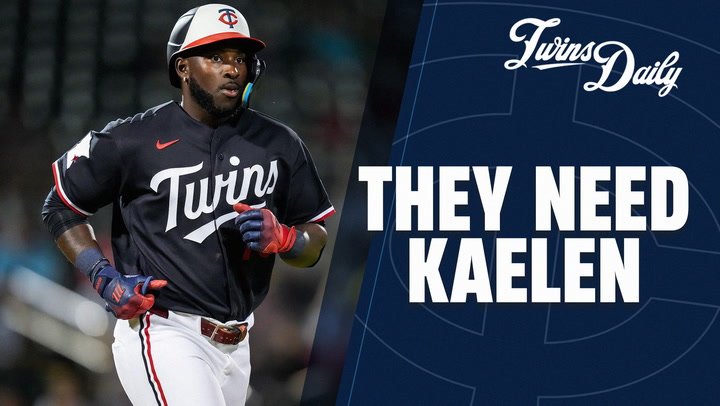 It might be time for Kaelen Culpepper, as the young shortstop continues to show he’s ready for the next step. With his all-around production and steady play, the Minnesota Twins could have a real spark waiting in the minors. View the full article
 -
 Blue Jays Affiliate Overview (April 9-April 10) Triple-A Buffalo Bisons Series vs Syracuse Mets (New York Mets): 3-1 Season Record: 6-7 Double-A New Hampshire Fisher Cats Series vs. Portland Sea Dogs (Boston Red Sox): 2-2 Season Record: 3-3 High-A Vancouver Canadians Series vs. Eugene Emeralds (San Francisco Giants): 1-3 Season Record: 1-6 Single-A Dunedin Blue Jays Series vs. St. Lucie Mets (New York Mets): 2-1 Season Record: 3-3 Triple-A Buffalo Bisons Season Record: 6-7 Series Opponent: Syracuse Mets (New York Mets) April 9: Thursday's Buffalo Bisons game was one that is the definition of embarrassing. Five errors by Buffalo led to three unearned runs and ultimately a loss that should have been a win. Three batters after an RBI double by Ryan Clifford in the fourth inning, a throwing error by Josh Kasevich allowed the third run of the game to score. The very next batter, Hayden Senger, hit a ball to Ryan McCarty at second base, who misplayed it, leading to another run crossing the plate. The errors weren't just one-sided, as Syracuse helped Buffalo mount a comeback in the sixth. Down 4-0, RJ Schreck started the rally with an RBI single, scoring Yohendrick Pinango. Then a single to right field by McCarty scored Eloy Jiménez, and Cristian Pache threw the ball away, allowing Schreck to score on the play as well. The very next batter, Josh Rivera, hit a ball to the Mets’ shortstop Jackson Cluff, who also had trouble with the throw, committing yet another error that let McCarty score to tie the game up at four. In the seventh, Buffalo was back to playing like the Bad News Bears, as Hayden Juenger threw the ball away on a pick off attempt, moving Pace from second to third. He would then score when Cluff hit a sacrifice fly that would have ended the inning. The run was ultimately the game winner, with the Bisons falling 5-4. Jiménez remains one of the more consistent players for Buffalo. With a walk in the game, he has now been on base in seven of the nine games he has played in. On the mound, the only real standout performance was by Devereaux Harrison. He went two innings in what amounted to a bullpen game, didn't allow a hit or walk, and struck out two. April 10: Buffalo rode a power surge from the bottom of the batting order to their sixth win of the season. Riley Tirotta got a hold of an 84 mph cutter down in the zone and launched his first home run of the season. The big play of the game came off the bat of Josh Rivera in the bottom of the third inning. Following a single from RJ Schreck and walks by Josh Kasevich and Triotta, Rivera unloaded on a 79 mph hanging slider down the middle, sending it over the centerfield fence for a grand slam. For Rivera, the home run came just six days after his first of the season. Unfortunately for the Bisons, he had gone 0-9 in the games in between his home runs. The seven-run lead Buffalo had at the end of the third inning was more than enough for the team, as Chad Dallas was again masterful on the mound. He pitched four innings, giving up two hits and two walks, but no runs at all. He would strike out two, while again limiting hard contact by focusing on more of his offspeed pitches. Brendon Little pitched in relief of Dallas, and he walked a batter before getting a strikeout and then inducing a groundball for a double play. The game went into over a 30-minute rain delay before it was called, and the Bisons won 7-1, as it was an official game at that point. Double-A New Hampshire Fisher Cats Season Record: 3-3 Series vs. Portland Sea Dogs (Boston Red Sox) April 9: New Hampshire was up against a tough challenge in a big lefty from the Boston Red Sox organization, Eduardo Rivera. Rivera went four innings pitched and only surrendered three hits and one run, as he struck out seven batters. New Hampshire surrendered runs in the first on an RBI single and a home run in the fourth inning by the Sea Dogs’ Drew Ehrhard. In the sixth inning, Cutter Coffey put the Fisher Cats within one run with an RBI triple after Nick Goodwin drove in a run in the fifth. New Hampshire tied it with a Jackson Hornung RBI single to center field, but the pitching couldn't silence the Sea Dogs. Ahbram Liendo smacked a walk-off single in the bottom of the ninth as New Hampshire lost this one 4-3. Pitching note: Javen Coleman pitched two clean innings and struck out five batters for New Hampshire. He could be on the fast track to the Blue Jays bullpen if he keeps putting up zeros. April 10: New Hampshire jumped out to an early lead in this one, with two runs in the top of the first inning. Sean Keys smacked an RBI double and then would score later in the inning on a sacrifice fly from Geovanny Planchart. Gage Stanifer was on the mound for the Fisher Cats and was looking exceptional for two innings. He struck out 3 batters and got 6 outs pretty cleanly. In the third inning, things got bumpy. Nate Baez hit a three-run homer to left field, and in the fourth, another run scored on a double, single, and double. Once Stanifer was pulled, another run came in. His final line was 3.2 innings pitched, nine hits, five earned runs, zero walks, and six strikeouts. That said, he really pitched much better than his line showed. He collected 19 whiffs on just 66 pitches. He had 47 strikes to 19 balls. He was really focused on peppering the strike zone tonight, and the pitches were looking very good. For results, though, he may have been in the zone too much. After the fourth inning, hits were hard to come by for both teams, as New Hampshire lost this one, 5-2. High-A Vancouver Canadians Season Record: 1-6 Series vs. Eugene Emeralds (San Francisco Giants) April 9: After a five-game losing streak to start the season, Vancouver really needed a win to stop the skid. Landen Maroudis took the mound again and, despite not looking as sharp as he did in his first start, was able to pitch around two walks and four hits by striking out three batters and only allowing a single run. Gilberto Batista also looked much better in relief, with four strikeouts on the night, and pitching nearly four innings. Carson Pierce earned the save in relief, and although he was wild also struck out three batters. The pitching was not the big story, however, as Vancouver’s offense exploded, with outfielder Carter Cunningham and infielder Dub Gleed leading the way with four RBIs apiece. The Emeralds had struggles keeping the ball in the zone, leading to a ton of baserunners for the Canadians, as they walked 12 times, leading to 14 runs scored and, finally, a well-needed win. April 10: The Canadians tried to carry the momentum of their last win over to this game, as Daniel Guerra took the mound. Guerra struck out six batters, but shaky command resulted in four walks, five hits, and four runs given up. Danny Thompson Jr. came in relief and shoved. He too struck out six batters, with the one run he gave up being on an error on a pickoff attempt. The Canadians clawed their way back from the early deficit, as Carter Cunningham continued to produce, with a homer to cut the lead to two in the bottom of the fifth, and in the bottom of the ninth tied the game to send it to extras with an RBI single. The Canadians lost their second game in extras, though, as Kelena Sauer gave up a hit to allow the ghost runner to score, and they couldn’t score their own ghost runner. Single-A Dunedin Blue Jays Season Record: 3-3 Series vs. St. Lucie Mets (New York Mets) April 9, Game 1: Game 1 was a continuation from the suspended game on April 7, and Trey Yesavage had his second outing. Bad luck with batted balls spoiled his first inning, as he allowed four singles and a walk in his first inning, which resulted in four earned runs. His pitches did look sharp despite that, and he struck out six batters in only two and two-thirds innings. Two 2025 draftees also showed some pop as Blaine Bullard hit his first professional homer, and JoJo Parker had his first double and RBI in the same inning. 24-year old Brayden Heidel, signed out of indie ball, had his first affiliated outing and struck out four batters without allowing a run in three innings, touching 99 mph with his fastball to keep the Mets from adding to the lead, but the Jays couldn’t get any more runs. April 9, Game 2: In the second game of the day, the Jays came out blazing, with Yorman Licourt scoring on a pickoff attempt, and JoJo Parker with his second RBI double to give them an early 3-0 lead. Troy Guthrie continued to pitch well, going four innings, allowing only a single earned run and striking out four. Austin Smith made his pitching debut as a two-way player but struggled with his command, allowing two walks. Peyton Williams had himself a day, going 3-for-4, including an RBI triple to centerfield as his third one. The Mets rallied back against Diego Dominguez, who gave up three hits and two earned runs, but Jack Eshelman shut the door, striking out the side and earning his first save. April 10: The Jays had their highest scoring game of the season, in an effort to get back to .500. Nolan Perry’s return to the mound after UCL surgery has been fruitful, and despite slightly less sharp fastballs, he utilized his breaking balls extremely effectively, getting nine of his 11 whiffs of the night. The Dunedin offense was really effective against starter Frank Camarillo as they didn’t strike out a single time against him and tallied up seven hits. After Camarillo was taken out, the Jays switched their approach and walked eight times, and scored six more runs as a result. Eric Snow had himself a day, with two hits, two RBIs, and two walks, leading the offensive production for the game. View the full article
 -
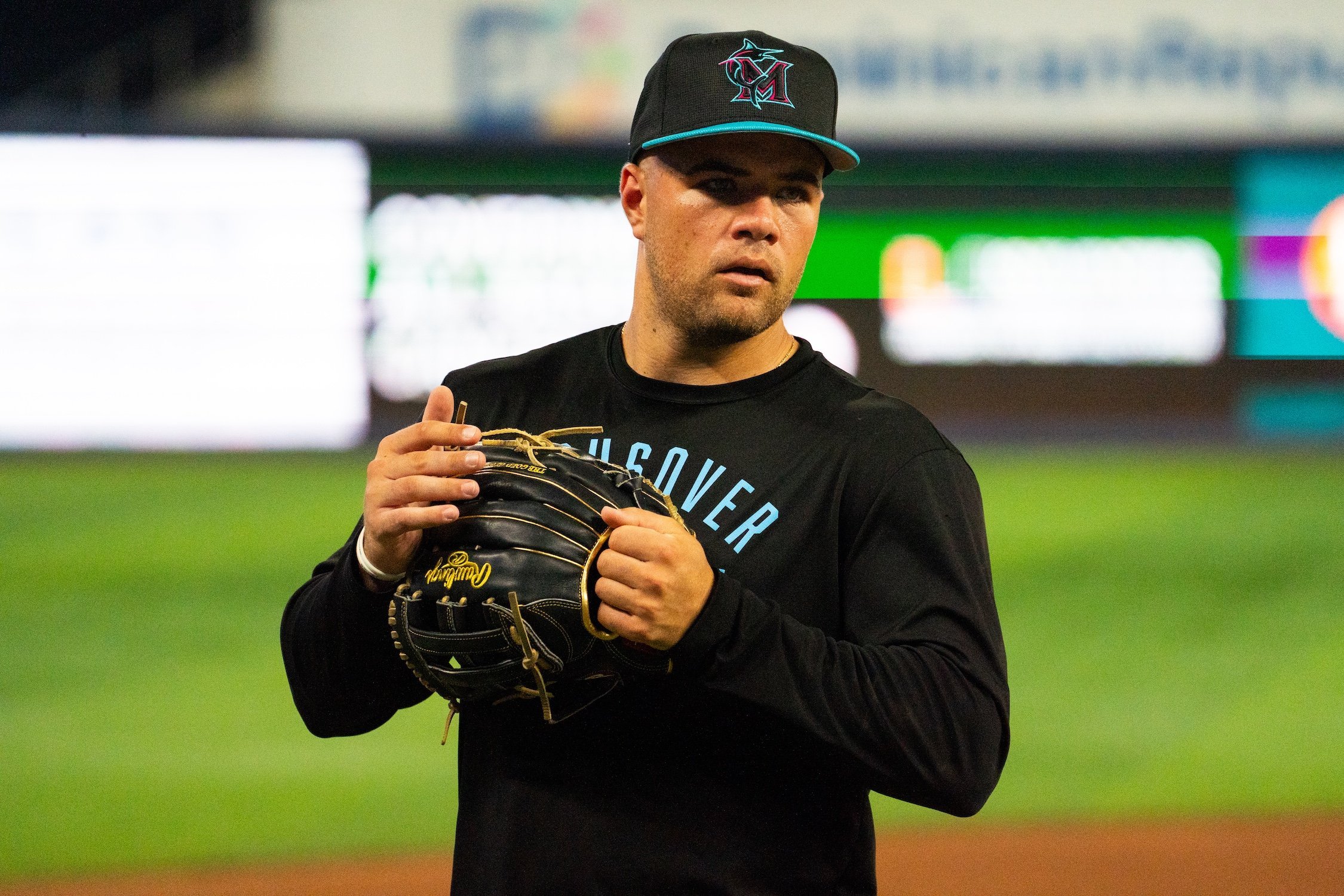 Coming off of what was a great two-month debut with the Miami Marlins in 2025, Jakob Marsee entered 2026 with lofty expectations. While his defense and baserunning have remained strong, the bat has been lacking to start the new season. Entering Saturday, Marsee's slash line is .148/.254/.204 with a .224 wOBA and 37 wRC+. It's a stark difference from his 133 wRC+ in 55 major league games last year. On the surface, these numbers are poor, and his expected stats only partially paint a better picture. However, a change to Marsee's stance in the batter's box has seemingly contributed to massive increases in important metrics, which will eventually lead to positive outcomes. First off, Marsee has gotten unlucky. His batting average on balls in play has plummeted from .357 as a rookie to .205 as a sophomore. Regression was expected, but this is an overcorrection that has him way underperforming league averages and his own minor league career norms. 7k4rab.mp4 Marsee's hard-hit rate and average exit velocity are much higher than the prior season. Those alone would point to future success, but I can dig even deeper to prove my case. Marsee's approach is potentially his best tool, and that has for the most part been the same as last year. In fact, his in-zone-contact rate has increased to 95%, up 8% from last season and 7% better than the MLB average. He's putting balls in the air more frequently, with his pulled-air rate rising up to 31%, which is nearly doubled the rest of the league. He is chasing outside the zone a tad more, but still ranks in the 83rd percentile in that department, according to Baseball Savant. The home runs are coming for Marsee if he stays consistent with what he's already doing in these areas. Marsee's new tendency to pull balls is no small-sample coincidence. Consider that last year, he stood 30.4 inches deep in the box, whereas this year, his depth is only 27.2 inches. That positioning has caused his "intercept point" to move 7.9 inches in front of home plate, compared to -0.3 inches previously (slightly behind the front of the plate). For context, league average is 2.9 inches in front. Monitoring Marsee's stance changes will be important to see how he adjusts (or doesn't adjust) to his early struggles. From my view, he shouldn't change a thing. These are all indicators of a strong hitting profile and the hits will soon follow. View the full article
 -
Revisionist History: Would 2026 Twins Be Better with Carlos Correa?
DiamondCentric posted an article in Twins Daily
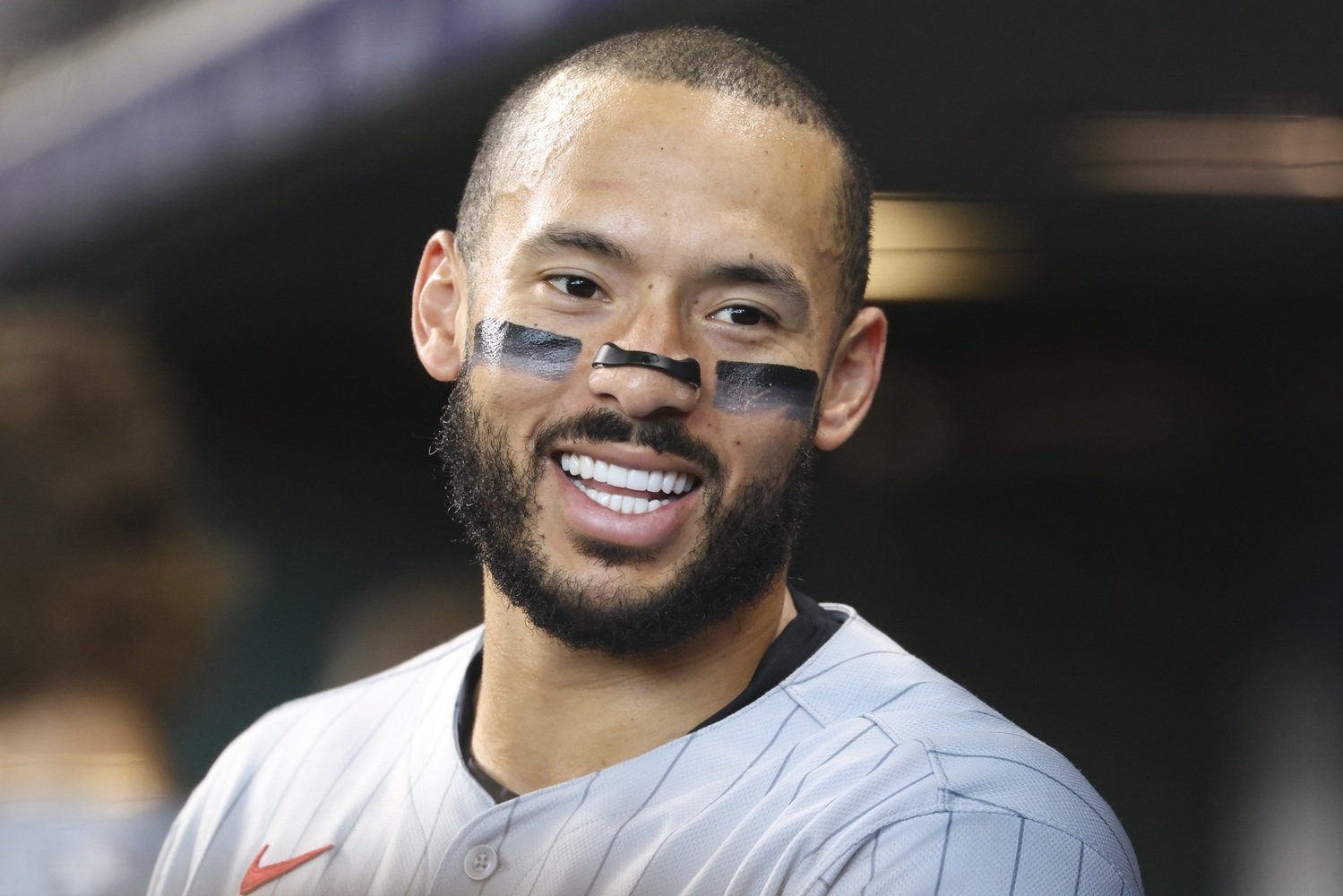 One of the most shocking moves at last year’s trade deadline was sending Carlos Correa back to the Houston Astros in a deal that felt less like a pivot and more like a surrender. The Twins moved on from the highest-paid player in franchise history and paid another team $10 million per season to take him off their hands. That detail still lands like a punchline with no joke attached. Correa’s time in Minnesota never fit neatly into a single narrative. He was the steady hand that helped guide the franchise to its first playoff series win in two decades. He was also the player battling plantar fasciitis, looking like a different version of himself for stretches that mattered. At his peak, he was everything the Twins hoped for when they signed him, including a 5.3 rWAR season in 2022 and a dominant first half in 2024 that led to his only All-Star appearance with the organization. At his worst, he embodied the risk that comes with tying so much payroll to one player with durability questions. So now that the dust has settled, the question is unavoidable. Would the 2026 Twins actually be better if they had just kept him? Payroll Implications Moving on from Correa was supposed to create flexibility. Instead, it created an absence. The payroll dropped from $136 million in 2025 to $107 million in 2026, and those savings weren’t meaningfully reinvested. Keeping Correa at over $30 million annually would have forced a different kind of decision-making. If ownership still wanted to land near the current payroll level, subtraction would have been required elsewhere. Names like Pablo López, Joe Ryan, and Ryan Jeffers immediately come to mind as logical trade candidates. There is also a harsher reality. Trading López before his season-ending elbow injury might have been the most pragmatic move in that alternate timeline. It is the kind of cold calculation teams convince themselves is necessary when a superstar contract sits on the books. Instead, the Twins chose financial relief without roster optimization. The result is a leaner payroll that does not necessarily translate to a more competitive team. Roster Implications The ripple effects go beyond dollars. Without Correa’s contract, the Twins still operated like a team tightening its belt. Free agent additions such as Josh Bell and Victor Caratini came at a modest combined cost, but even those moves feel unlikely in a world where Correa remains on the roster. Instead of Caratini, the backup catching job likely falls to Alex Jackson. Instead of a rotating first base situation, Kody Clemens probably sees a heavier workload by necessity rather than design. The infield alignment becomes even more interesting. Keeping Correa at shortstop likely pushes Brooks Lee into a different role, potentially second base. That shift could open opportunities for Luke Keaschall to find regular at-bats in a corner outfield spot or even factor into the first base mix. In other words, the roster would not just look different. It would feel different. Less flexible in some ways, more top-heavy in others, and heavily dependent on Correa anchoring everything. Correa’s 2026 Performance Back in Houston, Correa has quietly begun writing a new chapter. The Astros shifted him to third base, a move that may prove to be as important as the trade itself. Through the first 11 games, he is hitting .262/.354/.381 with a .735 OPS and a 116 OPS+, while providing above-average defense at the hot corner. It is fair to wonder how much of that success is tied to context. Playing third base reduces the physical toll. Playing in a more familiar environment may also help. And perhaps most importantly, he is not dealing with early-season games in Minnesota weather while handling the demands of shortstop every day. Would he be producing the same numbers with the Twins right now? Maybe. But it feels just as likely that the conversation would once again center on health management and workload. Revisionist history rarely offers clean answers, and this case is no different. Keeping Correa would have given the Twins a higher ceiling on paper. A healthy version of Correa still raises the floor and the expectations of the entire roster. But that version comes with trade-offs. The pitching depth might look thinner. The lineup might feel less balanced. And the financial pressure would force difficult decisions that could reshape the roster in ways that are just as uncomfortable as the reality fans are watching now. In the end, the more frustrating truth is not that the Twins traded Correa. It is that they never fully capitalized on the freedom it offered. The question is not just whether they would be better with him. It is whether they did enough to justify living without him. Would the Twins have been better with Correa in 2026? Leave a comment and start the discussion. View the full article
 -
 Miguel Mendez struck out six over four scoreless innings, and Eric Yost added five strikeouts in four shutout frames, but San Antonio fell 2-1 to Corpus Christi. Kash Mayfield threw four hitless innings in Fort Wayne's 3-0 loss to Lansing. Rordy Mejia tossed 3 2/3 scoreless innings for Lake Elsinore in a 5-4 loss to Rancho Cucamonga. Marcos Castañon's pinch-hit, three-run homer in the ninth lifted El Paso to a 10-8 comeback win over Albuquerque. Padres Transactions San Diego Padres placed RHP Jeremiah Estrada on the 15-day injured list. Right elbow tendenitis. San Diego Padres activated RHP Jason Adam from the 15-day injured list. Castañon's Pinch-Hit Three-Run Homer Caps El Paso Comeback In 10-8 Win El Paso trailed 5-0 after the top of the fifth inning before a seven-run bottom half turned the game around. Jase Bowen, Pablo Reyes, and Sung-Mun Song each delivered RBI singles to cut the deficit to 5-3. Mason McCoy then cleared the bases with a three-run double to give El Paso a 6-5 lead, and Rodolfo Durán added an RBI single to extend it to 7-5. Albuquerque tied the game 7-7 in the seventh on back-to-back solo home runs, then took an 8-7 lead in the eighth when a run scored on a double play. In the bottom of the ninth, Sung-Mun Song led off with a double to left. Nick Solak reached on a bunt error, and Nick Schnell entered as a pinch runner. Marcos Castañon then came off the bench and hit a three-run homer to left field, giving El Paso the 10-8 win. Starter Griffin Canning led El Paso's pitching staff with 3 1/3 innings, allowing one earned run on three hits with three walks and four strikeouts. Garrett Hawkins earned the win in relief, throwing 1 1/3 scoreless innings while allowing one hit with one strikeout. Clay Dungan led the offense by going 3-for-4. Song finished with two hits, including a double, and Durán added two hits and an RBI. Name Pos AB R H 2B 3B HR RBI BB K SB Jase Bowen CF 4 1 2 0 0 0 1 1 1 0 Pablo Reyes 3B 5 1 1 0 0 0 1 0 0 0 Sung-Mun Song DH 5 2 2 1 0 0 1 0 2 0 Nick Solak RF 3 1 0 0 0 0 0 1 1 0 Nick Schnell PR 0 1 0 0 0 0 0 0 0 0 Nate Mondou 1B 4 0 0 0 0 0 0 0 3 0 Marcos Castañon PH 1 1 1 0 0 1 3 0 0 0 Mason McCoy SS 4 1 1 1 0 0 3 0 1 1 Carlos Rodríguez LF 2 0 0 0 0 0 0 1 1 0 Samad Taylor LF 1 0 1 0 0 0 0 0 0 1 Rodolfo Durán C 4 1 2 0 0 0 1 0 1 0 Clay Dungan 2B 4 1 3 0 0 0 0 0 0 0 Totals 37 10 13 2 0 1 10 3 10 2 Name IP H R ER BB K Griffin Canning 3 1/3 3 1 1 3 4 Miguel Cienfuegos 1 1/3 5 4 4 0 1 Misael Tamarez 1/3 1 0 0 1 1 Evan Fitterer (H, 1) 1 0 0 0 0 1 Eli Villalobos (BS, 2) 1 2/3 4 3 3 1 0 Garrett Hawkins (W, 1-0) 1 1/3 1 0 0 0 1 Totals 9 14 8 8 5 8 Mendez And Yost Combine For Eight Scoreless Innings But Missions Fall 2-1 San Antonio's pitching staff held Corpus Christi scoreless through eight innings, but a two-run homer in the top of the ninth handed the Missions a 2-1 loss. Starter Miguel Mendez set the tone with four scoreless innings, allowing three hits with two walks and six strikeouts. Eric Yost was equally effective in relief, matching Mendez with four scoreless innings while allowing just two hits with no walks and five strikeouts. The two combined for 11 strikeouts over eight shutout innings. San Antonio broke through in the bottom of the eighth. Braedon Karpathios led off with a single to left, moved to second on a groundout by Ethan Salas, and scored on a Romeo Sanabria line-drive single to right field, giving the Missions a 1-0 lead. Sadrac Franco entered for the ninth inning. After recording two outs, he issued a walk and then surrendered a two-run homer to center field, giving Corpus Christi a 2-1 lead. Franco took the loss, allowing two runs on two hits with one walk and one strikeout in one inning. The Missions collected seven hits but left 14 runners on base. Ethan Salas reached base twice with a single and a walk. Tirso Ornelas, Kai Murphy, Chris Sargent, and Carson Tucker each added a hit. Name Pos AB R H 2B 3B HR RBI BB K SB Braedon Karpathios LF 4 1 1 0 0 0 0 0 2 0 Kai Roberts CF 0 0 0 0 0 0 0 0 0 0 Ethan Salas DH 3 0 1 0 0 0 0 1 1 0 Tirso Ornelas RF 4 0 1 0 0 0 0 0 2 0 Romeo Sanabria 1B 4 0 1 0 0 0 1 0 1 0 Francisco Acuna SS 4 0 0 0 0 0 0 0 2 0 Ryan Jackson 3B 4 0 0 0 0 0 0 0 1 0 Kai Murphy LF 3 0 1 0 0 0 0 1 1 1 Chris Sargent C 3 0 1 0 0 0 0 1 0 0 Carson Tucker 2B 3 0 1 0 0 0 0 0 1 0 Totals 32 1 7 0 0 0 1 3 11 1 Name IP H R ER BB K Miguel Mendez 4 3 0 0 2 6 Eric Yost 4 2 0 0 0 5 Sadrac Franco (L, 0-1)(BS, 1) 1 2 2 2 1 1 Totals 9 7 2 2 3 12 Mayfield Throws Four Hitless Innings, But TinCaps Shut Out By Lansing Fort Wayne was shut out 3-0 by Lansing despite collecting seven hits and receiving a strong overall pitching performance. Starter Kash Mayfield did not allow a hit over four innings, striking out four batters. He walked three but stranded all baserunners to keep the game scoreless through his outing. Braian Salazar relieved Mayfield and threw two innings, allowing one run on one hit with four strikeouts. The run against Salazar scored in the sixth on a sacrifice fly, and Salazar took the loss. Jeferson Villabona allowed two runs in the eighth inning on consecutive doubles, finishing with two hits, one walk, and two strikeouts over two innings of work. Clay Edmondson closed the game with a scoreless ninth, striking out two while walking one. Fort Wayne's pitching staff combined to allow just three hits across nine innings while striking out 12, but the offense could not convert opportunities into runs. The TinCaps left 14 runners on base and grounded into three double plays. Alex McCoy and Jake Cunningham each had two-hit games to lead the lineup. Cunningham doubled in the third inning and stole a base. Kasen Wells, Rosman Verdugo, and Oswaldo Linares each added a single, and Verdugo drew a walk. Name Pos AB R H 2B 3B HR RBI BB K SB Kasen Wells CF 4 0 1 0 0 0 0 0 1 0 Rosman Verdugo 3B 3 0 1 0 0 0 0 1 1 0 Carlos Rodriguez C 4 0 0 0 0 0 0 0 2 0 Alex McCoy DH 4 0 2 0 0 0 0 0 1 0 Kavares Tears RF 3 0 0 0 0 0 0 1 3 0 Jack Costello 1B 3 0 0 0 0 0 0 0 0 0 Jake Cunningham LF 3 0 2 1 0 0 0 0 1 1 Oswaldo Linares 2B 3 0 1 0 0 0 0 0 0 0 Dylan Grego SS 3 0 0 0 0 0 0 0 1 0 Totals 30 0 7 1 0 0 0 2 10 1 Name IP H R ER BB K Kash Mayfield 4 0 0 0 3 4 Braian Salazar (L, 0-2) 2 1 1 1 0 4 Jeferson Villabona 2 2 2 2 1 2 Clay Edmondson 1 0 0 0 1 2 Totals 9 3 3 3 5 12 Westenburg Goes 4-For-4 But Storm Fall Short In 5-4 Loss Lake Elsinore rallied from a four-run deficit to tie the game but fell 5-4 to Rancho Cucamonga. Starter Kruz Schoolcraft struggled in the first inning, recording just one out while allowing four runs on two hits with two walks. Rordy Mejia took over and was dominant, throwing 3 2/3 scoreless innings without allowing a hit while striking out five. Brandon Langley followed with two innings, allowing one run on two hits with two walks and four strikeouts. Langley took the loss after the go-ahead run scored on a bases-loaded walk in the sixth. Will Koger threw two scoreless innings with two strikeouts, and Ethan Long added one scoreless inning with one walk. The Storm answered Rancho Cucamonga's four-run first inning immediately. Truitt Madonna drove in Ryan Wideman with an RBI single in the bottom of the first to make it 4-1. In the second, Victor Duarte singled in Bradley Frye, and Conner Westenburg doubled in Duarte to cut it to 4-3. Bradley Frye tied the game 4-4 in the third with a sacrifice fly that scored Kale Fountain. Conner Westenburg led the offense by going 4-for-4 with a double and two stolen bases. Ryan Wideman singled, walked, and stole two bases. Frye went 2-for-3 with an RBI and a stolen base. Name Pos AB R H 2B 3B HR RBI BB K SB Ryan Wideman CF 4 1 1 0 0 0 0 1 0 2 Jose Verdugo 2B 5 0 2 0 0 0 0 0 1 0 Truitt Madonna 1B 4 0 1 0 0 0 1 1 0 0 Kale Fountain DH 4 1 0 0 0 0 0 0 3 0 Jorge Quintana SS 4 0 0 0 0 0 0 0 2 0 Bradley Frye 3B 3 1 2 0 0 0 1 0 1 1 George Bilecki RF 4 0 1 1 0 0 0 0 2 0 Victor Duarte C 4 1 1 0 0 0 1 0 1 0 Conner Westenburg LF 4 0 4 1 0 0 1 0 0 2 Totals 36 4 12 2 0 0 4 2 10 5 Name IP H R ER BB K Kruz Schoolcraft 1/3 2 4 3 2 0 Rordy Mejia 3 2/3 0 0 0 0 5 Brandon Langley (L, 0-1) 2 2 1 1 2 4 Will Koger 2 1 0 0 0 2 Ethan Long 1 1 0 0 1 0 Totals 9 6 5 4 5 11 Padres Top-20 Prospect Performance Kash Mayfield: 4 IP, 0 H, 0 R, 3 BB, 4 K Ethan Salas: 1-for-3, BB, K Kruz Schoolcraft: 1/3 IP, 2 H, 4 R, 2 BB, 0 K Bradgley Rodriguez: DNP Humberto Cruz: DNP Miguel Mendez: 4 IP, 3 H, 0 R, 2 BB, 6 K Ty Harvey: DNP Jorge Quintana: 0-for-4, 2 K Kale Fountain: 0-for-4, R, 3 K Ryan Wideman: 1-for-4, R, BB, 2 SB Jagger Haynes: DNP Lamar King Jr: DNP Romeo Sanabria: 1-for-4, RBI, K Truitt Madonna: 1-for-4, RBI, BB Michael Salina: DNP Garrett Hawkins: 1 1/3 IP, 1 H, 0 R, 0 BB, K (W) Kavares Tears: 0-for-3, BB, 3 K Deivid Coronil: DNP Francis Pena: DNP Bryan Balzer: DNP View the full article
 -
What Brendon Little Needs To Work On Before Rejoining the Jays
DiamondCentric posted an article in Jays Centre
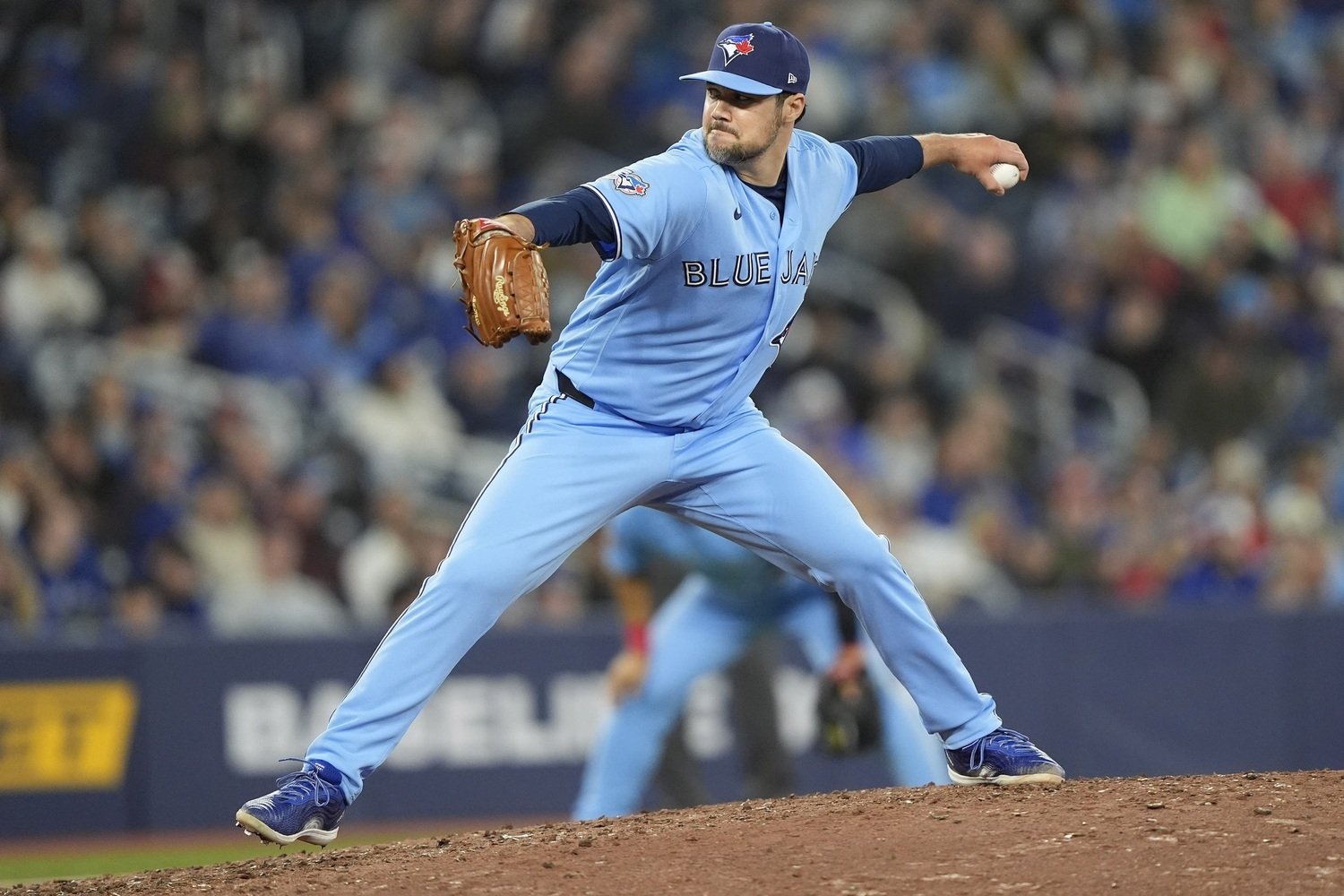 Brendon Little was dominant during the first half of last season. Over 44 1/3 innings, he posted a 2.03 ERA, held batters to a .177 batting average, and had a 65:28 strikeout-to-walk ratio. The second half of the season was a different story. The lefty had a 4.88 ERA, a .230 average off him, and a 26:17 strikeout-to-walk ratio over only 24 innings. The struggles could have been due to his workload. At times, the only southpaw in the bullpen, he threw in 79 total games. It was the first time he had thrown in over 50 games in his short MLB career. Little's 2026 season has started even worse. Over his first 3 2/3 innings, he was abysmal, posting a 24.55 ERA (10 earned runs) and allowing a .500 batting average (10 hits) despite striking out six batters. He allowed three home runs, one more than he allowed in all of 2025. The slow start led to his demotion to Triple-A Buffalo on April 5. This move was likely a way to give Little a breather from the high-stress environment of MLB. Little relies heavily on his sinker and knuckle curve, throwing them a combined 80 percent of the time in each of his three MLB seasons. Lately, he's been leaving the sinker in the zone, resulting in him allowing batters to hit .800 off the 41 sinkers he has thrown in 2026. The pitch's 30.2 inches of drop and 12.6 inches of arm-side break weren't fooling hitters, and the reliever needs to figure out why. Little's knuckle curve has been his go-to strikeout pitch over his career. This season, it has resulted in a 50 percent whiff rate on 14 swings (36 pitches). The breaking ball has also recorded all six of the 29-year-old's strikeouts. The whiff percentage for his knuckle curve is on par with his career results, but hitters are swinging at the pitch less often, and they have a batting average of .250 against it. That batting average is higher than in the last two seasons, when hitters didn't exceed a .160 average. Little needs to figure out how to get back to limiting damage against his knuckle curve. His top two pitches are being put in play for hits too consistently to be successful in MLB. Though the start of his season has been disappointing, Little is a talented pitcher and has shown he can succeed in the big leagues. He's 29, but it's only his third MLB season, so this could be a confidence issue, as well. The struggles could also be a mechanical issue that needs a tweak. Regardless of the issue, this breather in Buffalo will allow Little to work on his game in a less stressful environment. Hopefully, when the lefty returns to the Blue Jays, we see the dominant first-half of 2025 version of Little. View the full article
 -
Mason Miller's Unholy Evolution Mirrors That of Edwin Diaz
DiamondCentric posted an article in Padres Mission
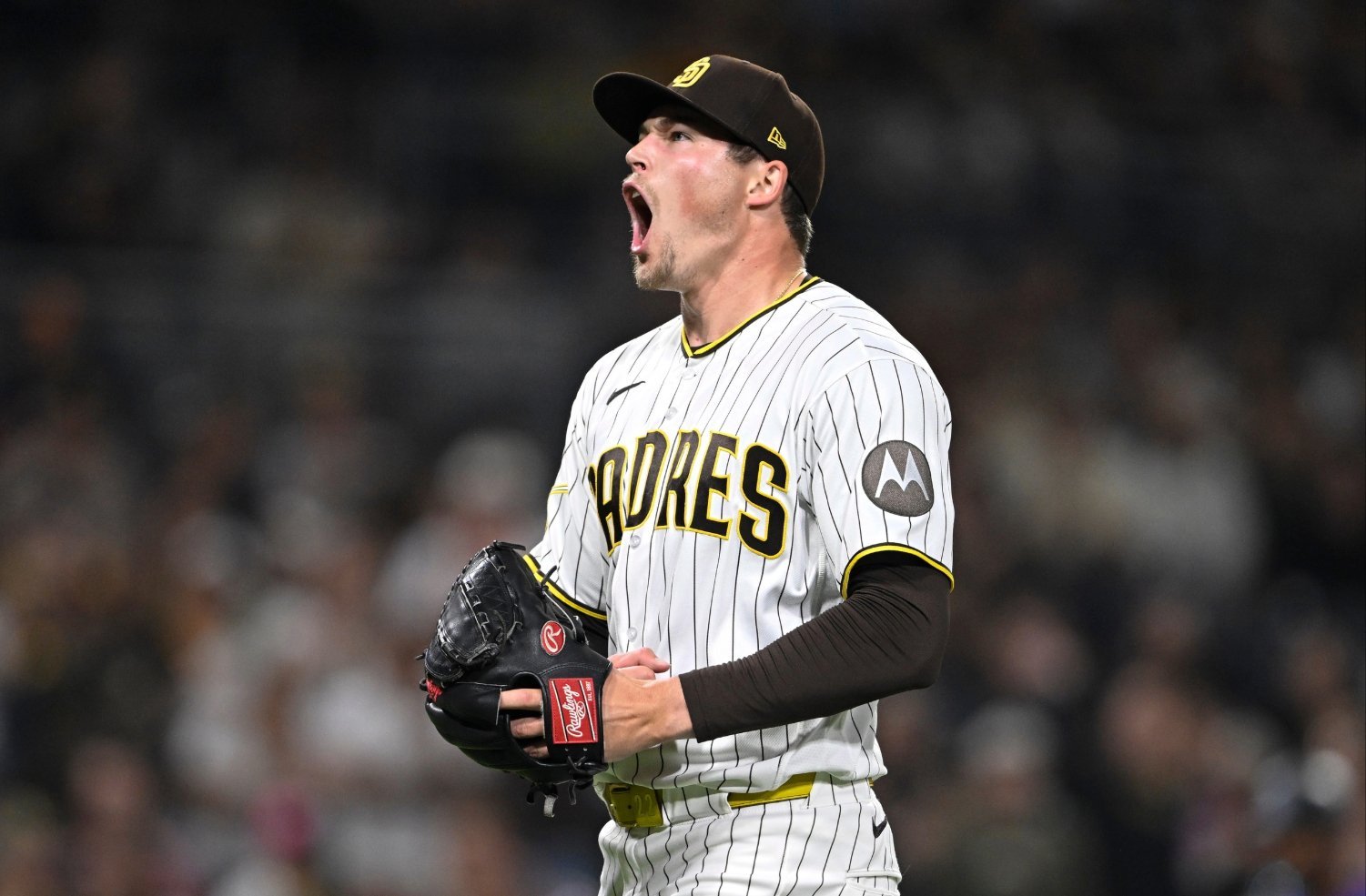 Through the first week and a half of the season, the best pitcher in baseball has been San Diego Padres closer Mason Miller. Over 6 1/3 innings, he has allowed exactly zero runs, struck out 16, walked one, and allowed a single solitary single. He leads all relievers in FIP (-1.43), fWAR (0.5), and strikeout percentage (76.2%) — a negative FIP is truly demonic. You basically cannot pitch better than Miller has, and like so many elite relievers before him, the man armed with the league’s fastest average fastball velocity (101.2 MPH) is dominating with... his slider? Yes, Mason Miller, he who burst onto the scene in 2024 with the then-Oakland Athletics by throwing straight 100 MPH gas past MLB hitters, has bent his arsenal away from the pitch that made him famous and has never been better. Thus far, he has thrown his slider 52.5% of the time, followed by his fastball at 42.5%, and his nascent changeup, which deserves its own look, clocks in at 95.5 MPH and 5.0%. Compared to 2024, when he reared back for a fastball on 63.1% of his pitches, Miller now looks like a junker-baller, but it has unequivocally been a successful evolution. The question isn’t if Miller has made the right choice; it’s why he decided to even entertain (relatively) shelving such an elite fastball. And there’s a pitcher just north on the interstate who made the same fateful decision. Before Edwin Diaz became a national sensation for making trumpets cool again, he was your quintessential fireballing reliever. Between 2016 and 2021, Diaz used his upper-90s fastball at least 60% of the time to solidify himself as one of the game’s top closers. His high point came in 2018, when he threw his fastball 62.2% of the time, struck out 15.22 batters per nine innings, and racked up 3.5 fWAR, the seventh-highest reliever total of the 21st century. Diaz had a formula that not only worked but arguably made him the best. Then in 2022, Diaz suddenly flipped his fastball usage to 41.9% and his slider usage to 58.1% and posted another all-time season. He rode his slider to a 1.31 ERA, 17.13 K/9, and a fWAR of 3.0. In the following seasons, he has eased his slider usage a tad, but he still throws both pitches about half the time. Now, Diaz’s evolution would make sense if his fastball velocity fell off a cliff, but his fastball averaged 97.3 MPH in 2018 and 97.2 MPH in 2025. What caused Diaz to stray off the straight and narrow is the same force that looks to have pushed Miller: throwing strikes. Pitching is fundamentally about strikes, and you can get them one of two ways. You throw the ball in the strike zone, and the umpire calls it, or you get a batter to swing and miss. The best pitchers do both, as do the best pitches. If you rack up a bunch of called and swinging strikes, it’s pretty hard not to have success. Edwin Diaz and Mason Miller, in particular, might have elite fastball velocity, but that doesn’t mean it’s their best pitch. Miller’s fastball has never had outlier horizontal or vertical movement, which means it relies mainly on velocity to be effective, and Diaz, despite not losing velocity over the years, has lost vertical movement, which has hurt the pitch’s effectiveness. On top of that, neither has been particularly accurate with their fastballs. When you add it all up, their heaters were effectively wild, which stood in stark contrast to what their sliders became. A decent proxy for what pitch a pitcher should lead with is a little metric I call, “Zone Percentage + Outside Zone Swing and Miss Percentage.” While I need to find a catchier, shorter name, the metric’s simplicity is why it works. Pitchers want to throw strikes, and what better way to do that than to throw it in the strike zone? Also, when pitchers don’t throw it in the zone, they want someone to swing and miss because that’s still a strike. Looking at Diaz’s four-seamer and slider figures, it’s pretty obvious why he has ramped up his slider usage in recent seasons. *Data reflective of updated stats as of April 9, 2026 Diaz has never thrown his fastball in the zone that often, and fastballs just never garner nearly as many swings out of the zone. Meanwhile, his slider has always enticed an incredible amount of swings out of the zone, while being nearly unhittable. Unsurprisingly, his best season as a primary fastball pitcher was 2018, when he posted the best Zone% of his career with the pitch, but it’s hard to lead with a fastball, even a great one, that you can’t consistently throw for a strike. And the same trend follows Miller. It’s incredibly early, but what Miller is doing with his slider is basically a cheat code. Major league hitters are chasing it out of the zone over half the time and are coming up empty at a 87.5% rate. To make matters worse, for hitters, he’s throwing his slider in the zone at a 54.8% clip, where he’s allowing a 40% contact rate. These numbers should all regress to the realm of mortals eventually, but that shouldn’t quell any of its usage, especially because his fastball command has continued to back up with a career low 46.2% zone rate. For as excellent as Miller has been, there’s a chance he has another gear. In 2024, Miller’s fastball had a 70.3% contact rate in the zone but that figure rose to 75.3% in 2025, while also finding itself in the zone less often. Since it was generating fewer strikes, it makes sense he would lean less on his fastball in 2025, but there’s a chance he could rediscover his 2024 fastball mojo. In 2026, his four-seamer again has an in-zone contact rate of 70%, in line with his 2024 figure, and that’s despite hitters clearly sitting on the pitch. Batters have swung at 83.3% of the in-zone fastballs they’ve faced, which far exceeds his career average of 71.2%. At a certain point, hitters will have to stop sitting on his fastball if they want any hope of handling the slider. And when that happens, don’t be surprised if his fastball becomes a major weapon again. Miller might not be pitching off his four-seamer anymore, but hitters are certainly treating it like he is. The final evolution for Mason Miller is to find the harmonic 50/50 fastball-slider split. The former was such a standout pitch that hitters sold out to hit it, only to be destroyed by the latter. When Diaz did that in 2022, he had a season for the ages, but eventually batters began to lay off his slider, and his fastball usage rebounded. The truly terrifying thing is Miller’s stuff is even better than Diaz’s was, and if he ever figures out a change-up... well, let’s not scare the kids. View the full article
 -
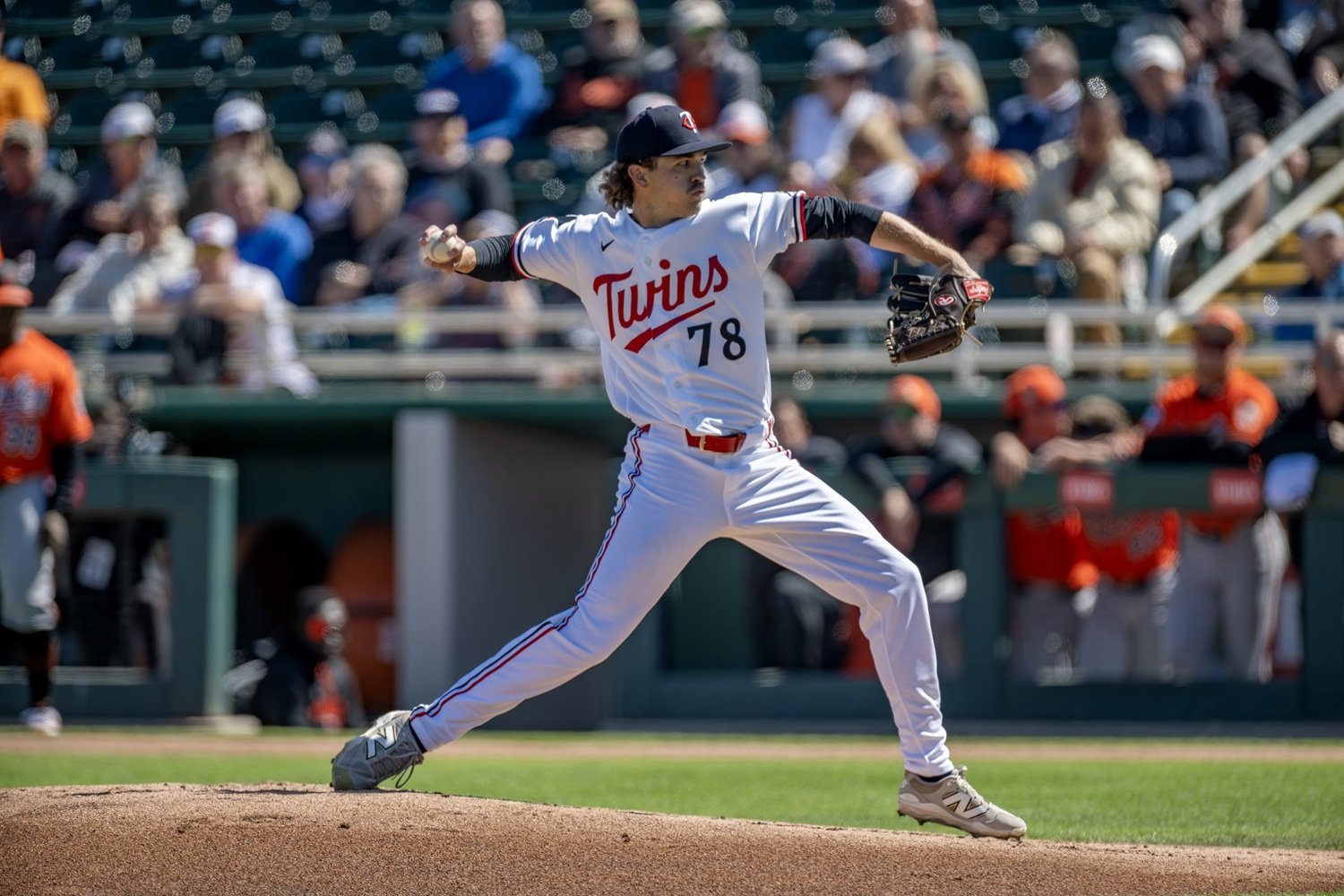 Andrew Morris is getting the call. Twins Daily’s #12 prospect is joining the team in Toronto for a three-game road trip. He’s expected to pitch out the bullpen with right-hander Cody Laweryson being placed on the injured list. Morris was drafted in the fourth round of the 2022 draft out of Texas Tech (114th overall). After making short work of the lower minors in 2023, he spent parts of three seasons in Triple-A dealing with injuries and searching for consistency. After throwing 94 2/3 innings for St. Paul in 2025 (4.09 ERA, 4.14 FIP), he looked good in two outings (7 1/3 IP) in 2026 (1.23 ERA, 2.93 FIP). Morris has been a consistent strike thrower throughout the minor leagues, maintaining walk rates that oscillated between 4.5% and 8%. As for the pitch mix Morris will bring to the table, he’ll throw up to six pitches in a kitchen sink type approach. He throws all three fastball shapes, his four-seamer sitting 95 mph and topping out at 98 mph. Morris also mixes in a slider (84 mph), a slower curveball (75 mph), and a firm changeup (89 mph). While Morris’ production has been consistently effective throughout his minor league career, he began to generate less swing and miss in the upper levels of the minors, raising doubts about whether he can start in the majors (he's neither a pronator or a supinator, leading to a lack of outlier vertical or horizontal movement on his pitches). Getting an opportunity to contribute in the bullpen is the perfect introduction for Morris. The role should allow his stuff to play up and give him the best possible chance to succeed while adjusting to major league hitting. In addition, Ryan Kreidler is taking Royce Lewis's spot on the 26-man roster. Lewis is out with a knee sprain. View the full article
 -
 Transactions: RHP Easton McGee recalled to MLB Brewers from AAA Nashville 1B/OF Tyler Black placed on AAA Nashville’s 7-day injured list on April 8 (last played on Sunday April 5th) INF/OF Eduardo Garcia activated from AA Biloxi’s 7-day injured list OF Damon Keith placed on AA Biloxi’s 7-day injured list retroactive to April 9 OF Jordyn Adams placed on AA Biloxi’s 7-day injured list retroactive to April 9 Injury updates on Keith and Adams below. Friday Media Notes unavailable Final: Gwinnett (Braves) 6, Nashville 5 Box Score and Game Log Via the Sounds, game details, and we encourage readers to always review affiliate write-ups as part of their Link Report routine: Costly Errors Spoil Sounds Near Comeback Against Stripers - Wilken Belts First Career Triple-A Homer in 6-5 Loss It seems fruitless to point out positives here when the error column flashes a "6". Sure, as the chock-full game summary noted, every Sound had at least one base hit. 28-year-old switch-hitting RF Greg Jones has flashed his 2019 first round (Rays, 22nd overall) pedigree - three singles here. Find Brock Wilken's blast here, punished a meatball, yet it's hard to remove your eyes from the .029 in the lower right at the time of impact. Watch as both Eddys Leonard (here) and Ramon Rodriguez (here) line balls into the left-center field gap. Leonard has started five games in left field and three at second base, including this one, where three times he was charged with a fielding error. Both Robert Gasser and Blake Holub committed pickoff errors, The Gwinnett media team isn't the most active, so remarkably, we don't have video of the wild walk-off sequence that concluded the night on Jeferson Quero's throwing error to third base. However, the Stripers did post a "booth cam" video of their PxP guy calling the action. Cooper Pratt sat a second consecutive night; odd given he had already been idle while finalizing his physical for the contract extension. Gasser was at 62 pitches when lifted in the 4th. He left this pitch in a bad spot, though kudos to said PxP man for his synth-pop reference with his "Welcome to Schunky-Town" call. Biloxi Pre-Game Media Notes Final: Pensacola (Marlins) 5, Biloxi 4 Box Score and Game Log Catch up with the latest Biloxi pre-game audio interview archives - Manager Mike Guerrero's chat from Friday night is available along with all this week's collection Via the Shuckers, game details: Made Records Third Multi-Hit Performance, Shuckers Fall to Blue Wahoos - Shuckers come within 90 feet of tying the game in the ninth, Gillis shines in relief over 5.0 shutout innings Wow, Biloxi loaded the bases with one out in the 9th, but Jesús Made struck out swinging in a three-pitch at-bat and Blake Burke grounded out to first to end it. As Bishop Letson's two-contest 2026 game log shows, consistency isn't always a good thing, especially when a WHIP is at 3.75 for each very brief outing. Clearly something is amiss, and Pitching Coach Josh Spence has some work to do with the talented 21-year-old. The Shuckers camera feed was unavailable for this game in what is hopefully a one-off. Speaking of consistency, and we love you, Biloxi organization, but early-season video troubles are a seemingly yearly ritual. But c'mon, we're so spoiled in this day and age of prospect tracking compared to years ago. They'll figure it out. As you saw in the transaction section above, the Shuckers had to place two outfielders on the IL after each had to leave Wednesday's game early. For the ability to view archived minor league games, it seems you now need an MLB+ subscription as opposed to the old MiLB.TV subscription, and it's pricier, at least that's what I've encountered. Regardless, in the review of that game: Top of the 3rd (archive link for subscribers) - go to the 01:34:50 hour/minute mark - Emaarion Boyd doubles (1) on a sharp line drive to left fielder Jordyn Adams. Emaarion Boyd to 3rd. Emaarion Boyd advances to 3rd, on a fielding error by left fielder Jordyn Adams. This was really unique. Adams made a somewhat awkward dive to his right as the ball clipped him and bounded away, with Adams delayed in his recovery to chase the ball down and get it in. After several viewings, it appears the ball caught Adams on a short hop to his head/face, and the trainer spent a few minutes with him as Adams' facial expressions while standing on the field seemed to confirm that. We won't fully speculate as to whether his absence is concussion-protocol related, but it's a possibility. Keith reached on an infield single to third base leading off the 5th, 02:27:05 hour/minute mark. There was absolutely no doubt about this injury, as Keith grabbed at his right hamstring as he crossed first base. Clearly in pain, the red-hot Keith (1.343 OPS in five games) hobbled back into the dugout. With Jacon Hurtubise's recent promotion to Nashville preceding these injuries, Biloxi is reduced to Dasan Brown and Kay-Lin Nicasia as true outfielders, though Eduardo Garcia's activation from the IL will help, while Dylan O'Rae and Jheremy Vargas have plenty of experience on the grass. This helps explain Mike Boeve's left field debut this week. Kudos to 25-year-old RHP Tanner Gillis for a spectacular long relief outing behind Letson and LHP Anthony Flores, who struggled for the first time (four walks) in three outings. Gillis faced one over the minimum in his five innings, a lonely single. Pensacola won despite having only three hits, all singles. Wisconsin Pre-Game Media Notes (download link) Final: Wisconsin 9, Quad Cities (Royals) 0 Box Score and Game Log Rattlers Rebound for a Big Win My goodness, as you'll read at the tail end of that detailed game summary, we need to expand our injury section to include the umpiring crew. Goodness. Bryce Meccage gets the ground ball and help from his mates - In addition to the embedded "X" videos in the game summary, here are additional highlights: Andrew Fischer sacrifice fly Luis Pena sacrifice fly Blayberg Diaz RBI double (off a position player/catcher, but he'll take it) Marco Dinges didn't agree with his 6th inning called strike, allowing Diaz to replace him. Rattlers drew 13 walks and an HBP but also K'd 17 times, including a four-pack for Fischer, who negates a true sombrero with a walk and the afore-viewed sac fly. Meccage, Jack Seppings, and in particular Chandler Welch all received their mound due in the game summary after this combined shutout. Still waiting on Luis Pena's first XBH (it's early), but he's rolling after four games played (.550 OBP, 4-for-4 in SB attempts). Wilson Pre-Game Media Notes Final: Salem (Red Sox) 5, Wilson 4 Box Score and Game Log Salem Takes Series from Wilson - Warbirds Rally Comes up Short The boys managed only four hits (doubles by Jose Anderson and Juan Ortuno) but tried to make the most of nine bases on balls. Strikeouts continue to be a major issue, 13 here. What a slide by Anderson! Enderson Mercado surrenders a triple to the second batter of the game Then, Pedro Ibarguen immediately misplayed this one in center, didn't help Mercado's cause Luiyin Alastre could have been credited with a hit on this screamer, but drives in a run regardless Baserunning mistake by Salem, but enjoy the Wilson uniforms looking sharp RHP Enniel Cortez left this one in a bad spot to a LH bat Of the 14 active position players, only Brady Ebel, Jadyn Fielder, and Nick Monile are not products of the Dominican Academy. Not sure of the English language skills of the many Latin American players but look for the three U.S.-born players to be popular interview subjects of the local media for the home opener Tuesday. It's all evening action on Saturday as the farm system looks to build on its 16-16 overall mark. Catch you Sunday AM, Organizational Scoreboard including starting pitcher info, game times, MiLB TV links, and box scores Current Milwaukee Brewers Organization Batting Stats and Depth Current Milwaukee Brewers Organization Pitching Stats and Depth View the full article
 -
 A prospect getting to Triple-A means they are just one step away from the major leagues. The call-up to the majors could happen for a variety of reasons, including the prospect playing their way into the major league club’s plans, an injury to a current major leaguer, or even a player needing to step away for a few days for personal reasons. Players at Triple-A are typically a combination of guys who have a good amount of experience, either at the major league level or some years in the minor leagues, and prospects who are still working their way up and looking for that first call. The Omaha Storm Chasers are no different and have a few intriguing names, including former first-round pick Gavin Cross, and fellow top 30 prospects via MLB Pipeline RHPs Shane Panzini (#21) and Ben Kudrna (#10). While many of the Royals' top prospects are in the lower minors, these players are intriguing enough, and they may even get a shot at Kaufmann Stadium as early as the 2026 season. The Storm Chasers roster is also full of players who have some experience in the major leagues as well, which are good guys to call on when a roster spot opens up in Kansas City. Here is a preview of the coaching staff, the roster, and what to expect from certain players this season and beyond. Storm Chasers Coaching Staff The coaching staff in the minor leagues is key to developing future major leaguers in any organization. The Storm Chasers have many familiar faces from past years. Pat Osborn will be in his second year as the manager of the Storm Chasers. This year will be his 15th in pro ball and seventh as a minor league manager. He was the bench coach for the Storm Chasers before his current appointment. Dane Johnson will be in his seventh season in Omaha and the sixth in the pitching coach role. He’s been in the Royals organization since 2020, and this year is his 27th season as a coach. He has experience as a major league bullpen coach and as a pitching coach at various levels of the minor leagues. David Lundquist will serve as the Assistant Pitching Coach, his third season with Omaha and 22nd in pro ball. He joined the Royals organization in 2024 and also has previous experience as a major league bullpen coach with the Philadelphia Phillies. Bijan Rademacher will be serving as the hitting coach in Omaha and will be in his fourth season in Omaha and sixth season coaching overall. He joined the Royals organization in 2023 after two years with the Arizona Diamondbacks. Tripp Keister is listed as an Assistant Coach and will likely help with a variety of things across the coaching staff. He is in his second season with the Storm Chasers and his third year with the Royals organization. He’s entering his 15th season as a coach in minor league baseball and his previous experience is in the Washington Nationals organization, along with 12 seasons coaching in college and five years a pro scout. James Stone and Amanda Gallone will serve as Athletic Trainers and are in their eighth and second seasons with Omaha, respectively. Others listed on the coaching staff are Mike Brown, who is in his eighth year as the Clubhouse Manager, and his 20th season in Omaha, and Ben Nicholas, who will serve as the Assistant coordinator for Minor League Video. Brown is a mainstay with the Storm Chasers and has worked in various roles both at Werner Park and at Rosenblatt Stadium. Nicholas is in his third season with Omaha, and second in his current role. Storm Chasers Pitchers RHP Ryan Bergert, RHP Mason Black, RHP Ethan Bosacker, RHP Eric Cerantola, RHP Jose Cuas, LHP Tyson Guerrero, RHP Brandon Johnson, RHP Ben Kudrna, LHP Chazz Martinez, LHP John Means, RHP Eli Morgan, LHP Helcris Olivarez, RHP Shane Panzini, LHP Andrew Perez, LHP Ryan Ramsey, RHP Aaron Sanchez, RHP Anthony Simonelli, RHP Mitch Spence, RHP Beck Way A few of these names likely look familiar, either because they have major league experience or because they have appeared on top prospects lists over the past few years. Both Kudrna and Panzini are listed in the top prospects and may get a call very soon. Others will likely serve as organizational depth and have previous major league experience, so they are likely on a short list of guys to call up. Morgan, Guerrero, and Sanchez all have different levels of success at the major league level, and if the organization can get them back to what made them successful, they could be great options and be called up to the majors if they show they are useful out of the bullpen. Means is listed on the roster but will likely be out the entire season with a torn Achilles. He signed a two-year deal and will likely be available in 2027 for the Royals. Storm Chasers Catchers Jorge Alfaro, Elias Diaz, Elih Marrero, Luca Tresh Alfaro and Diaz will serve as depth options beyond major league catchers Salvador Perez and Carter Jensen. Diaz is a former All-Star Game MVP back in 2023, so the upside is there. Tresh is in his second year with Triple-A Omaha, after playing 72 games and hitting 10 home runs in 2025. Both Alfaro and Marrero are listed on the Development List, so they are not taking up active roster spots. Storm Chasers Infielders Brandon Drury, Connor Kaiser, Kevin Newman, Josh Rojas, Abraham Toro, Peyton Wilson A few of these names may also look familiar, as Drury, Newman, Toro, Kaiser, and Rojas all have some major league experience. Wilson will be in his second season in Triple-A. Most of this list are players on minor-league deals but could receive a call-up if they either play their way into a call-up, or an injury on the major league roster leads to needing another infielder. Storm Chasers Outfielders Gavin Cross, Nick Loftin, Kameron Misner, John Rave, Drew Waters Loftin, Waters, and Rave are likely familiar names as they have played some at the major league level with the Royals in recent years. Cross is a former first-round pick and is ranked 27th in the Royals system via MLB Pipeline. He will be playing his first season in Triple-A, after playing the past two seasons with Double-A Northwest Arkansas. He hit for a .703 OPS this past season and showed some power, hitting 17 home runs over 114 games played. Misner was acquired in an off-season trade for a player to be named later from the Tampa Bay Rays. He played in 71 games at the major league level and hit .213/.273/.345 in 2025. While the Omaha roster may not be filled with high-end prospects, there are still plenty of names that should be fun to follow and it is filled with plenty of players who could be called up this year. Whether the players are serving as organizational depth, playing at Triple-A for the first time, the Storm Chasers should be intriguing to watch to see if any players push their way into playing time at the major league level or show why they should be seen as pieces for the future in the Royals organization. View the full article
 -
The Twins’ Under-the-Radar Offseason Moves Are Already Paying Off
DiamondCentric posted an article in Twins Daily
 While the Minnesota Twins didn’t make any blockbuster trades or hand out massive contracts this past offseason, the moves they did make are already paying off in a very real, measurable way early in 2026. The front office targeted specific needs and filled them with experienced, complementary pieces. A couple of weeks into the season, the numbers are already backing up that approach. The most impactful additions so far have been veteran free agents Josh Bell and Victor Caratini, both of whom have stepped in and immediately elevated the lineup. Starting with Bell, he’s been exactly what this offense was missing in the middle of the order. Entering Friday, he’s slashing .317/.431/.634 with an OPS over 1.000. He leads the team in hits, doubles, OPS and RBIs, while also tied for the team lead in homers. There have been some walks, and since splitters are generally tough to command consistently, that’s not super surprising. But the damage has been minimal. He’s allowing very few hits, keeping the ball on the ground, and stranding runners when needed. Like Rogers, his value comes from limiting quality contact rather than overpowering hitters, and so far, it’s working. Then there’s Tristan Gray, who’s carved out a role despite limited opportunities. Gray has just a fraction of the at-bats compared to everyday players, yet he ranks second on the team with eight RBIs, trailing only Bell. Six of those RBIs have come with the bases loaded, highlighting just how impactful he's been. In high-leverage situations, Gray has been one of the team’s most productive hitters. His ability to deliver in those moments has given the Twins the clutch hitting they’ve desperately needed. Defensively, he’s been steady on the left side of the infield, providing reliable play at both shortstop and third base. That versatility only adds to his value, especially considering the defensive performances of Royce Lewis and Brooks Lee up to this point. Individually, none of these moves dominated headlines over the winter. But collectively, the impact has been clear, and the numbers back it up. Bell has provided elite production in the middle of the order, while Caratini has brought consistency and contact. Rogers and Orze have helped stabilize the bullpen, and Gray has delivered in big moments despite limited playing time. It’s a good reminder that building a winning roster doesn’t always require massive moves. Sometimes, it’s about identifying the right pieces and putting them in positions to succeed. Through the first stretch of the season, the Twins have done exactly that. And it’s a big reason why they currently find themselves above .500. View the full article
 -
 The Royals' bullpen has gone through its share of struggles this year. According to Fangraphs, the Kansas City relievers rank 27th in ERA, 28th in WHIP and H/9, 23rd in HR/9, and 22nd in BB/9. On a positive note, the Royals' bullpen ranks 15th in K/9, which is much better than their 29th ranking a season ago. Thus, there's some talent in the Royals' bullpen; it's just finding the right combination and pieces that can carry this pitching staff in various leverage situations. With Carlos Estevez on the IL, the Royals have been relying on Lucas Erceg, Matt Strahm, and John Schreiber in high-leverage situations. However, one pitcher who has emerged is Eli Morgan, who came to Spring Training as a Royals non-roster invitee, eventually made the roster, and earned an MLB contract. In Cactus League play, Morgan posted a 0.87 ERA, 1.06 WHIP, and 1.94 FIP in 10.1 IP. That also included some excellent whiff and CSW metrics, as illustrated below. Morgan didn't make the Opening Day roster, as the Royals opted for Alex Lange and Bailey Falter, who were out of Minor League options. However, Falter is currently on the IL, and the Royals needed fresh bullpen arms after heavy workloads by Luinder Avila and Steven Cruz during the Guardians series. Thus, the Royals tapped Morgan and Mitch Spence to fill in, and the former has demonstrated that he's not only a solid fill-in reliever but could hold a major role in this Royals bullpen in 2026. Morgan Showing Stuff and Results in Kansas City So far, in two outings, Morgan has shown versatility as a multi-innings reliever for the Royals. The 29-year-old has accumulated five innings with Kansas City, so far, which included a three-inning outing against Milwaukee and a two-inning appearance against the White Sox (both at home). In that sample, Morgan has a 0.00 ERA, 0.80 WHIP, and a 1.90 FIP. He is also sporting a 30% K% and 20% K-BB%, which shows his impeccable command. The former Guardians reliever has also done an excellent job not just generating strikes, of both the called-strike and whiff variety, but preventing hard contact as well. That is illustrated by his TJ Stats summary below. Morgan doesn't sport high-end velocity, as evidenced by his 91.4 MPH fastball velocity, which ranks in the 12th percentile. However, he is still generating a 33.3% whiff rate (79th percentile), and a 36.2% CSW% (93rd percentile). Those solid metrics could be attributed to the excellent stuff shown on his changeup and slider, which sport TJ Stuff+ marks of 103 and 101, respectively. Here's a deeper look at Morgan's TJ Stuff+ profile this year, via TJ Stats. Morgan's changeup has been his best pitch by far this season. Not only does it have the best TJ Stuff+ mark of his three-pitch mix, but it also sports a 60% zone, 50% chase, 28.6% whiff rate, and a .286 xwOBACON. The pitch has been a particularly effective offering against lefties, whom he has thrown the changeup 37.8% of the time against. When facing left-handed hitters, Morgan is generating a 64.3% zone rate, 40% chase rate, 42.9% whiff rate, and a .240 xwOBACON. Thus, the approach is working in terms of the results. Here's a look at a punchout that Morgan generated with the changeup against Milwaukee's Brice Turang in Morgan's first outing with the Royals last Saturday. b0d3bERfWGw0TUFRPT1fVkZRRVZsSURCMVFBQ2xvQUJBQUhBd0JmQUZrQUJ3UUFVMWNEQWdRRkJWSURCd0lD.mp4 Morgan's slider has also shown results so far in a limited sample. The breaking offering, which he throws 27.5% of the time, generates a 33.3% chase rate and a 71.4% whiff rate. Like the changeup, the slider has been particularly effective against lefties. It's generating 80% chase and whiff rates and a .120 xwOBA. The slider is a harder-breaking offering, with just 3.3 inches of horizontal break and 3.9 inches of iVB. That said, it can be effective against lefties sitting on the four-seamer, as illustrated with this strikeout of Blake Perkins below. b0d3bERfWGw0TUFRPT1fQVZKU1ZGMEdYZ3NBQ1ZZQVZBQUhDRlVDQUZsVFVBTUFVMTBBQmdBTkNBVlhBVllF.mp4 Morgan's four-seamer is an okay, not great offering. It sports a 96 TJ Stuff+ and only an 11.1% whiff rate. However, he does a good job of generating weak contact with it at least. He has produced a .157 xwOBACON with the four-seamer, and it has proved to be a nice pitch that works effectively with his much better changeup and slider offerings. Thus, the righty's repertoire not only has produced strong results through two games, but the stuff behind his three-pitch mix could help him sustain these results over the course of a full season. Are There Any Concerns With Morgan? Morgan had a great season in 2024 with the Cleveland Guardians, posting a 1.93 ERA and 0.98 WHIP in 32 appearances and 42 innings. In Cleveland, the number of innings showed that Morgan was used as a reliever who could go multiple innings on frequent occasions. However, can he fill in high or medium-leverage situations? In terms of gmLI, which measures the leverage index of when a pitcher enters the game, Morgan had a 0.84 mark in his last season with the Guardians. That ranked 11th among Cleveland relievers that season, according to Fangraphs. Thus, he was more utilized in medium- to low-leverage situations, which is what manager Matt Quatraro has used him in so far this season. Hence, it may be tough for Morgan to move into a setup role with the Royals, or at least so quickly. Right now, his gmLI is 0.37, which ranks 9th among Royals relievers thus far, according to Fangraphs. Only Lange (0.14) and Falter (0.13) have seen lower-leverage situations (well, technically Tyler Tolbert too in his lone career pitching appearance). Therefore, Morgan has been a nice story for the Royals so far, and he definitely should have a spot as a long reliever in this Royals bullpen. I would be curious to see if Kansas City possibly parts ways with Falter once he is ready to come off the IL, as Morgan has served that role much better than Falter so far. That said, Falter may be out for a while, as his injury seems unique and stems back to a season ago. There's no question that Morgan has been strong in his Royals debut. However, Royals fans shouldn't be ready to advocate for higher leverage from Morgan just yet. He's succeeding in his role as a multi-inning mop-up man who can keep the higher-leverage arms from accumulating mileage on their arms. But is Morgan a setup man? Not just yet. And that's okay. Let Morgan succeed in his role, with the hope that he can maybe develop more responsibility as he gains more confidence in Kansas City. View the full article
 -
 Even after the Blue Jays broke their six‑game losing streak with Wednesday’s win over the Dodgers, the mood around the team hardly shifted. The scoreboard finally showed a win, but if you checked social media, you sensed an unease. Fans are impatient and anxious. Last season’s success created expectations that any team would be hard-pressed to meet. Add in a growing list of injuries, and those expectations seem sort of unfair. My favourite post this week captured that imbalance perfectly. Tao of Stieb deadpanned, “The Jays are now a half-game out of the final wild card spot, with 150 games to go.” The uncomfortable truth is that the early struggles do not point to a poorly built team. In several key areas, this roster is stronger than the one last year. The problem so far is not talent. It is timing, health and an absence of the very stability this group was built to rely upon. On paper, the 2026 Blue Jays rotation is objectively better than it was in 2025. The problem isn’t talent. It is availability. The starting staff right now is being held together by athletic tape, adrenaline, and a wildly overworked medical staff. Between a nasty flu bug ripping through the clubhouse and an injured list that looks more like a graveyard, the Jays are treading water. Pair that with an offense that simply isn’t producing, and you end up with the frustrating two‑week stretch Toronto just endured. The high point of the past two weeks has been Dylan Cease. He has been exactly what the front office paid for. Through 14.2 innings, Cease has allowed six runs while striking out 26 and walking nine. Even his more sluggish outing against the White Sox kept the Jays competitive. When you pair him with Kevin Gausman, who has been outstanding, you are not just looking at two good pitchers. You are looking at one of the best one‑two punches in the American League. Gausman has been dominant. He has thrown 17.1 innings, allowed just four runs, walked only two, and struck out 26. That is ace‑level production, the kind that lifts everyone else in the rotation just by being there. Not only was he deserving of the Opening Day start, but his output has probably lowered any pressure that Cease felt when he arrived. Chris Bassitt, meanwhile, has struggled early with Baltimore. In just 6.1 innings, he has given up 10 runs, issued six walks, and struck out only three, good for an ERA north of 14. Allowing him to walk in free agency was a calculated risk. So far, the numbers support that decision. The irony is that Toronto’s better‑on‑paper rotation desperately needs help. The good news is that reinforcements are beginning to arrive. Max Scherzer is scheduled to make his next start on Sunday against the Twins after leaving his previous outing with forearm tendinitis. Trey Yesavage is also nearing the end of his rehab stint and progressing rapidly. Over two recent starts, he touched 96 miles per hour and struck out 16. Add Yesavage back into the mix alongside Cease and Gausman, and suddenly the rotation starts to resemble what the front office envisioned back in February. The rest of the injury picture is less encouraging. Berríos and Shane Bieber continue slow ramp‑ups. Cody Ponce may not pitch again this season. And then there is the flu. Eric Lauer, who was supposed to be a depth arm, had to gut through two innings against Chicago while battling chills, fever, and dehydration. He gave the team every pitch he had simply because there was no one else left to take the ball. The losses so far haven’t been about ineffective starting pitchers. They've been about starters simply not being healthy enough to stay on the mound. That reality pushed the Jays to sign veteran left‑hander Patrick Corbin to a one‑year, $1 million deal. This is not the 2019 World Series version of Corbin. He is 36, and he has not posted an ERA under 4.00 in years. But in 2025 with Texas, Corbin still managed to throw 155.1 innings with a 4.40 ERA, and that is exactly what this team needs right now. Corbin is not here to win a Cy Young Award. He is here to be what Easton Lucas was last year. Lucas threw 24.1 innings for Toronto early in 2025, buying time for the rest of the staff to get healthy. That is Corbin’s role. Eat innings, provide a floor and stabilize the rotation until reinforcements arrive. Even if the pitching staff gets healthy, the most glaring issue remains the offense. The Blue Jays are averaging just 3.6 runs per game, ranking 22nd in Major League Baseball. Their run differential sits at -20, and that number has not come solely against elite opponents. It has also been built against teams like the White Sox and Rockies. You cannot consistently win in the American League East when you rank 21st in slugging percentage at .348 and 28th in isolated power at .117. The Jays are grounding into double plays at a frustrating rate and sit near the bottom of the league when hitting with runners in scoring position. Pitching has not cost this team games. A quiet offense has. For the optimists, the 2026 season has started almost identically to last year. A slow start, injuries, an inconsistent lineup, defensive hiccups and a healthy dose of bad luck. And yet, the blueprint of a championship‑calibre rotation already exists. Cease and Gausman anchor it, Yesavage is close and Scherzer provides stability. But until the offense begins to supply more than three runs a night, and until the clubhouse finally shakes this flu bug, the pitching staff will continue to absorb blame it does not deserve. The rotation is better and will undoubtedly improve. But talent only matters if you are healthy enough to use it and supported enough to win with it. Stats updated prior to games on April 10. View the full article
 -
Jacob Berry's bat has woken up 2 months ahead of schedule
DiamondCentric posted an article in Fish On First
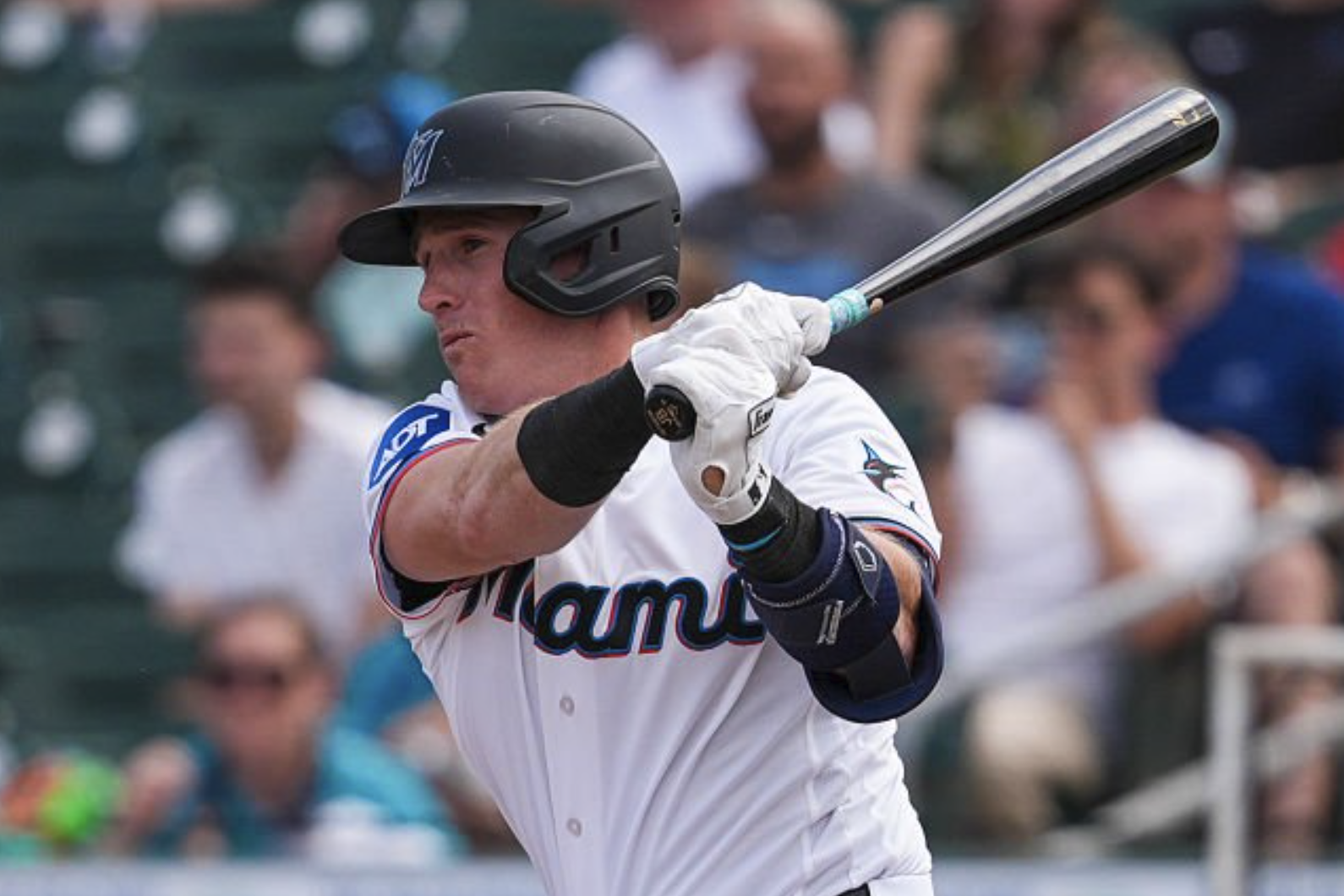 I have never seen anything like it. Miami Marlins prospect Jacob Berry, whose value on the field depends entirely on what he provides offensively, is always helpless at the plate early in the season. "Helpless" is a strong word, but you can check his track record—it's been warranted. Early in the 2023 season, Berry was the worst hitter in the Midwest League. Early in the 2024 season, he was the worst hitter in the Southern League. Early in the 2025 season, he was the worst hitter in the International League. Not only worst on his team, but yes, worst in his league (among players who avoided demotion to a lower minor league level). On this date last year, for example, his batting average was .097. To put this baffling trend in its proper context, I'll use wRC+. With ballpark and league factors taken into account, 100 represents average offensive production. During the past three seasons, here is how long it took for Berry to permanently surpass a 50 wRC+ (production at least half as good as league average): June 13 in 2023 June 23 in 2024 May 18 in 2025 This spring, when Berry squandered an extended opportunity in big league camp—he went 1-for-25 in Grapefruit League games—it felt like déjà vu. But to his credit, Berry is off to an uncharacteristically hot start to the 2026 regular season. The best all-around performer in the Jacksonville Jumbo Shrimp lineup thus far, the switch-hitter enters Saturday with a .333/.405/.472 slash line, one home run, a 137 wRC+ and nearly as many walks (five) as strikeouts (six). He also tops the Marlins MiLB leaderboard with six stolen bases. The Marlins have been very patient with Berry, playing him in an organization-high 369 minor league games since 2023, his first full professional season. Part of that is giving him every chance to make good on their $6 million investment in him, but his ability to hit hard line drives from both sides of the plate is legitimately enticing. Per Prospect Savant, he ranks in the 87th percentile among all Triple-A hitters in whiff rate this season (making contact on five out of every six swings). Berry's batted ball profile is downright sexy right now, with a higher percentage of liners (37.0%) than grounders (29.6%). Under the hood, his expected stats are fully aligned with his real-life production. This comes with a big caveat. Berry is repeating the Triple-A level, where he spent the final month of the 2024 season and all of 2025. It's common for minor leaguers to experience dramatic year-to-year improvement based on familiarity with their environment. After Berry floundered during the first quarter of last season, he hit well throughout the rest of the campaign. And yet, the Marlins never called up the 24-year-old, nor did they protect him in advance of the 2025 Rule 5 draft. He went unselected. Friday's shutout loss notwithstanding, the Marlins offense has been good in 2026 (ranking top 10 in MLB in most categories). Though they're vulnerable against left-handed pitching, Berry is significantly better against righties, so there isn't a clear fit for him on the roster quite yet. Needless to say, if his current rate stats sustain deep into the summer, he will eventually get a taste of the majors. View the full article
