


DiamondCentric
-
Posts
2,631 -
Joined
-
Last visited
Never
Content Type
Profiles
Forums
Events
News
Tutorials & Help
Major League Baseball Videos
Guides & Resources
Store
Downloads
Gallery
Everything posted by DiamondCentric
-

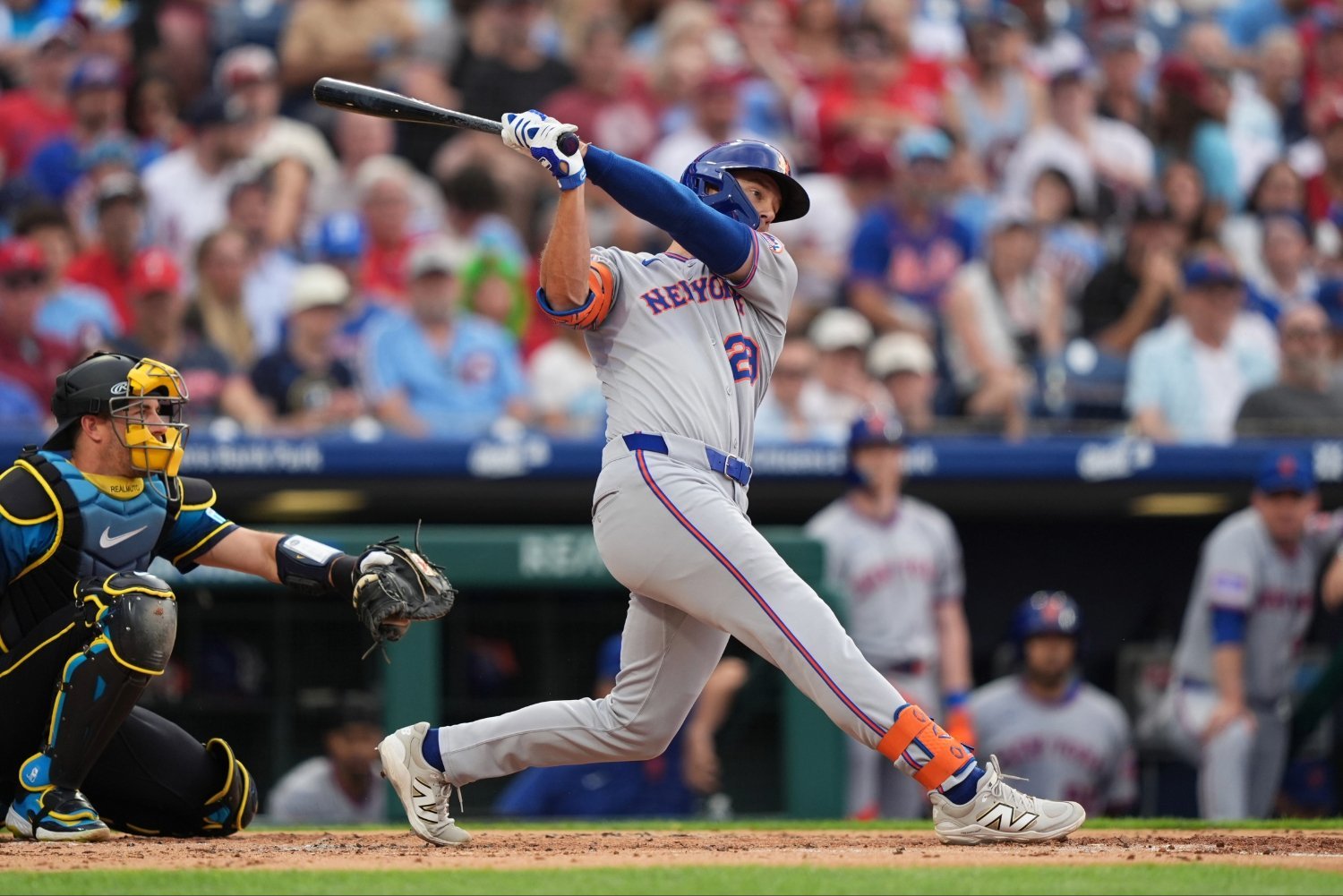 Jared Young has been given a clear role for the first time in his major-league career after breaking camp with the New York Mets this spring. It’s the first Opening Day roster that Young has been a part of and he’s been taking advantage of the opportunity. Young, a former 15th-round pick by the Chicago Cubs, has never played more than 23 MLB games in a season so far in his career. He’s a 30-year-old utility player who is a career .220 hitter with 14 extra-base hits and a 102 wRC+. He spent his first two major league seasons with the Chicago Cubs after debuting in September of 2022. He took his career overseas in 2024 to play with the Doosan Bears of the KBO. He had a solid season posting a slash line of .326/.420/.660 spanning 38 games, which was good enough to earn him a major-league contract with the Mets in December of 2024, where he’s been ever since. Jared Young's Contact-Fueled Emergence Aiding Mets' Ailing Lineup This year across 23 plate appearances, Young has hit for a .350 average with a 139 wRC+. He has not hit a ball out of the yard yet, but has logged two doubles. His surface stats are backed up by his .268 xBA and .362 xwOBA which are both well above league average. There have been some intriguing improvements to his process that are keying those results. In his small sample size so far in 2026, Young has been swinging a lot more pitches in the zone; he’s up to a 77.1% rate. His overall contact percentages have also seen a healthy jump. Young’s zone-contact percentage has jumped from 81.8% last year to 88.9% this year. Looking at his overall contact numbers, he’s posted a 82.5% contact rate, compared to 69.9% last year. Of course, with more contact often comes worse contact quality. It's a trade-off nearly every hitter faces, and Young is no exception. So far, his average exit velocity has only been 87.6 mph. That's likely due to his drop in bat speed (sitting around 73.3 mph this season, a small drop but is still a good place to be); less swing speed leads to better bat control, hence his improved contact numbers. And while he’s only managed two extra-base hits so far, he does have an excellent 18.8 barrel% to go along with a 50% hard-hit rate. The power is definitely in his bat, but has yet to be seen so far in the majors. His hardest-hit ball this year had a recorded exit velocity of 113.5 mph, a career high from his previous best of 109.4 in 2023. He hit 10 home runs in a very small sample size in the KBO, and it would be nice if he could tap into that with the Mets. To do so, he may need to sacrifice a little bit of the gains he's made in the contact game (and he definitely needs to stop hitting so many ground balls), but the overall process he's undertaken has clearly led to better results. From the fringes of the roster to a lineup staple, Young is making a name for himself in 2026. View the full article
 -
 Fish On First LIVE discusses the status of Marlins pitching prospect Robby Snelling. With the club having secured control of him through the 2032 season, how much longer until he debuts in the majors? View the full article
 -
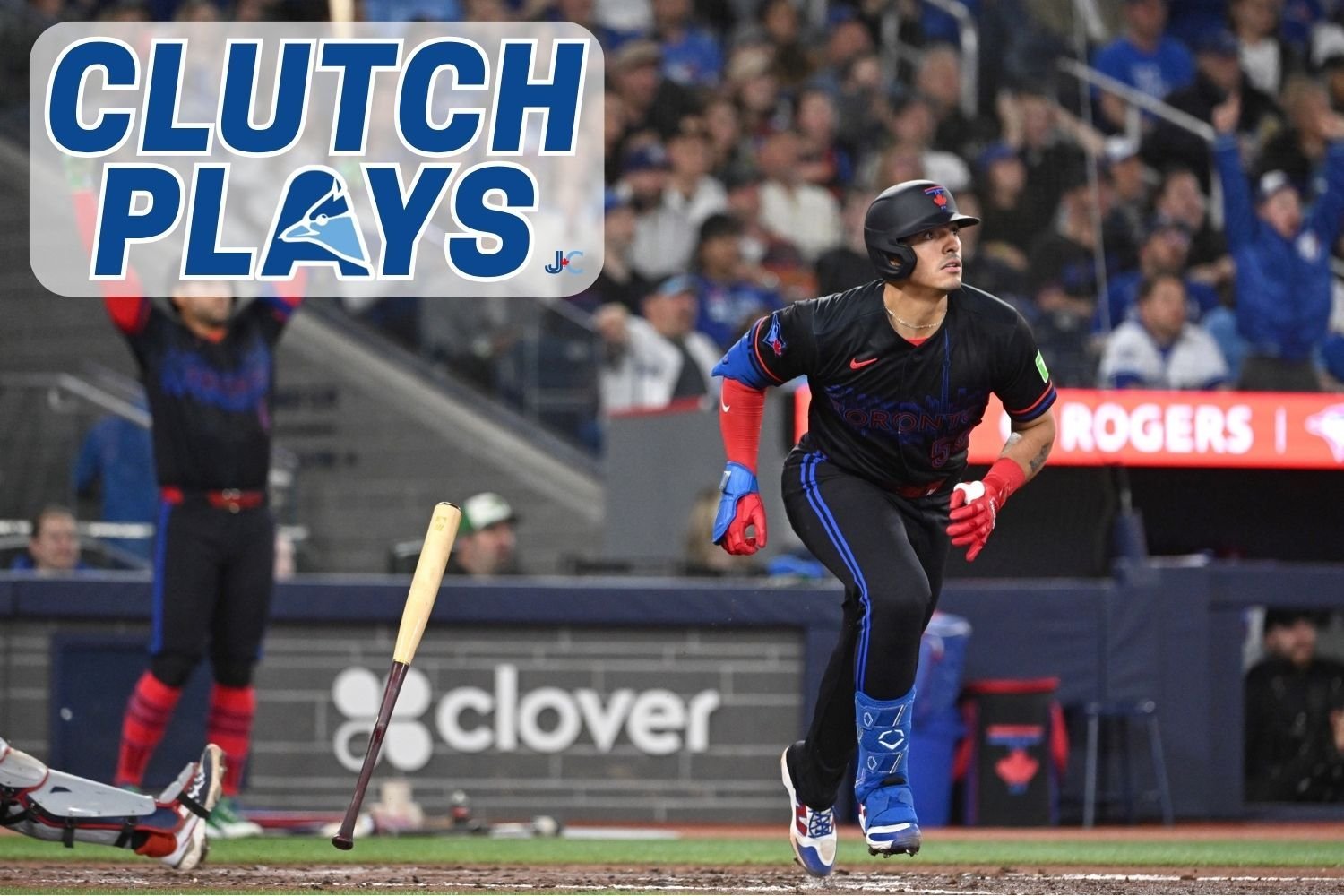 Welcome back to Blue Jays Clutch Plays, a recurring post that highlights the six most pivotal plays (three pitching, three hitting) from the past week of Blue Jays baseball, according to MLB's win probability model. Click here to read last week's edition. The Blue Jays have quickly been pushed into survival mode in the early portion of April, losing consecutive series to the Dodgers and Twins at home. George Springer is the latest to join a long list of regulars on the IL, fracturing his toe after fouling a ball off his foot on Saturday. Fragments of what made last year's team such a joy to watch were on display in the scrappy finale against L.A. and the relentless offensive showing to open the Minnesota series, but they still couldn't manage to make it a winning homestand. Here are the moments worth building on from another tough week. Pitching 3. Dylan Cease: Freddie Freeman Double Play, Top 1, 4/8 (+9.4% WPA) Wednesday afternoon's contest ended well for the Jays, but it didn't start on the most hopeful note. Dylan Cease fought his command, there was traffic on the bases early, and it momentarily seemed like things would go from bad to worse when Freddie Freeman hit a hanging slider on a line to the right side. Fortunately, it happened to land in Ernie Clement's glove, at which point Kyle Tucker was a deer in the headlights between first and second base. Clement flipped it harmlessly to Vladimir Guerrero Jr. at first to complete the double play, and Cease got out of the jam. 2. Jeff Hoffman: Freddie Freeman Strikeout, Top 9, 4/8 (+12.2% WPA) Freeman found himself up in a big spot again in the ninth with the tying run in scoring position. Ahead in the count 1-2, Jeff Hoffman elevated a fastball and blew it by him. Brandon Valenzuela hung onto the foul tip to put the Blue Jays an out away from snapping their six-game losing streak. The Opening Day home run Hoffman gave up to Shea Langeliers remains the only considerable blemish on his season; he now leads qualified AL relievers with a 48.4% strikeout rate. 1. Jeff Hoffman: Max Muncy Groundout, Top 9, 4/8 (+13.9% WPA) It can be argued that Hoffman pitched in too many high-leverage spots to start 2025, leaving him fatigued down the stretch. With the Jays starting slowly this year, it now feels like there haven't been enough spots where it makes sense to use him. Wednesday was an exception, and he delivered. He didn't make it easy for himself after Tucker and Will Smith reached with one out, but perfectly fielded Max Muncy's tapper back to the mound here to complete the save. Hitting 3. Andrés Giménez: Single, Bot 8, 4/8 (+16.6% WPA) Andrés Giménez fell behind 0-2 to Ben Casparius but sat back on a curveball in the zone and rolled it up the middle for a base hit. The ball wasn't hit hard, so Davis Schneider took third on the play, setting the table for the groundball that would score him and put the Blue Jays ahead for good. It was another big knock for Giménez, who's responsible for the Jays' offense's second and third most pivotal swings of the year so far and four of their top 10. 2. George Springer: RBI Double, Bot 7, 4/8 (+25.2% WPA) After lying dormant for over a week, the bats finally came through in a big spot in Wednesday's comeback win. Jack Dreyer missed up with a slider, and Springer shot it the other way, bouncing it off the top of the right field wall to cut the Dodgers' lead to 3-2. This left a second-and-third situation with just one out for Daulton Varsho, who would tie the game with a single. The Blue Jays squandered a golden run-scoring opportunity in the seventh inning the night before but would not let this one slip by. 1. Brandon Valenzuela: 2-Run HR, Bot 4, 4/10 (+25.4% WPA) An unlikely hero flipped the score as the Jays slugged their way to a 10-4 victory on Friday. A string of doubles and an RBI single by Giménez brought Toronto back to within a run after being down 4-0, and then Valenzuela took a hanging splitter from Simeon Woods Richardson and lined it into the visitor's bullpen for his first big league home run. It was the team's biggest moment in an effort that featured 10 unanswered runs and saw eight of the nine members of the starting lineup record a hit. This one came off the bat at 111 mph, and Valenzuela was rewarded for it, starting at catcher in all three games of the series against the Twins. View the full article
 -
Kutter Crawford Begins Road Back To Red Sox With Mixed Outing
DiamondCentric posted an article in Talk Sox
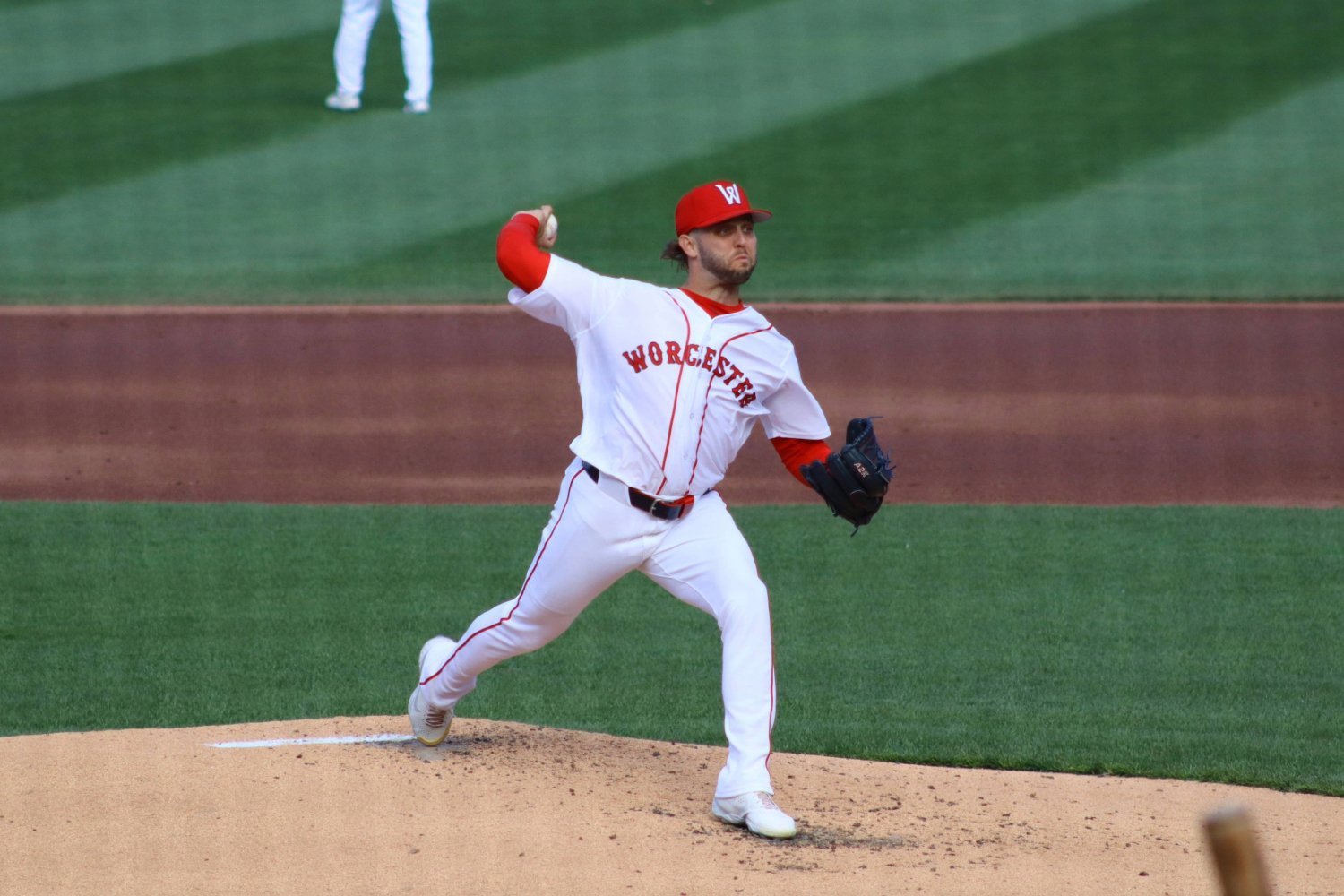 It's been a long road back to Boston for Kutter Crawford. This past Saturday, for the first time in 560 days, the 29-year-old right-hander took the mound in a professional baseball game. Crawford, who was a stalwart in the Red Sox's rotation in 2024, missed the entire 2025 season after first dealing with knee issues and then a torn tendon sheath in his right wrist that later required surgery. Pitching in a professional game for the first time since late 2024, there was some obvious rust. Crawford had some good moments and some not so great moments as he pitched three complete innings. He allowed six hits (three home runs), five earned runs, one walk and five strikeouts. Overall, he threw 60 pitches, 43 for strikes, while his fastball topped out at 93.1 mph. Noticeably, his pitch sequencing was slightly different than the last time he took the mound. Wherein 2024 he used a five-pitch mix consisting of his four-seam fastball, cutter, sweeper, splitter and curveball, Crawford did not toss a single sweeper this time out. More than rust, this may have been due to the fact he rarely uses the pitch against left-handed batters, and the Columbus Clippers’ lineup was filled with them on this particular night. Instead, he led with his fastball that averaged 91.4 mph during the outing. Along with the fastball being used 33% of the time, he gave a pretty even split to his splitter, cutter, and curveball. His cutter looked the least game-ready, as he allowed three hard-hits off it, including a home run. Hence how the average exit velocity off of the pitch sat at 107.4 mph. On the other hand, his knuckle curve and splitter were arguably best pitches of the night, as they both generated three whiffs apiece along with two strikeouts each. Keeping that up would be a huge development for his efficiency against left-handed batters. The first inning was a nightmare for Crawford, as he opened the frame with back-to-back strikeouts before allowing a single to Travis Bazzana followed up by a two-run home run to Nolan Jones. That, in turn, was followed by a solo shot by Kahlil Watson and a single from Kody Huff before Crawford finally got out of the inning. His second inning went much better, allowing just a walk to Juan Benjamin. Unfortunately, the third inning spelled more trouble, as Bazzana singled once more before Watson hit his second home run of the day to make it 5-0. Crawford finished strong, getting the next two batters out, including a strikeout of the final batter he faced. Most importantly, the right-hander will need to build up his stamina as his velocity dropped on all his pitches each inning with the exception of his cutter. Credit Crawford for battling against a lineup filled with left-handed batters (eight of the nine starters batted from the left side of the plate), but it's clear that he's still a ways off from being ready to return to the majors. View the full article
 -
Blue Jays Select Eloy Jiménez After Another Early Season Injury
DiamondCentric posted an article in Jays Centre
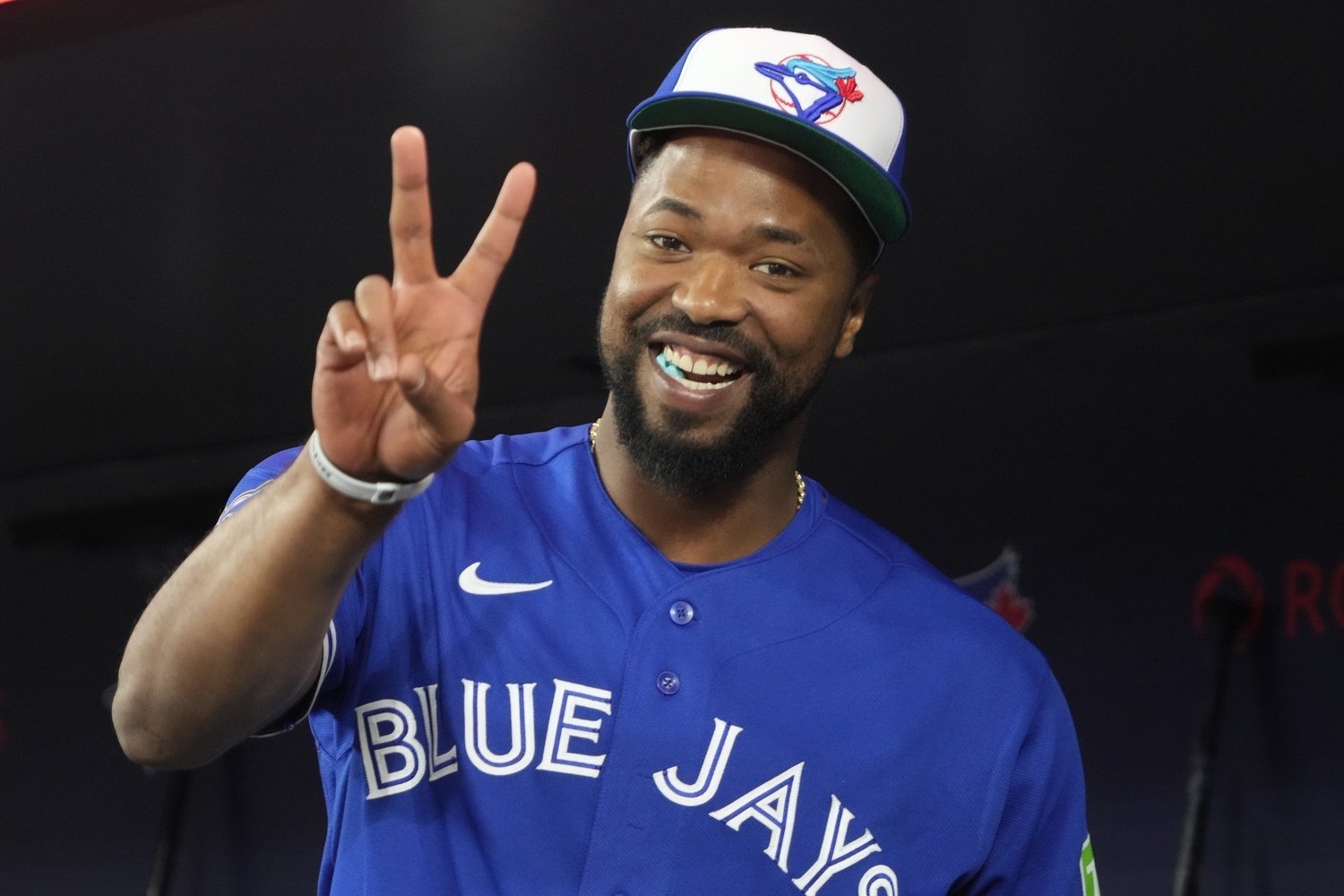 The injury bug continues to rear its ugly head for a Toronto Blue Jays team looking to piece it together through the 2026 season’s opening month. On Sunday morning, the Blue Jays placed outfielder George Springer on the injured list with a left big toe fracture, further depleting an already hurting roster. In a corresponding move, Eloy Jiménez was selected from Triple-A Buffalo to replace Springer on the active roster. Jiménez took over the designated hitter spot and hit seventh on Sunday, as the Blue Jays wrapped up a three-game series with the Minnesota Twins at the Rogers Centre. In Toronto's 8-2 loss, Jiménez went 2-for-4 with two singles and two strikeouts. The Blue Jays originally signed Jiménez to a minor league contract in September of last season after he was released from the Tampa Bay Rays organization. After appearing in just six Triple-A games for the Buffalo Bisons last year, Jiménez was brought back to the organization this past January with an invite to spring training. The 29-year-old impressed during spring training, appearing in 18 games and batting .286 with two home runs, three RBIs and a .333 OBP across 45 PA. Jiménez picked up where he left off in spring training in Triple-A with the Bisons. Through 11 games, he hit .257 with one home run and five RBIs while reaching base at a .372 clip. Jiménez is a career .269 hitter at the big league level, to go along with 95 home runs and 298 RBIs over stints with the Chicago White Sox and Baltimore Orioles organizations. The Dominican Republic native’s best season in MLB came during his rookie year, when Jiménez slugged 31 home runs for the White Sox. Jiménez’s last appearance in MLB came back in 2024, split between the White Sox and Orioles. He batted .238 with six home runs and 23 RBIs in 98 games. The right-handed hitter’s stick will determine his role with the Blue Jays. If Jiménez proves he can drive the ball with authority, then he has a chance to get consistent at-bats as manager John Schneider looks for answers on the offensive side of the ball. The Twins started right-hander Taj Bradley yesterday afternoon, so evidently, the Blue Jays aren't only planning to use Jiménez’s bat when he has the platoon advantage. View the full article
 -
 For the week, Biloxi (4-2) and Wisconsin (4-2) were series winners, while Nashville (1-5) and Wilson (1-5) came up short. Transactions: N/A Game Action: Nashville Pre-Game Media Notes Final: Gwinnett 5, Nashville 1 Box Score and Game Log Via the Sounds’ website, game details and we encourage readers to review affiliate write-ups as part of their Link Report routine: Sounds Drop Series Finale to Gwinnett Although they lost the game and it took starting RHP Carlos Rodriguez 82 pitches to cover 3 2/3 IP (1 R, 3 H, 3 BB, 4 Ks), it’s progress that he only conceded a leadoff homer after allowing 9 earned runs over his prior 2 starts. Rodriguez was throwing on 4 days’ rest after tossing 76 pitches in Tuesday’s contest. If the Brewers need a position player to replace Yelich (hamstring concern), the healthy 40-man MLB roster options are SS Cooper Pratt (0-for-3, walk; .452 OPS) and C Jeferson Quero (0-for-3, walk; .550 OPS). The non-MLB roster outfielders have been putting up better numbers: Luis Lara (1-for-3, triple, walk, SB; 1.007 OPS), Eddys Leonard (1-for-4, SB; .854 OPS), Greg Jones (1-for-3, walk, SB; .852 OPS). Despite being out-hit 10-4, the Sounds still had 2-on, nobody out opportunities in the 2nd, 7th and 8th innings, ultimately going 1-for-11 with runners in scoring position. Sounds’ Extras: After RHP Kaleb Bowman (1/3 IP) stranded one baserunner for Rodriguez, the remaining bullpen of RHP Garrett Stallings, LHP Drew Rom, RHP Blake Holub and LHP Joe Corbett allowed one earned run each in from the 5th through the 8th innings. The 5’10” Leonard started at first base in this game, but that might have been out of necessity more than anything else (Tyler Black is injured; Luke Adams rested after being substituted in the 10th inning on Saturday). After Gwinnett ran ragged on Rodriguez and Quero in Tuesday’s contest (7 stolen bases in 3 1/3 IP), it’s also progress that they only stole one base in Sunday’s game. Next week’s outlook: Nashville (6-8) host Red Sox affiliate Worcester (10-4) for six games commencing on Tuesday. Biloxi Pre-Game Media Notes Final: Pensacola 4, Biloxi 2 Box Score and Game Log Via the Shuckers’ website, game details: O'Rae Extends Hit Streak to Eight, Shuckers Drop Series Finale to Blue Wahoos Also pitching on 4 days’ rest, starting RHP Jaron DeBerry was respectable over 5 innings (2 R, 4 H, 3 BB, 1 HBP, 4 Ks; 74 pitches), with the runs allowed benefiting from an infield single (first inning) and balk (5th inning). Trailing 4-1 in the bottom of the 7th inning, Biloxi nearly had big inning, with all five batters reaching: OF Dasan Brown walk, OF Kay-Lan Nicasia walk, 2B Dylan O’Rae single, SS Jesus Made single, DH Blake Burke single. Unfortunately, they ran themselves out of the inning via a caught stealing, pick off and out at home. The Shuckers’ main highlights were on the defensive side of the ball: Shuckers’ Extras: O’Rae (2-for-4, HBP, SB), Burke (1-for-2, walk, HBP) and Brown (1-for-2, 2 walks, SB) reached base 3 times, but the team had no extra-base hits. The 2-out, 9th inning single allowed by LHP Mark Manfredi Sr. was his first hit allowed of 2026, though his numbers remain exceptional (0.00 ERA, 0.60 WHIP, 18.0 K/9 in 5 IP this season). After allowing 2 runs in the 6th inning, RHP Patricio Aquino (3 IP, 2 R, 2 H, 2 BB, 2 Ks) escaped that frame with a pickoff before adding 2 scoreless innings. Next week’s outlook: Biloxi (5-4) head 4.5 hours northeast to battle Braves’ affiliate Columbus (4-4) for 6 games, beginning on Tuesday. Wisconsin Pre-Game Media Notes Game One Final: Wisconsin 5, Quad Cities 3 (in 7 innings) Box Score and Game Log Game Two Final: Quad Cities 7, Wisconsin 6 (in 7 innings) Box Score and Game Log Via the Timber Rattlers’ website: Game 1 details: Rattlers Take the Opener at Quad Cities Game 2 details: Bandits Steal Game Two From Wisconsin 21-year old, 6’3” LHP Wande Torres’ first career High-A start (2nd appearance) was a success, garnering 5 strikeouts and 14 whiffs over 3 2/3 IP (2 R, 1 H, 3 BB). Torres exited with his team ahead 4-2 thanks to the homers by OF Tayden Hall and C David Garcia (videos are available within the linked Game 1 report) and an RBI double by 1B Eric Bitonti. Eight of the nine Timber Rattlers’ starters collected at least one hit in the win, with the middle infield of SS Luis Pena and 2B Daniel Dickinson collecting 2 hits each. Always-exciting RHP Yerlin Rodriguez walked 3 of 7 batters faced and added a throwing error and a wild pitch, but did not allow a relief run in 1 1/3 IP (3 Ks), while RHP Yorman Galindez earned his first career Minor League save. After out-hitting the River Bandits 10-3 in the Game 1 victory, it looked like Pena would lead them to a doubleheader sweep with his 3-for-3, 3 RBI effort in Game 2, but the bullpen couldn’t hold it. RHP Braylon Owens first career Minor League start (after an impressive Tuesday debut: 4 1/3 IP, 0 R, 8 Ks) was an up-and-down one, covering 3 innings in 66 pitches: 3 R, 4 H, 1 BB, 5 Ks. He’ll likely rue the run-scoring wild pitch which allowed Quad Cities to cut the deficit to 4-3 on his last batter. Pena pushed the lead back to 6-3 with his 5th inning RBI double (videos available in the linked Game 2 report) and got himself to 3rd base on a 1-out wild pitch, but was stranded due to 2 strikeouts. Two 2-out runs for the River Bandits off RHP Jose Nova in the bottom of the 5th inning tightened the contest, before Quad Cities won the game on 3 consecutive singles off of LHP Bjorn Johnson (1 IP, 2 R, 0 Ks) in the bottom of the 7th inning. Timber Rattlers’ Extras: Absent from both games were key prospects Josh Adamczewski and Braylon Payne, who both last played on Thursday. As they’re not on the injured list, we hope that they’ll be back in action shortly. Though the team seemed intent on giving Pena one game off (excluded from Saturday’s starting lineup before the game was rained out; on the bench to start the 2nd game of Sunday’s doubleheader), he ended up playing 13 of the 14 innings on Sunday when SS Daniel Guilarte exited in the 2nd inning of Game 2. Hopefully Guilarte does not miss any time. 22-year old OF Josiah Ragsdale (a 7th round draft pick in 2025) has 6 stolen bases, 3 RBIs, 3 runs and 7 walks through 7 games of the 2026 season, but a 1-for-19 output with 9 Ks is not what anyone is expecting after hitting .300 in the Carolina League (70 at-bats) in 2025. Next week’s outlook: Wisconsin (5-3) returns home for a six-game series against Cardinals’ affiliate Peoria (3-6), with RHP Travis Smith (5 IP, 1 R, 4 Ks in his last outing) scheduled to start the opening game of the series on Tuesday. Wilson Pre-Game Media Notes Final: Salem 16, Wilson 3 Box Score and Game Log Via the Warbirds’ website, game details: Warbirds Fall in Series Finale to Salem If Wilson players are saving up their best baseball for their first-ever home series next week, perhaps that’s a good call. The home crowd probably won’t want to see their squad no-hit for 6 innings and commit 5 errors while being drubbed. Trailing 14-0, number 8 hitting DH Pedro Ibarguen and number 9 hitting OF Luiyin Alastre delivered the team’s first hits and runs on 2-out RBI hits in the 7th inning. 19-year old starting RHP Carlos Carra bounced back from his 9-run (5 earned), 1 2/3 IP Tuesday outing, but was still touched for 4 runs (3 earned) on 5 hits, 3 walks and 1 hit-by-pitch in this contest. Warbirds’ Extras: Carra also generated no strikeouts, but the next 3 Wilson pitchers (LHP Andrew Healy, RHP Ayendy Bravo, RHP Eric Prado) didn’t fare much better (combined 4 IP, 12 R (all earned), 9 H, 5 BB, 2 Ks). At least RHP Joshua Quezada put in a solid final shift (1 IP, 0 R, 0 H, 0 BB, 1 K). Next week’s outlook: The new Wilson franchise (3-6) is ready for its first-ever home game, scheduled for Tuesday at Wilson Sports and Entertainment Complex (aka “Wilson Stadium”, seating 4,500) against the Hill City Howlers (6-3), the Guardians’ Low-A affiliate. We hope that you enjoy the Minor League Link Report. On Monday, the Minor League affiliates have a travel day and the Milwaukee Brewers are also off before they host the Blue Jays on Tuesday evening. Organizational Scoreboard including starting pitcher info, game times, MiLB TV links, and box scores Current Milwaukee Brewers Organization Batting Stats and Depth Current Milwaukee Brewers Organization Pitching Stats and Depth View the full article
 -
What are your Marlins vs. Braves series predictions?
DiamondCentric posted an article in Fish On First
 Recent history tells us that the Miami Marlins are difficult to predict, but that won't stop us from trying. Welcome to a new season of Prediction Time. Once again in 2026, I will be monitoring the prognostications from our valued SuperSubs, Fish On First staffers and livestream guests. Individual article pages like this one will be created prior to every Marlins series and featured prominently on the FOF site. Consistent participation is key if you want to win this annual contest. Submissions only take a few seconds. Scoring system A "perfect" series is worth three points: Earn one point for predicting which team will win the upcoming series Earn one point for predicting the precise number of victories for each team Earn one point for predicting the “Series MVP” who accumulated the highest win probability added (WPA) during the series as calculated by FanGraphs (could pick a player from either team) Here is a reminder of what the 2025 season leaderboard looked like. FOF SuperSubs Parker Heyser and Robert Hanson currently sit atop the 2026 leaderboard, which will be updated between every Marlins series. If you are a SuperSub, leave a comment with your Prediction Time picks on this page, or join the Marlins Discord Server and submit there. We'll feature them on the upcoming Fish On First LIVE episode and track your points throughout the season! Any picks submitted prior to the first pitch of the series opener will be counted. If you are not a SuperSub, please consider signing up here to support the FOF staff. Series preview notes Probable starting pitchers: RHP Eury Pérez (MIA) vs. RHP Grant Holmes (ATL) on Monday RHP Max Meyer (MIA) vs. RHP Reynaldo López (DET) on Tuesday RHP Chris Paddack (MIA) vs. RHP Bryce Elder (ATL) on Wednesday The Marlins rank eighth in MLB with a 106 wRC+ and 12th in MLB with a 3.83 FIP. They are 3-7 in their last 10 games and have a 1-5 record on the road this season. The following Marlins players are on the injured list: Maximo Acosta (10-day IL), Griffin Conine (10-day IL), Ronny Henriquez (60-day IL), Adam Mazur (60-day IL), Christopher Morel (10-day IL), Esteury Ruiz (10-day IL) and Kyle Stowers (10-day IL). The Braves rank fourth in MLB with a 115 wRC+ and seventh in MLB with a 3.59 FIP. They are 6-4 in their last 10 games and have a 6-3 record at home this season. The following Braves players are on the injured list: Joe Jiménez (60-day IL), Ha-Seong Kim (10-day IL), Sean Murphy (10-day IL), Spencer Schwellenbach (60-day IL), AJ Smith-Shawver (60-day IL), Spencer Strider (15-day IL), Hurston Waldrep (15-day IL) and Joey Wentz (60-day IL). View the full article
 -
 Fish On First staffers react to the latest Miami Marlins series and prepare you for what lies ahead. Sunday's show was hosted by Alex Carver, accompanied by Ely Sussman. The following topics were covered: Reasons behind Sandy Alcantara's worst start of the season Otto Lopez's quiet excellence offensively Jakob Marsee laying an egg in front of family and friends in Detroit What to make of Connor Norby's mixed results How much longer will Robby Snelling have to wait for a call-up? Previewing and predicting the next series against the Atlanta Braves You can find Fish Unfiltered and Fish On First LIVE on the Fish On First YouTube channel, Apple Podcasts, Spotify or wherever else you get your pods. Our next FOF LIVE episode will be Wednesday at approximately 11:00 p.m. ET following the Marlins-Braves series finale. View the full article
 -
Looking For Spark, Mets Set To Call Up Tommy Pham
DiamondCentric posted an article in Grand Central Mets
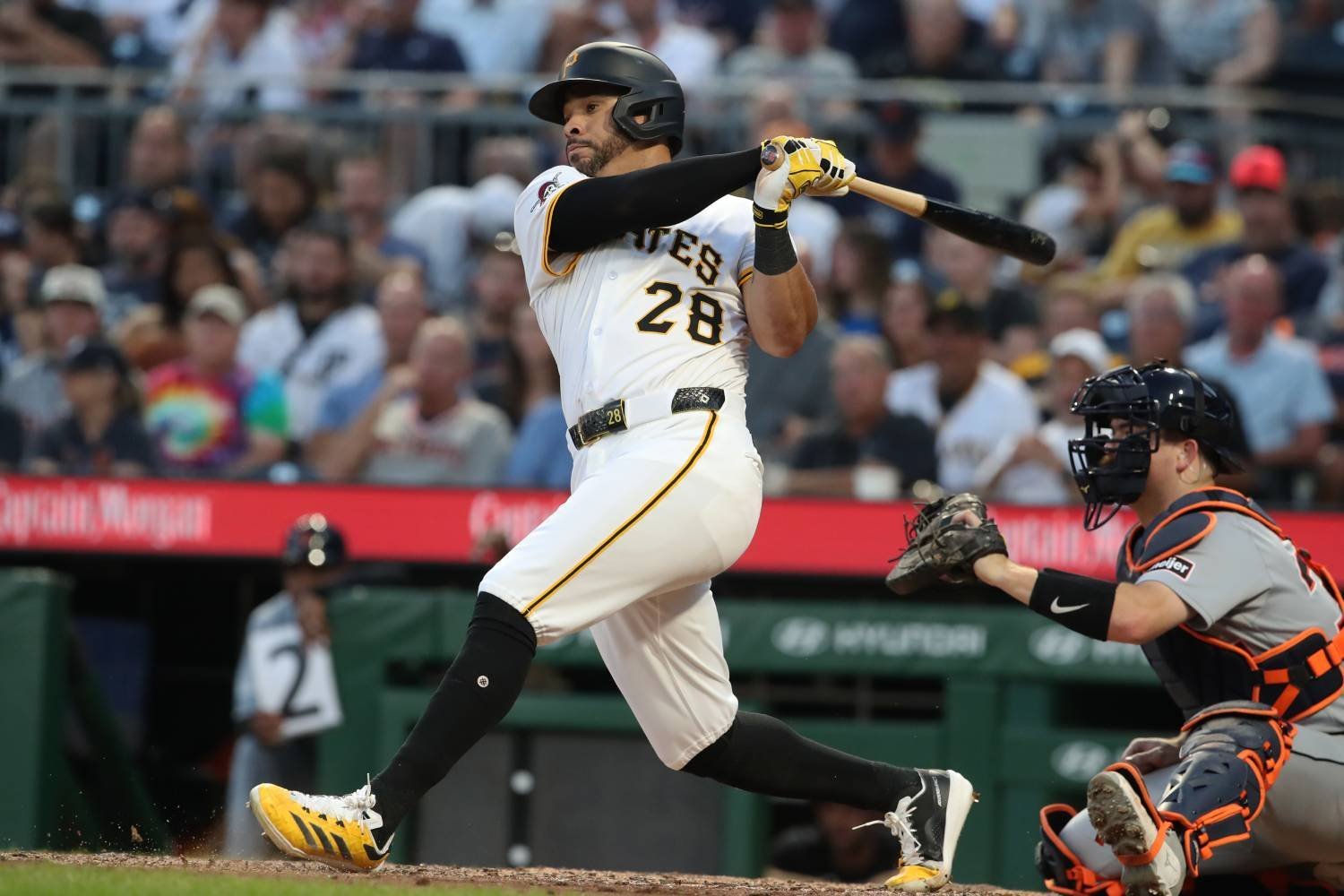 Having lost five in a row and with an offense needing a spark, the New York Mets are turning to journeyman outfielder Tommy Pham to invigorate the team. Pham is being called up to the Mets from Low A St. Lucie, where he has been getting into game shape, Will Sammon of The Athletic reported Sunday. Pham will join the Mets as they open a series on the road against the two-time World Series champion Los Angeles Dodgers. A move related to the 26-man roster will be made, but the Mets currently have three open spots on their 40-man. The 38-year-old signed a minor-league contract with the Mets on March 27 and had played five games and went 2-for-12 (.167) with a double, an RBI and three runs scored. Last year with the Pittsburgh Pirates, Pham had a .245/.330/.370 slash line with 10 homers and 52 RBIs in 120 games. Pham has played for 10 teams in 12 seasons, including 79 games with the Mets in 2023. The Mets' offense ranks 23rd in MLB in OPS at .658, including being shutout twice this weekend vs. the A's. The offense has struggled without superstar left fielder Juan Soto, who is on the 10-day injured list with a strained left calf. Soto is expected back around the end of the month. View the full article
 -
 The Weekly Nutshell: Well okay then! Through their first nine games of the season, the Twins much looked like the team most expected to see, opening with a 3-6 record that placed them at the bottom of the Central division. Looking ahead to matchups against Detroit and Toronto, the Twins were going to need to step it up to avoid sinking deeper here in April. They did indeed step it up, and in a big way, seizing a rare four-game series sweep at home against the Tigers before heading to Toronto and taking two of three from the defending AL champs. The Twins hit for power, pitched well, and played much more cleanly than we saw in the first few series. They took advantage of lapses while their opponents struggled to do the same. Suddenly, they've won six of seven and eight of their past 11. Now we're having some fun. Weekly Snapshot: Mon, 4/6 through Sun, 4/12 *** Record Last Week: 6-1 (Overall: 9-7) Run Differential Last Week: +16 (Overall: +14) Standing: 2nd Place in AL Central (0.5 GB) Latest Game Results Game 10 | MIN 7, DET 3: Keaschall's First Homer Sparks Win in Frigid Temps Keaschall: 1-3, HR, 2 RBI, 2 BB Game 11 | MIN 4, DET 2: Bradley Outduels Skubal in Dominant Performance Bradley: 6.1 IP, 6 H, 1 R, 0 BB, 10 K Game 12 | MIN 8, DET 6: Twins Ambush Valdez, Hang On to Clinch Series Win Buxton: 3-4, BB Game 13 | MIN 3, DET 1: Abel's Strong Start, Lee's Clutch Hit Secure Sweep Abel: 6 IP, 4 H, 0 R, 6 K Game 14 | TOR 10, MIN 4: Wheels Come Off for Woods Richardson and Banda Woods Richardson: 4 IP, 6 H, 5 ER, 2 K Game 15 | MIN 7, TOR 4: Ryan Cruises and Larnach Delivers Three-Run Blast Ryan: 7 IP, 2 H, 2 ER, 5 K Game 16 | MIN 8, TOR 2: Twins Jump All Over Scherzer, Take Road Series in Rout Gray, Lee: 5 RBIs IF YOU'D RATHER LISTEN TO THE WEEK IN REVIEW THAN READ IT, YOU CAN GET IT IN AUDIO FORM! FIND THE LATEST EPISODE ON OUR PODCAST PAGE, AS WELL AS ON APPLE AND SPOTIFY. SUBSCRIBE TO OUR CHANNELS SO YOU DON'T MISS OUT! YOU CAN ALSO WATCH OUR LIVESTREAM WITH LOU HENNESY BELOW. NEWS & NOTES The Twins made their first IL moves since the season began on Saturday, placing third baseman Royce Lewis and reliever Cody Laweryson on the shelf. Utilityman Ryan Kreidler and right-hander Andrew Morris were called up from Triple-A as replacements. Lewis tweaked his knee on a swing in Thursday's game, later diagnosed as a sprain, while Laweryson is dealing with a forearm strain. Some fans expressed dismay to see Kreidler called up instead of, say, Kaelen Culpepper, but the reality is that Culpepper has only played about a dozen games at Triple-A. He's a very important prospect and his timeline should be dictated by development rather than the major-league team's needs, especially if those those needs are short-term in nature. That is hopefully the case for Lewis, who sounds likely to miss the minimum 10 days if things go to plan. Laweryson's timeline is less clear. Forearm strains are always concerning. The timing is tough because he was coming off a couple really strong appearances in the Detroit series, including his first career save on Monday. Morris, ranked by Twins Daily as the #12 prospect in the system, will provide length with the ability to pitch multiple innings. He did so in his MLB debut on Sunday, throwing two-innings of one-run ball while firing a fastball in the upper 90s. HIGHLIGHTS The Twins were failing to get anything done against left-handed starters ... up until they faced Tarik Skubal and Framber Valdez — the $50 million duo atop Detroit's rotation — and knocked them around for 12 earned runs in 9 ⅓ innings, defeating them both on the way to a stunning sweep over the Tigers. Some of Minnesota's righty bats finally came alive. Luke Keaschall hit his first homer of the season on Monday and added RBIs in the next two games. Byron Buxton broke out of his slump with a three-hit game on Wednesday, with Lewis also driving in a pair. Brooks Lee delivered a clutch go-ahead hit on Thursday, and channeled the momentum into two home runs and a two-run double in Toronto. He lifted his OPS from .417 at the start of the week to .694 by the end. A desperately needed awakening for Lee at the plate. There were plenty of good signs from the offense, which averaged 5.9 runs per game on the week and now ranks second in the American League in scoring. But the rotation led the way against Detroit, with Minnesota's four starters combining to allow just five earned runs on 18 hits in 23 innings (1.95 ERA), with zero homers. Joe Ryan and Bailey Ober were good, Mick Abel was very good, and Taj Bradley was once again great. Bradley continues to look better and better each time out, and was flat-out dominant on Tuesday, holding the Tigers to one run in 6 ⅓ innings with 10 strikeouts and zero walks. After outperforming one of the best pitchers in the game on Tuesday, Bradley followed up by outperforming one of the best pitchers of this generation on Sunday, picking up another win against Max Scherzer and the Blue Jays. Bradley battled major control issues in this one, walking four and throwing just 62 of 106 pitches for strikes. But in a way it was maybe his most impressive start yet, because he worked out of self-created jams and found the zone when he needed to. It was a great indicator of how far he's come. Minnesota's patchwork bullpen is getting it done for now. They held close leads in the Detroit series, with contributors emerging from every corner and a different reliever notching the save in each win. Laweryson got five big outs to close out Monday's game. Newcomer Garrett Acton picked up the win on Thursday, tossing two critical innings in relief of Abel to set up Lee's late-game heroics. Taylor Rogers, Eric Orze and Kody Fundeburk were all effective in their opportunities, and Derek Shelton seemed to be putting them in the right spots. I'm not sure how long this grab-bag relief corps will be able to sustain its performance, but you've got to commend them for what they've been able to get done thus far. A few other performances worth highlighting from an outstanding 6-1 week for the Twins: Ryan Jeffers was a run-producing machine, driving in seven across his four starts behind the plate while impacting games with his prolific and proficient pitch-challenging. He tallied three hits, including a homer, in the opener against Toronto, and is taking a lot of high-quality at-bats. Trevor Larnach hasn't had a ton of opportunity to play due to the frequency of left-handed opposing starters, but he's definitely taking advantage of his spots. He launched a big three-run homer off lefty Eric Lauer to break Saturday's game open, and on the season he has seven walks compared to four strikeouts, reflecting masterful control of the zone. Austin Martin is getting on base relentlessly, which is exactly what the Twins need him to do. He recorded five walks and four hits last week, boosting his batting average to .300 and his OBP to .500 in the young season, and his defense in the outfield has looked much-improved. On Friday he doubled for his first extra-base hit of the season; we'll take whatever glimpses of pop we can get. Finally, Josh Bell continues to anchor the lineup with consistently fantastic production. He started in the middle of the order for all seven games and went 8-for-24 with a double, a homer, and five RBIs. Bell has been all that was advertised and then some. LOWLIGHTS Simeon Woods Richardson pitched really well through his first two starts, but felt like a little bit of a ticking time bomb. His swing-and-miss rate was among the lowest in the league, and his stuff was grading out very poorly according to qualitative models. In Toronto, the bottom fell out. Staked an early lead on home runs from Jeffers and Lee, Woods Richardson was hit hard in a four-run fourth that erased the team's advantage. He was replaced by Anthony Banda, another guy plagued by quality-of-stuff issues — his fastball is down nearly three full MPH from last year. Banda was touched up for three earned runs in 1 ⅔ on Friday, after yielding four earned runs while recording just two outs against Detroit on Wednesday. His ERA sits at 9.39 through eight appearances. Maybe we're seeing why the Dodgers were willing to let him go. While many hitters are coming around and finding success at the plate, James Outman is not among them. He's still searching for his first hit of the season after going 0-for-9 with six strikeouts last week. Outman has been overmatched and doesn't really appear to have much of a chance up there. To some extent I can give him some lenience — he's playing somewhat rarely and it can be hard to find your timing or get into any groove with such sporadic opportunities. But that's the role. And while it's not a role that demands much offensively, the Twins need someone who can pose some kind of threat at the plate when he's in the lineup. Lou and I discussed some possible options and solutions in the livestream and podcast. TRENDING STORYLINE We'll see how the Twins handle the left side of their infield in the absence of Lewis. Kreidler and Tristan Gray have traded off starts based on matchups thus far, and that's probably a fair expectation going forward. I wondered if we might see Kreidler step in at shortstop with Lee sliding to third against lefties — probably a better defensive alignment — but so far Shelton has seen fit to keep Lee home at shortstop. Kreidler made a very slick play in his first start at the hot corner, showcasing what he brings to the table defensively. Depending on how long Lewis is out, this could be a great opportunity for Gray to get some playing time and show what he can do. He's always been bit of a fringy player who's struggled to get consistent playing time in the majors, but he's got a really intriguing power tool and we've already seen that on display. He hit another big three-run homer on Sunday and has driven in 11 runs through eight games played, helping key the surprising early success of this offense. Unfortunately, the nature of the upcoming schedule might make it hard for the lefty-swinging Gray to draw regular starts in the near future (see below), but with each eye-catching moment he's establishing himself as a legitimate top backup behind Lewis at third, which as we've seen is a pretty important role. LOOKING AHEAD The parade of left-handers continues, with four more the docket next week, starting with one of the game's best in Red Sox ace Garrett Crochet. The Twins seem to have turned a bit of a corner against southpaws this past week, so we'll see if they can channel that forward into their lefty-stacked matchups against Boston and Cincinnati at Target Field. MONDAY, APRIL 13: RED SOX @ TWINS — LHP Garrett Crochet v. RHP Bailey Ober TUESDAY, APRIL 14: RED SOX @ TWINS — RHP Sonny Gray v. RHP Mick Abel WEDNESDAY, APRIL 15: RED SOX @ TWINS — LHP Connelly Early v. RHP Simeon Woods Richardson FRIDAY, APRIL 17: REDS @ TWINS — LHP Brandon Williamson v. RHP Joe Ryan SATURDAY, APRIL 18: REDS @ TWINS — LHP Andrew Abbott v. RHP Taj Bradley SUNDAY, APRIL 19: REDS @ TWINS — RHP Brady Singer v. RHP Bailey Ober View the full article
 -
Twins Minor League Report (4/12): Kyler Fedko Powers Saints Offense
DiamondCentric posted an article in Twins Daily
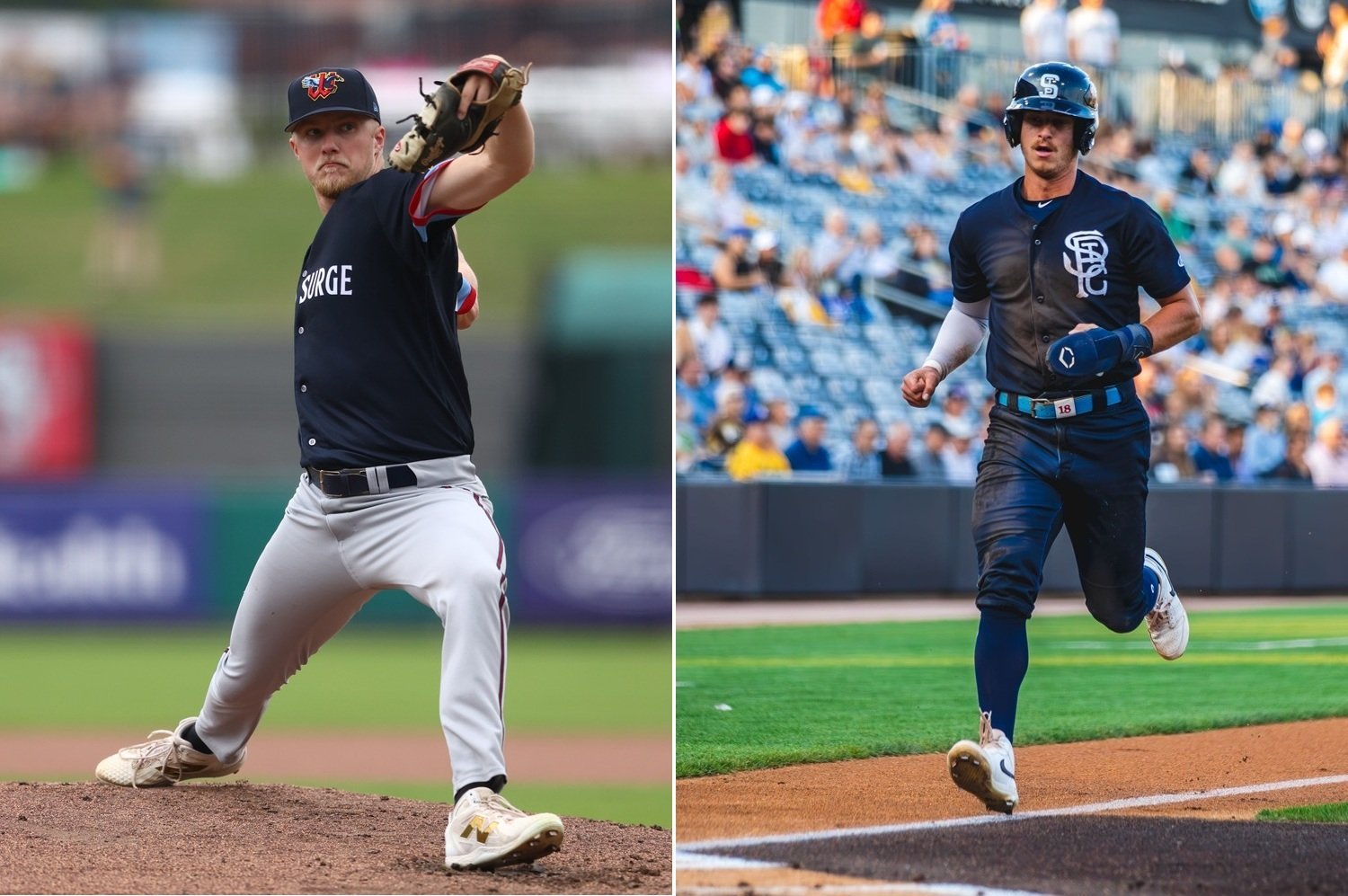 The minor-league season is filled with a series of ups and downs. That's normal in development, and then it's not unusual in the big leagues because the development continues. Look only at Sunday's Saints game to see an extreme high and an extreme low. It's going to happen. TRANSACTIONS Not transactions on Sunday. SAINTS SENTINEL St. Paul 8, Toledo 11 Box Score Kyler Fedko had an amazing day, powering the Saints to an early lead and helped build upon it. The Saints held an 8-4 lead heading into the bottom of the ninth inning. Marco Raya came on to protect the lead. In 5 2/3 innings before Sunday, he had given up three runs (2 earned) on six hits and two walks. On Sunday, he just didn’t have control or command of any of his pitches. He recorded just one out and gave up six runs on three hits and three walks. It started with a home run by Ben Malgeri. Then a walk, a double, a single, a walk. Raya made one of the more athletic plays by a pitcher, fielding a bunch, turning and throwing a strike to third base for the first out. It was followed by a walk to load the bases. That’s when Dan Altavilla came into the game. On a 2-1 pitch, Cal Stevenson crushed a 96 mph fastball for a walkoff grand slam. That’s a tough way to end a week on the road. Let’s go back in the game. Lefty Kendry Rojas made his first Saints start. He tossed 2 2/3 scoreless innings. He gave up one hit, walked one and had three strikeouts. Altavilla was the seventh reliever used in the game. Yeah, let’s just jump to the offense. In the top of the third, Eric Wagaman singled to lead off the inning. Kyler Fedko followed with his first home run of the season (429 feet). David Banuelos followed with a walk. With one out, Walker Jenkins singled to drive in Banuelos. Gabriel Gonzalez doubled Jenkins to third. Alan Roden drove in both of them with a double to make it 5-0. With one out in the top of the fourth, Kyler Fedko hit his second home run of the game (437 feet) and of the season. That made it 6-0 Saints. In the top of the sixth inning, the first two batters got out. Kyler Fedko hit his third home run of the game (397 feet), his third home run of the season. It was big because it gave the Saints a 7-4 lead. As noted in the below tweet, Fedko is the fifth player in Saints franchise history to hit three home runs in a game. The others are Jose Miranda, Brent Rooker, Spencer Steer, and Chris Williams. With two outs in the top of the eighth inning, Eric Wagaman walked. Kyler Fedko came up and tripled to center field (411 feet) to drive in the Saints eighth run. Fedko went 4-for-4 with a triple and three home runs. He scored three runs and drove in five runs. Walker Jenkins went 3-for-4 with a walk and two stolen bases. Alan Roden went 1-for-3 with two walks and his third double. Gabriel Gonzalez, who made his first start at first base, added this third double of the season. WIND SURGE WISDOM Wichita 5, Arkansas 3 (11 innings) Box Score This game was really a well-pitched game. In fact, there was no score through the first six innings. Ty Langenberg started and struck out eight batters over five shutout innings. He gave up four hits and walked none. 48 of his 65 pitches were strikes (73.8%) It was impressive as he was pitching on three days' rest. William Fleming made his first appearance since joining the Twins organization earlier in the week. The 6-6, 220 pound, 27-year-old, right-hander struck out one in a scoreless sixth inning. Jarret Whorff came on for the seventh inning and gave up two runs on two hits. He walked two and had two strikeouts. With one out in the top of the eighth, Billy Amick singled. With two outs, he moved to second on a single by Andrew Cossetti. Ricardo Olivar followed with a single to center to drive in Amick and make it 2-1. In the top of the ninth, Kyle DeBarge led off with a walk. Ben Ross singled to left. Hendry Mendez grounded to first. Ross was out at second, but Mendez beat the relay throw. With two outs, Amick singled to left to drive in DeBarge with the tying run and make it 2-2. Extra Innings! Garrett Spain started the inning as the Manfred Man at second base. With two outs, Spain was still on second. Jose Salas picked up his teammates. He lined a single to right to drive in Spain with the go-ahead run. Jaylen Nowlin struck out three batters over two scoreless innings. Ricky Castro came in for the 10th inning. The tying run scored quickly, and after an intentional walk to load the bases, he coaxed a ground ball back to the mound, starting a 1-2-3 double play and sending the game to the 11th inning. DeBarge started the inning at second base. Ben Ross singled to left and moved DeBarge to third base. Ross stole second. Hendry Mendez followed with a ground-rule double to make it 5-3. Castro went 1-2-3 in the bottom of the 11th to finish off the Wind Surge win. Ben Ross went 2-for-5. He has at least one hit in all nine games. He’s hitting .444 with an OPS of 1.139. He also now has five stolen bases. Billy Amick went 2-for-4 with a walk. KERNELS CHRONICLE Cedar Rapids 5, Beloit 15 Box Score This was a rough one for the Kernels. They gave up three runs in the second, five runs in the fourth, and six more runs in the seventh inning. Three big innings for a team, and there’s a good chance that team will win. It might even surprise you to know that the Kernels had a 3-0 lead after one-and-a-half innings. Eduardo Tait scored on a balk in the top of the first inning. Then in the top of the second, with Andy Lugo on base, Miguel Briceno hit his first home run of the season to make it 3-0. Michael Ross made the start. In two innings, he gave up three runs on four hits. Brent Francisco came on and gave up six runs on four hits (including 2 homers) and two walks. Christian Becerra walked two but got the final two outs of the fourth inning. Cody Peschl and Nick Trabacchi. Ivran Romero came in for the top of the seventh. He got one out and was charged with six runs on five hits and a walk. Eston Stull got the final five outs. The Kernels added a run in the fifth inning. Miguel Briceno singled, went to third on a Jacob McCombs doubled him to third, and Tait drove him in with a sacrifice fly. In the top of the eighth, Briceno lined a single to left to drive in Danny De Andrade with the fifth run. Tait went 2-for-5. Miguel Briceno led the offense by going 4-for-4 with two runs scored and three driven in. We haven’t written much about Miguel Briceno yet this season, so here is a quick background. He signed in July of 2019 with the Milwaukee Brewers and made his pro debut in 2021. The Twins selected him in the minor-league portion of the Rule 5 draft. He played in 59 games for Fort Myers in 2025. Unfortunately, in early July his season ended when he was placed on the 60-Day Injured List. He hasn’t had much opportunity this season with the Kernels. Last Sunday, he got one pitch hit at-bat. On Friday, he pinch ran and scored a run. Sunday was his first start of the season. MIGHTY MATTERS Ft. Myers 9, Jupiter 3 Box Score The Mighty Mussels took an early lead. They gave it back in the middle innings, but then the bats jumped back to life late in the game. Eric Hammond made the start for the Mussels. He was drafted by the Diamondbacks late in the 2021 draft but chose to pitch at Georgia. Four seasons later, he went undrafted, but the Twins signed him in early August as a non-drafted free agent. His first appearance was on Tuesday with two scoreless innings out of the bullpen. On Sunday, he started and tossed three scoreless innings. He gave up one hit, walked on and had four strikeouts. The Mussels provided him with some run support in the second inning. Jayson Bass and Ryan Sprock started the inning with singles. Bryan Acuna followed with an RBI single to center. With one out, Jorel Ortega was hit by a pitch to load the bases. Dameury Pena’s hot start continued. He drove a single to right to drive in a second run. Quentin Young flew out to right field. On the play, Ortega was thrown out trying to advance to second. However, Acuna crossed the plate first to make it 3-0. Jake Murray, a non-drafted free agent in 2025 out of Campbell, came in to start the fourth inning. He faced three batters in the fourth. He walked the leadoff man in the bottom of the fifth inning, but he got an infield pop out followed by a pair of strikeouts. The lefty came out to start the sixth inning, but the leadoff man reached on an error. At that point, Jordan Smith brought Mitch Mueller into the game. Mueller signed as a non-drafted free agent from Utah Valley in March of 2025. He was greeted by a single and then issued a walk to load the bases. Mueller got a ground ball to first base for the out, but a throwing error allowed two runners to score on the play. After a walk, the tying run scored on a sacrifice fly. He got a strikeout to end that inning, but the score was now 3-3. How would the young Mussel hitters respond? Jorel Ortega led off the top of the seventh with a single. Pena was hit by a pitch. After a pitching change and a strikeout, JP Smith walked to load the bases. Ortega scored on a wild pitch to give the Mussels a lead. Eduardo Beltre walked to re-load the bases. The runners all moved up a base, and Dameury Pena scored on a balk. The chance for a grand slam was gone, but Jayson Bass hit a ball 100 mph and 400 feet, beyond the fence in right-center field and settled for a three-run homer. It was his first of the season and gave his team an 8-3 lead. Adam Falinski, who signed as a minor-league free agent in July of 2025, worked the final three innings for Fort Myers. He walked three and gave up three hits but gave up no runs and recorded his second save. Bryan Acuna went 3-for-4 with a walk and a stolen base. He is now hitting .389. Ortega went 1-for-3 and was hit by two pitches. Dameuery Pena went 2-for-4 and was hit by a pitch. His season average now sits at .476. Jayson Bass went 2-for-5 with the three-run homer. PLAYERS OF THE DAY Hitter of the Day Kyler Fedko (St. Paul): 4-for-4, 3B(1), 3-HR(3), 3 R, 5 RBI. Pitcher of the Day Ty Langenberg (Wichita): 5 IP, 4 H, 0 R, 0 BB, 8 K, 65 pitches, 48 strikes (73.8%) PROSPECT SUMMARY Check out the Prospect Tracker for much more on our Twins Top 20 prospects after seeing how they did today. #1 - OF Walker Jenkins (St. Paul) - 3-for-4, BB, R, RBI, 2 SB(3) (batted second, DHd) #2 - IF Kaelen Culpepper (St. Paul) - 0-for-5, K (led off, played 2B) #3 - OF Emmanuel Rodriguez (St. Paul) - 0-for-4, 2 K (batted sixth, played CF) #4 - C Eduardo Tait (Cedar Rapids) - 2-for-5, R, RBI, 2 K (batted second, catcher) #5 - LHP Connor Prielipp (St. Paul) - Did Not Pitch #6 - LHP Dasan Hill (Cedar Rapids) - Did Not Pitch #7 - OF Gabriel Gonzalez (St. Paul) - 1-for-5, 2B(3), K (Batted fourth, played 1B) #8 - LHP Kendry Rojas (St. Paul) - 2 2/3 IP, 1 H, 0 R, 1 BB, 3 K, 48 pitches, 30 strikes (62.5%) #9 - SS Marek Houston (Cedar Rapids) - Did Not Play. #10 - RHP Charlee Soto (Cedar Rapids) - Injured List #11 - RHP Riley Quick (Ft. Myers) - Did Not Pitch #12 - RHP Andrew Morris (Minnesota) - MLB Debut. 3 IP, 6 H, 1 ER, 0 BB, 2 K, 67 pitches, 50 strikes (74.6%) #13 - 3B/CF Brandon Winokur (Cedar Rapids) - 1-for-5, 2 K, E(4) (batted fourth, played SS). #14 - 3B/SS Quentin Young (Ft. Myers) - 0-for-4, SF RBI, 2 K, E(6) (batted third, played SS) #15 - RHP Marco Raya (St. Paul) - 0.1 IP, 3 H, 6 ER, 3 BB, 0 K, 29 pitches, 15 strikes (51.7%) #16 - OF Hendry Mendez (Wichita) - 1-for-5, 2B(2), 2 RBI (batted third, played LF) #17 - 2B/OF Kyle DeBarge (Wichita) - 0-for-4, BB, 2 R, 3 K (batted first, played 2B) #18 - RHP C.J. Culpepper (Wichita) - Did Not Pitch #19 - C/OF Khadim Diaw (Cedar Rapids) - 0-for-3, 2 BB, K (batted third, LF, then CF) #20 - RHP James Ellwanger (Ft. Myers) - Did Not Pitch UPCOMING PROBABLES Tuesday: Lehigh Valley @ St. Paul (6:37 pm CT) - TBD Springfield @ Wichita (6:05 pm CT) - TBD Quad Cities @ Cedar Rapids (6:05 pm CT) - TBD Lakeland @ Ft. Myers (6:05 CT) - TBD CURRENT W-L Records Minnesota Twins: 9-7 St. Paul Saints: 5-9 Wichita Wind Surge: 4-5 Cedar Rapids Kernels: 5-4 Fort Myers Mighty Mussels: 6-3 FCL Twins: 0-0 (season begins Monday, May 4) DSL Twins: 0-0 (season begins Monday, June 1) Please feel free to ask questions about the teams, the rosters, and discuss today’s games, or anything else Twins minor-league related! View the full article
 -
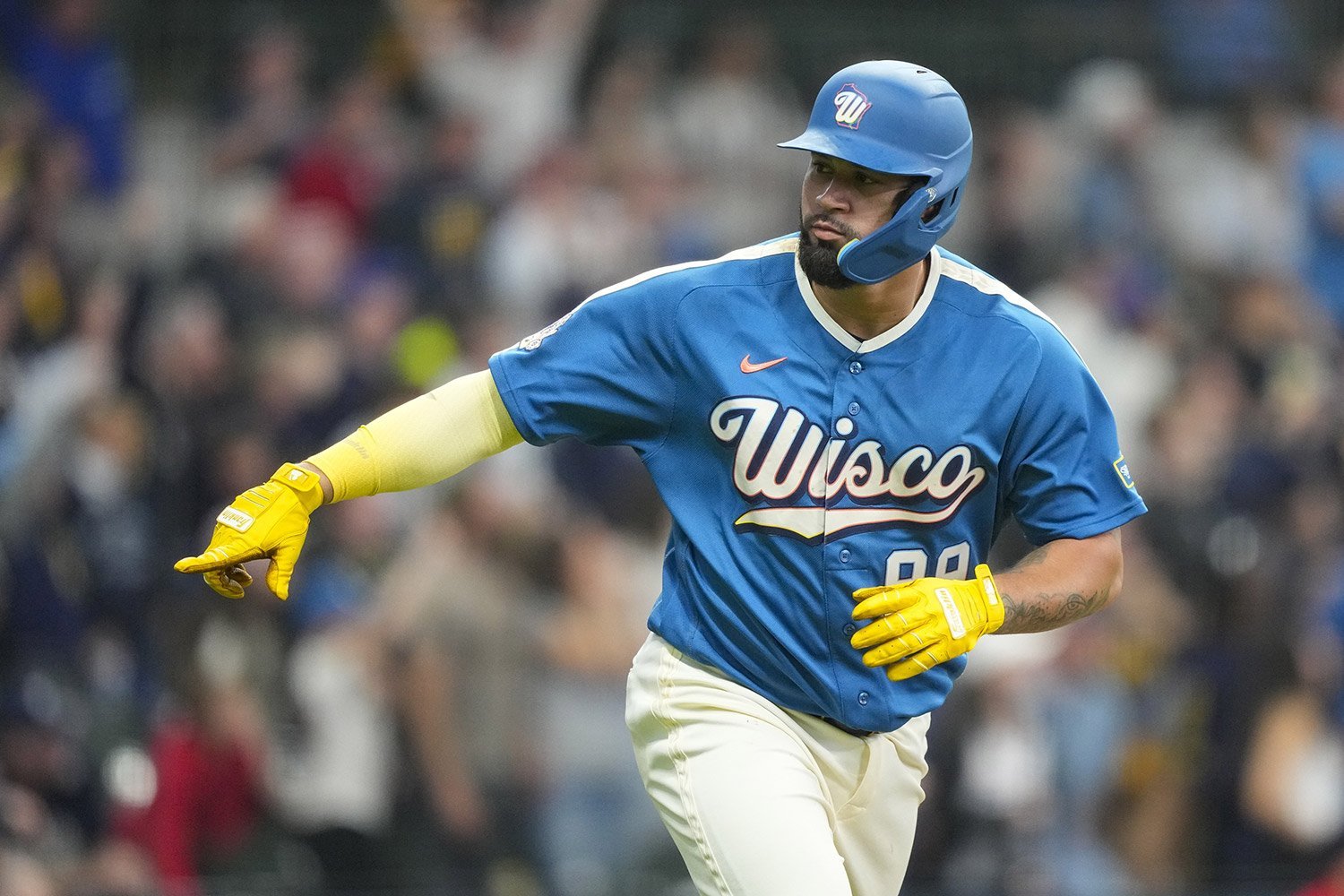 Weekly Snapshot: Record Last Week: 1-5 (Overall: 8-7) Run Scored Last Week: 20 Runs Surrendered Last Week: 32 Standing: 4th in NL Central *** Game 10 (4/6) | MIL 8, BOS 6 Game 11 (4/7) | BOS 3, MIL 2 Game 12 (4/8) | BOS 5, MIL 0 Game 13 (4/10) | WSN 7, MIL 3 Game 14 (4/11) | WSN 3, MIL 1 Game 15 (4/12) | WSN 8, MIL 6 *** Game 10 | Brewers 8, Red Sox 6 MIL Starter: Brandon Woodruff (5.2 IP, 5 ER, 2 BB, 4 K) Top Performers: Christian Yelich (3 H, BB, 2B, RBI) Garett Mitchell (2 H, 2 RBI) Sal Frelick (2 H, BB, RBI) It was a dramatic kickoff to the week for the Brewers, as a rare trip to Boston saw a reignition of an old feud with Wilson Contreras. Behind all that drama, it was Brandon Woodruff who took the ball and labored through 5 2/3 innings in game one, although at the end of the night, it was Garett Mitchell and the pesky Brewers' offense who broke through late to pick Woody up. Garett Mitchell’s go-ahead knock Game 11 | Red Sox 3, Brewers 2 MIL Starter: Jacob Misiorowski (5.1 IP, 2 H, 4 BB, 3 ER, 10 K) Top Performers: DL Hall (2.1 IP, H, BB, 0 ER, K) Gary Sánchez (H, BB) Tuesday’s contest saw Jacob Misiorowski earn his third start of the young season, and for Misiorowski, it was two different tales smashed into one. The first five innings of the game were flat-out dominant, as the young righty recorded 10 strikeouts and kept Boston off the scoreboard. In the sixth, though, he lost all command. Misiorowski only recorded one out, walked three, and left the game only to see all three of those runners come around to score. That would be all Boston needed, as behind the Miz, things didn’t fare much better. Red Sox ace Garrett Crochet quieted the Brewers' offense, twirling 6.1 innings of two-run ball. Misiorowski’s 10 K’s Game 12 | Red Sox 5, Brewers 0 MIL Starter: Shane Drohan (2.2 IP, 3 H, 4 BB, 3 ER, 2 K) Top Performers: Grant Anderson (1.1 IP, 0 H, 2 BB, 0 ER, K) Aaron Ashby (1.0 IP, 0 H, 0 ER, 2 K) The offense stayed cold for Wednesday’s rubber match, as another old foe in Sonny Gray shut down the Milwaukee offense. That spoiled the major league debut of Shane Drohan, who, after two solid innings, found himself in a similar situation as Misiorowski the night before; walking multiple batters and exiting the game without finishing the inning he started. Garett Mitchell’s tumbling grab Game 13 | Nationals 7, Brewers 3 MIL Starter: Aaron Ashby (2.0 IP, 3 H, 2 ER, 4 K) Top Performers: Jake Bauers (2 H, BB, HR, 3 RBI) Aaron Ashby and Chad Patrick were the opener/bulk pairing for the Brewers in the series opener against Washington, a move that saw Ashby surrender two early runs and Patrick twirl three scoreless innings behind him. It seemed as if the ploy for Pat Murphy had worked, but a late implosion at the hands of Trevor Megill blew what was a small lead from a struggling offense. Jake Bauers’ 3-run home run (+26.5 WPA%) Game 14 | Nationals 3, Brewers 1 MIL Starter: Kyle Harrison (4.1 IP, 4 H, BB, 2 ER, K) Top Performers: William Contreras (H, HR, RBI) The Brewer bats remained cold into the weekend, as Nat’s starter Foster Griffin allowed just one hit in his stringent effort against the Crew, while Milwaukee starter Kyle Harrison battled through an early injury scare in his 4.1 innings of work. Unfortunately, his gutsy outing wasn’t rewarded, as it wasn’t until the 9th inning that the Brewers managed to scrape across a run, and by then, their last rally fell short. William Contreras’ solo homer (+5.2 WP%) Game 15 | Nationals 8, Brewers 6 MIL Starter: Brandon Woodruff (6.0 IP, 3 H, 2 ER, 6 K) Top Performers: Brice Turang (3 H, BB, 2 HR, 2 RBI) Gary Sánchez (H, HR, 3 RBI) Jake Bauers (2 H, HR, RBI) It was the bullpen's turn to spoil a win in Milwaukee, as on Sunday, a quality start from Brandon Woodruff was squandered by the pesky Nationals, scoring six runs late. On the offensive side, there were some signs of life, though, as Brice Turang recorded the Brewers' first multi-homer game of the season, and both Gary Sanchez and Jake Bauers went deep as well. Turang's second homer of the day (+15.0 WP%) Transactions: 04/10/26 - Recalled RHP Easton McGee from AAA Nashville. 04/09/26 - Signed free agent RHP Reiss Knehr to a minor league contract. 04/09/26 - Optioned LHP Shane Drohan to AAA Nashville. 04/08/26 - Traded RF Steward Berroa to Philadelphia Phillies for cash. 04/06/26 - Placed LHP Jared Koenig on the 15-day injured list with a left elbow sprain. (Retroactive to April 5, 2026) 04/06/26 - Recalled LHP Shane Drohan from AAA Nashville. Notes Christian Yelich left Sunday’s game with left hamstring tightness. His status for the future is currently unknown, although manager Pat Murphy was not optimistic about Yelich avoiding an injury. Both Brand Sproat and Kyle Harrison were being evaluated for Knee injuries after Saturday's game; however, it seems both have avoided any major injury. Looking Ahead: Tuesday, 4/14 - Blue Jays @ Brewers - 6:40 pm CDT Wednesday, 4/15 - Blue Jays @ Brewers - 6:40 pm CDT Thursday, 4/16 - Blue Jays @ Brewers - 12:40 pm CDT Friday, 4/17 - Brewers @ Marlins - 6:10 pm CDT Saturday, 4/18 - Brewers @ Marlins - 3:10 pm CDT Sunday, 4/19 - Brewers @ Marlins - 12:40 pm CDT View the full article
 -
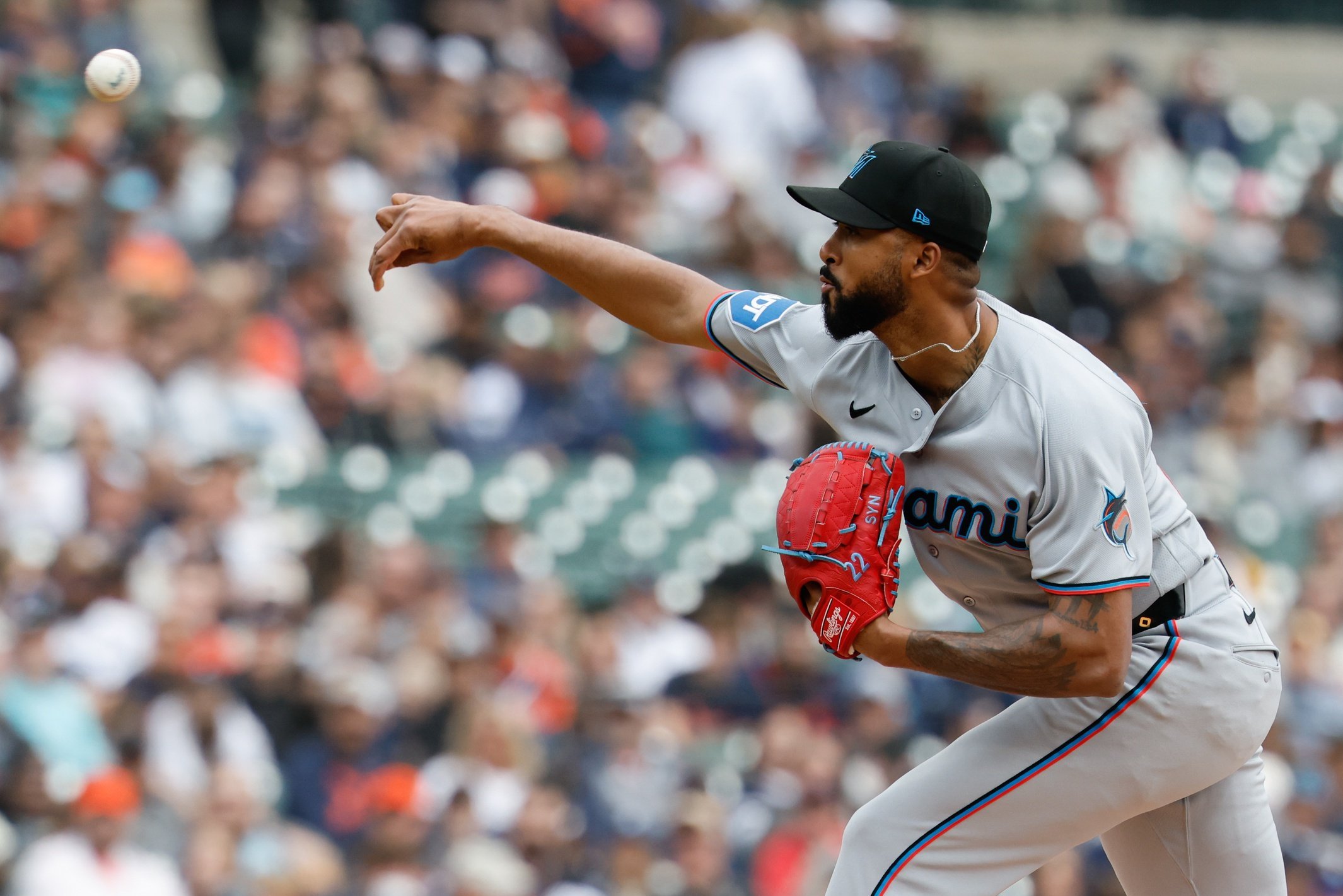 The Miami Marlins fell behind early and stayed behind in losing to the Detroit Tigers on both Friday and Saturday. Looking to avoid the sweep on Sunday, they had to feel good about having their ace, Sandy Alcantara, on the mound. Unfortunately, that optimism was quelled by the notion of facing two-time, reigning AL Cy Young award winner Tarik Skubal. For the first two-thirds of the game, the Marlins offense may as well have just stayed home. Carrying a no-hitter into the sixth inning, it would be Austin Slater, in solely due to Skubal's left-handedness, who dunked a single into center field to get Miami in the hit column. Skubal wound up tossing 6 ⅔ innings of one-run ball in Detroit's 8-2 win over Miami, clinching a series sweep. In his four starts to begin the season, Skubal has completed six innings in three of them. In his two prior outings against the Marlins, Skubal owned an ERA of 9.00. Alcantara's afternoon would not be smooth sailing, as the former Cy Young winner allowed seven runs in six innings. In his three starts before Sunday, Alcantara allowed just two earned runs, posting a 0.74 ERA in what has been a resurgent season for him. On the day, Alcantara allowed 15 hard-hit balls, all on each pitch in his arsenal. "Tough series this weekend," noted manager Clayton McCullough. "This is just part of the season, so the positive is that this part is over...All we can try to do is play better tomorrow," continued McCullough. With the loss, Miami falls to 8-8, the first time they've been .500 since Opening Day. In the weekend series, Miami went 0-for-16 with runners in scoring position. After retiring Kevin McGonigle and Gleyber Torres to begin his outing, back-to-back singles would come back to bite Alcantara, as Skubal's battery mate, Dillon Dingler, launched his third home run of the season. Alcantara would settle into the tune of scoreless frames two through four before McGonigle, a .322 hitter in his first big league season, would tag him for his first career home run. On the day, the Tigers would find the outfield seats three times against Alcantara, marking the seventh time he's allowed as many home runs in a single outing. Entering this series, the Marlins offense was above-average in most offensive categories. Whatever excuses you'd like to apply to their struggles at Comerica Park, whether it be the low temperatures, solid quality of competition or absence of newly injured Griffin Conine, the end result was an abysmal output of only three runs. That makes this Miami's lowest-scoring series in nearly a calendar year (3 R vs. SF from 5/30-6/1/25). Looking Ahead The Marlins' road trip will continue with a stop in Atlanta, where they'll meet the Braves for the first time this season on Monday. Eury Pérez (1-1, 5.06 ERA) will look to overcome his road woes in the series opener. In 23 career starts away from loanDepot park, the soon-to-be 23-year-old owns a 5.02 ERA, nearly double the 2.59 mark he's posted at home. Opposing him, Grant Holmes (1-1, 2.55 ERA) will make his fourth career start against Miami, whom he owns a 3.14 ERA against. First pitch from Truist Park is slated for 7:15 EST. View the full article
 -
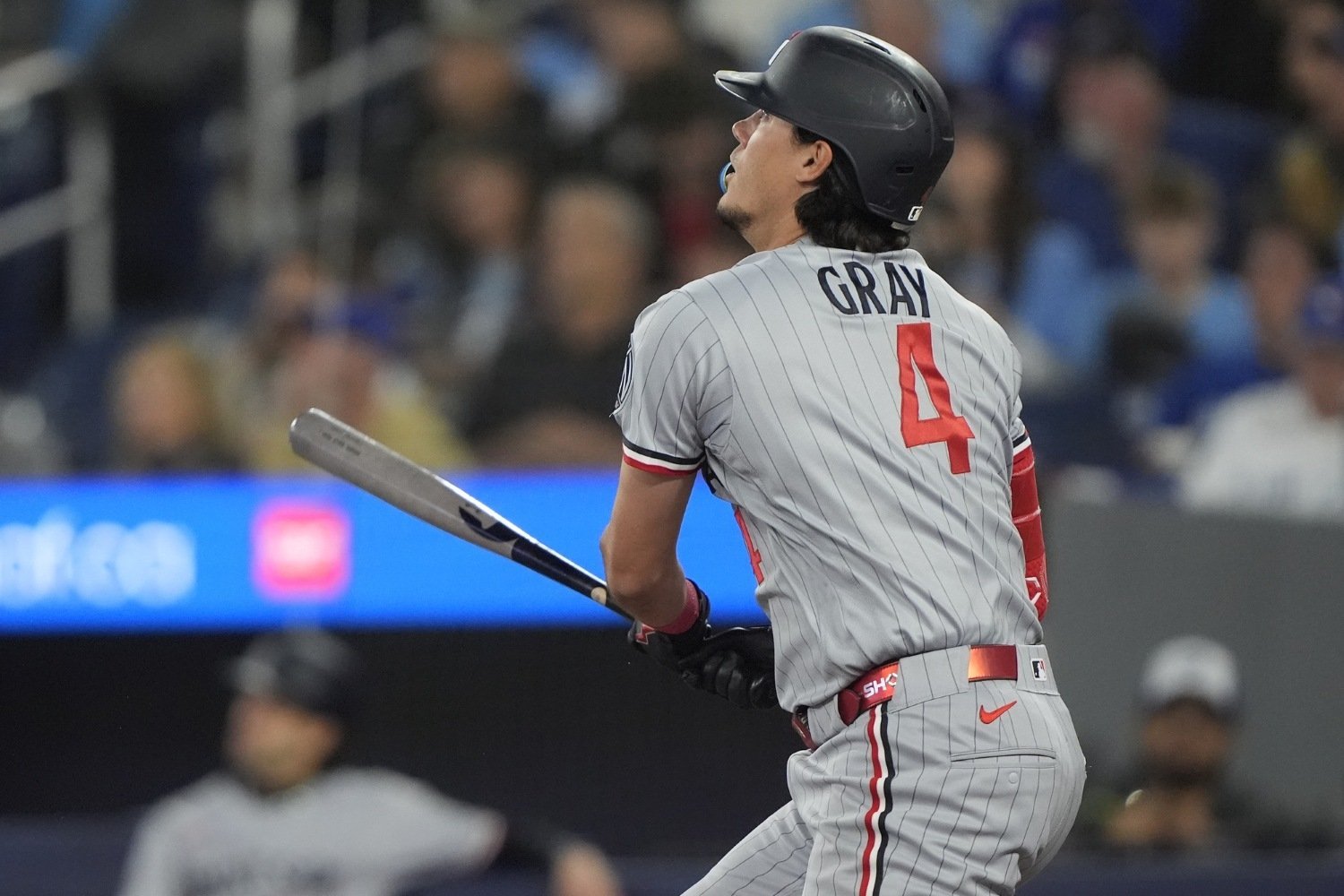 Box Score: Starting Pitcher: Taj Bradley: 5 IP, 5 H, 1 ER, 4 BB, 7 K (106 Pitches, 62 Strikes, 58.5%) Home Runs: Tristan Gray (2), Kody Clemens (2) Top 3 WPA: Gray (0.25), Matt Wallner (0.10), Josh Bell (0.07) Win Probability Chart (Via BaseballSavant): In a baseball landscape in which no team (other than the Dodgers, perhaps) really looks that impressive, the Twins had mjuddled their way to 8-7 entering Sunday, after sweeping the Tigers and splitting the first two games against the AL Champion Blue Jays. Adding the competent veteran bats of Josh Bell and Victor Caratini has helped, but the starting rotation has been the team's greatest strength—despite the absence of injured ace Pablo López. Chief among the early rotation success stories has been Taj Bradley, who was utterly dominant against Detroit on Tuesday night, striking out 10 and working into the seventh inning. His command of his 91-MPH splitter (in conjunction with his high-octane fastball) has unlocked the long-dormant upside that made him a top-50 prospect just a few years ago. Opposing Bradley was the withered husk of Max Scherzer, who came in seeking strikeout number 3,500 for his career. Scherzer had an MRI on his right forearm after leaving his most recent start. The MRI was "clean," but that's like saying a politician over 80 passed a cognitive test. In any case, Scherzer worked a smooth first inning. That was not the case for Bradley. Ernie Clement led off and roped a double down the left-field line, and Dalton Varsho singled past a diving Luke Keaschall, making the score 1-0 almost instantly. Bradley's command was all over the place, which led to falling behind hitters. He was lucky to get away with a few hanging breaking balls. He did bear down and got Jesús Sánchez to tap into a double play. A walk would follow before Bradley got the strikeout on an elevated fastball to Nathan Lukes to end the frame. That was key, because Tristan Gray was due up in the second. With two runners on, Gray got a cutter to his liking and smashed it over the bullpen in right field to make the score 3-1 Twins. At his peak, Scherzer was ruthlessly efficient, but he did tend to give up a home run or two—making him similar to fellow legends Justin Verlander and Johan Santana. That number has spiked in recent years, however, and Kody Clemens led off the third with a 417-foot moonshot off a Scherzer slider left up in the zone. The damage wouldn't end there. Trevor Larnach and Keaschall singled, followed by a walk to Josh Bell. Matt Wallner then laced a single to right, Caratini hit a sacrifice fly, and Brooks Lee scorched a two-run double down the left-field line. All of a sudden, it was 8-1 Twins. Scherzer was done after 2 1/3 innings; the Lee double came off of reliever Joe Mantiply. Bradley appeared a little rusty after the long layoff, falling behind every hitter he faced in the third, but got Sánchez swinging on what would have been ball four, and Kazuma Okamoto flied out harmlessly on a 3-1 fastball that ended the inning. Bradley just couldn't land strikes with anything but his fastball. Eloy Jiménez sat on the pitch and turned around a 97-MPH heater for a sharp single in the fourth, and Andrés Giménez hit a fastball on the ground that Keaschall made a nice play on to retire the lead runner. Bradley threw fastball after fastball to the nine-hole hitter, Brandon Valenzuela, on 3-2, before throwing a non-competitive curveball high and out of the zone. On the ropes, he threw a couple of cutters in the middle of the zone to get ahead of Clement, before a curveball was laced on a line—right to Gray at third base to end the inning (a .720 expected batting average). The Twins are in the midst of playing quite a few games in a row, which may have played into Derek Shelton allowing Bradley to pitch the fifth. Bradley fell behind Varsho 3-0 before allowing a rocket double down the right-field line to start the frame. He retired Vladimir Guerrero Jr. on a splitter and struck out Sÿnchez on a challenge fastball. He then threw one of his better cutters of the day to strike out the struggling Okamoto. His ERA won't rise much today, but this was Bradley's worst start of the year, by far. His last inning was better, as he at least got the Blue Jays hitters off his fastball a little by landing some cutters for strikes. On one hand, he held a solid Toronto lineup to one run, but on the other hand, different sequencing and more batted-ball luck could have resulted in a brutal outing given his general lack of command. But that's showbiz. Andrew Morris made his debut in the sixth and looked good, hitting 98 MPH on his fastball; staying in the zone (for the most part); and dropping a sharp, slow curveball at 75-76 MPH that kept hitters honest—except for Giménez, who stayed on a curveball and roped it into the corner because he is not an honest man. Morris also seems to come from the Joe Ryan school of reacting to everything that happens in pretty comical ways. He got out of the sixth, but ran into some trouble in the seventh and eighth, with spottier command and some louder contact. He also threw a lot of pitches (67) over his three innings of work. Things to Track: The defense was good, with some nice plays made by Keaschall and Gray on the infield that kept innings from mushrooming. James Outman went hitless again. He still does not have a hit in 2026. Trading Brock Stewart for him was one of the most inconsequential (but still frustrating, somehow?) transactions in recent memory. Gray has 11 RBIs, second on the team to Bell, who has 12. Lee has been hitting well lately, but it seems a little precious, kinda like Bartolo Colón hitting that one home run. We'll see how long it lasts, but if this team somehow remains competitive, Kaelen Culpepper might be the better option, pushing Lee to a utility role. What’s Next: The Twins host the Red Sox as Bailey Ober (1-0, 5.27 ERA) takes on Garrett Crochet (2-1, 3.12 ERA). The Red Sox have been cold to start the year, but have tons of talent, with a lot of hitters with good track records who have yet to get going. The Twins' porous bullpen might be just the thing to warm those bats up—but so far, that pen has been surprisingly competent. Postgame Interviews: Coming soon. Bullpen Usage Chart: WED THU FRI SAT SUN TOT Morris 0 0 0 0 67 67 Banda 21 0 36 0 0 57 Funderburk 20 0 0 17 0 37 Acton 0 35 0 0 0 35 Topa 10 0 12 0 12 34 Sands 9 0 0 22 0 31 Rogers 0 0 30 0 0 30 Orze 0 14 0 0 0 14 View the full article
 -
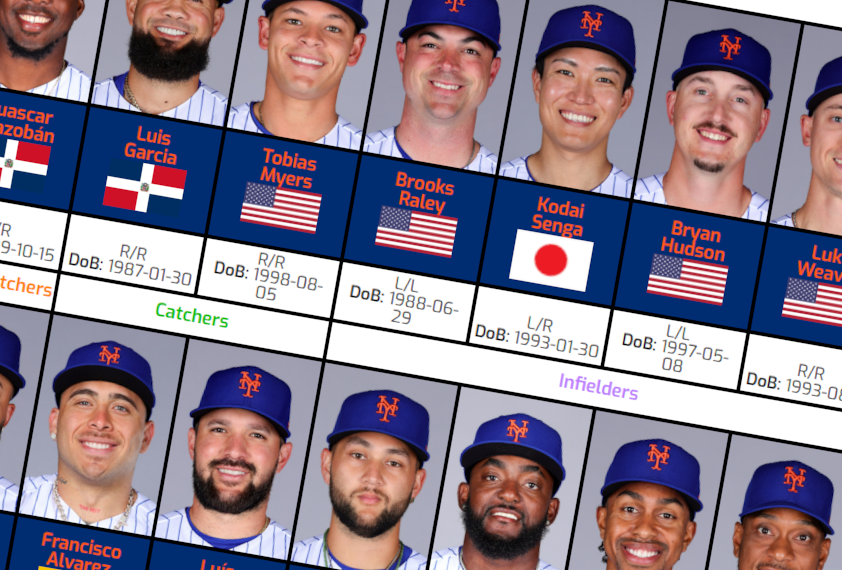 As surely as Spring follows Winter, when a team is having trouble winning, they will begin juggling relievers on and of the roster, whether or not it is their bullpen costing them wins. So it goes with the current iteration of the Mets, making their second reliever DFA in as many days, while they utterly struggle in the scoring department — as if their relievers even own bats. Transactions, 4/12/2026 GOING COMING Designated for Assignment Promoted from Syracuse Relief Pitchers Relief Pitchers Luis Garcia Joey Gerber R/R DoB: 1987-01-30 High Level: MLB (2026) R/R DoB: 1997-05-03 High Level: MLB (2025) Say what you want about Luis Garcia, that thick, bushy bird's nest on his chin made him the most readily identifiable of the denizens of the new-look Mets bullpen. A shutout ninth yesterday, however, proved to be less his salvation and more of an attempt by the Mets to soak up as much slop with him in a mop-up situation as they could before banishing the 14(!!)-year-vet to DFA-land. The beneficiary of Garcia's bad news — Joey Gerber — previous appeared in the majors in 2020 with the Mariners (and does 2020 even count?!), before returning for a cameo last year with the Rays. A 5.40 ERA at Syracuse for The Big Baby (and please let that be his actual nickname) is hardly making a strong case for being first guy up, but he's on the 40-Playe Roster, and that tends to get a guy to the head of the line. An important Joey Gerber note: The Mets reserve relief corps (RRC) also features minor-league veteran Jordan Geber, currently unscored up on in 3 2/3 innings between Binghamton and Syracuse. Barring an injury, he is almost certain to see some time with the big club this year, and just as likely to be conflated with Gerber. Joey Gerber. Jordan Geber. Reserve separate and distinct room for the two of them in your head while you still can. Your Mets Coaching Staff Manager Bench Coach Pitching Coach Hitting Coordinator Third Base Coach First Base Coach Bullpen Coach Ass't Pitching Coach Carlos Mendoza Kai Correa Justin Willard Jeff Albert Tim Leiper Gilbert Gomez José Rosado Dan McKinney DoB: 1979-11-27 DoB: 1989-07-14 DoB: 1990-09-09 DoB: 1992-08-16 DoB: 1996-07-19 DoB: 1992-03-08 DoB: 1974-11-09 DoB: 1989-06-06 Hitting Coach Strategy Coach Catching Coach Coaching Assistant Bat'g Practice Pitcher Equipment Manager Bullpen Catchers Bullpen Catchers Troy Snitker Danny Barnes J.P. Arencibia Rafael Fernandez Kevin Mahoney Kevin Kierst Eric Langill Dave Racaniello DoB: 1988-12-05 DoB: 1989-10021 DoB: 1986-01-05 DoB: 1988-08-03 DoB: 1987-05-11 DoB: 1964-07-09 DoB: 1979-04-09 DoB: 1978-06-03 Your Mets Training Staff Director of Player Health Head Athletic Trainer Assistant Athletic Trainer Reconditioning Coordinator Reconditioning Therapist Head Performance Coach Assistant Performance Coach Performance Coordinator Brian Chicklo Joseph Golia Bryan Baca Sean Bardanett Josh Bickel Dustin Clarke Tanner Miracle Jeremy Chiang DoB: 1972-07-17 DoB: 1978-??-?? DoB: Circa 1980 DoB: 1988-06-23 DoB: 1996-??-?? DoB: 1987-??-?? DoB: 1991-??-?? DoB: ????-??-?? Your 2026 New York Mets Starting Pitchers Clay Holmes Nolan McLean Freddy Peralta David Peterson Kodai Senga R/R DoB: 1993-03-27 R/R DoB: 2001-07-24 R/R DoB: 2996-06-04 L/L DoB: 1995-09-03 L/R DoB: 1993-01-30 Relief Pitchers Huascar Brazobán Luis Garcia Craig Kimbrel Sean Manaea Tobias Myers Brooks Raley Luke Weaver R/R DoB: 1989-10-15 R/R DoB: 1987-01-30 R/R DoB: 32291 R/L DoB: 1992-02-01 R/R DoB: 1998-08-05 L/L DoB: 1988-06-29 R/R DoB: 1993-08-21 Relief Pitchers Catchers Infielders Devin Williams Francisco Alvarez Luís Torrens Bo Bichette Francisco Lindor Ronny Mauricio Jorge Polanco R/R DoB: 1994-09-21 R/R DoB: 2001-11-01 R/R DoB: 1996-05-02 R/R DoB: 1998-03-05 S/R DoB: 1993-11-14 S/R DoB: 2001-04-04 S/R DoB: 1999-11-13 Infielders Outfielders Marcus Semien Mark Vientos Brett Baty Carson Benge Luis Robert, Jr. Tyrone Taylor Jared Young R/R DoB: 1990-09-17 R/R DoB: 1993-12-11 L/R DoB: 1999-11-13 L/R DoB: 2003-01-20 R/R DoB: 1997-08-03 R/R DoB: 34356 L/R DoB: 1995-07-09 Also on 40-Player Roster Starting Pitchers Relief Pitchers Tylor Megill Christian Scott Jonah Tong Alex Carrillo Reed Garrett Justin Hagenman A.J. Minter R/R DoB: 1995-07-28 R/R DoB: 1999-06-15 R/R DoB: 2003-06-19 R/R DoB: 1997-06-06 R/R DoB: 1993-01-02 R/R DoB: 1996-10-07 L/L DoB: 1993-09-02 On 60-Day Injured List with torn right UCL. With Syracuse With Syracuse With Syracuse On 60-Day Injured List — right UCL surgery and nerve relocation surgery. On 60 Day Injured List with fractured rib. With St. Lucie on Rehab Assignment Relief Pitchers Catchers Outfielders Dedniel Núñez Jonathan Pintaro Dylan Ross Austin Warren Hayden Senger MJ Melendez Nick Morabito R/R DoB: 1996-06-05 R/R DoB: 1997-11-07 R/R DoB: 2000-09-01 R/R DoB: 1996-02-05 R/R DoB: 1997-04-03 L/R DoB: 1993-11-29 R/R DoB: 2003-05-07 On 60-Day Injured List — right UCL surgery. With Syracuse With Syracuse, on Seven-Day IL With Syracuse With Syracuse With Syracuse With Syracuse Outfielders Juan Soto L/L DoB: 1998-10-25 On 15-Day Injured List with strained right calf Designated for Assignment Relief Pitchers Relief Pitchers Luis Garcia Richard Lovelady R/R DoB: 1987-01-30 L/L DoB: 1995-07-07 Designated for Assignment, 2026-04-11 View the full article
 -
Cubs' Hunter Harvey Lands on IL With Triceps Injury
DiamondCentric posted an article in North Side Baseball
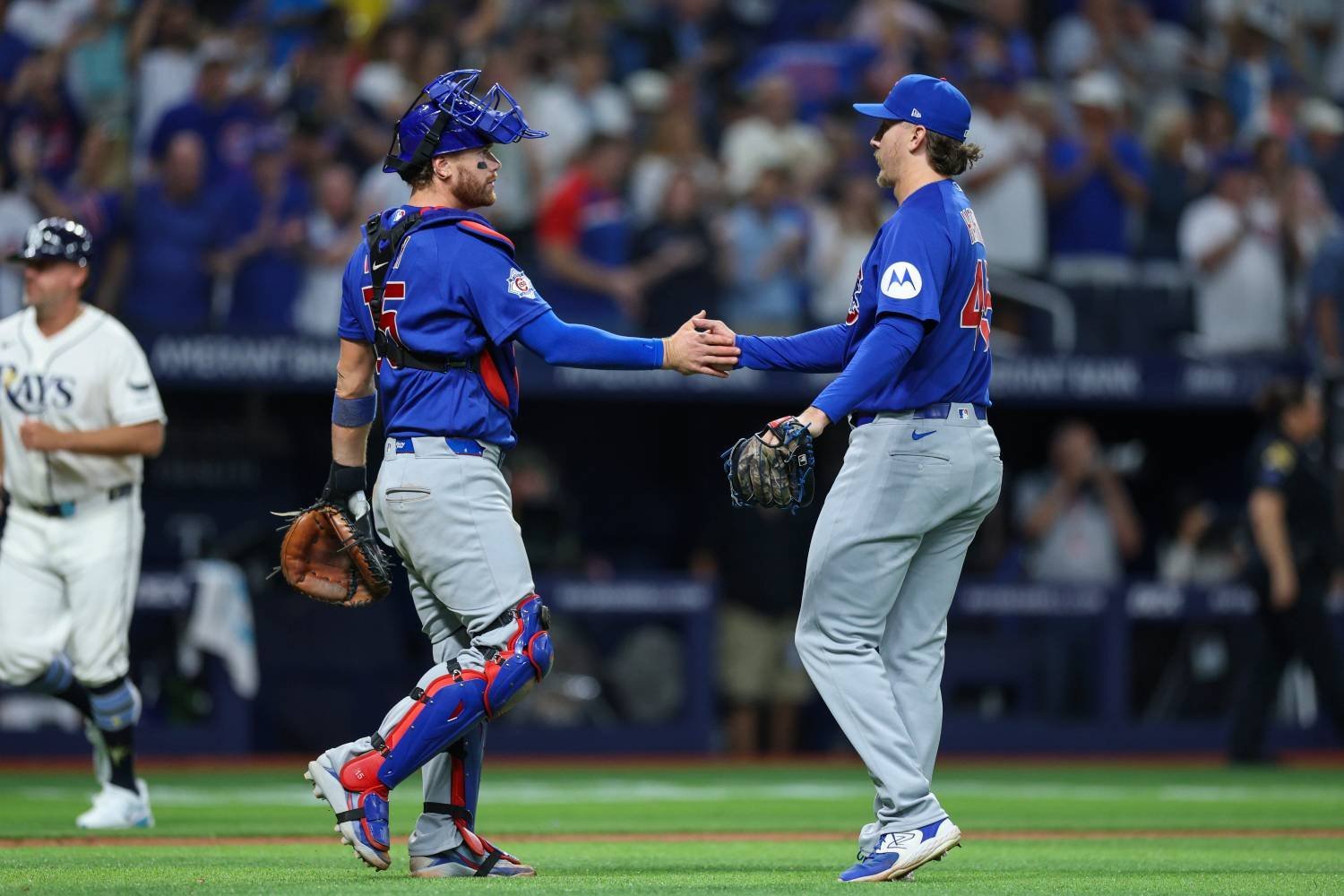 Perhaps now we know why Hunter Harvey was struggling in the early stages of the season. The Chicago Cubs' right-handed reliever was placed on the 15-day injured list Sunday due to right triceps inflammation. Left-handed reliever Charlie Barnes was promoted from Triple-A Iowa and added to the 40-man roster, which had an open spot. Harvey becomes the eighth pitcher to go on the IL this year. Signed to a one-year, $6 million contract with an option for 2027, Harvey has appeared in four games with a 8.37 FIP (6.75 ERA), allowing three runs, including two homers, with one walk and four strikeouts in four innings. He last appeared in a game Wednesday, facing the minimum three batters while giving up a hit in the ninth inning to finish off a 6-2 win over the Tampa Bay Rays. Barnes is back in the majors for the first time since 2021 with the Minnesota Twins. He made three appearances, one start, at Iowa and posted a 2.38 ERA in 11⅓ innings. Barnes gave up three runs on eight hits, but did walk eight while striking out 14. He made nine appearances for the Twins five years ago with a 5.92 ERA, then spent the next three seasons with Lotte of the Korea Baseball Organization. View the full article
 -
 The early returns from the Twins' offseason moves are already impactful, as Josh Bell, Victor Caratini, and Taylor Rogers have wasted no time making their presence felt. With contributions from Tristan Gray and Eric Orze as well, this new group is quickly giving the Minnesota Twins exactly what they needed. View the full article
 -
Rob Manfred Discusses World Baseball Classic Schedule Overhaul
DiamondCentric posted an article in Twins Daily
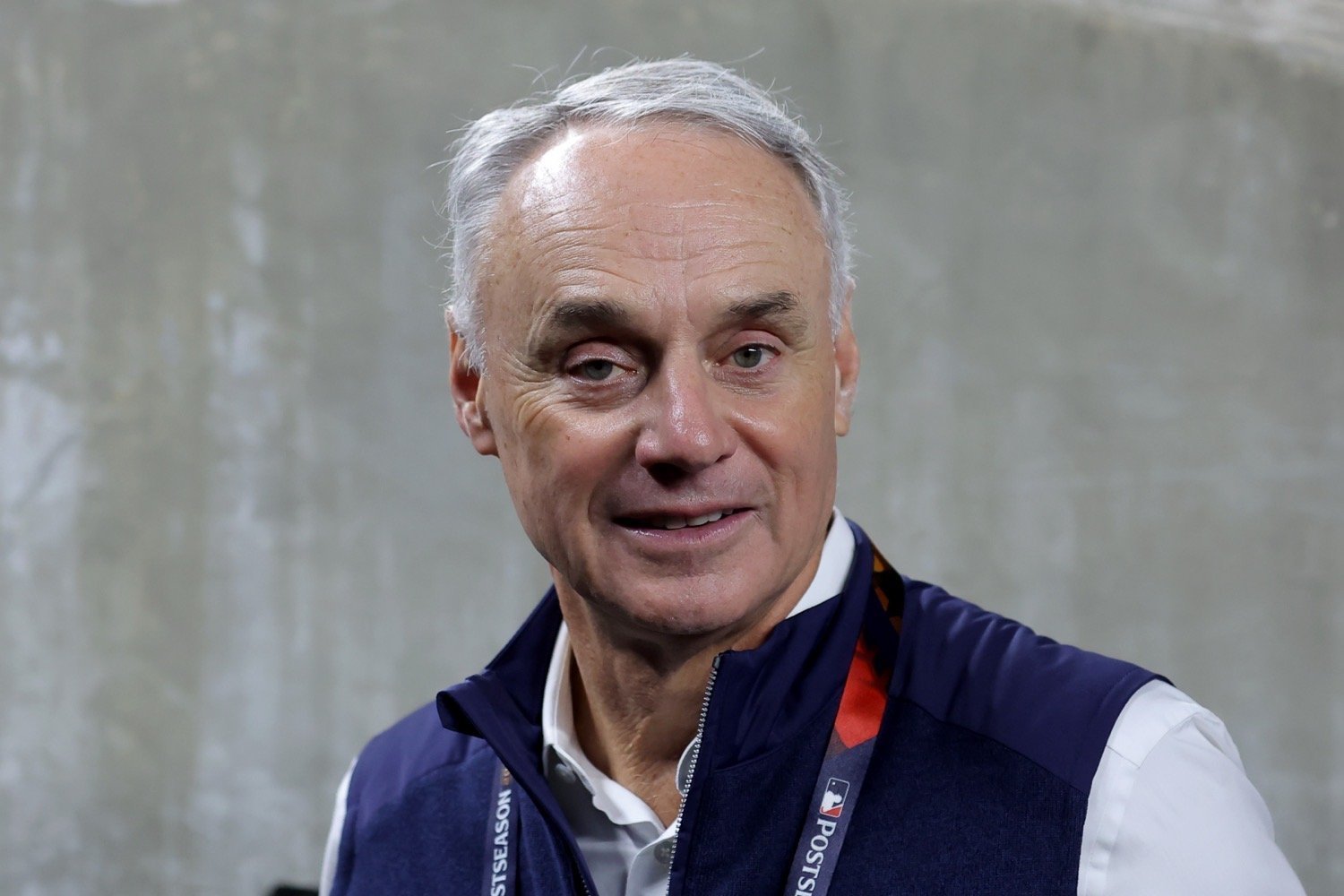 Fresh off what has arguably been the most successful World Baseball Classic to date, Rob Manfred is already looking at ways to adjust the event’s future. That instinct is understandable given the tournament’s rapid growth, but it also raises a familiar question. Why fix something that is clearly working? Appearing on The Dan Patrick Show to discuss the beginning of the 2026 MLB season, Manfred was asked whether the WBC could become a more frequent event. His answer made it clear that Major League Baseball is seriously considering changes to the tournament’s cadence. “We’re gonna have a meeting on the WBC, which we always do after it is completed. I think the event was so successful this time that we need to talk about frequency, regularity of schedule,” Manfred said. “It’s one thing to not to do it every year, our problem because of COVID, labor negotiations, whatever, you can’t even say it’s every four years. It hasn’t been. Given how popular it is, we need to get into a regular rotation.” The desire for consistency is not unreasonable. Since its debut in 2006, the World Baseball Classic has never truly settled into a rhythm. It began on a three-year cycle before shifting to four years, only to see that plan disrupted by a six-year gap following 2017 due to the pandemic. When the tournament finally returned in 2023, it delivered one of the most iconic moments with a Japan versus the United States championship for the ages. That game alone proved the event had evolved far beyond exhibition status. By the time the 2026 tournament wrapped up, the momentum had only grown. Television ratings climbed, global interest surged, and the overall product felt bigger than ever. Fans were invested, players were all in, and the atmosphere carried a level of intensity that even October baseball sometimes struggles to match. That is exactly why Major League Baseball should proceed with caution. Manfred is correct in identifying the need for a clear and predictable schedule. A defined rotation benefits fans trying to plan around the event and gives broadcast partners something concrete to build around in future media negotiations. It is difficult to maximize value when networks are unsure when the next tournament will take place. However, consistency does not have to mean increased frequency. There has already been discussion of experimenting with more dramatic changes, including moving the WBC to the middle of the MLB season. That concept feels misguided. Players already balance a demanding 162-game schedule, and the mid-summer break serves a purpose. Asking them to replace rest with high-intensity international competition risks diminishing participation, which is the lifeblood of the tournament. Even a small adjustment, such as shifting to a two-year cycle, could have unintended consequences. Part of what makes the World Baseball Classic special is its rarity. When players know the opportunity only comes around every few years, the urgency is real. National pride carries more weight. The stakes feel higher. If the event becomes more frequent, that edge could soften. The World Baseball Classic absolutely needs structure. The past two decades have proven that a floating timeline creates confusion and limits its long-term growth. But structure does not require reinvention. Baseball finally has something that captures global attention in a meaningful way. The solution is not to tinker with its foundation, but to solidify it. View the full article
 -
Mets Call Up Joey Gerber, DFA Luis Garcia In Bullpen Move
DiamondCentric posted an article in Grand Central Mets
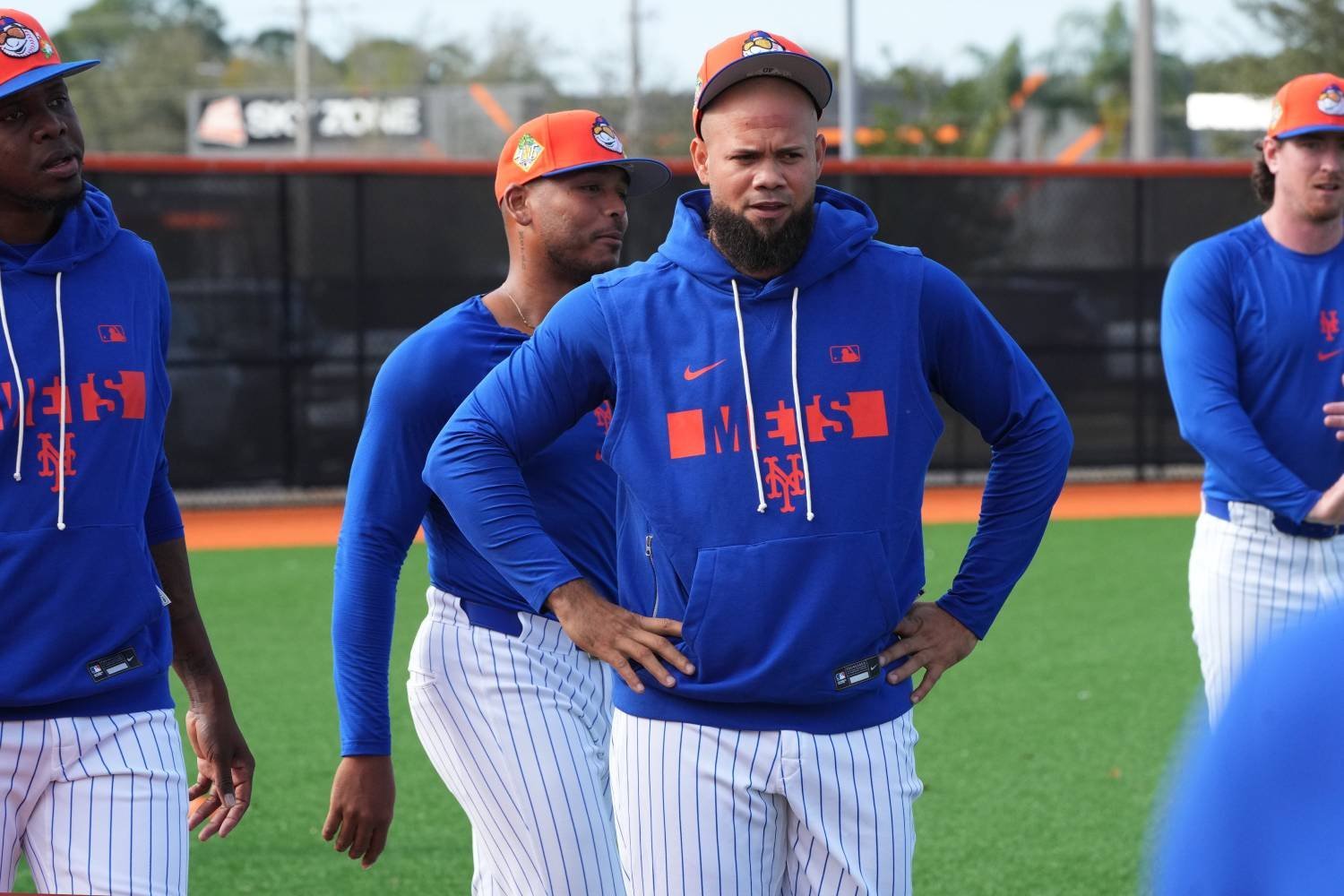 The Luis Garcia era with the New York Mets lasted just six games. The 39-year-old right-handed reliever was designated for assignment as the Mets called up right-handed reliever Joey Gerber from Triple-A Syracuse. Gerber was not on the 40-man roster, thus the need to DFA Garcia. One of three bullpen signings this offseason, albeit to a modest one-year, $1.75 million deal, Garcia appeared in six games with a 2.80 FIP but a 7.11 ERA. He walked two and struck out four in 6⅓ innings, giving up six total runs in three of his six appearances. His last outing was in Saturday's 11-6 loss where he pitched a scoreless ninth inning, allowing one hit and striking out one. The Mets are on the hook for the entire contract if no one claims him off waivers. Gerber gets his chance with the Mets. Acquired in an early-November trade with the Tampa Bay Rays after he had been DFA'd, Gerber had a 5.40 ERA in four games covering five innings, walking one and striking out five. He has appeared in 19 MLB games in two seasons, 17 with the Seattle Mariners in 2020 and two with the Rays last year. Gerber has a 4.38 FIP (3.60 ERA) in 20 innings, with 10 strikeouts against five walks. Gerber didn't pitch in 2021 due to back surgery and missed 2023 due to Tommy John surgery. View the full article
 -
Minnesota Twins Prospect Retrospective: Andrew Morris
DiamondCentric posted an article in Twins Daily
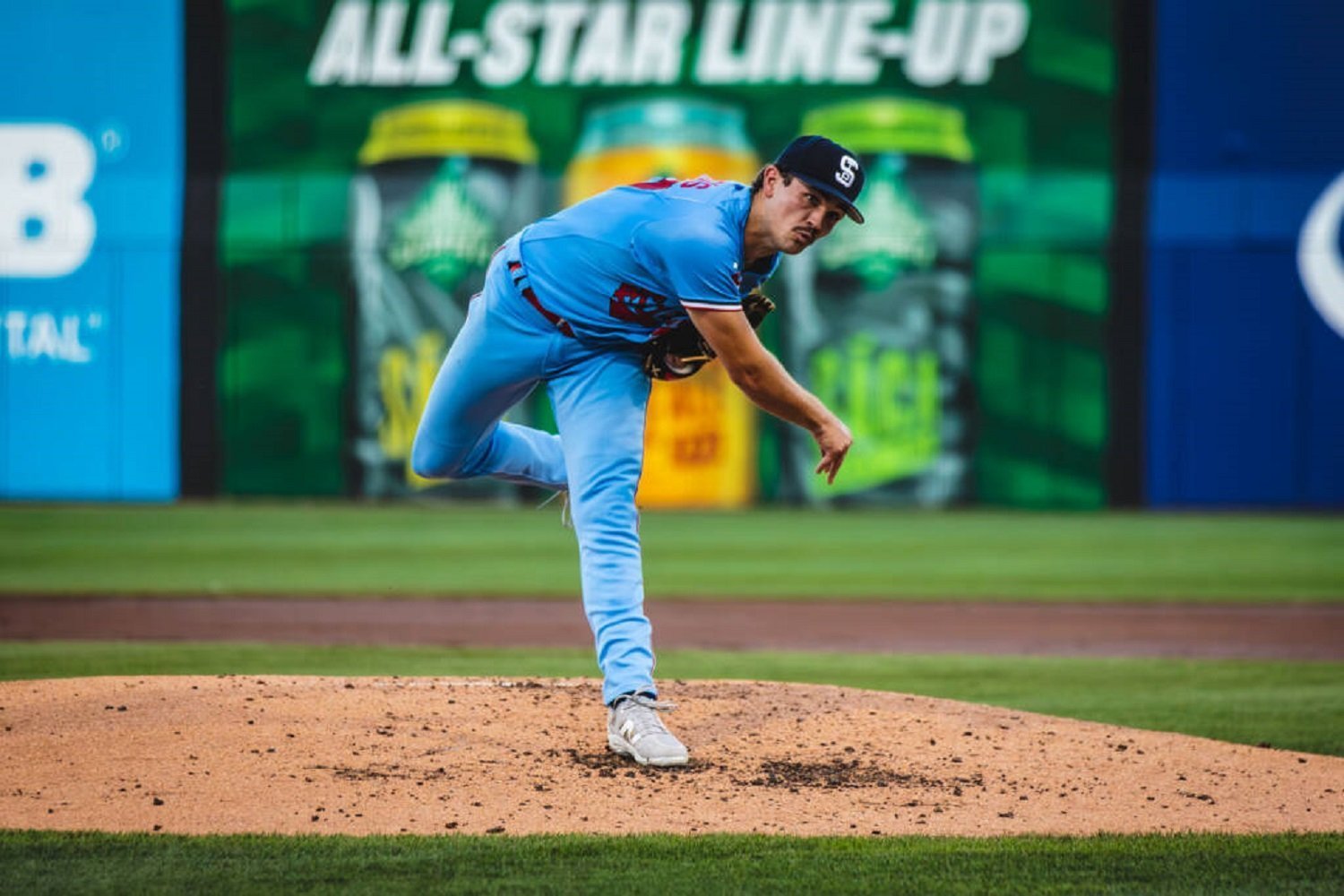 Andrew Morris has never taken the conventional road, and that is part of what makes his climb through the Minnesota Twins system so compelling. Now, that journey is intersecting with opportunity, as the Twins have turned to Morris to help fill the void left by the injured Cody Laweryson. A fourth-round pick in the 2022 Draft, Morris has steadily worked his way from relative obscurity into a legitimate big league option, even if the journey has come with a few bumps along the way. Morris started his college career at Division II Colorado Mesa, spending three years in the starting rotation before transferring to Texas Tech. Once there, he took on a prominent role as the Red Raiders' Friday night starter, putting himself firmly on the draft radar. In 88 1/3 innings, he posted a 4.58 ERA with a 1.22 WHIP and 9.3 K/0. The Twins saw enough to make him a fourth-round selection, and Morris quickly began validating that decision. His early professional seasons showed steady growth, but it was his 2024 campaign that truly put him on the map. Breakout in 2024 After showing moderate success in his first full professional season, Morris broke through in a big way during 2024. He opened the year at High-A and climbed all the way to Triple-A by the end of the season. Across three levels, he posted a 2.37 ERA and finished with an effective seven-start stint at Triple-A (3.48 ERA with a 1.13 WHIP) . Overall, he posted a 24.5 K% with a 5.9 BB% while holding batters to a .219 BA. That performance positioned him as one of the more intriguing pitching depth options in the organization and put him on the doorstep of a big-league debut. A Setback and Response in 2025 The momentum from 2024 did not carry over cleanly into 2025. Morris opened the season with St. Paul and initially looked solid, but things began to unravel in late May as he started getting hit harder. In June, he landed on the injured list with a forearm strain, an injury that always raises concern for pitchers. He missed roughly six weeks, halting what had already become a challenging season. To his credit, Morris returned in mid-August and finished strong. Down the stretch, he posted a 3.45 ERA with a 29-to-4 strikeout to walk ratio in 31 1/3 innings. It was a reminder of his ability to adapt and compete, even in the face of adversity. A Deep Pitch Mix Morris does not rely on overpowering hitters, even though he has the velocity to suggest he could. His four-seam fastball sat in the 95 to 96 mph range last year and touched 99 mph, featuring decent vertical break. It generated a high chase rate of 40 percent, though it was also hit harder than expected. What sets Morris apart is the depth of his arsenal. He incorporates a two-seamer more frequently against right-handed hitters and added a 90-mph cutter to give hitters a different look. A late addition of a sweeper has helped increase his swing-and-miss ability, while he continues to mix in a mid-70s curveball and an upper-80s changeup. With an essentially kitchen-sink approach, Morris leans on sequencing and pitchability. He throws strikes consistently, though at times it's more control than true command, which leads to contact. Projection and Role At 6 feet, Morris does not offer much remaining projection physically, but his polish gives him a realistic path forward. He pounds the strike zone with a six-pitch mix, limits home runs, and generates weak contact more than empty swings. That profile points toward an innings eater with some mid-rotation upside, though many evaluators see a back-end starter as the most likely outcome. There is also a case to be made for a multi-inning relief role, especially given how effectively he can mix pitches in shorter bursts. Even with the step backward last season, his strong finish reinforced that he remains a legitimate pitching prospect. He’s ready to contribute to the Twins in 2026, whether that comes as rotation depth or in a flexible pitching role. For an organization that continues to rely on internal arms, Morris represents a steady and versatile option who has earned the opportunity to prove himself at the highest level. What stands out about Morris? Can he be successful in a relief role? Leave a comment and start the discussion. View the full article
 -
Padres Minor League Report: Missions Walk Off In Extras
DiamondCentric posted an article in Padres Mission
 Joseph Herrera struck out five over 3 1/3 innings, and Tyler Schmitt added five strikeouts in 2 2/3 innings, but Lake Elsinore fell 5-0 to Rancho Cucamonga. Braedon Karpathios walked off Corpus Christi with a tenth-inning single as San Antonio won 4-3. Andrew Thurman tossed 2 1/3 scoreless innings in the win. Justin Yeager threw two hitless innings in El Paso's 4-0 loss to Albuquerque. Jake Cunningham homered in Fort Wayne's 12-4 loss to Lansing. Padres Transactions No Roster Moves Sears Strikes Out Five, But Chihuahuas Shut Out By Albuquerque El Paso was shut out 4-0 by Albuquerque, managing just four hits on the night. Starter JP Sears went four innings, allowing three runs, two earned, on five hits with one walk and five strikeouts. Albuquerque scored three runs in the third inning on a three-run homer and added a fourth in the sixth on a sacrifice fly. The bullpen was effective after Sears departed. Omar Cruz threw one scoreless inning with two strikeouts and one walk. Yuki Matsui allowed one earned run on two hits with one strikeout in one inning. Justin Yeager was the standout out of the bullpen, throwing two scoreless, hitless innings with three strikeouts. Ethan Routzahn added one scoreless inning, allowing one hit. El Paso's offense was held in check, striking out eight times as a team. Jase Bowen went 1-for-2 with a double and two walks to lead the way. Anthony Vilar and Nick Schnell each hit a double, and Marcos Castañon had the other hit, going 1-for-4. No El Paso batter had a multi-hit game. The Chihuahuas drew five walks but stranded 15 runners on base and grounded into a double play. Name Pos AB R H 2B 3B HR RBI BB K SB Jase Bowen CF 2 0 1 1 0 0 0 2 0 0 Mason McCoy SS 3 0 0 0 0 0 0 1 1 0 Samad Taylor LF 3 0 0 0 0 0 0 1 1 0 Marcos Castañon 1B 4 0 1 0 0 0 0 0 1 0 Nate Mondou DH 2 0 0 0 0 0 0 0 1 0 Nick Solak DH 2 0 0 0 0 0 0 0 1 0 Clay Dungan 2B 4 0 0 0 0 0 0 0 2 0 Jose Miranda 3B 2 0 0 0 0 0 0 1 0 0 Sung-Mun Song 3B 1 0 0 0 0 0 0 0 0 0 Anthony Vilar C 3 0 1 1 0 0 0 0 1 0 Nick Schnell RF 3 0 1 1 0 0 0 0 0 0 Totals 29 0 4 3 0 0 0 5 8 0 Name IP H R ER BB K JP Sears (L, 1-1) 4 5 3 2 1 5 Omar Cruz 1 0 0 0 1 2 Yuki Matsui 1 2 1 1 0 1 Justin Yeager 2 0 0 0 0 3 Ethan Routzahn 1 1 0 0 0 0 Totals 9 8 4 3 2 11 Missions Rally From Two Down In Ninth, Walk Off In Extras On Karpathios Single San Antonio trailed 3-1 entering the bottom of the ninth and rallied to tie the game before winning 4-3 in ten innings on a Braedon Karpathios walk-off single. Starter Ian Koenig threw 4 2/3 innings, allowing three runs, two earned, on four hits with two walks and four strikeouts. Andrew Thurman added 2 1/3 scoreless innings with no hits, one walk, and two strikeouts. Harry Gustin pitched two scoreless innings, allowing two hits with three strikeouts. Manuel Castro earned the win with one scoreless inning. San Antonio fell behind 2-0 on a throwing error in the second and a solo homer in the third. Ethan Salas responded with an RBI single in the bottom of the third, scoring Luis Verdugo to cut it to 2-1. A solo homer in the fifth extended the deficit to 3-1. The Missions rallied in the ninth. Tirso Ornelas singled, Romeo Sanabria doubled, and Francisco Acuna drove in Ornelas with a groundout to make it 3-2. Carson Tucker, who entered as a pinch runner, scored on a wild pitch to tie the game 3-3. In the tenth, Carson Tucker caught a fly ball in right field and threw home to Ethan Salas, who tagged out the zombie runner at the plate for a double play. Salas then threw out another runner. In the bottom half, Kai Roberts started as the zombie runner, stole third, and scored on a Karpathios single to left for the walk-off win. Name Pos AB R H 2B 3B HR RBI BB K SB Braedon Karpathios 1B 5 0 1 0 0 0 1 0 3 0 Ethan Salas C 4 0 2 0 0 0 1 0 1 1 Tirso Ornelas DH 3 1 1 0 0 0 0 1 1 0 Romeo Sanabria 1B 4 0 1 1 0 0 0 0 1 0 Carson Tucker RF 0 1 0 0 0 0 0 0 0 0 Francisco Acuna SS 4 0 0 0 0 0 1 0 2 0 Ryan Jackson 2B 3 0 1 0 0 0 0 0 1 1 Kai Murphy LF 4 0 0 0 0 0 0 0 2 0 Luis Verdugo 3B 3 1 1 1 0 0 0 1 2 0 Kai Roberts CF 4 1 2 0 0 0 0 0 1 2 Totals 34 4 9 2 0 0 3 2 14 4 Name IP H R ER BB K Ian Koenig 4 2/3 4 3 2 2 4 Andrew Thurman 2 1/3 0 0 0 1 2 Harry Gustin 2 2 0 0 0 3 Manuel Castro (W, 1-0) 1 1 0 0 0 0 Totals 10 7 3 2 3 9 Cunningham And McCoy Homer, But TinCaps Fall 12-4 To Lansing Fort Wayne lost 12-4 to Lansing in a game where the TinCaps fell behind early and could not recover. Starter Jamie Hitt went four innings, allowing three runs, none earned, on four hits with two walks and three strikeouts. Will Varmette struggled in relief, giving up seven earned runs on seven hits in 1 1/3 innings with one walk and one strikeout. Clark Candiotti followed with 1 2/3 innings, allowing one earned run on three hits with one walk and three strikeouts. Vicarte Domingo closed with two innings, allowing one unearned run on two hits with one walk and one strikeout. Lansing scored three in the third, three more in the fifth, and five in the sixth to build an 11-1 lead. Jake Cunningham hit a solo homer in the fifth to get Fort Wayne on the board. Kasen Wells drove in runs with singles in the seventh and ninth innings. Alex McCoy added a solo home run in the eighth. Cunningham went 2-for-3 with a homer, a walk, and two runs scored. Kavares Tears went 1-for-2 with a double and two walks. Wells finished 2-for-4 with a walk and two RBI. Fort Wayne left eight runners on base and grounded into two double plays. Name Pos AB R H 2B 3B HR RBI BB K SB Kasen Wells CF 4 0 2 0 0 0 2 1 0 0 Rosman Verdugo 3B 5 0 0 0 0 0 0 0 2 0 Lamar King Jr. 1B 5 0 0 0 0 0 0 0 0 0 Kavares Tears RF 2 0 1 1 0 0 0 2 1 0 Alex McCoy DH 4 1 1 0 0 1 1 0 1 0 Jake Cunningham LF 3 2 2 0 0 1 1 1 1 0 Oswaldo Linares C 4 0 0 0 0 0 0 0 0 0 Jonathan Vastine SS 3 0 0 0 0 0 0 1 1 0 Dylan Grego 2B 2 1 0 0 0 0 0 2 0 0 Totals 32 4 6 1 0 2 4 7 6 0 Name IP H R ER BB K Jamie Hitt (L, 0-1) 4 4 3 0 2 3 Will Varmette 1 1/3 7 7 7 1 1 Clark Candiotti 1 2/3 3 1 1 1 3 Vicarte Domingo 2 2 1 0 1 1 Totals 9 16 12 8 5 8 Storm Pitchers Strike Out 13, But Offense Shut Out Lake Elsinore was shut out 5-0 by Rancho Cucamonga, collecting just six hits. Starter Tyler Schmitt went 2 2/3 innings, allowing one run on two hits with three walks and five strikeouts. Joseph Herrera followed as the bulk pitcher, throwing 3 1/3 innings with one run on one hit and five strikeouts with no walks. Carlos Medina worked 2 1/3 innings, allowing three runs, two earned, on five hits with three strikeouts and no walks. Daichi Moriki finished with 2/3 of an inning, giving up one hit with no runs. Rancho Cucamonga scored a solo homer in the third, added another solo home run in the sixth, pushed across a run on an error in the eighth, and tacked on two more in the ninth on a double and a single. The Storm's four pitchers combined for 13 strikeouts while allowing nine hits and three walks. Ryan Wideman went 2-for-4 with a triple and was the only Storm player with multiple hits. Jorge Quintana went 2-for-4. George Bilecki went 1-for-2 with a double and a walk, and Truitt Madonna went 1-for-4. Justin DeCriscio drew a walk and stole two bases. The Storm struck out 12 times, left 18 runners on base, and grounded into three double plays. Name Pos AB R H 2B 3B HR RBI BB K SB Ryan Wideman CF 4 0 2 0 1 0 0 0 1 0 Jose Verdugo 2B 4 0 0 0 0 0 0 0 1 0 George Bilecki RF 2 0 1 1 0 0 0 1 1 0 Truitt Madonna C 4 0 1 0 0 0 0 0 3 0 Jorge Quintana SS 4 0 2 0 0 0 0 0 1 0 Justin DeCriscio 3B 3 0 0 0 0 0 0 1 0 2 Luke Cantwell 1B 3 0 0 0 0 0 0 0 1 0 Kerrington Cross DH 3 0 0 0 0 0 0 0 2 0 Bradley Frye PH 1 0 0 0 0 0 0 0 1 0 Conner Westenburg LF 2 0 0 0 0 0 0 0 1 0 Totals 30 0 6 1 1 0 0 2 12 2 Name IP H R ER BB K Tyler Schmitt (L, 0-1) 2 2/3 2 1 1 3 5 Joseph Herrera 3 1/3 1 1 1 0 5 Carlos Medina 2 1/3 5 3 2 0 3 Daichi Moriki 2/3 1 0 0 0 0 Totals 9 9 5 4 3 13 Padres Top-20 Prospect Performance Kash Mayfield: DNP Ethan Salas: 2-for-4, RBI, K, SB Kruz Schoolcraft: DNP Bradgley Rodriguez: DNP Humberto Cruz: DNP Miguel Mendez: DNP Ty Harvey: DNP Jorge Quintana: 2-for-4, K Kale Fountain: DNP Ryan Wideman: 2-for-4, 3B, K Jagger Haynes: DNP Lamar King Jr: 0-for-5 Romeo Sanabria: 1-for-4, 2B, K Truitt Madonna: 1-for-4, 3 K Michael Salina: DNP Garrett Hawkins: DNP Kavares Tears: 1-for-2, 2B, 2 BB, K Deivid Coronil: DNP Francis Pena: DNP Bryan Balzer: DNP View the full article
 -
Can Luis Campusano (Finally) Break the Padres' Catching Curse?
DiamondCentric posted an article in Padres Mission
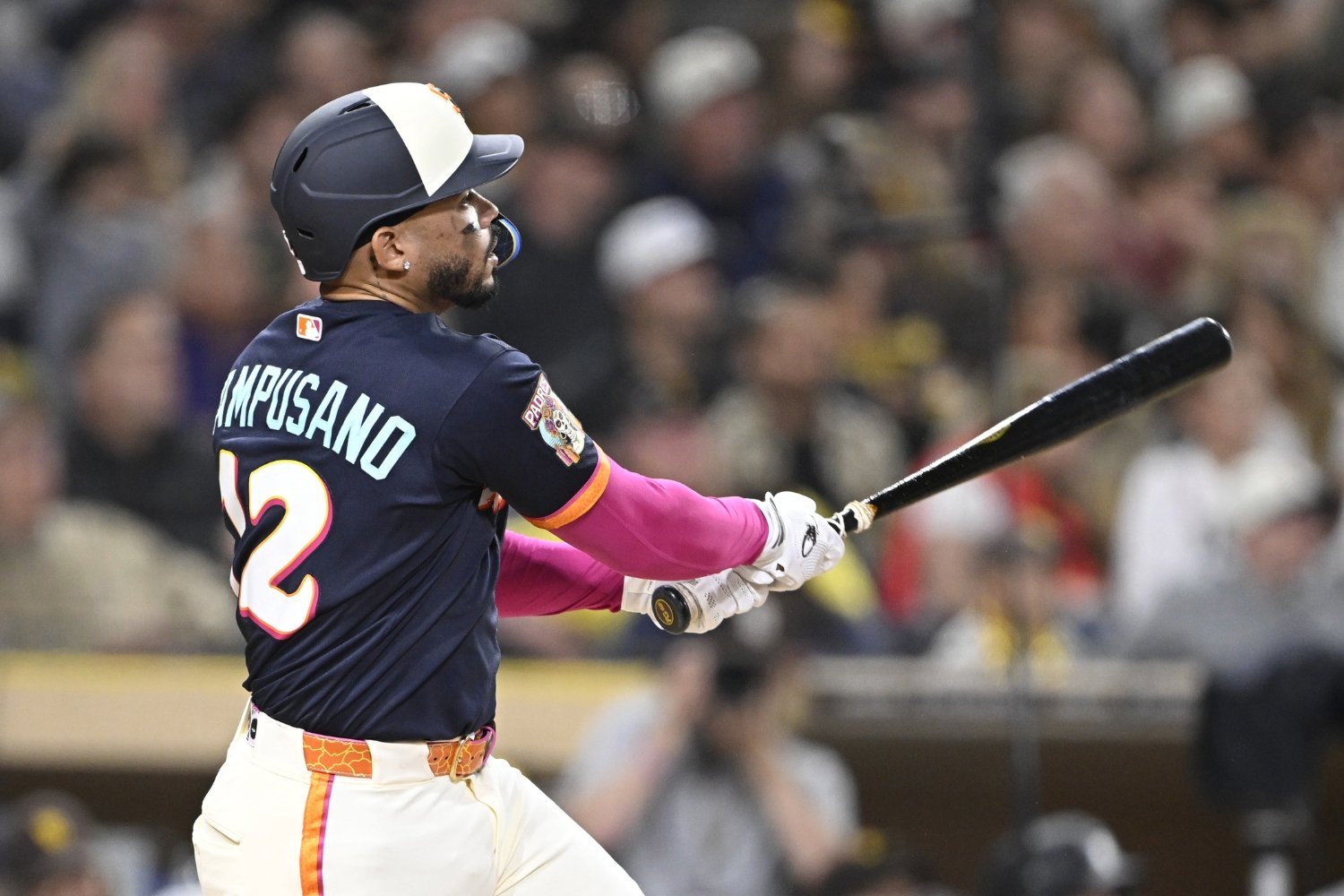 The year is 2020. Olivia Rodrigo is working on a new album. The Trump administration is trying to figure out what to do with Iran. And San Diego Padres catcher Luis Campusano is primed for a breakout. It seems the more things change, the more they stay the same. It was that Covid year when Padres fans became aware of Campusano. After slashing .325/.396/.509 with Single-A Lake Elsinore in 2019, he became a top-100 prospect in every ranking that mattered, and in a Padres system stocked with talent, he was the catcher of the future. (Remember when MacKenzie Gore, CJ Abrams, and Luis Patiño were going to change the trajectory of the franchise?) Campusano got a cup of coffee in 2020, hitting a home run in his lone game in the bigs, and the Padres would end up winning their first playoff series in 22 years. The future looked bright. We’re still waiting for that future. Now 27 years old, Campusano is in his seventh season with the Padres, yet he has accrued -0.7 bWAR. Fangraphs is kinder to him, with 0.1 wins above replacement, but in any case, the numbers tell the same story: Campusano hasn’t really excelled at anything. The power he displays in the minors—79 homers with an .882 OPS in 504 games—disappears in the bigs. He owns a .668 OPS in San Diego, and has just 18 home runs to his name. His career on-base percentage is below .300. Per Statcast, he’s never hit the ball particularly hard or run particularly fast or fielded particularly well. That makes his start to the 2026 season encouraging, if a little confusing. Heading into their weekend series against the Colorado Rockies, Campusano was sporting a 103 OPS+, making him one of the more productive catchers in baseball, but he had neither walked nor hit a home run. His performance on April 5 against the Red Sox is illustrative: A single, a run, and two strikeouts, and he was lifted late in the game for a pinch hitter and replaced defensively by Freddy Fermin. Is that what the Padres had in mind for their top catching prospect back in 2020? But in a world in which Austin Hedges and his lifetime 53 OPS+ can have a 12-year MLB career, being a league-average hitter at the catcher position is incredibly valuable. Catchers are OPS-ing .673 this season, a number Campusano comfortably exceeds, and his underlying stats point to sustainability. His hard-hit percentage is up from last season, and so are his launch angle and barrel rate. He’s swinging more overall—and his chase rate remains abysmal—but at least he’s swinging more at good pitches and less at bad pitches. This means his strikeout rate is down (albeit marginally and from a lofty 41%). There’s potential there! And that’s always been the book on Campusano. He played in only one game in 2020 because of a wrist injury. He had an elite campaign in the minors in 2021, and got some more MLB experience, but he couldn’t get regular time with the 2022 squad, which was the most talented Padres team ever. On a rate basis, 2023 was Campusano’s best major-league season. An OPS+ of 131 is nothing to sneeze at, but he played in only 49 games because of a shoulder injury. He split time in 2024 with a resurgent Kyle Higashioka, and in 2025, Campusano had an obscene 1.036 OPS… in Triple-A. The Padres have long had one of the best farm systems in baseball, but it’s curious that the Mount Rushmore of Padres catchers would feature only three faces: Benito Santiago, Terry Kennedy, and Gene Tenace. The most recent that any of them have played for the Padres is 1992. Since the 1998 World Series year, there have been 18 different Opening Day starters at catcher, and in the current era, there’s a curious cycle of fading veterans becoming fan favorites—Jorge Alfaro, Gary Sanchez, et al.—only to quickly disappear amid more roster shuffling. In one way or another, the catcher position has been a black hole for the Padres for almost three decades. (Shoutout to Hedges, who did come up through the Padres system, but couldn’t hit water if he fell out of a boat.) As always, it’s tempting to get excited about the next catcher of the future. Ethan Salas is the Friars' highest-ranked position player in the minors, but he’s only nineteen years old. Campusano is the Padres’ best option behind the dish right now, at least in a world where Fermin has forgotten how to hit a baseball. No other catcher in the organization and no unsigned veteran have his hit tool. No other catcher in the organization and no unsigned veteran are in their prime age-27 season. This opportunity is something Campusano and the club have aspired to for years, and he finally has a chance to be a homegrown success story. But first, he might want to stop swinging at everything. View the full article
 -
Can Luis Campusano (Finally) Break the Padres' Catching Curse?
DiamondCentric posted an article in Padres Mission
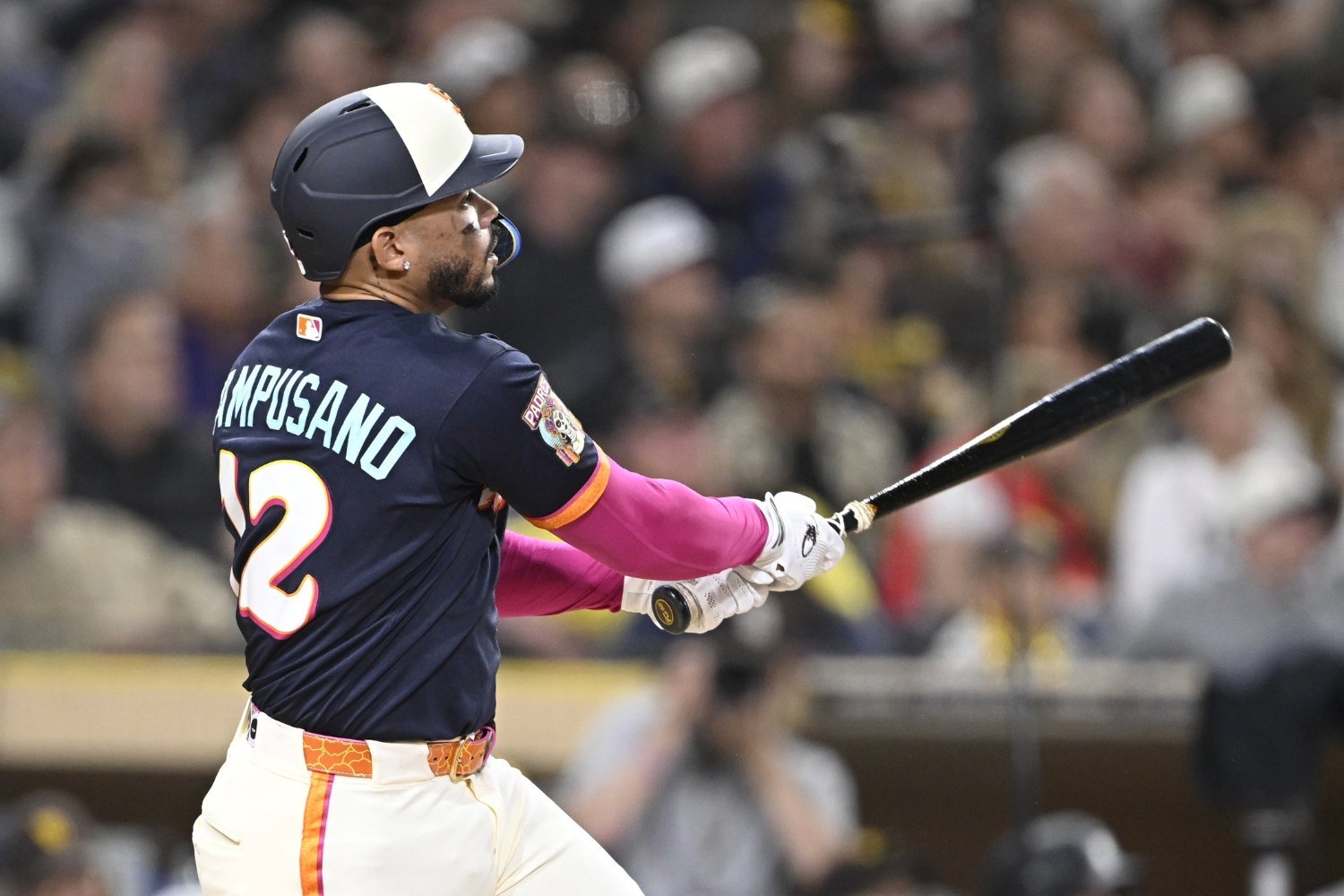 The year is 2020. Olivia Rodrigo is working on a new album. The Trump administration is trying to figure out what to do with Iran. And San Diego Padres catcher Luis Campusano is primed for a breakout. It seems the more things change, the more they stay the same. It was that Covid year when Padres fans became aware of Campusano. After slashing .325/.396/.509 with Single-A Lake Elsinore in 2019, he became a top-100 prospect in every ranking that mattered, and in a Padres system stocked with talent, he was the catcher of the future. (Remember when MacKenzie Gore, CJ Abrams, and Luis Patiño were going to change the trajectory of the franchise?) Campusano got a cup of coffee in 2020, hitting a home run in his lone game in the bigs, and the Padres would end up winning their first playoff series in 22 years. The future looked bright. We’re still waiting for that future. Now 27 years old, Campusano is in his seventh season with the Padres, yet he has accrued -0.7 bWAR. Fangraphs is kinder to him, with 0.1 wins above replacement, but in any case, the numbers tell the same story: Campusano hasn’t really excelled at anything. The power he displays in the minors—79 homers with an .882 OPS in 504 games—disappears in the bigs. He owns a .668 OPS in San Diego, and has just 18 home runs to his name. His career on-base percentage is below .300. Per Statcast, he’s never hit the ball particularly hard or run particularly fast or fielded particularly well. That makes his start to the 2026 season encouraging, if a little confusing. Heading into their weekend series against the Colorado Rockies, Campusano was sporting a 103 OPS+, making him one of the more productive catchers in baseball, but he had neither walked nor hit a home run. His performance on April 5 against the Red Sox is illustrative: A single, a run, and two strikeouts, and he was lifted late in the game for a pinch hitter and replaced defensively by Freddy Fermin. Is that what the Padres had in mind for their top catching prospect back in 2020? But in a world in which Austin Hedges and his lifetime 53 OPS+ can have a 12-year MLB career, being a league-average hitter at the catcher position is incredibly valuable. Catchers are OPS-ing .673 this season, a number Campusano comfortably exceeds, and his underlying stats point to sustainability. His hard-hit percentage is up from last season, and so are his launch angle and barrel rate. He’s swinging more overall—and his chase rate remains abysmal—but at least he’s swinging more at good pitches and less at bad pitches. This means his strikeout rate is down (albeit marginally and from a lofty 41%). There’s potential there! And that’s always been the book on Campusano. He played in only one game in 2020 because of a wrist injury. He had an elite campaign in the minors in 2021, and got some more MLB experience, but he couldn’t get regular time with the 2022 squad, which was the most talented Padres team ever. On a rate basis, 2023 was Campusano’s best major-league season. An OPS+ of 131 is nothing to sneeze at, but he played in only 49 games because of a shoulder injury. He split time in 2024 with a resurgent Kyle Higashioka, and in 2025, Campusano had an obscene 1.036 OPS… in Triple-A. The Padres have long had one of the best farm systems in baseball, but it’s curious that the Mount Rushmore of Padres catchers would feature only three faces: Benito Santiago, Terry Kennedy, and Gene Tenace. The most recent that any of them have played for the Padres is 1992. Since the 1998 World Series year, there have been 18 different Opening Day starters at catcher, and in the current era, there’s a curious cycle of fading veterans becoming fan favorites—Jorge Alfaro, Gary Sanchez, et al.—only to quickly disappear amid more roster shuffling. In one way or another, the catcher position has been a black hole for the Padres for almost three decades. (Shoutout to Hedges, who did come up through the Padres system, but couldn’t hit water if he fell out of a boat.) As always, it’s tempting to get excited about the next catcher of the future. Ethan Salas is the Friars' highest-ranked position player in the minors, but he’s only nineteen years old. Campusano is the Padres’ best option behind the dish right now, at least in a world where Fermin has forgotten how to hit a baseball. No other catcher in the organization and no unsigned veteran have his hit tool. No other catcher in the organization and no unsigned veteran are in their prime age-27 season. This opportunity is something Campusano and the club have aspired to for years, and he finally has a chance to be a homegrown success story. But first, he might want to stop swinging at everything. View the full article
 -
 Transactions: N/A Nashville Pre-Game Media Notes Final: Gwinnett (Braves) 4, Nashville 3 Box Score and Game Log Via the Sounds, game details, and we encourage readers to always review affiliate write-ups as part of their Link Report routine: Sounds Walked Off for Second Straight Night - Kuehner Spins First Career Triple-A Quality Start You may not recognize the name Cory Hilborne, but he's the Communications Manager for the Sounds and is responsible for the big majority of postgame summaries, and he nails it every single time. Today's effort was just the latest example, and hopefully you'll agree that both the in-game action recap and the miscellaneous notes linked above provide a cornucopia of detail for us. I shared on social media that I was able to catch up with longtime Brewers.com beat writer and Supervising Reporter Adam McCalvy (along with the Journal-Sentinel's Curt Hogg) in Boston on Tuesday. While I thanked Adam for his decades of coverage, he acknowledged that we provide details within our daily Link Reports that aid his efforts. Now, the fact Tyler Black had been placed on the IL was evident from the MiLB transaction wire, easy enough to track. Much less obvious was that Pratt had sat out not one, but two games, something we pointed out when Saturday's early AM report was published. Clearly Adam has the means and the contacts to then follow up on notes like that. Sure enough, by Saturday afternoon, he informed us of the status of both players. Of course, there will be instances when the beat reporters uncover minor league news outside of our site and forum posts. But our symbiotic relationship has helped inform Brewers fans for many years now, and we've long been aware that many members of the organization's front office, spanning multiple departments, make our daily report a staple. Pretty cool, right? Outside of the catching corps, the Sounds have a one-man position player bench (Manager Rick Sweet loves when that is the case - not). Sweet emptied the non-catcher crew when OF Jacob Hurtubise entered as part of a defensive shuffle to begin the bottom of the 10th, with first baseman Luke Adams exiting. Adams had struck out swinging in the top of the 9th and had remained in the game on defense for the bottom of that frame. So, at this time, nothing concerning from that perspective, but as always, we'll see. In addition to old friends Rowdy Tellez and Brewer Hicklen in the Stripers lineup, reliever Tayler Scott is an alumnus (Biloxi 2016-17). As for the extra inning, the top of the 10th was not pretty for Nashville - Wilken K'd on a foul tip, Jones fanned looking, and Eddys Leonard grounding to 3rd, leaving a speedy ghost runner in Lara firmly planted. LHP Brian Fitzpatrick got the first out on a 3-1 putout to start the fateful bottom half, advancing the ghost runner. A 90 MPH chopper vs. the drawn-in infield was enough to end things - watch that here. Nothing personal vs. the Voice of the Stripers, Dave Lezotte, but we've had enough of these walk-off calls: You're invited to consult the Sounds' "X" feed for a series of five highlights - given it's a road game, Lezotte, is on the calls. You'll catch Luis Lara, Greg Jones, Brock Wilken, Tate Kuehner and Will Childers along the way. Biloxi Pre-Game Media Notes Final: Biloxi 7, Pensacola (Marlins) 5 Box Score and Game Log Catch up with the latest Biloxi pre-game audio interview archives - LH reliever Mark Manfredi, Sr.'s chat from Saturday night is available along with all this week's collection - congrats to the new dad and his wife! Via the Shuckers, game details: Shuckers Sneak Past Blue Wahoos 7-5 For Series Win - Shuckers clinch first series victory against Blue Wahoos Another fine write-up. I'm so aware of how repetitive this disclaimer is, but please review as linked just above as we tend not to rehash specific game details too often, allowing us to focus on other nuances of the day. The presence of little-used 22-year-old 3rd catcher Edgardo Ordonez (.544 OPS in 25 games with Carolina in 2025, skipping over Wisconsin to start 2026) allows for Matthew Wood and Darrien Miller to rotate into the designated hitter spot, as Wood did here. Wood contributed with a sacrifice fly and a walk while Miller's fun was a bit louder - Over at the Shuckers' "X" feed, you'll find both of Eduardo Garcia's base knocks in his first game back after he broke his right wrist in Dominican Winter Ball play, along with Kay-Lan Nicasia taking advantage of his playing time opportunity given the recent outfield injuries on the Biloxi roster. Garcia did have one awkward moment early on. Hardin needed 84 pitches and only registered three innings, as he saw double-walk-single to open the 4th. RHP Stiven Cruz allowed one of Hardin's runners to score on a sacrifice fly, but as the game summary noted, would retire all 12 men he faced in a fantastic outing. Southpaws Jesus Broca and Sam Garcia made things interesting late but survived. There were also two caught stealing's, but you get the general idea here: Rattlers and River Bandits Rained Out - Saturday’s game to be made up as part of a doubleheader on Sunday LHP Wande Torres and RHP Braylon Owens are the scheduled Wisconsin starters. Wilson Pre-Game Media Notes Final: Wilson 6, Salem (Red Sox) 3 Box Score and Game Log Warbirds Snap Skid with Victory Over Salem - Anderson’s Big Night Sparks Wilson First of all, no specific highlight here, but the effort is appreciated from the Voice of the RidgeYaks. Wilson scored six runs despite having only four hits. Each of those hits were of the extra-base variety however, three off the bat of 19-year-old Dominican native CF Jose Anderson, who had a monster game with a bases-loaded walk, two doubles and his first home run of 2026. Anderson now has 20 HR's in 148 professional contests (.750 OPS). You'll be able to view an Anderson double and his round-tripper, along with Handelfry Encarnacion's double, via the Warbirds' "X" feed. More video: The Anderson RBI walk Frederi Montero's RBI grounder Fine-to-solid work by the Wilson hurlers here - 20-year-old RHP Jarrette Bonet has now fanned ten in seven innings (1 R, 4 BB, 1 HBP). Bonet picked off two men at first to help his own cause. RHP Tanner Perry turns 23 later this week, so he'll be seeking a bump to Wisconsin, he contributed three innings though was a victim of this home run. RHP Peyton Niksch, 22, did allow a run, but if was unearned due to two passed balls by catcher Yannic Walther in the 9th. We'd love to say the Warbirds' offensive woes are solved. While drawing 12 free passes (11 BB's, 1 HBP) can be productive, 1-for-12 with RISP (11 LOB) is not. It was another night of double-digit strikeouts (11). Thank goodness for Anderson on this night. By the way, the Brewers signed Anderson to a relatively tiny $60,000 bonus in January 2024 to then see him break out with a .915 OPS in his sole Dominican Summer League season. All traditional early afternoon game times Sunday, with the Rattlers playing twice, Our friend Daniel "Ro" will have five recaps for you Monday AM - that's how it goes sometimes on our beat, as I was spared a game and Mother Nature doubled up on Ro. Hope everyone has a wonderful early spring day. Organizational Scoreboard including starting pitcher info, game times, MiLB TV links, and box scores Current Milwaukee Brewers Organization Batting Stats and Depth Current Milwaukee Brewers Organization Pitching Stats and Depth View the full article
 -
 Twins System Recap: News broke Saturday morning that Andrew Morris was being called up to the Twins. Morris has been among my favorite guys to follow in the system the past few years. Tonight's games were highlighted by yet another impressive outing for Kernels pitcher Eli Jones. Garrett Spain and Ben Ross elevated the Wind Surge on a big night for their lineup. Also, Zebby Matthews got pointed in the right direction and turned in a solid start for St. Paul. View the full article
