


DiamondCentric
-
Posts
2,631 -
Joined
-
Last visited
Never
Content Type
Profiles
Forums
Events
News
Tutorials & Help
Major League Baseball Videos
Guides & Resources
Store
Downloads
Gallery
Everything posted by DiamondCentric
-
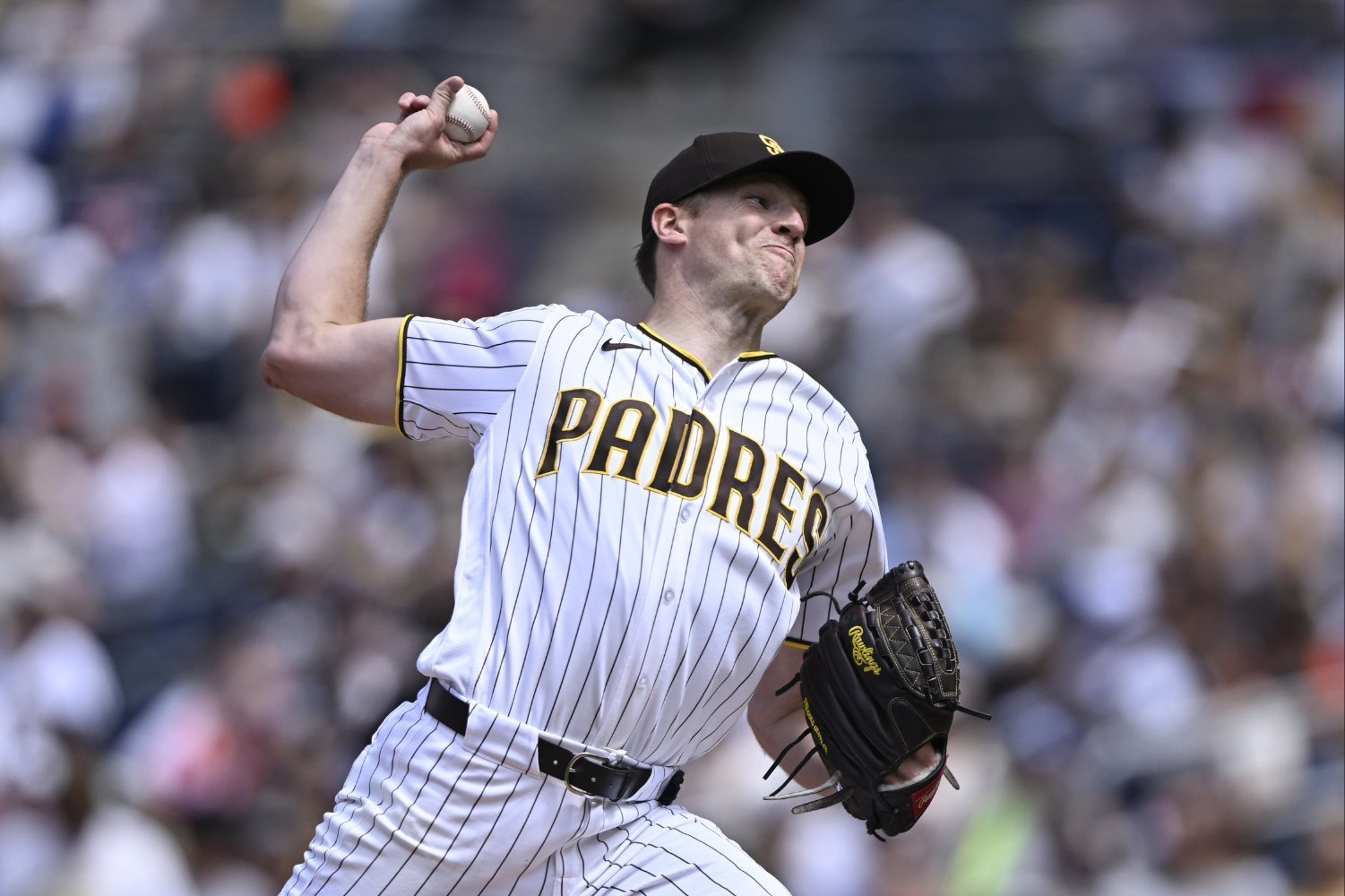 If you were feeling concerned after Nick Pivetta's Opening Day start, you were not alone. Watching him allow six earned runs in three innings in his first outing of the season was not fun, creaking the door back open for questions about his long-term ability to be an ace. Pivetta had never been that caliber of pitcher until 2025, when he transformed himself from a solid back-end starter into a legitimate No. 1 option in the postseason. After a poor outing to start 2026, the one-year wonder allegations began. However, Pivetta cleaned things up in his second start of the season, tossing five shutout innings and striking out eight. He looked much more comfortable on the mound and calmed the fears that he would not be the same pitcher in 2026. So, which version of Pivetta are the Padres going to get going forward? Let's break down his first two starts to find some clues. Padres Breakdown: Nick Pivetta's First Two Starts of 2026 Start 1: The Tigers hit very well off of Pivetta, with a .438 batting average in three innings. He allowed seven hits and issued three walks. Three of those hits came against the fastball, two against cutters, one against a curveball, and one against the sweeper. Detroit's average exit velocity against Pivetta was 87.6 MPH. Detroit did outperform its expected stats against Pivetta, for what it's worth; according to Baseball Savant, their xBA was nearly 100 points lower at .346. Still not great, but better than the .438 average he allowed. Start 2: Against the Giants, Pivetta looked like a different pitcher. He allowed just one hit, a single to his former teammate Luis Arraez. The Giants had a batting average of .063 and an xBA of .066, which backs up the idea that Pivetta was in command all game. San Francisco's average exit velocity was 85 MPH, significantly lower than what the Tigers produced. Pitch usage: One thing worth noting is that Pivetta's pitch usage has changed significantly in 2026. He's throwing his fastball more than he ever has. Last year, he threw his fastball on 47% of pitches, but in 2026, that has jumped to 59%. His fastball velocity has also improved to 94.3 MPH, up from 93.8 MPH last year. That leap in velocity is noteworthy, but is that why he is throwing his fastball more? With Pivetta throwing so many more fastballs, he's throwing all of his other pitches less. This all could just be due to it being early in the season — it's not unreasonable to suggest that Pivetta is still fine-tuning his approach and has become reliant on his favorite pitch while doing so. There might not be a strategic approach that is causing him to throw more fastballs and fewer breaking balls. Or, there might be. In 2025, opponents hit .216 off of Pivetta's curveball, the highest of any of his pitches. Batters actually had an xBA of .279 against his curve. His curveball had a 16% whiff percentage, significantly lower than his fastball and sweeper. Perhaps the team weened him off the curve, fearing a regression to the mean. But why reduce the sweeper usage? Pivetta's sweeper produced an xBA of .177, making it Pivetta's best pitch. It produced matching wOBA and xwOBA figures (.212). The sweeper also had the highest whiff rate of any of his pitches, at 37.5%. If anything, Pivetta should probably be throwing his sweeper more often, not less. His cutter, meanwhile, got good results in 2025, but the expected stats told a different story. His cutter held opponents to a .176 average and .244 wOBA, but the xBA was .264, and the xWOBA was .332, nearly 100 points higher than the actual result. It's clearly not an offering he can build his arsenal around. Pivetta's fastball might be his best pitch, but increasing his fastball at the expense of his sweeper probably won't yield the ideal results. Half the hits he's allowed this year have been off the fastball. Verdict It's too early to tell if any of this means anything for Pivetta, but at this point, the Padres should probably expect a slightly worse version of the guy who led their rotation in 2025. He's not going to carry a 6.75 ERA for the rest of the year, but it probably won't be below 3.00. Pivetta's increased usage of fastballs could be due to getting poor results from his curveball and cutter last year. He's still doing a good job limiting hard contact, and he's still getting batters to chase. It's true that he probably benefited from some luck in 2025, but he should still be a reliable starter in 2026, even if he's not the no-questions-asked ace that he was last year. View the full article
 -
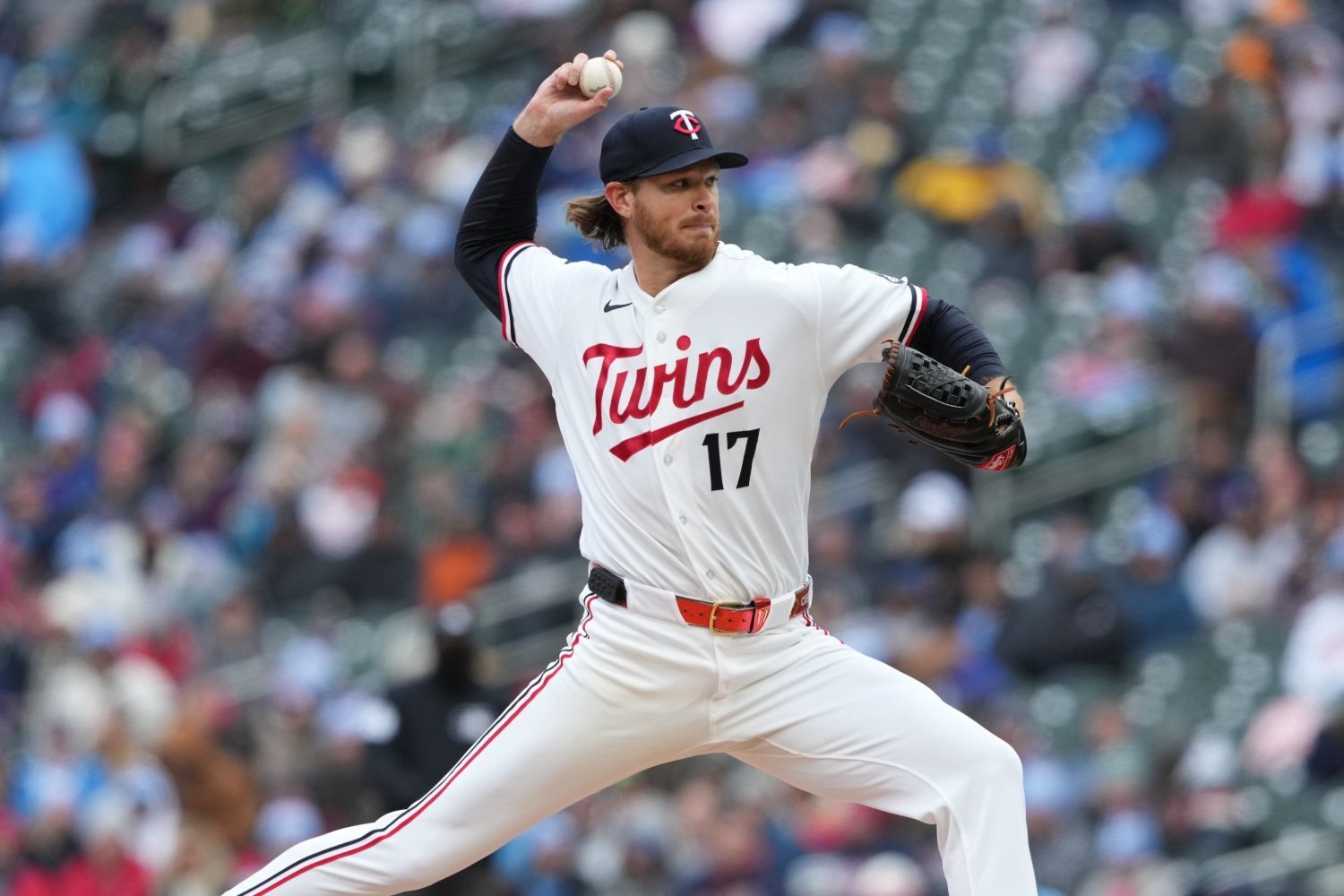 Velocity has been the conversation around Bailey Ober for more than a year now. It started during last spring training and never really went away. A hip issue disrupted his mechanics, and for a pitcher listed at 6-foot-9, that matters more than it might for most guys. There are a lot of long levers and heavy machine parts in a delivery like Ober’s, and when even one of them is out of sync, everything can fall apart. In 2026, the radar gun still isn't telling the story fans were hoping for. But Ober isn't chasing his old velocity. Instead, he's building something different. The most noticeable change is subtle. Ober’s arm angle is a tick lower this season. It's not dramatic enough to jump out without a side-by-side look (see below), but it's there. That slight adjustment could be tied directly to the movement changes he appears to be chasing. A lower slot can create different shapes, especially on pitches like his slider and sweeper, which will be critical for him to succeed at lower velocities. At the same time, he's sacrificing a bit of what made him unique. Ober has long been known for elite extension (97th percentile in 2025), releasing the ball closer to the plate than most pitchers. That trait helped his fastball play above its velocity. This year, he's giving some of that back in exchange for better posture and balance through his delivery. That tradeoff is not insignificant. If the extension is down, then the perceived velocity hitters see is dropping even more than what the radar gun shows. In other words, the margin for error is smaller. But Ober seems to understand that, and is betting on command and execution instead. His pitch mix backs that up. In his first two starts, Ober leaned heavily on his changeup, throwing it 37% of the time. That's a massive jump from anything he's done previously, where he had never crossed the 30% mark. It's not just a tweak. It's a philosophical shift. The changeup has always been one of his best pitches, and using it that often suggests a willingness to pitch backward, disrupt timing, and avoid relying on a fastball that may be more of a liability now. He’s held batters to an .083 batting average against the pitch, with a 25.0% whiff rate. When that pitch is well-located, it also limits his vulnerability to power. His fastball has been hit hard in his first two starts of the young season, but he's only allowed three well-struck balls against changeups—and then, not especially dangerous hard contact, anyway. Two of those hard-hit balls turned into outs, and the other was a mere single. There are also signs that the raw stuff might be ticking in a different direction. Nearly every pitch in his arsenal has seen at least a small bump in spin rate. The biggest gain comes from the sweeper, which has surged from 2,099 RPM to 2,280. That kind of increase can turn a fringe pitch into something much more impactful, and indeed, Ober's sweeper has three extra inches of glove-side movement so far. Because of that small change in arm angle (and an even subtler move toward the center of the rubber), he's releasing the ball a few inches farther toward third base, too, so the ball has room to move that way without sweeping so far off the plate as not to tempt batters to swing. Even the smallest details point to a deliberate reset. Ober is listed at 254 pounds in the game notes, down slightly from the 260 he has carried in the past. It's not a dramatic change, but it suggests a focus on mobility and repeatability. For someone trying to clean up mechanics and stay in sync, that matters. Manager Derek Shelton made it clear that this process is still ongoing. “[Ober] did a good job in the Baltimore [game]. He made one bad pitch, the pitch to O’Neill, and he gave up two singles before that, but overall, he was pretty effective, and if we go through and starters, you know, make one bad pitch or two bad pitches, I think we're gonna be in a pretty good spot," Shelton said before handing the ball to Ober in the home opener Friday. "The only thing that we really want our starters to do is give us a chance to win the game. And if we do that, then we can kind of go from there.” That context is important. Ober isn't just adjusting on the fly in games. He's still building up after a spring focused on reworking his approach on the mound. There's no denying that Ober looks different. The velocity dip is real, and the tradeoffs he's making aren't small. But this is not a pitcher clinging to what he used to be. This is someone actively reshaping his profile to fit what he is now. If the command sharpens, if the changeup heavy approach sticks, and if the added spin translates into more consistent movement, Ober doesn't need to be the same pitcher he was before. He just needs to be a better version of the one he is becoming. What are your thoughts on the changes so far from Ober? Leave a comment and start the discussion. View the full article
 -

 Owen and Jesse embark on a therapy journey after watching the Jays get swept by the Chicago White Sox. They diagnose the offensive struggles of George Springer, Addison Barger, Daulton Varsho, and Kazuma Okamoto, discuss Brendon Little being optioned to Triple A, and note the dire state of the pitching staff. They finish by touching on the addition of Patrick Corbin and talk about his potential role amongst the injuries of Cody Ponce, Trey Yesavage, Shane Bieber, and José Berríos. Listen on Apple Podcasts: https://podcasts.apple.com/us/podcast/the-jays-centre-podcast/id1846108462 Listen on Spotify: https://open.spotify.com/show/3Bi7SzfpcqMo5xYWnbCeoL Listen on iHeartRadio: https://www.iheart.com/podcast/263-the-jays-centre-podcast-300304824/ Listen on Pocket Casts: https://pca.st/2qk9wqxd Watch on YouTube: https://www.youtube.com/@jayscentre View the full article
 -
Sunday Live Episode 2: Garrett Mitchell Is On A Tear
DiamondCentric posted an article in Brewer Fanatic
 Jason and Jake break down this week of Brewers baseball, including Garrett Mitchell's explosive start to the 2026 season. Apple Podcasts: https://podcasts.apple.com/us/podcast/the-brewer-fanatic-podcast/id1740648724 Spotify: https://open.spotify.com/show/5CY8mWsQayqjDXqw9OT2Td iHeartRadio: https://www.iheart.com/podcast/263-the-brewer-fanatic-podcast-166534588/ Pocket Casts: https://pca.st/ommzz627 Watch On YouTube: https://www.youtube.com/@brewerfanatic View the full article
 -
How Brandon Woodruff 2.0 Will Remain Effective for the Brewers
DiamondCentric posted an article in Brewer Fanatic
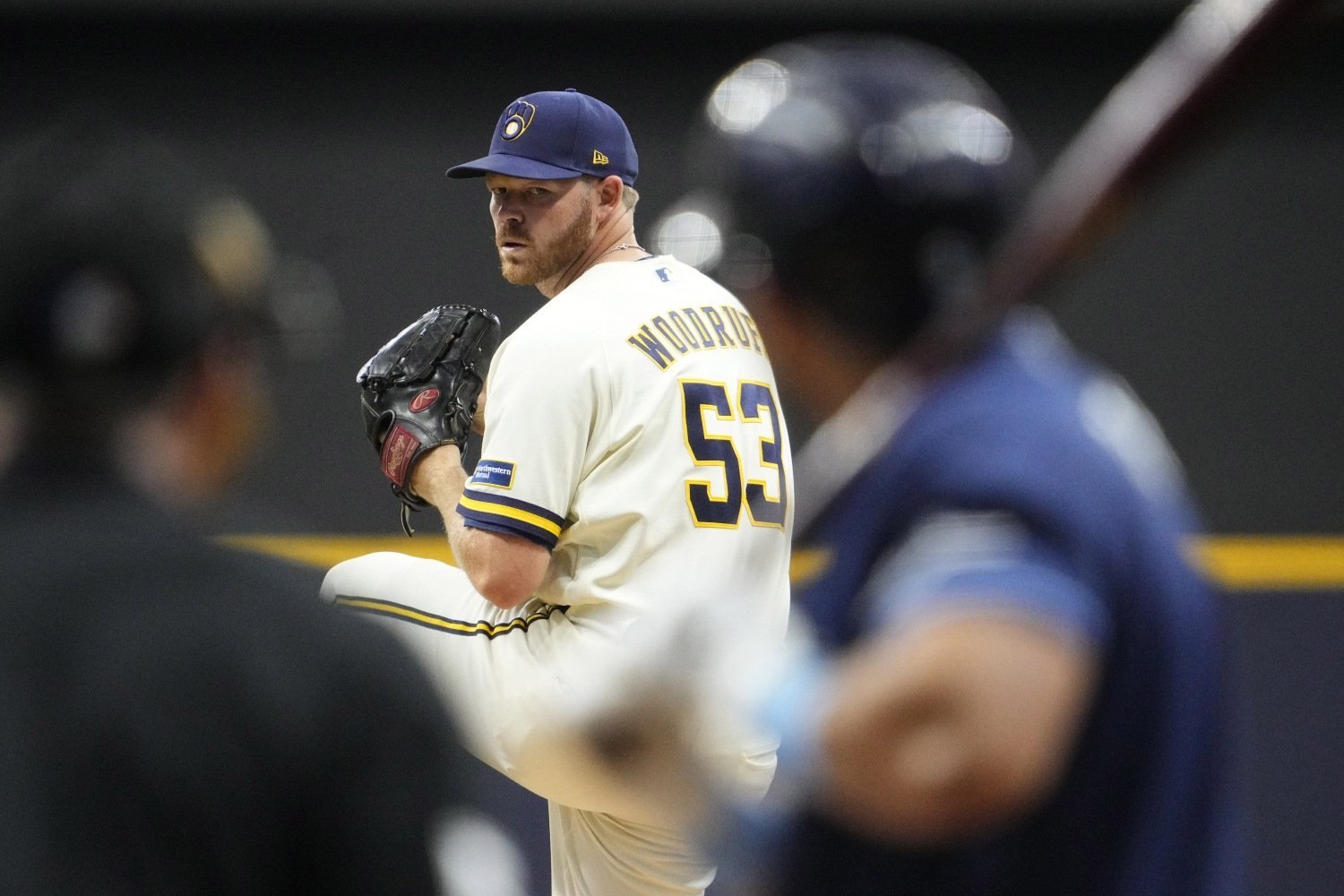 Brandon Woodruff is a Milwaukee Brewers lifer. He was drafted by the organization in the 11th round in 2014, and it’s safe to say that he has greatly surpassed expectations since then. Over his career, all of which he has spent in the Brewers organization, he's pitched in nine big-league seasons to a 3.11 ERA and 3.21 FIP. Sadly, fans haven’t seen quite as much of him as that implies. Injuries have limited him to just 750 innings over that span, and he has pitched more than 100 innings in just three seasons. Things have gotten especially bad since he turned 30, as he's pitched a total of just 136 ⅔ innings over the past four years. For the first several years of his career, he was an outstanding starter, thanks to his stuff staying intact through various injuries. Unfortunately, it's clear now that his stuff will not come all the way (or, arguably, even most of the way) back from the major shoulder injury that kept him off a big-league mound for 20 months. The most notable difference is his average fastball velocity, which has dropped from 95.5 mph in 2023 to just 92.9 mph in 2026. Woodruff is undeterred and has continued to adapt his pitching to fit his new limitations. Upon his return in 2025, he added a new cutter and sweeper, while phasing out his slider and decreasing his four-seam fastball usage. This allowed him to pitch to a 3.20 ERA and 3.17 FIP over 64 ⅔ innings, but can he repeat the same success this year? In his first start of the year against the Rays, he struck out six over five innings. Overall, it was a strong outing, but it highlighted that his sinker may not stick around in his arsenal for long. Of the four hits he gave up, three came against his sinker, and two of those were solo home runs. Looking back, it should be unsurprising that two 90-mph sinkers located in the heart of the zone ended up in the seats. The sinker seems to have suffered the most from the dip in velocity, as Woodruff no longer has the ability to sneak it by hitters who fouled it off consistently in the past. Conversely, his four-seam fastball is still effective, thanks to its impressive 17.9 inches of induced vertical break. He also commanded it remarkably well, hitting William Contreras’s glove precisely where it was set up multiple times. His new cutter has also been effective and shares remarkable similarities to Chad Patrick’s, coming in in the upper 80s and featuring more movement than your average big-league cutter. Given how effective it has been since debuting in 2025, it’s feasible that it’s used more frequently against right-handed hitters instead of his sinker. We didn’t get to see much of his secondary pitches, since 56 of the 67 total pitches he threw against the Rays were fastball variants, but if 2025 was any indication, his changeup could play an important role this year. Hitters really struggled against Woodruff’s off-speed pitch last season, slugging just .063 while whiffing 35.4% of the time. Woodruff seems undecided on his sweeper thus far, throwing it occasionally but without enough consistency for it to really have a dedicated place in his arsenal. When he did throw it last year, it didn’t seem to do what he wanted and would end up in a suboptimal part of the strike zone. It’s an overplayed stereotype that pitchers who lack the stuff to be competitive must instead rely on being “crafty,” but in the case of Woodruff, that seems to be exactly what he’s doing. Precise command will be the name of the game, and if the ability to miss bats isn’t there, he’ll have to settle for soft contact—even if it’s something he hasn’t been historically good at. Fastballs up in the zone and changeups down and away should be his bread and butter moving forward. If he is intent on keeping one or both of the sinker and cutter, he’ll have to figure out how to get more ground balls out of them. At 33 years old, Woodruff isn’t quite over the hill, but his days of dominating hitters in the zone with upper-90s velocity are behind him. Luckily, if there’s any team that can get the most out of him, it’s the Brewers. This is likely the last year that he’ll stay in Milwaukee’s rotation, given their logjam of young pitching talent rising up the ranks, but if it's the year the Crew finally returns to the World Series, it will be the crowning achievement of Woodruff's long service to the franchise. View the full article
 -
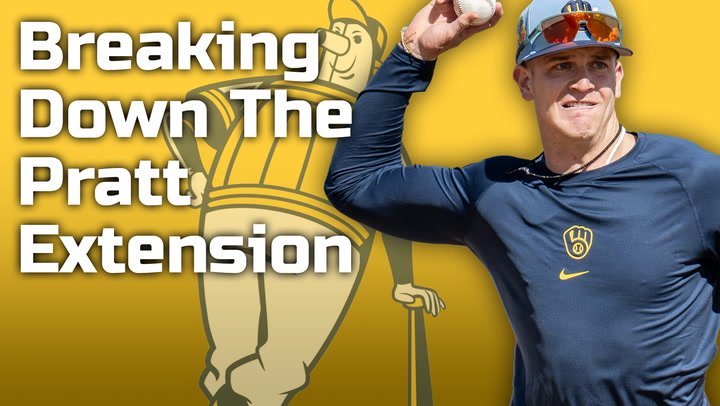 Dave Gasper breaks down the Brewers' pre-debut extension with Cooper Pratt, including comments from Matt Arnold, Cooper Pratt, and agent Scott Boras on how and why the deal came together. View the full article
 -
 The Timber Rattlers enjoyed Easter Sunday with a scheduled off day. The Sounds and Warbirds landed on the winning side of their ledgers, and although the Shuckers did not, a certain #1 Brewers prospect poked a blast to right that he seemingly didn't hit quite square as part of a very pretty box score line. Transaction: Milwaukee Brewers optioned RHP Logan Henderson to Nashville Sounds. Nashville Pre-Game Media Notes Final: Nashville 7, Charlotte (White Sox) 5 Box Score and Game Log Via the Sounds, game details, and we encourage readers to always review affiliate write-ups as part of their Link Report routine: Sounds Rally for Four in the Eighth to Prevail 7-5 Over Charlotte - Adams Homers in Second Consecutive Game in 7-5 Win The Sounds media notes list TBD for starting pitchers for all of next week. MiLB's day off Monday will mark LHP Robert Gasser's 10th day off since his season debut start on March 27th as the team works to load balance potential big league rotation arms. From the game summary: "Right-hander Blake Holub came into relief for Kuehner and tossed two scoreless innings with three strikeouts along the way." That doesn't give Holub, who impressed Pat Murphy in big-league camp, his full due. Starting LHP Tate Kuehner opened the 5th inning with single (old friend Oliver Dunn), double, single. The Sounds faced a 5-1 deficit upon Holub's entry but two strikeouts and a liner to short later, the threat was over. Give a huge MVP Award to the bullpen overall - after Holub, Easton McGee, Brian Fitzpatrick, Kaleb Bowman and Will Childers combined for an additional three innings of scoreless one-hit, one-walk ball. In the 9th, first baseman Luke Adams committed his 2nd error of the game, this one a throwing error on an attempted 3-1 assist to Bowman, putting the lead man on. A Bowman wild pitch immediately placed that runner in scoring position. Bowman netted a groundout and strikeout, but a walk brought the go-ahead run to the plate. Childers was summoned, striking out veteran LaMonte Wade, Jr. to end matters. For me, a go-to box score line that often tells the tale of the game - Inherited runners - scored: Coffey 2-2; Holub 2-0; Childers 2-0. Coffey doesn't pitch for the good guys. Adams offset any fielding adventures with this - Although we disagree with the "all this man does" part. Adams was plunked as part of the 4-run Sounds 8th, that's three this year in seven games, making for 90 in 290 professional games. Adams also had an RBI single in the 6th (video), his one non-HR in 20 AB's thus far in 2026. Right fielder Greg Jones did this in the 6th: Regarding that play, MiLB Gameday and box scores aren't infallible. When this appeared in the box: Outfield assists: Jones, G 2 (Harris, D at 1st base, Antonacci at 1st base). I had to search for that 2nd assist to first base. Twice in one game? Alas, didn't happen. the Gameday logged the above video as "Dustin Harris lines into a double play, right fielder Greg Jones to first baseman Luke Adams to right fielder Greg Jones to first baseman Luke Adams. Sam Antonacci out at 1st." So no, Jones and Adams didn't play catch on that one. All nine spots in the lineup contributed by reaching base at least once in some form or manner, as your box score review will show. Seven hits total (one a home run) to go with four walks for Black during this streak: Biloxi Pre-Game Media Notes Final: Rocket City (Angels) 9, Biloxi 8 Box Score and Game Log Catch up with the latest Biloxi pre-game audio interview archives - Outfielder Damon Keith is the latest guest Back-to-Back-to-Back Home Runs Highlight Wild Shuckers Series Finale - Made ties career-high with 4 hits, Burke finishes series with 3 HR, Shuckers set franchise record with 5 home runs Is this still the Southern League? The two teams have combined for 43 (!) runs in three games, with the Shuckers dropping the most recent two. This article saves me some typing this AM, enjoy, be sure to watch the highlight reel within: In AA pitching debuts, LHP Sam Garcia retired only four of the nine batters he faced, while RHP Patricio Aquino, despite allowing one of two inherited Garcia runners to score, faced only one over the minimum in his 2.2 innings. Projected frontline starters Bishop Letson and Tyson Hardin combined to allow ten runs (eight earned) in 4.1 innings this weekend. Similar to the outfield assist box score situation for Nashville, it appears RF Damon Keith got a similar "extra" assist in this box. Tighten it up, MiLB! The Biloxi "X" feed has a slew of video for us, including this trifecta rolled into one: Scheduled day off for the Timber Rattlers Wilson Pre-Game Media Notes Final: Wilson 9, Fayetteville (Astros) 4 Box Score and Game Log Warbirds Claim Series at Fayetteville - Wilson Scores Three in Seventh to Win Really nice season-opening series win, and as you just read in the summary, the young Warbirds will keep their bags packed. MiLB long ago clearly built an extra week into the early road schedule to allow the city of Wilson to finalize new stadium preparations. 18-year-old (19 on May 2nd) catcher Luis Corobo, a Venezuelan native, made his full-season ball debut and reached three times with two singles and a walk. We'll overlook an error on a pickoff attempt, which didn't lead to any damage, Nice to have your pro debut documented by the esteemed Mr. Michaelis: Returnees RHP Garrett Hodges and LHP Anfernny Reyes (Year 3 for Reyes) led the way in relief by keeping that inherited runner category we focused on earlier perfect in this one. A couple of non-drafted 22-year-old RHP's, Peyton Niksch and Tanner Perry, made their professional debuts (congrats!). Niksch has some crooked numbers in his line, but as our "as-it-happened" daily forum comment thread noted, the umpire may not have assisted on one play at the plate. A reminder, as the Fayetteville announcer correctly pronounced, it's "Handle-free" on the guide, not Handlefry as in frying pan, as we might be tempted to say. Note to Wilson social media - please include player names in the posts' text when you can. For instance, this is a Filippo Di Turi highlight (which we do appreciate, don't get us wrong): Jadyn Fielder, as the DH, netted a headpiece of Latin American shiny significance, which is a fancy way of saying it was a rough day. Get them next time! Wilson batters fanned 41 times over these three opening contests, but hey, that doesn't pace the Carolin League (Kannapolis - White Sox, 44). More video: Jose Anderson RBI single in the 9th Luis Lameda smokes an RBI single, and a bit of ensuing chaos ensues It's a standard off day for the Crew kids on Monday as Nashville and Wisconsin hit the road. Wilson, as noted, continues its journey, and Biloxi looks forward to their home opener Tuesday. The scoreboard link below reflects that Tuesday schedule. Hope you enjoyed our first full week of Link Report coverage. Here's to a great 2026 for us all. Organizational Scoreboard including starting pitcher info, game times, MiLB TV links, and box scores Current Milwaukee Brewers Organization Batting Stats and Depth Current Milwaukee Brewers Organization Pitching Stats and Depth View the full article
 -
Nico Hoerner's Swinging Less and Walking More in 2026
DiamondCentric posted an article in North Side Baseball
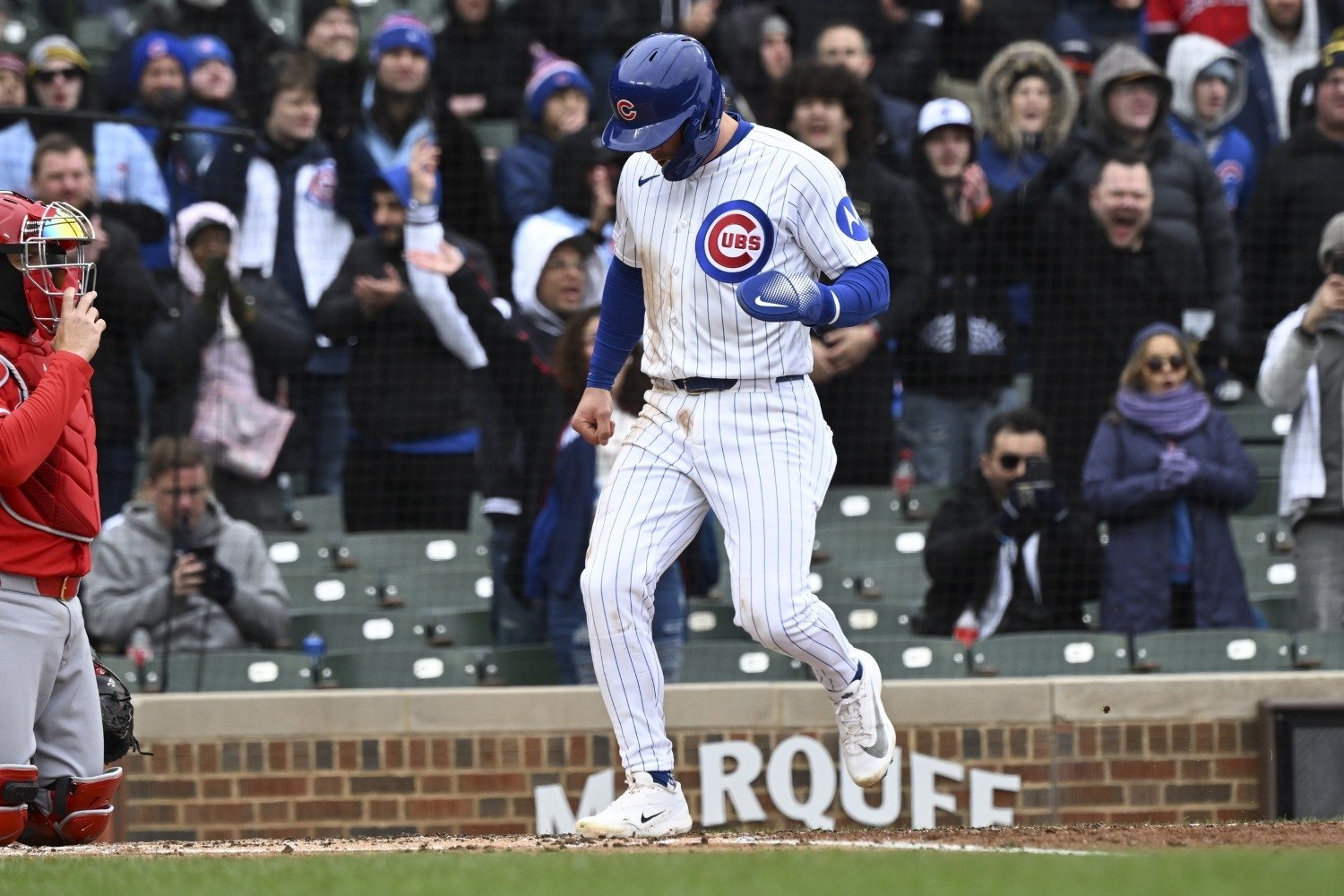 I love early-season baseball, because it allows for some crazy, small sample statistics. These numbers almost certainly don't mean anything, of course, but you can convince yourself that they do. After all, who's going to tell you what's really going on? All we have to go on are these few numbers and vibes, and between those two, the numbers are usually sending a stronger signal—even after a week. For example, if Andy Pages is the best hitter in baseball for eight games later this season, nobody outside of Los Angeles notices. However, Andy Pages was the best hitter in baseball for the first eight games of the season, which means he goes right to the top of a bunch of sorted leaderboards and everybody notices. One scroll through the leaderboards for the Cubs, and the newly extended Nico Hoerner sticks out the most. Entering Sunday's doubleheader, he led Cubs regulars with a 147 wRC+, according to FanGraphs. He had a .400 on-base percentage, buoyed by a 16.7% walk rate. Then he was hit by two pitches in Game 1 of the twin bill and went 1-for-3 with a pair of walks in Game 2, so these numbers ticked up, even on a day when the rest of the Cubs offense did little. Nico Hoerner? A 16.7% walk rate? I love Hoerner, but drawing walks is not his strong suit. Since 2022, his 6.5% walk rate is 228th among 310 qualified hitters. When you think about it, this makes sense. The Gold Glover has also managed just 33 home runs in that time frame, which is 229th of those 310 batters. Pitchers have little reason not to challenge him. If you throw him some hittable strikes, in all likelihood, the worst thing that happens is that he ends up at second with a double. If you don’t throw him strikes and walk him, he just might end up there after a stolen base, anyway. You might as well make him earn it. Not only that, but Hoerner so rarely swings and misses that it’s tough for him to get into a count deep enough to walk. Historically, he rarely strikes out. He succeeds by putting a lot of balls in play. With his speed, putting the ball in play that often makes sense, especially now that he's become a bit more of a line-drive guy, but that plan at the plate means relatively few walks. So, with all of that out of the way, is there any reason for the bump in walk rate this year? For the first week or so of the season, the Cubs’ second baseman has essentially been one of the most patient hitters in baseball. His 38.5% swing rate is 180th out of 204 qualified hitters. His 47.2% swing rate at pitches in the zone is 202nd! These are all significant decreases from last season, according to FanGraphs. (He only swung at 15 of the 42 pitches he saw in the doubleheader Sunday, so these trends haven't changed after another two games.) Year Swing Rate In Zone Swing Rate Out of Zone Swing Rate 2025 48.5% 63.2% 32.3% 2026 38.5% 50.8% 27.0% What specific pitches is Hoerner now laying off of? Here are his swing rates by zone from last season, on the left, compared to this season, on the right: Compare this to his slugging percentage by zone from last season, and it’s clear what the plan is: Hoerner is making a concerted effort to concentrate his swings to the lower inside quadrant of the strike zone—the area where he did the most damage last season. If it’s a strike, and it’s not down there, he is comfortable letting that pitch pass by, even if it means falling behind in the count. He’s so good at making contact that falling behind in the count doesn’t put him at that great a disadvantage, anyway. Not all swings are created equal, even when the pitch is in the strike zone. That's especially true when you’re Nico Hoerner. When he swings, the ball is (in all likelihood) going to be put into play. When he swings at a strike that he can’t do damage with, it’s getting put into play weakly. He’s rarely living to see another pitch. Now, he's isolating the pitches he knows he can hit hard, and the result is a career-high slugging percentage, to go along with the elevated walk rate. Oh yeah, the walk rate! That was, after all, how I noticed all of this. Do I think he’ll keep walking at a Juan Soto-like rate? Of course not! Though I do think it’s possible Hoerner will have a higher-than-usual walk rate this season if he keeps up this level of selectivity, there'll be regression here. The great source of optimism should be that, even when his walk rate comes down, this change in approach will beget more extra-base hits. Hoerner is swinging less, and thus seeing more pitches and working deeper counts. Ultimately, that's resulting in the elevated walk rate. His strikeout rate has also increased a bit as a result, from 7.6 percent to 13.3%, but that’s still incredibly low (and he only struck out once in nine trips Sunday). The Cubs will take that tradeoff for a bit of newfound thump, as well as a few additional walks—especially from a guy that they just decided will be around Wrigleyville for a long time. View the full article
 -
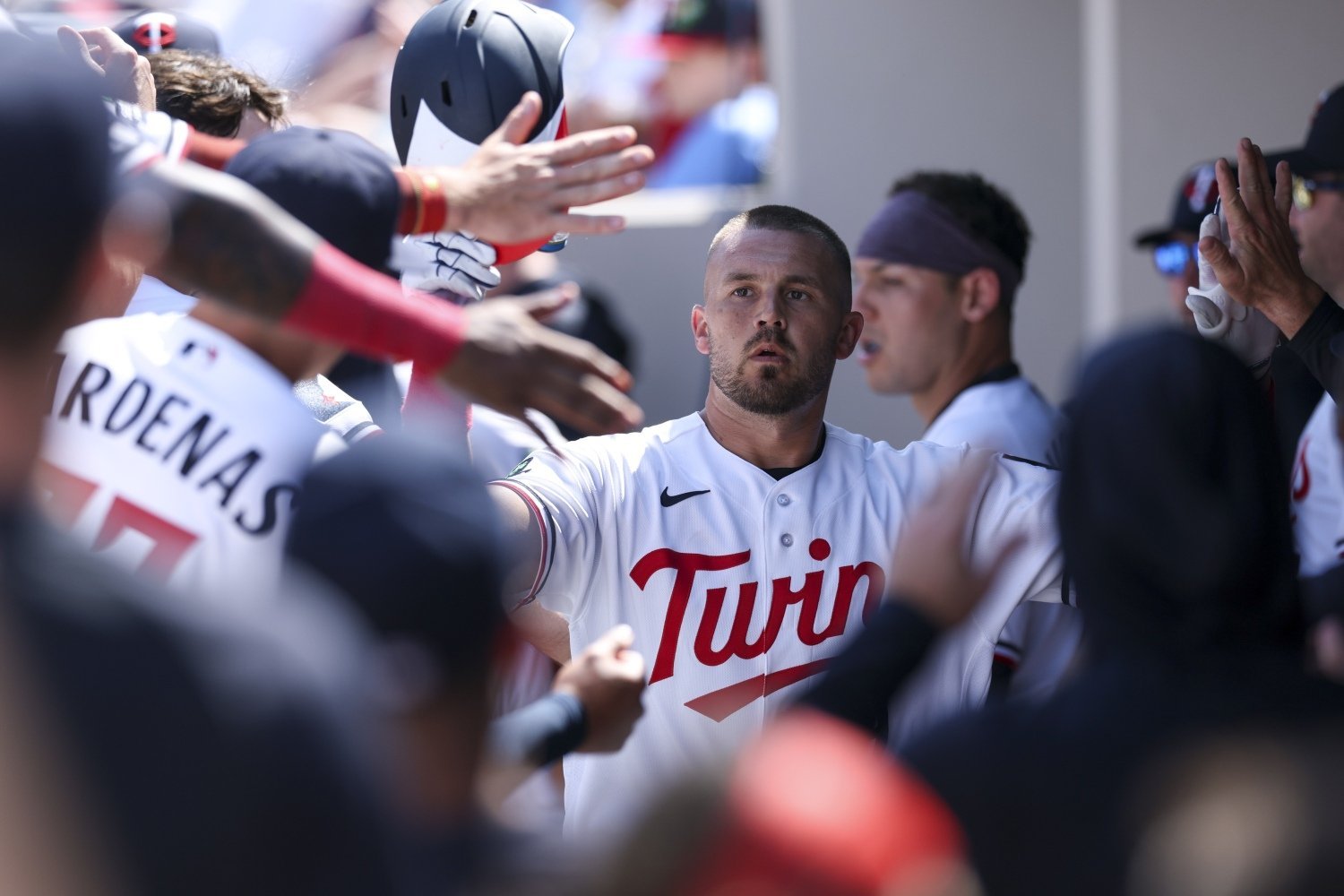 Trevor Larnach went 0-for-3 with a walk Sunday, but before that, his season was off to a nice little start. Through 16 plate appearances, he's batting .273/.500/.455, with two doubles and five walks. Despite not yet hitting a home run, the left-handed-hitting veteran is hitting the ball hard in the air often; walking often; and whiffing almost never. Displaying plus plate discipline, the long-time Twin has been the club’s most effective hitter nine games into its 2026 campaign, with offseason acquisitions Tristan Gray and Josh Bell close behind him. Again, we're analyzing 16 plate appearances, but Minnesota has maximized Larnach in a manner that club decision-makers should be able to sustain as the season progresses. Fifteen of the 29-year-old’s 16 times up have been against right-handed pitchers. He's handled them well, too. In fact, he's thrived on offspeed pitches, specifically, as when he socked an opposite-field double off an 85.9-MPH knuckle curve from Orioles hurler Shane Baz on March 29. He also pulled a 92.3-MPH splitter off Tampa Bay Rays starting pitcher Joe Boyle on April 3, good for a double and nearly that elusive first round-tripper. MDRYbDNfWGw0TUFRPT1fQVZOWFhWMENYd0VBQ0FNRkJBQUhCVmNGQUZnTkFnVUFWd0VIQjFjR1ZGVlhBMVpl.mp4 After (somewhat surprisingly) tendering Larnach a contract last offseason, the front office has turned Larnach into a self-actualized corner outfield platoon bat, shielding him from southpaws. On the surface, using Larnach in this hyper-specific role makes sense, given the stark platoon splits he's consistently produced over his six-season major-league career (114 wRC+ over 1,190 plate appearances against RHP; 64 wRC+ over 306 plate appearances against LHP). Given how manager Derek Shelton has deployed him early this season, Twins Territory might be witnessing one of the more restricted platoon jobs in recent baseball memory. If Larnach can remain a plus bat against righties and settle down to a more realistic 120-130 wRC+ against them, his role could be worth the minimal roster flexibility, considering that major-league lineups face right-handed starting pitchers far more often than southpaws. Ah, but Larnach didn’t fall out of a coconut tree; he exists in the context of all in which he lives and what came before him. Minnesota has three young, talented left-handed-hitting corner outfielders in Alan Roden, Emmanuel Rodriguez, and Walker Jenkins and right-handed hitting corner outfield prospect Gabriel Gonzalez, all knocking on the door of the bigs at Triple-A St. Paul. Hopefully, those guys will soon force Minnesota’s hand, effectively forcing the club to provide the quartet opportunities with the parent club. Given the low expectations surrounding the Twins this season and the team's stumbling 3-6 start, another busy trade deadline might lie ahead. If the club continues to slip into irrelevancy while Larnach excels against right-handed pitching, the 2018 first-round draft pick could become an enticing trade chip this July, opening space for one of the outfield prospects. For now, though, Larnach has blossomed into one of the club’s few consistent hitters, even if he only appears in the lineup against right-handed pitching. View the full article
 -
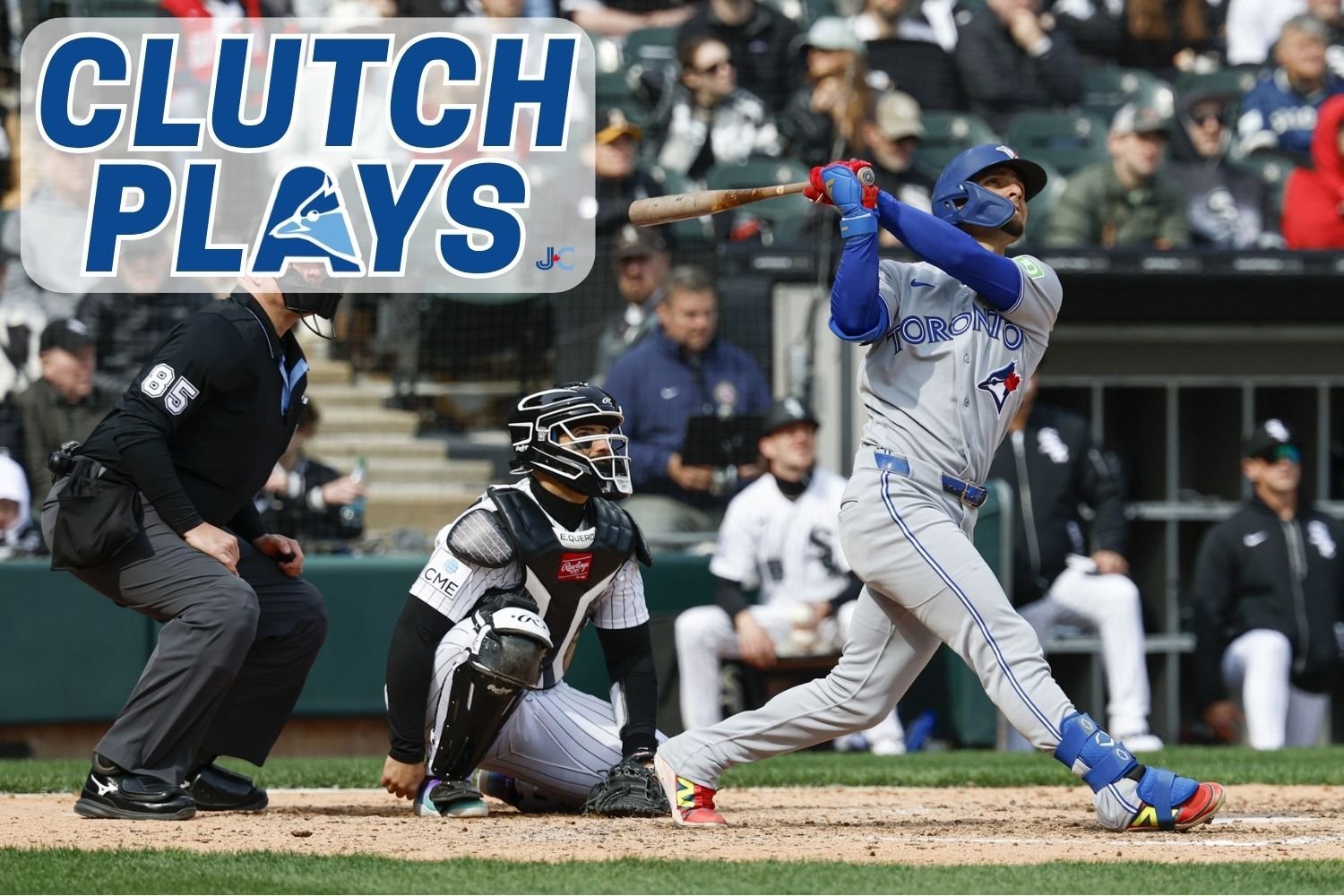 Welcome back to Blue Jays Clutch Plays, a recurring post that highlights the six most pivotal plays (three pitching, three hitting) from the past week of Blue Jays baseball, according to MLB's win probability model. Click here to read last week's edition. There are still 153 games left, and most of the AL East has fallen on hard times as well, but it felt like a cursed week for the Blue Jays. After putting themselves in a good position to pounce on the soft early portion of the schedule by sweeping the Athletics, they followed it up by dropping two of three to the Rockies and getting swept by the Chicago White Sox. They scored three runs per game across the two series. Cody Ponce and Alejandro Kirk were placed on the IL, Brendon Little was optioned to Triple A, and Addison Barger was removed from Sunday's game after injuring himself trying to leg out an infield hit. They head into a World Series rematch with the Dodgers at 4-5. Here are some of the lone bright spots from the past week. Pitching 3. Tyler Rogers: Miguel Vargas Force Out, Bot 9, 4/3 (+11.4% WPA) With the winning run on base in the bottom of the ninth during Friday's opener in Chicago, Tyler Rogers elected to intentionally walk the slugging Munetaka Murakami and take his chances with Miguel Vargas instead. It ended up being a wise move, as he got a second-pitch groundout to third. All Kazuma Okamoto had to do was step on the bag to send the game to extras. 2. Mason Fluharty: Ezequiel Tovar Strikeout, Top 8, 4/1 (+14.3% WPA) After the Rockies scored the tying run in the eighth against Tommy Nance, Mason Fluharty was in a tough spot with the go-ahead run 90 feet away and just one out. He got Ezequiel Tovar here on three pitches and struck out Ryan Ritter immediately after, walking the tightrope out of danger for the Blue Jays to keep the rubber match of the series tied and send it to the bottom of the eighth. 1. Jeff Hoffman: Austin Hays Strikeout, Top 10, 4/3 (+25.5% WPA) Lost in the painful ending to Friday afternoon's game was this slider that Jeff Hoffman curled just below the inside corner to strike out Austin Hays with the tying run on third. It put the Blue Jays on the doorstep of a come-from-behind win that would've spoiled the belated opening day festivities at Rate Field. Their win probability was 83.1% immediately after this pitch, but the White Sox were victorious just two batters later. Hitting 3. Vladimir Guerrero Jr.: 2-run HR, Top 6, 4/4 (+26.0% WPA) It's a shame how short-lived this was. Vladimir Guerrero Jr. had yet to tap into his power much at all this year until Saturday. He struck out in the first and flew out to the left field wall in the fourth. He got another pitch on the inner half of the zone in the sixth and didn't miss it, launching his first home run and flipping the scoreboard in the process. The ball travelled 437 feet after jumping off his bat at 108.5 mph, a homer in all 30 parks. 2. George Springer: Reached on Error, Top 10, 4/3 (+28.2% WPA) Ernie Clement led off the 10th on Friday by moving the extra-innings runner, Davis Schneider, over to third on a groundout for George Springer. He didn't quite execute that situation the way he wanted, but a double-clutch at third base proved costly for Miguel Vargas, who took Murakami off the bag with his throw to first. Springer was safe after review, and Schneider scored, giving the Blue Jays the lead. 1. Andrés Giménez: 2-run HR, Top 8, 4/3 (+29.3% WPA) Andrés Giménez has delivered when the Blue Jays have needed him on multiple occasions already in the young season. This towering drive off the right field foul pole tied things up at three on Friday afternoon. Giménez ambushed Jordan Leasure, one of the better arms in the White Sox bullpen, on the first pitch after Leasure failed to elevate a 95-mph fastball. Chicago's win probability was 79% even after Ernie Clement's leadoff single right before this home run, which reset the odds to 50/50, enough to make it the most clutch play of the week. View the full article
 -
Wilyer Abreu Can't Carry the Red Sox Alone, But He's Sure Trying To
DiamondCentric posted an article in Talk Sox
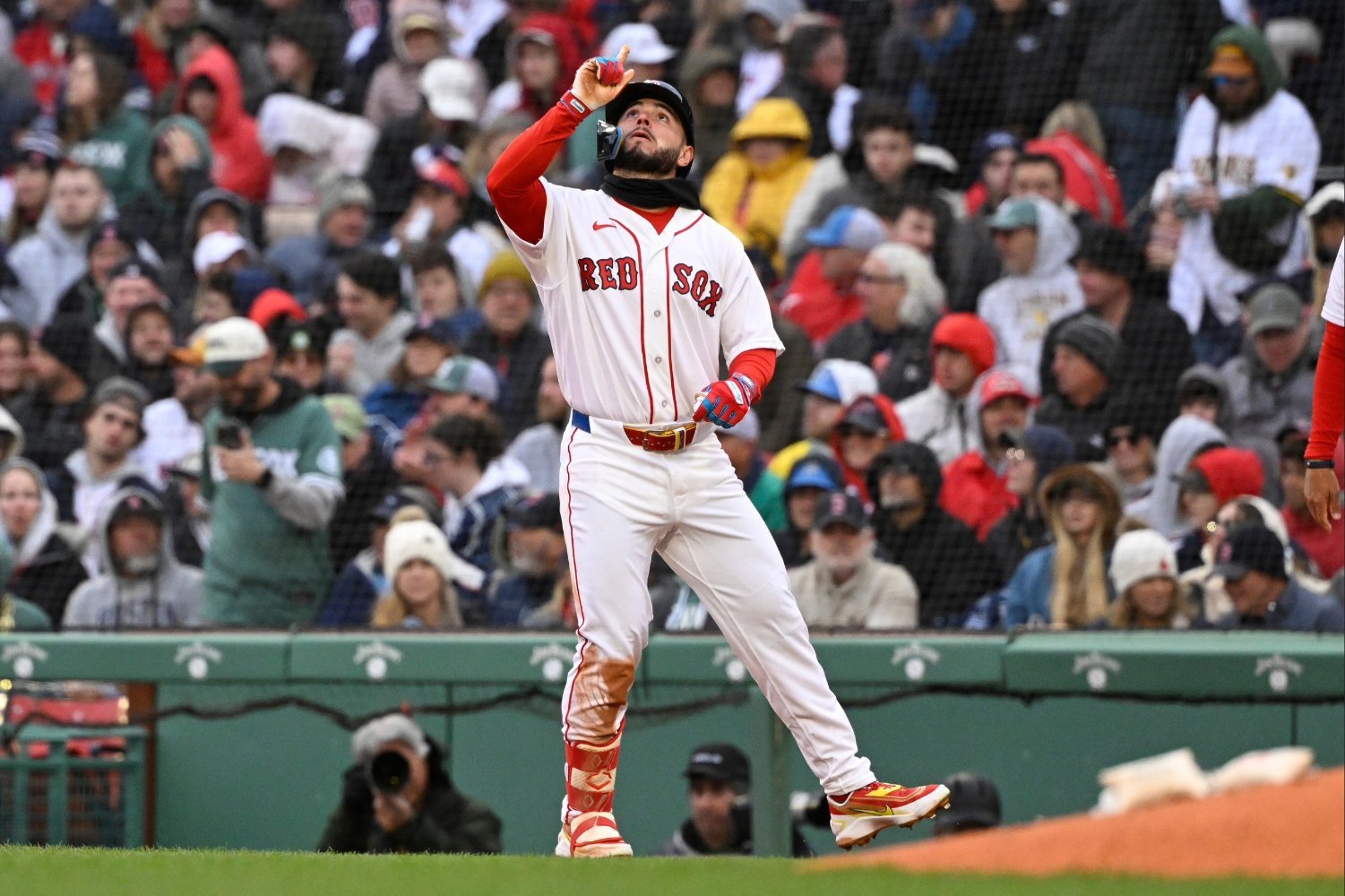 Wilyer Abreu came into the 2026 season looking to prove more than one thing to his coaches, the front office, and the fans. It’s been a small sample size so far, but he’s more than answered the call. Abreu has had the training wheels taken off and he’s now seeing every day at-bats, including against left-handed pitchers. With ample opportunities for playing time, Abreu is making an incredibly strong case to be the heart and soul of the 2026 Boston Red Sox. Just from the eye test alone, Abreu has been the offensive standout so far this season. He’s currently slashing .387/.406/.774 with a .512 wOBA and a 230 wRC+. He’s knocked three homers and six RBIs so far over eight games. As the number five hitter on a team with a fairly tepid offense thus far, he has been the one name that inspires confidence when he steps in the box in any situation. He looks calm and collected, something that evaded him at times last year when it was most needed. So far in 2026, he’s notched at least one hit in seven of eight contests. Most notably though, Abreu has shortened his swing against left-handed pitchers this season. That has allowed him to get the head of the bat to the ball in a quicker motion. This change in swing mechanics has given him more confidence at the plate, and it’s paying dividends for him as the team looks to turn their season around. His Baseball Savant page is bright red; he ranks in the 91st percentile of barrel percentage and that’s obvious if you’ve been listening when he makes contact. All of his expected stats also back up the actual data, which suggests this breakout isn't just smoke and mirrors. As long as he keeps his new mechanics, Abreu is going to be representing the Red Sox at the Midsummer Classic in July. Anyone who has been paying attention to the Red Sox since Abreu made his debut with the team has known that a breakout season was coming sooner than later. We saw glimpses of it in 2025, but he battled injuries that kept him off the field for portions of that season. On top of that, he was working in a strict platoon role with Rob Refsnyder, hindering his ability to get his feet under him against southpaws on a regular basis. Now, though, it feels like we’re finally seeing the best version of Wilyer Abreu. He’s confident on both sides of the baseball and proved during the World Baseball Classic that there’s not a moment too big for him. As the Red Sox, hopefully, rebound from their slow start, Abreu will need to continue being a leader for this offense. His presence in the middle of the lineup has been one of few things keeping this team (barely) afloat in 2026. View the full article
 -
 With the Marlins back home and still sitting atop the NL East standings, will loanDepot park start drawing larger crowds? Fish Unfiltered discusses. View the full article
 -
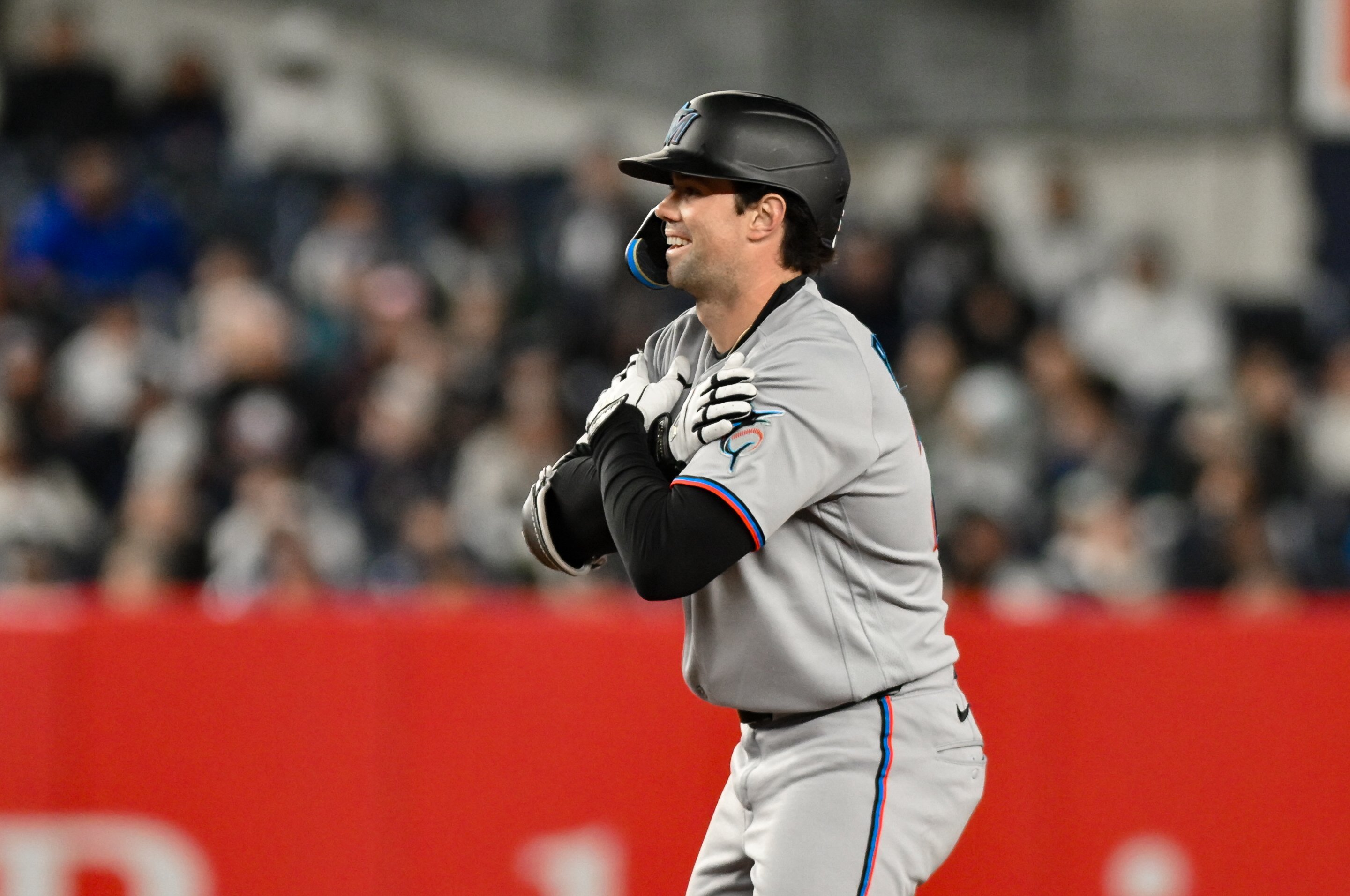 The Miami Marlins arrived at Yankee Stadium early Sunday morning, but didn't leave the field until long after sunset. Despite a rain delay of three and a half hours and a complication to their original pitching plan, they defeated the New York Yankees by a final score of 7-6, taking one out of three in the weekend series. Chris Paddack was supposed to make his second start of the season, but because of the rain delay, manager Clayton McCullough made the decision to have Pete Fairbanks start the game as an opener. With Fairbanks' wife set to give birth to their third child, the Marlins had Fairbanks start the game so he can get back to his family sooner. Had the game started on time, Paddack would've started the game and Fairbanks would've been available out of the bullpen. Ben Rice became the first hitter to drive in runs off of Fairbanks in 2026. He took advantage of a fastball ball down for his third home run of the season, driving it 410 feet deep to right field, giving the Bronx Bombers an early 3-1 lead. In his lone inning of work, Fairbanks allowed three runs on three hits, one walk and one strikeout before turning things over to Andrew Nardi. Paddack didn't take the mound until 6:04 p.m, still trailing 3-1. His Marlins debut, which took place earlier in the week against the Chicago White Sox, was disappointing, allowing eight runs on eight hits. On Sunday night against a veteran Yankees lineup, Paddack gave the Marlins 4 ⅔ innings where the lone run allowed was unearned. He struck out four in the process. z6ylvq.mp4 On the other hand, he did allow four walks and surrendered a total of eight hard-hit balls, with five of them coming on the changeup. His overall xFIP of 5.54 indicates that luck was on his side after the opposite was true in his previous appearance. "Chris was terrific," Marlins manager Clayton McCullough said. "It was a little bit unique today with how things started and him coming out of the bullpen. The third inning was a big inning, where he made an error, trying to limit it to one run. From there to hold it down, and navigate himself really well through a really good offensive team. Elevated the fastball really well, used the changeup appropriately." The Marlins came back from their deficit gradually. Down 4-1 in the top of the fourth inning, Xavier Edwards—the hottest hitter in baseball—knocked in an RBI double, scoring Connor Norby from first to cut the Yankees lead in half. Edwards now has a hit in all nine games this season, and is currently tied with Andy Pages of the Los Angeles Dodgers with a .471 batting average. In the top of the sixth, a throwing error from shortstop Jose Caballero allowed Heriberto Hernández to reach first base safely, allowing Jakob Marsee to score, making it a 4-3 game. In the top of eighth inning, with one out, Yankees reliever Fernando Cruz walked Marsee and that is when manager Aaron Boone went with righty Jake Bird out of the bullpen to face Otto Lopez. Bird walked Lopez, hit Griffin Conine, who pinch hit for Hernández. McCullough made a second swap, opting to pinch-hit Graham Pauley in Norby's spot in the lineup. With a 1-2 count, on the fifth pitch of the at-bat, Bird's sweeper hung right in the middle of the zone and Pauley smacked a 104.3 mph RBI double, giving the Marlins a 5-4 lead. For Pauley, that marked his pinch-hit of his MLB career. Xavier Edwards plated two more runs with a single, padding the lead to 7-4. "Not an easy thing to come off the bench and do," McCullough said regarding Pauley. "He got some really good swings off...Massive hit for us, and for him." John King, Calvin Faucher and Anthony Bender followed Paddack, who shut down the Yankees lineup, allowing only one hit within that span. With Fairbanks already on a plane out of town, McCullough turned to Bender in a save situation for the first time this season. He began the bottom of the ninth inning by getting Aaron Judge to ground out, but then surrendered back-to-back walks. With runners on first and second with one out, Bender struck out former Fish Giancarlo Stanton swinging. Another former Marlin in Jazz Chisholm Jr. drove two runs in on a double, making it a one-run game. The Marlins opted to intentionally walk Austin Wells, in favor of potentially facing Caballero, but Boone used Miami native J.C. Escarra as a pinch-hitter. Escarra struck out on three pitches, ending the game. Team 1 2 3 4 5 6 7 8 9 R H E MIA 1 0 0 1 0 1 0 4 0 7 7 1 NYY 3 0 1 0 0 0 0 0 2 6 7 1 Standing atop the National League East with a 6-3 record, the Marlins return home to begin a four-game series against the Cincinnati Reds. Janson Junk will take the mound on Monday at 6:40 p.m. View the full article
 -
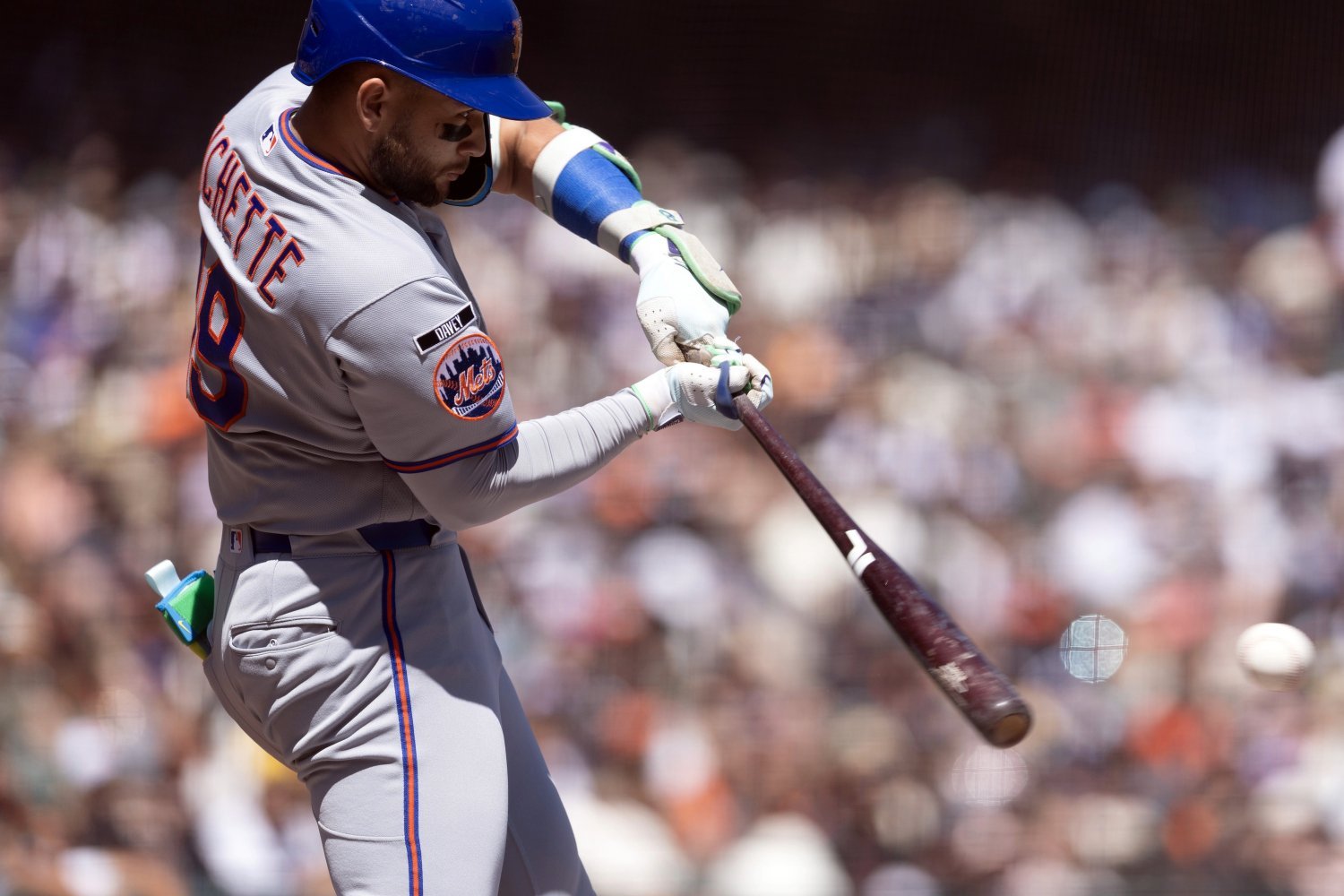 After a rough start at the plate to start the season, Bo Bichette is starting to turn the corner and put his struggles behind him. The $126 million man was part of a big offseason for the New York Mets, with the stakes high as they look to return to the postseason after a disaster of a second-half last year. Bichette has started all ten games so far, batting third and manning the hot corner. He started his first six games only recording three hits across 27 at-bats against the Pirates and Cardinals, good for a .111 batting average. That stretch came with eight strikeouts and only one walk. In the Mets last series in San Francisco, Bichette’s bat finally came to life. He collected six hits, two being doubles, while driving in three runs. He almost took Robbie Ray deep Thursday night, but Harrison Bader robbed him of a 104 mph home run. The hits aren’t always showing up in the scorebook, but he’s still making pretty good contact and has been unlucky. He’s been squaring up the baseball and hitting a lot of line drives, portending a much brighter future after a slow start to his tenure in the Big Apple. Slow Starts Aren’t Unusual for Bo Bichette Bichette has made a habit off getting off to slow offensive starts. His career batting average and OPS are the lowest between March and April. During these two months, Bichette has posted a career slash line of .257/.297/.390 across 607 plate appearances. This performance doesn't last long for him; his offensive numbers tend to jump in production once the calendar flips to May, as he owns a career .291/.338/.488 slash line in that month. He has a reputation of starting slow, but has shown to finish seasons strongly. Looking at his career trends, in the second half of the season from July to the end of the year is when Bichette’s bat comes to life. His monthly OPS is above .800 only in May in the first four months of the season, but has sat above .800 his whole career between July and October. The same trend continues for his batting average. It sits below .300 from March through June, but sits above .300 the whole second half. It's not unusual for star players to heat up as the weather warms, but it is rare that the splits are so drastic. The Mets would surely like him to get going a little quicker in 2026, but some players need (lots of) time to get back their timing. The only difference now is that he's a $42 million star on a new team, rather than a young player making pre-arb or arbitration money. Are Other Factors Contributing to Bichette's Start? When you sign a big contract with a new team, there is some stress and pressure that forces you to press and try to play hero ball. Also keep in mind that Bichette had to change positions, shifting from shortstop to third base due to Francisco Lindor having shortstop locked-up. For someone who has historically been chastised for his poor glove-work, it's not shocking to see that his bat is lagging. That being said, if you want reason to be concerned, Bichette's bat control offers an area to highlight. He's always been a free swinger with a bad habit of chasing outside the zone, but his timing is way off right now. His barrel rate is less than half of his career mark, and he's whiffing on nearly one-fourth of his swings (24.7%). As a result, all of his contact quality metrics have dropped off from last year; there's no reason to think a veteran player with a career .293 batting average can't right the ship, but there is a source of the misery beyond just cold weather. Even though Bichette isn’t off to a great start, this is not abnormal within the scope of his career (and he’s already starting to come out of his slump). He’s only ten games into the season and the whole league offensively is behind pitchers production wise. Around 75 qualified hitters currently have an OPS of .600 or lower. The Mets bet a lot (both literally and figuratively) on Bichette being a middle-of-the-order run producer this season. It might take longer for him to get there than fans want, but history suggests it's only a matter of time before he turns things around. View the full article
 -
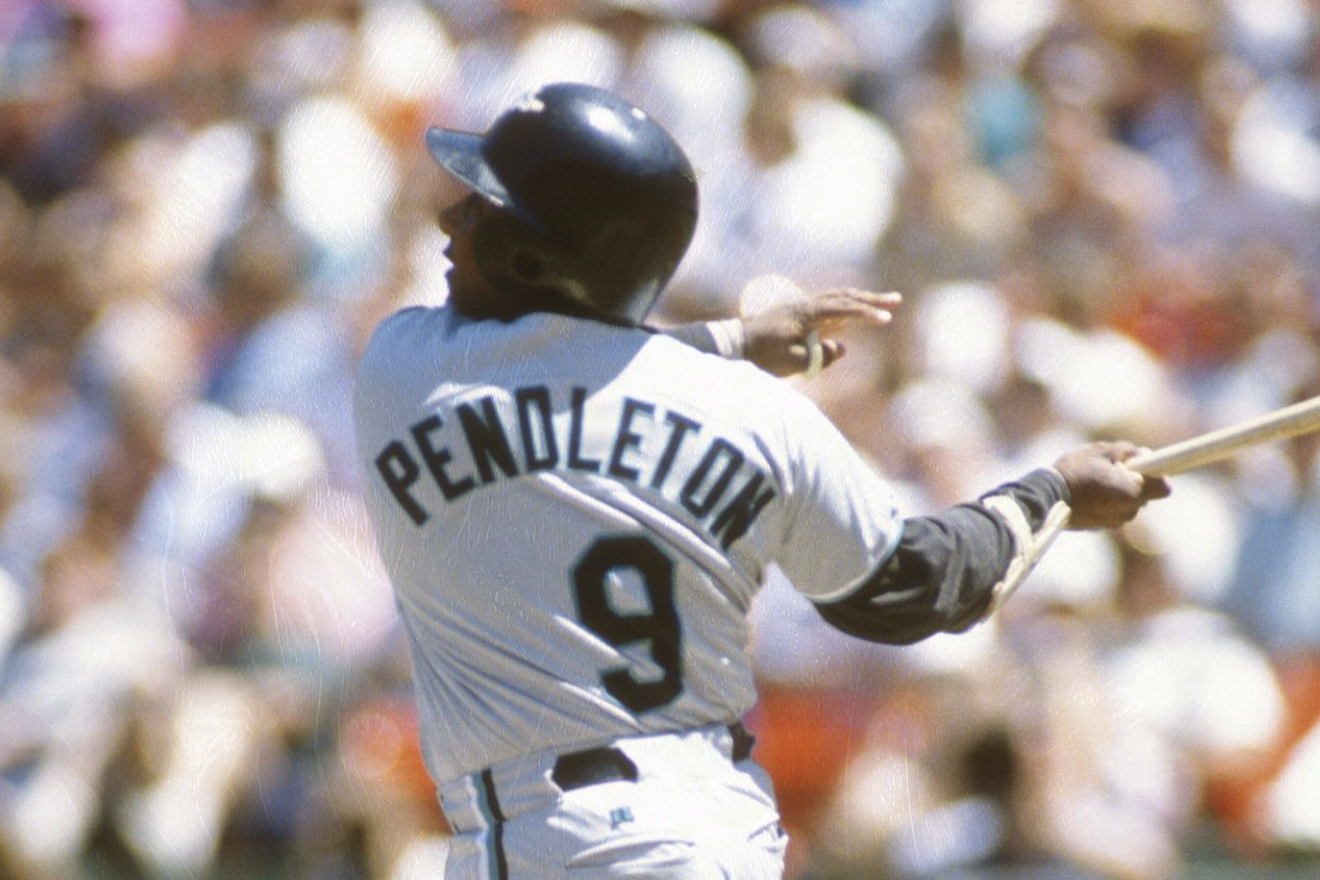 Over his 15-year career in Major League Baseball, third baseman Terry Pendleton accomplished many things. An All-Star, batting champion, MVP and three-time Gold Glove winner, Pendleton collected nearly 1,900 hits and helped the St. Louis Cardinals win the 1987 World Series. Not known for his power, Pendleton hit 140 career home runs, which included three walk-offs. The last of those came on this day 30 years as a member of the Florida Marlins. Through nine innings at Joe Robbie Stadium on April 6, 1996, the Marlins and San Francisco Giants had played to a scoreless tie. After Kevin Brown gave Florida eight scoreless innings on the mound, Robb Nen added two more out of the bullpen, striking out four. For San Francisco, starter Mark Leiter threw nine scoreless frames. As the Giants went to the bullpen, Mark Dewey failed to record an out. After working the count to 2-2, the switch-hitting Pendleton went the other way for a solo walk-off blast to give the Marlins a 1-0 victory. Pendleton and catcher Charles Johnson each had two of the five hits for Florida. Shawon Dunston had two hits for San Francisco. Brown was able to scatter seven hits on the mound before Nen tossed consecutive 1-2-3 innings to pick up the win. In parts of two seasons with the Marlins, Pendleton hit .273 with 21 home runs and 136 RBIs. His lone walk-off blast in teal and the last of his career came on this day three decades ago. View the full article
 -
What are your Marlins vs. Reds series predictions?
DiamondCentric posted an article in Fish On First
 Recent history tells us that the Miami Marlins are difficult to predict, but that won't stop us from trying. Welcome to a new season of Prediction Time. Once again in 2026, I will be monitoring the prognostications from our valued SuperSubs, Fish On First staffers and livestream guests. Individual article pages like this one will be created prior to every Marlins series and featured prominently on the FOF site. Consistent participation is key if you want to win this annual contest. Submissions only take a few seconds. Scoring system A "perfect" series is worth three points: Earn one point for predicting which team will win the upcoming series Earn one point for predicting the precise number of victories for each team Earn one point for predicting the “Series MVP” who accumulated the highest win probability added (WPA) during the series as calculated by FanGraphs (could pick a player from either team) Here is a reminder of what the 2025 season leaderboard looked like. FOF staffer Kevin Barral currently sits atop the 2026 leaderboard, which will be updated between every Marlins series. If you are a SuperSub, leave a comment with your Prediction Time picks on this page, or join the Marlins Discord Server and submit there. We'll feature them on the upcoming Fish On First LIVE episode and track your points throughout the season! Any picks submitted prior to the first pitch of the series opener will be counted. If you are not a SuperSub, please consider signing up here to support the FOF staff. Series preview notes Probable starting pitchers: RHP Janson Junk (MIA) and LHP Brandon Williamson (CIN) on Monday RHP Sandy Alcantara (MIA) and LHP Andrew Abbott (CIN) on Tuesday RHP Eury Pérez (MIA) and RHP Brady Singer (CIN) on Wednesday RHP Max Meyer (MIA) and RHP Rhett Lowder (CIN) on Thursday The Marlins rank third in MLB with a 132 wRC+ and 10th in MLB with a 3.67 FIP. They have a 5-1 record at home this season. The following Marlins players are on the injured list: Maximo Acosta (10-day IL), Ronny Henriquez (60-day IL), Adam Mazur (60-day IL), Christopher Morel (10-day IL), Esteury Ruiz (10-day IL) and Kyle Stowers (10-day IL). The Reds rank 25th in MLB with a 78 wRC+ and 21st in MLB with a 4.30 FIP. They have a 3-0 record on the road this season. Their roster includes former Marlins outfielder Dane Myers. The following Reds players are on the injured list: Caleb Ferguson (15-day IL), Hunter Greene (60-day IL) and Nick Lodolo (15-day IL). View the full article
 -
Adjustments Marlins must make after ugly Yankees series
DiamondCentric posted an article in Fish On First
 Fish On First staffers react to the latest Miami Marlins series and prepare you for what lies ahead. Sunday's show was hosted by Alex Carver and featured panelists Ely Sussman, Kevin Barral, Isaac Azout, Nate Karzmer, Daniel Rodriguez and Alex Krutchik. The following topics were covered: The brilliance of Xavier Edwards and his viability as a contract extension candidate Mixed results for Agustín Ramírez, both offensively and defensively An unprecedented number of walks by the Marlins pitching staff Pete Fairbanks' pending trip to the paternity list and the likeliest call-up candidates The team's unconventional defensive position Previewing and predicting the upcoming matchup against the Cincinnati Reds You can find Fish Unfiltered and Fish On First LIVE on the Fish On First YouTube channel, Apple Podcasts, Spotify or wherever else you get your pods. Our next FOF LIVE episode will be Thursday at approximately 4:00 p.m. ET following the Marlins-Reds series finale. View the full article
 -
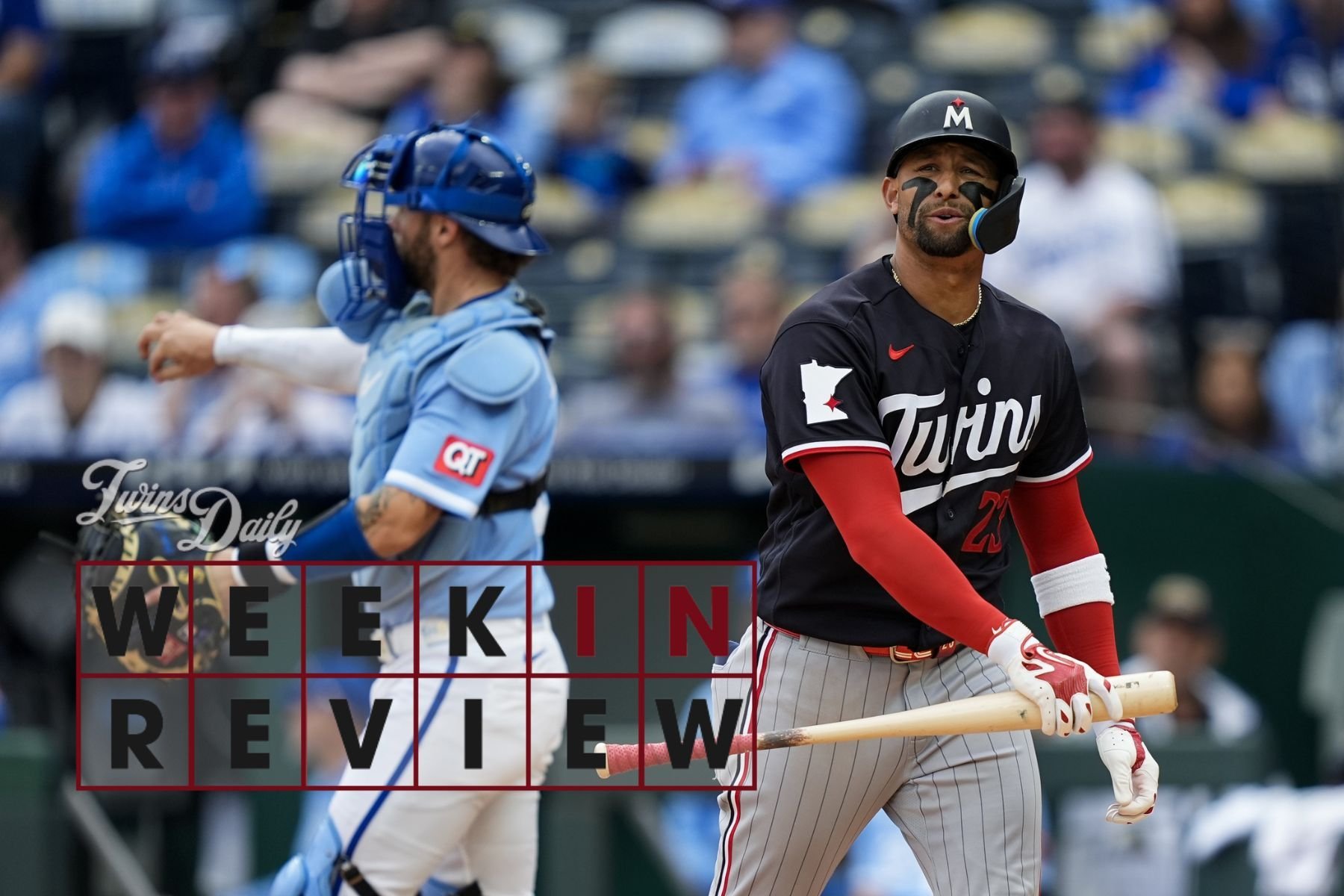 The Weekly Nutshell: In their first full week of the 2026 season, the Twins dropped four of six, and they've now lost all three series they've played. Both in Kansas City and at home, games were played under cold, wet conditions that contributed to sloppy play, but the Twins struggled far more than their opponents to overcome the inclement weather. Sparse crowds at Target Field over the opening weekend were a clear indicator of what we already knew: fan morale is direly low and this team is having a hard time drawing interest. Unless their offense can start to show some signs of life, it's only likely to get worse. Weekly Snapshot: Mon, 3/30 through Sun, 4/5 *** Record Last Week: 2-4 (Overall: 3-6) Run Differential Last Week: -2 (Overall: -2) Standing: 5th Place in AL Central (2.5 GB) Latest Game Results Game 4 | KC 3, MIN 1: Offense Once Again Goes Silent Against Lefty Starter Buxton, Keaschall: 0-7 Game 5 | KC 13, MIN 9: Twins Lose Control in Rain-Soaked Loss at Kauffman Twins pitchers: 15 H, 5 BB, 2 HBP, 2 HR allowed Game 6 | MIN 5, KC 1: Sweep Avoided Behind Strong Outing From Bradley Bradley: 6 IP, 0 ER, 3 K Game 7 | MIN 10, TB 4: Late Home Runs Seal Victory in Home Opener Gray: 1-2, BB, HR, 5 RBI Game 8 | TB 7, MIN 1: Abel Struggles Again as Lineup Gets Shut Down by Another LHP Abel: 4 IP, 6 H, 3 BB, 5 ER Game 9 | TB 4, MIN 1 (10): Pitching Staff Eventually Buckles in Extras as Offense Flops Woods Richardson: 6.2 IP, 1 ER, 4 K NEWS & NOTES The relief pitching carousel has begun to spin. Expect it to continue all summer long. As they often do, the Twins traded for a recently DFA'ed reliever, jumping the waiver line to acquire right-hander Garrett Acton from Miami in exchange for minor-leaguer Logan Whitaker. David Festa was moved to the 60-day injured list to make room on the 40-man, confirming that he's essentially out until at least June, which is a bummer. The Twins wasted little time getting Acton onto the active roster, swapping him for Zak Kent on Sunday. Kent heads to Triple-A after tossing two shutout innings in Saturday's loss. Acton, 27, has allowed eight earned runs and three homers in 6 ⅔ MLB innings, but has big strikeout numbers in the minors. Probably the type of arm worth taking a look at in a season like this. Presumably he'll step into Kent's vacated role as a low-leverage mop-up type who can provide some length if needed. (And will likely find himself on the carousel soon enough.) HIGHLIGHTS Not many hitters in the Twins lineup are getting the job done, but Josh Bell has been an early exception. He's looking very much like the guy who excelled in the second half with the Nats last year, and was a rare ignitor for the offense this past week, clubbing two homers and a double while driving in six. Bell entered play on Sunday tied for the league lead with nine runs scored. Tristan Gray also supplied some power and run production, taking advantage of his opportunity to start at short in the home opener (due to Brooks Lee's illness) by sealing the game in the eighth with a grand slam. Gray has made only 18 plate appearances but he's already got eight RBIs to lead the team. Taj Bradley look another promising step in his second start of the season, cruising through six innings of shutout ball on Thursday to help salvage a win in KC. He wasn't quite flinging the same level of swing-and-miss filth as he did in Baltimore, but Bradley looked plenty good and reasonably efficient, walking only one while getting through six on 100 pitches. He's allowed one through through 10 ⅓ innings in two starts. On Sunday, Simeon Woods Richardson delivered the deepest start of the season for Minnesota thus far, holding Tampa to one run over 6 ⅔ frames in a game where he unfortunately received no run support. In his last seven starts dating back to September, Woods Richardson has a 2.33 ERA and 42-to-12 K/BB ratio in 38 ⅔ innings. LOWLIGHTS New manager, new hitting coach, same old maddeningly ineffective offense. The Twins were held to a single run in three of their six games last week, and naturally lost all three. In Sunday's finale against the Rays, with a chance to take their first series behind a stellar outing from Woods Richardson, the Twins couldn't get much of anything going, producing just three hits and two walks in 10 innings. A day earlier, Steven Matz became the latest left-handed starter to stymy the Minnesota lineup, breezing through six innings with two hits allowed. As a team the Twins are batting .186 with a .619 OPS against lefty starting pitchers. Derek Shelton is doing his best to stack up righties for favorable matchups, but no one's been capable of doing anything with them. The biggest problem at the moment is that the Twins just aren't getting anything from their No. 2 and 3 hitters. Luke Keaschall has been getting some singles, but not showing any power nor much patience. He's got just two walks and one extra-base hit through 39 plate appearances. Byron Buxton celebrated surpassing 10 years of major-league service, but did so amidst a deep slump at the plate. He went 0-for-18 on the week with six strikeouts and no walks, though he thankfully evaded an injury scare on an HBP that sent him walking straight into the clubhouse. Ultimately I'm not overly concerned about either of those two, although Keaschall's slow start does raise an eyebrow following the quiet finish last year. The rest of the lineup is doing nothing to pick them up or inspire confidence generally. Austin Martin is drawing some walks, but he went 3-for-13 last week and is still looking for his first extra-base hit. Matt Wallner popped three solo homers but was otherwise 2-for-23 with 12 strikeouts and zero walks. Royce Lewis has been similarly all-or-nothing — he's got four extra-base hits but zero singles and a .167 average through 29 PA. Ryan Jeffers was 3-for-16 and still hasn't driven in a run this year. Kody Clemens keeps getting looks in the leadoff spot despite a .150 average and .261 OBP. Lee continues to be a complete non-factor with the bat, slashing .167/.250/.167 through seven games. He's looked bad enough that the Twins have to be starting to weigh their options; there's no reason he should have an especially long leash. We're 10 days into the season and I'm already tired of watching most of these guys flail away at the plate. I'm ready for some fresh blood in the lineup and I wonder how quickly the Twins might be inclined to oblige. TRENDING STORYLINE This space in the weekly recap is frequently going to be focused on prospects playing at Triple-A, at least early in the season, because really that is the only compelling source of intrigue right now: How soon can some of these highly regarded near-ready talents prove that they ARE ready, and infuse some life into a persistently stale Twins team? Kaelen Culpepper is doing his part to put the heat on Lee. He homered in both legs of a double-header in St. Paul on Sunday, his second and third of the season. Emmanuel Rodriguez also homered twice over the weekend, building on his strong spring showing. Alan Roden has his OPS up over 1.000 for the Saints. Walker Jenkins has been a bit slower to get going but it only feels like a matter of time. LOOKING AHEAD Three more left-handed starters on the docket in the coming week, which is not great news, especially when the first one happens to go by the name of Tarik Skubal. Facing two high-quality opponents in the Tigers and Blue Jays, the Twins will need to play significantly better ball than they have thus far, or else this is gonna be ugly. MONDAY, APRIL 6: TIGERS @ TWINS — RHP Casey Mize v. RHP Joe Ryan TUESDAY, APRIL 7: TIGERS @ TWINS — LHP Tarik Skubal v. RHP Taj Bradley WEDNESDAY, APRIL 8: TIGERS @ TWINS — LHP Framber Valdez v. RHP Bailey Ober THURSDAY, APRIL 9: TIGERS @ TWINS — RHP Jack Flaherty v. RHP Mick Abel FRIDAY, APRIL 10: TWINS @ BLUE JAYS — RHP Simeon Woods Richardson v. TBD SATURDAY, APRIL 11: TWINS @ BLUE JAYS — RHP Joe Ryan v. LHP Eric Lauer SUNDAY, APRIL 12: TWINS @ BLUE JAYS — RHP Taj Bradley v. RHP Max Scherzer View the full article
 -
Week in Review: Royals Go .500 in First Homestand of 2026
DiamondCentric posted an article in Royals Keep
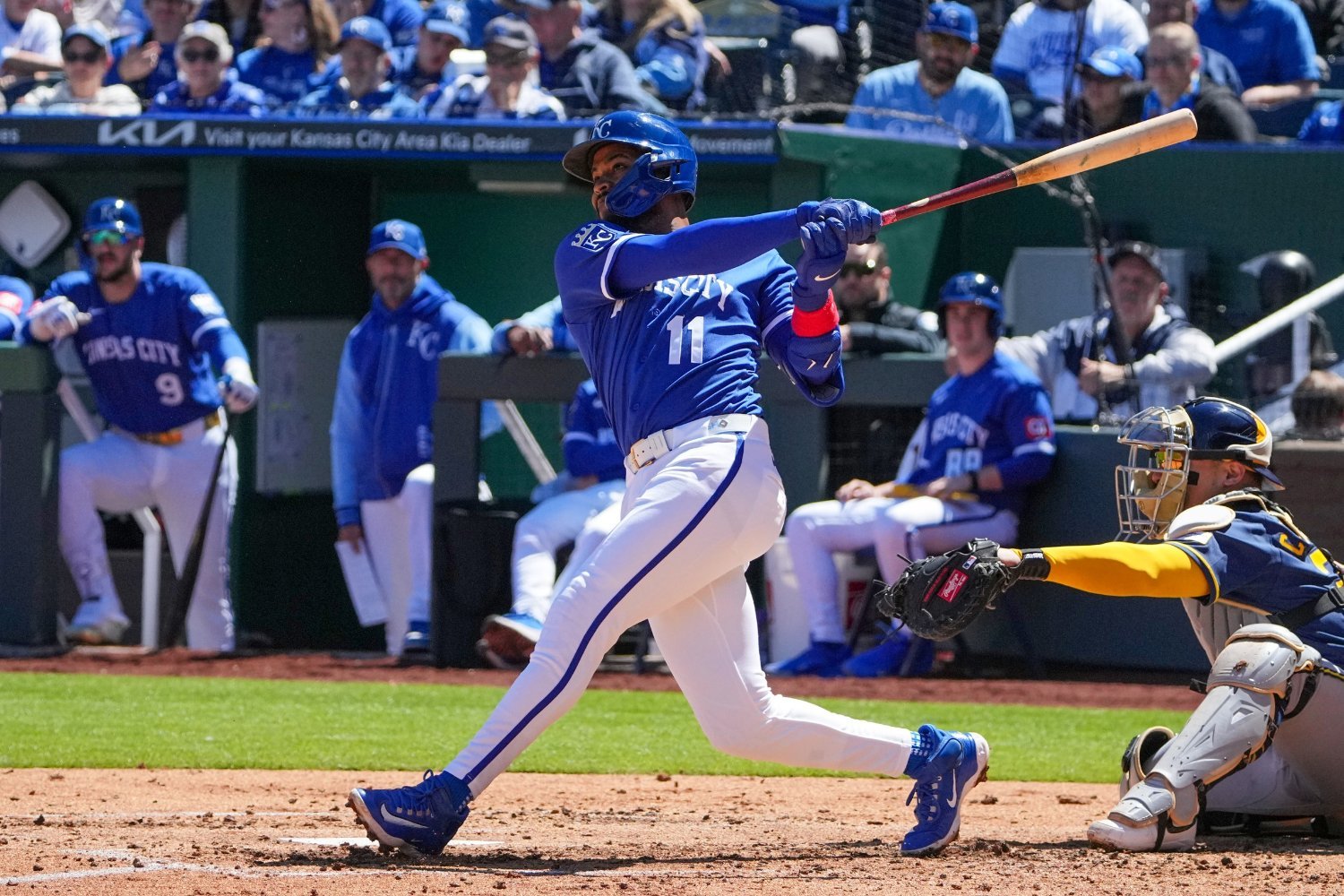 Week in a Nutshell After losing two of three in their Opening Series against Atlanta, the Royals came back to Kansas City for their first homestand of 2026. That included a three-game series against division foe Minnesota, followed by a three-game series against NL Central opponent Milwaukee. The Royals won Opening Day against the Twins, their first home opening win since 2022. They also followed that up with 13 runs in game two in monsoon conditions at Kauffman Stadium. However, they lost a chance at a sweep on Thursday afternoon in a game marred by off-field distractions. The main distraction centered on rookie catcher Carter Jensen oversleeping his alarm, showing up late, and getting scratched shortly before first pitch. The Brewers were expected to be a tougher challenge than the Twins, especially with Milwaukee's record 5-1 heading into the weekend series at Kauffman Stadium. After being rained out on Friday, they had a doubleheader on Saturday, which both teams split. The Royals had their chances in the rubber game on Easter Sunday, but the Brewers held off Kansas City in the late innings and took the series, improving their record to 7-2 and remaining atop the NL Central. A 3-3 homestand isn't bad at this time of the year, especially with a series against a team that will likely be playing in the postseason. However, it was a homestand that felt like a missed opportunity, and the Royals weren't helped by the lackluster play of their stars over the six-game span at Kauffman Stadium this past week. Record this Series: 3-3 Run Differential for the Series: +2 Record for the Year: 4-5 Run Differential for the Year: -5 Standing: Tied for 3rd in the AL Central Game 4: KC 3, MIN 1 The Royals win their first Opening Day home game since 2022. Kris Bubic produced a quality start with only one run and two hits allowed in six innings of work (he also struck out four and walked three). Kyle Isbel and Isaac Collins both hit home runs in the two-run victory. Game 5: KC 13, MIN 9 In a rainy and sloppy contest, Kansas City tagged starter Joe Ryan and the Twins' pitching staff for 13 runs, though only nine were earned. The Royals got off to a 12-1 lead, but the bullpen struggled with control and command due to the weather and allowed eight runs after Noah Cameron was pulled. Jac Caglianone led the Royals with three hits. Game 6: MIN 5, KC 1 Taj Bradley and the Twins bullpen held the Royals lineup to only one run in the series finale. Cole Ragans matched Bradley with eight strikeouts, four hits, one walk, and zero earned runs allowed. However, a questionable throwing decision by Salvador Perez (thrust into catching at the last minute) ended up costing Ragans the loss. Steven Cruz was tagged in mop-up duty by allowing back-to-back-to-back home runs. Game 7: MIL 5, KC 2 (1st Game of Saturday DH) After getting "rained out" on Friday (it didn't storm as hard as expected), the Royals dropped the first leg of their afternoon doubleheader. Luinder Avila made his first MLB start, and he was lackluster, allowing five runs on three hits and three walks in three innings of work. While he struck out four batters, he struggled with command, and the Brewers (specifically, Garrett Mitchell, who had all 5 RBI) made him pay. Game 8: KC 8, MIL 2 (2nd Game of Saturday DH) Kansas City bounced back in the nightcap, with Seth Lugo grinding out five innings and allowing two runs while striking out seven. Jensen had a big day, collecting two RBI and two hits, including a double down the foul line. A six-run sixth inning ended up being the difference for Kansas City in game two of the doubleheader. 27th-man Eli Morgan got the rare three-inning save. Game 9: MIL 8, KC 5 The Brewers won the rubber match, holding off the Royals despite a modest comeback in the 7th that made it a one-run game. Bubic went five innings and struck out eight, but he allowed four runs due to big hits by the Brewers. Matt Strahm and Lucas Erceg struggled in their lone outings of the series, each allowing two runs in their innings of work. News and Notes After struggling in his lone outing in Atlanta, closer Carlos Estevez was put on the 15-Day IL due to a foot contusion from a ball that hit him in the foot during the Braves game. The Royals called up Steven Cruz in his place, and he received a lot of work during the homestand. Michael Wacha was beset by illness this week, which forced him to miss his start against Milwaukee. Avila pitched in his place. Wacha was not added to the IL, and he is expected to make his next start on the road in game one of the upcoming series against the Guardians, as reported by Anne Rogers of MLB.com. Avila replaced Bailey Falter on the active roster as Falter was put on the IL due to an elbow injury. Falter struggled on Wednesday, allowing three runs on three hits and two walks in 0.1 innings of work (though the weather conditions certainly didn't help). Even though he started, manager Matt Quatraro said that the Royals plan to keep Avila up for now as a reliever. It hasn't been determined if Avila will return to Triple-A when Falter is eligible to come off the IL. Morgan came up as the 27th man for the Saturday doubleheader against Milwaukee. Morgan pitched three innings and allowed no runs on one hit and one walk while striking out five. The save was Morgan's first since 2023. He was returned to Triple-A Omaha after Saturday's game, per MLB policy. Highlights After averaging only two runs per game in their first series in Atlanta, the Royals averaged 5.3 runs over the homestand. Their 32 runs scored were tied for the 7th-highest total in baseball over the past week, according to MLB.com. Kansas City also ranked second in OBP over the past week with a .373 mark and tied sixth for walks with 26. Last year, the Royals ranked 22nd in OBP, 29th in BB%, and 26th in runs scored. Thus, this week was a nice step in the right direction for this offense. Isbel, Collins, and Garcia paced the Royals' offense over the past week. They were the only players with OPS marks over 1.000 this week, with Isbel having a 1.563 OPS, Collins having a 1.011 OPS, and Garcia having a 1.053 OPS. Garcia had two hits on Sunday and launched his first home run of the season against Brewers starter Kyle Harrison. It was Garcia's first home run since September 5th of 2025. Another solid performer was Jonathan India, who hit .294 with an .871 OPS in 17 plate appearances. India had five hits and five RBI this week, with four of them coming on a grand slam on Wednesday in the Sonic Slam inning. The Royals would like to see India bounce back after he hit .233 with a .669 OPS. While his numbers overall are still a bit meager (.208 average; .654 OPS), his performance this past week should be a good sign that India is starting to lock in again as a hitter at the bottom of the lineup. In terms of pitching, the Royals staff did pretty well when it came to generating strikeouts. Over the past seven days, Kansas City struck out 64 batters, second-most in baseball, according to MLB.com. Individually, Bubic led all Royals pitchers with 12 strikeouts in 11 IP. Ragans and Lugo were second and third with eight and seven strikeouts, respectively. Noah Cameron had a nice 2026 debut, allowing only one run on four hits and one walk while striking out five in five innings of work in Wednesday's 13-9 win. The St. Joseph, Missouri product didn't generate a whole lot of chase (21.1%) or whiff (20.5%), but he flooded the strike zone (54.2% zone rate) and limited hard contact (.335 xwOBACON), as seen below from his TJ Stats summary. A couple of relievers who stuck out this week were Nick Mears and Daniel Lynch IV, who appeared four and three times, respectively, this week. In four innings of work, Mears didn't allow a run, posted a 0.75 WHIP, and struck out three while walking one. Like Cameron, the former Brewers reliever has limited hard contact while flooding the strike zone, but could do a better job generating chases and whiffs. On a positive note, his TJ Stuff+ has looked good thus far this season, so he may be a slight adjustment away from improving those chase and whiff rates. As for Lynch, he posted a 2.25 ERA and 1.25 WHIP this week in four innings of work. Lynch neutralized things a bit after Avila was pulled and made an incredible play at first base to end the inning (though he was taken out after the game as a precaution). Lynch isn't generating a ton of chase as a reliever, as evidenced by his 22.2% chase rate. However, his whiff rate is solid at 31.3%, and he's limiting hard contact with a .227 xwOBACON. His stuff isn't overwhelming, according to TJ Stuff+, but it's good enough, especially when the command is on. The former Virginia product is the kind of lefty reliever who can excel in both short and long-relief appearances. The Royals will need that, especially with Falter and Estevez both on the IL. Lowlights It was a brutal series for Bobby Witt Jr. and Vinnie Pasquantino, the No. 2 and 3 hitters in the Royals lineup. The Royals' shortstop was the worst of the regular players during the six-game homestand. In 22 plate appearances, Witt only hit .182 with no extra-base hits. While he had four walks, he also struck out six times, the third-most of any Royals hitter over the past week. His .478 OPS and .182 slugging percentage were the lowest marks of any Royals hitter with more than one plate appearance over the past seven days, according to MLB.com. Witt is still hitting the ball hard, as evidenced by his exit velocity and hard-hit Statcast percentiles below. That said, he is chasing a lot, ranking in the 10th percentile in O-Swing%. That approach hasn't helped him barrel the ball either, as evidenced by his 4.3% barrel rate, which ranks in the 30th percentile. Witt is allowed to have a bad stretch every now and then. However, he's the most important hitter on this team, and the Royals are lucky they went 3-3 on a homestand where he performed so poorly. Pasquantino was a little better than Witt during this homestand, but not by much. In 23 at-bats, Vinnie hit .217 with a .582 OPS. He only had one extra-base hit (a double), and he struck out seven times. He walked four times and drove in four RBI, with two coming on Sunday, helping the Royals get within one run of the Brewers in the bottom of the seventh. While Sunday was a step in the right direction (he had two hits), it has been a brutal start for the Royals' first baseman. In 40 plate appearances, he is hitting .206 with a .535 OPS. He's known for being a slow starter, as he has a career .216 average and an 89 wRC+ in March/April, according to Fangraphs splits. Thus, this stretch won't last forever, and he should heat up offensively as the weather gets hotter. Nonetheless, it would be nice for Vinnie to snap out of his typical early-season funk sooner rather than later. In terms of pitching, Erceg and Strahm were nails in the Atlanta series, but had lackluster performances this week. In two games and two innings of work, Strahm posted a 9.00 ERA and 1.50 WHIP. He allowed his first home run of the year, which inflated his metrics. He did have three strikeouts to only one walk, but Strahm's first homestand of 2026 left a bit to be desired, though he wasn't helped by inconsistent work in the Brewers series. Erceg didn't have a great week either, though both of his outings were in non-traditional situations. The 30-year-old reliever probably shouldn't have appeared on Wednesday (it was 12-1 at one point), but the Royals bullpen couldn't mop things up. On Sunday, he struggled to generate chase or whiff against a tough Brewers lineup. As a result, he posted a 10.80 ERA and 2.40 WHIP in 1.2 IP. The stuff has been great for Erceg so far this year, but he is struggling to generate CSW and whiffs, an issue for him a season ago. While the whiffs and chase haven't been there for Erceg, the TJ Stuff+ is good (103), and he's limiting barrels and hard hits at the very least. If he wants to claim the closer's spot for Estevez full-time, he will need to generate more strikes, especially of the swing-and-miss variety. The last pitcher to focus on is Avila, who was absolutely rocked in his first MLB start and MLB appearance in 2026. The stuff was good from Avila in his outing on Saturday afternoon. However, he failed to generate much chase or whiff, and he was hit hard. That is not exactly a good trio to see together, as illustrated in his TJ Stats summary below. Avila will get a chance to face easier opponents, with the Guardians (21st in wRC+) and White Sox (24th in wRC+) looming this week. However, Avila will need to iron things out with his command to avoid another outing like his 2026 debut. Looking Ahead The Royals hit the road for a three-game series against the Guardians in Cleveland and then come back home for a four-game homestand against the White Sox. Kansas City went 15-11 against both opponents last year, so continuing those winning ways in 2026 will be important for the Royals if they want to return to the postseason. Two key position players in this series will be Witt and Pasquantino. Bobby and Vinnie do have some good history in Cleveland, historically. Witt has a career .830 OPS in Progressive Field, while Vinnie has an .860 career OPS. For the Royals to take the series in Cleveland, they will need solid performances from their No. 2 and 3 hitters in the lineup. In terms of pitching, the Royals struggled with walks as a pitching staff this past week. This is an atypical trend, as they ranked 9th in BB/9 a year ago. Kansas City issued 32 walks, fourth-most in the MLB over the past seven days. Their 1.44 WHIP was fifth-highest in baseball over the past week, and their 4.50 team ERA ranked 21st. Getting control again of the strike zone will be crucial for Kansas City's pitching staff, especially against two divisional opponents this week. A good sign for the Royals is that Cleveland and Chicago chase a lot. According to Fangraphs, the White Sox have the sixth-highest O-Swing% (34.6%), and the Guardians have the eighth-highest (34.5%). Conversely, the Twins (30.9%) and Brewers (30.8%) ranked 10th and 9th, respectively, in O-Swing%. On paper, Cleveland and Chicago should be easier opponents for this pitching staff. Thus, this upcoming week could be an opportunity for the Royals not just to cut down on walks but to get their overall command as a pitching staff back on track. As this past week (and series against the Brewers) demonstrated, the Royals will have a tough time winning games when their pitching staff is allowing too many free passes on base. View the full article
 -
Twins Minor League Report (4/5): Bombas for the Easter Bunny
DiamondCentric posted an article in Twins Daily
 TRANSACTIONS RHP Zak Kent was optioned to St. Paul and the Twins recalled RHP Garrett Acton, who was recently acquired from the Marlins. SAINTS SENTINEL Game 1: Worcester 4, St. Paul 2 (7 innings) Box Score Starting pitcher: Andrew Morris (3 2/3 IP, 2 H, 0 R, 1 BB, 4 K, 70 pitches) Home runs: Kaelen Culpepper (2) Multi-hit games: N/A Sunday’s doubleheader got off to a great start for the Saints. Kealen Culpepper hit a leadoff home run off Red Sox No. 1 prospect Payton Tolle and Orlando Arcia put St. Paul up 2-0 in the second inning with a little league homer — a triple plus a throwing error that allowed him to come all the way around to score. The Saints recorded just two more hits from there, but the pitching staff managed to keep the Sox off the board through six innings (of this seven-inning game). Andrew Morris delivered 3 2/3 innings of two-hit ball and was followed by John Brebbia, who pitched a pair of scoreless frames. Veteran Dan Altavilla came in for the save and everything went sideways. He could not find the zone, issuing three walks while throwing less than half of his pitches for strikes. Altavilla blew the save and Worcester ended up scoring four runs in the inning. The Saints went down 1-2-3 in the bottom of the seventh to end the first game of this doubleheader. Highlight: Culpepper's homer off Tolle. Game 2: Worcester 11, St. Paul 9 (11 innings) Box Score Starting pitcher: John Klein (1 2/3 IP, 4 H, 6 R, 3 BB, 1 K, 55 pitches) Home runs: Orlando Arcia (2), Emmanuel Rodriguez (2), Kaelen Culpepper (3), Alan Roden (1) Multi-hit games: Roden (2-for-4, HR), Gabriel Gonzalez (2-for-4, 2B), Arcia (2-for-4, HR) Things continued to go south to start the second game. The Saints found themselves down 8-1 heading into the bottom of the third inning, mostly due to former Saints great Mickey Gasper. Super Mickey his a solo homer in the first inning, then a grand slam in the second. The Saints kept at it. They chipped away a pair of runs in the fourth inning and three more in the fifth to bring the score to 8-6. Then Orlando Arcia hit an RBI single in the sixth to bring the Saints within a run. The St. Paul bullpen continued to hold and buy the lineup time to get back in it. In the bottom of the seventh (and scheduled to be final) inning, Worcester retired the first two Saints batters. Alan Roden was St. Paul’s last chance. He made sure there was more baseball to be played. A lot more. Roden blasted a 2-1 changeup for a home run he sent 427 feet with an exit velocity of 106.6 mph to tie the game. Neither team was able to score their “bonus” runner who started the eighth inning at second base. The Saints bullpen could only hold on for so long. They finally gave way in the ninth inning, with the Sox scoring the go-ahead run. In the bottom of the ninth, the Saints were down to their final out once again. And once again it was Roden to the rescue. He hit the first pitch he saw back through the middle to tie the game once again. The Saints showed impressive resolve in this game, battling back from an early seven-run deficit, but Worcester still prevailed. The Sox scored two more runs in the top of the 10th inning to finally finish off St. Paul. One last item to add on Roden's heroic effort: He also made an excellent diving catch in left field to end the top of the seventh inning. Highlight: Roden's game-tying home run in the bottom of the seventh inning. KERNELS CHRONICLE Cedar Rapids 14, Peoria 8 Box Score Starting pitcher: Nolan Santos (3 IP, 6 H, 4 R, 2 BB, 1 K, 61 pitches) Home runs: Marek Houston (1), Brandon Winokur (1), Caden Kendle (1), Andy Lugo (1) Multi-hit games: Houston (3-for-5, HR), Khadim Diaw (2-for-5), Winokur (2-for-5, 2B, HR), Jacob McCombs (2-for-3, 2 2Bs), Kendle (2-for-4, 2B, HR) The Kernels carried a 6-4 lead into the bottom of the sixth inning and absolutely blew this game open from there. Cedar Rapids tallied seven runs that inning, six of which were scored with two outs. Andy Lugo provided the knockout blow, a grand slam. Also in that inning, Eduardo Tait was hit by a pitch either on his hand or wrist. Tait waved off the trainer, stayed in the game and eventually came around to score. Tait’s spot in the order came back up in the sixth but he was pinch hit for. Cedar Rapids broadcaster Calvin Christoforo noted that Tait was not receiving any medical attention in the dugout. With the Kernels already up 13-4, it appears that Tait’s exit was precautionary. Lugo’s grand slam was the headliner, but Marek Houston, Brandon Winokur and Caden Kendle also homered. Cedar Rapids scored 22 runs over their first weekend of 2026. TWINS DAILY MINOR LEAGUE PLAYERS OF THE DAY Pitcher of the Day: Andrew Morris, St. Paul Hitter of the Day: Alan Roden, St. Paul PROSPECT SUMMARY Check out the Prospect Tracker for more. 1. Walker Jenkins (St. Paul): 0-for-3, K 2. Kaelen Culpepper (St. Paul): 1-for-3, HR (2), R, RBI | 1-for-4, HR (3), R, 3 RBI, BB, K 3. Emmanuel Rodriguez (St. Paul): 1-for-4, HR (2), R, 2 RBI, BB 4. Eduardo Tait (Cedar Rapids): 0-for-2, BB, R, K, HBP 7. Gabriel Gonzalez (St. Paul): 1-for-3, K | 2-for-4, R, K 9. Marek Houston (Cedar Rapids): 3-for-5, HR (1), 2 R, 2 RBI, BB, K 12. Andrew Morris (St. Paul): 3 2/3 IP, 2 H, 0 R, 1 BB, 4 K, 70 pitches 13. Brandon Winokur (Cedar Rapids): 2-for-5, HR (1), R, RBI, K, 2 errors 15. Marco Raya (St. Paul): 2/3 IP, 1 H, 0 R, 0 BB, 0 K 19: Khadim Diaw (Cedar Rapids): 2-for-5, 2 R, RBI CURRENT W-L Records Minnesota Twins: 3-6 St. Paul Saints: 3-5 Wichita Wind Surge: 1-2 Cedar Rapids Kernels: 2-1 Fort Myers Mighty Mussels: 1-2 TOMORROW’S PROBABLE STARTERS N/A (Monday is a travel day across the minor leagues) View the full article
 -
 Weekly Snapshot Record last week: 3-3 Runs scored last week: 25 Runs allowed last week: 26 Scores Game 4 (Monday): Giants 3, Padres 2 Game 5 (Tuesday): Giants 9, Padres 3 Game 6 (Wednesday): Padres 7, Giants 1 Game 7 (Friday): Red Sox 5, Padres 2 Game 8 (Saturday): Padres 3, Red Sox 2 Game 9 (Sunday): Padres 8, Red Sox 6 Padres Standings Random Stats For the first time in club history, the Padres sold out their first six home games, ranging from the Opening Day crowd of 45,673 to the homestand finale of 41,891. Nick Castellanos' first double of the season, a double in the seventh inning on Tuesday, was the 400th of his career. Castellanos is one of three active players with 400 doubles, 40 triples, and 250 homers, joining Jose Ramirez and Andrew McCutchen. Right-handed reliever David Morgan extended his streak of not allowing an earned run to 16 consecutive appearances at Petco Park. That streak, which covers 17⅔ innings, was a shutout streak until he allowed an unearned run Tuesday. The run dates back to July 12. German Marquez made his first start for the Padres at Petco Park, the same venue he made his MLB debut as a Colorado Rockies reliever on Sept. 21, 2016. Luis Campusano's double off the Green Monster on Friday was his first hit in the majors since 2024, snapping a 0-for-35 streak, the longest active streak in MLB. Mason Miller has not allowed a run in his last 25⅔ innings, the longest active streak in MLB. Miller has struck out 11 of the 15 batters he has faced this year. Transactions None. The Padres have not made an in-season move affecting the MLB roster since setting their Opening Day roster. Website Highlights Laureano's scorching-hot start puts pressure on other Padres stars — Andy Johnson The Padres and ABS: How has San Diego done in the early stages of the new system? — Steve Drumwright Vasquez's 2026 debut laid the foundation for a much-needed breakout — Randy Holt One takeaway from each game during the Padres' slow start on offense — Tom Gatto Buehler's 2026 Padres debut looked concerningly like 2025 — Brandon Glick The science of Mr. Padre: The impossible standard of Tony Gwynn — Ben Walker Looking Ahead Monday: Padres (German Marquez) at Pirates (Bubba Chandler), 3:40 p.m. Tuesday: Padres (Nick Pivetta) at Pirates (Paul Skenes), 3:40 p.m. Wednesday: Padres (Michael King) at Pirates (Mitch Keller), 9:35 a.m. Thursday: Rockies at Padres (Randy Vasquez), 6:40 p.m. Friday: Rockies at Padres (Walker Buehler), 6:40 p.m. Saturday: Rockies at Padres (German Marquez), 5:40 p.m. Sunday: Rockies at Padres (Nick Pivetta), 1:10 p.m. View the full article
 -
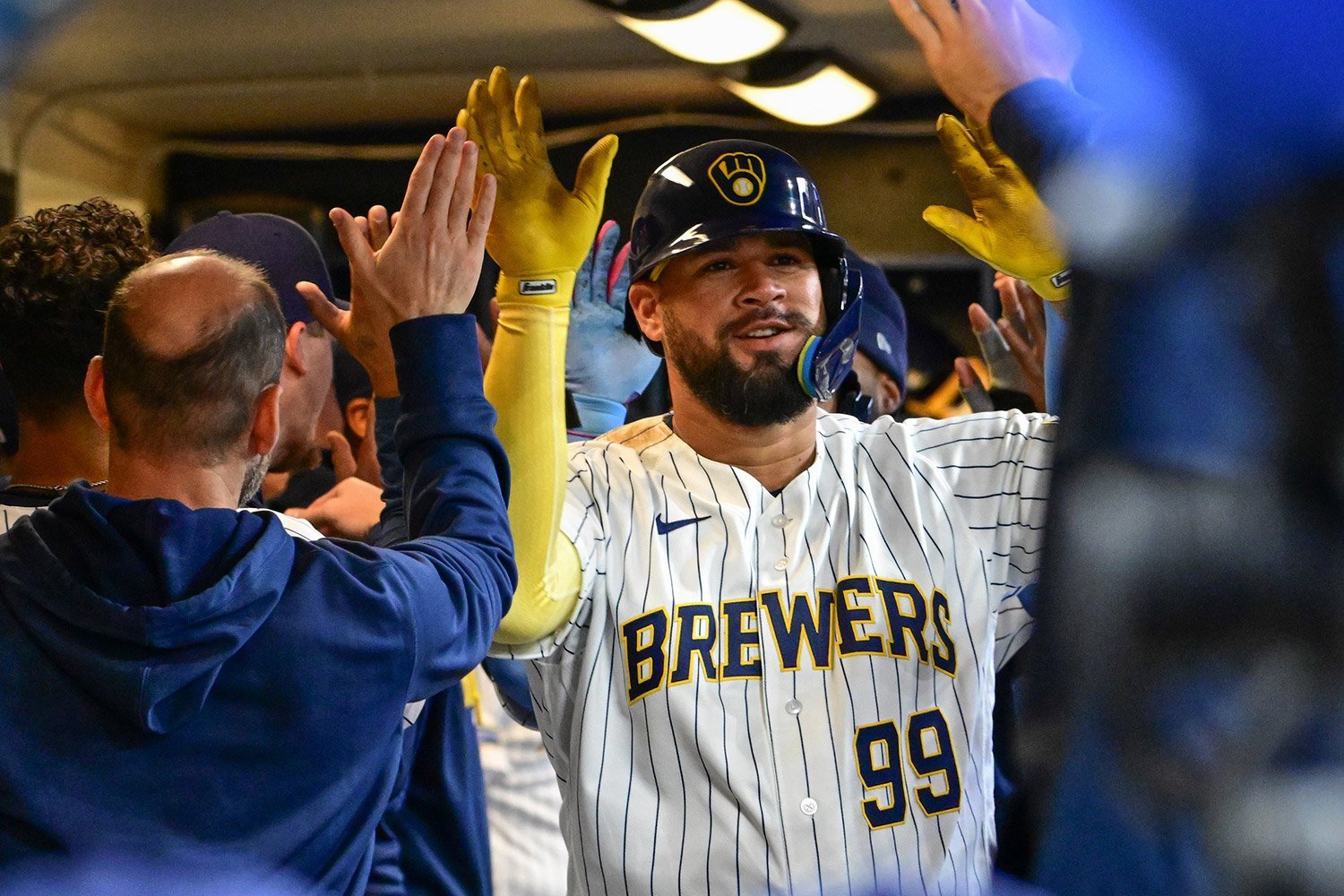 Weekly Snapshot: Record Last Week: 4-2 (Overall: 7-2) Run Scored Last Week: 31 Runs Surrendered Last Week: 23 Standing: 1st in NL Central (1.0 GA of PIT) *** Game 4 (3/30) | TB 3, MIL 2 Game 5 (3/31) | MIL 6, TB 2 Game 6 (4/1) | MIL 8, TB 2 Game 7 (4/4) | MIL 5, KCR 2 (Doubleheader Game 1) Game 8 (4/4) | KCR 8, MIL 2 (Doubleheader Game 2) Game 9 (4/5) | MIL 8, KCR 5 *** Game 4 | Rays 3, Brewers 2 MIL Starter: Kyle Harrison (5.0 IP, 4 H, BB, 1 ER, 8 K) Top Performers: William Contreras (2 H, HR, 2 RBI) Angel Zerpa (1 IP, 2K) Kyle Harrison’s first start as a Brewer was an excellent one, as the lefty rode his four-seam fastball to great success, striking out eight Rays over 5 innings of one-run ball. His offense couldn’t muster much against old NL Central foe Nick Martinez, however, as a 2-run home run off the bat of William Contreras was the only runs Milwaukee could scrape across against a stringent Rays staff, while the Brewers bullpen found their first hiccup of the young season, as Trevor Megill was charged with the loss by surrendering the go-ahead run in the 9th. William Contreras’ two-run home run (+23.6 WP%) Game 5 | Brewers 6, Rays 2 MIL Starter: Brandon Woodruff (5.0 IP, 4 H, 2 ER, 6 K) Top Performers: Gary Sánchez (H, BB, HR, RBI) Jake Bauers (2 H, HR, RBI) Brandon Lockridge (2 H, 2B, RBI) Game two of the series against Tampa Bay saw a marquee pitching matchup between Brandon Woodruff and Shane McClanahan. Luckily for the Brewers, it was Woody who got the better of his counterpart, tossing five innings of two-run ball. On the other side, McClanahan was effective through four innings, but a three-run fifth from the Milwaukee offense chased him from the game. They’d add two more runs in the next innings, as well as one in the eighth, and the bullpen put up a zero behind Brandon Woodruff to secure a 6-2 Milwaukee win. Gary Sánchez's solo home run (+11.9 WP%) Game 6 | Brewers 8, Rays 2 MIL Starter: Jacob Misiorowski (6.0 IP, 4 H, 2 ER, 2 BB, 7 K) Top Performers: Brice Turang (H, BB, HR 2 RBI) Christian Yelich (2 H, 2 RBI) Garrett Mitchell (2 H, 2B, 2 RBI) Jacob Misiorowski took the mound for his second start of the season and did little more than pick up where he left off on Opening Day. The Miz provided six innings of two-run ball for the Crew, and while it wasn’t until the eighth inning that the Brewers' bats finally broke through for their first big inning of the series, the six-run explosion off Griffin Jax was more than enough to propel Milwaukee to its second straight series win. Brice Turang’s two-run home run (+18.1 WP%) Game 7 | Brewers 5, Royals 2 MIL Starter: Chad Patrick (4.0 IP, 0 ER, 4 H, 3 BB, 3 K) Top Performers: Garrett Mitchell (2 H, 2B, HR, 5 RBI) Abner Uribe (1.1 IP, 0 ER, K) Trevor Megill (1.0 IP, 0 ER, 2 BB, 2 K, SV) While it was Chad Patrick who ended his day with a scoreless outing, Garrett Mitchell stole the show in the first game of Saturday’s doubleheader by knocking in a career-high five runs. Both came early into the game, with a two-run double in the 1st, and a three-run home run in the 3rd. It would be all the offense the Brewers needed, as then, the backend of the ‘pen closed the daycap out. Garett Mitchell’s Five RBI Game 8 | Royals 8, Brewers 2 MIL Starter: Logan Henderson (2.0 IP, 3 H, 2 ER, BB, 3 K) Top Performers: Brice Turang (H, 3B, RBI) Garett Mitchell (H, 2B, RBI) DL Hall (2.0 IP, 0 ER, H, BB, 2 K) The Saturday nightcap saw the Royals even the series by getting to a pair of young Brewers pitchers, with both Logan Henderson and his piggyback Brandon Sporat surrendering multiple runs. On the offensive side, the Kansas City trio of Seth Lugo, Nick Mears, and Eli Morgan kept the Brewers bats to just two runs on five hits, and used a six-run sixth inning to send the series to a Sunday rubber match. Gary Sánchez throws out Maikel Garcia Game 9 | Brewers 8, Royals 5 MIL Starter: Kyle Harrison (5.1 IP, 3 H, 2 ER, 2 BB, 6 K) Top Performers: William Contreras (2 H, 2B, 2 BB, 2 RBI) Gary Sánchez (H, HR, RBI) Christian Yelich (2 H, 2B, 3B, RBI) Sunday's rubber match in Kansas City featured Kyle Harrison's second consecutive quality start in a Brewer uniform, as the Brewer hurler tossed 5.1 innings of two-run ball. Meanwhile, Gary Sánchez popped his team-leading third home run of the year, and William Contreras reached base safely four times in a six-run effort, while the bullpen navigated some late-inning trouble to close out the series against the Royals 8-5. Gary Sánchez's two-run homer (+15.4 WP%) Transactions: 04/05/26 - Optioned RHP Logan Henderson to AAA Nashville Sounds. 04/04/26 - Recalled RHP Logan Henderson from Nashville Sounds. 04/04/26 - LHP Sammy Peralta was claimed off waivers by the Colorado Rockies. 04/03/26 - Designated RF Steward Berroa for assignment. 04/03/26 - Selected the contract of SS Cooper Pratt from AAA Nashville. 04/03/26 - Optioned SS Cooper Pratt to Nashville Sounds. 03/31/26 - Activated RF Luis Matos. 03/31/26 - Sent LHP Rob Zastryzny on a rehab assignment to AAA Nashville 03/31/26 - Optioned C Jeferson Quero to AAA Nashville. 03/30/26 - Designated LHP Sammy Peralta for assignment. 03/30/26 - Acquired RF Luis Matos from the San Francisco Giants for cash. Notes: RHP Logan Henderson served as the 27th man for Saturday's doubleheader. It was reported early last week that SS Cooper Pratt is set to sign a $50.75 million extension. You can read more about the potential deal here. RF Sal Frelick left game 2 of Saturday's doubleheader with left side tightness. No corresponding move followed Sunday, although Frelick did not play in the series finale. Looking Ahead: Monday, 4/6 - Brewers @ Red Sox - 5:45 PM CDT Tuesday, 4/7 - Brewers @ Red Sox - 5:45 PM CDT Wednesday, 4/8 - Brewers @ Red Sox- 12:35 PM CDT Friday, 4/10 - Nationals @ Brewers - 6:40 PM CDT Saturday, 4/11 - Nationals @ Brewers - 6:10 PM CDT Sunday, 4/12 - Nationals @ Brewers - 1:10 PM CDT View the full article
 -
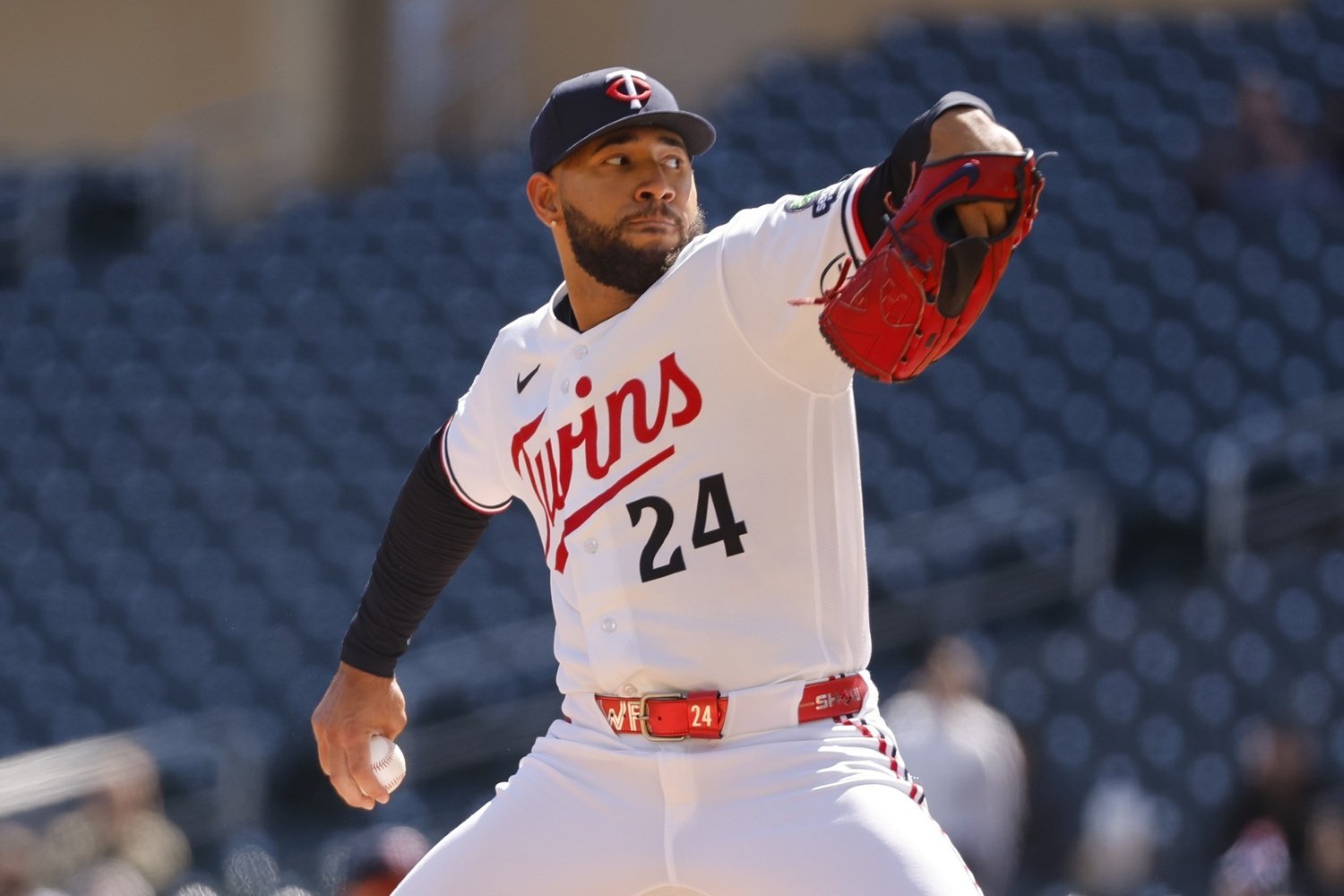 Box Score: Starting Pitcher: Simeon Woods Richardson: 6 2/3 IP, 5 H, 1 ER, 2 BB, 4 K (88 Pitches, 51 Strikes, 58%) Home Runs: Matt Wallner (3) Bottom 3 WPA: Justin Topa (-0.44), Kody Clemens (-0.15), Byron Buxton (-0.12) Win Probability Chart (Via FanGraphs): The Twins drifted through their first eight games, their offense (largely dormant) paired with inconsistent pitching performances, a lot of ABS challenges and some crummy weather. You could easily see this season spiral out of control pretty quickly, given the lack of overall talent. Byron Buxton, Luke Keaschall and Royce Lewis have struggled, but so far, newcomers Tristan Gray and Josh Bell have kept them afloat. Today, Simeon Woods Richardson made his second start of the year after posting a quality showing in Kansas City. He was a little rocky to start, falling behind several hitters but getting weak contact in the air when he needed it. His fastball sat between 90 and 93 MPH, which isn't great, but Rays hitters had a hard time squaring him up the first time through the lineup. Opposing Woods Richardson was Nick Martinez, who has had a unique career, starting as a supposedly high-floor prospect with Texas who couldn't strike anybody out. He lasted for a couple years as a fifth starter type before heading to Japan for four years. When he came back, he immediately flourished in the Padres bullpen, his strikeout rate nearly doubling from his time in Texas. Teams loved his under-the-hood numbers, and he has signed eight-figure contracts with San Diego, Cincinnati, and now Tampa Bay, even while his performance has declined a bit in his mid-30s. His cutter and changeup remain above-average pitches, and he showcased them well Sunday. He made quick work of the Twins in the first, but Matt Wallner got a hanging cutter to start the second, and crushed it out onto the pavilion in right field for the game's first run. The two starters settled in from there, inducing lots of weak contact and quick outs. Woods Richardson had a lot of success pairing his splitter with his curveball. The next hit from either side was with two outs in the fourth inning, when Junior Caminero golfed a splitter well below the zone for a 397-foot home run. Certain hitters are just freaks. That did seem to loosen up the Rays hitters, as they started taking some bigger hacks against Woods Richardson, making some loud outs and putting runners on the corners in the fifth for the dangerous Yandy Díaz, who was facing the starter for the third time. He watched three strikes go by, however, and Woods Richardson escaped any damage. He had a much easier time in the sixth, including getting Caminero to tap out to complete a quick frame. I thought that may have been it for him, but he was brought out to start the seventh and allowed two hits to put runners on the corners with one out. Richie Palacios stole second, but Woods Richardson struck out Johnny DeLuca on a nasty slider to end his day. Kody Funderburk came on to retire pinch-hitter Nick Fortes on a weak chopper to quell the threat. Old friend Griffin Jax pitched the seventh, gave up an infield single to Wallner (at that point responsible for both Twins hits)—and then promptly picked Wallner off leaving early from first. Cole Sands got the eighth inning, and allowed a leadoff single to Díaz before falling behind Jonathan Aranda. He fought back to get a double-play grounder from Aranda and retired Chandler Simpson to leave Caminero in the on-deck circle. He would go on to complete a 1-2-3 ninth in dominant fashion. After the Buxton, Luke Keaschall and Wallner contingent went down in order, Palacios greeted Justin Topa in the 10th by crushing a two-run home run. Topa allowed another hit and a walk before Taylor Rogers was brought in, and the lefty walked two to force in another run, making the score 4-1. The Twins couldn't answer; Tampa took the rubber game of the weekend series. Notes: -Austin Martin started in center field despite the Twins facing a right-handed pitcher. This speaks to A) Buxton being eased back into action following what looked to be a brutal hit-by-pitch on Friday; and B) perhaps some dissatisfaction with James Outman, who has no idea what he's doing in the batter's box these days. Martin has looked terrible in center field thus far in his career, but he's looked decent at the plate in 2026, so maybe that's a worthwhile tradeoff. He wasn't tested much today and made every play he should have made. -Buxton celebrated 10 years of service time prior to the game, but his hitless streak continued. He's now in an 0-for-19 skid. That isn't uncommon for Buxton, but he had better at-bats today, including a lineout and a fly ball to right that was just off the end of the bat. When he gets going, maybe this congregation of average-ish hitters plus a hot Josh Bell can find a spark. -Rogers might be cooked. After allowing three hits and two runs Saturday, Rogers struggled to hit 90 MPH on his fastball while walking two, the second one forcing in the Rays' fourth run. What’s Next: Joe Ryan (0-1, 4.89 ERA) opposes Casey Mize (0-0, 1.50 ERA) as the Twins welcome the Detroit Tigers to Target Field to begin a four-game set. The Tigers are certainly not bereft of talent and so far have the eighth-best OPS in MLB and the 11th-best ERA as a pitching staff, despite a middling 4-4 record. The Tigers have crushed the Twins in recent years and have made the postseason two years running, so this will represent perhaps the biggest test of the young season for the Twins. Postgame Interviews: (Coming soon) Bullpen Usage Chart: WED THU FRI SAT SUN TOT Laweryson 36 0 10 9 0 55 Topa 0 13 17 0 15 45 Rogers 0 4 0 23 18 45 Banda 12 0 17 15 0 44 Orze 0 0 37 0 0 37 Sands 0 11 0 0 21 32 Funderburk 0 15 2 0 3 20 Acton 0 0 0 0 0 0 View the full article
 -
Blue Jays Select Mantiply and Voth, Option Little and Estrada
DiamondCentric posted an article in Jays Centre
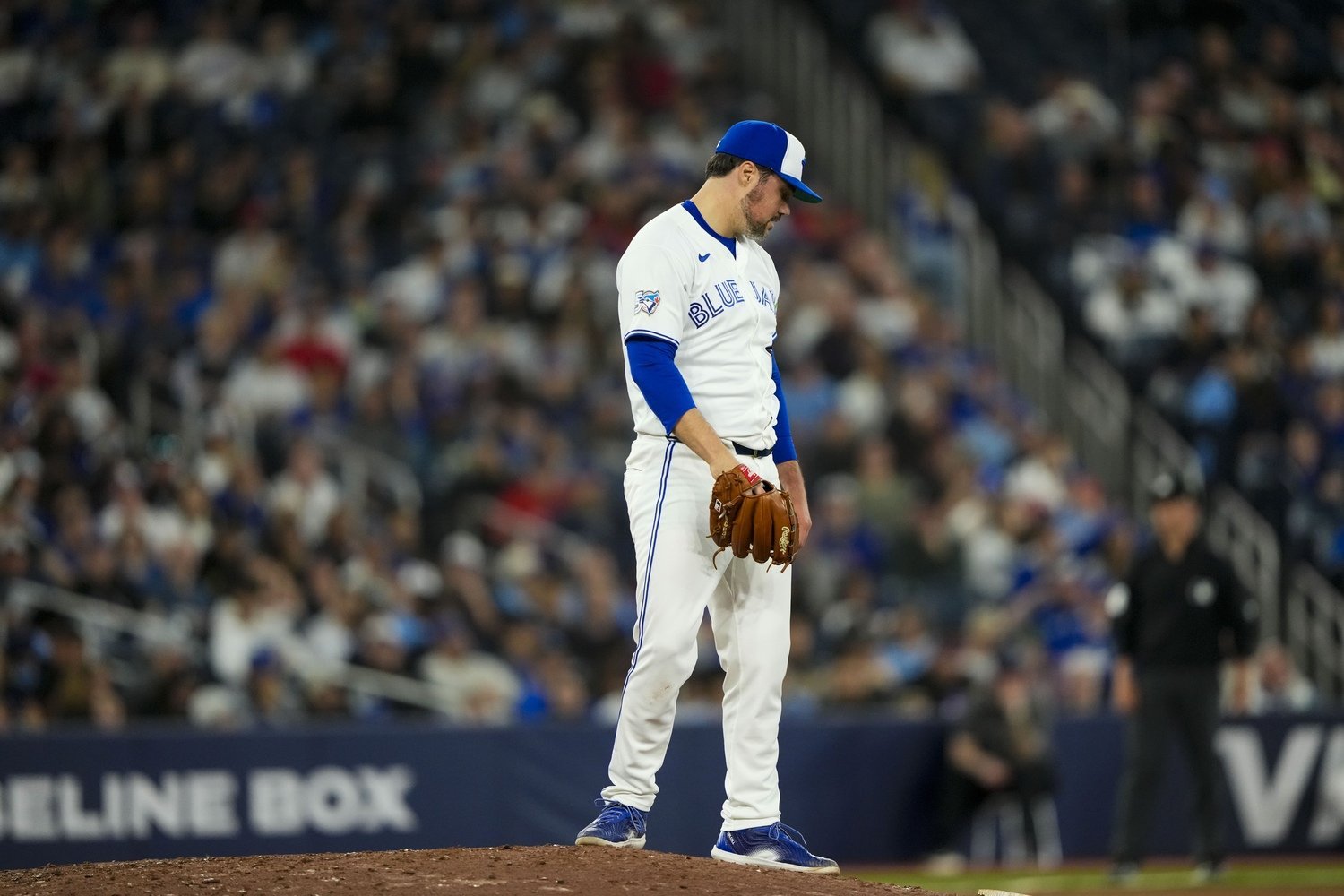 The Blue Jays made a handful of transactions before their game this afternoon. Seeking a shot in the arm for the bullpen, they selected the contracts of Joe Mantiply and Austin Voth from the Buffalo Bisons. To make room for Mantiply and Voth on the 40-man roster, the Jays moved Anthony Santander and Cody Ponce to their 60-day IL. Neither of those moves was unexpected; both Santander and Ponce are expected to miss significantly more than 60 days recovering from their respective injuries. Meanwhile, to free up space in the big league bullpen, Toronto sent Brendon Little and Lazaro Estrada down to Triple-A Buffalo. Estrada got the call to the majors when Ponce hit the IL. He threw four scoreless, hitless innings yesterday, striking out three and walking two. His option has nothing to do with his performance; the Jays simply want as many fresh arms in their bullpen as possible, and Estrada won't be available for several days after throwing 66 pitches on Saturday. As for Little, his situation is a little more complicated. He's given up 11 runs (10 earned) on three home runs in five appearances this season. Of course, this demotion doesn't mean the Blue Jays are giving up on him after a few rough appearances. Rather, he was one of only a few relievers in Toronto's bullpen with a minor league option remaining. Given his struggles, it made perfect sense to give him a brief break in the minors to reset while simultaneously opening up a bullpen spot for a more rested arm. Mantiply and Voth both signed minor league contracts with Toronto this offseason. Mantiply is coming off a rough year in 2025, but the southpaw was a key player in the Diamondbacks' bullpen from 2021-24. Voth has experience as both a starter and a reliever, and he's coming off a successful year in NPB. The Jays will presumably look to him for length. View the full article
 -
 As you already know (and might have been there with us), we kicked off the 2026 season at home in unforgettable fashion with our Home Opener pregame party at Smorgie's on Friday – and what a day it turned out to be! Despite cold, blustery winds, a steady rain, and an unexpected power outage, you showed up in a big way. The turnout was incredible, and the energy inside Smorgie’s made it easy to forget about the weather outside. From the moment the doors opened, the space filled with familiar faces, new friends, and that unmistakable Home Opener buzz. A massive THANK YOU to everyone who showed up, battled the elements, and brought the energy all day long. Days like this only happen because of this incredible community, and once again, you all showed up in the best way possible and helped make the day incredibly fun. There is something special about reconnecting after a long offseason, and this event was a perfect reminder of what makes this community so great. Conversations bounced from offseason storylines to game predictions to gametime updates, all while we enjoyed great food, cold drinks, and a steady stream of giveaways. The excitement carried right through a power outage and into the walk over to Target Field, where the season officially came to life. Once inside the ballpark, it felt like baseball had truly returned. Seeing Twins Daily friends scattered throughout the stands, bundled up but smiling, brought everything full circle. Home Opener always has its own kind of magic, and sharing it with this group made it even better. And the game itself couldn’t have been a better payoff. Watching the Minnesota Twins pick up a Home Opener win at Target Field brought the energy full circle. It was the perfect ending to an already incredible day. If this is any indication of what is ahead, it’s going to be a fun season! Stay tuned for more Twins Daily Social Club watch parties and events throughout the year. And as always, we’ll see you at the park! View the full article
