


DiamondCentric
-
Posts
2,631 -
Joined
-
Last visited
Never
Content Type
Profiles
Forums
Events
News
Tutorials & Help
Major League Baseball Videos
Guides & Resources
Store
Downloads
Gallery
Everything posted by DiamondCentric
-

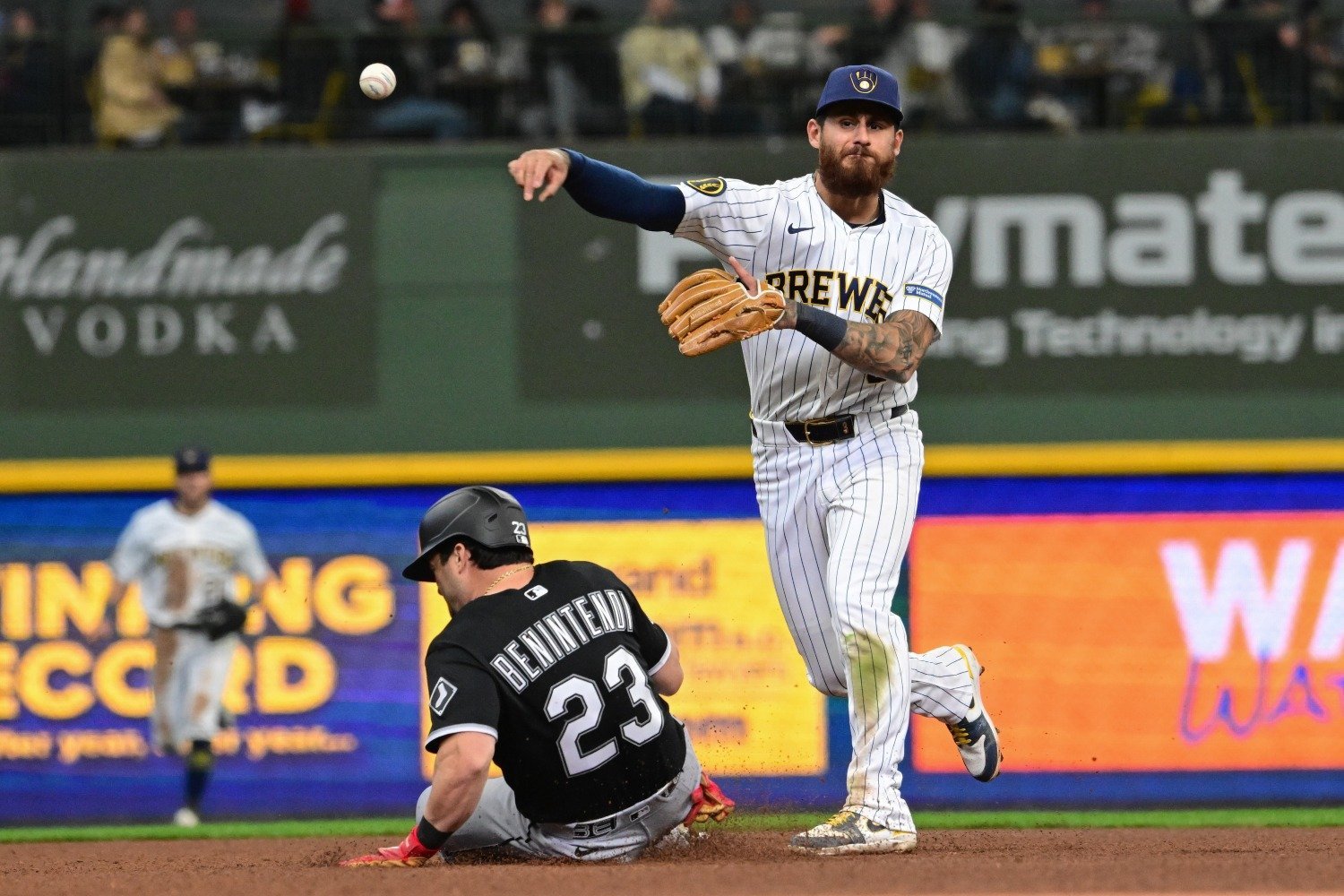 Joey Ortiz’s tenure with the Brewers has been filled with highs and lows, but there has been one constant. When given the opportunity—and, in many cases, on their own—coaches, teammates, and executives have raved about his defense, even as Ortiz’s public-facing fielding metrics have been more mixed in their praise. During the Brewers’ first homestand of the 2026 season, there was one play in particular that jumped out to Pat Murphy. On Saturday, White Sox pinch-hitter Austin Hays pulled a base hit toward the left-field line, away from a shaded Brandon Lockridge. Lockridge initially misplayed the ball before throwing it in to Ortiz, who fired a strike to William Contreras to nail Colson Montgomery at the plate. 9bb46f6e-9915db40-049f4d20-csvm-diamondgcp-asset_1280x720_59_4000K.mp4 Less than an hour later, Murphy was gushing over how Ortiz completed the play and his overall defensive prowess. “I don’t remember a dude that played shortstop for us like that, that played so consistently. And his key is the way he can redirect the baseball,” he said. “It’s uncanny. He did it a bunch last year. He did it tonight. It just sticks out. Watch that play on film. Not too many shortstops make that play, and that’s what separates him, I think.” Effectively redirecting the baseball is a product of what the Brewers believe is Ortiz’s standout skill—the one that makes his defense invaluable and explains why they’ve been incredibly patient with his offense: body control. The Brewers say Ortiz has an elite understanding of how his body moves and how to use it. It makes him the most fluid and sure-handed defender in their infield, even if he’s not the quickest or the most explosive. It also enables him to complete acrobatic plays that take him into unnatural fielding positions—plays that might not stand out to some range-focused algorithms, but are highly challenging to execute in reality. “Joey Ortiz has elite body control,” said third base and infield coach Matt Erickson, who has been integral to Ortiz’s development as a big-league shortstop. “You can argue the fact that he's probably average when it comes to just raw foot speed and quickness, but when it comes to body control and anticipation, he's as good as it gets.” Ortiz's coordination is excellent. He can speed himself up and slow himself down with precision, allowing him to adjust to a ground ball that takes a bad hop or changes direction due to funky spin. His quick hands transfer the ball swiftly out of his glove, and he can make accurate throws from awkward throwing positions. “He understands his legs in his throw,” Murphy said. “He understands space and timing. It's like a good shooter in basketball. It's more than just technique; it's the skill and the touch and the feel and the timing. He has it.” During spring training in 2024, when Ortiz was new to the team, Murphy had an even more succinct (if somewhat more opaque) way of communicating the same thing. He immediately saw and praised the fact that Ortiz "is comfortable when the ball gets close to him." That body control helps Ortiz effectively relay a throw from the outfield to the plate, but it shows up more obviously on plays like the one he made the following afternoon. Ortiz made a sliding stop on a grounder in the hole between shortstop and third base. With his body still moving toward third, he quickly transferred the ball to his throwing hand and made a strong throw from his knees to Brice Turang, who completed an impressive double play. fe69f051-b9a7-43f5-8816-2a09afc83e18.mp4 “That play is never practiced,” Erickson said. “That's a gift that he has, and he made it look incredibly easy.” The Brewers’ strength and conditioning team helps players understand the aptitudes and weaknesses of their body type and runs them through workouts designed to improve their mobility. Body control can only be improved to a certain extent through coaching, though. Natural ability is a huge piece of the equation, and much of the development must come from the player himself learning through experience and awareness. “They're teaching you things, but I think it happens within you when you have that ability,” Murphy said. “I don't think it's innate, but I think it's an ability that's acquired and developed to be able to realize that I can do this quicker, or I can do this smoother and not lose any speed, or actually gain speed by doing it smoothly with my body in the right position. So it's kind of a combination of all that. [Ortiz is] special, the way he does it.” As the Brewers discussed their infield arrangement last spring after the departure of Willy Adames, shoulder soreness ultimately locked Turang into second base to start the regular season. Ortiz’s body control was also a significant factor in the conversation, though, and is the reason he has since remained at short. “There's no doubt in my mind that Brice could be a really good shortstop and Joey can be a really good second baseman,” Erickson said. “But because of their skill set, because of Joey's glove confidence and body control, and his ability to catch the ball clean over and over in different fielding positions—it’s better than Brice’s, in my opinion.” The more explosive and rangier infielder might often be viewed as the better overall defender and the best fit to play shortstop. Erickson sees it differently. “Brice’s lateral range and quickness is much better than Joey’s,” he said, “and I believe that lateral range is important at second in today's game, because of the shifting rules, and when you're holding a runner [with a right-handed batter hitting], you need a guy that can really cover ground. We have that guy, arguably the best in the game.” The fluidity and hand-eye coordination from Ortiz’s body control, meanwhile, make a greater impact at shortstop. He may not cover as much ground as Turang, but he gloves the ball more consistently, transfers it faster, has a stronger throwing arm, and can react to the nuances of trickier plays at the position. “You have to catch the ball clean at shortstop, or you don't have a play,” Erickson said. “You don't necessarily have to do that at second or at third all the time, and you can still get an out. At shortstop, you've got to have a clean catch. And I think Joey's really good, definitely the best on our roster, at that.” The Brewers believe he’s still getting better at it, too. After another offseason of work, Erickson sees Ortiz using his body more efficiently than last year. “Out of spring training last year, there were certain things in the weight room that we thought he could improve on,” Erickson said. “There was a maintenance to it last year during the season, and then there was a focus to it this offseason. And I really like where he came in in spring training, because you can noticeably see he’s even better in some of those areas.” The Brewers’ infield could soon find itself in transition, particularly with the news of shortstop prospect Cooper Pratt’s extension and the ascension of Jesus Made and Andrew Fischer through the farm system. For now, though, Ortiz remains a valued linchpin of their infield defense. “The team believes in this dude,” Murphy said. “They believe in him.” View the full article
 -
 The Twins Daily Social Club is kicking off the 2026 season the right way – with a Home Opener pregame party you won’t want to miss. As the Twins get set to face the Rays at Target Field this Friday, we’re gathering at Smorgie’s beforehand to celebrate the return of baseball… and we’re bringing some serious perks with us. Let’s start with the big one: we’ll be randomly giving away 50 Winter Meltdown pint glasses. If you’re one of the lucky winners, you’ll receive a ticket to return to Smorgie’s after the game to pick up your glass (since outside pint glasses aren’t permitted inside Target Field). If you’ve been to a Meltdown before, you know these glasses have become a fan-favorite collectible. And if you haven’t, this is your chance to lock one in – it’s the perfect addition to your game day rotation (or your shelf of Twins memorabilia). And here’s another reason to get there early: from 12:30 - 2 pm, Smorgie’s will be featuring $5 beers from BlackStack Brewing, including Local 755 Hazy IPA and Slopes French Pilsner. It’s a perfect pregame pairing – great local beer at a great price while you settle in with fellow fans. You know it wouldn’t be a Twins Daily event without great food, drinks, and conversation. Smorgie’s delivers on all fronts with a menu built for game day – think cheese curds, wings, loaded totchos, smash burgers, and fried chicken sandwiches. It’s easy, shareable comfort food that pairs perfectly with a cold drink before heading to the ballpark. So grab your friends, throw on your Twins gear, and head to Smorgie’s early. Come for the pregame, stay for the prizes, then let’s walk over to the ballpark, ready for a brand new season! EVENT DETAILS What: Home Opener Pre-Game Party Cost: Free When: 12:30 - 2 pm, April 3, 2026 Where: Smorgie’s, 508 N 1st Ave, Mpls View the full article
 -
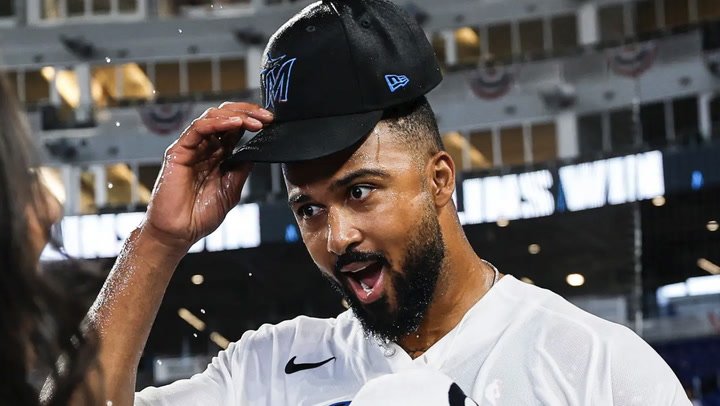 Sandy Alcantara barely broke a sweat during his masterful start in Miami on Wednesday. Watch for yourself. View the full article
 -
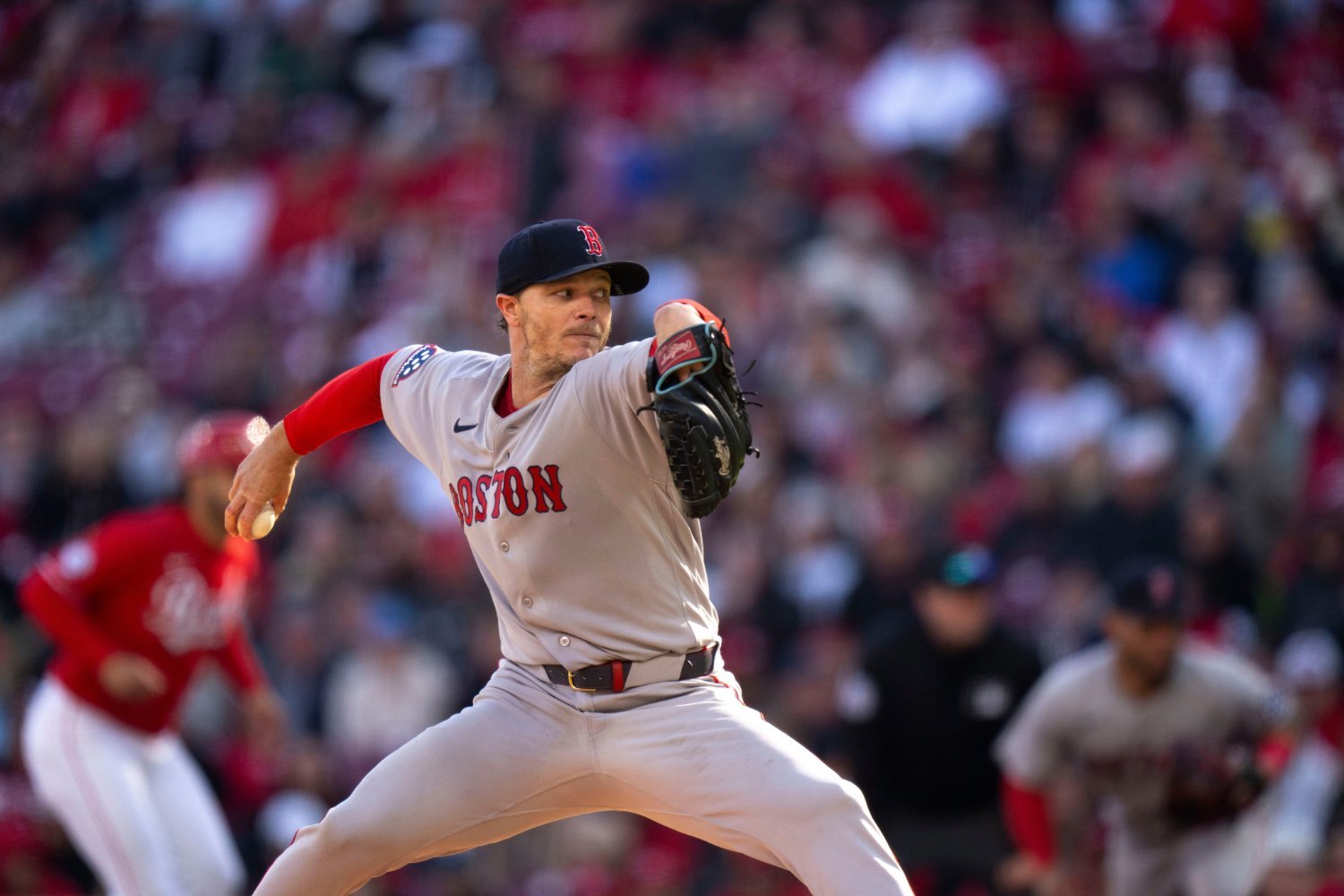 Sonny Gray’s first start of the 2026 season arguably looks worse on paper than it did if you were tuned into the game. He struggled, but there were flashes that showed his ceiling is still high enough to be considered a number two or three option for the Boston Red Sox. He tossed four innings posting a 6.75 ERA, six hits, one home run, one walk, five strikes, and a 1.75 WHIP. It was a shorter outing than anyone would have liked, and the first inning was an absolute slog to watch, but he settled down through the rest of the game. Much like Garrett Crochet’s start prior to Gray’s, there was a lot of interest in his pitch mix after he came out of the game. In typical Gray fashion, he showed seven different pitches against the Reds. He relied heavily on his sinker, throwing it 31% of the time, followed by his curveball at 19%, sweeper at 15%, four-seam fastball and cutter at 14% each, changeup at 6%, and finally a slider at 1% usage. Going back to 2024, Gray was a four-seam dominant pitcher who worked in a sinker and cutter as secondary options. The Cardinals had him start using his four-seam less and less in 2025 because it was getting hit fairly hard (as his velocity waned with age), and that seemed to be a recipe for success. The plan in Boston seems to be much of the same, as he’s now featuring his sinker as his primary pitch and relying on his elite level sweeper to be his out-pitch. Looking at the heat maps, it's clear that Gray has a specific plan of attack in mind for each of his offerings. The issue in this first start was simple: In the first inning, Gray wasn’t locating anything for strikes and it burned him. In the first inning, he threw 35 pitches with only 19 of them going for strikes. While the Reds aren’t world-beaters by any means, any team worth their salt will take advantage of a pitcher who digs a hole that deep for himself early in the game. It doesn’t matter if your sweeper is elite; when nothing else is filling up the zone, the opposition has no reason to swing at anything offered. Defensive miscues, including one from Gray himself when he tried to tag a runner at home with the ball but promptly dropped it, didn’t help his cause either. Once Gray settled in the second inning, he landed 32 strikes out of his final 45 pitches. That’s the Gray we expected when Craig Breslow traded for him. Now, Gray gets the home opener on April 3, against a Padres team that packs a bit of a punch. He’s going to try and quell the rapidly growing sound of the fanbase who is unhappy with the sluggish start to the season with, hopefully, a dominant performance for the home crowd. That’s a lot to ask of someone who just joined the organization in December, but Gray is a proven veteran with amply experience leading a rotation. If he keeps relying on his sinker and sweeper, he has the potential to be a solid anchor for this rotation. The Red Sox need a boost in the worst way as they enter the home opener on Friday, sitting at just 1-5. The team has looked largely anemic in every facet of the game. Having Sonny Gray come out at Fenway Park and shut down a star-driven Padres lineup would go a long way towards showing just what this team is capable of in 2026. View the full article
 -
What the Season’s First Week Tells Us About the 2026 Blue Jays
DiamondCentric posted an article in Jays Centre
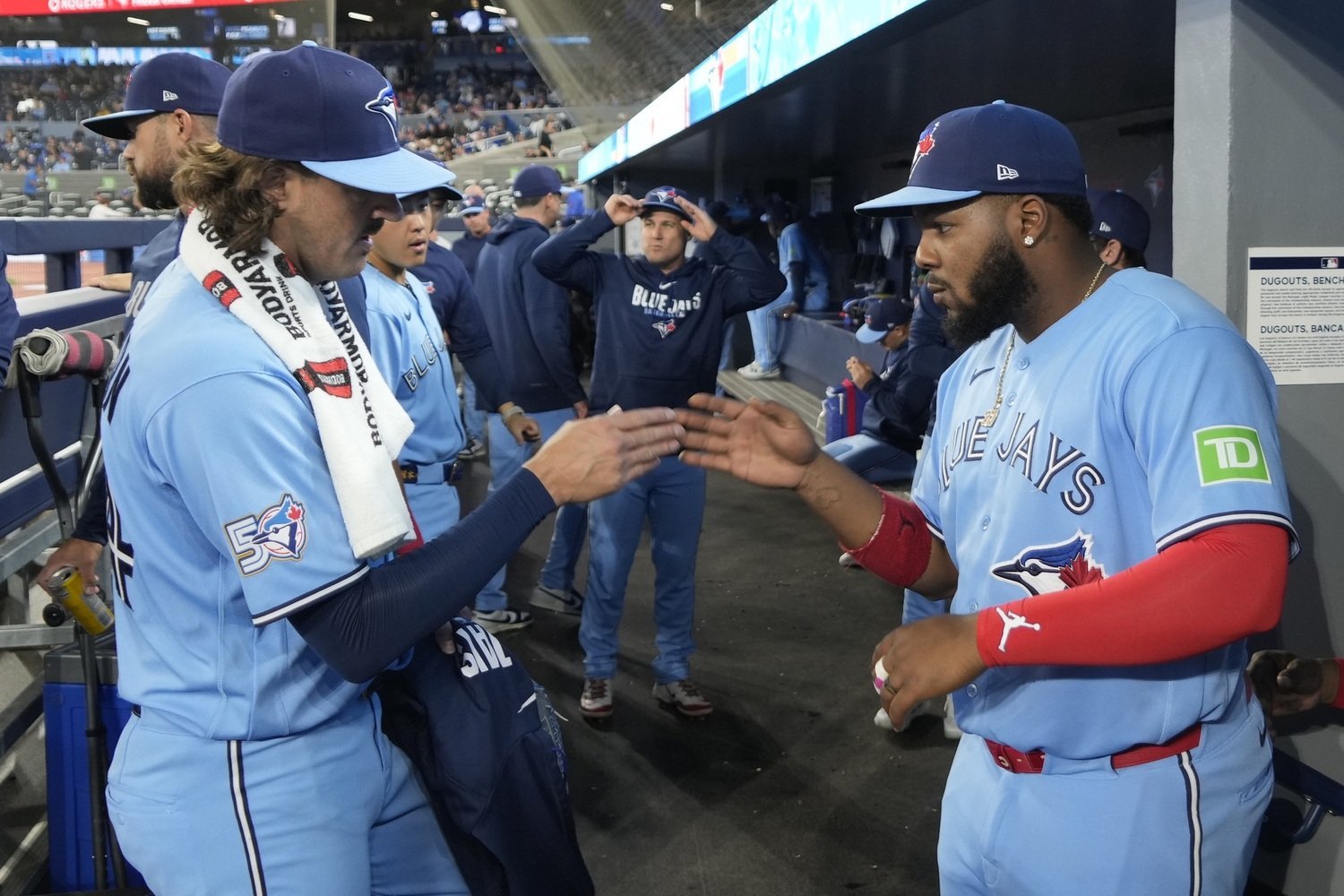 No one ever expected the Toronto Blue Jays to go 162–0, but that truth does not make the first week of the season feel any lighter. All these close games, and dropping a couple during the opening stretch against clearly beatable opponents, is not a crisis. Wins do not always come easy, and even early April games against second‑tier rosters can expose habits a good team can’t maintain if they want to be successful. At a glance, the Blue Jays came out of the first two series in relatively good shape, save the injury to Cody Ponce. They sit at 4–2, swept Oakland and lost the series to Colorado, and pretty much handled business without much visible chaos. The standings reflect a contender doing what contenders are supposed to do. Look a little closer, though, and things get murkier. Beneath the wins is a familiar tension between opportunity and execution, one that has followed this team for more than just a week or two. Toronto scored runs, but rarely in bunches. They reached base with reasonable consistency but too often stalled when it mattered. They worked counts and effectively pushed the Athletics and Rockies to use their bullpens. Over the first six games, innings were built patiently only to fizzle just short of payoff. It was not an inability to hit. It was an inability to capitalize. That distinction can feel semantic in April, but it compounds quickly, especially against better competition. The Blue Jays averaged close to eight runners left on base per game in the season’s first week, planting them in the lower third of the league early on. Several innings featured two or more baserunners with nothing to show for it. The on‑base percentage was fine. The hitting with runners in scoring position needed to be better. This pattern did not appear out of nowhere, and it has now resurfaced despite yet another reshaped lineup. The loss of Bo Bichette has changed the feel of innings more than their conclusions. Kazuma Okamoto, meanwhile, has shown he can handle big league pitching and may have earned a longer look higher in the order sooner rather than later. Overall, the offense looks more line‑drive oriented and more contact-heavy, particularly through the middle. What has yet to show up is sustained damage that creates breathing room. Too many innings have ended the same way, starting with a bang but ending with a whimper. That places more strain on the pitching staff than one might think. When leads hover at one or two runs instead of turning into four-run cushions, every inning carries weight. It is the difference between a bullpen staying relaxed and a bullpen stirring all night, even when certain arms never officially enter the game. In that context, the stability of the starting rotation has mattered even more than initially expected. With José Berríos, Shane Bieber and Trey Yesavage all working their way back, the group behind Kevin Gausman and Dylan Cease needed to hold the line. For the most part, they did. Through five games, Blue Jays starters kept their ERA well under control, pushed into the middle innings, and rarely allowed games to slip before the bullpen got involved. With the exception of Ponce’s start that ended early due to injury, most outings kept games close, putting just as much pressure on the offense as the pitching staff. Strikeouts played a major role in that too. Across the first week, Jays pitchers piled up 83 strikeouts, consistently cutting innings short and limiting extended rallies. The starters themselves had 55 of those strikeouts. That swing‑and‑miss ability helped erase traffic and prevented softer contact from spiralling into long, stressful frames. Gausman looked exactly like a pitcher picking up where October left off. His Opening Day start, and the one against the Rockies, felt less like a ramp‑up and more like a continuation. Early command was sharp, the splitter missed bats, and he never let baserunners dictate tempo. Cease followed with a start that was not perfectly efficient but perfectly illustrative of why he was targeted. Even when he laboured, hitters rarely looked comfortable. Eric Lauer also deserves credit. He did exactly what was asked, covering innings, keeping the game intact, and allowing the bullpen to stay within structure. In a season’s first pass through the rotation, that matters more than style points. The message from the staff was clear. Even short‑handed, this group can keep games playable. There were smaller moments worth noting too. Tyler Heineman's two innings in relief during the blowout loss spared the bullpen unnecessary wear, and his start behind the plate the following day allowed Alejandro Kirk a breather. The bullpen, when called upon in wins, was leaned on heavily. More than 40 percent of the team’s innings were thrown by relievers in the first week. Tyler Rogers was used often, Jeff Hoffman was thrown directly into leverage, and several games required four or more arms just to navigate the final third. For the most part, the group responded. Inherited runners were usually contained, and matchups were handled decisively. The unit looks deeper and more reliable than parts of last year’s bullpen. Not everything was clean, and Brendon Little’s early struggles are part of that picture. He was asked to stem trouble and instead added to it, allowing inherited runners to score and then some. In April, that is survivable. Over longer stretches, it becomes a question of trust and role definition. Usage patterns tell their own story. Teams don’t deploy bullpens this aggressively in April unless games demand it. Games demand it when margins remain slim, and those slim margins keep looping back to the same source. Offense that promises more than it delivers. When runners are stranded, leads stay narrow. When leads stay narrow, leverage is unavoidable. When leverage is unavoidable, bullpen wear begins earlier than planned. Over five games, that trade‑off is manageable. Over 40 or more games, it becomes structural. This doesn’t mean the Jays or their fans need to worry. If anything, it suggests the opposite. The floor is high. Imperfect baseball is still winning baseball. The pitching staff is strong enough to cover for offensive inefficiencies, and the roster has enough depth to weather injuries without unravelling. What this first week revealed was not a flaw, but a pressure point. Toronto does not need to reinvent itself the way it needed to last year after a slow start. This edition of the Jays needs to make the most of opportunities and rely on good fundamental baseball. Keep the lineup rolling. History suggests that teams who consistently reach base eventually cash those chances in. The opening week showed a team capable of winning without its best version showing up. It also highlighted what needs tightening if the end goal is playoff baseball. Losing the occasional game against a beatable opponent does not shift expectations. Instead, it sharpens them. April just started, but the first week has already said something. The question is not whether this team is good. The real question is whether the Blue Jays start using their opportunities to make a statement, giving themselves some breathing room so they can survive a long season ahead. View the full article
 -
Mets Roster Central: No Fools Quite Like April Fools
DiamondCentric posted an article in Grand Central Mets
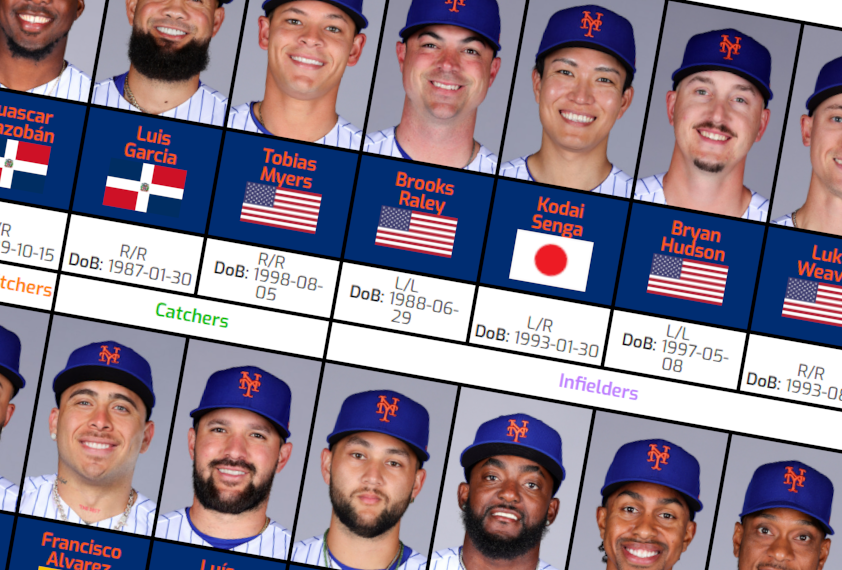 You thought the purging and cleansing was over two days ago — or maybe you didn't — so maybe you were wrong and maybe you were right. Maybe you thought the next transactions you'd see were the Mets reloading bullpen arms for the series in San Francisco. But still assembling the lower-level rosters, the powers that be were left to give bad news to a handful of guys who thought they had made it out of Spring Training alive, only to see their seasons end before they began. Transactions, 4/1/2026 GOING Released Released Released Released Relief Pitchers Relief Pitchers Catcher Infielders Robinson Martinez Trey McGough José Aular Nick Roselli R/R DoB: 1998-03-20 High Level: AA (2025) L/L DoB: 1998-03-29 High Level: AAA (2024) R/R DoB: 2004-01-02 High Level: AA (2025) L/R DoB: 2003-03-31 High Level: A+ (2025) There is certainly a mixed bag here. Trey McGough is certainly the big surprise. The lefty had had an impressive minor-league career going through age 25, only to see things blow up in his face just as he was looking for his first big-league callup. Things went so sideways that McGough announced his retirement last May, only to get offered a rare two-year minor-league deal by the Mets in January. Presumably, they wanted to give him time in the lab to find himself again. But time has a way of running out real fast, and I guess the Mets are on some kind of hook for a two years of minor-league salary, unless there is some kind of out if a guy doesn't make an Opening Day roster. There's an out, isn't there? There's always an out. Nick Roselli is a tragedy of a different brand. A homeboy out of Levittown, NY, Nick played his college ball for SUNY Binghamton, and after a season-plus in the Mets system, was looking to make the Binghamton Rumble Ponies roster this summer, and go back and stick it to all those professors who said he'd never amount to nothing. That's the way we imagine things go at Mets Roster Central, anyhow. Home cooking doesn't always work out the way you want, anyhow, as Nick showed when his defensible .233 batting average for St. Lucie plummeted to an eye-opening .136 for Brooklyn. That was over the course of 139 plate appearances, and those are, sadly, the sort of numbers that get a dude released. Adding to the Roselli-related challenges is that the bad news is reported the day after his birthday, and one imagines he got the news on the actual birthday. In fact, three of our four releaserinos here have just recently celebrated the anniversary of their nativity. (Two of them were born a day apart!) Best wishes if you are reading, Nick. There are always great things ahead for a Binghamton Bearcat. Jose Aular is an organizational catcher. In four seasons of backing up Christopher Suero (among others), he never appeared enough to garner as many as 10 RBI. A great guy to have around for Spring Training, but too redundant as the start of the season reveals a glut of catchers at the upper levels. Robinson Martinez had been a refugee from the Orioles system that the Mets picked up in December and have put down just as fast. Martinez has a track record of holding his own against high-level competition in the Dominican Summer League, only to find his game still has rough spots when he comes back to stateside affiliated ball. It is too bad winter has to end, sometimes. That doesn't seemingly make sense, but the legacy April Fool's Day suggests it is nonetheless true. Your Mets Coaching Staff Manager Bench Coach Pitching Coach Hitting Coordinator Third Base Coach First Base Coach Bullpen Coach Ass't Pitching Coach Carlos Mendoza Kai Correa Justin Willard Jeff Albert Tim Leiper Gilbert Gomez José Rosado Dan McKinney DoB: 1979-11-27 DoB: 1989-07-14 DoB: 1990-09-09 DoB: 1992-08-16 DoB: 1996-07-19 DoB: 1992-03-08 DoB: 1974-11-09 DoB: 1989-06-06 Hitting Coach Strategy Coach Catching Coach Coaching Assistant Bat'g Practice Pitcher Equipment Manager Bullpen Catchers Bullpen Catchers Troy Snitker Danny Barnes J.P. Arencibia Rafael Fernandez Kevin Mahoney Kevin Kierst Eric Langill Dave Racaniello DoB: 1988-12-05 DoB: 1989-10021 DoB: 1986-01-05 DoB: 1988-08-03 DoB: 1987-05-11 DoB: 1964-07-09 DoB: 1979-04-09 DoB: 1978-06-03 Your Mets Training Staff Director of Player Health Head Athletic Trainer Assistant Athletic Trainer Reconditioning Coordinator Reconditioning Therapist Head Performance Coach Assistant Performance Coach Performance Coordinator Brian Chicklo Joseph Golia Bryan Baca Sean Bardanett Josh Bickel Dustin Clarke Tanner Miracle Jeremy Chiang DoB: 1972-07-17 DoB: 1978-??-?? DoB: Circa 1980 DoB: 1988-06-23 DoB: 1996-??-?? DoB: 1987-??-?? DoB: 1991-??-?? DoB: ????-??-?? Your 2026 New York Mets Starting Pitchers Clay Holmes Nolan McLean Freddy Peralta David Peterson Kodai Senga R/R DoB: 1993-03-27 R/R DoB: 2001-07-24 R/R DoB: 2996-06-04 L/L DoB: 1995-09-03 L/R DoB: 1993-01-30 Relief Pitchers Huascar Brazobán Luis Garcia Richard Lovelady Sean Manaea Tobias Myers Brooks Raley Luke Weaver R/R DoB: 1989-10-15 R/R DoB: 1987-01-30 L/L DoB: 1995-07-07 R/L DoB: 1992-02-01 R/R DoB: 1998-08-05 L/L DoB: 1988-06-29 R/R DoB: 1993-08-21 Relief Pitchers Catchers Infielders Devin Williams Francisco Alvarez Luís Torrens Brett Baty Bo Bichette Francisco Lindor Jorge Polanco R/R DoB: 1994-09-21 R/R DoB: 2001-11-01 R/R DoB: 1996-05-02 L/R DoB: 1999-11-13 R/R DoB: 1998-03-05 S/R DoB: 1993-11-14 S/R DoB: 1999-11-13 Infielders Outfielders Marcus Semien Mark Vientos Carson Benge Luis Robert, Jr. Juan Soto Tyrone Taylor Jared Young R/R DoB: 1990-09-17 R/R DoB: 1993-12-11 L/R DoB: 2003-01-20 R/R DoB: 1997-08-03 L/L DoB: 36093 R/R DoB: 34356 L/R DoB: 1995-07-09 Also on 40-Player Roster Starting Pitchers Relief Pitchers Tylor Megill Christian Scott Jonah Tong Alex Carrillo Reed Garrett Joey Gerber Justin Hagenman R/R DoB: 1995-07-28 R/R DoB: 1999-06-15 R/R DoB: 2003-06-19 R/R DoB: 1997-06-06 R/R DoB: 1993-01-02 R/R DoB: 1997-05-03 R/R DoB: 1996-10-07 On 60-Day Injured List with torn right UCL. In minor-league camp. Projected for Syracuse. In minor-league camp. Projected for Syracuse. In minor-league camp. Projected for St. Lucie. On 60-Day Injured List — right UCL surgery and nerve relocation surgery. With Syracuse On 60 Day Injured List with fractured rib. Relief Pitchers Catchers Infielders A.J. Minter Dedniel Núñez Jonathan Pintaro Dylan Ross Austin Warren Hayden Senger Ronny Mauricio L/L DoB: 1993-09-02 R/R DoB: 1996-06-05 R/R DoB: 1997-11-07 R/R DoB: 2000-09-01 R/R DoB: 1996-02-05 R/R DoB: 1997-04-03 S/R DoB: 2001-04-04 On 15-Day Injured List — Left Lat Surgery On 60-Day Injured List — right UCL surgery. In minor-league camp. Projected for Binghamton. In minor-league camp. Projected for St. Lucie. In minor-league camp. Projected for St. Lucie. In minor-league camp. Projected for Binghamton. In minor-league camp. Projected for Syracuse. Outfielders MJ Melendez Nick Morabito L/R DoB: 1993-11-29 R/R DoB: 2003-05-07 In minor-league camp. Projected for Syracuse. In minor-league camp. Projected for Binghamton. View the full article
 -
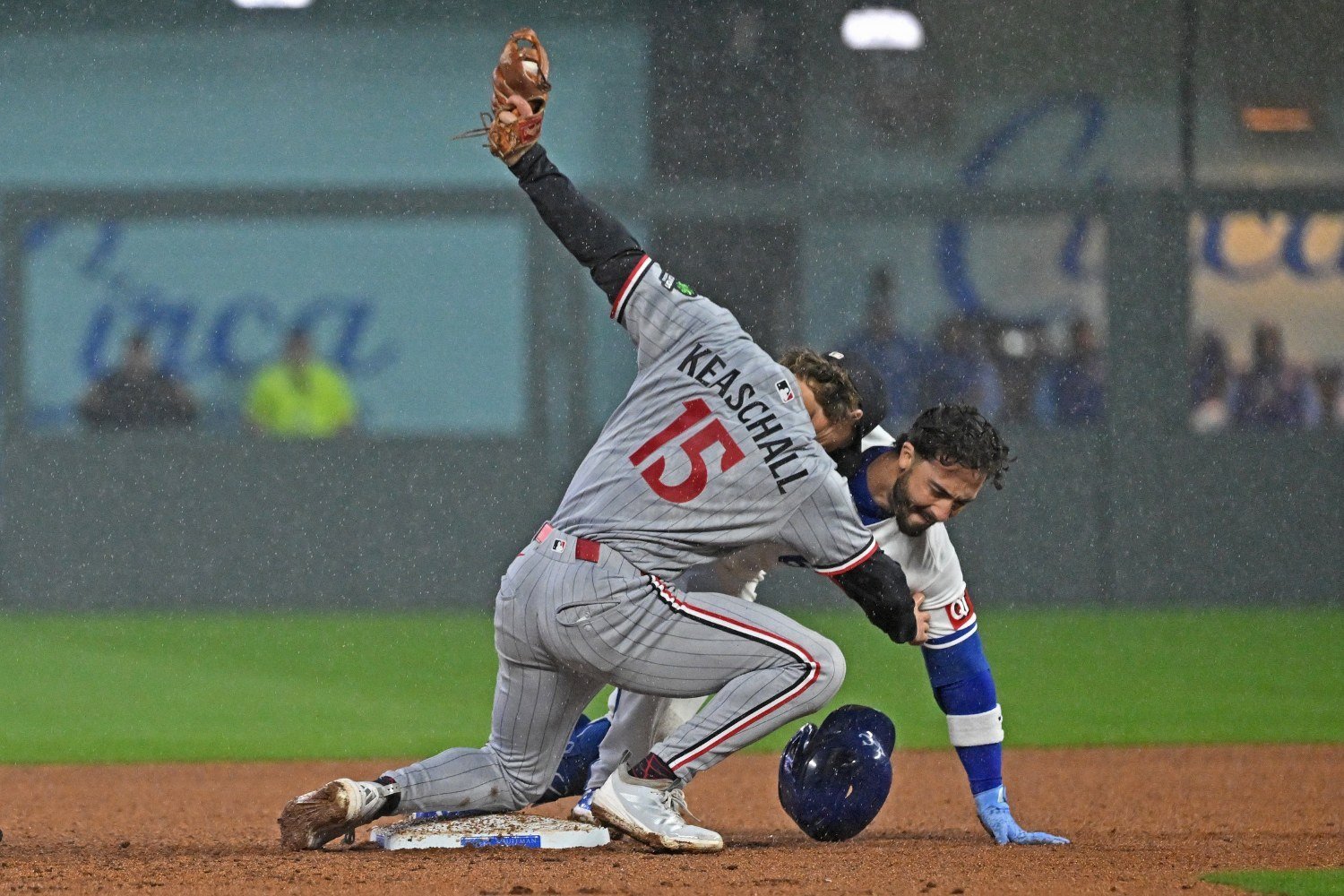 Box Score Starting Pitcher: Joe Ryan 4 IP, 9 H, 5 ER, 0 BB, 3 K (77 pitches, 49 strikes) Home Runs: -0- Bottom 3 WPA: Joe Ryan -0.25, Byron Buxton -0.07, Matt Wallner -0.05 Win Probability Chart (via FanGraphs): The Twins continued their first divisional series of the season, looking to bounce back after continuing their losses from Baltimore into Kansas City. Heading into tonight, the Twins were also trying to come out with a better record, after losing 10 of their last 12 games there. Alas, it was more of the same frustrating formula, as Minnesota fell to the Kansas City Royals at Kauffman Stadium in a game that felt all too familiar. The Twins were hoping for Joe Ryan to continue the good work he did on Opening Day, when the team fell to Baltimore but Ryan looked magnificent. Instead, the Royals jumped ahead in the second inning, capitalizing on a two-out double from Jac Caglianone. That moment sparked a string of two-out damage against Ryan. Isaac Collins followed with a double of his own, and after a single by Kyle Isbel, Caglianone came around to score. Isbel then advanced on a stolen base during Maikel García’s at-bat, setting up another scoring opportunity against a clearly struggling Ryan. García worked a five-pitch at-bat before sending a ground ball that appeared playable for shortstop Brooks Lee, but it deflected off his arm, allowing Isbel to score. Ryan retired Bobby Witt Jr. on a pop fly to end the inning, but the damage had already been done. The Twins were not only scoreless through three innings, but they had more challenges than hits. Matt Wallner, who had already drawn attention for an ill-advised challenge during the Orioles series on a pitch that was clearly a strike down the middle, added to the frustration. He challenged another call, lost it, and ended the first inning, leaving the Twins with just one remaining challenge for the next 24 outs. Fortunately for Minnesota, they would later win two challenges before the end of the third, something they desperately needed. Still, it raises the question of whether Wallner should be on some sort of “challenge timeout,” if such a thing exists. Meanwhile, the rain intensified from a light mist to a steady sprinkle, but play continued as both teams pushed to reach the fifth inning. The Royals kept the pressure on, adding another run in the third to go up 4–0. In the fourth, they loaded the bases with no outs, threatening to break the game open. However, Ryan, with help from his defense, limited the damage to just one run. The fog got denser. Fly balls became hard to see; ground balls became hard to handle cleanly. The game was still alive starting the fifth. After a pop-out by Victor Caratini, Royce Lewis banged a double out to the right-center field gap, followed by a single from Lee, scoring Lewis to narrow the gap to 5-1. A very frustrated Martin, who has been hitting well this series, saw seven pitches before striking out. Buxton did likewise, to end the inning. Cody Laweryson replaced Joe Ryan in the fifth inning, making his 2026 debut. The rookie was immediately tested—baptized by rain at Kauffman Stadium—but showed flashes of composure. He struck out two and held the home side at bay in that first frame. Laweryson returned for the sixth, as did the grounds crew, drawing cheers as they worked to keep the field playable. But the worsening conditions began to impact his command. He loaded the bases with no outs and walked in a run, allowing Jac Caglianone to score and extend the Royals’ lead to 6–1. As the farce deepened, Matt Wallner chased a fly from Witt into foul territory and slammed into the wall, missing the catch. Clearly frustrated, he quickly regrouped and redeemed himself by tracking down Witt’s ensuing sacrifice fly for the first out. Still, the lead stretched to 7-1. Twins manager Derek Shelton turned to Zak Kent to stop the bleeding, but Kansas City kept the pressure on. With two outs and the bases loaded, Jonathan India delivered the decisive blow—a grand slam that broke the game open at 12–1. The Twins showed signs of life in the seventh, loading the bases with one out. Austin Martin won a challenge that overturned a called strike into a ball, resulting in a walk that made it 12–2. Luke Keaschall followed with a two-run double, trimming the deficit to 12–4. The Royals answered with a run in the bottom half to push the lead to 13–4, but Minnesota wasn’t done. In the eighth, facing Alex Lange, the Twins mounted another rally. Jeffers and Josh Bell drew walks, and Caratini drove a ball into the right-center gap to bring in a run, cutting it to 13–5 with no outs. Martin kept the line moving by being plunked, which forced in another run, making it 13–6. The Twins refused to go quietly. After two quick outs, Bell stepped in and benefited from a successful challenge that extended his at-bat. On the very next pitch, he launched a three-run home run deep to left field, pulling Minnesota within 13–9 and injecting late life into the game. But the rally stalled there. Royals closer Lucas Erceg was able to shut the door, with the tying run dying in the on-deck circle. The Twins can’t pin this loss on the weather. The rally was too little, too late. With a return to Minnesota ahead, Ryan will have a chance to reset and reestablish himself in front of the home crowd—an opportunity to get back to the command and reliability that define him at his best, and the offense can keep forging forward and hopefully continue to show the same grit they showed tonight. What's Next Minnesota has one more chance to claim a win in Missouri, before heading to Target Field to welcome back the fans for the home opener against the Tampa Bay Rays. The Twins will tab Taj Bradley to the mound, while Kansas City is expected to send ace southpaw Cole Ragans out there, Thursday at 1:10 PM CT. Postgame Interviews (Coming Soon) Bullpen Usage Chart View the full article
 -
 Fish On First staffers react to the latest Miami Marlins series and prepare you for what lies ahead. Wednesday's show was hosted by Jeremiah Geiger and featured panelists Kevin Barral, Isaac Azout, Alex Krutchik, Alex Carver and Daniel Rodriguez. The following topics were covered: Sandy Alcantara pitching his first shutout since 2023 Liam Hicks continuing to be one of MLB's most productive hitters More takeaways from the Marlins' series win against the Chicago White Sox Reassessing the trade that swapped Jazz Chisholm Jr. for Agustín Ramírez Previewing and predicting this weekend's matchup against the New York Yankees You can find Fish Unfiltered and Fish On First LIVE on the Fish On First YouTube channel, Apple Podcasts, Spotify or wherever else you get your pods. Our next FOF LIVE episode will be Sunday at approximately 5:30 p.m. ET following the Marlins-Yankees series finale. View the full article
 -
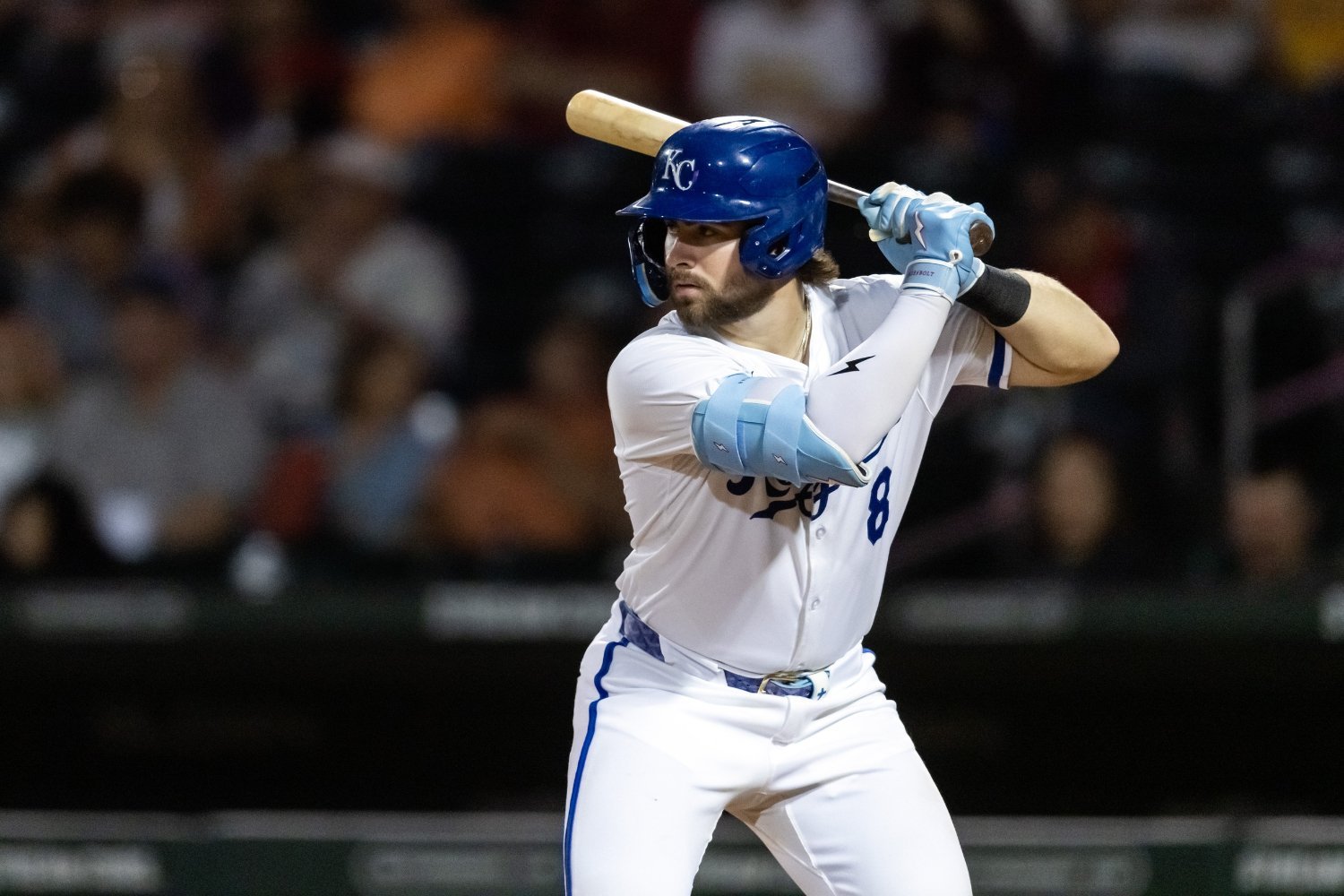 On Wednesday morning, the Royals announced their 2026 Quad Cities River Bandits roster on the Raising Royals social media account. The River Bandits are the High-A affiliate of the Royals. The two most high-profile position player prospects on the River Bandits are catchers Blake Mitchell and Ramon Ramirez. Mitchell, our No. 2 prospect, is repeating High-A after only hitting .207 with a .668 OPS in 217 plate appearances. However, he had a 20.8% BB%, a 0.63 BB/K ratio, and a .372 OBP in Quad Cities a year ago. An issue for him was inconsistent power, likely affected by a broken hamate bone sustained in Spring Training last year. He only had two home runs and a .089 ISO in High-A last year, a decline from the 18 home runs and .201 ISO in 2024 with Columbia. That said, he's demonstrated much better power recently, especially in Spring Training. He hit a homer and posted a .444 ISO in 11 Spring Training plate appearances. The former 1st-round pick also launched a home run in the Spring Breakout against the Texas Rangers. If things progress quickly for Mitchell, he could be a candidate for an early promotion to Double-A Northwest Arkansas. When that happens, Ramirez will be the primary catcher in Quad Cities. Ramirez, the No. 8 Royals prospect at Royals Keep, hit .249 with a 118 wRC+ and 12 home runs in 331 plate appearances with the Low-A Columbia Fireflies. He also demonstrated excellent plate discipline in Columbia as a 20-year-old, with a 10.9% walk rate and 0.53 BB/K ratio. While the defense has been a work in progress, he has the kind of arm strength that can, at times, remind Royals fans of Salvador Perez. Playing behind Mitchell initially will help Ramirez work on that defense and game-calling in the move up in competition. It also wouldn't be surprising to see Ramirez get time at DH or at 1B, especially considering how polished his bat is for his age. Arguably, the best pitcher in the Royals system (No. 3, according to our rankings) will begin in Quad Cities. David Shields was the Carolina League pitcher of the year after posting a 2.38 ERA and 1.02 WHIP in 75.2 IP as an 18-year-old. Shields will headline the River Bandits rotation and could make a move up to Northwest Arkansas by the middle of the season if he progresses as expected. Diego Garcia of the East Village Times, a San Diego Padres prospect account, recognized Shields as a prospect similar in makeup to Scott Kazmir. The last prospect in our rankings playing in Quad Cities is outfielder Asbel Gonzalez, ranked No. 10. Gonzalez didn't show much power, with only 1 home run and an ISO of .059. Furthermore, he only hit .239 with a 50.4% GB%. However, he stole 78 bases with the Fireflies last year as a 19-year-old, which helped him earn the Willie Wilson Baserunner of the Year award, which goes to the top baserunner in the Royals farm system. Frankly, Gonzalez's tools, especially when it comes to speed, are impressive. Thus, it'll be interesting to see how he adjusts to High-A ball, especially after a full season of professional ball in Columbia. He got off to a hot start last year, but faded down the stretch. Hopefully, Gonzalez will be more conditioned and equipped for a full season in 2026. One under-the-radar prospect to watch in Quad Cities is pitcher L.P. Langevin, a fourth-round pick in the 2024 MLB Draft. Langevin was drafted by the Royals after striking out 22 batters in a stint with the West Virginia Black Bears in the MLB Draft League. The former Louisiana-Lafayette product pitched only 21.1 innings last year, but he posted a 32.5% K% in Quad Cities and a 29.8% K% overall between the Complex League and High-A ball. Control is an issue, as he also had a 21.2% BB% and 8.7% K-BB% in the Minors last year as well. Nonetheless, it's easy to be patient with Langevin's control issues when he's posting a 13.7% swinging strike rate and 29.7% CSW, as he did last year. Langevin pitched in the Arizona Fall League, striking out 11 batters and allowing only three hits in 6.2 IP with Surprise. He allowed 12 walks and had a 6.75 ERA in the AFL, so he certainly showed his growing pains, especially in terms of control. That said, when he was locked in, he was tough to hit against, as illustrated below in this October 9th outing. Langevin is a bit of a risky pitching prospect, but he has Major League high-leverage reliever potential, especially if the control comes together this year in Quad Cities. He could be this season's Dennis Colleran, who came from a Mid-Major school, had injury issues, and then had a meteoric rise in the Royals' system in 2025. View the full article
 -
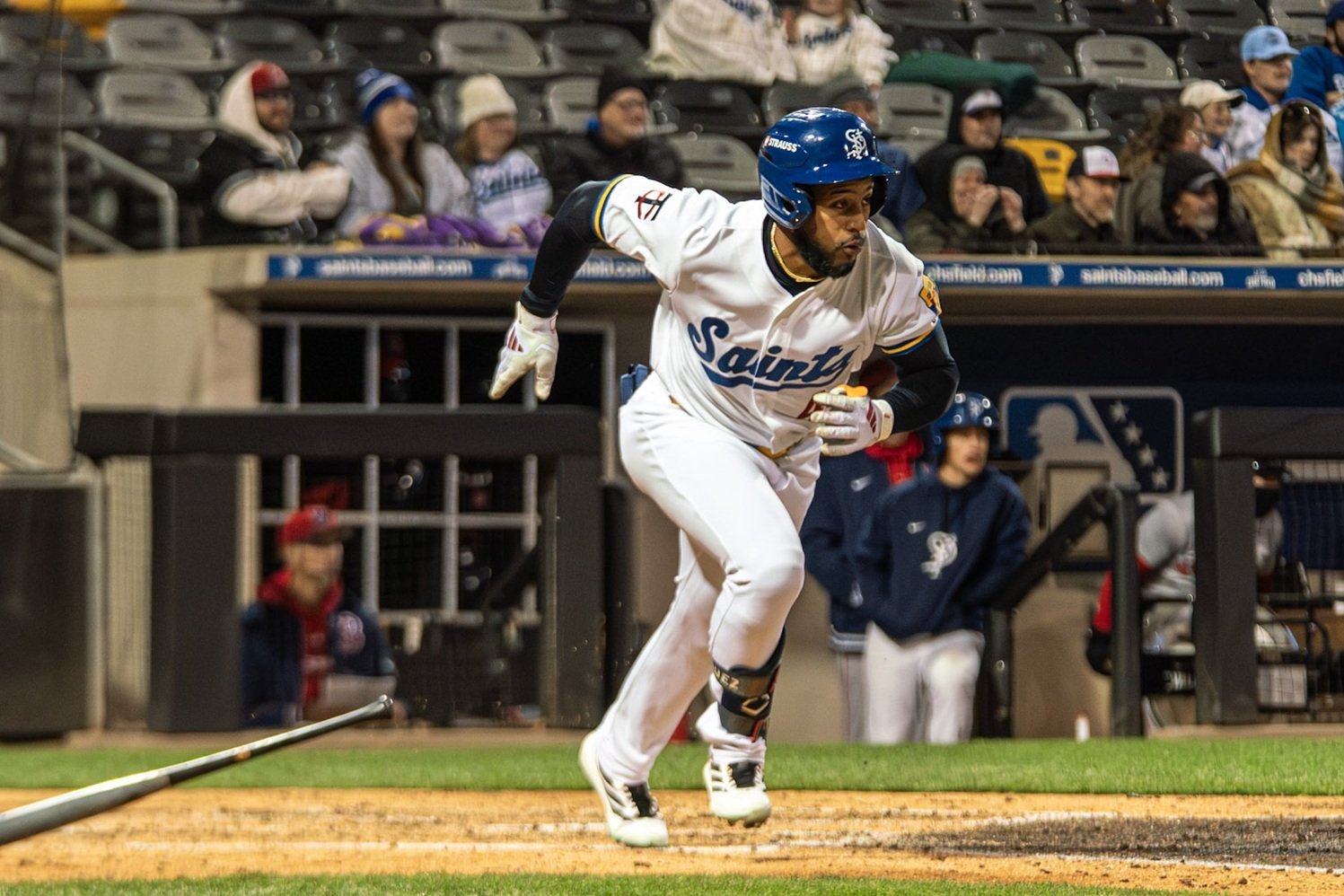 TRANSACTIONS No moves were made on Wednesday. Saints Sentinel St. Paul 4, Worcester 5 Box Score Andrew Bash: 4 IP, 6 H, 1 ER, 0 BB, 2 K HR: Emmanuel Rodriguez (1) Multi-hit games: Orlando Arcia (2-for-3, BB), Alex Jackson (2-for-4, R) An early lead dissipated for the Saints on Wednesday. Walks need not appear: one day after walking a ghastly affiliate-record 20 men, the Saints found grace in the right shoulder and arm of Andrew Bash, who didn’t offer a free pass to the Red Sox in his four innings of work. His immediate relief—John Brebbia—didn’t walk a batter either. Manager Brian Dinkelman must have been euphoric in the dugout. Two scoreless innings begat a third-inning skirmish. Alex Jackson singled, Tanner Schobel struck out, Walker Jenkins cracked a hit to right, Kaelen Culpepper flew out, and Alan Roden walked to set up Emmanuel Rodriguez with the bases loaded and two men out. He spat on a slider in the dirt before unleashing a hellacious hack at a hanging breaker, crushing the offering deep to right-center for a grand slam, his first since 2024. Worcester responded with a run the following half-inning, a premonition of things to come. Two empty middle-inning frames melted into a shaky seventh inning, in which Grant Hartwig labored on his way towards allowing a run—a fine outcome given that the righty allowed three walks and a hit. Drew Smith wasn’t much better. He surrendered a third Red Sox run in a game that was suddenly uncomfortably close. Another quiet frame from St. Paul’s hitters ushered in Marco Raya in a critical save situation. He netted an easy first out before running into trouble. Allan Castro walked, and Matt Lloyd sent a single up the middle to send Castro to third. Sensing a chance to tie the game, Tsung-Che Cheng dropped a perfect bunt, far enough to force Raya to make the play, yet close enough to home to make the throw awkward. Castro slid home safely. Matt Thaiss sharply singled to right to give Worcester the lead. The Saints fell 1-2-3 in the ninth. Catcher Alex Jackson overturned three balls in the game. Alan Roden holds a .542 OBP through 24 plate appearances. Boston’s 13th-ranked prospect, Mikey Romero, collected three hits in five at-bats. Wind Surge Wisdom The Wind Surge will play their first game on Thursday, April 2nd. Kernels Nuggets The Kernels start their season on Friday, April 3rd. Mussel Matters The Mighty Mussels are scheduled to open their season on Thursday, April 2nd. TWINS DAILY PLAYERS OF THE DAY Twins Daily Minor League Pitcher of the Day – John Brebbia Twins Daily Minor League Hitter of the Day – Emmanuel Rodriguez PROSPECT SUMMARY Here’s a look at how the Twins Daily Top 20 Twins Prospects performed: #1 – Walker Jenkins (St. Paul) - 1-5 R, K #2 – Kaelen Culpepper (St. Paul) - 0-4, BB #3 – Emmanuel Rodriguez (St. Paul) - 1-4, HR, R, 4 RBI, BB #15 – Marco Raya (St. Paul) - 1 IP, 2 H, 2 ER, 1 BB, 2 K View the full article
 -
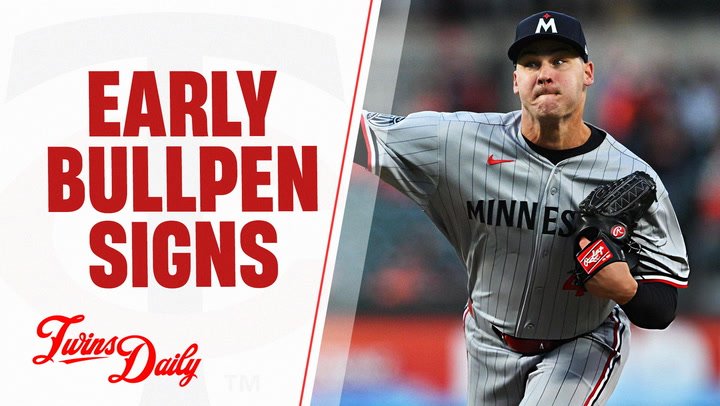 It’s early, but the Twins’ bullpen roles are already starting to take shape — and the usage of Kody Funderburk, Justin Topa, Anthony Banda, Taylor Rogers, Cole Sands, and Eric Orze tells a pretty interesting story. From Topa’s late-inning work to Sands locking down the only save so far, some clear trends are emerging. The question is: are these roles here to stay, or just a product of a small sample size? View the full article
 -
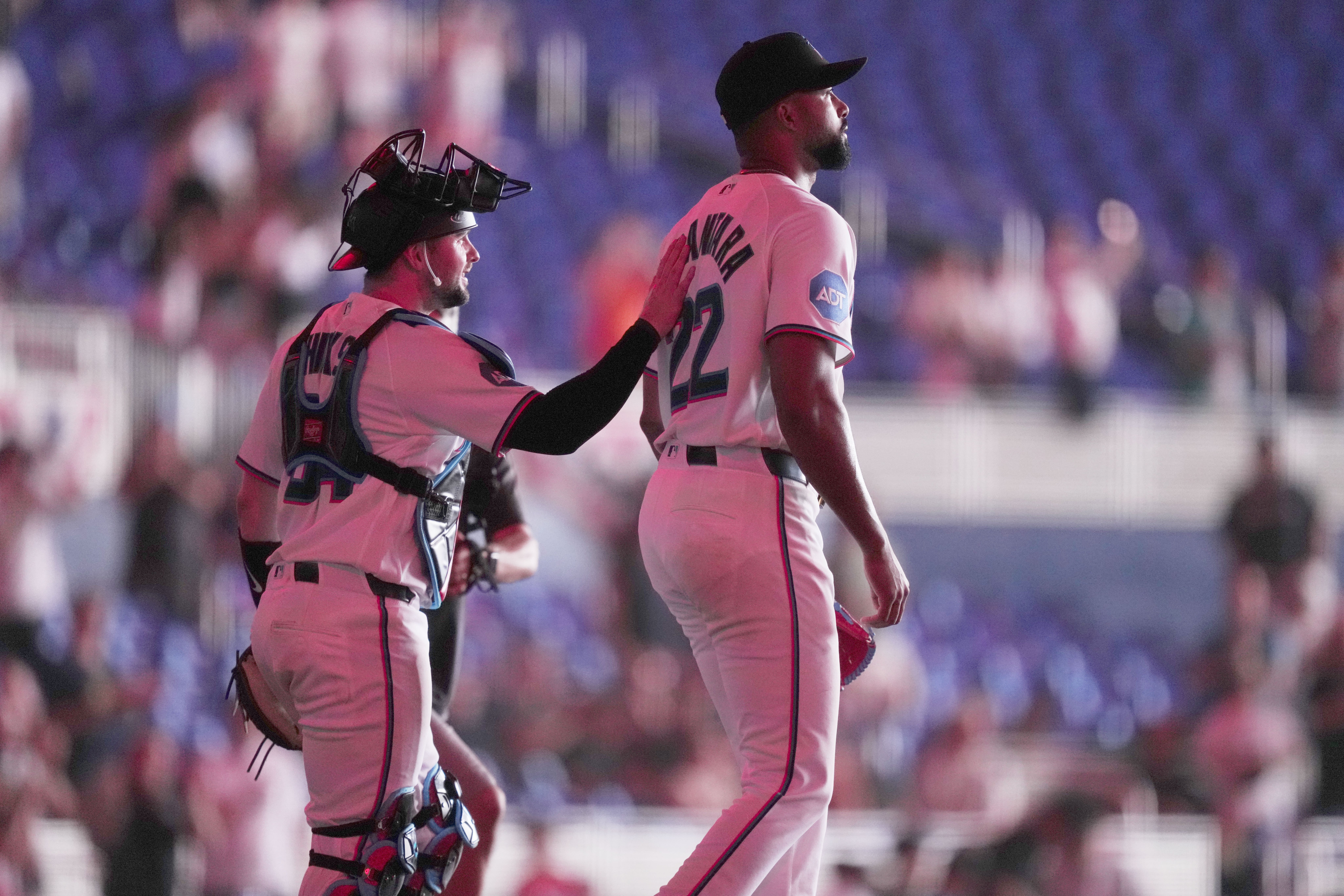 MIAMI — Sandy Alcantara is back where he belongs: on top. The 2022 Cy Young Award winner tossed a complete game shutout Wednesday afternoon at loanDepot park, propelling the Marlins to their fifth win in six games to open the season. With the 10-0 win, the Marlins now have a plus-15 run differential on the season. “I’ve been through a lot, so today was such a special moment for me,” Alcantara said. In his second full season since returning from Tommy John surgery, the Marlins couldn’t have asked for a better start from their ace. Including his nine shutout innings against the White Sox on Wednesday, Alcantara has now thrown 16 innings this season without allowing an earned run. He’s scattered just seven hits while walking only two. Per Elias Sports Bureau, Alcantara’s 16-inning scoreless streak is the fourth-longest by a Marlins starter to open a season, trailing only Dontrelle Willis (24.0 IP in 2005 and 19.1 IP in 2004) and Josh Beckett (19 IP in 2005). In his Opening Day start, Alcantara was pulled after just 73 pitches through seven innings—something that left many disappointed. “My last outing, I was feeling it a little bit and they took me out of the game. I respect that decision, but today was my game, and it wasn’t going to happen today,” Alcantara said with a smile postgame. Alcantara was efficient from the outset, recording the first two outs of the game on just two pitches. From the fourth through ninth innings, he averaged fewer than 10 pitches per inning—when he’s at his best. “Being aggressive and never letting an inning get away from me was key. Plus, all of the great work we’ve put in the bullpen has been helping me a lot,” he added. Wednesday marked the 13th complete game and fifth shutout of his career. It had been nearly three years to the day since his last complete game shutout, which came on April 4, 2023 against the Minnesota Twins. It was also the first complete game shutout by a Marlin since Braxton Garrett on May 24, 2024. Since 2022, Alcantara has now thrown more complete games than several MLB teams have as a whole, including the Red Sox and Giants. Only three active MLB pitchers have at least 13 complete games: Justin Verlander, Chris Sale, and now Alcantara. Alcantara also noted postgame that he only shook off assistant pitching coach Rob Marcello “maybe three times,” crediting the staff for doing a great job with the game plan. The Dominican flamethrower’s battery mate, Liam Hicks, has also continued his absurdly impressive start to the campaign. Following a 3-for-4, four-RBI performance on Wednesday, the Canadian backstop now leads the majors with 12 runs batted in. “The at-bat quality is still there, and he’s being very selective in looking for pitches where he wants them,” manager Clayton McCullough said postgame. Hicks spent his offseason focused on weight training and improving his bat speed, and it’s already paying dividends. He has hit three home runs during the team’s opening homestand. For comparison, he hit just two home runs at loanDepot park all of last season. With the win, Miami improved to 5-1 on the season while Chicago fell to 1-5. The Marlins have an off-day on Thursday before they begin a three-game weekend series in the Bronx against the New York Yankees. Eury Pérez will face Will Warren in the team’s home opener. View the full article
 -
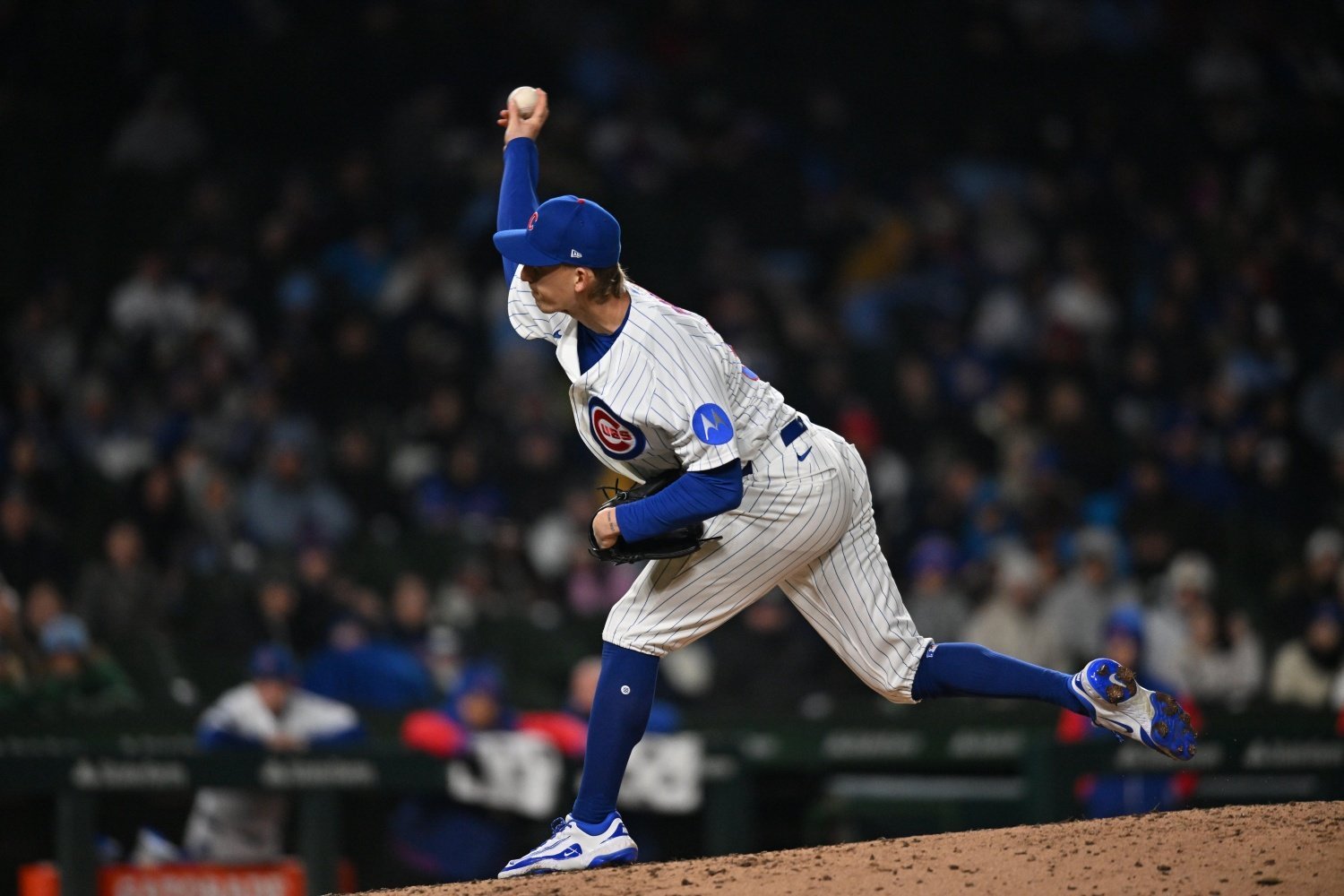 Last night, the Cubs lost 2-0. It was a bit of a frustrating game: he weather was frigid, the bats were as cold as the temperatures, and the team was seemingly just an inch or two short on a few spectacular defensive plays that could have kept the score knotted up. Despite all of that, there was one standout; Ben Brown. If we're just looking at the final stat line for Brown, it's pretty excellent. He went 3 1/3 innings, struck out five, walked one, and surrendered a solitary hit. On the surface, that's a good outing, but I think it hides a lot of the really good things that came out of it. In fact, what we may be seeing are the sprouts of a new, improved Ben Brown who could stick in the rotation. One of the things the right-handed pitcher worked on in the spring was ensuring that his fastball sat in the upper third of the zone more frequently than in the past. Our very own @Matthew Trueblood explored Brown and this location earlier this offseason when looking at his spring training data, and last night seemed to be a continuation of that. Below is a map of all of Brown's offerings last night. The red dots indicate fastballs. The vast majority of these pitches are located in the upper third, which is exactly where you'd like to see them. Better yet, there's a distinct lack of uncompetitive pitches; command and control were on display for the fireballer Tuesday. The result of getting his fastball in the upper third is that it creates space on the bottom half for his sinker (in on the hands of righties) and for his curveball to create chases and whiffs. The sinker is especially important, as it forces the hitter to cover the whole zone. Brown doesn't really want to throw fastballs in the lower half. With swing planes the way they are today and the movement he gets from his arm slot, those can be sent a long way. Nor does he want to throw low-and-in-curves. Without the sinker, the area we see filled above with the yellow/orange dots would be effectively empty, and it's an especially useful place to go against right-handed hitters. We can see how all three pitches play off each other in a nice sequence against Jo Adell in the 8th inning. Adell has some swing-and-miss tendencies, but also some big power. His xSLG last year was in the 97th percentile. Even on cold nights, he's capable of muscling out a pitch. The more options you have, the less likely Adell is to find the bleachers and extend the two-run lead to something less surmountable. To start Adell off, Brown painted a sinker on the lower, inside corner for a strike. This is a great pitch to begin an at-bat. Either Adell swings at it, which almost assuredly results in a ground ball, or you get ahead 0-1—as Brown did, tilting the balance of the at-bat in the pitcher's favor. This is how Brown is filling up a new portion of the zone against those like-handed-hitters. Next, the hard-throwing-righty went with an uncompetitive changeup, and then fastball-fastball. Both of his heaters resulted in swings. The first earned a whiff (below), and the second was right at the very top of the zone. That caused Adell to have to cover the entirety of the plate: low and in, middle-high, and the very top of the zone. That first-pitch sinker wasn't in Brown's repertoire last year, meaning he'd either have been on his third fastball by the 1-2 foul, or maybe he'd have started Adell with a curveball that he doesn't really throw for strikes. Either way, the new pitch gave Brown options, and options are always good. Now sitting in a very favorable count, Brown could finally throw the curve. Ideally, he'd have gotten him a little more on the outer portion of the lower half, but small quibbles aside, it was a good pitch. It was also the fourth type of pitch Brown had thrown in the sequence. It created a harder decision point for the hitter, and Brown got the pitch on the black. Adell grounded out harmlessly to Alex Bregman. That sinker adds just an extra point of reference for a hitter, and it's going to make Brown incredibly difficult to deal with against right-handed hitters. While these are all great offerings, what encouraged me most was a pitch that Brown threw in the next at-bat, this time by Angels left-handed-hitting outfielder Josh Lowe. So far in his young career, the Cubs' reliever has struggled against southpaws, surrendering a .342 wOBA (up from his .295 against RHH). It makes sense, too, because he doesn't have a pitch that's designed to attack lefties. His sinker can't be the solution here, either. Sinkers are much better against the same-handed hitter, and while he may show it every so often, it's not the pitch that's going to solve this problem. Within this at-bat, however, Brown flashed a pitch I want to see more of; a hard-thrown changeup that registered 90 mph on a very cold night. This wasn't a perfect pitch, mind you. It's certainly too high in the zone. Ideally, you'd like to see it thrown more like the one below, from Cade Horton. But it's a start. The velocity is reminiscent of Edward Cabrera's changeup, which sat well into the 90s on Monday night. As you can see, there's some solid arm-side movement on it; the pitch broke 13 inches to the right. What I liked the most about it is that he did have the confidence to throw it, and I want more of it. I want him to bury it more, sure, but I want to see him feel confident in that offering to throw it more than once or twice in a three-inning appearance. If Brown can bury that changeup a bit more, he's going to get weak ground balls against off-handed hitters, just like Cade Horton did with Daylen Lile above. "Baseballs have a tendency not to fly over the fence when they hit the ground," a friend of mine said last night when discussing the game, and it's such a good and simple line that I have to steal it here. Couple a changeup that Brown can more consistently get to the outside corner against hitters like Lowe with the new sinker to a righty like Adell? You're cooking with gas, now. Strangely enough, the pitcher I envision the best version of Brown to be is probably very similar to the best version of José Soriano, the pitcher the Cubs had the pleasure to face last night. Soriano mixes his high-octane fastballs with a knuckle-curve (that he throws 85 mph+) and a splitter he uses to keep lefties at bay. Soriano used his splitter nine times against off-handed hitters last night, and ideally, Brown could use his changeup in a similar manner. Even as-is, the guy we saw take the mound last night is a weapon. Don't let me sound like I'm trying to diminish what he accomplished. The new sinker is helping against hitters like Adell, and will make Brown better than when we last saw him in 2025. Instead, what I see is the path forward. If he doesn't ever find the changeup, Brown is a good pitcher, but there's the potential for a very good pitcher if he can just find that pitch a little. And I can't help but dream on it. What did you make of Ben Brown's appearance last night? Did anything stand out to you? Let us know in the comments below! View the full article
 -
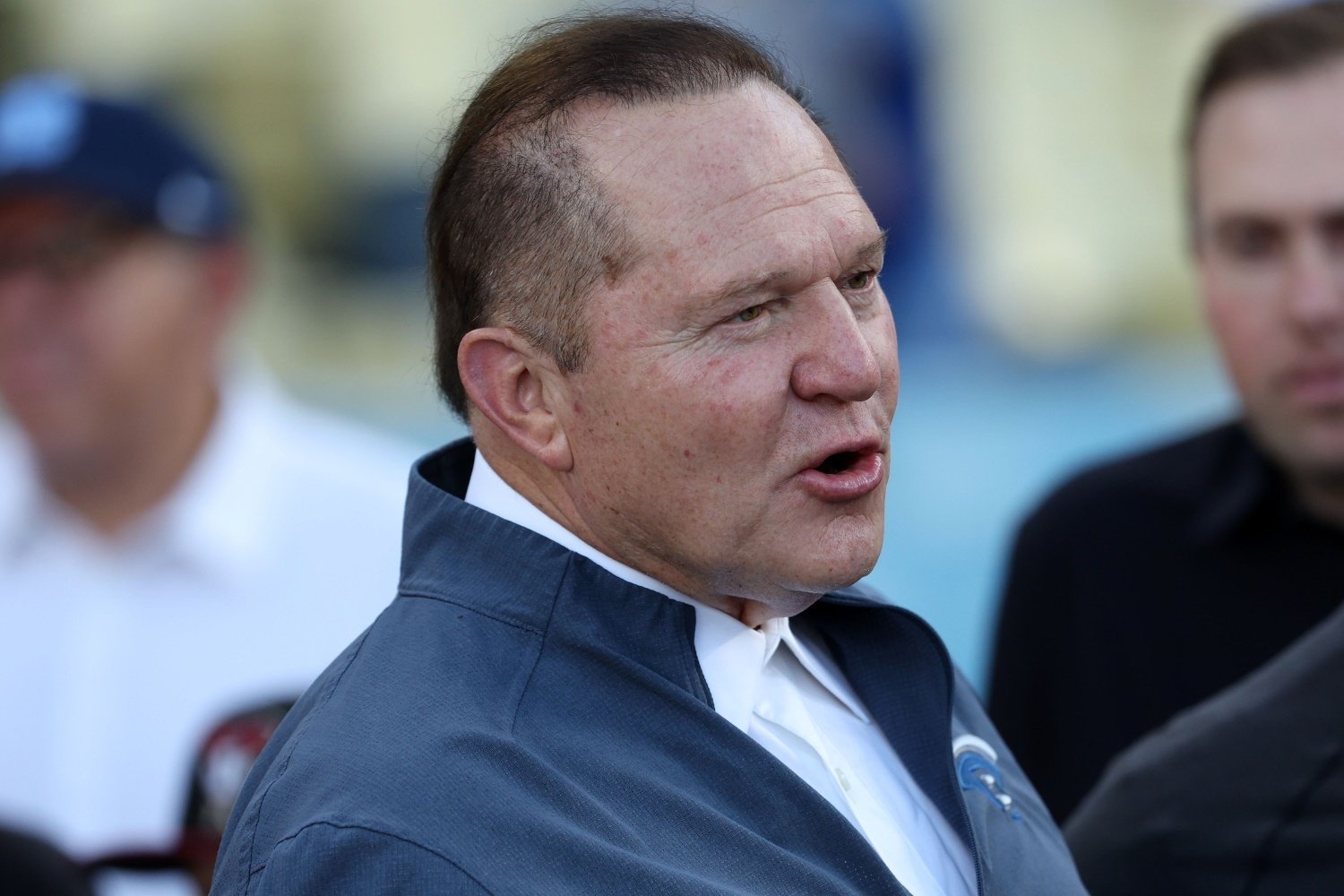 There was a time when major-league teams treated prospects like unopened Christmas presents. You didn't lock in the value before you knew what was inside. Now, clubs are increasingly trying to shake the box, guess the contents, and sign the receipt before the wrapping paper even comes off. Pre-debut extensions have become one of baseball’s more fascinating gambles. Teams are buying out uncertainty in exchange for long-term cost control, while players are cashing in before facing the volatility of development. It's a risk on both sides, but one that is increasingly comfortable, as front offices try to get ahead of the market. The New Wave of Early Bets The Seattle Mariners recently pushed that trend to a new level by locking up top prospect Colt Emerson to an eight-year extension worth a guaranteed $95 million, with a club option for 2034. The signing comes with a full no-trade clause and includes another $35 million in escalators. There’s reportedly an $8-million signing bonus, with salaries ranging from $9 million to $18 million from 2028-33. That is the largest guarantee ever handed to a player who has yet to appear in a major-league game, surpassing Jackson Chourio’s deal by $13 million. Emerson, just 20 years old, has only nine games of Triple-A experience, which somehow makes the deal feel even more aggressive. If Emerson becomes a star, this deal looks like a bargain by year three. If not, it becomes a very expensive lesson in optimism. Not to be outdone, the Milwaukee Brewers are reportedly finalizing an eight-year deal worth just over $50 million with prospect Cooper Pratt, including two club options worth about $15 million per year. However, the value of those options can increase via escalators. Pratt is 21 and has barely dipped a toe into Triple-A, making this extension feel even more like a projection than a reaction. Unlike Emerson, Pratt is not coming off a season that screams superstardom. His offensive production was modest, but the underlying traits are what sold Milwaukee. Strong plate discipline, speed on the bases, and defensive reliability at shortstop give the Brewers a foundation to dream on. This is less about what Pratt has done and more about what they believe he will become. It's worth noting that the Brewers have been here before with Chourio, whose pre-debut deal looked bold at the time and now looks like a masterstroke. The difference is that Chourio had already reached Triple-A and looked big league-ready. Pratt is still more idea than finished product. In fact, unlike Chourio, Scott Kingery, and several other players who signed pre-debut deals over the last two decades, neither Emerson nor Pratt will be promoted to the majors in the wake of these deals. They're still prospects; they've just become very wealthy ones. The Boras Factor That brings us to Scott Boras, baseball’s most recognizable agent and the human embodiment of “we will take this to free agency and like it.” Boras has built his reputation on maximizing value at the open market, often steering clients away from early extensions in favor of bidding wars. While his agency has softened its stance slightly over the years, the track record remains clear. Pre-arbitration extensions for Boras clients are exceedingly rare. In fact, the deal signed by Carlos González back in 2011 remains the only notable example of a Boras client signing that early. That context makes the Pratt negotiations particularly interesting. If finalized, it represents a shift, or at least an exception, in how Boras is willing to operate. Perhaps it reflects the game's changing economics. Perhaps it reflects the Brewers being extremely convincing. Or perhaps it simply reflects that every rule has a price. Could the Twins Try This With Walker Jenkins? Let's turn, then, to Walker Jenkins and the Minnesota Twins. Jenkins is not just another prospect in the system. He's the kind of talent that invites bold decisions. A consensus elite prospect with the type of hit tool and overall profile that draws lofty comparisons, he is exactly the archetype teams consider for these early extensions. If Minnesota believes in Jenkins the way Milwaukee appears to believe in Pratt, there is a path to a similar deal. Lock in cost certainty. Buy out arbitration years. Maybe even sneak in a free agent season or two. From a roster construction standpoint, it's appealing. From a risk standpoint, it's enormous. The complication, of course, is Boras. Jenkins is represented by the same agent who has historically preferred to let value mature on the open market. Convincing Boras to agree to a pre-debut extension would require a deal that not only protects Jenkins, but also meaningfully rewards him for signing early. In other words, it would not come cheap, and it would not come easy. Pratt got $1.35 million as an overslot sixth-round draft pick in 2023. Jenkins went fifth overall the same year, and got almost $7.2 million. That puts the two in very different situations, in terms of the leverage the team can exercise. The Twins will have a much harder time convincing anyone Jenkins belongs in their farm system than the Brewers have had keeping Pratt's ascent smooth but steady, given that team's far superior depth. Boras could and would hold the Twins' feet to the fire in a way he couldn't have done with the Brewers. Pre-debut extensions are no longer outliers. They're becoming strategic tools for teams willing to bet on their evaluations. The Mariners and Brewers have each placed sizable wagers on young talent, hoping to secure future stars at today’s prices. For the Twins, Jenkins represents a similar opportunity, wrapped in the added complexity of Boras. The question is not just whether Minnesota believes in Jenkins. It is whether they believe enough to challenge one of the sport’s most established negotiating philosophies. Should the Twins attempt a deal with Jenkins? Leave a comment and start the discussion. View the full article
 -
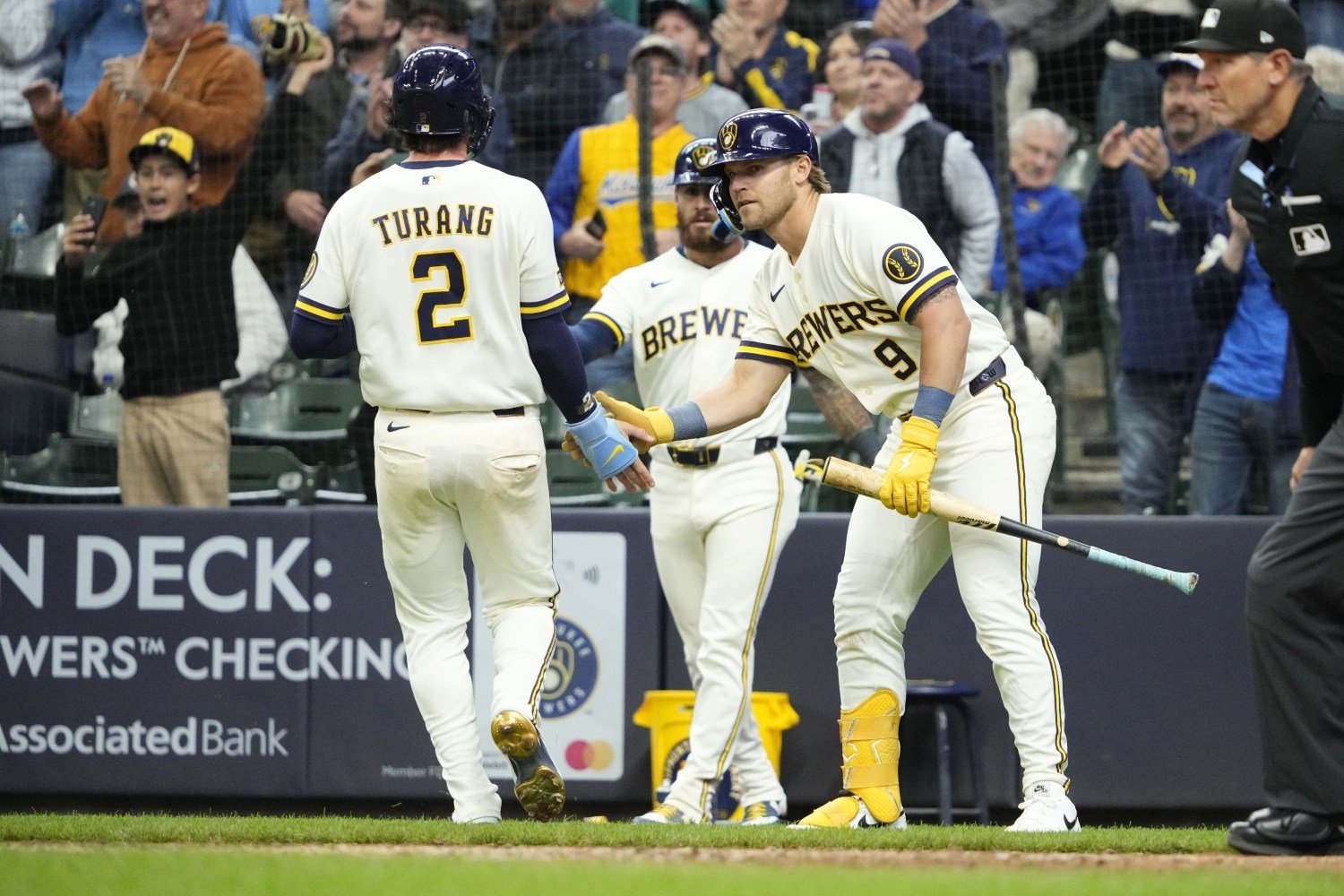 This year’s version of the Milwaukee Brewers has done the exact opposite of last season’s squad, starting off 5-1 instead of a dreadful 0-4. Of course, everything turned out quite well in 2025, with the Brewers boasting the best record in baseball with the most wins in their franchise’s history at 97-65. Who knows what the rest of 2026 brings? Undeniably, though, it feels so much better to match the optimism of Opening Day with the results on the field. Milwaukee has jumped out to a great start, in part, because they've had the best or second-best six-game open to a season in Brewers’ history in five categories. Everything can change in an instant, but it’s worth appreciating the early production. Strikeouts Pitching The Brewers’ pitching staff has 76 strikeouts through the first five games, easily the most in club history. They have at least 11 punchouts in five games, and eight in the other. Ironically, the 2019 squad is second with 65 strikeouts. As noted in a previous article, Milwaukee’s strategy of relying on a largely inexperienced starting rotation this season mirrors that 2019 team's. Interestingly, this year’s staff is split almost down the middle by role: Relievers have 37 and starters have 39, with Misiorowski's 18 in two starts pacing the rotation. The 2019 squad saw its starters take on a larger share, with 39 punchouts against the pen's 26 to the same point. Either way, if the Brewers can continue this early trend, run prevention will reign in Milwaukee Fewest Errors Speaking of run prevention, it’s helpful when your defense commits zero errors in the first six games, as well. Though errors are not the standard to measure all defense by, turning the routine outs into actual outs goes a long way in keeping teams off the board. Only the 2000 Brewers started a season’s first five contests without an error in franchise history, and unlike this club, they committed their first flub in game No. 6. The Brewers are built around defense, and it helps that fewer balls are in play thanks to the barrage of strikeouts. Entering play on Wednesday, the combined record of the five errorless teams in the league was 17-8. Stolen Bases You probably heard this a few times on the broadcast, but the 2026 Brewers own the most stolen bases over the first six games in club history, with 15. The 2024 team, which held the previous mark with 13, finished that season second in baseball in swipes and second in single-season franchise history with 217 steals. Among the 15 stolen bases to start this season, seven players have already taken a bag, with five of them stealing two or more. David Hamilton leads the team with four, and the Brewers have only been thrown out one time in their 16 attempts. Offensive Walks Milwaukee has drawn 31 walks in its first five contests, tied for the best start in Brewers’ history, set by the 1982 American League Champions. The 2026 lineup has at least two free passes in every game and five or more walks in four of the contests. As of Wednesday morning, they were second in walk rate in MLB, at 14.5%. Much has been made of the Brewers’ “woodpecker” mentality and their discipline in refusing to chase pitches outside the zone. The high number of walks in recent years (they finished fourth and third in walks the past two seasons, respectively) is one of the key results that Milwaukee’s offense utilizes to pressure the opponent and score at a high clip. Run Differential This is often a statistic people look at to determine the quality of a team, though small samples should always be kept in mind. Regardless, the Brewers’ +28 run differential after six games is the second-best in team history—though well behind the 1978 club that sat at +33. That team finished the season with the best run differential in MLB. Milwaukee currently has the best run differential in baseball, thanks to the only loss being by one run. They have also scored at least six runs in five of the games. A 14-2 blowout on Opening Day certainly helps. But, let’s not forget, last season the Brewers had the best run differential in MLB, as well, en route to the best record in baseball, so not much has changed in the very early going. Does this hot start and top-of-the-franchise statistical beginning mean a lot going forward? Maybe not. But it’s a lot better than talking about how ugly a season looks five games after another long winter. View the full article
 -
 The Minnesota Twins and Target Field are expanding their already impressive food and drink line up in 2026. You'll find something for everyone, whether it's the new Double Barrel Burger from Red Cow, Hot Cheeto Dusted Elote, gluten free and vegan food options, deep fried waffle on a stick, or an all new refreshing lineup of alcoholic and nonalcoholic drinks!View the full article
 -
The Science of Mr. Padre: The Impossible Standard of Tony Gwynn
DiamondCentric posted an article in Padres Mission
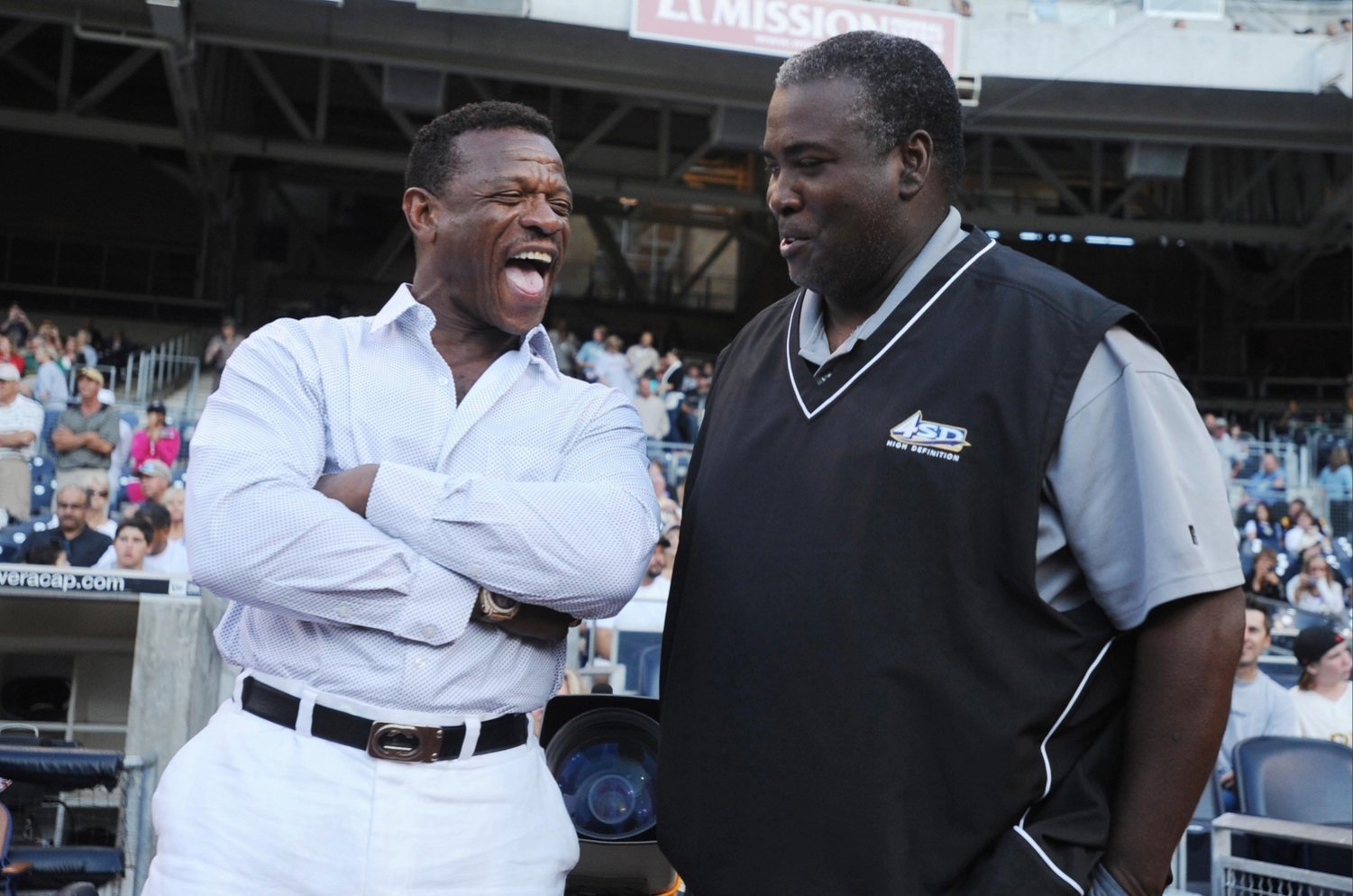 In the modern era of baseball, the "Three True Outcomes"—home runs, walks, and strikeouts—have turned the game into a series of mountain peaks and deep valleys. We’ve grown accustomed to seeing superstars fan the breeze 200 times a year in exchange for 40 long balls. But to understand Tony Gwynn is to step into a different dimension of physics entirely. Tony Gwynn didn’t just play baseball; he solved it. Over a 20-year career spent entirely with the San Diego Padres, he treated the batter’s box like a laboratory. While his peers were swinging for the fences, "Mr. Padre" was busy mastering the "5.5 hole"—the space between third base and shortstop—with the precision of a diamond cutter. The 0.04% Anomaly The most staggering metric of Gwynn’s career isn't his 3,141 hits or even his eight batting titles. It is his refusal to fail. In 20 seasons, Gwynn struck out only 434 times. To put that in perspective, consider that he stepped to the plate 10,232 times. That means Gwynn struck out a mere 0.04% of the time over the course of 2,440 games. In today’s game, a leading slugger might reach that 434-strikeout mark in just two and a half seasons. Gwynn stretched it across two decades. He famously went 20 consecutive years without ever striking out more than 40 times in a single season. In 1995, he struck out only 15 times in 535 plate appearances. For Gwynn, a strikeout wasn’t just an out; it was a statistical clerical error he spent hours of film study trying to prevent. "Captain Video" and the Craft of Hitting Long before every MLB dugout was equipped with iPads and high-speed motion sensors, Gwynn was a pioneer of video analysis. He earned the clubhouse nickname of "Captain Video" because he traveled with a portable VCR and stacks of VHS tapes, obsessively breaking down his swing and the tendencies of opposing pitchers. This wasn't vanity; it was a quest for an elite level of consistency. Gwynn believed that if he could keep his mechanics identical regardless of the pitcher, the results would be inevitable. This scientific approach made him a nightmare for the greatest arms of his generation. Greg Maddux, arguably the most cerebral pitcher in history, once lamented that no matter how much you changed speeds, you couldn't fool Gwynn. "Except for that [expletive] Tony Gwynn”, Maddux famously said. The stats back him up: in 107 plate appearances against Maddux, Gwynn hit .415 and never struck out once. The Mathematical Safety Net Perhaps the most "broken" statistic in the Gwynn canon is the sheer distance between him and mediocrity. Most players battle their entire careers just to keep their average at a respectable mark, avoiding the Mendoza Line of under .200, while pushing to get as close as possible to the .300 mark. Gwynn’s career average of .338 was so inflated by his consistency that he possessed a mathematical safety net unlike any other. If Tony Gwynn had decided to keep playing ball his last few seasons, but suddenly lost his ability to hit entirely—going 0-for-his-next-1,183 at-bats—he still would have finished his career with a lifetime average above .300. He effectively built a two-season-long cushion of pure excellence. Beyond the Box Score While the numbers suggest a cold, calculating machine, the nuance of Gwynn’s career was found in his joy. He was a 15-time All-Star who played with a smile that felt as permanent as his batting stance. He turned down bigger contracts in larger markets to stay in San Diego, a rarity that cemented him as a civic icon. He was also an exceptional dual-sport athlete, still holding the San Diego State University record for career assists in basketball. That "point guard vision"—the ability to see the entire floor and find the open man—translated perfectly to the diamond. He didn't see a defense; he saw lanes. The Legacy of the Lost .400 We will always wonder about the season of 1994. When the player's strike halted the season, Gwynn was hitting .394. He was arguably the only player in the last 80 years with the hand-eye coordination and the mental discipline to actually catch Ted Williams and hit .400 over a full season. In the end, Gwynn didn't need the .400 mark to prove his point. His career stands as a testament to the sometimes forgotten art of contact—a reminder that in a game of inches, no one ever owned those inches quite like Mr. Padre sporting his #19 jersey. View the full article
 -
Red Sox's Roster Manipulation Puts Spotlight Squarely on the Reserves
DiamondCentric posted an article in Talk Sox
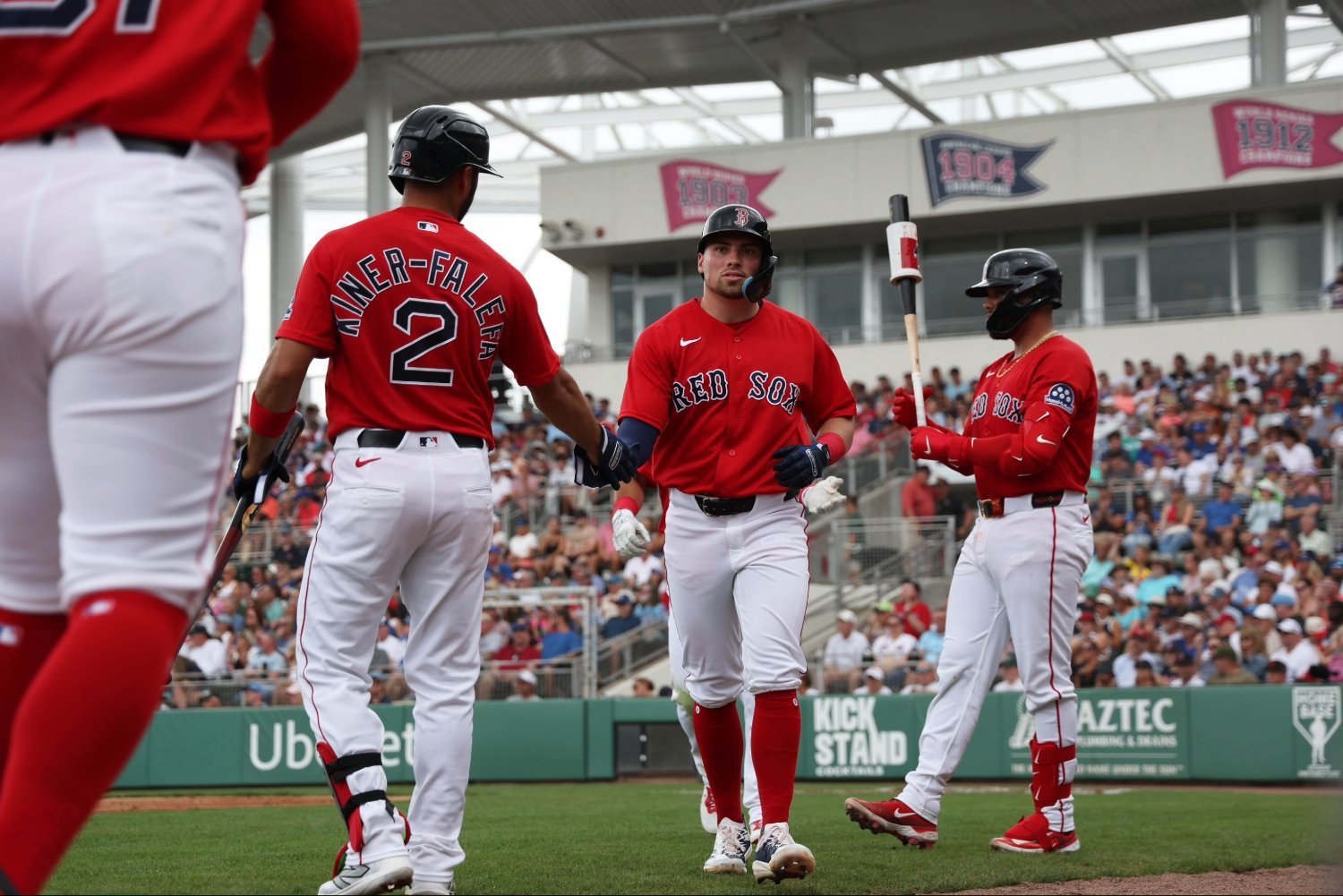 Opening Day roster decisions are easy to forget once the games begin. Most of the attention shifts to the stars, the top of the lineup, and the front of the rotation. But the edge of a roster can reveal something more important — it can show how a team plans to survive the games that do not go cleanly. That is what stood out in the Boston Red Sox’s opening series in Cincinnati. Boston left town 1-2 (and have since sunk to 1-4), so this is not about declaring the roster validated after one weekend. It is about something more useful than that. The first series started to show what the Red Sox believe they need to be. This looks like a team trying to win on flexibility as much as talent. It wants options. It wants coverage. It wants the ability to manage matchups and protect itself when games drift off script. That is what made the final roster decisions worth watching in the first place. Marcelo Mayer was the most prominent of those calls, and his first series captured the balance Boston seems to want. Alex Cora spent the spring making it clear Mayer had to earn a spot. He did. On Opening Day. he rewarded that trust immediately, coming off the bench to double and score. That was the upside of the bet. Boston trusted the talent and got an instant return. By the end of the series, the other side of the equation showed up. On Sunday, the Red Sox still managed the position situationally, turning to Andruw Monasterio for a pinch-hit spot and keeping him in defensively at second base. The move gave Boston a right-handed option in the moment with Monasterio and a clean defensive fit afterward. That is what makes Mayer important to this conversation. Boston was willing to reward performance but it was not willing to surrender flexibility to do it. The Red Sox did not treat second base like a symbolic prospect promotion. They treated it like a position they intended to manage to win. The same idea carried into the bench. Monasterio did not need a huge series to show why Boston wanted him. He only needed to show why the spot existed. His role was not to fill a bench seat. It was to give Cora another useful piece at the edge of the roster, one that could help him manage matchups and keep the infield covered without losing flexibility elsewhere. That is the kind of player who can look unimportant until the exact moment he is needed. The same was true on the pitching side, where Ryan Watson’s debut may have said as much about the Red Sox's priorities as any of the late-camp decisions. Watson making the team was easy to frame as a Rule 5 roster obligation. Saturday showed why that was too simple. After the starter exited early and the game stretched deep, Watson gave Boston 2 1/3 scoreless innings in his major-league debut. The three walks showed the usual nerves and rough edges, but the outing still made the point. The Red Sox wanted another arm who could absorb meaningful innings when a game stopped behaving the way it was supposed to. That is not a glamorous roster function, but it is a real one. Connelly Early fit that same logic. The back of the staff was never just about naming a fifth starter. As reported by MassLive’s Chris Cotillo, Boston’s end-of-camp pitching decisions were shaped in part by the need for extra length while Brayan Bello and Ranger Suárez continued building up after World Baseball Classic duty. That made the decision less about spring hierarchy and more about practical coverage. Early backed that up Sunday. He gave the Red Sox 5 1/3 innings and left Boston in position to win before the bullpen let the game turn later. While that does not settle anything long term, it does underline the short-term point. And that is why this series mattered, even in a losing set. The Red Sox’s late roster bets did not define the weekend but they helped explain the shape of the team. Mayer showed Boston is willing to trust talent without giving up control of the matchup game. Monasterio showed the bench was built for specific utility. Watson showed why innings coverage mattered. Early showed why practical depth at the back of the staff was worth prioritizing. None of these decisions are permanent. A week from now the picture could shift. A month from now some of these names may be gone. But the opening series already revealed something real: the Red Sox built the edges of this roster not for decoration, but for the messy, unpredictable stretches that decide games. If that flexible identity holds, those final roster spots will not just matter. They could become difference-makers. View the full article
 -
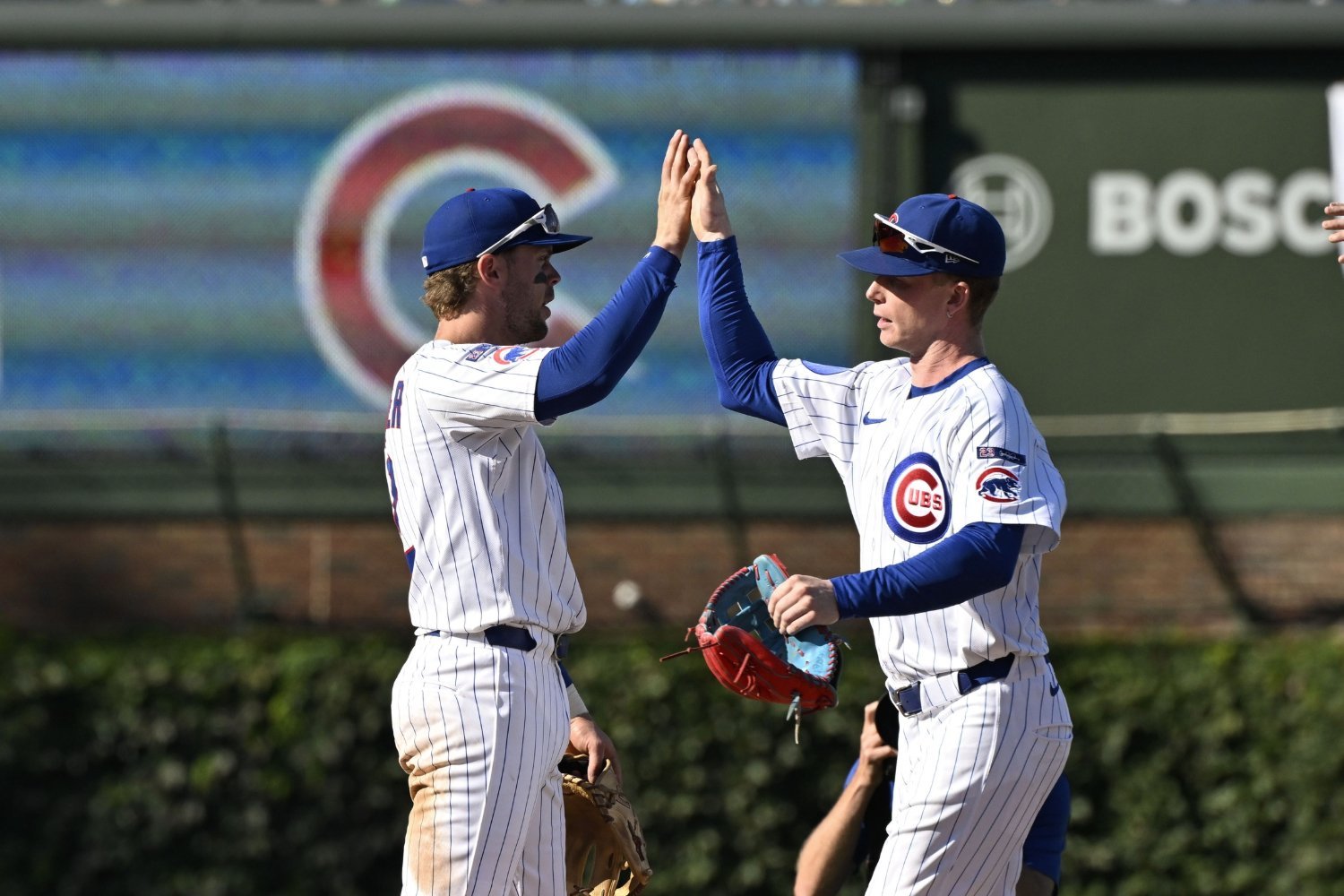 With a bit of an uneven start to the 2026 season, there's been some attention building around the Chicago Cubs' lineup and Craig Counsell's construction of it. It's doubtless that his choices thus far, some of which have drawn ire from subsections of the fanbase, have been predominantly informed by the absence of Seiya Suzuki. Regardless of those particulars and how things could shift upon Suzuki's return, it's clear that there's one portion of this iteration of the team's lineup that is working exactly the way it's supposed to. As of this writing, each lineup penned by Counsell has featured Pete Crow-Armstrong batting fourth and Nico Hoerner directly behind him in the fifth spot. The returns for each player have been solid within a small sample so far; Crow-Armstrong is reaching base at a .333 clip with an improved walk rate, while Hoerner has a pair of doubles to his credit and an even split between his walk and strikeout rates. We're working with minuscule samples, and neither player really profiles for the spot in which they're currently hitting. Crow-Armstrong doesn't have the typical makeup of a clean-up hitter even following a 30-homer campaign in 2025, and Hoerner's contact-centric skill set isn't one you'd typically find batting in the five spot. However. it's the way one plays off of the other that is a really tantalizing thought for the starting nine moving forward. As much variability as still exists within Crow-Armstrong's offensive skill set, there's at least one thing of which one can be assured: reliability on the basepaths. Crow-Armstrong is armed with elite sprint speed but also a level of instinct between 90-foot sections of the infield dirt. His 29.5 feet-per-second was both above league average and in the 96th percentile in 2025, while his baserunning acumen scored high marks as well. FanGraphs' baserunning metric, BsR, checked in at 6.7 for Crow-Armstrong last year. That comprehensive metric measures on-base skills through a blend of steals, double play avoidance, and advancement on the bases (all weighted and measured against expectancy in a variety of contexts). A 6.7 figure doesn't quite classify as "excellent" in the eyes of the metric, though it falls between that and "great." The same can be said of Statcast's Runner Runs, wherein baserunning performance is measured primarily within taking extra bases. Here is where Crow-Armstrong falls in that respect: In terms of the broad metric, Crow-Armstrong's four Runner Runs pegged him ninth in the league among qualifiers in 2025. What's unique about his case is that the attempted advances against the estimated attempt, the latter of which measures what the average runner might attempt in that same situation. In the advance attempt rate, Crow-Armstrong ranks 20th. The estimated attempt rank, however, ranks 190th. That leaves his attempt rate above average as the 12th-highest among that group. There's plenty of nuance within all of these baserunning metrics, but the simplified version is Runner Runs measures the ability to take extra bases. Crow-Armstrong is aggressive on the bases but has the skill set to make him successful in doing so. That'll play anywhere in the lineup. Having Hoerner directly behind him, however, is a way for the Cubs to unlock the best version of that aggression. In Hoerner, the Cubs have a bat that lived in the 99th percentile in both whiff and strikeout rate last year. His contact rate, at 89.8 percent, ranked fourth in the league among qualifiers. Within all of that contact, only Luis Arráez hit more singles than Hoerner's 138. Even better is that with runners on, Hoerner's .328 average ranked fifth. Not a ton of that action came with Crow-Armstrong on base in front of him, though. He spent much of 2025 hitting fourth or seventh while Hoerner was operating in the sixth or seventh spot. Having the two back-to-back has the potential to unlock a certain level of run production that has to be enticing for Counsell. If Crow-Armstrong can reach first base (or second. given that he ranked 11th in the league in doubles last year), then you're looking at any number of first-and-third situations at various stages of a game by virtue of Hoerner hitting behind him. If he's on second, then you're creating more immediate run-scoring opportunities. There's also an aesthetic appeal to all of this. Watching Pete Crow-Armstrong run the bases is one of the great joys in this game, and there's something special about Nico Hoerner's old-school contact profile. The two working in conjunction with one another is as much of a feast for the eyes as it is a boon to run-scoring opportunities. Either way, the value of having one of the game's elite contact hitters behind one of its top baserunners cannot be overstated. The two were more akin to ships passing in the night last year, but have the opportunity to be something paramount to the offensive output of the Cubs in 2026. View the full article
 -
 In episode 113 of Destination: The Show, Jeremy and Jamie caught up with Twins left-handed pitching prospect Dasan Hill as he prepares to start Opening Night for the Cedar Rapids Kernels. The guys talk with Dasan about his journey through amateur baseball, his draft experience, and his onboarding with the Twins. They move on to discuss his first full pro season in 2025, his goals for 2026, and his reflections on starting the Spring Breakout game and touching 100 mph for the first time. 0:55 Dasan Hill 1:16 Earliest baseball memories 3:44 Process of getting recruited and drafted 6:15 Stuff taking a step forward as a senior of high school 7:55 Getting drafted by the Twins 9:33 What did you know about Minnesota? 11:00 The onboarding process after getting drafted You can support the show by downloading it from wherever you get your podcasts, including iTunes and Spotify. If you enjoy the content, consider leaving us a five-star rating and review in addition to sharing or retweeting DTS-related content. You can follow us on Twitter @DTS_POD1, @Jeremynygaard, @J_D_Cameron, and @TheodoreTollef1. We’re now on Bluesky @destinationtheshow.bsky.social. You can also find full episodes and clips of our shows on our YouTube page @DestinationTheShow. View the full article
 -
7 Bold 2026 Predictions About Brewer Fanatic's Top 20 Prospects
DiamondCentric posted an article in Brewer Fanatic
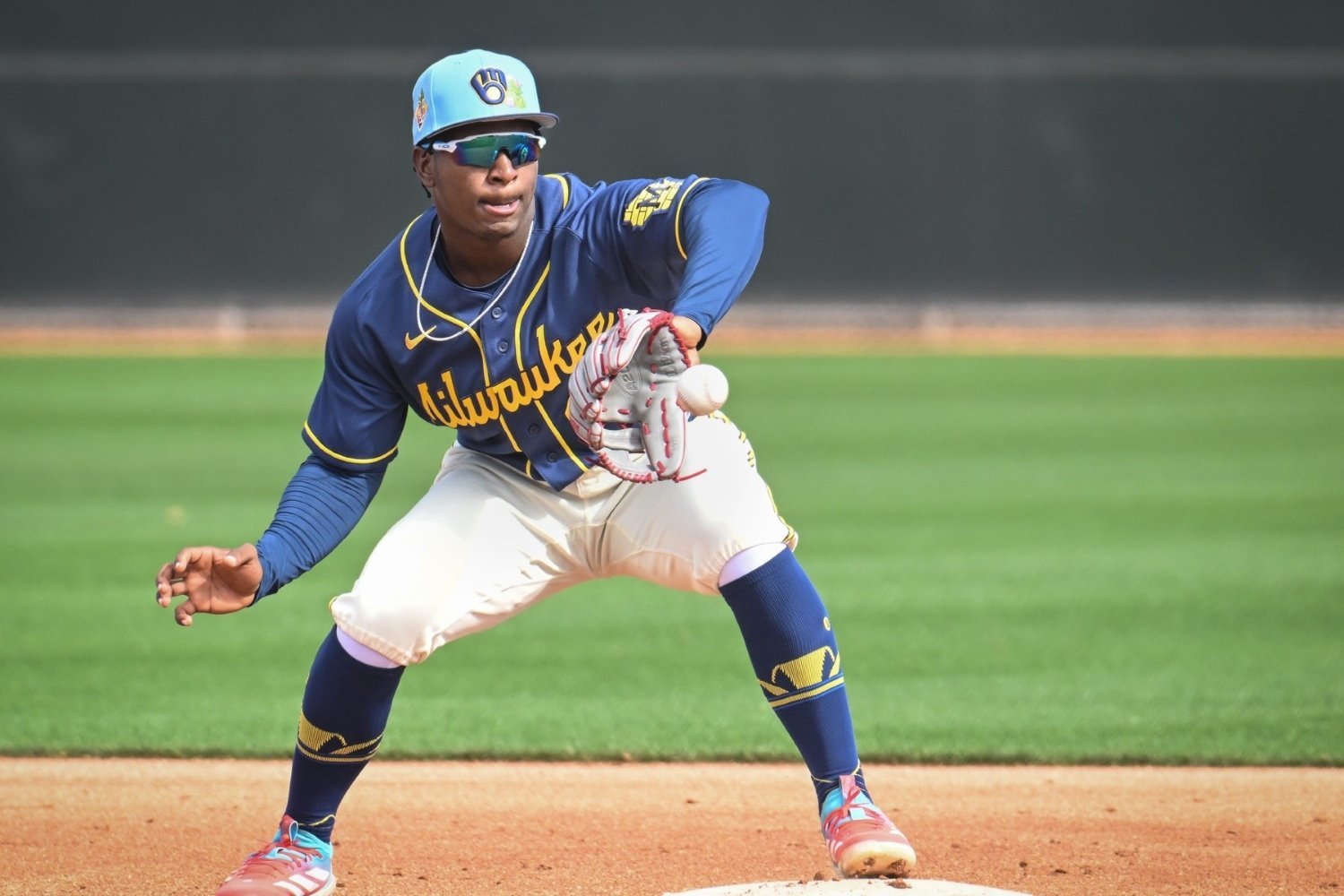 With baseball season just underway, hope abounds for the fans of all 30 Major League Baseball franchises. We don’t really know much else, beyond the fact that 29 of those fanbases will be somewhere between bitter and heartbroken by the end of the World Series, but there is more to professional baseball than the major-league squad. There’s the farm system. Milwaukee, of course, has the best farm system in MLB. But what will happen? There’s a lot of good chaos in the system, which makes it tough to predict what will happen in 2026. That said, here are seven predictions. 1. Cooper Pratt Will Not Be The Only Top 20 Prospect To Sign A Long-Term Deal Brewers fans were stunned to hear about Pratt’s eight-year, $50.75-million contract, which could become a 10-year, $81-million deal if two team options are exercised. Pratt was the fourth-ranked prospect in the Brewer Fanatic Top 20 and MLB.com Pipeline’s Top 30 for the Brewers, and many expected top prospect Jesus Made to be the one the team signed. However, the fact that Pratt signed an extension doesn’t rule out the Brewers also working something out with Made. If anything, this move may make it more likely that Made will agree to a deal, although his would be closer to the deal Jackson Chourio got before the 2024 season. The organization may also want to lock down Luis Pena, with his elite exit velocities. With all of the uncertainty about 2027, the Brewers may want to put themselves in a position where they can shed payroll and stock the system in the event of a lengthy labor dispute. Meanwhile, Made and Peña could have interest in what's becoming a league-wide trend: Mariners shortstop Colt Emerson joined Pratt in signing pre-debut deals a day after news of Pratt's signing leaked. 2. Brock Wilken Will Make His MLB Debut—with a Different Franchise It might seem unheard of for the Brewers to trade a first-round pick who has a plus power tool, given their desire for pop, but they’ve done it before—in 2008, for instance. Power-hitting prospect Matt LaPorta was the key piece Milwaukee sent to the Cleveland Indians to bring in CC Sabathia. Why might Wilken meet the same fate? LaPorta was limited to left field and first base, which were well and truly locked down by Ryan Braun and Prince Fielder, respectively, and at the time, the National League did not have the designated hitter. In 2026, Wilken is in a similar position. On the Brewer Fanatic Top 20, he's behind Andrew Fischer and Luke Adams at third base. That’s before factoring in the likelihood that Made, Jett Williams, or Peña could end up at the hot corner. If the Brewers need a game-changer for the stretch run, Wilken would be a good choice to center a package on. 3. At Least Seven Members of the Top 20 Will Appear in Milwaukee The players on the Brewer Fanatic Top 20 aren’t just high-ceiling prospects in the lower levels of the minors. Brewers fans should expect to see a number of these prospects show up at Uecker Field for at least a cup of coffee, if not more. Brandon Sproat and Jeferson Quero are already on the 26-man roster, while Craig Yoho and Logan Henderson made some appearances in 2025 for the Brewers. Williams will fit in somewhere, sometime, if his season goes to plan. Pratt just signed a massive contract, while Luis Lara is already tearing up Triple-A with the Nashville Sounds. Others could also make the leap, including Wilken, Made, and Adams, two of whom are with the Sounds, while Made will begin the 2026 season with Double-A Biloxi. 4. Melvin Hernandez Will Finally Get His Top 20 Spot Logan Henderson and Jacob Misiorowski have been widely recognized as potential aces, with both hitting the MLB Top 100. However, in 2025, both of them were beaten out for the Brewer Fanatic 2025 Minor League Starting Pitcher of the Year award by Melvin Hernandez. Hernandez hasn’t seemed like much, but in 2025, he made his full-season debut at the age of 18 with the Carolina Mudcats and dominated all season, posting a 2.00 ERA, a 4.41 strikeout-to-walk ratio, and allowing just three home runs in 121 2/3 innings pitched. Hernandez could find himself at Double-A Biloxi if he keeps pitching as he did in 2025. If that happens, he may get the recognition as a top prospect that has eluded him to date. 5. Tyler Black Will Stick with Milwaukee At first glance, Black would appear to be blocked, given the presence of Andrew Vaughn and Jake Bauers in Milwaukee and the team’s decision to use Gary Sánchez to replace Vaughn as the right half of a platoon as Vaughn recovers from a hamate injury. Black, though, isn’t one to be easily denied. His offensive skill set has always been one of the best in the organization, with outstanding OBP skills and baserunning. Black recently seemed to level up his power in spring training, and the Brewers haven’t yet been able to count on health from Garrett Mitchell. While Bauers has made strides, he is a free agent after 2026, and Milwaukee may decide to flip him and go with the cost-controlled former top-100 prospect. 6. At Least Three Top 20 Prospects Will Force the Brewers to Trade Current MLB Players It isn’t just prospects who could end up being traded by Aug. 3, when the deadline comes. In some cases, a major-league club will move a veteran player to make way for a prospect. At least three Brewers currently on the 26-man roster may not finish the season in Milwaukee. Joey Ortiz, who’s had an inconsistent bat during his tenure with the Crew, could be displaced by one of Pratt, Williams, or Made by the end of 2026. The team could also flip one of their lower-leverage relievers to make way for Yoho, who could team up with Trevor Megill and Abner Uribe to make late innings unwatchable for the fans of Brewers opponents. Williams or Luis Lara could also usher Mitchell out of Milwaukee, though at the moment, the team's outfield depth seems more likely to result in someone being DFAed than in Mitchell being traded. 7. At Least One Player Nobody Expects Will Be on the Top 20 List By the End of 2026 Brewers fans should expect some significant churn in the Top 20. Some of these players will graduatem by virtue of ending their rookie status with 130 at-bats or 50 innings pitched in the bigs. Others could be dealt. But the real story will be talent acquired over the course of the 2026 season. The amateur draft will be one such source, with some players hitting the Top 20 as soon as they sign contracts. Others will get on the list by virtue of their production. Some will be previously unheralded prospects who get their day in the sun. With a system as deep as Milwaukee’s, there are likely to be a few surprises. Hernandez isn't the only prospect who's excelled under the radar of many fans, while Jadyn Fielder flashed real offensive potential as he enters his first year of full-season professional baseball. The Brewers have some exciting young international prospects, as well. What do you think might happen in the Brewers' farm system for 2026? Let us know in the comments below! View the full article
 -
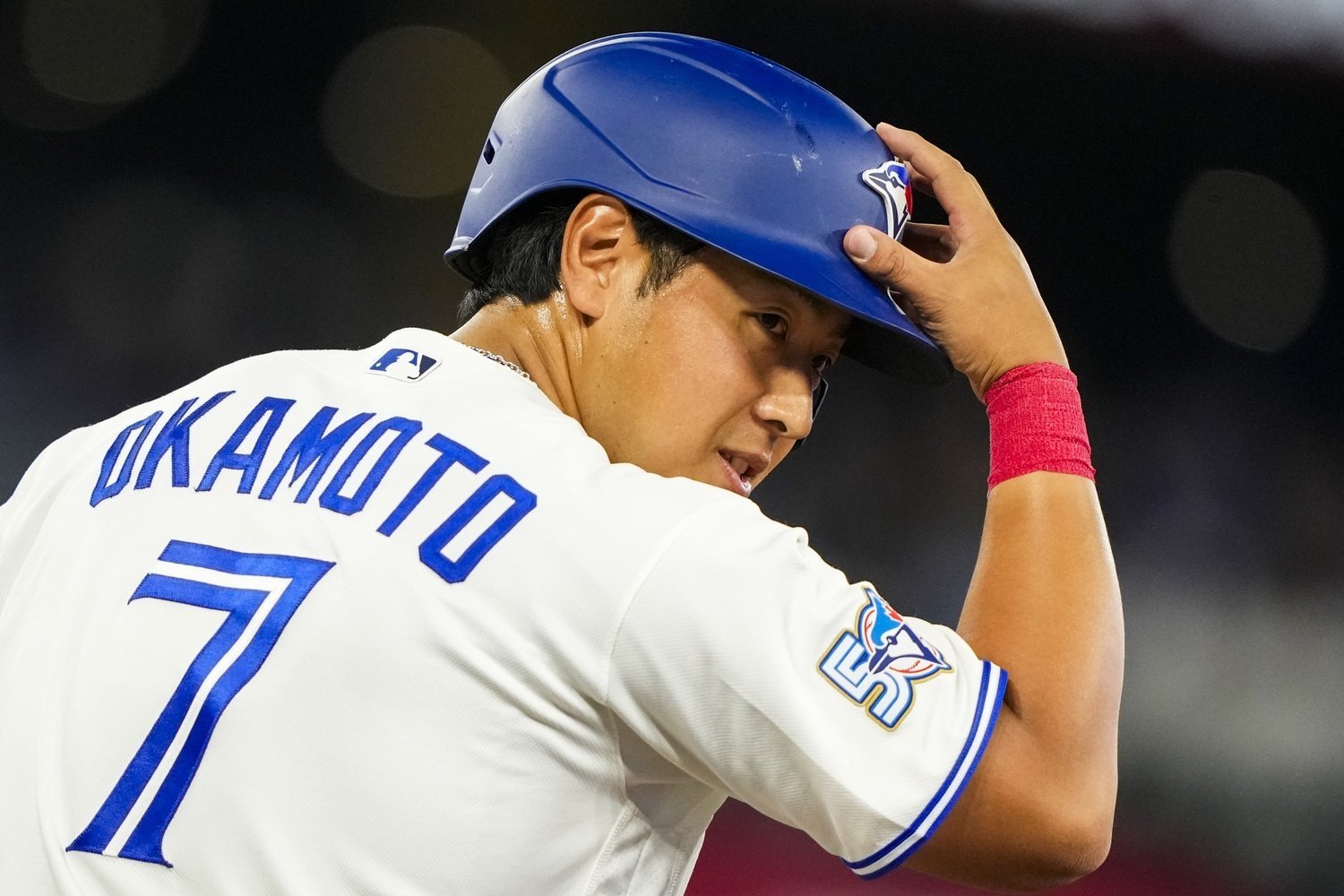 Editor's Note: Bryan originally wrote this article the day before the news broke that Trey Yesavage would start the 2026 season on the injured list. I wasn't sure what to do with it at first, but given the encouraging news about Yesavage’s ramp-up (he'll throw a three-inning simulated game on Friday) and Kazuma Okamoto's red-hot start to the season (2 HR, .300 BA, .991 OPS), I decided to run the story today. The last time the Toronto Blue Jays won the AL Rookie of the Year Award was in 2002, when Halle Berry won an Oscar for Best Actress for her role in Monster’s Ball, the New England Patriots won their first Super Bowl, and the “Rally Monkey” became famous, leading the then Anaheim Angels to a World Series title. In that season, the Toronto Blue Jays finished 78-84 under manager Buck Martinez, but Eric Hinske took home the AL's top rookie prize. The third baseman hit 24 home runs, scored 99 times, knocked in 84 runs, and stole 13 bases. It’s hard to believe that Hinske was the last Blue Jay to win the Rookie of the Year Award, but the team hasn’t had many standout rookie performances since then. The only one that was worthy of serious consideration for the award was Marcus Stroman’s 2014 season, in which he had a record of 11-6, a 3.65 ERA, and struck out 111 batters. Yet, 2014 was a competitive year, and Stroman didn't even receive a single down-ballot vote. Only six Blue Jays have received ROY votes in the last 23 seasons, and none have finished higher than fourth. The wait may be over this year, as the Blue Jays have not one but two of the frontrunners for the award: Trey Yesavage and Kazuma Okamoto. Prior to the news of Yesavage's IL stint and Kevin McGonigle's promotion, many sources had Yesavage and Okamoto as the two favourites. At the end of last season, Yesavage started three games, in which he posted a 3.21 ERA and had a 16:7 strikeout-to-walk ratio. In the postseason, he came up clutch in several big games. In Game 2 of the ALCS, he helped the Blue Jays take a 2-0 series lead. The rookie threw 5 1/3 innings against the New York Yankees, striking out 11 batters. In Game 6 of the ALDS, Yesavage helped the Blue Jays even the series 3-3 after throwing 5 2/3 strong innings while striking out seven Seattle Mariners batters. In Game 5 of the World Series, he threw seven innings and struck out 12 Los Angeles Dodgers hitters. He got the win to give the Jays a 3-2 series lead, though we all know how that ended. This success is why the righty was the frontrunner for the Rookie of the Year Award as recently as two weeks ago. If he continues to ramp up on schedule, he has plenty of time to get back in the race. Yesavage’s teammate Okamoto also has a strong case to claim the award. He will be playing his first season in America and in MLB. In Nippon Professional Baseball in Japan, Okamoto hit at least 25 home runs in seven straight seasons before an elbow injury broke that streak in 2025. Though, he was on a good pace to extend the streak with 15 homers halfway through the season. Okamoto has begun his MLB career with a five-game hitting streak, two home runs, and four runs scored, including the game-winning run on Opening Day. His defense at third base has looked sharp, albeit in a tiny sample. Thanks to Yesavage and Okamoto, Toronto's chances of winning the Rookie of the Year Award look better than they have in a long time. That said, the Jays' rookies have stiff competition. In addition to McGonigle (Detroit Tigers), other top contenders include Carter Jensen (Kansas City Royals), Chase DeLauter (Cleveland Guardians), Samuel Basallo (Baltimore Orioles), and Okamoto's fellow NPB All-Stars Munetaka Murakami (Chicago White Sox) and Tatsuya Imai (Houston Astros). Perhaps neither Okamoto nor Yesavage is the favourite on his own, but together, they might give Toronto better odds than any other AL team. So, while the competition is fierce, the Blue Jays are still in a great position to win the AL Rookie of the Year Award for the first time since 2002. View the full article
 -
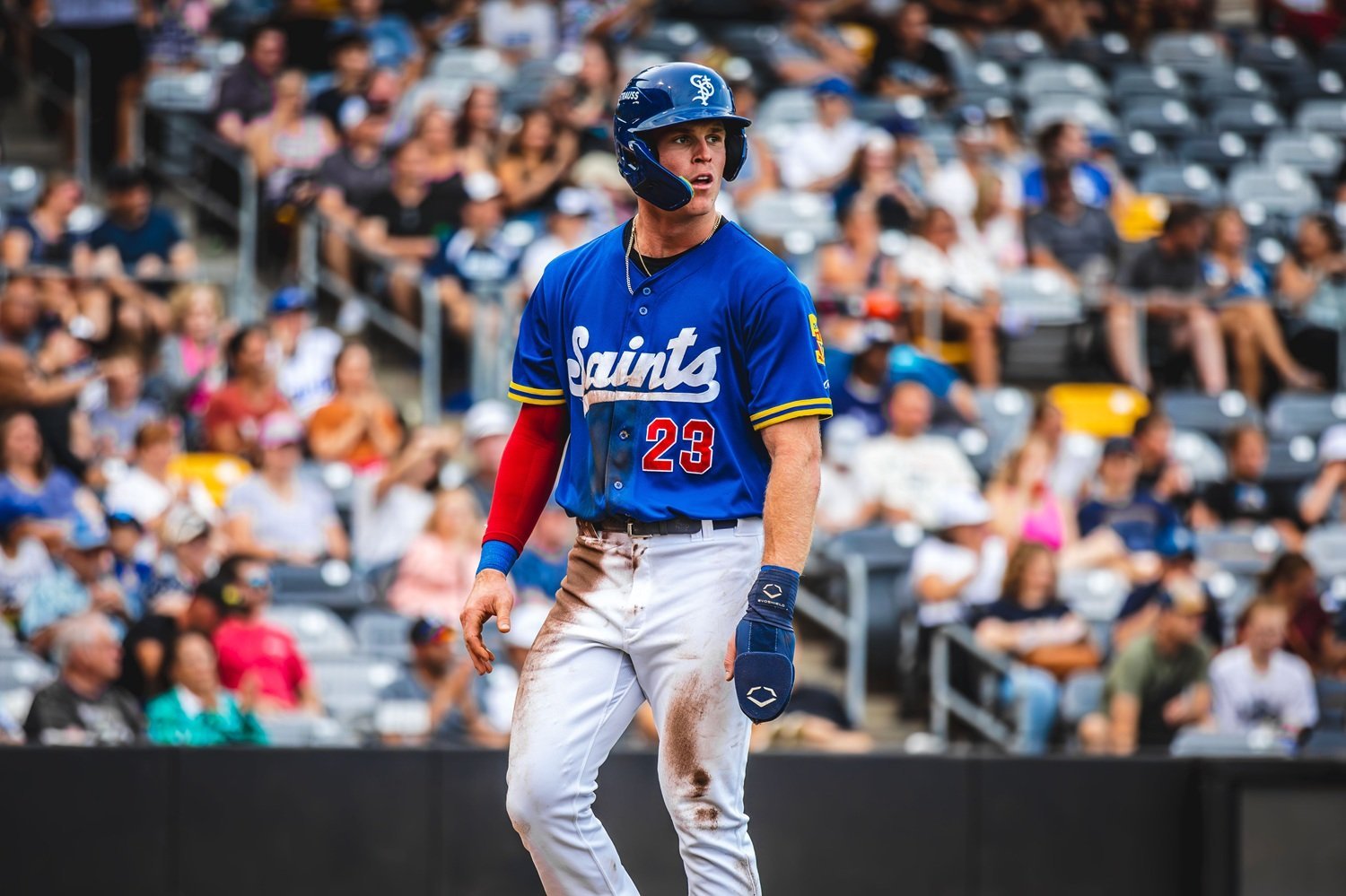 There are prospect comps, and then there is whatever is happening in Dave Kramer's living room. Kramer, a lifelong Twins fan and self-proclaimed “early adopter of takes,” has officially begun replacing every Joe Mauer reference in his vocabulary with Walker Jenkins. Not because Jenkins has debuted. Not because he has played a game at Target Field. But because Kramer is confident that he has seen enough. “Look, I’m just saving time,” Kramer said, while carefully crossing out “Mauer” on an old Twins jersey with a Sharpie. “We all know how this ends. I’d rather get ahead of the discourse.” To be fair, Jenkins has earned the hype. He entered pro ball as one of the most highly regarded national prospects the Twins have had since Mauer was the consensus top prospect in baseball during the early 2000s. The hit tool is real. The approach is advanced. The pedigree checks out. Naturally, that means it is time to begin tearing him down. “Sure, he can hit for a high average,” Kramer said. “But does he have any power? I mean, I watched one video where he hit a ball to the opposite field gap instead of 450 feet to dead center. That’s concerning.” Kramer then pulled up a spreadsheet labeled “Jenkins Red Flags” that included categories such as “Too Polished, Too Soon” and “Suspiciously Likeable.” The comparisons to Mauer have not stopped at the surface level. Kramer has also fast-tracked himself into the injury speculation phase, a stage most players do not reach until at least their arbitration years. “He’s going to be injured all the time,” Kramer said confidently. “Mauer had bilateral leg weakness. What’s Jenkins going to have? Upper body enthusiasm fatigue? Chronic prospect-hype syndrome? The Twins will come up with something.” Medical professionals have not yet weighed in on those conditions. Beyond health concerns, Kramer has already begun outlining Jenkins’s long-term legacy, including the inevitable debates that will follow. “We’re going to spend a decade arguing about whether he’s too passive at the plate,” Kramer said. “Then another decade arguing that he should have been more passive. It’s the full experience.” He also expressed concern about Jenkins’s leadership style, despite the fact that Jenkins is still working his way through the minor leagues. “Is he too quiet? Not quiet enough? Does he say the right things after losses that haven’t happened yet?” Kramer asked. “These are the questions that matter.” Twins fans have seen this cycle before. A generational hitting prospect arrives. Expectations skyrocket. The player performs at an elite level. And somehow, the conversation drifts toward what they are not doing. Kramer, however, insists he is not being negative. If anything, he believes he's honoring tradition. “This is how we talk about great hitters here,” he said. “If you’re not nitpicking them before they even debut, are they really elite?” At press time, Kramer was reportedly workshopping his next take, debating whether Jenkins’s future batting titles will come with enough exit velocity to truly count. "Unethical trophies," he could be heard mumbling to himself, as his son nodded helpfully. View the full article
 -
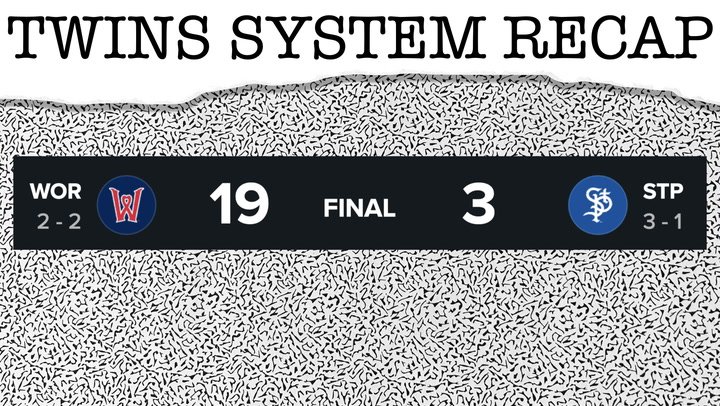 Twins System Recap: The St. Paul Saints gave up 19 runs and walked 20 batters. Tonight. In one game. Tanner Schobel pitched two innings. He's not a pitcher. That was the worst baseball game I've ever seen.View the full article
 -
 Alex and Maddie sit down and discuss why the Red Sox have gotten off to such a sluggish start to the season. They start with the exciting win from Opening Day, carried by Garrett Crochet. Then break down both the offensive and defensive struggles of Roman Anthony and Willson Contreras. Finally, they give Wilyer Abreu his much-deserved flowers and end the episode discussing what Carlos Narvaez needs to do to make the new ABS challenge system work in his favor. Listen on Apple Podcasts: https://podcasts.apple.com/us/podcast/the-talk-sox-podcast/id1783204104 Listen on Spotify: https://open.spotify.com/show/3qPrPXEngu0CxgTmlf0ynm Listen on iHeartRadio: https://www.iheart.com/podcast/263-the-talk-sox-podcast-244591331/ Listen on Pocket Casts: https://pca.st/4tmd121v Watch on YouTube: https://www.youtube.com/@talksox View the full article
