


DiamondCentric
-
Posts
2,631 -
Joined
-
Last visited
Never
Content Type
Profiles
Forums
Events
News
Tutorials & Help
Major League Baseball Videos
Guides & Resources
Store
Downloads
Gallery
Everything posted by DiamondCentric
-

 While this was highly enjoyable for me, I can't leave you completely bereft of content, so please enjoy a throwback to perhaps the greatest April Fool's day prank of all time: View the full article
 -
Walker Buehler's 2026 Padres Debut Looked Concerningly Like 2025
DiamondCentric posted an article in Padres Mission
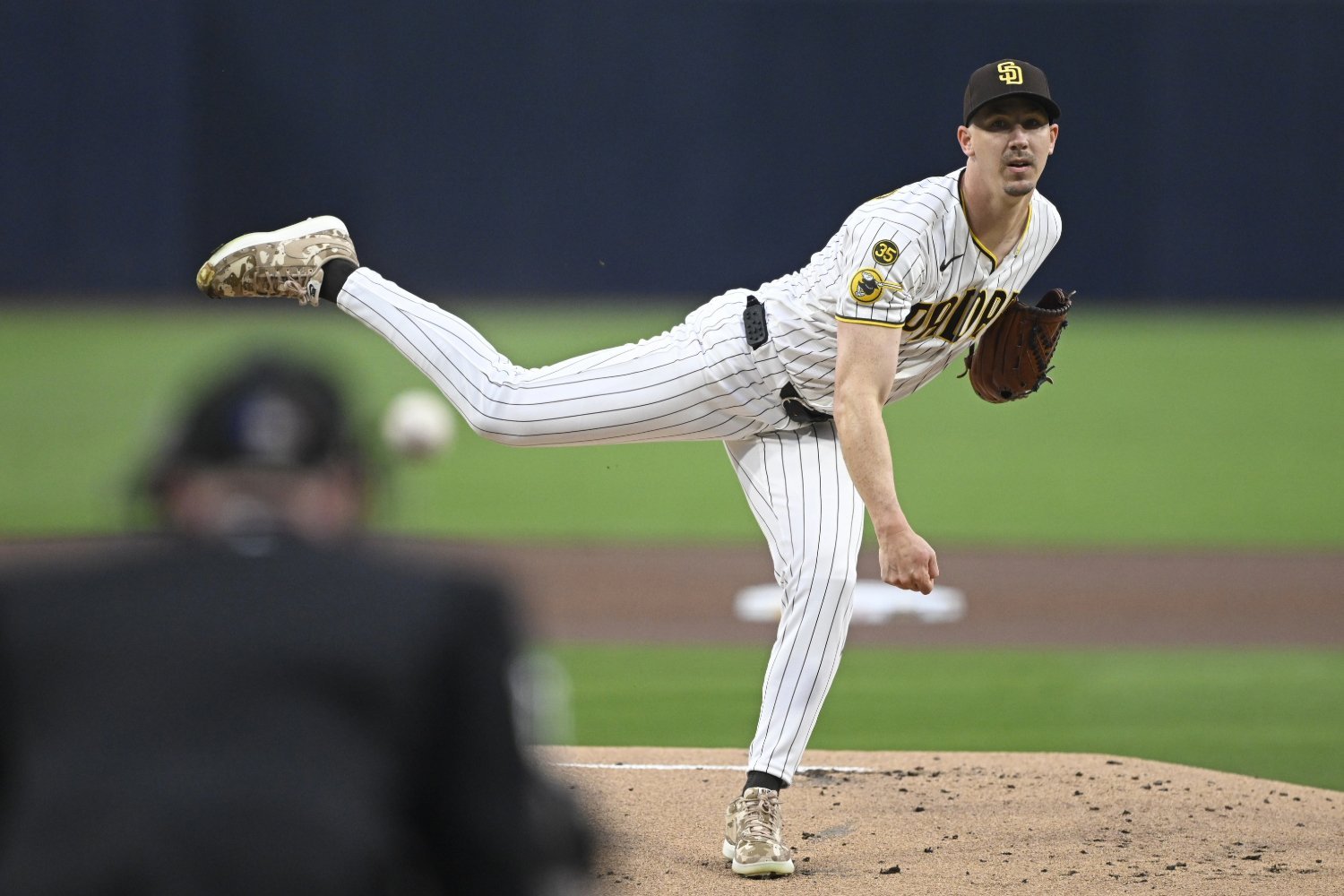 Walker Buehler was an unmitigated disaster with the Boston Red Sox in 2025. He signed with them after a strong postseason run the year prior with the Los Angeles Dodgers, but he never rediscovered the form that made him a perennial All-Star and Cy Young candidate earlier in his career. Here's what I had to say about the right-hander when he was released by the Red Sox last August: "Buehler isn't the same pitcher who hurled the final out of the 2024 World Series, and he certainly isn't the same pitcher who finished top-10 in NL Cy Young voting in 2019 and 2021. In 112 1/3 frames this year, he's surrendered a 5.45 ERA that actually looks manageable compared to his 5.88 FIP. He's allowing more than a hit per inning and his walk rate has spiked to 10.8%, hence his grotesque 1.56 WHIP. Add it all up, and he's been a negative contributor for the Red Sox this season, no matter who you ask (-0.7 fWAR, -0.9 bWAR)." He then salvaged his season (and possibly his career) in a late-season cameo with the Philadelphia Phillies, allowing just one run across 13 2/3 innings. The stuff wasn't much better, nor were his peripherals, but the raw results impressed the San Diego Padres enough to give him a minor-league deal with an invite to camp. Spring training didn't go terribly well, either -- Buehler recorded a 6.60 ERA and 6.39 FIP while allowing 21 hits in 15 innings -- but a setback in Joe Musgrove's timeline and a general lack of pitching depth earned him a spot in the Friars' rotation by default. Thus, he made his Padres debut in the fourth game of the 2026 regular season against a winless San Francisco Giants team. And, as anyone who watched him pitch last year could have predicted, Buehler stumbled. There were some highlights in the start. About 70% of the contact he generated was on the ground, which would downright elite if it held up over a full season. Buehler also wasn't shy about leaning into his diverse arsenal, flashing all seven of his pitches at various points in the outing. The echoes of a once-great starter reverberated throughout the outing. But the worst parts of Buehler reared their ugly heads far more often. Batters not only made loud contact, but they made a lot of it; they only whiffed on about one-fourth of his offerings while chasing outside the zone at the same rate. As you'd expect, then, the veteran right-hander only managed to secure three strikeouts in four innings pitched, surrendering three runs on five hits and two walks along the way. His locations were generally okay, but they were hardly consistent. His heat maps look like a pitcher who didn't have a firm plan of attack heading into the start. *Courtesy of Baseball Savant Likewise, when he did miss, batters made him pay. Buehler no longer has the raw stuff to get away with mistakes, which is how Harrison Bader hunted down his knuckle curve and hit it 408 feet (107.3 mph). It's just one start's worth of data, so don't read too much into any of the noise just yet. Buehler can still turn things around, particularly if he leans into an arsenal clearly designed to generate groundballs rather than whiffs. But this was not the proof of concept he or the Padres needed to see. With Joe Musgrove set to return at some point in the near future and Griffin Canning soon to follow, Buehler's lease in this rotation will not be long, especially if Germán Márquez can out-pitch him in the early going. Beggars can hardly ever be choosers, but the version of Buehler we just saw isn't capable of handling a starter's workload for a playoff contender. View the full article
 -
 What’d we make of Edward Cabrera’s first start? How about the Nico Hoerner extension? What should the expectations be for Jameson Taillon tonight and moving forward? Listen on Apple Podcasts: https://podcasts.apple.com/us/podcast/the-north-side-baseball-podcast/id1798599313 Listen on Spotify: https://open.spotify.com/show/75wMGhBwlrDDYPt3kaF453 Listen on iHeartRadio: https://www.iheart.com/podcast/263-the-north-side-baseball-po-268998437/ Listen on Pocket Casts: https://pca.st/eey7h6ih Watch on YouTube: https://www.youtube.com/@northsidebaseball View the full article
 -
What Are Some Early Takeaways From the Royals' Offense?
DiamondCentric posted an article in Royals Keep
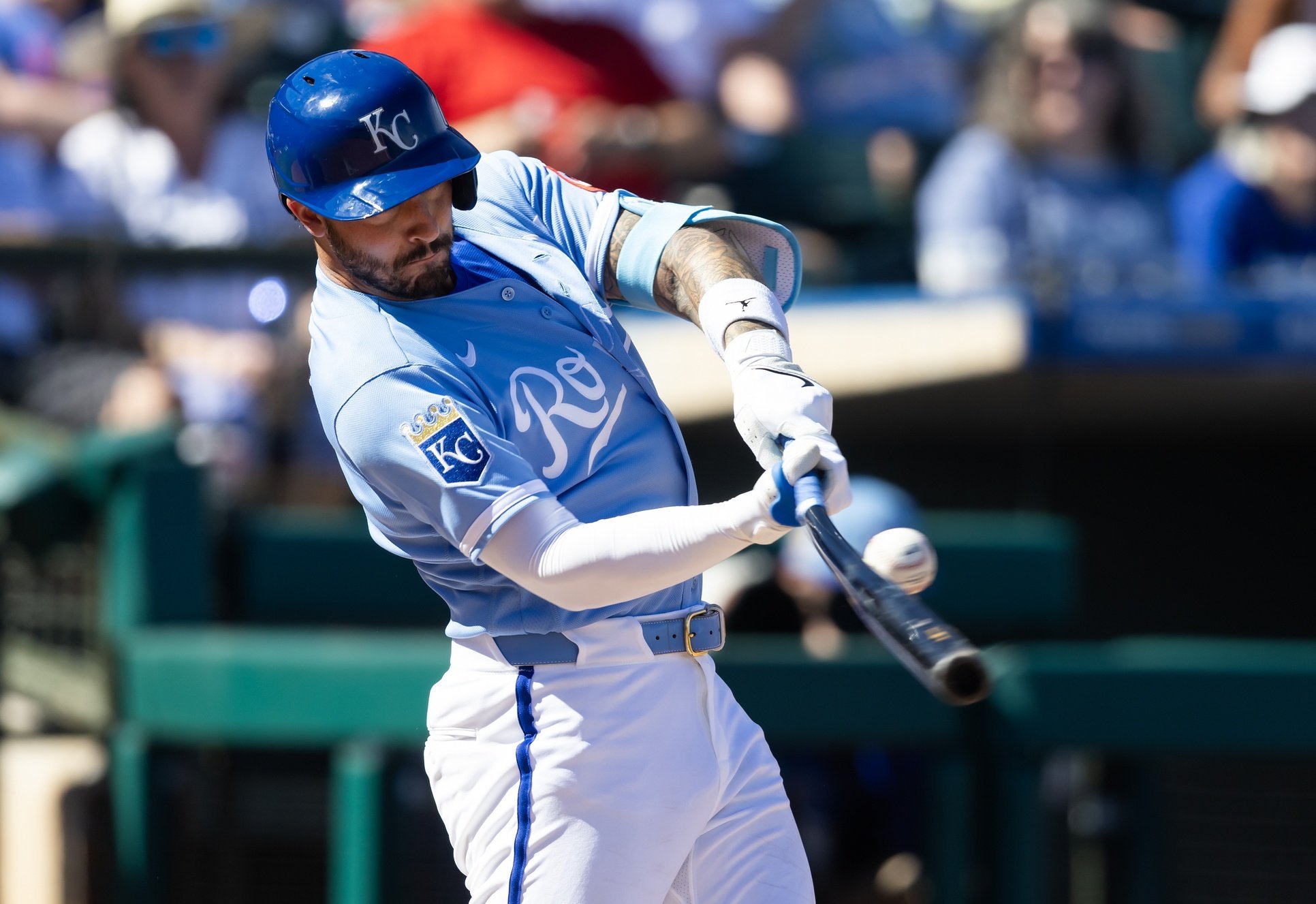 One of the big priorities for Kansas City Royals President of Baseball Operations JJ Picollo was to improve the lineup in 2026. While the team hit better after the All-Star Break, their struggles out of the gate ultimately cost them a postseason berth in 2025, despite making the ALDS in 2024. Last year, the Royals ranked 26th in runs scored and home runs, and 22nd in OBP and wRC+, according to Fangraphs. They also had the 12th-highest O-Swing% and the highest pop-up percentage in baseball. Thus, a priority for the Royals this year was to focus on improving pitch recognition and swing decisions so they would chase and pop up less in 2026. In addition to hiring new assistant hitting coaches Connor Dawson and Marcus Thames, the Royals also acquired outfielders Isaac Collins, Lane Thomas, and Starling Marte to help give the Royals veteran at-bats that they were sorely missing last year, especially from the outfield position. Last season, the Royals outfielders had the highest pop-up percentage and the lowest wRC+ among Major League outfielders, according to Fangraphs. Despite the changes, it's been a similar story through four games this season. While it's an extremely small sample, the numbers have been concerning nonetheless. The Royals are tied for 28th in runs scored, 27th in wRC+, and 26th in batting average. Even though they are 2-2, they have a -5 run differential, despite only allowing 14 runs, which is tied for the fewest in the American League Central. How much should Royals fans worry about this offense, especially with how slow they got out of the gate in 2025? I will talk about three metrics from this Kansas City offense so far and what those numbers could say about their outlook in the near future. 27.3% O-Swing% Last year, the Royals had the 12th-highest O-Swing% in baseball at 32%. That put them ahead of teams like the Athletics (31.9%), the Tigers (31.3%), and the White Sox (31.3%). Kansas City wanted to lower this in 2026 in order to not just draw more walks (7.2% BB%, 29th in baseball), but improve their OBP as well (.309, 22nd in baseball). So far, the early results have been good for chasing out of the zone. The Royals, through five games, have a 27.3% O-Swing%, which is the second-lowest O-Swing% in baseball, according to Fangraphs. It is also a 4.7% improvement from a year ago, which is major progress. The Royals' walk rate is also up slightly at 8.0%, which is 0.8% higher than their BB% last season. The OBP is lower at .261, but their low BABIP could be the cause. Their .220 BABIP is the second-lowest in baseball. When it comes to how Royals individually have done, this is how they rank in plate discipline data, as organized by O-Swing%. The Royals have two hitters (Maikel Garcia and Collins) with O-Swing% under 20%, and seven hitters in total with O-Swing% under 30%. In terms of contact rate, they have eight hitters with rates over 80%. The only real hitter that's an established player with a higher-than-wanted chase rate is Bobby Witt Jr. Through five games, he has a 37.1% O-Swing%. Last year, he had a 34.5% O-Swing%, so it seems like Witt is a little overeager to start the season. Despite his high chase rate, he still has an 81.8% contact rate, which shows his strong ability to put the bat on the ball, despite the questionable plate decisions thus far. One hitter who has made positive gains is Vinnie Pasquantino, who has a 20% chase rate. Last year, he had a 32.9% chase rate, so he has seen a 12.9% improvement in O-Swing%. As a result, his contact rate is 87.5%, which is 4.1% higher than last year. That kind of progress is important for Pasquantino, especially with him hitting in the No. 3 hole in the Royals' lineup. 31.6% Hard-Hit Rate In 2025, Kansas City hitters produced a 40.7% hard-hit rate. That ranked 14th in baseball, just behind the Detroit Tigers (40.8%), but ahead of playoff teams like the Cubs (40%) and the Brewers (39.2%). Thus, it was expected that with a decline in chasing, the Royals' offense could see major gains in 2026, especially considering their ability to hit the ball hard last year. Unfortunately, while the chase rate has improved in 2026, the hard-hit rate has trended in the opposite direction. Through five games, the Royals have a 31.6% hard-hit rate, the lowest mark in baseball. The Royals aren't as bad in other Statcast categories. They rank 24th in average exit velocity (87.9 MPH) and barrel rate (6.3%), and 26th in xwOBA (.288). It's not good, but they are not as brutal as Kansas City's hard-hit ranking. It's hard to get optimistic about an offense when they are sitting at the bottom of a very important Statcast category. Individually, this is how Royals hitters have fared this season in those four Statcast categories I discussed above. Jensen leads the Royals in hard-hit rate and average exit velocity with 57.1% and 94.7 MPH marks, respectively. He hasn't launched the ball well, which explains why his xwOBA is only .229. That said, the fact that he's hitting the ball as hard as he is shows that he has the batted-ball skills to succeed at the Major League level this season and beyond. Witt has been a hitter who has a great hard-hit rate (38.5%), but it hasn't translated into results just yet (.270 wOBA). However, his .388 xwOBA leads the team and is 118 points higher than his actual wOBA. Thus, he could be due for a hot streak soon, especially as he gets more comfortable in the box during this homestand against Minnesota and Milwaukee. Two hitters that have struggled in hard-hit rate but should improve are Pasquantino and Jac Caglianone. Pasquantino has an 18.2% hard-hit rate while Caglianone has a 16.7% rate. Those rank 9th and 10th among Royals hitters this season, respectively. The good thing is that Vinnie and Cags have improved greatly in swing decisions so far this year, so their lackluster hard-hit rate may be due to them temporarily trading better plate discipline for power. That makes sense at this time of the year, especially for hitters like Vinnie and Cags who need to get settled in. It would not be surprising to see them see ticks up in their hard-hit rate and barrels soon, especially since they have zero barrels between the two of them through four games. Safe to say that won't stay zero for long. 13% IFFB% (Pop-Up Rate) The Royals had major pop-up issues in 2025, as illustrated by their 11.9% IFFB%, which led the league. Typically, pop-ups occur when a hitter is pressing or trying too hard at the plate with their swing. It seemed like that was the case last year, and the Royals are trying to curb that pressing this year by being more intentional about communicating their team philosophy throughout, as evidenced by Anne Rogers' Opening Day tweet revealing some important Royals locker room signage. The Royals are hoping that a more consistent and focused approach can not just lead to more walks and fewer chases, but also to fewer pop-ups, which are killers because they turn so easily into outs. Kansas City doesn't lead the league in IFFB%, ranking 7th this year, according to Fangraphs. That said, their 13% IFFB% is 1.1% higher than last year, which isn't exactly a positive trend in this crucial category. In terms of Royals leaders in IFFB%, below are the Top-4, with not only their IFFB% this year but also their mark a season ago in parentheses. Nick Loftin, 100% (12.5% in 2025) Witt, 28.6% (10.6% in 2025) Perez, 25% (8.8% in 2025) Jonathan India, 20% (15.4% in 2025) Loftin and India are the usual suspects. They both had double-digit IFFB% and ranked 5th and 7th in IFFB%, respectively, among Royals hitters with 100 or more plate appearances last season. India is the more concerning of the pair, especially since his 15.4% IFFB% last year was a career high, and he produced the worst offensive season of his career (89 wRC+). In addition to a high IFFB% in 2026, India's hard-hit rate is low at 28.6%, and his K% is high at 27.3%, nearly 9 percentage points higher than his K% in 2025. Looking at his Statcast percentiles via TJ Stats, he shows his trademark plate discipline, as illustrated by stellar whiff and O-Swing% numbers. However, his exit velocity, barrel, LA Sweet-Spot%, and hard-hit rate percentiles have been paltry. For India to be a valuable offensive player, he needs to cut down on pop-ups and increase barrels. In order to do that, he needs to be better in terms of increasing that LA Sweet-Spot%. His radial chart on batted balls in play shows that he's getting way too under baseball, much to his and the Royals' detriment. India is only the surface level of this IFFB% problem. Bobby needs to be better, as his IFFB% is 18% higher than his mark in 2025. The same is true with Salvy, whose 25% mark is 16.2% higher than his IFFB% last season. It's not good when two of the Royals' top-four hitters are in the 25+ percentage mark in IFFB%. Regression should positively favor Witt and Salvy as they get more at-bats. They have a proven track record of correcting this issue. As for India, I am not so sure. That said, he has plenty of time to show that these early IFFB% issues are also a flash in the pan and will be corrected soon. View the full article
 -
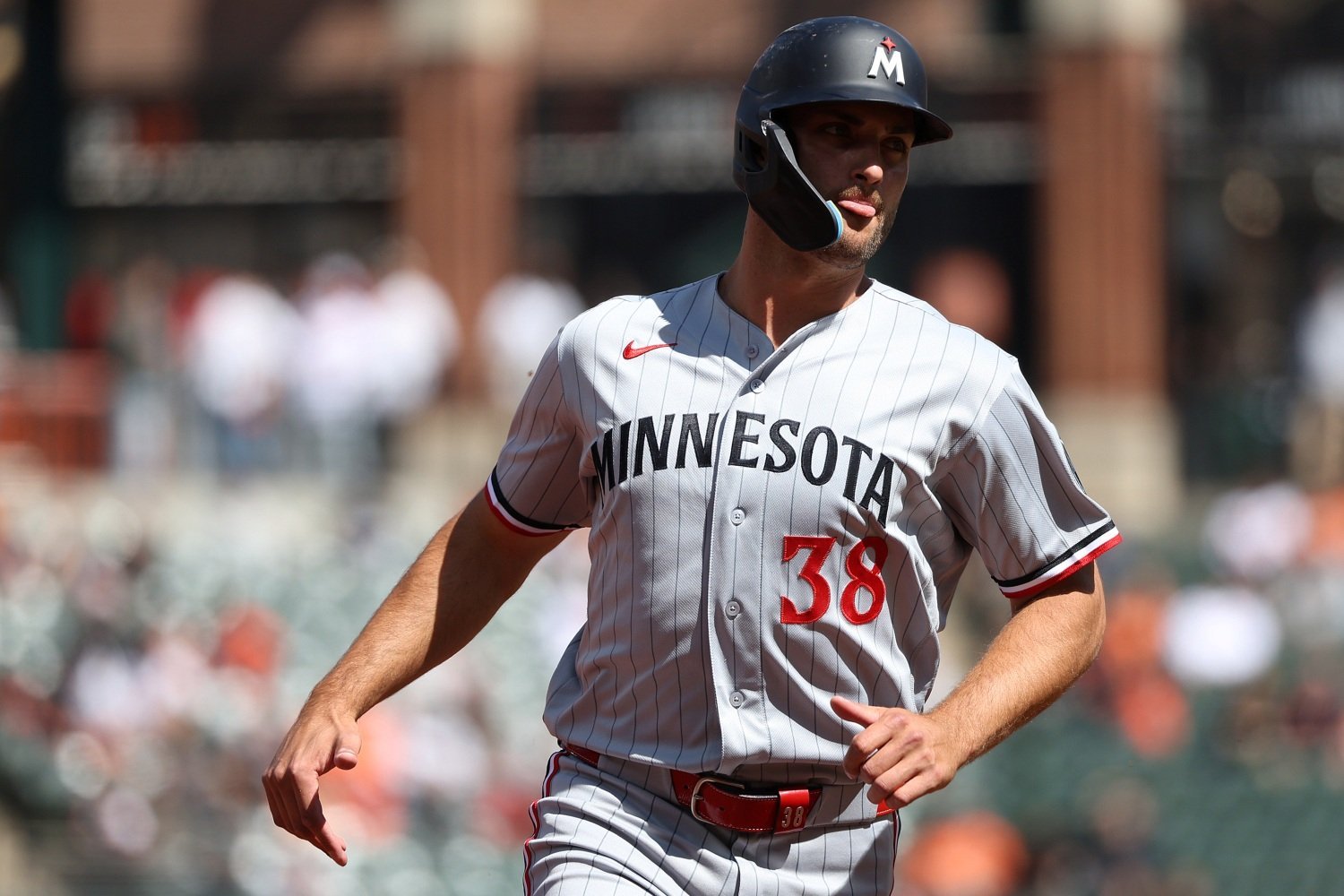 In the Twins' fourth game of the 2026 season, Matt Wallner connected for his first home run. It was just his second hit of the year, as he's striking out around 30% of the time and hitting into some tough luck. He's struggled with some adjustments to the ABS challenge system, though he's also walked at a high rate in the extremely limited early sample. Results mean little in snatches of a few games here and there, though, so let's talk about process. Wallner has altered two key things that became problematic for him in a poor 2025 season, and now, he's a bit better insulated against some of his glaring weaknesses than he was in the past. Firstly, as was covered pretty well this spring, Wallner's stance and stride have changed. He's noticeably less open in the batter's box, and his feet also start farther apart. That makes his stride a bit shorter to get to (more or less) the same position at contact, which produces a slightly less linear, lunging address of the ball. A shorter stride means greater balance and the ability to see the ball a bit better a bit longer, which should result in better swing decisions and a higher contact rate. Wallner swung at 26% of pitches outside the zone during spring training, which is only very slightly lower than the chase rates he posted in 2024 and 2025 (around 29%), but he's swung at barely over 14% of out-of-zone pitches in the first few games of the regular season. His strikeout rate remains high, but that's inevitable for Wallner; he swings for the fences and works deep counts. More importantly, but less certainly, Wallner seems to be letting the ball travel more this spring. His contact point is deeper (around 33 inches in front of his frame, down from 36-37 inches in the past). A deeper contact point typically leads to better contact rates but less pull power. We don't have enough data to call this signal instead of noise yet, but to whatever extent he's seeing the ball a bit deeper, that, too, makes Wallner more dangerous. Let's compare two key moments in the swing for the two pitches this year on which Wallner has put his improved process on display, with the same moments in swings against simiiar offerings last year. First, here's a comparison of his first hit of the year (a line-drive single off Orioles starter Shane Baz and his 98-MPH fastball) with a fastball from Yankees righty Luis Gil last season, on which he hit a routine flyout. The top two images show the moment when the pitcher released the ball. The bottom two show the moment when Wallner's front foot engaged with the ground, allowing him to fully execute his swing. As the animations above suggested, Wallner's tweaked stance and stride put him in better hitting positions. Last year, the former hard-throwing pitcher looked too much like he still was one, bringing his front leg all the way up past his front elbow. This year, that leg kick is slightly but vitally modulated, engaging his core and giving him a timing mechanism but not throwing off his balance. As he lands, you can see his weight is more evenly distributed this year, whereas the longer stride in 2025 left him lurching. Here's the same set of images for a sweeper on which he popped up lazily last summer in Toronto, and the one on which he tagged Kris Bubic for his first homer on Monday. The themes are the same, but you can spot one more variable. Against lefties, Wallner is better able to stay back this year, which lets him start his hands a bit earlier without overcommitting. Last season, he was starting in plenty of time against a pitch that wasn't even especially fast, but still had to rush the barrel, and he was late and flat through the hitting zone on a fat pitch. This year, he was dangerous throughout the swing and unloaded on a Bubic mistake. These changes to his lower-half mechanics relate to an important one in his actual bat path. Last summer, I noted that Wallner had flattened his swing, to the detriment of his contact quality and his overall game. A fkat swing requires that contact point way out in front of you, which can also lead to more whiffs. It was a strange and ill-fitting adjustment for a tall, patient pwoer hitter. This season, in limited looks, he appears to have reverted to a better plan. Here are his key swing characteristics for pitches in the medium bracket in terms of vertical location, according to Statcast. (I've focused on these to eliminate the distortionary influences of swing distribution by location early in the season, and because Wallner only has a meaningful number of swings in that middle tier.) Season Bat Speed Swing Tilt Contact Point (in.) 2024 77.6 31° 33.4 2025 76.8 27° 35 2026 76.4 30° 31 Without losing any meaningful amount of bat speed, Wallner has recovered his tilt and is letting the ball travel more when it's in the best segment of the zone for hitting. That's a strong indicator. He still has some key vulnerabilities that will be hard to cover: he doesn't handle velocity or the ball up in the zone well. However, his changes in setup, stride and bat path this spring give him a chance for the kind of rebound the Twins desperately need from him. A version of Wallner who bats, say, .240/.350/.520 is much closer at hand than it was last year, which is also an encouraging signal about the team's new hitting coaches. It's still unlikely that Wallner gets to that level, but after he batted .202/.311/.464 last season, the ability to even dream on such a major improvement is a testament to Wallner's openness to vital changes and the coaching staff's deftness. View the full article
 -
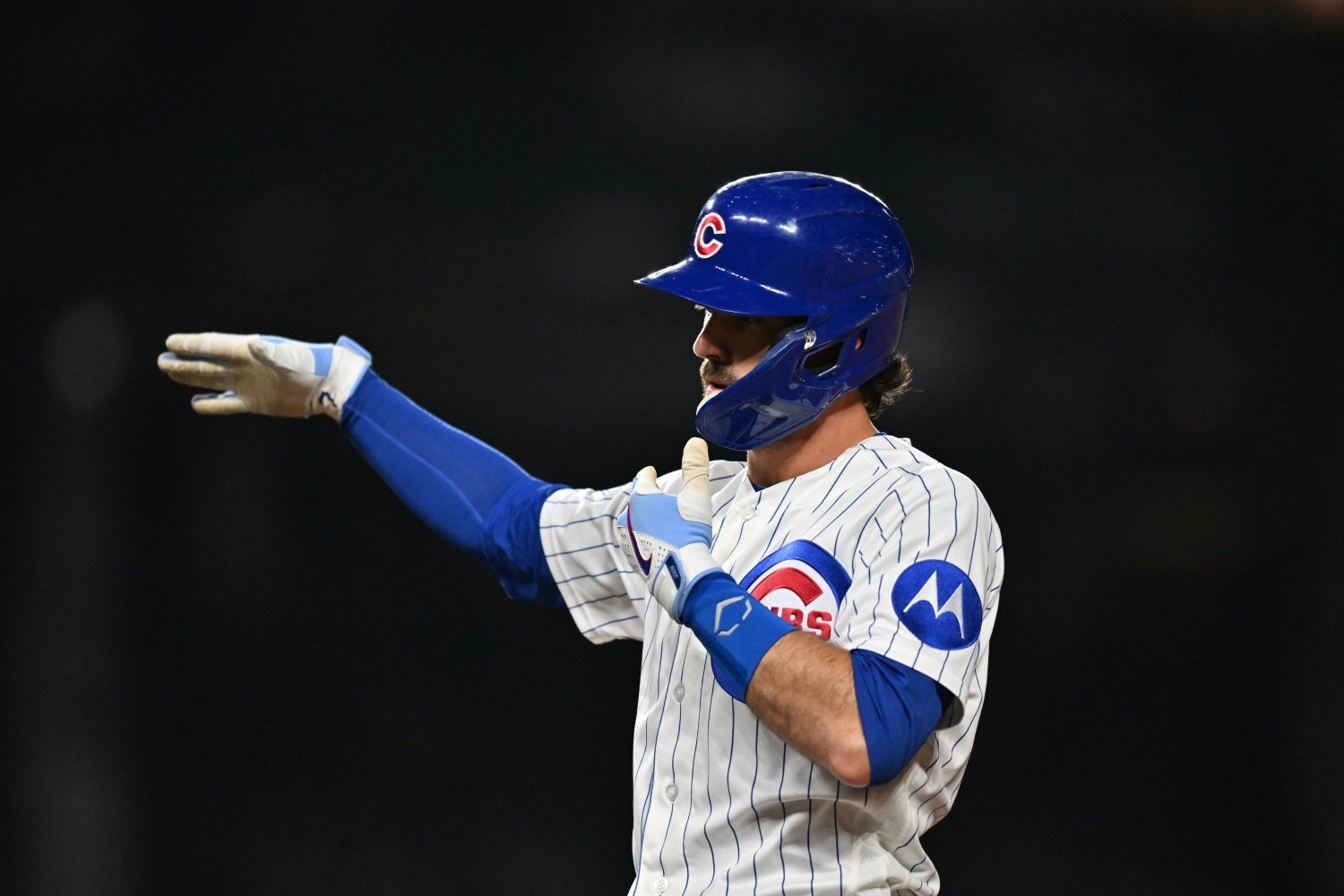 Dansby Swanson went 0-for-4 Tuesday night. The box score says he was 0-for-3 with a walk, but we're not counting at-bats here. Four times, Swanson unequivocally should have challenged called strikes against him. Four times, he accepted the call, instead, hurting his team in the name of either avoiding the risk of losing a challenge or demonstrating a resiliency that proved less valuable than flipping a strike to a ball. Swanson did reach on an error in the bottom of the second inning, the only time he came up in a relatively unimportant situation all night. Obviously, he got pretty lucky to reach base that time, when Jeimer Candelario made a bad throw on a routine ground ball to third base. He'd already made his set of possible outcomes worse, though, by not challenging a pitch that was clearly off the outside corner in a 2-0 count. To be fair, that was a spot where you'd need to be quite sure in order to lodge a well-founded challenge. According to Oyster Analytics's Challenge Dashboard, the break-even confidence rate in issuing a challenge so early in the game with some cushion in the count and no one on base is over 75%. Swanson should have been roughly that sure, but technically speaking, the location of the pitch called a strike against him didn't give him a great chance to be, and José Soriano was pretty nasty in the early going. Let's forgive him this one. In the bottom of the fourth, Swanson came to bat in a much more pivotal spot. The game remained scoreless, thanks to cold air, a stiff in-blowing wind, and Soriano's electric stuff. Ian Happ was on second base, though, so although there were two outs, Swanson had a chance to break the tie with a single. In a 2-2 count, he took a pitch right on the lower outside edge, which was called a strike to end the inning. In fairness to Soriano, it was stellar execution. As you can see, Oyster Analytics rates this as another near-coin flip for Swanson, but in a very different way. Whereas he would have needed to be 75% confident to be justified in challenging in the second inning, this time, the break-even line was south of 30%. Based on the location, Swanson could hardly have been more sure than that, but in this case, he should have issued the challenge, anyway. (In reading the evaluation panel at the right in these images from Oyster, you have to remember that the would-be challenger's confidence will vary somewhat from what they can estimate.) Given the margin of error in confidence for Swanson and the tenor of the game to that point—the latter of which the model doesn't address, so we're not adjusting for Soriano being on his game or runs being at a premium—it was a good challenge opportunity. Swanson was up again in the seventh inning with a runner on, though it was Hoerner at first base and there was only one out. Much had changed, by then. The Cubs had fallen behind 2-0, and they'd lost one of their two challenges, so the break-even rates were much affected. On 1-1, though, he took a pitch well above the zone, which was called a strike. As any Cubs fan old enough to remember the nuggets of wisdom supplied by Steve Stone knows, 1-1 is a pivotal count. Swanson fell behind 1-2, when he should have been ahead 2-1. He had to be a bit better than a coin flip to challenge, but he should have been quite sure of this one. The top and bottom of the zone probably still feel a bit less certain than the lateral edges, even for batters themselves, but Swanson had a chance to gain count leverage at a moment when he represented the tying run. He let that chance go by, and ultimately struck out. In the bottom of the ninth, Swanson came up once more, as the Cubs' last chance. They had only three strikes left to their name, so although Swanson batted with the bases empty and the team needed a baserunner to get any semblance of a rally started, he should have had a hair trigger on called strikes around the edges. Instead, on 1-0, he let one of his team's three remaining strikes be stolen from him. This time, the Oyster model gives him no quarter whatsoever. This was the most glaring of a series of examples of his passivity Tuesday night. He was lucky that a wild Jordan Romano walked him, anyway, giving the team at least an extra breath of a chance. Even if a couple of these were borderline calls, according to the math, the broader narrative matters. Swanson needs to be more proactive about ABS challenges. He had chances to give his team better scoring opportunities Tuesday night, and he missed them. It wasn't the difference between winning and losing; it's no more of a problem than some of his teammates' poor swings. The biggest individual mistake in losing them the game was Pete Crow-Armstrong failing to catch or corral Candelario's double in the top of the sixth; that's a bigger-magnitude play than almost any ABS challenge will be. These cases are more along the lines of a poor swing decision or bad location on a key pitch. Still, they can be decisive, and it's hard to refute the fact that Swanson cost his team expected offensive value in Tuesday's loss. Swanso didn't help himself all night. He didn't force Angels pitchers into the zone against him; he chased several pitches below the zone. He could have done a bit more to force their hand when he did lay off pitches at the edges, though. Though its novelty exceeds its sheer impact, ABS is a new place where teams can either accrue value or leak it. So far, the Cubs aren't using the system well. Only the Royals have challenged a lower percentage of called strikes against them than have Cubs batters. That needs to change, as Swanson's experience Tuesday illustrated. View the full article
 -
5 More Calls C.B. Bucknor Should (and Might) Try Next
DiamondCentric posted an article in Brewer Fanatic
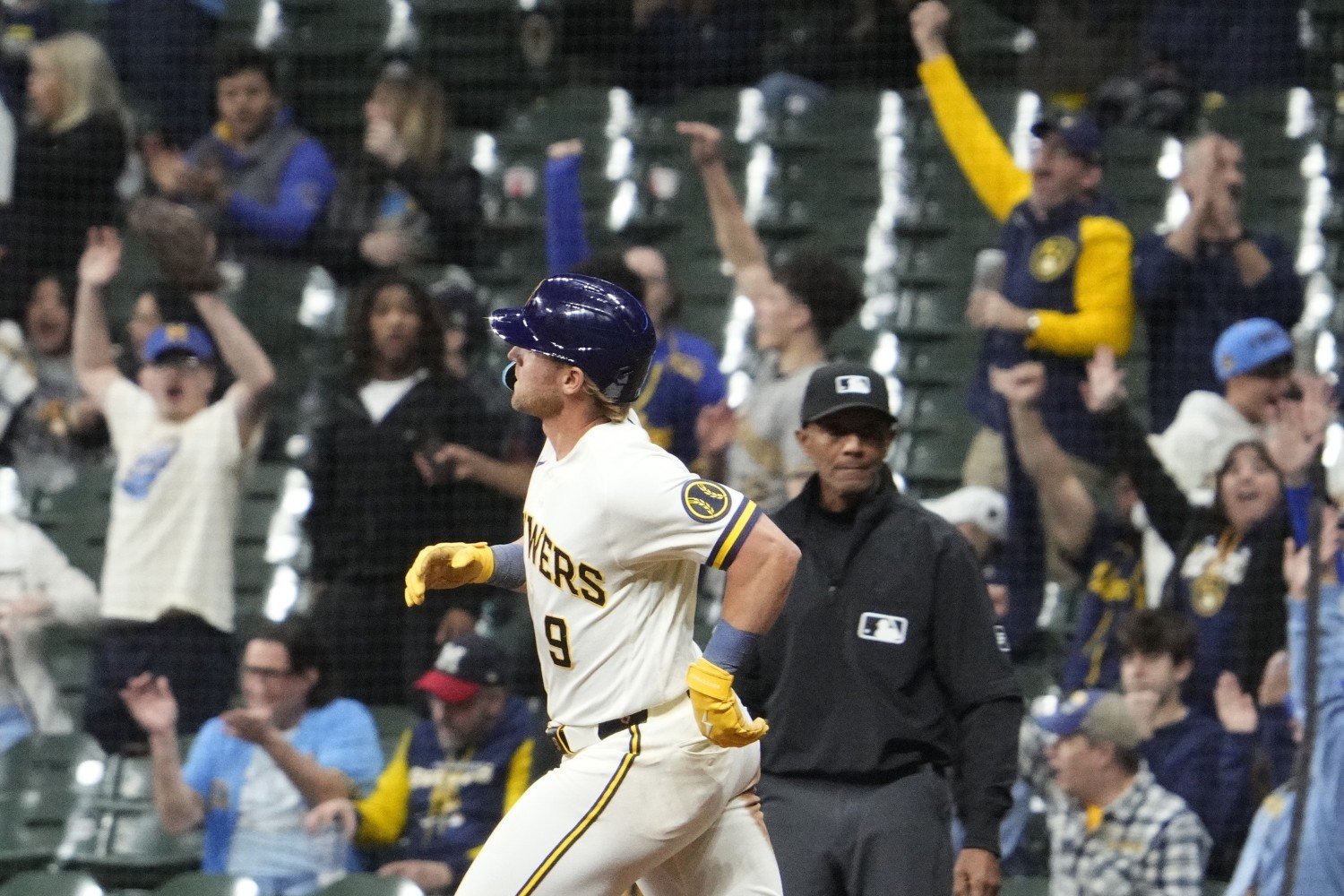 During the key sixth-inning rally in which the Brewers essentially put away Tuesday night's win over the Rays, Jake Bauers hit a wicked line drive to the hole between first and second. Second baseman Ben Williamson dove to his left and knocked the ball down, but his quick recovery was for naught; he threw late and wide. Bauers, hustling down the line, stepped on first base as he ran through it, as batter-runners are obligated to do if they want to be safe. What first-base umpire C.B. Bucknor dared to ask is: What if he hadn't? Wouldn't that have been wild? To test the hypothesis, Bucknor ruled that that very thing had happened—that Bauers had either missed the bag, skipped willfully over it, or so callously disrespected it in the particular way in which he stomped on the pillow that it didn't count. The play had fallen into some confusion after the ball bounced toward home plate and was returned to first baseman Jonathan Aranda, who tagged Bauers. Bucknor called the Brewers first baseman out for not having touched the base yet, which, again, Bauers had done. But an artist does not wait for the beautifully impossible to happen; they get out their canvas and render the impossible vivid and present. Bucknor's easel is the box score, and his brush is the pump of his fist. He installed his work of creative fiction into the game, and we all got to watch the fractal hilarity unfold into its endless angles and dimensions from there. An unfortunate bastion of conservative censorship stepped in to scuttle the festival before it could really begin. The Brewers challenged Bucknor's call, which was rapidly overturned by the replay center at MLB's central office in New York. The reviewers failed Bucknor's transgressive test of imagination, apparently mistaking his commedia dell'arte for one thing we all knew it couldn't be: a mistaken and literal interpretation of the action itself. Maybe you just had to be there. No matter. Art does not change the world by peeling the tentacled unicorn from the canvas and flinging it into the sky; it changes it by forcing us to consider that possibility for a time. Bucknor challenged us all to imagine a wilder, more interesting, less boringly well-ordered world. Why ought he stop now? What has ever been achieved when an artist reached a new frontier and left their audience in awe, only to retreat? Here, for his consideration and yours, are several more ways he can still elevate the craft of umpiring into something more mind-expanding. 1. Batter's Balk There is a great, unexplored margin awaiting the umpire who pounces on our shared uncertainty about the balk rule. Pitchers are not allowed to intentionally deceive baserunners as they prepare to work with the bases occupied. They must come set and avoid a flinch as they prepare to kick and fire. Lefties must not stride toward home plate but throw to first. Often, though, even players and coaches struggle to define the nuances of the balk rule and end up in futile arguments with umpires, either demanding a balk in vain or decrying one they can't understand. That's not fun or compelling, though; it's just arguing. An artist might first glance at the rule known as the catcher's balk, whereby a catcher can be punished for touching the ball with their mask or helmet and the runner is awarded a base—but their eye would be drawn, then, on into the negative space where a mere mortal's eye fails to see anything at all. What about the batter? You ever seen one of these guys? What a twitchy bunch of weirdos. They're shifting their weight, they're waggling their bat, they're tapping their foot. And the pitcher's just standing still. Why not call the batter for a balk—maybe assessing a strike, or calling the runner out, or maybe even calling the batter out but advancing the runner, just as with other balks? Bucknor, surely, will soon try it. 2. Infield Big Fly One peculiar rule protects the offense from manipulation by the infield on pop-ups with multiple runners on base. Rather than permit a team to turn an easy, unearned double play by letting such a ball fall and forcing runners at the next bases, the infield fly rule bids an umpire to call the play dead while the ball is still in the air. Runners can advance at their own risk, but even if the ball hits the ground, they're not obligated to sally forth. With the bases empty and/or with two outs, though, batters get no relief whatsoever on pop-ups. Bucknor could reinterpret the rule to be aimed purely at augmenting offense, and after all, how far off would he be? We could soon find out. Next time a batter hits a fly ball on the infield, look for Bucknor to rule the ball a home run, before it comes down. 3. Catch or Trap? There has always been a delightful bit of drama in watching an outfielder streak after a sinking line drive, sliding or diving to pluck the ball out of the low-lying scrap of sky left between horsehide and grass. Did he catch it, or trap it? Did it almost imperceptibly hop on the turf, or was the last finger of the player's glove beneath it at that final instant? Sometimes, even dozens of looks will leave you unsure. The game waits breathless for those rulings, especially if there were runners on base when the ball was struck and the fielder's heroics were attempted. Routine fly balls don't offer an obvious answer to those thrills, so we need the Bucknors of the world to supply it. What if a fielder caught the ball with both feet beneath them, shoulder-high and sure—but it was ruled a trap and the ball was made live? Bucknor can see the whimsy and the upside, even if you can't, yet. 4. Fair or Foul Long white lines separate the 90° wedge that is fair territory from the surrounds of foul ground on a baseball diamond. Historically—albeit with some notable, even pivotal exceptions—umpires simply call balls hit between those lines fair and those outside them foul. This is unimaginative and restrictive. The great Harry Chapin once wrote a song about a boy who saw all the colors of the rainbow in the morning sun and the flowers all around him, but whose joyous creativity was crushed by an overzealous schoolmarm who compelled him to render his flowers in red, his leaves in green, and the sun in yellow. The ballad's message is clear: break, you, the chains of imaginative bondage that society has placed on you. Be not shackled by the black-white binaries and the straight lines of a world doomed to a depressive death. Breathe those colors; feel the sun in purple-yellow and let the sweet blue heat that runs through its rays touch the back of your throat as you sing out your freedom. Just so, Bucknor ought to invite us out from our corners and into the round. This doesn't require an abandonment of the concept of fair and foul. Bucknor doesn't have to either physically or mentally carve out a special area of foul territory in center field, or make the press box fair. He can simply do as he did Tuesday night. The next time a ball is hit up the middle, he should call it foul. Because what if it had been? As much as what we all saw tells us it was fair, such a call would challenge us to eschew overconfidence and to accept that we are not so different, one from another. A ball was hit up the middle. In what important way was that ball different from one hit toward the first-base dugout? You have an opinion about that, but it was handed down to you by your version of a glowering nun. Let Bucknor's art show you how those batted balls are the same, really. 5. Tagging the Soul We all love a good tag. A fielder who gets into position, reads an incoming throw, anticipates the movement of a runner attempting an evasive slide and nabs them for a crucial out is doing that thing which makes sport greatest, at least in traditional lore: demonstrating grace and genius under pressure. But what are they doing, really? They wear a woven contraption of leather to entrap another. They enact non-hostile but real violence by thwacking and thwapping their handnet onto the uniform of some poor fellow soldier, separated from them in livery but perhaps no different from them in real sympathies and sensibilities. We call this a tag. We call this an out. We only know this way of things. Bucknor has the third eye that renders his first two moot. That's the eye that saw contact between Bauers's sole and the bag on Tuesday, but none between his soul and the bag. He could further invite us to share his gift by giving us more examples of when an apparent connection is illusory. Sure, a glove touched a runner's jersey before the runner grabbed a base, but whose spirit connected with its object more? Did the fielder make the tag with enough love in their heart, enough serious understanding of their impact on the man between their legs, and enough deep-seated desire for victory to merit the out? Should such a thing be decided by a simplistic measurement of space and time, or can we be more fearless—more profound? Is a world in which the runner slid in safely so different from this one? Is that runner safe, after all, even if he was a bit late in putting his own glove to the relevant rubber? The world melts and reshapes itself in glorious new ways for those who can see that (perhaps) he was. We must all learn to see what's before us, lest we be struck by cars or bitten by snakes before we really wake up to the universe, at some age between 14 and 30. However, we must all learn to see what is not before us, too—what is real, but simply confined to the past or the future for the moment; what is not real, but could be; what will never be real, but is more important than what is. You saw Jake Bauers step on first base, like every unhurried runner in baseball history has done. What you saw was real, but it didn't matter very much. One brave person challenged you to see around and behind and beneath that reality, and to understand its full nature—as well as the vast and heart-stopping red-white sear of the reality beyond it. He might offer you another chance, soon. Will you take it? View the full article
 -
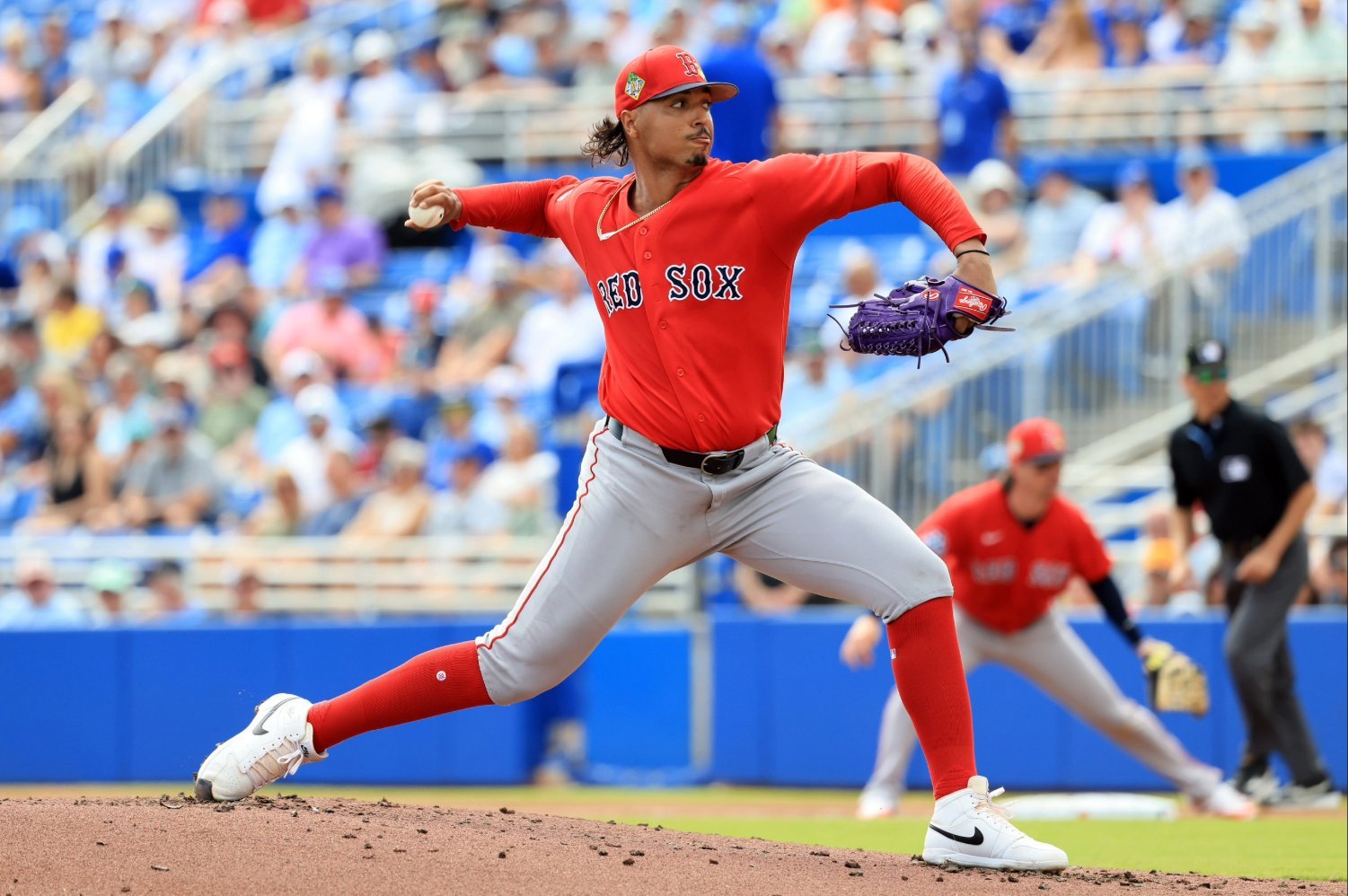 The Boston Red Sox acquired Johan Oviedo during the offseason with the hopes that he could be a prominent option in the starting rotation. There's always been a bit of a question mark surrounding Oviedo due to his prior health issues, but the ceiling is sky high, at least if he can throw more strikes. Pitching coach Andrew Bailey worked with Oviedo throughout spring training to get him to focus less on trying to paint corners are more on just filling up the strike zone because, as Bailey put it, when Oviedo threw strikes, hitters struggle to make contact. At the beginning of camp, it seemed like something clicked, but as the spring continued, a dip in velocity and a rise in solid contact began to rear their heads simultaneously. Oviedo’s last spring training performance was enough of a red flag that Alex Cora opted to have rookie Connelly Early join the rotation and shift Oviedo into a long reliever role to begin the season. In his last spring training outing, Oviedo threw 84 pitches, only 48 of which went for strikes, giving up six hits, one home run, six earned runs, three strike outs, two walks, and one hit by pitch over 3 1/3 innings. He spoke to reporters after the game and admitted that he was testing out a new cutter during the outing, but adding a new pitch so late into the spring is a questionable decision for any pitcher, especially one who knows he’s actively competing for a spot in the Opening Day rotation. Things have gone pretty poorly to start the season for the Red Sox, especially considering the high we were all riding after Opening Day. During the first game against the Astros though, Oviedo was tasked with coming into a difficult situation when he entered the game in the fifth inning; he entered a losing game and proceeded to give up four additional runs over 3 2/3 innings. What continued from spring though, was that his velocity was significantly down. Every pitch, except his curveball, was down close to two and a half miles per hour from his average. After that outing, Oviedo again spoke to the media and seemed to have just as many questions as the rest of us. He said he’s surprised that his velocity is down and that everything is coming out slower than when he returned from Tommy John surgery. He speculated that it may be a mechanical issue, but at this point, he doesn’t have a real answer as to why he is struggling so bad. Whatever the issue is, having him fill up the strike zone with pitches coming in far slower than expectation is a recipe for disaster. If we look at his heat map from that Houston game, we can see that he’s not missing the zone much. His bright red spots are mostly strikes, but they are strikes that lived in the heart of the plate. Against someone like Yordan Alvarez, that’s not going to cut it. While there was speculation that Rule 5 acquisition Ryan Watson likely had the shortest leash among the relief corps, it seems more likely that Oviedo should be the one looking over his shoulder as Tommy Kahnle ramps up to get work in with Worcester and then, eventually, the Red Sox. If we look past Kahnle, both Kutter Crawford and Patrick Sandoval are pitching multiple innings in simulated games at Fort Myers, working four innings each. They are closer to returning than not. and both deserve looks in the bullpen (if not the rotation) once they are ready. Oviedo has one minor-league option remaining; once any of the above three pitchers are ready to make their season debut, he’s likely heading to Worcester where he can work on recapturing his best stuff without nearly as much pressure. One bad outing does not make a slump, nor does it mean Oviedo has lost any of the potential that made him such a tantalizing trade candidate. However, the early returns leave a lot to be desired. Andrew Bailey has done well with most of the pitchers the Red Sox have brought in during his tenure, but not every project receives an A. There's still plenty of time in the season for the former Pirate to get his mind (and arm) right, but the Red Sox shouldn't be afraid to keep the leash short with so many alternatives knocking at the door. View the full article
 -
Toronto Blue Jays 2026 Top Prospects, No. 6: Gage Stanifer
DiamondCentric posted an article in Jays Centre
 Jays Centre is counting down the top 20 prospects in the Toronto Blue Jays organization. Check out prior entries in the series here: No. 20 to 16 No. 15 to 11 No. 10 No. 9 No. 8 No. 7 No. 6: Gage Stanifer (Dunedin, Vancouver, New Hampshire) ERA FIP xFIP IP G GS K% BB% K-BB% HR/9 SwStr% Whiff% WHIP BABIP LOB% LD% GB% FB% IFFB% HR/FB 2.86 2.70 3.11 110 16 27 35.5% 12.8% 22.7% 0.33 15.8% 36.9% 1.17 .296 74.6% 22.7% 44.9% 32.4% 16.4% 5.5% Another breakout prospect for the Jays in 2025, Gage Stanifer went from an unknown 19th-rounder to a borderline top-100 prospect. Prior to the 2025 season, Stanifer struggled in the Florida Complex League and Single A, pitching to an ERA over 6.00 across his first two professional seasons. Despite decent stuff, he walked a lot of batters. In 2025, Stanifer set a career high in innings pitched, with 110, and went from Single-A Dunedin up to Double-A New Hampshire, mainly piggybacking off of Trey Yesavage. He’s expected to start the 2026 season back at Double A. One of the big things that stood out for Stanifer from his previous seasons, compared to 2025, was that he was able to make significant gains in velocity after a very productive offseason. Stanifer went from sitting 92 mph on his four-seam fastball to 95 mph. The shape of his fastball was also still very solid, with 17.8 inches of vertical break and 12.6 inches of run, and because it was such an effective offering for him, and because he could consistently throw it for strikes, Stanifer threw it over two-thirds of the time in Dunedin. His main secondary, thrown more against righties than lefties, is a slider that gets more depth than normal, which gives it a sort of “deathball” shape (-5.1 inches of vertical break). It was extremely effective as a whiff generator, but Stanifer could sometimes lose the zone with it, too often leading to middling chase rates. His third pitch is a split-changeup that’s still a work in progress. The shape is intriguing, with 15 inches of vertical separation from his fastball and nearly 14 inches of fade, but he’s still developing a feel for it. He only throws it to lefties, making him nearly a two-pitch pitcher against each handedness of hitter. Stanifer’s arsenal and stuff propelled him to the top of the minor league leaderboards, as out of all qualified minor league pitchers, he led the pack with an absurd 35.5% K-rate, above the Cardinals’ Braden Davis and the Yankees’ Carlos Lagrange. The stuff did tick down in spring training a bit — Stanifer’s velo was not where it was in the 2025 season — leading to some poor results, but he assuaged the velo drop off with an electric Spring Breakout performance against the Phillies, striking out four batters in three scoreless innings while only giving up a single walk. The Phillies’ announcers sang his praises throughout, and his velo ticked back up; he sat 95.6 mph and touched 97.4 mph with his four-seamer. Stanifer does have some concerns going forward, however. Although he has reined in the walks, he still walks over 10% of the batters he faces, which is fringy for a starting pitcher. Scouts also have concerns about the repeatability of the delivery. Those concerns could take his outlook from a solid fourth starter to more of a back-end bullpen piece. Stanifer may also want to add a pitch or more to his arsenal to better fit the role of a starter. Although his three-pitch mix has shown effectiveness already, he may need more weapons going forward. A bridge pitch like a cutter could provide that for him. Stanifer will start the season in Double-A New Hampshire and will be challenged against upper-level hitters again. The Jays currently have a crowded rotation, but there’s the slightest chance that Stanifer could make his MLB debut this season as a reliever if he progresses well and the Jays need some extra firepower in the ‘pen. View the full article
 -
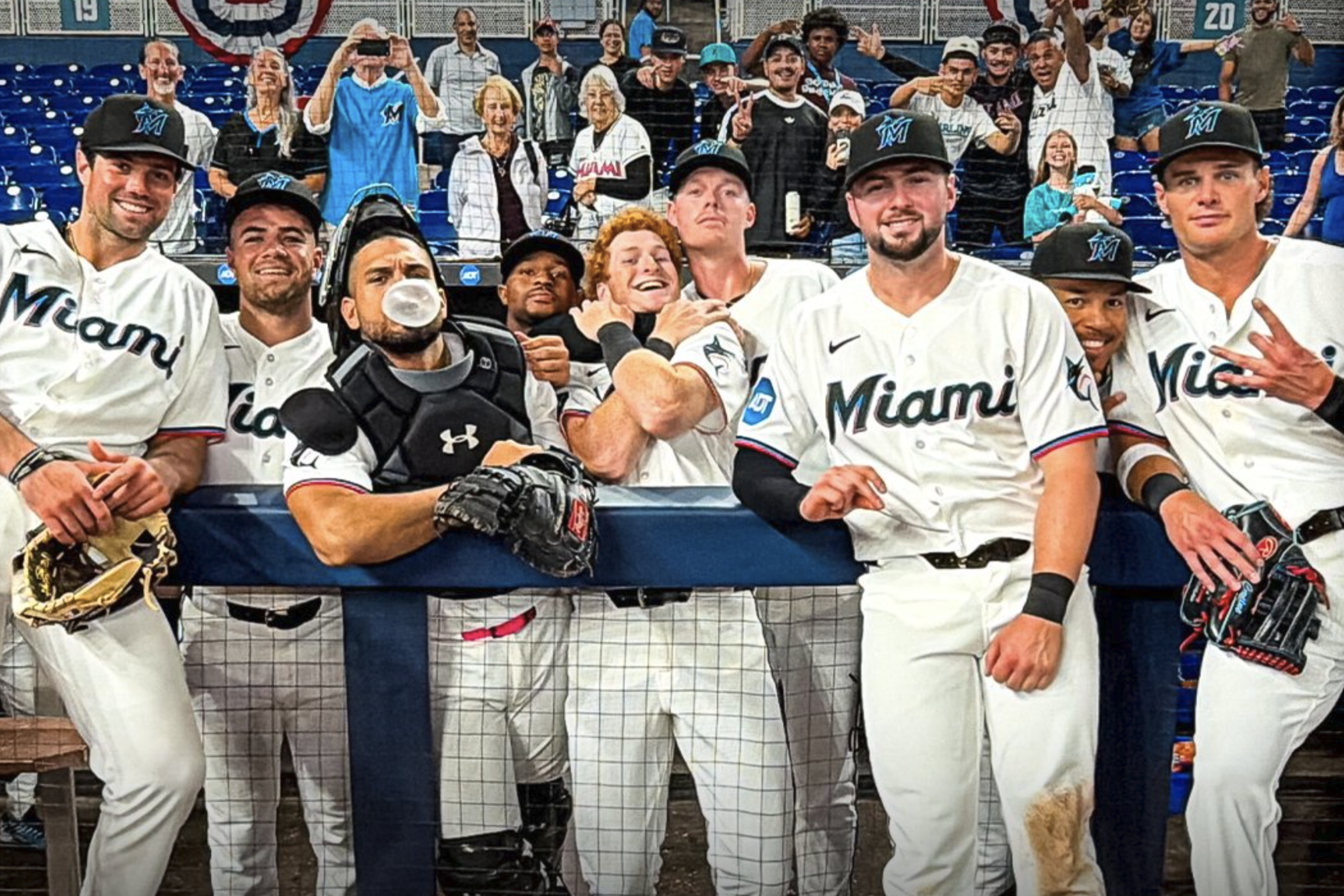 Whatever expectations you had for the Miami Marlins entering the 2026 season should not shift in any way based on a five-game sample against soft competition. However, those expectations may have been influenced by incomplete information if you didn't account for the switch that this team flipped during the middle of the previous year. Across nearly 900 innings, the Fish have excelled. For the sake of round numbers, let's look at the last 100 games. Dating back to June 14, 2025, the Marlins have a 57-43 record—that is tied for sixth-best in Major League Baseball, according to Stathead. The team they're tied with? The World Series-champion Los Angeles Dodgers. Every team with a superior record qualified for the 2025 postseason. Rk Team Span Started Span Ended ▼ WL% G W L 1 MIL 2025-06-10 2026-03-31 .660 100 66 34 2 TOR 2025-06-11 2026-03-31 .610 100 61 39 3 PHI 2025-06-11 2026-03-31 .600 100 60 40 4 SEA 2025-06-14 2026-03-31 .590 100 59 41 5 BOS 2025-06-09 2026-03-31 .580 100 58 42 6 MIA 2025-06-14 2026-03-31 .570 100 57 43 7 LAD 2025-06-10 2026-03-31 .570 100 57 43 This is the winningest 100-game stretch for the Marlins since the very end of 2022 (final eight games) and 2023 pre-All-Star break (92 games), when they went 58-42. Why this might be legit Consistency has been key for the resurgent Marlins. They've played in 32 series over this span, getting swept only once (9/1/25-9/3/25 against the Washington Nationals). Their record is comfortably above .500 both at home and on the road—they actually established an all-time franchise record for consecutive road wins at the beginning of these 100 games. What's been causing problems for the opposition? The Marlins offense constantly applies pressure. Their 19.5% strikeout rate over the last 100 games is fifth-lowest in MLB and they've stolen 91 bases, which is the fifth-highest total. The Marlins have won despite never being able to utilize a full-strength lineup. For the first 40 games, dynamic center fielder Jakob Marsee was still in the minor leagues. For the last 45 games, All-Star Kyle Stowers has been sidelined due to various injuries. During their brief overlap in availability, Griffin Conine and Connor Norby were both out. Knock on wood, all of those bats should be taking the field together later this month as Stowers (hamstring strain) gradually increases baseball activities. To the disdain of baseball traditionalists, Miami's coaching staff began calling every pitch from the dugout on September 19. The early returns have been awesome, with 21 different pitchers combining for a 3.21 ERA (eighth in MLB). Why this might be a mirage Tuesday's game was uncharacteristically comfortable for the Marlins. They won at a .566 clip over their previous 99 games despite an overall run differential of zero. That's the underlying performance of a .500 team. View the full article
 -
 Transactions: Milwaukee Brewers optioned C Jeferson Quero to Nashville Sounds Milwaukee Brewers sent RF Steward Berroa on a rehab assignment to Nashville Sounds. Milwaukee Brewers sent LHP Rob Zastryzny on a rehab assignment to Nashville Sounds. The Brewers’ other minor league affiliates announced their Opening Day rosters, which you can find here: Biloxi Shuckers (AA) Wisconsin Timer Rattlers (High A) Wilson Warbirds (Low A) Game Action: Nashville Pre-Game Media Notes Nashville 7, Charlotte (White Sox) 3 Box Score Via the Sounds’ website, game details, and we encourage readers to review affiliate write-ups as part of their Link Report routine: Sounds win second straight with 7-3 victory over Charlotte Charlotte and Nashville started with some early offense from both teams in the first inning in the Sounds' home opener, the first of 24 matchups between these International League foes. Under-the-radar offseason acquisition Shane Drohan had a bumpy start in his Brewers' organization debut. After a walk, steal, and double, Drohan and the Sounds found themselves in a 1-0 hole just two batters into the game. Drohan also issued a walk and hit-by-pitch in the first frame but was able to escape a bases loaded jam by striking out Waukesha native Jarred Kelenic to end the threat. In the bottom of the first, Knights’ starter Jonathan Cannon (81 ERA+ in 228 MLB innings with the White Sox) took the hill to take on a Sounds' lineup that was missing Cooper Pratt as the organization and player finish negotiating his “shocking” extension. With Pratt out, Jett Williams was playing short and leading off. Williams led off the game with a strike out, part of a tough night that saw him go 0 for 5 with three strikeouts and some shaky defense. Steward Berroa, in his season debut, followed Williams with a single, before Tyler Black launched his first homer of the season to quickly give the Sounds the lead: It will be interesting to see if Black can justify a call-up at any point this season, after Andrew Vaughn’s injury and the recent acquisitions of Luis Matos and Damon Keith have cleared and then muddied the path forward for Black. After the Sounds took the lead on Black’s bomb, Drohan was aided by a double play in the second inning, as Williams snagged a ground ball, stepped on second in one motion, but then misfired in the dirt to first baseman Luke Adams. However. Adams was able to secure the out with a scoop to bail Williams out. In the third, Drohan walked two and hit another batter, but was once again able to strike out Kelenic with the bases loaded to escape the inning unscathed. Drohan would pitch into the fourth inning with a final line of 3.1 IP 3 H 2 ER 4 BB 6 K and 2 HBP. In 2025, Drohan only extended himself to 4+ innings six times in his 15 appearances, so it’s worth monitoring whether the Brewers will attempt to stretch Drohan out or use him as a reliever as the season goes on. In the bottom of the third, the Sounds manufactured two runs on some small ball. After singles by Black and Luis Lara, Brock Wilken collected his first AAA RBI with a single. With runners on the corners, Wilken then broke for second in a double steal that saw Lara score on an error by the Charlotte shortstop William Bergolla Jr. In the top of the fourth. The Knights turned the tables on the Sounds' suspect defense. Wilken bobbled what could have been an inning-ending double play on a 105 MPH ground ball, which gave the Knights a run. The Knights then pulled off their own double steal of home to close it to 4-3. Logan Henderson made his season debut in the Sounds’ defensive half of the fifth inning. Henderson looked dominant in his three scoreless innings of work, allowing just a hit and a walk, while striking out five. Henderson threw 28 of 45 pitches for strikes and got 13 whiffs. The Sounds broke the game open in the fifth with a two-run triple off the bat of Greg Jones to make it 6-3. Luke Adams would follow Jones with Adams’ first AAA RBI - a sac fly to close the scoring at 7-3 in the Sounds’ home opener. Sounds Extras If the 28-year-old Jones never makes it back to The Show, his career 1/7 with a HR, SB and .821 OPS is the kind of cup of coffee that gets you written into Field of Dreams. Infielder Eddys Leonard was rung up on an automatic strike for a pitch clock violation in his first at-bat. Former Brewer Oliver Dunn struck out in each of his first three ABs, before singling in his final two at-bats Former Brewer Tyson Miller pitched a scoreless ninth for Charlotte Carlos Rodriguez will take the mound for the Sounds on Wednesday, completing our first cycle through the deep rotation at AAA Nashville. Organizational Scoreboard including starting pitcher info, game times, MiLB TV links, and box scores Current Milwaukee Brewers Organization Batting Stats and Depth Current Milwaukee Brewers Organization Pitching Stats and Depth View the full article
 -
15-year Marliniversary: Buck blasts grand slam in Fish debut
DiamondCentric posted an article in Fish On First
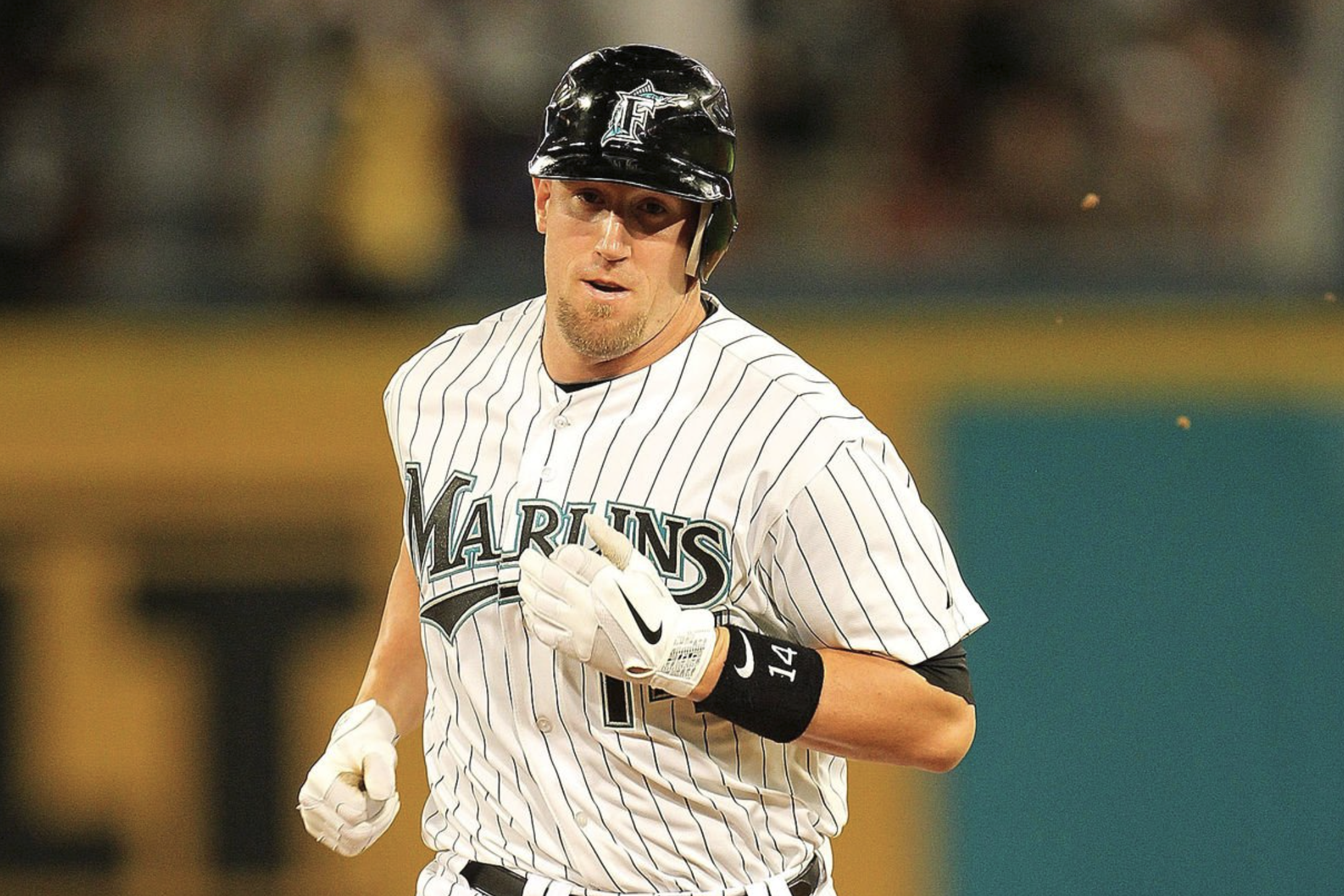 An All-Star for the Toronto Blue Jays in 2010, catcher John Buck signed with the Florida Marlins prior to the start of the 2011 season. On this day 15 years ago, Buck made his presence felt in his Marlins debut. The Marlins and New York Mets were scoreless through three and a half innings on opening day at Sun Life Stadium on April 1, 2011. That changed with one swing of the bat from Buck as the Marlins went on to collect a 6-2 victory. The Marlins had gone in order in the second and third innings against New York starter Mike Pelfrey, but after Hanley Ramírez flew out to open the bottom of the fourth, walks to Giancarlo Stanton and Logan Morris bookended a Gaby Sánchez double. That set the stage for Buck. Buck worked an eight-pitch at-bat in the second before flying out. In the fourth, Buck again saw eight Pelfrey pitches. This time, however, he was able to get the good part of the bat onto the ball, depositing a grand slam into the right-center field seats. Buck’s blast broke a scoreless tie and put the Marlins ahead for good. After Sánchez extended the lead with an RBI single in the fifth, the Mets finally got to Florida starter Josh Johnson, who took a no-hitter into the seventh, with a pair of runs. New York brought the tying run to the plate, but reliever Mike Dunn was able to fan Scott Hairston to end the threat. A solo blast from Morrison to lead off the bottom of the eight capped the scoring. Juan Carlos Oviedo, then known as Leo Nuñez, retired the Mets in order to seal the victory. Johnson picked up the win, allowing two runs on just three hits in 6 ⅔ innings. Buck and Sánchez each had two of Florida’s 10 hits. Buck never equaled his 2010 totals when he hit .281 with 20 home runs and 66 RBIs but was serviceable in his two seasons with the Marlins. Buck hit just .227 in 2011, but his 16 home runs and 57 RBIs were the most for a Florida catcher in four years. He began his stay in South Florida with a bang on this day 15 years ago. View the full article
 -
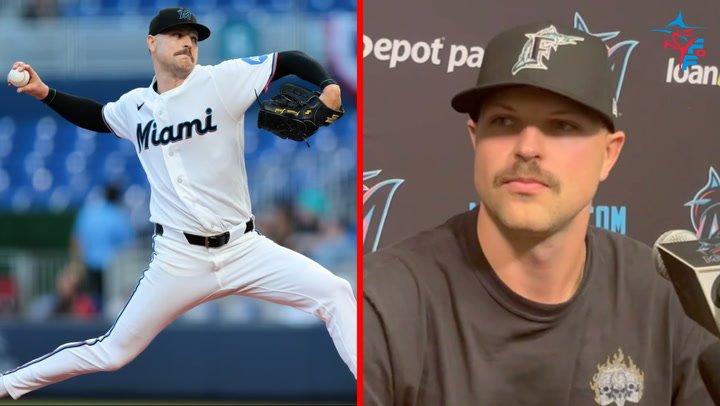 Marlins right-hander Janson Junk speaks with the media after making his season debut on Tuesday. Junk's average fastball velocity was the highest of his MLB career.View the full article
 -
Mets Roster Central: Closing the Books on 2024
DiamondCentric posted an article in Grand Central Mets
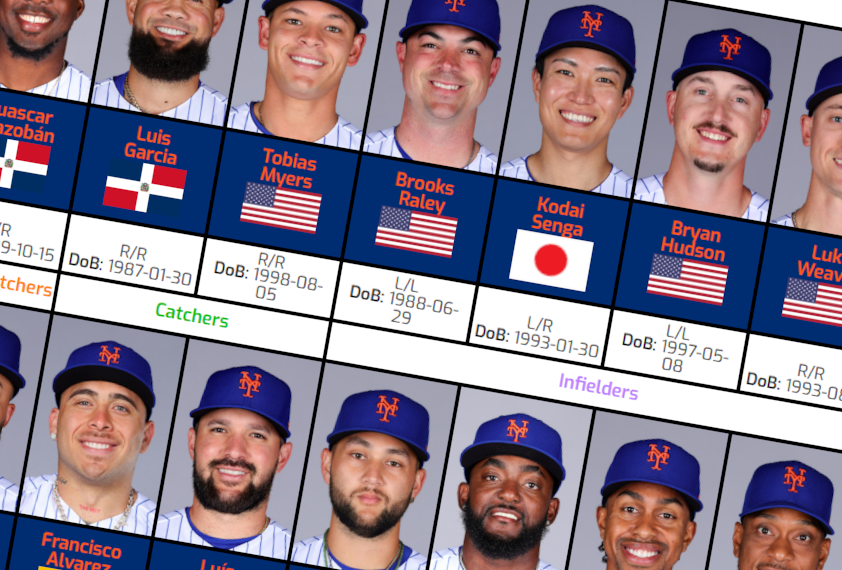 And that closes 2024. Transactions, 3/31/2026 COMING Hired by Mets as Special Assistant to President of Baseball Operations Outfielders J.D. Martinez R/R DoB: 34303 High Level: MLB (2024) With the announcement that J.D. Martinez has become a special assistant to President of Baseball Operations David Stearns, Mets Roster Central is pleased to mark the next destination of the last un-accounted-for Met of 2024. J.D. had left his retirement un-announced, presumably leaving himself open to further work, and even reportedly received an offer from the Rangers last June, all while publicly teasing his intended entry into the exciting world of professional pickleball. Accounting for free agents who don't sign elsewhere but never publicly announce a retirement may seem niggling but at Mets Roster Central, keeping the books balanced is our business. And while we don't necessarily know what a SAttPoBO does, we are happy to see the books close on 2024 with Martinez moving on to another chapter, recalling the sad close of 2022 with the terrible passing of Terrence Gore back in February. These special assistant roles typically go to house legends and future Hall of Famers, and fellow SAttPoBO Carlos Beltran certainly fits that description. J.D. had a fine career, but is unlikely to find his name on a Hall-of-Fame plaque anytime soon and was less-than-stellar as a Met, so we're left in a cloud of mystery, but that is nothing new. He's certainly a respected figure, but ... this serves to make the Mets feel just a little bit more Trumpy, and that's not a comfortable feeling. Your Mets Coaching Staff Manager Bench Coach Pitching Coach Hitting Coordinator Third Base Coach First Base Coach Bullpen Coach Ass't Pitching Coach Carlos Mendoza Kai Correa Justin Willard Jeff Albert Tim Leiper Gilbert Gomez José Rosado Dan McKinney DoB: 1979-11-27 DoB: 1989-07-14 DoB: 1990-09-09 DoB: 1992-08-16 DoB: 1996-07-19 DoB: 1992-03-08 DoB: 1974-11-09 DoB: 1989-06-06 Hitting Coach Strategy Coach Catching Coach Coaching Assistant Bat'g Practice Pitcher Equipment Manager Bullpen Catchers Bullpen Catchers Troy Snitker Danny Barnes J.P. Arencibia Rafael Fernandez Kevin Mahoney Kevin Kierst Eric Langill Dave Racaniello DoB: 1988-12-05 DoB: 1989-10021 DoB: 1986-01-05 DoB: 1988-08-03 DoB: 1987-05-11 DoB: 1964-07-09 DoB: 1979-04-09 DoB: 1978-06-03 Your Mets Training Staff Director of Player Health Head Athletic Trainer Assistant Athletic Trainer Reconditioning Coordinator Reconditioning Therapist Head Performance Coach Assistant Performance Coach Performance Coordinator Brian Chicklo Joseph Golia Bryan Baca Sean Bardanett Josh Bickel Dustin Clarke Tanner Miracle Jeremy Chiang DoB: 1972-07-17 DoB: 1978-??-?? DoB: Circa 1980 DoB: 1988-06-23 DoB: 1996-??-?? DoB: 1987-??-?? DoB: 1991-??-?? DoB: ????-??-?? Your 2026 New York Mets Starting Pitchers Clay Holmes Nolan McLean Freddy Peralta David Peterson Kodai Senga R/R DoB: 1993-03-27 R/R DoB: 2001-07-24 R/R DoB: 2996-06-04 L/L DoB: 1995-09-03 L/R DoB: 1993-01-30 Relief Pitchers Huascar Brazobán Luis Garcia Richard Lovelady Sean Manaea Tobias Myers Brooks Raley Luke Weaver R/R DoB: 1989-10-15 R/R DoB: 1987-01-30 L/L DoB: 1995-07-07 R/L DoB: 1992-02-01 R/R DoB: 1998-08-05 L/L DoB: 1988-06-29 R/R DoB: 1993-08-21 Relief Pitchers Catchers Infielders Devin Williams Francisco Alvarez Luís Torrens Brett Baty Bo Bichette Francisco Lindor Jorge Polanco R/R DoB: 1994-09-21 R/R DoB: 2001-11-01 R/R DoB: 1996-05-02 L/R DoB: 1999-11-13 R/R DoB: 1998-03-05 S/R DoB: 1993-11-14 S/R DoB: 1999-11-13 Infielders Outfielders Marcus Semien Mark Vientos Carson Benge Luis Robert, Jr. Juan Soto Tyrone Taylor Jared Young R/R DoB: 1990-09-17 R/R DoB: 1993-12-11 L/R DoB: 2003-01-20 R/R DoB: 1997-08-03 L/L DoB: 36093 R/R DoB: 34356 L/R DoB: 1995-07-09 Also on 40-Player Roster Starting Pitchers Relief Pitchers Tylor Megill Christian Scott Jonah Tong Alex Carrillo Reed Garrett Joey Gerber Justin Hagenman R/R DoB: 1995-07-28 R/R DoB: 1999-06-15 R/R DoB: 2003-06-19 R/R DoB: 1997-06-06 R/R DoB: 1993-01-02 R/R DoB: 1997-05-03 R/R DoB: 1996-10-07 On 60-Day Injured List with torn right UCL. In minor-league camp. Projected for Syracuse. In minor-league camp. Projected for Syracuse. In minor-league camp. Projected for St. Lucie. On 60-Day Injured List — right UCL surgery and nerve relocation surgery. In minor-league camp. Projected for St. Lucie. On 60 Day Injured List with fractured rib. Relief Pitchers Catchers Infielders A.J. Minter Dedniel Núñez Jonathan Pintaro Dylan Ross Austin Warren Hayden Senger Ronny Mauricio L/L DoB: 1993-09-02 R/R DoB: 1996-06-05 R/R DoB: 1997-11-07 R/R DoB: 2000-09-01 R/R DoB: 1996-02-05 R/R DoB: 1997-04-03 S/R DoB: 2001-04-04 On 15-Day Injured List — Left Lat Surgery On 60-Day Injured List — right UCL surgery. In minor-league camp. Projected for Binghamton. In minor-league camp. Projected for St. Lucie. In minor-league camp. Projected for St. Lucie. In minor-league camp. Projected for Binghamton. In minor-league camp. Projected for Syracuse. Outfielders MJ Melendez Nick Morabito L/R DoB: 1993-11-29 R/R DoB: 2003-05-07 In minor-league camp. Projected for Syracuse. In minor-league camp. Projected for Binghamton. View the full article
 -
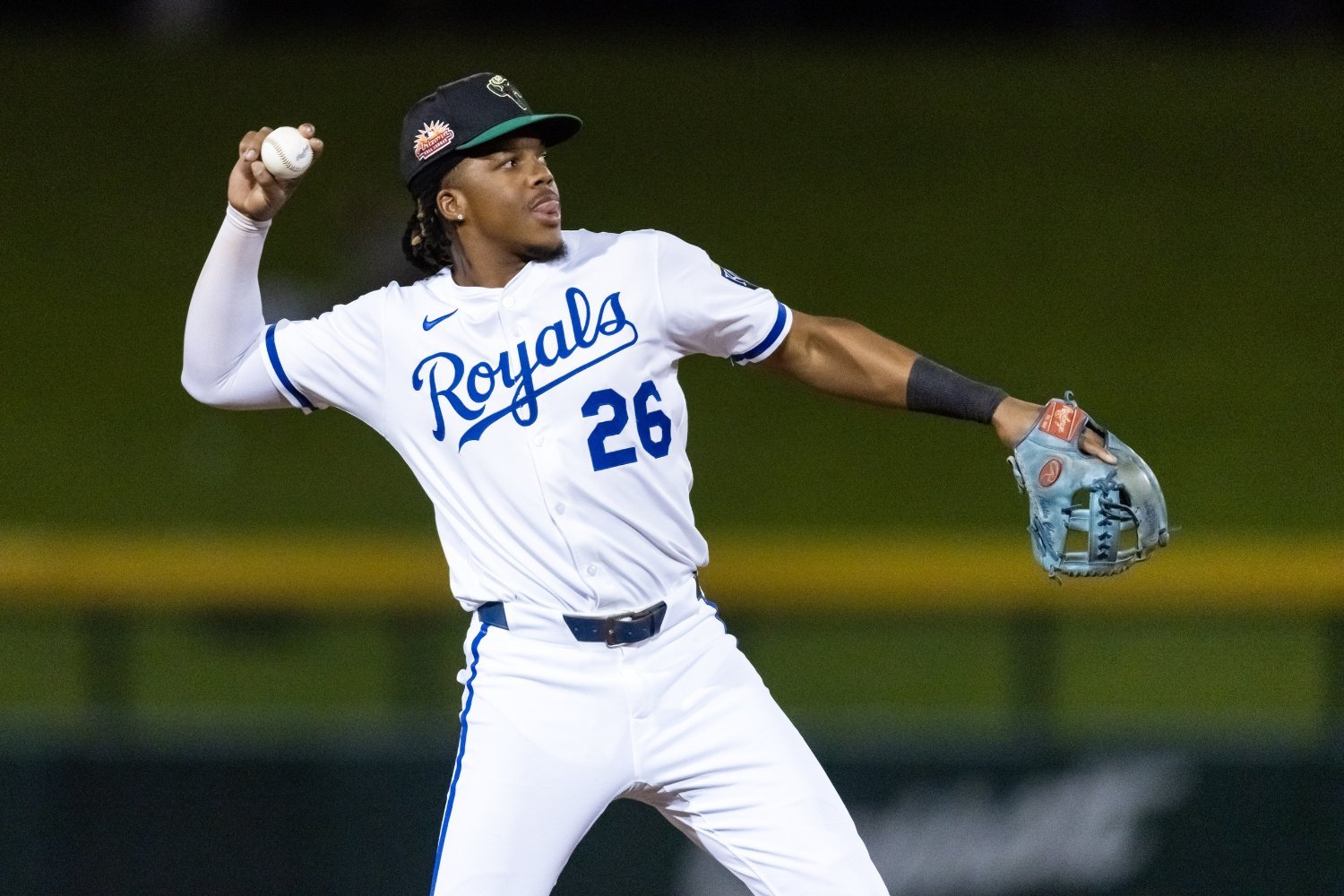 On Tuesday, Raising Royals, the Kansas City Royals Professional Development account, shared the 2026 Opening Day roster for the Northwest Arkansas Naturals, the Royals' Double-A affiliate. The Naturals kick off their season on Thursday on the road in Wichita, the Double-A affiliate of the Minnesota Twins. They are looking to improve on their 66-72 record from a season ago (they finished fourth in the Texas League North Division). Northwest Arkansas will feature a good number of prospects who were on our 2026 Top-20 prospects list at Royals Keep. Here is a list of those prospects and their respective ranking. Drew Beam, RHP (No. 9) Felix Arronde, RHP (No. 12) Daniel Vazquez , SS (No. 14) Carson Roccaforte, OF (No. 16) Frank Mozzicato, LHP (No. 20) Beam and Arronde are the most accomplished pitchers of the group, both coming off solid seasons in High-A Quad Cities in 2025. Beam posted a 3.83 ERA and led the River Bandits in strikeouts with 110 in 131.2 IP. Arronde pitched three fewer innings but posted a 2.82 ERA and struck out 101 batters. The former Tennessee Volunteer pitcher had a better FIP (3.35) than the Cuban-born righty (3.87). Vazquez had a good campaign in the Arizona Fall League, hitting .329 with a .928 OPS in 98 plate appearances for Surprise. He also posted excellent Statcast percentiles, as illustrated in his TJ Stats profile below. Vazquez ranked in the 94th percentile in BB% and 92nd percentile in hard-hit rate. If he can combine those two traits in his stint in Double-A, then he could make a case for a spot in Triple-A Omaha sooner rather than later. Roccaforte will begin the year again in Northwest Arkansas, where he finished last year. In 45 games in 2025, he had a solid Double-A campaign, hitting .290 with an .862 OPS with the Naturals in 212 plate appearances. The former Louisiana-Lafayette product also showed some nice progress this spring in Cactus League play, showcasing excellent hard-hit skills and plate discipline. Even though he looked very good in Double-A in 2025, the Royals opted to have him start the year in Northwest Arkansas to begin 2026, especially with so many veteran outfielders in Triple-A Omaha at the moment. Lastly, Mozzicato enters a crucial year that could make or break him as a prospect in the Royals system. The former first-round pick was poor in Northwest Arkansas, posting a 7.46 ERA in 17 outings and 56.2 IP. He also had a -1.8% K-BB%, highlighted by a a 19.4% BB%. The Connecticut prep lefty made two appearances in Spring Training and posted a 13.50 ERA in two innings of work. He struggled heavily with throwing strikes and generating chase and whiff, and while his four-seamer was promising on a TJ Stuff+ end (102 TJ Stuff+), the rest of his repertoire was mediocre in Arizona. There is hope that Mozzicato could turn into an MLB reliever like Daniel Lynch IV in a year or two. For that to happen, however, he will need to do a better job of throwing strikes in Northwest Arkansas (for starters). View the full article
 -
Twins Minor League Report (3/31): Saints Fall Flat in Home Opener
DiamondCentric posted an article in Twins Daily
 TRANSACTIONS Before their home opener the St. Paul Saints received C Ian Daugherty from the Wichita Wind Surge. SS Harry Genth was transferred from the Wind Surge roster to the Fort Myers Mighty Mussels. SAINTS SENTINEL Worcester 19, St. Paul 3 Box Score The St. Paul Saints swept a three-game series with Indianapolis to open their season on the road over the weekend and sent left-hander Christian MacLeod to the mound for their home opener at CHS Field on Tuesday. With the early season pitch counts being around 60, the Saints had three pitchers “scheduled” to throw, with Raul Brito and Dan Altavilla to follow MacLeod. Normally you would hope those three could get you through most, if not all, of the game. But that wasn’t in the cards with Twins CEO Tom Pohlad, Assistant GM Alex Hassan, and Director of Player Development Drew MacPhail on hand. I’m blaming this game all on them… MacLeod gave up a leadoff double to start the game, then got a strikeout for the first out. But a pair of walks, an error from catcher Noah Cardenas, an RBI single, and a three-run homer put the Saints down 5-0 before the lefty could even catch his breath. He picked up a second strikeout but followed it with a walk to put him at 38 pitches and an early call to the bullpen. Right-hander Raul Brito fared slightly better, recording five total outs, but also surrendered back-to-back home runs before the first inning was over. Before the Saints lineup even got a chance, they were down 8-0. It would get worse. Second baseman Orlando Arcia did get the Saints on the board in the bottom of the second with his first home run of the season, a solo shot. Brito made it through the second inning, but Altavilla had to come on with one out in the third. He struck out three Red Sox and got the Saints into the fourth inning but was charged with one earned run because of two walks in his 1 1/3 innings when Matt Bowman allowed an RBI single after relieving him. Bowman would go on to finish the fifth and didn’t allow a run of his own but walked three in his 1 1/3 innings. In the bottom of the fourth the Saints loaded the bases with nobody out, giving themselves a chance to cut into the big Red Sox lead. Cardenas drew a walk to make it 8-2, bringing Kaelen Culpepper to the plate. He got one more run in, but it came on a double-play grounder that killed much of that momentum. Trent Baker came on to start the sixth inning and wasn’t able to change any of their pitching fortunes. He struck out one, but allowed two hits, and walked five before Eduardo Salazar became their sixth pitcher of the evening. Before the inning was over it was 19-3 Woo Sox, as Salazar was a victim of a grand slam. The 10 runs allowed in the inning was a franchise record, the first of two infamous ones they accomplished. Salazar was back out for the seventh and gave the Saints their first one-two-three inning. In the eighth, they turned to position player Tanner Schobel, and he delivered the highlight of the night in my opinion: He had a huge grin on his face the entire time and I don’t blame him. Got to have fun however you can during a game like this. Schobel pitched the final two innings, allowing no runs on one hit and two walks. The Saints pitching staff as a whole walked 20 hitters on the game, a franchise record, while striking out nine. Culpepper (2-for-5, K) and Emmanuel Rodriguez (2-for-4, R, K) each had two hits to lead the offense. Walker Jenkins finished 0-for-2 with a pair of walks. The two teams combined for 29 walks compared to only 13 strikeouts. The Saints committed four errors as a team, were 0-for-6 with runners in scoring position and left nine men on base. Throw this one in the dumpster, light it on fire, let the flames burn it from your memory, and then come back tomorrow. WIND SURGE WISDOM The Wichita Wind Surge season will kick off on Thursday, April 2nd at home in Equity Bank Park against the NW Arkansas Travelers at 6:35 PM CDT. The Wind Surge roster boasts three of Twins Daily’s Top 20 prospects to begin the year. KERNELS NUGGETS The Cedar Rapids Kernels season begins on Friday, April 3rd with them hosting the Peoria Chiefs at 6:05 PM CDT. Left-handed pitcher and Twins Daily’s #6 prospect Dasan Hill will lead the squad onto the field at Veterans Memorial Stadium. MUSSEL MATTERS The Fort Myers Mighty Mussels will also start their season on Thursday with a three-game series against the Clearwater Threshers at Hammond Stadium. First pitch in this one is scheduled for 6:05 PM CDT. TWINS DAILY MINOR LEAGUE PLAYERS OF THE DAY Pitcher of the Day – Tanner Schobel, St. Paul Saints (2 IP, 0 R, 1 H, 2 BB) Hitter of the Day – Orlando Arcia, St. Paul Saints (1-for-3, 2 R, HR, RBI) PROSPECT SUMMARY Check out the Prospect Tracker for much more on our Twins Top 20 prospects after seeing how they performed on Tuesday. #1 – Walker Jenkins (St. Paul): 0-for-2, 2 BB #2 – Kaelen Culpepper (St. Paul): 2-for-5, K #3 – Emmanuel Rodriguez (St. Paul): 2-for-4, R, K #7 – Gabriel Gonzalez (St. Paul): 0-for-4, BB WEDNESDAY’S PROBABLE STARTERS Worcester @ St. Paul (1:07 PM CDT) - RHP Andrew Bash (0-0, 0.00 ERA) Please feel free to ask questions and discuss Tuesday’s game! Or, maybe not so much about that game, but the Saints or other Twins minor league questions. View the full article
 -
Marlins bullpen continues to dominate early in 2026
DiamondCentric posted an article in Fish On First
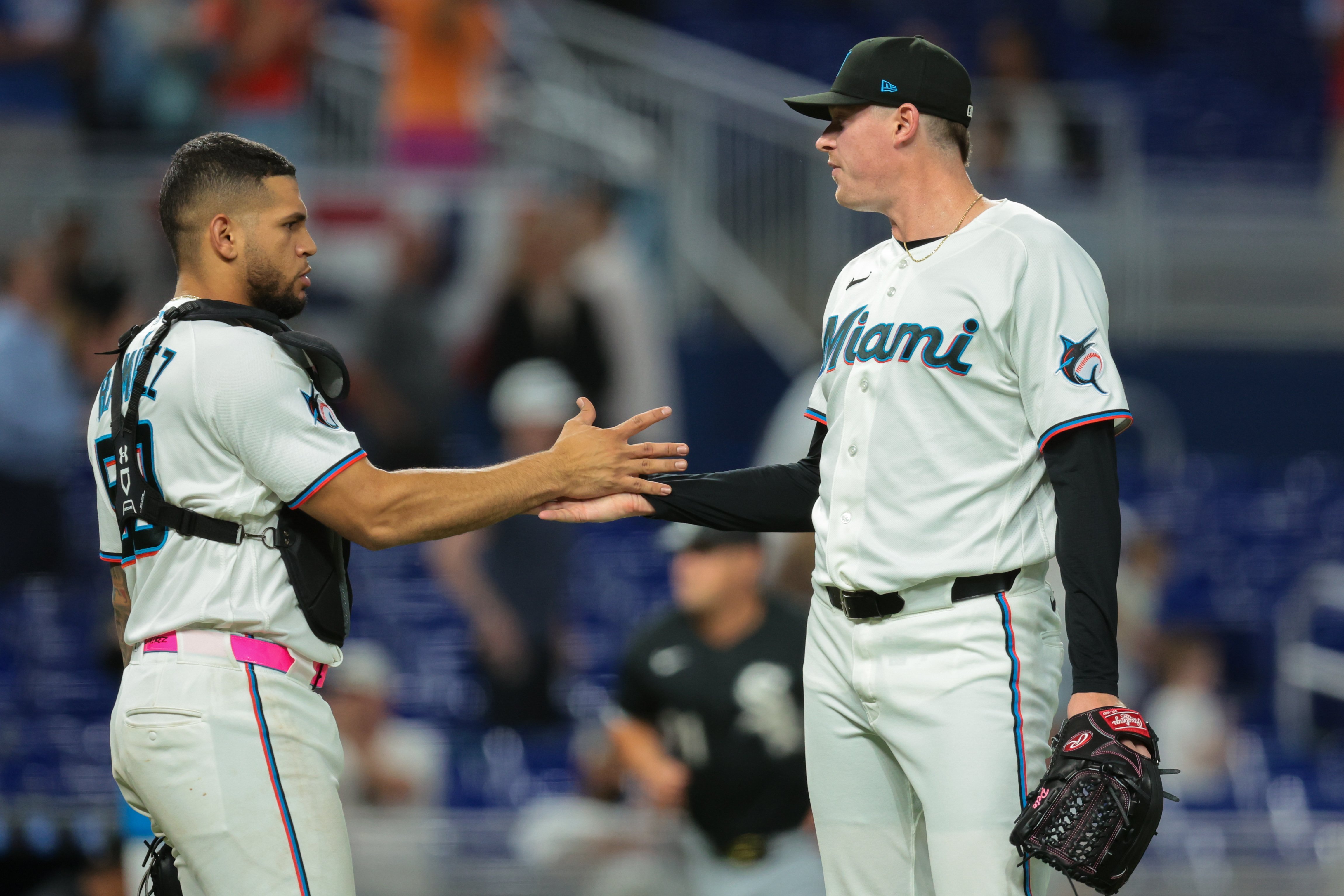 MIAMI, FL — Every time that the Miami Marlins have held a late-inning lead so far this season, they have held on to win. That was the case again Tuesday night in what turned out to be their most lopsided game yet, a 9-2 defeat of the Chicago White Sox. Janson Junk turned in a solid start, but the Marlins bullpen handled the majority of the workload. That unit has now combined for a 0.51 ERA—the lowest in the majors—while striking out hitters 38.1% of the time. "They've come out of the gate and really thrown the ball extremely well," said Marlins manager Clayton McCullough. "I think each guy that's been called upon in whatever capacity role that is thus far, they have just answered the bell, and they really filled the strike zone up. When you have good stuff and you throw a ton of strikes, limit the free pass late in games, you have a chance to go on some runs like this." Andrew Nardi, Anthony Bender, Calvin Faucher and Pete Fairbanks were the relievers used on Tuesday night, combining for a final line of 4 ⅔ innings pitched, zero hits, zero runs, one walk and eight strikeouts. Fairbanks led the way, striking out the side in the top of the ninth inning. Nardi, the first reliever deployed after Junk was taken out of the game with one out in the top of the fifth inning, struck out both Munetaka Murakami and Andrew Benintendi swinging with his slider to end the inning. Through 1 ⅔ innings of work in 2026, Nardi has struck out four and only allowed one hit. Once the lane of left-handed batters ended with one out in the sixth, Bender entered the game. Bender, who doesn't often go multiple innings, had to on Tuesday because Tyler Phillips and Lake Bachar were not available. He tossed 1 ⅔ innings of hitless baseball, only allowing a walk, but also struck out one. Faucher, who followed Bender, struck out two in his clean inning of work. Fairbanks entered to close things out despite it being nowhere close to a save situation. He had last thrown on Saturday, the second game of the season. It only took the former Tampa Bay Ray 15 pitches to finish the game, the most he's thrown as a member of the Marlins. "We had stretched some guys the last few days, and we had a few guys that were on back-to-backs that we wanted to stay away from today," explained McCullough. "Having Pete throw today and staying away from Phillips, he comes back tomorrow, we are hit with much more length and just gives us some more options tomorrow by doing that." Although veteran Chris Paddack struggled on Monday night in his organizational debut, he saw enough from the White Sox offense to where he was able to help out Janson Junk. Making his first start of the 2026 season the day after, Junk tossed 4 ⅓ innings, allowing two runs (both in the third inning) on five hits, walking one and striking out one. "He selflessly came up to me and just broke down what he thought he saw, and I really appreciate that from him, just about his mentality and what went on in that one inning," Junk said. "That moment when two guys get on, base hit and you can feel it go in the other direction, I reflected back on what (Paddack) told me: 'just keep pitching with conviction and don't let up.' (Pitching coach Daniel Moskos) coming out, that was good mound visit, and then I was able to refocus and then get out of there with limited damage." Junk's fastball, which averaged around 93.6 mph in 2025, saw an increase in velocity, topping out at 96.5 mph, averaging 95.4 mph. His secondary stuff—specifically the slider and changeup—looked good, generating four whiffs each. He also induced a 53.8% ground ball rate, which was the third-highest of his Marlins career. "Overall, Junk was great," McCullough said. "The velo he had on the fastball and his ability to hold that velo from pitch one to roughly when he got to in the high 70s, it was nice. With that type of velo, throwing some two-seamers running in just keeps things open away for his breaking stuff. There's some good changeups and the crispness with some of his sliders that he threw with the type of velocity he had. Big spot there in the third and he got a few ground ball hits and they get a couple runs. But for him to leave some guys out there, keep the game where it was, a big part in the game." The Marlins offense was hitless through the first three innings. It wasn't until the fourth inning that they not only notched their first hit of the game, but took control of the game by rallying for four runs. Xavier Edwards got things going with a base hit, followed by a 105.4 mph double from Agustín Ramírez, moving Edwards to third. Liam Hicks, who has gotten off to a hot start this season, drove both of them with a double, tying the game, 2-2. Owen Caissie, another Marlins who has gotten off to a great start, drove Hicks in on an RBI single (and moved to second on the throw), taking a 3-2 lead. Heriberto Hernández extended the lead with an RBI single. In the bottom of the seventh, a Graham Pauley fielder's choice drove in Hernández and then Jakob Marsee drove Griffin Conine in on a sac fly, extending the lead to 6-2. In the bottom of the eighth, Conine hit his first home run of the season off of Jedixson Paez, a two-run homer. The ball left the bat at 107.3 mph and went 405 feet to right field. Team 1 2 3 4 5 6 7 8 9 R H E CWS 0 0 2 0 0 0 0 0 0 2 5 3 MIA 0 0 0 4 0 0 2 3 - 9 9 0 With the win, the Marlins are now 4-1 on the season and will look to take their second straight series on Wednesday with Sandy Alcantara taking the mound for a 1:10 pm first pitch. View the full article
 -
The Twins' Struggles Against Southpaws Aren't a Mirage
DiamondCentric posted an article in Twins Daily
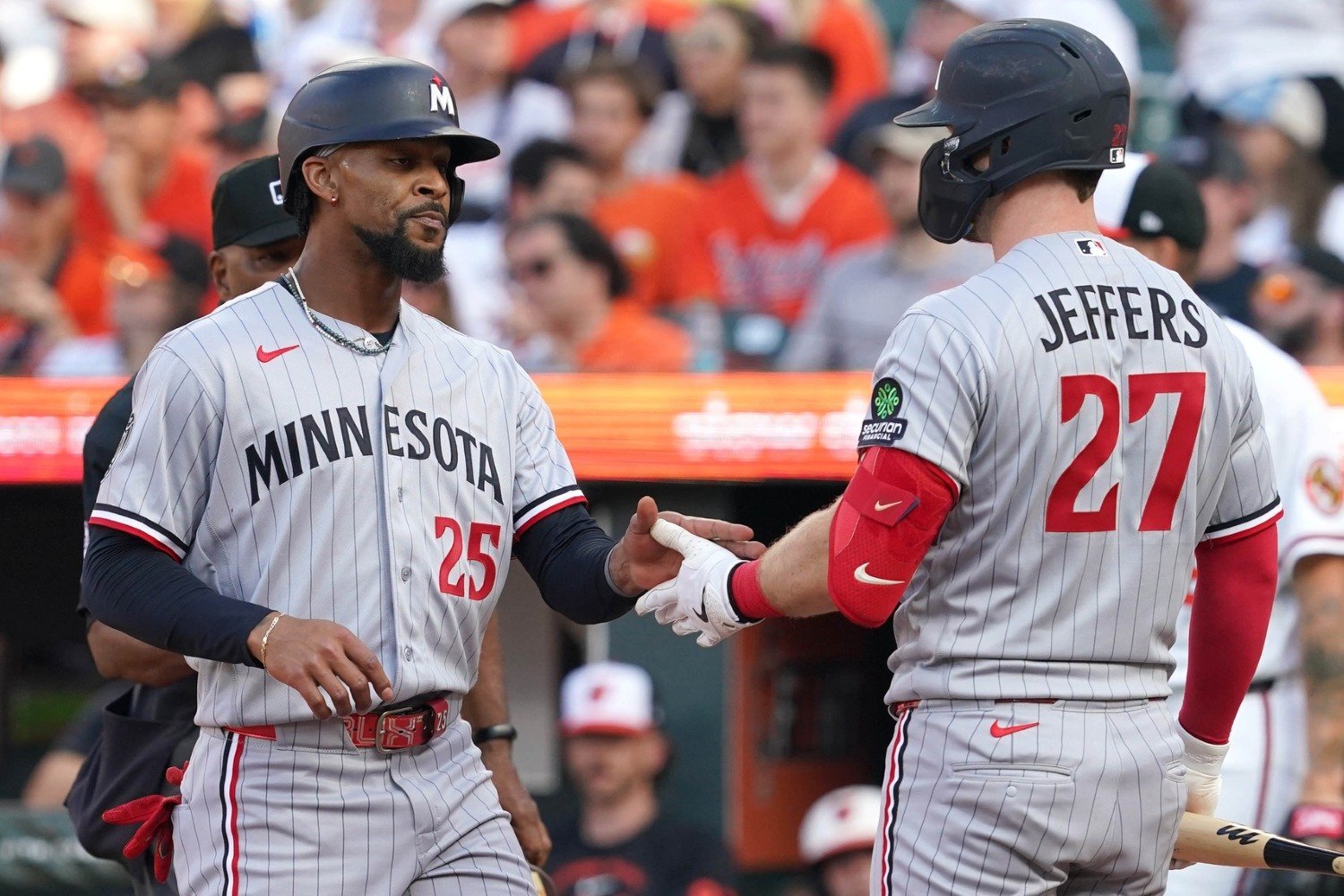 The Twins’ endless pursuit of left-handed corner outfielders has been well covered. The many poor-fitting pieces of the lineup have, as well. They're seeing the results of their lopsided roster construction to begin the season, and turning the corner feels unlikely. The Twins have mustered very little fight against left-handed pitchers, scoring two runs in 16 2/3 innings against them. In looking at the lineup they throw out in these matchups, you might feel like they should be able to at least hold their own. They're able to fill out most of the batting order with right-handed hitters. That may not be enough to save them, though. To be fair, we have yet to see several expected contributors pitch in much in this small sample to begin the season. Byron Buxton has yet to pick up a hit against left-handed pitching, and we're waiting for Luke Keaschall and Ryan Jeffers to take off. The Twins are surely counting on these players to carry the lineup. So far, Austin Martin has held his own in the leadoff spot when called upon, but the lineup has missed some expected production that's sure to show up at some point. Unfortunately, even as those names come around, it's hard to expect this lineup to perform against lefties. They're simply lacking in players to counter those matchups. Not only do they have too many left-handed hitters on the roster, but too many of the right-handed bats they have to rely on also aren't a big help. Brooks Lee has been better against left-handed pitching so far in his career, but that consists of just a .647 OPS. Josh Bell hasn't produced at an above-average clip against lefties since 2023, and posted a .552 OPS against them last season. Victor Caratini was slightly above average against them in 2025, but has a .672 mark against southpaws in his career. These three are going to be regulars on days with a left-handed starter on the mound, along with at least one left-handed hitter. This is the best the Twins have to offer. Their bench doesn’t have any other right-handed hitters to shuffle into the mix if these players continue to struggle, as we would expect them to. In short, there's no reason to expect this lineup to right the ship against left-handed pitching. They won’t be as bad as they’ve been in this small sample, but they’ll continue to struggle significantly. The falloff in the lineup is quick and precipitous, and will likely kill many of the rallies the top of the lineup doesn't finish. Even among the few bats the Twins chose to bring in this offseason who can hit right-handed, they did a poor job of adding impact from that side of the plate. It's yet another strike against the way the Twins chose to build their roster in 2026. Their emphasis on acquiring and retaining as many left-handed bats as possible left them with few roster spots to allocate to countering left-handed pitching. They filled those spots with bats that are technically capable of hitting right-handed, but are highly unlikely to be the impact contributors this lineup needs against lefties. From ace starting pitchers to marginal relievers, it's safe to expect the Twins to struggle mightily for all of the 2026 season against southpaws, and teams will continue to turn to them as often as they possibly can. If that's the case, it won't be because of underperformance or unexpected struggles. It will be because that's exactly what you'd expect from the roster they put together. View the full article
 -
 In the bottom of the 11th inning of the New York Mets' second game of the 2026 season, Luis Robert Jr. parked a Hunter Barco slider into the Fiesta Deck, scoring three runs and giving the Mets their second win of the season and Robert the second walk-off home run of his career. The center fielder's hot start probably hasn't gone on long enough to loudly proclaim that La Pantera is back, but that at-bat certainly has put him in the right direction. To see Robert take the nine-iron out of the bag and golf the ball out of the park at 104.6 MPH is certainly impressive to see, but the power has always been there for him. One could make the argument that his swing decision and pitch recognition are more impressive than the swing. In terms of swing decisions, the old version of Robert may very well have been down 0-1 in this scenario. In 2025, Robert swung at first pitches at a 47% clip, the seventh-most in the MLB. In this at-bat, Barco’s first pitch was a down-and-away changeup, a pitch Robert took for a ball. Robert recently flashed his improved discipline Opening Day when he worked a 10-pitch walk against Paul Skenes. That was the first sign that Robert’s maturity at the plate had begun to evolve. He's following what teammate Bo Bichette said the plan the whole team has this season: taking professional at bats. Barco was very slider-heavy in his outing, throwing the pitch 11 out of 24 times. After the first pitch take of the changeup, it was clear Robert was hunting that slider, and he got what he wanted. In 2025, Robert posted a .216 batting average against sliders, a pitch he saw 16% of the time last season. So far in 2026, Robert is sporting a .667 batting average against the slider. It was encouraging to see that Robert identified the pitch out of the hand and got the barrel to it. Saturday’s game also featured a walk from Robert, who currently sports a 20% walk rate in 2026. In 2025, he only managed a 9.3% walk rate, so it's clear his refined plate approach is spreading to all aspects of his game. But the people that celebrated when the Mets traded for Robert signed up for his raw power, and that was shown on display in that swing. Robert went 2-for-4 on Opening Day, but he didn't flash the upper-echelon pop his game was once known for. Thus, it's rather encouraging that his walk-off home run featured elite exit velocity (104.6 mph) and launch angle (23°). Now, Robert got the pitch he wanted but not exactly where he wanted it. The quadrant of the strike zone that Barco hung that slider in does not normally generate a ton of aggressiveness from Robert, as he swings at pitches down there a measly 34% of the time. Now, with a new plan to attack rather than react, Robert swung at the first slider he saw, and it just so happened that he ended the game with one swing. Robert also has a lot less pressure on him in this lineup. With Brett Baty behind him if needed, and Marcus Semien and Carson Benge after that, hero ball was not needed. The result says otherwise, but the process behind the plate approach is what is most worth salivating over. While not quite the swing of his life, Robert has set a high bar for himself in New York. From increased pitch recognition to better swing selections, a redux of that magical 2023 season isn't out of the question. He has all the tools to help this team, and all that home run did was accelerate his path back to stardom. View the full article
 -
 Every development over the last month or so has pushed the Brewers further toward infield chaos. Come 2027, Milwaukee will have a lot of very hard decisions to make around the horn—mostly because they have a stockpile of talent, including four prospects in the MLB Pipeline Top 100 among their infield prospects. It’s daunting in a good way, because it seems almost impossible for the Brewers to go wrong. Let’s look over all four infield spots and see how they break down. First Base Blake Burke is the team’s best prospect at first base. Selected with the 2024 Competitive Balance A acquired in the Corbin Burnes trade, Burke has a powerful bat. In the pitching-friendly Southern League, he cranked out 11 homers in 140 at-bats, a marked improvement from what he did at High-A Wisconsin. Lefty power hitters have put up eye-popping numbers at Uecker Field, so Burke’s potential is exciting on that front. Luke Adams has been pushed to first base from across the diamond, even though he was not an untenable third baseman. While he lacks the raw power of Burke and bats right-handed, he’s been a clear threat on the basepaths and he has proven to be an OBP machine. Andrew Fischer is a natural first baseman performing pretty well at third, while Brock Wilken could find himself at first to make way for other prospects. Tyler Black is also an option, and is hitting the ball harder this spring. Of course, these players are all crowding into the top two levels of the minors, with Andrew Vaughn and Jake Bauers in place in the majors. Second Base Ethan Murray and Josh Adamczewski are two of the top organizational prospects at second base, but neither is likely to be a starter there. The big reason? Milwaukee’s shortstop surplus, which could include one of Jesus Made or Luis Pena taking a lot of playing time at second—a move similar to the one Brice Turang made in the majors. Turang is slated to be a free agent after the 2029 season, unless the Brewers can work out an extension. With Made, Peña, Jett Williams and Cooper Pratt in the pipeline, trading Turang feels more probable. Third Base Will it be Wilken or Fischer? It may end up being neither, with Made, Peña, and Pratt all in the mix. Wilken and Fischer, though, are potential offensive monsters, with Wilken channeling Brewers three-true-outcome legend Gorman Thomas, while Fischer flashed signs of being a left-handed Ryan Braun with his performance during the World Baseball Classic. Adams is also no slouch at the hot corner, even if his destiny appears to be closer to a Bauers-like role. Shortstop As with first and second base, the incumbents will have their say. Joey Ortiz and David Hamilton carry promise of their own. The upward pressure applied by Pratt (newly extended, and thus guaranteed some kind of role), Made and Peña seems like it will be irresistible, but which player will claim the spot—or will they all scatter to other positions, amid a resurgent offensive season by one of the more experienced, sterling defenders already in the majors? It's impossible to predict. Overview The depth around the infield for Milwaukee might be the best any team has had in the last 15 years. At every position, they have multiple players with a chance to be above-average, and not in four or five years. By this time next spring, there will be a somewhat confused Battle Royale going on, or a couple of these players will have been traded—but either way, the Brewers should be sitting pretty all the way around the dirt. View the full article
 -
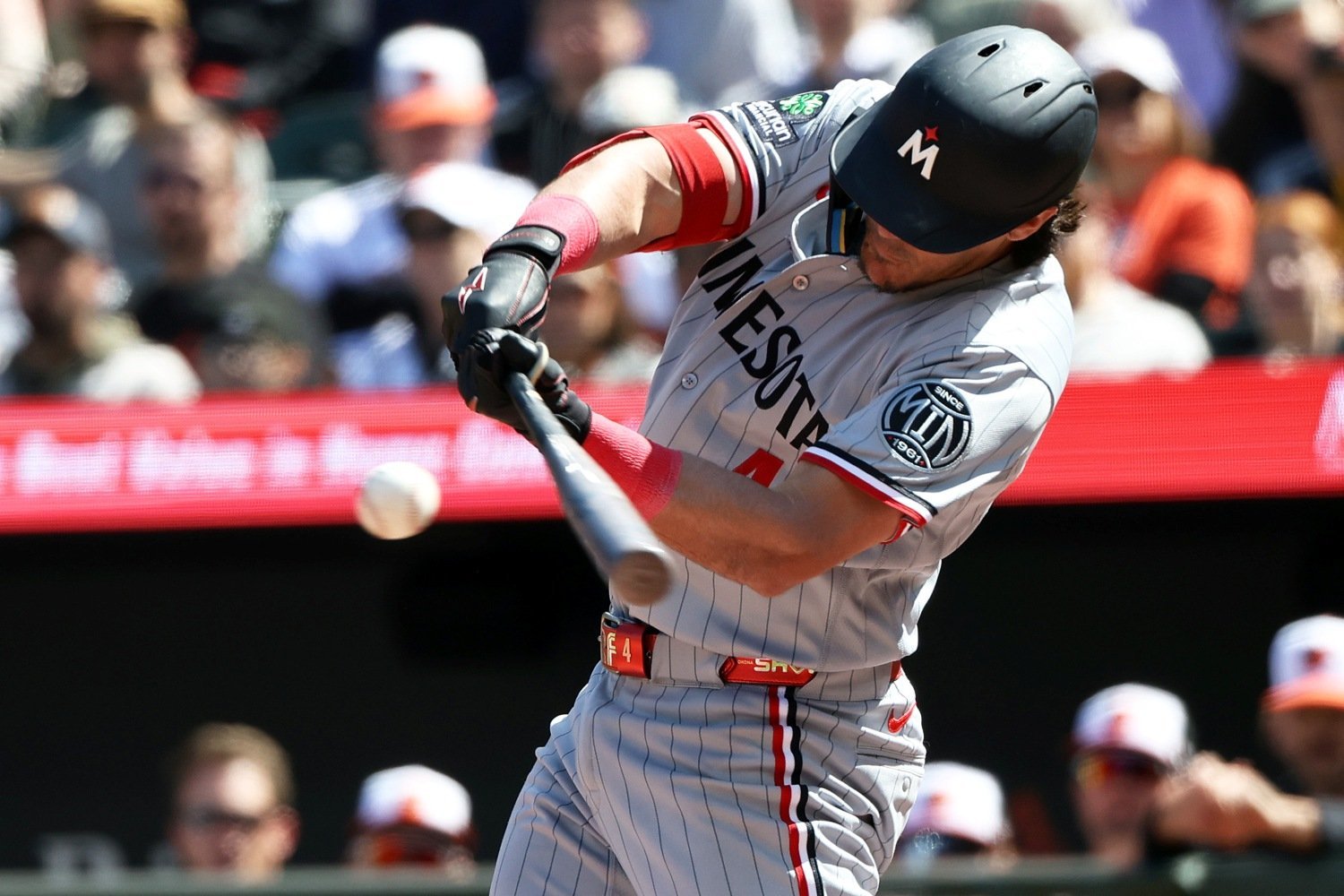 Shortstop has been a position in flux for the Twins since Carlos Correa was traded back to Houston at the deadline last year. Brooks Lee took over at that point, and while he didn’t exactly impress, the former first-rounder wasn’t replaced during the offseason and seemingly came into 2026 with the job locked down. The Twins did make a few acquisitions to augment their depth at the position. Ryan Kreidler was claimed off waivers from the Pirates back in October, while veteran shortstop Orlando Arcia was signed to a minor-league deal in January. However, both guys were sent to St. Paul as part of the last roster cuts as Opening Day approached. That left Tristan Gray, acquired in a trade from the Red Sox in late January, as the backup. Many were confused by the decision, given that Gray is another left-handed bat in a team full of them, but nonetheless, he was in Baltimore for Opening Day. Lee started the first two games in Baltimore, both times hitting in the last spot of the lineup. Both games showed similar results, with Lee striking out twice on Opening Day and once more on Saturday. One of those strikeouts came in the top of the 2nd on Thursday with the bases loaded, in a game the Twins eventually lost by one run. While it is an extremely small sample, Twins management and fans would love to see Lee turn it on soon, in what could be a make-or-break year for the 25-year-old. Lee’s performance was poor, but it was a bit unexpected to see him omitted from the lineup Sunday for the deciding game of the series Sunday. Gray was penciled into the 9th spot, playing short, and similarly, he came up with the bases loaded in the top of the 2nd. Gray then laced a double to right-center, taking a 98.3-MPH fastball from Shane Baz 107.3 MPH to the gap. Gray added a single off Tyler Wells later, ending his day 2-4 with a double, 3 RBIs, and a strikeout. The Twins began a series with the Royals Monday, and Lee drew the start again, going 1-3 with a single and another strikeout, bringing his line this year to .111/.111/.111, with 4 strikeouts in 9 plate appearances. The advanced metrics back up what we’ve seen, as far as any of it goes. His bat speed is the same as it was last year, and his fielding has yet to show improvement. In contrast to that, Gray provides additional value by being able to play every infield spot. His bat speed bests Lee’s. Again, it's still early in the season, but one of the more intriguing questions surrounding the near future of the Minnesota Twins may be the usage of their shortstop position. How long of a leash does Lee have? How often do we see Gray throughout the first few weeks of the season? The first series against Baltimore demonstrated that Kody Clemens will likely play first base with right-handers on the mound for the opponent, which leaves Gray as a substitute at third or second base, as well as potentially gaining more starts at short as the year progresses. Manager Derek Shelton has some experience mixing around shortstops from his time in Pittsburgh—especially the 2023 season, when he had four players make more than 30 appearances there. While the question posed can’t be answered instantaneously, the Twins should do everything in their power to set up Lee for success this year. He was a top-10 pick only four years ago and just turned 25. He dealt with injuries to his back that slowed his development, so the hope is that a full season will yield atypically large forward strides. If Lee doesn’t pan out, Gray started his regular season career in Minnesota with a bang, and could be a capable placeholder as the season progresses while former first-round picks Kaelen Culpepper and Marek Houston develop in the minor leagues. How long it might be before Gray gets that chance and the team shifts its gaze from Lee to his long-term replacements is worth watching. What are your thoughts on Brooks Lee? Does he make it to the end of the season as the starting shortstop? As for Gray, how much value could he provide for the Twins this year? View the full article
 -
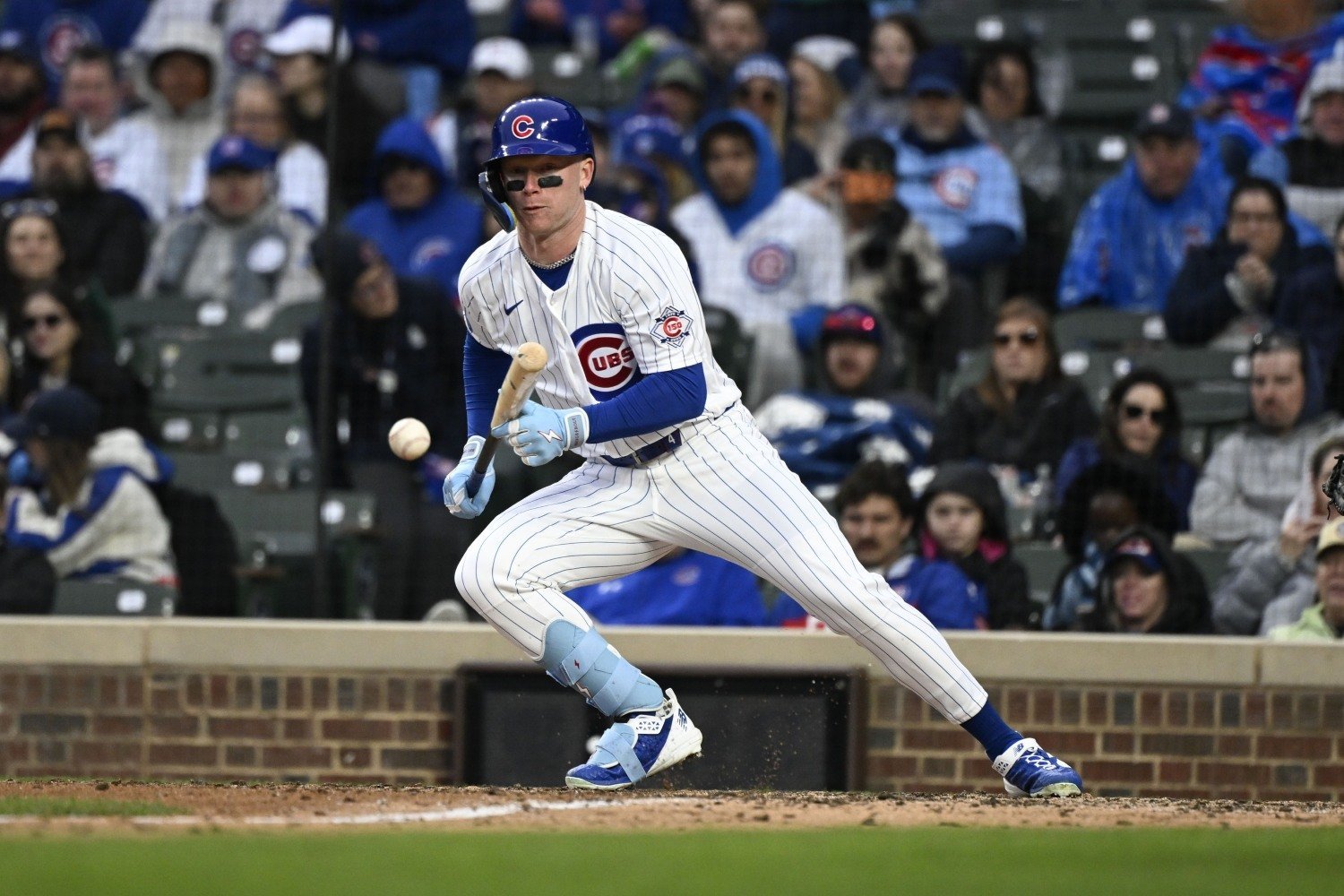 Pete Crow-Armstrong has yet to register a Barrel in the regular season, according to Statcast. All of his hits on the young year have been ground balls: two hit hard past the first baseman, two gorgeous bunts up the third-base line, and one seeing-eye bouncer the second baseman could only knock down in Monday night's win over the Angels. He's hit a number of pop-ups and lazy fly balls. He often still seems to be swinging too much, leading to unproductive contact. However, Crow-Armstrong has also drawn two walks in his 18 plate appearances so far, so he has a .389 OBP. He walked twice in 22 plate appearances in the Cactus League, and twice in 21 trips in the World Baseball Classic. For calendar year 2026, Crow-Armstrong has almost exactly a 10% walk rate—roughly double his career mark in the majors through 2025. He's seen 226 pitches across the three types of competition in which he's participated, and swung at 55.3% of them. That's down from a rate just over 60% in each of the last two years. By now, it should be clear that Crow-Armstrong will never be a patient hitter, in the style of Ian Happ or Alex Bregman. Even swing rates just below 50% and walk rates around 9%—the typical outputs of Dansby Swanson, for context—are probably too much to hope for. Crow-Armstrong will both create and waste offensive opportunities by swinging; he's going to be much more eager than the average batter. The relevant question is: If it's his hyper-aggressiveness that stands between him and stardom (and it is), how much must he mitigate it to get around the problem? In other words, at what swing rate can Crow-Armstrong be a reliably excellent overall hitter? The answer is much, much higher than it is for most batters. Guys who make a lot of contact (like Nico Hoerner) should err a bit on the side of patience, but Crow-Armstrong has a highly optimized power swing and is going to whiff at a fairly high rate. To make up for that, he needs to go to the plate ready to do damage—especially since he has the bat path to hit more home runs than his frame or his raw bat speed would imply. He also has elite speed, and a near-mad desire to use it. That makes it especially valuable when he reaches base, because he's very likely to steal a base (or two), or to do something similarly game-breaking. (On Monday night, he scored from first on a single when he wasn't even running with the pitch, although it was a high blooper that probably should have been caught.) Ideally, of course, such a player would draw a lot of walks and maximize their OBP, but failing that, putting the ball in play by swinging early in the count leverages his speed well. The bunts Crow-Armstrong laid down in the first two games of the year were exemplars of that, but he can also reach on unintentional infield singles, errors and fielder's choices, and stretch some hits by 90 feet. All of that makes it good that Crow-Armstrong swings more than most hitters. In the past, though, he's swung so much that he sometimes limits his ability to get a good pitch and put the barrel on it. Is ratcheting that baseline swing rate down from 60% to 55% enough to change that? Much depends on the shape of his added patience. Crow-Armstrong is swinging a bit less early in counts this spring, and then increasing his aggressiveness as he protects the plate late. His feel for contact outside the zone is better than one would guess, for a player so focused on that lift-and-pull swing, which allows him to foul off pitches until he earns either a mistake or a miss that doesn't tempt him. On Monday night, he took an 11-pitch walk in which the balls were pitches 1, 5, 7, and 11. None of them were close to the zone; he swung at everything that was. But because he fouled off enough pitches to stay alive, he did earn those bad and un-tempting misses. In his second at-bat against Angels starter Ryan Johnson, Crow-Armstrong took pitches 1 and 4, but swung at everything even remotely close. He fouled off four offerings, then hit the aforementioned, unimpressive single up the middle. Many pitches Crow-Armstrong will face have a better putaway pitch than Johnson. Falling behind and fouling off four or five pitches per plate appearance is no sustainable formula for success. However, these two at-bats are good glimpses of how Crow-Armstrong can swing a lot without giving away at-bats. If he can spoil some two-strike pitches, be smart about sitting on certain pitches when the situation demands it, utilize the occasional bunt, and be even an iota more patient than he's been in the past, he has the tools to be that 30-homer, 30-steal guy the Cubs saw him become last year—the one in whom they've now invested $115 million. The swing rate might have to come down a hair more, in order for him to continue actualizing his power. For now, though, Crow-Armstrong seems to have made some small modulations in his approach—and because he's a physical freak with plenty of value in his legs, his glove and his unconventional hitting profile, small modulations might beget big gains in consistency. View the full article
 -
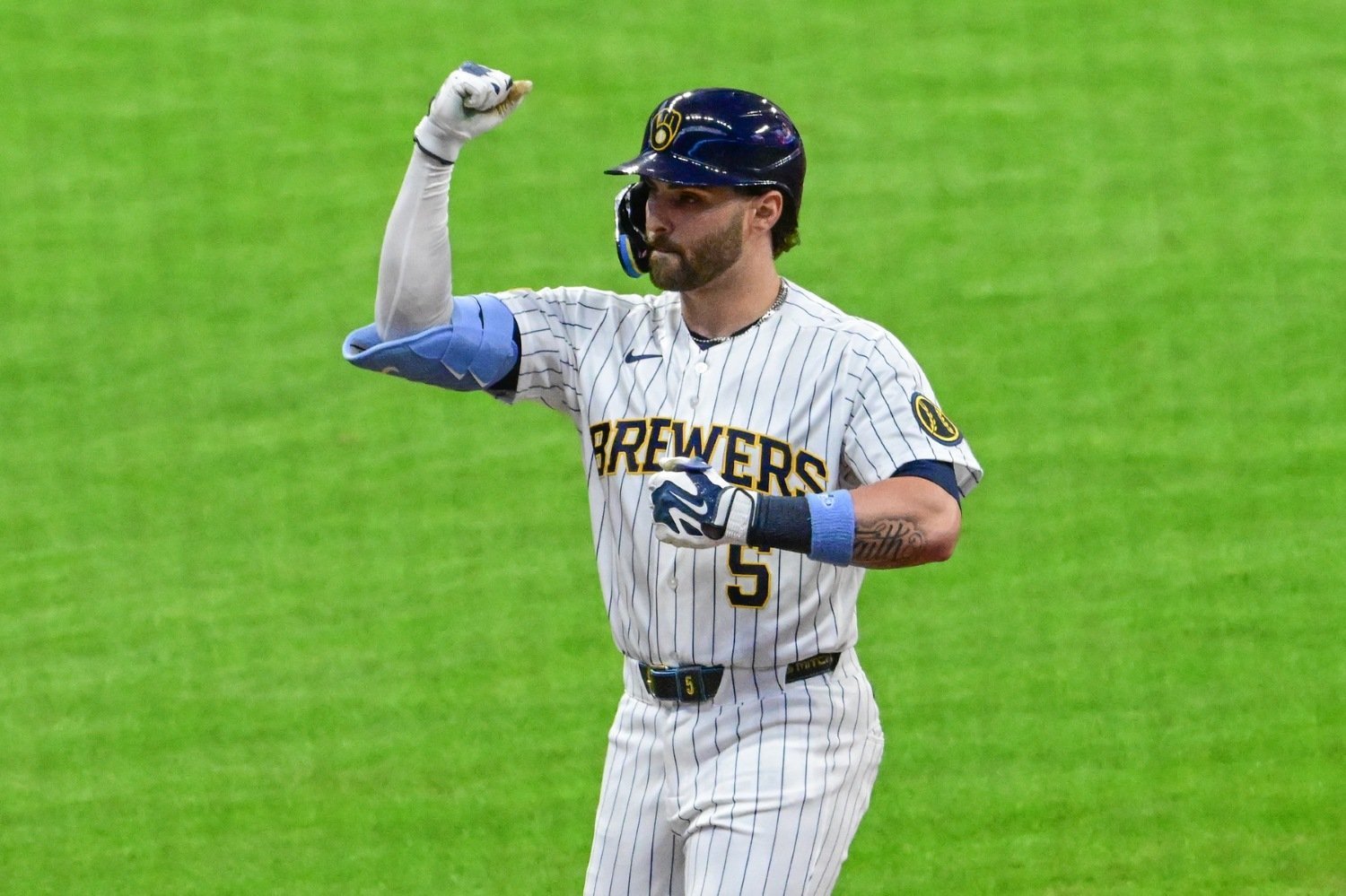 Center field was a strength for the Brewers in 2025, with Jackson Chourio and Blake Perkins patrolling the position for most of the year. However, after another year riddled with injuries, Garrett Mitchell is healthy(ish) and slated for that spot for the beginning of the 2026 season, with Chourio on the injured list and Perkins demoted to the fringes of the roster. Given Mitchell’s injury and production history, as well as how his bat looked during spring training, the Brewers will need suitable backup options in center field who should be able to provide value. Mitchell's Cactus League numbers were hideous, but spring training stats don't count, and he's looked fairly good since the year began. He's showing great patience and still has exceptional bat speed. He's changed his setup in the batter's box, spreading out more to shorten his stride and put himself in a better position to make contact and avoid chasing pitches he can't handle well. Nonetheless, Mitchell is whiffing often and striking out at a high rate. That threatens to make his profile collapse, as he gets greater exposure to the league. Fallback plans remain important. The Brewers have numerous capable center fielders on the roster, but with Chourio in left (once he returns from his injury) and Sal Frelick in right, the next man up after Mitchell would seemingly be Brandon Lockridge. Acquired in a trade with the Padres at the deadline last year that sent Nestor Cortes to San Diego, Lockridge was solid for the Brewers in the 20 games he appeared in, hitting .261/.308/.370. Lockridge’s defense and speed were exceptional, though, ending 2025 with 5 Outs Above Average, according to Statcast, and showcasing even better speed than Mitchell has. The bat is certainly a question, but due to some “swing-hauling” over the offseason, he took full advantage of his opportunities in Phoenix this spring. The former fifth-round pick fared better against lefties than against righties, but that seems to make his fit onto the roster work better—especially with both Chourio and Andrew Vaughn sidelined. With Mitchell as the left-handed hitting starting center fielder, Lockridge could provide value as a fill-in to give guys rest or a late-inning pinch-hitter for either Mitchell or Frelick if there is a southpaw on the mound. Pat Murphy seems to be excited about what Lockridge can do for the Brewers in 2026, and fans should be, as well. Besides Lockridge, the other immediate option would be Perkins, who has played in 242 games with the Brewers in multiple stints over the past three years. He hasn’t shown much with his bat, though, and doesn't seem to have the trust of the manager or the front office at the moment. The 29-year-old brought a career .232/.314/.348 line into 2026, and his skillset is like Lockridge's: defense and speed define his game. Mitchell will certainly have his work cut out for him this year, and will need to prove that he belongs (and can physically stay) in the everyday lineup. Lockridge has been trending up for a while now, and if he starts the season strongly, the pressure will only build for Mitchell. The bottom line is that whoever is in center will need to provide offensive value. All three names listed are capable defenders and possess great speed, so the true battle to watch as the season unfolds will be in the batter’s box. That also makes it worth mentioning one more player: Jett Williams. If neither Mitchell nor Lockridge establishes a sturdy claim to center by the middle of June or so, Williams could enter the equation in a hurry. He's as dynamic in terms of speed and glovework as the others, though he's spent more time on the infield and thus is much less experienced in the grass. Offensively, he might be the highest-ceiling player in the bunch, but he has to show he can hit in Triple-A, before the team will want to test whether he can do so in the big leagues. Depth is a strength of the organization. They're extremely unlikely, this year, to end up giving playing time to a player like Steward Berroa or Akil Baddoo in center field, which is a testament to the front office's planning and proactivity. Mitchell remains the de facto starter, but behind him, a growing number of qualified candidates are queuing for the chance to move into the lineup if he falters. View the full article
 -
Toronto Blue Jays 2026 Top Prospect Rankings: No. 7 Juan Sanchez
DiamondCentric posted an article in Jays Centre
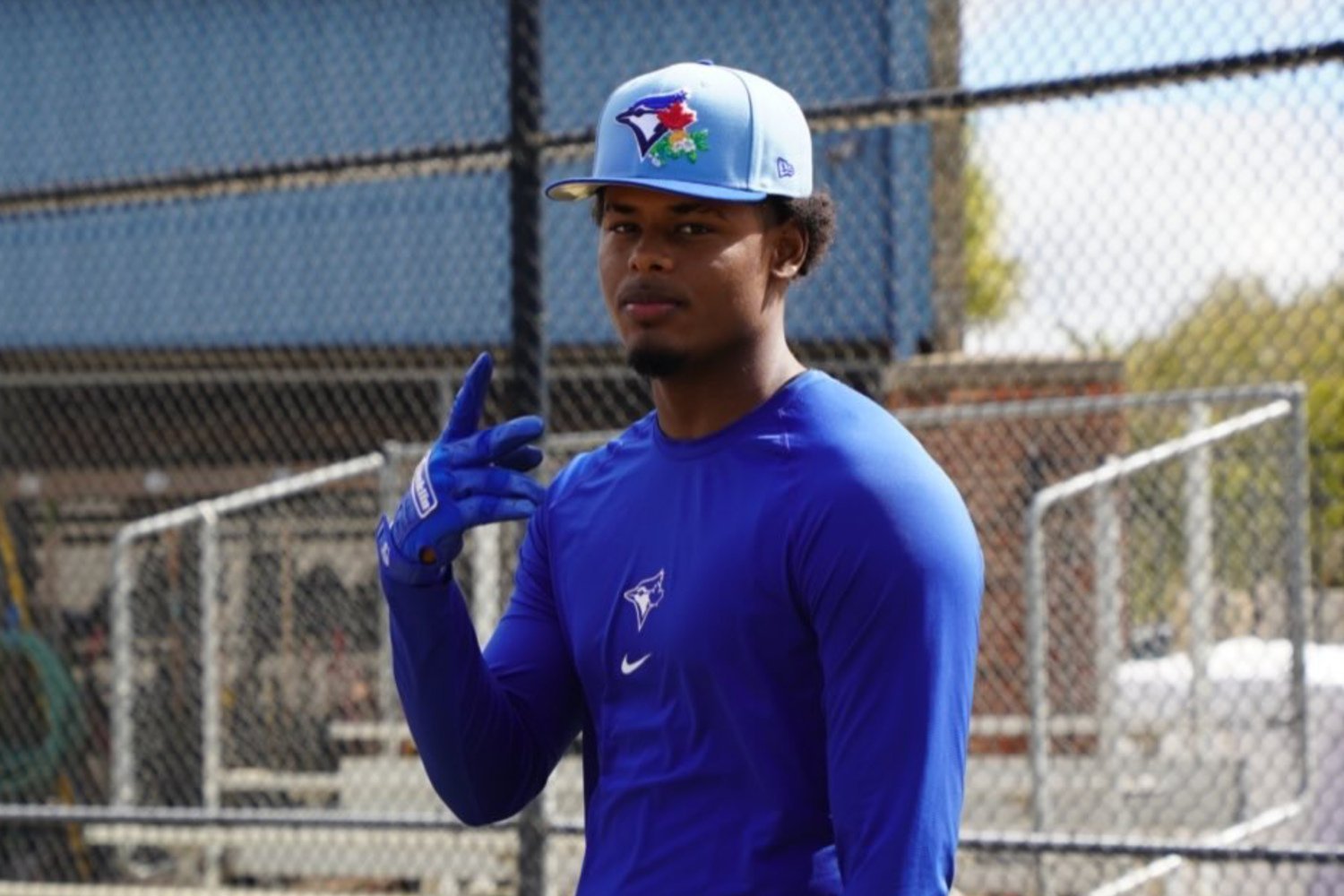 Jays Centre is counting down the top 20 prospects in the Toronto Blue Jays organization. Check out prior entries in the series here: No. 20 to 16 No. 15 to 11 No. 10 No. 9 No. 8 We are well into our coverage of Jays Centre’s top 20 prospects now. We have gone through #20-16, #15-11, #10, #9, #8 and now we reach #7 on our list, Juan Sanchez. He is a prospect that has gained an insane amount of attention, notoriety, and a boost in national rankings this past offseason. Let's get to know him a little more and see what he does well, what he needs to work on, and what the future may hold for this up-and-coming phenom. No. 7: SS/3B Juan Sanchez (DSL Blue Jays Red) PA H 2B 3B HR OPS wRC+ K% BB% 253 73 16 4 8 1.004 156 17.4% 10.3% In January of 2025, Sanchez signed with the Toronto Blue Jays for $1,000,000 as a shortstop out of Cotui, Dominican Republic. He began his professional career that same year, playing in the Dominican Summer League (DSL) on the Blue Jays Red squad. He played in 56 games and quickly separated himself as one of the best players on the field down on the island. For the season, he slashed .341/.439/.564, hit eight home runs, 16 doubles, and four triples, and swiped four bags. His plate discipline was about average for the league, as he had a strikeout rate of 17.4% and a walk rate of 10.3%. Yet, his wRC+ of 156 showed his overall production at the plate was anything but average. His final month was truly remarkable, as he slashed .423/.483/.712 across 14 games. After such a dominant performance in 2025, Sanchez was ready to come stateside and become a household name for Toronto Blue Jays fans. He did just that during the Spring Breakout game against the Philadelphia Phillies’ prospects, in which he laced a bases-clearing double into the left-center field gap. It came off the bat with an exit velocity of 105.6 mph, a sign of things to come for this budding star prospect. What To Like Sanchez has a lot going for him, but one of his biggest tools is his power. He stands 6-foot-3 and is listed at 180 pounds. This gives ample projection for his future power output, and when coupled with his current numbers, you get a prospect with the potential to hit 30-40 home runs. He hit eight home runs in 2025 in the DSL, while adding 16 doubles and even four triples. He looks to have good pull-side power already, with a 44.8% fly ball rate and a 55.8% pull rate. What has driven his prospect status through the roof has been his hit tool. He hit .341 as a 17-year-old in the DSL, and on the backfields during spring training, he continued to have success with the bat. His power and hit tool will drive his value through the roof and provide him a very solid floor in his attempt to reach his astronomical ceiling. What To Work On Being very young still, just 18-years-old, Sanchez has a lot to work on. One of the biggest aspects of his game that could use improvement is his potential swing-and-miss concerns. Despite an absurd .341 batting average in 2025, he was just around league average with his strikeout rate of 17.4%. Coming stateside in 2026, he could see this number creep up, which will ultimately lead to his hit tool dropping down some in response to more whiffs. Being less reliant on a pull-side profile could help to ensure he doesn't have any regression or a step backward with regard to his hit tool. In 2025, he hit 44.2% of his balls in play to center and right field. If he can boost that number up to around 50% while maintaining his power, he could soar onto top 50 prospect lists and even into the top three of our Jays Centre prospect rankings. What's Next Sanchez has made the move stateside from the Dominican Republic and is on the verge of his debut at either Rookie ball in the Florida Complex League or at Single-A Dunedin. It is more likely that he will debut in Rookie ball, but with a hot start, he could be promoted to Single-A Dunedin rather quickly. Don't be shocked to see him end the year on nationally renowned top 50 prospect lists, if he can maintain similar production to his 2025 numbers from the DSL. View the full article
 -
 Hordes of passionate Twins fans made their way to St. Paul to make sure their voices were heard on Saturday afternoon. Starting third baseman, Royce Lewis, has found a new home near the bottom of the lineup card, and these folks have already had enough of the nonsense of the young 2026 Twins season. “I couldn’t believe it when I saw the lineup come out this morning,” said Ed Malarkey as he waved his ‘BRING BACK ROCCO’ flag outside the Capitol building. “Batting him 8th? Again? Sheltie should’ve learned his lesson on Thursday!” Indeed, manager Derek Shelton decided to keep Lewis in the 8-hole, despite the massive outcry from the most dramatic corner of the fanbase. “It’s obvious that Lewis is a vibes guy,” Malarkey said, as a stream of frustrated tears fell to his t-shirt with a crossed out ‘8’ on it. “If you want him to perform, you need to make sure he gets his tablet time and a juice box, then you need to tell him how special he is, and then you bat him third. That’s what Tom Kelly did with Kirby Puckett, and now he’s my favorite player of all time, so you know it works.” Despite the massive crowds who all voiced their displeasure over the weekend, Lewis seemed to take the decision as professionally as anyone could’ve asked of him. He didn’t complain to any reporters, and his relationship with Shelton certainly appears to be healthy as ever. It’s almost as if this 26-year-old professional athlete simply showed up, tried his best to compete for his team, and didn’t worry about something as petty as opening series lineup structure. “I gotta be honest, I was surprised to see him so low in the lineup. It’s all I could think about while Sheltie gave his pregame speech about it being an honor to wear this uniform, or whatever he was talking about,” said a fellow former first-round pick who wished to remain anonymous. “I don’t know, I wasn’t really listening. I’m just kind of surprised I’m still on the team.” The crowds at the capitol were reinforced with some star power, to boot. Rock legend Bruce Springsteen took the stage to sing "Heart of the Lineup," the new song that he wrote earlier in the week, with a chorus that directly reflects Lewis's current predicament. So come on, Skip, just give me a chance, I’ll pull through for you, just wait and see. I got one more swing in me, I’m ready to unload, And I’m sick of hitting in front of Brooks Lee. The crowd of 100,000 ate up every word, and gave a rousing round of applause as Springsteen exited the stage. He was followed in the program by Senator Bernie Sanders (I-Vermont), who captivated the audience with his honest thoughts on the matter, and the state of Twins baseball in general. “It’s not right that someone like Royce Lewis should be relegated to so few at-bats, while nepo babies like Kody Clemens get to hoard so many opportunities simply because of who their dad was,” he shouted from behind a wall of bulletproof glass, in case of any potential threat from a rogue front office representative. “And enough with the targeted advertisements for $2 pregame beers. Instead, they should focus on making it easier for old coots to come to the game by themselves, with wired headphones and a Walkman so that they can listen to the radio broadcast in peace. Is that too much to ask for?” After Sanders’s speech, the hordes of disgruntled fans returned home, and awaited their call to action until the next time the team did something to piss them off. That next rally is tentatively scheduled for Wednesday afternoon. View the full article
