


DiamondCentric
-
Posts
2,631 -
Joined
-
Last visited
Never
Content Type
Profiles
Forums
Events
News
Tutorials & Help
Major League Baseball Videos
Guides & Resources
Store
Downloads
Gallery
Everything posted by DiamondCentric
-

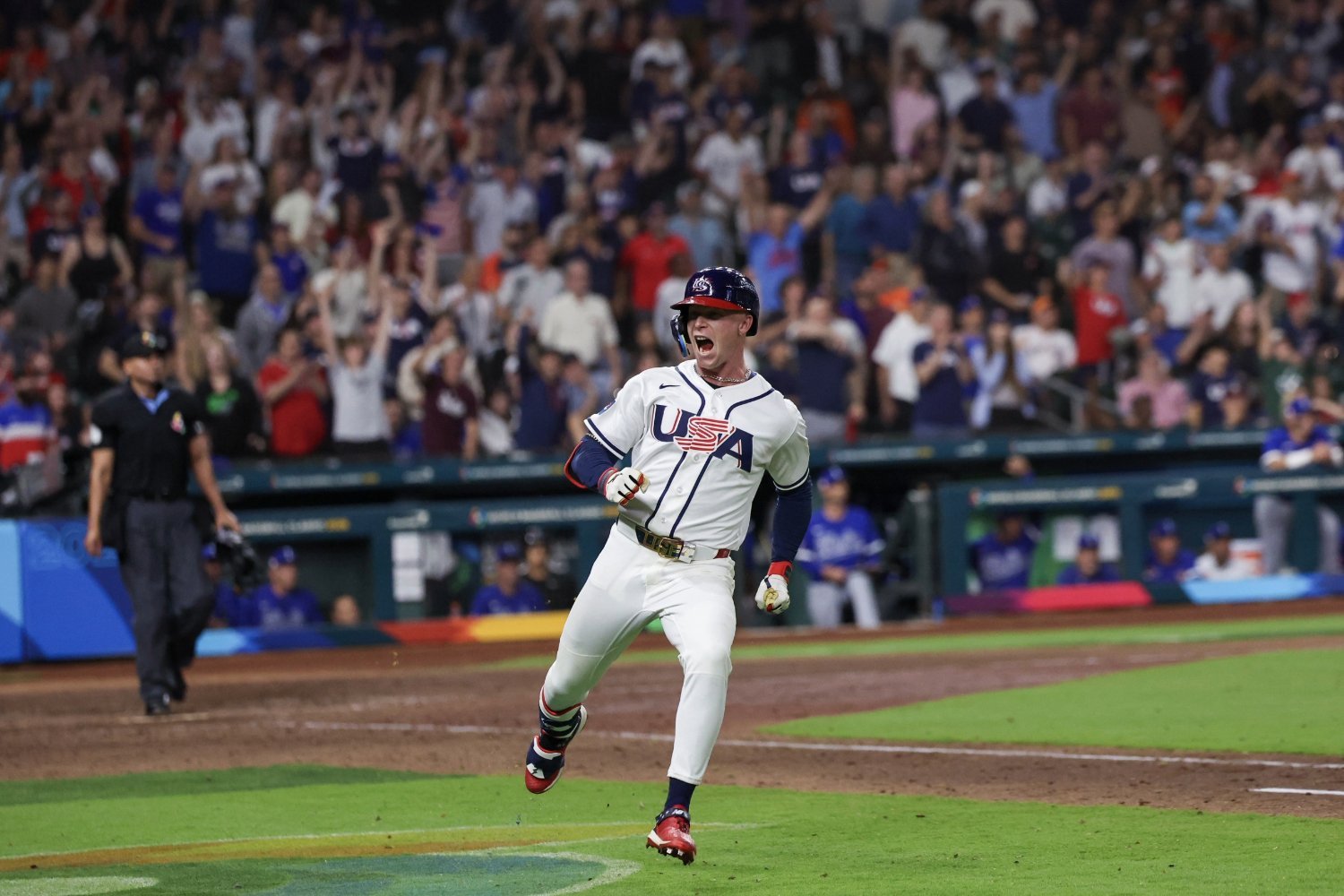 One of the more important developments for the 2025 Chicago Cubs was the evolution of Pete Crow-Armstrong from elite defender to all-around impact player. After finishing well into the below-average end of the wRC+ threshold in 2024 (86), Crow-Armstrong launched his offensive contribution up to a 112 mark in that respect, driven by a massive increase in power. The 2024 iteration of Crow-Armstrong posted 10 home runs and a .148 isolated slugging across 410 plate appearances, while this improved version went for 31 homers and a .234 ISO. He finished as the first Cubs player with 30 home runs and 30 steals in a season since Sammy Sosa did it twice in the early 1990s. That doesn't mean it was perfect, however. The concerns around Crow-Armstrong's plate discipline continued to manifest, and it's those very issues that played a significant role in a second half swoon from the team's star center fielder. While it wouldn't be out of line to discuss Crow-Armstrong's 2025 in the context of "breakout," it was very much a tale of two halves. Here's the breakdown from each side of the All-Star break for him last year: 1st Half: .265/.302/.544, 25 HR, 27 SB, 22.9 K%, 4.5 BB%, 131 wRC+ 2nd Half: .216/.262/.372, 6 HR, 8 SB, 25.6 K%, 4.5 BB%, 72 wRC+ There's some nuance to the splits in the sample (401 vs. 246 PA, respectively) and some bad luck on batted balls (.259 BABIP in the second half), but the difference in the numbers speak to some of the concerns that one might've had around Crow-Armstrong's profile from the jump. The strikeout rate climbed, but it wasn't an issue of being too aggressive in the way that one might also expect. His swing rate actually dropped in August to its lowest in an individual month (27.6 percent). Instead, it was a contact issue. Crow-Armstrong's chase rate went down, but his chase-and-miss rate reached its height in August (56.3 percent) while he struggled mightily against fastballs specifically by the end of the year. In September, his whiff rate against that pitch type (36.1 percent) was his highest in an individual month against any pitch from the three groups (fastball, breaking ball, off-speed). There are myriad factors that we could examine as to why there was such a drop-off in the second half; approach, mechanics, and burnout might've all played their role. Regardless of the root causes, it's clear that the second half decline in production is being taken into account heavily by projection systems. The following is how the various projection models figure Pete Crow-Armstrong for 2026: Steamer: .252/.301/.451, 20 HR, 27 SB, 23.5 K%, 5.5 BB%, 108 wRC+ ZiPS: .255/.304/.461, 25 HR, 32 SB, 24.6 K%, 5.4 BB%, 111 wRC+ ATC: .246/.296/.436, 23 HR, 33 SB, 24.2 K%, 5.6 BB%, 100 RC+ THE BAT X: .244/.296/.430, 22 HR, 35 SB, 24.9 K%, 5.8 BB%, 101 wRC+ OOPSY: .255/.306/.452, 25 HR, 37 SB, 24.1 K%, 5.7 BB%, 110 wRC+ The big takeaway is that it's mildly unusual to see projections so universal on an individual player. With the exception of slugging percentage where we see it a little more, there's very little variance across the board. Pretty much all of the systems like Crow-Armstrong to turn in a season quite similar to what we saw in 2025. But would that be satisfactory? If we wanted to be more pointed about it, what would a good season from Pete Crow-Armstrong actually look like? When he's "on," this is one of the most exciting players in the game. That manifests in terms of both power and speed offensively, with Crow-Armstrong possessing the ability to add to that excitement defensively. If we were going to quantify "good" for him, it likely starts with a continuation of those components on offense. Maintaining the counting stats (homers, steals) should allow him to keep that narrative alive. If we're going to classify it as a good year, though, the rate element will need to start to see some growth. That means that the approach needs to be reined in. It's very difficult for an aggressive hitter to tamp down on that aggression altogether, but if Crow-Armstrong can at least refine the approach to mitigate the strikeouts and create more balls-in-play opportunities, that can create a carryover into the other facets of his game. A few more walks or a few more infield hits should yield tremendous results for him as an individual and the collective lineup. There may not be much more than 30 homers in that bat, but there is certainly more upside to be realized in the swipes game if he's able to work his way on base with more consistency. And that's really what it comes down to for Pete Crow-Armstrong. We know what he adds on the defensive side; this is one of the best gloves in the sport regardless of position. For him, it's about getting that energy into something a bit more focused so that he can begin to drive his production up. The good news is that the projections anticipate at least a slight uptick in walks, which could be indicative of an increased focus on that element of his game. Expectations are a tricky quandary to solve, especially when someone as exciting as him does something like hit multiple home runs for Team USA in the World Baseball Classic. But if Crow-Armstrong can show a little more maturity at the plate while not sacrificing too much of what makes him so exciting to watch, it'll be hard to consider 2026 anything but a resounding success. View the full article
 -
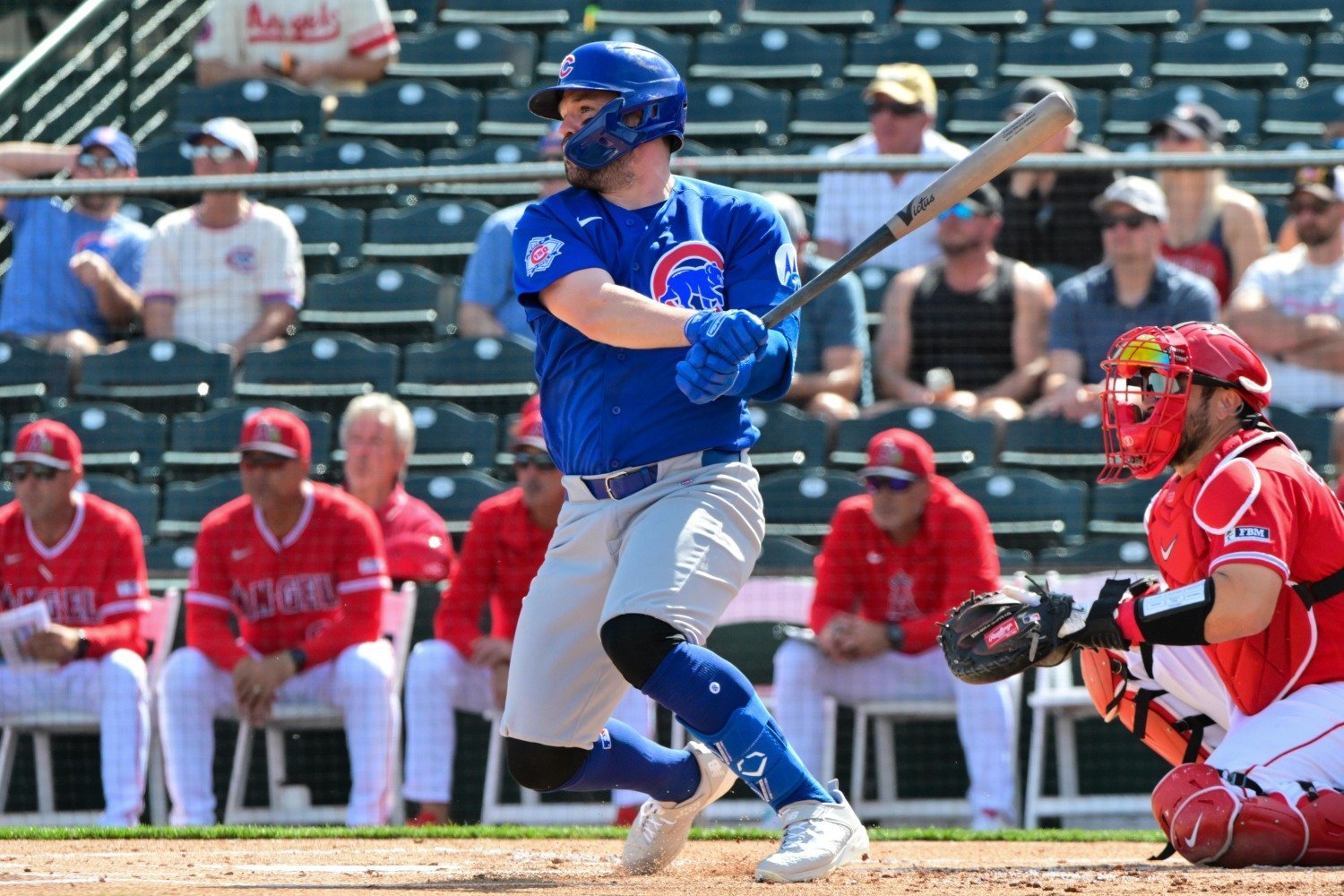 This has been a very tricky spring for forecasting the Chicago Cubs' Opening Day roster—and even (since that exercise is a bit of rosterbation, really, and not an especially vital question) the broader utility plan for the team's positional corps. With two key players away from the team to participate in the World Baseball Classic and another having been severely delayed in reporting to camp, there have been variables for which Craig Counsell has had to account when filling out Cactus League lineup cards that wouldn't exist most springs, let alone during the regular season. There are also a greater-than-usual number of veterans vying for a roster spot, and often, the evaluation of such candidates goes far beyond what we can see on the field each day. Rather than make any overconfident predictions, then, let's pause today to ask some questions. Here are five things the Cubs need to know by the time they head north, but which (even if they have a strong inkling) fans don't yet have much clue about with two weeks to go. 1. Will Moisés Ballesteros Be on the Roster? This one is very important, because it has implications for other questions we'll consider, too. Ballesteros reported to camp late due to visa issues beyond his control, but has hit the ground running at the plate. In 65 pitches seen, he's been patient (44.6% swing rate), hit the ball hard (105.9 MPH 90th-percentile exit velocity) and made lots of contact (17.3% whiff rate). If he's destined to be the team's primary designated hitter, he'll have no trouble being ready for the season, despite the late start. However, of his six Cactus League games, he's been behind the plate for five of them. Surprisingly, it looks like Ballesteros might be a viable catcher after all, which changes a lot of things for the team. Firstly, they already have two veteran, roster-locked catchers. Secondly, if Ballesteros is showing them enough to be seriously considered as a backstop, he probably needs a bit more seasoning at the position at Triple-A Iowa, anyway. It's not terribly hard to imagine a scenario in which he's farmed out to begin the year, at this point. He could come up in the event of an injury to either another option at DH or one of the incumbent catchers, or (if everyone is healthy and Ballesteros forces the issue) in the wake of a trade of either Miguel Amaya or Carson Kelly fairly early in the season. That's pure speculation—but the chance of that trip to Des Moines for Ballesteros looks very real right now. 2. Is Michael Conforto Going to Make the Team? This could not be tied any more closely to the first question. Conforto signed a minor-league deal with the Cubs late last month, coming in as an additional option from the left side in the DH equation. He's also an outfielder, but a litany of injuries has turned him from a plus defender in the corners to a nearly untenable one. He can't, in other words, be the team's fourth outfielder, and given how much time Matt Shaw has spent in the outfield so far, he was never likely to be that guy for this team, anyway. However, if Ballesteros is out of the mix to begin the year, Conforto could fit nicely as a DH and occasional right fielder against right-handed pitchers. He's not having an especially encouraging spring in terms of performance. He's swung at 46.9% of the pitches he's seen, but whiffed on a hideous 36.9% of those swings. When he does connect, he's only generating a 90th-percentile exit velocity a bit north of 101 MPH—not what you want from a bat-first player whose profile leans on power. Again, though, he's the type of player the team might evaluate as much on work in the cage or on data not available to the public as on even pitch-by-pitch results in Cactus League action. If you need proof that he's using a different process than he would in the regular season, look no further than the fact that he's never swung at a 46.9% rate in a big-league season. 3. Who'll Win That Fourth Outfielder Job? The fight for the right to back up Pete Crow-Armstrong in center field and provide defensive support in the corners began as a four-man fracas. It's now down to three, with one of them being a new entrant and two of the original combatants having been eliminated. Justin Dean and Kevin Alcántara are both optionable, and will be sent down—assuming they aren't traded (a possibility for Alcántara) or designated for assignment when a roster spot is needed for a non-roster player. That leaves Chas McCormick and Dylan Carlson leading the roster battle, with Shaw having jumped into the fray, as well. Shaw was always likely to make the team, but what role he has within it will determine the makeup of the rest of the bench. If he's a solid center fielder, there's at least some chance that neither Carlson nor McCormick makes the team. So far, Carlson has been the best of the three on the field. He's swung at just 43.3% of the pitches he's seen and whiffed on just 17.2% of those swings. His 90th-percentile exit velocity is around 105 MPH. Counsell has spread the former top Cardinals prospect's work evenly around the outfield, and he's moving well. McCormick, meanwhile, has been much more anxious to make an impression, with mixed results. He's swinging freely (62.5% of pitches seen), and whiffing often (36.9% of swings). His 90th-percentile exit velocity is nearly identical to Carlson's, but given the other key indicators, it's less impressive. However, once more, the team might be judging these guys based more on defense, baserunning and factors that don't show up in Cactus League Statcast metrics than on those numbers, so it's too early to call the race. For what it's worth, McCormick has only gotten one start in center field, the most important position to cover for whoever wins the battle. 4. Where Will Nico Hoerner Hit This Season? Counsell has generally preferred to keep his star second baseman lower in the batting order than most fans would like. Hoerner batted leadoff 65 times in 2024, but that was largely because of a paucity of good options. He batted first or second just 28 times last year, while slotting in sixth 52 times; seventh 37 times; and eighth 26 times. This spring, all seven of Hoerner's starts have come in the first two spots in the batting order. The signal in that data is masked by the noise of other priorities during spring training, like veteran players wanting to get done for the day as soon as possible—and like the absence of Alex Bregman for the last two weeks. Still, it's an interesting development. It's easy to imagine Hoerner leading off against left-handed starters for this team. It would be much more surprising if he hit first (or, more likely, second) against righties, but you can certainly make the case for him, based on the way he finished 2025. That version of the lineup might go: Michael Busch - 1b Nico Hoerner - 2b Alex Bregman - 3b Pete Crow-Armstrong - cf Seiya Suzuki - rf Ian Happ - lf Miguel Amaya - c Michael Conforto - dh Dansby Swanson - ss It's a bit funky, pushing a guy who's in the lineup just to hit down to No. 8 and leaving Happ out of the top five from what is traditionally his stronger side. All seven times Happ has been in the lineup, he's batted third, so maybe a more realistic permutation would be: Busch Hoerner Happ Bregman Suzuki Crow-Armstrong Amaya Conforto Swanson Either way, moving Hoerner up would highlight how deep the addition of Bregman has made the Cubs lineup. It would also be a big bet on Hoerner's anachronistic skill set to keep playing near the top of its range of outcomes, though. Seeing him slide back down in the lineup against righties feels more likely. 5. Will Anyone Be Ready to Back Up Busch? When the Cubs signed Tyler Austin this winter, it appeared that they had a platoon partner in place again for their slugging left-handed first baseman—even as Counsell insisted that he intends to play Busch every day this season. Now, with Austin down, it looks like the sincerity of that pledge will be more sternly tested. Busch has started against three lefties already this spring, and seems likely to be the true everyday guy at the cold corner when the season begins. The question, really, is what the contingency plan will look like. The diminutive Shaw is the team's utility infielder, and makes a poor candidate to play first base. Neither Kelly nor Amaya has ever appeared in a big-league game at first. Nor has Conforto. If the season began today, the Cubs might be inclined to keep Ballesteros, after all—letting him be the backup first baseman, as well as the part-time DH and occasional catcher. That solution is far from optimal, too. Ballesteros is even shorter than Shaw, and not especially mobile. He bats left-handed, so he doesn't shield the team from platoon issues for Busch—only from an injury to him. Austin and Jonathon Long both getting hurt has left the team with an interesting hole in the corner areas of the bench. At this moment, if I had to bet, I would guess that Shaw, Conforto, Carlson and Ballesteros will all make the team when the Cubs break camp. It wouldn't be an exceptionally efficient roster. It's very hard to get Conforto and Ballesteros into any of the same lineups, and they don't complement each other especially well in terms of matchup play. However, all the questions above carry big ramifications, and none of them have clear answers right now. Much could change in the final two weeks of spring training. For a team with division title aspirations, the stakes of that potential change are very high. View the full article
 -
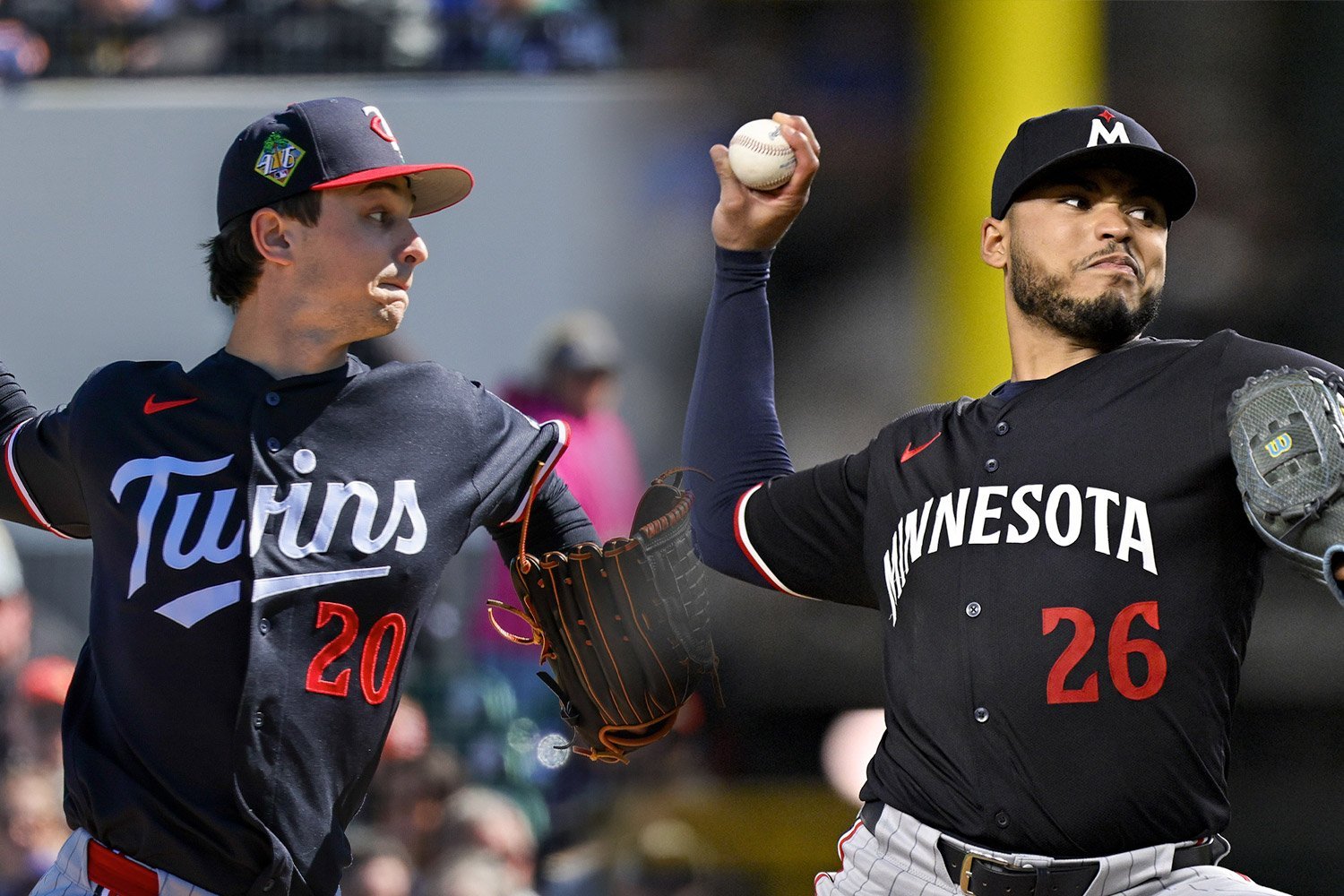 Since Pete Maki took over as the Minnesota Twins’ pitching coach in late June 2022, the club has possessed one of the more unique pitching collectives in baseball, particularly when assessing the stark difference in how team decision-makers have constructed the starting rotation compared to the bullpen. Since July 1, 2022, Minnesota’s starting rotation has the fifth-lowest average four-seam fastball velocity (vFA) in MLB, at 93.1 MPH. In contrast, the club’s bullpen had the tenth-highest vFA in the league, at 94.8 MPH. Unsurprisingly, the driving force behind the stark contrast was Jhoan Duran, who served as the club’s closer during that three-season stretch. Once Durán and his 100.6 MPH fastball departed the organization on July 30, 2025, the bullpen’s vFA plummeted to the third-lowest in baseball, sitting at 92.5 MPH. Interestingly, the starting rotation’s vFA ascended to 17th in the league, with a 93.8 vFA. The last time a Derek Falvey-constructed starting rotation sat that high was in 2018, when the Kyle Gibson, José Berríos, and Jake Odorizzi-led collective ended its season with the 16th-highest vFA in baseball. Given the lack of high-velocity reliever additions this offseason, Minnesota’s bullpen will likely continue residing toward the bottom of the league in vFA this season. Whether intentional or not, 2026 could be the first season this decade where the Twins’ starting rotation averages a higher four-seam velocity than the bullpen, marking a meaningful shift in roster-building approach. To preface, velocity isn’t the sole factor in what makes a fastball serviceable. Bailey Ober has pitched three above-average seasons despite his fastball barely topping 90 MPH. Shape, induced vertical break (IVB), extension, arm slot, and other factors all play critical roles. Still, high velocity is the greatest indicator of four-seam success, lending merit to players’, coaches', and analysts' well-noted fixation on it. Beyond parting ways with Durán and other hard-throwing relievers in Louis Varland, Griffin Jax, and Brock Stewart, Minnesota prioritized acquiring young, hard-throwing starting pitchers at last season’s trade deadline, most notably in Taj Bradley and Mick Abel. Last season, the two young arms’ four-seamers both sat at 96.2 MPH, which tied for the highest in the club’s rotation. Again, velocity doesn’t dictate how effective a starter’s four-seam is. Still, Bradley and Abel’s fastballs are grading out as elite, evidenced by the charts below: As shown above, he is sporting a 61-grade four-seamer over ten innings pitched this spring. Bradley is sporting a similarly impressive 69-grade four-seamer over nine innings pitched. Using the 20-80 scouting scale, both four-seams grade out as true plus pitches, with Bradley’s teetering toward plus plus (or elite). Bradley and Abel’s fastballs aren’t relying solely on high velocity. Instead, the two pitches are also sporting plus IVB and arm-side movement, generating a high number of whiffs up in the zone. Abel is at risk of beginning his 2026 campaign at Triple-A St. Paul. Still, if Bradley and Abel can sustain their plus fastball grades early into the season, Minnesota could have three starting pitchers with near-elite fastballs, joining Joe Ryan. Ryan’s fastball is considerably slower than Bradley’s and Abel’s, sitting at 93.7 MPH over 171 innings pitched last season. Still, his four-seamer was the tenth most effective in baseball in 2025, netting a 17 run value. Long gone are the days of the Twins' starting rotation filled with pitchers like Carlos Silva, Scott Baker, Kevin Slowey, and the like, sporting low-grade fastballs that fail to top 90 MPH. Instead, the club has undergone a four-seam renaissance, fielding Ryan, Bradley, and Abel, with Zebby Matthews also fitting a similar mold. Will it lead to the rotation being an above-average unit in 2026? That is to be determined. Yet, the collective has real upside, and could blossom into the club’s best rotation since the 2023 unit that led the organization to its first playoff win in 19 years. View the full article
 -
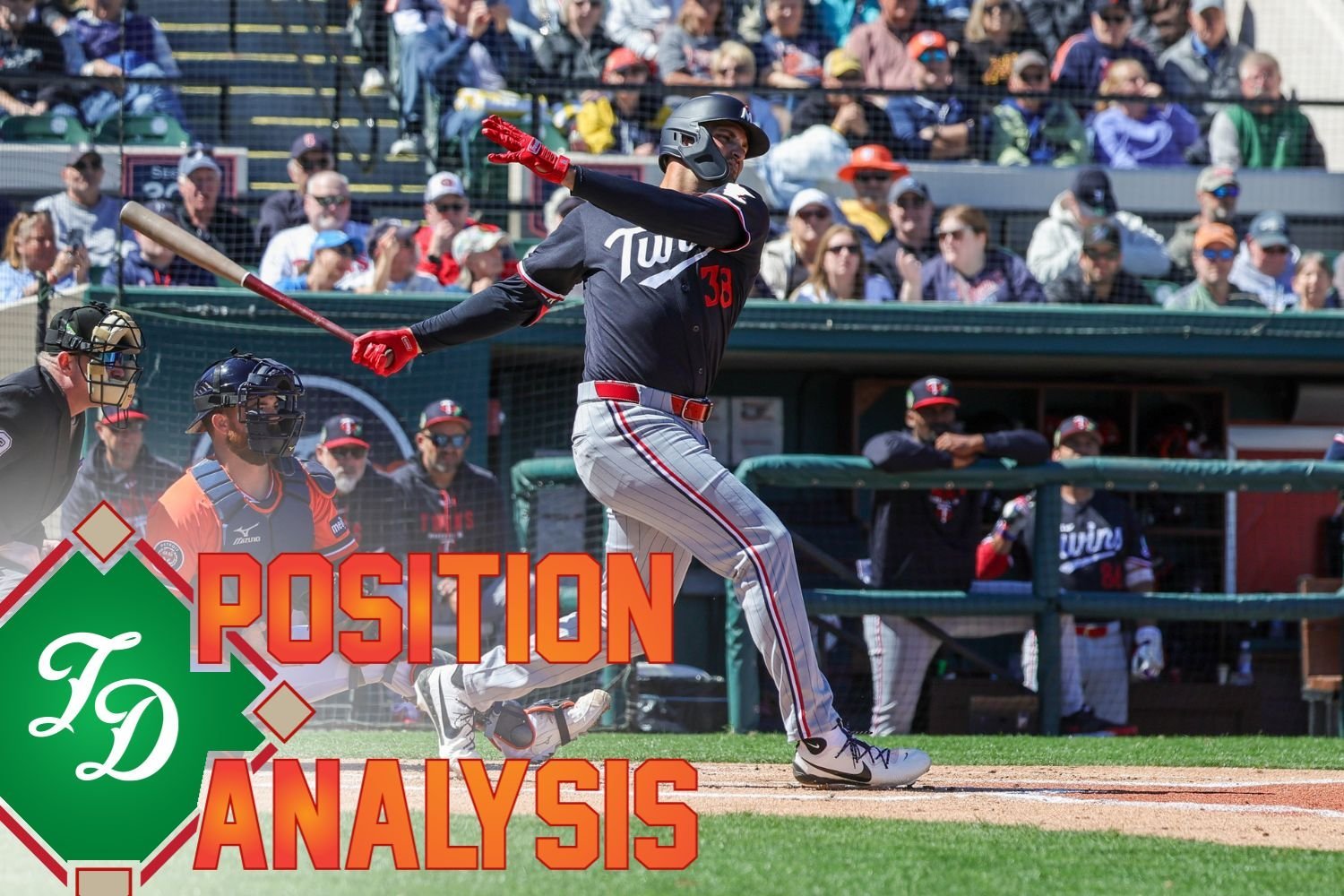 This might sound counterintuitive for one of the least demanding defensive positions with an abundance of capable players, but great right fielders are hard to find. The low bar for fielding equates to a high bar for hitting. To wit: FanGraphs has only nine right fielders projected to be worth 2.0 WAR or more this season. Matt Wallner is one of them. His rampant swing-and-miss tendencies lead to a bad rap with many fans, but Wallner is one of Minnesota's most reliably productive players, still boasting untapped upside, and that's why right field ranks as one of the team's sneaky strengths. TWINS RIGHT FIELDERS AT A GLANCE Starter: Matt Wallner Backup: Josh Outman Depth: Trevor Larnach, Alan Roden, Kody Clemens Prospects: Walker Jenkins, Emmanuel Rodriguez, Gabriel Gonzalez Twins fWAR Ranking Last Year: 18th out of 30 Twins fWAR Projection This Year: 9th out of 30 THE GOOD Huge power, huge arm: Wallner is the classic imagining of a right field specimen. He's not only been one of the Twins' best hitters since reaching the majors, but one of the better hitters in baseball — among 299 players with 800+ PA since 2023, Wallner ranks 20th in wOBA, nestled between Rafael Devers and Christian Yelich. If we narrow that list down to primarily right fielders, Wallner is sixth, trailing only a quintet of superstars: Aaron Judge, Ronald Acuña Jr., Juan Soto, Kyle Tucker, Mookie Betts. Wallner's 49 home runs and 129 OPS+ over the past three seasons should not be discounted, regardless of the strikeouts and a relative down year in 2025. His overall numbers were dampened by a poor finish, and at no point was he really mashing the way he did in 2023-24. It was also noticeable that most of his damage came with bases empty. Despite those factors, he was a solidly above average hitter (110 OPS+) and one of the team's most valuable players. I truly believe we saw Wallner at his worst. Time to see him at his best? He's entering his age-28 season with nearly 1,000 MLB plate appearances under his belt. Wallner had a winter to ruminate on the adjustments opposing pitchers made against him, and now has a clear path to everyday playing time in right. While I suspect left field will be more of a revolving door, this position belongs to Wallner — especially because he held his own against left-handed pitching last year (.790 OPS in 97 PA) and the Twins won't have the luxury of platooning both outfield corners. He's going to be treated like a core lineup fixture, and he should be. I do think there is a point where you start thinking about future succession plans in right if certain negative trends from last year persist (see below), but we're not close to it. THE BAD Wallner undeniably took a big step backward in 2025. When dissecting his play, there are a few glaring issues that stick out. One is that he was simply terrible in the clutch. I'm inclined to dismiss this as statistical noise, given the sample size and how successful he was with RISP in 2023-24. Another is the defensive regression and missed plays. He's not a great fielder, but good enough to live with, if he's hitting. Therein lies the real catch. Wallner was more of a solid hitter than standout last year, and at that rate he's a pretty mediocre player. What really plagued him in 2025 was that opposing pitchers seemed to have him figured out. It doesn't take a seasoned MLB scout to see that Wallner was getting attacked up in the zone with velocity and struggling to adapt or answer. Again: he still hit 22 home runs and posted an above-average OPS, because the plan's not foolproof and he's capable of punishing any slight lapse in execution. But to cement his place in right field, Wallner needs to get back to being more than a mistake hunter. And he needs to show he can stay healthy after uncharacteristically going down with a couple of soft-tissue injuries last year. If he does get hurt, I presume Trevor Larnach would shift to right, clearing up the left field logjam at least for some time. In terms of prospect pipeline, Gabriel Gonzalez is the name to watch here. Coming off a breakthrough season in the minors and freshly added to the 40-man roster, Gonzalez seems destined for right field (if not DH) due to his lack of speed and range. Should Gonzalez pick up where he left off last year, when he batted .329 across three levels and finished in Triple-A, he could start putting applying pressure quickly if Wallner's issues aren't resolved. But he too will face a high bar for offensive production in the majors, because he's likely to be an even worse fielder. THE BOTTOM LINE Right field projects as one of the team's biggest strengths, and one of the few positions where Minnesota is forecast to be a top-10 MLB team. A return to previous form for Wallner combined with good health could lift them into the top five at the position, while solidifying his entrenchment in right. (Or lifting his trade value as the Twins look to make room for rising prospects.) Either way, right field looks to be in good hands. Catch up on the rest of our roster preview series: Twins 2026 Position Analysis: Catcher Twins 2026 Position Analysis: First Base Twins 2026 Position Analysis: Second Base Twins 2026 Position Analysis: Third Base Twins 2026 Position Analysis: Shortstop Twins 2026 Position Analysis: Left Field Twins 2026 Position Analysis: Center Field View the full article
 -
Adam Mazur to miss 2026 season following elbow surgery
DiamondCentric posted an article in Fish On First
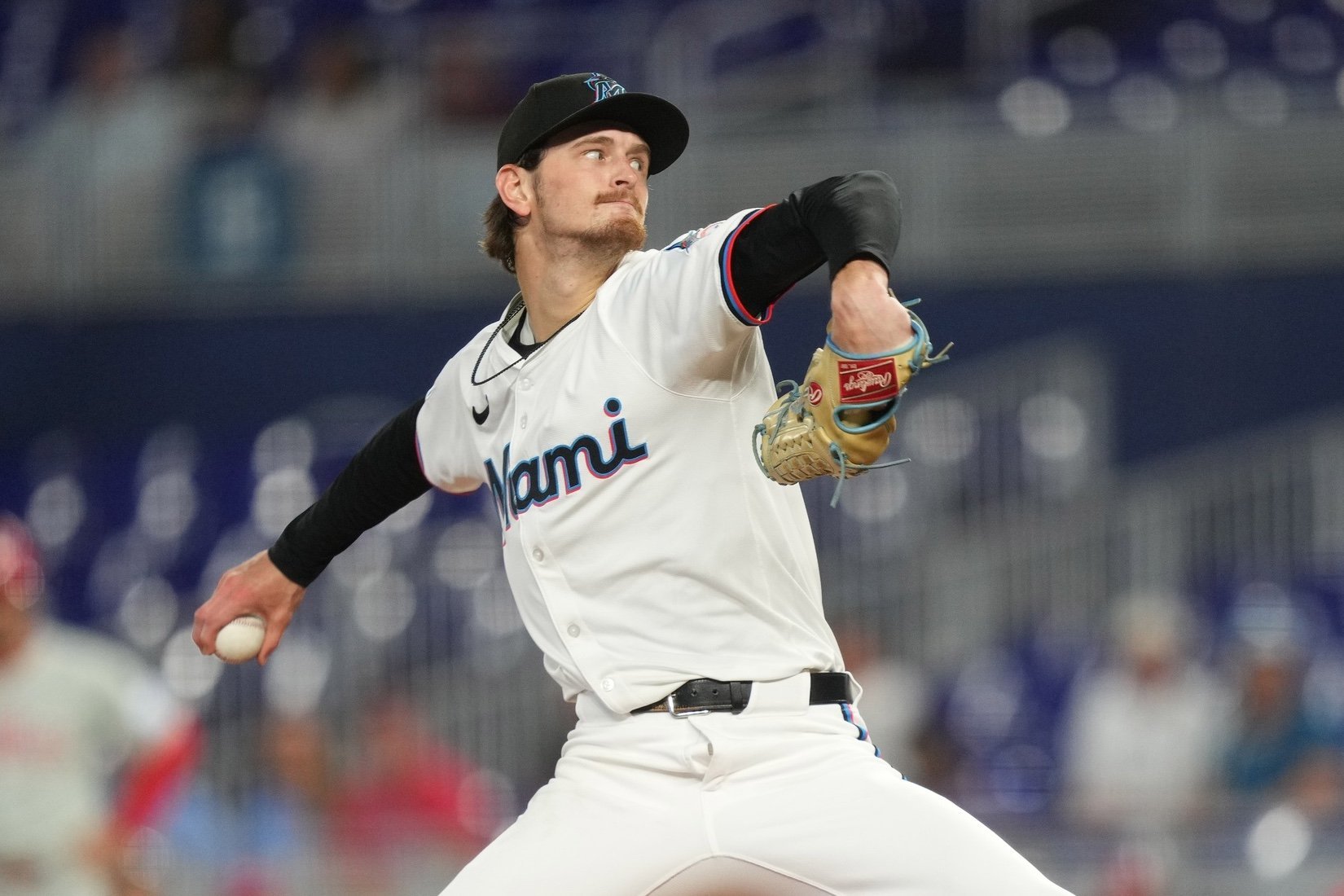 The Miami Marlins have announced that right-hander Adam Mazur will undergo elbow surgery on Wednesday, sidelining him for the entire 2026 season. Dr. Keith Meister will perform the procedure. The slender Mazur reported to spring training heavier than ever this year, specifically with the goal of maintaining his physical health throughout a full-length season. Instead, he's looking at a lengthy absence after only three innings of exhibition action. In 2025, which was his age-24 season, Mazur mainly pitched with Triple-A Jacksonville (4.36 ERA and 5.10 FIP in 107.1 IP). He also posted a 4.80 ERA and 4.90 FIP in six starts at the major league level. Mazur possesses a six-pitch arsenal and plus control, but he's still searching for a way to consistently miss bats against MLB competition (career 13.8 K%). Prior to this injury, Mazur was believed to be seventh on the Marlins' starting rotation depth chart behind Alcantara, Pérez, Max Meyer, Braxton Garrett, Chris Paddack and Janson Junk. Left-hander Robby Snelling was acquired along with Mazur in a 2024 trade with the San Diego Padres—he is perhaps the biggest beneficiary of his teammate's absence. Should any two of the aforementioned names suffer concurrent injuries of their own early in the season, the 22-year-old prospect figures to be called up to make his big league debut. Creating room for Snelling on Miami's 40-man roster is no longer an issue—Mazur can be placed on the 60-day injured list as the corresponding move when needed. Mazur currently has 67 days of MLB service time. He will accrue a full year of service in 2026 while rehabbing from surgery. He's on track to reach free agency following the 2031 season. The Marlins have put the utmost trust in Dr. Meister through the years. He guided Sandy Alcantara (2023) and Eury Perez (2024) through their own UCL reconstructions. View the full article
 -
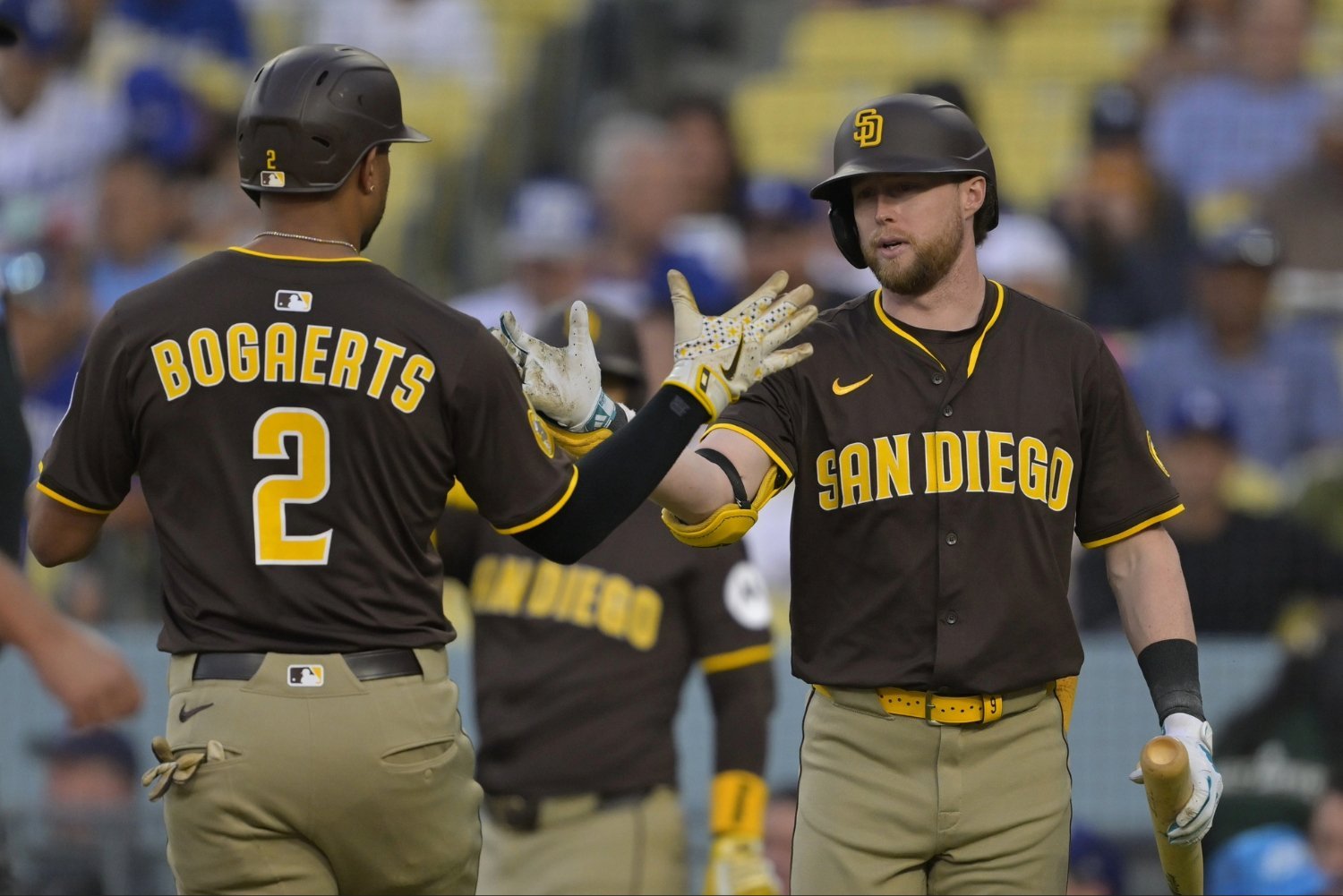 When the San Diego Padres square off against Tarik Skubal and the Detroit Tigers later this month, it won’t be one of Fernando Tatis Jr. or Luis Arráez doing so atop the lineup. The two combined for 161 games out of that spot in the order in 2025. Instead, Craig Stammen appears poised to take a different approach. Prior to the start of the World Baseball Classic, Xander Bogaerts assumed that role for the majority of his exhibition appearances. In his stead, it’s been Jake Cronenworth holding down the No. 1 spot in the order. Given how the rest of the lineup appears destined to be structured, it seems as if it’ll be one of those two working out of the top spot in the Padres’ order to start 2026. Which one, though, remains something of a mystery as we head into the second half of the spring slate. When one considers the options for lineup configuration in the upcoming season, there are a few possibilities we can eliminate. Arráez, obviously, will not be around given his contract in San Francisco. Tatis is set to move to the third or fourth spot given the upside he presents in run production. He’ll likely work back-to-back with Manny Machado on some level. Jackson Merrill should fit into somewhere in between second and fifth in the order, as well, with anyone else anticipated as a regular working farther down the lineup. Which means that the Bogaerts-Cronenworth contingent that has gotten so much work there this spring isn’t any kind of mirage. Bogaerts could very well be the favorite given his volume of appearances prior to departing for the WBC. In his absence, Cronenworth has received plenty of work. There might not be a “right” answer for which of the two could, ultimately, land the gig. Instead, the correct choice may boil down to which skill set Stammen prefers in that role. Between the two, Bogaerts represents the more contact-oriented bat to put atop the lineup. His 3.75 pitches per plate appearance checked in below league average (3.88), which resulted in a walk rate that finished in just the 54th percentile (8.7 percent). While that number sits around league average, Bogaerts is able to use a keen eye to drive his contact rather than work a walk. His chase rate (23.6 percent) ended the year a shade below the 80th percentile and resulted in an above-average strikeout rate (17.0 percent). Bogaerts is able to use those factors to generate consistent contact, the rate of which has ended at or above 80 percent in each of the last three seasons. There’s also a bit of actual experience in that top spot to consider. While not a massive sample, Bogaerts does have 365 plate appearances to his name as a leadoff hitter. In such a role, he’s slashed .283/.351/.397, with a 14.5 percent strikeout rate against a 9.0 percent walk rate. You’re not relying on power in that spot anyway, but the combination of approach and contact could make him a worthwhile option. That’s if Stammen can stomach the streakiness which the bat of Xander Bogaerts bore in 2025. Cronenworth represents a vastly different player in that role than Bogaerts would. While the latter relies on his approach to create contact and work his way on base through that method, much of Cronenworth’s value is wrapped up in the walk itself. Not only did Cronenworth’s 4.22 pitches per plate appearance rank seventh among all qualified hitters last season, his 13.4 percent walk rate landed in the 94th percentile. With that patience, he was able to post a .367 on-base percentage that eclipsed the previous season’s mark by more than 40 points while also serving as the top rate of his career. A strikeout rate that crossed the 20 percent threshold last year might indicate an overreliance on patience, but it’s difficult to question the benefit in yielding such a consistent on-base presence. If there’s another element to consider here, it’s in the baserunning. At no point in his career has Bogaerts fallen below the average threshold in FanGraphs’ BsR baserunning metric; he was at 2.6 and 1.7 in each of the last two seasons, respectively. For his money, Cronenworth was at just 0.1 in 2024 and -0.6 in 2025. So, while Cronenworth may have the sprint speed advantage – 28.1 feet per second to Bogaerts’ closer-to-league-average 27.6 – Bogaerts is better at applying it to the basepaths. Ultimately, though, there isn’t a whole lot separating the two. The offensive skill sets present different profiles while the baserunning difference is fairly marginal between the two. If Bogaerts was an upper-tier contact hitter with a runaway advantage in the quality of his baserunning, then his sample in that spot this spring would just about indicate the whole competition as being over. But Cronenworth’s ability to draw walks and provide competence on the bases doesn’t rule him out entirely, either. It’s going to come down to what Craig Stammen wants out of that spot. If he wants contact and baserunning acumen, it’s probably going to Xander Bogaerts. If it’s the steadiest of eyes to work an early count and additional quickness on the bases, then perhaps Jake Cronenworth gets some run. Either way, there’s a suitable player here. It’s just a matter of what Stammen wants at this point. View the full article
 -
Who Will Be the First Twins Outfield Prospect Called Up?
DiamondCentric posted an article in Twins Daily
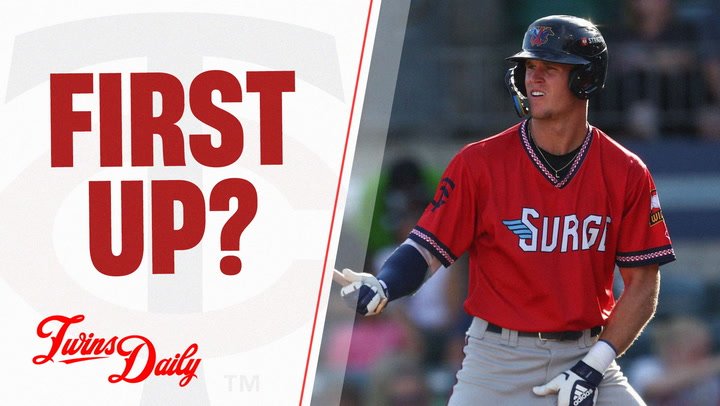 Walker Jenkins, Emmanuel Rodriguez, and Gabriel Gonzalez are all in Triple-A, ready for the majors. Who will get called up first, and does one name have a slight edge? View the full article
 -
Red Sox Heights: Which Players Got Taller or Shorter This Season?
DiamondCentric posted an article in Talk Sox
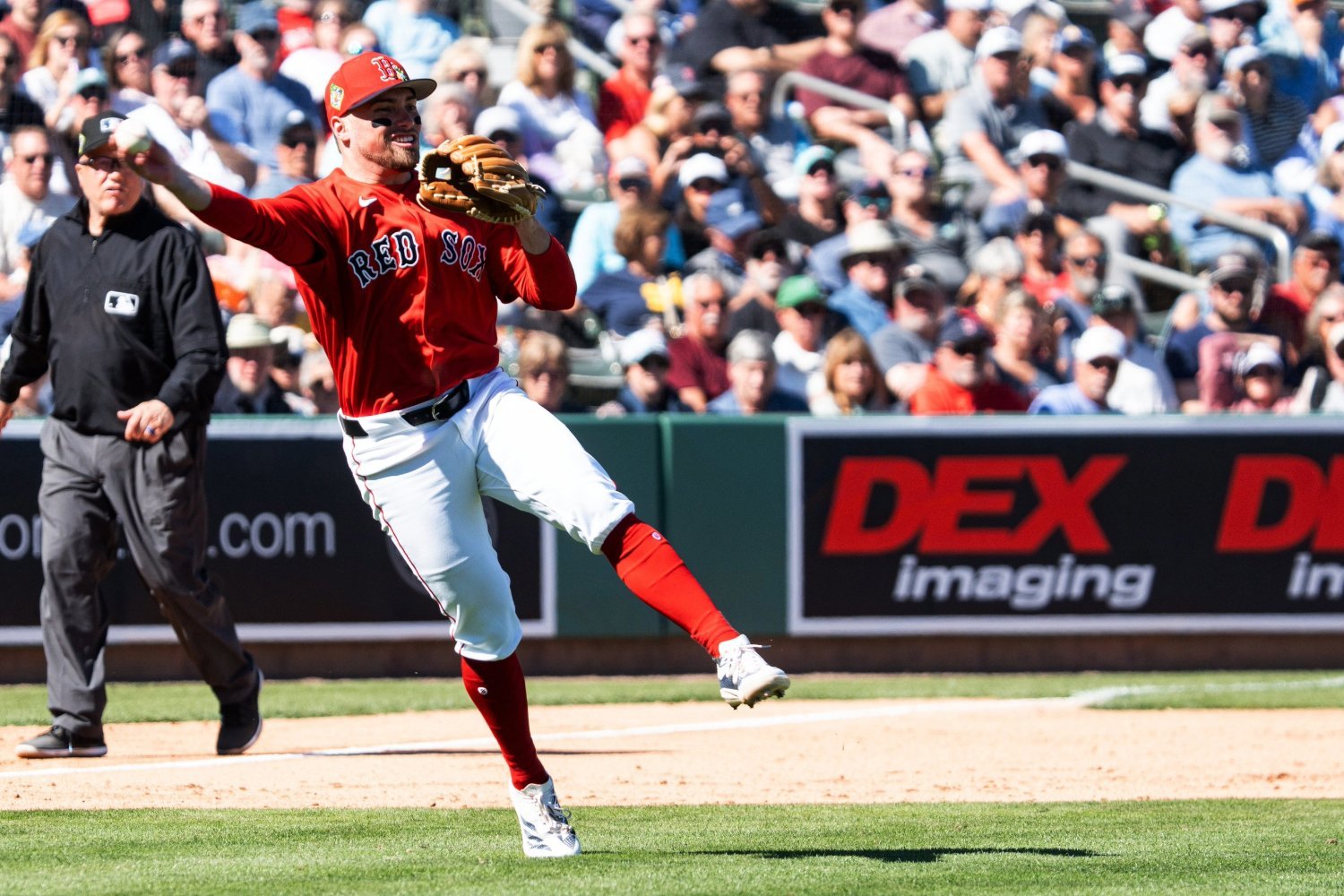 Professional athletes are just like us! They fib about their height. (For reference, I’m 5’6” on a good day.) Using data courtesy of Sox Stats, we can see which Red Sox players have shrunk (spoiler: most of them) or have grown. Ceddanne Rafaela, Justin Gonzalez, and Nelly Taylor are the only three players in the organization who have grown over the past two seasons. All three players are on the younger side, so a late growth spurt isn’t shocking. The biggest takeaway is that position players' heights have fluctuated the most, not pitchers. Are pitchers more secure in their height? Red Sox Chief Baseball Officer Craig Breslow – who’s listed at 6’0” – clearly has a type that he likes to target in pitching acquisitions. (AKA: Tall and muscular guys, which I don’t blame him for.) Sonny Gray (5’10”) is an outlier as the team’s “shortest” pitcher. Does height even matter? No, not really. One of my favorite aspects of baseball is that players come in all different shapes and sizes. Unlike other sports, there isn’t a secret formula to build the perfect player. Over the past eight seasons, the heights of American League MVPs spread by over a foot from Jose Altuve (5’6”, 2017) to Aaron Judge (6’7”, 2025). Former Red Sox second baseman Dustin Pedroia (5’9”) didn’t let his stature limit him, and many smaller players, like newcomer Caleb Durbin, cite him as an inspiration. So, the next time you tell a little white lie about your height, just remember you’re in good company. View the full article
 -
Twins Daily 2026 Top Prospects: #3 Emmanuel Rodriguez, OF
DiamondCentric posted an article in Twins Daily
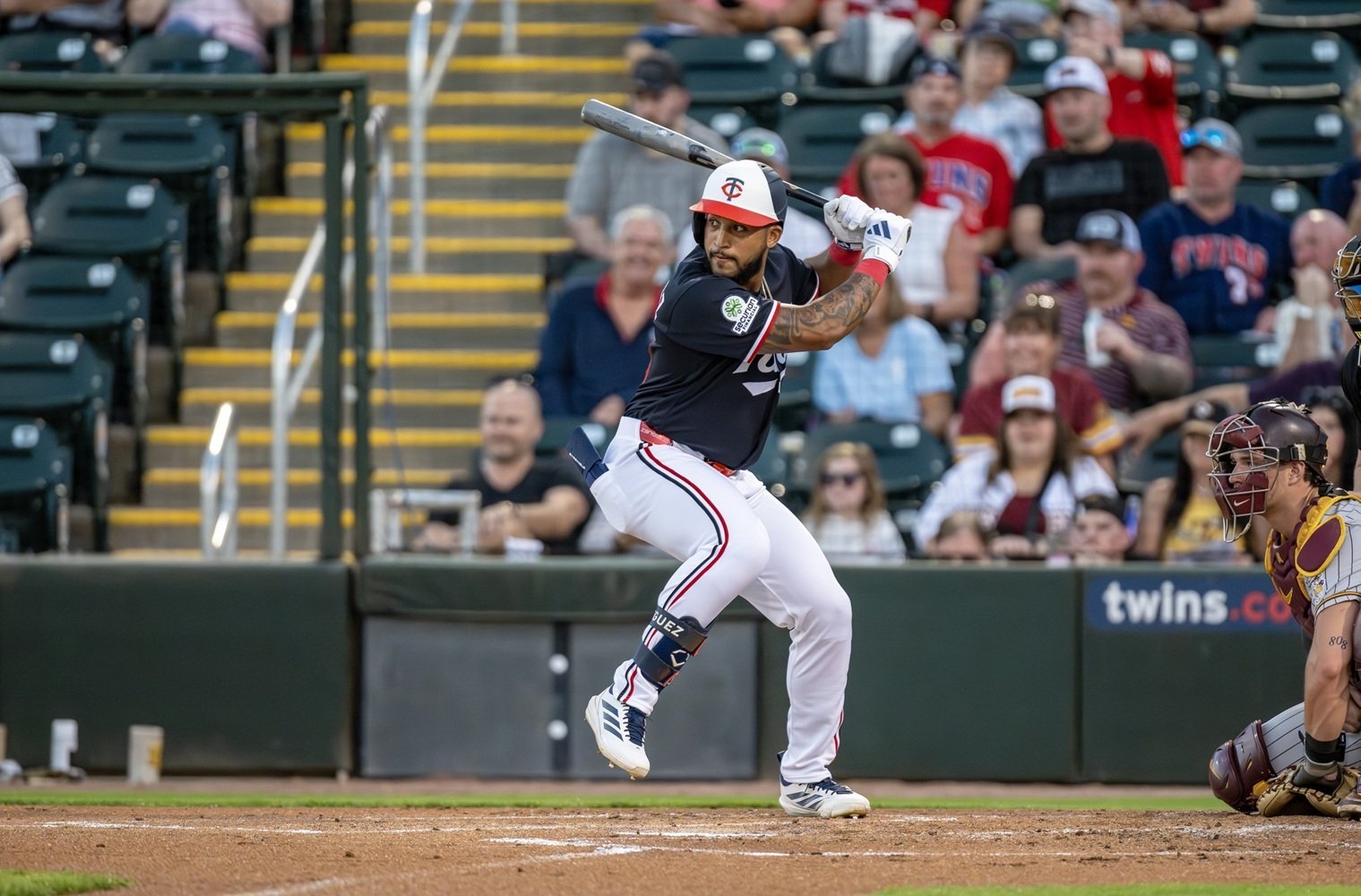 The Twins' performance in the international market in the Derek Falvey era is largely pinned on Emmanuel Rodriguez. Despite missing significant time due to a litany of injuries in recent seasons, Rodriguez has performed well at every MiLB pitstop. It's a rare combination of exceptional on-base ability, eye-popping power, and strong supplementary tools being balanced out by significant concerns around his hit tool. Emmanuel Rodriguez Age: 23 (DOB: 02/28/2003) Bats/Throws: L/L 2025 Stats (CPX, A, Triple-A): 267 PA, .269/.431/.409, 9 2B, 1 3B, 6 HR, 10 SB ETA: 2026 2025 Ranking: #2 National Top 100 Rankings BP: 48 | MLB: 74 | ATH: 57 | BA: 57 | ESPN: 97 Personally, I went back and forth on Kaelen Culpepper and Rodriguez in this spot several times. If you want stability and floor, Culpepper is the guy. If you want the only Twins prospect not named Walker Jenkins who is capable of a 3-4 win season, E-Rod should be number two. His drop, more than anything else, is indicative of a prospect whose only averaged 70 MiLB games played in a three-season span between 2023-2025. What to Like Rodriguez has one of the weirdest, most fascinating offensive profiles in baseball. With impressive assets only matched by the magnitude of his flaws. He’s a patient hitter, running a 37% overall swing rate in the minors in 2025. That’s Juan Soto level selectivity. We also don’t have a ton of examples of guys with a matching number in the majors. Luckily for Rodriguez, his patience is the product of a fantastic eye at the plate. He walked 20.6% of the time in 2025, contributing to a whopping .430 OBP. The Twins have worked with Rodriguez on being more aggressive on pitches thrown over the heart of the zone, to avoid leveraged counts. It’s difficult to ascertain how successfully he’s managed it, given his limited time on the field There’s impressive power to go with his ability to get on base. Rodriguez put up max exit velocities in the 115 mph range in 2025 and has been up as high as 117 mph in his MiLB career. There’s 30 home run power in there, potentially. Rodriguez’s isolated power fell significantly from 2024 (.287) to 2025 (.139). That falloff doesn’t line up with how hard E-Rod hits the ball. For now, I think we can attribute that to constant interruptions to his playing time, until that’s a pattern that continues into 2026. What's Left to Work On? Let’s talk about the issues. Aside from health, Rodriguez’s hit tool has some major red flags. There’s some holes in his swing at the top of the zone, and the bat-to-ball numbers are suspect. The overall contact rate (67%) is poor for a high-caliber prospect at AAA. It’s particularly bad out of the strike zone (33.8%). This led to a 31.8% strikeout rate in 2025. You can see how this might play out in the majors; a patient power hitter with poor contact skills gets into too many leveraged counts, and increasingly swings through elite big-league stuff. There are some valuable supplementary tools in the bag here, too. E-Rod is a good defensive centerfielder. Not in the way Byron Buxton is, in which elite speed contributes to outstanding range. Rodriguez gets good jumps and has outstanding body control. It’s backed by a big arm, too. It’s a similar defensive projection to Walker Jenkins; solid-to-good in centerfield, potentially great in a corner spot. What to Look for in 2026 The version of E-Rod who puts it all together is a scary prospect. It’s a .230 hitter with 30 bombs, 25 bags, playing a premium defensive position. Sadly, we’ve yet to see that version play out over the course of a minor league season. He’ll debut in 2026 and should be the prospect in this top ten who hits the majors first, health permitting. Rodriguez’s having a strong year would do wonders for the Twins, who retain a massive yet deeply inspiring menagerie of left-handed hitting outfielders on their 40-man roster. There’s an unusually wide range of outcomes here for a prospect already in AAA. Let’s hope 2026 is the year health, performance, and opportunity match up neatly for a Twins top prospect. View the full article
 -
Will Michael Massey's Injury Open Up a Roster Spot for Josh Rojas?
DiamondCentric posted an article in Royals Keep
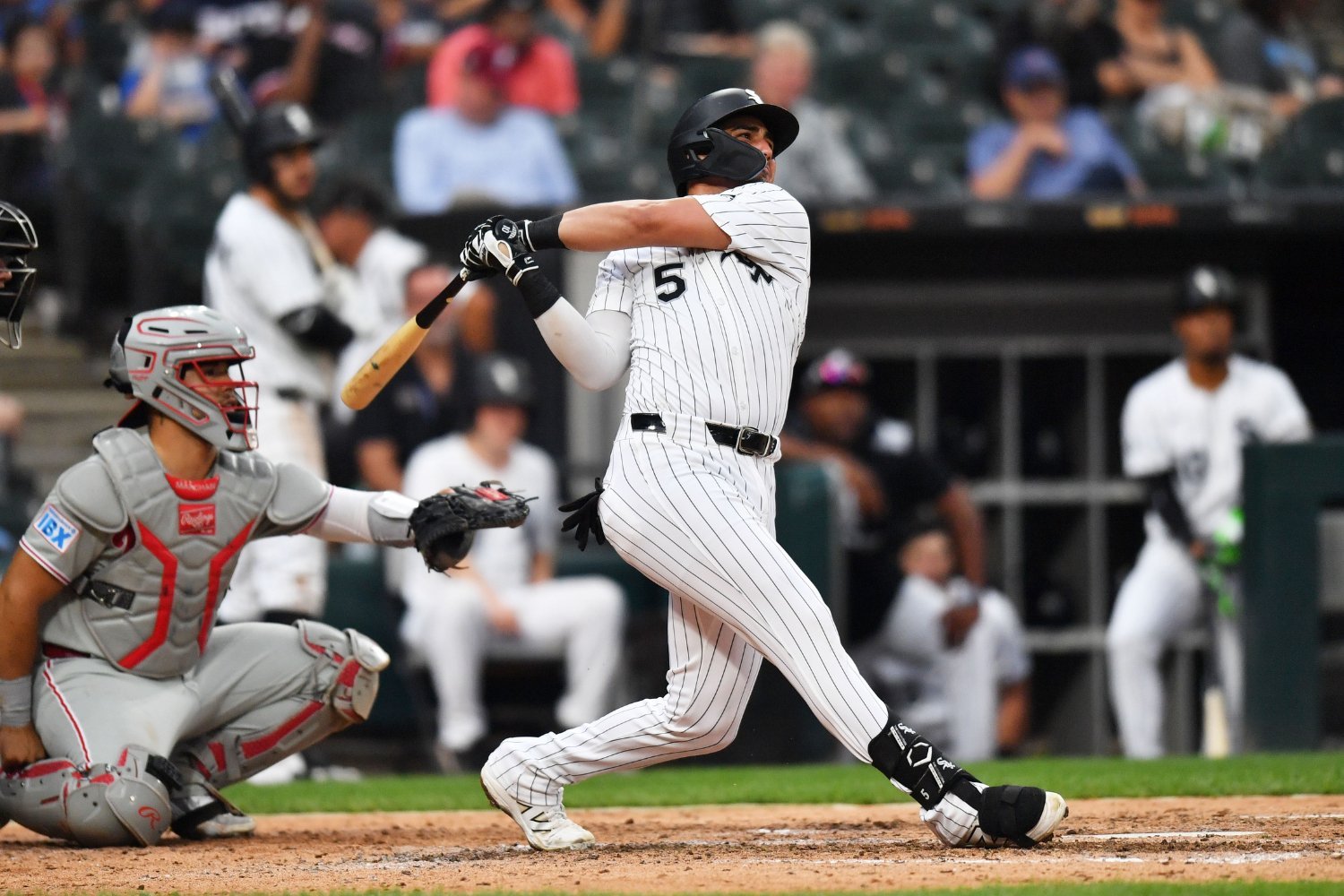 On Tuesday morning, MLB.com Royals beat writer Anne Rogers reported that utility player Michael Massey suffered a low-grade calf strain and would be out for a little bit of time, according to Royals manager Matt Quatraro. The injury is an unfortunate one for Massey, who has had a strong Spring Training campaign thus far. In eight games and 24 plate appearances, the 28-year-old is slashing .364/.417/.545 with a home run, a double, three RBI, and a stolen base. Massey also has a .445 wOBA and is posting some impressive Statcast metrics in Cactus League play, as evidenced by his TJ Stats summary this spring. Massey is coming off a tough 2025 campaign, which is a shame after a promising 2024 campaign (.743 OPS) that saw him get some leadoff at-bats in the postseason. In 277 plate appearances, he slashed .244/.268/.313 with a .581 OPS. He only had three home runs, and his 3.1% barrel rate ranked in the 9th percentile last year. While he did a good job of making contact at the plate (85th percentile whiff rate and 86th percentile K rate), he also didn't walk much, as his 3.3% walk rate ranked in the second percentile. Thus, when balls weren't falling for base hits, he struggled to get on base or provide much value. While the injury doesn't seem "serious", Massey has a history of injuries in his short career. He's only had more than 400 plate appearances in a season once (2023, when it was 461). Thus, the Royals may take it slow with Massey's return, especially if he didn't respond positively to the calf injury on Friday. If that's the case, that could open up a spot for a non-roster invitee to make the Royals' Opening Day roster. Josh Rojas may be the ideal candidate to replace Massey in Atlanta on March 27th. Rojas Standing Out in Spring Training The Royals signed Rojas to a Minor League contract this offseason, giving him an invitation to Minor League camp. The 31-year-old veteran infielder is coming off a brutal 2025 campaign with the Chicago White Sox, which explains why he didn't receive a Major League deal this offseason. In 69 games and 211 plate appearances with the White Sox, Rojas hit .180 with a .232 wOBA and 44 wRC+. He only had 2 home runs, 14 runs scored, and generated a -1.3 fWAR. However, in Cactus League play, it's been a much different story at the plate for Rojas. In 10 games and 26 plate appearances, he is hitting .304 with a 1.081 OPS. He also has two home runs, three doubles, eight RBI, and three walks to five strikeouts. His Statcast percentiles have also been stellar this spring, per TJ Stats, though the sample size is small. Some of the metrics may be hard for Rojas to sustain. I don't think Rojas will carry his 22.2% barrel rate into the regular season, especially since he has a career barrel rate of 4.6%. Furthermore, his 50% hard-hit rate is 15.7% higher than his career hard-hit rate (34.4%). Still, it's been nice to see him flex some power, even in the hitter-friendly environment of the Cactus League. However, there are some encouraging trends at the plate from Rojas this spring that could be helpful to this Royals roster, especially off the bench. First off, Rojas has done an exceptional job this spring, limiting whiffs and making contact, especially at balls in the zone. His 19.4% whiff rate ranks in the 74th percentile, and his 91.7% Z-Contact% ranks in the 85th percentile. He had an 83% Z-Contact% and 23% whiff rate last year with the White Sox, so what he's doing this spring isn't out of the realm of possibility for the regular season. Another promising trend with Rojas this spring has been his discipline at the plate. The Royals hired assistant hitting coaches Connor Dawson and Marcus Thames because they had a reputation for improving hitters' swing decisions. Rojas has seemed to benefit from their limited tutelage this spring, as his 22.2% O-Swing% ranks in the 71st percentile and his BB% ranks in the 60th percentile. Even last year, the former Hawaii product had an 18.6% O-Swing% with the White Sox. That is vastly better than the 40.5% O-Swing% Massey put up with the Royals in 2025. Thus, the Royals could slow-play Massey's return because Rojas may be a better fit, initially, for what they want to do as a group of hitters in 2026 (which is to limit chasing). Lastly, Rojas can play multiple positions in the field, including second, third, and left field, much like Massey. That positional versatility is something Quatraro values from the bench, and Rojas would seamlessly fit in that multi-utility role if Massey is not ready to go by Opening Day. How Does Massey Fit on the Active Roster? With Massey out, Rojas would likely fit in that utility role off the bench. Roster Resource predicts that the bench would also include Nick Loftin, Tyler Tolbert, and Starling Marte. Rojas fits in Massey's role well because, like Massey, Rojas is a left-handed hitter. My guess is that Rojas would split a lot of time at second base with Jonathan India, depending on the matchups (which Massey would've done as well). India is having a solid spring campaign with a .267/.500/.533 slash and .460 wOBA in 22 plate appearances. India has not shown much power. However, he has six walks to two strikeouts and has posted strong Statcast percentiles in plate-discipline categories during Cactus League play. Yes, there are some concerns with India's profile this spring. The Hard-Hit% is low (20%), as is his average EV (79.9 MPH). However, he has a 100th-percentile O-Swing% and 98th-percentile Whiff and BB rates. If India can transition that to the regular season, the Royals will be happy, especially with less expected from India than a year ago. It should be common for Rojas to play 2-3 games a week, with India playing the other 2-3 games, depending on the matchup. Rojas can also fill in left field as necessary, though that may be tougher with Loftin and Marte on the roster. Speaking of Loftin, he was held out of Tuesday's game, so his health will be something to watch as the Royals prepare for Opening Day. Loftin seems like a sure thing for the Opening Day roster. However, if this "soreness" persists, Rojas could get his spot on the Opening Day roster, and Massey could keep his if the former 2019 MLB Draft pick is fully recovered by next week. Regardless, Rojas' chances to make the Royals Opening Day roster are looking much better than they did when players first reported to camp in Surprise. He may not be a long-term solution in Kansas City, especially if Massey can bounce back to 2024 form. That said, Rojas has done everything he can in Arizona to show that he deserves a spot on this Royals roster in 2026. View the full article
 -
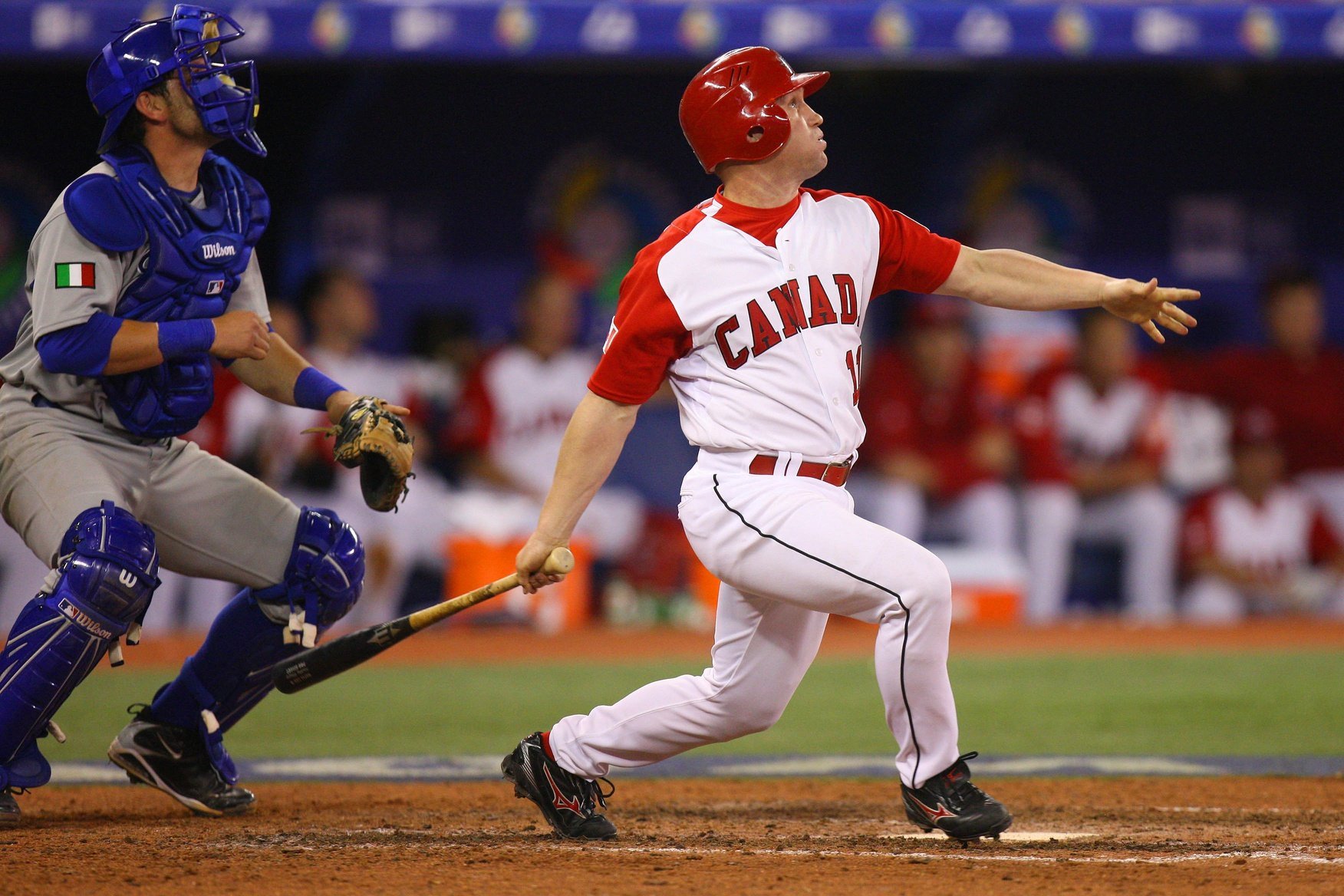 When Canada hit the field for the inaugural World Baseball Classic with the most talent the country had ever assembled, there was no surprise in seeing Stubby Clapp take his usual place at second base. Clapp will be inducted into the Canadian Baseball Hall of Fame this summer and deservedly so, with an ongoing and decorated career in international baseball for his country. He is serving as Ernie Whitt’s third base coach for this year’s Classic. It's a relationship that goes back to the ‘90s, a decade Clapp bookended with huge successes with the national program. Clapp was a part of the 1991 Canadian national junior team that captured gold on home soil near the 100th meridian in Brandon, and in ‘99, he returned to Manitoba as a member of the Canadian team competing in the Pan American Games being held in Winnipeg. 1991 is the only time Canada has captured the now-named U-18 Baseball World Cup, and the championship was voted as the top moment in Baseball Canada’s 50-year history in 2014. The gold medal game was not televised, so you needed to be among the 5,000 (!) fans that packed the still-best amateur baseball diamond in the country to see the 5-2 win. (photo credit: SaskToday/Jason G. Antonio) Clapp said the ‘99 Games became a “changing” moment for the national program. Whitt was managing Canada for the first time, and at stake were two spots in the upcoming Sydney Olympics, spots expected to go to the U.S. and Cuba. Clapp was having a good season in the Cardinals’ system at Triple-A Memphis and joined his fellow countrymen in a 16-4 win over Brazil in the new downtown ballpark by The Forks. The next afternoon, Canada faced the Americans in an 11-inning game that took over four hours to play because of that 11th inning. Things had soured for Canada when Whitt walked to the mound to speak to his pitcher, Chad Ricketts, who just surrendered a home run to give the U.S. a 6-3 lead. Whitt had made a mound visit the previous inning Ricketts pitched, and the crack international umpiring crew ruled the Canadians had to make a pitching change for Whitt’s second-but-actually-first mound visit. A fuming Whitt was ejected and filed a protest that took over a half hour to go unresolved. When play resumed, catcher Andy Stewart stepped up to be the first Canadian hero. With two on and two outs, Stewart hit a game-tying home run and unraveled the Americans, who quickly loaded the bases with two walks and a hit batter. At the plate with a full count, Clapp poked a ball into shallow left, where a miscommunication allowed the Canadians to walk off in victory. The Canadians finished the round robin undefeated before losing 3-2 to Cuba in the semi-finals. The team missed out on the Olympics but finished strong with a bronze medal win and, more importantly, injected energy into the national team program. Canada advanced to the semi-finals in the 2004 Olympics, and the upcoming WBC would give the program a chance to continue to impress on the international stage. For the first time, Whitt would build his Canadian side with active major leaguers, but there would be some notable omissions. Larry Walker had retired after an injury-riddled ‘05 season, and after thinking about coming back to play for Canada in the tournament, the legend from Maple Ridge decided to join only the coaching staff. Rich Harden and Éric Gagné would also be left off the roster on the pitching side, the latter recovering from an injury that would end his stretch of pure dominance of the National League. Even without Walker, the Canadians would bring some offensive punch to the first-ever Classic. Jason Bay would fill an outfield spot coming off his first All-Star season with Pittsburgh and would be joined in the middle of the lineup by incoming AL MVP Justin Morneau. Veterans Matt Stairs and Corey Koskie would be there, as well as major league outfielders Aaron Guiel and Adam Stern. While some returnees to the national team would be relegated to lesser roles, second base still belonged to Clapp. While his brief major league days were over, Clapp was now peppering the ball alongside up-and-coming indy ball legend Aharon Eggleston for the Northern League’s Edmonton Cracker-Cats. Clapp, along with Pete Orr, would play up the middle and set the table in Whitt’s batting orders. The Canadians began round robin play against one of the tournament’s weaker entrants. South Africa was last seen on the international stage in the 2000 Olympics, where they finished last, scoring only 11 runs over seven games. The opening game felt like a tune-up going the right way, but with a 3-0 lead in the sixth, veteran reliever Paul Quantrill coughed up four runs behind some shaky defending. A two-run blast from Koskie put Canada back in front in the seventh, but Canada’s bullpen faltered, and they trailed 7-6 heading into the ninth in a game that, if left unanswered, would go down as the tournament’s first major upset. Clapp was due fourth, and while it wasn’t his turn for the spotlight again, a teammate from ‘99 helped kick-start Canada’s effort to avoid embarrassment. When he arrived at the Pan-Am Games seven years earlier, Ryan Radmanovich was trying to work his way back into Seattle’s outfield mix after 75 plate appearances with the Mariners the year before. He never returned to the majors, and by 2002, his affiliated ball career was over, but he had become a star in the Atlantic League. Coming into the game earlier as a defensive sub, Radmanovich led off and hit a triple to the deepest part of Scottsdale Stadium. He would score the tying run on a double by Stern, and Canada would keep scoring to escape with an 11-8 win. The result barely registered with Dontrelle Willis across the Phoenix metro. The American starter watched on as his team started the tournament with a 2-0 win over Mexico in front of a rowdy, 50-50 crowd at Chase Field, where Willis would start the following day against the Canadians. The Marlins lefty was excited to represent his country and play with the high-caliber talent around him, saying he felt like “a kid at a candy store” walking around the clubhouse. Canada? Pfft. “We briefly went over the hitters,” Willis said, “I got a chance to play against Jason Bay and Peter Orr and what have you.” Willis started the contest with a four-pitch strikeout of Orr before Clapp hit a triple into the right field corner. The Windsor native would score the game’s first run on a Morneau groundout, giving an early lead to a young Adam Loewen. With ace Jeff Francis set to face Mexico in the final game of the round robin, Whitt decided to open the tournament with the more established Érik Bédard, whose six strikeouts over four innings of work went largely wasted against South Africa. As Loewen walked a pair of batters to load the bases in the first, that decision loomed over the Canadians early, but Chipper Jones ended the threat by bouncing into an inning-ending double play. Loewen settled in and was steady through 3.2 innings as the Canadian what-have-you’s introduced themselves to Willis. Back-to-back triples from Guiel and Stern made it 2-0 in the second before Stern drove in two more charged to Willis with a base hit off Al Leiter in the third. As reigning NBA MVP Steve Nash watched on from the stands, the Canadian onslaught continued with two more runs in the fourth on a double by Stairs. In the fifth, Stern put what looked to be the exclamation point on the game with an inside-the-park home run that put Canada up 8-0. Chris Begg had come on for Canada to record the final out of the fourth inning, and Whitt would leave him out for the fifth. Begg would stay out to face seven hitters, five of whom would reach. When Whitt finally pulled the plug, the Americans had scored two runs, and Begg had left the bases loaded with Jason Varitek up. Oncoming lefty Eric Cyr switched Varitek around, and from the right side, the Red Sox catcher hit a gigantic blast into the concourse in center field. The star-powered Americans had answered, and the remaining two-run lead felt as small as it could with four innings left. Cyr settled in and would give Canada three-up, three-down innings in the sixth and seventh. With the score still 8-6, Scott Mathieson entered and walked Vernon Wells and Johnny Damon between a pair of flyouts to start the eighth. Wielding his bat next as the go-ahead run, Chase Utley thought for a second he may have done it. Utley spat on a 2-1 pitch, and the ball sailed into the vast Arizona outfield space, but not at the clip of Varitek’s. Stern raced back immediately, reached the warning track, and had a split-second to spin and make a game-saving catch. Sans Gagné, Whitt tasked Steve Green with the final three outs. Green was another player on the WBC team who had been a bronze medalist at the Pan-Am Games. His major league career had lasted one Saturday afternoon in Oakland, when he took a no-decision, allowing two runs over six innings for the Angels on April 7, 2001. Green was still bouncing around Triple-A organization to organization, hoping this year to make the Orioles after previously failing with Cleveland and Detroit. Green would start the ninth by getting a pair of weak groundouts off the bats of Jeff Francoeur and Derrek Lee. Canada was an out away from victory as universal villain Alex Rodriguez strode to the plate. Rodriguez took two pitches for strikes to start the at-bat before watching another two off the plate, as Green tried to end it with an A-Rod whiff. The 2-2 offering was another breaking pitch off the plate, and Rodriguez got wood on it out towards shallow center. Racing in this time, Stern extended and caught the ball only for it to pop out as he hit the outfield grass. “The United States has life,” Gary Thorne exclaimed on the broadcast, as millions of fans up north dreaded the worst in a game that was feeling elusive. Rodriguez would weasel his way to second base on indifference on a first pitch strike to Mark Teixeira. Green would get Teixeira to roll over on the next pitch, an easy hopper fielded by Morneau a few feet from first base. Morneau would touch the base and embrace Green as the rest of Team Canada spilled onto the field in celebration. There were many contributions in the upset win, but none were louder than Stern’s, with some early run-scoring hits, the inside-the-park home run, and the game-saving catch in the eighth. “I just put my head down, ran to a spot and said, 'Come on, baby, don't hit the facing.’” Yet, here we are in 2026, and Canada has yet to qualify for the second round of a World Baseball Classic. Francis was bashed by Mexico in a 9-1 loss, and with three teams tied at 2-1, the Canadians' performance against South Africa cost them as they were eliminated on run differential. It was as close as Canada has gotten to reaching the second round prior to their eliminating loss to Mexico in the last WBC. Clapp would play for Canada again at the 2008 Olympics and the 2009 WBC before joining the coaching staff. Now in his fourth decade with the national program, he will maybe see it reach new heights again this month. View the full article
 -
Chicago Cubs 2026 Top 20 Prospects, No. 6: Ethan Conrad
DiamondCentric posted an article in North Side Baseball
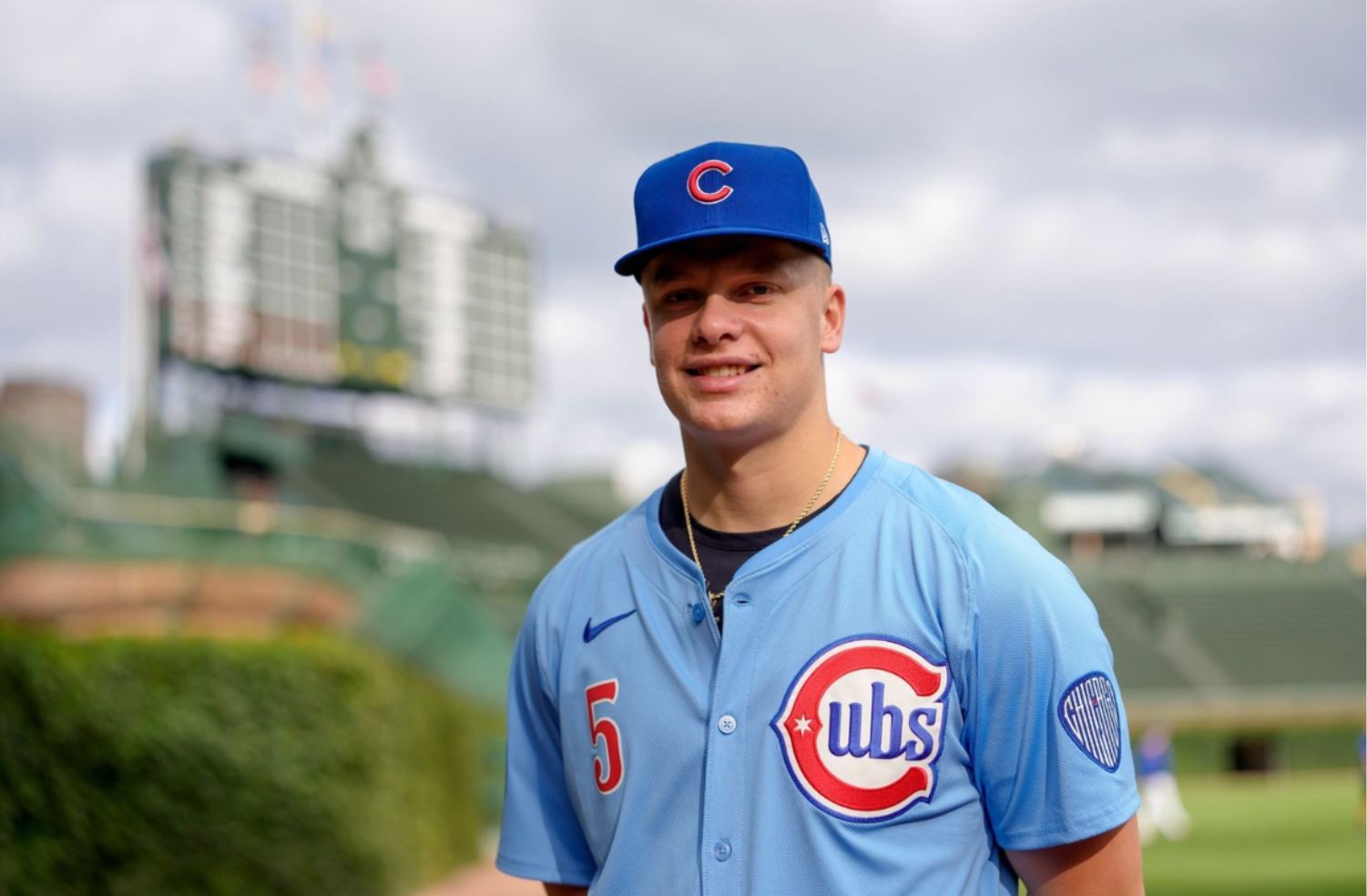 Today we continue on with breaking down the top-20 prospects (as voted on by North Side Baseball staff) by looking at our sixth-ranked prospect, Ethan Conrad. Don't forget to catch up on our previous pieces before you jump into our next installment! Prospects #20-16 Prospects #15-11 Prospect #10 - James Triantos Prospect #9 - Josiah Hartshorn Prospect #8 - Kane Kepley Prospect #7 - Pedro Ramirez No. 6: Ethan Conrad (Wake Forrest) Ethan Conrad was the Chicago Cubs' first-round pick in the 2025 Amateur Draft. Conrad, most recently at Wake Forest, transferred to the Atlantic Coast baseball power from Marist University. At Marist, the eventual top pick was stellar in his sophomore year, posting a .389/.467/.704 line while smashing nine round trippers in over 220 plate appearances. A shoulder injury would cut Conrad's junior year short, but he was on pace to destroy his previous career highs, already with seven home runs in under 80 PAs. What to like: Ethan Conrad, despite only playing a partial season last year, was looking like an absolute monster at the plate. He had improved across the board, walking more, hitting for more power, and seeing both his SLG and OBP increasing over his previous numbers at Marist. While we should expect a player to get better as he ages up, Conrad did so while taking a massive jump in competition quality. One massive green flag right off the bat? Conrad posted a 92% contact rate in-zone in 2025. A hitters' ability to make consistent contact in the zone is something that continues to translate to higher levels. At times, hitters strikeout rates can be hidden against lower-quality players even if they run low in-zone rates, but Conrad is not one of those. He's both patient and displays a plus hit tool. Add in the power ability and you have the foundations of a hitter who could be very special. Speaking of his power, Conrad posted some impressive batted ball data while at Wake Forrest in his truncated season. He posted a max exit velocity over 109mph on the year, showcasing what kind of damage the left-handed hitter does when he makes contact. Many times players who run ridiculously high contact rates sacrifice power for hits, but not Conrad. As you can see in his profile above, he was at the top of the percentile rankings across the board. Conrad does all of this with a simple and mechanically clean set-up. There's not a lot of moving parts, the leg kick isn't overly exaggerated, he creates good lift, and everything looks very smooth. Other draft prospects have things you'd need to clean up (for example, Josiah Hartshorn's left-handed swing has a few too many moving parts for my liking), but once again, not Conrad. It's very repeatable. Defensively, there's a real reason to think Conrad will end up in a premium position down the road. Baseball America calls him an "above average" runner and raves about his athleticism. It's likely that the Cubs will give him runway to play center field early in his career. Not to be too forward thinking when it comes to the Cubs' new golden goose, but even if he has to move to a corner (if, say, Pete Crow-Armstrong is still manning center) his bat will more than play there, too. What to work on: Health, health and health. Shoulder injuries aren't great, and keeping him healthy and maintained throughout the 2026 season is important. It may force the Cubs to give him some time at first base (which he has played in the past at Marist) or as a DH more often than you'd like, but you'd rather have a healthy Conrad over everything. There's a reason a hitter as good as the 21-year-old was there for the Cubs to pick at 17, and that he eventually signed under slot value. Because of his 2025 season, it's also important to note that when he eventually makes his on-field debut in 2026, he'll have essentially gone from playing at Marist University to professional full-season baseball with very little game-time in between. It's not impossible for a player to jump into the deep end like that, but it also means that Conrad may not come out of the gates ripping and roaring as he takes a pretty major step up in competition quality right away. One thing BA mentioned in their scouting report: Conrad doesn't pull the ball enough yet, and a handful of his home runs went the opposite way. That both speaks to the potential thump he possess, but also an area of polish that's needed: getting him to turn on the ball a little more often. Higher level pitching will turn opposite field home runs into fly outs if you don't get the barrel out in front. It's fixable, especially with his clean mechanics, but it is a point to watch as he grows as a hitter. Lastly, like all players with some projection left in his body, Conrad needs to make sure that he remains at a good size with conditioning and hard work. He looks like a brick house leading up to the season, so this concern is more theoretical in keeping him in center for as long as possible than a real-world concern right now, but it's something to continue to work on for the prospect as he moves forward. What's next: Ethan Conrad will debut professionally this spring in either Myrtle Beach or South Bend. Developmentally, he may be more suited to High-A South Bend, though at times the Cubs have started their college products at Myrtle Beach in April to avoid weather issues. Coming off a shoulder injury, it wouldn't be shocking to see him start in Low-A to see the warmer weather in South Carolina should afford over Northern Indiana only to make the jump as temperatures rise over a few weeks. Beyond that, it's a lot of maintaining of his health while he shows why people are so excited for him. Conrad is the type of prospect who has the same kind of "quick-mover" profile to him that former first-round picks like Cam Smith and Matt Shaw had. Seeing him rocket through the system to where he's ready to debut in Iowa by the start of 2027, and eventually making his way to Chicago later that summer, isn't off the table as a potential outcome. We shouldn't, however, expect that. If Conrad ends with a cup-of-coffee in Tennessee, he'll be well on his way and will likely have had a very successful season. It seems likely that the Cubs may lose two starting corner outfielders in free agency at the conclusion of the season, but Conrad isn't the Cubs' savior at the position for the '27 campaign, so him ending up in Double-A would be a good outcome. He doesn't need to be MLB ready by April next year and we should avoid putting that type of pressure on him as a prospect. With the Cubs likely to graduate a few prospects, coupled with Conrad's upside, there's probably a good chance he ends up the consensus top prospect in the system next year. And even if he's not quite at that level, he's got a good shot to feature on various Top 100 lists around the media. Conrad is an exciting prospect and has a lot of the hallmarks of a potential steal. Watching him develop will be among the most exciting things the Cubs' have going for themselves down on the farm over the next year. What do you think of Ethan Conrad? Did we rank him in the correct place? Are we too high? Or too low? Let us know in the comment section below! View the full article
 -
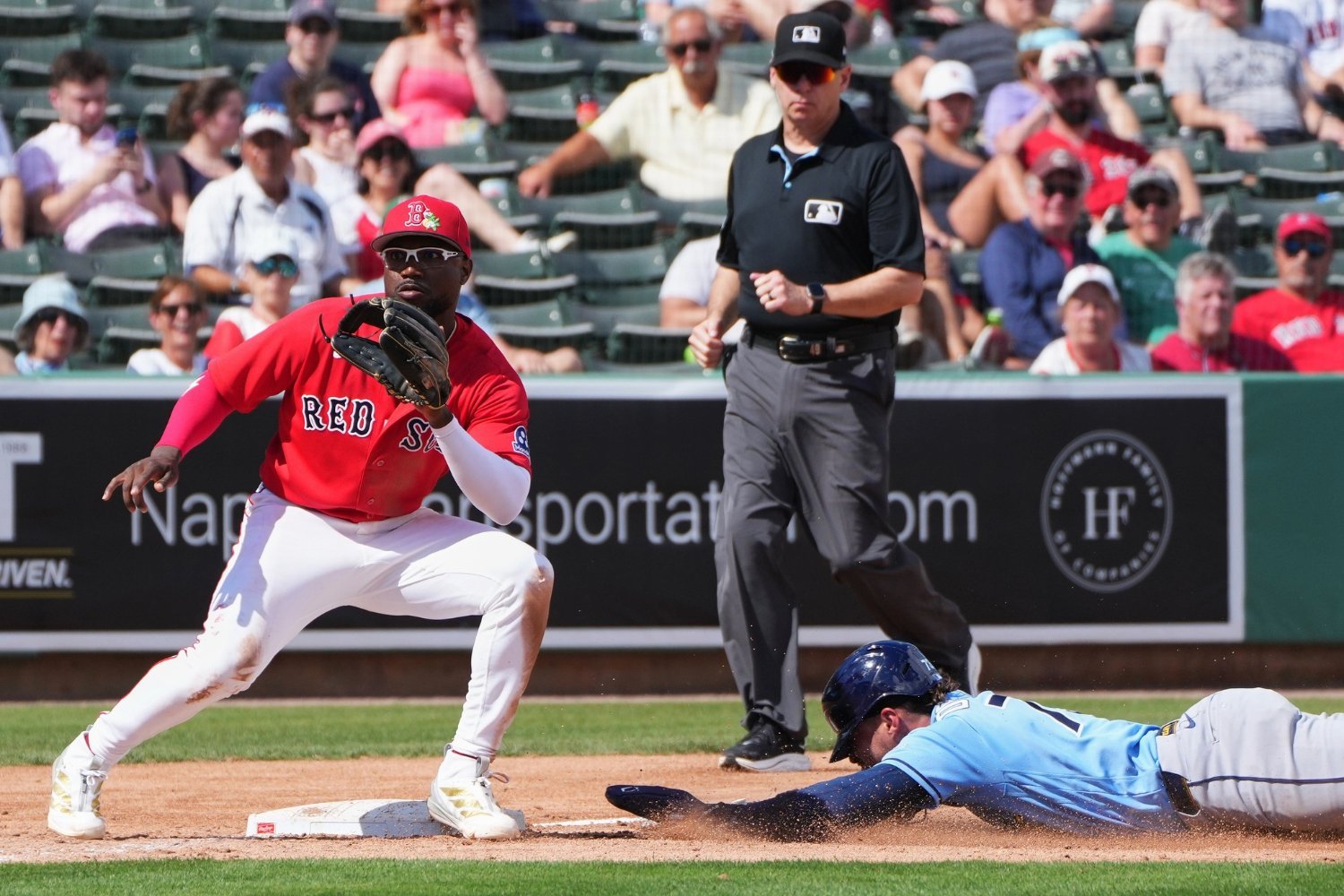 Andruw Monasterio may have been a relatively unknown quantity that came over in the trade that brought Caleb Durbin to Boston, but his spring training performance has thrust him into the Opening Day roster conversation. He has quickly established himself as a go-to option for Alex Cora and that should bode well for him as we get closer and closer to the start of the regular season. Offensively, Monasterio has been better than anyone imagined. Through his first eight games, he’s slashing .389/.522/.611 with one home run and two steals. Dive a bit deeper, and you'll come across a 194 wRC+ and a walk rate (17.4%) that's quadruple his strikeout rate (4.3%). He’s been incredibly dependable at the plate when he’s in games and has handled left-handed pitchers with ease. It’s that last fact that makes his presence on the Opening Day roster likelier right now, as Romy Gonzalez is still dealing with a shoulder injury that may require surgery. If Gonzalez misses significant time, and that is looking more and more likely as time goes on, the team will need someone to platoon across the infield who can handle multiple roles in the infield. Monasterio is making his case on the defensive side of the ball as well. He has made multiple appearances at first, short, and third. He’s widely been believed to pencil in as Marcelo Mayer’s platoon partner at second base this season, but he’s yet to see time there during Grapefruit League. We’re hedging our bets here a bit, but his work at first base is what makes him far more likely to make the Opening Day roster than anything else right now. Alex Cora is giving him some runway to prove himself across the infield, but being able to slot in behind Willson Contreras as a capable defender at first while providing speed on the base paths late in games is going to be crucial for the success of this team. It’s looking like the team will be without Triston Casas through at least part of April, so there needs to be someone on the roster who can cover first base. Gonzalez was a passable, if unimpressive, first baseman last season, but Monasterio has the potential to be better than that. He’s only logged 36 1/3 regular season innings at the cold corner, but the early returns are promising. He’s committed no errors and turned five double plays at the position. He’s spent the bulk of his professional career at third (671 innings), second (398 1/3 innings), and shortstop (236 innings). Adding regular playing time at first will make him even more valuable as Cora puts daily lineups together. If and when Gonzalez gets healthy this season, there will be some difficult conversations that will have to be had in regards to playing time. Monasterio has minor league options remaining, as does Gonzalez, but Isiah Kiner-Falefa was signed for $6 million this season, which all but guarantees he’s going to stick on the roster as long as he’s healthy too. Having too many capable infield platoon options isn’t a bad problem at all, but it’s going to be tough to choose between a returning Gonzalez and a potentially even more adaptable Monasterio at some point this season. Craig Breslow has proven to be a shrewd president of baseball operations when it comes to swinging trades that improve the organization as a whole. If Andruw Monasterio continues to be impactful on both sides of the baseball, he could go down as the best sleeper addition that Breslow has made during his tenure in Boston. View the full article
 -
Latest on Blue Jays Top Pitching Prospects Yesavage, Tiedemann
DiamondCentric posted an article in Jays Centre
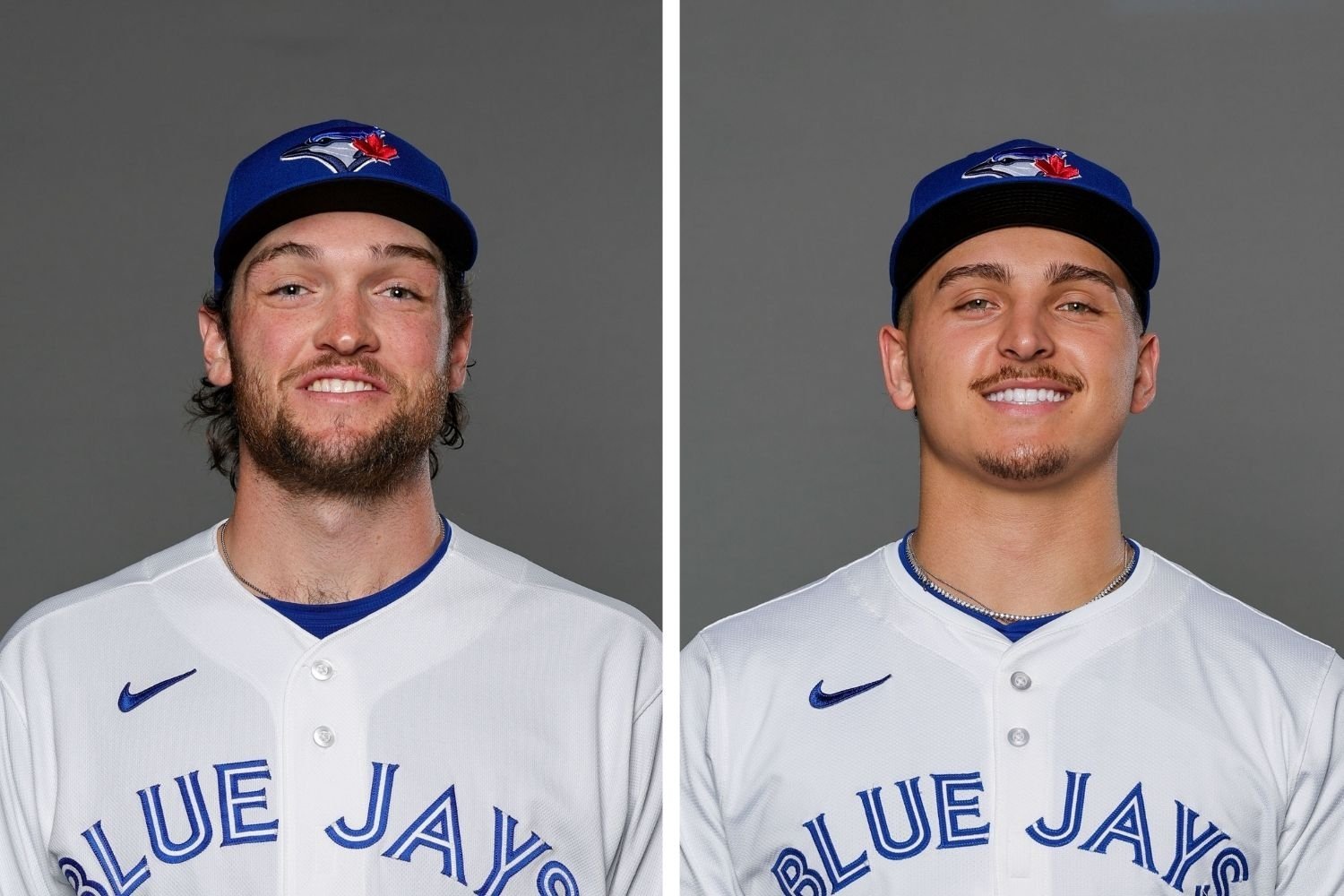 Trey Yesavage and Ricky Tiedemann are two of the Blue Jays' top pitching prospects. Yesavage will play a key role for Toronto in 2026. Tiedemann could make an impact of his own. Yet, with just over two weeks left until Opening Day, neither has pitched in a spring training contest. The Blue Jays are taking things extra slow with Yesavage to increase the chances that he's strong and healthy when the games matter most. That has meant keeping him out of Grapefruit League play thus far. However, MLB.com's Keegan Matheson reported on Tuesday that the young right-hander will pitch two innings in a minor league spring training game later today. It remains unclear what the plan is after that, but at least Yesavage will finally see some game action. As much as the team wants to protect him, pitching in actual competitive spring training baseball games is necessary if he's going to be ready for the start of the regular season. Meanwhile, Tiedemann was shut down with elbow soreness in late February. Tests came back negative for anything serious, but considering he hasn't pitched since July 2024 (Tommy John surgery), the Jays weren't going to take their chances. The lefty is on the 40-man roster now and has a very good chance to join Toronto's bullpen at some point in 2026, but rushing him back to the mound (and rushing him up to the majors) would be short-sighted. The good news is that, according to Matheson, Tiedemann started throwing again on Monday. He'll need time to ramp up safely, but this is a step in the right direction. He has already been optioned to Triple-A Buffalo, so it's safe to say he's officially ruled out for Opening Day. Still, it might not be long before we see Tiedemann on the mound at the Rogers Centre. View the full article
 -
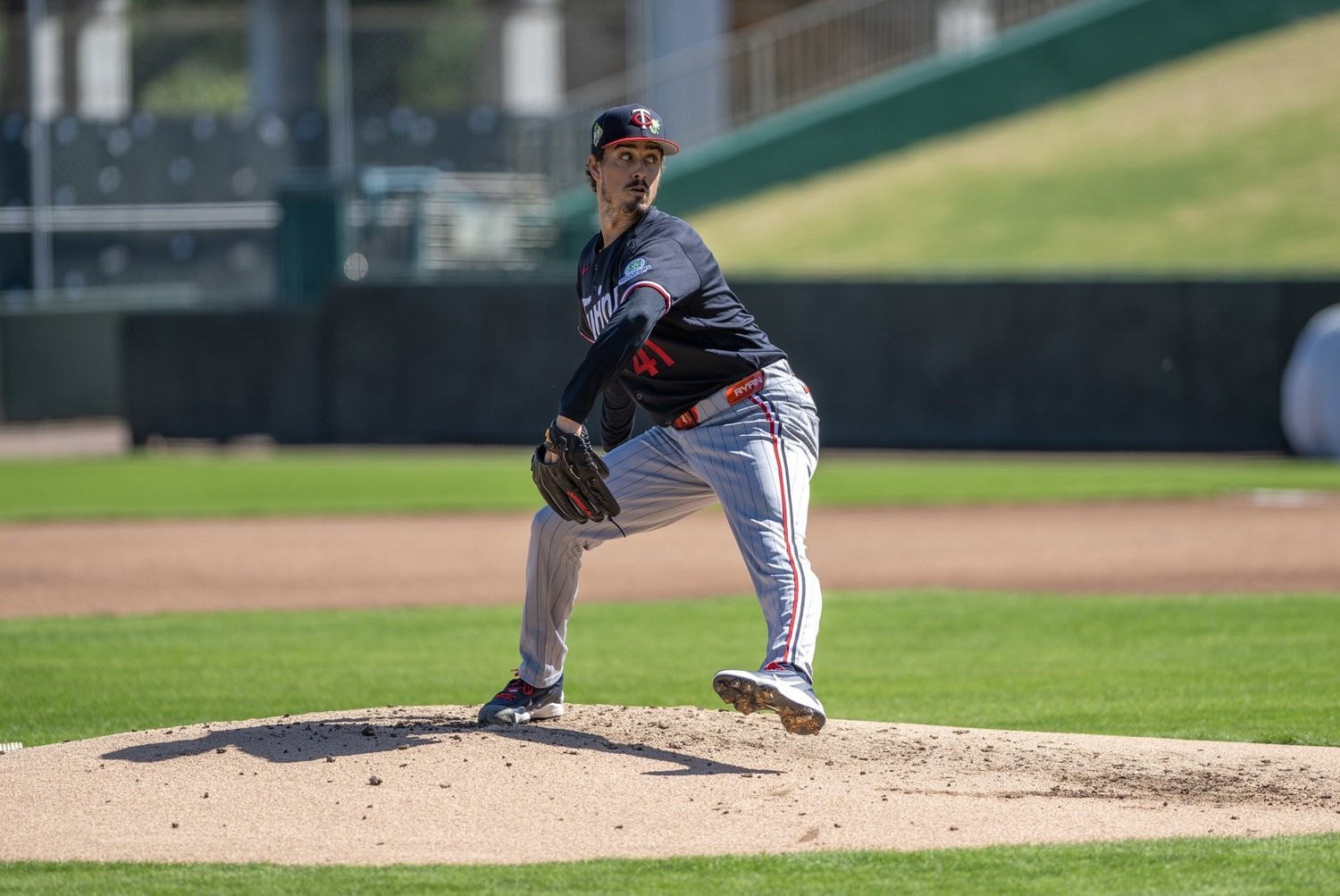 Joe Ryan has become the most important pitcher in the Minnesota Twins organization. He's coming off the best season of his career, earning an All-Star selection while anchoring Minnesota’s rotation. His command, ability to miss bats, and consistency have made him one of the most reliable starters on the roster. With Ryan under team control through the end of the 2027 season, the team has a modicum of time to decide how to handle his future. While this means Minnesota doesn't have to rush into an extension, recent league activity suggests there may be a window to get creative. One deal in particular stands out as a potential template. Earlier this week, the Philadelphia Phillies and left-hander Jesús Luzardo agreed to a contract extension that could guide teams hoping to lock up frontline starters before free agency. Luzardo, originally set to reach free agency after the 2026 season, will now have five guaranteed years beginning in 2027, worth $135 million. The deal also includes a $32.5-million club option that could increase based on performance. Luzardo can boost that option by $2 million with each top-five finish in Cy Young voting, potentially raising the value as high as $42.5 million. The contract also contains a $1-million assignment bonus each time he is traded, until he reaches 10 and 5 rights at the end of the 2029 season. Luzardo was already set to earn $11 million in 2026, after avoiding arbitration with the Phillies earlier this offseason. Had he played out the season and reached free agency at age 29, he likely would have been in line for a massive payday. Instead, he chose the security of locking in a long-term deal now. Over the next six years, including his 2026 salary, Luzardo is positioned to make $146 million. The circumstances around the deal are interesting, when compared to Ryan’s situation. Ryan is actually about three months older than Luzardo, and is similarly in the late stages of team control. Like Luzardo, he profiles as a reliable starter who has demonstrated the ability to pitch near the top of a rotation when healthy. If Ryan continues pitching at an All-Star level, his value will only increase as he moves closer to free agency. For the Twins, this situation might feel familiar. In recent Twins history, the Derek Falvey-led front office once had a similar opportunity with José Berríos. The Twins developed Berríos into one of the better starters in the American League and had multiple chances to explore a long-term extension. Ultimately, the two sides never got close to a deal. Instead, Minnesota traded Berríos to the Toronto Blue Jays at the 2021 trade deadline in exchange for Simeon Woods Richardson and Austin Martin. Both players remain part of the organization and figure to be part of the Twins’ plans for the 2026 season. Woods Richardson has exceeded expectations in recent years and looks like a steady mid-rotation starter who can give Minnesota quality innings. Martin’s path has been less straightforward. Once considered one of baseball’s elite prospects, his stock has dipped since arriving in the Twins organization. He still has tools that intrigue evaluators, but he now sits among a group of post hype prospects for whom the 2026 season could prove critical. From a broader perspective, the Berríos situation highlights the balancing act teams face with pitchers approaching free agency. Players who sign extensions a year or two before hitting the market often sacrifice some potential upside in exchange for long-term security. The numbers behind these deals provide some context. Dating back to 2017, the largest extension for a pitcher with between five and six years of service time was the seven-year, $131-million deal Berríos signed with Toronto. Like Luzardo, Berríos was heading into his age-28 season and would have reached free agency before turning 29. He also posted numbers that consistently hovered around a 3.50 ERA while offering exceptional durability. Berríos signed his extension before settling on a salary for his final arbitration season. When factoring in the $11 million Luzardo will earn in 2026, the Phillies left-hander is now set to make $146 million across the next six years. Deals like that offer a glimpse into what a potential Ryan extension might look like if the Twins decide to explore it. Ryan has established himself as one of the club’s most valuable pitchers and a foundational piece of the rotation. If he continues to perform at an All-Star level, his price will only climb as he gets closer to free agency. The Twins have time on their side, but recent extensions around the league suggest an opportunity to act early. Minnesota’s owner, Tom Pohlad, has spoken openly about investing in the roster, and with the team interested in pitchers like Framber Valdez, locking up Ryan now would require a significant investment. However, it could provide long-term stability for a rotation that will need it in the coming years. Minnesota’s previous experience with Berríos presents a dilemma: should they act now to lock up Joe Ryan and secure long-term stability in their rotation, or risk repeating the uncertainty that came from not extending Berríos? The main takeaway is that extending Ryan early could provide the Twins with organizational security and help avoid a repeat of past challenges. Should the Twins extend Ryan with a similar deal to Luzardo? Did the Berrios deal work out for Minnesota? Leave a comment and start the discussion. View the full article
 -
 While Opening Day roster construction is underway, today we'll focus on three under-the-radar Twins prospects who sit outside of the team's top 15 (per MLB.com). John Klein has a chance to turn a hometown story into the ultimate rise to stardom, C.J. Culpepper's potential remains as high as his health will allow, and Enrique Jimenez has some sneaky pop to watch for in 2026. View the full article
 -
 One surefire way to earn the scorn of a big-league player or manager is to take spring training results seriously. They don't matter, and although fans' instincts are often to hunt for the rare times and places when they do matter, players and teams roll their eyes at such efforts. Front offices, coaches and managers do have to evaluate players during Cactus and Grapefruit League games, and players do have to find ways to measure success and progress, but they're unanimous in their disinterest in doing so based on wins and losses, runs scored or allowed, or individual statistics. For those fans who do flinch when they see an ugly stat line even in March, though, it's been a rough couple of days around the Cubs. Shota Imanaga continues to get hit hard in Arizona. Matthew Boyd gave up three runs (and two homers) in Team USA's win over Novena México on Monday night. On Tuesday, should-be ace Cade Horton was the latest to run into some worrisome hard contact, giving up three homers and walking two over 3 2/3 innings against the Texas Rangers in a Cactus League game at Surprise Stadium. Horton's outing is the most important one to understand, and the surest way to distinguish signal from noise in spring training appearances. He gave up not only three homers, but eight balls hit at 100 miles per hour or harder, so the Rangers were locked in on his stuff. He did get seven whiffs on 29 swings, but when Texas batters connected, there was trouble. Because the one knock on Horton during his superb rookie season was a lack of high-end swing-and-miss skills, seeing batters do damage when they connect feels a bit ominous. Here's why it isn't. These are the pitch movement scatterplots for each of Horton's three spring outings to date: These tell a pretty clear story, if you know how to read them. First, look at the first appearance he made in the Cactus League, last month against the Rockies. That day, he only threw 26 pitches, and his emphasis was on commanding his hard, cut-ride fastball. He threw all five of his pitches, but not in their usual mixture; he just wanted to establish the heater and his slider. Last week against Team Italy, Horton's focus was on bringing out and gaining a feel for his changeup, the fourth pitch in his arsenal when he came up last year but a staple for him against left-handed batters by the end of the season. Note, too, though, that his fastball shape was quite inconsistent that day. It's good to be able to manipulate the fastball, but Horton was really not commanding that pitch in the Cubs' exhibition contest with Italy ahead of the World Baseball Classic. That brings us to Tuesday's game, on the right in the graphic above. Horton threw 60 pitches, and showed more consistent feel for the shapes of both his fastball and his slider. The two pitches that should draw your attention most, though, are the sinker and the curveball. Horton threw each about twice as often as he normally would, at the expense of his changeup, fastball and slider. He leaned hard on that sinker to righties and on the curve to lefties. His velocities and shapes on all five offerings are similar to what they were last year; he just got funky with usage on Tuesday. When pitchers talk about "working on stuff" during spring games, this is what they mean. Horton did get hit hard, and most of the damage came on his cutter/four-seamer. However, much of that was because he spent the day focused on gaining a feel for his sinker and his curve, which require slightly different feel and which he consciously threw more than was competitively optimal, in order to better prepare himself for the season ahead. Horton might experience some regression this season, after that dazzling first ride of the senior circuit last summer. However, his spring numbers need not concern anyone, because getting outs isn't his top priority right now. Instead, piece by piece, he's assembling the version of himself that can be ready to throw 85-plus pitches during his first regular-season start, with feel for all five of his offerings and the best ways to use them. To do that, he has to do some things during preparatory games that aren't consistent with putting up great numbers. That's why spring training is valuable, but also why it can be misleading for fans reading too much into the results. View the full article
 -
 In the Brewers' spring training clubhouse in Maryvale, there's a back exit that takes players to the weight room, batting cages and other key areas for morning work. It's in the lefthand corner of the large room, which creates a high-traffic corridor between an island of three lockers just in front of the bathroom and the row that lines the back wall. There's plenty of space to pass through, though—unless Luke Adams and Brock Wilken are getting dressed at the same time. Adams, 21, occupies the last locker in that little row of three, putting him on one side of the aperture through which players and coaches must pass to get to their next destination after the clubhouse. Wilken, 23, happens to be assigned the locker just on the other side of that gap, against the back wall. The two are each listed at 6-foot-4, with Adams tipping the scales at 233 pounds and Wilken coming in at 237. Right next to Wilken is Garrett Mitchell (6'2", 229), and the last locker in the corner belongs to Cooper Pratt (6'4", 210). For a team famous for their diminutive stars, that cluster is a reminder that they have some bigger, stronger could-be stars on the way. Adams and Wilken each put up stellar numbers in 2025. Each spent the entire season at Double-A Biloxi, though neither actually played the full season. Adams was sidelined by a shoulder contusion for nearly two months; Wilken injured his knee in a celebration of the team's first-half championship. However, when on the field, Adams batted .231/.417/.436 in 72 regular-season games, and then .333/.471/.569 in 16 games and 68 plate appearances in the Arizona Fall League. Wilken batted .226/.387/.489 in 344 plate appearances over 79 games. Those batting averages aren't especially encouraging, for minor-league competition. However, the Southern League is a tough hitting environment, and neither player had a catastrophic strikeout rate. Wilken's (27%) was a bit higher than you'd like, but his power and plate discipline more than made up for it. Adams, meanwhile, struck out just 20% of the time. More importantly, look at those on-base percentages, and the walk (and hit-by-pitch) rates that powered them. Wilken walked or was plunked in a whopping 20.9% of his plate appearances, but Adams somehow topped that, at 23.9%. The two have almost unimaginably low swing rates, each coming in under 35% last year in Double-A. In their fistfuls of plate appearances in the Cactus League this spring, each is swinging even less—around 30% of the time. That's untenable, but it might also be what makes each a productive big-leaguer. Wilken doesn't shy away from the fact that his patience is integral to his approach. "It's just kind of how it panned out," he said, reflecting on the significant drop in his swing rate from 2024 to 2025. "Some guys like to swing a lot. I'm a guy that doesn't need to swing a lot—in-game, out of game, whatever. So I just kind of took that and was having some success with it, so I kept rolling with that." Being that reluctant to swing, paradoxically, means lots of two-strike counts, as called strikes balance out balls and lead hitter and pitcher together into the deep water of a long at-bat. Wilken believes dynamic favors him, even if it means a good number of strikeouts to go with his big walk and extra-base hit totals. "I don't really have an issue hitting with two strikes," he said. "I think hitting with two strikes helps me ultimately be a better hitter. I have a lot of homers with two strikes, so I'm not scared to hit with two strikes; I'm not scared to get in those deep counts." The less powerful Adams can't afford to strike out as much as Wilken does, but he also shows a better feel for the zone—and gets a big added boost from getting hit by pitches at a shocking rate. Last season, he was plunked 28 times. In his professional career, he's been hit in over 7% of his plate appearances, a higher rate than any big-leaguer in the history of the game. "It's just being smart about where you're getting hit," Adams said, discussing the challenge of staying healthy while being hit so often. "If it's below the knees or above the shoulders, probably not, but anywhere else is ok." Watching Adams this spring, it's easy to see how he's hit so often; his load phase takes his hands and arms almost into the strike zone even when he doesn't ultimately swing. Pairing that trait with an extraordinarily patient approach has kept his on-base percentage over .420 as a professional; the only question is whether that success can translate against the best pitching in the world. Wilken remains a viable third baseman, while Adams has essentially transitioned to first base. The two will each have to be productive hitters to thrive in the majors, though, because neither is likely to deliver much defensive value. With Wilken's power beginning to blossom and Adams establishing such a high floor for OBP, there's real hope for each—but this season will determine the directions of their careers. This fall, the Brewers will have to decide whether to add both players to the 40-man roster, or expose them to the Rule 5 Draft. Thus, they'll need both of them to get significant time at Triple-A Nashville, and if either has the breakout the team is hoping for, they'll even be up for a late-season audition with the parent club. On the other hand, another injury-disrupted year (or a major struggle to adjust as they face tougher pitching and dial up the aggressiveness in their respective approaches) could leave one or both on the outside looking in come November. Pat Murphy has liked what he's seen from each of his young sluggers this spring, but he tries to stay in the present and focus on the players who will be vital to the team in the coming year. Though he expects to have some input when the front office makes the decision about each player after the season, he hasn't focused on either during camp. Although this might be his best opportunity to evaluate them, it's not in his nature to look that far down the road. For Adams, that's just fine. "I'm not really thinking about that," Adams said. "Just trusting God every day, just going out, competing, and then just letting whatever happens be up to Him." Watch these two sluggers' swing rates this year. They'll have to tweak their approaches to prepare themselves for big-league pitching. For now, though, they're uniquely disciplined and fascinating hitters, and if either has a full year of good health in 2026, they could put themselves back into the top tier of Brewers prospects, thanks to those marvelous on-base skills. As is true in the clubhouse, out on the field, it's hard to miss them. View the full article
 -
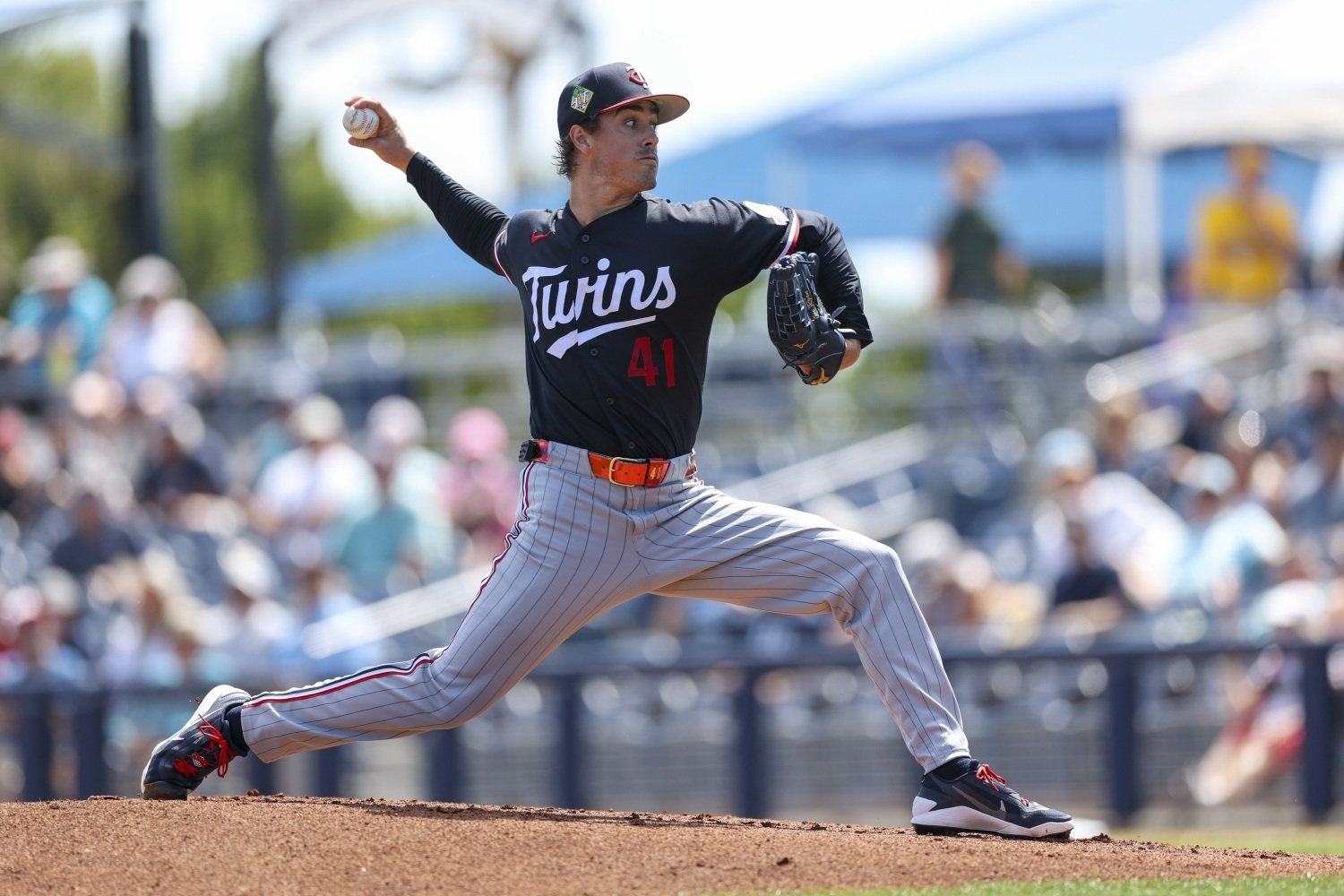 After a delayed start to spring training due to back tightness, Minnesota Twins ace Joe Ryan finally took the mound in game action for the first time on Tuesday. He faced the Tampa Bay Rays, the organization that originally drafted him back in 2018. Despite some apparent rust, Ryan delivered three scoreless innings, showcasing both his full arsenal and his ability to attack hitters with confidence. Ryan’s outing was efficient and controlled, though not necessarily flashy. He threw a total of 48 pitches over his three frames, allowing just two hits and two walks, but he also recorded no strikeouts. Of those pitches, 31 found the strike zone, indicating that while Ryan wasn’t missing bats in this first spring appearance, he was effectively challenging hitters. Notably, only four of Ryan’s 48 pitches were thrown to right-handed hitters, so the bulk of his work came against lefties. Given that he struggled more against left-handed hitters last season, it was valuable for him to get early reps against a predominantly left-handed lineup. The Twins’ ace set the tone early. After needing just four pitches to record his first two outs, he navigated a two-out double and a walk before finishing the inning unscathed. His second inning was his most efficient, a 10-pitch 1-2-3 frame, before he closed out the third inning by working around another two-out base hit and a walk. While the surface stats may not jump off the page, Ryan’s ability to manage base runners and escape trouble is emblematic of the pitching intelligence that has made him a cornerstone of Minnesota’s rotation. Ryan’s pitch mix was on full display during the outing, but he's far from midseason form. His four-seam fastball had an average velocity of 92 MPH and reached a peak of 93.5, only slightly below his 2025 average of 93.7. It had decent movement, generating over 12 inches of run and 14 inches of rise on average, keeping hitters off balance and setting up his secondary pitches. By consistently locating his fastball up in the zone, Ryan was able to manipulate the lower portion of the strike zone with his breaking and off-speed pitches. His splitter generated all three of the whiffs he got on the day. Meanwhile, both the sweeper and curveball consistently landed near the bottom of the zone with sharp glove-side movement, keeping hitters guessing and preventing them from sitting on one pitch. It's normal to see a pitcher work slightly below their in-season averages during their first game or two of spring training. but it's impossible to ignore the fact that Ryan's stuff was down on Tuesday. Across the board, he was missing about 2 MPH on each of his offerings, relative to last season. To compare apples to apples, let's line up his averages Tuesday with his spring training numbers from the last two years. 2024 2025 2026 Pitch Type Velocity Hor. Mvmt. Ind. Vert. Break Velocity Hor. Mvmt. Ind. Vert. Break Velocity Hor. Mvmt. Ind. Vert. Break Four-Seamer 93.2 12 13.9 92 12.3 13.3 92 12 14 Sinker 92.2 16.4 9 90.6 15 7.7 90.1 17 8 Splitter 87.8 14.5 0.9 86.6 14.2 -1.1 85.7 15 6 Slider 86.2 -2.4 3.8 85.6 4.1 3 84.3 -3 6 Sweeper 80.7 -14.8 2.1 79.1 -18.4 -0.5 78.2 -15 -2 Curveball 77.4 -14 -10 His fastball was right where it was last year, but note how down the velocities on his splitter, slider and sweeper are. For the balance of the spring, those numbers will be worth watching. Looking ahead, the expectation is that Ryan’s velocity will return to normal as he continues his spring ramp-up. If that happens, his secondary pitches should play better, generating more swings and misses and making him an even tougher assignment for opposing hitters. For the Twins, having their ace healthy and executing his repertoire effectively early in spring is a critical step toward maintaining a strong rotation in 2026. All things considered, Joe Ryan’s first outing of 2026 spring training can be viewed as a success. He demonstrated poise, command, and the ability to attack hitters while showcasing his full arsenal. There are several boxes he didn't check, but it was his first taste of competition. If his stuff ticks up as he gets into the routine of the Grapefruit League, he should be the same frontline starter he was throughout 2025. View the full article
 -
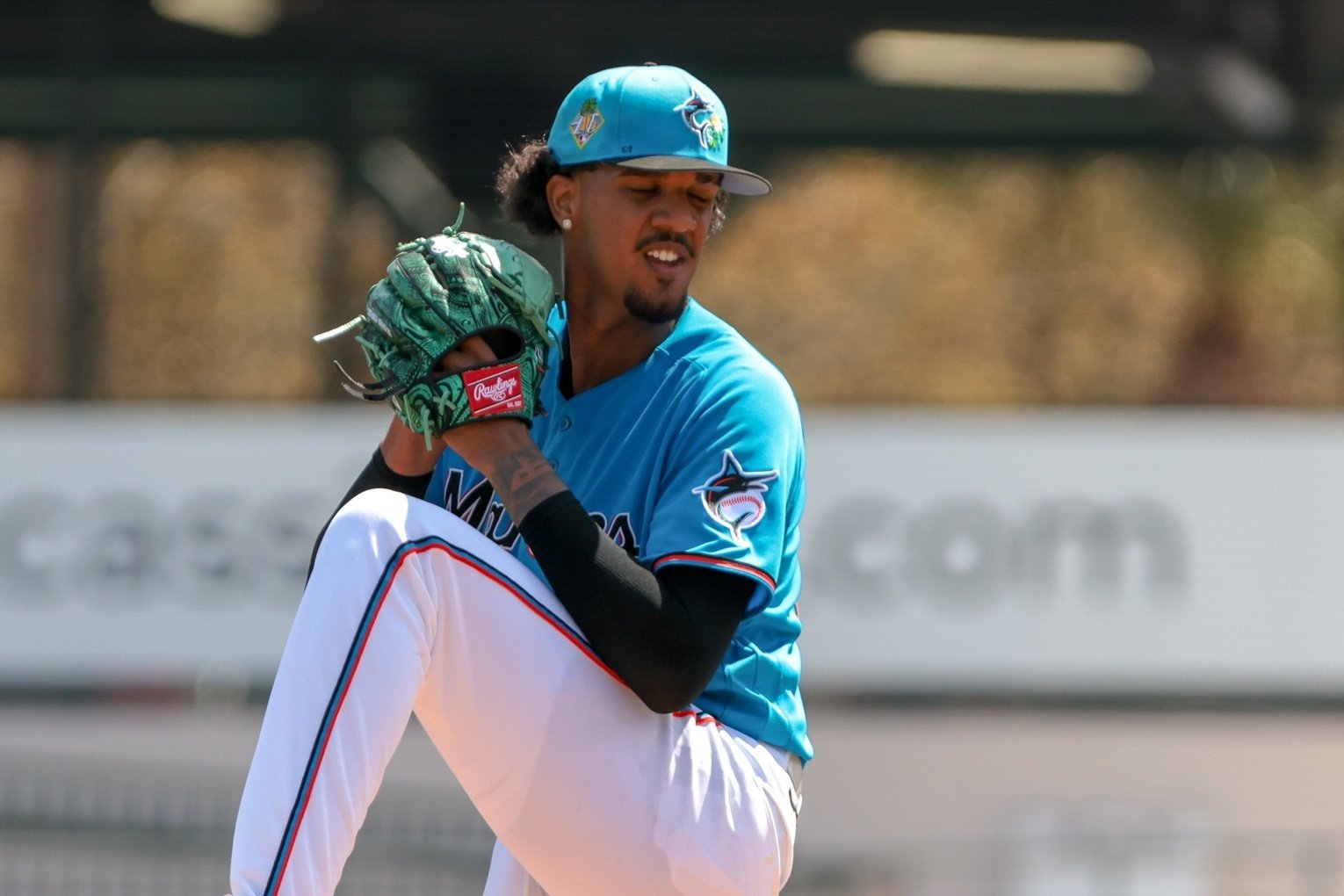 Strictly for entertainment purposes, I would like to alert you to Tuesday's unique performance by the Miami Marlins pitching staff. In a 7-5 loss to the Washington Nationals, eight Marlins arms combined for 19 strikeouts, the highest total ever logged for the franchise in a single spring training game (since at least 2006). The previous record was 18, which came against the Houston Astros on March 24, 2023. Every position player in the Nats starting lineup—including All-Stars James Wood and CJ Abrams—punched out at least once. Overall, the Marlins K'd 45.2% of the batters they faced. As is typically the case in the Grapefruit League, this took a group effort—starting pitchers get stretched out gradually, particularly in Marlins camp. Right-hander Eury Pérez (7 K in 3.0 IP) was relieved by Anthony Bender (2 K in 1.0 IP), Andrew Nardi (3 K in 1.0 IP), Pete Fairbanks (1 K in 1.0 IP), John King (3 K in 1.0 IP), Michael Petersen (1 K in 0.2 IP), Gabe Bierman (0 K in 0.1 IP) and Stephen Jones (2 K in 1.0 IP). Fun fact: Nardi also appeared in the 18-strikeout game from 2023. This game was not televised and Roger Dean Chevrolet Stadium's center field camera was unavailable for media access. But an announced crowd of 2,059 had the pleasure of witnessing this historic "achievement"...even if they were oblivious to it in real time. In lieu of video, here are the approximate locations of every strikeout pitch courtesy of Baseball Savant (key word approximate, because I spot at least one technological hiccup): Pérez, Fairbanks and King are considered locks for the Marlins Opening Day roster, as is Bender if deemed fully healthy coming off a shin injury. Nardi (left finger blister) is likely to make it, though he can be optioned to the minor leagues if the club wants to slow-play things with him following a lost 2025 campaign. Petersen is squarely on the roster bubble. Next up for the Fish, they'll host the Houston Astros at Roger Dean Chevrolet Stadium on Wednesday. Max Meyer's first pitch is scheduled for 1:10 p.m. View the full article
 -
Travis Adams Hits A Spring Training Pause With Elbow Inflammation
DiamondCentric posted an article in Twins Daily
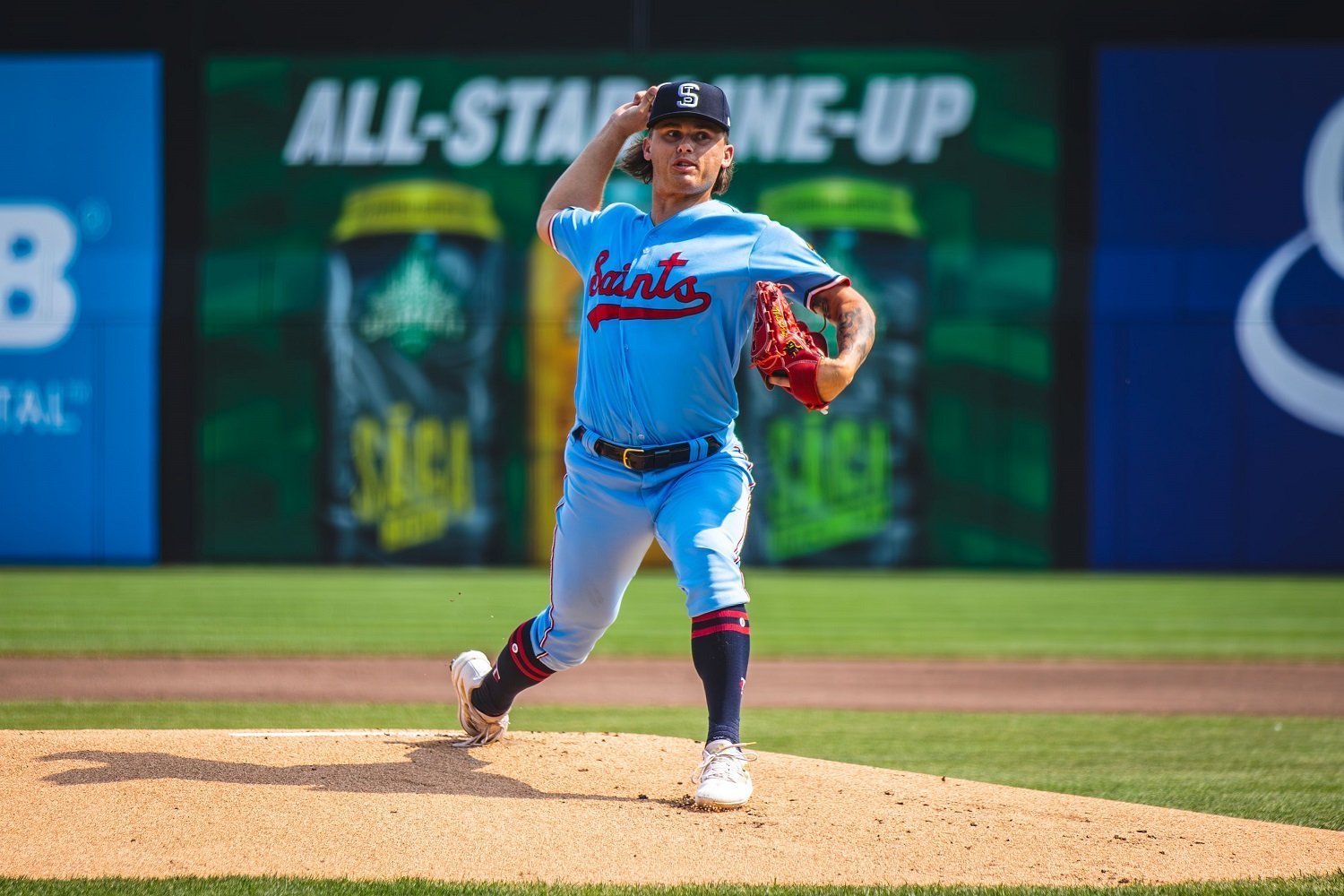 Spring training often offers players on the roster bubble an opportunity to force their way into the conversation. For right-hander Travis Adams, the 2026 camp was shaping up as a chance to earn a role in the Minnesota bullpen. However, rather than moving closer to that goal, his spring has hit pause. The Minnesota Twins announced Sunday that Adams has been diagnosed with right elbow inflammation and will not resume throwing until at least next weekend. According to Matthew Leach of MLB.com, Adams first experienced soreness on Friday, prompting the club to run additional tests. The good news, though, is that the initial imaging provided some relief. An MRI revealed no structural damage in the elbow. Even so, the Twins are taking a cautious approach by shutting Adams down from throwing for at least seven days. Adams originally felt the issue while warming up for a scheduled appearance on Friday against the Atlanta Braves. He was scratched from that outing and later evaluated by the medical staff. While the absence of structural damage is encouraging, any elbow concern for a pitcher during spring training is enough to slow the process. The timing is not ideal for Adams, who entered camp as a contender for a spot in the Opening Day bullpen. The 26-year-old has the type of versatility that teams value during the long season. He is capable of pitching multiple innings and bridging the gap between the rotation and the late-inning relievers. That flexibility was part of what made Adams an interesting developmental case for the Twins last season. Adams appeared in 18 games for Minnesota during the 2025 season. Across 33 2/3 innings, he posted a 7.49 ERA with a 1.66 WHIP and a 5.39 FIP. The strikeout and walk numbers told a similar story, as he recorded a 19.6 K% with a 10.8 BB%. His performance at Triple-A was more encouraging. Pitching in the hitter-friendly environment of the International League, Adams produced a 3.93 ERA with a 19.6 K% and a more manageable 7.9 BB%. Those numbers helped keep him on the radar for a larger role entering 2026. Part of Adams’s development also came within a unique pitching structure the Twins used throughout the minor leagues last year. When certain pitchers did not fit neatly into a traditional rotation slot, the organization placed them on a consistent four-day schedule. Instead of traditional starts, these pitchers would throw shorter outings more frequently. The idea was that fewer pitches with quicker turnaround could provide better overall volume while helping pitchers recover more effectively. In those outings, Adams would typically face a lineup once or twice after a traditional starter before turning the game over to the bullpen. That approach allowed the Twins to continue building Adams’s workload while keeping him flexible for a variety of roles. Entering this spring, it appeared likely that Minnesota would test Adams in shorter one or two-inning stints at the major league level. The hope was that his stuff might play up in shorter bursts, giving the bullpen another option capable of covering multiple frames when needed. For now, that plan will have to wait. The immediate focus is simply getting Adams back on the mound and healthy. With no structural damage found, the Twins will hope the inflammation subsides quickly and allows him to resume throwing soon. If that happens, Adams could still work his way back into the conversation at some point during the season. Spring training roster battles can change quickly, and injuries often reshape the competition. For Adams, the priority is making sure this brief scare stays just that. If his elbow responds well over the next week, he will have plenty of time to show the Twins what he can offer later in the year. View the full article
 -
Blue Jays Sign Caleb Freeman to Minor League Contract
DiamondCentric posted an article in Jays Centre
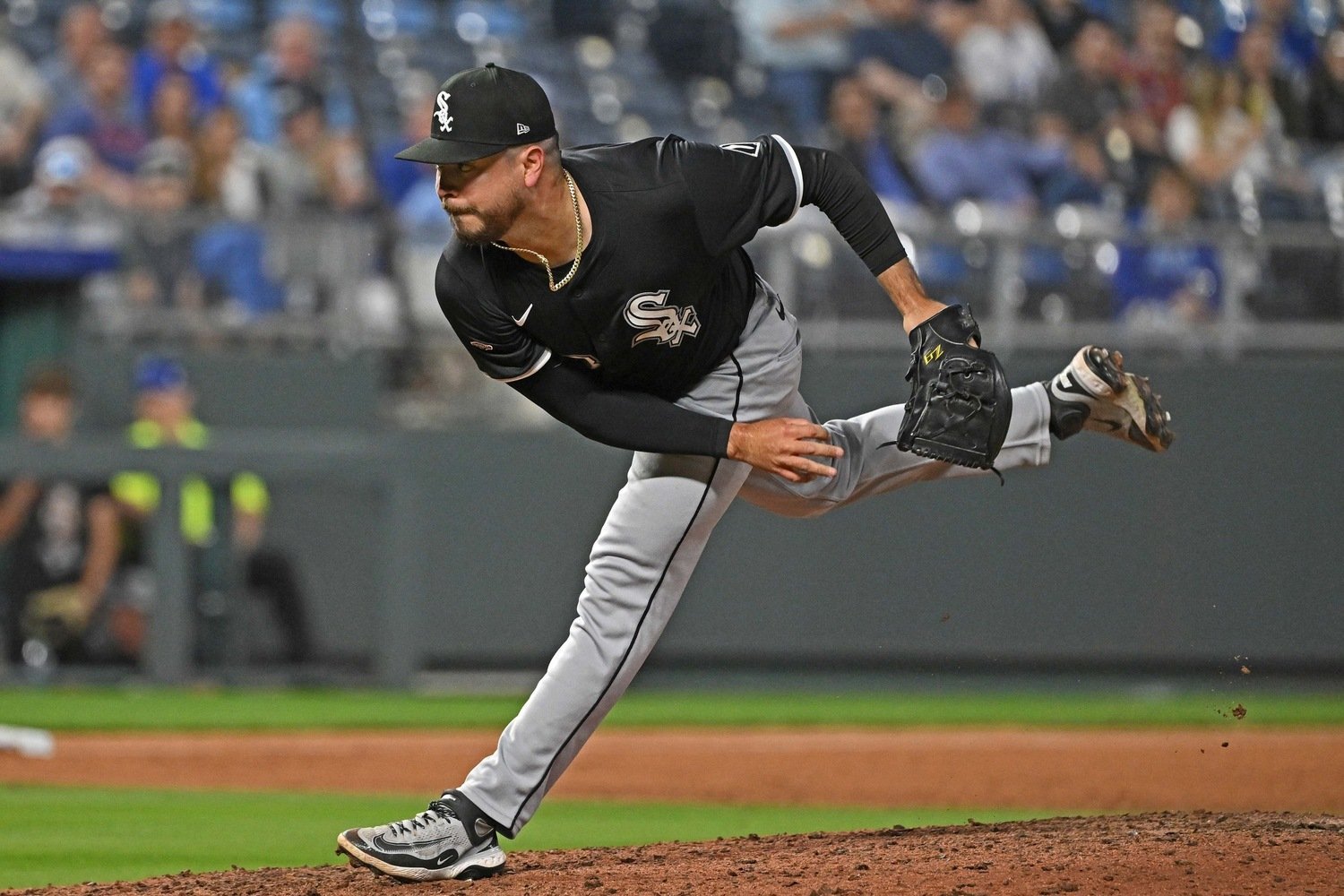 Caleb Freeman was getting ready to start the 2026 campaign in the Mexican League before the Blue Jays came calling. After seven years in the White Sox organization, Freeman elected free agency this past fall. He spent a few months on the open market before he landed with the Rieleros de Aguascalientes, but it turns out he won't be playing in Mexico after all. According to his transaction log on MLB.com, the right-hander signed a minor league contract with Toronto earlier this week. Freeman, 28, made his MLB debut with the White Sox in 2025, facing 16 batters over five appearances and recording 10 outs. He struck out three, walked one, and gave up two earned runs on five hits. While the sample was tiny and the results were mediocre, the righty hit 97 mph with his fastball and flashed a genuinely nasty slider against same-handed hitters. With that said, raw stuff has never been the problem for Freeman. His command has always been shaky, and he owns a 14.2% walk rate in his six minor league seasons. While he only walked one of the 16 batters he faced at the big league level in 2025, his 15.7% walk rate in 43 games between Double and Triple A suggests his control issues haven't gone away. Freeman has already been assigned to the New Hampshire Fisher Cats, so he will presumably begin the year at Double A. He's an arm to keep in mind should the Blue Jays need a short-term stopgap in the 'pen, but he'll have to cut down on the walks if he wants an extended look in Toronto. View the full article
 -
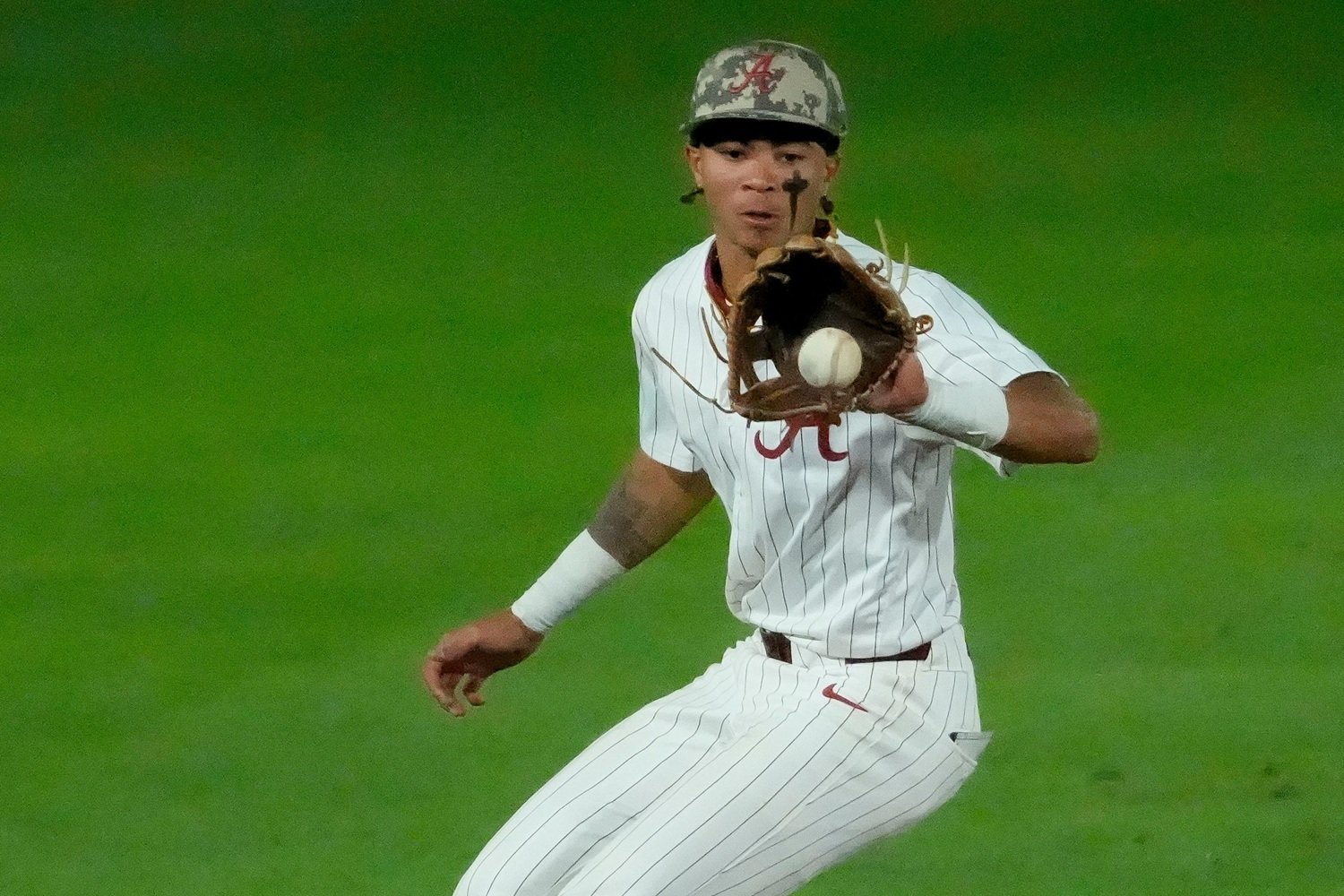 The college baseball season has just begun, but draft discussions are already taking shape. As conference play begins nationwide, scouts are evaluating players and identifying early favorites for July’s MLB Draft. That timing has become the unofficial launch point for the year's first mock draft. This week, Baseball America released its Mock Draft 1.0 for 2026, offering an early snapshot of how the top of the class could unfold. At this stage, the focus is on identifying talent tiers rather than matching teams to players. Teams are already evaluating which prospects need the most scouting focus in the coming months. For the Minnesota Twins, the early projection is exciting. Holding the third overall pick in the 2026 draft, Minnesota is positioned to add another elite prospect to a farm system that has recently seen several waves of talent graduate to the major league level. According to the mock draft, the Chicago White Sox are projected to select UCLA shortstop Roch Cholowsky with the first overall pick. Cholowsky entered the spring as the consensus top prospect in the class and has drawn comparisons to other elite shortstops, further supporting his status as a top choice, while maintaining his strong narrative during the opening weeks of the season. Through his first 15 games, Cholowsky has been electric at the plate. He is slashing .309/.461/.818 for a massive 1.279 OPS while launching eight home runs and adding four doubles. It is the kind of early-season performance that only strengthens his case to go first overall. With the second pick, the Tampa Bay Rays are projected to choose prep shortstop Grady Emerson. High school prospects can be unpredictable this early, and Emerson has his entire senior season to solidify his status. That leaves the Twins on the clock at number three. Baseball America’s projection has Minnesota selecting shortstop Justin Lebron from the Alabama Crimson Tide. If his early-season production is any indication, Lebron could be one of the fastest-rising players in the entire class. In 17 games this spring, Lebron is hitting .302/.458/.730 with a 1.188 OPS. He already has eight home runs and three doubles while adding another dimension with his speed. Lebron is a perfect 16-for-16 in stolen base attempts and has shown strong plate discipline with 14 walks compared to just 12 strikeouts. That combination of power, speed, and on-base ability is exactly the type of profile that tends to move up draft boards as the season progresses. If Lebron continues producing at this level against SEC competition, there is a real chance he could push his way into the conversation for the top overall pick. Many other contenders remain in play near the top. Several college hitters have drawn early attention: Jackson Flora, Drew Burress, Ace Reese, AJ Gracia, and Chris Hacopian. The high school class also features promising prospects beyond Emerson. Jacob Lombard and Erick Becker could all factor into the top of the draft, depending on how their spring performances develop. It is important to remember that March mock drafts are only the starting point. Performances will fluctuate, injuries can change the landscape, and scouting opinions often evolve as teams see players more frequently throughout the spring. Still, these early projections offer a useful snapshot of the talent pool. By July, the draft board will look different in many ways, but the Twins will likely choose from a group that includes several names already near the top of this mock draft. View the full article
 -
Front Office Confirms Payroll Is Technically a Social Construct
DiamondCentric posted an article in Twins Daily
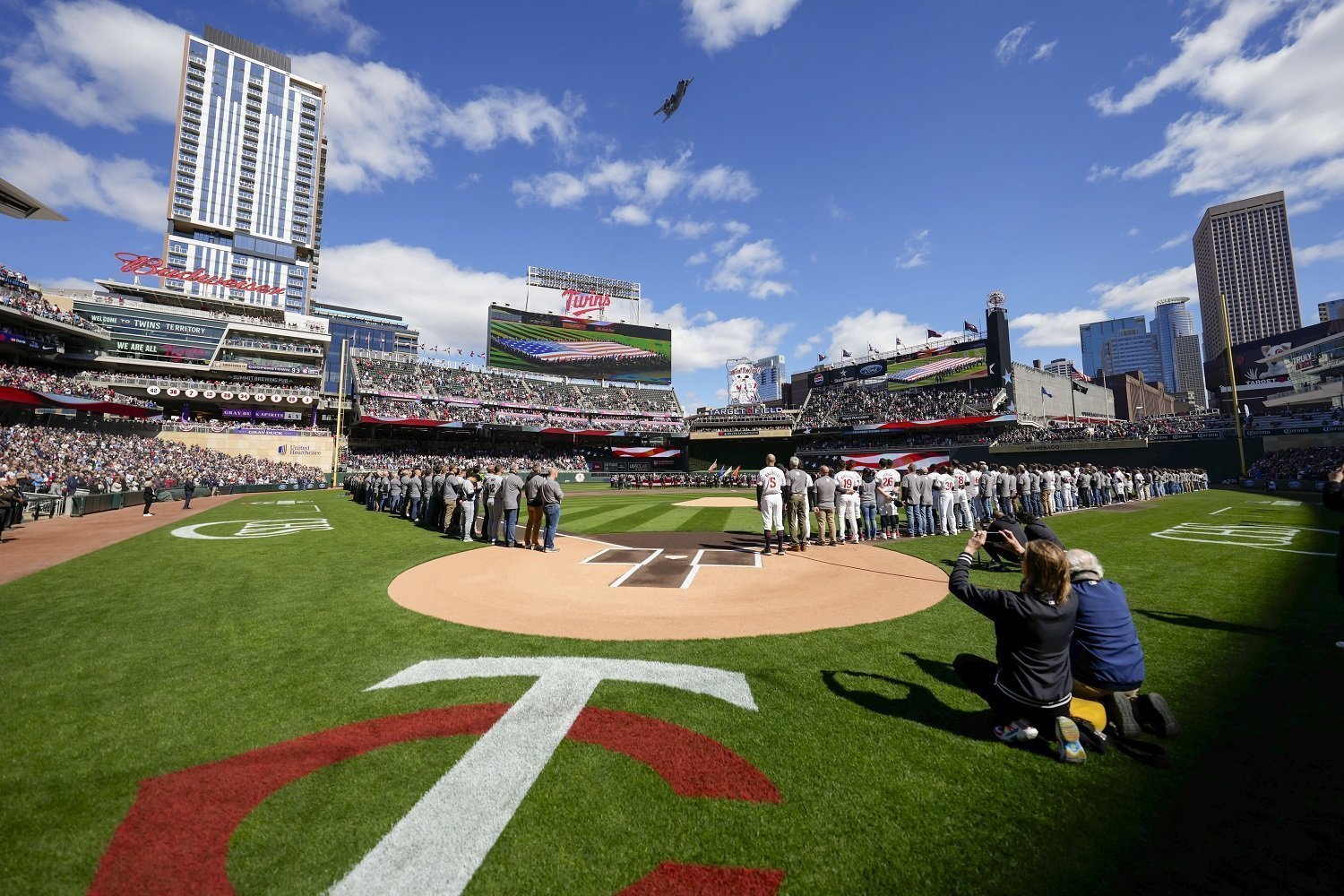 The Minnesota Twins held what was described as a routine media availability earlier this week. By the end, the organization had successfully redefined one of baseball’s most foundational concepts, while introducing a bold new framework for competitive spending that relies almost entirely on belief. Speaking from a lectern adorned with what appeared to be several laminated pie charts labeled 'Culture Metrics', Tom Pohlad addressed questions about the team’s long-term payroll outlook by first asking reporters to consider whether payroll exists in any meaningful sense at all. “We think it's important to challenge traditional assumptions about money,” Pohlad said. “When you really sit with it, payroll is less of a number and more of a mindset. Spending is about vibes. Spending is about growth. Spending is about how committed you are internally to the idea of improvement.” Pohlad went on to explain that the organization has made significant investments this offseason in non-monetary areas, including belief infrastructure and emotional liquidity. “We have spent a lot this winter,” Pohlad continued. “We spent time. We spent energy. We spent several afternoons discussing whether financial limitations are self-imposed barriers created by outdated thinking. That is where real progress happens.” Sources inside the room confirmed that the front office unveiled a new proprietary metric designed to measure fiscal effort without actually requiring the movement of currency. Known internally as Win Probability Intention, the stat attempts to quantify how seriously a team has considered acquiring an impact player before ultimately deciding against it. General manager Jeremy Zoll later clarified that the Twins have not ruled out increasing payroll in the future, but that any such move would need to align with the club’s long-term vision of sustainable imagination. “There are a lot of ways to get better as a baseball team,” Zoll said. “You can sign free agents. You can make trades. Or you can foster an environment where improvement feels possible. We think the third option has been underutilized across Major League Baseball.” At one point during the press conference, the Twins presented a slide comparing their actual payroll to what they described as their aspirational payroll, which exists primarily as a concept. The gap between the two was characterized as an opportunity. Team officials emphasized that the organization remains committed to contending in the American League Central and believes its current roster is well-positioned to compete—so long as fans are willing to engage with a more flexible understanding of investment. “Winning is not always about who spends the most,” Pohlad said. “Sometimes it is about who spends the most time thinking about spending.” When asked whether this philosophical approach would extend to future contract negotiations with star players, Pohlad nodded. “We think our guys understand that value is subjective,” he said. “And frankly, if you ask around the clubhouse, the vibes are fully funded.” The Twins are expected to continue exploring new avenues for resource allocation throughout the season, including several initiatives focused on generating late-inning offense and visualizing healthy pitching depth. Opening Day remains on schedule. Payroll remains a feeling. View the full article
 -
 Things haven’t gone according to plan this spring for Justin Topa. With loud contact piling up and the bullpen competition getting crowded, his path to the Minnesota Twins Opening Day roster is suddenly looking very uncertain. View the full article
