


DiamondCentric
-
Posts
2,631 -
Joined
-
Last visited
Never
Content Type
Profiles
Forums
Events
News
Tutorials & Help
Major League Baseball Videos
Guides & Resources
Store
Downloads
Gallery
Everything posted by DiamondCentric
-
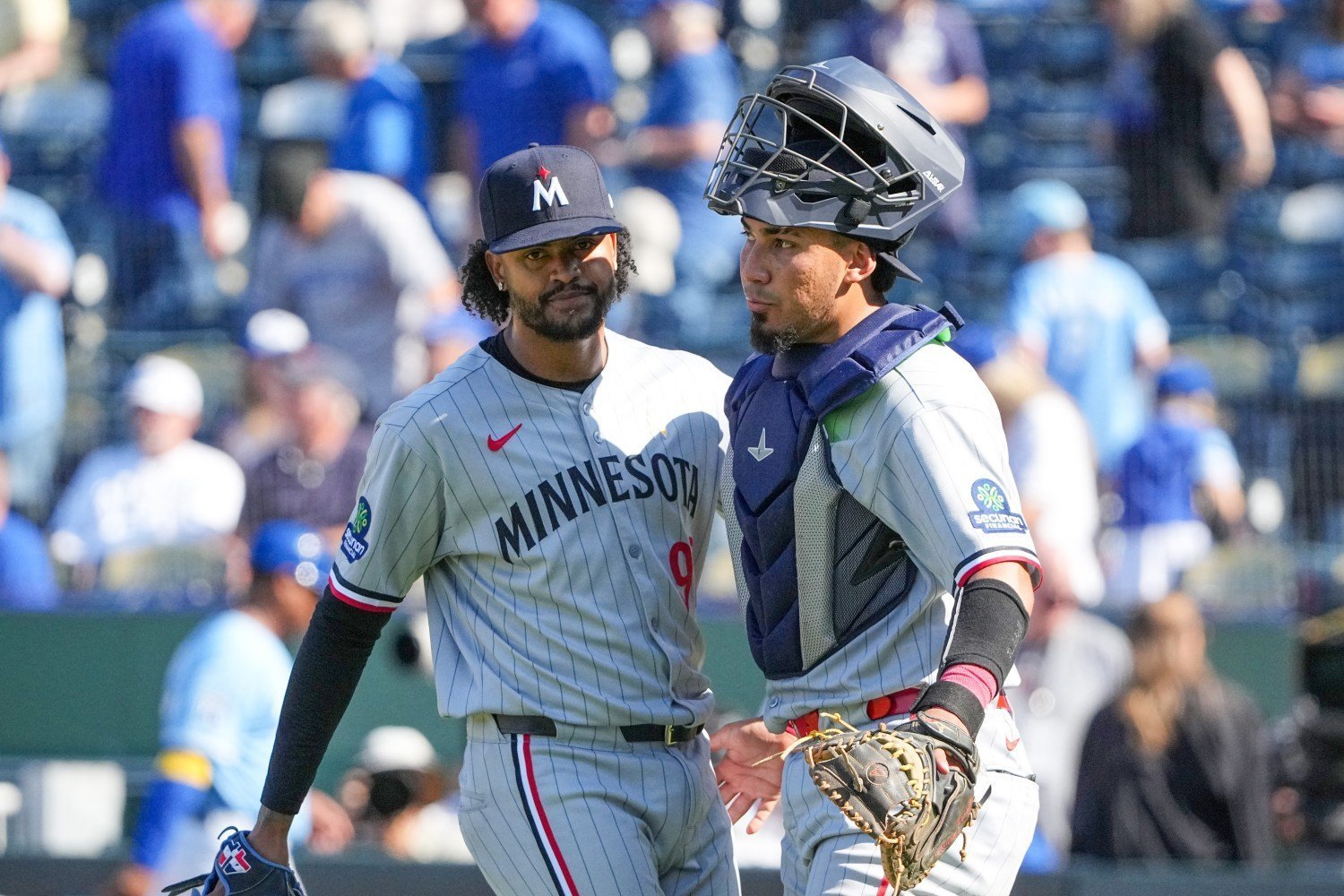 On Tuesday, the Minnesota Twins sent catcher Jhonny Pereda to the Seattle Mariners for cash considerations. Pereda was designated for assignment on Friday as the club managed a crowded catching situation from several offseason moves. Pereda joined the Twins as experienced depth and did exactly what the organization asked of him when injuries and roster needs created an opening last season. The Venezuelan-born catcher appeared in 28 games with Minnesota and the Athletics in 2025, slashing .246/.325/.333 (.658 ) with an 84 OPS+. Across his major league career, he has appeared in 48 games, compiling a .241 average in 118 plate appearances. While the offensive production at the major league level has been modest, Pereda has long been valued internally for his defensive reliability and work with pitching staffs. He owns a strong arm and a solid overall defensive reputation, traits that have helped him carve out a lengthy professional career. In the upper minors, he has been a consistently productive hitter, slashing .296/.392/.419 (.811) across nearly 1000 Triple-A plate appearances. The reality for the Twins is that the catching picture changed significantly this winter. The signing of Victor Caratini to a two-year deal gave the club a veteran complement to Ryan Jeffers. New manager Derek Shelton expects Jeffers to handle close to 100 games behind the plate this season. Caratini provides flexibility with the ability to contribute at first base or designated hitter, Earlier this winter, the Twins traded for Alex Jackson, another catcher, from the Orioles in exchange for minor league infielder Payton Eeles. Jackson doesn’t have any minor league options, so it might be a situation where the Twins carry three catchers. However, it's hard to imagine any team surrendering a valuable bench spot to a catcher who would be used sparingly. With Pereda, the numbers simply did not work on the 40-man roster. Moving him now allows another organization to benefit from his depth and experience while giving the Twins additional roster clarity heading toward spring training. Pereda’s career reflects perseverance. Signed internationally by the Cubs in 2013, he spent over a decade in the minors, passing through several organizations before reaching the majors in 2024. His journey has earned respect and trust in the clubhouse. As camp nears, the Twins will keep evaluating roster fit, especially behind the plate. Moving Pereda reflects a logjam from offseason additions, not his ability. More adjustments may come as Minnesota fine-tunes the roster for Opening Day. View the full article
 -
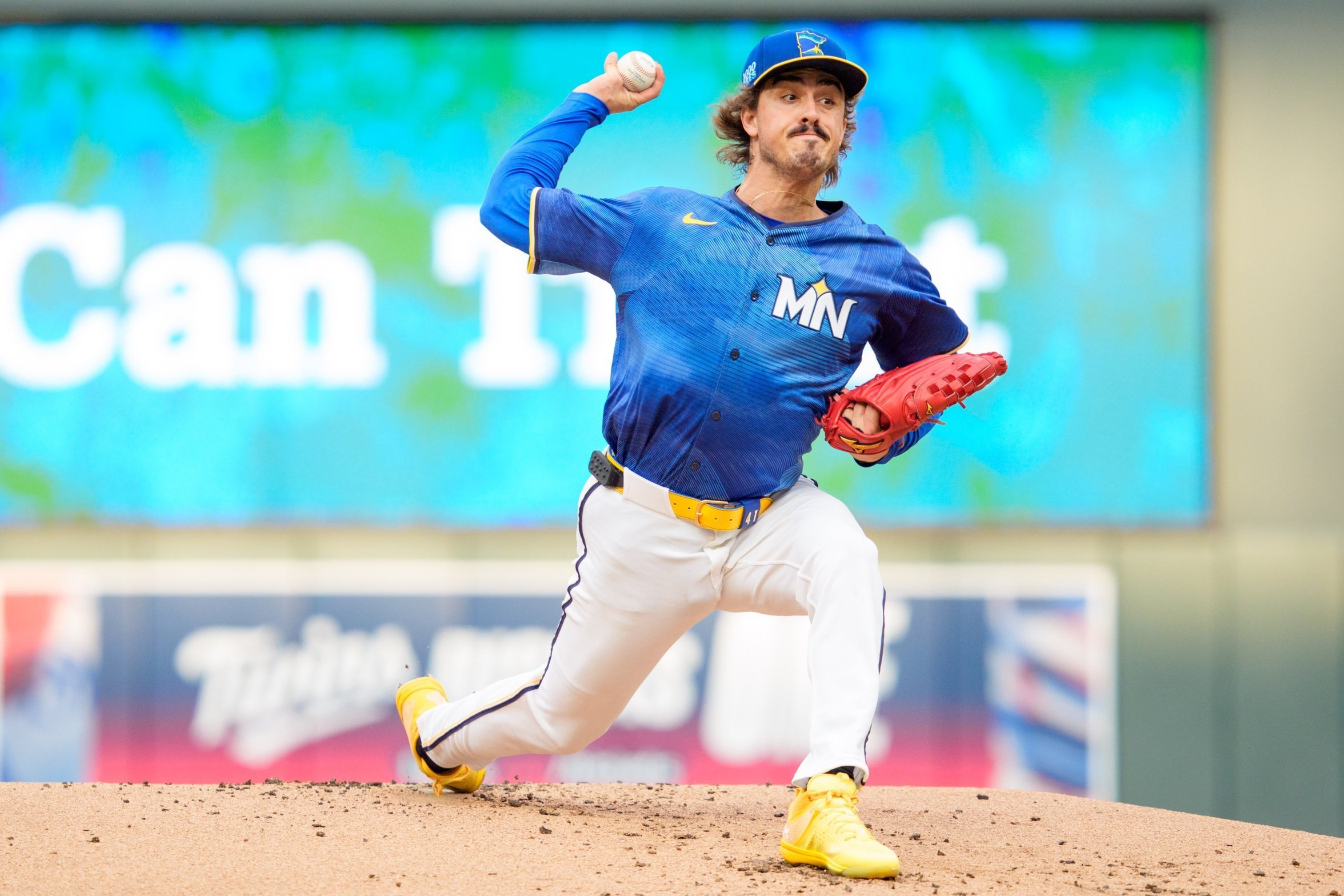 The pitching trade market has officially gone off the rails, unexpectedly positioning the Minnesota Twins at the center of off-season speculation—again. Over the past week, two headline-grabbing trades have reshaped how the league values high-end starting pitching. First came the Mets’ acquisition of Brewers right-hander Freddy Peralta. Then, on Thursday, the Texas Rangers stunned the industry by landing Nationals lefty MacKenzie Gore. Neither deal directly involved the Twins, but both could have significant ripple effects in Minnesota. Peralta is a very good pitcher, but he is under team control for only one more season. That did not stop New York from sending two of their top five prospects: infielder-outfielder Jett Williams and right-handed starter Brandon Sproat. Prospects are currency, and money is never an obstacle for Mets owner Steve Cohen. Through that lens, the move made sense. However, Williams and Sproat are both highly rated, and dealing them for Peralta (plus swingman Tobias Myers) was a bold stroke for New York. The Gore trade was even louder. Texas acquired the former top prospect, who is under team control through 2027, in exchange for five prospects. Shortstop Gavin Fien, right-handed pitcher Alejandro Rosario, first baseman and outfielder Abimelec Ortiz, infielder Devin Fitz Gerald, and outfielder Yeremy Cabrera all headed to Washington. That is an enormous return for one pitcher, even if it had a bit of quantity over quality to it. Now zoom out and look at the Twins. Despite constant offseason rumors, Minnesota has insisted on keeping Joe Ryan and Pablo López. Derek Falvey and company have publicly dismissed trading either ace. Yet, after seeing Peralta and Gore's return such impressive hauls, it's only prudent to reconsider. Ryan and López are in the same tier as those two pitchers, in the eyes of the league. In some front offices, they may even be valued more highly. They're closer to Peralta in quality, but they each have two years left before free agency, like Gore. That reality gives the Twins leverage. A lot of it. Even if Minnesota ultimately decides against moving either pitcher before Opening Day, this week made one thing clear: The ceiling on a Ryan or López trade package is enormous. If the Twins find themselves below .500 at the trade deadline and are not confident in a postseason push, the offers could be impossible to ignore. None of this means Twins fans should be rooting for a teardown. Ideally, Minnesota enters the season with both right-handers anchoring the rotation and plays well enough that dealing either one is off the table in July. That is still the preferred outcome. But there is another side to this. The Twins were not expected to do much this offseason, which is why the additions of Victor Caratini and Taylor Rogers caught some fans off guard. Those moves helped, but they did not solve everything. The bullpen still needs depth, and the roster still has clear holes. It also sounds like the team has other moves in the works before spring training next month. Listening on star players is not the same as committing to trading them. In fact, doing so could be the best way to strengthen the organization long-term, if the season goes sideways. Even after Rogers’s arrival, another reliever would make plenty of sense. While the Twins have publicly refuted the idea of trading Byron Buxton, Ryan, or López, now is exactly the time to keep an ear out for an offer they cannot refuse. All it takes is one desperate team to completely change the calculus. Buxton remains a long shot, given his no-trade clause, so the focus realistically falls on the two aces. Which teams might get desperate enough to overpay? The Yankees stand out, immediately. Boston is another name to watch. The Red Sox were tied to Ryan around last year’s deadline, even if that reporting turned out to be premature. It sounds like both sides have put to rest the Ryan trade rumors this winter. However, they have already acquired former Twin Sonny Gray this winter and have made 10 trades overall. An 11th would hardly be shocking. Baltimore is the sleeper. The Orioles were quiet last offseason, but have been far more active heading into 2026. With a young core built to win now, adding a cost-controlled ace could push them over the top. Losing a star is difficult, but a clear direction is vital. If Minnesota is truly open to dealing Ryan, López, or even Buxton, the return could quickly redefine the franchise's future. For now, Minnesota waits. The phone may not be ringing yet, but after last week, everyone knows the price of pitching just went up. Should the Twins be listening on significant offers for their stars? Leave a comment and start the discussion. View the full article
 -

Jett Williams Embodies the Next Evolution of Brewers Baseball
DiamondCentric posted an article in Brewer Fanatic
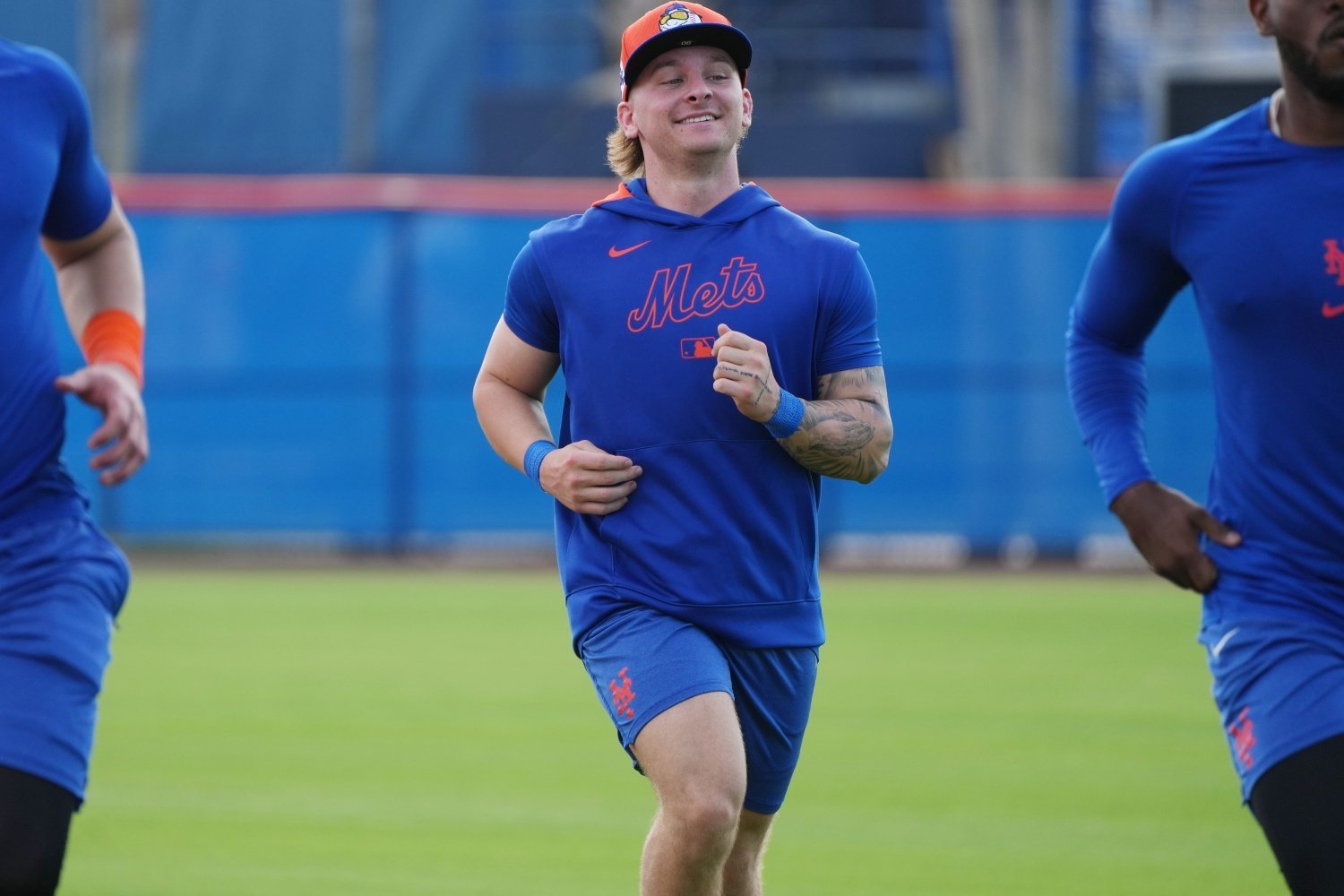 The focus on Jett Williams’s height has already become a bit tiresome, but it’s unlikely to fade anytime soon. Listed at 5-foot-7, the 22-year-old isn’t even the shortest player on his new team, which he described on Monday as “a bunch of short guys who are a little bit scrappy.” According to Stathead, the 2025 Brewers featured 17 position players under 6 feet tall, tying them with Atlanta for the second-most in baseball. In many ways, Williams’s brand of baseball matches his scrappy teammates, too. The Brewers emphasize swing decisions, swinging less than any other team as part of an on-base-centric approach. According to Baseball Prospectus, Williams’s 43% swing rate ranked in the 13th percentile of qualified minor-league hitters last year. A 13.3% walk rate helped him post a .363 on-base percentage. Tagged by FanGraphs with 60-grade speed, he stole 34 bases in 130 minor-league games last year. However, Williams’s approach when he does swing diverges from most of Milwaukee’s smaller hitters, who have below-average raw power and hit plenty of ground balls. Williams has frequently pulled the ball in the air, with average raw power. None of his peers had that combination last year. Williams’s closest comparators in size, Caleb Durbin and Sal Frelick, pulled enough fly balls to hit 11 and 12 homers in 2025, respectively. Durbin excelled at it in the minor leagues, too. However, due to their low 90th-percentile exit velocities, both appear to have maxed out their power. Without dramatic changes to their physiques and approaches, regularly hitting double-digit homers is unlikely. That’s where Williams separates himself. His 90th-percentile exit velocity in Triple A effectively tied him with Brice Turang, who is four inches taller and went on a second-half power binge despite a low pull-in-the-air rate. FanGraphs assigned Williams 50-grade raw power, and he hit seven home runs in 151 Triple-A plate appearances. Watching Williams hit reveals that, unlike other short Brewers, he’s not looking to slap the ball around the field at low trajectories. Like Durbin, he loads with an early leg kick and keeps his weight on his back leg as the pitch comes in. He then unleashes that energy with a faster and steeper swing than Durbin’s, with his barrel meeting the ball at an upward trajectory in front of the plate. The downside is that this approach could make Williams’s hit tool less reliable against big-league pitching. Early leg kicks and steep bat paths make some hitters vulnerable against velocity at the top of the zone. Williams whiffed on 28.4% of swings against four-seam fastballs in Triple A, where his 78% in-zone contact rate ranked in the 19th percentile. The Brewers, meanwhile, have failed to successfully develop hitters with faster and steeper swings, with Keston Hiura and Garrett Mitchell among those to be eaten alive by high fastballs in the big leagues. Opinions of Williams’s bat-to-ball ability vary. Baseball America and MLB Pipeline gave it a 55 grade in their most recent updates; FanGraphs, citing those potential concerns with high velocity, gave it a present grade of 30 and a future grade of 40. Much of his future value may hinge on whether the Brewers can get him to make enough contact. While Williams’s profile features plenty of the scrappiness the Brewers are known for, he’s not just another Pat Murphy favorite with a high floor and a low offensive ceiling. He has more raw power, and an approach geared toward hitting more home runs. Those traits create a wider range of potential outcomes for his development, but it was time that Milwaukee rolled the dice on a riskier hitter with more upside. Williams gives them the best of both worlds: more pop, but still plenty of grit. View the full article
 -
Cubs Finally Have The Perfect Roster To Suit Colin Rea
DiamondCentric posted an article in North Side Baseball
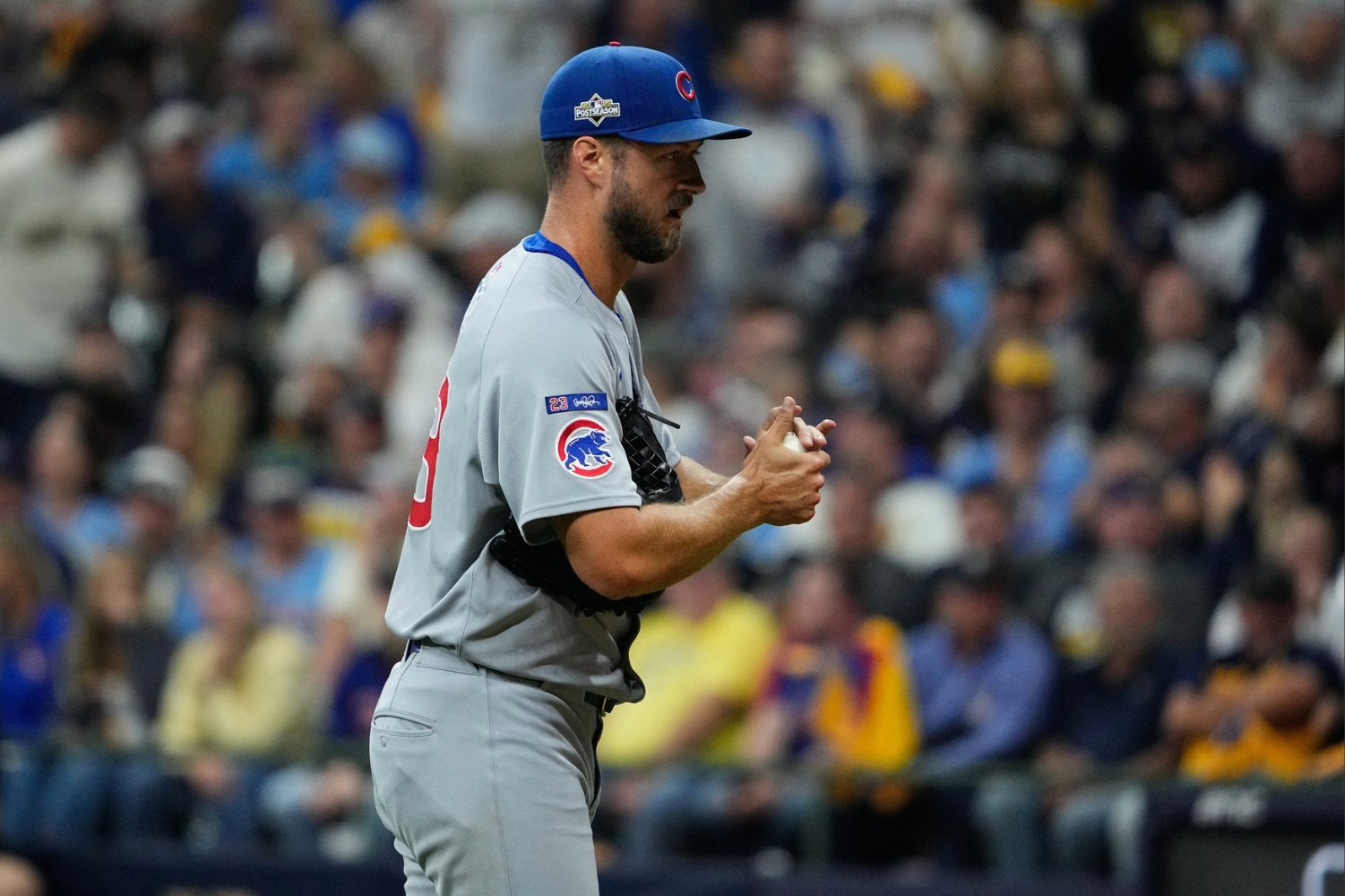 Colin Rea was always meant to be a swingman with the Chicago Cubs. He possesses the ideal skill set and a modest history of amicably filling such a role. The issue is that the fortunes of the 2025 didn't allow it. If you recall, there was a battle for the fifth spot in the Cubs' rotation last spring training. That competition essential boiled down to Rea and Ben Brown, with the other four spots occupied by Justin Steele, Shota Imanaga, Matthew Boyd, and Jameson Taillon. The job, of course, went to Brown, while Rea was relegated to bulk relief and the occasional spot start. He ended up limited to a pair of multi-inning stints across three appearances prior to his first start on April 13. From there, though, he gained a role which he'd never relinquish. A combination of factors led to Rea making 27 starts in 32 appearances last year. Steele was injured and lost for the season early; each of Imanaga and Taillon struggled to stay healthy; and Brown's own unstable performance ran throughout the year regardless of his role. From that April point in the calendar onward, only two of Rea's appearances were in relief, and even those were both 5 1/3 inning jobs following Drew Pomeranz serving as an opener. It was a season that ended up nearly identical to Rea's work in the prior season in Milwaukee. His 27 starts in 32 appearances was the same as in 2024, while each of his 3.95 ERA, 19.2 K%, and 6.6 BB% were just a shade off his work with the Brewers. The most notable change came in the form of a 10.6 percent home run rate that was more than three percent better than his rate in the previous season. Now looking ahead to 2026, it looks as if Rea now has an opportunity to settle back into the role that was tailor-made for him. The Cubs will enter the season with Cade Horton firmly in the rotation mix, followed by fresh acquisition Edward Cabrera and holdovers in Boyd, Taillon, and Imanaga. Steele's return is imminent, as well. That's already six names for five spots. Recent track records of the six names atop the rotation depth chart aren't terrific on the health side, however. For Rea, starting opportunities will remain even with Javier Assad and Jordan Wicks each still floating around the 40-man roster. In the meantime, he'll ply his trade in the swingman role he was meant to serve in 2025. FanGraphs has Rea making just five percent of the starts in 2026 and comprising seven percent of innings in relief. Baseball Prospectus is similar, with six percent of starts and eight percent of the relief share. Either case represents a somewhat diminished capacity considering how crucial he was last season, but this is also the role Rea was made for. In his roughly 600 innings as a major-league pitcher, 544 have come as a starter and the other 62 have been in relief. The numbers between each read as follows: As Starter: 4.65 ERA, 4.66 FIP, 19.5 K%, 7.3 BB%, .326 wOBA against As Reliever: 2.32 ERA, 3.52 FIP, 16.3 K%, 5.6 BB%, .270 wOBA against While the splits read as somewhat jarring, particularly on the run prevention side, it's this that begins to paint the picture of why Colin Rea: Swingman is such an essential component on the 2026 Cubs' pitching staff. The ideal swingman isn't something that's necessarily quantifiable, but more of a broad skill set. It's an idea furthered by his Statcast percentile distribution: The platonic ideal swingman is someone whose distribution looks quite like this. You're not necessarily looking for an arm who absolutely thrives in a particular respect such as velocity or movement in a way that begets high strikeout tendencies. That's a toolbox better served for an inning or matchup-based deployment in relief and prone to much more variability. Further, starters like that are more difficult to find, as being able to stretch that impact across a five or six innings is reserved for a select few that live in the upper tier of performance. Instead, you're looking for something closer to what Rea offers: a dependable set of skills and a high floor. As such, these are precisely the type of metrics we're looking for out of someone in a relief and spot-start capacity. His walk rates are steady regardless of role. He's adept enough at avoiding quality contact that you know he can survive an inning or be run out there for a few at a time, as we saw in four of his five relief appearances last season. Even when accounting for his lack of strikeouts, his low walk and solid contact figures are indicative of the type of stability he brings to the equation, no matter the role. It was probably unrealistic to expect Rea to duplicate his 2025 numbers considering even a modest 1.9 fWAR was far above anything he'd posted in the years prior. But having him settle into a role as a true swingman is the ideal setup for the Cubs. Even six-deep in the rotation at present, it's a starting group with a sketchy past on the health side. Factor in a desire to give someone like Matthew Boyd a break or ease Justin Steele back in, and you have an easy plug-and-pitch option in Rea. As many logistical things are still to be determined with their staff, Craig Counsell and company have at least one certainty on their roster. View the full article
 -
The Royals Should Consider Bringing Back Jackson Kowar
DiamondCentric posted an article in Royals Keep
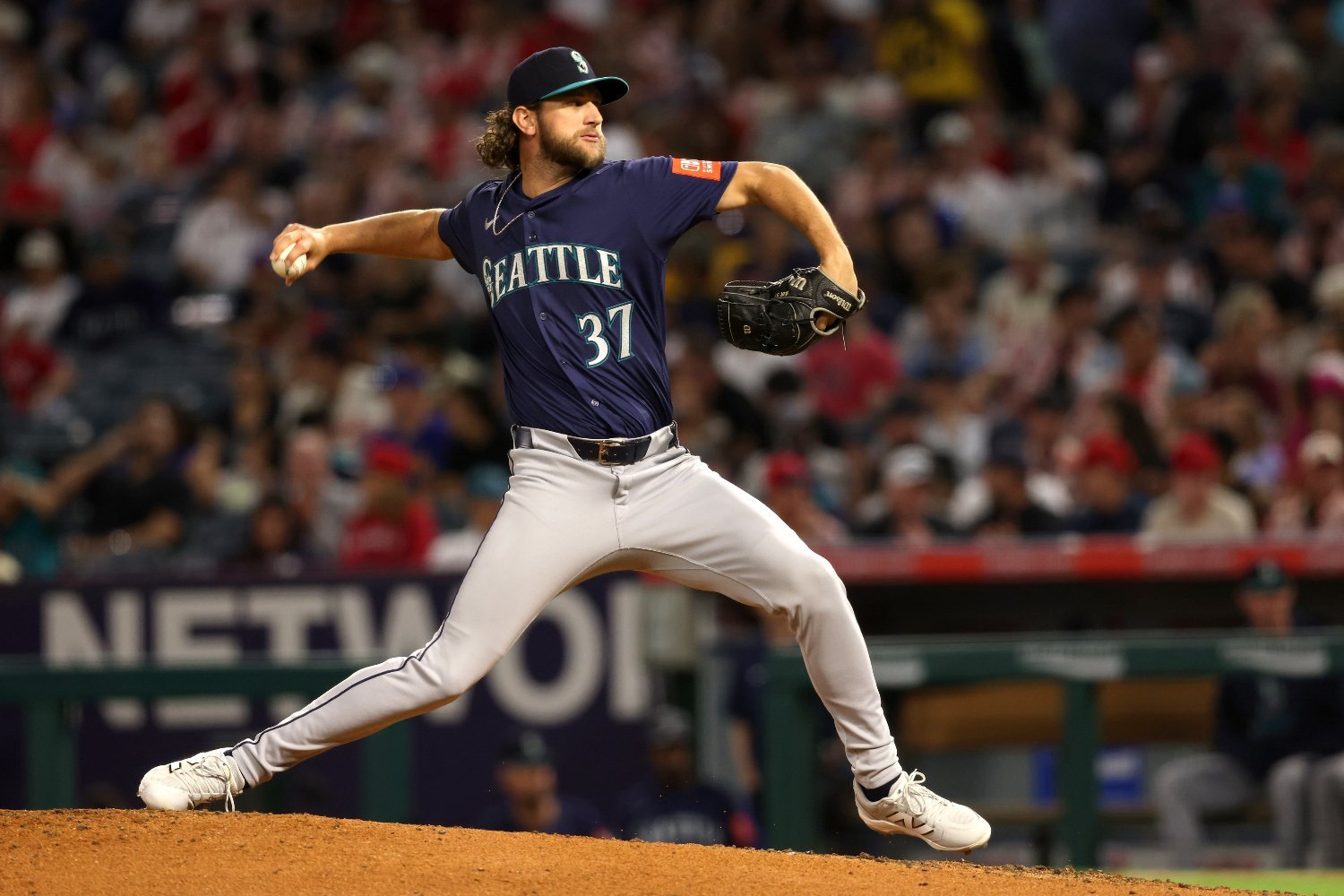 On Tuesday evening, the Seattle Mariners made a minor move: they designated pitcher Jackson Kowar for assignment in order to make room for catcher Jhonny Pereda. Royals fans should be familiar with Kowar, as he was drafted 33rd overall by the Royals in the 2018 MLB Draft. Yes, that infamous draft in which the Royals selected pitchers with their first five picks. Those pitchers, in addition to Kowar, included Brady Singer (18), Daniel Lynch IV (34), Kris Bubic (40), and Jonathan Bowlan (58). Austin Cox (152) and Jonathan Heasley (392) were also pitchers selected who made it to the Major Leagues, while position players Kyle Isbel (94) and Nate Eaton (632) also came from that draft. While that draft was chock full of names, Kowar may have possessed the most upside at the time of that bunch. In 2019, Kowar was ranked fourth among the Royals' prospects by MLB Pipeline (he was behind Bobby Witt Jr., Singer, and Lynch). However, he had a sterling scouting report, with many scouts feeling he had middle-of-the-rotation upside, maybe more, if it all clicked. Here's a look at his scouting report from Pipeline that season. While there was hope that Kowar would be a crucial part of this rotation, much like Singer and Bubic, or even bullpen, like Lynch and, to an extent, Bowlan, things never came together for Kowar in Kansas City. In 39 appearances and 74 IP, he posted a 9.12 ERA, 2.10 WHIP, 5.99 FIP, and 1.47 K/BB ratio. As a result, the Royals decided to move on from Kowar, trading him to Atlanta in a deal for pitchers Kyle Wright and Nick Anderson before the 2024 season. After the trade, Kowar was traded to Seattle in a deal for outfielder Jarred Kelenic. Injury and Tommy John surgery kept Kowar out of action in 2024 and limited him to only 33 IP combined in 2025 in Triple-A and Seattle. That said, the 29-year-old showed some flashes of progress with the Mariners last season, and could be an intriguing pickup by the Royals, who are already familiar with his talent and pitching style. Let's take a look at what Kowar did with the Mariners in 2025, a pitch that could be key for him in 2026, and why Kansas City should take a flier on their former competitive round draft pick. Small Sample; Decent Results in Seattle As stated before, Kowar didn't see much action in either Triple-A Tacoma or Seattle due to his recovery from Tommy John surgery in 2024. That said, he produced respectable numbers at both levels. In 16 appearances and 18 IP with the Rainiers, he posted a 2.81 ERA, 1.31 WHIP, and 4.28 FIP. His command was a work-in-progress in his return to the mound, as he only had a 21.9% K rate and 1.60 K/BB ratio. However, he only allowed an 86.1 MPH EV, induced a 55.6% groundball rate, and sported a 30.1% CSW in Triple-A. According to his Statcast profile via TJ Stats, Kowar did an excellent job limiting exit velocity on batted balls (91st percentile) and barrels (75th percentile). That said, he did give up a lot of hard hits (14th percentile), and his control was an issue at times, based on zone rate (4th percentile). Obviously, this is not a perfect profile, but it was encouraging, especially for a pitcher who missed over a full season of play in the previous year. Kowar got the call-up to the Mariners later in the season, and his numbers were fine, but not as impressive as his Triple-A metrics. In 15 outings and 17 IP, he posted a 4.24 ERA, 1.24 WHIP, and 2.14 K/BB ratio. That said, he struggled with home runs, giving up a 14.8% HR/FB rate, and his FIP was much higher at 5.84. While he induced groundballs at a high level, that didn't translate so much to the Majors, as illustrated by his 31.3% GB%. In addition, his Statcast metrics were mediocre with the Mariners (as seen below), which explains why he wasn't a part of the Seattle bullpen mix at any point in the postseason. Kowar sported plus fastball velocity (95th percentile), but everything else was below average, with the exception of a 64th percentile whiff rate. The CSW was a big surprise: it ranked in the 95th percentile (30.3%) in Tacoma but in the second percentile (24.2%) in Seattle. That was one of many examples of when Kowar thrived in Triple-A but couldn't translate those skills and performance to the MLB level. This has been a long-term problem for Kowar, especially during his time with the Royals. In 2021, he posted a 3.46 ERA, 3.05 FIP, a 34% K%, and a 3.38 K/BB ratio in 17 outings (16 starts) and 80.2 IP with the Storm Chasers. Those strong numbers helped him earn Triple-A East Pitcher of the Month at one point that season. Hence, it may be a case where Kowar is simply a good Four-A pitcher who can succeed in Triple-A, but doesn't quite have the "it" factor to do the same in the Majors. Then again, he was recovering from injury and hadn't pitched since 2023. Thus, some growing pains, especially in command, were to be expected and aren't exactly a "death knell" on his outlook as a pitcher in 2026. Kowar's Pitcher Repertoire (And Why the Slider Could Be Key) When looking at Kowar's pitch arsenal, he's a limited three-offering pitcher. That's not great for a starter, but it's more than serviceable for a reliever. While his fastball velocity has also rated highly, the pitch has lacked shape and thus has rated slightly below average in most stuff models, including TJ Stuff+, as seen below. Kowar doesn't get a ton of extension on his pitches, and his four-seamer didn't spot a ton of vertical break either. That explains why it sported a 97 TJ Stuff+, the worst mark of his four offerings last year. The metrics, especially whiff (12.8%) and xwOBACON (.423), also illustrated that his four-seamer was a mediocre offering that was thrown way too much last year (57.7%). Conversely, Kowar's three other offerings were superb. His slider, changeup, and sinker had TJ Stuff+ marks of 107, 111, and 103, respectively. As a result, his overall TJ Stuff+ was 102, which is more than serviceable for a middle-innings reliever. Looking at his TJ Stats summary from 2023, his last year in Kansas City, Kowar saw incremental progress with the Mariners, especially with his secondary pitches. Kowar's four-seamer had a bit more vertical break and spin in Seattle than it did in Kansas City, which was encouraging. However, the slider saw the best improvement with the Mariners. The slider was three points better in terms of TJ Stuff+ and had a better chase rate (36.5% to 32.9%) and whiff (52.3% to 32.4%). It seemed like Kowar's slider sported more movement. Kowar's primary breaking offering had 1.2 more inches of vertical break, 0.8 more inches of horizontal break, and 322 more RPM in spin. I created a clip compilation below that showcases his progression in his slider movement from 2022 to 2025. The slider was more of a harder offering with the Royals. With the Mariners, it sported much more movement and, as a result, became a better chase and whiff pitch for Kowar last season. Even when looking at the heatmap data of Kowar's slider over his past two seasons, it's obvious that the Mariners seemed to help him fully tap into the pitch in ways that he couldn't in Kansas City. Here's his slider heatmap from last season with Seattle. Kowar struggled a bit against lefties with the pitch, as he left it up in the middle far too often, based on his heatmap. The .412 xwOBACON also confirms that inconsistency. That said, he also generated a 34.4% CSW and 45.2% whiff rate with the slider against lefties, so it was effective when located properly. As for his sldier against righties, it had a much lower xwOBACON (.274), while still maintaining strong CSW (28.2%) and whiff rate (69.2%). Now, let's take a look at his slider heatmap data from 2023 with the Royals. In terms of CSW, Kowar's slider wasn't that much worse against lefties in 2023 (31.2%). However, it generated less whiff (27.3%) and got hit much harder (.522 xwOBACON). The same CSW and whiff rate trend was true for righties, with his whiff being 35.9% lower than his rate in 2025. That said, he still minimized effective contact with the slider against righties, as illustrated by his .273 xwOBACON. If Kowar can continue to show progress with the slider, he may take another step as a reliever in 2026. The pitch has the potential to be that good in the long term. Why the Royals Should Bring Back Kowar While Brian Sweeney was with the Royals in Kowar's last year with Kansas City, Sweeney and company were still figuring out the lay of the land during the 2023 "evaluation" season. Even though Sweeney and Zach Bove tried some things with the Royals' pitching staff (many who returned from 2022), I don't believe they pushed the envelope too much, especially as the losses piled up. Their goal was to determine who was worth keeping and who wasn't (Kowar obviously fell in the latter category at the time). However, if Kowar were to return to Kansas City, Sweeney, assistant pitching coach Mike McFerran, and bullpen coach Mitch Stetter would likely be more aggressive in their approach with Kowar in 2026. I believe they would not only help him continue the changes he made in Seattle but also look to make some adjustments to his pitch mix and repertoire. It also wouldn't be surprising to see Sweeney and McFerran help Kowar add a pitch, something they have done with many Royals pitchers to various levels of success. There's upside here for Kowar to be a solid middle-innings reliever who can fill in high-leverage spots from time-to-time, much like Taylor Clarke a season ago. Granted, Kowar is out of Minor League options, which could scare Royals GM JJ Picollo from taking a chance on Kowar, especially with other "out-of-options" pitchers in the bullpen, such as Nick Mears and Bailey Falter. That said, if the Royals are able put a claim on Kowar and get him to Spring Training in Surprise, they should explore the possibility. If he can respond just as well to Sweeney as he did to Seattle's Pete Woodworth (who's cut from the same cloth as Sweeney in terms of philosophy and approach), then the Royals could finally benefit from the Kowar that they dreamed about when they selected him 33rd overall in the 2018 MLB Draft. View the full article
 -
Liam Hicks: I needed to get stronger to stick in MLB
DiamondCentric posted an article in Fish On First
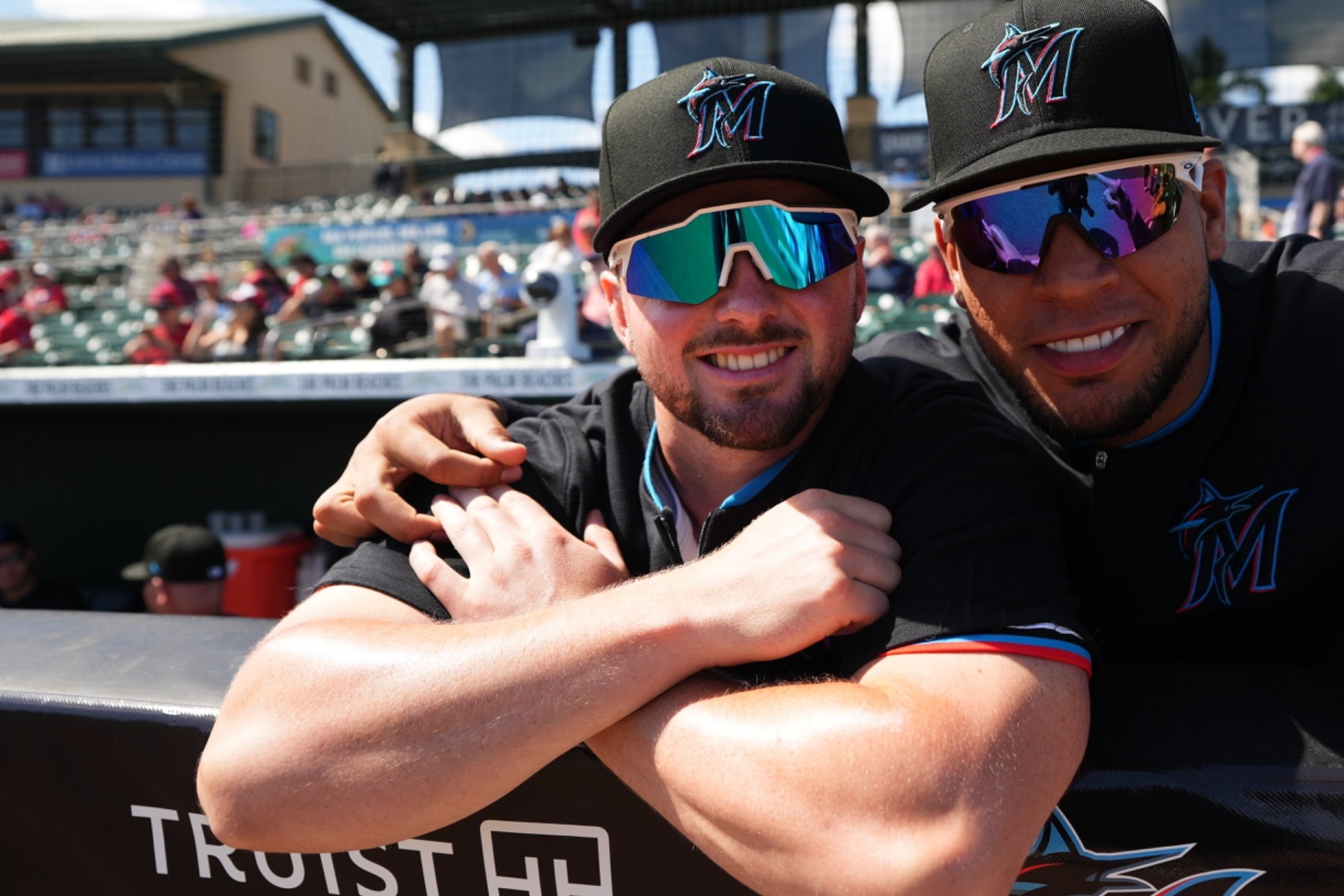 Liam Hicks drew some Dan Uggla comparisons in 2025. The rookie catcher accumulated 1.0 fWAR and stuck on the Miami Marlins active roster all season long despite joining the organization via the Rule 5 draft. In the nearly two decades since Uggla burst onto the scene in 2006, Hicks had the strongest debut of any Marlins Rule 5 pick. That's where the similarities between the two of them end. While Uggla distinguished himself with his physical strength and mountainous biceps, Hicks earned his keep at the major league level despite trailing most of his peers in power-based metrics. The team's coaches did not shy away from directing him to make changes, as he shared on the Marlins Hot Stove Show in an interview this week. Back in May, when discussing his role on the roster, the Marlins coaching staff told the 185-pound Hicks, "you need to get stronger if you're gonna stick around here." Although Hicks took the feedback in stride and wanted to work toward achieving that during the summer, his heavy usage—119 games played, including 62 behind the plate—left him with limited time to hit the gym. When their end-of-season meeting reiterated the need to "swing faster, throw harder," he switched up his training accordingly. I generally feel that Baseball Savant's signature graphics atop player profile pages are overrated in their usefulness, but Hicks' really does illustrate what makes his skill set so unconventional. The 26-year-old has a special talent for discerning the edges of the strike zone and making contact. On the other hand, he ranked in the fifth percentile among big leaguers in hard-hit rate. The only qualified players with a lower average exit velocity overall than his 84.6 mph mark were José Iglesias, Chandler Simpson and Mauricio Dubón. Hicks mashed just six home runs. The goal for Hicks this offseason was to boost his bat speed. New Marlins assistant hitting coach Corbin Day put together a weighted bat program with that in mind. They were in "constant communication" as Hicks added approximately 10 pounds through the end of the program in early January. Dietary adjustments played a role as well, with the lefty-swinging Canadian saying that ground beef and rice has become a go-to meal for him. For the past three weeks, Hicks has been hitting alongside new teammate Owen Caissie. "He could use some swing-decision stuff from me and I could use some tips on hitting homers from him, so it's honestly a really good match." During a recent session, Hicks says that Caissie was advising him on how to get underneath the ball more consistently to maximize his potential as a slugger. Hicks is practically a lock to open up 2026 in the majors. He will split the catching reps with Agustín Ramírez while also pinch-hitting against right-handers and playing first base occasionally. But consensus MLB Top 100 prospect Joe Mack is breathing down his neck and expected to debut early in the season. To co-exist with Mack on the Marlins roster, Hicks must show that he has become a more complete player. View the full article
 -
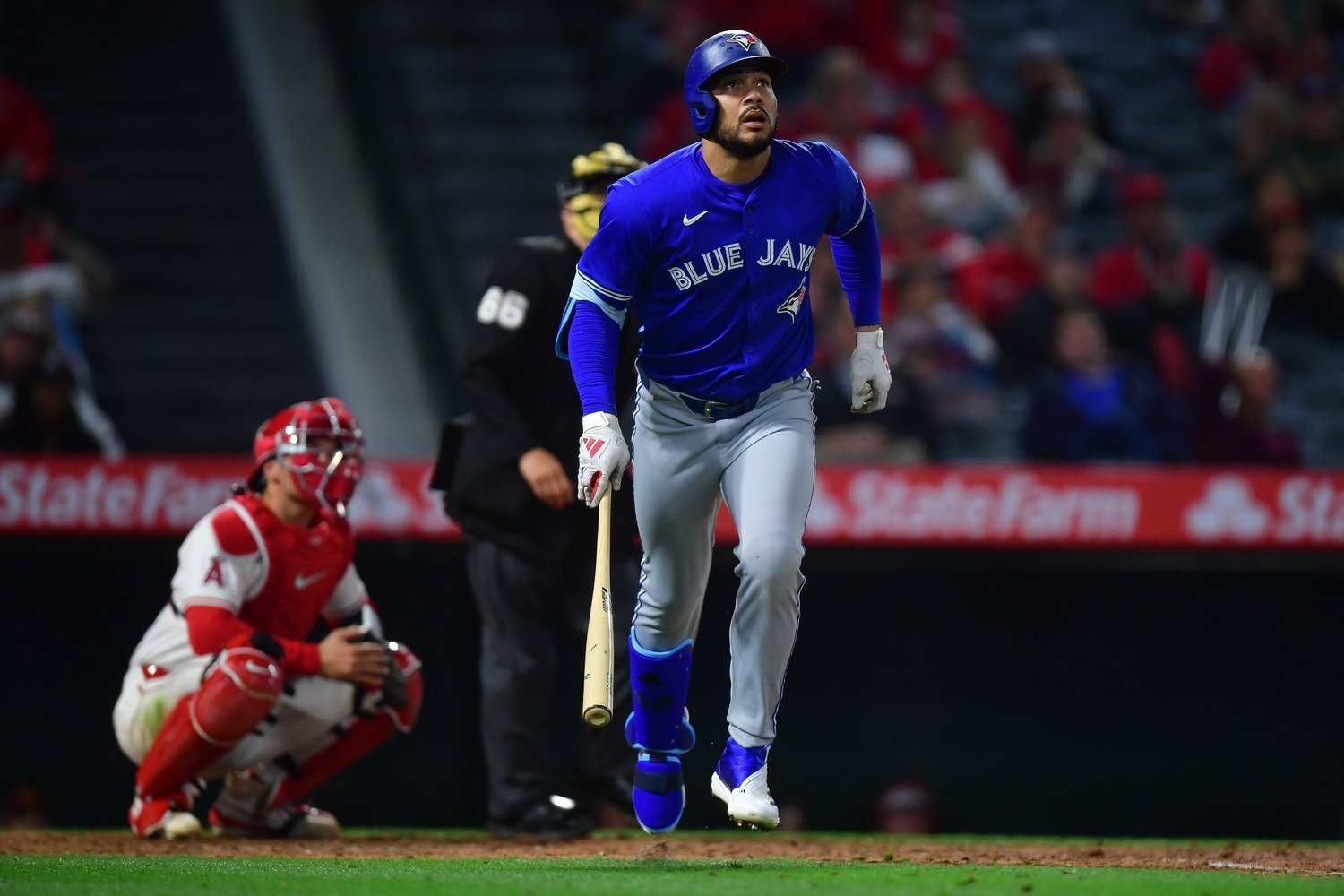 Anthony Santander’s 2025 season will be one to forget. Fresh off signing a five-year, $92.5 million contract (with deferrals and an opt-out sprinkled in), he was supposed to provide the Blue Jays with some much-needed power as a middle-of-the-order bat. He was coming off a season in which he hit 44 home runs, made the All-Star team, and won the Silver Slugger Award, and the Blue Jays were expecting big things. Things didn’t go as expected. He started with just one extra-base hit through his first 14 games, and it didn’t get much better from there. Santander played regularly through the end of May, until a left shoulder injury caused him to miss the next four months. Aside from four games at the end of the regular season and a few playoff appearances, his season was essentially over. On the whole, his season line reads .179/.273/.304 with six home runs and a 61 wRC+ in 54 games played. The injury certainly was a part of that, but it wasn’t everything. Small sample caveat applied, his strikeout rate rose to a career-high 27.6%, his barrel rate dropped to a career-low 4.5%, and his xBA, xSLG, and xwOBA all fell to career lows. Even when he was playing, he was not up to par. Now, to find a way to get Santander back to his 2024 levels, we have to learn from what he did so well. The 44 home run total pops off the page, especially so because he doesn't typically hit the ball that hard (62nd percentile average exit velocity in 2024). What he does do well is hit the ball in the air to his pull side frequently. His pull air rate in 2024 was 28%, which had him 12th in baseball. Pair that with a career high 17.1% HR/FB ratio, and Santander was able to break into his home run trot fairly regularly. In 2025, things were different. The HR/FB ratio regressed to just 10%, well below his 14.2% career average, and while the pull air rate actually rose again (31.3%), he ended up putting a lot more of his batted balls on the ground. In 2024, his 0.56 GB/FB ratio ranked second in baseball (min 200 PA), behind Mookie Betts. In 2025, that number fell all the way to 75th. For a player who has never been a fast runner, hitting balls on the ground more often is likely to lead to more outs. Here are Santander's GB% and FB% in each portion of the strike zone in 2024 (per Baseball Savant). Keep in mind, the red sections represent a higher rate in the flyball graphic and a lower rate in the groundball graphic: And in 2025: In 2024, Santander was elite at turning pitches in almost all quadrants of the zone into fly balls and limiting groundballs. As you can see from the second set of charts, that trend faded in 2025. One of the main draws of Santander was that he was a switch-hitter who hit fairly evenly from both sides of the plate (career 116 wRC+ as a righty and 111 as a lefty entering 2025). He makes good contact, and coming into this past season, he hadn't struggled much against any one particular pitch type compared to the others. In 2025, that last point changed as well. Santander really struggled against four-seam fastballs in his first season with the Blue Jays, posting a .449 OPS and a career-low .207 wOBA on the pitch. Nearly half of his strikeouts (29 of 61) came against four-seamers, and pitchers responded by attacking him with more velocity, particularly at the top of the zone: via FanGraphs Compounding the issue, Santander’s bat speed declined across the board, limiting his ability to do damage even when he made contact: via Baseball Savant Bat speed decline is typically one of the first signs of aging, and one could look at this as an indication that the now 31-year-old is beginning the decline phase of his career. If it is anything like his 2025, that's a scary thought. There’s more to factor into this. Santander historically has always caught the ball out in front of his swing, hence why he has been able to hit the ball to his pull side so much. This is why he hits so many foul balls (Davy Andrews of FanGraphs wrote a great piece on that last offseason). His swing was even more out in front in 2025, as you can see here: via Baseball Savant The average intercept point in baseball is -2.3 inches. Santander was almost a full foot in front of that in 2025. We can't rule out the shoulder injury portion of this. As I said at the top, it likely had a lot to do with why Santander struggled. A condition known as a "batter's shoulder" can cause a hitter to lose bat speed on his swing. It makes sense; hitters are far less likely to swing aggressively when they know that a miss will cause pain. The good news is, there could be a fix to this. Arizona Diamondbacks star Corbin Carroll has also dealt with shoulder injuries, one of which caused him to see his exit velocities drop in his sophomore season. However, he was able to make some swing adjustments. He reworked his swing, adding tilt and using a more vertical bat angle, which helped his numbers rebound. That could be Santander's path back to being the power-hitting monster we know he can be. The good news is, not all hope is lost for Santander. The Blue Jays have already seen a similar rebound internally. Just last year, George Springer added bat speed, improved against fastballs, and posted his lowest GB/FB ratio since arriving in Toronto. A healthy offseason to rest and recover, and some small swing tweaks in spring training, could be the difference between a player who hurts the team more than he helps, or one who goes back to being the middle-of-the-order power threat he used to be. Either way, whether it's due to health, a slight swing change, or maybe just a vote of confidence, the Blue Jays are banking on Santander to bounce back in a big way, and with the right touch, they just may get what they're wishing for. View the full article
 -
Patrick Sandoval May Be A Casualty of Red Sox's Pitching Depth
DiamondCentric posted an article in Talk Sox
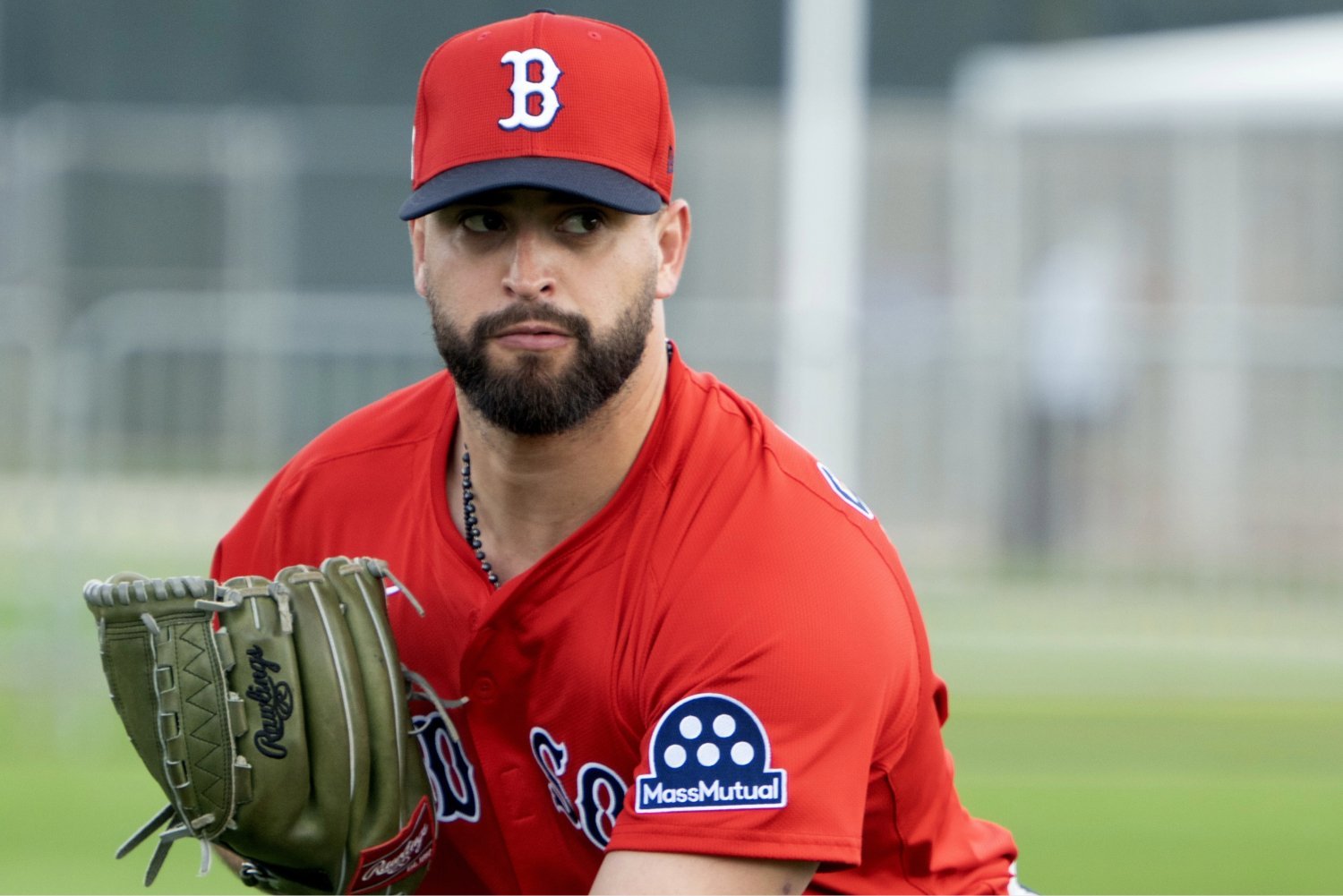 The Boston Red Sox's rotation has changed dramatically since the end of the 2024 season. Brayan Bello is the only holdover (though Tanner Houck and Kutter Crawford are still on the roster), with Garrett Crochet and three 2025-26 offseason acquisitions currently penciled into the starting five. That's a far different picture than the one Patrick Sandoval signed up for last winter, but you have to play the hand you're dealt. The longtime Los Angeles Angels pitcher joined a long list of rehabbing pitchers to ink a two-year deal with Craig Breslow. Like most others, Sandoval was expected to miss most of the first season of his contract before returning to the Red Sox as a rotation option in 2026. That he wound up missing all of last year after an internal brace surgery on his throwing elbow in June 2024 doesn't really matter; the value on his $18.25 million contract was also going to be derived in the second season. Hence, the team backloaded his salary, paying him just $5.5 million as he recovered and nearly $13 million this year now that he's expected to return. The idea is solid enough in theory. It was the same practice Breslow took with Lucas Giolito, who missed all of 2024 before delivering a strong campaign as the team's No. 3 starter in 2025. And the problem here isn't Sandoval himself — he's got the talent to succeed in a starting rotation at the major-league level. From 2021-22, Sandoval covered 235 2/3 innings for the Halos, earning 5.3 bWAR on the back of a 3.17 ERA and 3.44 FIP. Opposing batters mustered just a .653 OPS against him, as he excelled at limiting hard contact (34.7% hard-hit rate) and generating ground balls (48% ground-ball rate). He tunneled his three primary pitches (a change-up, fastball, and sinker) beautifully, and save for a less-than-stellar 9.6% walk rate, he was above average in nearly every Statcast metric. Things changed in 2023 when his newfound slider betrayed his various fastballs. He was still excellent at managing contact quality and forcing batters to pound the ball into the dirt, but he lost his ability to get key whiffs and chases when he needed them. More balls in plays led to worse results, and then his injury in 2024 practically sapped him of all his effectiveness on the mound. If he returns to health and plays around with his pitch mix, there's no reason why he couldn't be a capable back-end starter going forward, especially since he's only 29 years old. The issue facing both pitcher and team is that there's not really any room left on the roster for the southpaw. Crochet, Bello, Ranger Suárez, Sonny Gray, and Johan Oviedo are going to be the starting five come Opening Day barring an injury. There's been too many resources invested in each pitcher (and too much upside in each of their respective arms) for this to go another way. There won't be a spring training battle for the No. 5 job. The group is locked in. So, what about a next-man-up role? It's a lot of money to spend on a swingman and spot starter, but Sandoval has made seven career relief appearances, allowing a 4.18 ERA. The bullpen needs southpaws, and left-handed hitters have an OPS of just .598 against him (compared to .734 for righties). As a means of stashing him until an inevitable need in the rotation arises, that wouldn't be the worst idea in the world, right? In a technical sense, it wouldn't be a bad idea. If he took to making multi-inning relief appearances, Sandoval could even earn his keep as a bulk reliever. But that also fills a role that the team may be eyeing for Kutter Crawford... or Payton Tolle, Kyle Harrison, Connelly Early, Ryan Watson, or David Sandlin. Sandoval technically has the advantage over all those players (besides Watson, a Rule 5 draft pick) because he has no option years remaining, but Crawford won't be pitching in the minor leagues unless it's on a rehab assignment. And while he may be good as a leverage reliever, that wouldn't be the best use of Sandoval's talents (or salary). He isn't a hard thrower nor a strikeout maven. His profile is well suited for facing a lineup multiple times at the start of games. So, the bulk role it is... assuming he's still on the Red Sox come Opening Day. Exploring a trade is another possibility, albeit one with practically no known quantities besides the money involved. A ton of teams still need starting pitching depth, and practically no one left on the market outside of Framber Valdez or Zac Gallen has Sandoval's upside. Both of those pitchers would also be significantly more expensive to sign than the $12.75 million owed to the latter, though Valdez and Gallen have track records of far more recent success and don't have the terrifying injury history that Sandoval does. Would a team really be desperate enough to take on practically all of Sandoval's remaining contract in a trade? A release/DFA is off the table, so that's the lone route that could get him shipped out of Boston this year. It sounds and feels unlikely on the cusp of February, but if the veteran southpaw comes out flat in spring training and clearly cedes work to Crawford, Watson, Harrison, or one of the team's top pitching prospects, it's a route the Red Sox will have to explore. View the full article
 -
More Details on Bonuses for the Blue Jays' International Signings
DiamondCentric posted an article in Jays Centre
 Last week, the Blue Jays announced the signings of 27 international free agents, including catcher Juan Caricote and outfielder Michael Mesa. On Tuesday, Sportsnet's Shi Davidi published a scouting report of several of those international signings, and his article also included further information about several of the players' signing bonuses. Initial reports from MLB.com and Baseball America offered slightly different bonus figures for both Caricote and Mesa. Davidi has Caricote's bonus at $1.95 million, in line with Baseball America's report, and Mesa's bonus at $800,000, in line with MLB.com's report. In addition, Davidi confirmed Aneudy Severino's previously reported $700,000 bonus – and that his name is spelled with a "y" at the end. (MLB.com and the announcement from the Blue Jays both spelled his name with an "i" instead.) Caricote, Mesa, and Severino received the three largest bonuses the Blue Jays awarded. Davidi also noted the bonuses for a handful of players whose contract details were previously unreported Right-hander Abrahan Diaz: $250,000 Shortstop Sebastian Casanova: $180,000 Shortstop Gabriel Porras: $70,000 These six known bonuses account for $3.95 million of Toronto's total $5.94 million bonus pool. Finally, Davidi confirmed that right-hander Alieski Torres ($200,000) and left-hander Celwin Hurkmans ($150,000) signed in December, so their bonuses count towards last year's international signing period bonus pool. For more details on all these players, I highly recommend checking out Davidi's piece (before coming back to discuss the Blue Jays' newest prospects in the comments below). Featured image courtesy of Denny Medley, Imagn Images. View the full article
 -
Will Top Prospect Ethan Salas Debut In 2026? (A Breakdown)
DiamondCentric posted an article in Padres Mission
 The San Diego Padres sold off most of their farm ahead of the 2025 trade deadline, but top prospect Ethan Salas made it through the great prospect purge. What does San Diego's catching cornerstone bring to the table, and is he progressing as the team expected him to? We break down his strengths, weaknesses, health, and when you can expect to see him at Petco Park. View the full article
 -
 On Tuesday morning, in some unexpected news, Robert Murray of Fansided reported that the Royals signed pitcher Aaron Sanchez on a Minor League deal with an invitation to Spring Training. Sanchez is a former highly touted arm from the Blue Jays organization who made the All-Star team as a 23-year-old in 2016. That season, he made 30 starts, pitched 192 innings, won 15 games, posted a 3.00 ERA, 3.55 FIP, and accumulated a 3.5 fWAR. After the year, it was thought that Sanchez would be the ace of the Toronto rotation for a long time. Unfortunately, injuries and ineffectiveness have limited Sanchez's career since that All-Star campaign. Since 2017, Sanchez has accumulated a 2.0 fWAR in 79 starts and 367.2 IP. His ERA rose to 4.25 in 2017 and 4.89 in 2018 before ballooning to 5.89 with the Blue Jays and Astros in 2019. After missing all of 2020 due to injury, he had a nice bounce-back campaign with the Giants in 2021, posting a 3.06 ERA in nine appearances and 35.1 IP. However, things regressed back to awful levels in 2022, as he sported an ERA of 6.60 in 15 appearances and 60 IP with the Nationals and Twins. The 33-year-old righty hasn't pitched at the Major League level since that 2022 season, and he actually did not pitch at all at any level in 2025. In 2024, his last season in the Minors, Sanchez posted a 7.92 ERA and 6.49 FIP in 14 outings and 61.1 IP with the Buffalo Bisons, the Blue Jays' Triple-A team. Not only was Sanchez hit hard that season (19.4% HR/FB rate), but he also struggled with command (1.05 K/BB ratio) and didn't show great stuff either, based on TJ Stats metrics. Sanchez's groundball rate was decent at 44.3% with the Bisons, and he also limited productive contact, posting a .336 xwOBACON. That said, he sported below-average stuff with a 93 TJ Stuff+ mark overall, and his zone rate (44.4%), chase% (24.3%), and whiff% (23%) were subpar as well. Thus, when he made mistakes, hitters made him pay dearly (illustrated by the HR/FB rate). With Buffalo, his curveball, which he threw 20.3% of the time, was his best offering, as it sported a 100 TJ Stuff+, 33.6% chase%, 35.7% whiff%, and .292 xwOBACON. Below is a breakdown of Sanchez's curveball against left and right-handed hitters via TJ Stats. It's possible that pitching coaches Brian Sweeney and Mike McFerran think he could improve his repertoire this spring, with the curveball as his foundational offering (it generated a 35.1% CSW against right-handed hitters). After taking a year off, Sanchez returned to baseball by pitching with Toros del Este of the Dominican Winter League (LiDOM) this winter. The former All-Star thrived in his return to the mound in LiDOM, posting a 1.55 ERA, 0.95 WHIP, and 3.78 K/BB ratio in eight starts and 46.1 IP. His strong performance earned him top pitching honors in Winter League play. The Royals likely picked up Sanchez due to his strong Winter League performance, hoping that he can show something on the mound again, whether at the Minor or Major League level. It's unlikely that Sanchez will make the Royals rotation, as it is incredibly deep right now with Cole Ragans, Seth Lugo, Michael Wacha, Kris Bubic, Noah Cameron, Ryan Bergert, Luinder Avila, and Stephen Kolek all vying for spots this spring. That said, the Royals likely want pitching depth, just in case their rotation gets hit by injury again like it did a season ago. Furthermore, Sanchez could generate some trade interest for a pitching-desperate team, especially if they are hit by injury in Spring Training play. Such a situation could net the Royals a low-level prospect, cash, or a bench player who could provide needed depth in the system. Photo Credit: Troy Taormina-Imagn Images View the full article
 -
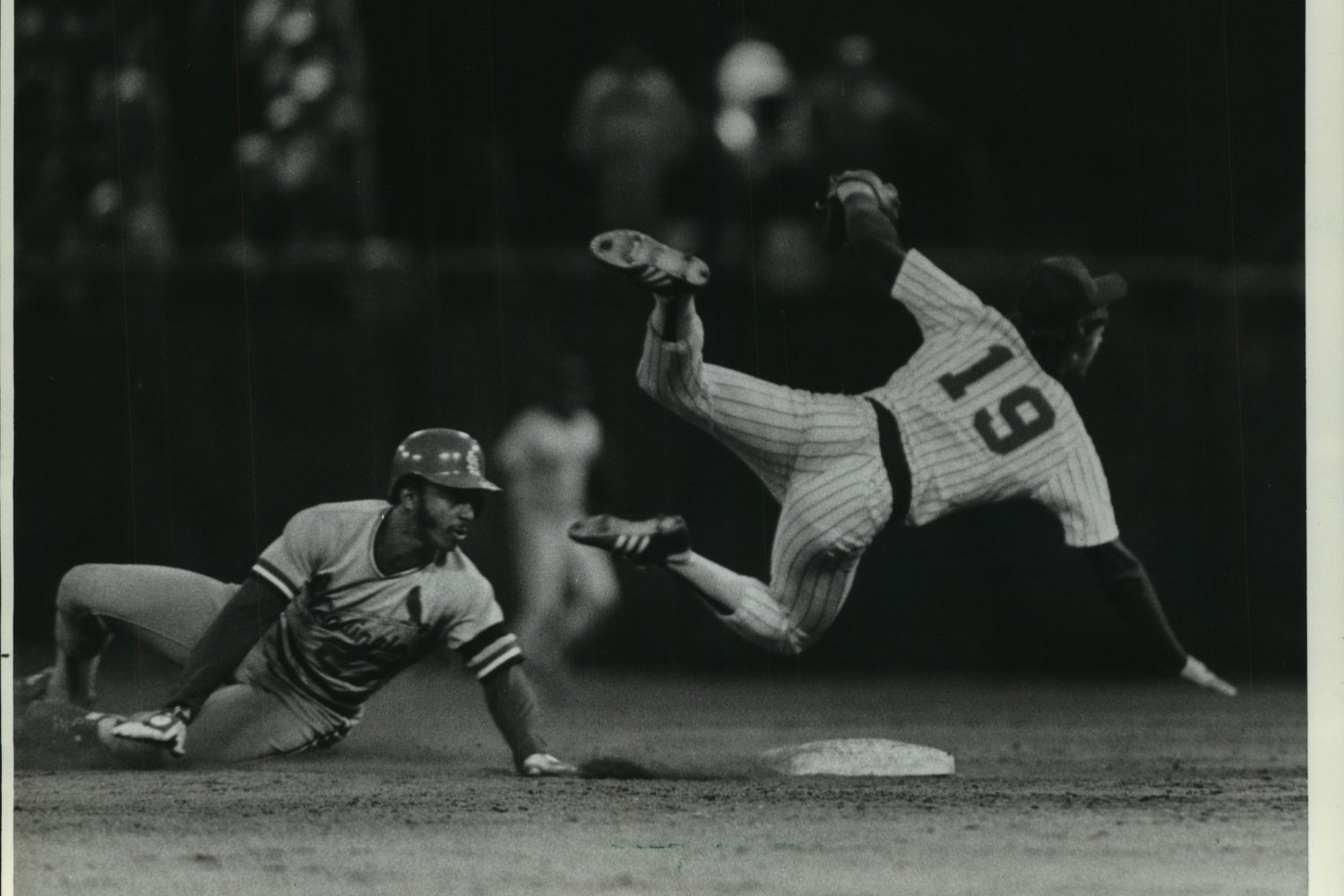 This multi-part series talks about how the Brewers got to the World Series and offers a timeline of the 1982 campaign, including player profiles, game recaps, and other events that affected the season. Part 1 Part 2 Part 3 Part 4 Part 5 Part 6 Part 7 Part 8 Game 3: McGee’s two homers lead Cards past Brewers St. Louis (Joaquín Andujar, 15-10) at Milwaukee (Pete Vuckovich, 18-6) Willie McGee smacked a pair of round-trippers in the Cardinals' 6-2 victory, giving St. Louis a 2-1 lead in the Series. He also played Gold Glove defense, robbing at least one home run while making another stellar grab. During the regular season, McGee hit just four home runs in 422 at-bats. After Pete Vuckovich retired the Cardinals in order in the opening inning in front of a County Stadium-record crowd of 56,556, Paul Molitor led off the bottom half with a long drive to center field that had extra bases written all over it. McGee raced back and made a nice leaping grab in front of the ‘402’ sign, much to the disappointment of the large gathering. Both Joaquín Andujar and Vuckovich were formidable in the first four innings, with St. Louis managing only a single (more about that later) and a walk, while Milwaukee had a double and a walk, but no runs to show for it. George Hendrick led off the second with a high chopper down the third-base line. Molitor gloved it waist-high and fired it to Cecil Cooper at first. The throw pulled Cooper off the bag toward foul ground, and Hendrick beat the throw by a quarter-step. First-base ump Dave Phillips waved off the play, thinking the ball was foul. But when third-base ump Jim Evans came over and stated it was a fair ball, Phillips called the runner safe. Manager Harvey Kuenn came out to argue, but after talking with Cooper and Hendrick, who was chuckling, went back to the dugout, shaking his head. Hendrick was given a base hit, snapping an 0-for-7 slump. Vuckovich got out of the inning with three ground ball outs. The Cardinals got on the board first in the top of the fifth. Lonnie Smith walked, and Dane Iorg reached on an error by Cooper, bringing up McGee. Batting left-handed against Vuckovich, McGee ripped the first pitch over the ‘362’ sign in right-center for a three-run homer. The score was still 3-0 when the Cards tacked on two more runs in the seventh. Smith lined a ball to the wall in right-center with one out, and when the throw to third from Jim Gantner skipped into the dugout, Smith trotted home with the fourth run. Two batters later, McGee struck again off ‘Vuke,’ stroking the ball over the right-field fence to make it 5-0. In the bottom half of the seventh, Ted Simmons lined a ball off Andujar’s right knee, allowing Simmons to reach first base. Jim Kaat replaced Andujar and gave up a single to Thomas to put runners at first and second. When right-handed hitting Don Money was announced as a pinch-hitter, Doug Bair entered the game for St. Louis. He walked Money to load the bases. Closer Bruce Sutter came in and got Charlie Moore on a foul pop to third, ending the promising frame. The Brewers finally got to Sutter in the eighth, when Robin Yount walked and Cooper sent a fly ball out of the park in right field to cut the lead to 5-2. St. Louis got back one run in the top of the ninth, however, when Ozzie Smith walked with the bases loaded, forcing in Hendrick to make it 6-2, which would be the final. McGee went 2-for-4 with four RBIs. Andujar allowed three hits and one walk in 6 1/3 innings before leaving with the injured leg. For Milwaukee, Gantner had a pair of hits. Game 4: Six-run frame turns the table on St. Louis St. Louis (Dave LaPoint, 9-3) at Milwaukee (Moose Haas, 11-8) The St. Louis Cardinals scored four runs in the first two innings to take the air out of the Milwaukee crowd of 56,560 in Game 4. Hendrick had an RBI single in the first, and then Tom Herr hit a sacrifice fly to deep center in the second inning that scored speedsters McGee and Ozzie Smith. A slip by Gorman Thomas made it relatively anticlimactic, but the fun part is to note that both Thomas and Smith (not to mention the announcers on the broadcast) were anticipating Smith trying to score even before Thomas made the catch. Ken Oberkfell scored an unearned run to give the Cards an early 4-0 lead. “We gave them four runs in the first two innings on a silver platter,” Molitor said. “The only good thing about it was that we had eight chances left to get the four runs back.” The Brewers would only need six more innings to do just that. The two teams traded runs in the bottom of the fifth and top of the sixth to set the stage for the epic finish. The Milwaukee Brewers probably thought, ‘here we go again’ as they entered the bottom of the seventh inning, trailing the St. Louis Cardinals 5-1. It looked especially gloomy for the Brewers when they had two outs with two men on. St. Louis closer Sutter had appeared in the previous two games—earning a victory and a save—and would not enter the contest; that gave the Brewers hope. “When Sutter didn’t come in to face Molitor, I knew we wouldn’t see him today,” said Simmons. Gantner doubled to score Ben Oglivie and move Money to third, chasing Dave LaPoint in favor of right-hander Doug Bair. Molitor walked to load the bases, and Yount stroked a base hit to right that scored a pair and moved Molitor to third. Manager Whitey Herzog brought in the left-handed Kaat to face Cooper. The Brewers’ first baseman slapped an opposite-field single that scored Molitor to tie the game and moved Yount to second. Reliever Jeff Lahti came in mid-batter and intentionally walked Simmons. Gorman Thomas then singled to left center, scoring Yount and Cooper to give the Brewers a 7-5 lead. Jim Slaton, who came in for starter Moose Haas, started his third inning (the eighth) by walking Darrell Porter and striking out Lonnie Smith before allowing a single to Iorg, putting runners on the corners. Lefty Bob McClure came in and induced a 4-3 double play, getting the Brewers out of the inning. McClure closed the game by retiring the side in order in the ninth, to tie the Series at two games apiece. Slaton and McClure combined to allow one hit and two walks in 3 2/3 innings of relief. Yount, Cooper, and Money all had two hits for the Brewers. “It was a must-win game for us today,” Gantner said. “If we lose today, we’re down 3-1 and not many teams come back from that.” Instead, it was 2-2 and the Brewers would have one more chance to win at home, where they won three straight against California in the ALCS. Game 5: Caldwell earns victory despite giving up 14 hits St. Louis (Bob Forsch) at Milwaukee (Mike Caldwell) The two teams combined for 26 hits as the Brewers held off the Cardinals 6-4 in Game 5. The Brewers scored first in the bottom of the first, on an RBI groundout by Simmons that scored Yount after an errant pickoff throw by Bob Forsch that moved runners into scoring position. The Cardinals knotted the score in the third, when ex-Brewer David Green scored on a two-base hit by Keith Hernandez. Cooper made it 2-1 in the bottom half, plating Molitor on a 3-1 groundout. In the bottom of the fifth, Molitor stroked a line drive to left field that scored Moore to give the Brewers a 3-1 lead. The Cards came back in the top of the seventh with Hendrick’s single to center, which scored Ozzie Smith to cut the lead to 3-2. Yount hit a solo shot to the opposite field in the bottom half to boost the lead to 4-2. Once again, Sutter came into the game in the eighth, even though St. Louis was two runs down. Sutter allowed a single and a walk but had two outs when Moore came to the plate. The Brewers' right fielder singled to right-center to score Oglivie, and then Gantner singled to score Money to make the score 6-2. “I just brought him in tonight so we could stay close,” Herzog said of Sutter. “Then he gives up two runs.” Lucky for the Brewers that they did score those runs, because the Cards matched that in the top of the ninth to cut the margin to two runs before McClure replaced Caldwell and allowed a single before getting the final two outs for the Milwaukee victory, earning his second save. Hernandez had an RBI double before Hendrick hit a run-scoring single to make it 6-4. Caldwell allowed 14 hits, four runs, and two walks in 8 1/3 innings, after throwing a three-hit shutout in Game 1. “I looked up at the scoreboard a couple times, and it even amazed me that they had so many hits,” Caldwell noted. “But I didn’t feel too badly. This was a close ballgame, and it meant more to me to win today because we’re ahead in the Series.” Although the Brewers committed an error, they made several outstanding defensive plays in the game. In the fourth inning, Molitor leaped in the air to spear a chopper, stepped on third, and fired to first for a double play. Moore made a diving catch of a Lonnie Smith line drive in the fifth, and finally, Cooper made a diving stop and threw from his knees to Caldwell covering first for the final out of the seventh inning. The Brewers were led by Yount, who went 4-for-4 to give him a pair of four-hit games in the Series, and was slashing .524/.565/.810 across 23 plate appearances. Oglivie and Moore each had two hits. For St. Louis, Hernandez, Hendrick, and Oberkfell each had three hits in the contest. “You have to like being in the position of having to split the last two games of the season,” Molitor said. “But we know we are going to see a lot of red [in St. Louis].” Coming soon: Part 9 (Games 6-7 in St. Louis). *All quotes/comments appeared in the Wisconsin State Journal, October 1982 View the full article
 -
The Twins Need a Better Brooks Lee. Is That Possible?
DiamondCentric posted an article in Twins Daily
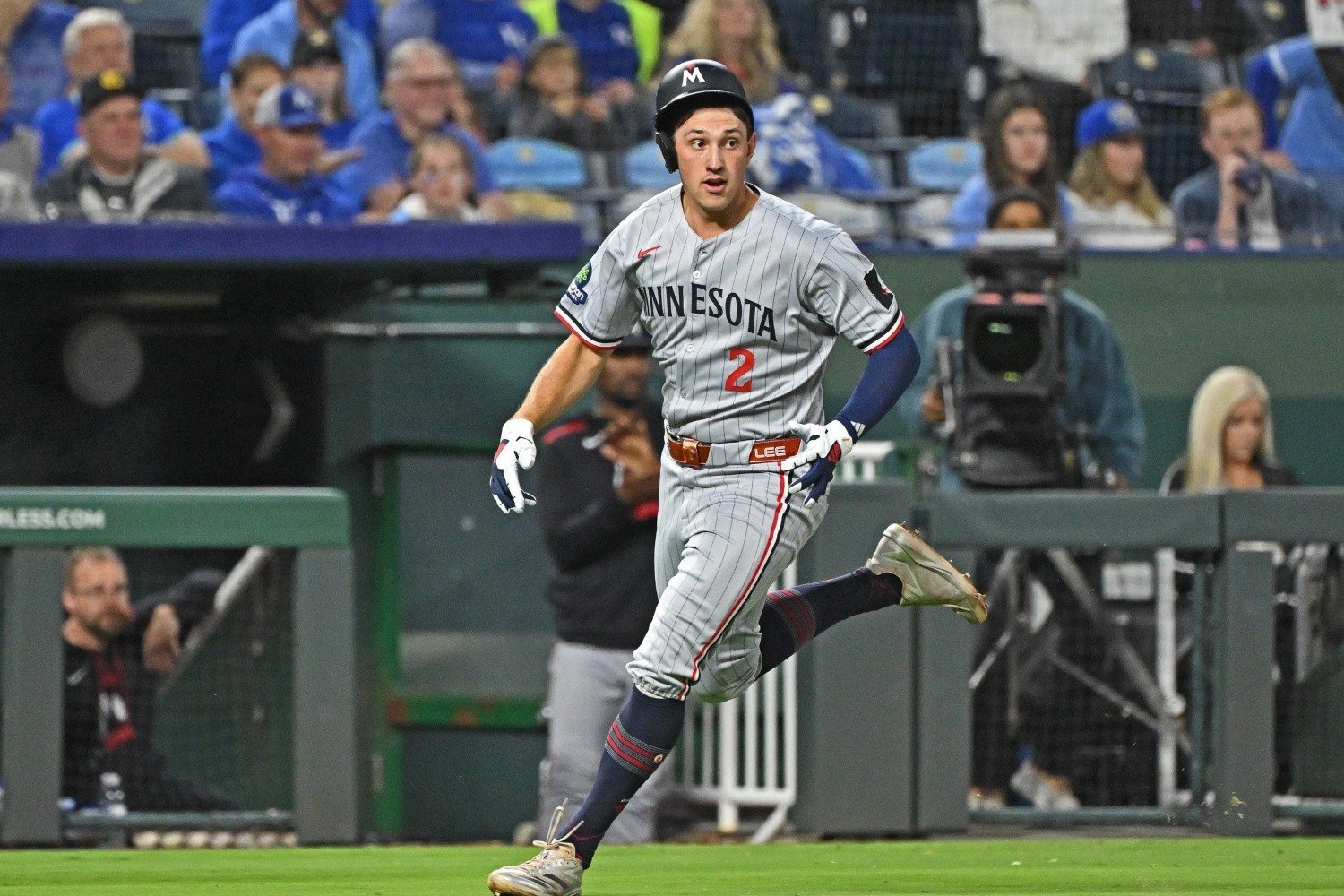 There's not a shortage of comps for Brooks Lee's swing. From the left side and from the right, he has roughly 35th-percentile bat speed and a slightly flatter swing plane than the average hitter. Over 60 big-league hitters met those basic criteria last season, from one or both sides of the plate. What's difficult is finding players who swing that way, and are good. Such creatures do exist. I limited a search to the 200 players with the slowest swings (among those with at leat 100 competitive swings from one side of the plate) and looked for those with swing planes as flat as Lee's or flatter, using Baseball Savant's bat tracking data. José Ramírez fits the criteria, from the left side. So does Jose Altuve. So do Brendan Donovan, Sal Frelick and Caleb Durbin. Reds sparkplug TJ Friedl and high-average speedster Xavier Edwards are on the list. You can see the pattern. You can probably also see the problem. Last season, Friedl was an above-average hitter, but it was largely due to his 11.8% walk rate and 16 times being hit by pitches. Durbin, too, relied on getting hit by pitches a lot. More importantly, though, all of these guys have good plate discipline, and/or are much better athletes than Lee. In fact, almost the entire list of hitters whose swing speeds and tilt match his are defense-first guys, like Johan Rojas of the Phillies; Nick Allen, now of Houston; DaShawn Keirsey Jr.; and Christian Vázquez. The guys who succeed with swings like the one Lee deploys from each side are hand-eye coordination freaks, have superb approaches, use their legs to beat defenses, or fit all of those descriptors. By contrast, Lee is a below-average baseball athlete. He's stretched at shortstop, and having him play it for a full season in 2026 is likely to both make the Twins' infield more porous and wear him down at the plate. He doesn't throw or run well. Worse, he's not good at controlling the strike zone. He chases pitches outside the zone more than an average batter, and doesn't make much contact when he does. Within the zone, he makes a lot of contact, but it's not optimized. In his first full season in the majors, he hit more balls on the ground and pulled fewer of his flies than in his 2024 stint. What Lee does well is square up the ball, but he gives up too much bat speed to do it, and because his swings are both fairly inefficient, he also has to decide early in order to get the barrel to the hitting zone on time. That leads to too many poor swing decisions for a player whose swing itself can't drive his offensive profile. He needs to make big changes, to increase his bat speed, trading some contact within the zone for more power; and to his approach, to reduce the frequency of bad contact and pitcher-friendly counts. All of that is still at least vaguely possible, because even though he was supposed to be a polished collegiate hitter when the Twins took him in 2022, he's still just 24 years old. He could turn a corner, with a better plan and enough openness to what the Twins recommend to him. Right now, though, it's unfair to expect him to be good in 2026. He batted .236/.285/.370 in 2025, and because real and important weaknesses underpinned that line, we should expect about the same this year, until we see evidence of the major changes he needs to make. Can a team contend for the postseason with a shortstop who posts a .655 OPS? Of course. Any one player on a roster can be (more or less) made up for by another. The Twins don't have the depth to make it very likely that they stay in the race without a breakout from Lee, though. He's not a good defender, and he plays one of the three most important defensive positions on the diamond. Big-league teams aren't chains; they can survive a weak spot in a way a chain can't survive a weak link. Lee is a marked weakness for this team, though, and right now, they haven't surrounded him with enough strength to hide that weakness. They don't have good defenders flanking him on the infield; they don't have the lineup depth to let him hit ninth and forget about him. They need the best version of Lee, which means a major set of physical and mental adjustments and some good luck in the health department. Otherwise, they'll need to pin their hopes on Kaelen Culpepper—but he won't be ready for the majors soon enough to save this season if Lee imperils it. View the full article
 -
Jesus Made Among Brewers Prospects Invited to Spring Training
DiamondCentric posted an article in Brewer Fanatic
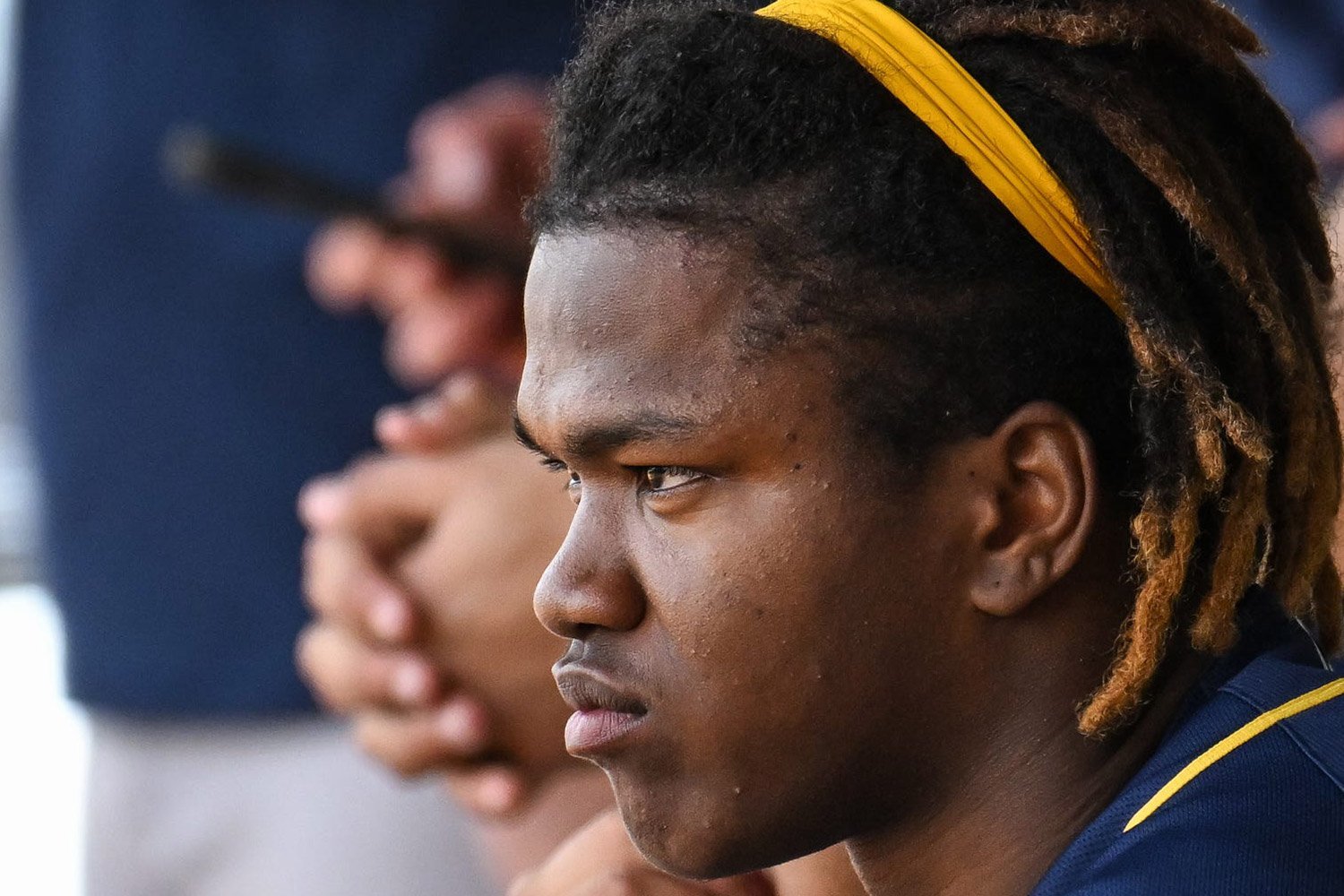 Shortstop Jesus Made, the consensus No. 3 prospect in all of baseball, was one of nine players in the Milwaukee Brewers' system invited to spring training Tuesday. Spring training invites allow players not on the 40-man roster but under contract with the team to report when big-league camp opens, which for the Brewers is Feb. 12 for pitchers and catchers and Feb. 17 for position players. Pretty much anyone in the system can appear in a spring training game, but an invite allows prospects and veterans searching for a major-league job to get in extra work with the players on the 40-man roster. For prospects, it gives them a taste of what big-league spring training is like before ultimately joining the team's minor-league camp to get ready for the regular season. The other prospects joining Made, an 18-year-old who played at three levels in 2025, including Double-A Biloxi, are infielder-outfielder Jett Williams, shortstop Cooper Pratt, center fielder Luis Lara, third baseman Brock Wilken, corner infielder Luke Adams, left-handed starter Tate Kuehner, and catchers Ramon Rodriguez and Matt Wood. It is possible that more prospects are added at some point. Williams was one of two players recently acquired from the New York Mets in the trade for right-handed starters Freddy Peralta and Tobias Myers. The other one was right-handed starter Brandon Sproat, who is already on the 40-man roster. View the full article
 -
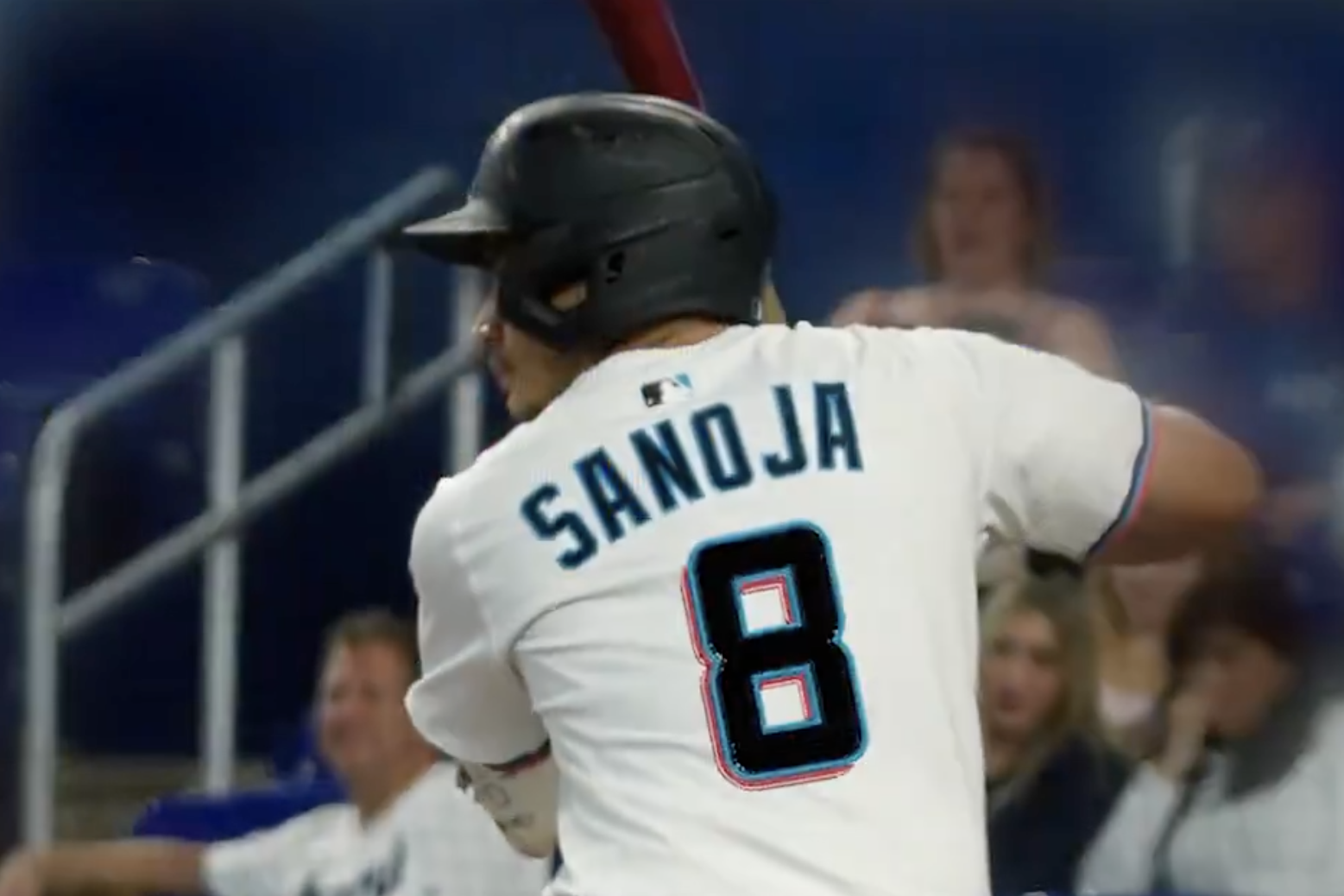 The Miami Marlins on Tuesday announced a slew of uniform number updates entering the 2026 season. Returning 40-man roster players: Javier Sanoja will wear No. 8 (previously was No. 46) Heriberto Hernández will wear No. 13 (previously was No. 64) Braxton Garrett will wear No. 20 (previously was No. 29) Deyvison De Los Santos will wear No. 63 (previously was No. 65) Newly selected to 40-man roster: Josh White will wear No. 59 William Kempner will wear No. 71 (No word on Joe Mack, who wore No. 80 in big league camp last year) Offseason acquisitions: Esteury Ruiz will wear No. 3 (previously was No. 27 with Dodgers) Christopher Morel will wear No. 5 (previously was No. 24 with Rays) Owen Caissie will wear No. 17 (previously was No. 19 with Cubs) Pete Fairbanks will wear No. 29 (previously was No. 29 with Rays) Bradley Blalock will wear No. 31 (previously was No. 64 with Rockies) View the full article
 -
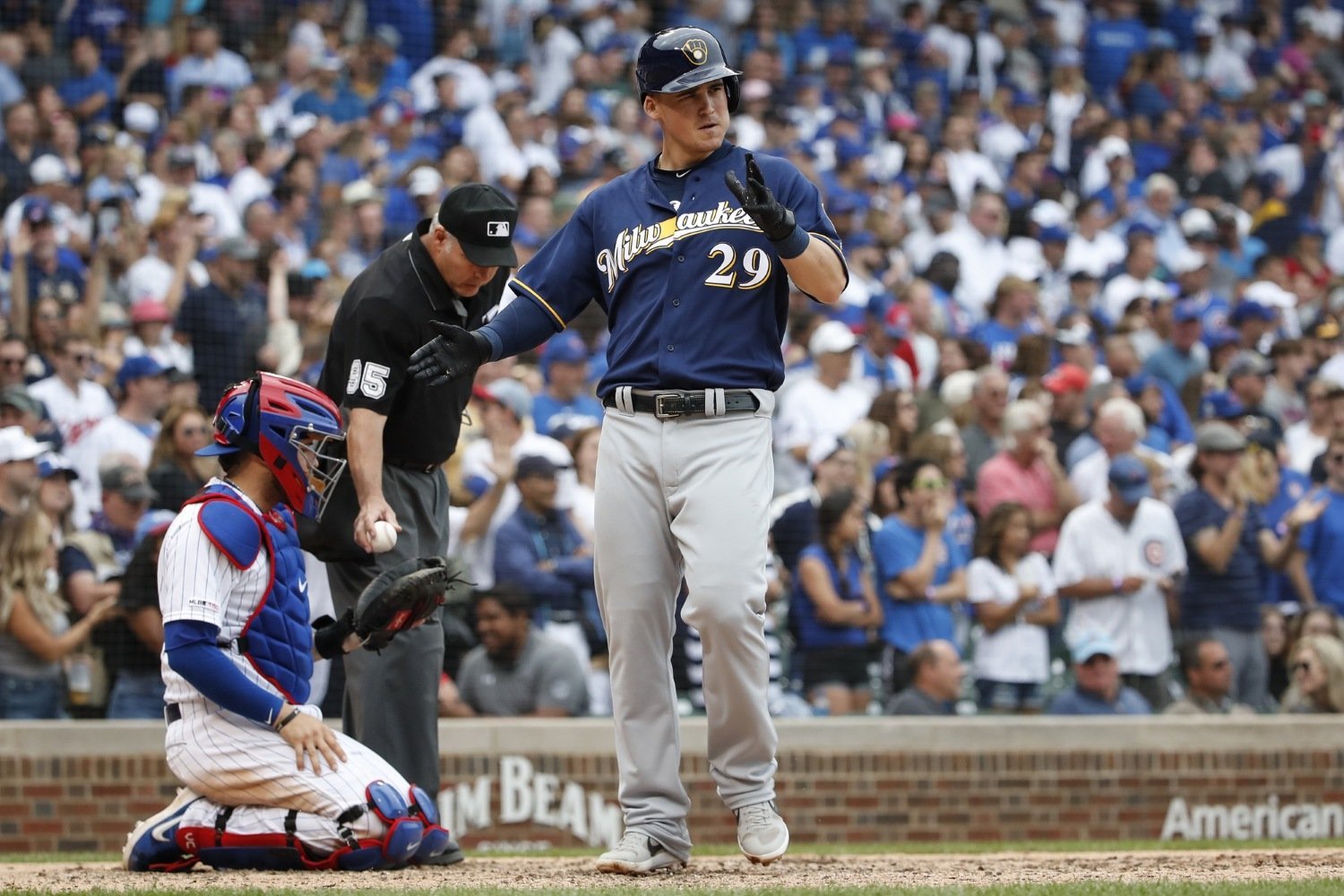 Nobody in baseball quaked when the Cubs signed Tyler Austin, bringing him back to the States after a half-decade in Japan. The 34-year-old did have some impressive stats (.287/.372/.554, in 1,796 plate appearances), but he hasn't been tested by the deeper staffs of power arms in the U.S. since 2019. He could be a piece of a contender, or he could just disappear. Does Austin have a stable role on the 2026 Cubs? Fans were understandably underwhelmed when news of the signing broke. At the time, it was conceivable that he was a major part of the plan to replace the departed Kyle Tucker. Alex Bregman changed things; Austin is now a semi-expendable bench piece. Projections for Austin are strong, with projection systems at FanGraphs showing a 105-110 WRC+ for 2026. He's historically been much stronger against left-handed pitching (.884 OPS Stateside), and Michael Busch is not a strong bat against them. Austin also topped out at a 197 WRC+ in Japan in 2024. The guy does have talent at the plate. The question is in Austin's role. Counsell has a history of underutilizing veteran bench pieces, preferring to lean on a trusted set of everyday guys unless he can identify a clear opportunity for a full-fledged platoon. In 2023, Brian Anderson went almost six weeks between games played. There was no announcement, no dramatic benching. Anderson just occupied space on the roster, biding his time until the Brewers front office furnished someone more to Counsell's liking. Unless he gets off to a hot start, Austin might become a footnote in whatever book is written about the 2026 Cubs. How Austin Could Carve Out a Role 1. Michael Busch continues to struggle against left-handed pitching This is the most obvious option, and feels downright likely. Busch only posted a .642 OPS against southpaws even in his breakout 2025, compared to a .910 against right-handed pitching. Counsell told a crowd at Cubs Convention that he intends to play Busch every day in 2026. If he can hold his own there, Austin is out. But managers say a lot of things in January, and the difference between Austin and Busch against lefties is pretty glaring. It's hard to imagine Busch actually getting as much playing time as Counsell is promising, and easy to envision Austin becoming the de facto platoon first baseman. 2. Moisés Ballesteros or Matt Shaw flames out Both of these players are in line for a substantial number of at-bats. At the moment, Ballesteros is penciled in as the regular DH, with Seiya Suzuki likely to play right field most of the time. The upside of Ballesteros and Shaw is tantalizing. We do need to acknowledge the floor, however. In a contending season, there may not be time to let them work through their struggles, and we've already seen enough to know that each comes with a risk of not hitting enough to be regulars. Austin could fill DH at-bats, particularly as a platoon option opposite Ballesteros. 3. Tyler Austin simply rakes A 197 wRC+ in Japan just two years ago is an impressive number. Even in a part-time role, Austin could be an impactful bat. Steve Pearce would be a template. While he didn't play daily, he did see the field in 102 games for the playoff-bound Baltimore Orioles in 2014. Pearce slashed .327/.405/.704 from the strong side of a platoon that season. He posted a 161 wRC+. If Austin can do something like this, he'll not only carve out a spot in the lineup, but he'll be a Cub cult hero, like Pearce was in Baltimore—and later in Boston, as a key cog in the 2018 Red Sox's World Series run. This feels least likely of the three scenarios, but it's possible, and the fact that Ballesteros is the only obstacle to him being the full-time DH is telling. A version of Austin that goes on a tear for two-plus months could easily wrest the regular gig away from the younger guys, even if they're scraping by. In all likelihood, he'll be a bench piece, pinch-hitting often and starting rarely. It will be worth watching, though, because Counsell's neglect or an emergent need could swing him a good distance either way from that median outcome. View the full article
 -
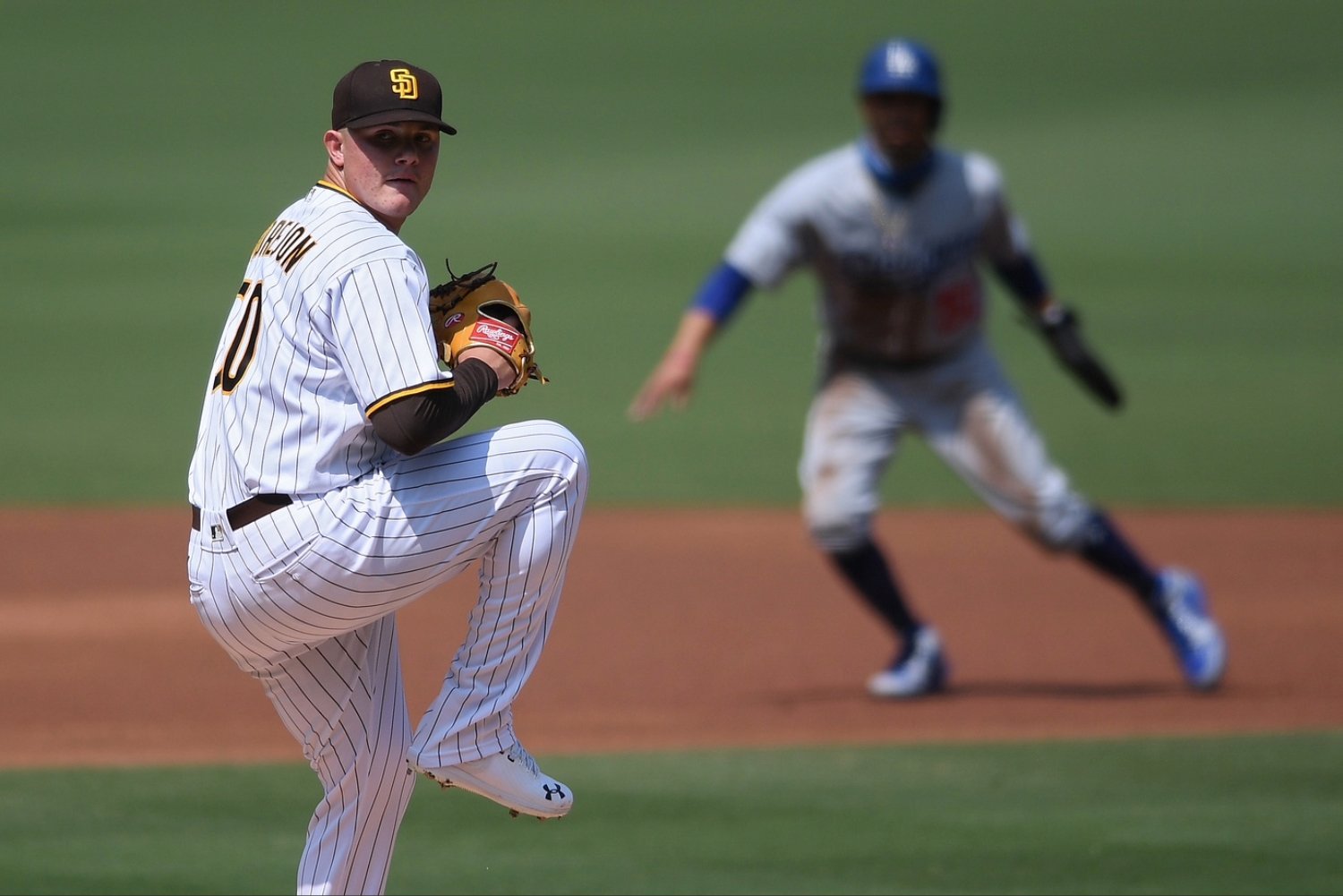 It is a good thing the San Diego Padres have three left-handers in their current bullpen setup for the 2026 season. All three are going to be vital in matchups against the Los Angeles Dodgers, the back-to-back World Series champions who feature four left-handed hitters in their starting lineup. All four are superstar-quality hitters following the recent addition of free-agent right fielder Kyle Tucker on a four-year, $240 million contract. If you thought that Adrian Morejon, Wandy Peralta and Yuki Matsui already had their hands full with the Dodgers' Shohei Ohtani, Freddie Freeman and Max Muncy, Tucker just adds to the problem. Morejon shoulders the brunt of the key-situation responsibility as the top lefty out of the Friars' bullpen. Overall, the soon-to-be 27-year-old, set to become a free agent after the 2026 season, does well against left-handed hitters, sporting a .225 opponent batting average. But it isn't the same against the Dodgers' quartet, even if it does come in a small sample size. Once thought to be a closer-in-waiting for the Padres, Matsui has turned out to be a middle-innings bullpen piece as he enters his third season since coming over from Japan. Matsui has allowed an opponent batting average of .241 to left-handed batters in MLB, while Peralta is at .221 and Morejon is at .225. Containing Ohtani has been difficult, even for the Padres. Morejon, Peralta and Matsui have allowed 10 hits in 32 at-bats (.313) to the four-time MVP. Freeman has also owned Peralta (5-for-12), but Morejon and Matsui have limited him to just a 2-for-15 line. This trio will need to be at its best if the Padres are to have a shot at competing with the Dodgers in 2026. View the full article
 -
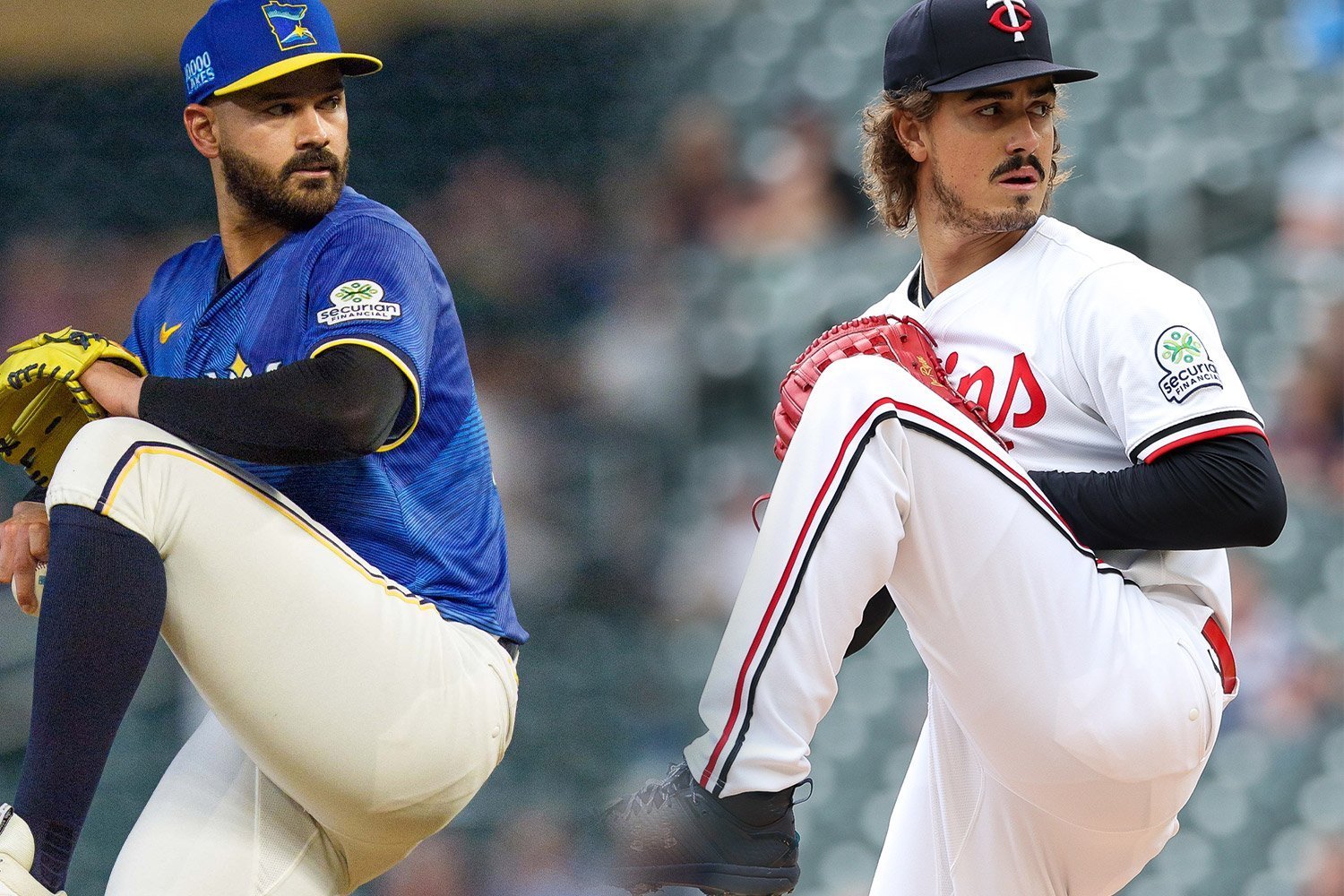 There is a natural instinct, among fan bases, to equate disappointment with demolition. When a season ends without a playoff run, the favored solution is often to burn it down and start over. This offseason, the Minnesota Twins resisted that urge. Instead of opting for a full rebuild, they chose to bet on moves at the margins and the belief that their window has not closed. Given the current landscape of the American League Central, that decision looks more pragmatic than passive. Projection systems are not gospel, but they provide a useful snapshot of where teams stand relative to one another. By projected team WAR, the Twins sit at 38.8 fWAR, which places them 17th in Major League Baseball and third in the AL Central. Kansas City checks in at 40.8 fWAR and Detroit at 40.6 fWAR. That gap isn't negligible, but it's hardly insurmountable. When FanGraphs converts those projections into expected wins, the margin tightens even further. Detroit is projected to win 83 games, Kansas City 82, and the Twins (also) 82. That clustering, alone, justifies avoiding a teardown. Minnesota is not staring up at a juggernaut. They are very much in the same tier as the teams they need to beat. Why Can the Twins Contend? One of the clearest reasons for optimism is the organization’s starting pitching depth. Pablo López (3.4 projected fWAR) and Joe Ryan (3.2 fWAR) remain the anchors, both possessing All-Star pedigrees. Bailey Ober (1.7 fWAR) is the wild card. Last season raised legitimate concerns, but his earlier body of work suggests there is still a borderline All-Star pitcher in there, if he can regain his form. Even if one of those three falters, the Twins are unusually insulated. Few organizations can roll out the volume of young arms Minnesota has waiting in the wings. Simeon Woods Richardson (1.2 fWAR), Zebby Matthews (1.7 fWAR), Mick Abel (0.6 fWAR), David Festa (0.4 fWAR), and Taj Bradley (1.4 fWAR) all represent viable options who could claim innings at the big-league level. Even prospects like Andrew Morris and Kendry Rojas are likely to get innings with the Twins. Some will succeed, others will not, but the sheer number of options creates flexibility. Injuries and inconsistency are inevitable over a long season. Having credible next-man-up solutions is how teams survive them without collapsing. The offense is more volatile, but not without upside. The Twins are counting on a mix of modest additions and internal growth. Byron Buxton remains the linchpin (3.3 projected fWAR). When he is healthy and locked in, he changes the shape of the lineup entirely, but fans saw last season that he can’t be the team’s only offensive producer. Around him, the spotlight falls on a group of young hitters who are still defining themselves. Luke Keaschall (3.0 fWAR), Royce Lewis (2.7 fWAR), Brooks Lee (2.1 fWAR), and Matt Wallner (1.9 fWAR) all enter 2026 with something to prove. Each has shown flashes that suggest a long-term role, and each carries questions about durability, consistency, or ultimate ceiling. The Twins do not need all of them to break out. They need a couple to establish stability. Depth, again, plays a quiet but important role. At Triple-A St. Paul, Minnesota has legitimate offensive reinforcements waiting. Emmanuel Rodriguez brings on-base ability and power. Walker Jenkins carries star potential that could force the issue sooner, rather than later. Gabriel Gonzalez adds another contact bat with upside. It certainly helps that he’s a right-handed hitter in a sea of lefties for the Twins. If the major-league lineup stagnates, there will be options to inject energy and production without mortgaging the future. This is why a full rebuild never made sense. The Twins are not old, bloated, or devoid of talent. They are imperfect, yes, but they are also close. In a division where the difference between first and third is a win or two, continuity has value. Development has value. Betting on health and internal growth is not complacency. It is a calculated gamble. The Twins chose to compete because the math and the roster say they can. In the AL Central, that may be all you need. Do the Twins have enough to win the AL Central? Leave a comment and start the discussion. View the full article
 -
Is Right Field a Viable Place to Put Matt Shaw?
DiamondCentric posted an article in North Side Baseball
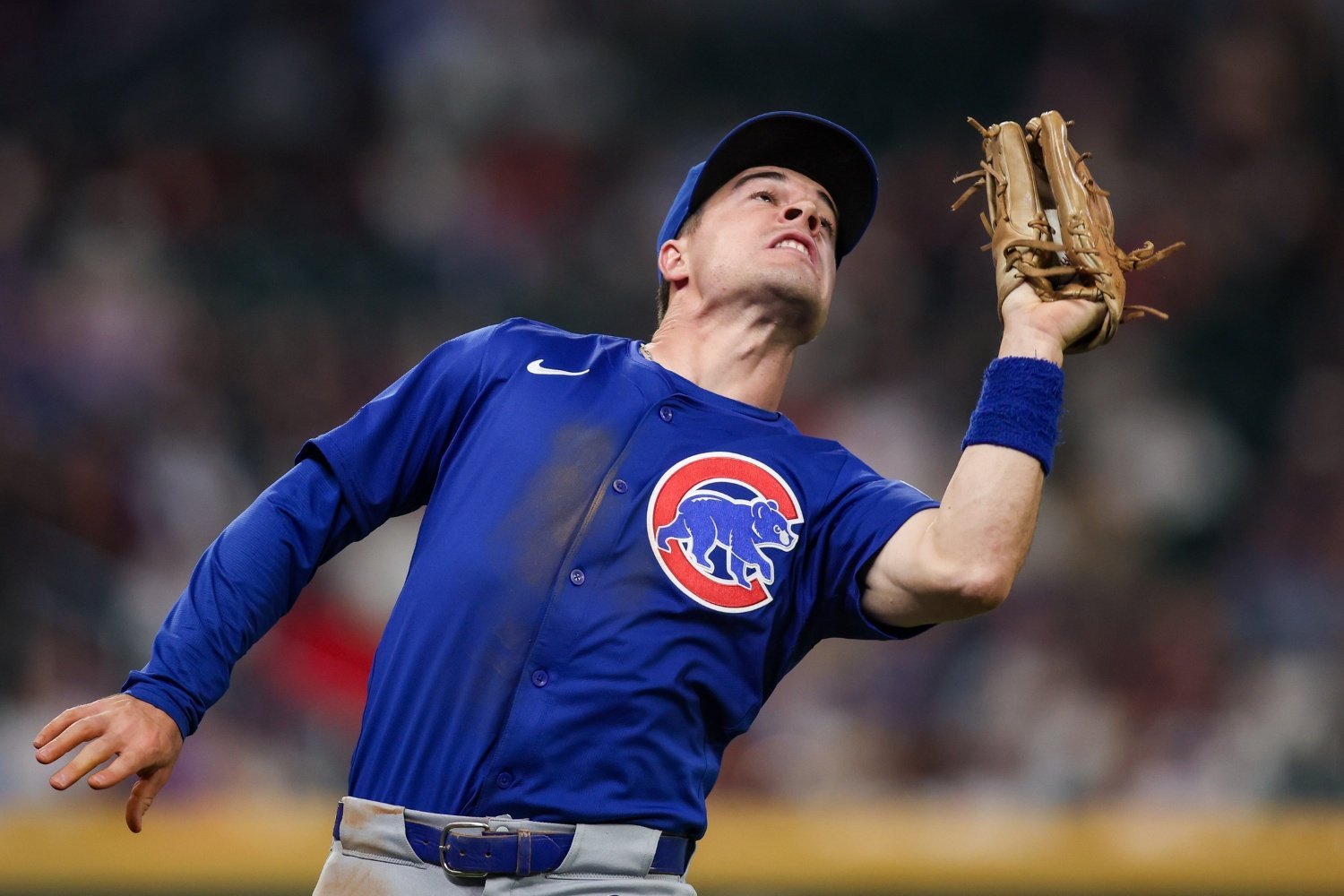 The Chicago Cubs offseason started out slower than most Cubs fans had hoped for, but in a loud one-two punch earlier this month, they changed the narrative, trading for Edward Cabrera to bolster the starting rotation and signing All-Star Alex Bregman to buttress the everyday lineup. Speculation about trading away one of the other infielders on the roster (namely, Nico Hoerner or Matt Shaw) started almost immediately, because there are now more starting-caliber players than remaining starting positions on the infield. It appears, however, that the Cubs may have another plan in mind—one that could provide major lineup flexibility for the upcoming season. Videos surfaced online of Matt Shaw taking outfield reps recently, indicating that they may be asking him to help fill the void in right field that was left when Kyle Tucker signed with the Los Angeles Dodgers in free agency. That wasn't some carefully guarded secret slipping out, either. Craig Counsell told the media Shaw will play some outfield this year, at Cubs Convention. If Shaw is able to demonstrate that he can hold down a corner outfield position, it would allow Counsell to be creative building his lineup based on the matchups from day to day. When the Cubs square off against dominant left-handed starters, they could roll out a lineup loaded with talented right-handed bats when Shaw is playing in right field. Below is an example of what a lineup could look like. 2B (R) Nico Hoerner 3B (R) Alex Bregman LF (S) Ian Happ DH (R) Seiya Suzuki 1B (R) Tyler Austin SS (R) Dansby Swanson CF (L) Pete Crow-Armstrong C (R) Carson Kelly RF (R) Matt Shaw Moisés Ballesteros and Michael Busch would start on the bench in this scenario, and could enter the game to take advantage of a right-handed relief pitcher later, to great effect. It's the kind of vicious matchup play Counsell loves. If Shaw can consistently handle the defensive responsibilities in right field, it would also allow Seiya Suzuki to play DH. All things equal, the Cubs would surely love to keep Suzuki out of the field, but only if Shaw pans out especially well will that be possible. Here's an example of a lineup the Cubs could roll out against a right-handed starter: 1B (L) Michael Busch 3B (R) Alex Bregman LF (S) Ian Happ RF (R) Seiya Suzuki DH (L) Moises Ballesteros 2B (R) Nico Hoerner CF (L) Pete Crow-Armstrong C (R) Carson Kelly SS (R) Dansby Swanson In this scenario, Shaw could come in during the late innings (if the Cubs are trying to maintain a lead) for Suzuki in right field. Shaw could be used as a super-utility player, like Ben Zobrist was during his time with the Cubs, to rest Hoerner, Swanson or Bregman. Baseball seasons are long and injuries happen. It is a massive advantage to have a guy who can cover multiple positions effectively. Of course, all this assumes that Shaw will be a good enough hitter to at least help, rather than hurt, as a right fielder. That would require a major step forward from him, and not the oversized kind he was taking to load up his swing last year. He batted .226/.295/.394 as a rookie. That played fine at third base, since he was a plus defender there and the league's third basemen only batted .244/.308/.397, but the average right fielder batted .247/.319/.422 last season. Shaw has to get much better with the stick for it to matter whether his glove can be of any help in right. In center, he's more playable, and perhaps he could be the platoon partner for Crow-Armstrong, but the team has several other players coming to camp to audition for that role. Moving around the diamond is the only way Shaw will find consistent playing time for the team in 2026, but while a move to right field seems like the easiest path to at-bats for him, it might not be in the team's best interest. As spring training draws near, he remains very much a trade candidate. View the full article
 -
The Good, Bad, and Ugly Facts of the Freddy Peralta Trade
DiamondCentric posted an article in Brewer Fanatic
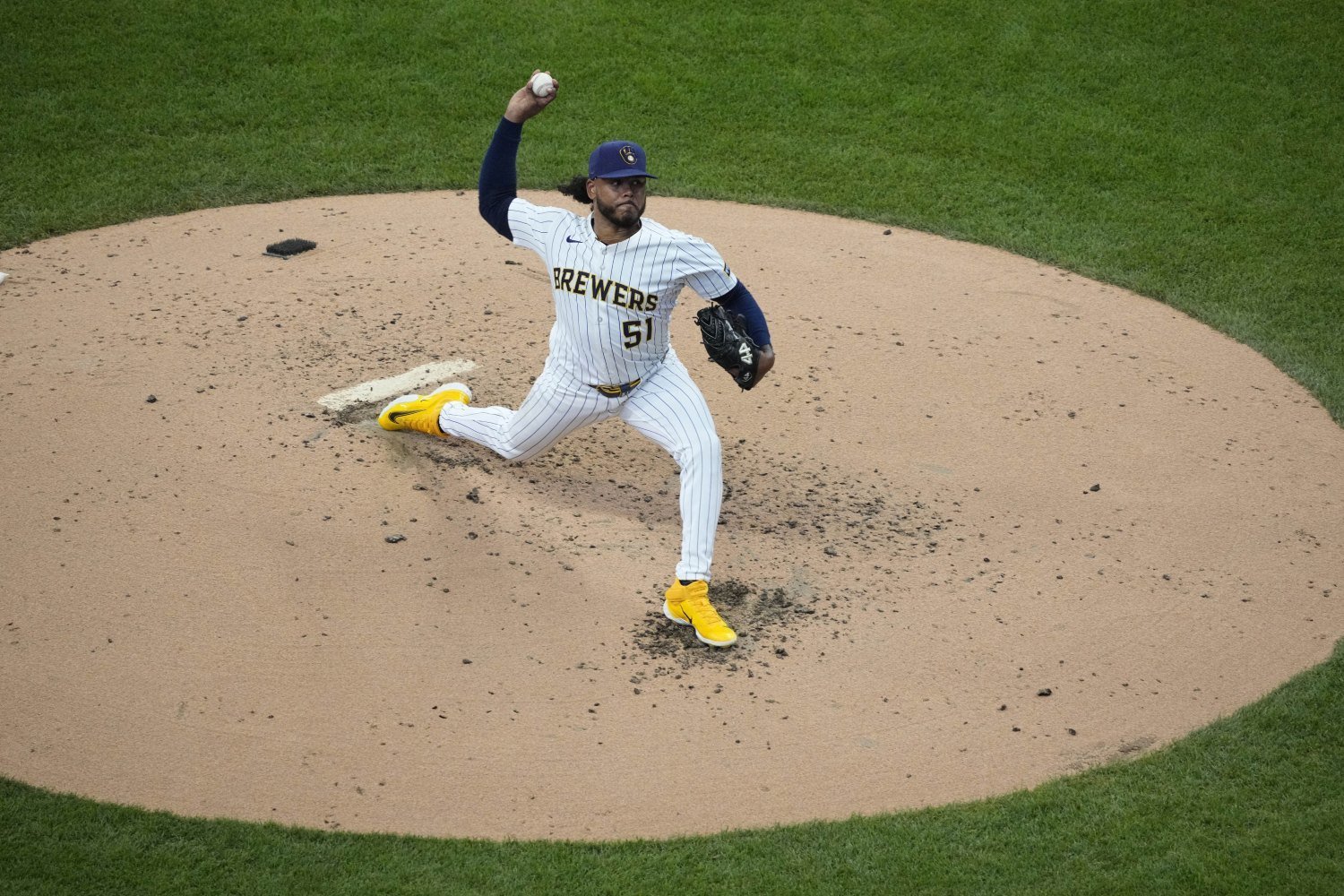 Brewers fans continue to react and accustom themselves to the Freddy Peralta trade that took place last week. Milwaukee got utility man Jett Williams and right-handed pitcher Brandon Sproat for Peralta and Tobias Myers, which has far reaching and overlapping implications. Let's break them down a bit more. The Good Perhaps the biggest benefit the Brewers got was the reinforcement of the farm system. On the face of it, it looks to be similar to the return in the Corbin Burnes deal, in which the Brewers got DL Hall and Joey Ortiz, plus a Competitive Balance pick that became Blake Burke. The difference? This time, the Brewers got two players from the Mets’ farm system, both of whom landed in the top six slots of MLB Pipeline’s Top 30 list for Milwaukee. Sproat is a better version of Quinn Priester, who should fit in well with Jacob Misiorowski, Logan Henderson, Priester, Chad Patrick and Robert Gasser as long-term pieces in the starting rotation. Williams is arguably the more intriguing of the two. He appears to be a more potent version of Isaac Collins, a highly versatile infielder-outfielder who could play second base and the outfield. Unlike Collins, Williams has some real pop in his bat and also plays a passable shortstop, should his readiness for the majors coincide with further regression by Ortiz. Had he not been traded, Collins could have spelled Brewers starters at multiple positions. Williams could easily fill that role for Milwaukee, making him a crucial asset in 2026, even with a raw bat. Bulking up the farm system isn't an objective worth trading good players for, in itself, but really, it's just one way to see that the Brewers got two more players who look likely to be solid contributors in the short and medium term, and who are under team control past the end of this decade. Sustaining the winning machine in Milwaukee requires this kind of refueling. The Bad On the face of it, the bad includes the fact that the Brewers traded their ace. Even with a very deep rotation, which had a dozen viable options, Peralta is a major loss. It makes Brandon Woodruff the team’s number one starter, unless Misiorowski harnesses his stuff or Henderson can stay healthy. While Brandon Sproat has a chance to be very good, he’s not the proven commodity Peralta was. So the Brewers' rotation has suffered a slight downgrade. Nor was Peralta the only useful arm the Brewers surrendered. Myers, a mainstay of the 2024 rotation, will not be arbitration-eligible until after 2027 and would be under team control through 2030. The Brewers probably didn't have much more use for Myers, given their depth, and the Mets were unwilling to send both Williams and Sproat without getting a second arm in return, but there's opportunity cost (at least) in giving up Myers as a second piece, and he could yet blossom into a mid-rotation starter. The Ugly The Peralta trade is just the latest in an ugly cycle that’s been hitting Milwaukee for decades, whereby the team finds itself priced out of the market to keep the stars it has developed in its farm system. Major League Baseball has a problem. Any baseball fan who doesn’t root for a big-spending, big-market club can see it clearly. While the Brewers have clearly had an excellent run since 2017, in each of the last four seasons, the team had to trade a top-of-the-line player because it's effectively priced out of the premium free-agent market. Some of that is a choice by the Attanasio family and the rest of the Brewers' ownership group, but some of it, too, is a harsh and inexorable economic reality. One way or another, the league needs to better distribute revenue and even out the pain of spending (if not the spending itself) among the 30 teams. Until that happens, these moves will remain annual occurrences, and while it can be fun to watch the Brewers nail it over and over again, that they feel the need to do so is an ugly truth. What are your thoughts about the positive and negative aspects of the Freddy Peralta trade? Let us know in the comments below! View the full article
 -
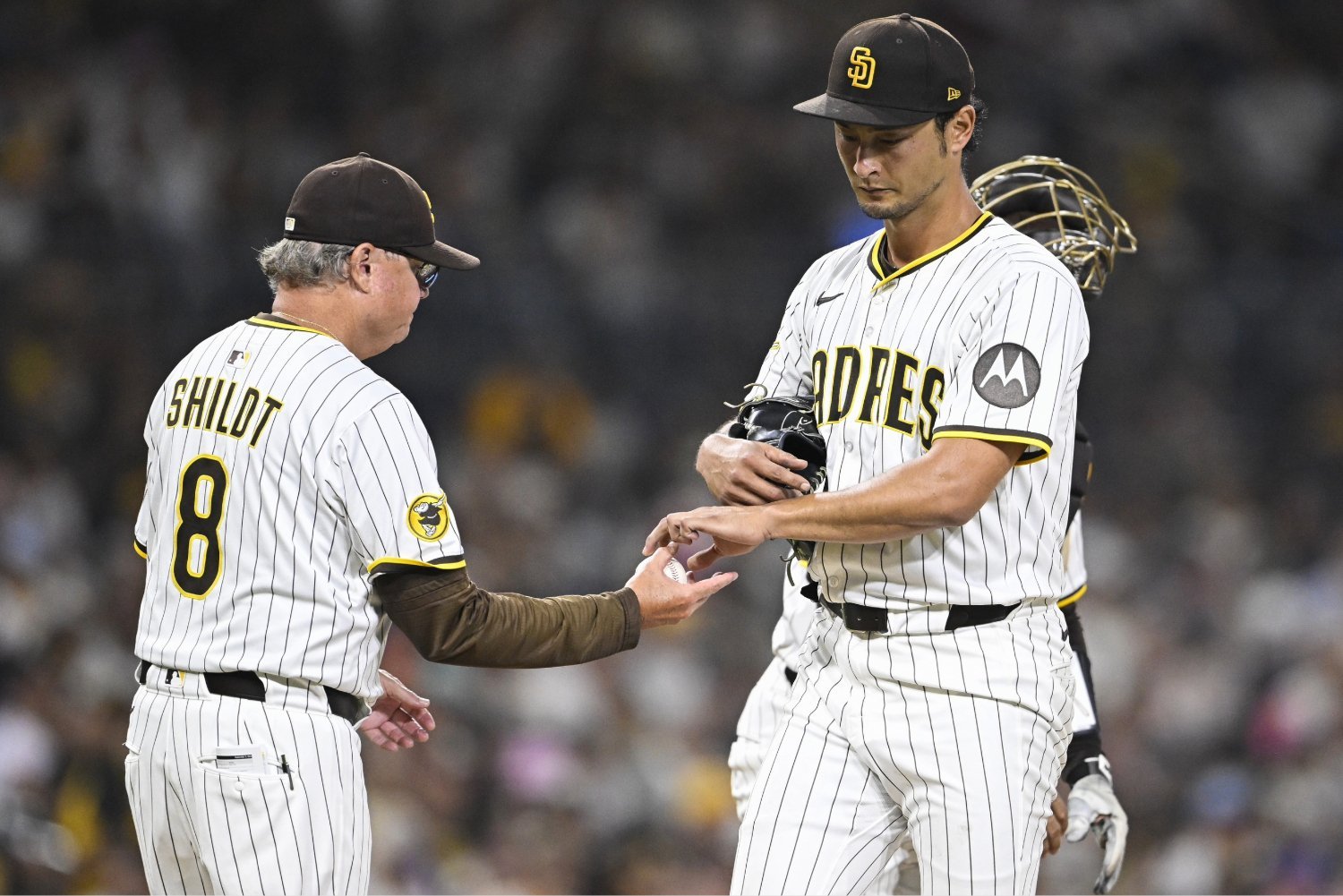 While the initial report of a retirement announcement was met with some apprehension on his part, it appears that San Diego Padres starting pitcher Yu Darvish may be getting closer to calling it a career. At the very least, it's possible that he walks away from his current contract via an early termination and buyout as he works his way back from an October internal brace procedure. In either direction, it would appear that there's set to be some certainty over Darvish's future in the coming days or weeks. There were whispers early this offseason that he was considering retirement on the heels of this surgery and five separate trips to the injured list over the last two years. While it would be difficult for him to walk away from the money owed to him through 2028, Darvish has generally been extremely transparent about where his body and mind are in relation to performance. So, it's no surprise that this situation, while not official, is already in front of the public. Should Darvish choose to retire or accept a buyout from the Padres, it would be a boon for them financially. He carries an $18 million average annual value over the next three years (though the actual salary is a touch lower depending on the year). A team with a handful of position player contracts that carry into the 2030s will likely accept any relief it can get on the books. At the same time, getting clarity on Yu Darvish would also present a fairly intense challenge to the Padres, who are trying to establish their future in the starting rotation. The Padres were always going to be without Darvish for 2026. That situation, on its own, has left them scrambling to find pitching for a rotation that remains unstable just weeks out of pitchers and catchers reporting to Arizona. If we looked to the point at which Darvish was expected back, though, things get even more complicated. Under contract for 2027 are Nick Pivetta and Joe Musgrove, the latter of whom will be entering the last year of his contract. Michael King has a player option for each of 2027 and 2028, lending itself to the assumption that he could depart with a steady, healthy 2026 season. Kyle Hart has a club option for 2027. Beyond that, there's JP Sears with a year of arbitration remaining and each of Randy Vásquez and Matt Waldron still in their pre-arb stage. There's a worst-case scenario where Pivetta regresses in 2026, Musgrove needs a year to get back to form from Tommy John surgery, King departs via his option, and none of the remaining options prove reliable enough to guarantee a rotation spot beyond this upcoming season. Such a pessimistic outlook was already in play even before the news of Darvish potentially ending his Padres tenure. Losing an arm that was expected to be a lock for next season, however, only adds to such concern. The good news is that worst-case scenarios likely come out at the 100th percentile of bad outcomes. Even if the 2026 group struggles to assert itself as something viable for the years beyond this season, prospects like Miguel Mendez or Jagger Haynes could be on deck to get an opportunity. If not by the end of 2026, then perhaps to start 2027. That would at least help to quell some concerns over a Darvish-less future in San Diego. Ultimately, though, the potential departure of Darvish doesn't change the calculus for the future of the Padres' staff all that much. The concern over a lack of clarity in the rotation always existed; he's been out of the mix so frequently the last two years that there was no guarantee he could even be relied upon post-surgery (in his age-40 season, no less). It does, however, reignite those concerns that have been in place all winter over the stability this staff currently lacks and will now have to work at least a little bit harder in order to establish. View the full article
 -
 36-year-old righty Seth Lugo doesn't have the eye-popping stats most of today's top pitchers have. In fact, we found out that he's below average in nearly every advanced metric that sites like Baseball Savant have to offer. How did this grizzled veteran defy baseball analytics and put together a career year just a season ago? We break it all down here, and newsflash, a 10-pitch mix has a lot to do with his success. View the full article
 -
2025 MiLB Recap Episode 4: Biloxi Shuckers Performances
DiamondCentric posted an article in Brewer Fanatic
 Spencer and Joseph Zarr discuss the Biloxi Shuckers season, their tiers of position players and pitchers, and answer a bunch of listener questions. Players discussed include Luis Lara, Blake Burke, Matthew Wood, Jaron DeBerry, Tyson Hardin, and many others. Apple Podcasts: https://podcasts.apple.com/us/podcast/the-brewer-fanatic-podcast/id1740648724 Spotify: https://open.spotify.com/show/5CY8mWsQayqjDXqw9OT2Td iHeartRadio: https://www.iheart.com/podcast/263-the-brewer-fanatic-podcast-166534588/ Pocket Casts: https://pca.st/ommzz627 Watch On YouTube: https://www.youtube.com/@brewerfanatic View the full article
 -
Everyone Is Leaner, Faster, and Definitely Healthier Than Last Year
DiamondCentric posted an article in Twins Daily
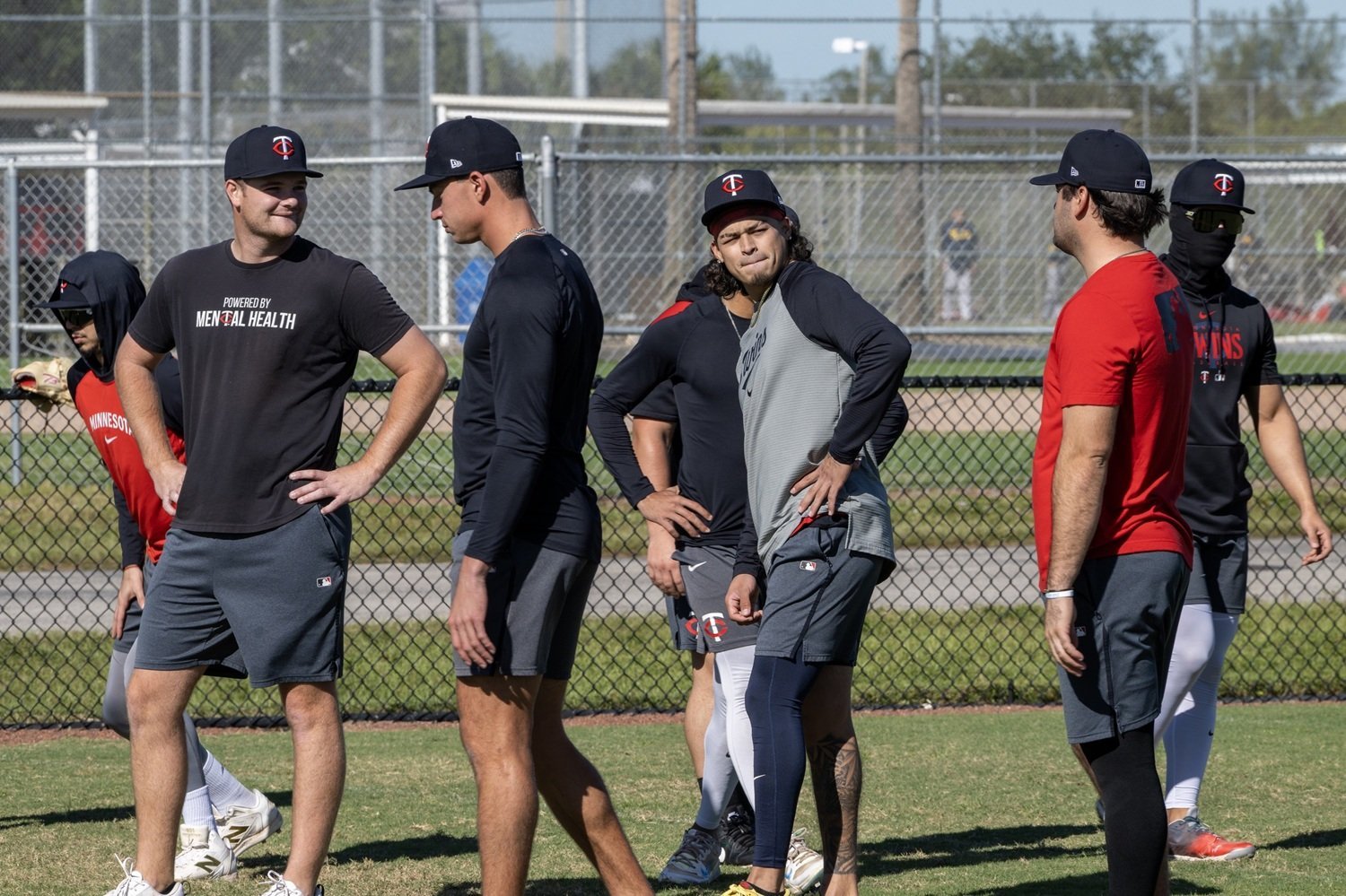 Every February brings renewed hope, warmer weather, and the annual tradition of hearing that at least twelve Minnesota Twins players are in the “best shape of their lives.” This year, the organization decided to stop limiting that distinction to players and instead open it to anyone with an email address ending in twinsbaseball.com. After a Twins Fest weekend that included the usual flurry of physicals, the front office reportedly looked at one another, nodded, and asked the obvious question: Why stop there? If players need baseline data before camp, then surely the rest of the organization could benefit from the same experience. Thus was born the most comprehensive spring training intake process in franchise history. President of Baseball and Business Operations Derek Falvey explained the move with the kind of straight-faced confidence that only baseball executives possess. “We talk a lot about alignment and optimization,” Falvey said. “It felt inconsistent to have players undergoing physicals while the rest of us were just sort of vibing. If we are going to ask accountability from the roster, we should be willing to step on the same scale ourselves.” According to team sources, the physicals now extend well beyond players on the 40-man roster. Scouts, front office staff, coaches, clubhouse attendants, and at least one mascot have all been encouraged to participate. Participation is described as voluntary in the same way that showing up early to workouts is voluntary. Falvey emphasized that this is not about shaming anyone but about gaining information. “This is about knowing where everyone is at,” Falvey said. Strength, mobility, flexibility, cardiovascular health. Also posture. We are big on posture this year. We think it is an inefficiency in the market.” As a result, spring training will feature a wide array of individuals arriving in the best shape of their lives. Some of the early candidates include: The backup bullpen catcher who spent the offseason doing hot yoga and now refuses to sit down during games. A veteran scout who says he dropped twenty pounds by walking Midwest high school campuses and quietly judging exit velocities. The team videographer, who now refers to himself as an athlete because he can hold a camera rig for three innings without shaking. A front office analyst who replaced coffee with cold plunges and now speaks exclusively in recovery metrics. At least one coach who insists he feels better at 58 than he did at 32 and will bring it up unprompted. One staff member who asked to remain anonymous said the process was intense but affirming. “I came in thinking I was in decent shape," he said. “Then they hooked me up to a machine and told me my core was a suggestion, not a reality. I have been planking ever since.” Players have reportedly responded well to the expanded program. Several expressed relief that the spotlight was not solely on them. “It is nice to see everyone else get weighed too," said one anonymous Twins pitcher. “I have been hearing ‘best shape of my life’ jokes for years. Now the assistant general manager has to live that life.” Falvey confirmed that the phrase “best shape of their lives” has been carefully defined internally. “We are not saying perfect, " Falvey said. “We are saying measurably improved from the last checkpoint. That checkpoint might be last season, or it might be college, or it might be before you discovered airport food. Context matters.” As camp opens, fans can expect the usual spring training optimism mixed with a new level of organizational confidence. Everyone is healthier, stronger, and definitely more flexible than last year. The Twins may or may not win the division, but they will absolutely win the wellness portion of the Grapefruit League. And if nothing else, there is comfort in knowing that somewhere in Fort Myers, a spreadsheet exists proving that at least one member of the accounting department shaved 2% body fat and is very proud of it. View the full article
 -
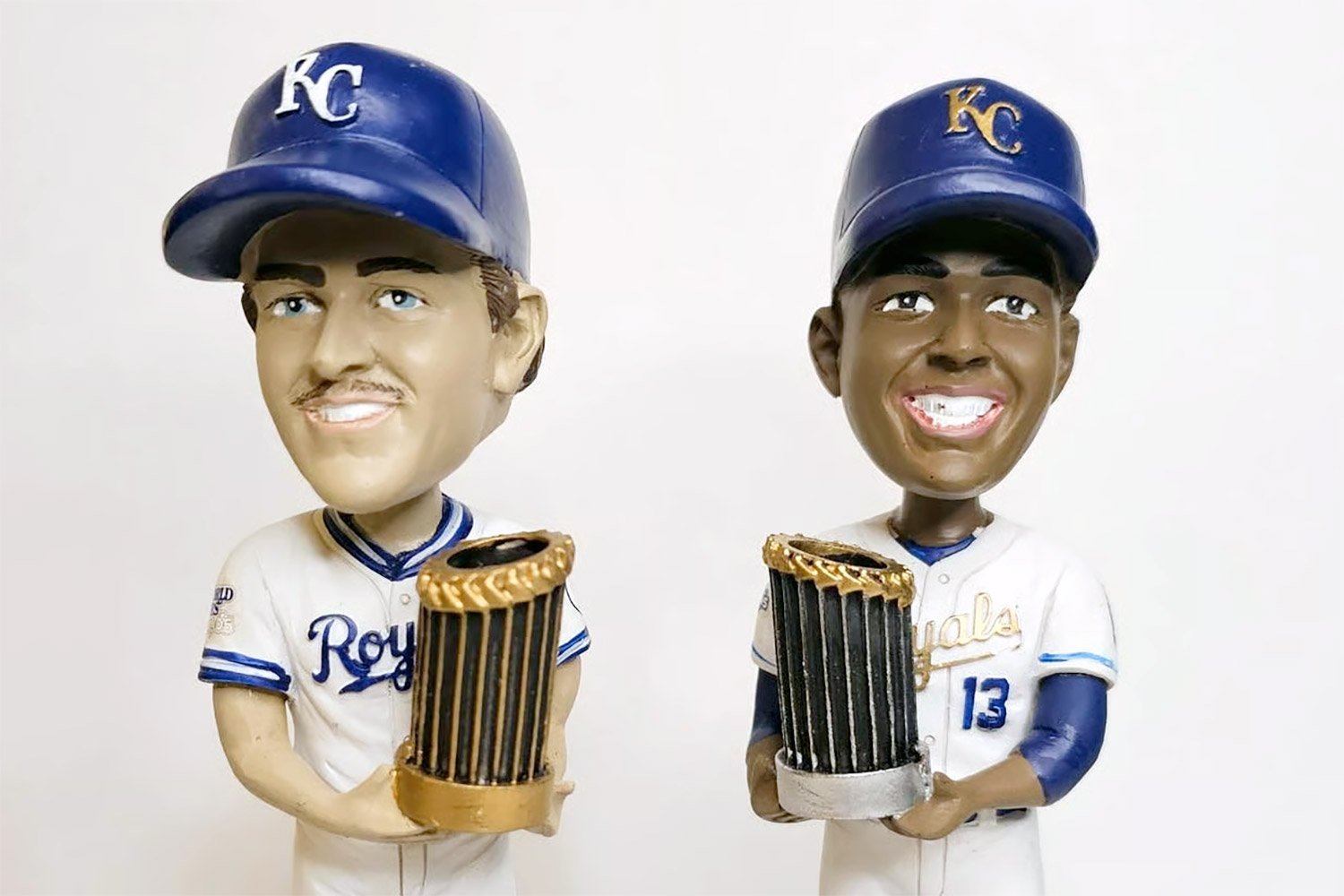 It was up high and unboxed, on top of a glass display case at the antique mall. It’s not much of an antique, considering it was an exclusive season ticket member bobblehead in 2019. Curious and familiar, I went over expecting to see at least $50 on the price tag. I knew these had sold online for quite a bit more, too. Shocked to see $20, I waltzed out of the antique mall with my new purchase for my collection: the Bret Saberhagen & Salvador Perez World Series MVP dual bobblehead. In this series at Royals Keep, I’m looking back on Royals history from this century (and beyond), the good and the bad, through the lens of memorabilia. I didn’t realize until working on this article that in 2024, Baseball-Reference retired its fun Oracle of Baseball tool, which allowed users to basically play Six Degrees of Kevin Bacon, but with ballplayers. However, I did my best to connect these two Royals greats, and a strong, if unlikely, connector is the great Japanese pitcher Hideo Nomo. While Saberhagen closed out his career in Boston with three games in 2001, Nomo won 13 games for the Red Sox that season. He kept playing through 2005, then resurfaced for three outings with the 2008 Royals. Salvy didn’t make his debut until 2011, but several Royals were on the 2008 and 2011 squads, including Alex Gordon, Billy Butler, and Mitch Maier. The bobblehead depicts each MVP holding the World Series trophy, and I love the little details in their uniforms. Saberhagen is in his trademark stirrups, and his jersey has a 1985 World Series logo. The lettering on Salvy’s jersey and cap is golden, a nice homage to the gold threads worn in the years after the 2015 title. Both of these men were well-deserving of World Series MVP honors. Saberhagen remains the youngest to ever win the award. At the age of 21, he threw two complete games in the 1985 World Series, besting the Cardinals in games 3 and 7. Only allowing one run, he struck out 10 and walked a single batter over his 18 innings. He had a whopping 25% Championship Win Probability Added. Perez led the Royals in hits and OPS as they defeated the Mets in 2015. He wasn’t behind the plate for the final out, however. Backup Drew Butera got to catch the final strikeout from Wade Davis after Perez was lifted for pinch runner Jarrod Dyson, who scored the go-ahead run in the 12th inning. This bobblehead is not the only time Saberhagen and Perez have “appeared” together. Right before the 2016 season, Ford introduced the F-150 “MVP” model, and these two MVPs appeared in advertisements, including this commercial. And, in a wild segment befitting of late-night TV, Eric Hosmer and Salvador Perez were on the Tonight Show with Jimmy Fallon in the days after the clinching game in 2015. Fallon dug up Saberhagen’s Ford commercial, a 1980s classic where he raps (!), and brought out an actor who awkwardly raps wearing a Saberhagen jersey. Then, the real Saberhagen comes out! Hosmer and Perez appear confused. Take a look for yourself here, and see if you’re as confused as they are! I can’t say I expected to go down a Ford truck commercial rabbit hole when I bought my $20 bobblehead or started writing this piece, but that’s what I enjoy about memorabilia: the rabbit holes, the connective tissue found throughout baseball, and yes, the goofy commercials and marketing opportunities done by players then and now. Hopefully, the Royals win another World Series soon, so a trio of World Series MVP bobbleheads can be produced! View the full article
