


DiamondCentric
-
Posts
2,631 -
Joined
-
Last visited
Never
Content Type
Profiles
Forums
Events
News
Tutorials & Help
Major League Baseball Videos
Guides & Resources
Store
Downloads
Gallery
Everything posted by DiamondCentric
-

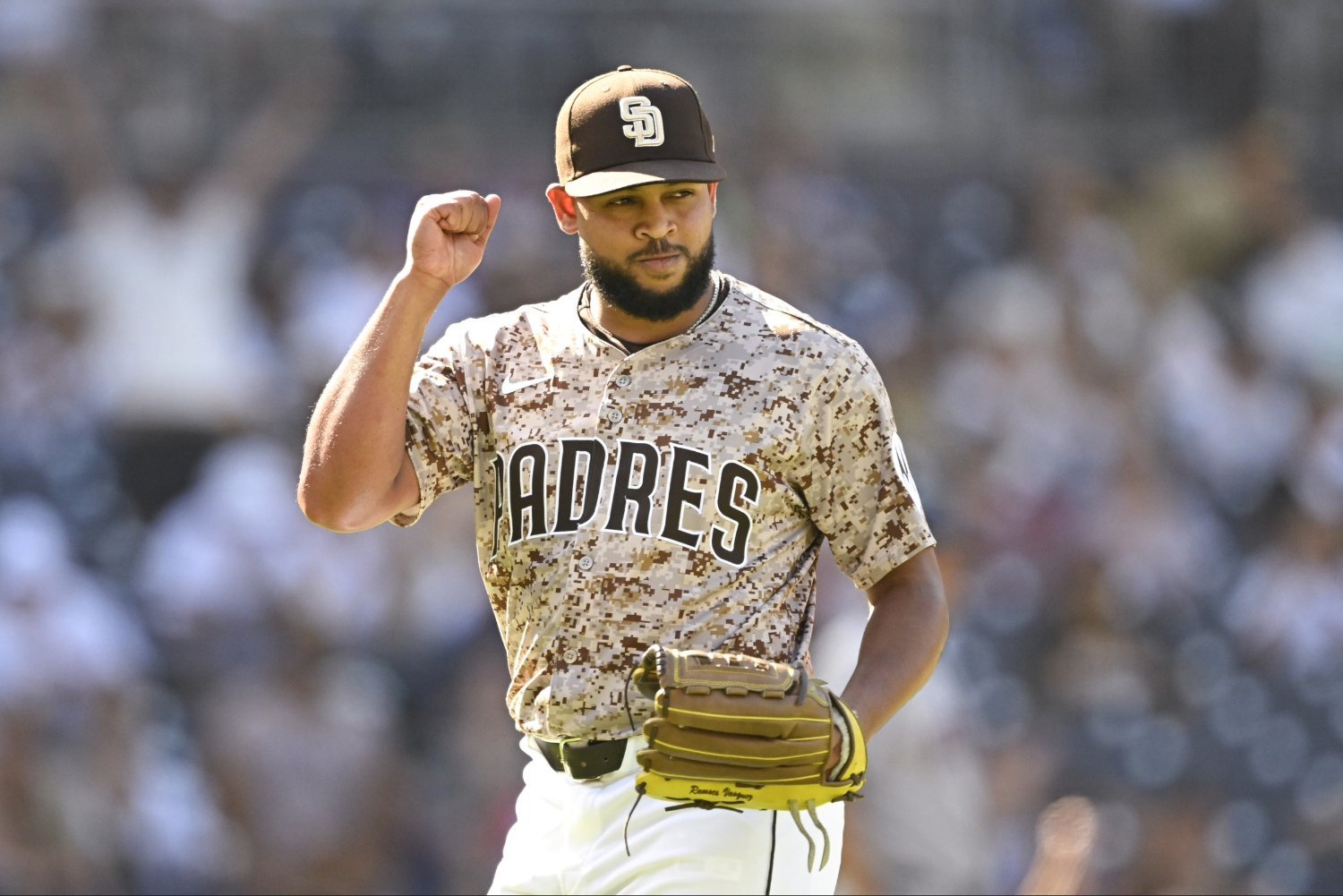 Given that he threw as many major-league innings in 2025 as he did in each of 2023 and 2024 combined, it wouldn't have been hard to call the former a career season for San Diego Padres starting pitcher Randy Vásquez. And in many ways, it was. After 20 starts in his first full season in San Diego, Vásquez made 26 starts (28 appearances overall) for the Padres last year. His ERA checked in at 3.84 (4.85 FIP). He improved each of his groundball and home run rates by roughly two percent — 40.1 & 8.3, respectively — while continuing to thrive via avoidance of quality contact. His 39.3 Hard-Hit% landed in the 60th percentile. Of course, when you're talking about a pitcher whose skill set lives on the margins due to minuscule whiff counts and occasionally shaky command, there's going to be variance within the results. Such was the case with Vásquez. From a month-to-month standpoint, Vásquez had some stretches where he was very good for the Padres in 2025. May, July, and September each stand out, as he went every-other-month in his ability to find success. May's 28 innings of work came with a 2.89 ERA and a strikeout bump from just 8.2 percent in April to 18.8 percent. He posted a 2.79 ERA in 19 innings in July, with a .289 opposing wOBA that was 20 points lower than even his finest work in the months prior. September, though, is what has many optimistic about what Vásquez's future in this rotation could look like. In 22 1/3 innings to close the year, Vásquez pitched to a 3.22 ERA, with a .260 opposing wOBA, a season-high 21.3 K%, and a 29.9 percent hard-hit rate. As should be expected given what happened in between those three individual months, there's an enigmatic quality to the 2025 output from Vásquez. The month that featured his best ERA also featured his highest amount of hard contact allowed and a season-low strikeout rate. In August, meanwhile, he posted his highest whiff rate and lowest walk rate but had an ERA over eight. Of course, that came across just seven innings of big-league work. Nevertheless, there's a lot going on there for a pitcher who was already somewhat difficult to figure out in terms of future projection. In order to try and predict his future output, though, it requires one to redefine expectations given where Vásquez was supposed to be based on his prospect profile versus where he actually is. The following is his writeup from MLB Pipeline back in 2023, when he was a prospect with the New York Yankees: Last year's iteration of Vásquez saw him utilize (technically) seven different pitches. He led the way with three different fastballs: a four-seam, a sinker, and a cutter. The four-seam was primarily deployed against left-handed hitters while the sinker was for the righties. The cutter, meanwhile, was distributed in a nearly identical fashion regardless of handedness. His curveball took on more of a sweeper shape against righties while left-handed hitters got a more standard curveball as it took on more of a vertical shape. The actual fastball velocity, though, sat at just 93.3 MPH (32nd percentile). While he was able to generate the type of spin noted in the scouting report in either form of his curve, he was also unable to generate much of anything when it came to whiffs. The more standard curveball got just a 15.8% swing-and-miss rate, while the sweeper was a bit higher at 25.2 percent. His overall 15.7 Whiff% landed in the first percentile among all qualified pitchers in 2025. This is also where we see some of the monthly variance come into play. The curve was rarely near the top of his whiff rates, while the sweeper was there early before falling behind: It's that type of graphic that speaks to a couple of issues with Vásquez, his arsenal, and his usage. For one, the pitch shape differs vastly depending on handedness. A second is that his command simply is not good enough for that type of differentiation. The following is his movement profile from 2025: None of the work here is indicative of a pitcher who has full command of his arsenal, expansive as it may be. That he's this all over the place in his ability to garner swings and misses, mitigate hard contact, and locate pitches with regularity is a symptom of more overarching command woes. It's why we see such intense change between individual months. There is, however, something encouraging to take away from the end of the season. Over the last three months of the campaign, there were trends in his usage that indicated he might be settling into something more consistent with the way he deploys his pitches: The changeup falling out of the rotation is an encouraging start; Stuff+ rates it as his worst offering. The four-seam becoming his primary fastball of choice also seems wise. In the two years prior, Stuff+ had that as an above-average pitch before the really heavy mixing began in 2024. The curveball-sweeper dynamic is fine to stay if the command is there, since that appears to be a shape based on handedness. Ultimately, it looks as if Vásquez began to simplify toward the end of the year, and it's such simplification that could be key to him beginning to stabilize in 2026. Which would be kind of an essential development for him in the upcoming year. The Padres are working with Nick Pivetta, Michael King, and a returning-from-Tommy-John-surgery Joe Musgrove atop their rotation. There isn't much to speak of on the depth front. Randy Vásquez becoming a stabilizing presence capable of eating innings would be tremendous for a shallow group. Unfortunately, given his prior month-to-month woes, we may not know if these trends are real until the temperature starts to rise this season. View the full article
 -
 Alex and Maddie sit down with MassLive.com's Chris Cotillo to talk through the Red Sox offseason so far, his roster projection, and get a few behind-the-scenes travel stories. They wrap up with an overview of which Red Sox players are participating in the World Baseball Classic. Listen on Apple Podcasts: https://podcasts.apple.com/us/podcast/the-talk-sox-podcast/id1783204104 Listen on Spotify: https://open.spotify.com/show/3qPrPXEngu0CxgTmlf0ynm Listen on iHeartRadio: https://www.iheart.com/podcast/263-the-talk-sox-podcast-244591331/ Listen on Pocket Casts: https://pca.st/4tmd121v Watch on YouTube: https://www.youtube.com/@talksox View the full article
 -
How Will Newly-Acquired Jace Kaminska Help The Twins?
DiamondCentric posted an article in Twins Daily
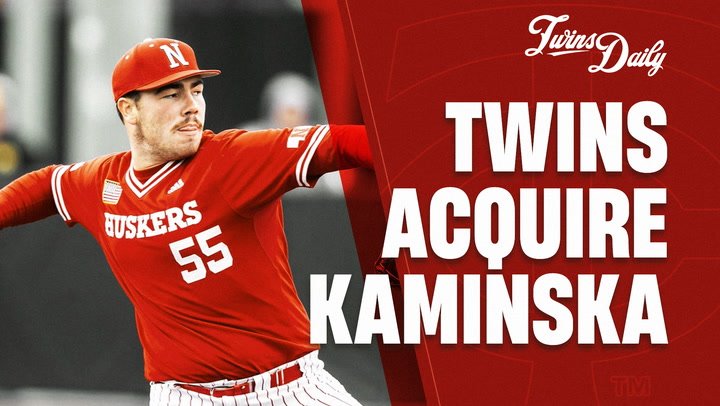 The Twins traded Pierson Ohl and Eduoard Julian to the Rockies to acquire minor league arm Jace Kaminska. What can Kaminska truly bring to the table in Minnesota, and how long do we have to wait until he debuts at Target Field? We answer all of these questions and do a deep dive on the prospect in this Twins Daily video. View the full article
 -
 Jack and Spencer discuss what the Reese McGuire signing could mean for Jeferson Quero, how the Brewers could round out their rotation, and why Jackson Chourio should get more opportunities in center field. Apple Podcasts: https://podcasts.apple.com/us/podcast/the-brewer-fanatic-podcast/id1740648724 Spotify: https://open.spotify.com/show/5CY8mWsQayqjDXqw9OT2Td iHeartRadio: https://www.iheart.com/podcast/263-the-brewer-fanatic-podcast-166534588/ Pocket Casts: https://pca.st/ommzz627 Watch On YouTube: https://www.youtube.com/@brewerfanatic View the full article
 -
 Over the weekend, The Athletic’s Dan Hayes reported that Minnesota Twins executive chair Tom Pohlad called 50 lapsed season-ticket holders in an attempt to make amends with a portion of the team’s vocally displeased fan base. As it turns out, at least some of those phone calls went in an unexpected direction. “It started out pretty normal, just asking me why I didn’t renew and listening to my responses,” said Zach Christiansen, 41, of Lino Lakes. “But once I told him I was going to wait and see how this season goes before considering renewing, he asked me if I wanted to buy an office building in Bloomington. I thought he was kidding, then he started breaking down the numbers and asking me if I had any limited partners I’d like to bring in. “I’m a manager at Cub Foods. I don’t have limited partners. I don’t even have a 401(k).” Christiansen’s experience was echoed by Miriam Westrum, 67, of Edina. “These tickets have been in the family forever, but all the kids moved out of state and I really don’t like driving in the Cities, everyone’s going so fast these days,” said Westrum. “I told him that, he said he understood, then he said he had a sweetheart deal on a mixed-use development in downtown Minneapolis. “I’m a retired math teacher. My husband passed in 2018. I told him as much.” In fact, every season ticket holder Twins Daily spoke with said Pohlad closed his call by gauging their interest in a number of properties owned by his family. “I work in customer service, so I am very familiar with these ‘tell us how we can win you back’ pitches,” said Tommy Gutierrez, 38, of St. Paul. “But it went really off the rails when he asked if I ever considered owning my own skyscraper. He said he could get it to me for ten cents on the dollar, compared to what they paid on it. “I’m pretty sure he was crying.” View the full article
 -
It wasn't broken, but Eury Pérez 'fixed' his delivery anyway
DiamondCentric posted an article in Fish On First
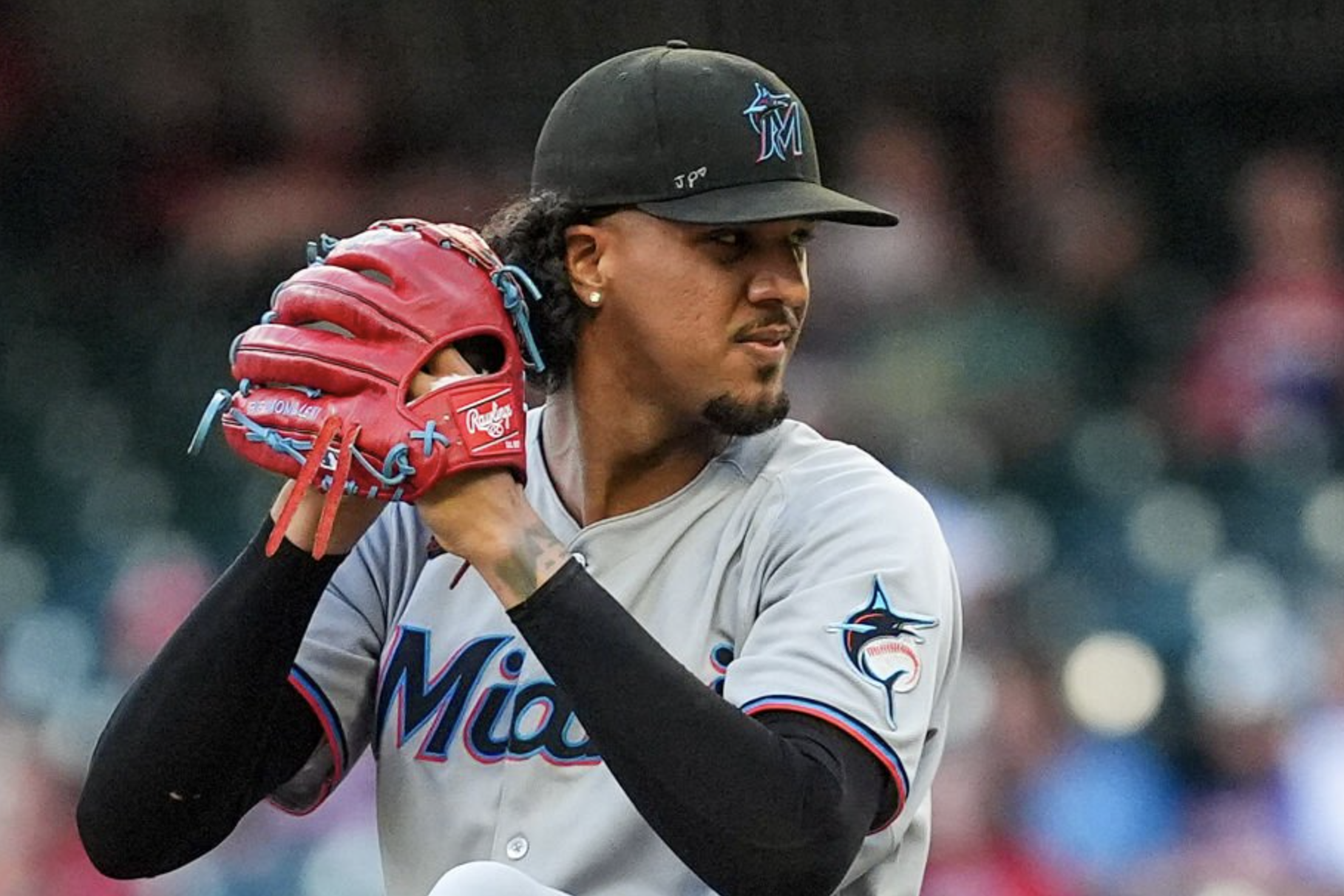 I get things wrong all the time, so humility is one of my key assets. When my Miami Marlins coverage is missing critical information or context, I'll put in the effort to rectify the initial mistake. Over the course of the 2025 season, I watched all 20 of Eury Pérez's starts. While Fish On First followers Vik Torres and Mike Morhardt noticed that Pérez generally lifted his hands above his head when pitching from the windup (with the bases empty), that didn't stick in my memory. Pulling up footage from the end of the year, the 22-year-old kept his hands close to his chest throughout his delivery, and I assumed that had always been the case. As I pored over more footage from previous starts, I discovered my error. On the bright side, that research has equipped me with interesting analysis to share with all of you. Pérez was dismantled by the New York Mets during a start at Citi Field on August 29, failing to get through the first inning. The road trip continued with a visit to the Washington Nationals, and that outing was just as discouraging when adjusting for the quality of competition (4.0 IP, 8 H, 7 ER, 1 BB, 2 K, 76 pitches/47 strikes). As the wheels fell off against the Nats, that's when the talented right-hander began experimenting with lowering his hands. He adopted it as his full-time windup routine on September 10. Here is a side-by-side of Pérez pitching from the windup in his games before and after the aforementioned road trip: There's a twist—Pérez's mini-slump in NY and DC notwithstanding, he generally thrived from the windup in 2025. In 251 plate appearances with the bases empty, opponents slashed .160/.247/.293. He struck out 29.5% of batters compared to 23.1% with runners on base. If he had maintained most of that effectiveness when working from the stretch, he would've easily been Miami's best starter. That being said, this late-season change was a boon to Pérez's overall production. During his final four starts, there were increases to his whiff rate, first-pitch strike rate and fastball velocity. He posted a 2.70 ERA in 20 innings pitched. A superhuman 42.3 K% contributed to his 1.09 FIP over that stretch, the seventh-best mark in MLB (min. 10 IP). As you can see from Pérez's most recent bullpen session, he is sticking with his September adjustment entering 2026. Our own Kevin Barral spoke with Pérez last week about how offseason weight gain and refinement of his secondary pitches will also help him realize his full potential. View the full article
 -
New Details on Rogers' Earnings From Blue Jays World Series Run
DiamondCentric posted an article in Jays Centre
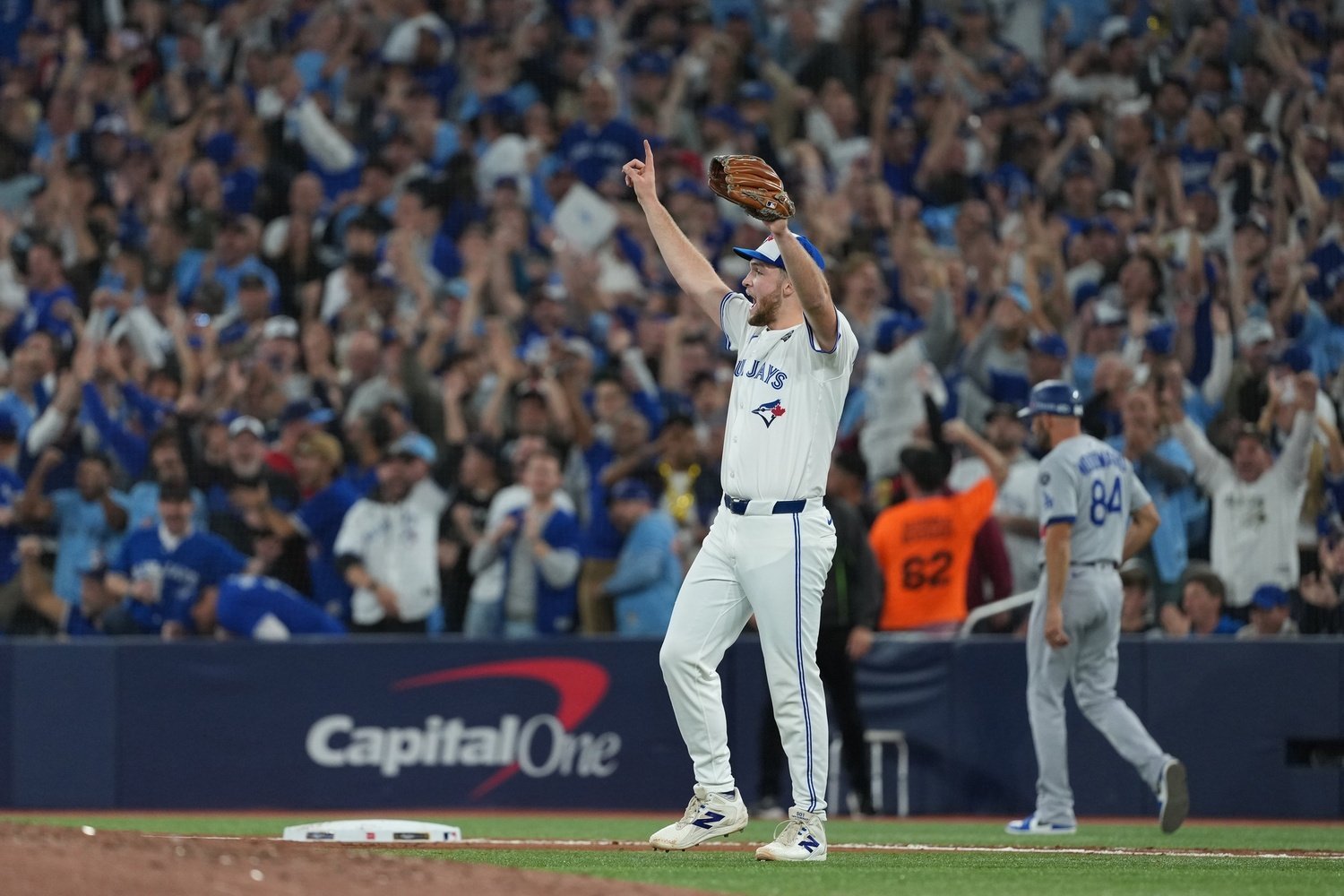 We'll never know exactly how much extra cash the Blue Jays brought in with their run to the World Series last fall. It's may not even be possible to put an exact number on it. Still, financial details have slowly emerged over the past few months. Earlier in January, a report came out suggesting that Toronto's playoff run was worth "over $100 million" to the organization. Then, on Thursday, Rogers CEO Tony Staffieri provided details about the company's fourth quarter earnings. Rogers' media revenue over the final three months of 2025 was $1.24 billion. That's significantly more than twice their revenue from the last quarter of 2024 ($547 million). While note all of that can be attributed to the Blue Jays (Staffieri also credited increased revenue from Maple Leaf Sports & Entertainment (MLSE), which Rogers officially purchased an additional 37.5% stake in last summer. Still, it's clear that the Blue Jays pulled in an enormous amount of money over the 18 games they played in October. Hopefully, ownership will continue to invest that money back into the roster. Staffieri also confirmed that Game 7 of the World Series between the Blue Jays and Dodgers was "the most watched Rogers broadcast ever." In fact, it was "the most-watched broadcast in Canada’s history" outside of the 2010 Winter Olypmics. On top of the financial implications of the Blue Jays' national popularity, it's just plain exciting to think about how beloved this team can be when it's playing winning baseball. Featured image courtesy of Nick Turchiaro, Imagn Images. View the full article
 -
Money Matters, Part 2: Have the Pohlads Solved Their Debt Problems?
DiamondCentric posted an article in Twins Daily
 In Part 1 of this mini-series on the finances of the Twins and their small shift in ownership, we studied the two new investment groups heavily betting on the team. The other question worthy of our attention is how much of the Pohlads' debt is truly gone, thanks to this deal. It is certainly true that the debt for the team got out of hand at $500 million, though even that was not the highest in baseball. There are plenty of reasons for teams to hold debt. If you look at the Atlanta Braves—the only team traded on a public market, which requires financial disclosures and quarterly earnings—you can see that they have $759 million in debt spread across its investments, though $483 million of that is related to the development of The Battery, their ballpark-adjacent real estate boondoggle. The reason many teams like to hold debt is that MLB-backed debt is unique. While sports owners can often get lucrative deals on debt from banks, the leagues as a whole can secure even bigger ones. Currently, the Braves have $67.5 million in debt with the league at competitive rates: $30 million at a 3.65% interest rate and another $37.4 million at 5.4% and 5.71%. These payments to the league are at much better rates than the rest of their debt. Fitch Ratings assigned the debt an “A” rating, saying the Braves have a “stable revenue profile due to national media and shared league-level revenue streams, and they are insulated from the local media market.” The problem, for the Twins, was that the amount of debt—even with a mix of debt at favorable interest rates—likely meant one of two things. First, that meant almost certainly eating profits. If the Braves earned $66 million in their baseball team over the last year (with a notably good TV deal from Diamond Sports Holdings, as well as the All-Star Game), the Twins almost certainly earned less. And if $27.5 million is going just to cover interest, that makes things complicated. Besides, the Internal Revenue Service has noted that it will do more investigations of teams with “significant tax losses, and review whether the income and deductions causing the losses are reported in accordance with the tax rules.” Given the administration's penchant for investigating personal enemies and the Pohlads’ political donation history, giving the administration an excuse could be a bad idea. Secondly, MLB does have rules about debt. Under the CBA with the MLBPA, “Teams are not allowed to hold debt more than eight times operating income, or twelve times for teams with new stadiums.” However, the league has always had a number of teams in violation of this term, and the Players Association has done little to combat it. The only time the league has used the rule was to force Frank McCourt to sell the Dodgers, which had more to do with their dislike of McCourt. This was a less vital and urgent consideration, then, but it did demand the team's attention. Did the Twins get rid of all their debt? Probably not, but that's fine. Debt at low interest rates is good, when you can make money elsewhere by spending what you've borrowed. When the Pohlads imagined their future in 2019, it was likely using profits from real estate to cover any extra debt from the team. That just never materialized. But as long as the team can cover its interest payments and give itself some wiggle room to head toward profit, there is no reason to eliminate all the debt at once. That might mean that part of the investment is the reason why the Twins have spent more on payroll this winter than many predicted. The question is: what does the team making a profit really mean, short-term and long-term? The Dodgers make a profit, and so do the Pirates. Only one of those teams relies on winning. As long as revenue-sharing agreements benefit teams that spend very little, the Twins may find themselves in the black by remaining in the $110 million range, rather than the $130 million or $160 million range. Fans would find that unhelpful, and distasteful—and rightfully so. All of this leads me toward two speculative predictions: The various partners think there are benefits to getting the Twins back in shape, both financially and (to an extent) on the standings page. That might not be done by immediate spending on payroll at levels commensurate with the media market, but by the same kind of moderate spending that produced winning teams in 2019 and 2020, rather than 2023. The Victor Caratini deal is a good example. If Ryan Jeffers posts around the same WAR as last year, he will certainly be making anywhere from $10 million to $20 million a year when he hits free agency. The Twins already know what they owe for their primary catcher in 2027: $7 million. More importantly, I do not think these minority owners expect to be in it for the long term. The Pohlads will almost certainly jump back into the market following the new collective bargaining agreement—whether or not there is a salary cap—and the signing of new media rights deals after 2028. With the collapse of Bally Sports Networks FanDuel Networks Diamond Sports Holdings Main Street Sports, the league is almost guaranteed to have a majority of team rights by that time; Manfred believes he can gain all of them. That will likely mean the league can sign a long-term agreement, cementing profits that are well-distributed throughout the league. If the team valuation inflates even further, the Pohlads will have a chance to get the truly bonkers number they sought but couldn't find this time. If anything, Tom Pohlad's goodwill tour is about raising the profile of the team, so as not to leave a cultural hole in the ground for the next set of owners, because people pay more for teams whose fans like them. Like many, I found the announcement of the Pohlads ending their potential sale to be more dismaying than the fire sale of the trade deadline. Yet, I think there is perhaps a rainbow at the end of this dark tunnel. Sports fandom is built on pain. What's a few more years of it? View the full article
 -
A Breakdown of the 25 Non-Roster Invites to Royals Spring Training
DiamondCentric posted an article in Royals Keep
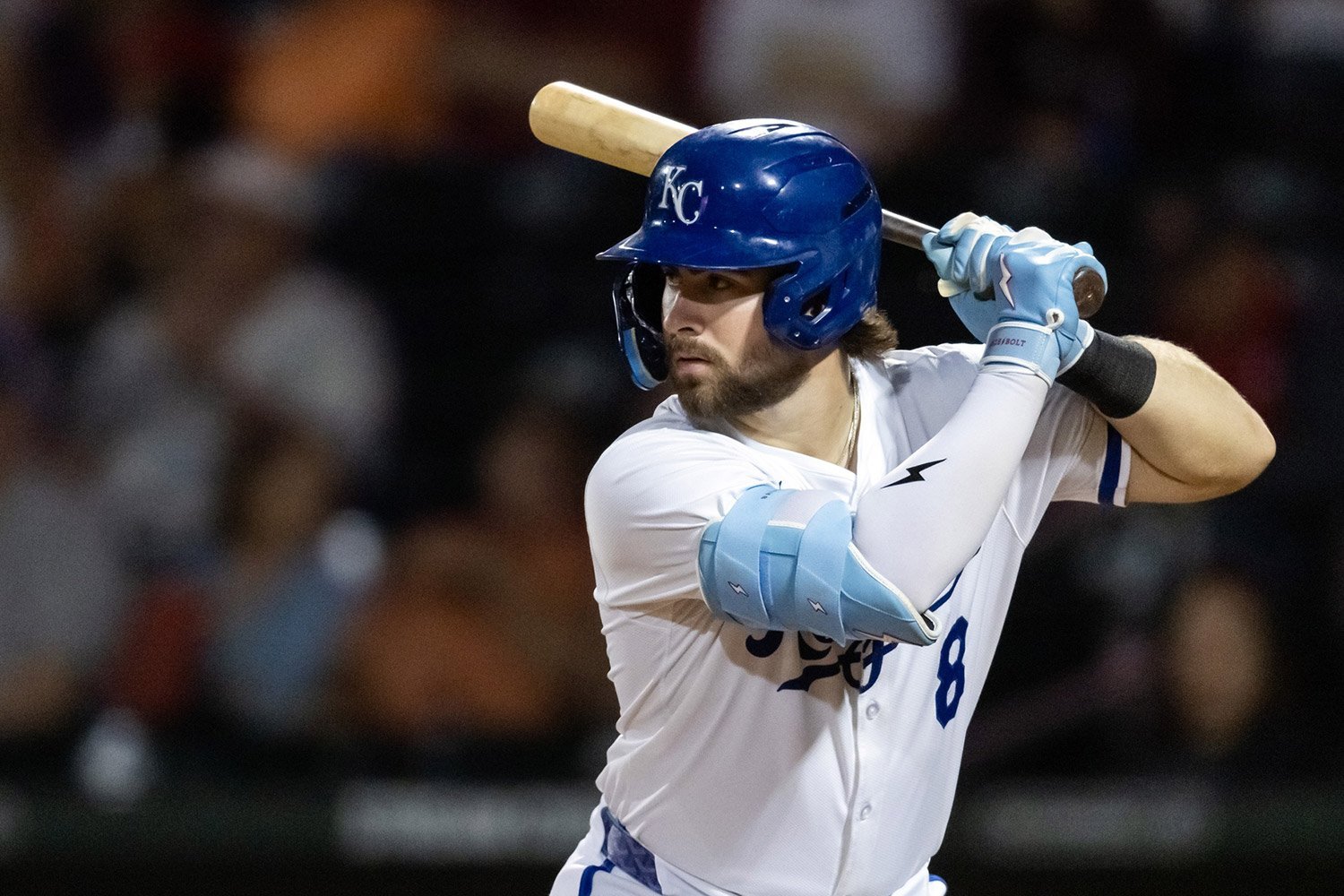 On Tuesday, the Royals announced that 25 players not currently on the 40-man roster will be attending major league spring training in Surprise, Arizona. This group of players will typically include free agents who recently signed minor league contracts with the club, along with top prospects in the minor leagues. Last year, free agents Cavan Biggio and Taylor Clarke were in this group, who would eventually spend time on the active roster. Here is an overview of the players invited and who might break into the team. Royals Pitchers RHP Héctor Neris Neris was signed to a minor league deal on Monday. Neris spent time in 2025 with the Braves, Angels, and Astros. For those three teams, he pitched 26 2/3 innings with a 6.75 ERA, good for a -0.8 bWAR. Earlier in his career, Neris was trusted in high-leverage positions, being either the closer or main setup man for the Phillies, Cubs, and Astros. Entering his age-37 season, he is now more often used as a middle reliever. FanGraphs projects him to have around 0.1 WAR. One concern is his declining groundball rate, which dropped to a career-low of 26.1%. With the fences moving in at Kauffman Stadium next year, that could make him more susceptible to giving up home runs. His FIP being lower than his ERA last season could indicate that he was unlucky last season, and his experience in high-leverage positions could help him earn one of the last spots in the bullpen going into 2026. RHP Jose Cuas Cuas was signed to a Minor League deal in December. Cuas pitched in Kansas City in 2022 and 2023 and has since spent time with the Cubs, Blue Jays, Phillies, and Braves. Last season, Cuas struggled at the Phillies’ Triple-A affiliate with a 13.5 ERA in 7 appearances. He also appeared in 18 games for the Braves' Double-A affiliate, posting a 3.63 ERA across 22.1 innings. This winter, Cuas also pitched in the Dominican Winter League, allowing only one earned run in 12.1 innings pitched. While he may face an uphill battle to make the Royals’ roster, his winter performance could earn him a longer look to make the team. RHP Aaron Sanchez Sanchez was signed to a minor league deal this Tuesday. In 2017 with the Toronto Blue Jays, he finished 7th in NL Cy Young voting and won the ERA title. Sanchez has battled injuries and has not made an MLB appearance since 2022. He did make 8 starts in the Dominican Summer League with only a 1.55 ERA across 46 1/3 innings, which caught the Royals’ attention. He will face tough competition for a spot in the Royals’ deep rotation. While it is unlikely that Sanchez will make the Opening Day roster, he could potentially attract trade interest from other teams or provide depth if the Royals end up trading one of their starters (assuming he is willing to accept spending time in Triple-A). LHP Helcris Olivarez Olivarez has recently spent time in the Giants organization, and the Royals signed him to a minor-league deal this offseason. Last season, he threw for 37 innings with a 3.65 ERA across the Giants' Double-A and Triple-A affiliates. He is more likely to start the season with the Omaha Stormchasers, but with the Royals still looking to add a left-handed reliever, Olivarez could eventually get a chance to make an impact in the major league bullpen. Former Draft Picks Right-handers A.J. Causey, Dennis Colleran, Shane Panzin, i and left-hander Chazz Martinez, Frank Mozzicato (No. 20 Prospect), and Hunter Patteson will also have the chance to make an impression at the big league camp this spring. Royals Catchers Jorge Alfaro The Royals signed Alfaro to a minor-league deal earlier this month. Last season, he played in 14 games for the Washington Nationals, slashing .256/.256/.308 with a 60 OPS+ and -0.3 bWAR. With Salvador Perez and Carter Jensen as locks to make the roster, it is very unlikely that Alfaro will be on the opening day roster. However, he could be in a good position to bring a veteran presence to Omaha and be called up in case either Perez or Jensen gets injured this season, much like Luke Maile last season. Elih Marrero Marrero has spent time in the Rangers and Red Sox systems and has yet to break through to the major league level. Entering his age-29 season, he will likely be battling with Jorge Alfaro to earn a spot in Triple-A next season. Blake Mitchell Currently the Royals’ No. 2 prospect, Mitchell has only progressed as far as High-A in the minor league system. While there is a lot of excitement around him, it is unlikely that he will make an impact at the major-league level in 2026. This camp invitation will provide Mitchell with experience to help his career progression. Other Catchers Other prospects and former draft picks Canyon Brown, Omar Hernandez, Ramon Ramirez (No. 8 prospect), and Luca Tresh have also been invited to the major-league camp. Royals Infielders All four infielders with non-roster invites are middle infielders. After Jonathan India, Michael Massey, and Nick Loftin all struggled in 2025, the Royals have brought these players in to challenge for the infield depth roster spot. Each of these players had their own struggles in 2025, so it will be interesting to see if any of them can make a meaningful impression in spring training. Kevin Newman Last month, Newman was signed to a Minor League deal. Newman struggled last season with the Angels, slashing .202/.209/.272 with a 33 OPS+. He is only one year removed from a 2.2 bWAR season where he batted .278/.311/.375 with an 80 OPS+. Despite last year's struggles, Newman was a plus defender, grading in the 83rd percentile in fielding run value. He is also able to hit for good contact, grading above average in whiff rate and strikeout rates. If he could return to that 2024 form, he could prove to be an option at second base in 2026. Josh Rojas Earlier this month, Rojas was signed to a Minor League Deal. Similar to Newman, Rojas struggled greatly in 2025 with the White Sox after having a good year in 2024 with the Mariners. Even in his struggles, Rojas has maintained a good chase rate of 19.6% and a walk rate near-average at 9%. If he can pair his plate discipline with better batted ball production, he could be an asset for the Royals in 2026. However, entering his age-32 season, he is at an age where it is rare for a player to develop those skills. Abraham Toro Toro was signed to a Minor League deal in December. Last year, Toro was acquired by the Red Sox to play first base, despite mostly playing second and third base in his career, when Triston Casas was lost to a season-ending knee injury. Toro went on to have little success in Boston, slashing .239/.289/.371 with an 83 OPS+. Toro is a contact hitter, grading in at least the 74th percentile in whiff rate, zone contact rate, and strikeout rate. However, his contact is rarely for power, and he rarely walks. Connor Kaiser In November, the Royals signed the Blue Valley West graduate to a Minor League deal. Kaiser has yet to make a meaningful impact at the major-league level with either the Rockies or the Diamondbacks, with a career slash line of .091/.130/.136 in 23 career plate appearances. He is unlikely to make the major league roster, and this will likely be one of his last opportunities to make an impression. Daniel Vazquez The Royals’ No. 14 prospect, Vazquez has also been invited to the big league camp. Despite having a good run of games in the Arizona Fall League, slashing .329/.459/.468, he is unlikely to break into the major league roster this spring. Peyton Wilson Rounding out the infielders is Peyton Wilson. He was the Royals’ second-round pick in the 2021 draft and spent time in Double-A and Triple-A last season. Wilson had great success in Double-A with an OPS of 1.195 in 19 games. However, he was unable to extend that success in Trip-le-A, slashing .223/.309/.309 in 84 games. His inclusion in camp should provide valuable experience as he continues his development. Royals Outfielders Last year, the Royals’ outfielders struggled on offense. To address those issues, the Royals added Isaac Collins, Lane Thomas, and Kameron Misner in the offseason. With nine outfielders currently on the 40-man roster, it is unlikely that either of these players will break into the big-league roster in spring training, but both could be called upon if the outfield struggles continue into 2025. Gavin Cross Cross is a former Royals top prospect and 1st round draft pick from 2022. Injuries have impacted his career, and his stock has dropped so far that he went unselected in the Rule 5 Draft this offseason. Cross is a bounce-back candidate after seeing moderate success the past two seasons in Double-A, slashing .250/.314/.420 and stealing 53 bases. Carson Roccaforte Roccaforte is the Royals’ No.16 prospect. Last season, he broke into the Double-A team and showed signs of power, slashing .290/.387/.475. He continued to show power in his 18 games in the Arizona Fall League, slashing .279/.393/.485. He will be someone to watch for the future. View the full article
 -
Second Base Trade Market Leaves Red Sox With One Long-Term Hope
DiamondCentric posted an article in Talk Sox
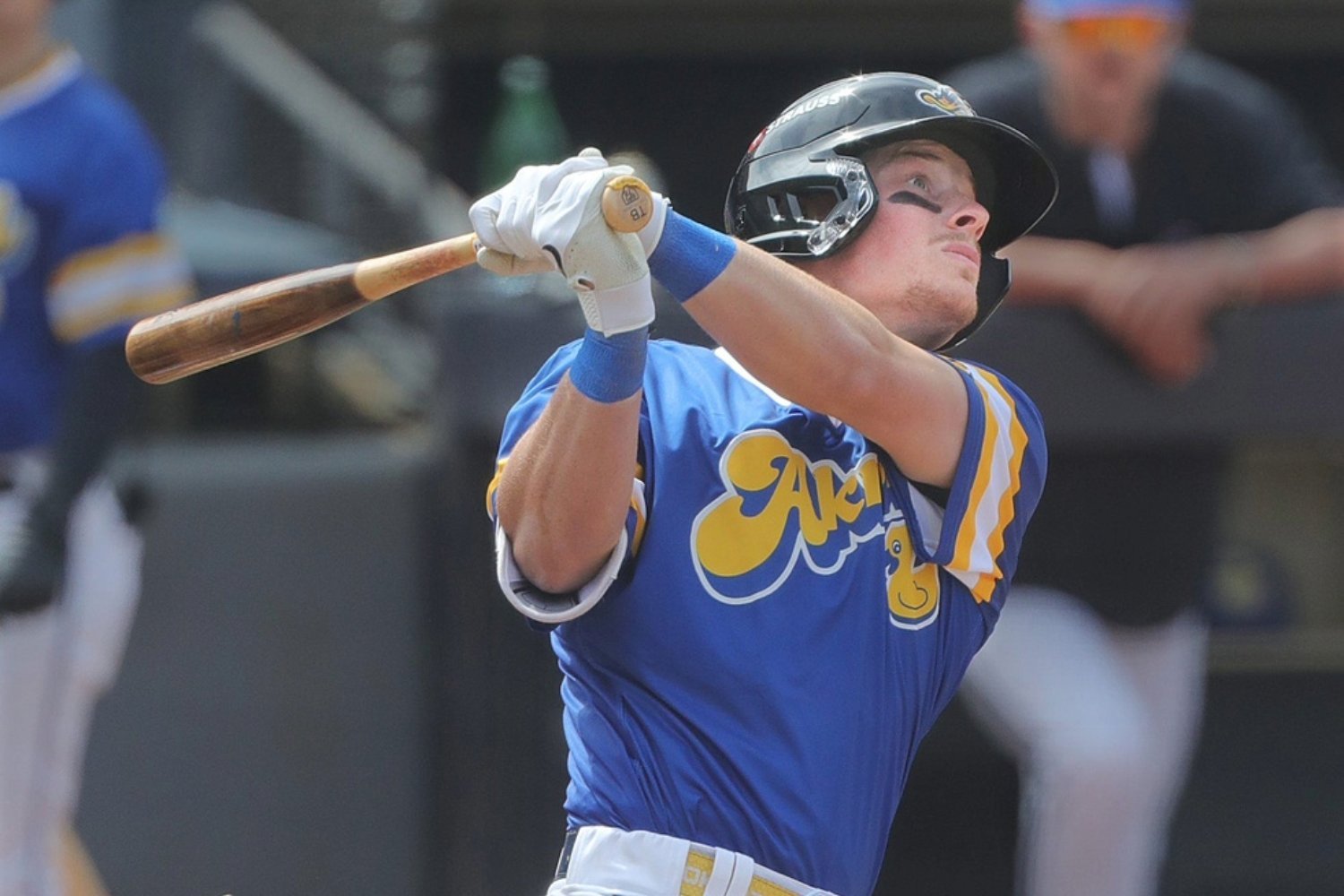 Right off the bat, I'll note that the player I'm focusing on in this piece isn't necessarily available. He hasn't been mentioned in many (if any) trade rumors, and it'd be a miracle to pry him loose from the Cleveland Guardians. But can you blame me for having to dig a little deeper here? The second base market is completely dry in free agency (Jose Iglesias is the top option remaining), Ketel Marte has been taken off the block, Nico Hoerner and Brendan Donovan are going to cost a fortune in a trade and don't have much team control remaining, and the Boston Red Sox's internal options are better suited for other positions (Marcelo Mayer), roles (Romy Gonzalez), or need more time to develop altogether (Mikey Romero, Franklin Arias). Insofar as an external upgrade at second base is coming, prepare to be uninspired by Craig Breslow's choice. Unless, of course, he gets really creative. I'm talking A.J. Preller levels of daring, which is completely antithetical and perhaps a polar opposite to the way Breslow operates. The reasons to do something like this are already limited, and they shrink even further if you believe the Red Sox can pair Gonzalez with an able-bodied platoon partner at the keystone. And so, with all that hedging out of the way: Let's trade for Travis Bazzana. Seriously. The Red Sox should trade for the No. 1 overall pick from the 2024 MLB Draft. Of course, such a trade would be easier said than done. He's a 23-year-old middle infielder who ascended to Triple-A in his first full professional season while working a 137 wRC+ and 17.6% walk rate. The Guardians ranked 28th in scoring in 2025 and desperately need a bat of his caliber to upgrade the lineup. For more on Bazzana, take this analysis on his prospect profile from Baseball Savant: Suffice it to say, he's got the goods. But, like all prospects, he's not without his flaws. Injury issues have plagued him since college, including a lingering oblique injury that landed him on the injured list twice and limited him to just 84 games in 2025. He also started to display some worrying strikeout tendencies as he climbed the minor-league ladder, finishing the season with a 24.3% punch-out rate. There's enough additive concerns that he's been falling down some top prospect lists, with The Athletic's Keith Law even going so far as to suggest that Bazzana "may not be the impact player [the Guardians] expected" when they drafted him. Are those yellow flags enough to loosen Cleveland's grip on him? Maybe. The Guardians have done literally nothing this offseason to add to their offense (which, again, ranked 28th in runs scored last year). Their most-important contributor by a country mile, José Ramirez, will be playing out his age-33 season in 2026. And the team is already banking a lot of their hopes on the continued development of 25-year-old Kyle Manzardo and top prospect Chase DeLauter. There may not be a huge appetite to rely on yet another unproven youngster in Bazzana if an MLB-proven contributor presents themselves as an alternative. And that's where the Red Sox come in. The Guardians' outfield is currently comprised of Steven Kwan, George Valera, and DeLauter, but their designated hitter spot is wide open, and none of those players are quite the offensive threats that Jarren Duran or Wilyer Abreu are when they're on. Could one of those two (plus perhaps a veteran pitcher like Patrick Sandoval or Kutter Crawford) stir up some conversations in Cleveland? The Guardians are a win-now team — they've won three of the past four AL Central titles — as are the Red Sox. They aren't traditional trade partners by any means. A lot of concessions would need to be made by both sides in order to strike a deal of this magnitude. The Red Sox would need to accept more risk than they have in all of their other offseason trades combined, and the Guardians would need to accept the optics of punting on a No. 1 overall pick less than two years after taking him. There are serious long-term downsides for both franchises present in this deal. But when you have a wide-open roster hole at second base and your best option to fill it is 36-year-old Jose Iglesias, risk becomes inherent in seeking upgrades. Few options are as risky as Travis Bazzana, but none of them present nearly as much upside. View the full article
 -
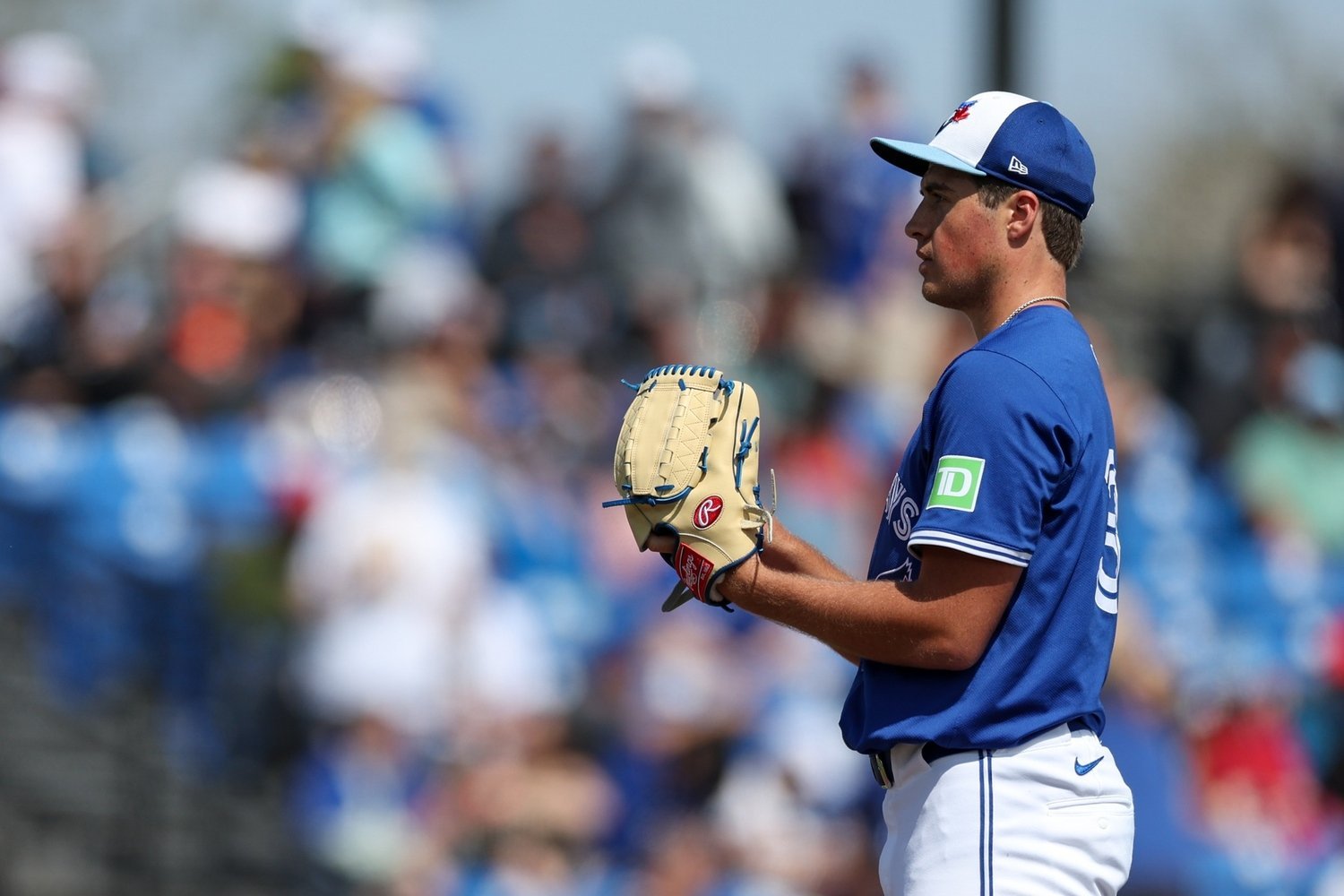 As consequential as 2025 was for the Blue Jays at the big league level, things were just as promising for their minor league pitching. It's been a long time since they've developed a homegrown starter that has lasted more than a handful of years in MLB before switching teams or roles, and that will have to change if they hope to be competitive long-term. After floating in the proverbial abyss for most of our short-term memory, the system has surged over the past year and a half, with Trey Yesavage, Johnny King, and Gage Stanifer breaking out to project as future starters. Khal Stephen was also part of that group before he was dealt to Cleveland for Shane Bieber at the deadline. Ricky Tiedemann is essentially fully recovered from Tommy John surgery. The Blue Jays' recent player development hires, including amateur scouting director Marc Tramuta and minor league pitching director Justin Lehr, shortly preceded this wave of positive momentum. While the recent lack of quality pitching to come from within has drawn the ire of many fans who care for sustainability (and has been offset by ownership's willingness to invest in winning), early returns suggest the Blue Jays have the right minds in place to end that drought. Absent from the list of pitchers who saw their stock rise in 2025 is righty Jake Bloss, who made six starts before tearing his UCL. He won't be fully recovered for spring training but should be back at some point later in the year. Bloss, who will be 25 in June, was the headliner in the prospect package Toronto managed to secure for Yusei Kikuchi, joining the franchise alongside Joey Loperfido and Will Wagner. He hasn't yet gotten outstanding results in Triple A, with an ERA over 6.50 in 14 starts since the trade. Command is the main culprit; his walk rate in Buffalo is a few ticks over 11%, and his zone rate is around 45% – considerably below-average. On a positive note, he has the stuff to succeed, with an in-zone swing-and-miss rate exceeding 15% post-trade. Heads were turned last week when FanGraphs listed Bloss as the Blue Jays' third-best prospect in their annual top prospect ranking, giving him a future value (FV) grade of 50 on the traditional 20-80 scouting scale. Their evaluators are optimistic about his chances to become a regular mid-rotation starter at the MLB level. Of course, some other outlets remain a little more skeptical after the injury; Baseball America has Bloss at #9 in the system, and MLB Pipeline's most recent update has him at #8. That FanGraphs ranked him so highly even after major elbow surgery, though, is nothing short of a ringing endorsement. That the Blue Jays got him and two others for what ended up being a pure rental was nothing short of a decisive victory. What's unfortunate about Bloss's injury is that the Jays had already begun to tinker with his pitch mix in an intriguing way over the 2024-25 offseason. He entered last year relying noticeably more on his changeup while dialing back his sinker. He also cast his sweeper aside after reworking his gyro slider, which was already a good out pitch, into a version that had more drop and more cut, effectively becoming a hybrid of the two slider shapes he was previously working with. How this all changes post-surgery is something to watch, but in general, pitchers seem less affected by UCL surgery now than they ever have. That's a good thing, because Bloss's stuff comps are rather encouraging. He leads with a mid-90s four-seamer with tons of carry and notable cut action. When accounting for his nearly seven feet of extension, the heater is reminiscent of Padres reliever Jeremiah Estrada's notorious fastball shape circa roughly 2023 when he was still with the Cubs, before he added a few ticks of velocity. A more recent comp for the pitch would be Red Sox reliever Justin Slaten's four-seamer. Estrada's 2023 fastball was an above-average pitch per Stuff+. Slaten's is one of the best in the game. Against righties, that new slider became Bloss's primary pitch in the starts leading up to his injury. It has somewhat of an unusual movement profile, with roughly seven inches of sweep (just a few short of being considered a sweeper) and positive induced vertical break, as well as mid-to-high-80s velocity. It compares closely to the ride-sweep shape coined by White Sox reliever Jordan Leasure, who isn't a household name but still notched a near 40% swing-and-miss rate with the pitch in 2025. It was one of the more effective sliders in MLB by run value (+7). Bloss's knack for cutting the ball makes him a good bet to handle same-handed hitters once he gets to MLB. Meanwhile, it was the changeup that was his preferred secondary against lefties. It doesn't have a special amount of separation from his fastball in terms of vertical movement or velocity, but it averaged nearly 13 inches of arm-side run, which contrasts nicely with the fastball's tendency to cut. Metrically, it likely won't be a plus pitch; it averaged 87 mph with less drop and run than most of the premier changeups around the league. Its closest shape comps are from 2023, a mostly uninspiring group led by Mike Clevinger, who got a 90 Stuff+ on the offering. If I had to guess, Bloss's newfound emphasis on it since coming to the Blue Jays has more to do with arsenal effects than anything else. In his TL;DR blurb on FanGraphs, former Pirates scout Brendan Gawlowski mentioned that a slower arm path might make Bloss's changeup easier to detect, but it runs enough that lefties don't usually square it up. His arsenal is rounded out by a sharp 12-6 curveball he deploys to both sides. It falls off the table with high-70s velocity and considerable glove-side action, often throwing off hitters expecting something else. It's biomechanically similar to the curve thrown by Giants starter Adrian Houser, which didn't receive glowing reports from pitch models by any means but was still useful last year thanks to Houser's elite command and deep pitch mix. The slider is Bloss's best breaking ball; he'll use this one more for effect. From time to time, he'll also mix in a sinker to righties, which runs like the changeup with a few more ticks of velocity and carry. The sinker's speed and movement profile has a top comp of new A's reliever Mark Leiter Jr. It's not a special pitch by any means, but it does the job to keep hitters guessing. He may have missed out on the shared success that Toronto's upper tier of pitching prospects enjoyed in 2025, but Jake Bloss is integral to the short-term future of the staff. Kevin Gausman and Shane Bieber are set to come off the books following this season, and Bloss is closer to being MLB-ready than most of the internal options the Blue Jays have to fill those spots. He has a deep arsenal led by a potentially plus-plus fastball and a bat-missing slider, and once he returns from injury and gets his accuracy under control, he'll be on the doorstep of a spot on the big league roster. After all, the state Toronto's incumbent starting pitching unit finds itself in is exactly why the Jays traded for him. As of now, there figures to be plenty of competition for rotation spots in 2027 and beyond. Bloss's first steps to proving he's an arm that can take on such a responsibility will begin in a few short months. View the full article
 -
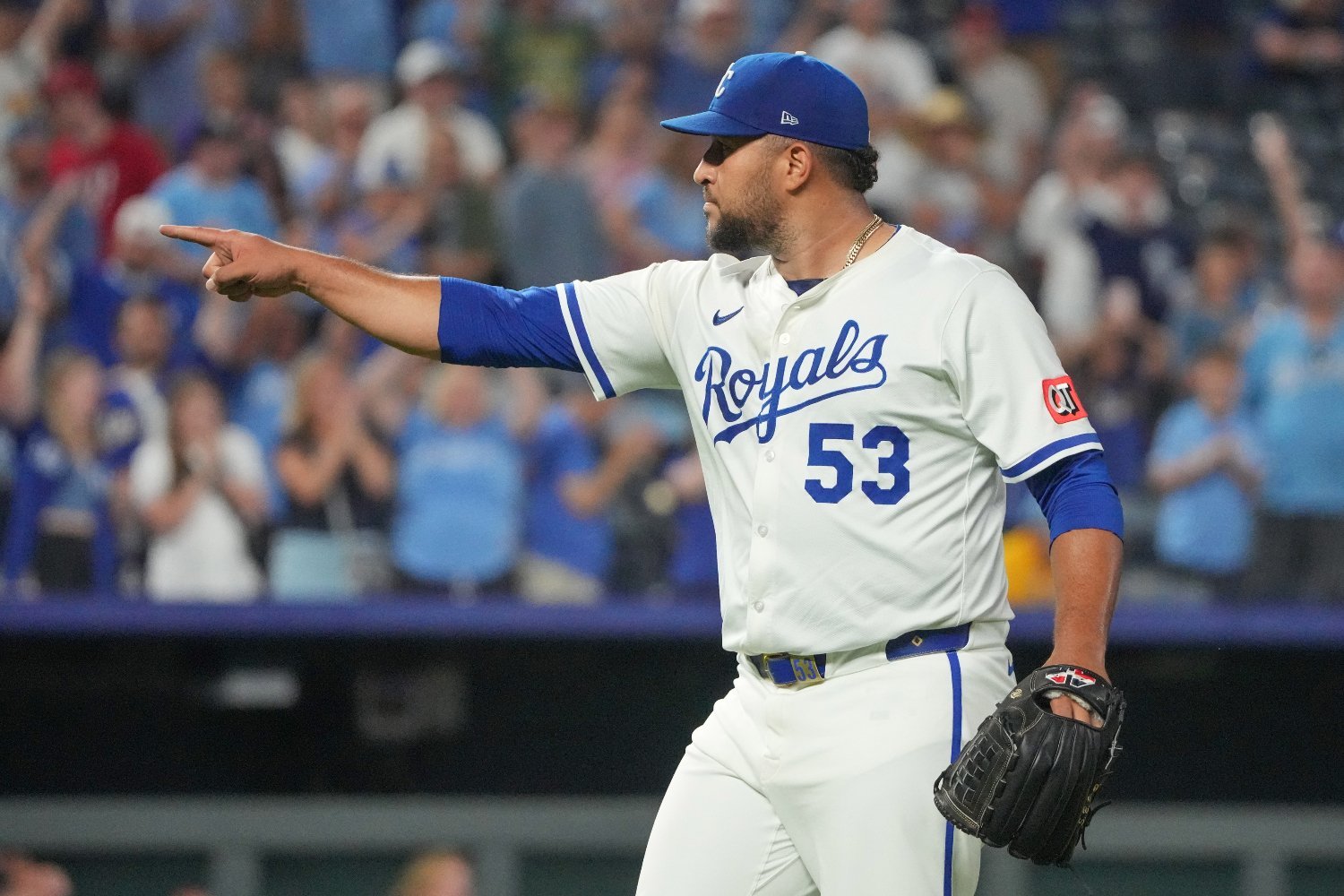 Earlier today, reports came out that Maikel Garcia would be playing for Team Venezuela in the WBC. Later in the evening, the Dominican Republic WBC selection team announced on their social media that Carlos Estevez would be playing for his home country in this upcoming tournament. Like Garcia, this will be Estevez's first WBC appearance. That said, the Royals closer has long expressed his desire to play for the Dominican Republic in the WBC as far back as April, as quoted in an article from Robert Rizzo of Latino Sports on April 17th. It was a stellar first season in Kansas City for the 32-year-old reliever. In 67 appearances and 66 IP, he posted a 2.45 ERA, 1.06 WHIP, 3.67 FIP, and 1.1 fWAR. Furthermore, his 42 saves were not just a career-high, but also led all of Major League Baseball. He is the first Kansas City closer since Dan Quisenberry to lead the Majors in saves. Estevez's 20.1% K rate was 3.5% down from the previous season, and his 11.9% K-BB% was six percent lower than his 2024 mark. However, the Dominican-born closer found success by pounding the strike zone and keeping the ball in the yard (5.2% HR/FB rate, a career-low). Estevez has the stuff to succeed in the WBC and in 2026 as the Dominican Republic and Royals' closer, respectively. While he struggled to generate chase and whiff with the Royals in 2025, his strong TJ Stuff+ numbers (103 TJ Stuff+ overall) illustrated that he still overwhelmed batters in high-leverage situations. In addition to Garcia and Estevez, Salvador Perez (Venezuela), Vinnie Pasquantino (Italy), and Bobby Witt Jr. (USA) have all been confirmed to play in this year's World Baseball Classic. Jac Caglianone (Italy) and Seth Lugo (Puerto Rico) have committed to play if selected, but they have not officially been named to their respective rosters just yet. MLB Network will unveil all the official WBC rosters on February 5th. Photo Credit: Denny Medley-Imagn Images View the full article
 -
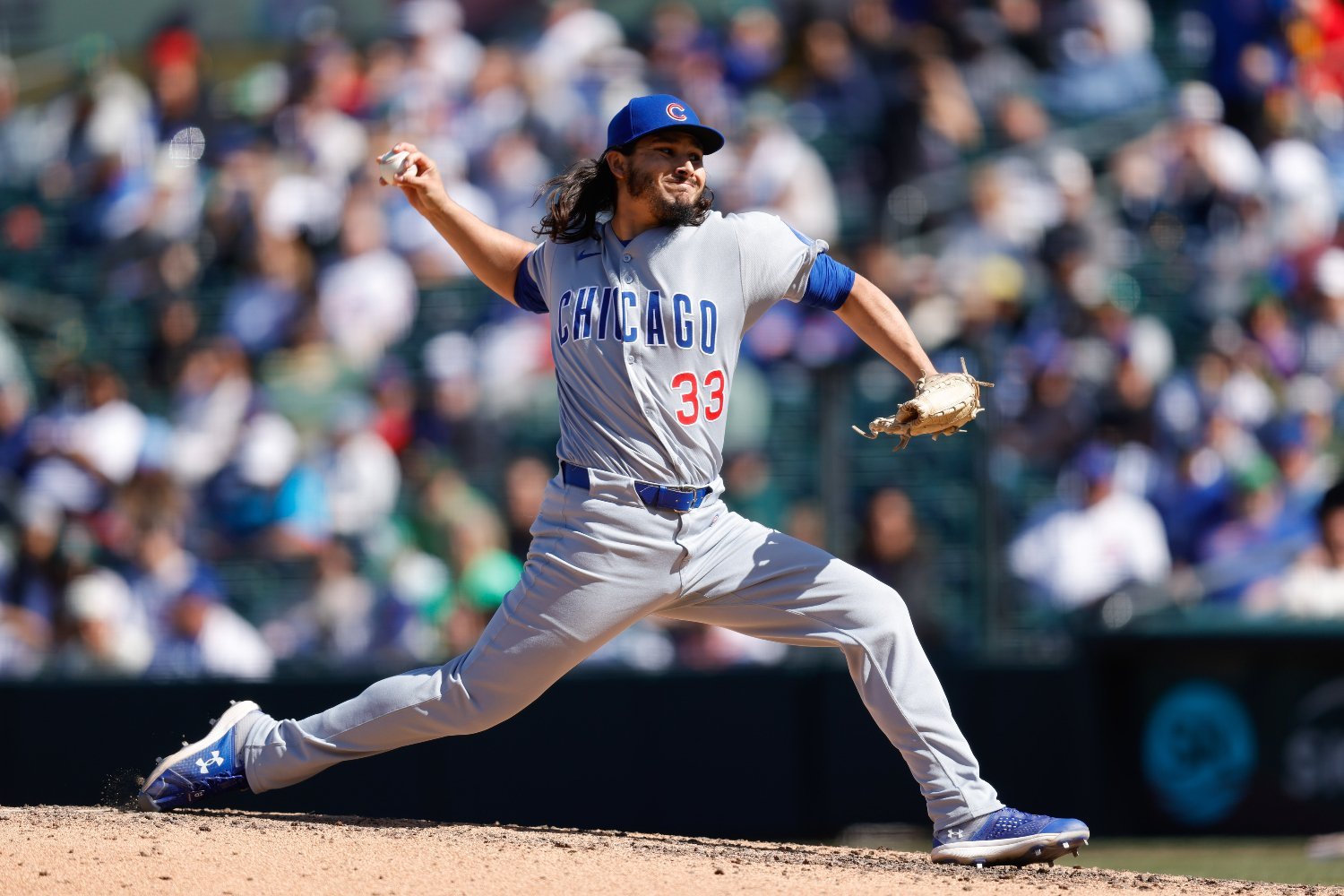 On Thursday evening, the Kansas City Royals added to their Spring Training roster by signing right-handed reliever Eli Morgan to a Minor League contract with an invitation to Spring Training. Royals fans should be familiar with Morgan, as he pitched for four seasons with the Cleveland Guardians from 2021 to 2024. His best season with Cleveland came in 2024, as he posted a 1.93 ERA, 0.98 WHIP, 3.64 FIP, 3.09 K/BB ratio, and 0.3 fWAR in 32 appearances and 42 IP. He was also a key reliever for them in the postseason, as he came in and pitched in some high-leverage spots. The Guardians traded him to the Chicago Cubs before the 2025 season in exchange for outfield prospect Alfonsin Rosario. Unfortunately, Morgan struggled to transition that success from Cleveland to the North Side. In 7.1 IP, he posted a 12.27 ERA, 8.59 FIP, and 1.33 K/BB ratio. His K rate dropped from 20.4% in 2024 to 11.4% last year. However, it's likely that he wasn't healthy at the start of the year, as he was put on the 60-Day IL on April 15th for right elbow impingement, related to an inflamed ulnar nerve. While he was activated off the IL on September 21st, he didn't return to the Majors last season. He posted a 5.06 ERA and 3.96 FIP in 10.2 IP with the Triple-A Iowa Cubs. The Cubs did not tender Morgan a contract this offseason. Morgan is a three-pitch pitcher who leans heavily on his changeup (41.7% usage last year). Even though his overall stuff wasn't impressive on a TJ Stuff+ end (98 overall), he did an excellent job of generating chase. He sported a 41.1% chase rate last year, with all three of his offerings having a chase rate of 40% or above, according to TJ Stats. Morgan will need to improve his command in 2026, as he lagged in zone rate (44.7%) and generating whiffs (21.7%) last year. However, the Royals' bullpen has been valuing pitchers who can induce chase, and Morgan fits the bill perfectly. Royals pitching coach Brian Sweeney also has experience working with Morgan in Cleveland, so it's likely that Sweeney and GM JJ Picollo felt Morgan was worth taking a risk on due to their familiarity with him. The former Gonzaga product has a Minor League option remaining, which gives the Royals some roster flexibility with him should he make the team. The Morgan acquisition now increases the Royals' non-roster invitee list to 26. Photo Credit: Sergio Estrada-Imagn Images View the full article
 -
 In his opening back-and-forth with the collected beat writers, Tom Pohlad defended his family against fans' decades-long complaints about their lack of investment. “People like to say we’re not committed to investing in this team," he said, but "$500 million of debt would tell you exactly the opposite.” But what about the new minority owners? What, exactly, are they investing in? While we don’t know the exact financial influx, we do know that it likely eliminated a large portion of the debt on the team's books, with roughly a 20% share of the club changing hands at a $1.75-billion valuation for the whole thing—notably above what many expected from the team sale based on (often inaccurate) Forbes evaluations. The money came from three parties: a local Minnesota group headed by George Hicks, a second investment from the New York-based Glick Family Investments, and a smaller amount from Minnesota Wild owner Craig Leipold. While we can talk about civic duty and the like, the reason to own a sports team—either in part or in full—is because the returns are good. More so, a minority investment in a sports team is a rare opportunity for those whose fortunes consist of nine figures, rather than ten or eleven. Unlike the Pohlads’ own complicated history, Hicks and Glick are fairly boring entrepreneurs. (As noted by Pohlad himself, the investment by Leipold is more advisory and less substantial than the others.) We can certainly ask questions about the private equity firms they used to accumulate their wealth, but there’s nothing scandalous there, outside of buying and selling properties. Still, we can learn a lot—about the Pohlads, the Twins, and the future of MLB—by probing their interest. There's No Place like NoLo George Hicks, the team’s press release would have us believe, is a “lifelong Twins” fan. Scouring the internet won’t exactly produce evidence of that fact, but there is one important detail that helps position his interest: he can watch the team from his office. Hicks founded Värde Partners, a bread-and-butter hedge fund, in 1993, and remains Co-Executive Chair and a board member. Hicks’s net worth was priced by some evaluators at a little over $500 million (though nothing there should be trusted), while the firm itself is worth more than $75 billion. It should be noted that he also did not simply put in his own money, but is meant to be the head of a consortium of "local" investors. Among the few announced individuals therein are Fort Myers Mighty Mussels owners John and Allen Martin. Notably, Värde and Hicks are betting on something that will require the Twins: a downtown revival of Minneapolis, and particularly the North Loop. Värde signed an agreement to move into North Loop Green, a new high-rise overlooking Target Field, in 2023, and moved there in early 2025. The space includes apartments (including that of current Twin Austin Martin), a hotel, and a green space for outdoor music events. It is just one of many spaces in the North Loop that are slowly expanding. As one of the other North Loop’s commercial residents explained their own relocation from Nicolet Mall, “There is just a level of energy and vibrancy that currently exists in the northwest area of downtown.” Urban planners have replaced the rail yards and warehouses with the city’s most trendy restaurants, upscale retailers and loft apartments, all alongside creative spaces and public transit that turn it into a pedestrian utopia—for those who can afford it. Värde has one building for sale in the area, the former Lumber Exchange, which it believes can be expanded and transformed into high-quality residential condos. This might be what Hicks sees: a chance to build a ballpark village west of Target Field, akin to Wrigleyville or Cobb County’s The Battery. When Hicks ran Värde, his company bet against the common knowledge of the pandemic’s long-term effects, investing in travel and hospitality and eventually making millions. It would only make sense to bet on downtown Minneapolis. Of course, Minneapolis has had its setbacks, though the reasons have been distorted by bad-faith actors. You might not know, for example, that the downtown area’s crime rate has plummeted, compared to those in the suburbs. While businesses have been slow to return, residential growth has continued—now surpassing 60,000 residents. Slowly but surely, downtown offices are growing. Target enforced their Return-to-Work policies in September of last year, alongside other businesses. (The productivity claims of return-to-work remain specious, but the companies calling their workers back have real estate costs to justify and politicians to appease.) This is all speculation, but I can see how Hicks could view Minneapolis as the next great revival—one that requires its downtown jewel to succeed. The Pohlads made their own bet on downtown that flopped due to the pandemic, but the city believes it can turn it around—almost certainly by shifting the center of downtown to the hip "NoLo," as some denizens call it. The Twins have relatively low beer and hot dog prices—probably better than some of the craft breweries across the street. I’d also note that Target Field is one of the better standing environments in the game, with plenty of spots to watch where you won’t be asked to move. If you don't have a disability and are willing to stand for a few hours, all you need is a cheap ticket, and maybe if you can ease a downtown flaneur into what sounds like a rocking ballpark, that’s going to be a winning argument. The Wolves, Vikings, and Lynx are all putting up record attendance numbers downtown, so why not Target Field? If the Twins begin to succeed, so will the neighborhood. At the moment, there are (literally) external forces dampening the environment of the vibrant city, but their staying power looks shaky. By the time the ice melts, the city should be ready for a great spring and summer. Anyone and everyone will benefit from a downtown revival. The bet is to make sure the Twins are part of that, rather than the exception to it. Square Burgers, Safe Investments Whereas it's easy to understand Hicks's personal involvement, the story of the Glick Family Investments buying in is more of a head-scratcher. Pohlad already joked that they would have to throw out their Yankees gear, and it’s not clear the equity firm has any investments—real estate or otherwise—that would put them in Minnesota. Their motivation for putting money in here appears to be getting money out, via the on-field product. Glick Family Investments is your standard investment firm. As has been well reported, their wealth began in diamonds in the 1930s and 1940s, but now has a varied portfolio. Run by Simon Glick, the firm invests in real estate, technology companies, corporate debt and the like (the one buzzy note: Sharon Stone’s engagement ring came from Glick). Simon is reportedly press-shy, so don’t expect him or anyone else in the family to open up about their interest anytime soon. Within that group, there are numerous subsidiaries, most notably the Glick Property Group, which focuses on real estate from New York City all the way to Houston. They've made other, seemingly easy bets: they were partners along with BlackRock and JPMorgan on a company that provides trading software and record-keeping for financial firms. Within their properties, they also act as managers for some 3,000 units (you can find stories of potential mishaps, but so is the case with any landlord group). One of their biggest sales occurred in 2018—Alvin, the patriarch, had gathered several properties on Third Avenue in New York between 77th and 76th street. He sold them together for a clear $232 million, which was redeveloped into a hospital. There are two ways to break down their investment in the Twins. One is to think about what value you get compared to other investments, and the other is to think about why sports, specifically, made sense. As Rob Mains has argued, one cannot simply compare the valuation of a team to something like a stock price, due to the lack of risk of the assets. “A safe investment that yields a return comparable to that of a risky investment has higher risk-adjusted returns. If the stock market rises by 8% per year and a baseball team’s value rises by 7%, the baseball team has superior risk-adjusted returns,” Mains wrote at Baseball Prospectus. Partially thanks to their long-standing antitrust exemption and the fact that MLB will always bail out an owner in need, MLB owners can make both returns and know their investment is safer than any company on the S&P 500. Think about the options for any investment firm right now. Businesses are struggling to deal with tariffs; the commercial real estate market faces high interest rates and guarded buyers; private markets are essentially bets on the teetering artificial intelligence industry; and cryptocurrency is run entirely on scams and memes. Most notably, investors have recently had trouble beating the markets, driving more and more people toward standard mutual funds. So what is a “safe” bet in 2026? A sports team, for sure. Assuming the Twins were sold in 2028, what if the valuation went up to $2 billion? That’s a 14.3% return over four years. That’s before any potential profits the team might make in any of those years. The worst-case scenario is probably something more like a 7% return—which, as Mains observed, would still be a strong one for such a low-risk asset in almost any other market. Sports ownership also provides a massive tax loophole. In 2021, ProPublica revealed that Vikings owner Leonard Wilf had “taken $66 million in losses from his minority stake in the team” over his time owning the team. This is because of a Bush-era tax write-off that allows owners to include intangible assets, such as player contracts and media rights. Though President Trump initially sought to reduce this write-off in the One Big Beautiful Bill (in response to his failure to secure a football team in the 1980s), it was eventually dropped by the Senate due to bribes pressure from NFL owners. This would not be the first time the Glick Family looked for a unique investment to create a tax shelter; they did so with a Wendy’s franchise in Connecticut. As Jason Glick told a local reporter, the purchase near Yale University was to specifically “fulfill an investment requirement necessary to avoid having to pay capital gains tax on $232 million worth of mostly vacant buildings on the Upper East Side that the investors sold in August 2018 to make way for a new medical complex.” Behold the beauty of tax savings: This might give reason for the Glick Family Investment to park cash somewhere safe. The Glicks don’t even need to look at the team's record; they can just collect whatever checks they are due. If and when the team does get sold in full, the Glick group will be able to fully cash in. That's what each of the main groups joining the Twins' ownership cabal has to gain therefrom. Next time, let's tackle another question: How much benefit are the Pohlads themselves getting from it? And in what form? View the full article
 -
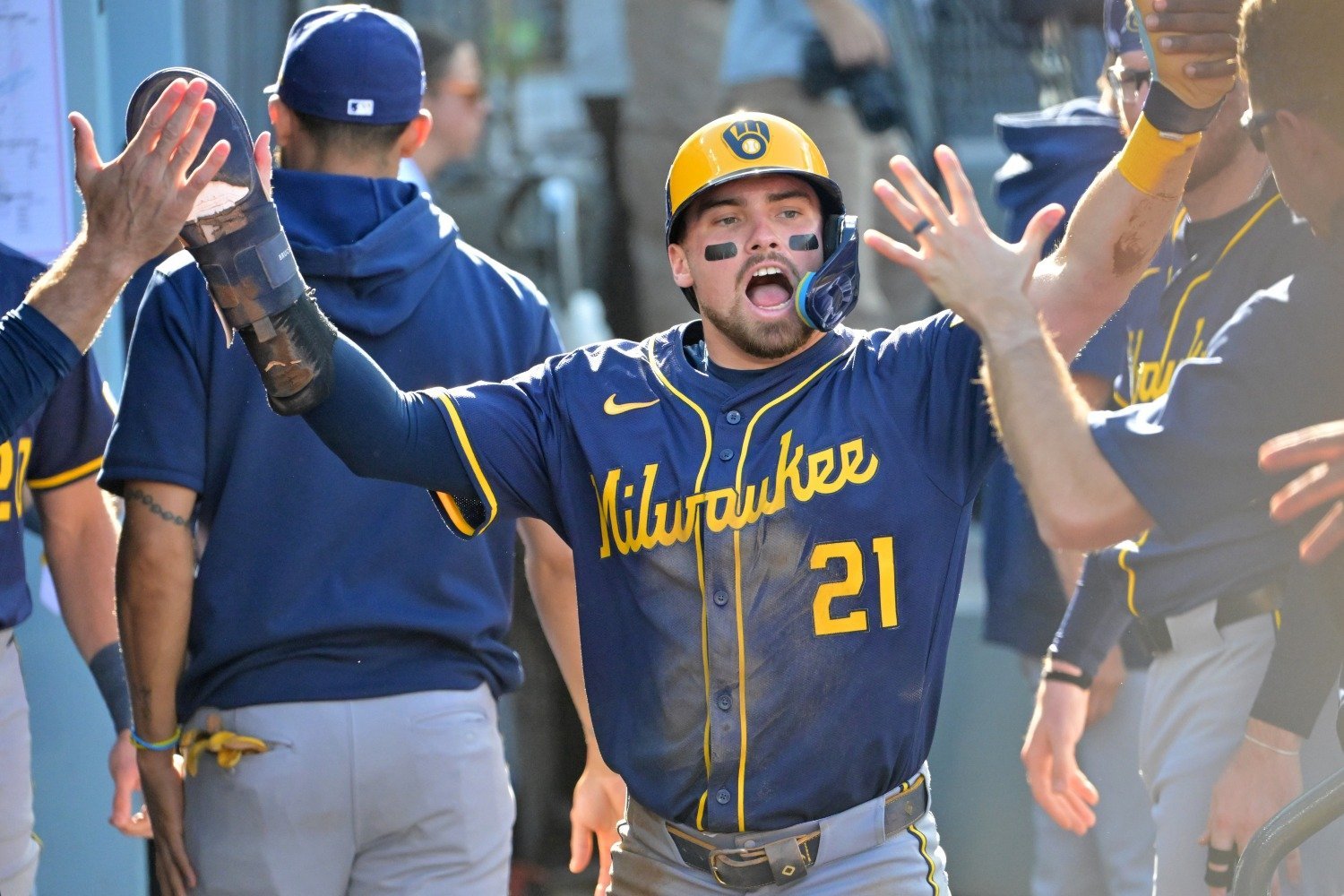 Caleb Durbin knows what Jett Williams is going through right now—and we aren't talking about dealing with both being 5-foot-7. Durbin was the other guy acquired by the Milwaukee Brewers in a trade for a popular pitcher. The difference is that Durbin was more of a finished product, ready to see what he could do in the majors. Williams, currently the Brewers' No. 3 prospect and a consensus top-100 guy in baseball, played 34 games at Triple-A Syracuse last season and might make his way to Milwaukee at some point in 2026, but not before honing his craft at Nashville. Durbin, by contrast, was in the mix for an Opening Day spot with the New York Yankees before he was dealt to the Crew in the Devin Williams trade. Durbin was never a highly-rated prospect, perhaps due to being undersized and relying on his speed as a big attribute, along with a solid and unspectacular bat. When they acquired him, it was hard to see where the Brewers would play Durbin. Brice Turang was coming off a Platinum Glove season at second base, and Joey Ortiz was seen as the heir apparent at shortstop following Willy Adames's departure via free agency, perhaps sliding from third base to second base if Turang was the choice at short. After playing shortstop in college at Division III Washington University in Missouri, he played a lot of second and some short in the minors. He dabbled at third base, seeing action in 75 games in total at the hot corner. He worked at the position in spring training last year, but the Brewers chose to go with Oliver Dunn and Vinny Capra as a platoon at third base on the Opening Day roster. It was off to Nashville to begin 2025 for Durbin, but offensive struggles prompted the Brewers to send Dunn down and call up Durbin for his debut in mid-April. The rest, you might say, is history. What Durbin did in 2025, while not spectacular, was part of the backbone of the Brewers' run to a third consecutive NL Central title. He adapted to become a more-than-competent third baseman, quelling worries that he didn't have the arm for the position and improving massively in his footwork and feel for the spot. He was a solid contributor offensively, including being a magnet for pitches from opposing pitchers. As a rookie with a new team at a new position, Durbin put up .256/.334/.387 slash line, with 11 homers and 53 RBIs in 136 games. He didn't utilize his speed as much as expected, but added 18 steals in 24 attempts. All of that led to Durbin finishing third in NL Rookie of the Year voting, one of three Brewers in the top seven and four to get votes. One thing stood out. In addition to being plunked 24 times—second-most in MLB—he was very disciplined at the plate. While he only drew 30 walks (eighth on the team), Durbin only struck out 50 times in 506 plate appearances, ranking in the 98th percentile of big-league hitters. Among Crew hitters with at least 200 plate appearances, only Andrew Vaughn had fewer punchouts (37). Heck, Jake Bauers had 59 strikeouts in 218 plate appearances (although also 32 walks). Durbin figures to be just as solid defensively in 2026, following almost a full season at third base. He had 5 Defensive Runs Saved, tying for the 10th-most at the position. However, it's on offense where Durbin could make more progress. His Statcast numbers say that his actual slash line (.256/.334/.387) was pretty close to what was expected (.253/.317/.384). While his plate discipline is a strength, Durbin needs to improve on hitting the ball hard consistently. He ranked in the bottom 4% in exit velocity (85.2 mph) and hard-hit percentage (26.9%), and the bottom 6% in bat speed (67.9 mph) and launch-angle sweet spot (29.6%). Boosting those numbers even nominally will add more doubles and a few more homers to his stat columns, while nudging his entire slash line upward. As we saw with Turang and Sal Frelick in 2025, that type of improvement from one season to another is possible. We know Durbin is capable of it, too, because he was both more selective and better at pulling the ball in the air in Triple A in 2024 than he was last year in the majors. Even a modest leap from him would give the Brewers another offensive weapon in 2026. The feistiness in Durbin won't allow him to not put up a fight, especially when others are already talking of Williams replacing him. View the full article
 -
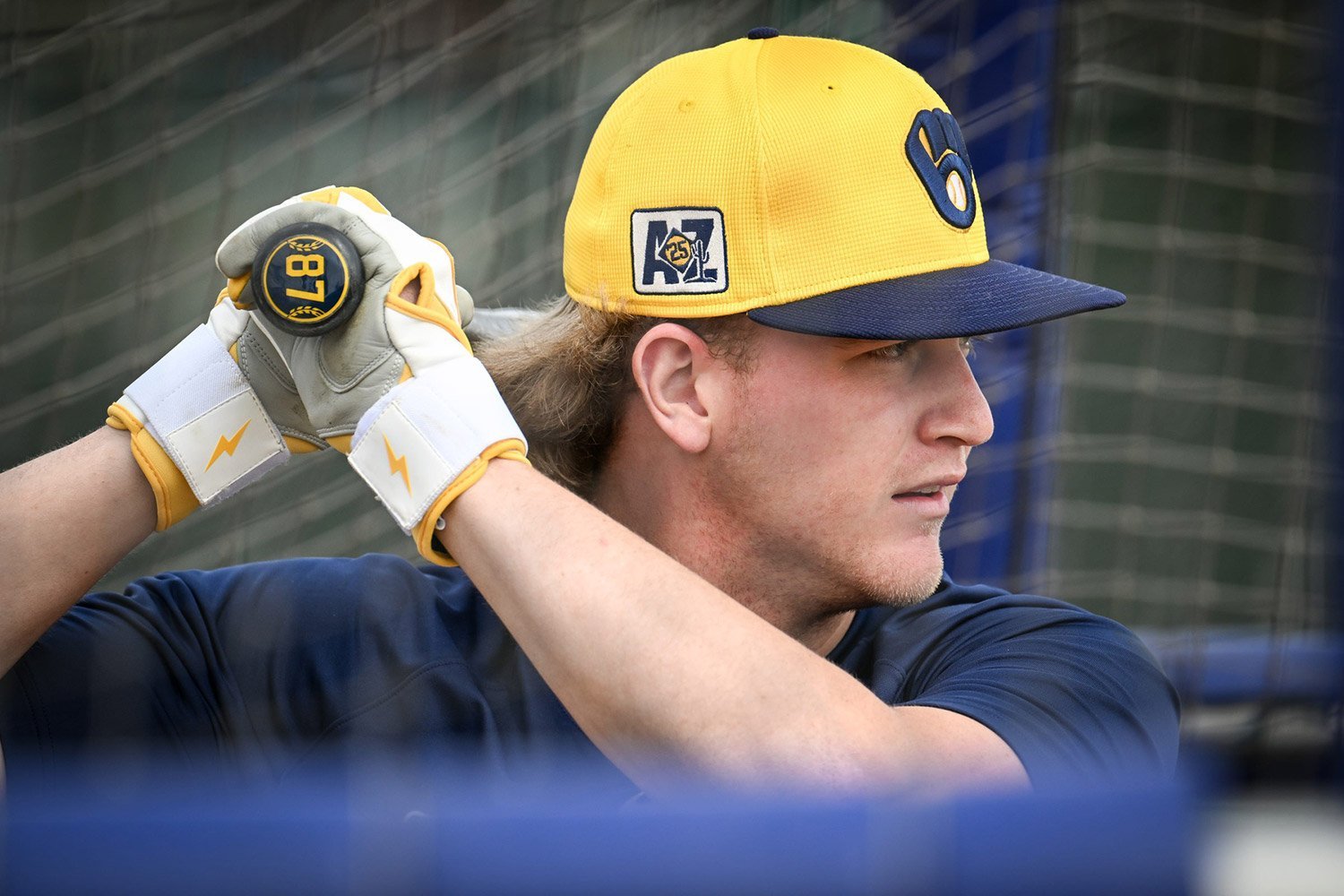 Prospect gurus Keith Law of The Athletic and Kiley McDaniel of ESPN both released their team farm system rankings on Wednesday, and both like the Brewers best! McDaniel posited that, in recent history, the Dodgers and Rays have been viewed as the model organizations, but that opinion has now shifted to the Brewers. Law agrees, though not in so many words, crediting the team with an advanced, integrated process for identifying and developing talent. The two writers laud the Brewers for acquiring amateur talent through all available pipelines, including international signings, the MLB draft, and trade acquisitions, and see the Brewers as having both upper-echelon talent and excellent depth. Six Brewers were featured in Law’s top 100 list, including the newly acquired Brandon Sproat (75) and Jett Williams (45). Interestingly, Law writes that the Brewers were his number one overall system even prior to the Freddy Peralta trade, while McDaniel posted on social media that the trade moved the Brewers’ system from sixth to first and moved the Mets’ from first to sixth. Overall, McDaniel has 8 Brewers in his top 100; Logan Henderson (64) and Bishop Letson (91) were included on the ESPN list but not The Athletic’s. Both experts list Jesús Made third overall behind only the Pirates’ Konnor Griffin and Kevin McGonigle of the Tigers. Luis Pena, Cooper Pratt, and Jeferson Quero were the other three prospects on both lists. View the full article
 -
Padres Bringing In Marcos Gonzales For Rotation Depth
DiamondCentric posted an article in Padres Mission
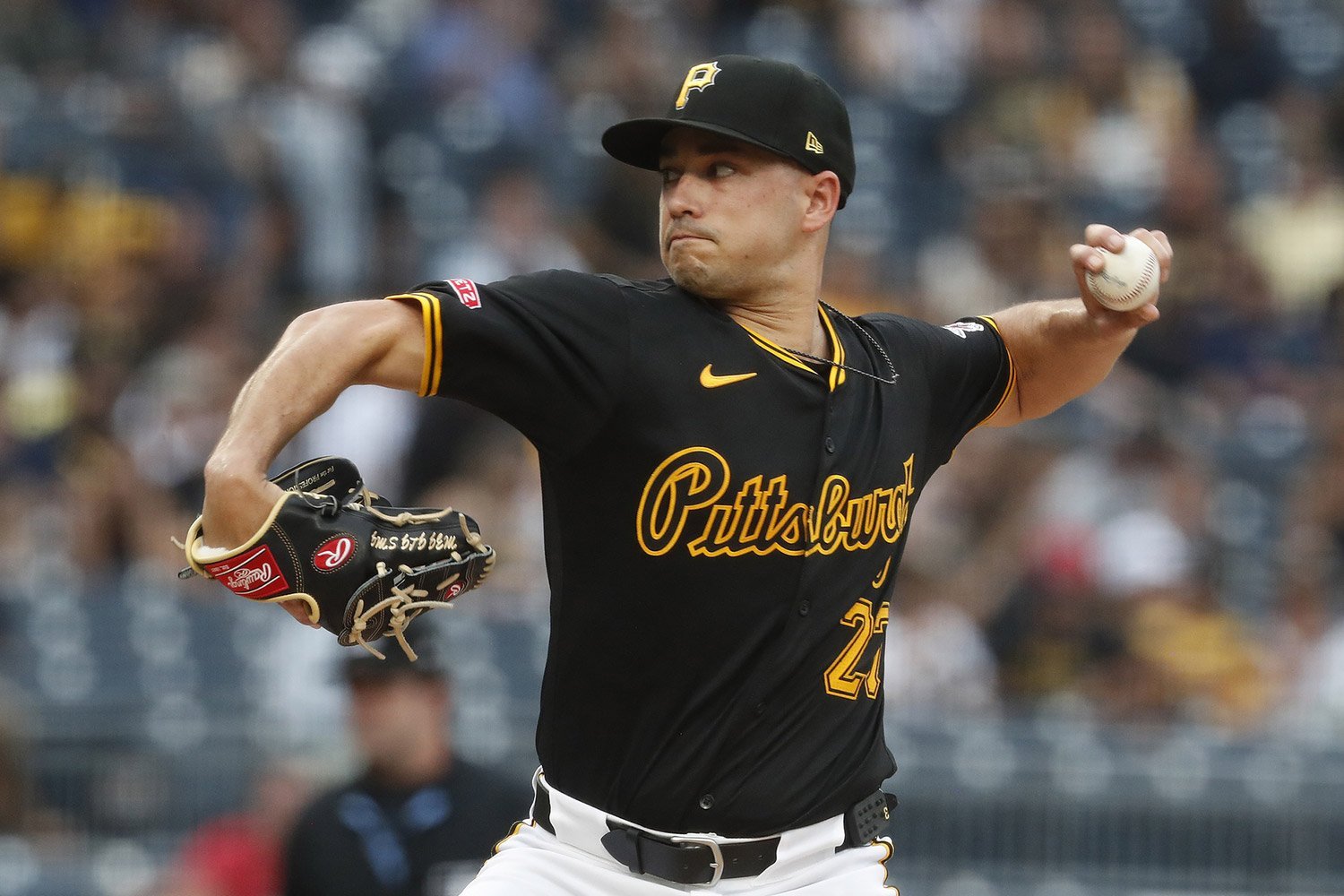 Needing more competition and depth for the starting rotation, the San Diego Padres have agreed to terms on a minor-league deal with left-hander Marco Gonzales, per Jon Heyman of the New York Post. Gonzales not only has an invitation to spring training, but would make $1.5 million if he makes the team with $1 million in incentives, Heyman reported. Set to turn 34 on Feb. 16, Gonzales has spent 10 seasons in MLB, including last year with the Pittsburgh Pirates. Due to a variety of elbow issues, Gonzales only made seven starts in 2025 with a 4.71 FIP and 4.54 ERA. The Pirates declined a $15 million option on Gonzales for 2026. The Friars' rotation currently is comprised of Nick Pivetta, Michael King, Joe Musgrove, Randy Vasquez, and JP Sears. All are right-handers except for Sears. Left-hander Kyle Hart and right-hander Matt Waldron are other options for the rotation already on the roster. View the full article
 -
Padres Bringing In Marco Gonzales For Rotation Depth
DiamondCentric posted an article in Padres Mission
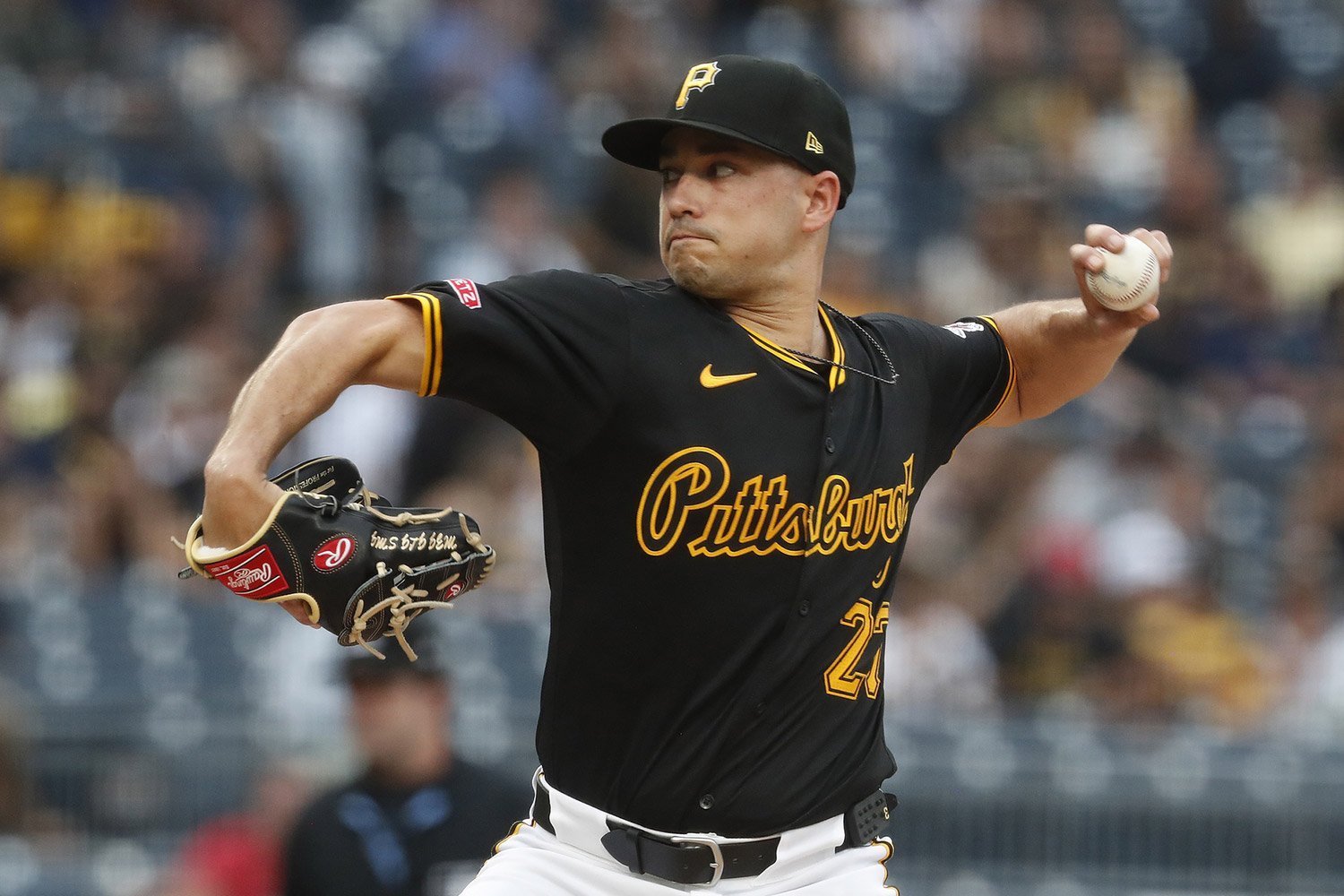 Needing more competition and depth for the starting rotation, the San Diego Padres have agreed to terms on a minor-league deal with left-hander Marco Gonzales, per Jon Heyman of the New York Post. Gonzales not only has an invitation to spring training, but would make $1.5 million if he makes the team with $1 million in incentives, Heyman reported. Set to turn 34 on Feb. 16, Gonzales has spent 10 seasons in MLB, including last year with the Pittsburgh Pirates. Due to a variety of elbow issues, Gonzales only made seven starts in 2025 with a 4.71 FIP and 4.54 ERA. The Pirates declined a $15 million option on Gonzales for 2026. The Friars' rotation currently is comprised of Nick Pivetta, Michael King, Joe Musgrove, Randy Vasquez, and JP Sears. All are right-handers except for Sears. Left-hander Kyle Hart and right-hander Matt Waldron are other options for the rotation already on the roster. View the full article
 -
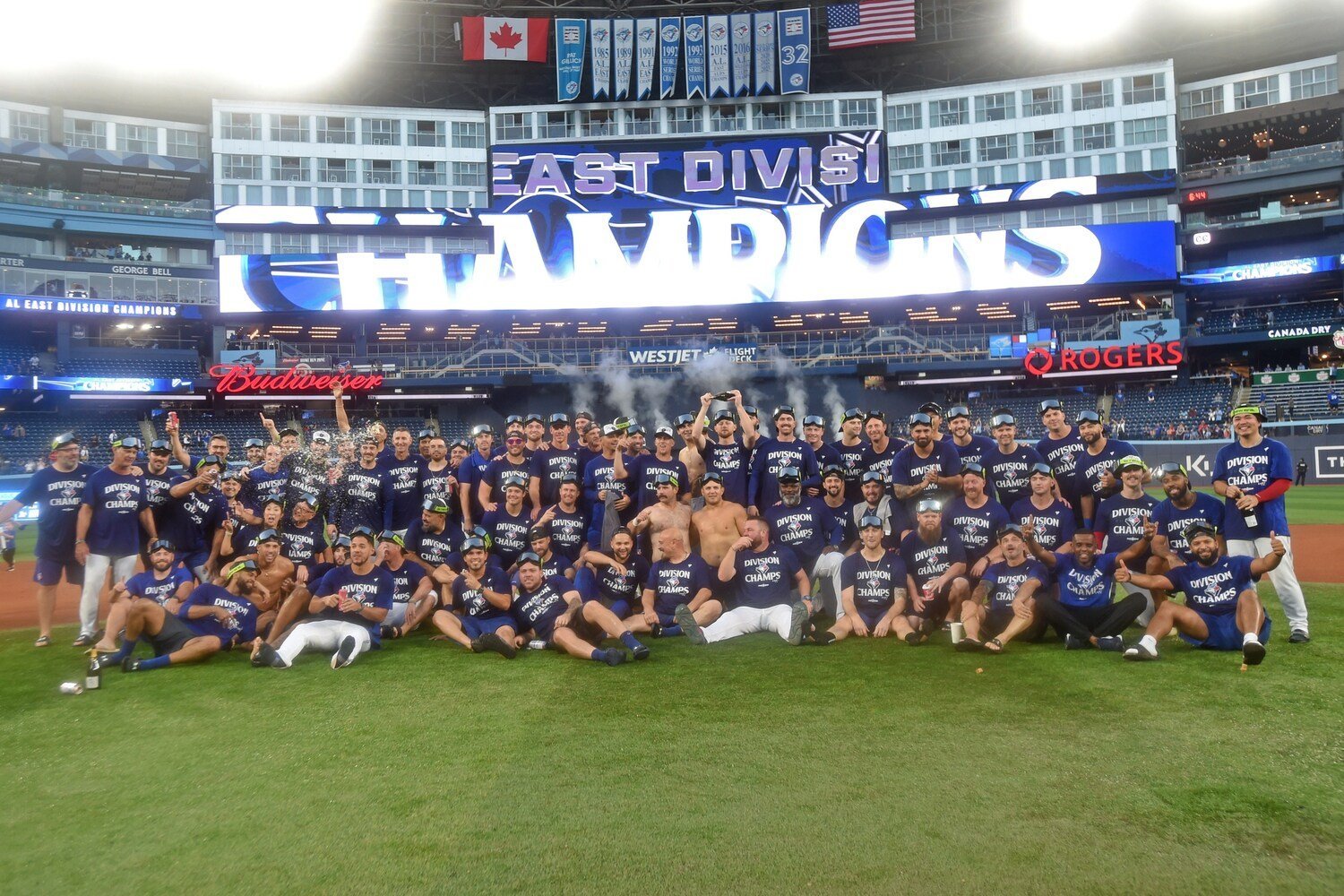 Another day, another treat for all of us projection freaks. Earlier this month, Dan Szymborski published the Blue Jays' ZiPS for the upcoming season, and Jays Centre's Matthew Creally wrote about his key takeaways from the new projections. Yesterday, FanGraphs added ZiPS to the 2026 projections leaderboard, giving me the idea to compare Toronto's ZiPS and Steamer projections. Now, we have the first ZiPS projected standings for 2026, and they're very encouraging for the Blue Jays. I won't give everything away here – go read Szymborski's article on FanGraphs – but ZiPS sees the Blue Jays as the most likely winners of the AL East. Across MLB, only the Dodgers have higher odds of making the playoffs. At the same time, Toronto's division rivals in Boston, Baltimore, and New York are projected to make things difficult. ZiPS might like the Jays the most (by a hair), but the real takeaway is that the AL East is going to be a hotly contested four-team race. Here's another way to think about it: ZiPS thinks the Blue Jays have a better chance of winning their division than any other team. However, these projections would still tell you to bet the field over the favourite. According to ZiPS, Toronto only has a one-in-three chance to repeat as AL East champions. The odds that one of the Red Sox, Orioles, or Yankees will win are twice as high. The Blue Jays stand out from the pack a little more if you look at their 80th-percentile projection. ZiPS thinks this team has a one-in-five shot to win 100 games. (Well, technically, 99.8 games, but I'm going to round up.) Boston has the AL's second-best 80th-percentile projection, and it's 2.1 wins worse than Toronto's. As fans, we know how great this team could be if enough goes right. The "what ifs?" are endless. What if Daulton Varsho's power last season was the real deal? What if Anthony Santander bounces back? What if Addison Barger breaks out? What if Trey Yesavage keeps pitching like he did in October? What if Cody Ponce is more than a swingman? What if Kazuma Okamoto translates his NPB power to MLB? I don't need to keep going, but you know I could. That's the point. Yet, as a fan, it's also easy to overestimate your own team's potential and underestimate everyone else's. That's why it's nice to see some objective evidence that the Blue Jays really do have more upside than their closest competitors. On a less pleasant note, the Blue Jays actually have the fourth-worst World Series odds in their division. They also rank below the Astros and Mariners, as well as the Dodgers, Phillies, Mets, Braves, and Cubs. One reason for this is how competitive the AL East looks (teams in other divisions have an easier path to a first-round bye), but that doesn't explain why the Jays have worse World Series odds than the Orioles, Yankees, and Red Sox. For whatever reason, ZiPS thinks this team is built to succeed in the regular season but not quite as well-equipped for the playoffs. Perhaps that's because the Blue Jays have more depth than star power in the starting rotation and the bullpen. By and large, the Blue Jays and their fans should be pleased with what ZiPS has to say. Even if the front office is done making moves, the team is in a great spot to compete. With that said, the ZiPS projected standings are also a great argument for why the Jays could use one more addition to really set themselves apart. View the full article
 -
2026 Marlins spring training: Full list of non-roster invitees
DiamondCentric posted an article in Fish On First
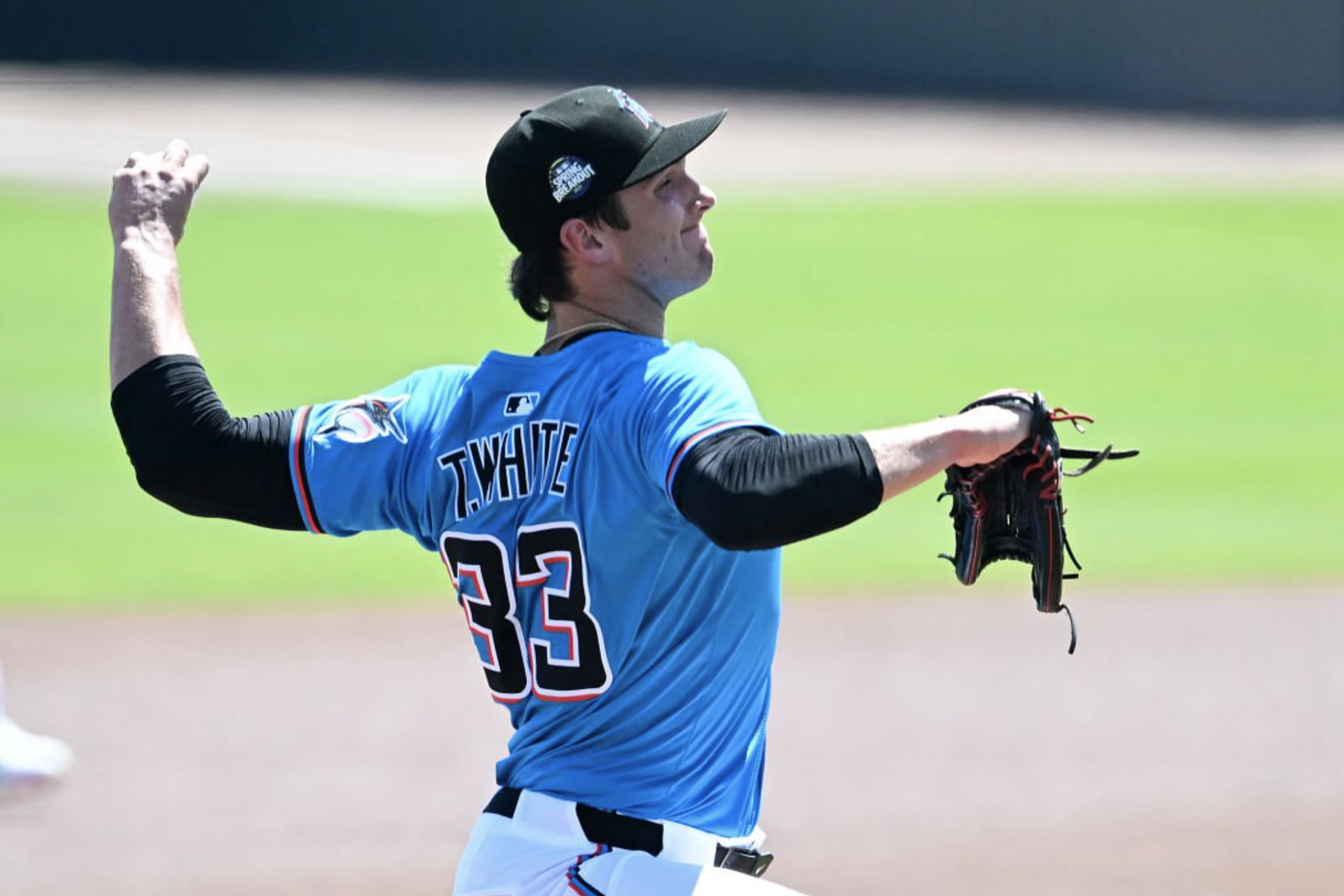 In addition to all of the members of the 40-man roster, Miami Marlins major league spring training camp always includes non-roster invitees. This group is comprised of both conventional prospects and newcomers to the organization. More often than not, through a combination of spring performance and teammate injuries, at least one NRI winds up cracking the club's Opening Day roster. Who do you think is most likely to do so in 2026? The Marlins announced 31 NRIs on Thursday. Organizational players: OF Kemp Alderman*, RHP Nigel Belgrave, INF/OF Jacob Berry, RHP Zach Brzykcy, RHP Josh Ekness*, OF Matthew Etzel, C/INF Bennett Hostetler, C Ryan Ignoffo, INF Dylan Jasso, OF Brendan Jones*, LHP Justin King, OF Dillon Lewis*, 1B Nathan Martorella, RHP Karson Milbrandt*, LHP Patrick Monteverde, INF Johnny Olmstead, OF Andrew Pintar, C Sam Praytor, LHP Robby Snelling*, LHP Dale Stanavich, OF Fenwick Trimble* and LHP Thomas White* *FOF Top 30 prospect Minor league free agents: INF Jesús Bastidas, OF Daniel Johnson, RHP Stephen Jones, RHP Evan McKendry, C Brian Navarreto, RHP Jack Ralston, RHP Jesús Tinoco, RHP Samuel Vásquez and RHP Tyler Zuber Marlins pitchers and catchers report on February 11, followed by the first full-squad workout on February 16. View the full article
 -
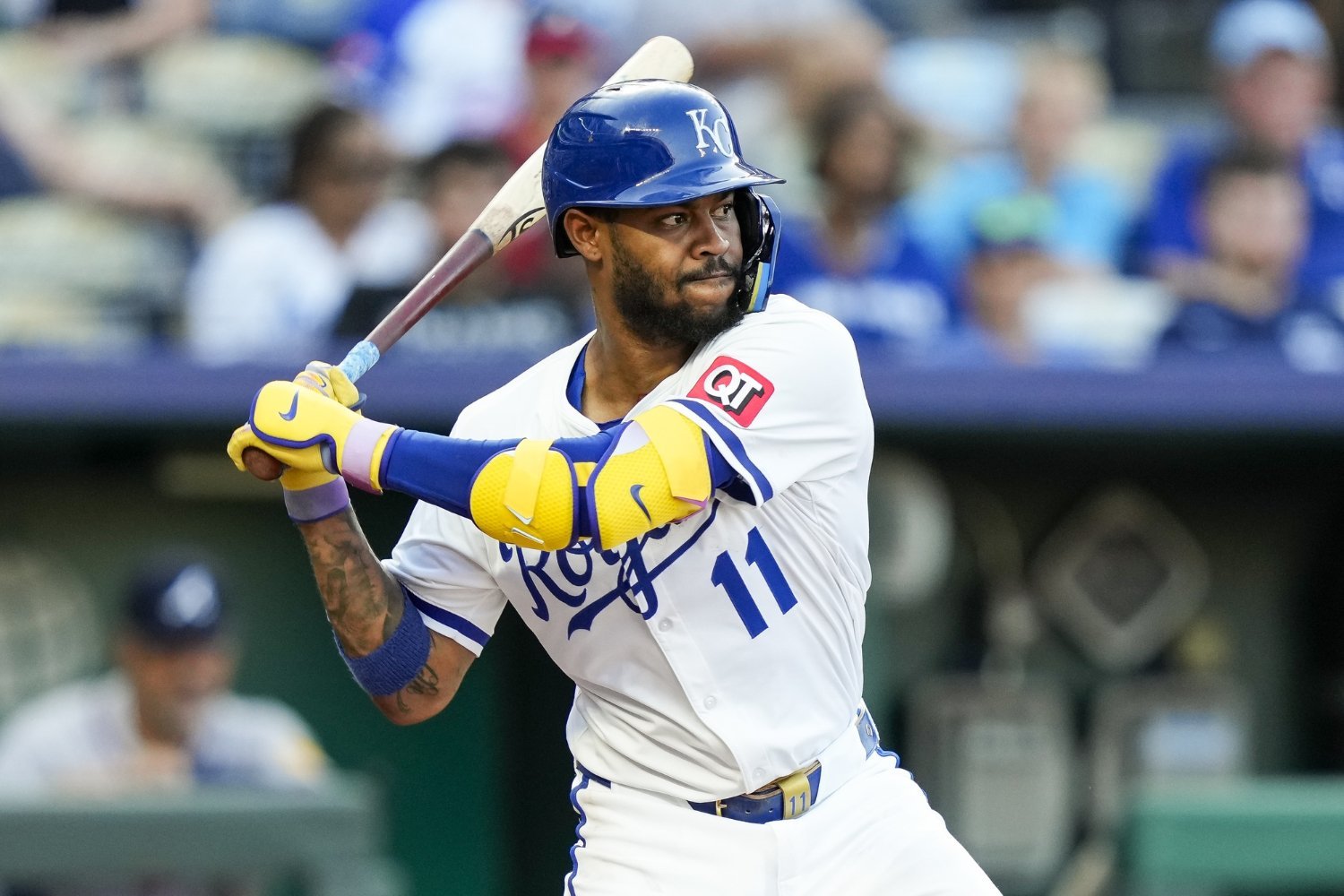 On Thursday afternoon, the Royals shared on social media that Maikel Garcia will play for Venezuela in the upcoming World Baseball Classic. This will be Garcia's first appearance in the WBC with his home country. His inclusion on the Venezuelan team was merited, especially after a breakthrough season in 2025. In 666 plate appearances last year, he hit 16 home runs, scored 81 runs, collected 74 RBI, stole 23 bases, and hit .286. He also posted a 121 wRC+ and a 5.6 fWAR, the latter being the second-best mark of Royals players last season. In 449 career MLB games, Garcia has accumulated a 9.1 fWAR. In addition to his gaudy metrics, he played in his first All-Star game, won a Gold Glove, and won the team's Special Achievement award (which typically goes to the second-best player on the team). The stellar campaign helped Garcia earn a five-year, $57.5 million extension this offseason. He is guaranteed to stay under contract in Kansas City until 2031. The Royals' third baseman will be joining family member Ronald Acuna Jr. (of Atlanta) and teammate Salvador Perez in the World Baseball Classic. Perez was named the captain of Team Venezuela back in November. Pool play for the WBC will begin on March 5th and go until March 11th. The WBC final will be on March 17th at loanDepot Park in Miami. For more information, check out the World Baseball Classic's official site here. Photo Credit: Jay Biggerstaff-Imagn Images View the full article
 -
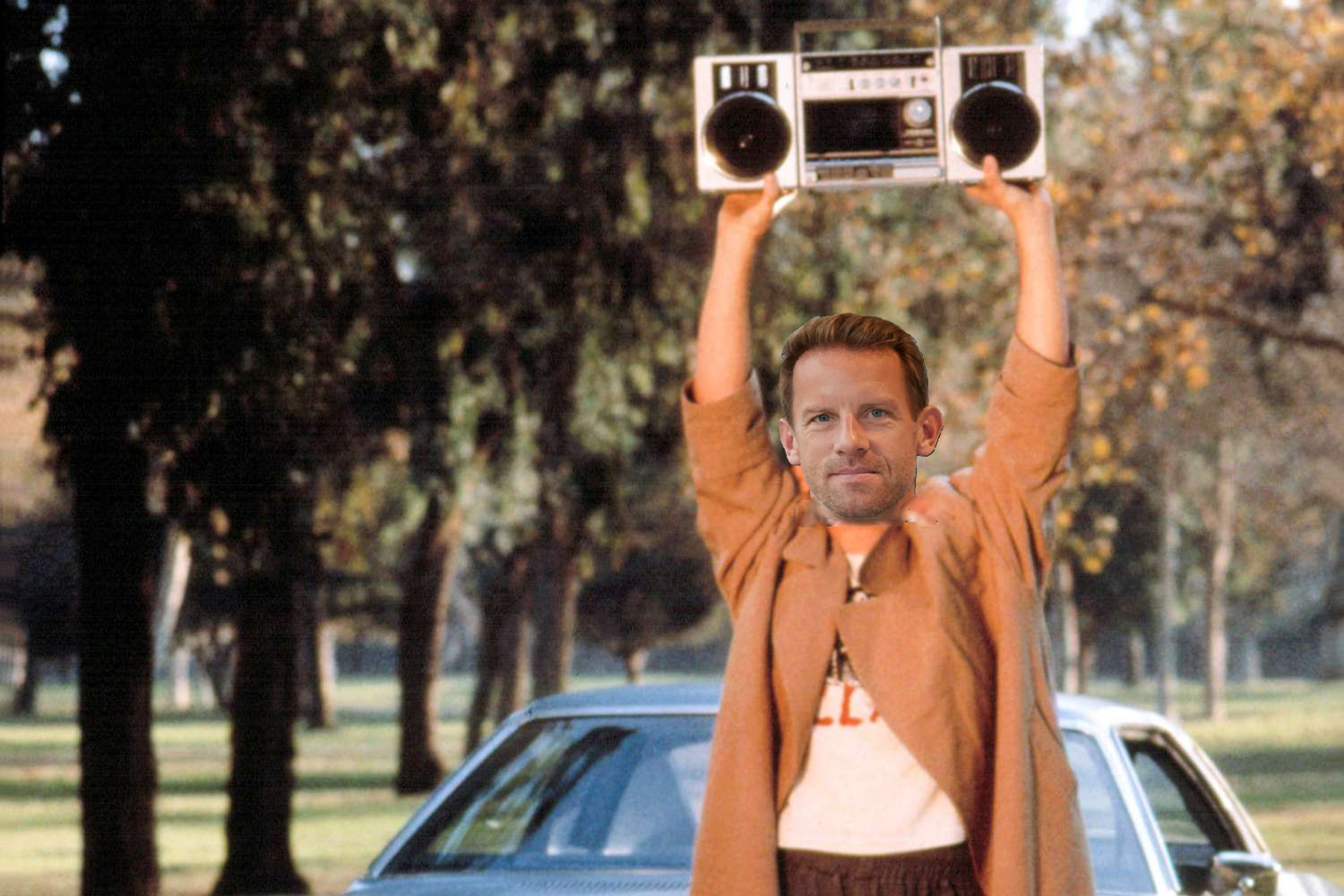 After a disheartening campaign in 2025, Ben Weber decided to drop his Twins season ticket plan heading into this year. He felt his relationship with the club had grown stale, and he needed to find out who he was apart from his longtime favorite franchise. But love doesn’t give up that easily, and neither does Twins owner Tom Pohlad. “The day after I cancelled my full-season package, I woke up to the sound of some music playing from my front yard,” Weber said, with some confusion in his voice. “I looked out my window and saw Tom standing in my yard holding something over his head that I guess is called a boombox? I don’t even know what that is. I was born in ‘96.” Pohlad was doing his best impression of John Cusack from the hit 1989 movie "Say Anything." In the film, Cusack’s character tries to win back his heartbroken lover with a boombox lifted above his head, playing Peter Gabriel’s hit “In Your Eyes” from her front lawn. It was supposed to be a touching display of vulnerability and defiance against her father’s wishes. All this comes after a report from The Athletic’s Dan Hayes (an '80s heartthrob in his own right) that Pohlad made multiple cold calls to departing season ticket holders, in an effort to smooth things over and reignite interest in the club. Apparently, he even left voicemails for those who refused to answer his call. “A voicemail?” Weber exclaimed with a chilling shudder. “Literally my worst nightmare. If there’s anything I hate more than answering a call from an unknown number, it’s getting a notification that they left me a message. Absolute psychopath behavior. Oh, and now he’s showing up to my home address. Perfect.” It’s unclear if Pohlad’s effort will lead to any renewed interest from disheartened fans, but it’s clear that he wants to put all of his energy toward turning enthusiasm around, after multiple difficult seasons. If his cold calls (and now front lawn serenades) don’t work out, it sounds like he has a few more tricks up his sleeve. His next move would be to meet these fans at their doorstep with cue cards (so that the rest of the household doesn’t get suspicious), a la "Love Actually". He’ll drop the cards one by one, while looking longingly into their eyes as they read. “With any luck, by this time next year, we’ll be hoisting a trophy” “But for now, let me say without hope or agenda” “Just because it’s ticket renewal season (and at renewal you tell the truth)” “To me, your 20-game flex plan was perfect” He’ll go on to reiterate his family’s utmost commitment to fielding a competitive team, by any means necessary (well, almost). “Look, I’ll buy some tickets. That’s fine,” said Weber, mounting a new deadbolt to his front door. “Just please leave my property.” View the full article
 -
 Outfielder Jackson Chourio will get ready for his third season in a Milwaukee Brewers uniform by playing for Venezuela in the World Baseball Classic. The Brewers made what had seemed a likely decision official via social media Thursday. This will be Chourio's first WBC. Rosters for all WBC teams are due February 3, which is Tuesday. Venezuela will be one of the teams to watch in this year's tournament. In 2023, Venezuela went 4-0 in pool play before being knocked off by the U.S. 9-7 in the quarterfinals. The U.S. went on to lose to Japan 3-2 in the championship game. Chourio was announced to Venezuela's roster along with Ronald Acuna Jr., Maikel Garcia, and Wilyer Abreu. The team captain is Salvador Perez. Whether Brewers catcher William Contreras will be named to the roster is unknown, especially since Perez is a catcher, too, as well as the team captain. No other Brewers are known to have made a WBC roster at this point. Sal Frelick is a strong candidate to play again for Italy. View the full article
 -
 This multi-part series talks about how the Brewers got to the World Series and offers a timeline of the 1982 campaign, including player profiles, game recaps, and other events that affected the season. Part 1 Part 2 Part 3 Part 4 Part 5 Part 6 Part 7 Part 8 The Series So Far The 1982 World Series had its ebbs and flows, with the Brewers winning Game 1 by a 10-0 margin, and then two wins by the Cardinals, followed by two wins by the Brewers that resulted in a 3-2 lead for Milwaukee. The Brewers were tough at home during the playoffs, winning five of six contests at County Stadium, but struggled somewhat on the road, winning one while losing three entering the final two games of the Series. Game 6: Stuper pitches a gem in Cards' 13-1 shellacking Milwaukee (Don Sutton) at St. Louis (John Stuper) The middle part of the game was delayed twice due to rain, for more than 2 ½ hours in total, but it didn’t bother the Cardinals. They scored a baker’s dozen in a rout that tied the Series at three games each. While Don Sutton clearly didn’t have his best stuff, allowing seven hits and seven runs in 4 1/3 innings, John Stuper was lights out for the Cardinals. The 25-year-old rookie right-hander pitched a complete-game four-hitter despite the two rain delays, which stretched the game to an even five hours. Milwaukee’s defense didn’t help matters, as Robin Yount and Jim Gantner—normally sure-handed glove men—had two miscues apiece. “I think the wet turf hurt them a little bit,” said manager Whitey Herzog with a chuckle. “We watered it down all day long.” The Cards scored two runs in the second inning, highlighted by Tom Herr’s RBI double. In the fourth, Darrell Porter hit a two-run homer, and Herr’s squeeze bunt scored Dane Iorg to make it 5-0. Keith Hernandez hit a two-run homer in the bottom of the fifth to make it 7-0, and heavy rain prompted a 26-minute delay. One inning later, Doc Medich came on and allowed one run on a sequence that looked like this: double, wild pitch, single, single, wild pitch, groundout. The game was halted by a downpour for a second time. It resumed at 11:40 pm Central, and Medich was greeted rudely, as St. Louis scored five more times with run-scoring singles by Hernandez (two RBI) and George Hendrick and a booted grounder by Gantner that allowed two more runners to cross the plate. In the top of the ninth, the Brewers scored their lone run on a double by Gantner, a single by Paul Molitor, and a wild pitch that allowed Gantner to score. The talk after the game involved the rain, and the way baseball commissioner Bowie Kuhn handled it. "Kuhn took a risk, a chance that players could have [gotten] hurt and not been ready for the seventh game of the World Series,” Medich said after the game. The commissioner was stubborn, all right. “We’re going to play this game until it is completed—even if we have to wait a great many more hours,” Kuhn said in an interview during the game. They waited, then played, until past midnight, even though the result was beyond doubt much earlier. Game 7: Andujar, Sutter shut down Brewers to win Fall Classic Milwaukee (Pete Vuckovich) at St. Louis (Joaquín Andujar) The Brewers had a 3-1 lead going into the bottom of the sixth, needing just 12 outs to win the franchise’s first World Series championship. Unfortunately for the Brewers, the Cardinals scored three times in the bottom half of the sixth and twice in the eighth on their way to a 6-3 victory, earning their ninth title in front of 53,723 screaming maniacs at Busch Stadium in St. Louis. The game was scoreless when the Cardinals came to bat in the bottom of the fourth against Pete Vuckovich. With runners on the corners and one out, Lonnie Smith beat out a groundball to shortstop, scoring Willie McGee. Milwaukee answered immediately against Joaquín Andujar. In the top of the fifth, Ben Oglivie slammed Andujar’s first offering into the right-field stands to quiet the raucous crowd. Vuckovich allowed eight hits and two walks over the first five frames, but held the Cardinals to a single run. The Brewers tagged Andujar for a pair of runs in the top of the sixth. Gantner ambushed his first pitch for a double to right-center. Molitor laid a bunt down the third-base line, but Andujar’s throw to first sailed wide, allowing Gantner to score and Molitor to go to second. Yount beat out an infield chopper that moved Molitor to third. Cecil Cooper hit a sac fly to left that scored Molitor, to extend the lead to 3-1. In the bottom of the sixth, Vuckovich got the first out, but then allowed an Ozzie Smith single and a double by Lonnie Smith. That was all for ‘Vuke,’ who was replaced by Bob McClure. Pinch-hitter Gene Tenace drew a walk and was replaced by pinch-runner Mike Ramsey. Hernandez tied the game with a single to center that scored both Smiths. The Cards took the lead when Hendrick’s single to right scored Ramsey. Haas began the bottom of the eighth by giving up a ground-rule double to Lonnie Smith. Ramsey struck out, Hernandez drew an intentional walk, and Hendrick flied out to center for the second out. With lefthanders Porter and Braun coming up, Brewers manager Harvey Kuenn brought in Mike Caldwell, who had thrown 127 pitches in Game 5 just three days earlier. Caldwell allowed RBI singles to both Porter and Braun, expanding the lead to 6-3. Bruce Sutter, who had retired the side in the eighth, repeated that feat in the ninth to earn his second save of the Series and give the Cardinals their first title since 1967. The city of Milwaukee, which had already waited 10 years longer, still hasn't broken their drought. The Brewers were led by Molitor, who had two hits. For St. Louis, Lonnie Smith had three hits, while Ozzie Smith, Hernandez, Hendrick, and Iorg each had a pair of hits. Andujar allowed seven hits and three runs in seven innings, coming back from the line drive hit off his leg in Game 3. Porter, who batted .286 (8-for-28) with two doubles, a homer, and five RBIs, was named World Series Most Valuable Player. While St. Louis would return to the Fall Classic six more times and win two of them (2006, 2011), the Brewers have not returned. The closest they have come is losing three times in National League Championship Series, including to the Cardinals again in 2011. But no matter their success, the 1982 Brewers team was one of the best Brewers teams in franchise history. Maybe, soon, the team can have another campaign as magical, but for now, Harvey's Wallbangers remain the most memorable and beloved group ever to don the blue and yellow. View the full article
 -
 The 2026 MLB season is right around the corner, and we're looking to expand our video coverage. Have you ever considered being on-camera and talking about the Padres? If yes, we'd love to talk to you about it. Our videos are typically in a wide variety of styles: breaking news, analysis, and historical study. We're open to any and all ideas as long as they're centered around the San Diego Padres. We're looking for serious baseball talk, so leave the hot takes at home. If you'd like to learn more about this cool little side gig, please email Brock Beauchamp at brock.beauchamp@padresmission.com. Here is an example of a recent Padres video from us: View the full article
