


DiamondCentric
-
Posts
2,631 -
Joined
-
Last visited
Never
Content Type
Profiles
Forums
Events
News
Tutorials & Help
Major League Baseball Videos
Guides & Resources
Store
Downloads
Gallery
Everything posted by DiamondCentric
-
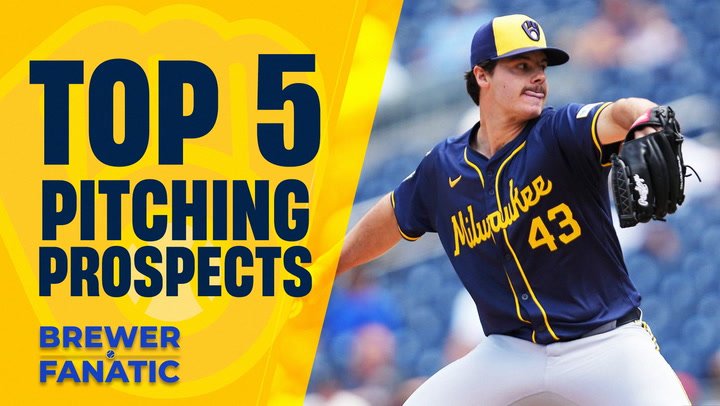 The Brewers have had a litany of pitching talent for a while, and 2026 is going to be no exception. In this video, we break down the prospect profiles of Brandon Sproat, Logan Henderson, Bishop Letson, JD Thompson, and 19-year-old Bryce Meccage, who breaks into the top five rankings. Who will be up soon, and what strengths do each of these farmhands have? We dive into it all on Brewer Fanatic. View the full article
 -

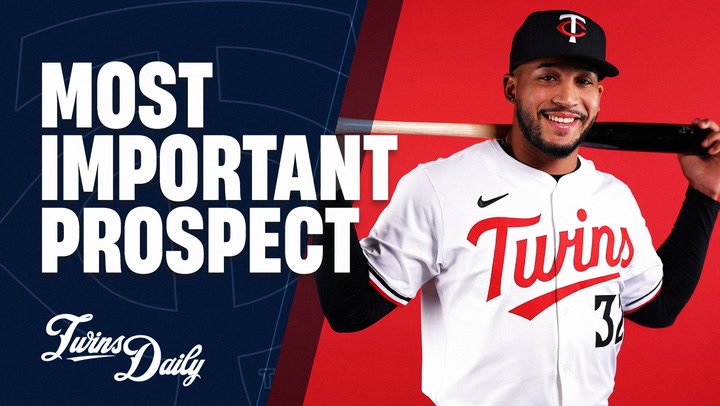 Emmanuel Rodriguez has had plenty of bad luck over the years with his injury history, but if he remains healthy for most of 2026, then he will be the most important prospect for this upcoming season. His strike zone judgement surpasses anyone else in the organization, and if that is added into the Twins lineup this season, then it can change the Twins' course within the AL Central. View the full article
 -
Ranking Seasons of Twins' Derek Falvey Era, From Best to Worst
DiamondCentric posted an article in Twins Daily
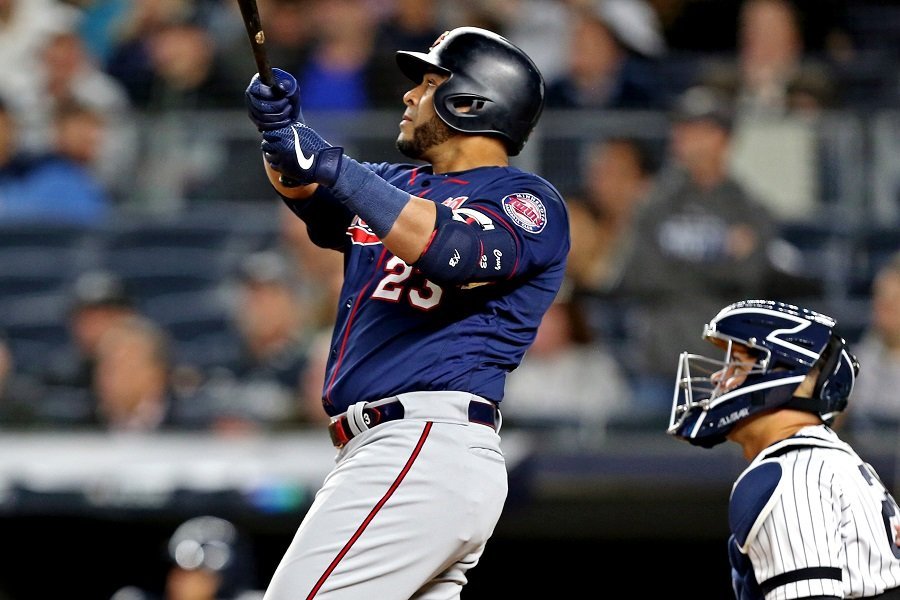 The Twins and Derek Falvey agreed to part ways at the end of last week, officially closing the book on one of the more eventful eras in recent franchise history. Falvey arrived in Minnesota in late 2016 with a mandate to modernize the organization; rebuild a depleted farm system; and push the Twins back into relevance, after years of mediocrity. Over the course of nine seasons, Falvey oversaw dramatic swings. There were division titles, record-setting offenses, and long-awaited postseason success—but also deep frustrations tied to payroll constraints, uneven roster construction, and seasons that unraveled quickly. Context matters when evaluating his tenure, as ownership directives often collided with competitive windows, but results still tell a story. With Falvey’s time in Minnesota now complete, it feels like the right moment to look back and rank each season from best to worst. Some years exceeded expectations, others never stood a chance, and a few may ultimately define how this era is remembered. 9. 2024 Twins (82-80 record) This wasn’t the worst overall record under Falvey’s tenure, but the second-half collapse likely led to his eventual departure from the team. Minnesota came off the high of the team’s 2023 playoff run and immediately slashed payroll by $30 million, at the direction of ownership. Still, the team was in playoff position until late in the season, when a collapse pushed them out of the playoff picture. What made 2024 sting the most was the sense that the window was closing, rather than opening. 8. 2025 Twins (70-92 record) Minnesota sold off 10 players at the trade deadline, after hovering around the .500 mark for most of the season’s first half. With little talent left on the roster, the team played poorly down the stretch and finished with the most losses in the Falvey era. This season felt less like a failure and more like an organizational admission that competitiveness was no longer the priority. 7. 2021 Twins (73-89 record) Minnesota was expected to contend for the AL Central title for the third straight season, but things unraveled, and the team nearly lost 90 games while finishing in last place in the AL Central. It was the only season in the Falvey era in which the team finished last. Pitching depth collapsed, injuries piled up, and the confidence built in 2019 and 2020 evaporated quickly. 6. 2018 Twins (78-84 record) The 2018 Twins were trying to live up to their surprising playoff run in 2017, but things didn’t go as well. The team finished in second place in the AL Central, but was 13 games behind Cleveland. Paul Molitor, who was hired under the previous regime, was fired following the season, as Falvey sought a manager better aligned with the front office’s new direction. This year felt transitional in every sense. 5. 2022 Twins (78-84 record) There was plenty of hype surrounding the 2022 Twins, as the club shocked the baseball world by signing Carlos Correa to a massive contract coming out of the lockout. His first season in Minnesota was his best, as he posted 5.3 rWAR, but the team struggled to stay relevant with a pitching staff that included Dylan Bundy and Chris Archer. A fast start gave way to another late-season fade, which became far too familiar thereafter. 4. 2017 Twins (85-77 record) In Falvey’s first season, the Twins were coming off a 103-loss season, and the club hadn’t made the playoffs since 2010. Minnesota finished eight games above .500, good enough to qualify for the one-game AL Wild Card matchup. Unfortunately, that game was played at Yankee Stadium, and the Twins fumbled away an early lead. Still, there were positive signs of the franchise being back on the map and relevant again. 3. 2020 Twins (36-24 record) There was a lot to navigate during the COVID-shortened season, but the Twins still found a way to win their second straight AL Central title. Minnesota traded for Kenta Maeda, who was masterful in 11 starts with a 2.70 ERA and 0.75 WHIP, finishing runner-up for the AL Cy Young Award. Falvey deserves credit for keeping the team focused and competitive during a season unlike anything baseball had ever seen. 2. 2019 Twins (101-61 record) The Bomba Squad Twins were one of the most exciting teams in franchise history. Only two Twins teams have won over 100 games: the 2019 and 1965 clubs. Rocco Baldelli didn't have to work any miracles during his first season as manager, with the club regularly outscoring opponents and setting MLB’s all-time home run record. Unfortunately, the Yankees awaited the Twins in the playoffs, and Minnesota didn’t have the starting pitching necessary to win in October. 1. 2023 Twins (87-75 record) The 2023 Twins won’t be remembered as much for their regular-season record. However, they broke the team’s playoff losing streak and won the club’s first postseason series in nearly two decades. Trading for starting pitchers Sonny Gray and Pablo López put the team in a better playoff position than in 2019. It was finally some October success that had eluded the franchise for so long, and that alone elevates this season above the rest. Falvey’s era in Minnesota will be debated for years. He rebuilt the farm system, delivered multiple division titles, and finally helped end one of the most painful playoff droughts in professional sports. At the same time, inconsistent spending and poorly timed setbacks prevented the Twins from sustaining long-term success. The legacy is complicated, but it is far from empty. Falvey leaves behind an organization that experienced both its most exciting highs and its most frustrating what-ifs within the same decade. Which season best defines the Derek Falvey era for the Minnesota Twins? Leave a comment and start the discussion below. View the full article
 -
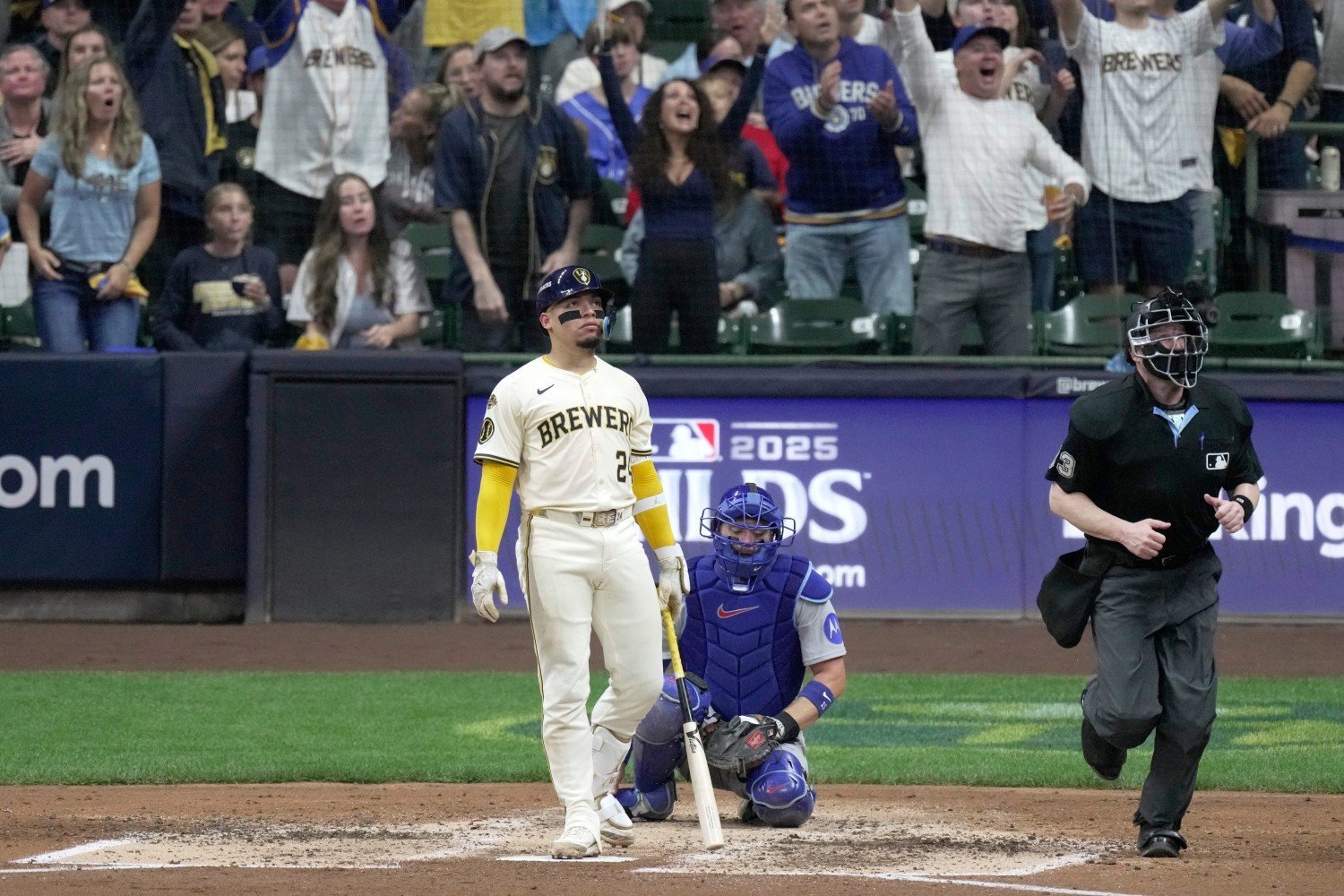 The Milwaukee Brewers won 97 games in 2025, winning the National League Central for the third straight time and earning the top overall seed in the postseason. They achieved this success while hitting only 166 home runs, which was good for 22nd in the majors. With the Cubs and Pirates spending money this winter and Freddy Peralta in New York, the Brewers might need to increase their home run total significantly to continue their dominant run in 2026. Assessing the projected 13 position players on the roster will allow us to see who will provide the power for the Brewers this year. William Contreras Contreras ended the 2025 season tied for the team lead in plate appearances, and heading into his age-28 season, he will look to increase his power production. He hit 17 home runs in 2025, but his slugging average dropped from .466 in 2024 to .399 in 2025. His expected slugging (xSLG) was .001 less than his actual figure, meaning he wasn’t missing chances for power; he just wasn’t generating them. Contreras’s exit velocity and hard-hit percentage were both higher in 2024, so he will look to get back to form with regard to power in 2026. Reese McGuire McGuire played for the rival Cubs in 2025, and the veteran catcher will be 31 by Opening Day. He hit a career high in home runs last year, with 9, and his slugging was up to .444. However, McGuire’s expected batting average and expected slugging were both well below his actual numbers, so don’t expect him to contribute much from the backup catcher role. Andrew Vaughn Vaughn was acquired from the White Sox on June 13, 2025, and he turned out to be one of the more important hitters the Brewers had during the stretch run. Before he was traded, Vaughn was a terrible major-league hitter. He hit below .200 in his time with the White Sox, and slugged only .314. However, after joining the Brew Crew, Vaughn began to walk more and strike out less. His slugging average rose to .493 for the Brewers, in 64 games. Vaughn ended the season with a .411 SLG overall, and his expected slugging, which sits at .479, suggests that there could be more power to tap into. I expect Vaughn to contribute heavily from the middle of the order, especially against lefties, against whom he was significantly better in 2025 than he was against righties. Jake Bauers The 30-year-old Bauers played in 85 games for the Brew Crew in 2025, and he posted an above-average OPS+ for the first time in his career. Bauers hit seven homers and had the second-highest SLG of his career, at .399. Bauers’s expected slugging was even higher, at .460. I’d like to see a platoon of Bauers and Vaughn at first base, which would create a good, reliable position of power for the Brewers in 2026. Brice Turang Turang finished 2025 tied with Contreras for the team lead in plate appearances, and the 26-year-old took full advantage of his playing time. He hit 18 dingers, and his slugging was a career high .435, which was close to his expected slugging of .429. Turang’s SLG has increased each year of his career, but I would expect it to level off in the lower ranges of the .400s. Turang’s value to the Brewers comes from all facets of the game, and he will be one of the Brewers’ most valuable players regardless of whether he hits 20 or more home runs. It's noteworthy, but not necessarily predictive, that he hit 12 of his 18 homers in the final two months of the season. Joey Ortiz Ortiz regressed in 2025, hitting 7 homers in 149 games and slugging a lousy .317. His expected slugging was not good, either, at .327, one of the worst figures in baseball. His average exit velocity was equally dreadful, at 84.9 miles per hour. In his career so far, the 27-year-old has only 18 homers in 306 major-league games, so it may be wise to look elsewhere for power production. Caleb Durbin Durbin will be 26 years old by Opening Day, and while he provided value for the Brewers during the 2025 season, his power was limited. He hit only 11 bombs, his slugging percentage was only .387, and his expected slugging was even lower, at .362. His hard-hit percentage and exit velocity were also low, just above Ortiz. Unlike Ortiz, Durbin makes contact in ways that tend to maximize the value thereof, and makes better swing decisions. Durbin will contribute to the Brewers in 2026. Just don’t expect it to be in the power category. Andruw Monasterio The 28-year-old Monasterio had a productive 135 plate appearances for the Brewers in 2025, hitting four home runs with a .437 slugging percentage. However, his expected slugging was way below that number, at .363. Monasterio will look to contribute again for the Brewers in 2026, but expect a little regression if the plate appearances stay the same or increase. He's not an upside option. Blake Perkins Perkins is similar to Ortiz. His homer total last season was low, and his expected slugging (.326) managed to be even more discouraging than the actual number (.348). The 29-year-old had only 171 plate appearances in 2025, due to injury and the loss of his mother, so we should assume he can be a bit better next year. Expect a potential increase in plate appearances (but not an increase in production) due to the trade of Isaac Collins to the Royals. Jackson Chourio Chourio hit the second-most homers for the Brewers in 2025, with 21, and the soon-to-be 22-year-old will look to build on an eerily similar offensive season to the one he had as a rookie. Chourio finished with a .463 slugging percentage, but his expected slugging was much lower, at .426. For reference, 2024 saw Chourio end with a .464 slugging percentage, but an expected slugging much lower again, at .431. The good thing is that Chourio is still young (he'll turn 22 next month), and his exit velo and hard-hit percentages stayed close to the same from 2024 to 2025 as well. I’d project him to hit around the same number of homers, but there's certainly a chance for a breakout here. Christian Yelich Yelich led the 2025 Brewers in home runs with 29, but he will enter 2026 coming off his lowest OPS since 2022. He’s also a year older, and the 34-year-old outperformed his expected statistics in 2025. The former MVP earned a slugging percentage of .452, and his expected slugging percentage was slightly lower, at .439. While Yelich’s OPS may remain the same or continue to decrease, he is still, in my opinion, the Brewers’ most dangerous bat, when it comes to hitting the ball out of the park. Sal Frelick Frelick improved his power numbers in 2025, hitting 12 homers. However, in 2024, he ranked in the bottom-most percentile in the majors in terms of barrel percentage, hard-hit percentage, and exit velocity. He made slight improvements in his second full season, but he still ranked in the bottom decile for barrel percentage, and even lower in hard-hit rate and average exit velocity. Although the 25-year-old showed improvement, I wouldn’t suspect much more power from Frelick this year. He's also capable of power only against opposite-handed pitchers. Garrett Mitchell The 27-year-old Mitchell has totaled only 141 games played over the past four seasons, and the most home runs he has hit were 8 in 2024. Mitchell only played 25 games last season, with no homers at all, and his slugging average was an anemic .294. While his expected slugging was higher, at .341, staying on the field will be crucial for Mitchell in 2026 for him to contribute in the home run column. Overall, I expect the Brewers to hit roughly the same number of home runs this coming season as they did in 2025, and their success will come down to pitching, defense, and scoring runs without hitting homers. There will be regression in all those departments, though, so they need a big step forward or two from one of their prime-aged could-be sluggers. View the full article
 -
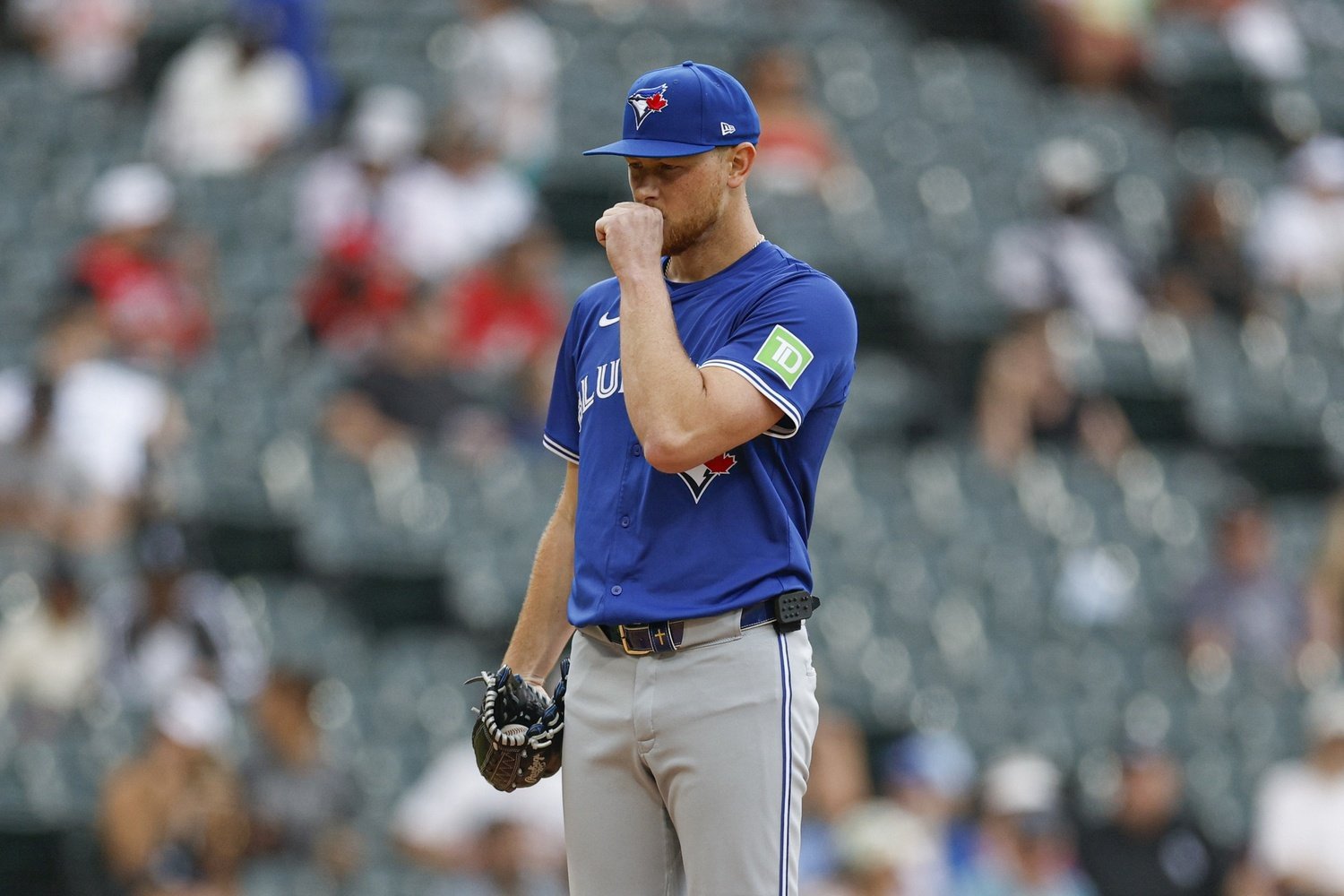 As reported by The Athletic's Mitch Bannon, Eric Lauer had his arbitration hearing on Tuesday, February 3. That means his representatives and the Blue Jays went before a three-person panel to make their cases for the respective salary proposals they submitted; Lauer filed at $5.75 million, while the team filed at $4.4 million. According to Bannon, we can expect a decision at some point next week. Lauer's case is an unusual one. The lefty earned $5.075 million from the Brewers in 2023, his second year of arbitration eligibility. He did not pitch in the majors in 2024, splitting his time between the Pirates' and Astros' Triple-A affiliates and the KBO's Kia Tigers, and he joined the Blue Jays on a minor league contract in 2025. As a result, he was still eligible for one more year of arbitration entering 2026. Typically, salaries do not decrease in arbitration. If a team isn't willing to give a player a raise, they simply won't tender him a contract. Lauer is also coming off what was arguably just as strong a season as his last campaign prior to arbitration; according to fWAR, bWAR, and WARP, he was more valuable in 2025 than he was in 2022. With that in mind, it would seem to be a given that Lauer would win his hearing, since he asked for $675,000 more than $5.075 million, while the Blue Jays countered with $675,000 less. Yet, the Blue Jays wouldn't have filed at $4.4 million if they didn't think that number had a chance to win. There isn't much of a precedent for players re-entering the arbitration system after returning from a stop overseas. Moreover, precedent isn't everything when it comes to arbitration. If old precedents weren't broken, new ones would never be set. Just look at Tarik Skubal, who asked for $32 million, far more money than a player has ever won in an arbitration hearing. The panel sided with the back-to-back Cy Young winner, setting a new precedent in the process. The Blue Jays are betting that's what happens in this hearing as well. In Skubal's case, the panel made the player-friendly decision. Presuming the arbitration system stays in place in the next CBA, their judgment will help boost player salaries for years to come. However, history tells us that, more often than not, arbiters side in favor of teams. That doesn't bode so well for Lauer. It's one thing for the best pitcher in baseball to win over an arbitration panel. An inconsistent swingman is facing a tougher battle. It's also worth noting that Toronto's $4.4 million offer is the exact number MLB Trade Rumors projected Lauer would earn in arbitration. The model MLBTR uses, developed by Matt Swartz, considers a player's "playing time, position, role, and performance statistics." It also accounts for inflation. Swartz's model has been the gold standard for predicting arbitration salaries for more than a decade, and it tells us that the panel is more likely to side with the Blue Jays. All of this to say, there's no good way to guess the outcome here. Thankfully, we're talking about an utterly negligible amount of money for a team like the Blue Jays that has not and will not affect how they operate in the slightest. Arbitration cases are interesting to think about, especially when there isn't much else to think about, but at the end of the day, I just hope Lauer gets his money and both sides can move on and start preparing for the season ahead. View the full article
 -
What to Make of Pete Crow-Armstrong's Second-Half Decline
DiamondCentric posted an article in North Side Baseball
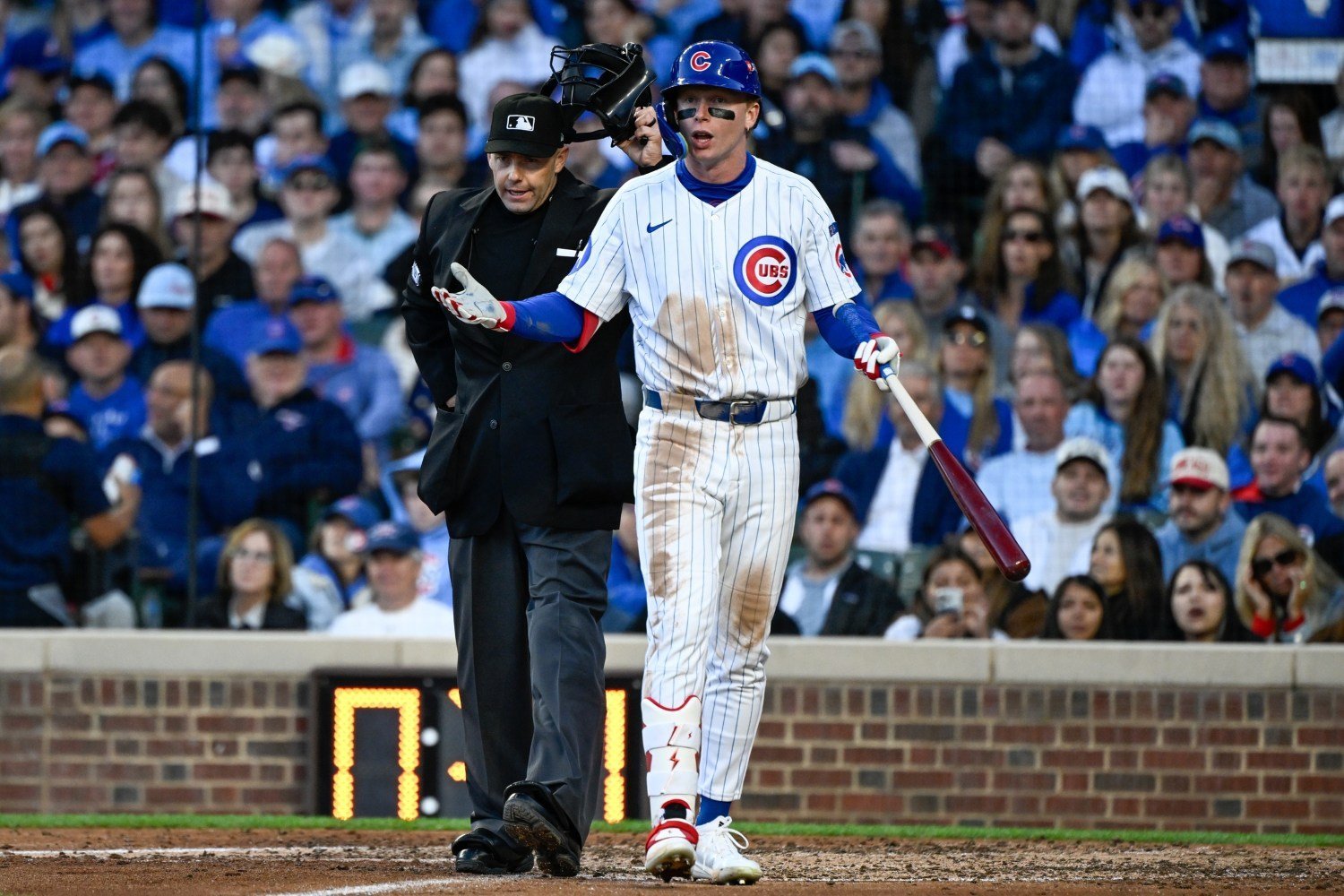 The Chicago Cubs don’t have to squint to see the future anymore. It’s standing in center field, running down fly balls like they owe him money, and occasionally launching baseballs into the night. Pete Crow-Armstrong is a foundational piece—the kind of player teams spend decades trying to draft, develop, or steal from someone else. Elite defense, real power, and disruptive speed make him a perennial MVP candidate in the National League, even if that ceiling is currently guarded by a certain two-way alien named Shohei Ohtani. A season like the one Crow-Armstrong just had will do that. A Breakout That Changed the Conversation In 2025, Crow-Armstrong put together a year that could be a cornerstone’s origin story. He finished with a 109 wRC+, 31 home runs, 35 stolen bases, and 5.4 fWAR. He crossed the plate 91 times, drove in 95 runs, and played center field at a level few in baseball can match. His glove was worth 15 Defensive Runs Saved, placing him among the best defenders in the sport. Offensively, the quality of contact backed up the surface stats. Crow-Armstrong ranked in the 82nd percentile in barrel rate at 13% of his batted balls (and 9.1% of his total plate appearances), and his .475 expected slugging percentage landed in the 78th percentile. He may not look like a classic slugger, but he doesn’t need brute strength when he knows how to get the ball in the air and pull it with authority. Pair that with lightning-fast feet and elite instincts, and you get production that stretches across every column of the box score. The Swing-at-Everything Dilemma For all the fireworks, there’s a catch: Crow-Armstrong swings at everything. That aggressiveness is baked into his game, and in 2025 it came with some ugly side effects. He posted a 4.5% walk rate, good for the 4th percentile, and chased pitches at a 41.7% clip, worse than all but four other qualifying hitters. When it works, it’s exhilarating. When it doesn’t, it can look like a hitter trying to swat flies with a sledgehammer. Pitchers adjusted, and the league started leaning into his weaknesses. The result was a tale of two halves that left Cubs fans uneasy. After crushing the first half with a 131 wRC+, Crow-Armstrong stumbled badly after the All-Star break, posting a 72 wRC+ in the second half. The production drop wasn’t subtle, and it raised a fair question: which version of Crow-Armstrong is the real one? Why the Second Half Fell Apart The answer isn’t a single smoking gun, but a handful of factors that piled up quickly. Crow-Armstrong is particularly vulnerable to pitches up in the zone—especially fastballs. When you look at his wOBA by pitch location, the elevated areas are where the damage turns into self-inflicted wounds. Pitchers found that soft spot and kept going back to it. Luck also played a role. In the first half, his home run-per-fly ball rate sat at 17.6%. After the break, it cratered to 6%. It’s fair to wonder if the early number was simply too hot to sustain. As Elliot Baas of Rotoballer.com noted, Crow-Armstrong’s average launch angle dipped month by month, which likely contributed to the power outage. Line drives turned into grounders, and fly balls lost their carry. Interestingly, some of his plate discipline indicators actually improved in the second half. His chase rate dropped to 36.9%, and his swinging strike rate improved from 16.5% to 15.2%. In trying to rein himself in, he may have dulled the very edge that made him so dangerous early on—but that reining-in was certainly needed, so it's discouraging to admit that it didn't work. What the Future Still Looks Like Even with the warts, Crow-Armstrong remains an immensely valuable player. The defense is as real as it gets, and at 23 years old, he should have several more seasons as an elite center fielder, assuming good health. On the bases, his speed gives him room to push higher. With a green light (and a better OBP), 40 to 45 steal attempts aren’t out of the question, making 30 to 35 stolen bases a reasonable expectation. Offensively, the underlying numbers offer reassurance. His .323 wOBA was nearly identical to his .321 expected wOBA, suggesting his overall line wasn’t built on good bounces. Repeating a 30-homer season may be a tall ask, but settling into a 20-homer, 30-steal profile with a yearly wRC+ between 100 and 110 is well within reach. That version of Crow-Armstrong can flirt with 5.0 fWAR on a regular basis, with more upside if he ever adds even modest gains in plate discipline. Crow-Armstrong isn’t a finished product, but he doesn’t need to be. He’s already a building block—a player who impacts games with his bat, glove, and legs, and one the Cubs can confidently build around as the next era takes shape. View the full article
 -
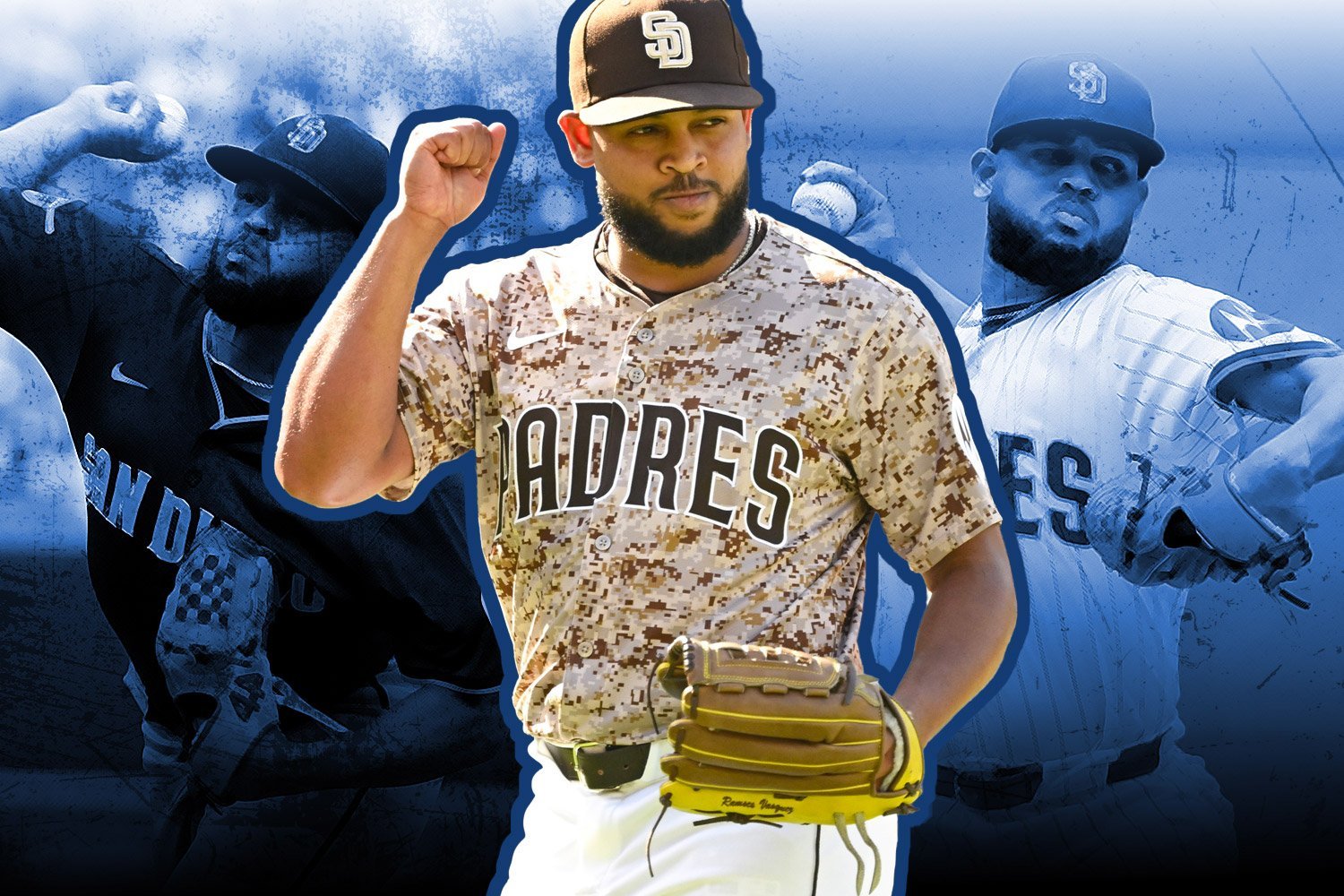 There is little doubt that the top of the San Diego Padres' rotation is expected to be pretty good in 2026. With right-handers Nick Pivetta, Michael King, and Joe Musgrove, the latter returning from Tommy John surgery, that is good enough for the Friars to compete with anyone. But after that, it gets a little dicier. Right-hander Randy Vasquez is a relative lock at the No. 4 spot, with a handful of options for the final spot, all coming with their own questions as to whether they are a viable MLB starter. Spring training will sort that out, through performance or, gasp, injury, which would make an already-thin rotation depth chart that much scarier. And a reason why it wouldn't be surprising for the president of baseball operations, A.J. Preller, to continue to bring in candidates before Opening Day. Some of these candidates have minor-league options remaining, while others don't, or are on minor-league contracts that would have them start the season at Triple-A El Paso if they don't make the MLB rotation or bullpen. Randy Vasquez's Stuff Vasquez has had a prominent role for the Friars since coming over as part of the prospect package in the Juan Soto trade with the New York Yankees following the 2023 season. The 27-year-old is rather average when it comes to velocity on all seven of his pitches. After a rocky 20 starts in 2024, Vasquez was much more reliable in 2025 with 26 of his 28 appearances as a starter. That came despite his FIP going up from 4.70 to 4.85, with his ERA going the opposite way (4.87 to 3.84), showing that maybe he was the beneficiary of some luck. He greatly improved his BABIP from .333 to .261 as his innings rose from 98 to 133⅔. His most used pitch in 2025 was his cutter, but it was also the pitch that was hit for a higher average (.267) than any of his other offerings and yielded a .447 slugging percentage, by far the highest of his three most-used pitches. His cutter had 0.8 inches less break and 2.6 inches more rise than the average MLB right-hander. His four-seam fastball was his most consistent pitch. The simple problem that Vasquez faces is that he doesn't have the stuff that makes hitters chase. He ranks in the bottom 1% in whiff rate (15.7%), bottom 13% in chase (25.1%), and bottom 2% in strikeouts (13.7%). He is also in the 30th percentile in walks (9.1%). Randy Vasquez's Pitch Arsenal As you might expect with someone who has seven pitches who isn't a dominant pitcher, Vasquez doesn't rely on any singular offering to get outs. His cutter was his most-used pitch in 2025 at 24.9% and checking in at 90.2 mph. His 93 mph four-seamer was used 21% of the time, and his 93.1 mph sinker 19.1%. Then you drop down to his 82.1 mph sweeper and 81.2 mph curveball at 13.1% and 12.8% usage before getting to his 86.9 mph changeup (6.9%) and 85.8 mph slider (2.1%). The usage of his cutter and four-seamer differed significantly from 2024, when his 94.3 mph four-seamer was his go-to pitch at 28.4%, and his 90.2 mph cutter was just 13.7%. The sweeper also took a jump in usage (from 10% in 2024), which may be a precursor to phasing out his curveball, which dropped from 19.7%. What Should Randy Vasquez's Role Be In 2026? With a lack of better options at this point, Vasquez is pretty well set to be part of the rotation this year, whether it be at the No. 4 or 5 spot. Combine that with the fact that he has no minor-league options remaining, and Vasquez is likely to get a long leash. Any prolonged struggles will relegate him to a relief role. Perhaps eliminating the curve in favor of the sweeper and using his four-seamer and sinker more than about 20% each would make him more effective. Those were the only two pitches where he had a positive run value (seven on the four-seamer and nine on the sinker). It would definitely be interesting if his sinker usage spiked. He doesn't have the velocity to blow batters away (he ranks in the 32nd percentile). With the lack of strikeouts, he ranked only in the 41st percentile in grounders (40.2%). View the full article
 -
Minnesota Twins Announce Fan Friendly Ticket Packages
DiamondCentric posted an article in Twins Daily
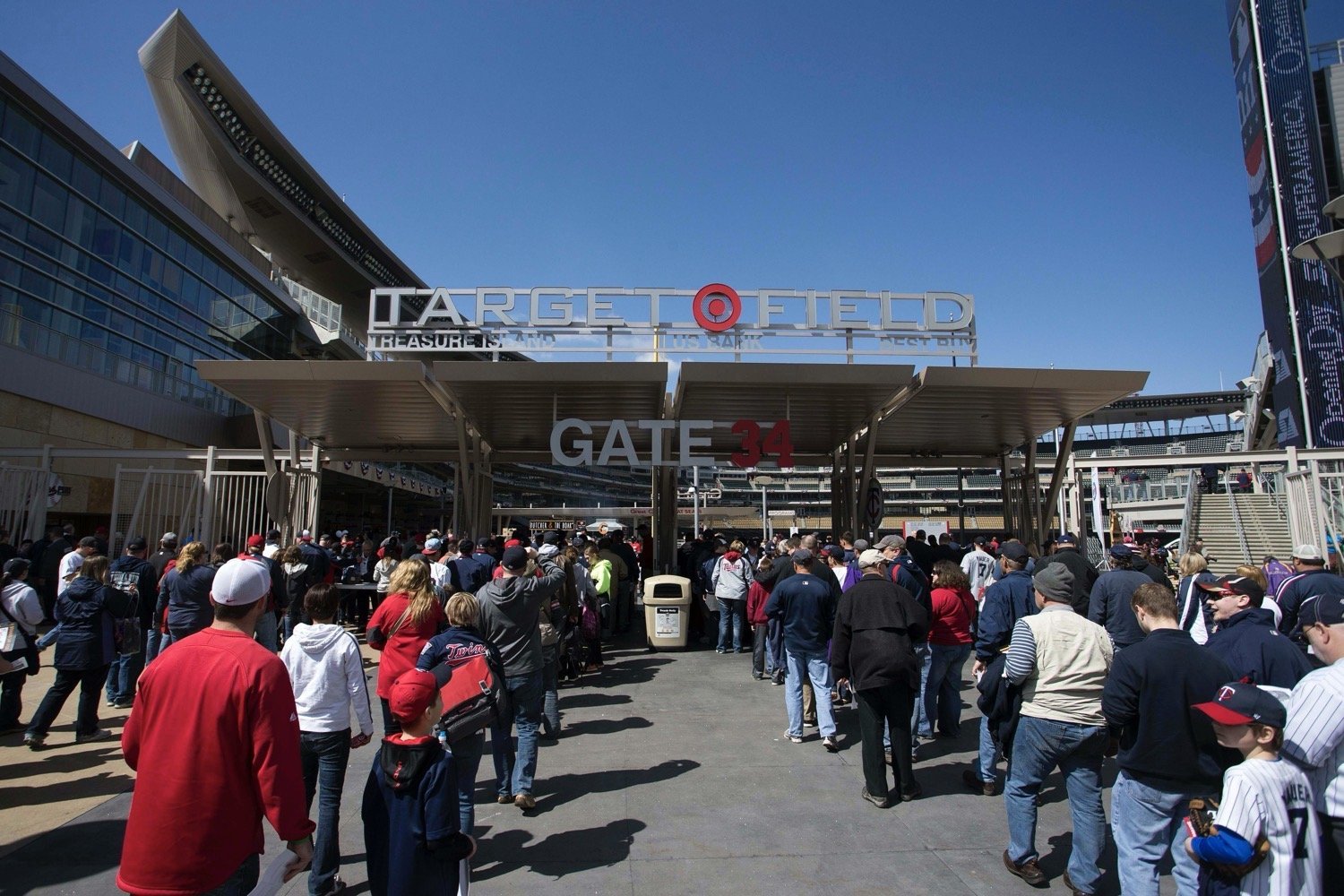 In an effort to get fans in the stadium (and maybe buy back some good will), the Minnesota Twins announced the return of the Twins Pass and introduced a new limited time Buy 2, Get 1 offer. Introduced ahead of the 2019 season, Twins Pass is returning for the eighth year. Most notably, the organization announced a price reduction to both the monthly and full season option. Previously $59 per month, the 2026 version of the pass will be only $49 per month (excluding a one-time $5 service fee). Though that doesn't include the home opener, if you were to attend the remaining 80 games, you would be paying $3.12 per game. You can avoid the $5 fee and sign up for the season-long “All-In Pass” at a reduced rate of $229 (down from $325 in 2025), or $2.83 per game—including access to the home opener. As is emphasized on the Twins website, you’ll need to act fast to lock in this “special, limited-time” price. As has been the case in previous years, the Twins Pass simply gets you into the stadium. Once in the stadium, you have the opportunity to upgrade your standing room-only ticket and purchase a seat at an additional cost. It's worth mentioning that the Twins Pass does not include any season ticket-holder benefits, such as postseason priority. If you're looking for less of a commitment but additional fan-friendly opportunities, you might consider the Triple Play Bundle. When you buy tickets to two games, you'll get the third one free—though there are stipulations that are important to know. Of the two games you buy tickets to, one must be of the “premium” tier, and the other is the “select” tier. Premium games include the Home Opener, Milwaukee Brewers series and Los Angeles Dodgers series, among others. Some of the games included in this package are interesting, such as Saturday, Aug. 29 against the Chicago White Sox. Might that be a giveaway or special event? It could just be because it's the Saturday of Labor Day weekend, but it's worth keeping an eye on that date. Looking at the “select” games, you have options like the World Series runner-up Toronto Blue Jays, divisional foe Cleveland Guardians, or the hated New York Yankees to choose from. Once again, you'll find odd games included in this category, such as a game against the Cincinnati Reds on Saturday, April 18. To be clear, the suggestion that these will be special event games of some sort is pure speculation, but something has to be up with that Reds game. Once you've made those two selections, you don't get free rein over the rest of the calendar. Instead, you're choosing from a list of games not available in the first two categories—most notably when the Seattle Mariners and Boston Red Sox come to town. Since the end of the 2023 season, Twins fans have had little to cheer for, on the field and off. From a reduced payroll and a trade deadline fire sale to increased prices and temporary uncertainty around their broadcasting future, it's been a frustrating two-plus years. However, these fan-friendly packages are a sign the Twins are trying to win us back…or at least get our wallets in the stadium. Will you be taking advantage of either option? Join the conversation in the comments! View the full article
 -
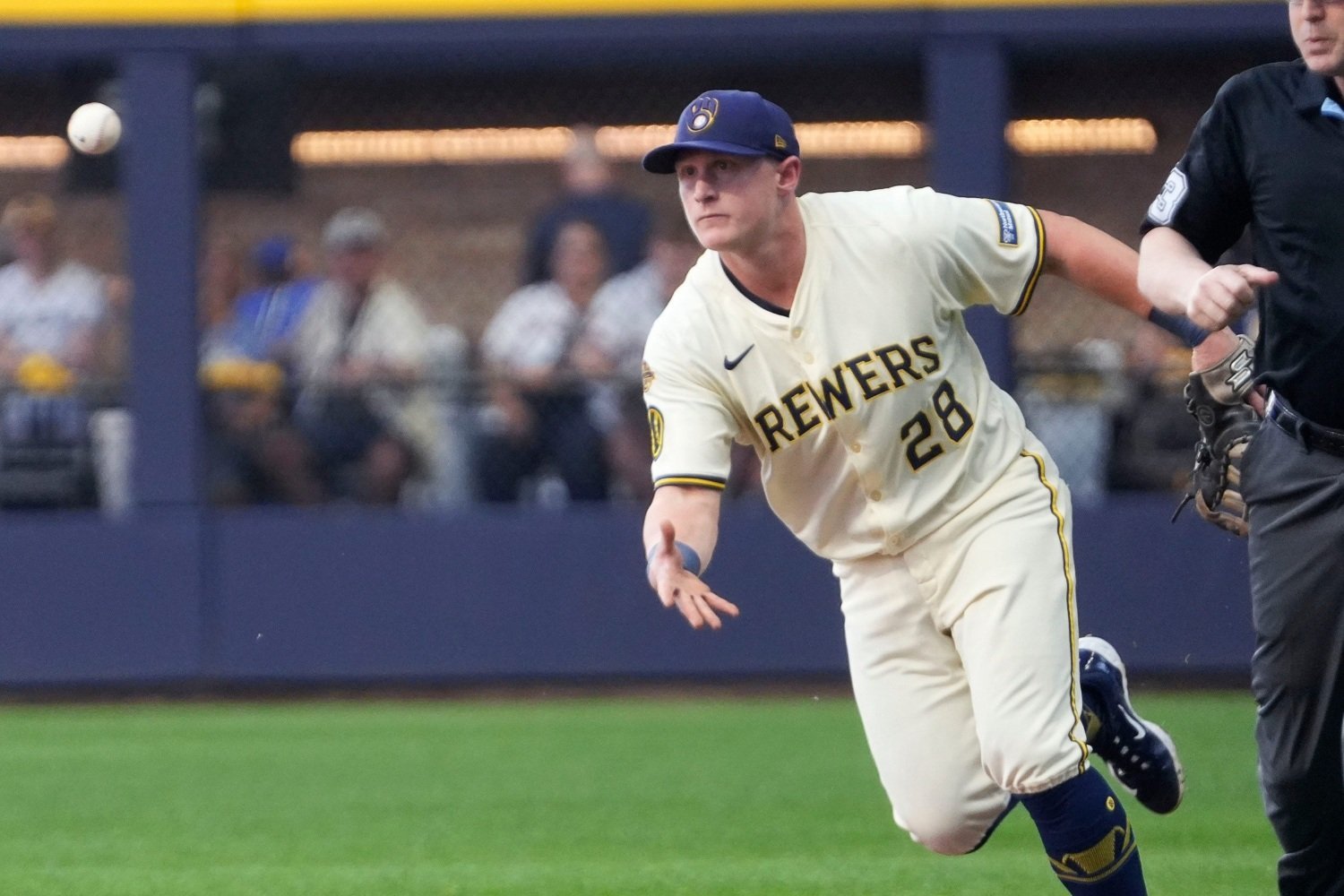 For a Brewers franchise that has had some legendary first basemen in its history (Cecil Cooper, Prince Fielder, Richie Sexson), first base has been more of a hodgepodge in the last six seasons, featuring four different starters, each of whom posted a negative Wins Above Replacement (WAR) at least once, according to Baseball Reference. No primary starter has posted a WAR above 1.5 since Jesús Aguilar in 2018. Can that change in 2026? Let’s take a look. 2025 Review Rhys Hoskins, Andrew Vaughn, and Jake Bauers combined to provide adequate production at first base over the 2025 season. Hoskins missed time with an injury and was then displaced by Vaughn, who was on a hot streak. But the Brewers have had a couple of players have hot streaks when they arrived, only to fade away, like Rowdy Tellez and the aforementioned Aguilar. Vaughn's staying power as a slugger is a key question about the position entering 2026. Current Roster Situation Vaughn and Bauers could form a soft platoon at first base for Milwaukee, at least to start the 2026 season. Behind them, there is Andruw Monasterio, who handled first base for 15 games in 2025, and Tyler Black, a former top-100 prospect who could be more suited as a supersub. William Contreras could handle first base, in case Vaughn is injured or reverts to his form with the White Sox, especially if Jeferson Quero has an excellent spring and forces Milwaukee to call him up from Nashville. In the upper minors, the Brewers will have Blake Burke and Luke Adams. The former, the team’s 2024 sandwich-round pick acquired in the Corbin Burnes trade, is a lefty masher, while the latter has split time between the hot corner and the cold, getting on base often both by drawing walks and joining the Caleb Durbin “plunk me” club, while still having a potent bat of his own. Third-base prospects Brock Wilken and Andrew Fischer could also slide across the infield. Best-Case Scenario For the Brewers, the best-case scenario would involve Vaughn getting the bulk (about 130) of the starts at first base, with the other 32 (give or take) going to either Bauers. This would indicate that Vaughn’s breakout in Milwaukee was for real and not just a hot streak, which also would have positive implications for the 2026-2027 offseason: the Brewers might be able to net a decent return by trading Vaughn. Recall that the Adam Lind deal worked out very nicely for Milwaukee. Worst-Case Scenario Andruw Monasterio gets more than 10 starts at first base. If this is happening, then the Brewers have had things go south, either on the injury front or because players have slumped, while prospects in the minors aren’t ready to step up, either. Monasterio’s not an incompetent hitter, but his offensive ceiling is very limited. If he becomes the team’s best option, then expect the Brewers to make a sudden deal to bolster the position or elect to rush up a top prospect. Either way, it will not be a good situation. Overview First base can either go really well for the Brewers, or it can be a significant weakness on the team. Milwaukee’s faced both extremes over the last six years. There are also a lot of middle-case scenarios, which could include Contreras seeing time at the position (this would mark some good news at catcher regarding Quero’s development/health), Black getting a lot of starts (he won’t have the power of Vaughn or Bauers, but he can draw walks), or one of Burke, Adams, and Wilken forcing their way to Milwaukee with their performance. View the full article
 -
Miguel Andujar Is Breath of Fresh Air That Padres' Bench Needed
DiamondCentric posted an article in Padres Mission
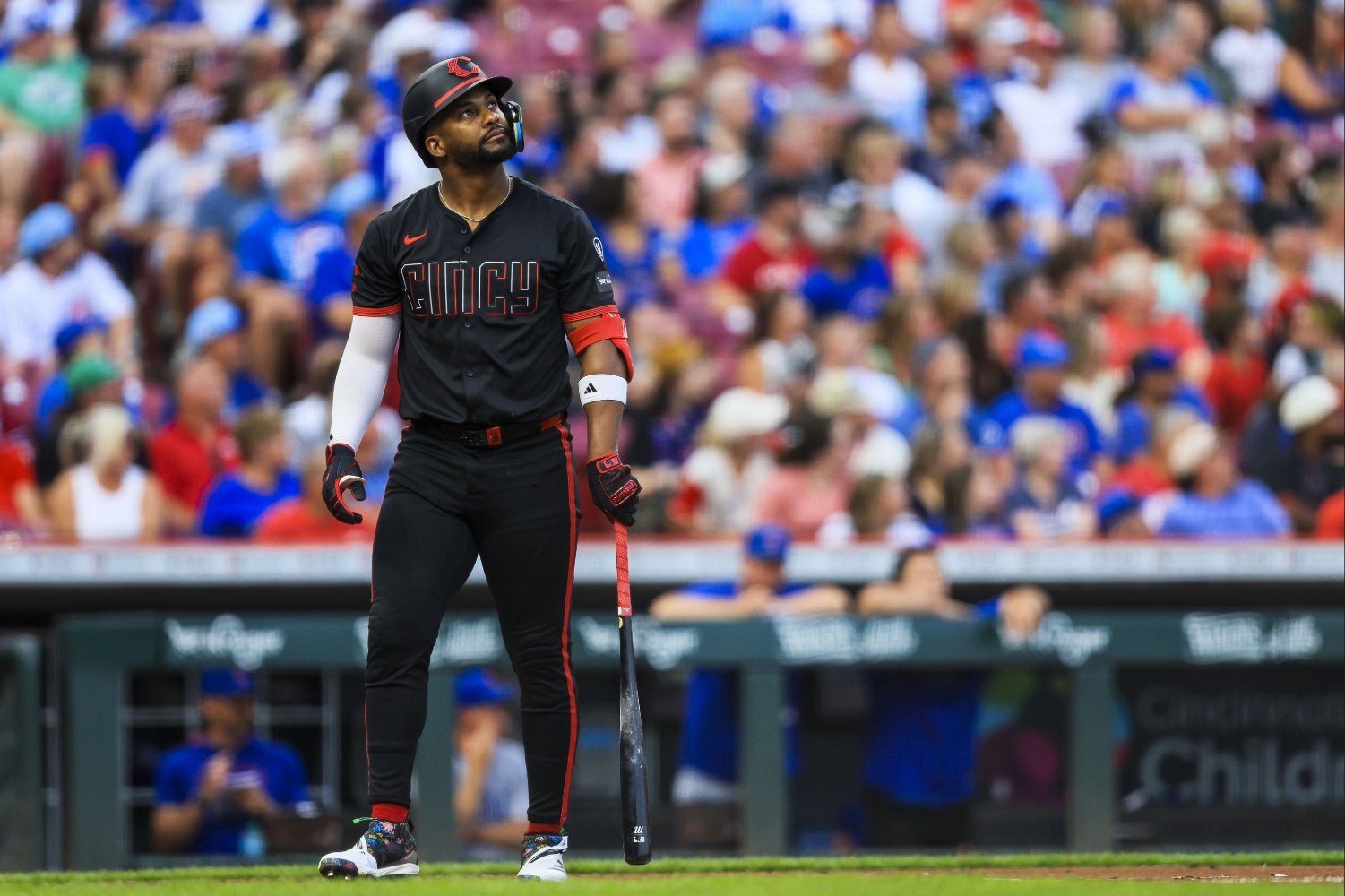 The San Diego Padres finally made the addition to their bench that had been coveted since the start of the offseason, signing Miguel Andujar to a one-year, $4 million contract. Considering the context of the roster and the team's finances at present, Andújar represented the ideal target among those that remain available in free agency. Andújar is coming off his best season since 2018. That year, he posted a 3.9 fWAR with the New York Yankees and finished as a finalist for the American League Rookie of the Year award. Such a breakout came courtesy of a .297/.328/.527 line that featured a .230 ISO and 129 wRC+. It also still stands as his peak, as the subsequent seasons were spent battling injury and toiling in the minor leagues with a handful of different organizations. After creeping his value back up to above average in 90 plate appearances with Pittsburgh in 2023 (105 wRC+), Andújar was able to maintain that level of performance in about a half-season's worth of work with Oakland the following year. In the latter, however, his power vanished to the tune of a .093 ISO. Nevertheless, the Athletics saw enough to let him hang around in 2025 before he was eventually traded to Cincinnati. All told, his 2025 season came with a 125 wRC+ and career-highs in batting average and on-base percentage. The power still wasn't back at his pre-2024 levels, but did show signs of reemerging at a .153 ISO figure. Despite the fact that he remained on the market at this late stage of the offseason, the reports of a number of teams interested in adding an effective bench bat go back several weeks. The Padres' current roster situation made the addition of Andújar kind of an essential one. This is a team that, on paper, has significant upside at the plate. They also lack depth in that ability to contribute on offense. With news that Gavin Sheets will get the first crack at holding down first base and designated hitter likely to be rotated out rather than feature a mainstay, the team was left with the likes of Sung Mun Song, Will Wagner, Mason McCoy, Luis Campusano, and Bryce Johnson behind their starters. Outside of Song, though, the offensive profiles of the remaining bench options read as uninspiring. With Song himself being a lefty, there was an imperative on adding some right-handed depth. Enter Andújar. Last year's group was in the bottom half of the league against southpaws, posting a collective 96 wRC+ that ranked 17th. On the power side, however, their .130 ISO sat only 23rd. Andújar should contribute massively in this regard, as his splits heavily favor matchups against left-handed pitching. He went for a 171 wRC+ against pitchers of that handedness last year against a 108 mark vs. righties. His ISO, at .189, was 50 points higher. In general, he doesn't walk much, with a 4.4 BB% in his career, but he also doesn't strike out either (15.5 career K%). That should fit the Padres well, too, given their penchant for contact over punchouts. The question of how Andújar will be utilized within this lineup isn't too difficult to solve, as a result. One imagines that he'll get plenty of run in the designated hitter slot against pitchers of the left-handed variety. Should Craig Stammen choose to deploy him in the field, though, he has some versatility to his name. Andújar logged time at each corner spot last year; he spent 13 innings at first base, 237 at third, 217 in left field, and 22 in right field. He's not particularly adept at the defensive work (he was either average or well-below at each spot), but the utility should prove valuable in the event that Stammen aims to get a regular off their feet for a day off. Even with this signing, Song will be the primary utility option off the bench. If the team can expand his utility to first and some work on the outfield grass, it'll only add to versatility that served as a centerpiece behind the appeal of his signing. But Andújar won't be far behind in his usage. Whether it's as the designated hitter or part of the rotation that figures to be incorporated regularly, he's not going to be wanting for playing time. For what it's worth, FanGraphs projects Andújar for a shade over 20 percent of the playing time at first, five percent at third, and another five in left. Baseball Prospectus has him living primarily as the DH (45 percent) and as a first base supplement (25 percent), with only another five that'll be spent in left field. The Padres should consider themselves somewhat fortune to be able to bring in this type of player at this stage of the offseason. Despite whispers that A.J. Preller had been working on something big around the Winter Meetings, it's been a while since they'd done something of note beyond a decent volume of minor-league signings. Andújar immediately changes the complexion of the roster and helps to quell prior concerns over the team's lack of depth on the positional side. View the full article
 -
 With an excess amount of depth from the outfield at both the major league and minor league levels, the Minnesota Twins are exploring the possibility of a recently acquired prospect trying their hand at a new position in 2026. In a recent episode of Inside Twins, general manager Jeremy Zoll said that Hendry Mendez would get an opportunity to play first base in 2026. Though it's not a position that Mendez has experienced, it is surely a position of need within the organization, and he's shown that outfield defense is not a strength of his. At the major league level, the Twins will likely use a combination of Josh Bell, Kody Clemens, and Victor Caratini at first. Behind those three, Aaron Sabato is the only real option, and it's pretty clear he's a long shot to contribute to the Twins, if there's a shot at all. Mendez, 21, was acquired from the Philadelphia Phillies in the Harrison Bader trade. He was added to the 40-man roster in November after a successful season at Double-A and in the Arizona Fall League. Though he didn't crack Twins Daily's top 20 prospect list in the last update, he was ranked as the Twins' 25th-best prospect by MLB Pipeline at the end of last season. After such a successful 2025, it's almost a guarantee he will move up in both lists. Do you think he can establish himself as a candidate for the Twins' first baseman in the future? Let us know in the comments! View the full article
 -
Can Connor Prielipp Deliver More Swing & Miss Outside The Zone?
DiamondCentric posted an article in Twins Daily
 The Tomah, Wisconsin, native had his healthiest season yet in 2025, but Connor Prielipp still allowed plenty of base hits within the strike zone. If Prielipp becomes more confident trying to get hitters to chase his stuff outside the zone, then he could be one of, if not the best, strikeout pitchers on the Twins this year. View the full article
 -
Josh Fleming Is Minor League Depth To Keep an Eye On
DiamondCentric posted an article in Jays Centre
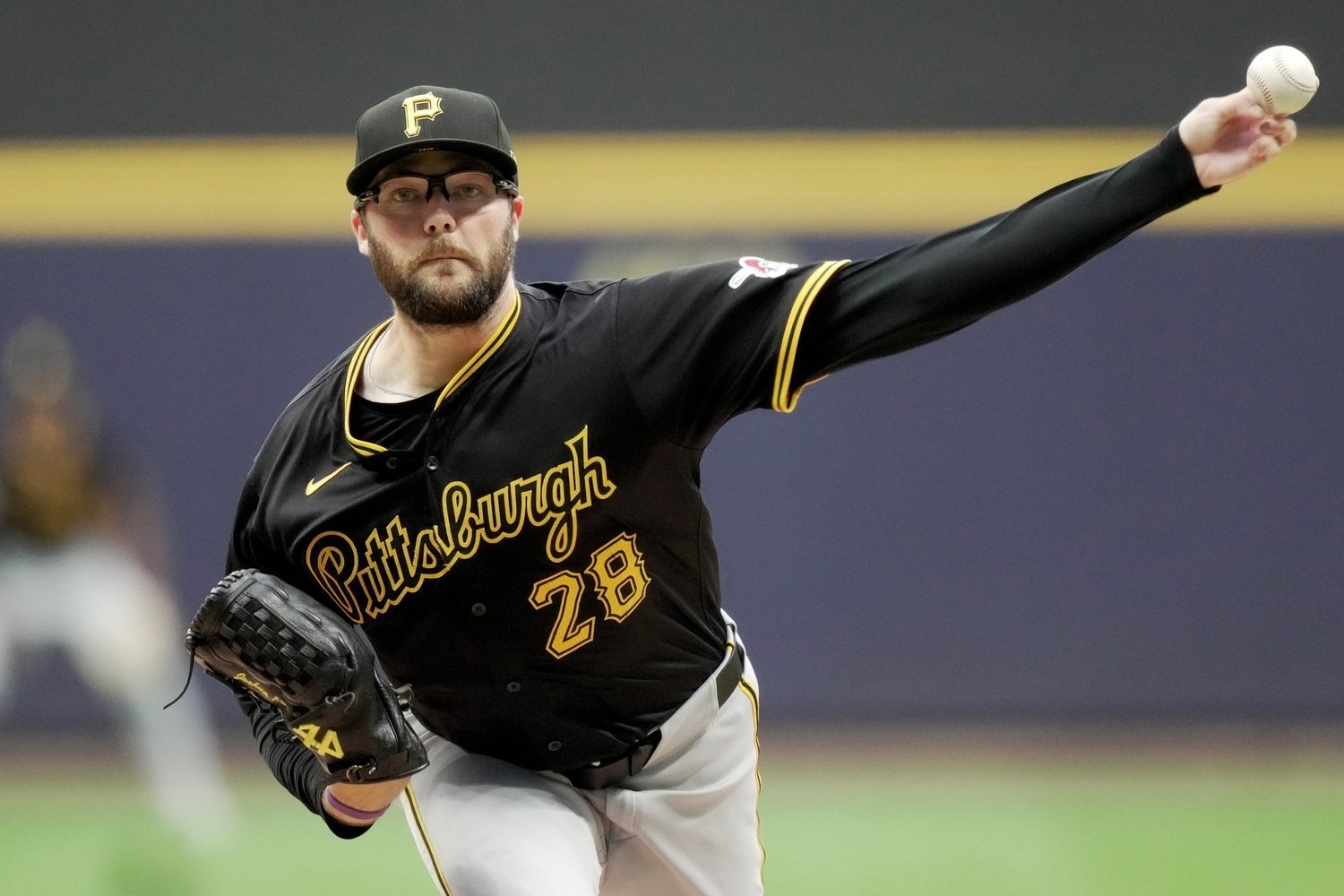 According to ESPN's Alden González, the Blue Jays have agreed to a minor league contract with left-handed pitcher Josh Fleming. González notes that the deal includes an invitation to big league training camp. He will join the ranks of the 27 other non-roster invitees that Jesse Burrill wrote about over the weekend. Fleming, 29, owns a 4.77 ERA and 4.53 xERA in 254.2 MLB innings for the Rays (2020-23) and Pirates (2024). While he doesn't miss many bats (14.6% strikeout rate, 20% whiff rate), he has excelled at inducing swings outside the zone (33% chase rate) and batted balls on the ground (58.4% GB rate). Pitch models like Stuff+ and PitchingBot have generally respected his arsenal; despite his mediocre career ERA, his 3.62 botERA and 110 Pitching+ are notably better than league average. His sinker, in particular, is a darling of both models. From 2020-24, his sinker ranked among the 25 best in the game (min. 200 IP, 5% sinker usage) according to the overall models Pitching+ and botOvr. If you aren't familiar with pitch models, here's all you really need to know: Fleming's sinker hasn't seen much success, but it shares characteristics with some of the most effective sinkers in the game. Fleming did not appear in the majors at all in 2025, instead tossing 84.1 innings over 47 games for the Mariners' Triple-A affiliate. He struggled to a 4.91 ERA, striking out just 11.5% of his opponents. There is certainly upside in his arm, but he'll turn 30 in May and has yet to realize his potential at the higher levels. He's a worthwhile pitcher for the Jays to take a chance on, but don't get me wrong, I'm not expecting another Eric Lauer here. The most likely outcome is that Fleming briefly makes the roster as an injury replacement and gives Toronto a handful of low-leverage innings with an ERA in the high 4.00s. Over a nine-year professional career, Fleming has gained experience as a starter, an opener, a long-reliever, and a more traditional bullpen arm. So, while he is unlikely to make the 26-man roster out of spring training, he can provide some much-needed southpaw swingman depth in the minors, filling the sort of role I imagined Kolby Allard could take on before Allard re-signed with the Guardians earlier this week. It's not necessarily an exciting role, but there's a reason I wrote about Allard before, and there's a reason I'm writing about Fleming now. This team needed left-handed depth. Badly. The Blue Jays currently have five left-handers on their 40-man roster, though only three have pitched in the majors: Eric Lauer, Brendon Little, and Mason Fluharty. (Ricky Tiedemann and Adam Macko have yet to make their MLB debuts.) Aside from Fleming, the only other lefty in the organization with any big league experience is fellow NRI Michael Plassmeyer, who threw 11 innings over three games for the Phillies from 2022-23. Toronto won't be planning to call on Fleming anytime soon, but if he forces the issue with a strong performance, or if injuries force the issue upon him, the Jays could end up very grateful they made this mid-winter minor league signing. View the full article
 -
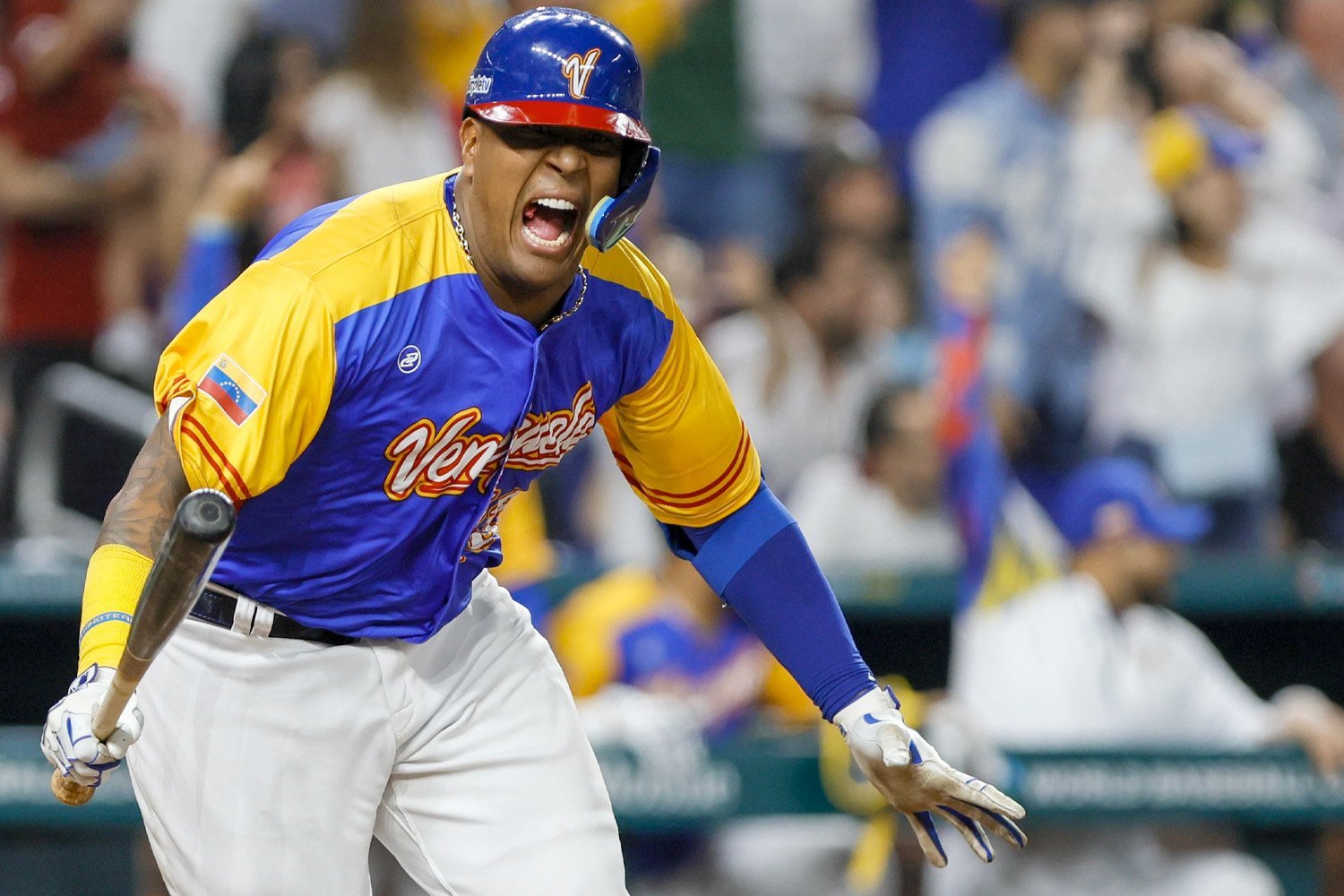 As Major League Baseball teams prepare to enter spring training, a new season will be on their minds, but for many players, the season kicks off in early March with the 2026 rendition of the World Baseball Classic. The tournament will begin on March 5th and wrap up on March 17th before the regular season kicks off for the Kansas City Royals on March 27th in Atlanta. Seven Royals players have been selected for the 2026 WBC: Bobby Witt Jr., Salvador Perez, Maikel Garcia, Vinnie Pasquantino, Jac Caglianone, Seth Lugo, and Carlos Estévez. Team United States of America Witt Jr. will be appearing in his second straight WBC, after debuting in 2023 when the USA fell to Japan 3-2 in the finals. Witt Jr. went 1-for-2 in the 2023 tournament at the age of 22 years old. This time, Witt Jr. is expected to take on a bigger role as one of the faces of MLB. “It’s an honor, and the last time we did it, we fell a little short,” Witt Jr. said. “So I just wanted to help the team win gold and help the country win gold.” Witt Jr. is coming off a season that saw the shortstop bat .295 with 23 home runs, 88 runs batted in, and 38 steals. A career .290 hitter, with an on-base percentage of .340, Witt Jr has the chance to be an integral piece of bringing a championship to the USA’s side. Team Venezuela Both Perez and Garcia will be representing Venezuela when they square off with the Netherlands on March 6th in Miami. 2026 will be Perez’s fourth WBC, and he was named captain of Venezuela. In 2023, Venezuela lost 9-7 to the USA in the quarterfinals. Perez batted .429 with one home run and six RBIs in 2023, earning himself a nod to the All-WBC team. Last season, Perez batted .236 with 30 home runs and 100 RBIs. Garcia will be representing Venezuela for the first time at the WBC, after a strong 2025 season that saw the third baseman bat .286 with 16 home runs, 74 RBIs, .351 OBP, and 23 steals. The 25-year-old won his first Gold Glove in 2025 and was nominated for a Silver Slugger at the utility position. In December, the Royals and Garcia agreed to a five-year contract worth $57.5 million with a club option for 2030. Team Italy Pasquantino and Caglianone will be joining forces on Team Italy, as they look to build on a strong 2023 WBC, which saw them fall 9-3 in the quarterfinals to the eventual champions, Japan. This will be the second straight tournament for Pasquantino, who was a part of the 2023 team, batting .200 with a .273 OBP across 20 at-bats. Last season, Pasquantino batted .262 with 32 home runs and 113 RBIs, leading the Royals in both home runs and RBIs. The 22-year-old Caglianone will be making his WBC debut in 2026, after debuting in MLB in 2025. Last season, Caglianone batted .157 with seven home runs and 18 RBIs in 62 games. Team Puerto Rico Lugo will be making his second career trip to the WBC in 2026, after pitching for Puerto Rico in 2017. At the 2017 tournament, Lugo appeared in three games, going 2-1 with a 4.20 ERA. Lugo recorded 12 strikeouts across 15 innings, including seven strikeouts in the Gold Medal game against the USA. Lugo was charged with the loss after allowing four runs across four innings, in an eventual 8-0 USA win. Last season, Lugo pitched in 26 games, posting a record of 8-7, an ERA of 4.15, and a WHIP of 1.29 across 145 ⅓ innings. The 36-year-old dealt with two separate trips to the injured list, so the Royals will want to make sure his health is 100% before leaving for the tournament. Team Dominican Republic After a 2025 season that saw Estévez lead MLB with 42 saves, the 33-year-old will be returning to the Dominican Republic team, looking for better results than 2023, a tournament that saw them knocked out in the first round. Dominican Republic finished third in Pool D after going 2-2. In 2025, Estévez went 4-5 with an ERA of 2.45 and a WHIP of 1.06. The Royals’ closer pitched in 67 games, recording 54 strikeouts. View the full article
 -
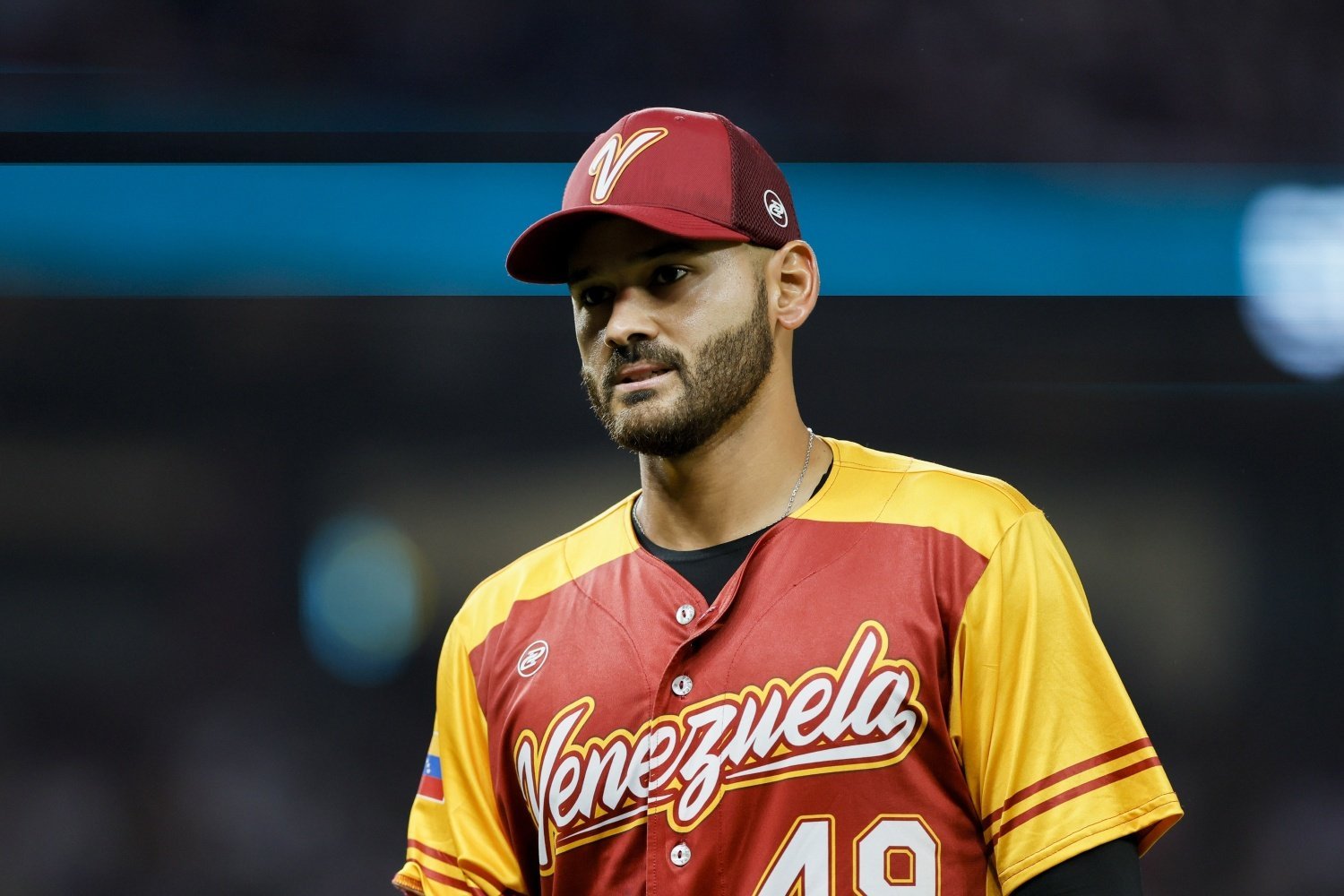 Their inclusion was announced weeks—even months—ago, but with the tournament around the corner, it's a good time to note that three Minnesota Twins will represent their home countries in the World Baseball Classic. Byron Buxton and Joe Ryan will don the stars and stripes for Team USA, with Pablo López potentially holding down a rotation spot for Team Venezuela. His inclusion has not been officially confirmed by Major League Baseball, but reports surfaced a few weeks ago saying he would be on the roster. Newly-signed catcher Victor Caratini was also planning to play for Team Puerto Rico, but he and a handful of his countrymen (including former Twin Carlos Correa) were reportedly denied insurance for these games and are thus not included on the roster. The tournament runs every three years, and is largely seen as the game’s highest level of international competition. While baseball has been on various Olympic games dockets, it traditionally has not included MLB stars. The WBC has attracted far more established, household names over the years, and continues to grow in popularity. For three weeks starting on March 5, 20 teams will go head-to-head, starting with pool play, then advancing to a bracket. It culminates with a championship game on March 17 at loanDepot Park in Miami. Buxton should get plenty of playing time even in a star-studded outfield for Team USA, where he’ll likely split center field duties with Chicago Cubs star Pete Crow-Armstrong. Buxton may have the edge as a veteran, with a longer track record when it comes to his hitting ability, but Crow-Armstrong was one of the best in the game when it came to defense in 2025. They’ll be joined on the outfield grass by Aaron Judge and Corbin Carroll. Perhaps this will be the first time we see Buxton in a corner outfield role in his professional career, should manager Mark DeRosa decide to mix and match for platoon advantages. Ryan is joined in the starting rotation by reigning Cy Young winners Paul Skenes and Tarik Skubal, along with Logan Webb. Clayton Kershaw is also on the roster, but it’s unclear if he’ll work in a starting or a relief role in what will be the final professional appearance of his illustrious career. Regardless, Ryan is primed to get at least one start, especially if Team USA makes it out of pool play. Notably, Ryan represented Team USA in the 2020 Summer Olympics, where he earned a silver medal. López would be the highest-profile starter on Team Venezuela’s roster, where he’d be joined by fellow MLB veterans Germán Márquez and Eduardo Rodríguez. Of note, López dazzled in the 2023 WBC, highlighted by a 4 ⅓-inning gem against Puerto Rico wherein he only allowed two hits and an earned run while striking out six. A handful of old friends are also participating in this year’s games. Former Twins pitcher Griffin Jax (currently on the Tampa Bay Rays) will join Buxton and Ryan on Team USA. Slugger Carlos Santana (Arizona Diamondbacks) will yet again represent Dominican Republic, where he’ll be joined by one-time Twins spring training invitee Dennis Santana (Pittsburgh Pirates). Harrison Bader (San Francisco Giants) will play for Team Israel, and Willi Castro (Colorado Rockies) will represent Puerto Rico. Liam Hendriks (free agent) will play for Team Australia, as he hopes to continue his playing career, and Terrin Vavra (free agent), the former University of Minnesota Golden Gopher and son of former Twins coach Joe Vavra, will represent Team Czechia. WBC games kick off at 9 PM CST on March 4, and can be seen on FOX, FS1, FS2 and the FOX Sports app. View the full article
 -
 We know the Kansas City Royals brought in Isaac Collins and Nick Mears for Angel Zerpa at the tail end of the 2025 calendar year. What we don't know is what Collins will truly bring to the table... until now. Here's a deep dive into Collins' strengths, weaknesses, and just how much of an impact he can make in the Royals' clubhouse after a meteoric rise in the last two seasons. View the full article
 -
 Framber Valdez is one of the most enticing southpaws still on the free agent market. Should the Blue Jays sign up, and what are the optimal conditions? We dive into it all. This video covers his strengths, weaknesses, the tough back end of last year, and the criteria a hypothetical deal would look like. View the full article
 -
Will Nico Hoerner's Second-Half Power Carry Over into 2026?
DiamondCentric posted an article in North Side Baseball
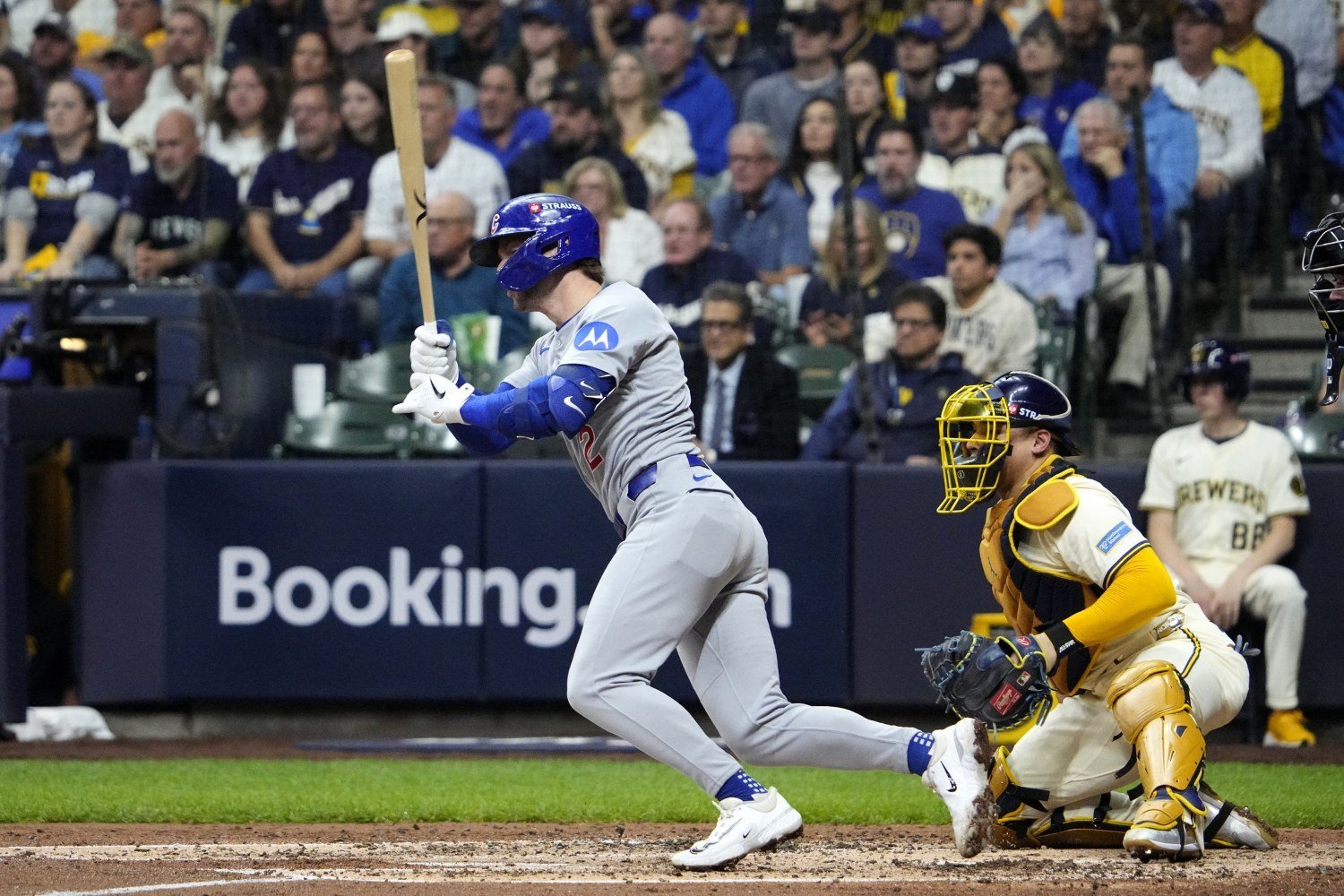 Earlier this week, Matt Trueblood explored whether a pair of Chicago Cubs infielders can continue to thrive in a specific nuance within their offensive skill set. That was an analysis of squared-up contact off the bats of Nico Hoerner and Alex Bregman. Relatedly, today, let's dig into Hoerner, and how some of that clean contact translated into power production as last year wore on. In 2025, Nico Hoerner had his best offensive season to date. His wRC+, at 109, was a shade above the previous career mark set in 2022, while his strikeout (7.6%) and contact (89.8%) rates each checked in above anything else he'd turned in prior to last year. Such obscene contact rates aren't always indicative of quality offensive performance on their own (see Luis Arráez), but the combination of all-fields contact and the baserunning component helped him be one of the Cubs' most important bats despite the extremely limited power inherent to his skill set. It's that power aspect of his game that we're most interested in. Hoerner's .097 isolated power was his lowest output since 2021, and his 30.3% hard-hit rate checked in below his career average. However, looking at the full-season numbers might be hiding a small breakout. Hoerner's second half of the season was better than his first in almost every way. He went for a 122 wRC+, with an average that was nearly 30 points higher and a much better OBP than in the first half. His walk rate was one percentage point higher (6.6%), while his strikeout remained about the same. He also hit for slightly more power. First Half: .094 ISO, 27.5 Hard-Hit%, 17.6% Line Drives, 16.0% Fly Balls Second Half: .100, 34.3%, 24.3%, 30.0% The first thing worth noting there is the minimal gap in ISO figures. Isolated power shows only how many extra bases (beyond singles) a player produces per at-bat, but if we were to throw in slugging percentage to fold in his extra singles, we'd see a jump from .377 in the first half to .418 in the second. His expected slugging increased much more, though. Hoerner went from a .361 xSLG in the first half to a .432 in the second. As it was, he ended up with fewer doubles but more home runs than he had in the first half, all in roughly 100 fewer plate appearances. Hoerner was, objectively, a more powerful hitter in the second half of 2025 than he was in the first. That brings us to the natural question of whether or not we'll see any carryover early in 2026. The squared-up contact explored by Trueblood does not necessarily beget power outcomes. The mechanics of a swing are prone to too much nuance to simply declare a hitter who can square the ball up can also actually drive it. In Hoerner's case, there doesn't appear to be anything specific in those mechanics that enhanced his power as the season wore on. His bat speed changed only marginally throughout the months, while each of his attack direction and attack angle fluctuated in noisy ways that don't yield much of a narrative. If we're going to find evidence of real power development, we'll probably find it in his pitch selection. Hoerner's extra-base power comes mostly against fastballs. Fifteen of his doubles, three of his four triples, and three of his seven home runs came against that pitch type. However, there did not appear to be a concerted effort from Hoerner to swing at more fastballs as the year wore on: If there's anything in the fastball aspect, it's that Hoerner swung at more of them inside the zone in the last three months of the year. In July, he swung at 60.2% of fastballs in the zone, which increased to 63.8% in August and 66.4% in September. For a certified trend, however, we need to keep looking. The following is (first) where Hoerner's ISO came from in the first half of the season, and (second) his swing rate by location for that period: The minimal hot spots on his ISO chart are unsurprising, given how little we saw from that aspect of Hoerner's output in the first half. He needed to be able to drop the bat head on the ball and get around it, low and in, to produce power in that span. It's also not surprising that the range of hot spots in the swing rate is as expansive as it is; Hoerner is an aggressive hitter. He got more patient in the second half, though. When we shift each of these zones to the stretch after the All-Star Game, things get interesting. Potentially. While still a pretty wide set, Hoerner's swings became at least somewhat more concentrated on the middle and inner parts of the zone. Where has Hoerner been able to generate the most power in his career? You guessed it: Because of the small sample size, we can't say for sure that this is intentional, but it's a noteworthy change. If Hoerner is more committed to selectivity within the zone, emphasizing the locations where he can generate power but attacking in-zone fastballs, he could sustain a higher level of power production than he's shown for most of his time in the majors. We certainly shouldn't be expecting Hoerner to evolve into a 20-homer guy in 2026. Even his increased power output didn't put him on pace for anything like that. However, Hoerner seems to be honing an approach that can work in a more consistent way, with a balance of elite hitting for average and modest but measurable pop. View the full article
 -
Could the Brewers Take a Page Out of Guardians’ Playbook?
DiamondCentric posted an article in Brewer Fanatic
 Milwaukee and Cleveland have a lot in common. They’re both in what many coastal dwellers would deem “flyover states." They both sit on the shores of one of the Great Lakes, where they became major hubs of commerce because of their ports. Both cities have seen their populations stagnate or shrink, relative to other big cities, as the things that powered their economies have been made obsolete or changed in such major ways that they no longer dominate the marketplace, but neither absorbed quite as hard a punch as Detroit and Pittsburgh did at the end of the 20th century and beginning of the 21st. They're tough, proud Midwestern towns. They have even more similarities when it comes to baseball. Both teams have found consistent regular-season success despite operating on a shoestring budget, but have failed to make deep runs. Neither city has won a World Series since color television was introduced to U.S. markets. The now-Guardians last won in 1948; Milwaukee hasn't seen a champion since before the Brewers came to town. However, one thing the Guardians have that the Brewers don’t is a player on a Hall of Fame track who will likely wear but one jersey for his entire career. Last week, José Ramírez agreed to an extension that will keep him under club control until 2032, his age-40 season. This is the third extension he has signed with the club, but given his consistently incredible production, it’s no wonder that Cleveland wanted to keep him around for the long haul. His $18.36-million salary in 2026 (it's $25 million, technically, but he'll receive just $15 million of it this year, and the deferral structure of the rest dramatically reduces its value) currently represents roughly 24% of the Guardians’ total payroll, which is more of an indictment of just how little the franchise spends than it is evidence that he’s being overpaid. The team’s current 40-man payroll of $76.2 million pales in comparison to the Brewers’ $123.5 million, which means that if they wanted to, Milwaukee could make a similar move. The Brewers are no stranger to getting ahead of the curve when it comes to locking down promising talent on team-friendly terms. In 2023, Jackson Chourio signed an eight-year, $82-million extension, the largest in history for a player yet to debut. Before the 2020 season, Freddy Peralta signed a five-year, $15.5-million extension with club options. Aaron Ashby signed a very similar deal, for slightly more money over the same span. None of these contracts quite stack up to Ramírez’s deal. Ashby has been held back by injury, Peralta was traded to the Mets this offseason, and Chourio could be a Brewer for life, but since he’ll be 30 years old when the final club option expires, there’s a chance he gets another long-term deal in free agency. Signing Chourio to that early deal did give the team both leverage and goodwill with him, and maybe they can convert that to tangible value by going to him with an offer for another extension in a few years, before the end of his current deal is really in sight. That's what's worked for the Guardians and Ramírez, but there's no guarantee that it will work the same way with Chourio. If none of these three will end up being Milwaukee’s Brewer for Life, are there other candidates for the role? On the current big-league roster, the answer is probably no. There simply isn’t enough compelling talent on a Hall of Fame trajectory (at least not yet) to justify it. The closest candidate might be Brice Turang, who has been one of the squad’s most valuable assets over the past two years. An extension may be in his near future, but he’ll likely hit the free market at least once before hanging up the cleats, especially if his production remains consistently strong. He's not terribly dissimilar to the player Ramírez was at the same stage in his career, when Cleveland first captured his long-term upside with a Peralta-like deal, but Turang has already made almost $7 million in professional baseball, not to mention the $4.15 million he'll earn on the deal he and the team have already struck for 2026. When Ramírez signed his first deal, he had made less than $1.5 million, and unlike Turang, his dad was not a former big-leaguer, so the promise of an eight-figure payday made a much bigger difference in his life. There’s more hope in the farm system. If anyone currently in the organization has a chance of being the next franchise player, it’s one of the Brewers’ top two prospects. Both Luis Peña (MLB No. 18 overall prospect) and Jesús Made (No. 4) already have considerable hype, despite neither player being 20 years old. Luis Peña signed for $800,000 in the 2024 class of international free agents and was exceptional in the 2024 Dominican Summer League, posting a 177 wRC+ and winning the batting title with a .393 average. He also stole 39 bases in just 44 games, making the most out of his 70-grade speed. His numbers were more modest in his first full season in the minor leagues, posting a 139 wRC+ in Low A but struggling to a 42 wRC+ over 109 plate appearances in High A. At 19 years old, he has plenty of time to develop, but there’s too much uncertainty to warrant an extension at this time. More plate appearances against higher-level competition will give us a better idea of how his game will adapt over time. Because his biggest strength is arguably his speed, we'll need more time to evaluate whether he can remain valuable into his late 20s and his 30s, once he loses a step. Made was a part of the same international free agent class as Peña, and got a bigger signing bonus ($950,000). Although he’s slightly younger, he dominated High A last year, posting a 157 wRC+ across 123 plate appearances, resulting in a short stint at Double-A Biloxi. He had a 12.8% walk rate across all levels of the minor leagues, but struggled to hit for power, posting an underwhelming .128 ISO. Although he didn’t get a chance to put his pop on full display, Made is an immensely well-rounded talent. He has few weaknesses in his game. His defensive flexibility is a strength, but the current goal seems to be to keep him at shortstop. If he stays the course, the offensive upside he brings to a premium defensive position could be too good to pass up. Ramírez debuted in 2013, at age 20, and by the time he was 24, he signed his first five-year deal for just $26 million. His style of play and versatile profile have allowed him to maintain a consistent level of production over his 13-year career, and he hasn’t shown any signs of slowing down yet. As things stand, Made is the closest comparison to him within the Brewers system. Like Ramírez, Made is toolsy and already off to a hot start as a baseball professional. Like Ramírez, Made won’t get a lifetime extension off the bat; he'd have to earn it and decide to embrace the community multiple times. For a team with Milwaukee’s spending habits, getting a true franchise player is something most fans can only dream of. Christian Yelich is the closest thing the organization currently has, and he spent several of his best years in Miami. Even once you find that guy, when you play in the league's smallest media market, he has to want to be around for the long haul. Ramírez only got $50,000 when he first signed out of the Dominican Republic, so locking him up on that first contract was easy. With each of the last two, though, Cleveland has gotten very lucky—and has been rewarded for very good relationship-building. Ramírez loves the organization and the city, and he's agreed to deals he knew were less lucrative than ones he could have found elsewhere. If a player is ever going to have a Ramírez-like Brewers tenure spanning their entire career, it will have to be because they, too, have fallen so in love with the team, the city and the fans that they would eschew tens of millions to stay. That could be Chourio, Turang, Made or Peña, but the truth is that it's unlikely to happen at all—even in a city so significantly similar to the one where it's happening now. View the full article
 -
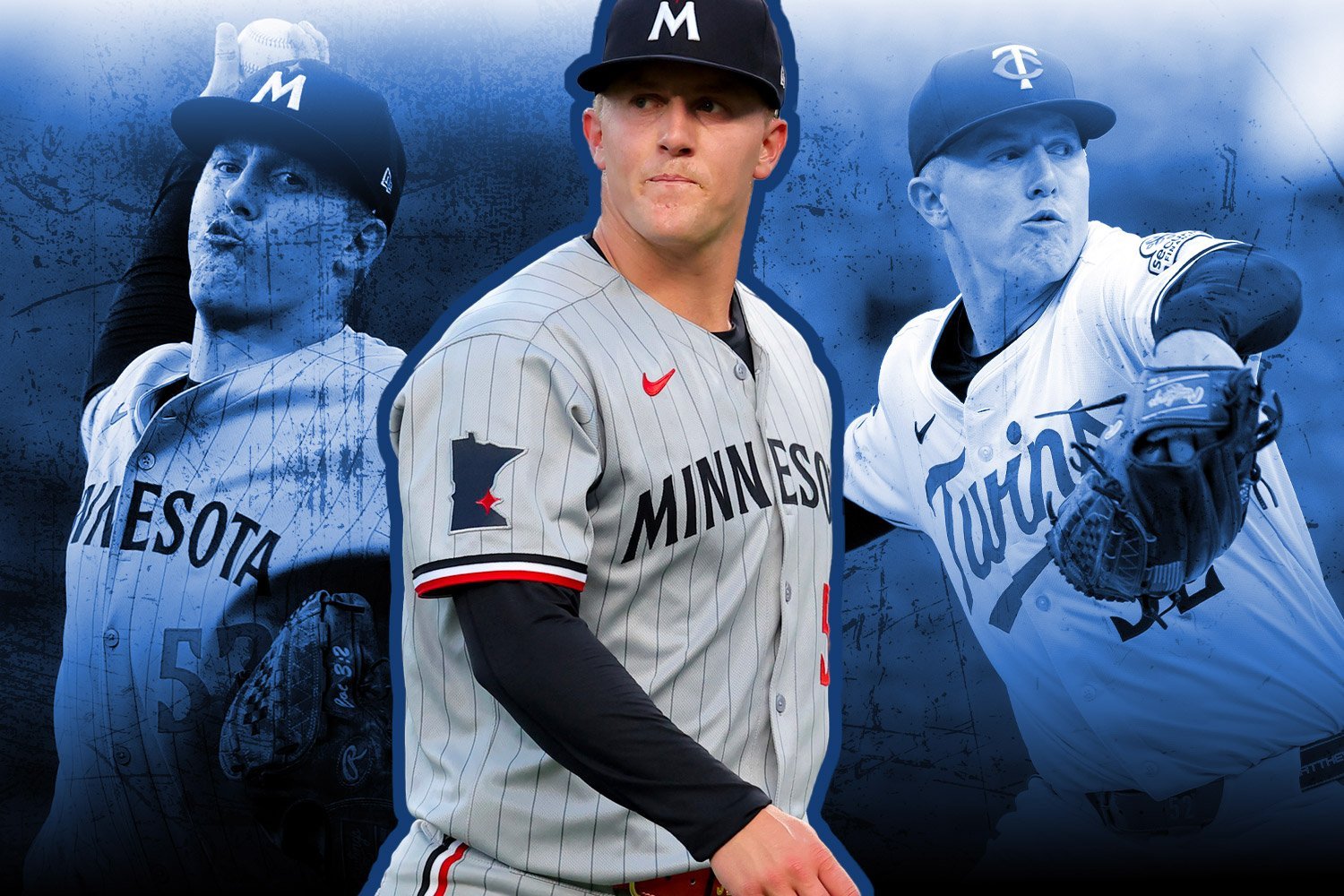 Perhaps no other Twin in recent memory saw their prospect stock rise more rapidly than Zebby Matthews. Selected with the 234th pick in the 2022 draft out of Western Carolina and signed for a paltry $125,000, Matthews grew from an afterthought to a top prospect at virtually the speed of light, debuting by mid-August 2024. Unfortunately, Matthews’s once-bright flame has dimmed in the eyes of some, due to inconsistent performance across 117 major-league innings. His rise was fueled by an uncanny ability to live in the zone, missing bats and not giving up any walks, while drastically improving his fastball velocity. In the majors, his walk rates have nearly tripled from approximately 2.0% in the minors to 6.6%, while his strikeout rates have dropped by roughly eight percentage points. These decrements in performance, albeit in a relatively small sample, have begun to beg the question: Is Zebby Matthews’s future in the starting rotation or the bullpen? Zebby Matthews’s Stuff & Pitch Arsenal On paper, Matthews boasts a prototypical 2026 starting pitcher repertoire. He primarily relies on his four-seamer and slider, dispatching them against lefties (293 and 140, respectively, in 2025) and righties (263 and 199) at an equal clip. Matthews employs his cutter slightly more often against left-handed hitters (103 vs 73), though the sample size for each is quite small, and virtually only throws his changeup against lefties (104 vs. 39). Sprinkle in the occasional curve and sinker to keep hitters on their toes, and Matthews arsenal is sufficient for a starting pitcher… in theory. In practice, at least at the MLB-level to date, Matthews really only has one pitch that has performed well: his gyro slider. As shown in the movement profile graph and implied in the slider heat map above, Matthews’s slider features significantly more drop (vertical break) than it does sweep (horizontal break). This is due to the pitch featuring more gyroscopic (think football spiral) spin than side spin. Gyroscopic spin does not influence pitch movement, meaning that the majority of the ball’s movement is simply due to the pull of gravity as it flies through the air. Across 525 major league offerings, opposing hitters have managed a meager .568 OPS against Matthews’s slider, per FanGraphs, driven by a high-30% whiff rate in combination with a 42% ground ball rate. In essence, when Matthews’s throws his slider there’s high chance that the batter is either going to miss it entirely or pound it into the ground. The rest of Matthews’s arsenal has been varying degrees of lackluster, even this four-seam fastball, whose crazy velocity creep helped him rapidly rise through the minors. Pitchers can overpower minor league hitting with pure velocity, something Matthews and his mid-90s fastball accomplished. However, the same can’t be said for major league hitting. Generally speaking, if a fastball is going to be a pitcher’s best offering in the majors, it not only needs to possess high velocity readings but also have a movement profile that makes hitting it squarely extremely difficult. MLB hitters can hit straight gas; hitting moving or deceptive gas is much more difficult. When analyzing the movement profile, or shape, of a fastball, there are two metrics worth considering: induced vertical break and horizontal break. Induced vertical break measures how much the ball drops solely due to its spin, taking gravity out of the equation. If a fastball has a high degree of spin, it will, more often than not, register a higher induced vertical break, meaning it doesn’t drop. This will produce an illusion in the hitter’s brain, making it seem as though the ball is rising. Horizontal break measures how much the ball moves, well, horizontally; if it moves towards the glove side of the pitcher, we say it has ‘cut’, and if it moves towards the hand side, we say it has ‘run’. Year Pitch Type # # RHB # LHB % MPH PA AB H 1B 2B 3B HR SO BBE BA XBA SLG XSLG WOBA XWOBA EV LA Spin Ext. Whiff% PutAway% 2025 Four Seamer 556 263 293 41.1 96.2 123 112 40 25 8 0 7 30 85 .357 .303 .616 .571 .422 .394 92.7 23 2331 6.6 22.4 19.4 2025 Slider 339 199 140 25.1 88.2 113 107 16 11 2 0 3 50 58 .150 .184 .252 .326 .193 .237 87.5 10 2419 6.4 38.5 24.3 2025 Cutter 176 73 103 13.0 91.7 54 42 14 12 1 0 1 3 40 .333 .318 .429 .482 .405 .414 88.7 15 2494 6.5 24.2 8.6 2025 Changeup 143 39 104 10.6 87.5 32 31 11 7 3 0 1 1 31 .355 .317 .548 .426 .374 .346 86.3 6 1499 6.4 26.3 5.3 2025 Curveball 79 38 41 5.8 82.9 14 14 5 4 1 0 0 2 12 .357 .304 .429 .487 .342 .338 88.9 38 2435 6.3 34.5 10.5 2025 Sinker 60 58 2 4.4 95.8 18 17 8 8 0 0 0 2 16 .471 .264 .471 .320 .415 .255 77.2 6 2317 6.6 7.7 50.0 2024 Four Seamer 307 115 192 42.8 94.9 66 59 17 7 5 0 5 17 42 .288 .262 .627 .592 .417 .394 94.3 19 2230 6.5 17.8 21.3 2024 Slider 186 92 94 25.9 87.2 57 52 16 12 2 0 2 20 32 .308 .251 .462 .400 .363 .318 90.2 11 2349 6.4 37.6 23.5 2024 Cutter 116 62 54 16.2 90.9 30 29 10 7 0 0 3 2 27 .345 .295 .655 .674 .434 .418 87.3 17 2403 6.4 18.2 18.2 2024 Changeup 57 2 55 7.9 85.8 9 9 2 1 1 0 0 0 9 .222 .348 .333 .512 .237 .378 86.6 -5 1550 6.4 31.3 0.0 2024 Curveball 51 9 42 7.1 81.7 15 15 6 4 1 0 1 4 11 .400 .327 .667 .558 .455 .377 87.9 16 2369 6.3 17.4 14.8 Generally, there is a trade-off between a fastball’s induced vertical break and horizontal break; more in one generally leads to less of another. This is where Matthews’s fastballs—both his four-seam and sinker—struggle. The induced vertical break of his four-seamer is 16.6 inches, and his horizontal break is 9.0 inches of run; for his sinker, it is 13.1 inches and 15.2 inches, respectively. These are what are known in the industry as “dead zone” fastballs. Essentially, to the batter’s eye, they appear straight, not having enough induced vertical break to produce the rising illusion and not enough horizontal break to be difficult to square up. Since Matthews’s made his debut, opponents have produced a .944 OPS (839 pitches) against his four-seamer and a 1.368 OPS (82 pitches) against his sinker. His cutter (.955; 294), changeup (.817; 200), and curve (.931; 130) haven’t fared much better. However, there are some intriguing data points embedded within Matthews’s splits statistics. Namely, they suggest that he is much better against righties than lefties to the tune of .230 points of OPS (.944 OPS against 278 lefties and .714 OPS against 253 righties) and 4.0% K-BB% (20.2% vs. 16.2%). Which informs… What Should Zebby Matthews’s Role Be In 2026? It’s extremely difficult to be an MLB-caliber starting pitcher with only one good pitch. Luckily, carving out a productive career out of the bullpen is relatively achievable. Matthews’s career to date is not all that dissimilar to that of Glen Perkins, Tyler Duffey, and, more recently, Griffin Jax. These were all starting pitchers who experienced great success in the minors before struggling mightily once they reached the majors because their middling repertoires were exposed. However, a shift to the bullpen and increased emphasis on their best pitches transformed them into, at times, devastating backend relievers. For Matthews to project as a starting pitcher moving forward, he likely needs to add at least one more above-average pitch—perhaps a sweeper or kick-change to complement his gyro slider?—and/or improve the shape of his fastball. Neither is a particularly easy task, though adding a new pitch is significantly more trainable than adding isolated pitch spin/induced vertical break. The Twins have far more metrics available to them, including whether Matthews is more of a natural pronator or supinator, which would influence which pitches would be easier to add, as well as linear and rotational force-velocity data, which would indicate if there is any additional athletic performance meat being left on the bone. The Twins may continue to employ Matthews as a starter, but, as things stand right now, his profile is much more suitable for a bullpen role. View the full article
 -
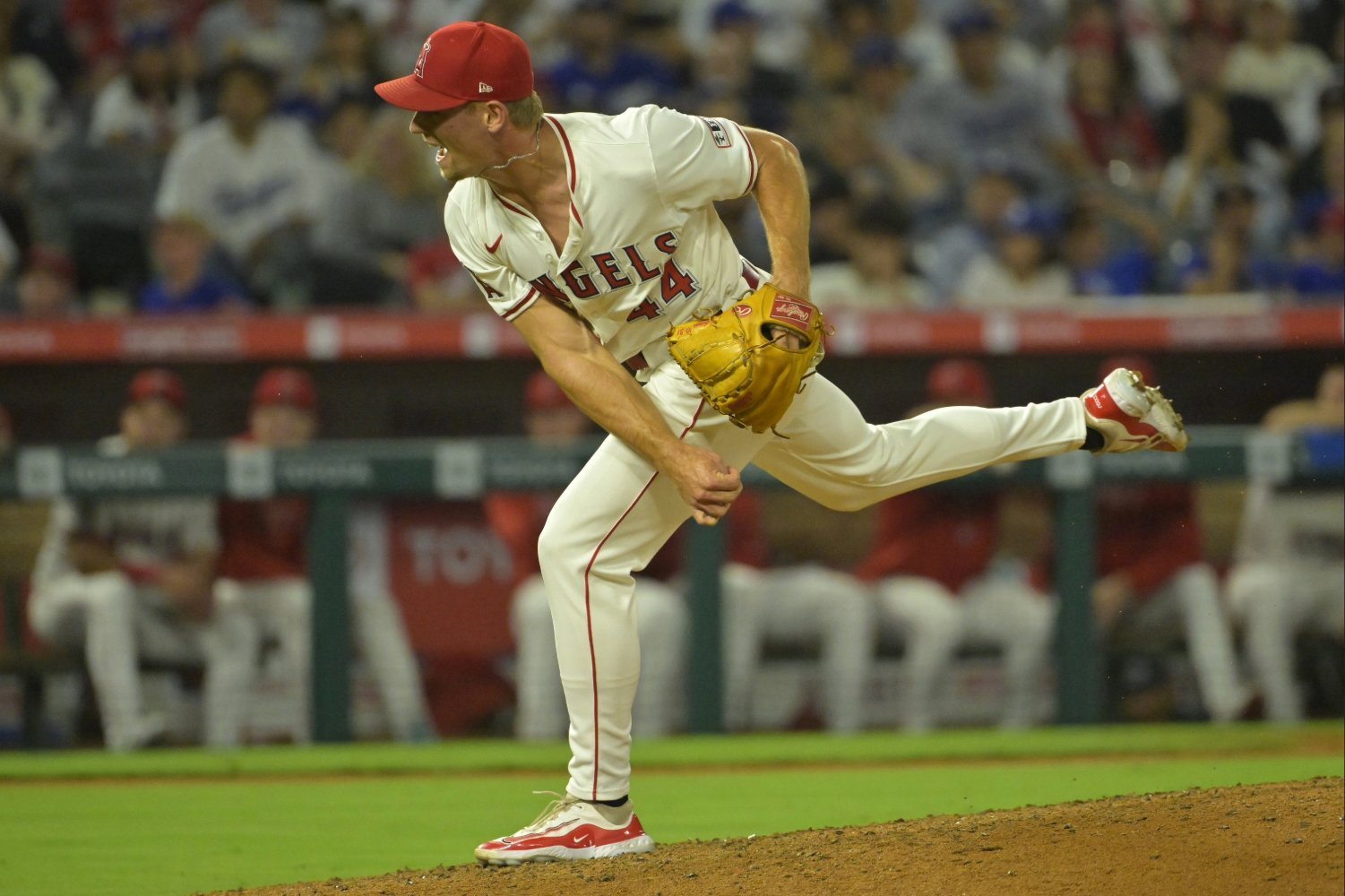 In what some (e.g., me) are calling the move of the offseason, the Boston Red Sox have traded Jordan Hicks to the Chicago White Sox in a move to get the majority of his salary off of their payroll. While moving Hicks to the other Sox team likely makes the bullpen better — his 8.20 ERA and -0.4 fWAR over 18 2/3 innings with the BoSox left much to be desired — it creates another hole to fill for Craig Breslow as spring training rapidly approaches. Hicks, for all his faults, was a power-throwing right-handed reliever. The biggest issue with the timing of the Hicks trade is that the free-agent market doesn’t offer a ton of upside at this point in the offseason. Craig Breslow has an affinity for making trades though, so there could be a deal to be found in the near future. With that in mind, let’s look at some arms that could enter the Red Sox's radar before Opening Day. Orion Kerkering, RHP, Phillies This may be the most farfetched option on the list, but it’s worth mentioning nonetheless. The Phillies believe they are closer to their title window closing than it opening and need to make some moves to get younger across the diamond. Kerkering is young, only 24, and would be costly to acquire with his four remaining years of team control. He features a three-pitch mix with a four-seam fastball that tops out at 97.5 mph and a sinker that clocks in at 96.4. His sweeper works as an out-pitch and has enough break to be useful against left-handed hitters as well. Getting him in Andrew Bailey’s pitching lab could help unlock the next gear for Kerkering, even if the cost to land him is greater than others on this list. Lucas Erceg, RHP, Royals The Royals and Red Sox have been rumored to be perfect trade partners for practically the entire offseason, but maybe we all were focused on the wrong Royal in the deal. Sure, Cole Ragans was enticing, but with Ranger Suarez in the rotation, Breslow could pivot to another arm in Kansas City that would help solidify the bullpen. Erceg has the firepower with two pitches, his fastball and sinker, to replace Hicks in the pen while upping the production from the same spot. Erceg’s fastball tops out at 97.6 mph while his sinker comes in at 97.5. He also employs a slider and changeup that induce groundball outs. He’s under arbitration and won’t be a free agent until 2030 so, like Kerkering above, he will be costly. Ben Joyce, RHP, Angels Okay, maybe this is the most farfetched option on this list, but the Angels should be listening to offers on Joyce if people are calling. He’s young and an absolute flamethrower, but he has had issues missing bats and dealt with a shoulder injury that required surgery in 2025. His four-seam fastball tops out at 101.1 mph and he’s been electric to watch since his days in college at Tennessee. He’s the type of pitcher that you can bring in and put with a pitching coach like Bailey to tap into something deeper than just winding up and throwing gas, but he can do that with ease when necessary. He's also young and saddled with years of team control, but the Angels have a funky way of doing business. The cost may not be as prohibitive as Joyce's prodigious talents would suggest. Honestly, to settle the spot Hicks left in the bullpen, the Red Sox will likely look inward unless an absolute perfect deal drops into Breslow’s lap. The three names above all offer a ton of upside but come with their own risks, not to mention to cost of trading away even more of an already-depleted farm system. If they could be had for a package around a big leaguer and one or two prospects, then it could be something worth exploring, but Breslow doesn’t need to make a deal just to make a deal right now. With the money Hicks was owed mostly off the books, his focus still needs to be on the infield; the bullpen may just be better off without a direct Hicks replacement right now. View the full article
 -
The Rogers Centre Is Finally Getting a Proper Statue
DiamondCentric posted an article in Jays Centre
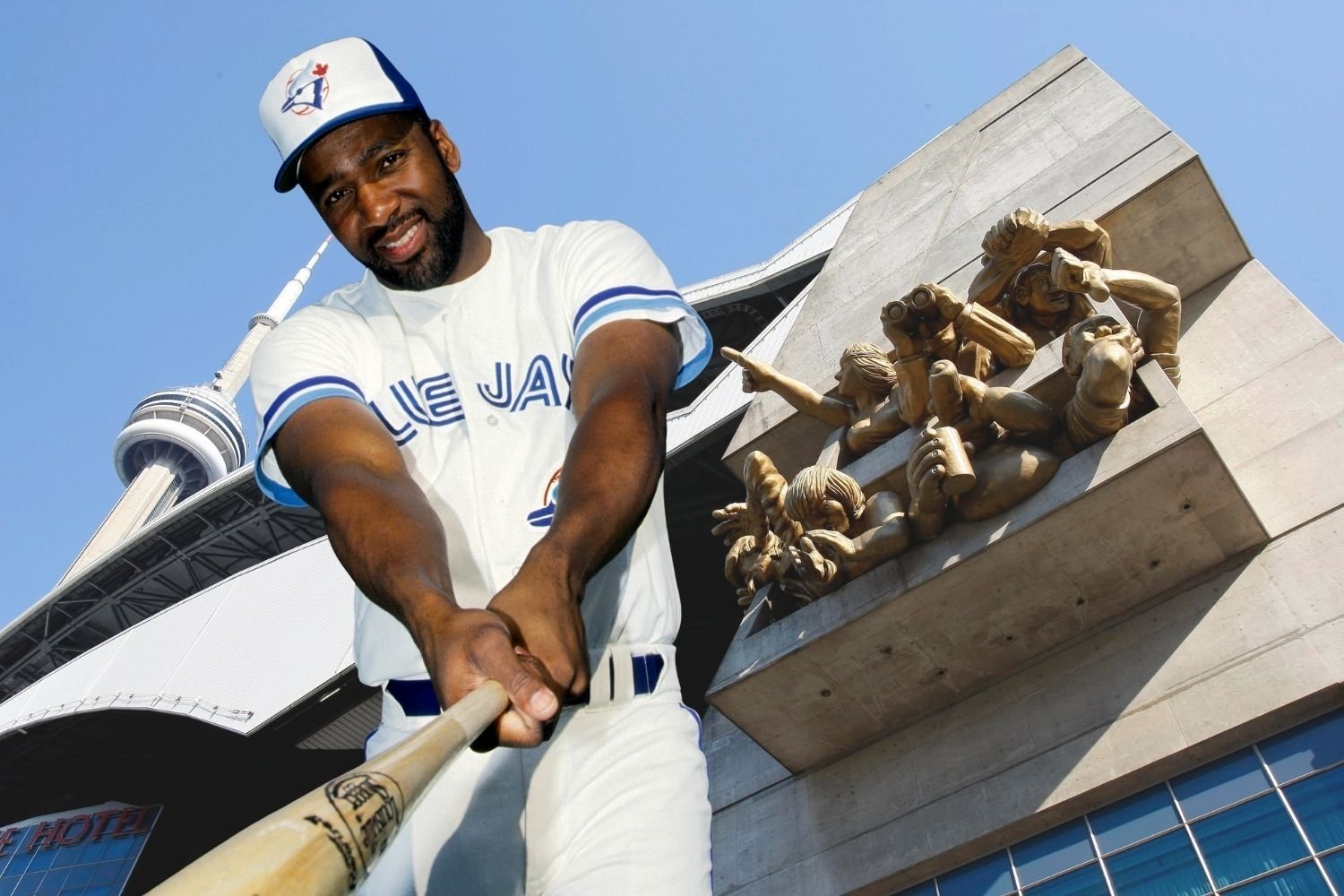 On February 2, the Toronto Blue Jays announced a major change coming to the exterior of the Rogers Centre. Arguably more important and a longer time coming than any of the recent interior renovations. We're getting a statue! Not just any statue, but one of Joe Carter, commemorating the back-to-back championships of the ‘92 and ‘93 teams. Carter said, via social media: “My teammates from ‘92 and ‘93 are a special group, and we all understood what it meant to play for an entire country. We felt such pride wearing the maple leaf on our uniforms. Fans embraced us, and we loved them right back. This statue is for the fans.” Of course, this isn't the first statue to grace the public space outside of Gates 5 and 6, it's just the first one of a Jays player. In 2013, a bronze statue of Edward “Ted” Rogers was installed. I think it's fair to say that the Rogers statue was met with mixed reviews. A statue like that doesn't appear overnight, so a board of directors and the Rogers family themselves were mostly in favour, I'm sure. On the other hand, in over a decade of its existence, I've never met or overheard a fan that thought it was a good idea. I'm not a total grump though. I can give some credit where it's due. Rogers purchased a majority share of the Jays in September 2000 at a time when the future of the only MLB team north of the border was much less stable than it is today. There's an alternate reality where Rogers doesn't buy the team and someone else moves it south. There's also an actual reality where I don't want to see a 12-foot-tall monument to the guy that represents a monopoly on the excessively-priced cell phone/cable/internet bills we're limited to. The Rogers statue will be moved to a more appropriate location – Rogers corporate headquarters – where I’m sure it will be met with the appropriate amount of celebration. Details are light at this point, which opens the door to rampant speculation. The main question is: What will Joe Carter's look like? The lasting image of Carter’s home run is him in mid-air, leaping up the first base line. Floating statues are tricky, but not impossible; the best sports-related one I can think of is the Bobby Orr statue in Boston. This has to be option number one. A less whimsical statue would probably take either Carter’s batting stance ahead of the pitch or an in-motion swing. The majority of the statues at other major league parks (the Jays are one of the last to install a player statue) commemorating a hitter depict them within the batter’s box. Uninspired, but probably option number two. My dark horse pitch for the statue is the image of Carter up on the shoulders of his teammates, with both arms extended in the air, being carried towards the dugout. Call that option three. We don’t have to limit ourselves to just thinking about the visual element – what about an audio component? This is where I make my official declaration to ask for a push-button installed in the base that just plays the relevant line from Choclair’s "Let’s Ride". We can honour two Toronto icons in one statue! It took until the 50th anniversary of the franchise to get the first commemorative statue, but now that the dam has been breached, who might we see next? My mind is already giddy at the idea of putting a José Bautista statue at the base of the CN Tower with a bat that ‘flips’ its way up and down the tower with the elevators, but despite that moment happening a decade ago, it still feels slightly too recent for the statue treatment. Realistically, the next statue probably comes down to one of two guys. Depending on your era (not to be confused with your ERA), you probably have a favourite Blue Jays workhorse. I’ll hear the cases for both Roy Halladay and Dave Stieb and would be thrilled with either one of them being immortalized next. If I were betting, I’d give Stieb a slight edge, but whichever is next, I’d follow it up with the other as the third statue before looking at another batter. My dark horse for this section is Buck Martinez. I think it’s more likely we see his name on the Level of Excellence next, but a statue of Buck turning a double play with a broken leg? That would look real nice on the concourse somewhere. With the Blue Jays celebrating their 50th year, I hope to hear more announcements like this one. What the statue will look like and what else we might get remain to be seen, but one thing I’m certain of? No one is going to threaten to throw Joe Carter into the lake. View the full article
 -
Padres Finally Upgrade Bench, Add Lefty-Masher Miguel Andujar
DiamondCentric posted an article in Padres Mission
 Needing a boost for the bench and another right-handed bat, the San Diego Padres are bringing in corner infielder/outfielder Miguel Andujar on a one-year, $4 million deal, according to MLB Network insider Jon Heyman and ESPN's Jeff Passan. The deal, reported Thursday, is pending a physical. Andujar, who turns 31 on March 2, will be in the mix as a right-handed bat at first base, a position he only has four MLB starts and seven games at. Three of those appearances at first came in 2025. He would be a platoon option at first with Jake Cronenworth and Gavin Sheets, both left-handed hitters, while also able to spell Ramon Laureano in left field. In 2025, Andujar turned in a solid performance while splitting time with the Athletics and then the Cincinnati Reds as a trade-deadline acquisition. He turned in a combined .318/.352/.470 slash line with 10 homers and 44 RBIs. Andujar, who made $3 million in 2025, was terrific after the trade, posting a .359/.400/.544 slash line, hitting four homers and driving in 17 in 34 games. That was his best offensive year since 2018, his rookie year with the New York Yankees. That year, he manned third base and slashed .297/.328/.527 with 27 homers and 92 RBIs, both still his career-best marks. He finished second in AL Rookie of the Year voting to Shohei Ohtani of the Los Angeles Angels, pulling in five first-place votes. Andujar was particularly effective against left-handed pitchers with a .389/.409/.578 slash line with four homers and 11 RBIs in just 44 plate appearances. His numbers against right-handers weren't too shabby, either, putting up a .290/.331/.429 line with six homers and 33 RBIs. Overall, he had a 5% walk rate and 14.4% strikeout rate. The 94 games played and 341 plate appearances were his most since his rookie season, having battled a variety of injuries over the years, including knee and shoulder surgeries. The Padres were in need of a bench upgrade and Andujar's ability to play multiple positions makes a thin reserve unit much better. View the full article
 -
 On Wednesday morning, the Kansas City Royals continued to add to their Cactus League roster by signing infielder Brandon Drury to a Minor League deal with an invitation to Spring Training. Drury is certainly familiar to baseball fans due to his journeyman career. The 33-year-old infielder has played in 867 career games, which include stops in Arizona, the Bronx (Yankees), Toronto, Queens (Mets), Cincinnati, San Diego, and Anaheim (Angels). In 3,159 career plate appearances, he has posted .308 wOBA, 90 wRC+, and 5.4 fWAR. While the former 2010 13th-round pick has certainly seen his fair share of teams, he didn't play in the Majors at all in 2025. Drury played in the White Sox and Angels organizations, but he primarily stayed in Triple-A. In 53 games and 228 plate appearances in Triple-A, he posted a .315 wOBA and 70 wRC+. That included three home runs, 26 runs scored, and 17 RBI. Surprisingly, the infielder actually posted decent Statcast metrics in the Minor Leagues last season, especially in the categories of 90th EV, O-Swing%, and walk rate. That is illustrated in the TJ Stats summary below. Even though Drury ranked in the 19th percentile in wOBA, he actually had a 69th percentile xwOBA, which shows that he might have been a little unlucky in Triple-A last season. Furthermore, Drury sported a patient approach at the plate, which was illustrated not just in his chase (86th percentile), but also in his low swing rate on pitches in the zone (second percentile Z-Swing%). It seemed to pay off for him, as he sported a strong Z-Contact% (73rd percentile) and whiff% (63rd percentile). The Royals have been targeting patient hitters this offseason who minimize swinging outside of the strike zone. Isaac Collins from the Brewers and Lane Thomas from the Guardians fit that profile, as do Minor League signings such as Josh Rojas, Abraham Toro, and Kevin Newman. While Drury had success in 2022 and 2023 (5.8 fWAR combined), he had a -2.1 fWAR in his last MLB season in 2024 and seems to be at the tail end of his career. Not only did he fail to make the White Sox Opening Day roster last year, he was designated for assignment, picked up by the Angels and languished in Salt Lake City (the Angels' Triple-A team). Thus, it's not a surprise that he didn't earn an MLB deal this offseason. He likely will have a hard time making the Royals' Opening Day roster, especially with so much competition in the infield this spring. It is likely that Drury will give the Royals Cactus League roster some at-bats while infielders Maikel Garcia and Bobby Witt Jr. play in the World Baseball Classic for Venezuela and the United States, respectively. Photo Credit: Gary A. Vasquez-Imagn Images View the full article
 -
 The fight for control of the San Diego Padres following the death of owner Peter Seidler appears to have concluded after his widow dropped most of the claims against his two brothers, according to multiple reports, including The Athletic and the San Diego Union-Tribune. Sheel Seidler, Peter's widow, had filed a lawsuit in Texas probate court last year, making various claims against Matt and Bob Seidler, who are trustees of their brother's trust. A filing Monday said the sides had an "agreement to resolve the matters between them." Per the filing, Sheel Seidler cannot refile the claims. John Seidler, the oldest brother, assumed the ownership role following Peter's death in November 2023 and is now a trustee. The Seidlers announced in November that it was considering a sale of the team. According to The Athletic, the family is seeking a sale price "well above" the $1.95 billion the team was valued at in March 2025. Rumored to be leading candidates to purchase the Padres are Joe Lacob, owner of the NBA's Golden State Warriors, as well as Dan Friedkin and Jose E. Feliciano, who own English Premier League soccer teams. View the full article
