


DiamondCentric
-
Posts
2,631 -
Joined
-
Last visited
Never
Content Type
Profiles
Forums
Events
News
Tutorials & Help
Major League Baseball Videos
Guides & Resources
Store
Downloads
Gallery
Everything posted by DiamondCentric
-

Will Pirates' Efforts to Improve Alter Brewers' Offseason Plans?
DiamondCentric posted an article in Brewer Fanatic
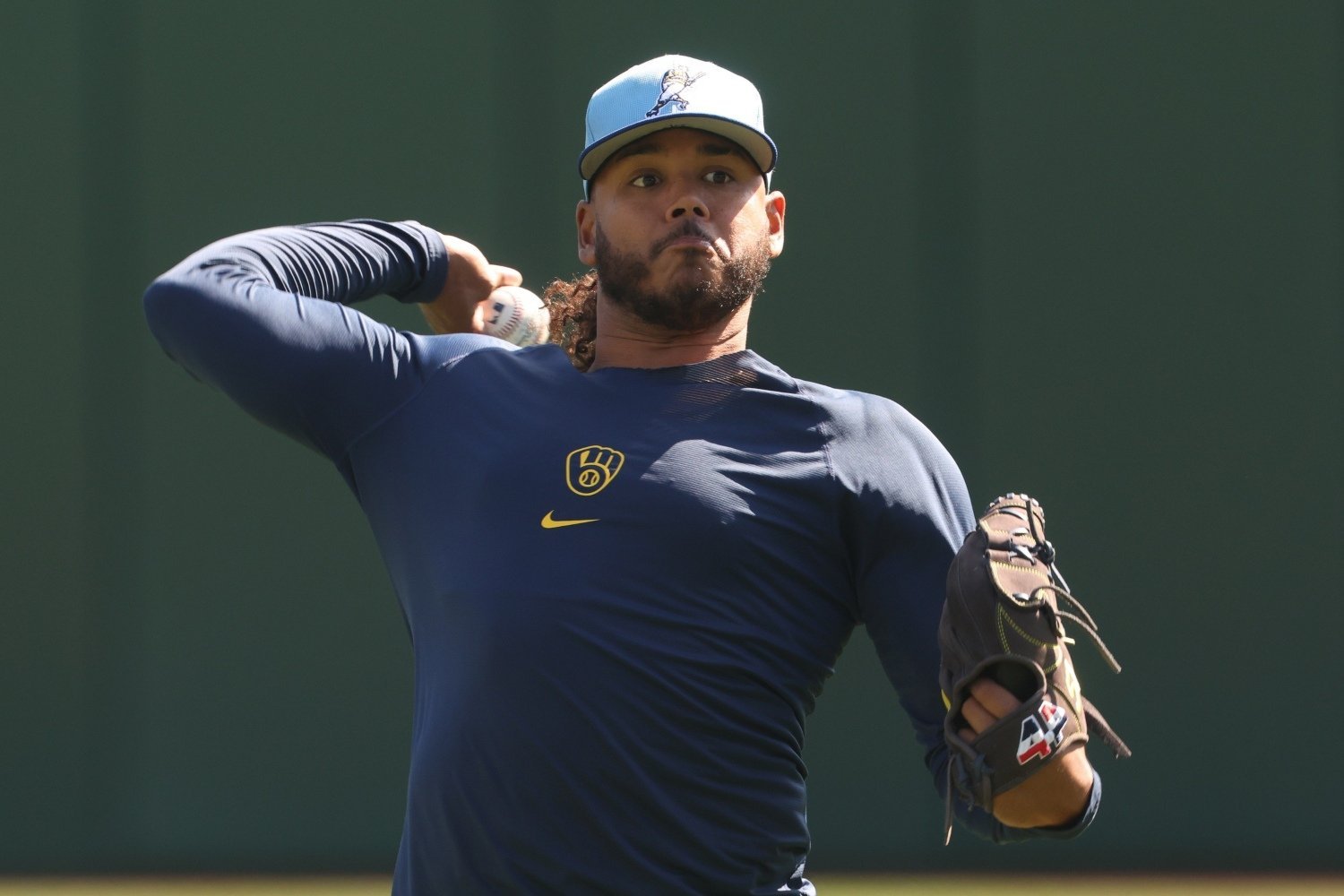 The Pittsburgh Pirates have been oddly busy this winter. They haven't yet made the kind of financial splash that would grab attention and fuel friendlier narratives, but as Brewers fans know, it doesn't always take a crowd-pleasingly spendy move to win games. Pittsburgh has already traded right-handed starter Johan Oviedo to Boston, to snare outfield prospect Jhostynxon García, and sent young starter Mike Burrows to the Astros in a three-team trade that brought them three helpful players: slugging second baseman Brandon Lowe, slap-hitting outfielder Jake Mangum and hard-throwing reliever Mason Montgomery. They've also signed reliever Gregory Soto, to bolster their bullpen. If you believe in the likelihood of a rebound from outfielders Oneil Cruz and Bryan Reynolds (or are bullish on the rotation even beyond Paul Skenes), you can start to squint your way to expecting competitiveness for the 2026 Pirates. This team is going to make an earnest (if untenably stingy) effort to upset and unseat the Brewers, and even if you don't think they're good enough to do so, their moving and shaking is affecting how the three-time defending NL Central champions are going about their business. By trading Oviedo to the Red Sox and Burrows to the Astros, the Pirates have diluted and softened the demand for Freddy Peralta in trades. Their acquisition of Lowe gives them a fairly dangerous trio of lefty bats, with Cruz and Spencer Horwitz joining their new teammate to pose a threat. Beating next year's Pirates will be harder than beating any recent year's version, even when it's non-Skenes starting hurlers' turns. An upstart Pittsburgh club also threatens to raise the floor for the whole division and make it harder to get to a Wild Card-worthy win total, should another team knock Milwaukee from its perch. So far, it's mostly felt like the odds of a Peralta trade were rising steadily, all winter. That might need to change, though, if the Brewers perform ongoing projections and realize their edge (not only over the Cubs, Reds and Pirates, but over the other contenders for Wild Card berths and seeding in the NL) is shrinking more than expected. The Cardinals have already traded Sonny Gray and Willson Contreras, and they're likely to ship out Brendan Donovan. They're only taking in players who look like solid potential trade chips, come July. There will be some free wins scattered around the schedule next year, but it will feel like fewer than in the recent past. The Brewers have a mandate to pursue a championship in 2026. Doing that is getting harder, so the Crew might need to make new plans that involve more aggressive additions or fewer subtractions. The Pirates don't feel like an especially real threat to win the division, but that doesn't mean their frisky offseason is unimportant. View the full article
 -
John Schneider: Number Two in the Voting, Number One in Our Hearts
DiamondCentric posted an article in Jays Centre
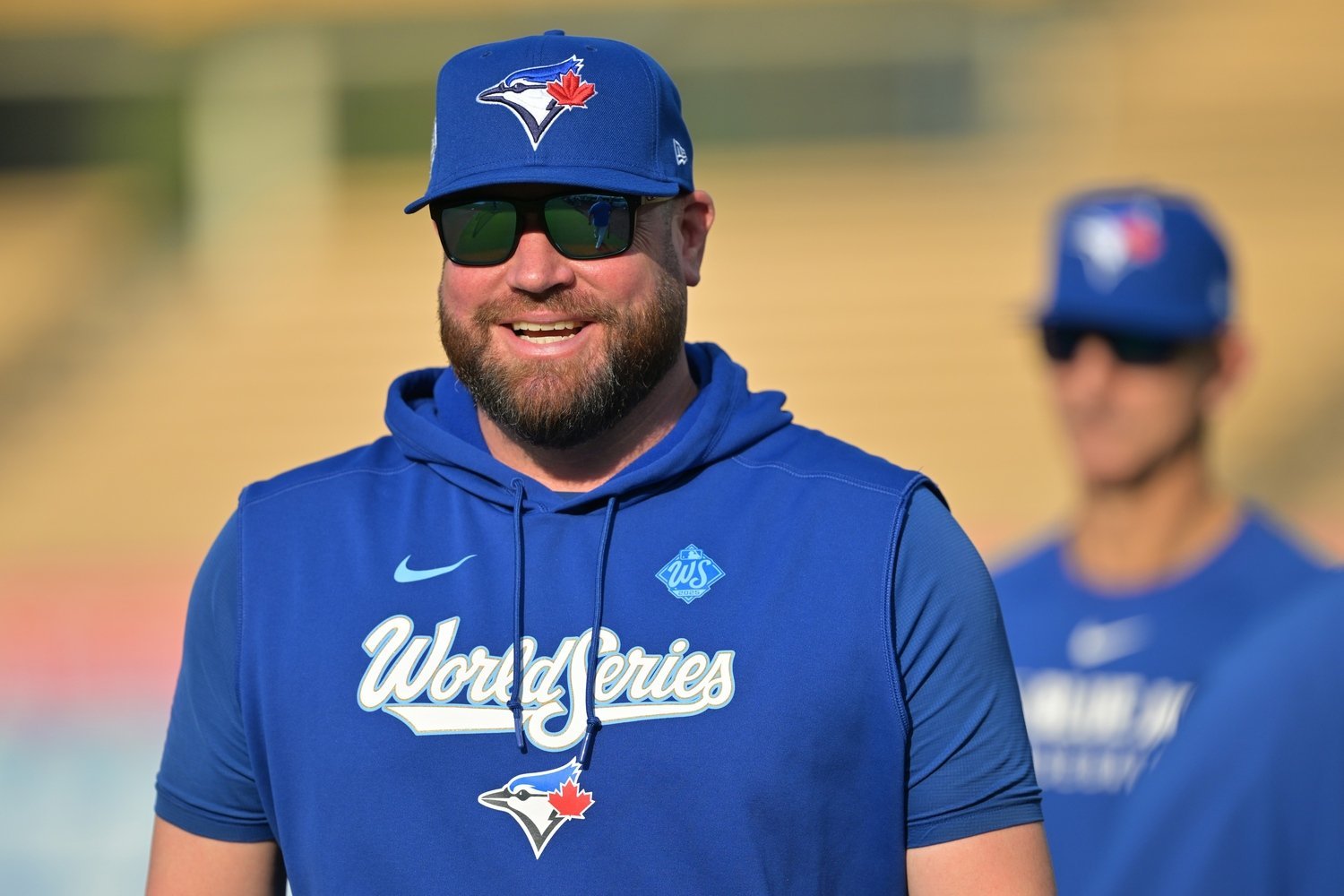 In speaking with reporters at the Winter Meetings last week, including Diamond Centric's own John Bonnes, Blue Jays manager John Schneider was asked about the Manager of the Year award. He offered a very typical Schneider response (quoted below) that was equal parts self-deprecating, boastful of his team, and reflective of his players and position. It’s the kind of answer you would expect from him and a perfect response from a PR perspective. It would be wildly out of character for him to come out and say, ‘Y’know what? I did deserve that award, and I was screwed by the BBWAA!’ That’s where I come in. John Schneider deserved that reward and was screwed by those who voted on it! In 2025, Schneider made some decisions that left me scratching my head at the best of times and yelling obscenities at my TV at the worst of times. One example, the one I probably had the biggest problem with at the time, was a series of pitching decisions down the stretch that forced the Jays into a bullpen day, with the division tied and Toronto (likely) needing to win out over the final four games of the season. As was the case for most of the season, the decision broke Schneider’s way, and the Blue Jays would win the game behind Louis Varland, Eric Lauer and Yariel Rodríguez’s perfect opening six innings. The plays often went Schneider’s way – enough so that the Jays finished as the best team in the American League. Over the course of the season, it became clear that the trust Schneider had in his players was reflected in the trust they had in him. He worked his way up through the levels of Toronto's system on the managing side, alongside many of the players that now make up his roster. In 2024, the Jays finished 20 games back of the division lead; in 2025, they won 20 more games than the year before. That kind of improvement is the type of thing that often swings voters when deciding on the Manager of the Year. Of course, much like in the playoffs, Schneider fell just short. Stephen Vogt is, by all accounts, a very good manager, and I can’t say that I watched enough Cleveland Guardians games to be fluent in his play-to-play decision-making, but I can certainly go through the kind of things that have been brought up as reasons to swing a vote his way rather than Schneider’s. The comeback: Vogt’s Guardians made the biggest comeback in the modern era, erasing a 15.5-game deficit from early July and an 11-game deficit in September alone. A historic comeback, no doubt, but Vogt wasn’t a mid-season replacement – he was the manager that led them to that deficit too. If you want to give him credit for the comeback, he’s gotta wear the blame for having them in that position. Cleveland went 20-7 in September, but if Detroit doesn’t have an equally (un)impressive collapse (7-17), putting up the worst record in the majors outside of Colorado, the comeback doesn’t happen. The Jays, meanwhile, don’t have an impressive comeback to point to. All they did was lead their division from the start of July through to the end of the season. Overcoming adversity: Vogt lost Emmanuel Clase and Luis Ortiz in July amid a gambling scandal. Losing your closer and a starter unexpectedly is always going to be tough. But, managing gaps in your lineups from a player(s) absence is part of the game and the manager's job. Giving Vogt extra credit for the scandalous nature of two of those absences is disingenuous. Again, as with the comeback, Vogt was the manager when the scandal was happening, and, if we want to be hyperbolic, he allowed it to happen. If we look at it as purely a loss of players, the Jays had 21 players miss time to injury through the season, and the Guardians only had 16. Advantage Schneider. Payroll: The Jays had the fifth-highest payroll in the majors, while Vogt made do with the 25th-ranked payroll. On the face of it, this one seems more skewed in Cleveland’s favour. Historically, the Manager of the Year has gone to a team with a payroll outside of the top third of the league. To a degree, that makes sense. The less money a team has to spend, the more impact the manager needs to have (in theory). Of course, the disparity also has a lot to do with where the teams play; the AL East and Central are in different financial divisions. The East was home to the third (NYY), fifth (TOR) and 12th (BOS) highest payrolls in the league last season. The highest payroll in the Central, meanwhile (the Tigers’ $179M, 17th overall), would’ve ranked fifth in the East, ahead of only the stadium-less Tampa Bay Rays. Holding the Jays' payroll against Schneider while ignoring divisional competition is a cop out. The MotY is typically awarded to the skipper of the team that most outperformed its pre-season projections. Steering a Jays team that finished 20 games back of the division in 2024 and had the best record in the AL in 2025, you'd think Schneider would be a shoo-in for the award on this criterion. Both the Jays and Guardians were projected to be bubble playoff teams in the AL. MLB.com had us in the fourth tier of playoff hopefuls in their season primer. The Guardians were in the fifth tier. Regular season award votes are cast before the playoffs, so the Jays' run to the World Series vs. the Guardians’ Wild Card appearance doesn’t skew things, but ‘overcoming the odds’ means different things between the two divisions. We’re over 1,000 words in at this point, and this is where I’d normally wrap up with something like “The voters may have gotten this wrong, but everyone in Toronto can agree we’ve got the best manager in the league.” Not everyone in Toronto does agree, however, and one of those people in particular had an impact on the outcome. The AL MotY voting panel is made up of two writers representing the city (or state) of each team in the league. Both Cleveland voters had Vogt first. Schneider also had to settle for down-ballot votes from the Boston, New York and Tampa Bay writers. One Tampa ballot left Schneider off completely – rivalries run deep. Vogt, by contrast, split votes among writers from Detroit, Kansas City, Minnesota and Chicago (both Chicago voters had Dan Wilson first and split Vogt/Schneider in the second and third spots). Toronto Sun writer Rob Longley had Schneider #1, Vogt #2. The other Toronto writer was Rosie DiManno of the Toronto Star. She went with Vogt. DiManno’s co-worker at the Star, Mike Wilner, talked about the vote on his Deep Left Field podcast. While DiManno declined to appear and discuss her vote, she did share with Wilner her reasoning. We’ve already covered what I think about the gambling suspensions and the Guardians' comeback. John Schneider didn’t lose the award by one vote, so it’s a bit of a moot point, but to say that he didn’t have anything to do with the positive atmosphere in the Jays' clubhouse seems insane to me. Even if he only contributed by seeing a good thing happening and staying out of the way (something previous managers may have struggled with), he deserves credit for that. He said it himself: Award or not, John Schneider managed the team of the year. View the full article
 -
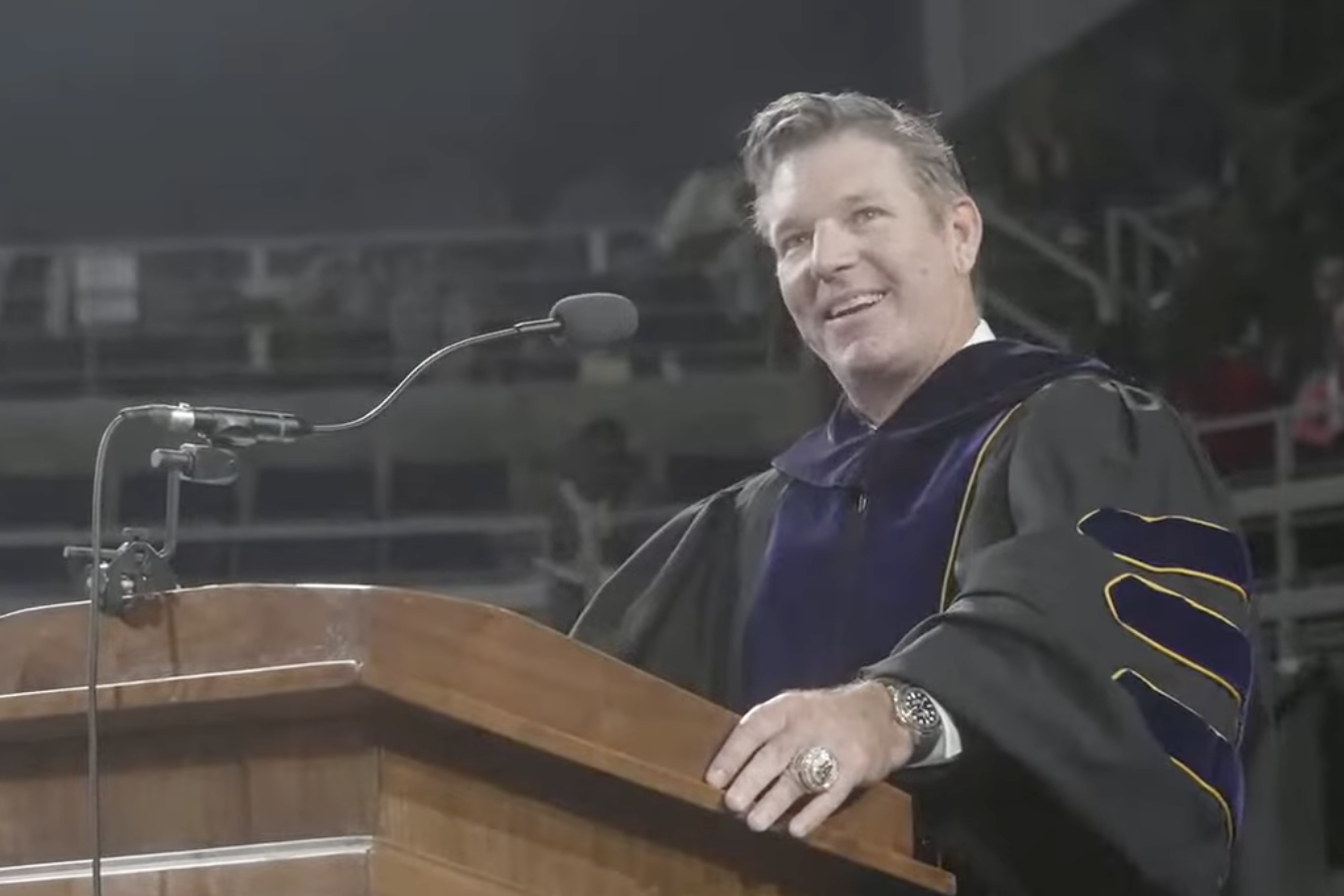 East Carolina University selected Miami Marlins manager Clayton McCullough to be their fall 2025 commencement speaker. True to his nature, McCullough was self-deprecating while delivering his 11-minute address at ECU's Minges Coliseum on Friday. “ECU took a chance on me—mostly because the baseball team needed a catcher,” he said. “Coach Keith LeClair believed in me when honestly I didn’t believe much in myself.” He brought up his poor grades and the fact that he didn't finish his degree until age 26 after his professional playing career ended. "One of (the Marlins') core philosophies is simple: Development doesn’t stop in the major leagues,” McCullough explained. “Every Marlins player, no matter how experienced or talented, is on an individual path to be their best version.” “Today, you close one chapter. Tomorrow, a new one begins. You won’t have it all figured out. That’s OK— I certainly didn’t,” he added. “But if you commit to growth, find people who can show you the way, and keep showing up and getting better, I promise you this: Your future can exceed even your own expectations. Class of 2025, welcome to the big leagues.” You can watch McCullough's full speech below beginning at the 50-minute mark. On Sunday in winter ball, Deyvison De Los Santos (Dominican Republic) went 2-for-4 with a walk. His team, Gigantes del Cibao, needs one more win to clinch a LIDOM postseason berth. In Puerto Rico, Jacob Berry went 1-for-4 with a walk and Chris Arroyo went 0-for-2. Berry's 18-game on-base streak is the longest active streak in the league. In Venezuela, Jesús Bastidas went 3-for-6 and Riskiel Tineo had his 11th consecutive scoreless relief appearance. Marlins Opening Day is only 95 days away. 🔷 The Marlins released outfielder Danny González. The right-handed hitter signed out of the Dominican Republic in 2022 for $150,000. He never advanced beyond rookie ball despite half-decent offensive numbers. In 101 career minor league games, González slashed .223/.335/.348 with eight home runs and 21 stolen bases. 🔷 Sean McCormack explained how Robby Snelling has closed the gap with Thomas White for the distinction of Marlins top pitching prospect. 🔷 Former Marlins rehabilitation pitching coach Jeff Schwarz has sued the Marlins for age discrimination. 🔷 Xavier Edwards hosted his eighth annual XE9 baseball skills camp. Through the years, the event has grown from 18 to more than 200 campers. Marlins teammates Anthony Bender, Griffin Conine, Tyler Phillips and Braxton Garrett were among the many guest instructors with MLB experience. 🔷 Elsewhere around baseball, to everybody's surprise, Japanese superstar Munetaka Murakami signed a two-year, $34 million deal with the Chicago White Sox. When he was posted for MLB teams earlier this offseason, Murakami was widely projected to receive at least twice as much guaranteed money. Instead, the lefty slugger has positioned himself to re-enter free agency entering his age-28 season. The St. Louis Cardinals traded Willson Contreras to the Boston Red Sox for Hunter Dobbins, Yhoiker Fajardo and Blake Aita. View the full article
 -
BREAKING: Red Sox Trade For Cardinals Slugger Willson Contreras
DiamondCentric posted an article in Talk Sox
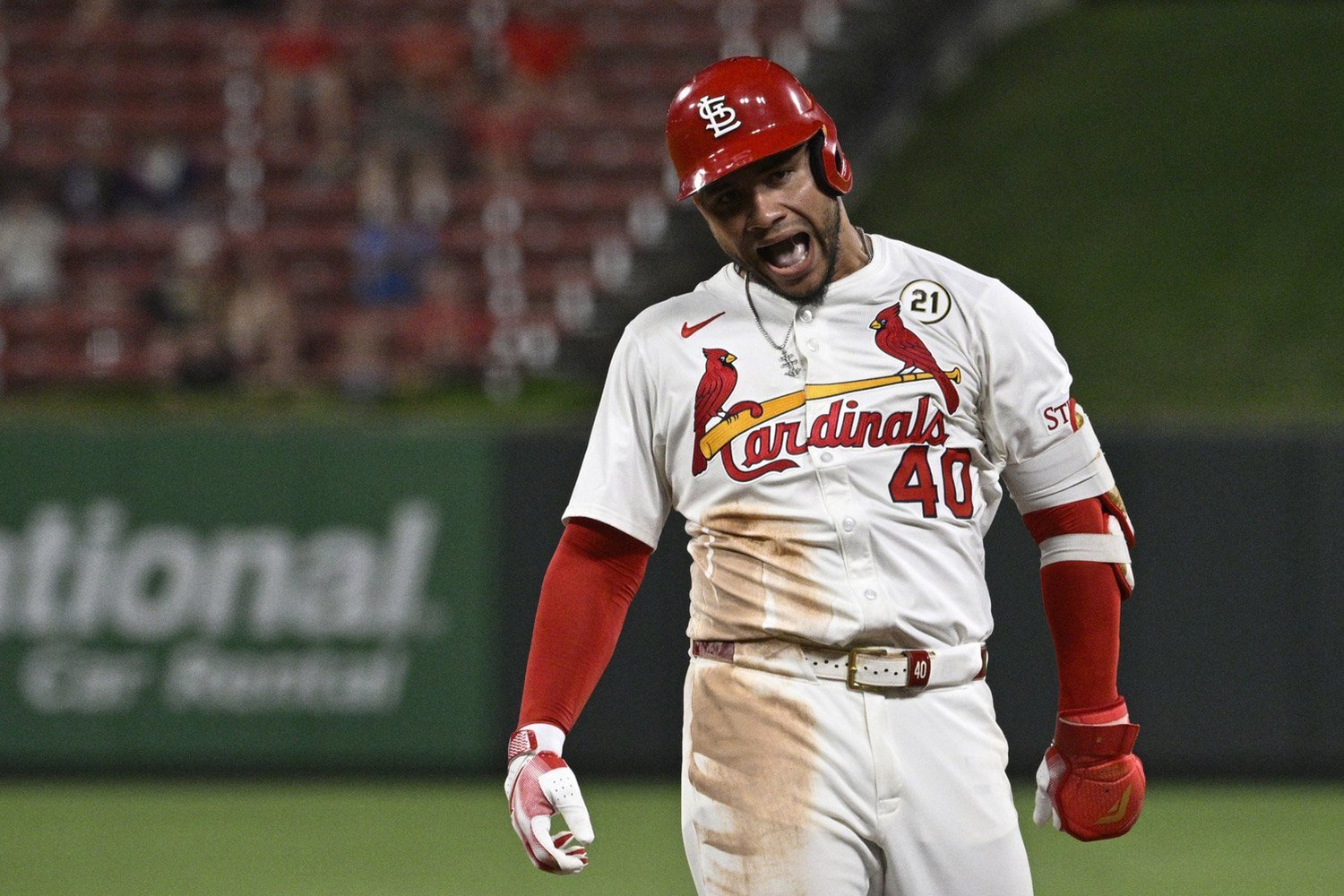 Jeff Passan of ESPN just broke the news that the Red Sox are trading for veteran slugger and first baseman Willson Contreras. In return, a package led by prospect Hunter Dobbins is on its way to St Louis. Contreras was 33 years old in the 2025 season with the Cardinals. He joined St. Louis on a five-year, $87.5 million free-agent deal before the 2023 season, and the contract includes a 2028 club option. He is under contract through 2027, with the option to extend through 2028 if exercised. While he is no longer considered a catcher, Contreras has continued to provide above-average offense, making his transition to first base rather seamless. In 2024, he appeared in 84 games and logged 358 plate appearances, hitting 15 home runs with a .262/.380/.468 line, a .370 wOBA, and a 141 wRC+, along with a 12.6% BB% and 26.8% K% and a 2.7 FanGraphs WAR. In 2025, he played 135 games with 563 plate appearances, posting 20 home runs and a .257/.344/.447 line, a .344 wOBA, and a 124 wRC+, with a 7.8% BB% and 25.2% K%, finishing at 2.8 fWAR. The remaining pieces going to St. Louis have not yet been announced. View the full article
 -
Five Royals Hitters to Watch in 2026 Based on Steamer Projections
DiamondCentric posted an article in Royals Keep
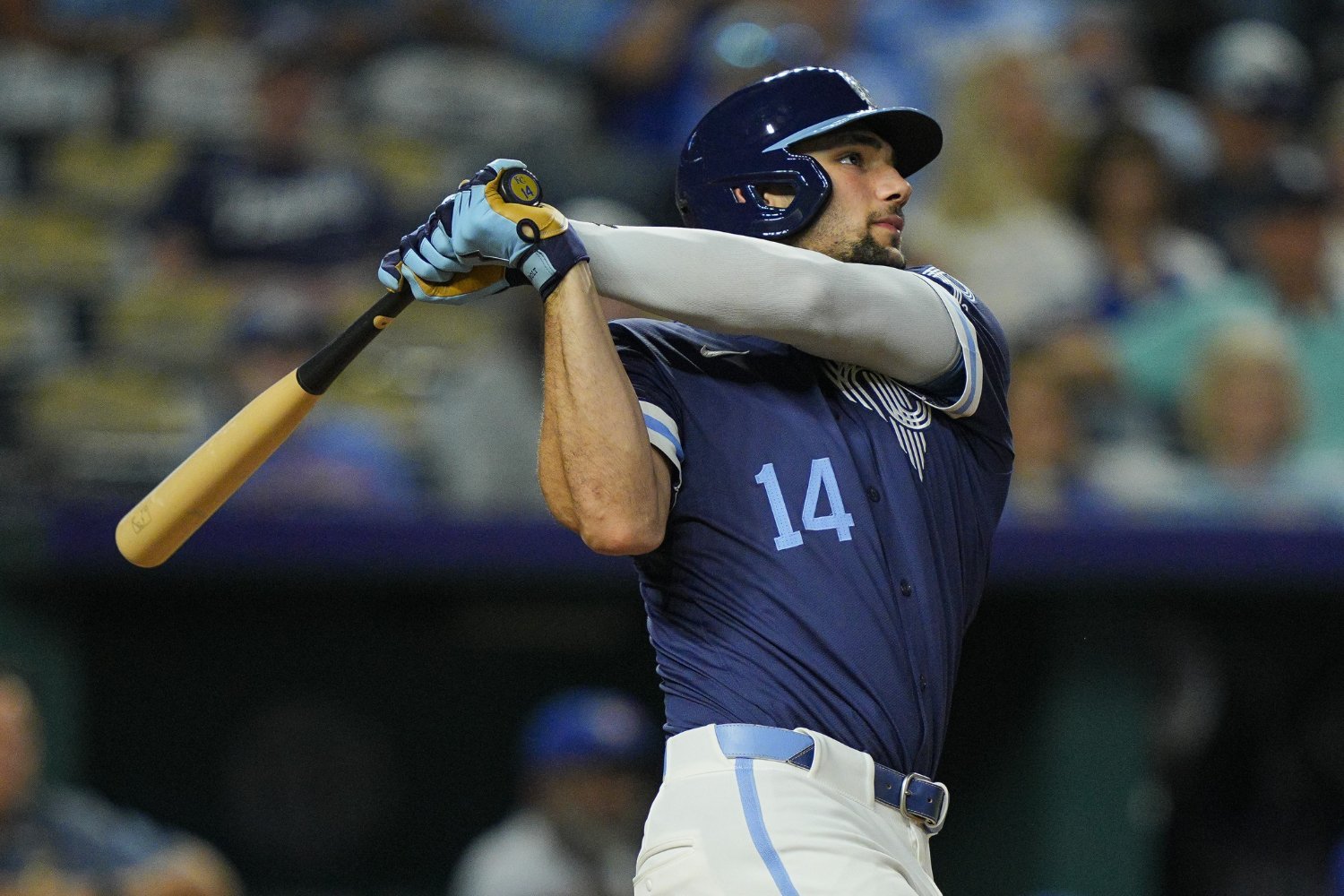 Around this time, many projection systems begin churning out their latest models for the upcoming season. Steamer tends to be the earliest to go public, which provides a lot of spark and debate during this busy winter "hot stove" season. Here is a description of Steamer projections, including their history and how they are calculated both before and during the season. This will be a two-part series. In part one, I will look at five hitters who have noteworthy Steamer projections for 2026. In part two, I will look at five pitchers. I have included a table below of Steamer projections for Royals players who are projected to accumulate 10 or more plate appearances in 2026 (ranked by fWAR). That gives readers who may want to see how others are doing a glimpse of how others are doing beyond the five I will analyze in this post. Remember, the projections listed capture their 80th percentile projection. Bobby Witt Jr. will likely have more than 634 plate appearances next year. The same is true for Salvador Perez and 580 plate appearances. Thus, when looking at these, it's essential to approach these projections as a "modest estimate", not necessarily as gospel. With that said, let's look at five Royals hitters who could make a significant impact on the Royals lineup in 2026, based on their intriguing Steamer projections. Vinnie Pasquantino, 1B In 563 projected plate appearances: 24 HR, 72 R, 81 RBI, .266 AVG, .346 wOBA, 120 wRC+, 1.9 fWAR The Royals have extended Witt and Maikel Garcia to solidify the left side of their infield until at least 2030. However, they have been a bit quieter about their long-term plans with Pasquantino, who's coming off a 32-HR, 113-RBI season, both career highs. The Pasquatch has struggled to stay healthy since debuting in 2022. However, he trended positively in terms of playing time last year, playing in 160 games and collecting 682 plate appearances. By avoiding the IL, Pasquantino was finally able to maximize his production, leading the Royals in home runs and RBI. Steamer seems optimistic that Pasquantino will continue to mash in the Royals' lineup in 2026. Pasquantino is projected to hit 24 HR, the third-highest projection for next year (behind only Witt's 26 and Perez's 25). His 120 wRC+ is the second-highest projection behind Witt's 133. Lastly, Steamer projects a positive boost in the BB/K ratio to 0.59. That's 13 points better than his ratio a season ago. The primary issue with Pasquantino is that his defense weighs him down. Last year, he posted a -16.9 Def (defensive runs above average), which contributed to his fWAR of only 1.5. Steamer projects a similar defensive outlook, with a -11.6 Def for 2026. Thus, he is projected to produce a Steamer under two, despite his optimistic offensive outlook. Despite the defensive issues, the Royals' primary first baseman should continue to be a force in the Royals' lineup, and he could be Kansas City's next extension candidate after the conclusion of this season, especially if he matches or surpasses his Steamer projections. Jonathan India, 2B In 500 plate appearances: 11 HR, 57 R, 47 RBI, 6 SB, .247 AVG, .320 wOBA, 102 wRC+, 1.3 fWAR It was a nightmare season for India in Kansas City last year. In 567 plate appearances, the former Reds second baseman hit .233 with an 89 wRC+ and -0.3 fWAR. Those were career-worst marks in those three categories. To make matters worse, he lost his spot as the Royals' leadoff hitter after the Trade Deadline, and he was seen as a non-tender candidate this offseason. Kansas City opted to bring India back for at least one more year, agreeing to an $8 million deal for this season. While many Royals fans are not optimistic about his outlook, Steamer paints a rosier picture for 2026. Steamer projects India sees a bit of a power and speed boost for 2026, with 11 home runs (two more than last year) and six stolen bases (none in the previous season). Steamer also expects India to see some batted-ball correction, with a 14-point increase in batting average. However, the most encouraging aspect of India's projection profile is that his trademark plate discipline shouldn't see regression. Steamer projects a 10.3% walk rate and 0.54 BB/K ratio, both improvements from a year ago (9.5% walk rate; 0.51 BB/K ratio). It seems like manager Matt Quatraro has a better sense of India's talents and skills, and thus, it's unlikely that the 29-year-old second baseman will move around the field like a year ago. That should help his defensive production, though it's unlikely that India will ever be a solid defensive player. Steamer projects a -6.1 Def for 2026, which isn't good, but is 5.7 points better than last season. The Royals do not need India to be an All-Star or an impact hitter at the top of the batting order. However, if he can provide a disciplined approach and some occasional pop in the 6th-7th hole in the batting order, that should be more than enough to help improve a Royals lineup that struggled with consistency in 2025. Jac Caglianone, RF In 418 plate appearances: 17 HR, 51 R, 56 RBI, 2 SB, .255 AVG, .331 wOBA, 109 wRC+, 1.2 fWAR Speaking of brutal seasons, no Royals position player had it worse than Caglianone, who struggled in his transition to the Major League level last year. In 232 plate appearances, Caglianone hit .157 with a 46 wRC+ and accumulated a -1.6 fWAR, the worst mark of Royals players a season ago. Hence, it is easy for many Royals fans to lose faith in Caglianone after he received such massive hype a season ago upon his debut. Steamer projections illustrate to Royals fans, however, that they should not lose faith in Caglianone and his potential impact in 2026. Caglianone is projected to hit 17 home runs and post a .331 wOBA and 109 wRC+, both massive improvements from a season ago. The defense is still a question mark, as Steamer projected Caglianone to produce a -6.6 Def in the outfield. That said, Caglianone's value and impact are needed by the Royals at the plate, not in the field. Kansas City can live with subpar defense if he can hit 20 or more home runs a season. His projected plate appearance numbers are low, so it's likely that Caglianone could surpass 17 home runs and hit 20 to 25 home runs if he receives 500 or more plate appearances. His .195 projected ISO is a 57-point increase from his rookie year, and he has the potential to live up to that ISO number or more, based on his substantial exit velocity and barrel metrics from a season ago. Will Caglianone be able to launch the ball enough to translate his batted-ball quality and bat speed into production in 2026? Steamer seems to think so. Carter Jensen, C In 277 plate appearances: 9 HR, 33 R, 32 RBI, 3 SB, .246 AVG, .323 wOBA, 104 wRC+, 1.4 fWAR While Caglianone failed to live up to rookie expectations in 2025, the opposite was true for Jensen, a local product who attended Park Hill High School in the northern KC metro area. A September call-up when rosters expanded, Jensen hit .300 with a 159 wRC+ and sported a 0.7 fWAR in 69 plate appearances. He also showed excellent batted-ball ability as well as plate discipline in his small MLB sample, as illustrated in his TJ Stats summary from a season ago. The hype for Jensen in 2026 is real, and it seems like JJ Picollo and Quatraro are on board to make sure Jensen eases the catching load for Perez, much like Freddy Fermin did in 2024 and 2025 before the Royals backup catcher was traded to San Diego at the Trade Deadline. While Royals fans should be encouraged by Jensen's outlook, Steamer projects a bit of a regression, which makes sense over a larger sample. In 277 projected plate appearances, Steamer expects Jensen to hit .246 with nine home runs and 32 RBI. They also project him to post a .323 wOBA and 104 wRC+. For context, those marks are expected to be better than Perez's (.318 wOBA; 101 wRC+) next year. Of course, this is a pretty modest projection, and simply viewing Jensen as solely a backup catcher. I think Jensen is due for more designated hitter plate appearances, especially if he can get off to a hot start to the season. Nonetheless, Steamer is warning Royals fans who think Jensen is due for 20 to 30 home runs next year to perhaps cool their jets a bit (for now). Lane Thomas, OF In 379 plate appearances: 11 HR, 45 R, 41 RBI, 13 SB, .236 AVG, .306 wOBA, 92 wRC+, 0.5 fWAR The Royals seem to be aiming to make one more big move, whether it's Boston's Jarren Duran or St. Louis' Brendan Donovan. That should keep Thomas regulated to a fourth-outfielder role, who may get semi-regular time if he can get on a hot streak at the plate. Steamer is a bit conflicted about Thomas, who posted a 48 wRC+ and -0.5 fWAR in an injury-plagued campaign in Cleveland last year. On one end, they are optimistic about his home run (11) and stolen base (13) production in a modest sample (379 plate appearances). Steamer also expects a power boost with a .158 ISO, a 46-point increase from a season ago, and only a five-point difference from 2024 when he played for the Nationals and Guardians. Thomas' plate discipline is projected to be around where it was last year. His 25.5% K rate is expected to be a 5.5% improvement, but his 0.32 BB/K ratio is expected to match his season-ago rate. The defense also doesn't project well, as his Steamer projects him to produce a -4.5 Def. That's a big reason why his fWAR is expected to hover under one next year. Still, for a fourth outfielder, this isn't a bad profile for the Royals to have. His wRC+ is projected to be better than Michael Massey's (89), John Rave's (84), and Tyler Tolbert's (66). Thus, Thomas should raise the floor of a Royals lineup that struggled to find right-handed production from the outfield last year. View the full article
 -
New Padres Manager Craig Stammen Finalizes Bulky Coaching Staff
DiamondCentric posted an article in Padres Mission
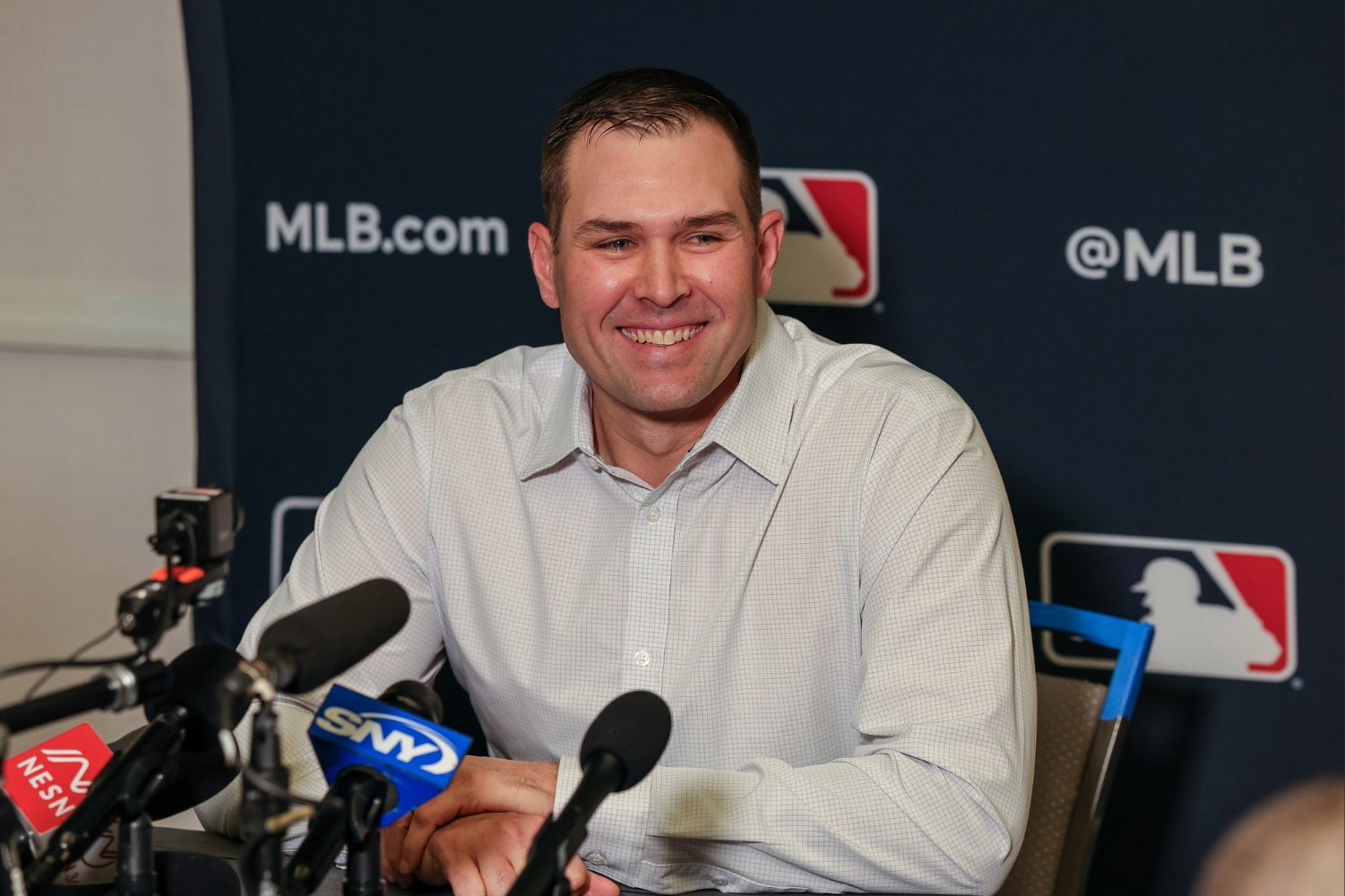 When selecting his inaugural coaching staff, Craig Stammen mixed a good chunk of the old group with a handful of newcomers. The new San Diego Padres manager finalized his 18-member coaching staff, which was announced on Dec. 17. Stammen replaced Mike Shildt, who resigned immediately after the season with two years left on his contract. Shildt has since landed a job in the Baltimore Orioles' organization. The former Friars skipper led the Padres to two playoff appearances and had a 16-member staff in 2025. Stammen, a former MLB reliever including six years with the Padres, has no previous managerial experience, but has been in the organization for 10 years, including in a variety of baseball operations roles since his playing days came to an end. While it was known that Ruben Niebla, a finalist for the job Stammen got, was returning for his fifth season as the Padres' pitching coach, he received the additional title of associate manager. Interestingly, Stammen also named a bench coach from outside the building. That job went to Randy Knorr, a former MLB catcher who had a variety of roles, including minor-league manager, in the Washington Nationals' organization since 2008 until being let go after the 2025 season. The other key hire is Steven Souza Jr. as hitting coach. Souza was an MLB outfielder who retired during the 2022 season. This is his first coaching role, although he did spend 2025 as a special assistant with the Tampa Bay Rays. Helping Souza with will be Mike McCoy and Pat O'Sullivan, who both return as assistant hitting coaches. Raul Padron will be the hitting instructor. Ben Fritz is back as bullpen coach, as is Chris Apecechea as assistant pitching coach and Peter Summerville as game planning and pitching strategist. Herberto Andrade sticks around as the bullpen catcher and assistant coach. Kevin Plawecki joins the staff as the catching coach. In the coaching boxes, Bob Henley takes over at third base and David Macias at first base, also adding outfield and baserunning instructor duties to his résumé. Vinny Lopez will also be an outfield and baserunning instructor. as well as field coordinator. Nick Punto is also a new addition, becoming the infield coach, with Ryan Goins joining as infield instructor. Allen Craig and A.J. Ellis will be special assistants to the major-league staff and baseball operations. View the full article
 -
New Padres Manager Craig Stammen Finalizes Bulky Coaching Staff
DiamondCentric posted an article in Padres Mission
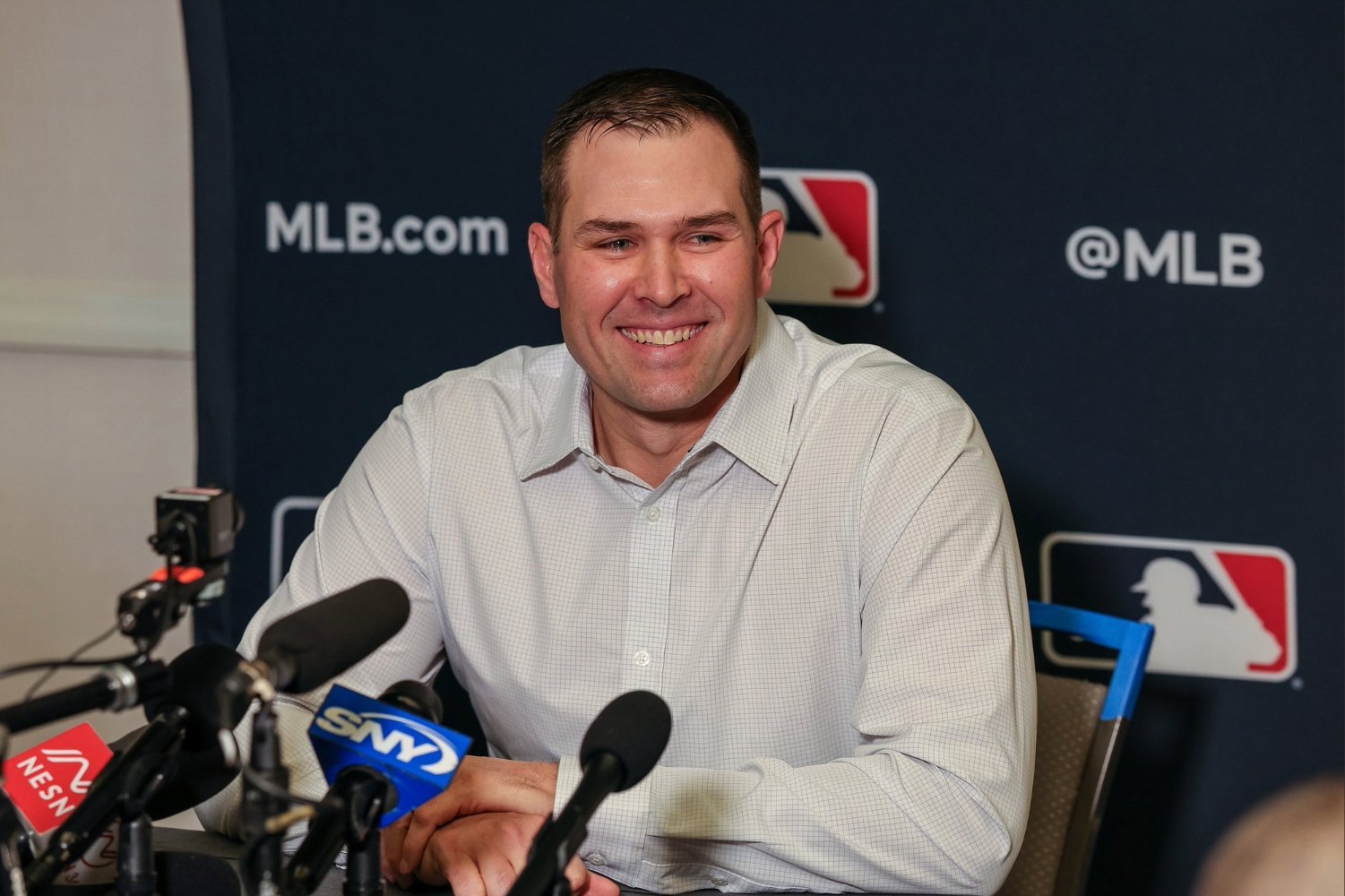 When selecting his inaugural coaching staff, Craig Stammen mixed a good chunk of the old group with a handful of newcomers. The new San Diego Padres manager finalized his 18-member coaching staff, which was announced on Dec. 17. Stammen replaced Mike Shildt, who resigned immediately after the season with two years left on his contract. Shildt has since landed a job in the Baltimore Orioles' organization. The former Friars skipper led the Padres to two playoff appearances and had a 16-member staff in 2025. Stammen, a former MLB reliever including six years with the Padres, has no previous managerial experience, but has been in the organization for 10 years, including in a variety of baseball operations roles since his playing days came to an end. While it was known that Ruben Niebla, a finalist for the job Stammen got, was returning for his fifth season as the Padres' pitching coach, he received the additional title of associate manager. Interestingly, Stammen also named a bench coach from outside the building. That job went to Randy Knorr, a former MLB catcher who had a variety of roles, including minor-league manager, in the Washington Nationals' organization since 2008 until being let go after the 2025 season. The other key hire is Steven Souza Jr. as hitting coach. Souza was an MLB outfielder who retired during the 2022 season. This is his first coaching role, although he did spend 2025 as a special assistant with the Tampa Bay Rays. Helping Souza with will be Mike McCoy and Pat O'Sullivan, who both return as assistant hitting coaches. Raul Padron will be the hitting instructor. Ben Fritz is back as bullpen coach, as is Chris Apecechea as assistant pitching coach and Peter Summerville as game planning and pitching strategist. Herberto Andrade sticks around as the bullpen catcher and assistant coach. Kevin Plawecki joins the staff as the catching coach. In the coaching boxes, Bob Henley takes over at third base and David Macias at first base, also adding outfield and baserunning instructor duties to his résumé. Vinny Lopez will also be an outfield and baserunning instructor. as well as field coordinator. Nick Punto is also a new addition, becoming the infield coach, with Ryan Goins joining as infield instructor. Allen Craig and A.J. Ellis will be special assistants to the major-league staff and baseball operations. View the full article
 -
Can This Offseason Be Anything But A Half-Measure For The Twins?
DiamondCentric posted an article in Twins Daily
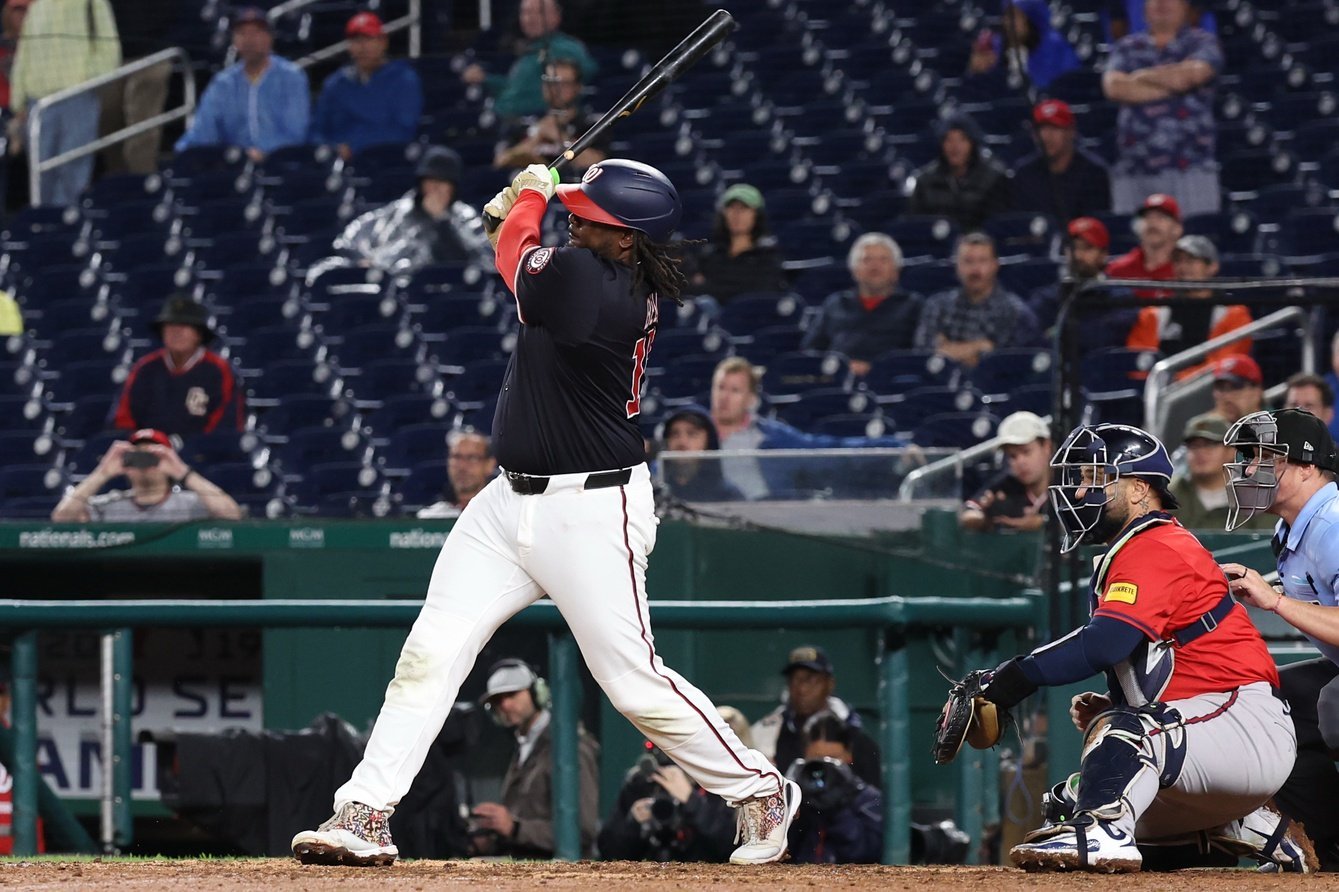 Tom Pohlad, in his introductory presser, told the media that he wants fans to “believe [he’s] committed to a championship-caliber investment and team”, that he thinks the Twins are “within reach of winning a division title this year”, and that he’s “not a half-measure guy.” At the same time, he also acknowledged that the Twins are “laying the foundation for ultimately what [they] hope will be a nucleus that can be a championship-caliber team and that warrants a championship-level investment.” Those statements are somewhat at odds, and the why behind it makes sense. Based on the status of the current roster and number of top prospects in the upper minors, things are complicated to say the least. How do the Twins continue to add to the roster without blocking the future of the team? Where can they actually make significant upgrades without putting another Carlos Correa-sized impediment in their ability to field a complete roster? Is it even possible to do these things, at this point in time? Let’s start by looking at the areas of need, and I’ll discuss the challenges with upgrading at the position. I see three. Shortstop, if you aren’t a believer in Brooks Lee. Another big bat, preferably one who hits right-handed, if you can find a position for them. Bullpen. So much bullpen. Shortstop Do you believe that some combination of Lee, Ryan Kreidler, and Ryan Fitzgerald can, in the aggregate, be even average both at the plate and in the field? It seems like a stretch. The latter two are fringy guys, at best. Lee has looked overmatched throughout his young career and as it stands, may be better suited to a part-time utility role unless he can make some real adjustments to his approach. However, in order to justify moving a former top prospect off the spot, the Twins would need a clear upgrade. Signing someone like Isiah Kiner-Falefa could make sense. It would probably take a two-year deal, and I imagine it would take around $15 million deal to sign him. That’s affordable, but it’s tough to imagine the Twins being this quick to relegate Lee to a utility role. And, Kaelen Culpepper could be ready for his first call-up this summer. So, it seems unlikely the Twins would see upgrading shortstop as a good investment. Big Bat The Twins need consistent offense, and need it badly. However, finding a spot to play another bat would be easier said than done, at least without sacrificing playing time for someone else that deserves or needs it. All of Byron Buxton, Matt Wallner, Josh Bell, Luke Keaschall, Royce Lewis, Ryan Jeffers, Trevor Larnach, and Lee will play most days. Positionally, center field is taken. The corner outfield spots have a veritable logjam already, between Larnach, Alan Roden, James Outman, Austin Martin, and Wallner. Plus, both Walker Jenkins and Emmanuel Rodriguez are basically ready for the majors, with Gabriel Gonzalez on their heels. First base is taken, now, with the additional of Bell. Wallner’s best position is DH, and playing him as the strong-sided platoon, at the least, seems a no-brainer. Catcher is covered. You probably aren’t moving Lewis off third. Keaschall is at second, unless you move him to the outfield and make that logjam even worse. We covered shortstop already. So, again, where do you put another big bat? Unless you are trading multiple hitters, including some that are likely part of the future, there just doesn't seem to be room for anything more than a right handed platoon first baseman or DH. Bullpen Here we go. Finally. The easiest, most natural spot to upgrade from the current options. As Nick Nelson wrote, aside from Cole Sands, Justin Topa, and Kody Funderburk, there’s a ton of question marks. But, maybe fewer than you would think. The Twins didn’t trade for Eric Orze to not have him on their roster. Pierson Ohl and Travis Adams didn’t look amazing in their limited outings down the stretch last season, but neither figure to be starters for the Twins, and it makes sense to give both another season in the pen to see what they are capable of. That means at least five or six spots, out of eight, are written in at least pencil. “Great”, you might be thinking. “Sign two stud relievers!” On paper, that makes perfect sense. After all, the Twins have exactly zero current relievers who should get the eighth or ninth innings in close games with any regularity. Except. Have you looked at their starting pitching depth? As it stands, all of Taj Bradley, Mick Abel, Zebby Matthews, David Festa, Connor Prielipp, Kendry Rojas, and Andrew Morris will be competing for the fifth starter gig; one will be without a rotation spot even in Triple-A. That’s not to mention Marco Raya, who, as of now, is still a starter. It’s not including C.J. Culpepper or Ryan Gallagher, both of whom should be ready for a promotion to Saint Paul at some point in 2026. One also shouldn’t fully write off question marks like Matt Canterino or Cory Lewis. That’s so, so many pitching prospects. Realistically, four or five of those guys will end up needing to convert to relief. It’s no stretch to think that, say, Prielipp, Festa, and Morris could be converted to start the season, and that a couple of them could be with the Twins sooner rather than later. As you can see, 2026 is shaping up to be a truly transitional season; one in which it almost makes more sense for the Twins to just see what they have with the myriad prospects in the upper minors. Doing so would allow them to get a better sense for what their true longer-term organizational needs look like, and go into 2027 with sights set on two or three positions that need to be shored up with high-end options. But, doing little aside from signing Bell is truly a half-measure. You know, the thing Pohlad is against. Really, the only way to square all of his quotes, to compete this year while also building for the future, and to avoid half-measures entirely would be to deliberately block the youth movement for the first part of the season by signing a bopper and three good relievers to one-year deals, then planning to trade all of them as the prospects prove their readiness. Do you see ownership giving Falvey the green light to do so, if it were to cost another $35 million, or more? Even if it was really more like $15 or 20 million before they are traded away midseason, it’s still more than they are expected to spend, and by a decent margin. It would certainly be one way to put his money where his mouth is. It would make for some fun ball, too. View the full article
 -
Local Man Unable to Enjoy Christmas Because of the Twins
DiamondCentric posted an article in Twins Daily
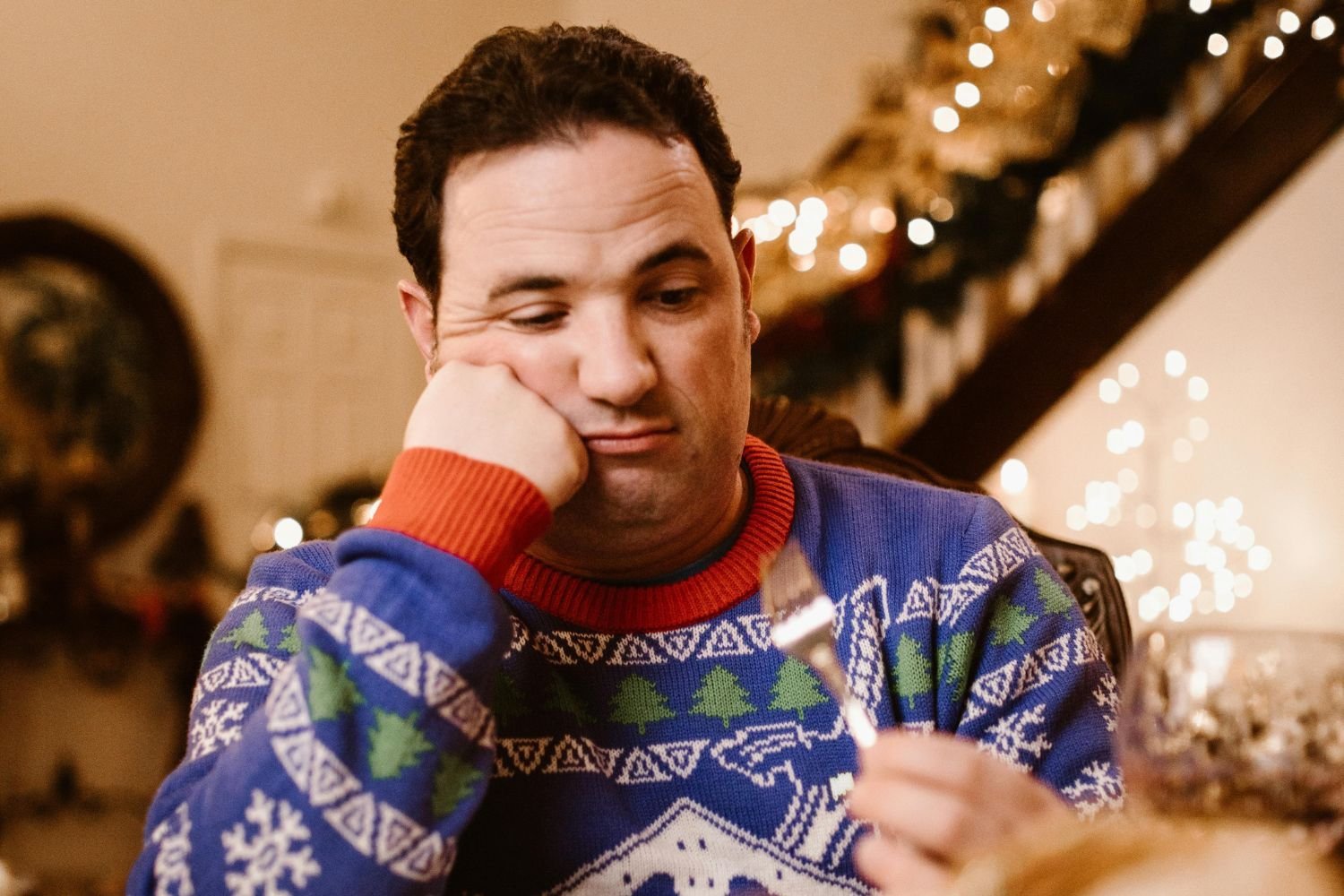 Gerald Knutson, 42, has had his holiday season ruined. Twins Daily once again supplied me with the funds to interview one local fan about his feelings about the ballclub. Unfortunately, Gerald hasn’t watched an inning since they traded Brusdar Graterol away to Los Angeles. Fox Sports North left YouTube TV around that time, and he refuses to pay cable prices to watch meaningless regular season games. The “Twins” causing him distress aren’t the Twins at all. The nativity scene outside of Our Lady of Perpetual Helplessness—a favorite parish among Minnesota sports fans–included two baby Jesuses this year. “What child is this?” he asks, gesturing at the second infant nestled among the barn animals. I suggest that was an oversight, but Gerald is positive he missed a doctrinal update in the bulletin. I offer to go in and get an explanation. Inside, I run into the parish priest, Fr. Maloney. He greets me, “Remember when Brett Favre threw that interception in the NFC Championship?” I then introduce myself as a reporter for Twins Daily and ask him about the double Messiahs outside. He blinks. “Twins Daily?” He asks. “Do you know the young man who writes there and keeps coming in asking to buy indulgences? He wrote an ill-advised satire piece about the Pope last May. That site should only let RandballsStu write satire. Everyone else there sucks.” “Well, some of it’s more parody,” I start. “And some of it’s surreal—" “Ask the Church Lady about the two ***** childs,” he says, cutting me off before I can point out the red box drawn around this very transcript. Where is that coming from? You can see it too, right? “Oh, we installed a new nativity scene this year,” says the Church Lady. I am in a different room. It’s like my childhood living room, except blue and there were no doors or windows. I think the Church Lady’s name was Barbara Rethke, but I think she just went by Church Lady. “We must have left the old child out there on accident. “And while we’re talking about the Twins, they should not sign Luis Arraez. His swing decisions are horrendous, and he doesn’t have another tool to support him if his BABIP starts with a two.” Finally, I have my Twins fan. “They also need to move David Festa to the bullpen. Two plus-plus pitches. Closer stuff. By the way, did you read Matthew this morning?” “Of course,” I reply. “Riveting genealogy.” “Not the scripture,” she scoffs. “Matthew from Twins Daily. He wrote about whether the Twins should sign Kennys Vargas to platoon with Clemens. 13,000 views. 173 comments.” She turns her computer monitor toward me. Below the Vargas story was a second Matthew, chronicling the time he made the A-Honor Roll despite being a truant, reflecting poorly on Highland Park Senior High. “I guess we really do plagiarize everything Gleeman says,” I muse. “There is nothing new under the sun,” she replies. “Every story has been told and will be told again. Though if Gleeman wants to protect his material, he should invest in a VPN, promo code CHURCHLADY. And also, Matt Wallner has a huge hole in his swing at the top of the zone.” Why is the definition of satire at the top of this page? This clearly isn’t satire. Through one of the room's many windows, I see Gerald has organized a protest. Some of the protesters seem to understand it’s about the mysterious twins in the manger, but more seem convinced it’s a protest of the Twins. Most wear Vikings purple, naturally. Santa Claus out there, too. He gives me a wry smile and says he’s on his way to give cheap pohlad a lump of coal. “I’m hoping to catch him before he leaves for Target Field with the Ghost of Christmas Present,” says Father Christmas. “Who is the Ghost of Christmas Present?” I ask. “They refuse to announce it,” he replies. “But if payroll doesn’t go up, does it even matter?” A Vikings helmet rolls out of the crowd. St. Nicholas kicks it. He screams in agony, dropping to his knees. “Did you know Santa broke his toe when they shot this scene?” the Church Lady asks me. Was she wearing that Guardians cap this whole time? I wonder if the Twins should sign Miguel Sano as a pitcher. My phone buzzes. I have an MLB notification. The Twins signed Josh Bell. One year, seven million. Wait. Am I dreaming? That’s not realistic at all. And what’s the meaning— I wake up. I'm lying swaddled in a hospital bed. Around me sat three wise men—RandballsStu, Phil Miller, and … “Gerald Knutson?” I ask the stranger, whose face I had only ever seen in the dream. “No, I’m Parker Hageman,” the man replies. “I thought you were a myth,” I say. “No, I just don’t really write much anymore.” “Greggory,” says Stu, “if that is your real name. I’m here to talk about satire. It’s not funny when anyone but me does it.” “But I’m not doing satire,” I protest. “You of all people must understand.” “Not. Funny,” said he. “It’s not supposed to be funny,” I exasperatedly reply. “It’s supposed to be amusing. But what is Phil doing here?” “I don’t have anything better to do in retirement,” the aged writer admits as he got up to fiddle with the hospital jukebox. “You’ve been in a coma for weeks,” Stu says. “TC Bear dropped a piano on your head. You popped out with piano keys for teeth and everything.” At least I knew I hadn’t missed any Twins news. It was still December. “So then what’s the true meaning of Christmas?” I ask. “I’m a nihilist,” answers Stu. “Christmas doesn’t mean anything to me. An ass spat in my face earlier today. I felt nothing. I never have.” Don’t Stop Believing by Journey started playing on the hospital jukebox. “Say what you will about the tenets of Chicago White Sox fanhood, but at least it’s an ethos,” a voice from behind me says. I turned my head to see Santa Claus leaning through the open window, away from the three. “I just gave a lump of— View the full article
 -
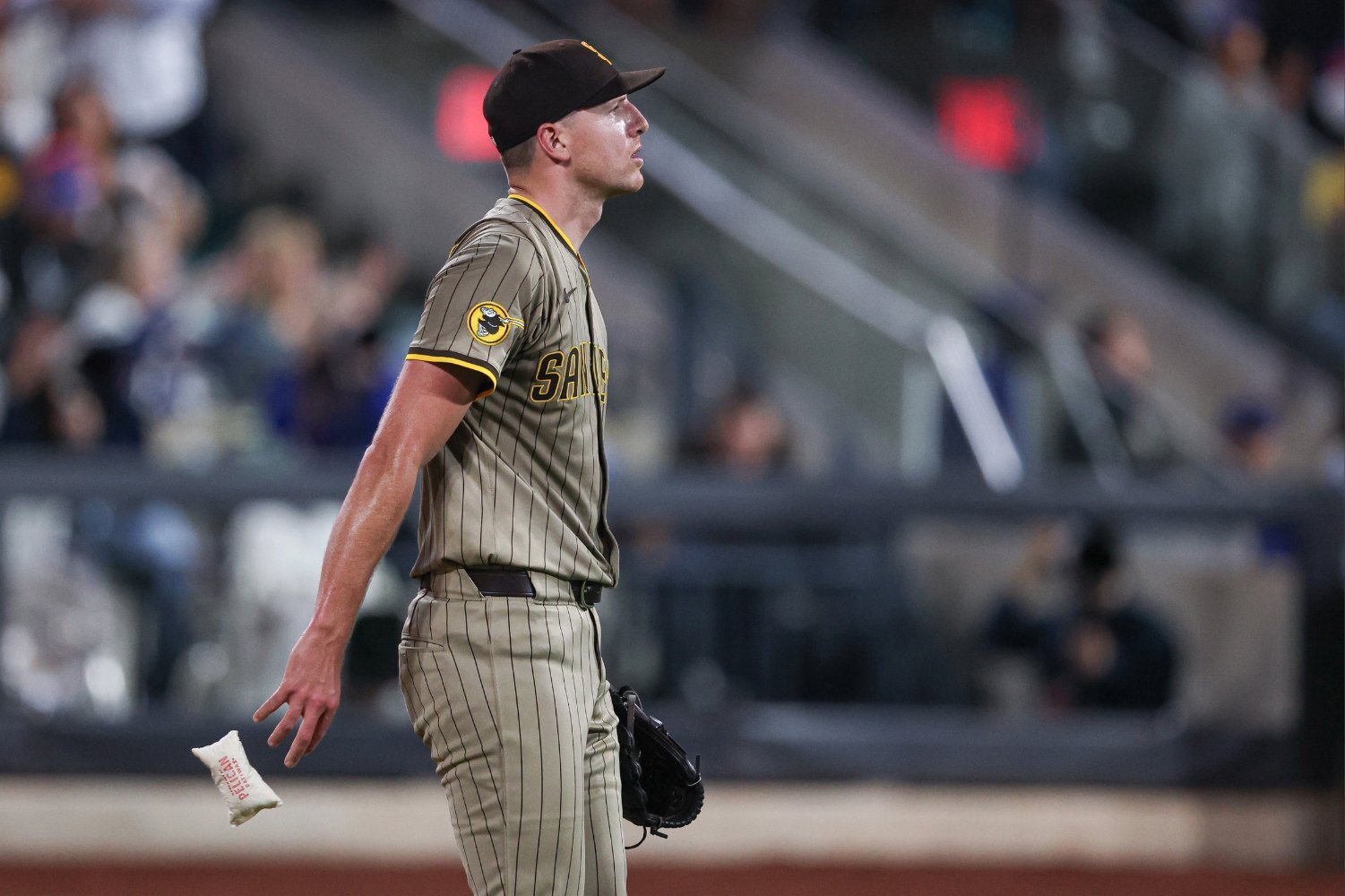 At face value, the Nick Pivetta trade rumors make no sense for the San Diego Padres. We're talking about a rotation that has already lost Dylan Cease to free agency. The same rotation that will be without the injured Yu Darvish all season, and now features Joe Musgrove, who hasn't pitched since the end of the 2024 season. Currently, San Diego has Pivetta alongside Musgrove, Randy Vasquez, and JP Sears projected to be in their rotation for 2026. Plus, they just signed Michael King back, which could make Pivetta even more expendable. Of course, even with King in tow, that rotation is not a top staff in the league, with Pivetta as its ace. So, why are the Padres listening to offers on the right-hander? The truth is, it might make more sense than fans think. Pivetta's career stats scream "one-year-wonder." His previous career-high in bWAR was 2.5 in 2022, before breaking out for 5.3 bWAR in 2025. His best ERA was 4.04 in 2023, before posting a 2.87 mark in 2025. Likewise, his best FIP was 3.79, back in 2018, before finishing with a 3.49 FIP in 2025 (notably, much higher than his ERA). His WHIP fell to a career-best 0.985, blowing his previous best mark of 1.121 out of the water. The list goes on and on. The FIP/ERA comparison presents an interesting picture for Pivetta. From 2017-2024, Pivetta had a 4.36 FIP and a 4.76 ERA. His career FIP was nearly half a run better than his ERA. In a single-season sample, that would be considered bad luck, but over an eight-year period, it can be explained by the fact that Pivetta is a guy who gets hit hard. In his career, according to Baseball Savant, opposing hitters have a 9.4% barrel rate (compared to a 7.2% league-average). They've had an average exit velocity of 89.7 MPH, and a 40.5% hard-hit rate against Pivetta (compared to a 37% league-average). FIP is a stat based on strikeouts, walks, home runs, and hit batters. While he's not a strikeout artist, Pivetta has always had solid K/BB ratios and has never hit more than six batters in a season, so his FIP tends to be solid compared to his ERA. Usually, when a pitcher's ERA is higher than his FIP, it means his defense was bad and he got unlucky, but this is a long-term trend for Pivetta. His FIP was lower than his ERA in seven of his eight seasons. Did he have bad luck all seven seasons? Or were the Phillies and Red Sox defenses awful during his time with both clubs? Or could it be that Pivetta, being a pitcher who allowed more hard-contact than league average, made things harder for his defense? From 2017-2024, he allowed a .304 BABIP, while the league average hovered between .291 and .300. All of that is to say, Pivetta probably wasn't falling victim to bad BABIP luck and bad defense; he was falling victim to being one of the hardest-hit pitchers in the league. And that did not change in 2025. Pivetta allowed a 10.9% barrel rate (10th percentile), a 45% hard-hit rate (15th percentile), and a 90.3 average exit velocity (22nd percentile). Those were no better rates than he allowed in previous seasons, yet the results changed. In 2025, his ERA was 2.87, significantly lower than his 3.49 FIP, despite the underlying metrics staying almost exactly the same. What does that mean? It likely means Pivetta was not getting unlucky from 2017-2024; it means he got extremely lucky in 2025 and will probably regress back to the mean in 2026. If Pivetta is a one-year wonder, it makes sense for San Diego to sell high on their most tradeable asset. But what if he isn't? Will the Padres regret trading Pivetta if he has another strong 2026 season? Well, probably not, because Pivetta has a contract opt-out after 2026. If he turns in another All-Star level campaign next season, he will likely opt out of his deal, looking for a big payday before his career ends. That effectively makes it a lose-lose scenario for the Padres if they want to keep Pivetta. If they keep him and he turns out to be a one-year-wonder, they missed their chance to trade a No. 3 starter for the price of an ace. If they keep him and he continues to pitch like an ace, they will lose him next offseason and get nothing in return. That's why, as odd as it is to be shopping the ace of a rotation that is lacking in impact talent, it does make sense to offload Pivetta if the right deal emerges. View the full article
 -
Should Tom Pohlad's Comments Have Derek Falvey On Notice?
DiamondCentric posted an article in Twins Daily
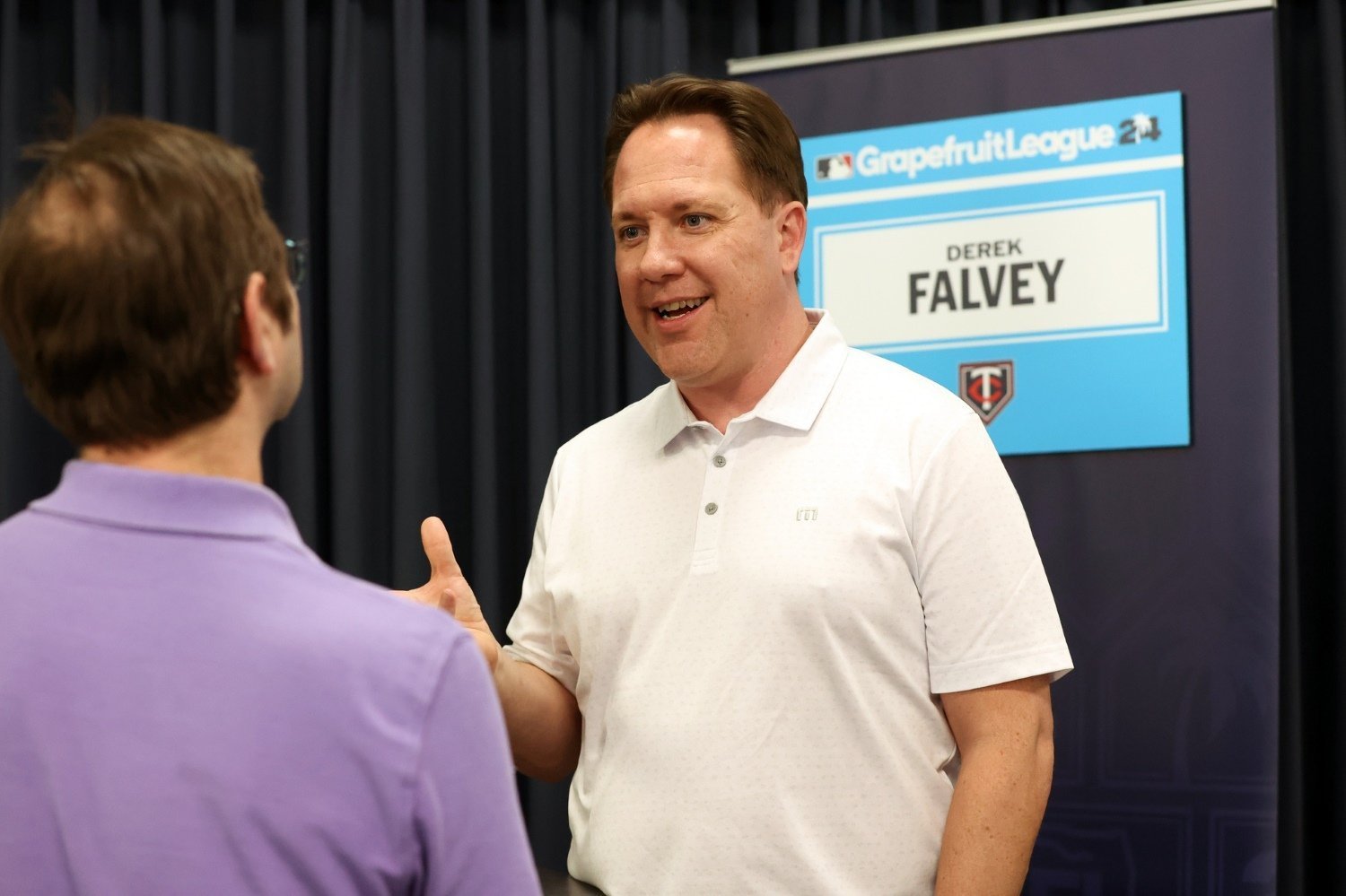 Though it’s worth not getting too excited about words alone, some of Tom Pohlad’s remarks about the state of the organization on Wednesday were encouraging. Notably, he called for accountability and change when results don’t meet expectations. Could this mean trouble for the current front office? Derek Falvey and company have been at the helm for nearly a decade, and despite a strong regular-season track record, they have only a single postseason series win to show for it. Despite missing the playoffs in four of five seasons in the era of expanded playoffs, Falvey was actually promoted to run both the baseball and business sides of the organization following a 2024 collapse. His seat has never seemed particularly hot. Perhaps that’s about to change. Tom Pohlad’s opening message, which essentially criticizes repeating the same process over and over while expecting different results, seems to apply perfectly to Derek Falvey and the front office in recent years. They’ve chosen to run almost identical rosters back repeatedly despite disastrous results. Up until the trade deadline, they were holding strong to a vision that just wasn't working. The payroll has been scaled back, lending them a bit of slack, but this front office used to at least be creative in their roster-building. Trading a former first-round pick and top prospect for Sonny Gray, or fan favorite Luis Arraez, for Pablo Lopez seems like a lifetime ago. Though not always popular moves, the Twins used to at least take swings to shake up the roster. Instead, it’s been status quo with poor results for nearly three years. The current front office has been in charge long enough that every player, aside from Byron Buxton, has been drafted, signed, or acquired by them. Perhaps this has been part of why they’ve had such a difficult time shaking up the roster in recent seasons. They had a mess to clean up when they took over in 2016, when the organization had a reputation for being analytically outdated and unsuccessful for several years prior. It’s the last five years, however, that have been the least successful stretch of this regime’s time in charge aside from 2023’s brief playoff run. Fans questioned whether the team was entering a full-blown rebuild at the 2025 trade deadline, as the Twins' selloff included both rentals and team-controlled players. Just weeks ago, those concerns remained very real as the Twins seemed on the fence about trading star players such as Buxton. This was particularly interesting, as it was reasonable to wonder whether this front office has earned the right to oversee another rebuild. Now seemingly aiming to compete in 2026, Tom Pohlad’s comments raise the question of whether this might be the last shot for Derek Falvey and this front office. The biggest holes on the roster were created voluntarily when the Twins chose to go scorched-earth on a dominant, team-controlled bullpen at the deadline. Falvey and GM Jeremy Zoll have expressed their comfort with replacing these players and maintaining a competitive roster, and now their confidence will be tested next season. The Twins will also be relying on several rebound performances in the lineup for the second season in a row from many of the same players that failed to make good on those hopes in 2025. Throw in several top prospects set to debut at some point down the stretch, and the organization’s player development will have to take center stage in order for the lineup to return to a competitive level. "We're gonna develop young players," Derek Shelton proclaimed in his intro presser, channeling what appears to be an organizational mandate. But it's not really up to him. Tom Pohlad’s comments should put Derek Falvey and the front office on notice. Employing the same process over and over without success is the definition of what we’ve seen for years now. If another attempt to compete fails in 2026, with a roster fully developed by this front office, it’s time for some accountability. Do you agree? View the full article
 -
Blue Jays Are Pursuing Free Agent Third Baseman Alex Bregman
DiamondCentric posted an article in Jays Centre
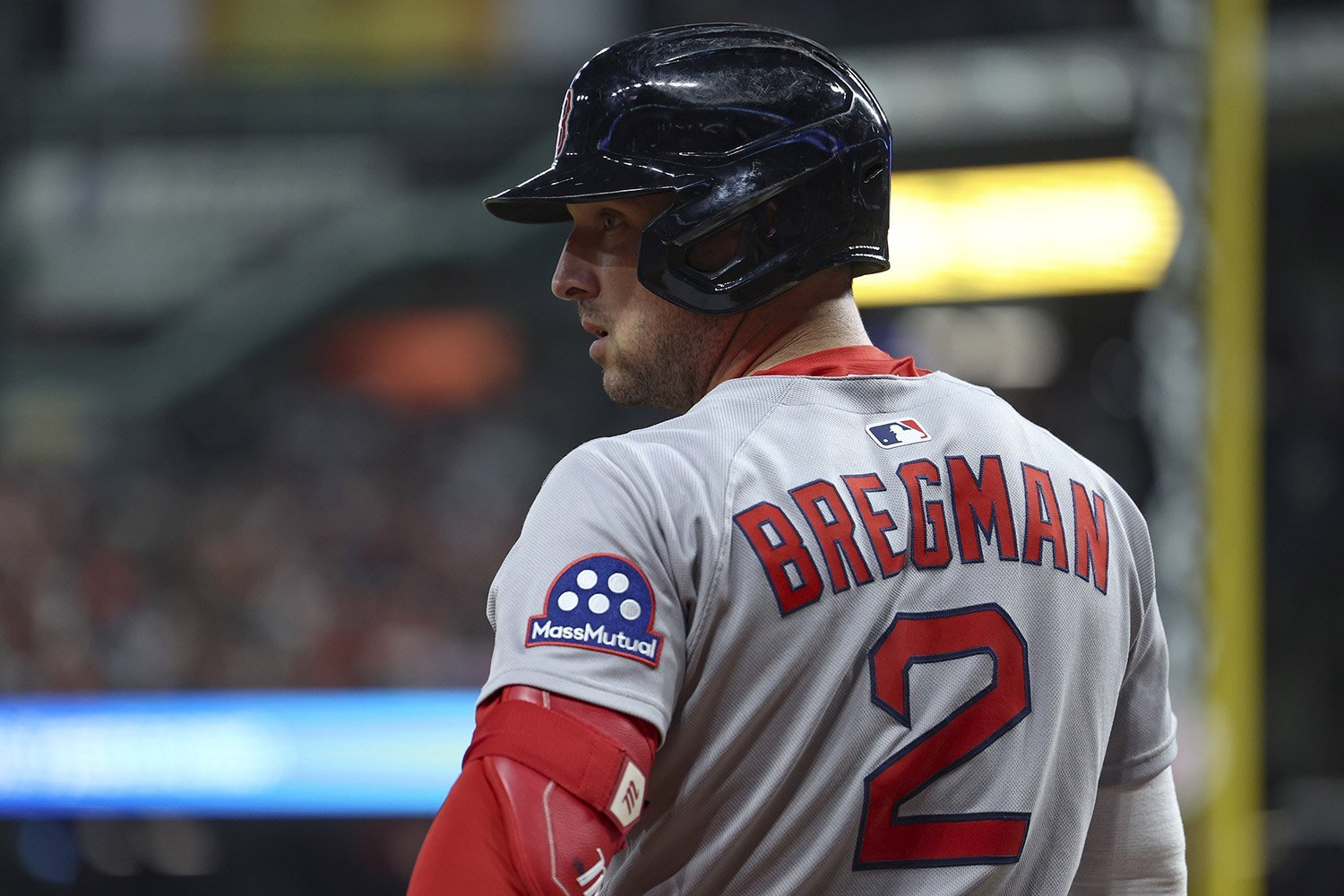 During the Winter Meetings, it was speculated that third baseman Alex Bregman could be a fallback option if the Blue Jays fail to sign Bo Bichette. Now, according to Ken Rosenthal of The Athletic, Bregman could be a primary target for Toronto. Toronto’s winter to date has largely centered on pitching. The club added Dylan Cease on a seven-year deal, signed Tyler Rogers and Cody Ponce, and acquired Chase Lee in a trade. Bregman turns 32 in 2026, coming off two productive seasons. In 2024 (age 30), he played 145 games and logged 634 plate appearances for Houston, hitting .260/.315/.453 with 26 homers. His wOBA was .331, his wRC+ was 117, and he finished at 4.2 fWAR. In 2025 (age 31) with Boston, he appeared in 114 games and had 495 plate appearances, batting .273/.360/.462 with 18 homers. He posted a .356 wOBA, a 125 wRC+, and 3.5 fWAR. His 2024 BB% was 6.9% and his K% was 13.6%. In 2025, his BB% was 10.3% and his K% was 14.1%. View the full article
 -
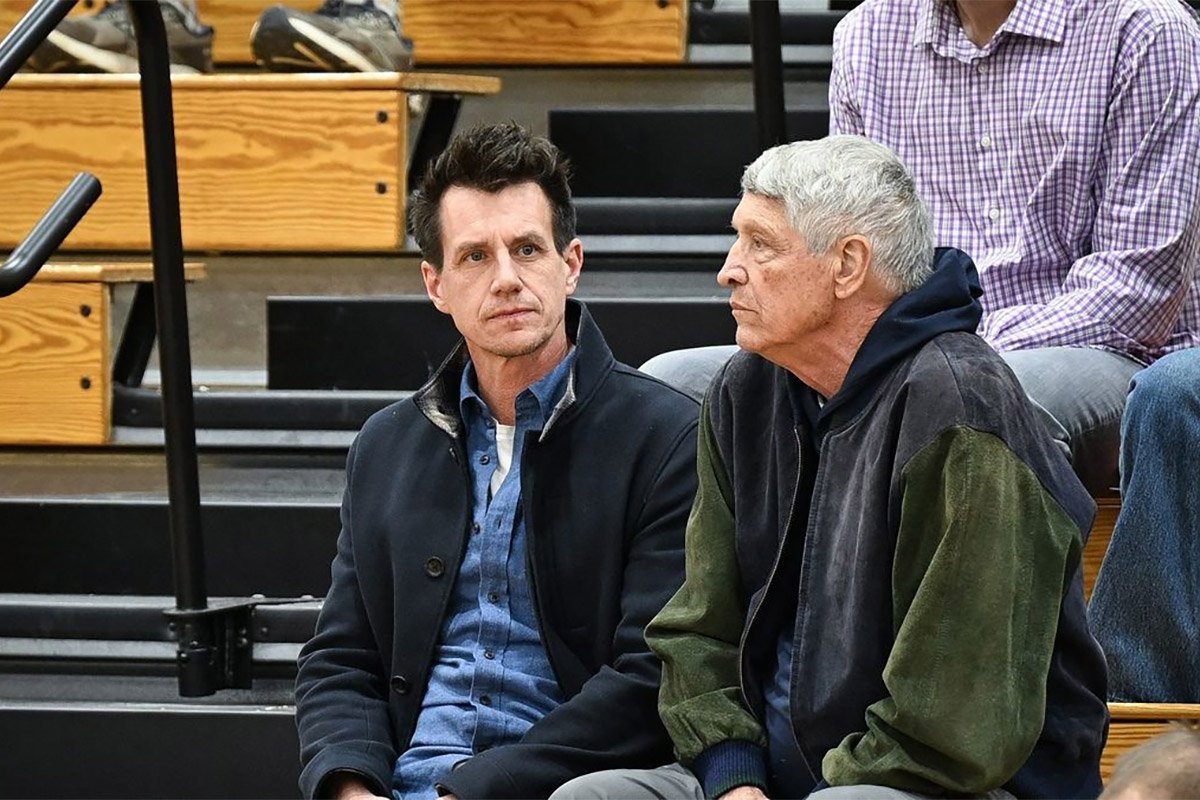 John Counsell, who was the Milwaukee Brewers' former director of community affairs and the father of former Brewers manager Craig Counsell, died Tuesday. He was 83. John Counsell worked for the Brewers from the time Craig Counsell was 8 to 18, with his son often running with the big names in team history, including Hall of Famers Robin Yount and Paul Molitor. John Counsell attended Notre Dame, where he also played baseball, footsteps Craig would follow. John Counsell was signed by the Minnesota Twins and played four years (1964-67) in the minors, including three with the Wisconsin Rapids Twins. But he never made it past Class A. Craig Counsell would play for the Brewers in 2004 and again from 2007 to 2011, then became the team's manager from 2015 to 2023, winning three NL Central titles. View the full article
 -
Robby Snelling vs. Thomas White is closer than you think
DiamondCentric posted an article in Fish On First
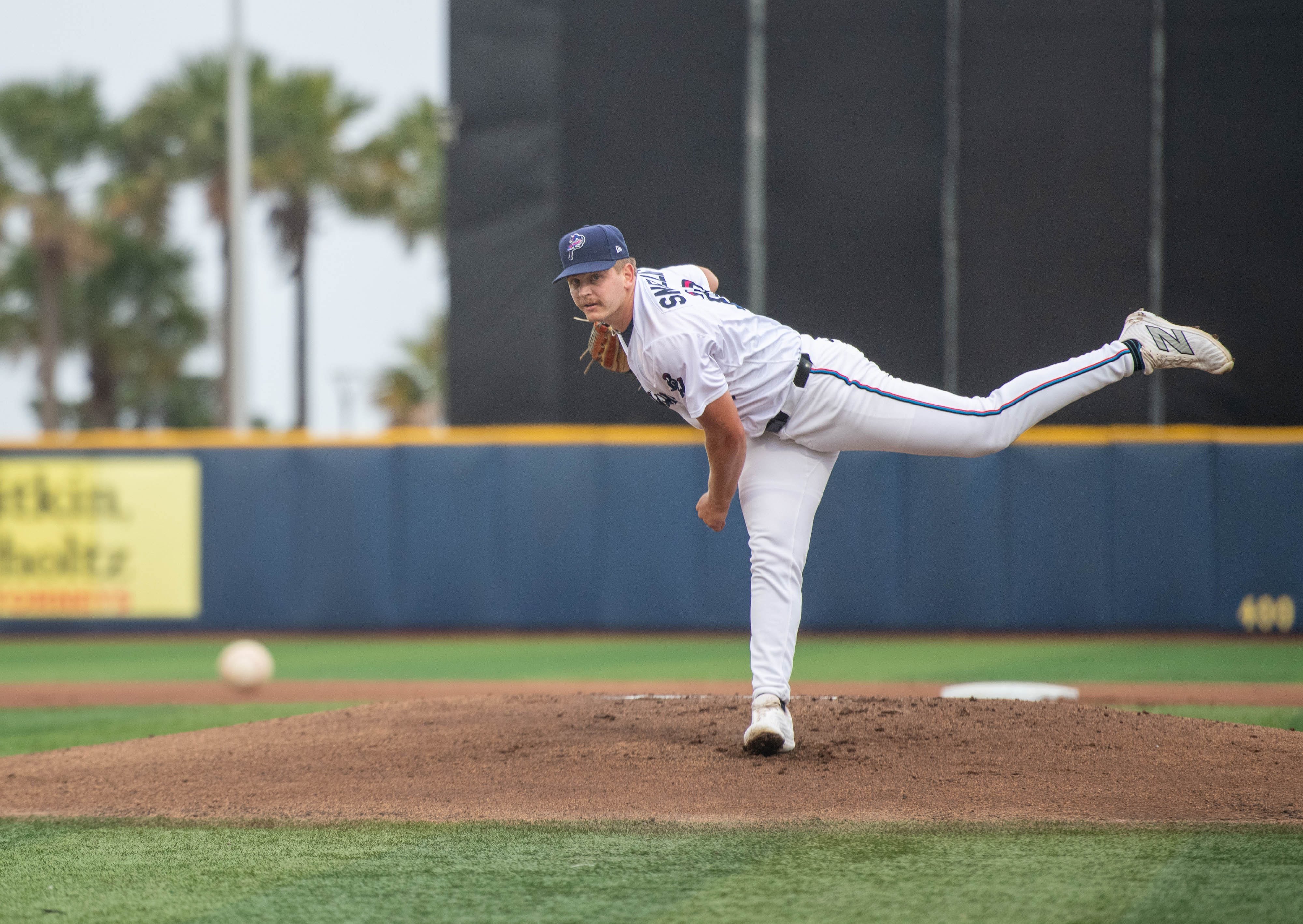 The Miami Marlins have a two-headed, left-handed-pitching monster rapidly approaching the big leagues after wreaking havoc down on the farm. Robby Snelling led all minor league southpaws with 166 strikeouts in 2025. He spent half of his season with Triple-A Jacksonville, making 11 starts for the Jumbo Shrimp with only nine earned runs allowed. Nearly a year younger than Snelling, Thomas White missed bats at an even higher rate. He got a cup of coffee in Jacksonville (two starts) to end the season. Although neither are on Miami's 40-man roster yet, both prospects are likely to debut during the 2026 season. Snelling's success was the bigger surprise coming off an uneven 2024 campaign. He sliced his ERA in half (from 5.15 to 2.51) and improved his xFIP by more than a full run (from 3.80 to 2.72). These are elite numbers for any prospect, especially one who's facing Double-A and Triple-A competition as a starter. The curveball is Snelling's best pitch. It got a 42.70% whiff rate in Triple-A and a low .241 xwOBA, faring well against both lefties and righties. The pitch resembles former Marlin Andrew Heaney's curveball, but with much more velocity on it (averaging 82.6 mph). ckRPWTFfV0ZRVkV3dEdEUT09X0R3ZFJBRklNWGdjQUMxb0dWZ0FIQWdNQ0FGZ0hWVllBQjFVQkExRUNCUXNFQkZNSA==.mp4 An increase in velo has benefited Snelling's whole pitch mix. His fastball sat at 94.7 mph in Triple-A. He mostly removed the sinker from his arsenal as a result of being able to overpower hitters with the four-seamer and commanding it so well. Snelling's fastball has characteristics comparable to Tanner Scott's. Both get around 16.7 inches of induced vertical break (IVB), close to six inches of arm-side run, and just over six feet of extension down the mound during their delivery. Snelling's ability to locate more precisely and his slightly lower arm angle (approx. 26.6 degrees) are more conducive to long-term performance even if his velo doesn't continue to climb. Overall, his fastball performed well in Triple-A, posting a 36.5 whiff% and a .200 xwOBA. ckRPWTFfV0ZRVkV3dEdEUT09X0FBSlpCZ1pRQWxjQUFRQlFYd0FIQVZkVEFBTlRBZ0lBVUZFRVVnSURBd1pjQjFCUw== (1).mp4 Snelling was in the strike zone 54.5% of the time in Triple-A, which would have ranked top 10 among MLB starters in 2025. He mixed his pitches in such a way that hitters only swung at 62% of in-zone pitches, the same as Hunter Brown. Even when they did, their 77.5% zone contact rate was Dylan Cease-like. Outside the zone, the contact rate was 50.7%, on par with NL Cy Young Award runner-up Cristopher Sánchez (50.5%). He also thrived at limiting hard contact with a 3.5% barrel rate and 28.5% hard-hit rate. Snelling showed minimal flaws in 2025, and continuing a trend from his San Diego Padres days, he was injury-free. He has emerged as a complete pitcher. This is not meant to diminish Thomas White at all (2.31 ERA and 2.80 xFIP in 89.2 IP). His "stuff" may be slightly better than Snelling's, including a fastball that sits 95 mph and touched triple digits on several occasions. His sweeper is practically a cheat code for getting whiffs both in and out of the zone. UUFkQnFfV0ZRVkV3dEdEUT09X1VBQlVWRkVCVkZNQUNRRUJVZ0FIQkFkVEFBQlVCVllBQkZkVUJBQUVBVmNIVmdNRQ==.mp4 However, White's lack of efficiency is a potential concern when looking ahead to how he'd fit in a major league rotation. He finished Double-A with a walk rate of 12.6%, and it ballooned to 25% his two starts of Triple-A. Although it's reasonable to project further improvement in that area—he is entering his age-21 season—waste pitches will likely always be part of his formula. White has completed six innings only once in a professional game. For context, Snelling did that 14 times in 2025 alone. The future is bright for both Marlins minor leaguers. White is universally ranked higher on public prospect lists due to his ceiling, but it may be easier to forecast consistent success for Snelling at the highest level. One thing's for sure: they will command a lot of attention when they report to spring training in February as non-roster invitees. View the full article
 -
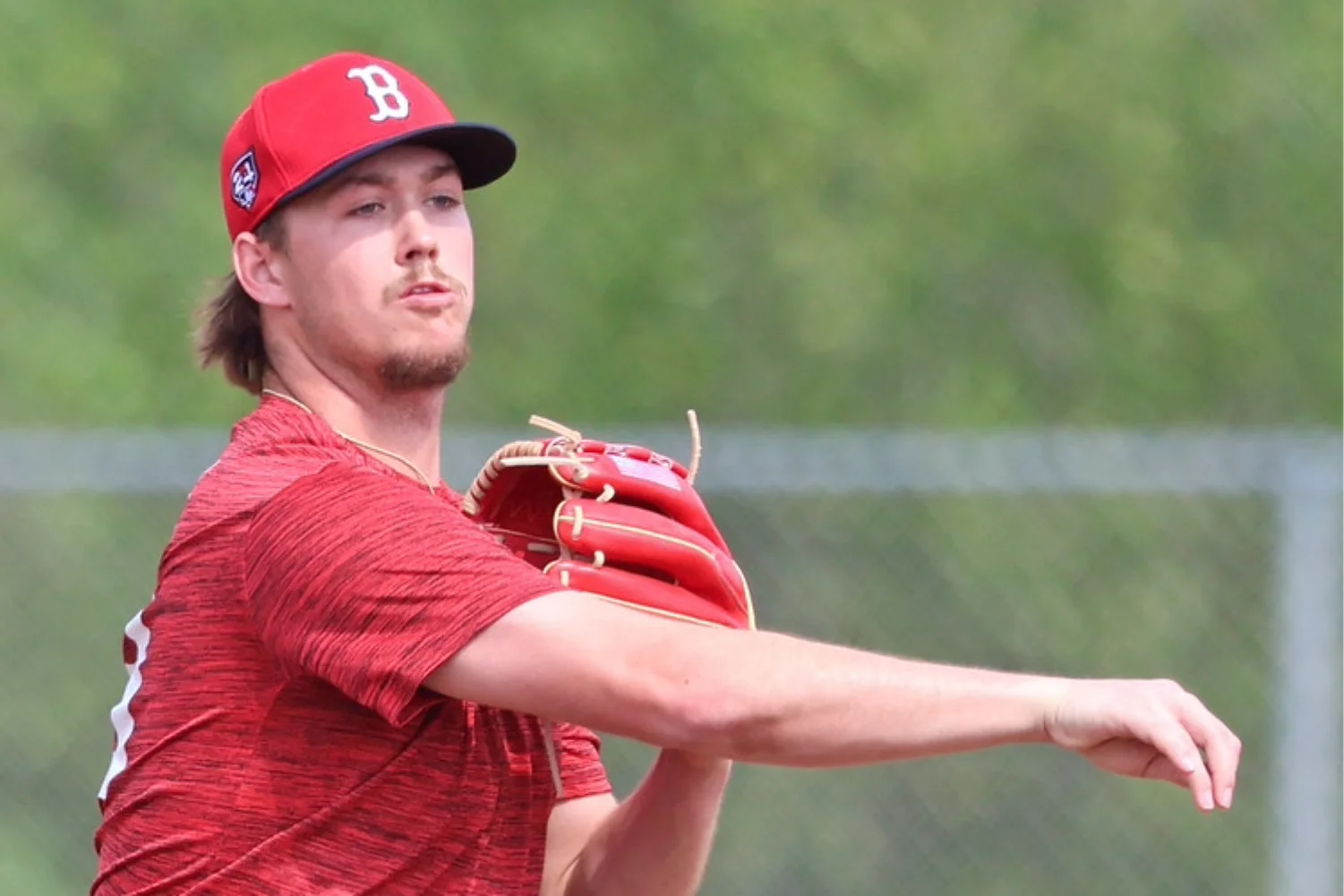 “To be honest it was a complete surprise,” Blake Wehunt said as he thought back to the 2023 draft. Taken in the ninth round out of Kennesaw State by the Boston Red Sox, Wehunt never expected to be drafted by the organization. The right-hander admitted that going into the 2023 draft, he had talked to teams here and there, but really had no idea when it came to expecting anything. All he knew was that he had a decent year to the point he had a shot at hearing his name called, but he wasn’t entering the draft with the thought of getting picked. “I hadn’t talked to the Red Sox much, so I went into it with zero expectations,” Wehunt recalled about the pre-draft process. “Sure enough, the Red Sox ended up calling. I’m blessed to be where I’m at.” Wehunt didn’t pitch much after getting drafted in 2023, getting into a single game at the Florida Complex League where he tossed one inning and struck out a batter while allowing one hit. The 2024 campaign was a bigger year for the pitcher, as in his first full professional season, he moved through three minor league levels, going from Single-A Salem and finishing the year with Double-A Portland. This past season saw Wehunt deal with injury, spending time on the injured list due to a lat strain. On the season, Wehunt wound up going 2-8 with a 5.68 ERA in 63 1/3 innings. In total, he appeared in 17 games and struck out 76 batters. But despite that, the season was still a success because of his improved cutter. “The fastball was 93-95 at the time and we have this huge gap in the arsenal where everything was either slow or fast. And so they came up with the idea of the cutter, and I was able to understand how to throw it pretty quickly,” Wehunt said as he talked about the process behind how a pitcher decides to add to their arsenal. The pitch, which he added in 2024, has evolved from there. “The plan before was to have something to show hitters early in counts that wasn’t a fastball and wasn’t off-speed. As I’ve grown to use it more, it’s definitely become more of an [offering] I can throw it in any count. It’s developed into using it how it should be vs just get ahead with it.” Of course, despite the improved cutter and Wehunt’s own work ethic, the injury still lingered on his mind as the season wore on and as he eventually got ready for the offseason. “Coming back (during the season) was a little tough because mentally, I had to learn how to trust that again. Now I’m to the point I don’t feel [the injury] anymore.” Wehunt spent half of October and half of November in Florida to do maintenance on his injury and making sure it was fine before getting into his usual offseason routine. Though, he also found time to enjoy some of his favorite activities. “I’m a big-time outdoorsman. Hunting, fishing, I’m all for it,” Wehunt explained when asked about things he enjoyed doing outside of baseball. “Most of the offseason I find myself doing [that kind of stuff]. Chasing deer and ducks and everything else.” And despite his enjoyment of hunting, Wehunt also knows that once New Year’s Day rolls around, it’s time to put the guns and bows away and to begin ramping up for baseball. “As soon as New Years is over, let’s put the rifle and the bow down and lets really hone in.” View the full article
 -
The Top 25 Kansas City Royals Player Assets of 2026: Part 3 (15-11)
DiamondCentric posted an article in Royals Keep
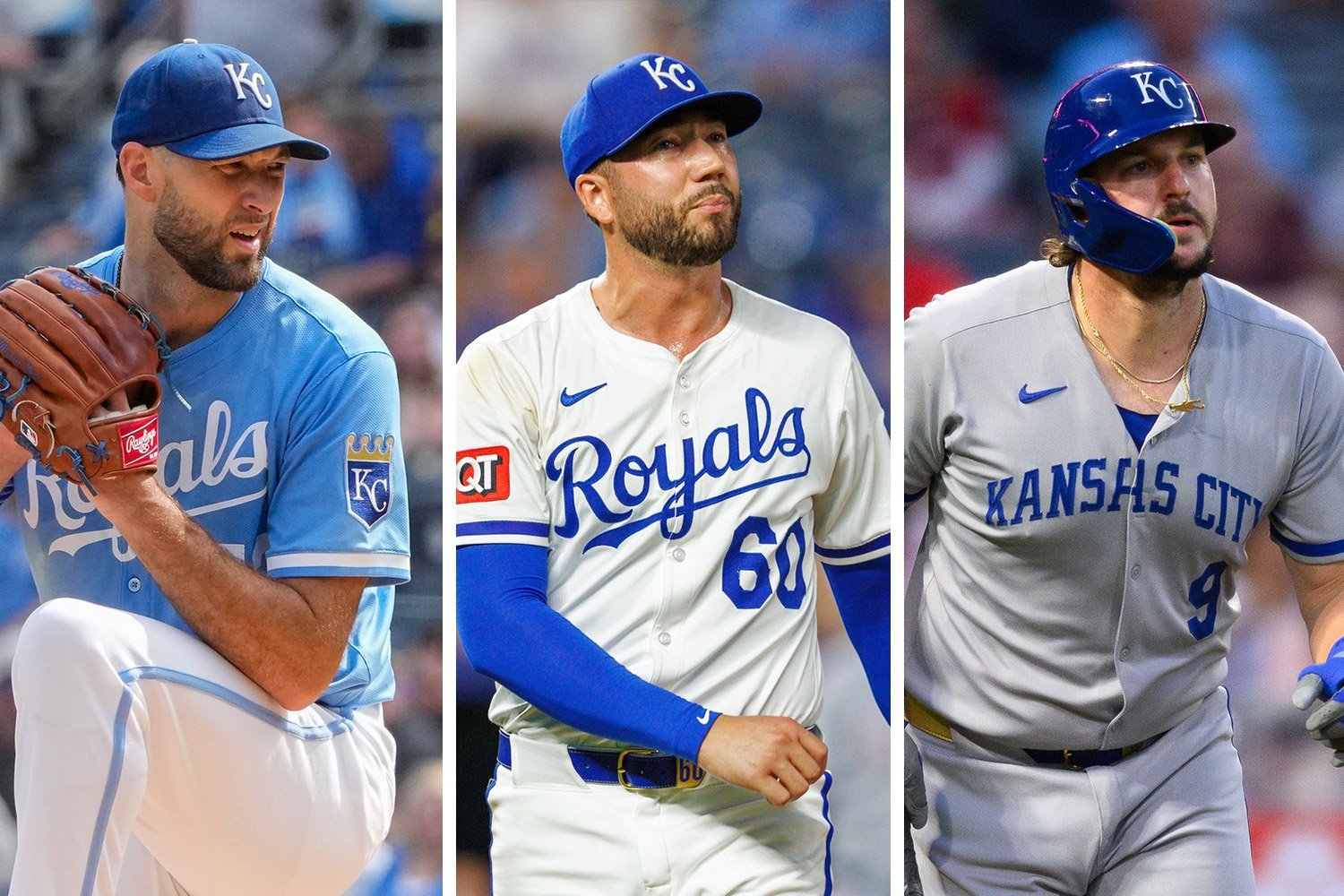 In part three of our countdown of the Royals’ assets, we will be talking about the 15th through 11th most valuable player assets. If you missed the previous two lists, they are listed here. Part 1: #21-25 Part 2: #16-20 15. Michael Wacha Age: 34 Controlled Through: 2027 with a club option in 28 Wacha has been a steady and reliable presence on the mound and in the locker room. His 2.8 bWAR was third-best on a Royals team flushed with pitching depth. He also led the team in wins (10) and innings pitched (172.2), so he was the team’s workhorse for long stretches of the season. His advanced metrics on Baseball Savant show that he is in the 99th percentile in offspeed run value and in the 82nd percentile in pitching run value. Entering his age-35 season, it’s good to see Wacha still has some gas left in the tank and hopefully can continue to be solid for years to come. 14: Lucas Erceg Age: 30 Controlled Through: 2029 Erceg took a slight step back from 2024, but he was still one of the better arms in the Royals' bullpen in 2025. Throughout the year, Erceg served as the set-up man behind Carlos Estévez, and his ERA of 2.64, along with eight wins, helped the Royals have one of the more underrated bullpens in baseball. While most of his numbers were down from his excellent 2024 season, he still posted a high pitching run value of 72, and his fastball run value increased. If Erceg can continue to have quality appearances, he will be a mainstay in the Royals' bullpen for years to come. 13. Sean Gamble Age: 19 Controlled Through: 2031+ Gamble was selected 23rd overall by the Royals in the most recent MLB Draft. He was placed on the ACL Royals, but did not play any games for them in 2025 because he was not officially signed until July. The Royals see a lot of potential in Gamble, especially in the at-bats he took while at IMG Academy. He is a contact-heavy hitter and a plus runner with positional versatility, which the Royals love in their players. Now, whether he can turn his high school success into success at the minor league level is left to be determined, but he is an intriguing prospect that Royals fans will undoubtedly keep an eye on. 12. Josh Hammond Age: 19 Controlled Through: 2031+ Hammond was selected five picks after Gamble, at 28th, because of the Prospect Promotion Incentive (PPI) reward for Bobby Witt Jr. finishing in the top three of AL MVP voting. Hammond was a two-way player throughout high school and helped lead Wesleyan Christian Academy to its second state title in three years. Hammond has a lot of raw power at the dish to all sides of the field and has a cannon for an arm. Despite his two-way approach in high school, the Royals will focus more on his hitting, as that’s where he shows the most potential. He was drafted as a shortstop, but scouts say he could move to third base due to his arm. It’ll be intriguing to see what the Royals do with Hammond in the near future. 11. Vinnie Pasquantino Age: 28 Controlled Through: 2028 The Pasquatch is coming off a stellar year as he put up career highs in hits (164), RBIs (113), home runs (32), and bWar (2.4). It was a year that Vinnie needed, as he wasn’t able to contribute much during the Royals' playoff push in 2024, but he was able to contribute big time this year. His bat is his most valuable asset; his defense is what really needs work, as his fielding run value of 21 and his -7 OAA is not good enough for a team that prides itself on good defense. Still, there is no doubt that Pasquantino’s bat will stay in the middle of the order as long as he puts up the numbers he did this past year. View the full article
 -
Top 25 Milwaukee Brewers Player Assets of 2026: 21-25
DiamondCentric posted an article in Brewer Fanatic
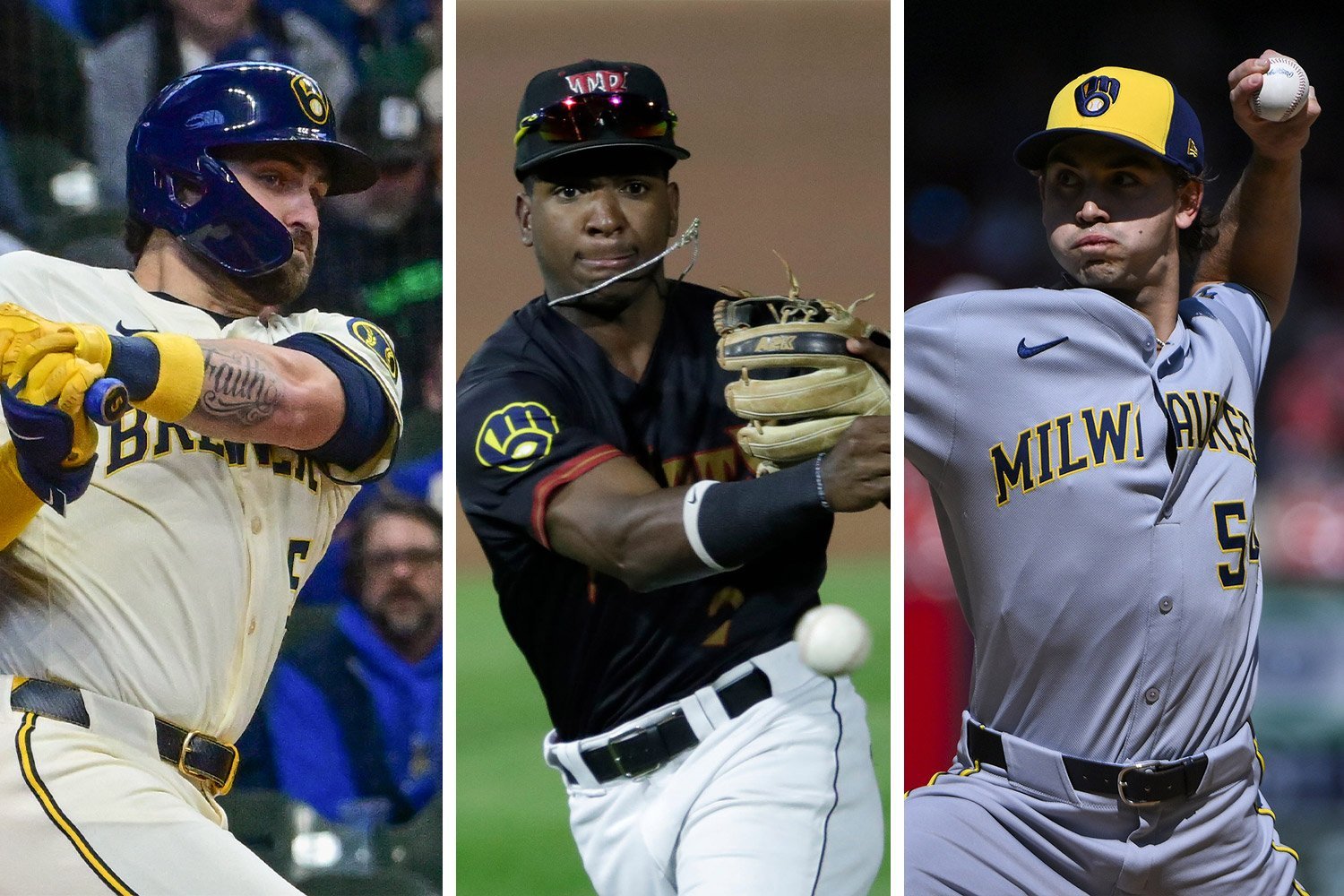 When it comes to content ideas, you either come up with something creative or steal from someone else. Well, here at Brewer Fanatic, we are going to borrow a concept from our friends over at Twins Daily. That is a list of player assets entering the upcoming season. Twins Daily has been doing this since 2018. Our inaugural Brewer Fanatic list will rank the 25 Milwaukee Brewers players and prospects with this in mind: Who are the most valuable in the organization's pursuit of building a champion? To do so, we considered age, upside, and contract. The Brewers are in one of the best positions in franchise history, coming off their third straight NL Central championship, having a relatively young MLB roster and prospects ready to be the next wave of contributors. Like it or not, that will allow the Brewers to spin off some of the talent before hitting free agency or to acquire other controllable assets. This list is a group effort. Jason Wang, Michael Trzinski, and I each came up with our own lists and merged them to create this ranking. Our individual rankings are included with each player, so you know who to blame if your favorite player isn't higher. Just kidding (but really). Each player's age and controlled-through years are based on his Baseball-Reference age for the 2026 season and when B-R says he can become a free agent. 25. Jared Koenig, LHP Jason's rank: 26 | Michael's rank: 24 | Steve's rank: 16 2026 Season age: 32 Controlled through: 2029 Opening our list is one of the Brewers' most dependable arms, who is often put into tough and late-inning situations, even if he is a late bloomer. As the Brewers do, they picked Koenig up off the scrap heap following the 2023 season, when he spent the entire season in the minors for the San Diego Padres after pitching in 10 MLB games for the Oakland A's in 2022. In two seasons with the Crew, Koenig has appeared in 127 games and posted a FIP of 3.31, striking out 24.6% of batters and walking 8.1%. While tying for ninth in MLB with 27 holds, Koenig has been versatile, serving as an opener in six games, all in 2024. Koenig provides a nice complement to Aaron Ashby, the Brewers' workhorse left-handed reliever, allowing manager Pat Murphy options depending on matchups, while also having a lefty to deploy when Ashby isn't available. Koenig allowed one run in six postseason games in 2025. He primarily relies on his sinker, which he used 57% of the time in 2025, while mixing in a cutter (18%) and curveball (16%). Koenig is entering his final pre-arbitration year and would be a very attractive piece to another team, even as he enters his age-32 season. 24. Tobias Myers, RHP Jason's rank: 14 | Michael's rank: 26 | Steve's rank: 25 2026 Season age: 27 Controlled through: 2030 After being a surprising rock of the 2024 starting rotation in his rookie season, notching a 2.7 bWAR in 27 games (25 starts), Myers was virtually nonexistent for the Brewers in 2025. Part of that stems from how his 2025 began — on the 15-day injured list with a strained left oblique. That was only a temporary setback, as he was activated and returned to the rotation in late April, when the Crew needed starters. But that only lasted for six games (one in relief) as Myers was optioned to Triple-A Nashville less than a month later. The Nashville shuttle was his plight for the rest of the season. As the Brewers' rotation stabilized, Myers was relegated to a bullpen role. His numbers for the season were very solid. He posted a 3.92 FIP, just behind the 3.91 in 2024, and an ERA+ of 117 in 22 games, including six starts. A big development for Myers in 2025 was the introduction of a splitter and a reduced reliance on his changeup. Already with a cutter and slider in addition to his four-seamer, Myers used the new splitter 16% of the time in the majors, with his changeup going from 11% in 2024 to 1% in 2025. Myers figures to be in the mix for the back end of the Brewers' rotation or a long-relief role. 23. Garrett Mitchell, CF Jason's rank: 20 | Michael's rank: 21 | Steve's rank: 21 2026 Season age: 27 Controlled through: 2028 Mitchell is the great unknown for the Brewers. Unknown because he hasn't been able to stay on the field long enough to showcase his value due to a variety of injuries. A first-round draft choice in 2020, Mitchell made his MLB debut in August 2022, playing 28 games that season. Since then, the left-handed-hitting center fielder has played 19, 69, and 25 games. That was due to a torn labrum while sliding (2023), a fractured left index finger in spring training (2024), and a strained left oblique and left shoulder surgery while rehabbing (2025). That doesn't include a left knee injury that sidelined him in 2021 and an oblique issue in 2022, both in the minors. In 2024, when he came back from the fractured finger, he showed flashes of his potential, putting up a .255/.342/.469 slash line with eight homers, 21 RBIs, and 11 steals. With 13 homers and 23 steals in 141 career games, it isn't hard to project a 20-homer, 30-steal full season. Mitchell has the talent and charisma to be as productive and popular as left fielder Jackson Chourio, which would be a boon for the Brewers. While Blake Perkins provides stellar defense in center, he doesn't have the offensive tools that Mitchell does, and the Brewers' offense sorely needs. With Perkins in his first year of arbitration eligibility, 2026 shapes up as a crucial season. The nature of Mitchell's injuries seems more fluky than anything, but frustrating for all involved, given their frequency. Mitchell is likely to be the Opening Day center fielder for the second year in a row; the only question is how many games will be played after that. 22. Robert Gasser, LHP Jason's rank: 21 | Michael's rank: 22 | Steve's rank: 19 2026 Season age: 27 Controlled through: 2030 The Brewers have been dreaming on Gasser since he was the key piece coming back in the Josh Hader trade with the San Diego Padres at the 2022 trade deadline. At the time, Gasser was a top prospect as a left-handed starting pitcher and, after spending all of 2023 at Triple-A Nashville, Gasser made his MLB debut in May 2024. But after five starts, in which he had a 3.38 FIP and 163 ERA+, Gasser blew out his left elbow and required Tommy John surgery. That kept him out until late in 2025, coming back to make two abbreviated late-season starts. The good news is that means Gasser will have a typical offseason and be ready to go at a fairly full throttle in spring training, though the Brewers will monitor his workload. With the rotation currently having a top three of right-handers Freddy Peralta, Brandon Woodruff, and Jacob Misiorowski, Gasser will be in competition with right-handers Chad Patrick, Logan Henderson, and Myers for the final two spots. Working in Gasser's favor is that he is a left-hander, potentially the only one in the 2026 Opening Day rotation. Featuring a four-seamer and a sweeper that he uses fairly equally (34% and 33% for his brief MLB career), along with a sinker and changeup, Gasser showed a good strikeout ability with 410 in 337⅓ innings in the minors, including 41 in 38 innings while rehabbing in 2025. Gasser should be a big part of the Brewers' rotation in 2026 and beyond. Due to the injury that cost him most of two seasons, this will be his final pre-arbitration season. 21. Luis Pena, SS-2B Jason's rank: 5 | Michael's rank: 26 | Steve's rank: 26 2026 Season age: 19 Controlled through: TBD Speaking of dreaming, we hit the first of three prospects to make this list. As you can see, where to rank Pena differed greatly, perhaps because the interpretation of this list's meaning differed among the three voters. None of this is a knock on Pena, the consensus No. 2 prospect in the organization. Six months older than top prospect Jesus Made, the 19-year-old Pena has risen through the system at the same speed as Made, except for one late promotion for Made in 2025. Both are middle infielders, with Pena shifting to second base in deference to Made. Pena, part of the Brewers' stellar 2024 international signing class, made it to High-A Wisconsin this season after being part of an exceptional grouping at Single-A Carolina. In 71 games at Carolina, Pena slashed .308/.375/.469 with six homers, 52 RBIs, and 41 steals. Following his promotion to Wisconsin, Pena ran into his first struggles as a professional, with a .168/.220/.297 slash line in 25 games. Speed is Pena's primary asset, with 83 steals in 140 games over two seasons, but he does have a good hit tool, having won the Dominican Summer League batting title in 2024 with a .393 average. His power increased from one homer in 2024 to nine in 2025, showing there is room to grow there as his body matures. Pena has also seen time at third base and appears to have the arm strength for the position. Likely to begin 2026 at Wisconsin, Pena is very much part of the Brewers' future and could find his way during the year to Double-A Biloxi with a good showing. View the full article
 -
Top 25 Milwaukee Brewers Player Assets of 2026: 21-25
DiamondCentric posted an article in Brewer Fanatic
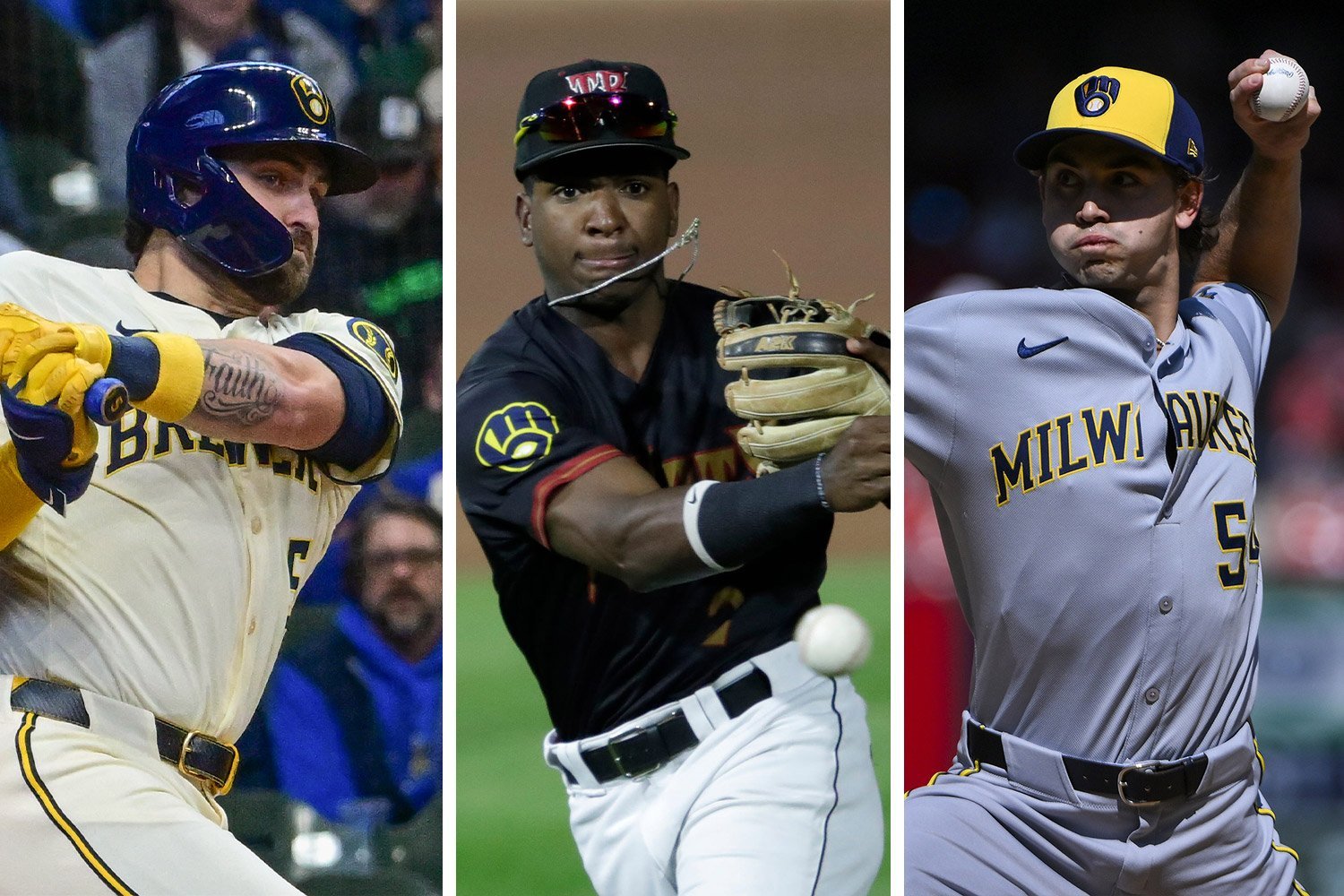 When it comes to content ideas, you either come up with something creative or steal from someone else. Well, here at Brewer Fanatic, we are going to borrow a concept from our friends over at Twins Daily. That is a list of player assets entering the upcoming season. Twins Daily has been doing this since 2018. Our inaugural Brewer Fanatic list will rank the 25 Milwaukee Brewers players and prospects with this in mind: Who are the most valuable in the organization's pursuit of building a champion? To do so, we considered age, upside, and contract. The Brewers are in one of the best positions in franchise history, coming off their third straight NL Central championship, having a relatively young MLB roster and prospects ready to be the next wave of contributors. Like it or not, that will allow the Brewers to spin off some of the talent before hitting free agency or to acquire other controllable assets. This list is a group effort. Jason Wang, Michael Trzinski, and I each came up with our own lists and merged them to create this ranking. Our individual rankings are included with each player, so you know who to blame if your favorite player isn't higher. Just kidding (but really). Each player's age and controlled-through years are based on his Baseball-Reference age for the 2026 season and when B-R says he can become a free agent. 25. Jared Koenig, LHP Jason's rank: 26 | Michael's rank: 24 | Steve's rank: 16 2026 Season age: 32 Controlled through: 2029 Opening our list is one of the Brewers' most dependable arms, who is often put into tough and late-inning situations, even if he is a late bloomer. As the Brewers do, they picked Koenig up off the scrap heap following the 2023 season, when he spent the entire season in the minors for the San Diego Padres after pitching in 10 MLB games for the Oakland A's in 2022. In two seasons with the Crew, Koenig has appeared in 127 games and posted a FIP of 3.31, striking out 24.6% of batters and walking 8.1%. While tying for ninth in MLB with 27 holds, Koenig has been versatile, serving as an opener in six games, all in 2024. Koenig provides a nice complement to Aaron Ashby, the Brewers' workhorse left-handed reliever, allowing manager Pat Murphy options depending on matchups, while also having a lefty to deploy when Ashby isn't available. Koenig allowed one run in six postseason games in 2025. He primarily relies on his sinker, which he used 57% of the time in 2025, while mixing in a cutter (18%) and curveball (16%). Koenig is entering his final pre-arbitration year and would be a very attractive piece to another team, even as he enters his age-32 season. 24. Tobias Myers, RHP Jason's rank: 14 | Michael's rank: 26 | Steve's rank: 25 2026 Season age: 27 Controlled through: 2030 After being a surprising rock of the 2024 starting rotation in his rookie season, notching a 2.7 bWAR in 27 games (25 starts), Myers was virtually nonexistent for the Brewers in 2025. Part of that stems from how his 2025 began — on the 15-day injured list with a strained left oblique. That was only a temporary setback, as he was activated and returned to the rotation in late April, when the Crew needed starters. But that only lasted for six games (one in relief) as Myers was optioned to Triple-A Nashville less than a month later. The Nashville shuttle was his plight for the rest of the season. As the Brewers' rotation stabilized, Myers was relegated to a bullpen role. His numbers for the season were very solid. He posted a 3.92 FIP, just behind the 3.91 in 2024, and an ERA+ of 117 in 22 games, including six starts. A big development for Myers in 2025 was the introduction of a splitter and a reduced reliance on his changeup. Already with a cutter and slider in addition to his four-seamer, Myers used the new splitter 16% of the time in the majors, with his changeup going from 11% in 2024 to 1% in 2025. Myers figures to be in the mix for the back end of the Brewers' rotation or a long-relief role. 23. Garrett Mitchell, CF Jason's rank: 20 | Michael's rank: 21 | Steve's rank: 21 2026 Season age: 27 Controlled through: 2028 Mitchell is the great unknown for the Brewers. Unknown because he hasn't been able to stay on the field long enough to showcase his value due to a variety of injuries. A first-round draft choice in 2020, Mitchell made his MLB debut in August 2022, playing 28 games that season. Since then, the left-handed-hitting center fielder has played 19, 69, and 25 games. That was due to a torn labrum while sliding (2023), a fractured left index finger in spring training (2024), and a strained left oblique and left shoulder surgery while rehabbing (2025). That doesn't include a left knee injury that sidelined him in 2021 and an oblique issue in 2022, both in the minors. In 2024, when he came back from the fractured finger, he showed flashes of his potential, putting up a .255/.342/.469 slash line with eight homers, 21 RBIs, and 11 steals. With 13 homers and 23 steals in 141 career games, it isn't hard to project a 20-homer, 30-steal full season. Mitchell has the talent and charisma to be as productive and popular as left fielder Jackson Chourio, which would be a boon for the Brewers. While Blake Perkins provides stellar defense in center, he doesn't have the offensive tools that Mitchell does, and the Brewers' offense sorely needs. With Perkins in his first year of arbitration eligibility, 2026 shapes up as a crucial season. The nature of Mitchell's injuries seems more fluky than anything, but frustrating for all involved, given their frequency. Mitchell is likely to be the Opening Day center fielder for the second year in a row; the only question is how many games will be played after that. 22. Robert Gasser, LHP Jason's rank: 21 | Michael's rank: 22 | Steve's rank: 19 2026 Season age: 27 Controlled through: 2030 The Brewers have been dreaming on Gasser since he was the key piece coming back in the Josh Hader trade with the San Diego Padres at the 2022 trade deadline. At the time, Gasser was a top prospect as a left-handed starting pitcher and, after spending all of 2023 at Triple-A Nashville, Gasser made his MLB debut in May 2024. But after five starts, in which he had a 3.38 FIP and 163 ERA+, Gasser blew out his left elbow and required Tommy John surgery. That kept him out until late in 2025, coming back to make two abbreviated late-season starts. The good news is that means Gasser will have a typical offseason and be ready to go at a fairly full throttle in spring training, though the Brewers will monitor his workload. With the rotation currently having a top three of right-handers Freddy Peralta, Brandon Woodruff, and Jacob Misiorowski, Gasser will be in competition with right-handers Chad Patrick, Logan Henderson, and Myers for the final two spots. Working in Gasser's favor is that he is a left-hander, potentially the only one in the 2026 Opening Day rotation. Featuring a four-seamer and a sweeper that he uses fairly equally (34% and 33% for his brief MLB career), along with a sinker and changeup, Gasser showed a good strikeout ability with 410 in 337⅓ innings in the minors, including 41 in 38 innings while rehabbing in 2025. Gasser should be a big part of the Brewers' rotation in 2026 and beyond. Due to the injury that cost him most of two seasons, this will be his final pre-arbitration season. 21. Luis Pena, SS-2B Jason's rank: 5 | Michael's rank: 26 | Steve's rank: 26 2026 Season age: 19 Controlled through: TBD Speaking of dreaming, we hit the first of three prospects to make this list. As you can see, where to rank Pena differed greatly, perhaps because the interpretation of this list's meaning differed among the three voters. None of this is a knock on Pena, the consensus No. 2 prospect in the organization. Six months older than top prospect Jesus Made, the 19-year-old Pena has risen through the system at the same speed as Made, except for one late promotion for Made in 2025. Both are middle infielders, with Pena shifting to second base in deference to Made. Pena, part of the Brewers' stellar 2024 international signing class, made it to High-A Wisconsin this season after being part of an exceptional grouping at Single-A Carolina. In 71 games at Carolina, Pena slashed .308/.375/.469 with six homers, 52 RBIs, and 41 steals. Following his promotion to Wisconsin, Pena ran into his first struggles as a professional, with a .168/.220/.297 slash line in 25 games. Speed is Pena's primary asset, with 83 steals in 140 games over two seasons, but he does have a good hit tool, having won the Dominican Summer League batting title in 2024 with a .393 average. His power increased from one homer in 2024 to nine in 2025, showing there is room to grow there as his body matures. Pena has also seen time at third base and appears to have the arm strength for the position. Likely to begin 2026 at Wisconsin, Pena is very much part of the Brewers' future and could find his way during the year to Double-A Biloxi with a good showing. View the full article
 -
How the Twins Can Still Save the Carlos Correa Trade
DiamondCentric posted an article in Twins Daily
 Coming out of the Winter Meetings, the Twins find themselves circling back to a familiar need. The team's offense struggled down the stretch and remains the most obvious place to upgrade a roster that is trying to stay afloat while reshaping its long-term direction. Last week, the Twins signed Josh Bell to a one-year, $7 million deal that comes with ramifications for the current roster. Minnesota could let him be the team's everyday first baseman, but he has been a poor defender for most of his career. To field the best lineup, Bell might be better suited for a DH role with a different player taking over at first base. That brings us back to Houston and to a decision that still hangs over the organization. The Twins shocked their fan base and much of the baseball world when they sent Carlos Correa back to the Astros last July. The deal felt like a final acknowledgement that the previous competitive window had closed. The return only sharpened that feeling. Minnesota received a 26-year-old low-minors pitcher in Matt Mikulski, who the team already released, and agreed to cover $33 million of Correa’s remaining contract. At the time, it looked like the Twins took the best offer available. Now, we know the talks may have been more complicated. According to Bob Nightengale of USA Today, Minnesota initially pushed for veteran first baseman Christian Walker as part of those negotiations. Houston declined. Walker had just signed a free agent deal the previous winter and still had two years and $40 million remaining. The ask suggested the Twins were not simply dumping salary but actively searching for a way to remain respectable in the short term without Correa. Fast forward to this offseason, and Walker’s name is back in circulation. Reports indicate the Astros are attempting to clear a logjam at first base and designated hitter. Chandler Rome of The Athletic has noted that interest around the league has been limited. Walker’s 2025 numbers explain some of that hesitation. Over 154 games, he slashed .238/.297/.421 (.718) with a 99 wRC+ and produced 1.1 fWAR. There are reasons to think there is still something left. Walker was far better in the second half, launching 15 home runs and posting a 120 wRC+. He will be 35 years old in 2026 but remains a strong defender at first base (2 OAA in 2025), which carries real value for a pitching staff that will include young infielders across the diamond. This is where the Correa trade could be partially salvaged. Minnesota is already sending $10 million per season to Houston as part of Correa’s deal. A creative solution could see the Astros send Walker to the Twins while covering roughly half of his remaining salary ($16-20 million of the $40 million owed). Minnesota would likely need to include a lower-level prospect to make it work, but the cost would be manageable. It would not erase the sting of trading Correa for such a light return. However, landing a steady first baseman who can provide average offense and above-average defense would help stabilize the roster and provide a more transparent bridge between rebuilding and competing. Sometimes saving a trade does not mean winning it outright. Sometimes it means finding a way to make the aftermath hurt a little less. Does Walker make sense for the Twins? How much of his salary could the front office expect to acquire? Leave a comment and start the discussion. View the full article
 -
Can Addison Barger Be the Next Blue Jays Homegrown Star?
DiamondCentric posted an article in Jays Centre
 Entering the 2025 MLB season, expectations weren’t too high for Toronto Blue Jays youngster Addison Barger. After all, Barger struggled to produce on a consistent basis during his various stints up in the big leagues in 2024. Nevertheless, he did show some promise in the end, tallying seven home runs and 28 RBIs over 69 games played. However, a 0.4 bWAR and 68 OPS+, along with an average exit velocity of 88.3 mph and a hard-hit rate of 38.3%, left a lot to be desired. However, 2025 would turn out to be the coming out party for Barger. Not only did he become a regular in the Blue Jays lineup following his promotion in mid-April, but he would eventually be a key piece of their offensive attack during the regular season and the playoffs. So, with his sudden emergence to prominence, can Barger become the next homegrown star for Toronto? Taking a look at the numbers, the 26-year-old registered a .243 average and a .756 OPS, together with 61 runs scored, 32 doubles, 21 home runs and 74 RBIs over 135 games played in his first full season with the Jays. Just for comparison, Vladimir Guerrero Jr. had a slightly better average (.272) and OPS (.772), but just 52 runs scored, 26 doubles, 15 home runs and 69 RBIs in 123 games played in 2019, his first full season with Toronto. Going more in-depth with the advanced stats, Barger saw his average exit velocity jump to 91.7 mph this past season, ranking him in the 86th percentile in the league. His elite hard-hit rate of 51% ranked in the 91st percentile. More impressive was his bat speed of 75.9 mph, putting him into the 93rd percentile in the league. At the same time, Barger had a respectable xwOBA of .331 and barrel rate of 11.4%. As for Guerrero, he actually paled in comparison in his first full season with the Jays, maintaining just an 89.4 mph average exit velocity, a 38.7% hard-hit rate, and 7.7% barrel rate, though he managed a similar .333 xwOBA, thanks to superior plate discipline and contact skills. Seeing how Guerrero has turned out for the Blue Jays in recent years, Barger is absolutely on the right path in his development. That being said, perhaps Barger's ascension is more similar to that of Bo Bichette, who burst out big time in his first full season in 2021, producing a .298 average and an .828 OPS, along with 121 runs scored, 29 home runs and 102 RBIs over 159 games played. That year, Bichette had an xwOBA of .350, an average exit velocity of 91.4 mph, a 47.5% hard-hit rate and a 9.9% barrel rate. So, overlooking Bichette's massive offensive production, Barger’s underlying metrics look quite similar to those of Bichette from his first full season. One thing to keep in mind is the fact that it took Barger until age 25 before entering his first full season with the Jays, whereas for both Guerrero and Bichette, their first full seasons with Toronto came at a much younger age (20 and 23, respectively). As a result, it was reasonable to expect that they had some more time to grow, whereas Barger had a lot more time to mature his game before taking the big stage. In addition, if taking a look at their performances from the minors, both Guerrero (.945 OPS, 160 wRC+) and Bichette (.894 OPS, 144 wRC+) were better hitters than Barger (.814 OPS, 120 wRC+) before their first full seasons in the majors. So, potential-wise, one would expect greater things from the Jays' dynamic duo. Nevertheless, Barger optimistically displayed rapid growth and maturity in his game when he was able to adapt and elevate his play during the postseason. He hit .367 with a 1.024 OPS, together with eight runs scored, three home runs and nine RBIs in 17 playoff games, coming through with big hits in some key moments. As a result, if Barger is able to progress his game as both Guerrero and Bichette did theirs, the Blue Jays might not need to waste too much money targeting any top free agent sluggers on the market. That is because they could have a budding one in Barger, who could be developing into the team’s next homegrown star. He might not be quite at the elite star-production level of the other two aforementioned players, even once he reaches his full potential, but getting the next Shawn Green or Adam Lind (when they were in their primes) wouldn't be too shabby either. View the full article
 -
Royals Open to Trading Kris Bubic, Clearing Payroll for Trade
DiamondCentric posted an article in Royals Keep
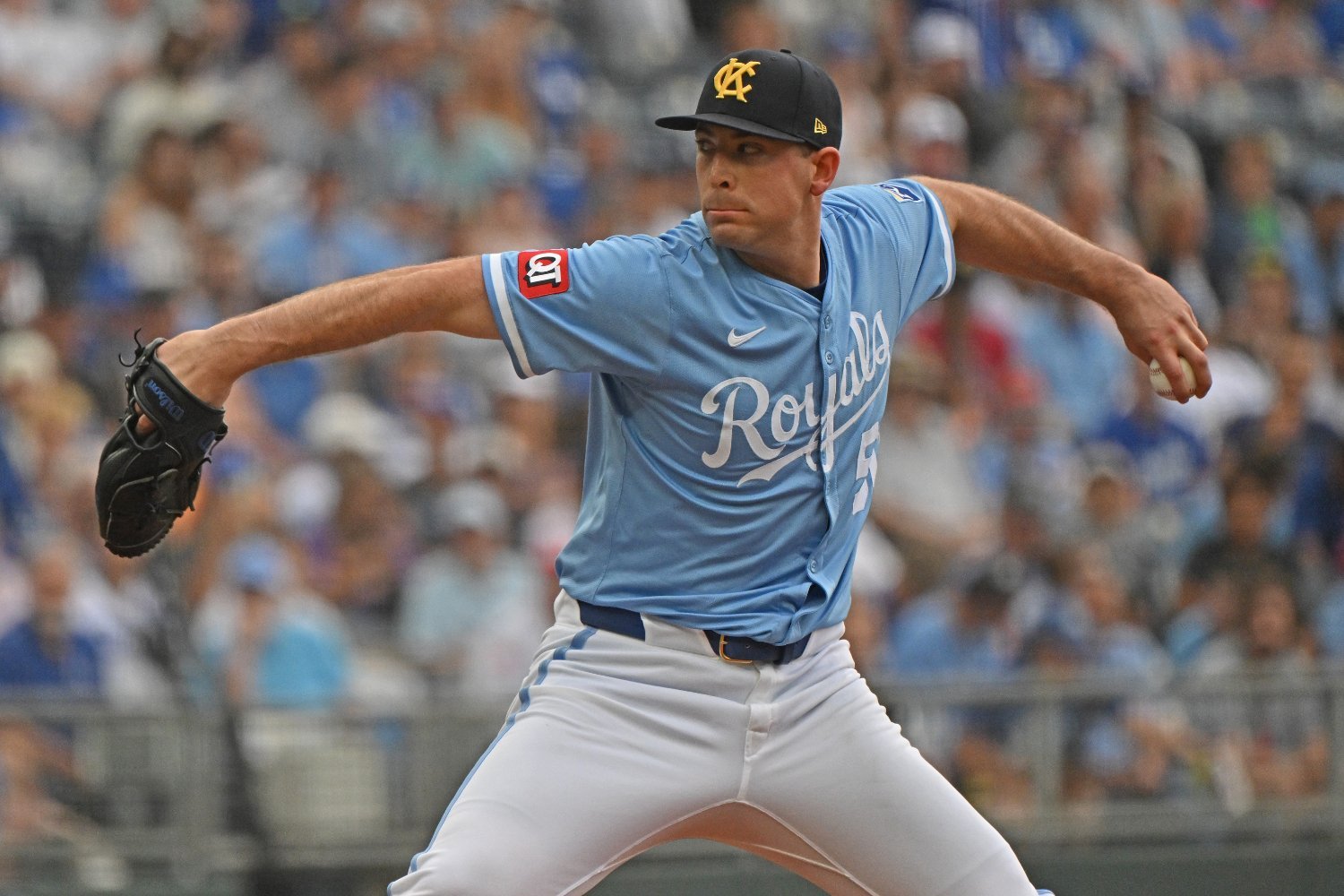 On Saturday evening, Ken Rosenthal of The Athletic reported that the Royals remain open to trading starter Kris Bubic and other pitchers to acquire a big-name bat this offseason. Bubic had an excellent campaign in 2025, despite missing most of the second half due to a shoulder injury. In 20 starts and 116.1 IP, the first-time All-Star posted a 2.55 ERA, an 8.97 K/9, and accumulated a 3.3 fWAR. Only Michael Wacha posted a higher pitcher fWAR last season (3.6) for the Royals. Additionally, upon his return to the rotation last year, Bubic still profiled well across his TJ Stuff and other metrics, as illustrated in his TJ Stats summary below. Bubic rated above-average in not just TJ Stuff+ (103), but zone% (51.9%), chase% (32.4%), whiff% (28.8%), and xwOBACON (.344). Thus, it makes sense why teams are interested in Bubic's services for 2026, even if he will be a free agent after next season. In addition to Bubic, it also seems like the Royals may be interested in trading relievers John Schreiber or Bailey Falter to clear payroll for a player like Boston's Jarren Duran or St. Louis' Brendan Donovan. Here's what Rosenthal says about those possibilities in his latest piece. John Schreiber is an interesting name, mainly because he was used in many high-leverage situations last year. When it came to gmLI, which measures leverage index when a pitcher enters a game, only Carlos Estevez (1.81) and Lucas Erceg (1.64) had higher gmLI marks than Schreiber. That said, while the 31-year-old righty posted a 3.80 ERA and flooded the strike zone last year, he struggled to generate chases and whiffs, as illustrated in his TJ Stats summary below. As for Bailey Falter, he struggled in his brief tenure in Kansas City, posting an 11.25 ERA in 12 IP with the Royals. His FIP was a little better at 5.22, but his overall FIP was 4.94 over 125.1 IP with the Pirates and Royals last season. Like Schreiber, inducing whiffs and chases was an issue for Falter a year ago, and it's hard to imagine it improving enough in 2026. While Falter and Schreiber may not be trending in the right direction, they could be a nice fit for a roster that lacks bullpen depth and needs relievers who will throw strikes and limit the walks. Rosenthal mentioned that Kansas City remains committed to keeping not just Cole Ragans but also to Michael Wacha and Seth Lugo, among others, even though they are drawing interest. The Royals have traded away Angel Zerpa and Jonathan Bowlan already this offseason, who posted ERA marks of 4.31 and 3.61 last season, respectively. It will be interesting to see whether Royals GM JJ Picollo would be open to trading another young pitcher, such as Noah Cameron, Ryan Bergert, Stephen Kolek, or Luinder Avila, if it helps them acquire a big-name position player who can boost the middle of the batting order. Photo Credit: Peter Aiken-Imagn Images View the full article
 -
The Brewers' Best Minor-League Rule 5 Draft Picks
DiamondCentric posted an article in Brewer Fanatic
 If you thought that the Brewers found slim pickings when it came to the Major League Rule 5 Draft, check out the dribs and drabs of the minor league phase of the draft. Milwaukee had only a couple of players who made any impression at the major league level for the Brewers, and a handful of others who made it to the big leagues, albeit for other teams. Here are the five players drafted by the Brewers who actually played for Milwaukee. Isaac Collins, OF-2B (from Colorado), 2022 Despite showing good speed with 30 steals at Double-A Hartford in 2022, the Colorado Rockies elected not to protect Collins, and the Brewers scooped him up in the Minor League portion of the draft. Collins began the 2023 season at Double-A Biloxi and showed power (10 HR), speed (29 steals), and a good eye, drawing 75 walks while batting .269/.424/.431 across just 376 plate appearances. He earned a late-season promotion to Triple-A Nashville but went 0-for-7 in three games. The following year, Collins showed his stuff at Nashville, batting .273/.386/.475 with 14 homers and 24 steals in 500 trips to the plate. The Brewers called him up for a sip of Starbucks in September. Although Collins struggled with only two hits in 17 at-bats, he showed his moxie, singling on the first pitch he saw in the major leagues and then stealing second base against his former organization in a 4-1 loss to the Rockies. The switch-hitter earned the final spot on the 2005 Brewers Opening Day roster after Blake Perkins suffered a broken tibia in training camp. Although the Brewers stumbled out of the gate, losing four straight games, Collins went 3-for-6, including a pair of doubles. He scuffled through mid-June but then caught fire over the next three months, hitting .297/.383/.485 with 26 extra-base hits in 229 ABs. Collins ran out of steam the last three weeks of the regular season, batting just .133/.333/.167 over 30 at-bats. In the postseason, Collins got only one start and went 0-for-9. Defensively, he posted a -1 Defensive Runs Saved (DRS), which put him squarely in the middle of all left fielders, but had a +5 Outs Above Average (OAA), which ranked him near the top of the list. After the 2025 season, Collins was traded, along with relief pitcher Nick Mears, to the Kansas City Royals for pitcher Ángel Zerpa. Caleb Boushley, RHP (from San Diego), 2021 The Brewers selected the Hortonville, Wisconsin product (via UW-La Crosse) from the San Diego Padres in the 2021 Minor League phase. The major league portion was postponed and then cancelled due to an offseason lockout. Boushley spent the entire 2022 season at Nashville, starting 25 games while posting a 12-2 record with an ERA of 3.25. His 1.17 WHIP was solid. He repeated the Triple-A level in 2023, and although his stats weren’t as good as the previous year, Boushley got called up to Milwaukee in late September. In his first action on a major league mound, Boushley had mixed results as he gave up a home run to Ian Happ, blew a save, but got the win in extra innings. In 2 1/3 innings, he allowed the Happ home run, walked two (one intentionally), and struck out five. To date, it is his only major league win. After the season, Boushley was outrighted to Nashville, and in January, the Minnesota Twins signed him to a minor league contract. He made two appearances in two separate stints for the Twins, and after the season, he became a free agent after he refused a minor league assignment. The Texas Rangers signed Boushley to a minor league contract in November. In 2025, Boushley spent most of the season with Texas, making 25 appearances and earning one save. Two days before Thanksgiving, Boushley signed a contract with the KT Wiz in the KBO League, hoping to find a little overseas magic. David Manning, RHP (from Minnesota), 2002 Manning was a third-round pick of the Texas Rangers in the 1992 MLB Amateur Draft. He spent seven years in the Rangers organization and barely made it to Triple-A, pitching in 12 games over a three-year period. He was granted free agency after the 1998 season and signed a minor league deal with the Chicago Cubs. Manning pitched two seasons at Double-A and Triple-A but suffered an undisclosed elbow injury that curtailed his 2000 season and the following season. He was a member of the New York Yankees organization for two months in early 2002 before being released. Manning signed with the Minnesota Twins in July and made 10 starts at Double-A New Britain. He was released once again and then was signed in the Minor League Rule 5 draft by Milwaukee. Manning began the 2003 season at Triple-A Indianapolis and got called up to Milwaukee in early August when Glendon Rusch went on the disabled list. It only took a few days for him to make his big-league debut. Unfortunately, he got rocked in his first outing, giving up four hits, five walks, and seven runs in a four-inning start against Montreal. A week later, he made his second start, and the results weren’t very different. Manning allowed seven hits, three walks, and six runs in just 2 2/3 innings against Florida. He was released 10 days later. He never made it back to the majors, but he did see a lot of the world. In addition to playing two seasons in the Chinese Professional Baseball League, he played three years in the Mexican leagues and one winter in Venezuela. He also played in two independent leagues and had partial seasons in the Cubs and Orioles organizations. Matías Carrillo, OF (from Pittsburgh), 1987 Carrillo was purchased by the Pirates in December 1985 from the Mexico City Tigers after four seasons in the Mexican League. After two ho-hum seasons in the Pirates chain, he was selected by the Brewers in the 1987 Minor League Rule 5 Draft. He spent four years (one at Double-A and three at Triple-A) in the minors for Milwaukee and was a decent player, finally getting his shot in the bigs in May 1991 when outfielder Darryl Hamilton went on the disabled list. Carillo did his best Moonlight Graham impression, although he played in three games to Graham’s one contest. In late May, Carrillo came into three consecutive games as a defensive replacement in left field for Franklin Stubbs and Greg Vaughn. Carrillo’s Milwaukee career showed no plate appearances and no defensive chances in the field. He was sent back to Triple-A Denver to make room for the return of pitcher Teddy Higuera at the end of May. Carrillo returned to the Mexican League for two years before he got signed by the Florida Marlins. He finally got his first big-league at-bat on September 1, 1993, and singled off Padres’ pitcher Andy Benes. He also had a double and two RBI. In his first dozen games, Carrillo batted .323/.323/.452 with four doubles across 31 at-bats. He finished the year with a batting line of .255/.281/.364 across 55 at-bats. In 1994, Carrillo played 80 games up until the Major League Strike. He batted .250/.295/.301 across 136 at-bats. He became a free agent after the year and played the next 15 years in the Mexican Leagues, retiring from baseball at age 46. Carrillo managed eight years in the Mexican League and one year in the independent Pioneer League before pulling the plug. Tom Candiotti, RHP (from Kansas City), 1980 How many people remember that ‘Cotton’ Candiotti pitched for the Brewers? He began his career with an unaffiliated team in the Low-A Northwest League in 1979 before signing with the Royals. He pitched for one year with the Royals at Double-A and Triple-A before getting picked by the Brewers in the minor league phase of the Rule 5 Draft in 1980. He made 21 appearances (14 starts) in 1981 at Double-A El Paso and went on the shelf with an elbow injury. He underwent Tommy John surgery and missed the end of 1981 and the entire 1982 season. He pitched at two levels in 1983 before getting called up to Milwaukee in August when Don Money went on the disabled list. After a pair of relief outings, Candiotti earned four straight wins, including two complete games and one shutout. The last four games were a disaster as he lost four straight. He posted an ERA+ of 117 and a FIP of 3.90. Candiotti was viewed as a long reliever in 1984 by manager Rene Lachemann, but instead was sent down to Triple-A Vancouver. He was recalled by Milwaukee in mid-July and made three starts with mixed results before going on the DL with right shoulder tendinitis. Upon his return, he made five appearances in September, finishing his Brewer career. In 1985, Candiotti made 28 combined starts between El Paso and Vancouver and was released after the season. Candiotti made 18 appearances (14 starts) for Milwaukee, posting an ERA+ of 96 and a FIP of 4.04. Candiotti spent the next 14 years in the bigs, toiling for Cleveland, the Los Angeles Dodgers, Toronto, and Oakland. He amassed 200+ innings nine times in his career. He retired at age 42 with 151 wins and an ERA+ of 108. The Ones That Got Away Five of the players chosen by the Brewers in the draft didn't make it to Milwaukee, but instead, made their big-league debuts with other clubs. Mike Warren, RHP (from Oakland), 1981 Warren made six starts at Single-A Stockton (4-0, 3.27 ERA), striking out batters at a rate of nearly 25% while posting a 1.14 WHIP. He was traded, along with first baseman Johnny Evers, to the A's for utilityman Rob Picciolo. Warren pitched for Oakland for three years (1983-85) and made 27 starts among 52 appearances and had an ERA+ of 75 and a FIP of 4.75. Juan Cerros, RHP (from Cincinnati), 2004 Cerros actually pitched in the bigs before Milwaukee scooped him up. He made 11 relief appearances for the Reds in 2003 and pitched to an ERA+ of 87 and FIP of 4.26. Not sure what happened in early 2005, but Cerros never pitched in the Brewers chain, instead electing to play in his native Mexico for the next 10 years. Brett Campbell, RHP (from Washington), 2007 Campbell also pitched in the bigs prior to getting drafted by the Brewers. In 2006, Campbell appeared in four games for the Nationals, posting an ERA+ of 45 and a FIP of 6.38. The Brewers released him before the start of the 2008 season. After his playing career, Campbell was a coach at Georgia Perimeter College, a small school near Atlanta. After two years, he became a scout for the Texas Rangers and, more recently, is scouting for the New York Mets. Kevin Mattison, OF (from Miami), 2013 Mattison also played in the majors prior to being drafted by Milwaukee, appearing in just three games for Miami in 2012, going 0-for-5. In 2014, Mattison played in 91 games at Triple-A Nashville, batting just .212/.294/.387 with 21 extra-base hits in 217 at-bats, but he struck out 33% of the time. He was released by the Brewers in mid-August. He signed with the Nationals before the 2015 season but was released after just three games at Triple-A Syracuse. Matt Ramsey, RHP (from Miami), 2016 Ramsey pitched for Double-A Biloxi in 2017 and led the Southern League with 27 saves. In mid-July, he was promoted to Triple-A Colorado Springs but scuffled there and was sent back to Biloxi, where he finished the season. Ramsey was released after the season and was picked up by Houston. He spent the 2018 campaign in the minors for Houston and once again chose free agency. The Los Angeles Angels signed him, and he started the 2019 season at Triple-A Salt Lake. He was called up to the Angels in late April and the next day made his only big show appearance, pitching a perfect ninth against the New York Yankees, striking out Mike Ford to end the game. He was let go by the Angels in early June. He pitched in Mexico and in an independent league, but retired after the season. Final Thoughts The Brewers, like most other teams, hope to find that special needle in a haystack with the Minor League phase of the Rule 5 Draft. It happened with Collins, Candiotti, and, to a lesser extent, Mike Warren. But for the most part, major league teams are just happy if they can find someone who can be a solid performer for them at the higher levels of the minors. And if they happen to make it to the bigs? That's a job well done by that organization. Please feel free to share any thoughts or comments in the comments section below. View the full article
 -
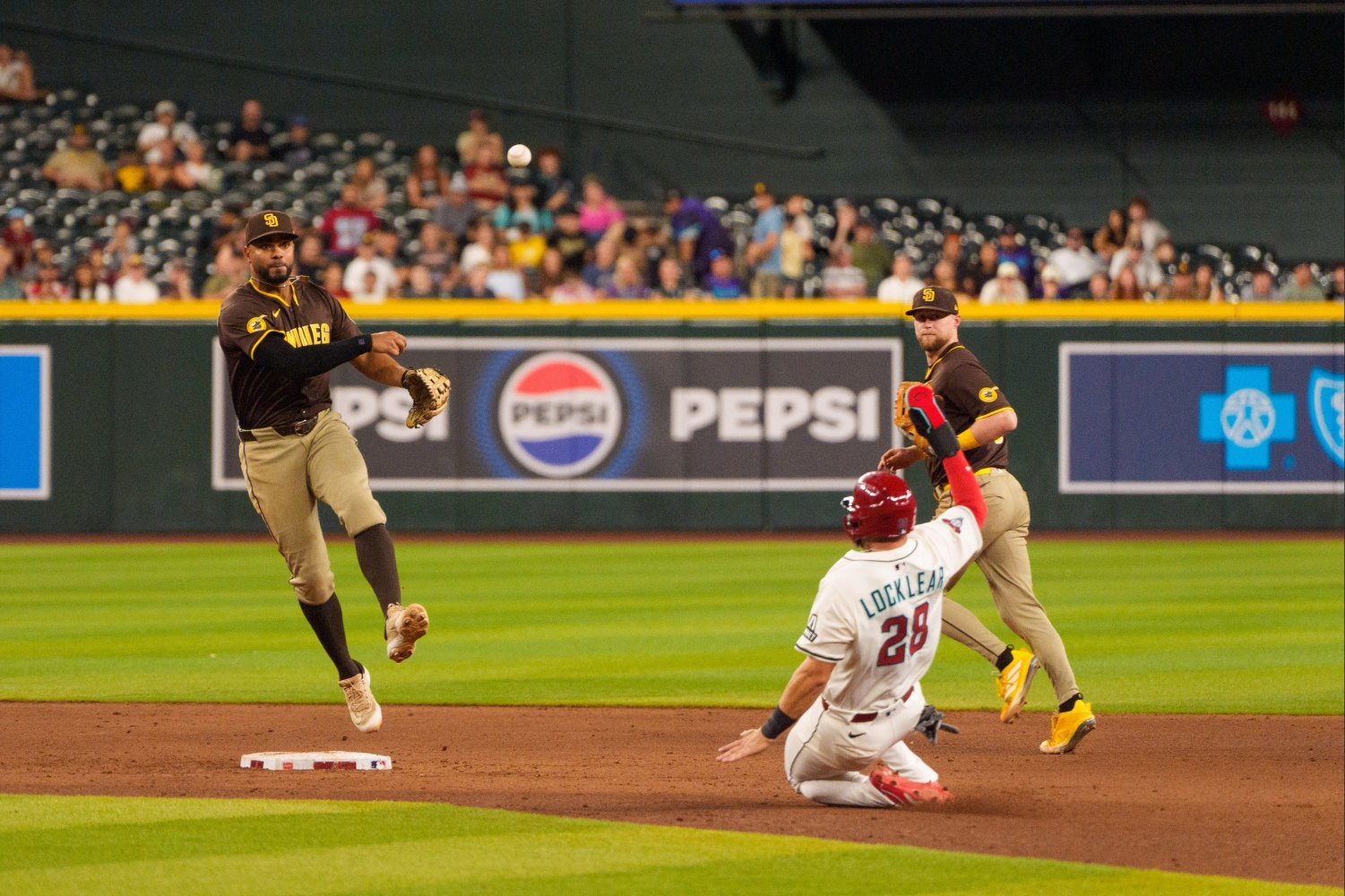 A.J. Preller has been activated. As evidenced by the San Diego Padres' re-signing of Michael King and signing of South Korean infielder Sung Mun Song, the organization now stands to play a significant role in how the remainder of the winter transpires across the landscape of Major League Baseball. And while the addition of Song, in particular, could have a bearing on the team's willingness to deal from their position player group, he stands to serve as a wildly important addition regardless of how the rest of the offseason unfolds. The 2025 Padres lacked infield depth. Outside of the starters, it was a group that was led by Jose Iglesias in a reserve role. The veteran appeared at second base for 40 games, third base for 24, and shortstop for another 32. Mason McCoy made a dozen appearances at short and another two at the keystone. There was a smattering of Tyler Wade in there early, too. To recap, that's a wRC+ of 73 (Iglesias), 42 (McCoy), and 69 (Wade) in support of their starting group. And that starting group didn't remain healthy throughout the year, with Xander Bogaerts, in particular, only appearing in 125 games. Plus, Jake Cronenworth missed a bit of time early in the year. Suffice it to say that when there was an absence — however brief it may have been — the Padres had a problem on their hands without any supplemental offense to speak of. Song's addition changes the calculus entirely. In general, the team is getting a versatile infielder that supplements the starting lineup with significantly more offensive upside than anyone they trotted out last year. His most recent KBO action featured a .315/.387/.530 line with 26 homers and 25 steals. Song logged time only at second and third base last year but also has some first base reps to his credit. His addition, as such, unlocks some versatility for the current roster. As things stand right now, you're looking at some combination of Gavin Sheets and Luis Campusano at first base. Jake Cronenworth will primarily handle the keystone while bouncing over to first occasionally. Xander Bogaerts and Manny Machado remain in place to handle shortstop and third base, respectively. While first base still stands as the most likely of the positions for an upgrade at present (barring a trade of Cronenworth), let's momentarily assume that no further transactions unfold with respect to the infield. Sheets' on-paper ability to move to the outfield corners and Campusano's current obligation as the team's No. 2 catcher allows new manager Craig Stammen to work Song in with some frequency, perhaps even as the primary first baseman if he's more content to have Sheets serve as a DH and let Campusano develop his glove behind the plate without additional obligations. Cronenworth can also slide over if he wants Song in at second base. Perhaps most importantly, though, is the fact that Song can step in reliably at third. That allows Stammen to work Machado in as the designated hitter with at least a little more frequency. We've seen his bat go through questionable stretches and his glove work decline a shade over the last two years. The flexibility there just adds a bit more of a safety net in those stretches where an approach or mechanical adjustment is needed on the part of Machado, without the extra burden of focusing on the defensive side of the ball. It's not that Song will supplant Machado for any meaningful stretch of time, but more so that he just offers that extra layer of protection for an essential player entering a season in which he'll turn 34 years old. Regardless of specifics, though, it cannot be overstated how much more dynamic the infield group becomes with Sung-mun Song now in the mix. Even if he's unable to attain a role as a traditional everyday player, he offers a level of offensive upside as a fill-in or injury replacement that the Padres lacked entirely in 2025. Not only does he offer the bat-to-ball skills that you prefer from that kind of role, but he possesses much more power and speed upside. While it's now much more likely that they deal from this group than it might have been even a few days ago, it's clear that the floor has been raised considerably on the infield grass in San Diego. View the full article
 -
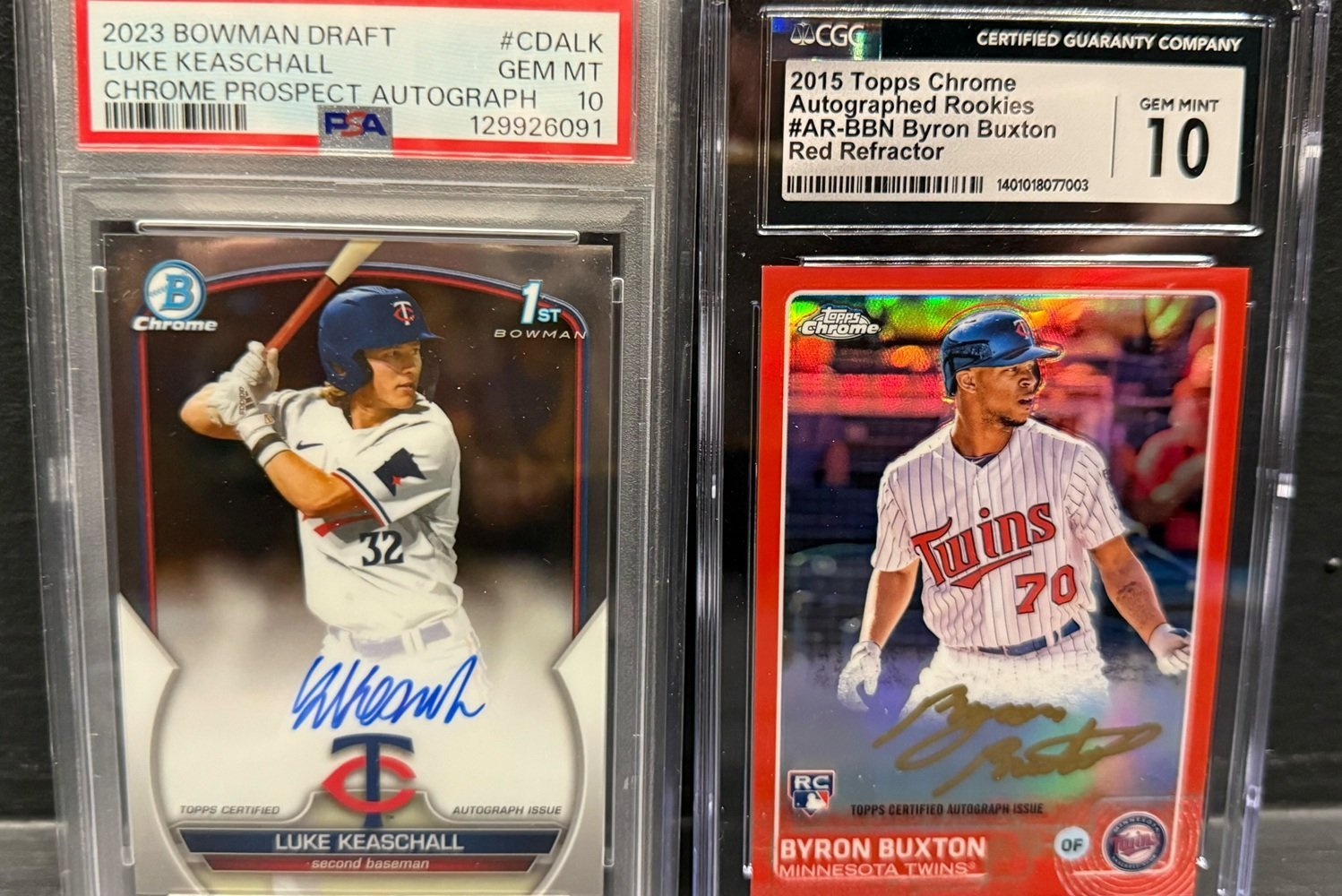 “The monthly card update is never late, nor is it early. It arrives precisely when it means to.” When it comes to overall card market health, I have fielded a lot of questions on if I think there is a bubble in this marketplace. Unfortunately, I don’t have a very “clicks-friendly” answer. Is there a bubble? Yes and no. In the new products from roughly 2015 and on, there are just too many cards. Even your numbered cards have different variations. Let's say you pull a 2025 Topps Chrome true red parallel, numbered /5, Royce Lewis. Fun pull, but there’s also an /5 sapphire, /5 logofractor, /5 ray wave, /5 red wave, and more! As you can see, you think you have this extremely rare card, but it has a long list of cousins. For these modern cards to do really well over time, you need the card to grade a 10 and it needs to be a very popular player. Otherwise, I think this modern market is certainly a bubble waiting to burst. The card market isn’t all doom and gloom. Like I mentioned above, it’s knowing the right cards and the right players to target. There has been a junk wax era in the past, and we are on the verge of that again (if not already there with the print runs on some of these rookie cards). The early 2000s is the market I am targeting and feels like it’s not as widely collected. Print runs are lower and there are some elite names and “local legends” that I love. The two big ones are Albert Pujols and Ichiro. Both are universally loved and will be remembered by baseball historians until the end of time. The other target for me is local fanbase heroes that were great players but maybe came up short of immortal careers. This could include players like Kris Bryant, Bernie Williams, Torii Hunter, and many others who will likely be short of The Hall. Without hesitation, these people will have a large collection of people who say, “That is my favorite player of all time”. Remember, target rookie cards, on card autographs (not sticker autos), low serial numbered cards before 2020, and cards that have a chance to grade gem mint. Overall, baseball cards are becoming more of an institution in the average household and cards are more visible and more widely accepted than ever before. Before the pandemic card boom, this was far more of a hide in your basement and don’t tell anyone type of activity. Now when you hop on Instagram, there are card accounts all over. You can even be at a party and there’s a good chance if you bring up “cards”, you’ll see someone's eyes light up. Cards aren’t going anywhere, but being able to know what is trash and what is treasure is a huge deal for someone’s enjoyment of the hobby. I always point folks to 130point.com to check on comparable sales and to get an idea of what others have decided certain cards are worth. 5 Twins players and their cards I am looking to add before the turn of the new year: Kaelen Culpepper (Bowman Chrome 1st’s autographs) Royce Lewis (‘22 Topps Chrome Rookie autographs *NON STICKER*, Bowman Chrome 1st’s) Byron Buxton (1/1’s and ‘15 Topps Chrome Rookie autographs) Joe Mauer (‘02 Bowman Chrome autograph, numbered cards and SPs from playing years) Torii Hunter (numbered cards from 2015 and earlier and autographs) View the full article
 -
 Dismissed by the Miami Marlins at the end of the 2024 season, Jeff Schwarz filed a civil complaint against his former employer in Palm Beach County Circuit Court on Thursday. Schwarz, who was 60 years old when the Marlins dismissed him, alleges that he was the victim of age discrimination. He's seeking "in excess of $50,000" through this lawsuit. It's unclear exactly when Schwarz was originally hired by the Marlins, but the photo above is from 2004. Across several different stints with the organization, his various roles included Triple-A pitching coach, Gulf Coast League pitching coach, pitching coordinator and (most recently) rehabilitation pitching coach. Quite frankly, I wasn't aware of his existence until learning of this legal action and therefore don't have any insight into the quality of his coaching. Schwarz's lawsuit references both president of baseball operations Peter Bendix and director of player development Rachel Balkovec, both of whom are in their 30s. Balkovec delivered the news of his termination, allegedly attributing the decision to "cleaning house" rather than job performance. Schwarz attempts to establish that there was a pattern of discrimination on the basis of age in violation of the Florida Civil Rights Act. In total, 11 Marlins coaches who were at least 46 years old got canned in October 2024 despite being "eminently qualified for their position," he claims. That group included Triple-A Jacksonville manager Daren Brown, High-A Beloit manager Billy Gardner and minor league pitching coordinator Scott Aldred. Schwarz feels that he is entitled to compensation for "extreme emotional distress, mental pain and suffering, past and future pecuniary losses, inconvenience, mental anguish, loss of the capacity for the enjoyment of life and other non-pecuniary losses, along with the loss of back and front pay, interest on pay, bonus, and other fringe benefits." You may download the full lawsuit here (Jeffrey Schwarz v. Marlins Teamco LLC). I'm not a lawyer, but this situation seems highly likely to be settled out of court. View the full article
