


DiamondCentric
-
Posts
2,631 -
Joined
-
Last visited
Never
Content Type
Profiles
Forums
Events
News
Tutorials & Help
Major League Baseball Videos
Guides & Resources
Store
Downloads
Gallery
Everything posted by DiamondCentric
-

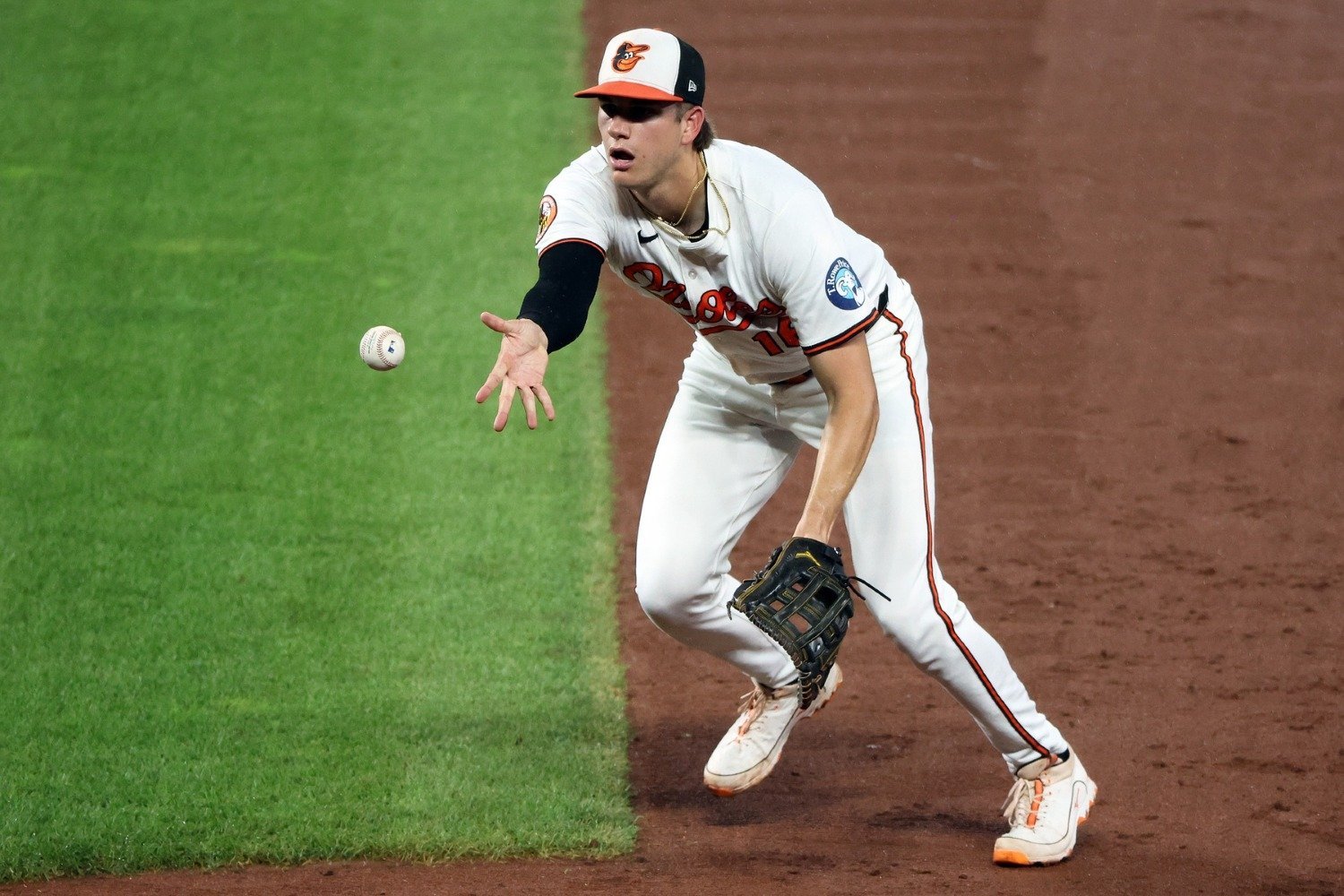 One message from the Twins front office came through clearly at the Winter Meetings. Minnesota wants to hold on to its three stars (Byron Buxton, Pablo Lopez, and Joe Ryan) with an opportunity to trade established talent in return for productive big-leaguers who fit their needs better. The Twins have done this in recent years, when trading for Lopez or when trading away Jorge Polanco. That shift aligns with what is happening in Baltimore. The Orioles surprised much of the league by signing Pete Alonso to a five-year contract. Before the deal, they already had multiple in-house corner infield options, including Coby Mayo. The Alonso signing pushes Mayo further off his defensive home, and Baltimore’s loaded infield creates an opportunity for clubs looking to upgrade at first base. Few teams match up better with Baltimore’s needs than the Twins, who have starting pitchers and young arms they may be willing to move, and who still need help at offense-first positions even after signing Josh Bell. Mayo remains an intriguing target, despite a challenging 2025 season. Right-handed power has long been his calling card. Scouts and analysts loved the explosiveness in his bat and the potential for middle-of-the-order production. Last season, he posted a 103 wRC+ in Triple A, but was limited to a 95 wRC+ in his big-league time. He remains just 24 years old, with the kind of offensive ceiling that doesn't come around often. A team willing to bet on upside could still dream on a future where Mayo anchors a lineup for several seasons. Let's consider three realistic trade concepts that could spark a conversation between Minnesota and Baltimore. Trade Option 1 Twins Receive: 1B Coby Mayo Orioles Receive: RHP Bailey Ober Both Ober and Mayo are coming off rough 2025 seasons. Ober ran into uncharacteristic command issues while fighting a hip issue, leading to more hard contact than he had allowed in previous years. However, his track record from 2022 through 2024 still carries weight with clubs. Over that span, he recorded a 115 ERA+ and a 3.74 FIP while showing reliability and strong strike-throwing. With two years of team control remaining, he matches what the Orioles need as they continue to search for durable mid-rotation pitching. For Minnesota, this deal represents a swap that fits their stated direction. Trade Option 2 Twins Receive: 1B Coby Mayo Orioles Receive: RHP Mick Abel Minnesota acquired Abel at last year’s trade deadline in the Jhoan Duran deal, and they have shown optimism about helping him refine his delivery and command. That makes it complicated for the Twins to move him this quickly, but circumstances have shifted for both teams. Mayo and Abel are remarkably similar assets. Both are pre-arbitration players with prospect pedigrees who have taken early lumps in the big leagues. Sometimes a reset is beneficial. This kind of challenge trade allows each organization to take a new developmental approach with a talented young player. Trade Option 3 Twins Receive: 1B Coby Mayo Orioles Receive: RHP David Festa, RHP Andrew Morris This offer gives Baltimore two pitchers who can cover innings in the near future. Festa has flashed a fastball with carry and strikeout ability (32.0% strikeout rate at Triple-A St. Paul last season), and he is big league-ready, so he could slot into their rotation almost immediately. Morris is a step behind, but earned a 40-man spot this winter because of his strong command profile and the likelihood that he can contribute in the next few seasons. Last season, he posted a 4.14 FIP and a 22.4% strikeout rate for the Saints. For a team looking to build long-term pitching depth, this package may be more appealing than a single arm with risk. Each scenario highlights a different angle for balancing value between the clubs. Baltimore must decide whether it prefers established innings, developmental upside, or a mix of both. The Twins, meanwhile, have to decide whether Mayo is the right risk, as they look for ways to shake up their core and bolster their offense. Which deal gets the job done from Baltimore’s perspective? Leave a comment and start the discussion. View the full article
 -
Why Brewers Should Sign Free-Agent Starter Zack Littell
DiamondCentric posted an article in Brewer Fanatic
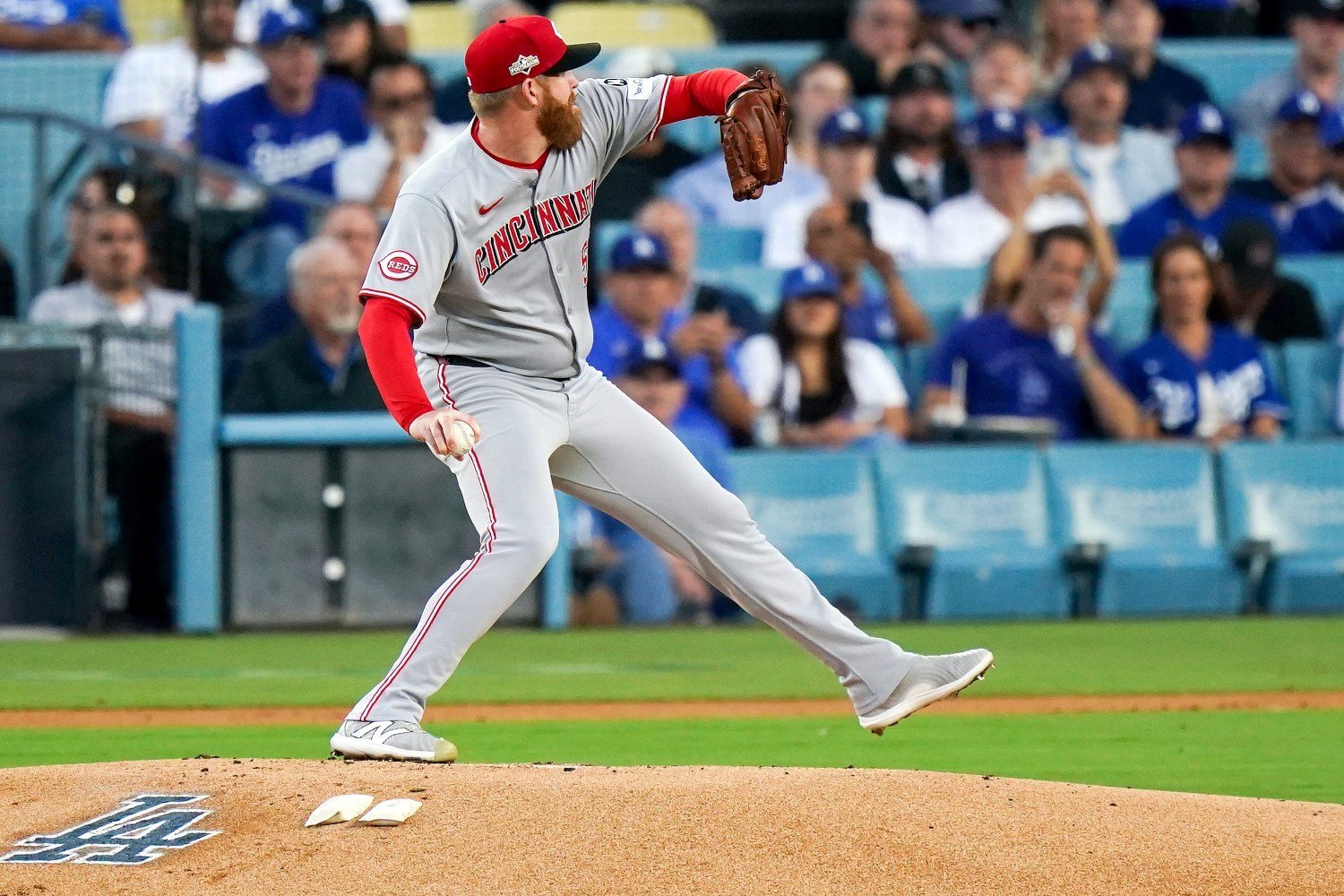 I'm a pretty big believer in the depth of the Milwaukee Brewers' starting rotation, heading into 2026. They currently have Freddy Peralta, Brandon Woodruff, Quinn Priester, Jacob Misiorowski and Chad Patrick penciled into the five slots in that rotation, but crucially, they also have Logan Henderson, Robert Gasser, Aaron Ashby, DL Hall and Coleman Crow as candidates for starting roles in the event of injuries or trades. That's not counting Ángel Zerpa, in whom I don't believe there's much ceiling as a starter but whom the team has been open to considering for that role. If you're looking for the soft underbelly of the midwestern dragon that is the Brewers, though, the second and third tiers of that group of prospective starters are the first places to poke and prod. The lineup is, if anything, even deeper, and the team's farm system is richer on the position-player side than in arms. The bullpen is bulletproof, not only chock-full of talent but boasting an extraordinary number of interchangeable and optionable arms. It's in the ability of Priester to build on his breakout; the ability of Woodruff to stay healthy; the abilities of Misiorowski, Patrick, Ashby, Henderson or Gasser to make the one key adjustment needed to establish themselves more firmly as starter-capable big-leaguers; and the ability of the Brewers to hold onto Peralta while building a World Series contender on a budget that uncertainty lurks for this team. Thus, an infusion of talent and stability at the back end of the prospective rotation would make sense. The Brewers have been smart and opportunistic with such moves the past few winters, including late pickups of Jakob Junis for 2024 and José Quintana for 2025. This time, though, they should aim incrementally higher and nab free-agent starter Zack Littell. You can ask some hard questions about the fit between Littell and the Brewers, and you might not even get positive answers. For instance, the Brewers tend to like pitchers who do well by Baseball Prospectus's model-driven DRA, but Littell had a 107 DRA- in 2025, where 100 is average and lower is better. He hasn't been better than average since 2023, and that was in just 90 innings. He's been an improbable workhorse starter the last two seasons, totaling over 340 total innings, but that comes after a career that began as a strictly fastball-slider reliever. He threw his slider nearly half the time until four years ago, and it's not even a plus pitch. Littell learned a splitter in 2022 and has made it a staple of a much-expanded arsenal, but his two fastballs are both underwhelming. He doesn't utilize a bifurcated approach, where he focuses on two or three pitches against each handedness of batter; he throws the kitchen sink at everyone. He's survived by absolutely hammering the strike zone over the last two years, with an ERA under 3.75 across 61 starts, but he doesn't miss many bats and the advanced metrics tell us that he's doomed to run into more trouble as he ages. Why, then, does Littell suit the Brewers well? Firstly, he should come cheap, for such a sturdy starting pitcher. The brevity of his track record and the lack of a single pitch or trait that lights up most teams' valuation models will probably prevent him from earning an eight-figure salary on a multiyear deal, as Adrian Houser just did with the Giants. Littell offers a strange but real flavor of durability at a cost that is unlikely to reflect that reliability. He's also a great pitcher to put in front of Milwaukee's stellar defense. A young and athletic team, the Brewers catch the ball and convert batted balls into outs as well as anyone in baseball most years, and Littell (who has walked fewer than 4.5% of opposing batters since moving to the rotation in mid-2023) will lean nicely into that team strength. He's liable to give up too many home runs, but letting the defense work and racking up innings to shield the bullpen from overuse has significant value, in itself. That assumes that Littell doesn't materially change how he goes about things. In reality, the Brewers would probably make some significant changes. They'd be likely to tweak his slider to behave more like a cutter, but also have him use it less and lean harder on his sweeper. They would almost certainly also move him across the pitching rubber. Littell moved from the middle of the rubber to the extreme first-base edge of it when he moved to the rotation in 2023; the Brewers would almost surely move him to the third-base side. That would fix some issues with the interaction between his fastballs and his slider and splitter, and might even change the way those heaters play. The Rays are good at pitching development, and turning Littell from a waiver-claim reliever to a mid-rotation starter counts as a win for them. However, the Brewers can take him to a level above what the Rays achieved, by realigning him and getting his stuff to play up. It would be a bit of an experiment, but the Crew should explore signing Littell, because he would solve some of their lingering problems with starting pitching depth. View the full article
 -
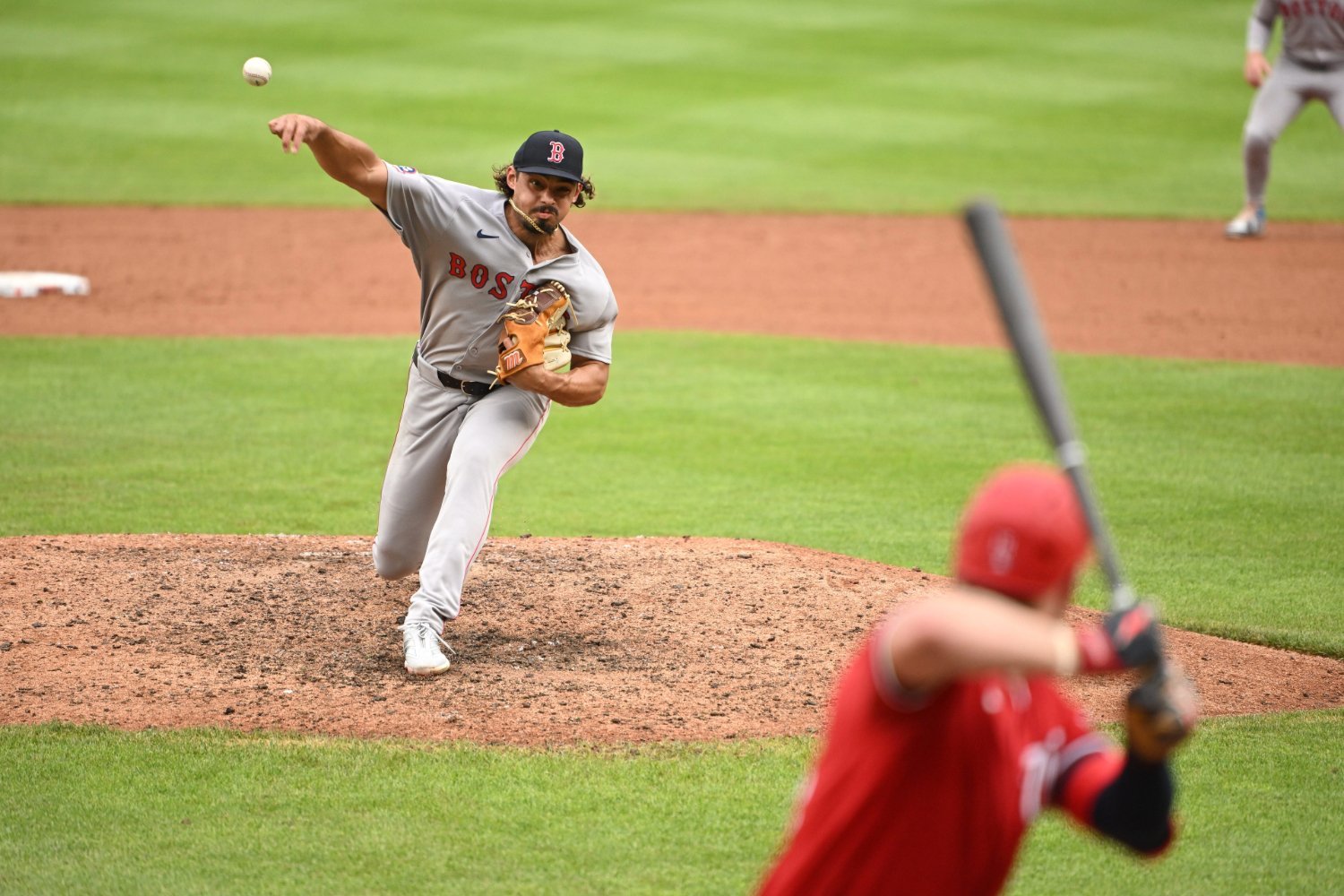 Jordan Hicks certainly didn't do a great job of endearing himself to the Boston Red Sox faithful after arriving as 25% of the trade return for Rafael Devers. However, with Kyle Harrison looking crowded out of the rotation and James Tibbs III plying his trade in Los Angeles, the flamethrowing right-hander may be the Sox's best chance of recouping an iota of value from that ill-advised blockbuster. Once a superlative high-leverage relief arm for the St. Louis Cardinals, Hicks' career went wayward after signing a four-year contract with the San Francisco Giants that came with the stipulation that he'd attempt a move to the rotation. In 42 appearances (29 starts) in the Bay Area, the right-hander logged a 4.83 ERA and 4.15 FIP, watching his strikeout rate plummet while proving unable to reel in his unwieldy habit for issuing free passes. The Red Sox acquired Hicks and transferred him right back to the 'pen, but things only got worse. Opposing hitters posted a .949 OPS against him as he recorded an 8.20 ERA and 6.19 FIP. His 15.5% strikeout rate was pitiful; his 12.4% walk rate was just plain ugly. The stuff was just no longer playing up in a short-stint capacity, and Hicks was placed on the 15-day injured list with a shoulder injury in early September, prematurely ending his season. Now on the fringes of the roster, the former closer is likely only safe by virtue of being owed $25 million over the next two years; no team will pay him that much for his recent production, and the Red Sox are unlikely to waive him while soaking up such a large dead cap hit. As such, expect Hicks to be on the Opening Day roster in 2026, barring a bad-contract for bad-contract swap at some point this winter. Instead of just lamenting his presence, though, let's try to see if Andrew Bailey and the pitching lab can do anything to help Hicks return to his former glory. His best season was probably in 2023 when he posted a 3.29 ERA (3.30 xERA, 3.22 FIP) between the Cardinals and Blue Jays while rocking a career-best strikeout rate of 28.4%. Between that year and this past season, look at all the places Hicks has declined (2024 is included for reference): *Chart courtesy of Baseball Savant The average exit velocity he allows has jumped by more than three miles per hour, and his hard-hit rate has jumped by nearly ten percent. His average fastball velocity has wilted by 2.5 mph, which is directly related to the five-percent drop in whiff rate. And, because of his recurring shoulder issues, his arm angle has declined by about five degrees since 2023, which factors into the next part of our discussion. Hicks remains excellent at generating ground balls thanks to his sinker-heavy approach. As someone who utilizes perceived rise well, his vertical movement profile generally remains the same as it was a few years ago (each of his pitches generally functions with anywhere from zero to five inches of perceived rise) However, we've talked about the importance in having movement variance along at least one of the planes — it's a necessary factor in being an effective pitch tunneler. But look at Hicks' horizontal movement over the years: At his best (2023), Hicks has kept things incredibly tight on the x-axis. However, as he's lowered his arm angle over the past few seasons, his range of horizontal movement has shifted dramatically. Which, in turn, has made him an easier pitcher to read and react to; large changes in run or sweep are far easier to pick up on in the batter's box than minuscule ones. With declining velocity in conjunction to more distinguishable pitches, it's no wonder how hitters have become better at approaching Hicks. Again, this is a little backwards from how we traditionally think about improving a pitcher's arsenal. Normally, we want more variance in movement, not less (it forces hitters to sell out to one side of the plate, rather than being able to target a specific part of the zone). But Hicks has made a living on the margins, using upper-echelon velocity to punish batters into ground outs and pop-outs, rather than generating reams of strikeouts. Adding a few more ticks back to his arm, if at all possible, would be the easiest fix here; getting him to tighten his splitter back up would also suffice. The talent is there, even if his unique profile requires everything to click at the same time to be effective. There's a good chance that Jordan Hicks' best MLB days are behind him. But, so long as the Red Sox feel obligated to roster him, there's no use in treating him like a lost cause when there are some apparent tweaks in plain sight. View the full article
 -
What To Know About the Blue Jays New Minor League Signings
DiamondCentric posted an article in Jays Centre
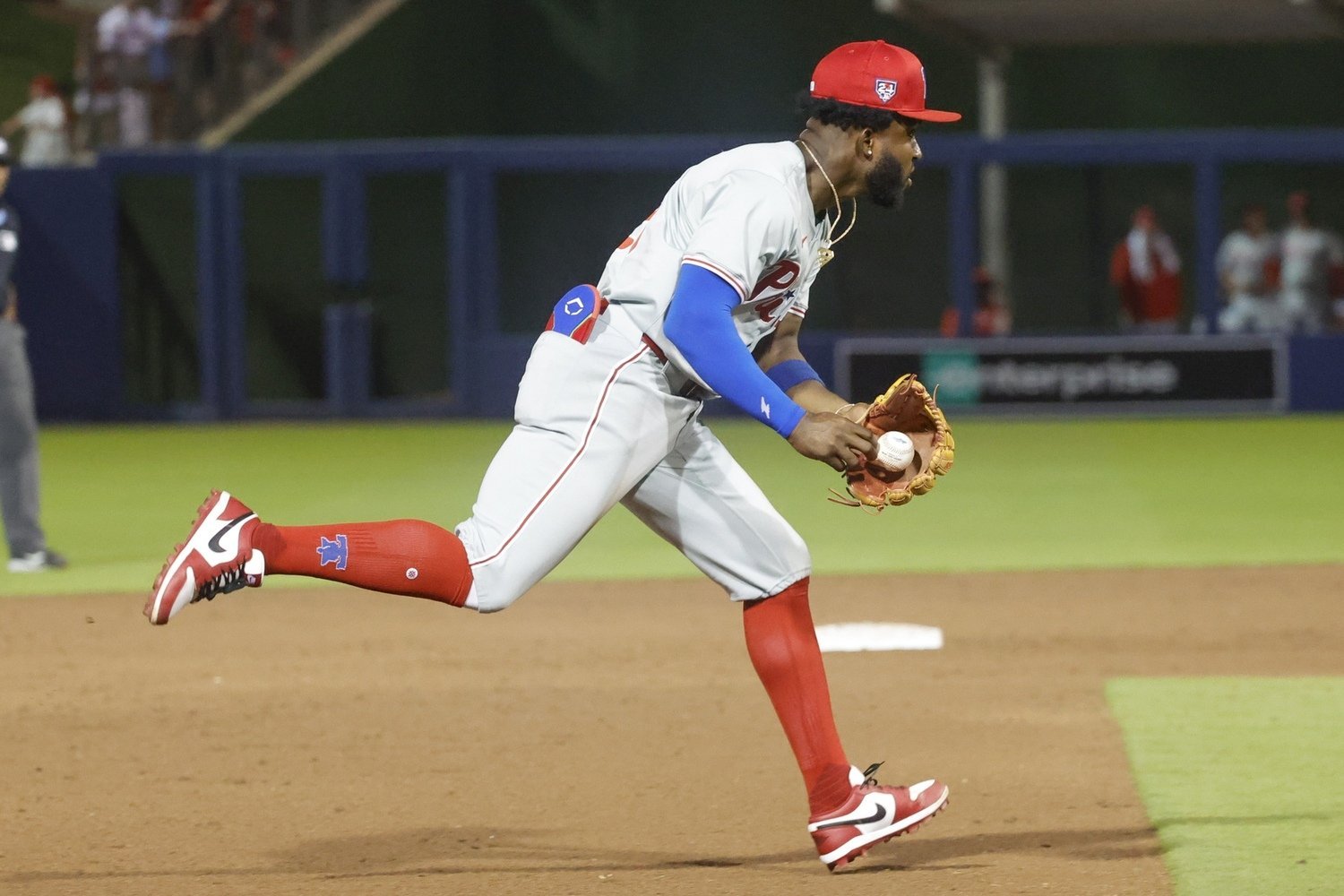 If you were looking for an unsung hero behind the Blue Jays' run to Game 7 of the World Series, you wouldn’t have to go far before Eric Lauer's name came up. He made his season debut at the end of April, and after a run of quality pitching out of the bullpen, he joined the rotation full-time on June 11, remaining there until the end of August, after which he transitioned back into the bullpen. On the season, Lauer posted a 3.18 ERA with 2.2 bWAR over 104.2 innings, adding another 8.2 frames during the postseason, including an incredible outing in Game 3 of the World Series that held the Dodgers scoreless over 4.2 innings. For as sensational as Lauer was in 2025, the day he became a Blue Jay was uneventful; it didn't make many headlines when he signed a minor league contract with the Blue Jays in December of 2024. Now, it's quite rare that a minor league signing has as much impact on a team as Lauer did. With all due apologies to Matt Whatley, Kevin Gowdy, and Amir Garrett, that's the rub when it comes to minor league contracts; if these players were all expected to be good, then they wouldn’t be in this category. At some point, it becomes a matter of throwing darts and hoping one lands on the bullseye. With that being said, the Blue Jays have already signed a few players to some minor league deals. Let’s learn more about them to see if any of them could have a Lauer-sized impact in 2026. Michael Plassmeyer, LHP 2025 Stats (in AAA with TEX): 105.2 IP, 4.43 ERA, 34 BB, 99 K Plassmeyer, now 29 years old, was drafted in 2018 by the Mariners and has bounced between six different teams in his seven minor league seasons. He was first traded after the 2018 season in a deal that also sent Mike Zunino and Guillermo Heredia from the Mariners to the Rays, with Jake Fraley and Mallex Smith going the other way. Plassmeyer has 11 innings of big league experience under his belt, with the Phillies in 2022 and ‘23. He’s a three-pitch pitcher (fastball, changeup, slider) that averages just under 89 mph on his heater. He’s a strike thrower, and if the Blue Jays can find a way to have him miss more barrels, then he could carve out a Lauer-ish role in ‘26 as a swingman who can move between the bullpen and the rotation. Rodolfo Castro, 2B/SS 2025 stats (in AAA with PHI): 133 G, .234/.324/.421, 19 HR, 18 SB, 22.7 K%, 10.3 BB% If the name Rodolfo Castro stands out, you might remember him from a play in 2022 when his cellphone famously flew out of his back pocket during a headfirst slide into third base. The incident earned him a one-game suspension under MLB’s electronic device policy. The now 26-year-old does have 194 MLB games under his belt, and although he hasn’t hit well (career 83 wRC+), Castro does still have a nice combination of power and speed. While he has played all over the infield, third base appears to be his best defensive fit. Castro had been a switch-hitter his whole career, but gave it up to hit strictly right-handed in 2025. The Blue Jays may think there is more to come as he gets more repetitions from the right side. He could see some big league time in 2026 if the bat holds up. Tanner Andrews, RHP 2025 Stats (in AA with MIN): 16.2 IP, 3.78 ERA, 18 K, 3 BB Andrews, now 30, was selected by the Marlins in the 10th round of the 2018 draft. He reached as high as Triple A with the Giants in 2023 and ‘24 but has yet to make his major league debut. Andrews is a three-pitch pitcher (fastball, splitter, and slider) and has battled bouts of wildness in his career, carrying a 9.0% career walk rate in the minor leagues. However, he did trim that number down to just 4.0% in a small 2025 sample, and paired that with a FIP that dipped below 3.00 for the first time (2.01). The Blue Jays likely buy into that progress, and if Andrews can continue that trend, then he’ll provide some big league relief depth or, at worst, become an intriguing relief option in Buffalo. Carlos Mendoza, UTIL 2025 Stats (in AA-AAA with DET): 97 G, .287/.394/.409, 7 HR, 12 SB, 11.1 K%, 13.0 BB% Mendoza, 26, is a left-handed-hitting utility player who has seen time at second base, third base, left field, and right field in the minors. At just 5-foot-7 and 165 lbs., he’s never likely to be much of a power hitter, but through two levels in the minors in 2025, he did have a .394 OBP, a good contact rate (83.9% in '25), and he walked more than he struck out. Versatile, good contact skills, and a wRC+ above 100 at almost every level at which he’s played. You can see why the Blue Jays would have interest here. He’s a candidate to make his big league debut this season if things break his way. ***** No one is expecting these players to be game changers in 2026, but no one expected Lauer to be one either. The most likely scenario is that these players will spend more time with the Bisons than the Blue Jays. Still, there is enough skill and upside here to find some reason for optimism, and it wouldn't be a surprise if one or two make an impact at the big league level this season. View the full article
 -
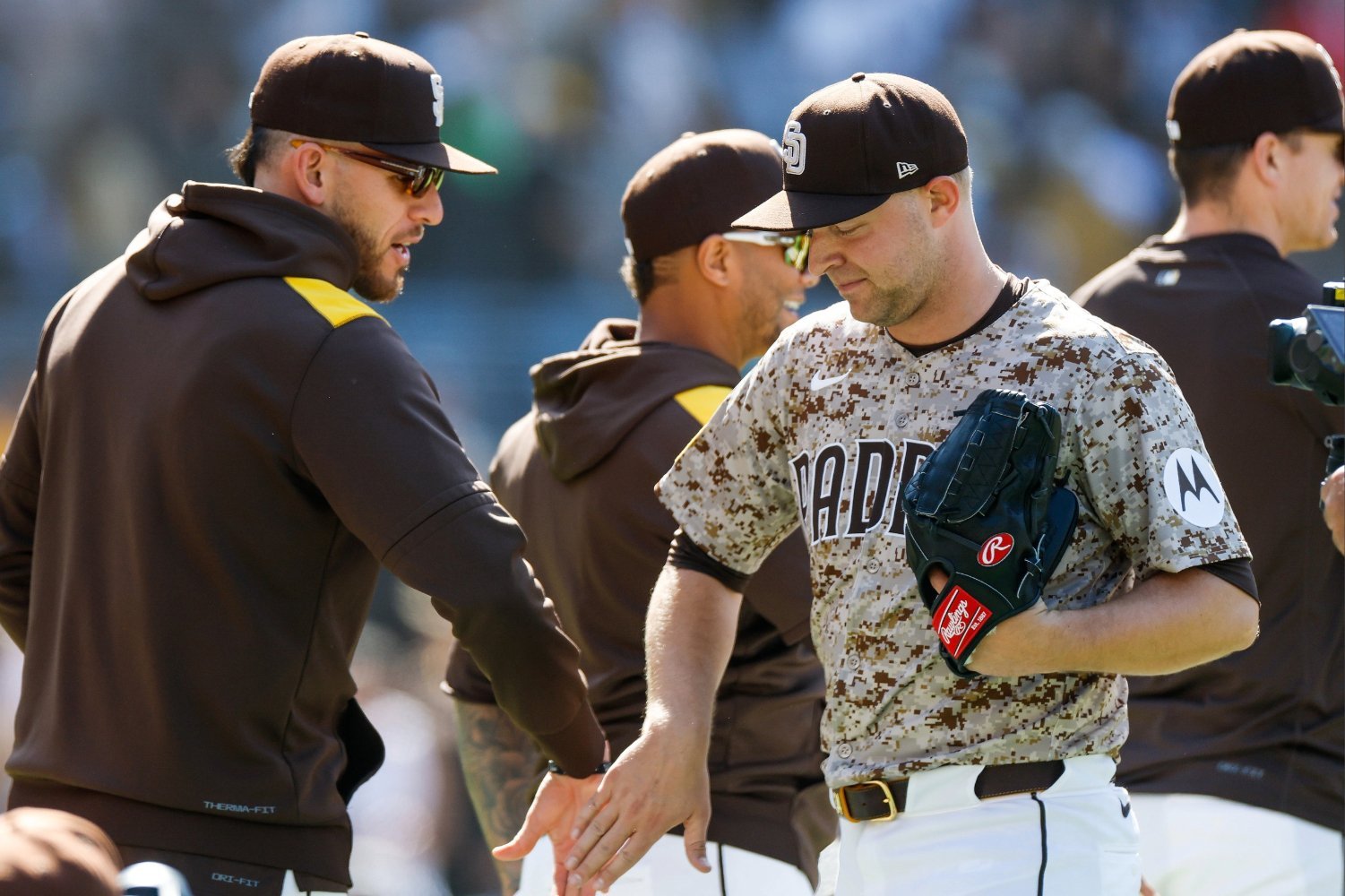 We'll keep this short and sweet: The San Diego Padres have finally addressed the starting rotation, adding Michael King back on a three-year, $75 million deal. There's a lot to discuss here. Though injuries diminished his effectiveness in 2025, the 30-year-old successfully completed his transition from the bullpen to the rotation in 2024, pitching to a 2.95 ERA and 3.33 FIP in 173 2/3 innings while accruing 3.9 fWAR. This past season wasn't as great (3.44 ERA, 4.42 FIP), but King was hampered by various injuries; when healthy, he's proven capable of being a frontline starter. The Padres' rotation looks much better with King in tow, with he, Nick Pivetta, and Joe Musgrove forming a formidable triumvirate atop the pitching staff. Especially after losing Dylan Cease, keeping King around ensures that the Friars have enough pitching firepower to at least hang around in the Wild Card race. Other questions to ponder in the immediate aftermath of this move: What's the next move the team should make? The rotation still probably needs at least one more legitimate starter to compete with the National League's best — is there room in the budget for another marquee addition? Speaking of the budget, did the Padres make the right call by spending (what appears to be) all of their budget on King? There were other top-tier starter (Framber Valdez, Ranger Suarez) available, as well as a few trade candidates with hefty salaries. Does this make a trade of Nick Pivetta (or one of the bullpen arms) more or less likely? We won't know the answer to any of those for some time, but with Christmas barreling toward us and the New Year on the horizon, securing their Opening Day starter's services again is a huge boon — and a reason to breath a sigh of relief. The Padres will at least be able to field a competitive starting pitching group next year, and now there's some legitimate upside to be excited by. For plenty more on the King re-signing, stay tuned to Padres Mission. View the full article
 -
The Brewers Have a Battle Royale Brewing in Center Field
DiamondCentric posted an article in Brewer Fanatic
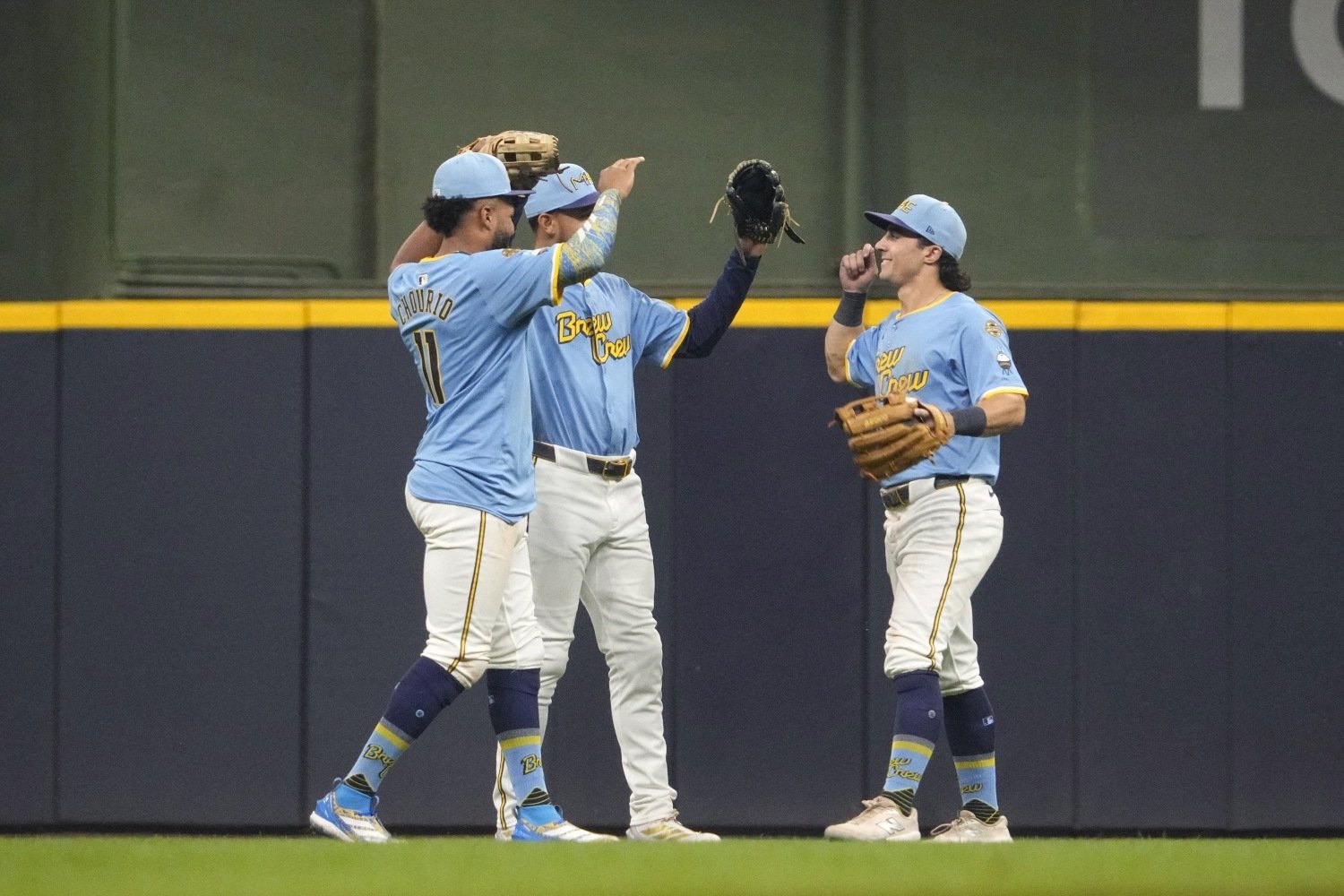 When a team notches four division titles in five years, you would expect that they have the key positions locked down by long-term options. The Brewers, though, have had different players as their primary starter in center field in each of the last five seasons. Jackie Bradley Jr., Tyrone Taylor, Joey Wiemer, Blake Perkins, and Jackson Chourio have each been primary starters at the position since Opening Day 2021. That’s a lot of turnover, but there’s been a lot of quality there. Bradley was the only flop, and the Brewers turned him into Hunter Renfroe, and Renfroe became some pitching help. Taylor and Wiemer also were dealt for new assets by the Crew. In each of the last three years, the eventual regular was not the one they planned for: Garrett Mitchell's injuries forced them to pivot. Could yet another player be the primary starter in 2026? In one sense, the Brewers hope so. Chourio starting the bulk of the games in center field was never the plan. While he's athletically sufficient for center, he fits a bit better as a left fielder, where he spent most of his time in 2024. The move this year was due to a rash of injuries (Mitchell, Perkins) and the limitations on what Christian Yelich can do after undergoing back surgery in 2024. The organization would like to see Mitchell handle the bulk of the starts in center. In his 141 total games, he’s racked up 3.6 WAR with a 112 OPS+, according to Baseball Reference. Mitchell has 30/30 potential and could be a left-handed version of Carlos Gómez at his 2013-2014 peak. Of course, that hinges on him addressing the holes in his swing, learning to lift the ball, and staying on the field. He hasn't been exposed enough to test whether he can do the first two; he's been stunningly unable to check the third and most crucial box. Perkins was the primary center fielder in 2024 and was a Gold Glove finalist. He missed a lot of 2025 due to an injury suffered in spring training, and he wasn't his best self even after he returned. Given the nature of that injury and the difficulty of losing his mother during the season, though, he more than deserves a mulligan. It's just that a mulligan doesn't mean guaranteed playing time, on a roster this strong. Chourio has posted two 20/20 seasons to start his major-league career and is seen as the franchise player for the late 2020s and the 2030s. Ideally, perhaps, he's a corner outfielder, but they could do much worse than having him find his playing time in center again in any of the next few seasons, while his elite speed still covers for some subpar reads on balls off the bat. Mitchell, Perkins, and Chourio are the best three center fielders on the 40-man roster, but there are now others. Sal Frelick, who’s primarily played right field, is a viable center fielder, and he has a Gold Glove from 2024. His bat’s taken a step up, although he arguably ran out of gas late in the season. Even more than Chourio, his best defensive spot is in a corner, but his bat will never have Chourio's thunder, so letting him stretch to use his speed and cover center would be fine. Behind those four, the Brewers have Brandon Lockridge and Steward Berroa, mid-season acquisitions in 2025 due to the injuries that hit the outfield. Akil Baddoo, signed to a deal that grants him a 40-man roster spot (though not a place on the Opening Day roster), played a fair amount in center as a rookie in 2021. He hasn't spent meaningful time there since 2022, and is strictly an emergency option, but he gives the team even more insurance. It doesn't stop there. Minor-league prospect Luis Lara will likely be in Triple-A Nashville, while Braylon Payne will patrol center for High-A Wisconsin. The Brewers could also move prospects like Jesús Made and Luis Peña to center to accommodate other prospects, although at the moment, that seems very unlikely. In short, center field could be in flux for a long time in Milwaukee, but in this case, it’s a sign of the immense depth and drafting success the team has had. Mitchell or Chourio could seize the gig on a more lasting basis, but that seems unlikely at this juncture. Who should be in center field for the Brewers in 2026? Let us know in the comments below! View the full article
 -
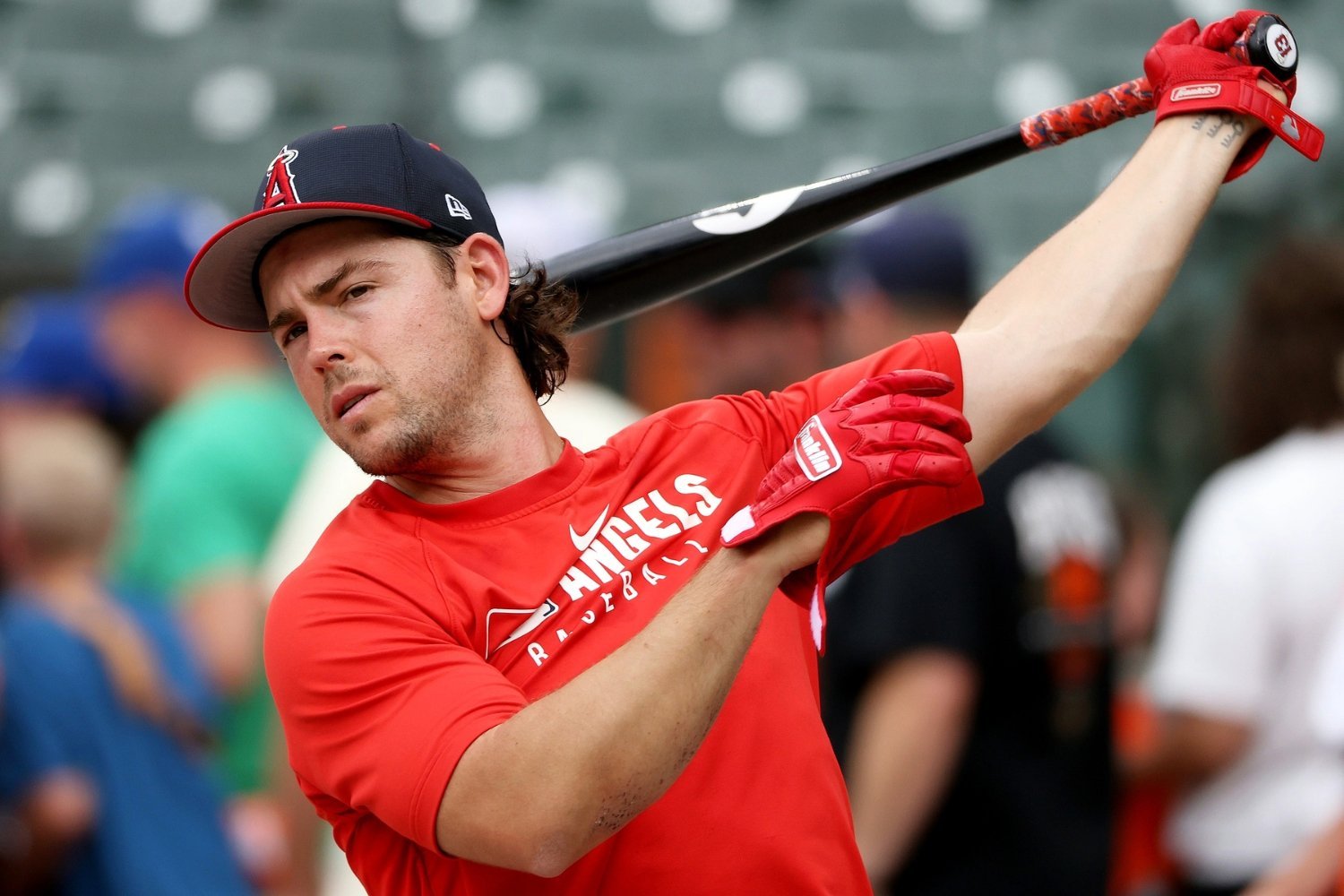 There was a time (roughly the spring of 2018) when Scott Kingery represented one of the more intriguing names across the baseball landscape. Had the Chicago Cubs brought him into their organization at any point around that particular moment, then his involvement in a potential roster would've had a bit of juice to it. We're far removed from such a time, however. Kingery signed a pre-debut extension as a top prospect with the Philadelphia Phillies in March of 2018. The contract carried club options for 2024 through 2026. Unlike many of his counterparts that have signed that type of deal, there wasn't really a point where the contract looked like a win for the Phillies. Kingery posted a wRC+ of just 61 across 484 plate appearances in 2018. He improved to 100 in 500 PA the following season and showed a bit of pop (.216 ISO), but flamed out entirely during the COVID sprint of 2020 (36 wRC+). After toiling largely in Triple-A for the next four seasons — the final two of which he never appeared at the major-league level — Kingery was sent to the Los Angeles Angels for cash last November. After an uninspiring 29 plate appearances, he was outrighted off the 40-man roster and elected free agency. That's where the Cubs enter the picture. Kingery signed a minor-league deal with the Cubs earlier this month. It's entirely possible that his initial signing on December 2 is the last we hear of him as a noteworthy member of the organization. With the way his career has transpired, one would really have to stretch to see this as a signing anything beyond its literal significance: depth. There's no logical reason to expect him to ply his trade at Wrigley Field outside of injury to one of the team's current position players. With that said, there's been almost no activity to speak of on the part of the Cubs in building up their positional depth this winter (let alone adding a legitimate component to their lineup), save for their very cheap acquisition of Tyler Austin. They've made signings to build up their bullpen again, but outside of the odd Alex Bregman whispers, there's been nothing even speculated. Such is the nature of a tight-lipped franchise like the Cubs, compounded with their relative inactivity in making outside additions. That context does add a least a little bit of uncertainty as to whether the Cubs will seek additional roster depth or give Kingery a legitimate shot to win a bench job in the spring. Even if it's unwise to award a roster spot to a player who hasn't posted a positive fWAR at the top level since 2019, it's also not an impossible image to project. Kingery's value at this point lies almost exclusively in his versatility. He logged time in the Angels organization last year at second base, third base, shortstop, and all three outfield spots. He was perfectly adequate at each, with his worst Outs Above Average in small samples unfolding at second (-1 in 53 innings) and shortstop (also -1 in 13 innings) while with the big-league club. Of course, the caveat to that is that you're not getting anything with the bat. Kingery's wRC+ in his 19 games with the Angels was just nine, and it was only 58 while in Triple-A. Factor in a career strikeout rate over 28 percent that is hardly compensated for with a walk rate under seven percent, and there's very little to speak of in terms of offensive value. At the same time, the Cubs just spent a season rolling out the likes of Jon Berti, Vidal Bruján, Gage Workman, Nicky Lopez, and a post-deadline Willi Castro among their reserves last year. It's not entirely unreasonable to think they'd give Kingery a little bit of run as a versatile bench piece if they're unable to fill such a role elsewhere. At least with his presence, you have coverage for Nico Hoerner and Dansby Swanson and a late-game insertion option in the event that you need to deploy a pinch hitter whose defensive chops aren't completely trustworthy (like Moisés Ballesteros). In an ideal world, the Cubs are thinking bigger for their lineup than Scott Kingery. While the versatility will play, the absence of any offensive value is something we saw become a major issue for Chicago out of their depth last year. If lessons were learned, then perhaps they shoot higher as the offseason wears on. But it's also not entirely unreasonable to imagine a path to playing time considering the lack of movement for the Cubs thus far. View the full article
 -
Mason Miller Set to Pitch For Team USA In World Baseball Classic
DiamondCentric posted an article in Padres Mission
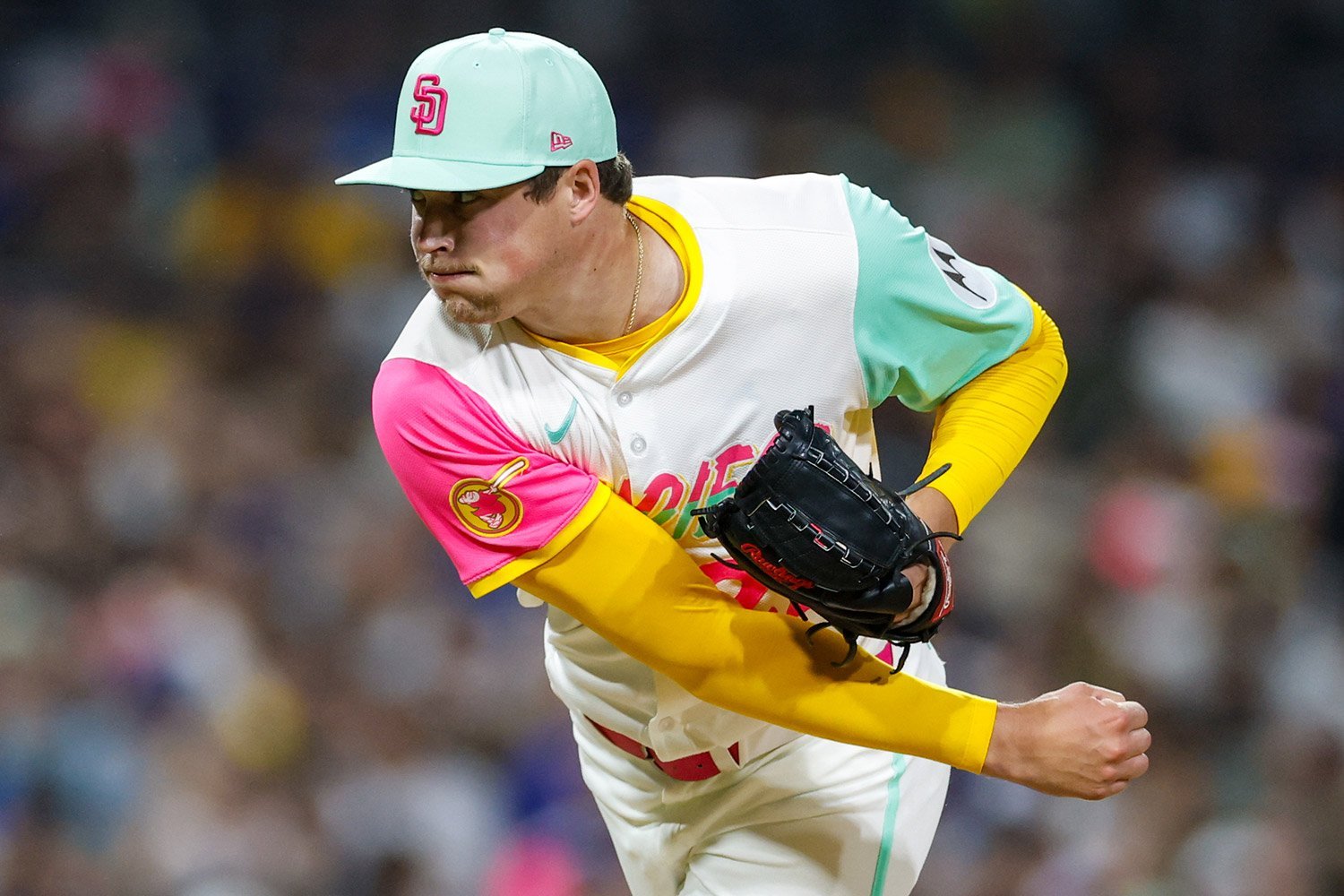 If everything goes to plan, Mason Miller could be striking out Shohei Ohtani for the final out of the 2026 World Baseball Classic. That is because Miller, the San Diego Padres' closer, was named to the U.S. roster on Thursday. Miller joins starters Tarik Skubal, Paul Skenes, and Logan Webb, among others, as committing to play for the U.S. Skubal and Skenes were this year's AL and NL Cy Young Award winners, respectively. Miller, acquired by the Padres at the trade deadline from the Athletics, notched 22 saves in 26 chances between the two teams, including two saves in three opportunities with San Diego. Miller mainly served as the setup man for Robert Suarez, who was a free agent this offseason and recently signed with Atlanta. Miller has a 0.77 ERA and 1.12 FIP in 22 appearances with the Padres. He had a 54.2 strikeout percentage after the trade. View the full article
 -
Tom Pohlad Wants to Earn Back Fans’ Trust. Can He Do It?
DiamondCentric posted an article in Twins Daily
 Tom Pohlad introduced himself as the new face of the Twins on Wednesday, after Joe Pohlad was apparently forced out of his role. Tom is now the sole member of the Pohlad family who will be involved in the business; he plans to be more active; and he claims (that, at least) to understand the challenges he will face. He recognizes that his family has eroded the trust of fans, and says he wants to earn it back. What will it take to get there? Before I dig in, I do want to give a little context. If you have read my pieces on Twins Daily, you will know I am not one to make excuses for ownership. If anything, I am quick to put them on blast for the numerous decisions they have made regarding everything from payroll cuts to tone-deaf comments to media and fans. That said, this feels different, and I’m actually optimistic for the future of the franchise. I’ll share some quotes he gave to media, including Twins Daily’s own Matthew Trueblood, and discuss what I believe it will take to earn back trust. Self-Awareness and Effective Communication Perhaps the place to begin is by establishing some self-awareness from the latest Pohlad. When asked why he was taking the reins from Joe, Tom said: “When we took a hard look at things, it’s undeniable that we haven’t won enough baseball games, the financial health of the club has been put in jeopardy, and we’ve got a fan base that has lost trust in us as owners and, as a result, this organization and the direction it’s headed … I’m well aware of how upset the fan base is with our family and with this organization. I view that as an opportunity for us. They care deeply about the sport of baseball. They care deeply about this team.” “I also think that the fan base wants to feel some sort of connection with ownership, and they want to know that ownership cares just as much as they do," Pohlad added. "And I’m not sure that they’ve gotten that sense.” That’s pretty clear, and very accurate. It appears that Tom has ideas on how to put action behind those words. When asked how he plans to make fans like him, he had a ready answer. “I think the work of earning back their trust comes with two things: communication and accountability. We’ve got to do a better job of telling fans where we’re going, how we’re going to get there, and why we’re doing the things we’re doing. And I commit to that going forward.” Now, I don’t have much to add here. It seems as though Tom has correctly identified the issues, and the solution for them. Payroll Of course, this is an important aspect of winning back trust. In a separate interview with WCCO’s Chad Hartman, Pohlad spoke to the “right-sizing” of the payroll following the 2023 Twins breaking their playoff curse, and he fully acknowledged the impact that had. "We made what we thought at the time was a responsible financial decision, and we obviously failed to consider the long-term impact of that decision, and the short-term impact of that decision, frankly," he said. "We sucked the air right out of our fan base, and it did significant damage to our brand and to our family from a confidence standpoint. Plain and simple, we got it wrong.” Yeah. That. By acknowledging that mistake, it seems that he understands the correlation between trying to compete when the window is open and fan morale. Applying this to the 2026 payroll, it’s been broadly reported that the 2026 payroll is unlikely to eclipse $120 million and may be more likely to sit in the $110-115 million range. When asked directly about the budget for the year, Tom demurred. “I don’t think … that we should put a significant investment into the team of $50 or $60 million dollars, but I don’t think we’re far off from that.” That can be interpreted two different ways: either that they may spend an additional, say, $30 million this offseason, or that 2026 will be down, but 2027 (if all goes well) could be right back near league average. Either way, a surefire way to earn back trust and build morale would be to do exactly that: provide a payroll commensurate with the openness of the competitive window, and roughly in the middle of the league pack. Improving the Team When asked about the balancing act between winning back the fan base and building for long-term success, Pohlad gave the only answer of the day that sounded rehearsed—but which also appeared to be his mission statement. “We owe the fan base something; we owe our veteran and star players something; and we owe this organization something," he said. "And that something is hope.” Now, that’s a great place to start. Hope is, after all, what brings us as fans together every spring. But what about winning? “I think we are certainly within reach of winning a division title this year," Pohlad opined. "And I think we’ll continue to look at moves we can make that will help us accomplish that.” He also acknowledged that the Twins' process hasn’t been working the way anyone would hope. “We need to rethink how we put a championship-caliber team on the field. That work begins this year," he said. "We’re laying the foundation for ultimately what we hope will be a nucleus that can be a championship-caliber team and that warrants a championship-level investment." Finally, he spoke about the Dodgers, and alluded to looking at all avenues of improving the team—both on and off the field. Again, this shows a good understanding of the assignment, and is promising. Now, I’m an “action speaks louder than words” kind of guy, so my optimism is guarded. However, I am impressed with a few aspects of Pohlad’s introductory interview. First, there was a noted lack of self-importance in his interviews. Second, he seems to realize that sports teams exist for the fans, not for ownership. Third, he said he wants to do the work to change the narrative, rather than just expecting fans to perceive his family as the heroes of the story. Now, it’s time for Tom to do that work to prove to fans that ownership truly wants to win. That, more than anything else, will bring back the fans. View the full article
 -
Details on Blue Jays' Share of Postseason Revenue Pool
DiamondCentric posted an article in Jays Centre
According to Sportsnet's Shi Davidi, the Toronto Blue Jays were awarded 24% of the $128.2 million postseason revenue player pool. That works out to approximately $30.8 million. A full share of the pool was set at $354,118, and Davidi notes the Blue Jays gave out 70 full shares. That adds up to $24.8 million, suggesting the Jays gave out an additional $6 million in partial shares and/or special awards. Covering the news for The Athletic, Dodgers beat writer Fabian Ardaya explains that most team staff members, "such as team media relations directors, grounds crew members, traveling secretaries and others," cannot receive shares, but the players can vote to give them cash awards instead. Team executives are not eligible for any payments from the postseason revenue pool. View the full article -
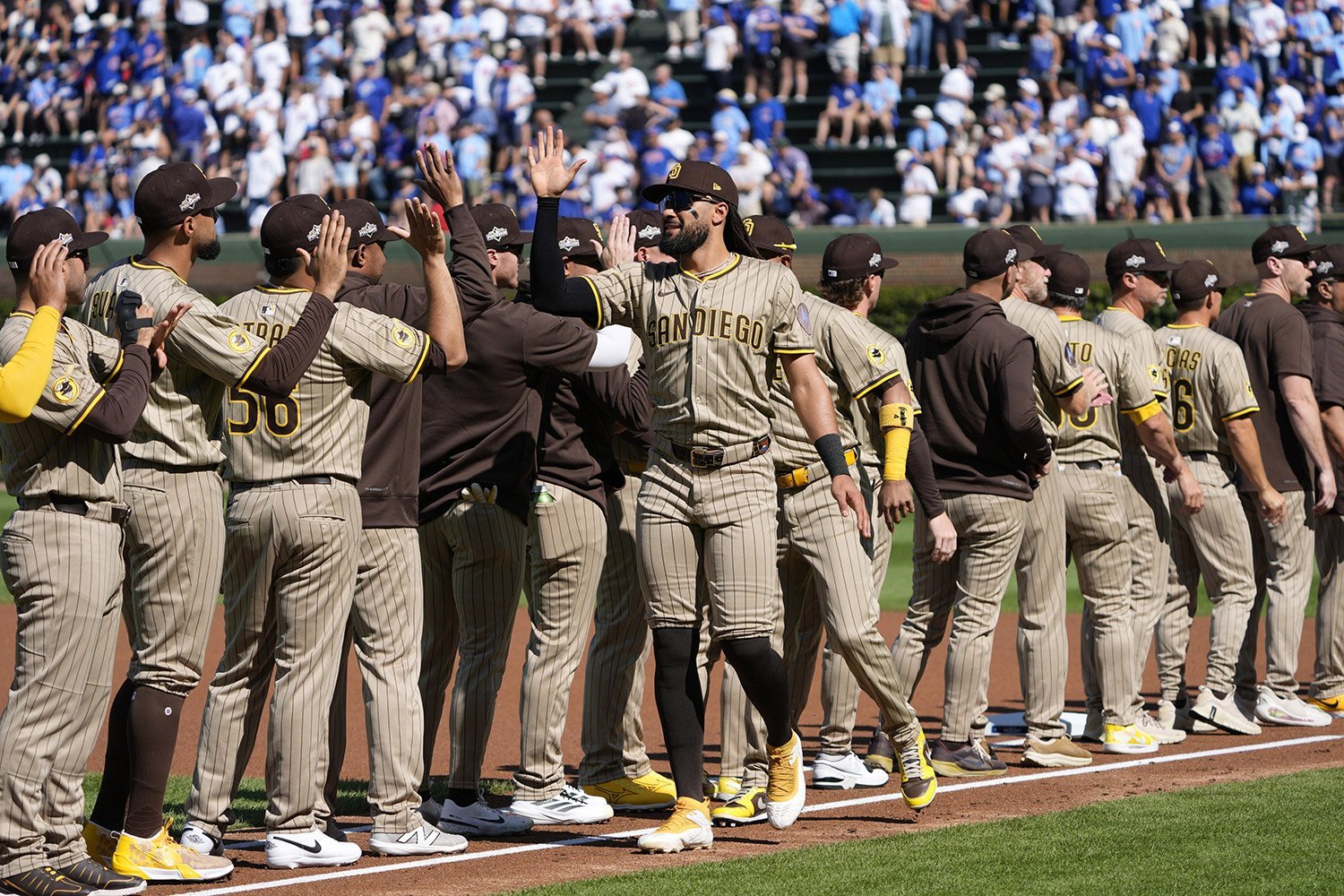 While it won't erase the bad feelings from a short stint in the playoffs, the San Diego Padres learned there is a small silver lining as MLB announced the distribution of postseason shares. The Padres will dole out $10,710.79 to 68 members of the 2025 team. Postseason shares are given to teams from the MLB pot, which this year was $128.1 million, and are based on how far each team advanced in October. As we all know, the Padres lost in three games to the Chicago Cubs in an NL Wild Card Series. The 68 shares go to players, managers, and select staff members eligible for the World Series or who were on the roster after June 1. Cash awards are given to other members of the organization. Executives are not eligible. The World Series champion Los Angeles Dodgers' playoff shares are $484,747.57. View the full article
 -
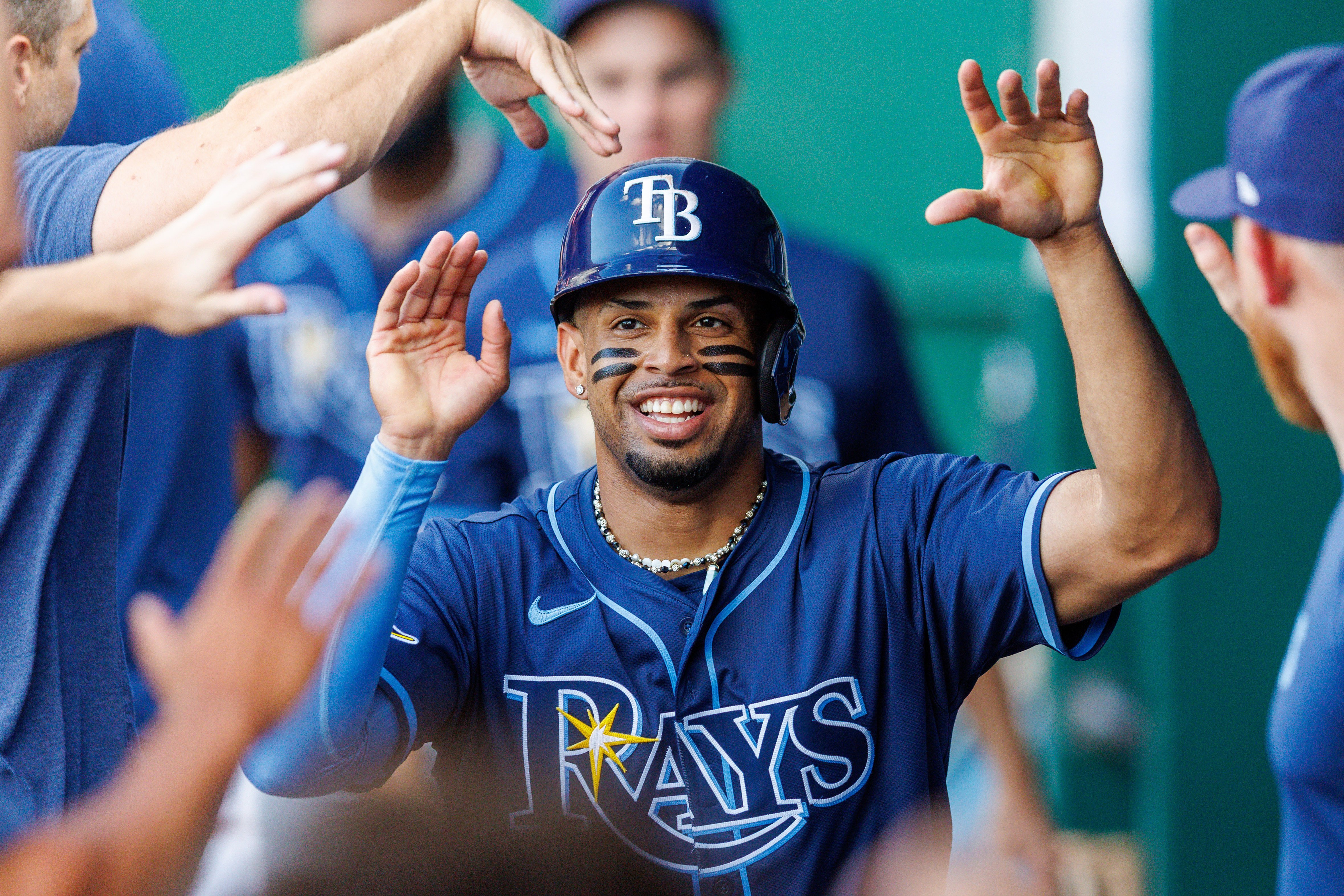 On Thursday, the Miami Marlins made the free agent signing of Christopher Morel official, inking him to a one-year deal worth $2M. In his previous two offseasons as Marlins president of baseball operations, Peter Bendix gave similar deals to shortstop Tim Anderson ($5M) and starting pitcher Cal Quantrill ($3.5M). Neither of them finished the season with the team. After getting burned by Anderson and Quantrill, why should Marlins fans be hopeful about Morel turning his career around? The 26-year-old isn't likely to emerge as a consistent everyday player, but Miami may be the right landing spot to help him improve upon what he did last season. In 2025 with the Tampa Bay Rays, Morel slashed .219/.289/.396/.684 with a 90 wRC+ through 105 games played. He struck out 35.7% of the time and walked at a 8.2% rate while hitting only 11 home runs, which were all career-worsts for him. Morel's raw power remains impressive. His average exit velocity of 91.8 mph would have ranked in the 87th percentile among MLB hitters if he had enough playing time to qualify, tied with Julio Rodríguez and Jarren Duran. He also made an interesting adjustment to his swing decisions in 2025. Morel offered at 77.1% of pitches inside the strike zone after never previously reaching 70%. The main issue with Morel is connecting with the ball. He just set a career-low with his 72.6% contact rate and he was among MLB's worst when chasing outside of the zone (36.5% O-Contact). In some ways, Morel has a similar profile to Kyle Stowers and Griffin Conine. Working with the Marlins hitting development staff, both outfielders improved their plate approach and mechanics. They enter 2026 as key pieces of the club's lineup. Stowers went from a 34.5% O-Swing in 2024 between his stints with the Orioles and Marlins to 29.0% in 2025. On top of that, he made much more contact inside the zone, allowing him to break out into an All-Star. Prior to Bendix joining the organization, Conine struck out 34.9% of the time in 2023. The following year in Triple-A, he lowered his strikeout rate to 29.5%. This past season—albeit in only 24 games due to a dislocated shoulder—he struck out 29.1% of the time at the major league level. Steamer projects Morel to slash .227/.307/.419 with 11 home runs and a 100 wRC+, which would get him to 0.6 fWAR. Even that ordinary production would make the Marlins consider retaining him for 2027 via arbitration. Morel can make the decision easier if he learns to play decent defense at first base. Morel is just now entering what should be the physical prime of his career. To make the most of it, he'll have to trust his new organization and be open-minded to some major changes. View the full article
 -
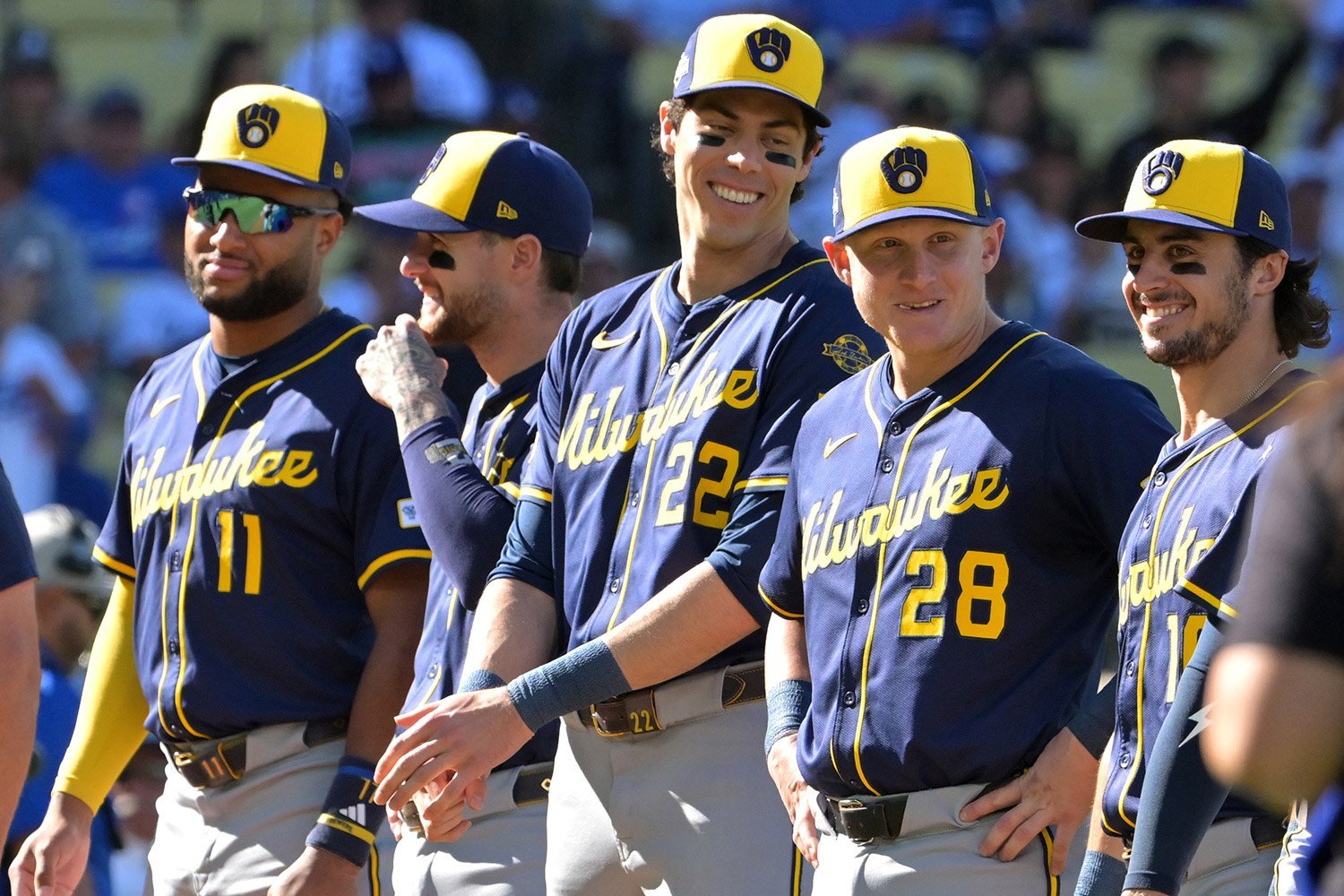 The Milwaukee Brewers will hand out the fourth-highest postseason shares, giving out $168,852.76 after reaching the National League Championship Series. The Brewers' pool comes from the MLB total of $128.2 million, which is just shy of the record of $129.1 million. There will be 70 individual shares distributed to players, managers, and certain staff members who were eligible for the World Series or on the roster after June 1. Separate cash awards will be given to other members of the organization. Team executives are not eligible for either payout. The Los Angeles Dodgers, who swept the Brewers in the NLCS and won their second straight World Series, received shares worth $484,747.57. The American League champion Toronto Blue Jays' full shares are worth $354,118.39, while the Seattle Mariners, who lost to the Jays in the ALCS, received $182,376.45. View the full article
 -
Jake Bennett Is A Very Craig Breslow Return For Luis Perales
DiamondCentric posted an article in Talk Sox
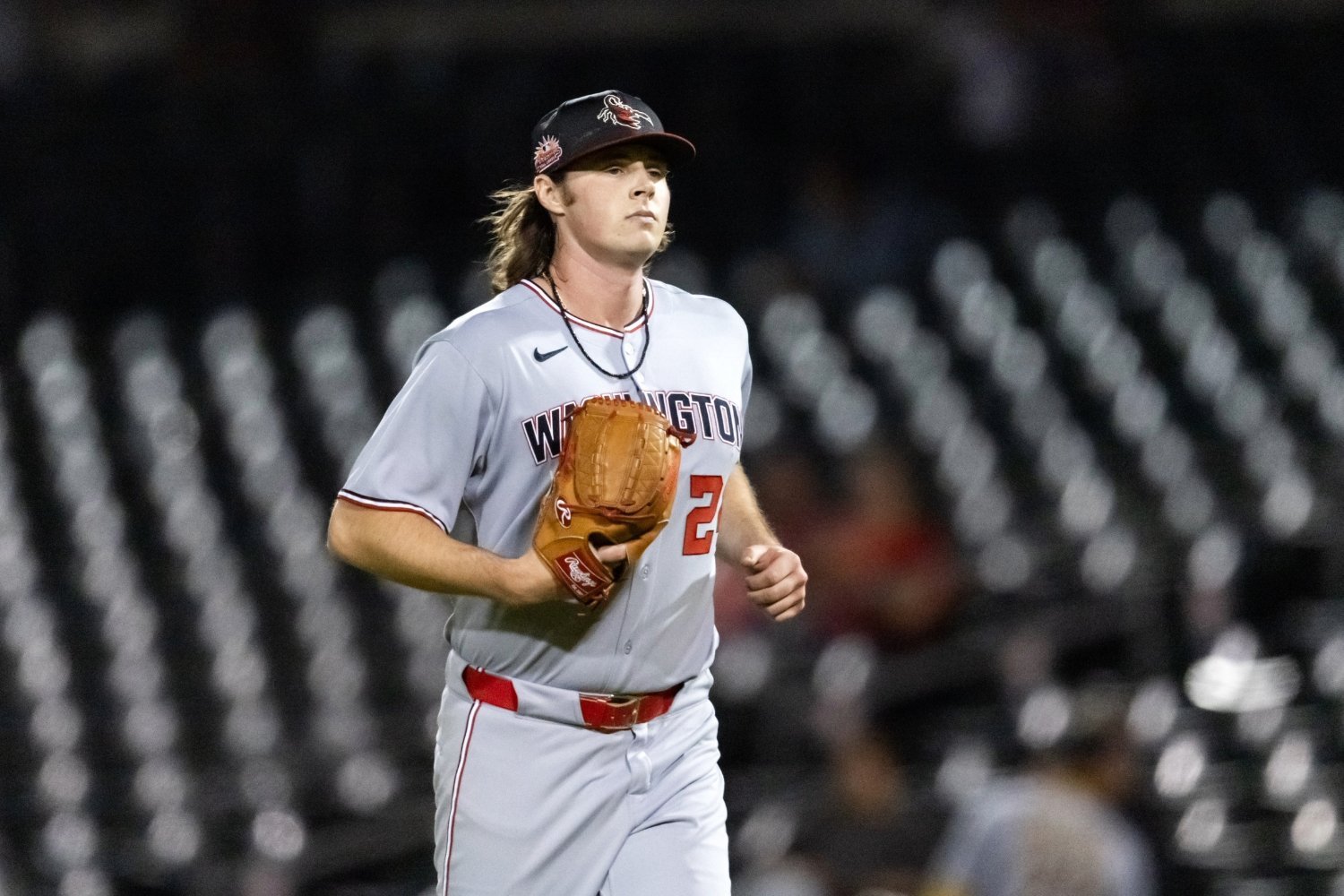 Craig Breslow and the Boston Red Sox pulled off a surprise trade this week, sending electric pitching prospect Luis Perales to the Washington Nationals for left-handed pitching prospect Jake Bennett. The trade is a strange and rare prospect-for-prospect trade, but with Paul Toboni now calling the shots for the Nationals, it makes sense that a trade between the two teams was bound to happen. Toboni does have an excellent understanding of the Red Sox's farm system after all. With the trade, Breslow continues his acquisition of pitchers who fit a certain, preferred mold. Bennett, who was the Nationals’ second-round pick back in 2022, stands 6-foot-6 with elite extension (during his time in the Arizona Fall League Bennett averaged seven feet of extension) and a fastball that just averaged under 94 mph. His pitch arsenal is made up of six pitches: a fastball, changeup, sinker, cutter, curveball and slider. Depending on which side the batter hits from tends to dictate his pitch usage, as against left-handed batters, he relies heavily on his sinker (55.3% usage in the AFL). His cutter and fastball are used 18.1% and 14.9%, respectively, while his slider was used just 6.4% of the time and his changeup and curveball were used a combined 5.4%. On the other hand, against right-handed batters it’s his fastball and changeup that make up 75.6% of the pitches he threw in the AFL. His cutter and curveball were his two next-most-used offerings, though it's clear that's he got a bread and butter against righties. Bennett’s fastball, while averaging 93.8 mph, did top out around 96 mph in the AFL, and he’s already shown an increase in velocity compared to his professional debut. Spending the remainder of the offseason following the Red Sox's pitching program could yield another tick or two for the 2026 season. The southpaw recently turned 25 years old at the start of December and returned in 2025 from Tommy John surgery, appearing in 19 games across three levels. Bennett finished the season with Double-A Harrisburg where he pitched in 10 games, making nine starts, going 1-2 with a 2.56 ERA in 45 2/3 innings. For the entire season, he wound up going 2-5 with a 2.27 ERA across 75 1/3 innings. Bennett struck out 64 batters and walked 19. Following the season, he was sent to the AFL where he was dominant in an otherwise hitter-friendly league. In 20 frames, he led the AFL in strikeouts with 25 while walking just five batters. Of his pitches, the only one that had under a 20% chase rate was his curveball, while every pitch generated at least a 33% whiff rate (slider sat at a whopping 66.7%). His changeup was also a great pitch, being chased 45.6% of the time and being whiffed on 43.8% of the time. Overall, during his time in the AFL, Bennett managed to get opposing batters to chase on 34.1% of his pitches while whiffing on 39.9% of their swings. Breslow holds a high opinion of the pitcher, going as far as to say: “We feel like Bennett is a high-probability starter that excels in some things that are hard to teach. Fastball playability driven by above-average extension and strike-throwing ability. His whiff rates and ability to manage hard contact have us confident in his ability to be a major-league starter”. During his time in the AFL, Bennett held batters to a 44% hard-hit rate while the average exit velocity off of him was just 88 mph, a stat that had him sitting in the 72nd percentile. Bennett, who was the Nationals’ sixth ranked prospect by Baseball America, has shown improvement since being drafted. Between his wide arsenal of pitches, being a left-handed pitcher, and his excellent command, he should be in the rotation if he makes it up to Boston. His time in Double-A (while short) can be compared to two other talented lefties in Connelly Early and Payton Tolle. Though older than both of them, Bennett had an ERA that was comparable to Early while his FIP was lower. While also having the lowest strikeout rate of the three, Bennett edged out Tolle for a lower walk rate at 6%. Along with that, Bennett’s ability to keep the ball on the ground rivals both pitchers, his 48% ground-ball rate falling just short of Early’s 50%, but being much higher than Tolle’s 40%. Of course, you can’t get talent without giving up talent, and in return the Red Sox sent Perales back to the Nationals. Perales, who was Talk Sox’s fifth-ranked prospect at the time of the deal, was a talented-yet-injury-prone pitcher. He missed all but one game of the 2021 season due to injuries and the only season where he made at least 20 appearances was in 2023. This year, he was coming off of Tommy John surgery he had in 2024 and made just three appearances in 2025. Like Bennett, the talented prospect pitched in the AFL, where he made six starts and tossed 11 1/3 innings, striking out 19 batters. Despite Perales’ talent, there was worry of the risk he would wind up being a reliever due to his history of injuries along with his command issues. While not confirmed, Breslow must have had that in mind when he traded what was known as the arm with the best raw stuff in the system. Bennett will have a lot to live up to, but he fits the mold that Breslow loves far more than Perales ever did. View the full article
 -
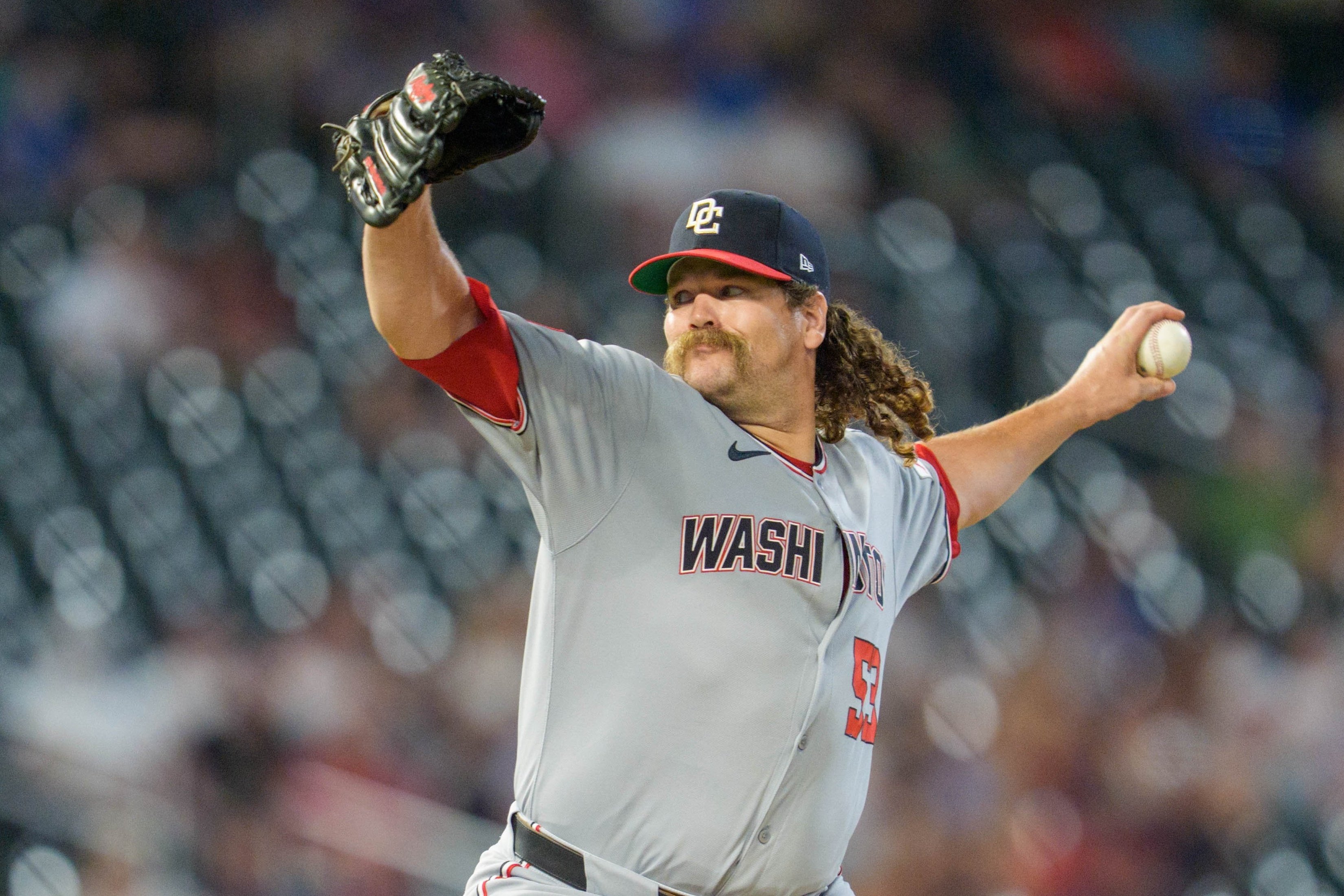 The Miami Marlins made it clear early on that they'd be pursuing some of the top relievers available in free agency. Instead, they have been overshadowed by teams in their own division. The Atlanta Braves, New York Mets and Philadelphia Phillies have each signed multiple relievers to major league deals. The Marlins have only added pitchers on minor league deals. The unwillingness to commit to any free agent for multiple years has prevented the Marlins from landing big names. Fortunately, several effective relievers are still out there who wouldn't require commitments beyond 2026, most notably Pete Fairbanks. Despite a career 3.19 ERA and 90 saves, Fairbanks' injury history seems to be hurting his market. Sources told our own Isaac Azout that the Marlins remain "very interested" in Fairbanks and have made a strong one-year offer worth more than the $11M he was due to make with the Tampa Bay Rays before his club option was declined. Here are five more veteran relievers to monitor. LHP Taylor Rogers Rogers spent the 2025 season with the Cincinnati Reds and Chicago Cubs, posting a 3.38 ERA, 4.38 FIP, 9.41 K/9 and 4.09 BB/9 through 50 ⅔ innings pitched. Once he was traded to the Cubs, Rogers did begin to struggle, posting an ERA of 5.09. You can make the case that pitching at Wrigley was the issue, as his HR/FB ratio went from 8.8% to 21.7%. He was walking fewer players, but just giving up a lot more contact. dnZicWpfZFhBc1VBPT1fQXdaVVVRWlNVd29BWEFjQ1ZnQUhBQVlBQUFNR1VsZ0FVd2NEVWdJTkNRb0hWQXBV.mp4 Barry Jackson of the Miami Herald reported that the Marlins had shown interest in both of the Rogers brothers. While Tyler signed a three-year deal, $37M with the Toronto Blue Jays, Taylor should be significantly cheaper. LHP Andrew Chafin Chafin continues to bounce around the league, giving teams great results more often than not. In 2025, he started the season with the Washington Nationals before being dealt to the Los Angeles Angels. He posted a 2.41 ERA, 3.46 FIP, 9.62 K/9 and 5.08 BB/9 through 33 ⅔ innings pitched. Despite being 35 years old, Chafin's slider is still a solid swing-and-miss pitch with a 41.0% whiff rate. His sinker generates plenty of ground balls. He's also very comfortable inheriting baserunners in the middle of an inning. N3lSYmpfZFhBc1VBPT1fRHdCWUFGUU5VMVlBQ0ZaUlhnQUhVZ0ZXQUZoUlVWZ0FDbEVHVlFaV1VGWURWbFlB.mp4 Teams always have a need for relievers at the trade deadline, and Chafin has been moved during the last three of them. If the Marlins are out of contention, history says they should be able to get something in return for him. RHP Hunter Harvey Marlins fans should be familiar with Hunter Harvey, the son of Bryan Harvey who pitched with the Washington Nationals from 2022 up until the 2024 trade deadline, when he was moved to the Kansas City Royals. The 31-year-old pitched in only 12 games this past season due to a right teres major strain and a right adductor strain. In limited appearances, he posted a 0.00 ERA, 1.35 FIP, 9.28 K/9 and 0.84 BB/9. Looking at a larger sample size going back to 2024, in 50 ⅔ innings, he posted a 4.44 ERA, 3.52 FIP, 9.77 K/9 and 2.84 BB/9. Wng0amdfZFhBc1VBPT1fRGdOV1V3Y0dBMU1BV2dBSEFBQUhVZ0ZRQUFBSEFRQUFBMUJSQmdNTUJRdFJDUU5T.mp4 Harvey's combination of high velocity and control is hard to find. RHP Seranthony Domínguez Domínguez was with the Philadelphia Phillies from 2018 through the 2024 trade deadline. He's been dominant over 11 scoreless innings in his career pitching at loanDepot park. This past season, Domínguez posted a 3.16 ERA, 3.47 FIP, 11.35 K/9 and 5.17 BB/9 through 62 ⅔ innings pitched. He was also used in 12 of Toronto's 18 postseason games, including Game 7 of the World Series. If not for his strike-throwing issues (including 12 wild pitches last season), Domínguez would probably get a multi-year deal. It would make sense for him to show improvement in that area in 2026, then test the market again. RHP Kirby Yates After an awesome 2024 season where Yates posted a career-best 1.17 ERA through 61 ⅔ innings pitched, he landed on the injured list three times last season. Limited to 50 games, he struggled with a 5.23 ERA, 4.76 FIP, 11.32 K/9 and 3.70 BB/9. Yates' four-seam fastball (plus-15 run value to plus-1 run value) and splitter (plus-8 to minus-7) both regressed. There was a huge increase in the amount of hard contact he allowed on both pitches. Yates will turn 39 right before Opening Day. View the full article
 -
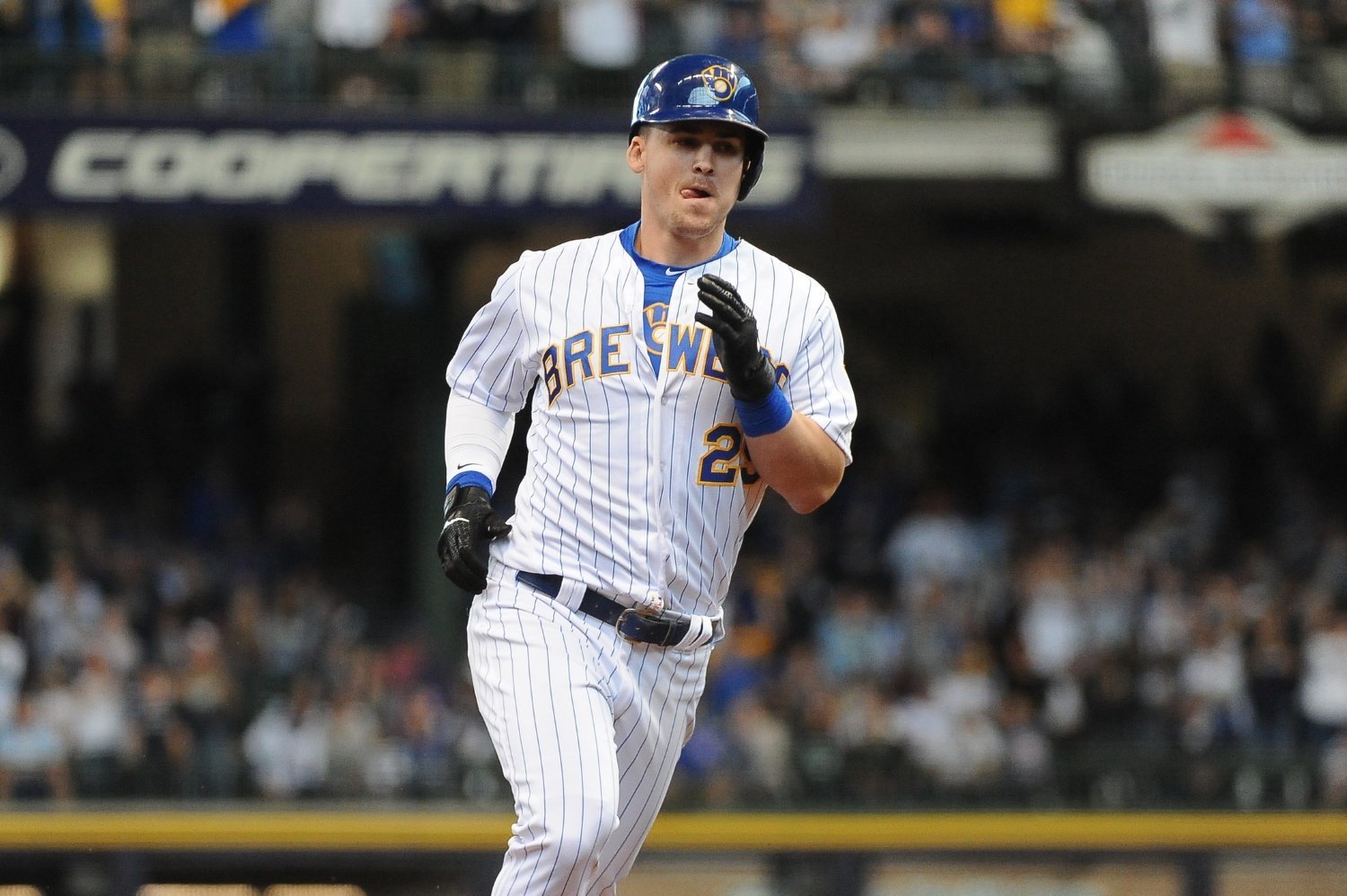 The Chicago Cubs have agreed to a one-year, major-league deal with first baseman Tyler Austin, according to a report from ESPN's Jeff Passan. Austin, 34, carried a colossal 36.9% strikeout rate over parts of four previous seasons in the majors, and last appeared in the States in 2019. Since then, he's played for the Yokohama Bay Stars of Nippon Professional Baseball. When last he did play in the American majors, Austin was one of Craig Counsell's charges for the Brewers. He drifted around in his final years before going to Japan, but found a home and made some major improvements as a balanced slugger in NPB. According to Yakyu Cosmopolitan, which keeps advanced NPB stats, Austin made contact on 85.1% of his swings within the strike zone in 2025, and chased fewer than 20% of pitches outside it. Even before going to Japan, he was an exceptional hitter against left-handed pitching, with a .253/.345/.539 line in 255 plate appearances against them. That will be virtually his only role for the 2026 Cubs. He profiles gorgeously as a lefty-mashing right-handed complement to star slugger Michael Busch, a lefty who struggles against southpaws. He can also find playing time as the designated hitter against lefties, moving Seiya Suzuki to right field and avoiding the need to play either Moisés Ballesteros or Owen Caissie against them, should Counsell prefer Busch to one of the two on a given day. He figures to come off the bench to pinch-hit for one of those three lefty batters fairly frequently, too, as long as his return to the States works out. Austin will come much cheaper than previous players the team has signed to fill the same role, a cast that includes Justin Turner ($6 million for 2025) and Trey Mancini ($14 million over the two previous seasons). Jon Heyman reports that he'll receive just $1.25 million, before incentives, making that roster spot a cheap one and leaving the team ample resources as they pursue a middle-of-the-order bat and an upgrade for the front half of their starting rotation. If they do achieve a major upgrade to the lineup, it's likely to come at third base, anyway, so Austin does nothing to materially gum things up on that front. He occupies a roster spot that will have little defensive value or flexibility, but which also demands little. As the team ponders ways to make the remaining improvements they need, this move saves money in one place for spending in another—while capturing some matchup-based upside. View the full article
 -
Are The Giants Attempting To Trade For Nico Hoerner?
DiamondCentric posted an article in North Side Baseball
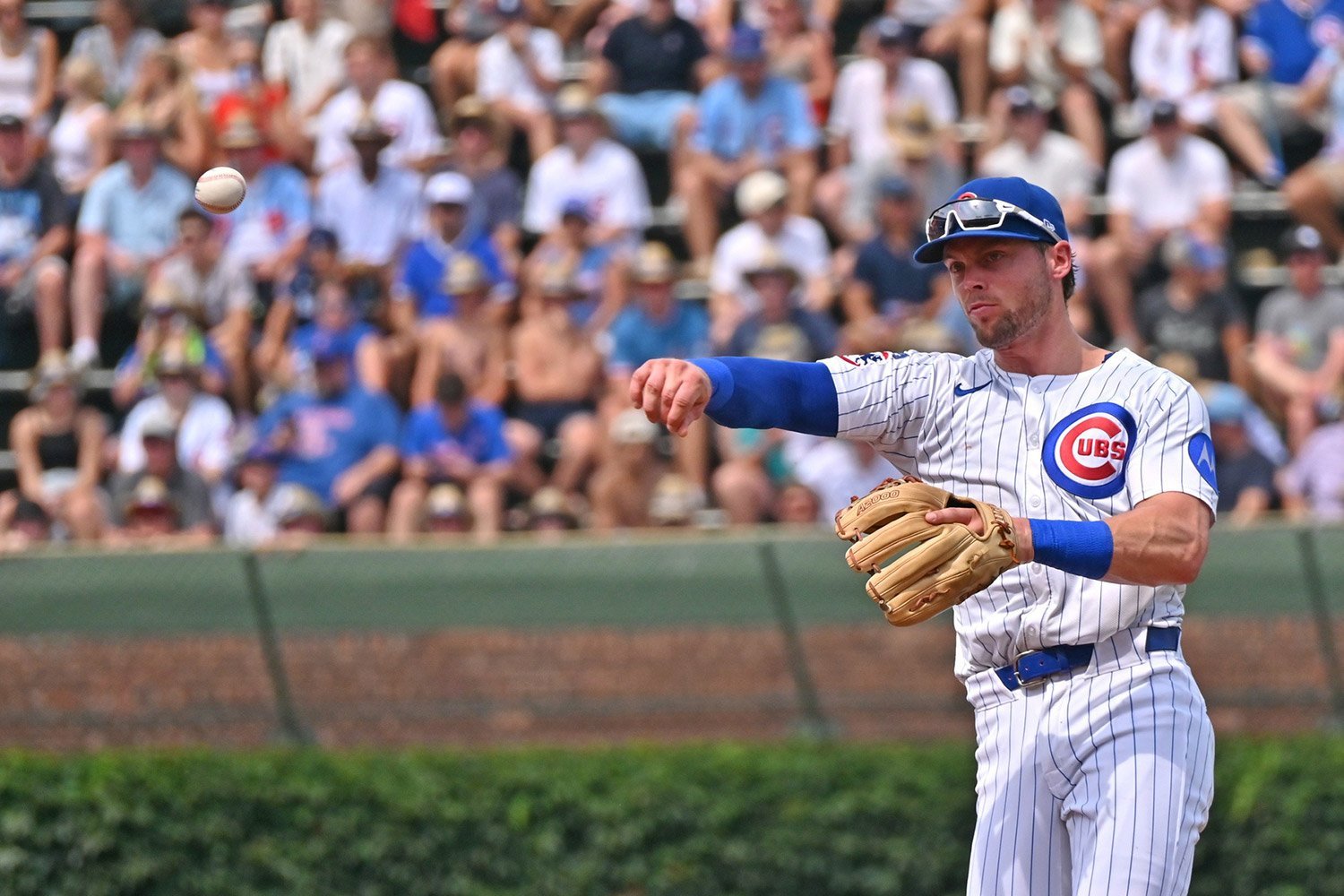 Susan Slusser of the San Francisco Chronicle recently reported that the San Francisco Giants are looking for a second baseman and have checked in on the Cubs' Nico Hoerner. Hoerner, an Oakland native and former Stanford shortstop, is under contract through 2026 on the three-year, $35 million extension he signed in March 2023, and will reach free agency after the 2026 season. In MLB Pipeline’s midseason farm-system rankings, the Giants were labeled as the most improved system since the preseason, rising from No. 28 to No. 18. Bryce Eldridge was the organization’s lone Top 100 prospect, and he reached Triple-A at age 20. The system was also noted for Rookie-ball performers, including shortstops Josuar Gonzalez and Jhonny Level and right-handers Argenis Cayama, Keyner Martinez, and Alberto Laroche. Pipeline also called out the outfield group, led by Bo Davidson and Dakota Jordan. In a Top 30 midseason update, Pipeline graded Eldridge with 70 power, Jordan with 60 run, Carson Whisenhunt with a 70 changeup, and Gerelmi Maldonado with a 65 fastball. View the full article
 -
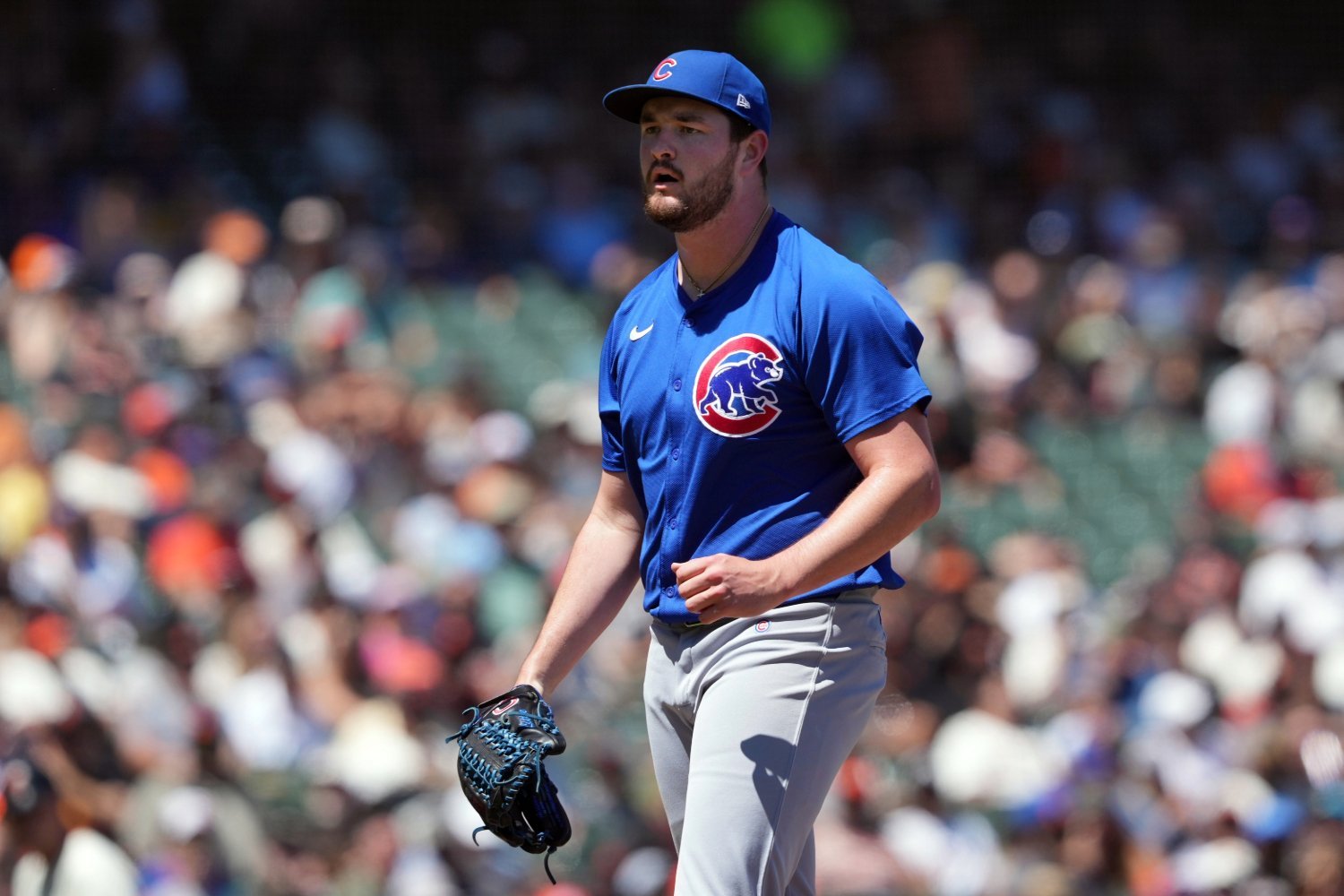 The Chicago Cubs' bullpen picture has solidified to a degree in recent weeks with the signings of Phil Maton and Hoby Milner, as well as the decision to bring Caleb Thielbar back to town. Fans would still like to see more encouraging additions to shore up the group. Roster holes exist elsewhere, however, so the team may find itself leaning on internal options to take a step forward. Luckily, years of acquiring pitching depth in the minors has led to a point where the Cubs have plenty of talented arms waiting for a full-time opportunity in the big leagues. Whether because of ticking clocks or elite raw stuff that has never been fully harnessed, these are their top candidates to become important bullpen contributors Luke Little The Cubs' top two southpaws in the Opening Day bullpen are likely to be Hoby Milner and Caleb Thielbar. Both are experienced and effective, but they’re also in their mid-to-late-30s. The Cubs may need another LHP to mix in late in games at some point in 2026, and Little has all of the tools to do so in a meaningful way. Little has lacked consistency in his limited MLB experience over three seasons, but his raw talent and traits are difficult to write off. At 6’8 and possessing a mid-to-high-90s heater from the left side, he offers a dimension to the bullpen that Thielbar and Milner do not... if he can iron out his command issues. At 25 years old, there’s still plenty of time for the Cubs to help him make an adjustment. Little’s wipeout slider, paired with an overwhelming fastball, gives him all of the tools he could need to dominate out of the bullpen, assuming he can locate anywhere near the strike zone. His ability to generate tons of ground balls and limit home runs comes from ridiculously elite extension (he averaged 7.2 feet of it in 2025), giving him another mouth-watering tool to build upon. Porter Hodge The 2025 campaign couldn’t have gone worse for Porter Hodge, as every regression concern came to life and then some. His .189 Batting Average on Balls In Play (BABIP) in 2024 was always going to be difficult to repeat, but watching it inflate to .313 was certainly unforeseen. His walk rate rose to 12.2% while his strikeout rate also declined slightly. He watched his home run-to-fly-ball rate increase from 5.6% to 25%. Anyone wary of trusting Hodge in a significant role headed into 2026 is justified. There’s also plenty of reason not to write Hodge off completely moving forward. The increase in homers allowed was arguably the most significant contributor to his miserable 2025 campaign. It’s worth noting that he’s suppressed homers at every professional level in his career, including MLB, until 2025. Could it be a bout of bad luck, or perhaps an oblique strain that he quietly struggled through for much of the season? It’s difficult to say, but lowering the home run rate to even modest levels would make a huge difference. Hodge will have just turned 25 at the beginning of 2026, and while the Cubs would be wise not to trust him in high leverage as they did early on this past season, he could easily earn a prominent role back at some point. Relievers are volatile, and these seasons unfortunately happen. The upside Hodge has already displayed is worth accounting for. Ben Brown Brown’s stuff remains tantalizing, and his 117 innings in 2025 may very well position him for another season of contributing to the rotation to some degree. It’s worth wondering, however, whether the 26-year-old may be best utilized in a bullpen role, given the Cubs' needs and how he struggled as a starter last season. Brown was fine in some respects as a starting pitcher, but was plagued by a crippling .347 BABIP and a 15.5% HR/FB rate. These may seem like fluky stats, but some may argue his pitch mix is to blame. A high-octane fastball and devastating breaking ball can make him effective for stretches, but the 1.126 OPS allowed third time through the order shows the dangers of being a two-pitch pitcher in the starting rotation. Hitters can feel more comfortable knowing they won’t be completely surprised by a third pitch, and at times may decide to take their big-boy hack while selling out for a 50/50 gamble on what’s coming. Without a third pitch, Brown may continue to struggle in a bulk role. The Cubs should be looking for high-end rotation help that will hopefully make them less reliant on arms like Ben Brown to fill in, and then he can focus on dominating hitters in short stints out of the bullpen. It’s hard to imagine his raw stuff not being up to the task. The Cubs should still have several additions on the way this winter, but it’s possible they don’t wind up with a marquee member for the bullpen. Are there any other arms that could become significant contributors to the back end of games in 2026? Let us know below! View the full article
 -
The Joe Pohlad Era is Over, Before It Ever Got Its Footing
DiamondCentric posted an article in Twins Daily
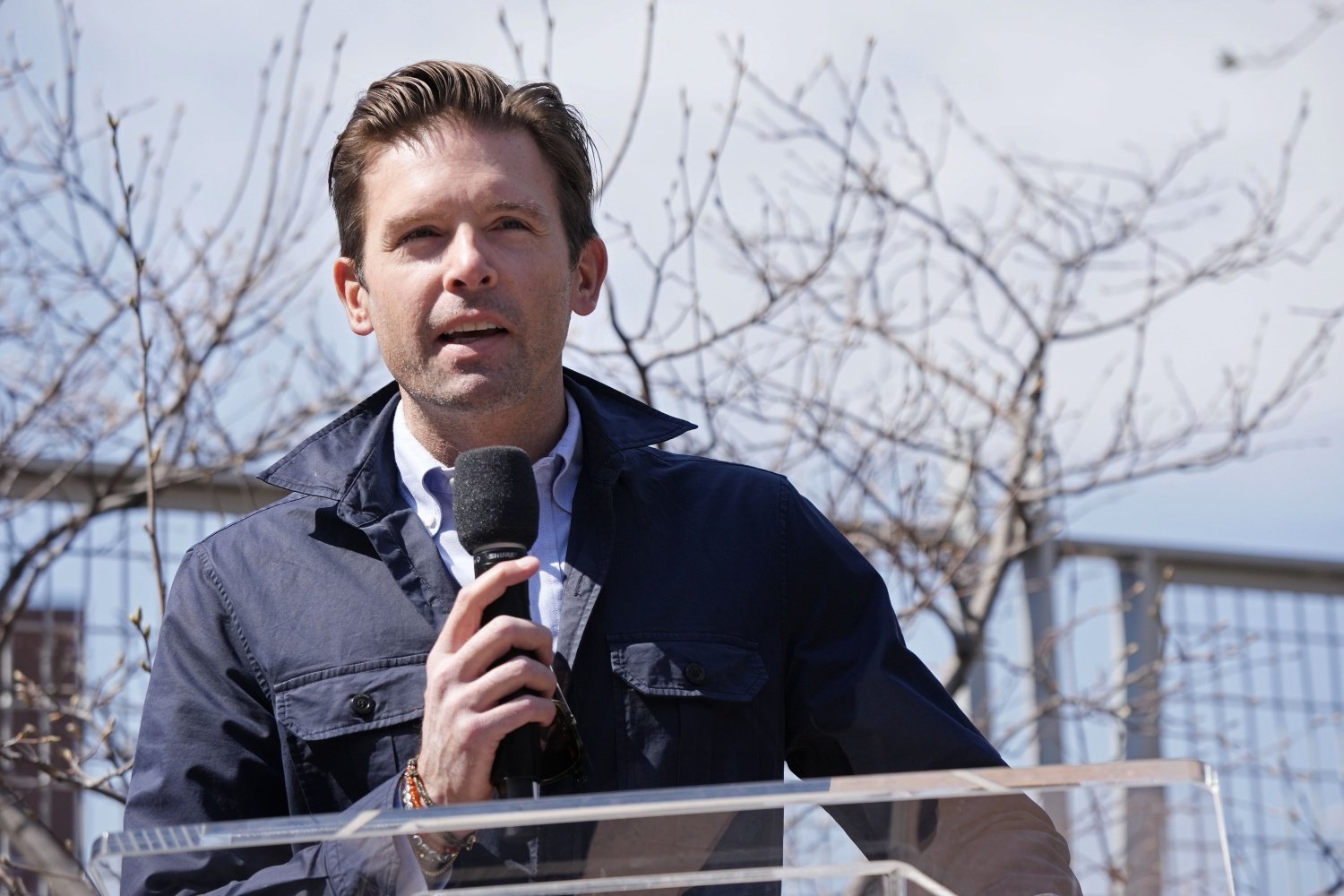 During his opening press conference, Tom Pohlad explained over and over that he understood that part of his job was to be pummeled: by the media, by fans, and by curious onlookers to baseball. “The Twins community has lost trust in us as owners,” the new boss admitted. So begins the transition, then, with older brother Tom taking over from younger brother Joe. Tom will be the fourth Pohlad to run the Minnesota Twins, but it seems worthwhile to take stock of what happened with Joe, whose tenure was cut short after just over three years. While the team's recent stumbles will color any memory, when he first got started, the younger brother was an emblem of hope. Joe Pohlad clearly wanted to change the ownership style of the team. But something happened along the way that put a quick end to those hopes and set the franchise on a pathway to disaster. Joe Pohlad leaves the position, perhaps, even more hated than Carl was. How? Compared to some owners, Joe provided a somewhat fresh look for the Twins in November 2022, taking over control and operation of the team at the age of 40. While his father discussed his plan for the team as remaining outside the spotlight, Joe seemed to initially relish it. He wore nice suits and had a million-dollar smile. He was the first Pohlad to take an office in Target Field, where he said his plan was to collaborate more than enforce. But Pohlad didn’t waste time in trying to make a statement about how he expected the team to operate. He immediately authorized a pursuit of Carlos Correa, and eventually, the front office converted the one-year pit stop into a monster contract. The Twins’ initial pursuit of Correa fell short, but their final offer at $285 million over 10 years far eclipsed the $92-million signing of Josh Donaldson and the extensions for Joe Mauer and Byron Buxton. You can say the Twins still underbid for the highest-priced item on the market, but it suggested they wanted to shop at the Dior Store. So when luck and bad medicals put Correa back on the menu, Pohlad still pulled the trigger to bring him into a long-term relationship. Pohlad beamed during the press conference as Correa put on his new uniform (which had debuted a few months prior), declaring “Fashion Show 2.0.” It was one of many offseason investments in the team blessed by Pohlad. The Luis Arráez-Pablo López trade was certainly controversial, but few would take it back now—and the team eventually offered a substantial extension to make López a franchise face. The rest of the offseason included notable (if unglamorous) free agents, including Joey Gallo, Christian Vázquez, Donovan Solano. They traded for Michael A. Taylor. In total, the payroll jumped over $40 million from the 2021 season. Rocco Baldelli also received an extension through the 2025 season. Pohlad pushed the product to bring it up to the rising big-league standards. That included changes at Target Field that totaled around $30 million, including the new scoreboard and the diamond ball. Pohlad also expanded the “Family Value” section, where the price of a hot dog remained $3.99. In fact, going into 2023, Twins Daily’s Theodore Tollefson took an optimistic view of ownership. “In an era of Major League Baseball where the reputations of team owners usually bring negative connotations to their franchises, Joe Pohlad may be the outlier,” Tollefson wrote. At that moment, that didn't seem crazy. All of that change paid off. The gate receipts for Target Field jumped to (an estimated) $92 million, the highest since 2011, alongside $19 million in profit and a $70-million jump in valuation, at least according to Forbes. The curse was broken, leaving fans hungry for more. There were high expectations that Pohlad set for 2024. Though the sudden removal of Dick Bremer may have shocked some fans, the promotion of Cory Provus felt like the right move. More importantly, Pohlad and Dave St. Peter gave Provus the green light to announce that blackouts would end in 2024 and that a streaming product was on its way. But by the Winter Meetings, a new narrative emerged. Payrolls had gotten too high, and required cutting. For most of the offseason, Joe remained quiet on exactly what was going on. Then, an unfortunate WCCO interview officially ended the honeymoon. Business was the key word. Those $30-million players were luxuries they could not afford. There was a reasonable case for why the Twins felt no need to replace Sonny Gray, but Pohlad failed to articulate it. The team also backtracked on those blackouts, taking a one-year deal with Bally Sports. One could have expected that the reunion might mean more money to put toward payroll, but that never did come. The decision backfired when Bally’s parent company began a three-month dispute with Comcast and kept the Twins off most televisions for almost half the season. Twins.TV would debut in 2025, but too little, too late. Even when it was clear the Twins needed to add at the deadline, it became apparent from reporting from Jeff Passan that "if the opportunity to acquire a higher-salary player presents itself, they would need to offload salary from their major-league roster in that deal or another to cancel out the expense." Never mind that at most, this would cost a low seven-figure sum to play out the rest of the season. It will be up to history whether the implosion that followed was a result, but fans knew exactly how to draw the line. Pohlad finally stepped up to the mic once more at the end of the season. Defending his decision, he explained himself. “We were headed down a great direction and I had to make a very difficult business decision, but that’s just the reality of my work," he said. "I have a business to run, and it comes with tough decisions, and that’s what I had to do. I wouldn’t make any other decision.” No one wanted to hear it. Only a few weeks later, the family announced the sale. It will never be clear if Joe was fighting a battle with one arm tied behind his back. He probably expected a longer tenure than under two years before he announced the intention to sell. There are seven other Pohlads in his generation (who likely saw things differently all along), though, and he couldn't hold onto control. Even the sale effort, which was Tom's job, didn’t work. The only major buyer eventually locked up a shinier object. No other full-scale suitor emerged. At a time when the team was at its worst, Joe had to announce a new plan to bring on limited partners instead. As Tom suggested, only in the last month was it clear that he would take the reins. As Dan Hayes reported, the sale may just be pushed down the road, as owners hope for a salary cap in order to increase their valuations. Whatever conversation that ends up being, Joe will remain on the advisory board, rather than in the driver seat. In the meeting Wednesday, Tom described an employee town hall wherein Joe announced the end of his tenure through tears, clearly a bittersweet moment for someone who expected any other outcome than this. The younger brother skipped the press conference. His story—as far as the Twins are concerned—ends here. View the full article
 -
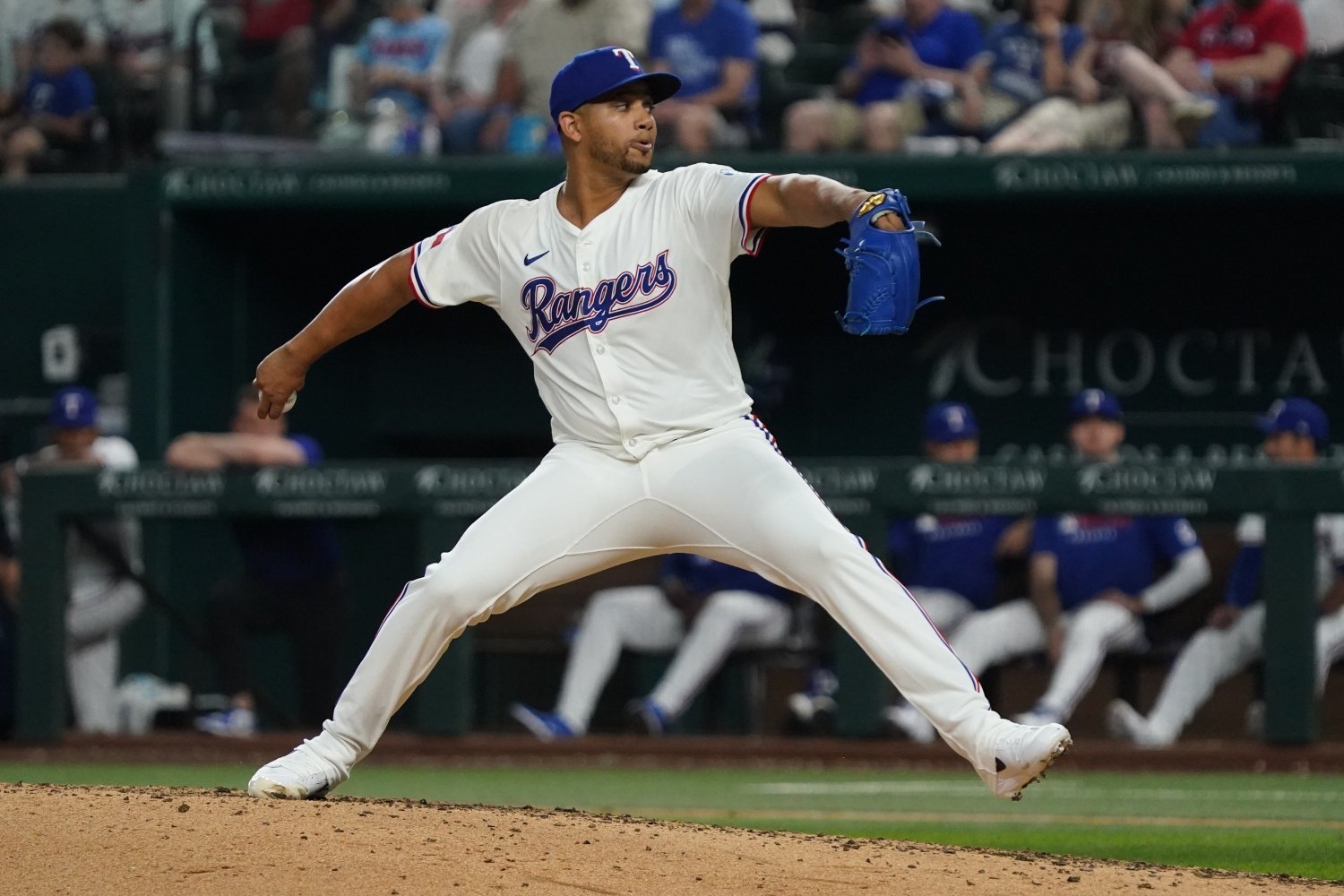 In 2026, the Brewers have a bit more insurance against injuries and underperformance in 2026. Right-hander Gerson Garabito and left-handed starter Drew Rom agreed to minor-league contracts with a non-roster invite to spring training, according to Curt Hogg of the Milwaukee Journal Sentinel. So what do we know about each? Garabito sounds like the more interesting of the pair. A 30-year-old Dominican, he stands 6 feet and weighs 180 pounds. He had an adventurous 2025, beginning the season on the Opening Day roster for the Texas Rangers. Garabito, who spent the last four months of 2024 with the Rangers after making his MLB debut in late May, appeared in three games, two in a mop-up role. It didn't go well. In his second appearance of the season, he allowed eight runs (four earned) on seven hits with no walks and three strikeouts in 2 ⅔ innings, in a 14-3 loss to the Cincinnati Reds. A week later, he made his last big-league appearance of 2025, when he gave up four runs on six hits in 3 ⅓ innings against the Chicago Cubs. Garabito was sent to Triple-A Round Rock a few days later. There, his struggles continued: He posted an 8.81 ERA in 10 starts, walking 18 and striking out 28 in 31 ⅔ innings. After two months at Round Rock, Garabito was released to sign with the Korean Baseball Organization's Samsung Lions. His fortunes changed in South Korea, where he made 15 starts and went 4-4 with a 2.64 ERA in 78 ⅓ innings. He walked 37, but also struck out 84. That performance is what got the Brewers interested. While he will be ticketed for Nashville, Garabito will be looking to build upon his KBO showing and be an option when the Brewers need to dip into their minor-league depth for an extra arm. He'll also be looking to improve upon his big-league track record. In 21 games, including two starts, Garabito has a 5.77 career ERA, with 13 walks and 30 strikeouts in 34 ⅓ innings. Garabito was originally signed by the Kansas City Royals as a 16-year-old, in September 2012. He didn't make it to Double A until 2019. He became a minor-league free agent following the pandemic-scrubbed 2020 season and signed with the San Francisco Giants, spending time at Double A and Triple A. He was out of organized ball in 2022 and 2023, pitching in Venezuela, then landed a deal with the Rangers before the 2024 season. He throws roughly 94 miles per hour, but his four-seam fastball lives in the movement dead zone. He'd do better to turn to his sinker more often, though the changeup and (especially) splitter with which he complements those offerings play a bit better off the four-seamer. He'll be a good candidate for some tinkering, under the Brewers' famously clever pitching brain trust. Rom, meanwhile, has almost been exclusively a starter, with 104 of his 116 professional games coming in the rotation. He turned 26 on Monday. He's a 6-foot-2, 215-pound left-hander who was drafted in the fourth round of the 2018 draft by the Baltimore Orioles. He progressed up the Orioles' chain to Triple A in 2023, including a two-day call-up to the Baltimore roster in May. Then, he was traded to the St. Louis Cardinals in the Jack Flaherty deal at that year's trade deadline. He made his MLB debut in late August, posting a 1-4 record and 8.02 ERA in eight starts, covering 33 ⅔ innings. He walked 19 and struck out 32. His 2024 season was wiped out by injury. He was placed on the injured list with a biceps injury, but then had arthroscopic surgery on his left shoulder in May, ending his year. He came back in 2025 with three rehab starts at Low A, then made four starts at Triple-A Memphis. In those seven games, he had a 4.24 ERA in 23 ⅓ innings, walking six and striking out 24. His last appearance was in early June. Rom apparently sustained an undisclosed injury. It appears to be another setback with the upper arm or shoulder. Though he only throws 91 miles per hour, Rom has some interesting secondary offerings. He throws a funky cut-splitter and a plus sweeper, as well as a slider and sinker that round out a starter-worthy arsenal. If he can stay healthy, Rom is an interesting arm. Both he and Garabito have the right mix of stuff and experience to start games in an emergency, but each is best thought of as something akin to the Elvin Rodríguez signing last winter—with even lower stakes, since neither initially receives a 40-man roster spot. They're spare pieces, but they could be solid ones. Always amassing depth and leaving themselves ample options, the Brewers have done a bit of reinforcement in advance. View the full article
 -
Could Kazuma Okamoto Solve the Blue Jays' Infield Dilemma?
DiamondCentric posted an article in Jays Centre
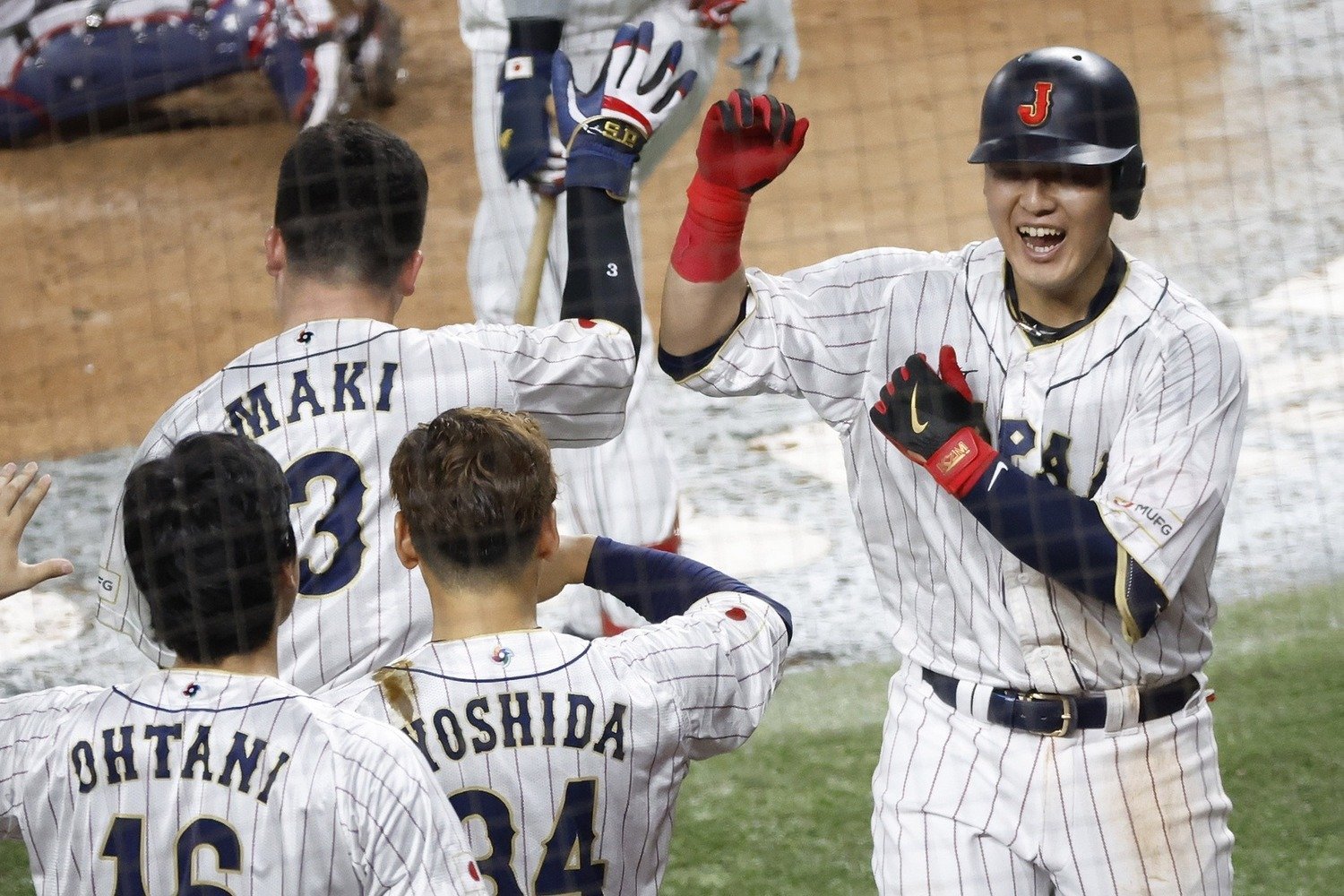 The waiting game continues for the Blue Jays and other teams across baseball as they consider their options when it comes to solidifying their infield. There was a league-wide sense of excitement when Kazuma Okamoto was posted by his Nippon Professional Baseball team, the Yomiuri Giants, back in November. Reports suggest the Blue Jays, Red Sox, and Pirates have all expressed interest in signing Okamoto over the past month. The 29-year-old had six straight 30-home run seasons between 2018 and 2023 in Japan. His 2024 season broke his streak, as he finished off with only 27 homers, down from the 41 he hit the year before. Okamoto was limited to just 69 games this past season due to an elbow injury but still managed 15 home runs and a .992 OPS. Okamoto is known for his power, contact and low strikeout rate. Last season, his strikeout rate was only 11.3%, compared to a 19.5% league average. Since 2020, it hasn’t been higher than 20%. His contact-first style would seamlessly blend into the Jays’ lineup, suiting the offensive philosophy that propelled them to their best season in more than thirty years. According to Baseball America, he is also an "above-average" fielder at third base and a "plus-plus defender" at first. However, Eric Longenhagen and James Fegan of FanGraphs disagree, calling his defense "below-average" at third base. Ultimately, the Jays do not need a Matt Chapman‑level glove at third to win. All they need is a reliable enough fielder at the hot corner. If Okamoto’s third base defense is passable, and he can spell Vladimir Guerrero Jr. at first occasionally, then his bat will make up for the rest. Toronto’s roster features athletic defenders Andrés Giménez and Ernie Clement in the middle infield, allowing for a bat‑first third baseman whose glove won’t cost outs disproportionately. What might be delaying Okamoto's signing is a logjam of corner infielders yet to be signed or traded. The same is true for fellow Japanese infielder Munetaka Murakami. Teams could be waiting to see where names like Alex Bregman and Nolan Arenado end up. A quick note on Murakami, who is three years younger than Okamoto: He is vying for a longer-term contract, perhaps in the range of seven or eight years at around $20 million per season. Evaluators predict that in their first two or three years in MLB, Okamoto will be more successful, but in the long term, Murakami has more potential. That rationale is why teams with immediate postseason aspirations might prefer Okamoto, while those with longer-term outlooks could be more interested in Murakami. For a team like the Jays, there is something to be said about going with what you know rather than the unknown. If signed by an MLB club, Okamoto is projected to fetch about $68 million over four years. That is a little less annually than Eugenio Suárez, who is a bit older at 34 years old. DiamondCentric projects Suárez to sign for $55 million over three years. If Okamoto does sign in that range, the Jays (or whoever signs him) would also be on the hook for a posting fee to the Yomiuri Giants equal to 20% of the first $25 million, 17.5% of the next $25 million, and 15% of any amount over $50 million. Okamoto will turn 30 in June, so he is older than some recent Japanese imports. His workload across NBP games prior to 2025 would suggest durability, and even an injury-shortened 2025 didn’t seem to negatively impact his production. Part of the rationale for the Myles Straw trade last offseason was to add international bonus pool space. The hope was that the Jays could entice Roki Sasaki to sign in Toronto. That move not only illustrated their interest in Sasaki, who eventually signed with the Dodgers, but also that they are interested in talent coming out of Japan. Munenori Kawasaki was a fan-favourite in Toronto but not exactly a superstar. The Jays' courting of Sasaki, and Shohei Ohtani before him, illustrates their interest in adding former NBP players to their roster. Earlier this offseason, the Jays made headlines for a bold marketing decision, displaying their logo prominently during a title boxing match in Tokyo, which sparked scrutiny from the commissioner's office about international marketing permissions. The episode might suggest the team is trying to subtly increase its Japanese visibility and fanbase in an effort to build brand awareness in Japan and perhaps court a major NPB star in the future (or right now). The Jays still have some tough decisions to make this offseason. Okamoto might not be their top pick, but he would be a capable fit for the infield and the lineup at a reasonable cost. If they can’t re-sign Bo Bichette, they still need to add some reliable offense behind Guerrero, and Okamoto fits the bill. It's also not impossible that the Jays could sign both Okamoto and Bichette. Based on Ross Atkins and the front office’s public posture this winter, and the club’s recent push to engage Japanese fans, the organization is motivated to bring in top NPB talent. The market for the top free agents seems to have cooled a bit after the Winter Meetings, but Murakami's posting window will close soon, and once he signs, other moves could follow quickly. Time is ticking on Okamoto, too, as his 45-day negotiation window with MLB teams runs until January 4, 2026. Okamoto might be a gamble, but one that could pay off for the Blue Jays. Signing him now would provide some insurance if the other dominoes don’t fall in Toronto's favour. View the full article
 -
The Logic in the Padres Selling High on Nick Pivetta
DiamondCentric posted an article in Padres Mission
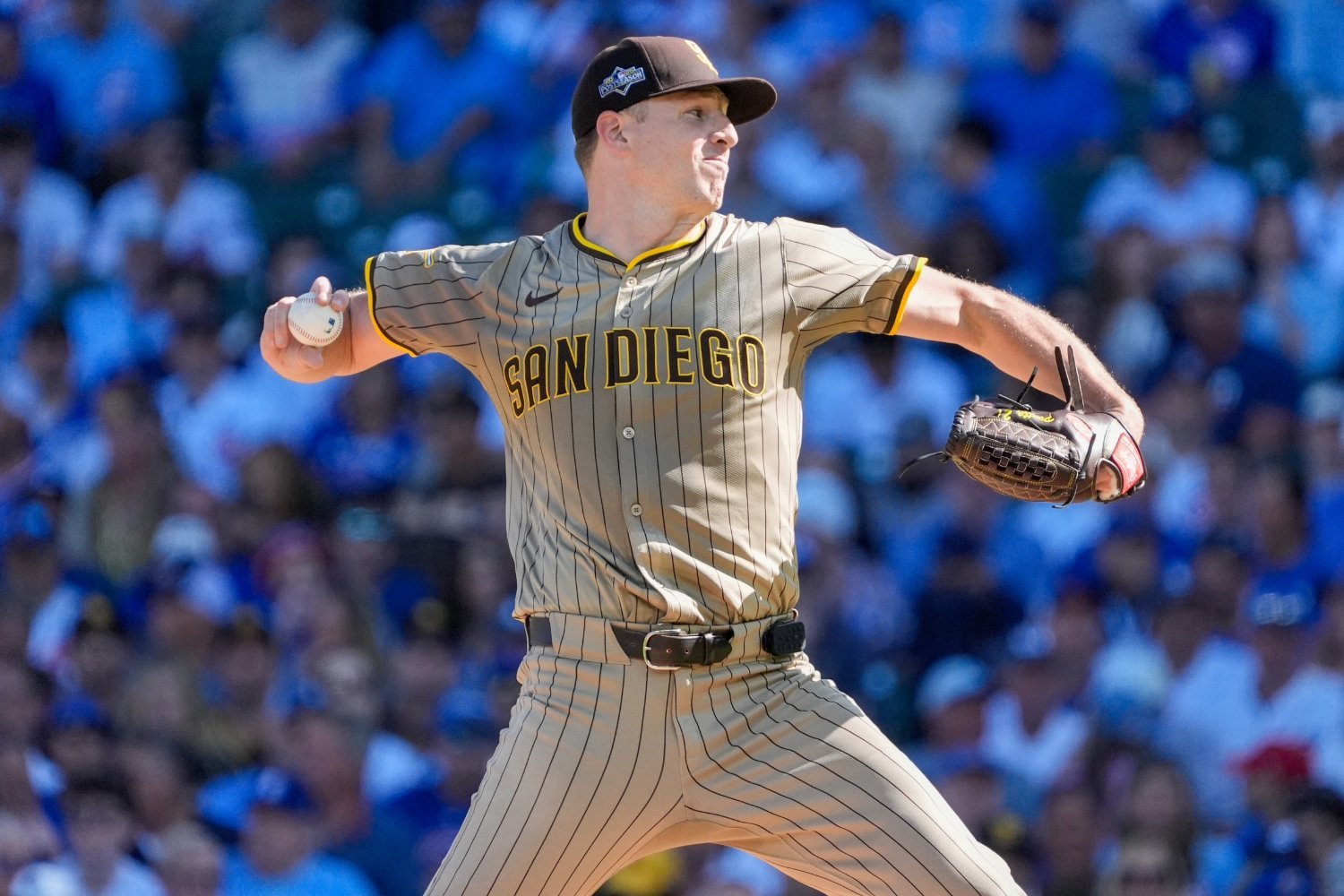 When it was reported last week that the San Diego Padres were listening on Nick Pivetta and Jake Cronenworth, the reaction here at Padres Mission was twofold. The Cronenworth side was immediately acknowledged as legitimate and logical. If they're hoping to clear some longer-term money off the books, the lightest hitter of their positional contracts certainly makes some sense. Especially if it were to help them add some much-needed... anything to the rotation. We didn't meet the Pivetta component with quite the same gumption, however. Instead, we approached the idea of trading Nick Pivetta as indicating a threat of organizational purgatory. That state in which teams find themselves when they're not quite good enough to contend but not quite bad enough to blow it all up. Trading Pivetta could certainly indicate that. With no other starter locked in for Opening Day and perpetual reports of financial peril, the optics of such a move one year into a four-year pact wouldn't be terrific. At the same time, the aggression of the point may have overshot and missed the actual logic of it altogether. Because there's real sense in the Padres pursuing a trade of their veteran starter. In a number of ways, Pivetta is coming off the best season of his career. His 2.87 ERA stands as a career best, as does his 3.49 FIP. While his 26.4 percent strikeout rate didn't necessarily touch the highest rates of his career, his 6.9 percent walk rate trailed only 2024. Perhaps most important was that his 9.7 percent homer-to-fly-ball rate was the best of his career and nearly five percent lower than his career average. He wasn't overpowering in 2025, but his run prevention was top marks. With all of that said, there's reason to think that Pivetta is in for significant regression in the year(s) ahead. Here is his percentile distribution from 2025: There are number of items here that read as just okay (though they aren't necessarily alarming). His xERA was still firmly in the middle of the pack while he did a decent-enough job of generating chase and whiff from opposing hitters. None of those numbers are stellar, but you can absolutely work with each of them as a mid-rotation arm. Where things get concerning, however, is in the contact trends that Pivetta experienced. The barrel and hard-hit rates against speak for themselves. Pivetta sat near the bottom in each, with only 11 starters (of 107 qualifiers) allowing a higher barrel% than Pivetta's 10.9; only 20 served up a higher hard-hit rate than his 45.0. Pivetta's four-seam and curveball accounted for over 65 percent of his pitches thrown in 2025. Opposing hitters took each for an average of 12.2 percent in their barrel rate while the fastball, in particular, was touched for a hard-hit rate over 54 percent. The trends also got worse as the season wore on: It's unsurprising, then, that along the way, Pivetta's whiff rate also declined steadily. His fly-ball rate also rose successively in each individual month before dropping only in September. Such trends, at least when you're talking about a pitcher who worked to an unsustainable .235 BABIP, don't bode particularly well for the subsequent years of a multi-year contract. Not that Pivetta will be outright bad moving forward. His fastball-curveball combination, in conjunction with his zone aggression, go a long way toward keeping hitters off balance and led to an in-zone swing rate of just 63.5 percent. When you have one of the 16-lowest zone swing percentages in the sport, you can afford that aggression and live with some of the negative results of contact. The big issue is going to be the contact regression. That type of BABIP figure has a way of evening out. And even if Pivetta is able to freeze hitters who are caught off guard by his in-zone work, the contact trends aren't indicative of him continuing the remainder of his performance off last year's stat sheet. So, with that contract cost skyrocketing to $20.5 million in 2026 (per Roster Resource) before a pair of options worth a combined $32 million, you could understand if the Padres wanted to sell high on what Pivetta gave them last season. Especially if helps them to build a bit more for the medium- or longer-term. Of course, the massive caveat to all of this is that A.J. Preller would have to really work to fill in a rotation that becomes almost entirely empty sans Pivetta. Sure, there are some in-house arms that can cover a few innings and Joe Musgrove is due to return, but there are no other surefire, guaranteed starters on the 40-man roster at present. So the needle becomes quite difficult to thread. Can you acquire an upper-minors prospect who is major-league ready? Perhaps another fringe arm in addition with which you can attempt an upside play? There isn't any doubt that Preller could find value in Pivetta, who comes with cost certainty and a pair of seasons with an ERA lingering around four in his two years prior to 2025. He's a solid mid-rotation option coming off the best season of his career. There's plenty of logic in capitalizing on a guy like that considering the Padres' financial situation and what their farm system currently looks like. But with the Padres already lacking starters, innings coverage becomes even more burdensome a route this winter. Is the tradeoff one Preller is willing to make? View the full article
 -
 Maddie and Alex talk about the uneventful Winter Meetings and why the market for the three top Japanese players (Munetaka Murakami, Kazuma Okamoto, Tatsuya Imai) has been so quiet to this point. They give their takes on whether Alex Bregman is really looking at the Diamondbacks as an option, and end the episode by talking through pitcher trade proposals. Listen on Apple Podcasts: https://podcasts.apple.com/us/podcast/the-talk-sox-podcast/id1783204104 Listen on Spotify: https://open.spotify.com/show/3qPrPXEngu0CxgTmlf0ynm Listen on iHeartRadio: https://www.iheart.com/podcast/263-the-talk-sox-podcast-244591331/ Listen on Pocket Casts: https://pca.st/4tmd121v Watch on YouTube: https://www.youtube.com/@talksox View the full article
 -
 The Rule 5 Draft occurs every December at Major League Baseball’s Winter Meetings. The offseason lockout of 2021-2022 caused the cancellation of the major league phase, although the minor league portion was held as scheduled. To learn more about the minutiae of the Rule 5 Draft, click here. The Milwaukee Brewers have selected 29 players in the Rule 5 Draft. Not every transaction goes smoothly, as some players get returned to their original teams. Infielder Colin Walsh (2015) was returned to the Oakland A’s in June 2016 after appearing in 38 of the Brewers' first 46 games, posting a unique batting line of .085/.317/.106 across 63 plate appearances. In 2006, the Detroit Tigers reportedly paid Milwaukee $75,000 to draft left-handed pitcher Edward Campusano. The pitcher was then traded to Detroit and was in the running for a bullpen spot with the Tigers. In March 2007, Campusano underwent reconstructive elbow surgery and missed the entire season. He was returned to the Chicago Cubs that October. Right-handed pitcher Eduardo Morlan was chosen in the 2008 Rule 5 Draft from Tampa Bay. He was returned to the Rays the following March. He pitched in Double-A for the Rays in 2009 and in 2010 before getting released two months into the season. The Brewers signed him a day later and assigned him to Double-A Huntsville. Despite posting an ERA of 2.74 and earning three saves in 32 appearances, Morlan was released by Milwaukee after the season. Not every pick is accompanied by such drama. Here are five picks that turned out well for Milwaukee. #5 Jeff Bennett, RHP (from Pittsburgh) Bennett had been the Pirates’ 19th-round pick in the 1998 Amateur Draft. He struggled through six years, finally making it to Triple-A Nashville, which was then a Pittsburgh affiliate. In the 2003 Rule 5 Draft, he was picked fifth by Milwaukee. Bennett was primarily used in middle relief, low-leverage spots, and appeared in 60 games for Milwaukee in 2004, which ranked third on the staff. He posted a decent 91 ERA+ but had an ugly 5.15 FIP. His best day as a Brewer came on June 18 when he pitched two scoreless, hitless innings while striking out two in a 4-1 win over Minnesota, earning his sixth of eight holds on the year. Bennett was sent down to Nashville—now a Brewers farm team—for the 2005 season. Despite posting an ERA of 3.03, 13 saves, and a 1.11 WHIP in 49 games for the Sounds, the Brewers declined to offer Bennett a contract after the season. The Atlanta Braves inked him to a minor league contract in early 2006, but the pitcher missed the entire year due to undergoing Tommy John surgery. He pitched from 2007-09 in Atlanta before being released by the Braves in late July. Tampa Bay signed him, and Bennett appeared in 11 games. After a short, failed stint with the Rays in 2010, he was signed in mid-season by the Brewers. Bennett made 12 appearances in Nashville but was jettisoned after posting an ERA of 11.32. In the latter days of his career, Bennett pitched in Mexico and a couple of Independent leagues, and even reached as high as Triple-A Albuquerque with the Dodgers before retiring in 2015. #4 José Mercedes, RHP (from Baltimore) Mercedes was signed by Baltimore in 1989 as an international free agent. After pitching two seasons in the Dominican Republic, he made his American debut in 1992, pitching in Rookie and Single-A ball, making 13 starts in 16 appearances and posting a 2.29 ERA and a WHIP of 1.20. He moved up to Double-A Bowie in 1993 but struggled in 23 starts with an ERA of 4.78 and 1.60 WHIP. In December, he was selected by the Brewers with the third pick of the Rule 5 Draft. Mercedes suffered an abdominal strain in spring training and started the season on the 15-day disabled list. He made three rehab starts at Triple-A New Orleans before being activated by the Brewers in late May. Mercedes made his big-league debut on May 31, going 5 1/3 innings while allowing three hits and two walks while striking out two in a long relief stint in a 7-4 loss to Texas. He made 19 relief appearances before the season ended with the baseball strike. After just five appearances in early 1995, Mercedes went on the DL again, this time with an irritation to the ulnar nerve in his right elbow, and missed the rest of the season. Mercedes started the 1996 campaign at Triple-A New Orleans and was called up to Milwaukee in mid-June, but he only lasted five weeks, as he was waived and assigned to New Orleans. The following year was make-or-break, and Mercedes performed well for Milwaukee and had his best season as a big leaguer. He led the Brewers with two complete games and one shutout among his 23 starts, along with six relief appearances. His 159 innings were the third-best on the staff. He posted an ERA+ of 123. Mercedes started in Milwaukee in 1998 but was on shaky ground after six appearances (four starts). After allowing 12 hits and 11 runs in just 3 1/3 innings on May 4, Mercedes went on the 15-day DL with a right shoulder injury. He underwent surgery in mid-July and missed the rest of the season, and was subsequently released by the Brewers in December. He won 14 games for Baltimore in 2000, but then led the American League with 17 losses the following year. Mercedes pitched in five contests for the Montreal Expos in 2003, his final big-league season. #3 Alberto Reyes, RHP (from Montreal) Reyes was a menacing, 6-foot-1, 230-pound right-hander who was signed as an international free agent by Montreal in early 1988. He made his professional debut in 1990 as a starter but would pitch almost exclusively in relief after that. In his five years as an Expo farmhand, Reyes only made it to Double-A Harrisburg before being selected in the 1994 Rule 5 Draft by the Brewers. In his first season as a Brewer, Reyes made 27 appearances before his season ended in late July due to a torn ulnar collateral ligament in his right elbow that required Tommy John surgery. Reyes posted an ERA+ of 206 and a WHIP of 1.11 across a small sample of 33 1/3 innings. He returned in late 1996 and pitched in 13 games as Single-A Beloit before getting called up to Milwaukee in September, where he made five appearances. Reyes began the 1997 campaign at Triple-A Tucson. He was called up for one game in May and then sent back down. Reyes returned to Milwaukee in late July and finished the season there, posting a substandard ERA+ of 86 and an FIP of 4.19. The injury bug derailed Reyes’ season again in 1998, although he still managed to make 50 appearances despite missing six weeks late in the season. He ranked third on the staff in games pitched and posted an ERA+ of 109 and a FIP of 4.89. Reyes pitched in 26 games for the Brewers in 1999 before getting dealt to the Baltimore Orioles in mid-July for pitcher Rocky Coppinger. Reyes bounced around over the next 10 years, making stops with Baltimore, Los Angeles Dodgers, Pittsburgh, New York Yankees, and St. Louis before finishing his career with two years in Tampa Bay, including posting a career-high 26 saves in 2007. #2 Ned Yost, C (from New York Mets) Edgar Frederick Yost III was originally chosen in the second round of the 1974 MLB January draft (Regular Phase) by the Montreal Expos but declined to sign. Six months later, he was selected seventh overall in the June Secondary Phase draft by the New York Mets. Yost played for four years in the Mets organization and had his best year in 1977 at two stops, batting .297/.358/.521 with 17 doubles and 13 HRs in just 259 at-bats. In December, the Brewers picked Yost with the seventh pick in the Rule 5 Draft. Yost spent the next two years at the Triple-A level in the Brewers organization (I could not find any details on why he wasn’t required to play in the majors in 1978). Yost began the 1980 season with Milwaukee, and after playing sparingly over the first three weeks, was sent back down to Vancouver. He was recalled in September and got a hit in his first game back, a single off Minnesota Twins pitcher Albert Williams. In 1981, Yost served as the third catcher behind Ted Simmons and Charlie Moore and got only 27 at-bats, but he did jack three home runs among his six hits. The following year, Yost was the primary backup behind Simmons and hit .276/.324/.429 across 98 at-bats as the Brewers won the American League crown. With less than a week left in the season and Milwaukee battling with Baltimore for supremacy in the American League East, Yost hit a clutch three-run homer in the top of the 9th inning off Boston’s Mark Clear to give the Brewers a 6-3 win. Yost only had one plate appearance in the postseason, drawing a walk in a World Series Game 6 13-1 loss to St. Louis. Yost started 57 games behind the plate in 1983, still playing behind Simmons. Yost set career highs with runs, hits, home runs, and RBI. After the season, Yost was traded to the Texas Rangers for catcher Jim Sundberg. Yost set a career high in 1984 with 242 at-bats but only slashed .182/.201/.273 and was released after the campaign. Montreal picked him up, but he only got 11 at-bats at the end of the 1985 season. Yost played the next two seasons in the Atlanta Braves organization before retiring. After his playing career, Yost managed in the minors for Atlanta and served as a long-time coach with the team. He managed the Brewers from 2003 to 2008 and the Kansas City Royals from 2010 to 2019. #1 Mark Brouhard, OF (from California) Brouhard was selected in the fourth round of the 1976 January Draft—Regular Phase by the California Angels. In four years in the Angels chain (Rookie, Single-A, Double-A), Brouhard had a combined batting line of .313/.378/.507 with 72 home runs and was named the Double-A Texas League Most Valuable Player in 1979 by virtue of batting .350 with 28 home runs and 107 RBI. Yet the Angels did not add him to their 40-man roster and lost him when the Brewers selected him in the 1979 Rule 5 Draft. ‘Big Bro’ managed to get 125 AB in 1980 with Milwaukee, playing the outfield corners and a few starts at first base. He batted only .232/.278/.400 but did show extra-base power with six doubles and five homers. In 1981, Brouhard started at Triple-A Vancouver but only played 16 games there before an injury to Paul Molitor led to Brouhard being called back to Milwaukee. He batted .274/.305/.371 across 186 at-bats. He posted a nearly average OPS+ of 99 and legged out a career-high three triples. Brouhard was unable to play in the postseason due to a pulled calf muscle. The following season, Brouhard started the year in Milwaukee and made a brief detour to Vancouver in August after losing playing time to Charlie Moore and Marshall Edwards. He returned at the end of the month, just in time to make the postseason roster. Although his season wasn’t spectacular, he set a career high with an OPS of .771 and an OPS+ mark of 116. Brouhard appeared in only one game in the postseason, but what he did in that contest was enough for him to make the top of this Rule 5 list and make him an instant Brewers legend. The Brewers trailed the California Angels two games to one in the American League Championship Series. Brouhard was inserted in the starting lineup after an injury kept usual starter Ben Oglivie out. Batting seventh and playing left field, all Brouhard did was collect a single, double, and home run, knocking in three runs and scoring four (the latter tying a playoff record). Despite that, Brouhard never got off the bench for the rest of the postseason. Over the next three seasons, Brouhard mostly split time between Milwaukee and Vancouver, accumulating only 490 big-league at-bats, batting .257/.304/.404 with 14 home runs. Brouhard finished up his playing days overseas in Japan, along with 55 minor league games back with California, his original organization. Final Thoughts Unfortunately, the Brewers have not been able to pick up players such as George Bell, Josh Hamilton, or Roberto Clemente, who became solid players. The Brewers' list of Rule 5 successes is a short one. And sometimes a player that you don’t have room for goes on to star for another team. In 2024, Brewer farmhand Shane Smith was lost to the Chicago White Sox and became an All-Star last season. The Brewers just haven’t been that lucky. Not many of the players that the Brewers have grabbed in the Rule 5 Draft have turned out to be success stories. Do you have a player that you felt was left off this list? Start the conversation in the comments section below! View the full article
 -
 The Toronto Blue Jays have done well so far in addressing their bullpen needs ahead of the 2026 MLB season. Last week, they added two relievers with funky deliveries to baffle opposing hitters: Tyler Rogers (via free agency) and Chase Lee (via trade). However, both pitchers just so happen to be right-handers. During the 2025 season, the lefties in the Jays' bullpen included the likes of Brendon Little, Mason Fluharty, Eric Lauer, and Justin Bruihl. Bruihl, of course, was recently designated for assignment and traded by the Blue Jays to the Cleveland Guardians for cash considerations. That leaves Little, who struggled immensely down the stretch and into the playoffs this past year; Fluharty, who is just coming off his rookie campaign with Toronto; and Lauer, who also has to serve as depth for the rotation. Given the uncertainty as to whether Little can rediscover his first-half form and Fluharty can follow up his debut with a solid sophomore season, the Blue Jays should look to add a proven left-handed reliever, just to ensure they have their bases covered. One southpaw that Toronto should target in free agency is former Texas Ranger Danny Coulombe. Coulombe has flown under the radar for the majority of his 11-year MLB career. Nevertheless, he has been a steady presence in the bullpen for the past decade, playing for teams such as the Athletics, Twins, Orioles, and, most recently, the Rangers. Coulombe sports a career 17-10 record with a solid 3.35 ERA, 1.20 WHIP, 3.62 FIP, and 5.2 bWAR, while averaging close to a strikeout per inning. He may not be your typical elite strikeout pitcher, but with a career 24% strikeout rate, he still ranks above the league average, while registering a fine 8.8% career walk rate. In addition, Coulombe has pitched well against both left- and right-handed batters in his career. He has held lefties to just a .233 average with a sub-.600 OPS and righties to just a .222 average and sub-.700 OPS over more than 343 major league appearances. He gives up home runs to opposite-handed hitters almost three times as often as same-handed hitters, but a higher strikeout rate against righties has helped him compensate. Despite his turning 36 in October, Coulombe still ranked among the league's best in 2025 when it came to opposing batters’ average exit velocity (87.5 mph), chase rate (36.2%), and barrel rate (5.2%). That is because the reliable lefty uses an effective combination of a cutter, sinker, four-seam fastball, and sweeper in his pitching arsenal, along with the occasional curve to throw off hitters. With his mastery of five different pitches, and without too much reliance on velocity, Coulombe could end up being effective even into his 40s. With a projected salary of just a little under $4.5 million (per Spotrac) after making only $3 million this past season, Coulombe could be a low-risk, high-reward add to the Blue Jays bullpen ahead of 2026. He would serve as a strong safety net if Little and/or Fluharty falters in his role as a lefty specialist. View the full article
