


DiamondCentric
-
Posts
2,631 -
Joined
-
Last visited
Never
Content Type
Profiles
Forums
Events
News
Tutorials & Help
Major League Baseball Videos
Guides & Resources
Store
Downloads
Gallery
Everything posted by DiamondCentric
-

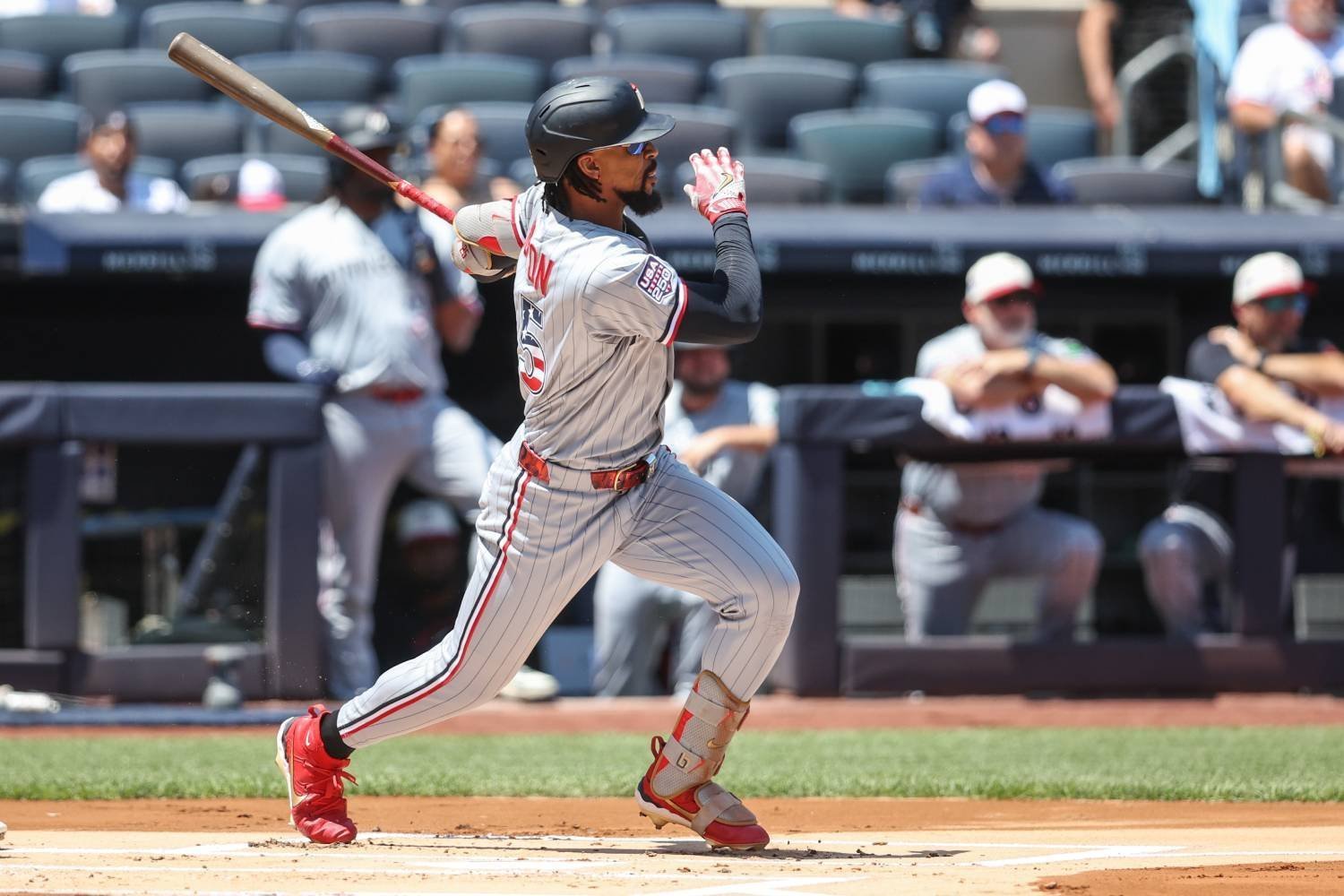 Every time Byron Buxton steps onto one of baseball's biggest stages, the questions inevitably follow. The Twins' franchise cornerstone drew national attention again this week after earning a starting spot in the All-Star Game, prompting another round of speculation about whether a player of his caliber could eventually end up elsewhere. Those conversations aren't new, and they likely won't disappear anytime soon. A healthy, productive Buxton is the type of impact player every contender covets. But while the outside noise continues, Buxton has remained remarkably consistent about where he wants his future to unfold. For him, Minnesota isn't simply the place where he plays baseball. It's home. “I have that peace of mind,” Buxton told the Minnesota Star Tribune. “My family, Minnesota is home for us. That’s where we want to be. That’s where they want to be. And that’s something that is not going to change. We done built our family up, two more kids now from Minnesota since I’ve been here. This is all they know, too.” Buxton's connection to the organization extends well beyond his contract. Drafted second overall by the Twins in 2012, he's spent his entire professional career wearing a Minnesota uniform. Through injuries, playoff appearances, individual accolades, and organizational transitions, he's remained the face of the franchise. That longevity is something Buxton has come to value even more as his career has progressed. Early in his career, he watched Joe Mauer spend an entire Hall of Fame-caliber career with one organization. More recently, during this spring's World Baseball Classic, Buxton found himself asking another lifelong franchise icon about what that experience has meant. The conversation came with future Hall of Fame pitcher Clayton Kershaw, who has spent his entire career with the Los Angeles Dodgers. “I was like, ‘Dang, bro, the only thing you know is blue and white, ain’t it?’” Buxton said. “He was like, ‘Love it.’ Just to see his reaction, though, I was like, ‘That’s going to be me.’ “We’re blessed already to be able to play baseball, but to be able to do it with one team, and make your legacy there, that’s what makes it special. It’s somewhere you can always call home no matter what.” In today's game, careers with a single franchise have become increasingly rare. Free agency, trades, and shifting competitive windows make it difficult for players to stay in one place from debut to retirement. Buxton understands that reality, which is why the opportunity to build a lasting legacy in Minnesota means so much to him. It's also one of the reasons events like the All-Star Game carry added significance. Buxton isn't just representing himself on baseball's national stage. He's representing the organization and fan base that have supported him throughout his career. “That’s why you want to do those things,” Buxton said. “Putting on that Twins jersey, going out there in front of all those people and representing Minnesota, that’s special.” The speculation will likely continue whenever Buxton is healthy enough to remind the baseball world just how dynamic he can be. Elite center field defense, game-changing speed, and middle-of-the-order power make him one of the sport's most unique players. But while others continue imagining him in another uniform, Buxton has never sounded interested in the possibility. His focus remains on adding to his legacy with the only organization he's ever known, in the state his family now calls home. For a player who has experienced nearly every high and low imaginable in a Twins uniform, that commitment has never appeared stronger. View the full article
 -
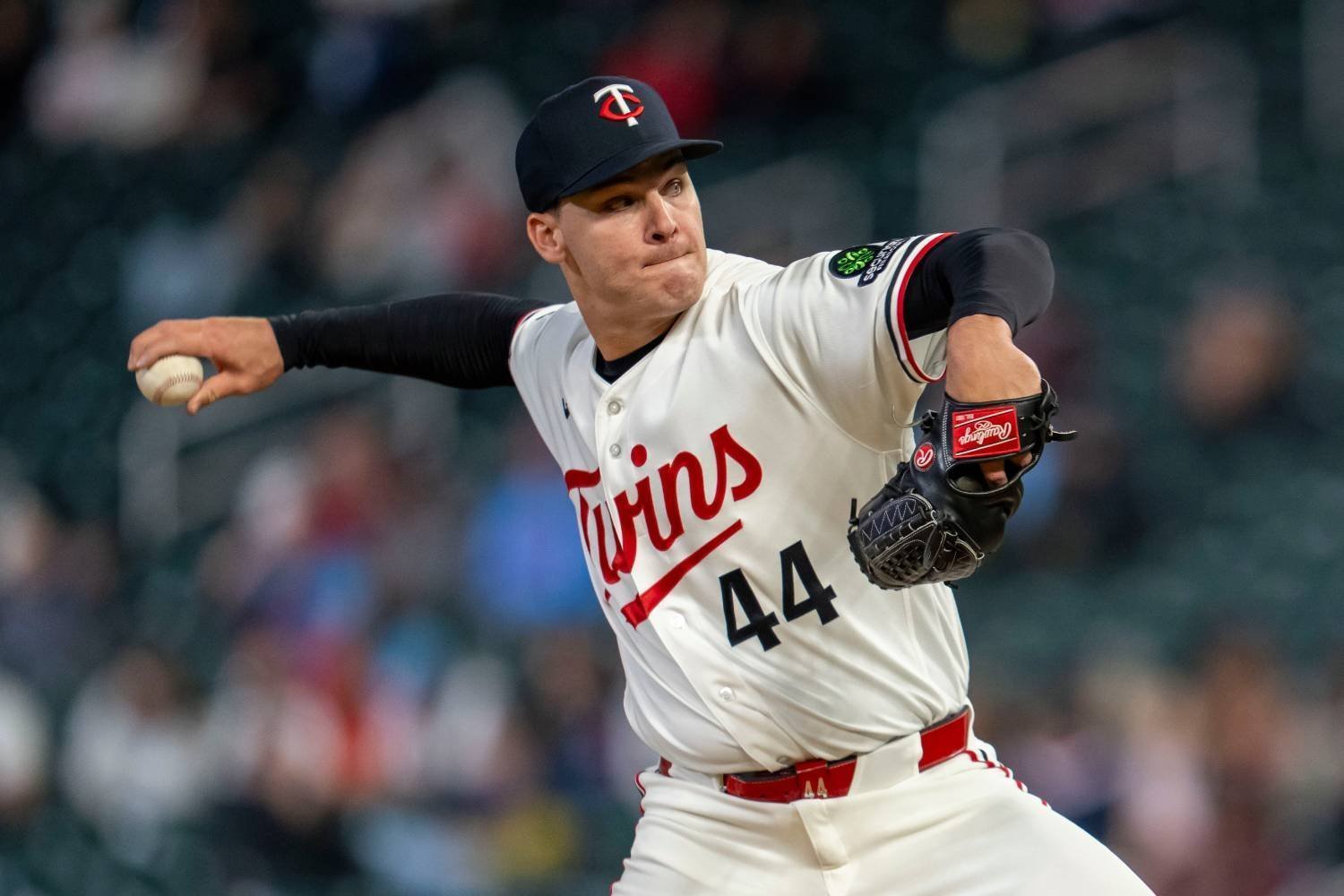 The Twins have spent much of the season trying to patch together their bullpen without one of their most dependable relievers. Right-hander Cole Sands has been sidelined since early May with a right forearm strain, but after navigating a frustrating rehab process that included an unexpected setback, he appears to be trending in the right direction. Minnesota placed Sands on the 15-day injured list on May 2 after forearm discomfort forced him out of action. The organization originally hoped he would return relatively quickly, and he was cleared to begin a rehab assignment in early June. Those plans were delayed when inflammation resurfaced, forcing the Twins to shut him down and allow the injury to calm before restarting the process. After completing another throwing progression, Sands resumed his rehab assignment and immediately showed encouraging signs. During one of his recent appearances, his fastball averaged 93.7 mph, a noticeable improvement from where it had been earlier this season and an indication that his arm strength is continuing to return. His latest outing may have been his most encouraging yet. Pitching for Triple-A St. Paul on Saturday, Sands tossed a scoreless inning while once again seeing all of his pitch velocities climb above his season averages. It marked the second consecutive rehab appearance in which his velocity ticked upward, another positive indicator that he is getting closer to full strength. Even with the improved results, the Twins aren't quite ready to activate him. Saturday's outing came four days after his previous appearance, and Minnesota wants to see how Sands responds to a more typical major league workload before bringing him back. That likely means pitching on shorter rest, with back-to-back appearances a possibility, before the club is convinced he can handle the demands of a late-inning role. Before the injury, Sands wasn't producing at the level Twins fans had become accustomed to seeing. Over 11 2/3 innings this season, he owns a 4.63 ERA with a 22% strikeout rate and an eight percent walk rate. Opposing hitters have also produced a hefty 51.4% hard-hit rate against him. One of the biggest differences has been his fastball. Sands averaged 95 mph during the 2025 season, but that figure dropped to 93.1 mph before landing on the injured list. Even so, there were signs that better results could have been on the horizon. His 3.65 SIERA sits nearly a full run lower than his actual ERA, suggesting his underlying performance was stronger than the surface numbers indicate. It's also fair to wonder whether his forearm issue contributed to his rough final outing on April 28 against Seattle, when he surrendered two runs while recording just two outs. Despite his uneven start to 2026, Sands has earned the benefit of the doubt. Since the beginning of the 2024 season, he has developed into one of Minnesota's most dependable relievers, regularly taking on high-leverage innings while providing valuable multi-inning flexibility. The Twins have managed to survive his absence by leaning on relievers such as Yoendrys Gomez, Andrew Morris, and Anthony Banda before Banda's season-ending injury further thinned the bullpen. While several pitchers have stepped into larger roles, adding an experienced arm like Sands would give manager Derek Shelton another trusted option for the stretch run. If Sands continues checking the remaining boxes during his rehab assignment, his return may not be far away. A healthy version of the right-hander could help stabilize a relief corps that has spent much of the season searching for consistency. With velocity returning and his workload gradually increasing, the Twins finally have reason to believe one of their most reliable relievers is nearing his return. View the full article
 -
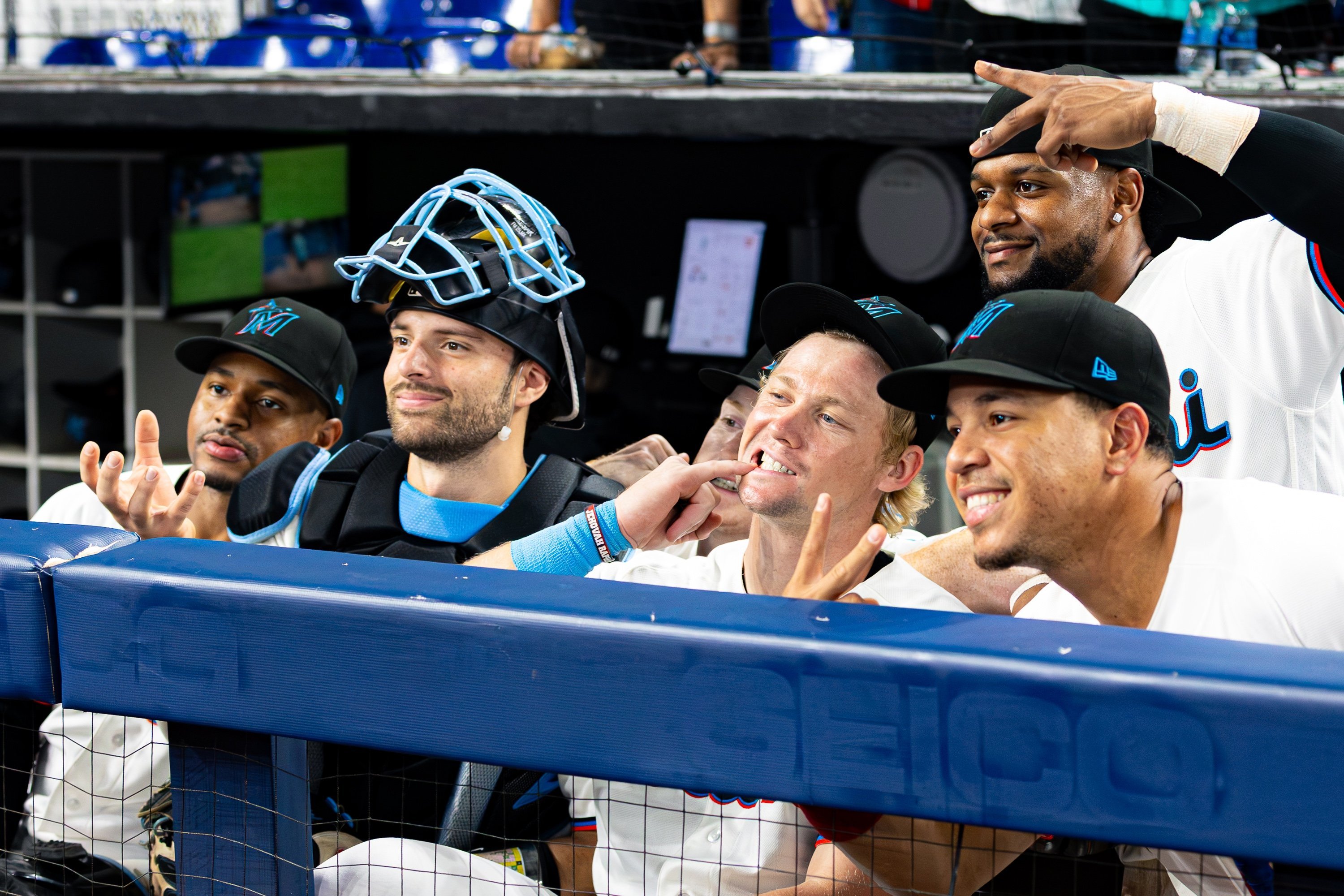 Last weekend's sweep notwithstanding, the Miami Marlins are feeling good about themselves here in mid-July. By some measures, this is the best Marlins team we've seen since 2023; by most measures, it's the best in more than a decade. How have they racked up so many wins already, and what needs to happen for them to stay on track for a postseason berth? During the final week of pre-All-Star break action, Fish On First staffers were invited to answer five of my burning questions about the state of the franchise. Thanks to Louis Addeo-Weiss, Kevin Barral, Sean McCormack, Sean Millerick, Daniel Rodriguez and Hector Rodriguez for their participation in the following roundtable. 1. How do the 2026 Marlins compare to what you expected entering the season? Ely Sussman: My foremost concern entering the season was that Marlins first basemen would be a huge liability. It was trending in that direction early on, but booting Christopher Morel and Connor Norby from the position in favor of Kyle Stowers and Liam Hicks has made a world of difference. I never could've expected Otto Lopez to emerge as one of the sport's very best players or Max Meyer to find such consistency as a starter. On the negative side, it's hard to believe the Marlins have endured with Jakob Marsee collapsing to replacement-level production and Pete Fairbanks being even worse than that. Overall, they're slightly better than an average team when I envisioned slightly below average. Kevin Barral: The expectation was that they would be around where they were in 2025, with some potential regression. Clearly they surpassed everyone's expectations thanks to their month of June and nice start in July, sitting seven games over .500 at the break. Louis Addeo-Weiss: I had my reservations, but given how well they’re playing despite certain key pieces like Marsee and Fairbanks being overall liabilities, should those two get it going, they could genuinely win the NL East. Hector Rodriguez: They have been much better as they have one of the best records in MLB. Sean McCormack: The lineup has far surpassed expectations, although the metrics on the pitching staff have been strong. I believe the offseason trade of Ryan Weathers and poor signing of Chris Paddack will hurt as the season goes on due to lack of MLB starting depth. Daniel Rodriguez: My expectations for the Marlins coming into the 2026 season were fairly high based on their final record last season. I think they’ve done far better than what I actually expected them to do, especially in the offensive category, at the catching position and the breakout of Max Meyer. Sean Millerick: Well, they are definitely winning more than I expected. I didn't think enough had been done in the offseason to improve, or even to survive regression from 2025. On the regression front, Jakob Marsee has had a far more challenging 2026 than I imagined, while the plan for first base coming into the year went just as horribly as we all thought it would. And yet...the Marlins are playing their best baseball of the last ten years. A positive run differential? Never saw that coming. Liam Hicks doing his best impression of being a franchise cornerstone? Knock me over with Esteury Ruiz. The only negative for me here is Pete Fairbanks. I really believed—and not just on account of having the same music tastes. Certainly I thought him pitching at an All-Star level would be the key to a Marlins breakout, along with similarly strong efforts from Robby Snelling and/or Thomas White. None of that happened, and the Fish still might be better than I ever thought they could be in 2026. Go figure. 2. By any measure, Otto Lopez has been the team's most valuable player. Who would you say is second on that list? Ely: Max Meyer. He and Sandy Alcantara have been crucial to the club all season long given the constant anxiety about starting rotation depth. Alcantara tops him—and every other MLB pitcher—in innings, but the difference in run prevention tips the scale in Meyer's favor. He's been equally good against right-handed and left-handed batters, unbothered by traffic on the bases and trustworthy when given a long leash to work through the sixth and seventh. Although I think Meyer will regress a bit after the break, I can't take anything away from what he has accomplished thus far. Kevin: Max Meyer has clearly been the Marlins' most valuable pitcher. He may not be an ace by any means, but his consistency and ability to keep the Marlins in games is a reason as to why the Marlins are where they are. One other name I'd like to mention is Joe Mack. The value he has provided this team behind the plate has been game-changing. If he keeps this up, Mack will appear on National League Rookie of the Year ballots. Louis: Max Meyer, especially considering no one forecasted this level of improvement. Hector: Probably Max Meyer. He’s the other All-Star and has had a major breakout season. Sean McCormack: Xavier Edwards has shored up the middle infield beside Otto, creating an elite shortstop-second base combo. He would be my second-most valuable player. Daniel: I would say it’s the player who also made the All-Star team in Max Meyer. He has easily been the best pitcher on the team. I would also include Joe Mack in the conversation as the team has completely turned around since his arrival. Sean Millerick: Otto is definitely the answer for the top spot, but it speaks to the surprising quality of this 2026 club how much competition there is for that second spot. The Marlins MVP runner-up has to be Joe Mack. So much has been written on this across multiple platforms over the past couple weeks, but it has been absolutely remarkable how transformational Mack's arrival has been for this team. Indeed, when it comes to a new Marlins player making an immediate impact like this, he's on a very short list already, and could be at the top by season's end. He's in D-Train territory. 3. Agustín Ramírez, Graham Pauley and Connor Norby have all been demoted to the minors. Which of them do you think is most likely to turn their season around? Ely: It's head-scratching that both Ramírez and Norby are down in Triple-A right now while inferior righty bats Rece Hinds and Brian Navarreto occupy active roster spots. That will change relatively soon, especially if Norby continues to get reps as an outfielder. Norby's process at the plate looked good back in April and we know there's more power potential than he's shown in games so far this year. Being a versatile defender is almost as important as being a good defender because it creates a path to semi-regular playing time, so I'll go with Norby. Kevin: Tough question, but I think it's Pauley. He has already proven that he can turn a season around, like we saw in 2025. I think his second demotion to Triple-A was a bit unfair given the nice series he had in St. Louis and he should've been given a longer leash with how rough Miami's third base situation has been. Ramírez would be second, but what kept him from being the most likely candidate is that he is still a full-time catcher. He needs to be moved off the position. Louis: Each have their own strengths, yet they’re largely overshadowed by their warts. Pauley’s defensive aptitude and potential for more from his bat make him feel the appropriate choice here. Hector: If the Marlins finally decide to move Agustín Ramírez away from catcher, I think he can be a very productive power bat for Miami’s lineup. Sean McCormack: I would wager Agustín Ramírez due to the potential he has at the plate. Daniel: Connor Norby. Sean Millerick: Pauley would be my answer for now. He's capable of providing the best defense at the team's weakest position, and showed last season that he can put together enough of a run to contribute on offense as well. However, if the team goes out and gets a third baseman, he'd suddenly become the least likely of the three to even return to Miami's roster at all in 2026. Norby has enough position flexibility that he just needs an opening somewhere, and Owen Caissie might have just provided it if he ends up missing all of July. Ramirez is firmly in third, at least until he stops playing catcher. 4. How would you evaluate Clayton McCullough as a manager through 1.5 seasons on the job? Ely: I can understand why the Marlins hired McCullough in the first place. He is very disciplined and completely aligned with the front office, even when their strategies are unorthodox and unsatisfying to watch. Also, there is unquestionably some intangible value to keeping peace in the clubhouse, and the Marlins have been drama-free during his tenure, as far as we can tell. McCullough has been responsible for some atrocious in-game substitutions and he's never contrite about them. I'd like to see growth in that area—simply being able to admit he made the wrong call under high stress and will learn from it, rather than insisting he has full conviction every time. Kevin: So far, it's been a mixed bag. Clearly, the organization has made it a point to lean into platoon splits when putting together lineups, sitting some of their hottest hitters as a result. Those moves have worked out for the most part, as the Marlins lineup against left-handed pitching has improved and the pinch-hitting has been good. What this entire coaching staff lacks at times is feel for the game, with Eury Pérez's perfect-game bid on July 5 being the most notable example. The players seem to be fans of McCullough and the rest of the coaching staff and overall have been good. With the Marlins' improvement from one year to the next, McCullough could be in the mix for the National League Manager of the Year award. Louis: I’ve generally resigned myself from giving managers too much credit, instead reserving praise for the front office and all of the behind the scenes folk. That said, the team is clearly more competent under this current regime. Hector: I’d give him a B. The team is playing very well, but he still makes some questionable decisions when it comes to pitching. Sean McCormack: B overall. Clayton appears to have a firm grip of the clubhouse, the roster plays hard for him, but questionable lineup construction more so than bullpen decisions leave me wanting more. Daniel: There have been a lot of ups and a lot of downs in Clayton‘s tenure as Marlins manager for the past year and a half. The way the team is performing right now makes it easier to rate Clayton’s tenure more favorably. Sean Millerick: Like all of us, he's a work in progress? Zen take aside, this remains the hardest thing for me to put my finger on for the Marlins. I'm old school enough to think he has to have played a part in building the scrappy, competitive, hard-working, in-every-game-until-the-end clubhouse that has emerged. So for that, he deserves full kudos. Where I get confused is how much control he really has over some of those decisions that get both the most praise and the most scrutiny. On the one hand, I would love it if I felt there were more moments where he looked at the front office spreadsheet and said, "No thanks. Sandy is built different." Or that history matters. Or simply that he's watched Calvin Faucher pitch. But on the other hand, if those spreadsheets say something will work out 60% of the time, he should probably always do that. It's just unfortunate for McCullough that he's had a couple stretches where the 40% outcome came in bunches. Short answer is a B, but like any good Peter Bendix staffer, I need more data. 5. Any specific names who you believe the Marlins should pursue prior to next month's MLB trade deadline? Ely: Los Angeles Angels left-hander Reid Detmers. He'd bring much-needed swing-and-miss ability to the Marlins rotation. Despite a 4.39 ERA this season (95 ERA+), Detmers has made strides with his control, and on his best days, he's completely dominant. Also, he showed in 2025 that he can be valuable out of the bullpen if needed in that capacity. Crucially for the Marlins, he is under club control through 2028 and will be making far below his market value. I'd be comfortable building a package around pitching prospect Karson Milbrandt to get it done. Kevin: The clear need for the Marlins is at third base, but finding a great right-handed bat on the trade market is tough to do these days. Gleyber Torres could be a name that the Marlins make a trade for. He is on a one-year deal that he took in free agency. He has been hurt for a good chunk of the season, but his past minor league experience at third base and what he can provide in the lineup can truly help this team right now. Our own Louis Addeo-Weiss mentioned Robbie Ray as an option, and I like it. Ray has been good this season and provides length, plus his Giants team will clearly be selling. The sexy move at the deadline would be trading for Aroldis Chapman, who is currently with the Boston Red Sox. It is still unknown if the Red Sox will buy or sell this deadline, but if he is moved, Chapman immediately becomes the closer in Miami to fortify an already-good Marlins bullpen. Louis: Aroldis Chapman, Robbie Ray, Matt Chapman. Time for Sherman to open up the checkbook. Hector: Josh Jung would be an excellent option for the Fish at third base if the Rangers are willing to move him at the trade deadline. Sean McCormack: I would like at least one of three problems I see upgraded: third base (Casey Schmitt), back-end reliever (Garrett Whitlock) and mid-rotation starter on expiring deal (Michael Soroka). Daniel: The name I think the Marlins should look at first is Aroldis Chapman. Sean Millerick: I wouldn't be true to myself if I didn't still say Luis Arraez. All he does is hit, he can play first, and he can even be a backup plan for an Xavier Edwards injury at second now that he's discovered how to play good defense there. Most importantly, though, despite being cursed with left-handedness, he can hit lefties (.321 in 2026, .279 career), which is ultimately all I want from whichever bat Miami does go after. Willson Contreras? Yes, please. Nathaniel Lowe? Still a modest improvement, and one or two modest improvements might be all the Marlins need. Most of the likely third base options don't wow me, so just coming up with better platoon options than Leo Jiménez and Brian Navarreto would be enough to make me happy. Jeff Passan's latest report has me dreaming of Josh Hader in teal, plus it's worth noting that the perennial Marlins trade partner Padres are shopping that Mason Miller guy also. View the full article
 -
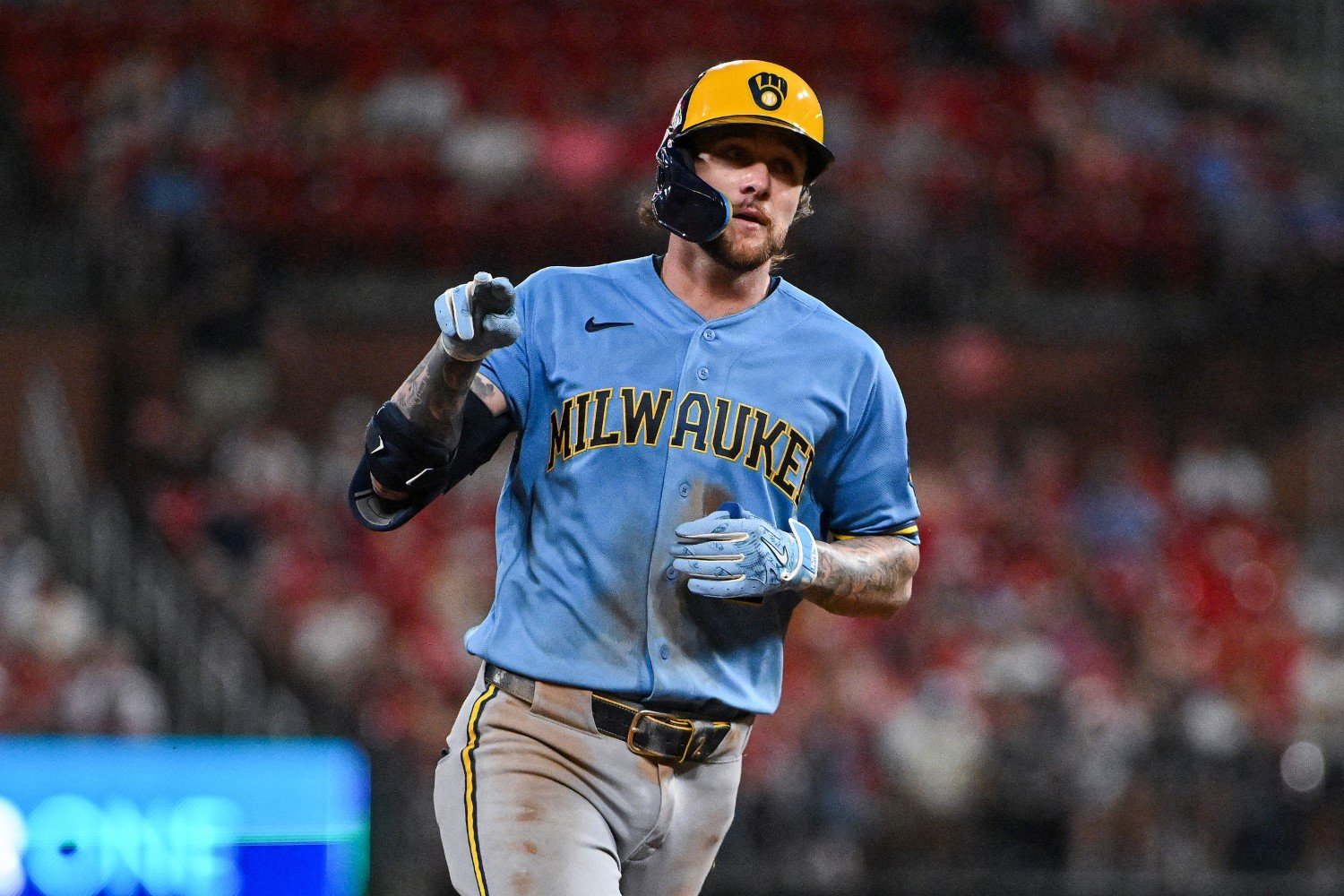 The 2026 MLB Draft is in the books, and for a bit, most of the names who just paraded past your eyes will now drop off your radar. As we wait for the team to sign its class, though, it's good to remind ourselves of how important this avenue of player acquisition is. If you want a classic example of a draft that goes well, Milwaukee’s 2018 class fits the bill. In one sense, the final grade for this draft still has not been determined, with the effects of trades and free-agent compensation still rippling. Best Picks: IF Brice Turang and RHP Drew Rasmussen (tie) We have a tie in this spot, even though one of these players was barely in Milwaukee. For Turang, who’s already staked a credible claim as the best second baseman in Milwaukee Brewers history, the case is obvious. The defense alone has been a game-winner, and he's also become a threat on the basepaths. Since 2025, though, his bat has leveled up, and he’s arguably now the best second baseman in MLB. Rasmussen, though, has arguably had an equal impact, even though he only made 27 appearances on the mound. In May 2021, he was one of two pitchers shipped to the Tampa Bay Rays for pitcher Trevor Richards and shortstop Willy Adames. Adames, of course, laid his claim as one of the Brewers' all-time greats at shortstop, second only to Robin Yount by the end of the 2024 season when he left as a free agent. Here's the kicker: Rasmussen actually was a 2017 first-round pick by the Rays, who elected not to sign him. So, the Rays eventually got him, but had to cough up an All-Star-caliber shortstop to do so. But the Rasmussen deal can still benefit the Brewers even more. With the departure of Adames came a compensation pick, and shortstop Brady Ebel has looked very impressive in his first full professional season. Honorable Mention: LHP Aaron Ashby Ashby is a great pick, too. He’s a crucial member of the Brewers’ bullpen, even as his contract is slated to jump to $7.7 million in 2027, with $9-million and $13-million team options following that. Injuries did cause a detour from the starting rotation, but a top-end reliever could still fetch a decent trade return in the offseason. More importantly, of course, he's been key to the team's recent success, soaking up innings and putting out fires for a perennial contender. Ones That Got Away: UT David Fry, RHP Reese Olson Fry was one of my personal cheeseballs, a potent right-handed bat with low-grade positional versatility. The Crew sent him to Cleveland in March 2022 to complete an earlier trade for J.C. Mejia, who pitched around a dozen innings for them in 2022 and 2023. This is one trade they probably want back. Fry’s been a valuable bench asset for Cleveland, something the Brewers could have used in recent years. To be fair, though, he's been injury-wrecked and inconsistent at the plate since a brief star turn in October 2024. Reese Olson was a pitching prospect dealt for lefty reliever Daniel Norris, who didn’t work out well for the Brewers. Olson’s occasionally been a decent back-of-the-rotation type for the Tigers. While he's currently on the 60-day injured list, he could have been an asset for Milwaukee and may have helped the team preserve both prospect capital and a competitive-balance pick in early 2025. It's not as though he's proved durable or star-caliber, though, and you have to give up something to fortify playoff-bound pitching staffs. Still Potentially Helpful: LHP Clayton Andrews Andrews was another personal cheeseball, who had a two-way stint for the Advanced-A Carolina Mudcats and Double-A Biloxi Shuckers in 2019 (16 starts in center field—take that, Shohei Ohtani!). But even though he had only four games and 3 1/3 innings pitched, he could still give Milwaukee some benefit. In 2024, the Brewers dealt him to the Yankees for right-handed pitcher Joshua Quezada, who has been collecting a lot of strikeouts and could become decent bullpen help for the Brewers down the road. Quezada is 22 and has spent most of the season in Low A, so don't get too excited, but if any organization can one-red-paperclip their way to value in situations like that one, the Brewers are that outfit. Final Grade: B+ This is an immensely successful draft for the Brewers, who came away with a lot for the picks they made, even as high-ceiling outfield prospects Joe Gray and Micah Bello flamed out and with the trades in which they gave up Fry and Olson not netting them the timely help they hoped for. Still, one cannot really complain about the 2018 draft’s contributions to recent Brewers teams at all. Turang might sign an extension and stick around, but it's more likely he's traded in a couple of years. When he is, it will add new branches to the tree on which the fruits of this class keep appearing. View the full article
 -
Another .500 Week Sends the Blue Jays Into the All-Star Break
DiamondCentric posted an article in Jays Centre
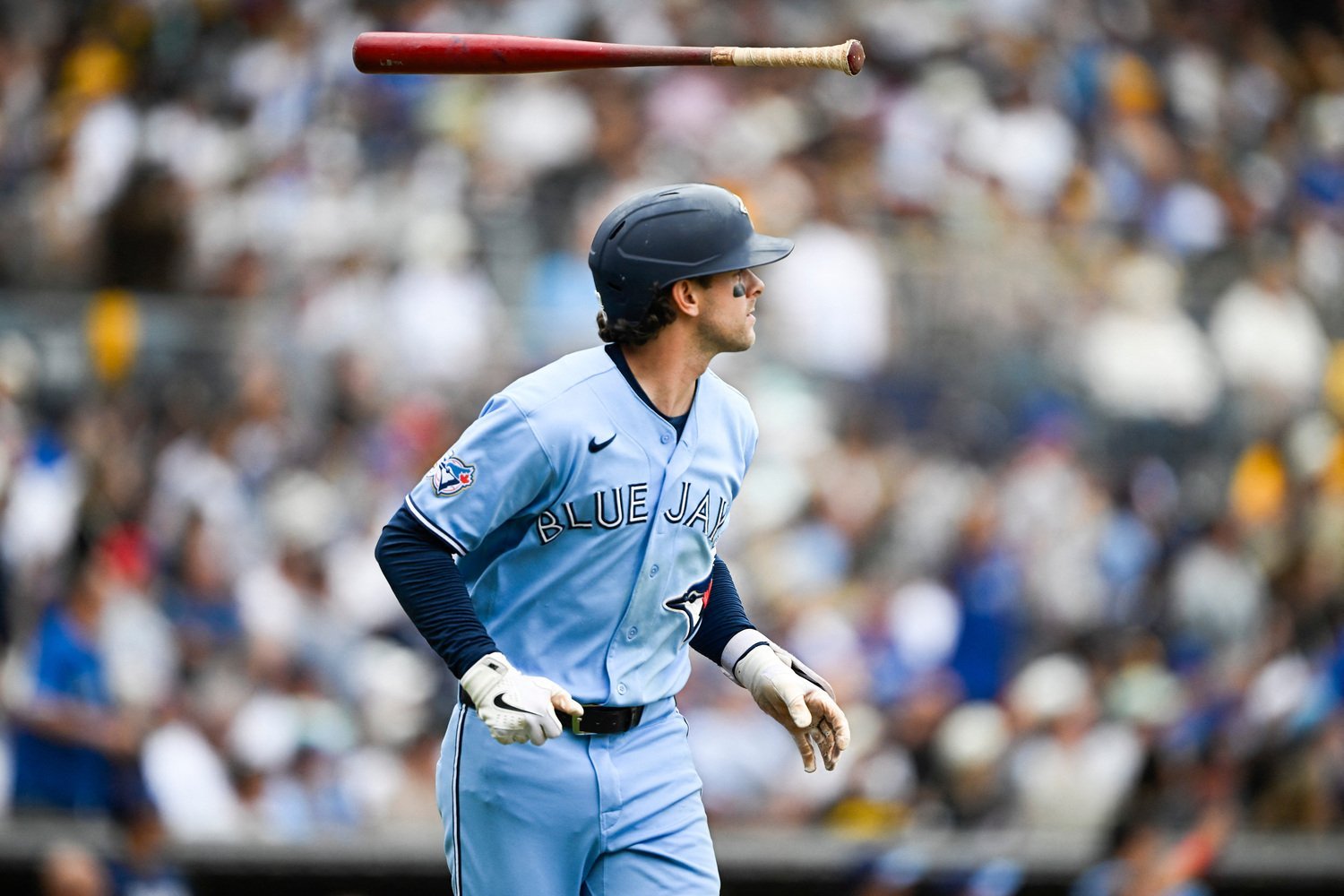 The Blue Jays are six games below .500. They've fallen behind the Red Sox and Orioles in the AL East. They're still only 2.5 games back of a Wild Card spot, but they have the fifth-worst record and run differential in the American League. This wasn't the way the Jays were hoping to end the first half of the season, but hopefully, they can take this time off to reset before embarking on a make-or-break 16-games-in-17-days stretch leading up to the trade deadline. Toronto Blue Jays Week in Review (July 6-12) Monday, July 6: SFG 10, TOR 1 Blue Jays finally (and just barely) break their run-scoring drought. Kevin Gausman takes his fourth loss in a row. The bottom five in the order go hitless. Tuesday, July 7: T0R 9, SFG 3 Jonatan Clase hits his first big league home run since last June. (To be fair, he's back in the big leagues for the first time since last June.) The home run dragon is born. Spencer Miles goes four innings against his former organization. The 18 batters he faced in this one set a new career-high. Wednesday, July 8: T0R 10, SFG 0 Dylan Cease takes a no-hitter into the ninth. Daulton Varsho preserves the no-no with a spectacular catch. Kazuma Okamoto hits a grand slam. Vladimir Guerrero Jr. and George Springer go back-to-back. Friday, July 10: TOR 5, SDP 3 Shane Bieber struggles through another uninspiring start – though he persevered after a long first inning. Okamoto hits his 22nd bomb, tying Shohei Ohtani's record for the most home runs hit by a Japanese-born player in his rookie campaign. Louis Varland earns his 19th consecutive save. He's the first Blue Jays pitcher to save that many games in the first half without any blown saves. Saturday, July 11: SDP 8, TOR 7 Trey Yesavage ends his first half on a rough note. (1.2 IP, 4 ER, 1 H, 7 BB, 1 K) Clase hits his second home run of the week. Guerrero homers for the second time in three days. Alejandro Kirk doubles for the second game in a row. He previously only had two extra-base hits since his return from the IL a month ago. Mason Fluharty makes his 50th appearance of the first half. That's one short of tying Trever Miller for the Blue Jays franchise record. Sunday, July 12: SDP 5, TOR 4 Ernie Clement homers, heads into the break hot. The first-time All-Star had a hit in every game this week. Gausman makes a quality start, but the Blue Jays drop their sixth straight game with him on the mound. He hasn't collected a win since May 22. Jeff Hoffman blows it for his fourth blown save and fifth loss. He was so close to entering the break on a hot streak. Toronto Blue Jays Transactions of the Week Chad Dallas recalled (and optioned again). Yohendrick Piñango optioned. Daz Cameron signs an MiLB deal. Ryan Sprock in, Tommy Nance out. (Trade thread) CJ Van Eyk gets his first MLB call-up. Blue Jays select 19 amateur players in the 2026 MLB Draft. Toronto Blue Jays Injury Updates of the Week Max Scherzer makes another rehab start. (4.0 IP, 4 ER, 6 H, 0 BB, 5 K) Jesús Sánchez is getting ready to start a rehab assignment. Addison Barger will be "reevaluated" after the break. Auspicious or ominous? Yimi García is supposedly building back up again. View the full article
 -
 As we cruise into the All-Star break, Jason Wang and Jake McKibbin look back on how the season has gone and what to expect in the second half. Apple Podcasts: https://podcasts.apple.com/us/podcast/the-brewer-fanatic-podcast/id1740648724 Spotify: https://open.spotify.com/show/5CY8mWsQayqjDXqw9OT2Td iHeartRadio: https://www.iheart.com/podcast/263-the-brewer-fanatic-podcast-166534588/ Pocket Casts: https://pca.st/ommzz627 Watch On YouTube: https://www.youtube.com/@brewerfanatic View the full article
 -
Padres Week in Review: A Good Way To Enter The All-Star Break
DiamondCentric posted an article in Padres Mission
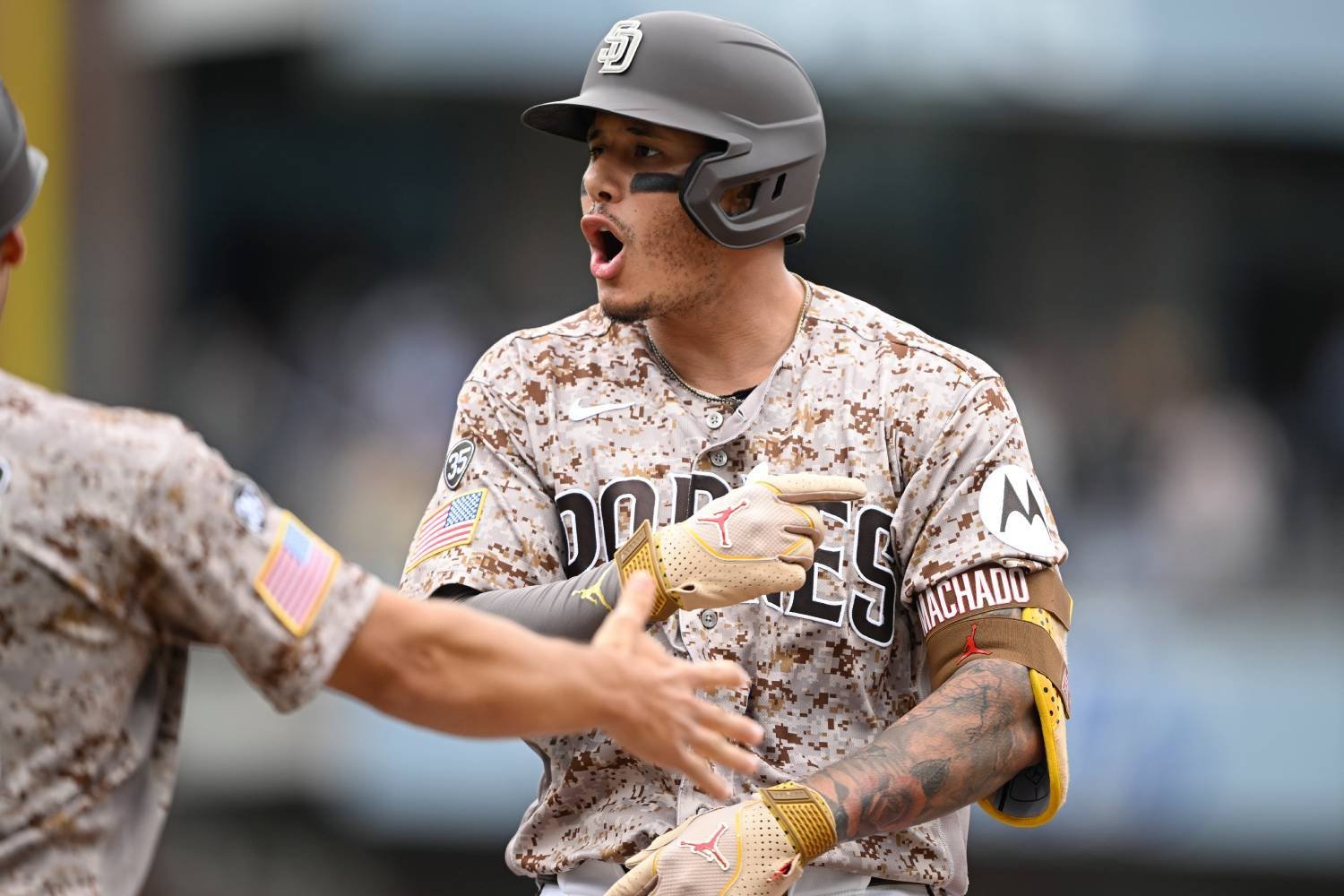 San Diego Padres Weekly Snapshot Record last week: 4-3 Runs scored last week: 31 Runs allowed last week: 32 (season run differential: minus-43) Scores Game 90 (Monday): Diamondbacks 8, Padres 0 Game 91 (Tuesday): Padres 4, Diamondbacks 1 Game 92 (Wednesday): Padres 10, Diamondbacks 4 Game 93 (Thursday): Diamondbacks 3, Padres 1 Game 94 (Friday): Blue Jays 5, Padres 3 Game 95 (Saturday): Padres 8, Blue Jays 7 Game 96 (Sunday): Padres 5, Blue Jays 4 Week in Review and Highlights Diamondbacks series Game 1: No need to sugarcoat this. The Padres' players, as much as the fans, know how important of a stretch the team is in this week with the All-Star break and trade deadline looming. Facing an Arizona Diamondbacks team that was tied with the Friars entering the four-game series, the Padres came off an uplifting victory Sunday against the Los Angeles Dodgers and were flat in an 8-0 loss. The game started with a Ketel Marte triple that wasn't played well by center fielder Jackson Merrill set the tone. “We just played an overall bad game,” Padres third baseman Manny Machado said. “There was a lot to it.” There certainly was. For starters, right-hander Walker Buehler turned in a second straight stinker. After giving up nine runs in four innings in the 23-3 loss to the Chicago Cubs, Buehler gave up seven runs, including two homers, in five innings vs. the D'backs: two in the first, four in the third and another in the fourth. Before those two games, Buehler had been the most consistent Padres starter, even if that isn't saying a great deal. Buehler's ERA, at 3.96 four starts ago, now sits at 5.07. Much like the Padres, the D'backs have been a Jekyll-and-Hyde team. No clearer example of that is right-handed starter Brandon Pfaadt, who was just recently promoted from Triple-A and came into the game with a 5.84 ERA. But Pfaadt, who has a career ERA of 5.10, struck out six in five shutout innings, only giving up four hits and no walks. The Friars did finish with eight hits as Merrill and Jake Cronenworth each had a pair. Game 2: Listen, we're all looking for signs of positivity from the Padres at the moment. But when Cronenworth, who just came back at the beginning of the previous week from missing two months due to getting hit in the face by a pitch and sustaining a concussion, took a grounder to the face during batting practice. The scary situation ended up just being a bloody nose. But then Cronenworth, playing first base, booted a grounder by the second batter of the game. Not a good start. Cronenworth bounced back and made a splash, cranking a three-run second-inning homer that sent the Padres to a 4-1 victory over the D'backs. The home run came in Cronenworth's first game back at Petco Park since going on the concussion list. Cronenworth is showing how valuable his bat can be. After an 0-for-4 start upon his return, Cronenworth has been 9-for-25 with a pair of homers and six RBIs in seven games. Surprisingly, that would be about all the offense the Padres would need. That is because right-hander German Marquez, in his first start since coming off the 15-day injured list with right forearm irritation, stunned most everyone by going five innings and allowing just a run on three hits. He did walk three, while striking out four. His velocity was back up around 98 mph on his four-seamer after topping out at 95.3 in his start before going on the IL. But it looked grim in the first inning as Marquez gave up an unearned run (due to Cronenworth's error) while battling through 31 pitches, which had to send manager Craig Stammen into a bit of a panic with his bullpen possibly having to cover a lot of innings. Marquez held steady and made it through five innings, a distance he went just once during his six-game rehab assignment, on 82 pitches. Left-hander Yuki Matsui gave up a couple of singles in the sixth inning, which prompted Stammen to call upon right-hander Jhony Brito, who was pitching in his first game since 2024 after having elbow and flexor tendon surgery in April of last year. Brito's first pitch was hit for an inning-ending double play, then he had a perfect seventh inning, paving the way for right-hander Bradgley Rodriguez and closer Mason Miller, who locked down his 23rd save in as many chances with a pair of strikeouts. Game 3: For once in quite a while, the Padres had a game where the other team looked sloppy. They capitalized on a rookie pitcher making his fourth career start by pounding out 13 hits and Friars right-handed starter Michael King looked good again in a 10-4 victory over the D'backs. It didn't start well for King, who gave up just the second first-inning run of his season on a walk, a steal and a double. Yet he recovered very nicely to make it through six innings on four hits with two walks and four strikeouts. Yeah, the D'backs aren't a world-beating offense, but this was the type of performance the Padres will need from King the rest of the season. Meanwhile, the Padres rattled D'backs right-hander Jose Cabrera utilizing small ball. That was clear in the fifth inning. Already up 2-1, Fernando Tatis Jr. was hit by a pitch with one out and stole second. Merrill hit a comebacker to Cabrera, who spun and made an ill-advised throw to second to try and get Tatis, who dove back safely with Merrill reaching first. Tatis continued dancing off second and provoked Cabrera to balk the runners up a base. With the infield drawn in, Xander Bogaerts grounded a single off the shortstop's glove and into shallow left to score both runners to make it 4-1. The Padres then pounced on the D'backs' bullpen in the sixth for four runs, including Luis Campusano's first home run since coming back from his broken left big toe over the weekend. Sung-Mun Song, Tatis and Merrill added RBI singles as contributions came throughout the order. An unsung star was Miguel Andujar, who had three doubles, two RBIs and two runs scored. Campusano also had a pair of hits for the second game in a row as the Padres reached double digits in runs for the first time since May 5 and just the third time this year. Game 4: Facing the guy who said state taxes made the difference in choosing to remain in Arizona rather than sign with the Padres, the Friars had a tough time doing anything against right-handed starter Merrill Kelly in a 3-1 loss to the D'backs, settling for a split of the four-game series. The loss also put the Padres below .500 again at 46-47. If it wasn't for Machado, who blasted his team-leading 19th homer to begin the second inning and a fourth-inning single, it would have been worse. As it was, the Padres totaled just three hits (Tatis had the other in the third inning), while also getting three walks, including two by Campusano. In other words, Merrill was pretty good, striking out six over seven innings. Padres pitching was good, just not good enough for this game. Right-hander Griffin Canning still didn't give enough length, but did go 4⅔ innings, his longest in five outings since three straight five-inning starts. The encouraging thing is that the Friars did not use an opener with Canning, who did allow two runs on seven hits with no walks and five strikeouts. This was his first start this season without a walk. Matsui, however, did walk a pair and gave up a run in following Canning before Rodriguez, left-hander Wandy Peralta and left-hander Adrian Morejon finished things off. With a chance to win three out four against a team the Padres will be battling for an NL wild-card spot, it was a tough loss. Blue Jays series Game 1: This was a bit of a microcosm of the season. The Padres produced double-digit hits and sprinkled in three walks, but could time their production to manufacture more runs. It turned into a 5-3 loss against a struggling Toronto Blue Jays team. The Friars started out with a bang as Bogaerts smashed his ninth homer, a two-run shot, in the bottom of the first for a 2-0 lead. Yet that would be the extent of run production until Merrill's ninth-inning RBI single. While the Padres were facing a pitcher with a quality pedigree in right-hander Shane Bieber, they did manage six hits and three walks in 4⅔ innings, but couldn't deliver a true knockout blow. The Jays' bullpen was stingy after that, allowing just one hit until the ninth inning. Padres left-handed starter JP Sears was solid, but went just 4⅓ innings, giving up three runs on six hits with a walk and three strikeouts. After giving up a run in the fourth, he exited after yielding singles to two of the first three batters he faced in the fifth. A slumping Vladimir Guerrero Jr. had an RBI single off Brito, then Kazuma Okamoto delivered the big blow, a three-run homer, his 22nd, for a 5-2 lead. Aside from Bogaerts' homer, three Friars had two hits in Machado, Ty France and Rodolfo Duran. Game 2: Sometimes a bad trait infects both teams for a game. This was one of those times. The Padres benefited from 11 walks, but also issued six free passes of their own. It was the Friars who took better advantage and walked away having survived an 8-7 victory over the Jays thanks to France's solo homer in the bottom of the sixth. Oh, and neither starter made it past the second inning. It was that type of game. The Padres pounced on rookie right-hander Trey Yesavage, a Jays postseason hero last year, who gave up just one hit, but walked seven while getting just five outs, leading to. pair of two-run innings in the first and second. But Buehler again wasn't good as he walked four over two innings, leading to a four-run second inning. The Padres took the lead again with their third two-run burst in the first three innings, this one courtesy of Sung-Mun Song's two-run single to center. Cronenworth tacked on a sacrifice fly in the fourth to make it 7-4. The Jays showed some fight by pushing across three runs in the top of the sixth against Matsui to tie it, but France's 11th homer made the difference. Game 3: This seven-game homestand and the first half may not have gone the way the Padres hoped, but they did end it on a positive note. Behind a three-hit day from Machado, including a tying single in the eighth inning, and France's go-ahead sacrifice fly after, the Padres pulled out a 5-4 victory over the Jays. Now, they enter the All-Star break having won twice to get back to .500 at 48-48. This will be a good feeling for a team that hasn't had too much to be proud of since a hot April. They are just 17-27 since a win on May 23 had them a half-game out of first place in the NL West. The Friars are now in third place, a whopping 12½ games out of first and 3½ games from the final NL postseason slot. The Padres only scored in two innings, but that was enough. Trailing 1-0 entering the bottom of the second, Cronenworth had an RBI single, Song a bases-loaded walk and France scoring on a balk for a 3-1 advantage. The Jays tied it in the fourth against Marquez, making his second start in a row, then took the lead in the eighth with a run against Morejon. Bogaerts started the rally in the bottom of the eighth with a single and his 12th stolen base. Machado's third hit of the day was a line single to center to easily plate Bogaerts, tying the game 4-4. Machado went to second on a Gavin Sheets groundout, then was replaced by pinch-runner Jace Bowen, who promptly stole third. France cranked a 1-1 pitch to the warning track in right-center for a sac fly, bringing in Bowen with the go-ahead run. Then it was time for Miller to do what he does. The All-Star closer sealed the deal with a groundout, a popup and a strikeout of Guerrero for his 25th save in 25 chances. With four days off to get away from baseball a bit, the Padres can relax before hitting the road for a 10-game road trip to Kansas City, Atlanta and Miami. Marvelous Mason Miller Some of the amazing stats for the Padres' closer: Season stats: 2-1, 0.91 ERA, 38 games, 25 saves (25 chances), 39⅔ IP, 18 H, 6 R, 4 ER, 13 BB, 72 K, .134 opponent average Miller is three saves shy of his career best of 28 set in 2024, his first full season in the majors. According to OptaStats, he is the first player to have an ERA below 1.00 and a more than 16 strikeouts per nine innings through 35 appearances since 1913, when earned runs were first tracked. His 25 saves are tied for second-most in MLB with Bryan Baker of the Tampa Bay Rays. Cade Smith of the Cleveland Guardians leads with 28. Random Stats Jake Cronenworth did not have an error in 34 games and 126 chances before going on the concussion list made four errors in his first eight games and 41 chances since coming back. The Padres and Blue Jays entered the series having played just 24 times in their histories, tied for the second-fewest of any two teams behind the 22 by the Chicago White Sox and New York Mets. After starting the season 13-1 in games in which they had 10 or more hits, the Padres have lost seven of their last 11 such games. With 11 combined walks in the first two innings Saturday, the Padres-Blue Jays game was the fourth in the Expansion Era (1961) to have at least that many. Joe Musgrove officially hit 10 years of service time Saturday, a huge milestone for players. Transactions Tuesday: Recalled RHP Jhony Brito from Triple-A El Paso. Tuesday: Optioned RHP Alek Jacob to Triple-A El Paso. Wednesday: Placed LF Samad Taylor on the 10-day injured list with a right oblique strain. Wednesday: Selected the contract of 3B Luis Rengifo from Triple-A El Paso. Wednesday: Sent C Freddy Fermin on a rehab assignment to Triple-A El Paso. Wednesday: Signed free-agent LF Dustin Harris to a minor-league contract. Saturday: Activated RHP Matt Waldron from the 15-day injured list. Saturday: Optioned RHP Jhony Brito to Triple-A El Paso. Website Highlights Padres select Coleman Borthwick in the first round of MLB Draft — Steve Drumwright Merrill's issues with fastballs finally has an origin — Randy Holt Matsui is the Padres' escape artist — Yirsandy Rodriguez Padres system analysis: Trades have depleted majority of prospect capital — Steve Drumwright Rodriguez's changeup has changed everything — Yirsandy Rodriguez Looking Ahead Monday: Home Run Derby, 5 p.m. Tuesday: All-Star Game, 5 p.m. Wednesday: Off Thursday: Off Friday: Padres at Royals, 5:10 p.m. Saturday: Padres at Royals, 1:10 p.m. Sunday: Padres at Royals, 11:10 a.m. View the full article
 -
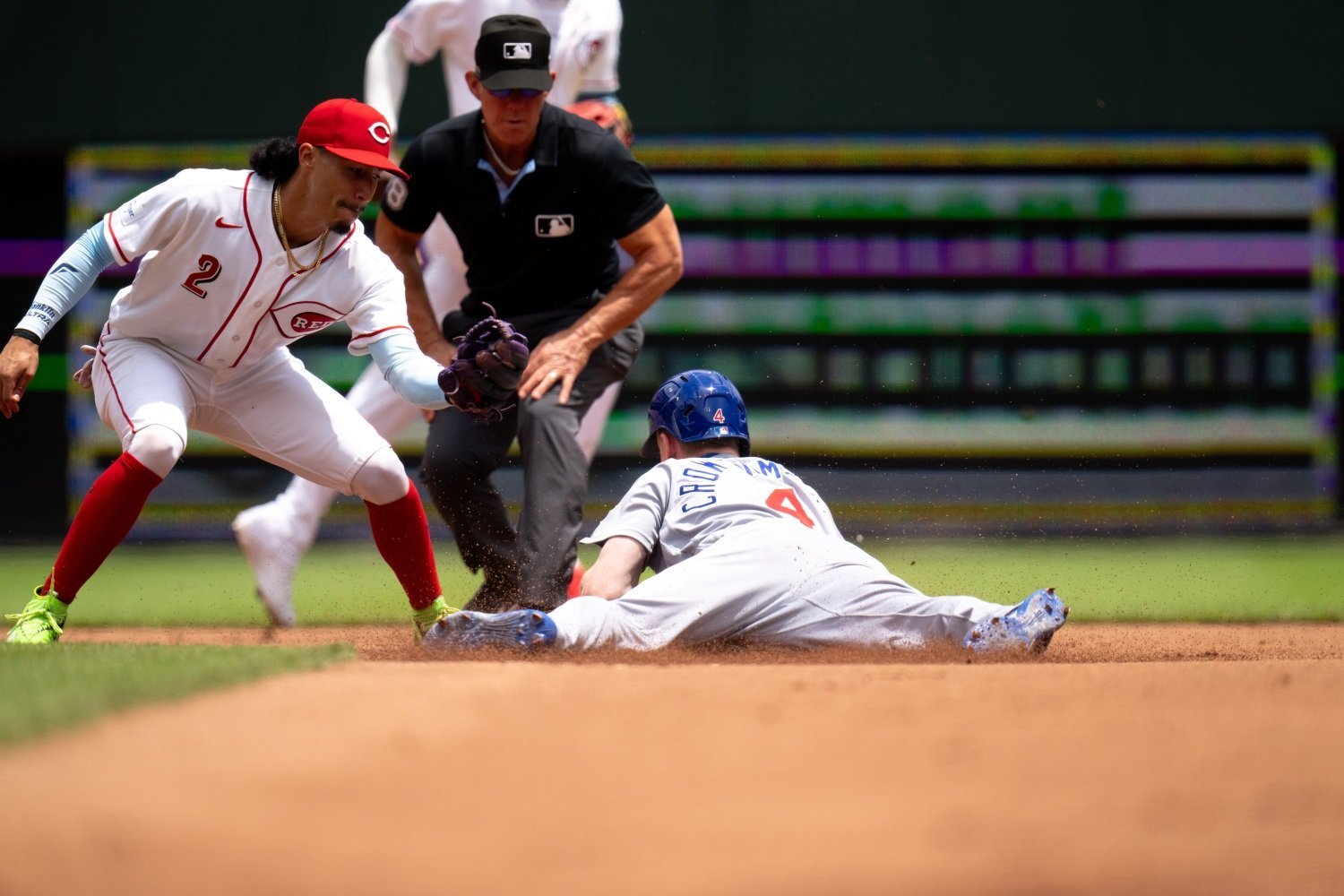 What Pete Crow-Armstrong is doing this season—and, in particular, what he's been doing since about the fourth week of May—is stunning, but you know that. He's putting together one of the best individual seasons in Cubs history, pending a second half in which he must prove he can sustain this level of intensity and brilliance. But you know that, too. What you might not know is, he's already soared up the Cubs' all-time leaderboard when it comes to blending power and speed—not over a year or two, but over a whole career. Though he's only 24 years old, Crow-Armstrong already has 62 homers and 88 steals for his career, including 21 and 24 this season. He passed Billy Williams and Corey Patterson in steals in a Cubs uniform in the final week before the All-Star break. He also passed Jose Cardenal on the team's career home run leaderboard. That leaves just five players who have played since the start of the Live Ball Era who have both hit more homers and stolen more bases than Crow-Armstrong during their time with Chicago. Here they are, with their Cubs totals in both categories, so you can see just how good a chance he has to go down as the most prolific progenitor of excitement in Cubs history. Kiki Cuyler: 79 homers, 161 steals This one almost doesn't count, because steals were counted very differently before about World War II and some steals totals from that period are quite inflated. We'll keep Cuyler around, though, because Crow-Armstrong is benefiting in his own way from the era in which he plays. None of these guys compiled their steals against pitchers who had to get the ball off before a clock hit :00, after all, and those hurlers could throw over to first as many times as they wished. Cuyler is a Hall of Famer, though he only played about half his illustrious career with the Cubs. That stint did include being on two pennant-winning clubs, though, and he hit well in his two World Series with the team. Homers weren't the driver of the offensive explosion in the NL in the late 1920s and early 1930s, but Cuyler showed good power for his time. He also hit for average, controlled the zone and led the NL in steals three times in a row when he first joined the Cubs via a trade with Pittsburgh in late 1927. He played more right than center, and wasn't quite the all-around dominator Crow-Armstrong has been in spurts over the last two years, but he was one of the 10 or 15 best players in the league for a few years. Crow-Armstrong could pass him in career homers by early next season, if he stays healthy. Leon Durham: 138 homers, 98 steals Those who remember Durham only dimly, having been too young to experience his arrival and ascent, might be surprised that he stole so many times. Truthfully, he shouldn't have. Durham was much more athletic than most first basemen and always did take a base when teams paid too little attention, but over half his steals as a Cub came in his first two seasons with the club, when he was still an outfielder. He grabbed 25 bags in 1981 and 28 in 1982, which sounds nice—but he was caught a combined 25 times in those two years. If the old days inflated by steals by counting plays we would not now dub steals and we now see inflation based on the rules, the 1980s saw inflation in steal totals simply because no one told inefficient basestealers to stop making needless outs. Crow-Armstrong will probably pass Durham in steals before this year is over. Shawon Dunston: 107 homers, 175 steals A two-time All-Star shortstop for the North Siders, Dunston got to these numbers partially via skill—he was certainly a better baserunner than Durham, usually succeeding enough that even a modern manager would give him the green light—and partially via an accumulation of playing time. He never hit more than 17 home runs in a season. As torrid a pace as Crow-Armstrong is on, you can't race past a guy who spent parts of 12 seasons with the team as easily as you can sail past the likes of Cuyler and Durham. Even if he stays healthy and keeps raking, he might not pass Dunston in homers until 2028. Sammy Sosa: 545 homers, 181 steals I urged a comp between the skill sets and career arcs of Crow-Armstrong and the young, dynamic version of Sosa for a long time. In some sense, Sosa remains the power-speed standard of Cubs history; he had two 30/30 seasons and two more 20/20 ones. If not for the 1994 strike and a season-ending injury in 1996, he could well have three 30/30 campaigns and a 50/20 one, which Crow-Armstrong might never match. Still, Sosa was never quite as well-rounded as Crow-Armstrong is at this moment. Whether you credit a change in the ball, PED use, hitting coach Jeff Pentland or the double expansions of 1993 and 1998 watering down the league's pitching talent for it all, Sosa's emergence as a full-fledged superstar slugger in 1998 coincided with him reaching his late 20s and losing his basestealing nous. He started walking more (though still not as much as Crow-Armstrong has over the last month and a half), but ran less, in addition to playing worsening defense. There's a lot of wood to chop here. By all indications, Crow-Armstrong has plenty of time left to run the bases well, and he's getting on base so much that his steal rate hasn't dropped even as his slugging has surged. Still, he probably needs the rest of this year and four more to catch Sosa in the steals department. As delightful as it is to watch him execute his gameplan and launch homers, it seems virtually unthinkable that he'll hit 500-plus homers for the team. Plan on seeing him best Sosa on the bases, and not until 2030. Ryne Sandberg: 282 homers, 344 steals Nobody stays healthy and good long enough to steal 344 bases anymore. The active leader is Starling Marte (did you know he was still active? He's a Royal!), at 362, but he's spent 15 years compiling those numbers. Only three more guys (Trea Turner, Jose Altuve and José Ramírez) have more than 250. Crow-Armstrong has a fast start at a young age working for him, but don't count on him eclipsing Sandberg, and even if he does get to that total, it might be in his mid-30s, on some other team. No, the better chance for him to get to the top of this mountain lies in continuing to hit for massive power. He'd need to stick around for his whole long-term contract and be a fearsome slugger the whole time, but that one is possible. Either way, it'll be fun to watch him launch his assault on this bit of Cubs history. Sandberg is the most balanced and beloved power-speed guy in Cubs history. Crow-Armstrong might get past everyone else rather easily, but he has to stay at a superstar level for a long time to catch Ryno. View the full article
 -
 Comrade Cody and Ol Gregg start off the Twins Off-Daily Podcast All-Star Break Podnanza with a player-by-player grading for all 47 players who have played for the Twins this season. Who gets an A, who gets an F, and who was bailed out by an Incomplete? And Gregg does a Plinkett voice. Listen using Apple Podcasts: https://podcasts.apple.com/us/podcast/the-twins-off-daily-podcast/id1741266056 Listen using Spotify: https://open.spotify.com/show/4tb78XlurcPTYYSsARdbD7 Listen using iHeartRadio: https://www.iheart.com/podcast/263-the-twins-off-daily-podcas-167548600/ Listen using Pocket Casts: https://pca.st/nvclbt0w Watch on YouTube: https://www.youtube.com/@twinsdaily View the full article
 -
Mets Week in Review: First Half Ends on Another Sour Note
DiamondCentric posted an article in Grand Central Mets
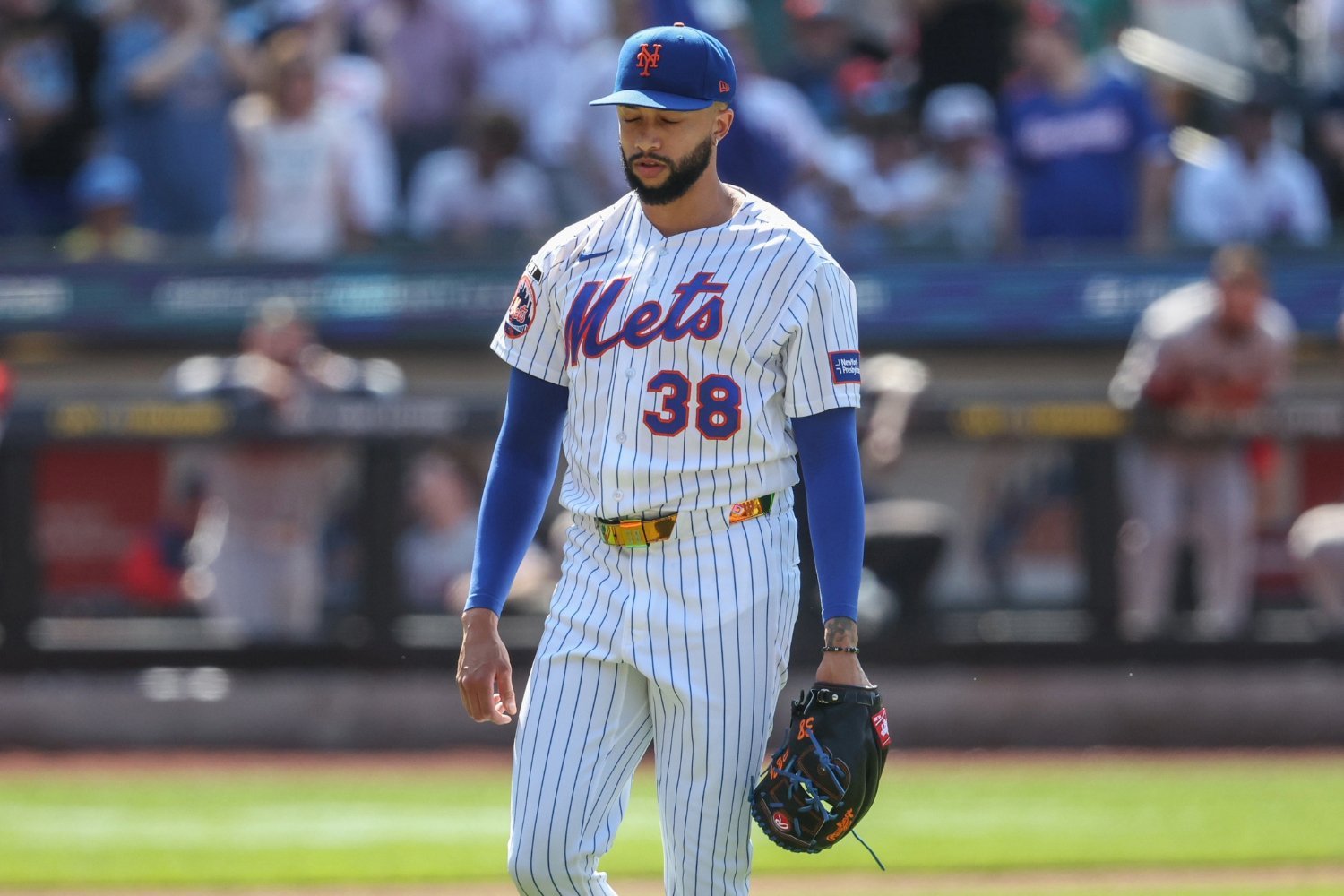 New York Mets Weekly Snapshot Record Last Week: 2-4 Runs Scored Last Week: 29 Runs Surrendered Last Week: 34 Standings: 5th in NL East (40-57) 16 GB of 1st Place, 12 GB of a Wild Card Transactions: 7/8 New York Mets sent CF Luis Robert Jr. on a rehab assignment to Binghamton Rumble Ponies. 7/8 New York Mets sent RHP Dedniel Núñez on a rehab assignment to Syracuse Mets. 7/8 New York Mets placed RHP Austin Warren on the 15-day injured list. Right forearm strain. 7/8 New York Mets designated RHP Matt Seelinger for assignment. 7/9 New York Mets released RHP Alex Carrillo. 7/9 New York Mets designated CF Jared Oliva for assignment. 7/9 New York Mets optioned RHP Tobias Myers to Syracuse Mets. 7/9 New York Mets selected the contract of RHP Dan Hammer from Syracuse Mets. 7/9 New York Mets sent RHP Guillo Zuñiga outright to Syracuse Mets. 7/10 New York Mets designated RHP Dan Hammer for assignment. 7/10 New York Mets placed 1B Mark Vientos on the 10-day injured list. Right hand fracture. 7/10 New York Mets selected the contract of SS Zack Short from Syracuse Mets. 7/10 New York Mets recalled RHP Tobias Myers from Syracuse Mets. 7/11 New York Mets released CF Jared Oliva. 7/11 New York Mets sent RHP Matt Seelinger outright to Syracuse Mets. Scores: Game 92: NYM 12, KC 16 Game 93: NYM 6, KC 2 Game 94:: NYM 7, KC 3 Game 95: NYM 3, BOS Game 96: NYM 0, BOS 3 Game 97: NYM 2, BOS 3 Series Breakdown/Highlights Royals Series: Coming off of the series split in Atlanta, the Mets came home to face the Royals for three games. Game one of the series quickly turned into a slugfest, but the Mets ultimately came up on the wrong end of it. New York scored 12 runs and pounded out 16 hits, with Juan Soto and A.J. Ewing both homering, but the pitching staff could not slow down Kansas City’s offense. The Royals collected 19 hits and scored 16 runs, taking advantage of several big innings to erase every Mets rally. Despite the offensive explosion, their inability to get key outs on the mound overshadowed an otherwise productive night at the plate. It was the first time in Mets history that the team scored 11 or more runs at home and lost. The Mets responded nicely in game two, using timely hitting and a dominant eighth inning to even the series. A.J. Ewing wasted no time, leading off the game with a home run, before the team broke open a 1-1 game by scoring five runs in the eighth inning. Brett Baty delivered a two-run single during the rally, while the bullpen shut the door after the offense created separation. After allowing Kansas City to hang around for much of the night, New York finally capitalized on its opportunities and errors by the other side late to secure the victory. The Mets closed out the series on a high note, riding a balanced offensive attack and another strong pitching performance to win the rubber game. New York scored seven runs on 11 hits, getting contributions throughout the lineup while the pitching staff limited Kansas City to just three runs. It took big hits from Tyrone Taylor and Carson Benge to get the job done in another big inning against the Royals starter Michael Wacha and their bullpen. After dropping the series opener in dramatic fashion, the Mets won the final two games by combining timely offense with much cleaner pitching, earning a series victory heading into their weekend matchup with Boston. Red Sox Series: The Mets wrapped up the first half facing the Red Sox, who did not land in New York until 5:10pm on Friday, just two hours before first pitch. The series opener against the Sox was another frustrating night for the Mets, beginning from the very first batter of the game, with Juan Soto committing a big E7 that led to two Red Sox runs. Nolan McLean pitched well enough to keep New York in the game, allowing just those two unearned runs over six innings, but the offense went 0-for-8 with runners in scoring position. Boston pulled away late with a pair of insurance runs in the ninth, while the Mets were left to wonder what could have been after multiple missed chances against Sonny Gray and the Boston bullpen. The Mets’ offense never got going in game two as Boston’s pitching staff controlled the game from start to finish. They recorded a total of three hits and were shut out and struggled to string together quality at-bats, while the Red Sox steadily built their lead behind another strong all-around performance. Freddy Peralta struggled once again, walking five and allowing two runs in 4.2 innings of work as his trade value continues to tank. The finale was one the Mets let slip away. Rookie Zach Thornton turned in seven scoreless innings, and Francisco Lindor provided both New York runs with a home run and an RBI double, putting the team in position for a victory. However, a costly ninth-inning error by Lindor on a potential game-ending double play opened the door for Boston to tie the game against Devin Williams, who could not find the strike zone before Anthony Seigler’s sacrifice fly in the 10th completed the Red Sox comeback. It was a heartbreaking finish to the first half, wasting one of the Mets’ best pitching performances in some time. Website Highlights Analyzing Every New York Mets Day 2 Pick In 2026 MLB Draft New York Mets 2026 MLB Draft Day 1 Recap: Mets Take Boom-or-Bust Arm Carson Wiggins In First Round, Followed By Steal of Slugger Aiden Robbins Mets Minor League Report: Robert Stock Looking Stronger As Rehab Continues Looking Ahead July 13th: Home Run Derby July 14th: All-Star Game July 15th: OFF July 16th: @ PHI (7:10pm) July 17th: OFF July 18th: @ PHI (4:05pm) July 19th: @ PHI (1:35pm) View the full article
 -
 The MLB Draft has concluded and it's time for the All-Star Break! Before we enjoy the festivities, let's recap all that happened down on the farm on Sunday. Triple-A Worcester Red Sox Series vs. Rochester Red Wings (Washington Nationals): 4-2 Season Record: 45-44 Playing as the Los Wepas de Worcester, the WooSox walked off Rochester after a clutch ninth inning. Seven pitchers took the mound for Worcester across Sunday’s game, with Seth Martinez starting the game. Martinez was pulled after two near-perfect innings, allowing one hit before Osvaldo Berrios took over. Berrios turned in a perfect inning as he lowered his ERA to 2.11. Alec Gamboa, who could be a candidate to rejoin the big league club following the All-Star Break, took the fourth inning. Gamboa was perfect aside from a walk as he earned a hold. Tyler Uberstine also earned a hold for his perfect fifth inning. Devin Sweet took the sixth and pitched into the seventh, allowing the first run of the game for Rochester. He allowed one run on two hits before Tyler Samaniego took over. Samaniego was hit with a blown save as he allowed two runs on four hits, striking out three. With the game on the line in extras, Sam McWilliams was thrust into a high-stakes situation. McWilliams earned the win for his two-frame performance. He allowed two runs but gave the offense enough leeway to pull off the late win. The WooSox went 4-for-12 with runners in scoring position as a late offensive surge lifted them to their first win in three games. Mickey Gasper and Mikey Romero led the offense with two hits apiece as Vinny Capra drove in two runs. With runners on the corners in the bottom of the first, Gasper hit a line drive single to center. He drove in Nick Sogard and put the WooSox on top early. Capra built on the lead in the fifth, driving in Kristian Campbell and Max Ferguson on a line drive double. After Rochester took a late two-run lead, Campbell stepped to the plate with runners on the corners. He hit a soft ground ball to the pitching mound as Gasper scored and Campbell reached safely on a throwing error. With the game close, Ferguson tied the ballgame with a sac fly, scoring Allan Castro as the WooSox forced extra innings. With Tyler McDonough on third and two gone in the tenth, Mikey Romero played hero for Worcester. He hit a sharp line drive to left field as McDonough easily crossed home, lifting Los Wepas de Worcester to victory. Double-A Portland Sea Dogs Series @ New Hampshire Fisher Cats (Toronto Blue Jays): 3-3 Season Record: 46-40 Portland lost 10-3 amid a rough day from the pitching staff. Hayden Mullins' start on Sunday was abbreviated as he was pulled following just an inning of work. Within the outing, Mullins allowed a two-run shot, giving New Hampshire an early lead. Max Carlson took over in the second, turning in two innings of work. He allowed one more run on a solo homer, issuing one walk and striking out two. Tyler Davis took the next two frames, allowing three runs on two hits as New Hampshire pulled away. The Sea Dogs pitching staff really fell apart when Cooper Adams took the mound. Across 1⅔ innings, Adams allowed four runs on four hits before Erik Rivera took over late in the seventh. Rivera took the eighth as well, turning in an inning and ⅓ of perfect pitching as he struck out two. The Sea Dogs offense saw more success than the pitching staff, but were unable to compete with the Fisher Cats’ ten-run onslaught. Nelly Taylor led Portland in hits and RBIs with three and two, respectively. Taylor put the Sea Dogs on the board in the fourth inning, hitting a soft line drive to right field as Matt Frazier scored. Taylor scored the second run of the day for Portland as well, hitting his fifth homer of the season to right field and adding another run. With the game out of reach in the ninth, Ronald Rosario brought the Sea Dogs one run closer with a solo shot. It was a sluggish day for the offense as New Hampshire outshined them easily. High-A Greenville Drive Series @ Greensboro Grasshoppers: 4-2 Season Record: 35-48 Greenville’s three-game win streak was snapped on Sunday afternoon as they fell 3-1. Dylan Brown got the loss on Sunday despite turning in a solid six-inning performance. He allowed three runs (one unearned) on four hits and two walks across a lengthy outing. In any other game Brown’s performance would have been more than adequate but Greenville struggled on the offensive side, letting Brown down. Brown struck out five before Adam Bates took over in the seventh. Bates’ second outing of the season for Greenville was a good one as he allowed one hit and two walks. He shut out Greensboro across the outing as he maintained his 0.00 ERA. Greenville generated just seven baserunners on Sunday afternoon as they didn’t get an at-bat with RISP. Mason White was the only member of the Drive to record a multi-hit game as Enddy Azocar drove in Greenville's lone run. The run came on a third-inning solo home run, Azocar’s seventh of the season. The rest of the game was quiet for the Drive, as Luke Heyman and Justin Gonzales were the only other two batters to record a hit, each with a single. Low-A Salem RidgeYaks Series @ Columbia Fireflies (Kansas City Royals): 4-2 Season Record: 36-50 Salem clinched its first series win since early April as they won 8-4 in extra innings. Jose Bello turned in an excellent start on Sunday afternoon, hurling four shutout innings. He allowed six hits and walked two, but left the game with a clean slate as he lowered his ERA to an even 3.00. Trennor O’Donnell spoiled the shutout after he took over in the fifth, but was able to keep Columbia’s offense in check. Across two frames, he allowed three runs (one unearned) on four hits. He struck out two in his second appearance with Salem this season as he returned from injury. Luis Cohen took the next two innings, allowing three hits but blanking the Fireflies in the run column. Williams Rodriguez got the ball to start the ninth and earned the win for his extra-innings performance. Across the ninth and tenth, Rodriguez allowed one run on a hit and issued one walk but sealed the clutch win for Salem. The Yaks batted .333 with RISP on Sunday, the sixth game in a row that they tallied at least ten hits. Ilan Fernandez accounted for five of Salem’s eight runs as he recorded three hits in four at-bats. Fernandez got the Yaks on the board late, crushing a solo homer to left field as Salem dug into a three-run deficit. Down 3-1 in the top of the ninth, Andruw Musett drove in Avinson Pinto on a double to left field, putting Salem within one. With one out later in the ninth, Fernandez came up clutch as he drove in Musett on a line drive single. After Fernandez sent the game to extras, Starlyn Nunez grabbed the first lead of the day for Salem. He hit his tenth homer of the season on a deep ball to right field, scoring Givian Sirvania. To add some cushion, Fernandez hit his second homer of the day with Musett and Justin Barry aboard, giving the Yaks a five-run lead. View the full article
 -
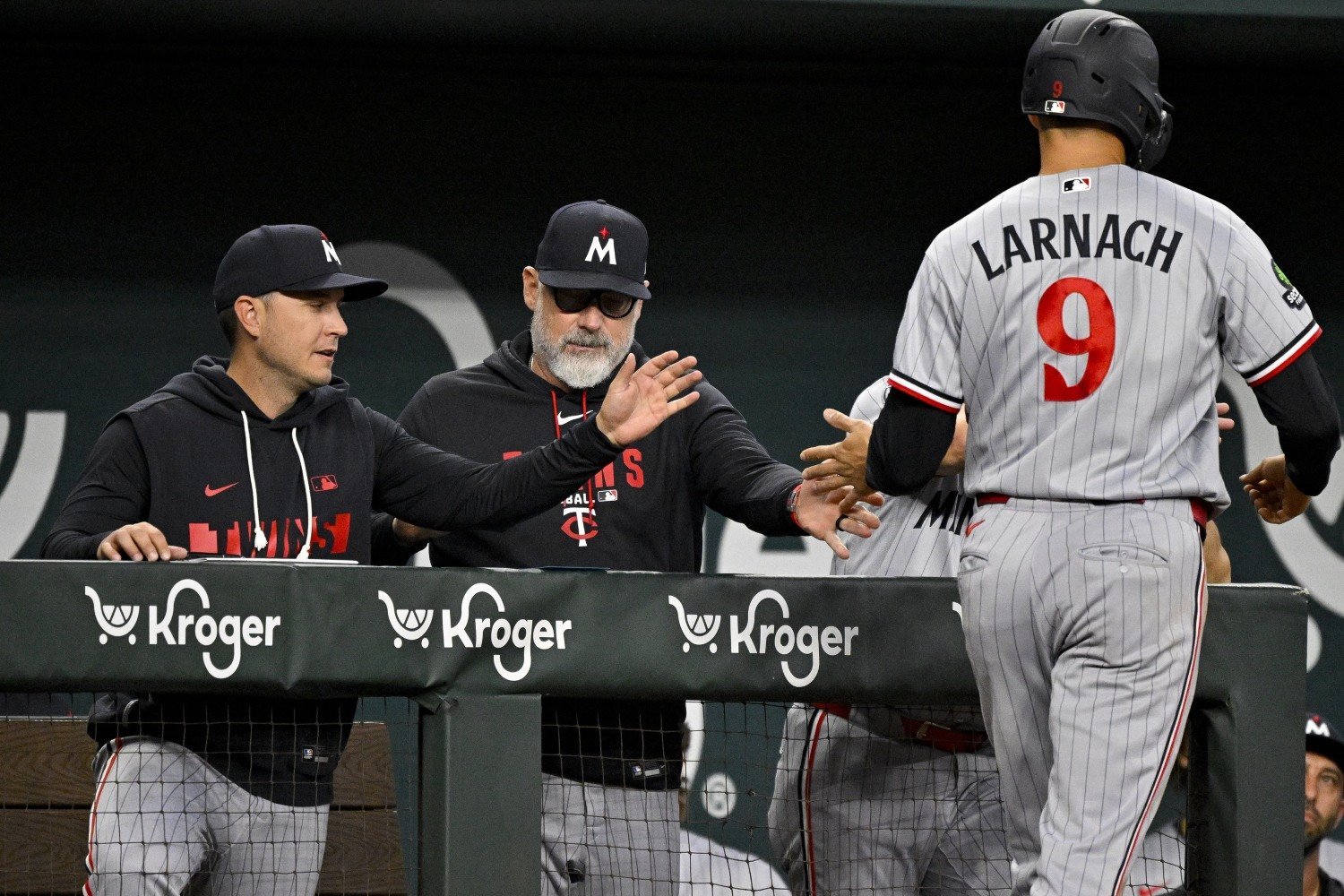 The Twins have already had a handful of prospects get the call this year. We've seen Andrew Morris, Kendry Rojas, Connor Prielipp, John Klein, and Marco Raya make their major-league debuts so far this season. We've also seen a pair of outfielders get their first taste of the big leagues. Gabriel Gonzalez was up for an entire weekend before heading back to Triple-A, while Kyler Fedko got a slightly longer but less fruitful audition. But if you think the prospect promotions are going to slow down, think again. The Twins currently sit at 48-49, and there's a pretty good chance they'll be moving some established major-league pieces over the next few weeks. If that happens, it impacts a lot of the organizational depth in the process. Even while you're chasing a playoff spot, if you're a team like the Twins, the second half becomes about evaluating talent. It's about figuring out who can help you moving forward; who deserves a spot on next year's roster; and who might force their way into the team's long-term plans. So who else could make their debut between now and the end of September? I think there's a handful of names worth keeping an eye on. Some are among the organization's very best prospects, while others have quietly played their way into the conversation. Let's start with the obvious one. While a lot of people expect Walker Jenkins to make his major-league debut this season, I don't share that belief. I talked about this earlier this month, but I still think the Twins should slow-play him. Jenkins is obviously one of the best prospects in baseball, but there's no reason to rush him. Unless they reach a point where they feel he'd make a difference in a push for the playoffs, I'd rather see the organization stay patient. I'm sticking with my prediction: Walker Jenkins will not debut in 2026. That said, I'd be surprised if we didn't see Kaelen Culpepper before the season comes to a close. It feels like we've been waiting on this promotion for about two months now. He's currently sporting an .868 OPS with the St. Paul Saints, and he checks just about every box you'd want to see from a young position player. He hits the ball hard, he gets on base, he can steal a base, and he plays quality defense all over the infield. There's really not much left for him to prove in Triple-A. He just has to get healthy; you can't debut in MLB from the Triple-A injured list. The same goes for Emmanuel Rodríguez, who would already have gotten a look if he weren't hurt. Kaelen may not even be the only Culpepper making his debut this year. Pitcher C.J. Culpepper has quietly built a very compelling case himself. The 24-year-old has posted a 3.13 ERA across 20 relief appearances with the Saints, while striking out 23.2% of opposing batters. As is the case with any prospect, there are still some things to clean up. His 13.0% walk rate certainly isn't ideal, and command has been an issue at times. But he consistently finds ways to work himself out of trouble. That's an underrated skill for a reliever. Not every outing is going to be clean. Good bullpen arms are often the ones who can strand inherited runners or escape jams after putting themselves in difficult situations. Culpepper has shown an ability to do exactly that. If the Twins don't add external help to the bullpen and try to roll with what they have in-house, I think he'll be one of the first names considered for an opportunity. The final player I'm willing to confidently predict will make his major league debut this season is Ben Ross. Unless you're a Twins Daily denizen who loves the minor league reports and lives in the forums, Ross has come out of nowhere this year. He's already 25 years old, and if you pull up most prospect rankings, his name isn't exactly going to jump off the page. But sometimes good baseball players force the issue; Ross has done exactly that. He's a versatile defender who can move all over the diamond. He can play shortstop, third base, and center field, giving the Twins plenty of flexibility. That kind of versatility becomes incredibly valuable over the course of a long season. The role Tristan Gray is playing for the Twins right now could just as easily go to Ross, if an injury compelled the Twins to try it. And it's not like he'd be getting called up simply because of his defensive versatility. Since being promoted to Triple-A, Ross has posted an .846 OPS. If the Twins eventually fall out of the AL Central race, he could be worth a look in September, even if it means jettisoning Gray. If they stay in the race and more injuries strike, that's another path open. Culpepper, Culpepper and Ross seem like they fit specific things the team either needs now or might need in the near future. If they get and/or stay healthy, and if circumstances warrant in one way or another, they could be the next three guys we see come through the Twins' homegrown pipeline. Jenkins and Rodríguez are bigger names, but might be longer shots to show up in the bigs right now. But what do YOU think? Who do you think gets the call before the end of the season? Let us know in the comments! View the full article
 -
 Ryan Clifford has had a subpar offensive season at Triple-A, but he was the best the New York Mets' organization had to offer for this year's MLB All-Star Futures Game. Clifford -- No. 3 on Grand Central Mets' list of the club;s top 20 minor-league prospects -- was New York's lone representative Sunday at Citizens Bank Park in Philadelphia. He came on for the National League at first base in the fifth inning, in place of Colorado Rockies prospect Charlie Condon. He walked in his only plate appearance as he finished the seven-inning contest. Clifford's first-half stat line didn't support the selection. He slashed .196/.283/.395 with 16 home runs in 354 plate appearances for Syracuse. His 70 wRC+ was just over half the 137 he posted between Syracuse and Double-A Binghamton last season. He struck out at a 36.4 percent clip and walked 10.7 percent of the time. His track record as a slugger no doubt played a role in his selection. He'll be back with Syracuse when the second half begins Friday, still waiting for that first call-up to New York. First base is his path to the Show right now. The Mets are using Jared Young (106 wRC+) and Eric Wagaman (98 wRC+) there for the time being. The outfield is set with Juan Soto, A.J. Ewing and Carson Benge. Switch-hitting Jorge Polanco is the primary designated hitter. A quick look at Sunday's results for the full-season affiliates: Binghamton downed Hartford 10-5. New York second baseman Marcus Semien popped a three-run home run in the first game of a rehab assignment. Chris Suero (No. 10 prospect) hit a three-run homer of his own. Brooklyn rallied for three runs in the eighth inning to beat Wilmington 5-3. Ronald Hernandez's infield single proved decisive. Mitch Voit (No. 7 prospect) collected his 31st stolen base of the season. St. Lucie scored five runs in the third and went on to rout Jupiter 8-2. Elian Peña (No. 4 prospect) and Julio Zayas each drove in two runs in the frame. Jose Lopez went five innings to earn the win. Syracuse's game at Norfolk was canceled because of wet grounds. The host Tides said that the game will not be made up. Mets Transactions New York Mets released CF Jared Oliva. New York Mets sent RHP Matt Seelinger outright to Syracuse Mets. Semien Begins Rehab With Big Game For Binghamton Semien got three at-bats and played five innings in the field Sunday. His blast in the fourth put Binghamton up 5-1.. The 35-year-old infielder has been on the major-league injured list since June 25 because of a left hip flexor strain. Rehabbing New York center fielder Luis Robert Jr. (disc herniation in his back) singled just ahead of Semien's homer to break a 1-1 tie. He went 2-for-6 with an RBI and two runs scored, and played eight innings in the field. Suero's 12th homer of the season turned the game into a blowout in the sixth. Reliever Zach Peek was credited with the win. He allowed a run over two innings. Player AB R H RBI BB K Luis Robert Jr. 6 2 2 1 0 3 Nick Roselli 0 0 0 0 0 0 Marcus Semien 3 1 2 3 0 1 Nick Lucky 3 1 1 0 0 1 Chris Suero 4 2 2 3 1 2 Jose Ramos 4 1 2 0 1 2 Nick Lorusso 5 0 1 1 0 0 JT Schwartz 3 2 1 0 2 0 Kevin Parada 3 0 0 0 2 0 Matt Rudick 4 0 1 1 1 1 Wyatt Young 3 1 0 1 2 1 Player IP H R ER BB K HR Danis Correa 2 2 0 0 0 4 0 Zach Peek 2 3 1 1 1 2 0 Brendan Girton 3 4 4 4 2 3 2 Justin Armbruester 1 1 0 0 0 2 0 Carlos Guzman 1 2 0 0 0 3 0 Cyclones Rally Late, Topple Wilmington Brooklyn used a pair of soft hits and Wilmington mistakes to erase a 3-2 deficit. The winning rally began when Yonatan Henriquez reached on an error. John Bay and Corey Collins walked to load the bases with one out. Hernandez's slow bouncer to first base brought in Henriquez, and when the throw went awry, Bay came around to score as well. Gutierrez followed with a pop-fly single just inside the left-field line to bring in Collins with the final run of the inning.. Parker Carlson earned the win with 1 2/3 scoreless innings of relief. Bryce Jenkins struck out two in a scoreless ninth for his first save. Nicolas Carreno pitched 4 1/3 innings in relief of starter Frank Camarillo, allowing three runs (two earned) and striking out six. Player AB R H RBI BB K Mitch Voit 3 0 0 0 1 1 Yonatan Henriquez 4 1 0 0 0 0 John Bay 3 1 0 0 1 0 Corey Collins 3 2 1 0 1 1 Ronald Hernandez 4 1 2 1 0 1 Daiverson Gutierrez 4 0 2 2 0 1 Jamari Baylor 4 0 1 0 0 0 Yohairo Cuevas 2 0 0 0 1 0 Sam Biller 3 0 0 0 0 0 Player IP H R ER BB K HR Frank Camarillo 2 1 0 0 0 2 0 Nicolas Carreno 4 1/3 4 3 2 3 6 0 Parker Carlson 1 2/3 1 0 0 0 1 0 Bryce Jenkins 1 0 0 0 0 2 0 Early Comeback Lifts St. Lucie Past Jupiter St. Lucie wiped out a 2-0 deficit with its big third inning. Simon Juan and Jeremy Rodriguez singled to get it started. Juan scored as Jupiter failed to get an out on a fielder's choice grounder to short by Antonio Jimenez (No. 17 prospect). Rehabbing big-leaguer Mike Tauchman was hit by a pitch to load the bases. Peña doubled home Rodriguez and Jimenez to put the Mets up 3-2. Two batters later, Zayas singled in Tauchman and Peña for a 5-2 lead. Juan added an RBI single in the fifth and a sacrifice fly in the seventh. Rodriguez capped the scoring with an RBI single in the ninth. The only damage against Lopez was a PJ Morlando two-run homer in the second. Ernesto Mercedes, Joe Scarborough, Tyler McLoughlin, and Miguel Mejias combined for four scoreless innings and six strikeouts in relief. Player AB R H RBI BB K Antonio Jimenez 5 1 0 1 0 2 Mike Tauchman 3 1 1 0 1 1 Elian Peña 5 1 2 2 0 0 Trey Snyder 5 0 0 0 0 1 Julio Zayas 4 2 2 2 1 0 AJ Salgado 2 0 1 0 3 0 Branny De Oleo 3 1 1 0 1 0 Simon Juan 4 1 2 2 0 1 Jeremy Rodriguez 5 1 2 1 0 1 Player IP H R ER BB K HR Jose Lopez 5 2 2 2 2 2 1 Ernesto Mercedes 1 0 0 0 2 2 0 Joe Scarborough 1 0 0 0 0 0 0 Tyler McLoughlin 1 0 0 0 2 2 0 Miguel Mejias 1 2 0 0 0 2 0 Top-20 Prospect Performance Jonah Tong: DNP Jack Wenninger: DNP Ryan Clifford: DNP Elian Peña: 2-for-5, 2B, 2 RBI Nick Morabito: DNP Jacob Reimer: DNP Mitch Voit: 0-for-3, BB, K, SB Jonathan Santucci: DNP Zach Thornton: MLB Chris Suero: 2-for-4, 2B, HR, 3 RBI, BB, 2 K Will Watson: DNP Wandy Asigen: DNP Eli Serrano III: DNP Randy Guzman: DNP Dylan Ross: DNP Ryan Lambert: DNP Antonio Jimenez: 0-for-5, RBI, 2 K R.J. Gordon: DNP Jonathan Pintaro: DNP Marco Vargas: DNP View the full article
 -
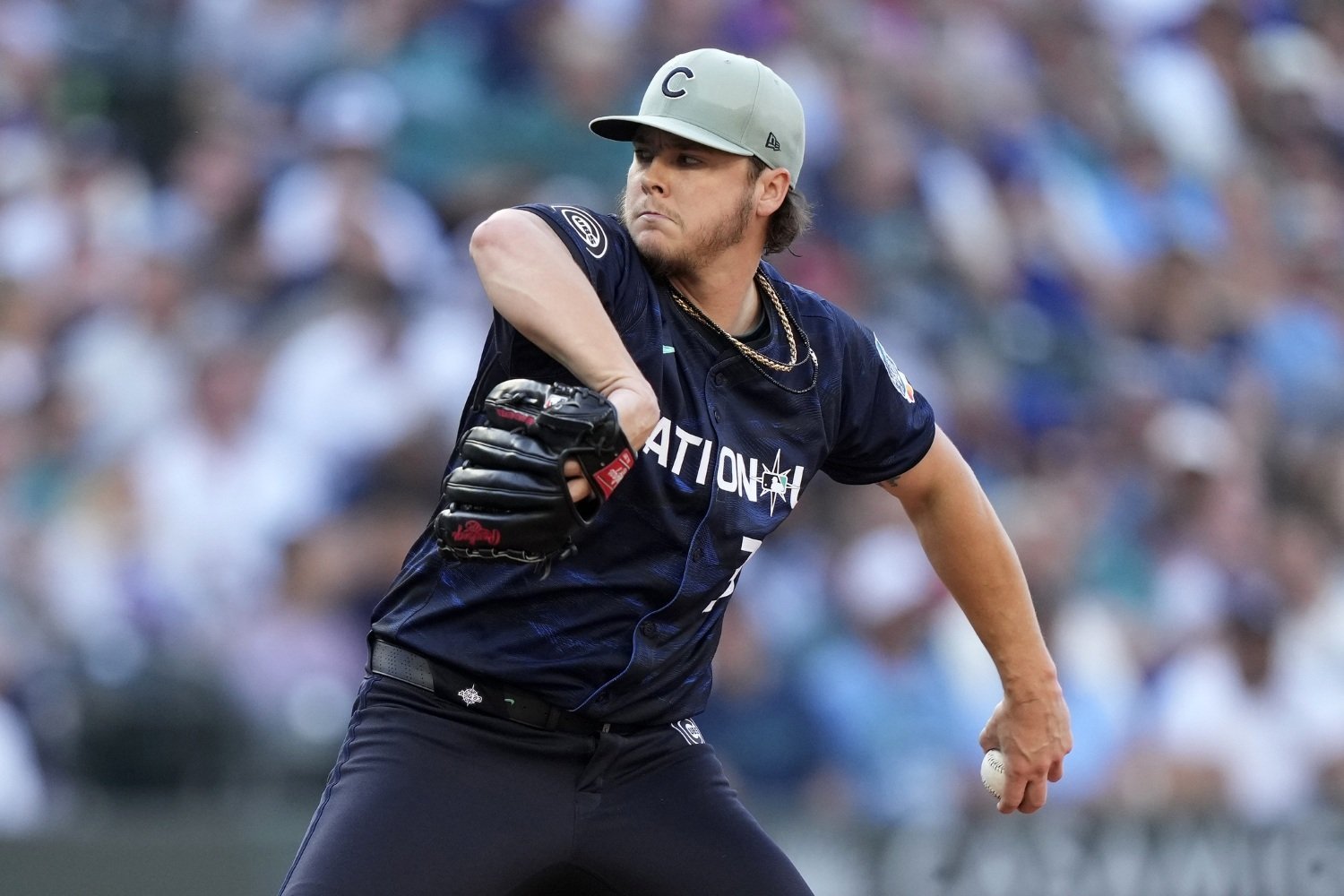 Can you believe the 2026 All-Star break is upon us already? Well, it is, and the Chicago Cubs are back to their winning ways. Despite the June gloom, the bats have come back alive and have been able to cover for their suspect pitching staff. The team as a whole should benefit from a much-needed break, while they prepare for what should be a gauntlet of a second half. For the second time since 2021, the Cubs have only one All-Star, in Pete Crow-Armstrong. If Ben Brown hadn't suffered a neck injury a few weeks ago, they might have two, but Cubs fans are certainly more dialed-in for the second half than for the Midsummer Classic. This marks Crow-Armstrong’s second All-Star nod, as he was selected last season along with Kyle Tucker and Matthew Boyd. While this is surely the second selection of many more to come for the young star center fielder, what we're going to celebrate with this list is the All-Stars that we don’t always remember. These are the players who made one All-Star Game in their careers and were lucky enough to do it wearing Cubbie blue. Since the Cubs are in their 151st season as a franchise, I did have to make the cutoff somewhere. If you're a historian and would like to expand on this, please drop a comment, but for this list, I'm going through the free agency era, which started in 1977. 1977: Jerry Morales Morales spent seven of his 15 big-league seasons with the Cubs across two different stints, from 1974-1977 and from 1981-1983. He amassed a total of -2.0 bWAR for his career, totaling 95 home runs and an OPS of .695. Although his lengthy career was not colored with accolades, he did join multi-time All-Stars Rick Reuschel, Bruce Sutter, and Manny Trillo at Yankee Stadium. He was hit by a pitch in his only plate appearance, becoming one of only 28 players to be plunked at the All-Star Game. 1981: Bill Buckner It's hard to believe the 22-year major-league veteran was named to only one All-Star Game, and a shamw that he did it during the year of baseball's midseason strike, which limited him to 106 total games and 1.2 bWAR. He was coming off a season where his .324 batting average led the NL, so he was clearly a popular name. He did lead the NL in doubles that season, with 35; maybe he'd have gotten to 50 in a full campaign. Although he was a reserve, with Pete Rose starting at first base, Buckner was the Cubs’ only representative for 1981. 1988: Vance Law The 1988 Cubs were a peculiar case. The team finished 77-85, fourth place in the division, but had six representatives during that year’s All-Star Game at Riverfront Stadium. Andre Dawson and Ryne Sandberg were named starters, with Law, Rafael Palmiero and Shawon Dunston on the bench. This was also the first All-Star appearance for Greg Maddux. As for Law, 1988 marked his return to Chicago, but on the North Side this time. After a three-year stint north of the border in Montreal, Law slashed .293/.358/.412 while driving in 78 runs. Along with the RBIs, his .770 OPS and .293 batting average marked the highest of his career, which he did at 31 years old. 1989: Mitch Williams Like Buckner, Williams is remembered mostly for being on the wrong side of baseball history, as he served up Joe Carter’s walk-off home run to lose the 1993 World Series. That overshadows a career where he racked up 30+ saves three different times—the first being 1989 with the Cubs, when he made his only All-Star team. Drawing comparisons to Rick “Wild Thing” Vaughn, Williams’s mid- to high-90s fastball helped the Cubs win the NL East crown that season, as he notched 36 saves with a 2.76 ERA. 1996: Steve Trachsel Trachsel was the Cubs’ only representative in 1996, which is a surprise, as Sammy Sosa hit another 40 bombs and drove in 100 and won NL Player of the Month in July. Instead of Sosa, the nod went to Trachsel, who had one of his best seasons, posting 3.7 bWAR. He pitched three complete games, including two shutouts, in over 200 innings. Though this was his only All-Star appearance, Trachsel started 30+ games in eight of nine seasons from 1995 to 2004, making him an underrated symbol of durability on the mound. 2000: Joe Girardi Girardi was a part-time player for most of his career, eclipsing 400 plate appearances only five times in his 15 campaigns. His 1.6-bWAR season for the Cubs at age 35 is a clear outlier for his career, where he hit .278 in 106 games. He was named to the All-Star team as a replacement for Mike Piazza but was deserving of the honor, as he was one of the Cubs’ better hitters on a team that lost 97 games. 2001: Jon Lieber Another workhorse of the early 2000s, Lieber led the majors in starts (35) and innings pitched (251) the season before, but was named an All-Star for the first time in 2001 after a first half wherein he pitched a Maddux (long before we called it that) and recorded six straight wins from mid-June through his first start after the break. He did win 20 games that season, and accumulated 3.9 bWAR, which were both career highs. Lieber gave up home runs to both Derek Jeter and Magglio Ordonez in his one inning of action during the game, but the NL was already losing, and the loss went to another one-time All-Star, Chan Ho Park. 2003: Mark Prior The second overall pick in the 2001 draft and co-ace of the Cubs (next to Kerry Wood) made his only All-Star appearance in 2003—a season wherein he led the N.L. in bWAR with 7.4 and posted the lowest FIP in the league, at 2.47. His first-half highlight was striking out 16 Brewers in a late June start. Sadly, the story of Prior is known all too well among Cubs fans. Just after the break, he collided with Marcus Giles while running the bases, injuring his shoulder. He endured heavy usage by manager Dusty Baker, then dealt with more arm trouble in 2004 and a line drive that broke his elbow in 2005. This would be the only time he was healthy enough to earn an honor very much in line with his talent. Prior did not appear in the game, but Wood did, striking out two. Prior remains one of the prime examples of “what could have been”; he didn't pitch in the majors again after 2006. 2008: Geovany Soto, Kosuke Fukudome, Carlos Marmol The 2008 Cubs are tied with the 2023 Braves for the most All-Stars from one team in a single season, with eight. Soto, Fukudome, and Marmol joined multi-time All-Stars Ryan Dempster, Carlos Zambrano, Aramis Ramírez, Wood, and Alfonso Soriano as representatives for the eventual NL Central champs. Fukudome, the Cubs’ first Japanese-born player, got the start in right field after a scorching April wherein he hit .327 and an only slightly less impressive May. He began to struggle as the season changed from spring to summer, but he was a fan favorite and one of the brightest rookies in the league. He finished the season with a .738 OPS and 0.6 bWAR, which was his lowest bWAR of his three and a half seasons on the North Side. He went 0-2 with a strikeout before being replaced by Pirates outfielder Nate McLouth. Geovany Soto, the eventual NL Rookie of the Year, got the start behind the plate, also going 0-2 with a strikeout. Although he was rookie-eligible, this was actually Soto’s fourth season seeing big-league action. The rookie got the start over Russell Martin and Brian McCann, who have 11 All-Star selections between them. To this day, Soto is the only rookie catcher to start for the NL team at the Midsummer Classic. His 23 homers in 2008 are tied for sixth-most among rookie catchers all-time, and he's one of only 14 catchers to hit over 20 as a rookie. Carlos Marmol entered 2008 competing with Wood for the closer role, with manager Lou Piniella choosing Wood, who was named as an All-Star himself. Due to a blister, Wood had to be replaced, opening the door for Marmol to claim a spot on the roster. Marmol threw a scoreless 13th inning, striking out two, back when the All-Star game had World Series implications. Although he had two 30 plus save seasons with the Cubs, he was only named an all-star in 2008, where he had a 2.68 ERA in 87 1/3 innings. 2010: Marlon Byrd The 15-year veteran, who suited up for 10 different squads, was only named an All-Star once and was the Cubs' only representative for the 2010 season. The then-32-year-old had the second-highest bWAR of his career with 3.7, although his .775 OPS and 12 home runs were not near his career peaks. Byrd entered the game as a pinch-hitter and drew a walk from crosstown rival Matt Thornton, and ended up scoring the final run of the game on a Brian McCann double. He later threw out David Ortiz, advancing to second on a single. Byrd was a key piece in helping the NL stop the AL’s 13-year winning streak. 2012: Bryan LaHair LaHair is one of the more random All-Stars we have seen in the game. His MLB career consisted of only three seasons, wherein he accumulated 599 plate appearances. He was up-and-down between the minors and big-league squad for the Mariners in 2008, before popping up again for 20 games with the Cubs in 2011. With top prospect Anthony Rizzo not ready for the start of the 2012 season, LaHair got a crack as the starter. He was named an All-Star after hitting .284 with 13 homers through the first three months of the season. That was the highlight of his career by far, as he hit only one more home run after the break and was released after the season. He signed with the Fukuoka SoftBank Hawks of NPB and played one season with them, before two unsuccessful attempts at an MLB comeback with Cleveland and Boston. 2013: Travis Wood Before his heroics in the batter's box in Game 2 of the 2016 NLDS, Wood was one of the few bright spots during a very dark era for the Cubs. The former top prospect of the Reds came to Chicago prior to the 2012 season in the Sean Marshall trade and was a mixed bag of results that year. His second season with Chicago was a much different story, as he became the first Cub since Mordecai Brown to start a season with nine straight quality starts. He accumulated 4.5 of his 5.1 career bWAR during his lone All-Star season in 2013, when he threw 200 innings with an ERA of 3.11. He did not end up pitching in the game, but was the only Cubs representative for a team who nearly lost 100 games. 2016: Dexter Fowler, Addison Russell The Cubs nearly tied their own record of eight All-Stars in 2016, but fell one short, although they occupied the entire starting infield. Russell and Fowler were the two one-time All-Stars, joining Rizzo, Ben Zobrist, Kris Bryant, Jon Lester and Jake Arrieta. Fan favorite and World Series hero Dexter Fowler had the best season of his career in 2016, serving as the catalyst for one of the most potent offenses in baseball. His .840 OPS was the third-highest mark of his 14-year career, and his 4.0 bWAR nearly doubled his next-highest total. Although he did not make an appearance for his lone All-Star selection, his legacy for the Cubs remains historic, as he was the first Black player to start a World Series game for the team. Addison Russell hit 21 homers and drove in 95 in his lone All-Star season, which came in his sophomore season at age 22. He certainly benefitted from the popularity of the 2016 Cubs, as Corey Seager probably should have started, from a sheer numbers standpoint. He was hitting .242 with 11 home runs at the time of his selection. Russell went 0-2 in the game before being replaced by Seager. He shares the same honor as Fowler as being the first Black Cub to start a World Series game, but if one of these guys has the character that should accompany that honor, it's Fowler. 2022: Ian Happ Were the 2022 Cubs one of the saddest Cubs teams of all-time? They finished third in the division, but gone were the heroes of 2016, and in were the likes of Rafael Ortega, Patrick Wisdom and Alfonso Rivas. At least we had Ian Happ, Willson Contreras, and Nico Hoerner to remind us of the good ol’ days. (Not to mention the signing of Seiya Suzuki to serve as a precursor to today’s team.) But wait, Happ has only been an All-Star once? It sounds weird because of what he has meant to this franchise over the last decade, but yes, 2022 has been his only selection. His .271 average remains his career high, along with his 42 doubles and 4.3 bWAR, His Gold Glove in 2022 was his first in a string of four straight awards. His impending free agency is going to get interesting, especially with Hoerner, Crow-Armstrong, Dansby Swanson, and Alex Bregman locked up, but regardless of where he ends up, he has the ability to make another All-Star team. 2023: Justin Steele If he was healthy, there's a good chance Steele would not be on this list, as he has shown he can be one of the best southpaws in the game when he actually pitches. In the first half of 2023, Steele was 9-2 with a 2.56 ERA, making 11 quality starts. He finished fifth in the NL Cy Young race and could conceivably have finished higher, if the Cubs did not fall short in a late-season playoff push. Next season is his final year of arbitration, so his future with the Cubs is quite unclear, but at 30 years old, he has time on his side to become an All-Star again, even if it isn’t with the Cubs. 2024: Shota Imanaga In an offseason wherein Shohei Ohtani and Yoshinobu Yamamoto stole all the headlines, Shota Imanaga’s deal with the Cubs flew under the radar. He started turning heads as soon as the season began, throwing six shutout innings against the Rockies in the 2024 home opener, as well as leading the NL with a 0.84 ERA through his first nine starts. He pitched one relief inning in the All-Star Game, where he did not allow a hit while striking out Adley Rutschman. As well as being named an All-Star as a rookie, he finished fourth in Rookie of the Year voting and fifth in the Cy Young Award race. Cubs fans know how dominant he can be when he is on, so another All-Star season is not inconceivable, but the impending free agent might not be in the team’s plans moving forward. 2025: Matthew Boyd When the Cubs signed Boyd to a two-year contract prior to last season, it surprised many. The lefty had not thrown more than 79 innings since 2019 and looked like more of a lottery ticket than anything. Well, we know how that turned out. Boyd had the best season of his career at 34 years old last season, serving as the team’s ace after Steele went on the shelf. He made 19 starts in the first half, going 10-3 with a 2.34 ERA, which trailed only Paul Skenes among NL starters who eclipsed 100 innings. His 2026 has been up and down, as he has had some rough outings mixed in with time on the IL. The ever-thinning Cubs pitching staff needs to rely on Boyd for the rest of this season, but his 2025 All-Star season is a pleasant outlier. View the full article
 -
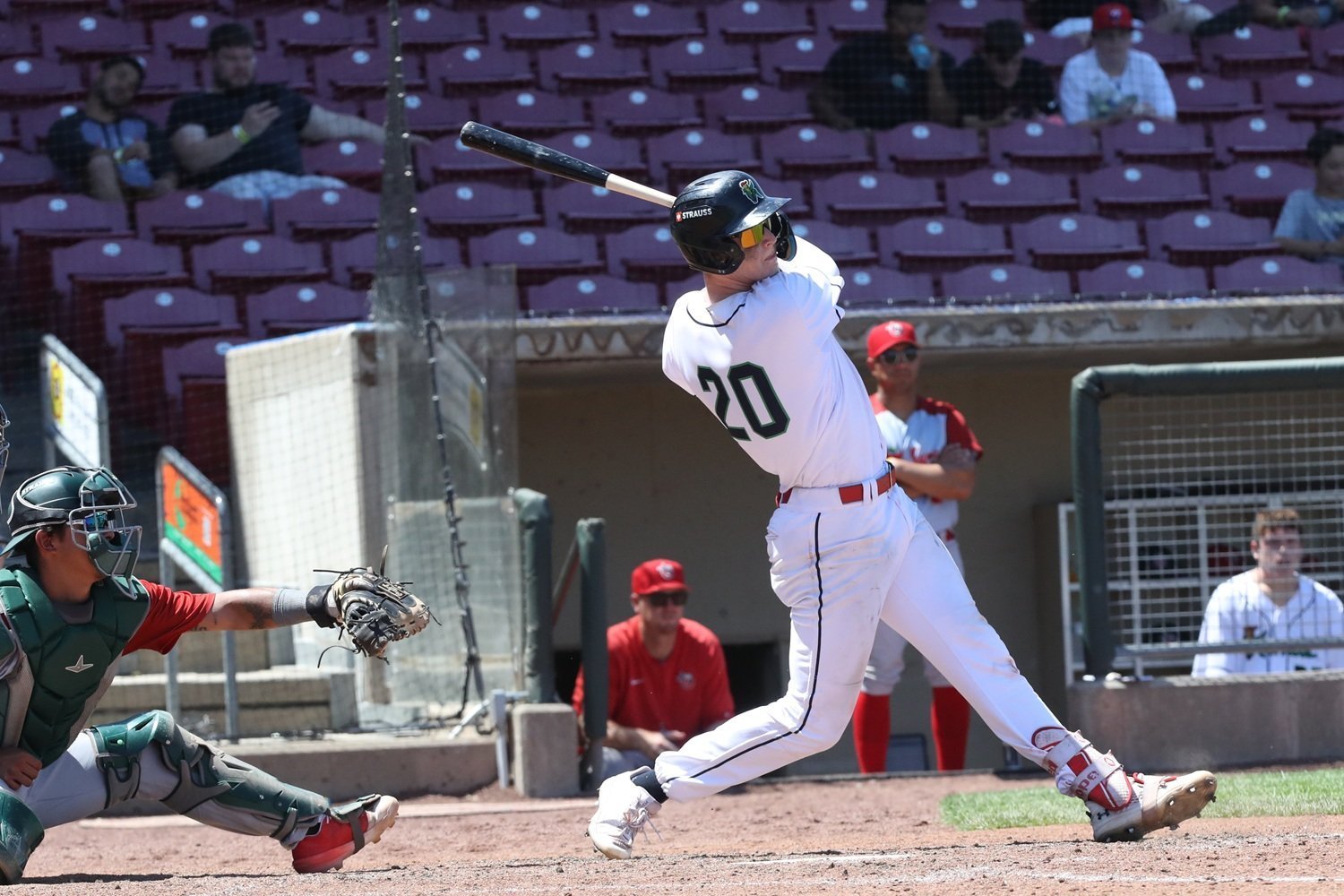 Every prospect reaches a point where projection gives way to proof. For Brandon Winokur, that next step has arrived. Minnesota promoted the 21-year-old to Double-A Wichita after another intriguing stint at High-A Cedar Rapids. It isn't a promotion offered because he has answered every question about his game. Instead, it's an opportunity to answer one of the biggest questions remaining: whether one of the organization's highest-upside athletes can begin turning tantalizing tools into a complete package against upper-level competition. The Twins have always believed Winokur was worth the gamble. Now comes the biggest test of his young professional career. A Rare Draft Profile When the Twins selected Winokur in the third round of the 2023 MLB Draft, they weren't drafting a polished high-school hitter. They were betting on traits that simply don't come around very often. At 6-foot-6, Winokur was an unusual shortstop with flashes of all five tools. His size, athleticism, plus arm, power potential, and speed made him one of the more fascinating players in the draft class. Those same tools also came with significant questions about his hit tool and whether he would sign instead of honoring his commitment to Texas Tech. Minnesota believed enough in the upside to offer him a $1.5-million signing bonus (essentially second-round money) to bring him into the organization. Since then, his professional career has looked much like evaluators expected: equal parts exciting and frustrating. Flashes of the Ceiling Winokur's first two full seasons have showcased why the Twins were willing to invest heavily. He's developed into one of the better athletes in the system, while proving he can stay on the infield much longer than many expected. When he was drafted, some scouts believed his size would quickly force a move off shortstop. Instead, his agility, flexibility, and athleticism have allowed him to continue handling the position while also seeing time at third base and all three outfield spots. That defensive versatility dramatically raises his floor. Offensively, the power-speed combination has been impossible to ignore. Last season, he tied for the Midwest League lead with 17 home runs while stealing 26 bases. Few players in the organization possess that kind of raw power combined with above-average speed. The challenge has never been whether the power exists. It's getting to it consistently. Throughout his career, Winokur's swing has produced too many pull-side ground balls and opposite-field flares, instead of hard contact in the air. The Twins have worked with him on adjustments designed to help him find the barrel more consistently and unlock the elite raw power that's been evident since high school. Another Encouraging Season Returning to High-A in 2026 wasn't the most exciting assignment, but it gave Winokur another opportunity to refine his approach. In 74 games with Cedar Rapids, he hit .252/.362/.421 with 13 doubles, two triples, 10 home runs, and 19 stolen bases in 25 attempts. Perhaps the most encouraging development was his improved plate discipline. His walk rate climbed to 12.6%, more than four percentage points better than last season, showing a more mature approach and improved strike-zone awareness. That's an important step for a hitter whose offensive value depends on getting into favorable counts. However, the strikeout concerns remain. Winokur struck out in 29.4% of his plate appearances, nearly five percentage points higher than last season. His contact rate remains below 60%, highlighting the biggest obstacle standing between him and becoming an everyday major leaguer. Even so, there are reasons for optimism beneath the surface. More than 83% of his plate appearances came against pitchers older than him, but he produced an impressive .836 OPS against those opponents. Considering he spent the year facing more experienced competition, his offensive production becomes a bit more encouraging. What Double-A Will Reveal The jump to Double-A is often where prospect dreams become reality, or where flaws become impossible to ignore. For Winokur, it's less about the box score and more about the quality of his at-bats. Texas League pitchers will consistently attack the weaknesses that have followed him throughout his career. Elevated fastballs have given his long levers trouble, while quality breaking balls have exposed inconsistent pitch recognition. Those issues become far more pronounced against experienced upper-level pitchers capable of executing good game plans. The Twins don't necessarily need him to eliminate strikeouts. Plenty of productive power hitters strike out at high rates. Instead, they need him to prove the contact can reach an acceptable level while continuing to impact the baseball when he does connect. If the swing decisions continue improving and the contact quality remains strong, the rest of his offensive profile starts to look much more realistic. Even if he never develops into an everyday middle-of-the-order bat, Winokur's athleticism gives him multiple paths to contributing in the majors. He has the defensive versatility to play shortstop, third base, and all three outfield positions, including center field. His arm strength and range make him a legitimate late-inning defensive weapon, and his power against left-handed pitching could eventually carve out a valuable role. The Next Step Prospect development is rarely linear, especially for players with Winokur's profile. The Twins knew they were drafting one of the highest-risk, highest-reward players in the 2023 class. Three years later, both sides of that equation remain true. The tools still jump off the field. The athleticism is still exceptional. The power remains among the best in the organization. Now, Double-A will determine whether the bat is beginning to catch up. If Winokur can make enough contact against more advanced pitching while continuing to control the strike zone, his ceiling becomes much more than an intriguing collection of tools. If the contact issues persist, his future may still be valuable, but likely in a versatile utility role, rather than as an everyday regular. Either way, Wichita represents the most important checkpoint of his professional career, and perhaps the clearest indication yet of what Winokur can ultimately become. What does Winokur need to improve at Double-A? Leave a comment and start the discussion. View the full article
 -
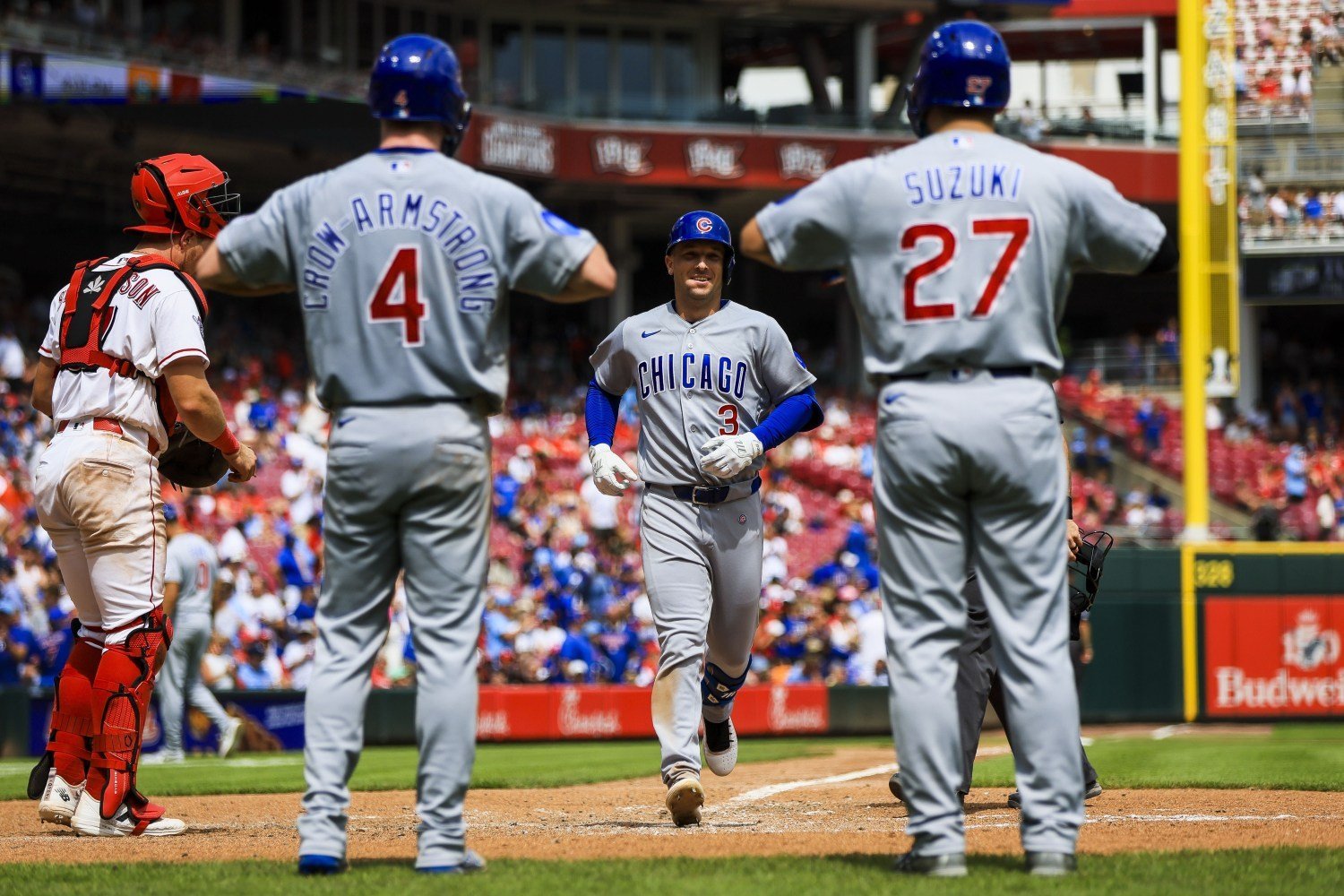 Resilience in baseball must take many forms. Teams and players have to shake off personal setbacks and off-field distractions. They have to withstand injuries and gut-wrenching losses and show up the next day ready to win. They have to perform even when dead tired. The Cubs haven't passed those tests at all turns this season, but heading into a weeklong road trip before the All-Star break, they were in a good position, with a chance to further strengthen it. First up, the team paid a visit to the Baltimore Orioles, a team who got slammed with as much adversity as Chicago has this year but hasn't handled it as smoothly. Matthew Boyd toed the rubber for the North Siders, picking up the win and a quality start by going six scoreless innings and surrendering just three hits. He appears much more in control on the mound of late, and gave his offense (fueled by a two-RBI day from Alex Bregman) the opportunity to put just enough cushion between them and the O's in a 5-2 win to open the series. Despite being outhit 14 to 8 in the middle contest of the three-game set in Charm City, the North Siders secured a 9-7 win. All-Star center fielder Pete Crow-Armstrong crushed two long balls, one to deep right field and one to right-center, to reach the 20/20 mark (20 stolen bases and 20 home runs) for the second straight year. Michael Conforto and Carson Kelly chimed in with big hits to help Chicago hold off the O's on a night when the pitching staff showed its cracks. The home team spoiled a nine-hit day for the visitors in the finale, salvaging one in the series with a 3-2 victory over the North Siders. Encouragingly, starter David Peterson bounced back from a dismal showing in his previous turn, as he managed five innings of work, allowing just one earned run, though walking four. Squandered opportunities doomed the Cubs, who went just 1-for-9 with RISP. The next day, the weary travelers arrived at Great American Ballpark to do battle in their final series before the All-Star break, a three-gamer with the division rival Cincinnati Reds. They couldn't get anything going against Hunter Greene and the Reds. Greene set down 12 Cubs batters via the strikeout in one of his sharpest outings of the season. That made waste of a good showing from Shota Imanaga, who allowed just one run over five innings. Chicago dropped the opener 4-0. Wiping away the stain of two consecutive deflating losses, the Cubs bounced back Saturday with a 5-3 win. Fans have waited most of the first half to witness starting third baseman Alex Bregman heat up, and that wait might have ended. With the game tied in the seventh inning, Bregman drilled a go-ahead, two-run home run to left field. Outside a lone run coughed up by Drew Pomeranz, the bullpen rose to the occasion, blanking the Reds in the final three frames. Bookending a strong week on the bump, starter Matthew Boyd tallied his fifth win of the year in an 8-4 triumph Sunday to sail into the intermission. Boyd lasted 6 1/3 innings, allowing four earned runs. A gargantuan day from the lilliputian Bregman helped his squad win the day. His towering, three-run blast in the seventh blew the game open. The win was the club's 54th of the year, ending a consistent run of victories from the end of June into mid-July. And with that, the first half of the 2026 MLB season draws to a close. Though they're diminished by injury and sit a handful of games behind the powerhouse Brewers, the Cubs have just as much to play for now as they did in the campaign's nascent stages. They've already survived a lot. Now, they get a chance to recharge and reset, before a furious finish in which they have to switch into 'thrive' mode. View the full article
 -
 For much of the 2026 season, the bullpen has been a strength of the Miami Marlins. The unit has leveraged its ample depth and variety of skill sets. Miami's relievers were particularly vital during a record-setting month of June, when the Fish were patching things together with only two conventional starting pitchers at times. Heading into the All-Star break, however, the 'pen is now a source of anxiety. The July 5 implosion in relief of a perfect Eury Pérez was a turning point. A series of significant injuries has compounded the issue—the Marlins are still without a timeline for Anthony Bender's return, while John King, William Kempner and Michael Petersen each got hurt themselves last week. Meanwhile, right-hander Jack Ralston continues to quietly throw up zeroes with Triple-A Jacksonville. If common sense prevails, his next outing will come at the major league level. Ralston is not being "rushed" to the majors in any sense. The St. Louis Cardinals drafted him out of UCLA way back in 2019 and he's been pitching in the upper minors since 2023. A month from now, he'll be turning 29. The Marlins signed Ralston as a minor league free agent this past offseason and he turned heads immediately with six scoreless appearances in spring training. It's been more of the same through 31 games with the Jumbo Shrimp, as his 1.07 ERA leads all Triple-A pitchers with a comparable number of innings. No opponent has plated a run against him since June 18 and he hasn't allowed multiple earned runs at any point this year. His 9.7% walk rate is the best of his professional career. Ralston's arsenal consists of a splitter, four-seam fastball and slider, with the split being his go-to offering. Its overall usage is nearly 50%, accounting for 48 of his 63 total strikeouts (76.1%). It's largely why he has been even more effective against left-handed batters (.432 OPS allowed) than righties (.516 OPS). The only active Marlins arms who use a splitter regularly are Tyler Phillips and Lake Bachar, and neither of them have an over-the-top release like Ralston. Even putting pitch quality aside, the contrast in style between him and his teammates would be valuable. Ralston's fastball velocity is merely average for a righty reliever and he doesn't induce ground balls at a particularly high rate. He's still allowing home runs as often as he did in previous years, hence his nice-but-not-noteworthy 3.52 FIP. Success against MLB competition is far from guaranteed, but under the present circumstances, he deserves an audition with the Marlins. The trade deadline is only three weeks away and the Marlins need to seek reinforcements. In order for them to confidently remove "bullpen help" from their shopping list, they either need rapid recoveries from the aforementioned injured guys or glimpses of excellence from other internal options. There's nothing more that Ralston can do at Triple-A to prove himself—it's time to test him against the top talent on the planet. The only "obstacle" standing in Ralston's way, if you want to call it that, is securing a 40-man roster spot. But the Marlins could go in multiple directions, even without transferring anybody to the 60-day IL. The most straightforward move would be designating fellow reliever Zach Brzykcy for assignment in a corresponding move. Third-string catcher Brian Navarreto and strikeout-prone outfielder Rece Hinds are also DFA candidates, with the Marlins recalling a 40-man bat like Connor Norby or Agustín Ramírez to fill their shoes on the active roster in those scenarios. A theme of the Peter Bendix era has been turning cheap acquisitions into legitimate contributors. Jack Ralston could be the latest example of that. He ought to be promoted once the Marlins resume play on Friday. View the full article
 -
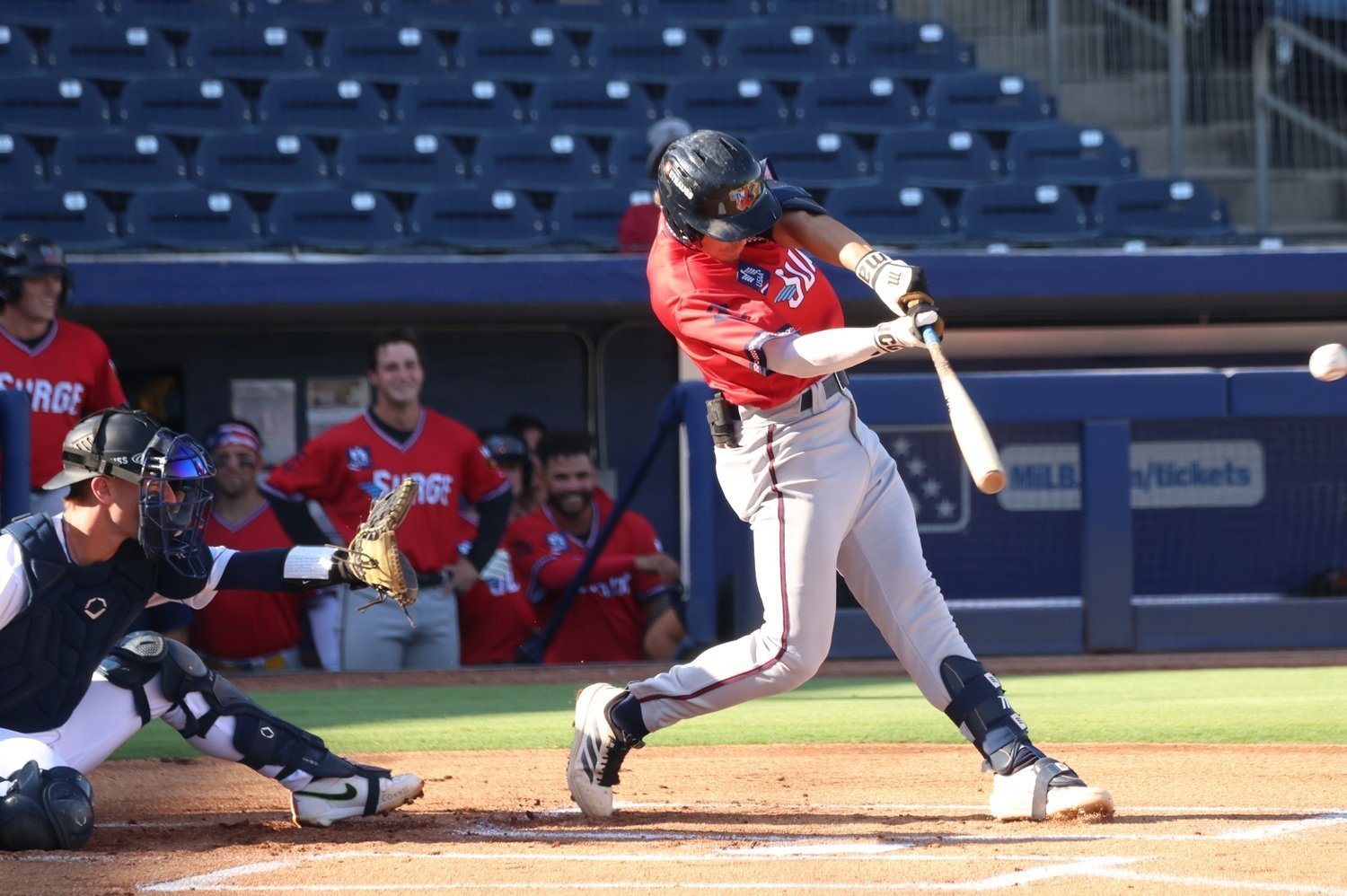 The MLB Draft always brings a fresh wave of excitement to an organization’s farm system. The Twins added an influx of talent during the 2026 MLB Draft, and depending on how quickly those players sign and get acclimated, some could find their way into affiliated action later in the second half. A strong finish could even put a few new names on the Twins Prospect Hot Sheet before the season comes to a close. Before that happens, several players already in the system are making sure they remain part of the conversation. The Wichita Wind Surge have been one of the biggest sources of recent production, with a trio of prospects showing why the Twins continue to have one of baseball’s deepest pipelines. Here are this week’s hottest performers. SS Marek Houston — Wichita Wind Surge How He Got Here: Houston entered the 2025 MLB Draft as one of the most intriguing college bats available. The Wake Forest shortstop spent three seasons as the Demon Deacons’ everyday shortstop, earning the position as a freshman because of his defensive ability before gradually developing into a complete player. A swing adjustment before his junior season unlocked another level offensively. Houston began impacting the baseball more consistently, launching 15 home runs while posting a 1.055 OPS. That offensive breakout pushed him into the middle of the first round, where the Twins selected him and signed him for $4.5 million. After signing, Houston made his professional debut with a 24-game stint split between Single-A Fort Myers and High-A Cedar Rapids. He returned to Cedar Rapids to begin the 2026 season, but his performance quickly forced the organization to challenge him at the next level. Hitting the Hot Button: The biggest question surrounding Houston entering professional baseball was whether his offensive development would continue against more advanced pitching. Early returns suggest the Twins may have found an answer. Houston appeared in six games for the Wind Surge this week and collected eight hits in 26 at-bats (.308), including a double, a triple, a home run, and seven RBI. He came just one double shy of hitting for the cycle Tuesday against Northwest Arkansas. Before earning his promotion, Houston posted a 126 wRC+ with an .867 OPS in Cedar Rapids. The defensive ability was never in question, but his offensive ceiling was the biggest factor in determining his future. So far, Houston has shown the bat is capable of catching up with his glove. OF Caden Kendle — Wichita Wind Surge How He Got Here: Kendle has taken a slightly longer road through the Twins organization, but his offensive track record has always stood out. Minnesota selected him in the fifth round of the 2024 MLB Draft out of the University of California, Irvine. The Cardinals had previously drafted him in 2023, but Kendle elected to return to school for his senior season. That decision paid off as he finished his collegiate career with a .983 OPS, including a dominant senior year where he posted a 1.069 OPS with 28 extra-base hits in 51 games. The Twins sent Kendle to Fort Myers after signing, and he immediately showed his offensive potential with a 120 wRC+ across 22 games. He spent the entire 2025 season with Cedar Rapids, producing a 103 wRC+ with a .705 OPS, 19 doubles, and eight home runs over 97 games. Hitting the Hot Button: The Twins sent Kendle back to Cedar Rapids for the start of the 2026 season, despite the fact that he was nearly two years older than the average player in the league. He responded by showing exactly why he was ready for a new challenge. Kendle posted a .916 OPS across 32 games with the Kernels before earning a promotion to Double-A. The 24-year-old continued that production during his first week with the Wind Surge. In four games, Kendle went 9-for-16 (.563) with a double, a home run, six RBI, and four walks. He wasted no time making an impact after arriving in Wichita, hitting a home run in his first game Tuesday against Northwest Arkansas. For a prospect who has consistently produced while climbing the ladder, the next test will be proving that his bat can continue to play against more advanced pitching. RHP Ruddy Gomez — Wichita Wind Surge How He Got Here: Gomez’s path through professional baseball has been anything but traditional. After going undrafted out of Central Florida, he spent time playing independent baseball before earning an opportunity with the Twins organization ahead of the 2025 season. Minnesota quickly discovered a valuable bullpen arm. Gomez began the year moving from the Florida Complex League to the Midwest League while working exclusively as a reliever. In 30 appearances, he posted a dominant 1.58 ERA with a 0.92 WHIP, a 33.1 K%, and a 5.8 BB%. His performance made him one of the most effective relief pitchers in the entire Twins system. Hitting the Hot Button: The Twins rewarded Gomez’s breakout by pushing him to Double-A in 2026, where he entered the season more than a year older than the average player in the league. That age difference hasn’t stopped him from continuing to miss bats. Gomez, 26, appeared in two games for the Wind Surge this week, striking out five of the nine batters he faced while issuing one walk across 4.0 innings. His season numbers remain impressive, with a 2.63 ERA, a 1.46 WHIP, a 35.4 K%, and a 7.7 BB%. Relievers often have to move quickly through the minor league system, and Gomez continues to make a strong case that he deserves opportunities against higher-level competition. The Twins’ 2026 MLB Draft class has added another layer of talent to an already deep farm system. Some of those new additions could begin their professional journeys soon and potentially force their way onto future editions of the Prospect Hot Sheet. For now, the spotlight belongs to the players already proving themselves. Houston is showing that his bat belongs alongside his defensive reputation, Kendle continues to hit at every stop, and Gomez remains one of the organization’s most dominant bullpen arms. The second half is just beginning, but the Twins’ farm system continues to provide plenty of reasons for optimism. What stands out about this trio? Leave a comment and start the discussion. View the full article
 -
3 Questions Royals Must Ponder During the All-Star Break
DiamondCentric posted an article in Royals Keep
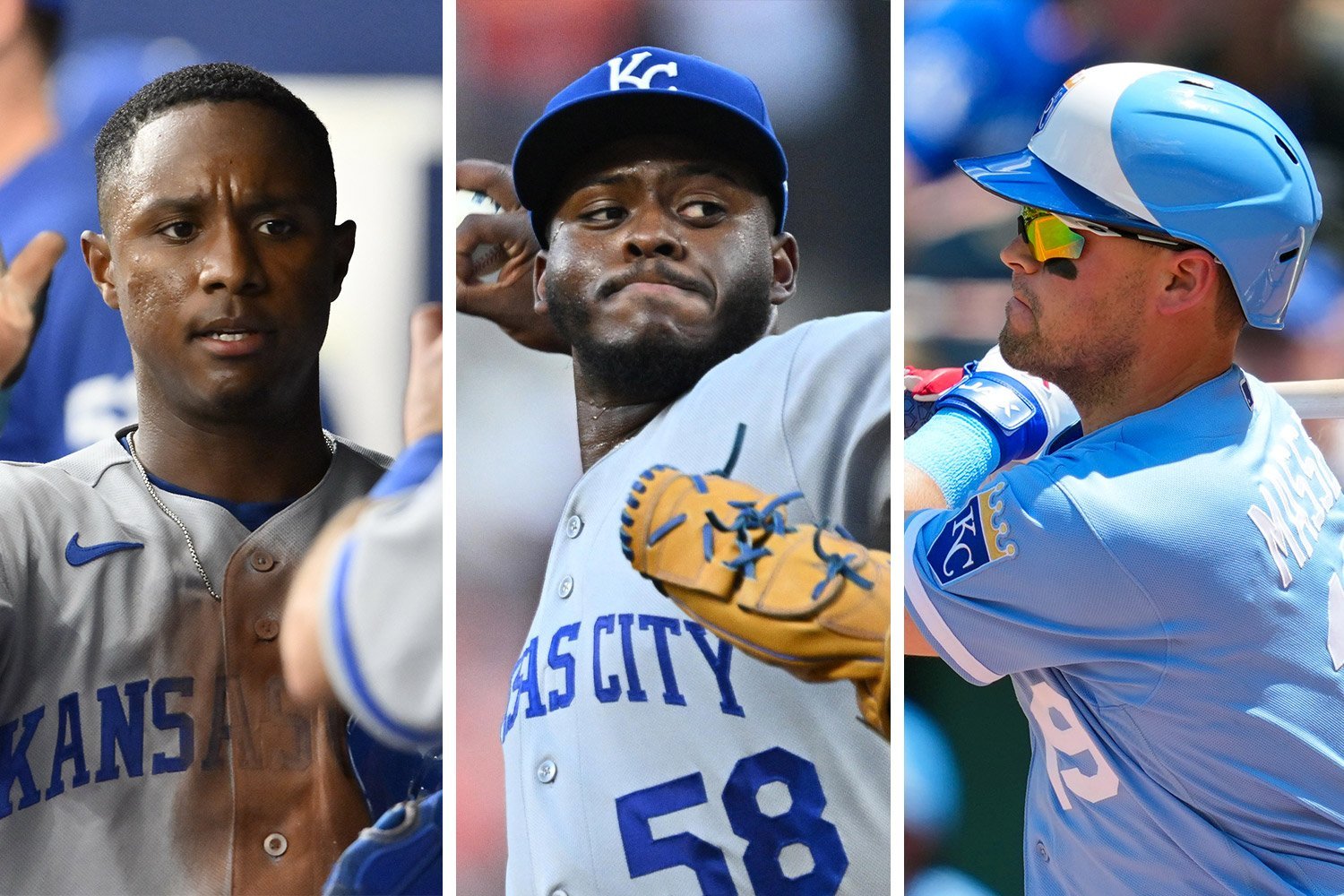 Ravaged by injuries, beleaguered by a bad bullpen, and plagued by a chronically inconsistent offense, the Kansas City Royals lost their fifth straight game Sunday to drop a season-worst 21 games under .500, then limped out of Baltimore and scattered for the All-Star Break with a firm, perhaps unbreakable, grip on last place in the American League Central. As convenient as it might be, the Royals can't blame injuries alone for their failures and flaws. Tough questions, unfortunately, too numerous to cover in a single read, must be resolved before next season begins. Here are just three the club should ponder over the All-Star Break. Should the Royals Have Tyler Tolbert On The Trade Deadline Market? No. The more he plays, the better he looks, and he’s the kind of role player the club typically covets — he’s versatile, speedy, and capable of swinging a pretty nice bat. Add to that mix the five more full seasons he’s under team control, and Tolbert is a player worth keeping. Tolbert’s numbers tell the tale. Boosted by his recent major league record-tying streak of hitting safely in 12 straight plate appearances, he’s slashing .370/.407/.500 with a 152 wRC+ and .907 OPS in 32 games. He hit .280 in 64 games during his big league debut season last year. His 10 steals are second on the club, only to Bobby Witt Jr.’s 30 this season. He swiped 21 bases in 23 attempts in 2025, and he boasts 95th percentile sprint speed. Tolbert also gives manager Matt Quatraro valuable defensive options. He’s played everywhere on the field except first base and catcher. No Gold Gloves seem to be in his future, but his defense is serviceable. Could Tolbert attract attention as the August 3 trade deadline approaches? Certainly — he’d give contending clubs some game-changing speed in late-inning situations, and down-the-stretch defensive flexibility. But because he’s a role player, not a starter, he won’t net the kind of big, major league-ready return the Royals need if they hope to get back in the playoff hunt next season. Best to keep him. What Should The Royals Do With Luinder Avila? The issues troubling Kansas City’s rotation dictate the answer to this question. Injuries have sidelined Cole Ragans for this season and a significant part of next, and Kris Bubic for who knows how long. Seth Lugo and Michael Wacha have struggled at times, and Noah Cameron, while respectable in his present work, isn’t quite the success story he was in 2025. All that leaves Avila’s June switch from the bullpen to the rotation a move that will likely last. And that’s alright. Despite heading to the pen after giving up five runs in a three-plus-inning start against Milwaukee in KC’s seventh game of the season, and Houston battering him for eight runs in just two-thirds of an inning in his third start after returning to the rotation June 1, he’s holding his own as a starter. In fact, he’s 3-0 with a 3.65 ERA and 22 strikeouts in five starts and 24.2 innings since the Astros clobbered him at The K a month ago. And although his overall nine-start ERA is 5.87, it would be a much more palatable 4.06 without that catastrophic outing against Houston. Avila’s spot in the rotation, then, is pretty secure. That’s also where, notwithstanding some not-so-subtle fan and media sentiment to the contrary, the Royals seem to prefer him to work. Yes, his control and command require improvement (he’s walking 13.7% of batters he faces and almost 5½ every nine innings), but he’s been serviceable during his club’s tough times. Look for Avila to finish this season and begin the next in the rotation, Can Michael Massey Hang On To His Royals Job? Second base has long been a KC concern, but Massey appears to be waging a successful battle to regain the position he seemed to have won in 2023. That’s the season he hit only .229 but cracked 15 homers and drove in 55 runs across a 461-plate appearance, 129-game campaign. He also sparkled defensively, finishing among the top American League second basemen in OAA in the American League and with the top second base fielding percentage in the majors. And despite the troublesome back that trimmed his 2024 season to just 100 games, he still homered 14 times and improved his average to a more than acceptable .259. Still, the Royals weren’t sold on Massey and traded for Cincinnati’s Jonathan India after the season ended. The move seemed somewhat prescient when Massey spent much of the 2025 season on the Injured List. But despite the high price they paid for him — it took sending Brady Singer to the Reds to get him — India wasn’t the keystone solution. He disappointingly slashed .233/.323/.346, hit only nine homers, and his 89 wRC+ left much to be desired. And now, he’s out for the season after suffering a shoulder subluxation in April. Massey, though, is making the best of the situation in which India’s shoulder injury placed him. Remaining relatively injury-free, he’s hitting .260, his seven homers have him on pace to finish near his decent 2023 and 2024 totals, and his nine OAA are tied for the best in the AL and tied for third-best in the majors. Simply put, and barring a disastrous finish to his season, the second base job should be considered Massey’s. Declaring it so frees up the Royals to pursue greater needs at the trade deadline and during the upcoming offseason, and allows them to move on from India, who’s eligible for free agency when the World Series ends. View the full article
 -
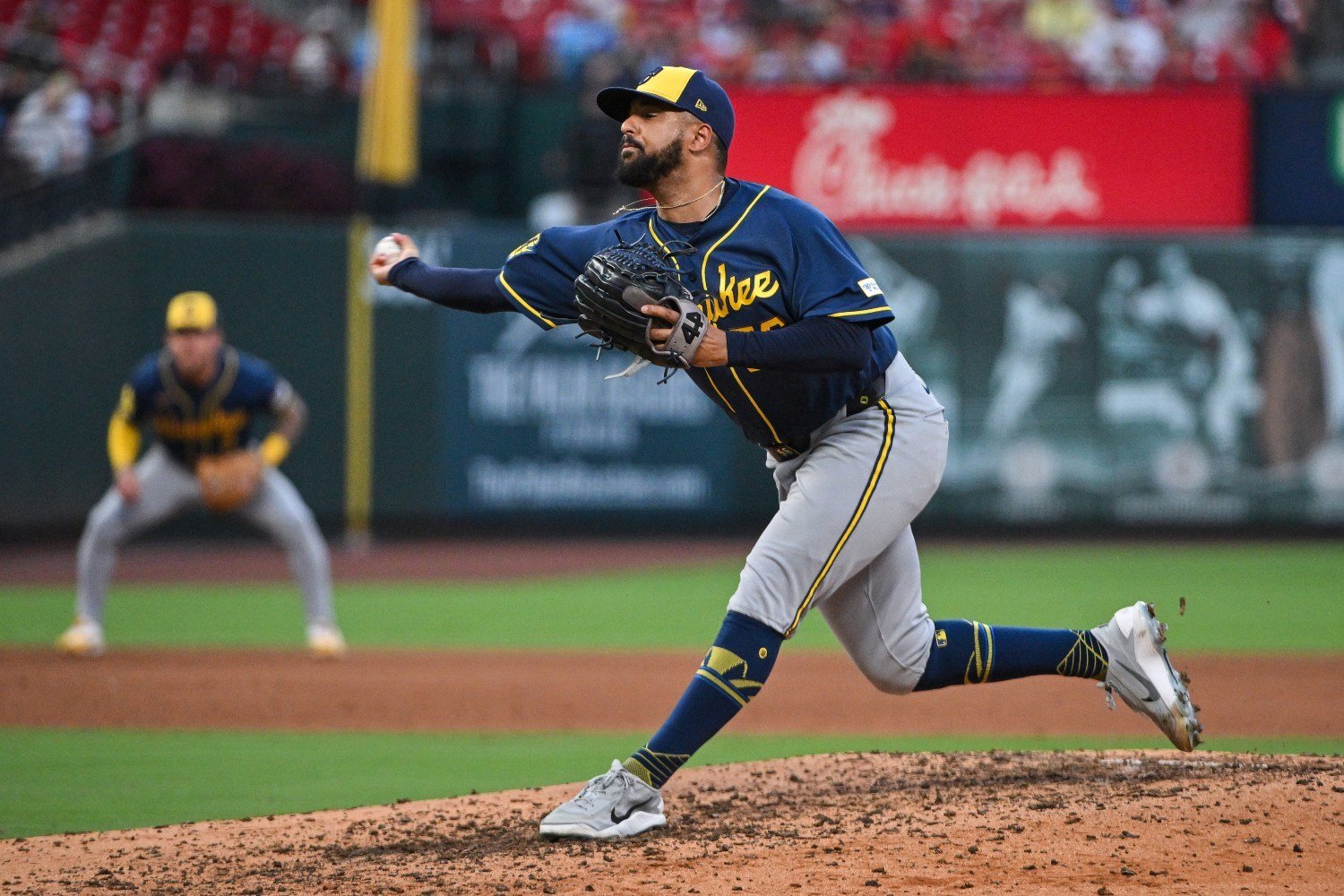 At first glance, it doesn’t look like much has changed for Grant Anderson. After emerging as a versatile and durable middle reliever in his first season with the Brewers last year, the right-hander has resumed that role in 2026 with the same results. From a process standpoint, however, Anderson has not been quite the same guy. He’s issued slightly more walks, and his strikeout rate has dropped by five percentage points. As a result, most ERA estimators believe he’s pitched a bit worse than last year, and it looks as though an abnormally low batting average on balls in play is helping him maintain that shiny ERA. Season K-BB% BABIP ERA xERA FIP DRA- 2025 15.1% .274 3.23 3.72 3.84 91 2026 8.9% .221 3.32 3.30 4.44 108 Aside from those increased walks, it’s not really fair to say that Anderson has pitched worse this season. The real takeaway is that his stuff is playing differently, particularly his signature four-seam fastball. When Anderson arrived in Milwaukee, he and the Brewers originally leaned into a sinker-sweeper approach and worked in a few elevated four-seamers to left-handed hitters. Over time, that four-seamer took over as Anderson’s primary fastball, becoming just as integral to his breakout as his new sweeper. The key was his low arm slot, which made it look like the ball was rising as it entered the top of the zone. Despite its pedestrian velocity, opponents whiffed on nearly 40% of swings against Anderson’s four-seamer because it was so challenging to get the bat on top of it. This year, his slot has increased ever so slightly, creating a ripple effect on how that fastball plays. Season Arm Angle IVB VAA Whiff% Under% LA wOBAcon 2025 8° 12.2 -3.51 39% 68% 28° .383 2026 12° 12.6 -3.87 23% 48% 35° .340 The change is most reflected in the vertical approach angle of Anderson’s fastball, which measures the steepness at which the pitch crosses home plate. Last year, it had the ninth-lowest VAA among qualified four-seamers, meaning it entered the zone at one of the flattest angles in baseball, prompting so many swings underneath the ball. This year, its VAA ranks 19th. That’s still elite, but in a game of inches, it reduces how far underneath those swings are. Fewer swings from opposing hitters have been underneath Anderson’s four-seamer this year, which is a big reason why it’s gotten significantly fewer whiffs. However, the average launch angle against it has increased. That means many of those swings and misses have instead become high fly balls and pop-ups, which are still nearly automatic outs. It’s a slightly different way of getting to the same result. The small change to his arm slot has effectively transformed Anderson from a swing-and-miss pitcher to a pop-up king. His whiff rate has dropped from an excellent 30.9% last year to a below-average 24.1% this year, but his 13.8% pop-up rate ranks ninth among qualified pitchers, according to Statcast. Pitchers who allow such high fly balls usually have a lower opponent BABIP, so Anderson is not necessarily getting lucky that more of them are finding gloves. It’s why xERA (a Statcast-based metric that looks at how often batted balls of each exit velocity and launch angle combination go for hits) believes he has actually been better, even as most of his peripheral stats have taken a step backward. Hitters are making more contact, but in ways that typically lead to fewer hits. Ideally, Anderson will rediscover that lower release, allowing him to be a more balanced pitcher who can get swings and misses when he needs them. But outs are outs, and he still has a reliable way to get them. View the full article
 -
 Omaha beat Louisville 7-2 behind Mitch Spence, who struck out five over 5 2/3 innings, and three hits from Brett Squires. Quad Cities drew eight walks and topped Peoria 8-6, with Erick Torres going 3-for-3 and Tyson Guerrero striking out four in two perfect innings. Ryan McDonagh threw three scoreless innings, but Columbia lost 8-4 to Salem in 10 innings. Carson Roccaforte tripled and scored, but Northwest Arkansas fell 8-5 at Wichita. Kansas City Royals Transactions No Roster Moves Squires, Drury Lead Storm Chasers Past Louisville The Omaha Storm Chasers collected 14 hits and beat the Louisville Bats 7-2 on Saturday. Squires went 3-for-5 with two doubles and scored twice, Brandon Drury doubled, drove in two runs, and walked three times, and Drew Waters went 2-for-4 with a double and an RBI. Omaha took the lead in the second inning when Luca Tresh singled, moved up, and scored on a Waters double. Louisville tied it in the third, but the Storm Chasers answered with three runs in the fourth. Tresh walked and scored on a sacrifice fly by Andrew Velazquez, and Matthew Lugo followed with a two-run double that brought home Drury and Waters for a 4-1 lead. Former first-round pick Gavin Cross added an RBI single in the fifth, and Drury capped the scoring with a two-run double in the ninth that scored Squires and Cross. Spence started and turned in a strong outing, allowing one run on five hits with two walks and five strikeouts over 5 2/3 innings. Oscar Rayo recorded the final out of the sixth. Vince Velasquez, making his Omaha Storm Chasers debut, allowed one run over two innings with two strikeouts, and former Twins reliever Justin Topa worked around two hits and a walk in a scoreless ninth. Omaha drew five walks and left 11 runners on base. They went 6-for-16 with runners in scoring position. They head into the All-Star Break with a 40-52 record. Player AB R H RBI BB K Matthew Lugo 5 0 1 2 0 1 John Rave 5 0 2 0 0 0 Abraham Toro 5 0 2 0 0 1 Brett Squires 5 2 3 0 0 1 Luca Tresh 4 2 1 0 1 2 Gavin Cross 5 1 2 1 0 2 Brandon Drury 2 1 1 2 3 0 Drew Waters 4 1 2 1 0 1 Rudy Martin Jr. 0 0 0 0 1 0 Andrew Velazquez 4 0 0 1 0 1 Player IP H R ER BB K HR Mitch Spence 5 2/3 5 1 1 2 5 0 Oscar Rayo 1/3 0 0 0 0 0 0 Vince Velasquez 2 3 1 1 0 2 0 Justin Topa 1 2 0 0 1 0 0 Naturals Fall Behind Early, Drop 8-5 Decision At Wichita The Northwest Arkansas Naturals lost 8-5 to the Wichita Wind Surge on Saturday despite a three-hit night from Jack Pineda, who went 3-for-5. Roccaforte, the Royals' No. 8 prospect, led off the game with a triple and came around to score on a fielding error by the right fielder. Wichita answered with a run in the first and two in the second, one scoring on a throwing error by catcher Canyon Brown. The Naturals tied it at 3-3 in the third, when Spencer Nivens doubled home Pineda, and Daniel Vazquez, the Royals' No. 18 prospect, brought in Sam Kulasingam with a groundout. The Wind Surge pulled away from there, unfortunately. Two solo home runs in the fourth made it 5-3, and Wichita added two more in the fifth on a sacrifice fly and a steal of home. Northwest Arkansas got two back in the sixth, with Vazquez scoring on an Alberto Rodriguez forceout and Colton Becker scoring on a Brown sacrifice fly, but Wichita answered with a run on a passed ball in the bottom half. Hunter Owen started and allowed five runs, four earned, on seven hits with one walk, four strikeouts, and two home runs over four innings. Anthony Simonelli allowed two runs in an inning of work. Chase Jessee allowed an unearned run with two strikeouts. Frank Mozzicato and Augusto Mendieta each threw a scoreless inning. Northwest Arkansas left eight runners on base and went 1-for-8 with runners in scoring position. They fall to 36-49 after the loss. Player AB R H RBI BB K Carson Roccaforte 5 1 1 0 0 1 Jack Pineda 5 1 3 0 0 1 Sam Kulasingam 4 1 1 0 1 0 Spencer Nivens 5 0 1 1 0 2 Daniel Vazquez 3 1 1 1 1 1 Colton Becker 3 1 0 0 1 2 Omar Hernandez 2 0 1 0 1 1 Alberto Rodriguez 4 0 0 1 0 1 Canyon Brown 3 0 0 1 0 1 Player IP H R ER BB K HR Hunter Owen 4 7 5 4 1 4 2 Anthony Simonelli 1 1 2 2 1 1 0 Chase Jessee 1 1 1 0 1 2 0 Frank Mozzicato 1 0 0 0 1 1 0 Augusto Mendieta 1 0 0 0 0 0 0 Torres Collects Three Hits As River Bandits Outlast Peoria The Quad Cities River Bandits drew eight walks and beat the Peoria Chiefs 8-6 on Saturday. Erick Torres went 3-for-3 with two RBI and scored twice, Nolan Sailors went 2-for-4 with a walk and two RBI, and Diego Guzman walked three times and scored twice. Trailing 1-0 in the second, Quad Cities loaded the bases on a Jose Cerice hit-by-pitch, a Tyriq Kemp walk, and a Torres single. After a flyout, Guzman walked to reload the bases, and Sailors drew a bases-loaded walk to score Kemp. Torres then scored on a wild pitch, and No. 9 prospect Asbel Gonzalez singled home Guzman to give the River Bandits a 3-1 lead. The River Bandits added single runs in the third and fifth, both on plays by Torres: a sacrifice fly and an RBI single that each scored Luke Pelzer. Gonzalez singled home Guzman again in the sixth, and Quad Cities tacked on two in the seventh when Kemp scored on a Guzman groundout, and Torres scored on a Sailors single. David Shields, the Royals' No. 2 prospect, allowed three runs on four hits with two walks and four strikeouts over three innings. Tyson Guerrero retired all six batters he faced, striking out four over two perfect innings. Aiden Jimenez allowed an unearned run over three innings with three strikeouts, and Yimi Presinal allowed two runs in the ninth while striking out three. The River Bandits left 10 runners on base and went 6-for-18 with runners in scoring position. Quad Cities is now 41-42 this season after the victory. Player AB R H RBI BB K Nolan Sailors 4 0 2 2 1 1 Asbel Gonzalez 5 0 2 2 0 2 Ramon Ramirez 4 0 2 0 1 2 Luke Pelzer 3 2 0 0 2 1 Jose Cerice 2 0 0 0 0 1 Tyriq Kemp 4 2 1 0 1 0 Erick Torres 3 2 3 2 0 0 Trevor Werner 4 0 0 0 0 1 Diego Guzman 1 2 0 1 3 0 Player IP H R ER BB K HR David Shields 3 4 3 3 2 4 0 Tyson Guerrero 2 0 0 0 0 4 0 Aiden Jimenez 3 2 1 0 1 3 0 Yimi Presinal 1 3 2 2 0 3 0 Fireflies Lose Late Lead, Fall To Salem In 10 Innings The Columbia Fireflies led 3-0 through six innings but lost 8-4 to the Salem RidgeYaks in 10 innings on Saturday, wasting a 14-hit night. Hyungchan Um went 3-for-5 with a double and an RBI, and JC Vanek went 2-for-5 with a triple. Ivan Sosa opened the scoring with a solo home run in the fifth. Later in the inning, No. 10 Royals prospect Yandel Ricardo scored on a double by Um. Roni Cabrera made it 3-0 with a solo home run in the sixth. Salem got on the board with a solo home run in the seventh, then tied it with two runs in the ninth on an RBI double and an RBI single. The game unraveled in the extra innings for the Fireflies (unlike Saturday's win). Salem's zombie runner scored on a two-run home run, and a three-run home run later in the inning pushed the lead to 8-3. In the bottom half, Columbia's zombie runner, Um, took third on a Vanek groundout and scored on a Jhosmmel Zue single, but the Fireflies could get no closer. They went 3-for-18 with runners in scoring position and left 11 runners on base. McDonagh started and threw three scoreless innings, allowing two hits, two walks, and four strikeouts. Coleman Picard allowed one run on two hits with two walks and five strikeouts over five innings. Brandon Herbold allowed two runs in the ninth. Luis Valdez allowed five runs, four earned, and Randy Ramnarace struck out the only batter he faced. The Fireflies go into the All-Star Break with a 43-44 record. Player AB R H RBI BB K Yandel Ricardo 4 1 1 0 1 0 Stone Russell 5 0 1 0 0 0 Hyungchan Um 5 1 3 1 0 1 JC Vanek 5 0 2 0 0 1 Jhosmmel Zue 5 0 2 1 0 0 Connor Rasmussen 3 0 1 0 2 0 Roni Cabrera 5 1 2 1 0 1 Angel Ramirez 4 0 1 0 1 0 Ivan Sosa 3 1 1 1 0 1 Player IP H R ER BB K HR Ryan McDonagh 3 2 0 0 2 4 0 Coleman Picard 5 2 1 1 2 5 1 Brandon Herbold 2/3 2 2 2 1 1 0 Luis Valdez 1 4 5 4 0 0 2 Randy Ramnarace 1/3 0 0 0 0 1 0 Top-20 Prospect Performance Kendry Chourio: DNP David Shields: 3 IP, 4 H, 3 R, 3 ER, 2 BB, 4 K Josh Hammond: DNP Blake Mitchell: DNP Sean Gamble: DNP Ramon Ramirez: 2-for-4, BB, 2 K Drew Beam: DNP Carson Roccaforte: 1-for-5, 3B, R, K Asbel Gonzalez: 2-for-5, 2 RBI, 2 K Yandel Ricardo: 1-for-4, R, BB Michael Lombardi: DNP Ben Kudrna: DNP Justin Lamkin: DNP Felix Arronde: DNP Blake Wolters: DNP Steven Zobac: DNP Austin Charles: DNP Daniel Vazquez: 1-for-3, R, RBI, BB, K Kamden Edge: DNP Warren Calcano: DNP View the full article
 -
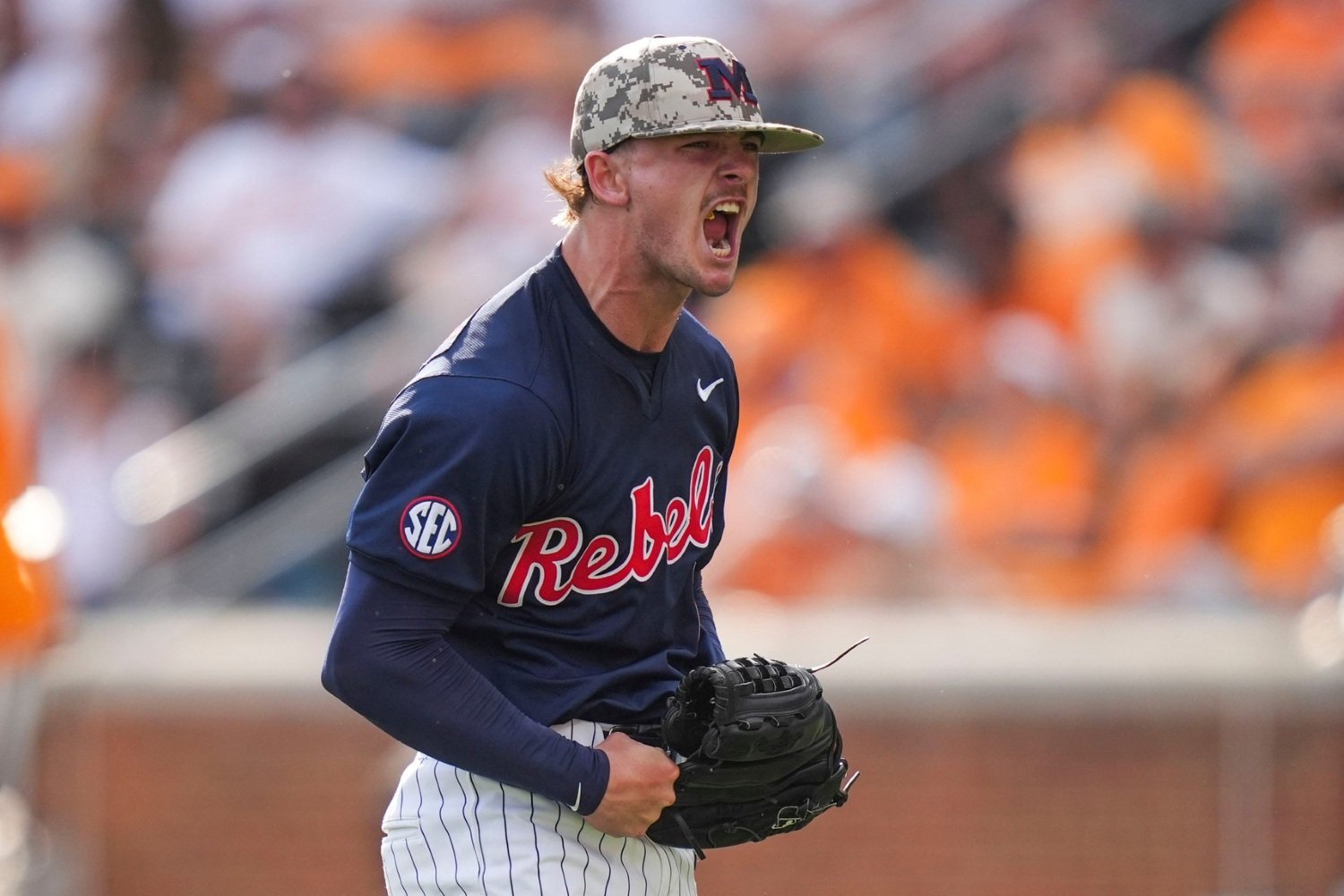 "Shoot for the moon, because even if you miss, you'll land among the stars." It's a cheesy line I read once as a kid in the back of a second grade classroom; if you were an attentive student (or the kind of inattentive one who looks for other things to read), chances are you saw something like this hanging up in school, too. Decades later, it remains a cheesy line, and yet, I cannot keep coming back to it when I think about the 2026 draft the Cubs just had. Let me explain. While the book is far from closed on the 2026 draft class (really, it's just beginning), there's a decidedly different feel to the Cubs' drafting strategy than in even the recent past. Maybe you caught the feeling it was different; maybe you didn't. I clocked it once the Cubs made their second pick, and it never went away. Hours after their last pick, it's still my biggest takeaway. My first sign things are a little different with this draft: the Cubs took 16 pitchers out of their total 20 picks. This should immediately ring alarm bells, because the Cubs are a bottom-5 team recently in draft spending on arms. This isn't entirely unprecedented. Chicago executed a similar strategy in 2022, when they also took 16 pitchers. It was a strategy that paid off, too, as a handful of those arms are still playing important roles in the organization: Cade Horton, Mason McGwire and Will Sanders. Despite the comparisons to 2022 on number of pitchers drafted, though, this group of picks stands out as quite different because of one new addition to the draft room: Tyler Zombro. For those unaware, Zombro was hired last year to fill the hole that was left when prior pitching guru Craig Breslow left to take control of the Boston Red Sox. Zombro is an up-and-coming name in the world of pitching, as he is one of the main minds at Tread Athletics. Tread is one of the most well-regarded pitching developmental firms in the nation, like Driveline. Since his hiring, Zombro has been promoted to Vice President of Pitching, showing belief in what he brings to the table. There have been some hallmarks of pitchers with whom Tread Athletics has worked, as well as pitchers the Cubs have targeted over the last two years. Favored hurlers generally throw from a lower arm slot and feature more horizontal movement (versus vertical movement) on their pitches. The Cubs have focused heavily on developing fastballs with cut-ride tendencies and tend to feature four-seam fastballs often in their arsenal. This isn't every pitcher, but a pattern has emerged both with who Zombro has worked with at Tread and who the Cubs have added. These fingerprints are all over the draft class. From an organizational standpoint, it makes sense that Zombro would have a heavy hand in the draft room. The team identified him as a rising talent, and within a year of their initial partnership, they promoted him to a senior position. If you trust him enough to promote him, you should trust him enough to lean on him on draft day. It's clear that the team deferred to his judgement on many players. Multiple players in this class have worked at Tread in the past, so the connections are clear. What I Liked The Cubs' strategy in terms of pitching was very clear this year. Every pitcher they took feels like they have a defined role. You don't have to squint to see what the team hopes Cade Townsend will become. Isaac Morton (6th round) looks every bit like a bullpen arm who kills righties, Cole Tryba (7th round) looks like a middle-innings lefty with a funky arm slot, and Chase Meyers (9th round) looks to be a leverage reliever. Last year, I wrote fairly positive things about third-round selection Dominick Reid. Reid had excellent pitch shapes, but the velocity was low-90s. You had to hope the Cubs could squeeze him and find two more ticks of velocity for him to really have a path. It's not a bad gamble (you're always gambling somewhere with a third-round pick), but the pathway for Reid was "find two miles an hour..." or what? He doesn't have much of a reliever profile, and at 92 MPH, he's a back-end rotation guy at best. There weren't many Dominick Reids this year, and certainly not that high in the draft. In the players the team selected instead, you can easily see the Zombro influence. Morton throws from a sidearm slot. Both Tryba and 8th-round pick Lance Williams also throw from funky, lower arm slots. You can see a bit of Trent Thornton in their motions. It should surprise no one that Thornton is a client of Tread, as well. Now, Thornton isn't an All-Star, but the foundations for what make him useful are his arm slot and velocity. These picks share similar traits, and it shouldn't be surprising to see the team continue to look for this general build of a pitcher where they can. This flows into the other thing I liked about the draft: In places, the Cubs swung big. Caden Sorrell and Myles Bailey are big-power, big-whiff upside plays. None of the pitchers are really playing it safe, either. There are a lot of guys who throw 95+ MPH, and you hope you get them to throw enough strikes. Carson Jasa (3rd round) is a prime example of this. Jasa stands 6-foot-7 and can work in the upper 90s, but the strike-throwing just isn't there right now. If it gets there, he's got massive upside. If he doesn't? Maybe it's a relief profile, or just a complete flameout. The team is really leaning into development this year overall, both offensively and defensively. Bailey sure strikes out a lot, but he also has some of the best exit velocity around. You trust that the organization can develop that. Jasa? Develop the fastball and the command, and you've got a special player. Fifth-round prep pitcher Dylan Blomker is another developmental prospect. Already hitting the mid-90s, his delivery is funky and he needs to learn consistency. But he's starting with the live arm the Cubs have needed for a long time. If you get it right with him, he has frontline, playoff-caliber starter upside. This type of draft class requires you to believe hook, line and sinker in your programs, but if your belief is correct and you remain patient, the rewards of this belief can be huge. This is probably not a class that will produce a lot of high-floor MLB talent. In most draft classes, you're lucky to find two or three meaningful contributors, and this class is more risky than that. But the Cubs weren't okay with just taking Adam Frazier-like second basemen. They took swings on guys who, if they miss, will never even reach the majors. However, if they hit, several of these guys have major upside, and I like the confidence. The Cubs have shown that they're capable at finding new blood for the system, so swing big. What I Didn't Like This is going to sound like I'm talking out of both sides of my mouth, but the Cubs have kind of had a good thing going under Dan Kantrovitz. They got off to a bit of a rocky start in 2020 and 2021, but since then, they've done a great job in the draft. It's resulted, so far, in Cade Horton, Matt Shaw, Cam Smith, Zyhir Hope, Jackson Ferris, Ethan Conrad, Josiah Hartshorn and a handful of others who have gotten top-100 mentions in one publication or another. A few of those names were top-20 picks, and others were players who were more slept on by publications, but the Cubs have had a strong eye for talent regardless of round. Some of these names have already become big-league contributors, while others are knocking on the door with their respective organizations. It's a little scary to take what's been working and change it, considering that kind of success. That's not to say it's been working perfectly; the Cubs don't have a ton of pitching stocked up in the lower levels. They've found guys like Jaxon Wiggins early, and a few later-round wins like Brooks Caple and Grant Kipp look like they might be MLB-quality, but for the most part, they haven't developed pitching and (outside of the 2022 draft) haven't invested in it. The flip side to that is that the Cubs have done a great job in position-player development. There's a chance that greater investment into pitching will pay off, but it also may not. Part of the reason the Cubs have found players in the draft, regardless of round, is that they've generally followed a draft concept of "hit over power" and "defense, defense, defense" when it comes to position players. This has paid off with guys like Hartshorn (not to dismiss his power potential, but his hit tool was the more defined tool on draft day) and Kane Kepley in the 2025 draft already, as well as players like Shaw and Smith, who were both very fast movers. Sorrell and Bailey are far more likely to faceplant in Double-A than any of the other big Cubs position-player picks recently. Bailey doesn't even have positional versatility; he's almost certainly stuck at first base. Thus, one of the things I liked the most (the reward for swinging big) is the one thing I disliked the most: the risk involved. It comes with the territory; but it doesn't mean I can't be a bit concerned with it, as well. Overall Thoughts I don't want to make it sound like I didn't like the draft. In fact, it's quite the opposite; I like this class a lot. It's short of an "A" grade, as there's no single prospect I'm over the moon about. (However, I'll admit I'm already a big Chase Meyers fan.) But I think it's the quintessential "B" grade, in that I can find something I like out of almost every pick. I can see pathways to MLB relevancy for almost every player whose name the Cubs called this weekend, but I wouldn't feel comfortable hitching my wagon to any single name today, either. There's a version of Cade Townsend who uses elite spin and plus velocity to rise to No. 2 in a rotation down the road. There's a version of the same pitcher whose delivery has too much movement, and the command never gets to where it needs to be against advanced hitting. One version of Bailey swats 40 home runs and is an All-Star at first base. Another version of him is a Double-A hitter who strikes out 40% of the time. It's just that kind of a draft—more so than others in recent years. Ultimately, it's a fun draft to dream on, and I think that's the best way to come out of the draft. It's a lot harder to dream on pitchability and 40-grade power than it is to do so on Caden Sorrell's swing or Carson Jasa's fastball. The risk involved is great—probably greater than the pitchability guys or your glove-first shortstops—but that's the kind of swing you have to take sometimes. It's never easy to say a team got a superstar, but this is the kind of draft (on paper) that could produce one or two guys who become special. It's also the kind of draft that could produce a lot of nothing. I keep coming back to that idea that you shoot for the moon. Maybe your favorite player in this draft doesn't become the next big thing, but then again, maybe mine will. View the full article
 -
 For the week, Wilson (4-1) won its series, while each of Nashville, Biloxi and Wisconsin managed to earn a 3-3 draw with their opponents. Transactions: RHP Coleman Crow activated by MLB Brewers from 15-day injured list and optioned to AAA Nashville RHP Garrett Stallings optioned to AAA Nashville from MLB Brewers The 2026 MLB Draft also continued on Sunday, with the Brewers making 16 selections: Round 1 Round 2 Round 3 Round 4 Analyzing 5th Round Pick Analyzing Rounds 6-10 Analyzing Rounds 11-15 Analyzing Rounds 16-20 Game Action: Futures Game: AL Futures 6, NL Futures 1 (in 7 innings) Box Score 19-year-olds SS Jesus Made and 3B Luis Pena started for the National League Future Stars in their contest in Philadelphia, with Made singling against 22-year old LHP Kade Anderson in the first inning, then smacking a 106.9 MPH RBI groundout to tie the game 1-1 his next time up. He flew out in his 3rd and final at-bat. Pena went 0-for-3, flying out to center field twice and left field his last time up. The AL Futures squad re-took the lead in the 5th inning before adding four more runs to close out their win. Nashville Pre-Game Media Notes Final: Charlotte (White Sox) 12, Nashville 4 Box Score Via a Sounds’ press release: Zamora Homers in Sunday Loss to Knights Officially rehabbing RHP Carlos Rodriguez (2 2/3 IP, 4 R (3 ER), 2 BB, 2 Ks) and unofficially rehabbing RHP Gerson Garabito (2 1/3 IP, 5 R, 6 H, 1 BB, 2 Ks) continue to search for their form, but did not find it on this particular Sunday, allowing 9 runs (8 earned) in their five innings of work to commence the game. The Sounds’ offense also started on an odd note, with OF Blake Perkins earning a leadoff walk, moving to third with nobody out (stolen base and passed ball), then promptly being stranded on three consecutive strikeouts. Trailing 9-3 in the 6th inning, Perkins had a chance to answer the Knights’ 4th inning grand slam and make a game of it, but he went down swinging against a 98 MPH fastball. The Sounds went 0-for-9 with runners in scoring position, but four runs did come across, so we’ve got two video highlights: Sounds’ Extras: 2B Freddy Zamora had a 1-for-2 day, with the solo homer and two walks. 3B Ethan Murray also went for 1-for-3 with a walk and an RBI, while C Andrick Nava was 1-for-3 with a double and a walk. RHP Garrett Stallings (1 IP, 2 R, 3 H, 0 BB, 1 K) joined Rodriguez and Garabito in conceding a homer in his return to the AAA level after spending recent time in the Show. RHP Blake Holub had the team’s best pitching line: 1 IP, 0 R, 0 R, 2 H, 0 BB, 2 Ks. 1B Brock Wilken’s frustrating July continued with an 0-for-4 game to drop his season average to .176, after he’d shown signs of life with an .878 OPS and .233 average in the month of June. Hopefully he’ll re-discover his hitting prowess during the upcoming break. Next week’s outlook: Nashville (53-40) and the rest of the full season affiliates are on their All-Star break, with the Sounds back in action on Friday when they will host Orioles’ affiliate Norfolk (33-58) for a three-game series. Biloxi Pre-Game Media Notes Final: Biloxi 3, Knoxville (Cubs) 1 Box Score Via the Shuckers’ website, game details and we encourage readers to review affiliate write-ups as part of their Link Report routine: Burke Becomes Third 20/20 Player in Shuckers History in Win Over Smokies - Biloxi Breaks Even in Series With Knoxville Despite blasting Cubs’ affiliate Knoxville 11-2 on Friday, Biloxi found themselves trailing 3 games to 1 in this road series entering the weekend, thankfully remedying that with victories on Saturday and Sunday. Starting 20-year-old RHP Manuel Rodriguez (5 IP, 0 R, 2 H – both singles, 1 BB, 7 Ks) set aside some recent scuffles by putting up blanks, comforted by 1B Blake Burke’s first pitch, two-run blast in the 3rd inning: In fact, Rodriguez faced the minimum 17 batters through 4 2/3 innings before back-to-back singles and a stolen base had him in a two-out, 2nd and 3rd situation in the bottom of the 5th inning, which he escaped by inducing an infield pop-up. RHP Edwin Jimenez (2 IP, 0 R, 0 H, 1 BB, 1 K; 3.49 ERA) continued that impeccable work by facing the minimum six batters over two frames of middle relief, with 3B Andrew Fischer (1-for-3, HR, walk, RBI) then breaking a rare 1-for-17 mini-slump to rocket his 29th homer of 2026 into the stands. Shuckers’ Extras: The Biloxi offense produced only three hits, matching Knoxville’s total, but all three were of the extra-base variety (vs. zero for the Smokies). Fischer, Burke (1-for-3, HR, walk, 2 RBIs) and OF Josiah Ragsdale (1-for-4, double, SB) were part of that crew, while the rest of the Shuckers’ offense went a combined 0-for-21. RHP Cameron Wagoner (2 IP, 1 R, 1 H, 1 BB, 1 HBP, 4 Ks; 2.03 ERA) did concede a rare run in bottom of the 8th inning to cut the lead to 3-1 with two runners aboard to excite the opposition crowd, but he retired the final four batters of the game in order to earn his 7th save. Next week’s outlook: Biloxi (46-37) returns home for a three-game series against Marlins’ affiliate Pensacola (45-41), commencing on Friday. Wisconsin Pre-Game Media Notes Final: Wisconsin 9, Beloit (Marlins) 5 Box Score Via the Timber Rattlers’ website, game details: Rattlers Slam the Door on Beloit - Wisconsin wins series finale to head into All-Star Break in first place Thanks to the Wisconsin media team for compiling video highlights of another home victory: Make sure to also catch the 18-minute Mehring-Timm post-game podcast, featuring comments from RHP Ethan Dorchies (5 IP, 0 R, 3 H, 1 BB, 1 HBP, 8 Ks), OF Luis Castillo (1-for-2, HR, walk, HBP, 5 RBIs) and acting manager Evan Berliner. As you’ve seen, read and heard, it was an enjoyable Sunday for the Timber Rattlers and 3,661 home fans, with Dorchies dominating and then OF Luis Castillo smacking a grand slam on a full count with two outs in the bottom of the 6th inning after the game had tightened. Drama nearly returned in the top of the 8th inning as Beloit cut the deficit to 9-5 with the bases loaded and one out and a 2-0 count, but RHP Michael Fowler induced the inning ending 4-6-3 ground ball double play to escape. Timber Rattlers’ Extras: 11 walks and two hit-by-pitches accompanied Wisconsin’s five hits, with 3B Eric Bitonti (0-for-2, 3 walks), 1B Tayden Hall (1-for-3, 2 walks, 2 RBIs) and OF Tyler Rodriguez (0-for-1, 2 walks, HBP, RBI) each reaching base three times. C Blayberg Diaz had a 2-for-4 afternoon, while OF Braylon Payne earned two walks and stole two bases. Of course, 2B Daniel Dickinson’s hot streak also continued: 1-for-4, double, walk, 2 SBs. Fowler (1 2/3 IP, 0 R, 1 H, 1 BB, 1 K) garnered five outs from the final four batters he faced to close out the game and lower his season ERA at the High-A level to 2.79. Next week’s outlook: Wisconsin (48-34) remains home, commencing their three-game series against Royals’ affiliate Quad Cities (41-42) Friday. Wilson Pre-Game Media Notes Final: Wilson 18, Fayetteville (Astros) 1 Box Score Via the Warbirds’ website, game details: Warbirds Demolish Woodpeckers in Series Finale - Frias, Garcia, Anderson Crush Homers 18-year-old C Kevin Garcia (2-for-5, HR, 3 RBIs) helped the Warbirds out of a tricky first inning by gunning down an attempted basestealer, then smacked a two-run homer his first time up to push Wilson’s lead to 4-1 in the 2nd inning. The teams resumed Saturday’s rain-delayed game with Fayetteville having a 2-0 count, runners on the corners and one out in the first inning, with RHP Joshua Quezada inheriting that quasi-mess. Garcia’s arm helped limit the Woodpeckers to one run in that frame and Quezada pocketed his 4th win of the season despite only facing two batters. Also just 18 years old, OF Alexander Frias (2-for-5, HR, walk, 4 RBIs) had gotten the offense started with his pull shot in the bottom of the first inning. Those efforts gave RHP Diustin Mayorquin a lead and a relatively clean slate for his Low-A debut. The youngest pitcher in the 12-team Carolina League, Mayorquin (3 IP, 0 R, 1 H – a single, 0 BB, 4 Ks) retired 9 of 10 batters faced, exiting after the 4th inning with an 8-1 advantage. Every Warbird notched at least one base knock in their 15-hit barrage and eight batters had at least one RBI. Top performers included DH Rylan Mills (2-for-2, triple, 3 walks, 2 RBIs), 2B Luis Lameda (2-for-3, double, 2 walks, 2 RBIs), OF Pedro Ibarguen (3-for-6, double, RBI) and 3B Filippo Di Turi (1-for-4, walk, sac fly, 3 RBIs). Certainly not to be left out, OF Jose Anderson (1-for-5, HR, HBP, 3 RBIs) smacked his 4th home run in his past three games to give him a league-leading 21 long balls this season: Warbirds’ Extras: Kudos to all the Wilson pitchers who contributed, including five innings of scoreless work from RHPs Tyler Renz (3 IP, 0 R, 2 H, 0 BB, 2 Ks) and Miqueas Mercedes (2 IP, 0 R, 1 H, 0 BB, 1 K; 3.91 ERA). Wilson’s defense was also in top form, turning ground ball double plays in the 7th and 8th innings. If you’re thinking that Wilson’s seven-run eighth inning likely came against a position player pitching, you’d be mistaken. All 18 runs were hard earned against professional pitchers in front of 2,109 home fans. Next week’s outlook: Wilson (47-39) players can rest up until Friday, when they commence their three-game series at Rangers’ affiliate Hickory (49-36) in North Carolina. We hope that you enjoy the Minor League Link Report. On Monday, the rookie level squads are in action, starting with DSL Brewers Blue (16-13) hosting DSL Astros Blue at 10:00am CST and DSL Brewers Gold (15-13) playing at DSL Orioles Orange at the same time. The ACL Brewers (24-27) host the ACL Dodgers at 8:00pm CST. Organizational Scoreboard including starting pitcher info, game times, MiLB TV links, and box scores Current Milwaukee Brewers Organization Batting Stats and Depth Current Milwaukee Brewers Organization Pitching Stats and Depth View the full article
 -
 From spring training through last month's promotion to Double-A, Marlins outfielder Cam Cannarella takes us inside his first full season as a professional baseball player.View the full article
 -
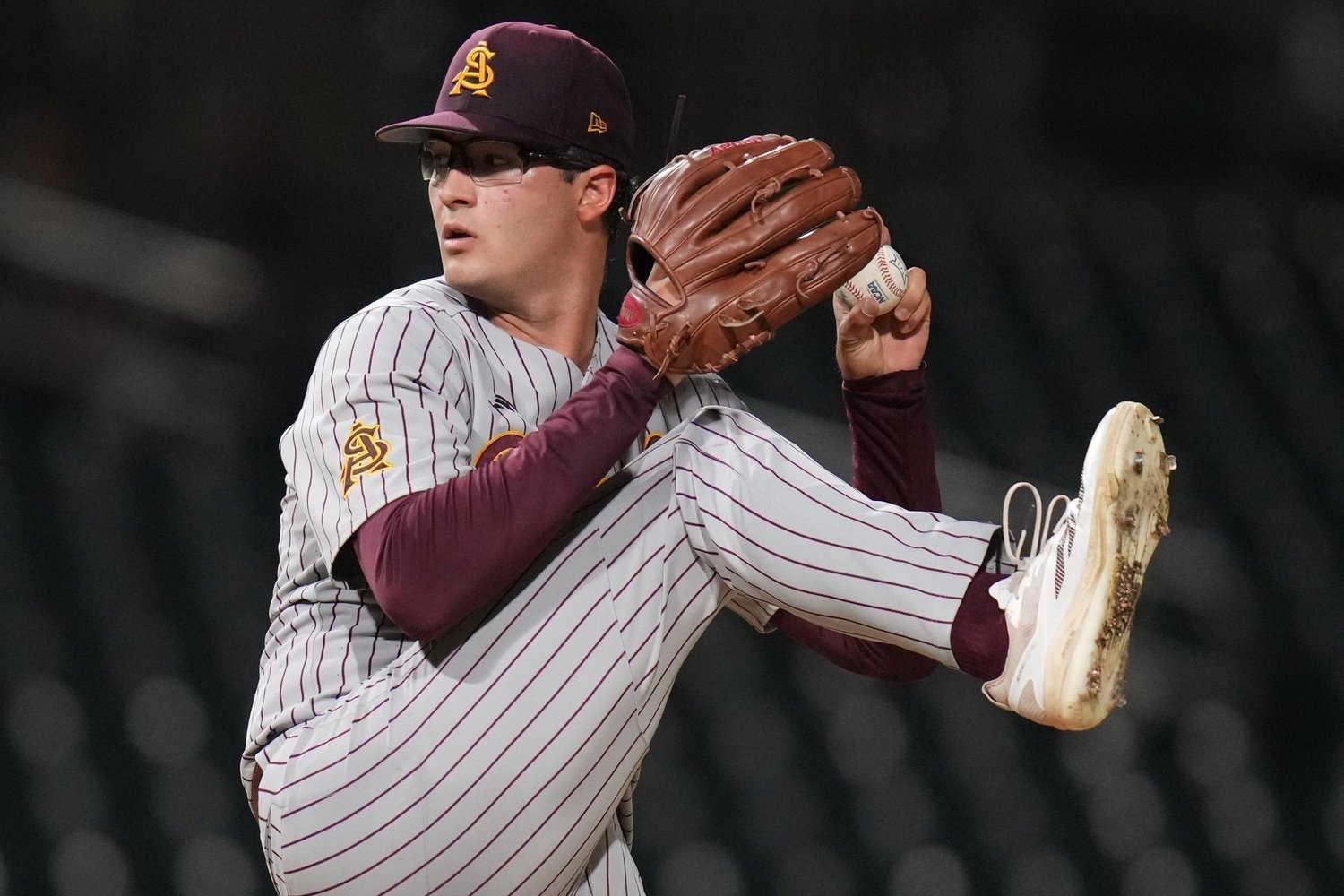 The 2026 MLB Draft took place over the weekend, and we covered it all here at Jays Centre. Click the links below to read about each of the Blue Jays' selections, including No. 39 overall pick Cole Carlon. No. 39: Cole Carlon No. 103: Ryan Cooney No. 131: Will Brick No. 164: Nolan Higgins Rounds 6-10 Gable Mitchell Dean West Jake Bennett Joey Urban Bryce Chance Rounds 11-20 Brayden Martin Santiago Garcia Mathis Nayral Connor Kelley Oliver de la Torre Carson Cormier Landon Waters Jake McCoy Cole Travers Eddie Rosado Jr. You can also find the complete list of Toronto's selections on our 2026 Blue Jays Draft Pick Tracker. This tool will be updated as players sign. View the full article
