


DiamondCentric
-
Posts
2,631 -
Joined
-
Last visited
Never
Content Type
Profiles
Forums
Events
News
Tutorials & Help
Major League Baseball Videos
Guides & Resources
Store
Downloads
Gallery
Everything posted by DiamondCentric
-

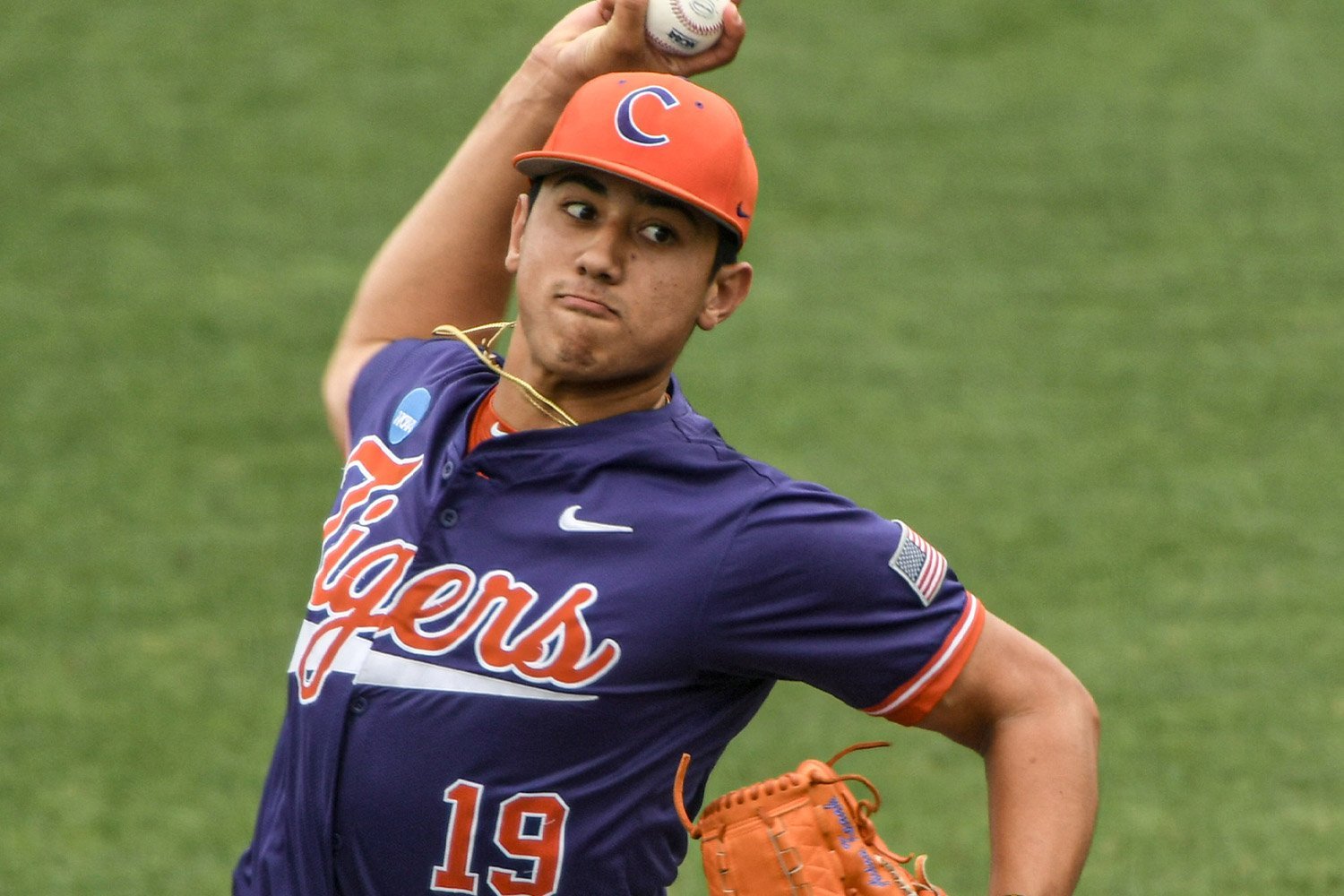 The Milwaukee Brewers selected Aidan Knaak at pick No. 163 in the 2026 MLB Draft. Knaak is a right-handed pitcher out of Clemson. The slot value for the pick is $425,400, and the Brewers will likely be looking to sign Knaak for slot or below. Knaak was ranked 210th on the MLB Pipeline board. He is known most for his changeup, which grades out as a 60-grade pitch, and is a pitch he manipulates the shape and velocity of. Beyond the changeup, Knaak throws a four-seam fastball with some late life, above-average carry, and has been up to 96 MPH, while sitting more in the 92-93 range. There's an upper-70s curveball, as well as a gyro slider in the mid-80s, though he does not generate much spin on the breaking balls. Knaak got off to a tremendous start in his college career, but his draft value slipped this season when he pitched to a 5.81 ERA, though he still struck out 88 batters in 57 1/3 innings. The Brewers are likely looking to buy low on a talented arm here, with some untapped potential left. View the full article
 -
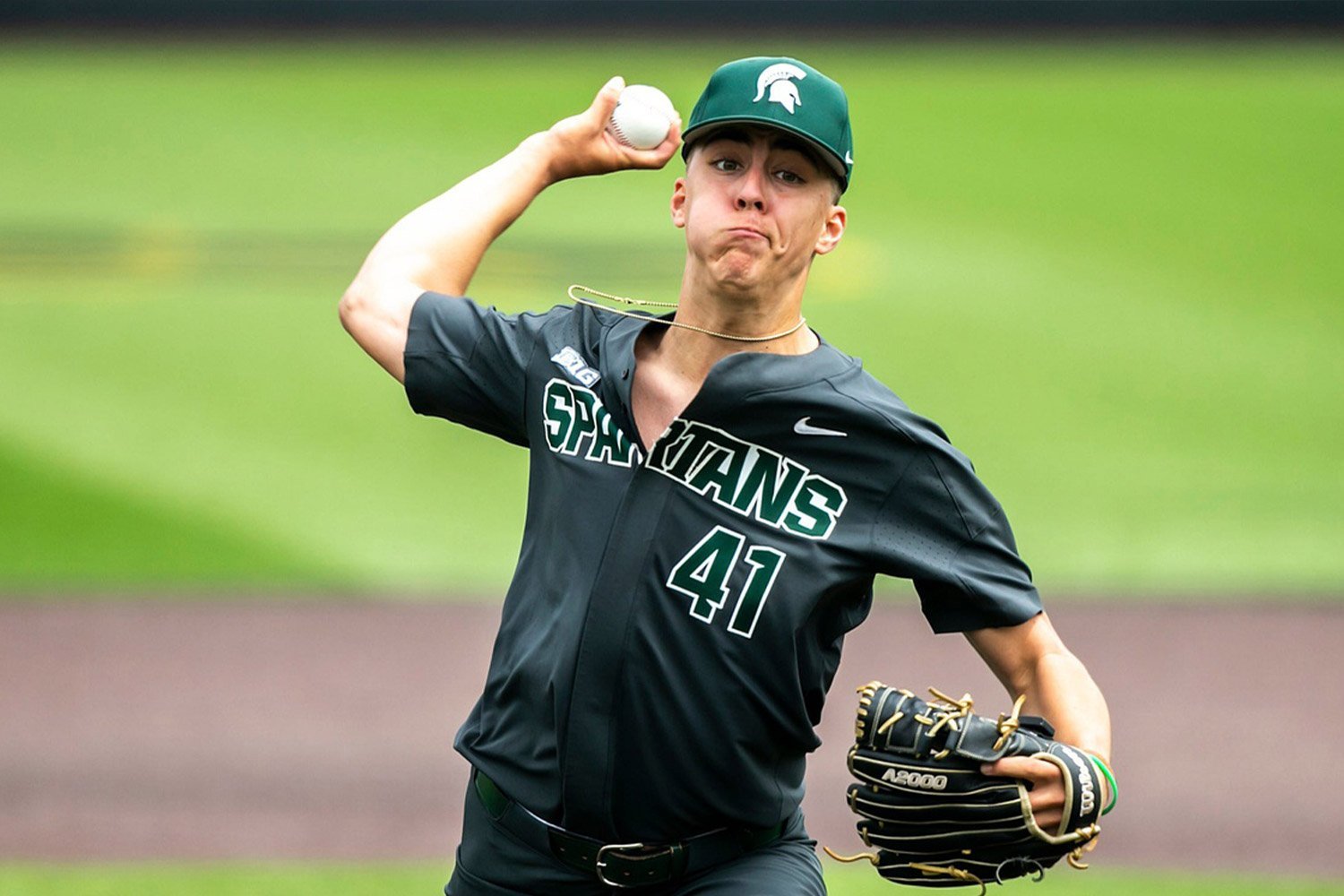 With their pick in the fifth round of the 2026 MLB Draft, the Toronto Blue Jays select right-handed pitcher Nolan Higgins. He is a senior at Michigan State, leading the team with a 3-4 record and 5.20 ERA. In addition, Higgins had a 12.4 strikeout rate as relief for the Spartans. View the full article
 -
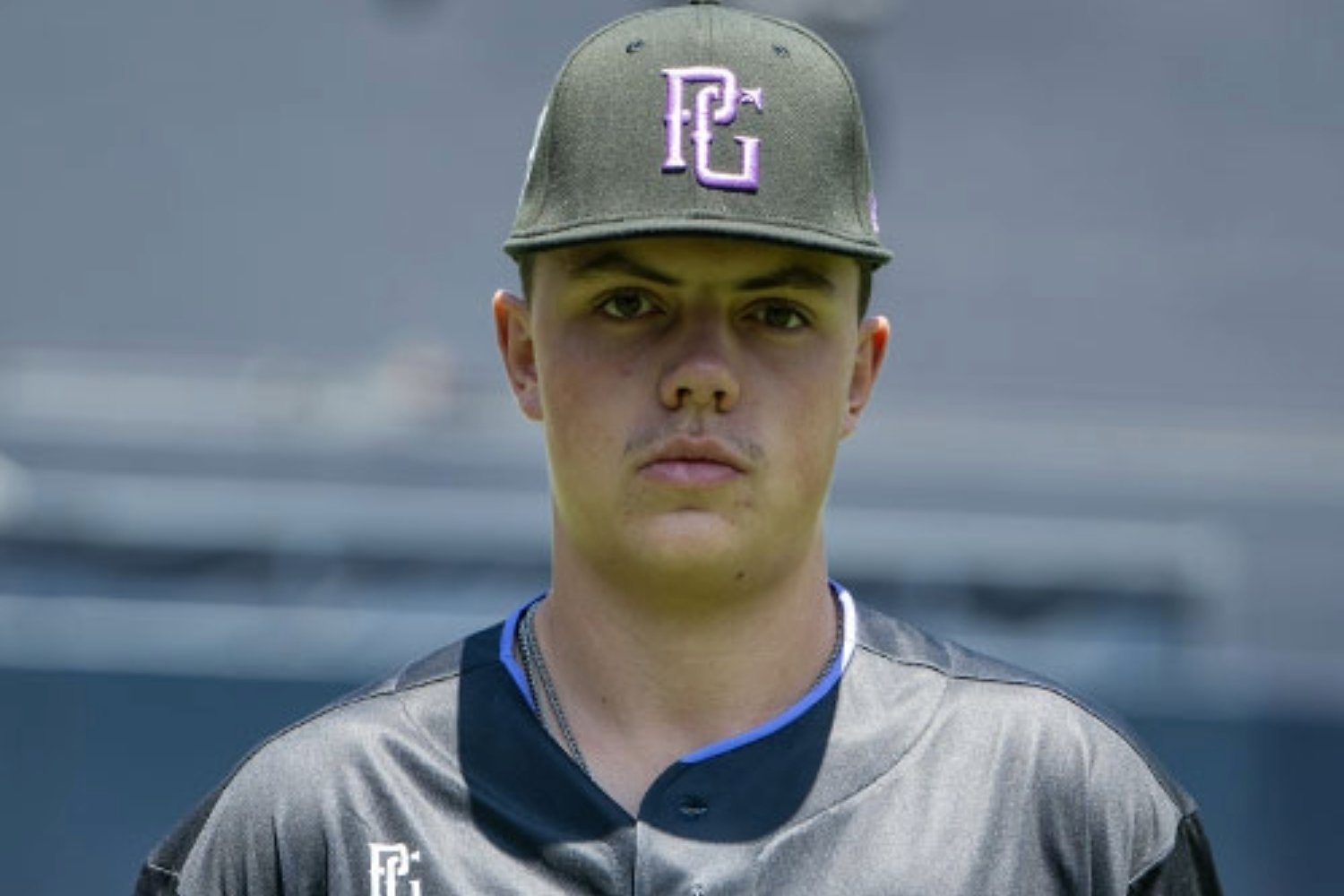 The Chicago Cubs selected Dylan Blomker at pick No. 159 in the 2026 MLB Draft. Blomker is a right-handed pitcher out of La Cueva High School in New Mexico. The slot value for the pick is $441,300. Blomker, the 2026 Gatorade New Mexico Player of the Year, is an LSU commit. The 18-year-old has a fastball that can touch 96 MPH and a slider with "impressive sweeping rate," per MLB.com's 2026 MLB Draft stream. Draft analyst Jonathan Mayo told host Jacob Wilkins that he believes the Cubs can get Blomker to spurn LSU for their organization. Mayo added that "a lot of area scouts" thought Blomker would not be drafted this early -- predicating a move to the collegiate Tigers -- and offered a scouting report on him: "Unconventional delivery... he can really spin the ball, a high spin rate, sometimes up to 3000 RPM on the breaking ball. Low 90s, maybe a little more in the tank as he continues to mature... he didn't take that step forward at the beginning of the spring... but got better as the year went on." View the full article
 -
 A year into his professional baseball career, Miami Marlins outfielder Cam Cannarella has crushed even the most optimistic projections. Now starring for Double-A Pensacola, Cannarella sits down with Alex Carver and Isaac Azout to discuss the MLB Draft process, overcoming injuries, how he has developed into an elite all-around hitter in 2026 and more. You can find Fish Unfiltered and Fish On First LIVE on the Fish On First YouTube channel, Apple Podcasts, Spotify or wherever else you get your pods. Cannarella's offensive numbers this season are positively eye-popping. Through 52 games entering Sunday (mostly at the Double-A level), he is slashing .365/.443/.599 with 12 home runs, nine stolen bases and a 170 wRC+. He's the fourth-most productive hitter across all of Minor League Baseball (min. 200 PA) in terms of wRC+. He has reached base safely in 23 of his last 25 games. Oh yeah, and Cannarella is also a long-term center fielder. The culmination of those abilities has bumped him up to fifth on our Fish On First Top 30 prospects list. Even assuming that Cannarella comes down to earth a bit in terms of his batting average on balls in play and over-the-fence power, the 22-year-old should get a cup of coffee with Triple-A Jacksonville before season's end. He'll be in the mix for a big league job early next year. View the full article
 -
 It's Day 2 of the MLB Draft! Let's check in on the guys who are already in the Boston Red Sox's system before we analyze all of the newcomers. Triple-A Worcester Red Sox Series vs. Rochester Red Wings (Washington Nationals): 3-2 Season Record: 44-44 Worcester fell by a large margin for the second day in a row, losing 10-3 without much protest. Michael Sansone got the nod to start Saturday’s contest for the WooSox. He got off to a rocky start, allowing three runs in the first two innings en route to a poor five-frame outing. Sansone allowed seven earned runs, including four in the fourth inning, on eight hits. He struck out just three before Noah Song took over. Song saw a little more success, letting up a run on three hits as he struck out three as well. Angel Bastardo took over in the eighth, allowing two more runs as he closed out the game. The two runs came on two hits as Bastardo struck out two, closing out another disappointing loss for Worcester. The WooSox hardly showed up at the plate, generating just three hits. They were able to score three runs, aided by a pair of triples from Nick Sogard and Braiden Ward. Sogard put the WooSox on the board with his triple, driving in Ward in the sixth inning. Two innings later, Ward drove home Max Ferguson, cutting the deficit to seven runs. Vinny Capra then drove Ward in on a ground out to short later in the inning. The eighth-inning effort came much too late as Rochester held a commanding lead for the majority of the game. It was the second night in a row that Worcester fell by six or more runs. Double-A Portland Sea Dogs Series @ New Hampshire Fisher Cats (Toronto Blue Jays): 3-2 Season Record: 46-39 Portland seized an 8-3 win behind another solid start from Blake Wehunt. Wehunt won his third consecutive game for his 5⅔ innings performance on Saturday, racking up six strikeouts. Wehunt allowed three runs on six hits, but didn’t issue a single walk. While he allowed more runs and hits than his two previous starts, Wehunt continued his campaign for a call-up to Triple-A. Jedixson Paez got the ball with two outs in the sixth inning and closed the game with 3⅓ innings of one-hit shutout ball. Paez struck out two as he earned his second save of the season and lowered his ERA to a respectable 3.86. Portland had a great day on the offensive side of the ball, even with Franklin Arias out of the lineup. The Sea Dogs tallied an impressive 16 hits and eight runs. As a team, Portland went an impressive 5-for-16 with runners in scoring position. Ronald Rosario kept up his momentum from Friday’s contest, getting the scoring started with a line drive single that scored Johanfran Garcia and Miguel Bleis. Two innings later, Matt Frazier tacked on one more with a sac fly, scoring Brooks Brannon. In the fourth, Jack Winnay drove in Caden Rose on a ground ball single to right field. Rosario added another RBI, his seventh in the past two games, with another single, scoring Bleis again. In the eighth, the Sea Dogs put the game out of reach as Winnay scored Rose once more. Winnay was then driven home on Raudelis Martinez’s first homer of the season, adding an exclamation point to an emphatic win. High-A Greenville Drive Series @ Greensboro Grasshoppers: 3-2 Season Record: 35-48 The Drive won 12-7 after a late offensive awakening and some extra-inning heroics. Devin Futrell got the start on Saturday, coming off a horrendous outing last week in which he allowed seven earned runs on 11 hits in five innings. Futrell saw improvement this time around, lasting 4⅔ innings. He allowed four runs on six hits, issuing just one walk. He struck out five before turning the ball over to Matt Duffy in the fifth inning. Duffy made his first appearance in an affiliate game since September 2024, striking out five across three frames. He allowed three runs on four hits, but it was a successful outing after a long journey back to the mound. Griffin Kilander got the ball in the eighth, and pitched into extras. Kilander earned the win for his 3⅓ innings of dominance. He allowed just one baserunner, via a walk, as he shut down the Grasshoppers offense in extras with four strikeouts. The Drive’s bats were lively on Saturday, driving in 12 runs on 11 hits. Greenville also displayed excellent plate discipline, drawing a collective eight walks and striking out only five times. Enddy Azocar tallied four RBIs on two hits as all but one of the Drive’s starting nine tallied a hit. Azocar put the Drive on the board in the third, tying the game at 1-1 with a solo home run. The Drive’s next run came in the eighth when Gerardo Rodriguez drove in Hudson White and Yoeilin Cespedes on a groundball single as he advanced to third. Rodriguez raced home later in the inning on an Isaiah Jackson RBI single that tied the game at four runs apiece. Facing a three-run deficit in the ninth, Ronny Hernandez got the Drive within striking distance on a solo home run before Cespedes tied the game on a two-run shot that scored White. With the game tied in extras, Antonio Anderson gave the Drive a lead with an RBI single that scored Yophery Rodriguez. With two runners on later in the inning, Enddy Azocar gave Greenville some cushion with his second homer of the game, a three-run blast scoring Anderson and White. Already ahead by four, G. Rodriguez tacked on one more with a solo blast as he put the game firmly out of reach. Low-A Salem RidgeYaks Series @ Columbia Fireflies (Kansas City Royals): 3-2 Season Record: 35-50 Salem fell in an extra-innings heartbreaker as the bullpen fell apart late. Ethan Walker made his first appearance with Salem in nearly two months as he returned from a lower back injury. Walker was excellent across three innings, surrendering two hits and striking out four before Jason Gilman took over in the fourth. Gilman took a bulk role, going the distance as he turned in five innings of work. He wasn’t as dominant as Walker, however, as he allowed five runs (one unearned) on just three hits. He issued two walks as he struck out six. Harry Blum got the ball in the ninth inning of a tied ballgame. He allowed one hit and two walks as he stalled out Columbia’s offense in the ninth before the game headed to extras. However, with two outs in the tenth, Blum relinquished a bases-loaded single that put the Fireflies within one. Nicolas De La Cruz took over, but promptly gave up another run on a wild pitch, then allowed the Fireflies to walk-off the game on a bases-loaded single. The Yaks were incredibly successful at the dish on Saturday, registering 12 hits and eight runs and going 5-for-12 with RISP. Louis Andujar led the way with three RBIs and three hits as D’Angelo Ortiz contributed three RBIs of his own. Andujar got the Yaks on the board with his second homer of the season, a solo shot in the fifth inning to cut into a two-run Columbia lead. Facing a four-run deficit in the eighth, Andujar struck again, singling on a line drive and scoring Franklin Primera and Kleyver Salazar. Later in the inning, Avinson Pinto drove Starlyn Nunez home as the Yaks were within one. Ortiz then tied the game with an RBI single, scoring Andujar. In the tenth inning, Salazar put the Yaks ahead on a single to center field, scoring Anderson Fermin. Ortiz then added two more to the lead on another RBI single, scoring Salazar and Pinto. It was a short-lived lead, as the bullpen collapsed and handed Columbia the win. View the full article
 -
Royals select Left-Hander Ethan McElvain in Fifth Round
DiamondCentric posted an article in Royals Keep
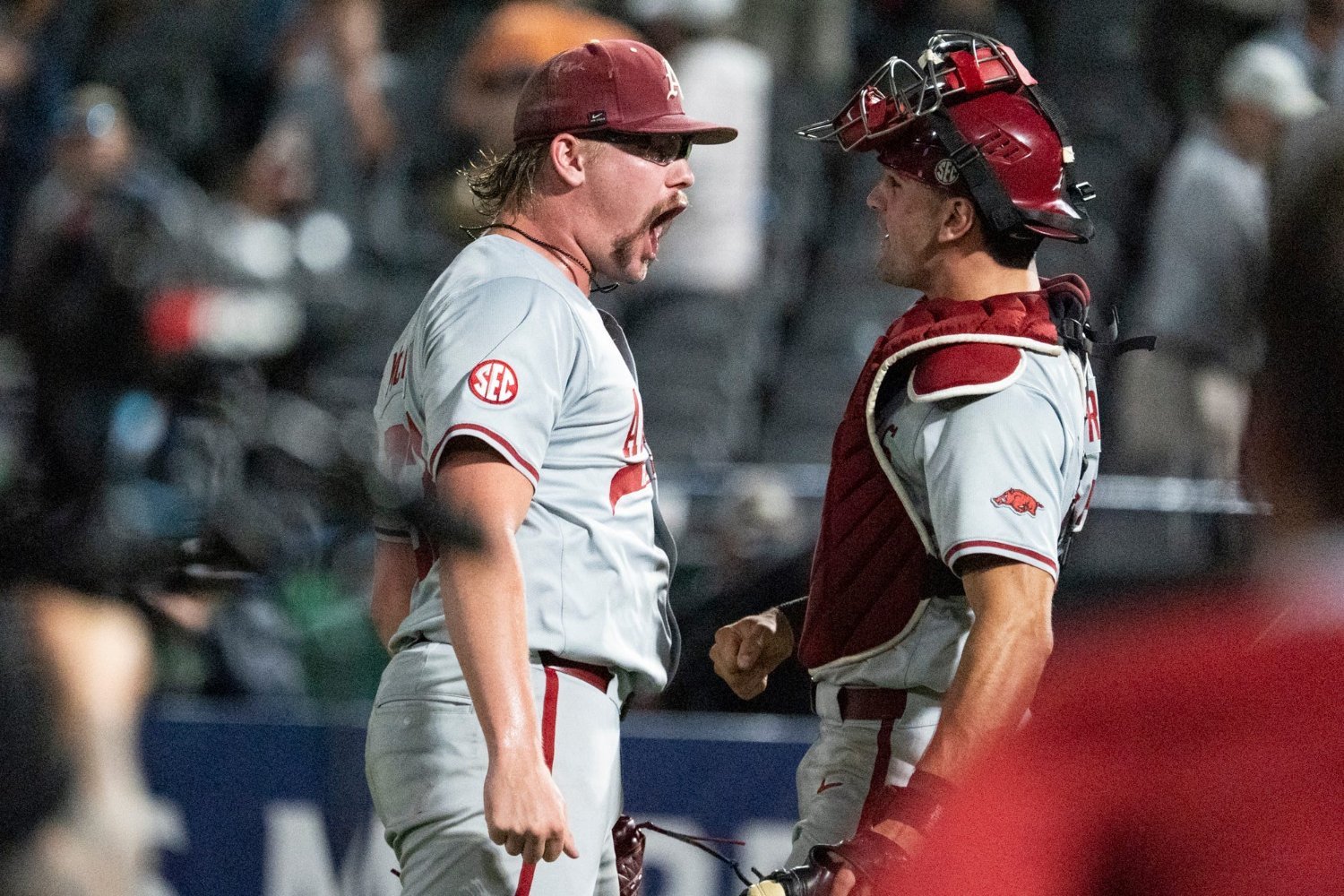 To lead off Day 2 of the MLB Draft, the Kansas City Royals selected left-handed pitcher Ethan McElvain with the 151st pick. McElvain was the closer for the Arkansas Razorbacks and posted a 1.88 ERA, a 1.02 WHIP, and a 4.23 K/BB ratio in 38.1 IP and 20 appearances. He also collected six saves. McElvain was a transfer from Vanderbilt, where he had an uneven career. In his first year, he posted a 3.24 ERA and 1.40 WHIP in 25 IP. However, in his sophomore year, he posted an 8.89 ERA and 2.16 WHIP in 27.1 IP. Command was a problem for McElvain with the Commodores, as he posted K/BB ratios of 1.93 in 2024 and 1.61 in 2025. His improvement in his K/BB ratio in 2026 shows his maturity and development as a pitcher. The 21-year-old lefty is a power arm with a fastball in the upper 90s and a power cutter. He will likely move quickly through the Royals' farm system and could push for a spot in the Royals' bullpen in 2027 or 2028. View the full article
 -
Red Sox Select Lucas Davenport No. 156 Overall in the 2026 MLB Draft
DiamondCentric posted an article in Talk Sox
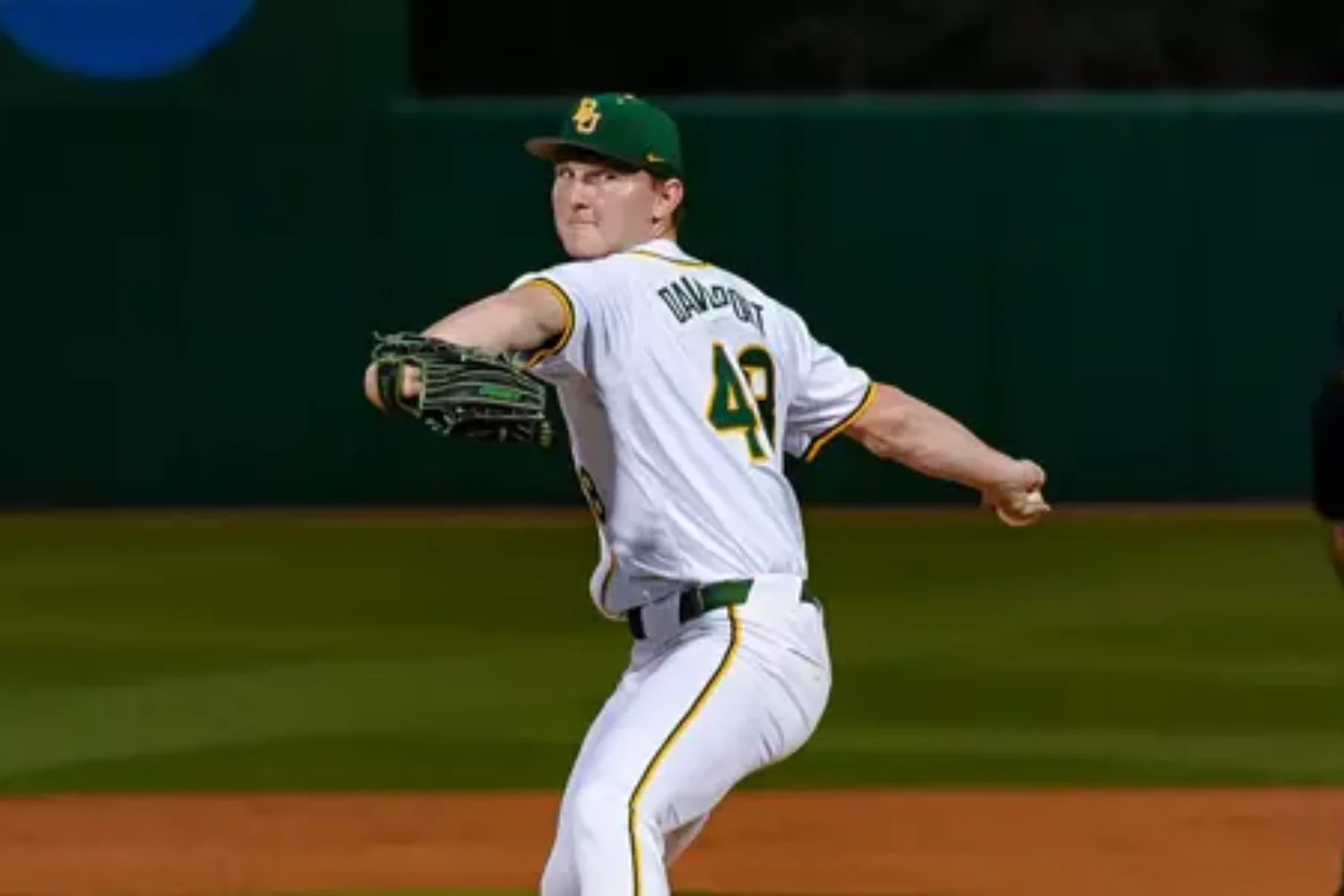 The Boston Red Sox selected pitcher Lucas Davenport with the 156th pick in the 2026 MLB Draft. Davenport pitched two years at Baylor and was a redshirt as a freshman. Overall, he appeared in 29 games and made 13 starts over his two seasons. Davenport follows the mold of pitchers that Craig Breslow likes, standing 6-foot-6 and weighing 230 pounds. More to come... View the full article
 -
 Chicago Cubs Transactions Chicago Cubs designated RHP Jake Woodford for assignment. Chicago Cubs activated RHP Phil Maton from the 15-day injured list. Taillon Tosses Scoreless Outing As Iowa Cubs Beat Saints, 8-2 Jameson Taillon allowed one hit and one walk over 4 2/3 scoreless innings, striking out three, and the Iowa Cubs beat the St. Paul Saints, 8-2. Iowa scored in each of the first four innings. In the first, Moisés Ballesteros singled, Owen Miller doubled, and Chas McCormick singled them both home for a 2-0 lead. In the second, Brett Bateman tripled home James Triantos and Scott Kingery. Kingery added an RBI single in the third to score McCormick, and in the fourth, Bateman singled, moved to third on a double by Miller, and scored on a wild pitch to make it 6-0. The Saints scored twice in the seventh against Ty Blach on an RBI single and a run-scoring groundout. Iowa answered in the eighth when Ben Cowles hit a two-run home run, his fifth of the season, scoring Triantos Miller finished 3-for-4 with two doubles, Bateman went 2-for-4 with a triple, two RBI, and a walk, and Triantos went 1-for-2 with two walks and two runs scored. Blach allowed two runs over 2 1/3 innings, Jayden Murray struck out two in a scoreless inning, and Liam Hendriks struck out one in a scoreless inning to close it out. Player AB R H RBI BB K Brett Bateman 4 1 2 2 1 1 Jonathon Long 4 0 0 0 1 1 Moisés Ballesteros 5 1 1 0 0 1 Owen Miller 4 1 3 0 0 0 Chas McCormick 3 1 1 2 1 0 Christian Bethancourt 4 0 1 0 0 3 James Triantos 2 2 1 0 2 0 Scott Kingery 3 1 1 1 1 0 Ben Cowles 4 1 1 2 0 1 Player IP H R ER BB K HR Jameson Taillon 4 2/3 1 0 0 1 3 0 Ty Blach 2 1/3 2 2 2 2 2 0 Jayden Murray 1 1 0 0 0 2 0 Liam Hendriks 1 0 0 0 0 1 0 Beck Strikes Out Nine, But Smokies Fall To Shuckers, 3-1 Jace Beck struck out nine over five innings, allowing one run on three hits and a walk, but the Knoxville Smokies lost to the Biloxi Shuckers, 3-1. Knoxville took the lead in the third. With two outs, Drew Bowser singled, and Jefferson Rojas doubled him home, his 13th double of the season, for a 1-0 advantage. Biloxi answered in the fourth with a solo home run off Beck to tie the game. The game stayed tied until the eighth, when Biloxi scored twice against Tyler Schlaffer. A sacrifice fly put the Shuckers ahead 2-1, and an RBI single made it 3-1, with the batter thrown out at second base on the play. Schlaffer allowed two runs on one hit and one walk over three innings, striking out three. Tyler Ras struck out one in a scoreless inning. The Smokies managed just five hits and went quiet after the third inning. Bowser finished 2-for-3 with a run scored, Alex Madera went 2-for-4, and Rojas went 1-for-4 with a double and an RBI. Knoxville drew three walks, from Owen Ayers, Carter Trice, and Ariel Armas, but stranded six runners on base in the loss. Player AB R H RBI BB K Alex Ramírez 4 0 0 0 0 1 Jefferson Rojas 4 0 1 1 0 0 Owen Ayers 3 0 0 0 1 1 Andy Garriola 4 0 0 0 0 2 Carter Trice 3 0 0 0 1 0 Ariel Armas 2 0 0 0 1 0 Alex Madera 4 0 2 0 0 1 Karson Simas 3 0 0 0 0 0 Drew Bowser 3 1 2 0 0 1 Player IP H R ER BB K HR Jace Beck 5 3 1 1 1 9 1 Tyler Schlaffer 3 1 2 2 1 3 0 Tyler Ras 1 1 0 0 0 1 0 Cubs' Seventh-Inning Lead Slips Away In 11-7 Loss To Kernels The South Bend Cubs fought back from a 5-0 deficit to take the lead in the seventh, but the Cedar Rapids Kernels answered with a six-run inning of their own, and South Bend lost, 11-7. Starter Alfredo Romero allowed four runs on six hits over 4 2/3 innings, walking one and striking out four. Cedar Rapids scored twice in the fourth and three more in the fifth, the last run charged to Nate Williams, to build a 5-0 lead. South Bend rallied in the sixth. Jose Escobar doubled home Kane Kepley, and Angel Cepeda followed with a two-run home run, his first of the season, to cut it to 5-3. The Cubs took the lead in the seventh. Michael Hallquist doubled, Christian Olivo singled, and Kepley walked. Escobar's sacrifice fly scored Hallquist, Olivo stole home to tie the game, and Matt Halbach singled home Kepley for a 6-5 lead. The lead did not last. Ben Johnson recorded just one out in the bottom of the seventh and was charged with five runs, including a two-run double and a three-run home run. Grayson Moore allowed an unearned run over 1 2/3 innings. Olivo finished 3-for-4 with a double, a walk, and an RBI single in the eighth, Hallquist went 2-for-4 with a double and a triple, and Escobar drove in two runs. Player AB R H RBI BB K Christian Olivo 4 1 3 1 1 0 Kane Kepley 4 2 1 0 1 1 Jose Escobar 4 1 1 2 0 2 Angel Cepeda 5 1 1 2 0 1 Matt Halbach 4 0 1 1 0 1 Miguel Useche 3 0 0 0 2 2 Logan Poteet 4 0 0 0 0 4 Justin Stransky 4 0 1 0 0 0 Michael Hallquist 4 2 2 0 0 0 Player IP H R ER BB K HR Alfredo Romero 4 2/3 6 4 4 1 4 0 Nate Williams 1 1/3 2 1 1 2 2 0 Ben Johnson 1/3 2 5 4 2 1 1 Grayson Moore 1 2/3 3 1 0 1 1 0 Cespedes' Three-Run Homer In Eighth Lifts Pelicans Past Nationals, 8-7 Ivan Cespedes hit a three-run home run in the bottom of the eighth, his second of the season, and the Myrtle Beach Pelicans came back to beat the Fredericksburg Nationals, 8-7. Starter Noah Edders struck out seven over 4 1/3 innings, allowing three runs, two earned, on two hits and three walks. Fredericksburg took a 1-0 lead in the second when a runner scored on a throwing error during a double steal, but Geuri Lubo answered with an RBI double in the bottom half, scoring Jose Silva. Myrtle Beach broke out in the third. Alexis Hernandez led off with a home run, his second of the season, Derniche Valdez tripled home Alexey Lumpuy, and Silva singled home Valdez for a 4-1 lead. Valdez added a sacrifice fly in the fourth to make it 5-1. The Nationals chipped away with two runs in the fifth, a solo home run in the sixth, and three runs in the seventh, including a two-run homer off Jhon Rosario, to take a 7-5 lead. In the eighth, Silva and Jairo Diaz walked, and Cespedes homered to left center to put the Pelicans ahead, 8-7. Edwardo Melendez struck out three over two scoreless innings to finish the game. Hernandez went 2-for-4 with a walk, and Valdez went 2-for-4 with a triple and two RBI. Player AB R H RBI BB K Alexis Hernandez 4 2 2 1 1 0 Alexey Lumpuy 3 1 2 0 2 1 Derniche Valdez 4 1 2 2 0 0 Eli Lovich 4 0 0 0 0 2 Jose Silva 2 2 1 1 2 1 Jairo Diaz 3 1 0 0 1 2 Geuri Lubo 3 0 1 1 1 0 Ivan Cespedes 4 1 1 3 0 2 Edward Vargas 4 0 0 0 0 3 Player IP H R ER BB K HR Noah Edders 4 1/3 2 3 2 3 7 0 Jhon Rosario 2 2/3 4 4 4 0 1 2 Edwardo Melendez 2 1 0 0 2 3 0 Top-20 Prospect Performance Jefferson Rojas: 1-for-4, 2B, RBI Pedro Ramirez: DNP Jaxon Wiggins: DNP Josiah Hartshorn: DNP Kevin Alcantara: DNP Ethan Conrad: DNP Kane Kepley: 1-for-4, BB, K Owen Ayers: 0-for-3, BB, K Jonathon Long: 0-for-4, BB, K Kaleb Wing: DNP James Triantos: 1-for-2, 2 BB Brooks Caple: DNP Mason McGwire: DNP Ty Southisene: DNP Will Sanders: DNP Juan Cabada: DNP Eli Lovich: 0-for-4, 2 K Ariel Armas: 0-for-2, BB Jostin Florentino: DNP Grant Kipp: DNP View the full article
 -
 Kevin Parada's professional career is a reminder on this MLB Draft weekend that even high picks are lottery tickets and most of them aren't winners. He looked like a foundational piece four years ago when the New York Mets selected him 11th overall out of Georgia Tech, but now, he's organizational depth. Another bat-first player, Francisco Alvarez, overtook him as the major-league club's catcher of the future. In 2026, Parada is playing a fourth season at Double-A at age 24. He's sporting a career-worst .621 OPS between Binghamton and Triple-A Syracuse. His power has disappeared, with one homer in 235 plate appearances. He's splitting time with Chris Suero at catcher and DH. His days on the Top 20 list are over. At this point, he needs to do the little things -- like, say, drop down a bunt. Which he did in the ninth inning of a tie game Saturday night in Hartford. The bunt was a beauty, and it got even better when the throw to first base went past the bag. Nick Lorusso alertly scored from third on the error, giving Binghamton the lead. The Ponies scored six more after that play en route to a 9-2 victory. Parada's small ball made a big difference. That's what organizational players need to do. As for the rest of the system on Saturday: Syracuse lost, 3-2, at Norfolk. The Mets scored both their runs in the top of the ninth, but stranded the tying run at first base after Christopher Morel's RBI single cut the margin to one. Daiverson Gutierrez delivered a walk-off single in the bottom of the ninth as Brooklyn edged Wilmington, 2-1. Daviel Hurtado lowered his ERA with the Cyclones to 1.79 with 4 2/3 innings of one-run ball.. St. Lucie got five scoreless innings from Emilio Obispo in its 4-1 victory at Jupiter. His ERA is down to 1.82 for the Mets. Mike Tauchman went 1-for-3 with an RBI and a run scored in a rehab game. The FCL Mets lost, 3-0, to the FCL Cardinals. Jean Brito took the loss despite allowing one hit and striking out six in four innings. DSL Mets Blue was held to one hit in a 5-0 loss to the DSL Marlins. Henry Manrique's single in the first was the lone safety. DSL Mets Orange outscored DSL Giants Black, 10-6, thanks to 11 walks. Oscar Montero and Olmedo Barria combined for seven innings of one-hit ball with eight strikeouts. New York Mets Transactions New York Mets released CF Jared Oliva. New York Mets sent RHP Matt Seelinger outright to Syracuse Mets. Weisenburger Sharp For Syracuse Jack Weisenburger gave the Mets a solid start, striking out eight and allowing just a solo home run over four innings. On the down side, he walked three. Ryan Lambert followed him and was ineffective. He gave up two runs in two-thirds of an inning. Two of the three walks he issued came around to score. Dedniel Núñez took another positive step in his rehab from elbow surgery with two hitless innings. In the top of the ninth, MJ Melendez led with a walk and moved to third on Christian Arroyo's double. Yonny Hernández grounded out to bring home Melendez, and Morel singled home Arroyo to cut the deficit to 3-2. Hayden Senger was called out on strikes, and Cristian Pache popped out in foul territory to end the game. Player AB R H RBI BB K Nick Morabito 4 0 0 0 0 0 Ronny Mauricio 4 0 0 0 0 1 MJ Melendez 2 1 1 0 2 1 Christian Arroyo 4 1 1 0 0 0 Yonny Hernández 4 0 1 1 0 0 Christopher Morel 4 0 2 1 0 1 Hayden Senger 4 0 0 0 0 1 Cristian Pache 4 0 0 0 0 3 Vidal Bruján 3 0 1 0 0 0 Player IP H R ER BB K HR Jack Weisenburger 4 2 1 1 3 8 1 Ryan Lambert 2/3 0 2 2 3 0 0 Joey Gerber 1 1/3 0 0 0 0 1 0 Dedniel Núñez 2 0 0 0 1 0 0 Binghamton Pours It On Late; Santucci Strong The ninth inning began with Lorusso reaching on a fielding error and JT Schwartz drawing a walk. After Parada's bunt broke the tie, Matt Rudick followed with another sac bunt. Nick Lucky was then walked intentionally to load the bases. Jaylen Palmer cleared them with a three-run double, Suero followed with an RBI single, and Lorusso capped the outburst with an RBI double. Jonathan Santucci put together a second consecutive quality start -- two earned runs over six innings with eight strikeouts -- but the 2024 second-round pick couldn't protect a 1-0 lead after Kevin Villavicencio hit a solo homer for in the third. Wyatt Young tied the game in the eighth with an RBI double that scored Rudick. Player AB R H RBI BB K Chris Suero 5 1 1 1 0 3 Nick Lorusso 4 1 1 1 1 0 JT Schwartz 2 1 0 0 2 2 Kevin Parada 5 1 1 0 0 1 Matt Rudick 1 1 0 0 2 0 Wyatt Young 3 1 1 1 1 2 Nick Lucky 4 1 1 1 0 1 Kevin Villavicencio 4 1 1 1 0 2 Jaylen Palmer 3 1 1 3 1 1 Player IP H R ER BB K HR Jonathan Santucci 6 4 2 1 1 8 0 Garrett Stratton 2 0 0 0 0 2 0 Brian Metoyer 1 1 0 0 0 3 0 Gutierrez Walks It Off For Brooklyn The teams traded runs in the third inning, and the game stayed tied until Gutierrez's single brought home Ronald Hernandez with the winning run in the bottom of the ninth. Hernandez was hit by a pitch to lead off the inning and moved up to second on Corey Collins' single. Sam Biller drove in the Cyclones' run in the third. Brooklyn's bullpen kept the game within reach. Juan Arnaud worked 1 1/3 hitless innings, Cristofer Gomez struck out three over two scoreless innings, and Ryan Dollar worked a scoreless ninth to earn the win. Player AB R H RBI BB K Mitch Voit 4 0 0 0 0 0 John Bay 4 0 0 0 0 0 Ronald Hernandez 2 1 1 0 1 1 Corey Collins 3 0 1 0 1 0 JT Benson 4 0 1 0 0 1 Daiverson Gutierrez 4 0 1 1 0 0 Colin Houck 3 0 0 0 0 2 Jamari Baylor 2 1 1 0 1 0 Sam Biller 3 0 1 1 0 0 Player IP H R ER BB K HR Daviel Hurtado 4 2/3 4 1 1 3 4 1 Juan Arnaud 1 1/3 0 0 0 1 0 0 Cristofer Gomez 2 2 0 0 0 3 0 Ryan Dollar 1 1 0 0 0 1 0 Early Runs Propel St. Lucie To Win The Mets jumped on the Hammerheads for three runs in the top of the first. Elian Peña led off with a single, Tauchman doubled him home, and Trey Snyder followed with a two-run home run, his first of the season, to make it 3-0. Julio Zayas added a solo home run in the third to push the lead to 4-0. Jupiter scored its run in the eighth off reliever Zack Mack. Throwing errors by Peña and Chase Meggers, the latter on a steal attempt, made it unearned. Mack allowed three hits in his 2 1/3 innings of work. Elwis Mijares retired the side in order in the ninth for the save. Player AB R H RBI BB K Elian Peña 5 1 1 0 0 2 Mike Tauchman 3 1 1 1 1 0 Taylor Darden 1 0 0 0 0 1 Trey Snyder 4 1 2 2 0 1 Julio Zayas 4 1 1 1 0 2 Chase Meggers 3 0 0 0 1 0 Branny De Oleo 4 0 1 0 0 0 Simon Juan 2 0 0 0 2 2 Jeremy Rodriguez 4 0 0 0 0 0 Francisco Toledo 3 0 0 0 1 0 Player IP H R ER BB K HR Emilio Obispo 5 4 0 0 3 6 0 Calvin Ziegler 2/3 1 0 0 2 1 0 Zack Mack 2 1/3 3 1 0 0 1 0 Elwis Mijares 1 0 0 0 0 0 0 Top-20 Prospect Performance Jonah Tong: DNP Jack Wenninger: DNP Ryan Clifford: DNP Elian Pena: 1-for-5, 2 K Nick Morabito: 0-for-4 Jacob Reimer: DNP Mitch Voit: 0-for-4 Jonathan Santucci: 6 IP, 4 H, 2 R, 1 ER, 1 BB, 8 K Zach Thornton: DNP Chris Suero: 1-for-5, RBI, 3 K Will Watson: DNP Wandy Asigen: DNP Eli Serrano III: DNP Randy Guzman: DNP Dylan Ross: DNP Ryan Lambert: 2/3 IP, 0 H, 2 R, 2 ER, 3 BB Antonio Jimenez: DNP R.J. Gordon: DNP Jonathan Pintaro: DNP Marco Vargas: DNP View the full article
 -
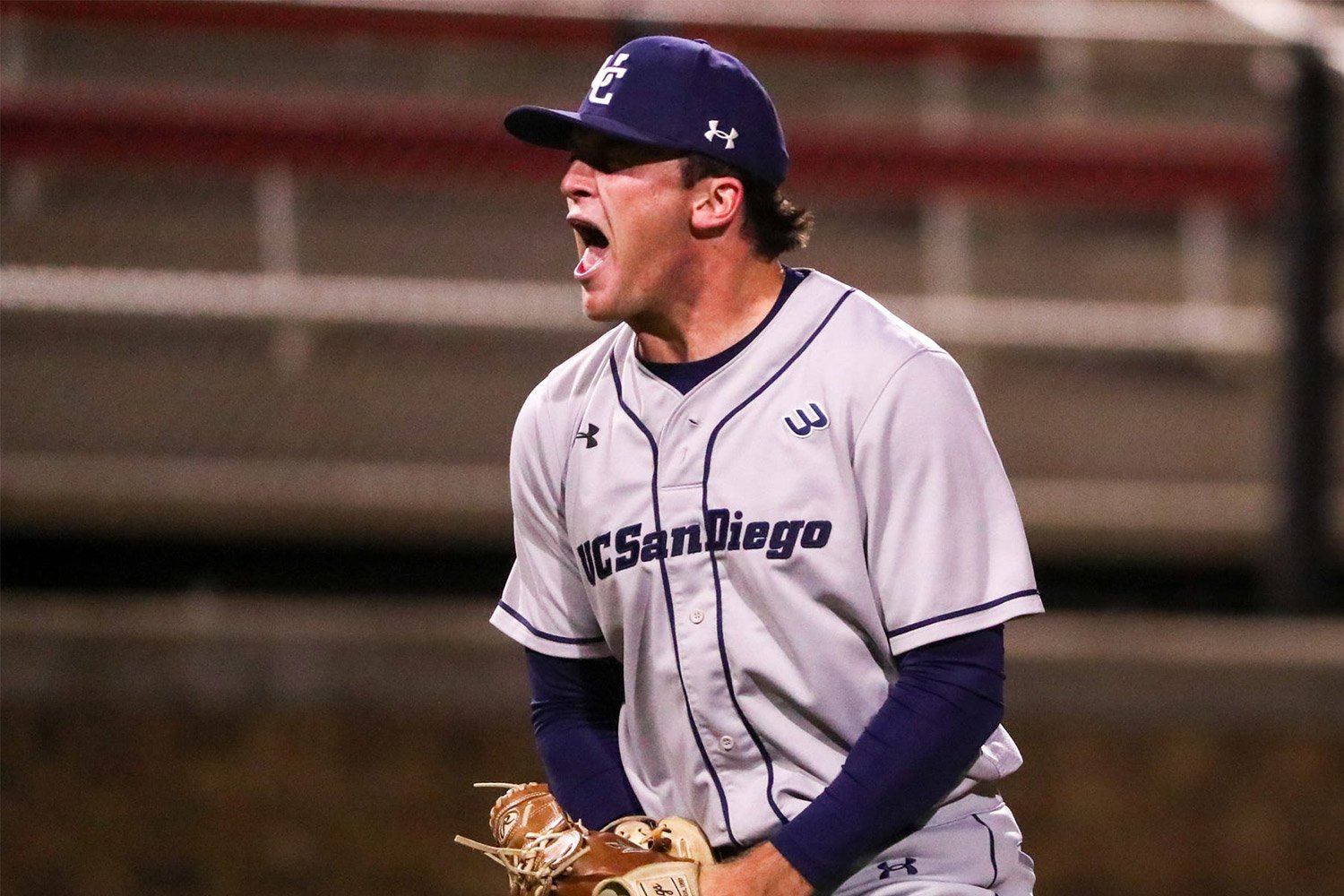 The Minnesota Twins have selected RHP Steele Murdock with their 5th round pick at 139th overall in the 2026 MLB Draft. The slot value for the pick is $536,900. Murdock is a right-handed pitcher out of UC San Diego. He had 104 strikeouts in 74 innings pitched this past season with the Aztecs. Murdock was ranked #140 on MLB Pipeline’s pre-draft rankings. He throws a three-pitch mix including a fastball, slider, and changeup. His fastball grades as above average, and his slider grades as a 60 on the 20-80 scouting scale. He’s touched as high as 99 mph on his fastball while his slider and changeup sit in the mid-80s. He’s had a high walk rate in college, so this is something he will need to work on at the professional level. View the full article
 -
 Angel Ramirez capped a four-run tenth inning with a walk-off single as Columbia stunned Salem 9-8. Ramon Ramirez doubled twice and drove in four runs, but Quad Cities fell 9-8 at home on a ninth-inning home run. Steven Zobac fired five scoreless innings, and Zachary Cawyer closed out a 4-3 Northwest Arkansas win. Brett Squires homered, and Henry Williams turned in a quality start, but Omaha dropped a 4-2 decision at Louisville. Kansas City Royals Transactions No Roster Moves Brett Squires Homers But Omaha Falls 4-2 At Louisville Squires provided all of Omaha's offense, but the Storm Chasers dropped a 4-2 decision to the Louisville Bats. Williams turned in a quality start in the loss, allowing three runs over six innings with five strikeouts and no walks. Louisville got to him early, opening the scoring with a solo home run in the first. The Bats added two more in the third, when a leadoff single was followed by an RBI double and an RBI single to make it 3-0. Omaha answered in the fourth. John Rave drew a leadoff walk, and Squires followed with a line-drive home run to right field, his 12th of the season, to cut the deficit to 3-2. Unfortunately, after Squires' home run, Matthew Lugo struck out, and Gavin Cross and Peyton Wilson grounded out to end the inning. The Storm Chasers never got closer in this one. Anthony Gose was dominant at times in relief, striking out five over two innings. However, he surrendered a solo home run in the eighth, extending Louisville's lead to 4-2. He also walked two. The Storm Chasers managed just five hits, including a double by Elih Marrero, and drew two walks while striking out eight times. Omaha left five men on base and went quietly over the final five innings, failing to score after Squires' blast. They went 0-for-4 with runners in scoring position. Omaha is now 39-52 this season. Player AB R H RBI BB K Rudy Martin Jr., CF 4 0 1 0 0 2 John Rave, RF 3 1 0 0 1 0 Brett Squires, 1B 3 1 1 2 1 1 Matthew Lugo, 3B 4 0 0 0 0 2 Gavin Cross, LF 4 0 1 0 0 0 Peyton Wilson, 2B 4 0 1 0 0 0 Brandon Drury, DH 3 0 0 0 0 2 Elih Marrero, C 3 0 1 0 0 0 Andrew Velazquez, SS 3 0 0 0 0 1 Player IP H R ER BB K HR Henry Williams 6.0 6 3 3 0 5 1 Anthony Gose 2.0 2 1 1 2 5 1 Steven Zobac's Five Scoreless Innings Lead Naturals Past Wichita 4-3 Zobac fired five scoreless innings, and Northwest Arkansas held on for a 4-3 win over the Wichita Wind Surge. Zobac, the Royals' No. 16 prospect, allowed just three hits, walked two, and struck out four to earn the win. The Naturals broke through in the sixth, when Carson Roccaforte reached on an error, stole second base, his 17th of the season, and scored on a line-drive single by Sam Kulasingam. Northwest Arkansas added two more in the seventh. Colton Becker was hit by a pitch, moved up on a stolen base, and scored on an RBI single by Omar Hernandez. Hernandez then stole second and came home on an error when Connor Scott lined out to center, making it 3-0. Reliever Grant Gambrell ran into trouble in the bottom of the seventh, allowing an RBI double and a run-scoring single that cut the lead to 3-2, though Roccaforte threw out the runner trying to stretch the hit into a double. Gambrell, who recently came over from the Kansas City Monarchs of the American Association, allowed three runs over 2 2/3 innings and earned a hold. The Naturals got an insurance run in the eighth when Jack Pineda doubled, and after a walk to Kulasingam, Spencer Nivens singled him home. Wichita answered with a sacrifice fly in the bottom half, making it 4-3. Cawyer slammed the door on Wichita, retiring all four batters he faced with a strikeout to record his third save. Northwest Arkansas won despite managing just five hits and striking out 10 times. They stranded five runners and went 3-for-9 with runners in scoring position. After their fourth-straight win, the Naturals improved to 36-48. Player AB R H RBI BB K Carson Roccaforte, CF 4 1 0 0 0 2 Jack Pineda, SS 3 1 1 0 1 2 Sam Kulasingam, RF 3 0 1 1 1 1 Spencer Nivens, LF 3 0 1 1 1 1 Daniel Vazquez, DH 4 0 0 0 0 1 Colton Becker, 3B 3 1 1 0 0 0 Omar HernanVázquez 4 1 1 1 0 0 Connor Scott, 1B 4 0 0 0 0 0 Justin Johnson, 2B 4 0 0 0 0 3 Player IP H R ER BB K HR Steven Zobac (W, 1-3) 5.0 3 0 0 2 4 0 Grant Gambrell (H, 1) 2.2 5 3 3 2 2 0 Zachary Cawyer (S, 3) 1.1 0 0 0 0 1 0 Ramirez Drives In Four But River Bandits Fall 9-8 On Ninth-Inning Homer No. 6 prospect Ramirez doubled twice and drove in four runs, but the Quad Cities River Bandits let a six-run lead slip away in a 9-8 loss to the Peoria Chiefs. Quad Cities pounced early. In the first, No. 9 prospect Asbel Gonzalez walked, Nolan Sailors singled, and Ramirez laced a two-run double, his 22nd. Derlin Figueroa followed with an RBI single to make it 3-0. The River Bandits kept it going in the second, when Angel Acosta and Gonzalez singled ahead of another two-run double by Ramirez, and Luke Pelzer singled him home for a 6-0 lead. Emmanuel Reyes gave Quad Cities five innings, allowing two runs on three hits with two walks and six strikeouts. The game turned in the sixth, when Nick Conte failed to record an out and was charged with four runs as Peoria tied it 6-6. Max Martin struck out five over 2 2/3 innings and was not charged with a run, but was tagged with a blown save when inherited runners scored. The River Bandits answered. Gonzalez lifted a sacrifice fly in the sixth to make it 7-6, and Erick Torres singled home Jose Cerice in the eighth for an 8-6 lead. But in the ninth, L.P. Langevin allowed a single to make it a walk, and a three-run home run put Peoria ahead 9-8. Langevin, who's been one of the most dependable relievers in Quad Cities, took the loss and the blown save. Torres finished 2-for-4, and Gonzalez reached with a hit and two walks while scoring twice. The River Bandits stranded five runners and went 6-for-15 with runners in scoring position. Quad Cities is now 40-42 after two straight losses. Player AB R H RBI BB K Asbel Gonzalez, CF 2 2 1 1 2 0 Nolan Sailors, DH 4 1 1 0 1 1 Ramon Ramirez, C 5 2 2 4 0 2 Luke Pelzer, LF 5 0 1 1 0 2 Derlin Figueroa, 1B 4 0 1 1 0 2 Jose Cerice, 3B 4 1 1 0 0 1 Tyriq Kemp, SS 3 1 0 0 0 1 Erick Torres, RF 4 0 2 1 0 0 Angel Acosta, 2B 3 1 1 0 0 0 Player IP H R ER BB K HR Emmanuel Reyes 5.0 3 2 2 2 6 1 Nick Conte 0.0 2 4 4 2 0 0 Max Martin (BS, 1) 2.2 2 0 0 0 5 0 L.P. Langevin (L, 4-2)(BS, 1) 1.1 2 3 3 1 2 1 Ramirez's Walk-Off Single Caps Four-Run Tenth As Fireflies Win 9-8 Ramirez capped a four-run bottom of the tenth with a walk-off single as the Columbia Fireflies rallied past the Salem RidgeYaks 9-8. Darwin Rodriguez delivered a quality start, allowing one run on five hits over 6 2/3 innings with no walks and five strikeouts. The only blemish was a solo home run in the seventh. Columbia broke through in the fifth. Angel Ramirez drove in Connor Rasmussen on a fielder's choice, and Henry Ramos followed with an inside-the-park two-run home run, his fifth, for a 3-0 lead. In the seventh, Ramirez doubled home Jhosmmel Zue on an error, giving the Angels a run and making it 5-1. Salem tied it with four runs in the eighth off Yeri Perez and Andy Basora, then plated three in the tenth against Dash Albus, aided by a fielding error, to take an 8-5 lead. All three runs were unearned, and Albus struck out three in the inning. The Fireflies stormed back in the bottom of the tenth. With Sean Gamble as the zombie runner, Stone Russell and Yandel Ricardo walked, and Rasmussen ripped a two-run single to make it 8-7. Zue walked to load the bases, Ricardo scored the tying run on a wild pitch, and Ramirez grounded an infield single through the left side to score Rasmussen and end it. Ramirez finished 2-for-5 with a double and three RBIs, and Zue went 2-for-4 with a double and a walk. Albus earned the win. The Fireflies stranded eight runners and went 4-for-15 with runners in scoring position. The win brought Columbia back to .500, as they now are 43-43 this season. Player AB R H RBI BB K Henry Ramos, LF 5 1 1 2 0 2 Sean Gamble, CF 5 1 1 0 0 2 Josh Hammond, 3B 4 0 1 0 1 1 Stone Russell, 1B 4 1 0 0 1 3 Yandel Ricardo, SS 4 1 0 0 1 2 Hyungchan Um, DH 3 0 0 0 1 1 Roni Cabrera, DH 1 0 0 0 0 1 Connor Rasmussen, 2B 3 2 1 2 2 0 Jhosmmel Zue, C 4 1 2 0 1 0 Angel Ramirez, RF 5 2 2 3 0 1 Player IP H R ER BB K HR Darwin Rodriguez 6.2 5 1 1 0 5 1 Yeri Perez (H, 2) 1.0 1 3 3 1 0 0 Andy Basora (BS, 4) 1.1 4 1 1 0 2 0 Dash Albus (W, 3-2) 1.0 2 3 0 0 3 0 Top-20 Prospect Performance Kendry Chourio: DNP David Shields: DNP Josh Hammond: 1-for-4, BB, K Blake Mitchell: DNP Sean Gamble: 1-for-5, R, 2 K Ramon Ramirez: 2-for-5, 2 2B, 2 R, 4 RBI, 2 K Drew Beam: DNP Carson Roccaforte: 0-for-4, R, 2 K Asbel Gonzalez: 1-for-2, 2 R, RBI, 2 BB Yandel Ricardo: 0-for-4, R, BB, 2 K Michael Lombardi: DNP Ben Kudrna: DNP Justin Lamkin: DNP Felix Arronde: DNP Blake Wolters: DNP Steven Zobac: W, 5 IP, 3 H, 0 R, 2 BB, 4 K Austin Charles: DNP Daniel Vazquez: 0-for-4, K Kamden Edge: DNP Warren Calcano: DNP View the full article
 -
 When not drafting for need, as is the modus operandi for the MLB Draft, it can be tough to identify trends for a team. But for the San Diego Padres on Day 1 of the draft, there were two things that stood out: They drafted youth and left-handed bats. Will that continue on Day 2? We shall find out Sunday, when the draft resumes with Rounds 5 through 20. Saturday's first four rounds featured five Padres picks among the 135 players selected by the 30 teams. The first two were high schoolers in first-rounder Coleman Borthwick, a right-handed pitcher from Florida, and second-rounder Elliot Lascelles, a shortstop from Toronto. While it isn't hard to call prep players young, neither turns 19 until 2027. The youth comment more applies to the three college players picked. Those would be third-rounder Ryan Lynch, a right-handed starter from North Carolina, fourth-rounder Robbie Lavey, a catcher from George Washington, and fourth-round compensation pick Alex Conover, an outfielder out of Oklahoma State. All three collegians are 20 years old, with Lynch having just completed his sophomore season for the Tar Heels and the other two fresh off their junior campaigns. There always is a strategy a team executes not only in the players drafted, but in how to allocate the bonus pool. None of the five players selected sjould command an over-slot payment to either honor their commitment to college or to return for another year. Borthwick has a scholarship to Auburn waiting for him, while Lascelles is set to attend Yale. Maybe that financial strategy kicks in Sunday with some riskier moves. As a reminder, here are the slot values for the Padres' picks: First round (21st pick): $4,224,700 Second round (60th): $1,561,000 Third round (97th): $808,100 Fourth round (124th): $620,300 Fourth round (comp, 134th): $563,900 Fifth round (157th): $449,500 Sixth round (186th): $350,100 Seventh round (215th): $276,400 Eighth round (245th): $226,300 Ninth round (275th): $205,000 10th round (305th): $193,700 Players drafted in Rounds 11 through 20 have a soft cap of $150,000, with any amount over that counting against the bonus pool. That also goes for undrafted free agents, who will begin signing as soon as the final pick is made Sunday. Draft picks must sign by July 27 at 2 p.m. PT. All of the draft coverage will be carried by MLB.com, MLB.tv and MLB+ beginning at 8:30 a.m. PT. What do you think of the Padres' draft so far? Do you have a favorite pick? Is there a player they should target on Day 2? View the full article
 -
 The Timber Rattlers game was nearly a carbon copy from Friday's contest, which in the end, was unfortunate. Fantastic mound efforts abounded where Mother Nature allowed play. Reminder: Watch Jesús Made (SS) and Luis Pena (3B) in the starting lineup for the Futures Game at 11:00 AM Central on NBC. Transactions: Milwaukee Brewers recalled LHP Robert Gasser from Nashville Sounds. Milwaukee Brewers recalled RHP Garrett Stallings from Nashville Sounds. RHP Diustin Mayorquin assigned to Wilson Warbirds from ACL Brewers. ACL Brewers released C Isais Chavez. Stallings was the 27th man for Saturday's doubleheader in Pittsburgh and will formally be returned to Nashville Sunday. Mayorquin, a Nicaraguan native, won't turn 19 until October, and as my fellow Link Reporter "Ro" pointed out, immediately becomes the youngest pitcher in the 12-team Carolina League. Chavez had a fine rookie season in the Dominican League in 2025 as a young 17-year-old (.783 OPS). He was placed on the restricted list this past March, was activated from that list earlier this week, and is now no longer in the organization. Nashville Pre-Game Media Notes (unavailable) Final: Nashville 4, Charlotte (White Sox) 2 Box Score and Game Log Via the Sounds, game details, and we encourage readers to always review affiliate write-ups as part of their Link Report routine: Pannone Spins Quality Start in Sounds Win - Miller Records Third Straight Multi-Hit Game As alluded to in the linked game summary - can't imagine a club across the entire MiLB landscape that matches the information provided daily by the Sounds (Wisconsin is a close second). Not much to see, but the final pitch for Rob Z., mound discussion, and pull from the game can be found at the 03:12:00 hour/minute mark of the game archive for MiLB.TV subscribers. These time stamps on archived games lead you to believe the games are extra-lengthy, but there is a lot of pre-game dead air within for each. The Knights' center fielder remained in the game after stumbling here - Luke Adams also walked in this game, OBP is .419. This was Adams on Adams (Mason) crime. Another one of those box scores where everyone in the lineup reached base, we've had a bunch of those across the Brewers affiliate world as of late. CF Blake Perkins singled and walked three times, LF Tyler Black singled, walked, and had a sacrifice fly. It's sweet to see Darrien Miller run with this AAA opportunity. With Jeferson Quero limited to DH duty as of late (no formal details provided) and Ramon Rodriguez on the IL since June 26th, Miller and Andrick Nava share current backstop duties. RHP Will Childers effort to strand Rob Z's two baserunners was big. Eventful evening for Luis Matos in right field: E: Matos (2, fielding). Outfield assists: Matos 2 (Weber at 1st base, Connor at home). Thomas Pannone full spin move for a pickoff at second base Black's sacrifice fly was deep to center Insurance run in the 8th courtesy of Eduardo Garcia Jett Williams watch - has now missed four games, undisclosed reason. With the MiLB All-Star Break for the full-season clubs this week, it'd be a surprise if he played Sunday. We'll see. Catch up with the latest Biloxi pre-game audio interview archives - Manager Mike Guerrero the latest Biloxi Pre-Game Media NotesFinal: Biloxi 3, Knoxville (Cubs) 1 Box Score and Game Log Via the Shuckers, game details: Owens Stars in Shuckers Saturday Night Win - Texas-born righty ties career high with 6.0 innings in 1st Double-A start, Adamczewski records multi-hit night Such a sweet swing - Spencer pointed out that the Adamczewski call from the Knoxville broadcast wasn't as nice. Video of the Fischer base hit for a 3-1 lead here: Mound work, including Yorman Galindez over the final three innings, was very impressive. Both Galindez and Owens are 23 years old. Jesús Made idle here (Futures Game, as noted above - same for Luis Pena in the Wisconsin box below). Shuckers did strike out 13 times, only Mike Boeve evaded the K list, though he went 0-for-4. Wisconsin Pre-Game Media Notes (download link) Final: Beloit (Marlins) 9, Wisconsin 7 Box Score and Game Log Via the Timber Rattlers, game details: Beloit Holds on to Top Timber Rattlers - Ninth-inning rally falls short for second night in a row As fantastic as it is to immediately sit back and watch the video below, strongly suggested you read the game summary first to set up the action. The write-up includes Daniel Dickinson stats of note, and we've been tracking that for a couple of weeks now. I appreciated Chris following up Friday night's highlight with this research, I remembered this also (well, especially after being shown this!) Dickinson reached base all five times up with three stolen bases, what a heater he's on. Luiyin Alastre did his part in Luis Pena's absence, on base four times. Bitonti's blast worth another look, plus his full night included a walk, HBP and sacrifice fly. All that offense couldn't overcome a Josh Knoth stumble - what is it about the one-off poor outings immediately after winning Pitcher of the Month Awards this year? The Warbirds just posted archived interviews from earlier this month. Warbirds, Woodpeckers Suspended After Three Batters - Downpour Ends Game Early Box Score and Game Log (Thus Far) What is up with recent first inning game starts but almost immediate delays and subsequent postponements? RHP Hayden Robinson's routine wasted unless he'd surprisingly ramp back up for Sunday. Robinson, who turns 21 on Sunday, was among those discussed by Manager Eddy Morgan at the interview link above. The teams will only complete this game on Sunday. The regularly scheduled Sunday game is canceled and will not be made up. Final: DSL Brewers Blue 1, DSL LAD Mega (Dodgers) 0 Box Score and Game Log Like an oasis in a desert, this sparkling DSL pitchers' duel popped up out of nowhere but is a welcome sight. Allow your box score review to see that five pitchers combined on a four-hitter (14 K's, 4 BB's). The heaviest lifting over the first six innings came from two 17-year-olds, each making their 6th pro appearance. You're just a box score click on each pitcher's name away from learning a bit more. Blue only managed three hits, and the lone run scored on a fielder's choice in the 7th. Nothing sexy, but a triumph for pitching and clean defense on this day. Final: DSL Brewers Gold 4, DSL Reds 3 Box Score and Game Log Five teenagers combined to allow only two earned runs (7 K's, 4 BB's). None shined brighter than 2nd-year RHP Raymond Sarmiento who tossed five innings of walk-free baseball, fanning four with the only run allowed unearned. Gold rode six stolen bases without being caught and never looked back after shortstop Ricki Moneys' two-run HR oppo taco to right in the 5th, his 4th HR to lift his line to .303/.425/.541 (.966 OPS) with equal walk and K percentages of 16.4% (that's excellent for both figures!). All four full-season affiliates will be anxious to begin their breaks after today's action (play resumes on Friday). Have a great summer Sunday, everyone! Organizational Scoreboard including starting pitcher info, game times, MiLB TV links, and box scores Current Milwaukee Brewers Organization Batting Stats and Depth Current Milwaukee Brewers Organization Pitching Stats and Depth View the full article
 -
 It is Day 2 of the MLB Draft! The Royals turned some heads by selecting Zion Rose with the No. 6 overall pick. Many projected Rose as a late first-round pick, so the decision was seen as a cost-saving move. Nonetheless, the Royals acquired an outfielder who should have an immediate impact on their farm system. Here's a list of the five players the Royals selected on Day 1: Zion Rose, OF, Louisville (No. 6 overall) Taylor Rabe, RHP, Mississippi (No. 30 overall) Jack Slightom, RHP, Lyons Township High School (IL) (No. 56 overall) Maxx Yehl, LHP, West Virginia (No. 91 overall) Dominic Battista, OF, Oswego East High School (IL) (No. 119 overall) You can find our recap and grade of the Royals' Day 1 of the Draft below. The draft continues today as an all-day affair. Here's the time of the draft and where you can watch it. • 11:30 a.m.-7:30 p.m. ET (MLB.com, MLB.TV, MLB+) We will update picks on the website and in this thread. Follow Royals Keep for all your MLB Draft Day 2 coverage! View the full article
 -
 The Chicago Cubs said they would go after pitching in the 2026 MLB Draft and they lived up to their word on Day 1. The Cubs took three college pitchers—Mississippi right-hander Cade Townsend (first round), Nebraska right-hander Carson Jasa (third round) and Northwestern State right-hander Dylan Marionneaux (fourth round)—with their five selections Saturday. They also picked two college hitters in Texas A&M outfielder Cadel Sorrell and Florida State first baseman Myles Bailey. The Bailey pick was a compensation pick after the second round for losing right fielder Kyle Tucker in free agency. Sorrell was a traditional second-round selection. Townsend and Bailey were draft-eligible sophomores and all five Day 1 picks were from college. How will they follow that up Sunday? As a reminder, here are the slot values for the Cubs' selections: First round (23rd pick): $3,947,600 Second round (62nd): $1,487,200 Second round (comp., 75th): $1,120,900 Third round (98th): $800,000 Fourth round (126th): $609,200 Fifth round (159th): $441,300 Sixth round (188th): $344,400 Seventh round (217th): $272,000 Eighth round (247th): $224,100 Ninth round (277th): $204,100 10th round (307th): $193,300 Players drafted in Rounds 11 through 20 have a soft cap of $150,000, with any amount over that counting against the bonus pool. That also goes for undrafted free agents, who will begin signing as soon as the final pick is made Sunday. Draft picks must sign by July 27 at 4 p.m. CT. All of the draft coverage will be carried by MLB.com, MLB.tv and MLB+ beginning at 10:30 a.m. CT. What do you think of the Cubs' draft so far? Do you have a favorite pick? Is there a player they should target on Day 2? View the full article
 -
 Day two is here! After a busy opening night in Philadelphia, the Minnesota Twins are back at the table today to work through the back half of the 2026 MLB Draft. This is the spot to follow along, react to the picks, and talk through the board together as the Twins fill out their class. How Day 2 Works The draft was trimmed to a two-day event for the 2026 cycle. Day 1 handled Rounds 1–4 on Saturday; Day 2 covers Rounds 5 through 20 today. That's the bulk of the picks, and it's where front offices get creative — mixing high-upside prep gambles, senior-sign value plays, and money-saving college seniors to make the bonus pool math work. Speaking of the pool: Minnesota came into the draft with a $16,929,600 bonus allotment, fourth-largest in baseball. Slot values across the board rose about 2.5% from 2025, and the Twins' Day 1 investment at No. 3 overall ($9.74M slot) means how they spread the rest of the money around today will be worth watching. Quick Day 1 Recap Before we get into Day 2, here's how the Twins opened things up: Round 1 (No. 3 overall): Vahn Lackey, C, Georgia Tech. The 2026 Johnny Bench Award winner as the nation's top catcher, Lackey hit .397 with 20 homers and 78 RBIs this spring, and pairs plus power with strong defensive tools behind the plate. The area scout who recommended him was Jack Powell. He has also recommended Byron Buxton, Niko Goodrum, Akil Baddoo, Edouard Julien, Sawyer Gipson-Long and many other Twins players and prospects. Sean Johnson said, "We've never talked about Vahn Lackey being safe. we just think he's extremely talented... We just see tremendous upside and impact on our major-league team. Those are the things we probably woke up every day in the last couple of months thinking about him is how he can impact our major-league team and our organization more than the safety of it all." Round 2 (No. 43): Carson Tinney, C, Texas. A Notre Dame-to-Texas transfer with legit 70-grade raw power (22 HR, exit velos north of 115 mph) and a patient approach, though with some swing-and-miss in the profile. Trevor Brown was the area scout who recommended Tinney. Brown is also responsible for the signing of current Twins like Kody Funderburk, Andrew Morris, and Marco Raya, and prospects such as James Ellwanger and Dasan Hill, Sean Johnson talked to media after Day 1 was complete. "We take the best player on the board, and that's what we did. I think it's the first time it's ever happened. But we weren't trying to make history or not make history. It was just where we were at on the board; That's who were thought was the best player to take. We're excited to have both of them." Of Tinney, Johnson mentioned his exit velocities and huge power. He also talked about his arm and defense. It wasn't long ago (2018) that the Twins drafted Ryan Jeffers in a similar spot in that draft, and he was said to be an offense-first catcher. However, the Twins scouts believed all along that with development, he could be good. Is the same true for Tinney? "The raw ingredients are there. He can really throw. From everything we've looked at, his defensive stuff under the hood was solid. From the Combine, his background as a catcher, he's wired to really want to work at it and improve and take steps forward." Competitive Balance B (No. 74): Brett Renfrow, RHP, Virginia Tech. The 6-foot-3 Hokies starter sits 94 and has touched 97 while working at the top of the strike zone. He's got upper-80s slider and cutter. He also throws a pretty low-80s, over-the-top curve. He also has a changeup. What can the Twins pitcher development staff do with him? John Wilson is the legendary Twins scout that recommended Renfrow. He's been in the Twins organization for more than 35 years. He's responsible for current Twins David Festa and Cody Laweryson, and prospects like Kyler Fedko, Tanner Schobel, Xavier Kolhosser, Callan Fang, and Jonathan Stevens. One of his best draft picks was LHP Ryan O'Rourke. Sean Johnson: "Really fits our mold of college starter, really good strike thrower, full mix of pitches that we think we can enhance and optimize more once we sign him. Really good make up." Round 3 (No. 79): Ethan Wachsmann, RHP, Grandview HS (Colorado). The Twins first prep pick was this 6-foot-4 right-hander sits in the mid-90s but had touched triple digits at the Combine. He throws both a curveball and a slider. He has a commitment to Wake Forest. Will he follow in the footsteps of fellow Grandview alum Kevin Gausman by going to college (LSU), or wills the Twins find enough to meet his asking price? He was recommended by area scout Chandler Wagoner. He also recommended Luke Keaschall in 2023. Sean Johnson: "A player we scouted heavily. We had a lot of people going in and out of Denver this spring. He really checks a lot of the boxes for a high school pitcher. He's got a really tremendous body, and it's only going to get better. He's a very athletic kid with really good arm action. He's got multiple spin pitches. He's got a changeup that can be really good that's only going to get better once he uses it more in pro ball. Obviously up to 100 at the Combine. We don't try to overreact to what we see at the Combine. We saw him throw plenty hard this spring. He's committed to Wake Forest. It's a guy you could easily see going to Wake Forest and coming out the other side looking like a first-round pick. To get him in the spot we did feels like a real win for the room." Round 4 (No. 107): Tommy LaPour, RHP, TCU. A wide receiver and a wrestler in high school, LaPour stuck with his best sport and attended Wichita State for his freshman year. He went to TCU the next two years. At 6-foot-4 and 230 pounds, he is very strong and works with a heavy fastball that sits in the upper-90s. He also has reached triple-digits. He also has a mid-80s slider which can be good. He also has an upper-80s changeup. Like Renfrow, LaPour was recommended by area scout Trevor Brown. Sean Johnson: "LaPour probably goes in a little bit higher of a range on the board. A guy we liked coming into it. had a really good year last year. We tracked him back to Wichita State and high school. Football and wrestling background is interesting. He's a big guy, but he's athletic and we think he moves well. LaPour throws extremely hard, and he's got good pitch shapes to start. These are the guys that our player development really likes to work with." The Twins' Day 2 Picks Here's the slate Minnesota is working with today, along with the slot values attached to the early rounds: Round Overall Pick Slot Value 5 139 $536,900 6 168 $406,800 7 197 $319,600 8 227 $253,300 9 257 $215,400 10 287 $199,900 11–20 A key wrinkle for the late rounds: in Rounds 11–20, teams can spend up to $150,000 per pick without it counting against the bonus pool. Anything over that threshold gets deducted from the pool, which is exactly the lever clubs pull to chase a tougher sign late or to bank savings for an over-slot deal earlier in the day. View the full article
 -
 Day two is here! After getting things started in Philadelphia on Saturday, the Milwaukee Brewers are back at it today, July 12, to work through the back half of the 2026 MLB Draft. This is the spot to follow along, react to the picks, and talk through the board together as the Crew fills out its class. How Day 2 Works The draft was trimmed to a two-day event for the 2026 cycle. Day 1 covered Rounds 1–4 on Saturday; Day 2 runs Rounds 5 through 20 today. That's the bulk of the picks, and it's where front offices get creative — mixing high-upside prep gambles, senior-sign value plays, and money-saving college seniors to stretch the bonus pool as far as it will go. That last part matters more than usual for Milwaukee. The Brewers came in with a bonus pool of just $8,042,900, 25th in baseball — one of the smaller pools in the league — so they'll have to do more with less today. Expect the front office to lean on its usual playbook of under-slot deals up top (see the Ebel pick below) to free up cash for tougher signs later on. Quick Day 1 Recap Before we get into Day 2, here's how the Brewers opened up: Round 1 (No. 25 overall): Trey Ebel, SS, Corona HS (CA). A familiar name — Trey is the younger brother of Brady Ebel, whom Milwaukee took 32nd overall in 2025, and the son of longtime big-league coach Dino Ebel. The 17-year-old brings a strong hit tool, advanced defensive actions, and mature strike-zone discipline, with scouts betting on more power to come as he fills out. The Brewers also held picks at No. 102 (Round 3) and No. 130 (Round 4) to round out their opening night. (Note: Milwaukee's Competitive Balance Round B pick, No. 67, was sent to Boston in the Caleb Durbin trade.) The Brewers' Day 2 Picks Here's the slate Milwaukee is working with today, along with the slot values attached to the early rounds: Round Overall Pick Slot Value 5 163 $425,400 6 192 $333,200 7 221 $264,100 8 251 $220,400 9 281 $202,500 10 311 $191,900 11–20 one pick per round see note below A key wrinkle for the late rounds: in Rounds 11–20, teams can spend up to $150,000 per pick without it counting against the bonus pool. Anything over that threshold gets deducted from the overall pool, which is exactly the lever a budget-conscious club like Milwaukee pulls to chase a tougher sign late or to bank savings for an over-slot swing earlier in the day. View the full article
 -
 Day two is here! After getting things started in Philadelphia on Saturday, the New York Mets are back at it today to work through the back half of the 2026 MLB Draft. This is the spot to follow along, react to the picks, and talk through the board together as the Mets fill out their class. How Day 2 Works The draft was trimmed to a two-day event for the 2026 cycle. Day 1 covered Rounds 1–4 on Friday; Day 2 runs Rounds 5 through 20 today. That's the bulk of the picks, and it's where front offices get creative — mixing high-upside prep gambles, senior-sign value plays, and money-saving college seniors to stretch the bonus pool as far as it will go. That's especially true for New York this year. The Mets came in with a bonus pool of just $6,730,900, 28th in baseball — one of the smallest in the league — after their top pick slid from 29th to 27th as a penalty for exceeding the competitive balance tax surcharge thresholds. With a tight pool and no second-round pick, expect the Mets to be strategic about where they spend today. Quick Day 1 Recap Before we get into Day 2, here's how the Mets opened up (they held just three Day 1 picks): Round 1 (No. 27): Carson Wiggins, RHP, Arkansas. A boom-or-bust arm with a fastball that sits 98 and has touched 101, plus a chase-inducing slider — though he's coming off a May 2025 internal brace procedure, adding risk to the profile. Round 3 (No. 92): Aiden Robbins, OF, Texas. A potential steal who slid out of the first-round conversation; he posted a .333/.426/.696 line with 24 homers and big exit velocities at Texas. Round 4 (No. 120): Shane Sdao, LHP, Texas A&M. A senior southpaw back from Tommy John surgery, still armed with a nasty sweeper. The Mets' Day 2 Picks Here's the slate New York is working with today, along with the slot values attached to the early rounds: Round Overall Pick Slot Value 5 152 $472,500 6 181 $364,600 7 210 $287,800 8 240 $232,100 9 270 $207,200 10 300 $195,200 11–20 one pick per round see note below A key wrinkle for the late rounds: in Rounds 11–20, teams can spend up to $150,000 per pick without it counting against the bonus pool. Anything over that threshold gets deducted from the overall pool, which is exactly the lever a pool-strapped club like the Mets pulls to chase a tougher sign late or to bank savings for an over-slot swing earlier in the day. View the full article
 -
 The 2026 MLB Draft will again feature just 20 rounds. The final 16 rounds (from Rounds 5-20) will happen later today, beginning at 11:30am EST. You can catch it live on MLB Network and MLB.com. After selecting three players during the first day of the draft, the Red Sox will make 16 picks on Sunday: 156th overall (Round 5) 185th overall (Round 6) 215th overall (Round 7) Following Round 5, the Red Sox will pick 20th in every round for the remainder of the draft. Thus, their draft position is as follows: 185, 215, 245, 275, etc. Baseball is incredibly unique in the ways that address draft picks. Each team has its bonus pool which is assigned by MLB in the spring based off of league-wide revenue the previous season. Along with that, each draft pick is assigned its own slot value, which is essentially the expected cost to sign a player at that spot. Teams don't have to follow that number exactly, which is why you see teams sign players or over or under slot values. For example, in last years draft, the Los Angeles Angles had the 2nd overall selection which was valued at $10,252,700 but ultimately ended up signing their selection Tyler Bremner for only $7,689,525, nearly $3 million below the projected value of the selection. Teams can then use the money they save at the top half of the draft to lure better players with more bonus money later on in the draft. The Red Sox have $8,219,200 to play with in this year's draft, the eighth-lowest pool, with the slot value of their 20th overall pick coming in at $4,373,900. Another note regarding slot money from Baseball America: "In the MLB draft, each pick inside the first 10 rounds comes with assigned slot values. The sum of those slot values creates each team’s bonus pool. From rounds 11-20, players can sign for up to $150,000 without counting towards the bonus pool. Anything beyond that value does count towards the pool. Teams are free to sign players for more than an assigned slot value or less than an assigned slot value, though going over a bonus pool comes with penalties." It's also worth noting that with the CBA expiring this offseason and the MLB's proposal to change the draft format, this likely the last time we see the draft in the format we see it in today. Here's a brief recap of yesterday's draft picks with hyperlinks to our articles breaking down the selections in greater depth: 20th overall: Jake Schaffner SS, UNC The Red Sox's first selection in the 2026 draft in Schaffner was an under-slot, defense-and-contact-first shortstop out of the University of North Carolina. Schaffner was ranked 69 in our mock draft consensus board but provides some exciting bat-to-ball skills that play well above his age. The Red Sox's Amateur Scouting Director said of Schaffner to Alex Speier: "His offensive skillset aligns very well with our player development group. We’re confident he’ll be able to thrive in our system while playing strong defense at shortstop." To that point, Schaffner was the lowest-ranked prospect selected, so we should assume the Red Sox plan on spending that saved money elsewhere, though that remains to be seen. 67th overall: Owen Hull OF, UNC With the next selection, they went out and selected Schaffner's teammate and best friend Owen Hull. Standing at 6'4, 215, Hull provides some needed pop within the current iteration of the Red Sox farm system. Hull was ranked 71st in our mock draft consensus board and according to our Jamie Cameron, Hull "has a chance to stick in center with plus speed". 96th overall: Jace Mataczynski SS, Hudson High School (WI) The Red Sox's final selection on Day One was 18-year-old Jace Mataczynski. By all accounts, Mataczynski is much more of a development project than the first two selections in Schaffner and Hull. He's ranked 108th in our mock draft consensus board. Mataczynski possesses some exciting tools as an athlete which elevate his ceiling but according to Jamie Cameron his swing leaves something to be desired saying, "At the plate, it’s a right-handed swing that could still stand to add a touch more refinement." Mataczynski is currently committed to Auburn so the Red Sox will need to get him enough of a signing bonus to justify choosing professional baseball. We here at Talk Sox will continue to feature the Red Sox Draft Tracker, which will be kept up-to-date, not just as the draft happens, but also as we learn about the signing bonuses for each draft pick throughout the signing period. Thanks for joining us during one of the most exciting times of the season and keep coming back for updates! View the full article
 -
 On Saturday, the Blue Jays made their first three selections of the 2026 MLB Draft. You can read more about each selection by clicking on the links below: No. 39: Cole Carlon No. 103: Ryan Cooney No. 131: Will Brick Today, the draft continues, with the final 16 rounds taking place from 11:30 am to 7:30 pm Eastern. The Blue Jays lost two of their top five picks for signing a free agent who rejected the qualifying offer (Dylan Cease), but they'll have a selection to make in every round of Day 2. The action resumes with pick No. 136, belonging to the Rockies. The Blue Jays will have to wait until pick No. 164 to start their day. Here is the full list of their remaining draft slots: Round 5: No. 164 (Slot value: $421,300) Round 6: No. 193 (Slot value: $330,300) Round 7: No. 222 (Slot value: $262,300) Round 8: No. 252 (Slot value: $219,500) Round 9: No. 282 (Slot value: $202,100) Round 10: No. 312 (Slot value: $191,900) Round 11: No. 342 Round 12: No. 372 Round 13: No. 402 Round 14: No. 432 Round 15: No. 462 Round 16: No. 493 Round 17: No. 523 Round 18: No. 553 Round 19: No. 583 Round 20: No. 613 Like yesterday, you can follow the team's selections on our 2026 Draft Tracker, which we'll continue to update throughout the day and during the post-draft signing period. You can also continue to share all your thoughts in this Day 2 thread. View the full article
 -
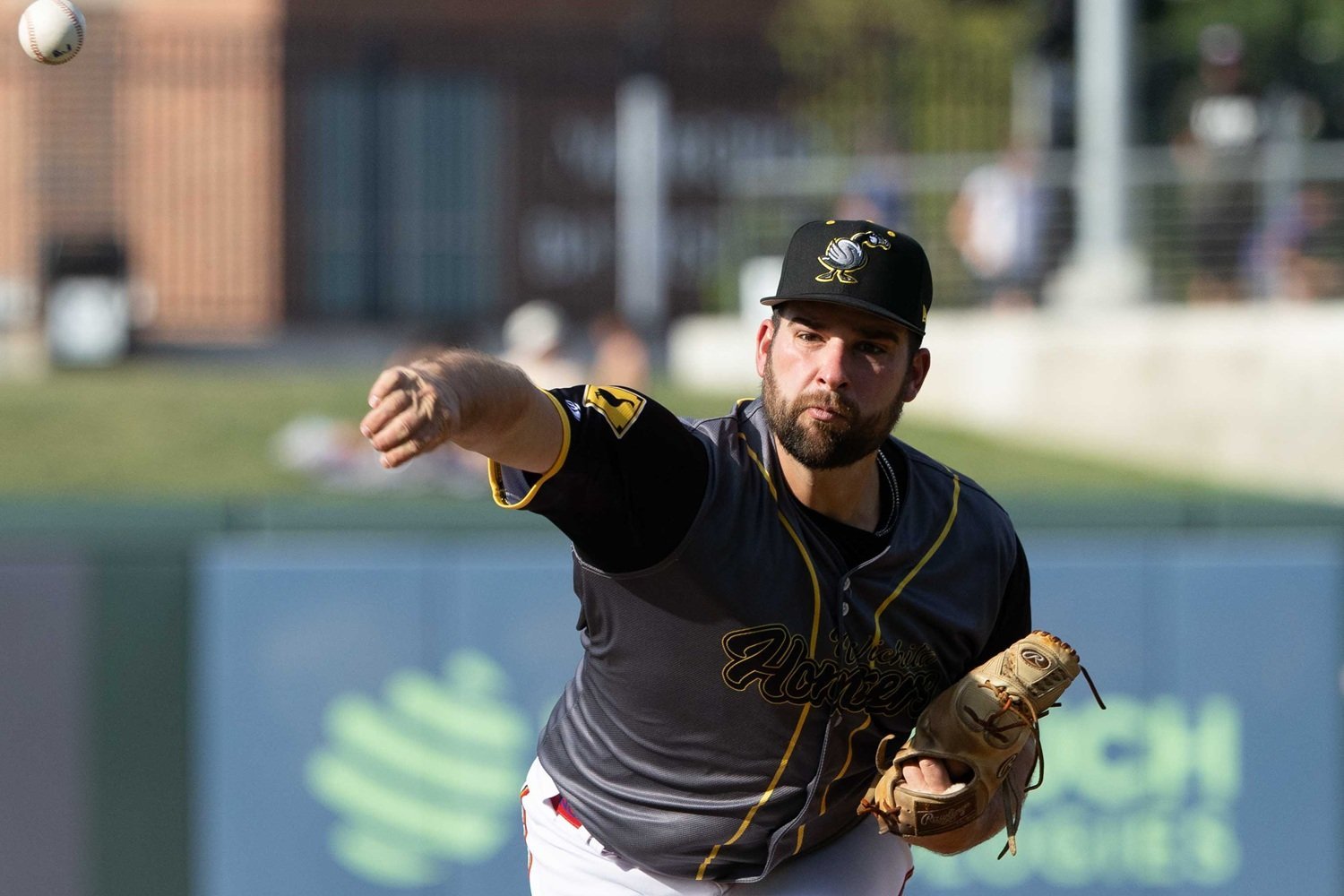 TRANSACTIONS The Twins claimed RHP Jack Anderson from the Boston Red Sox and assigned him to the Saints. To make room, Anthony Banda was placed on the 60-Day Injured List. Garrett Acton began his rehab with the Fort Myers Mighty Mussels. RHP Ricky Castro was activated from the Saints Injured List. OF Walker Jenkins was placed on the Temporary Inactive List. Worry not! He’ll be in Philadelphia, playing in the Futures Game on Sunday afternoon. He will be the starting center fielder and bat cleanup for the American League squad. Catcher Irvin Nunez was promoted from Fort Myers to Cedar Rapids. The Kernels transferred RHP Sam Rochard to the 60-Day Injured List. He’s got right labrum impingement syndrome. SAINTS SENTINEL St. Paul 2, Iowa 8 Box Score On Tuesday, John Klein tossed five innings against the I-Cubs to earn a win. On Saturday, he was charged with five runs on six hits. In 2 2/3 innings, he walked four and had five strikeouts. Grant Hartwig came on with two runners on and two outs in the third inning. He allowed one of the inherited runners to score. He also gave up a run in the fourth inning. Cole Sands gave up a hit in an otherwise uneventful inning. Ricky Castro returned from the IL to work two scoreless innings. Taylor Rashi got the final inning. He gave up two runs on two walks and a hit (a homer). The Saints faced a rather veteran/experienced Cubs pitching staff on Sunday. Jameson Taillon gave up just one hit and one walk over 4 2/3 innings. 35-year-old Ty Blach got the next seven outs. The final three outs were thrown by #OldFriend Liam Hendriks. The vaunted Saints offense managed two runs on just four hits and three walks. They had no extra base hits. Aaron Sabato was the lone Saints player with both a single and a walk. The daily Brett Bateman Update shares with us that the Mounds View legend went 2-for-4 with a walk. He hit a two-run triple in the second inning when the game was still close. At the end of the day, he was hitting .309/.437/.422 (.859) with 15 doubles, two triples, two home runs, and 18 stolen bases in 67 games. And he also played tremendous defense. For more on Bateman and other prospects in the (former Twins outfield prospect) Jason Kanzler-led Cubs farm system, check out our sister site North Side Baseball. Many of the Iowa Cubs are in their Top 20 Cubs Prospect rankings, including #11 prospect James Triantos who went 1-for-2 with two walks. He’s also hitting .309. WIND SURGE WISDOM Wichita 3, Northwest Arkansas 4 Box Score Through five innings, this game was scoreless. Preston Johnson walked two batters over four scoreless, hitless innings. He struck out five. Spencer Bengard pitched a scoreless fifth inning before giving up an unearned run. Jaylen Nowlin gave up two runs (1 earned) on one hit and a hit batter in the seventh inning. He had two strikeouts. Paulshawn Pasqualotto gave up one run on three hits and a walk over the final two innings. The Naturals scored one run in the top of the sixth and two more runs in the top of the seventh inning. Down 3-0, the Surge mounted a comeback in the bottom of the seventh. With one out, Brandon Winokur singled. He scored on Garrett Spain’s 17th double. He moved to third base on a bunt single by Kyle DeBarge. Spain scored on a single by Caden Kendle to make it 3-2. Northwest Arkansas added one run in the top of the eighth inning. Marek Houston led off the bottom of the eighth with a walk. He went to third base on a Khadim Diaw single. Andrew Cossetti walked to load the bases. Billy Amick flew out to left field, deep enough for Houston to score and make it a one-run game. Diaw advanced to third base on the play. Unfortunately, a strikeout and a ground out ended the threat. The Surge went 1-2-3 in the bottom of the ninth and fell 4-3, their fourth straight loss. They have nine wins in the past 46 games. Wichita scored their three runs on eight hits and four walks. Unfortunately, they were just 2-for-9 with runners in scoring position. Garrett Spain had the lone extra base hit, his 17th double. Khadim Diaw and Jay Thomason were both 2-for-4. Marek Houston and Caden Kendle were both 1-for-3 with a walk. Andrew Cossetti went 0-for-2 with two walks. Seven players on the NW Arkansas roster are in the Royals Keep Top 20 prospect rankings. Five of them are pitchers. #14 prospect Felix Arronde started for the Naturals and gave up one run on five hits in 5 1/3 innings. KERNELS CHRONICLE Cedar Rapids 11, South Bend 7 Box Score There was no score in this game through three innings. Over the next two innings, the Kernels scored five runs to make it 5-0. The Cubs scored three runs in the top of the sixth and again in the top of the seventh inning. In the Kernels half of the seventh, they put six on the scoreboard to take an 11-6 lead, plenty for their bullpen to hold on. Adrian Bohorquez started and threw 2 2/3 scoreless innings. He gave up two hits, walked one and had five strikeouts. Michael Ross came in with two on and two out in the third inning. He was then charged with three runs in the sixth and three runs in the seventh. He got two outs in that seventh inning. Brian Zeldin got out of that inning, but he was credited with one run on two hits and a walk. In the bottom of the fourth inning, Eduardo Tait led off with a single. Enrique Jimenez drove him in with a double. He advanced to third on a throwing error. With one out, Danny De Andrade singled in Jimenez to make it 2-0. Rayne Doncon started the bottom of the fifth inning with a walk. With one out, Dameury Pena singled to right, but Doncon was thrown out at third base for the inning’s second out. Yasser Mercedes drove in Pena with his ninth double. After a pitching change, Tait’s 17th double drove in Mercedes. Jimenez walked, and then Henry Kusiak doubled in Tait to make it 5-0. After falling behind 6-5, the Kernels came to the plate in the bottom of the seventh inning. Yasser Mercedes started the inning by reaching on an error. Tait walked. Both runners advanced on a balk, and Jimenez walked to load the bases. With one out, De Andrade’s 10th double drove in two runs to put the Kernels back in the lead at 7-6. Jose Salas followed by hitting a homer for the second night in a row. On Friday night, it was a grand slam. On Saturday, it was “just” a three-run homer. Later in the inning, Yasser Mercedes drove in Graham Brown with a single to make it 11-6 and close out the scoring. Cole Peschl struck out two batters in a perfect ninth inning. After hitting a double and two triples on Friday, Danny De Andrade hit a single, his 10th double, and his fifth triple on Saturday night. Jose Salas hit his second home run in as many days and went 2-for-5. Mercedes went 2-for-5 with his ninth Kernels double and two RBI. Tait went 2-for-4 with a walk and his 17th double. Jimenez went 1-for-2 with three walks and a double. Kusiak added his fifth double. Five South Bend Cubs players are on the Northside Baseball Top 20 Cubs Prospect rankings.19-year-old Josiah Hartshorn, the #4 prospect, will be participating in the Futures Game on Sunday. #7 prospect Kane Kepley went 1-for-4 with a walk, and his 41st stolen base. #14 prospect MIGHTY MATTERS Game 1: Ft. Myers 0, Bradenton 2 (8 innings) Box Score These teams had not played the last two days because of rain. So, maybe it’s understandable that through the seven scheduled innings of the first game, the bats were almost completely silent. Reed Moring started and gave up two hits and two walks over three scoreless innings. He struck out five batters. Garrett Acton’s first rehab appearance went well. He had a strikeout in a perfect inning. Callan Fang came on and gave up two hits, walked two batters and hit another over two scoreless innings. He had three strikeouts. Mike McKenna had a 1-2-3 eighth inning. Michael Hilker came in for the eighth inning. He allowed the Manfred Man to score and another run on two hits. Unfortunately, the Mussels were unable to get anything going. They had just three hits and a walk over the game’s eight innings. Luis Fragoza had two of the three singles. Byron Chourio had the other. Quentin Young walked. Game 2: Ft. Myers 3, Bradenton 2 Box Score 13 innings. After not scoring for eight innings in the first game, the Mussels started Game 2 with five scoreless innings. Fortunately, Justin Mitrovich was up to the challenge. The right-hander gave up just one hit over 4 2/3 scoreless innings. He walked two and had seven strikeouts. Julian Merryweather continued his rehab assignment. He got the final out of the fifth inning. In the sixth, he gave up two runs (1 earned) on three hits. He struck out three batters. Bradenton scored two runs in the top of the sixth. The Mussels responded in the bottom of the sixth inning by ending their offensive drought. Miguel Briceno led off with a walk. He went to third base on Ramiro Dominguez’s 14th double. Jayson Bass grounded to short. Briceno scored but Dominguez was out trying to advance to third. With two outs, Luis Fragoza hit his 11th double which drove in Bass with the tying run. Brent Francisco came in for the top of the seventh. He got a strikeout and two ground outs. The bottom of the seventh inning began with a Ricardo Paez walk. After a strikeout, Ricardo Pena was hit by a pitch. After a pitching change, Briceno walked to load the bases. Dominguez came to the plate and lined a single to right to drive in Paez with the game-winning run. The Mussels again only had three hits. However, they walked five times in Game 2. Ramiro Dominguez went 2-for-4 with his 14th double. Luis Fragoza hit his 11th double. Briceno walked twice. COMPLEX CHRONICLES FCL Twins 7, FCL Red Sox 3 Box Score The Twins scored two runs in the first inning. The Red Sox scored three in the second inning. The Twins responded with three in the third and two more in the fourth to take a lead and hung on for the win. Yovanny Duran led off the bottom of the first inning with a single. Jake Rucker walked. Duran went to third on a fly out. Rucker stole second, and both runners scored on a throwing error. Michael Carpenter was back on the mound for another rehab start. He was much improved compared to his previous appearance. He struck out two batters in a perfect inning. Melvin Rodriguez came on as the bulk pitcher again. He gave up three runs in the second inning but then settled in. In four innings, he gave up three runs on three hits (2 homers), a walk, and three hit batters. He also had eight strikeouts. Duran led off the third inning with a walk and stole second. Rucker walked. The two were successful on a double steal. After two strikeouts, Miguel Caraballo walked to lead the bases. Duran scored on a passed ball to tie the game at three. Darwin Almanzar walked to reload the bases. After a pitching change, Joyner Perez singled to drive in two runs and make it 5-3. Duran led off the fourth inning with a double. Rucker walked. Carlos Taveras reached on an error to load the bases. Jhomnardo Reyes grounded out, but Duran scored. Caraballo then lifted a fly ball to right field, deep enough for Rucker to score the team’s seventh run. Brad Rudis walked one and struck out one batter over two scoreless, hitless innings. The Twins scored their seven runs on just four hits, but they had 11 walks. Rehabbing Jake Rucker went 0-for-1 with three walks, three runs scored and two stolen bases. Jhomnardo Reyes, Darwin Almanzar, and Victor Leal each walked twice. Duran went 2-for-3 with a walk and three runs scored. DSL Twins 9, DSL Nationals 3 Box Score The Twins scored nine runs on eight hits and were largely helped by 12 walks. Juan Collado started for the Twins. He gave up three, first-inning runs but then tossed two scoreless innings. Overall, he gave up three runs on five hits (2 homers) and had one strikeout. Alam Soriano came in and finished the game. He gave up just one hit and no walks over four scoreless innings. He had five strikeouts to earn the Win. All nine Twins hitters reached base at least once. The first four hitters (Daiyer Barboza, Jendy Martinez, Jhon Gonzalez, Enmanuel Merlo) walked twice. Fifth hitter Abel Sosa went 2-for-3 with a walk and his second double. Juan Holmann batted sixth. He went 3-for-5 with his seventh double, third home run, two runs, and five RBI. He stole his 13th bag of the season. Luis Duarte walked once. Jeferson Abreu went 2-for-3 with a walk and his first double. Fabian Ulloa went 1-for-3 with a walk, and he stole his fourth base. . PLAYERS OF THE DAY Hitter(s) of the Day Danny De Andrade (Cedar Rapids): 3-for-5, 2B(10), 3B(5), R, 3 RBI, K Juan Holmann (DSL Twins): 3-for-4, 2B(7), HR(3), 2 R, 5 RBI, K, SB(13) Pitcher(s) of the Day Preston Johnson (Wichita): 4 IP, 0 H, 0 R, 2 BB, 5 K, 65 pitches, 41 strikes (63.1%) Alam Soriano (DSL Twins): 4 IP, 1 H, 0 R, 0 BB, 5 K, PROSPECT SUMMARY Check out the Prospect Tracker for much more on our Twins Top 20 prospects after seeing how they did today. #4 - C Eduardo Tait (Cedar Rapids) - 2-for-4, BB, 2B(17), 3 R, RBI, 2 K #5 - SS Marek Houston (Wichita) - 0-for-3, BB, R, 2 K (batted first, played SS) #9 - OF Hendry Mendez (St. Paul) - 0-for-3, BB, K (batted fourth, played DH) #10 - OF Gabriel Gonzalez (St. Paul) - 0-for-4, RBI, K (batted sixth, played LF) #12 - 3B/CF Brandon Winokur (Wichita) - 1-for-4, R, K, OF Assist (batted fifth, played CF) #13 - C/OF Khadim Diaw (Wichita) - 2-for-4 (batted second, played catcher) #14 - 3B/SS Quentin Young (Ft. Myers) - Game 1: 0-for-2, BB (batted sixth, played SS) #18 - OF Yasser Mercedes (Cedar Rapids) - 2-for-5, 2B(9), 2 R, 2 RBI, SB(24), 2 K (batted first, played RF) #19 - 1B/3B Billy Amick (Wichita) - 0-for-3, SF RBI (batted fourth, played 3B) #20 - 2B/SS Kyle DeBarge (Wichita) - 1-for-4 (batted seventh, played 2B) UPCOMING PROBABLES Sunday, July 11 St. Paul @ Iowa (1:08 pm CT) - LHP Aaron Rozek (2-1, 3.42 ERA) NW Arkansas @ Wichita (1:05 pm CT) - RHP Chris Vallimont (0-1, 5.40 ERA) South Bend @ Cedar Rapids (1:05 pm CT) - LHP Dasan Hill (1-6, 6.14 ERA) Bradenton @ Ft. Myers (11:05 am CT) - RHP Merit Jones (3-1, 4.33 ERA) CURRENT W-L Records Minnesota Twins: 47-49 St. Paul Saints: 49-41 Wichita Wind Surge: 28-56 Cedar Rapids Kernels: 35-48 Fort Myers Mighty Mussels: 46-37 FCL Twins: 28-23 DSL Twins: 8-20 Please feel free to ask questions about the teams, the rosters, and discuss today’s games, or anything else Twins minor-league related! View the full article
 -
 Thanks to a rainout for the Triple-A El Paso Chihuahuas, the four full-season San Diego Padres affiliates went 2-1 Saturday. The Double-A San Antonio Missions won 10-9 over Midland, the High-A Fort Wayne TinCaps lost 4-2 to West Michigan and the Low-A Lake Elsinore Storm cruised to an 8-2 win over Rancho Cucamonga. Padres Minor-League Transactions San Diego Padres optioned RHP Jhony Brito to El Paso Chihuahuas. El Paso Chihuahuas activated 2B Victor Duarte from the Development List. El Paso Chihuahuas transferred 2B Nate Mondou to the Development List. San Antonio Missions placed C Ethan Salas on the temporarily inactive list (Futures Game). San Antonio Missions activated OF Kai Murphy from the Development List. Chihuahuas-Comets Rained Out The Triple-A El Paso Chihuahuas were rained out in their game against the host Oklahoma City Comets. The game will be made up as part of a doubleheader Aug. 26. Luis Verdugo's 3-Run Blast In Eighth Lifts Missions Luis Verdugo hit a go-ahead three-run homer in the top of the eighth inning as the Double-A San Antonio Missions rallied past the host Midland RockHounds 10-9. Ryan Jackson had three hits and scored three times, Braedon Karpathios (Padres Mission's No. 9 prospect) was on base four times with two hits and two walks and Francisco Acuna had a pair doubles and a walk. Karpathios and Verdugo also scored twice. While the bullpen, led by right-handers Tucker Musgrove, Padres Mission's 12 prospect, and Garrett Hawkins, Padres Mission's No. 17 prospect, pitched four innings without allowing an earned run, left-handed starter Jagger Haynes, Padres Mission's No. 10 prospect, and right-handed reliever Bernard Jose gave up eight runs on 10 hits with four walks, with Jose giving up a homer. Hawkins, in his fourth Missions appearance after starting the season in El Paso, picked up his first save of the season after notching 10 in as many chances last year. The Missions were down 6-2 after three innings, then traded punches with the RockHounds, who were up 8-5 after five, before El Paso got two more in the sixth on a Jake Cunningham run-scoring grounder and Karpathios' RBI single. Jackson opened the eighth with his third single of the game, prompting a pitching change. After a flyout and a strikeout, Karpathios walked and Verdugo smashed his no-doubt, three-run blast down the left-field line to put the Missions up 10-8. SA_0711.mp4 Player AB R H RBI BB K Carson Tucker 6 0 1 1 0 2 Ryan Jackson 5 3 3 0 0 1 Tirso Ornelas 4 0 1 0 1 2 Jake Cunningham 4 1 1 1 0 1 Braedon Karpathios 3 2 2 1 2 1 Luis Verdugo 4 2 2 3 0 1 Francisco Acuna 4 1 2 1 1 1 Kai Roberts 3 1 0 0 1 2 Chris Sargent 5 0 1 1 0 2 Player IP H R ER BB K HR Jagger Haynes 3 7 6 6 3 1 0 Bernard Jose 2 3 2 2 1 1 1 Tucker Musgrove 1 1 0 0 1 1 0 Harry Gustin (W) 1 1 0 0 2 1 0 Clay Edmondson (H) 2/3 1 1 0 1 0 0 Garrett Hawkins (S) 1 1/3 1 0 0 0 3 0 Bryan Balzer Strikes Out 8, But TinCaps Outdone By Whitecaps Right-hander Bryan Balzer struck out a career-high eight and turned in the best of his three starts since being promoted to High-A Fort Wayne, but the TinCaps couldn't generate enough offense to get him a win in falling to the host West Michigan Whitecaps 4-2. The TinCaps were held hitless through five innings. Leadoff hitter Justin DeCriscio, last year's 10th-round draft choice, went 2-for-3 with a walk and an RBI, but was the only TinCap to reach base multiple times as they were outhit by the Whitecaps 10-5. This was DeCriscio's 16th multihit game this season and put his hitting streak at eight games. Balzer, an international free agent, went five innings, allowing just a run on five hits and a walk with those eight punchouts. He struck out seven in his season debut April 2 vs. Ontario. Balzer had a combined eight strikeouts in 7⅓ innings in his first two TinCaps starts, but gave up nine runs (seven earned) on eight hits and six walks, including five in his debut June 27. He was much better in his start before the All-Star break. Unfortunately, right-hander Nick Falter, given a 2-1 lead, couldn't hold the advantage, giving up a pair of runs in the sixth and another in the seventh in his two innings. Right-hander Will Koger pitched a perfect eighth, striking out two. The TinCaps finally got their first hit of the game when Jack Costello's single led off the sixth, the first of three consecutive hits. That was followed by Kasen Wells' RBI double, DeCriscio's single and a run-scoring wild pitch that brought in Wells to put the TinCaps up 2-1. But the rally ended there as Ryan Wideman, Alex McCoy and Luke Cantwell were retired. The only other hits the TinCaps would get would be DeCriscio's eighth-inning double and McCoy's ninth-inning single. FW_0711.mp4 Player AB R H RBI BB K Justin DeCriscio 3 0 2 1 1 0 Ryan Wideman 4 0 0 0 0 2 Alex McCoy 4 0 1 0 0 2 Luke Cantwell 4 0 0 0 0 1 Rosman Verdugo 3 0 0 0 1 2 Kerrington Cross 4 0 0 0 0 0 Carlos Rodriguez 3 0 0 0 0 1 Jack Costello 3 1 1 0 0 0 Kasen Wells 3 1 1 0 0 0 Player IP H R ER BB K HR Bryan Balzer 5 5 1 1 1 8 0 Nick Falter (L) 2 5 3 3 1 3 0 Will Koger 1 0 0 0 0 2 0 Dylan Grego's 4-Hit Night, Tyler Schmitt's Pitching Propel Storm Dylan Grego went 4-for-5 with a homer and three RBIs, while right-handed starter Tyler Schmitt had five strong innings as the Low-A Lake Elsinore Storm rolled to an 8-2 triumph over the Rancho Cucamonga Quakes. Yimy Tovar, Yoiber Ocopio, Alcides Hernandez and Qrey Lott each had two hits, with Hernandez driving in a pair, while Grego and Conner Westenburg scored twice. Schmitt and Storm pitching were on point, with the starter yielding just a run on four hits and no walks while fanning five over five innings. Right-handers Jordan Valenzuela and Jeferson Villabona each went two innings, with Valenzuela allowing just a hit and a walk with two strikeouts and Villabona four punchouts while giving up a run on two hits. Grego singled home Tovar in the top of the first, then Hernandez drove home a pair in the top of the third with a single to make it 3-0. The Quakes scored once in the bottom of the third, but the Storm added two in the fifth on Grego's solo homer, his third with the Storm and fourth of the year, and a wild pitch. Three more runs came in the eighth on Grego's RBI single, Lott's bases-loaded walk and Tovan's run-scoring infield chopper. LE_0711.mp4 Player AB R H RBI BB K Yimy Tovar 6 1 2 1 0 1 Jorge Quintana 6 0 1 0 0 2 Dawson Willis 6 0 1 0 0 5 Yoiber Ocopio 4 1 2 0 2 2 George Bilecki 6 1 1 0 0 3 Dylan Grego 5 2 4 3 1 1 Conner Westenburg 5 2 1 0 1 2 Alcides Hernandez 4 1 2 2 1 1 Qrey Lott 2 0 2 1 1 0 Player IP H R ER BB K HR Tyler Schmitt (W) 5 4 1 1 0 5 0 Jordan Valenzuela 2 1 0 0 1 2 0 Jeferson Villabona 2 2 1 1 0 4 0 Padres Mission's Top 20 Prospect Performance Ethan Salas: DNP Kash Mayfield: DNP Miguel Mendez: DNP Ryan Wideman: 0-for-4, 2 K Kruz Schoolcraft: DNP Jorge Quintana: 1-for-6, 2 K Ty Harvey: On injured list Kale Fountain: Injured, out for season Braedon Karpathios: 2-for-3, 1 K Jagger Haynes: 3 IP, 7 H, 6 R, 6 ER, 3 BB, 1 K Lamar King Jr.: DNP Tucker Musgrove: 1 IP, 1 H, 0 R, 0 ER, 1 BB, 1 K Truitt Madonna: DNP Alex McCoy: 1-for-4, 2 K Jesus Castro: DNP Rosman Verdugo: 0-for-3, 2 K Garrett Hawkins: 1⅓ IP, 1 H, 0 R, 0 ER, 0 BB, 3 K, S Eric Yost: DNP Michael Salina: DNP Winyer Chourio: DNP View the full article
 -
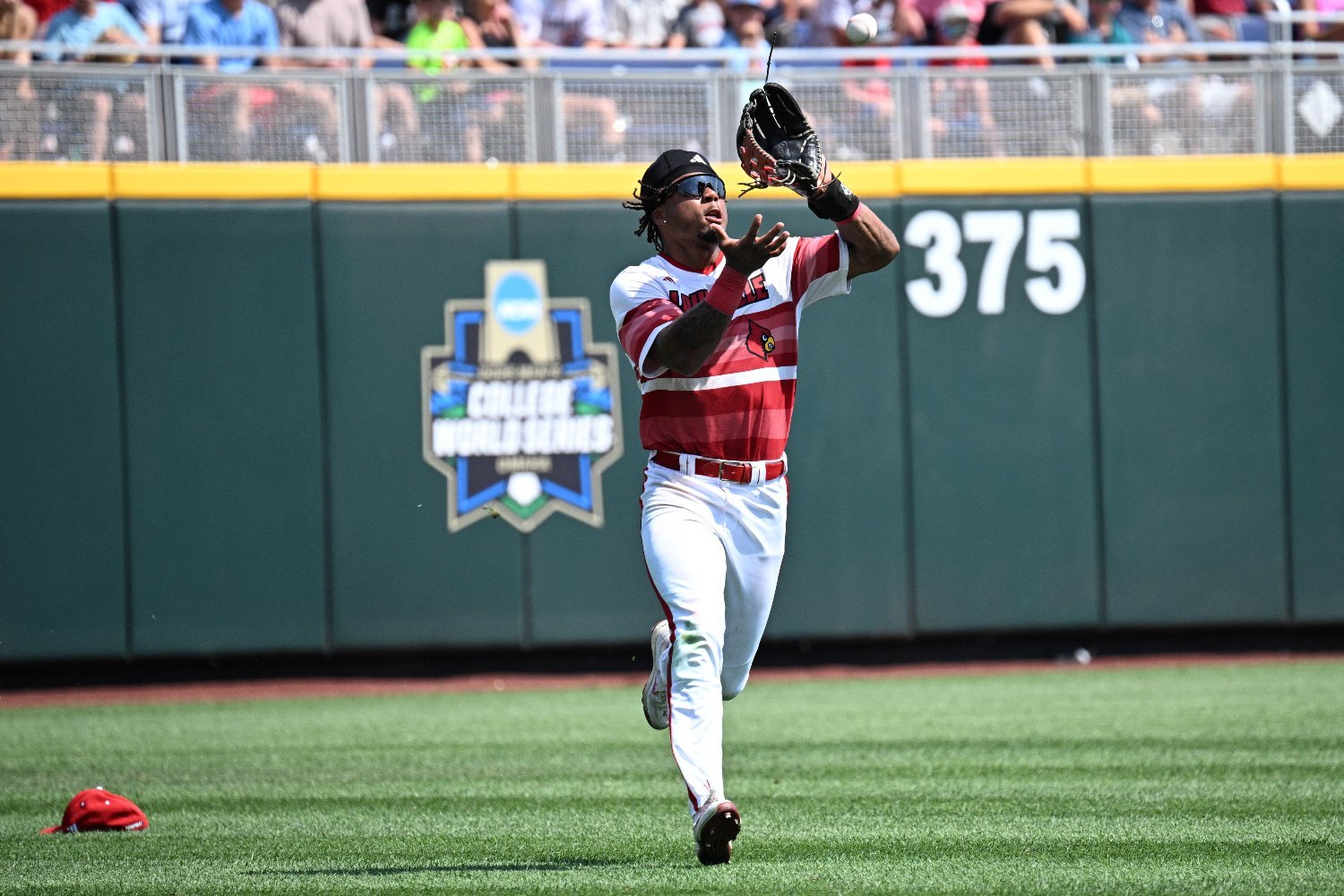 It was an interesting first day of the MLB Draft for the Kansas City Royals. Tied to prep players like Eric Booth Jr. and Jacob Lombard, and college players like Drew Burress and Jackson Flora, they surprised everyone by selecting Zion Rose, an outfielder from the University of Louisville. Rose was the 26th-ranked draft prospect in Jamie Cameron's Mock Draft on Diamondcentric. Many experts thought that the Royals would be in play for Rose at No. 30, their Competitive Balance A pick. However, drafting the 21-year-old outfielder at No. 6 was seen as a reach, especially with Boot and Burress still on the board. Was Rose a bad pick, or did the fans' expectations that the Royals would select Burress or Booth overwhelm them? And how did his selection affect the Royals' other selections on Day One? Rose Brings Contact-Heavy and Athletic Profile to Outfield (At Underslot Value) The reality is that the Royals need help in the outfield. Sean Gamble is the Royals' highest-rated outfield prospect at No. 5, but he's in Low-A ball, and he may be a guy who moves slowly as he continues to develop and adjust to professional pitching (he's been hitting well since June 1st). Carson Roccaforte and Asbel Gonzalez are Top-10 prospects, but they have their share of flaws that could hold them back (strikeouts for Roccaforte; power for Gonzalez). Beyond those three? There are no other outfielder prospects in the Royals' Top 20 at Royals Keep. Thus, Rose not only changes that but is also a player who could move quickly through the Royals' farm system, given his experience with the Cardinals. Last year, the Royals' first-round pick missed time with an injury and played only 36 games, 30 fewer than his total in 2025. However, despite only getting 173 plate appearances, he slashed .421/.491/.646 with a 1.137 OPS and 147 wRC+. He also stole 24 bases on 27 attempts and hit six home runs. For context, in 301 plate appearances in 2025, Rose hit .310 with a .948 OPS, 109 wRC+, 13 home runs, and 31 stolen bases. In terms of his strengths, the Louisville outfielder shows incredible contact skills and can draw a walk. He had a 1.27 BB/K ratio last year, highlighted by an 8.7% K rate, a career best. Rose makes contact, hits line drives, steals bases, and shows strong defense in the corners, which is impressive, considering he initially came to campus as a catcher. Even though he wasn't a "projected" Top-10 pick, Rose checks off many of the boxes the Royals value in position players. That goes beyond the draft, as Lane Thomas and Isaac Collins were also examples of veteran players with profiles similar to Rose's. The good thing with Rose is that he likely will sign underneath the expected slot bonus of $7.7 million at pick No. 6. Hence, the Royals not only got the outfielder with the profile they wanted, but they also were able to save some money that could be spread out on bonuses given out to other selections in this draft. Rabe, Slightom, and Yehl Are High Upside Arms (Helped by the Rose Selection) At pick No. 30, the Royals selected Taylor Rabe, a 21-year-old righty from Ole Miss. Rabe is not only a big arm (6'5), but he demonstrated excellent command (7.00 K/BB ratio) and ability to strike batters out (34.2% K%). In 17 appearances (11 starts) and 76.1 IP, he posted a 3.55 ERA, 1.03 WHIP, and 3.75 FIP. Rabe's ranking was a bit all over the place before the MLB Draft. Cameron had him ranked No. 36 at Diamondcentric, and MLB Pipeline ranked him 40th. However, Baseball America was a little more optimistic about his outlook, ranking him 26th. Thus, Rabe could be seen as a good-to-great overslot selection, depending on the ranking. Regardless, there's mid-rotation upside with Rabe at the very least, and he could be a pitcher who could move quickly, something they need considering the dearth of quality starting arms in Double-A and Triple-A. As for their second-round pick, Jack Slightom is a bit more of a project. He just turned 18 in April, and he's an Illinois prep product who will likely begin in the Complex League this year and advance to Low-A ball in 2027. However, he's the pitching prospect that could be a success story, much like David Shields, our No. 2 prospect at Royals Keep. data:image/gif;base64,R0lGODlhAQABAPABAP///wAAACH5BAEKAAAALAAAAAABAAEAAAICRAEAOw== Here's what Cameron said about Slightom in his Mock Draft article: data:image/gif;base64,R0lGODlhAQABAPABAP///wAAACH5BAEKAAAALAAAAAABAAEAAAICRAEAOw== This is another pick who will likely sign an overslot deal, much like Rabe. Rose's expected savings paved the way for two high-upside, high-cost selections like Rabe and Slightom. Yehl, the Royals' third-round selection, won't be an overslot deal. If anything, he'll probably agree to a deal below the expected $872.9K slot bonus. However, the 22-year-old is a polished and proven lefty who can move quickly and strike out guys in bunches. In 18 starts and 97 IP, Yehl posted a 2.13 ERA, 1.07 WHIP, 4.07 FIP, 27.9% K%, and a 4.31 K/BB ratio. He was named Big 12 Pitcher of the Year after missing all of 2025 due to Tommy John surgery. data:image/gif;base64,R0lGODlhAQABAPABAP///wAAACH5BAEKAAAALAAAAAABAAEAAAICRAEAOw== Yehl's professional outlook is still a little hazy. Some believe he can be a middle-to-bottom-of-the-rotation starter, while others believe he carries some reliever risk (hence his falling to the third). Nonetheless, Yehl is a quality arm that can help the Royals quickly, which is a benefit considering their starter and bullpen struggles in Double-A, Triple-A, and even the Major Leagues. How Would We Rate Day One? In the fourth round, the Royals selected Dominic Battista, a prep outfielder from Illinois who ranked outside most experts' Top-100 lists. This selection was likely a cost-saver (i.e., under-slot). Still, Battista has some athleticism and tools, and his draft stock was primarily hurt by a hamate injury that forced him to miss 10 games in his senior year at Oswego East High School. If fully healthy, he could've been a 2nd or 3rd-round selection. data:image/gif;base64,R0lGODlhAQABAPABAP///wAAACH5BAEKAAAALAAAAAABAAEAAAICRAEAOw== Battista is a University of Illinois-Chicago commit, and the Royals had success with Luke Pelzer, a UIC product, in last year's draft. Pelzer is hitting .342 with a 136 wRC+ in High-A Quad Cities, and he'll likely move up to Northwest Arkansas after the All-Star Break. Overall, there's a strong balance of talent from Day One of the MLB Draft for the Royals. They selected proven guys who can move quickly (Rose and Rabe), some prep guys with upside (Slightom and Battista), and a big arm with big stuff who could develop into a starter with the right pitcher development in the next year or two. That's a Day One to be happy about, especially for a Royals farm system that needs help in Double-A sooner rather than later. At the same time, the Royals' Day One feels a little underwhelming. The Royals could've drafted a big, high-upside guy with star potential at No. 6. That could've been a college guy like Burress or a prep one like Booth or Lombard. And yet, they chose the "cheaper" option in Rose. It's not a bad selection by any means, because Rose has all the tools to be a successful outfielder for the Royals. Plus, Rose has the intangibles and makeup to develop quickly in the farm system. Joe Doyle talked about Rose maybe being the best "sleeper" pick in this draft and could surprise a lot of folks who criticized the Royals for drafting Rose at No. 6. And yet, it feels like the Royals could've done a better job of drafting for "more" upside, especially in their first two selections. Thus, this Day One feels like a passing grade, but not much more, unfortunately. Day One Grade: C+ View the full article
 -
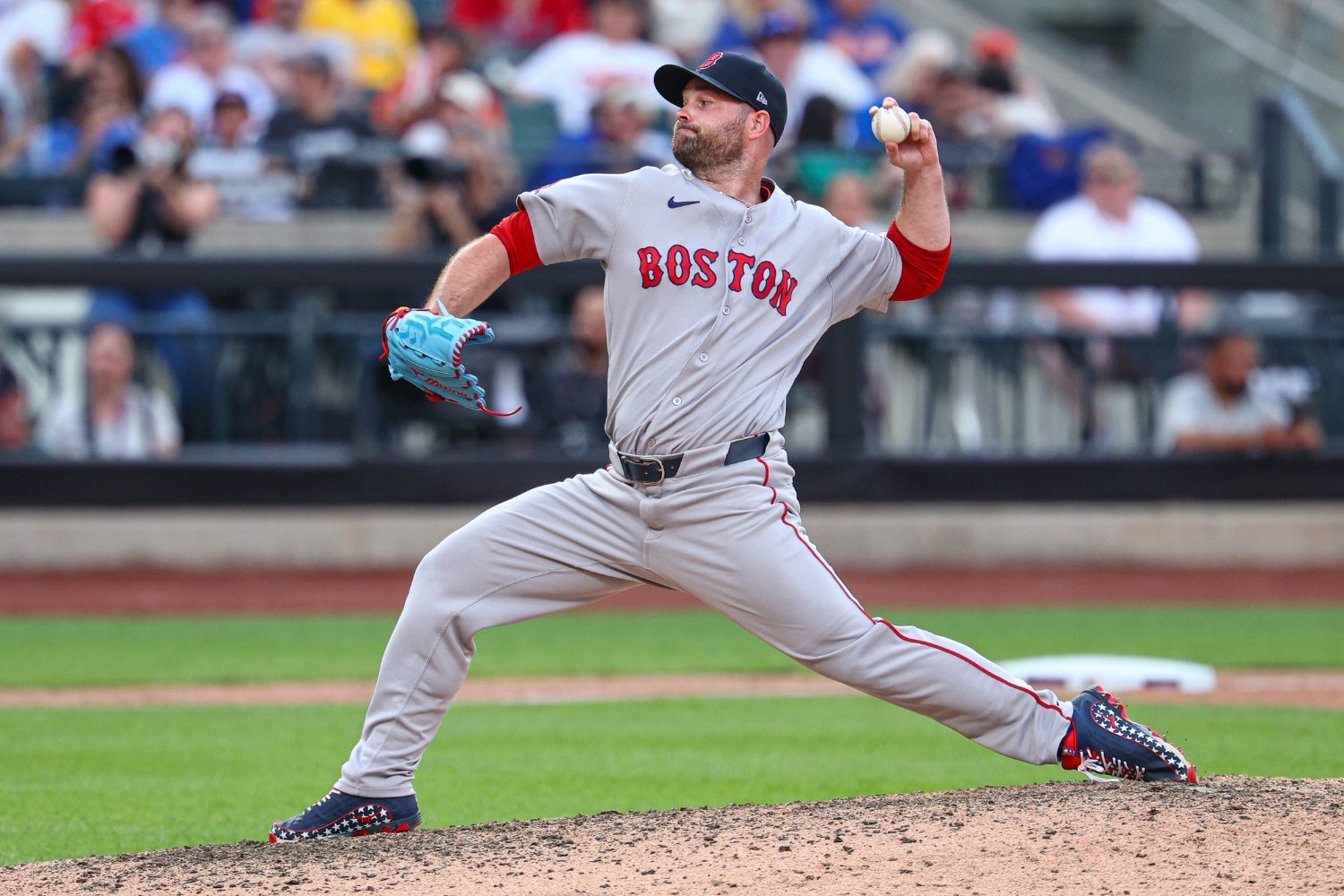 The Boston Red Sox have designated left-handed reliever Danny Coulombe for assignment on Saturday after he went two innings against the Mets and walked three. Coulombe struggled through the 2026 season producing a 4.95 ERA in 20 innings of work with a 1.50 WHIP and an 11.4% strikeout rate versus a bloated 13.6% walk rate. The underlying numbers backed up his performance this season, as he produced a 4.71 FIP and a 5.91 SIERA. Coulombe was brought in as lefty help in the spring, with only closer Aroldis Chapman profiling as a legitimate left-handed option, but he did not meet the expectations set for him. One interesting note from Chris Cotillo, who broke the DFA news: So it seems that beyond his play this season, there was legitimate financial incentive for the Red Sox to make this move. No corresponding transaction has been announced yet. View the full article
 -
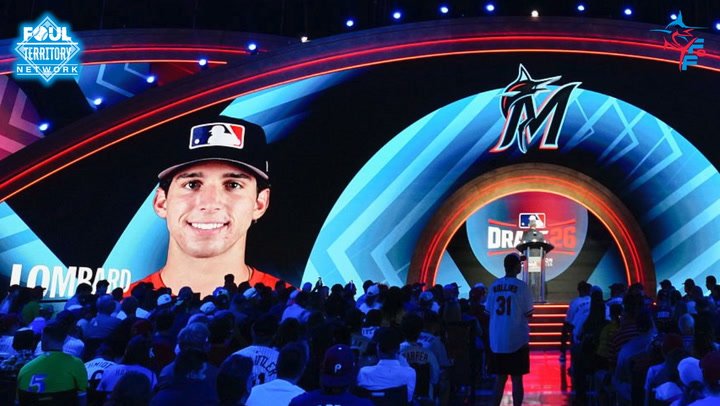 Fish On First LIVE discusses why selecting Jacob Lombard is well worth the risk for the Marlins and how his projected overslot bonus will impact the rest of their 2026 draft class.View the full article
