


DiamondCentric
-
Posts
2,631 -
Joined
-
Last visited
Never
Content Type
Profiles
Forums
Events
News
Tutorials & Help
Major League Baseball Videos
Guides & Resources
Store
Downloads
Gallery
Everything posted by DiamondCentric
-

What the Brewers Can Teach the Twins About Trading Joe Ryan
DiamondCentric posted an article in Twins Daily
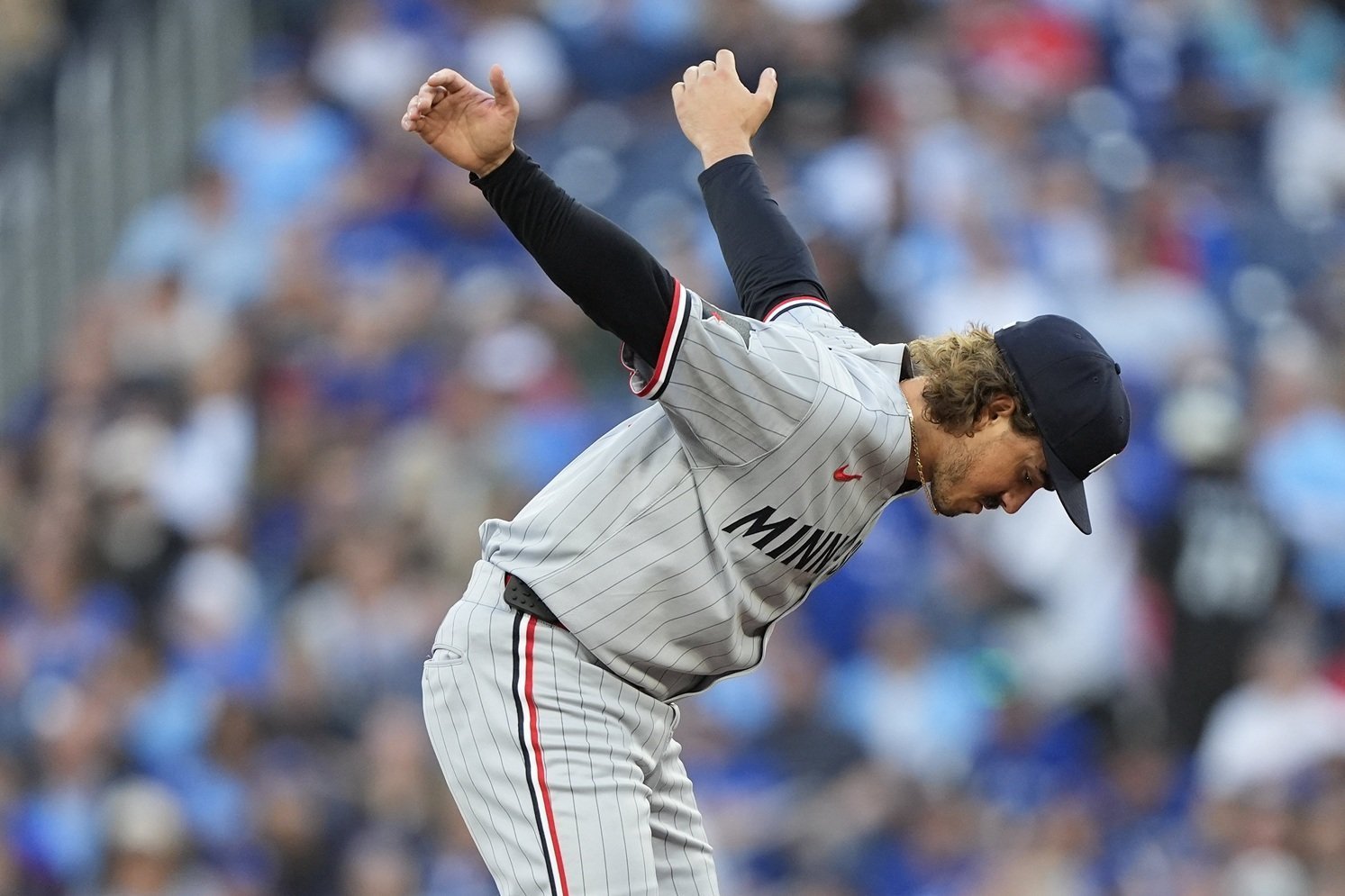 The word "seller" carries a negative connotation around the trade deadline. It signals surrender, rebuilding, and punting on the current season. That's why it's understandable that the Twins have shown little interest in waving the white flag while they remain in the American League playoff race. But what if there was another way to approach the deadline? Over the last several years, the Milwaukee Brewers have built one of baseball's most sustainable organizations by refusing to let emotion dictate difficult roster decisions. They haven't traded stars because they were rebuilding. They've traded them because they understood the value of moving elite players before their trade value began to decline. The Twins may soon face that same crossroads with Joe Ryan. Ryan has developed into one of the American League's best starting pitchers. Through 104 1/3 innings this season, the 30-year-old owns a 2.85 ERA with 122 strikeouts. He's pitching like a legitimate front-line starter, and has earned a second straight All-Star nod. He's also under club control through next season, giving any acquiring team two postseason runs to make the most of his upside. That combination is incredibly valuable. It also means Ryan's value may never be higher. If Minnesota wants to maximize its long-term championship window, it should at least consider following Milwaukee's blueprint. The Brewers Never Wait Too Long Small-market teams rarely win by keeping everyone together forever. Instead, they maximize every asset before free agency forces difficult decisions. Milwaukee has mastered that philosophy. Rather than allowing stars to walk away for draft-pick compensation, the Brewers have consistently identified the moment when a player's value peaked and turned those players into multiple years of affordable talent. That strategy hasn't pushed Milwaukee into rebuilding. Instead, it has helped the Brewers remain one of baseball's most consistent contenders. Here's a look at how Milwaukee has handled similar decisions with some of its biggest arms. One detail immediately stands out: only one of these trades happened at the deadline. The others came during the offseason, when teams were willing to pay a premium for a full season of control. Corbin Burnes Trade Date: February 2024 After the 2023 season, Milwaukee traded Burnes with one year of club control remaining. Rather than settling for draft-pick compensation, the Brewers landed two players capable of contributing immediately in DL Hall and Joey Ortiz—and they picked up a competitive-balance pick from Baltimore to bolster their 2024 class. Hall has transitioned into a bullpen role and taken a significant step forward this season, lowering his ERA to 2.03 while increasing his strikeout rate from 17.4% to 25.4%. Ortiz produced 2.8 WAR with a 102 OPS+ during his first season in Milwaukee before taking a step back offensively. Neither player has become a superstar, but Milwaukee turned one remaining season of Burnes into two controllable major leaguers while staying in contention. (Blake Burke, whom they took with that draft pick and on whom they also saved about $500,000 in bonus pool money to spend elsewhere, has an .846 OPS in his pro career and is likely to reach Triple-A this summer.) Josh Hader Trade Date: August 2022 Perhaps no Brewers trade was more controversial than dealing Josh Hader in the middle of a division race. At the time, fans questioned why Milwaukee would move arguably baseball's best closer while trying to reach the postseason. The Brewers looked beyond the current standings. Milwaukee acquired Robert Gasser, Taylor Rogers, Dinelson Lamet, and Esteury Ruiz. Gasser has already become a capable big-league starter, despite a significant setback in the form of Tommy John surgery in 2024. Rogers added a lefty to the bullpen for the stretch run, and Ruiz was later included in the three-team trade that brought William Contreras to Milwaukee. In fact, he was all the Crew gave up to land Contreras, who has now made two All-Star teams for them. Hader had limited club control remaining, and relievers rarely carry more value than as elite closers with a chance to anchor a playoff bullpen for multiple seasons. Milwaukee capitalized before that value began to decline. This one comes closest to being a cautionary tale, because that was the only time since 2017 that the Brewers have missed the postseason, and the front office was blamed for that, based on the vibes of a midseason trade of such magnitude. However, in the medium and long term, it looks like a brilliant maneuver. Devin Williams Trade Date: December 2024 Milwaukee repeated the process with Devin Williams. Rather than extending an expensive closer into his 30s, the Brewers again moved one of baseball's premier relievers while his value remained exceptionally high. The Brewers received Nestor Cortes and infielder Caleb Durbin for Williams in the 2024-25 offseason. Cortes's injuries limited his impact before he was moved at the following trade deadline, while Durbin later became part of another multi-player deal that brought Shane Drohan, David Hamilton, and Kyle Harrison to Milwaukee. Once again, the Brewers turned one valuable reliever into multiple controllable assets, and got production even in the meantime. Freddy Peralta Trade Date: January 2026 Freddy Peralta represents the same type of decision the Twins may soon face with Ryan. After years of trade speculation, Milwaukee finally dealt Peralta to the Mets for top prospect Jett Williams and right-hander Brandon Sproat. Williams remains one of baseball's top prospects despite an uneven season at Triple-A, while Sproat immediately stepped into Milwaukee's major-league rotation. Ryan fits a similar profile. As was true with Peralta, an acquiring club wouldn't simply be renting him for two months. Ryan would provide a postseason run this year and another full season of control in 2027. That dramatically increases the asking price. Why Ryan Could Bring Even More Ryan's combination of production, durability, and contract status makes him one of the most valuable pitchers who could realistically become available. He's not owed a massive contract, and he's pitching like a legitimate ace. That's exactly the type of arm contenders are willing to overpay to acquire. With the extra half-year of control baked in, he would have to fetch Minnesota more than what Burnes or Peralta got for Milwaukee. The Twins already possess one of baseball's strongest farm systems after last year's deadline additions. Trading Ryan wouldn't signal the end of their competitive window—it could extend it. Imagine adding multiple top-100 prospects, upper-level pitching depth, and another high-upside position player to an organization that already features Walker Jenkins, Kaelen Culpepper, Emmanuel Rodriguez, Eduardo Tait, and several other premium young talents. The Timing Matters One lesson stands out from Milwaukee's recent history: only Hader was traded during the season. Burnes and Williams were moved during the offseason, while Peralta remained with the Brewers through another postseason run before they eventually cashed in. That's an important distinction for Minnesota. The Twins don't have to make this decision before the trade deadline. If they believe this team can reach the postseason, Ryan can remain atop the rotation through October before the front office revisits trade discussions this winter. In fact, that could be the better path. Teams often pay a premium for a pitcher with a full season of control, rather than just two months, giving Minnesota the opportunity to compete now while preserving Ryan's long-term trade value. The Brewers have repeatedly shown that patience can be just as valuable as urgency. It's About Extending the Window The Brewers have shown there is a difference between selling and managing a championship window. They've remained annual contenders because they consistently make emotionally difficult decisions before circumstances force them into weaker ones. The Twins don't have to trade Joe Ryan. If they believe they can sign him to a long-term extension, keeping him is the obvious choice. But if an extension isn't realistic, waiting until the final months of his contract could dramatically reduce his value. At that point, acquiring teams would receive only a few months of control, instead of another full season, shrinking both the number of interested clubs and the quality of offers. Trading Ryan would undoubtedly be unpopular. It would also require tremendous confidence in Minnesota's scouting and player development departments. That's exactly the type of move successful small-market organizations make—though, we ought to note, the Twins are a small-market team more in self-image and by default than in fact. Milwaukee has demonstrated that moving elite pitchers before free agency isn't waving the white flag—it's investing in sustained success. The Twins may not consider themselves sellers this summer, and they probably shouldn't. However, if another organization is willing to offer the type of franchise-altering package Milwaukee has repeatedly secured for its stars, Minnesota owes it to itself to listen. Whether that decision comes in a few weeks or this winter, the Brewers have already provided the blueprint. Sometimes the hardest trade isn't the one that closes a championship window—it's the one that keeps it open for years to come. Can Minnesota follow Milwaukee’s blueprint? Leave a comment and start the discussion. View the full article
 -
The "Other" 2015 Draftees on the 2026 Cubs Matter, Too
DiamondCentric posted an article in North Side Baseball
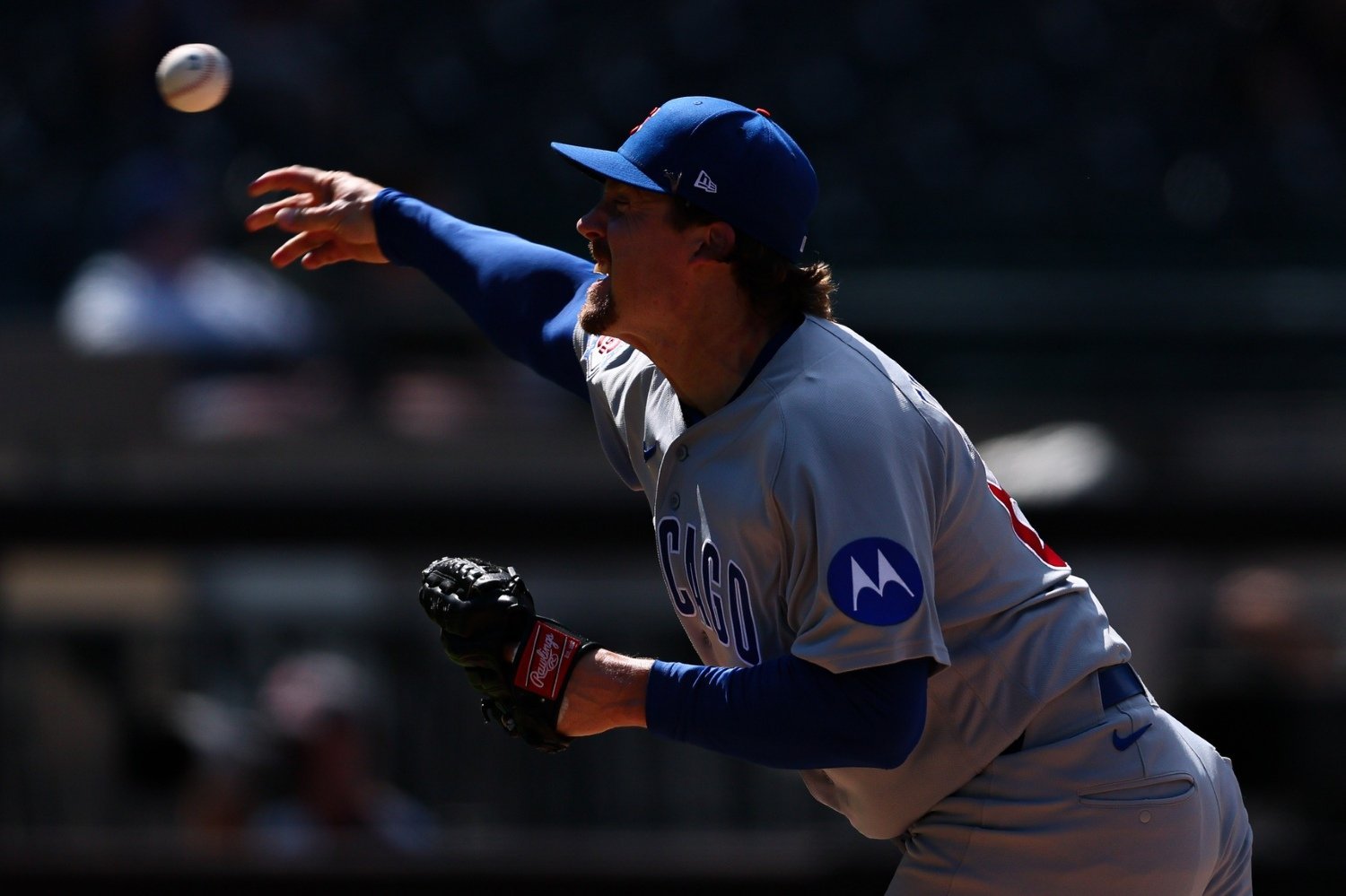 The 2015 MLB Draft is well represented on the 2026 Cubs roster. Famously, the Cubs have the top two picks from that draft, in Dansby Swanson and Alex Bregman, and they have their own top-10 pick (Ian Happ, who went 9th). Scott Kingery is in Triple-A. (Ok, that one is a stretch.) In addition to three top-10 picks, though, they have two arms from the 2015 draft with lesser-known names in their bullpen. Tyler Ferguson and Trent Thornton have both had very positive numbers with the Cubs so far, but as the deadline approaches, can the Cubs rely on either of these arms in a playoff race? Let’s start with Ferguson. The Cubs sent cash to the Athletics for Ferguson in May after he had been optioned to Triple-A to start the 2026 season. He was a useful member of the A’s bullpen in 2024; he had a 30% strikeout rate and was reliable when it mattered most. When covering innings 7-9 (which was his primary role), he held opponents to a .500 OPS and just 12 runs in 38 1/3 innings that year. In fact, over the last two seasons, Ferguson has been quite a bit better than average in medium- and high-leverage situations. Oddly enough, his problem has been low-leverage situations. Ferguson was at his best in 2024 throwing fastballs 74% of the time, but mixing between four-seamers, sinkers, and cutters. In 2025, he lost 1+ mph on his fastballs and his strikeout rate dropped to 22%, while his walk rate climbed to almost 14%. Ferguson has always had a hard time getting lefties out. His loss of effectiveness on the fastball turned him into a platoon reliever who doesn't get a ton of ground balls or strikeouts and has a high walk rate—a pretty rough combination, which makes it easy to understand why the A’s sold him to the Cubs. The Cubs were desperate in their search for healthy arms and saw a rebound in velocity from Ferguson. Ferguson is obviously due for regression from his 0% walk rate. Can he survive it? His strikeout rate is back to 30%, largely on the back of a new sweeper that he's been throwing. Per Ferguson, he changed his grip and it seems to have made a difference, as he's getting more horizontal movement on the pitch. He's thrown it 20 times since he came back from the minors on June 24, and outside of the home run to Jordan Walker on July 5, opponents are 0-6 with 4 strikeouts against the pitch. Even though the shape has been inconsistent as he gets comfortable with the new grip, he's getting a 60% chase rate on the sweeper. The emergence of the sweeper has made his fastball more effective, too. He has allowed just 2 singles off fastballs since his return from Iowa. Much like Jacob Webb, Ferguson is still experimenting with his pitch mix, especially against left-handed hitters. He's only thrown 17 total pitches to lefties since June 24, but he's thrown more sweepers than changeups in his search for a secondary pitch he can trust against them. Ferguson looks to be back where he was when he was an effective platoon arm for the A’s, but if he can find results against lefties with his new sweeper, he could be more than just a matchup guy for Craig Counsell. That would be an unconventional path to success, but this is the Cubs bullpen. Unconventional paths are the convention. One round ahead of Ferguson in 2015, Trent Thornton went to the Astros. Thornton reached Double-A in his first full season, before being traded to the Blue Jays after the 2018 season. He made the Jays roster out of spring training and made 29 starts in 2019, leading the team in starts. Injuries limited him and moved him to a bullpen role, where he was less effective, before being traded to Seattle in 2023. After lowering his arm slot, he was solid in the bullpen for a couple seasons, but was non-tendered after tearing his Achilles last July. Less than a year later, Thornton has a 2.63 ERA over 27 1/3 innings, a pretty remarkable comeback. Much like Ferguson, Thornton is trying to rebound and find the success of his 2024 season, where he had a 26% strikeout rate and a 6.5% walk rate and limited hard contact at a pretty high level. Unlike Ferguson, he doesn’t look like the same pitcher with a new wrinkle; he looks like a completely different pitcher. His arm angle is now at 46°, up from 35° in 2024 and closer to what it was with the Blue Jays. The good news is that he's getting more ground balls than ever before. The bad news is that his strikeout and walk rates are the lowest and highest of his career, respectively. The decrease in swing-and-miss is evident in both of Thornton’s breaking offerings and his four-seam fastball. Looking at Thornton’s fastball, he has traded swing-and-miss for weak contact and ground balls. With the higher arm slot, Thornton’s whiff rate on the four-seamer is back to the mid-teens, where it was before he lowered his slot. His ground-ball rate of 50% on the four-seamer is far higher than ever in his career, though. Batters’ average launch angle on his fastball is 8°. Last season was the only other time he has been below 17°. Due to putting the ball on the ground, the four-seamer grades out higher per run value than any other season in his career. Thornton’s curveball has a paltry 5% whiff rate this year, the first time in his career it's been below 20%. He's spinning the ball less from his higher arm slot and has lost 2.5 inches of total movement on it. Batters have not yet swung and missed on a curveball in the zone this season. His whiff rate has also dropped on his slider/cutter, but only against lefties. Thornton has had more luck against lefties with both the sweeper and the cutter than he has with the curve, but he's still throwing the curve 32% of the time against lefties. Therein lies the problem; the same problem that plagues multiple pitchers in this Cubs bullpen. How do we get a lefty bat out? Before the season, Matt Trueblood postulated that Thornton may be adding a kick-change to his arsenal. If there is truth to this conspiracy, we haven’t yet seen it, as Thornton has not thrown a single changeup this year. As Matt explains in that article, changeups are a difficult pitch for a supinator like Thornton to throw, and if we haven’t seen it yet, it's probably not coming. Without that pitch (or recapturing the lost movement on his curveball), he looks like another Cubs pen arm who needs to be hidden from lefties. The reality is that both of these 2015 draftees are likely capped in terms of what value they can provide to the 2026 Cubs. Both are nearing their 33rd birthdays and are unlikely to change much or suddenly become good at getting lefties out. Especially in a Murphy’s Law season like the Cubs arms are having, however, these veteran arms filling their role well is sorely needed, for however long it lasts. View the full article
 -
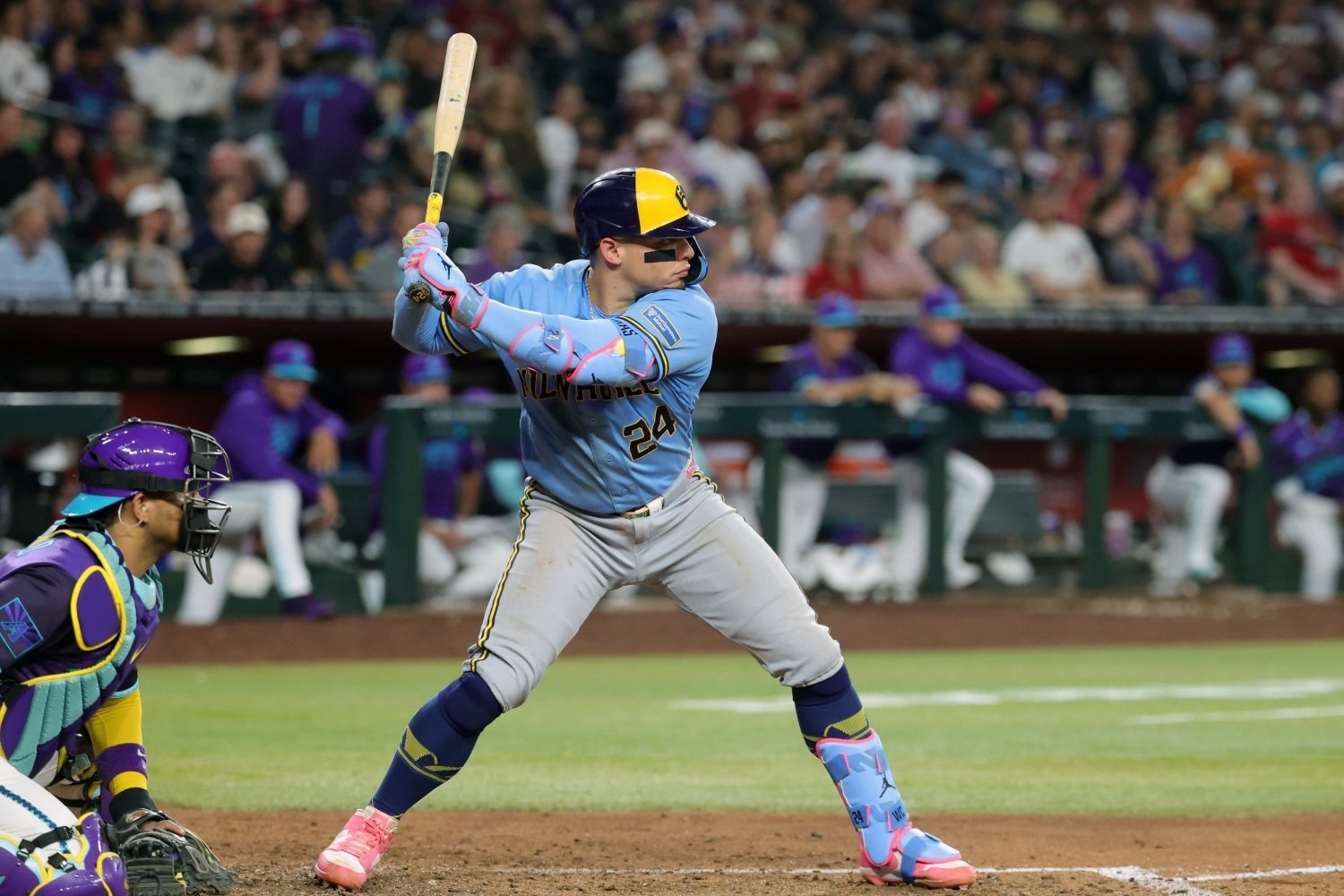 Despite being one of the best offensive catchers in baseball for most of the current decade, William Contreras has not fully tapped into his talent at the plate. Contreras has flashed prodigious power over the years, hitting baseballs at elite exit velocities. Even while playing with a broken finger last season, he still posted an excellent 90th-percentile exit velocity of 107.4 mph. The issue has been Contreras hitting more than half of his contact on the ground in most seasons, running one of baseball’s highest ground-ball rates. If he could find a way to launch those hard-hit balls in the air, he could also become one of the game’s best power hitters. That change to his flight plan has technically happened this year. Contreras’s ground-ball rate has fallen to a career-low 43.5% in 2026. For the first time since a cup of coffee with Atlanta in 2021, his 17.2% pull air rate slightly exceeds the league average. And yet, Contreras is hitting for less power than he ever has as a full-time player, managing just a .118 isolated power and a modest .406 slugging average. His 107 wRC+ is the lowest of his Brewers career. There’s a bit of misfortune here, as Contreras’s .340 xwOBA suggests he should have notched a few more extra-base hits. More importantly, though, his seemingly improved pull air rate is misleading. Not every batted ball pulled in the air is equally productive. Contreras’s overall hard-hit rate is down to 43.5% this season. That’s still slightly above the league average, but it’s the worst mark of his career. When he is hitting the ball at power trajectories—a high enough angle for a fly ball to travel into a gap or over the fence—he’s often hitting it around 90 mph, which typically makes for a routine flyout. Contreras’s xwOBA on contact this year is .360, an improvement over last season, but still lower than his best years in 2023 and 2024. Back in May, Matt Trueblood covered how this year’s changes to Contreras’s stance, stride, and swing path have pushed his contact point further out in front without an increase in power. Now, we’ve seen how those shifts have played out in the first half. Contreras is still making great contact against fastballs, slugging .475 against them with a .499 xSLG. According to Statcast’s swing timing data, his bat is more lined up on hard stuff than ever before. However, by forcing his contact point further in front, he’s been unable to wait back as consistently on breaking and offspeed pitches. With that slightly flatter bat path, Contreras doesn't roll over the ball as often when he’s early. He’s meeting soft stuff in a better spot vertically, but many of those early swings are producing harmless pop-ups. Last season, Contreras slugged .367 against breaking pitches and .403 against offspeed pitches, hitting a combined eight of his 16 home runs against them. This year, he’s slugging .258 and .361, respectively, with just one homer. He's already popped out 15 times against non-fastballs this year. On 10 of them, he was well out in front, making contact at least 32 inches in front of his body. For the fourth straight season, the Brewers have one of baseball’s lowest pull air rates as an offense. They’re not against pulling the ball in the air, but they want their hitters to get there in what they deem the right way, while still having a balanced approach. Contreras seems to have strayed from that a bit, and the ironic result has been less damage for a hitter who has long carried the potential to be even more than he already is, despite hitting balls in the general direction and on the general trajectory people have always cried out for. View the full article
 -
 Transactions: RHP Garrett Stallings optioned to AAA Nashville from MLB Brewers RHP Melvin Hernandez activated by Low-A Wilson from Development List Game Action: Nashville Pre-Game Media Notes Final: Charlotte (White Sox) 9, Nashville 2 Box Score The Nashville Game Summary is not available via a link this AM, so it is being posted for you in full here: Big Knights First Too Much for Nashville to Overcome Tyler Black Pushes On-Base Streak to 19 Straight CHARLOTTE, NC - Nashville and Charlotte continued to trade wins through the first three games this week at Truist Field with the Knights getting a 9-2 win on Thursday night. Six runs in the bottom of the first proved too much for Nashville to overcome as the Knights took a 2-1 series lead heading into the weekend portion of the final series before the All-Star break. Right-hander Lyon Richardson took the mound for his second start of the season with the Sounds and was provided a 1-0 lead to work with after Tyler Black and Luke Adams combined for back-to-back two out doubles in the top of the first inning. Black extended his on-base streak to a Triple-A career-best 19 straight games and was the first of his two hits at the plate for the night. Richardson looked destined to make quick work of Charlotte in the bottom of the first with two ground outs to start his outing. A two-out walk issued to Michael Turner proved to be the catalyst for the big inning that ensued. Five straight hits followed, including three home runs, the final two on consecutive pitches with Riley Unroe hitting his first of two home runs on the night to give the Knights a 6-1 lead after the first inning. The eighth two-out RBI between the two clubs to start the game was provided by Darrien Miller, who connected for his first Triple-A home run on the first pitch he saw from Knights starter Jonathan Cannon in the top of the second. Richardson worked around a single in the second before ending his spot start after 2.0 IP and the six earned runs on six hits. Easton McGee got in three innings of work in relief and stranded the bases loaded in his first inning out of the bullpen after a single and two walks in his first inning of work. McGee tossed the first three-up, three-down half inning for either side when he breezed through the Knights lineup in the bottom of the fourth. He wasn't as fortunate in his third and final inning of work as the two-out magic continued with Unroe hitting his second home run of the game with a two-run home run to put the Knights up 8-2 after the fifth. Will Childers was greeted into the game with a leadoff double by Rikuu Nishida who scored the game's final run on an RBI single for Turner before Childers got Ryan Galanie to ground into a double play to end the frame. Blake Holub was the lone Nashville reliever to not surrender a hit as he struck out the side in the seventh inning to push his streak to 10 straight appearances without allowing an earned run. Peter Strzelecki was tasked with pitching the bottom of the eighth and bookended his only inning of work with strikeouts to strand two Knights baserunners after issuing a two-out walk and a single. Black and Miller combined for four of the six Nashville hits as each finished the night with multi-hit games, the second straight 2+ hit night for Miller. Quero chipped in with his 12th double of the season to go along with Adams' RBI double from the top of the first inning to account for all six hits. The series will continue on Friday night with first pitch scheduled for 6:04 pm at Truist Field in downtown Charlotte. POSTGAME NOTES: GET THAT STREAK A MOLSON: Tyler Black wasted no time at all pushing his on-base streak to a new Triple-A career-best 19 straight games dating back to June 13. Black, the 33rd overall pick by Milwaukee in 2021, is hitting .281 (18-for-64) during the streak with eight XBH after his first inning double on Thursday night. He has also added 14 RBI and has drawn 16 walks, swiped nine bases, and crossed the plate 18 times over his last 19 games. He's riding a five-game hitting streak and has a hit in 15 of the 19 games. Black previously owned an 18-game on-base streak to start his Triple-A career with Nashville from August 6-27, 2023. The 19-game streak is the fourth-longest by a Sounds player this season, trailing Brock Wilken (30 G), Cooper Pratt (25 G), and Luke Adams (20 G). His multi-hit performance on Thursday was the sixth in 50 Triple-A games this season. He also owns the longest hitting streak of the season for the Sounds, with an 11-game streak from March 28-May 14 with a nine-game stint with the Milwaukee Brewers mixed in between. Along with his 18-game streak to start his Sounds tenure, Black posted a career-long 35-game on-base streak for Double-A Biloxi earlier in 2023. SHAKE AND BAKE: Darrien Miller has produced back-to-back multi-hit performances and clubbed his first career Triple-A home run in the top of the second on Thursday night as part of a 2-for-4 day at the plate. After being limited to one hit through his first five Triple-A games, he has settled in with a hit in each of his last three games (5-for-11) along with an RBI in three straight games. He ended a 20-game drought since his last home run on May 27 with Double-A Biloxi. Miller now has 44 home runs across 482 career minor league games in the Brewers farm system and sits just outside the top 10 for most home runs hit in the farm system since 2021, in a four-way tie in 11th. Over the same span, he ranks 2nd in walks (276), 3rd in runs (261), T-7th in RBI (211), and 9th in doubles (70) and total bases (540) in the farm system during the regular season. HOL & NOPES: Right-hander Blake Holub worked his 10th straight appearance without allowing an earned run dating back to May 21 after working a scoreless seventh inning against Charlotte on Thursday night. His 10-game streak is tied for the seventh-longest active streak in the International League and sits at 11.1 IP overall dating back to May 17th since allowing an earned run. The 10-games are tied for the third-longest for a Nashville reliever this season along with Jacob Waguespack. Holub now trails Brian Fitzpatrick (14 G) and Craig Yoho, who has an active 16-game streak going after his last appearance with Nashville on July 1. Holub has tossed 18 total scoreless appearances across his 29 games with Nashville this season and has allowed just two earned runs over his last 19 appearances. Since making his Sounds debut in 2024, Holub leads all Nashville pitchers in appearances with 92 and ranks T-2nd in saves (7), 5th in strikeouts (121), 7th in IP (97.2), and T-7th in wins (7). *** Perhaps the 102.6 MPH groundout by Charlotte’s first batter should have told us that starting RHP Lyon Richardson (2 IP, 6 R, 6 H, 1 BB, 2 Ks) didn’t have his best stuff this time out, but the three homers allowed in the same six-run first inning certainly drove the point home. C Darrien Miller (2-for-4, HR, RBI) led an attempted comeback with his first AAA homer and a two-out single in the 4th inning to put two runners on while trailing 6-2, but SS Eduardo Garcia (0-for-4, 4 Ks) wasn’t able to get them in. That was as close as the Sounds could make it on Thursday. Back from the MLB taxi squad, RHP Easton McGee (3 IP, 2 R, 2 H, 3 BB, 5 Ks) got the most work in, nearly scaling through three scoreless innings, but undone by a two-out, two-run homer in the 6th frame. Sounds’ Extras: Kudos to RHPs Blake Holub and Peter Strzelecki for tossing a combined two scoreless frames with five Ks in relief. Each of OF Tyler Black (2-for-4, double), 1B Luke Adams (1-for-3, double, HBP, RBI) and 2B Eddys Leonard (0-for-2, two walks) reached base twice, but the team only had four opportunities with runners in scoring position. OF Blake Perkins led off in his first AAA game since early May, recording two ground outs and two Ks. Friday’s outlook: Nashville needs a victory even this week’s road series at two games apiece. Might we see RHP Coleman Crow (3 IP on July 4) make his second rehab appearance? Biloxi Pre-Game Media Notes Final: Biloxi 11, Knoxville (Cubs) 2 Box Score Via the Shuckers’ website, game details and we encourage readers to review affiliate write-ups as part of their Link Report routine: DeBerry, Lineup Dominate in Shuckers Win over Smokies While 23-year old RHP Jaron DeBerry (7 IP, 1 R, 2 H, 3 BB, 11 Ks) was utterly dominant (I’d bet Rick Sweet would love to see him up in AAA ball), Knoxville starting pitcher Nick Dean exited with an injury delay in the 2nd inning and the Shuckers ultimately got to the Smokies’ bullpen with a six-run 6th inning. Four walks in six batters led to Biloxi’s first run before OF Josiah Ragsdale (2-for-4, HR, 2 walks, 4 RBIs, SB) and SS Jesus Made (3-for-5, HR, double, walk, 4 RBIs, 2 SBs) broke open the game in a big way: Peruse the box score and you’ll see that C Matt Wood (3-for-3, double, 2 walks) reached base five times, while each of 3B Mike Boeve (2-for-3, 2 walks), OF Jacob Hurtubise (1-for-3, 2 walks, RBI) and OF Josh Adamczewski (1-for-5, walk, 2 RBIs) had solid days. Shuckers’ Extras: 12 hits and 14 walks made for a fun game for the offense, although usual contributors 1B Blake Burke, DH Andrew Fischer and 2B Eric Brown Jr. had tougher days: combined 0-for-13, 4 walks, 1 HBP, 10 Ks. Don’t worry – Fischer’s on-base streak is now 48 games long and his AA OPS is 1.266 (in 74 plate appearances). RHP Cameron Wagoner (1 IP, 3 Ks) also continues to make his case for a promotion to Nashville. Friday’s outlook: 21-year-old RHP Bishop Letson (4.58 ERA, 1.39 WHIP, 8.8 K/9 in 59 IP) gets the start, with Biloxi requiring another win to tie up this week’s road series. Wisconsin Pre-Game Media Notes Final: Wisconsin 6, Beloit (Marlins) 4 Box Score Via the Timber Rattlers’ website, game details: Rattlers Survive Sky Carp Thanks to the superb Wisconsin media team for compiling video highlights of their home victory: And don’t miss the 17-minute Mehring-Timm post-game podcast, featuring comments from 2B Daniel Dickinson (1-for-2, HR, 2 walks, 2 RBIs) and acting manager Evan Berliner. The linked game report, videos and podcast cover 21-year old LHP Wande Torres’ fourth consecutive dominant start, allowing just 2 of 23 batters to reach base, both with 2 outs in the second inning. Though Torres (7 IP, 0 R, 1 H – a single, 0 BB, 1 HBP, 8 Ks) was denied the win, C Yannic Walther (1-for-3, double) triggered the immediate response from the offense in their 4-run, 5-hit eighth inning. Die-hards in the Minor League Forum noted that Dickinson’s strength may now have fully retuned, one year after hamate surgery, perhaps contributing to his homering in back-to-back games. Timber Rattlers’ Extras: Eight of Wisconsin’s nine position players reached base via hit or walk, including 2-for-4 days for 3B Luis Pena (double) and DH Marco Dinges (2 RBIs). RHP Jason Woodward (2/3 IP, 2 R, 4 H, 0 BB, 0 Ks) and LHP Jose Meneses (1 1/3 IP, 2 R, 1 H, 3 BB, 2 Ks) made things interesting for 2,795 home fans in attendance, before Meneses buckled to close out the win via called strikeout with the bases loaded. Friday’s outlook: RHP Jayden Dubanewicz gets the start, with Wisconsin aiming to take a 3-1 home series lead. Wilson Pre-Game Media Notes Final: Fayetteville (Astros) 11, Wilson 1 Box Score Via the Warbirds’ website, game details: Fayetteville's Seven-Run Inning Downs Wilson In essentially a reverse image of Biloxi’s win, starting LHP Andrew Healy (5 IP, 1 R, 4 H, 1 BB, 5 Ks) and Wilson battled to a tie until a blow-up 6th inning against the Warbirds’ bullpen. Six hits, five walks, one hit-by-pitch and two opponent errors unfortunately only resulted in one run for Wilson, as the team went 0-for-7 with runners in scoring position, stranding 11 baserunners. 18-year-old SS Brady Ebel (3-for-4, double, walk, SB) reached base four times to lift his season OPS to .793. OF Jose Anderson came aboard twice (1-for-3, HR, walk), doing what he does best: 2B Juan Martinez’s 51-game on-base streak came to an end in this game, going 0-for-4 on two fly outs and two ground outs. The streak stretched across seven DSL games in 2025, 40 in the Arizona Complex League this year and four games with Wilson. Warbirds’ Extras: RHP Carlos Carra (2/3 IP, 5 R, 3 H, 2 BB, 1 K) has been swapping between great outings and difficult ones, unfortunately only retiring 2 of 7 batters faced before being lifted at 35 pitches. RHPs Bryce Schaum (1 1/3 IP, 2 R, 5 H, 1 BB, 0 Ks) and Thomas Conrad (2 IP, 3 R, 5 H, 1 BB, 3 Ks) also struggled in relief. C Kevin Garcia also had a tough day, going 0-for-4 with 4 Ks and committing an error. However, he did throw out one of three attempted basestealers. Friday’s outlook: LHP Joey Broughton is scheduled to start, with Wilson looking to claim a 3-1 series advantage at home. Final: ACL Rockies 13, ACL Brewers 6 Box Score Although the Zona Crew outhit the Rockies 9-7, they were never really in this game, trailing 3-0 by the second inning and 11-1 by the 5th frame. If not for the eight unearned runs allowed on two errors, maybe this game would have had a different outcome. With the defeat, their record dropped to 24-26. 2B CJ Hughes (2-for-4, RBI, HBP) had an early solo homer (his 5th blast of 2026) and six consecutive Brewers reached base to open a 4-run 6th inning, as the offense certainly tried to do its part. DH/OF Brailyn Antunez (2-for-4, walk, 2 RBIs; .282 AVG, .887 OPS) also reached base three times, while 1B Roderick Flores (2-for-4, triple) and OF Kenny Fenelon (1-for-4, double, walk) had solid days. Resilient LHP prospect Frank Cairone (1 2/3 IP, 2 R, 0 H, 2 BB, 2 Ks; 30 pitches) made his second professional start and was a bit unlucky to concede two earned runs after exiting with 2-on, 2-out. RHP Bryan Relagado threw the most pitches (64 of them, 32 for strikes) but only covered 2 2/3 innings (7 R (1 ER), 4 H, 4 BB, 1 HBP, 1 K). RHP Chase Bentley had the most encouraging line of the evening: 4 IP, 2 R (0 ER), 2 H, 1 BB, 4 Ks). DSL Brewers Blue and DSL Brewers Gold both saw their morning contests postponed by rain, with make-up dates planned for July 15 and July 27, respectively. We hope that you enjoy the Minor League Link Report. On Friday, seven affiliate games are on tap, starting with the Dominican Summer League squads at 10:00am CST and ending with the ACL Brewers at 8:00pm CST. The Milwaukee Brewers also commence their series at the Pirates at 5:40pm CST. Organizational Scoreboard including starting pitcher info, game times, MiLB TV links, and box scores Current Milwaukee Brewers Organization Batting Stats and Depth Current Milwaukee Brewers Organization Pitching Stats and Depth View the full article
 -
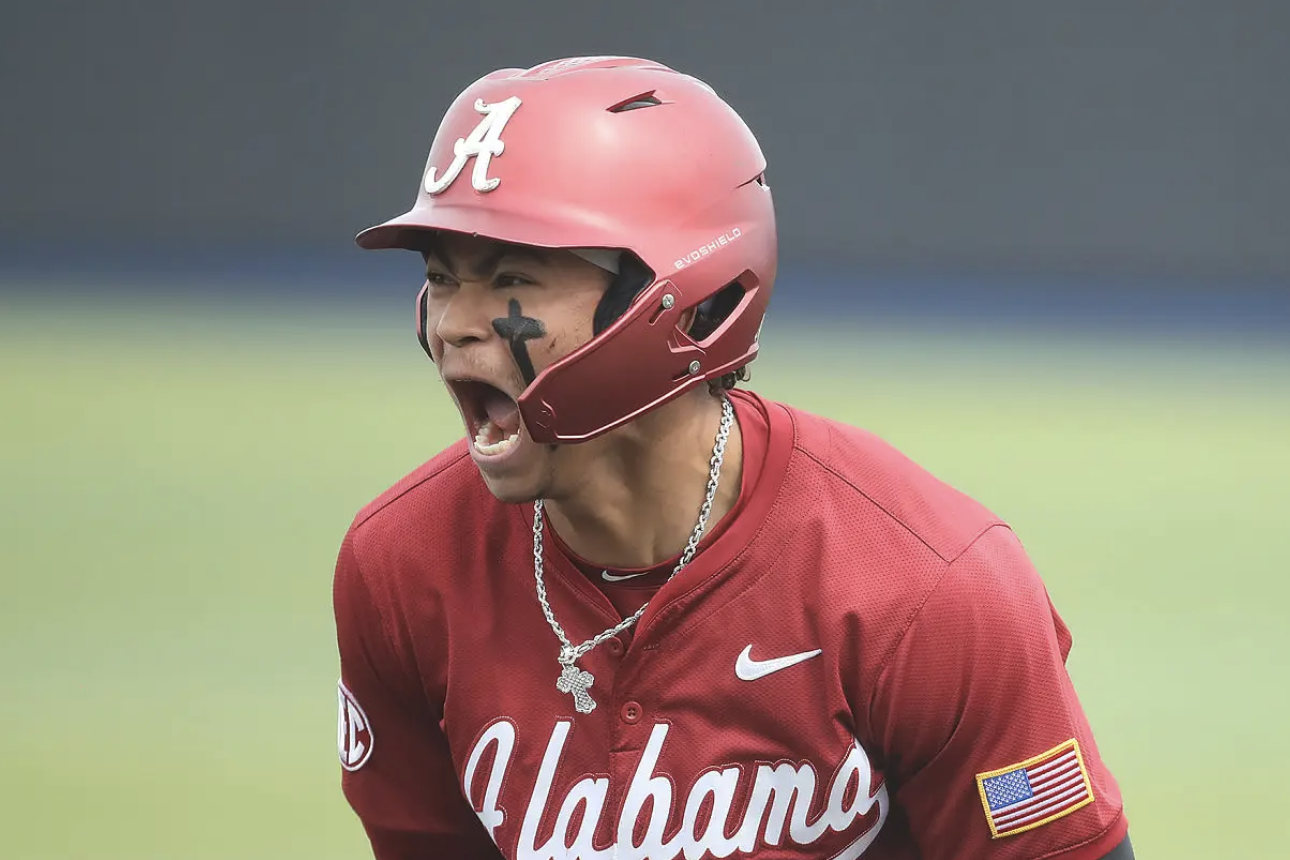 Leading up to the 2026 MLB Draft, Fish On First brings you a series of scouting reports on top prospects in this draft class who could realistically wind up in Miami. Overview Position: SS Height: 6’2” Weight: 190 pounds School: Alabama Justin Lebron is a 6’2”, 190-pound shortstop who plays for the Alabama Crimson Tide. Lebron was one of the top draft prospects coming into the 2026 season. However, Lebron had a down season and isn’t expected to be a super high first round selection anymore. Coming out of high school, Lebron was a blue-chip prospect from Archbishop McCarthy High School in Southwest Ranches, Florida. On Perfect Game, Lebron was the 173rd-ranked prospect and the 41st-ranked shortstop in the Class of 2023. He was also the 23rd-ranked prospect out of the Sunshine State. Lebron went undrafted and honored his commitment to the University of Alabama. During his freshman season, Lebron earned a starting role for the Crimson Tide and made a major impact. Lebron played and started in all 56 games. He slashed .350/.435/.536 with 77 hits, eight doubles, eleven home runs, 38 RBIs, ten stolen bases, and a .971 OPS. He was named a First Team Freshman All-American and First Team All-SEC. In his sophomore season, Lebron continued to produce like one of the best hitters in college baseball. Lebron played and started in all 59 games. He slashed .316/.421/.636 with 73 hits, 18 doubles, 18 home runs, 72 RBIs, 17 stolen bases, and a 1.058 OPS. He was named a Second Team All-American and to the SEC All-Defensive Team. However, Lebron struggled at the plate during the 2026 season. Lebron played and started in all 61 games. Lebron slashed .277/.386/.534 with 66 hits, thirteen doubles, 16 home runs, 48 RBIs, 42 stolen bases, and a .920 OPS. At the plate, Lebron has plenty of raw power potential, but his hit tool is what’s lacking. He has struggled with his chase rate and the quality of contact when down a bunch last season. During SEC play, Lebron only batted .229. Defensively, Lebron has the arm, hands, and range to be an excellent defensive shortstop. Lebron did make more errors than usual this season, though. Lebron also showcased his 60-grade speed this season by stealing 42 bases. He’s a player who can steal 30 bags in a season at the next level. Strengths Excellent defensive SS Plus speed Plus raw power potential Projectable body type Improved his in-zone contact rate Weaknesses Trouble with the curve Batted .229 in SEC play 40-grade hit tool Pro Comparison: Masyn Winn Projection: Top 15 pick Bottom Line Justin Lebron has produced at a high level in college baseball except for this past season. He would be a project, but Lebron has the upside to become one of the best shortstops in MLB if his hit tool improves. On ESPN, Lebron is the eighth-ranked draft prospect and the fourth-ranked shortstop in the 2026 MLB Draft class. On MLB Pipeline, Lebron is the ninth-ranked draft prospect, and he’s also the 19th-ranked draft prospect on Baseball America. The Marlins will have the 14th overall pick and should be able to grab one of the top prospects in this draft class. Lebron would be an interesting option for them, especially given his local roots. More 2026 MLB draft profiles OF Derek Curiel RHP Tegan Kuhns OF Sawyer Strosnider RHP Liam Peterson 3B Bo Lowrance LHP Hunter Dietz INF Tyler Bell INF Chris Hacopian LHP Brody Bumila OF Trevor Condon RHP Cade Townsend OF Drew Burress LHP Gio Rojas RHP Cameron Flukey OF Eric Booth Jr. 3B Ace Reese LHP Carson Bolemon RHP Jackson Flora INF Jacob Lombard OF AJ Gracia View the full article
 -
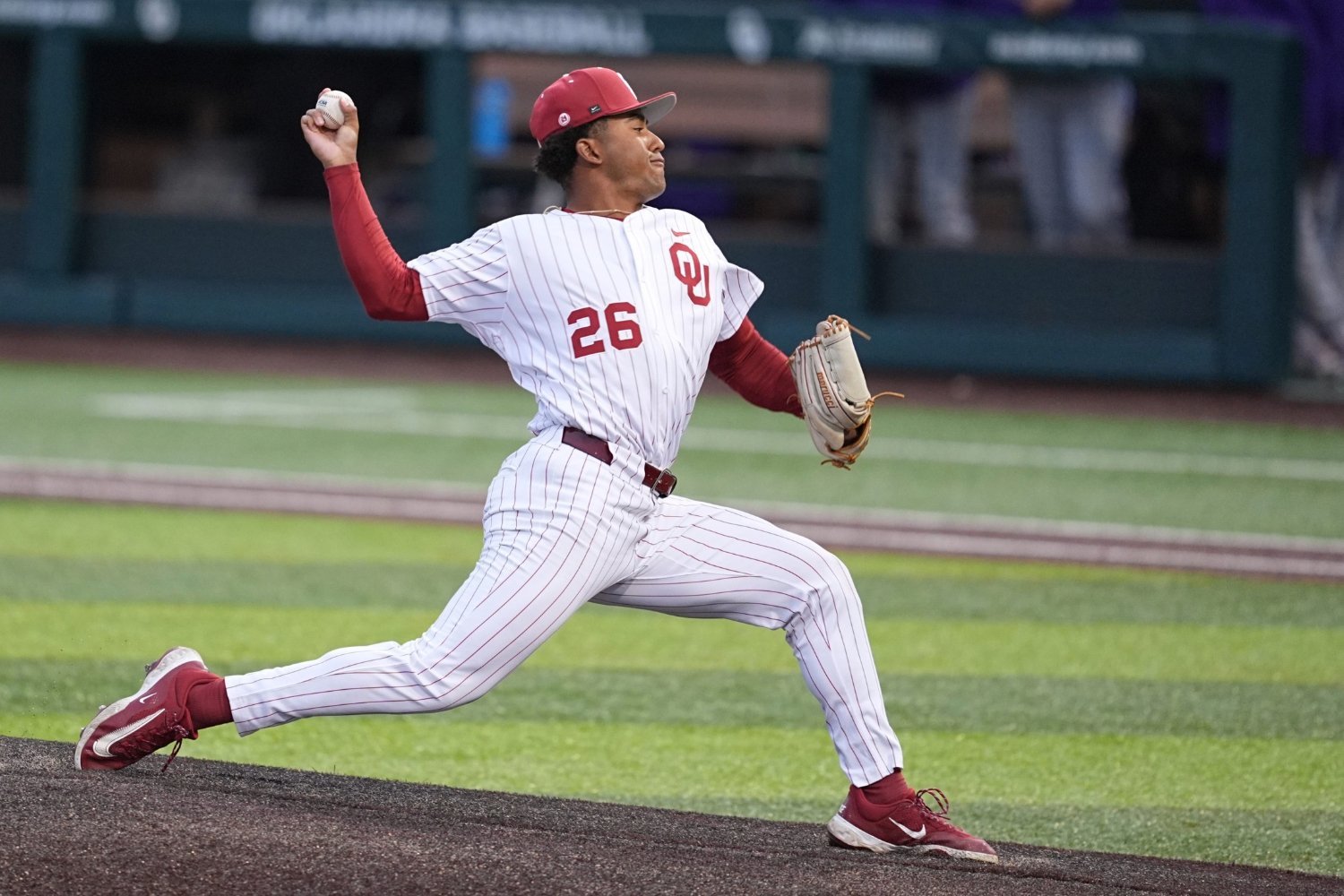 When it comes to the Boston Red Sox, it feels like every time within the past few drafts, an extremely talented player has fallen to them. First it was Kyle Teel, then it was Braden Montgomery, and in 2025 it was Kyson Witherspoon. The organization has been fortunate to have prospects of this caliber slip to them, and have seen them develop rather well. Watching these prospects play has made a rather tough decade of Red Sox baseball more consumable knowing what the future may look like. Today, we’ll be looking at the latest of the Red Sox's first-round picks in Kyson Witherspoon and how his early career struggles do not reflect the kind of pitcher he is. Witherspoon is incredibly talented and there’s a reason he is TalkSox’s third ranked prospect. Kyson Witherspoon’s Updated Red Sox Scouting Report Witherspoon began his path to professional baseball alongside his twin brother Malachi who was drafted (and did not sign) out of high school. Instead, the twins enrolled and pitched for Northwest Florida State Junior College before they both transferred to Oklahoma for their sophomore and junior seasons. During the summer following his sophomore season, Witherspoon pitched in the Cape Cod League for Chatham before developing into one of the top college arms during his junior season. The right-hander saw an increase in velocity that season while cutting his walk rate. In 16 starts with Oklahoma as a junior he went 10-4 with a 2.65 ERA in 95 innings, striking out 124 batters while walking just 23. Entering the draft, he was viewed as a top-10 pick due to his season thanks to his young draft age, as he wouldn’t turn 21 until after the draft. Despite that, Witherspoon fell to the Red Sox at 15th. Entering spring training, Witherspoon measured 6-foot-2 and weighed 205 pound with some growth being possible in his upper body. During spring training, he put on a display during his live bullpen sessions, his fastball hitting high-90s. He would also pitch in the Spring Breakout game where he tossed 1 2/3 innings and allowed one run on three hits and a walk while striking out a pair. Witherspoon has spent the 2026 season with High-A Greenville where he has had his fair share of ups and downs. April was the hardest month for the right-hander, as he allowed 18 runs, 14 of them earned, across 17 2/3 innings. Batters would hit .304/.410/.449 against him, but the right-hander bounced back in the month of May, holding them to a line of .220/.324/.356. Since his May 31 start, Witherspoon has now gone at least five innings in five of his past seven starts after failing to make it out of the fifth inning in his first eight professional starts. Overall, on the season, Witherspoon has made 15 starts and tossed 65.2 innings while allowing 37 earned runs, good for a 5.07 ERA. He’s also struck out 69 batters while walking 32. Mechanics Witherspoon stands on the first base side of the rubber while throwing from a three-quarters arm slot. Unlike with most Craig Breslow drafted pitchers, he does not have elite or even plus extension, but instead is viewed as being a short strider with an extension of under six feet. However, he does have good deception thanks to his arm action and can repeat his delivery. The release height of the pitch is considered average in relation to other pitchers. He does shoot the ball from his ear which helps in creating the deception of his pitches. Fastball The fastball is Witherspoon’s best pitch, averaging 95-97 mph. During spring training, it was sitting around 97-99 mph. His velocity hasn’t dropped too much since then and he’s been able to keep the velocity during his starts without a major drop-off in speed during the latter half of his outings. The pitch has shown the ability to miss bats thanks in part to its velocity and an improved control of the pitch stemming from his junior season. While the Red Sox have yet to tinker with it, due to its pitch shape, it wouldn’t be out of the question for the organization to see if they can adjust it. Especially since Witherspoon naturally tinkers with his grips and shapes. Potential plus pitch: 60 grade on 20-80 scale Cutter The cutter is a pitch Witherspoon uses quite often, throwing it to try and get strikes consistently. It currently sits between 88 and 91 mph and has shown bat-missing ability thanks to a hard but short horizontal break. It can generate chase from opponents. Due to it’s usefulness, the cutter has seen an increase in usage by Witherspoon as it also helps set up his other pitches. Potential plus pitch: 60 grade on 20-80 scale Slider Arguably the one pitch that benefits from his cutter more than any other, his slider averages between 84 and 87 mph. He’s able to land the pitch in the zone if he’s looking to get a strike or bury it down and out of the strike zone if he’s looking to get a batter to chase or generate whiffs. The pitch has shown to flash depth at its best, with two-plane movement that can make a hitter look foolish. Potential above-average pitch: 55 grade on 20-80 scale Curveball Witherspoon’s curveball has an 11-to-5 shape, which in college he would throw in two-strike counts to both left-handed and right-handed hitters. The pitch can be thrown either below the zone to try and generate some chase, or he can land it in the zone when necessary. When paired with his fastball, it can cause batters to freeze up at times. The command of it isn’t the best however, and he will have some misses with it at times. He has a feel for the pitch, though it's certainly not his go-to breaking ball. Potential above-average pitch: 55 grade on 20-80 scale Changeup His least-used pitch and probably the worst out of all of them. Despite that, it has shown potential thanks to the natural pitch tunneling he creates. In college, he played around with the grip of the pitch, tossing it like a four-seam changeup at times and other times like a splitter. Regardless of the grip he uses, the pitch showed little drop. However, since joining the Red Sox, it has shown late drop. Despite it being his weakest pitch, Witherspoon has confidence to use it multiple times in an at-bat against left-handed hitters. Potential average pitch: 50 grade on 20-80 scale Outlook with Red Sox Witherspoon has flashed signs of the potential the Red Sox drafted him for. Despite some growing pains in professional baseball, the right-hander is an incredibly talented arm that should stay in the rotation. Entering 2026, he was predicted to be a fast riser through the system but that hasn’t been the case. As he continues to develop, it’s currently a toss up if he gets to Double-A by the end of the season. His floor is of a fifth starter thanks in part to his velocity and multiple secondaries that are rated as potentially above average. The ceiling for him is somewhere between a number two and number three starter. Both his changeup and curveball need to be more consistent, and should he develop them, he could have a chance to make his ceiling into that of a legitimate co-ace in the rotation. 2026 Final Prediction As mentioned, everyone predicted Witherspoon to be a fast riser. That hasn’t been the case in 2026, as he’s taken some time to get accustomed to professional hitters. Now that he’s showing great development and going deeper into outings, a trip to Portland shouldn't be far off. That being said, I wouldn’t be surprised if the organization takes it slow with him and instead decided to keep him in Greenville for the entire season to work on his pitch shapes along with command of his curveball and changeup. View the full article
 -
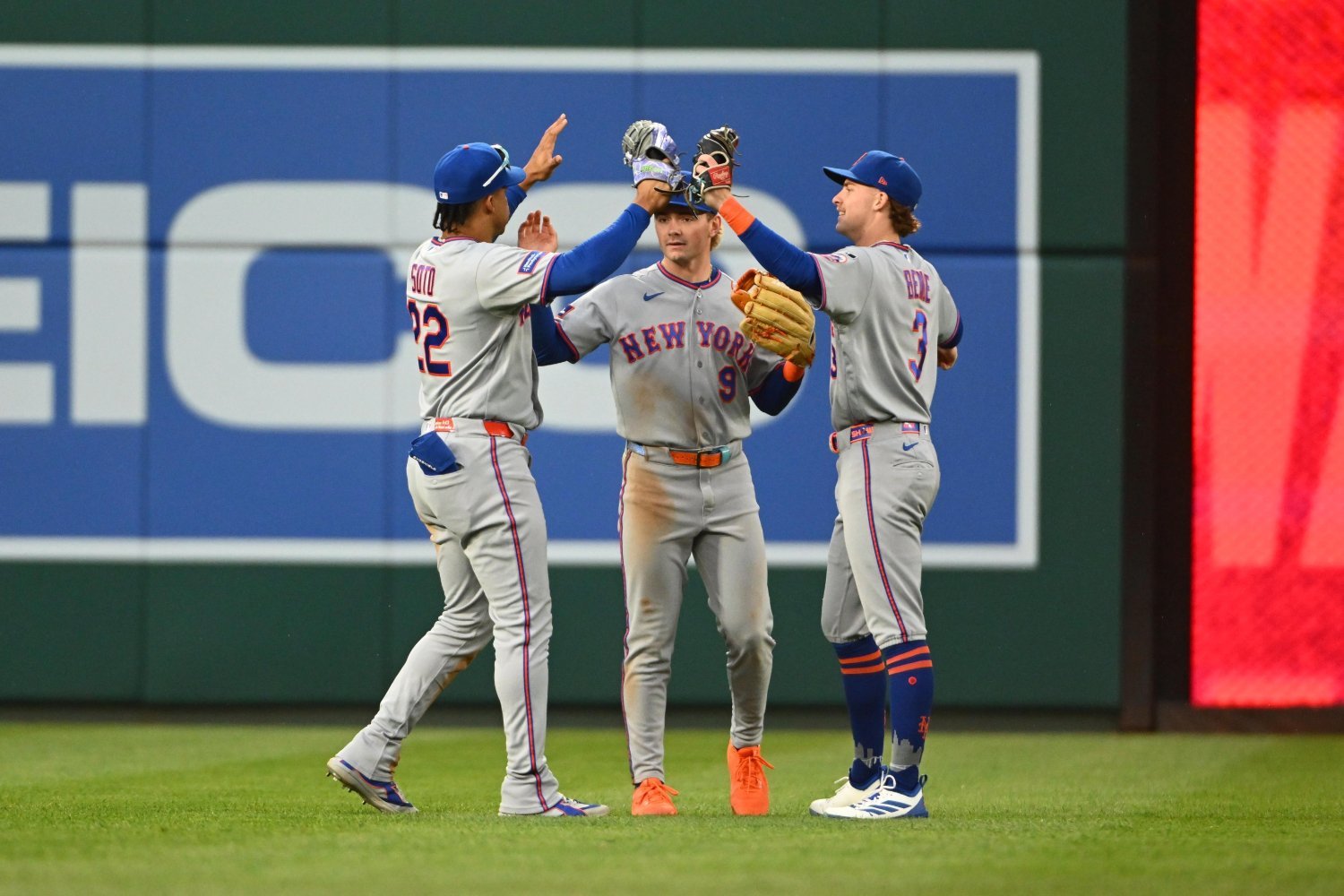 The rumor mill is in full swing, and with the New York Mets being one of the worst teams in the National League, everything points to them offloading some assets for the right price. Not everyone will be allowed to go, though. We can put the Mets’ players into three tiers: the ones who should be untouchables, those who could potentially go for the right price but the team isn’t inclined to deal, and the ones who should be slapped with the ‘open for business’ label. Untouchable Mets Players SS Francisco Lindor, OF A.J. Ewing, OF Carson Benge, SP Nolan McLean, SP Christian Scott, and OF Juan Soto With an 84 wRC+, Lindor hasn’t really had his finest season. It’s to be expected, though, since he underwent hamate bone surgery and power might take a while to return. He’s still the face of the Mets, though, and should eventually return to his best. Ewing already has seven home runs, nine stolen bases, a 128 wRC+, and solid defensive play in the outfield. He looks every bit like a keeper and should be a mainstay in the Mets’ future plans. The early stages of Benge’s season were rough. Weeks passed, and he didn’t seem capable of getting going at the plate. After a little over three months, however, he boasts a .265/.327/.410 line and a 108 wRC+, which is above the league average. With 11 home runs and 12 stolen bases, he could flirt with a 20-20 campaign in his first year. Not bad for a 23-year-old. It hasn’t always been pretty, but McLean is the face of the Mets’ pitching staff and the guy who will headline their rotation for years to come. His 3.73 ERA differs a lot from last year’s 2.06, but a 3.52 FIP suggests things could be better in the future. McLean strikes people out, does a good job limiting walks, and doesn’t allow too many home runs. He still has the tools to put together Cy Young-caliber seasons in the future, and the Mets shouldn’t even entertain trading him. Christian Scott is 27, so he is not as young as you probably thought he was. However, he is talented, cheap, and controllable, all desirable traits that will keep him in Queens for a long time. This year, he has posted a 3.17 ERA in 54 frames, with a whopping 65 strikeouts. The more innings he accumulates, the more experience he will gain. We don’t need to tell you why Soto is a keeper for the Mets. A symbol of the organization’s newfound financial power, the lefty-hitting outfielder remains a formidable hitter in his prime, sporting a 166 wRC+ with 20 home runs and 3.0 fWAR, even though he missed time with a calf injury. He is a true superstar and a building block for future Mets squads, even if the 2026 campaign hasn’t gone the way he wanted. Could Go For The Right Price C Francisco Alvarez, SP Clay Holmes, RP Luke Weaver There have been rumblings about Álvarez being available, and while he might fall just short of the ‘untouchables’ tier, the Mets would have to be blown away by an offer to consider letting him go. The catcher is sporting a solid 107 wRC+ with nine homers, and is still somehow only 24. The Mets will likely keep him, especially because we have seen his best version offensively, and he is much better than this. His defense behind the plate seems to be trending in the wrong direction, though. Holmes is certainly an interesting case. He is 33, injured, and could become a free agent after the season, so there’s a world in which the Mets explore a trade, considering how much they could get for a potential rental this year. With a 2.39 ERA in 52.2 innings, New York could very much fetch something of value, provided his rehab from a fractured fibula remains on track. He is expected to return in August. Weaver is in the first season of a two-year deal. He has a shiny 1.89 ERA and hasn’t given up an earned run since April, so the Mets would love to keep him with a 2027 run in mind. Unless someone grossly overpays, he will stay in Queens past August 3. Open For Business Everyone else The Mets should be willing to listen to trade approaches on pretty much everyone else on the roster, including many of their offseason acquisitions for this year. We are not saying that a dramatic turnaround is impossible, but it’s not looking particularly likely. Additionally, we are not saying that the Mets should go out and trade everyone not listed in the first two tiers. However, the newcomers, the injured players, the reclamation projects, the aging veterans, the struggling young prospects, and everyone not in the previous groups must be considered ‘tradeable’. That doesn't mean the Mets will just give them away, but they could and should be more open to trades involving these players if the return can help them compete in 2027 and beyond. View the full article
 -
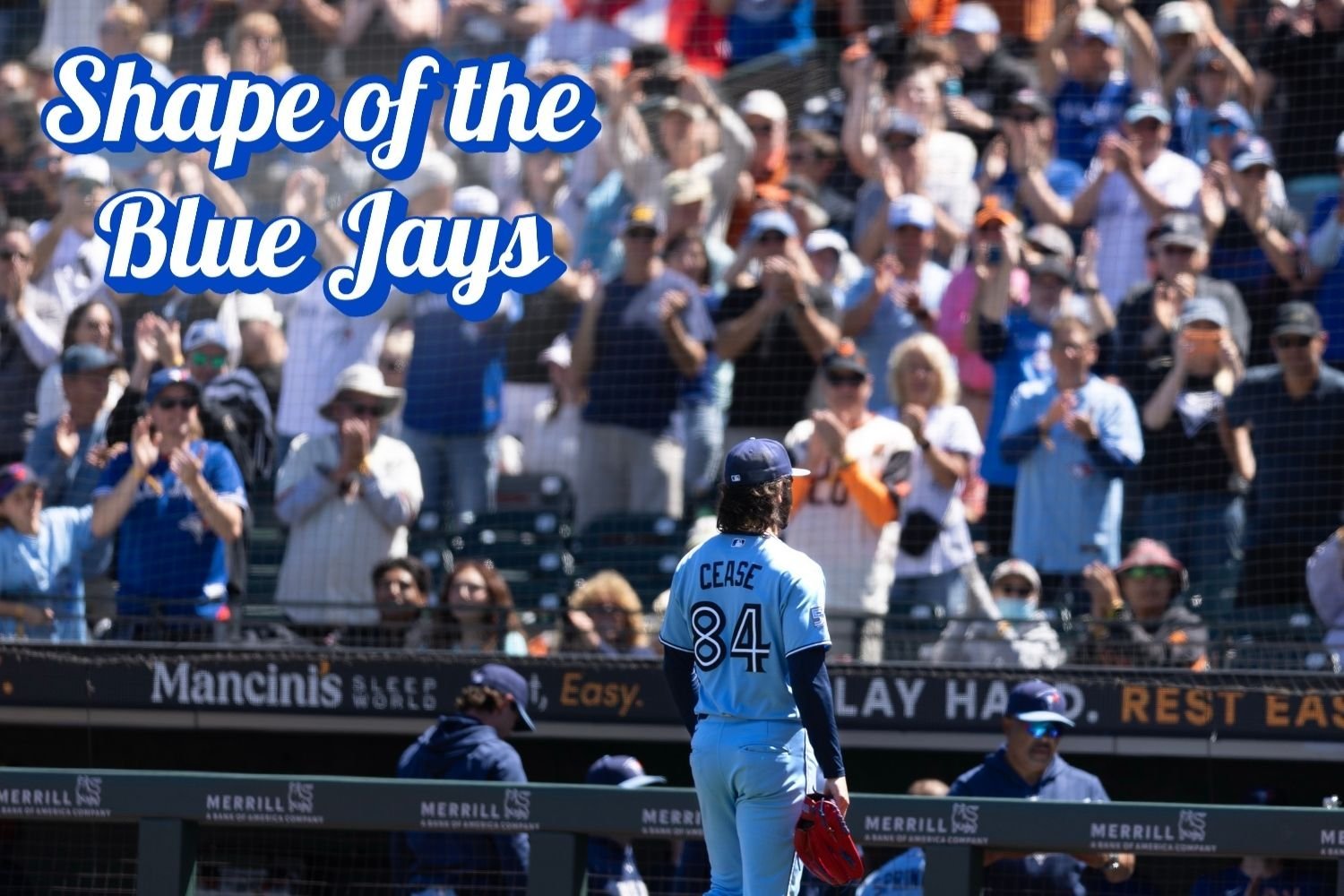 Welcome to Shape of the Blue Jays, my column where I dig into Statcast numbers to analyze recent pitch shape and swing shape trends for Toronto Blue Jays players and discuss how they have impacted their performance. Click here to read the last edition. All stats entering July 9, 2026. Quick Hits: Draft The 2026 MLB Draft starts this Saturday. The Blue Jays won't be on the clock until the 39th overall pick, and so much can happen between picks 1 and 38 that it isn't worth putting too much time into predicting the exact player they will select. However, Baseball America's draft preview podcast gave us some intel as to where they could be headed. BA's Carlos Collazo noted the Jays have had a particular affinity for players who are young for the class in their past few drafts. The acquisitions of Arjun Nimmala and JoJo Parker also indicate a liking for hit-first high school shortstops. As such, another high school hitter would make sense. Collazo listed shortstop Connor Comeau (BA's 55th-ranked draft prospect), third baseman Bo Lowrence (38), Archer Horn (51), James Clark (52), Landon Thome (57), and Taj Marchand (66) as the most logical fits for the Jays' first pick. He also mentioned Will Adams (88) as a candidate for Toronto later on. All the players listed above are high school prospects, and every one of them except for Marchand is a lefty hitter. All except for Lowrence and Adams profile as shortstops at the moment, while Horn has potential to be selected as a two-way player. Dylan Cease On Wednesday afternoon, Dylan Cease authored one of the best starts in franchise history, falling three outs short of a no-hitter in San Francisco (8+ IP, 0 R, 1 H, 11 K, 3 BB). Since returning from the IL, Cease has been money, with a 1.73 ERA and a 39.2% K rate in six starts (36 IP). He leads qualified AL starters in FIP and fWAR and is second to Cam Schlittler in ERA. Remember all the concerns about the gap between his results and peripherals in 2025? This is why baseball executives don't care about ERA. On an overall basis, Cease's usage patterns weren't out of the ordinary. The story was his pitch selection with two strikes. He used a higher percentage of changeups (22%) in two-strike counts than any other start this season against a Giants lineup that featured five lefties. The majority of these two-strike changeups went for balls, but of the four that were swung at, three were put in play for weakly-hit outs, and the other was missed. Even when it wasn't putting batters away, it was inducing harmless balls in play, which are imperative if you're going to try to throw a no-hitter. This was a statement conclusion to the first half for Cease, who is on the short list of candidates to start the All-Star Game for the AL next week in Philadelphia. Daulton Varsho Daulton Varsho got on the board with two hits against the Giants in the series finale, but he's still just 5 for his last 39. His wRC+ on the season is down to 99 after the early-July dry spell, and he's on pace for the second-lowest fWAR total in his four years as a Blue Jay. Earlier in the season, I was ambivalent about the series of adjustments he made to improve his bat-to-ball skills, but it's absolutely fair to question whether any of it was necessary given how he's tailed off the past couple weeks. Varsho's running the lowest strikeout and whiff rates, and the highest BABIP, of his career. However, he's on pace for just 14 home runs; he's never hit fewer than 18 in a full season and has been a mediocre hitter after hitting 20 homers in 71 games last year. Varsho is a notorious tinkerer, having changed various aspects of his swing every year since getting traded to Toronto. Hindsight is always 20/20, and there's still half a season to go, but it seems like a bold move to rework things in a contract year after how it all came together for him in 2025, which was the first time he was a threat to hit the fastball in a Blue Jay uniform. His xwOBA against fastballs has dipped back below .300 in 2026, thanks in part to him being late on 8% more of his swings against fastballs compared to last year. A 2.8-mph reduction in bat speed undoubtedly has something to do with that. Hitting involves constant adjustment, but is the increase in bat-to-ball worth it given the decrease in power? Jeff Hoffman You don't need me to remind you that on May 31, with the Blue Jays three outs away from climbing above .500 for the first time since April 3, Jeff Hoffman played a large part in blowing a 5-1 lead in an eventual walk-off loss in Baltimore. Did you know that since then, Hoffman has given up one earned run, struck out 15, and walked five in 13.2 innings? Some of this is positive regression. After posting BABIPs of .538 and .500 in April and May, which prompted an ominously-titled article from Davy Andrews at FanGraphs, his BABIP dropped to .160 in June and a pristine zero in July. At the same time, by xwOBAcon, the quality of batted balls he has given up has decreased over the past six weeks as well. Interestingly, Hoffman's arm angle has steadily climbed throughout the season, going from 30° in April to 35° in July as he has slightly raised his release point. This has allowed him to kill the vertical break on his slider, which is making it play up even though he's not throwing it any harder than usual: In his two July outings so far, the slider has garnered a ridiculous 83% swing-and-miss rate. According to the Stuff+ model on FanGraphs, four of Hoffman's five highest-ranked appearances sorted by Stuff+ on his slider have come in the past three weeks as this change has subtly taken effect. View the full article
 -
Twins Minor League Report (7/9): Pitching Takes the Day Off
DiamondCentric posted an article in Twins Daily
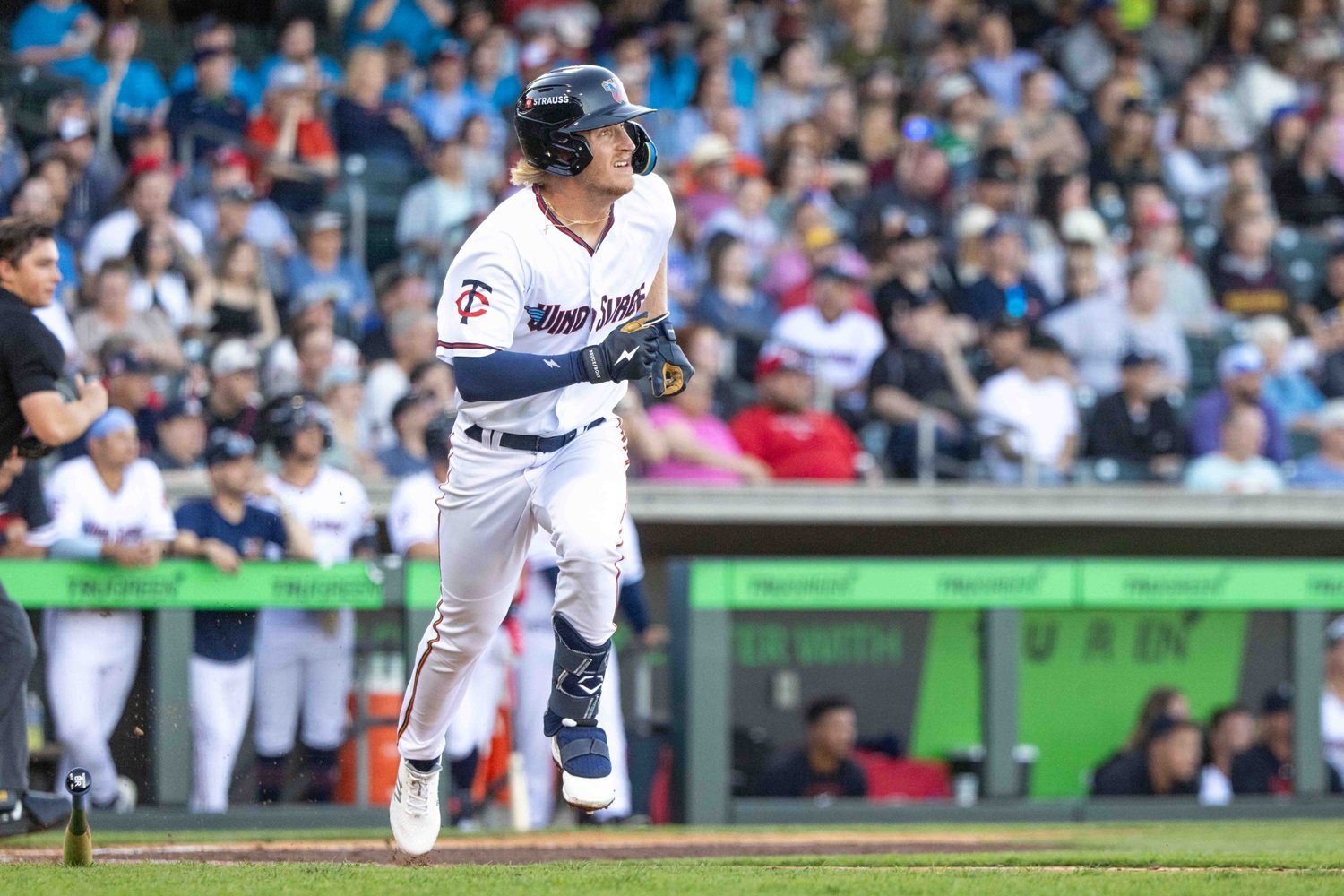 TRANSACTIONS On Wednesday, the Twins placed RHP Marco Raya on the Injured List. On Thursday, LHP Connor Prielipp was played on the Injured List with a blister. They called up LHP Kendry Rojas and activated RHP Bailey Ober. With catcher Ryan Jeffers expected to return on Friday, Kyler Fedko has been optioned. Wind Surge infielder Jake Rucker and Kernels LHP Ross Dunn began rehab assignments with the FCL Twins on The organization also signed 19-year-old RHP Wisarly Reinoso from the Dominican Republic. He was assigned to the DSL Twins. SAINTS SENTINEL St. Paul 7, Iowa 21 Box Score In many games, seven runs will be enough to win. However, when your opponent scores six runs in one inning and nine runs in another inning, it’s not going to be a good night. Ryan Gallagher started for the Saints and gave up one run over the first three innings. Likely, he was feeling pretty good about how he was pitching against several of his former Cubs teammates. However, he recorded just two outs in the fourth inning. In total, he was charged with six runs on eight hits (2 homers) and two walks. He struck out five batters. Eduardo Salazar came on with two runners on and allowed both to score. He gave up one more run on three hits and a walk over 1 1/3 innings. He had three strikeouts. Matt Bowman is back again with the Saints. He started the sixth inning and got two outs. He gave up three runs (1 earned) on three hits and a walk. Trent Baker came in with two runners on and left them stranded. Baker gave up two runs on three hits in the seventh inning. Jake Higginbotham got the eighth inning. The lefty was charged with six runs on four hits and two walks. He got two outs. David Banuelos came in with a runner on and allowed him to score. He also was charged with three runs on three hits (including a homer) before getting the final out. The Saints batters scored their seven runs over six different half-innings. They had 11 hits and walked five times in the game. Ben Ross went 2-for-5 with his 20th double and seventh home run with the Saints. That gives him 27 doubles and 12 homers overall this year. Walker Jenkins went 2-for-5 with his 10th double. Hendry Mendez went 2-for-4 with a walk and two doubles. Orlando Arcia (13) and Aaron Sabato (21) also hit a double in the game. Sabato walked twice. Brett Bateman was the Cubs eighth-round pick in the 2023 draft out of the University of Minnesota. The Mounds View High School graduate has steadily moved up the organizational ladder and has spent the entire 2026 season in Des Moines, with the Triple-A Iowa Cubs. In his two starts against the Saints this week, the center fielder is 7-for-10 with a walk and 3 doubles. Overall, he is hitting .302/.431/.409 (.840) with 15 doubles, a triple, two homers. In 65 games, he’s walked 51 times and struck out 52 times. He is also 17-for-19 on stolen base attempts. For more on Bateman and other prospects in the (former Twins outfield prospect) Jason Kanzler-led Cubs farm system, check out our sister site North Side Baseball. Many of the Iowa Cubs are in their Top 20 Cubs Prospect rankings, or like Moises Ballesteros was near the top of the rankings for a long time. He went 2-for-4 with a walk and a double. Bateman, who has consistently landed just outside their top 20, went 3-for-6 with a double. #9 prospect Jonathan Long went 5-for-5 with a walk, two doubles and a home run. B.J. Murray was 3-for-5 with a walk. #11 prospect James Triantos went 3-for-5 with a walk and a double. Owen Miller was 2-for-5 with two doubles. Christian Bethancourt went 3-for-5 with a double, two homers and five RBI. WIND SURGE WISDOM Wichita 6, Northwest Arkansas 13 Box Score Like above, when your offense scores six runs and has 12 hits and seven walks, they should win a lot of games. A little later, you’ll see why they didn’t score more runs. Unfortunately, the Naturals scored three in an inning, five in an inning, and they scored two runs twice. Sam Armstrong started and gave up eight runs on seven hits and a walk in 3 2/3 innings. He gave up two homers including the 17th homer of Carson Roccaforte whose three-run shot ended Armstrong’s outing. Sam Ryan came on and got the final out of the fourth. He worked a scoreless fifth inning, but then he got just one out in the sixth inning. He left the mound with the bases loaded. Hunter Gregory came on and allowed just one of the inherited runners to score. Ryan worked 1 2/3 innings. He gave up three runs (1 earned) on three hits and two walks. Gregory worked 1 2/3 innings and had three strikeouts. He was charged with no runs, no hits and no walks. Ruddy Gomez worked the final two innings and gave up two more runs on two hits and a walk. He struck out three batters. Caden Kendle led the offense. He went 3-for-4 with a walk. Marek Houston was 2-for-6 with his second double. He already has 11 stolen bases with Wichita. Jaime Ferrer went 2-for-5 with his sixth double. Andrew Cossetti went 0-for-2 but walked three times. Jay Thomason went 2-for-4 with a walk and his first Double-A home run. Kyle DeBarge added his 10th home run of the season. Garrett Spain added a double. Unfortunately, the Surge went just 3-for-15 with runners in scoring position and left 13 on base. It’s been a long season for the Wind Surge. Manager Nico Giarratano was ejected from the game in the sixth inning. Seven players on the NW Arkansas roster are in the Royals Keep Top 20 prospect rankings. Five of them are pitchers, though none of them threw on Thursday. #8 prospect Carson Roccaforte went 1-for-3 with two walks. He hit his 17th home run and stole his 16th base. #18 prospect Daniel Vazquez, a shortstop who was the team’s DH in this game, went 2-for-5 with two RBI. KERNELS CHRONICLE Cedar Rapids 1, South Bend 9 Box Score The Saints and Wind Surge both put up solid offensive performances, but their pitching staffs gave up a lot of runs and big innings. The Kernels followed suit with the exception that the Kernels offense had just one run on three hits in the game. Danny De Andrade had the lone extra base hit, his eighth double. Jose Salas went 1-for-2 with a walk. He stole a base and scored the lone run. Graham Brown drove in Salas with a single. Kolten Smith made his first appearance with the Kernels. In 3 1/3 innings, he gave up four runs (2 earned) on three hits and two walks. He had four strikeouts. Cole Peschl came in and tossed 2 1/3 scoreless innings. He gave up two hits. Jesse Bergin struck out four batters over 2 1/3 scoreless innings. He gave up just one hit. Yehizon Sanchez gave up five runs on three hits, two hit batters, and a walk in 2/3 inning. Brian Zeldin came on and got the final out on a strikeout. Five South Bend Cubs players are on the Northside Baseball Top 20 Cubs Prospect rankings.19-year-old Josiah Hartshorn, the org’s #4 prospect, went 0-for-3, was hit by a pitch twice and two RBI. #7 prospect Kane Kepley didn’t play on Thursday, but he has already reached 40 stolen bases. MIGHTY MATTERS Ft. Myers, Bradenton (postponed) Box Score The game was postponed by rain. The teams will hope to play two games on Friday. COMPLEX CHRONICLES FCL Twins 5, FCL Rays 6 Box Score The Twins jumped out to an early 3-0 lead. In the third inning, the Rays scored four to take the lead. The Twins responded with two runs in the top of the fourth to reclaim the lead 5-4. Both bullpens did well, throwing nothing but zeroes on the board from the fifth through eighth innings. Unfortunately, the Rays scored two runs in the bottom of the ninth inning to take the win. Yovanny Duran singled to lead off the game. He stole second and scored on a Jake Rucker single. Carlos Taveras singled Rucker to third. Rucker scored on a Jhomnardo Reyes sacrifice fly. With nobody on and two outs in the top of the second, Yovanny Duran was walked. After a pitching change, he stole second and went to third on an errant pickoff attempt. He scored on a Rucker double to make it 3-0. LHP Ross Dunn was the Twins 10th round pick in 2023 out of Arizona State. He pitched in 19 games (16 starts) for Fort Myers in 2024. He made one start in 2025 for the Kernels but was removed from the game in the fourth inning. He didn’t pitch again until Thursday morning in Fort Myers. It was his first rehab appearance after Tommy John surgery. He struck out two batters over two scoreless, hitless innings. 20 of his 27 pitches were strikes. Omar Mantano came in for the third inning and was charged with four runs on four hits and two walks and recorded just two outs. Jake Covey came in and stranded two runners on base. He went 3 1/3 scoreless innings. He gave up just one hit, walked two and had eight strikeouts. In the top of the fourth, Daiber De Los Santos reached on a one-out walk and went to second on a wild pitch. De Los Santos actually was picked off at second base, but a throwing error allowed him to score the tying run. Yovanny Duran followed with a walk. He also was picked off, but he was able to get to third on a throwing error by the first baseman. Rucker came up and came through again. He hit a triple to make it 5-4. Santiago Rojas came in and tossed two scoreless innings. He gave up one hit, walked two and had a strikeout. Matt DesMarets came in for the bottom of the ninth inning. He gave up two runs on two hits, a hit batter, and a walk. He struck out two batters but recorded just two outs before the winning run scored. The rehabbing Jake Rucker went 4-for-4 with a run and three RBI. He had two singles, a double, and a triple. Duran went 1-for-3, walked three times and scored three runs. His two stolen bases give him 25 for the season. DSL Twins 3, DSL Yankees 19 Box Score Keeping with the theme of the day, the DSL Twins were shellacked by the DSL Yankees. Seven Twins pitchers gave up at least one run in this game. (If you want to relive it, feel free to click on the box score.) The Twins scored three runs and had five hits, and nine walks Misael Rodriguez went 2-for-4 with his fourth double. Jendy Martinez walked three times. Enmanuel Merlo, Luis Duarte, and Anibal Beltre each had a single and a walk. Juan Holmann walked twice. PLAYERS OF THE DAY Hitter(s) of the Day Ben Ross (St. Paul): 2-for-5, 2B(20), HR(7), R, 2 RBI, K Jake Rucker (FCL Twins, Rehab): 4-for-4, 2B, 3B, R, 3 RBI. Pitcher(s) of the Day Jake Covey (FCL Twins): 3 1/3 IP, 1 H, 0 R, 2 BB, 8 K, 54 pitches, 31 strikes (57.4%) PROSPECT SUMMARY Check out the Prospect Tracker for much more on our Twins Top 20 prospects after seeing how they did today. #1 - OF Walker Jenkins (St. Paul) - 2-for-5, 2B(10), 2 R, K (batted second, played DH) #4 - C Eduardo Tait (Cedar Rapids) - 0-for-4 (batted second, played DH) #5 - SS Marek Houston (Wichita) - 2-for-6, 2B(2), 2 RBI, K, SB(11) (batted first, played SS) #7 - LHP Kendry Rojas (Minnesota) - 2 IP, 2 H, 3 ER, 3 BB, 3 K, 47 pitches, 25 strikes (53.2%) #9 - OF Hendry Mendez (St. Paul) - 2-for-4, BB, 2-2B(6), R, RBI, K, (batted fifth, played LF) #10 - OF Gabriel Gonzalez (St. Paul) - 0-for-1 (PH and played RF) #12 - 3B/CF Brandon Winokur (Wichita) - 1-for-4, BB, R, K (batted fifth, played 3B) #13 - C/OF Khadim Diaw (Wichita) - 0-for-5, K (batted second, played catcher) #15 - RHP Ryan Gallagher (St. Paul) - 3 2/3 IP, 8 H, 6 ER, 2 BB, 5 K, 89 pitches, 59 strikes (66.3%) . #18 - OF Yasser Mercedes (Cedar Rapids) - 0-for-4, K (batted fifth, played RF) #20 - 2B/SS Kyle DeBarge (Wichita) - 1-for-4, BB, HR(10), R, RBI, K (batted sixth, played 2B) UPCOMING PROBABLES Friday, July 10 St. Paul @ Iowa (7:08 pm CT) - RHP Ty Langenberg (3-3, 4.91 ERA) NW Arkansas @ Wichita (6:05 pm CT) - RHP Cory Lewis (0-3, 4.95 ERA) South Bend @ Cedar Rapids (6:35 pm CT) - LHP Cesar Lares (0-3, 16.71 ERA) Bradenton @ Ft. Myers (DH @ 3:35 pm CT) - RHP Callan Fang (3-1, 1.35 ERA), TBD FCL Twins @ FCL Red Sox (11:00 am CT) - DSL Rockies @ DSL Twins (10:00 am CT) - CURRENT W-L Records Minnesota Twins: 46-48 St. Paul Saints: 49-39 Wichita Wind Surge: 28-54 Cedar Rapids Kernels: 34-47 Fort Myers Mighty Mussels: 45-36 FCL Twins: 27-22 DSL Twins: 6-20 Please feel free to ask questions about the teams, the rosters, and discuss today’s games, or anything else Twins minor-league related! View the full article
 -
 The San Diego Padres' four full-season affiliates failed to win a game in similar fashion as the Triple-A El Paso Chihuahuas lost to Oklahoma City 6-3, the Double-A San Antonio Missions fell to Midland 5-2, the High-A Fort Wayne TinCaps lost to West Michigan 8-5 and the Low-A Lake Elsinore Storm dropped a 6-2 decision to Rancho Cucamonga. Padres Minor-League Transactions None. Chihuahuas Can't Dig Way Out Of 6-Run Hole Against Comets Despite digging an early 6-0 hole, the Triple-A El Paso Chihuahuas clawed back to have the tying run on base or at the plate in two innings but lost to the host Oklahoma City Comets 6-3. Padres catcher Freddy Fermin, in the second game of his rehab assignment following a head contusion, went 1-for-4 with a walk and an RBI while again serving as the Chihuahuas' designated hitter. After having just seven singles the night before, the Chihuahuas had only six hits (five singles, one double), while drawing four walks. In addition to Fermin, leadoff hitter Mason McCoy and No. 9 hitter Anthony Vilar each had a single and a walk. McCoy picked up his 20th stolen base, the third time in four seasons he has swiped at least 20. He stole 25 in each of the 2023 and 2024 seasons in the minors. He had 19 between El Paso and the Padres last year. Down 6-0, the Chihuahuas put up three runs in the top of the fifth. It started with a pair of strikeouts, then Clay Dungan was hit by a pitch, Vilar singled, then McCoy and Fermin each had RBI singles and Carlos Rodriguez a run-scoring double. Rodriguez has reached base in 41 of his last 42 games. After a pitching change, Nick Solak, with two runners on, grounded out. The Chihuahuas also started the top of the sixth with a pair of strikeouts, then loaded the bases on Bryce Johnson's single and stolen base and walks to Dungan and Vilar, but McCoy flew out to end the threat. Chihuahuas right-handed starter Evan Fitterer allowed six runs (four earned) on five hits and three walks with two walks in five innings. Right-hander Matt Flynn pitched two scoreless innings and right-hander Ethan Routzahn a scoreless eighth. EP_0709.mp4 Player AB R H RBI BB K Mason McCoy 4 1 1 1 1 0 Freddy Fermin 4 0 1 1 1 0 Carlos Rodriguez 4 0 1 1 0 1 Nick Solak 4 0 0 0 0 2 Marcos Castanon 4 0 1 0 0 2 Nick Pratto 4 0 0 0 0 4 Bryce Johnson 4 0 1 0 0 3 Clay Dungan 2 1 0 0 1 0 Anthony Vilar 3 1 1 0 1 0 Player IP H R ER BB K HR Evan Fitterer 5 5 6 4 3 2 0 Michael Flynn 2 1 0 0 0 2 0 Ethan Routzahn 1 1 0 0 0 1 0 Early Homers Subdue Missions In Loss To RockHounds A three-run second inning that featured a pair of homers was enough to upend the Double-A San Antonio Missions, who dropped a 5-2 decision to the Midland RockHounds. Missions right-handed starter Andrew Thurman, back in affiliated ball after stepping away from the game entirely following the 2017 season, went a season-high five innings, but gave up four runs on seven hits with a pair of walks and two strikeouts. The 34-year-old gave up an RBI double in the first inning, then back-to-back homers to begin a three-run second inning after the Missions had tied it. Thurman did finish by retiring 12 of the final 15 batters he faced. Jake Cunningham had two of the Missions' eight hits. Albert Fabian tripled in Cunningham in the second inning and Tirso Ornelas scored on a wild pitch in the fourth as Ryan Jackson walked. The Missions did put up a threat in the ninth as, with two outs, Wyatt Hoffman and Luis Verdugo singled, but Ethan Salas, Padres Mission's No. 1 prospect, grounded to shortstop Leo De Vries to end it. SA_0709.mp4 Player AB R H RBI BB K Luis Verdugo 4 0 1 0 1 1 Francisco Acuna 0 0 0 0 0 0 Ethan Salas 5 0 1 0 0 1 Tirso Ornelas 4 1 1 0 0 2 Jake Cunningham 4 1 2 0 0 1 Braedon Karpathios 3 0 1 0 1 2 Ryan Jackson 3 0 0 0 1 1 Albert Fabian 4 0 1 1 0 1 Kai Roberts 3 0 0 0 1 1 Wyatt Hoffman 4 0 1 0 0 2 Player IP H R ER BB K HR Andrew Thurman 5 7 4 4 2 2 2 Francis Pena 2 3 1 1 1 1 0 Clay Edmondson 1 1 0 0 0 1 0 Late Rally Too Little Too Late For TinCaps Seven runs over the first three innings, including five in the second, spelled doom for the High-A Fort Wayne TinCaps in an 8-5 setback to the host West Michigan Whitecaps. Ryan Wideman, Padres Mission's No. 4 prospect and the minors' stolen-base leader with 50, went 2-for-5, including a double, with an RBI and a run scored. Wideman has a hit in 11 of 13 games since being promoted from Low-A Lake Elsinore. This was his third multihit game with the TinCaps. Eight of the nine TinCaps batters had at least one hit and five had RBIs. TinCaps right-handed starter Carson Montgomery was lit up for seven runs on seven hits with three walks and four strikeouts in five innings. Left-hander Braian Salazar struck out three and allowed a run in two innings, while right-hander Will Varmette pitched two scoreless innings. The TinCaps were held to a fifth-inning Wideman RBI double before the offense really came to life late. The scored twice with two outs in the eighth on Rosman Verdugo's RBI triple and Jack Costello singling home Verdugo. In the ninth, Kasen Wells was hit by a pitch with one out and Wideman singled, with both runners moving up on a wild pitch. Justin DeCriscio hit a sacrifice fly to left and Kerrington Cross singled home Wideman. But that threat ended as Kavares Tears struck out to end the game. FW_0709.mp4 Player AB R H RBI BB K Ryan Wideman 5 1 2 1 0 1 Justin DeCriscio 4 1 1 1 1 2 Kerrington Cross 5 0 1 1 0 2 Kavares Tears 5 0 1 0 0 1 Rosman Verdugo 3 1 1 1 1 2 Jack Costello 4 0 1 1 0 1 Carlos Rodriguez 4 0 1 0 0 1 Oswaldo Linares 4 1 0 0 0 0 Kasen Wells 3 1 1 0 0 0 Player IP H R ER BB K HR Carson Montgomery 4 7 7 7 3 4 1 Braian Salazar 2 1 1 1 0 3 1 Will Varmette 2 2 0 0 0 0 0 Storm Unable To Overcome Early Quakes Surge Dawson Willis had two hits and scored a run, while Bradley Frye drove in a pair, but the Low-A Lake Elsinore Storm were beaten by the host Rancho Cucamonga Quakes 6-2. Storm right-hander Lan-Hong Su had a third straight rocky start since being promoted from the Arizona Complex League. Su, a 19-year-old key international signing last year, gave up four runs on five hits and one walk with no strikeouts in two-plus innings. He has given up four runs in each of his three Storm starts over 7⅔ innings for a 14.09 ERA. Frye singled home Willis in the top of the first, then the Quakes scored three in the second and one in the third, then added another in the fifth for a 5-1 lead. In the sixth, the Storm pulled within 5-2 as Qrey Lott had an infield single, Yimy Tovar walked and both runners advanced on Jose Verdugo's sacrifice bunt. After a pitching change, Willis walked to load the bases and Frye drew a free pass to force in a run. But the next two batters were retired to end the inning. The Storm got two runners on in each of the seventh and eighth innings, but were unable to chip into the Quakes' advantage. Player AB R H RBI BB K Yimy Tovar 4 0 1 0 1 1 Jose Verdugo 3 0 0 0 0 1 Dawson Willis 2 1 2 0 1 0 Bradley Frye 2 0 1 2 1 1 Truitt Madonna 3 0 0 0 1 3 Dylan Grego 4 0 0 0 0 3 Conner Westenburg 4 0 0 0 0 1 Alcides Hernandez 3 0 1 0 1 2 Qrey Lott 3 1 1 0 1 1 Player IP H R ER BB K HR Lan-Hong Su 2 5 4 4 1 0 1 Daichi Moriki 1 0 0 0 2 1 0 Zack Qin 3 1 1 1 1 2 1 Isaiah Lowe 2 2 1 1 0 2 1 Padres Mission's Top 20 Prospect Performance Ethan Salas: 1-for-5, 1 K Kash Mayfield: DNP Miguel Mendez: DNP Ryan Wideman: 2-for-5, 2B, 1 K Kruz Schoolcraft: DNP Jorge Quintana: DNP Ty Harvey: On injured list Kale Fountain: Injured, out for season Braedon Karpathios: 1-for-3, 2 K Jagger Haynes: DNP Lamar King Jr.: DNP Tucker Musgrove: DNP Truitt Madonna: 0-for-3, 3 K Alex McCoy: DNP Jesus Castro: DNP Rosman Verdugo: 1-for-3, 3B, 2 K Garrett Hawkins: DNP Eric Yost: DNP Michael Salina: DNP Winyer Chourio: DNP View the full article
 -
What are your Marlins vs. Guardians series predictions?
DiamondCentric posted an article in Fish On First
 Once again in 2026, I will be monitoring Miami Marlins predictions from our valued SuperSubs, Fish On First staffers and livestream guests. Individual article pages like this one will be created prior to every Marlins series and featured prominently on the FOF site. Consistent participation is key if you want to win this annual contest. Submissions only take a few seconds. Scoring system A "perfect" series is worth three points: Earn one point for predicting which team will win the upcoming series Earn one point for predicting the precise number of victories for each team Earn one point for predicting the “Series MVP” who accumulated the highest win probability added (WPA) during the series as calculated by FanGraphs (could pick a player from either team) FOF staffer Jeremiah Geiger is currently atop the 2026 season leaderboard, which will be updated between every Marlins series. If you are a SuperSub, leave a comment with your Prediction Time picks on this page, or join the Marlins Discord Server and submit there. We'll feature them on the upcoming Fish On First LIVE episode and track your points throughout the season! Any picks submitted prior to the first pitch of the series opener will be counted. If you are not a SuperSub, please consider signing up here to support the FOF staff. Series preview notes Probable starting pitchers: RHP Sandy Alcantara (MIA) vs. LHP Parker Messick (CLE) on Friday RHP Eury Pérez (MIA) vs. RHP Tanner Bibee (CLE) on Saturday TBA (MIA) vs. LHP Joey Cantillo (CLE) on Sunday The Marlins rank 10th in MLB with a 103 wRC+ and eighth in MLB with a 3.99 FIP. They are 8-2 in their last 10 games and have a 31-17 record at home this season. The following Marlins players are on the injured list: Anthony Bender (15-day IL), Owen Caissie (10-day IL), Josh Ekness (60-day IL), Ronny Henriquez (60-day IL), John King (15-day IL), Adam Mazur (60-day IL), Andrew Nardi (60-day IL) and Robby Snelling (60-day IL). The Guardians rank 26th in MLB with a 92 wRC+ and 10th in MLB with a 4.00 FIP. They are 4-6 in their last 10 games and have a 24-24 record on the road this season. The following Guardians players are on the injured list: Tim Herrin (15-day IL), Angel Martinez (10-day IL) and José Ramírez (10-day IL). View the full article
 -
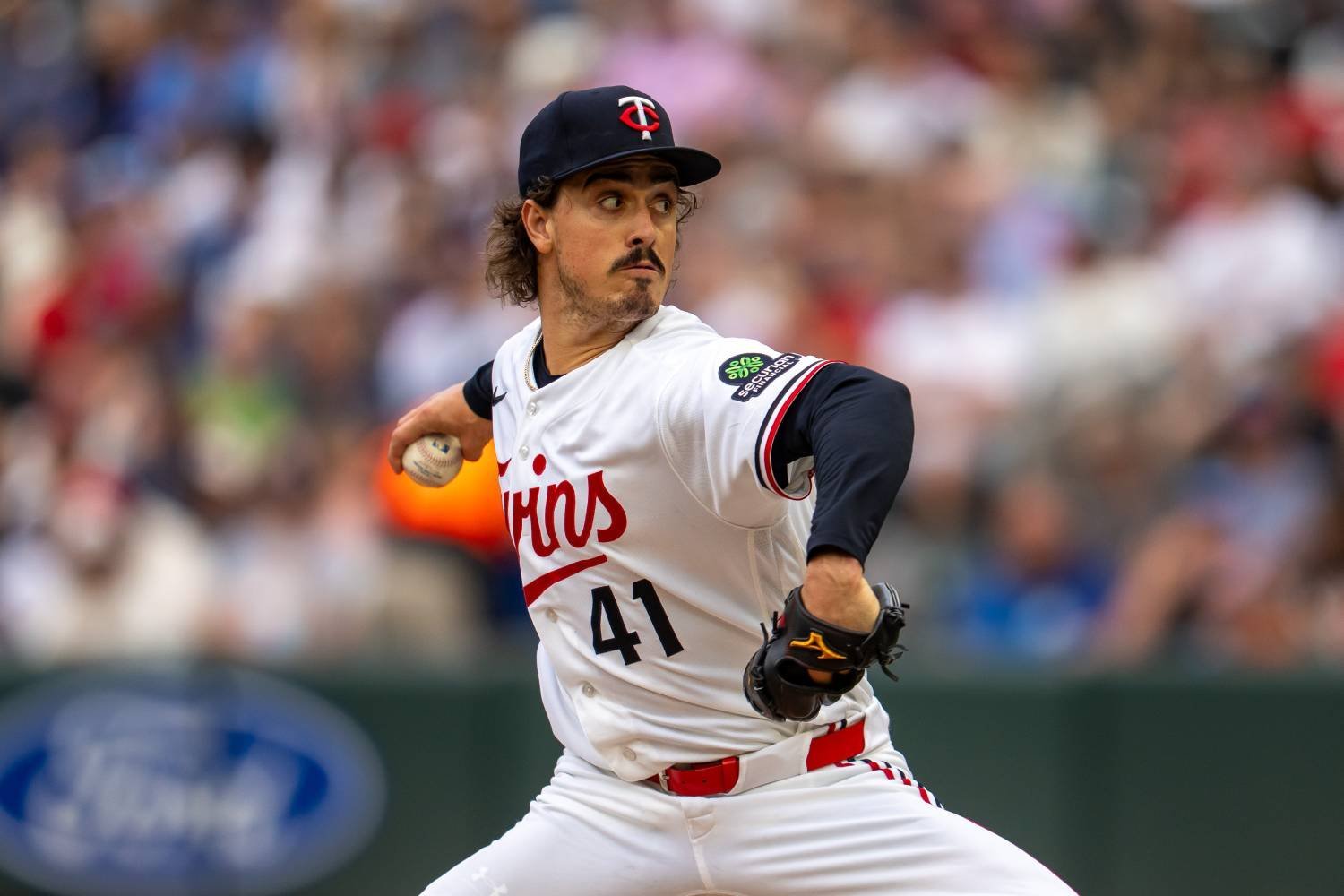 While a lot of Milwaukee Brewers fans might be clamoring for more punch in the offense, one of baseball's top insiders has identified another need for the Crew. Playoff-caliber starting pitching, according to ESPN's Jeff Passan. One of the reasons for needing starting pitching is the new shoulder injury to right-hander Brandon Woodruff, while right-hander Logan Henderson just returned Thursday from a stay on the injured list with a back issue. As Passan sorts through all of the contenders, he made two choices for each club. One was a best-match trade addition, the other was a dream pickup. The best match, Passan says, is the Brewers connecting with their old front-office boss David Stearns with the New York Mets and acquiring right-handed starter Clay Holmes. Having recently returned from a broken right leg 2.39 ERA (3.19 FIP) in 52⅔ innings with an 8.4% walk rate and 20.9% strikeout rate. But it is Holmes' experience as a postseason reliever in 2021, 2022 and 2024 that could help push the Crew over the top. Holmes also fits financially as he is making $12 million this year and $13 million next year. But in a dream scenario, the Brewers would grab Minnesota Twins right-handed starter Joe Ryan. Ryan has ace qualities that would pair very nicely with Brewers right-hander Jacob Misiorowski, the MLB leader in strikeouts (167) and ERA (1.62). Ryan has a 2.65 ERA (2.83 FIP) in 19 starts, having already logged 104⅓ innings. Ryan has a 5.4% walk rate and 28.8% strikeout rate. Ryan, making $6.1 million this year, would be more of a rental as he has a mutual option for 2027. Mutual options are almost always declined. The Brewers certainly have the prospects to get either deal done. View the full article
 -
Lopez makes history as Marlins soar to ten games over
DiamondCentric posted an article in Fish On First
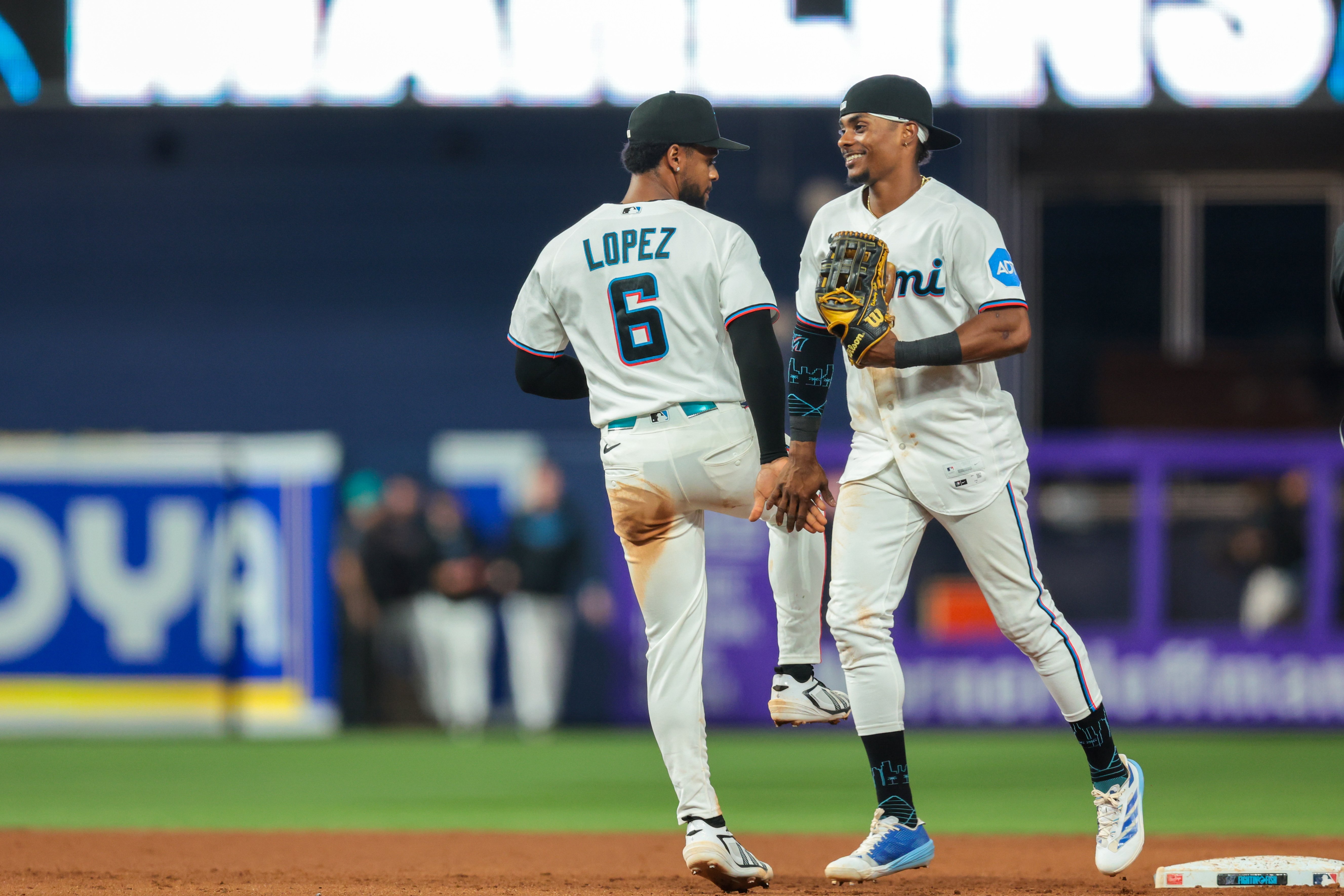 MIAMI -- For much of the past two seasons, the Marlins and their rising shortstop Otto Lopez have mirrored each other. A year ago, the two exceeded expectations. While it wasn't all pretty, there was serious reason to believe there was long-term hope--even if most of the baseball world overlooked them. As for 2026? They've been undeniable. On the same night Lopez tallied his franchise record-breaking 127th hit before the All-Star break, Miami won their sixth straight-an 8-4 sweep-clinching effort over the AL West-leading Mariners. The hottest team in the sport improves to ten games over .500 for the first time since July 17th, 2023, and secures a second consecutive sweep. "It's so much fun right now," said Lopez postgame. "When you win, you can celebrate, and this team has to give it their all until the end of the season. We're showing what we want from now on until October, because we want October here in Miami. That's what I'm focused on." Lopez's decisive knock to pass Luis Arraez's mark of 126 set in 2023 came in the midst of a four-run fourth. A sharp ground ball past a diving J.P. Crawford knocked around just enough in the corner for the 27-year-old to cruise into third for his sixth three-bagger of the year. Awaiting Lopez at third and his following at-bats were MVP chants from the crowd at loanDepot park, which caused an ear-to-ear smile when discussing the moment. "It makes me feel super good," said Lopez. "They motivate me to just keep going and be comfortable. So, I just want to continue to keep putting on." "It's hard really to describe," said skipper Clayton McCullough. "It's so many hits that he's collected -- I think 140 multi hit games. He's has a hit in every series, and just the way they've come, he's got a bunch of doubles, triples, and he's got homers. He'll hit the ball over the place, tonight down the third base line, right center, infield hits. It's been a real hitting display with his bat to ball and how he moves the ball around the field. He's hitting all pitch types so much better this year and getting a lot more balls in the air this year than he has in the past. I mean, if he gets two hits in a game, you're not even really surprised anymore. It just seems like it's every single night." With just three games remaining in the first half, Lopez has a commanding lead across all of MLB in batting average (21 points higher than #2) and hits (15 more than #2, who happens to be Arraez) as of this writing. His OPS now sits at a clean .900. In addition to their first-time All-Star, Griffin Conine and Jakob Marsee enjoyed fine nights of their own at the plate. Conine shined with a three-hit, two-extra-base performance—including his fourth blast of the year in the second—while Marsee continues to show improvement, getting on base three times and notching an RBI. On the bump, an admittedly amped up Janson Junk settled in after an uncharacteristically wild first two frames. Making his first appearance since being sidelined with right shin inflammation in mid-May, the right-hander completed five innings of two-run ball, striking out five. The red-hot Fish return to action Friday night, playing host to the slumping Guardians in a rematch of the 1997 World Series. Ace Sandy Alcantara takes the mound in the series opener opposite Parker Messick. First pitch from LDP is set for 7:10 pm EST. View the full article
 -
Jeff Passan Identifies Two Potential Twins Trade Targets
DiamondCentric posted an article in Twins Daily
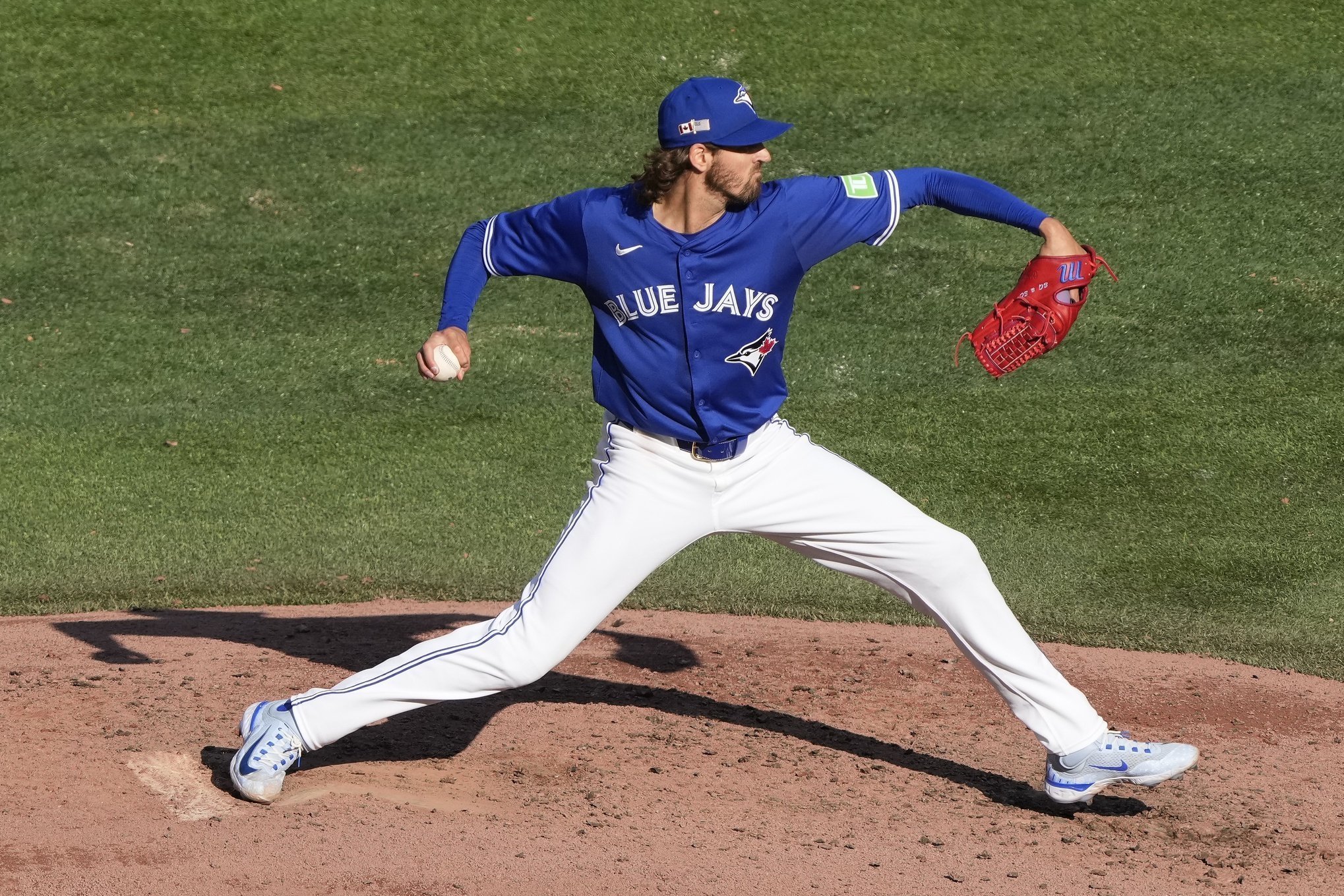 The MLB trade deadline is quickly approaching, but identifying buyers and sellers has rarely been more difficult. With the American League playoff picture packed tightly together, a single hot streak can transform a fringe contender into a postseason favorite. That uncertainty has made projecting deadline moves especially challenging, and the Twins are one of the biggest surprises in the mix. After a disappointing start to the season, Minnesota has clawed its way back toward the .500 mark and remains firmly in the Wild Card conversation. Even with obvious flaws, the Twins have stayed within striking distance in an American League that has lacked dominant contenders beyond the top teams. With that in mind, ESPN's Jeff Passan recently outlined the ideal deadline additions for playoff hopefuls, and he believes Minnesota's biggest need is clear: starting pitching. The most realistic fit on Passan's list is Nationals left-hander Foster Griffin, a pitcher who has quietly become one of baseball's better breakout stories. After spending the previous three seasons pitching in Japan, Griffin returned to Major League Baseball by signing with Washington before the 2026 season. The results have been outstanding. Across 110 1/3 innings, the left-hander owns a 2.77 ERA while pairing it with a 4.04 FIP, a sparkling 1.02 WHIP, a 24.5% strikeout rate, and an excellent 5.8% walk rate. Just as importantly for Minnesota, Griffin isn't simply a rental. He won't be eligible for arbitration until 2028 and isn't scheduled to become a free agent until after the 2030 season. That type of club control would make him valuable beyond this year's playoff race and could help stabilize a rotation that has battled inconsistency and injuries throughout the season. Adding Griffin would also fit the Twins' typical approach under their front office. Rather than paying premium prospect prices for a short-term acquisition, Minnesota has often targeted controllable players who can contribute for multiple seasons. Of course, Passan also included a much bigger name. His "dream" acquisition for the Twins is veteran right-hander Kevin Gausman of the Blue Jays. On paper, it's easy to understand why. Gausman has the experience and swing-and-miss arsenal to front a postseason rotation despite a somewhat uneven regular season. Through 106 1/3 innings, Gausman has compiled a 4.32 ERA, but his underlying numbers remain encouraging. He owns a 3.77 FIP, a 1.22 WHIP, a 24.3 percent strikeout rate, and a 6.5 percent walk rate while heading toward free agency this winter. Passan summed up the appeal simply: "If Toronto does wind up dumping its impending free agents, Minnesota adding Gausman to (Joe) Ryan and Taj Bradley in a three-game wild-card series certainly would play." The obstacle, however, is obvious. Toronto sits only a couple of games behind Minnesota in the standings and is chasing a postseason berth of its own after falling just short in last year's World Series. Unless the Blue Jays suffer a significant collapse over the next few weeks, it is difficult to imagine them moving one of their veteran starters to a direct Wild Card competitor. That makes Griffin feel like the more attainable target. Whether the Twins ultimately pursue Griffin, aim higher for a bigger name, or stand pat will depend on where they sit as August 3 approaches. But if Minnesota intends to capitalize on an unexpectedly competitive season, improving the rotation should be at the top of the priority list. Griffin may not be the flashiest deadline acquisition, but he could be exactly the type of move that helps the Twins turn a surprising season into a legitimate playoff run. View the full article
 -
Mark Vientos Headed To Mets' Injured List With Broken Hand
DiamondCentric posted an article in Grand Central Mets
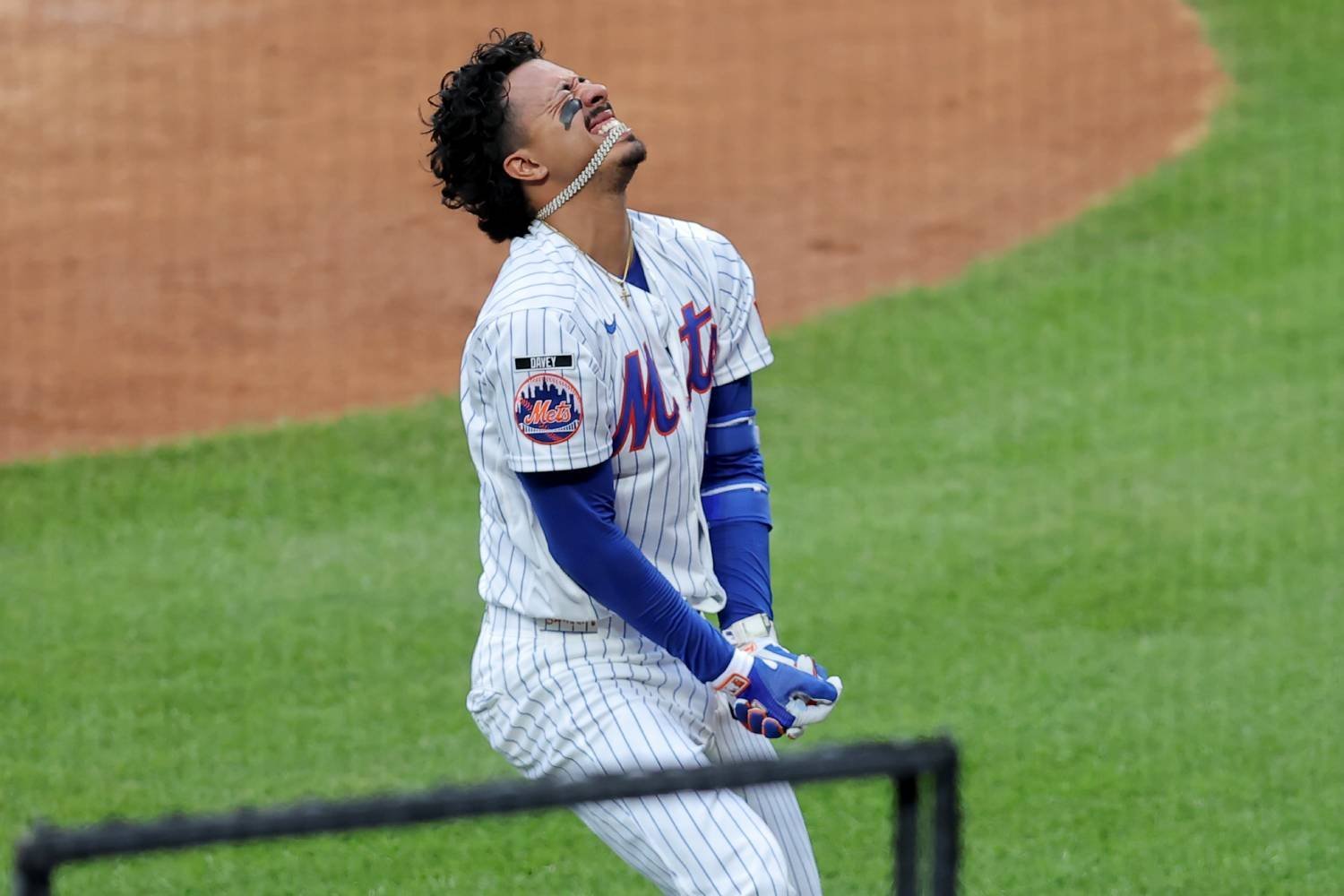 The New York Mets are losing another infielder. And a potential trade chip. Corner infielder Mark Vientos has a fractured bone in his right hand and will be placed on the 10-day injured list before Friday's game. Vientos was hit on his right hand by a pitch from Kansas City Royals right-hander Michael Wacha in the bottom of the second inning of 7-3 Mets loss. The exact diagnosis will be made following more imaging on the right hand, but broken bones have a four- to six-week recovery period. Vientos was thought to be a trade piece that the flailing Mets to spin off for a prospect or two. While his slash line of .211/.256/.388 with 11 homers and 35 RBIs isn't very inviting, he does hit left-handed pitching well, producing a .281/.316/.539 mark with six homers and 17 RBIs. The Mets are currently without second baseman Marcus Semien (strained left hip flexor) and Vientos' injury prompted rookie outfielder A.J. Ewing's MLB debut at second base and Bret Baty, who started at second, moved over to third, where Vientos made just his second start of the season. Infielder Ronny Mauricio is the leading candidate to replace Vientos on the roster. View the full article
 -
Exclusive Interview: Red Sox Prospect Calvin Bickerstaff
DiamondCentric posted an article in Talk Sox
 From going undrafted to signing with the Red Sox while driving to Cape Cod, Calvin Bickerstaff has an interesting story. Pitching in Greenville in 2026, the right-hander continues his pursuit of pitching in the majors. Talk Sox's Nick John sits down and discusses the path Bickerstaff has taken to get to professional baseball. View the full article
 -
Trading Ryan Jeffers Would Be the Wrong Move for the Twins
DiamondCentric posted an article in Twins Daily
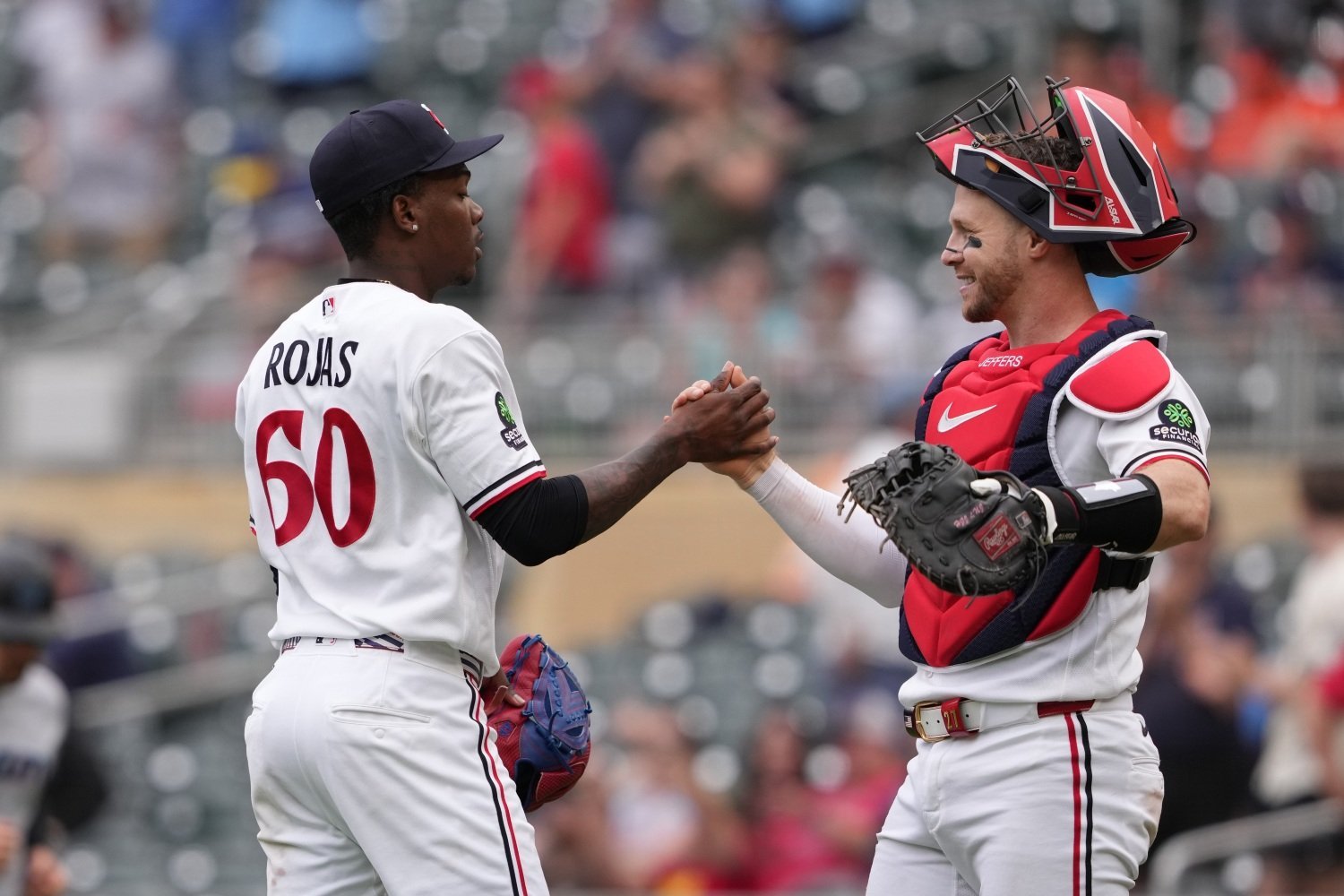 The Twins are probably going to be active over the next few weeks, and regardless of whether they believe they can still make a run at the AL Central or not, roster moves are coming. Names like Trevor Larnach, Kody Clemens, Josh Bell, and a handful of others have all surfaced as potential trade candidates. One of those "others" is Ryan Jeffers. It makes sense, on the surface. Jeffers is set to become a free agent after the season. If the Twins have already decided he isn't part of their long-term plans, then the logical move would be to see what kind of return they can get, rather than letting him walk for nothing in free agency. But I think trading Jeffers would be a huge mistake, for a few reasons. Before landing on the injured list in May, Jeffers wasn't just having a good season. He was quite literally one of the best hitters in Major League Baseball. Through 37 games, Jeffers was hitting .295 with an outstanding .408 on-base percentage, while posting an even 1-to-1 strikeout-to-walk ratio. That's incredibly difficult to do, especially for a catcher, and it reflected just how complete his offensive game had become. The underlying data backed it up, too. His quality of contact had reached career-best levels, and perhaps even more importantly, his bat-to-ball skills continued to improve. It was shaping up to be the best version of Jeffers we'd ever seen. But then came the injury. Jeffers suffered a fractured hamate bone in his left hand and has spent the last couple of months on the injured list. Whether it's simply the effects of a lengthy layoff or the process of getting back into game rhythm, it's reasonable to expect his production to take a step back after he returns. Because of that, it's entirely possible Jeffers won't look like the same hitter during the second half of the season. Ironically, though, that might actually work in the Twins' favor. If Jeffers’ production declines, his value in free agency may take a hit as well. Instead of pricing himself into a contract the Twins aren't comfortable matching, a quieter finish to the season could make him significantly more affordable this winter. Of course, his value goes beyond what he can do at the plate. One of the more underrated developments this season was what Jeffers brought behind the plate through the ABS challenge system. While he's never been known as an elite defensive catcher, Jeffers quickly became one of the more valuable catchers in baseball when it came to challenging balls and strikes. Those successful challenges created extra strikes for Twins pitchers and erased bad calls that otherwise would've extended at-bats. It's a small part of the game, but one that absolutely provides value over the course of a season. For a catcher who has never consistently thrown out runners at a high rate or been viewed as an elite blocker, adding another tangible defensive strength is significant. It's another reason why his overall value may be greater than the traditional numbers suggest. Then there's the organizational picture. Even though the Twins still have Victor Caratini under contract for another year, their catching pipeline isn't close to being major league-ready. Eduardo Tait has tremendous upside, but he's still only 19 years old and is currently playing at High-A. Enrique Jimenez is at that same level, while Khadim Diaw's long-term future behind the plate remains uncertain, especially given his frighteningly low caught-stealing rates. There are talented catchers in the system; they're just not close enough to make an impact at the major-league level anytime soon. That could change this weekend, if the Twins use their third overall pick in the MLB Draft on Georgia Tech catcher Vahn Lackey. He's been heavily connected to Minnesota throughout the pre-draft process and certainly fits the type of player they could target. But even if Lackey becomes the selection, that doesn't suddenly solve the major league catching situation. College catchers still need time to develop. Whether it's Tait, Lackey, or someone else, the Twins are going to need somebody to bridge the gap between the present and the next generation. To me, Jeffers is the obvious choice, because what's the alternative? If you trade Jeffers now, you're probably turning around this offseason and spending money on another catcher, anyway. Why not keep the player who already knows the organization, has a strong track record of offensive production, and has built relationships with the pitching staff? That continuity matters, especially for a team that's likely going to lean on young starters and young position players over the next several seasons. Even if the Twins don't believe 2026 is shaping up to be a competitive year, I don't think Jeffers should be available at this trade deadline. He gives the Twins value immediately. He provides leadership inside the clubhouse, he’s helped stabilize a young pitching staff, and perhaps most importantly, he allows the organization to be patient with its next wave of catching prospects instead of forcing one of them to the majors before they're truly ready. There are certainly players the Twins should consider moving over the next few weeks, but Jeffers shouldn't be one of them. If I'm running this front office, he’s going nowhere this summer. View the full article
 -
Bradgley Rodriguez's Changeup Has Changed Everything
DiamondCentric posted an article in Padres Mission
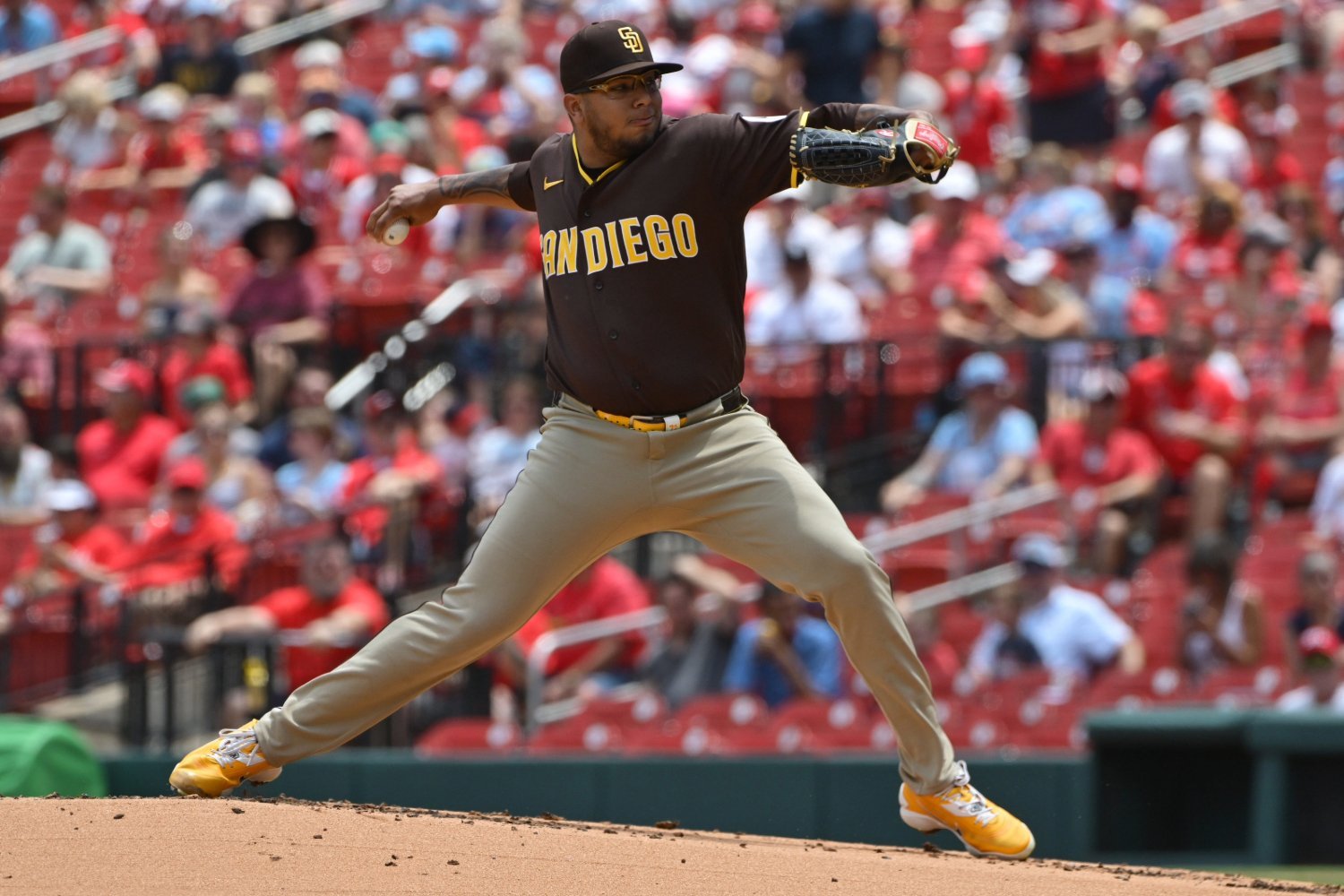 There is one number that follows Bradgley Rodriguez everywhere. Not a highlight, not a moment, but a data point: 41%. That is how often he throws his changeup. For a pitcher sitting 98.1 mph on the fastball, that alone makes the profile feel off-axis. Most pitchers with that kind of velocity lean on the fastball as the thing that organizes everything else. Rodríguez has gone the other way. The four-seam is almost background noise now, while the changeup has taken over as the pitch that actually drives the structure of the arsenal. It wasn't always like this. In 2025 at Double-A, Rodríguez looked dominant on paper: 12.49 K/9, 2.01 BB/9, 0.90 WHIP. But Triple-A changed the environment quickly. The strikeouts dropped to 4.40 K/9, walks jumped to 6.91 BB/9, and his xFIP climbed to 6.06. It was not a velocity issue; the fastball was still there. The problem was that more advanced hitters could handle the hard stuff. What followed was not a tweak, but a full reordering of usage. In 2026, the changeup has become his unquestionable primary offering, while the four-seam fell to a 22.3% usage rate. The sinker stayed at 27.1% as the stabilizing piece of the mix. The slider (8.3%) slid in as a fourth option, effectively taking the cutter’s place from 2025 (10.2%). It is not really a power arsenal in the traditional sense. It works more like a set of overlapping speeds that share the same visual window for as long as possible. Bradgley Rodriguez Changeup Performance Metric 2025 2026 MLB Average Usage 23.6% 41% ~15% BA Against .000 .123 .220 SLG Against .000 .193 .350 Whiff% 46.7% 39.1% ~25% Exit Velocity 91.2 mph 84.2 mph 89 mph HardHit% 33.3% 28.6% ~38% The changeup holds up even under heavy usage, which is really the point here. He only threw 30 of them all of last year in San Diego; he's already up to 253 in 2026. The surface line is strong on its own, but the underlying data actually pushes it a bit further (.126 xBA, .180 xSLG). That gap is usually where volatility shows up. Here, it does not really appear in a meaningful way. What matters more than the whiff rate itself is how consistently the pitch avoids damage contact. Even when hitters do put it in play, it tends to stay on the ground or come off the bat soft, which is not something that usually survives when a pitch becomes a primary option in the mix. The entire pitch works because of how it pairs with the sinker. Rodríguez’s changeup drops 25.6 inches with 17.3 inches of arm-side run. The sinker sits at 16.9 and 14.9. On paper, they are not identical, but visually they live in the same lane for most of the flight. Then the speed gap does the rest. The sinker comes in at 97.7 mph. The changeup sits at 89.4. By the time it arrives at the plate, it is usually too late to adjust. The result is a lot of early swings, a lot of contact under the ball, and a 47.1% topped rate that sits at the top of the league. It is less about swing quality and more about when the swing decision is being forced. Rodríguez is not winning on pure stuff. His Stuff+ sits at 101, basically average. The jump is in execution. His first-pitch strikes have noticeably increased from 41.9% to 61.5%; his in-zone rate from 45.7% to 50.7%. The changeup stopped being just a swing-and-miss pitch and became something closer to a placement tool, living on edges and expanding chase zones rather than the heart of the plate. The sinker, despite the velocity, is not really an out pitch in isolation. It plays more as a shape connector, something that keeps the fastball-changeup tunnel intact. The results (.300 BA, .375 SLG, 14.1% whiff) back that up—it is useful, but it is not driving outcomes on its own. The fastball ends up in a similar role. It is not dominating at all. The production is neutral (.280 BA, .341 xSLG), but its value is tied to perception. It keeps 98 mph in the hitter’s mind, even if it is not actually finishing at-bats very often. The question that sits underneath all of this is sustainability. A changeup sitting around 40% usage is still unusual in MLB, even among pitchers who lean heavily on off-speed offers. It is not a common workload distribution, and there are not many stable comparisons for it. The pitch value has dropped from 4.7 to 2.5 runs per 100 pitches, and the whiff rate has come down from the 46.7% rate last year. That looks like regression at first glance, but the underlying indicators suggest something closer to adjustment under increased exposure rather than a real collapse in quality. The slider is the one real development lane left. It has a 128 Stuff+, which usually signals upside, but the results have not followed (-1.6 runs/100, .308 BA, .538 SLG, 36.4% whiff, 55.6% hard-hit rate). The shape is not the problem. The execution is still inconsistent enough that hitters are not being disrupted in the same way as with the changeup. Rodríguez is 22, so there is still time for this to evolve, but the core problem is already solved. He has restructured the hierarchy of his arsenal. Instead of building around a 98-mph fastball, he pushed it into a supporting role inside a system driven by a high-usage changeup. It works right now because the command holds everything together, but the entire model still depends on whether that separation in timing holds as hitters see more of it. View the full article
 -
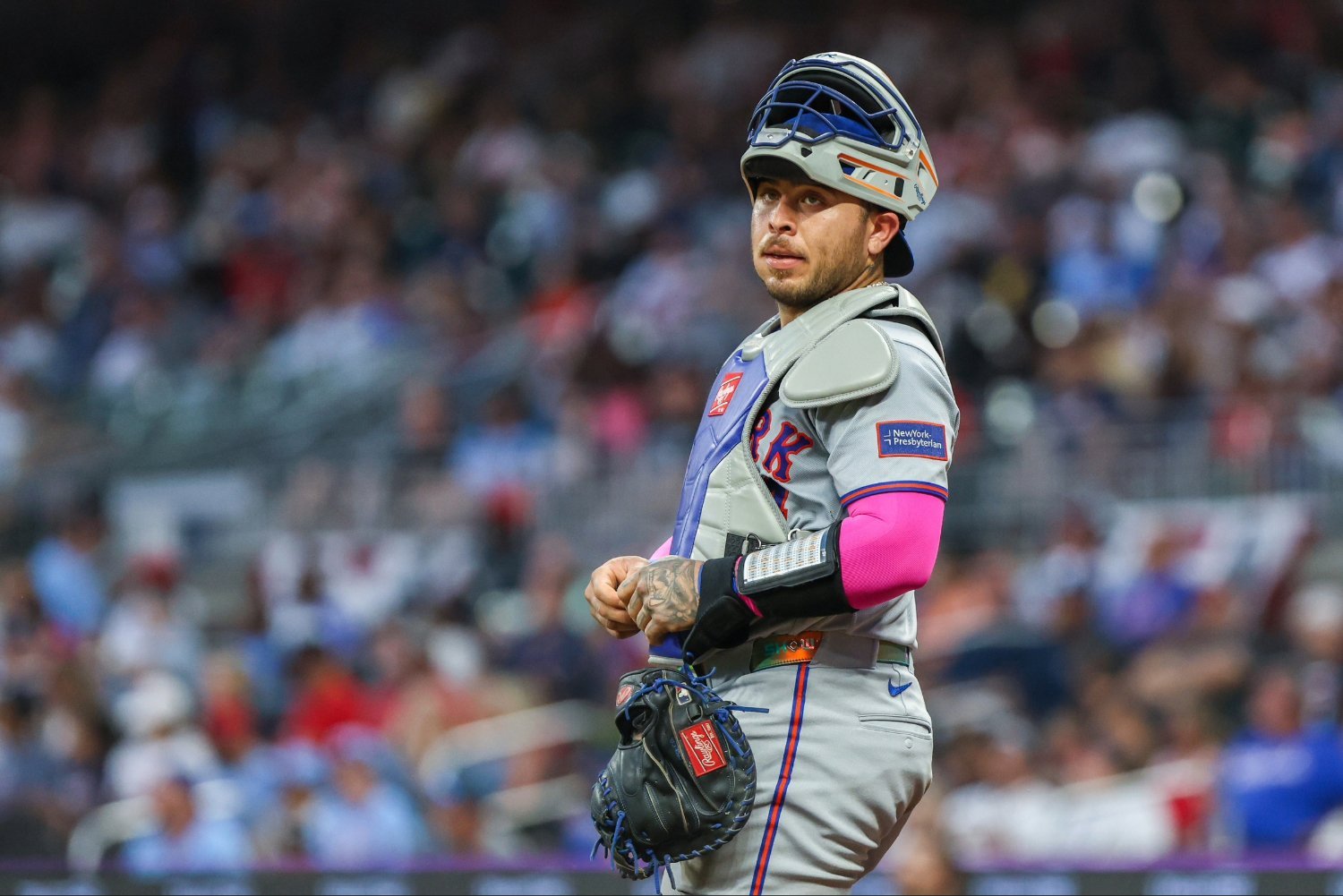 To most New York Mets fans, the thought of trading young catcher Francisco Alvarez never seemed like an option. That was until Will Sammon of The Athletic mentioned that evaluators around the league believe that the Mets could get a substantial return for the former top prospect at this year's trade deadline. It is hard to label Alvarez as a bust, but he certainly has not lived up to the sky-high expectations that were put onto him. In 2023, the top three prospects in baseball were Orioles All-Star Gunnar Henderson, Diamondbacks All-Star Corbin Carroll and then Alvarez, who certainly has not been near the level of the other two. Later that season, both Henderson and Carroll won Rookie of the Year, and Alvarez did not receive a single vote. Across parts of five seasons in the majors, Alvarez has a .234 average with a 106 wRC+. He has been constantly sidelined with various injuries throughout his young career, with his career high in games played coming in his rookie season with 123. There are parts of his game that are still begging for improvement, namely in terms of plate discipline. He works his fair share of walks, but he's got a bad habit of chasing outside the zone, which leads to big swing-and-miss numbers. Alvarez does a good job of negating some of that with huge exit velocity numbers and a proclivity for meeting the ball with the barrel of his bat, but he still hasn't matured in the batter's box the way most have hoped. With that being said, I am not sure now is the time to move Alvarez. The Mets need to look at themselves in a mirror and realize they need to rebuild. One thing you should not do in a rebuild is trade a 24-year-old former top prospect with three more years of control. The Mets also do not have many catchers in waiting if Alvarez is moved. Kevin Parada can very well be labeled as a bust as he was recently emoted from Triple-A to Double-A. Yovanny Rodriquez has been good but he is still in rookie ball and at least three years away. Luis Torrens seems like the more likely trade candidate of the two. Torrens received an extension this offseason and is still one of the most undervalued catchers in baseball. He's an elite defender who should appeal to any contender in need of a veteran backstop. Barring a huge return, all the Mets should be doing with Alvarez is their due diligence. He is an integral part of this team, both now and in the future. View the full article
 -
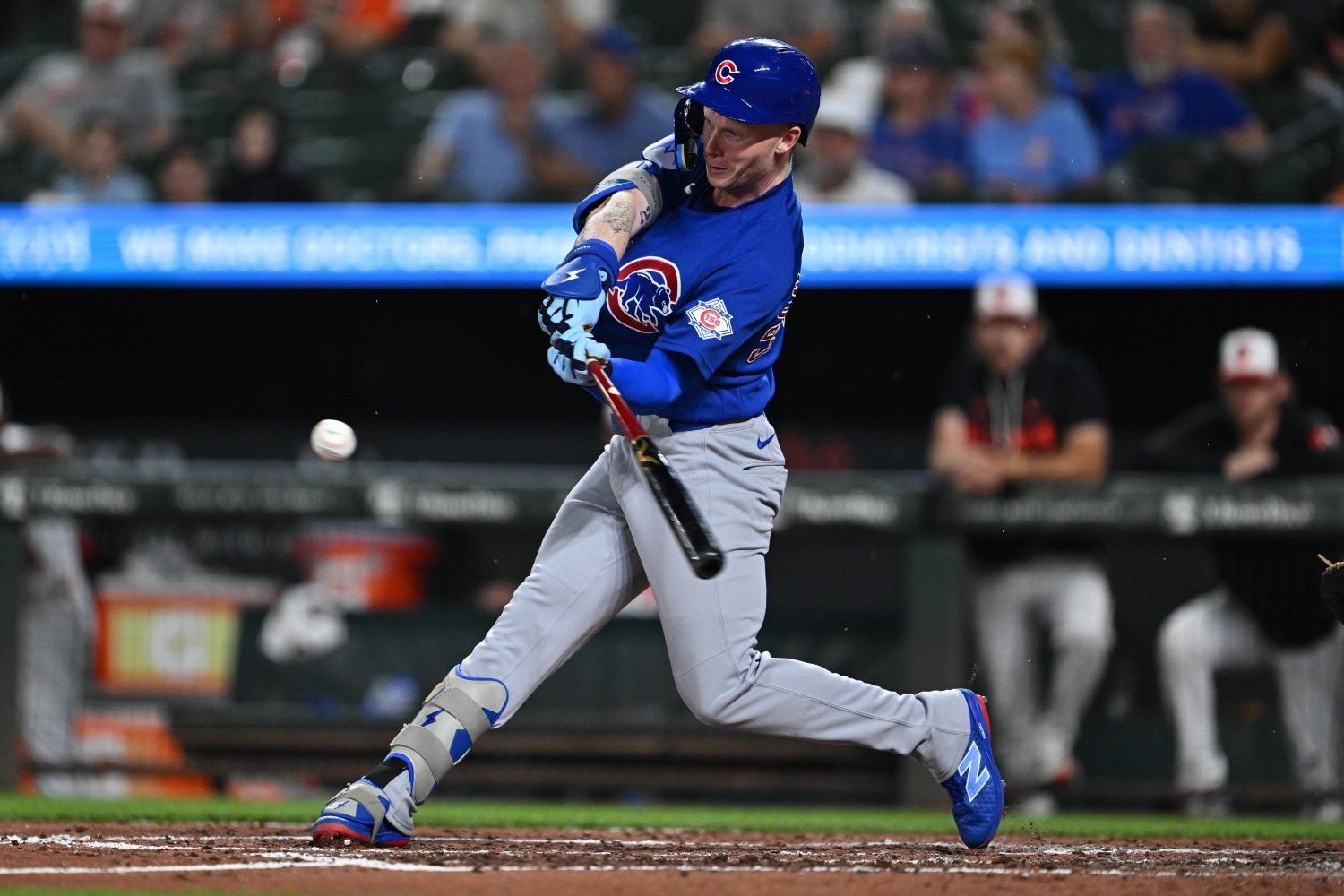 It wasn't enough to give the Cubs breathing room and win the game Thursday afternoon, but Pete Crow-Armstrong sparked a go-ahead rally in the top of the eighth inning. On a 1-0 pitch, he cracked a double to put himself instantly into scoring position—although in this particular case, "cracked" feels a bit cheeky. This was not, as the kids would say, an especially ethical double. It wasn't even a clean single, by a certain reckoning. When people talk about hitters getting lucky, this is often (rightly or wrongly) what they mean. Here's the thing, though: that wasn't luck. Firstly, give Crow-Armstrong credit. His speed made this a double; it's a single for most hitters. But secondly (and more importantly, for our purposes), this kind of hit is a new and durable part of the evolving offensive skill set Crow-Armstrong has showed off during his searing-hot stretch since May 22. When you start working to get your pitch, the balls you put in play start to cluster more in certain areas of the zone. We know how much better Crow-Armstrong has gotten at that lately, as he's drawn nearly as many walks (28) in the last 43 games as he drew in all of 2025 (29). Here's a heat map showing where the pitches on which he's put the ball in play have been this year, though, split into before and after the off day I've repeatedly cited as the starting point of his breakout. That's step one in making ferocious contact. Step two, of course, is swinging fast enough to deliver the barrel to the ball with massive force; Crow-Armstrong has also gotten much better at that. He made a big jump in bat speed from last season to this spring, but has also swung faster as this season has progressed. Step three in being a dangerous slugger is to find a swing path that allows one to consistently work uphill through the ball and pull it, rather than hitting too many grounders or using the big part of the park too much. Ironically, this is the thing Crow-Armstrong showed a knack for the soonest. All players develop uniquely, but one of the fascinating quirks about Crow-Armstrong is that he's gone through the three steps of blossoming into a great power hitter in the opposite of the most common and logically clear order. Now, though, let's talk about the bonus value a great power hitter can find, if and when they master the three steps above. You have your swing figured out; it's on plane and on time. It's also extremely violent, so even a mishit ball goes somewhere. You've tightened your zone, so that your mishits are just slight errors in the execution of a swing so fierce, rather than wild variants on an inconsistent stroke that sacrifice a lot of bat speed just to touch the ball. Your best moments are still when you click on the ball, the way Crow-Armstrong did for two home runs Wednesday night. But when you don't quite do so, you also get a residual benefit: a bunch of flared singles (and, if you're speedy, doubles). This season, Crow-Armstrong has 11 hits on batted balls with an exit velocity between 63 and 78 miles per hour and a launch angle between 25° and 40°. No other player in the league has more than eight such hits on the year. That's only part of the story, though. Of those 11 hits for Crow-Armstrong, 10 have come since the beginning of June. It's only once he started organizing his zone so well that he tapped this vein of balls that aren't well-hit, but are going to fall in just about every time. They look like this: WnhxQWxfWGw0TUFRPT1fVXdnREFWd0RWUVVBQ1ZCUVVBQUhVbFZTQUZoVEFRY0FWMTBIQ0FzTUExRURDQXRW.mp4 And like this: ek13eVpfV0ZRVkV3dEdEUT09X0FRUUFYVklNVkZZQVhGdFhVQUFIVUFRSEFGa0JWUUFBQkFZR0FWRlJBUW9HQ1FJRA==.mp4 And like this: UHY2eXhfV0ZRVkV3dEdEUT09X0JsTUhCMUVNQXdVQVhnRlRBd0FIQ1FKVEFGa0VBbEVBQWxRSENRQlJCd1ZkVXdSVA==.mp4 His average swing speed on the 11 hits we're talking about (you can find more hits that fit this genre more loosely by changing the constraints, of course, but these 11 capture the skill he's found perfectly) is 75.8 MPH. That ensures that these balls get up in the air and over the infielders. They're also in hittable locations, because Crow-Armstrong has become so much more selective in his aggressiveness; that's why he's hitting lofted wedges instead of pure popups, lazy flies or impotent choppers. And because outfielders must both start in deep positioning to respect his near-elite power and initially read these swings as full and aggressive, they have almost no chance of reading the ball well enough to cover the ground required to make the catch in the time it actually spends in the air. He's htting them off the end of the bat, and off the label. He's getting slightly under them. But these are swings on which Crow-Armstrong is only missing by a little, and because his is such a dangerous swing and such a newly mature approach, the result is a series of balls finding parts of the field that the defense can't fill. Hitting for power is great. Crow-Armstrong brought that element last year, and turned into a star because of it. Now, however, he's much more than a power hitter. With an approach that puts him on base via the walk consistently and this ability to hit for average by finding singles even when he doesn't square the ball up, he's essentially unstoppable. Since May 22, he leads qualified batters in batting average, OBP and slugging—yes, in OPS, but also in each individual segment of the slash line. That's because he's become so complete that he now gets to profit from slugger's singles, as well as racking up extra-base hits and taking his base when pitchers show well-founded fear of him. When you bake in the fact that he's also a plus on the bases and in the field, it gets very, very easy to build an MVP case for him, even in a world he must share with Shohei Ohtani. View the full article
 -
Owen Caissie (calf), John King (ankle) land on injured list
DiamondCentric posted an article in Fish On First
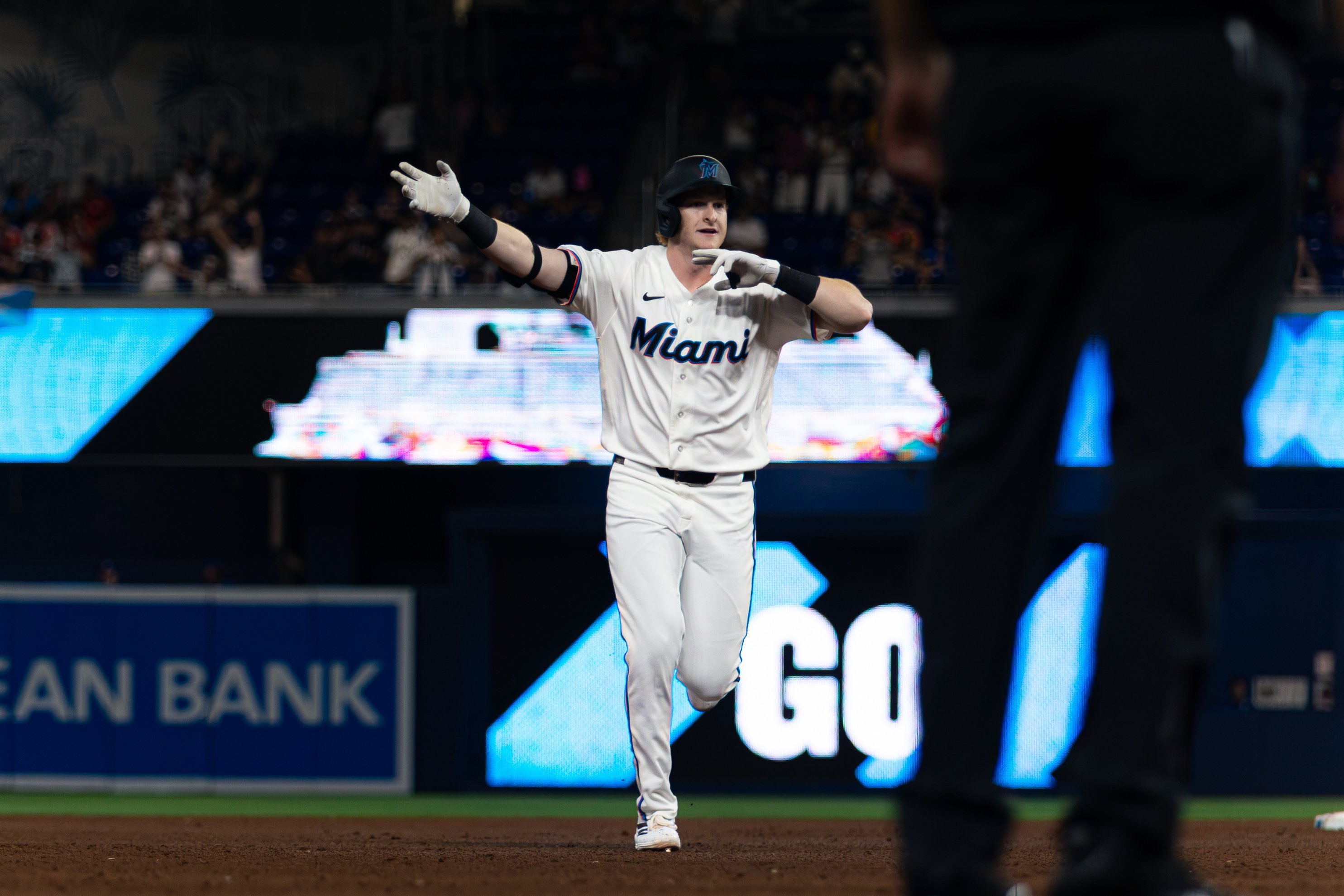 MIAMI, FL — The Miami Marlins announced on Thursday a flurry of roster moves. Outfielder Owen Caissie is going on the 10-day injured list due to a right calf strain. The corresponding move for him was recalling outfielder Rece Hinds from Triple-A Jacksonville. Left-handed reliever John King will be going on the 15-day IL due to a left lateral ankle sprain and right-hander Ryan Gusto has been recalled. The Marlins also sent down righty reliever Zach Brzykcy to Jacksonville to make room for Janson Junk's return. Caissie, who has played in 80 games this season, started for Miami in right field on Wednesday night, but left after the top of the first inning, not taking an at-bat in the game. Marlins manager Clayton McCullough told reporters that "he started to kind of grab on it a little bit" when running during pregame warmups. "Not something we wanted to really take a chance on." After a slow start to the season, Caissie is now slashing .239/.297/.459/.755 with 12 home runs, 50 RBI and a 101 wRC+. Since the start of June, Caissie is hitting .243/.314/.568/.882 with seven home runs and 21 RBI. Caissie told the media at loanDepot park that it is something he had never felt before. This is only the second IL stint of his professional career. There should be a clearer timeline for his return once the Marlins receive the results of his imaging on Friday. As for Hinds, who the Marlins acquired back in May from the Cincinnati Reds in exchange for Zach McCambley, he has played in 51 games (28 with Jacksonville), slashing .265/.356/.508/.864 with 12 home runs, 33 RBI and a 124 wRC+. In his stint with the Marlins organization, he has struggled a bit, posting an 85 wRC+. Hinds last played at the major league Level on May 2 of this season, posting a -5 wRC+ in 12 games with the Reds. "Right-handed bat that can give us some options to start versus left or come off the bench," said McCullough. " He hits the ball incredibly hard and what intrigued about us is it's a young player that has some impact potential. The swing decisions being a big theme for him to work on." Part of the outfield shuffle will include even more Heriberto Hernández, who since returning from Triple-A has slashed .278/.333/.619/.952 with 12 home runs and 26 RBI. In the series finale against the Mariners, Hernández is hitting fifth as the designated hitter. Griffin Conine and Esteury Ruiz are the two other options that are going to get some more playing time. John King, who has been the Marlins' top left-handed reliever all season, suffered his injury while doing pitching drills in the outfield. The Marlins recalled Ryan Gusto to fill his active roster spot "Just went to go catch a ball and stepped awkwardly on the platforms out there and rolled his ankle pretty good," McCullough said. "It was looking like it was going to be at least a few days he wasn't going to be able to throw. With the All-Star break coming and the ability to build that in, hopefully it's not too long." King is eligible to be reinstated beginning on July 23. The lone lefty in the bullpen is now Cade Gibson, who in 16 appearances has a 6.00 ERA, but a 3.41 FIP. Since being recalled from Triple-A Jacksonville on May 20, Gibson has a 2.03 FIP. On Wednesday against the Mariners, Gibson tossed two shutout innings, striking out three. McCullough also mentioned Michael Petersen, Lake Bachar and Calvin Faucher as options who can get both right-handed and left-handed hitters out. "We have one lefty right now, and so if he's not available, we'll have to throw righties," McCullough said jokingly. "But I believe we have guys that are good enough to go get them out." The Marlins and Mariners wrap up their series on Thursday at 6:40 pm with Janson Junk taking the mound. It'll be his first MLB appearance since May 25. View the full article
 -
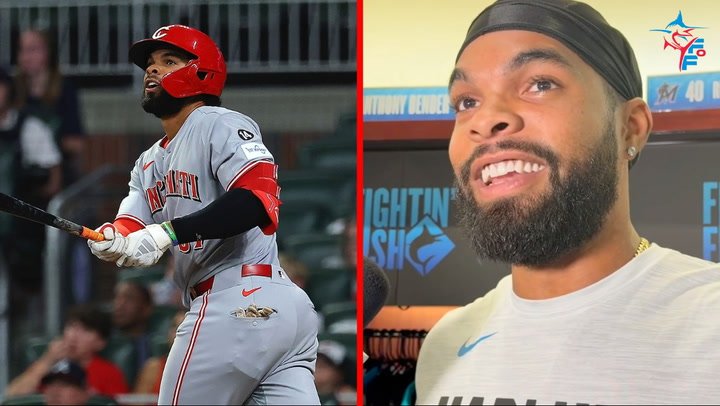 Acquired from Cincinnati earlier this season, Marlins outfielder Rece Hinds speaks with the media about receiving the call-up news and his early impressions of the organization.View the full article
 -
John Holobetz Is the Next Red Sox Pitching Prospect Worth Buying Into
DiamondCentric posted an article in Talk Sox
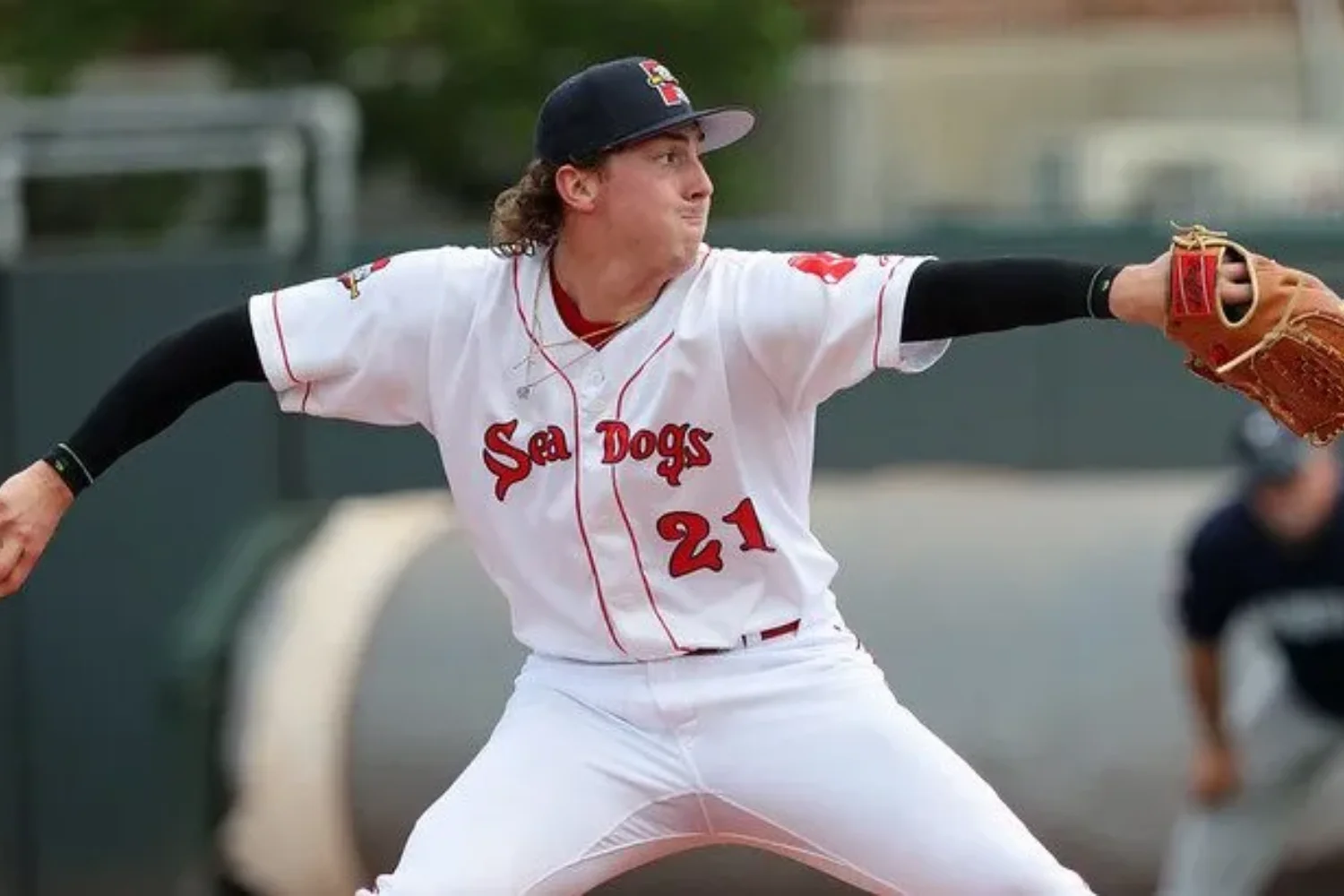 John Holobetz could be the next dominant pitching prospect in a line of recent names that have stolen the show. We’ve seen Payton Tolle and Connelly Early already break through, and Anthony Eyanson is having a dream start to his professional career right now. Jake Bennett is in the majors as well. Holobetz is the next name Boston Red Sox fans need to buy stock in before it’s too late. John Holobetz’s Updated Red Sox Scouting Report Holobetz was originally a fifth-round pick in the 2024 MLB Draft when the Milwaukee Brewers selected him to be the next member of their pitching laboratory. Holobetz pitched for three seasons in college, with one run at Radford before logging a pair of years at Old Dominion to catch Milwaukee’s eye. He debuted with the then Single-A Carolina Mudcats before the Crew dealt him as part of a package deal in the Quinn Priester trade. Holobetz, voted as the Red Sox no. 15 prospect per Talk Sox, is currently with Boston’s Double-A affiliate, the Portland Sea Dogs. Through 14 appearances (13 of them starts), he has a 4-3 record with a 4.57 earned run average. Holobetz has 74 punchouts to 22 walks over 67.0 innings of work. Building Off An Electric Fastball Holobetz’s fastball has a 55-grade on MLB Pipeline’s 20-to-80 scouting scale. His primary offering is electric, but not in the way that most pitchers’ fastballs are. The pitch rides in between 92-95 miles per hour and can climb up to 97 on occasion, but his above-average extension and low release point gives the ball plenty of arm-side ride off of his hand. This makes his fastball extremely tough to time up, and he does a remarkable job of mitigating hard contact. Opposing hitters managed just a .514 OPS against his fastball in 2025, making the 50-grade slider, 45-grade cutter and 45-grade changeup that much more impactful. The slider breaks both vertically and horizontally, and the changeup caused trouble for opposing hitters during his Old Dominion days. Everything starts with the fastball, though, and the better he tunnels it with the other pitches, the more effective he’ll be. Controlling The Ballgame Control is another prominent part of Holobetz’s game. The 23-year-old righty walked just 4 percent of hitters during the 2025 campaign, good enough for the second best rating in Minor League Baseball. The Pottsville, PA native has kept this reputation through his career thus far, logging 194 punchouts to only 42 walks for a better than 4-to-1 strikeout to walk ratio. This consistency earned him a 60-grade for control, as his ability to work through a lineup efficiently gives him back-end starter potential. A Realistic Timeline When will this deceptive Red Sox prospect break into the big leagues? The Sox may be struggling in the win-loss column, but they are loaded with arms. Injuries aside, the rotation includes the likes of Garrett Crochet, Ranger Suarez, Sonny Gray, Payton Tolle, Connelly Early, Jake Bennett and then Anthony Eyanson, who is also in Double-A Portland, is lighting the world on fire. Just like how the trade market changed Holobetz’s trajectory by giving him a new organization, he may need it to come in handy again to cut out of what is a surplus of pitching talent in and around Boston. Overall, I’d guess he breaks in some time during the 2028 season, unless the ball club makes some splash moves and lets a few of the names above Holobetz go. His scouting report (per MLB Pipeline) describes him as a “high floor” player, so he should climb his way to the show. It’s just a matter of making room for him with so much talent standing in the way. View the full article
 -
Guardians 5, Twins 2: So Close to .500, Yet So Far Away
DiamondCentric posted an article in Twins Daily
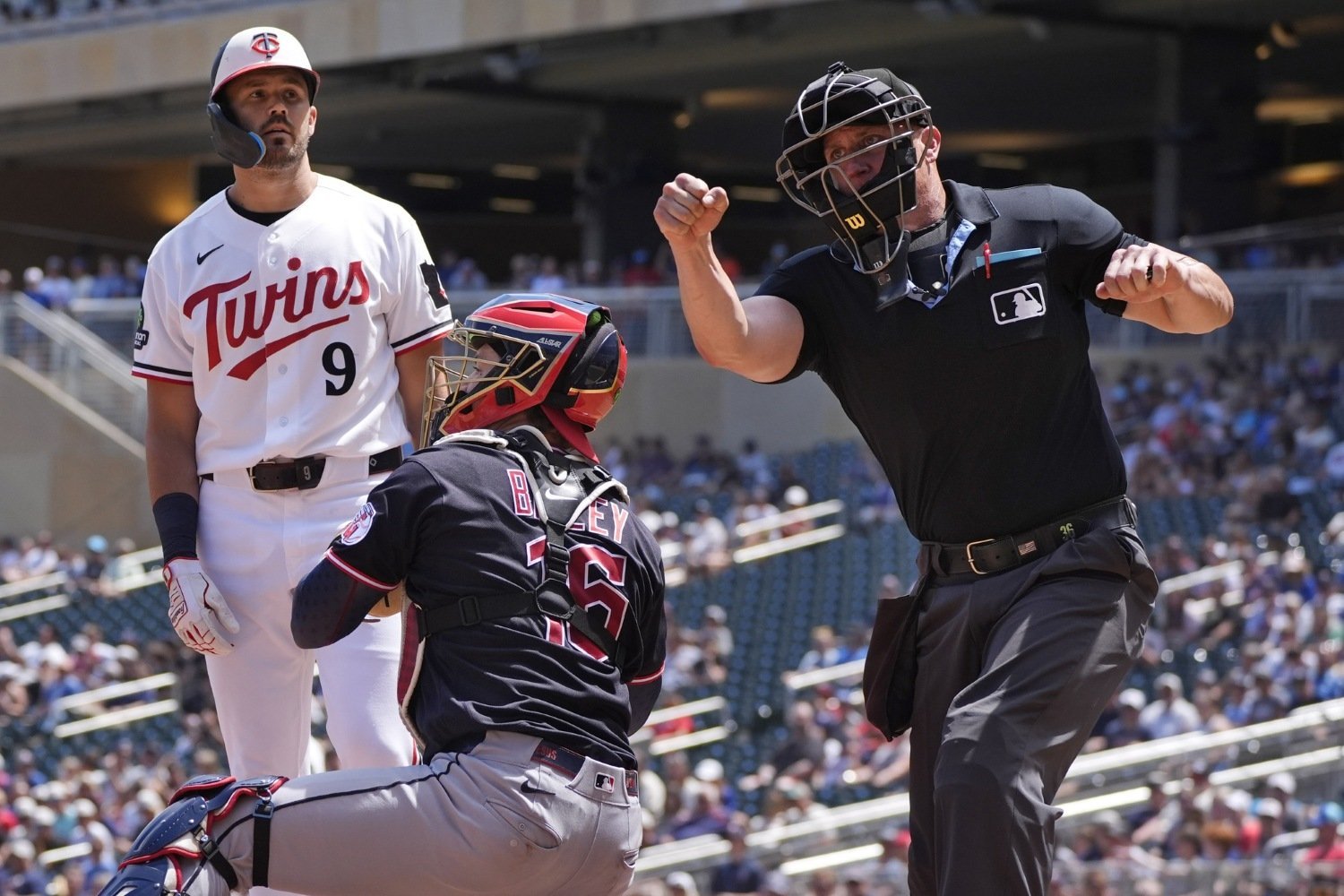 Box Score SP: Bailey Ober - 5 IP, 3 H, 1 R, 1 BB, 5 K (74 pitches, 48 strikes (65% strikes)) Home Runs: Royce Lewis Bottom 3 WPA: Kendry Rojas (-0.29), Trevor Larnach (-0.18), Alex Jackson (-0.15) Win Probability Chart The Twins entered Thursday afternoon's series finale against the Guardians with a chance to complete a three-game sweep and climb back to .500 for the first time since April 22. A victory also would have pulled Minnesota even with Cleveland in the AL Central standings. Instead, the Guardians spoiled the opportunity. Despite a strong return from Bailey Ober and a brief fifth-inning rally, Cleveland used three home runs and a pair of late insurance runs to hand the Twins a 5-2 loss. Minnesota saw its four-game winning streak come to an end, but still walked away with a successful series after taking two of three from its division rival. BAILEY OBER RETURNS WITH A STRONG FIVE INNINGS Making his first start since May 30, Ober looked sharp from the opening pitch. The right-hander retired the Guardians in order in the first inning and needed just 15 pitches to navigate the frame. Outside of one mistake in the second, he consistently worked ahead in counts and generated plenty of weak contact. That lone mistake came against Gabriel Arias, who jumped on a first-pitch fastball and launched it into the bullpen for a solo homer, giving Cleveland an early 1-0 lead. Other than that swing, Ober was in complete control. He struck out four batters over five innings while allowing just three hits and one walk, throwing 51 of his 74 pitches for strikes. Through four innings, he had needed only 51 pitches, and even after working around a two-on jam in the fifth, he exited having allowed just the lone run. With Ober making his first appearance since returning from the injured list, the Twins elected to lift him after five innings despite the modest pitch count. It was exactly the kind of outing Minnesota hoped to see from one of its key starters. GAVIN WILLIAMS DOMINATES THE TWINS' OFFENSE Unfortunately for the Twins, Cleveland starter Gavin Williams was just as impressive. Williams retired the first 12 Minnesota hitters he faced, striking out six over the first four innings while keeping the Twins completely off balance. Through four innings, Minnesota had yet to put a runner on base and had little answer for his upper-90s fastball and sharp breaking ball. The perfect game finally disappeared in the fifth, when Royce Lewis dumped a two-strike bloop single into shallow right-center. That proved to be the spark the Twins desperately needed. Alan Roden followed with a walk, and then Williams plunked Luke Keaschall, suddenly loading the bases with one out. Tristan Gray came through, shooting a ground ball past Travis Bazzana at second base to score Lewis and tie the game at 1-1. The Twins had a chance for much more. With the bases still loaded, Alex Jackson hit a ground ball that resulted in Roden being thrown out at the plate, and Trevor Larnach struck out to end the inning. Minnesota managed to erase the deficit, but leaving additional runs on the table would prove costly. CLEVELAND RESPONDS IMMEDIATELY The tie lasted less than one half-inning. Kendry Rojas, who had been recalled earlier in the day, entered in relief of Ober to begin the sixth. After recording the first out, Chase DeLauter turned on a fastball up in the zone and pulled it into the right-field seats for a go-ahead solo homer, putting the Guardians back in front 2-1. An inning later, Cleveland created more separation. Rojas issued back-to-back one-out walks to Patrick Bailey and Steven Kwan before Rocchio lined a ball over Brooks Lee's head into left field. Both runners scored easily, stretching the Guardians' lead to three. Lewis answered immediately in the bottom half of the inning. The third baseman crushed a 2-0 sweeper into the seats for his ninth home run of the season, cutting the deficit to 4-2 and briefly giving the Twins some life. But Minnesota's offense was unable to build on the momentum, managing just one baserunner over the final two innings. GO MAKES HIS MAJOR LEAGUE DEBUT Minnesota also received a memorable moment in the ninth inning when Woo-Suk Go made both his Twins and major league debut. The outing began on a sour note as Patrick Bailey connected on a solo home run to push Cleveland's lead to 5-2. However, Go settled in nicely afterward, winning a 10-pitch battle against Steven Kwan for his first career major league strikeout before retiring Bazzana to end the inning. It wasn't the debut he'd envisioned, but finishing the inning with his first big-league strikeout gave the rookie something positive to build on. Cade Smith then closed the door in the ninth, retiring the Twins in order to secure the victory for Cleveland. Minnesota's offense never found much consistency against Williams and the Guardians' bullpen, finishing with just four hits while striking out 13 times. Lewis accounted for half of those hits with a single and a solo homer, while Gray drove in the Twins' other run. The loss prevented Minnesota from reaching .500 and drawing even with Cleveland in the division standings, but after winning the first two games of the series and extending its recent stretch of strong baseball, the Twins still leave the matchup with momentum as they head into their next series. What’s Next? The Twins continue their homestand tomorrow with the start of a three-game weekend series against the Los Angeles Angels. Zebby Matthews will take the mound for the good guys, and the Angels have not yet announced who he’ll be facing off against. First pitch is set for 7:10 PM. Postgame Interviews Coming Soon! Bullpen Availability Chart View the full article
 -
 On Fish Unfiltered, former Marlins All-Star closer AJ Ramos relives his trip to San Diego for the 2016 festivities and offers some advice to this year's Marlins reps, Otto Lopez and Max Meyer.View the full article
