


DiamondCentric
-
Posts
2,631 -
Joined
-
Last visited
Never
Content Type
Profiles
Forums
Events
News
Tutorials & Help
Major League Baseball Videos
Guides & Resources
Store
Downloads
Gallery
Everything posted by DiamondCentric
-
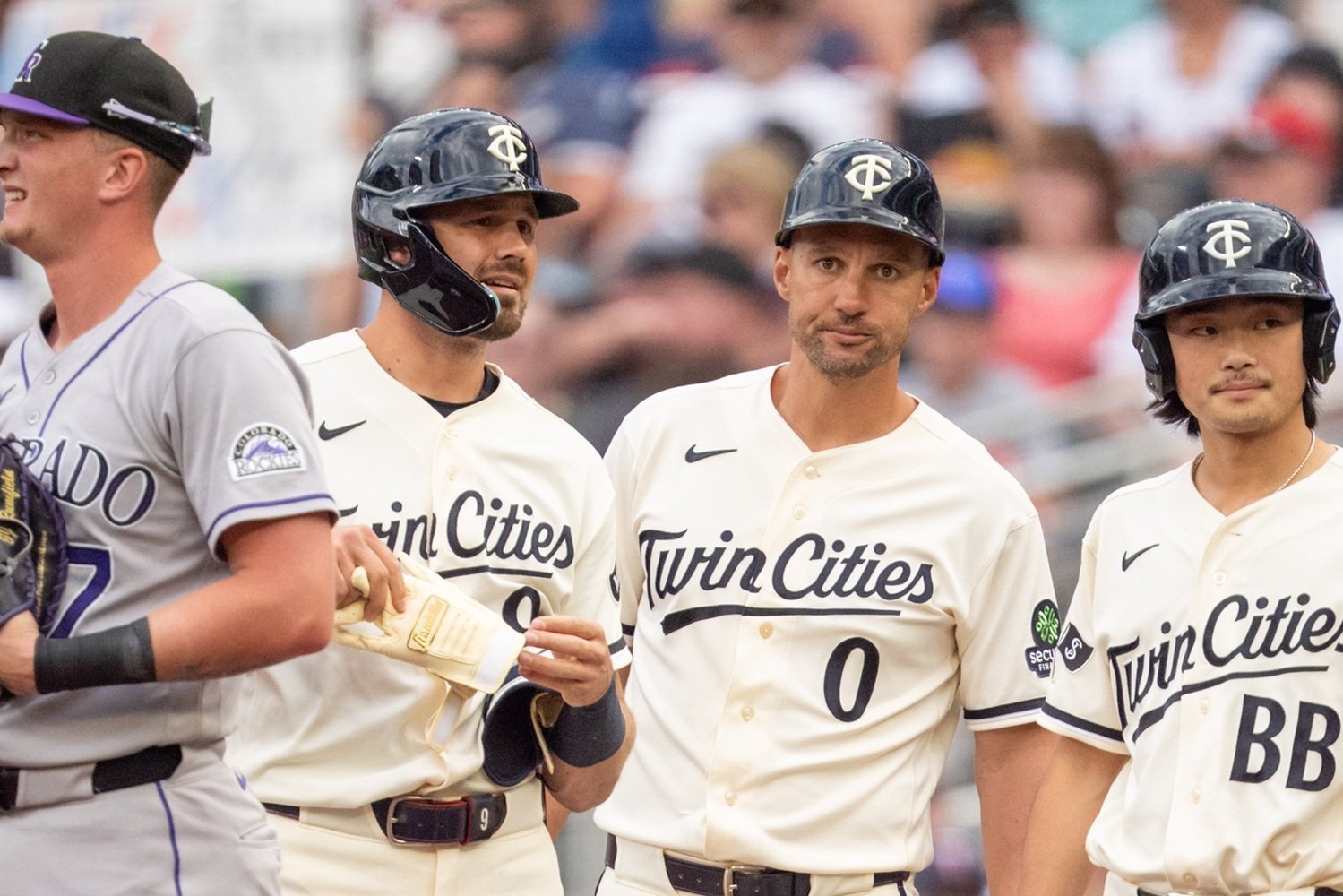 When the Twins hired Grady Sizemore this offseason, the move wasn't accompanied by the same fanfare as adding a high-profile bench coach or pitching guru. Derek Shelton brought the former All-Star aboard as the club's first base coach with an emphasis on working with the outfielders, hoping one of baseball's premier defensive center fielders could pass along some of the instincts that made him a two-time Gold Glove winner. Halfway through the season, that investment is paying off. Minnesota's outfield defense has taken a noticeable step forward, and several players who entered the season with defensive question marks have become reliable contributors on the grass. Whether it's refining an established outfielder's routes or helping an infielder learn an entirely new position, Sizemore's fingerprints are becoming increasingly visible. It's fair to wonder whether the Twins have found their own outfield whisperer. Sizemore's playing career ended far sooner than anyone expected. Though he was once on a Hall of Fame trajectory during his prime in Cleveland, injuries ultimately forced him to retire after the 2015 season at only 33 years old. Coaching wasn't initially part of his plan, but conversations with current players eventually reignited his passion for the game. His coaching journey started modestly with an internship in the Diamondbacks organization before the White Sox promoted him through their staff. By the middle of the disastrous 2024 season, Chicago asked him to serve as interim manager before he transitioned into the organization's offensive coordinator role in 2025. Shelton knew exactly what he was getting when he assembled his first coaching staff in Minnesota. The two overlapped in Cleveland during Sizemore's playing days, and Shelton wanted coaches who had experienced success at the highest level. "The biggest thing with Grady … is just getting him to talk," Shelton said. "The wealth of knowledge, he's so humble. I was fortunate to coach Grady Sizemore because he was such an elite player. There is so much in there." Players have gravitated toward Sizemore's calm personality and willingness to teach. Trevor Larnach has repeatedly praised him for helping with every aspect of the game, while Shelton describes Sizemore as someone with a unique presence who naturally connects with players. Sizemore, however, refuses to take much credit. "I enjoy working with them and pushing them," Sizemore said. "They're teaching me as much as I'm teaching them. Every day, I'm asking them for feedback on what I can do better." That collaborative approach appears to be producing results. Austin Martin's Defensive Turnaround Few players illustrate Sizemore's impact better than Austin Martin. Martin's rookie campaign in 2024 was rough defensively. He finished with a -9 Run Value in the outfield, as inconsistent routes and reads overshadowed the athleticism that made him such an intriguing prospect. Last season didn't provide many opportunities to improve. Martin suffered an injury at Triple-A before earning a late-season promotion following Minnesota's trade deadline selloff, limiting his defensive reps at the major league level. This year has looked dramatically different. He has a 2 Run Value in the outfield. Martin has played with more confidence, taking cleaner routes while making better first-step reads off the bat. The athletic ability was never in question. Under Sizemore's guidance, the consistency has started matching the talent. Luke Keaschall's Position Change Keaschall's season has featured one of the more fascinating defensive developments in the organization. Originally expected to handle second base, Keaschall struggled throughout the first half. His -7 Outs Above Average at second made him one of Minnesota's least effective defenders at the position, forcing the Twins to consider alternatives. Rather than limiting his playing time, they moved him to the outfield. Working closely with Sizemore, Keaschall has adapted remarkably quickly. In only 15 opportunities, he's already posted 1 Outs Above Average, a dramatic improvement that reflects both his athleticism and the instruction he's received. The transition hasn't been flawless, but the encouraging moments have far outweighed the mistakes. During Minnesota's recent homestand, Keaschall made a highlight-reel running catch while also demonstrating improved instincts on balls hit toward the wall. After misjudging a carom that turned into a triple against Colorado, he quickly applied that lesson days later against Houston. On Cam Smith's second-inning drive, Keaschall correctly recognized the ball would either clear the fence or rebound sharply off the wall. Instead of drifting too close, he backed away, played the bounce perfectly, and held Smith to a double. Those are the types of adjustments coaches love to see. "It's more learning as we go, but I feel good out there, confident, relaxed," Keaschall said. "I've got good people around me, so that helps a lot, too." For a player who looked overwhelmed at second base just weeks earlier, the early returns in right field have been remarkably encouraging. More Than Just Technique What makes Sizemore's impact stand out isn't simply the defensive improvements. It's the relationships he's built. Players consistently praise his humility, communication, and willingness to listen. Rather than presenting himself as a former star with all the answers, Sizemore approaches coaching as a collaborative process. That's likely one reason why players have embraced his instruction so quickly. Whether he's helping Martin unlock the athleticism that always existed or guiding Keaschall through a midseason position change, Sizemore has become an important resource throughout Minnesota's clubhouse. None of those improvements happened by accident. Great coaches rarely seek the spotlight, and Sizemore has consistently redirected praise toward his players. Still, the evidence continues to mount that Minnesota's investment in one of baseball's former elite defensive outfielders is paying dividends. If these early returns continue, the Twins may have found far more than a first base coach—they may have found the outfield whisperer they didn't know they needed. What stands out about Sizemore’s impact so far this season? Leave a comment and start the discussion. View the full article
 -

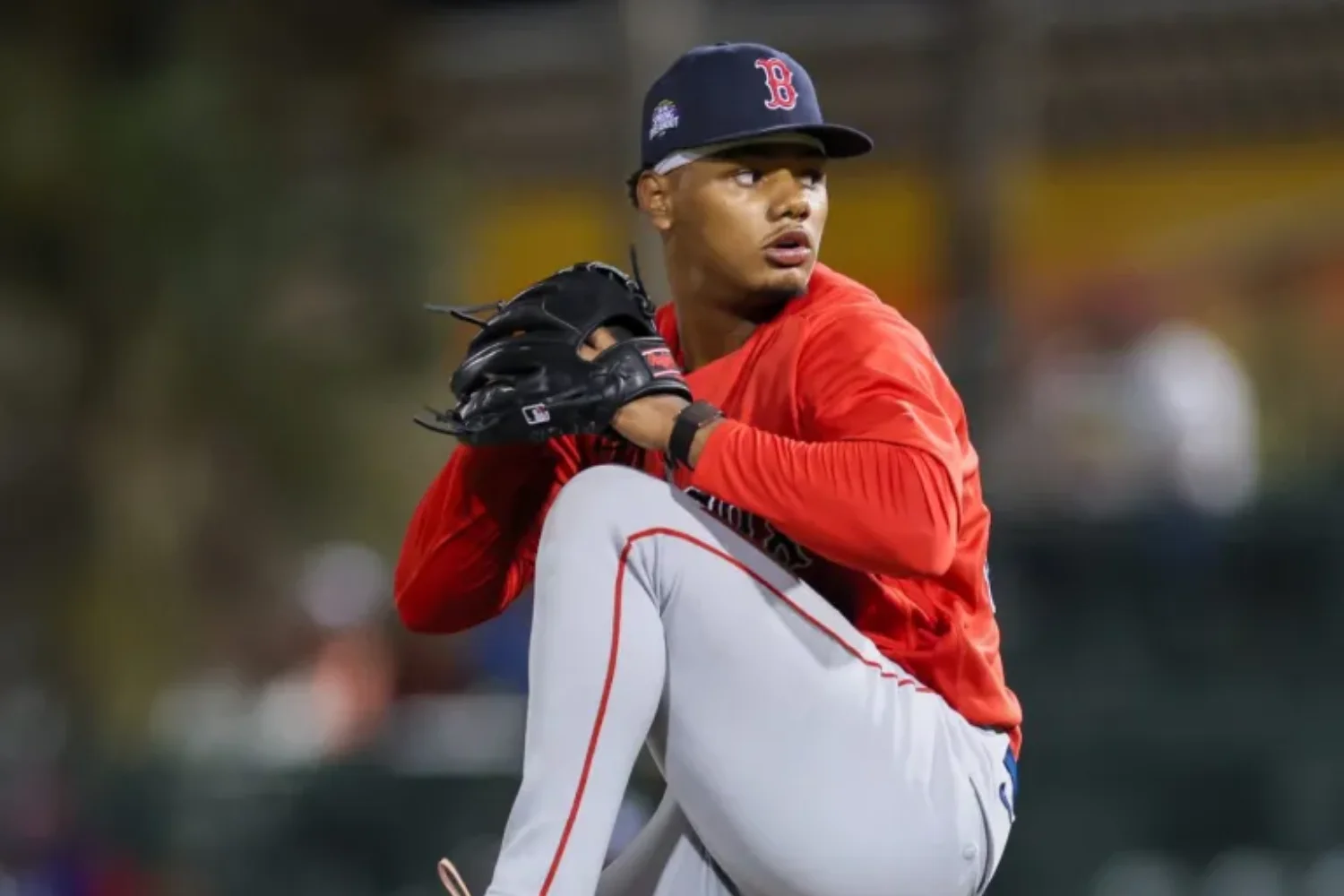 Anthony Eyanson quickly vaulted his way up the prospect rankings thanks to a dominant first half of pitching that was split between High-A Greenville and Double-A Portland, making him TalkSox’s number two prospect on our latest Top 20 ranking. While the major-league club has struggled to play consistent baseball, the sight of young prospects flourishing has been a great sign for the future, especially on the pitching side. Today, we’ll break down what makes Eyanson such an exciting prospect and how his development may be causing other teams to wish they had grabbed him. Anthony Eyanson’s Updated Red Sox Scouting Report Eyanson, who pitched his first two seasons of college baseball at UC San Diego, transferred to LSU prior to the 2025 season where he became the team’s Saturday starter behind teammate and 2025 third overall pick Kade Anderson. The right-hander would quickly become one of the best pitchers in college baseball that year, going 12-2 with two saves as he appeared in 20 games and made 18 starts. Over that span he tossed 108 innings and struck out 152 batters, allowing him to finish third in Division I for strikeouts trailing Anderson and fifth overall pick Liam Doyle. This was in part thanks to an increase in velocity, as his fastball sat at 93 mph and would occasionally hit 96-98 mph. Entering the draft, he was viewed as a likely top-50 prospect, but then he fell all the way down to the third round, where the Sox wisely scooped him up. Entering spring training, Eyanson measured 6-foot-2 and weighed 210 pounds with an athletic frame that has a sturdy lower half and possible room to grow for his upper body. He showcased some great stuff during his live bullpen sessions against hitters. During the beginning of the spring, he was hitting high-90s on his fastball and in the Spring Breakout game, hit triple digits. After opening the season with High-A Greenville, Eyanson was promoted to Double-A after just five dominant starts. Overall he tossed 20 1/3 innings and allowed one run on seven hits and three walks. The lone run was on a solo home run in his professional debut. In that same span, he struck out 34 batters. Since joining Portland, he’s made seven starts and tossed 35 1/3 innings. During that span, he’s allowed seven earned runs on 21 hits and 17 walks while striking out 37 batters, despite being four years younger than the average player for that level. Overall, he's 3-0 with a 1.29 ERA across 12 starts (13 appearances) between Portland and Greenville. Mechanics Unlike most pitchers today, Eyanson throws from a high three-quarters arm slot standing on the first base side of the rubber. A high leg kick is followed by a long arm swing behind his head, before a quick forward motion with a high release. He manages to repeat his mechanics and has no restrictions to his arm or shoulder. He showcases a plus extension that allows his fastball to play better. His release point is higher than 94% of pitchers, leading to his pitches approaching the zone at a steeper-than-average angle. Fastball Entering spring training, his fastball sat 95-98 and topped out at triple digits after sitting 92-94 mph in college. The increase in velocity held to begin the season, but since joining Portland it has been sitting 93-95 mph. Pitch has a below-average spin rate compared to other fastballs due to his release point but has good movement. His fastball has lost some arm-side movement, but Eyanson has replaced it with increased vertical break, making it tough to square up. He's got plus command and control with the pitch as he throws a ton of strikes. Odds are, he'll struggle to miss bats with it at the higher levels. Potential plus pitch: 60 grade on 20-80 scale Slider The slider might be his best pitch when all is said and done. Sitting 86-89 mph, it has more vertical movement than horizontal like the fastball due to his release point. Spin rate is below-average as well, but misses bats thanks to the release point. Will miss the zone more than with his fastball, but thanks to the movement, he’s able to generate chase and whiffs with it. During his time in High-A, the pitch had a 67% whiff rate to go along with a chase rate of 50% and currently has a 40% chase rate on the entire season. Potential plus pitch: 65 grade on 20-80 scale Curveball Eyanson’s curveball looked great during the Spring Breakout game, as it showed a 12-to-6 shape with vertical depth and some glove-side movement. The pitch sits between 80 and 83 mph. The right-hander can use it competitively in at-bats and has made it look better while playing off the rest of his pitch mix. He'll use it more often against left-handed hitters instead of right-handed hitters. Potential above-average pitch: 55 grade on 20-80 scale Splitter Sometimes viewed as a changeup, Eyanson’s splitter has been able to generate whiffs despite looking similar to his slider in movement. Described as having a “bullet” shape to it, the pitch is slower than his slider on average but has sometimes hit between 87 and 89 mph. Extremely low spin rate, but due to the shape of the pitch and vertical movement thanks to his release height, it is hard to square up and has a chase rate of over 40%. It seems to be the least consistent of his pitches so far. Potential below-average to slightly-average pitch: 40-45 grade on 20-80 scale Cutter The cutter is Eyanson’s newest pitch and one he has been working on with the Red Sox throughout the season. The pitch, meant to pair with his fastball, has sat between 89 to 91 mog. Shows both glove side horizontal movement and vertical drop and at times can look similar to his slider. Potential average pitch: 50 on 20-80 scale Outlook with Red Sox Eyanson has a chance to become something special should hitters continue to struggle with the higher release height and the way his pitches break. Should the velocity gains be for real and not just a short flash at the start of each season, Eyanson could be a middle-of-the-rotation starter with the potential to be a number two in a future rotation. His floor is that of a number five starter or great reliever. He has great control and currently has three pitches that have plus potential. As a hard worker and competitive player, Eyanson seems like the type of individual who will continue to improve with each stop on the minor league level. 2026 Final Prediction The thought of Eyanson repeating Payton Tolle and moving his way through the minor leagues and pitching in Boston all in one year is fascinating, but I don’t think that will be the case. Tolle’s rapid ascent through the minors could be repeated, but his promotion to Boston was due to a need of pitching and right now, it doesn’t seem that a similar situation is going to occur barring a surprise trade or huge injury. Despite that, it shouldn’t be a surprise when Eyanson gets promoted to Triple-A at some point, most likely in August. View the full article
 -
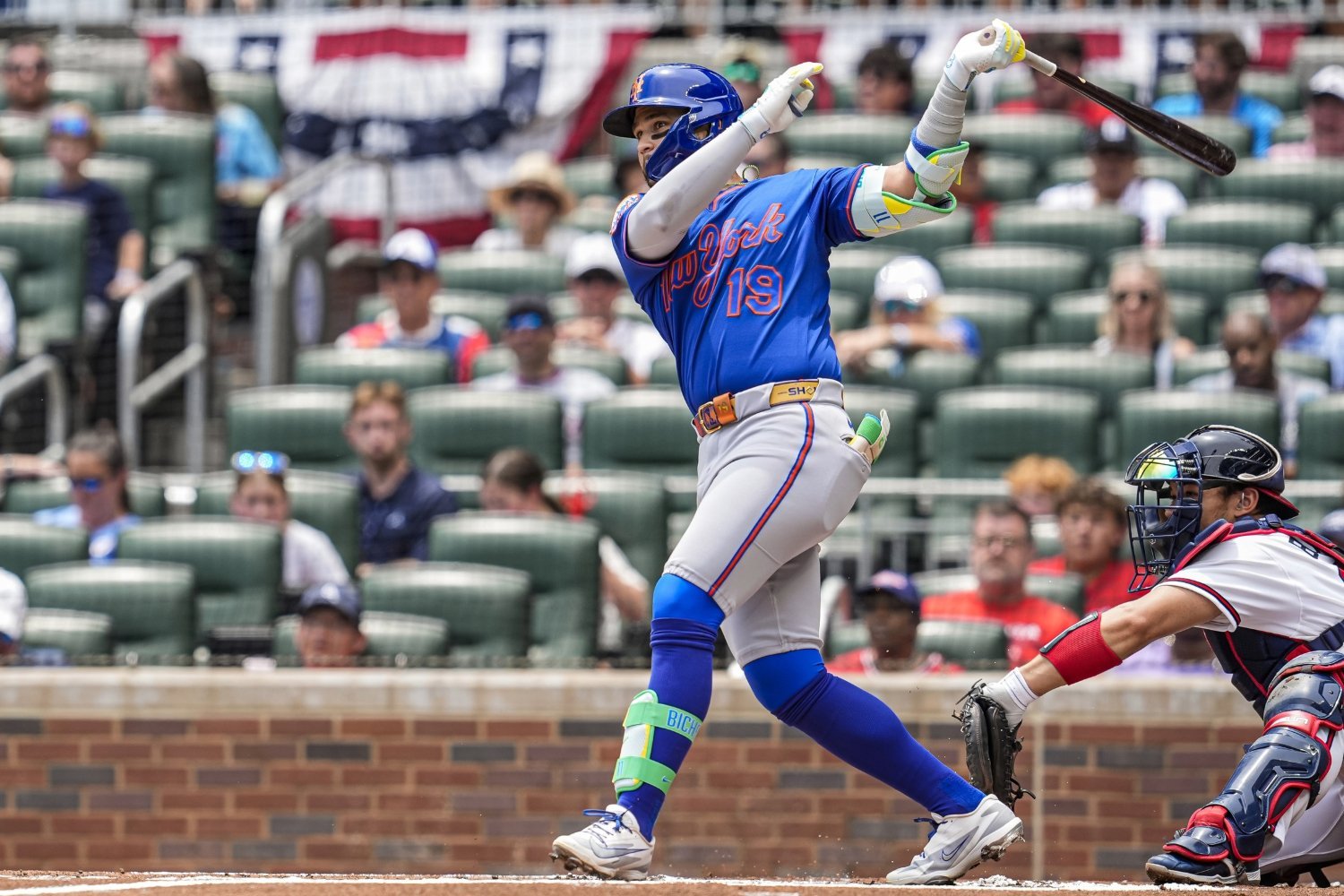 Bo Bichette went from problem to solution in one month. In May, he hit .207. In June, .321. His OPS jumped from .576 to .883. He did it while posting baseball's highest chase rate (44.8% O-Swing%). The question: Is an aggressive, contact-oriented approach the optimal strategy for a hitter with Bichette's exceptional bat-to-ball skills? Bichette has always been aggressive. His career O-Swing% sits at 37.1%, well above the league average. But he's made a career on turning difficult pitches into quality contact at a rate few hitters can match. His career O-Contact% has remained above league average. For much of his career, he has ranked among the best qualified hitters in baseball in that category. A hitter can be aggressive without sacrificing plate discipline. At his best—most notably during his 2025 season, when he posted a 134 wRC+—Bichette paired aggression with selectivity. He chased pitches, but his O-Swing% was 35.2%. When he chased, he made contact. To understand why this strategy works, look at how Bichette changed from month to month. Month O-Swing% O-Contact% Z-Swing% Z-Contact% Swing% Contact% K% BB% Mar/Apr 40.9% 72.4% 69.7% 90.4% 54.7% 83.4% 19.9% 5.9% May 35.4% 79.8% 66.8% 94.3% 50.2% 88.9% 12.3% 9.0% June 44.8% 56.6% 68.6% 90.7% 55.7% 75.9% 23.9% 2.6% In May, Bichette found the sweet spot. He chased less and made more contact when he did. His strikeout rate dropped to 12.3%, while his walk rate climbed to 9.0%. It was the version of Bichette that had made him so productive in previous seasons: aggressive, but controlled. Then, June arrived. His O-Swing% jumped 9.4 percentage points. His O-Contact% collapsed by more than 23 points. He went from missing two out of every ten swings at pitches outside the zone to missing more than four. His strikeout rate nearly doubled, while his walk rate fell to less than one-third of its May level. Yet his production improved. His ISO rose from .090 to .220. His slugging percentage jumped from .297 to .541. He hit five home runs in June after hitting only three in May. Month Blast Contact% Squared-Up Contact% Barrel/BBE% Attack Angle Ideal Attack Angle% HardHit% EV May 14.1% 31.6% 11.5% 2° 24.0% 42.7% 90.4 June 17.0% 35.2% 6.0% 4° 31.1% 43.4% 91.2 Blast Contact and Squared-Up Contact describe how well the ball was struck when contact occurred. Barrel/BBE measures how often batted balls reached the specific combination of exit velocity and launch angle that Statcast classifies as barrels. In June, Bichette improved both his Blast Contact and Squared-Up Contact rates. When he made contact, he hit the ball harder and found the sweet spot more often. The problem was that he made contact far less often. His Whiff% jumped from 11.6% to 26.8%. While some indicators of contact quality improved, that improvement did not translate into a higher barrel rate. His Barrel/BBE fell from 11.5% to 6.0%, suggesting that the gains in contact quality were neither uniform nor complete across the various dimensions measured by Statcast. There was also a change in his batted-ball profile. His average Attack Angle increased from 2 degrees to 4 degrees, while his Ideal Attack Angle% climbed from 24.0% to 31.1%. He elevated the ball, helping explain the power surge. That adjustment was real, but it came with a broader deterioration in the rest of his offensive profile. His ability to put the ball in play declined. His strikeouts increased. His walks disappeared. The improvements in certain contact-quality metrics arrived alongside a decline in the underlying process. His .380 BABIP, well above his career mark of .334, points to good fortune. His .299 expected batting average versus an actual .321 average indicates that the quality of contact justified much of the production, but not all. Which brings us back to the original question. What June demonstrated is that Bichette has a larger margin for error than most hitters. His bat-to-ball ability gives him that margin. Few hitters could survive that process for a month and still produce. But surviving is not the same thing as sustaining. For one month, Bichette drifted toward a three-outcome profile: more strikeouts, few walks, and damage whenever he managed to make contact. That is not the profile on which he built his career, nor the profile that best leverages his greatest strength. The evidence points to one conclusion: an aggressive approach can work for Bichette, but only as long as aggression doesn't become an unchecked chasing habit. View the full article
 -
 Wednesday saw the four full-season San Diego Padres affiliates go 1-3. The Triple-A El Paso Chihuahuas were bounced by Oklahoma City 9-2, the Double-A San Antonio Missions dropped an 8-4 decision to Midland, the High-A Fort Wayne TinCaps were hammered by West Michigan 14-1 and the Low-A Lake Elsinore Storm prevailed in 10 innings over Rancho Cucamonga 6-4. Padres Minor-League Transactions San Diego Padres selected the contract of 3B Luis Rengifo from El Paso Chihuahuas. San Diego Padres sent C Freddy Fermin on a rehab assignment to El Paso Chihuahuas. Chihuahuas Held To Singles As Comets Blast 4 Homers Left-handed starter Jackson Wolf gave up four runs in the first three innings and the Triple-A El Paso Chihuahuas managed seven singles in a 9-2 loss to the Oklahoma City Comets. Padres catcher Freddy Fermin, who went on the 10-day injured list Friday with a head contusion, began a rehab assignment. Serving as the designated hitter, Fermin went 1-for-4 with a fifth-inning RBI single to shortstop. Wolf's four runs came on eight hits and a walk in five innings while striking out five. He did cough up a pair of homers, one an inside-the-parker. Right-hander Daison Acosta, in his second Chihuahuas appearance since coming off the 60-day injured list, was tagged for four runs on four hits and three walks in 1⅔ innings, while right-hander Ty Adcock gave up a solo homer in one inning while striking out three. The Comets hit four homers. Mason McCoy had two of the Chihuahuas' seven singles, the only batter with multiple hits. Clay Dungan also reached base twice with a single and a walk. All of the Chihuahuas' hits came off Comets left-handed starter Cole Irvin, who went six innings. EP_0708.mp4 Player AB R H RBI BB K Mason McCoy 5 0 2 0 0 1 Freddy Fermin 4 0 1 1 0 0 Carlos Rodríguez 4 0 1 0 0 0 Marcos Castañon 4 0 1 0 0 2 Will Wagner 4 0 0 0 0 2 Blake Hunt 3 1 0 0 1 1 Nick Schnell 4 0 1 0 0 0 Romeo Sanabria 4 0 0 0 0 0 Clay Dungan 3 1 1 0 1 1 Totals 35 2 7 1 2 7 Player IP H R ER BB K HR Jackson Wolf 5 8 4 4 1 5 2 Daison Acosta 1 2/3 4 4 4 3 0 1 Ty Adcock 1 1/3 1 1 1 1 3 1 Totals 8 13 9 9 5 8 4 Four Homers Not Enough As Missions Succumb To RockHounds Tirso Ornelas hit his team-leading 12th homer as one of four solo homers, but the Double-A San Antonio Missions didn't notch another hit in falling to the Midland RockHounds 8-4. The Missions also hit four homers in a game this year on May 19. Braedon Karpathios, Padres Mission's No. 9 prospect, hit his eighth homer, Carson Tucker his first and Kai Roberts his third for the Missions and second in three games. Tucker's homer was his first in affiliated ball since 2023 after spending 2024 and 2025 in independent ball. He has hit exactly one homer in each of his four seasons with an affiliate. Ornelas went deep in the first inning and Karpathios in the second for a 2-0 lead before the RockHounds tied it in the bottom of the second. Tucker and Roberts then went back-to-back with one out in the fourth to go up 4-2. The RockHounds clawed one back in the bottom of the fourth, then went ahead with two in the sixth and added three more in the seventh. Missions right-handed starter Victor Lizarraga lasted three innings and gave up three runs on six hits, including a homer, with three walks and three strikeouts. Left-hander Harry Gustin covered the next 2⅔ innings, allowing two runs, while right-hander Garrett Hawkins, Padres Mission's No. 17 prospect, surrendered three runs in 1⅓ innings. Right-hand Ryan Och, who spent a good chunk of the season on the injured list, made his first appearance at Double-A with a scoreless eighth inning. He pitched in 45 games for the Missions last year and then 10 games at High-A Fort Wayne this year. SA_0708.mp4 Player AB R H RBI BB K Carson Tucker 3 1 1 1 1 0 Kai Roberts 4 1 1 1 0 2 Tirso Ornelas 3 1 1 1 1 0 Jake Cunningham 2 0 0 0 2 1 Braedon Karpathios 4 1 1 1 0 0 Francisco Acuna 4 0 0 0 0 1 Albert Fabian 4 0 0 0 0 0 Luis Verdugo 4 0 0 0 0 1 Brendan Durfee 3 0 0 0 0 3 Totals 31 4 4 4 4 8 Player IP H R ER BB K HR Victor Lizarraga 3 6 3 3 3 3 1 Harry Gustin 2 2/3 3 2 2 0 3 0 Garrett Hawkins 1 1/3 3 3 3 1 3 0 Ryan Och 1 0 0 0 1 0 0 Totals 8 12 8 8 5 9 1 TinCaps Halt Scoreless Streak, Issue 11 Walks In Loss Jack Costello snapped the High-A Fort Wayne TinCaps' scoreless streak at 22 innings with a solo homer, but that would be the extent of their scoring in an 11-1 setback to the West Michigan Whitecaps. The TinCaps produced just three hits and lost for the third game in a row, having been shut out in the previous two, and for the eighth time in 10 games. TinCaps right-handed starter Winyer Chourio, Padres Mission's No. 20 prospect, had a rough go of it for the second straight time in three starts since being promoted from Low-A Lake Elsinore. The 22-year-old made it through just 2⅔ innings, allowing five runs on four hits, including a homer, and four walks while striking out two. Left-hander Javier Chacon followed by giving up six runs (three earned) on six hits and three walks with one punchout in 2⅓ innings, while right-handed Will Koger surrendered three runs on three hits and three walks with two strikeouts in two innings. Right-hander Nick Falter pitched a scoreless eighth, but issued the 11th walk of the day for the TinCaps. West Michigan opened the scoring with five runs in the third inning before Costello finally put the TinCaps on the board with his 10th homer of the season with one out in the top of the fourth. The Whitecaps came back with two more in the bottom of the fourth and four more in the fifth for an 11-1 advantage. FW_0708.mp4 Player AB R H RBI BB K Justin DeCriscio 3 0 1 0 1 0 Kasen Wells 4 0 1 0 0 0 Kerrington Cross 4 0 0 0 0 0 Alex McCoy 4 0 0 0 0 2 Jack Costello 4 1 1 1 0 2 Lamar King Jr. 4 0 0 0 0 2 Luke Cantwell 3 0 0 0 0 1 Oswaldo Linares 3 0 0 0 0 2 Zach Evans 2 0 0 0 1 1 Totals 31 1 3 1 2 10 Player IP H R ER BB K HR Winyer Chourio 2 2/3 4 5 5 4 2 1 Javier Chacon 2 1/3 4 6 3 3 1 2 Will Koger 2 3 3 3 3 2 0 Nick Falter 1 0 0 0 1 0 0 Totals 8 11 14 11 11 5 3 Qrey Lott Makes A Difference As Storm Win In 10 Qrey Lott doubled home the go-ahead run and scored in the top of the 10th inning to help the Low-A Lake Elsinore Storm overcome a blown save for a 6-4 victory over the host Rancho Cucamonga Quakes. Lott capped a 3-for-3 day with his second RBI double of the game, a one-out chopper over the third baseman that scored zombie runner George Bilecki as Lott raced into second. After a walk to Yimy Tovar, Jorge Quintana hit a grounder to the second baseman, who threw to the shortstop for the forceout as Lott took third. But Tovar became tangled with the shortstop and Lott scooted home without a throw. Storm right-handed starter Carlos Medina matched his season high with five innings, allowing one run on four hits with no walks and four punchouts. Right-hander Jeferson Villabona, who had allowed one run in 9⅓ innings in his first four Storm appearances, gave up a pair of runs in the sixth inning as the Quakes pulled within 4-3. Right-hander Brandon Langley pitched a perfect seventh and right-hander Jordan Valenzuela a scoreless eighth. Right-hander Sean Barnett came on for the save in the ninth, but hit a batter, had two wild pitches and gave up a sacrifice fly to tie the game. He did pick up the win and closed out the bottom of the 10th by retiring all three batters. Lott also had an RBI double in the third inning and Jose Verdugo a run-scoring triple in the fourth to make it 2-0. Tovar also had an RBI triple in the fifth and Quintana drove in a run with a single to put the Storm up 4-1. LE_0708.mp4 Player AB R H RBI BB K Yimy Tovar 4 1 1 1 1 1 Jorge Quintana 5 0 1 2 0 2 Dawson Willis 5 0 0 0 0 2 Bradley Frye 4 0 1 0 0 1 Yoiber Ocopio 3 1 0 0 1 2 Jose Verdugo 4 0 1 1 0 2 George Bilecki 4 1 0 0 0 1 Conner Westenburg 3 1 0 0 1 0 Qrey Lott 3 2 3 2 0 0 Totals 35 6 7 6 3 11 Player IP H R ER BB K HR Carlos Medina 5 4 1 1 0 4 0 Jeferson Villabona 1 2 2 2 0 0 1 Brandon Langley 1 0 0 0 0 1 0 Jordan Valenzuela 1 1 0 0 0 0 0 Sean Barnett 2 0 1 1 0 3 0 Totals 10 7 4 4 0 8 1 Padres Mission's Top 20 Prospect Performance Ethan Salas: DNP Kash Mayfield: DNP Miguel Mendez: DNP Ryan Wideman: DNP Kruz Schoolcraft: DNP Jorge Quintana: 1-for-5, 3 SB, 2 K Ty Harvey: On injured list Kale Fountain: Injured, out for season Braedon Karpathios: 1-for-4, HR Jagger Haynes: DNP Lamar King Jr.: 0-for-4, 2 K Tucker Musgrove: DNP Truitt Madonna: DNP Alex McCoy: 0-for-4, 2 K Jesus Castro: DNP Rosman Verdugo: DNP Garrett Hawkins: 1⅓ IP, 3 R, 1 BB, 3 K Eric Yost: DNP Michael Salina: DNP Winyer Chourio: 2⅔ IP, 5 R, 4 BB, 2 K View the full article
 -
 Brewers Affiliates Post 3-1 Day but Disappoint in Double-A Showcase vs Cubs. Tyson Hardin Leaves Early for Nashville, Bitonti and the T-Rats Mash while the Warbirds Run Wild Transaction: LHP Robert Gasser optioned, assigned to Nashville Sounds Pre-game media notes Nashville 6, Charlotte (White Sox) 3 Box Score & Game Log Four-Run Seventh Leads Sounds to Even Series - Miller earns his first career Triple-A multi-hit game Tyson Hardin took a ground ball deflection in the first inning and left the game after three innings. No updates as yet. Nashville’s offense kept the bases juiced with nine hits and ten walks scattered throughout the lineup. Luke Adams went 1-3, with two walks, two runs and his fifth stolen base of the season. The Sounds tied the game 1-1 in the 2nd on Ethan Murray's bases-loaded walk. Eduardo Garcia followed that with an RBI single to left, but Darrien Miller was thrown out at the plate for the 2nd out of the inning on the play. Eddys Leonard hit his eleventh home run of the season for his only hit in five trips to the plate. It came in the top of the 7th, a nice response as Charlotte had just tied the game at 2-2. Later in the 7th, Miller's second hit of the game drove in Luke Adams, then -- Tyler Black extended his on-base streak to 18 games with a hit in four at-bats and his 16th stolen base. There are four additional videos available here (all dated 7/8) from a Charlotte perspective. We don't see the very first batter of the game, it was a 94.6 MPH grounder that deflected off of Hardin. The MiLB.TV archive for subscribers shows the ball catching the back or side of Hardin's calf just above the ankle (01:08:00 hour/minute mark) before deflecting to Brock Wilken at third base, batter reached. They don't show it on screen, but the Charlotte announcers indicated Hardin slammed his glove down in frustration and they also mentioned it was the third consecutive start that he's been nailed by a comebacker. Pre-game media notes Knoxville 9 (Cubs), Biloxi 6 Box Score & Game Log Hurtubise Has 3-RBI Night in Shuckers Loss to Smokies - Biloxi Drops Back-to-Back Games to Knoxville In MiLB’s featured game of the day, the Brewers top prospects were held in check as Jesus Made, Andrew Fischer, Blake Burke and Josh Adamczewski all went hitless, though Adamczewski extended his perfect Double-A on-base streak to seventeen games with three walks. Jacob Hurtubise and Mike Boeve carried the load on offense, with four of the team's six hits in the game. Early action: Got closer in the three-run 7th -- While he didn’t get a hit, Burke walked and then stole his 18th and 19th bases of the season and is now just one steal and one home run away from the Shuckers first 20/20 season since Jackson Chourio played for Biloxi in 2023. Jesuis Broca pitched an inning of relief with no runs allowed and two strikeouts. There are seven videos detailing the Charlotte attack available here. Pre-game media notes Wisconsin 14, Beloit (Marlins) 4 Box Score & Game Log Rattlers Batter Beloit - Bitonti bombs two homers as Wisconsin moves back into first place A day after mustering only five hits, the home team mashed 16 including four home runs. Eric Bitonti busted out of a mini slump with a 3-4 game, 2 home runs, 3 RBI and 4 runs scored effort. Bitonti now has 14 home runs on the season. Daniel Dickenson and Tayden Hall both hit home runs and two hits apiece. Leading off, Marco Dinges went 2-5. Centerfielder Tyler Rodriguez went 3-3 with his first double with the T-Rats and is now hitting .414 through his eight games in High-A. Starter Daniel Corniel pitched a tidy four innings in 66 pitches with three strikeouts, while allowing 2 hits, 2 walks and one run. Enjoy the Postgame Podcast with Manager Nick Stanley, Tanner Perry, Tayden Hall, & Eric Bitonti Pre-game media notes Wilson 6, Fayetteville (Astros) 4 Box Score & Game Log Warbirds Stifle Late Fayetteville Rally - Martinez Homer Seals Game Juan Martinez, recently called up from Arizona, hit his first home run with the Warbirds, a solo shot in the eighth inning. Brady Ebel went 1-3 with a walk as he continues to get on base at an elite - above .400 rate. Ebel was a menace on the base paths all game and stole his 25th base of the season and scored two runs but was also caught attempting to steal home plate. As a team the Warbirds stole three bases but were caught four times, twice by Filippo Di Turi. Handelfry Encarnacion stayed hot with a 2-4 effort out of the leadoff spot, including a double. Rylan Mills and Juan Ortuno each had two hits as well. Juan Ortuno singles on a line drive to right to plate the first run for Wilson Handelfry Encarnacion RBI single for a 2-1 lead in the 2nd Ortuno lines a double to left to break a 2-2 tie in the 5th Starter Jacob Morrison threw 60 pitches, covering 3.1 innings, striking out 4, while allowing 2 hits, no walks and 1 run. Thursday's scoreboard linked below shows that the schedule jumps from four to seven games as all three rookie level clubs return to action. Organizational Scoreboard including starting pitcher info, game times, MiLB TV links, and box scores Current Milwaukee Brewers Organization Batting Stats and Depth Current Milwaukee Brewers Organization Pitching Stats and Depth View the full article
 -
Twins Minor League Report (7/8): (Jayson) Bass Pro Shots
DiamondCentric posted an article in Twins Daily
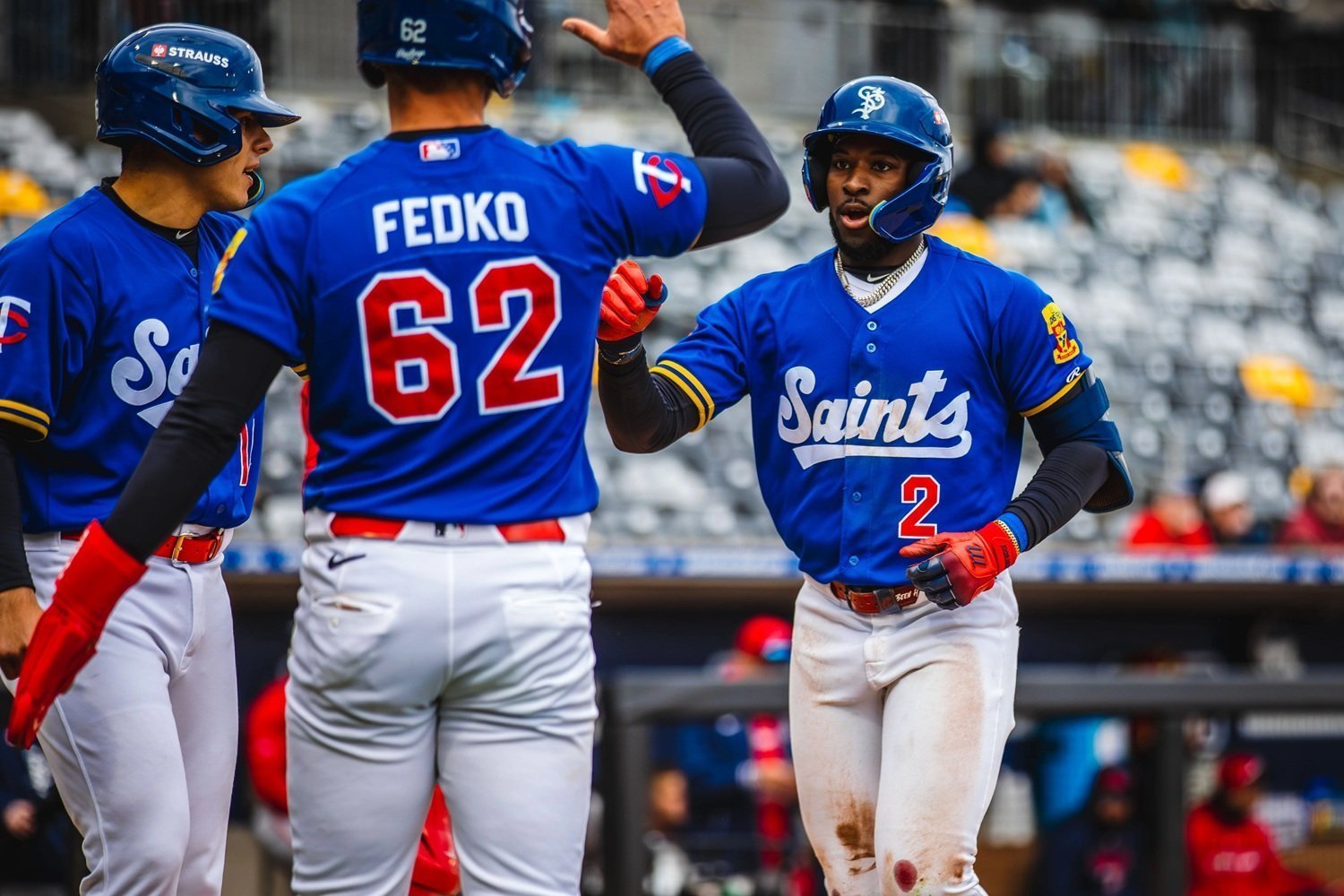
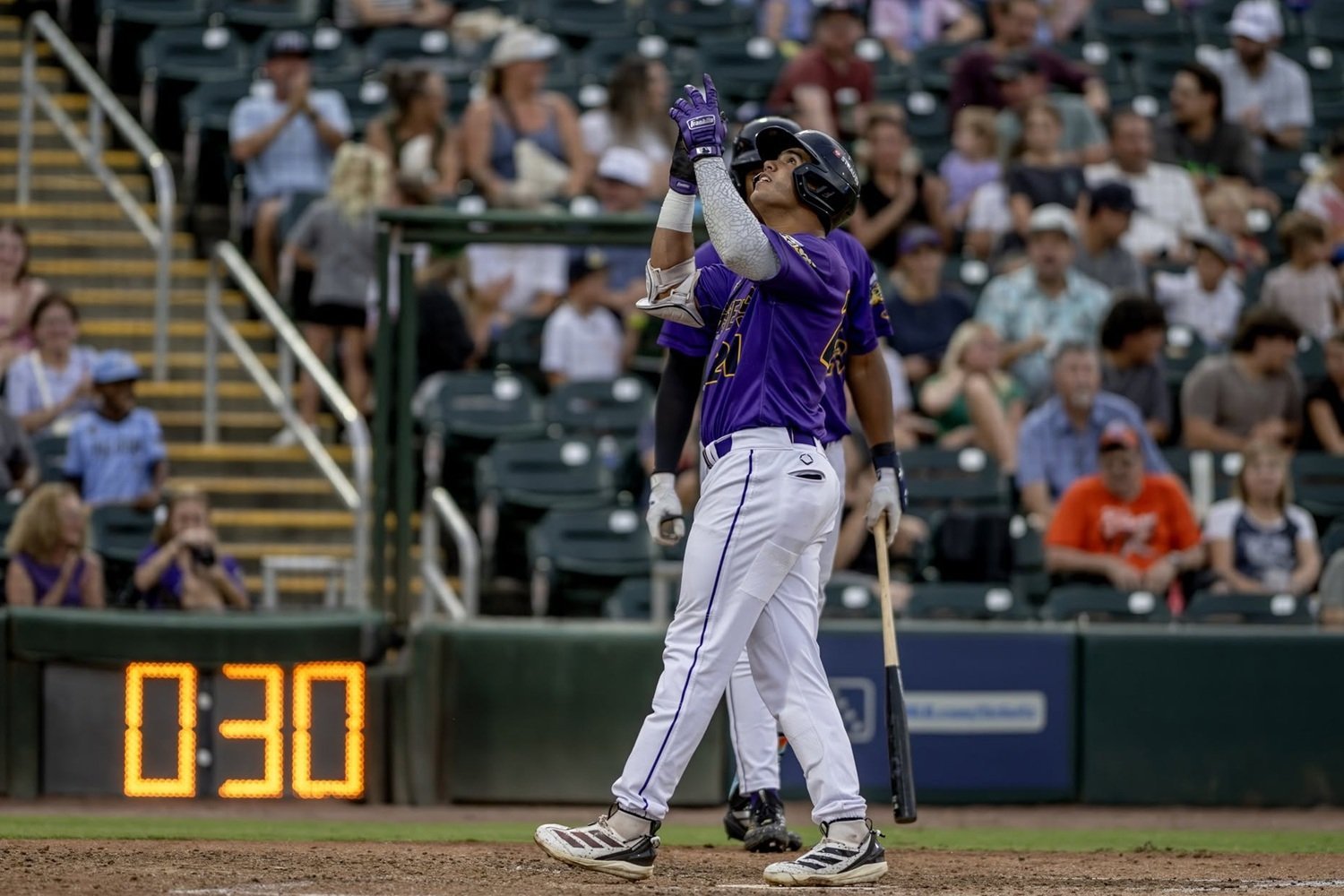 TRANSACTIONS RHP Matt Bowman signed and sent to AAA St. Paul OF Caleb Roberts was placed on the Wichita Injured List. Saints Sentinel St. Paul 1, Iowa 3 Box Score Aaron Rozek: 4 IP, 7 H, 3 ER, 2 BB, 0 K HR: None Multi-hit games: None The Saints found little offense on Wednesday. Years in the future, when the woes and misdeeds of people of the present have dissipated, turned to a fine sand and silt, returned to the Earth and settled, others will look back upon these times with questions. Some inquisitions will be more serious than others. “How did they live?” “Were they a perfect people?” Certainly not, though they tried. “And who was that pitching all those games for the Twins minor league system?” Oh, that’s just Aaron Rozek. He’s up to 527 2/3 innings since the start of 2021. Travis Adams is in second with 416 1/3. Lethargic they may have been, the Saints got out to a quick start, with a spanked Walker Jenkins double kicking off the game; he soon scored on a sacrifice fly. They never scored again. The Cubs were not biting on Rozek’s hook. Both in a real and metaphorical sense. His adroit fisherman sense proved lackluster, and he suffered an ultimate humiliation in the second with a Cristian Betancourt three-run homer. Iowa also never scored again. The Saints’ bullpen—an effort on Wednesday composed of Raul Brito, Cody Laweryson, and Alejandro Hidalgo—was excellent. They combined for five shutout innings with six strikeouts and one hit allowed. Rehabbing big leaguer Ryan Jeffers went 0-for-3 with a walk and a strikeout. Cubs left fielder Jonathan Long is a player of note. He ranks as the franchise’s sixth-best prospect and went 0-for-3, with a walk and a strikeout. Wind Surge Wisdom Wichita 5, NW Arkansas 7 Box Score Chris Vallimont: 4 IP, 6 H, 2 ER, 2 BB, 2 K HR: Brandon Winokur (1), Garrett Spain (14) Multi-hit games: Marek Houston (2-for-5, RBI), Garrett Spain (3-for-4, HR, 2 R, RBI) A late Wind Surge comeback fell short on Wednesday. Scoreboards are expensive, Mr. Winokur; don’t expect this reckless insolence to be forgotten, whether it be your first AA homer or not. And look at the confused children that could have been hurt! After Winokur established what a pro-ball homer could look like, Garrett Spain expanded on the topic, taking an uppercut swing that could only be described as “ferocious” given his 5’9” 180 pound body. The ball might argue the man’s stature makes no difference; it was tattooed with a mighty force. What is there left to say about Marek Houston? Minnesota’s first round pick in 2025 has been a savant, with brilliance at shortstop and a contact, scrappy offensive profile that might satisfy the Nick Punto hole left in all of our hearts. On Wednesday he collected two hits, stole two bases, and made a dazzling play on the diamond. Houston is slashing .302/.367/.415 in 13 games with the Wind Surge. Drew Beam—a sentence an architect might say when talking about their day—is the 10th-ranked prospect in the Royals system. The right-hander pitched seven innings with three earned runs, striking out seven. Kernels Nuggets Cedar Rapids 3, Iowa 2 Box Score Riley Quick: 4 IP, 1 H, 1 ER, 4 BB, 5 K HR: Yasser Mercedes (6) Multi-hit games: Yasser Mercedes (2-for-4, HR, 2 R, 2 RBI) Yasser Mercedes led the Kernels to victory on Wednesday. It started like a lamb and ended like a lion: the spry Mercedes first reveled in his quickness, knocking an infield single to start the game before swiping second base. He arrived at third on a groundout and reached home on a fielding error. A journey unique only to speedsters. But only a speedster, he is not. Mercedes is a man of dimensions, though he chose not to reveal this fact until late in the game. He grounded out twice and stepped up to the plate once more in the eighth inning. To his right, the game-tying run on first. Only one out. Simply pass the buck? No. Mercedes uncorked a mighty hack and blasted a shot to left-center, clearing the outfield wall while slingshotting the Kernels into the lead. Riley Quick. Four walks? A man of your talents? The righty was otherwise excellent, allowing just one earned run over four frames, with one hit. He struck out five. And reliever Ivran Romero was even better. He hadn’t touched five innings in over a month, despite the fact that 10 of his last 11 appearances were starts. No matter. The San Diego product buzz sawed through the Cubs lineup, setting down the final 10 batters in order for the game’s well-deserved win. He also struck out five with just one earned run against him. The wonderfully alliterative Kane Kepley stands as the fifth-ranked prospect in the Cubs’ system. The outfielder went 0-for-5. Mussel Matters Fort Myers 5, Bradenton 6 Box Score Jason Reitz: 3 1/3 IP, 3 H, 1 ER, 0 BB, 3 K HR: Jayson Bass 2 (11, 12), Byron Chourio (6) Multi-hit games: Jayson Bass (2-for-5, 2 HR, 2 R, 2 RBI), Luis Fragoza (2-for-4), Byron Chourio (2-for-2, HR, R, RBI, 2 BB) The Mighty Mussels came up just short on Wednesday. A day for sons of J. The starter—with the traditional spelling—accrued 3 ⅓ innings, allowing a lone run while whiffing three. His season ERA with Fort Myers now sits at 2.84. The one who garnishes the name with a flavorful “y” had a power stroke and a hunger for homers. His first, a liner that landed nowhere near any creature with a pulse; the second a more traditional fly ball that once again eluded a carbon-based lifeform and had to settle for the dull thud of a cold, empty chair. Sandwiched between the Bass blasts was a rally that had, for a time, given the Mighty Mussels a lead. Byron Chourio observed that homering was fun, and decided to do so himself for the sixth time this season. Ricardo Pena followed with a walk, Merphy Hernandez tripled into the right-center gap, and Miguel Briceno squeezed a grounder hit just hard enough beyond the second baseman to plate Hernandez. Unfortunately, the Fort Myers bullpen—and some horrid defense—doomed our protagonists. The team’s third and final error of the game preceded a lengthy rain delay, forcing the players to ponder their defensive miscues knowing that two runners on base lurked in their future whenever Mother Nature was finished pausing the match. Play resumed. The first batter struck out. The second plated two unearned runs. So it goes. Edgleen Perez, Bradenton’s catcher, is ranked as the 20th-best prospect in the Pirates’ system. He singled once in five trips to the plate. TWINS DAILY PLAYERS OF THE DAY Twins Daily Minor League Pitcher of the Day – Ivran Romero Twins Daily Minor League Hitter of the Day – Jayson Bass PROSPECT SUMMARY Here’s a look at how the Twins Daily Top 20 Twins Prospects performed: #1 – Walker Jenkins (St. Paul) - 1-4, 2B, R #4 – Eduardo Tait (Cedar Rapids) - 1-4, K #5 – Marek Houston (Wichita) - 2-5, RBI #6 – Riley Quick (Cedar Rapids) - 4 IP, 1 H, 1 ER, 4 BB, 5 K #8 – Hendry Mendez (St. Paul) - 0-3, BB, 3 K #10 – Gabriel Gonzalez (St. Paul) - 1-4 #12 – Brandon Winokur (Wichita) - 1-4, HR, R, RBI, 2 K #13 – Khadim Diaw (Wichita) - 0-3, BB #14 – Quentin Young (Fort Myers) - 0-4, 2 K #18 – Yasser Mercedes (Cedar Rapids) - 2-4, HR, 2 R, 2 RBI #19 – Billy Amick (Wichita) - 0-3, BB, 2 K #20 – Kyle DeBarge (Wichita) - 0-4, 2 K THURSDAY’S PROBABLE STARTERS St. Paul @ Iowa (6:38 PM) - RHP Ryan Gallagher NW Arkansas @ Wichita (7:05 PM) - RHP Sam Armstrong South Bend @ Cedar Rapids (6:35 PM) - RHP Kolten Smith Bradenton @ Fort Myers (6:05 PM) - RHP Reed Moring FCL Twins @ FCL Rays (11:00 AM) - TBD DSL Twins @ DSL NYY Bombers (10:00 AM) - TBD View the full article
 -
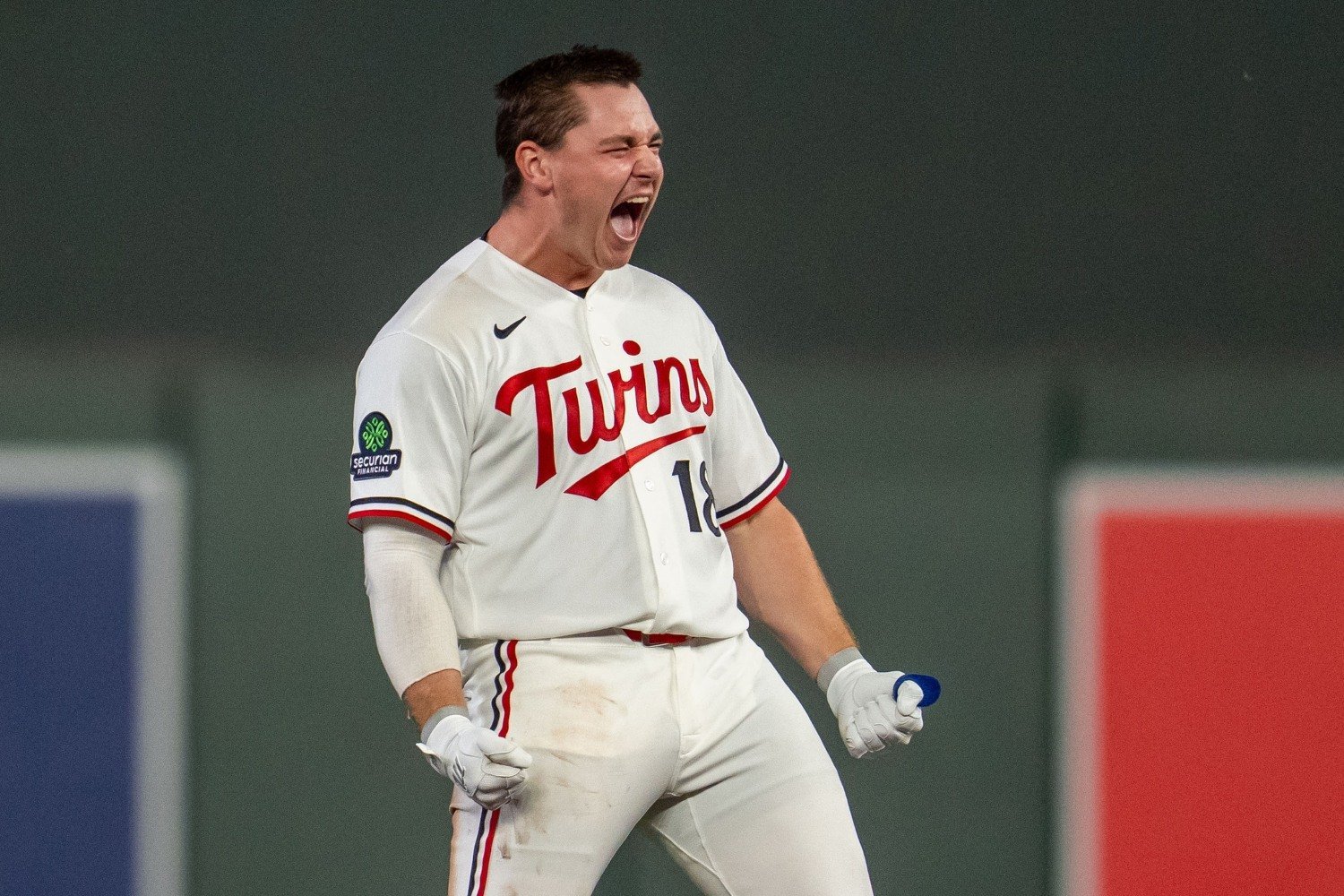 Box Score SP: Connor Prielipp - 5 IP, 4 H, 3 ER, 3 BB, 6 K (83 pitches, 49 strikes (72% strikes) Home Runs: -0- Top 3 WPA: Kody Clemens (0.38), Alan Roden (0.32), Luke Keaschall (0.27) Win Probability Chart (via FanGraphs) The Twins and Guardians got off to a slow start on Wednesday, with both pitchers looking locked-in early. It was a much-needed outing for rookie Connor Prielipp. Prielipp has been adjusting to the big leagues well, but he's taken his lumps, too. In June, he logged 28 1/3 innings and completed six frames in four of his five starts, but he still had a 4.76 ERA. Wednesday's outing was a huge test for the rookie. It would also prove to be an important night for Alan Roden, who appeared in the majors for the first time this year. Roden didn't make the team out of spring training and spent a significant chunk of the early season on the injured list for the Triple-A St. Paul Saints. Then, he had to wait for an opportunity in the majors for some time, even as he hit well in St. Paul. When Byron Buxton went down with a hip strain this weekend, the door was finally opened for Roden's return to the team with whom he played briefly before going down for the season last August. Prielipp ran into some trouble in the fourth inning, giving up a leadoff single to Chase DeLauter and two subsequent home runs by Brayan Rocchio and Rhys Hoskins. Thereby, the Guardians jumped out to a 3-0 lead. The rookie threw quite a few pitches in the inning, but after a mound visit, he settled down and retired the next three batters in order to limit the damage. The Twins offense responded aggressively in the bottom of the fourth. Singles from Brooks Lee, Kody Clemens, and Josh Bell loaded the bases with nobody out. Royce Lewis followed with an RBI single to cut the deficit to 3-1. A deep sacrifice fly to center by Luke Keaschall brought Clemens home, making it 3-2 with one out. Roden lined a single into center field to score Bell and tie the game at 3-3. The Twins still had a chance to take the lead, but Cleveland made a pitching change that shut the door on the rally. Prieplipp kept Cleveland off the board through the fifth. Travis Adams took over in the sixth and delivered a quick, scoreless inning in relief. Not bringing Adams back out was an interesting choice, but with limited options available, Eric Orze entered to pitch the seventh. Orze labored through 16 pitches, only recording one out and leaving two runners on base without finishing the inning. Taylor Rogers came in to get the final two outs. But instead, he surrendered two runs, allowing Cleveland to reclaim the lead, 5-3. Again, though, Minnesota responded, with lots of help from Guardians relievers. Cleveland walked five Twins batters (Keaschall, Ryan Kreidler, pinch-hitter Austin Martin, Lee and Clemens), forcing home the tying runs. It's been an incredibly sloppy series for the usually buttoned-up Guardians. The Twins couldn't blow the game open, but they'd re-tied the game again, thanks to their opponents. Kody Funderburk worked a scoreless eighth. He surrendered two singles, but stayed in the zone and struck out the other three batters he faced, avoiding giving back the favors the visitors had just done for the hosts. In what became an impromptu bullpen game for Cleveland, the Twins found lots of opposing hurlers easy to handle. Victor Caratini and Keaschall started the bottom of the eighth with a single and a double, respectively, and it looked like Minnesota would finally break through. But Cleveland turned to their relief ace, Cade Smith, who slammed the door on the rally: strikeout, strikeout, walk, flyout. The teams went to the final frame on level terms. Yoendrys Gómez worked a relatively stress-free top of the ninth. He did walk a batter, but things didn't get terribly hairy. In the bottom half of the frame, Clemens reached on (officially) a single that was hit right at Rocchio, who inexplicably went to the ground and then threw from the seat of his pants. The result was a throw on an in-between hop to first baseman Rhys Hoskins, who let himself be handcuffed. Josh Bell struck out, though, and Royce Lewis hit what was nearly an inning-ending double play. Happily, he beat it out, setting the stage for Alex Jackson. The team's backup backstop hit a cue shot to the right side, but weird spin off the end of the bat led to a crazy hop that second baseman Travis Bazzana couldn't handle. Keaschall worked a tough at-bat and drew a key walk after that, loading the bases. Up stepped Roden, who'd missed his last chance to win the game in the bottom of the eighth. He worked a full count and fouled off multiple pitches, but then: BANG. He came through with a gapper to right-center, scoring the winning tally and setting off the celebration. How can you not be romantic about baseball? What’s Next? The Twins finish out the series against the Guardians Thursday at 12:40 pm CST. The Twins will send Mike Paredes to the mound (0-2, 4.60 ERA), facing Cleveland ace Gavin Williams (9-4, 3.89 ERA) during a day game. Postgame Interviews Coming soon. Bullpen Availability Chart View the full article
 -
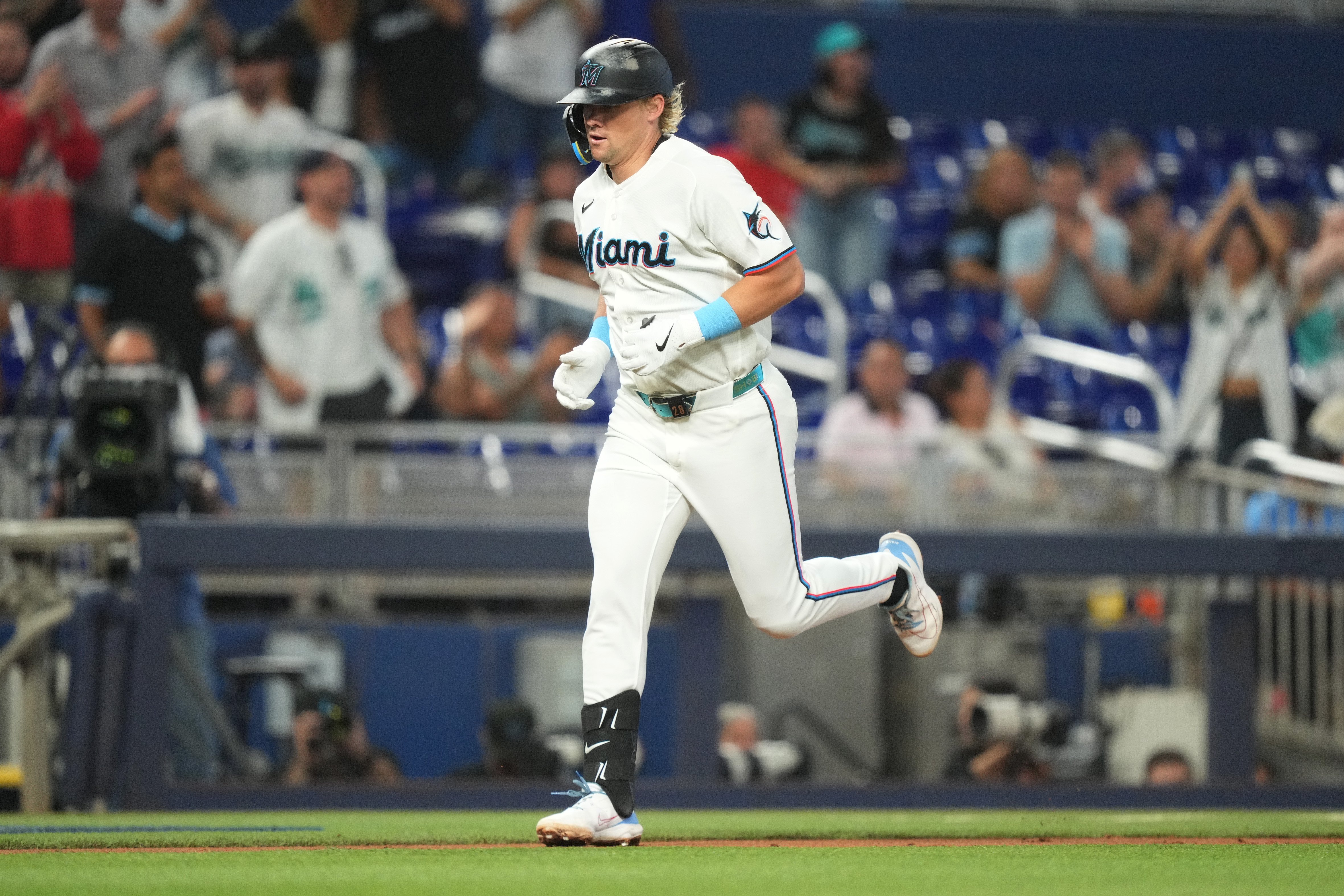 MIAMI, FL - Going into the 2026 season, Kyle Stowers was expected to be the Miami Marlins' biggest contributor offensively. He was coming off an All-Star season where he hit 25 home runs and posted a 149 wRC+. After a slow start to his season, Stowers is looking like the player we saw in 2025. He hit his 12th home run of the season in Wednesday's 2-0 win over the Seattle Mariners. Stowers missed almost all of spring training due to a hamstring issue, reaggravating it right before the season. Even after being reinstated from the injured list, he wasn't producing with only three home runs and a .663 OPS through 37 games. Those struggles were partially physical, but also mental as Stowers tried to replicate what he'd done in 2025. "Not giving myself enough grace for missing all the spring training," Stowers said. "Not having a ton of at-bats, trying to chase after what it looked like and what it felt like from last year. The reality of this league is that things change. You have to make adjustments, the league's making adjustments to you and what flipped for me, if I'm being honest with you was I kind of let go of trying to be the guy from last year that I was. What problems are being presented to me on a nightly basis and how can I respond to those and that kind of freed me up. My goal was to just get back to being a league-average player, not being .900 OPS Kyle Stowers, go be a league average player. I just want to be better tomorrow than I am today." Going into Wednesday, Stowers had returned to peak form over the previous 30 games, slashing .270/.358/.583/.941 with eight home runs and 29 RBI during that span. In the bottom of the second inning, he took Mariners starter George Kirby deep for a go-ahead solo home run. "He's been on one really since June," Marlins manager Clayton McCullough said of Stowers. "He's looked much like the All-Star of last year, and I think that we were all very confident that it was going to come around and he's coming at the right time. It's coming at a great time for our team, and happy for Kyle. Stubbed through a slower start after the setbacks, and he's playing at a really high level." Amid all the setbacks and struggles, the Marlins moved Stowers to first base, continuing their trend of maximizing positional versatility. After spending most of the 2025 season in left field—and even finishing as a National League Gold Glove finalist—the move was initially a surprising one. It didn't take long, however, for it to make perfect sense, thanks in large part to Stowers' strong play at the position. On Wednesday, he was put into some tough situations right away. In the top of the first inning, Randy Arozarena shot a 104.7 mph grounder to shortstop Otto Lopez that he had to quickly throw to Stowers. who had to quickly turn his glove to make the catch. In the same inning, Stowers stole a base hit from Josh Naylor to end the inning. "Felt like it might be worth the shot not knowing how the season might play out," McCullough said of the first base transition, which began in spring training. "It was pretty evident watching him just move around, how smoothly his hands were working that this had a chance to potentially be something. The more time he's gotten over there he's really taken to it." Entering Wednesday, Stowers hadn't quite graded out as an above-average first baseman, posting minus-1 Outs Above Average and minus-7 defensive runs saved. That's to be expected, though, as he continues to adjust to a new position. The eye test suggests the transition has gone much more smoothly than the metrics indicate, and as he gains more experience, the numbers may eventually reflect that as well. "I know I haven't played a lot there, but you want your infielders to feel comfortable throwing the ball across to you," Stowers said. "I just want to give my best effort every single time. We have a very talented infield, they don't need me to be elite over there at picking the ball, but the times when they have tougher plays, or there's a throw up, I do the best I can for them." Since the Marlins designated Christopher Morel for assignment and Liam Hicks landed on the injured list, Stowers has begun playing first base on a much more consistent basis, leading to plenty of what he describes as "unique plays." One of those plays came in Colorado. With runners in scoring position, Rockies outfielder Cole Carrigg attempted to steal second, but a late jump left him caught in a rundown. As the play unfolded, Hunter Goodman broke for home from third. Stowers quickly fired to the plate to cut him down, erasing the runner at home while allowing Carrigg to advance only to second. "Plays like that, where to line up on cuts and relays I think I'm still getting up to speed on. Trying my best to talk with Clayton Carson (Vitale) and (Blake Butler) as much as I can just to learn along the way. I want them to coach me hard with where to be in certain plays because I think with the way our roster is constructed right now, it makes it makes sense right now for me to be playing first." The second run of the ballgame was thanks to an Xavier Edwards RBI triple, his sixth of the season. Edwards six triples are a career high and it extended the Marlins MLB lead in triples to 23 on the year. Starting for the Marlins was Tyler Phillips, who went five shutout innings, allowing four hits and two walks. He also struck out three. With the win, the Marlins improved to 51-42, nine games over .500, and with the Philadelphia Phillies falling to the Cincinnati Reds, the Marlins now have the second National League Wild Card Spot. The Atlanta Braves defeating the Pittsburgh Pirates keeps them three games back of the NL East division lead. The Marlins go for the sweep on Thursday at 6:40 pm with Janson Junk making his first start off the injured list. View the full article
 -
 The Twins are only a few games below .500 with less than a week to go before the All-Star break. While it is a prospect and draft first show, Jamie and Jeremy briefly review what's making the Twins perform so well going into the break.View the full article
 -
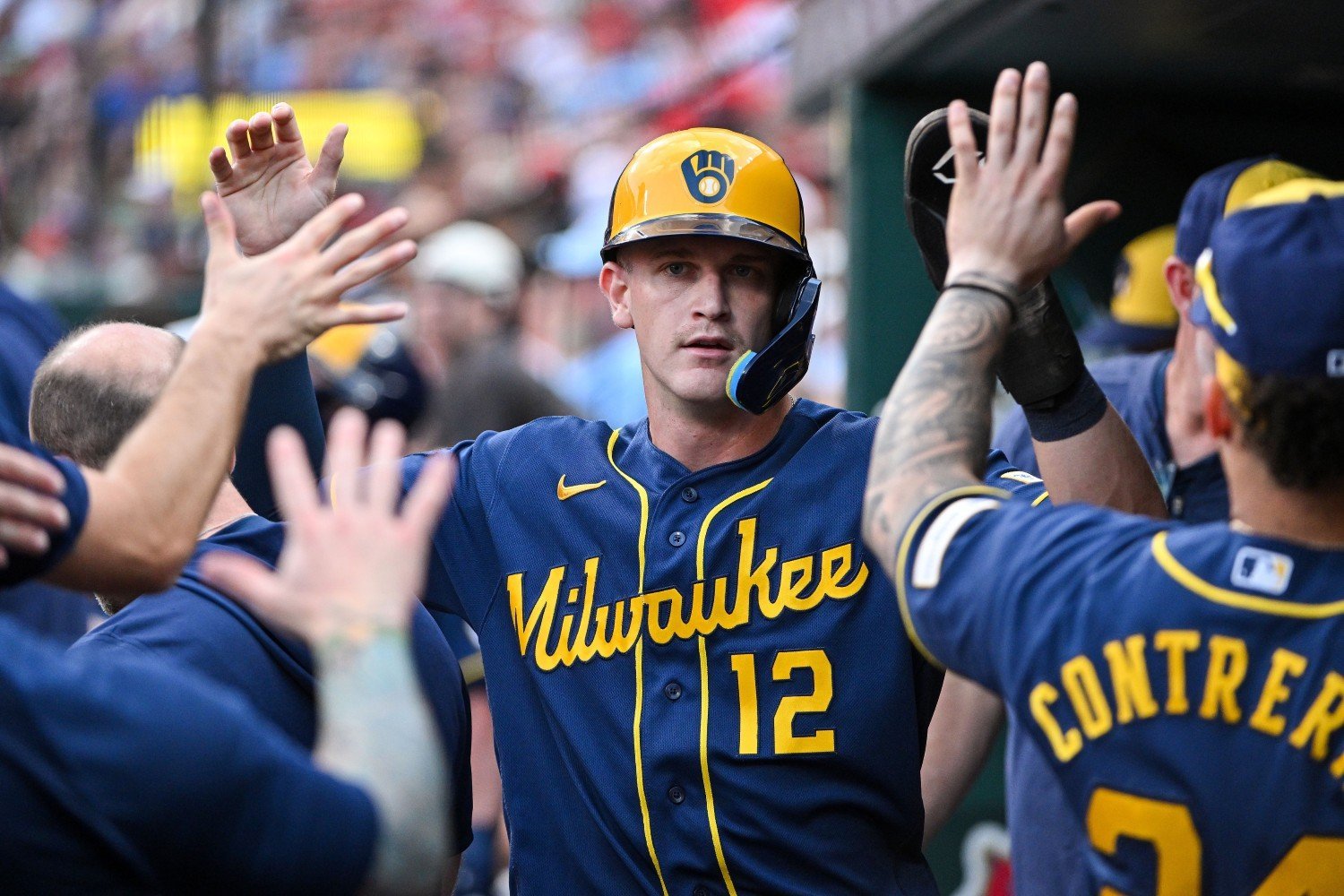 It's neither a secret nor a coincidence that, by the standards of big-league ballclubs, the Brewers are run rather like a college team. After all, their manager is one of just two active ones whose background is mostly as a college coach. Pat Murphy has acknowledged that, though he doesn't consciously try to bring the model that made him successful at Notre Dame and Arizona State University to bear in his management of Milwaukee, there's a degree to which his skill set and the way the small-market Crew run things match nicely to what a college program has to do in order to thrive. One way in which that shows up on the field is the collective discipline of the lineup, and not just in terms of swing decisions. When the team brings any of its endless line of young players to the big leagues—or even when they (re)acquire guys who have been in the majors elsewhere, as they did when they dealt for David Hamilton in February—they ask them to let the ball travel. It's important to the team that those guys learn to recognize pitches and to frustrate hurlers' attempts to lure them out of the zone and strike them out. They coach hitters to be patient and to hit the ball deeper in the hitting zone than they normally would. It's an essential part of their offensive DNA, including and especially when it comes time to get a clutch hit. This can make their young hitters look awfully unimpressive, at first. Brewers fans will well remember the ugly early days of Brice Turang, Jackson Chourio and Caleb Durbin, who took anywhere from a few weeks to a few months to tap into their offensive upside. In the meantime, those guys also get deployed strategically, sometimes being held out of the lineup when the matchup favors another player and other times being fed into the woodchipper in a bad matchup so they can learn the ropes. Almost no Brewers hitter comes up and gets to their power quickly. In service to the team and to optimize their development even after they matriculate to the majors, those guys are asked not to swing as aggressively as they otherwise might, in addition to not swinging as often as they otherwise might. Cooper Pratt is the latest exemplar. He came to the majors an unfinished product, because the team has sufficient confidence in Murphy and his coaching staff to finish off development after a player gets to the parent club. Pratt's arrival makes the team deeper and better defensively, and eventually, having him up right now will pay off. He might be better in 2027 than he would otherwise be, because he's here now. He might hit the turbo button and achieve the stardom that is very much possible for him in 2028, because he got some of the toughest adjustments to the bigs out of the way in 2026. That can make the first stint for players like Pratt frustrating, though, because you know this guy has a good chance to be good, but he's not good yet. Pratt entered Tuesday's doubleheader batting .204/.313/.222, with just one extra-base hit in 64 plate appearances. He'd already drawn eight walks and had only 11 strikeouts, but there was little lethality in his lumber. On Tuesday, alone, he raised his career OPS by .091. He came to bat nine times, drew three walks, and cracked two extra-base hits. This week, it seems, Pratt has been let off the leash. Of this 115 tracked swings Pratt has taken since coming up, six of the 12 fastest have come in the last two days. His double down the left-field line came on the third-fastest swing of his young career; his triple to right field came on the 21st-fastest. Pratt is a big guy, and scouting reports have always cited some latent raw power in his frame and his swing. We knew he was capable of more than he showed when he first came up. Now, the team seems to believe he's ready to let it eat. That doesn't mean Pratt will suddenly go on a power binge any time soon. His double was a grounder; two balls he hit on similarly vicious swings Tuesday stayed too low and didn't escape the infield. As our Jack Stern has already laid out, Pratt is more than a small tweak or a few weeks from becoming a full-fledged power hitter. However, he can be more dangerous than he's looked so far. He can get hits, as well as simply keeping the line moving by drawing walks. He can split gaps and find corners. He can make outfielders run backward now and then. We haven't seen much of that so far, because when he got here, the Brewers focused first on ensuring he could organize his zone properly and produce what the team needs in certain situations where the batter's stats aren't the focus. As we've seen this week, though, that talent is still in there. It could burst out of him down the stretch, if only in the form of a lot of singles and doubles, now that Pratt is swinging the way he's always been capable of. The hope when he came up was that he might lengthen the lineup, in a way neither Joey Ortiz nor David Hamilton could. At first, he didn't do so, but that was during an apprentice phase. Now, he's ready to deliver on that promise. View the full article
 -
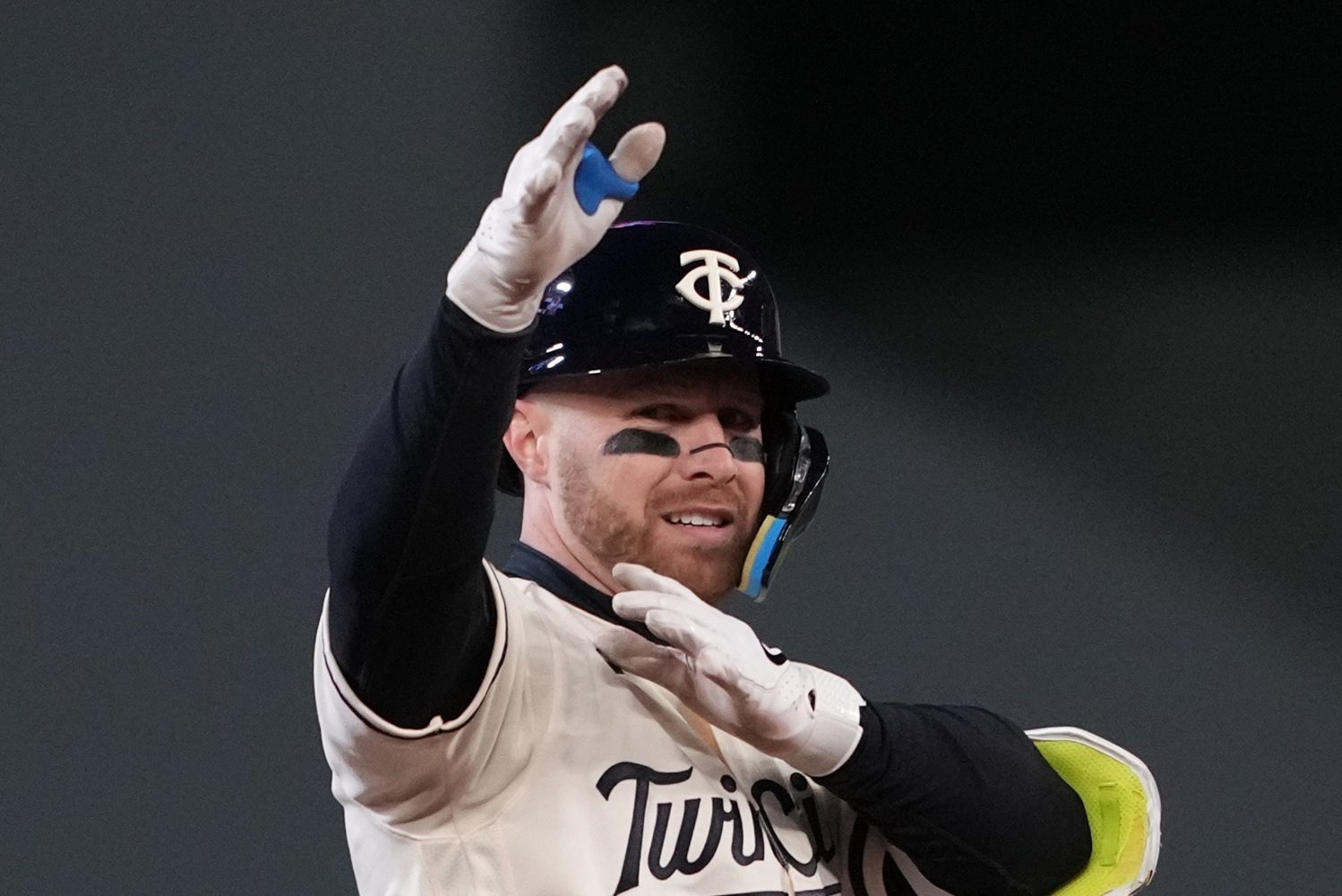 The MLB trade deadline is only a few weeks away, and the Twins once again find themselves walking the line between buying and selling. Minnesota remains in the thick of the American League Wild Card race despite battling injuries across nearly every area of the roster, making this year's deadline more about targeted additions than blockbuster moves. If the Twins continue to hover around playoff position, adding the right pieces could be enough to extend meaningful baseball into September. They don't need to overhaul the roster, but there are clearly areas where reinforcements would have the biggest impact. Here's how the Twins' roster needs rank heading toward the deadline. 3. Bats Of the three major areas on the roster, adding offense feels like the least likely scenario. In fact, there's a better chance Minnesota subtracts from this group than adds to it. Ryan Jeffers and Josh Bell are both free agents, making each a logical trade candidate if the front office believes it can replace their production internally while improving another area of the roster. That isn't without risk. Veteran production carries value during a playoff chase, and replacing experienced hitters with unproven players always introduces some uncertainty. This is similar to what small-market teams do at the trade deadline as they balance buying and selling. Still, the organization has positioned itself well for exactly this scenario. The Twins lead the American League in runs scored, despite several core hitters enduring lengthy slumps during the first half. That's an encouraging sign, because even more offensive help could be arriving from within. Walker Jenkins has done everything necessary to put himself on the doorstep of the major leagues at Triple-A St. Paul. Alan Roden, acquired at last year's trade deadline, has looked like a quality depth option since returning from injury. Meanwhile, Matt Wallner appears to have rediscovered his swing after being sent to Triple-A, earning International League Player of the Month honors for June. Not every contender can point to that kind of offensive depth waiting in the wings (though, of course, Byron Buxton's injury has already forced Roden to join the active roster). 2. Starting Pitching The Twins have managed to survive a wave of rotation injuries, but asking them to continue doing so for another two months feels optimistic. Connor Prielipp has been impressive at times, but the organization will almost certainly have to monitor his workload as he approaches an innings limit during the second half. At the same time, Minnesota has already lost a trio of pitchers for the year, including Pablo López, David Festa, and Mick Abel. This has forced the coaching staff to piece together stretches of the schedule with regular bullpen games. Bailey Ober is expected back soon, which should stabilize the rotation, but one healthy return doesn't erase the lack of depth behind the current starters. Kendry Rojas and John Klein are already on the 40-man roster, but both have primarily been used in long relief, rather than traditional starting roles. Ryan Gallagher, another pitcher acquired at last year's deadline, has intriguing upside at Triple-A but needs to demonstrate more consistency before earning a promotion. He's also not yet on the 40-man roster. One dependable veteran starter could dramatically change the outlook for Minnesota's rotation. It would reduce the strain on younger arms, lessen the need for bullpen games, and provide valuable stability over the season's final two months. 1. Bullpen The bullpen has been Minnesota's biggest need for nearly a full calendar year. That reality became even more painful when Jhoan Duran and Louis Varland were both selected as first-time All-Stars in 2026. Either one would be anchoring the back end of the Twins' bullpen right now, had they remained in the organization. Instead, Minnesota entered the season already searching for reliable late-inning depth, before injuries created an even bigger problem. Anthony Banda had settled into the primary setup role after a difficult April, posting a sparkling 1.00 ERA over 20 appearances since May 10. Just as he found his groove, a significant lat strain knocked him out for multiple months, leaving another major hole in the bullpen. Cole Sands has also been unavailable for most of the season after suffering a mild right forearm strain in early May. He has appeared in only 12 games this year. He's now out on a rehab assignment and could be back in the majors almost right away, but there's no guarantee that he'll be the best version of himself when he returns—and the team needs that version of him, or something even better. Even before those injuries, the bullpen lacked enough trustworthy options behind the late-inning arms. Now, the group could benefit from reinforcements from both the right and left sides. The encouraging part is that relief pitching is often the easiest area to address at the trade deadline. Contending teams routinely shuffle bullpen pieces, and quality relievers can usually be acquired without paying the premium attached to starting pitchers. If the Twins ultimately decide to make only one significant addition before the deadline, it should be a reliever capable of handling meaningful outs in the seventh, eighth, or ninth. Improving the bullpen would not only strengthen the relief corps, but also protect a rotation that has already absorbed more than its share of injuries. Minnesota's offense has carried the club through stretches of the first half, giving the front office the flexibility to focus almost exclusively on pitching before the deadline. A veteran starter would provide welcome stability, but the bullpen remains the clear priority. Between injuries, a lack of dependable depth, and the increased workload created by bullpen games, the Twins need more reliable relief options if they're serious about staying in the postseason race. A couple of smart, targeted pitching additions could be enough to support an offense that has already proven capable of carrying its share of the load. If the Twins remain in contention over the next few weeks, that's exactly the type of deadline approach fans should expect. Do you agree with the rankings? What would be a perfect trade deadline for the Twins? Leave a comment and start the discussion. View the full article
 -
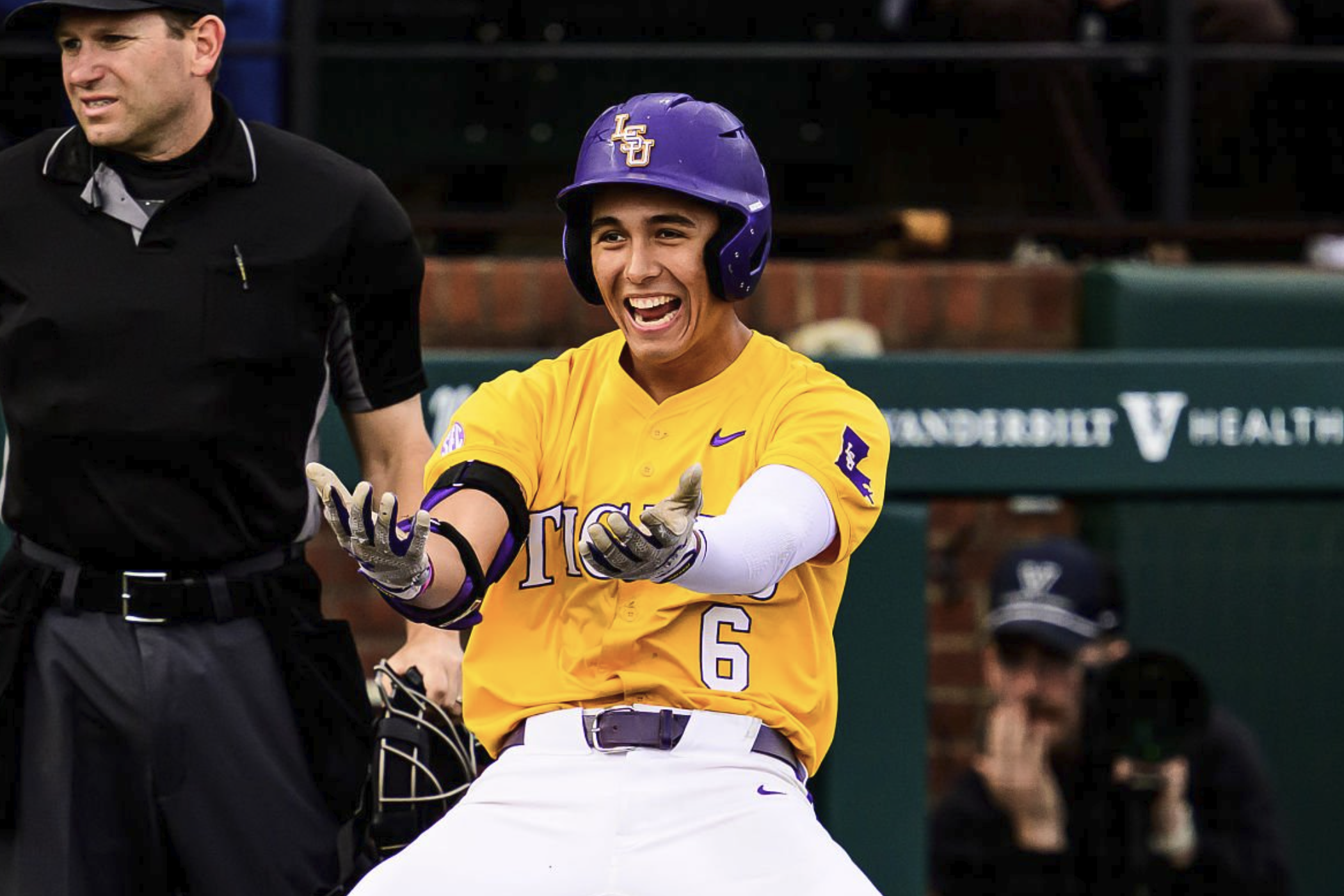 Leading up to the 2026 MLB Draft, Fish On First brings you a series of scouting reports on top prospects in this draft class who could realistically wind up in Miami. Overview Position: OF Height: 6’2” Weight: 192 pounds School: LSU Derek Curiel is a 6’2”, 192-pound outfielder who plays for the LSU Tigers. Curiel has been an excellent hitter since he arrived on campus at LSU. He’s one of the best prospects and the top-ranked draft-eligible sophomore in this draft class. Coming out of high school, Curiel was an elite-level prospect from Orange Lutheran High School in Orange, California. On Perfect Game, Curiel was the tenth-ranked prospect and the sixth-ranked outfielder in the Class of 2024. He was also the second-ranked prospect and the #1 outfielder out of the Golden State. Curiel went undrafted and honored his commitment to LSU. During his freshman season, Curiel earned a starting role and immediately became one of the top hitters in all of college baseball. Curiel played and started in all 63 games. He slashed .345/.470/.519 with 89 hits, 20 doubles, seven home runs, 55 RBIs, 53 walks, and a .990 OPS. Curiel was named the D1 Baseball National Freshman of the Year and was a First Team Freshman All-American. In the 2026 season, Curiel continued to produce at a high level for the LSU Tigers. Curiel played and started in 58 games. He slashed .353/.431/.526 with 82 hits, eighteen doubles, six home runs, 46 RBIs, thirteen stolen bases, 34 walks, and a .957 OPS. Curiel was named a Third-Team All-America by the American Baseball Coaches Association. At the plate, Curiel is one of the best pure-hitters in this draft class. He’s a left-handed hitter with a line drive swing. He can drive the ball with authority to all fields. His power is pretty limited due to his flat swing, and he still needs to fill in his frame. Defensively, Curiel proved that he can play center field at the next level. He mostly played left field during his freshman year, but patrolled center this past season. He doesn’t have the best arm strength, but he’s a very good athlete who can track balls well in the outfield. He also has above-average speed, and that helps him with his range and base-stealing ability. Strengths 60-grade hit tool Highly productive hitter at LSU Plus bat speed Projected to stick in CF Above-average speed Weaknesses Doesn’t have much power Flat swing Below-average arm strength Pro Comparison: Leonys Martín Projection: Top 15 pick Bottom Line Derek Curiel was a blue-chip high school prospect and a highly productive hitter during his two seasons at LSU. While he doesn’t possess much power, there’s some room for growth. On ESPN and Baseball America, Curiel is the tenth-ranked prospect in the 2026 MLB Draft. On MLB Pipeline, Curiel is the 12th-ranked draft prospect and the third-ranked outfielder in this draft class. The Marlins will have the 14th overall pick and should be able to grab one of the top prospects in this draft class. Curiel would be an excellent option for the Fish and BA's Carlos Collazo writes that he might be "their preference" when it comes to first-round hitters, but he's unlikely to be on the board for them, if the industry's leading mock drafts are to be trusted. More 2026 MLB draft profiles RHP Tegan Kuhns OF Sawyer Strosnider RHP Liam Peterson 3B Bo Lowrance LHP Hunter Dietz INF Tyler Bell INF Chris Hacopian LHP Brody Bumila OF Trevor Condon RHP Cade Townsend OF Drew Burress LHP Gio Rojas RHP Cameron Flukey OF Eric Booth Jr. 3B Ace Reese LHP Carson Bolemon RHP Jackson Flora INF Jacob Lombard OF AJ Gracia View the full article
 -
 Chicago Cubs Minor League Report Affiliate Overview Triple-A Iowa Cubs Series vs. St. Paul Saints (Minnesota Twins): Saints lead, 1-0 Season Record: 35–50-1 Double-A Knoxville Smokies Series vs. Biloxi Shuckers (Milwaukee Brewers): Smokies lead, 1-0 Season Record: 47–35 High-A South Bend Cubs Series at Cedar Rapids Kernels (Minnesota Twins): Cubs lead, 1-0 Season Record: 46–32 Single-A Myrtle Beach Pelicans Series vs. Fredericksburg Nationals (Washington Nationals): Pelicans lead, 1-0 Season Record: 34–46 Triple-A: Iowa Cubs Season Record: 35–50-1 Series Opponent: St. Paul Saints (49-37) Series Standing: Trail, 1-0 July 7: The Iowa Cubs fell in Tuesday night’s series opener to the St. Paul Saints, 7-4, at Principal Park. The Saints raced out to a 7-0 after scoring three times in the second and four in the third. The Cubs stopped the run in the fourth by pushing one run across thanks to a St. Paul error. Jonathan Long (1-for-5) doubled home a run in the eighth and BJ Murray made it 7-4 in the ninth when he blasted a two-run shot, his 12th of the season but that would be as close as the I-Cubs would get in the contest. Jordan Wicks got the start for Iowa and was handed the loss, falling to 0-6 on the season. Wicks allowed seven runs, six earned, on six hits over three innings of work to go along with four walks and one strikeout. Paul Campbell and Jayden Murray each worked three scoreless frames in relief, combining to yield just three hits while whiffing seven batters. Brett Bateman put together his first four-hit performance of the year, going 4-for-4 with two runs scored, a pair of doubles and a walk. Double-A: Knoxville Smokies Season Record: 47–35 Series Opponent: Biloxi Shuckers (43–35) Series Standing: Lead, 1-0 July 7: The Knoxville Smokies opened their series vs. the Biloxi Shuckers with a 9-4 victory on Tuesday night at Covenant Health Park. The Shuckers took the lead in the second and added another run in the fifth to make it 2-0. In the home half of the frame, Jefferson Rojas (2-for-4) crushed a solo shot, his 14th of the year, to pull the Smokies within one. After Biloxi made it 3-1 in the sixth, Knoxville responded with six runs in the bottom of the inning to go up 7-3. Edgar Alvarez (1-for-3) collected an RBI-single and Karson Simas (1-for-4) followed with an RBI-triple. Drew Bowser’s (2-for-4) RBI-single put the Smokies in front and Alex Ramírez’ (2-for-5) three-run blast, his 10th of the campaign, put the distance between the two sides. The Shuckers plated one run in the seventh before Ramírez stole home and Andy Garriola (1-for-4) singled home a run in the eighth to make it 9-4. Connor Schultz got the start on the mound for Knoxville and earned the win, improving to 2-3 on the season. Schultz fired his second-straight quality start, allowing three runs on five hits over six innings of work to go along with six strikeouts and no walks. Tyler Ras tossed two scoreless frames to end the ballgame, earning his second save. High-A: South Bend Cubs Season Record: 46–32 Series Opponent: Cedar Rapids Kernels (33–46) Series Standing: Lead, 1-0 July 7: The South Bend Cubs opened their series at the Cedar Rapids Kernels with a 7-5 victory, in 10 innings, on Tuesday night at Veterans Memorial Stadium. The Kernels took a 1-0 lead after two but the Cubs jumped in front with three runs in the fifth, thanks to RBI-singles from Josiah Hartshorn (2-for-5) and Matt Halbach (2-for-4), and a sacrifice fly from Angel Cepeda (1-for-3). Cedar Rapid plated four runs in the bottom of the fourth to go ahead 5-3. Miguel Useche (2-for-5) picked up an RBI-single in the seventh and Christian Olivo (1-for-4) tied the game later in the frame with a sacrifice fly of his own. The ballgame would head to extra innings tied at 5-5 where South Bend would score their first run of the 10th on an error and later push the lead to two when Hartshorn crushed a solo shot, his 10th with the Cubs this season. Grayson Moore tossed a scoreless 10th to end the game and earn his third save of the season. Mason McGwire got the start on the mound for South Bend and took no decision. McGwire allowed one run on three hits over four innings of work to go along with one walk and three strikeouts. Adam Stone worked two shutout innings in relief to earn the win and improve to 5-1 on the season. Single-A: Myrtle Beach Pelicans Season Record: 34–46 Series Opponent: Fredericksburg Nationals (54–28) Series Standing: Lead, 1-0 July 7: The Myrtle Beach Pelicans opened their series vs. the Fredericksburg Nationals with an 11-9 walk-off victory in extra innings on Tuesday night at Pelicans Ballpark. The Pelicans took a 1-0 lead in the first through Eli Lovich’s (1-for-3) sacrifice fly. The Nationals evened the contest with a run in the third but Myrtle Beach responded with three runs in the bottom of the inning. Lovich increased his RBI tally to three with a two-run triple and Derniche Valdez (4-for-6) drove in a run on a single. Fredericksburg took a 5-4 lead in the fourth after putting up a four-spot in the frame. Jose Silva’s (1-for-3) first-career home run at the Single-A level in the sixth tied the game at 5-5. The two teams each scored twice in the seventh, the Pelicans grabbing their runs on a wild pitch and an RBI-groundout from Geuri Lubo (1-for-5), and the contest would head to extras tied at 7-7. The Nationals scored twice in their chance at the plate in the 10th but Valdez launched a grand slam on a full count with two outs to cap a dramatic comeback. Edwardo Melendez picked up the win in relief to improve to 3-2 on the season. Melendez allowed two runs, one earned, on four hits over three innings of work, walking one and striking out three. View the full article
 -
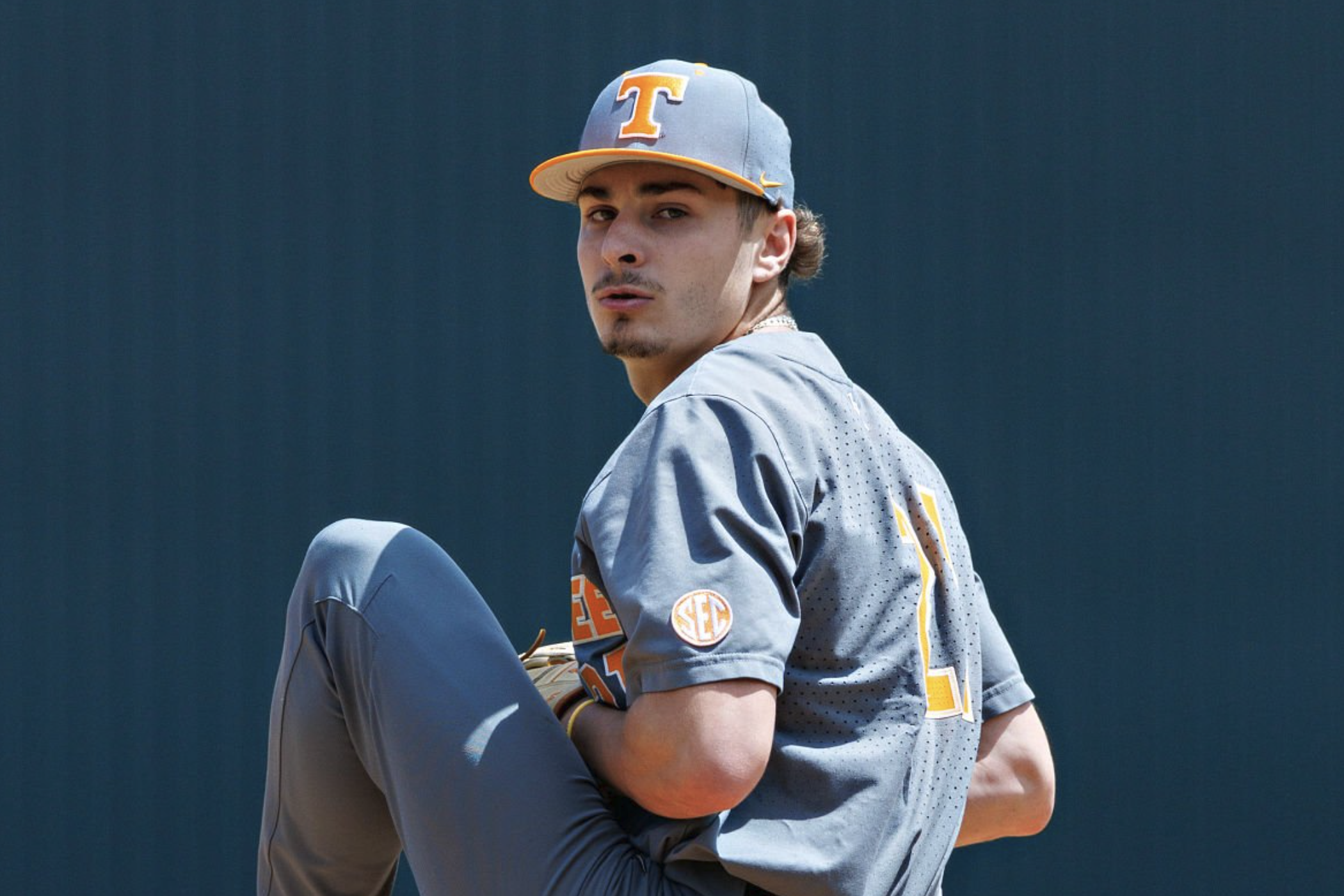 Leading up to the 2026 MLB Draft, Fish On First brings you a series of scouting reports on top prospects in this draft class who could realistically wind up in Miami. Overview Position: RHP Height: 6’3″ Weight: 190 pounds School: Tennessee Tegan Kuhns is a 6’3”, 190-pound right-handed pitcher who plays for the University of Tennessee. Kuhns is one of the top draft-eligible sophomores in the 2026 MLB Draft class. He’s also one of the most interesting prospects in this draft class. Coming out of high school, Kuhns was an elite prospect from Gettysburg Area High School in Gettysburg, Pennsylvania. On Perfect Game, Kuhns was the 45th-ranked prospect and the 11th-ranked right-handed pitcher in the Class of 2024. He was also named a Perfect Game All-American. Kuhns went undrafted in 2023 and honored his commitment to the Tennessee Volunteers. During his freshman season, Kuhns was mostly used as a starting pitcher but didn’t have the best season. He made fifteen appearances and ten starts. Kuhns posted a 2-4 record with a 5.40 ERA, 1.61 WHIP, and 40 strikeouts in 36 ⅔ innings pitched. In his sophomore season, Kuhns had a major breakout season and improved his draft stock a ton. Kuhns made fifteen appearances and fourteen starts. He posted a 5-5 record with a 3.56 ERA, 1.19 WHIP, one complete game shutout, and 106 strikeouts in 81 innings pitched. He was named Second Team All-SEC. On the mound, Kuhns has a four-pitch mix, but mostly relies on two pitches. Kuhns features a fastball, curveball, slider, and changeup. His fastball sits in the mid-90s and was clocked as high as 99 mph last season. He also throws an excellent 12-6 curveball that sits in the upper 70s. For Kuhns to be a starting pitcher at the next level, he needs to develop another quality weapon, whether that means improving his slider or changeup or working on something new. Kuhns has improved on his control from his freshman season. However, his command needs to be better. More repeatable mechanics would help with that. Strengths Mid-to-upper 90s fastball 60-grade curveball with 12-6 shape Excellent pitcher’s size Projectable body frame Made strides improving his control Weaknesses Needs to develop a third pitch Too much over the plate Needs to fill out his frame Pro Comparison: Gage Wood Projection: Top 25 pick Bottom Line Tegan Kuhns has the tools to be an excellent pitching prospect, but needs to physically mature and work on his mechanics. If he’s able to develop more pitches to complement his fastball and curveball, he could be one of the best pitchers to come out of this draft class. On ESPN, Kuhns is the 18th-ranked prospect and the fifth-ranked right-handed pitching prospect in the 2026 MLB Draft. Kuhns is also the 22nd-ranked draft prospect on Baseball America and the 25th-ranked draft prospect on MLB Pipeline. The Marlins will have the 14th overall pick and should be able to grab one of the top prospects in this draft class. Kuhns could be an option if the Fish believe they can mold him into a more complete pitcher. More 2026 MLB draft profiles OF Sawyer Strosnider RHP Liam Peterson 3B Bo Lowrance LHP Hunter Dietz INF Tyler Bell INF Chris Hacopian LHP Brody Bumila OF Trevor Condon RHP Cade Townsend OF Drew Burress LHP Gio Rojas RHP Cameron Flukey OF Eric Booth Jr. 3B Ace Reese LHP Carson Bolemon RHP Jackson Flora INF Jacob Lombard OF AJ Gracia View the full article
 -
 The Minnesota Twins have spent much of the 2026 season searching for stability at shortstop. Veterans have cycled through the position, prospects have generated excitement, and many fans have circled one name as the long-term answer: Kaelen Culpepper. That future still appears bright, but it will have to wait a little longer. Triple-A St. Paul placed Culpepper on the 7-day injured list Tuesday because of a recurring glute injury, another frustrating setback in what has otherwise been an impressive second full professional season. While Culpepper hadn't appeared in a game since taking a pitch off his hand late last month, the hand injury wasn't the reason for his latest IL stint. Instead, it's the same glute injury that first surfaced in mid-June and has continued to linger. Recurring soft-tissue injuries are rarely resolved quickly, making it possible that Culpepper's absence extends beyond the seven-day minimum. That timing is unfortunate because the 23-year-old has done everything possible to put himself on the doorstep of the major leagues. After a slow start, Culpepper caught fire offensively, hitting .272/.376/.492 (.868) with 14 home runs, 43 RBI, and 15 stolen bases in 17 attempts across 63 games. His combination of power, athleticism, and defensive versatility has only strengthened the belief that he's Minnesota's shortstop of the future. The injuries, however, have interrupted that momentum. The glute issue originally sidelined Culpepper after June 13 and limited him to just two games following his return on June 28. He went 1-for-8 in those contests before being hit on the hand by a pitch on June 30. While the hand initially appeared to be the biggest concern, the recurring glute injury ultimately proved to be the issue that forced another trip to the injured list. Unfortunately for the Twins, Culpepper isn't the only top prospect whose season has been interrupted by injuries. Walker Jenkins, the organization's top prospect, missed significant time earlier this year after suffering a Grade 2 AC joint sprain in his left shoulder when he crashed into an outfield wall in early May. Since returning, Jenkins has looked like himself again, collecting hits in seven of his first nine games back and launching a home run on Friday. His recent production has renewed optimism that he could make his major league debut before the season ends. The Twins have seen several of their highest-ranked prospects lose valuable development time over the past couple of seasons, making Culpepper's latest setback feel all too familiar. Still, there's plenty of reason for optimism. Nothing about this injury changes Culpepper's long-term outlook. He has already demonstrated he can handle Triple-A pitching and possesses the complete skill set Minnesota envisioned when it selected him in the first round. The only question now is when he'll be healthy enough to resume building toward his first call to the majors. Twins fans may have to wait a little longer for the organization's future shortstop to arrive, but if Culpepper returns healthy and picks up where he left off, that wait should still be well worth it. View the full article
 -
What's Luis Lara's Path to Becoming an Everyday Starter?
DiamondCentric posted an article in Brewer Fanatic
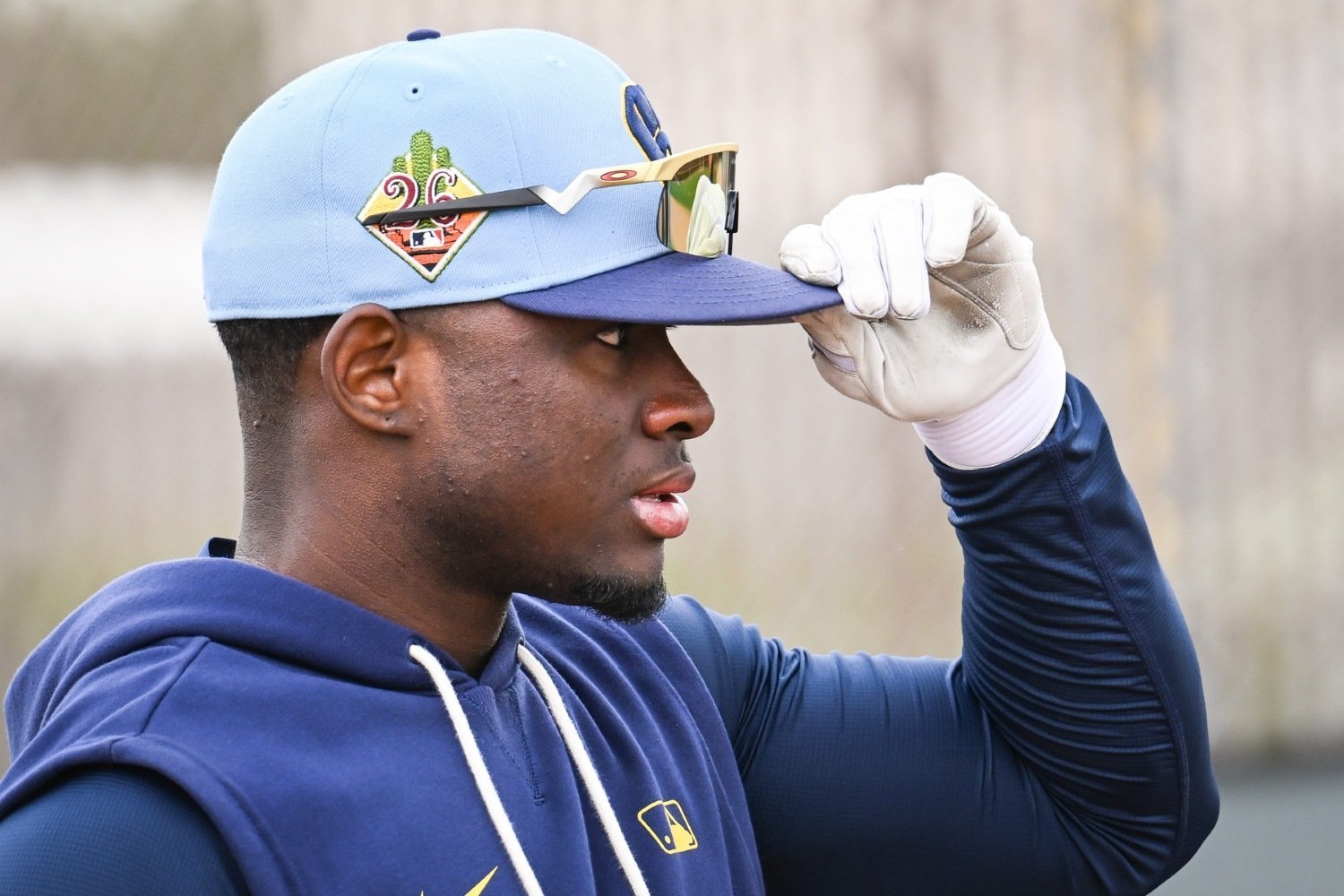 Luis Lara made his big-league debut Tuesday in St. Louis. He had an immediate impact, and there are many ways he can help this year's team. But how can he progress from a complementary piece in a crowded outfield mix to the full-timer the Brewers envisioned when they signed him to a long-term, pre-debut extension? First, let's do a quick review of his background. Lara is a 21-year-old outfield prospect who has surged up the team’s minor-league ladder since he signed for $1.1 million out of Venezuela. He quickly made a name for himself, leapfrogging the team’s Arizona Complex League team to play with the Single-A Carolina Mudcats to start the 2023 campaign. That year started a trend of three years out of four wherein the speedy center fielder logged a batting average above .250. Lara rose all the way up to play with the Triple-A Nashville Sounds this year, where he slashed .321/.432/.470, all career-bests, across 78 games. His ability to play the Brewers’ style of baseball at a high level at every stop earned him the chance he gets now: to represent the team at the highest level, still four months before his 22nd birthday. Game-Wrecking Speed The Venezuela native is diminutive, at 5-foot-7 and 169 pounds, so it’s no secret that his forte is getting up the line in a hurry. Lara is fresh off back-to-back 40-steal seasons, swiping 45 bases with the High-A Wisconsin Timber Rattlers in 2024 before finishing one steal shy of that total with the Double-A Biloxi Shuckers last year. Lara’s speed is well above average, and it supplements his strongest attribute, fielding. The speedy outfielder’s fielding tool earned a 70-grade on MLB Pipeline’s 20-to-80 scouting scale. This is someone who, despite his young age, you could argue has mastered the art of being a commanding center fielder as well as just about anybody. His scouting report states that he makes the correct initial reads and can cover plenty of ground gap-to-gap. He also piled up 10 outfield assists in the 2025 campaign. Power On The Rise Given that small size we mentioned, though, Lara has never hit for much power—until now. The switch-hitting prospect was strictly a doubles and triples guy in the past, but he ran into nine home runs over the course of 78 games in Nashville this year, which would put him on pace for an 18-home run performance across a 162-game season. For context, Lara had just 10 home runs over 391 games entering the 2026 season. As a result, his on-base plus slugging (OPS) metric ballooned to a career-best .902, .170 better than his previous career high across a couple of minor-league levels back in 2023. Where Does He Fit? The question for Lara now becomes: Where will he fit in the grand scheme of the Brewers’ outfield? Right now, he joins the team’s active roster, accompanying Jackson Chourio, Sal Frelick, Greg Jones and Garrett Mitchell. Chourio is locked down on a long-term deal and will not come out of the lineup much at all, barring injury. Frelick notably plays the most comparable style to Lara, never topping out past a .752 OPS but offering speed, defense and intensity. He'll be arbitration-eligible for the first time this winter, so some decision is pending, at least. Mitchell is on year two of arbitration after settling for $950,000 this year, and as a center fielder, he occupies the spot Lara seems to fit best. He's having such a good year, though, that it's not clear the team should or would displace him in order to install Lara, now or later. Lara will likely be a rotational piece in 2026, but with him getting an extension earlier this year, an everyday outfield spot should be in his future. At this moment, the best guess is that his time will come at the expense of Frelick and Mitchell, with each getting spelled against some left-handed starters. To find a deeper toehold next year, though, he'll have to show he can do as much for the club as those guys have already done—or wait for the Brewers to get an offer on one of them that they can't refuse. View the full article
 -
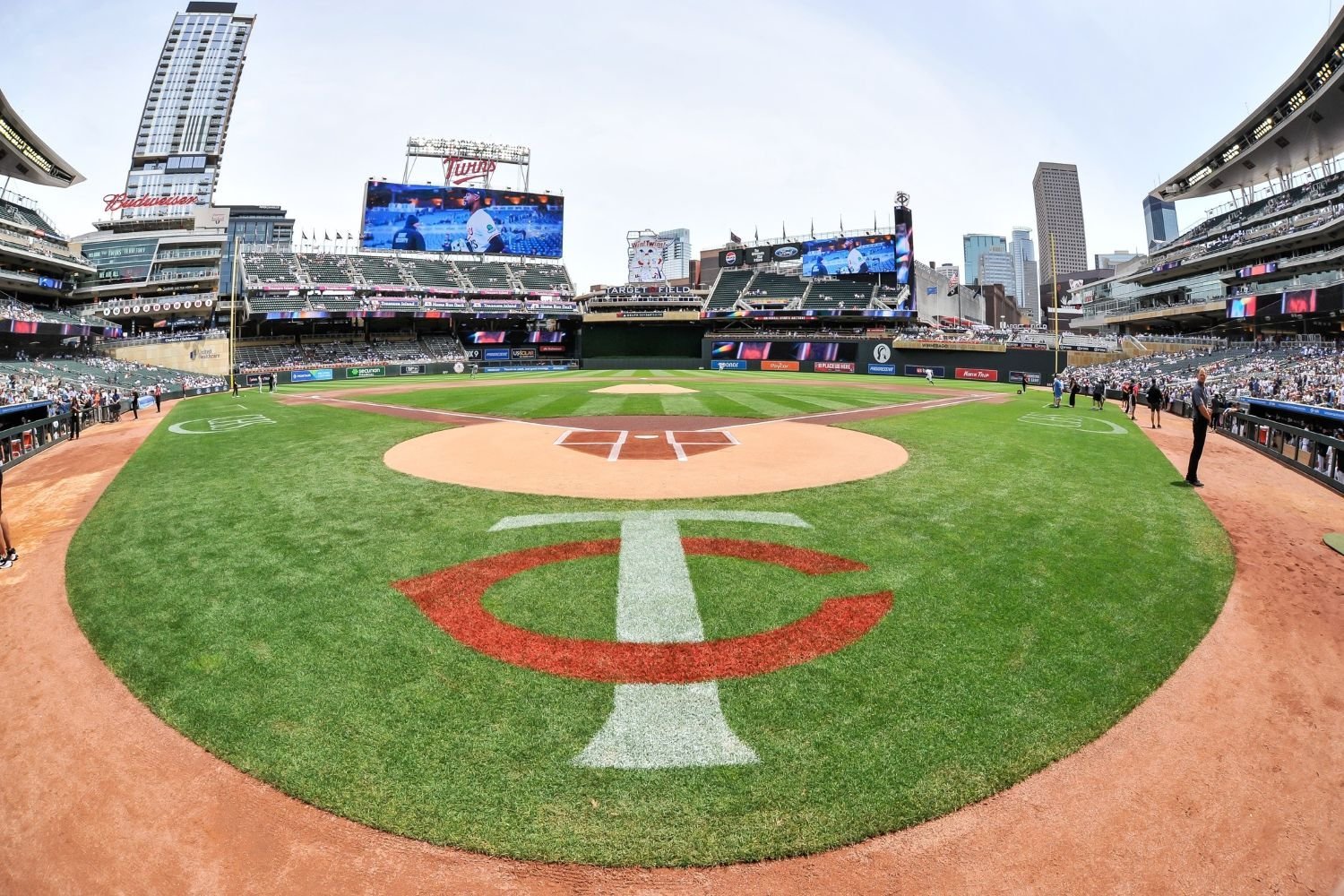 Right-handed pitching prospect Paulshawn Pasqualotto began his 2026 campaign with High-A Cedar Rapids, operating as the Kernels' primary closer. Through 18 innings pitched, the 25-year-old generated a 1.50 ERA, 1.96 FIP, and 44.1% strikeout rate, while netting four saves. He was promoted to Double-A Wichita, where he took on a setup role, netting a 3.94 ERA, 3.57 FIP, and a 24.3% strikeout rate over 16 innings pitched before being promoted to Triple-A St. Paul on July 2. It took Pasqualotto only 34 innings pitched to make the substantial jump from High-A to Triple-A. Minnesota Twins decision-makers are rushing the 12th-round pick through the high minors, seemingly with the intention of converting the former starting pitching prospect into a viable major-league relief option. The young righty made his Triple-A debut against the Buffalo Bisons on July 3, striking out three in a scoreless inning and earning his first save as a Saint. Pasqualotto’s ascension isn’t unique, as fellow former starting prospects Mike Paredes, Alejandro Hidalgo, and CJ Culpepper have been promoted aggressively this season, with eyes on them impacting the major-league pitching staff in some capacity. Obviously, Paredes already has done so. Yet, Pasqualotto has been promoted the most aggressively, signaling that the Twins might view him as an arm that could soon become a member of the parent club’s pen. Right now, Minnesota has the fifth-worst bullpen in baseball, according to Wins Above Replacement at FanGraphs (fWAR). Yoendrys Gómez and Andrew Morris have developed into viable late-inning arms. None of Taylor Rogers, Travis Adams, Eric Orze, Kody Funderburk, Marco Raya, or Woo-Suk Go can be trusted in high-leverage roles, at least right now. That being the case, Derek Shelton is often forced to use inconsistent arms in high-leverage situations, which has led to multiple late-game collapses. It would be silly to suggest Pasqualotto would immediately become a reliable late-inning arm. He has less experience and is of a lower prospect stature than the young arms that presently populate the bottom of Minnesota’s bullpen, in Raya and Go. Given how dire a state Minnesota’s bullpen is in, however, Pasqualotto could soon earn a 40-man roster spot and join the club’s eight-pitcher relief unit, especially if he can build off his impressive Triple-A debut. Pasqualotto has excelled at pounding the zone between Double-A and Triple-A, sporting a near-elite called plus swinging strike rate (CSW%), zone contact rate, and whiff rate between the two levels. The right-handed arm’s stuff isn’t particularly eye-popping, with his four-seam, slider, and cutter grading out as slightly below average. As noted earlier, however, he locates his pitches incredibly well, mixing his two fastball variants and slider with his change, which operates as his out pitch against left-handed hitters. His slider functions as his out pitch against righties. Sitting around 96 MPH, Pasqualotto’s four-seamer is his foundational pitch, which he throws against hitters of either handedness. The young righty has utilized his four-pitch mix to produce an impressive 34.7% strikeout rate between Double- and Triple-A this season, proving that he has the potential to miss bats in the majors. He does struggle with control, as evidenced by a 14.8% walk rate. Still, Pasqualotto has impressed while being promoted aggressively, missing bats at each stop. Minnesota’s bullpen is in dire straits and in need of young, high-upside internal options to fill out the bottom half of the unit. Pasqualotto is already a twin. He has a twin sister named Brooklyn, and frankly, his first name suggests that his parents were anticipating twin boys or triplets, and so he ended up being named like an entire set of twins. It's nearly time to capitalize that 't' and see how it suits Pasqualotto. View the full article
 -
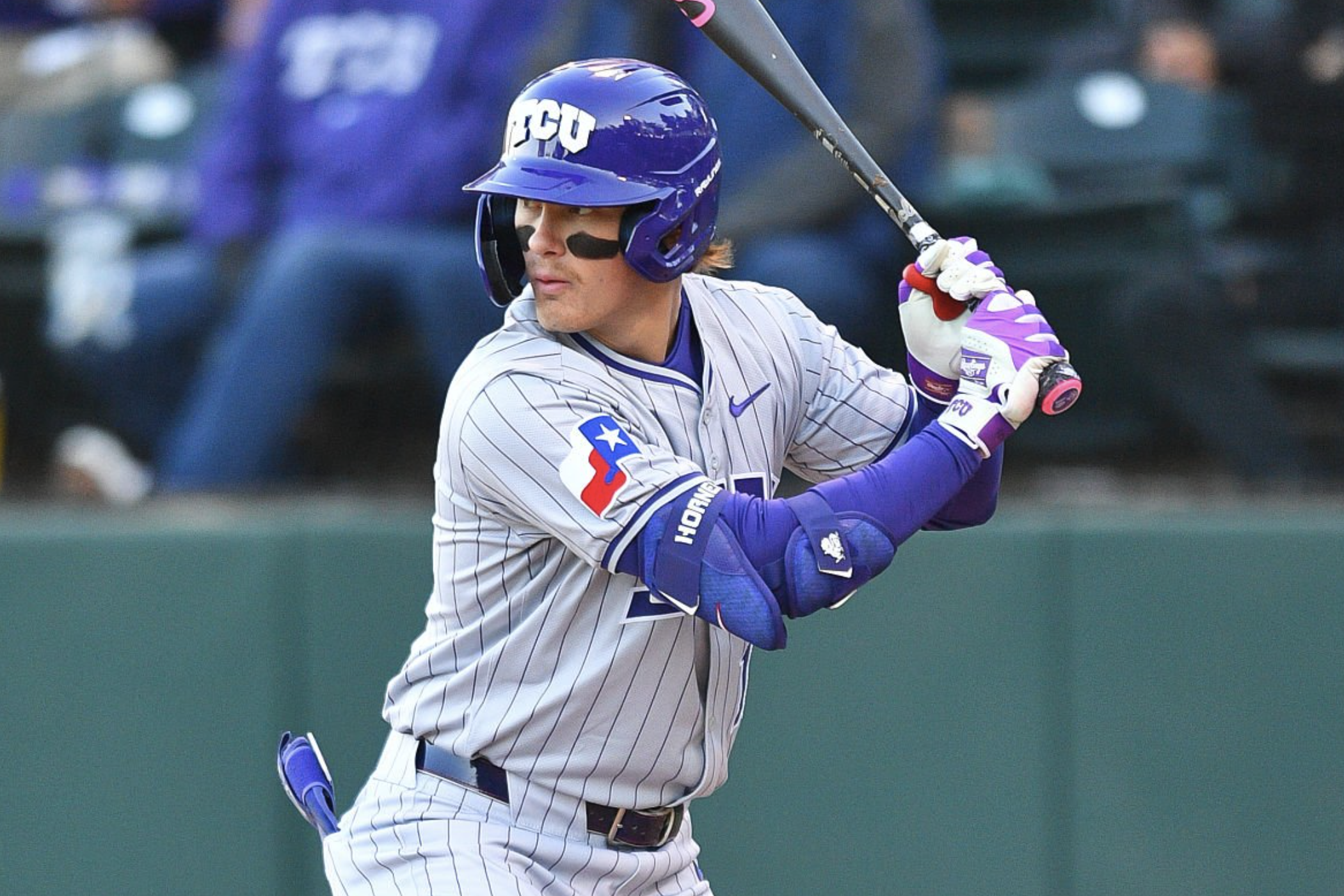 Leading up to the 2026 MLB Draft, Fish On First brings you a series of scouting reports on top prospects in this draft class who could realistically wind up in Miami. Overview Position: OF Height: 6’2” Weight: 200 pounds School: TCU Sawyer Strosnider is a 6’2”, 200-pound outfielder who plays for the TCU Horned Frogs. Strosnider is one of the best athletes in the 2026 MLB Draft class. The draft-eligible sophomore also has one of the best power tools in this draft class. Coming out of high school, Strosnider was a blue-chip prospect from Brock High School in Parker County, Texas. On Perfect Game, Strosnider was the 101st-ranked prospect and the 17th-ranked outfielder in the Class of 2024. Strosnider went undrafted and honored his commitment to TCU. During his freshman season, Strosnider earned a starting role and immediately became one of the best hitters in the Big 12. Strosnider played in 56 games and started in 55. He slashed .350/.420/.650 with 77 hits, thirteen doubles, ten triples, eleven home runs, 51 RBIs, and a 1.070 OPS. He was named the Big 12 Freshman of the Year and First-Team Freshman All-American. In the 2026 season, Strosnider didn’t produce at the same level. Strosnider played and started in 50 games. He slashed .273/.415/.590 with 50 hits, eleven doubles, four triples, thirteen home runs, 47 RBIs, twelve stolen bases, and a 1.005 OPS. At the plate, Strosnider has an excellent left-handed swing and consistently makes loud contact with pitches in the zone. However, he does tend to chase pitches out of the zone. He made strides in taking more walks and still possesses light tower power. During batting practice at the MLB Draft Combine last month, Strosnider posted an average exit velocity of 93.1 mph and a 90th percentile EV of 106.3 mph. For context, our draft profile series has also featured Combine participants Bo Lowrance (91.1 mph average and 103.0 mph 90th) and Trevor Condon (95.4 mph average and 101.8 mph 90th). Strosnider is an excellent defensive outfielder. He’s likely to play center field or right field at the next level. He has 60-grade speed and one of the best arms in this draft class. Even though he mostly played right field at TCU, some scouts believe his future is in center. Strengths 60-grade power tool High contact rate for pitches in the zone 60-grade speed Above-average arm strength Premier outfield defense Weaknesses Bad 2026 season High chase rate Below-average hit tool Pro Comparison: JJ Bleday Projection: Top 30 pick Bottom Line Sawyer Strosnider has many excellent tools and is one of the best prospects in this draft class. However, his hit tool has some volatility. Struggles during the 2026 season may have hurt his stock. On Baseball America, Strosnider is the 14th-ranked prospect and the fourth-ranked outfielder in the 2026 MLB Draft. On MLB Pipeline, Strosnider is the 22nd-ranked draft prospect. He’s also the 36th-ranked draft prospect on ESPN. The Marlins will have the 14th overall pick and should be able to grab one of the top prospects in this draft class. They have been comfortable making big bets in athletic, power-hitting prospects in previous drafts, and Strosnider fits that mold. More 2026 MLB draft profiles RHP Liam Peterson 3B Bo Lowrance LHP Hunter Dietz INF Tyler Bell INF Chris Hacopian LHP Brody Bumila OF Trevor Condon RHP Cade Townsend OF Drew Burress LHP Gio Rojas RHP Cameron Flukey OF Eric Booth Jr. 3B Ace Reese LHP Carson Bolemon RHP Jackson Flora INF Jacob Lombard OF AJ Gracia View the full article
 -
3 Affordable Pitchers Who Just Might Save the 2026 Cubs
DiamondCentric posted an article in North Side Baseball
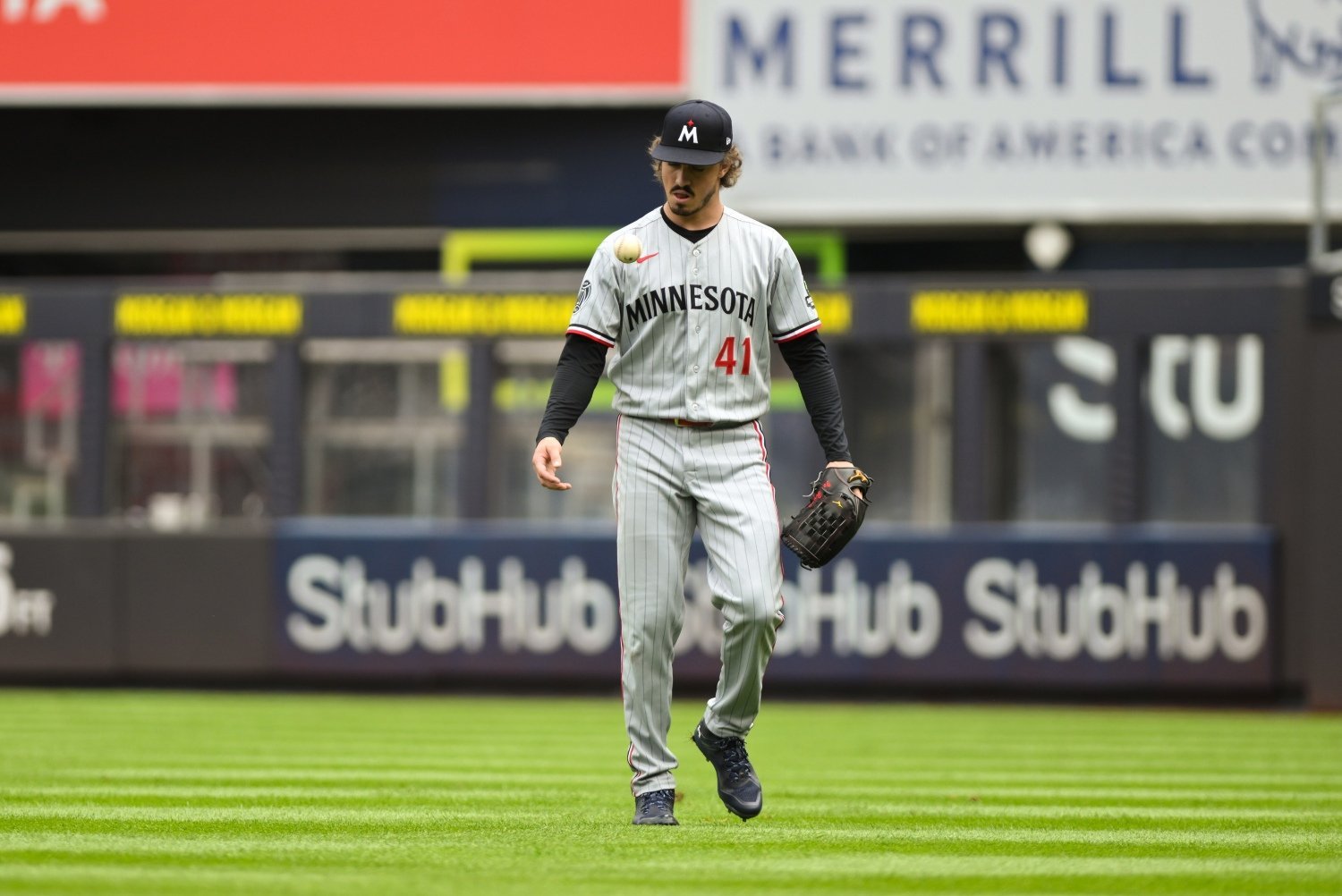 It’s no secret that the Chicago Cubs have been decimated by injuries, specifically in their starting rotation. With Edward Cabrera, Ben Brown, Jameson Taillon, Cade Horton and Justin Steele all still on the mend, here are three pitchers the Cubs could trade for without shelling out an absurd amount of either money (they're already near the maximum the Rickettses will want to spend) or talent (since their farm system isn't strong and needs to be bolstered, rather than gutted). Joe Ryan "Affordable" doesn't always mean "cheap," and Ryan would certainly come with a cost. The 30-year-old right-handed pitcher is currently on an arbitration-avoiding $6.1 million dollar deal. Technically, there's a mutual option in there for next season, but that will be declined; he'll be arbitration-eligible for the last time this winter. The Minnesota Twins are 45-47, so they would be likely sellers in a normal year. However, the American League is so chaotic this season that almost everybody could make a case that their playoff hopes are still alive with about 70 games to go. Prying Ryan loose, with a year-plus of team control left and Minnesota in the hunt, won't be easy. It should be worth it, though. Ryan’s advanced analytics jump off the chart. His 28.8% strikeout rate clearly identifies him as the type of pitcher the Cubs rotation has desperately needed and hopelessly lacked for a long time: the bat-missing kind. Unlike many guys who show the ability to rack up punchouts, though, he also fills up the zone, and has a 5.4% walk rate this year. His chase and whiff rates are also above league average, and a .209 expected opponent batting average implies there is no luck involved in what has been one of the second All-Star season of his career. It's a six-pitch arsenal, featuring a fastball, sweeper, knuckle-curve, split-finger, sinker and slider. Half of those pitches (the sweeper, knuckle-curve and split-finger) have generated an opposing batting average below the Mendoza line. This is someone with control, deception and plenty of tools in his tool box. He would slot into the top of the Cubs’ rotation beautifully. Financially, he wouldn't cost that much. It would take a haul to land him, but once they did, they would be able to plan for Ryan being a co-ace with Cade Horton in 2027, and they'd end up saving enough money and future prospect capital to make the investment now feel worthwhile. Robbie Ray Unlike the American League, there are definite sellers in the National League. The San Francisco Giants fall into that category, sitting at 38-53 and 11.5 games out of the final Wild Card spot. Ray, who is making $25 million in the final year of his deal with the Giants, will be a free agent after the conclusion of this season. Considering Ray would be a 34-year-old rental, he shouldn’t be terribly expensive in this year’s trade market. With that being said, he could still provide the Cubs with some much-needed stability in a rotation that has been hammered with IL stints. Ray consistently disrupts hitters' swings, and is particularly adept at getting them out on the front foot. He's also been durable lately, taking the ball every turn through the rotation since the start of 2025. Most of his advanced analytics are below average; he doesn’t have crazy strikeout stuff or a chase rate that will blow any scouts away. What he does have is a strong fastball-slider combo, a 1-2 sequence he uses 54% of the time. All five of his pitches have held opposing batters to an average below the .240 mark, and despite allowing a 19.6° launch angle, the second-steepest of his career, the average exit velocity is down from its usual spot at 89.0. This is someone who picks his way through a lineup. He’s on a team that should be in sell mode, and he’d be ultra cheap considering his expiring contract. If needed, the Cubs could slightly juice the return to get the Giants to pay down the money he's still owed. Sandy Alcantara Ryan is the best pitcher on this list as this point, but because of his pedigree and his fit with the team, Alcantara would make the biggest splash on a team in desperate need of some reliable starting pitching. Signed to a long-term deal in late 2021, he has a club option that kicks in for the 2027 season before he becomes eligible for free agency. The Miami Marlins are currently holding on to the final NL Wild Card spot, and are playing so well of late that they might be buyers, not sellers. With that being said, Miami is a smaller market who holds a valuable gem in the 30-year-old righty. Alcantara’s fastball velocity is still excellent, with the pitch riding in at an average of 97.4 miles per hour with plenty of arm-side run. The veteran righty just surpassed 1,000 career strikeouts, and he’s holding seven different pitches in what has turned into a deadly arsenal. His strikeout numbers are down this year, but he’s become a master of mitigating hard contact. The 5.2% barrel percentage and 45.2% ground ball rate have been keys to his success in a season where he’s eaten 123 2/3 innings already. He'd be so good in front of the Cubs' elite defense that it's hard not to dream on this one. Miami would have to fall out of contention for Alcantara to become available at a price point the Cubs would deem affordable, but if that happens, Jed Hoyer should pounce. View the full article
 -
 The Chicago Cubs have a starting rotation that has been decimated by injuries. In this video, we'll do an analytical breakdown on how trading for Joe Ryan (Minnesota Twins), Robby Ray (San Francisco Giants), and/or Sandy Alcantara (Miami Marlins) can help remedy a rotation that is missing Cade Horton, Ben Brown, Edward Cabrera, Justin Steele, and Jameson Taillon. Enjoy! View the full article
 -
Why Opposing Pitchers Have Figured Out the Blue Jays' Offense
DiamondCentric posted an article in Jays Centre
 The Blue Jays are trying just about everything to get their offense started. They've tried being patient at the plate. They've tried attacking early in counts. They've shuffled the batting order and mixed-and-matched lineups based on matchups. Every team goes through offensive slumps, and for the Jays, those slumps haven’t been offset by enough winning stretches. Through 91 games (entering play on Tuesday), the Blue Jays own a .304 on-base percentage and have drawn only 248 walks. Both figures rank near the bottom of Major League Baseball. Their .685 OPS also sits well below league average and explains why scoring opportunities have been so few and far between. The Jays have seen the third-lowest number of pitches this season with 12,800. That is about 250 more than the Red Sox and 50 more than the Rays. The Dodgers, Cubs and Pirates have seen nearly 2,000 more pitches in their games, and all have about the same number of batted balls as the Jays. In the last week alone, opposing starting pitchers have managed to work deep into games by throwing competitive pitches (often for strikes). When they have strayed from the zone, Jays hitters have followed. The result has been some lopsided scores. Baseball is a hard game, but it is even more difficult when, as a team, you don’t follow a plan. Data like release point, velocity, spin, bat speed and launch angle can be helpful for modern-day pitchers and batters, but just having the data doesn’t mean a player can execute. Any advantage when it comes to counts and runners on base is valuable for an offense. Obviously, easier said than done. Changing the order in search of a hot-hand can work, and it has a few times this season, but not for a prolonged stretch. The Jays have lost their mojo largely because opponents have shifted their approach against them. Once an offense loses its edge, it starts to try a little harder and inevitably falters. Trading half the lineup won’t help if the approach at the plate remains the same. Not being selective and not getting hitters' counts means opposing pitchers can continue to follow their game plans. The team is hitting .186 with two strikes this season. That ranks second best in MLB. The problem is that they don’t get to two strikes all that often (and hitting under .200 isn’t great). When you include their MLB-leading 64% swing rate when down two strikes, that .186 doesn’t look any better. In Monday night’s loss to the Giants, the Jays put 12 balls in play with the majority of those pitches on the fringes of the plate. As Sportsnet’s Shi Davidi pointed out: “tough spots to get to damage.” The recent 29-inning scoreless streak wasn't simply the result of elite pitching. Opposing pitchers have been good, but the Jays have made them look exceptional. Statcast data says the Jays own a 35.7 percent hard-hit rate and a 6.3 percent barrel rate this season, both of which rank in the lower tier of Major League Baseball. Their expected weighted on-base average (xwOBA) sits at .298, almost identical to their actual production. Another indicator that pitchers are dictating at-bats is Toronto's lack of impact contact. Despite putting 2,411 balls in play, the Blue Jays have produced just 151 barrels this season. Only Cleveland has fewer barrels among teams with a comparable number of batted balls. Statcast defines a barrel as the ideal combination of exit velocity and launch angle, and those are the swings that typically produce extra-base hits and home runs. Without more barrels, the Jays won't be doing much damage. Based on recent at-bats, it kind of feels like if the Jays were using bigger bats, they still wouldn't be barrelling up the ball. Opposing teams have figured something out, and the blueprint is working over and over again. Attack the zone. Avoid walks. And force Jays hitters to swing at pitcher-friendly pitches. Follow that formula and weak contact follows. The frustrating part for the Blue Jays is that the issue isn't solely about contact. They rank among the tougher teams in baseball to strike out, but avoiding strikeouts only matters if the ball is being hit hard. Too many of Toronto's balls in play have resulted in routine outs rather than hitting them where they ain't. Major league hitters don’t tend to have holes in their swings. Their hitting is analyzed in every game and every at-bat. It is simple, as an outsider, to say that Vladimir Guerrero Jr. should lay off every outside pitch. You aren't going to ask Ernie Clement or Kazuma Okamoto to stop expanding their zones. Or tell Daulton Varsho that he should stop chasing pitches above the zone and suggest to Andrés Giménez to improve his bat speed. The problem is that pitchers are constantly adjusting as well. A recommitment to controlling at-bats, forcing pitchers into hitter’s counts and refusing to expand the strike zone may not generate immediate results, but it would represent a step toward building an offensive identity. If you reverse the perspective and think about how teams have adjusted to Kevin Gausman, perhaps there are some lessons to be learned there. Teams that are effective against Gausman tend to identify his put-away pitch, the splitter, and hunt the fastball or slider. When Gausman isn’t executing with his splitter by keeping it around the zone, opposing lineups have found success. The Blue Jays don't need a complete overhaul. They need opposing pitchers to stop feeling comfortable. They need the pitch counts of starters to be above 40 in the third inning. They need those starters to leave games after five innings instead of seven. They need more hitter's counts, more traffic on the bases and more opportunities to swing at pitches they can actually drive. Most importantly, they need to stop helping opposing pitchers execute their game plans. Until that changes, no lineup shuffle, hot streak or trade deadline addition will solve what ails this offense. The solution isn't hidden in the batting order. It's keeping opposing pitchers honest and waiting for a mistake they can actually drive. Stats updated prior to games on July 7. View the full article
 -
 A pair of Milwaukee Brewers players made it into the 2026 All-Star Game: Jacob Misiorowski and William Contreras. In this video, we dive into the numbers of Kyle Harrison, Brice Turang, and Jackson Chourio while analyzing their cases to make it to Citizens Bank Park. View the full article
 -
Former Twins LHP Darrell Jackson Loses Battle with Cancer
DiamondCentric posted an article in Twins Daily
 Darrell Jackson overcame several obstacles throughout his life, but on Sunday, he lost his battle with lung cancer, passing away at the age of 70. Jackson grew up in Los Angeles in the '60s and early '70s. He and his family were affected by the Watts riots in the mid-to-late-'60s. He attended Locke High School which was established in 1967 to be a safe place for children and families, but they were unable to keep the race issues from coming in. There were frequent fights, and during Jackson's senior year, two people were shot in a targeted gang attack. The following January saw an 18-year-old student killed on the school jogging track in a gang-related shooting. He was just an innocent bystander. Tyrese Gibson graduated from Locke in 1996, just two years before being signed by RCA Records. He has spent lots of time on Billboard Top 100 lists, and many now may know of him from his roles in the Fast & Furious and Transformers series of films. Jackson played on a pretty good baseball team in high school. He pitched well, and the Twins made him their sixth-round draft pick in 1973. Fellow 1973 Locke High School grads included future Hall of Famers Eddie Murray and Ozzie Smith. Murray was a third-round pick by the Orioles and signed right away. Smith went undrafted out of high school, went to Cal Poly-San Luis Obispo on an academic scholarship and walked onto the baseball team. The Tigers drafted him in the seventh round in 1976, but he didn't sign. The Padres signed him after making him their fourth-round pick in 1977. Jackson certainly could have signed out of high school. He didn't, opting to attend Arizona State University. He pitched there for four years and won three College World Series championships. His time in the minor leagues was very short. His first professional start came in 1978 for the Orlando Twins, the team's Double-A affiliate at the time. He tossed nine no-hit innings. He made 10 starts and was 4-3 with a 1.80 ERA. In 75 innings, he gave up 52 hits, walked 32 and had 68 strikeouts. On June 16, 1978, Jackson made his MLB debut at Met Stadium against the Detroit Tigers. The southpaw tossed 7 1/3 innings and gave up just one run despite giving up seven hits, walking four, and having seven strikeouts. Veteran Mike Marshall got the final five outs in a 5-2 win. The bottom three hitters in the Tigers lineup that day were all rookies, catcher Lance Parrish, shortstop Alan Trammell, and second baseman Lou Whitaker. July 7th, he made his fourth career start at Oakland. He tossed a complete game shutout. In nine innings, he gave up just three hits and one walk, while striking out seven batters. In a start on May 10, 1980, at Yankees Stadium. He tossed 10 scoreless innings. He gave up five hits and walked one batter. The Bronx Bombers lineup including Willie Randolph, Reggie Jackson, Lou Pinella, Graig Nettles, he gave up a double to Bucky Dent, and Bob Watson went 4-for-4 with a double. Doug Corbett got the final three outs for the save. He went 0-5 with a 6.25 ERA in mid-June of 1982. The Twins released him. He pitched in Mexico briefly in 1983 but at that point, his career was complete. Jackson pitched for the Twins in parts of five seasons. He went 20-27 with one save. He posted a 4.38 ERA and a 1.49 WHIP. 60 of his 102 career games pitched were starts. He certainly had flashes of greatness at times. Later, Jackson acknowledged that there was a lot more going on in his life and in his body. He talked about drinking too much starting in college and then drank even more once he became a pro ballplayer. Like so many pro athletes in that era, Jackson struggled with cocaine and its addictive qualities. He said in a 2022 interview that he had mistaken money, drugs, women and attention for success. When his baseball career ended, he continued to abuse alcohol and drugs. And at that point he found himself really fighting depression. He went to treatment and rehab a few times. It didn't take. He happened to meet former big league pitcher Dock Ellis, who coincidentally is best known for pitching a no-hitter while tripping on LSD. He encouraged Jackson to keep going back to treatment. It didn't work, he would relapse, but finally, it took. Had he lived about three more months, he would have reached 40 years of sobriety. And in that time, he has done a ton in the Los Angeles area to help kids and families. He led the 10-20 Club. He worked with a treatment center and others to create scholarships for young people who could not otherwise afford it or have the insurance to do so. As the name suggests, the intended audience for the program is between 10- and 20-year-olds. Beyond working with communities and organizations and law enforcement and others to help fund the program, he was often there for the kids himself. He met with the kids, told his story, and offered his contact information to the kids with the OK to call him whenever necessary, any hour of the day. Best wishes to the friends and families of Darrell Jackson! View the full article
 -
 Boston Red Sox Affiliate Recap Triple-A Worcester Red Sox Season Record: 41-42 Game postponed – makeup on July 8 Double-A Portland Sea Dogs Season Record: 43-37 Game postponed – makeup on July 8 High-A Greenville Drive Season Record: 32-47 Greenville bounced back after a tough series, defeating the Greensboro Grasshoppers (Pittsburgh Pirates) 6-2. The bats did their thing, but Jojo Ingrassia was outstanding in his start. He was very close to throwing six perfect innings (no hits, walks, or runs); unfortunately, a two-run homer ended his night. Other than that, he was incredible, tossing 5 ⅔ innings with 10 strikeouts and two earned runs. The Drive led the entire game, not having to worry about the Grasshoppers for one second. Yoeilin Cespedes opened the scoring with a three-run blast in the third inning (15th of the season), giving Greenville a 3-0 lead. Since his seven-game hitting streak ended, 21-year-old Antonio Anderson has extended a new hitting streak, now at six games, after roping a two-run single in the fourth to give the Drive a 5-0 lead. Ronny Hernandez was on fire in this contest, breaking his mini 0-for-11 slump with a 3-for-3 night, racking up two extra-base hits, including a solo shot (his 9th of the season) in the sixth inning that extended Greenville’s lead to 6-2 Griffin Kilander continued to look solid since his promotion from Salem, earning himself a 3 ⅓ inning save (his first save of the season) with three strikeouts and just one hit allowed. Standout Performances: Jojo Ingrassia: 5 ⅔ IP, 2 H, 2 ER, 10 K Griffin Kilander: 3 ⅓ IP, 1 H, 0 ER, 1 BB, 3 K Ronny Hernandez: 3-for-3, 2B, HR, 3 R, RBI, BB Yoeilin Cespedes: 1-for-5, HR, R, 3 RBI Low-A Salem RidgeYaks Season Record: 33-48 The RidgeYaks offense went ballistic, destroying the Columbia Fireflies (Kansas City Royals) 14-5. The pitching effort was not great, but the offense was unbelievable, tallying 21 hits, five walks, and 14 runs as a team. Seven of Salem’s nine hitters recorded multi-hit games, including a cycle from Skylar King, completing it in reverse order: HR, 3B, 2B, 1B. Three-hit performances came from Kleyver Salazar, Starlyn Nunez, and newly promoted Franklin Primera. King set the tone early in the first inning with a leadoff bomb (his 10th of the season), giving the Yaks an early 1-0 lead. Adonys Guzman followed in the footsteps of his teammate, crushing a two-run shot in the second, extending Salem’s lead to 3-0. RBI singles from Nunez, Primera, and Salazar came in the third and fourth innings, putting the game out of reach already 6-0. Sloppy defense by the RidgeYaks in the bottom of the fourth helped out Columbia put up two runs to make it 6-2, but it still was not enough. King responded in the fifth inning with a two-run double, extending their lead to 8-2. The closest the game came was in the fifth inning, when the Fireflies blasted a three-run homer, cutting the deficit to 8-5. It seemed close, but Salem’s hot bats were bound to score more runs. Then came the big inning, with the RidgeYaks putting up a six-spot in the eighth. King opened it up with a single to complete his cycle. With one out and runners on the corners, Salazar earned his third hit of the game with an RBI single. Louis Andujar followed with an infield hit to load the bases, then Nunez roped a base-clearing double in the right-center gap. With two outs and two runners aboard, the runs kept coming: Anderson Fermin delivered a two-run double (2nd double of the game), and Ilan Fernandez brought him in with an RBI single, putting Salem up 14-5. Three separate pitchers for the Yaks gave up runs, but Wuilliams Rodriguez stopped the bleeding with three shutout innings and four strikeouts. Standout Performances: Skylar King: 4-for-6, 2B, 3B, HR, 2 R, 3 RBI (CYCLE) Starlyn Nunez: 3-for-5, 2B, 2 R, 3 RBI, SB Franklin Primera: 3-for-5, 2 R, BB Kleyver Salazar: 3-for-4, 2 R, 2 RBI, BB Adonys Guzman: 2-for-4, HR, 2 R, 2 RBI, BB Anderson Fermin: 2-for-5, 2 2B, 2 R, 2 RBI View the full article
 -
 Noah Hall is repeating a level this year. He may have finally found a way to progress through the system. The Brooklyn right-hander has now logged two consecutive scoreless outings after blanking Wilmington on three hits over six innings Tuesday. He struck out seven and walked three in a no-decision. He tossed 5 1/3 innings of one-hit ball as a bulk reliever at Frederick on July 1. Hall, 25, is in his fourth season in the Mets' organization and his third with the Cyclones. New York selected him in the seventh round of the 2023 MLB Draft out of the University of South Carolina. He debuted in 2024, and showed enough to be assigned to the Arizona Fall League. Last year, he posted a 2.72 ERA over 112 2/3 innings with Brooklyn. But he was sent back to the Cyclones for 2026, and he has regressed hard. His ERA is 5.19 even after the scoreless streak. Control has been a major issue -- he has a 15.8 percent walk rate to go with a 22.6 percent strikeout rate in 76 1/3 innings. He threw 53 of 89 pitches (59.6 percent) for strikes Tuesday. Elsewhere in the system . . . Syracuse’s game at Norfolk was postponed because of inclement weather. The Mets will play a doubleheader Wednesday. Binghamton broke a tie with six runs in the eighth inning and went on to down Hartford, 10-4. The go-ahead run scored on a throwing error during a stolen-base attempt. JT Schwartz homered in the first to open the scoring. St. Lucie routed Jupiter, 11-2. Antonio Jimenez led off the game with a home run and finished 4-for-6 with four runs scored. Starter Jose Lopez allowed one hit over four innings but walked four. The FCL Mets walked off the FCL Cardinals, 1-0. Heriberto Rincon drove in the winning run with a two-out double in the bottom of the seventh. Four Mets pitchers combined on a two-hit shutout. Eris Albino struck out three in three innings of relief. DSL Mets Blue lost to the DSL Marlins, 5-4. The Mets scored all their runs in the bottom of the first. Michalle Mercedes stroked a two-run single to give them a 4-0 lead. DSL Mets Orange broke a scoreless tie with three runs in the sixth and then pulled away for a 7-1 win over the DSL Angels. Abner Meza started and threw five scoreless innings to earn the win. Wandy Asigen doubled, drove in a run and scored a run. Mets Transactions New York Mets designated RHP Guillo Zuñiga for assignment. New York Mets activated 1B Jorge Polanco from the 60-day injured list. New York Mets designated RHP Alex Carrillo for assignment. New York Mets sent CF Luis Robert Jr. on a rehab assignment to Binghamton Rumble Ponies. New York Mets selected the contract of RHP Matt Seelinger from Syracuse Mets. New York Mets optioned SS Ronny Mauricio to Syracuse Mets. Rumble Ponies Erupt Late To Beat Yard Goats Binghamton capitalized on Hartford mistakes in the eighth to break a 4-4 deadlock. Wyatt Young walked and Kevin Villavicencio reached on a fielding error to put runners at the corners with no outs. Villavicencio then stole second, and a throwing error by catcher Cole Messina allowed Young to score the go-ahead run. Villavicencio advanced to third on the error. Chris Suero walked, and then Jose Ramos doubled home both runners to make it 7-4. Nick Lorusso followed with a double to drive in Ramos for an 8-4 lead. Sacrifice flies by JT Schwartz and Kevin Parada capped the rally. Starter Channing Austin allowed no hits in 2 2/3 innings but walked three. Douglas Orellana was credited with the win despite allowing a run on two hits and two walks in his inning of work. Player AB R H RBI BB K Chris Suero 4 2 0 0 2 1 Jose Ramos 4 2 2 2 2 2 Nick Lorusso 5 1 1 1 1 2 JT Schwartz 3 2 1 4 1 2 Kevin Parada 2 0 1 1 2 0 Vincent Perozo 4 0 0 0 1 2 Matt Rudick 4 1 1 0 1 2 Wyatt Young 4 1 1 0 1 0 Kevin Villavicencio 4 1 2 1 0 0 Player IP H R ER BB K HR Channing Austin 2 2/3 0 0 0 3 2 0 Justin Armbruester 1/3 0 0 0 0 0 0 Brendan Girton 2 4 2 2 1 4 0 Felipe De La Cruz 1 2 1 1 1 0 0 Douglas Orellana 1 2 1 1 2 0 0 Garrett Stratton 1 0 0 0 0 1 0 Saul Garcia 1 1 0 0 1 2 0 Cyclones Waste Hall's Gem In Loss To Blue Rocks Brooklyn's offense managed just three hits and struck out nine times, but thanks to Hall's pitching, the Cyclones led, 1-0, after six. Ronald Hernandez singled home Mitch Voit, who had walked, in the sixth. Wilmington answered with two runs in the seventh -- on a sacrifice fly and an RBI single -- against Kevin Herget. Parker Carlson and Gregori Louis kept the game at 2-1 with two innings of scoreless relief. Daiverson Gutierrez collected two of Brooklyn's three hits. Player AB R H RBI BB K Mitch Voit 3 1 0 0 1 0 Yonatan Henriquez 4 0 0 0 0 1 Ronald Hernandez 4 0 1 1 0 1 Corey Collins 2 0 0 0 1 1 JT Benson 4 0 0 0 0 1 Daiverson Gutierrez 3 0 2 0 0 0 Yohairo Cuevas 3 0 0 0 0 2 Colin Houck 3 0 0 0 0 1 Sam Biller 3 0 0 0 0 2 Player IP H R ER BB K HR Noah Hall 6 3 0 0 3 7 0 Kevin Herget 1 3 2 2 0 0 0 Parker Carlson 1 0 0 0 0 1 0 Gregori Louis 1 0 0 0 0 2 0 Jimenez Stays Hot As St. Lucie Routs Jupiter Jimenez has seven hits in his last 10 at-bats, four for extra bases, after his four-hit night against the Hammerheads. He doubled twice Tuesday to go along with his leadoff home run. He also stole two bases. The Mets broke the game open with a four-run sixth after the first two batters were retired. Branny De Oleo singled home a run, Jimenez scored on a wild pitch, and AJ Salgado plated the final two runs with a single to put St. Lucie up, 7-2. De Oleo finished with three RBIs, while Julio Zayas walked four times. Zack Mack earned the win with two scoreless innings of relief. Player AB R H RBI BB K Antonio Jimenez 6 4 4 1 0 1 Branny De Oleo 5 1 2 3 0 1 Trey Snyder 4 2 1 0 1 3 Julio Zayas 2 2 0 0 4 1 AJ Salgado 5 0 2 2 0 1 Simon Juan 3 0 1 0 1 0 Chase Meggers 4 0 0 1 1 2 Taylor Darden 4 0 0 0 1 2 Jeremy Rodriguez 3 2 0 0 2 1 Player IP H R ER BB K HR Jose Lopez 4 1 2 2 4 4 0 Zack Mack 2 0 0 0 2 2 0 Miguel Mejias 1 1/3 1 0 0 2 1 0 Elwis Mijares 1 2/3 0 0 0 1 2 0 Top-20 Prospect Performance Jonah Tong: DNP Jack Wenninger: DNP Ryan Clifford: DNP Elian Pena: DNP Nick Morabito: DNP Jacob Reimer: DNP Mitch Voit: 0-for-3 Jonathan Santucci: DNP Zach Thornton: DNP Chris Suero: 0-for-4, K Will Watson: DNP Wandy Asigen: 1-for-2, RBI, 2B, BB Eli Serrano III: DNP Randy Guzman: DNP Dylan Ross: DNP Ryan Lambert: DNP Antonio Jimenez: 4-for-6, HR, 2 2B, K R.J. Gordon: DNP Jonathan Pintaro: DNP Marco Vargas: DNP View the full article
