


DiamondCentric
-
Posts
2,631 -
Joined
-
Last visited
Never
Content Type
Profiles
Forums
Events
News
Tutorials & Help
Major League Baseball Videos
Guides & Resources
Store
Downloads
Gallery
Everything posted by DiamondCentric
-
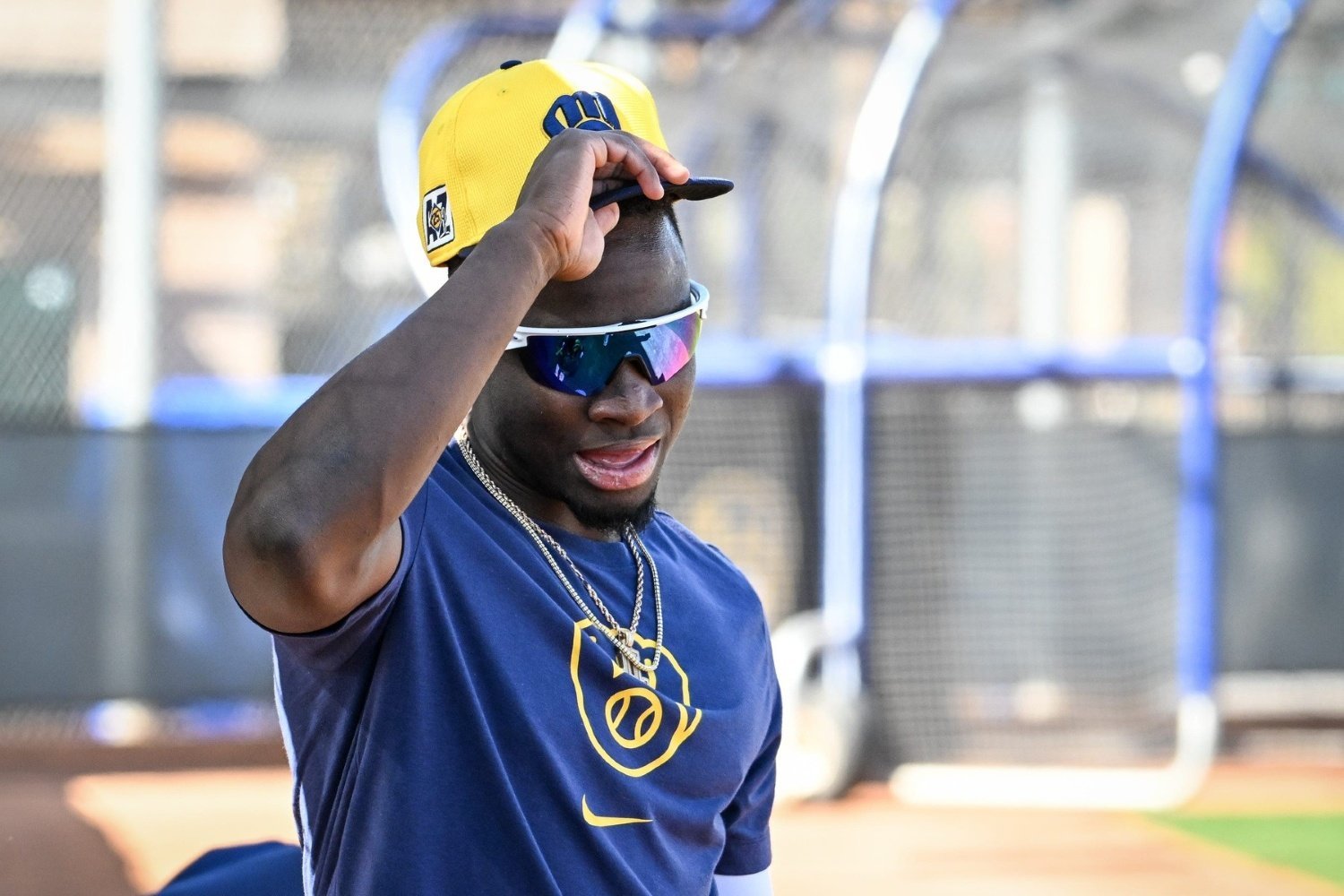 Following in the steps of Cooper Pratt, Luis Lara also signed a long-term extension this year. Lara signed a seven-year deal with $31 million guaranteed, with the potential to reach 10 years and $78 million with incentives and team options. After waiting nearly a month from the time he signed the deal to the day he got the call, he has officially arrived. The question now is, what should fans (realistically) expect from a rookie version of Lara at the big-league level? Before diving too deeply into the production, one thing that is abundantly clear if you have ever watched Lara for an extended period of time is that fans should be expecting a ton of energy from him on a day-in, day-out basis. He plays with a lot of passion; hustle should not be a concern at any point. As for what his production will likely look like, Lara's glove will almost certainly provide the most value early on. He was the 2025 MiLB Rawlings Gold Glove winner in center field, awarded to the best defensive player at each position in all of Minor League Baseball. The scouting grades on the glove are impressive, as well. He received a future 60 grade (plus) from FanGraphs, and a 70 (plus-plus) from both Baseball America and MLB Pipeline. He plays with reckless abandon, willing to crash into walls and lay out in the gap. He has improved his routes and his jumps every year, and there's an expectation that with regular playing time, he can be one of the best defensive outfielders in baseball. Despite only standing 5-foot-7, Lara also has a plus arm and had 10 outfield assists in 2025, adding three more in Triple-A this season. Lara's baserunning should be a plus. He's got plus straight-line speed, possibly closer to plus-plus. However, he has also improved his jumps on the bases. He doesn't quite have the same success rate that Pratt had in the minors, but he did steal 44 of 51 in Double-A last year, and was 24 of 31 with Nashville at the time of his call-up. The 86.3% number in Double-A is really strong. The 77.4% in Triple-A is still serviceable, but ideally, the Brewers will hope to see that number over 80%. At the plate, there will be more questions for Lara early on. He got off to an incredible start at the plate this season, though there were a lot of signs below the surface that the production was not especially sustainable. For example, after his first 114 plate appearances of the season, he had already surpassed his career-high home run total with five, and was posting an incredible 1.000 OPS, with a .430 wOBA. However, his xwOBA was only at .291 at that point. Over the course of the season, the xwOBA has closed the gap a bit, but it would still be a mistake to assume that Lara's surface stats in Triple-A will lead to immediate success in MLB. The chart below is courtesy of TJ Stats and clearly shows the difference between the production and the peripheral numbers. One of the peripheral stats that shows as a clear positive is his very strong ability to make contact. His whiff rate was among the best at the Triple-A level, and he showed decent swing decisions as well. Those are two skills that should translate well in MLB—especially the bat-to-ball ability. His previous career high in home runs was only four, but he already has nine in 2026. While there have been some signs of legitimate growth in the power department, a look at the quality of the contact in general, and even on his home runs specifically, points to some small Triple-A stadium flukiness in those home run numbers. Only three of Lara's home runs have left the bat at 100+ MPH, and three have been 95 MPH or lower. He does have enough power to get into a home run once in a while, but expecting much game power from Lara in MLB this season will lead to disappointment. There is a possibility that there will be more down the line, though, as he has pretty continually added strength and some power every year of his career. One thing to keep in mind as well is that Lara has been much better from the right side this season, at least in terms of his contact quality. In fact, all three of the aforementioned 100+ MPH home runs were hit off of left-handed pitchers. This will lead to him getting a lot of playing time against lefties, which does make it a decent fit with the current roster, because Sal Frelick and Garrett Mitchell are both platoon candidates. Courtesy of TJ Stats It will be interesting to see how often the Brewers get Lara on the field against right-handed pitchers, though. He still shows the strong bat-to-ball and swing decisions from that side, and it would be short-sighted to bring him up and only use him as the short side of a platoon. Assuming he does get semi-regular playing time against righties too, it would be safe to expect more of a line drive approach, with singles from that side, and if we see much power, it will likely come from the right side. Lara handled fastballs and breaking balls very well in Triple-A. Changeups and splitters were the only pitches that gave him much of an issue; that could be something pitchers will look to expose more often in MLB. Despite the overall struggles against offspeed pitches, he didn't swing and miss at them any more than any other pitch; he just struggled to make quality contact. The odds of Lara hitting at a league-average or better clip in his rookie season are not especially high, though they are higher than Pratt's. Still, it would be wise to keep the offensive expectations in check. Lara is here for his defense and his speed. The hope is that there is enough immediate impact offensively to help this Brewers team right now. Luis Lara is officially a big leaguer. Keeping expectations in check for the bat will be important, but this should be an exciting time for Brewers fans, and Lara will bring even more excitement to the field almost every night he makes it out there. View the full article
 -

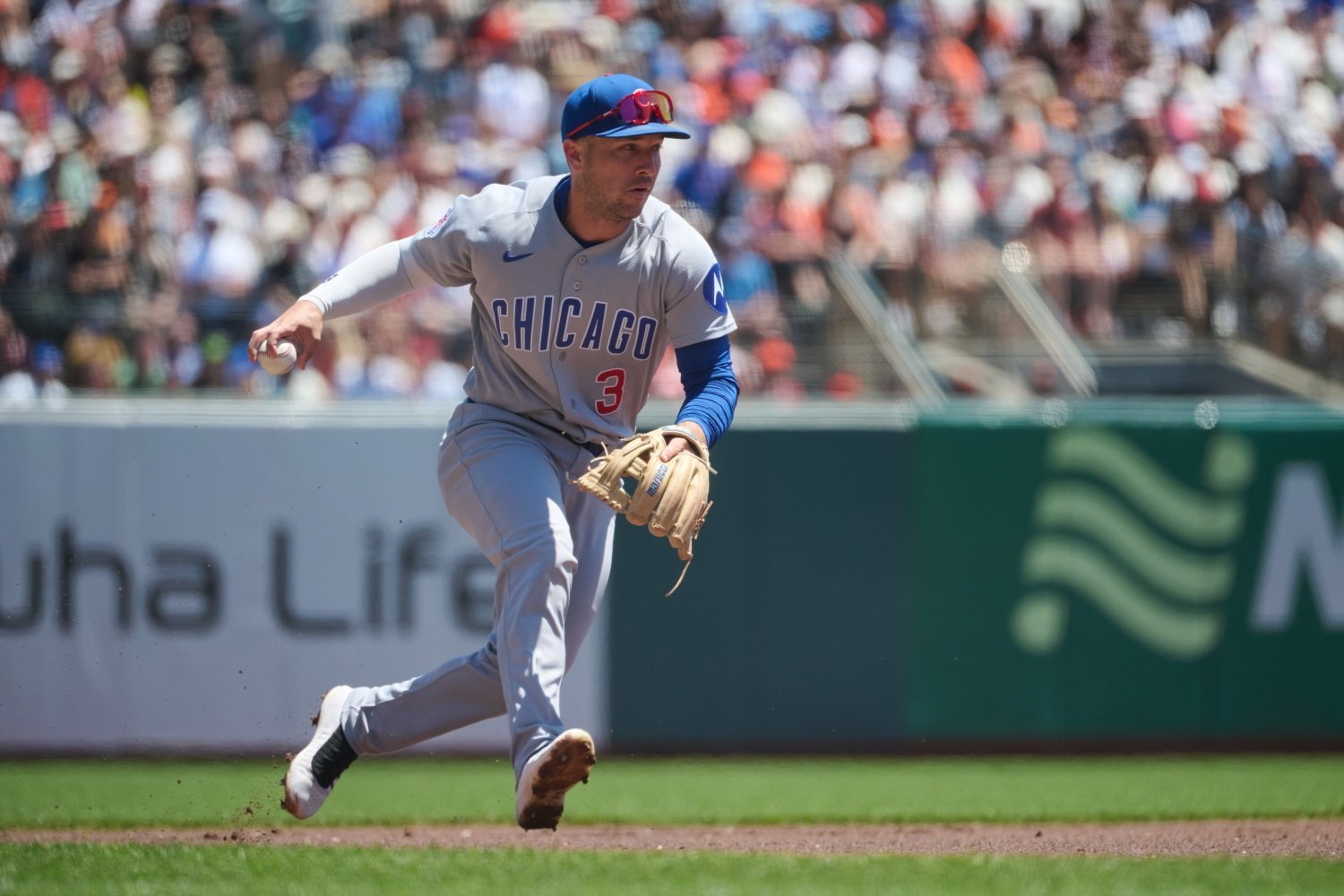 According to Statcast, there have been 212 ground balls hit either to third base or into left field with Alex Bregman on the field this season. On those grounders, on a rate basis, Bregman has been better at getting outs (and, in various ways, preventing extra bases) than all but five other third baseman who have had meaningful playing time. The only person who's been as busy at the hot corner and as efficient as Bregman, this year, is Matt Chapman. Bregman's 9 Defensive Runs Saved (DRS) are already a career high. That's probably somewhat surprising, even if you've watched a lot of Cubs games this season. Bregman is suffering from a reverse-halo effect this year, because he's not hitting the way the team hoped he would when they made a major five-year investment in him over the winter. He also doesn't make many plays that catch your eye—just as the walks he draws and the singles he hits don't catch your eye, at bat. But in fact, Bregman has been a steady and positive player for the Cubs, thanks to his .340 on-base percentage and (especially) his elite partnership with Dansby Swanson on the left side of the infield. Let's take a look at a couple of plays that elucidate Bregman's brilliance with the glove. We can start with one that bends toward the obvious. TUFYcldfWGw0TUFRPT1fRGdOV0JsTlZWd3NBQ1ZOVVVBQUhBZzRIQUFBTUJnY0FWMTFVQmdkVUIxVUdWQWRl.mp4 When you think of a good play by a third baseman, that's the kind of play that comes to mind. The ball was sharply hit and took Bregman toward the line, forcing him to slide to field it cleanly. It also required a long throw across the diamond. If there were 10 plays like this on his highlight reel, you wouldn't be taken aback to learn that he's been the third-best third baseman in the league this year. There aren't, though. Instead, most of the plays Bregman has made look a lot like this. d2V3cVFfWGw0TUFRPT1fVkFrRUJWSU1VZ0lBWGxRQlZRQUhVZ0VGQUFBQkFGWUFDd2RUQ0FVRFZWSUVBQXRl.mp4 That ball, too, was hit sharply, but the play was pretty routine, and it looked like it. In fact, Bregman even did something he's done a ton this year, which used to drive Cubs fans nuts when it was being done by both Nick Madrigal and Matt Shaw: take several steps after fielding the ball to gain ground toward his target before throwing. There are plenty of plays this year on which Bregman has fielded the ball, run five full (though short and quick) steps, then thrown across the diamond after a crow hop. Paradoxically, he's in the habit of giving ground on balls other third baseman would try to field on the charge (or at least with their left shoulder forward, getting their body moving toward the target), but he still finds time on those plays to use a few steps to build momentum before firing. MnI0R3hfWGw0TUFRPT1fQWdkUUFGVUhCUVFBRFZjR0F3QUhDRlZXQUFOUlZsa0FBVklFQWdCV1VGSlhVZ1VI.mp4 I think, though, that a subtle genius underlies Bregman's unorthodox playmaking at third base. The more you watch him, the more he feels just like Swanson, if Swanson were a third baseman instead. For one thing, Bregman is very good at trusting his balance. He stays down on the ball extremely well, but not in a way that leaves him crouched too low to move fluidly out of his fielding position. As the ball gets near him, you'll often see him slightly straighten his legs, but his chest (and, therefore, his glove) stays down. He only has two fielding errors this year, and two throwing errors. Since April 23, he only has one error, period. He's sensationally sure-handed, at a position where bad hops are more common than for any other infielder. As is true of Swanson, Bregman has a below-average arm, in terms of raw throwing power. Like Swanson, though, Bregman has above-average arm utility, because he's accurate and always seems to know how much time he has to make a throw. His internal clock is excellent, and his confidence as a playmaker allows him to succeed on what we might call broken plays, in football parlance. TUFYQVFfWGw0TUFRPT1fQkZWU1VWY0ZBQU1BQUFRS0F3QUhBd0JVQUZrSFVBSUFDMU1IQVFNQlVndFhWZ29E.mp4 This play looks like a could-be routine grounder made dangerous by Bregman himself, but in fact, it was one of those times when everything seems to work against you—but Bregman got an out anyway. With Willy Adames at bat, the Cubs infield was heavily shaded toward the left side. That made getting to the ball relatively easy for Bregman, but once he got there, he had a problem. Michael Busch had been pulled far off the line, and he wasn't getting to the base fast enough to set up in the usual way. Because the ball was hit slowly and on a lazy couple of bounces, Bregman didn't have much time to spare. If he had a stronger arm, he could have held it an extra half-beat, allowed Busch to get set in the standard way, and fired a seed across the diamond, but because he doesn't have that juice, he needed to throw on the run. Doing that while also trying to hit a target that's more air than flesh—throwing to a spot and trusting Busch to make the play, even though he wasn't yet awaiting the ball—is deceptively difficult. That's a play on which many players make an errant throw. Bregman, however, put it right on the bag. Busch, his feet not quite right and not touching the base, had to slap an emergency tag on Adames as the Giants shortstop went by, but he managed it. That's a disaster averted, but also a could-be hit nullified, thanks to Bregman's superb rhythm when he gets to the ball. Bregman has also been excellent at starting the double play; only Chapman has been involved in more from third base this year. Sometimes, that's accomplished simply by means of a quick glove-to-hand exchange and fast release on a throw, to spark the old-fashioned around-the-horn twin killing. But Bregman also does well (unsurprisngly) when running to touch his own base before making the long throw across to Busch—and not infrequently, he starts double plays like a shortstop, because that's where he's playing. ek13QTBfWGw0TUFRPT1fVUZWUkJsY0dBQWNBRFZFRkF3QUhBRlZSQUZsUlZWSUFVVllGQ1ZJTlZWQUFCd1VB.mp4 Swanson came to the Cubs the same year that the league outlawed the infield shift. In the years since, the team has mostly lagged the league in the frequency with which they deploy even the still-legal shading against left-handed batters, whereby the third baseman is pulled far off the line to play something more like shortstop, while the shortstop plays near the bag and the second baseman guards the hole between themselves and the first baseman. Here are the percentages of plate appearances by lefty batters on which they've shaded (and their rank in the league in that category) for each year of Swanson's tenure: 2023: 31.4 (25th) 2024: 37.8 (24th) 2025: 53.4 (14th) 2026: 66.9 (3rd) Whether to shade your infield against a lefty is as much a question of philosophy and personnel as of expected batted-ball location. It's a question of whom you trust most, and whom you trust more in specific circumstances. For the most part, since bringing in Swanson, the Cubs have trusted him with the ball more than the third baseman, even if there was a decent chance he would be making a given play going to his right. They've wanted him to cover as much space as possible even against lefty batters. No more. Bregman is getting a lot of time at a position that's closer to shortstop than to third base, when lefties are up against Cubs pitchers. He's always done this, but it wasn't a guarantee that he would continue to do so once he took up residence next to Swanson. He has. That's the other way in which he's been immensely valuable in the field. While the occasional slapped grounder might now get through an open left side of the infield, the Cubs are better for having Bregman and Swanson working in tandem. The lighter workload in the field should also help Swanson manage the grind of the season better. Cubs fans will feel frustrated unless and until Bregman clicks at the plate and rediscovers his power. His current slugging average (.345) more than .100 off even his recent averages, and he's a .471 career slugger. The team needs him to produce closer to that level, or their offense will continue to feel power-starved at times. Even in the meantime, though, Bregman has been an above-average player, thanks both to the way he keeps the line moving on offense and to the sneaky excellence of his work in the field. View the full article
 -
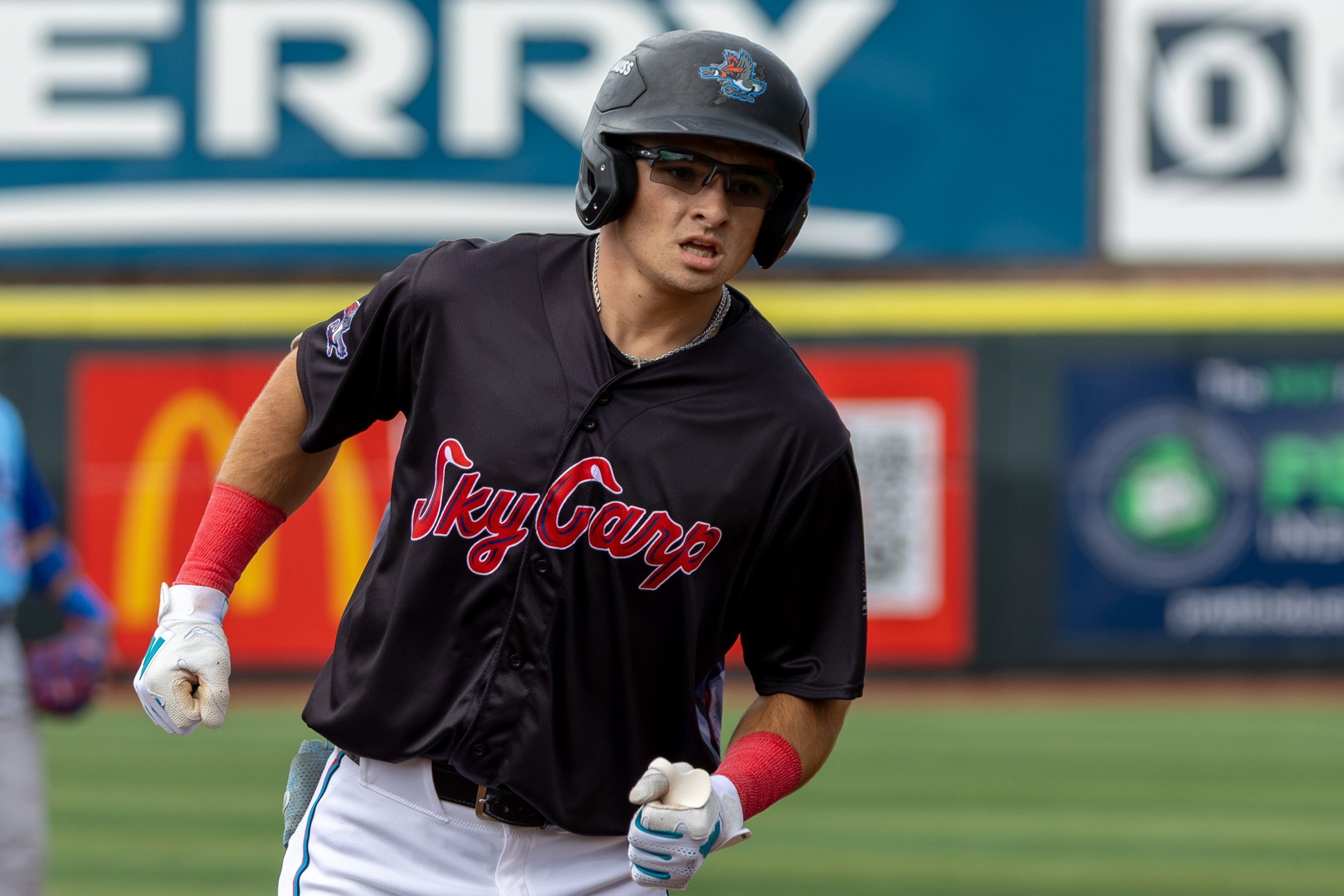 For the 2026 season, Fish On First will provide weekly reports on the Miami Marlins farm system, covering all levels. This is the final check-in we'll be doing before the All-Star break arrives. This report covers the games played from June 30-July 6. Triple-A Jacksonville Kemp Alderman continues to have a strong season in Triple-A, now slashing .301/.377/.515/.892 with 12 home runs, 33 RBI and a 135 wRC+. Having added the ability to play first base on top of his corner outfielder background, Alderman would already be playing in the big leagues for many other organizations. However, the Marlins continue to get excellent offensive production from those positions. Don't forget about Deyvison De Los Santos, who already debuted this season. De Los Santos hit a home run in back-to-back games to finish the week and is riding a five-game hit streak for the Jumbo Shrimp. He is now slashing .271/.322/.438/.761 with nine home runs, 40 RBI, 11 stolen bases and a 101 wRC+. The biggest improvement by far is his career-low 19.0% strikeout rate. More than two months since getting sent down, Agustín Ramírez is slashing .252/.327/.457/.784 with seven home runs, 25 RBI, 11 stolen bases and a 106 wRC+. He is striking out 21.1% of the time while walking 8.8%. The last time Marlins manager Clayton McCullough was on Fish Unfiltered, he said that the organization had begun to consider moving Ramirez to first base, but that has yet to happen in a game itself. Ramirez has allowed 40 stolen bases while throwing out 10 and has seven passed balls plus 11 errors so far in Triple-A. The defense behind the plate is not getting much better for him. Since being optioned himself, Connor Norby has played in six games (four starts), slashing .333/.417/.381/.798 with three RBI. He has not played first base in any game—only third base and second base once. On the mound, it's been all downhill for Karson Milbrandt since his scoreless Triple-A debut. Most recently on Saturday, he allowed five runs on six hits, walked three and failed to record a strikeout. In five Triple-A starts, the Futures Game representative has a 4.15 ERA, 4.71 FIP, 7.89 K/9 and 8.31 BB/9. Milbrandt has now walked three or more hitters in every start since arriving to Jacksonville. Jack Ralston continues to be a steady force in the Jacksonville bullpen, now posting a 1.18 ERA, 3.84 FIP, 11.04 K/9 and 3.74 BB/9 in 45 ⅔ innings pitched. Ralston, who the Marlin signed to the minor league deal back in the offseason, made a strong impression during spring training, but did not make the Opening Day roster. He continues to wait his turn even as injuries have opened up bullpen spots for the likes of Cade Gibson, Tyler Zuber and Zach Brzykcy. In his last four starts with Jacksonville, Braxton Garrett has only two walks and has struck out 27. It's a dramatic change from what he showed during a brief stint in the Marlins rotation. Garrett now has a 1.55 ERA, 4.06 FIP, 9.70 K/9 and 3.52 BB/9 in 12 starts with Jacksonville. The Marlins don't yet seem convinced that he'd be an upgrade to their rotation, and now with Janson Junk closing in on his return from the injured list, it's unclear if another big league opportunity will open for him this season. Double-A Pensacola It was an eventful week for Pensacola who waited out some long rain delays and postponements and took part in some brouhaha in their penultimate game, which resulted in six ejections and a possible suspension. Overall, pitching struggled for the Wahoos as they dropped five of six games to Rocket City. We're running out of adjectives to describe what Cam Cannarella is doing. Another week, another standout effort: 6-for-17, two solo homers and a double. The 22-year-old, largely scouted as hit over power, is now slugging .599 on the year. He’s hit all eight of his Double-A home runs in a 14-game span. What’s arguably most impressive about Cannarella’s added power is that it’s not fluky whatsoever. When he goes pull side, he hits no-doubters, but he’s also showing a penchant for frequenting his opposite field. A generous plate coverage bat already, this addition of power could not be going any more advantageously for Cannarella. Not sacrificing patience and swing decisions, he’s turning in to a complete offensive weapon. All of this is happening while he is playing a plus-plus center field, as evidenced by his latest acrobatic catch this week. This is a breakout on another level. With continued production, Cannarella should be considered the favorite to be the Marlins’ starting center fielder in 2027. One pitcher who didn’t struggle for Pensacola this week was Eliazar Dishmey. After having his previous start was rained out and a couple of rough outings before that, the righty had his best outing at the Double-A level, pitching into the seventh inning on just three hits. He did not allow a hit until his final frame. Dishmey struck out eight, and perhaps most encouraging of all, did not walk a batter. It was a rude welcome to the high minors for the 21-year-old, who is playing against competition over three years older than him on average, but Dishmey showcased the maturity and ability necessary to adjust back to far more advanced hitters. This start proved that, when commanding, his deep arsenal is capable of dominating Double-A bats. Dishmey used his entire five-pitch arsenal well, keeping guys off balance and proving he can get whiffs with any of his offerings. He featured three different out pitches, recording strikeouts with fastball, slider and curveball. The improvement of the slider has been a key cog in Dishmey’s development this season as he’s shown the ability to throw the pitch with high spin and late break to his spot. It also features some sharp downward actions, allowing him to throw it outside of the zone for uncompetitive whiffs. Dishmey can also change speeds and eye levels well, particularly with his heater which he can ramp up to 97 mph or take something off of to dip down into the low 90s. A crafty pitcher with a still-developing four-pitch mix, he can get guys out in a variety of ways. Command will need to consist for Dishmey to remain effective, but at just 21 already succeeding at Double-A, he has a high floor. After the likes of Thomas White and Karson Milbrandt, this is one of the next best pitchers in the Marlins’ system. High-A Beloit Beloit battled through a suspended game and a postponement at home against South Bend but was able to kick off July in a very positive fashion, taking five of six games against the Cubs for their second straight series win. Pitching was the key for the Sky Carp as they tossed three shutouts. As a team, they allowed just over 20 runs over the six game set. Beloit is 11-6 in their last 17 games. After a delayed start to his career due to a season-ending injury in 2024 and having to be built back up during the first half of 2025, Aiden May is quietly putting everything together in Beloit. Early-season flashes in between struggles with control and command are turning into consistency for the 23-year-old. Since his second start of May, the righty has been turning in quality results that equate to 23 ⅔ innings and four earned runs (1.55 ERA). May’s latest export was his second quality start of the season and first since April 19. Over six frames, he allowed just three hits and two walks while striking out four. Most encouraging of all for May was his ability to command all four quadrants of the strike zone and induce regular weak contact, including eight ground ball outs. It has been very refreshing to see May start to round into form but what is even more remarkable is how much further he could possibly go. With a fantastic pure stuff profile including a sinking fastball that can touch 98 mph and a fantastic sweeping slider that holds astounding horizontal movement, the 6’1”, 196-pounder’s profile, career arch and development so far are all akin to Max Meyer who the Marlins fully unlocked this year and turned into a top-of-the-rotation starter. To stick as a starter, the persistent harnessing of his control and command as well as the further development of a third-pitch changeup which has flashed plus already this year, will be key. Because of the already plus-plus two-pitch combo, May at the least could be a very solid multiple-inning reliever, providing him with a high floor. That same stuff profile gives him a pretty solid ceiling as a mid-back-end-rotational starter if everything works out. For now, the Marlins have to be very pleased with how May is starting to project. Another early-round Marlins pick starting to turn heads is Carter Johnson, Miami’s second-rounder in 2024. It was an uninspiring start for the high schooler who was assigned to full-season ball right out of the draft and continued there for all of 2025. In his first 134 games as a pro, Johnson was humbled to the tune of a .186 batting average and 174/54 K/BB. Johnson returned to Jupiter to begin 2026, where he finally found success against Florida State League pitching. In 63 games, he slashed .243/.355/.426. With improved plate discipline and swing selections, Johnson held down a 79/39 K/BB, spurring his promotion to High-A. With the Sky Carp, his success has permeated. In his first nine games in Beloit, Johnson is slashing .314/.400/.714. This past week, he earned our Prospect of the Week honors by going 8-for-19 with three long balls. Along with his much enhanced timing and temperament at the plate, Johnson has exhibited a much shorter swing. This has allowed him to get his bat on many more pitches, particularly pitches on his inside that would previously tie him up in knots. Closing that hole in his approach has allowed Johnson to make the most of quick hands and come by some pretty good power numbers. Previously a very easy matchup, he is quickly becoming a tough out. Johnson looked fine as a shortstop with Jupiter but with Beloit, he’s spent all but two games at third base. He’s looked fine there as well, particularly showing off solid arm strength. Low-A Jupiter One prospect who continues to shine at the Low-A level is infielder Echedry Vargas, who is slashing .300/.353/.502/.855 with eight home runs, 36 RBI and a 126 wRC+. The Marlins acquired Vargas as the main piece in a trade with the Texas Rangers sending Jake Burger to the Lone Star State. After struggles at the High-A level, the Marlins demoted the 21-year-old to Low-A, where he seemingly has shown plenty of improvements. As nice as it is to see Vargas surge offensively, it's hard to believe in him as a long-term contributor until he gets tested at High-A again.. After a strong start for Luis León, he is now slashing .273/.314/.364/.678 with one home run, six RBI and an 85 wRC+. An international signing out of Cuba in 2024, Leon struggled in 2025, but after repeating the FCL to begin 2026, he had a 106 wRC+ in 34 games before being promoted to Jupiter. Between both levels, he is slashing .254/.362/.420/.782 with four home runs, 23 RBI, 24 stolen bases and a 102 wRC+. His FCL numbers carry that slash line for the most part. Left-hander Elier Morillo appeared in one game against Dunedin, where he went 1 ⅔ shutout innings, striking out four and only allowing one walk. Fish On First recently spoke to Morillo in detail about his development with the Marlins org. Overall, he now has a 4.30 ERA, 3.99 FIP, 17.49 K/9 and 7.06 BB/9. Despite almost always working in relief, he ranks fifth on the Hammerheads with 57 total strikeouts. FCL Marlins Yohanfer Santana has struggled with command throughout his career, walking 62 batters in 60 innings. That's a common profile at the lower levels of the Marlins system. On the other hand, he possesses some of the best strikeout stuff you'll find. This year in the FCL, Santana owns a 15.0 K/9. His H/9 is down by more than a hit compared to last year, but the walks continue to hold him back, as he owns a career 9.30 BB/9 in the minors. This week he showed a glimpse of his potential, throwing two innings while striking out five, walking none, and hitting one batter. Santana is still just 20 years old, and the raw stuff is there. However, with this being his fourth professional season and the command still not taking a step forward, it will be interesting to see what the organization's plan is moving forward. John Cruz is riding an eight-game hitting streak dating back to June 19 and has raised his season average to .295. His .495 slugging percentage is nearly double what it was last year, while his .890 OPS is approaching the level he reached during his breakout season in the Yankees organization in 2023. This is the version of John Cruz the Marlins believed they were acquiring in 2024. Adrian Bello is putting together another nice season in the FCL after breaking out in the DSL last year. He is hitting .295 with seven doubles, one home run, and 16 RBIs. He has also shown a disciplined approach at the plate, walking 15 times while striking out just 16. He is currently riding a four-game hitting streak and has recorded a hit in seven of his last eight games. His consistency has been one of the more encouraging developments in the FCL lineup, and he continues to make a strong case for a promotion later this season. DSL Marlins & DSL Miami Evan Da Souza continues to impress across the board. Through the first month of the DSL season, the 16-year-old owns a 2.03 ERA. In 13⅓ innings, he has allowed just six hits and three earned runs. This past week he continued that trend, throwing three innings while allowing one hit, one run, and striking out five. He has walked 17 batters in those 13⅓ innings, but when he is in the zone, he is nearly unhittable. At just 16 years old, it's not a matter of if, but when. Carlos Ochoa is quite the opposite of most pitchers in the DSL. In 8⅓ innings this season, he has walked just three batters while striking out 11. This past week he struck out five over two innings while allowing just one walk. In 30 innings last year, he walked 22 batters, so the improvement is clearly there. At 19 years old, he could be knocking on the door of a stateside debut. Through five starts, Ricardo Morel—no relation to Christopher—has put together a solid season. In 14 innings pitched, he owns a 3.86 ERA while striking out 22 batters. This past week he turned in another strong outing, throwing four scoreless innings with six strikeouts and one walk. The biggest things to watch are the walks and the lack of ground balls he's generating. He has walked 13 batters in those 14 innings, and his GO/AO ratio sits at just 0.12. According to MiLB.com, he is averaging 21 pitches per inning, so if the command improves, the results should take another step forward across the board. Bayant Melo has made the report in back-to-back weeks as he continues to put together the best season of his professional career. This week he added three more scoreless innings while striking out four. The command is still a little shaky, but what a bounce-back year it has been for him. Daniel Peña made his professional debut this week and looked like he hadn't missed a beat. He went 4-for-7 (.571) with a couple of RBIs and a pair of stolen bases. All four hits were singles, but it's encouraging to see him get comfortable immediately. What's better than a week with one home run for the 17-year-old? A week with two. Santiago Solarte launched two more home runs this week, bringing his season total to four. He is off to a 4-for-10 (.400) start in July and has already stolen five bases this month, giving him 21 on the year. Defense remains the glaring weakness for him, as he has committed 15 errors this season, including 12 in just 106⅓ innings at shortstop. This week's schedule Triple-A Jacksonville vs. Durham Double-A Pensacola vs. Montgomery High-A Beloit at Wisconsin Low-A Jupiter vs. St. Lucie FCL Marlins, DSL Marlins and DSL Miami against various opponents View the full article
 -
Boston Red Sox Minor League Hitters of the Month: June 2026
DiamondCentric posted an article in Talk Sox
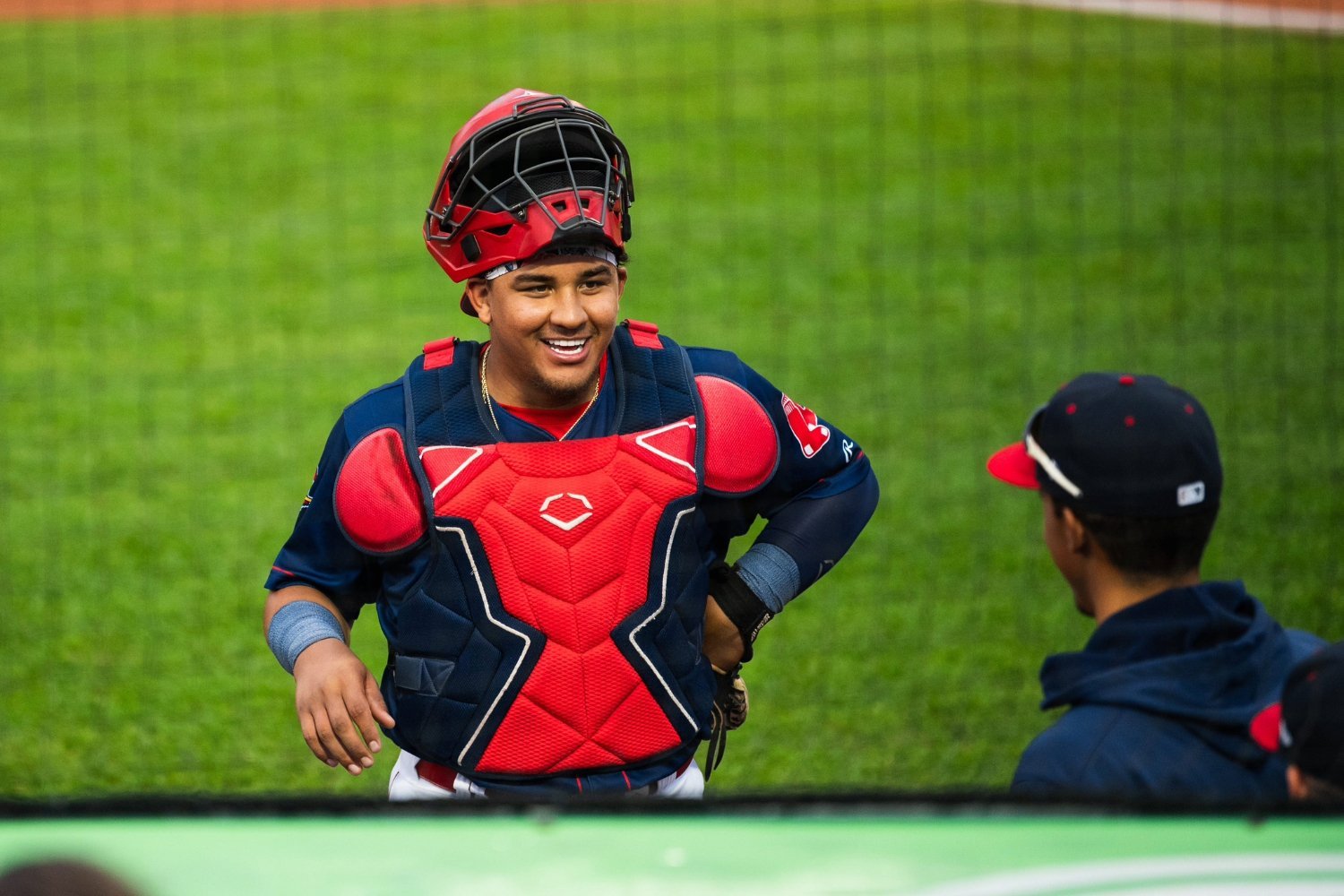 It’s hard to believe, but the baseball season is now over halfway finished. Though things haven't gone great in the big leagues, many prospects have managed to play well this year. For the Boston Red Sox, the breakout seasons that many of their prospects are having continued through the month of June, leaving fans questioning why they haven’t been promoted to the next level of the farm system yet. Thanks to that, it’s been quite the time following the affiliates, watching as you can’t help but picture all these prospects producing at the major-league level. We’ve narrowed this award down to the five best hitters in the Boston Red Sox minor-league system from last month, but know that there were many worthy candidates. Ranking Red Sox’s Best Minor-League Hitters in June Honorable Mention: Kleyver Salazar (Low-A Salem) Salazar isn’t usually someone who is viewed for his offense, due to his inability to make consistent contact. Despite that, the 20-year-old catcher put together a solid month of June. Appearing in 17 games, Salazar slashed .281/.351/.453 with two doubles, three home runs and 13 RBIs while walking seven times. All of this came while playing in what is typically a more pitcher-friendly environment. If he can just get his bat to the ball more frequently, there’s some offensive potential here. Honorable Mention: Mikey Romero (Triple-A Worcester) A rollercoaster season for the former first-round pick saw the infielder put together a strong month of June. Romero, who watched as many hard-hit balls found gloves through the first two months of the season, heated up just as the temperature did. In 19 June games, Romero slashed .300/.375/.571 with two doubles, one triple, five home runs and 12 RBIs. His offensive potential was put on full display, as he finished tied for second in RBIs for Worcester while leading the team in home runs. The hope is that Romero’s hot hitting continues into July, and depending on what happens with the major-league roster at the trade deadline, that could translate into a late-season promotion to Boston. #3: Johanfran Garcia (Double-A Portland) How do you get 32 hits in just 20 games and only finish third for the award? It only shows how tight the race this month truly was. In 20 games throughout June, Garcia tore the cover off the ball, hitting .372/.400/.547 with six doubles, three home runs and 13 RBIs. That breakdown is important to note; of those 32 hits, nine of them were for extra bases. While there’s nothing wrong with singles, you would like a bit more power to be included in the production. Add to it a walk-to-strikeout ratio of 3-to-20, and it makes sense why Garcia finished third. There’s no denying the offensive talent the catcher possesses, and while he’s young for the Double-A level, you would like to see those strikeouts drop just a little or at least see an increase in the walks. #2: Franklin Arias (Double-A Portland) Arias appeared in 23 games and slashed .322/.416/.540, which would have been enough to get him the top spot for this award in most months. In those 23 games he also hit seven doubles, four home runs and drove in 11 RBIs. Arias’ offensive production this season has been no surprise for anyone following the young infielder. He’s putting together his best all-around season and June was much of the same. A force at the top of the lineup, Arias is likely to reach base for the batters behind him and is in a good situation to score often. The hope is that he’ll soon be doing the same for Triple-A Worcester. #1: Ahbram Liendo (Double-A Portland) Choosing Liendo over Arias as the top offensive player for June was a tough choice. Both players were deserving of the selection, but it was Liendo’s 22 RBIs that swayed things in his direction. Liendo has had a tough season overall offensively, hitting .229/.311/.366 in 68 games. However, the middle infielder put together one of his strongest months while in the organization, as he slashed an impressive .309/.395/.559 with five doubles, four home runs and 22 RBIs in 22 games. He also managed to swipe six bases. As a prospect, Liendo is known for his speed and defense over his hitting, so seeing the 22-year-old breakout as he did in June was a pleasant surprise. While one month does little to change the projected future of being a defense-first depth player, this could be the start of a profile-changing development. View the full article
 -
Twins All-Star Byron Buxton Goes On Injured List With Ailing Hip
DiamondCentric posted an article in Twins Daily
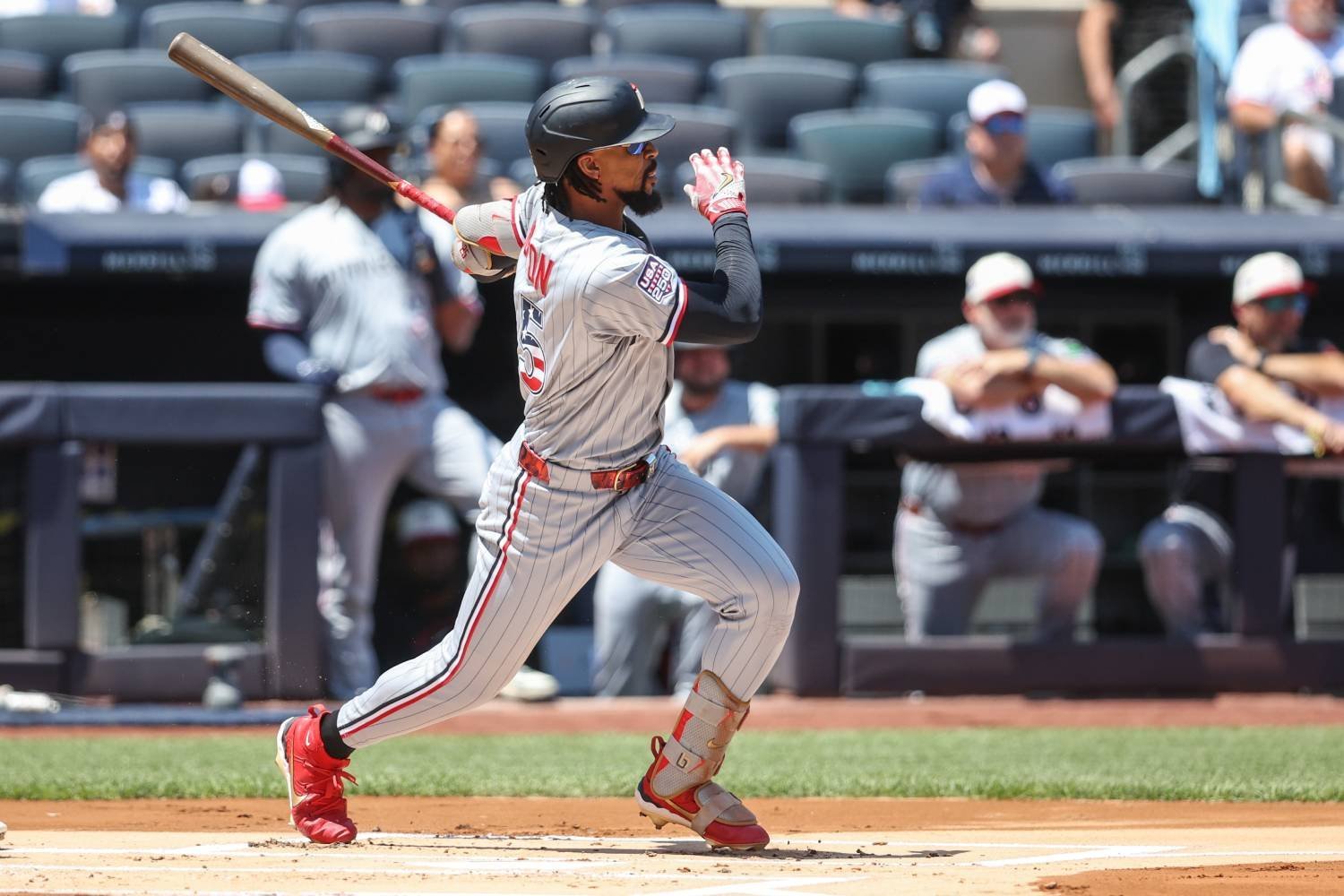 One of the Minnesota Twins' All-Stars won't be going to Philadelphia after all. The Twins on Tuesday placed center fielder Byron Buxton on the 10-day injured list due to an ailing right hip. Outfielder Alan Roden was called up from Triple-A St. Paul. Also, the Twins officially added right-handed reliever Woo-Suk Go, acquired in a cash trade Sunday with the Detroit Tigers, to the roster. He will be making his MLB debut. Buxton was selected Saturday to his third All-Star Game, but will not be playing in the game due to his injury. He has a .271/.328/.575 slash line and is among the AL leaders with 25 homers. He hit a career-high 35 homers a year ago. Buxton's career is littered with injuries that have prevented him from consistently putting up monster numbers. Roden has been having a good season at St. Paul this year, slashing .272/.397/.512 with eight homers and 24 RBIs in 33 games. Roden spent time on the injured list this season due to a labrum tear. He appeared in 55 games last year between the Twins and Toronto Blue Jays, with a .191/.261/.294 slash line, hitting two homers and driving in nine. Roden and left-hander Kendry Rojas were the return in the trade with the Jays for right-handed reliever Louis Varland and first baseman Ty France. View the full article
 -
 Luis Lara, the Milwaukee Brewers' 4th-ranked prospect, got the call-up to the big leagues! Who is Lara, and how can he leverage his best tools (70-grade fielding, 60-grade run) to etch his way into an outfield littered with contracts encountering arbitration. Let's break it all down for someone who has already inked an extension with the organization. View the full article
 -
Jorge Polanco Returns To Mets Following Achilles Injury
DiamondCentric posted an article in Grand Central Mets
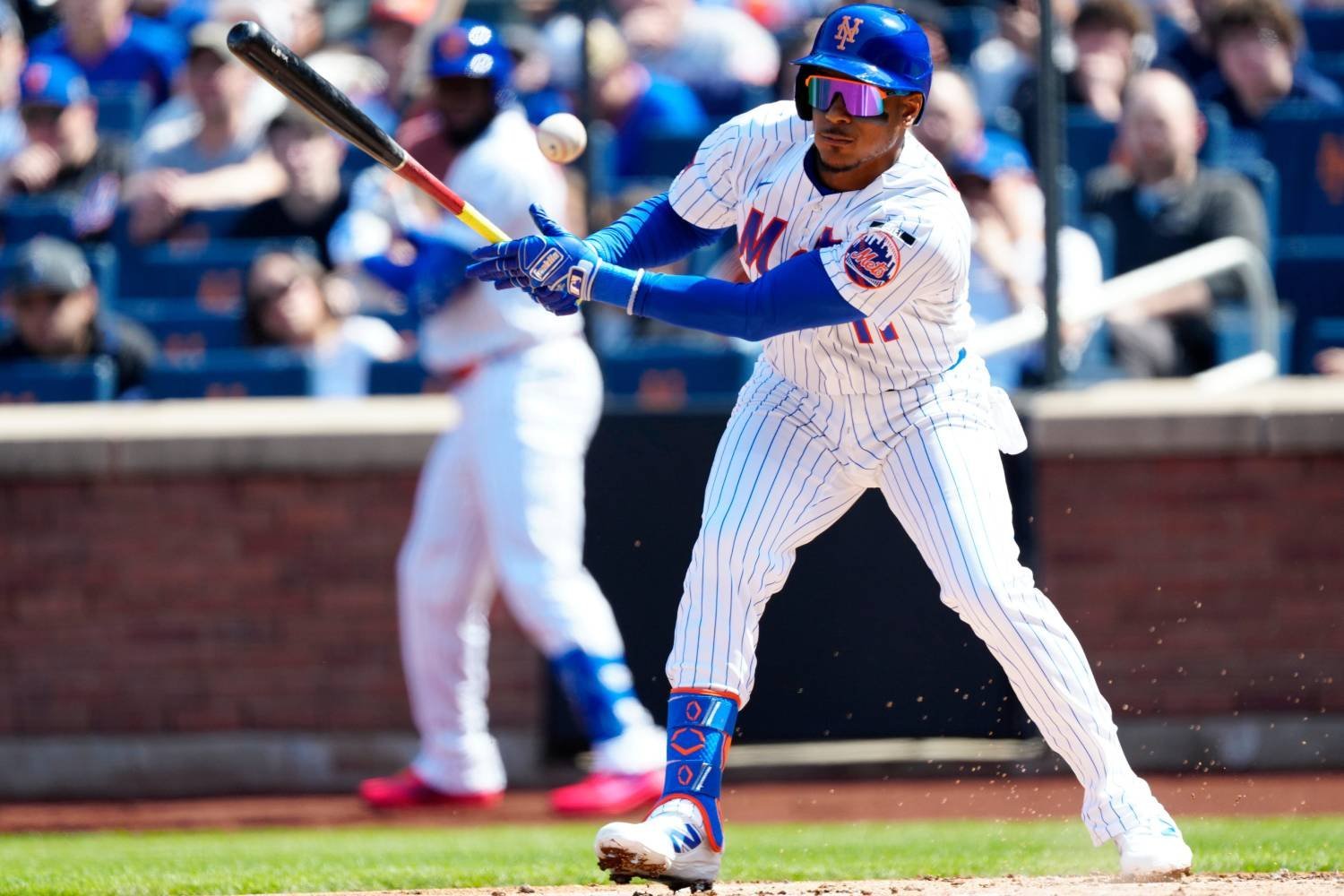 Even if he isn't quite 100%, Jorge Polanco is back with the New York Mets. The infielder was activated off the 60-day injured list by the Mets on Tuesday, with infielder Ronny Mauricio optioned to Triple-A Syracuse. Also, right-hander Matt Seelinger, acquired Monday in a trade with the Detroit Tigers, was officially added to the 26-man and 40-man rosters. Right-handers Guillo Zuniga and Alex Carillo were designated for assignment to make room for Polanco and Seelinger on the 40-man. Polanco has been out since mid-April due to left Achilles bursitis. Polanco is expected to strictly be a designated hitter for the early part of his return. He was a key offseason addition, signing a two-year, $40 million contract with the expectation of playing first base to provide better defense. Zuniga was called up Sunday and appeared in Monday's game against Atlanta, going one hitless inning with no walks and a strikeout. Carillo, while he had been on the 40-man roster, had not pitched in the majors this season after making his MLB debut last year with three appearances. He has compiled a 5.57 ERA in 21 appearances and 21 innings at Triple-A this year. View the full article
 -
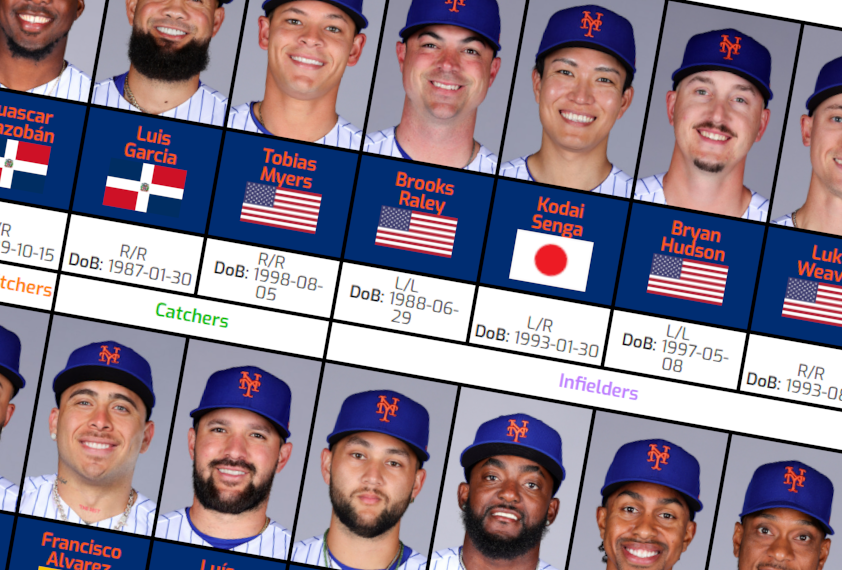 A very important but infrequently told chapter in Mets history is the tale of the short but consequential tenure of Bing Devine as general manager. Bing was gone by the time the 1969 Mets won the World Championship, but the team that claimed the title was largely his. Bing's first season (1967) at the helm featured 54 players — a record that stood for decades — as he largely turned his roster over twice, in season, looking for players and combinations that would be helpful when this team was ready to compete. Miracles will come, in some 1969 of the future, but as the 2026 Mets have not been hinting of a magical turn this summer, the work of a GM becomes reloading. As the team prepares to sell off parts, and the can of miracles gets kicked down the road a stretch, should these things come to pass, management will be asked to still field a putative MLB team the last two months of the season, and to evaluate who might have a magic bean or two to add to that can. Some of those figures appear below. Transactions, 7/2/2026 COMING Transferred from St. Lucie to Binghamton on Rehab Assignment Added to 40-Player Roster and Assigned to Syracuse Relief Pitchers Dedniel Núñez Jefry Yan R/R DoB: 1996-06-05 High Level: MLB (2025) L/L DoB: 1996-08-17 High Level: MLB (2026) Rookie sensation of 2024 and UCL victim of 2025, Dedniel Núñez got back on the field in 11 months, as teams are willing to accelerate the recovery schedule a small amount for relievers, which kind of makes sense and kind of doesn't. Steady Deddy gave up a run in an inning and two thirds in St. Lucie, but has yet to be touched in two innings with the Rumble Ponies. If walk/strikeout ratios are something you use to measure a rehabbing pitcher's progress, he has fanned four and walked none in 3 2/3 innings, and 4/0 is irrational! Fellow Dominican Jefry Yan is at the other end of the spectrum — a grizzled veteran of something like a dozen professional seasons in the stateside minors and abroad. He was added last summer and retained this winter with little fanfare, but damned if they didn't do something to get the guy on the good foot. IP R ER H HR BB SO 8.0 4 3 4 0 6 21 The guy's ERA is the bottom line, and that sits at 3.38, which certainly seems serviceable. But the real story here is that the guy has retired 24 guys and 21 of them have been on strikeouts and that is the sort of thing that makes a man stand up and say AMEN! — as does the report that Jefry is bringing 100-mph heat from the left side. Adding a guy to the 40-Player Roster mid-season without promoting him to the big is certainly unusual, and as the maneuver comes at the top of the month, it suggests that the player had a opt-out clause if the team didn't rosterize him. But keep your eyes open for him in coming weeks as opportunities arise. No hurry on Dedniel, but the clock is certainly ticking on this Jefry Yan guy. Transactions, 7/4/2026 GOING Released Infielders Grae Kessinger R/R DoB: 35667 High Level: MLB (2024) Grae Kessinger, Houston Astro of 2023 and 2024, is a third generation MLB player — albeit indirectly, as he follows his grandfather Don Kessinger and uncle Keith Kessinger. He spent the first seven or eight weeks of the season on the IL, and never quite caught up following a damaging hammy injury early in spring training. But considering those bloodlines, and being the only Graeber in MLB history, one might be forgiven for wishing him the best at his next stop. Transactions, 7/5/2026 GOING COMING Demoted to Syracuse Traded from DET for Cash, Assigned to Syracuse Added to 40-Player Roster and Promoted from Syracuse Relief Pitchers Joey Gerber Matt Seelinger Guillo Zuñiga R/R DoB: 1997-05-03 High Level: MLB (2026) R/R DoB: 1995-04-19 High Level: AAA (2026) R/R DoB: 1998-10-10 High Level: MLB (2026) If you watched last night's game, you saw the debut of Guillo Zuñiga. Gary pronounced the name with a straight N as zoo-NEE-gah, like actress Daphne Zuniga, instead of the zoon-YEE-gah pronunciation indicated by the tilde. Anyhow, baseballreference.com says the latter is correct, and while we have faith in Gary Cohen getting his **** together, we can hardly afford a repeat of the jay-or-EESE debacle. Anyhow Guillo, looked pretty sweet last night, sawing off bats at the handle and making a basket catch on a week popup. He also looked like one big Colombian — putting the bedimpled Joey Gerber on notice (one hopes) that he will have to earn his way back to Flushing. Also joining the swelling 40-Player Roster (calling it a "40-Man Roster" does not allow for room to believe a woman may one day play for the Mets) is Matt Seelinger. Matt had been DFA'd by the Tigers and the Mets, rather than hope to grab him on the waiver wire, made a move and acquired him for cash money. Matt is local boy several times over, born in the Long Island hamlet of Westbury, NY, graduating from W.T. Clarke High School in nearby Salisbury, and then going on to play four years for Farmingdale State College. As Farmingdale has spent most of its history as a two-year community college, you can't come from a much more obscure stateside background to find yourself at the threshold of the bigs. And yeah, this is the time of the year when the Mets are prone to add local figures and feel-good stories to give themselves some good press, and gain some good will from the credulous and gullible, but we at Mets Roster Central can't help ourselves. GO, MATT SEELINGER!!! View the full article
 -
MLB Insider: Twins “Look Increasingly Unlikely to Sell”
DiamondCentric posted an article in Twins Daily
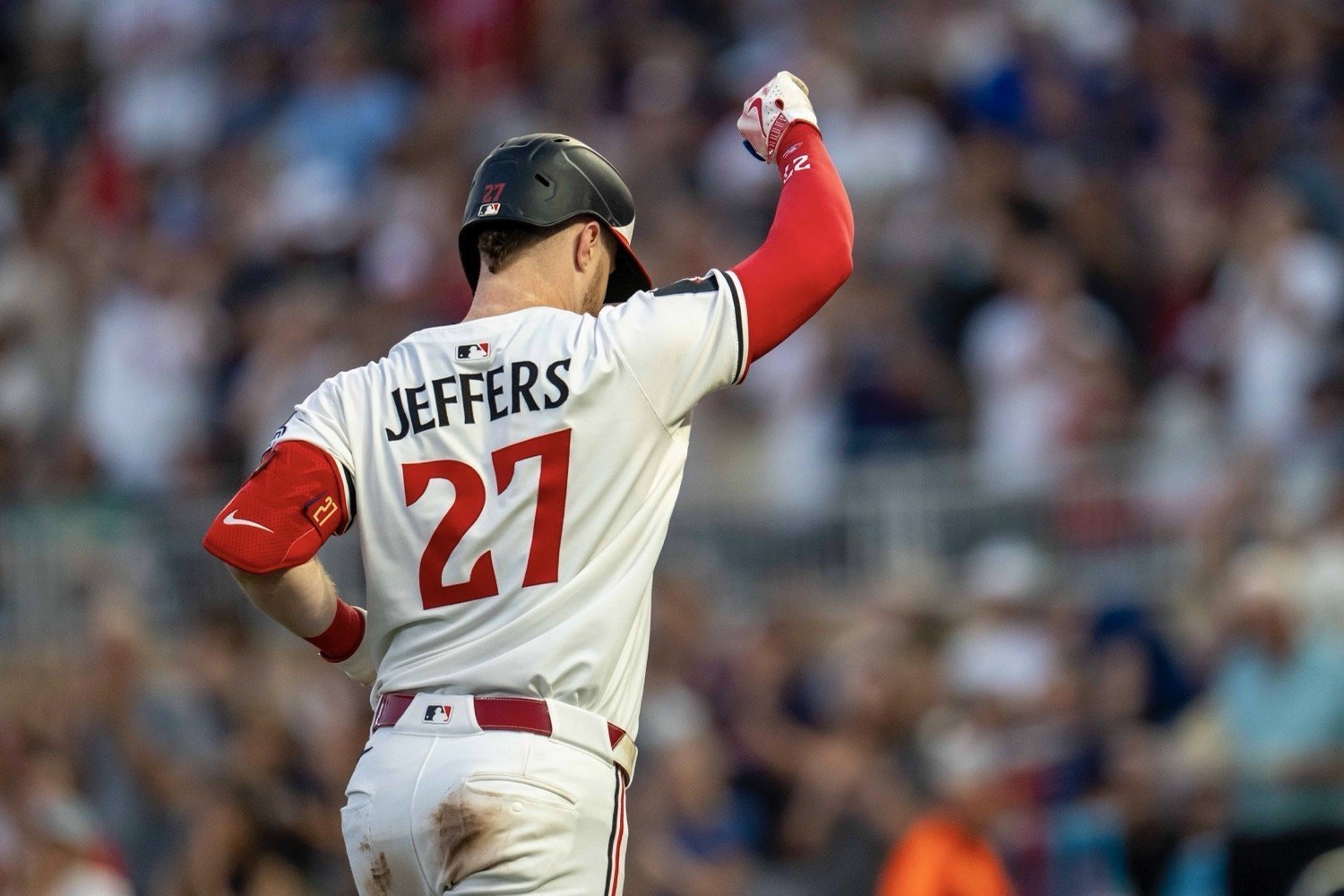 Just a couple of weeks ago, it felt inevitable that the Minnesota Twins would spend the trade deadline moving veteran pieces for future assets. Hovering below .500 and struggling to gain ground in the American League Wild Card race, Minnesota looked like a team headed toward another disappointing finish. Then the script changed. A series victory at Yankee Stadium, Minnesota's first since 2014, continued a stretch of improved baseball that has put the Twins squarely back in the postseason conversation. They aren't leading the division, but they're close enough to the final Wild Card spot that selling no longer feels like the obvious path. According to MLB insider Ken Rosenthal, that's exactly how the Twins are approaching the deadline. "The Minnesota Twins... look increasingly unlikely to sell. They are only 1 1/2 games back in the race for the third AL wild card, and their new control person, Tom Pohlad, is motivated to win over his players and win back fans." That represents a significant shift from where things stood just days ago. Minnesota has played itself back into contention, and with roughly three weeks remaining before the trade deadline, every win makes it more difficult to justify subtracting from the major league roster. Even so, standing pat doesn't necessarily mean every veteran is untouchable. Ryan Jeffers Still Makes Sense as a Trade Chip Rosenthal also noted that catcher Ryan Jeffers remains one player who could be moved regardless of where Minnesota sits in the standings. "One player the Twins could move regardless of their standing is catcher Ryan Jeffers, who is on a rehabilitation assignment as he works his way back from a left hamate fracture. Jeffers is a potential free agent who could bring back bullpen help, and the Twins could replace him with Victor Caratini and Alex Jackson." That possibility has become much more realistic over the past month. When Jeffers went down with a fractured hamate bone, Minnesota turned to Victor Caratini for an increased workload. Rather than simply filling in, Caratini has become one of the club's most productive hitters while continuing to provide quality defense and veteran leadership behind the plate. His emergence has changed the equation. Earlier this season, trading Jeffers would have left a significant hole at catcher. Now, Caratini has shown he is capable of handling everyday duties, while Alex Jackson gives Minnesota another defensive-minded option to round out the catching tandem. The Market Could Work in Minnesota's Favor Rosenthal also identified two clubs that continue to monitor the catching market. "Speculation persists that the New York Yankees will pursue Jeffers. The Tampa Bay Rays are another team interested in catching help, creating the possibility of an AL East bidding war." That's encouraging news if Minnesota ultimately decides to move Jeffers. Quality catching is always difficult to acquire in July, and multiple playoff contenders searching for upgrades could drive up the asking price. Rather than simply receiving a lower-level prospect, the Twins could target an area of greater need. The Twins no longer appear headed for a traditional sell-off. If they continue to play winning baseball, adding complementary pieces may become just as likely as subtracting veterans. But that doesn't eliminate the possibility of making calculated moves that improve both the present and the future. The next few weeks will determine whether the Twins become buyers, sellers, or something in between. Based on their recent play, the most likely outcome is a club that tries to thread the needle by competing for a postseason berth while taking advantage of opportunities to improve the roster. View the full article
 -
 Blue Jays Affiliate Overview (July 4-6) Triple-A Buffalo Bisons Series vs St. Paul Saints (Minnesota Twins): 3-3 Season Record: 42-45 Double-A New Hampshire Fisher Cats Series vs Reading Fightin Phils (Philadelphia Phillies): 3-3 Season Record: 41-38 High-A Vancouver Canadians Series vs Eugene Emeralds (San Francisco Giants): 3-3 Season Record: 34-47 Single-A Dunedin Blue Jays Series vs Jupiter Hammerheads (Miami Marlins): 5-1 Season Record: 38-42 FCL Blue Jays Week Record: 3-3 Season Record: 31-16 DSL Blue Jays Blue Week Record: 2-3 Season Record: 11-15 DSL Blue Jays Red Week Record: 5-1 Season Record: 12-13 Triple-A Buffalo Bisons Season Record: 42-45 Series vs St. Paul Saints (Minnesota Twins) July 4: With July 4th festivities in full swing around the country, Buffalo faced off against the St. Paul Saints. In front of a crowd of just over 8,500, Simeon Woods Richardson made his first start for Buffalo since being sent down from the big league club. He immediately got into trouble, and it seemed to get worse as his outing wore on. In the first inning, Woods Richardson gave up a solo home run to Ryan Jeffers, a 105.4 mph rope to left field. Luckily for Buffalo, Davis Schneider evened the game back up in the top of the second inning, with a lime drive single to left, scoring Charles McAdoo. In the bottom half of the inning, Woods Richardson gave up a walk, single, and an RBI double. It was in the bottom of the third, though, when Woods Richardson took it on the chin. He surrendered a double and a walk before Matt Wallner squared a ball up and took it out to right field for a three-run home run. The very next pitch followed suit, as Orlando Arcia launched a solo home run on a middle-middle fastball. After two more singles, Woods Richardson was finally able to get out of the inning. Unfortunately for Buffalo, they were down 6-1. In the fifth inning, Buffalo made a comeback, getting an RBI double from Carlos Mendoza, an RBI single from Rafael Lantigua, and a sacrifice from Ismael Munguia. The comeback continued in the sixth, as Schneider walked with the bases loaded to bring the Bisons to within one of St. Paul. With the game still at 6-5 after the bottom of the sixth, rain clouds enveloped the stadium and unleashed a downpour that would ultimately result in the game being called. Buffalo fell to St. Paul 6-5 in a rain-shortened game. July 5: After a terrible start in his last game, Jake Bloss did a 180° turn and spun a pretty good one on Sunday for Buffalo. He didn't light it up with velocity or swing-and-miss stuff, but he worked 4.1 innings and only gave up one run to St. Paul. Through the first four innings, Bloss faced the minimum, only surrendering two singles. Which were wiped out promptly by double-play balls. In the fifth, he coughed up another single and a walk before retiring Gabriel Gonzalez. He turned it over to Lazaro Estrada, who swiftly gave up a sacrifice fly. Thankfully for Buffalo, they already had a sizable lead, as the bats stayed hot on the week. In the top of the first inning, Jay Harry hit a low-velocity solo home run to start the scoring for Buffalo. The exit velocity on the blast was only 93.1 mph, and it had a launch angle of 33°. Later in the half inning, Je'Von Ward and Eloy Jiménez had RBI singles. Charles McAdoo continued his hot week with a two-run shot to right in the second inning. It would be Ward and Jiménez who would add on runs to Buffalo's lead late in the game. Ward had an RBI single in the seventh and a sacrifice fly in the ninth. Jiménez notched an RBI double in the ninth. Buffalo cruised to a win 8-3. Double-A New Hampshire Season Record: 41-38 Series vs Reading Fightin Phils (Philadelphia Phillies) July 4: For the Fourth of July baseball day between New Hampshire and Reading, the Fisher Cats struck first. Cade Doughty doubled to left-center in the third inning and was brought home by Jorge Burgos when he hit an RBI single. The Fightin Phils immediately answered, though, in their half of the inning. They got a single and a walk, followed by an RBI hit from Bryan Rincon. Pedro Leon then hammered a three-run home run to give the Fisher Cats a three-run deficit. In the top of the fourth inning, Hedbert Perez would double for New Hampshire, and he was followed by an RBI single to right off the bat of Dub Gleed. The Fightin Phils would add a run on a passed ball, and the Fisher Cats matched it with a run on a wild pitch, but that would end the scoring on the day. New Hampshire lost this one 5-3. July 5: The Sunday finale between New Hampshire and Reading looked like a repeat of Saturday's game, but with the script flipped. New Hampshire scored first in the second inning. Hedbert Perez launched his fourth Double-A home run to get things started, a two-run shot that scored Eddie Micheletti Jr. Patrick Winkel would add an RBI single in the inning and was later followed by Cade Doughty hitting a sacrifice fly. In the bottom of the third inning, Reading answered with three runs of their own. Luke Ritter hit a two-run single and a run scored on a bases-loaded hit-by-pitch. In the eighth inning, Dub Gleed bounced into a double play, but a run scored on the play. New Hampshire would go on to win this one 5-3 this time. High-A Vancouver Season Record: 34-47 Series vs Eugene Emeralds (San Francisco Giants) July 4: Silvano Hechavarria returned to Vancouver after struggling in his rehab assignment in Dunedin. The first at-bat of the game got on base with an error from Eric Snow, and after getting two outs, the Emeralds took the lead with a homer from Dakota Jordan. He allowed another run to score after a single and a double, before finally getting out of the inning. He was let down by his defense with another error in the second by Alex Stone, who came around to score after a Gavin Kilen double for an early 4-0 deficit. A couple of hits in the third netted the Canadians their first run off a Peyton Williams double, but in the fifth inning Hechavarria gave up two doubles and a single and was taken out of the game for Jack Eshleman, who was able to get out of the inning. Snow got a second run for the Canadians on a single in the seventh, but the game was already out of hand as the offense couldn’t come back from the shaky defense early in the game, and after Eshleman was taken out, Reece Wissinger allowed two runs in a tough 8-2 loss. July 5: A couple of early homers allowed the Canadians to jump out to a good start, with Sam Shaw going oppo for a two-run homer in the first and Manuel Beltre getting a hold of one in the second inning. Eric Snow knocked in another run in the second inning as well, for a quick 4-0 lead. Johnny King shoved once again, earning his third win of the season, striking out eight batters with the only earned runs he allowed in the game in the fourth inning off of a homer given up to Jakob Christian. An error from Maddox Latta in the fifth allowed an unearned run to score, but the talented lefty allowed only four hits and a walk in another excellent start. Luckily for the Canadians, the Emeralds also gave up a run on an error in the fifth for an insurance run, and Carson Myers and Gilberto Batista both pitched two scoreless innings for a hold and the save, respectively, in a 5-2 win. Single-A Dunedin Season Record: 38-42 Series vs Jupiter Hammerheads (Miami Marlins) July 4: There were some fireworks on the Fourth of July, as Echedry Vargas hit a two-run homer in the bottom of the first inning against Carson Messina, who was only able to pitch the first inning after throwing just 18 pitches due to a rain delay. Austin Smith got those runs back with a two-run double in the second inning, and in the fifth JoJo Parker walked with the bases loaded for the lead. Will Cresswell added to the fireworks with his first homer of the year in the sixth inning to make it a two-run lead. Bradley Wilson gave up his first two runs of the game in the sixth inning as Luis Fonseca allowed both inherited runners to score, then allowed another run to score on a wild pitch as the Hammerheads took the lead. A throwing error by the Hammerheads the inning after became a big three-run shot from Giaconino Lasaracina, who had his first homer as a D-Jay to take the lead right back. The Hammerheads kept it close as they scored a run off of Josbel Garcia, but Lluveres Severino was able to get the four-out save powered by his turbo-sinker. The Jays got some insurance in the ninth as Parker hit an infield single with the bases loaded, then Juan Sanchez walked with the bases loaded. July 5: Denis Samudio has been excellent since getting traded to the Blue Jays organization, and this time he went five innings, with the lone run given up a solo homer in the second inning. He struck out six batters and generated 10 whiffs on the night. Arjun Nimmala had a two-hit night on rehab assignment as the DH, and drove in a run in the fourth inning to tie it up. The game remained tied heading into the bottom of the eighth inning, and Austin Marozas gave up a bases-loaded walk after struggling with his command. Giaconino Lasaracina had his second straight game with a big extra-base hit to take the lead, as he hit a two-run double to score JoJo Parker and Nimmala, which ended up being the winning runs. Franly Urena then got his fourth save of the year with an efficient eight-pitch inning to win the last game of the series three to two. FCL Blue Jays Season Record: 31-16 July 4: On July 4, the FCL Blue Jays squared off against the FCL Tigers, and it was a wild contest. The Tigers scored first when Cristian Perez hit an RBI single in the first inning and then was followed by a two-run single and an RBI groundout to put up four runs in the frame. The second inning saw the Blue Jays' first run on a throwing error on a stolen base attempt, which led to a run scoring. Enmanuel Bonilla hit a sacrifice fly in the third inning to bring the deficit to two. Angel Guzman was the hot bat on the day, as he launched his sixth home run of the year in the fourth inning. With the game tied at five, the Blue Jays broke things open in the seventh inning. Reynel Campos drove home two runs with a single, Guzman added an RBI single to center field, Juan Rosas hit an infield single for an RBI, and Franklin Rojas added a run on a groundout. The Blue Jays would go on to win this one pretty easily, 10-5. July 6: It was another high-scoring game on Monday, this time between the FCL Blue Jays and FCL Yankees. Pascual Archila led the way for the Blue Jays with a 4-for-4 day. He had a home run in the second inning to go along with a double and two singles later in the game. Kennew Blanco and Andres Arias each added two RBI, and Angel Guzman had an RBI groundout as well. The pitching did well enough, as Edrwin Veras, Deiker Pineda, and Noah Palmese combined for 10 strikeouts and only allowed five runs. The Blue Jays won this one 9-5, as they were on the bases all day with 14 hits and five walks. DSL Blue Jays Blue Season Record: 11-15 July 4: It was a Blue Jay affair down on the island for July 4. BJB took on BJR, and it was far more fun and competitive than the last matchup between the two. BJB broke out early with a Michael Mesa RBI single that scored Cristopher Polanco. In the top of the second inning, BJR answered with a big inning, thanks in part to an error on BJB second baseman Polanco. BJR's Alex Linares drew a bases-loaded walk, Elaineiker Coronado followed it up with an RBI single, then Gabriel Porras had a sacrifice fly. The big inning wrapped up with BJR scoring a fourth run on a wild pitch. Polanco tried to make up for his error in the bottom of the second inning for BJB. He knocked in Fabian Gonzalez with a sacrifice fly, and then Juan Caricote would double in Eiker Lothar. BJB would tie the game up in the fourth; Sebastian Casanova doubled, and another hit from Caricote brought him home. Unfortunately for BJB, another big inning by BJR in the fifth would provide ample separation. BJR's Darwin Núñez and Ayberson Ortega each had RBI singles, and a third run would cross home on Luis Nunez's groundout. BJR had enough of a lead to hang on and win 8-5 in a battle of Blue Jays. July 6: On Monday, BJB bounced back in a big way with Roberto Castellanos on the mound. Castellanos worked six scoreless innings, only giving up three hits; he struck out five and didn't walk anyone. The great pitching allowed Juan Caricote to carry the bats for another game. Caricote went 3-for-4, scoring three runs, chipping in an RBI on a groundout. Michael Mesa and Randy Soto each had RBI doubles in the fifth inning. BJR also added three runs in the sixth, two of which scored on a wild pitch and an error. BJB moonwalked to a 7-0 win. DSL Blue Jays Red Season Record: 12-13 July 4: It was a Blue Jay affair down on the island for July 4. BJB took on BJR, and it was far more fun and competitive than the last matchup between the two. BJB broke out early with a Michael Mesa RBI single that scored Cristopher Polanco. In the top of the second inning, BJR answered with a big inning, thanks in part to an error on BJB second baseman Polanco. BJR's Alex Linares drew a bases-loaded walk, Elaineiker Coronado followed it up with an RBI single, then Gabriel Porras had a sacrifice fly. The big inning wrapped up with BJR scoring a fourth run on a wild pitch. Polanco tried to make up for his error in the bottom of the second inning for BJB. He knocked in Fabian Gonzalez with a sacrifice fly, and then Juan Caricote would double in Eiker Lothar. BJB would tie the game up in the fourth; Sebastian Casanova doubled, and another hit from Caricote brought him home. Unfortunately for BJB, another big inning by BJR in the fifth would provide ample separation. BJR's Darwin Núñez and Ayberson Ortega each had RBI singles, and a third run would cross home on Luis Nunez's groundout. BJR had enough of a lead to hang on and win 8-5 in a battle of Blue Jays. July 6: Facing an always tough New York Yankees DSL team on Monday, Elaineiker Coronado took over at the plate and led BJR to a hard-fought win. Coronado had himself a perfect day at the plate, reaching base in all four at-bats; he had two extra-base hits (a triple and a two-run home run), he walked twice, scored two runs, and even stole a base. Darwin Núñez was also locked in at the plate, getting two hits himself, including a two-RBI single in the second. BJT held on to their lead, in spite of the Yankees scoring two runs on passed balls in a comeback attempt in the seventh inning. BJR won 5-4. View the full article
 -
 The New York Mets had to wait, but their 16-year-old shortstop phenom is now on the field. The Wandy Asigen clock has officially started. Asigen, you’ll recall, was the biggest story of last January’s international signing period. He was the No. 2 ranked player in the class and on his way to the New York Yankees when he flipped and signed with the Mets for $3.9 million. In April, he made Grand Central Mets’ list of top 20 prospects, landing at No. 14. He’s No. 12 in the newly released July rankings. He was assigned to the Dominican Summer League to start his pro career, but a hamstring injury delayed his debut by about a month. He finally got into his first game on June 29 for DSL Orange, and he ended up playing in four games total in his first week. On Monday, he collected his first pro hit and RBIs with a two-run single against the DSL Rockies. For the four games, Asigen went 1-for-6 with six walks (to three strikeouts) in 12 plate appearances. The org handled him delicately as it sought to protect the hamstring. Asigen did not attempt a stolen base, he only played five innings per game, and he did not play on back-to-back days. Of course, there are good reasons why he was slow-played: he’s very young, and he has top-end potential. He has both 60-grade power and 60-grade speed (on the 20-to-80 scale), according to MLB.com's scouting report. Even before he signed, he drew raves for his bat speed (exit velocities in the 110s), his ability to lift the ball, and his ability to barrel up pitches. He was seen as perhaps the most advanced hitter in his class. Fielding? That’ll come. He made three errors in the four games. The complex-league clubs were the only Mets affiliates in action Monday. A rundown: The Florida Complex League Mets completed their suspended July 3 game, losing to the FCL Marlins, 9-8. The teams combined for 15 runs in the fifth and sixth innings, with the Marlins gaining an 8-7 edge. Vladi Gomez collected two hits and stole his 26th base of the season. The teams’ regularly scheduled game was suspended because of lightning in the middle of the fourth with the Mets leading, 7-0. The game will resume on July 15. Roybert Herrera and Yeider Mindiola each drove in two runs and Dillon Stiltner pitched three scoreless innings. DSL Mets Blue routed the DSL NYY Bombers, 9-1. Royner Bravo went 3-for-3 with three RBIs and a run scored, while Michalle Mercedes drove in a pair. Gensil Rosario (four innings) and Jhoangel Marquez (three innings) combined for 12 strikeouts as they held the Bombers to five hits. DSL Mets Orange had 13 hits and 12 walks in their four-hour, 36-minute, 13-8 loss. They stranded 14 runners. View the full article
 -
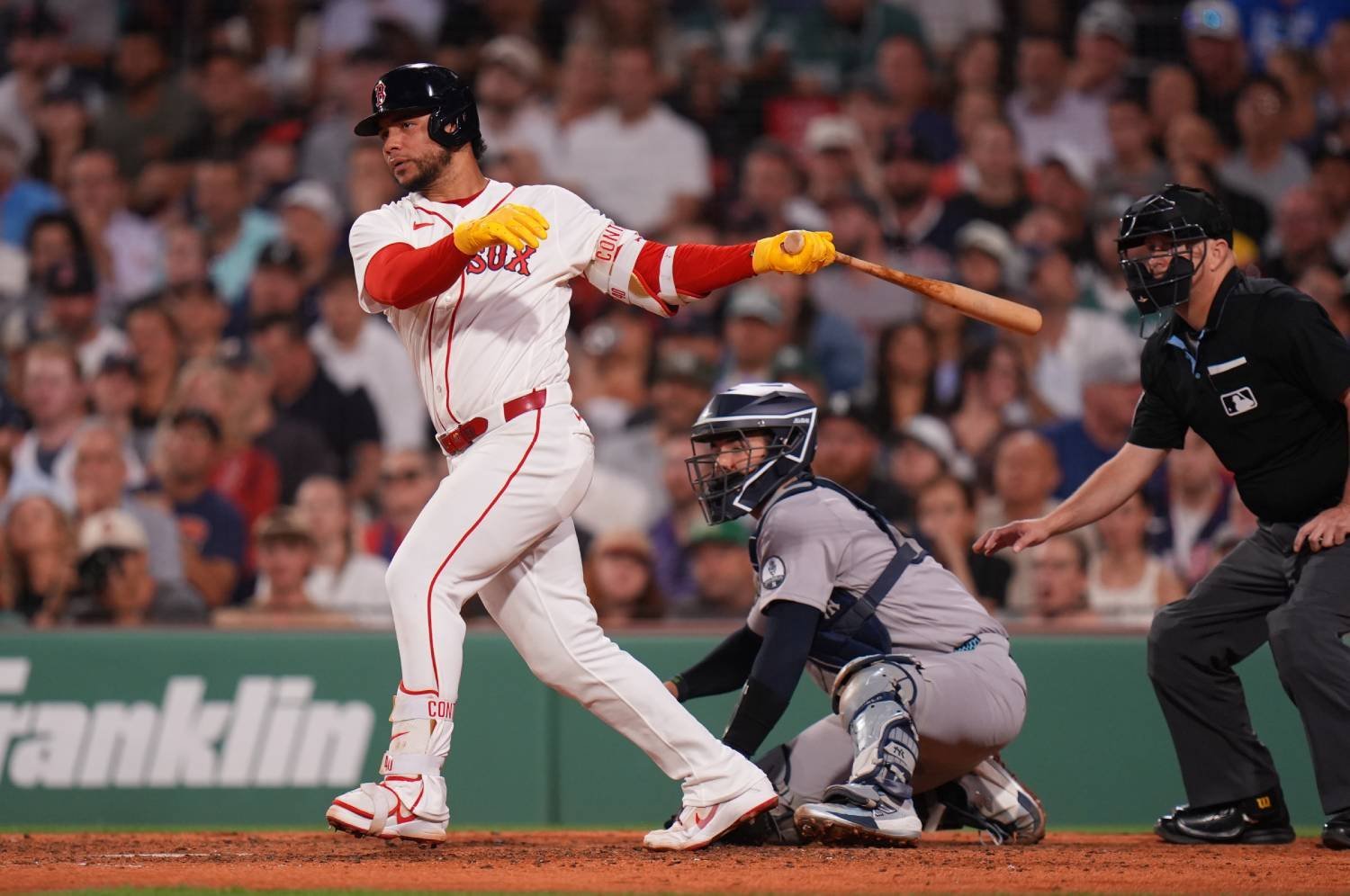 While it took an extra few days, Willson Contreras is officially going to the 2026 All-Star Game. The first baseman for the Boston Red Sox was named as an injury replacement for next Tuesday's game at Citizens Bank Ballpark in Philadelphia. Contreras, an All-Star for the fourth time, replaces Toronto Blue Jays first baseman Vladimir Guerrero Jr., who said he was not going to play in the game to rest his ailing back. Contreras joins left-handed closer Aroldis Chapman and left-handed starter Ranger Suarez as representing the last-place Red Sox in the All-Star Game. Acquired in the offseason in a trade from the St. Louis Cardinals, Contreras, a former catcher, has had a career season offensively, posting a .284/.378/.542 with 20 homers and 59 RBIs in 86 games. Contreras has already matched his home run totals from last year and 2023, while his career best is 24 in 2019. Contreras is also awaiting word on his appeal of a seven-game suspension resulting from an incident with the Washington Nationals. Nationals right-hander Cade Cavalli, the other primary figure in that incident, had his suspension reduced from seven to five games and began serving that Monday. View the full article
 -
Brewers' David Hamilton Sidelined By Hamstring Injury
DiamondCentric posted an article in Brewer Fanatic
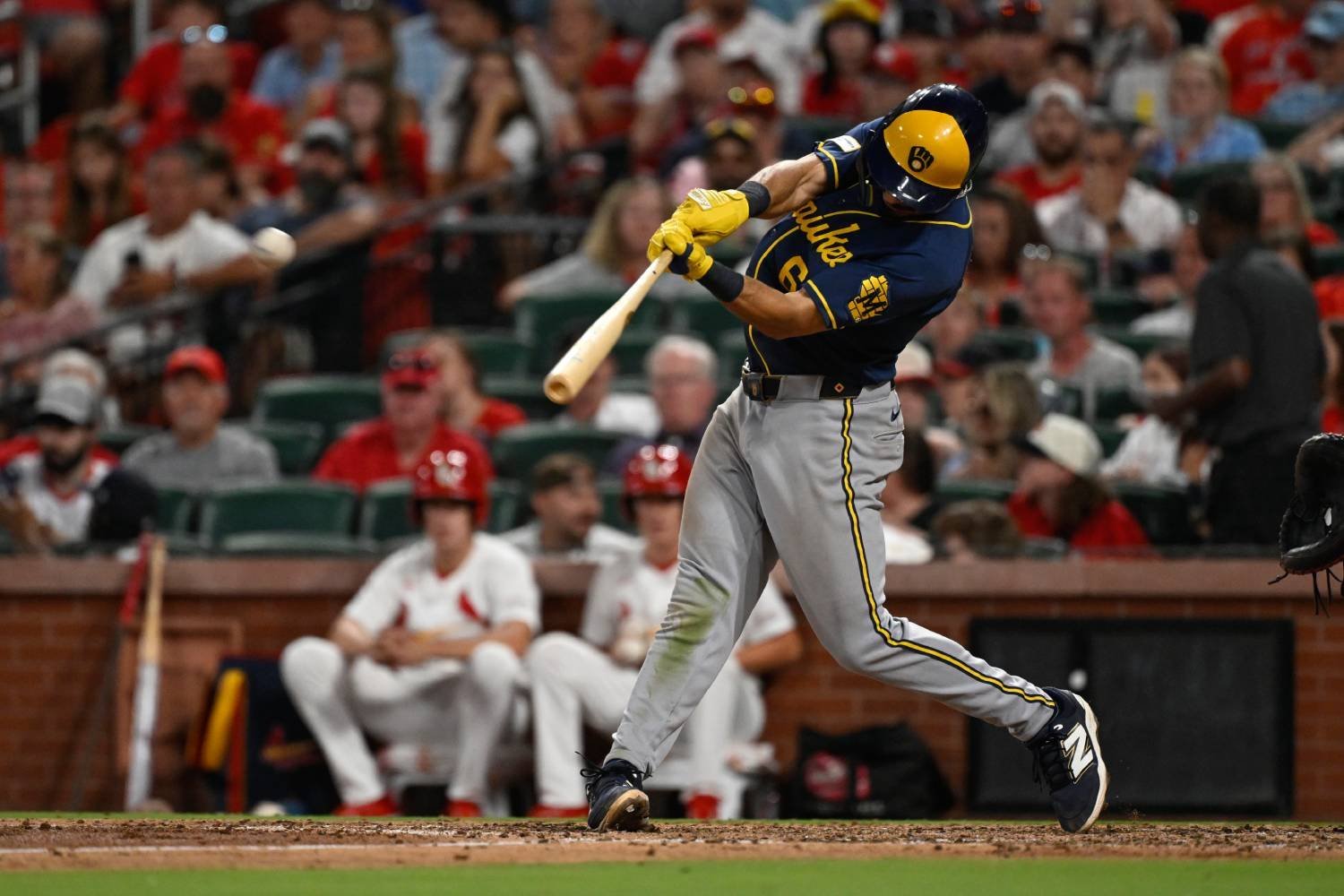 In a move made about 30 minutes before the first pitch of Tuesday's doubleheader, the Milwaukee Brewers placed infielder David Hamilton on the 10-day injured list with a strained left hamstring. Infielder-outfielder Greg Jones had his contract selected from Triple-A Nashville and outfielder Brandon Lockridge (right knee laceration) was transferred to the 60-day injured list. The Brewers also sent right-handed pitcher Carlos Rodriguez (right shoulder impingement) on a rehab assignment to Nashville. Hamilton was injured in Monday's series opener against the St. Louis Cardinals as he rounded second base and stopped suddenly to go back to the bag instead of advancing to third base. Hamilton and his speed have been an integral part of the Brewers' offense despite a subpar .240/.317/.333 slash line. He has hit three homers and driven in 15 in 74 games, while stealing a team-high 18 bases. Jones is up for the second time this season. He appeared in 11 games and went 2-for-21. Jones has the ability to play infield, which would cover for Hamilton's absence, as well as the outfield. View the full article
 -
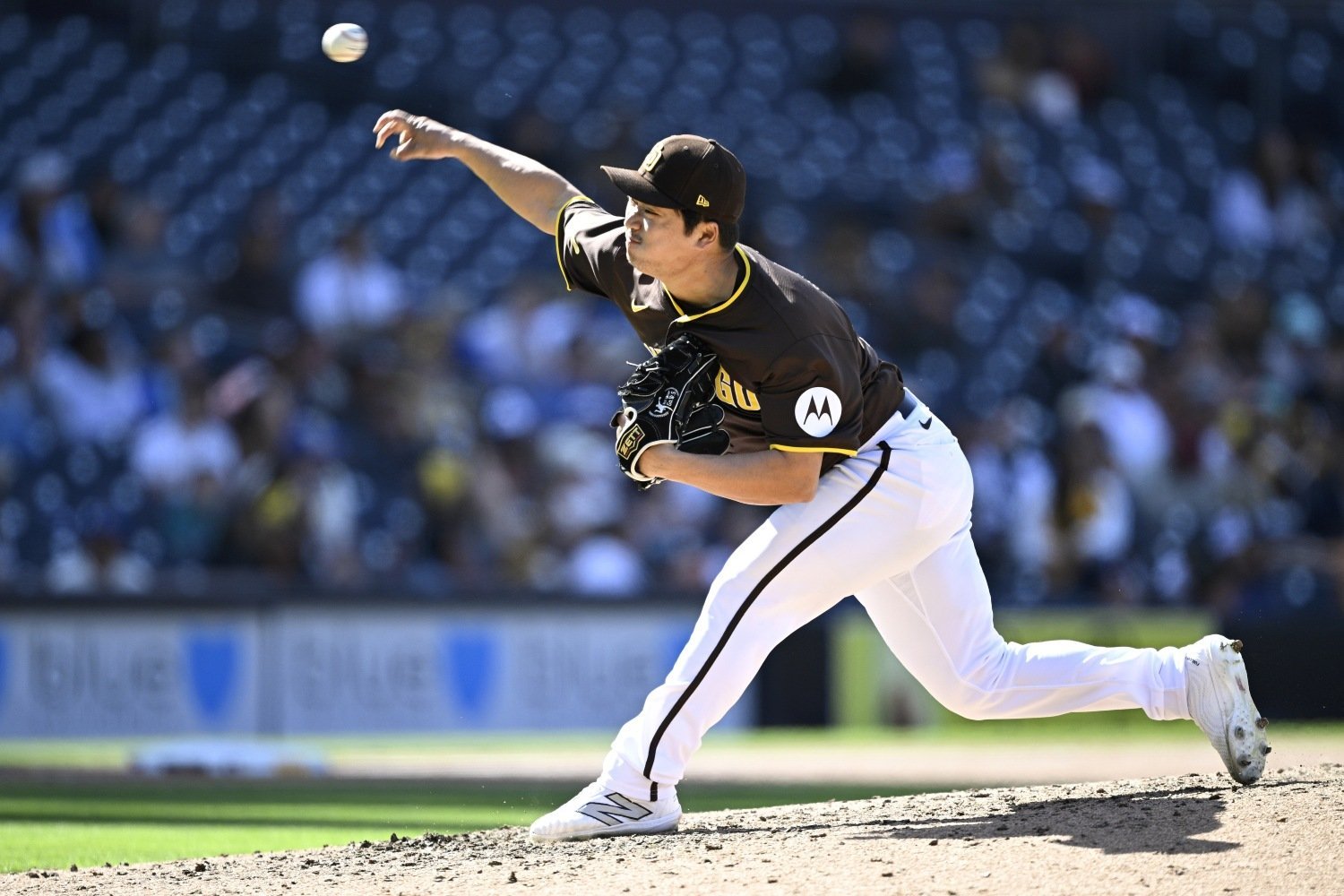 Signed to a two-year, $4.5-million contract by the San Diego Padres in early January 2024 as an international free agent coming from the Korean Baseball Organization (KBO), Woo-Suk Go has come nowhere near sticking in any one place for two years. He didn't make the Padres' roster that spring. After only 12 1/3 innings for San Diego’s Double-A affiliate, Go was thrown into the deal that sent Luis Arraez to the Padres—making the Korean righty a new member of the Marlins. Unsurprisingly, Go struggled to adjust to life in the minors and to a rapid change in employer. He posted a 10.42 ERA, a 5.52 FIP, and a 23-to-11 strikeout-to-walk ratio over 19 innings pitched for Miami’s Double-A affiliate. Yet, given Go’s unique contractual circumstance, Miami elected to promote him to Triple-A, where things actually did get (a little) better. For Jacksonville, he generated a 4.29 ERA, a 6.00 FIP, and a 14-to-7 strikeout-to-walk ratio. But he didn't find real traction. The following spring, Go bounced between Miami’s complex league, Low-A, High-A, and Triple-A affiliates before getting designated for assignment in June and subsequently released. The right-handed reliever signed a minor-league contract with the Detroit Tigers, and he threw a combined 27 innings between the organization’s High-A and Triple-A clubs down the stretch in 2025. He and the Tigers saw enough in one another to rendezvous on a minor-league deal this winter, though, and now, he might have really turned a corner. Go began his 2026 campaign dominating over 13 2/3 innings pitched (0.66 ERA, 1.98 FIP, 44.9% strikeout rate) for Detroit’s Double-A affiliate, before earning a promotion to Triple-A Toledo in early May. The former KBO star has continued his dominance at the highest minor-league level, posting a 1.96 ERA, 2.28 FIP, and a 29.1% strikeout rate over 27 2/3 innings. That minor-league deal included an upward mobility clause, whereby at certain points in the season, Go had the right to seek a change of scenery if the Tigers were unwilling to promote him to the majors. At the latest of those checkpoints, he exercised that right, and the Twins snapped him up. Though this will be the first time Go actually pitches in the major leagues, he's likely to land in a pretty secure role with the Minnesota pen. In fact, Go has a chance to quickly insert himself as a high-leverage reliever for the Twins, who currently have the fifth-worst bullpen in baseball, according to Wins Above Replacement at FanGraphs (fWAR). Despite having one of the worst relief units in the sport, Minnesota has produced two developmental success stories, highlighted by Yoendrys Gómez’s and Andrew Morris’s ascent to reliable, high-leverage arms. Unfortunately, the sextet of Taylor Rogers, Travis Adams, Eric Orze, Kody Funderburk, Cody Laweryson, and Marco Raya has barely performed above replacement level, as a group. Having one of the least effective relief corps in baseball, Minnesota is aggressively looking for late-inning arms to slot in alongside Morris and Gomez. Go’s aggressiveness on the mound could be a driving factor in him earning a high-leverage relief role with the Twins. Primarily relying on his four-seam fastball and cutter, the former LG Twin has attacked hitters in the strike zone with his fastball variants. More importantly, he's getting hitters to swing and miss on pitches in the zone, as evidenced by an above-average 30.2% whiff rate. He doesn't throw very hard, especially for a reliever, sitting 92-93 with his four-seamer most of the time. However, he commands the hard stuff well, and his splitter and curveball have become bat-missing weapons. Go has also relied on curve more often in 2026, raising his usage rate from 5.8% in 2025 to 19.3% this season. Despite hovering around 80 MPH, it has become a real out pitch, evidenced by opposing batters generating a measly .163 wOBA against it. Again, Go’s lack of fastball velocity is a concern. Yet, if he can continue locating his four-seam and cutter up in the zone while utilizing his curve as a true out pitch, Go’s three-pitch mix could guide him toward sustained success in the majors. He also leans on his splitter 7.9% of the time. The righty could ramp up his splitter usage with Minnesota, considering it has generated plus results similar to his curve. Go could struggle during his first cup of coffee in the majors, quickly working his way out of the Twins bullpen. Yet, given his history of being one of the best relievers in the KBO for multiple seasons; his plus performance and improved stuff in the high minors this season; and Minnesota’s glaring need for plus bullpen arms, Go could quickly earn a high-leverage role in the club’s shaky bullpen if the improvements he's made this year translate to the bigs. View the full article
 -
 Maddie and Alex sit down for an injury roundtable. Connelly Early and Ranger Suarez were the latest players to come down, and they speculate who will replace them. (Hello, Patrick Sandoval and Brayan Bello). They question the legitimacy of the Angels' sweep and what it may mean as we approach the All-Star Game. Finally, they review the team’s second-half schedule and speculate that the end of the month could be the final nail in the coffin. Listen on Apple Podcasts: https://podcasts.apple.com/us/podcast/the-talk-sox-podcast/id1783204104 Listen on Spotify: https://open.spotify.com/show/3qPrPXEngu0CxgTmlf0ynm Listen on iHeartRadio: https://www.iheart.com/podcast/263-the-talk-sox-podcast-244591331/ Listen on Pocket Casts: https://pca.st/4tmd121v Watch on YouTube: https://www.youtube.com/@talksox View the full article
 -
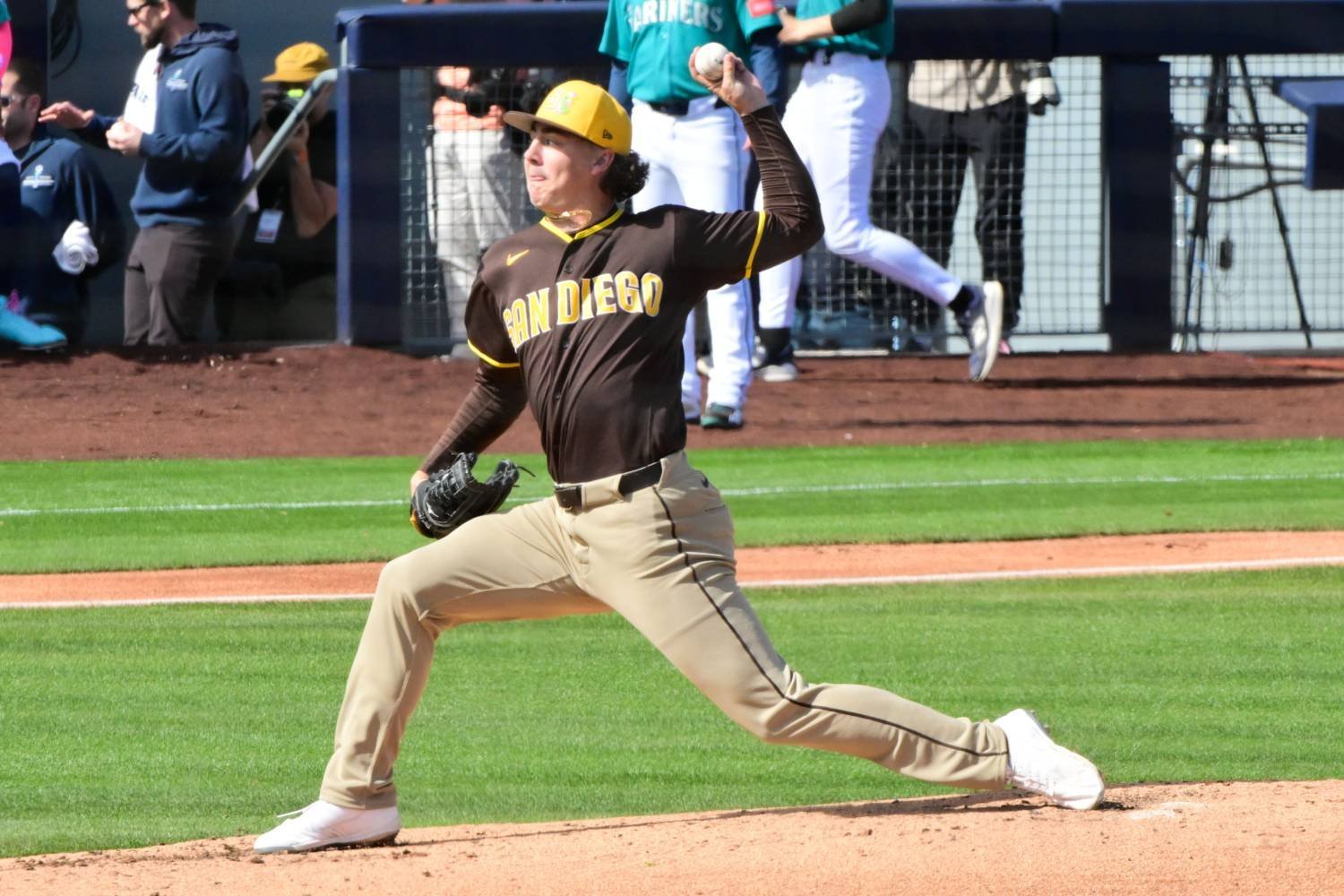 Let's check in on the San Diego Padres prospects who made a mark in the last week (check out Padres Mission's latest Top 20 rankings as well!): Jagger Haynes, LHP, Double-A San Antonio Missions Season stats: 3-3, 4.10 ERA, 16 games (all starts) 85⅔ IP, 69 H, 41 R, 39 ER, 37 BB, 76 K, .223 opponent average The last time the 23-year-old Missions left-hander made two starts in the same week, the second did not go as well as the first, as he followed up six shutout innings with four runs in 4⅔ innings in late May against Corpus Christi. It was a similar scenario to his second and third starts of the season vs. Midland. But last week, facing the Amarillo Sod Poodles on Tuesday and Sunday, Padres Mission's No. 10 prospect had a slightly better performance in the second game. In his five innings Sunday, the 2020 fifth-round draft choice gave up just one run on two hits with three walks and four strikeouts in a 1-0 loss (the only run scored in the first inning). That came after he matched his season high with 6⅔ innings, two runs, four hits, four walks and four strikeouts. While his walk rate is better this season, down to 10.3% after being at 14% last year at San Antonio, it is still an area to be worked on. He had seven in those two games last week. He did go 6⅔ in the two previous starts to Sunday, the third time this year of that distance to go with four more of exactly six innings. Jamie Hitt, LHP, High-A Fort Wayne TinCaps Season stats: 1-5, 5.13, 14 games (13 starts), 59⅔ IP, 65 H, 43 R, 34 ER, 24 BB, 54 K, .270 opponent average While some of the numbers don't look fantastic, you have to take into consideration that Hitt, who turns 24 Wednesday, is in his first pro season after being an eighth-round draft choice out of Oklahoma and doing it at the High-A level with the TinCaps. That says a bit about the makeup Hitt has and also what the Friars think of him. To wit, Hitt has turned in four quality starts this season, including two in his last three outings. The latest one came Sunday as Hitt went six innings, gave up a pair of runs on three hits with no walks and six strikeouts. Unfortunately, it came in a 5-0 loss to the Great Lakes Loons. Hitt improved his draft stock last year by showing out in a bullpen role at Oklahoma, but he has more time as a starter in college, first at Texas Tech then for three years with the Sooners. Hitt's season actually started at Low-A Lake Elsinore with a single relief appearance before being promoted to Fort Wayne and inserted into the rotation since. He doesn't have overpowering stuff, having peaked at 95 mph on his four-seamer in college, but he does have decent control. Those two items have led to a walk rate of 8.8% and a strikeout rate of 19.8% this year. He did strike out a season-high eight in his fourth game of the season and also has three games (out of 14) with no walks. Kavares Tears, OF, High-A Fort Wayne TinCaps Season stats: .241/.349/.518, 59 games, 26 R, 13 2B, 3 3B, 12 HR, 41 RBI, 32 BB, 78 K, 1 SB, 3 CS The left-handed slugger only played in four of the six games last week, but that was good enough to put up some gaudy numbers. The 23-year-old had an OPS of 1.224 with three of his five hits going for homers. He drove in eight runs and also walked three times. As mentioned in this article when Tears earned Padres Mission's Minor-League Hitter of the Month for June, the 2024 fourth-round pick out of Tennessee has been on a roll since mid-May. Tears' two-homer game Wednesday against the Great Lakes Loons was just his second in his two pro years after having one in August for the Low-A Lake Elsinore Storm. Tears appears to have figured something out since mid-May, with his slash line at .275/.355/.615 since. Even that hot stretch pulled his career slash line up to .232/.330/.429. He has 12 homers in 59 games so far this year after hitting 13 in 107 contests with the Storm. Conner Westenburg, OF, Low-A Lake Elsinore Storm Season stats: .274/.364/.387, 74 games, 47 R, 15 2B, 4 3B, 1 HR, 34 RBI, 20 BB, 68 K, 34 SB, 5 CS After a rough June, the 22-year-old outfielder began July with a bang, putting up a .429/.500/.619 that included three games with multiple hits, including three in last week's series opener against the Stockton Ports. He also had a season-high five-RBI game Saturday after not having a multi-RBI day since May 24. This is Westenburg's first pro season after signing as an undrafted free agent out of McNeese State. Speed is also a big part of Westenburg's game. He had four steals last week to bring his season total up to 34 in 39 attempts. That number is second only to Ryan Wideman, Padres Mission's No. 4 prospect who leads the minors with 50 steals (43 with the Storm), in the Padres' system. He had 20 and 27 steals in his final two seasons at McNeese State. That speed helps him to get out of slumps like the one he experienced in June, when he had a .194/.325/.254 slash line, yet still swiped 11 bases, his second month with double-digit steals. Westenburg had 14 in April as he slashed .333/.403/.449. Albert Fabian, OF, Double-A San Antonio Missions Season stats: .244/.308/.389, 58 games, 16 R, 8 2B, 1 3B, 6 HR, 30 RBI, 19 BB, 37 K, 3 SB, 0 CS The 24-year-old left-handed hitter led the Padres' full-season affiliates in batting average as part of a .438/.444/.875 slash line last week. His big five games began with a 3-for-4 performance in which he homered and doubled, missing the triple for the cycle. He drove in four in that game against Amarillo and had seven in the series. Fabian has been in the Padres' system since signing as an international free agent out of the Dominican Republic in 2018. He had a chance to leave the organization in the offseason, yet chose to return. He has been pretty consistent over the last five seasons, never going lower than a .242 average, nor higher than .258, while producing a career slash line of .245/.325/.415. Fabian has six homers this year, which is one off his total from all of 2025, although he spent time on the 60-day injured list. His career best is 16 in each of the 2022 and 2023 seasons. View the full article
 -
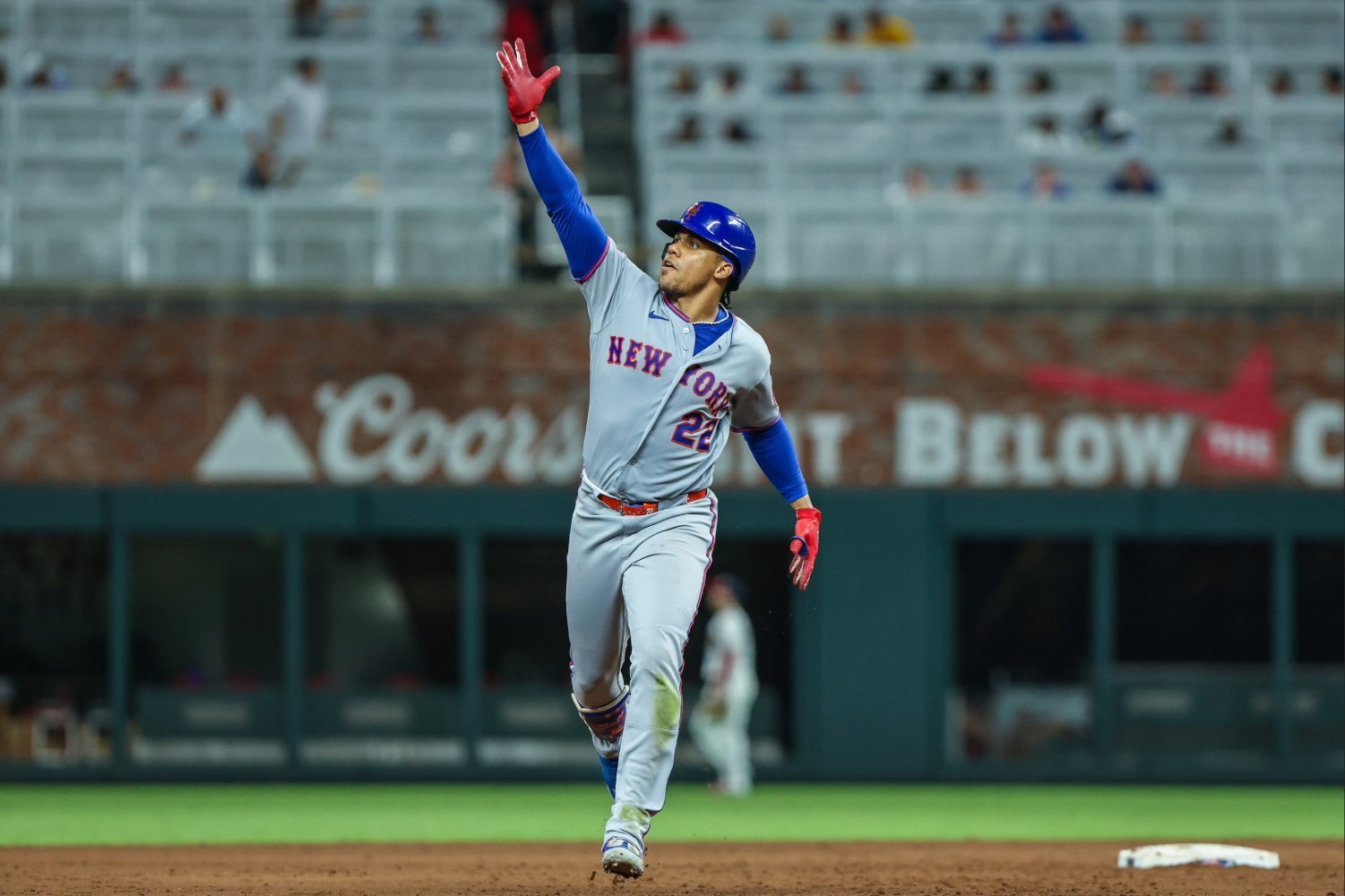 New York Mets Weekly Review Record Last Week: 3-4 Runs Scored Last Week: 32 Runs Surrendered Last Week: 34 Standings: 5th in NL East (38-53) 15 GB of 1st Place, 11 GB of a Wild Card Transactions: 6/26 New York Mets activated CF Tyrone Taylor from the 10-day injured list. 6/26 New York Mets recalled LHP Zach Thornton from Syracuse Mets. 6/26 New York Mets optioned RHP Daniel Duarte to Syracuse Mets. 6/27 New York Mets sent 1B Jorge Polanco on a rehab assignment to Syracuse Mets. 6/27 New York Mets optioned LHP Zach Thornton to Syracuse Mets. 6/27 New York Mets sent SS Zack Short outright to Syracuse Mets. 6/29 New York Mets recalled RHP Joey Gerber from Syracuse Mets. 6/29 New York Mets optioned RHP Tobias Myers to Syracuse Mets. 6/30 New York Mets sent CF Luis Robert Jr. on a rehab assignment to Syracuse Mets. 7/2 New York Mets sent RHP Dedniel Núñez on a rehab assignment to Binghamton Rumble Ponies. 7/2 New York Mets selected the contract of LHP Jefry Yan from Syracuse Mets. 7/2 New York Mets optioned LHP Jefry Yan to Syracuse Mets. 7/5 New York Mets optioned RHP Joey Gerber to Syracuse Mets. 7/5 New York Mets selected the contract of RHP Guillo Zuñiga from Syracuse Mets. 7/5 Detroit Tigers traded RHP Matt Seelinger to New York Mets for cash. Scores: Game 85: NYM 1, TOR 2 Game 86: NYM 3, TOR 0 Game 87: NYM 3, TOR 9 Game 88: NYM 3, ATL 5 Game 89: NYM 3, ATL 14 Game 90: NYM 10, ATL 9 Game 91: NYM 7, ATL 6 Series Breakdown/Highlights Toronto Series: The Mets headed north of the border to take on the Blue Jays in a three-game series. The week did not start well. George Springer led the series off for the Blue Jays with an inside-the-park home run against Sean Manaea (technically, a triple and an E8). The Blue Jays would add another run on a sacrifice fly later on against Manaea, who on the whole pitched well. The Mets picked up their run on a solo home run by Francisco Lindor, but it was not enough, and they were outlasted by the Blue Jays. Game two was a nice, clean win for the Mets behind Nolan McLean, who turned in one of his better outings in a bit, going six scoreless innings. Home runs by Fransisco Alvarez and Luis Torrens, followed by a late sac fly for Bret Baty, were enough to even the series against the Blue Jays. Game three was Canada Day, and the Blue Jays sure acted like it. Freddy Peralta got rocked, giving up five runs over four innings, including a big two-out three-run homer to rookie Sean Keys. Peralta once again did not give the Mets a solid chance to win the game, which has been a theme this season for the supposed ace. The Mets got their scoring on two home runs, one off the bat of Carson Benge for a two-run shot and the other in the ninth inning off the bat of Francisco Lindor. It was another series that showed the shortcomings of this roster. Braves Series: The Mets headed down to their house of horrors in Atlanta to take on the Braves for four games. Game one did not go great for the Mets. Christian Scott gave up two of the four Atlanta home runs on the night. The Braves only had four hits in the game, but they all left the ballpark. Scott only gave up three runs, but the homers given up by the bullpen proved to be the difference. Juan Soto hit a homer in the game but the Mets' offense as a whole struggled, leaving 10 runners on base. Game two was on the Fourth of July, and there were fireworks, but mostly for the Braves. Sean Manaea got lit up, giving up six runs over five innings of work, though he was not helped by his defense dropping popups with the bases loaded and two outs to allow three runs. The Mets really had no answers for Chris Sale, with their runs coming off a Tyrone Taylor solo homer and a Mark Vientos two-run homer. The rest of the offense was silent. In the third game, Nolan McLean struggled early but locked in and allowed the Mets to get a lead. The offense broke out for 10 runs in the game, but the bullpen almost could not hold it. The Mets were up seven runs in the bottom of the ninth inning before that lead shrunk to one run with the winning run on second base against closer Devin Williams with two outs, but they were able to hold on and win a game they needed to win. Game four was the biggest Mets win of the season and, if the deficit in the standings was not so great, could have been a turning point. They trailed all game after Peralta pitched well, but another error cost him two runs. Trailing by one run in the bottom of the ninth against Atlanta closer Raisel Iglesias, the Mets got singles from Francisco Alvarez and Ronny Mauricio to get the game to Juan Soto, who rocketed a three-run homer over the chop house to give the Mets a lead. They handed that two-run lead to closer Devin Williams, who came in and gave up a double to Ozzie Albies, then a game-tying two-run home run by Matt Olson, who killed the Mets all series. Williams continued to struggle, but Brooks Raley got out of the inning to send it to extras. Tyrone Taylor hit a two-run double with two outs to give the Mets a lead, and Luke Weaver sealed the deal for his first save as a Met and secured a series split. Website Highlights New York Mets Hitters Of The Month, June 2026: Playing For Second Behind Juan Soto One Shot At Glory: The New York Mets’ One-Time All-Stars, Part 3 Mets Prospect Rankings, July 2026 Update: Little Changes After One Big Graduation Looking Ahead July 7th: vs. KC (7:10pm) July 8th: vs. KC (7:10pm) July 9th: vs. KC (1:10pm) July 10th vs. BOS (7:15pm) July 11th vs. BOS (4:10pm) July 12th vs. BOS (1:10pm) View the full article
 -
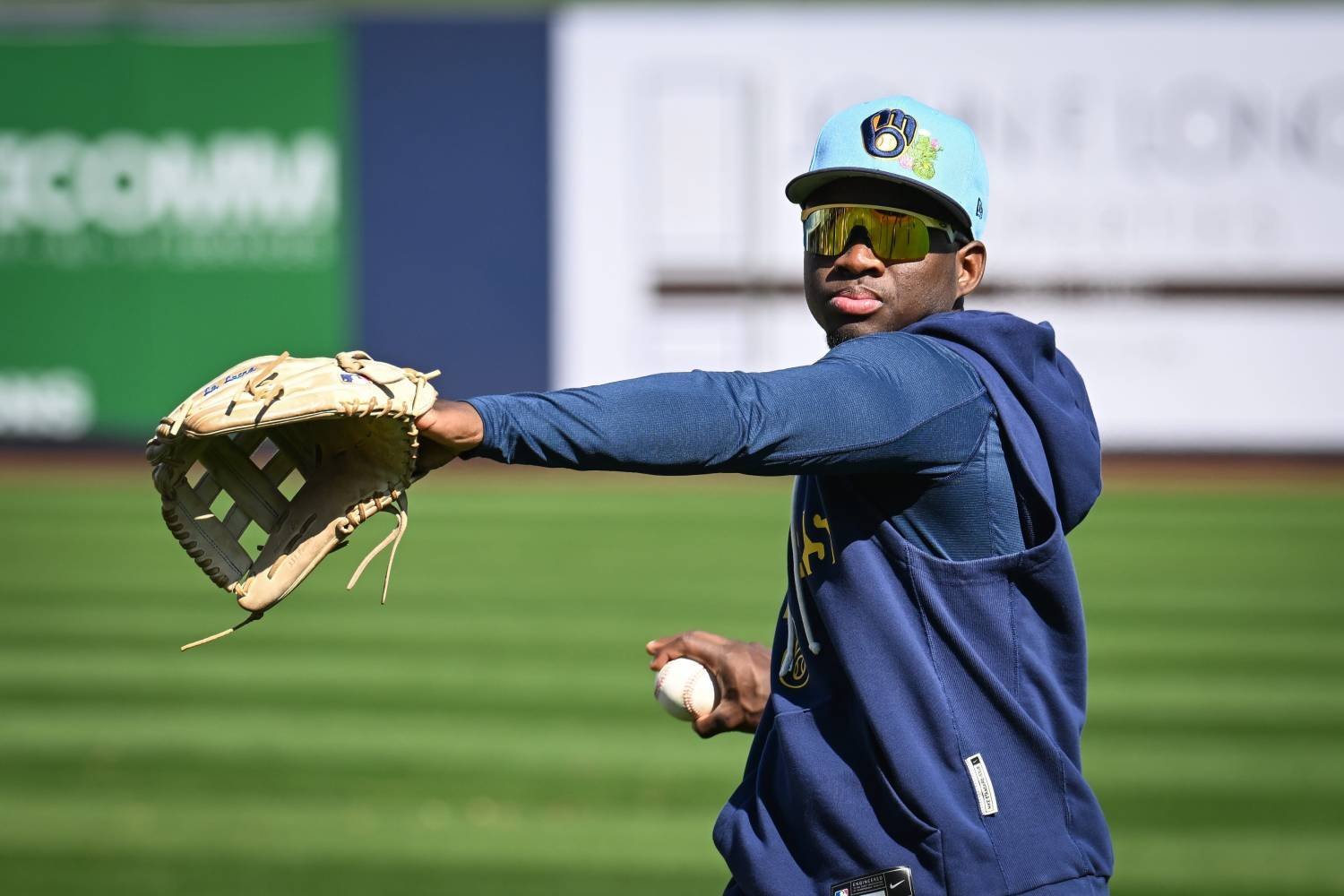 Following his signing a long-term contract extension last month, Luis Lara has been called up to make his MLB debut. The Brewers on Tuesday promoted Lara, Brewer Fanatic's No. 4 prospect, from Triple-A Nashville and sent center fielder Blake Perkins back to Triple-A. Lara will make his debut in Tuesday's doubleheader against the St. Louis Cardinals. The Brewers also called up left-handed starter Robert Gasser from Nashville as the extra player for the doubleheader. Lara, a 21-year-old switch-hitting center fielder, a seven-year, $31 million extension on June 9. He was the second top prospect at the time to ink a long-term deal with the Brewers while still in the minors, joining shortstop Cooper Pratt. Pratt, who signed his deal in April, was promoted about a week after Lara got his deal finalized. In his first season at Triple-A, Lara has had a breakthrough season offensively. He has a .321/.432/.470 slash line with career highs of nine homers and 42 RBIs in 78 games with still about half a season to play. Lara had never hit better than .286 (2023), hit more than four homers (2024) or driven in more than 41 runs (2024) before this year. Lara won a minor-league Gold Glove last year for his defense in center field and also is a speed threat on the bases, having swiped 24 in 31 tries this year. Perkins did not make the Brewers' Opening Day roster and has been called up twice, yet has not been able to get going offensively. Perkins has a slash line of .157/.250/.258 in 53 games with one homer, 11 RBIs and three stolen bases. View the full article
 -
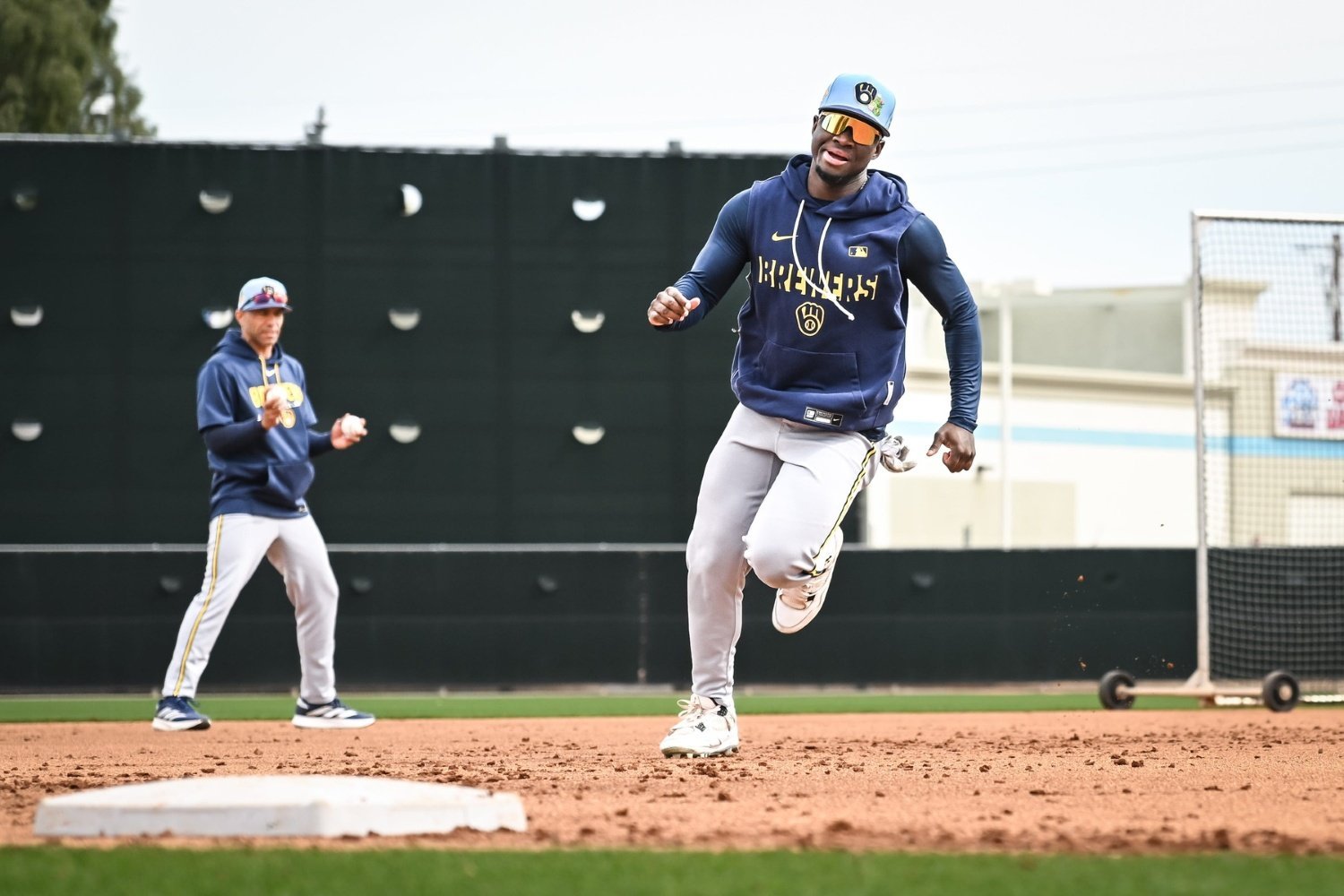 For many Brewers fans, this move will feel overdue. The Brewers tried to give Blake Perkins time to work through what has effectively been a season-long slump at the plate, but ultimately, they needed more functional depth in their outfield. Perkins, still a fine defender but no longer the elite of the elite in center field and without any offensive value of which to speak, was the odd man out—but the corresponding move is an exciting addition to the 26-man roster. It will be fascinating to see how rookie Luis Lara fits into the team's plans. He's taking Perkins's roster spot, but he'll need a bigger role than the one Perkins occupied in order to justify being brought to the majors now. The team already demonstrated its faith that he can thrive in a larger role than Perkins had, though, when they signed him to a seven-year deal earlier this season, before he made it to the majors. The best role for Lara is one similar to Perkins's best one, in that Lara's best tool might also be his fielding prowess. That makes this move interesting, though, because Garrett Mitchell has a 1.042 OPS over the last four weeks. It seems like this is no time to reduce the playing time of the starting center fielder, so will Lara eat into Sal Frelick's role, instead? Or will Mitchell spend some time in a corner spot or at designated hitter, with Christian Yelich getting more days off—whether he wants them or not? This change, like the one the team made when it swapped out Luis Rengifo for Cooper Pratt, makes the team younger and better on defense at the same time. It also affirms the organization's commitment to developing players and building a lasting pipeline. Though no Pat Murphy team will set aside the goal of winning for any meaningful period, these moves accept a certain amount of temporary on-field cost in the service of improving the team's long-term outlook. That's a luxury Milwaukee has afforded itself, with such a comfortable lead in the division and one of the best records in baseball. They'll have to sort through their options and have at least one or two difficult conversations with team-controlled players, but they're going to win the NL Central this year—and doing this, like promoting Pratt last month, just might help them do so next season, too. View the full article
 -
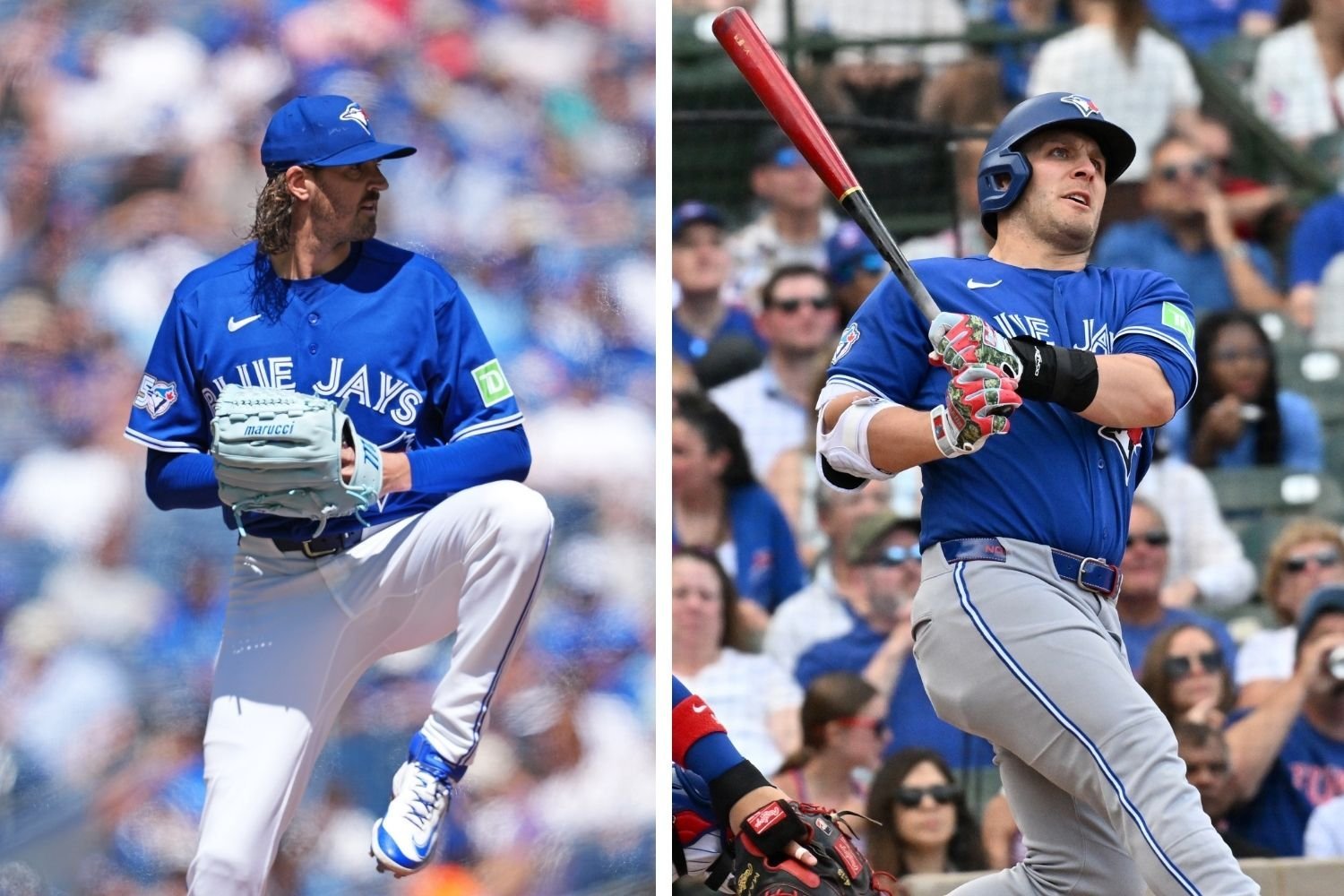 This wasn’t how this story was supposed to go. The Blue Jays entered 2026 with sky-high expectations, but injuries and disappointing performances from many of the players who fueled last year’s World Series run have left them seven games below .500 approaching the All-Star break. Currently, the Blue Jays find themselves in a precarious spot. Every year, there seems to be one team that catches fire after the All-Star break and storms into the postseason. The Blue Jays have as much talent as any club to be that team. But coming into the Giants series, the Blue Jays' playoff odds had dropped to a season low of 25.2%. While there is no guarantee this team will sell off assets at the trade deadline, the front office has to prepare for that possibility. It's a similar blueprint to the one the Blue Jays followed at the 2024 trade deadline, and they’re already seeing the benefits of that approach. That doesn’t necessarily mean a full rebuild. More likely, the Blue Jays would look to move players on expiring contracts or veterans whose value may never be higher, while targeting prospects or major leaguers who could contribute as early as 2027. If that's the direction the team chooses, some players are far more likely to be dealt than others. Here’s a look at the most realistic trade candidates, broken down by how likely they are to be moved. Blue Jays Most Likely To Be Traded SP Kevin Gausman Team Control: Through 2026 2026 Stats: 19 G, 3.76 FIP, 17.8 K-BB%, 1.9 fWAR Gausman will likely go down as one of the best free-agent pitching signings in franchise history, and moving him at the deadline would not be a popular move. However, he’s likely the piece that could get the biggest return. He’s a durable workhorse with recent success in the postseason and immediately strengthens any contender’s rotation. The price for impact starting pitching at the deadline always remains high, and the Blue Jays are almost certain to at least listen to offers on the veteran starter. He does have an eight-team no-trade clause, meaning he’ll have some degree of a say in where he goes if the Blue Jays decide to move him. Still, out of all Toronto's potential trade chips, Gausman will be front and center. CF Daulton Varsho Team Control: Through 2026 2026 Stats: 78 G, .313 wOBA, 99 wRC+, 1.2 fWAR Similar to Gausman, Varsho is a free agent at season's end and has plenty of big league success under his belt. Although his numbers have dropped this season, he’s been an outstanding center fielder in his career, and there will always be demand for elite defense up the middle. He exploded for 20 home runs and a .548 slugging percentage in just 71 games last season. A contender in need of left-handed power may believe it can unlock that version of Varsho again, making him an intriguing trade target. OF Myles Straw Team Control: Through 2026 (Club Options Through 2028) 2026 Stats: 80 G, .281 wOBA, 77 wRC+, 0.2 fWAR Speed and elite outfield defense can change a game in a flash, and Straw is excellent at both. His range in the outfield is 84th percentile, and despite just two stolen bases on the season, he still has 97th percentile sprint speed. Any contender looking for late-game speed and elite defense could benefit from having Straw on their team. The Blue Jays have shown a willingness to trade players like this before (they traded Kevin Kiermaier at the 2024 deadline), and if the Jays are willing to eat some of Straw's remaining salary (he's making $7.4M this year), they could fetch a fairly solid return. Blue Jays Trade Candidates Worth Watching DH George Springer Team Control: Through 2026 2026 Stats: 63 Games, .304 wOBA, 93 wRC+, 0.1 fWAR Like Gausman, Springer is a free agent at the end of the season and has had tremendous success in the postseason. But unlike Gausman, Springer isn’t playing quality baseball at the moment. The now 36-year-old is having his worst offensive season. He’s a negative on the basepaths and hasn’t played in the outfield in over a calendar year. If a contender believes Springer can rediscover the form that produced a 166 wRC+ in 2025, there may still be a market for him. But unless his play turns around dramatically, finding a trade partner doesn’t seem likely. Especially if you factor in his salary and the fact that he has 10-and-5 no-trade rights. Springer would have to give the go-ahead to any trade proposal that is sent his way. SP Shane Bieber Team Control: Through 2026 2026 Stats: 3 Games, 9.34 FIP, 3.1 K-BB%, -0.5 fWAR Shane Bieber returned to the Blue Jays after picking up his player option in the offseason. He spent the first half of the season battling an elbow injury, and upon his return, he’s struggled in all three of his starts. Still, he’s a former Cy Young Award winner, and at 31 years old, should still have something left to offer. The Blue Jays would undoubtedly like to get something for a player they’re unlikely to re-sign this offseason, but no team is going to offer much until he starts pitching better. OF Jesús Sánchez Team Control: Through 2027 2026 Stats: 73 Games, .325 wOBA, 108 wRC+, 0.1 fWAR Sánchez is no stranger to being traded, as he was sent from the Marlins to the Astros at last year's trade deadline, and there is the potential that a move could happen again. Offensively, he’s held his own with a 108 wRC+ and has always produced strong exit velocities. The defense and baserunning limit his overall value, but he has the ability to come off the bench and get an extra-base hit in a key spot. There may be a team willing to move a mid-level prospect for that type of player. RHP Jeff Hoffman Team Control: Through 2027 2026 Stats: 41 Games, 2.72 FIP, 27.2 K-BB%, 0.8 fWAR The Jays would face an interesting decision if another team came calling for Hoffman. On one hand, his underlying statistics have been phenomenal all season, and he’s been pitching well lately. Since the start of June, he’s thrown 13 innings with a microscopic 0.69 ERA, and if a team views him like the shutdown reliever he can be, the Jays could get a sizeable return. However, Hoffman is still under team control through the 2027 season, and unless the team goes into a complete rebuild, the Blue Jays are likely to contend again, and having Hoffman in the bullpen is a key part of that. What the Blue Jays decide to do with Hoffman will be an interesting storyline going into the trade deadline. Blue Jays Probably Staying Put OF Nathan Lukes Team Control: Through 2030 2026 Stats: 57 games, .320 wOBA, 104 wRC+, 0.9 fWAR Lukes’ name is on this list simply because the Blue Jays have a plethora of left-handed hitting outfielders on their roster, and moving one of them could clear up the logjam. But with Lukes under team control for four more seasons and only entering arbitration next year, he’s still an inexpensive player to keep around. Combine that with the fact he’s been playing almost every day and hitting in the top of the order, and it feels like he’ll be staying put. OF/2B Davis Schneider Team Control: Through 2030 2026 Stats: 49 Games, .267 wOBA, 68 wRC+, -0.4 fWAR Schneider has had a disappointing season so far. He was set to be a right-handed-hitting platoon bat but has spent most of the season travelling between Toronto and Buffalo. Still, the trade market doesn’t have many right-handed-hitting outfielders, and Schneider does provide power and plate discipline. He could be a spark off the bench for a postseason team. It's unlikely that the Blue Jays would want to sell low on a player, especially one with so much team control, but there is a chance a suitor comes knocking, and the Blue Jays will have to at least listen. RHP Max Scherzer Team Control: Through 2026 2026 Stats: 6 Games, 8.79 FIP, 2.9 K-BB%, -0.7 fWAR The end may be near for the now 41-year-old eventual Hall of Famer. Scherzer is set to become a free agent at the end of the season, and while there may be some value to having him stick around in the clubhouse for a playoff team, he’s been dealing with injuries and also has not been effective when he’s been on the field. Between his struggles, recurring injuries, and a full no-trade clause, it’s difficult to envision a scenario where Scherzer is moved before the deadline. The next three weeks will determine the franchise's direction. If the Blue Jays catch fire, they’ll likely spend the deadline adding to a playoff push. If not, they may have no choice but to begin cashing in expiring contracts, even if they are still within striking distance of a Wild Card spot. View the full article
 -
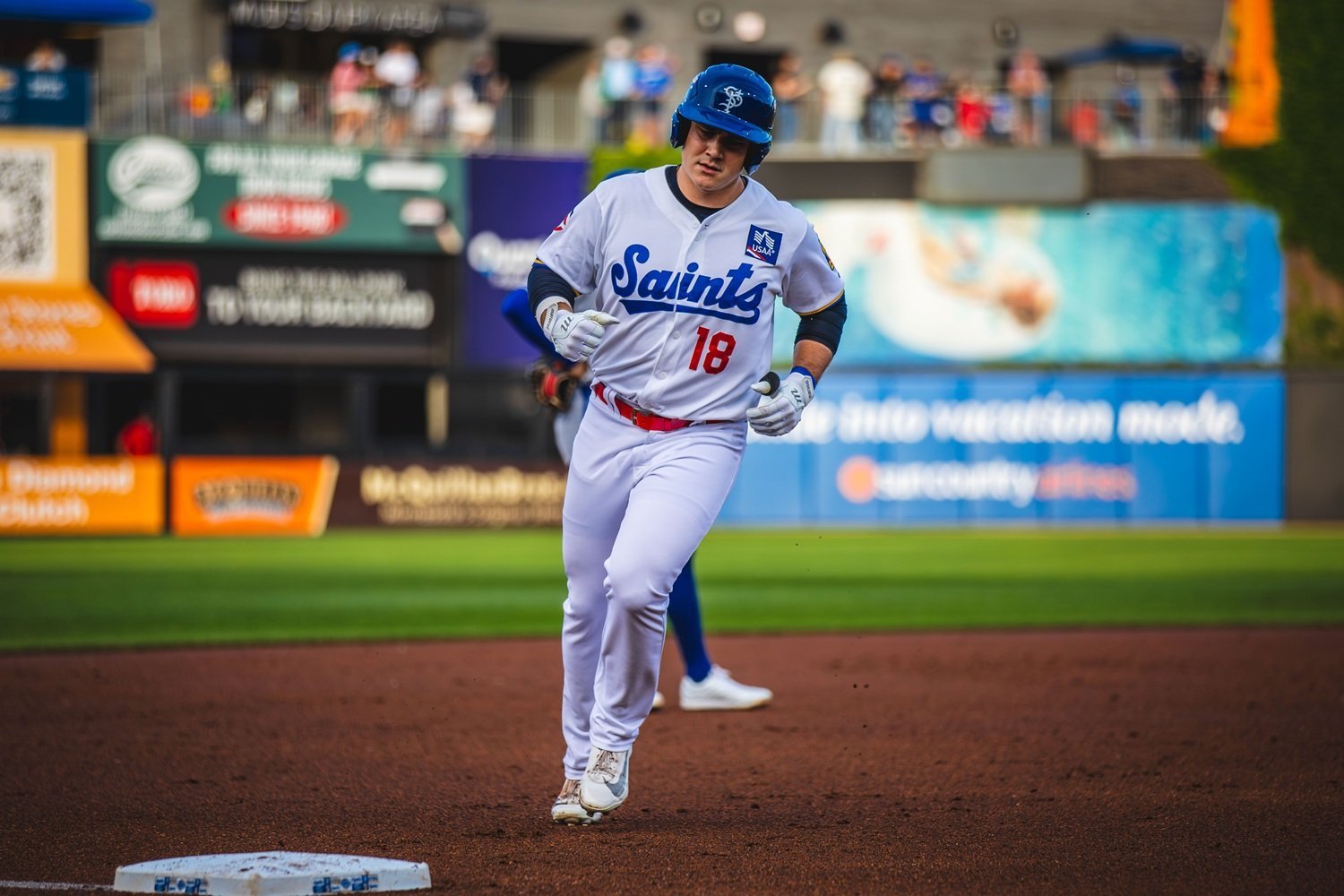 MINNEAPOLIS—Major League Baseball announced Tuesday that it has opened a formal investigation into the Minnesota Twins, after receiving multiple complaints that the organization may be stockpiling an unreasonable number of left-handed-hitting outfielders. The investigation began after rival scouts attending a Triple-A St. Paul game accidentally submitted identical reports for four different players. "We thought Walker Jenkins had taken four consecutive at-bats," one scout admitted. "Turns out it was Walker Jenkins, Emmanuel Rodriguez, Matt Wallner, and Alan Roden." Commissioner Rob Manfred reportedly became concerned after reviewing Minnesota's organizational depth chart. "It appears every time the Twins identify an athletic player with offensive upside, someone in the draft room asks one question," Manfred said. "'Can he hit left-handed?' If the answer is yes, they stop asking questions." League officials immediately requested access to Minnesota's internal scouting model. Sources say the entire algorithm consists of three weighted categories: Hits left-handed. Can stand in an outfield. Hits left-handed exceptionally well. Twins general manager Jeremy Zoll denied any wrongdoing. "We reject the notion that we're hoarding left-handed outfielders," Zoll said. "We're simply committed to acquiring talented baseball players." When asked why nearly all of those talented baseball players bat left-handed and profile in a corner outfield spot, Zoll paused. "That's... actually a fair question." The investigation intensified after inspectors visited the Saints clubhouse. According to league officials, Wallner, Jenkins, Rodriguez, and Roden were all assigned the same locker. "We figured they could work something out," said one clubhouse attendant. “It’s already tricky enough for left-handed people living in a right-handed world.” The situation reportedly became more confusing after each player answered to the nickname "future middle-of-the-order bat." Meanwhile, Triple-A manager Brian Dinkelman admitted lineup construction has become increasingly complicated. "Every day I ask who's playing left field," Dinkelman said. "Four guys raise their hands. Sometimes I just point and hope for the best." In an effort to maximize organizational depth, the Twins recently experimented with deploying all four players in left field simultaneously. The alignment placed one defender shallow, one deep, one in the left-center gap, and one somewhere near the warning track eating sunflower seeds. According to Statcast, no fly balls landed safely in left field. Unfortunately, every ground ball through the right side became an automatic triple. The Twins viewed the experiment as a success. "We're innovators," one front office official explained. "If one left-handed outfielder is good, twenty must be better." The strategy appears to have influenced every level of the farm system. Sources indicate Twins scouts have stopped evaluating players by traditional tools such as hitting ability, arm strength, or defensive instincts. Instead, reports now begin with a single question: "Could this player eventually become another left-handed corner outfielder?" One amateur scouting report obtained by TwinsDaily simply read: "Throws right-handed. Unfortunate." The philosophy has reportedly spread beyond the scouting department. During this year's Draft meetings, area scouts presented a right-handed hitting shortstop with plus speed. The room fell silent. After several awkward moments, one executive finally asked, "Do we think he could learn to bat left-handed?" The player was removed from the draft board. The organization has become so committed to the strategy that prospects have begun changing positions on their own. A catcher recently volunteered to move to left field. "No reason," he explained. "It just seems like the fastest way to get promoted." As the investigation continues, MLB has reportedly proposed several possible punishments. Among the options under consideration are requiring the Twins to draft three consecutive right-handed infielders, forcing the organization to sign a veteran right-handed corner outfielder in free agency, or making Minnesota explain the difference between left field and right field on a written exam. For now, however, league officials have simply asked the Twins to refrain from acquiring any additional left-handed outfielders. Sources confirmed Minnesota responded by selecting one on waivers for cash considerations. View the full article
 -
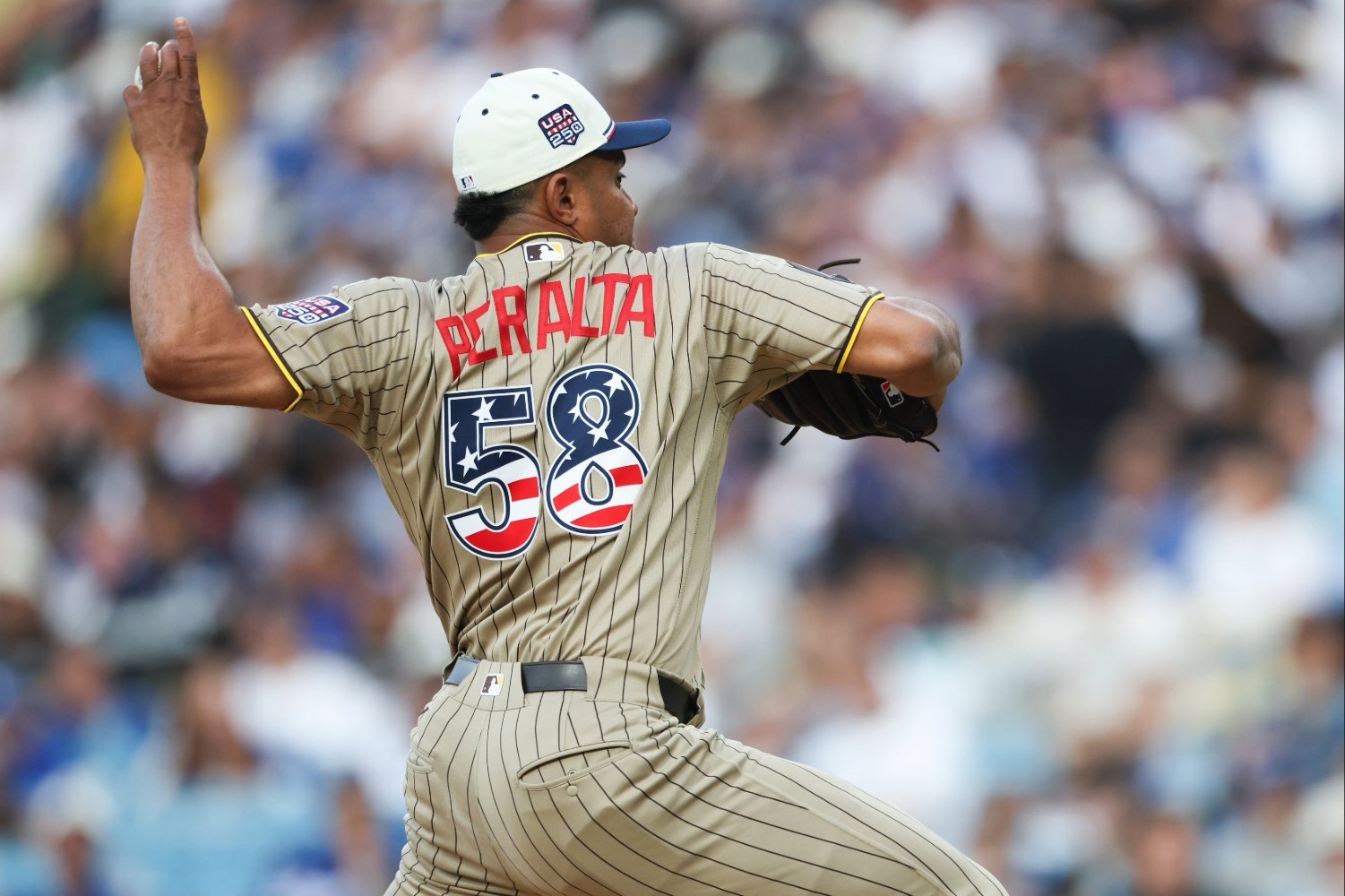 Wandy Peralta isn't just posting the best ERA of his career in 2026. He's pitching differently, and those changes explain why he has become one of the San Diego Padres's most reliable relievers. It starts with his changeup. This season, it has become both his second-most-used pitch (34.8%) and the most effective weapon in his arsenal. Opponents are hitting just .236 against it with a .576 OPS, the lowest figure he has ever allowed with the pitch. The adjustments are subtle but meaningful. Peralta is throwing his changeup at 89.6 mph, nearly one mph harder than last season, while maintaining roughly a seven-mph separation from his sinker. Of the 67 hitters who ended a plate appearance against the pitch, only two have drawn a walk, good for a 2.9% walk rate. The Evolution of Peralta's Changeup (2025 vs. 2026) Metric 2025 2026 OPS Against .596 .576 BB% 5.0% 2.9% Value (wCH/C) 0.43 2.24 The return of his velocity has also reshaped Peralta’s profile. His four-seam fastball now averages 96.4 mph, his highest mark since 2018, while his sinker sits at 96.1 mph, the hardest he has thrown that pitch since Statcast began tracking it. Just as important is how he’s using that velocity. His four-seam usage has climbed from 5.4% in 2025 to nearly 11% this season. It’s not a dramatic shift, but it’s enough to force hitters to account for another pitch, making the changeup even more difficult to anticipate. The slider completes a much more balanced pitch mix. Opponents have cut their batting average against the pitch from .314 to .190, although there is still room for improvement. His walk rate with the slider has risen to 19.2%, and its whiff rate has dropped from last year, signs that he’s still searching for more consistent execution. Even so, the pitch continues to limit damage when it’s thrown in the strike zone. Peralta’s Full Arsenal in 2026 Pitch Usage AVG OPS Whiff% Sinker 37.0% .266 .778 13.3% Changeup 34.8% .236 .576 30.8% Slider 17.7% .190 .632 25.9% Four-Seam 10.4% .333 .778 11.1% That improved pitch mix also helps explain another eye-catching number: Peralta has stranded 92.7% of the inherited runners he has taken over this season, the highest rate of his career. A mark that high always carries some good fortune and is unlikely to hold over a full season, but it also reflects his ability to induce weak contact in the game's highest-leverage situations. His overall profile has changed as well. His strikeout rate has dropped to 5.83 K/9, the lowest of his career, but he has offset that decline by limiting hard contact. His 3.5% barrel rate is exceptionally low, while his 34.8% hard-hit rate is his best since 2021. He doesn't need to pile up strikeouts if hitters continue struggling to square the ball up. A 2.33 ERA probably isn't sustainable. His 4.10 xERA points toward some regression, which is normal for any reliever. But the changes driving this season are real. His changeup has never been this dominant, his velocity has returned, and his arsenal now gives him more ways to attack hitters. View the full article
 -
 The Red Sox traded for Sonny Gray during the 2025-2026 offseason, attempting to stabilize their young rotation with a veteran arm. Gray came out of the gates as a bona fide ace for the Red Sox, going 10-1 with a 2.61 ERA. The last-place Red Sox now sit at the trade deadline, wondering whether they should attempt to trade Gray or attempt to re-sign him for the 2027 season. Gray has a $30 million mutual option for the 2027 season; mutual options are almost always declined by one side or the other. View the full article
 -
 Owen and Jesse break down the latest excruciating series loss, this time to the Seattle Mariners. They get into an early conversation about the organization's outlook as the trade deadline inches closer and take a quick peek at potential names the Jays might be looking to sell off if things don't get turned around quickly. They then refocus on the series at hand and give credit to Dylan Cease for his seven shutout innings in game one before talking about frustrating weekends from essentially every other player on the roster, including Vladimir Guerrero Jr, and Shane Bieber. They finish with some Agree or Disagree, and Owen finally breaks out his list of things to do other than watch the Blue Jays this summer. Listen on Apple Podcasts: https://podcasts.apple.com/us/podcast/the-jays-centre-podcast/id1846108462 Listen on Spotify: https://open.spotify.com/show/3Bi7SzfpcqMo5xYWnbCeoL Listen on iHeartRadio: https://www.iheart.com/podcast/263-the-jays-centre-podcast-300304824/ Listen on Pocket Casts: https://pca.st/2qk9wqxd Watch on YouTube: https://www.youtube.com/@jayscentre View the full article
 -
 At some point, potential has to become production. After another frustrating season, the Twins may have finally reached a breaking point with Matt Wallner. View the full article
