


DiamondCentric
-
Posts
2,631 -
Joined
-
Last visited
Never
Content Type
Profiles
Forums
Events
News
Tutorials & Help
Major League Baseball Videos
Guides & Resources
Store
Downloads
Gallery
Everything posted by DiamondCentric
-

Which San Diego Padres Should Be At The 2026 All-Star Game?
DiamondCentric posted an article in Padres Mission
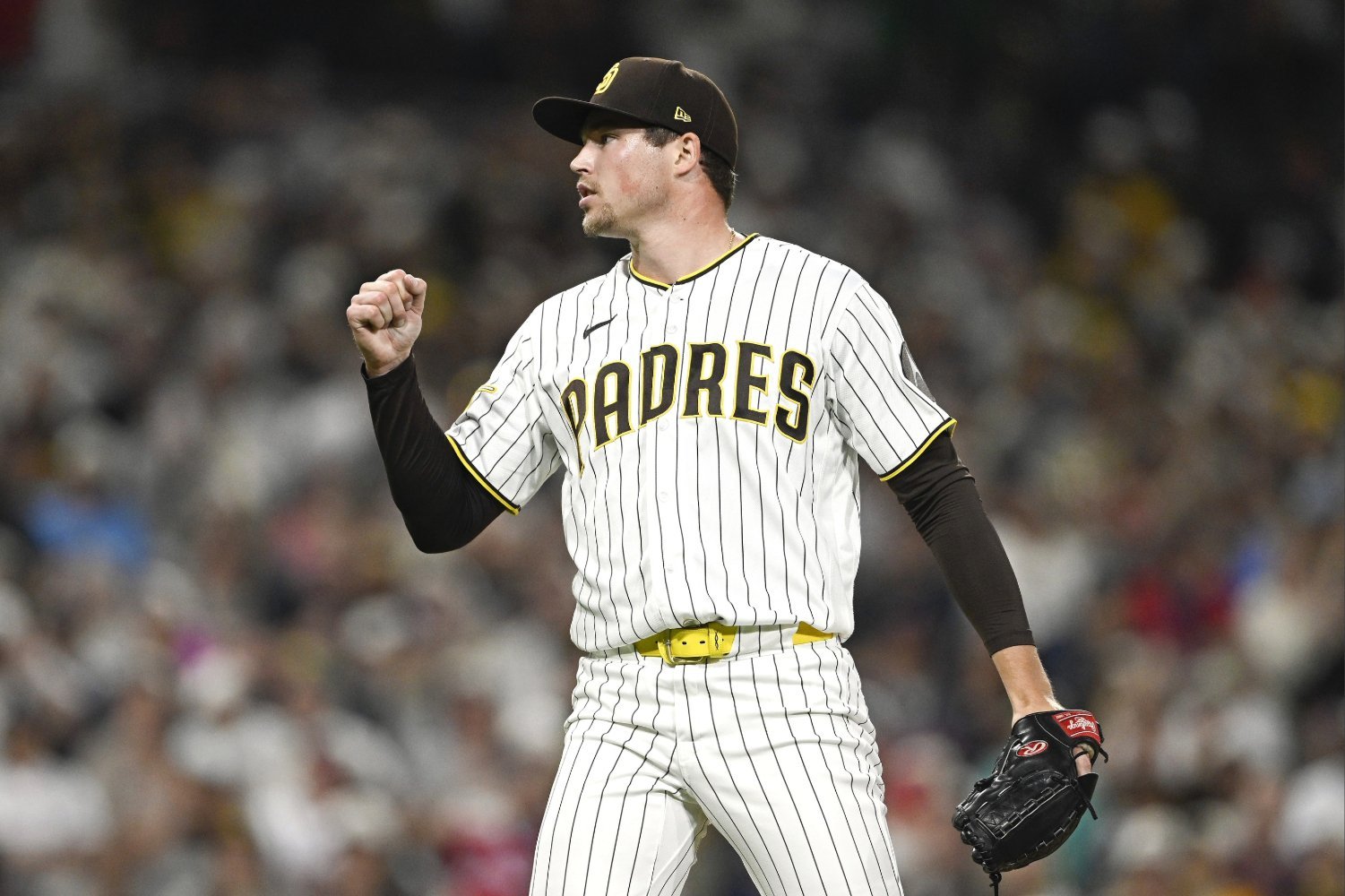 This weekend, Major League Baseball will reveal their rosters for the 2026 All-Star Game. Even through their uneven play through the first three months of the season, the San Diego Padres stand to have a couple of possible representatives for the Midsummer Classic in Philadelphia later this month. However, the nature of such variance in play is that the candidates look quite a bit different. In the case of the Padres, we can immediately rule out a couple of their notable names. Manny Machado will not be attending an eighth All-Star Game here in 2026. Despite an uptick in his power and defensive contributions this year — and a better overall performance over the last few weeks — he's still in the midst of one of the worst offensive seasons of his career, sitting at an 89 wRC+ and a batting average (.192) that is still tied for the worst among qualifying position players. There was some hope at the outset of the season that a healthy Jackson Merrill could reestablish himself as one of the game's young stars and reach his second All-Star game in three seasons. That hasn't come to fruition in any sense; Merrill has been unable to work himself out of a spiral in his approach and has generated very little of merit on his stat sheet. You'd be hard-pressed to find possible representation elsewhere in the remainder of the Padres' group of position players, either. That side of the ball has been comprised of replacement-level play from just about everyone not named Ty France (1.4 fWAR, 131 wRC+), but there's a long line of National League first basemen that would lay claim to a trip to Philadelphia before he would. If there's a case to be made, it could (somewhat surprisingly) come in the form of Fernando Tatis Jr. Despite the extended power outage that consumed most of his first half, he's been quite good just about everywhere else on the field, including his characteristically strong defense at both second base and in right field. The power has manifested with more regularity over the last month, too, with a .191 ISO in June. He's 16th in fWAR (1.5), ultimately, among National League outfielders. It's a case, but there's some stiff competition ahead of him that will likely hold him out. Given that, it's unlikely we'll see any Padres position player dress for the All-Star Game. Barring a number of drop-outs, there just isn't a case to be made up against their National League counterparts. The same is true of the team's rotation. If anything, the justification becomes easier. A team that ranks 24th in fWAR among their starting pitchers isn't likely to have a candidate to begin with. Even the rotation's linchpin in Michael King just endured a June where his ERA sat near 4.50 with a FIP over five. If he's not offering the type of performance to garner such recognition, one could hardly expect the remaining collection of Randy Vásquez, Walker Buehler, et al to do so. As it is, our candidates are not to be found here, either. It's possible that the real world was always going to be such where the team's most likely All-Star representatives emerged from the relief corps. The Padres' bullpen is one of the league's strongest individual phases for any team. It's there that we'll find the most assured lock the team has to offer, with their runner-up waiting in the wings. Mason Miller has been the game's best relief pitcher in 2026. He's accrued 2.2 fWAR with a 0.78 ERA, 0.42 FIP, and obscene 50.0 percent strikeout rate. He possesses what is, possibly, baseball's best individual pitch in the form of his slider. If the team could only have one representative, he'd be the one without question. One wouldn't have too difficult a time making a case for Adrian Morejon to join him, either. Morejon's 1.7 fWAR ranks second among NL relievers, with a FIP (2.05) that ranks second and a strikeout rate (29.5 percent) that ranks 13th. Among the top 30 relievers in innings pitched, his performance has been far-and-away of the highest quality in the National League. There are no surprises here. Given how Miller came out of the gate and how steady Morejon has been as his comrade in the late innings, a pair of relievers serving as the team's All-Star representatives was always going to be the most likely outcome. Sure, it's disappointing that they're the only two for which an easy case can be made, but there's at least a certain solace that exists in not getting the sympathy invite as part of the required representation for each team. That pair has earned it in the most objective sense. View the full article
 -
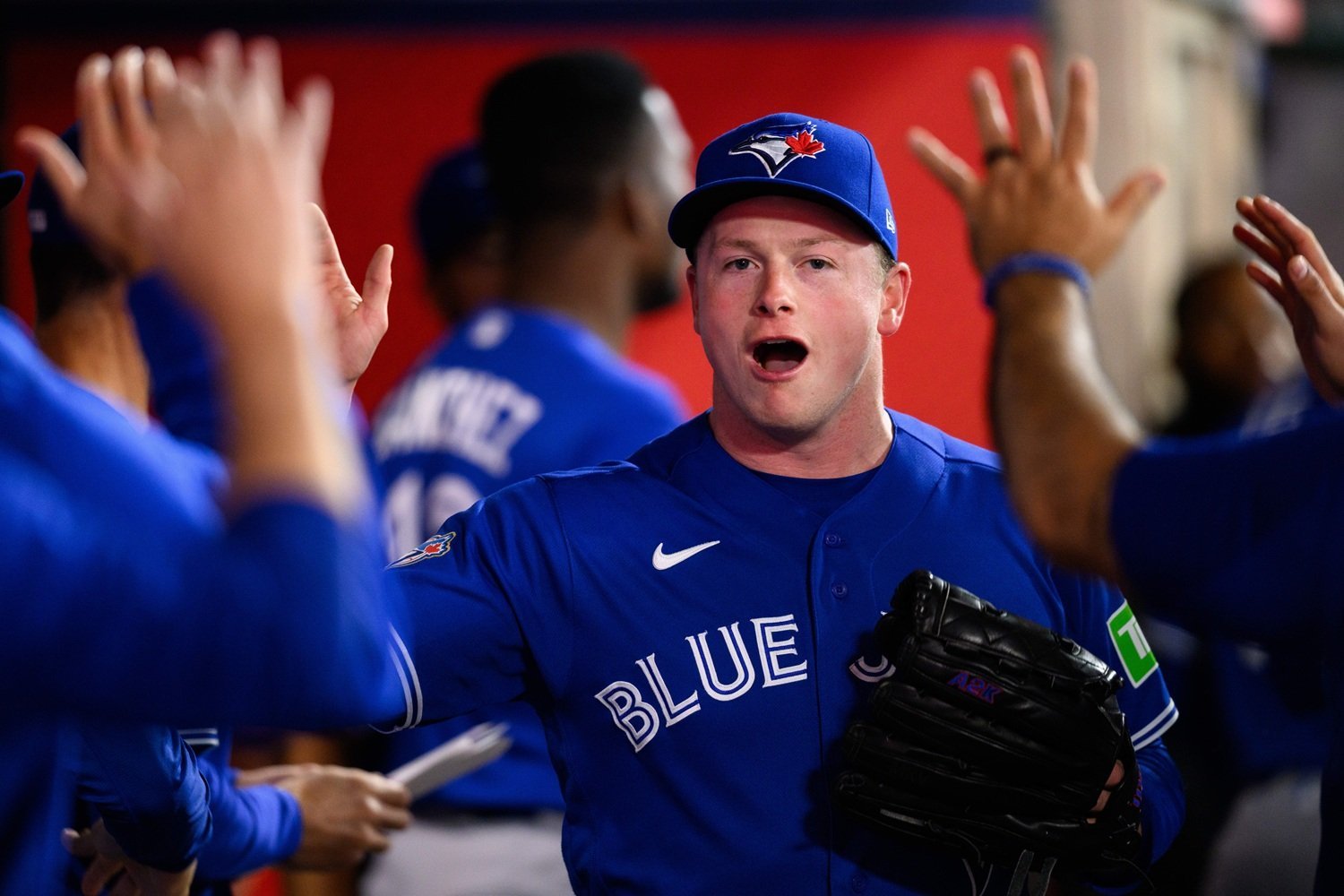 The Twins’ frenzy at last year’s trade deadline had plenty of understandable sell-offs, but by the end, it seemed that they leaned into their willingness to deal relievers a bit too far. Dumping Louis Varland at the last minute of the trade deadline felt like the front office was a bit too confident in themselves. Almost a year later, that deal doesn’t look any better. The return for Varland was immediately worth questioning. The Twins cited Kendry Rojas as the main piece that pushed them over the edge. A borderline top 100 prospect, Rojas was coming off back-to-back seasons considerably shortened by injuries. That, paired with some flashes of control concerns, had already flagged him as a reliever risk. His high 90s fastball from the left side, paired with a plus slider, gave him upside, but the floor was difficult to ignore. Rojas debuted with the Saints immediately after the trade and posted a 6.59 ERA in 8 starts. He surprisingly made his MLB debut this season, but it was interrupted by a triceps injury that cost him a month. In his 16 innings of big league action, his 18.3% walk rate has kept him from helping the Twins’ pitching-needy roster. He’s since been demoted back to Triple-A. The other piece of the trade was even more of an eyebrow raiser. Perhaps the one position in the organization that could be considered a legitimate log jam was left-handed hitting outfielder. The Twins couldn’t help but feed their obsession with collecting this type of player, and acquired Alan Roden (bringing the total to three lefty corner outfielders acquired at the deadline). Unfortunately, he was injured immediately after being acquired and did not make the 2026 opening-day roster. He missed even more time with a shoulder injury this spring and hasn’t played at the MLB level this offseason despite a near 1.000 OPS as a 26-year-old in St. Paul because there’s simply no room for him. The Twins went on to declare themselves contenders for the 2026 season, and that has arguably played out, given the American League's weakness and their high-scoring offense. Their biggest issue has been the bullpen, which they chose to almost completely ignore in the offseason after their bullpen fire sale. Trading Varland always seemed like one step too far. It left the 2026 roster with absolutely nothing to turn to in the bullpen, and the team’s payroll and hubris regarding relievers have made the group a flammable mess that has undoubtedly cost the team countless games so far in 2026. While nobody expected Varland to be one of the best relievers in baseball this season, even if he performed at his 2025 level, he would have been the anchor of the Twins' bullpen. There was no reason to trade Varland unless they were blown away by an offer. That offer turned out to be a position player they didn’t need and a high-variance pitching prospect who very well may be bullpen-bound before long himself. The organizational belief that relievers don’t matter was on full display with the Varland trade, and it has immediately cost them in a season where the rest of the league has allowed them to hang around in the wild card standings. Simply not having a bottom-five bullpen in baseball would have this team firmly positioned in a playoff spot. Perhaps the Twins will trade away assets to bring in relief help, an ironic outcome that would further paint the Varland trade as a mistake. Maybe Rojas can stick as a starting pitcher long term and make the trade a net win in value for the Twins. That won’t change the fact that this deal was a major self-inflicted blow to their ability to compete in 2026, which was their self-stated goal. If Rojas sticks as a starting pitcher over the course of his Twins career, the Twins can come out on the other side of this deal as winners down the line. They’ll still have taken an immediate hit in 2026, and what we’ve seen from Rojas so far doesn’t make this scenario look particularly likely. Perhaps Varland wouldn’t have been enough to hold this bullpen together. At the very least, his performance this year would have been worth more in trade if the Twins hadn’t decided they had no choice but to dump a controllable player at a position they needed for whatever they could get. There’s no way around it: The Varland trade looks bad. There’s still a path for it to turn around if Rojas sticks in the rotation, but that was not a sure thing when he was required, and has only looked less likely since he came to the Twins. The Twins took things one step too far at the 2025 trade deadline, and an immediately unpopular trade has only looked worse since. Too harsh? Fair? Share your reaction in the comments. View the full article
 -
 The Timber Rattlers roster is impressively not feeling sorry for itself after recently promoting a ton of production to an extra-loaded Shuckers squad. Logan Henderson's rehab outing was washed out. DSL kids dazzled again. Saturday mornings are always a good time to catch up on the BrewerFanatic weekly podcast with our own Jack Stern and Spencer Michaelis. Enjoy the full pod, Link Report visitors, but Spencer's always enlightening "Minor League Sandbox" begins at approximately the 01:33:00 hour/minute mark. Transactions: Milwaukee Brewers sent LHP Rob Zastryzny on a rehab assignment to ACL Brewers. SS Juan Martinez assigned to Wilson Warbirds from ACL Brewers. More on this game below, but as for Rob Z - Nashville Press Release: Sounds, Jumbo Shrimp Postponed Friday Night Due to rain, Friday's game between the Nashville Sounds and Jacksonville Jumbo Shrimp has been postponed. The game will be made up as part of a Saturday, July 4 doubleheader at First Horizon Park and played as two 7-inning games. First pitch of game one will be scheduled for 4:05 p.m. CT. The second game will begin approximately 30 minutes after the conclusion of game one. *** The primary impact on the big-league club is where this places RHP Logan Henderson in the upcoming rotation as this was to be his final rehab appearance. We'll see Henderson on the mound Saturday now. Biloxi pre-game media notes Final: Biloxi 14, Chattanooga (Reds) 7 Box Score and Game Log Via the Shuckers, game details: DeBerry Domination, Offensive Fireworks Spark Shuckers 14-Run Rout - Shuckers Annihilate Lookouts in Lopsided Victory With that football final score, we could focus on mound of bat work, but as the game summary title suggests, let's begin with the work of 23-year-old (24 in August) RHP Jaron DeBerry: DeBerry has allowed only 60 hits in 76.1 innings over his 15 starts in 2026. DeBerry walked only two on Friday and has not walked more than two in a start going all the way back to May 6th. Given the elevated offensive environment in 2026, even in the traditionally docile Southern League, DeBerry's season is much more impressive than his 4.24 ERA would indicate. Bonus points to DeBerry for taking all his scheduled turns. Not only did this impressive lineup (still minus 1B Blake Burke, nursing a lower body injury with an exact nature and severity to be determined) bang out 17 hits, but eight were of the extra-base variety. Equally eye-popping is that eight different players spread the XBH wealth amongst themselves. Eric Brown Jr. gets a mention here not because he was hitless (did draw a walk but was caught stealing), but because the other eight in the lineup all reached base at least twice. Mike Boeve, again slotting in at first base in Burke's absence, had four base hits to lift his batting average (I know, what's that?) to .293. Joining Boeve on base four times was Josiah Ragsdale (double, three walks, DH'ing in this one). Ragsdale likely gets the system's primary nomination for the mythical award of Breakout Player of 2026, and in this system, that's an incredible accomplishment. LF Josh Adamczewski, SS Jesús Made, 3B Andrew Fischer and RF Jacob Hurtubise all reached base three times. The Shuckers' 'X' feed is an absolute breakfast feast for your eyes this morning. Among the highlights you'll find there: When have we last seen a Brewers Double-A lineup even approaching this level of production and depth? You may be thinking the 2004 Prince Fielder/Rickie Weeks squad, or the 2006 Ryan Braun club. Not even close. What we would pay to hear what MLB GM's and Farm Directors say about the Milwaukee machine behind their closed doors. Utter envy, we'd imagine. Wisconsin Pre-Game Media Notes (download link) Final: Wisconsin 9, Peoria (Cardinals) 3 Box Score and Game Log Via the Timber Rattlers, game details: Torres Strikes Out Ten to Earn Win for Timber Rattlers - Wisconsin lefty goes seven innings in 9-3 victory at Peoria That game summary is peppered with five video highlights, enjoy! Here's a reminder that LHP Wande Torres was jumped directly from the Dominican League to the Carolina League in 2025, bypassing a stateside indoctrination in Maryvale altogether. Not only that, but Torres was handed a starting role which he maintained all season. The only time Torres has been sidelined was for a brief two-week IL period in the DSL in June 2024. The Brewers know the 21-year-old, based on his body profile, make-up, and left-handedness (that surely doesn't hurt), can be a horse. I was glad to see that Chris Mehring described Eric Bitonti's injury exit similarly to how I discussed it in our forum game thread. The one time the folks who put the affiliate summaries together are able to discuss injury situations is when something occurs in-game, and quite often even then you won't necessarily read about it. So, kudos, Chris. We probably won't see Bitonti play for the balance of the weekend, and we'll see how things play out beyond that. It is so impressive that on a night when both Braylon Payne and Luis Pena were on the bench from the start, the Wisconsin lineup outperformed their big brothers in Biloxi with nine extra base hits. Spots 4-9 in the lineup were all filled with players from the international signings group, from which of course Wande Torres originated as well. Four of RH reliever Jose Nova's last five outings have been scoreless, which would have been unthinkable given his extreme early-season struggles. Good for him. On paper at this point, this Wisconsin roster should not be continuing its recent domination post-promotion season. Yet they are, now 10-2 in the second half. Kudos to Manager Nick Stanley, Hitting Coach Evan Berliner, Pitching Coach Patrick McGuff and Coach Liu Rodriguez and the players. Wilson Pre-Game Media Notes Final: Kannapolis (White Sox) 7, Wilson 1 Box Score and Game Log Two-Out Hitting Powers Kannapolis Over Wilson - Anderson Drives in Lone Wilson Run From the game summary you just read - "The Warbirds cut the lead in half with two outs in the bottom of the fourth. Alexander Frias knocked a double to get himself in scoring position for Jose Anderson, who smacked a double to make it 2-1, Kannapolis. The inning ended with Anderson being thrown out at the plate trying to tie the game." VIDEO: Anderson's RBI How about those uniforms? A bit busy, but you can bid on them here through 1:00 AM CT Sunday AM (so, essentially at end-of-day Saturday). Folks are smart, Alexander Frias' bid price leads the pack, and newcomer Juan Martinez, yet to even debut, is just behind. 19-year-old RH starter Carlos Carra needed 87 pitches to navigate five innings, allowing two runs, including this oppo taco: Southpaw Andrew Healy was dinged for five runs over his four innings, with only one frame being scoreless. Otherwise, the bullpen received a rest day. Back to those jerseys, apparently Kannapolis batters weren't distracted by Carra's delivery and the ball coming out of that pattern? Or Healy's jersey either, for that matter? Must be just me. I like how quickly Wilson gets the Maryvale players their own headshot photos upon promotion from Arizona, as we see on Alexander Frias' MiLB Player Page. Young man spent some of his bonus money on a bit of bling. Frias backed up the gold with a double and single in this game. Final: ACL White Sox 5, ACL Brewers 4, seven innings as scheduled Box Score and Game Log The A-Crew fall below .500 at 23-24, while the White Sox youth "improve" to a mighty 13-32. The Maryvale Crew scored all their runs in the top of the 3rd; in fact, it was the only inning in which they even got a hit. Punctuated by a two-out, two-run double to center field (no Statcast, boo) by recently turned 19-year-old infielder Moises Polanco, who played third base in this game. As such, that's where you'll want to focus your attention when you review the game log. Polanco missed all of June with an injured list stint, he now sports a 1.014 OPS in his 44-plate appearance sample. Polanco posted an .853 OPS in the DSL in 2025 when it was a much less-charged offensive environment, so there's talent there. Brewer batters drew seven walks, so there's that. RHP's Diustin Mayorquin, 18 and Bryan Regalado, 19 combined to allow five runs over five innings, though only one walk was issued. Hey, speaking of head shots, it must have been Photo Day in Maryvale recently, and you can check out the smiling faces of all those who were available in camp here. Final: DSL Brewers Gold 15, DSL Rojos (Reds) 7 Box Score and Game Log Trailing 3-0 heading to the bottom of the 6th, with only one lonely single on the hit column, the Golden boys erupted for a nine-run frame. The inning included an appearance by a Reds reliever who did not retire any of the six batters he faced, though that pitcher did not begin the inning. As was mentioned in yesterday's report, it just takes one such appearance to blow up a rookie level game, a common occurrence. The Cerveceros again did not get a hit in the 7th but put up a six-spot in the 8th after the Reds scored four in the top of the inning to close the gap to two runs. Once again, a Reds pitcher faltered badly, retiring only two of eight batters. The Crew squeezed all eleven of their hits in the two innings. We encourage @BrewersPD to continue to post highlights such as this, because the players featured immediately post additional great games. Ricki Moneys, playing third base in this one for the 5th time (13 games at shortstop), double, singled twice, and drove in three runs. Switch-hitting outfielder Manny De Los Santos walked three times and stole two bases to pump his success rate on the basepaths to 16-for-17. Second-year 1B/DH Matthew Moses, DH'ing here, clubbed a three-run homer, and in 52 career games, has 20 XBH's including seven home runs, and impressively has driven in 44. Moses has not played third base at all this summer, and the 18-year-old has only game behind the plate this year. He's another example of wow, it's tough to post numbers at a premier power position on a complex league team and not be looked at like "well, someone has to play first base". On that note, Friday's actual first baseman, 18-year-old Jefer Lista, a right-handed bat with a few games in left field on his 2026 resume, singled twice to lift his line to .327/.435/.551 (.986 OPS). The DSL atmosphere is like playing on the moon in 2026. Your box score review will show that two first-year RHP's each gutted their way through four-inning stints (Jean Rivero, 18 years old and Marcos Veras, 17). Congrats to LHP Noel Cepeda, making his professional debut with a scoreless 9th, walked two and struck out one. Already 18 years old, Cepeda is an example of a player not inked in January, but who popped up on the Brewers radar, signing on May 27th. You are absolutely invited to visit the game log (all nine Gold runs in the 6th scored after two were out!). They've been showing two-out run success on the big-league Brewers broadcasts for weeks now. Finish up reviewing the 8th inning log which was capped by the Moses blast. 20-year-old 3rd-year C/1B Kegnnalex Seijas last played on June 24th. 17-year-old (18 next month) infielder Romano Donato last played on Monday. Final: DSL CLE Mendoza (Guardians) 12, DSL Brewers Blue 11 Box Score and Game Log Thankfully the game was picked up, and even if the Blue Squad couldn't quite complete the comeback from down 11-4 after seven innings, at least we didn't lose the 9th inning stats off the books. Leanders Matos also stole a base after a single, the only reason he didn't steal more was because he prioritized practicing his home run trot. Team Blue committed two errors in the three-run Guardians 2nd inning, and two of those runs were unearned. When one considers the final score and that Cleveland's kids played error-free ball, that was big. Sorry to report one of those errors was by young Mr. Matos, a throwing error from third base, his 3rd error in 20 games in the field, hardly an egregious number. Young Leanders may be thinking more about that throw than his day at the plate. This game was played in a tidy four hours and thirty minutes, and that does not include the 35-minute 9th inning delay. The seven Cleveland and four Milwaukee pitchers combined for 26 walks (12 by MKE), four wild pitches (two by each team), three balks (two for MKE), three HBP's (one by MKE), and four home runs allowed (just one by MKE). Brewer catchers did not throw out any of the eight Guardian basestealers. Guardian catchers did not throw out any of the five Brewer basestealers. DSL box scores are such a treat. MKE batters: Team RISP: 2-for-16. Team LOB: 12. CLE batters: Team RISP: 5-for-25. Team LOB: 12. NOTE: $1.6 million bonus baby infielder Diego Frontado (1.053 OPS in 17 games) last played Thursday June 25th, and at this time there is no news on that absence. Factoring in the Nashville makeup game, there are seven contests on tap for Saturday. The Arizona Brewers have the full weekend off. To all, please be safe, manage to stay cool, and go Brewers, top to bottom in this organization's incredible (so far) 2026 campaign! Organizational Scoreboard including starting pitcher info, game times, MiLB TV links, and box scores Current Milwaukee Brewers Organization Batting Stats and Depth Current Milwaukee Brewers Organization Pitching Stats and Depth View the full article
 -
 Carson Roccaforte homered and drove in three as the Northwest Arkansas Naturals beat Corpus Christi, 8-3, behind five innings from Hunter Patteson. Michael Lombardi struck out six over five sharp innings for Columbia, though the Fireflies bullpen faltered in a loss. Blake Wolters fanned four as Quad Cities raced to a 13-2 lead before rain suspended play, and rain also halted Omaha's game with the Storm Chasers trailing early. Royals Transactions No Roster Moves Rain Suspends Storm Chasers' Game With Omaha Trailing Rain suspended the Omaha Storm Chasers' game against the Indianapolis Indians in the top of the fourth inning, with Omaha trailing 1-0. The only run to that point came on a solo home run in the second inning. Starter Mason Black was otherwise sharp across 3 1/3 innings, allowing four hits and no walks while striking out two, with that home run the lone blemish. Andrew Pérez took over on the mound before play was stopped. Omaha's offense had little going, managing just one hit, a single from leadoff man Rudy Martin Jr., who also stole a base. Brett Squires drew the team's only walk. The game is scheduled to resume at 4 p.m. on the Fourth of July. Saturday's scheduled game will be a 7-inning game and take place after the conclusion of the first game. Player AB R H RBI BB K Rudy Martin Jr. 2 0 1 0 0 1 Matthew Lugo 2 0 0 0 0 1 John Rave 1 0 0 0 0 1 Abraham Toro 1 0 0 0 0 0 Brett Squires 0 0 0 0 1 0 Peyton Wilson 1 0 0 0 0 0 Gavin Cross 1 0 0 0 0 0 Elih Marrero 1 0 0 0 0 0 Andrew Velazquez 1 0 0 0 0 1 Player IP H R ER BB K HR Mason Black 3 1/3 4 1 1 0 2 1 Andrew Pérez 0 0 0 0 0 0 0 Roccaforte Homers As Naturals Roll Past Corpus Christi The Northwest Arkansas Naturals answered an early deficit with a big first two innings and cruised past the Corpus Christi Hooks, 8-3. After the Hooks pushed across a run in the top of the first, leadoff man Roccaforte tied the game with a home run, and Jack Pineda followed with a home run of his own to give the Naturals a 2-1 lead. In the second, Roccaforte lined a two-run single to score Omar Hernandez and Alberto Rodriguez, and Pineda added a run-scoring single that plated Canyon Brown, stretching the lead to 5-1. Daniel Vazquez doubled home a run in the fifth, and Brown launched a two-run homer in the sixth to make it 8-2. Roccaforte finished 3-for-4 with a home run and three runs batted in, Pineda went 2-for-4 with a home run and two RBI, and Brown drove in two. Starter Patteson earned the win, working five innings and allowing two runs on four hits and four walks while striking out three. Anthony Simonelli, Chase Jessee, and Augusto Mendieta combined to finish the game. The Naturals left six runners on base and went 5-for-10 with runners in scoring position. With the victory, Northwest Arkansas improved their record to 32-45. Player AB R H RBI BB K Carson Roccaforte 4 1 3 3 1 0 Colton Becker 3 0 0 0 0 0 Jack Pineda 4 1 2 2 0 0 Spencer Nivens 4 1 1 0 0 1 Daniel Vazquez 4 0 2 1 0 1 Connor Scott 4 0 0 0 0 3 Omar Hernandez 3 2 2 0 0 0 Alberto Rodriguez 4 1 1 0 0 0 Canyon Brown 3 2 1 2 1 1 Player IP H R ER BB K HR Hunter Patteson 5 4 2 2 4 3 1 Anthony Simonelli 1 1/3 0 0 0 1 0 0 Chase Jessee 1 2/3 3 1 1 2 1 0 Augusto Mendieta 1 1 0 0 0 1 0 River Bandits Race To 13-2 Lead Before Rain Suspends Play The Quad Cities River Bandits piled up runs in a hurry before rain suspended their game against the Cedar Rapids Kernels with Quad Cities ahead 13-2. The River Bandits scored seven times in the first inning, capped by a three-run home run from Erick Torres and fueled by a two-run double from Tyriq Kemp, a bases-loaded hit by pitch, and an error. They tacked on four more in the second, including a run-scoring double from Derlin Figueroa and a solo home run from Kemp. In the fourth, a fielder's choice and a run-scoring single from Diego Guzman pushed the margin to 13-2. Wolters turned in four solid innings on the mound, allowing two runs on four hits and one walk with four strikeouts. Kemp finished with a home run, a double, and three runs batted in; Torres also drove in three, and Ramon Ramirez reached base three times and scored three runs. The game is scheduled to resume on the Fourth of July at 4 p.m. Saturday's game will begin 40 minutes after the completion of game one and will be a 7-inning contest. Player AB R H RBI BB K Asbel Gonzalez 3 1 1 0 0 1 Nolan Sailors 3 0 0 0 0 1 Blake Mitchell 3 2 1 0 0 0 Ramon Ramirez 1 3 1 0 2 0 Derlin Figueroa 2 2 1 1 1 1 Jose Cerice 1 2 0 2 0 0 Tyriq Kemp 2 2 2 3 1 0 Erick Torres 3 1 2 3 0 1 Diego Guzman 3 0 1 1 0 1 Player IP H R ER BB K HR Blake Wolters 4 4 2 2 1 4 0 Lombardi Sharp, But Fireflies Bullpen Unravels In Loss Michael Lombardi gave the Columbia Fireflies a strong start, but the bullpen could not hold a late lead in an 8-3 loss to the Fredericksburg Nationals. Lombardi struck out six over five innings, allowing just one run on three hits and two walks, and handed off a 2-1 lead. He now leads all Single-A pitchers in strikeouts. Columbia had scratched out its runs on an unearned tally in the second inning and a run-scoring single from Jhosmmel Zue in the fourth that brought home Yandel Ricardo. The lead disappeared in the sixth, when Fredericksburg connected for a two-run home run to move ahead 3-2, a blown save charged to Jhon Reyes, who took the loss. The Nationals kept pouring it on, adding two runs in the seventh, one in the eighth, and two more in the ninth against a bullpen that struggled to find the strike zone. Luis Valdez walked five in a single inning. Josh Hammond led the offense with a 2-for-4 night, and Zue added two hits and a run batted in, but Columbia struck out 11 times and could not recover. The Fireflies went 1-for-5 with runners in scoring position. They are now 39-40 this season. Player AB R H RBI BB K Josh Hammond 4 0 2 0 0 1 Sean Gamble 3 0 0 0 1 1 Yandel Ricardo 4 1 1 0 0 2 Hyungchan Um 3 2 1 0 1 0 Jhosmmel Zue 4 0 2 1 0 0 Roni Cabrera 4 0 0 0 0 2 Connor Rasmussen 2 0 0 0 1 2 Josi Novas 3 0 0 0 0 1 Ivan Sosa 3 0 0 0 0 2 Player IP H R ER BB K HR Michael Lombardi 5 3 1 1 2 6 1 Jhon Reyes 1 2 2 2 0 2 1 Randy Ramnarace 1 2/3 3 3 3 0 0 1 Luis Valdez 1 2 2 2 5 3 1 Hunter Alberini 1/3 0 0 0 0 1 0 Top-20 Prospect Performance Kendry Chourio: DNP David Shields: DNP Josh Hammond: 2-for-4, K Blake Mitchell: 1-for-3, 2 R Sean Gamble: 0-for-3, BB, K Ramon Ramirez: 1-for-1, 2B, 3 R, 2 BB Drew Beam: DNP Carson Roccaforte: 3-for-4, HR, 3 RBI, R, BB Asbel Gonzalez: 1-for-3, SB, R, K Yandel Ricardo: 1-for-4, R, 2 K Michael Lombardi: 5 IP, 3 H, 1 R, 1 ER, 2 BB, 6 K Ben Kudrna: DNP Justin Lamkin: DNP Felix Arronde: DNP Blake Wolters: 4 IP, 4 H, 2 R, 2 ER, 1 BB, 4 K Steven Zobac: DNP Austin Charles: DNP Daniel Vázquez: 2-for-4, 2B, RBI, K Kamden Edge: DNP Warren Calcano: DNP View the full article
 -
Which Boston Red Sox Players Should Make The 2026 All-Star Game?
DiamondCentric posted an article in Talk Sox
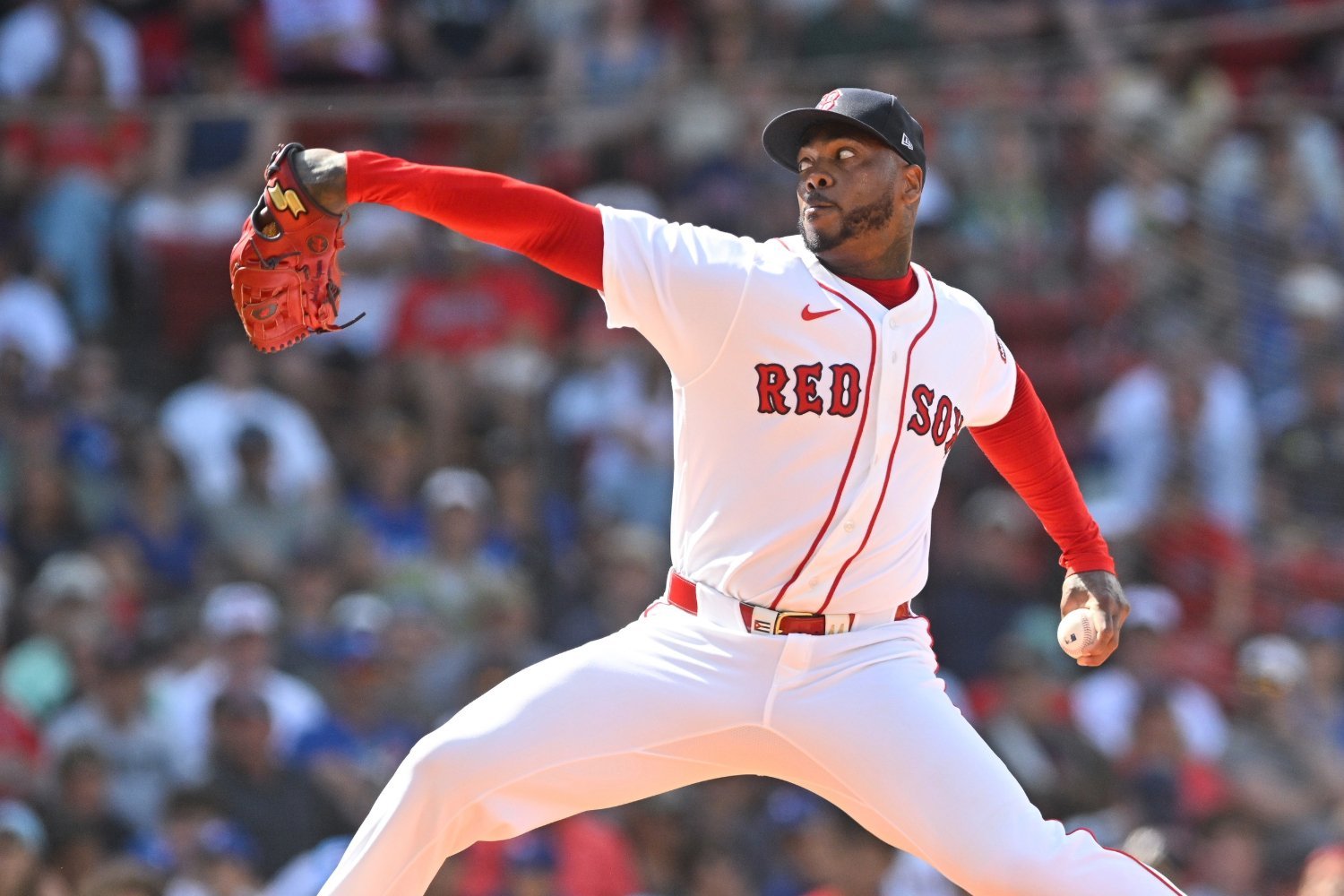 While the season hasn’t gone exactly as the Boston Red Sox or their fans hoped, there are still players on the roster worth celebrating. With the All-Star Game nearly here, it’s time to make some final predictions and see just who will head to Philadelphia to represent Boston and the rest of the American League. While the Red Sox could have as many as seven players who are deserving of the honor, we’re going to breakdown the group under the assumption that it’ll be much like the past two seasons, when the team sent three representatives. Of course, nothing is set in stone, but with the official announcement coming tonight, these are our best guesses at Talk Sox. Ranking Red Sox's 2026 All-Star Candidates Most Likely All-Stars Of the players on the roster, there are two that have really stood out as All-Stars (you could argue for a third, but we’ll touch on that later). Both individuals are part of the pitching staff in completely different roles. The first player is Aroldis Chapman. Chapman, pitching in his age-38 season has regressed slightly from last year but it would have been insane to expect a repeat of 2025. Instead, he’s been just as reliable, but with a couple hiccups on the mound due to a combination of defensive miscues and a nagging hamstring injury. Despite that, the flamethrowing left-hander has put together one of the better seasons by a reliever as he’s allowed just six earned runs in 24 2/3 innings while saving 16 games. Much like last season, he’s been the dominant force to close out games for manager Chad Tracy while also racking up strikeouts, including a career-record-tying 1,363rd strikeout he got against the New York Yankees. Batters are reaching base a little bit more this year (19 hits and 12 walks compared to 28 and 15 in 61 1/3 innings last year), but a 30.2% strikeout rate helps to counteract that. Barring an unforeseen major injury, it’ll be a shock to not see Chapman be selected to his ninth All-Star Game. Likely to join Chapman will be Sonny Gray, as the 36-year-old has put together a dominant first half despite spending time on the injured list. Gray has stepped up as the ace of the pitching staff in Garrett Crochet’s absence and has only delivered time and time again, including a 7 1/3 inning performance where he allowed just one hit to the Yankees. Overall, he’s started 15 games and given the team 83 2/3 innings with a 2.69 ERA. Record-wise, he’s gone 9-1 and has struck out 75 batters while walking opponents at a 6.2% rate. The numbers are all the more impressive when you realize he had a 4.30 ERA and just 13 strikeouts in his first five starts, including the one he left injured. Since returning, Gray has put together a dominant stretch of 10 starts with a 2.08 ERA across 60 2/3 innings while striking out 62 batters. If any player has turned a hot streak into an All-Star game appearance, it's this man. Should Be There This category encompasses two players that, for all intents and purposes, should be All-Stars, but due to the field in the American League will not be shocking (yet still disappointing) snubs. The first player should be the most obvious. First baseman Willson Contreras has been the best offensive weapon for the Red Sox through the first half of the season as he’s put together a career year. Through 83 games, the right-handed batter has hit .283/.377/.529 with 14 doubles, two triples, 18 home runs and 53 RBIs. Defensively, he’s also played a great first base. However, Contreras has to deal with the likes of Vladimir Guerrero Jr, Ben Rice, Nick Kurtz, Pete Alonso and Munetaka Murakami (who will likely need an injury replacement should he be selected). Contreras should very much be in the previous category, but due to the quality of first basemen in the American League, I can’t bring myself to place him there. Both Guerrero and Rice are the finalists for the starting first base spot, and should Rice fail to secure it, he’ll likely be selected to the roster after hitting .272/.362/.566 with 15 doubles, two triples, 22 home runs and 53 RBIs. That would likely leave one spot to go between Contreras, Alonso and Kurtz and it’s hard to leave Kurtz off of the All-Star team. That’s not even bringing up the argument that Alonso may make the team just because the Orioles need a representative Joining Contreras in this section is Ceddanne Rafaela who, like always, has been one of the best center fielders in all of baseball. And unlike his previous seasons, he’s putting together his most complete season at the plate as well. Through 81 games, Rafaela has hit .282/.331/.435 (all career highs) along with 18 doubles, three triples, seven home runs and 35 RBIs, all while helping to bring consistency to the two-hole after the Red Sox tried multiple players there to no avail. Instead, Rafaela is on pace to walk more than in any previous season while also cutting his strikeouts back. There is also some argument where if the All-Star Game was meant to showcase the best players in Major League Baseball, Rafaela would be selected based on his defense alone. Currently he’s in the 99th percentile for Fielding Run Value and Outs Above Average, going for 11 in both categories, showing just how important he is to the Red Sox's success on defense. And that’s after a rough few weeks to open the season out in center field. Unfortunately for Rafaela, he’s up against some tough competition with his fellow outfielders. Bryan Buxton, Aaron Judge (who will need an injury replacement), Riley Greene, Mike Trout and Jac Caglianone all have great cases for being chosen to the game and Rafaela’s best shot may be (much like Contreras) being an injury replacement after the initial roster is announced. Could Be Selected This section is a bit different than the others. In here, there are two players who very well could be All-Stars but most likely won’t be due to one reason or another. The first being the Red Sox's big off-season acquisition, Ranger Suárez. Suárez has done everything the Red Sox have hoped for and then some. Through his first 16 starts he has a career low ERA (as a full-time starter) of 2.94 while tossing 88 2/3 quality innings. While Gray may very well be the current ace of the rotation, there is an argument to be made that it could be Suárez. His metrics show that he’s been one of the best in all of baseball in limiting hard contact as his exit velocity on average is 86.4 mph and his hard-hit rate is just 31.5%. Add that to a career-high strikeout per nine innings of 9.3 and a WHIP of 1.128, and Suárez has looked absolutely nasty on the mound. Unfortunately for Suárez, should Chapman and Gray both make the team, there won’t be much room for a third pitcher from the Red Sox as there are other quality arms around the American League that could be selected. Add to it that every team must have at least one representative and it starts to make the All-Star Game into a numbers game (much like actual roster construction around baseball). One thing working in Suárez’s favor, however, has been his stellar month of June. In his five starts, the left-hander tossed 30 innings while allowing just seven earned runs, good for the fifth-best ERA in the American League at 2.10. Perhaps that earned him enough late momentum to get a nod. The second and final member of this section would be none other than Payton Tolle. There’s no debate surrounding the skill of Tolle, since being promoted to Boston in mid-April the large left-hander has helped the rotation immensely with a 4-5 record in 13 starts. In those 13 outings, he’s thrown 74 1/3 innings with a strong 3.34 ERA to go along with 74 strikeouts. The obvious argument against his case of being an All-Star is his time in the majors. He spent the beginning of April in the minors and hasn’t accumulated as much playing time as the others. But there’s one thing that can be used against that notion: Jacob Misiorowski. For those who may not know the full story, there was great debate at last year’s All-Star selections as Misiorowski was named as an injury replacement for the All-Star Game after just five career starts. Those who agreed with his selection argued that the All-Star Game should be a recognition of the best players and skills. And with Misiorowski, there’s no denying he has the best fastball in the National League. It just so happens that Tolle has a great fastball too. Using the logic from last year, wouldn’t it be a similar case for Tolle to make it as an injury replacement just so fans can watch the 6-foot-6, 250-pound left-hander hurl fastballs that can peak around triple digits. For fans of the game, who wouldn’t want to see Tolle staring down some of the best the National League has to offer? Unfortunately for Tolle, there just won’t be enough room for him this year. Let's all turn our gaze toward 2027 for his hopeful Midsummer Classic debut. View the full article
 -
Chicago Cubs Minor League Pitchers of the Month: June 2026
DiamondCentric posted an article in North Side Baseball
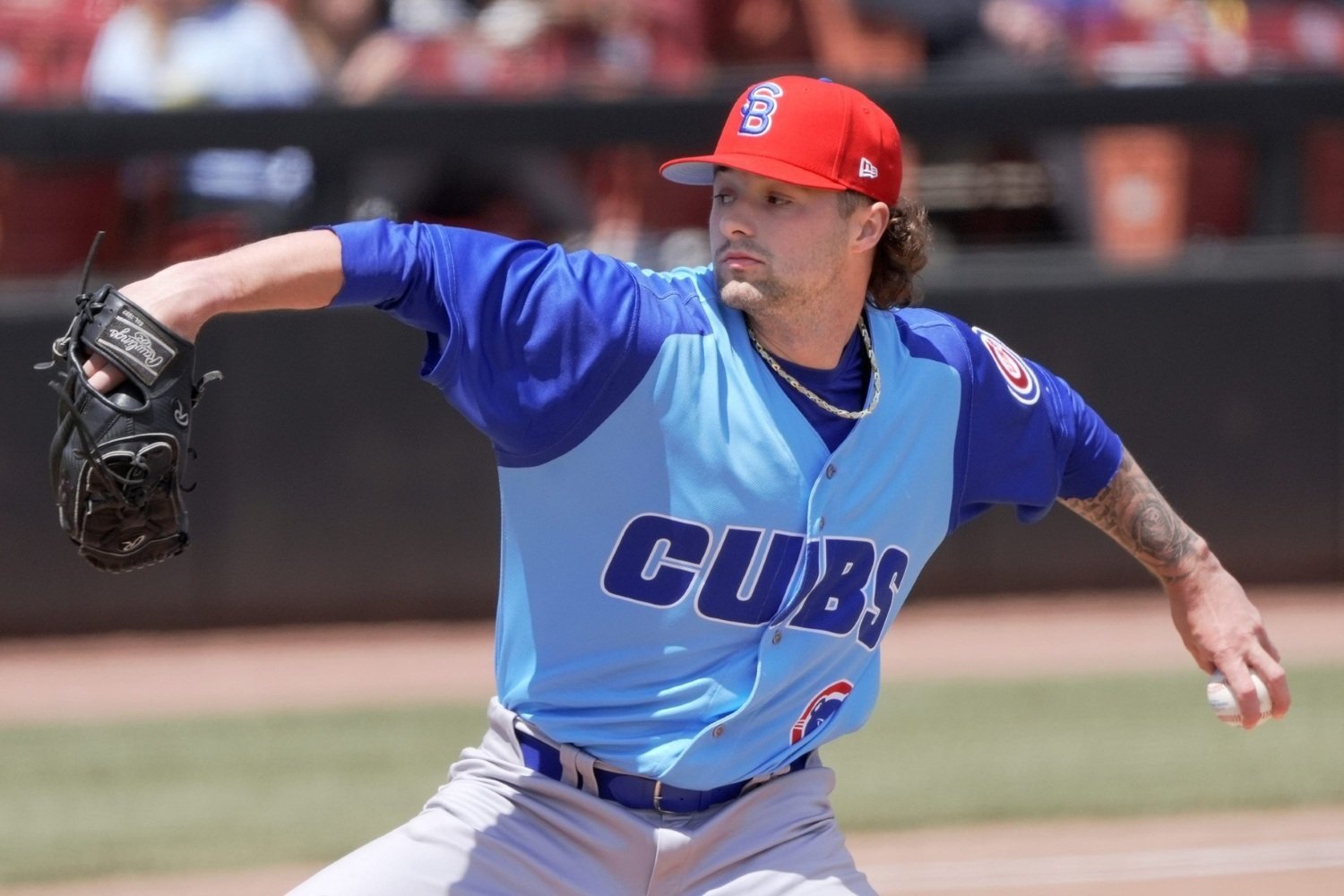 Another month, another test of the Cubs' organizational pitching depth that underscores the need for development on the farm. One returning name and three new ones found their way into this month’s edition of MiLB pitcher of the month consideration, including a couple at the higher levels. Ranking Cubs' Best Minor League Pitchers in June Honorable mentions Will Sanders - RHP - Iowa Sanders struggled in Iowa before hitting the IL mid-April, but upon his return, he was really good in 4 starts in June. He allowed just 6 runs over 21 innings, going at least 5 innings in each start. He had a 28% strikeout rate and a 5% walk rate and allowed a .185/.270/.354 slash line. With the amount of injuries the Cubs have been through, Sanders will be in Wrigley before long, if he keeps up what he did in June. Pierce Coppola - LHP - Myrtle Beach Coppola was my runner-up in May after a quality debut, and he was just as good in June. Over 4 starts he allowed a .179/.292/.232 slash line, with a 29% strikeout rate. He lowered his walk rate for the second straight month, this time to 12%. I would imagine a move to South Bend is right around the corner for the big lefty. Runner-up Jace Beck - RHP - Knoxville Jace Beck was drafted in the 22nd round of the 2019 draft by the Mets. That's a round that no longer exists. He spent 6 seasons (7 years, if you count 2020) in the minor leagues for the Mets, but never made it to Double-A. You don’t see that often! He elected free agency after last season, and the Cubs scooped him up and sent him to Knoxville. While he was solid in April and May, he found a new level in June. He made 5 multi-inning appearances, including 3 starts, and allowed just 1 run over 19 innings with a 47% (!!!) strikeout rate. He finished the month with back-to-back starts of 5 innings and 10+ strikeouts. Winner Jackson Brockett - RHP - South Bend Jackson Brockett was a 4-year starter at Nebraska, but he went undrafted last summer before signing a free agent deal with the Cubs before spring training this year. He was incredible in June for South Bend, allowing a .136/.149/.167 slash line to opposing hitters with a 27% strikeout rate and a walk rate barely over 1%. To put those numbers in perspective, over five multi-inning outings in the month, he allowed one walk and just 2 extra-base hits to the 67 batters he faced. Across two levels, he has a 1.29 ERA in 49 innings backed up by a 25% strikeout rate and a 6.5% walk rate. Brockett is certainly opening eyes, even if he'll have to work hard to prove he's more than an org guy. View the full article
 -
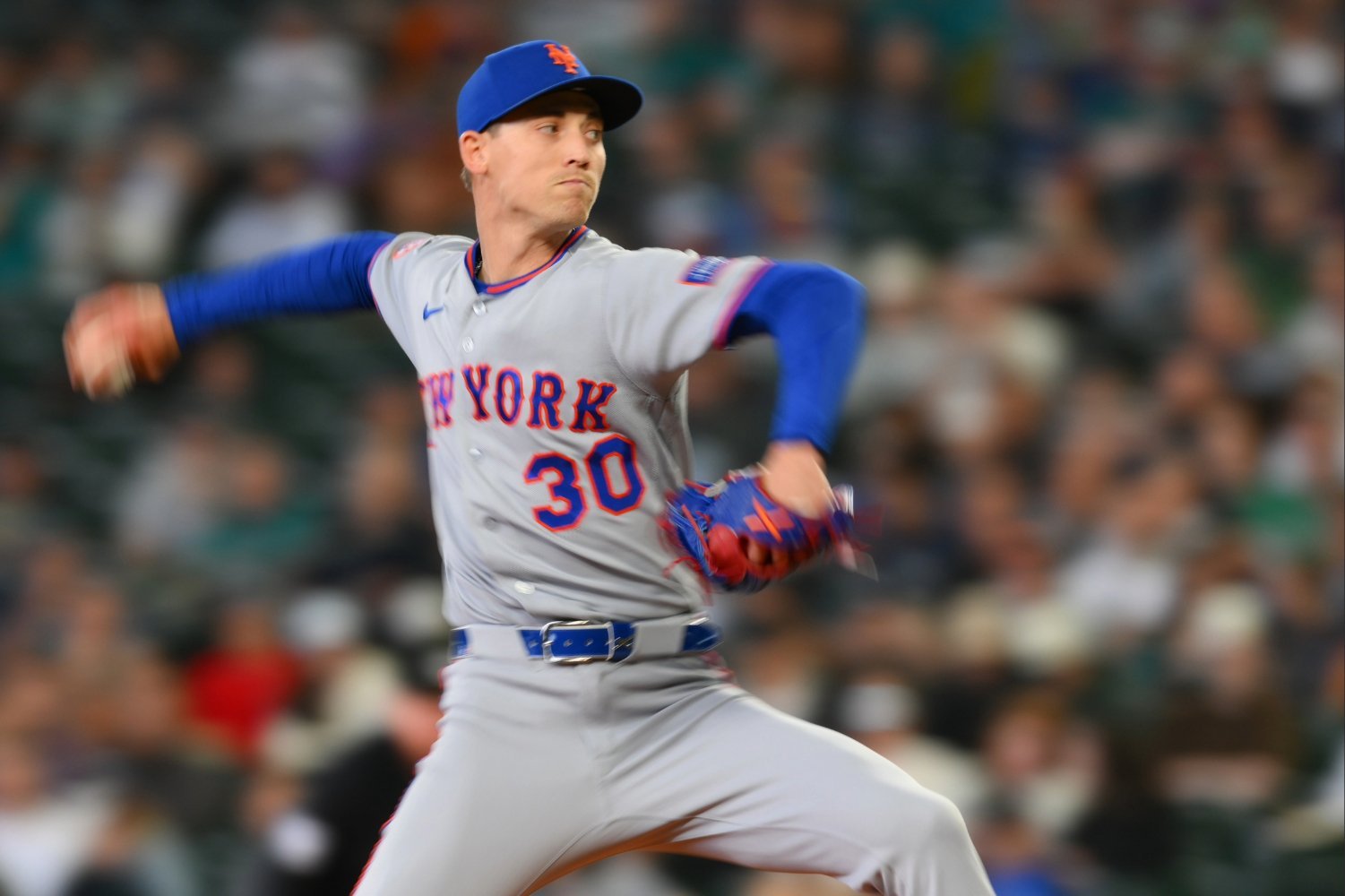 The New York Mets fell hard in June. They went 10-17 in the month and just about took themselves out of the National League wild-card race. Manager Carlos Mendoza paid for the downturn with his job. Starting pitching was a major reason for the collapse. The rotation posted a 5.46 ERA/4.64 FIP in the 27 games, ranking 25th in MLB. It was 29th in the league with 3.88 walks per nine. To be fair, the starters also were ninth with 9.26 strikeouts per nine. While the overall numbers were poor, not every starter had a bad month, and the bullpen was tops in the majors with a 3.57 xFIP. There was enough quality to compile a list of top performers. Below is Grand Central Mets’ ranking of the club’s pitchers of the month for June. Ranking New York Mets’ Best Pitchers In June 3. LHP Sean Manaea We could have gone with closer Devin Williams (4-for-4 in save opportunities) here, but Manaea got the nod for giving the rotation a needed boost after moving over from long relief midway through the month. He made six appearances, the equivalent of a full month for a starter, and he produced decent quality -- a 3.72 ERA, 21.8 percent K rate, 5.9 percent walk rate and 2.6 percent home run rate over 29 innings. He allowed no more than three runs in any outing, and he went at least five innings four times. Interestingly, his fastball velocity (four-seamer and sinker) fluctuated during the month. It sat at 92-93 mph for the majority of his outings, but there were also games of 90-91 heat. On the plus side, his low three-quarters arm slot and crossfire motion can mask any differences. With Kodai Senga in the bullpen, David Peterson traded, and Jonah Tong scuffling at Triple-A, the Mets will keep giving Manaea the ball and trust that he can keep them in games. 2. RHP Nolan McLean McLean bounced back from a rough May with a solid June. In five starts, he posted a 2.79 ERA, .617 opponents' OPS, and 29.7 percent strikeout rate over 29 innings pitched. The month didn’t go perfectly. There was a four-inning, 93-pitch grind against the Atlanta Braves, as well as a pair of costly home-run balls against the Chicago Cubs. His walk rate was a bit high at 9.9 percent. But more often than not, the rookie looked the part of front-line starter. He closed the month with six scoreless innings and a win vs. the Toronto Blue Jays on the 30th. That outing highlighted McLean’s adaptability and ability to execute a game plan. His pitch mix in the game was markedly different than the mix in his seven-inning gem against the Reds in Cincinnati on June 17: DATE TP SI 4S CT CB SW CH SL June 30 91 33 18 5 18 16 0 1 June 17 101 26 27 15 9 15 6 3 He threw more sinkers against Toronto and more four-seamers against Cincinnati, three times as many cutters vs. the Reds and no changeups against the Jays. Against the Reds, he made it a point to be aggressive up in the zone but still got eight ground-ball outs to go with nine strikeouts. In short, both performances showed that he knows how to pitch. 1. RHP Luke Weaver It’s tough to go against someone who hadn’t allowed a run since April 30 and barely allowed a baserunner last month. Weaver gave up one hit and one walk in 11 1/3 innings covering 11 June appearances. He extended his scoreless-innings streak to 24 with a perfect frame against the Toronto Blue Jays on June 30. Command was the key to Weaver’s dominance. He threw 100 of 137 pitches for strikes (73 percent), attacking the zone with a four-seamer, changeup and cutter. He struck out 40.5 percent of the hitters he faced (15 in 37 plate appearances), yet his highest pitch count in an inning was 18. Weaver is getting below-average vertical drop on his change, according to Baseball Savant, but his four-seamer and cutter are diving, and that’s contributing to an 87th-percentile chase rate for the season. His off-speed stuff is in the 95th percentile in run value, while his fastball is in the 87th percentile. That’s a product of having everything working, which makes him the obvious choice for first place here. View the full article
 -
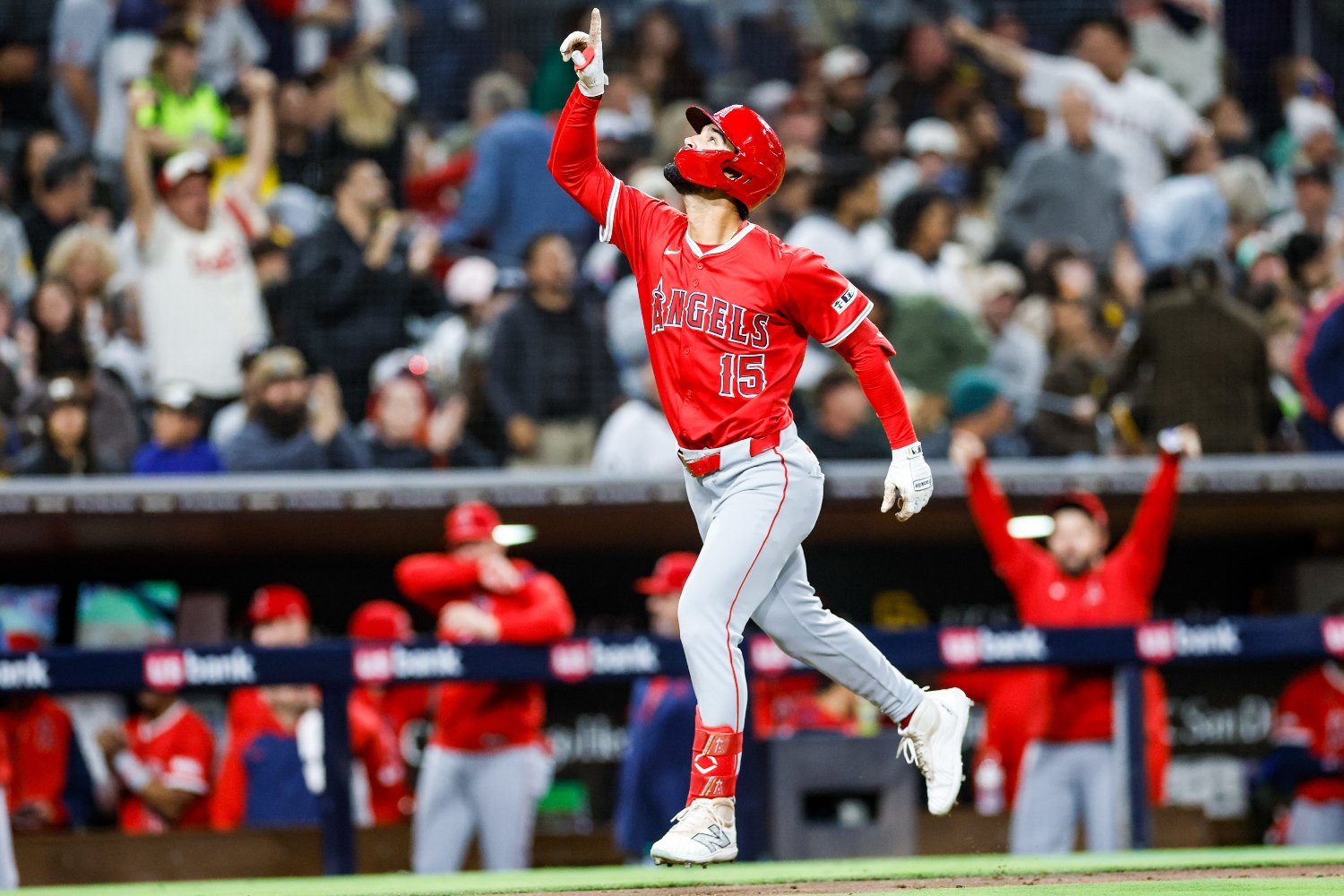 Things have been rough for the Kansas City Royals, as they are 18 games under .500 as of Friday, July 3rd. Sporting a 0.7% playoff odds before the Fourth of July isn't the greatest place to be as an organization or fanbase. That said, there is some lingering hope in the Royals' Minor Leagues that should help this fanbase be more optimistic about 2027 and beyond. Let's take a look at the top hitters in June from each Royals affiliate, and what these strong performances over the past month mean for not just the players themselves, but the farm system as the MLB Draft looms on July 12th. *All Statcast summaries courtesy of TJ Stats. Triple-A Omaha: Matthew Lugo, OF I talked in a recent post about Lugo deserving a shot in Kansas City. His strong June at the plate is the reason why. In 21 games and 80 at-bats with the Storm Chasers this month, Lugo hit .325 with a 1.035 OPS. He hit seven home runs, the most of any Omaha hitter in June, and scored 17 runs, which tied Abraham Toro for the June lead. Toro technically produced the better average (.326) and OPS (1.041). Still, I gave the edge to Lugo considering Lugo's power (more home runs and higher slugging than Toro) and youth (25 to the 29-year-old Toro). Lugo still had flaws this month. His 4.7% walk rate ranked in the 3rd percentile, and his 34% O-Swing% ranked in the 12th percentile. That said, his barrel rate ranked in the 90th percentile (11.5%), his LA Sweet-Spot% ranked in the 97th percentile (45.9%), and his Pull Air% ranked in the 88th percentile (19.7%). The Royals need bats who can not only hit for power but also pull the ball effectively, especially at home, where the stadium's dimensions are modified. Hopefully, the former Angels prospect will get a chance to do that in Kansas City sooner rather than later. Double-A Northwest Arkansas: Jack Pineda, 2B/SS/3B The Naturals struggled in June hitting-wise. That was especially true of their top players. Carson Roccaforte, our No. 8 prospect at Royals Keep, hit .200 with a .683 OPS. Daniel Vazquez, our No. 18 prospect, hit .247 with a .687 OPS. Sam Kulasingam, who looked to be on the verge of a promotion to Omaha in May, only hit .173 with a .612 OPS. One Northwest Arkansas player that did NOT struggle was Pineda, a Royals 12th-round pick in the 2022 MLB Draft. In 78 at-bats (second most of any Naturals player this month), the utility infielder hit .346 with a .908 OPS. He launched two home runs, scored 10 runs, and collected 14 RBI. The latter led all Naturals players this month in that category. The former Baylor product also drew 11 walks to only 9 strikeouts and stole 9 bases on 10 attempts in June. The 26-year-old infielder also had a 15-game on-base streak that extended from June 13th to July 1st (it ended on July 2nd against Corpus Christi). Pineda is an aggressive hitter who can chase a lot (31.8% O-Swing% this month), but he makes contact frequently (82.5% Z-Contact%). If the Royals opt to promote Peyton Wilson this year, Pineda could replace him on the Storm Chasers roster. The 5'8, 170-pound infielder isn't a high-ceiling prospect, and his profile seems more similar to Nicky Lopez than Michael Massey. That said, the Royals need gritty guys who play good defense, are efficient on the basepaths, and can put the ball in play. Perhaps Pineda can satisfy that role in Kansas City in 2027. High-A Quad Cities: Luke Pelzer, OF There are a lot of big names in Quad Cities, as catcher Blake Mitchell and pitcher Kendry Chourio were the two representatives chosen to represent the Royals in the MLB All-Star Futures Game on Sunday, June 12th (the same day as the Draft). However, while Pelzer doesn't have the prospect status of those two, or position players like Ramon Ramirez (No. 6), Asbel Gonzalez (No. 9), or Austin Charles (No. 17), he has arguably been one of the most productive hitters this season in Davenport. In 77 at-bats in June, the 2025 17th-round pick hit .390 with a .966 OPS. While he didn't hit a home run, he produced a .494 Slugging thanks to six doubles and one triple. Pelzer also scored 14 runs, collected 15 RBI, and stole 6 bases on 7 attempts. The University of Illinois-Chicago product also drew 12 walks to just 17 strikeouts, good for a 0.71 ratio. Another intriguing aspect of Pelzer's profile is that he's been extremely productive with ducks on the pond. He has produced a .525 average in RISP and 2-Out situations this season, according to the Royals Player Development social media account. Pelzer didn't pull the ball much this month (13th percentile Pull Air%), but he is a patient hitter (27th percentile in June) who doesn't chase (70th percentile O-Swing%), whiff (79th percentile whiff%), or strike out (81st percentile). That profile should earn him a promotion to Double-A Northwest Arkansas soon. Low-A Columbia: Sean Gamble, OF Gamble's overall numbers this year in Columbia are atrocious. In 70 games and 304 plate appearances, he is hitting .182 with a .565 OPS. However, that was mostly due to brutal months in April (23 TJ Bat+) and May (46 TJ Bat+). It's been a much different story in June for Gamble, and he's finally showing fans why the Royals drafted him 23rd overall in last year's MLB Draft. In 77 at-bats this month, Gamble is hitting .260 with a .760 OPS. His TJ Bat+ in June is 107, 84 points higher than his April mark and 61 points higher than his May mark. The former IMG Academy scored 13 runs, collected 14 RBI, and stole 10 bases on 11 attempts. Another impressive development? He drew 13 walks to 20 strikeouts, good for a 0.65 mark. The 19-year-old showed much better plate discipline in June, with a 22.2% O-Swing% (81st percentile), a 21.8% whiff rate (84th percentile), and 84.7% Z-Contact% (76th percentile). He also pulled the ball much better this past month, as his 15.5% PullAir% ranked in the 66th percentile. That resulted in some big hits, as he had four doubles, a triple, and a home run this month. Fellow 2025 MLB Draft selection Josh Hammond has gotten more attention in Columbia, and he had a great month as well, hitting .316 with two home runs in 98 at-bats. However, Gamble actually had a better OPS than Hammond in June (.746), with Gamble striking out the same amount (20), but walking six more times than Hammond this month. Many jaded Royals fans have already chimed in that Gamble is another Royals draft "bust." That said, this past month has demonstrated that Gamble has made the necessary adjustments to Low-A pitching (a promising development sign), and he's showing he could have a future as a defensive and speed specialist who can maintain discipline at the plate and make regular contact. A strong July and early August could help propel Gamble to a short stint in Quad Cities during the stretch run in late August and September, something that seemed unthinkable back in May. View the full article
 -
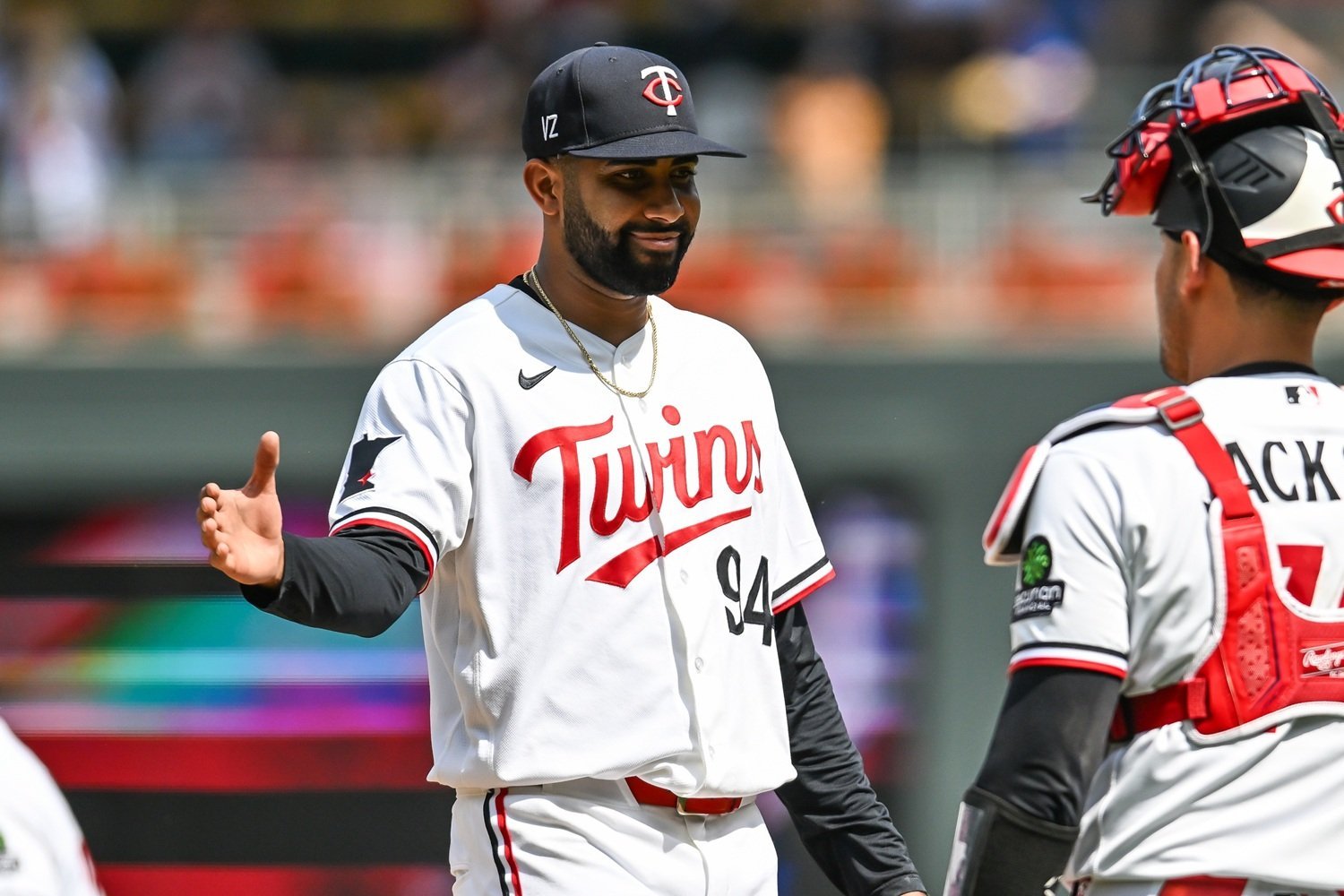 June was an interesting month for the Twins' pitching staff. While the bullpen may have been better than it had been at any point this season, the starting rotation was a different story. Joe Ryan came back down to earth a bit, consistency was hard to come by, and the Twins found themselves playing in plenty of high-scoring games. Injuries certainly haven't helped. Bailey Ober, Mick Abel, and Cole Sands all remained on the injured list throughout the month, forcing the Twins to continue testing the depth of both their rotation and bullpen. Still, there were plenty of encouraging performances from some of the club's relievers, along with another strong month from Zebby Matthews in the rotation. Here's a look at the Twins' top-performing pitchers from June. 4. Anthony Banda June Stats: 11 G, 9 1/3 IP, 1.93 ERA, 1.61 WHIP, 12 K, 4 BB, 3.86 FIP Before his month came to an unfortunate end, Anthony Banda quietly put together a very strong stretch. Across 9 1/3 innings, he surrendered just two earned runs while striking out 12 hitters and issuing only four walks. While he did allow six extra-base hits during the month, Banda consistently found ways to work around traffic and keep opponents from putting together big innings. Unfortunately, the positive momentum came to a halt when he landed on the injured list on June 29 with what appears to be a fairly significant lat strain. It sounds like the injury could keep him sidelined for a while, which is a tough break for both Banda and a bullpen that has relied on him heavily throughout the season. 3. Zebby Matthews June Stats: 5 G, 33 IP, 3.82 ERA, 1.21 WHIP, 22 K, 8 BB, 4.86 FIP The overall numbers paint the picture of a solid month for Zebby Matthews, but they still don't tell the full story. Four of his five starts in June qualified as quality starts, and he continued to show why the Twins believe he can be a long-term fixture in the middle of their rotation. Matthews turned in six strong innings against the Dodgers, along with seven-inning quality starts against the Astros, Rangers, and Royals. The biggest issue continues to be the home run ball, as he surrendered six homers during the month. That's been the biggest blemish on his profile dating back to his major league debut in 2024. Even so, it still feels like Matthews is incredibly close to taking another step. Outside of a couple of mistake pitches each outing, he's consistently attacking the strike zone, generating weak contact, and giving the Twins length. Clean up a few of those mistakes, and it isn't hard to envision Matthews developing into a legitimate frontline starter. 2. Andrew Morris June Stats: 13 G, 14 1/3 IP, 3.77 ERA, 1.26 WHIP, 20 K, 4 BB, 2.27 FIP June was a tale of two halves for Andrew Morris. Over his first four appearances of the month, he allowed six earned runs in just 5 1/3 innings, marking the roughest stretch of his brief major league career. From there, though, Morris completely flipped the script. Over his final nine innings of June, he didn't allow a single run to score. He gave up just five total baserunners while striking out ten hitters and walking only two. That dominant finish lowered his underlying numbers considerably and continued a trend that's become increasingly obvious over the past couple of months. Morris is becoming a staple of the Twins' bullpen. Whether he's entering in the middle innings, handling leverage situations, or bridging the gap to the ninth, Twins manager Derek Shelton has continued to trust him. Morris has rewarded that confidence, and both he and the pitcher at the top of this list look like arms the Twins could be counting on for years to come. Twins Pitcher of the Month: Yoendrys Gómez June Stats: 13 G, 11 2/3 IP, 2.31 ERA, 1.25 WHIP, 9 K, 4 BB, 3.71 FIP After making an immediate impact following his arrival in May, Yoendrys Gómez took another step forward in June. He allowed just three earned runs across 11 2/3 innings while recording six saves and a hold, firmly establishing himself as the Twins' go-to option in the ninth inning. His month wasn't necessarily flashy, nor was it fueled by overwhelming strikeout numbers. Instead, Gómez consistently limited hard contact, avoided free passes, and simply got the job done whenever his number was called. That's exactly what teams want from a closer, and Gómez has embraced that role in a relatively short amount of time. Less than two months after being acquired, Gómez already appears to have taken full control of the closer's role. As long as he continues throwing strikes and limiting damage, there isn't much reason to believe Shelton will look anywhere else when it's time to finish off a victory. June wasn't the cleanest month for the Twins' pitching staff, but there were still plenty of positives to take away. Matthews put together four very strong starts, while Morris and Gómez strengthened their cases as long-term pieces in the bullpen. Banda's injury is unfortunate, but his performance before landing on the injured list deserves recognition as well. The Twins are still waiting to get healthier, and getting pitchers like Ober, Abel, and Sands back would provide a significant boost. Until then, they'll need the younger arms to continue stepping up. If Morris and Gómez can keep anchoring the bullpen while Matthews continues his development, there are still reasons to believe this pitching staff can finish the second half of the season on a much stronger note. View the full article
 -
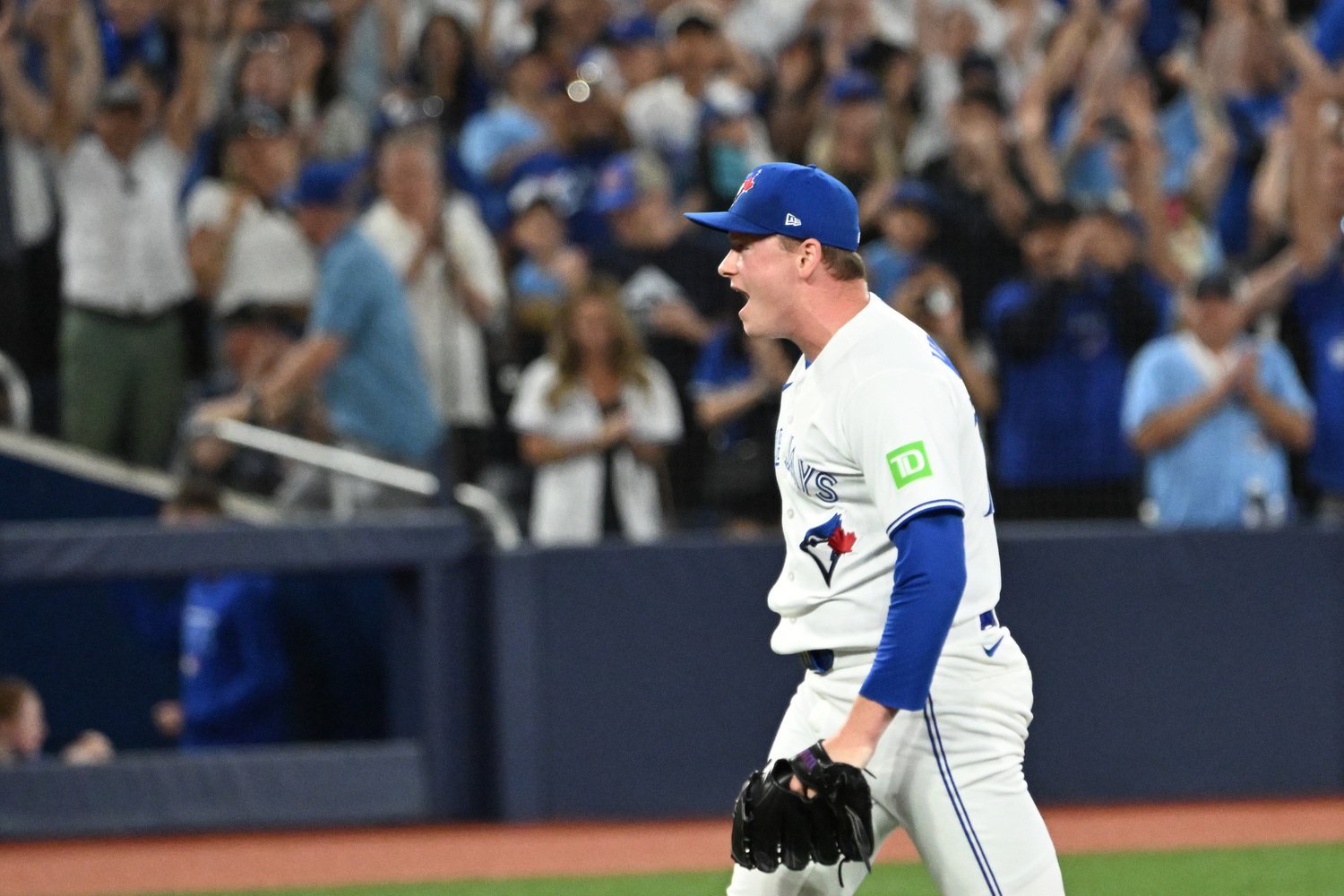 Louis Varland has been one of the top relievers in MLB, if not the best, especially in the American League. He’s thrown 46 innings prior to the Blue Jays' game on July 3, posting a 0.98 ERA, a 1.46 FIP, and a 36.2 percent strikeout rate. Since taking over the closer role from a struggling Jeff Hoffman, Varland is a perfect 17-for-17 in save opportunities. These outstanding statistics mean he should be the go-to reliever if the American League has a lead in the ninth inning of the All-Star Game on July 14. It's hard to believe he won't be on the roster when the team is announced later today. If Varland can pull off earning a save, that’d put him in rare company. The only Toronto Blue Jay to have a save in an All-Star Game is J.A. Happ. He earned the feat in the 2018 Midsummer Classic, pitching a scoreless 10th inning to secure an 8-6 AL victory. Ironically, it was his only save in a 15-year career, as he was a starting pitcher. Happ came to the Blue Jays at the 2012 trade deadline from the Houston Astros. He then spent parts of the 2013-2014 and 2016-2018 seasons with the team. He was traded to the Seattle Mariners in the offseason before the 2015 season, and the Blue Jays re-signed the lefty the next winter. They traded him again at the 2018 trade deadline, this time to the New York Yankees. During Happ’s two stints with the Blue Jays, he compiled a 59-32 record, a 3.88 ERA, and 655 strikeouts. In 2016, he finished sixth in the Cy Young Award voting after going 20-4 with a 3.18 ERA and 163 strikeouts. The 2018 All-Star Game was Happ’s only All-Star appearance in his career. Since saves became an official statistic in 1969, 43 pitchers have earned a save in an All-Star game. Five players have done it multiple times: Mariano Rivera (4), Dennis Eckersley (3), Emmanuel Clase (2), Bruce Sutter (2), and Mel Harder (2). This would be Varland’s first All-Star appearance, but the AL Reliever of the Month for March/April is poised to make a huge contribution. You can watch this year’s Midsummer Classic at Citizens Bank Park in Philadelphia on July 14 at 8:00 pm ET. View the full article
 -
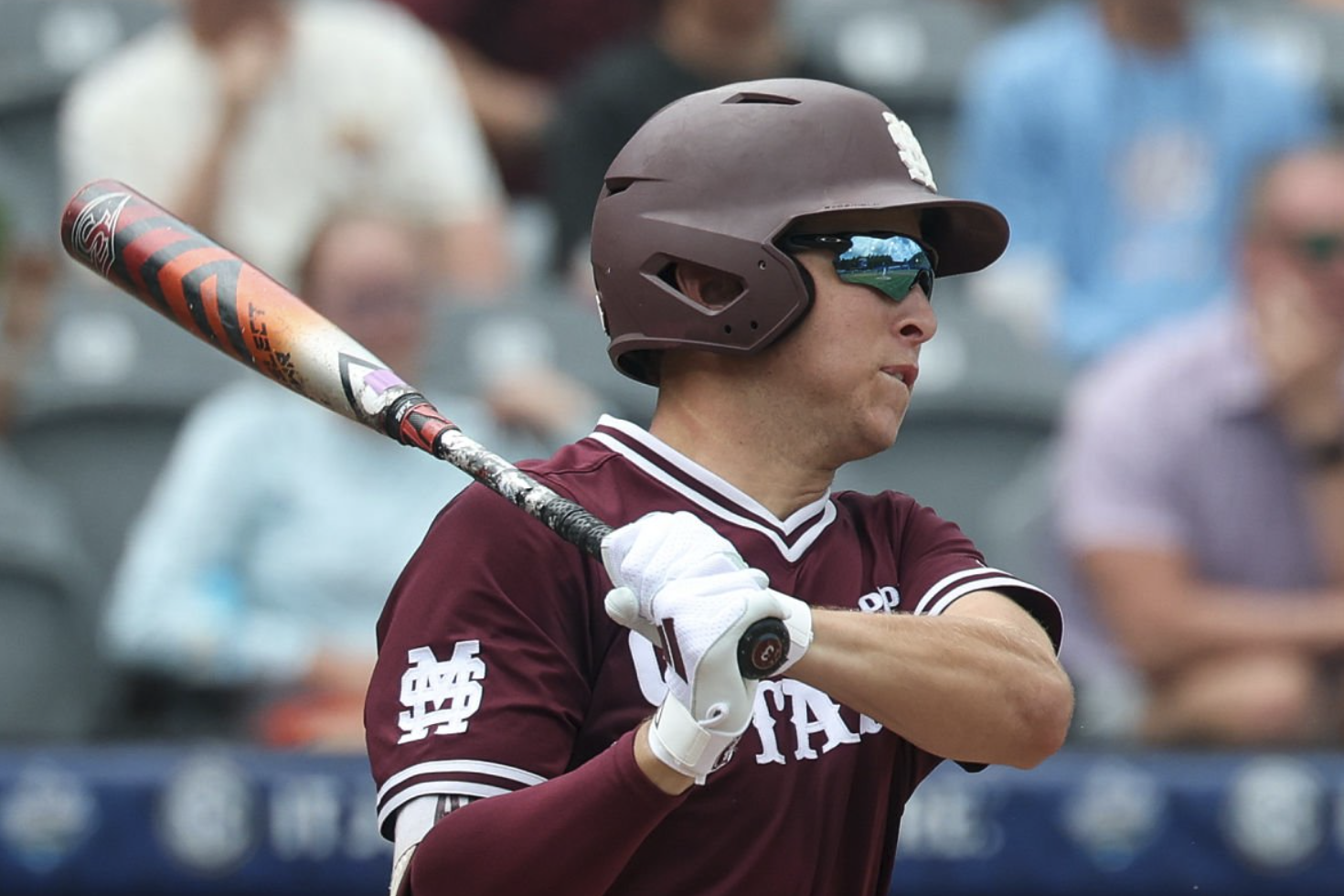 The 2026 MLB Draft gets underway next Saturday, July 11. Fish On First has already published profiles for many of the prospects worth considering for the Miami Marlins in the first round, as well as an updated draft big board. It's time to dive even deeper with a four-round mock draft. The Marlins will make five selections within the first four rounds—the 14th, 52nd, 71st, 87th, and 115th overall picks. That will account for the vast majority of their spending, with the combined slot value of those picks being equivalent to about 85% of their $11,960,100 total bonus pool. Here is the 2026 Fish On First MLB Mock Draft 2.0. First Round (14th overall)—Ace Reese, 3B, Mississippi State Slot value: $5,444,900 With the 14th pick of the 2026 MLB Draft, the Miami Marlins select third baseman Ace Reese. The Marlins have one of the best power hitters in this draft class with the selection of the SEC corner infielder. Ace Reese is the 6’4”, 220-pound third baseman out of Mississippi State University. On Baseball America, Reese is the 12th-ranked prospect in the 2026 MLB Draft class. On MLB Pipeline and ESPN, Reese is the 21st-ranked prospect in this draft class. During the 2026 season, Reese has played and started in all 62 games. He slashed .336/.432/.721 with 83 hits, 23 doubles, 24 home runs, 74 RBIs, 72 runs scored, 41 walks, and a 1.152 OPS. Reese was named First Team All-SEC and a Second Team All-American. At the plate, Reese has excellent bat speed and has natural lift in his swing. He has a 60-grade power tool and has consistently been one of the best power hitters in the country since he arrived at Mississippi State. Defensively, there are some questions about whether he can stick at third base. If not, he’s a first baseman or left fielder at the next level. Second Round (52nd overall)—Kaden Waechter, RHP, Jesuit HS (FL) Slot value: $1,892,500 With the 52nd pick of the 2026 MLB Draft, the Miami Marlins select right-handed Kaden Waechter. The Marlins use their second round pick to draft their first high school prospect with the selection of Waechter. Kaden Waechter is the 6’3”, 185-pound right-handed pitcher out of Tampa Jesuit High School in Tampa, Florida. On ESPN, Waechter is the 48th-ranked prospect in the 2026 MLB Draft class. On MLB Pipeline, Waechter is the 52nd-ranked prospect in this draft class. On the mound, Waechter possesses a three-pitch mix including a fastball, slider, and changeup. Waechter’s fastball sits 92-95 mph and tops out at 96 mph with 2600 RPM. His slider sits in the mid-80s and can throw it against left-handed and right-handed batters. He can throw strikes and has a good feel for his changeup. On Perfect Game, Waechter is the 25th-ranked prospect and the third-ranked right-handed pitcher in the Class of 2026. Waechter is also the fourth-ranked prospect and the second-ranked RHP out of the Sunshine State. Competitive Balance Round B (71st overall)—Joey Volchko, RHP, Georgia Slot value: $1,192,600 With the 71st pick of the 2026 MLB Draft, the Miami Marlins select right-handed Joey Volchko. The Marlins use another early round draft pick to bolster the pitching staff in their farm system. Joey Volchko is a 6’4”, 225-pound right-handed pitcher out of the University of Georgia. On ESPN, Volchko is the 67th-ranked prospect in the 2026 MLB Draft class. On MLB Pipeline, Volchko is the 73rd-ranked prospect in this draft class. On the mound, Volchko possesses a four-pitch mix including a fastball, curveball, slider, and changeup. Volchko’s fastball sits in the mid-90s and tops out at 99 mph. His slider is his best secondary pitch, which sits in the upper-80s. Volchko also throws a changeup and curveball, but he struggles to command those pitches. During the 2026 season, Volchko made eighteen appearances and starts. He posted an 11-2 record with a 3.68 ERA, 1.34 WHIP, one complete game, 4.3 BB/9, and 119 strikeouts in 95 ⅓ innings pitched. Volchko was named a Third Team All-American by the NCBWA. Third Round (87th overall)—Peyton Bonds, OF, Rutgers Slot value: $929,700 With the 87th pick of the 2026 MLB Draft, the Miami Marlins select outfielder Peyton Bonds. The Marlins grab another college hitter who has been highly productive since they enrolled on campus. Peyton Bonds is a 6’5”, 230-pound outfielder out of Rutgers University. On MLB Pipeline, Bonds is the 74th-ranked prospect in the 2026 MLB Draft class. On ESPN, Bonds is the 93rd-ranked prospect in this draft class. At the plate, Bonds is a physically gifted prospect with plus hit tools and plenty of potential raw power. He’s one of the best athletes in this draft class and could play center field at the next level. He’s also the nephew of the MLB home run king Barry Bonds and the grandson of three-time All-Star Bobby Bonds Sr. During the 2026 season, Bonds played and started in 36 games. He missed some time due to an injury. Bonds slashed .352/.436/.535 with 50 hits, eight doubles, six home runs, 29 RBIs, thirteen stolen bases, and a .972 OPS. Fourth Round (115th overall)—Tyson LeBlanc, SS, Kansas Slot value: $677,500 With the 115th pick of the 2026 MLB Draft, the Miami Marlins select shortstop Tyson LeBlanc. The Marlins grab another college hitter who had a major breakout season in his first season in Division I. Tyson LeBlanc is a 6’0”, 2o0-pound shortstop out of the University of Kansas. On Baseball America, LeBlanc is the 103rd-ranked prospect in the 2026 MLB Draft class. On MLB Pipeline, LeBlanc is the 130th-ranked prospect in this draft class. At the plate, LeBlanc has solid bat-to-ball skills and has showcased his power playing for the Kansas Jayhawks. While LeBlanc mostly played shortstop, it’s more likely that he ends up at second or third base at the next level. During the 2026 season, LeBlanc played and started in all 63 games. LeBlanc slashed .341/.425/.706 with 87 hits, twelve doubles, three triples, 25 home runs, 69 RBIs, eleven stolen bases, and a 1.131 OPS. LeBlanc was named a First Team All-American on Perfect Game and Second Team All-American by D1 Baseball. View the full article
 -
 On Friday, the four full-season San Diego Padres affiliates went 3-1. The Triple-A El Paso Chihuahuas edged Sacramento 4-2, the Double-A San Antonio Missions blanked Amarillo, the High-A Fort Wayne TinCaps prevailed 8-5 and the Low-A Lake Elsinore Storm came up short against Stockton 14-10. Padres Minor-League Transactions El Paso Chihuahuas released OF Pablo Reyes. San Diego Padres recalled RHP Alek Jacob from El Paso Chihuahuas. El Paso Chihuahuas sent RHP José Leclerc on a rehab assignment to ACL Padres. Evan Fitterer, Backed By 3 Homers, Sends Chihuahuas Past River Cats Right-handed starter Evan Fitterer went six strong innings, while Nick Solak, Blake Hunt and Luis Rengifo homered as the host Triple-A El Paso Chihuahuas turned back the Sacramento River Cats 4-2. Fitterer allowed two runs on five hits with a walk and two strikeouts in his first start since June 3 and matching his longest outing of the season, also going six on May 16. Right-hander Miguel Cienfuegos went two hitless innings, allowing a walk and a single, while right-hander Ethan Routzahn locked down his seventh save of the year with a walk and a strikeout in the ninth. Solak homered for the second game in a row when he went deep in the first inning. The River Cats tied it up with runs in the fifth and sixth innings, but Hunt homered in back-to-back games as well, his fourth this year, in the bottom of the sixth to snap the tie and Rengifo went deep in the seventh for the second time in three games since joining the Chihuahuas after being released by the Milwaukee Brewers. Hunt has homered in three of his last five games since coming down from the Padres, where he made his MLB debut. EP_0703.mp4 Player AB R H RBI BB K Luis Rengifo 4 1 1 1 0 1 Carlos Rodríguez 4 0 2 0 0 0 Will Wagner 4 1 0 0 0 3 Nick Solak 4 1 1 2 0 0 Nick Pratto 4 0 1 0 0 2 Romeo Sanabria 4 0 0 0 0 2 Blake Hunt 3 1 1 1 1 1 Nick Schnell 2 0 0 0 1 1 Clay Dungan 3 0 1 0 0 0 Player IP H R ER BB K HR Evan Fitterer 6 5 2 2 1 2 0 Miguel Cienfuegos 2 0 0 0 1 1 0 Ethan Routzahn 1 0 0 0 1 1 0 Andrew Thurman Goes 4 Shutout Innings To Spark Missions' 3-Hitter Right-hander Andrew Thurman, a 34-year-old who is back in affiliated ball this year for the first time since 2017, pitched a season-high four shutout innings to set the tone in a three-hit shutout by the host Double-A San Antonio Missions, who dispatched the Amarillo Sod Poodles 3-0. Tirso Ornelas was on base three times and drove in a pair of runs for the Missions. Thurman, making his second start in three appearances and entering the game with a 5.91 ERA in 20 appearances, gave up only a two-out single in the third inning, walked one and struck out four, while also hitting two batters (same player twice). According to the Missions' pregame notes, Thurman stepped away from baseball completely after 2017 in the Los Angeles Dodgers' organization, only to return last year, when he joined the Southern Maryland Blue Crabs of the Atlantic League, then signing a minor-league deal with the Padres in the offseason. He was drafted by the Houston Astros in the second round in 2013. Left-hander Harry Gustin pitched two perfect innings and right-hander Bernard Jose went the final three to pick up his first career Double-A save, allowing two hits and striking out one. The Missions grabbed a 1-0 lead in the bottom of the first as Carson Tucker had a leadoff single, advanced to second, went to third on a groundout and scored on Ornelas' sacrifice fly to center. It remained 1-0 until the seventh. Francisco Acuna and Luis Verdugo walked to begin the inning, then pinch-hitter Ethan Salas, Padres Mission's No. 1 prospect, walked in a 10-pitch at-bat to load the bases. After a popout and a strikeout, Ornelas drew the fourth walk of the inning to bring in a run. Following a pitching change, Jake Cunningham lined a single to center to make it 3-0, with Ornelas being thrown out trying to advance to third. SA_0703.mp4 Player AB R H RBI BB K Carson Tucker 3 1 1 0 1 0 Kai Roberts 4 0 0 0 0 2 Tirso Ornelas 2 0 2 2 1 0 Jake Cunningham 4 0 1 1 0 2 Braedon Karpathios 4 0 0 0 0 2 Ryan Jackson 4 0 0 0 0 2 Francisco Acuna 2 1 0 0 2 0 Luis Verdugo 2 1 2 0 1 0 Chris Sargent 1 0 1 0 0 0 Ethan Salas 0 0 0 0 1 0 Player IP H R ER BB K HR Andrew Thurman 4 1 0 0 1 4 0 Harry Gustin 2 0 0 0 0 0 0 Bernard Jose 3 2 0 0 0 1 0 Carlos Rodriguez's 3 Hits, 2 RBIs Help TinCaps Stop Losing Streak At 5 Carlos Rodriguez went 3-for-4 with two RBIs and two runs scored, while Jack Costello and Justin DeCriscio hit solo homers, fueling the host High-A Fort Wayne TinCaps' 8-5 triumph over the Great Lakes Loons, halting a five-game losing skid. TinCaps center fielder Ryan Wideman, Padres Mission's No. 12 prospect and the minors' stolen-base leader, swiped a pair to boost his total to 49, six since coming up to High-A. Left-handed starter Kash Mayfield, Padres Mission's No. 2 prospect, went four innings and gave up two runs on six hits with no strikeouts and five punchouts. Right-hander Abraham Parra went 2⅔ innings, allowing a run on two hits but he walked five while striking out five. Right-hander Will Varmette got his second save of the season by going the final 2⅓ innings and yielding two runs on two hits with no walks and a pair of strikeouts. Trailing 2-1 after the top of the fourth, the TinCaps took the lead in the bottom of the half with three runs. Rodriguez had an RBI single and Wideman a two-run single. The Loons made it 4-3 in the top of the sixth, but Costello got that back with his eighth homer of the year in the bottom half. The TinCaps pulled away in the seventh with three more runs on DeCriscio's one-out homer, his seventh, a hit by pitch, a double by Alex McCoy (Padres Mission's No. 14 prospect) and Rodriguez's single that scored two runs, the second one on a throwing error for an 8-3 advantage. This was Rodriguez's second three-hit game of the season. FW_0703.mp4 Player AB R H RBI BB K Ryan Wideman 5 0 1 2 0 3 Justin DeCriscio 5 1 2 1 0 0 Rosman Verdugo 2 1 0 0 1 1 Alex McCoy 4 1 1 0 0 1 Kerrington Cross 3 1 1 0 0 1 Carlos Rodriguez 4 2 3 2 0 0 Jack Costello 4 1 2 1 0 0 Zach Evans 4 1 2 1 0 0 Kasen Wells 4 0 0 0 0 3 Player IP H R ER BB K HR Kash Mayfield 4 6 2 2 0 5 0 Abraham Parra 2 2/3 2 1 1 5 5 1 Will Varmette 2 1/3 2 2 2 0 2 0 Storm Make Late Comeback, But Can't Overcome Ports The host Low-A Lake Elsinore Storm put up a furious fight late, scoring seven runs in the seventh inning and bringing up the tying run in the bottom of the ninth, but couldn't overcome giving up 11 combined runs in back-to-back innings in a 14-10 loss to the Stockton Ports. Dylan Grego had two hits and drove in four, while Yimy Tovar also had two hits and a pair of RBIs and Conner Westenburg had two hits, an RBI and a run scored for the Storm. Storm left-handed starter Kruz Schoolcraft, Padres Mission's No. 5 prospect, was tagged for six runs in 4⅔ innings, with four coming in a six-run fifth inning. He gave up six hits, including a homer, and three walks while striking out four, pushing his ERA to 7.11. Right-hander Carson Swilling had a disastrous outing, giving up seven runs (six earned) on six hits and three walks while getting just two outs. Right-hander Isaiah Lowe was able to finish the game, going 3⅔ innings and striking out six while allowing a run on three hits and two walks. It was 2-2 after the top of the second and remained tied until the top of the fifth, when the Ports scored six runs and then added five more in the sixth for a sudden 13-2 advantage. But the Storm got one back in the bottom of the sixth, then poured in seven runs in the seventh. A one-out hit by pitch, single and walk loaded the bases when Qrey Lott became the second hit batter of the inning to bring in a run. Westenburg was also hit to force in a run and Grego cleared the bases with a double to pull the Storm within 13-8. Truitt Madonna walked, a wild pitch advanced both runners, then Tovar brought them home with a double to make it 13-10. Tovar made it to third on a wild pitch, but a strikeout ended the inning. The Storm got a runner to third in the eight, but couldn't score. The Ports tacked on a run in the top of the ninth, but the Storm had one last chance in the bottom half. Westenburg singled to left, the next two batters made outs and Tovar reached when the second baseman booted a grounder. That prompted a pitching change with Jose Verdugo getting hit by a pitch to load the bases, but a strikeout ended the game. In all, the Storm had six batters hit by a pitch, including Lott twice. LE_0703.mp4 Player AB R H RBI BB K Yimy Tovar 6 1 2 2 0 1 Jose Verdugo 4 1 1 0 0 2 Yoiber Ocopio 4 1 0 0 1 0 Bradley Frye 3 1 1 0 1 1 George Bilecki 4 1 1 1 1 1 Qrey Lott 3 2 0 1 0 2 Conner Westenburg 4 1 2 1 0 0 Dylan Grego 4 1 2 4 0 2 Alcides Hernandez 2 0 0 0 0 0 Truitt Madonna 2 1 0 0 1 1 Player IP H R ER BB K HR Kruz Schoolcraft 4 2/3 6 6 6 3 4 1 Carson Swilling 2/3 6 7 6 3 1 1 Isaiah Lowe 3 2/3 3 1 1 2 6 1 Padres Mission's Top 20 Prospect Performance Ethan Salas: 0-for-0, BB Kash Mayfield: 4 IP, 6 H, 2 ER, 0 BB, 5 K Miguel Mendez: DNP Ryan Wideman: 1-for-5, 2 RBI, 2 SB, 3 K Kruz Schoolcraft: 4⅔ IP, 6 H, 6 ER, 3 BB, 4 K, HR Jorge Quintana: DNP Ty Harvey: On injured list Kale Fountain: Injured, out for season Braedon Karpathios: 0-for-4, 2 K Jagger Haynes: DNP Lamar King Jr.: DNP Tucker Musgrove: DNP Truitt Madonna: 0-for-2, BB, K Alex McCoy: 1-for-4, 2B, K Jesus Castro: DNP Rosman Verdugo: 0-for-2, BB, K Garrett Hawkins: DNP Eric Yost: DNP Michael Salina: DNP Winyer Chourio: DNP View the full article
 -
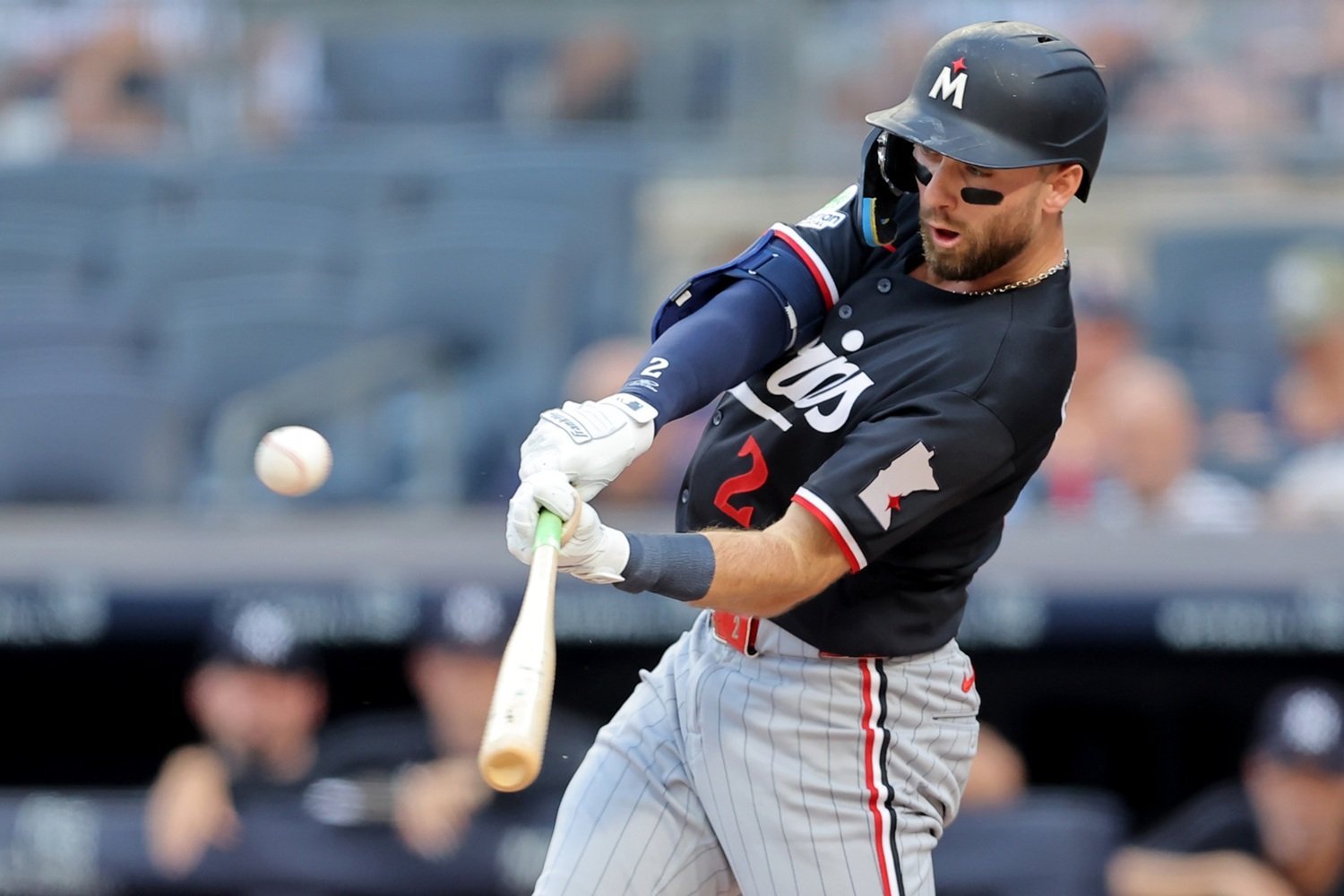 Box Score Mike Paredes: 4 IP, 4 H, 3 ER, 2 BB, 2 K Home Runs: Kody Clemens (15) Bottom 3 WPA: Brooks Lee (-.150), Mike Paredes (-.140), Eric Orze (-.130) Win Probability Chart (via FanGraphs) 249 years and 364 days ago, the Continental Congress - a group of men, some famous, some unfamiliar - signed in agreement with the 33-year-old Thomas Jefferson’s writing that men are created equal, and should be bound by the unalienable rights of life, liberty, and the pursuit of happiness. In dissolving from British rule, they invited a fight. Indeed, a war waged brutally and bloody, nearly sapped the fledgling nation of the power and inertia of its boisterous political declarations. They won, and the spirit of the Revolution lives in this year, and every year since that great document was put forth. Though the precise meaning of the words of the men who enlightened and debated sparks disagreements to this day, their spirit remains firmly entrenched. A war was fought over these beliefs. Amendments to their words have passed. Yet, through it all, as the country faced challenges, obstacles, and obstructions, the calcified thoughts of our forefathers hover over every endeavor. Their beliefs, like a blanket all-encompassing and warming, remind us of what America was meant to be and what it could become with proper nurturing. So, baseball. The most American of inventions, next to apple pie and jazz. The Twins entered Yankee Stadium on Friday with strange momentum: they won four of their previous five series, yet that one loss was a drumming at the hands of the far superior Dodgers. Where does that leave our Minnesota heroes? Good enough to best the league’s average offerings, but a clear step below the best of the best? How brutal. A cursed lifestyle. We must see better before we can declare this team worthy of the playoff presents gifted to the worthy squads. And with Mike Paredes set to start against Gerrit Cole , fortune did not favor the Twins, at least in this game. The veteran Cole - armed with lethal stuff and pinpoint control - against the unheralded 25-year-old. The advantage was clear from the beginning. Yet the Twins found the first lead. Cole diced up Trevor Larnach to start the game and elicited a groundout from Brooks Lee to summon Kody Clemens to the plate with two out and no one on. He got ahead 1-2 before hanging a curveball a touch too high, allowing the hot-swinging lefty to blast the pitch 403 feet out to left-center. Good stuff. Excellent hitting. Can anyone believe Clemens was a random waiver claim over a year ago? Short-lived is the grace and wonder of the underdog. Minnesota may have struck first, but this is the Yankees—the boogieman of nightmares for all across the 32nd state. They can, and will, return the favor with prejudice. And so they did, with Trent Grisham smoothly sailing a solo homer into the right-field bombast. Tie game. Zeroes were traded until rain disrupted the switch between the top and bottom of the third inning. The precipitation continued to affect the game even after play was re-declared. Play again they did, though, and the Yankees quickly put a man on base in front of Ben Rice, who jumped all over a lethargic Paredes fastball for a two-run homer. The Twins answered with a run off a professional Victor Caratini single that split the infield and safely beckoned a dashing Clemens home. The fifth and sixth passed silently as Kody Funderburk held the Bombers bombless. The seventh was not as quiet. Eric Orze proved eminently hittable, as the Yankees rallied for two off the reliever, doubling, singling, stealing second, sacrifice bunting, and finally sacrifice-flying to cap their two-run add-on. Action stalled. A bases-loaded frame for the Twins in the eighth churned nothing. The ninth didn't even bother with the hope and potential for runs. So it goes. Notes: For tomorrow's game, the Yankees had intended to start Carlos Rodon, but he was placed on the IL today with heavy inflammation in his elbow. Byron Buxton missed his fourth straight game for the Twins d ue to a right hip impingement. Post-Game Interview: What’s Next? The Twins and Yankees meet on the fourth for a 12:35 PM matinee as Zebby Matthews is set to pitch against the temperamental and mercurial TBD. Bullpen Usage Spreadsheet MON TUE WED THUR FRI P Orze 0 23 0 0 28 51 Adams 35 0 0 0 0 35 Raya 0 25 0 0 0 25 Gómez 7 0 18 0 0 25 Laweryson 0 0 23 0 0 23 Funderburk 0 0 0 0 21 21 Morris 0 0 17 0 0 17 Rogers 0 0 15 0 0 15 View the full article
 -
Freddy Fermin, Randy Vasquez Go On Padres' Injured List
DiamondCentric posted an article in Padres Mission
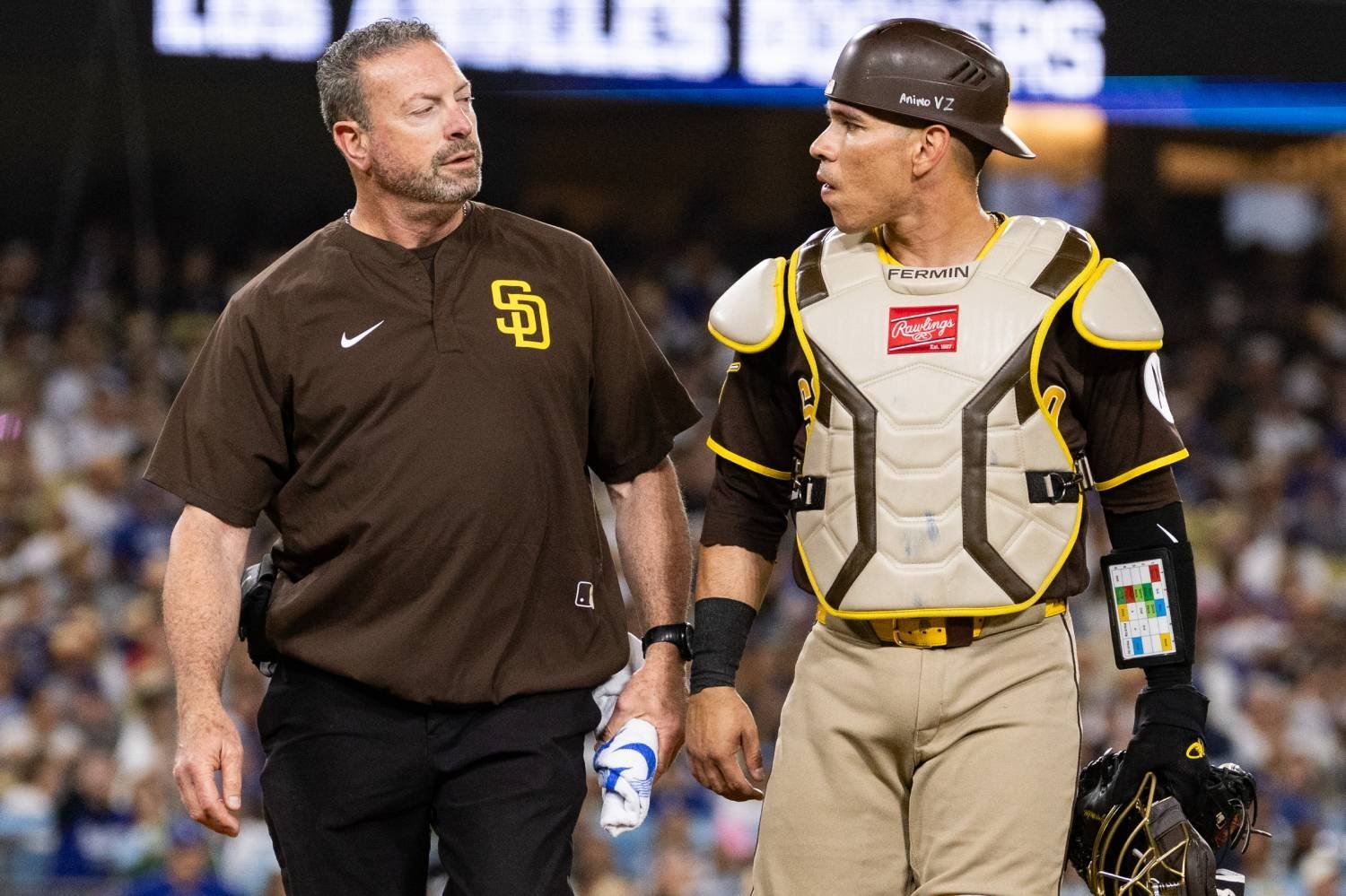 Following six straight losses, the San Diego Padres have lost two key players. Right-handed starter Randy Vasquez and catcher Freddy Fermin were placed on the 10-day injured list Friday by the Padres, who activated catcher Luis Campusano from the 10-day IL and called up right-hander Alek Jacob from Triple-A El Paso. Vasquez is on the IL with a bruised right ankle and Fermin with a head bruise. Campusano had been out since May 7 with a broken left big toe. Vasquez was injured in the first inning of Thursday's 12-7 loss to the Los Angeles Dodgers when he took a Mookie Betts smash off his right ankle. As he was heading to get X-rays, he fainted and was taken to a hospital in L.A., then was released Friday morning. Right-hander German Marquez, who pitched three innings of relief Thursday, can step into Vasquez's starting role. Fermin took a foul ball from Freddie Freeman off his mask and, a few pitches later, was on the mound for a conference when he started to exhibit signs of an injury and was removed from the game. Fermin spent time this season already on the concussion list, but this has been classified as a head bruise. Campusano will easily fill Fermin's shoes as the lead catcher with Rodolfo Duran the No. 2. Campusano had a slash line of .288/.362/.596 with three homers and 10 RBIs in 18 games before he was hurt. He appeared in two rehab games, going 2-for-6 with a homer, before being needed by the Padres. Jacob joins a Padres bullpen that needs a fresh arm after having to cover six innings Thursday due to a short start by Vasquez. He is up for the third time this season, but has pitched in just two games, allowing two runs in two innings with two walks and three strikeouts. In 34 games at Triple-A El Paso, Jacob has a 3.71 ERA with 17 walks and 34 strikeouts in 34 innings. View the full article
 -
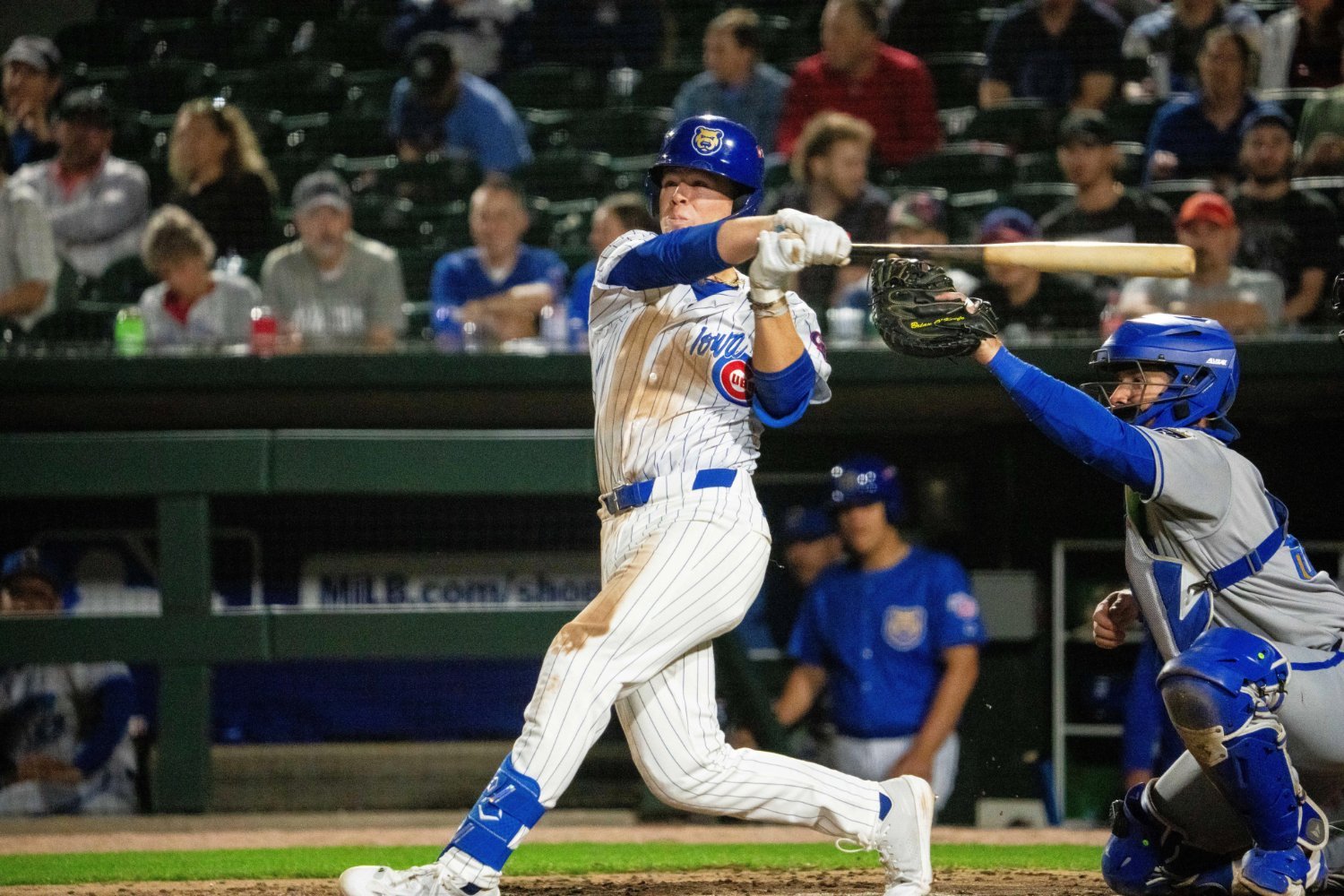 Let's take a look at some of the rising prospects across the minor league affiliates of the Chicago Cubs organization and see how their respective seasons are going. Pitchers Adam Stone (South Bend Cubs) - In 29.1 innings on the mound this season, Stone has done a good job at limiting runs and heavy amounts of base runners, only giving up nine (five earned) along with 26 strikeouts, 21 hits and only one home run given up in 2026. In 14 games this year, he has a 1.53 ERA and a 1.36 WHIP. Jace Beck (Knoxville Smokies) - With 20 games pitched (18 Double-A, two Triple-A) and four started (all Double-A) this season, Beck has 89 strikeouts and 26 walks in 55.2 innings pitched. With 18 earned runs allowed, he has done a great job at limiting runs. He currently has a 2.91 ERA (3.02 Double-A, 1.80 Triple-A) and a 1.28 WHIP (1.30 Double-A, 0.43 Triple-A). Mason McGwire (South Bend Cubs) - The Futures Game participant is another minor-league pitcher in this organization who has done a fantastic job preventing runs, only given up 16 earned runs (eight Low-A, eight High-A). The son of Mark McGwire has pitched 15 games this season (10 Low-A, five High-A) and nine of them were starts (five Low-A, four High-A). He has also only given up three home runs (all Low-A), 19 walks (10 Low-A, nine High-A), and 38 hits (22 Low-A, 16 High-A) in 48 innings (30 Low-A, 18 High-A) this season. McGwire has a 3.00 ERA (2.40 Low-A, 4.00 High-A) and a 1.19 WHIP (1.07 Low-A, 1.39 High-A). Catchers Ivan Cespedes (Myrtle Beach Pelicans) - The new Pelican had a good season with the ACL Cubs until his promotion on June 30. In the rookie level, he had 31 hits in 102 at-bats with seven of them being doubles and five being home runs. He has brought in 19 runs and touched home plate 12 times in 28 games. In one game with Myrtle Beach, he has no hits in three at-bats along with two strikeouts and one walk. Cespedes has started ten games (all ACL) and 19 games (18 ACL, one Low-A) as a designated hitter. With 15 walks (14 ACL, one Low-A) and a wOBA of .410 (.410 ACL, .000 Low-A), that shows his ability to get on base. If he can keep getting on base, Cespedes will have a bright future in the game of baseball. Miguel Useche (South Bend Cubs) - In 37 games this season, Useche has played 99 innings as a catcher while also playing at first base for eight innings, left field for 89.2 innings, and right field for 54 innings. As an infielder this season, he only has one error (first base) on 28 total chances (10 in first, 14 in left, 2 in right). At the plate, 33 hits (32 High-A, one Double-A), five doubles (all High-A), and eight home runs (all High-A) in 125 at-bats (123 High-A, 2 Double-A). He has scored 27 runs (26 High-A, one Double-A) and brought in 27 (26 High-A, one Double-A). With only 34 strikeouts (33 High-A, one Double-A), 16 walks (15 High-A, one Double-A), and a .375 wOBA, he is solid at getting on base. Michael Carico (South Bend Cubs) - Before Carico was promoted to South Bend on Tuesday, he had a solid season with Myrtle Beach. He had 39 hits in 158 at-bats with seven of them being doubles and seven others being home runs. He brought in 25 runs and scored 34 times during his time with the Pelicans. Although he is officially listed as a catcher, he has played nearly all of his season at first base (345.2 innings) and only spent 5.1 innings behind the plate and was a designated hitter for seven games. At first base, he had nine errors on 298 total chances. In his first game with South Bend, he played eight innings at first with no errors on three total chances. On offense, he had no hits and two strikeouts in three at-bats. Carico was walked 60 times, had 62 strikeouts, and had a wOBA of .429 as a Pelican, showing he has done a fantastic job at getting on base this year. Infielders James Triantos (Iowa Cubs) - In 74 games played this season, Triantos has played 39 at third base, 23 at second base, six in left field, five in center field, and two as a designated hitter. He has ten errors (five at second, five at third) on 264 total chances (187 at third, 56 at second, seven in left, 14 in center). On offense, he has 88 hits with 20 of them being doubles, one being a triple, and six being home runs in 294 at-bats. He has scored 50 times and also has 45 RBIs. With 45 walks, 43 strikeouts, and a .334 wOBA, he has struggled getting on base at times. Edgar Alvarez (Knoxville Smokies) - In 197 at-bats in 2026, Trice has 36 hits, 11 doubles, one triples, and eight home runs as a Smokie. With 28 RBIs, and 33 runs, scoring has been a bit of a struggle for him. He has struggled at getting on base as he has 64 strikeouts and a wOBA of .329. On the dirt, he has spent 391.2 innings at first base, 69.1 innings at third base, eleven innings in left field, and nine innings in right field. With 349 total chances this season (321 at first, 22 at third, 2 in left, four in right), he has no errors which is very impressive. If Alvarez can improve getting on base and keep his defense up, he will be a key part of the future of the Chicago Cubs. Drew Bowser (Knoxville Smokies) - Bowser was another player who received a promotion on Tuesday from South Bend to Knoxville. While with the Cubs, he played 33 games at second base (32 started), 16 games at first base (15 started), and he also spent five games as a designated hitter. He spent 285 innings at second and 129 at first where he had three errors (two at second, one at first) on 250 total chances (130 at second, 120 at second). In the batter's box, 39 hits in 184 at-bats, and had eleven doubles and five home runs. With 35 RBIs and 29 runs scored himself in 54 games, he has been a contributor to the scoring most of the games as a Cub. With 72 strikeouts and .330 wOBA, it shows that becoming a base runner is a bit of an issue at times. In his first game as a Smokie, he had three at-bats and collected one hit and had two strikeouts. On the field, he played second base for the whole game where he had no errors on one total chance. Outfielders Carter Trice (Knoxville Smokies) - With 269 at-bats this season for Trice, he has collected hits in 69 of them (16 doubles, two triples, ten home runs). He also has 36 runs batted in and scored 39 himself in 73 games this season. With 69 strikeouts and a wOBA of .350, he is decent with getting on base, but he needs to improve on that throughout his career. On defense, he is listed as an infielder but has spent the whole season with the Smokies in the outfield with 620 innings in the grass (341 in left, 209 in center, 70 in right). On 133 total chances (73 in left, 45 in center, 15 in right), he has two errors (one in left, one in center). Joan Delgado (ACL Cubs) - In his fifth season in the rookie levels (third in ACL), Delgado's bat has been on fire, having ten out of his 37 hits being home runs. He also has six doubles and two triples. With 28 RBIs and 26 runs scored by himself in 33 games, he has been a key contributor to the rookie Cubs scoring. With a wOBA at .445 and being walked 14 times, he has done an excellent job with getting on base this season. On defense, he has spent 133 innings in right field, 16 innings in left field, and 73 innings as a center fielder. On 45 total chances this season (18 in center, 27 in right), he has two errors (both in center). Alex Ramírez (Knoxville Smokies) - With 542.1 innings played (470.1 in right field, 72 in center field), Trice has three errors (two in right, one in center) on 116 total chances (95 in center, 21 in right). He has also played 55 games in right (53 started), nine games in center, and eight as a designated hitter. In 287 at-bats in 2026, he has 82 hits (18 doubles, one triple, nine home runs). Ramírez has 52 RBIs and 48 runs scored, displaying his ability to bring runs in. The 60 strikeouts and .343 wOBA show he is another minor leaguer struggling to get on base. View the full article
 -
Jason Adam's Injury Will Hurt Padres More Than His WAR Suggests
DiamondCentric posted an article in Padres Mission
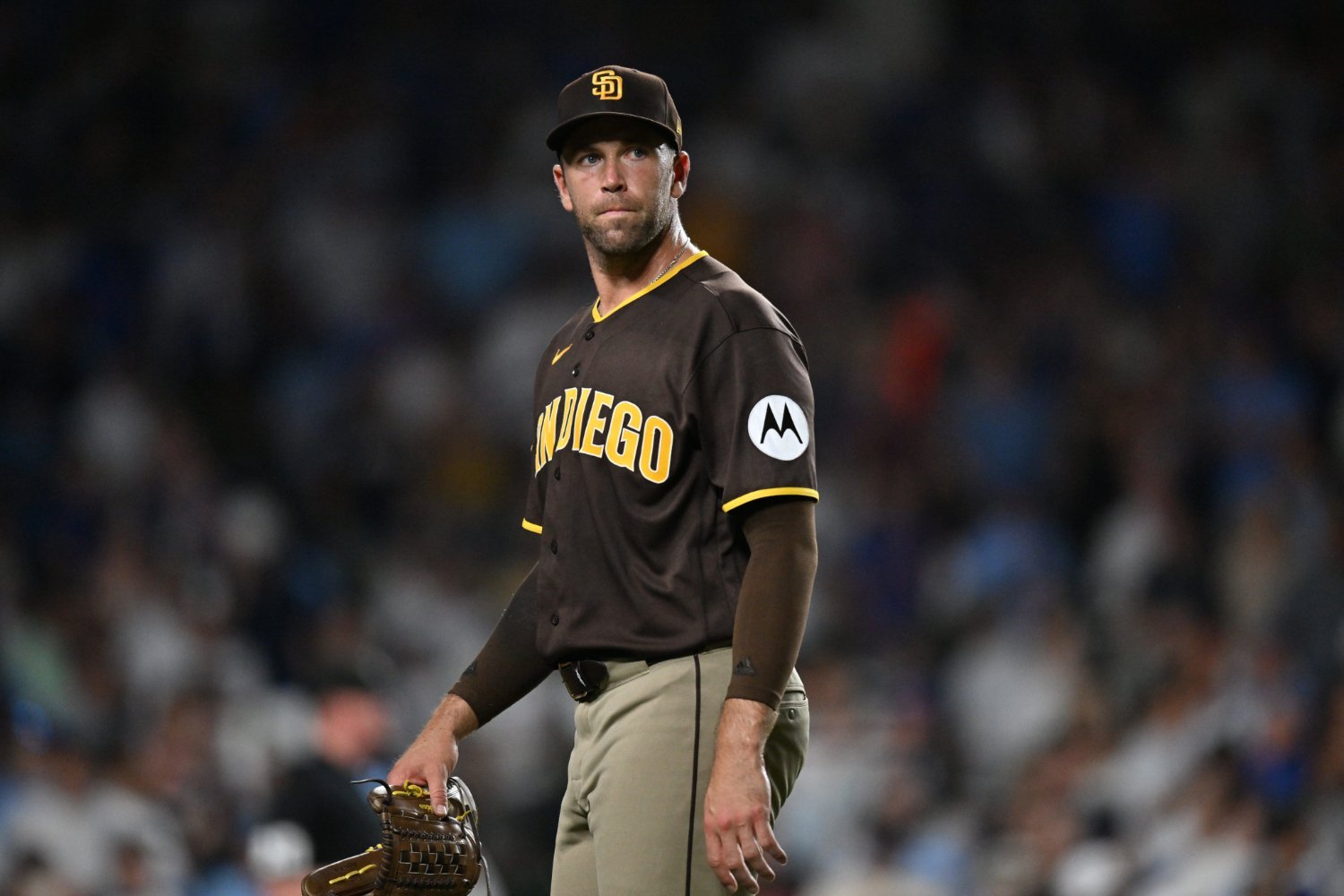 Few relievers present a statistical contradiction as striking as San Diego Padres fireman Jason Adam in 2026. His 2.51 ERA still points to a pitcher capable of handling high-leverage innings. His slider continues to generate whiffs at an elite rate. His changeup still has the movement that has kept hitters off balance for years. Yet one of the most widely used metrics for evaluating pitchers tells a completely different story: His fWAR is negative. The contradiction raises an obvious question: how can a reliever pitch this well and still grade out below replacement level? The answer isn't a new pitch or a dramatic change in his arsenal. Rather, it all starts with the fastball. It's the pitch that holds the rest of his profile together. Adam never needed elite velocity on his four-seamer to build his success. Its job is to force hitters to protect the top of the strike zone, making both the slider and changeup even more difficult to recognize. Pitch location explains that role better than any statistic. Adam still attacks the upper part of the strike zone with his four-seam fastball. It still has enough carry to challenge hitters' natural swing plane and create the contrast that allows his slider and changeup to play up. Season Four-Seam Fastball SwStr% Contact% HardHit% Barrel% pVAL/C 2022 302 16.9% 67.5% 28.9% 0.0% 1.4 2023 302 16.2% 69.6% 61.5% 20.5% -0.3 2024 415 12.8% 75.8% 46.5% 5.6% 1.5 2025 247 8.5% 81.7% 42.5% 2.5% 1.6 2026 126 3.2% 93.8% 50.0% 15.0% -3.1 Viewed in isolation, the fastball's trend is concerning. Its whiff rate has declined every year, hitters are making more contact, and the pitch's run value has collapsed in 2026. If that were the whole story, it would be reasonable to conclude that Adam no longer has a fastball capable of supporting a dominant arsenal. And yet, the rest of his repertoire tells a different story. His slider remains one of baseball's best put-away pitches. In 2026, it's produced a 19.0% swinging-strike rate, while hitters have chased it outside the strike zone more than 40% of the time. His changeup also retains virtually the same horizontal movement profile and velocity separation that have made it an ideal complement to his fastball for years. In other words, the decline of Adam's four-seamer hasn't spread to the rest of his arsenal. So, if both secondary pitches are still working, why has his overall value dropped into negative WAR territory? Because fWAR doesn't evaluate how pitches complement one another within an arsenal. Its calculation starts with the outcomes pitchers control most—primarily strikeouts, walks, and home runs—before converting that performance into wins above replacement. That methodology captures the outcome of a pitcher's performance, but it doesn't always account for how one pitch enhances another within the same repertoire. That decline shows up clearly in xFIP, the metric that serves as the foundation of FanGraphs' pitcher fWAR. Season Team Age G K/9 HR/FB xERA xFIP WAR 2018 KCR 26 31 10.30 18.4% 5.34 5.04 -0.3 2019 TOR 27 23 7.48 3.2% 3.16 6.2 0.3 2020 CHC 28 13 13.83 15.4% 2.77 3.71 0.1 2021 CHC 29 12 16.03 9.1% 3.53 3.96 0.1 2022 TBR 30 67 10.66 8.8% 2.09 3.17 1.3 2023 TBR 31 56 11.43 14.3% 4.33 3.81 0.4 2024 2 Tms 32 74 9.90 7.4% 3.24 3.54 1.3 2025 SDP 33 65 9.64 5.6% 2.75 3.98 1.2 2026 SDP 34 36 6.12 12.2% 3.37 4.56 -0.1 It's no coincidence that Adam's xFIP is now the highest of his career since debuting with the Royals in 2018. His HR/FB rate has nearly doubled from the previous two seasons, and four of the five home runs he has allowed this year have come against a four-seam fastball that has lost some of its ability to dictate at-bats. Adam's negative WAR doesn't mean he has stopped being a dominant reliever. It shows how much a diminished fastball can affect the metrics that underpin fWAR. His slider remains an elite pitch, and his changeup retains much of what made it so effective. The decline of the fastball—the foundation of his arsenal—is enough for the model to tell a far less favorable story. It's why, Adam, now out with a shoulder strain, will be dearly missed by the Padres. View the full article
 -
Padres' Randy Vasquez Out Of Hospital Following Fainting Spell
DiamondCentric posted an article in Padres Mission
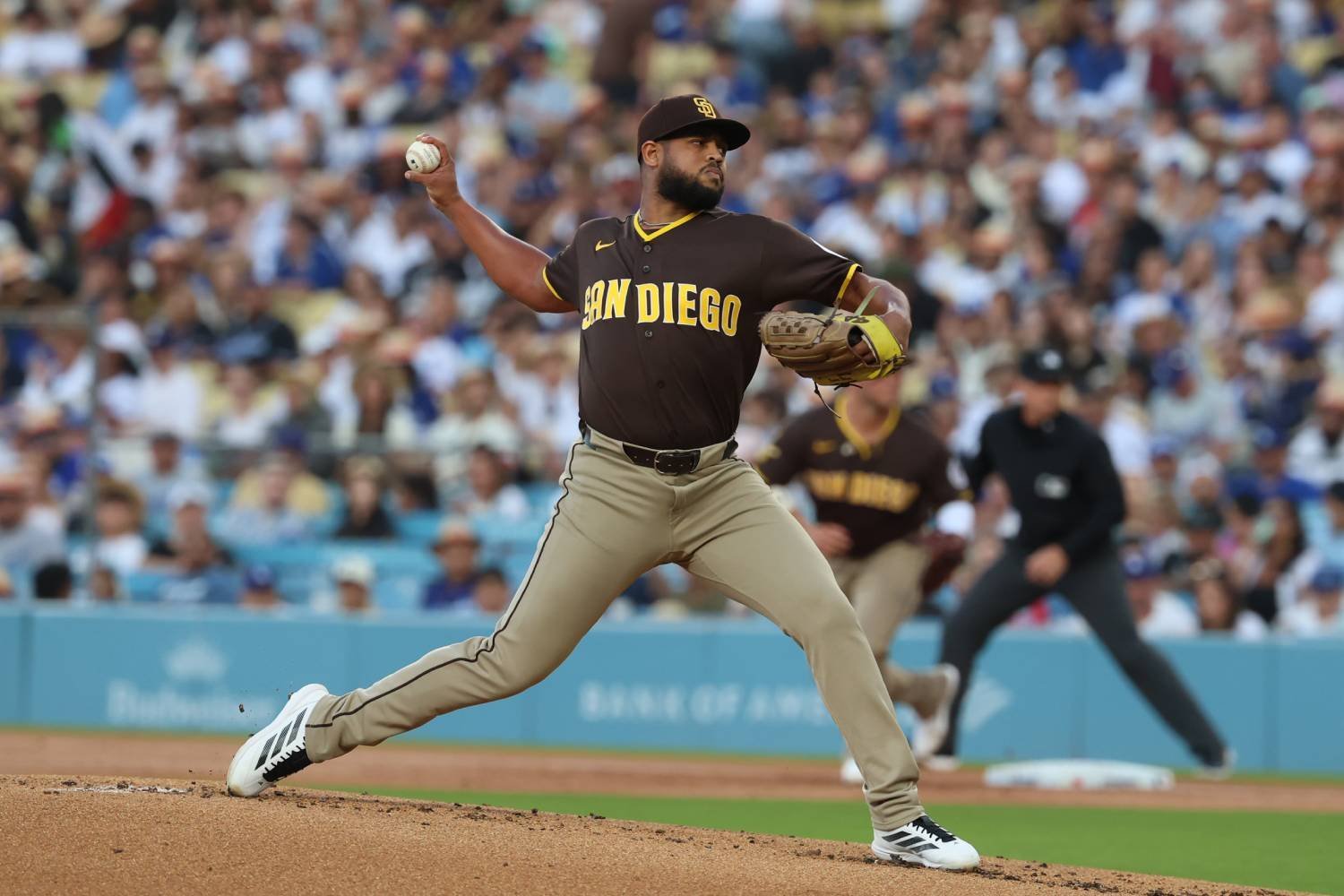 San Diego Padres right-handed starter Randy Vasquez was back at the team hotel in Los Angeles on Friday morning after fainting Thursday night. Vasquez was nailed on the right ankle by a comebacker off the bat of Los Angeles Dodgers shortstop Mookie Betts in the first inning of a 12-7 loss. Vasquez not only stayed in the game and finished the inning, but he went two more innings before being removed. As a precaution, he was en route to getting an X-ray on the ankle when he fainted at Dodger Stadium, manager Craig Stammen said on MLB Network Radio. Vasquez was then taken to a hospital. "That's great news in what could have been a really scary situation and definitely caught everybody off-guard," Stammen said. "But glad Randy's doing well, and X-rays were negative and all the tests came back pretty clean." Due to the fainting spell, the X-rays were not taken. Testing will be done to determine Vasquez's injury status. View the full article
 -
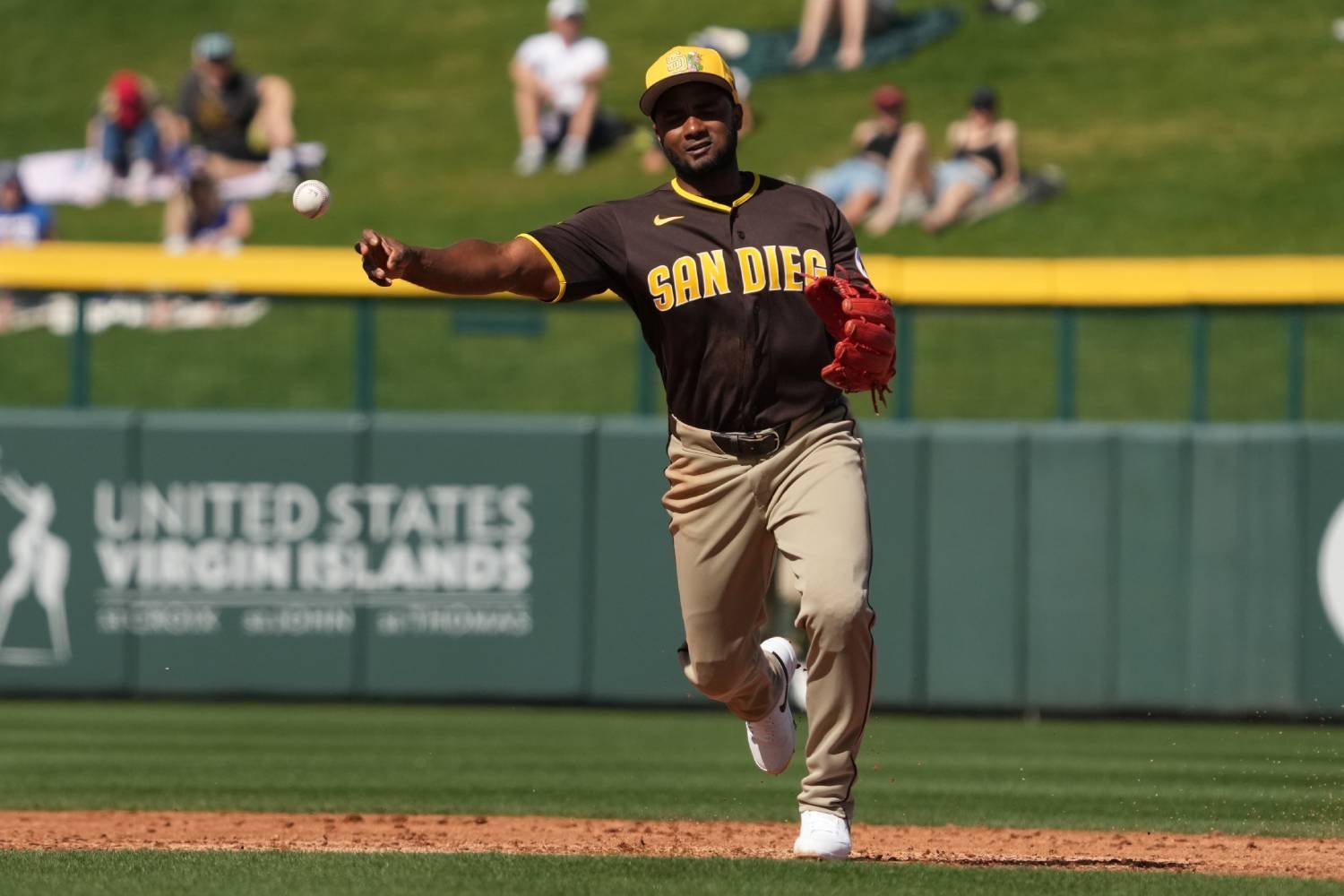 The San Diego Padres have released one of their most productive minor-league hitters. Infielder Pablo Reyes was let go from Triple-A El Paso by the Padres, according to the transaction tracker on his MLB profile page. The move was dated Thursday, but posted Friday. No word on whether the 32-year-old had an out clause in his contract or the Padres felt they had too many bodies at Triple-A. Reyes had been a consistent offensive presence in the Chihuahuas' lineup, putting up a .310/.408/.491 slash line in 56 games with six homers, 33 RBIs and 15 stolen bases. Reyes' batting average was second on the team and his 19 doubles were tops for the Chihuahuas, who recently got three players added to the roster in Luis Rengifo, Nick Solak and Will Wagner. Solak and Wagner were recently up with the Padres, while Rengifo was signed after being released by the Milwaukee Brewers. Reyes started the season off hot, reaching base in the first 30 games he played in. The Padres were Reyes' seventh organization and he appeared in the majors with four of those clubs. View the full article
 -
 The Chicago Cubs are ready to see what the Drew Pomeranz experience in 2026 is like. The Cubs on Friday selected the left-hander from Triple-A Iowa and sent left-hander Jordan Wicks to Triple-A Iowa. Pomeranz, who pitched for the Cubs last year, was released by the Los Angeles Angels on June 18 and scooped up by the Cubs four days later. With the Angels, Pomeranz had a 6.33 FIP (5.01 ERA) in 23⅓ innings over 25 relief appearances to go along with an 11.1% walk rate and 14.8% strikeout rate, all notably worse than his 2025 numbers with the Cubs. He also gave up five homers with the Angels. In 57 games with the Cubs last year, Pomeranz had a 3.36 FIP (2.27 ERA) with a 7.4% walk rate and 28.1% strikeout rate. His career rates are 10% and 24%. After beginning the season on the 15-day injured list, Wicks has been with the Cubs twice now, appearing in four games, starting twice and getting saves in the other two. He has pitched 10⅓ innings and posted a 10.45 ERA with two walks and eight strikeouts. View the full article
 -
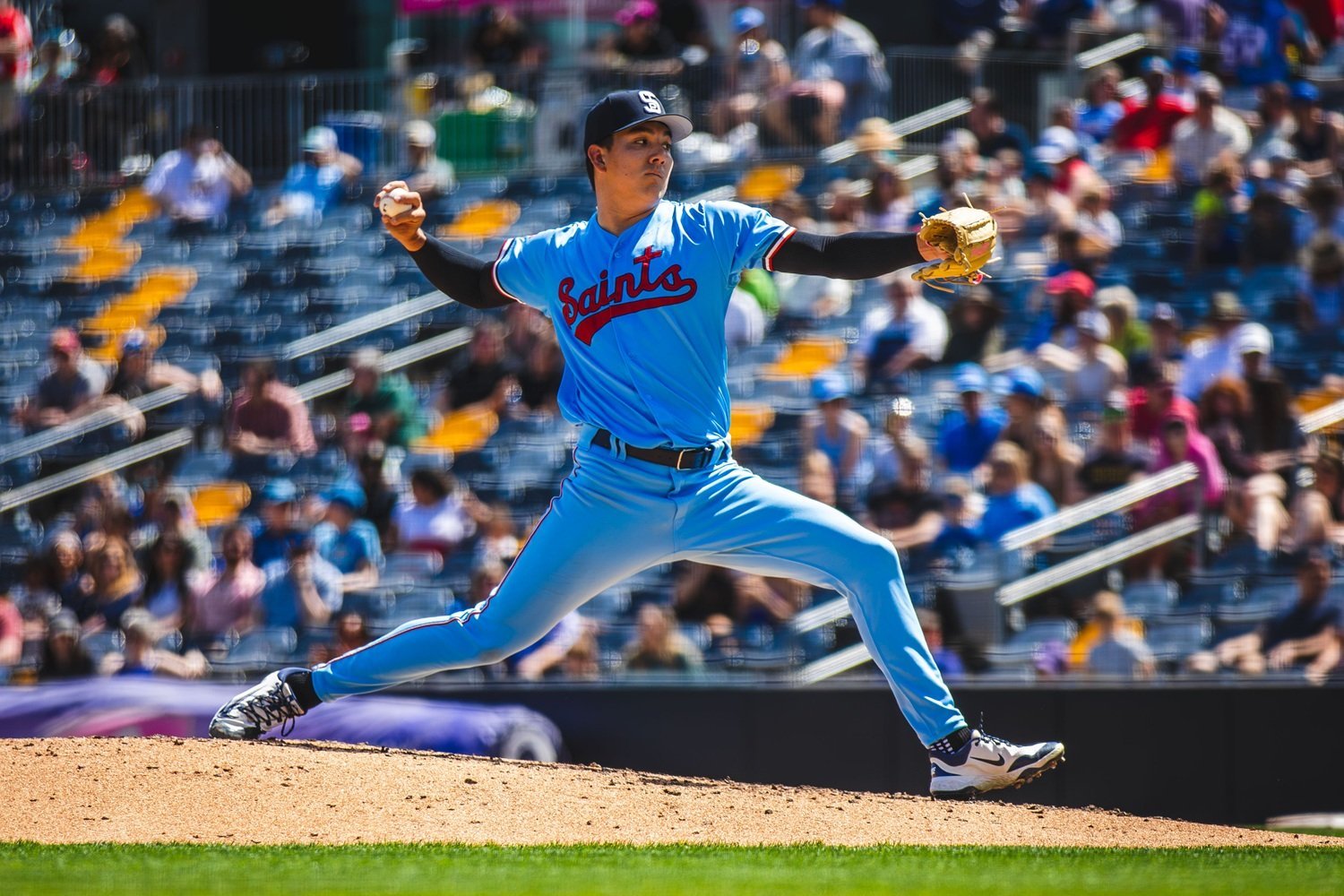 TRANSACTIONS Twins catcher Ryan Jeffers began his rehab assignment with the Saints on Friday night in St. Paul. IF Andy Lugo was activated by the Kernels. LHP Michael Carpenter went to the FCL to make a rehab appearance on Saturday. FCL Twins infielder Haritzon Castillo was placed on the 60-Day Injured List. He has not played since the first week of the DSL season. SAINTS SENTINEL St. Paul 4, Buffalo 3 Box Score Ryan Gallagher has experienced several ups and downs since joining the Saints. This is one of his best Triple-A starts. He tossed 4 2/3 scoreless innings. He gave up two hits, walked one and had five strikeouts. Kendry Rojas came in to get the final out of the fifth inning and worked two more innings. In 2 2/3 innings, he gave up two runs on four hits and a walk. He had three strikeouts. C.J. Culpepper came in to get the final two outs of the seventh inning. He walked one but was otherwise unscathed. Paulshawn Pasqualotto came on for the ninth inning, attempting to hold onto a 4-2 lead. He gave up an unearned run on a hit and a walk but struck out three batters to complete the Saints win. Pasqualotto was just promoted to St. Paul a day earlier. This was his Triple-A debut, and he recorded his first Triple-A save. Walker Jenkins returned to the lineup on Friday night after one night off. In the third inning, he hit a solo homer, his third with the Saints to give the team a 1-0 lead. He went 2-for-4 in the game. In addition, he shared an assist with Tanner Schobel to record an out at home. After missing nearly two months with a broken hamate bone, Ryan Jeffers began his rehab. He DHd and got four at-bats. He went 2-for-4 with a couple of rocket singles to center, the first at 105 mph and the second at 108 mph. In the fourth inning, Cody Morissette hit his sixth home run with the Saints to make it 2-0. The 26-year-old was the Marlins second-round pick in 2021 out of Boston College. He reached Triple-A Jacksonville late in the 2025 season, and that’s where he began the 2026 season. He was released by the Marlins on June 2nd. He signed with the Twins on June 8th. He spent about one week with Double-A Wichita to get some at-bats. In his 15th game with the Saints, he went 2-for-4 with his fourth double and sixth home run. The Twins third run scored came on a sacrifice fly by Hendry Mendez that scored Matt Wallner. He had walked and went to third on Gabriel Gonzalez’s 14th double. Wallner was 1-for-2 with a walk, was hit by a pitch, and in the seventh inning, he hit his 13th home run with the Saints. WIND SURGE WISDOM Wichita 5, Tulsa 10 Box Score Through the first inning, Wichita had a 3-1 lead. Through five innings, they were ahead 4-2. However, the Drillers scored three runs in the sixth, three in the seventh, and two more runs in the eighth inning. Andrew Cossetti led off the bottom of the first inning with his sixth double. He advanced to third with one out. Garrett Spain walked. Cossetti scored on a sacrifice fly by Billy Amick. Kyle DeBarge followed with his ninth home run of the season, a two-run shot that made it 3-1. DeBarge went 2-for-4. Chris Vallimont started and gave up two runs on three hits and a walk over four innings. He had three strikeouts. Zach Vennaro came on and gave up two runs on one hit over 1 1/3 innings. Sam Ryan came on with a runner on base. He allowed the inherited runner to score and two more runs on two hits and two walks, and he recorded two outs. Nick Mikolajchak gave up two runs on three hits in one inning. Darren Bowen gave up two runs (1 earned) on two hits in two innings. He walked three and had four strikeouts. Amick went 2-for-4 with his 12th double. His 19th home run came in the third inning. Jaime Ferrer went 2-for-4 and stole a base. KERNELS CHRONICLE Cedar Rapids 2, Quad Cities 13 (suspended in the 4th inning) Box Score The rain came in the bottom of the fourth and the game was suspended. The teams will finish this game on Saturday before the regularly scheduled game. Some might argue this one was over soon after it started. Quad Cities scored seven runs in the bottom of the first inning and four more in the top of the second. They had already scored two runs in the bottom of the fourth when the game was suspended with two outs. Finally, we’ll go into more detail when the game is complete. But just so you’re aware. Lefty Cesar Lares started and was charged with 11 runs (10 earned) on seven hits (including 2 homers) and three walks. MIGHTY MATTERS Ft. Myers 4, Clearwater 3 Box Score Five of the game’s seven runs were scored in the first inning. The Mussels scored three runs in the top of the first inning. Clearwater responded with two runs in the bottom of the first inning. Just two more runs scored over the final eight innings. With two outs in the top of the first inning, Jayson Bass walked. Luis Fragoza followed with a single. Byron Chourio followed by crushing his fifth home run of the season to make it 3-0. Reed Moring started and gave up two runs on five hits over three innings. Merit Jones came in and gave up one run on five hits and four walks over 3 2/3 innings. Michael Hilker came in and tossed 2 1/3 scoreless innings to earn his third save. He gave up just one hit, walked none, and had three strikeouts. He really ‘earned’ the save in the bottom of the seventh when he entered the game with the bases loaded and didn’t allow any to score. In the third inning, Ryan Sprock hit his fifth home run of the season. He went 2-for-5 in the game. Luis Fragoza went 2-for-2. Ricardo Pena had the other extra base hit, his first double. COMPLEX CHRONICLES FCL Twins, FCL Red Sox (postponed) Box Score Rain caused Friday’s game to be postponed. The cross-town rivals will attempt to play two games on Saturday. DSL Twins 1, DSL Marlins 2 (8 innings) Box Score They were scheduled to play seven innings, but the Twins and Marlins were having so much fun, they played an extra inning too on Friday morning. Actually, when the score was tied 1-1 after seven innings, the rules of the game are to play another inning. The Twins jumped to an early lead when Fabian Ulloa walked with the bases loaded in the top of the first inning to drive in Daiyer Barboza. That was about it for the Twins offense. The pitching was really good though. 16-year-old Adrian Martinez started and struck out eight batters over four scoreless innings. He gave up two hits and walked two batters. Herkyn Taveras came on and had a walk and a strikeout over two scoreless, hitless innings. Jeremy Jimenez came in for the bottom of the seventh, but he gave up a run to send it to an extra frame. He gave up a solo homer to lead off the bottom of the eighth which ended the game. He gave up two runs (1 earned) on three hits. In his 1+ inning. The Twins had just two hits in the game. They walked eight times. Abel Sosa and Anibal Beltre each walked twice. Enmanuel Merlo hit a single, and Daiyer Barboza hit his third double. PLAYERS OF THE DAY Hitter(s) of the Day Cody Morissette (St. Paul): 2-for-5, 2B(4), HR(6), R, RBI, K. Billy Amick (Wichita): 2-for-3, 2B(12), HR(19), SF, 2 R, 2 RBI Pitcher(s) of the Day Ryan Gallagher (St. Paul): 4.2 IP, 2 H, 0 R, 1 BB, 5 K, 61 pitches, 38 strikes (62.3%) Michael Hilker (Fort Myers): 2.1 IP, H, 0 R, 0 BB, 3 K, 30 pitches, 18 strikes (60.0%) Adrian Martinez (DSL Twins): 4 IP, 2 H, 0 R, 2 BB, 8 K, PROSPECT SUMMARY Check out the Prospect Tracker for much more on our Twins Top 20 prospects after seeing how they did today. #1 - OF Walker Jenkins (St. Paul) - 2-for-4, HR(3), R, RBI (batted first, played CF) #4 - C Eduardo Tait (Cedar Rapids) - 0-for-2 (batted third, played catcher). #5 - SS Marek Houston (Wichita) - 1-for-4 (batted second, played SS) #7 - LHP Kendry Rojas (St. Paul) - 2 2/3 IP, 4 H, 2 ER, 1 BB, 3 K, 46 pitches, 32 strikes (69.6%) #9 - OF Hendry Mendez (St. Paul) - 0-for-3, SF, RBI (batted fifth, played LF) #10 - OF Gabriel Gonzalez (St. Paul) - 1-for-4, 2B(14), K (batted fourth, played 1B) #12 - 3B/CF Brandon Winokur (Cedar Rapids) - 1-for-2, 2B(13), R (batted first, played 3B) #14 - 3B/SS Quentin Young (Ft. Myers) - 0-for-2, 2 K (PH, then played 3B) #15 - RHP Ryan Gallagher (St. Paul) - 4 2/3 IP, 2 H, 0 R, 1 BB, 5 K, 61 pitches, 38 strikes (62.3%) #17 - RHP C.J. Culpepper (St. Paul) - 2/3 IP, 0 H, 0 R, 1 BB, 0 K, 13 pitches, 6 strikes (46.2%) #18 - OF Yasser Mercedes (Cedar Rapids) - 1-for-2, R, K (batted fifth, played RF) #19 - 1B/3B Billy Amick (Wichita) - 2-for-3, 2B(12), HR(19), SF, 2 R, 2 RBI (batted fourth, played DH) #20 - 2B/SS/CF Kyle DeBarge (Wichita) - 2-for-4, HR(9), R, 2 RBI, K (batted fifth, played 2B) UPCOMING PROBABLES Saturday, July 4 Buffalo @ St. Paul (6:07 pm CT) - RHP Bailey Ober (rehab) vs Simeon Woods Richardson Tulsa @ Wichita (7:05 pm CT) - RHP Sam Armstrong (2-6, 4.43 ERA) Cedar Rapids @ Quad Cities (DH @ 4:00 pm CT) - RHP Adrian Bohorquez (0-0, 9.64 ERA) Ft. Myers @ Clearwater (5:30 pm CT) - RHP Hendry Chivilli (1-1, 6.75 ERA) FCL Twins @ FCL Red Sox (DH @ 9:00 am CT) - DSL Cardinals @ DSL Twins (9:00 am CT) - CURRENT W-L Records Minnesota Twins: 42-47 St. Paul Saints: 47-36 Wichita Wind Surge: 26-51 Cedar Rapids Kernels: 33-42 Fort Myers Mighty Mussels: 45-32 FCL Twins: 24-20 DSL Twins: 6-16 Please feel free to ask questions about the teams, the rosters, and discuss today’s games, or anything else Twins minor-league related! View the full article
 -
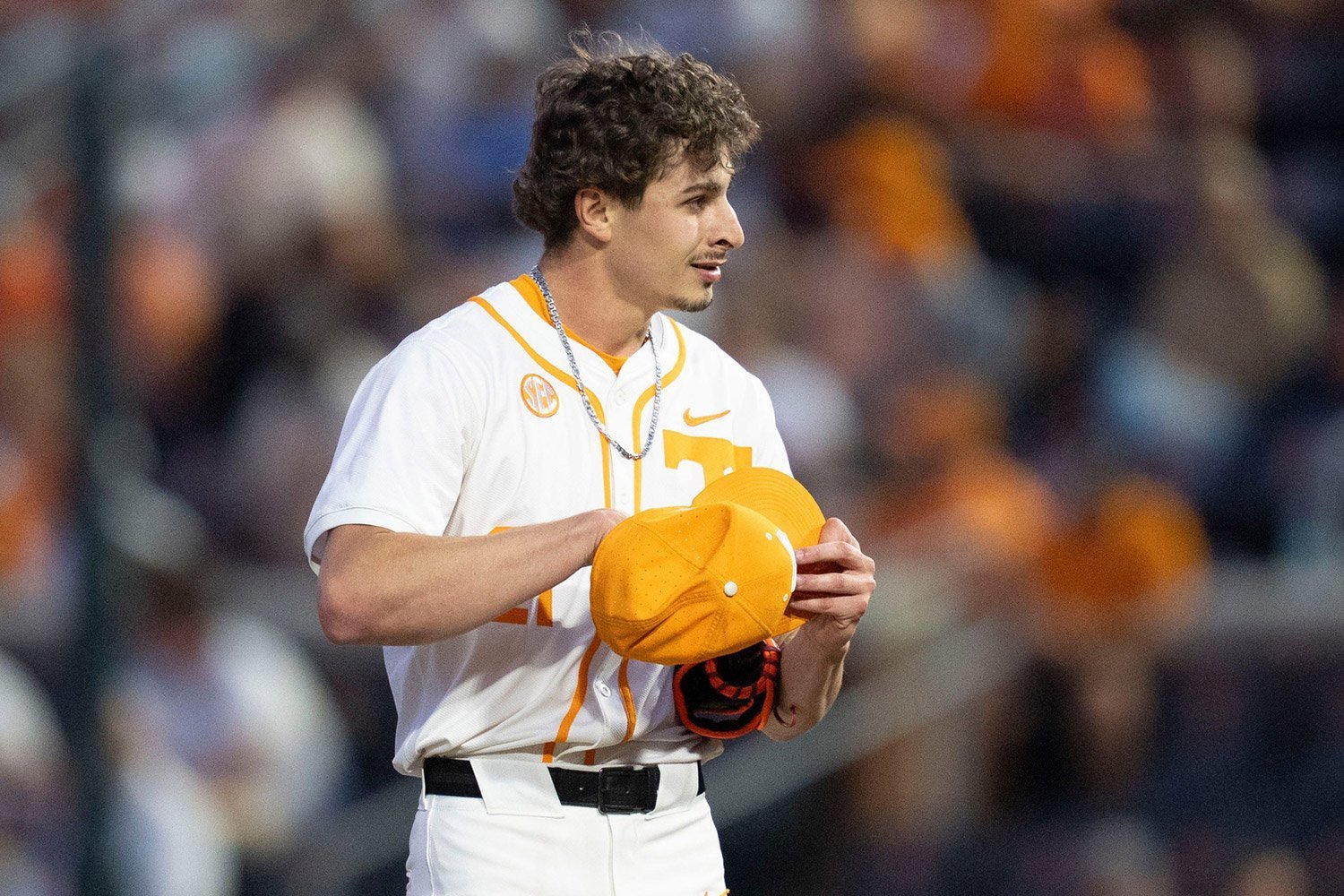 Our resident MLB Draft expert, Jamie Cameron, takes MLB mock draft rankings from major industry outlets like MLB Pipeline, ESPN, The Athletic (and many others) to form a consensus board, with a working hypothesis that using this approach will eliminate some of the noise and variance in MLB Draft mock rankings. The Milwaukee Brewers’ first picks are: Round 1: 25th Overall Round 2: 66th Overall Round 3: 102nd Overall Round 1: Tegan Kuhns, RHP, Tennessee While Kuhns performance hasn't clicked all the way into gear throughout his collegiate career, he's an easy arm to project being a force as a pro, with a great combination of easy velocity and a diverse arsenal of pitches to draw on. Originally working out of the bullpen for Tennessee, Kuhns has oscillated between the pen and a starting role in 2026. It's a little bit of an 'efforty' delivery for me, with a long arm stroke, but it doesn't seem to impact Kuhns strike throwing ability. The arsenal is headlined by a heater that sits 94-96 mph and has touched 98 mph, with good ride. It's complimented by his ability to spin the baseball. Kuhns has two distinct breakers, a slider and a curveball, both with the ability to generate swing and miss. His arsenal is rounded out by a cutter and a changeup, the latter grabbing 15 inches of horizontal break, on average. All in all, this is a good frame, velocity, and plenty of starter traits. Kuhns in a good pro system has a chance to be an impact starter at the next level. In 81 innings in 2026, he managed a 3.75 FIP, striking out 31% of hitters while walking just 4.7%. Round 2: Taylor Rabe, RHP, Ole Miss Taylor Rabe is a 6’5, right-handed pitcher for Ole’ Miss, who has been a significant late riser on draft boards down the stretch of the 2026 season. After blowing out his elbow in his senior year of high school, he made it to campus and spent his 2024 season recovering from TJ surgery. Rabe transitioned into a starting role in 2026, after functioning primarily as a reliever his sophomore season. He logged a career high 76 innings in 2026, posting a strikeout rate of 34.2%, while managing a 3.75 FIP, an excellent mark given the quality of the competition he faced regularly. Rabe has an excellent fastball that sits 95-97 mph but has touched triple digits. It’s primarily complemented by a cutter (86 mph), a slider (82 mph), and a changeup (87 mph), giving Rabe a solid four pitch mix with which to transition into pro ball. There’s excellent strike throwing here. Rabe walked just 4.9% of hitters in 2026. That’s actually up from 2025 (2.5%) and he gets good extension down the mound. There’s a ton of starter traits here, and I like Rabe a ton to polish up his arsenal and optimize his approach with an offseason in a pro system under his belt. The arrow is firmly up here. Round 3: Will Adams, 1B/OF, Hoover HS (AL) Will Adams is a hit-first prep player out of Alabama, currently committed to LSU. A two-way player until his senior year, Adams had previously been in the low 90s as a pitcher, but has since focused solely on being a position player, with versatility to play first base or in the outfield. Adams has a pretty swing from the left side. Previously a bit passive in the zone, he’s become more aggressive in-zone in the last year, producing consistently excellent bat-to-ball numbers with a patient approach. He’ll likely grow into average power in time. An average runner, Adams promises to be a solid enough defender in the outfield or at first base with an above average arm. Curious to see the players around the Milwaukee Brewers picks in the draft? Click on the button below to view the entire mock draft board! View the full article
 -
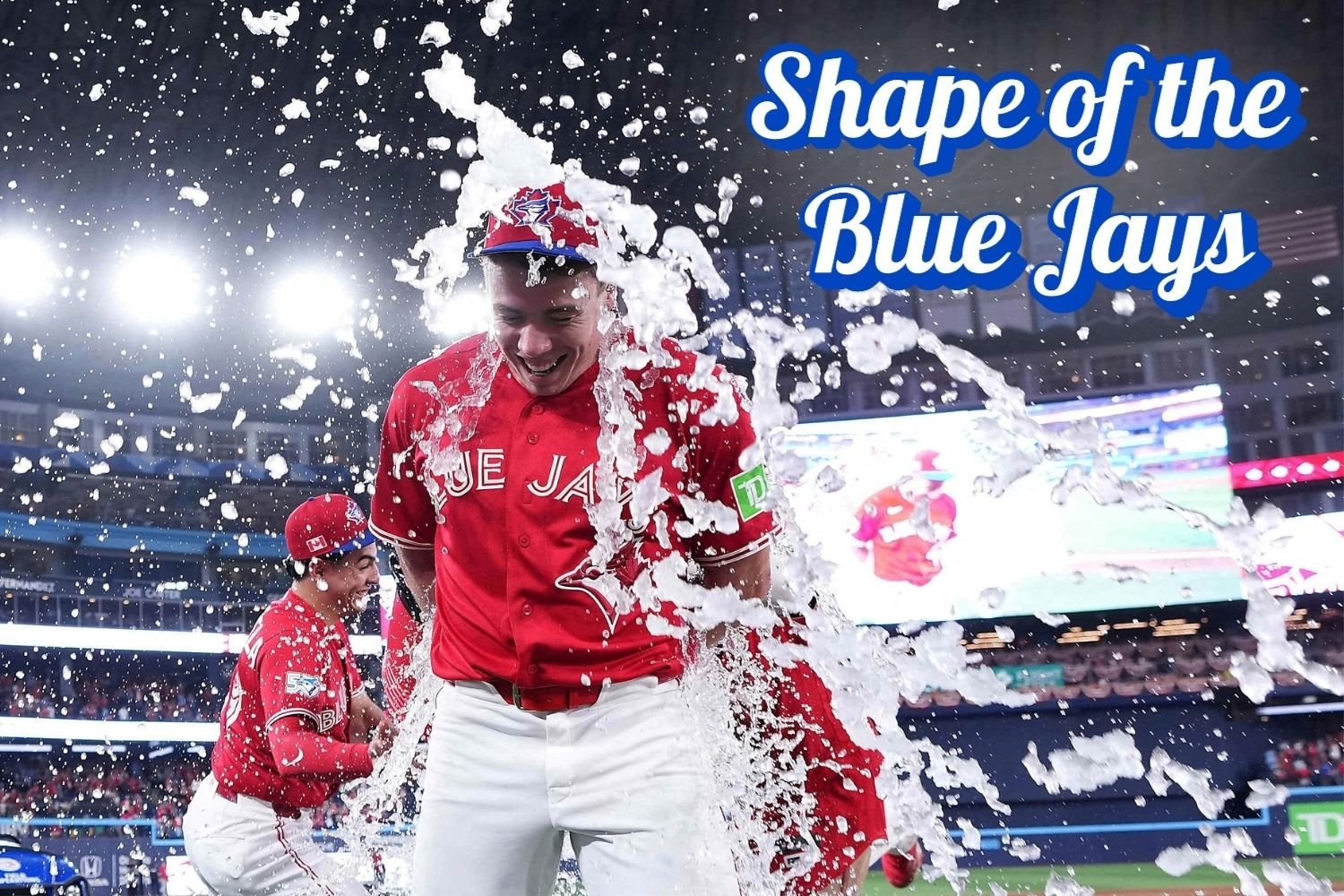 Welcome to Shape of the Blue Jays, my column where I dig into Statcast numbers to analyze recent pitch shape and swing shape trends for Toronto Blue Jays players and discuss how they have impacted their performance. Click here to read the last edition. Quick Hits: Farm System Check-In With the calendar turning to July, Baseball America updated their list of the top 100 prospects in baseball, as well as the top 30 in the Blue Jays system. Lefty pitching prospect Johnny King was added to the top 100 for the first time, something that evaluators around the industry saw as increasingly likely to happen over the past 6-12 months. He slots in at 82 on BA's list. Arjun Nimmala (39) is inside the top 40. JoJo Parker is at 56. BA had King, Jake Bloss, Nolan Perry, Charles McAdoo, and Danny Thompson Jr. as risers in the system. Seeing Bloss there is curious because he's gotten decimated at Triple-A this year (12.3% K rate, 7% BB rate, 4.76 HR/9), so the industry is clearly betting on the fact that his fastball velocity is into the upper 90s post-surgery. Perry was promoted to Double-A New Hampshire earlier this week and struck out seven batters while walking two in his three-inning debut on Tuesday; his meteoric rise hasn't slowed down yet. It's also unsurprising to see McAdoo here after he made his MLB debut in late May. The 2026 draft is fast approaching, and the Jays won't be on the clock until pick 39, so it's not as likely they'll acquire a blue-chipper like Trey Yesavage or JoJo Parker, who were each taken in the upper half of the first round. Yet, the changes that have occurred in this farm system since the hirings of people such as Marc Tramuta, who now leads their amateur scouting department, as well as Justin Lehr, their director of pitching, are hard to ignore. This prospect pool isn't yet one of the true elites in the game, but from a player development standpoint, the franchise is as strong as it has been in years. Kazuma Okamoto It's scary to think where the Blue Jays would be without Kazuma Okamoto, who carried their offense for large portions of June while the rest of the lineup was anemic. Okamoto hit .286 with a .913 OPS last month, and central to his success was his strong performance against breaking balls (.404 wOBA, .350 xwOBA). Gone are the days of April when it felt like he was automatically neutralized every time he saw spin. His chase, contact, and hard hit rates against breaking pitches were all better than in April and May. Kazuma Okamoto Statcast Metrics vs Breaking Balls, 2026 Month Chase% Contact% Hard Hit% Bat Speed Attack Angle Swing Tilt Early% On Time% March/April 25.6% 62.2% 26.3% 72.4 19° 31° 42% 52% May 31.9% 52.8% 33.3% 73.4 18° 30° 39% 57% June 20.3% 64.1% 40.9% 72.3 21° 33° 33% 59% It's not that Okamoto increased his output by swinging faster at breaking balls. Instead, he's been sitting back on them more, as evidenced by his swing timing stats, while also further optimizing his swing to do what he does best in general: lift and pull. Scouts who had seen him in Japan were right about him being a pull-air guy, but looking back, it's interesting that the industry considered Okamoto to be someone with good bat-to-ball and passable game power. Swinging and missing has been the only issue in his profile, and he's easily been the most consistent power threat on the team. Forecasting players from overseas is hard! Either way, the Jays are certainly happy they got Okamoto at the price they did. Spencer Miles Spencer Miles drew high praise from his manager after a brilliant bulk relief outing in the Canada Day win (3.0 IP, 0 R, 1 H, 5 K, 1 BB). John Schneider said it was the best he had ever seen Miles throw. His sinker averaged 97.5 mph, a new career-best in single-game velocity, and topped out at 99.4. The extreme heat and humidity didn't hold him back, as seven of the 10 hardest pitches he's thrown on a big-league mound came yesterday. He continues to find new levels of command with the sinker as well; it was in the zone 78% of the time and had a strike rate of 83%. It was also responsible for three of his five strikeouts, and all three were looking. Spencer Miles Sinker Strikeouts, July 1 vs NYM It takes a lot of confidence to try to dot pitches like this where Miles did yesterday. Take a look at those two sinkers on the bottom corner: One of those was to Francisco Alvarez (righty), and the other was to Jared Young (lefty). He back-doored it to a righty and front-doored it to a lefty for strikeouts in the same game. If Miles can throw this thing 99 mph with command like that, it might be one of the best pitches on the staff. Sean Keys Sean Keys fast-tracked his way to the big leagues with an unbelievable showing in Double-A and Triple-A earlier this season. He's 2 for his first 12, including an opposite-field three-run homer on Canada Day as part of a 9-3 victory. There have been five strikeouts and plenty of swing-and-miss in that small sample, but the bat tracking stats are a sight to behold. Take a look: Year Bat Speed Bat Speed 90 Swing Length Swing Tilt Attack Angle Attack Direction Intercept Point vs Batter (Y) 2026 75.1 79.2 7.4' 28° 15° 14° pull 41.9" MLB average 71.7 77.6 7.3' 32° 10° 2° pull 30.7" The early returns suggest he will have to sacrifice some of this bat speed and natural lift in order to make enough contact to stay competitive at this level. Still, the Jays' lineup, which has been one of the more light-hitting groups in the league for most of the season, undoubtedly needs more of what Keys brings to the table. The power is real, and it is threatening. Bat speed stabilizes very quickly, and both the average and upper-echelon bat speed for Keys are already up there with some of the game's elite hitters. His bat path is rather flat, but he has an open stance with a very exaggerated pull-air approach so far. It's tough to say whether the ingredients will come together fast enough for him to be an effective major league hitter this year, and some mechanical and stance changes might be in order if that's not the case, but this team needs more high-ceiling hitters like Keys, and the early bat tracking numbers back that up. All stats entering July 2, 2026. View the full article
 -
 In this week's episode, Nick goes over how Franklin Arias and Anthony Eyanson were chosen for the Futures Game and why, despite it not being that big of a deal, it is still fun. He also discusses some great performances in June from Johanfran Garcia and Mikey Romero. He also discusses how guys like Nate Baez and Blake Wehunt might get a look in Worcester due to the fact that they could be players teams look for during the Rule 5 Draft. Listen on Apple Podcasts: https://podcasts.apple.com/us/podcast/the-talk-sox-podcast/id1783204104 Listen on Spotify: https://open.spotify.com/show/3qPrPXEngu0CxgTmlf0ynm Listen on iHeartRadio: https://www.iheart.com/podcast/263-the-talk-sox-podcast-244591331/ Listen on Pocket Casts: https://pca.st/4tmd121v Watch on YouTube: https://www.youtube.com/@talksox View the full article
 -
 Randy Holt and Steve Drumwright recap a disastrous week in which the Padres lost two of three to the rival Dodgers, then got swept by the Chicago Cubs, including a 23-3 loss in the finale. Randy and Steve then give their thoughts on the clouds hanging over the Friars as they begin a four-game road series against the Dodgers and then look ahead to returning home for a big series against the Diamondbacks as the All-Star break approaches. Listen on Apple Podcasts: https://podcasts.apple.com/us/podcast/padres-mission-podcast/id1896922834 Listen on Spotify: https://open.spotify.com/show/033xclmydmbLmEp0exYuYz Listen on iHeartRadio: https://www.iheart.com/podcast/1333-padres-mission-podcast-336930560 Watch on YouTube: https://www.youtube.com/@padresmission View the full article
 -
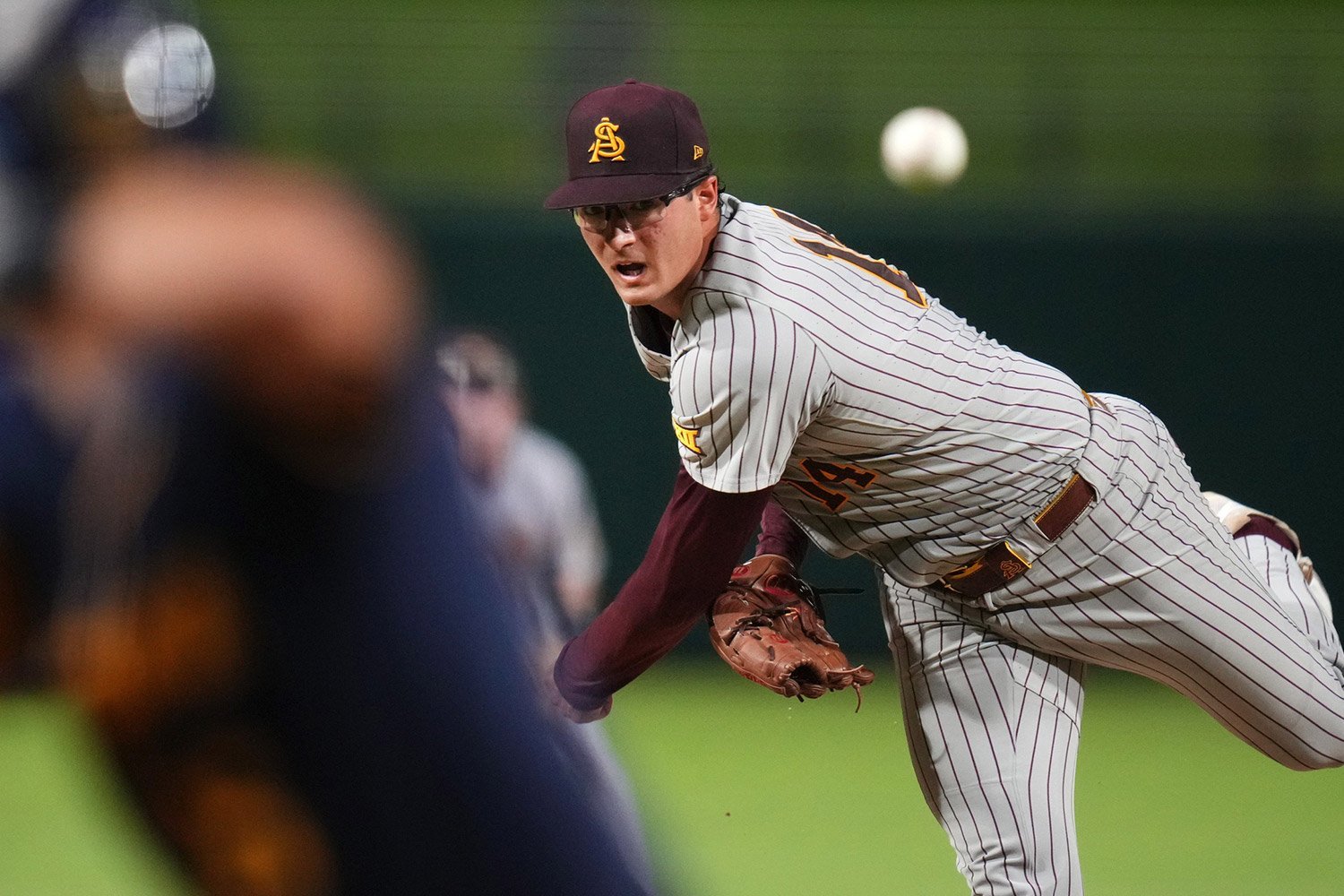 I take MLB mock draft rankings from major industry outlets like MLB Pipeline, ESPN, The Athletic (and many others) to form a consensus board, with a working hypothesis that using this approach will eliminate some of the noise and variance in MLB Draft mock rankings. The San Diego Padres’ first five picks are: Round 1: 21st Overall Round 2: 60th Overall Round 3: 97th Overall Round 4: 124th Overall Compensation Round: 134th Overall Round 1: Cole Carlon, LHP, Arizona State Carlon is one of the fastest-rising college arms in 2026 in a demographic that has suffered from injuries and inconsistent performance. After contributing to the Sun Devils immediately as a freshman bullpen arm, Carlon improved his sophomore season significantly, cutting his ERA in half and flashing far more dominant stuff. It's a good-looking delivery from Carlon. While there aren't outlier release traits, he hides the ball well during his delivery and has an ideal pitcher's frame at 6'5, 220 pounds. He's moved from the bullpen to a starting role in 2026. The results have been spectacular. Carlon had a 4.30 FIP through 83.2 innings of work this season while striking out 38% of hitters. The stuff is as explosive as ever, his fastball sits 94-96 mph, but he's run it up to 100 mph. His slider is one of the best in the class, a mid-80s gyro offering that generates a ton of swing-and-miss. Carlon mixes in a curveball and a changeup too. There's still some refinement needed to the strike throwing, but Carlon's walk rate has improved from 11.3% in 2025 to 8.9% in 2026. Carlon is looking like a first-round prospect with starter traits who should move quickly as a pro. Round 2: Joseph Contreras, RHP, Blessed Trinity Catholic HS (GA) Joseph Contreras, son of Jose Contreras, is a tall, lean, prep pitcher currently committed to Vanderbilt who took center stage for a brief moment in the WBC as a 17-year-old, competing for Brazil against a stacked Team USA lineup. Contreras' fastball sits 94-97 mph and has been up to 100 mph. It's a quick arm, and one can see him sustaining his velocity more consistently with a bit of added weight and strength. For secondaries, there's a mid-80s slider that holds good spin rates and flashes above average to plus, a changeup in the low-80s with good fade, and a split-change/forkball he throws in the high 70s-low 80s that dies at the plate and flashes plus. That's a ton of weapons and velo for a frame still growing and adding strengths who will turn 18 just before the draft. The sky is the limit for Contreras, assuming health and enough strikes with consistency. Round 3: Bo Holloway, LHP, Nolensville HS (TN) Holloway is a large-framed left-handed prep pitcher at 6'5, currently committed to Vanderbilt University. After working with former Cy Young winner R.A. Dickey this year, Holloway has taken a step forward in every area of his game. It's at least a plus fastball, with good carry from a steep angle and high vertical release. It's ticked up in velocity in the past twelve months, and now sits 94-96 mph while grabbing 98 mph. Holloway's secondary arsenal could use some polish. He has an above-average changeup, with good fade and tumble. He hasn't shown a ton of aptitude for spin, as yet, with a fringy slider being his only breaking pitch. The delivery looks good, though, and Holloway is managing plenty of strikes. If he can figure out a breaking pitch that works, it'll be a significant breakthrough for him. Curious to see the players around the San Diego Padres picks in the draft? Click on the button below to view the entire mock draft board! View the full article
