


DiamondCentric
-
Posts
2,631 -
Joined
-
Last visited
Never
Content Type
Profiles
Forums
Events
News
Tutorials & Help
Major League Baseball Videos
Guides & Resources
Store
Downloads
Gallery
Everything posted by DiamondCentric
-
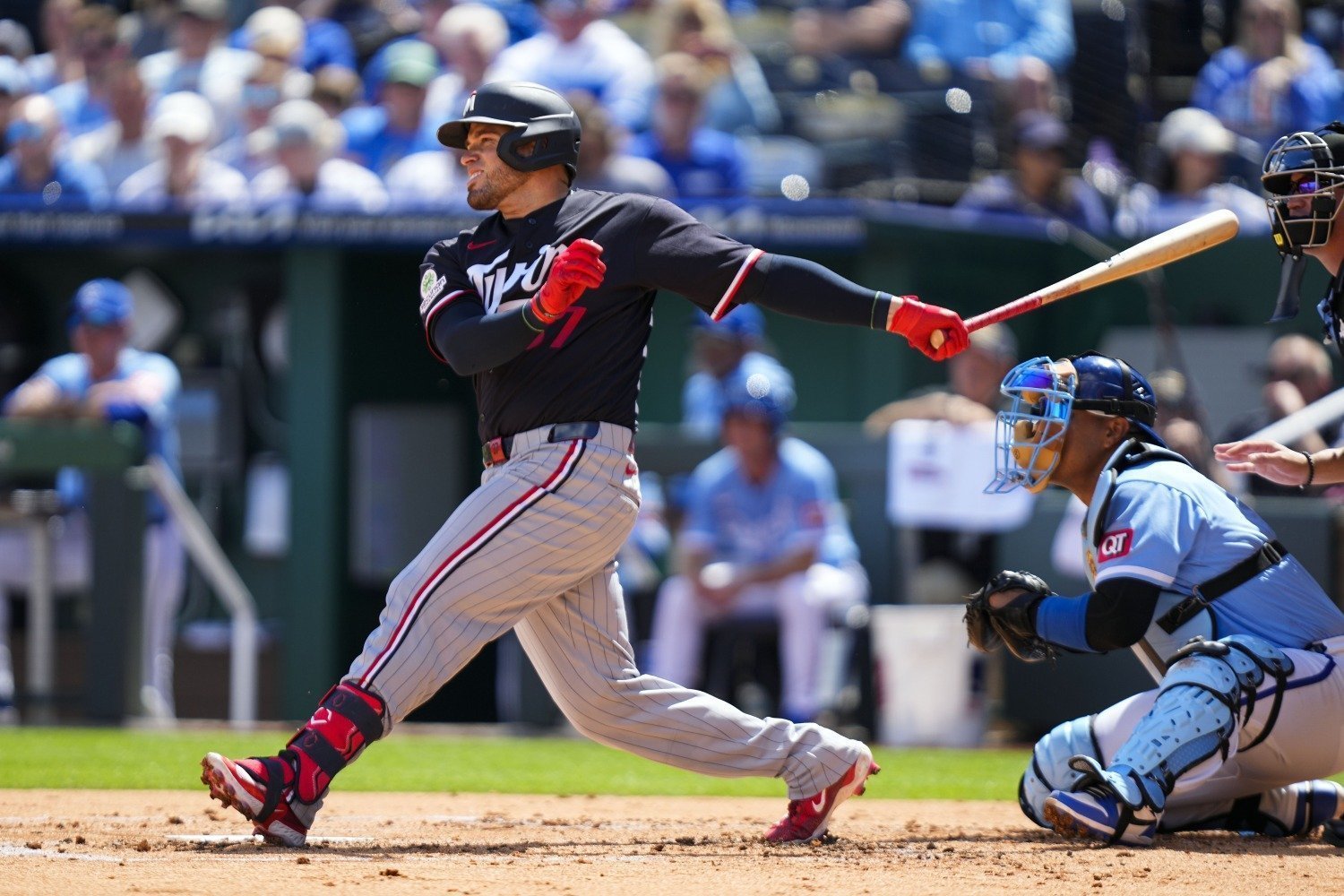 As the calendar flips to July, the Twins find themselves in a much different place offensively than they were during the season's opening months. Early in the year, Minnesota struggled to consistently score runs, with too many hitters searching for timing at the plate and rallies ending before they ever gained momentum. That narrative has changed over the last several weeks. Even without Ryan Jeffers behind the plate and with Matt Wallner spending time at Triple-A, the Twins have continued to receive meaningful production throughout the lineup. Veterans have settled into their roles, younger players have taken advantage of expanded opportunities, and the offense has looked considerably deeper than it did during April and May. Those improvements don't happen without standout individual performances. Several Twins enjoyed excellent months at the plate, but these four hitters separated themselves from the rest of the roster during June. 4. Josh Bell June Stats (27 G): .295/.343/.547 (.891), 7 2B, 1 3B, 5 HR, 6 BB, 18 K, 145 wRC+ Bell's annual slow start has almost become part of his player profile, and 2026 was no exception. He finished May carrying just a .562 OPS while striking out in 29.4% of his plate appearances, numbers that looked far removed from the middle-of-the-order bat the Twins envisioned when they signed him over the winter. As temperatures climbed, so did Bell's production. He rediscovered the consistent hard contact that has made him successful throughout his career, finishing June third on the club in slugging percentage while leading the team with a stellar .405 expected weighted on-base average (xwOBA). Just as importantly, Bell dramatically improved his plate discipline. His strikeout rate dropped to 17.6%, almost perfectly matching his season average of 18.8% and showing that May's swing-and-miss issues were more of an outlier than a trend. The Twins didn't need Bell to carry the offense by himself. They simply needed another dangerous bat capable of extending the lineup. June served as an excellent reminder of why Minnesota believed he fit that role. 3. Trevor Larnach June Stats (23 G): .341/.405/.513 (.918), 2 HR, 7 2B, 7 BB, 10 K, 158 wRC+ Larnach's season continues to be one of the more interesting offensive stories on the roster. His power numbers haven't reached the level many expected, but he has compensated by becoming one of the club's most consistent hitters. Rather than relying on home runs, Larnach spent June spraying line drives around the field, reaching base at an outstanding clip while consistently putting together quality at-bats. Perhaps the biggest development was his improved contact ability. After posting a strikeout rate above 23% in May, Larnach slashed that number to just 11.8% in June. Fewer empty swings meant more balls in play, and his batting average reflected that adjustment. The advanced metrics loved his month as well. His 158 wRC+ ranked second on the team, while his 0.8 fWAR came almost entirely from his offensive contributions. Even without a barrage of home runs, Larnach proved he could be one of Minnesota's most valuable hitters simply by consistently getting on base and driving the baseball into the gaps. 2. Byron Buxton June Stats (23 G): .287/.330/.596 (.926), 8 HR, 5 2B, 5 BB, 20 K, 153 wRC+ Buxton entered June already playing some of the best baseball of his career, and although he cooled slightly during the month's final week, he remained one of the American League's most dangerous players. His eight home runs led the Twins during June, and he continued impacting games in every phase by leading the club in stolen bases while finishing second in runs scored. His combination of elite defense, baserunning, and middle-of-the-order production resulted in a 1.0 fWAR, second-best on the roster for the month. One encouraging trend was his continued improvement in making contact. Even though his OPS dipped 68 points compared to his scorching May, Buxton reduced his strikeout rate by more than six percentage points. That type of adjustment is significant for a hitter whose offensive ceiling rises dramatically when he consistently puts the ball in play. With another All-Star appearance likely on the horizon—and a legitimate opportunity to start—Buxton continues to show why he's one of baseball's most impactful players when healthy. 1. Victor Caratini June Stats (20 G): .338/.429/.631 (1.059), 5 HR, 4 2B, 9 BB, 12 K, 189 wRC+ Losing Jeffers to injury could have created a significant hole in the Twins lineup. Instead, Victor Caratini made sure Minnesota barely missed a beat. Forced into a much larger workload behind the plate, Caratini responded with arguably the best offensive month of his career. Rather than simply filling innings at catcher, he became one of the Twins' most productive hitters regardless of position. Among catchers with at least 70 plate appearances, Caratini produced the highest wRC+ in baseball during June. His 1.1 fWAR ranked second among American League catchers, illustrating just how valuable his all-around performance became. The turnaround from May was remarkable. After posting a .475 OPS entering the month, Caratini exploded for a 1.059 OPS in June while reaching base nearly 43% of the time. His outstanding 12-to-9 strikeout-to-walk ratio highlighted an approach built on patience, quality contact, and forcing opposing pitchers into mistakes. Minnesota asked Caratini to stabilize the catching position during Jeffers' absence. Instead, he emerged as one of the hottest hitters in the league. The Twins still have plenty of questions to answer during the second half, but the offense is no longer near the top of that list. Bell has settled into the middle of the lineup, Larnach continues evolving into a more complete hitter, Buxton remains the club's biggest game-changer, and Caratini has delivered one of the season's most unexpected breakout performances. If this quartet continues producing at anything close to its June pace, Minnesota should have enough offensive firepower to stay competitive throughout July. With the trade deadline approaching and the playoff race beginning to take shape, sustained production from the heart of the lineup could determine whether the Twins remain in contention or begin looking toward the future. What stands out about this quartet of players? How would you ballot look? Leave a comment and start the discussion. View the full article
 -

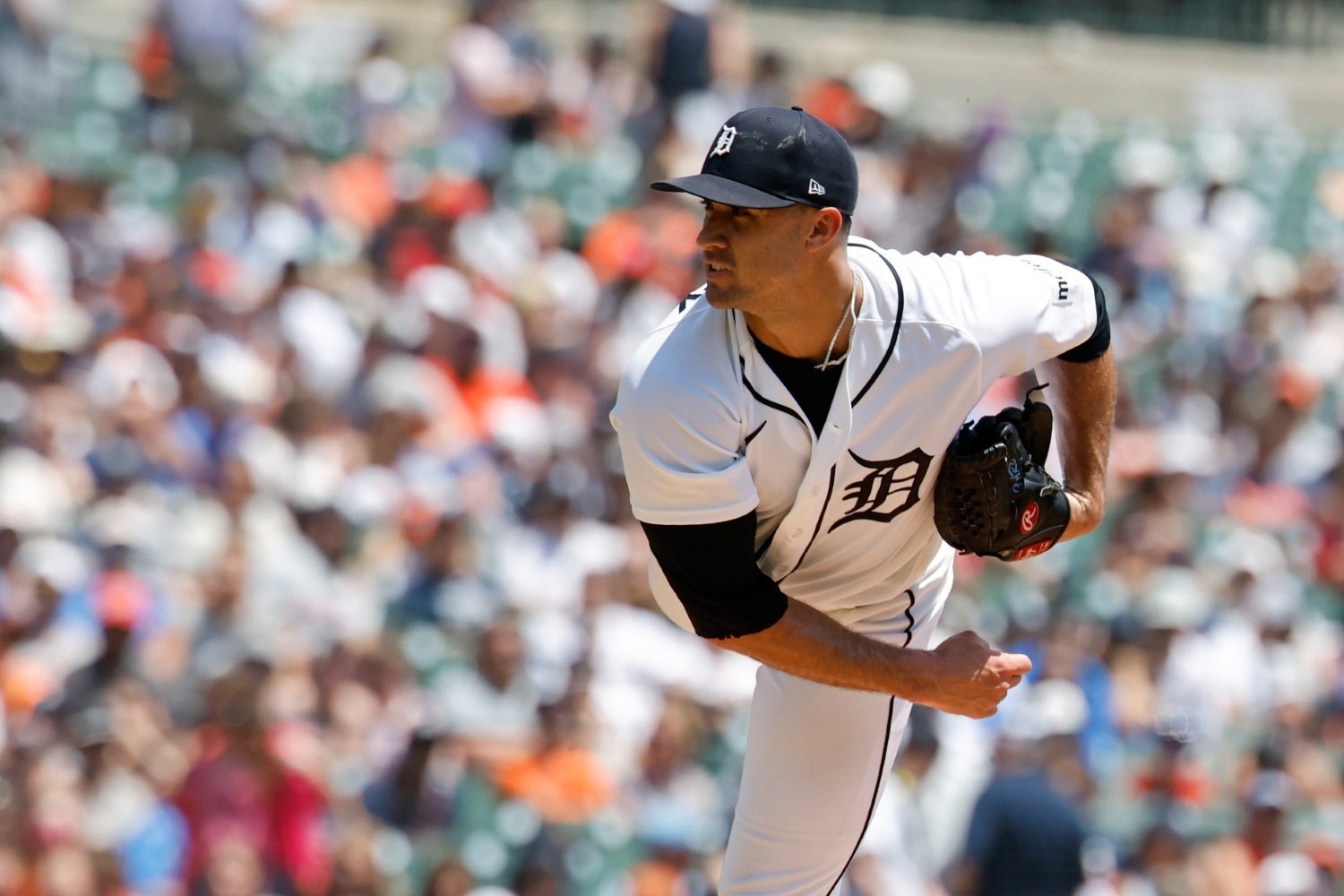 Last week, the Chicago Cubs made an early (but necessary) trade to address their pitching depth, acquiring left-handed starter David Peterson from the Mets. Peterson, the longest-tenured Met before he was dealt, is not having the year he would have hoped. He had been shuffled between the rotation and bullpen, making eight starts in 16 appearances, “good” for a 6.09 ERA, but with a more encouraging FIP of 3.85. At this point, the Cubs can’t be too picky about who they use to start games, with both Edward Cabrera and Ben Brown hitting the IL for the foreseeable future. They do seem to have had reasons to like Peterson, but he was an emergency addition. With the return of Matthew Boyd, the rotation should include Boyd, Shota Imanaga, Peterson, Colin Rea, and Javier Assad until Jameson Taillon returns. Peterson should fare better with the Cubs’ defense, as he has been a heavy groundball pitcher throughout his career. In his first start, he inspired confidence against the Brewers on the road, pitching 5 2/3 innings while allowing only two earned runs. The Cubs sent 2024 second-round pick Cole Mathis, a third baseman from the College of Charleston, back to the Mets in a one-for-one trade. He was a very low-grade prospect, even in a Cubs system not exactly overflowing with talent; they bought low on Peterson to bolster their rotation depth. That's probably the type of deal we can expect to see the Cubs make again before the trade deadline on August 3. Depending on where they sit in a month, we may see them make a legitimate swing at a big name, while dangling prospects like Jefferson Rojas, Pedro Ramírez, Ethan Conrad, and others who sit amongst their top prospects. For now, though, the strategy of moving lesser prospects for pitching depth is necessary for them to stay afloat. Whether you agree or not, the window is open now for this team to be competitive, so unless there is another crumbling over the next month (and maybe even if there is), they will be buyers. Whom might they move, in that scenario? Ramírez and Rojas are two of their top guys, so barring a blockbuster trade, they will stick around, even if it takes creativity to get them into the lineup in the near future. Eighth-ranked prospect Jonathon Long, No. 9 James Triantos, No. 14 14 Angel Cepeda and No. 17 Ty Southisene are all guys you could see get moved in a trade similar to the Peterson-for-Mathis swap. Frankly, with the team in go-for-it mode, none of their prospects should be considered “untouchable”, but these mid-range guys with no clear path to the show should be an afterthought if it means putting the Cubs in a better position for 2026. In the spirit of the Peterson trade, let's come up with a potential trade target for each of the players mentioned above. The criteria will be starters who are struggling, but also on teams playing poor defense. Each of these players should be able to turn a corner with the Cubs. Certainly, Jed Hoyer won’t be able to pull off a one-for-one trade for all of these guys, and they could be packaged for a bigger name instead, but it's fun to speculate with over a month before the trade deadline. Michael Lorenzen, Colorado Rockies Does anyone else feel like Lorenzen should have played on the Cubs by now? Knowing how the front office operates, he seems like a perennial free agent target for this team. The Rockies aren’t a bottom-tier defensive team, placing 17th in the league in team DRS, but Coors Field is not doing Lorenzen any favors. He has an unsightly 6.83 ERA, and his FIP is 4.70, but, shrug: Coors. He is on an expiring contract, and could easily be cut or moved to the bullpen once the incumbents get healthier. The 23-year-old Triantos is having a solid season in Triple-A Iowa, and would probably get called up to the bigs this year with the Rockies. Michael Wacha, Kansas City Royals Wacha is in the midst of another strong season for the last-place Royals, one of three teams in baseball to have eclipsed the 50-loss mark on the season. Wacha leads the team in innings pitched with 108 2/3, and has the lowest ERA of any starter on their staff, at 3.31. He is also pitching with a defense behind him that ranks 20th in DRS. On the Cubs, this is a guy who could not only improve their depth but actually provide meaningful innings in the postseason. Since he is owed $14 million next season, the Royals might jump at the chance to move him. They don't have a ton of offensive promise in their pipeline, and may be inclined to take a shot on a package headlined by Long, with Southisene as a throw-in. Jack Flaherty, Detroit Tigers Flaherty exercised a player option to remain with the Tigers for 2026, and his career has been a rollercoaster since being traded from the Cardinals in 2023. He missed some time this season with abductor inflammation, and has a middling 4.35 xERA on the season, but this is another example of an un-sexy addition that could do at least marginally better in front of the Cubs’ defense. The Cubs also have the financial means to eat a significant portion of the $20 million he's being paid this season, and should be able to acquire him for a package around a lottery ticket like Cepeda, while throwing in a lower-level pitcher like Dominick Reid. Flaherty did the best pitching of his career while in the NL Central, so perhaps a return to the division will help him recover some of what made him the ace of the Cardinals’ staff years ago. View the full article
 -
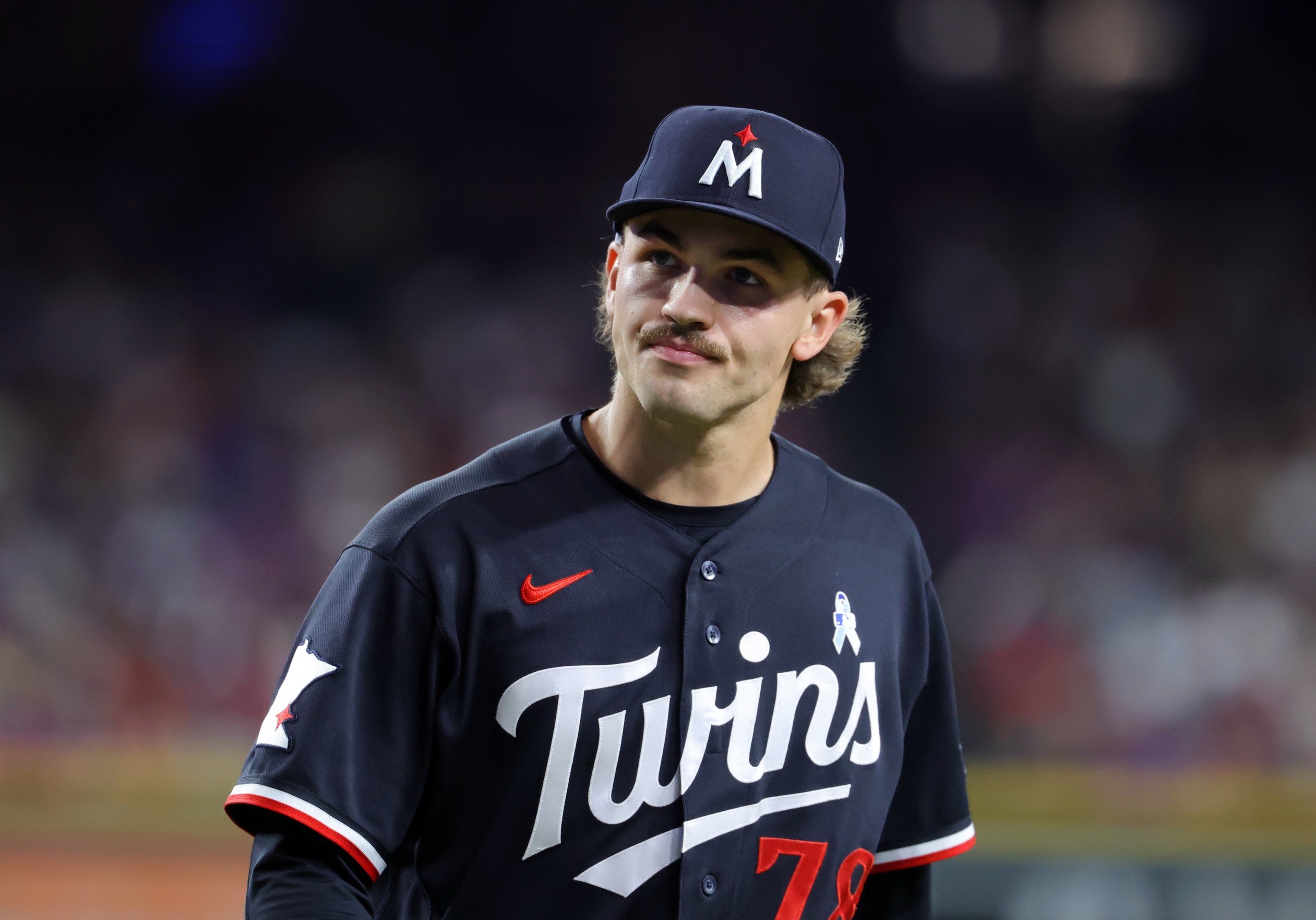 We knew coming into this year that the Minnesota Twins were going to have a bad bullpen. When you trade all of your best relievers and do little to replace them, that's inevitable. But it also seemed like there was a good chance this inevitably lackluster relief corps was not going to matter. The Twins lost 90 games last year and their Vegas over/under this year had them in the same vicinity. If the team was going to be flat-out bad, then there wouldn't be many leads to protect, no postseason race in the balance. Alas, here we are. As we head into July, the Twins are firmly on the radar of contention, four games below .500 but within spitting distance of playoff position. Through 88 games, Minnesota's offense has outscored every other American League team. Their rotation, if Bailey Ober can return at the level of a decent back-end starter, is solid one through five with a legitimate ace at the top. That is, theoretically, the makeup of a club that should be fancying itself a contender in one of the weakest AL competitive landscapes we can remember. But, that bullpen, whew. We knew it would be bad but it's been worse than bad, with the highest ERA in the majors at 5.43 and an egregious 6.94 mark in June. In some ways, the impact of this this run-hemorrhaging relief corps has been muted, because a lot of their ugliest moments have come in lopsided games that were already more or less decided. That's why the Twins look relatively better by Win Probability Added, ranking 23rd in the majors versus dead last. But this unit is direly short on dependable options, and there's little doubt it will torpedo any chance of a legit second-half push as currently comprised — especially with the offense likely to come back to earth. The loss of Anthony Banda, who'd shaken off a slow start to post a 2.45 ERA in his past 30 appearances, is a devastating blow. Is there anything they can do? The trade deadline will represent an opportunity for modest additions and upgrades (I'm not expecting much more), but the Twins also need to sort out what they have and optimize internally for the final three months. Here's a look at their current relief corps and how they might proceed, in order of confidence level to play a valuable role. Yoendrys Gómez He looks like a true find amid a sea of waiver claim flops. Certainly I'm not expecting him to keep up at his current level — the 3.4% HR/FB rate is a glaring regression red flag — but he's got a quality arsenal and he's thrived after being thrust into a high-leverage role. In an ideal scenario he's probably pitching in the seventh rather than closing, but he's a viable late-inning arm. That's one at least. Andrew Morris The most promising success story in Minnesota's bullpen so far. In contrast to Gómez, Morris' surface numbers actually understate how well he's pitched: his 2.79 FIP and 2.97 xERA are well below the 3.89 ERA, and his Statcast sliders are blazing red. This looks like the prototype scenario for transitioning a marginal starter to a standout reliever, and the Twins will have to make it happen several more times. Eric Orze Big drop-off from the top two to number three on this list. Orze, like Morris, has underperformed his peripherals (3.18 FIP and 3.97 xERA vs. 5.08 ERA) but I'm less convinced there is a credible back-end relief arm here. His K-rate is under 20%, his control has been poor and to the extent his numbers are adequate, it's in large part because he's allowed only one home run in 39 innings. That's not sustainable. Nevertheless, the 28-year-old worth keeping around as a lower-leverage option. Taylor Rogers I'm torn on Rogers. At times he has looked completely cooked, including last Tuesday when he got clobbered by the Dodgers for five earned runs in one inning. But he's sort of a microcosm of the Twins bullpen at large: very bad overall, less so situationally. Many of his worst outings have come in situations like the Dodgers game, where the Twins were already down 7-2 when he entered. His experience and left-handedness are worth keeping in the mix with Banda down, but again, you'd much prefer if he was your third lefty relief option versus your first. Travis Adams Another guy I'm a bit torn on. Adams throws reasonably hard and his 29.9% K-rate outranks all Twins pitchers (including Joe Ryan) dating back to last year's trade deadline. At the same time, his fastball is crushable as a Coors Light, and he's got a 7.23 ERA and 5.22 FIP in 55 MLB innings. Adams had a mediocre 4.50 career ERA in the minors. He's the kind of guy who you'd be interested in seeing more of in a non-competitive season but a clear liability if the Twins are trying to consistently win. Marco Raya Called up last week, he's only made two relief appearances for the Twins but Raya has avoided melting into a puddle, and that's an accomplishment for a 23-year-old with a history of yips, getting his first taste of the majors. Raya has solid long-term potential but is a shaky bet to produce at an above-average level or deliver in key situations right now. Another guy best suited for taking lumps in a lost season versus pitching meaningful innings down the stretch. Kody Funderburk He can't throw strikes. Seventeen walks versus 11 strikeouts in 20 innings this year. Yuck. He's gotten decent enough results when in the strike zone, so Funderburk is maybe not worth giving up on, but you can't count on him under any circumstances at this point. We've reached the tier of the bullpen where the Twins have absolutely got to upgrade if they want to be any kind of threat. Cody Laweryson I've got nothing against Laweryson but I also haven't been given any real reason to believe. His velocity is lowest of any bullpen righty. He lacks a legit secondary pitch. Laweryson looks like a minor-leaguer pitching in the majors, which I guess is what should be expected from someone who made his MLB debut at 28, out of sheer need last September, and got designated for assignment by two bad teams during the offseason, passing through waivers the second time. There's your Twins bullpen. There are two remotely dependable options for late innings or high leverage, and even they carry a certain degree of blow-up potential. It's not impossible that Orze and Rogers could round into respectable form, but the bottom half of the relief corps needs major improvement if this team is going to make a push. Here are the possible reinforcements from within worth tracking: Kendry Rojas: Easily the most intriguing figure on the farm. He's shown electric stuff in six appearances for the Twins, even while struggling to command the zone. There's no bigger wild-card in the system with regards to the rest of this season, but the Twins have to decide how they want to proceed with the lefty. Can they afford to not have him stretched out when he's their only remaining line of defense in the rotation? Cole Sands: He experienced a setback with his forearm two weeks ago, stalling his rehab, but threw an encouraging bullpen session on June 27th, and could return this month. Aside from Rojas, Sands is likely the best hope for a difference-making internal add. David Festa: Higher potential impact than Sands but much lower odds of returning for a substantial portion of the second half. Dealing with a persistently balky right shoulder, Festa was still multiple weeks from facing live hitters at last check. He hasn't pitched in almost a full year. Mike Paredes: With Ober on track to rejoin the rotation, shifting Paredes into a relief role would be an option. He's performed admirably as a rotation plug, albeit with ugly underlying numbers. I'm not sure he's got the stuff to be anything more than a Laweryson-caliber piece out of the bullpen. C.J. Culpepper: A sleeper in Triple-A. He's got relatively high-caliber stuff with a 3.20 career ERA in the minors and a track record of keeping the ball in the park. But he has made only seven appearances above Double-A and strike-throwing can be an issue. Probably more of an interesting candidate for 2027 than this year. John Klein: The Twins liked him enough to protect him on the 40-man last offseason, but haven't shown much inclination to deploy him in their MLB bullpen this year. He's made three appearances for the Twins, two of them as an opener. In Triple-A he has allowed 13 home runs in 45 innings. Like Culpepper, he's being treated as more of a future-looking option. The Twins are thin on upside in their current bullpen and there's not a whole lot more looming in the minors, although Rojas is a notable exception and Sands has the capability to move the needle if he comes back healthy. What becomes clear through this exercise is that they need outside help if they're going to support a contention effort versus sabotaging it. And it brings us to the defining question of this season, which the next several weeks may sort out: Is this a team worth investing in, at its core? There are major implications in trading away from the future value pool, even as light buyers, rather than adding to it as sellers. You don't want to end up severely regretting your decision by mid-August. If they're leaning in the "buy" direction, the front office would be wise to try and act sooner than later, because they are going to have a hard time staying in the range of competitiveness with this current assortment of relief arms. View the full article
 -
 Abraham Toro and Luca Tresh homered to lift the Omaha Storm Chasers past Indianapolis, 4-2, behind three scoreless innings from Oscar Rayo and a three-strikeout save from Eli Morgan. Hunter Owen struck out nine over five scoreless innings, but Northwest Arkansas fell 5-3. Quad Cities dropped a 9-7 slugfest despite Luke Pelzer's home run. Shane Van Dam steadied Columbia's staff, and Coleman Picard closed out a 7-4 comeback win. Royals Transactions No Roster Moves Toro And Tresh Homers Carry Omaha Past Indianapolis The Omaha Storm Chasers scored three times in the fourth inning to pull away from the visiting Indianapolis Indians in a 4-2 win. Toro led the offense, going 2 for 4 with a solo home run that tied the game in the first, and Tresh added a two-run homer that provided the decisive margin. Brett Squires singled and drove in a run, Matthew Lugo and Kevin Newman each doubled, and Elih Marrero chipped in with a triple. Omaha broke the game open in the fourth. Squires singled to center to bring home Lugo, and two batters later Tresh drove a fly ball to left field for a two-run homer that scored Squires and pushed the lead to 4-1. Starter Ethan Bosacker turned in a steady outing across four innings, allowing one run on two hits with one walk and two strikeouts, with the only damage a solo home run in the first. Rayo followed with three scoreless innings, walking two and striking out two to earn the win. Ben Sears worked a scoreless inning, and Morgan closed it out, striking out three in the ninth while surrendering a solo home run in the save. The four Omaha arms combined for eight strikeouts. The Storm Chasers stranded two baserunners and went 2-for-5 with runners in scoring position. They improved their record to 37-45 after the victory. Player AB R H RBI BB K Peyton Wilson 3 0 0 0 1 0 Abraham Toro 4 1 2 1 0 0 Matthew Lugo 4 1 1 0 0 1 Drew Waters 3 0 0 0 0 0 Brett Squires 3 1 1 1 0 0 Luca Tresh 3 1 1 2 0 1 Gavin Cross 3 0 0 0 0 0 Elih Marrero 3 0 1 0 0 1 Kevin Newman 3 0 1 0 0 0 Player IP H R ER BB K HR Ethan Bosacker 4 2 1 1 1 2 1 Oscar Rayo 3 0 0 0 2 2 0 Ben Sears 1 1 0 0 0 1 0 Eli Morgan 1 1 1 1 0 3 1 Northwest Arkansas Wastes Owen Gem In Eighth-Inning Collapse The Northwest Arkansas Naturals carried a three-run lead into the eighth inning before the Corpus Christi Hooks rallied for a 5-3 win. Owen was outstanding on the mound, working five scoreless innings and allowing just one hit while walking three and striking out nine. Leadoff man Carson Roccaforte, the No. 8 prospect at Royals Keep, and Jack Pineda each finished with two hits, Sam Kulasingam added two hits, a walk, and an RBI, and Connor Scott provided a solo home run. The Naturals jumped ahead in the first. Roccaforte and Pineda reached to open the frame, and Kulasingam lined a single to left to score Roccaforte. Spencer Nivens followed with a single to center that brought home Pineda for a 2-0 lead. Scott extended the advantage in the fourth, driving a fly ball to right field for a solo home run. The Naturals' early lead did not hold, unfortunately. Corpus Christi batted around against the bullpen in the eighth, using a leadoff double, a run-scoring single, a walk, an RBI double, and a sacrifice fly to plate four runs and take a 4-3 lead. Augusto Mendieta was charged with three of those runs and took the loss. The Hooks added an insurance run in the ninth. Northwest Arkansas managed seven hits and stranded five, unable to answer late. They went 2-for-3 with runners in scoring position. The Naturals fell to 30-45 this season. Player AB R H RBI BB K Carson Roccaforte 4 1 1 0 0 0 Jack Pineda 4 1 2 0 0 0 Sam Kulasingam 3 0 2 1 1 1 Jorge Alfaro 4 0 0 0 0 4 Spencer Nivens 4 0 1 1 0 1 Daniel Vazquez 4 0 0 0 0 1 Connor Scott 4 1 1 1 0 1 Canyon Brown 4 0 0 0 0 2 Justin Johnson 2 0 0 0 1 0 Player IP H R ER BB K HR Hunter Owen 5 1 0 0 3 9 0 Brandon Johnson 1 0 0 0 0 0 0 Frank Mozzicato 1 1 1 1 2 2 0 Augusto Mendieta 1 2 3 3 1 2 0 Tommy Molsky 1 1 1 1 1 2 0 River Bandits' Late Lead Slips Away In 9-7 Loss The Quad Cities River Bandits out-hit the Cedar Rapids Kernels 13 to 8 but could not hold a late lead, falling 9-7. Pelzer led the way, going 3 for 4 with a double, a home run, and two RBI. Derlin Figueroa added a double and a home run, Blake Mitchell doubled twice, Jose Cerice doubled and scored twice, Tyriq Kemp tripled, and Angel Acosta collected two hits and two RBI in the loss. Trailing 4-2, Quad Cities surged ahead with a sensational four-run sixth inning. Pelzer and Figueroa hit back-to-back solo home runs to tie the game, Kemp followed with a triple to score Cerice, and Acosta singled home Kemp to make it 6-4. The River Bandits tacked on another run in the seventh when Pelzer singled to bring home Mitchell. Starter David Shields, the No. 2 prospect at Royals Keep, struck out seven over 4 2/3 innings but was charged with four runs on four hits and three walks, including a two-run home run. Unfortunately for the River Bandits, the bullpen could not protect the lead. Cedar Rapids tied the game in the seventh on a two-run homer, then pushed across two runs in the eighth and one in the ninth. Kamden Edge, our No. 19 prospect at Royals Keep, was tagged with the loss. Quad Cities left four on base and went 4-for-9 with runners in scoring position. They are now 33-40 this season. Player AB R H RBI BB K Nolan Sailors 5 0 0 0 0 3 Asbel Gonzalez 5 1 1 0 0 2 Blake Mitchell 4 1 2 0 0 1 Ramon Ramirez 3 0 0 0 1 2 Luke Pelzer 4 1 3 2 0 0 Derlin Figueroa 4 1 2 1 0 2 Jose Cerice 4 2 2 0 0 1 Tyriq Kemp 3 1 1 1 0 2 Angel Acosta 4 0 2 2 0 0 Player IP H R ER BB K HR David Shields 4 2/3 4 4 4 3 7 1 Nick Conte 1 1/3 0 0 0 0 2 0 Kamden Edge 1 1/3 2 4 4 2 3 1 Yimi Presinal 1 2/3 2 1 1 1 0 0 Columbia's Five-Run Third Powers Comeback Win The Columbia Fireflies erased an early three-run deficit with a five-run third inning and held on to beat the visiting Fredericksburg Nationals, 7-4. Henry Ramos drove in three runs on two hits, Roni Cabrera doubled twice and scored twice, and Sean Gamble reached base three times with a hit and two walks. Stone Russell and Hyungchan Um each added a hit and an RBI. Down 3-0, Columbia turned the game around in the third. Russell singled to score Cabrera, and Ramos followed with a single that plated one run before a fielding error allowed two more to come around. Um capped the rally with a run-scoring single, giving the Fireflies a 5-3 lead. Columbia added to it in the fourth when Ramos lined a two-run single, pushing the margin to 7-4. Starter Van Dam scattered six hits over 4 1/3 innings, allowing four runs, two walks, and a home run while striking out six. The bullpen slammed the door. Andy Basora struck out three across 1 2/3 scoreless innings to pick up the win, and Picard finished with three scoreless innings, yielding one hit and striking out four for the rare three-inning save. Columbia drew ten walks and left nine on base but did enough early to secure the victory. They also went 4-for-12 with runners in scoring position. The win brings the Fireflies back to over .500 at 39-38 for the year. Player AB R H RBI BB K Josh Hammond 4 0 0 0 1 0 Sean Gamble 3 2 1 0 2 0 Stone Russell 3 1 1 1 2 1 JC Vanek 2 1 0 0 3 1 Henry Ramos 4 1 2 3 0 0 Hyungchan Um 3 0 1 1 1 1 Angel Ramirez 3 0 0 0 1 0 Connor Rasmussen 4 0 0 0 0 2 Roni Cabrera 2 2 2 0 0 0 Josi Novas 2 0 0 0 0 1 Player IP H R ER BB K HR Shane Van Dam 4 1/3 6 4 4 2 6 1 Andy Basora 1 2/3 0 0 0 1 3 0 Coleman Picard 3 1 0 0 1 4 0 Top-20 Prospect Performance Kendry Chourio: DNP David Shields: 4 2/3 IP, 4 H, 4 R, 4 ER, 3 BB, 7 K, HR Josh Hammond: 0-for-4, BB Blake Mitchell: 2-for-4, 2 2B, K Sean Gamble: 1-for-3, 2 BB Ramon Ramirez: 0-for-3, BB, 2 K Drew Beam: DNP Carson Roccaforte: 1-for-4 Asbel Gonzalez: 1-for-5, 2 K Yandel Ricardo: DNP Michael Lombardi: DNP Ben Kudrna: DNP Justin Lamkin: DNP Felix Arronde: DNP Blake Wolters: DNP Steven Zobac: DNP Austin Charles: DNP Daniel Vazquez: 0-for-4, K Kamden Edge: 1 1/3 IP, 2 H, 4 R, 4 ER, 2 BB, 3 K, HR Warren Calcano: DNP View the full article
 -
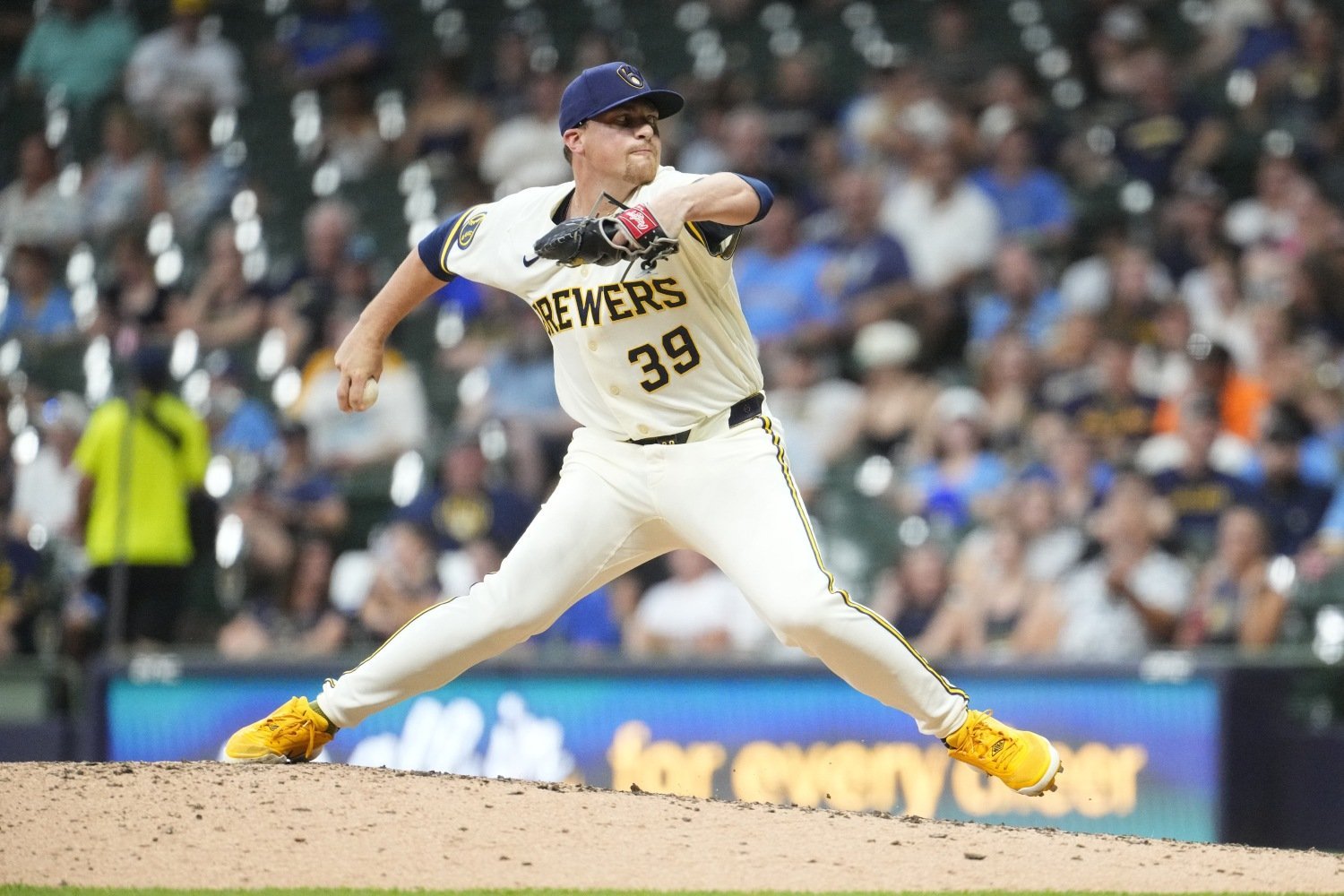 Nearly every pitcher will say that above all else, their objective on the mound is to compete. Each individual is wired differently, though. Some can maintain that competitive focus while thinking with precise detail about pitch sequencing and strategy. Some can diagnose and correct mechanical problems in the middle of the game. Others function best when they block out all of the noise and simply throw with conviction. Chad Patrick leans toward that approach. "As far as being on the mound, I try not to think about those things," Patrick said. "I think this game is based off of confidence, and it's a mental game. If I'm not out there thinking I'm good enough to be out there, then I shouldn't be out there." That mindset has shaped how Patrick's coaches present information to him and how they evaluate his performance. He needs space to do his thing. "Chad is a feel guy," pitching coach Chris Hook said in Cincinnati last week. "I think you could look into him every time, and he's a little bit different. I can't cage that. He flows. He wants to go." In a data-driven era of player development, pitching has become more of a science than ever. But in many ways, it's also still an art, and Patrick approaches it as such. Like a creator, his work is often driven by what he's feeling in that moment. That's why the brightest lights—the situations where the competitive juices flow the strongest—have often unleashed the best version of Patrick's stuff. "He's an artist," Hook said. "He's got a nice little paintbrush, but he's got to be in position to use it." Patrick's cutter has always been a unique pitch capable of special brushstrokes, and he should now have a better mastery of his canvas than he did early in the season. After a couple of tweaks since his move to the bullpen, his stuff is the best it's been all year. The Brewers want all of their pitchers to move quickly and repeatably. Patrick was doing neither early in the year as a starter, when he pitched out of the windup with the bases empty. As a reliever, Patrick has pitched exclusively out of the stretch, and he's moving more explosively, with a much quicker time to the plate. patrick mechanics.mp4 "He's ready to throw the baseball more often," Hook said. "I like him out of the stretch. I think it just takes the thinking out of it. I mean, we're seeing it all over baseball." "I think it does simplify a lot of different things, a lot of moving pieces," Patrick said. "Like, my windup's a little unconventional. It's a step forward, a rock back, my foot slides a little bit. So I kind of [have] to gather myself over the rubber better, whereas in the stretch I'm already in that position of being successful." By pitching in shorter stints and moving faster down the mound, Patrick has increased his velocity. His four-seamer and two-seamer averaged 94.2 MPH as a starter, but they've averaged 95.8 MPH since his last traditional start on May 4. Finding the best version of Patrick's cutter (or, more accurately, his two cutters) has been an ongoing process. He still manipulates it between a shorter version for back-door called strikes to left-handed hitters and a longer version to jam them or get swings and misses off the outside corner against righties. This spring, he temporarily switched to a four-seam cutter grip, and it often backed up, with slight arm-side movement rather than true cut. In late April, Patrick revived his normal cutter, a sweeper grip that has more velocity and carry than a breaking pitch due to how his long fingers spin the ball. That restored some of the glove-side movement, but the rest of it returned more consistently after a mechanical tweak. Patrick didn't just need space mentally. He literally needed more physical space between his head and his right hand in his delivery. "It's probably not a recommendation we talk about for guys, to say, 'Let's keep your head away from your hand,'" said pitching coordinator Jim Henderson. "He's just kind of a unique cat with that." Patrick throws his best cutters when his hand can drive through the pitch along the outside of the baseball and spin it on the proper axis. Creating space between his head and his hand lowers his arm slot slightly, putting him in the best position to execute his cutter. He was in that spot late last year, but this spring, his hand was getting stuck in that higher slot. Because he wasn't releasing the ball on time at foot strike (the moment a pitcher's front foot hits the ground), Patrick was yanking too many cutters and throwing them with too much backspin. "Sweeper guys have to kind of have some freedom," Henderson said. "He can't be tight with a curveball kind of arm angle or arm slot. You kind of have to have some freedom with it. When he gets [his arm] a little bit closer to his head on his cutter, we just notice that there's not as great movement." With the adjustment, Patrick's stride has become slightly more cross-fire toward home plate, and his arm angle has kept dropping. His slot is now comparable to last September, when he began a dominant stretch of relief pitching that extended into the postseason. To confirm that Patrick is working through the ball properly, the Brewers monitor his horizontal release point. When he throws his cutter, Hook wants to see him release the ball about 1.5 feet from the center of the rubber toward the third-base side. Since May 22, Patrick's average cutter release point is -1.4 feet. Before that, it was -1.2 feet. "I think his release side got a little close to his head early on, and as part of it, there just was no hip-shoulder separation at all," Hook said. "It was just like he was a one-piece mover, and when you're one-piece, and you're kind of stuck, and you're close to your head, he just couldn't get his hand through the ball the way he wanted." Since May 22, most of Patrick's cutters have had true glove-side movement. The lower arm slot and synced-up mechanics have also turned his two-seamer into more of a true sinker, with less carry and more depth. "Two-seams, you have to drive through this ball," Henderson said. "If you leak front side early, or you lose your lower half, you're not gonna be able to hold onto this. You'll just be on the side of the ball, and it would be more [running, not sinking]. So just to be able to get a little bit more on top of the baseball and making sure the front side is strong is going to give you a better sinker, in my opinion." Better velocity and better movement sound nice on paper, but Patrick has found himself weathering storms throughout the last three weeks. Since June 10, he's pitched to a 9.95 ERA, 7.07 xERA, and 7.45 FIP. Free bases and home runs have been the problems, as Patrick has issued six walks and allowed five home runs while facing 60 batters during that time. Patrick's stuff has continued to play well against right-handers. Most of the damage has come against lefties, who have pulverized his cutter. He must jam them with the pitch for it to miss barrels, and he's left more of them down the middle lately. In his manager's eyes, the tone of Patrick's art changed. "He's a great competitor, but he's also very critical of himself, and he's very emotional," Pat Murphy said. "He's very anxiety-ridden, and things easily bother him. We got to get him over that." Patrick may have turned a corner this week, logging scoreless multi-inning outings with no walks on consecutive nights. He felt he was moving too fast in some of his recent appearances and said he found a way to move quickly while still being in control of his body. That's not something he wants to think about on the mound, though. "It's not really physical," Patrick said. "It comes down to competing." As their bullpen searches for consistency behind Trevor Megill, Abner Uribe, and Aaron Ashby, the Brewers need big innings from Patrick. He's been closer to figuring things out than it seemed for most of June. The artist just needs space to work. "I still consider him a young major leaguer," Hook said. "He's still figuring out what he needs to do. He's such a feel guy, so we're kind of always balancing all of those things." View the full article
 -
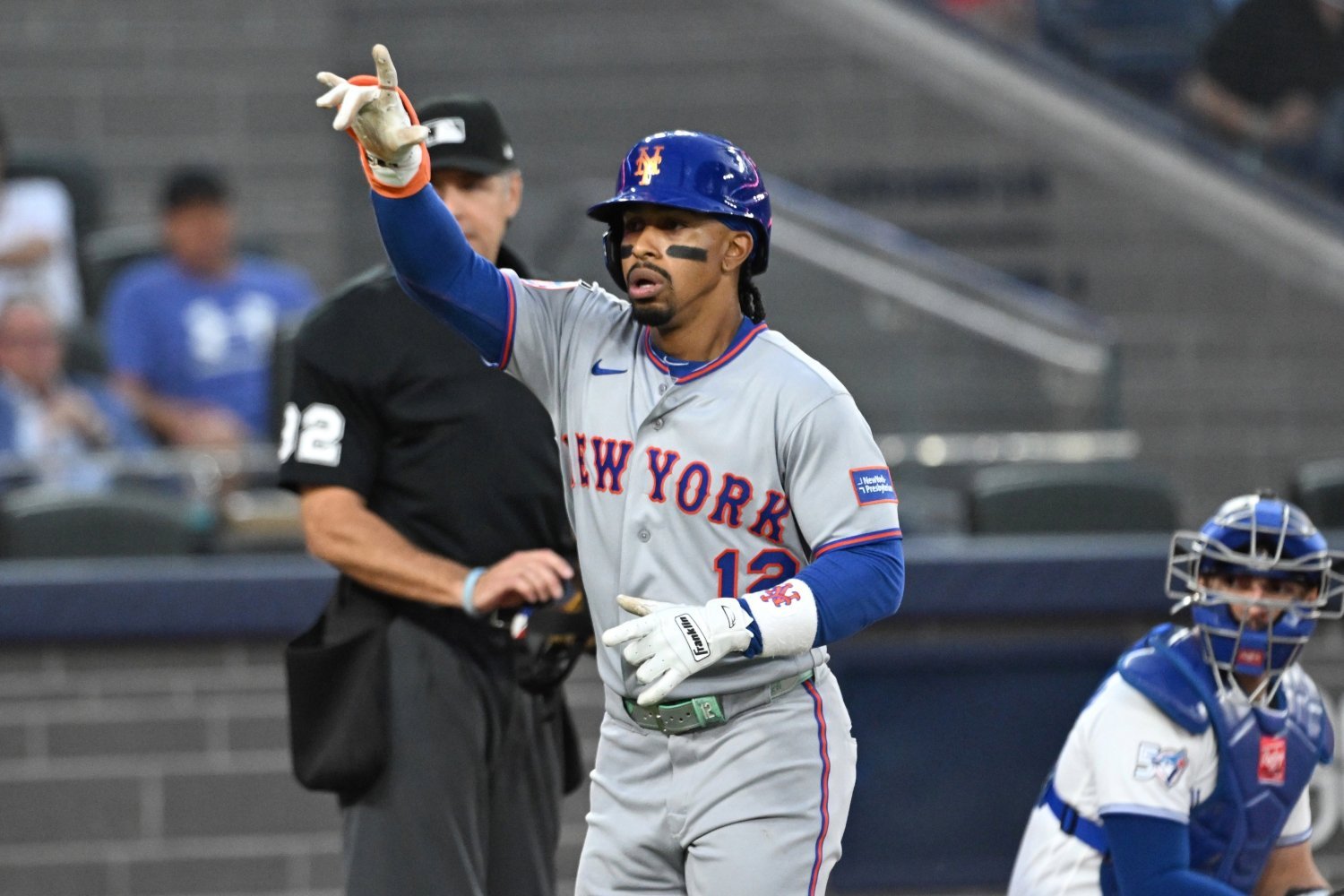 Francisco Lindor finally returned to the New York Mets' lineup last Wednesday. The biggest question, though, isn't whether he'll find his rhythm again after the injury. That question existed before he went on the injured list. The real one, at least for us sickos who still have a glimmer of hope with this team, is this: Can he punish four-seam fastballs the way he did in 2024? When Lindor went down, he was still a productive hitter. He was getting on base, controlling the strike zone and providing offensive value. What had changed was how he created that production. The quality of contact that drove the best offensive season of his career had already started to slip. In 2024, Lindor hit the ball with a level of authority he had never before sustained over a full season. His 13.6% barrel rate was the highest of his career, while his .539 expected slugging percentage (xSLG) reflected a hitter who turned quality contact into extra-base damage. That offensive profile looks very different today. Season Barrel % xSLG 2024 13.6% .539 2025 8.9% .454 2026 8.1% .427 The drop in barrels doesn't make Lindor a bad hitter. More importantly, it doesn't point to an obvious physical decline. His average exit velocity remains among the best of his career. His hard-hit rate is still above the major-league average. Before the injury, he was walking more often than he did in 2025 while keeping his strikeout rate below the MLB average. If the bat speed is still there and the plate discipline hasn't disappeared, the answer has to be somewhere else. Everything points to the pitch he sees more than any other. Four-seam fastballs account for nearly 40% of every pitch Lindor faces. No other pitch has a greater impact on his offensive production. That's where the biggest change appears. Pitch Type BA 2024-25 BA 2026 SLG 2024-25 SLG 2026 Four-Seam Fastball .263 .209 .527 .465 The sample remains small—just 122 plate appearances before the injury—but the decline is already apparent. The interesting part is that Lindor doesn't appear to be losing the battle against velocity. His whiff rate against four-seamers has barely changed. In other words, the problem isn't catching up to the pitch, but rather what happens after he does. The next clue comes from his production across the strike zone. Lindor's wOBA in 2025 Lindor's wOBA in 2026 The problem is concentrated in one area. Pitches at the top of the strike zone have become the spot where opposing pitchers are doing the best job of limiting Lindor's quality of contact. Roughly 28% of the pitches he sees in the strike zone are located there, and he is no longer driving them with the same authority he showed just two seasons ago. That trend was already in place before the injury, and it explains far more about Lindor's season than any tiny sample since his return. The injury was never the turning point in this story. It only put it on pause. Now that Lindor is back, the question remains the same as it was before his absence: Can he regain the command of the four-seam fastball that defined the best offensive season of his career? View the full article
 -
Red Sox Can Take Solace In One Simple Fact: They Aren't the Mets
DiamondCentric posted an article in Talk Sox
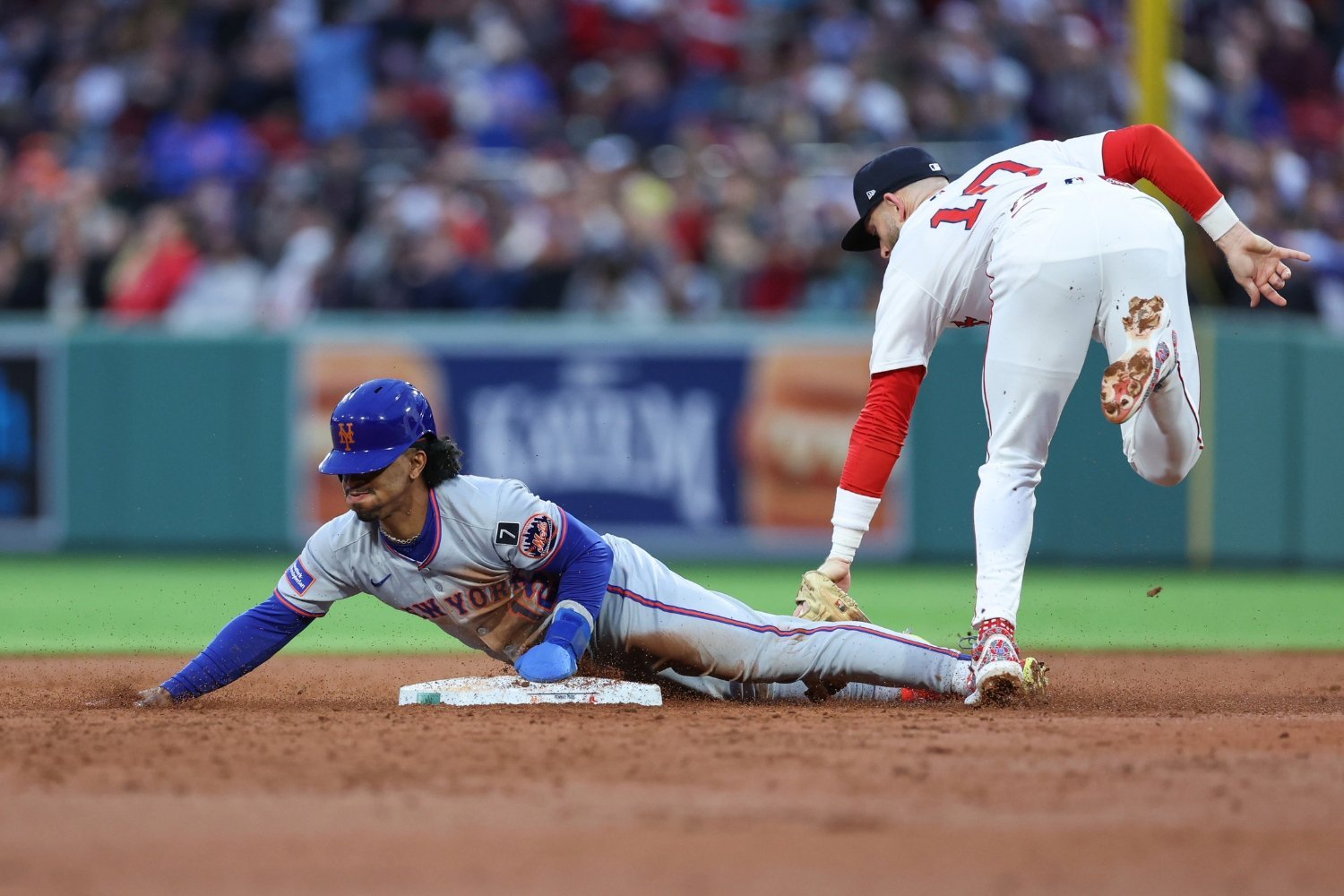 If you were to tell most baseball fans back in March that the Boston Red Sox and New York Mets were in a very similar situation as the season heads into July, the majority of them would have assumed that both teams were competing for the top Wild Card spot at worst in their respective leagues. Instead, we have two bottom-of-the-barrel teams who have fired their managers and have a fanbase calling for the dismissal of their General Managers/President of Baseball Operations. Alex Cora was fired on April 26 and exactly two short months later, the Mets followed suit and dismissed Carlos Mendoza. While the Red Sox and Mets are in very similar places — the former enters July with a 36-46 overall record and the latter owns a 35-49 overall record — the biggest difference is how they approached roster construction heading into the 2026 season and the money they have tied up in veteran players. Obviously, roster construction doesn’t sit at the feet of either Alex Cora or Carlos Mendoza, so now that the managers are gone, fans have turned their ire at the front office. Craig Breslow has built a pitching powerhouse in Boston that has been backed up by capable defense around the infield thanks to additions of Willson Contreras and Caleb Durbin. David Stearns also preached “run prevention” as he looked to construct the 2026 Mets, but things haven’t gone well for them in that department. According to FanGraphs, the Mets currently have a 2026 projected payroll of $365 million. Superstar Juan Soto is under contract through 2039 for an average annual value of $51 million a season, Francisco Lindor is signed through 2031 for an AAV of $31.9 million, and recently acquired Marcus Semien through 2028 at an AAV of $24 million. In addition to that, they have Bo Bichette under contract for an AAV of $42 million. He’s not included in the main grouping because he technically can opt out of his three-year contract after this season, but with the way he’s currently playing, that’s far from a guarantee. The Mets have six arbitration-eligible players and seven who are not yet eligible for arbitration. If we look at those same style of numbers for the Red Sox, it paints a drastically different picture. The Red Sox have an estimated 2026 payroll of $197 million according to Fangraphs. Their four highest AAVs are owed to Garrett Crochet ($28.3 million per season through 2031), Ranger Suarez ($26 million per season through 2030 with a mutual option for 2031), Trevor Story ($23.3 million per season through 2027 with a club option for 2028), and Willson Contreras ($21.25 million per season through 2027 with a club option for 2028). They also have Sonny Gray still currently on the books at technically $41 million AAV for 2026 with a mutual option for 2027, but the Cardinals paid $21 million of his salary in the trade that sent him to Boston. The other long-term commitments the Red Sox have are for Roman Anthony through 2033 with a club option for 2034, Kristian Campbell through 2032 with club options for both 2033 and 2034, and Ceddanne Rafaela through 2031 with a club option for 2032, The Red Sox have seven arbitration-eligible players and nine players who are not yet eligible for arbitration. While Craig Breslow has made some missteps in his time with the Red Sox, and could very well be on his way out of town at the conclusion of the season, he’s handed out contract extensions to young players that should mostly impact the future of the organization in a positive way. The biggest potential exception to that could be Brayan Bello’s contract that keeps him in Boston through 2029 with a club option for 2030. The biggest negative on that contract is that his salary grows exceptionally starting in 2028, doubling his 2027 paycheck. Otherwise, Breslow has developed the best pitching pipeline the Red Sox have seen in ages. Both rookies Payton Tolle and Connelly Early have had breakout seasons in 2026 while Jake Bennett has pitched well for both the WooSox and the Red Sox when needed. The biggest knock against the chief baseball officer is that he hasn’t been able to navigate the infamous outfield logjam, though that's a dead horse we won't beat right now. Most importantly, Red Sox fans are demanding and expect playoff berths year in and year out. Breslow has delivered one trip to the Wild Card round during his tenure and that may not be enough for Fenway Sports Group to justify hanging onto him for the remainder of his contract. Returning to Stearns, he has handed out some incredibly large contracts that haven’t aged incredibly well or have potential to hamstring the franchise in just a few seasons. They have substantial money coming off the books from now through 2029 but their treatment of All-Star Pete Alonso likely won’t be forgotten by the other homegrown players still on their roster and the free agents in the coming years. We’ve talked this much about the Mets and their issues and haven’t even begun to address their pitching woes. Both Kodai Senga and Devin Williams look like money thrown down the drain, and their highly touted group of young pitching prospects, outside of Nolan McLean, have taken significant steps back this season. The biggest question of all, though, knowing that we're barreling toward what will likely be an extended lockout come Dec. 1: Do either FSG or Steve Cohen feel that navigating a totally different economic landscape with someone new at the helm is worth the risk? They are the only ones that can truly answer that question, but the landscape of baseball will be completely different once we get back into action in 2027. Going with the known over the unknown is likely the safest move when evaluating your front office needs for the next season. That could mean that both Stearns and Breslow remain in place for at least an additional year. While both organizations have big messes to clean up, at least Breslow is working with a much cleaner slate than his New York counterpart. View the full article
 -
Toronto Blue Jays Minor League Hitters of the Month - June 2026
DiamondCentric posted an article in Jays Centre
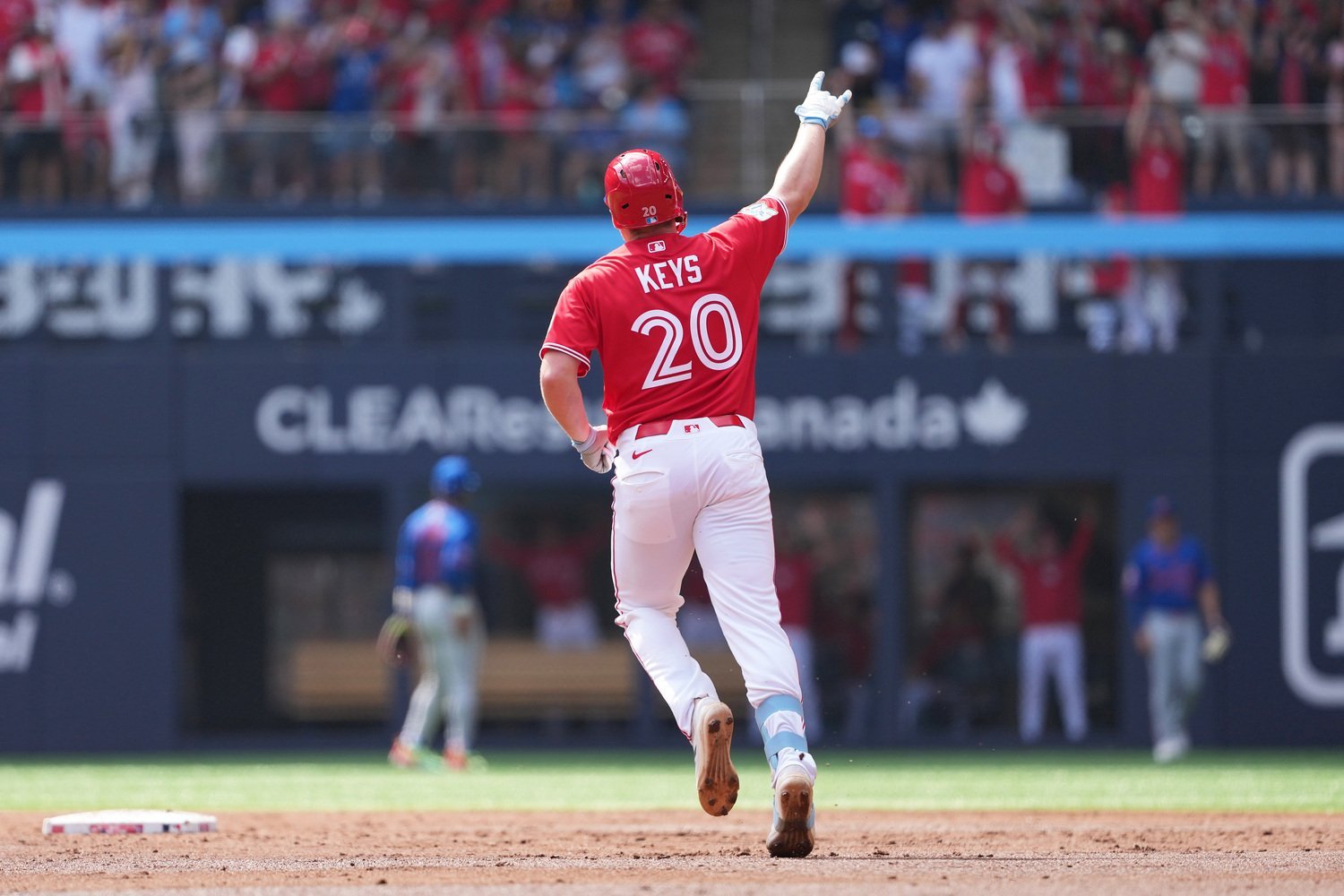 The summer months have now arrived, and so have some of these Blue Jays prospects. Although the power numbers might be slightly inflated by potential reduced drag on the baseballs, these players have taken big advantage of that and broken out. Honourable Mentions Sam Shaw - Dunedin, Vancouver - 18 G, .211/.438/.474, 152 wRC+, 28.7 BB%, 17.5 K%, 12 H, 1 2B, 1 3B, 4 HR Shaw was put on the injured list near the end of last season due to some circulation issues, and that persisted into the beginning of the season. Shaw returned on a rehab assignment in Dunedin, then hit the ground running as he was promoted to Vancouver. His production has come from mostly his near-30% walk rate rather than strong power production or a high batting average, but it’s very nice to see him return with such discipline. Eric Snow - Dunedin, Vancouver - 20 G, .338/.409/.538, 151 wRC+, 11.8 BB%, 9.7 K%, 27 H, 4 2B, 4 HR Snow wasn’t known as much for the bat after getting drafted out of Auburn, with his glove being his main selling point. He made a lot of noise with his bat in June, however, as the infielder earned a promotion to Vancouver and started hitting even more than in the lower levels of the Florida State League, reducing his strikeout rate to just 6.1% and hitting for more power. 4. JoJo Parker - Dunedin 21 G, .297/.430/.662, 174 wRC+, 19.4 BB%, 20.4 BB%, 22 H, 5 2B, 2 3B, 6 HR Toronto’s 2025 first-round pick’s results didn’t match his peripherals in the first couple of months of the season, but the bat has come around with a lot of authority. JoJo Parker hit six homers in June while maintaining his excellent chase and walk rates, leading to an incredible month. He’ll be knocking on the door to Vancouver sooner than later if he continues to keep this performance up. He was making a lot of contact on pitches he swung at, and when he did, he was able to barrel the ball or pull it in the air. Parker was just named as a representative for the Blue Jays in the Futures Game as well. 3. Jay Harry - New Hampshire, Buffalo 24 G, .354/.407/.626, 167 wRC+, 6.5 BB%, 18.5 K%, 24 H, 10 2B, 1 3B, 5 HR I already spoke about Jay Harry in a recent article I wrote, but the utility man has been one of the biggest surprises in the Jays’ farm system. From a non-prospect to knocking on the door to the majors with some of the hottest hitting that I’ve seen, it’s been an incredible story for the young man. He’ll need to reduce his chase tendencies, but his aggressive approach has worked for him in the past month. 2. Tucker Toman - Vancouver 21 G, .338/.457/.716, 204 wRC+, 13.0 BB%, 22.8 K%, 204 wRC+, 25 H, 7 2B, 7 HR Tucker Toman was the second subject of the article I wrote alongside Harry, but the 2022 second-round compensation pick mashed in the month of June, with seven homers, seven doubles, and a solid BB-to-K ratio. After dropping switch-hitting, Toman may actually be an impactful player with the bat, and with his increasing defensive versatility, he now has a pathway to success for the future. Really nice to see a once-struggling prospect become one of the hottest in the system. 1. Sean Keys - New Hampshire, Buffalo 21 G, .301/.427/.781, 199 wRC+, 14.6 BB%, 21.3 K%, 22 H, 6 2B, 1 3B, 9 HR Sean Keys’ numbers weren’t spectacular in 2025, although he set a Vancouver Canadians record with 19 homers in a season, but his underlying metrics were a lot better than his results. He was chosen as a breakout pick by many pundits, and that proved to be prescient, as the Bucknell University alum has not only surpassed the homer total he set last season, but he’s earned a promotion to the major leagues. Keys could just not stop homering. With an organization-leading nine homers on the month, he slugged just over .780, with the hard-hit numbers and exit velocities to match. It has come with a slightly increased chase rate, but if he’s continuing to mash like this, it’s a great trade-off for Keys to make. Hopefully, he can inject some power into the major league lineup. View the full article
 -
 Transactions: - RHP Carlos Rodriguez sent on rehab assignment to ACL Brewers - RHP Wenderlyn King activated from ACL Brewers’ 60-day injured list - INF Moises Polanco activated from ACL Brewers’ 7-day injured list Nashville pre-game media notes Jacksonville (Marlins) 1, Nashville 0 Box Score & Game Log Hot Chickens Blanked in Loss to Jacksonville - Yoho Extends Streak to 20.2 Innings Pitched Without Allowing an Earned Run Nashville looked more like Cold Chickens tonight, mustering only five singles in the game and suffering their first home shutout of the season. Luis Lara went 1-4 and stole his 22nd base of the season. Easton McGee and a host of Brewers relievers kept Jacksonville off the board after the one run starter Gerson Garabito gave up over the first three innings. Tyson Hardin will start tomorrow’s final game as the Hot Chickens. Completion of Wednesday's Suspended Game: Chattanooga (Reds) 14, Biloxi 9 Box Score & Game Log Regularly Scheduled Game: Biloxi 6, Chattanooga 5, seven innings as scheduled Box Score & Game Log New Shuckers Dazzle in Double Header Split - Adamczewski, Fischer, Ragsdale Show Out in Twin Bill with Lookouts Ben brought you the majority of the Game 1 highlights in yesterday’s Minor League Report Biloxi entered the postponement one run down, but the wheels came off quickly when the game was restarted today. On the bright side, Josh Adamczewski joined his recently promoted teammates in the home run party with a two-run shot in the bottom of the 8th! Jesus Made finished 4-5 with a double. VIDEO: Jesus Made's four-hit game *** Biloxi won the seven-inning Game 2 affair, spreading out seven hits amongst seven different batters. Adamczewski stayed sharp going 1-2 with a two-RBI double and a walk. Ragsdale extended his Double-A hitting streak to a perfect two with a 1-1, two walk batting line. Cameron Wagoner earned his fifth save of the season pitching a clean seventh inning with two strikeouts. VIDEO Package via WLOX: Highlights Jaron DeBerry gets the start for Biloxi tomorrow. Wisconsin pre-game media notes Wisconsin 7, Peoria (Cardinals) 3 Box Score & Game Log Dorchies Cools Chiefs as Wisconsin Offense Stays Hot - Rattlers off to best start in a half in team history Three video highlights within the game summary New Timber Rattler catcher Yannic Walther had a debut! Walther homered in his first Wisconsin at-bat, finishing 2-3 with 2 runs, 2 RBI, 2 walks and threw 2 attempted base-stealers out! Daniel Dickenson hit a home run and double on a 2-4 night and Luis Castillo added a home run as well. The offense had 13 total hits and six walks, keeping the bases busy. Ethan Dorchies has his second consecutive nice outing. Dorchies was cruising through five innings before running into some trouble in the sixth but working his way out of it only allowing one run. Dorchies finished with seven strikeouts, and only gave up four hits, and one walk to earn the win. Daniel Corniel is scheduled to start for Wisconsin tomorrow. Wilson pre-game media notes Wilson 9, Kannapolis (White Sox) 6 Box Score & Game Log Wilson Runs Rampant Against Kannapolis - Prado Quiets Cannon Ballers Bats The Warbirds had nine hits in this game, and seven of them went for extra bases! Catcher Rylan Mills led the charge with a home run and double as part of a 3-3 night. Handelfry Encarnacion hit a home run and went 2-5. Brady Ebel was 0-1 at the plate but took four walks and stole two bases. Alexander Frias hit an opposite field double off the base of the wall in left to tack on the final run of the game for Wisconsin. Starter Enniel Cortez pitched three innings, racking up five strikeouts while allowing, two hits, one walk and one earned run. Jacob Morrison will get the start for Wilson tomorrow. ACL Guardians 5, ACL Brewers 0 Box Score & Game Log Brewers hitters managed 3 hits and zero walks in this game. The pitchers fared just slightly better, striking out four batters over six innings while also allowing four walks, with all five runs coming in the first and fifth innings. The official scorer did not record an error for the Brewers! Postponed, lightning: DSL Brewers Gold at DSL Red Sox Blue The three rookie teams play day games Thursday. Take in the full-season affiliates in the evening, as the big-league Brewers have their own matinee. Organizational Scoreboard including starting pitcher info, game times, MiLB TV links, and box scores Current Milwaukee Brewers Organization Batting Stats and Depth Current Milwaukee Brewers Organization Pitching Stats and Depth View the full article
 -
 Wednesday saw the four full-season San Diego Padres affiliates go 1-3, with the Triple-A El Paso Chihuahuas posting the only win, beating Sacramento 6-3, while the Double-A San Antonio Missions falling late to Amarillo 2-1, the High-A Fort Wayne TinCaps losing to Great Lakes 8-7 and the Low-A Lake Elsinore Storm stumbling 11-6. Padres Minor-League Transactions El Paso Chihuahuas placed RHP Logan Gillaspie on the 7-day injured list. San Antonio Missions activated C Brendan Durfee from the Development List. Luis Rengifo Homers In Debut, Matt Waldron Solid As Chihuahuas Win Luis Rengifo homered and had two hits in his Padres organization debut, while rehabbing Padres right-hander Matt Waldron and Blake Hunt homered as the host Triple-A El Paso Chihuahuas beat the Sacramento River Cats 6-3. Padres catcher Luis Campusano, coming back from a broken right big toe, did not play after making his first rehab appearance Tuesday. Bryce Johnson also had two hits and scored twice for the Chihuahuas, who scored three times in the fifth inning to snap a tie. Rengifo, who was released by the Milwaukee Brewers after a .205/.280/.254 slash line with no homers in 57 games, hit a two-run homer in that fifth inning to make it 6-3. Nick Solak had doubled in Johnson to break the tie. Hunt's homer was a two-run shot in the second inning, his third this year. Waldron, on the mend from a right brachialis muscle injury, went four innings and gave up eight hits, but only allowed one run with no walks and one strikeout. He threw 60 pitches, including 42 strikes in his fourth rehab appearance. This was his longest outing since going on the 15-day injured list. Right-handed reliever Trison McKenzie then gave up two runs on a hit and three walks while getting just one out in the fifth. Right-hander Michael Flynn struck out three in 1⅔ shutout innings, right-hander Ethan Routzahn went a perfect 1⅔ innings with one strikeout and right-hander Alek Jacob went 1⅓ for his fifth save this year. EP_0701.mp4 Player AB R H RBI BB K Bryce Johnson 2 2 2 0 2 0 Mason McCoy 2 0 0 0 1 1 Nick Solak 4 1 1 1 0 1 Marcos Castañon 4 0 1 1 0 1 Luis Rengifo 3 1 2 2 1 0 Nick Pratto 4 1 0 0 0 0 Blake Hunt 4 1 1 2 0 1 Nick Schnell 3 0 0 0 1 0 Nate Mondou 3 0 0 0 0 1 Carlos Rodríguez 0 0 0 0 0 0 Player IP H R ER BB K HR Matt Waldron 4 8 1 1 0 1 0 Triston McKenzie 1/3 1 2 2 3 1 0 Michael Flynn 1 2/3 1 0 0 1 3 0 Ethan Routzahn 1 2/3 0 0 0 0 1 0 Alek Jacob 1 1/3 1 0 0 0 1 0 Missions Lose Heartbreaker, Give Up Pair In 9th Right-handed starter Ian Koenig turned in five shutout innings, but right-handed reliever Tucker Musgrove gave up a pair of runs in the top of the ninth as the host Double-A San Antonio Missions dropped a 2-1 decision to the Amarillo Sod Poodles. Koenig allowed four hits and two walks while striking out five in his five innings. He has gone five in six of his last eight starts. Right-handers Josh Mallitz, Garrett Hawkins and Clay Edmondson spun scoreless innings to set up Musgrove for the save in the ninth. But Musgrove, Padres Mission's No. 12 prospect, walked the leadoff hitter, threw two wild pitches and walked the next batter before a popup single by a pinch-hitter scored the tying run. A bunt moved runners to second and third before Musgrove was removed in favor of left-hander Harry Gustin. The first batter Gustin faced hit an RBI grounder for the go-ahead run. The 24-year-old Musgrove was making his third appearance for the Missions since being promoted from High-A Fort Wayne. The Missions' run came in the second as Braedon Karpathios, Padres Mission's No. 9 prospect, hit the first pitch of the inning for his third triple of the season, then scored one out later on Albert Fabian's sacrifice fly to center. In the ninth, the Missions went down 1-2-3. SA_0701.mp4 Player AB R H RBI BB K Carson Tucker 4 0 1 0 0 2 Kai Roberts 3 0 0 0 0 2 Tirso Ornelas 4 0 1 0 0 0 Jake Cunningham 4 0 1 0 0 3 Braedon Karpathios 4 1 1 0 0 2 Francisco Acuna 3 0 1 0 0 0 Albert Fabian 2 0 0 1 0 0 Luis Verdugo 3 0 0 0 0 1 Brendan Durfee 3 0 1 0 0 0 Player IP H R ER BB K HR Ian Koenig 5 4 0 0 2 5 0 Josh Mallitz 1 1 0 0 1 0 0 Garrett Hawkins 1 0 0 0 0 1 0 Clay Edmondson 1 0 0 0 1 2 0 Tucker Musgrove 1/3 1 2 2 2 0 0 Harry Gustin 2/3 0 0 0 1 1 0 Kavares Tears Homers Twice, But TinCaps Dropped By Loons Watch out because Kavares Tears is heating up. The slugging outfielder had his second career multihomer game of his young career, belting a pair of two-run shots, but the host High-A Fort Wayne TinCaps fell to the Great Lakes Loons 8-7. Tears hit his 10th homer of the season in the first inning, then added his 11th in the third to match his career high of four RBIs, set May 15, when he started to turn his season around. Kasen Wells had a double and two RBIs as part of a two-hit night as the TinCaps finished with seven hits. While Tears' first homer gave the TinCaps a 2-0 lead, the Loons came back to take the lead with one in the top of the second and a grand slam in the top of the third before Tears' second round-tripper, a 426-foot drive off the batter's eye in center, made it 5-4. But the Loons added three more in the fourth to make it 8-4. The TinCaps made it close as Lamar King Jr., Padres Mission's No. 11 prospect, brought in a run in the seventh on a grounder and Wells doubled home a pair with two outs in the eighth. TinCaps right-handed starter Winyer Chourio, Padres Mission's No. 20 prospect, walked five while allowing just one hit and giving up four runs in 2⅔ innings. He struck out four in his second start since being promoted to Fort Wayne. After left-hander Javier Chacon gave up four runs in an inning, the rest of the TinCaps' bullpen was nails. Right-hander Daison Acosta didn't yield a hit in 2⅓ innings, striking out two, while right-hander Ryan Och had five punchouts in two scoreless innings and right-hander Igor Gil struck out a pair in a perfect ninth. FW1_0701.mp4 FW2_0701.mp4 Player AB R H RBI BB K Ryan Wideman 4 1 1 0 1 1 Justin DeCriscio 4 1 1 0 0 0 Lamar King Jr. 5 0 0 1 0 1 Kavares Tears 5 2 2 4 0 3 Jack Costello 3 1 1 0 1 0 Zach Evans 4 0 0 0 0 2 Luke Cantwell 4 0 0 0 0 2 Oswaldo Linares 2 1 0 0 2 2 Kasen Wells 4 1 2 2 0 0 Player IP H R ER BB K HR Winyer Chourio 2 2/3 1 4 4 5 4 0 Javier Chacon 1 3 4 4 2 0 1 Daison Acosta 2 1/3 0 0 0 0 2 0 Ryan Och 2 2 0 0 2 5 0 Igor Gil 1 0 0 0 0 2 0 Despite Big Start, Storm Overcome By Ports A five-run fourth inning proved to be the undoing for the host Low-A Lake Elsinore Storm in an 11-6 loss to the Stockton Ports. Dawson Willis homered and Dylan Grego tripled, but the Storm managed just five hits while drawing eight walks. The Storm scored four runs in the bottom of the first as the first five batters walked to force in two runs, then an RBI groundout and Bradley Frye stole home to make it 4-0. Frye has 18 steals this year. The Ports scored twice in the top of the third, then Willis led off the bottom half with his third homer since being promoted a little more than two weeks ago from the Arizona Complex League, with the Ports then taking the lead for good with five runs in the top of the fourth. Storm right-handed starter Carlos Medina went three innings, giving up a pair of runs on four hits with a walk and three strikeouts. All six Storm pitchers gave up at least one run, with right-hander Jordan Valenzuela striking out three in 1⅓ innings. LE_0701.mp4 Player AB R H RBI BB K Conner Westenburg 4 1 1 1 1 2 Jose Verdugo 4 1 0 0 1 1 Dawson Willis 3 2 1 1 1 0 Bradley Frye 3 1 0 1 1 1 Yoiber Ocopio 3 0 0 1 1 1 Jorge Quintana 3 0 1 1 1 0 Qrey Lott 2 0 0 0 1 1 George Bilecki 1 0 0 0 0 1 Truitt Madonna 4 0 1 0 0 1 Dylan Grego 3 1 1 0 1 1 Player IP H R ER BB K HR Carlos Medina 3 4 2 2 1 3 0 Brandon Langley 2/3 0 4 4 5 0 0 Rordy Mejia 2/3 2 1 1 1 0 1 Jordan Valenzuela 1 1/3 2 2 2 2 3 0 Sean Barnett 2 1 1 1 3 2 0 Yoesmerli Beltre 1 1/3 1 1 1 0 1 1 Padres Mission's Top 20 Prospect Performance Ethan Salas: DNP Kash Mayfield: DNP Miguel Mendez: DNP Ryan Wideman: 1-for-4, K Kruz Schoolcraft: DNP Jorge Quintana: 1-for-3, 3B Ty Harvey: On injured list Kale Fountain: Injured, out for season Braedon Karpathios: 1-for-4, 3B, 2 K Jagger Haynes: DNP Lamar King Jr.: 0-for-5, K Tucker Musgrove: ⅓ IP, 1 H, 2 R, 2 BB Truitt Madonna: 1-for-4, K Alex McCoy: DNP Jesus Castro: DNP Rosman Verdugo: DNP Garrett Hawkins: 1 IP, 0 H, 0 R, 1 K Eric Yost: DNP Michael Salina: DNP Winyer Chourio: 2⅔ IP, 1 H, 4 R, 5 BB, 4 K View the full article
 -
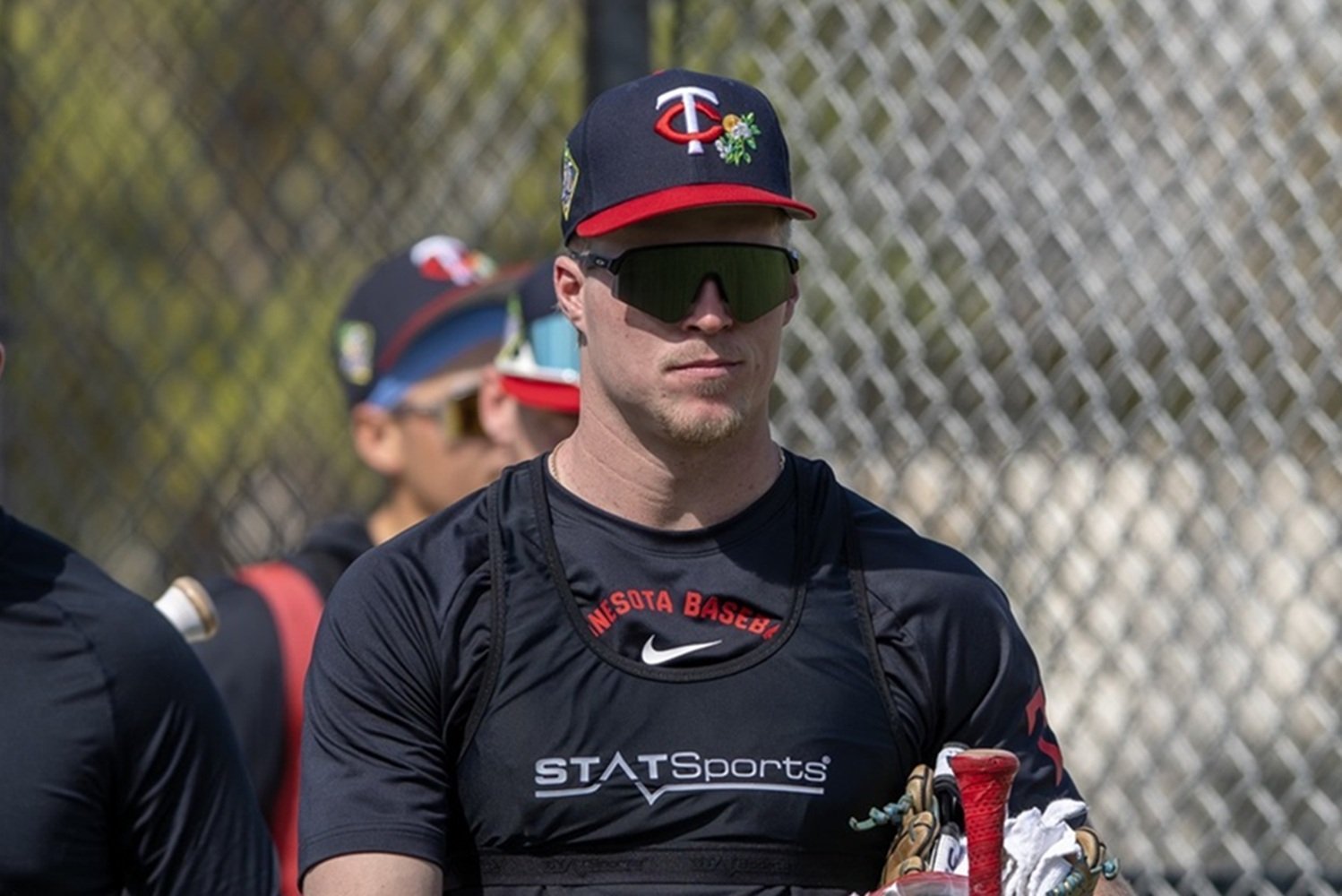 On Tuesday night at CHS Field, the St. Paul Saints returned home for a series against the Buffalo Bisons. The Twins won the first game of the series on Tuesday by a score of 12-6. The Saints scored seven runs in the bottom of the first inning and led 11-3 after four innings. The did most of their damage early. However, the most important "play of the day" before the phrase, "Play Ball" was uttered. Before each game at CHS Field, a kid gets to stand alongside each of the nine defensive players. Maybe they bring a ball with them and the player signs it for him or her. Overall, it's a cool way for the players to interact with kids. And they stand next to the player for the playing of the national anthem. Shortly after The Star-Spangled Banner started, the youngster standing next to Walker Jenkins in center field started to wobble. He leaned heavily to his right, bumping into right fielder Matt Wallner who caught him and set him up, likely not sure what was happening. But when he started to fall, Jenkins stepped over and caught him. Realizing that he had fainted, Jenkins picked him up and ran him into the Saints dugout where he handed the child to Chase Thompson, the Saints lead athletic trainer. From there, the child, "Lincoln" was brought into the clubhouse and evaluated. Ultimately, he was OK. He had overheated and was a bit dehydrated which caused him to faint. He was given fluids and cooled off before he returned to watching the game. After Jenkins handed Lincoln over, he clearly did not know what to do? Does he follow along? Does he stay on the field? The national anthem was still playing? Should he run back out to his position? A situation like that has to cause the mind to race. But when he was needed, he came through. Did it affect him during the game? If it did, it didn't show. He had a single in the first inning, doubled in the fourth inning, and tripled in the sixth inning. The summer before being drafted, Jenkins was playing for Team USA Baseball. Twins Hall of Famer Michael Cuddyer has been very active with Team USA over the years. He gave Jenkins the nickname "Captain America" because of his size, stature, and overall talent level. On Tuesday, Jenkins got to play Super Hero for a kid and his family. View the full article
 -
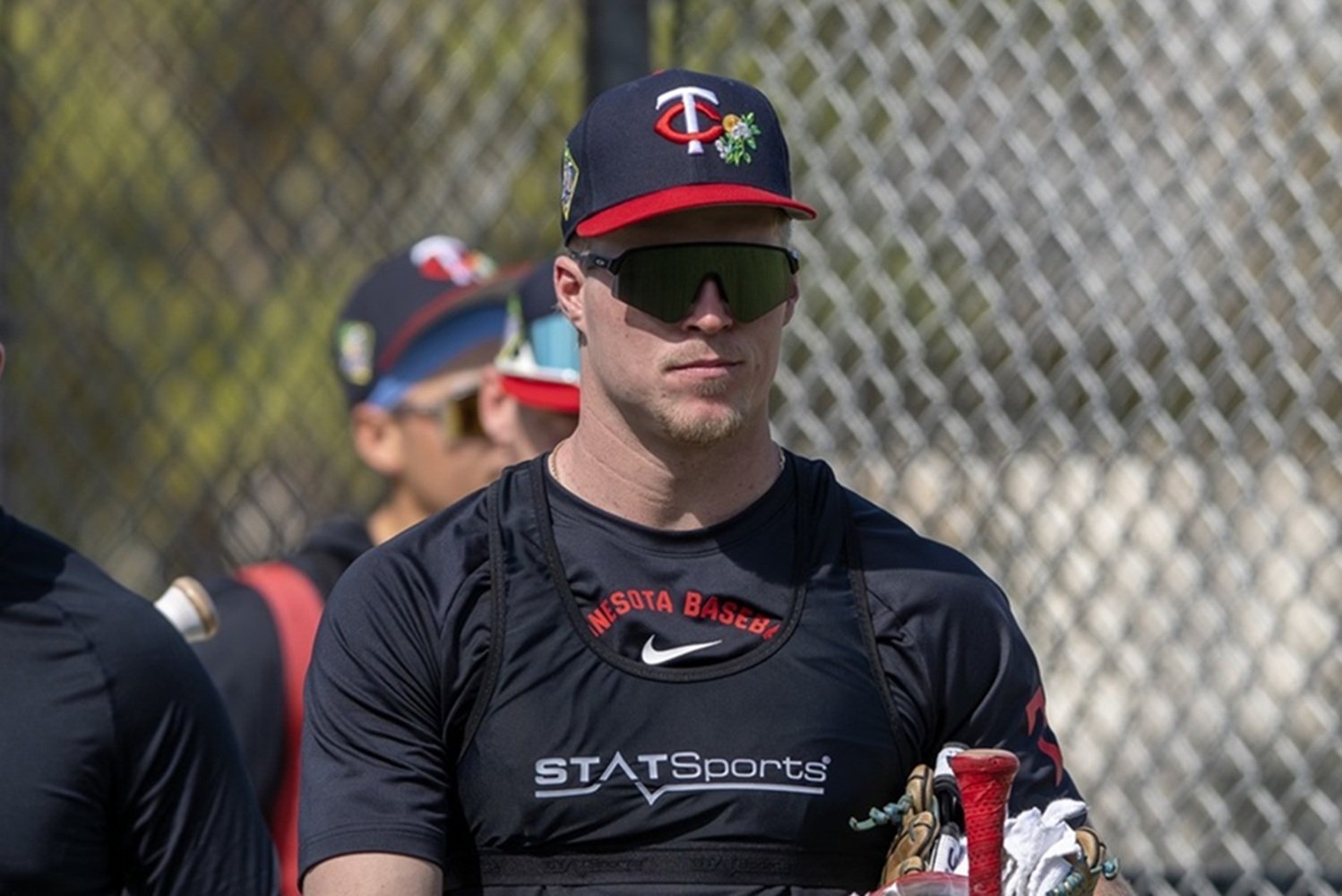 On Tuesday night at CHS Field, the St. Paul Saints returned home for a series against the Buffalo Bisons. The Twins won the first game of the series on Tuesday by a score of 12-6. The Saints scored seven runs in the bottom of the first inning and led 11-3 after four innings. The did most of their damage early. However, the most important "play of the day" before the phrase, "Play Ball" was uttered. Before each game at CHS Field, a kid gets to stand alongside each of the nine defensive players. Maybe they bring a ball with them and the player signs it for him or her. Overall, it's a cool way for the players to interact with kids. And they stand next to the player for the playing of the national anthem. Shortly after The Star-Spangled Banner started, the youngster standing next to Walker Jenkins in center field started to wobble. He leaned heavily to his right, bumping into right fielder Matt Wallner who caught him and set him up, likely not sure what was happening. But when he started to fall, Jenkins stepped over and caught him. Realizing that he had fainted, Jenkins picked him up and ran him into the Saints dugout where he handed the child to Chase Thompson, the Saints lead athletic trainer. From there, the child, "Lincoln" was brought into the clubhouse and evaluated. Ultimately, he was OK. He had overheated and was a bit dehydrated which caused him to faint. He was given fluids and cooled off before he returned to watching the game. After Jenkins handed Lincoln over, he clearly did not know what to do? Does he follow along? Does he stay on the field? The national anthem was still playing? Should he run back out to his position? A situation like that has to cause the mind to race. But when he was needed, he came through. Did it affect him during the game? If it did, it didn't show. He had a single in the first inning, doubled in the fourth inning, and tripled in the sixth inning. The summer before being drafted, Jenkins was playing for Team USA Baseball. Twins Hall of Famer Michael Cuddyer has been very active with Team USA over the years. He gave Jenkins the nickname "Captain America" because of his size, stature, and overall talent level. On Tuesday, Jenkins got to play Super Hero for a kid and his family. View the full article
 -
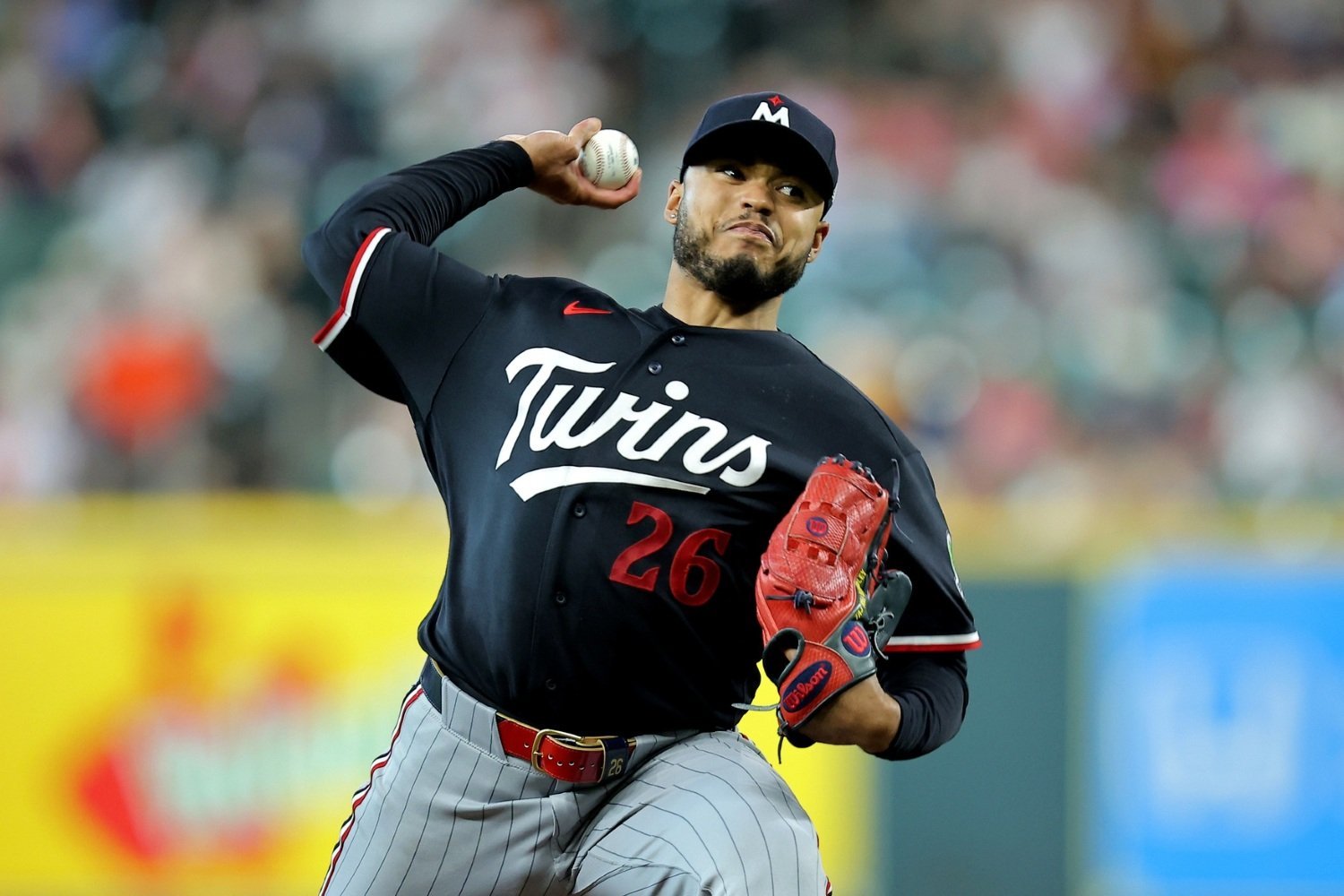 Box Score SP: Taj Bradley - 5 IP, 4 H, 1 R, 3 BB, 11 K (97 pitches, 63 strikes (65% strikes)) Home Runs: Josh Bell, Kody Clemens, Luke Keaschall Top 3 WPA: Josh Bell (0.17), Kody Clemens (0.14), Trevor Larnach (0.10) Win Probability Chart The Twins entered Wednesday night's series finale against the Astros with a chance to secure a series victory. Behind a dominant outing from Taj Bradley and an offense that jumped on Houston's pitching from the very first inning, the Twins did exactly that, cruising to an 8-3 victory and improving to 42-46 on the season. THE TWINS JUMPED ON TATSUYA IMAI EARLY Minnesota wasted little time putting pressure on Astros starter Tatsuya Imai, just as they did the first time they faced him earlier this season. Trevor Larnach got things started by ripping a leadoff double off the wall in straightaway center field, and after Brooks Lee and Kody Clemens were retired, Josh Bell made sure the early scoring opportunity didn't go to waste. Bell got a 2-1 slider left out over the plate and absolutely demolished it, launching a 452-foot two-run homer over the batter's eye in center field to give the Twins a quick 2-0 lead. It was Bell's third home run against Imai this season, after taking him deep twice during their previous meeting. The Twins weren't finished there. Royce Lewis and Ryan Kreidler each drew walks before Victor Caratini singled to load the bases, although Tristan Gray struck out to end the inning. An inning later, Minnesota delivered an even bigger blow. Luke Keaschall worked a leadoff walk before Lee drew another free pass, bringing Clemens to the plate. On a 3-1 fastball at the top of the strike zone, Clemens unloaded for a three-run homer to right-center, stretching the Twins' advantage to 5-1. Bell followed with another walk, and after recording just five outs, Houston had seen enough of Imai. TAJ BRADLEY PILES UP THE STRIKEOUTS While Bradley wasn't especially efficient, he was overpowering whenever the Astros put runners on base. Houston immediately threatened in the first inning, as Jose Altuve walked and Yordan Alvarez singled, eventually scoring a run on an Isaac Paredes double play. Bradley settled down by striking out Christian Walker to end the inning. The second inning proved even more impressive. Cam Smith doubled, Taylor Trammell walked, and suddenly, the Astros had two runners on with nobody out. Bradley responded by striking out three consecutive hitters to escape the jam untouched. The pattern continued in the third. Alvarez and Paredes both singled, but Bradley once again found another gear, striking out Walker and Smith to strand both runners. By the fourth inning, he was completely locked in, striking out the side in order to reach 11 strikeouts on the night, matching his career high. Bradley ultimately worked five innings, allowing just one run while striking out 11 Astros. It wasn't the cleanest outing from a pitch-count standpoint—he needed 97 pitches to get through five frames—but one run and 11 strikeouts is a combination the Twins will gladly take every time out. LARNACH ADDS ON AS MINNESOTA PULLS AWAY The Twins continued to tack on insurance tallies against Houston's bullpen in the fifth inning. Victor Caratini walked, Keaschall was hit by a pitch, and both runners advanced on a wild pitch to set the table for Larnach. Larnach smoked a ground ball back through the middle that clipped second base and kicked into center field, allowing both runners to score and extending Minnesota's lead to 7-1. The Twins added one more insurance run in the eighth, when Keaschall connected on a two-strike fastball from Bryan Abreu, sending it over the wall in left-center field for his third home run of the season and pushing the lead to 8-3. Larnach finished another outstanding night with three hits, while Bell reached base twice and drove in two runs. Clemens' three-run homer proved to be one of the biggest swings of the game, and Keaschall stayed hot by reaching base twice (including the homer), while also making a terrific sliding catch in right field. BULLPEN HOLDS OFF HOUSTON'S LATE PUSH The only real hiccup came after Bradley exited. Cody Laweryson struggled in the sixth inning, allowing two runs while recording just two outs before Andrew Morris was called upon to stop the bleeding. Morris immediately got Altuve to ground out and then delivered perhaps the biggest pitch of the game for the Twins an inning later. After Alvarez reached for the fourth time and Paredes was hit by a pitch, Houston had runners on first and second with one out. Morris calmly induced Cam Smith to bounce into a 6-4-3 double play, ending the threat and preserving Minnesota's four-run cushion. Taylor Rogers followed with a perfect eighth inning. Yoendrys Gómez worked around a pair of baserunners in the ninth. Although Paredes reached after a dropped pop-up, Gómez retired Brice Matthews on a fly ball to center to end the game. By the final out, the Twins had secured an impressive series victory in Houston. Minnesota pounded out timely hits, hit three home runs, received another strong performance from Taj Bradley, and got enough out of the bullpen to close the door. After winning two of three in Houston, the Twins head into the remainder of their road trip with some much-needed momentum and an improved 42-46 record. What’s Next? The Twins have tomorrow off, but will be traveling to the Bronx to begin a three-game weekend series against the Yankees on Friday. Mike Paredes will toe the rubber for the good guys. He’ll be facing off against veteran right-hander and 2023 AL Cy Young winner Gerrit Cole. First pitch is set for 6:05 PM. Postgame Interviews Coming Soon! Bullpen Availability Chart View the full article
 -
Twins Minor League Report (7/1): Riley Quick Finds His Groove Again
DiamondCentric posted an article in Twins Daily
 TRANSACTIONS RHP Christian Becerra activated from 7-day IL (A+ Cedar Rapids) RHP Eston Stull placed on 7-day IL with right elbow injury (A+ Cedar Rapids) SS Kaelen Culpepper added to Future’s Game roster Saints Sentinel St. Paul 2, Buffalo 3 Box Score Ty Langenberg: 4 IP, 0 ER, 2 BB, 3 K HR: Cody Morissette 2 (4, 5) Multi-hit games: Cody Morissette (2-for-3, 2 HR, 2 R, 2 RBI) The Saints fell in a close match on Wednesday. You ought to know Cody Morrissette, perhaps. The St. Paul second baseman blasted two homers, the only runs of the day for the Saints. The Boston College product joined Minnesota’s organization this season after his fifth season in the Marlins system appeared to be going nowhere in particular. Might his luck be better with the Saints? We shall see. Sure, it’s not like rain on your wedding day, but there has to be some sort of irony in his two homers looking near identical. From the pitch location, to the swing, to the ball’s final resting place. Ty Langenberg enjoyed his third straight game walking two while striking out three. How unusual. The bizarre streak must bring some good luck: Langenberg has allowed just two earned runs over the 15 1/3 innings that make up his last four starts. Buffalo infielder Josh Kasevich is the 11th-ranked prospect in the Blue Jays system. He went 0-for-3, with a walk. Wind Surge Wisdom Wichita 3, Tulsa 10 Box Score Cory Lewis: 3 IP, 8 H, 8 ER, 2 BB, 5 K HR: Andrew Cossetti (10) Multi-hit games: Khadim Diaw (2-for-5, 3B, R, RBI), Andrew Cossetti (2-for-4, HR, 2B, R, RBI) The Wind Surge were thumped on Wednesday. Whatever warlocks Cory Lewis entered into covenant with to keep his ERA low either deserted or tricked the young righty; he found no fortune or solace in any events on Wednesday. He allowed eight hits and an equal total of earned runs. Josue De Paula alone smoked three hits—a triple short of the cycle—off the hurler. Andrew Cossetti blasted a solo homer in the bottom of the fourth. The other notable extra-base hit came in the fifth, when Khadim Diaw smacked a deep fly ball to center that became a triple when the center fielder decided to see how soft the warning track dirt was. The aforementioned De Paula is the fourth-best prospect in baseball. Solely as a hitter, he might be the most frightening: a strapping 6’3” lefty with power, contact, and the good sense to know when—and how—he should unleash his mighty stroke. He ended the day with four hits, two of them homers. Oh, and he’s only 21. Kernels Nuggets Cedar Rapids 9, Quad Cities 7 Box Score Riley Quick: 4 IP, 2 H, 0 ER, 1 BB, 7 K HR: Caden Kendle (5), Graham Brown (3) Multi-hit games: Brandon Winokur (2-for-4, RBI), Yasser Mercedes (2-for-4, R, RBI) The Kernels won an offensive flurry on Wednesday. Hey, it finally happened. Riley Quick found his rebound. The righty elicited consternation and nerves—the worries that his early-season success was a fluke—but took a mighty step towards dashing those anxieties, whiffing seven over four innings with no earned runs. It was his first start since April 29th without allowing an earned run. The Kernels offense was here, there, and everywhere, plating runs in five separate innings. The scoring started with a two-run Caden Kendle shot in the second before lying dormant for some time. The third and fourth passed silently, laying the foundation for the rally to come. In the fifth, Brandon Winokur coaxed home a run on a sacrifice fly and Dameury Pena slapped an RBI single to center. That ended scoring matters until Graham Brown stepped to the plate in the seventh and walloped a two-run shot over the berm in left. That sent the bats into overdrive. Or at least it spurned a three-inning run of… runs that gave the Kernels the lead. And it was more piranha-ball: the first eighth inning run came off an Enrique Jimenez walk, a wild pitch, a passed ball, and an RBI groundout. Kendle—who walked after Jimenez—touched home later off a Yasser Mercedes single. The final run arrived with a Brown walk, Winokur single, a double steal, and an Eduardo Tait sacrifice fly. All in all, Cedar Rapids went 2-for-7 with runners in scoring position yet plated nine runs. The secret? Two-run homers and run-scoring non-hits. River Bandits DH Blake Mitchell is the third-ranked prospect in the Royals’ system. He collected two hits in four at-bats. Mussel Matters Fort Myers 1, Clearwater 6 Box Score Ramiro Villanueva: 3 2/3 IP, 5 H, 2 ER, 1 BB, 2 K HR: Quentin Young (10) Multi-hit games: Ramiro Dominguez (2-for-4, 2B) The Mighty Mussels were thoroughly bested on Wednesday. Quentin Young homered in the fourth. This concludes the offensive portion of the evening. Mike McKenna provided two quality innings of relief, punching out a pair without allowing a run. Brent Francisco put forth an admirable effort too, yet—like the starter Ramiro Villanueva found out—poor defense would portend unearned runs, with four of them scoring in the game. Clearwater’s starter Matthew Fisher ranks as the 10th-best prospect in the Phillies’ system; he allowed one earned run in four frames on Wednesday. TWINS DAILY PLAYERS OF THE DAY Twins Daily Minor League Pitcher of the Day – Riley Quick Twins Daily Minor League Hitter of the Day – Cody Morissette PROSPECT SUMMARY Here’s a look at how the Twins Daily Top 20 Twins Prospects performed: #1 – Walker Jenkins (St. Paul) - 1-4 #4 – Eduardo Tait (Cedar Rapids) - 0-4, RBI, 3 K #5 – Marek Houston (Wichita) - 1-3, RBI, BB, K #6 – Riley Quick (Cedar Rapids) - 4 IP, 2 H, 0 ER, 1 BB, 7 K #8 – Hendry Mendez (St. Paul) - 0-4, K #12 – Brandon Winokur (Cedar Rapids) - 2-5, RBI, 2 K #13 – Khadim Diaw (Wichita) - 2-5, 3B, R, RBI, K #14 – Quentin Young (Fort Myers) - 1-2, HR, R, RBI, 2 BB, K #17 – C.J. Culpepper (St. Paul) - 2 IP, 0 H, 0 ER, 2 BB, 1 K #18 – Yasser Mercedes (Cedar Rapids) - 2-4, R, RBI, 2 K #19 – Billy Amick (Wichita) - 0-4, 2 K #20 – Kyle DeBarge (Wichita) - 0-4, 2 K THURSDAY’S PROBABLE STARTERS Buffalo @ St. Paul (7:07 PM) - RHP John Klein Tulsa @ Wichita (7:05 PM) - RHP Preston Johnson Cedar Rapids @ Quad Cities (6:30 PM) - RHP Ivran Romero Fort Myers @ Clearwater (5:30 PM) - RHP Jason Reitz FCL Twins @ FCL Orioles (11:00 AM) - TBD DSL Angels @ DSL Twins (10:00 AM) - TBD View the full article
 -
Bad luck bites Meyer, snaps record-setting undefeated streak
DiamondCentric posted an article in Fish On First
 Not all good things last forever. Pitching in the cavernous Coors Field, Max Meyer put his perfect record on the line against the forces of altitude and dry air, ultimately suffering a loss for the first time in 2026. The former third overall draft pick had been off to a 9-0 start to the season. His 17 starts without a loss were the most to begin a season in franchise history. The Coors effect infected Meyer early, when Mickey Moniak, for the second time in as many nights, sent a ball over the center field wall to give the Rockies an early 1-0 lead. Falling a mere single short of the cycle, Moniak has been Colorado's best hitter this season, sporting a 135 wRC+. As was the case in their 10-run and 14-run barrages in the series' first two games, Miami would take the lead on Javier Sanoja's two-run triple. Kyle Freeland, the owner of a 3.80 ERA in 10 career appearances against the Fish, would work five otherwise carefree innings, striking out seven in the Rockies' victory. Carrying that 2-1 lead into the bottom of the fifth, Meyer would fall victim to some tough luck when an error by the aforementioned Sanoja misplayed a ground ball off the bat of Kyle Karros. Two batters later, it was Moniak's two-run triple that gave the Rockies a lead they would never relinquish. The salt in the wound would come in short order, as Hunter Goodman, the team's presumed representative at this year's All-Star game, launched his 27th home run of the season. Among catchers to start at least 150 games behind the plate since the start of last season, only Cal Raleigh (55) has more home runs in games caught than Goodman's 50. Over his last six games played, Goodman has hit six home runs. On the whole, Meyer would power through six innings, allowing five runs, though only being charged with one in collecting his first loss of the season. Despite the defeat, Meyer lowered his season ERA to 2.53. "I thought Max was good tonight...It's the conditions here that take a toll on your body, though," noted manager Clayton McCullough. The night would not be without its moments of elation for Miami, though, as Joe Mack, pinch-hitting in the top of the seventh, sent a ball over the head of center fielder Jake McCarthy in what would turn out to be an inside-the-park home run. The long ball would represent the first of the inside-the-park variety since Yuli Gurriel in 2023. Colorado pitchers retired nine consecutive Marlins after that to seal the 6-3 win. Looking Ahead The Marlins will conclude the four-game set and their West Coast road trip in Thursday's series finale. Michael Lorenzen (3-9, 6.83 ERA) will take the ball for Colorado. While the first half of the season has been unkind to him, Lorenzen has a track record of success against Miami, posting a 2.62 ERA - his lowest mark against any NL opponent - across 18 games pitched (7 GS). First pitch from Coors Field is scheduled for 3:10 EST/1:10 MDT. View the full article
 -
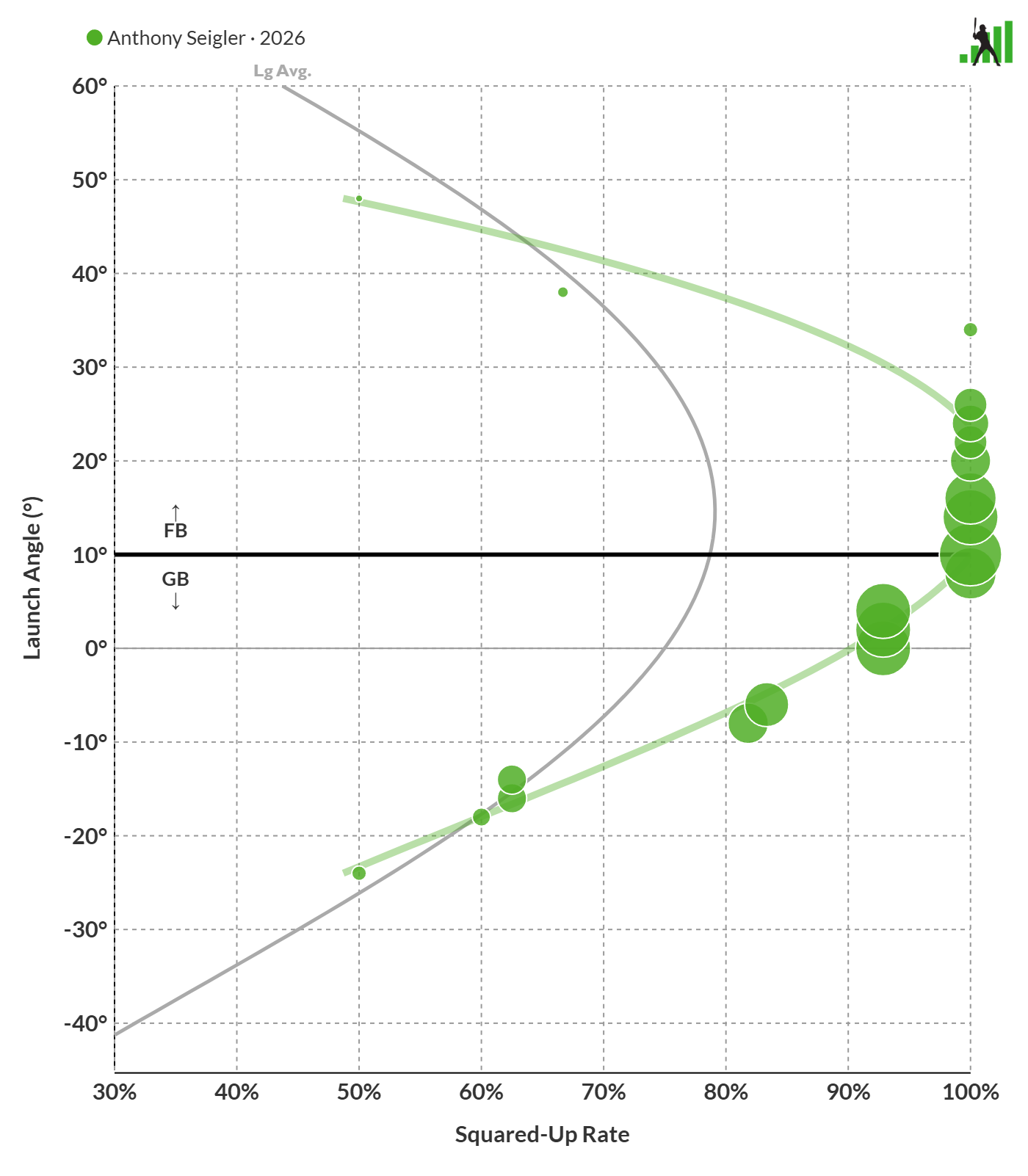 Second baseman Anthony Seigler has been a spark plug for an otherwise dormant Red Sox offense. Is it just a hot stretch for the former first-rounder, or is there surprising staying power here that might help salvage a trade many Sox fans would like to forget? Seigler was acquired by the Red Sox in the infamous Kyle Harrison for Caleb Durbin trade, and he was never considered a player who could meaningfully contribute to the Red Sox in 2026. His road to the majors has been anything but easy. Seigler was originally drafted 23rd overall by the New York Yankees in 2018 and spent six years in their farm system, peaking at Double-A Somerset before becoming a minor league free agent and signing with the Brewers in 2025. Milwaukee assigned him to Triple-A Nashville, and he seized the opportunity, hitting .285 with an .892 OPS, eight home runs, and 23 steals in just 72 games. That earned him a July 1 call-up, but he struggled over 34 games, batting primarily in the bottom half of the order and slashing .194/..292/.210 It made sense for the Brewers to get what they could for Seigler this offseason. He was buried in their system behind a plethora of prospect talent, with platinum glove award winner in Brice Turang manning his primary position at the major league level. So, he was shipped out along with Caleb Durbin and a competitive balance round B pick. Seigler didn't even get in spring training with the Red Sox, He landed on the 10-day IL in March and opened the season with patellar tendinopathy in his left knee. Once he returned from the IL, Seigler came out of the gates slow for Triple-A Worcester, hitting .222 with no home runs in April. But then he caught fire in May and hasn't looked back. The 27-year-old hit .344 with an 1.000 OPS that month, while walking more often than he struck out (17.7% walk rate vs. 12.7% strikeout rate). In a quote taken by our own @Nick John,Worcester manager Iggy Suarez explained why he thought Seigler was so much better in May: Seigler carried that momentum into Boston after his call-up in June, hitting .318/.388/.500 in his first 14 games and launching his first career home run. M3lNbnlfV0ZRVkV3dEdEUT09X1ZRUURBUVZWQjFZQVhsRlJYd0FIQnc5ZUFGa05CMUFBQ2xCWEExY05Bd1pTQ0FCZg==.mp4 Seigler has never been a power option. His career-high exit velocity is 107.9 in 2025, But Seigler has continued to profile as an above-average bat-to-ball hitter, keeping his chase and whiffs low. Arguably the most impressive aspect of his minor league profile was his ability to limit strikeouts: He struck out just 19.2% of the time while walking 17.4% of the time. Combine that with a 91.4 average exit velocity in 2026 (in the 85th percentile in AAA), all while playing average defense, and it creates an intriguing second base option. One fascinating aspect of Siegler is that despite strong average exit velocity, his max and 90th-percentile exit velocities are weak. His average exit velocity in AAA, 91.4, is the same as Hunter Goodman and Ketel Marte this season. For reference, Goodman led all of the MLB in home runs in June with 13. Yet, Seigler has only one career barrel in the big leagues to go along with his lone home run. The explanation for this is found in bat speed, launch angle sweet spot percentage, and squared-up percentage. Seigler's bat speed is slow, sitting at 68 mph, which will inherently limit exit velocities. Yet, he provides an 85th percentile average exit velocity because he finds the ideal launch angle, so when he does connect, he maximizes the potential exit velocity he could generate based on his swing speed and pitch velocity, as defined by Baseball Savant. But Seigler's average launch angle is relatively low, only 8.6 degrees, only 0.6 degrees above the requirement to be in the launch angle "sweet spot" according to Baseball Savant. In fact, Statcast defines any ball put in play with less than 10 degrees of launch angle to be a groundball. That led me to believe his success this season would be explained by a high line-drive rate. Lo and behold, I was correct! If Seigler qualified (he hasn't appeared in enough MLB games), his 25.8% line drive rate would rank sixth in the league, just behind breakout star Jac Caglianone. It's also worth noting that his groundball rate of 54.8% would rank third, just behind former teammate Garrett Mitchell. As you can see here, no matter the launch angle, Seigler does end up squaring up the ball. The larger circles illustrate the quantity of balls so far at each launch angle. So, he's squared up every ball in play in 2026 between the launch angles of 26 and 8, as seen in the graph above. That can't be expected to continue, but it's clear that Seigler knows what he does well and seeks to replicate that every at bat. He's walking a narrow line of low bat speed paired with elite quality of contact. That's hard to sustain unless your name is Luis Arraez, whose Savant page actually looks remarkably similar to Seigler's -- though Arraez has lower average exit velocities. Seigler has also ticked up his bat speed from 66.9 mph to 68 mph since joining the Red Sox. If he wants to sustain his success as a high-contact, line-drive hitter, he will likely need to lift the ball slightly more. The former first-round pick has begun carving out a role in Boston. Assuming the Red Sox decide to sell, there will be room for Seigler in the dugout the remainder of the season, and the chance to improve what he already does well. View the full article
 -
 The Cubs have won five games in a row; what do they need to do to keep the good times rolling? Listen on Apple Podcasts: https://podcasts.apple.com/us/podcast/the-north-side-baseball-podcast/id1798599313 Listen on Spotify: https://open.spotify.com/show/75wMGhBwlrDDYPt3kaF453 Listen on iHeartRadio: https://www.iheart.com/podcast/263-the-north-side-baseball-po-268998437/ Listen on Pocket Casts: https://pca.st/eey7h6ih Watch on YouTube: https://www.youtube.com/@northsidebaseball View the full article
 -
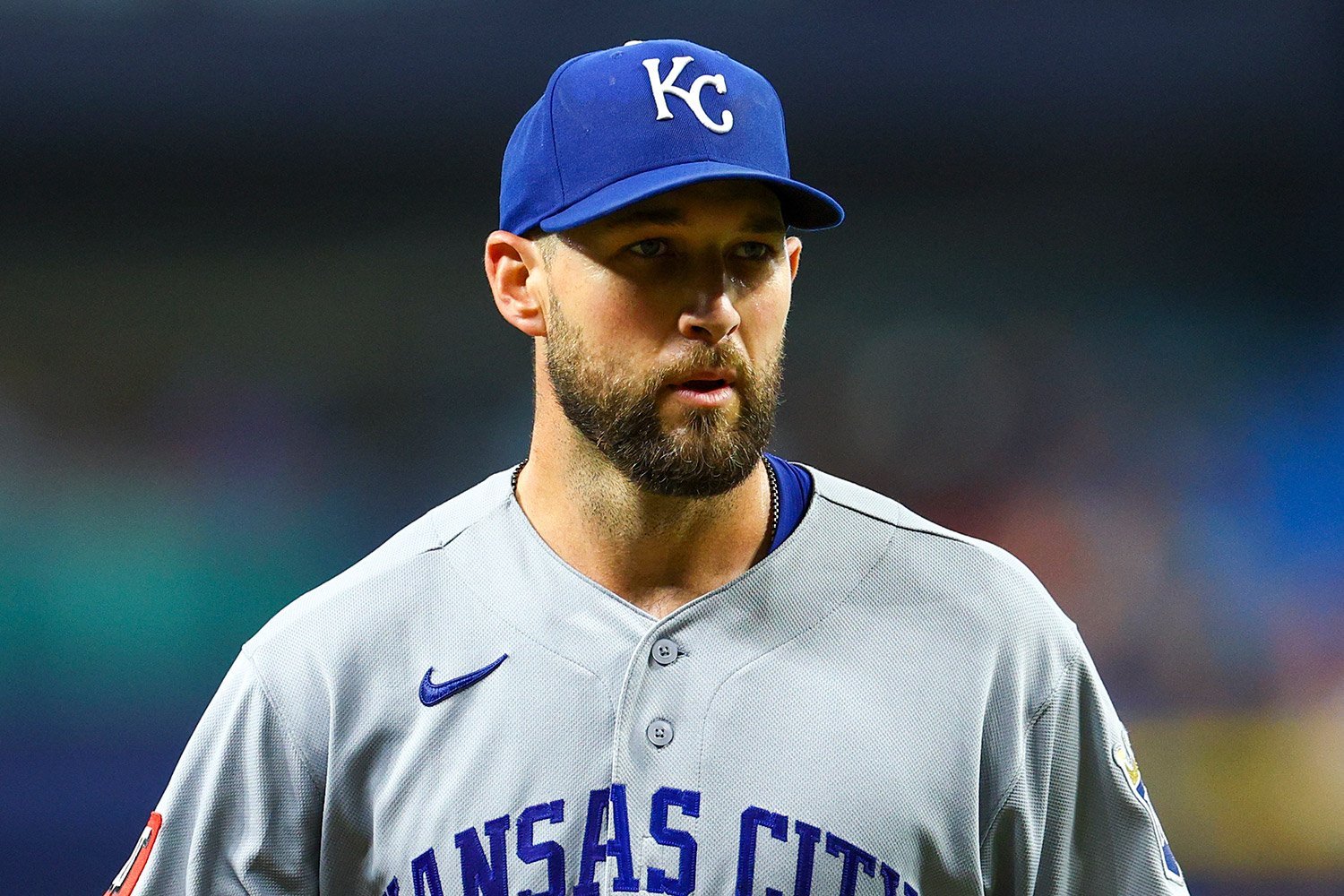 Pitching has not been the Royals’ strength in the month of June. Through June 27, the Royals have surrendered 5.72 runs per game this month. This brings their season average to 5.04 runs allowed per game, fifth-worst in MLB. The Royals have also been susceptible to blowouts, with four games allowing 10 or more runs in June. The Royals have also had their fair share of misfortune when it comes to pitchers this month. Cole Ragans was transferred to the 60-day IL and is scheduled for another elbow surgery. Stephen Kolek has missed time due to a family emergency and paternity leave after providing a spark for the rotation in May. Kris Bubic is still rehabbing after his elbow soreness landed him on the IL in May. Seth Lugo missed a week due to a concussion caused by a comeback line drive that hit him in the head. However, while the team may be struggling to find its footing on the mound, one player has stood out as the best performer for the Royals this month: Michael Wacha. With former All-Star starters like Ragans, Bubic, and Lugo all missing time, Wacha has become the ace for the 2026 Royals. His 2.8 bWAR this season, fourth highest in the American League, has already matched his mark from last season with half the season still remaining. He is also leading the AL in starts and innings pitched, which has been particularly important as the pitching staff has thinned from injuries. Wacha leads all Royals pitchers with 0.8 fWAR in June with a 3.51 ERA and 3.20 FIP. Wacha also leads in innings pitched, logging 33 ⅓ innings across his five starts. With an average of 6.67 innings per start in June, Wacha’s stamina has provided additional rest for the Royals’ bullpen, which has repeatedly been forced to absorb extra innings in June. Wacha excelled in limiting hitters to soft contact with a 31.3% hard-hit rate and 1.8% barrel rate. His walk rate also ranked in the 93rd percentile in June at 2.9%. In his age-34 season, Wacha has shown few signs of slowing down. According to Statcast data, his fastball is the most effective it’s ever been, ranking in the 89th percentile in pitching run value, and his off-speed pitches are grading in the 92nd percentile. Despite Wacha’s strong performance in June, his five starts, three of which were quality starts, have only resulted in one Royals victory. Among qualified pitchers, Wacha has the fifth-least run support with only 3.15 runs per game. His lack of run support was on full display on June 27, when he pitched into the eighth inning, allowing only one run, only for the Royals to be walked off by the White Sox in the bottom of the ninth with a 2-1 loss. Honorable Mention: Noah Cameron While Wacha has been the leader in the rotation in June, Cameron has provided much-needed depth in the back end of the rotation. He trails only Wacha among Royals pitchers in fWAR for June with 0.6 and leads all Royals starters in xERA and xFIP at 3.48 and 3.76, respectively. In June, he pitched 27 ⅓ innings across five starts, earning him two wins and two quality starts. Cameron prevented runners from getting on base with a 1.17 WHIP in June, which brought his season mark down to 1.33. Cameron had struggled to find his footing to start the season. Despite allowing more runs on average this season compared to his rookie year, he is displaying positive signs of improvement in his sophomore season. His strikeout rate has gone up from 20.5% to 21.5%, and his walk rate has improved from 7.7% to 6.3%. Cameron might be held back by his low average fastball velocity of 92.3 mph, but his arsenal is boosted by his changeup and slider, both grade out at 102 on TJStats' Stuff+ metric.. He can be inconsistent with his performance, but being available at a time when the rotation is stretched thin is valuable to this Royals team. Honorable Mention #2: Alex Lange Lange was thrown into the closer role on June 3 after Lucas Erceg struggled in May to solidify the back of the bullpen. Since taking on the role, Lange has earned seven saves and no blown saves in 11 ⅓ innings pitched. While his innings are rarely clean with his 1.68 WHIP during June, his ability to close out games with a lead has prevented further damage to the Royals’ record in June. View the full article
 -
 It's a 2-2 count in a tight spot. The tying run is in scoring position, and the go-ahead run is at first. It's the top of the eighth. What are you going with, here? That's a baseball conversation as old as the game itself—or nearly so. While we don't want long, ponderous pauses between bursts of action, one of the great things about this sport is that it breathes. There's time enough between pitches to guess along with the pitcher, the catcher, the batter, the runners and the defense, at least a little. There's even time to do it aloud. You hear it on broadcasts all the time. We enjoy this exercise. There's a vicariousness to it that can make baseball feel more accessible than other sports, even though it's no less difficult when you're actually between the lines. It's also one way we judge players' baseball IQ and their engagement with their craft. How well are a catcher and pitcher communicating? How creative are they being with their sequencing and their efforts to give the hitter something other than what they're looking for? How much trust is there between them? When you watch a Brewers game, though, you can often look smart by simply leaning toward your friend and saying, "Fastball here, I bet." That's been true for years now. While Milwaukee works hard to give as many hurlers as possible multiple fastball looks, they throw some flavor of heater more often than any other team in baseball. That's not an accident. For one thing, they know that doing so can limit the quality of opponents' contact; the surest way to give up an extra homer or two is to hang an extra breaking ball or three. For another, they have a great defense most of the time, and throwing fastballs allows their pitchers to be efficient while utilizing those adept fielders. Most of all, though, they scout and develop pitchers with exceptional fastballs, in various ways. Josh Hader's unique combination of arm angle and fastball shape made him almost unhittable even when he didn't have his slider working. Corbin Burnes took some time to find that the cutter was the right fastball for him, but once he did, he was an ace. Scrap-heap scoop-ups from Trevor Megill to Bryan Hudson to Grant Anderson have not only been targeted because their fastballs are outliers, but have thrived because the team has helped them optimize what they had there. I don't have to rehash the almost superhuman elements of Kyle Harrison (aka Gravitron) or Jacob Misiorowski here; you know their heaters are the two best in baseball. Thus, there's not as much for a catcher to do back there, really. Brewers pitchers rave about the way William Contreras calls games, but the truth of the matter is that he has the easiest job of any starting catcher in the sport. He can resort to the fastball more often than anyone else, and he does. In fact, this year, he's calling some form of fastball about 68% of the time, more than any other player (including past versions of himself) has done it in any of the last four years. Occasionally, that gets brought up as a point of criticism of Contreras. Pitchers might love being exhorted to trust their heaters, but should they mix it up a bit more? Could the team miss more bats and be a better pitching staff by going to offspeed offerings more? Is Contreras holding guys back. Here's a chart that answers that question pretty neatly. This plots all of the player-seasons by catchers with at least 2,500 pitches caught in that campaign since the start of 2023, by fastball usage (the x-axis) and run value per 100 pitches on fastballs (the y-axis). The navy dots are the Brewers' catchers: Contreras (x4), Eric Haase (x2), Gary Sánchez and Victor Caratini. As you can see, they're all clustered toward the right edge of the graph. All but one dot is also on the good side of 0.00 runs per 100 heaters thrown. Contreras is pushing into new territory with the way he's hammering the fastball this year, but in part, that reflects the fact that he's working with two of the best heaters the game has seen this decade. Neither Misiorowski nor Harrison needs to throw much else; their fastballs deceive and dominate hitters in ways that are relatively exposure-proof. Sánchez is the navy dot second-closest to the right edge of the graph, and is third overall in this sample of player-seasons. The Brewers just have a lot of guys with multiple fastballs, a lot of great fastballs, and less motivation to throw other pitches than other teams have. How sustainable this approach is—whether, for instance, you can lean this hard on fastballs and still advance through the postseason to where the Brewers are hoping to go—remains to be seen. It doesn't feel like throwing so many fastballs is why the team has been beaten in October time after time, but it might be worth exploring a change of strategy that prepares the team to do something more unexpected in the playoffs. For now, though, this keeps working. Moreover, it keeps showing up as an organizational imperative, rather than some quirk of Contreras's. That makes the charismatic leader of the Crew a bit less valuable than if he were some pitch-calling genius, but this is one of those areas in which having a defined, top-down approach has lots of value to the Brewers. Should they elect to trade Contreras this winter, it won't disrupt their run prevention. That machine runs on things with more staying power, at lower cost: Chris Hook, Jim Henderson, the scouting and development teams, and a few other people in the front office. They might still be wise to retain Contreras, because his offense is hard to replace at that position and because the team looks to him as such an important figure. If they do move on, though, they'll be able to select their next starting backstop for their hitting ability, too, because they just need someone who can catch fastballs and manage moments well on defense. For many catchers, calling the game is a matter of personality, and even identity. In Milwaukee, it's about identity, too, but the identity is collective, rather than individual. They know what works, because they've built an entire ecosystem in which that simple plan will work. They want a great catcher with a live arm, intensity and offensive value. They don't need that person to also be an elite tactician, planning at-bats with the precision of a military commander. It's a little less romantic than when a team does ask a catcher to be that brilliant, but you know what's better than romanticism? Outs. Outs and wins. View the full article
 -
 Josiah Hartshorn and Mason McGwire have been selected to represent the Chicago Cubs organization in the 2026 MLB All-Star Futures Game. The event will take place on Sunday, July 12 at 12:00 pm EST, at Citizens Bank Park in Philadelphia. If you want to watch the game, it will be carried live by NBC. Hartshorn, an outfielder and first baseman on the South Bend Cubs, has had a rookie season to remember. Across Low-A and High-A this season on offense, he has 14 home runs (5 Low-A, 9 High-A), 60 RBIs (25 Low-A, 35 High-A), and 72 hits (38 Low-A, 34 High-A) in 251 at-bats (139 Low-A, 112 High-A). He also has 46 walks (34 Low-A, 12 High-A) along with a wOBA of .419 (.420 Low-A, .417 High-A), which shows how good he has been at getting on base so far in 2026. On the field, he has played first base (165.1 innings), right field (234.1 innings), and center field (143 innings). Hartshorn only has four errors throughout the whole season, with all of them coming from first base, where he has had 142 total chances. In the outfield, he has no errors on 75 total chances (42 in right, 33 in center). McGwire, a pitcher also from South Bend, has pitched 45 innings across Low-A and High-A this season (30 Low-A, 15 High-A). He has been on the mound 14 total times this season (10 Low-A, 4 High-A) with eight of them being starts (five Low-A, three High-A) where he has a 3-3 record this year (2-2 Low-A, 1-1 High-A). He has done a solid job keeping the bases empty with 62 strikeouts (45 Low-A, 17 High-A) and 35 hits (22 Low-A, 13 High-A). McGwire has 20 runs against him (12 Low-A, eight High-A) with 15 of them being earned (eight Low-A, seven High-A). Hartshorn is the 79th overall prospect in affiliated baseball and our fourth-ranked player in the Cubs farm system, while McGwire is the 30th overall prospect in the Cubs organization, according to MLB Pipeline. Shane Victorino will manage the National League team. The 45-year-old played for the Padres, Phillies, Dodgers, Red Sox, and Angels organizations throughout his career. Victorino made the 2009 (reserve) and 2011 (starter) MLB All-Star Games. In 2008 (Phillies) and 2013 (Red Sox), he won the World Series. He also won the Gold Glove in 2008, 2009, 2010 all with the Philadelphia in centerfield and in 2013 with Boston as a right fielder. View the full article
 -
Royals Put Connor Seabold On Injured List In Pitching Shuffle
DiamondCentric posted an article in Royals Keep
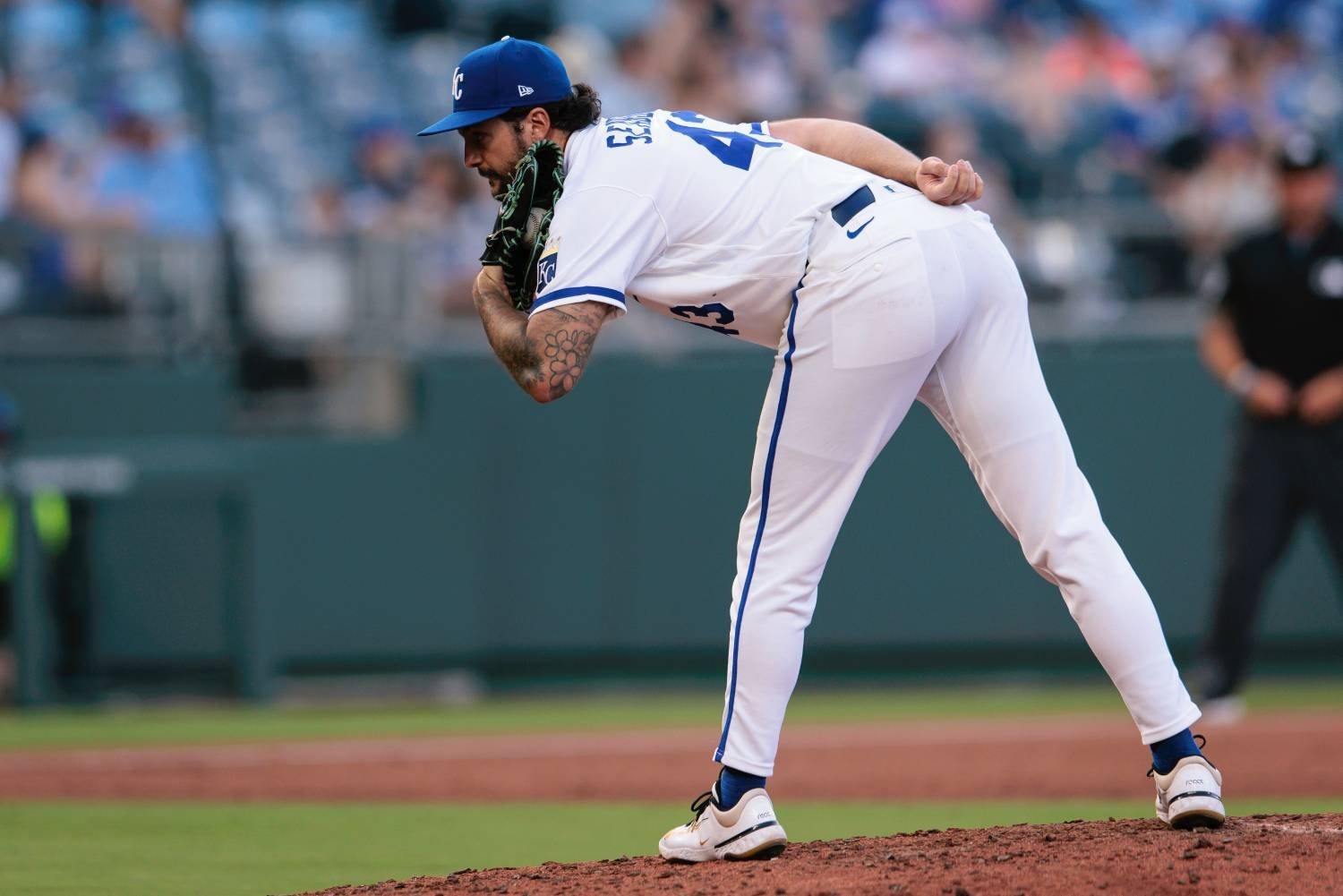 July is starting with a handful of moves involving the pitching staff. Right-handed reliever Connor Seabold was placed on the 15-day injured list with a strained right lat and right-handed reliever Eric Cerantola was optioned to Triple-A Omaha. Coming up from Omaha to replace them are right-handers Jose Cuas and Randy Dobnak. Cuas had to be added to the 40-man roster, so left-handed starter Kris Bubic was transferred from the 15-day IL to the 60-day IL. Seabold pitched just two-thirds of an inning in Tuesday's 10-4 loss to the Tampa Bay Rays. Seabold, with his third MLB team this season, has appeared in five games for the Royals, giving up six runs (five earned) over seven innings with four walks and five strikeouts. Cerantola followed Seabold in Tuesday's game by going 1⅓ innings and walking six. He has allowed six runs in 5⅓ innings for a 10.13 ERA. The 32-year-old Cuas, who made his MLB debut in 2022 with the Royals, is back in the majors for the first time since 2024, when he appeared in 13 games for the Chicago Cubs and Toronto Blue Jays. He has a 3.31 ERA in 29 games over 32⅔ innings with 19 walks and 33 strikeouts. Dobnak started the season at Triple-A with the Seattle Mariners, then exercised a June 15 upward mobility clause that landed him with the Royals in a cash trade. He was added to the 40-man roster upon being acquired and made two starts at Omaha, allowing six runs in 10⅔ innings with one walk and 10 strikeouts for a 5.06 ERA. Dobnak appeared in one MLB game with the Minnesota Twins in 2025. View the full article
 -
When Was the Last Time the Twins Had a Good Defense?
DiamondCentric posted an article in Twins Daily
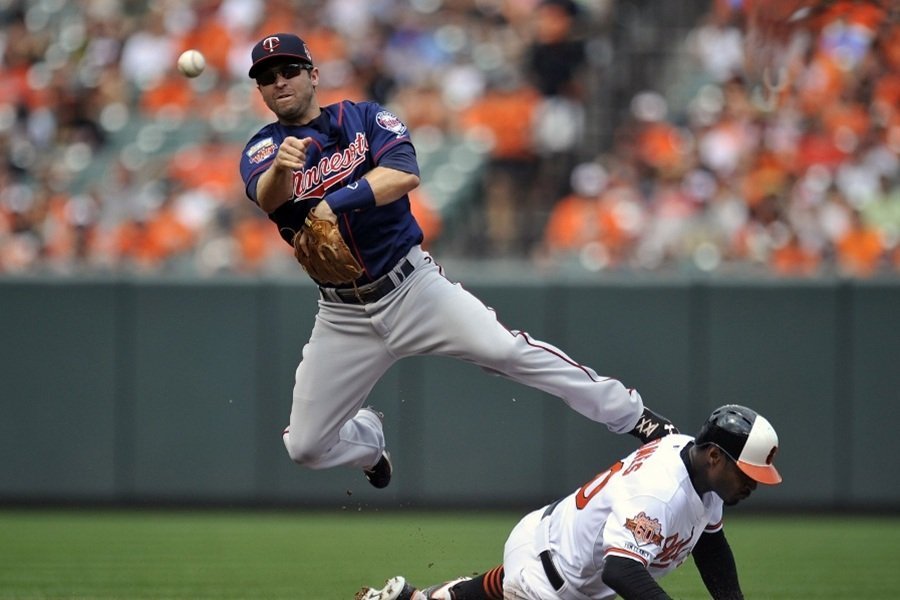 Defense doesn't always receive the attention that home runs and strikeouts do, but it has quietly been one of the biggest issues for the 2026 Twins. Last week, I looked at the club's SABR Defensive Index totals through games played in early June. While there have been individual bright spots, the overall picture was far less encouraging. Too many routine plays have turned into extended innings, and there have already been multiple games this season where below-average defense directly contributed to losses. That wasn't always the case. For years, strong defense was part of the Twins' organizational identity. Under Tom Kelly, the franchise consistently emphasized fundamentals, positioning, and limiting mistakes. That philosophy carried into Ron Gardenhire's tenure, where Minnesota routinely ranked among baseball's better defensive clubs. In recent seasons, however, the Twins have struggled to reach those standards, even with one of the game's premier defensive center fielders patrolling the outfield. Looking back at the best defensive Twins teams of the last two decades illustrates both how good the club once was and how much ground it has to make up. 2020 Twins: 8 OAA, 18 DRS, 6.5 DEF The shortened 60-game season makes any evaluation a little more difficult, but Minnesota still fielded a respectable defensive club. As expected, Byron Buxton led the way. He accumulated 4 Outs Above Average (OAA) while posting 11 Defensive Runs Saved (DRS), continuing to establish himself as one of baseball's elite defensive center fielders. The Twins also benefited from Marwin Gonzalez, whose versatility allowed him to contribute across the diamond. He finished with 2 OAA while playing multiple positions. Eddie Rosario remained an interesting case, posting 4 DRS despite finishing at -1 OAA. Max Kepler and Mitch Garver each contributed 3 DRS. The biggest weakness came on the infield. Jorge Polanco struggled defensively, finishing with -6 DRS, preventing the Twins from climbing even higher among their recent defensive seasons. 2021 Twins: 9 OAA, 20 DRS, 15.7 DEF Although the Twins endured a disappointing season in the standings, they remained an excellent defensive team. The offseason acquisition of Andrelton Simmons immediately paid dividends with the glove. Long considered one of the greatest defensive shortstops of his generation, Simmons posted an incredible 16 OAA along with an 18.5 DEF rating. Max Kepler and Byron Buxton each added 7 OAA of their own. Buxton's 13 DRS matched Simmons despite playing significantly fewer innings because of injuries, highlighting just how dominant he remained whenever healthy. On the opposite end of the spectrum, Miguel Sanó struggled defensively. He finished with -5 OAA and -6 DRS, making him the club's biggest liability in the field. 2010 Twins: 35.4 DEF Outs Above Average wasn't introduced until years later, but DEF provides a strong picture of just how fundamentally sound Minnesota was during the inaugural season at Target Field. Joe Mauer anchored the defense behind the plate, posting a team-leading 12.7 DEF while capturing his third and final Gold Glove Award. The middle infield was outstanding. J.J. Hardy finished with 11.8 DEF, while Orlando Hudson added 10.5 DEF (6 DRS), giving the Twins one of baseball's better double-play combinations. The supporting cast was equally impressive. Denard Span, Jason Repko, Justin Morneau, and Nick Punto each recorded DEF marks above 8.4, providing quality defense throughout the roster. Punto, Morneau, and Repko were worth 7 or more DRS. Not everyone contributed positively. Delmon Young (-11 DRS), Jason Kubel (-8 DRS), and Michael Cuddyer (-14 DRS) all finished with negative defensive values, but the club's strength up the middle more than compensated for those shortcomings. 2017 Twins: 67 OAA, 36 DRS, 58.1 DEF No recent Twins team comes close to matching the defensive excellence displayed in 2017. This was Buxton at the absolute peak of his defensive powers. He produced an astonishing 26 OAA and 23 DRS while finishing with 23.9 DEF, earning the American League Platinum Glove Award as the league's top overall defender. Brian Dozier complemented Buxton perfectly at second base. He posted 16 OAA and 14.5 DEF while winning his own Gold Glove Award. The rest of the roster featured quality defenders as well. Jason Castro contributed 10 DRS behind the plate, and Joe Mauer was worth 15 DRS as he transitioned to first base. The defensive blemishes belonged to Sanó (-3 OAA) and Polanco (-8 DRS). Both players were overmatched on the left side of the infield. Even that wasn't nearly enough to offset one of the most impressive team defensive performances the Twins have assembled in recent memory. The Standard Has Changed Looking at these teams reveals a common theme. The Twins were at their best defensively when they were strong up the middle. Whether it was Mauer, Hardy, Hudson, Dozier, Simmons, or an elite version of Buxton, Minnesota consistently featured premium defenders at the game's most important positions. They turned balls in play into outs, limited extra bases, and helped their pitching staffs outperform expectations. The current roster hasn't reached that level. Buxton continues to provide strong defense in center field, but one good (and certainly no longer elite) defender can't carry an entire team. Defensive inconsistency across the infield and corner positions has too often extended innings and created unnecessary pressure on the pitching staff. If the Twins hope to return to consistent contention, improving the defense needs to become a priority again. Their best teams weren't just built around pitching and timely hitting—they routinely converted difficult plays into routine outs. Until Minnesota rediscovers that identity, the 2017 club will likely remain the benchmark for what good Twins defense looks like. How would you rank the teams listed above? How can the Twins get to a better defense at the big-league level? Leave a comment and start the discussion. View the full article
 -
Chourio and Mitchell Name to All-Star Futures Game Rosters
DiamondCentric posted an article in Royals Keep
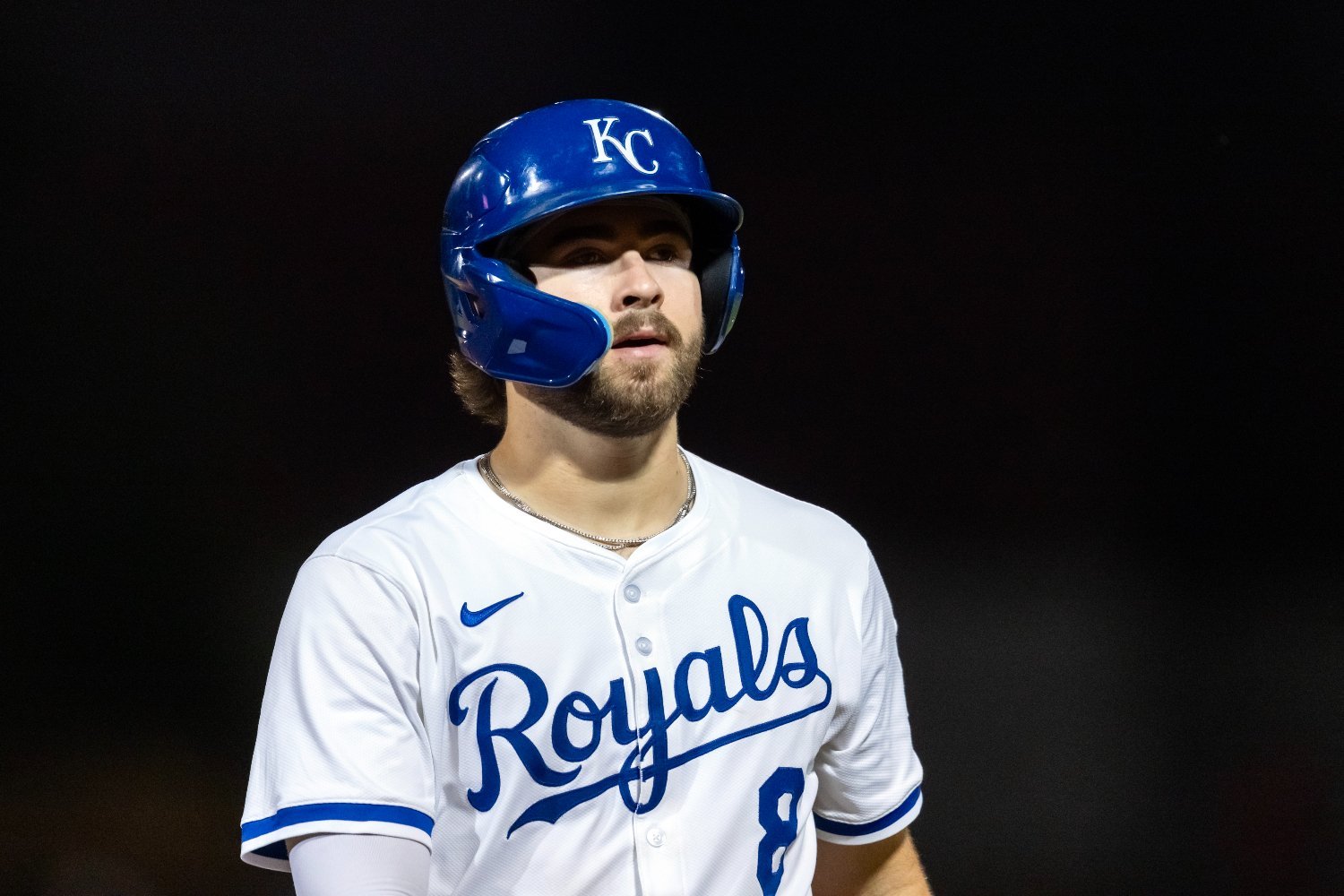 On Wednesday morning, MLB announced the rosters for the 2026 All-Star Futures Game. Two Royals players were named to the rosters: pitcher Kendry Chourio and catcher Blake Mitchell. Chourio and Mitchell are the No. 1 and No. 4 ranked prospects in the Royals system at Royals Keep. Chourio started the season in Columbia and absolutely dominated as an 18-year-old. In 11 starts and 48 IP, he posted a 1.88 ERA, 0.92 WHIP, a 23.4% K%, and 18.6% K-BB%. He was by far the best starting pitcher not just on the Fireflies roster, but arguably the Carolina League. The strong start with the Fireflies helped him earn a promotion to High-A Quad Cities. Chourio has only two starts with the River Bandits so far. In 10.2 IP, the Venezuelan-born pitcher has a 5.06 ERA, but his WHIP (1.03) and FIP (3.63) are much better marks. Chourio has improved his swing-and-miss in Quad Cities, as he has a 31.1% K% and 26.7% K-BB% with the River Bandits. His 32.5% CSW in High-A is much better than the 25.9% CSW in Low-A this season. Joining Chourio will be Mitchell, who is currently a teammate of Chourio in Quad Cities. The 2023 8th overall pick has recovered well this year after struggling through a hamate bone injury a season ago in Quad Cities. In 68 games and 298 plate appearances, Mitchell is hitting .210 with an .834 OPS and 123 wRC+. He also has 13 home runs, 16 stolen bases, and a BB/K ratio of 0.70. While he doesn't hit for high average, the former prep prospect has an exceptional eye at the plate, as evidenced by his 24.5% BB%. He also sports excellent power for a catcher. That is evident in not just the home runs, but his .215 ISO, which is 113 points higher than his mark a season ago. The 21-year-old catcher has also received high remarks for his defense and game-calling. He has thrown out 13 runners this year on 70 attempts and threw out 18 runners last year on 58 attempts. Mitchell has been the preferred catcher behind the plate in Quad Cities, even though fellow catching prospect Ramon Ramirez is also on the roster. Ramirez is our No. 6 Royals prospect at Royals Keep. With his latest honor and the draft coming up during the All-Star week, it seems likely that the Royals will promote Mitchell to Northwest Arkansas after the All-Star Break. The Futures Game will be at Citizens Bank Ballpark in Philadelphia on Sunday, July 12th at noon. It will be broadcast on NBC/Peacock. View the full article
 -
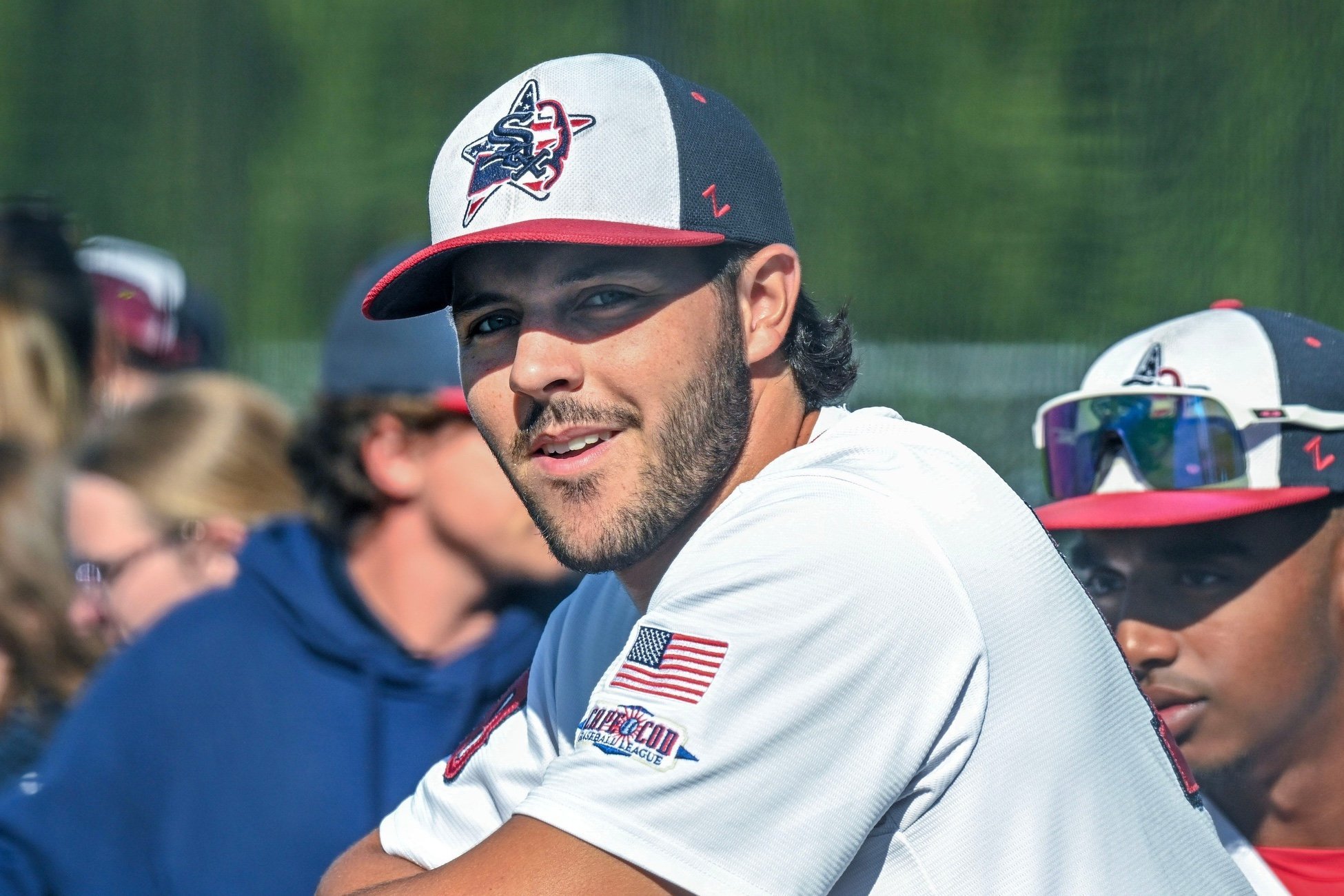 Leading up to the 2026 MLB Draft, Fish On First brings you a series of scouting reports on top prospects in this draft class who could realistically wind up in Miami. Overview Position: INF Height: 6’1″ Weight: 210 pounds School: Texas A&M Chris Hacopian is a 6’1”, 210-pound infielder who plays for Texas A&M University. Hacopian is one of the best pure hitters in the 2026 MLB Draft class. He’s also one of the top collegiate prospects in this draft. Coming out of high school, Hacopian was a blue-chip prospect from Winston Churchill High School in Potomac, Maryland. On Perfect Game, Hacopian was the 380th-ranked prospect and the 76th-ranked shortstop in the Class of 2023. He was also the sixth-ranked prospect and second-ranked shortstop out of Maryland. Hacopian went undrafted and honored his commitment to the University of Maryland. During his freshman season, Hacopian won the starting job and had an excellent season. He played and started in all 55 games. Hacopian slashed .323/.421/.578 with 72 hits, ten doubles, fifteen home runs, 42 RBIs, and a 1.009 OPS. Hacopian was named to the All-Big Ten Freshman team and Second Team All-Big Ten. He was also named a Second Team Freshman All-American. In the 2025 season, Hacopian had another productive season for the Maryland Terrapins. Hacopian played and started in all 52 games. He slashed .375/.502/.656 with 72 hits, twelve doubles, fourteen home runs, 61 RBIs, 40 walks, and a 1.158 OPS. After the season, Hacopian entered the Transfer Portal and signed to play with the Texas A&M Aggies. In his first season at Texas A&M, Hacopian was named a Preseason All-American. He took a step back much closer to his freshman level of production. He played and started in 42 games. Hacopian slashed .319/.405/.578 with 53 hits, ten doubles, eleven home runs, 41 RBIs, 25 walks, and a .983 OPS. He was named a 2026 First Team All-SEC. At the plate, Hacopian is one of the most mentally advanced hitters in this draft class. He has excellent bat-to-ball skills and is very disciplined at the plate. He has a line-drive swing and can drive the ball to all fields. He could add more power to his game if he lifted the ball more often. Defensively, Hacopian is likely to play second or third base at the next level. He’s not the best runner, but has good fielding mechanics and average arm strength. Hacopian’s hit tool will carry him through the minor league levels. Strengths 60-grade hit tool High walk rate and low K rate Advanced approach Consistently a very good hitter High average exit velocity Weaknesses Limited defensive Below-average speed Pro Comparison: Matt Shaw Projection: Top 15 pick Bottom Line Relying mainly on his bat to provide value, Chris Hacopian has the talent to get through the minor leagues quickly. On MLB Pipeline, Hacopian is the tenth-ranked prospect and the #1 second baseman in the 2026 MLB Draft. Hacopian is also the eleventh-ranked draft prospect on Baseball America and 19th on ESPN. The Marlins will have the 14th overall pick in the draft and should be able to grab one of the top prospects in this draft class. Hacopian would be an excellent option for the Fish. More 2026 MLB draft profiles RHP Cade Townsend OF Drew Burress LHP Gio Rojas RHP Cameron Flukey OF Eric Booth Jr. 3B Ace Reese LHP Carson Bolemon RHP Jackson Flora INF Jacob Lombard OF AJ Gracia View the full article
 -
Brewers Sending Jesus Made, Luis Pena To Futures Game
DiamondCentric posted an article in Brewer Fanatic
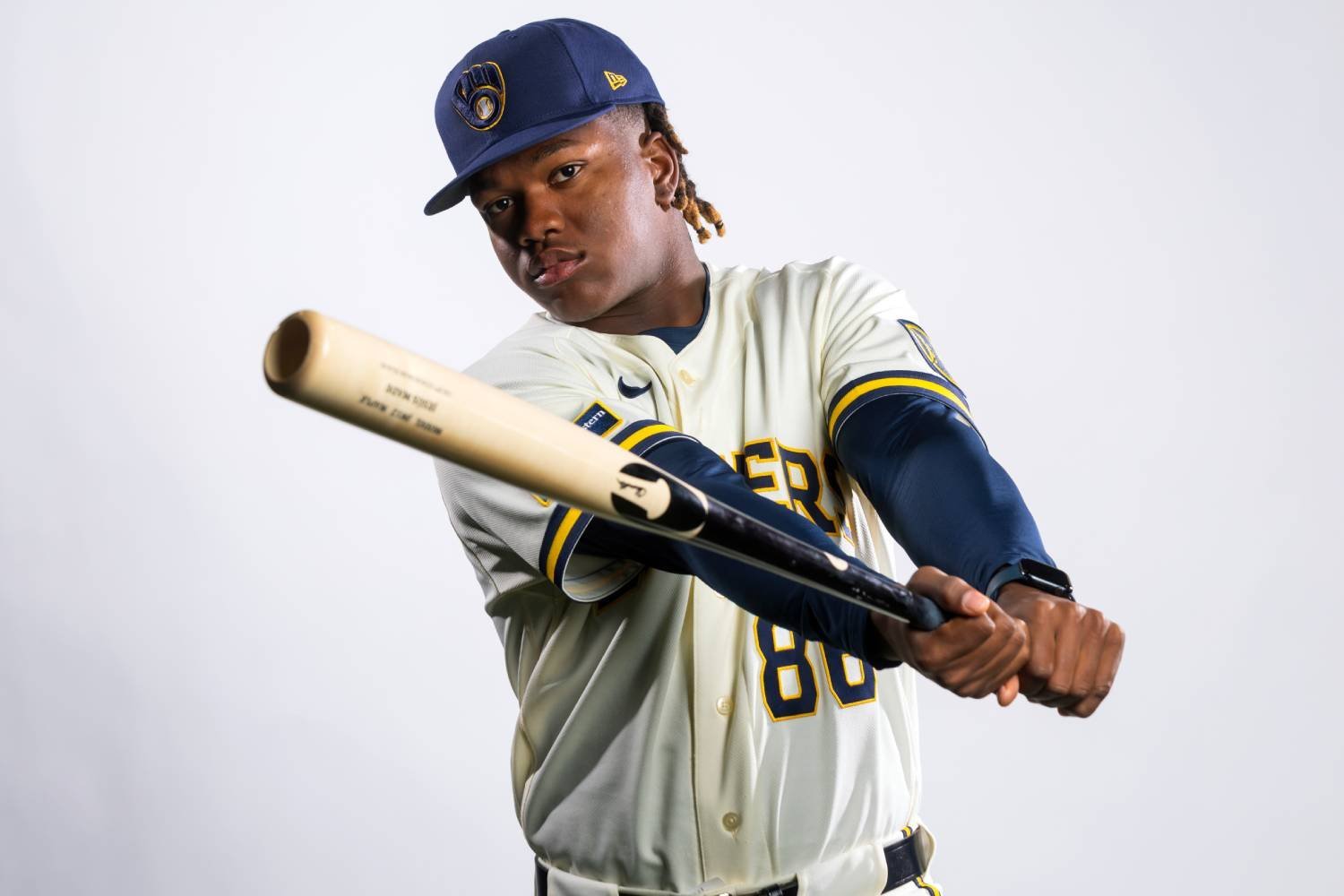 Baseball's No. 1 prospect is heading to the Futures Game. And he is bringing along a buddy. Shortstop Jesus Made, Brewer Fanatic's No. 1 prospect and the consensus top prospect in baseball, and shortstop Luis Pena, Brewer Fanatic's No. 2 prospect, will represent the Milwaukee Brewers in the July 12 Futures Game at Citizens Bank Park in Philadelphia. The Brewers have the top farm system in baseball by most outlets. Made, who turned 19 in May, is having a terrific season with the Double-A Biloxi Shuckers. The switch-hitter has a .281/.355/.441 slash line with seven homers, 51 RBIs and 23 stolen bases in 67 games. Made has rocketed through the Brewers' system. After spending 2024 in the Dominican Summer League, he came to the U.S. and began 2025 at Low-A Carolina for 83 games, then went up to High-A Wisconsin for 27 and spent five games with Double-A Biloxi to wrap up a tremendous year in full-season ball. He had a .285/.379/.413 slash line, hitting six homers and driving in 61 while stealing 47 bases in 60 attempts. Pena spent most of that time as Made's running mate until starting this season back with the Wisconsin Timber Rattlers. Pena has played shortstop at Wisconsin with Made not being on the same roster and putting together a .318/.431/.432 slash line with one homer and 13 RBIs in 26 games. Pena missed a month after a late-April incident that saw him rushed to a hospital after passing out in the dugout during a game. It was determined to have resulted from Pena becoming overheated. Pena also missed two weeks in June. Made is one of 19 No. 1 prospects who will be representing their teams at the Futures Game. View the full article
