


DiamondCentric
-
Posts
2,631 -
Joined
-
Last visited
Never
Content Type
Profiles
Forums
Events
News
Tutorials & Help
Major League Baseball Videos
Guides & Resources
Store
Downloads
Gallery
Everything posted by DiamondCentric
-

 Brett Squires homered and tripled with four RBI, but the Omaha Storm Chasers fell 13-11 in ten innings. The Northwest Arkansas Naturals wasted Felix Arronde's six innings in a 7-6 walkoff loss. Tanner Jones spun five scoreless innings, and Trevor Werner's three-run homer keyed a seven-run ninth as the Quad Cities River Bandits won 7-2. Darwin Rodriguez took the loss as the Columbia Fireflies dropped a 4-1 decision despite nine hits. Royals Transactions Kansas City Royals recalled RHP Eric Cerantola from Omaha Storm Chasers. Kansas City Royals optioned RHP Mitch Spence to Omaha Storm Chasers. Storm Chasers' Early Outburst Wasted In Extra-Inning Loss The Omaha Storm Chasers built an early lead and then watched it disappear in a 13-11, ten-inning loss to the Columbus Clippers. Squires carried the offense, going 3-for-4 with a triple, a home run, a stolen base, two runs, and four RBI. Brandon Drury added a home run, two RBI, and two runs, while Rudy Martin Jr. reached base three times from the leadoff spot. Omaha put up six runs in the second inning to seize control. The affiliate loaded the bases on two walks and a hit by pitch, then pushed across the first run on Kevin Newman's bases-loaded walk that scored Drury. A run came around on a strikeout, Squires followed with a two-run triple, and Abraham Toro and Gavin Cross each delivered an RBI double to cap the rally. The Clippers chipped away over the middle innings, scoring five in the fourth and adding single runs in the sixth, eighth, and ninth. Squires' two-run homer in the ninth tied the game and forced extra innings, but Columbus answered with four runs in the top of the tenth, including a two-run home run that brought home the zombie runner. Omaha managed only two runs in the bottom of the tenth on Drury's two-run homer and fell short. Starter Bailey Falter worked 3 1/3 innings, allowing four runs on two walks with four strikeouts. Génesis Cabrera took the loss after surrendering four runs in the tenth. The Storm Chasers stranded seven runners and went 5-for-15 with runners in scoring position. They are 36-44 this season. Omaha Storm Chasers Hitting Player AB R H RBI BB K Rudy Martin Jr. 6 2 2 0 0 1 Peyton Wilson 6 0 1 1 0 3 Brett Squires 4 2 3 4 1 0 Abraham Toro 4 1 1 1 1 1 Gavin Cross 4 1 1 1 1 0 Brandon Drury 4 2 1 2 1 1 Luca Tresh 4 1 0 0 1 0 Andrew Velazquez 4 1 1 0 0 1 Kevin Newman 2 1 0 1 1 0 Matthew Lugo 2 0 1 0 0 0 Omaha Storm Chasers Pitching Player IP H R ER BB K HR Bailey Falter 3 1/3 6 4 4 2 4 0 Andrew Pérez 2/3 1 2 2 1 0 1 Mason Black 3 2 1 1 1 3 1 Jose Cuas 2/3 1 1 1 1 0 0 Anthony Gose 1 1/3 1 1 1 0 2 1 Génesis Cabrera 1 3 4 3 1 1 1 Naturals Squander Lead In Walk-Off Loss To Springfield The Northwest Arkansas Naturals carried a lead into the late innings but fell 7-6 on a walk-off home run against the Springfield Cardinals. Sam Kulasingam led the way, going 2-for-4 with a home run, a stolen base, two runs, and two RBI. Jack Pineda reached base three times with two hits, a walk, a stolen base, and two RBI, and Connor Scott homered. The decisive frame for the Naturals was a five-run third inning. Scott opened the scoring with a solo home run, Pineda laced a two-run single, Kulasingam followed with an RBI single, and Colton Becker doubled home another run. That outburst, added to a run in the first, gave Northwest Arkansas a 6-3 lead. The advantage did not hold. Springfield trimmed the deficit with a run in the sixth, tied it with two runs in the seventh, and ended it with a leadoff home run in the ninth. Royals Keep's No. 14 prospect Arronde turned in a strong start, working six innings and allowing four runs, three earned, on five hits with one walk and four strikeouts. Oscar Rayo took the loss after allowing the walk-off home run. The Naturals left four runners on base and went 3-for-9 with runners in scoring position. Northwest Arkansas is now 30-43. Northwest Arkansas Naturals Hitting Player AB R H RBI BB K Carson Roccaforte 4 1 1 0 1 1 Jack Pineda 3 1 2 2 1 0 Sam Kulasingam 4 2 2 2 0 0 Jorge Alfaro 4 0 0 0 0 1 Spencer Nivens 4 0 1 0 0 1 Colton Becker 4 0 1 1 0 1 Omar Hernandez 4 0 0 0 0 1 Connor Scott 4 1 1 1 0 1 Alberto Rodriguez 4 1 1 0 0 0 Northwest Arkansas Naturals Pitching Player IP H R ER BB K HR Felix Arronde 6 5 4 3 1 4 1 Frank Mozzicato 1/3 1 2 2 2 0 0 Oscar Rayo 1 2/3 1 1 1 0 1 1 River Bandits Erupt For Seven In Ninth To Stun South Bend The Quad Cities River Bandits broke a scoreless tie dramatically, plating seven runs in the ninth inning to beat the South Bend Cubs 7-2. Werner provided the biggest swing, a three-run home run, and finished 1-for-4 with three RBI. Ramon Ramirez, Royals Keep's No. 6 prospect, went 2-for-4 with a double and two RBI, and Tyriq Kemp added a hit, an RBI, a walk, and a stolen base from the leadoff spot. The ninth inning told the whole story offensively. Ramirez started the rally with a two-run double, Connor Rasmussen brought home a run on a groundout, Werner crushed his three-run homer, and Kemp capped the scoring with an RBI single. The seven-run frame turned a 2-0 deficit into a comfortable win. Starter Jones was dominant, working five scoreless innings and allowing just one hit with one walk and five strikeouts. The Cubs scratched across single runs in the sixth and eighth, but Quad Cities steadied things out of the bullpen. Kamden Edge, Royals Keep's No. 19 prospect, earned the win with two innings of work, allowing one run on one hit with two strikeouts. The River Bandits left four runners on base and went 3-for-9 with runners in scoring position. Quad Cities improved their record to 32-39 after the victory over the Cubs. Quad Cities River Bandits Hitting Player AB R H RBI BB K Tyriq Kemp 4 1 1 1 1 1 Asbel Gonzalez 4 1 0 0 1 0 Blake Mitchell 4 0 0 0 0 2 Ramon Ramirez 4 1 2 2 0 0 Nolan Sailors 3 1 1 0 1 1 Erick Torres 2 1 0 0 2 0 Connor Rasmussen 4 0 0 1 0 2 Trevor Werner 4 1 1 3 0 1 Angel Acosta 4 1 1 0 0 0 Quad Cities River Bandits Pitching Player IP H R ER BB K HR Tanner Jones 5 1 0 0 1 5 0 Aiden Jimenez 1 1 1 1 0 2 1 Max Martin 1 1 0 0 1 1 0 Kamden Edge 2 1 1 1 0 2 0 Fireflies' Bats Stranded In Loss To Kannapolis The Columbia Fireflies collected nine hits but managed only one run in a 4-1 loss to the Kannapolis Cannon Ballers. Roni Cabrera led the offense, going 2-for-3 with an RBI, a walk, and a stolen base. Ivan Sosa also notched two hits, and Stone Russell doubled, but the affiliate repeatedly failed to bring runners home, stranding eight in the contest. Kannapolis built its lead early. The Cannon Ballers scored once in the first and then put up three runs in the third inning, a frame aided by a throwing error. Columbia could not respond until the seventh, when Cabrera singled home Yandel Ricardo, Royals Keep's No. 10 prospect, for the team's lone run. Starter Rodriguez took the loss, working five innings and allowing four runs, three earned, on five hits with one walk and two strikeouts. The bullpen was sharp behind him, as Brandon Herbold, Yeri Pérez, and Andy Basora combined for three scoreless innings of relief. The Fireflies' inability to cash in with runners aboard, eight left on base, proved the difference. Columbia Fireflies Hitting Player AB R H RBI BB K Josh Hammond 4 0 1 0 0 0 Sean Gamble 4 0 1 0 0 1 Stone Russell 4 0 1 0 0 0 Jhosmmel Zue 4 0 1 0 0 0 Yandel Ricardo 4 1 1 0 0 0 Roni Cabrera 3 0 2 1 1 0 Josi Novas 4 0 0 0 0 0 Ivan Sosa 4 0 2 0 0 0 Gabriel Silva 4 0 0 0 0 2 Columbia Fireflies Pitching Player IP H R ER BB K HR Darwin Rodriguez 5 5 4 3 1 2 0 Brandon Herbold 1 1/3 0 0 0 0 1 0 Yeri Pérez 2/3 0 0 0 2 1 0 Andy Basora 1 1 0 0 0 1 0 Top-20 Prospect Performance Kendry Chourio: DNP David Shields: DNP Josh Hammond: 1-for-4 Blake Mitchell: 0-for-4, 2 K Sean Gamble: 1-for-4, K Ramon Ramirez: 2-for-4, 2B, 2 RBI Drew Beam: DNP Carson Roccaforte: 1-for-4, 2B, BB, SB, K Asbel Gonzalez: 0-for-4, BB Yandel Ricardo: 1-for-4 Michael Lombardi: DNP Ben Kudrna: DNP Justin Lamkin: DNP Felix Arronde: 6 IP, 5 H, 4 R, 3 ER, 1 BB, 4 K Blake Wolters: DNP Steven Zobac: DNP Austin Charles: DNP Daniel Vázquez: DNP Kamden Edge: 2 IP, 1 H, 1 R, 1 ER, 0 BB, 2 K Warren Calcano: DNP View the full article
 -
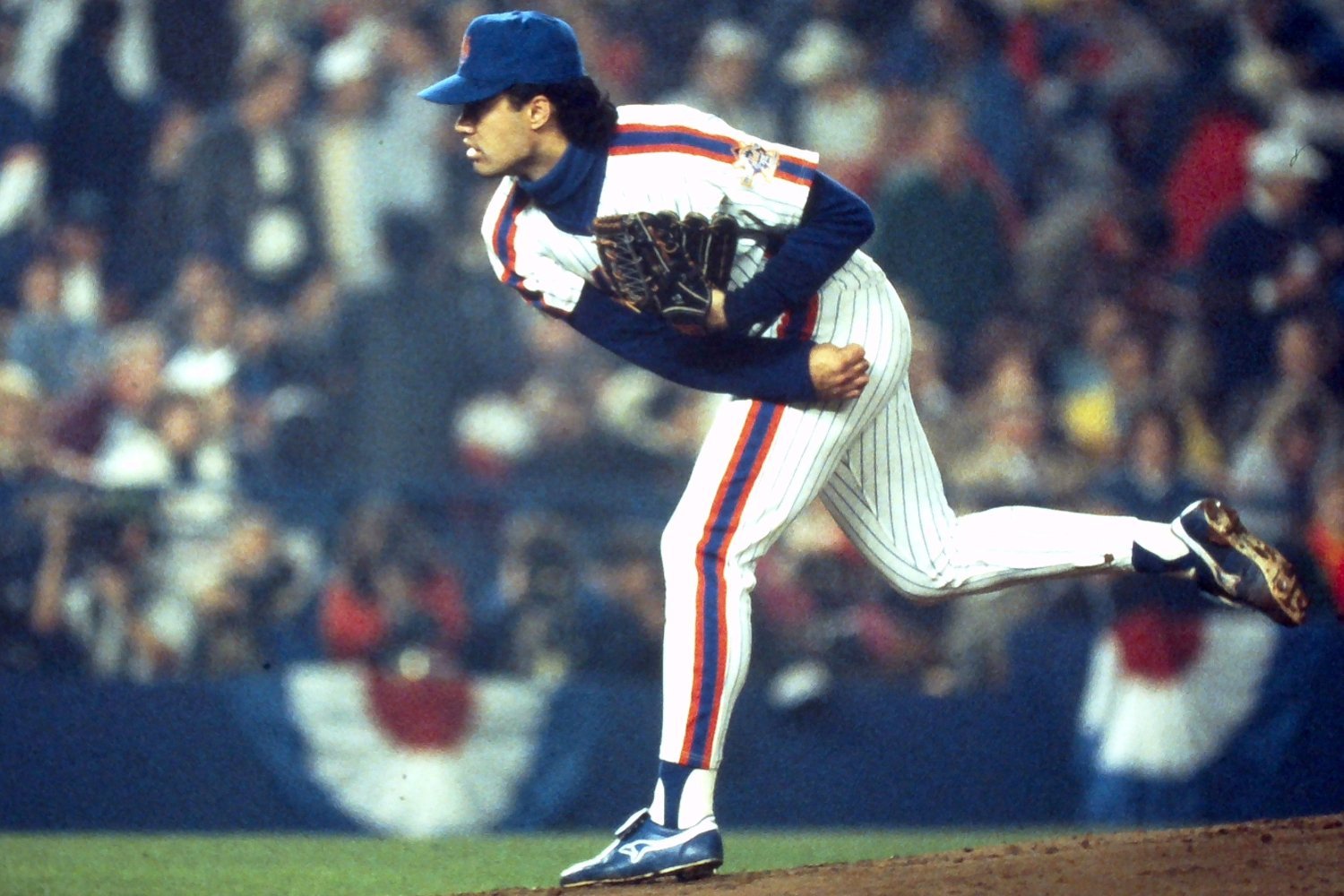 Phase 1 of fan voting for the 2026 MLB All-Star Game closed on Thursday. Just one New York Mets player (Juan Soto) advanced to Phase 2, which begins Monday. He's in the running for a place in the National League's starting lineup. But even if Soto doesn't get enough votes to be named a starter, he's the most likely Met to represent the club in Philadelphia on July 14, based on his stats and the Mets’ overall poor play. He would be a first-time Met All-Star after being passed over last year. It's quite likely that Soto will earn multiple All-Star berths during his Mets tenure and escape the fate of more than 30 players who have made the Midsummer Classic just once while wearing orange and blue. Grand Central Mets is taking a look back at those players in a three-part series. Part 1 covered the period from 1962 to 1981; Part 2 covers the period from 1982 to 2006. Ron Darling (1985) Darling was the sidekick to Dwight Gooden while the two headed the Mets’ rotation in the mid-'80s. That was especially true in ‘85 as Doc was putting together his season for the ages. But Ronnie was having a terrific year himself, and so he and Gooden both made the trip to Minneapolis for the All-Star Game. Neither man pitched in the game — Darling had thrown nine innings four days earlier, while Gooden had thrown a shutout two days prior. They watched the National League prevail, 6-1. When they rejoined the Mets for the second half, they were ready to lead a furious pennant drive. In the end, the Mets fell short, finishing second to the St. Louis Cardinals in the NL East despite winning 98 games. While Gooden dazzled with his 24-4 record and 1.53 ERA, Darling went 16-6 with a 2.90 ERA in 248 innings pitched. After battling for a pennant, they were ready to dominate in “86. In the World Series against the Boston Red Sox that year, it was Darling who filled the No. 1 role. He started Games 1, 4 and 7 — two gems followed by an early exit. He posted a 1.53 ERA for the series and, more importantly, collected a ring. John Franco (1990) Franco had been a Met for about half a season when he got his All-Star invite. New York acquired him in a trade with the Cincinnati Reds in December 1989. Fellow reliever Randy Myers was the big get for the Reds in the deal. It's safe to say the trade worked out for both teams from the start. Myers became one of the “Nasty Boys” in Cincinnati with Rob Dibble and Norm Charlton, while Franco excelled as the closer for his hometown team. The Brooklyn native had 17 saves at the break in ‘90, good for a trip to Wrigley Field in mid-July. Franco threw a scoreless ninth in a 2-0 NL loss, coming on after Myers and Dibble. He finished the year with a league-high 33 saves, but the Mets faltered in September and finished second in the division to the Pittsburgh Pirates. Out of that failure came the “Worst Team Money Could Buy,” a franchise crash, and then a turnaround capped by an NL pennant in 2000. Franco was there for all of it, and then some. He was given the title of team captain later in his career. Franco lasted 15 seasons with the Mets in all. He became the franchise's all-time saves leader and the first left-hander in baseball history to collect 400 saves. Twenty-one years after throwing his last big-league pitch, Franco is still seventh all time with 424 saves. Bret Saberhagen (1994) Saberhagen was one of the big-name players who joined the Mets right as their run as contenders was ending. New York got him in a trade with the Kansas City Royals at the close of the 1991 Winter Meetings. They sent franchise villains Gregg Jeffrerie and Kevin McReynolds, plus Keith Miller, to KC. Sabes brought championship pedigree to New York — he shut out the Cardinals for the Royals in Game 7 of the 1985 World Series — but his body was betraying him. Injuries limited him to 15 starts in 1992 and 19 starts in 1993. He stayed healthy in ‘94, though, and he was stellar that year. A 10-4 record and a 3.15 ERA (3.03 FIP) got him to Pittsburgh for the All-Star Game. He pitched the previous Sunday, so he did not take the mound for the NL's thrilling 8-7 win at Three Rivers Stadium. A month later, the players went on a season-ending strike as the owners pushed for a salary cap in baseball. Saberhagen ended the year 14-4 with a 2.74 ERA in 177⅓ innings. He allowed 13 walks, meaning he had more wins than bases on balls. The health issues returned in 1995. Saberhagen began experiencing shoulder soreness in May after a compressed post-strike spring training, and then he strained a muscle in his side in July. He pitched through everything. On July 31, New York traded him to the Colorado Rockies, who were pursuing a wild-card berth in their third season. Lance Johnson (1996) Johnson made the most of his first season in Queens. He played every day in center field, he led off, and he gave the team a jolt of energy. The “1 Dog” quickly became a fan favorite, so much so that he was voted an All-Star starter. Johnson was in center field, flanked by Barry Bonds and Dante Bichette, as the National League took the field at Veterans Stadium in Philadelphia. He ended up playing all nine innings. He led off, naturally, and did his thing at the plate. He went 3-for-4 with a run scored and a stolen base. The hits kept coming for Johnson in the second half. By season's end, he led the majors with 227 hits, good for a .333 average. He also topped baseball with 21 triples, a Mets franchise record. For good measure, he had 50 steals. Johnson couldn't repeat his success in 1997, thanks to shin splints that kept him on the disabled list for six weeks. His numbers were still OK, though. Johnson was at .309/.385/.404 through Aug. 7. Then came a bizarre twist. On Aug. 8. Johnson was traded to the Chicago Cubs for center fielder Brian McRae and relievers Mel Rojas and Turk Wendell. Right-hander Mark Clark and infielder Manny Alexander were heading to Chicago days later. All six players had to clear trade waivers because the deal was made after the July 31 deadline. Johnson was 34 and hobbled. The deal worked out for the Mets because Wendell became a huge part of the bullpen from 1998 to 2000. Bobby J. Jones (1997) This Bobby Jones is not to be confused with Bobby M. Jones, who pitched briefly for the Mets. Bobby M. was a left-handed swingman. Bobby J. was a durable right-handed starter drafted in the first round by the Mets out of Fresno State in 1991. In 1997, he was also an All-Star. Jones earned a spot on the NL staff with a 12-5 record and 3.08 ERA at the break that year. He worked a scoreless eighth inning in the NL's 3-1 loss at Jacobs Field in Cleveland. His work in the second half wasn't as good, and by season’s end, he was at 15-9, 3.63. It was the beginning of a downward career spiral. His one shining moment over the next three years, and it was as bright as possible, was a game in the 2000 NLDS. Jones shut out the San Francisco Giants on one hit in Game 4 to clinch the series. Edgardo Alfonzo (2000) “Fonzie” was one of the top second basemen in the game when he made his lone All-Star team. A year earlier, he had moved to second from third with the arrival of Robin Ventura. Those two, plus John Olerud and Rey Ordonez, formed one of the finest all-around infields in franchise history. Around the same time, Alfonzo found his power stroke as offense throughout the sport was exploding. By 2000, he was a middle-of-the-order threat who also had elite bat control. He claimed his place as an All-Star reserve with a .316/.417/.538 slash line, 13 home runs, a 14.7 walk rate and a 9.8 percent strikeout rate at the break. He replaced Jeff Kent midgame at Turner Field, going hitless in two at-bats as the NL lost 6-3. The All-Star appearance would not be Alfonzo's last big stage of the season. The Mets won the NL wild card and then advanced to face the Yankees in the Subway Series. Alfonzo went 3-for-21 as the Amazins lost in five games. That disappointment aside, he was riding high in 2000. He received MVP votes after posting 6.0 bWAR, his third season of 6 or more in a four-year span. He was a star at 26. But then injuries hit hard. His 2001 campaign was marred by back, elbow, hand and leg ailments. He bounced back in 2002 with 5.0 bWAR, but then he left the Mets after that season to sign a four-year, $26 million contract with the NL champion San Francisco Giants as a free agent. Al Leiter (2000) Leiter's left arm might still be sore from those 142 pitches in Game 5 of the 2000 Series. But Leiter had earned the trust of manager Bobby Valentine, who kept him on the mound for 8⅔ innings until the Yankees took the lead. He was the leader of the rotation. In July, he was leading the way with a 10-2 record and 2.99 ERA (3.97 FIP). He made the NL All-Star staff off those numbers. He took the loss in the game after allowing a two-run single to Derek Jeter in the fourth inning. Ominous foreshadowing there. Leiter ended the season with 16 wins, a 139 ERA+ and 200 strikeouts. He stayed a Met through the 2004 season. He ended his career in 2005 with two of his former teams, the then-Florida Marlins and the Yankees. Armando Benitez (2003) Benitez played a major role in the 2000 World Series drama, too. He blew the save in Game 1 and the Yankees ended up winning in 12 innings. It was all downhill for the Mets after that. But Benitez saved a lot of games for the club, as well, and by 2003, he was long past the Subway Series failure. He wasn't at his best that season, though. In fact, he was having a tough year when he made the All-Star team. He was just 21-for-28 in save opportunities at the break. Benitez was spared an appearance in the game at then-U.S. Cellular Field in Chicago. Billy Wagner and Eric Gagne gave it up in a 7-6 NL loss. The next day, he was a Yankee. The Mets traded him to the Bronx Bombers on July 16 for three prospects as their deadline sell-off continued. Benitez was in the last year of his contract. He left having recorded 160 saves as a Met. Paul Lo Duca (2006) Lo Duca was an All-Star at his two stops before New York, with the Los Angeles Dodgers and then-Florida Marlins. He hit the trifecta with the Mets in ‘06 when he was voted an NL starter. His .302 average at the break, the Mets’ place in the standings and the team's popularity at the time helped a lot. In fact, he was one of three Mets to start the game. David Wright and Carlos Beltran were the others. He went 0-for-2 in the NL's 3-2 loss. Lo Duca finished the season with a .318 average, but he had just five home runs and 49 RBIs. The Mets won the East that year, but famously lost the NLCS to the Cardinals in seven games. In Game 7, Lo Duca walked with two outs in the bottom of the ninth to load the bases for Beltran. An Adam Wainwright hook from hell buckled Beltran's legs for strike three and sent the Redbirds to the World Series. The next year, Lo Duca was in the middle of the Mets’ “up seven with 17 to play” collapse that gifted the Phillies the division. That's some bad stretch running. And Lo Duca would know all about that as someone who has been involved in horse racing for decades. View the full article
 -
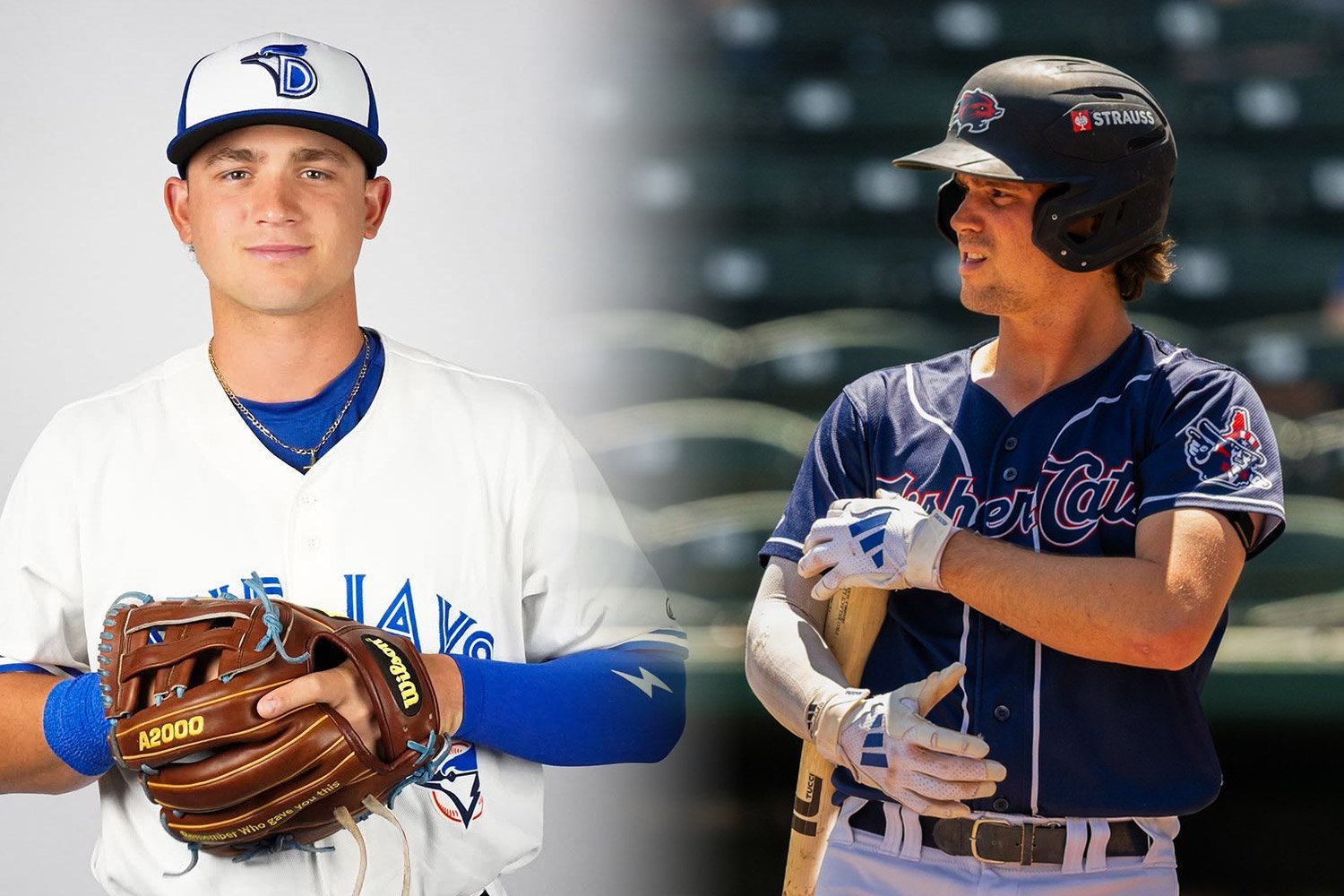 The headlines have surrounded Sean Keys and his 20 homers in just 280 plate appearances, and for good reason. He’ll be in consideration for the major league roster with how well he’s hitting the ball and the major league team's scuffles at the plate. I want to take a look at the two guys who haven’t hit as well as Keys, but have been the second and third best hitters in the Jays' minor league system so far this season. Meet Jay Harry and Tucker Toman, two batters with wildly different pedigrees and prospect status when they first came into the league, but were both considered almost non-prospects in the offseason prior to this year. Jay Harry was the Twins’ sixth-round draft pick in 2023, and despite having a name that matched the team name of the major league team he played for, he was an afterthought in the whirlwind 2024 trade deadline, as the confounding reliever Trevor Richards was sent to Minnesota to acquire him. Harry bounced between High-A Vancouver and Double-A New Hampshire, hitting under the Mendoza line with a sub-.300 OBP and SLG, and was primarily touted for his defensive versatility. Tucker Toman came to the Jays in a much different way, as one of the bigger signing bonuses that the Jays gave out in the 2022 MLB draft as their second round compensation pick for $2 million out of high school. He was known for having a solid hit tool with power potential as a switch hitter, but his prospect status quickly dwindled as he spent three years in Low-A Dunedin, where he was a below-average hitter until last season, when he earned a promotion to Vancouver and had 12 games of solid production. Things have taken a huge turn for those two this season, as Jay Harry has posted a 145 wRC+ in 223 PAs, slashing .330/.360/.592. Tucker Toman has been just as good with a 142 wRC+ in 238 PAs, with a .284/.403/.490 triple slash. As much as I would like to only celebrate their production, there are reasonable concerns regarding the sustainability of their production. First, let’s take a look at Jay Harry. The biggest thing that stands out about his profile is that he’s now walking just 3.6% of the time. A lot of it is in-zone aggression, although we don’t have his Double-A pitch-by-pitch data. In the small sample of 10 games in Triple-A, he swings at 84.7% of pitches he sees in the zone. Only Elias Diaz has swung at more than that in the major leagues (min 50 PAs). Harry is not at all selective, though, as he equally chases at an absurd amount, with a 51.8% chase rate, which is 4% higher than the swing-happy Ernie Clement. While Harry does do damage when he makes contact, with a 48.5% hard hit rate and a 90.4 mph average exit velocity, he actually whiffs a lot at the pitches he swings at out of the zone. His contact rate for pitches out of the zone was just 60.5%, and although his in-zone contact was good at 88.5%, it isn’t elite like a lot of swing-happy hitters. Despite the solid hard hit rate, Jay Harry also doesn’t have the best raw power either, with him having just a 106.1 mph Max exit velocity and a 103.6 90th percentile exit velocity being just slightly above average in Triple-A. He makes up for the lack of raw power with a pulled air-approach, which lets his power play up, but the question remains if his swing-heavy approach can be sustained against more advanced pitching. Right now, he’s buoyed by a .397 BABIP, and he’s normally been more than .100 points of BABIP lower than that throughout his minor-league career. Harry was never going to sustain a 140 wRC+, but he does have some makings of a good hitter in him. The biggest question is whether he can be a productive hitter despite his aggressive approach. A comparison that seems apt is with Edmundo Sosa of the Phillies, despite being a right-handed hitter instead of left-handed like Harry, their contact and batted ball metrics are remarkably similar, except Harry has better Air-Pull rates and swung at more pitches in the zone. For Harry to carve his way into a major league role, Sosa would be a great player to replicate as a platoon infielder with great defensive versatility, except Harry would be a strong-side platoon bat as a lefty. Harry has much better numbers against righties than lefties. Name O-Swing% Z-Swing% Swing% O-Contact% Z-Contact% Contact% EV EV90 maxEV HardHit% CStr% CSW% BB% K% SwStr% Pull Air% Edmundo Sosa 53.99% 72.68% 61.39% 64.50% 89.93% 76.42% 87.4 105.7 111.6 40.59% 12.91% 27.36% 2.16% 22.30% 14.45% 12.00% Jay Harry 51.80% 84.70% 60.80% 60.50% 88.50% 75.80% 90.4 103.6 106.1 48.50% 11.90% 26.60% 3.60% 22.90% 14.70% 21.20% (Data via FanGraphs, TJstats.ca) Moving on to Tucker Toman, the infielder finally made the decision to drop switch-hitting as his righty swing heavily lagged behind his more advanced lefty swing. This has led to an uptick in performance and has made his breakout much more compelling. The best part about Toman’s game is his plate discipline. Toman, despite his struggles, constantly ran near 10% walk rates or above, and he’s been walking at a career best 13.9% of the time. He’s not just walking because of passivity either; he’s been good at not chasing but also with reasonable amounts of in-zone swings at 68.4% of the time. Toman’s production has been carried by a stretch of nine games where he homered six times and added another six doubles, but there are legitimate qualms about Toman’s raw power. Although we don’t have publicly available batted ball metrics for this season, Toman’s data last season wasn’t very impressive, with his Max Exit Velocity at 108.7mph and his 90th percentile at 102.2mph. Some would assume that Toman dropping switch-hitting may have impacted his power numbers and that his power production was mostly from that, but there are other factors at play that need to be considered. As reported by JJ Cooper from Baseball America , the minor leagues have had an offensive explosion that we haven’t seen in a while, most likely due to changes in minor league baseball. Many hitters are experiencing gains in exit velocities and hard hit rates, perhaps not due to improvements as a hitter but due to changes in the baseball. Toman seems to be one of the bigger beneficiaries of those changes, as his batted ball profile is not conducive to hitting for power. He doesn’t lift the ball well at all with a 51.1% groundball rate, and when he does lift the ball, it’s often not pulled. With pulled flyballs being the easiest source of power for most hitters, it’s either that Toman has significantly improved his batted ball metrics or that he’s gotten really lucky with his flyballs. Prior to this season, Toman homered on around 7% of the flyballs that he’s hit, but this season he’s up to a 22.5% HR/FB rate (as of June 25th, 2026). Another problem for Toman is that although his patient approach works for him, he’s not very adept at hitting for contact, with just a 75.8% Z-Contact rate and a near 30% whiff rate, which has resulted in a below-average K rate. He is also running a quite high BABIP with a .365, although he seems to be a batter who naturally runs higher BABIPs. His middling contact rates mean that for Toman to continue to be a productive hitter, he needs to hit for power, or more advanced pitchers will challenge him in the zone as he moves up. I find it more unlikely for Toman to continue hitting for power at this rate with his prior middling raw power, whilst also having the same batted ball distribution that he has now. Those things need to have changed significantly for me to fully believe in the breakout. He has pulled the ball in the air more in previous seasons, and his worse results prior may mean that this works for him, but I’m still a bit skeptical about his abilities as a hitter. Harry's ultra-aggressive approach and Toman's questionable power indicators suggest that some regression is likely, but we should appreciate how much they've improved so far this season, as the two of them were afterthoughts in an improving Jays system. The remainder of the season will help determine how much of this breakout is actually real, and even if they aren't 140 wRC+ hitters by the end of the season, their development is another example of the progress that the Jays' development system has made. View the full article
 -
4 early MLB trade deadline targets for Marlins to consider
DiamondCentric posted an article in Fish On First
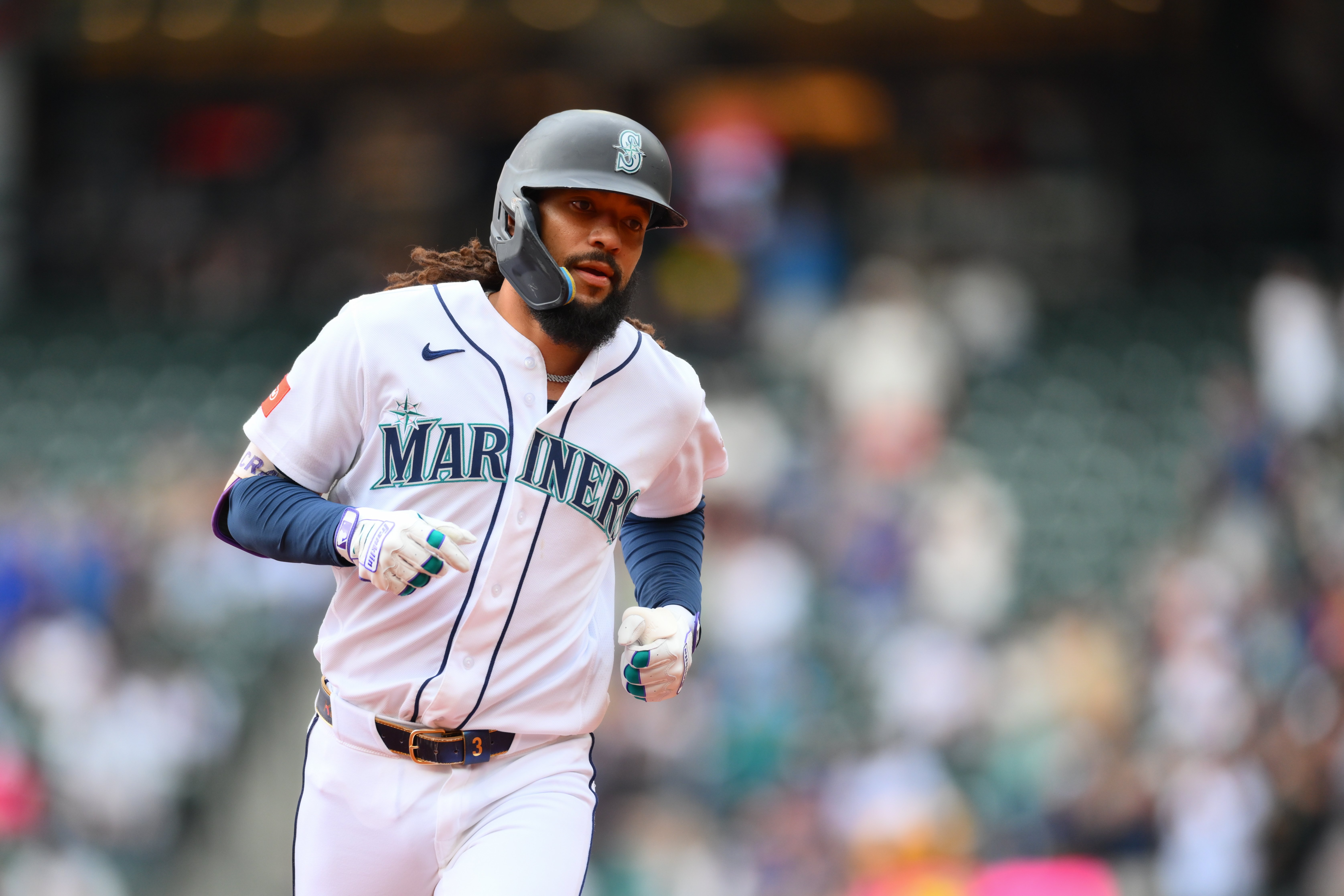 The Miami Marlins are currently in the thick of things with a 44-40 record, a game and a half out of the final Wild Card spot in the National League. With that being said, they are in a position where they can buy and try to make true a push to the postseason for the first time since 2023. The biggest need for this Marlins team is at third base, where they currently have a 43 wRC+, making it the worst third base production in baseball. Although looking towards Matt Chapman as the first option makes a lot of sense, it is an unrealistic option. The Marlins would be taking on a big contract and on top of that, Chapman would have to approve a trade to Miami with a no trade clause. J.P. Crawford (Seattle Mariners) Instead, an option that makes a lot more sense and is being phased out of his current situation is Seattle Mariners J.P. Crawford. In 67 games this season, he is slashing .224/.342/.371/.713 with 10 home runs, 25 RBI and a 111 wRC+. Although he hasn't been someone who steals bases, Crawford has always gotten on base a lot and that is thanks to a strong approach at the plate, walking 13.7% of the time this season while striking out only 19.5%. Defensively, Crawford has primarily third base because of top prospect Colt Emerson being called up, but Crawford may soon have to move off third base once Brendan Donovan returns off the injured list. Crawford has shown mixed results at third base, with a negative one Outs Above Average, but zero defensive runs saved, which is league average. Crawford is in the final year of a five-year, $51M contract, so the Marlins would be acquiring a pending free agent who is making $12M this season. Although the Mariners are not going to sell, this is the one piece they can move on from and Crawford would be an everyday third baseman where he can help the already poor production at the position that the Marlins are dealing with. Isaac Paredes (Houston Astros) If the Houston Astros do what the Tampa Bay Rays have done in years past, a bit of selling with some buying, then Isaac Paredes would make a lot of sense for the Marlins. In 79 games this season, Paredes is slashing .250/.348/.426/.774 with 11 home runs, 44 RBI and a 119 wRC+. Approach wise, Paredes is striking out 16.3% of the time, the lowest single-season mark of his career (min. 100 PA). Although Paredes isn't a good third baseman by any means, the Marlins should be willing to sacrifice some defense in favor of more offense. He also has experience at first base. Paredes is currently making $9.35M in 2026 with a club option of $13.35M for the 2027 season. As long as he hits close to his career averages down the stretch, that would be a nice value for the Marlins moving forward. Robbie Ray (San Francisco Giants) The Marlins’ starting rotation is severely lacking a swing-and-miss element. Would you be surprised to hear that Robbie Ray ranks sixth in MLB history (min. 1,000 IP) in career strikeouts per nine innings? Beyond that, Ray’s 13 years in the majors have seen him twice named an All-Star, win an ERA title, and claim a Cy Young Award. Through his first 17 appearances in 2026, Ray has been among the more stable forces for a Giants team hellbent on a rebuild, posting a 3.39 ERA, though sporting a considerably less impressive 4.63 FIP. A free agent at season’s end, Ray would merely be a rental for Miami, but if the Fish were to eat the remaining portion of his $25M salary, it would allow them to retain the prospect capital they have built up in recent years. And while the last two seasons have seen Ray lose some of that swing-and-miss proficiency, the southpaw still owns a 3.67 ERA across 270 innings pitched. Aroldis Chapman (Boston Red Sox) At the ouset of 2025, many had given up on Aroldis Chapman. On his fourth team in three years, Chapman was a good, albeit seemingly lesser version of the pitcher we’d seen the previous decade, sporting a 124 ERA+ across 120 innings in 2023-2024. Come end of year, and Chapman authored a historic reliever season for a Boston Red Sox team that snuck it’s way into the playoffs, finishing with a microscopic 1.17 ERA and coming seventh in AL Cy Young voting. The 38-year-old hasn’t let up in 2026, sporting a 2.19 ERA across 26 appearances, with a fastball that still ranks in the 91st percentile in average velocity. While Miami already forked over $13M for a closer this past offseason, Pete Fairbanks has largely been a disappointment in his time with the club, sporting the third-highest ERA (6.75) among a sample of 165 relievers with at least 25 games pitched. The acquisition of Chapman would appropriately relegate him to a lower-leverage role. View the full article
 -
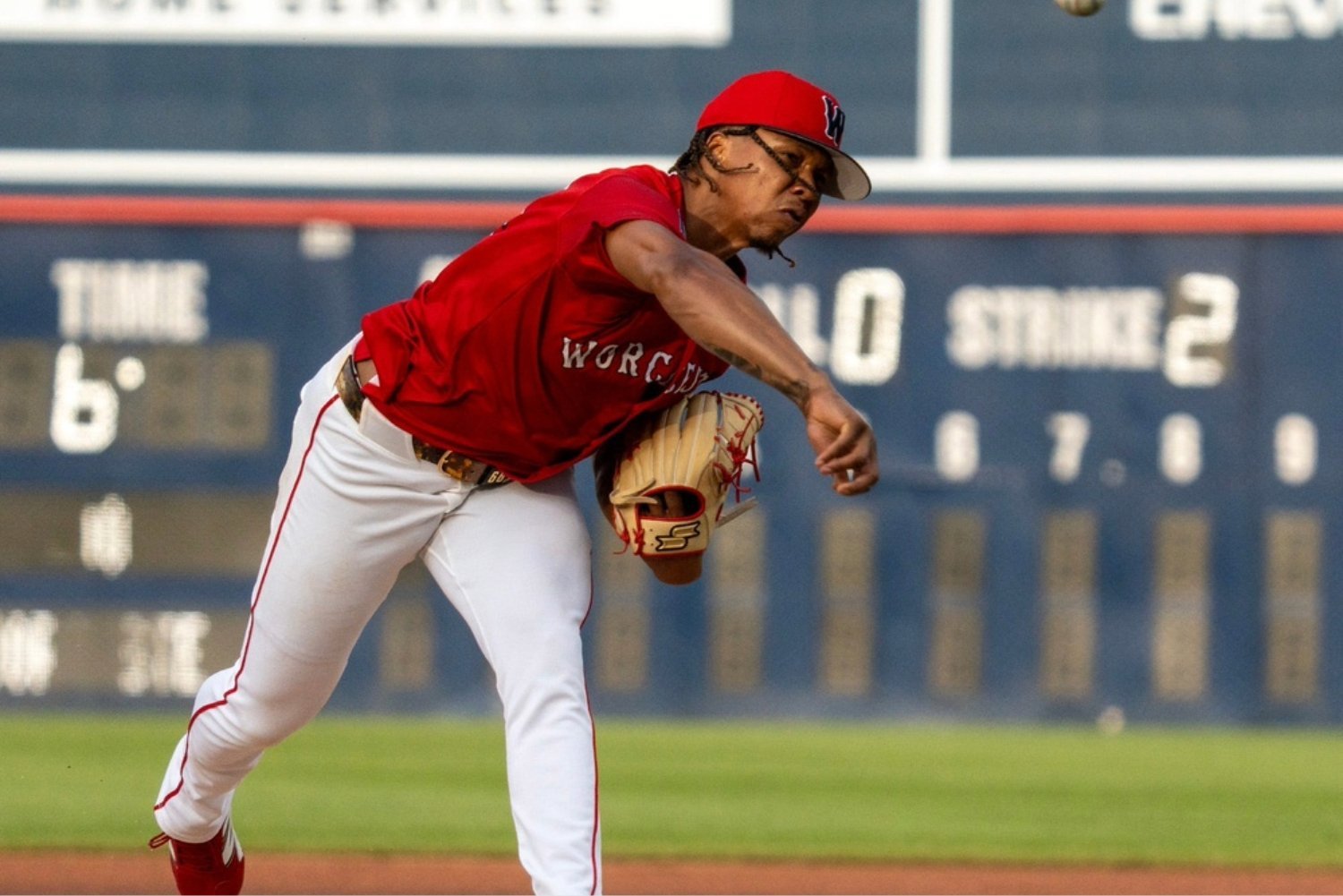 The Worcester Red Sox currently have $125 million tied between to two players on the roster, as both Brayan Bello and Kristian Campbell play in Triple-A instead of Boston. When both signed their extensions, they were seen as steals by the organization as both players looked like cornerstones for the franchise. Now, there is concern that the team will be forced to eat that sum of money as both players have struggled mightily over parts of the past two seasons. “He’ll have a good start and then you can see he gets into some traffic. I think being able to handle himself through that, you know, because that seems like what he’s been dealing with all year. And you can see it kind of snowball a little bit but when you see him stay under control mentally and being able to get himself out of it, I think that’s a positive thing to see,” acting WooSox manager Iggy Suarez stated about Bello prior to Tuesday’s game against the Toledo Mudhens. The 2026 campaign has been a disaster for the young right-hander. Coming off of his best season in 2025 where he tossed 166 2/3 innings with a 3.35 ERA while looking like a true number two starter in the rotation, expectations were high for Bello. Instead, his 2026 season has seen him demoted to Triple-A Worcester to work on some issues. In 12 appearances in Boston (eight of them starts), Bello tossed 61 innings and allowed 43 earned runs. His biggest issue? The first inning. In eight first innings this season, Bello has been unable to pitch well. Whether a mental issue or teams just having his number, Bello has allowed opposing teams to hit .442/.520/.837 with five doubles, four home runs and 15 runs scored against him in the opening frame. For a starter, that is unacceptable. To circumvent these issues, the Red Sox looked to have Bello begin his outings in the second inning and turned to an opener. In his four appearances as a bulk reliever, Bello looked like a different pitcher, tossing 25 1/3 innings in four outings and allowing just two earned runs. Unfortunately, he couldn't explain why that was the case. “Honestly, I don’t know. It isn’t much of a difference mentality wise when it comes to starting versus coming out of the bullpen. I just go out there with the same mindset and plan of attack,” Bello explained through translator Daveson Pérez at Polar Park. Unfortunately for the Red Sox, their openers also struggled and in most cases, Bello entered the game with the Red Sox already losing. For both the right-hander and the team, it was not possible for them to succeed with Bello being unable to pitch the first inning. Ultimately it led to his demotion on June 4 after allowing eight runs in five innings against the Baltimore Orioles. “He’s going to have to work on some stuff. I want him to be comfortable with us. It’s going to be an adjustment for him for sure,” Suarez explained back on June 5 after the news of Bello’s optioning had settled. Bello himself knew that he had work to do if he wanted to be a major-league pitcher again. “Get better with my locations, pitches and on the mental side of the game,” the right-hander told media during a media session on his first day back in Worcester. “I’m ready to put the work in down here so whenever it’s my time or whatever role they give me at the big=league level, I’m able to take full advantage of it.” For Bello, it was necessary to make it through the first inning without allowing teams to take the lead while also working on some of his pitches. His fastball, while only thrown 65 times, had ended up being hit by opponents at a .563 average. His sinker and cutter weren’t much better, as they were hit by opponents at averages of .316 and .361 respectively. Since joining Worcester’s rotation, Bello has seen some improvement as his fastball has an expected batting average of .253, though his sinker and cutter are still being hit hard with expected batting averages of .334 and .385 respectively. The cutter has seen an increase in usage since being optioned, going from being used 16% of the time with Boston up to 27.4% of the time with Worcester. Despite opponents hitting the pitch well, it is also generating a 52.4% whiff rate; location of pitch could be the biggest difference here. In Worcester, he’s been throwing the pitch more often than not down and in to right-handed hitters or down and away for a backdoor pitch to left-handed hitters. For Bello to return to his dominant self, he needs his cutter to return to its 2025 self where opponents managed to hit just .230 against it and whiffed on the pitch nearly a quarter of the time it was thrown. Despite his struggles, Bello isn’t ready to give up and wants the fans to know that. “One thing that is never missing is how hard I work. The amount of work I’ve put in is super important to me and to the fans, I’m looking forward to doing what I have to do down here [Worcester] to go back up there and continue having the fun times we’ve had in the past.” Since then, Bello has made three starts with Worcester, tossing 13 2/3 innings while allowing six earned runs and striking out 16 batters. “We don’t expect him to come down here and just go put up zeros and three up, three down. Let’s see how he reacts to some trouble out there and he’s been handling himself pretty well. So that’s one thing we’ve seen too,” Suarez explained about Bello’s performance so far since joining Worcester’s rotation. “You want to have good results, want to have positive results so you want him to go out there and succeed right out of the gate. The issue was the first inning for him has always been the thing. So, when you see him get through a first inning and then the second inning well, you’re like, okay, this is awesome. Then when you get to traffic on the bases, let’s see how he handles himself here. You want to navigate both. You want to have him in situations where we want him to work, but if it doesn’t line up that way then maybe that’s a good thing. Then if he does get into a situation, it’s like, here we go. This is something he’s been working on, let’s see how he reacts.” For Campbell, things have been much different. “He’s taken steps, right? He’s handling himself better in between at-bats. Staying focused on what the adjustments are and not the results. Some days are going to be good; some are going to be bad. We’re taking steps, we’re not all the way there,” former Worcester manager Chad Tracy explained back in mid-April. Campbell, who was once viewed as the future second baseman of the Boston Red Sox when he signed his extension with the team, has now spent the past year in Triple-A where he has played more than 125 games, bouncing between first base, second base and the outfield. This year, he’s exclusively played the outfield. While his defense at second base was bad (he had a Fielding Run Value of -10), it was his bat that seemingly vanished over his final two months in the majors, leading to a greater concern. Even if his defense isn't elite, with a bat that produced a stat line of .301/.407/.495 with eight doubles, four home runs and 12 RBIs in his first month in the big leagues, you could find a place to hide his glove. However, since rejoining Worcester, Campbell has seemingly lost the power that previously wowed individuals; he’s hit just 10 home runs and 20 doubles in that span. And in his 62 games in 2026, his offensive production has continued to wane. The outfielder has hit just .212/.342/.286 while striking out 85 times. And the frustration is starting to become visible. “I think you can see it in him of how he’s performing because I think he expects a lot of himself. And I think you see the frustration when he’s not going well, and rightly so. I’ve had him in the past and I’ve seen the success and the skyrocket. He’s a good player,” Suarez said of Campbell. “Now, it’s been inconsistent and you can see the frustration that he’s going through. You just try to be there for him. It’s not like he’s not putting the work in, so you try to help him maintain the confidence of the day-to-day.” Campbell is dealing with the process of reworking his mechanics since being optioned last June and it has been an up-and-down experience. As the organization has constantly said, it’s about the process and not the results as Campbell gets more comfortable with the new mechanics. Still, he needs to cut down on the strikeouts and start hitting the ball with more authority. At this point in the season, Campbell’s strikeout rate of 31.5% is too high in Triple-A for a player who hopes to rejoin the major leagues. He is walking at a 15.2% rate, offsetting some concern, though this all comes back to his swing decisions. Through roughly three months of play, Campbell’s in-zone swing percentage is just 58.8%, while he is swinging at just 40.6% of the pitches thrown to him in general. While patience is a great trait, Campbell may be putting himself in a hole by allowing too many pitches to pass by him in an at-bat, especially as he only swings and misses on just under 12% of his swings. Despite the ups and downs Campbell has endured, his manager believes he’s capable of overcoming them. What he’s experiencing is a part of baseball that everyone deals with at some point in time. For Campbell, it just happened to come when he made the major leagues. “I’ve seen it personally when I had him, I saw what he can do. Not just at the A-ball level, he went to Double-A, Triple-A and MiLB Player of the Year. I don’t think that was a fluke. He’s a good player," Suarez said, reaffirming his belief in on the team's most lucrative investments. "There’s a reason he got what he got [for an extension] and I think it’s still in there." View the full article
 -
What are your Marlins vs. Rockies series predictions?
DiamondCentric posted an article in Fish On First
 Once again in 2026, I will be monitoring Miami Marlins predictions from our valued SuperSubs, Fish On First staffers and livestream guests. Individual article pages like this one will be created prior to every Marlins series and featured prominently on the FOF site. Consistent participation is key if you want to win this annual contest. Submissions only take a few seconds. Scoring system A "perfect" series is worth three points: Earn one point for predicting which team will win the upcoming series Earn one point for predicting the precise number of victories for each team Earn one point for predicting the “Series MVP” who accumulated the highest win probability added (WPA) during the series as calculated by FanGraphs (could pick a player from either team) FOF staffer Jeremiah Geiger is currently atop the 2026 season leaderboard, which will be updated between every Marlins series. If you are a SuperSub, leave a comment with your Prediction Time picks on this page, or join the Marlins Discord Server and submit there. We'll feature them on the upcoming Fish On First LIVE episode and track your points throughout the season! Any picks submitted prior to the first pitch of the series opener will be counted. If you are not a SuperSub, please consider signing up here to support the FOF staff. Series preview notes Probable starting pitchers: RHP Sandy Alcantara (MIA) vs. TBA (COL) on Monday RHP Eury Pérez (MIA) vs. LHP Kyle Freeland (COL) on Tuesday RHP Max Meyer (MIA) vs. RHP Tomoyuki Sugano (COL) on Wednesday TBA (MIA) vs. RHP Michael Lorenzen (COL) on Thursday Likely a Ryan Gusto-led bullpen game The Marlins rank 19th in MLB with a 98 wRC+ and 10th in MLB with a 3.93 FIP. They are 8-2 in their last 10 games and have a 16-23 record on the road this season. The following Marlins players are on the injured list: Josh Ekness (60-day IL), Ronny Henriquez (60-day IL), Liam Hicks (10-day IL), Janson Junk (15-day IL), Adam Mazur (60-day IL), Andrew Nardi (60-day IL) and Robby Snelling (60-day IL). The Rockies rank 23rd in MLB with a 93 wRC+ and 28th in MLB with a 4.77 FIP. They are 5-5 in their last 10 games and have a 18-22 record at home this season. The following Rockies players are on the injured list: McCade Brown (60-day IL), Kris Bryant (60-day IL), Blas Castaño (15-day IL), Chase Dollander (60-day IL), Brenton Doyle (10-day IL), Tanner Gordon (15-day IL), Wellington Herrera (60-day IL), Jaden Hill (15-day IL), Pierson Ohl (60-day IL), RJ Petit (60-day IL) and Jose Quintana (60-day IL). View the full article
 -
Padres Minor League Report: Storm Steal Victory With 6 Late Runs
DiamondCentric posted an article in Padres Mission
 The top four affiliates for the San Diego Padres wrapped up their series Sunday with a a 2-2 showing. The Triple-A El Paso Chihuahuas were edged 2-1 by Sugar Land, the Double-A San Antonio Missions prevailed over Arkansas 5-3, the High-A Fort Wayne TinCaps were shut out by Lake County 6-0 and the Low-A Lake Elsinore TinCaps rallied for a 6-4 win. Padres Minor-League Transactions San Diego Padres signed free-agent 1B Nick Solak signed a minor-league contract and assigned to El Paso Chihuahuas. RHP Bernard Jose assigned to San Antonio Missions from Fort Wayne TinCaps. San Antonio Missions transferred OF Kai Murphy to the Development List. RHP Luis Maracara assigned to Lake Elsinore Storm from ACL Padres. RHP Yoesmerli Beltre assigned to Lake Elsinore Storm from ACL Padres. Chihuahuas Held To 2 Hits In Loss; Jake Cronenworth Goes 0-For-4 The Triple-A El Paso Chihuahuas were held to just two hits, with the host Sugar Land Space Cowboys scoring twice in the sixth inning for a 2-1 victory. The Chihuahuas (36-45) only won once in the six game series, the first of the second half. Padres right-handed starter Esteban German was the listed starter for the Chihuahuas, but did not pitch. The Padres have not named a starter for Monday's series opener at Wrigley Field against the Chicago Cubs. It is right-hander Griffin Canning's turn in the rotation. Padres second baseman Jake Cronenworth went 0-for-4 with a strikeout, playing in the field for the first time in his third game of his rehab assignment as he makes his way back from an April concussion. Cronenworth grounded out to third in the first inning, grounded out to second in the fourth, struck out swinging in the fifth and grounded out to first in the ninth. Cronenworth started at second base and shifted to first base in the eighth. His only defensive plays were a popout at second base and a throw to complete a strikeout while at first. The Space Cowboys scored twice in the sixth and Marcos Castanon homered for the Chihuahuas in the ninth, his 12th long ball of the season and just El Paso's second hit of the game. Bryce Johnson had a one-out double in the sixth to break up the no-hit bid. Chihuahuas outfielder Carlos Rodriguez drew a seventh-inning walk to keep his on-base streak alive at 35 games. Chihuahuas right-handed starter Miguel Cienfuegos went a season-high three hitless innings, striking out five and walking one, with right-hander Michael Flynn following with two scoreless innings, giving up two hits and striking out one. Right-hander Ty Adcock gave up the two sixth-inning runs, but right-hander Andrew Moore went 1⅔ scoreless innings, allowing one hit but walking three and striking out four. Right-hander Ethan Routzahn had to come in to get the final out of the eighth. EP_0628.mp4 Player AB R H RBI BB K Pablo Reyes 4 0 0 0 0 1 Jake Cronenworth 4 0 0 0 0 1 Nick Solak 4 0 0 0 0 1 Marcos Castañon 4 1 1 1 0 0 Carlos Rodríguez 3 0 0 0 1 0 Mason McCoy 2 0 0 0 1 1 Blake Hunt 3 0 0 0 0 0 Nick Pratto 2 0 0 0 1 0 Bryce Johnson 3 0 1 0 0 1 Player IP H R ER BB K HR Miguel Cienfuegos 3 0 0 0 1 5 0 Michael Flynn 2 2 0 0 0 1 0 Ty Adcock 1 3 2 2 0 0 0 Andrew Moore 1 2/3 1 0 0 3 4 0 Ethan Routzahn 1/3 0 0 0 0 1 0 Jake Cunningham Hits First Missions Homer To Fuel Victory Jake Cunningham hit his first Double-A home run and drove in a pair, while right-hander Eric Yost turned in a solid start as the San Antonio Missions dropped the host Arkansas Travelers 5-3. The Missions (33-42) dropped four of the six games in their first series of the second half and went 6-6 on their two-week road trip. Padres right-hander Bradgley Rodriguez made his first appearance since being sent to the minors June 19 to get a break. Rodriguez pitched a perfect eighth inning, striking out one while throwing just 10 pitches, including eight strikes. Rodgiuez's outing came after Yost went five innings, giving up three runs on four hits and five walks with three strikeouts. It was the third outing in a row where Yost went at least five innings. Right-hander Bernard Jose then went the next two, allowing just a hit and punching out two. Right-hander Johan Moreno earned his fifth save with a pair of strikeouts in a perfect ninth. The Missions jumped out to a 1-0 lead on Albert Fabian's second-inning two-out RBI double that scored Luis Verdugo. The Travelers tied it in the bottom of the third, then Cunningham put the Missions on top for good with a solo blast to left-center leading off the fourth. Cunningham, in his first week with the Missions, had a team-high 15 homers for High-A Fort Wayne before his promotion. The Missions made it 4-1 in the fifth as a run scored on Kai Roberts' double-play grounder and Tirso Ornelas plated Carson Tucker with his 18th double of the season. The Travelers trimmed it to 4-3 in the bottom of the sixth, but Cunningham restored a two-run lead on a single to center that brought in Brendan Durfee. Verdugo joined Cunningham in having two hits for the Missions. SA_0628.mp4 Player AB R H RBI BB K Kai Roberts 4 0 0 0 1 2 Carson Tucker 5 1 1 0 0 0 Tirso Ornelas 5 0 1 1 0 0 Jake Cunningham 5 1 2 2 0 2 Braedon Karpathios 4 0 0 0 0 3 Luis Verdugo 4 1 2 0 0 1 Albert Fabian 3 0 1 1 1 0 Francisco Acuna 3 1 1 0 1 0 Brendan Durfee 3 1 1 0 0 0 Player IP H R ER BB K HR Eric Yost 5 4 3 3 5 3 0 Bernard Jose 2 1 0 0 0 2 0 Bradgley Rodriguez 1 0 0 0 0 1 0 Johan Moreno 1 0 0 0 0 2 0 TinCaps Shut Out Again By Captains, Settle For Series Split Yet another slow start and a lack of offense led to the High-A Fort Wayne TinCaps being blanked by the host Lake County Captains 6-0. The TinCaps (32-43, 5-4 second half) were blanked for the second time in this six-game series, which the teams split. Alex McCoy (Padres Mission's No. 14 prospect), Carlos Rodriguez and Oswaldo Linares each had two of the TinCaps' seven hits, with Linares doubling. Rodriguez also walked once, while Luke Cantwell had a pair of walks. Ryan Wideman, Padres Mission's No. 4 prospect, singled and had his fourth steal of the week since being promoted to the TinCaps, boosting his minors-leading total to 47. TinCaps left-handed starter Jamie Hitt needed 56 pitches to get through two innings, allowing four runs (three earned) on six hits and a walk with one strikeout, but he did give up a pair of homers. Both of those homers came in a three-run first inning, with the Captains scoring one each in the second, third and fourth innings. Player AB R H RBI BB K Ryan Wideman 5 0 1 0 0 2 Justin DeCriscio 3 0 0 0 1 2 Alex McCoy 5 0 2 0 0 2 Kerrington Cross 4 0 0 0 1 1 Luke Cantwell 2 0 0 0 2 2 Kavares Tears 3 0 0 0 1 1 Carlos Rodriguez 3 0 2 0 1 0 Oswaldo Linares 4 0 2 0 0 2 Kasen Wells 4 0 0 0 0 2 Player IP H R ER BB K HR Jamie Hitt 2 6 4 3 1 1 2 Javier Chacon 1 2/3 2 2 2 1 1 1 Daison Acosta 1 1/3 1 0 0 1 1 0 Nick Falter 1 1 0 0 0 0 0 Will Koger 1 0 0 0 2 1 0 Ryan Och 1 0 0 0 2 2 0 Late Storm Surge, Strong Bullpen Produce Victory Held to one hit and shut out for seven innings, the host Low-A Lake Elsinore Storm rallied for six runs in the seventh and eighth innings, taking the lead on Dylan Grego's opposite-field single for a 6-4 victory over the Fresno Grizzlies. The win was just the second in the six-game series for the Storm, who are 41-34 overall and 2-7 in the second half after winning the first-half South Division title in the California League. Bradley Frye went 3-for-4 with two runs scored and an RBI, Grego two hits and two RBIs, Yimy Tovar drove in a pair and Yoiber Ocopio reached base three times with a pair of walks and scored twice. The Grizzlies scored all four of their runs in the top of the first inning. It stayed 4-0 until the bottom of the seventh. Facing the first Grizzlies reliever of the game, Frye led off the seventh with the Storm's second hit, Ocopio walked and Grego doubled home Frye to make it 4-1. After two strikeouts, Tovar singled to left to bring in Ocopio and Grego and trim the deficit to 4-3. In the eighth, following another pitching change, Dawson Willis had a bunt single with one out and went to third on a throwing error by the third baseman, then Frye singled again to bring in Willis and tie the game. Ocopio singled and Grego broke the tie with his opposite-field single to left to score Frye from second. Pinch-hitter George Bilecki singled to load the bases and, after yet another pitching change, Qrey Lott was hit by a pitch to plate the final run. While Storm right-handed starter Isaiah Lowe gave up the four first-inning runs in his three-inning outing is his second appearance for Lake Elsinore this season, the bullpen of left-hander Cal Riehel (three innings, one hit), right-hander Daichi Moriki, right-hander Luis Maracara (two strikeouts) and right-hander Yoesmerli Beltre held the Grizzlies scoreless and to just one hit the rest of the way. Beltre earned the save in his Storm debut after being promoted with Beltre from the Arizona Complex League before the game. LE_0628.mp4 Player AB R H RBI BB K Conner Westenburg 5 0 0 0 0 3 Jose Verdugo 4 0 0 0 0 1 Dawson Willis 4 1 1 0 0 2 Bradley Frye 4 2 3 1 0 1 Yoiber Ocopio 2 2 1 0 2 0 Dylan Grego 4 1 2 2 0 1 Truitt Madonna 2 0 0 0 1 1 George Bilecki 1 0 1 0 0 0 Qrey Lott 3 0 0 1 0 2 Yimy Tovar 4 0 1 2 0 1 Player IP H R ER BB K HR Isaiah Lowe 3 4 4 4 4 2 0 Cal Riehl 3 1 0 0 1 1 0 Daichi Moriki 1 0 0 0 1 0 0 Luis Maracara 1 0 0 0 0 2 0 Yoesmerli Beltre 1 0 0 0 1 1 0 Padres Mission's Top 20 Prospect Performance Ethan Salas: On injured list Kash Mayfield: DNP Miguel Mendez: DNP Ryan Wideman: 1-for-5, 2 K Kruz Schoolcraft: DNP Jorge Quintana: DNP Ty Harvey: On injured list Kale Fountain: Injured, out for season Braedon Karpathios: 0-for-4, 3 K Jagger Haynes: DNP Lamar King Jr.: DNP Tucker Musgrove: DNP Truitt Madonna: 0-for-2, K Alex McCoy: 2-for-5, 2 K Jesus Castro: DNP Rosman Verdugo: DNP Garrett Hawkins: DNP Eric Yost: 5 IP, 4 H, 3 R, 3 ER, 5 BB, 3 K Michael Salina: DNP Winyer Chourio: DNP View the full article
 -
 Fish On First staffers react to the latest Miami Marlins series and prepare you for what lies ahead. Sunday's show was hosted by Jeremiah Geiger and featured panelists Ely Sussman and Kevin Barral. The following topics were covered: The Marlins solidifying themselves as wild-card contenders The latest quality starts from Max Meyer and Tyler Phillips Intriguing trade candidates to fill out the starting rotation and upgrade third base Which prospects would the Marlins be willing to part with? Previewing and predicting the next series against the Colorado Rockies You can find Fish Unfiltered and Fish On First LIVE on the Fish On First YouTube channel, Apple Podcasts, Spotify or wherever else you get your pods. Our next FOF LIVE episode will be Thursday at approximately 6:30 p.m. ET following the Marlins-Rockies series finale. View the full article
 -
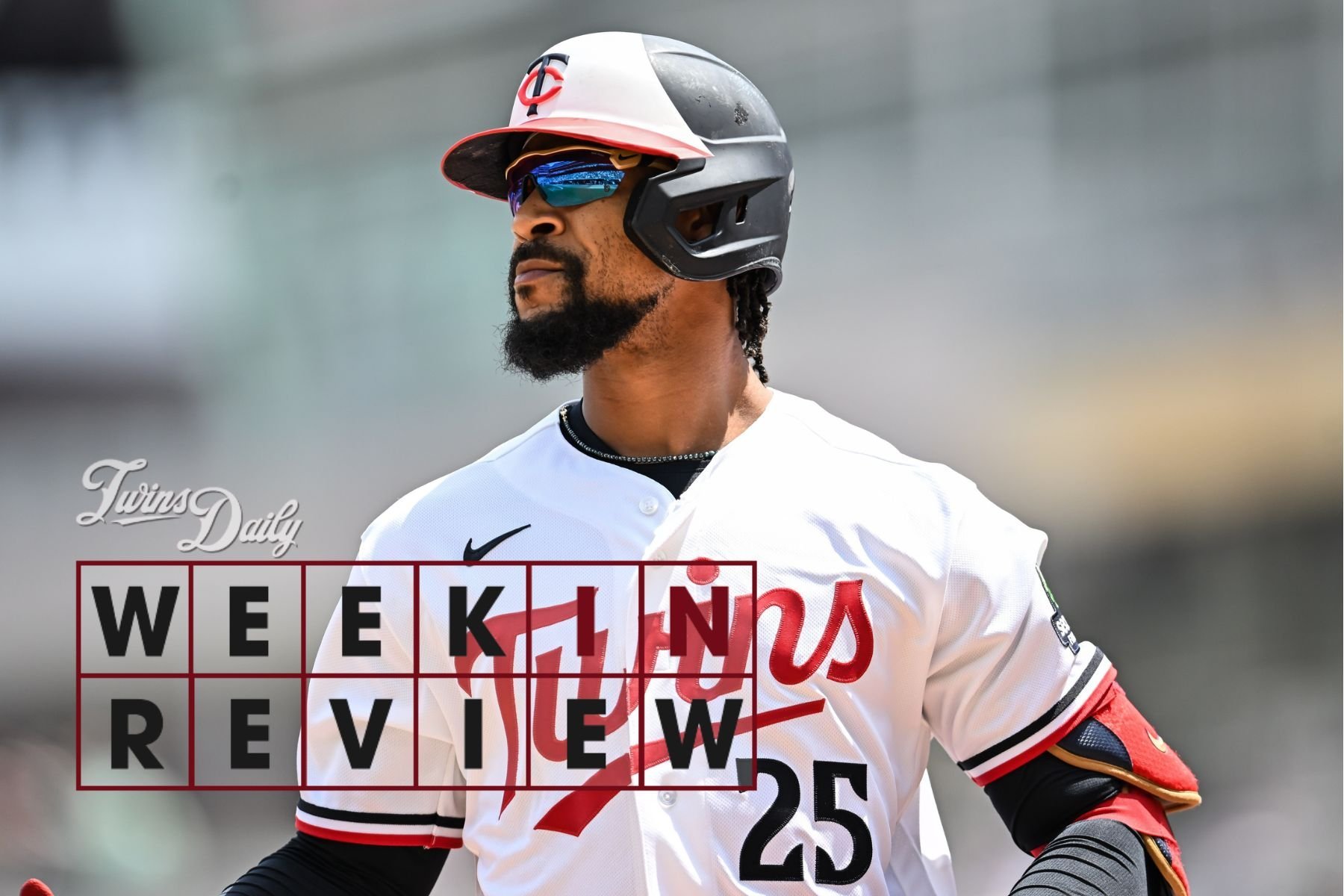 The Weekly Nutshell: The last time the Twins had a .500 record was April 22nd. They've come close to getting back a couple times, but whenever a hot streak draws Minnesota back toward equilibrium, they invariably fall into a backslide that pushes them into the depths and casts doubt on their viability. It happened again this past week — the Twins entered with some momentum coming off a 5-1 road trip, then got swept by Los Angeles before eking out a series victory against Colorado with 19 runs allowed in three games. Losing to the MLB-leading Dodgers is no travesty, but getting knocked around by a Rockies team on pace for nearly 100 losses was rough. The underwhelming state of the American League makes it difficult to write the Twins off, even as they continually fail to get back above water. At the same time, this team is so blatantly short on relievers, and consequentially so incapable of locking into a prolonged stretch of winning, that it's hard to view them as any kind of legitimate contender. With the trade deadline now just over a month away, the stakes are fairly high in making that determination and choosing a course. Weekly Snapshot: Mon, 6/22 through Sun, 6/28 *** Record Last Week: 2-4 (Overall: 40-45) Run Differential Last Week: -12 (Overall: -30) Standing: 3rd Place in AL Central (4.5 GB) Latest Game Results Game 80 | LAD 2, MIN 1: Offense Goes Silent After Buxton's Early Blast Matthews: 6 IP, 2 ER, 6 H, 2 BB, 5 K Game 81 | LAD 12, MIN 3: Dodgers Take Control Early and Pull Away Late Rogers: 1 IP, 5 ER, 5 H, 2 BB, 0 K Game 82 | LAD 4, MIN 3: Ohtani Outshines Ryan, Betts Delivers on Both Sides Ryan: 6 IP, 4 ER, 9 K, 1 BB Game 83 | MIN 9, COL 8 (10): Twins Battle Back to Win After Bullpen Collapse Buxton: 3-5, 2 RBI Game 84 | COL 8, MIN 5: Rockies Even Series Behind Goodman's Three Homers Funderburk, Raya: 3 IP, 5 ER Game 85 | MIN 3, COL 2: Prielipp Dominates, Clemens and Kreidler Go Deep Prielipp: 6 IP, 2 ER, 6 H, 0 BB, 10 K NEWS & NOTES With Joe Ryan's scheduled start on Tuesday being delayed by illness, the Twins turned to newly activated Kendry Rojas as a fill-in starter and called up veteran journeyman Austin Voth, signed to a minor-league contract earlier this month, as a bulk arm. Rojas pitched okay, allowing just one run in two innings but needing 50 pitches to get through them. Voth got rocked for five earned runs on 11 hits in four innings, taking a lopsided loss on the chin. Both were sent out for fresh arms the following day. By optioning Rojas and designating Voth for assignment, the Twins made room for the return of Kody Funderburk and the arrival of Marco Raya. Unfortunately, these reinforcements didn't bring much relief in a staggeringly bad week for the bullpen. More on that later. Down in the minors, Kaelen Culpepper made his official return to the Saints lineup on Sunday, batting second as designated hitter. He went 0-for-4, but the call-up watch is back on. Also on Sunday, Bailey Ober made his first rehab start in Single-A, allowing three earned runs in 3 ⅓ innings while striking out one of 16 batters faced. Not the most inspiring result, but a step in the right direction at least. Out for a month due to elbow inflammation, Ober is on the comeback trail for a Twins rotation that could use some help. They sadly won't be getting it from Mick Abel, who was tabbed for arthroscopic elbow surgery after experiencing a setback near the end of his own rehab. Not a worst-case scenario, but a huge bummer. No timetable has been officially announced but he's looking at a multi-month recovery, putting Abel at risk of missing the remainder of the season. HIGHLIGHTS Derek Shelton started using Trevor Larnach in the leadoff spot for the first time earlier this month and he's been sticking to it; the outfielder hasn't hit anywhere other than first in the lineup in his last 13 starts. He's responded very well atop the order as one of Minnesota's best hitters in the month of June. Last week he went 6-for-15 with three doubles and three RBIs, pushing his batting average to .288. Brooks Lee is enjoying an excellent second half of June, powering the bottom half of the lineup with steady power output. The third baseman went deep twice more last week, pushing his season total to 14. We've seen these spurts of production from Lee often enough, but the question is whether he can harness it for more than a week or two rather than lapsing back into another extended slump. I'm very encouraged by the plate discipline — he's struck out just three times against seven walks in his past 73 plate appearances, the kind of development that fuels belief he could actually be turning a corner. Kody Clemens homered twice and also showed a nice touch of patience, drawing as many walks in five games (3) as he had in his previous 23. Clemens is one of three Twins hitters, along with Lee and Byron Buxton, who are on pace to hit 25-plus home runs this year. Ryan Kreidler would be on a similar pace if he were a full-time player — he tallied his fifth long ball in his 104th plate appearance on Sunday — and he's batting .290/.365/.527. One of the most refreshing surprises of the season so far. While it was a rough week for the pitching staff overall, the starters were on point. Zebby Matthews opened things up on Monday with his second consecutive quality start, limiting a potent Dodgers lineup to two solo homers in six innings. Taj Bradley delivered one of his finest starts of the season on Friday, tossing seven innings of two-run ball before the bottom fell out on the bullpen. Connor Prielipp's performance on Sunday was especially invigorating. He hadn't pitched in nine days as the Twins found a way to get him a little extended break, and that seemed to pay off: he looked as impressive as he ever has on a big-league mound. Prielipp struck out a career-high 10 batters with no walks, piling up 20 swinging strikes — most for any Twins starter this year — and featuring a filthy curveball that was giving Colorado hitters fits. Prielipp has had his ups and downs as a rookie, with an ERA barely under five, but on days like this one he shows the makings of a frontline starter. For the Twins, managing his workload and guiding him toward a stong, healthy finish will be one of the most important second-half storylines. LOWLIGHTS During the first two months of the season, the Twins pitching staff held its own. Through 55 games, they ranked 11th among MLB teams in fWAR, 17th in ERA, and 15th in FIP. Not amazing, but respectable. Since late May, things have taken a turn toward disaster. Over their past 30 games the Twins rank dead last in ERA at 6.22, with the second-lowest WAR in the American League. The bullpen has largely been at the center of this free fall, and this was absolutely the case last week. Multiple competitive games got completely out of hand in the late innings as relievers took turns melting down on the mound, and on Friday night a seven-run lead evaporated in the blink of an eye. It was Ludacris — er, ludicrous — to behold. The week saw Funderburk, Eric Orze and Taylor Rogers combine to yield 12 earned runs in six innings of work, with more walks (5) than strikeouts (4). Voth got shelled in his lone appearance. Raya showed some decent signs in his MLB debut on Saturday night, but gave up a two-run homer and struck out only one of nine batters faced. There have some promising performances from the likes of Andrew Morris and Yoendrys Gómez, and you'll certainly live with a guy like Raya taking his lumps, but too many innings are going to plainly sub-par pitchers that don't offer much in the way of future growth potential. A week like this one feels extremely demoralizing, especially with the way it ended: Anthony Banda, who's been one of the team's few consistently effective relievers (2.52 ERA in his past 25 innings), walked off the mound in the ninth on Sunday with an apparent injury, waving for trainers and pulling himself quickly. We'll see how serious it is, but any length of absence would be a potentially devastating blow to Minnesota's already thin late-inning mix. Elsewhere, the Twins have soured enough on Luke Keaschall's defense at second base that they've finally begun transitioning him away from the dirt. He made his first career start in right field on Friday and was back out there again on Sunday. Keaschall looks fine in right, though like Austin Martin, he's a bit of an odd fit at the position as a very speedy guy with a very weak arm, embodying more of a traditional LF profile. Alas, the Twins remain steadfast in their commitment to keeping Larnach in left. Moving from second base to right field raises the standard offensively for Keaschall, who is slugging .321 on the season. He notched one single in 15 at-bats last week and his OPS is down below .650. Not good enough. I'm curious to see what the plan is for the 23-year-old going forward because the outfield corners are crowded with talent, and he just hasn't shown signs of being the kind of impact bat you need out there. That said, I don't know where else his glove will play. TRENDING STORYLINE What are the Twins going to do about their bullpen? It's a really frustrating scene. Their offense leads the AL in runs scored, and is awaiting the return of Ryan Jeffers plus the arrivals of Culpepper, Walker Jenkins and others. They're giving us enough to believe in on that side. The starters have been perfectly serviceable with flashes of brilliance. They've got a worthy ace: Ryan is pitching as well as anybody in the league. Bradley and Matthews are back on track, and Prielipp is coming off a brilliant start. But that bullpen is a brutal buzzkill. It's sabotaging an otherwise very capable team, which is exactly the scenario many of us feared coming into the season. Theoretically, relief pitching is one of the easier weaknesses to address during the season, but the Twins are direly short-handed right now, as demonstrated by the endless wave of waiver pickups like Voth and Justin Lawrence. If Banda's down for any significant period of time, replacing his production won't be easy. The trade deadline is one avenue to add, but it's still five weeks away and Twins need to stay in the fight up until then to justify any kind of short-term aggressiveness. At this point, our best hope is that Raya can lock in and channel what he was doing in Triple-A, where he had a 24-to-1 K/BB ratio in his past 14 appearances. There's a lot riding on his immediate success. Part of me would like to see Rojas come back up in relief, but I also wonder how much the Twins are prioritizing keeping him stretched out as starting depth. If any of Pablo López, David Festa or Abel were healthy it might be a different story, but with all those guys out, converting starters into relief isn't a luxury the Twins can necessarily afford, even if it is their clear long-term strategy for rebuilding the bullpen. LOOKING AHEAD When the Twins hosted Houston at Target Field back in mid-May, the Astros were in a bad, bad place. They were 10 games below .500 and reeling after the loss of Carlos Correa. Minnesota took advantage by winning two of three. But the Astros are playing much better ball of late, with a 22-13 record since the two clubs last met. They've won five consecutive series, including four against AL Central opponents. Houston is always a tough place for the Twins to visit and win. Granted, not as tough as the Bronx. The Yankees are battling the Rays for first place in the East, and they have the best run differential in the AL. The Twins will see three quality starters in the series but, as of now, it looks like they'll avoid Cy Young front-runner Cam Schlittler. This road trip has a bit of a make-or-break feel given the timing. The clock is ticking and the season is no longer young. Can these Twins assert themselves against two large-market heavyweights or will they slink further below .500 as the All-Star break approaches? MONDAY, JUNE 29: TWINS @ ASTROS — RHP Zebby Matthews v. RHP Peter Lambert TUESDAY, JUNE 30: TWINS @ ASTROS — RHP Joe Ryan v. RHP Mike Burrows WEDNESDAY, JULY 1: TWINS @ ASTROS — RHP Taj Bradley v. RHP Tatsuya Imai FRIDAY, JULY 3: TWINS @ YANKEES — RHP Mike Paredes v. RHP Gerrit Cole SATURDAY, JULY 4: TWINS @ YANKEES — LHP Connor Prielipp v. LHP Carlos Rodon SUNDAY, JULY 5: TWINS @ YANKEES — RHP Zebby Matthews v. LHP Ryan Weathers View the full article
 -
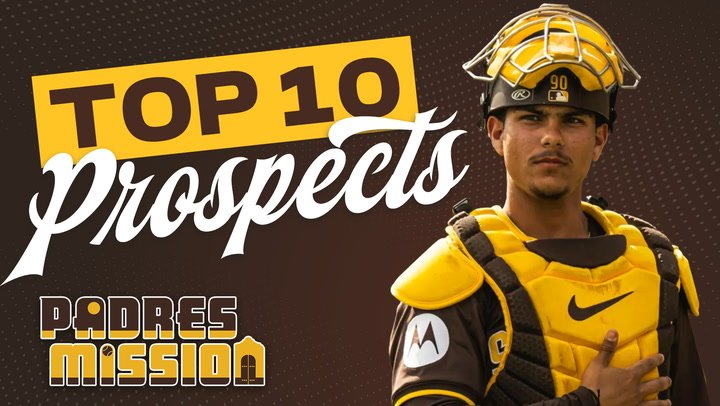 Even after cooling off some and dealing with a minor injury, Ethan Salas still should be considered the best catcher prospect in the game. View the full article
 -
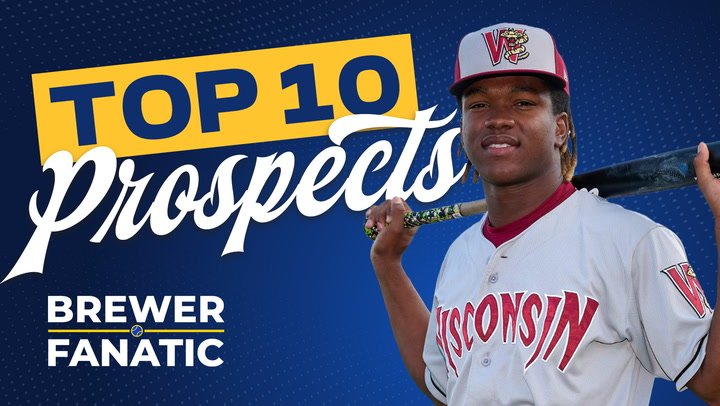 The best prospect in baseball has shown no signs of slowing down. This is why Jesus Made is comfortably the best prospect in the sport. View the full article
 -
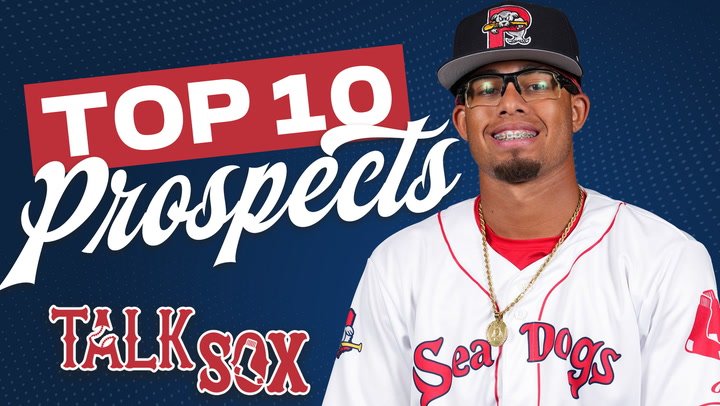 A look at what makes Franklin Arias one of the best prospects in baseball and the consistency he has found. View the full article
 -
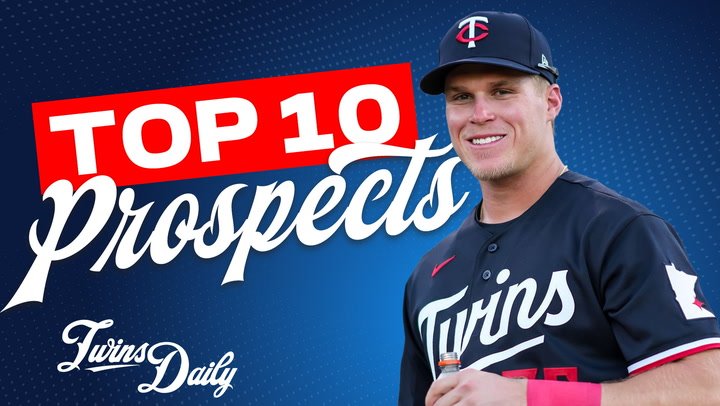 Walker Jenkins has been hitting the ball harder than ever. Now healthy, can we see him in the big leagues soon? View the full article
 -
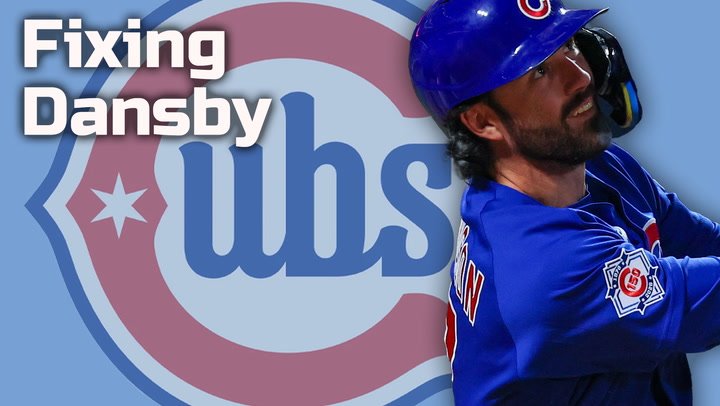 While Dansby Swanson may be a two-time Gold Glover, he has had his fair share of struggles on offense this season. The 2015 first overall pick has had some recent success at the plate though, logging 15 runs batted in over the course of three games against the New York Mets. How can he turn this from a flash in the pan to an everyday success? We'll dive into the science behind it all in this video. View the full article
 -
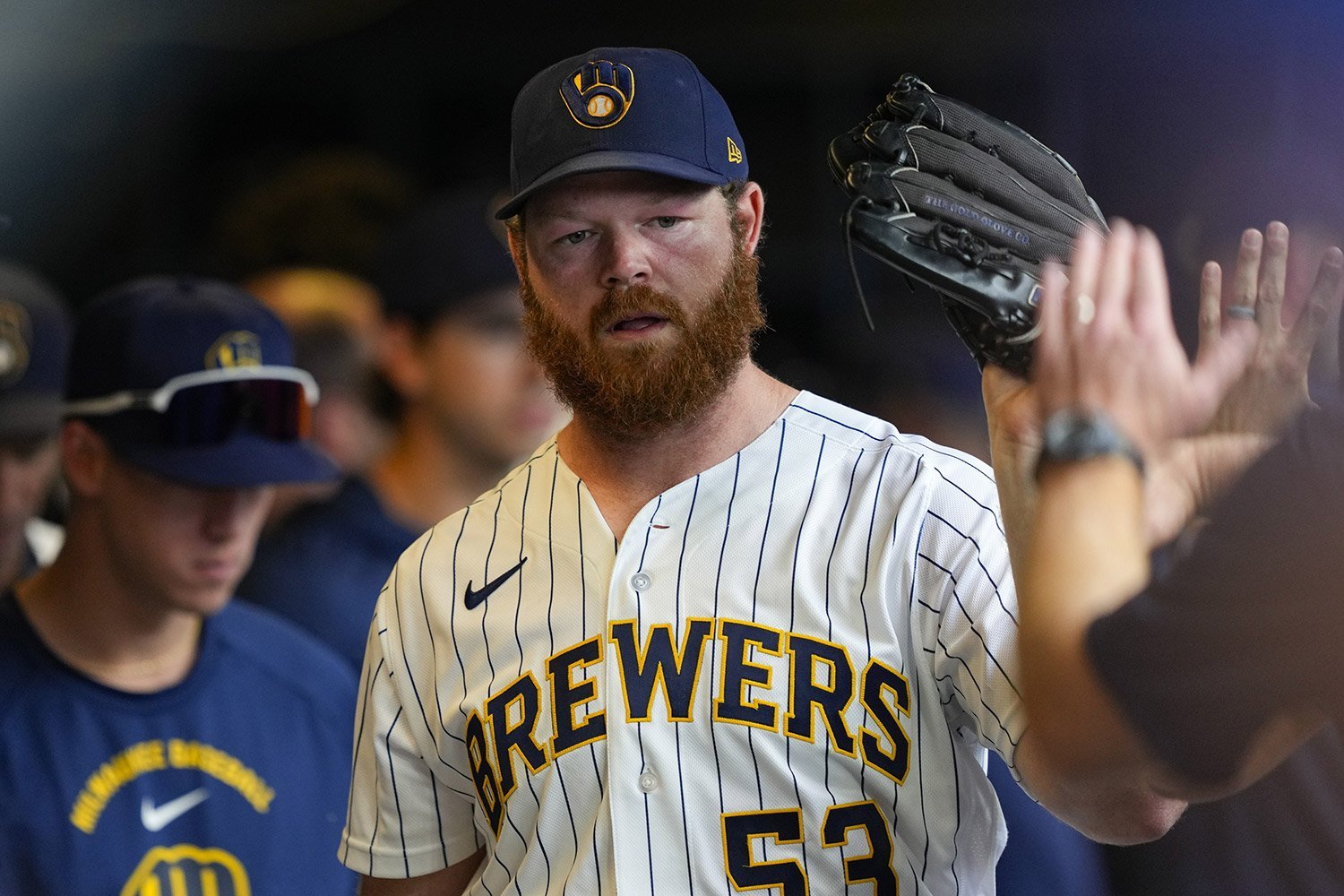 Weekly Snapshot: Record Last Week: 4-2 (Overall: 50-31) Run Scored Last Week: 21 Runs Surrendered Last Week: 22 Standing: 1st in NL Central *** Game 76 (6/22) | Brewers 2, Reds 1 Game 77 (6/23) | Brewers 2, Reds 0 Game 78 (6/24) | Brewers 6, Reds 5 Game 79 (6/26) | Brewers 6, Cubs 2 Game 80 (6/27) | Cubs 8, Brewers 2 Game 81 (6/28) | Cubs 4, Brewers 3 *** Game 76 | Brewers 2, Reds 1 MIL Starter: Brandon Woodruff (6.0 IP, H, 0 BB, 0 ER, 10 K) Top Performers: Aaron Ashby (1.0 IP, 0 H, 0 BB, 0 ER, 2 K) Big Woo was back on the mound for the first time since April, and he was back like he never left. Woodruff strolled into Great American Ballpark and struck out 10 Reds through six innings of one-hit, no-run baseball. Brady Singer was equally good, though, twirling seven scoreless innings of his own, so the game was destined for extra innings. There, the Brewers would score two runs in the 10th without the benefit of a hit, before Joe Kuhnel slammed the door shut for a 2-1 series opening victory. Brandon Woodruff’s masterful return Game 77 | Brewers 2, Reds 0 MIL Starter: Brandon Sproat (6.0 IP, H, 0 BB, 0 ER, 10 K) Top Performers: Andrew Vaughn (2 BB, RBI) Jake Bauers (3B, BB, RBI) Trevor Megill (1.0 IP, 0 H, 0 BB, 0 ER, SV) Brandon Sproat played copycat in game two, matching Brandon Woodruff’s exact line the day before with six innings of one-hit, no-run baseball of his own. Luckily, the scuffling Brewer offense wouldn’t need 10 innings, as a sixth-inning RBI triple off the bat of Jake Bauers was the only run they needed to capture the series with a 2-0 victory. Jake Bauers’ RBI triple (+18.9 WP%) Game 78 | Brewers 6, Reds 5 MIL Starter: Shane Drohan (4.1 IP, 5 H, 3 BB, 0 ER, 5 K) Top Performers: William Contreras (3 H, 2 BB, HR, 2 RBI) Jake Bauers (2 H, BB, HR, RBI) Joel Kuhnel (1.1 IP, H, 2 BB, 0 ER, SV) The series finale was a far more dramatic affair, and one littered with more baserunners than the first two games of the series saw combined. Shane Drohan was able to put up a zero, working around 5 hits and 3 walks in his 4.1 innings, but the Reds scored their first non-Manfred runner run of the series off of Chad Patrick in the sixth. With the Bats, the Brewers got big performances from William Contreras and Jake Bauers, tallying six runs. It was just enough, as with Abner Uribe serving a one-game suspension, a taxed bullpen was bailed out by Joel Kuhnel’s 4-out save highlighted by a game-ending double play to secure a series sweep. Joel Kuhnel picks up the save (+54.5 WP%) Game 79 | Brewers 6, Cubs 2 MIL Starter: Jacob Misiorowski (6.0 IP, 2 H, 4 BB, ER, 8 K) Top Performers: Garett Mitchell (H, HR, 2 RBI) William Contreras (2 H, BB, HR, 2 RBI) David Hamilton (2 H, 3B, RBI) The Friday night marquee featured Jacob Misiorowski facing off against the Cubs at American Family Field, and the Miz didn’t disappoint. Six innings of one-run baseball were left in his wake, highlighted by a 105.5 mph pitch in the first inning, while the Brewers' offense feasted on a depleted Cubs bullpen, popping two homers en route to a 6-2 win. Garrett Mitchell flips the scoreboard (+35.4 WP%) Game 80 | Cubs 8, Brewers 2 MIL Starter: Kyle Harrison (5.0 IP, 3 H, BB, 2 ER, 9 K) Top Performers: Jackson Chourio (H, HR, RBI) Jared Koenig (1.0 IP, H, 0 BB, 0 ER, K) The Brewers' perfect record against the Cubs would end on Saturday, as after Kyle Harrison labored through his five innings, the North Siders jumped all over Chad Patrick and the Brewers' bullpen, turning what was a 2-2 contest into an 8-2 drubbing. Jackson Chourio’s leadoff blast (+9.7 WP%) Game 81 | Cubs 4, Brewers 3 MIL Starter: Brandon Woodruff (5.2 IP, H, 2 BB, 0 ER, 6 K) Top Performers: Abner Uribe (1.2 IP, 0 H, 0 BB, 0 ER, K) Brandon Woodruff was great in his second start of the week, working through 5.2 innings of scoreless baseball. That was tainted, though, as the Brewers' offense failed to score after an early Gary Sanchez homer, while the Cubs generated a run off of Aaron Ashby in the 7th. The game headed to the 10th tied at 1, where John Kuhnel would allow 3 runs in the 10th inning, before the Brewer offense scored two of their own before squandering a bases-loaded, no-out situation to fall short in devastating fashion, 4-3. Gary Sanchez goes deep (+11.0 WP%) Transactions: 06/26/26 - Activated LHP Jared Koenig from the 15-day injured list. 06/25/26 - Activated RHP Abner Uribe. 06/25/26 - Optioned RHP Craig Yoho to Nashville Sounds. 06/24/26 - RHP Abner Uribe was suspended. 06/24/26 - Signed free agent RHP Peter Strzelecki to a minor league contract. 06/23/26 - Released 3B Luis Rengifo. 06/22/26 - Activated RHP Brandon Woodruff from the 15-day injured list. Looking Ahead: Monday, 6/29 - Reds @ Brewers - 6:40 PM CDT Tuesday, 6/30 - Reds @ Brewers - 6:40 PM CDT Wednesday, 7/1 - Reds @ Brewers - 7:10 PM CDT Thursday, 7/2 - Reds @ Brewers - 1:10 PM CDT Friday, 7/3 - Brewers @ Diamondbacks - 8:45 PM CDT Saturday, 7/4 - Brewers @ Diamondbacks - 8:40 PM CDT Sunday, 7/5 - Brewers @ Diamondbacks - 3:10 PM CDT View the full article
 -
 TRANSACTIONS SS Kaelen Culpepper activated from 7-day IL (St. Paul) RHP Bailey Ober sent to A+ Cedar Rapids on rehab Saints Sentinel St. Paul 0, Louisville 3 Box Score Kendry Rojas: 3 IP, 1 H, 0 ER, 0 BB, 3 K HR: None Multi-hit games: None The Saints were shut out on Sunday. “Two hits??” Well, you know the rest of the line. The outcome was perhaps unsurprising given that the Bats saw 7 1/3 of their innings come from rehabbing big leaguers: the first 6 1/3 from a Hunter Greene who looked quite healthy, according to the poor souls in the Saints’ lineup, with one more frame coming from old friend Emilio Pagán. To their credit, St. Paul’s pitchers matched the electric Greene, at least for a time. Kendry Rojas kicked off matters with three wonderfully efficient innings, striking out three while not walking a batter for just the second time this year. 24 of his 33 pitches went for strikes. Glorious. Ryan Gallagher attempted to continue the effort, though it was apparent from the start that his outing would be shakier than his predecessor’s. He allowed three straight hits to load the bases, only escaping on a force play at home and a strikeout. An ordinary fifth gave way to a sagging sixth, in which Gallagher’s command abandoned him altogether, turning into a three-walk, one hit by pitch quagmire that brought in the game’s first run. There was good news on Sunday. Kaelen Culpepper played for the first time in over two weeks, going 0-for-4 as the DH. With Walker Jenkins also in the lineup, this marked the first time the two top prospects played in the same game since May 2nd. The Bats are led, prospect-wise, by Héctor Rodríguez, the fifth-ranked player in the Reds’ system. The outfielder collected two hits and a walk in four plate appearances. Wind Surge Wisdom Wichita 5, Midland 10 Box Score Chris Vallimont: 3 IP, 6 H, 4 ER, 2 BB, 3 K HR: Kyle DeBarge (8) Multi-hit games: Garrett Spain (2-for-4, 2B, R, RBI), Kyle DeBarge (2-for-4, HR, 2B, 2 R, 2 RBI), Jay Thomason (2-for-4, 2B, R, RBI) The Wind Surge were thumped on Sunday. Fortunate favored neither squad initially. An early RockHounds lead was erased with a three-run third, the result of a rally that saw run-scoring doubles by Garrett Spain and Kyle DeBarge, and an RBI single from Jay Thomason. That lead, in turn, lasted one half-inning, and the new Midland advantage held all the way until the sixth when DeBarge cleared the center field wall for his eighth homer of the season. The dam finally broke not long after. A ridiculously good Ruddy Gomez outing gave way to a Kyle Bischoff appearance he would likely prefer to forget, as he was pounced for four runs across four hits. Jaylen Nowlin fared little better as he oversaw two more runs that gave Midland a double-digit total on the day. By total bases, it was DeBarge’s best day since his May 21st game against Tulsa in which he homered, doubled, and singled. The game was a nice respite for the infielder, as he has slashed a tepid .189/.277/.324 in June. The Rockhounds are an affiliate of the franchise formerly known as the Oakland Athletics (now just the Athletics as MLB would like us to forget that place and city is an integral part of a team’s culture). Superstar prospect Leo De Vries didn’t play, leaving seventh-ranked Devin Taylor the best youngster on the field for Midland. The outfielder singled twice and walked once in five plate appearances. Kernels Nuggets Cedar Rapids 4, Wisconsin 8 Box Score Bailey Ober: 3 1/3 IP, 7 H, 3 ER, 0 BB, 1 K HR: Graham Brown (2) Multi-hit games: Brandon Winokur (2-for-5, 2 R), Danny De Andrade (3-for-4, 2B, R, RBI, BB), Miguel Briceno (2-for-4, 2B) The Kernels were walked off on Sunday. But before that—Bailey Ober! He’s back! The big righty took the mound in an organized game for the first time since May 30th. And he looked… rusty. Drenched on cobwebs and slowed by whatever mixed metaphors you prefer. Wisconsin’s leadoff hitter took him deep, and the lineup never let up on the rehabber, nailing him for seven hits across his 3 1/3 innings of work. He threw 57 pitches. One must imagine it won’t be long before he’s back with the Twins. Cedar Rapids was cursed by a lineup that wasn’t the sum of its parts: every batter outside of Yasser Mercedes reached base at least once, yet they could only total four runs. The culprit? A dreadful 3-for-16 showing with runners in scoring position. One of those hits was this Graham Brown screamer, though. A mention should go to Danny De Andrade for breaking free from a horrendous 3-for-29 slump over his last nine games in a 3-for-4 outing with a double and a walk. The Timber Rattlers are spearheaded by the 16th-best prospect in baseball, infielder Luis Peña, who went 0-for-3 with a strikeout. Mussel Matters Fort Myers 6, St. Lucie 5 Box Score Merit Jones: 3 2/3 IP, 3 H, 1 ER, 1 BB, 2 K HR: Luis Fragoza 2 (7, 8) Multi-hit games: Ramiro Dominguez (2-for-4, 2 R), Jayson Bass (2-for-4, R, RBI), Luis Fragoza (2-for-4, 2 HR, 2 R, 3 RBI) The Mighty Mussels slipped through with a win on Sunday. Mercy for any who finds themselves opposing Luis Fragoza these days. He is a force. The right-hander has taken exception to the concept of pitching as a fundamental; he is slugging .615 in June, an impressive feat for any player at any level, let alone a 19-year-old who first donned a Fort Myers jersey on May 20th. Sunday was the zenith of his brutality: he blasted a pair of homers onto the left-field berm. The first landing between four youths who wisely dispersed in respects for the incoming ballistic; the latter a shot that safely cleared the greenery and only offered a threat to the stationary fence and man-made objects who had no choice but to accept the punishment. Another hero from the day was Ryan Sprock, which should come as no surprise to anyone familiar with his work since May ended. He’s been a maestro at the plate. The righty is slashing .417/.543/.625 in June with 19 walks to four strikeouts. Real grown man against kids' stuff. His 18-game hitting streak snapped the game before, but he still holds 30 knocks in the month. Entering Sunday, Rhys Hoskins in 234 plate appearances has 33 hits all year! This will go down as a historic month for the Twins prospect. Once more, this author would like to spotlight the position-player-turned-pitcher, Hendry Chivilli, who provided three more than respectable innings of one-run ball on Sunday, striking out three in his second straight successful outing, a step towards flushing away his disastrous June 16th adventure on the mound. He holds a 3.69 ERA stretched across 31 2/3 innings between the FCL and A-ball. Shortstop Antonio Jimenez ranks as the 15th-best prospect in the Mets system. He went 0-for-5 for St. Lucie on Sunday. TWINS DAILY PLAYERS OF THE DAY Twins Daily Minor League Pitcher of the Day – Kendry Rojas Twins Daily Minor League Hitter of the Day – Luis Fragoza PROSPECT SUMMARY Here’s a look at how the Twins Daily Top 20 Twins Prospects performed: #1 – Walker Jenkins (St. Paul) - 0-3, K #2 – Kaelen Culpepper (St. Paul) - 0-4, K #4 – Eduardo Tait (Cedar Rapids) - 1-5, 2 K #5 – Marek Houston (Wichita) - 1-3, R, 2 BB, K #7 – Kendry Rojas (St. Paul) - 3 IP, 1 H, 0 ER, 0 BB, 3 K #8 – Hendry Mendez (St. Paul) - 1-3, K #12 – Brandon Winokur (Cedar Rapids) - 2-5, 2 R, K #13 – Khadim Diaw (Wichita) - 1-4, RBI, K #15 – Ryan Gallagher (St. Paul) - 3 IP, 4 H, 1 ER, 4 BB, 3 K #18 – Yasser Mercedes (Cedar Rapids) - 0-5, 3 K #19 – Billy Amick (Wichita) - 0-5, 2 K #20 – Kyle DeBarge (Wichita) - 2-4, HR, 2B, 2 R, 2 RBI MONDAY’S PROBABLE STARTERS FCL Twins @ FCL Pirates (11:00 AM) - TBD DSL Twins @ DSL NYY Yankees (10:00 AM) - TBD View the full article
 -
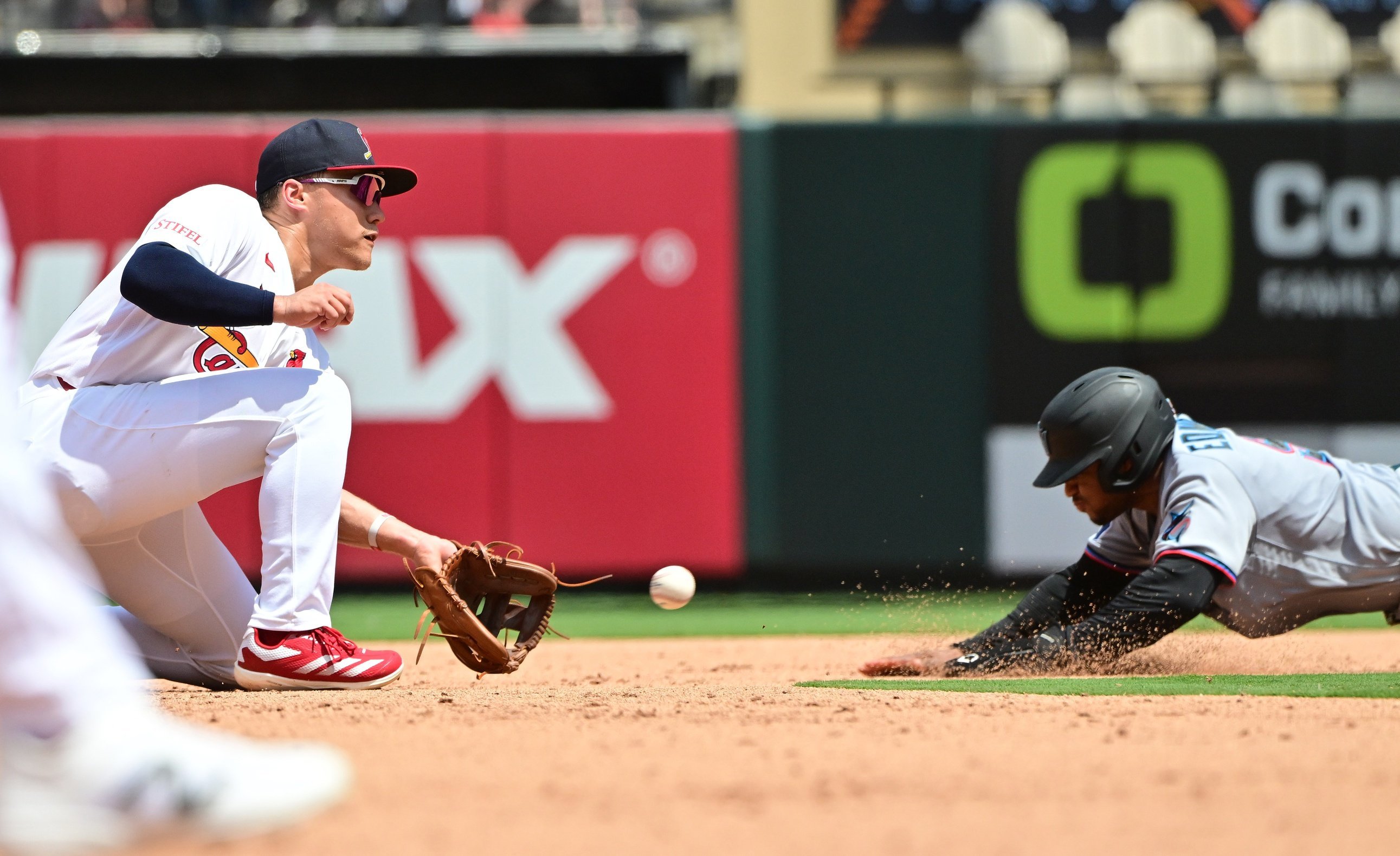 In the role of Marlins starting pitcher, Tyler Phillips has been a mixed bag to this point. Through his first five starts, Phillips posted a 4.94 ERA, with a lot of that damage concentrated in a June 16 clunker against the Phillies, where he allowed eight runs over four innings. On Sunday, the Marlins saw the good upside of that mixed bag, as Phillips, doing his best Sandy Alcantara, struck out just one over a season-high 7 ⅓ innings of one-run ball. Phillips became the first Marlin since Henderson Alvarez back on 7/31/13 to record an out in the eighth inning in a start with one or fewer strikeouts. The 28-year-old's lone strikeout came at the expense of NL Rookie of the Year frontrunner JJ Wetherholt. "He was outstanding today...was able to economically get through innings," noted manager Clayton McCullough. Unfortunately, Phillips' great effort would be all for nothing, as the Marlins only scratched across one run in their 2-1 loss to the Cardinals. Snapping their current 4-game winning streak, the Marlins still find themselves 44-40 and vying for a playoff spot. The lone blunder on Phillips' day came early courtesy of a two-run homer from rookie left fielder Bryan Torres. Held hitless by Kyle Leahy through the first four, the Marlins broke through in the fifth when Owen Caissie launched a leadoff double. The recently recalled Grant Pauley authored his second double in as many days to bring home Caissie, though Cardinal pitching would allow just two more Marlins to reach base. In keeping with a prevailing theme for the 2026 club, Clayton McCullough made a pair of changes that had some scratching their head. Prioritizing the platoon advantage, McCullough removed the aforementioned Caissie and Pauley for pinch-hitters Esteury Ruiz and Leo Jiménez, respectively. That was part of a sequence which saw the Fish use four consecutive pinch-hitters, who combined to go 1-for-4. The lone hit—Jiménez's seeing-eye single in the seventh—would prove inconsequential. Although a road series win is nothing to scoff at, the Marlins ought to be leaving town feeling unfulfilled having limited the opposition to three total runs this weekend, yet falling short of completing the sweep. Looking Ahead Miami will hope to find its Rocky Mountain High as they begin a four-game series against the Colorado Rockies. Sandy Alcantara (8-4, 4.01 ERA), now the Marlins' all-time strikeout leader, will toe the rubber in Monday's series opener. Sean Sullivan (0-2, 8.25 ERA) will oppose him as he makes just his fourth career big league appearance. First pitch from Coors Field is slated for 8:40 EST/6:40 MDT. View the full article
 -
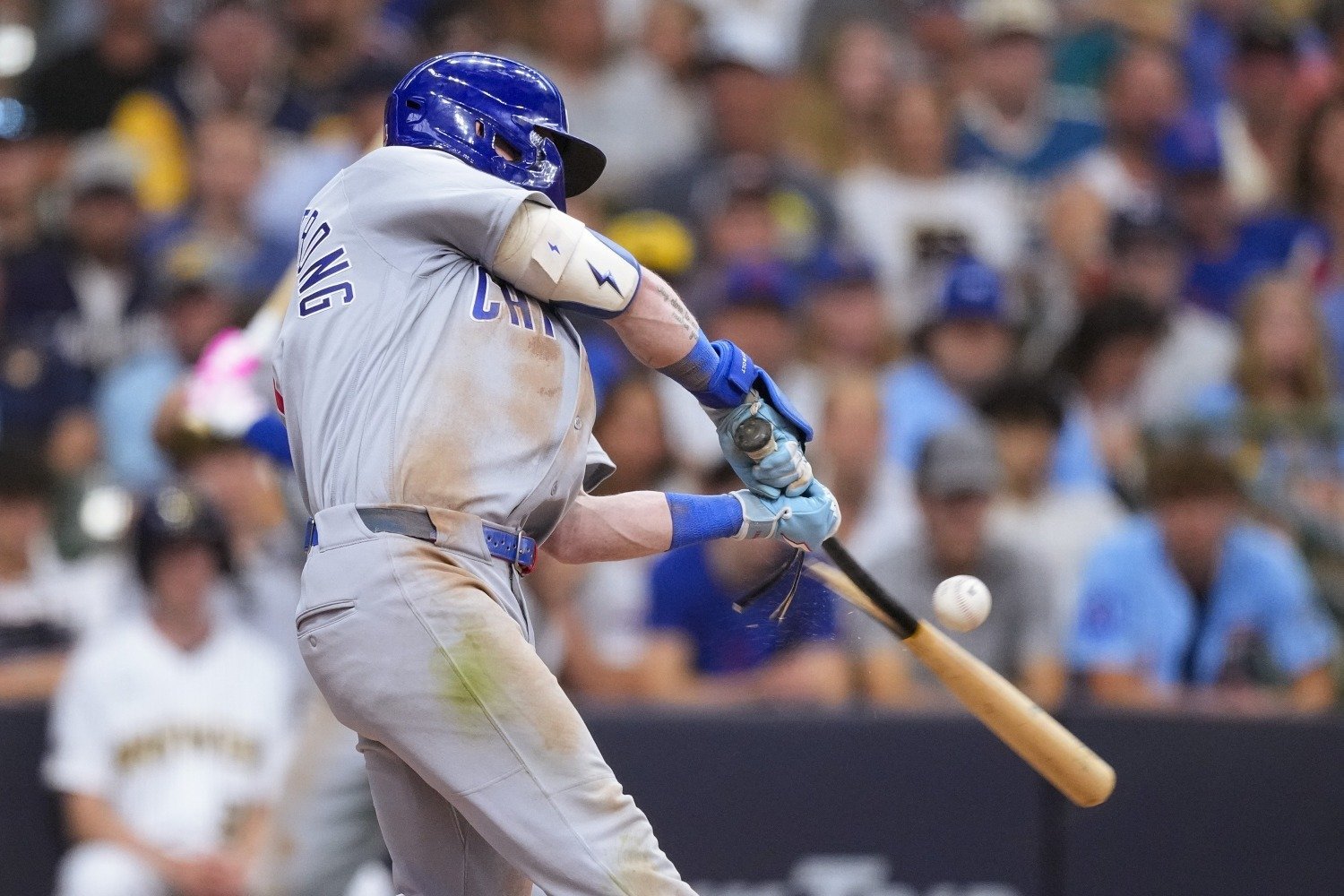 In a strange way, the most telling plate appearance in the five-plus weeks since Pete Crow-Armstrong got molten-lava hot might have come Sunday afternoon, after the flow had raced down the mountain and begun to cool a bit. Brandon Woodruff struck out Crow-Armstrong in the first inning, but the next two times up, he was even more careful, and Crow-Armstrong drew two walks. In the third inning, Crow-Armstrong's swing decisions were dead solid perfect. In a six-pitch at-bat, Woddruff only hit the zone twice. Crow-Armstrong swung at both (changeups, fouled off) and took the four bad ones, including two very tempting offerings. The sixth inning at-bat was even better. Woodruff went with the four-seamer that had worked to start the game, but couldn't hit the zone with it. He tried a changeup, but missed low. Crow-Armstrong got ahead 3-0, but with one out and nobody on base in a game the Brewers led 1-0, he stayed patient and took two strikes on the outer half. Then, Woodruff—never one to give up a free base without good cause—stayed in the zone three straight times, but only made one mistake, with the third 3-2 pitch. Hitting as defensively as one must in such a deep count, Crow-Armstrong fouled that off, too. When Woodruff missed away with the ninth pitch, though, he laid off and drew another walk. Those were the 34th and 35th walks of the season for Crow-Armstrong, who only walked 53 total times in his first two-plus years in the majors. It's not just the walks that mark him as a different hitter. though. When he came to bat in the top of the eighth, he showed as much maturity as in either of his previous two trips. Facing the viciously difficult Abner Uribe, Crow-Armstrong did well to lay off a first-pitch sinker above the zone. It was called a strike, and he probably should have challenged it, but the Cubs have been conservative by design when it comes to batters challenging this season. At any rate, he made the right swing decision. Uribe lured him out of the zone on the next pitch, with a sinker that ran off the plate away, and Crow-Armstrong was down 0-2 in the most frustrating fashion. For any hitter, that sequence—bad call strike, chase out of the zone—threatens to destabilize the mental approach. It's easy to get on tilt in such situations. For Crow-Armstrong, that sequence has nearly always led to an easy out for the pitcher. He's struggled mightily with that mental battle throughout his career. But this time, he laid off a sinker up and away, and then watched a slider that plunged out of the bottom of the zone. On 2-2, Uribe sawed him off with a slider, catching Crow-Armstrong a hair early because he needed to stay ready for the sinker. It was a floater that bounced lazily out to the middle infield, and despite getting jammed, Crow-Armstrong got out of the box well. He almost beat it out for an infield hit. Yes, he was thrown out. No, he didn't play the hero, because the Brewers were careful not to let him do so. But that plate appearance was huge. It was tough, and professional, and it showed how Crow-Armstrong has improved both at staying in the fight and at covering multiple pitches within a pitcher's arsenal. From May 22 through June 25, Crow-Armstrong batted .376/.456/.760. In 147 trips to the plate, he had 22 extra-base hits, including 12 homers. It was a transcendent heater, the likes of which the Cubs haven't seen since Derrek Lee's near-MVP season of 2005. (Technically, Aramis Ramírez also had a hotter 31-game stretch in 2006, but like Lee, Moisés Alou and Sammy Sosa, all of whom have been similarly good over such stretches during this century, Ramírez played in a much more offense-friendly league than does Crow-Armstrong.) With any streak that incredible, though, you can feel the moment when it ends, and that happened over the weekend. Crow-Armstrong drew four walks (one intentional, in the 10th inning Sunday) but was hitless against the Brewers. He's not quite clicking on everything that comes within his happy zone, the way he was a week ago. What we saw Sunday, though, is that—not unlike that lava that hardens into rock after escaping the inferno—Crow-Armstrong has been reborn. He's not going to go back to the guy who batted .188/.237/.295 in August and September last year. His ceiling, as we now see, is as high as literally anyone in the sport; he is the only player in the last half-decade to demonstrate the ability to be as valuable as Shohei Ohtani. It's his floor that has really moved, though. He was, for a while there, capable of slumps as hideous as his streaks are thrilling. The new Crow-Armstrong simply can't be that bad. He's still going to have rough stretches, because he still borders on overly aggressive inside and outside the strike zone. He's morphed into a much more complete and dangerous hitter, though—even now that he's settling into a new normal, instead of doing backflips across a highwire, as he seemed to do for a month. View the full article
 -
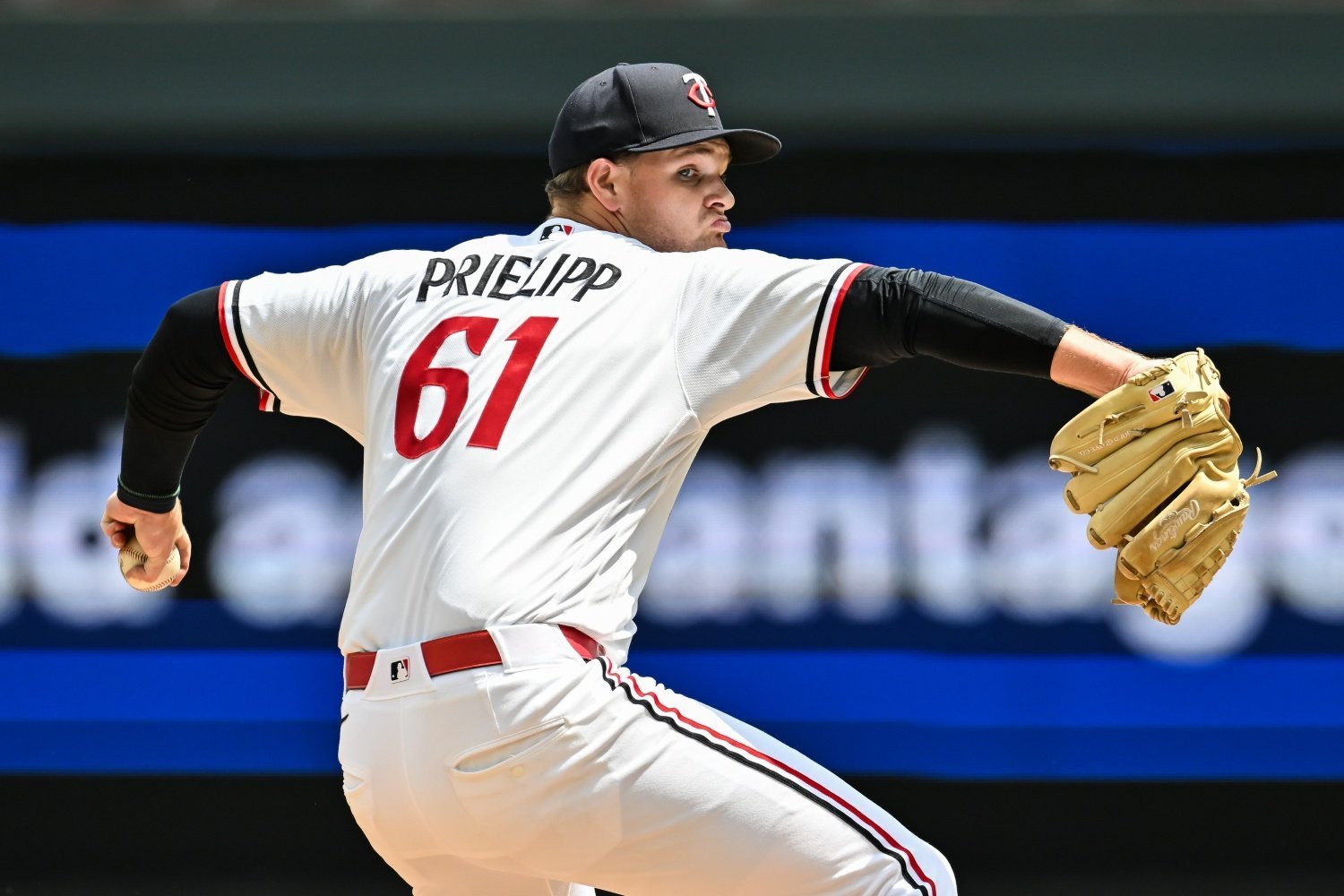 Box Score: Starting Pitcher: Connor Prielipp: 6 IP, 6 H, 2 ER, 0 BB, 10 K (93 Pitches, 65 Strikes, 69.9%) Home Runs: Kody Clemens (13), Ryan Kreidler (5) Top 3 WPA: Yoendrys Gomez (0.28), Kreidler (0.16), Andrew Morris (0.14) Win Probability Chart (Via BaseballSavant): This week the Twins learned that despite an overperforming offense, they can't really compete with the likes of the Dodgers. Minus Hunter Goodman, they are pretty good against the Rockies. After splitting the first two games of the series, the rubber match would feature Connor Prielipp against Ryan Feltner of Colorado. Feltner is sneakily not that bad of a pitcher, despite middling numbers. His ERA+, which accounts for his home ballpark, has Feltner over 100 each of the past three seasons, indicating he is an above-average pitcher. The induced vertical break on his four-seamer is within shouting distance of Joe Ryan's, and you could see it in the swings of Byron Buxton, Trevor Larnach and Kody Clemens early, with all three getting fastballs in their nitro zone that just swung underneath, resulting in 300-foot flyouts rather than extra-base damage. Prielipp was a little wild, but his breaking stuff was sharp, and all the Rockies could hope to do was dink and dunk the lefty to death, with mixed results. A ground-ball single from Willi Castro, a hit batsman, and a grounder that kicked off Brooks Lee's glove resulted in a run in the first inning, but Prielipp recovered to strike out lefty-masher Kyle Karros to end the frame. The next two innings were uneventful, with Prielipp generating whiff after whiff, his curveball and slider looking particularly dominant. The Twins would answer in the second, with Royce Lewis doubling down the left field line and Lee legging out a swinging bunt that third baseman Karros threw wildly on, allowing Lewis to score. Lee even managed to steal second afterward, but the Twins were unable to add on. The fourth inning was frustrating for Prielipp, as he allowed a bleeder through the infield, a bloop single, and another hit batter to load the bases with one out. But despite falling behind Braxton Fulford, Prielipp struck him out with a slider, then got Ezequiel Tovar to tap out to end the threat. He had generated 12 whiffs already by that point. Clemens finally got on top of a Feltner offering in the bottom of the fourth, launching a fastball 399 feet for a no-doubt home run to give the Twins the lead. The Rockies tried some more Guardians-ball in the sixth. Drew Rumfield legged out an infield single, and Cole Carigg tried to bunt for a hit, but hit it right to Lewis at first, who probably had a chance to get the lead runner but opted for the easy out at first. Prielipp then struck out Karros on a nasty curveball and got ahead of Troy Johnston, but served up a flat slider that Johnston served into right field for a run-scoring single. Prielipp then struck out Fulford for his 10th ponche. Meanwhile, the Twins had no answers for Feltner, who cruised through six innings, consistently keeping his fastball above the Twins' bats. A leadoff double by Larnach in the sixth was squandered, and the seventh was started by Rockies' relief ace Seth Halvorsen, so things were looking grim. Tell that to Ryan Kreidler, who took Halvorsen to straightaway center for a go-ahead home run. Austin Martin singled sharply up the middle, and Alex Jackson laid down a perfect bunt to put two men on for Josh Bell, pinch-hitting for Larnach against lefty reliever Brennan Bernardino. Bell hit him hard, but the liner was speared by Bernardino to end the frame. Andrew Morris and Anthony Banda got through scoreless seventh and eighth innings with four strikeouts. Banda was sent back out to start the ninth and immediately plunked Fulford, appearing to hurt himself in the process. Yoendrys Gómez was then inserted and allowed a screaming liner off the bat of Jake McCarthy that Martin made a great sliding play on. Three pitches later, Gómez had another save and the Twins a series victory. Stuff I'm Tracking: Byron Buxton DH'd today, and has looked physically uncomfortable the past few games, particularly after sliding or swinging and missing. He's still hitting, though. Kreidler has been getting some more run these past few weeks and is even starting against righties like Feltner today. I feel bad for Tristan Gray, but he's being outhit by Kreidler and was never the preferred option defensively. It sure seems like Gray would be the odd man out if/when Kaelen Culpepper gets his chance. Prielipp looked great. He did hit two batters but didn't walk anyone, and was rarely close. He induced 20 whiffs and the Rockies didn't sniff an extra-base hit. They were lucky to generate two runs. Crazy how the Yankees have been searching for answers at first base for over a decade now. Now they have Ben Rice and Paul Goldschmidt finding the fountain of youth, so Rumfield became expendable and has an .860 OPS, looking locked-in against the Twins all series. Postgame Interviews: Coming soon What's Next: The Twins travel to Houston for a three-game set against the Astros. Zebby Matthews (3-5, 4.56 ERA) faces Peter Lambert (6-4, 3.28 ERA). The 'Stros sit one game ahead of the Twins in the AL Wild Card race and have played better since a brutal start. Matthews has been hit or miss, as usual, and I do shudder to think what Yordan Alvarez will do to him. Bullpen Usage Chart: WED THU FRI SAT SUN P Raya 0 0 0 40 0 40 Banda 25 0 11 0 14 35 Morris 7 0 6 0 12 25 Funderburk 0 0 20 25 0 20 Orze 0 0 14 0 0 14 Gómez 10 0 0 0 4 14 Rogers 0 0 0 9 0 9 Adams 0 0 0 0 0 0 View the full article
 -
Romy Gonzalez Returns To Red Sox After Shoulder Surgery
DiamondCentric posted an article in Talk Sox
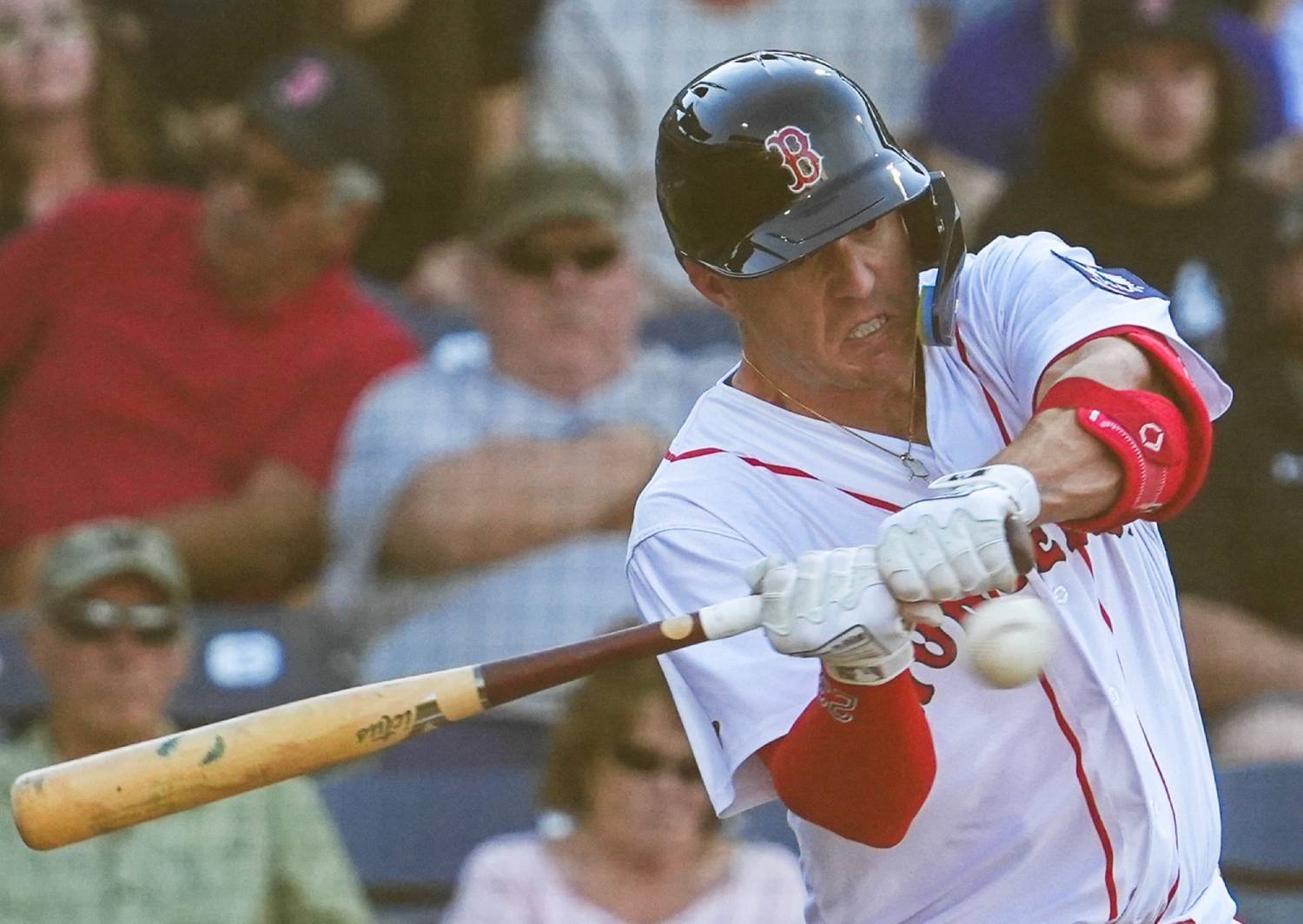 In desperate need of infield depth, the Boston Red Sox got a familiar face back. The Red Sox activated Romy Gonzalez off the 60-day injured list and inserted him into the starting lineup for Sunday's series finale against the rival New York Yankees. Third-string catcher Mickey Gasper was optioned to Triple-A Worcester and outfielder Roman Anthony was transferred from the 10-day IL to the 60-day IL to make room for Gonzalez on the 40-man roster. The Anthony transaction was simply a paperwork move as he has already missed nearly 60 days after going on the IL retroactive to May 5. Gonzalez, who can play first base, second base and third base, underwent surgery on his left shoulder in spring training. He had a bit of a scare when he sustained a hip flexor injury during his rehab assignment last weekend while playing at Triple-A, but it turned out to be nothing and he wrapped up preparing to return to the Red Sox this week. His bat will be a nice addition to the Red Sox's offense. Last year, Gonzalez slashed .305/.343/.483 with nine homers and 53 RBIs in 96 games. Gasper has appeared in 34 games for the Red Sox this year, slashing .243/.305/.308 with no homers and seven RBIs. View the full article
 -
 Let's see what happened down on the Red Sox's farm on Saturday evening. Triple-A Worcester Red Sox Series vs. Toledo Mud Hens (Detroit Tigers): 0-5 Season Record: 36-40 Worcester’s losing streak hit five on Saturday as the WooSox fell 15-6 in a slugfest. The WooSox, playing as the Worcester Kelley Squares, turned to Jack Anderson for Saturday’s start. Anderson struggled across four frames, letting up six runs on four hits. Anderson struck out three and walked two before being replaced by Tyler Samaniego. Samaniego stopped the bleeding temporarily, allowing just a walk and a hit while striking out two in one inning of relief. Tyler Uberstine came next and was rocked to the tune of six runs (three unearned) on five hits in just an inning of work. Eduardo Rivera took the mound next, turning in a solid two innings of work. He allowed one run on four hits before Juan Montero took the ninth frame. Montero allowed two more runs to cross home in the ninth inning of a disastrous day for the WooSox staff. The WooSox offense held its own on Saturday, but it couldn’t compete with Toledo’s onslaught. Max Ferguson and Kristian Campbell led the offense with two RBIs apiece. Andrew Knizner started the scoring with a bases-loaded double in the bottom of the first, driving in Braiden Ward and Vinny Capra and forcing Mikey Romero to third. Romero was driven home later in the inning on a Campbell sac fly. Just one inning later, Max Ferguson drove in Tyler McDonough on a two-run shot to right. The WooSox last run came far too late to do any damage as Romero rounded the bases on a solo home run, his sixth of the year. Double-A Portland Sea Dogs Series @ Hartford Yard Goats (Colorado Rockies): 3-2 Season Record: 38-35 TalkSox’s top two prospects took the field for Portland on Saturday as Franklin Arias returned to the lineup and Anthony Eyanson took the mound. The pair put up two excellent outings, leading the Sea Dogs to a 5-2 victory. Eyanson turned in yet another quality start, lasting 5⅔ innings. He allowed one run, his first run given up in the month of June. Eyanson only struck out two batters, his fewest mark all season. It was a successful start despite some minor struggles. Jedixson Paez took the next 2⅓ innings, allowing one more run on a solo homer and striking out three. Erik Rivera followed Paez, sealing Portland’s win with a two-strikeout save. Portland had a great offensive showing on Saturday, tallying 11 hits and five runs. The Sea Dogs were especially effective with runners in scoring position, going 4-for-13. The scoring started late for Portland, with the first two runs coming in the eighth inning. Down one run, Franklin Arias cranked a two-run homer to right center with Nelly Taylor on second. It was Arias’s 15th homer of the season, leading the Red Sox affiliate teams. Miguel Bleis wanted in on the fun, homering after Arias as the pair went back-to-back. It was Bleis’s third homer in just two nights as he continued a hot month at the plate. With a two-run lead in the ninth, Ahbram Liendo put the ball in play with runners on the corners. Liendo reached on a fielder’s choice as Marvin Alcantara crossed home. With the bases loaded, Miguel Bleis stepped to the plate and singled to left field, scoring Caden Rose. Bleis put an exclamation mark on what was a successful day at the dish for Portland. High-A Greenville Drive Series vs. Asheville Tourists (Houston Astros): 2-3 Season Record: 30-41 Greenville fell 11-9 in an extra-innings heartbreaker. Alex Bouchard took the mound to start the evening for Greenville. Bouchard limped through a 3⅔ inning start. He allowed five runs (one unearned) on eight hits before being replaced by Ben Hansen. Hansen undertook a bulk relief role, turning in 4⅓ innings of shutout ball. Danny Kirwin took the mound to start the ninth and escaped unscathed. However, in the tenth Kirwin was lit up, allowing six runs (one unearned) on five hits and three homers. Tyler Davis played damage control in the tenth, but it was too late to avoid the loss as the Drive fell apart late. Akin to Portland, Greenville was effective at the dish on Saturday. Going a combined 4-for-11 with RISP and good for nine runs on 11 hits, Greenville’s offense was nearly enough. Luke Heyman continued to impress on Saturday, going 3-for-4 and driving in three runs. Heyman started the scoring for the Drive, scoring Enddy Azocar on a single in the second inning. Then in the fourth inning, Heyman drove a solo home run over the wall in center and cut the deficit to three. Heyman capped off his three-hit performance with another RBI single, this one coming in the fifth inning and scoring Antonio Anderson. Down by two runs in the sixth, Yophery Rodriguez scored on a wild pitch as Ronny Hernandez advanced to second. Hernandez was subsequently driven home on a home run from Anderson. It was Anderson’s third home run in as many days as he gave Greenville a one-run edge. Mason White added to the lead with an RBI single in the seventh, scoring Gerardo Rodriguez. With their backs against the wall in the bottom of the tenth, the Drive tried to mount a comeback effort. Isaiah Jackson scored on a passed ball to cut the deficit to three. Finally, Rodriguez hit his twelfth homer of the season but it was too little too late as Greenville narrowly fell. Low-A Salem RidgeYaks Series vs. Myrtle Beach Pelicans (Chicago Cubs): 1-3 Season Record: 28-45 Salem held on to a three-run lead, prevailing 8-5 behind a good start from Christian Foutch. Foutch turned in three innings of no-hit ball, walking three and racking up five strikeouts. It was a much-needed rebound from a disastrous last start. Yermain Ruiz took the mound next, allowing three runs on six hits over the next three frames. Ruiz struck out another five before turning the ball over to Adam Bates. Bates let up two runs on four hits, but still earned the win. Like the two pitchers before him, Bates recorded five more strikeouts across two innings. Devin Gartrell took the ninth frame and struck out the side in a perfect inning, sealing the win for Salem. Despite a collective 11 strikeouts, the RidgeYaks were more than sufficient at the plate. Down by two runs in the fourth, Louis Andujar put Salem on the board with an RBI double, driving in Skylar King. King hit an RBI single of his own just an inning later, scoring Givian Sirvania and Andrews Opata to take a one-run lead. Down by two in the seventh, Andujar hit another RBI single, tying the game with two more RBIs. Opata and Avinson Pinto scored as Salem evened the game. Andujar then scored as Anderson Fermin reached on a throwing error, giving Salem the lead. D’Angelo Ortiz put the game out of reach with a two-out RBI single, scoring Fermin and Andruw Musett. View the full article
 -
 The New York Mets' full-season minor-league affiliates went 1-2 on Saturday. Brooklyn was the lone winner, routing Jersey Shore 9-1. JT Benson belted a grand slam and Dakota Hawkins pitched five scoreless innings. Syracuse squandered a four-run lead in its 8-6 loss to Lehigh Valley. The bullpen yielded six runs in the eighth inning. Yonny Hernández kept his hot streak going with three hits and three RBIs. Binghamton fell behind big early and lost 8-1 at Erie. Starter.R.J. Gordon allowed five runs in 2 2/3 innjngs. St. Lucie's game at Fort Myers postponed because of rain. Mets Transactions New York Mets sent 1B Jorge Polanco on a rehab assignment to Syracuse Mets. New York Mets sent SS Zack Short outright to Syracuse Mets. New York Mets optioned LHP Zach Thornton to Syracuse Mets. Bullpen Collapse Costs Syracuse At Lehigh Valley Syracuse carried a 6-2 lead into the bottom of the eighth, before the relief corps unraveled, Matt Turner retired just one batter while allowing four runs, and Guillo Zuñiga gave up two more, one on a wild pitch, as Lehigh Valley rallied for six in the inning Yonny Hernández paced the offense, going 3-for-4 with three RBIs. The infielder is 10-for17 over four games in the series and 13-for-21 in his last five games. Syracuse seemed to be in control of the game after pushing across three runs in the seventh to go up 6-2. Cristian Pache singled home Hayden Senger and Jihwan Bae, and then Hernández doubled in Pache. Starter Xzavion Curry lasted 4 1/3 innings, allowing two runs. Parker Carlson and Joey Gerber combined for 2 2/3 innings of scoreless relief. Player AB R H RBI BB K Nick Morabito 5 0 1 0 0 2 Jorge Polanco 3 0 0 0 0 1 Hayden Senger 0 1 0 0 1 0 Ryan Clifford 1 0 0 0 0 0 Jihwan Bae 4 2 2 0 1 0 Cristian Pache 5 2 2 2 0 0 Yonny Hernández 4 1 3 3 0 0 Jared Oliva 3 0 0 0 1 1 Vidal Bruján 4 0 1 1 0 0 Grae Kessinger 4 0 0 0 0 1 Kevin Parada 4 0 1 0 0 1 Player IP H R ER BB K HR Xzavion Curry 4 1/3 8 2 2 2 3 1 Parker Carlson 1 2/3 0 0 0 1 0 0 Joey Gerber 1 0 0 0 0 1 0 Matt Turner 1/3 3 4 4 1 1 3 Guillo Zuñiga 1/3 1 2 2 1 2 0 Ofreidy Gómez 1/3 0 0 0 0 1 0 Early Deficit Sinks Binghamton At Erie The Rumble Ponies fell behind 5-0 after three innings and the offense failed to respond. Starter R.J. Gordon labored through 2 2/3 innings, allowing five runs on six hits and two walks while striking out two. Erie scored twice in the second inning and added three more in the third to build its.lead. Binghamton's lone run came in the fourth. Wyatt Young walked and came around to score on a Jaylen Palmer double. The Rumble Ponies managed just six hits total. Saul Garcia was a bright spot, striking out four over two hitless innings of relief. Player AB R H RBI BB K Chris Suero 4 0 1 0 0 0 Jose Ramos 3 0 1 0 1 0 Nick Lorusso 4 0 0 0 0 1 Vincent Perozo 4 0 1 0 0 2 Wyatt Young 3 1 1 0 1 0 Jaylen Palmer 4 0 1 1 0 2 Kevin Villavicencio 4 0 0 0 0 1 Nick Lucky 3 0 1 0 0 2 Nick Roselli 3 0 0 0 0 3 Player IP H R ER BB K HR R.J. Gordon 2 2/3 6 5 5 2 2 0 Justin Armbruester 1 1/3 0 0 0 1 1 0 Saul Garcia 2 0 0 0 0 4 0 Carlos Guzman 1 1 2 2 3 1 1 Brian Metoyer 1 2 1 1 0 0 0 Benson Grand Slam Powers Brooklyn Past Jersey Shore JT Benson provided the capper on the Cyclones' .win with a grand slam in the eighrh. Brooklyn took control of.the game with four runs in the fifth. Yohairo Cuevas hit his first home run for the Cyclones to open the scoring. Three more runs crossed when Daiverson Gutierrez's two-out fly to shallow right-center fell safely after an outfield mixup. Mitch Voit, Ronald Hernandez, and John Bay all scored to make it 4-0. Starter Dakota Hawkins scattered four hits over five scoreless innings to earn the win. He didn't walk a batter and struck out one. He threw 40 of his 58 pitches for strikes. Rehabbing veteran Robert Stock followed with two scoreless frames, striking out two. Player AB R H RBI BB K Mitch Voit 4 2 1 0 1 2 Ronald Hernandez 3 2 0 0 2 1 John Bay 4 1 1 0 0 1 Jamari Baylor 2 1 0 0 1 1 Daiverson Gutierrez 4 1 2 1 0 0 JT Benson 3 1 2 4 1 1 Colin Houck 4 0 0 0 0 2 Trace Willhoite 4 0 0 0 0 2 Yohairo Cuevas 4 1 1 1 0 1 Player IP H R ER BB K HR Dakota Hawkins 5 4 0 0 0 1 0 Robert Stock 2 0 0 0 0 2 0 Josh Blum 1 1 1 1 2 1 0 Ryan Dollar 1 0 0 0 0 2 0 St. Lucie Rained Out St. Lucie's game at Fort Myers was postponed by rain. The Mets will return to action Sunday afternoon. Top-20 Prospect Performance Carson Benge: MLB A.J. Ewing: MLB Jonah Tong: DNP Elian Pena: DNP Jack Wenninger: DNP Ryan Clifford: 0-for-1 Jacob Reimer: DNP Nick Morabito: 1-for-5, 2 K Mitch Voit: 1-for-4, 2B, BB, 2 K Jonathan Santucci: DNP Chris Suero: 1-for-4 Zach Thornton: DNP Wandy Asigen: DNP Will Watson: DNP Eli Serrano III: DNP Randy Guzman: DNP Ryan Lambert: DNP Dylan Ross: DNP Antonio Jimenez: DNP R.J. Gordon: 2 2/3 IP, 6 H, 5 R, 5 ER, 2 BB, 2 K View the full article
 -
 Cubs Transactions Chicago Cubs activated RHP Bryse Wilson. Chicago Cubs placed LHP Hoby Milner on the 15-day injured list retroactive to June 26, 2026. Appendicitis. Chicago Cubs optioned RHP Jayden Murray to Iowa Cubs. Chicago Cubs recalled RHP Tyler Ferguson from Iowa Cubs. Iowa Cubs Tie It Late, Then Buffalo Erupts For Six In The 11th The Iowa Cubs clawed back to a 3-3 tie but the Buffalo Bisons unloaded for six runs in the 11th inning to claim a 9-3 decision. Starter Grant Kipp struck out seven over three and two-thirds innings, allowing three runs on seven hits and two walks, with two home runs accounting for the early damage. Iowa's middle relief steadied things, as Zac Leigh and Luis Peralta combined for four and one-third scoreless innings to keep the game within reach. Chas McCormick carried the offense, going 3-for-4 with a double and a home run while scoring twice and driving in a run. Christian Bethancourt added two hits and an RBI, and Brett Bateman reached three times on two hits and two walks. Moisés Ballesteros knocked in a run with a sacrifice fly that tied the game in the sixth. The bullpen unraveled in the 11th, when Vince Reilly and Collin Snider combined to allow six runs, the zombie runner coming around to score before a three-run home run blew the game open. Iowa left 11 runners on base, repeatedly working into scoring position without delivering the decisive hit. The loss spoiled a steady night from the top of the order and a competitive effort across the first ten innings. Player AB R H RBI BB K Brett Bateman 3 0 2 0 2 0 BJ Murray 5 1 1 0 0 0 Scott Kingery 0 0 0 0 0 0 Moisés Ballesteros 2 0 0 1 2 0 Kevin Alcántara 5 0 1 0 0 1 Jonathon Long 4 0 0 0 1 1 Owen Miller 4 0 0 0 1 1 Chas McCormick 4 2 3 1 0 0 James Triantos 1 0 1 0 0 0 Christian Bethancourt 5 0 2 1 0 1 Ben Cowles 5 0 0 0 0 0 Player IP H R ER BB K HR Grant Kipp 3 2/3 7 3 3 2 7 2 Zac Leigh 2 1/3 0 0 0 0 2 0 Luis Peralta 2 0 0 0 1 2 0 Vince Reilly 2 2 4 3 3 1 0 Collin Snider 1 4 2 2 0 0 1 Knoxville Smokies Storm Back With A Seven-Run Eighth At Birmingham The Knoxville Smokies trailed 3-0 entering the eighth inning, then sent the lineup around for seven runs to seize a 7-3 win over the Birmingham Barons. The rally began with an unearned run, and leadoff man Hayden Cantrelle tied the game with a two-run single before Knoxville pulled ahead for good. Cantrelle finished 2-for-5 with two RBI, Carter Trice added a sacrifice fly and reached three times, and Andy Garriola delivered a two-run single. Edgar Alvarez capped the scoring with an RBI double, one of his two hits on the night. Starter Evan Taylor set the tone with four strikeouts over two innings, allowing one run on three hits and a walk. Yenrri Rojas followed with two and two-thirds scoreless innings, working around two walks to hold the deficit at three. Tyler Schlaffer closed the door with two and one-third innings, striking out three and allowing one hit while protecting the lead. The Smokies needed only three hits across the first seven innings but bunched their offense when it counted, stranding just three runners on the night. Devin Ortiz and Ariel Armas each reached and came around to score during the eighth-inning outburst, and Jefferson Rojas worked a walk to help keep the line moving. The comeback turned a quiet evening into a decisive road victory, with the bullpen surrendering nothing after the seventh. Player AB R H RBI BB K Hayden Cantrelle 5 1 2 2 0 0 Jefferson Rojas 3 1 0 0 1 1 Carter Trice 1 0 1 1 1 0 Alex Ramírez 4 0 0 0 0 2 Andy Garriola 4 1 1 2 0 2 Edgar Alvarez 4 1 2 1 0 1 Ariel Armas 4 1 1 0 0 1 Ethan Hearn 4 1 0 0 0 0 Devin Ortiz 4 1 1 0 0 2 Player IP H R ER BB K HR Evan Taylor 2 3 1 1 1 4 0 Yenrri Rojas 2 2/3 0 0 0 2 0 0 Tyler Ras 2 4 2 2 1 1 0 Tyler Schlaffer 2 1/3 1 0 0 1 3 0 South Bend Cubs Roll Past Quad Cities Behind Wiggins And Two Homers The South Bend Cubs pounded out an 11-1 win over the Quad Cities River Bandits, building the lead early and never looking back. Jaxon Wiggins set the tone with three and two-thirds scoreless innings, striking out four while allowing just two hits and no walks. Ethan Flanagan finished with four innings of one-run ball and four strikeouts to close it out. The offense did its work in bunches, opening with three runs in the third and adding four more in the fifth, when Jose Escobar and Drew Bowser each homered. Escobar led the way at 3-for-4 with three RBI, while Bowser went 2-for-4 with two RBI. Angel Cepeda reached base four times, finishing 2-for-3 with a double, two walks, two RBI, and three runs scored. Leadoff man Kane Kepley tripled, drove in a run, and crossed the plate twice. South Bend tacked on single runs in the fourth and sixth before a two-run seventh pushed the margin to double digits. The Cubs drew eight walks and pressured the Quad Cities staff all night, leaving 10 on base only because they kept the line moving. With Wiggins dominant and the lineup productive top to bottom, South Bend controlled the game from the third inning on. Player AB R H RBI BB K Kane Kepley 4 2 1 1 1 1 Josiah Hartshorn 5 0 1 1 0 1 Matt Halbach 5 0 0 0 0 3 Angel Cepeda 3 3 2 2 2 1 Jose Escobar 4 1 3 3 1 0 Justin Stransky 4 1 1 0 1 0 Miguel Useche 3 1 0 1 1 2 Drew Bowser 4 1 2 2 1 1 Christian Olivo 4 2 1 0 1 0 Player IP H R ER BB K HR Jaxon Wiggins 3 2/3 2 0 0 0 4 0 Adam Stone 1 1/3 1 0 0 0 1 0 Ethan Flanagan 4 4 1 1 0 4 0 Myrtle Beach Pelicans Cough Up The Lead In Salem's Five-Run Seventh The Myrtle Beach Pelicans carried a 5-3 lead into the bottom of the seventh inning, then watched Salem score five times to take an 8-5 decision. Starter Braylon Myers turned in three scoreless innings, allowing two hits with a strikeout, but the bullpen could not hold the advantage. Henry Cone absorbed the damage in the seventh, charged with five runs, two earned, over one and two-thirds innings, as defensive miscues extended the inning. Derniche Valdez paced the offense at 3-for-5 with a double and two runs scored, and Edward Vargas went 2-for-5 with a triple, an RBI, and two runs, his seventh-inning three-bagger briefly pushing the lead to 5-3 with a seldom seen inside the park home run. Ezequiel Pena chipped in two hits and an RBI. The Pelicans' biggest problem was efficiency, as they stranded 15 runners and repeatedly let scoring chances slip away. Myrtle Beach pieced together runs in the fourth, sixth, and seventh but could not add the cushion their baserunners suggested was available. Yoendris Gonzalez struck out five in two innings but surrendered three runs, and Sam Mettert provided a clean one and one-third to finish. A promising road night unraveled in a single frame, leaving the Pelicans to rue a stack of missed opportunities in an 8-5 loss. Player AB R H RBI BB K Alexey Lumpuy 5 0 1 1 1 3 Alexis Hernandez 4 0 0 1 2 3 Michael Carico 3 0 0 0 2 2 Logan Poteet 5 0 0 0 0 5 Eli Lovich 5 0 1 0 0 1 Derniche Valdez 5 2 3 0 0 1 Edward Vargas 5 2 2 1 0 0 Ezequiel Pena 4 1 2 1 1 1 Yahil Melendez 0 0 0 0 0 0 Darlyn De Leon 4 0 1 0 1 2 Player IP H R ER BB K HR Braylon Myers 3 2 0 0 0 1 0 Yoendris Gonzalez 2 3 3 3 2 5 0 Henry Cone 1 2/3 4 5 2 2 3 0 Sam Mettert 1 1/3 0 0 0 0 2 0 Top-20 Prospect Performance Jefferson Rojas: 0-for-3, 1 BB, 1 K Pedro Ramirez: DNP Jaxon Wiggins: 3 2/3 IP, 2 H, 0 R, 0 BB, 4 K Josiah Hartshorn: 1-for-5, 1 RBI, 1 K Kevin Alcantara: 1-for-5, 1 K Ethan Conrad: DNP Kane Kepley: 1-for-4, 3B, 1 RBI, 1 BB, 1 K Owen Ayers: DNP Jonathon Long: 0-for-4, 1 BB, 1 K Kaleb Wing: DNP James Triantos: 1-for-1 Brooks Caple: DNP Mason McGwire: DNP Ty Southisene: DNP Will Sanders: DNP Juan Cabada: DNP Eli Lovich: 1-for-5, 1 K Ariel Armas: 1-for-4, 1 K Jostin Florentino: DNP Grant Kipp: 3 2/3 IP, 7 H, 3 R, 2 BB, 7 K, 2 HR View the full article
 -
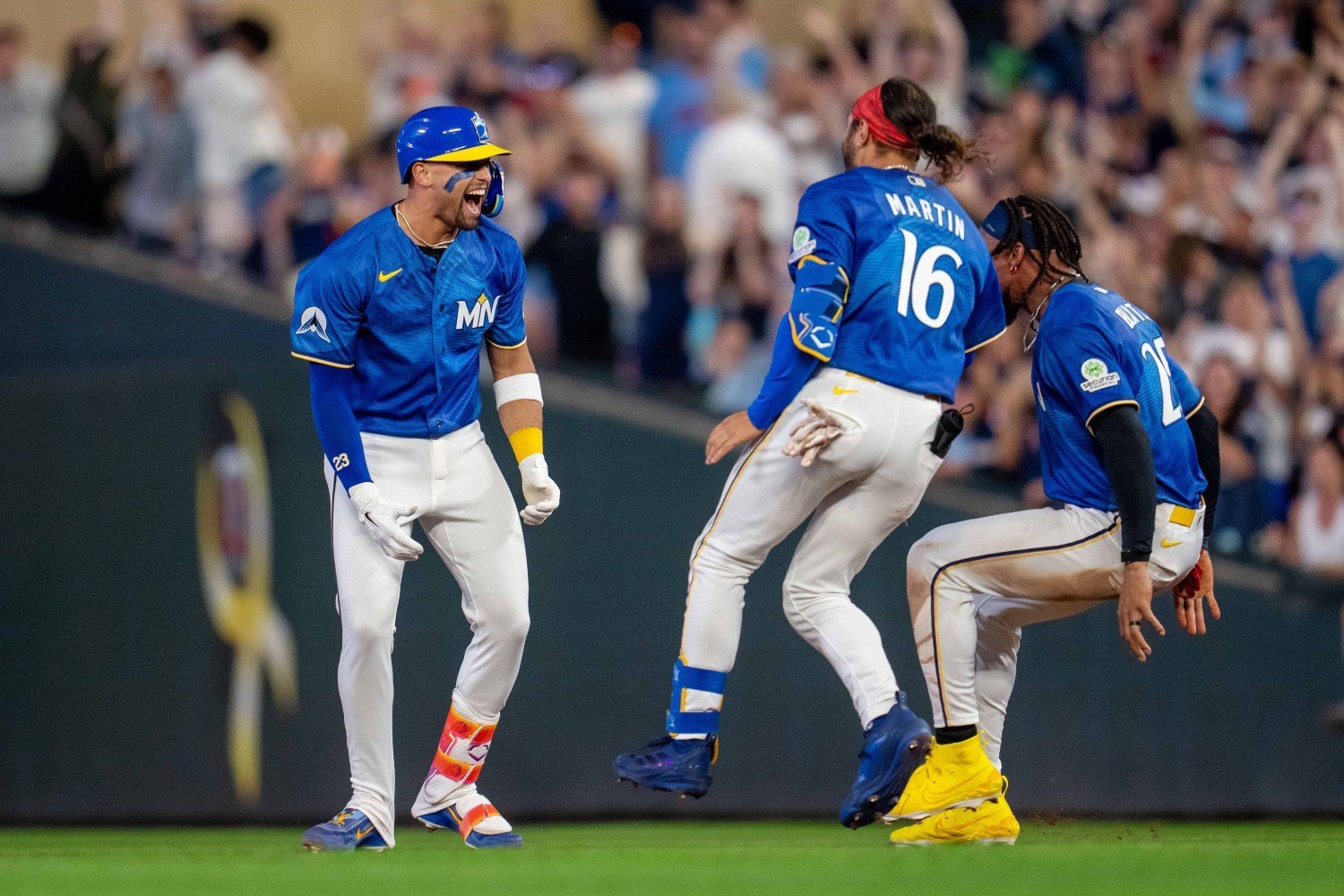 As the 2026 Minnesota Twins took the field, there was little hope that this would be The Year. After two seasons of missed opportunities and a deadline blowout that left the team a shell of itself, it was clear the Twins would take a step back for 2026. That didn't mean the team couldn't be interesting, but the questions one wanted to answer were quite different than simply “will they make the playoffs?" Yet, these Twins have been oddballs, to say the least. Neither historically terrible nor particularly good, the Twins are simply playing a Schrödinger's Season: every time you look, it appears slightly different, with a totally different outcome on numerous fronts. We seem to know how they're doing or which direction they're trending, but never both at once. Perhaps most frustrating—not necessarily in a bad way—is that the season’s necessary questions are actually murkier than ever. Assessing these mysteries shows us that understanding this team, not to mention the 2027 and 2028 teams, might not be as clear as one might hope. It would be easy to pull certain levers, but uncertainty abounds. Who Makes Up the Young Core of the Twins? As we entered the season, many hoped to find out who would anchor the next few seasons of Twins baseball. Was Royce Lewis cooked? Would Brooks Lee prove his worth? Was Luke Keaschall’s bat for real? Honestly, nobody has made it easy. Almost every one of the Twins’ “Core” players has played a highly inconsistent style of baseball. Here’s each player's rolling xWOBA over the season so far: With just over a month to go to the trade deadline, it looks like a number of the core players have turned it around. However, how does one determine if these are simply fleeting hot streaks? Anyone can do anything over 60 plate appearances. If there’s anything to learn from the above data, it is the inconsistency of the season. Only Kody Clemens has managed to stay above the .300 mark that defines a useful offensive player. And this graph doesn't even account for Matt Wallner, who has ironed out some (but not all) of his issues at Triple-A St. Paul and seems to be asking for reinstatement. Many of us will cheer the return of Lewis as a slugger, but with so much noise in the signal, it's hard to see if any gains might make either of those two central to the Twins’ 2027 plan. Jeremy Zoll will clearly have to make some difficult decisions before August 3, but arguably, the hardest will be defining who the core is. Which Rookies Can We Pen Into 2027? Generally, the silver lining on the clouds of rebuilding are the opportunities that process affords to prospects. The lining around this year's clouds has been more of a slightly later gray than a shimmering silver, with injuries taking the luster off. Here are the names everyone threw around this spring: Walker Jenkins, Emmanuel Rodriguez, Kaelen Culpepper, Alan Roden, Gabriel Gonzalez. Only one of those got a shot at the majors (Gonzalez, with four plate appearances before being sent down) in the team's first three months of play. As is the case with any great Twins hitting prospects, the core top prospects have been marred with injuries. That means we have yet to see how many of these players will fare. And given that four of the five players named above are outfielders, the Twins are once again finding themselves unable to clear a roadblock. One hopes that an active trade deadline might create a pathway for playing time, but the hope that we would know who might start at shortstop or in right field next spring remains only a hope, and the project has been delayed until those guys can get and stay healthy for a while. Which Starters are Bullpen Bound? The Twins entered the season with eight potential starters alongside a couple intriguing arms on the cusp of the majors. Throughout spring training, many considered what it might look like to see David Festa, Connor Prelipp, or Zebby Matthews as bullpen arms. In the way the team had developed Louis Varland, Jhoan Duran, and Griffin Jax into a ferocious relief trio, many thought that there might be the start of an ace bullpen simply by converting starters. So far, only one name managed to make it to the bullpen: Andrew Morris, who has looked solid enough (with a 2.68 FIP) to lightly pencil in for 2027 and beyond. Otherwise: ugh. The bullpen has been a parade of disasters, ranking 23rd in the league and with only the surprising waiver claim (Yoendrys Gómez) likely to have a place on the team going forward. Even more surprisingly, the Twins did not even bother trying the flailing Simeon Woods Richardson in the bullpen before tossing him back to the Blue Jays (who tossed him as well this week). There will be time in the latter half of the season to experiment with arms, but (as suggested below) the trade deadline might require those experiments to remain starters just to cover innings. Can We Expect Another Sell-Off? The running joke for Twins fans worried about a sell-off is, "What's left to sell?" Beyond Joe Ryan and Ryan Jeffers, there seemed to be little in the tank of the team (we’ll ignore whatever any major media outlets have said about Byron Buxton and leave his comments on the table). But one unexpected problem has changed a lot of Twins thinking: an oddball American League has placed them right outside the Wild Card race. Even more so, the team sits less than five games back from the division-leading White Sox and Guardians. Both those teams, of course, have weaknesses that could allow them to be overtaken given the right two weeks. There is a real chance this deeply flawed Twins team, especially if it overcomes some injuries and reinforces the bullpen, could make a push for the playoffs. But why? Even if the Twins forced their way into the playoffs, an early exit is almost guaranteed. What better chance to take advantage of a seller's market of teams in need of one last piece? Moreover, the Twins seemingly have more trade chips than expected, with Trevor Larnach surging and even a left-hander like Anthony Banda likely worth an interesting prospect. Ryan will, of course, remain the centerpiece, and depending on how Detroit approaches their deadline, he could be the hottest commodity on the market. The return of Jeffers might position them to land an intriguing haul, as well. But deciding to buy or sell leads into the final question…. Is Tom Pohlad Steering the Twins in the Right Direction? Few considered Tom Pohlad’s self-appointment as the "new" owner exciting at the time, but most would agree that he is at least trying. Payroll is down, though there was little time left to wade into the free-agent market when he took over in the second half of December. On the fan-facing side, I don’t think most would argue against his implementation of $2 beers before game time, free tickets, and generally remaining around the team. Tom is attempting to put his face on the team the way his brother Joe avoided doing. Of course, ticket sales are down—but as oft noted by former team president Dave St. Peter, most ticket sales happen before the season. Notably, there is another public measure of activity inside the ballpark: the Twins “Split the Pot” Raffle. As I wrote about for Baseball Prospectus, the raffle has been a strong barometer of butts in the seats, at least relative to other seasons. Often this depends on weekend games as well as opponents, but there is a sign of some turnaround in the team occurring: 2023 2024 2025 2026 April $11,791.56 $12,025.83 $12,253.67 $7,175.00 May $15,438.33 $12,007.35 $13,166.00 $13,782.92 June $15,375.56 $15,048.85 $16,435.00 $16,344.23 Some of this is engineered; for example, the Twins had both the Blue Jays and Brewers—some of their more popular neighbor opponents—as weekend series in May. And having Shohei Ohtani on the mound (the only sellout crowd of the season so far) certainly made a difference in June. But it seems that some of the trends are changing and more fans are attending compared to last year. It even looks like the Rockies series to end June should actually increase the final number for the month. Does this make the new Pohlad a success? Certainly not yet. Could the deadline define him? Even that is hard to say. Unless he somehow forced a Buxton trade, the real moment to define his legacy will be the offseason. The Twins have half a season left to start answering these questions. Let's hope we see them sooner rather than later. View the full article
 -
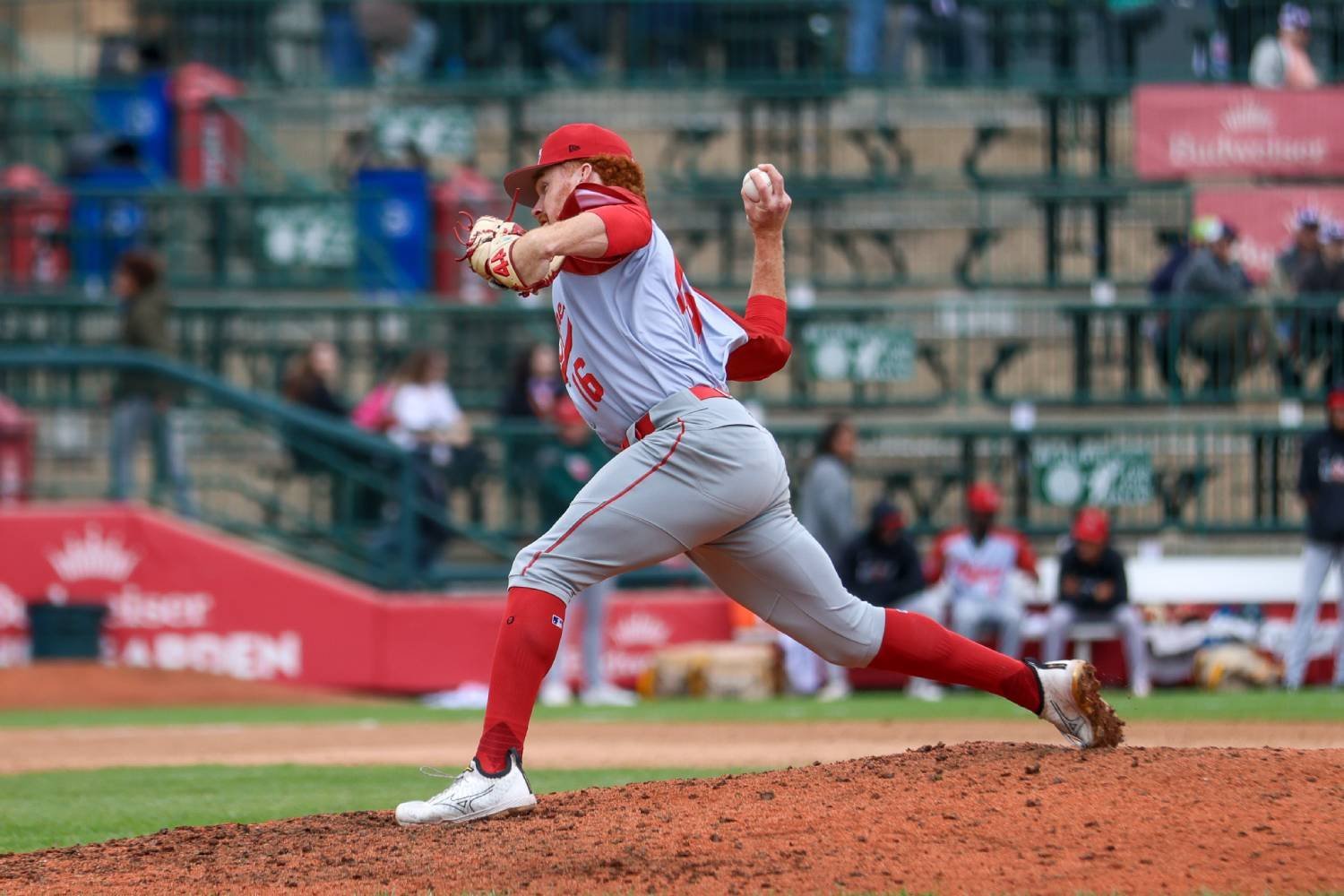 With the 2026 MLB Draft just around the corner, it is time to take a look back at how the San Diego Padres' selections from 2025 are faring in their first full seasons in pro ball. There are many caveats, as this is a big development year for all these prospects, with news and updates on major and minor injuries hard to come by. This recap also doesn't include free agents signed following last year's draft, such as Alex McCoy, or members of the international signing class. Here is a rundown of all of last year's draft picks, ordered by the round they were selected (all stats as of the last weekend of June). 1. Kruz Schoolcraft, LHP It shouldn't have been a surprise that the Padres took a high school left-handed starting pitcher with the 25th overall pick, as they did the same thing at No. 25 the year before, when they got Kash Mayfield. But Schoolcraft, a 6-foot-8 19-year-old from Portland, Ore., hasn't experienced the same success Mayfield did after making his pro debut. Schoolcraft was considered more of a project by draft experts and that is exactly what is happening in his first full season of pro ball. He made a token start in 2025, but has since made 12 starts with a 6.81 ERA, walking 15.1% of hitters and striking out 24.9% in 39⅔ innings. It would seem that Schoolcraft will spend the entire year at Lake Elsinore unless something changes drastically in the second half. 2. No selection Forfeited for signing right-handed pitcher Nick Pivetta, who received a qualifying offer from the Boston Red Sox. 3. Ryan Wideman, CF At this point, the 22-year-old out of Western Kentucky is the star of the draft class. The center fielder leads the minors in stolen bases and has made changes at the plate that have led to more contact, allowing him to use his speed to make a difference on the basepaths. He put up a .314/.389/.504 slash line with six homers and 24 RBIs at Lake Elsinore. He also had 20 doubles and 43 steals (in 56 chances) before getting bumped up to High-A Fort Wayne for the second half of the season. Those tools make him a very dynamic player and someone to keep an eye on. 4. Michael Salina, RHP The 22-year-old right-handed starter made two starts in May in the Arizona Complex League, but has not appeared in a game since. Those games were his first since undergoing Tommy John surgery during his final season at St. Bonaventure. The Padres still saw the potential in Salina, spending a fourth-round draft choice on him. He hit 99 mph on his four-seamer in his initial outing and sat a few ticks below that. But it is concerning that he hasn't pitched since. 5. Ty Harvey, C Another in a deep stack of catchers the Padres have in the pipeline, the 19-year-old Harvey, selected out of a Florida high school, is currently on the 60-day injured list at Lake Elsinore after his left hand was broken by an opposing hitter on a catcher's interference play at the end of May. He could be back by the end of July. He missed a month before that with a quad injury. When in the lineup, he was an offensive force, producing a .338/.449/.431 slash line with no homers, nines RBIs and six steals in 21 games. He did draw 13 walks, which shows promise. His athleticism could also see him move to from behind the plate, possibly to first. He was a key pick, as the Padres gave Harvey a $1.5 million signing bonus, the second-highest in the class behind Schoolcraft, to forgo attending Florida State. 6. Jaxon Dalena, RHP After appearing in three games for Lake Elsinore last year, the 24-year-old right-handed starter, who attended Shippensburg, is on the 60-day injured list. 7. Kerrington Cross, 3B-1B The 24-year-old corner infielder is a bat-first prospect as he showed in putting up a 1.075 OPS in the first half at Lake Elsinore, which earned him a promotion to Fort Wayne. Cross hit 11 homers, drove in 53 and stole 17 bases in 58 games with the Storm. He was the Big 12 Conference Player of the Year at Cincinnati after slashing .396/.526/.647 as a senior, with terrific plate discipline. In the first half, he walked 46 times to 53 strikeouts in 58 games after a 50-35 split at Cincy. Cross played more first base than third at Lake Elsinore. 8. Jamie Hitt, LHP The Padres put the soon-to-be 24-year-old in the Fort Wayne rotation after a relief appearance at Lake Elsinore for his season debut. The left-hander, selected out of Oklahoma, has overall been pretty solid, with six of his 11 starts going at least five innings, including two six-inning outings and one 6⅔. Hitt doesn't have big strikeout stuff, topping out at a season high of five, and he has had some issues with walks, with two or more in 10 of his 12 appearances. After being a starter in two years at Texas Tech and his first two years at Oklahoma, Hitt was mainly a reliever as a senior in 2025, a role he excelled at. But as a lefty, the Padres will give Hitt every chance as a starter. 9. Will Koger, RHP The 23-year-old out of Arizona State is a right-handed reliever with an relatively mundane fastball at 98 mph, but his gyro slider had a 46% swing-and-miss rate with the Sun Devils, where he transferred to after three years at Louisville. He had 34 strikeouts in 24⅓ innings at Lake Elsinore before being moved up to Fort Wayne. His strikeout rate was at 28.1% in the first half, with a walk rate of 13.2% that could use some improvement. He did notch six saves at Lake Elsinore. 10. Justin DeCriscio, SS The 23-year-old shortstop from North Carolina State earned an early promotion to Fort Wayne after a .311/.363/.544 slash line with three homers and 18 RBIs in 28 games at Lake Elsinore. Offense has been a little tougher to come by for DeCriscio since he was moved up as he had a .246/.357/.373 slash line in 35 games. DeCriscio's offense should come as he has was named the second-best pure hitter in this class by Baseball America. He makes good contact and didn't chase much at N.C. State. 11. Truitt Madonna, C Drafted out of Ballard High School in Seattle, the 19-year-old has taken advantage of more playing time due to injuries with Lake Elsinore, seeing action not only at catcher, but at first base and designated hitter as well. Madonna has as .242/.346/.365 slash line with one homer and 36 RBIs in 60 games. He gave up a scholarship to UCLA for a $654,000 signing bonus. As with other catchers in the system, Madonna, at 6-foot-3, has good size behind the plate and scouts see a potential for more power in his game, but will need to prove he can hit to move up. 12. George Bilecki, OF The 22-year-old selected from Division II Lewis University in Illinois has had a few noteworthy homers for Lake Elsinore thus far, with midseason promotions likely opening a door for more playing time. Bilecki has a .197/.368/.340 slash line with four homers and 26 RBIs in 54 games this year after putting up a .128/.226/.170 mark in 18 games last year with the Storm. 13. Dylan Grego, SS The switch-hitting versatile former Ball State star has had quite a first half of the season already from a travel perspective. He started the season at High-A Fort Wayne, was sent down to Low-A Lake Elsinore after 24 games, but then went up to Triple-A El Paso for a week to cover for some promotions to the MLB roster. The 22-year-old has played shortstop, second base and third base, but only put up a .204/.286/.310 slash line with two homers and 15 RBIs. Curiously, he went 9-for-18 in five games at El Paso. 14. Clay Edmondson, RHP The 23-year-old sidewinding reliever is perhaps the breakout performer of this class so far. Before being bumped up to Double-A San Antonio, Edmondson was among the minors leaders with 11 saves at High-A Fort Wayne. There, the former North Carolina-Asheville star posted a 1.67 ERA in 27 innings across 23 appearances, striking out 38 (33%) and walking 13 (11.3%). Edmondson made his pro debut last year at Lake Elsinore and earned a one-game appearance at Triple-A El Paso. 15. Ryan Reed, LHP Despite being listed on the active roster for the Padres in the Arizona Complex League, the 22-year-old left-handed reliever out of Pitt has yet to pitch this season. He did make two appearances for Lake Elsinore last year, going 2⅔ scoreless innings with three hits, one walk and one strikeout. 16. Cardell Thibodeaux, OF The first casualty of this draft class, Thibodeaux was released June 20 from the Arizona Complex League roster. The 22-year-old out of Southern had a slash line of .244/.392/.366 in 14 games this season after debuting at Lake Elsinore with a .108/.216/.138 mark in 21 games. 17. Tyler Schmitt, RHP One of a few late-round gems thus far, the 21-year-old picked out of Illinois has had more ups than downs with Lake Elsinore. He has made 11 starts and one relief appearance, with a 4.47 ERA in 54⅓ innings. Schmitt has struck out 59 (25.2%) and walked 28 (12%) in his debut season. He has turned in four scoreless starts, including back-to-back performances to begin May where he allowed a combined three hits and struck out 11. He then had an 11-strikeout game on June 13. 18. Landry Jurecka, RHP The 23-year-old right-handed reliever out of Queens University has had a rough beginning to his pro career. He made six appearances with Lake Elsinore with a 6.75 ERA in 9⅓ innings, then returned to the Storm to begin 2026, only to make two appearances get hurt and is now on an extended rehab assignment in the Arizona Complex League. There, he has logged 17 innings over 10 appearances for a 5.82 ERA, walking four and striking out 17. 19. Jonathan Vastine, SS The 23-year-old former Vanderbilt shortstop is currently on the seven-day injured list for High-A Fort Wayne, which is where he reported after signing last year. The left-handed hitter played in 22 games in his debut season, producing a .235/.329/.309 slash line with one homer, seven RBIs and three stolen bases. In more of a backup role this season, Vastine has followed that up with a .147/.202/.294 mark with four homers and seven RBIs in 31 games. 20. Luke Cantwell, 1B Taken out of Pitt, where the first baseman was teammates with Reed, Cantwell is a contact-first left-handed hitter. At Lake Elsinore, he was one of the top hitters in the California League during the first half as he put up a .328/.475/.496 with a pair of homers and 30 RBIs. Cantwell celebrated his promotion to High-A Fort Wayne by hitting the first pitch he saw off the batter's eye in center for a homer. His first half was limited to 40 games due to an injury, however. View the full article
