


DiamondCentric
-
Posts
2,631 -
Joined
-
Last visited
Never
Content Type
Profiles
Forums
Events
News
Tutorials & Help
Major League Baseball Videos
Guides & Resources
Store
Downloads
Gallery
Everything posted by DiamondCentric
-

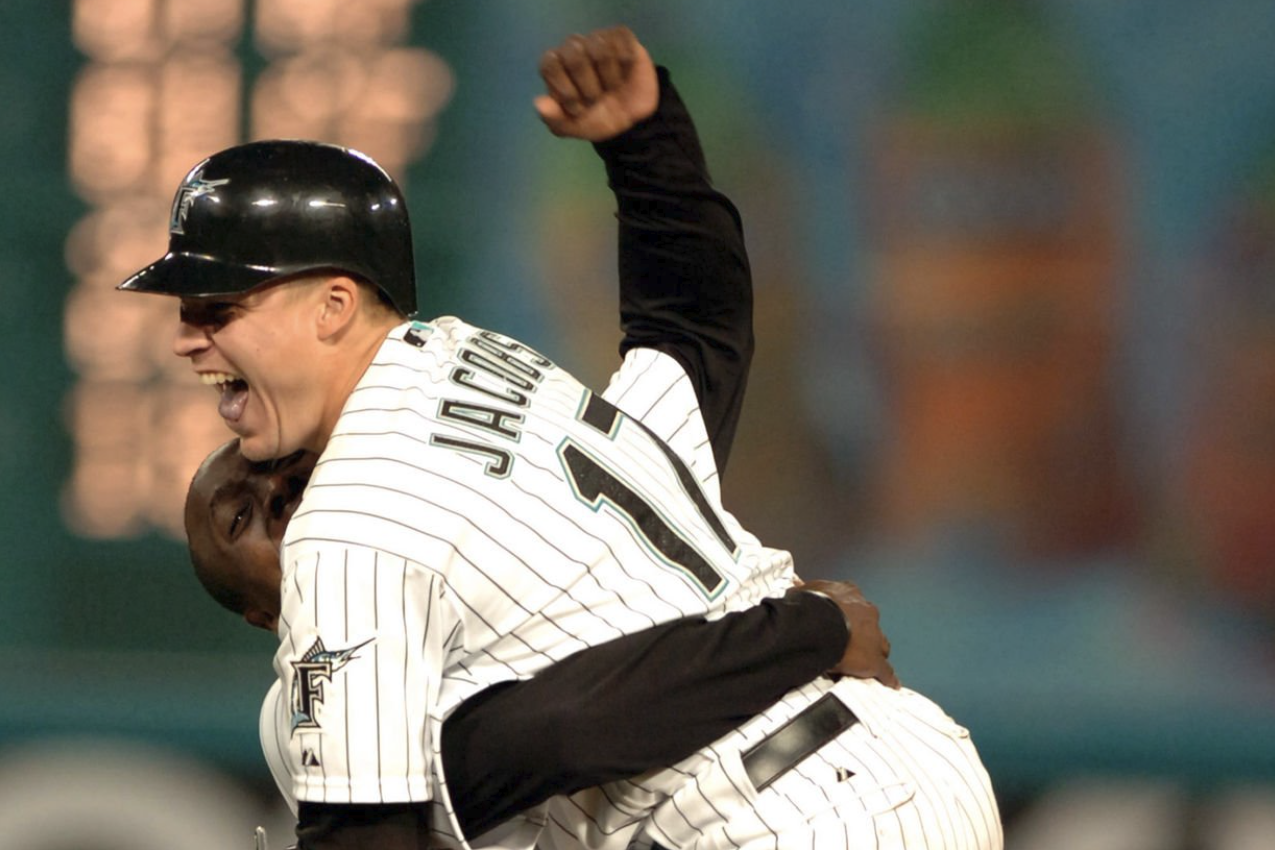 The 2006 Florida Marlins didn’t make the postseason, but with a rebuilding team full of rookies, they did exceed all expectations. Things started rough for the Marlins, but by the latter parts of the year, they stood in the thick of the National League Wild Card race. On this day 20 years ago, Florida rallied for a 5-4 win over the Chicago Cubs, courtesy of a Mike Jacobs two-run walk-off single. The Marlins trailed 4-3 and were down to their last three outs at Dolphins Stadium on May 23, 2006 as the Cubs turned to a right-hander familiar to baseball fans in South Florida: Ryan Dempster. Needing a jumpstart, Florida found one in pinch hitter Wes Helms, who went back up the middle for a single on Dempster’s first pitch of the evening to get the scoring started. After Hanley Ramírez worked a seven-pitch walk to put two on with nobody out in the bottom of the ninth inning, Dan Uggla’s sacrifice bunt put two runners into scoring position. Miguel Cabrera was intentionally walked to load the bases. Following a forceout at the plate off the bat of Josh Willingham, Dempster was one out away from a save. Standing in Chicago’s way was Jacobs. On a 1-1 pitch from Dempster, Jacobs lined one deep to centerfield, well past former Marlins World Series champion Juan Pierre. His shot one-hopped the wall, allowing Ramírez and Cabrera to score easily for a walk-off win. Prior to Jacobs’ heroics, the Marlins never led. Ronny Cedeño and Cubs starting pitcher Kerry Wood hit back-to-back RBI singles in the second inning to give Chicago an early 2-0 lead. Catcher Michael Barrett extended it to 3-0 with a solo homer off Marlins starter Scott Olsen in the third. After Florida got on the board with a Cabrera sacrifice fly in the third, Matt Murton led off the Chicago fourth with a solo blast to give the Cubs a 4-1 lead. Cabrera’s two-run home run in the fifth inning cut the deficit to 4-3. Following an 11-31 start, the thrilling comeback win gave Florida consecutive wins over the Cubs and clinched the three-game series. The Marlins would go on to become the first team in baseball history to get to .500 after falling 20 games under before a 78-84 finish under manager Joe Girardi. Their first of seven walk-off wins from that campaign came courtesy of Jacobs and on this day two decades ago. View the full article
 -
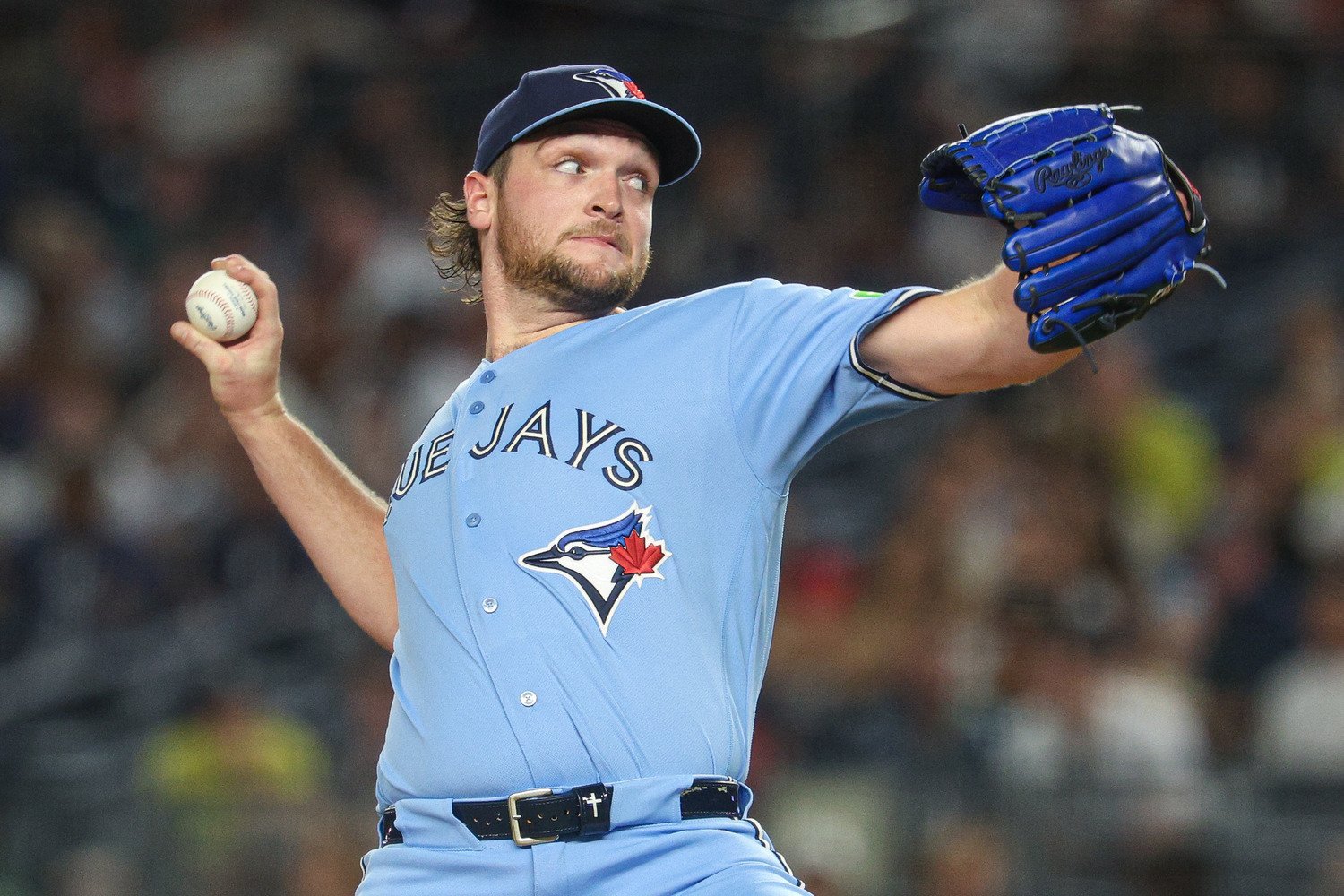 Even after a two-hour rain delay, there was a sense of predictability around the third game of the Blue Jays-Yankees series last Wednesday night in the Bronx. Cam Schlittler, the MLB leader in ERA and FIP among qualified pitchers, was set to take the hill against a Toronto offense that had slashed a cringeworthy .243/.306/.369 as a unit so far in the month of May. The Jays also left the tying run on third base in each of the first two games of the series. What happened against Schlittler and the Yankees was unsurprising, as they only scored two runs and managed just one extra-base hit. Thanks to Trey Yesavage, it didn't matter. The 22-year-old, in his first start at Yankee Stadium, outdueled Schlittler, going six shutout innings, striking out eight, walking none, and allowing just two hits on 95 pitches. The Blue Jays won 2-1. Yesavage's season started a month late as he recovered from an impingement in his throwing shoulder, but through five starts, his ERA is a sparkling 1.07. He was forecasted by most publicly available projection systems to have an ERA in the mid-to-high 3.00s, which would be perfectly acceptable for a rookie his age but also an indication that the pitcher who set the world on fire last October wouldn't sustain that pace. So far, he has. Rain delays can often throw a wrench into a team's pitching plans. Starters need to follow particular routines and time themselves up to be ready for the first pitch, but when that comes two hours later than expected, it can sometimes put unforeseen limits on their availability that evening. The big story on Wednesday was not only Yesavage's 95 pitches, the second-most he has ever thrown in a major league outing after Game 5 of the World Series, but that his velocity was way up. His fastball sat 95.2 mph, the second-hardest single-game average of his young career, and his slider and splitter were also more than 1.0 mph higher than their season averages. Perhaps he has three cans of Red Bull to thank for that. Until last night, Yesavage had more postseason strikeouts than regular season strikeouts to his name. While his ability to miss bats was on full display against the Yankees, his strikeout rate has slightly fallen back down to earth in 2026. Again, this isn't a cause for concern – it's still in the high 20s, and he was never going to repeat his 35.8% postseason K rate over 20-25 starts. The thing he has done extremely well this year, though, is limit quality contact. Pitchers don't exert much control over how hard opponents hit the ball, but location and launch angle are highly correlated, and Yesavage is hitting the right spots to induce sub-optimal batted ball angles. Trey Yesavage Batted Ball Metrics, 2025 vs 2026 Year GB% PU% Pull Fly Ball% Barrel% BIP% < -3° LA + BIP% > 38° LA 2025 56.4% 0.0% 2.6% 7.7% 43.6% 2026 34.9% 14.3% 1.6% 3.2% 54.0% I like looking at the percentage of batted balls outside that -3° to 38° launch angle range. Not all grounders and fly balls are created equally, and hits outside of that boundary resulted in an average wOBA of less than .300 from 2023 to 2025. It's essentially an adjusted sum of groundball rate and popup rate that only shows the least threatening batted balls possible. Over half of the balls in play that Yesavage has induced this year fall into that category. No one's barreling anything or pulling any fly balls. It's hard to do damage without checking at least one of those boxes. The drop in groundball rate is quite fascinating, but he's compensating for it by running one of the highest popup rates in the league. Splitting his groundballs up by pitch type, there isn't a considerable decrease this year with the splitter or slider: It's mostly happening on the fastball, and it appears to be a direct byproduct of a change in location. Yesavage's fastball averages over 20" of induced vertical break (IVB) thanks to his high release point, so it defies gravity and gives the illusion that it's rising more than almost every four-seamer in the game, meaning hitters are bound to swing under it. In 2026, he's throwing a lot more fastballs down in the zone. Trey Yesavage Fastball Location, 2025 vs 2026 Top left: LHB 2025; top right: RHB 2025; bottom left: LHB 2026; bottom right: RHB 2026 Normally, fastballs with high IVB are more effective when they're elevated because if pitchers aim for a low strike, they run the risk of generating carry upward into the middle of the zone, making them more prone to damage. However, it's working for Yesavage, and I think this is partially a result of hitters being wary of the splitter, which requires steep, uppercut swings to counteract its downward movement. Pitcher List's Anthony Licciardi recently profiled Kevin Gausman's longevity and found that Gausman has sustained success despite also consistently locating his fastball down in the zone. Maybe fastball-splitter pitchers can get away with this kind of approach because hitters on both sides of the plate always have to respect the possibility of seeing a splitter? Fundamentally, not much has changed about Yesavage since he first donned a Blue Jays uniform in September of last year. The sky-high release point is still there. The fastball still carries, and it hasn't lost any velocity since his shoulder injury. The splitter still has plenty of vertical separation from the fastball and induces ugly swings from lefties. The slider still moves the wrong way. His stuff is still electric, he's still missing bats, and now he's becoming a weak contact pitcher too. His development over the past calendar year has become even more remarkable than it already was. The only considerable change we've seen to his profile this year is a decrease in slider usage. He's throwing way more fastballs to righties and more splitters to lefties, with the slider taking a tertiary role to both sides of the plate. As a result, his strikeout rate against righties has nearly doubled compared to last regular season. However, none of this stopped him from reintroducing the slider on Wednesday night. He threw it 27% of the time to Yankee hitters, a single-game high on the young season, and the fact that they chased 70% of the sliders they saw out of the zone suggests they weren't ready for it at all. Trey Yesavage Pitch Usage by Handedness, 2025 vs 2026 Pitch Type 2025 vs LHB 2026 vs LHB 2025 vs RHB 2026 vs RHB FF 50% 44% 39% 51% FS 34% 46% 16% 22% SL 16% 10% 45% 27% As much as I'd rather not pour some cold water on a guy who has been nothing but dominant since he came to the big leagues, especially considering how difficult it is to put a positive spin on the Jays' season right now, there are some things about the way Yesavage's first eight regular season starts have unfolded that seem impossible to continue. He has yet to surrender a non-playoff home run in his career, having induced 27 fly balls that have all stayed in the yard. If he keeps generating this many popups and prevents opponents from getting the barrel to the ball or pulling anything in the air, I don't doubt he'll maintain a low HR/FB% in the long run, but the postseason proved that it's possible to take him deep from time to time. I also don't know how I feel about his command at the moment. On one hand, his walk rate is down from last year, sitting at 7.9% after Wednesday night. On the other, the zone rate on his splitter is down almost 10 points to 34.5%, and command grades from both pitch quality models hosted on FanGraphs suggest the precision of his fastball and his splitter have waned slightly compared to 2025. The splitter is always going to be a chase pitch for him, but pitchers walk a fine line when zone rates on a given offering sink below 35% and they become overly reliant on poor discipline (remember what happened when people stopped swinging against Brendon Little?). Against lefties, his walk rate is only 3.4%, which is probably going to go up if the pitch that he throws 46% of the time against them is out of the zone this much. It can be puzzling when a pitcher's walk rate decreases despite throwing fewer pitches in the zone. It's hard to picture Yesavage's walk rate staying this far below 10% for much longer, but even when he battled his control last year, he got enough strikeouts to make it work, and his stuff is still good enough that it seems like a sustainable combination in the long term. In the 2025 postseason, Yesavage didn't have to steal games for the Blue Jays because of how many runs they scored. This year, the current state of the offense probably means he'll have to pitch in way tighter contests, and early indications suggest he's up to the task. He almost single-handedly won Wednesday night's game for them, and since his MLB debut, his 2.05 FIP leads all starting pitchers with at least 30 innings. He might not pitch like a Cy Young candidate indefinitely, but there's no denying that he has quickly established himself as one of the better starting pitchers in the game. All stats entering May 21, 2026. View the full article
 -
 Jase Bowen homered as part of a big day at the plate as the Triple-A El Paso Chihuahuas rolled past Round Rock 14-3. Carson Tucker delivered a go-ahead hit as the Double-A San Antonio Missions pulled out a 7-6 win over Frisco. The High-A Fort Wayne TinCaps won 3-2 on walk-off homer by Jack Costello and five more shutout innings by Kash Mayfield. The Low-A Lake Elsinore Storm got walked off by Visalia 7-6. Padres Minor-League Transactions El Paso Chihuahuas placed OF Pablo Reyes on the temporarily inactive list. El Paso Chihuahuas activated 2B Nate Mondou from the Development List. Jase Bowen Blasts 12th Homer As Chihuahuas Go Deep 4 Times Jase Bowen's team-leading 12th homer was one of four blasts hit by the host Triple-A El Paso Chihuahuas, who put up two five-run innings en route to a 14-3 victory over the Round Rock Express. Anthony Vilar, Nate Mondou and Nick Solak also went deep for the Chihuahuas. Bowen drove in three and scored three and Carlos Rodriguez had three RBIs, while Mondou and Marcos Castanon each drove in two and scored two. Castanon came off the bench to go 3-for-4. Chihuahuas right-handed starter Evan Fitterer pitched 5⅓ scoreless innings, giving up four hits and two walks, while striking out five. Right-hander Garrett Hawkins went 1⅔ scoreless innings, walking three and striking out one, with right-hander Justin Yeager giving up all three runs in the final two innings. Castanon had a two-run double in the third inning and Bowen cranked out his three-run blast one out later for a 5-0 lead. Vilar hit his second homer an inning later for a 6-0 cushion, before the Chihuahuas scored five more in the fifth. Will Wagner had an RBI single, Rodriguez a two-run triple and Mondou capped the rally with a two-run homer, his fourth this year. Solak's homer was a two-run blast in the sixth to make it 13-0. EP_0522.mp4 Player AB R H RBI BB K Samad Taylor 4 1 0 0 1 0 Clay Dungan 1 0 0 0 0 1 Marcos Castañon 4 2 3 2 0 0 Nick Solak 4 2 1 2 0 0 Jase Bowen 4 3 2 3 1 1 Will Wagner 5 1 3 1 0 0 Mason McCoy 4 1 1 0 1 0 Carlos Rodríguez 3 1 1 3 1 0 Nate Mondou 4 2 2 2 1 1 Anthony Vilar 4 1 1 1 0 1 Totals 37 14 14 14 5 4 Player IP H R ER BB K HR Evan Fitterer 5 1/3 4 0 0 2 5 0 Garrett Hawkins 1 2/3 0 0 0 3 1 0 Justin Yeager 2 2 3 3 2 0 2 Totals 9 6 3 3 7 6 2 Missions Hang On After Carson Tucker's Decisive 2-Run Single In Eighth Carson Tucker hit a go-ahead two-run single in a three-run eighth inning and Francisco Acuna homered in the ninth as the Double-A San Antonio Missions held on despite giving up a ninth-inning homer to beat the host Frisco RoughRiders 7-6. Missions right-handed starter Victor Lizarraga went six innings, allowing just one run on seven hits and a walk with five strikeouts. After a 10.91 ERA in April, Lizarraga has allowed just three earned runs over 20 innings in May for a 1.35 ERA this month. Tirso Ornelas went 4-for-5, Ryan Jackson went 3-for-4 with a pair of runs scored, while Albert Fabian also drove in two for the Missions. Frisco had taken a 4-3 lead with a three-run bottom of the seventh. But the Missions regained the lead in the top of the eighth. Jackson had a leadoff single, Acuna walked and both advanced on Luis Verdugo's sacrifice bunt. Tucker followed by lining a single to center to bring in Jackson and Acuna for a 5-4 lead. Ethan Salas singled Tucker to third and Ornelas boosted the lead to 6-4 with an infield single. Acuna provided much-needed insurance when he lined his second homer of the season with two outs in the top of the ninth. Missions right-hander Andrew Dalquist gave up a two-out, two-run homer in the bottom of the ninth before securing his first save of the season and the third of his career. SA_0522.mp4 Player AB R H RBI BB K Carson Tucker 4 1 1 2 1 1 Ethan Salas 5 0 1 0 0 1 Romeo Sanabria 4 2 1 0 1 3 Tirso Ornelas 5 0 4 1 0 0 Albert Fabian 5 0 2 2 0 1 Kai Roberts 0 0 0 0 0 0 Braedon Karpathios 5 0 0 0 0 3 Ryan Jackson 5 2 3 0 0 1 Francisco Acuna 2 2 1 1 2 0 Luis Verdugo 4 0 2 1 0 2 Totals 39 7 15 7 4 12 Player IP H R ER BB K HR Victor Lizarraga 6 7 1 1 1 5 1 Andrew Moore 1/3 0 3 3 4 1 0 Sadrac Franco 1 2/3 2 0 0 0 3 0 Andrew Dalquist 1 1 2 2 1 3 1 Totals 9 10 6 6 6 12 2 Jack Costello's 3-Run Walk-Off Bomb, Kash Mayfield's 8 K's Lift TinCaps Jack Costello hit a three-run walk-off homer and left-handed starter Kash Mayfield struck out eight over five innings as the host High-A Fort Wayne TinCaps shocked the Dayton Dragons 3-2. Held to two hits through eight innings, the TinCaps got a leadoff single from Alex McCoy and Carlos Rodriguez reached when the left fielder botched his fly ball. Costello stepped to the plate and yanked a 1-0 pitch deep to left-field for a no-doubt walk-off. It was Costello's fifth homer of the season and first since going deep in back-to-back games May 1-2. FW1_0522.mp4 Mayfield, Padres Mission's No. 2 prospect, extended his scoreless streak to 15 innings as he allowed just two hits and a walk in his third straight start of five scoreless innings. He has struck out 17 in his last two outings and lowered his ERA to 1.30 to take over the Midwest League lead. Mayfield hasn't allowed a run in six of his eight starts. He also leads the league in WHIP (0.72) and opponent batting average (.103). TinCaps right-hander Isaiah Lowe pitched two scoreless innings, allowing a hit and a walk with three strikeouts, but left-hander C.J. Widger gave up a pair of runs in the top of the eighth on three walks and a run-scoring soft grounder to no-man's land between first and second. Widger was replaced by right-hander Will Varmette, who struck out a batter but then issued a bases-loaded walk. That TinCaps trio limited the Dragons to just four hits and combined for 13 strikeouts. FW2_0522.mp4 Player AB R H RBI BB K Justin DeCriscio 4 0 0 0 0 1 Rosman Verdugo 1 0 0 0 3 0 Lamar King Jr. 4 0 0 0 0 2 Alex McCoy 4 1 1 0 0 1 Jake Cunningham 4 0 0 0 0 2 Carlos Rodriguez 4 0 1 0 0 1 Kasen Wells 0 1 0 0 0 0 Jack Costello 4 1 1 3 0 1 Kavares Tears 3 0 0 0 0 0 Jonathan Vastine 3 0 1 0 0 2 Totals 31 3 4 3 3 10 Player IP H R ER BB K HR Kash Mayfield 5 2 0 0 1 8 0 Isaiah Lowe 2 1 0 0 1 3 0 C.J. Widger 1/3 1 2 2 3 0 0 Will Varmette 1 2/3 0 0 0 1 2 0 Totals 9 4 2 2 6 13 0 Storm Tie It In Ninth, But Get Walked Off By Rawhide Jose Verdugo hit a run-scoring infield chopper in the top of the ninth, but the Low-A Lake Elsinore Storm gave up a two-run walk-off homer in the bottom of the ninth for an 8-6 loss to the Visalia Rawhide. Dylan Grego, who was hitless in his previous 11 at-bats entering the game, went 2-for-4 with a two-run homer for the Storm. Ryan Wideman and Ty Harvey each had a couple hits, with Wideman stealing two more bases to give him 32. That is tied for the most in the minors with Tate Southisene of Augusta (Carolina League). Truitt Madonna, with his 10th, and Kerrington Cross, with his fifth, gave the Storm four more steals, giving them 123 for the season, second in the minors. Grego hit his two-run homer, his first of the season, with one out in the top of the second for a 2-0 lead. In the fourth, the Storm scored three times. Harvey had a leadoff double and Yoiber Ocopio a one-out RBI single. Grego got his second hit of the day with a single and Conner Westenburg doubled both home with two outs for a 5-0 lead. Visalia countered with a pair of three-run innings in the fourth and fifth to take a 6-5 lead. It remained that way until the top of the ninth. That is when George Bilecki reached on a leadoff error and was replaced by pinch-runner Qrey Lott. After an out, Wideman singled to right, moving Lott to second and Cross walked to load the bases. Verdugo then hit a chopper that the third baseman had to charge and his only play was to first, but Verdugo beat the throw. Storm left-handed starter Kruz Schoolcraft, Padres Mission's No. 4 prospect, allowed three runs in 3⅓ innings on two hits and two walks with five strikeouts. Right-hander Nick Falter tossed three scoreless innings, giving up just one hit and no walks with four strikeouts. LE_0522.mp4 Player AB R H RBI BB K Ryan Wideman 5 0 2 0 0 0 Kerrington Cross 2 0 1 0 3 0 Jose Verdugo 5 0 1 1 0 1 Ty Harvey 5 1 2 0 0 1 Truitt Madonna 3 1 0 0 0 1 Yoiber Ocopio 4 1 1 1 0 1 Dylan Grego 4 2 2 2 0 0 George Bilecki 3 0 0 0 0 0 Qrey Lott 0 1 0 0 0 0 Conner Westenburg 4 0 1 2 0 0 Totals 35 6 10 6 3 4 Player IP H R ER BB K HR Kruz Schoolcraft 3 1/3 2 3 3 2 5 1 Rordy Mejia 1 2/3 4 3 3 1 1 2 Nick Falter 3 1 0 0 0 4 0 Vicarte Domingo 2/3 1 2 2 1 2 1 Totals 8 2/3 8 8 8 4 12 4 Top 20 Prospect Performance Ethan Salas: 1-for-5, K Kash Mayfield: 5 IP, 2 H, 0 R, 1 BB, 8 K Miguel Mendez: DNP Kruz Schoolcraft: 3⅓ IP, 2 H, 3 R, 3 ER, 2 BB, 5 K, HR Ryan Wideman: 2-for-5 Jorge Quintana: DNP Ty Harvey: 2-for-5, 2B, K Kale Fountain: DNP Braedon Karpathios: 0-for-5, 3 K Lamar King Jr.: 0-for-4, 2 K Jagger Haynes: DNP Alex McCoy: 1-for-4, K Truitt Madonna: 0-for-3, K Tucker Musgrove: DNP Garrett Hawkins: 1⅔ IP, 0 H, 0 R, 3 BB, 1 K Michael Salina: DNP Eric Yost: DNP Rosman Verdugo: 0-for-1, 3 BB Bryan Balzer: DNP Deivid Coronil: DNP View the full article
 -
Twins Minor League Report (5/22): Hendry Mendez Big Day
DiamondCentric posted an article in Twins Daily
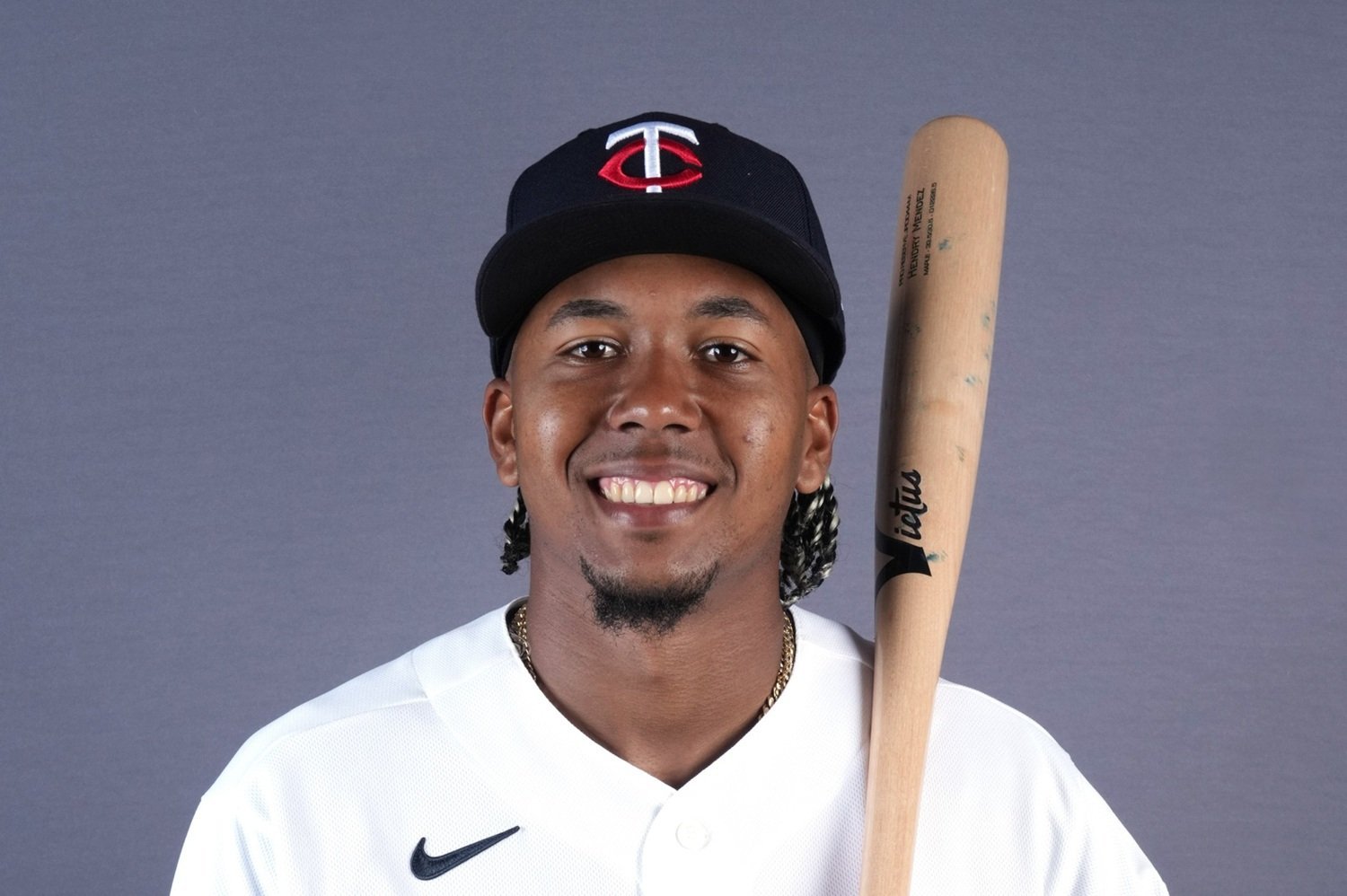 TRANSACTIONS With Tristan Gray going on the paternity list, the Twins recalled OF Gabriel Gonzalez from St. Paul. Gonzalez made his MLB debut in Boston on Friday night. Impressively, he walked in his first to plate appearances off of Payton Tolle. After a pop out, he recorded an infield single for his first big-league hit. LHP Cesar Lares tossed a rehab game with the FCL Twins. The FCL Twins also activated infielder Daiber De Los Santos. SAINTS SENTINEL St. Paul 9, Omaha 5 Box Score The Saints got a short start, but the bullpen came through for them and the offense really picked things up. Ryan Gallagher needed over 40 pitches to get through a three-run top of the first inning. Overall, he gave up five runs on two hits and five walks over three innings. He had four strikeouts. Marco Raya came in to start the fourth inning. He put together easily his longest and best performance of the season. He tossed three scoreless innings of one-hit, scoreless baseball. He struck out three batters. Drew Smith pitched a scoreless seventh inning. Grant Hartwig struck out three batters over two scoreless innings. The Saints stayed in it early and took command of the scoreboard in the latter innings. Kaelen Culpepper led off the bottom of the first for the Saints. He reached on an error. He quickly took off and stole second base. Unfortunately, on his headfirst slide, his helmet fell off, hit the bag, and it bounced up and hit Culpepper under the chin, cutting his lip and ending his game. Tanner Schobel came in. With one out, Hendry Mendez singled to drive in the first Saints run. He stole second and scored on a Matt Wallner single to center. Monticello High School grad Ethan Bosacker came into the game for Omaha. The 25-year-old attended Xavier University in Cincinnati. In 2023, he was the Royals 13th round draft pick. In 2024, he went 13-3 with a 2.45 ERA between Low-A and High-A. In 2015, he went 6-6 with a 4.05 ERA between Double-A and Triple-A. He has started, and last year split his appearances evenly. This season, 10 of his 13 outings have come out of the bullpen. In this game, he gave up three runs on six hits over three innings. In the second inning, Noah Cardenas singled, went to third on Tanner Schobel’s seventh double, and scored on a Mendez groundout. In the bottom of the third inning, Matt Wallner led off with a double. Kyler Fedko switched places with him with his eighth double of the year. With two outs, Ricardo Olivar blooped a single to center to drive in Fedko with the game-tying fifth run. In the bottom of the sixth inning, the Saints scored two runs. Both Kyler Fedko and Aaron Sabato took bases loaded walks to make it 7-5 Saints. With two outs in the bottom of the seventh inning, Schobel singled. He scored on Hendry Mendez’s third Saints home run. Mendez led the way. He went 3-for-5 with a homer, three runs, and four RBI. Matt Wallner went 2-for-4 and was hit by a pitch. Fedko went 2-for-4 with a walk and a double. Aaron Sabato was 2-for-4 with his 10th double. Noah Cardenas was also 2-for-4 with his second double. Tanner Schobel went 2-for-4 with his seventh double. Check out one of our sister sites, Royals Keep, for more on the Kansas City Royals organization. Here are their Top 20 Royals prospects. WIND SURGE WISDOM Wichita 2, Tulsa 14 Box Score This was a rough game for Wichita pitchers, and frankly, it wasn’t much better for the hitters. Jaime Ferrer had half of the Wind Surge’s four hits and half of their two RBI. Jose Salas walked twice as well. A quick look at the batting average and OPS of the Wichita lineup, and it really isn’t too surprising. Eli Jones started and gave up six runs (3 earned) on seven hits and two walks in 3 1/3 innings. He had five strikeouts. Jarret Whorff came in with the bases loaded, allowed all three inherited runners to score and three more runs on three hits and a walk before getting out of that fourth inning. Preston Johnson gave up a hit and struck out one batter in a scoreless inning in his Twins-organization debut. Spencer Bengard gave up two runs on three hits over two innings. Jacob Wosinski worked a scoreless inning. Murphy Stehly pitched the ninth inning. Always fun seeing position players pitch. Stehly gave up three runs on four hits in his inning. KERNELS CHRONICLE Cedar Rapids 4, Peoria 5 Box Score Brandon Winokur hit his sixth home run of the season in the top of the first inning, but despite a ninth-inning run, they fell just shy. The Kernels had six hits and three walks. Four of the six hits went for extra bases. Jacob McCombs went 2-for 4 with his sixth double. Khadim Diaw hit his first triple of the season. Along with Winokur, Andy Lugo added his second home run of the season. Dasan Hill gave up only an unearned run on three hits and two walks over two innings. He had four strikeouts. He needed 46 pitches over the two innings. Miguelangel Boadas needed just 37 pitches to get through three innings. In three runs on two hits and a walk. He also struck out four batters. Nick Trabacchi gave up one run on three hits over two innings. He struck out four batters and walked none. Paulshawn Pasqualotto gave up two hits in a scoreless inning. MIGHTY MATTERS Ft. Myers 6, Dunedin 7 (10 innings) Box Score The Mussels were behind 4-0 through six innings before attempting a comeback. Jason Reitz made the start. He gave up three runs (1 earned) on three hits in one inning. He gave up two runs in the first inning. He went out for the second inning but both batters that he faced reached base and one scored. Merit Jones gave up one of the inherited runners, but he gave the team five innings. He was charged with one run on three hits and a walk. He also walked seven batters. The Mussels got on the scoreboard Merphy Hernandez singled and stole second. He scored on a single by Enrique Jimenez to make it 4-1. Mike McKenna came on and gave up one run on one hit and one walk in 1 1/3 innings. Down 5-1, JP Smith led off with a single. Ryan Sprock walked. The runners advanced on a wild pitch. With one out, Luis Fragoza came up and hit his first home run since joining the Mussels earlier in the week from the FCL. The deficit was down to 5-4. Michael Hilker came on and gave up three hits and a walk but no runs in 1 2/3 innings. With two outs in the top of the ninth, still behind 5-4, JP Smith reached on a throwing error. Ryan Sprock lined a single to the opposite field to drive in the tying run. Quentin Young began the top of the 10th inning as the Manfred Man. Fragoza was hit by a pitch. After a strikeout, Hernandez grounded into a fielder’s choice with Young advancing to third. Dameury Pena followed with a single to right field to give the Mussels their first lead, 6-5. Mitch Mueller recorded two outs in the 10th but took the loss with two runs (1 earned) on two hits and two walks. 19-year-old Fragoza went 3-for-4 with the crucial home run and three RBI. He was also hit by a pitch. Young was 2-for-5. Ramiro Dominguez was hit by a pitch three times. The Dunedin Blue Jays are the Low-A affiliate of the Toronto Blue Jays. Check out our sister site at Jays Centre. Here are their rankings of the Top 20 Blue Jays prospects. COMPLEX CHRONICLE FCL Twins 7, FCL Red Sox 2 Box Score Lefty Cesar Lares returned to the game mound for a rehab start. He went three innings and gave up one run on three hits. He had three strikeouts and no walks. Melvin Rodriguez came on and worked the final four innings. He gave up one run on one hit (a solo homer). He walked two and had three strikeouts. Interestingly enough, the home run was the first of the season for Red Sox prospect Franklin Primera. The FCL Twins jumped ahead early with a four-run bottom of the first inning. Yovanny Duran led off with a walk. He went to third on Miguel Caraballo’s fourth double. Jhomnardo Reyes drove them both in with his third home run of the season. Then Teilon Serrano followed by hitting his first home run of the year to make it 4-1. The Twins went four innings without scoring. But in the bottom of the sixth, they completed the bookends with another crooked number. With one out, Yilber Herrera walked and stole second. He went to third on a balk. He scored on a Duran ground out. Caraballo walked and stole second. He scored on a Reyes triple. Reyes scored on the back end of a double steal to give them seven runs in the game. Jhomnardo Reyes led the offense. He went 3-for-4 with a walk, his first triple, his third homer, and four RBI. Teilon Serrano hit his first home run and then walked three times. He also stole his third base. PLAYERS OF THE DAY Hitter of the Day Hendry Mendez (St. Paul): 3-for-5, HR(3), 3 R, 4 RBI Pitcher of the Day Marco Raya (St. Paul): 3 IP, H, 0 R, 0 BB, 3 K, 33 pitches, 23 strikes (69.7%) PROSPECT SUMMARY Check out the Prospect Tracker for much more on our Twins Top 20 prospects after seeing how they did today. #1 - OF Walker Jenkins (St. Paul) - 7 Day Injured List (left shoulder) #2 - IF Kaelen Culpepper (St. Paul) - 0-for-1, SB(10) (batted first, played SS) #3 - OF Emmanuel Rodriguez (St. Paul) - 7 Day Injured List (thumb) - Had surgery. #4 - LHP Connor Prielipp (Minnesota) - 4 IP, 7 H, 6 R, 5 ER, 3 BB, 1 K, 85 pitches, 49 strikes (57.6%). #5 - C Eduardo Tait (Cedar Rapids) - 0-for-4, 2 K (batted third, DH). #6 - LHP Dasan Hill (Cedar Rapids) - 2 IP, 3 H, 1 R, 0 ER, 2 BB, 4 K, 46 pitches, 25 strikes (54.3%) #7 - SS Marek Houston (Cedar Rapids) - 0-for-4, K, (batted first, played SS) #8 - RHP Riley Quick (Cedar Rapids) - Did Not Pitch. #9 - LHP Kendry Rojas (Minnesota) - Did Not Pitch. #10 - OF Gabriel Gonzalez (Minnesota) - MLB Debut: 1-for-2, 2 BB, R (batted fifth, played LF). #11 - RHP Charlee Soto (Cedar Rapids) - Injured List #12 - RHP Andrew Morris (Minnesota) - Did Not Pitch. #13 - OF Hendry Mendez (St. Paul) - 3-for-5, HR(3), 3 R, 4 RBI (batted second, played LF) #14 - 3B/SS Quentin Young (Ft. Myers) - 2-for-3, R, 2 K, 2 E (batted sixth, played SS) #15 - 3B/CF Brandon Winokur (Cedar Rapids) - 1-for-3, BB, HR(6), R, RBI, K (batted second, played 3B) #16 - RHP Ryan Gallagher (St. Paul) - 3 IP, 2 H, 5 ER, 5 BB, 4 K, 89 pitches, 49 strikes (55.1%) #17 - RHP C.J. Culpepper (St. Paul) - 1.2 IP, 3 H, 2 ER, 0 BB, 2 K, 35 pitches, 22 strikes (62.9%) #18 - RHP James Ellwanger (Ft. Myers) - 60 Day Injured List (right elbow sprain) #19 - C/OF Khadim Diaw (Cedar Rapids) - 1-for-3, BB, 3B(1), 2 R (batted fifth, played catcher) #20 - 2B/SS/CF Kyle DeBarge (Wichita) - Did Not Play. UPCOMING PROBABLES Saturday, May 23: Omaha @ St. Paul (6:37 pm CT) - RHP Mike Paredes (0-1, 7.80 ERA) Tulsa @ Wichita (4:05 pm CT) - TBD (1-3, 4.40 ERA) Cedar Rapids @ Peoria (6:35 pm CT) - RHP Ivran Romero (2-1, 7.07 ERA) Ft. Myers @ Dunedin (5:30 pm CT) - TBD FCL Twins @ FCL Red Sox (9:00 am CT) - TBD CURRENT W-L Records Minnesota Twins: 24-27 St. Paul Saints: 25-23 Wichita Wind Surge: 19-23 Cedar Rapids Kernels: 23-20 Fort Myers Mighty Mussels: 24-19 FCL Twins: 8-7 DSL Twins: 0-0 (season begins Monday, June 1) Please feel free to ask questions about the teams, the rosters, and discuss today’s games, or anything else Twins minor-league related! View the full article
 -
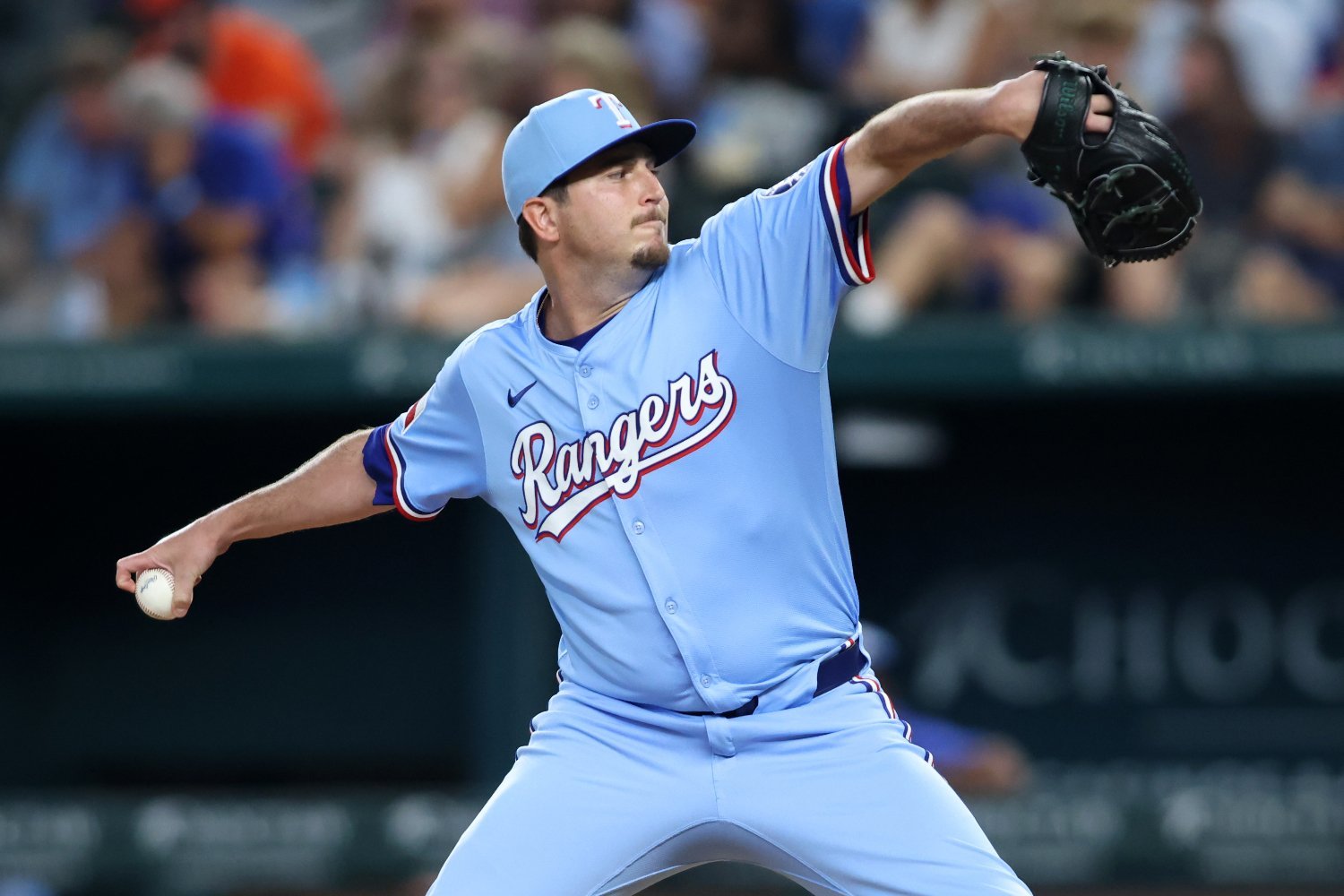 On Friday, Raising Royals, the Royals' Professional Development account, announced that they had signed MLB veteran relievers Luke Jackson and Genesis Cabrera to Minor League deals. Both pitchers are expected to report to Triple-A Omaha. Jackson and Cabrera are older players, at 34 and 29, respectively. They should add some much-needed depth to the Storm Chasers bullpen, which has struggled outside of Eric Cerantola, Beck Way, Jose Cuas, and Andrew Perez. Furthermore, Jackson and Cabrera are bullpen arms that could fill in at the MLB level should injury befall someone in the Royals bullpen. The 34-year-old Jackson comes over from the Mets organization, as he pitched in 7.2 innings total between Triple-A and Low-A ball. The righty was semi-productive with the Texas Rangers a year ago, posting a 4.11 ERA in 35.1 IP. However, his FIP was much higher at 5.01, and his K% and K-BB% were paltry at 15.8% and 3.3%, respectively. In 4.2 IP with the Syracuse Mets, Jackson posted an 11.57 ERA, 1.93 WHIP, and 6.74 FIP. He also had a -22.7% K-BB%. On a positive note, his TJ Stuff+ profile was pretty solid, so he could rebound a bit if he can hone his command a bit in Omaha. Jackson had a 106 TJ Stuff+ overall with three pitchers (changeup, slider, and four-seamer) with TJ Stuff+ marks of 100 or higher. He also limited hard contact, with a .300 xwOBACON overall. However, his whiff rate (19.4%), chase rate (23.6%), and zone rate (40.2%) were all paltry, illustrating his issues with command in Syracuse. As for Cabrera, he was last in the Phillies organization, pitching for the Triple-A Leigh Valley Iron Pigs this season. In 15 appearances and 17.1 IP with the Iron Pigs, he posted a 10.38 ERA and 1.79 WHIP. However, his FIP was much better at 4.54, and he showed a strong ability to maximize strikeouts and minimize walks. He had a 26.8% K% and 15.9% K-BB%, both solid marks for a reliever. What hurt him the most in Triple-A was the long ball, as he allowed a HR/FB% of 17.6%. When it comes to TJ Stuff+, he hasn't been as impressive as Jackson. That said, he showed a much better ability to generate swing-and-miss in Triple-A this year than the right-handed reliever. Cabrera had a 99 overall TJ Stuff+ with only two pitches hitting the 100 mark (his sinker and changeup). That said, he did generate a 29.9% chase and 32.6% whiff rate, both above-average marks. His xwOBACON was a bit average overall at .373, but he did a good job of minimizing hard contact on his sinker and curveball, as illustrated by his .304 and .260 xwOBACON marks, respectively. The big key for Cabrera will be finding the strike zone, as he only had a 44.1% zone rate with the Iron Pigs this season. Both have Minor League contracts, so they will need to be added to the 40-man roster to get a call-up to the Major Leagues this season. View the full article
 -
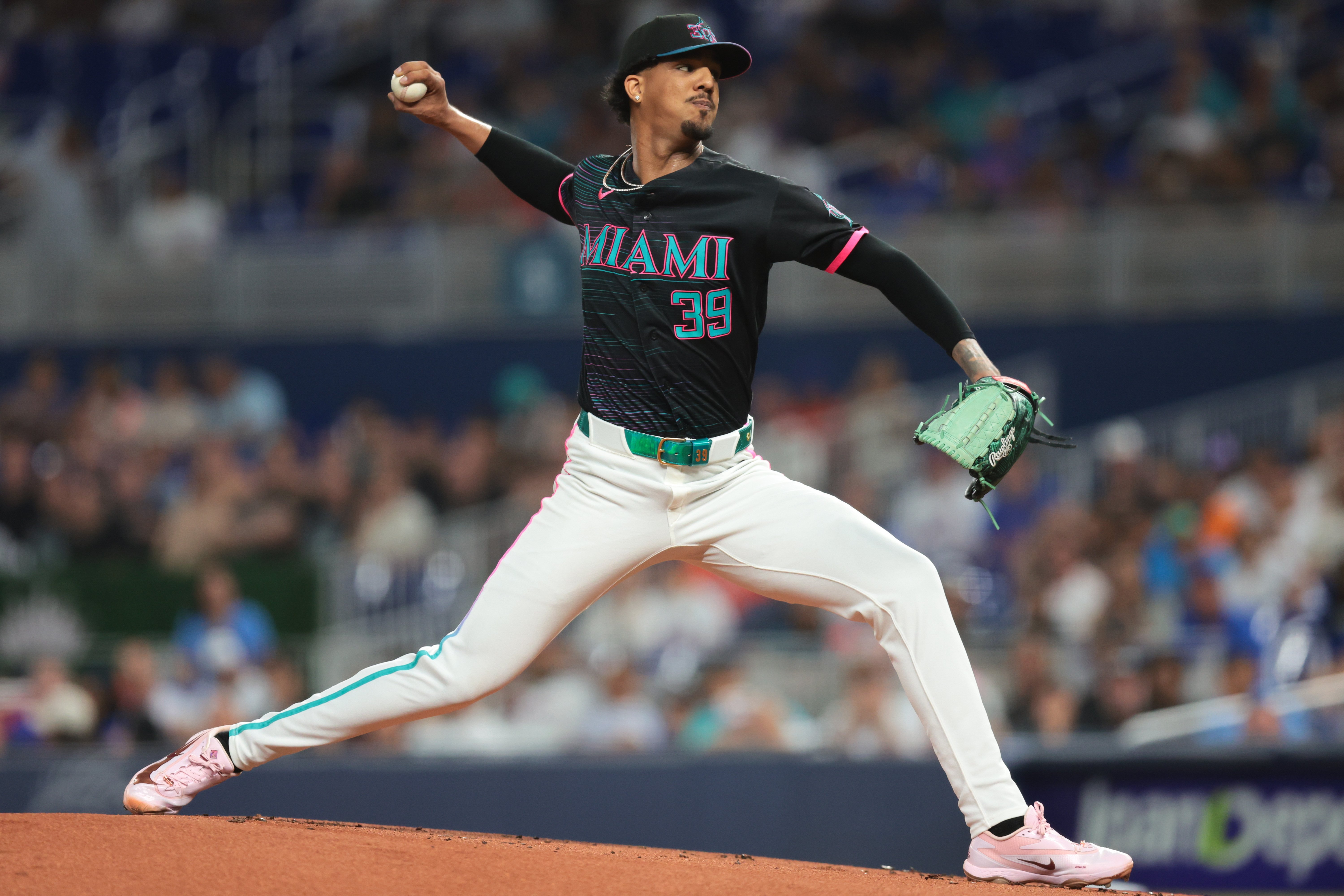 MIAMI, FL - Going into Friday night’s matchup against the New York Mets, the Miami Marlins had lost three straight games to the Atlanta Braves. Their series opener against New York felt like a much-needed win, as Miami prevailed 2-1. It's been no secret that Miami's phenom Eury Perez has struggled as of late. Over his last three starts going into Friday, Pérez had a 7.31 ERA and 6.60 FIP, allowing 13 runs on 12 hits (four home runs). He bounced back on Friday night, turning in his best start of the 2026 season, going 6 1/3 innings pitched, allowing one run on two hits, no walks and struck out five. It marked the first time this season that Pérez had not allowed a free pass. "It's been an uneven start to his season, and he just hung with it," Marlins manager Clayton McCullough said after the game. "Why we do this is that with talented guys like Eury, you just hang in there and keep coaching. He's still got a long way to go, and we like to be able to see this terrific outing. He's needed to get on a good run here, but tonight, he should feel great about it, because it goes back to the strike-throwing, being in the zone, and he got some great defense behind him by (Jakob) Marsee in center field." Both hits that Pérez allowed were to superstar Juan Soto. In the top of the first inning, Soto unloaded on a Pérez fastball, drilling it 449 feet deep to the second deck in right center field. The final hit Pérez surrendered was in the top of the fourth inning. "I didn’t want it to be a home run, but I also didn’t want it to be a walk," Pérez said through a translator. "I wanted to compete against him, make my best pitch there, and he had a good result from his side. After that, I decided to stay focused anyway, keep my head up and know that the game didn’t end there." The biggest difference for Pérez was his four-seam fastball usage, which dropped to 38% compared to his usual 60-65%. He generated five whiffs with the four-seamer and recorded two strikeouts with the pitch. His next most-used offering was the sweeper (26%), which generated three whiffs and accounted for two more strikeouts, both swinging. Pérez succeeded, but a lot of the credit should to go to Jakob Marsee's defense. On the second pitch of the game, Carson Benge hit a ball to straightaway center that would've been extra bases. Instead, Marsee made the leaping catch for the first out of the inning. It would've been a home run in 10 ballparks, including Citi Field. Benge's fly out also had an expected batting average of .540. In the top of the sixth inning, with Benge up once again, he hit a ball 408 feet to straightaway center field, but Marsee made another incredible catch, robbing Benge for a second time.. That ball had an expected batting average of .850. "“Especially the first one he made, flying into right-center and going up against the wall, that was a terrific play,” McCullough said. “The second one, hit to center, he tracked it back toward the wall, and going back there is not easy. You’re trying to navigate how much time you have left while keeping your eye on the ball. Where’s the wall at? Then timing the jump to make that play.” Eventually, Miami was able to give Perez the lead on Friday. Esteury Ruiz may not blow you away with his bat, but it certainly came into play against New York. In the bottom of the second inning, he doubled off Tobias Myers and later stole third. Owen Caissie grounded out, which was more than enough for Ruiz to score and tie the game, 1-1. The Mets only went with Myers for an inning and a third before going to Sean Manaea for 3 2/3 innings. Ruiz hit a triple off Manaea in the bottom of the fourth inning and Owen Caissie drove him in on an RBI single to take a 2-1 lead. "He certainly can impact the game and change it when he's on the bases," McCullough said of Ruiz. "I think the opponent knows how much they have to hold and pay attention to him." Through his last three series', Owen Caissie is slashing .278/.350/.611/.961 with two home runs and three RBI. The at-bats are beginning to look more competitive and this stretch of games is certainly showing that. “I think he’s starting to realize, within a game, his ability to string together a few good at-bats and continue building off that,” McCullough said. “He’s doing some things to help us.” For the sixth time this season, Pete Fairbanks notched a save, now four away from 100 in his career. Fairbanks struck out two, throwing 20 pitches in the process. The Marlins utilized Fairbanks in the series finale against the Atlanta Braves down by multiple runs, which makes it unlikely he'll be available on Saturday. "I hope we can play more games like this where we can get him out there into a rhythm and with some regularity," McCullough said. "I think you will see all the counting numbers start to go in his favor." With the win, the Marlins improved to 23-28 on the season with a chance to take the series on Saturday with Max Meyer on the mound at 4:10 pm. View the full article
 -
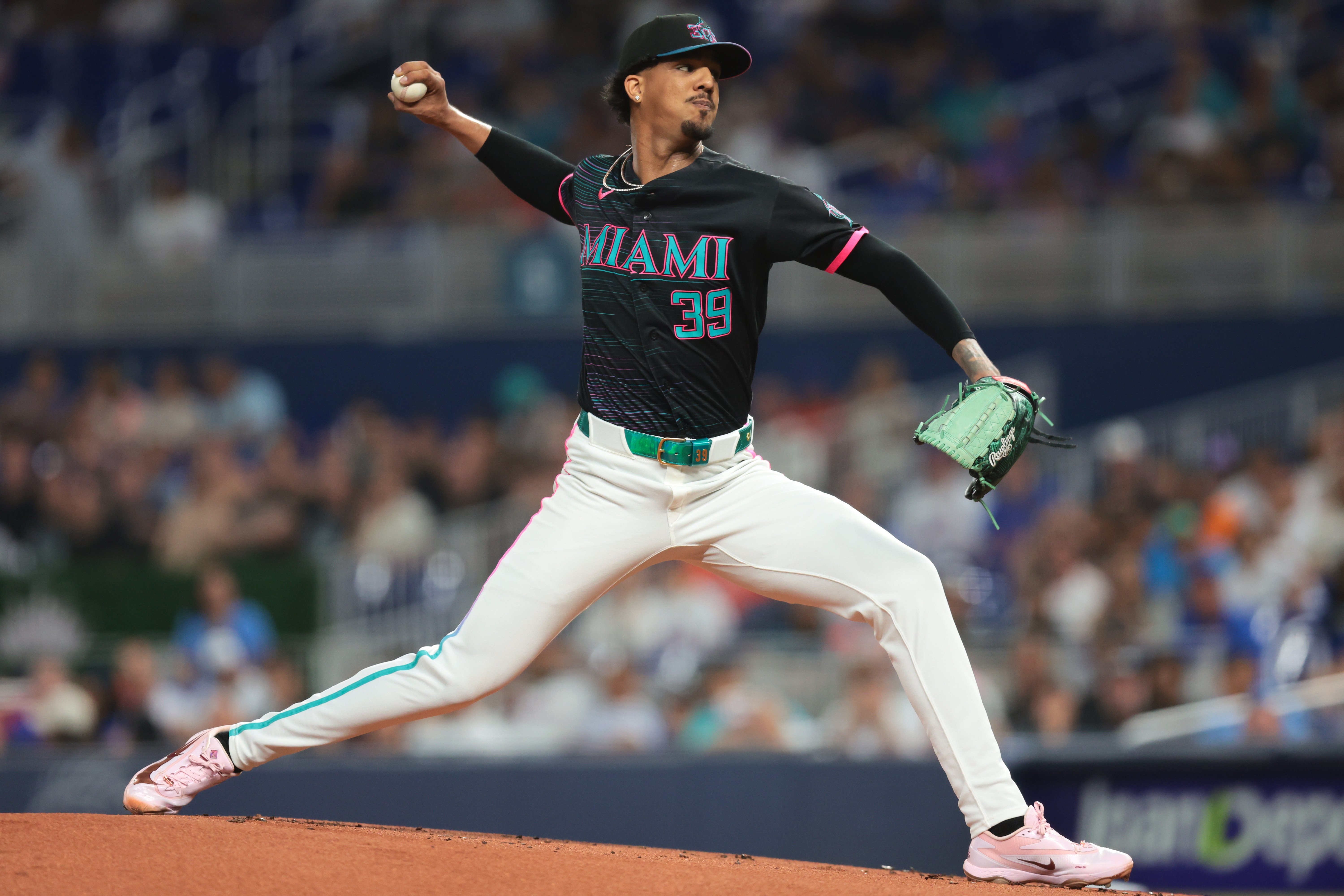 MIAMI, FL — Going into Friday night’s matchup against the New York Mets, the Miami Marlins had lost three straight games to the Atlanta Braves. Their series opener against New York felt like a much-needed win, as Miami prevailed 2-1. It's been no secret that Miami's phenom Eury Perez has struggled as of late. Over his last three starts going into Friday, Pérez had a 7.31 ERA and 6.60 FIP, allowing 13 runs on 12 hits (four home runs). He bounced back on Friday night, turning in his best start of the 2026 season, going 6 ⅓ innings pitched, allowing one run on two hits, no walks and struck out five. It marked the first time this season that Pérez had not allowed a free pass. "It's been an uneven start to his season, and he just hung with it," Marlins manager Clayton McCullough said after the game. "Why we do this is that with talented guys like Eury, you just hang in there and keep coaching. He's still got a long way to go, and we like to be able to see this terrific outing. He's needed to get on a good run here, but tonight, he should feel great about it, because it goes back to the strike-throwing, being in the zone, and he got some great defense behind him by (Jakob) Marsee in center field." Both hits that Pérez allowed were to superstar Juan Soto. In the top of the first inning, Soto unloaded on a Pérez fastball, drilling it 449 feet deep to the second deck in right center field. The final hit Pérez surrendered was in the top of the fourth inning. "I didn’t want it to be a home run, but I also didn’t want it to be a walk," Pérez said through a translator. "I wanted to compete against him, make my best pitch there, and he had a good result from his side. After that, I decided to stay focused anyway, keep my head up and know that the game didn’t end there." The biggest difference for Pérez was his four-seam fastball usage, which dropped to 38% compared to his usual 60-65%. He generated five whiffs with the four-seamer and recorded two strikeouts with the pitch. His next most-used offering was the sweeper (26%), which generated three whiffs and accounted for two more strikeouts, both swinging. Pérez succeeded, but a lot of the credit should to go to Jakob Marsee's defense. On the second pitch of the game, Carson Benge hit a ball to straightaway center that would've been extra bases. Instead, Marsee made the leaping catch for the first out of the inning. It would've been a home run in 10 ballparks, including Citi Field. Benge's fly out also had an expected batting average of .540. In the top of the sixth inning, with Benge up once again, he hit a ball 408 feet to straightaway center field, but Marsee made another incredible catch, robbing Benge for a second time.. That ball had an expected batting average of .850. "“Especially the first one he made, flying into right-center and going up against the wall, that was a terrific play,” McCullough said. “The second one, hit to center, he tracked it back toward the wall, and going back there is not easy. You’re trying to navigate how much time you have left while keeping your eye on the ball. Where’s the wall at? Then timing the jump to make that play.” Eventually, Miami was able to give Perez the lead on Friday. Esteury Ruiz may not blow you away with his bat, but it certainly came into play against New York. In the bottom of the second inning, he doubled off Tobias Myers and later stole third. Owen Caissie grounded out, which was more than enough for Ruiz to score and tie the game, 1-1. The Mets only went with Myers for an inning and a third before going to Sean Manaea for 3 ⅔ innings. Ruiz hit a triple off Manaea in the bottom of the fourth inning and Owen Caissie drove him in on an RBI single to take a 2-1 lead. "He certainly can impact the game and change it when he's on the bases," McCullough said of Ruiz. "I think the opponent knows how much they have to hold and pay attention to him." Through his last three series', Owen Caissie is slashing .278/.350/.611/.961 with two home runs and three RBI. The at-bats are beginning to look more competitive and this stretch of games is certainly showing that. “I think he’s starting to realize, within a game, his ability to string together a few good at-bats and continue building off that,” McCullough said. “He’s doing some things to help us.” For the sixth time this season, Pete Fairbanks notched a save, now four away from 100 in his career. Fairbanks struck out two, throwing 20 pitches in the process. The Marlins utilized Fairbanks in the series finale against the Atlanta Braves down by multiple runs, which makes it unlikely he'll be available on Saturday. "I hope we can play more games like this where we can get him out there into a rhythm and with some regularity," McCullough said. "I think you will see all the counting numbers start to go in his favor." With the win, the Marlins improved to 23-29 on the season. They have a chance to take the series on Saturday with Max Meyer on the mound at 4:10 pm. View the full article
 -
Twins 8, Red Sox 6: Early Deficit Erased in Scrappy Fenway Win
DiamondCentric posted an article in Twins Daily
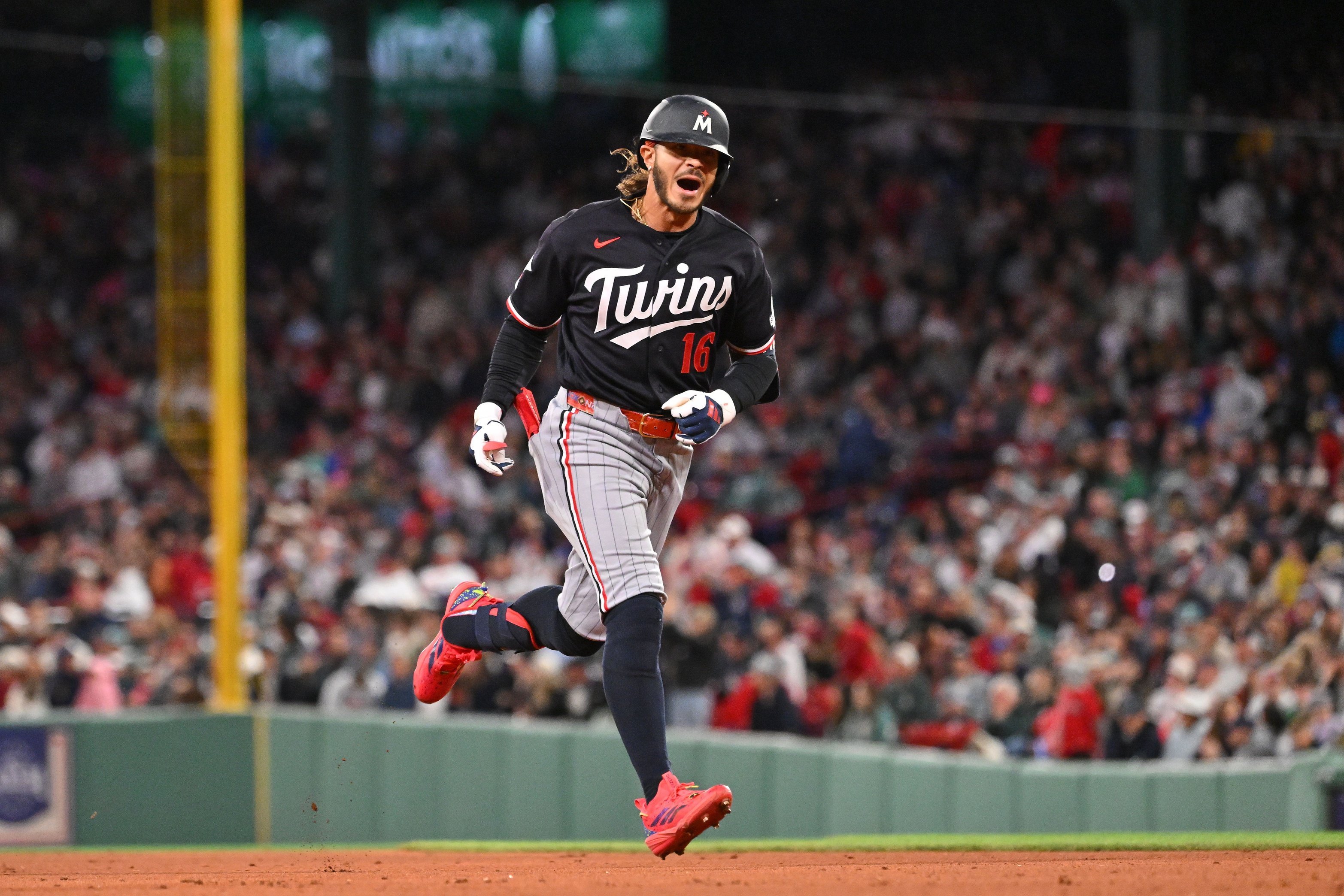 Box Score Connor Prielipp: 4 IP, 7 H, 5 ER, 3 BB, 1 K Home Runs: Byron Buxton (16), Austin Martin (2) Top 3 WPA: Austin Martin (0.270), Anthony Banda (0.220), Byron Buxton (0.200) Win Probability Chart (via FanGraphs): Payton Tolle vs Connor Prielipp. The nation hasn’t seen two young lefties this promising since John and Robert Kennedy. Acquiring the knowledge for the previous joke cost the author thousands of dollars in tuition. With the Twins in Boston, an opportunity arises for two squads; indeed, neither team has particularly impressed—the latter was so lukewarm, Red Sox decision-makers decided to spit the coaching staff from their mouths in April. The Twins haven’t stooped to such means, but their season remains similarly meager. Someone must succeed, though, and the victor of this game, and the series, could use the momentum and good vibes as a propeller towards future wins. The “promising lefties” bit concocted hours before the game ended quickly. Both starters struggled early. Prielipp allowed a flurry of runs—four of them—in the first off a series of hard-hit balls, dinky singles, and outfield-misplayed ricochets. The latter is the only way to explain a Willson Contreras triple. Hit to left-center, nonetheless. Evidently, the Twins were in a respondent mood. Josh Bell singled to set up Gabriel Gonzalez in his first MLB plate appearance. The youngster has made his name as a free-swinger, one who looks to push action further rather than wait for it to happen. He’ll swing 0-0, 3-0, 0-2, and everything in between. There’s no pitch he hasn’t believed he can’t hit—and in his first time in a major-league batter’s box, he walked on four pitches. Strange things must be abound. With two on, Ryan Kreidler bounded a double over third baseman Caleb Durbin’s head and into the left field corner, ushering home Josh Bell. A fielding error set up Luke Keaschall with the bases loaded; he continued the assembly line with an RBI single to right. Though an Alex Jackson strikeout dampened the mood somewhat, Byron Buxton perked matters right back up with an RBI single to left, picking on the stout Durbin once more. Unfortunately, the “suddenly a game” game only remained in that state for one full frame, the third, before Boston struck back at Prielipp for a pair of runs in the fourth. With men on the corners, Durbin dropped down a picturesque sacrifice bunt, made even better when the lefty hurler dirted the throw to first, allowing a run to score as runners nestled home at second and third. A Jarren Duran groundout scored Boston’s sixth run of the game. “Unfortunately?” Well, well, well, the dramatics of the prose written in the fifth proved just that, dramatic. These Twins had more fight in them: Buxton worked a nine-pitch at-bat against reliever Justin Slaten that ended in a two-run homer for the dynamic center fielder. Yet, the dynamic one who was actually playing center on Friday turned out to be Austin Martin, as he also launched a two-run homer in the seventh, with this blast giving the Twins their first lead of the game. Minnesota added on in the ninth with an RBI walk by a pinch-hitting (walking) Trevor Larnach. Though, more could have been had; the bases were loaded with no one out before and after the walk, yet the Twins scored no more. No matter: Anthony Banda remained in the game to finish his eighth inning labor, and ended matters with a scoreless frame. Notes: Post-Game Interviews: What’s Next? The Twins and Red Sox venture to Fenway again on Saturday for a 3:10 matinee. The illustrious if not road-weary TBD faces off against the recalcitrant young TBD. Bullpen Usage Spreadsheet MON TUE WED THU FRI TOT Gómez 11 0 36 0 13 60 Adams 0 19 0 0 29 48 Orze 19 0 0 0 14 33 Banda 0 16 0 0 14 30 Morris 16 0 10 0 0 26 Woods Richardson 18 0 0 0 0 18 Rogers 11 0 0 0 0 11 Garcia 0 0 0 0 0 0 View the full article
 -
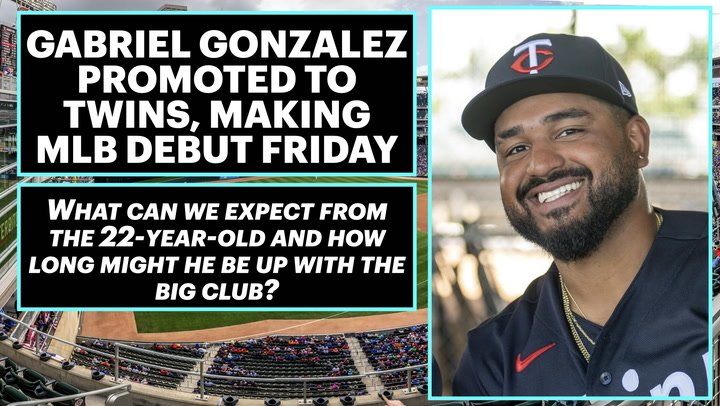 Twins prospect Gabriel Gonzalez has been called up and is making his Major League debut on Friday. Though he was off to a slow start in Triple-A, this opportunity presented itself with Tristan Gray being away from the team for a few days on paternity leave. Can Gonzalez take advantage? Here's a discussion on his game, how long he might be with the big club, and a couple of player comps. View the full article
 -
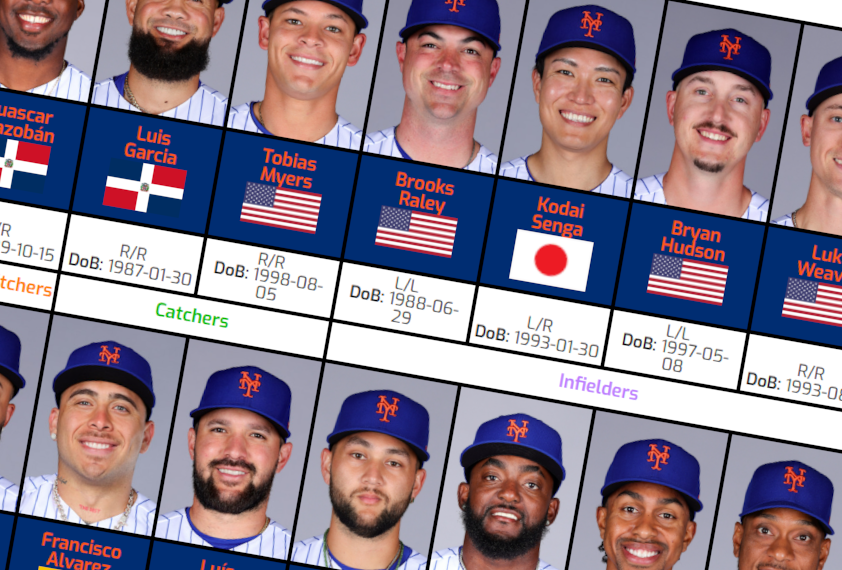 Every day seems to bring one more exciting young Mets prospect. Returning to joint the Mets today is a starter, who — lest it be forgotten — was the best pitcher in the minors last season Transactions, 5/22/2026 GOING COMING Designated for Assignment Sent to St. Lucie on Rehab Assignment Promoted from Syracuse and Transferred from Rotation Relief Pitchers Starting Pitchers Relief Pitcher Craig Kimbrel Kodai Senga Jonah Tong R/R DoB: 1988-05-28 High Level: MLB (2026) L/R DoB: 1993-01-30 High Level: MLB (2026) R/R DoB: 2003-06-19 High Level: MLB (2026) It's exciting to see Jonah Tong back — and with him the full assembly of Generation MST3K (McLean-Scott-Tong, as first designated by Faith and Fear in Flushing), but as we go to print, it is unclear what Jonah's role will be. The Mets appear to have a full rotation in place. That could change, bug for now, it appears Tong will be a bulk reliever — perhaps with the Mets trying to introduce him with the protection they have been affording David Peterson, giving him an something of a starter-like innings burden, but with protection against opposing managers stacking the lineup with opposite-side hitters. Tong has not shown much of his 2025 form this season, and has struggled particularly with his control, up to and including his last start. He hasn't pitched in eight days, and maybe the Mets are planning to convert him to a traditional reliever. He has a relatively slight build, not unlike Luke Weaver. But the Dodgers looked at Pedro Martinez' build and didn't see a starter. They chose ... poorly. But you yourself should choose to tune in and see the Mets, with three rookies in their outfield and several more in and out of their starting rotation. Welcome to the future. Your 2026 New York Mets Starting Pitchers Nolan McLean Freddy Peralta David Peterson Christian Scott Zach Thornton R/R DoB: 2001-07-24 R/R DoB: 2996-06-04 L/L DoB: 1995-09-03 R/R DoB: 1999-06-15 L/L DoB: 2002-01-17 Relief Pitchers Huascar Brazobán Sean Manaea Tobias Myers Brooks Raley Jonah Tong Austin Warren Luke Weaver R/R DoB: 1989-10-15 R/L DoB: 1992-02-01 R/R DoB: 1998-08-05 L/L DoB: 1988-06-29 R/R DoB: 2003-06-19 R/R DoB: 1996-02-05 R/R DoB: 1993-08-21 Relief Pitchers Catchers Infielders Devin Williams Hayden Senger Luís Torrens Bo Bichette Brett Baty Vidal Brujan MJ Melendez R/R DoB: 1994-09-21 R/R DoB: 1997-04-03 R/R DoB: 1996-05-02 R/R DoB: 1998-03-05 L/R DoB: 1999-11-13 S/R DoB: 1998-02-09 L/R DoB: 1993-11-29 Infielders Outfielders Marcus Semien Mark Vientos Carson Benge A.J. Ewing Nick Morabito Juan Soto Tyrone Taylor R/R DoB: 1990-09-17 R/R DoB: 1993-12-11 L/R DoB: 2003-01-20 L/R DoB: 2004-08-10 R/R DoB: 2003-05-07 L/L DoB: 1998-10-25 R/R DoB: 1994-01-22 Also on 40-Player Roster Starting Pitchers Relief Pitchers Clay Holmes Tylor Megill Kodai Senga Alex Carrillo Daniel Duarte Reed Garrett Justin Hagenman R/R DoB: 1993-03-27 R/R DoB: 1995-07-28 L/R DoB: 1993-01-30 R/R DoB: 1997-06-06 R/R DoB: 1996-12-04 R/R DoB: 1993-01-02 R/R DoB: 1996-10-07 Relief Pitchers Catchers Infielders A.J. Minter Dedniel Núñez Jonathan Pintaro Dylan Ross Francisco Alvarez Francisco Lindor Ronny Mauricio L/L DoB: 1993-09-02 R/R DoB: 1996-06-05 R/R DoB: 1997-11-07 R/R DoB: 2000-09-01 R/R DoB: 2001-11-01 S/R DoB: 1993-11-14 S/R DoB: 2001-04-04 Infielders Outfielders Jorge Polanco Luis Robert, Jr. Jared Young S/R DoB: 1999-11-13 R/R DoB: 1997-08-03 L/R DoB: 1995-07-09 Designagted for Assignment Relief Pitchers Outfielders Craig Kimbrel Austin Slater R/R DoB: 1988-05-28 R/R DoB: 1992-12-13 Your Mets Coaching Staff Manager Bench Coach Pitching Coach Hitting Coordinator Third Base Coach First Base Coach Bullpen Coach Ass't Pitching Coach Carlos Mendoza Kai Correa Justin Willard Jeff Albert Tim Leiper Gilbert Gomez José Rosado Dan McKinney DoB: 1979-11-27 DoB: 1989-07-14 DoB: 1990-09-09 DoB: 1992-08-16 DoB: 1996-07-19 DoB: 1992-03-08 DoB: 1974-11-09 DoB: 1989-06-06 Hitting Coach Strategy Coach Catching Coach Coaching Assistant Bat'g Practice Pitcher Equipment Manager Bullpen Catchers Bullpen Catchers Troy Snitker Danny Barnes J.P. Arencibia Rafael Fernandez Kevin Mahoney Kevin Kierst Eric Langill Dave Racaniello DoB: 1988-12-05 DoB: 1989-10021 DoB: 1986-01-05 DoB: 1988-08-03 DoB: 1987-05-11 DoB: 1964-07-09 DoB: 1979-04-09 DoB: 1978-06-03 Your Mets Training Staff Director of Player Health Head Athletic Trainer Assistant Athletic Trainer Reconditioning Coordinator Reconditioning Therapist Head Performance Coach Assistant Performance Coach Performance Coordinator Soft Tissue Specialist Brian Chicklo Joseph Golia Bryan Baca Sean Bardanett Josh Bickel Dustin Clarke Tanner Miracle Jeremy Chiang Hiroto Kawamura DoB: 1972-07-17 DoB: 1978-??-?? DoB: Circa 1980 DoB: 1988-06-23 DoB: 1996-??-?? DoB: 1987-??-?? DoB: 1991-??-?? DoB: ????-??-?? DoB: 22846 View the full article
 -
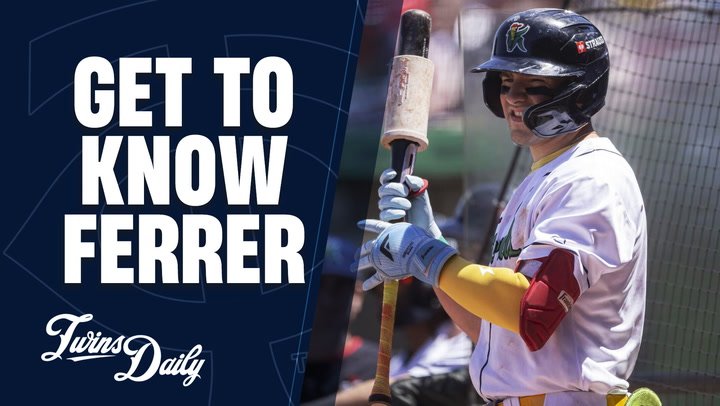 Jaime Ferrer was a talented bat at Florida State, but has yet to show any promise in the minors, until this season at High-A Cedar Rapids. Here's why he's a name to follow with the Kernels and why he could be called up to the Wind Surge soon. View the full article
 -
 Boston Red Sox Affiliate Recap (May 21) Triple-A Worcester Red Sox Season Record: 23-23 The WooSox fell 9-4 to the Red Wings (Washington Nationals) after a hot start. Worcester came out swinging in the bottom of the first, taking advantage of Rochester's wild starting pitcher. Braiden Ward led the inning off with a hit-by-pitch, then stole his 23rd base of the year. Nate Eaton walked, then Kristian Campbell drew a walk as well to load the bases. Anthony Seigler made the Red Wings pay with a bases-clearing double to right field, and Allan Castro followed with an RBI single to push the lead to 4-0. Jacob Webb kept it clean through two innings on the mound, but the third inning unraveled quickly. Rochester strung together a double, a single, and a walk to load the bases with no outs. Two sacrifice flies and an RBI single to cut it to 4-3. In the fourth, Rochester had taken the lead 5-4 on a pair of singles. It continued to be a frustrating fourth inning as Worcester loaded the bases with two outs and did not capitalize, scoring no runs. Alec Gamboa was a bright spot out of the bullpen. He was the only WooSox bullpen pitcher to throw at least one scoreless frame, spinning two scoreless, hitless innings in the fifth and sixth to keep it within reach. But the offense stayed cold, and Angel Bastardo's control issues let Rochester push the lead to 7-4 in the seventh. Kyle Keller gave up a two-run double in the ninth to make it 9-4, and Worcester went three up and three down to end it. Double-A Portland Sea Dogs Season Record: 20-21 The Sea Dogs' pitching staff steamrolled the Fightin Phils (Philadelphia Phillies), shutting them out 1-0 and combining for an outrageous 20 strikeouts. After battling through a hamstring injury early in the year, Blake Wehunt had his best start of the year for Portland, setting the tone with a dominant five-inning shutout start, four hits allowed, and eleven strikeouts. He was virtually unhittable, punching out batters at a relentless clip. Patrick Halligan picked up right where Wehunt left off, striking out six in two innings of one-hit relief, including fanning the side in the seventh. Cooper Adams then slammed the door with a perfect eighth and ninth while striking out three batters to earn the save. Marvin Alcantara was the offensive standout for the Sea Dogs, having himself a 3-for-4 day at the plate, his sixth multi-hit game of the year. Alcantara had three of Portland's four hits in this contest. The lone run came in the bottom of the third inning; Will Turner was hit by a pitch, Alcantara laced a single to right field to put runners on the corners, and Nate Baez drove Turner home on a fielder's choice. Although they went 0-for-7 with RISP and had just four hits as a team, that one run was all Portland needed. Key Performances: Blake Wehunt: 5 IP, 4 H, 0 ER, 1 BB, 11 K Patrick Halligan: 2 IP, 1 H, 0 ER, 1 BB, 6 K Cooper Adams: 2 IP, 0 H, 0 ER, 3 K Marvin Alcantara: 3-for-4 High-A Greenville Drive Game postponed: Rain, makeup on May 22 Single-A Salem RidgeYaks Game postponed: Rain, makeup on May 22 View the full article
 -
Royals Bring Back Tyler Tolbert As Elias Diaz Is DFA'd
DiamondCentric posted an article in Royals Keep
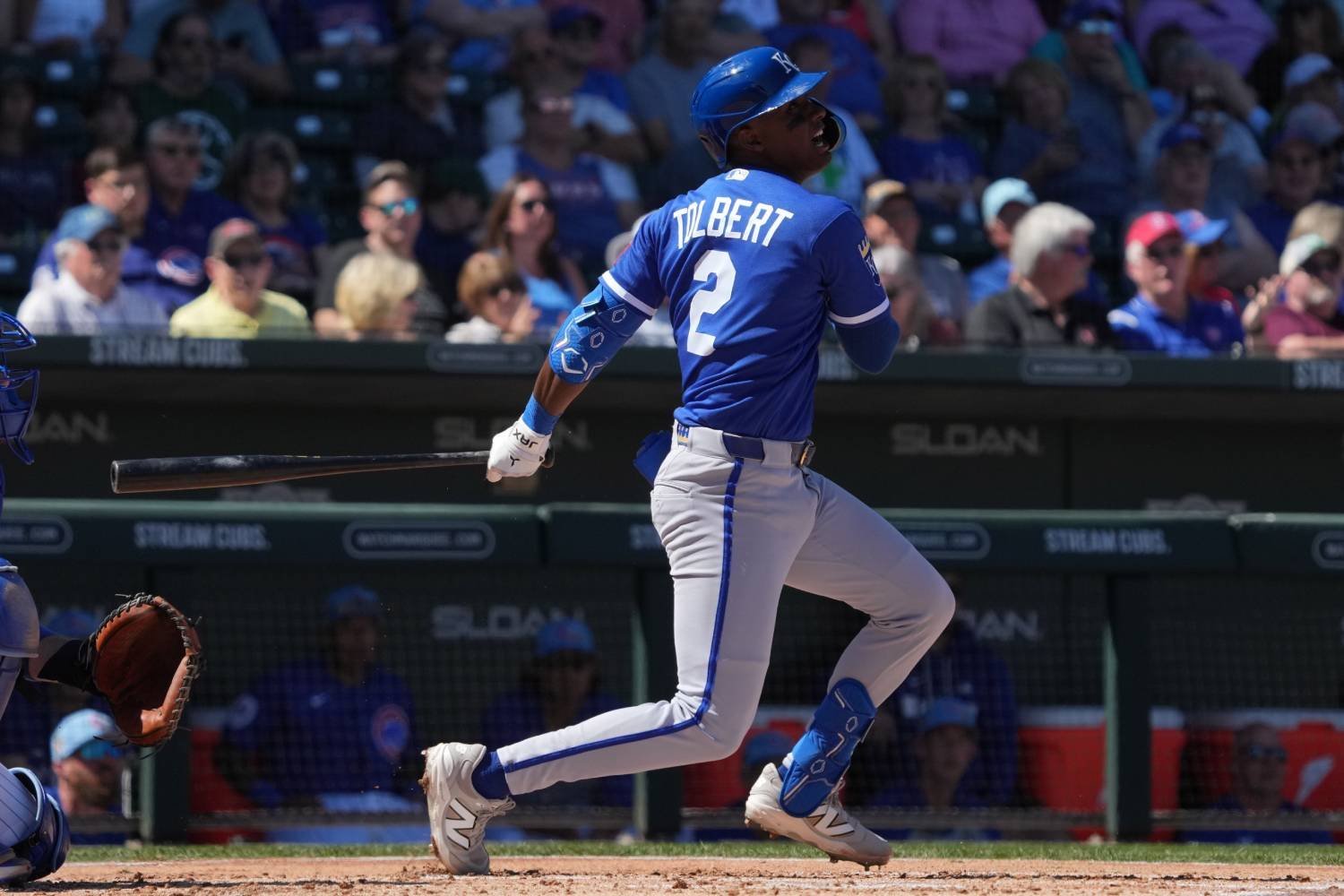 It is another chance for Tyler Tolbert. The Kansas City Royals called up Tolbert, a second baseman, from Triple-A Omaha on Friday. Catcher Elias Diaz was designated for assignment. This is the speedy Tolbert's second appearance on the Royals' roster this year after making the team out of spring training. But Tolbert appeared in just eight games and went 1-for-5 at the plate in the three weeks he was on the roster. After being optioned to Omaha on April 19, Tolbert put up a .260/.365/.288 slash line with no homers, five RBIs and eight stolen bases in 20 games. He made his MLB debut a year ago, playing in 64 games with a slash line of .280/.321/.380 with one homer, six RBIs and 21 steals. Diaz's DFA puts the Royals back at the traditional two catchers. The 2023 All-Star Game MVP with the Colorado Rockies slashed .227/.261/.591 with two homers and five RBIs while appearing in 10 games. It also opens up a spot on the 40-man roster. View the full article
 -
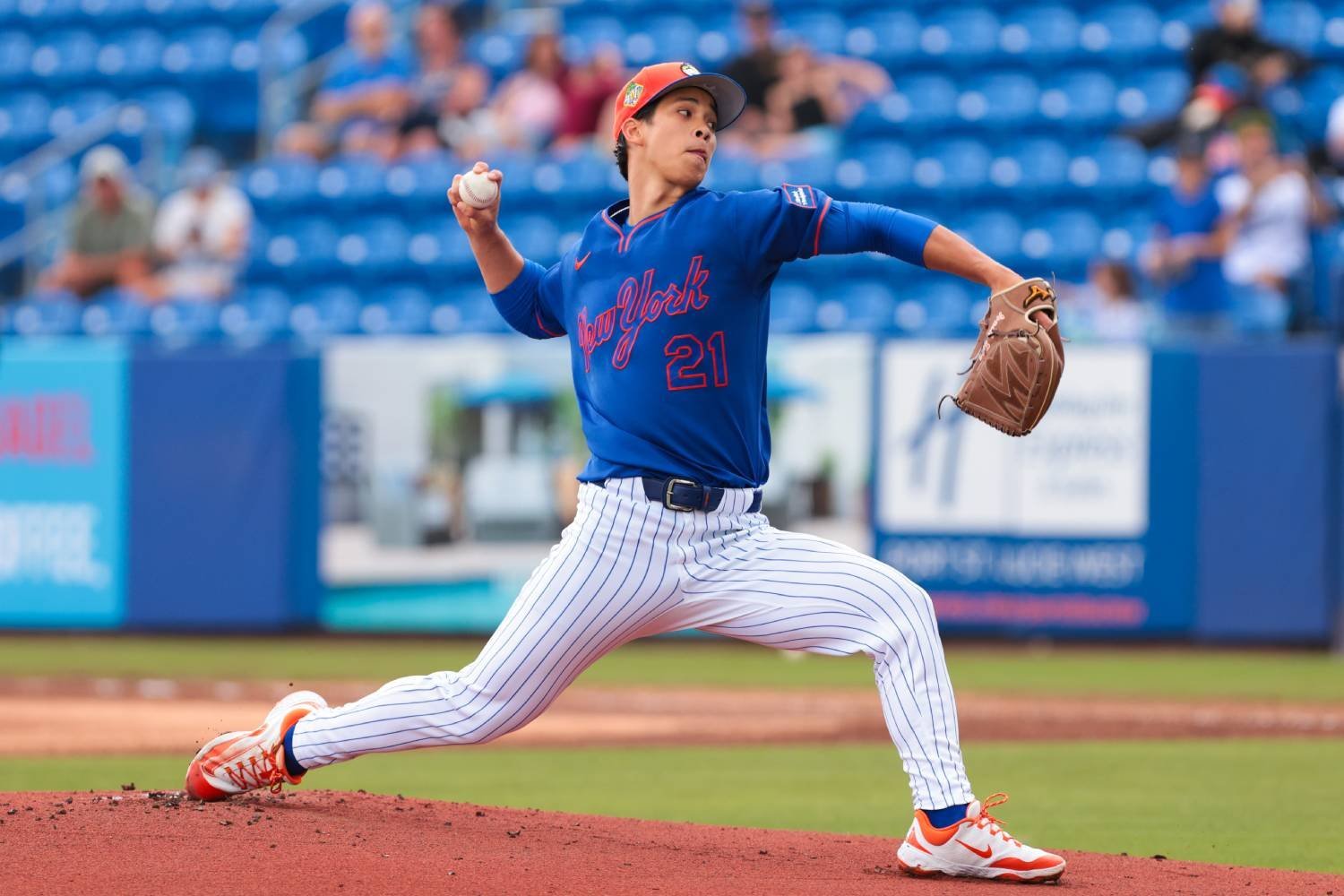 The New York Mets' youth movement continues, only this time it isn't for an MLB debut. Right-handed starter Jonah Tong is being promoted from Triple-A Syracuse by the Mets on Friday. Right-handed reliever Craig Kimbrel, one of the top closers of his generation, was designated for assignment. Tong had his MLB debut at the end of last year, making five starts with a 7.71 ERA, walking nine and striking out 22 in 18⅔ innings. But he was sent back to Triple-A to begin this season and has posted a 5.68 ERA in nine starts for Syracuse, with 24 walks and 55 strikeouts with nine homers allowed in 38 innings. Tong is the fourth prospect to be promoted to the majors in the last two weeks, joining outfielders A.J. Ewing and Nick Morabito and left-handed starter Zach Thornton. Ewing is Grand Central Mets' No. 1 prospect, Tong is No. 2, Morabito No. 7 and Thornton No. 11. For Kimbrel, this could mark the end of his career. The owner of 440 career saves, Kimbrel had 14 relief appearances for the Mets this year and has a 6.00 ERA in 15 innings, walking six and striking out 15. He spent 2025 with Atlanta and the Houston Astros. Expected to contend for the NL East title, the Mets entered play Friday at 22-28, 12½ games out of first place. View the full article
 -
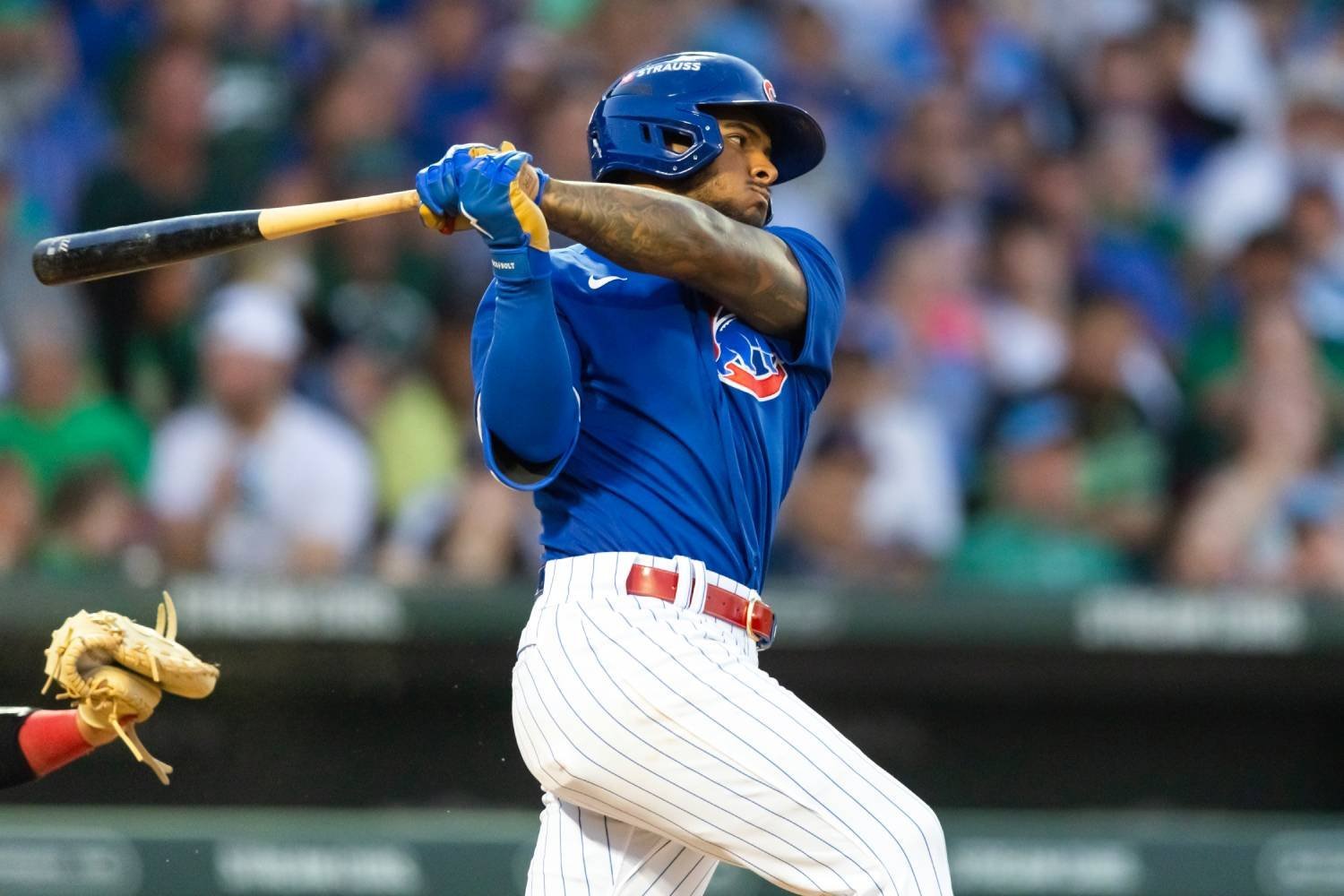 Needing a jolt of energy following a three-game sweep by the Milwaukee Brewers, an injury situation will bring a newcomer to the Chicago Cubs' roster. Infielder Pedro Ramirez, North Side Baseball's No. 3 prospect, was called up by the Cubs from Triple-A Iowa to make his MLB debut as right fielder Matt Shaw went on the 10-day injured list with back tightness. Shaw has been dealing with the back issue all week and the Cubs decided Friday to put him on the IL. Shaw has a .242/.291/.400 slash line with three homers and 12 RBIs in 42 games. Ramirez has made a steady climb up the minor-league ladder, spending each of the last three seasons at Low-A (2023), High-A (2024) and Double-A (2025), then beginning this year at Triple-A. At Iowa, Ramirez has a slash line of .312/.395/.547 with nine homers, 40 RBIs and 19 stolen bases. Manager Craig Counsell said Friday that Ramirez won't be thrown into the starting lineup, instead the Cubs will take this opportunity to expose him to the MLB clubhouse and get his bearings. “It’s not going to be a big playing role,” Counsell said. “If it’s not going to be a playing role, it’s probably going to be a shorter stint. But I think it’s also good for him to get exposure to the Major Leagues, get exposure to the group, get exposure to the schedule, so that if we run into a situation where it is a lot of playing time, he doesn’t have to go through it for the first time while playing.” View the full article
 -
 You can listen by downloading us from iTunes, Spotify, YouTube, iHeartRadio, Stitcher, GleemanAndTheGeek.com, click this link or you can listen to it or watch it below. View the full article
 -
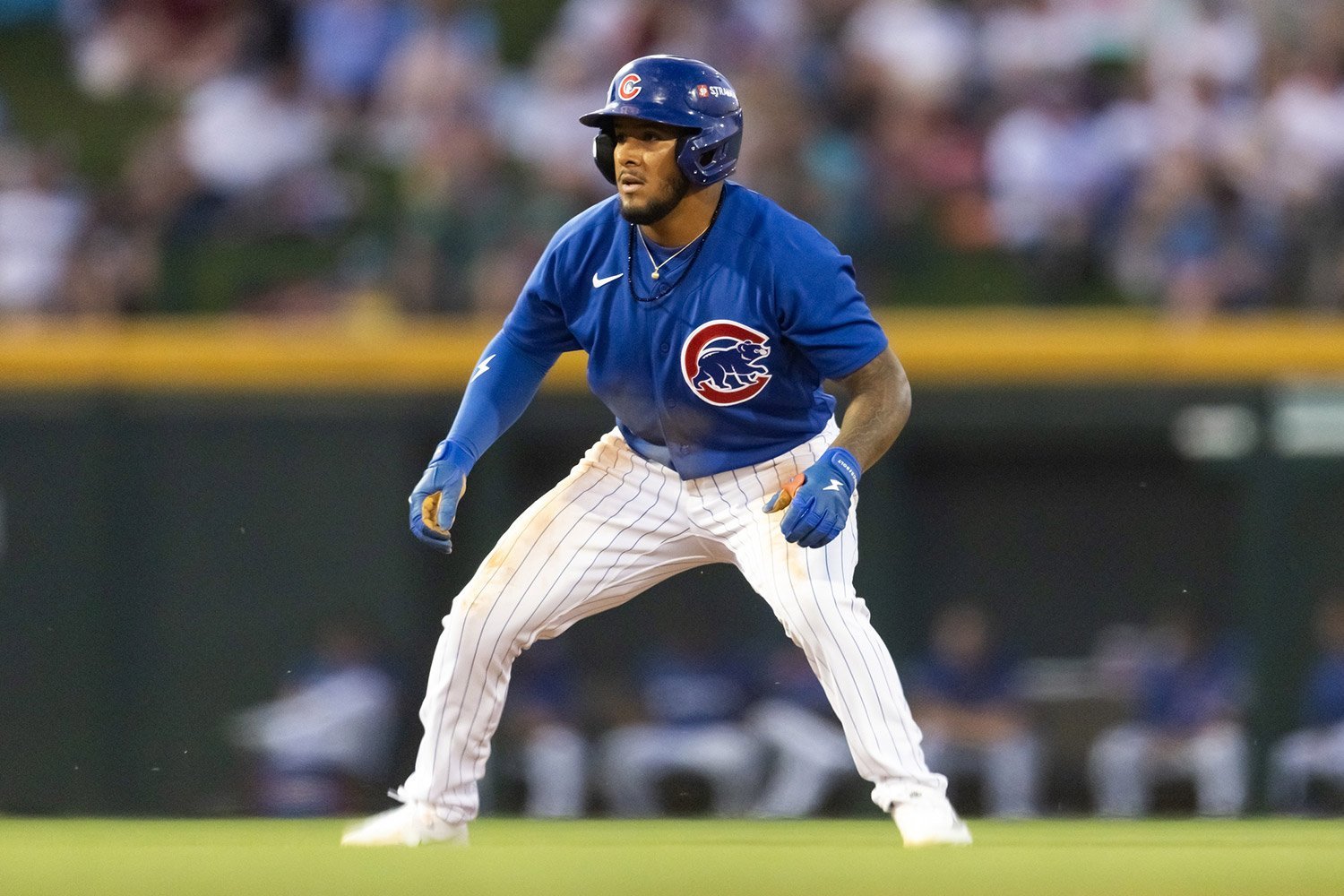 On Friday afternoon, the Chicago Cubs called up infielder Pedro Ramirez to the major league roster, rewarding the youngster's breakout season. Ramirez has enjoyed one of the best starts to the system of any Cub, regardless of level, and now he'll take his talents to the North Side. But what are the Cubs getting in their newest addition? Pedro Ramirez Strengths The first thing that stands out for Pedro Ramirez is his contact rates. His "worst" strikeout rate was 17.1% and came in his first real taste of Myrtle Beach. Since then, he's hovered in the 15-16% range regardless of where he hit; this is a massive green flag for the infielder. What's even better is that despite Ramirez clearly adding more pop to his game in 2026 (he's already set a career high for home runs through May), he's done so while maintaining a really excellent 16.3 K%. More home runs and all the same contact ability are a great start. Another positive is that Ramirez has some excellent batted ball data. He's on the small side; however, he maintains some strong exit velocity data as he sits around the 75th (or better) percentile for things such as his exit velocity and max-EV. Even his barrel rate and pull-air% are strong for a hitter who swings more than average, as many times, players who tend to make a lot of contact and swing a lot have a tendency to make more weak contact. As it pertains to pitch-level data, Ramirez has excelled at hitting many different types of pitches, none more so than his ability to mash fastballs on the season. He has just a 10.9 whiff% on the pitch to go along with a .377 wOBA. Because he's a switch-hitter, he's capable of taking away pitchers' offerings that would normally neutralize a hitter who can only hit from one side of the plate. We can see this in how much damage he's done on sinkers and sliders; both pitches he's currently got a wOBA over .400 against. He has very few pitch-level weaknesses currently, giving him a more rounded approach at the plate. While Ramirez is a switch-hitter, it's his left-handed swing that carries the day. When facing righties, Ramirez shows off much more pop in his bat. He's just more athletic from the left side and is able to hit the ball better. This isn't anything that is special about the infielder, as most hitters have a "better" side (i.e., Ian Happ is much better left-handed than right-handed most years). While the right-handed swing is fine, it's his ability to hit RHP that will likely be the carrying factor. Defensively, Ramirez won a minor league gold glove as a third baseman last season and has been showing some versatility lately as the Iowa Cubs have given him some work in the outfield. It's unlikely he's a capable shortstop, but second, third, left, and right field all seem on the table, giving him solid versatility and multiple pathways into being a successful MLB player. Pedro Ramirez Weaknesses Pedro Ramirez is a bit of a free swinger, and will likely face some "hyper-aggressive" adjustments not dissimilar to issues Matt Shaw and Moises Ballesteros have faced upon their callups. Ramirez has a tendency to chase pitches while still making a lot of contact, and MLB pitchers are far more capable of attacking this weakness than Triple-A arms. It shouldn't surprise anyone if he "gets himself out" on some weak ground balls for a while as he learns "just because I can hit it doesn't mean I should". If there's one pitch he's seemingly struggled on this year, it's the sweeper. He has his lowest batting average (.182) and wOBA (.301) on this offering. He tends to expand the most on sweepers (with an o-swing% over 30%) and his highest whiff% on the year. No one is perfect, but this seems like a pitch potential veterans may look to exploit more. As noted earlier, Ramirez tends to struggle more with his right-handed swing. He doesn't hit the ball nearly as hard, doesn't pull the ball nearly as much, and doesn't appear to have the natural feel for it. The positive is that he makes up for a lack of power with a lot of contact and a bit better zone-awareness, but continuing to refine his right-handed swing would make him go from promising to downright dangerous. Ramirez's Fit With Cubs Pedro Ramirez is being called up to take Matt Shaw's position for the time being, though his fit will be a little different. Swinging better from the left side means that he won't so easily fit Shaw's best offensive aspect, his ability to hit left-handed pitchers, but will provide much of the same versatility in defensive positions and base running that will be lost. This is an exciting call-up and one that probably wasn't on many people's radar a few months ago, but it's well deserved. Ramirez has hit at every single level he's been at and been young for his competition, and we all (myself included) have likely slept on him. With him breaking out due to his increase in home runs, he's gone from a prospect who was likely slept on to someone who looks like he could be a true MLB regular, and it will be exciting to see him get his first taste of the Show this weekend in Wrigley. View the full article
 -
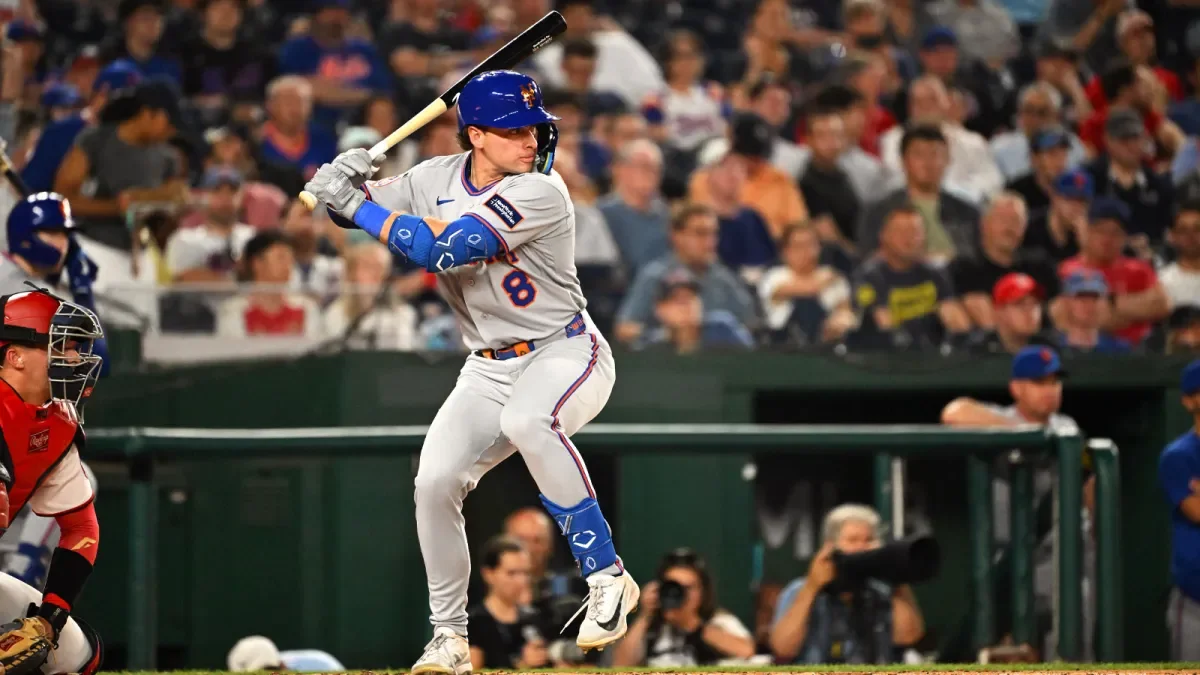 After the punch to the gut that was the Mets in April, a stronger May makes for sweeter times, with the tasty cherry on top that is the callup of Nick Morabito, joining Carson Benge and AJ Ewing in an outfield marked by youth, speed, and plate discipline. The Mets were less than disciplined in how they chose to introduce Morabito though, and in stewarding the team's legacy, it seems they have a surfeit of trouble getting out of their own way. They need your help, and you can make your voice heard in the Grand Central Mets forums. It's Morabito Time Tired of retread guys from other organizations trying to find a Metly identity, well, every day, new guys are being born into their Mets indentity, and this week, the Mets welcomed a neonate with a fresh set of magnificently fast legs, a fresh batting eye at the plate, and an old number, And yeah, they kind of screwed it up. One Hundred Ways to Honor Gary Carter Without Retiring the Number 8 Number retirements have grown old, tired, and stale. The honor has been watered down, and there is a finite amount of two-digit identifiers available to issue, so baseball's lack of creativity has set it on a crash course with history. None of that means figures like the celebrated late Mets catcher Gary Carter is unworthy of honor. Just ... you know ... let's think outside of the very small box of number retirement in doing that. Clay Holmes has a Fractured Tibia Fibula Somehow, a good reliever has been turned into a very good starter by the Mets. There Clay Holmes was, perched atop a Mets rotation that had others vying for ace status, before a liner off his leg knocked him off his perch. How do we help the Mets solve these and other problems? Help us get there at The Grand Central Mets forums. A great community of thoughtful Mets fans needs YOUR VOICE! View the full article
 -
 Cubs Transactions No Roster Moves Wicks Brilliant, But Iowa Bats Go Cold In 1-0 Loss To Memphis The Iowa Cubs, playing as the Iowa Oaks for the night, dropped a 1-0 decision to the Memphis Redbirds at Principal Park, falling despite outhitting the visitors 6-4. Starter Jordan Wicks was excellent across five scoreless innings, allowing just one hit while walking two and striking out two. Luis Peralta took the loss after surrendering the game's lone run over two innings of relief, allowing one hit, walking one, and striking out two. Tyler Ferguson worked a hitless eighth, and Corbin Martin tossed a clean ninth with a strikeout. The game's only run came in the top of the sixth off Peralta. Memphis opened the inning with a hit-by-pitch and a walk to put runners on, then a single loaded the bases. A sacrifice fly to center field plated the runner from third before a 5-4-3 double play ended the threat. Iowa nearly answered in the bottom of the ninth. With one out, Kevin Alcántara drew a walk, James Triantos followed with a single to center, and Owen Miller laced a single to left field. Alcántara was thrown out at home plate on the throw from left field, ending the game with the tying run dying ninety feet from home. Miller led Iowa with two hits, while BJ Murray, Triantos, Chas McCormick, and Brett Bateman each added one. Bateman's double was the team's lone extra-base hit. Iowa drew three walks but struck out eight times and stranded six runners. Player AB R H RBI BB K Justin Dean 3 0 0 0 1 3 BJ Murray 4 0 1 0 0 2 Jonathon Long 4 0 0 0 0 0 Kevin Alcántara 2 0 0 0 2 2 James Triantos 4 0 1 0 0 0 Owen Miller 4 0 2 0 0 0 Chas McCormick 3 0 1 0 0 1 Eric Yang 3 0 0 0 0 0 Brett Bateman 3 0 1 0 0 0 Player IP H R ER BB K HR Jordan Wicks 5 1 0 0 2 2 0 Luis Peralta 2 1 1 1 1 2 0 Tyler Ferguson 1 2 0 0 1 0 0 Corbin Martin 1 0 0 0 0 1 0 Knoxville Smokies: No Game Scheduled The Double-A Smokies did not play. Halbach Homers, Four-Run Fifth Carries South Bend Past West Michigan The South Bend Cubs rolled past the West Michigan Whitecaps 7-1 at LMCU Ballpark, breaking the game open with a four-run fifth inning. Starter Ethan Flanagan allowed one unearned run on three hits over four innings, walking none and striking out three. Kenyi Perez followed with a perfect inning of relief and two strikeouts. Kevin Valdez tossed four scoreless innings on four hits with one walk and two strikeouts to earn his second win. After West Michigan scratched out an unearned run in the bottom of the first, the Cubs answered with two in the third. Leadoff man Kane Kepley singled home Christian Olivo, and Cameron Sisneros followed with a single that scored Kepley to give South Bend a 2-1 lead. Matt Halbach launched his fourth home run of the season in the fourth to push it to 3-1. The fifth inning was the difference. Olivo and Kepley both walked to start the frame, Leonel Espinoza laced a two-run double to left, and cleanup hitter Kade Snell singled home Espinoza. South Bend pushed one more run across before the inning was through to make it 7-1. Espinoza led the offense with two hits and three RBI. Sisneros and Snell each added two hits and an RBI, and Kepley reached base three times with a hit and a walk, scoring twice and driving in one. Halbach contributed a hit and the home run. South Bend collected nine hits and drew five walks. Player AB R H RBI BB K Kane Kepley 4 2 1 1 1 0 Leonel Espinoza 5 1 1 2 0 1 Cameron Sisneros 4 0 2 1 1 0 Kade Snell 5 1 2 1 0 1 Matt Halbach 4 1 1 1 0 0 Alex Madera 3 0 1 0 1 0 Justin Stransky 4 0 0 0 0 1 Drew Bowser 4 0 0 0 0 3 Christian Olivo 2 2 1 0 2 1 Player IP H R ER BB K HR Ethan Flanagan 4 3 1 0 0 3 0 Kenyi Perez 1 0 0 0 0 2 0 Kevin Valdez 4 4 0 0 1 2 0 Lovich Homer Lone Bright Spot As Rain Ends Pelicans' Night The Myrtle Beach Pelicans dropped a rain-shortened 3-1 decision to the Kannapolis Cannon Ballers at Atrium Health Ballpark, with the game called in the bottom of the fifth. Starter Daniel Avitia took the loss despite a strong strikeout effort, going four innings with seven strikeouts on three hits, three runs, two earned, and three walks. He surrendered a two-run home run in the third that proved to be the decisive blow. Edwardo Melendez followed with a third of an inning, allowing one hit and striking out one before the game was called. Kannapolis took an early 1-0 lead in the first when a Pelicans throwing error allowed an unearned run to score. The home side made it 3-0 in the third on the two-run home run off Avitia. The Pelicans finally got on the board in the fifth. Eli Lovich led off the inning with a solo home run, his fourth of the season, to cut the deficit to 3-1. That was the only run Myrtle Beach pushed across, as the next two batters were retired, and play was halted with one out in the bottom of the inning due to rain. Myrtle Beach finished with four hits and one extra-base hit, Lovich's homer. Josiah Hartshorn, Derniche Valdez, Lovich, and Edward Vargas each had one hit. The Pelicans drew two walks but struck out seven times against Kannapolis pitching. Player AB R H RBI BB K Alexis Hernandez 2 0 0 0 1 1 Alexey Lumpuy 2 0 0 0 1 2 Josiah Hartshorn 2 0 1 0 0 0 Jose Escobar 2 0 0 0 0 1 Yahil Melendez 2 0 0 0 0 1 Derniche Valdez 2 0 1 0 0 0 Jairo Diaz 2 0 0 0 0 2 Eli Lovich 2 1 1 1 0 0 Edward Vargas 2 0 1 0 0 0 Player IP H R ER BB K HR Daniel Avitia 4 3 3 2 3 7 1 Edwardo Melendez 1/3 1 0 0 0 1 0 Top-20 Prospect Performance Jefferson Rojas: DNP Jaxon Wiggins: DNP Pedro Ramirez: DNP Kevin Alcantara: 0-for-2, 2 BB, 2 K Josiah Hartshorn: 1-for-2 Ethan Conrad: DNP Kane Kepley: 1-for-4, RBI, BB Jonathon Long: 0-for-4 James Triantos: 1-for-4 Cole Mathis: DNP Owen Ayers: DNP Brooks Caple: DNP Juan Cabada: DNP Kaleb Wing: DNP Angel Cepeda: DNP Dominick Reid: DNP Jostin Florentino: DNP Ty Southisene: DNP Will Sanders: DNP Brandon Birdsell: DNP View the full article
 -
Red Sox Minor League Report: Who Could Be Promoted To Worcester?
DiamondCentric posted an article in Talk Sox
 In this week's episode, Nick is back and talking about his weekend trip to Hartford, along with the three games he's been to in Worcester so far this week. He discusses how John Holobetz, Hayden Mullins, and Blake Wehunt should all be in line for an eventual promotion to Worcester, as are Nate Baez and Brooks Brannon, before breaking down why the Red Sox may not promote Franklin Arias any time soon. With Worcester, he talks about the three tough losses that have happened so far this week, along with Jake Bennett's outstanding start and Nick's own disappointment at Zack Kelly being optioned to Worcester. Listen on Apple Podcasts: https://podcasts.apple.com/us/podcast/the-talk-sox-podcast/id1783204104 Listen on Spotify: https://open.spotify.com/show/3qPrPXEngu0CxgTmlf0ynm Listen on iHeartRadio: https://www.iheart.com/podcast/263-the-talk-sox-podcast-244591331/ Listen on Pocket Casts: https://pca.st/4tmd121v Watch on YouTube: https://www.youtube.com/@talksox View the full article
 -
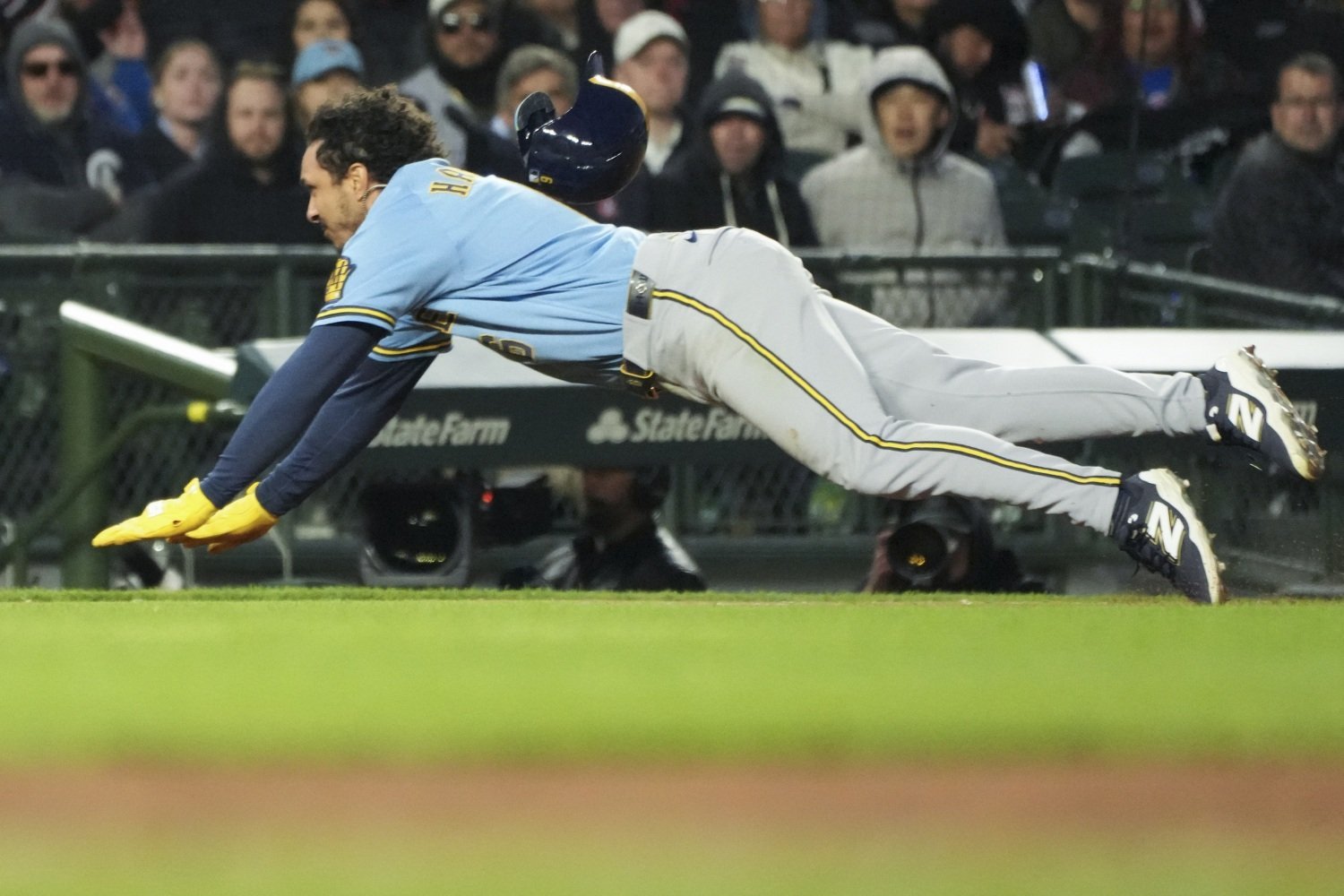 David Hamilton just broke out in the Milwaukee Brewers’ three-game sweep of the Chicago Cubs at Wrigley Field. This is somebody with a unique but beneficial skillset, so today, we’ll dive into what kind of role he could play for Pat Murphy’s squad when he’s at his best. Background Real quickly, I want to recognize that Hamilton was one of three players the Brewers got from the Red Sox in a trade heading into the 2026 season, all of whom seem to have worked out. Kyle Harrison looks like one of the best southpaws in all of baseball, Shane Drohan has turned into a dynamite relief option, and Hamilton got a Little League home run and had his way on the North Side of Chicago this past week. Hamilton was originally an 8th-round pick in the 2019 MLB Draft, but the Brewers shipped him to the Red Sox back in late 2021. As we've talked about all spring, they got him back on the eve of spring training to provide depth on the infield, but also because they really believe in his number-one trait and its utility. Game-Wrecking Speed Let’s talk about what he’s best at, which is utilizing his pure speed. The guy is in the top five percent among all major-league baserunners when it comes to sprint speed. On his hits spray chart, a lot of the baseballs he’s hit have been either in or around the infield, meaning he’s using that blistering speed to leg out some on-base appearances that others simply cannot manage. His nine bunt hits easily leads the league. This is somebody who makes opportunities for himself. Look no further than his stolen base numbers. Hamilton has 10 stolen bases already this season, and he’s only played in 39 contests, many of them either as a sub or before being replaced himself. As expected, he's pacing toward what would be 50-plus steals in full playing time. Even in a day and age where the pitch clock, disengagement limits and larger bases exist, that is very impressive. Launch Angle May Not Matter Hamilton’s launch angle is actually as low as it’s been in his four-year major-league career, currently sitting at 12°. Typically, I’d say that’s a bad thing. Plenty of players who hit for power want that perfect combination of high exit velocity and a steep launch angle. In Hamilton’s case, it’s actually alright to root for the opposite. If he’s not barrelling the ball a ton, you don’t want to see the ball up in the air, because if someone catches it, then speed is irrelevant. Seeing this former Red Sox speedster essentially slap the ball around on the ground could work, considering he has such blistering speed. It's good to be wary of this as a general approach, but for Hamilton, there's value in hitting ground balls—especially if it means reducing swing-and-miss. Walk, Walk, Walk Some More So far, it sounds like a Milwaukee Brewer right? Hamilton has played multiple positions, he’s a blur of a baserunner, and it doesn’t stop there. Let’s talk about that approach. The 28-year-old University of Texas alumnus has an 11.5% walk rate. That's well above the league average, nestled in the top 27 percent among all major leaguers. Right there with that stat is another favorable sign of a great contact hitter: Hamilton doesn’t whiff a whole lot. He has an 18.9% whiff rate, which puts him in the top 21% of hitters. Slightly High Strikeout Rate Now, considering that he isn’t a power hitter, is there anything else in Hamilton’s game that could use some adjustments? Well, the strikeout rate is just a tad above average. Hamilton is coming up empty about 20 percent of the time. Obviously, this one is pretty self-explanatory, but it’s tough to put that speed to work if those K rates are spiking. Right now, it isn't too concerning, but the dearth of power applies lots of pressure to be an in-play maven who finds ways on base frequently. Hamilton should continue working on that, as well as shoring up his defense on the left side of the infield. If he does, he's likely to keep finding ample playing time for Murphy, who loves his speed at the bottom of the lineup card. View the full article
 -
BREAKING: Twins Promote Top Outfield Prospect Gabriel Gonzalez
DiamondCentric posted an article in Twins Daily
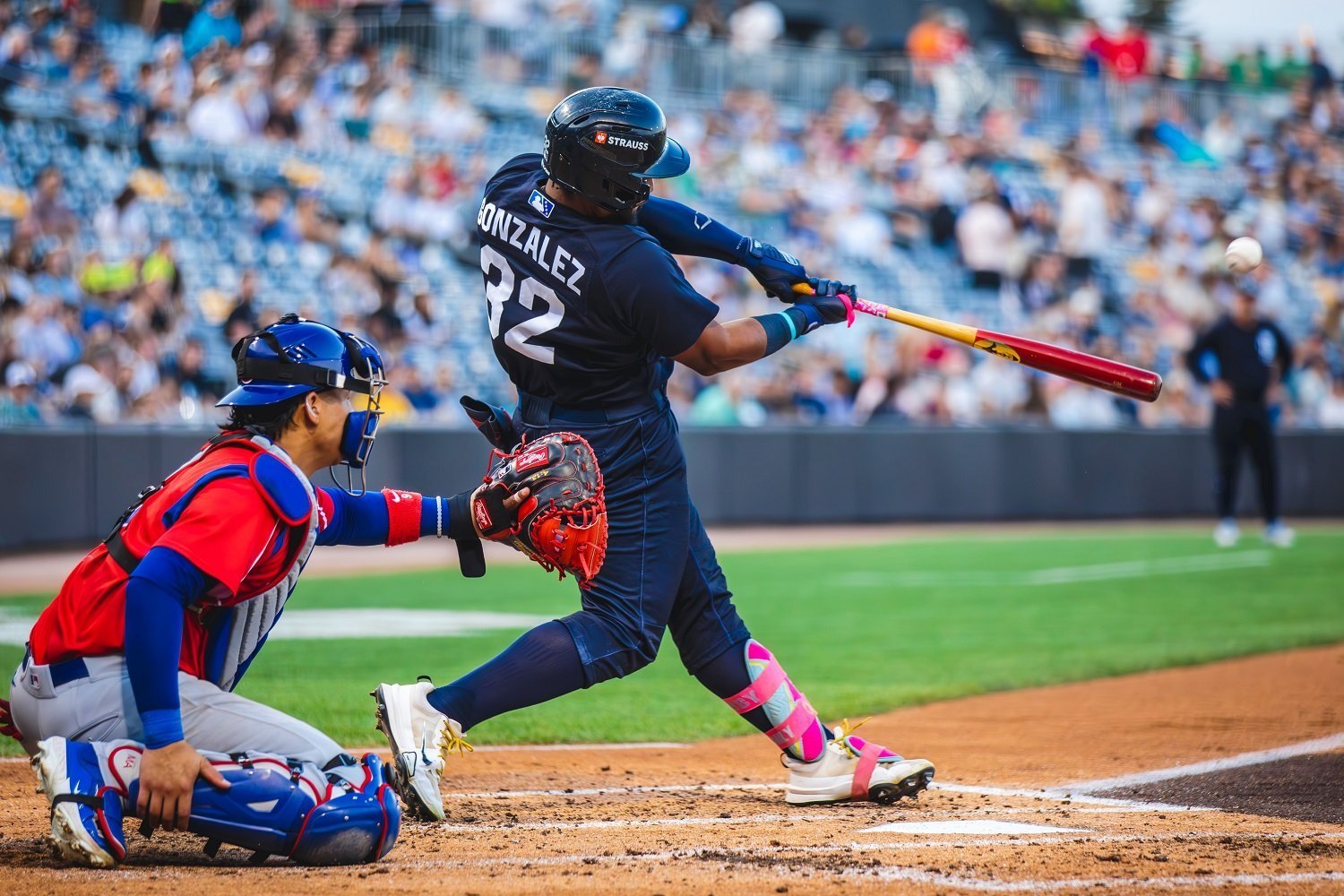 The Minnesota Twins are set to give Gabriel Gonzalez his first taste of the big leagues. Minnesota recalled the 22-year-old outfielder from Triple-A St. Paul on Friday, before opening a series against the Red Sox. Infielder Tristan Gray is heading to the paternity list in the corresponding move, creating a short-term roster opening for one of the organization’s more intriguing bats. Gonzalez was already on the 40-man roster, after the Twins protected him from the Rule 5 Draft last November. At least for now, this feels more like an opportunity to get Gonzalez's feet wet than a permanent arrival. Players on the paternity list can miss up to three days, and teams will occasionally stretch that timeline slightly with a follow-up restricted list move. Still, Gray is expected back relatively quickly, likely sometime during next week’s series against the White Sox. That means Gonzalez may have only a weekend's worth of games to make an impression before heading back down to St. Paul. But even a temporary promotion matters for a player like Gonzalez. The Twins didn’t have many realistic position-player options available after sending both Royce Lewis and Matt Wallner to Triple-A earlier this week. Minnesota’s upper-level depth has thinned out considerably, especially among players already on the 40-man roster. Gonzalez and fellow outfielder Hendry Mendez were the two obvious names, but Mendez was only promoted to Triple-A a couple of weeks ago. Gonzalez was the cleaner fit. And honestly, the timing makes sense. Gonzalez arrived in the organization with plenty of hype after the Twins acquired him from the Mariners in the Jorge Polanco trade before the 2024 season. He was viewed as the headline prospect in the deal, with a reputation as a polished young hitter with advanced bat-to-ball skills and emerging power. The shine dimmed a little after an uneven first season in the organization. Gonzalez battled through a back injury while putting together a fairly underwhelming year at High-A with a .707 OPS. Suddenly, the prospect who looked like a fast-moving offensive prospect started looking more human. To his credit, he responded well last season and hit enough to move from High- to Triple-A. His .909 OPS earned him Twins Daily’s Minor League Hitter of the Year. The numbers haven’t exploded in 2026, but there are still reasons for optimism. Across 197 plate appearances with the Saints, Gonzalez owns a .216/.294/.392 slash line with eight home runs while striking out at a manageable 20% rate. A lot of the depressed production can be traced to an ugly .231 batting average on balls in play, suggesting there may have been some poor luck mixed in with the inconsistency. The tools are still there. Twins Daily currently ranks Gonzalez as the No. 10 prospect in the Twins organization. Evaluators continue to believe in the hit tool and raw power potential, though they’ve also pointed to his aggressive approach and tendency to pound balls into the ground as reasons the game power hasn’t fully shown up yet. He's hitting too many ground balls (and too many pop-ups) this year, but he's still showing the ability to hit the ball hard at times, and he's a pull hitter. He’s not a burner on the bases, and plays corner outfield spots defensively, meaning the bat has to carry a significant portion of the profile. Fortunately for the Twins, one area where Gonzalez has consistently looked comfortable is against left-handed pitching. Last season, he torched lefties to the tune of a .368/.430/.592 line. Even during this year’s offensive downturn, he’s still producing a strong .263/.328/.544 slash line against southpaws. That could become important immediately. Boston is expected to start left-hander Payton Tolle on Friday night, which makes Gonzalez a logical candidate to jump directly into the lineup for his MLB debut. It may only last a few days, but in the next few months, maybe it becomes something more. By calling up the outfielder to replace Gray (who has become the primary third baseman), the team sets themselves up to get another few looks at intriguing breakout-in-progress Ryan Kreidler. At the very least, Twins fans finally get their first look at the player who has quietly become one of the organization’s more important long-term bets. What can Gonzalez bring to the Twins? Leave a comment and start the discussion. View the full article
 -
 Syracuse and Binghamton handed out wins while Brooklyn and St. Lucie fell. Ryan Clifford's bases-clearing double anchored a five-run sixth as Syracuse beat Buffalo 12-8, with Xzavion Curry starting and going five innings. Binghamton's seven-run ninth at Richmond followed three and one-third scoreless from R.J. Gordon, while Eli Serrano III drove in three. Brooklyn was swept by Hudson Valley despite scoreless work from Hoss Brewer and Cristofer Gomez. St. Lucie fell 18-6 to Palm Beach. Syracuse Pulls Away In 12-8 Win Over Buffalo The Syracuse Mets pulled away from the Buffalo Bisons for a 12-8 victory at NBT Bank Stadium. Eric Wagaman opened the scoring with a solo home run in the bottom of the first, his second of the season. After Buffalo grabbed a 3-2 lead in the third, Syracuse battled back into a 4-4 tie through five. Starter Xzavion Curry worked five innings, allowing four runs, all earned, on six hits with three walks and two strikeouts. Danis Correa followed with two scoreless innings, striking out one and allowing one hit. The sixth broke the game open. Yonny Hernández singled, and Cristian Pache reached on a force play before Ben Rortvedt and Jackson Cluff drew back-to-back walks to load the bases. Matt Rudick was hit by a pitch to bring home Pache. After a strikeout, Ryan Clifford laced a double to right field that cleared the bases, scoring Rortvedt, Cluff, and Rudick. Wagaman walked, and Jihwan Bae singled in Clifford to cap the five-run frame. Syracuse added three more in the eighth, with Pache delivering a two-RBI double that brought home Bae and Hernández. Clifford finished with three RBI, a double, and a walk. Cluff drew three walks, added a single, and scored three runs. Wagaman went 2-for-3 with the home run, two walks, and a run. Bae added two hits and two RBI from the cleanup spot. The Mets stranded seven runners. Player AB R H RBI BB K Christian Arroyo 4 0 1 2 0 1 Ryan Clifford 4 2 1 3 1 1 Eric Wagaman 3 1 2 1 2 0 Ji Hwan Bae 5 1 2 2 0 0 Yonny Hernández 5 1 2 0 0 1 Cristian Pache 5 1 1 2 0 1 Ben Rortvedt 4 2 1 0 1 1 Jackson Cluff 1 3 1 0 3 0 Matt Rudick 3 1 1 1 0 0 Player IP H R ER BB K HR Xzavion Curry 5 6 4 4 3 2 1 Danis Correa 2 1 0 0 0 1 0 Jonathan Pintaro 2/3 0 1 1 1 0 0 Anderson Severino 1/3 1 1 1 3 0 0 Dylan Ross 2/3 1 2 2 3 1 0 Nate Lavender 1/3 0 0 0 0 0 0 Binghamton's Ninth-Inning Surge Caps 9-2 Win At Richmond The Binghamton Rumble Ponies broke a tie game with seven runs in the top of the ninth to defeat the Richmond Flying Squirrels 9-2 at The Diamond. R.J. Gordon set the tone, working three and one-third innings of two-hit, shutout ball with two walks and four strikeouts. Max Green followed with two and two-thirds scoreless innings, allowing one hit and striking out three. Felipe De La Cruz turned in a perfect inning with two strikeouts, and Brian Metoyer closed with a scoreless ninth. Tied at zero through five, Binghamton broke through in the sixth. With one out, Wyatt Young and Marco Vargas singled to put runners at the corners, and Eli Serrano III ripped a two-RBI double to right field, scoring both for a 2-0 lead. After Richmond evened things with two in the eighth off Douglas Orellana, Binghamton answered in the ninth. Jacob Reimer doubled to lead off, advanced on a groundout, and scored along with Jose Ramos on D'Andre Smith's misplayed sacrifice fly. Vincent Perozo was hit by a pitch to plate Smith. Bases-loaded walks to Young, Vargas, and Reimer brought in three more, and Serrano added a sacrifice fly to bring home Young. Vargas led off the order with two hits and a walk. Young scored twice from the bottom of the lineup. Serrano finished with three RBI. Player AB R H RBI BB K Marco Vargas 4 1 2 1 1 1 Jacob Reimer 4 1 1 1 1 2 Eli Serrano III 4 0 1 3 0 1 Jose Ramos 3 1 0 0 1 2 D'Andre Smith 4 1 0 1 0 1 Nick Lorusso 3 1 0 0 1 1 JT Schwartz 3 1 0 0 1 0 Vincent Perozo 3 1 0 1 0 2 Wyatt Young 3 2 1 1 1 0 Player IP H R ER BB K HR R.J. Gordon 3 1/3 2 0 0 2 4 0 Max Green 2 2/3 1 0 0 1 3 0 Felipe De La Cruz 1 0 0 0 0 2 0 Douglas Orellana 1 2 2 2 0 1 0 Brian Metoyer 1 1 0 0 0 0 0 Brooklyn Drops Opener 7-3 To Hudson Valley The Brooklyn Cyclones fell behind early and could not recover in a 7-3 loss to the Hudson Valley Renegades in the opener of a doubleheader at Maimonides Park. Hudson Valley plated three in the first and four in the fourth to take command. Starter Noah Hall struggled with command, charged with seven runs, all earned, on nine hits over five innings, walking three and surrendering a home run. Bryce Jenkins followed with two scoreless innings and a strikeout. Brooklyn began chipping away in the fourth. John Bay led off with a double, advanced to third on a strikeout, and scored when JT Benson grounded out. Daiverson Gutierrez then drove a solo home run to left field, his second of the season, to cut the deficit to 7-2. The Cyclones added one more in the fifth. Trace Willhoite doubled to start the frame, Nick Roselli and Diego Mosquera worked back-to-back walks to load the bases, and after two strikeouts, Corey Collins was hit by a pitch to bring Willhoite home. Daiverson Gutierrez led the offense with the home run and an RBI. John Bay added a double and a run scored. Trace Willhoite picked up a double and a run. Leadoff hitter Yonatan Henriquez and Colin Houck each struck out three times, part of a 16-strikeout day for the lineup. Player AB R H RBI BB K Yonatan Henriquez 4 0 0 0 0 3 John Bay 3 1 1 0 0 2 Corey Collins 2 0 0 1 0 2 JT Benson 3 0 0 1 0 1 Daiverson Gutierrez 3 1 1 1 0 1 Colin Houck 3 0 0 0 0 3 Trace Willhoite 3 1 1 0 0 1 Nick Roselli 2 0 0 0 1 2 Diego Mosquera 2 0 1 0 1 1 Player IP H R ER BB K HR Noah Hall 5 9 7 7 3 0 1 Bryce Jenkins 2 0 0 0 0 1 0 Cyclones Shut Out By Hudson Valley 7-0 In Nightcap The Brooklyn Cyclones managed just two hits in a 7-0 loss to the Hudson Valley Renegades in the second half of a doubleheader at Maimonides Park. The Renegades pulled away with a two-run home run in the second and a five-run fifth. Starter Hoss Brewer worked two innings, allowing two runs, both earned, on two hits with one walk and three strikeouts. Cristofer Gomez followed with two scoreless innings, walking none and striking out two. Dakota Hawkins gave up five runs, only one earned, in two-thirds of an inning, surrendering four hits, including a two-run home run. The Cyclones' offense never threatened. In the bottom of the first, Ronald Hernandez walked, and John Bay singled, but Brooklyn stranded both. Yonatan Henriquez led off the sixth with a single before Mitch Voit grounded into a double play to end the inning. The fifth was the back-breaker. A leadoff triple scored on a Brooklyn throwing error, a second runner reached on another fielding error, a sacrifice fly brought a run home, a two-run home run extended the gap, and a bases-loaded walk made it five runs in the inning, all on four hits and two Cyclones errors. John Bay finished with a hit and a stolen base. Henriquez added a single from the leadoff spot. Brooklyn struck out eight times and committed two errors. Player AB R H RBI BB K Yonatan Henriquez 3 0 1 0 0 2 Mitch Voit 3 0 0 0 0 0 Ronald Hernandez 2 0 0 0 1 1 John Bay 3 0 1 0 0 0 Daiverson Gutierrez 3 0 0 0 0 0 JT Benson 2 0 0 0 0 1 Colin Houck 2 0 0 0 0 1 Trace Willhoite 2 0 0 0 0 1 Sam Biller 2 0 0 0 0 2 Player IP H R ER BB K HR Hoss Brewer 2 2 2 2 1 3 1 Cristofer Gomez 2 0 0 0 0 2 0 Dakota Hawkins 2/3 4 5 1 0 1 1 Ryan Dollar 2/3 0 0 0 4 1 0 Juan Arnaud 2/3 0 0 0 1 1 0 Diego Mosquera 1 0 0 0 0 0 0 St. Lucie Outslugged 18-6 By Palm Beach At Clover Park The St. Lucie Mets jumped ahead early but were overwhelmed in an 18-6 loss to the Palm Beach Cardinals at Clover Park. The Cardinals scored eight runs in the fifth inning and five more in the seventh, the latter on a grand slam, to bury the home side. Starter Cam Tilly worked three innings, allowing two runs, both earned, on five hits with three walks and three strikeouts, the strongest stretch from the St. Lucie staff. Luis Alvarez followed with one and two-thirds scoreless innings and three strikeouts. The Mets struck first in the bottom of the first. Kevin Villavicencio drew a one-out walk, Randy Guzman doubled to left to plate him, and cleanup hitter Yohairo Cuevas doubled to right to score Guzman for a 2-0 lead. In the third, Guzman walked, and Cuevas tripled to center to bring him in, making it a 3-2 game. From there, it was all Cardinals. Cuevas led the way, going 3-for-3 with a triple, a double, two RBI, and a walk from the cleanup spot. Baylor went 2-for-4 with a home run in the ninth, a double, an RBI, and two runs. Guzman finished 2-for-4 with a double, a walk, and two runs. The Mets struck out 13 times and stranded six runners. Player AB R H RBI BB K Branny De Oleo 5 0 1 0 0 2 Kevin Villavicencio 4 2 0 1 1 0 Randy Guzman 4 2 2 1 1 1 Yohairo Cuevas 3 0 3 2 1 0 AJ Salgado 0 0 0 0 0 0 Julio Zayas 3 0 0 1 1 2 Sam Robertson 4 0 0 0 0 3 Francisco Toledo 4 0 0 0 0 2 Simon Juan 4 0 0 0 0 3 Jamari Baylor 4 2 2 1 0 0 Player IP H R ER BB K HR Cam Tilly 3 5 2 2 3 3 0 Joe Charles 1 1/3 3 6 5 3 1 0 Tyler McLoughlin 1/3 2 2 1 3 1 0 Zack Mack 1 1/3 1 0 0 0 3 0 Jorge De Leon 1/3 2 5 5 6 0 1 Luis Alvarez 1 2/3 0 0 0 0 3 0 Kevin Villavicencio 1 3 3 3 0 1 0 Top-20 Prospect Performance Carson Benge: DNP A.J. Ewing: DNP Jonah Tong: DNP Elian Pena: DNP Jack Wenninger: DNP Ryan Clifford: 1-for-4, 2B, 2 R, 3 RBI, BB, K Jacob Reimer: 1-for-4, 2B, R, RBI, BB, 2 K Nick Morabito: DNP Mitch Voit: 0-for-3 Jonathan Santucci: DNP Chris Suero: DNP Zach Thornton: DNP Wandy Asigen: DNP Will Watson: DNP Eli Serrano III: 1-for-4, 2B, 3 RBI, K Randy Guzman: 2-for-4, 2B, 2 R, RBI, BB, K Ryan Lambert: DNP Dylan Ross: 2/3 IP, H, 2 R, 2 ER, 3 BB, K Antonio Jimenez: DNP R.J. Gordon: 3 1/3 IP, 2 H, 0 R, 0 ER, 2 BB, 4 K View the full article
 -
Forum Friday: Contract Extensions, Out-Getters and Needle-Movers
DiamondCentric posted an article in Brewer Fanatic
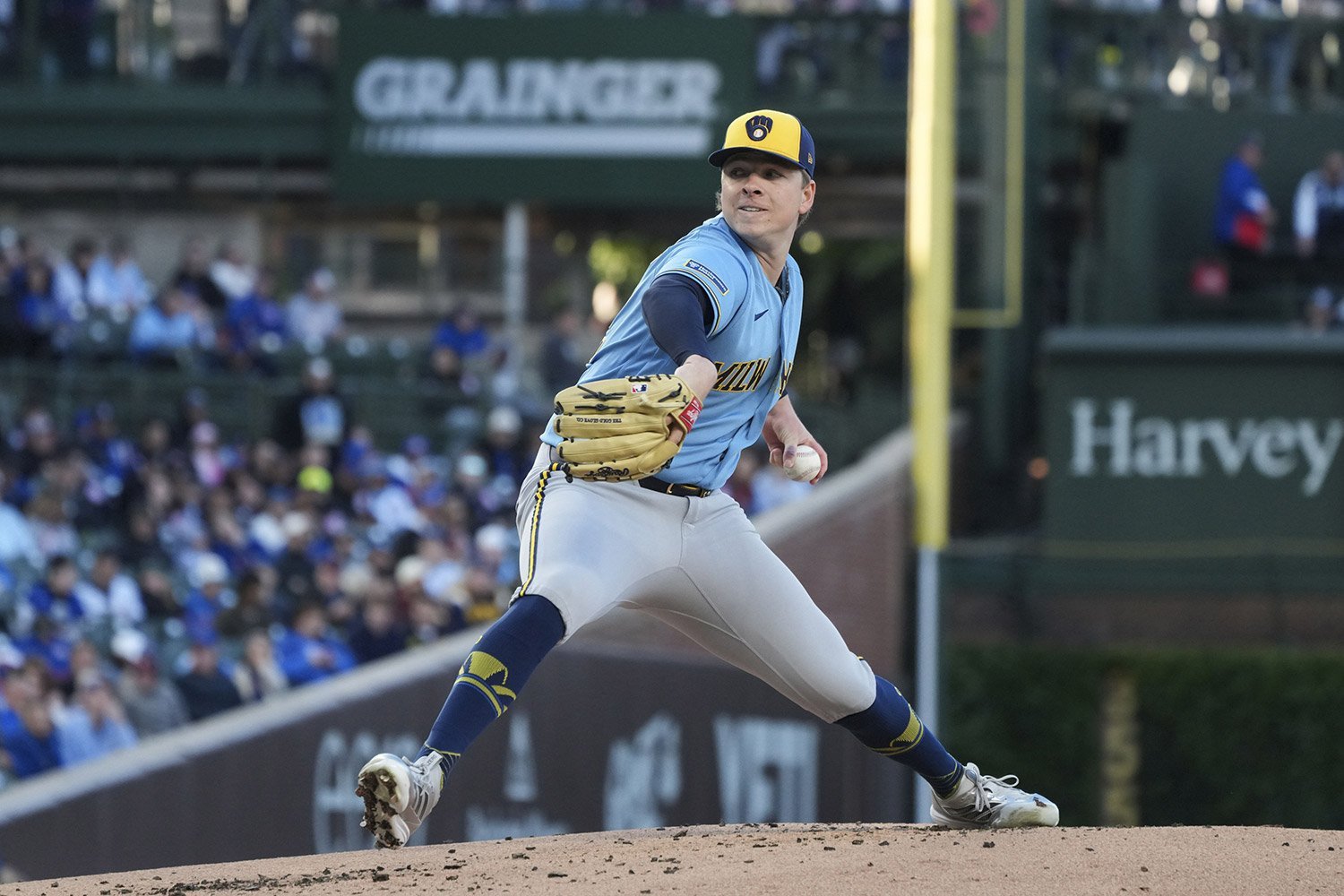 What a difference a week makes! Last Friday, Milwaukee was 2.5 games behind Chicago for the division lead. Today, the Brewers enjoy a 1.5-game lead over the Cubs. Come join the discussion with three of the best thread topics on Brewer Fanatic. Brewers: Harrison Extension Kyle Harrison is garnering national attention for his incredible start to the season. With four full years of team control remaining, is it already too late to offer Harrison a contract extension? Or, after only nine starts in Milwaukee, would the Brewers be foolish to further invest in a player at peak value? The K+, BB+, HR+, ERA-, and FIP- numbers for Kyle Harrison and Jacob Misiorowski are remarkably similar. Most community members agree it would be terrific to keep either or both players, but at what cost? This thread topic includes fascinating discussion about the importance of Milwaukee's front office and coaching staff. Milwaukee has made a habit of trading star pitchers before their final year of team control. But can the Brewers continue to reload with talented young arms? Brewers: Long Term is Patrick a Starter or reliever? Chad Patrick has proven to be a capable starter and an exceptional reliever. The Brewer Fanatic community especially appreciates how Patrick consistently elevates his performance in high-leverage situations. Some posters note how Patrick's fastball touches 96-97 mph out of the bullpen, velocity he rarely reaches as a starter. Milwaukee has benefited from multi-inning ace relievers like Aaron Ashby and Josh Hader, before Hader transitioned to a traditional one-inning closer role. It seems like the Brewers can never have enough talented "out-getters." Chad Patrick might be most helpful in a flexible, undefined role: an occasional spot start, regular multi-inning relief appearances, or right-handed fireman during high-leverage moments. Rumors: Let's Go All In? It would not be summer in Wisconsin without discussion on whether Milwaukee needs to add more needle-movers to compete for a championship. With the Brewers back in first place, is now the time to add a bat like CJ Abrams or Byron Buxton? This thread topic explores the constant tension between the Brewers' long-running "bites of the apple" approach and doing everything possible to win a World Series. A compelling point was made that Milwaukee's best opportunity to beat the Dodgers could be in two or three seasons. The Brewers' top prospects will have big league experience by then, and Los Angeles' aging core of players will mercifully be past their prime. Lost in the shuffle with all the excitement at the big league level are equally exciting developments in the minor leagues. Nashville reeled off nine consecutive wins, and many top prospects continue to thrive in May. It's a great day to be a Brewers fan at Brewer Fanatic! View the full article
 -
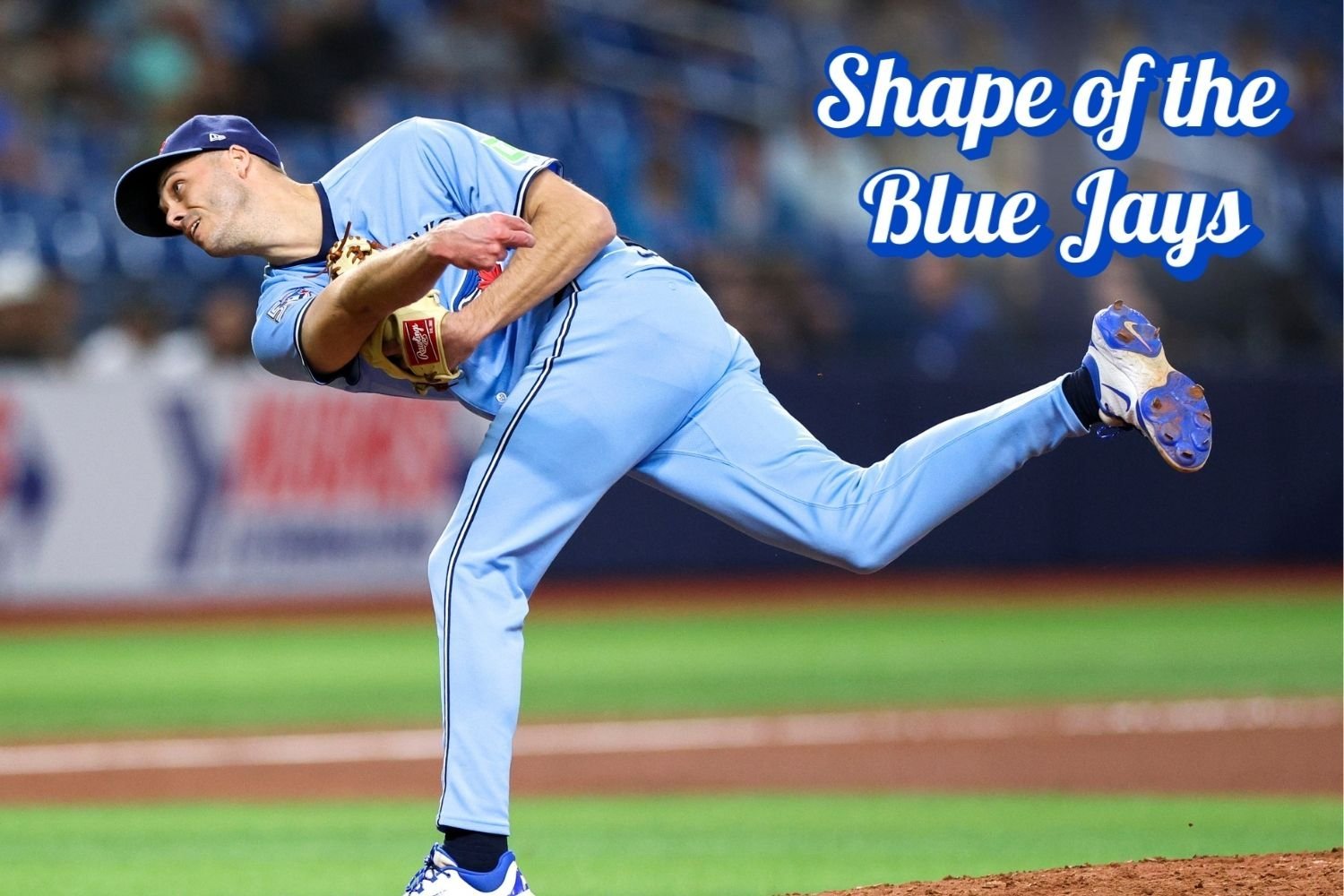 Welcome to Shape of the Blue Jays, my column where I dig into Statcast numbers to analyze recent pitch shape and swing shape trends for Toronto Blue Jays players and discuss how they have impacted their performance. Click here to read the last edition. Quick Hits: Prospects Prospect heads will know that Nolan Perry is already authoring a season to remember. The former 12th-round pick hit the ground running in his return from injury, and his strong start earned him a promotion to High-A Vancouver at the start of May. On Wednesday night, he outdid himself with 10 strikeouts across five shutout innings. In three starts since getting called up, his ERA is a minuscule 0.60, and his strikeout rate is a monstrous 50.9%. Perry, who won Jays Centre's Minor League Starting Pitcher of the Month award for April, boasts a mid-90s fastball that has deceptive carry and a flat approach from a low arm slot. FanGraphs prospect guru Eric Longenhagen said last Friday that he believes Perry could be a top-100 prospect by season's end if he stays healthy. Toronto's pitching pipeline has made some big strides over the past couple of years with the ascension of Trey Yesavage and the consistent growth of Johnny King, who should be headed to Double-A New Hampshire soon. If Perry keeps moving like this, he'll join that group as one of the most valuable young pitchers in the organization. Daulton Varsho Daulton Varsho has gotten hot again, with a walk-off grand slam last week against Tampa, a game-winning hit in the 10th inning in Detroit, and a three-hit night in the Yankees series. The sudden departure from his slug-based pull-air approach that paid massive dividends in a limited sample in 2025 has been a surprise, but it's working. Entering Thursday, his 120 wRC+ nearly matches his 123 wRC+ from last year despite decreases of nearly 3.0 mph in bat speed, 3" in swing length, and 3° in swing tilt. Varsho has never been a successful contact hitter before at the big league level, but he's getting more bat to ball, hitting more line drives, and striking out less than he ever has before. Daulton Varsho, 2026 vs Previous Career Bests Zone Contact% xBA LD% K% 2026 85.1% 0.269 32.8% 19.1% Previous Career High 82.9% 0.245 25.0% 21.3% As our very own Jesse Burrill noted in a recent article, the Jays' lack of slug is frustrating, and they don't exactly need another contact hitter right now, but these changes seem to be a product of Varsho changing his approach based on how he's being pitched. Burrill pointed out that Varsho is seeing fewer pitches down in the zone, especially down and away. The natural plan of attack against a guy with a high attack angle who likes to lift and pull is to pound fastballs at the top of the zone, and Varsho has done well to quickly adjust. Only 11.2% of the pitches he has seen this year have been of the off-speed variety (changeups and splitters, which he has historically crushed). That would be a single-season career low. Tyler Rogers Every time I write about Tyler Rogers, it serves as an important reminder that submarine pitchers with his command simply do not live by the same rules as all other pitchers. So far, he has already appeared in 23 games and has a 1.61 ERA, a first-percentile whiff rate, a 100th-percentile groundball rate, and a 99th-percentile hard-hit rate. Exactly as advertised! A weird quirk has emerged in his statistical profile, though: Hitters have stopped chasing against him. He's walking more than 7% of the batters he's facing for the first time since 2022. Tyler Rogers Chase Rate Breakdown, 2025 vs 2026 Pitch Type 2025 2026 Sinker 27.6% 23.6% Slider 33.3% 25.5% Overall 29.6% 24.3% Overall Percentile 67 9 There are a couple of reasons for this. Most importantly, opposing hitters' zone swing rate against him is down to 67.8% after sitting just above 70% for the past three years, which is likely a testament to his delivery and movement being so confusing that it's easier to decide not to swing at all. Also, the zone rate on his slider is down to 34.7% when it's never been below 45% in a season. Maybe the one-of-a-kind ride-cut shape makes it easier for hitters to lay off compared to his sinker, which falls off the table? He has gone through similar weeks-long stretches of not zoning the slider before, so hopefully it's just small-sample weirdness or a temporary lack of feel. He throws the sinker 77% of the time anyway, so this hasn't affected his overall results much. George Springer George Springer had an entire fanbase scratching their heads when, after jumping out to a 3-0 count in Monday's series opener against the Yankees with the tying run at third base, one out in the ninth, and Vladimir Guerrero Jr. on deck, he swung at three straight splitters out of the zone and struck out. He homered earlier in the game, and the big toe he fractured in early April probably hasn't fully healed yet, so I'm sympathetic to his plight, but the MVP-caliber player we saw last year is nowhere to be found. George Springer Baseball Savant Hitting Summary, 2025 vs 2026 His batting average is down over 100 points, and his OPS is down nearly 400 points from 2025. His sprint speed has also dropped from the 66th to the 31st percentile, so he's clearly still going through it with the toe injury. Like most of the team, he's chasing more and walking less, but in terms of his swing specifically, his average attack angle is down from 13° to 10°, which has led to an 8.5% hike in groundball rate, the same thing that plagued him in 2024. His pull rate is also up around 8%, so he's not timing his swing optimally such that the sweet spot of the bat is travelling upward at contact. As a result, he's rolling over everything to the left side of the infield. It's not wise to jump to early conclusions about a guy who isn't 100%, but if the Jays were otherwise healthy, they'd probably be able to afford the 36-year-old more time to get right. All stats entering May 21, 2026. View the full article
