


DiamondCentric
-
Posts
2,631 -
Joined
-
Last visited
Never
Content Type
Profiles
Forums
Events
News
Tutorials & Help
Major League Baseball Videos
Guides & Resources
Store
Downloads
Gallery
Everything posted by DiamondCentric
-

 Chicago Cubs Transactions Chicago Cubs signed free agent SS Luis Abreu to a minor league contract. RHP Jacob Wallace roster status changed by Chicago Cubs. Chicago Cubs signed free agent RHP Jacob Wallace to a minor league contract. Chicago Cubs optioned LHP Jordan Wicks to Iowa Cubs. Iowa Rallies In The Fifth To Down Toledo 6-4 Iowa erased an early deficit to beat the Toledo Mud Hens 6-4. Trailing 3-1 entering the fifth inning, the Cubs pushed across three runs to grab the lead. Owen Miller singled home BJ Murray and Moises Ballesteros to tie the game, and Ben Cowles followed with a sacrifice fly to score Miller for a 4-3 edge. Miller finished 3-for-3 with two walks and two RBIs, reaching base all five times he came to the plate. Murray went 3-for-5 with two runs scored, and Brett Bateman added a double and a triple. James Triantos delivered a sacrifice fly in the seventh to score Murray, and Jonathon Long provided insurance with a solo home run, his eighth, in the eighth inning. Long finished 2-for-5 with a double, a homer, and a run batted in. Starter Andrew Wantz labored through 3 2/3 innings, allowing three runs on three hits while walking five and striking out three. The bullpen settled things down from there. Iowa surrendered just one more run the rest of the way, and Eduarniel Nunez closed the door with two scoreless innings and three strikeouts. Iowa left 11 runners on base but did enough damage with runners in scoring position to secure the win. Owen Miller also made an impressive catch in the 8th to protect the lead for all those fans of good defense. Player AB R H RBI BB K Brett Bateman 5 0 2 0 0 1 Jonathon Long 5 2 2 1 0 1 Hayden Cantrelle 0 0 0 0 0 0 BJ Murray 5 2 3 0 0 0 Moisés Ballesteros 5 1 1 0 0 2 Owen Miller 3 1 3 2 2 0 Ben Cowles 3 0 1 1 1 2 James Triantos 3 0 1 1 1 1 Christian Bethancourt 5 0 0 0 0 2 Scott Kingery 3 0 0 0 1 1 Player IP H R ER BB K HR Andrew Wantz 3 2/3 3 3 3 5 3 0 Corbin Martin 1 1/3 4 1 1 1 1 0 Antoine Kelly 2 2 0 0 1 1 0 Eduarniel Núñez 2 1 0 0 0 3 0 Nick Dean And A Ninth-Inning Single Lift Knoxville 1-0 The Knoxville Smokies won a taut pitcher's duel 1-0 over the Columbus Clingstones on a walk-off in the bottom of the ninth. With the game scoreless entering the final frame, Alex Ramirez singled home Alex Madera to end it. Ramirez drove in the game's only run, and Jefferson Rojas contributed a double in an otherwise quiet offensive night that produced just four hits. Karson Simas added a single and a stolen base, while Carter Trice and Owen Ayers each drew a walk. The Smokies were patient but could not string much together until the decisive rally in the ninth. The story was the pitching. Nick Dean was outstanding, throwing six scoreless innings and allowing four hits with one walk and seven strikeouts, a quality start that set the tone. Erian Rodriguez followed with two scoreless innings and three strikeouts, and Evan Taylor worked a scoreless ninth with two strikeouts to earn the win. Knoxville's staff combined for 12 strikeouts and did not allow a run all afternoon. The Smokies stranded just five runners and made the lone run they scratched across stand up, capitalizing in the ninth after eight frames without a run to walk off with the victory. It was a complete effort on the mound, with all three pitchers contributing to the shutout. Player AB R H RBI BB K Carter Trice 3 0 0 0 1 1 Jefferson Rojas 4 0 1 0 0 1 Owen Ayers 3 0 0 0 1 0 Alex Ramírez 4 0 1 1 0 0 Andy Garriola 3 0 0 0 0 0 Edgar Alvarez 3 0 0 0 0 0 Karson Simas 3 0 1 0 0 2 Ethan Hearn 3 0 0 0 0 2 Drew Bowser 3 0 1 0 0 2 Alex Madera 0 1 0 0 0 0 Player IP H R ER BB K HR Nick Dean 6 4 0 0 1 7 0 Erian Rodriguez 2 2 0 0 1 3 0 Evan Taylor 1 0 0 0 2 2 0 South Bend's Early Lead Slips Away In 13-5 Loss At Beloit South Bend led briefly but was overwhelmed in a 13-5 loss at the Beloit Sky Carp. Beloit jumped ahead 4-1 through two innings, but the Cubs answered with four runs in the top of the third to take a 5-4 lead. Angel Cepeda singled to start the scoring, Matt Halbach singled home another run, Miguel Useche laced a ground-rule double to plate a third, and Mike Hallquist grounded out to bring in the go-ahead run. Halbach finished 2-for-3 with two RBIs and a walk, and Jose Escobar went 2-for-5 with a stolen base. Kane Kepley, batting leadoff, singled, stole a base, and scored a run, while Josiah Hartshorn reached three times on walks. The lead did not last. Starter Nazier Mule was charged with four runs on five hits over three innings, walking three and striking out four while surrendering a home run. Beloit tied the game in the sixth, took the lead in the seventh, and broke it open with five runs in the eighth to pull away. South Bend's staff issued eight walks on the night, and the Cubs left eight runners on base. The offense went quiet after the third-inning rally, and Beloit's late outburst turned a one-run game into a lopsided final. Player AB R H RBI BB K Kane Kepley 5 1 1 0 0 2 Josiah Hartshorn 2 1 0 0 3 2 Jose Escobar 5 1 2 0 0 1 Angel Cepeda 4 1 1 1 1 2 Logan Poteet 4 0 0 0 0 2 Matt Halbach 3 1 2 2 1 1 Miguel Useche 4 0 1 1 0 1 Michael Hallquist 4 0 0 1 0 1 Justin Stransky 4 0 0 0 0 1 Player IP H R ER BB K HR Nazier Mulé 3 5 4 4 3 4 1 Jackson Brockett 3 2/3 3 4 3 3 4 1 Ethan Bell 0 1/3 2 0 0 1 0 0 Eli Jerzembeck 1 5 5 5 1 1 0 Late Rally And Melendez's Relief Carry Myrtle Beach 5-2 The Myrtle Beach Pelicans rallied late to defeat the Hickory Crawdads 5-2. Myrtle Beach scored first in the second inning when Jose Silva drew a bases-loaded walk to bring home Eli Lovich. After Hickory took a 2-1 lead in the fourth, the Pelicans surged ahead in the sixth. Derniche Valdez tripled to score Lovich and tie the game, then Yahil Melendez singled to put Myrtle Beach on top 3-2. Lovich led the offense, going 3-for-3 with a double, a walk, a stolen base, and two runs scored. Valdez added two hits, including the triple, and Melendez reached base four times with a single and three walks. The Pelicans tacked on two more in the eighth on sacrifice flies from Geuri Lubo and Darlyn De Leon. Starter Pierce Coppola turned in a solid four innings, allowing two runs on four hits with two walks and six strikeouts. The bullpen was dominant behind him. Edwardo Melendez was terrific, tossing three and two-thirds hitless, scoreless innings with four strikeouts, and Jordan Henriquez finished with a scoreless 1 1/3. Myrtle Beach drew nine walks on the night and left nine runners on base, but timely hitting and shutdown relief carried the Pelicans to the win. Player AB R H RBI BB K Darlyn De Leon 4 0 0 1 0 1 Alexis Hernandez 4 0 0 0 1 2 Alexey Lumpuy 4 0 0 0 0 1 Eli Lovich 3 2 3 0 1 0 Derniche Valdez 4 1 2 1 0 0 Yahil Melendez 1 1 1 0 3 0 Jose Silva 1 1 0 1 3 1 Ivan Cespedes 3 0 0 0 1 2 Geuri Lubo 3 0 1 1 0 1 Player IP H R ER BB K HR Pierce Coppola 4 4 2 2 2 6 0 Edwardo Melendez 3 2/3 0 0 0 2 4 0 Jordan Henriquez 1 1/3 1 0 0 0 1 0 Top-20 Prospect Performance Jefferson Rojas: 1-for-4, 2B, K Pedro Ramirez: DNP Jaxon Wiggins: DNP Josiah Hartshorn: 0-for-2, 3 BB, 2 K Kevin Alcantara: DNP Ethan Conrad: DNP Kane Kepley: 1-for-5, 2 K Owen Ayers: 0-for-3, BB Jonathon Long: 2-for-5, 2B, HR, RBI, K Kaleb Wing: DNP James Triantos: 1-for-3, RBI, BB, K Brooks Caple: DNP Mason McGwire: DNP Ty Southisene: DNP Will Sanders: DNP Juan Cabada: DNP Eli Lovich: 3-for-3, 2B, BB Ariel Armas: DNP Jostin Florentino: DNP Grant Kipp: DNP View the full article
 -
Minnesota Twins Minor League Pitchers of the Month: June 2026
DiamondCentric posted an article in Twins Daily
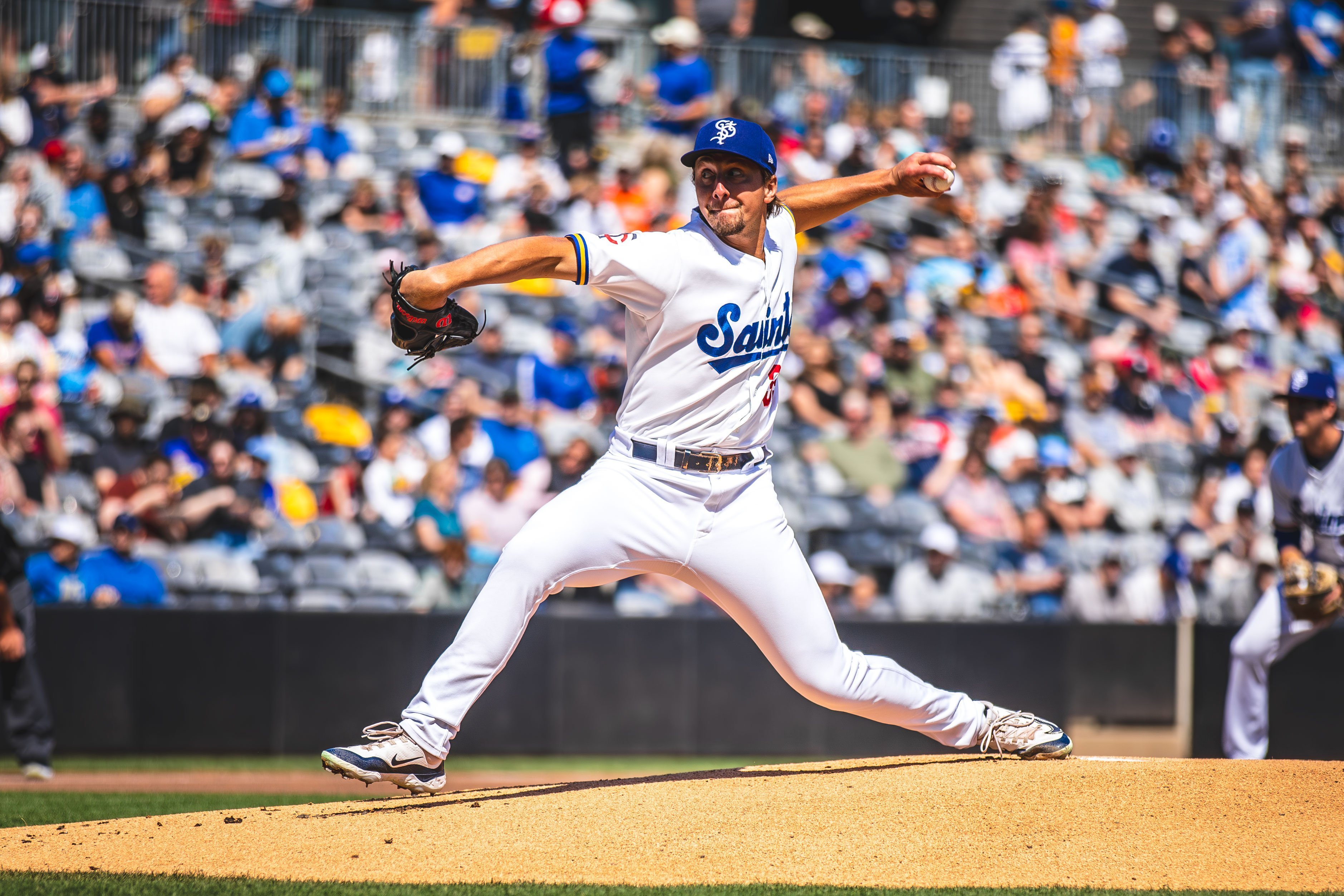 June marks an important transition across Minor League Baseball. Most leagues move into the second half of their schedules, giving organizations an opportunity to reset after the opening months of the season. For some players, a strong first half is rewarded with a promotion up the organizational ladder. Others remain at their current level, focusing on refining their games before taking the next step. The Twins have seen both scenarios play out over the last several weeks. Several pitchers earned promotions after dominant stretches, while others began to find consistency after slow starts to the year. As the organization's pitching depth continues to be tested at multiple levels, quality performances throughout the farm system have become increasingly important. Before looking at this month's top performers, here are a few honorable mentions. Honorable Mentions: RHP C.J. Culpepper (Saints): 8 G, 11 2/3 IP, 1.54 ERA, 1.20 WHIP, 11 K, 6 BB RHP Sam Armstrong (Wind Surge): 6 G, 26 IP, 3.12 ERA, 1.23 WHIP, 21 K, 9 BB RHP Justin Mitrovich (Mighty Mussels): 4 G, 18 1/3 IP, 3.44 ERA, 1.26 WHIP, 25 K, 8 BB 4. RHP Marco Raya – St. Paul Saints June Stats (8 G): 0.00 ERA, 8 IP, 9 K, 2 BB, 0.83 WHIP, .190 BA Raya has been on Minnesota's prospect radar since the Twins selected him out of high school in the 2020 MLB Draft. After spending years developing as a starter, 2026 has marked his first full season working exclusively out of the bullpen. The transition looked rocky early. He posted an ERA north of 11.00 during the season's opening month before making noticeable improvements in May, lowering that mark to 4.08. June represented another significant leap forward. Raya fired eight scoreless innings, consistently attacked hitters with his improved stuff, and earned his first call to the major leagues. Throughout his career, throwing consistent strikes has been Raya's biggest obstacle. His electric arm has never been in question. If he can continue limiting walks and commanding the zone against major league hitters the way he did throughout June, his bullpen future becomes much more intriguing. 3. RHP Grant Hartwig – St. Paul Saints June Stats (8 G): 0.79 ERA, 11 1/3 IP, 11 K, 0 BB, 0.44 WHIP, .132 BA Hartwig's previous major-league experience showed throughout June, as he became one of St. Paul's most dependable relief options. Opposing hitters batted over .320 against him during the season's first two months, but everything changed once the calendar flipped. He completely flipped the script by holding hitters to a .132 batting average and a .353 OPS during June. Just as impressive, he did not issue a single walk across more than 11 innings. Reliability became the defining characteristic of his month. Hartwig didn't allow a run in seven of his eight appearances while also showing the ability to work multiple innings. Four of his outings lasted more than one inning, giving the Saints valuable length. He’s certainly a veteran the Twins could consider for a bullpen role in the season’s second half. 2. RHP Jason Reitz – Fort Myers Mighty Mussels June Stats (4 G): 1.88 ERA, 14 1/3 IP, 11 K, 5 BB, 0.84 WHIP, .149 BA Reitz has quickly become one of the more recognizable pitching prospects in the organization, thanks to his towering 6-foot-11 frame. Selected in the fourth round out of Oregon last summer, the Twins elected not to have him pitch after signing, making 2026 his professional debut. Minnesota has understandably handled his workload carefully, but the leash has gradually become longer. Reitz pitched into the fourth inning in three of his four June starts while continuing to show why scouts are fascinated by the extension he creates on the mound. His raw stuff also continued to miss bats. He generated a season-high nine swinging strikes in his June 20 start and limited opponents to a .507 OPS for the month. As his innings continue to increase, Reitz is beginning to show why the Twins believed he could develop into an intriguing professional starter. 1. LHP Aaron Rozek – St. Paul Saints June Stats (6 G): 2.89 ERA, 28 IP, 27 K, 11 BB, 1.18 WHIP, .220 BA Rozek, a Burnsville native, has bounced between Double-A and Triple-A throughout the season, before settling into the Saints' rotation as injuries created opportunities in the upper levels of the organization. The move has produced impressive results. As a starter, his ERA has been 1.39 runs lower, while his WHIP has dropped by 0.67 compared to his relief work. That consistency earned him the top spot this month. Pitching in the hitter-friendly International League is rarely easy, yet Rozek held opponents to a .220 batting average and a .706 OPS throughout June. He allowed two earned runs or fewer in five of his six starts while also recording a season-high 11 swinging strikes on June 19. At 30 years old, Rozek is more than two and a half years older than the average International League player, so he isn't viewed through the same long-term prospect lens as many others on this list. However, that doesn't diminish the value of what he accomplished. The Twins have already leaned heavily on their pitching depth this season, and if injuries continue to mount or workloads become a concern during the second half, Rozek has positioned himself as a legitimate option capable of providing quality innings at the major league level. June showcased the improving depth throughout Minnesota's farm system. Raya earned his first taste of the big leagues after a remarkable turnaround, Hartwig reminded everyone he can be valuable upper-level depth, Reitz continued an encouraging professional debut, and Rozek emerged as one of the organization's most dependable Triple-A starters. With two months remaining before the stretch run of the minor league season, promotions will continue to reshape each affiliate's roster. If these pitchers can build on their June success, several of them could play meaningful roles for the Twins before the 2026 season comes to a close. How would your ballot look? Leave a comment and start the discussion. View the full article
 -
 Boston Red Sox Affiliate Recap Triple-A Worcester Red Sox Season Record: 40-40 Worcester came back from a two-run deficit entering the seventh inning, defeating the Syracuse Mets (New York Mets) 7-5, extending their winning streak to four games. Worcester jumped out early in the first with a Vinny Capra RBI single. The Mets answered back in the bottom half with two solo homers, making it a 2-1 game. Solo shots from Nathan Hickey in the second and Mickey Gasper in the third gave the WooSox the lead once again, 3-2. With a flip of a switch, Syracuse turned it over in the bottom of the fifth with a three-run homer to make it 5-3. The comeback happened in the late stages of the game. Gasper drew a bases-loaded two-out walk in the seventh to bring it within one, then Hickey crushed a go-ahead two-run bomb (his second homer of the game) in the eighth for a 6-5 lead. Braiden Ward tacked on an insurance run with a solo shot in the ninth. On the mound, Worcester's bullpen was dominant in the middle innings. Tyler Uberstine was the key bridge with three shutout innings while tossing five strikeouts. Eduardo Rivera got the win with 2 ⅓ innings with four punchouts, and Wyatt Olds closed it out with a two-inning save. Standout Performances: Nathan Hickey: 2-for-3, 2 HR, 2 R, 3 RBI, BB Braiden Ward: 2-for-4, HR, 2B, 2 R, RBI Mickey Gasper: 1-for-4, HR, R, 2 RBI, BB Tyler Uberstine: 3 IP, 0 H, 0 ER, 5 K Eduardo Rivera: 2 ⅓ IP, 0 H, 0 ER, 4 K Double-A Portland Sea Dogs Season Record: 40-37 It was a close game through five innings, but the Sea Dogs fell apart in the sixth, taking a blowout 10-3 defeat to the Curve (Pittsburgh Pirates). Portland kept it close early. After going down 1-0 in the first, the Sea Dogs tied it 1-1 with a Johanfran Garcia RBI single. Jack Winnay carried the Sea Dogs offense, giving his team a 2-1 lead with a solo homer in the fourth inning and tacked on a double (two of the three extra-base hits Portland tallied). Altoona tied it 2-2 in the top of the sixth, then came the downpour of runs: a solo homer and a bases-loaded walk put the Curve up 3-2, then suddenly, a grand slam blew it open 7-2. Brooks Brannon tried the claw back from the deficit after crushing a solo bomb (his 11th of the season), 7-3. Altoona added three more in the ninth, then threw a shutout ninth to end it 10-3. The bullpen got hit hard, but Gage Ziehl was outstanding, tossing five innings of one-run ball with eight strikeouts. Standout Performances: Gage Ziehl: 5 IP, 6 H, 1 ER, 1 BB, 8 K Jack Winnay: 2-for-4, HR, 2B, R, RBI High-A Greenville Drive Season Record: 30-45 The Drive suffered an unfortunate walk-off defeat, 5-4, to Winston-Salem (Chicago White Sox). Greenville fell behind early when the Dash crushed a three-run homer in the first, digging the Drive in a 3-0 hole. Greenville clawed all the way back in the second: Antonio Anderson's two-run single and Stanley Tucker's RBI single tied it 3-3. Winston-Salem edged ahead again on an RBI triple in the third, but Tucker came through in the clutch once more with an RBI double in the seventh, knotting it 4-4. It stayed tied until the bottom of the ninth, when an RBI single scored the winning run for the Dash, ending it 5-4. Greenville showed fight but came up just short. After a solid month of June, Kyson Witherspoon gave up four runs in his first start of July. After the rough first inning, he settled in and did not let the game get out of hand. Griffin Kilander was phenomenal in his relief appearance, tossing four shutout innings with six punchouts. Standout Performances: Antonio Anderson: 2-for-4, R, 2 RBI Stanley Tucker: 2-for-4, 2B, 2 RBI Griffin Kilander: 4 IP, 0 H, 0 ER, 2 BB, 6 K Low-A Salem RidgeYaks Season Record: 30-47 It was an offensive showdown in this high-scoring affair with Salem coming out on top 16-10 against the GreenJackets (Atlanta Braves). Salem jumped on top first 1-0 after Andrews Opata came around to score on Andruw Musett's fielder's-choice groundout. Augusta responded in the second inning with a massive six-run inning, making the game seem out of reach already 6-1. Back-to-back homers came in the third inning for the Yaks. Adonys Guzman launched a two-run shot to center, and Louis Andujar immediately followed with a solo homer to left (his first homer for the RidgeYaks). What seemed to be in the blink of an eye, Salem tied the game up. Andujar was clutch once again, this time with a two-run single to right that brought in Opata and Guzman. After falling behind once more 9-6, the RidgeYaks had a big sixth-inning frame. Givian Sirvania's RBI single (aided by a shortstop error) made it 9-7. Then Skylar King crushed a three-run homer to left-center, flipping the game to 10-9. Four runs gave Salem the lead for good. The RidgeYaks had another huge inning in the eighth. Opata's single (deflected by the right fielder) scored Fernandez. Guzman added a sac fly to score Sirvania. Then Musett doubled home two more to make it 14-9. Two more runs came in the ninth after King's RBI single scored Fernandez, and Opata's sacrifice fly brought in Sirvania. The GreenJackets pushed across a run in the bottom half but never had a chance, ending it 16-10. Standout Performances: Skylar King: 3-for-5, HR, 2B, 3 R, 4 RBI, BB Adonys Guzman: 2-for-3, HR, 2 R, 2 RBI, BB Andrews Opata: 2-for-4, 3 R, 2 RBI, BB, 2 SB Louis Andujar: 2-for-4, HR, R, 3 RBI Givian Sirvania: 2-for-4, 2B, 3 R, BB View the full article
 -
 Thursday was a rough day for relief pitching across the New York Mets' minor-league system. Three different affiliates blew leads late in games, with two of them blowing saves in the ninth inning. Syracuse led by a run after seven innings, only to give up two in the eighth and one in the ninth for a 7-5 loss to Worcester. A two-run homer off Nate Lavender in the eighth put the Woo Sox in front. Binghamton suffered a worse collapse. The Rumble Ponies led Chesapeake by two going into the top of the ninth after taking the lead in the bottom of the eighth, but Douglas Orellana allowed a grand slam and a solo homer back to back while failing to get an out. Binghamton lost, 8-4. St. Lucie tossed away a ninth-inning lead against Tampa. Throwing errors by Chase Meggers and Elian Pena, sandwiched around a run-scoring double, saddled Zack Mack with a blown save in an eventual 7-5 Mets loss. Brooklyn didn't collapse; it just fell behind early and couldn't catch up. The Cyclones allowed runs in seven of their eight defensive innings and lost to Frederick, 9-4. The complex teams had no such issues. DSL Mets Orange routed the DSL Marlins, 11-2, in a game shortened to five innings. Oscar Pena drove in four runs and Cesar Acosta drove in three. DSL Mets Blue lost to DSL Colorado, 5-3, in six innings. Royner Bravo and Michalle Mercedes each had two hits. The FCL Mets edged the FCL Nationals, 3-2, in eight innings. Yovanny Rodriguez drove in the winning run with a double, scoring Wyatt Vincent The bullpen threw four scoreless innings. Mets Transactions New York Mets signed free agent 1B Christopher Morel to a minor league contract. Syracuse's Three Home Runs Go To Waste The offense started fast in this game. Jorge Polanco and M.J. Melendez hit solo home runs in the first to give the Mets a 2-1 lead. Polanco, still on rehab from New York, was back in the lineup as the DH after sitting Wednesday. The Mets fell behind in the third, but Hayden Senger got the lead back for them in the fifth with a three-run homer. It was Senger's eighth homer of the season, extending his career high, His previous best was five. The score remained 5-3 through six. Matt Turner gave up a run in the seventh to make it 5-4. Lavender served up the go-ahead homer in the eighth. Ryan Lambert allowed an insurance homer in the ninth. Jonah Tong started and went the first five innings. He allowed three runs, all earned, on four hits, walked two, struck out three, and allowed a pair of home runs on 78 pitches (47 strikes). Luis Robert Jr. took a big step in his rehab, playing nine innings in center field. He went 0-for-4 with a pair of strikeouts. Ryan Clifford, who was chosen this week to represent the organization in the MLB All-Star Futures Game, went 0-for-4 with three punchouts. Player AB R H RBI BB K Luis Robert Jr. 4 0 0 0 0 2 Jorge Polanco 2 1 1 1 1 0 Christopher Morel 1 0 0 0 0 1 Jihwan Bae 3 0 0 0 1 1 MJ Melendez 3 1 1 1 1 2 Ryan Clifford 4 0 0 0 0 3 Jared Oliva 4 1 1 0 0 1 Vidal Bruján 3 1 0 0 1 0 Hayden Senger 3 1 1 3 0 2 Zack Short 4 0 0 0 0 0 Player IP H R ER BB K HR Jonah Tong 5 4 3 3 2 3 2 Matt Turner 1 1 1 1 1 2 0 Nate Lavender 2 2 2 2 2 0 1 Ryan Lambert 1 1 1 1 1 0 1 Binghamton Rally Negated In Ninth The Rumble Ponies were in line for a win despite being shut out for the first seven innings. Kevin Parada delivered an RBI single and Vincent Perozo followed with a three-run home run in the eighth to put them up, 4-2. Orellana then had his meltdown. Saul Garcia replaced him and allowed Chesapeake's final run. Channing Austin started and went the first 2 2/3 innings, allowing a run on three hits, with no walks and three strikeouts. Rehabbing right-hander Dedniel Núñez worked a scoreless fourth. He allowed a hit and struck out one. Max Green was excellent in long relief, striking out seven over four innings while allowing a run on four hits. Parada had two of the Rumble Ponies' four hits. The 2022 first-round pick is back in Binghamton after being demoted from Syracuse this week. Player AB R H RBI BB K Chris Suero 4 1 0 0 0 1 Nick Lorusso 3 1 0 0 1 2 Kevin Parada 4 1 2 1 0 1 Vincent Perozo 4 1 1 3 0 1 Wyatt Young 4 0 0 0 0 2 Jaylen Palmer 4 0 0 0 0 4 Kevin Villavicencio 4 0 0 0 0 2 Nick Lucky 4 0 1 0 0 1 Nick Roselli 2 0 0 0 1 0 Player IP H R ER BB K HR Channing Austin 2 2/3 3 1 1 0 3 0 Garrett Stratton 0 1/3 0 0 0 0 0 0 Dedniel Núñez 1 1 0 0 0 1 0 Max Green 4 4 1 1 1 7 0 Douglas Orellana 0 4 5 5 1 0 2 Saul Garcia 1 2 1 1 0 2 0 Cyclones Get Close, Then Falter The Cyclones scored all their runs in the fifth inning after falling behind, 5-0. Corey Collins doubled home John Bay, Jamari Baylor singled in Collins, and Yohairo Cuevas singled home Daiverson Gutierrez and Baylor to make a 5-4 game. Frederick responded with four consecutive runs to pull away. The Keys scored in every inning but the seventh. Jose Chirinos started and took the loss. He struck out seven over 3 2/3 innings, but he also was tagged for five runs, four earned, on seven hits and two walks. He allowed a home run. Brooklyn managed just six hits in the game. Collins and Yonatan Henriquez each had two. The Cyclones' winning streak ended at five. Player AB R H RBI BB K Yonatan Henriquez 5 0 2 0 0 0 John Bay 2 1 0 0 2 1 Corey Collins 4 1 2 1 0 1 Daiverson Gutierrez 2 1 0 0 2 1 Jamari Baylor 4 1 1 1 0 1 Yohairo Cuevas 3 0 1 2 1 0 Colin Houck 4 0 0 0 0 1 Trace Willhoite 4 0 0 0 0 1 Sam Biller 4 0 0 0 0 1 Player IP H R ER BB K HR Jose Chirinos 3 2/3 7 5 4 2 7 1 Cristofer Gomez 1 1/3 1 1 1 1 2 0 Hunter Hodges 1 1 1 1 0 2 1 Bryce Jenkins 1 0 0 0 0 1 0 Hoss Brewer 1 2 2 2 1 0 0 St. Lucie Lets Late Lead Slips Away The Mets finally scored in the series after a pair of shutout losses, but the pitching and defense denied them a win. They have now lost seven in a row overall. Simon Juan put the Mets up, 3-2, in the fourth with a two-run homer. Tampa tied the game in the top of the fifth. St. Lucie retook the lead in the bottom of the frame on back-to-back RBI doubles by Trey Snyder and Antonio Jimenez. Joel Lara ;struck out seven in four innings of bulk relief, but he also allowed two runs and three hits while walking two. Miguel Mejias followed him and struck out four over two hitless innings. Juan and Snyder each had two hits. Elian Peña ended the Mets' scoring drought in the first when he stole third and then came around to score on a throwing error by Tampa's catcher. Player AB R H RBI BB K Elian Peña 4 1 1 0 0 2 Trey Snyder 4 1 2 1 0 1 Antonio Jimenez 4 0 1 1 0 1 Julio Zayas 4 1 2 0 0 1 Branny De Oleo 4 0 0 0 0 2 Simon Juan 4 1 2 2 0 1 Chase Meggers 4 0 0 0 0 1 Jeremy Rodriguez 3 1 1 0 1 0 Taylor Darden 4 0 0 0 0 1 Player IP H R ER BB K HR Luis R. Rodriguez 0 2/3 0 2 0 1 2 0 Joe Scarborough 1 1/3 3 0 0 0 1 0 Joel Lara 4 3 2 2 2 7 0 Miguel Mejias 2 0 0 0 0 4 0 Zack Mack 1 3 3 2 0 3 0 Top-20 Prospect Performance Carson Benge: DNP A.J. Ewing: DNP Jonah Tong: 5 IP, 4 H, 3 R, 3 ER, 2 BB, 3 K, 2 HR Elian Pena: 1-for-4, 2 K Jack Wenninger: DNP Ryan Clifford: 0-for-4, 3 K Jacob Reimer: DNP Nick Morabito: DNP Mitch Voit: DNP Jonathan Santucci: DNP Chris Suero: 0-for-4, 1 K Zach Thornton: DNP Wandy Asigen: DNP Will Watson: DNP Eli Serrano III: DNP Randy Guzman: DNP Ryan Lambert: 1 IP, 1 H, 1 R, 1 ER, 1 BB, 0 K, 1 HR Dylan Ross: DNP Antonio Jimenez: 1-for-4, 2B, 1 K R.J. Gordon: DNP View the full article
 -
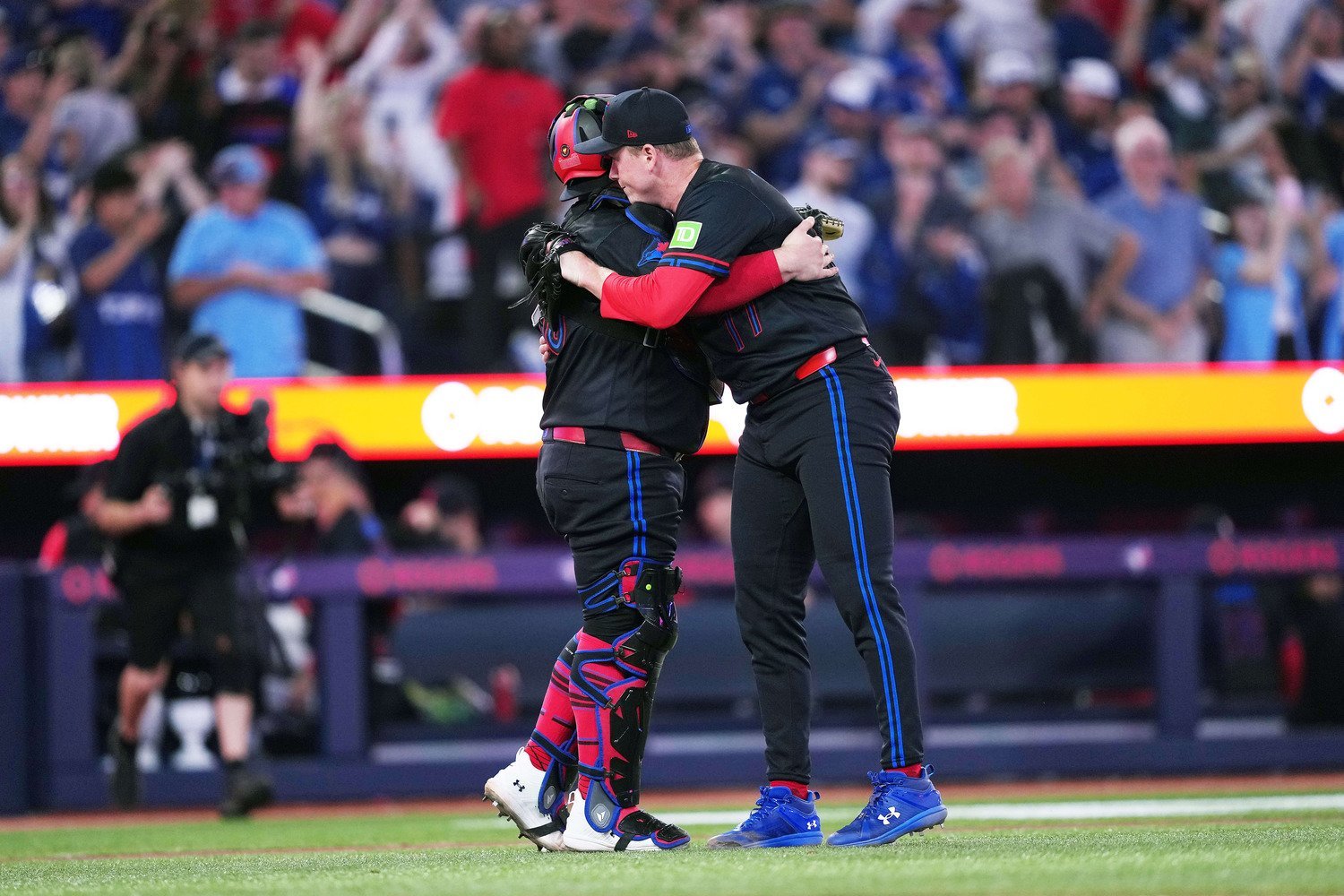 June was a disappointing month for the Toronto Blue Jays. They went 11-15 with a -28 run differential, finishing by losing seven of their last eight games. They now find themselves 11 games behind the Tampa Bay Rays in the AL East and sit three games back of the third Wild Card spot. After a World Series runner-up finish last season, expectations were high heading into the 2026 campaign. However, they've had too many injuries and poor performances. Before the losing streak, I thought the Blue Jays would be buyers, since they were in the third Wild Card spot, but their standings position now has me thinking they will be sellers instead. They could take a page out of the Cleveland Guardians' 2025 playbook when they traded away players with expiring contracts, including Shane Bieber and Paul Sewald. The team went 34-20 throughout the rest of the season to win the AL Central. Obviously, playing in a weaker division helped Cleveland win games, but the Blue Jays could trade players over 30 in the last year of their contracts, including George Springer, Kevin Gausman, and Shane Bieber. Gausman and Springer each have an eight-team no-trade clause. Daulton Varsho (29) is also on an expiring contract and doesn't have a no-trade clause. All four players will be looking for big contracts in the offseason, so this would be the Blue Jays' way to make room for their promising prospects and save money. Fans will be watching the team closely over the next month. Though June didn't display the best performances from the Blue Jays, there were some bright spots on the pitching staff. I'm going to break down their top three pitchers and a few honorable mentions from the month. Simeon Woods Richardson would have made the list; he pitched 10 scoreless innings with a 1.10 WHIP, despite a 5:7 strikeout-to-walk ratio. However, he was DFA'd on June 27 to make room for Adam Macko, though he cleared waivers and reported to Triple-A Buffalo. Top Blue Jays Pitchers of June Honorable Mentions Dylan Cease - June Stats: 21.1 IP, 14 H, 7 ER, 36 K, 14 BB, 2.95 ERA, 1.31 WHIP Dylan Cease has been the best starting pitcher for the Blue Jays all season. In June, he allowed two or fewer earned runs over three of his four starts, but he allowed four or five walks in three of his outings as well. The walks raise his pitch count, so he was not able to go deep into games consistently, pitching six full innings only once in June. Ranking in the 99th percentile for strikeout percentage this season (36.7 percent) doesn't help the pitch count either. The Blue Jays need Cease to keep pitching at an outstanding level, as he's their clear ace amid Gausman's struggles in June. Spencer Miles - June Stats: 14.2 IP, 8 H, 3 ER, 16 K, 4 BB, 1.84 ERA, 0.82 WHIP Spencer Miles has taken on the Eric Lauer role as a long reliever, occasionally starting a game or following an opener when needed. He's had a very solid rookie season and has shown he's much more comfortable coming out of the 'pen than starting a game. Role IP ERA Strikeouts Walks FIP Starter 6 9.00 4 3 5.44 Reliever 48 2.06 51 14 2.67 Selecting Miles as a Rule 5 draft pick from the San Francisco Giants in the offseason has proven to be a brilliant move by the Blue Jays' front office. He's 25, but prior to the draft, he'd only thrown 14 2/3 innings of professional ball, none above the Single-A level. Despite the lack of experience, he's been a reliable long reliever in 2026, and depending on how the trade deadline plays out, he could be used more as a starter in the second half of the season. No. 3: Jeff Hoffman June Stats: 12 IP, 6 H, 1 ER, 15 K, 4 BB, 0.75 ERA, 0.83 WHIP What a turnaround month June was for Jeff Hoffman. Before the month started, his ERA was an abysmal 6.31, but his 12 stellar outings in June have dropped his ERA to 4.54. He only allowed two runs (one earned) in his June outings. This is a massive accomplishment, given the early parts of the season when fans were nervous whenever they saw Hoffman enter a game. Hopefully, this is the version of Hoffman the Blue Jays get for the rest of the season. No. 2: Tyler Rogers June Stats: 13 IP, 15 H, 1 ER, 4 K, 4 BB, 0.69 ERA, 1.46 WHIP Tyler Rogers has been electric pitching in the late innings to protect leads for Louis Varland. He had seven holds in the month, but did blow a save opportunity on June 24, his third blown save on the season. Despite the blown saves, Rogers has been a reliable late-inning stud this season and over his eight MLB campaigns. This season, Rogers ranks in the 98th percentile or better in average exit velocity (84 mph), barrel percentage (0.8 percent), hard-hit rate (26.3 percent), and groundball rate (64.7 percent). His -61 degree arm angle continues to baffle hitters, and there are no signs of that stopping. No. 1: Louis Varland June Stats: 15 IP, 8 H, 4 ER, 22 K, 4 BB, 2.40 ERA, 0.80 WHIP There's no questioning that Varland has been the best pitcher on the Blue Jays' roster throughout the entire season. Ever since taking over the closer role from Hoffman, Varland has been a perfect 17-for-17 in save opportunities. Though he allowed four earned runs in June, none of them came during save situations. In the three games where he allowed an earned run, he entered in the ninth inning of a tie game, resulting in a 1-2 record. His first earned run of the month came on June 9, which broke an 18-game scoreless streak for the Blue Jays closer. Varland is one of the best relievers in all of MLB, if not the best, especially in the American League. He's a lock to make the All-Star Game with his spectacular first-half performance. It'll be his first All-Star Game appearance, which is well earned, as this is his third month in a row as Jays Centre's top Pitcher of the Month. View the full article
 -
 Drew Beam struck out eight over seven innings, and Alberto Rodriguez capped a five-run seventh with a home run to rally Northwest Arkansas from a two-run deficit past Corpus Christi. Kendry Chourio spun six strong innings as Quad Cities beat Cedar Rapids, with Ramon Ramirez collecting two hits and two stolen bases. Omaha and Columbia both fell despite a quality start from Mitch Spence and seven strikeouts from Jose Gutierrez. Royals Transactions Kansas City Royals activated RHP Stephen Kolek from the bereavement list. Kansas City Royals designated RHP Eric Cerantola for assignment. Kansas City Royals optioned RF John Rave to Omaha Storm Chasers. Kansas City Royals selected the contract of C Luke Maile from Omaha Storm Chasers. Kansas City Royals optioned RHP Jose Cuas to Omaha Storm Chasers. Eighth-Inning Homer Sinks Omaha Despite Spence's Quality Start The Omaha Storm Chasers carried a lead into the eighth inning, but a late home run flipped the game, and they fell to the Indianapolis Indians, 4- 2. Starter Spence, who has struggled at the Major League level with Kansas City, bounced back from a recent rough outing and turned in a quality start, working six innings and allowing one run on six hits with one walk and five strikeouts. Omaha built its lead with single runs in the fourth and fifth. In the fourth, Matthew Lugo, who had walked and stolen a base, came around to score on a two-out single by Brett Squires. In the fifth, Andrew Velazquez singled, stole a base, and scored when leadoff man Gavin Cross singled him home—that 2-to-1 advantage held until the eighth. Dan Altavilla worked a scoreless seventh, but the bottom of the bullpen faltered in the eighth, when a three-run homer put Indianapolis ahead for good. Génesis Cabrera was charged with two runs in two-thirds of an inning, and Ben Sears allowed the home run over his one-third of an inning. Anthony Gose closed the ninth with a scoreless frame. At the plate, Squires led the way, going 2-for-4 with a run batted in and a stolen base. Cross and Velazquez each added a hit, and Abraham Toro doubled. Omaha drew four walks but stranded seven runners and could not add on after the fifth. They went 2-for-9 with runners in scoring position. The loss overshadowed a strong outing from Spence, who gave the Storm Chasers exactly the kind of start they needed before the bullpen surrendered the lead late. The loss drops Omaha's record to 37-46. Player AB R H RBI BB K Gavin Cross 4 0 1 1 0 0 Matthew Lugo 3 1 1 0 1 0 Abraham Toro 4 0 1 0 0 1 Drew Waters 3 0 0 0 1 1 Brett Squires 4 0 2 1 0 0 Peyton Wilson 3 0 0 0 1 1 Luca Tresh 3 0 0 0 1 1 Rudy Martin Jr. 0 0 0 0 0 0 Kevin Newman 4 0 0 0 0 2 Andrew Velazquez 4 1 1 0 0 1 Player IP H R ER BB K HR Mitch Spence 6 6 1 1 1 5 0 Dan Altavilla 1 0 0 0 1 1 0 Génesis Cabrera 2/3 0 2 2 1 1 0 Ben Sears 1/3 1 1 1 0 1 1 Anthony Gose 1 0 0 0 0 1 0 Five-Run Seventh Powers Naturals Past Corpus Christi The Northwest Arkansas Naturals erased a two-run deficit with a five-run seventh inning and held on to beat the Corpus Christi Hooks, 5 to 4. Beam, the No. 7 prospect in the Royals' system at Royals Keep, set the tone on the mound, striking out eight over seven innings while allowing two runs on four hits and one walk, one of them coming on a solo home run. Trailing 2- 0, the Naturals broke through in the seventh. Sam Kulasingam singled and scored on a triple by cleanup hitter Spencer Nivens. Nivens then came home on a wild pitch, and after Daniel Vazquez walked and a throwing error extended the inning, Connor Scott and Omar Hernandez each brought in a run on groundouts. Rodriguez capped the rally with a solo home run that made it 5 to 2. The Hooks answered with two runs in the eighth against the bullpen, 5- 2, as Caden Monke was charged with two runs in two-thirds of an inning before Zachary Cawyer recorded the final out of the frame. Dennis Colleran Jr. worked a scoreless ninth, striking out three, to secure the win. Leadoff man Carson Roccaforte reached three times, going 2-for-3 with a walk and a stolen base. Nivens finished with a triple, a walk, and a run batted in, and Rodriguez drove in the go-ahead run with his home run. The Naturals collected only five hits but drew four walks and made the most of the seventh, turning a quiet night into a comeback victory. They left four runners on base and went 1-for-8 with runners in scoring position. Northwest Arkansas is now 31-45 this season. Player AB R H RBI BB K Carson Roccaforte 3 0 2 0 1 0 Jack Pineda 4 0 0 0 0 2 Sam Kulasingam 4 1 1 0 0 0 Spencer Nivens 3 1 1 1 1 0 Daniel Vazquez 2 1 0 0 1 0 Colton Becker 2 1 0 0 1 0 Connor Scott 3 0 0 1 0 0 Omar Hernandez 3 0 0 1 0 0 Alberto Rodriguez 3 1 1 1 0 0 Player IP H R ER BB K HR Drew Beam 7 4 2 2 1 8 1 Caden Monke 2/3 1 2 2 2 1 0 Zachary Cawyer 1/3 1 0 0 0 1 0 Dennis Colleran Jr. 1 0 0 0 2 3 0 Chourio's Quality Start Carries Quad Cities Over Cedar Rapids The Quad Cities River Bandits got a quality start from Chourio, the Royals' top prospect and just recently added to the MLB All-Star Futures Game roster, and did just enough at the plate to beat the Cedar Rapids Kernels, 3-1. Chourio worked six innings, allowing one run on three hits with one walk and three strikeouts. The River Bandits gave him the lead early. In the second, Derlin Figueroa scored on a double by Trevor Werner, and Werner came home on a two-out single by Angel Acosta to make it 2- 0. Cedar Rapids pulled within a run on a sacrifice fly in the fourth, but Quad Cities restored its cushion in the fifth, when Ramon Ramirez singled, stole a base, and scored on a double by Tyriq Kemp. The bullpen slammed the door from there. Aiden Jimenez tossed two scoreless innings, and Max Martin worked a scoreless ninth to finish it. It was Martin's first save of the season. Ramirez was the standout on offense, going 2-for-3 with a walk and two stolen bases. Werner added a double, a walk, and a run batted in, while Kemp doubled, walked, drove in a run, and stole a base. Figueroa also doubled among the eight hits for Quad Cities. The River Bandits left nine runners on base and struck out ten times, but they cashed in enough of their chances to hold the lead throughout. They went 3-for-13 with runners in scoring position. Chourio has now given the River Bandits another strong arm at the front of the rotation with David Shields, the No. 2 prospect at Royals Keep. The bullpen backed him with three scoreless innings to close out the win, improving their record to 34-40. Player AB R H RBI BB K Asbel Gonzalez 4 0 1 0 0 1 Blake Mitchell 3 0 0 0 1 1 Ramon Ramirez 3 1 2 0 1 0 Luke Pelzer 4 0 0 0 0 3 Derlin Figueroa 4 1 1 0 0 2 Tyriq Kemp 2 0 1 1 1 1 Erick Torres 4 0 1 0 0 2 Trevor Werner 3 1 1 1 1 0 Angel Acosta 4 0 1 1 0 0 Player IP H R ER BB K HR Kendry Chourio 6 3 1 1 1 3 0 Aiden Jimenez 2 1 0 0 1 1 0 Max Martin 1 0 0 0 1 1 0 Fireflies Fall to Fredericksburg Despite Gutierrez's Seven Strikeouts The Columbia Fireflies could not solve the Fredericksburg Nationals at the plate and dropped the game, 5 to 1. Starter Gutierrez piled up seven strikeouts over 5 1/3 innings, but he was tagged for three runs on five hits with one walk, including a solo home run. Fredericksburg jumped ahead with two runs in the second on a pair of doubles, then added a run in the sixth on the home run off Gutierrez. Columbia answered in the bottom of the sixth, when JC Vanek walked, moved into scoring position, and scored on a sacrifice bunt by Hyungchan Um. That was the only run the Fireflies would push across on Thursday night. Dutch prospect Brandon Herbold provided a lift out of the bullpen, striking out three over 1 2/3 scoreless innings, but Yeri Perez was charged with two runs in the eighth that put the game out of reach. Dash Albus finished with a scoreless ninth in mop-up duty. Offensively, the Fireflies managed just four hits. Cleanup hitter Vanek went 1-for-2 with two walks, two stolen bases, and the team's only run. Connor Rasmussen doubled, and Yandel Ricardo and Jhosmmel Zue each singled. Columbia drew six walks but stranded seven runners and could not string together enough offense to support Gutierrez. His strikeout total was the bright spot on a night when the Fireflies were held to a single run and never led. Player AB R H RBI BB K Henry Ramos 3 0 0 0 1 1 Sean Gamble 3 0 0 0 1 1 Yandel Ricardo 4 0 1 0 0 1 JC Vanek 2 1 1 0 2 1 Stone Russell 3 0 0 0 1 0 Hyungchan Um 2 0 0 1 1 0 Angel Ramirez 4 0 0 0 0 0 Jhosmmel Zue 4 0 1 0 0 1 Connor Rasmussen 3 0 1 0 0 0 Player IP H R ER BB K HR Jose Gutierrez 5 1/3 5 3 3 1 7 1 Brandon Herbold 1 2/3 0 0 0 1 3 0 Yeri Perez 1 3 2 2 1 0 0 Dash Albus 1 1 0 0 0 1 0 Top-20 Prospect Performance Kendry Chourio: 6 IP, 3 H, 1 R, 1 BB, 3 K David Shields: DNP Josh Hammond: DNP Blake Mitchell: 0-for-3, 1 BB, 1 K Sean Gamble: 0-for-3, 1 BB, 1 K Ramon Ramirez: 2-for-3, 1 BB, 2 SB Drew Beam: 7 IP, 4 H, 2 R, 1 BB, 8 K, 1 HR Carson Roccaforte: 2-for-3, 1 BB, 1 SB Asbel Gonzalez: 1-for-4, 1 SB, 1 K Yandel Ricardo: 1-for-4, 1 K Michael Lombardi: DNP Ben Kudrna: DNP Justin Lamkin: DNP Felix Arronde: DNP Blake Wolters: DNP Steven Zobac: DNP Austin Charles: DNP Daniel Vázquez: 0-for-2, 1 BB Kamden Edge: DNP Warren Calcano: 0-for-2, 2 BB View the full article
 -
Garrett Mitchell's Hot Again, & Is Brandon Sproat Good Now?
DiamondCentric posted an article in Brewer Fanatic
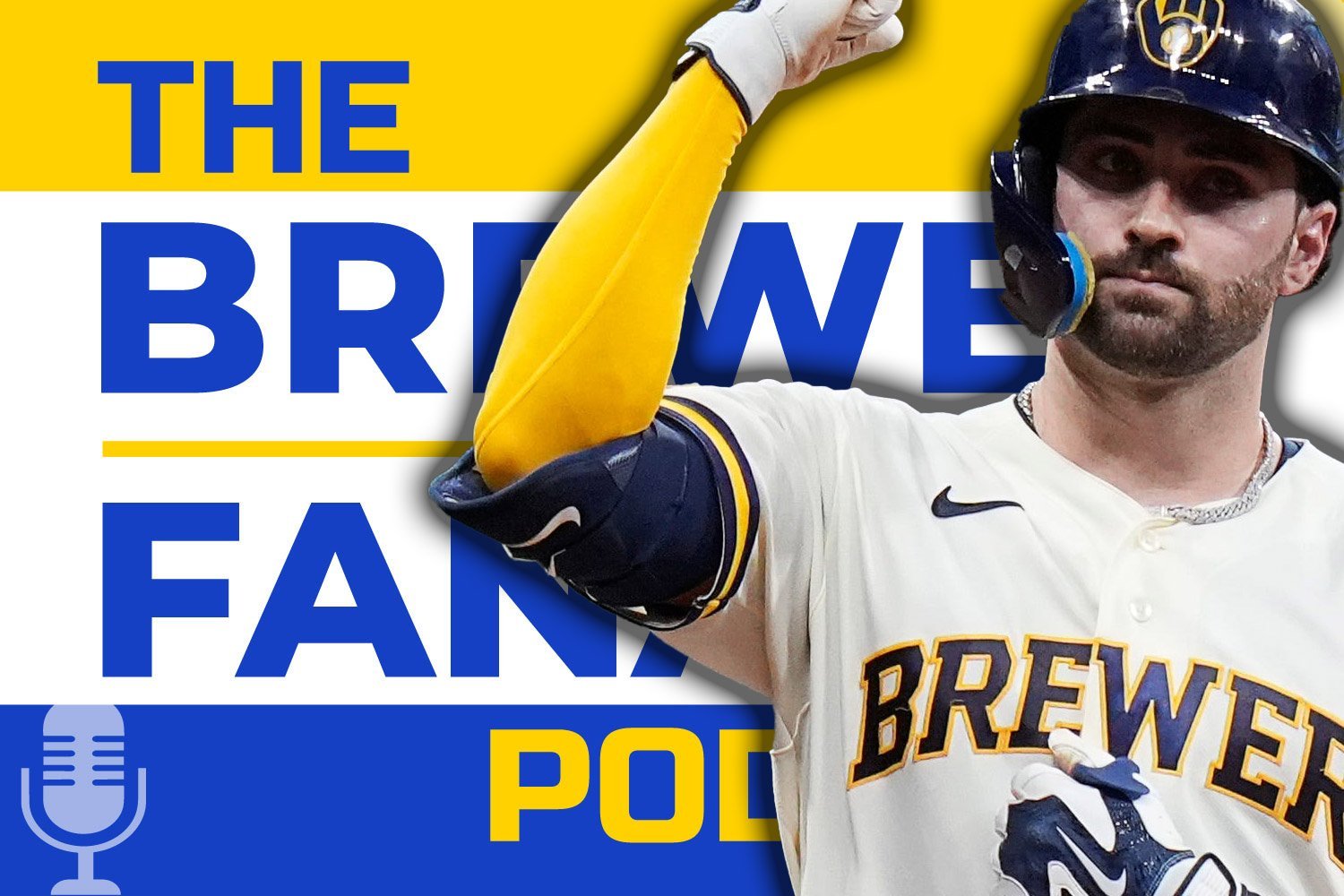 The Brewers dropped a three-game series against the Cubs but took three of four from the Reds. Jack and Spencer break down the action, including Brandon Sproat's improvements and Garrett Mitchell's big week. Apple Podcasts: https://podcasts.apple.com/us/podcast/the-brewer-fanatic-podcast/id1740648724 Spotify: https://open.spotify.com/show/5CY8mWsQayqjDXqw9OT2Td iHeartRadio: https://www.iheart.com/podcast/263-the-brewer-fanatic-podcast-166534588/ Pocket Casts: https://pca.st/ommzz627 Watch On YouTube: https://www.youtube.com/@brewerfanatic View the full article
 -
 Biloxi provided the lone win among the non-rookie teams, but in terms of true importance, one moment on an Arizona League mound shined brightest. Welcome to the official start of your Brewers career, Frank Cairone! Transactions: RHP Braylon Owens assigned to Biloxi Shuckers from Wisconsin Timber Rattlers. LHP Jose Meneses assigned to Wisconsin Timber Rattlers from Wilson Warbirds. Also, while not quite yet official: Nashville Pre-Game Media Notes Final: Jacksonville (Marlins) 5, Nashville 4, ten innings Box Score and Game Log Via the Sounds, game details, and we encourage readers to always review affiliate write-ups as part of their Link Report routine: Nashville Falls in Extras on Thursday Night Needless to say, but I will continue to do so, the Sounds recap and postgame notes are chock-full. Jett Williams, playing third base, was on base three times and stole two bases, giving him 19 thefts in 22 attempts. The game summary has more on Williams showing improved signs of life as of late. RHP Tyson Hardin failed to go at least five innings for the first time in five starts, as your box score review will show. Because of injuries and big-league needs, Rick Sweet really needs six innings out of his very few traditional starters when they line up. Having Logan Henderson make his next rehab start Friday night will help. That being said, the bullpen did their part with no earned runs allowed over six innings. Recent difficulties don't skip a generation, says the parent club: Team RISP: 1-for-15. Team LOB: 10. If you're up for reviewing the RISPy not so crispy game log, the 7th inning of a 4-4 game probably was most painful - Tyler Black on 2nd base with no outs: Brock Wilken's shallow fly to right did not advance Black, which hurt when Luis Matos grounded to 3rd (advancing Black). Eddys Leonard struck out to end the frame, Matos and Leonard circled around again in the 10th with the first opportunities to bring home the Manfred man for the tie, but despite lineouts (neither topped 86.2, however), success was not achieved. Catch up with the latest Biloxi pre-game audio interview archives - Josiah Ragsdale the latest Biloxi pre-game media notes Final: Biloxi 7, Chattanooga (Reds) 3 Box Score and Game Log Via the Shuckers, game details: Vargas Lifts Shuckers to Comeback Win over Lookouts - First Double-A home run leads Shuckers to 20th comeback win VIDEO report from local news station WXXV: Quick correction on the video above, RHP Travis Smith's lone K on the night was his first punchout as a starter in AA, not his first overall. And what a home run by the Lookout's Jay Allen (yes, it did bounce off the top of the left-field fence twice). Here's another look: The Biloxi 'X' feed is packed with video highlights from the good guys. Wondering why 1B Blake Burke has been missing this week? Here's a clue. Watching that archive, I will say that Burke abandoned his effort to get to first base pretty quickly, it was less than a jog by the time the GIDP was completed. RHP Jack Seppings can wake up today (Friday) feeling good about his 24th birthday. Three of his four Biloxi outings have been excellent since his promotion from Wisconsin (game log). No walks and four K's Thursday. One walk, two K's, a run scored for Andrew Fischer - Wisconsin Pre-Game Media Notes (download link) Final: Peoria (Cardinals) 6, Wisconsin 2 Box Score and Game Log Via the Timber Rattlers, game details: Chiefs Silence Rattlers - Peoria pounces on Wisconsin miscues in 6-2 win From the opening of the game summary, where you'll see the Tayden Hall double: "Hall gave the Timber Rattlers (43-30 overall, 9-2 second half) the lead in the bottom of the first. Hall lined a double to right with the bases loaded and two outs. Two runs scored on the play for a 2-0 lead. Wisconsin had a chance to add more in the inning and maybe knock Peoria starting pitcher Ty Van Dyke out of the game. Van Dyke was at 24 pitches in the inning, and the Chiefs had Gerardo Salas warming in the bullpen. However, catcher Sammy Hernandez picked a Rattler off third for the final out after the 25th pitch of the inning to stop Wisconsin." The picked-off Rattler was Daniel Dickinson. We'll always understand the non-callouts in the game summaries, accentuate the positive and all. But heck, Garrett Mitchell forgot how many outs there were Thursday for all to see, and if the youngsters want to reach the pinnacle level, well, just saying... Guess we're still doing the "sub out Luis Pena early" routine, replaced on defense to open the 7th. It was 92 degrees at first pitch, hey whatever it takes for health, even if that's an unconfirmed reason. This was RHP Daniel Corniel's 1st Timber Rattlers start in 2026 (3rd appearance), a reminder that the 21-year-old (22 next week) missed all but one game in 2025 with Tommy John surgery. RHP Chandler Welch continues to provide usually solid bulk relief, an invaluable commodity for any minor league manager. Wilson Pre-Game Media Notes Final: Kannapolis (White Sox) 12, Wilson 6 Box Score and Game Log Wilson Walloped by Kannapolis - Ebel, Garcia, Ibarguen Homer The Cannon Ballers had 16 hits, but 13 of them were singles and none left the park, so they didn't quite live up to their moniker. For this Wilson home game, Kannapolis' social media picked up the calls from the Warbirds broadcast, so if you wish to see some of the painful paper cuts, there are six videos on the Ballers' 'X' feed. The Warbirds were down 11-4 through six innings, so kudos to RHP Thomas Conrad on his two scoreless in the 7th and 8th. Rather than have Conrad toss a 3rd inning (he was only at 22 pitches), utilityman Luis Lameda was brought in from second base to the mound for his 7th career pitching appearance, all at this level (four with Carolina in 2025, three thus far in '26). Lameda did allow the final run, but on the whole, has acquitted himself pretty well as a mop-up choice. With injury-related stops and starts, it's too early to determine what the Brewers may have in massive 2025 3rd round RHP Jacob Morrison. As 19-year-old LHP Enderson Mercado's game log will show, six of his last seven outings have been, well, rough to say the least. Oh, the Warbirds did show some pop: Do you like how the Wilson socials make you click and wait to identify? Fun, I guess. This one provided a clue: It doesn't happen as often as he'd like, but every so often Filippo Di Turi gats a base hit on a pretty swing. Final: ACL Giants 12, ACL Brewers 3 Box Score and Game Log Celebrating a 12-3 loss? You betcha! Further words don't do it justice, at least not from me, but Adam reminds us of Frank Cairone's ordeal. Brewers prospect makes pro debut after life- and career-threatening car crash Adam McCalvy, MLB.com What we can all look forward to at some point, whether later this season or during the offseason, are feature articles with quotes and reactions from Cairone and his family. Can't wait. Hey, the Brewers are in Arizona this weekend. I've often said I really don't like playing editor for the Brewers beat guys, but Mike Vassallo, can you arrange an interview from Maryvale for whoever's representing MLB.com and the Journal-Sentinel for this portion of the road trip? Among the pitchers who followed Cairone, RHP Luke Roupe was most successful, with three innings of one-run ball which included a successful inherited runner strand upon entering. That final inning? Shade your eyes. With his 6th home run, a three-run shot, a fitting goodbye to Maryvale, infielder Juan Martinez will be a welcome sight in Wilson (see transaction note atop this report). Final: DSL CLE Goryl (Guardians) 9, DSL Brewers Gold 6. completed after five innings, lightning Box Score and Game Log Double, single and another stolen base for this youngster - While we're on the subject of 16-year-old's, catcher Moises Salazar clubbed his second home run, also has more walks than strikeouts, and has driven in 16 runs in 17 games. So often these lopsided scores are the result of one blow-up mound effort. In this case, it was RHP Carlos Canales, who was strong in his 2nd season on the island in 2025, but didn't get a stateside call for year three in the system. Final: DSL Brewers Blue 9. DSL Pirates Gold 3, completed after five innings, lightning Box Score and Game Log Guessing it was just coincidence that lightning arrived just as these two games went official. Four of the nine Golden Boys in the lineup had perfect days at the plate with three plate appearances apiece, partly because the team worked ten walks overall. The OPS column on the right-side of the box score remains impressive and would have been unthinkable in recent years. The skewed DSL figures of 2026 will have us likely over-hyping several farmhands until things shake out in future years. RHP Steven Duran, who was a DSL All-Star just as he turned 17 last summer, went all five innings here - hey, a DSL complete game, wow! His current 1.71 WHIP does not match his 1.08 26-inning sample from 2025. All seven affiliates play a single game Friday. Unlike some recent seasons, MiLB did not schedule teams to face each other this weekend with short distance in order to split the Friday / Saturday ticket bonanza that the weekend of the 4th provides. Except for Wisconsin, it's a fan bounty for the owners of the Sounds, Shuckers, and Warbirds. Stay cool, everyone! Organizational Scoreboard including starting pitcher info, game times, MiLB TV links, and box scores Current Milwaukee Brewers Organization Batting Stats and Depth Current Milwaukee Brewers Organization Pitching Stats and Depth View the full article
 -
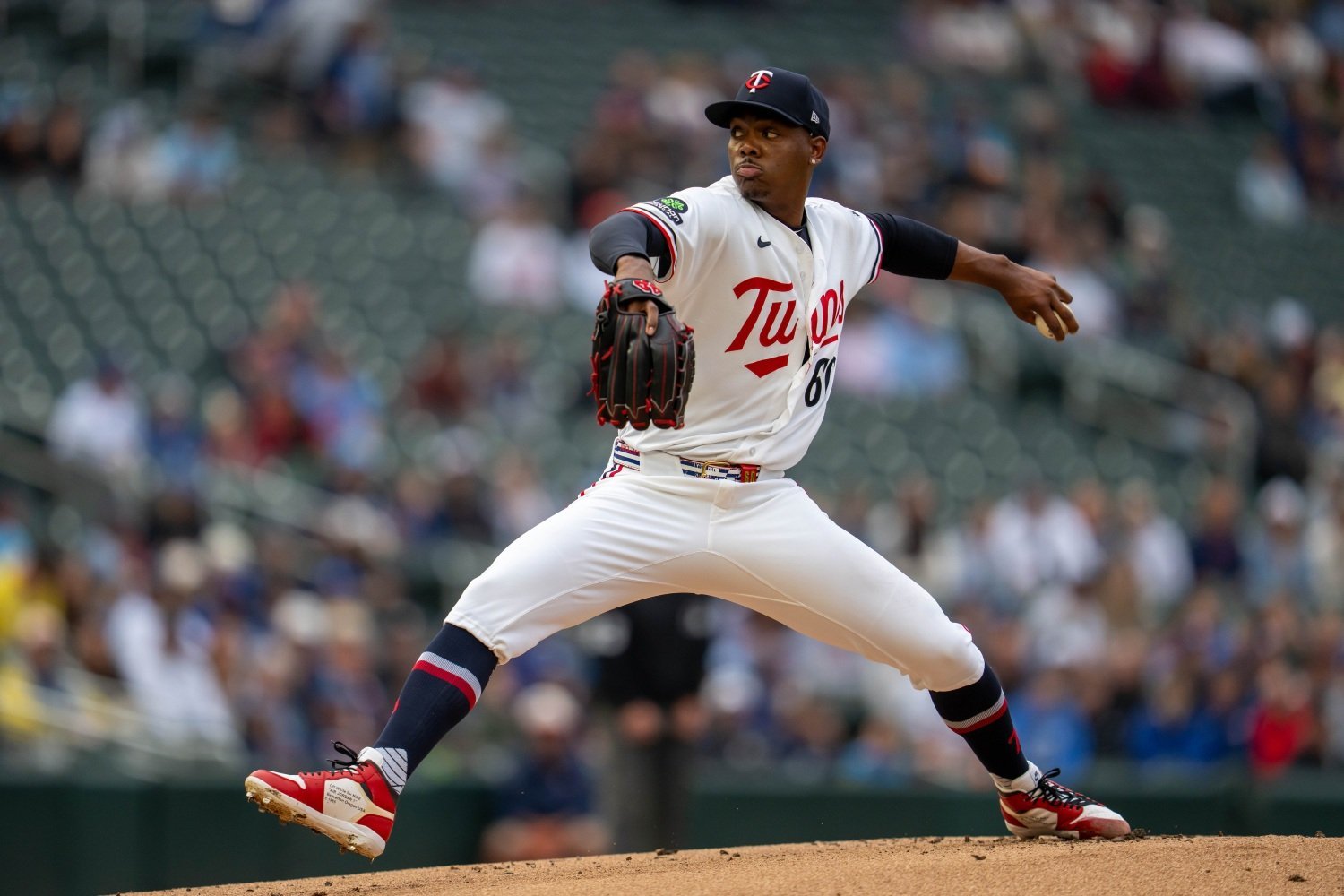 When the Minnesota Twins acquired Kendry Rojas from the Toronto Blue Jays at last year's trade deadline, they were betting on upside. The controversial trade that sent Louis Varland to Toronto also brought Alan Roden to the organization, but Rojas was viewed as the potential long-term prize. A fringe top-100 prospect, he featured a mid- to high-90s fastball, a devastating slider, and the kind of raw stuff that made scouts believe he could eventually settle into the middle of a major-league rotation. There was always one major concern, though. Rojas struggled to consistently throw strikes, and that issue has followed him to Minnesota. Between Triple-A St. Paul and the Twins, Rojas has walked 44 batters in just 43 2/3 innings. The electric arsenal is still there, but the command hasn't improved enough to convince the organization he can handle the workload of a traditional starting pitcher. If the Twins truly believed Rojas was part of their future rotation, they'd be developing him like one. Instead, they've done the opposite. Since joining the organization, Rojas has bounced between starting and relieving, without ever really fitting either role. In his two major-league starts, he lasted just two innings and four innings, respectively. With the Saints, he's started five games but has never been allowed to throw more than four innings, usually exiting after just two or three. Even when he's come out of the bullpen, he hasn't been used as a traditional late-inning reliever. Instead, he's worked one to three innings as a piggyback option or long reliever after an early exit from another pitcher. That hybrid role is arguably the least valuable one a pitcher can fill. He's not providing the length teams expect from a starter. Nor is he being trusted to record the biggest outs at the ends of games. Instead, he's stuck somewhere in the middle, where neither his development nor his impact is being maximized. At some point, the Twins need to decide what they believe Rojas is, because the current plan isn't a long-term solution. The organization's usage tells the story. Teams don't consistently pull starting pitchers after two, three, or four innings unless they have concerns about their ability to turn a lineup over multiple times. Rojas has premium velocity and an excellent slider, but he doesn't yet have the command, demonstrated durability or complete pitch mix to profile as a traditional starter. There's nothing wrong with that. Plenty of talented pitchers have found greater success after moving to the bullpen. In fact, the Twins have already shown exactly how to maximize this type of arm. Ironically, the blueprint belongs to the same pitcher they traded away to acquire Rojas. Louis Varland also entered professional baseball as a starter. When that role didn't fully click, the Twins tried him as a multi-inning reliever, before eventually committing him to one inning at a time. That's when everything changed. Without worrying about pacing himself for multiple trips through the lineup, Varland was able to attack hitters with maximum effort. His velocity ticked up, and his best pitches became even more effective. The result was one of the best late-inning relievers in the American League. There's every reason to believe Rojas could follow a similar path. He's already capable of reaching the upper 90s while pitching multiple innings. In a one-inning role, it's easy to envision him sitting comfortably in the upper 90s, while occasionally touching triple digits. More importantly, he wouldn't need to rely on a deep arsenal. He could lean heavily on his overpowering fastball and devastating slider, allowing his two best pitches to play at their highest level, instead of trying to navigate hitters multiple times with inconsistent command. The timing also couldn't be better. The Twins suddenly have an opening for another impact left-hander after Anthony Banda landed on the injured list with a lat strain earlier this week. A power lefty capable of missing bats late in games is something every contender covets, and Rojas has the raw talent to become exactly that if the organization commits to the transition. Right now, though, the Twins are getting the worst of both worlds. Rojas isn't developing into the type of starter who can consistently give the club five or six innings, and he isn't being allowed to become the high-leverage reliever his stuff suggests he could be. He's simply existing in between those roles, and that isn't helping either the player or the organization. The Twins don't need another hybrid pitcher. They need impact arms, especially in the bullpen. Rojas has all the ingredients to become one, if the organization is willing to stop trying to force him into a role that no longer appears realistic. It's time to pick a lane. Turn Kendry Rojas into a true one-inning reliever. Let him attack hitters with his fastball and slider. Let him throw every pitch at maximum effort, instead of worrying about saving something for the fourth inning. The Twins already followed this exact formula with Varland. The irony is that the player they acquired in exchange for him may need the very same treatment. What do you think? Should the Twins commit to Kendry Rojas as a late-inning reliever, or would you continue trying to develop him as a starter? Leave a comment below and start the conversation! View the full article
 -
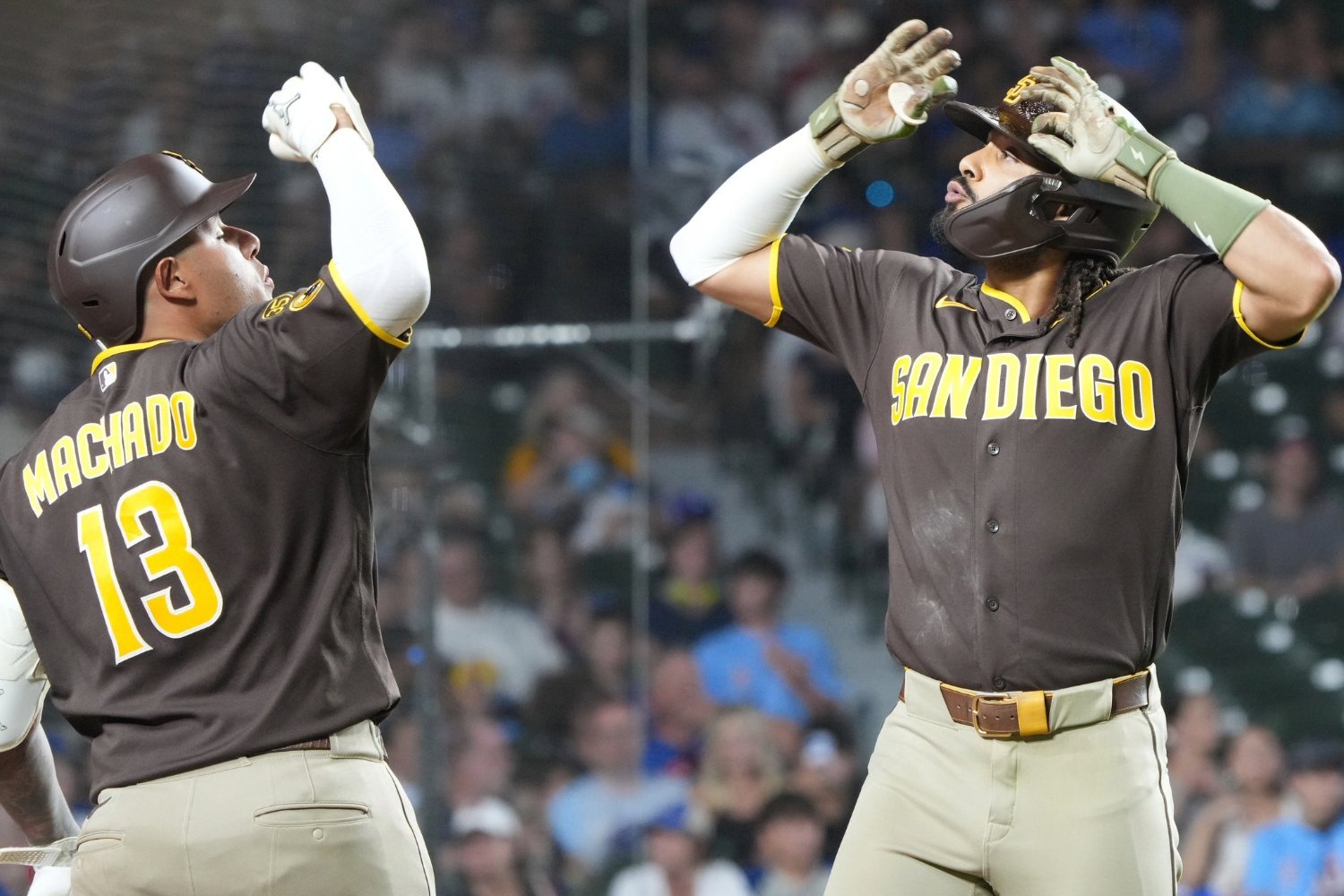 The month of June was a disappointing one for the San Diego Padres, who lost significant ground in the National League West race. After finishing May 1.5 games back from the Los Angeles Dodgers, San Diego went 11-14 in June and enters July 11 games back from the Dodgers. Likewise, they are no longer in control of the final NL wild-card spot. San Diego’s offense has struggled to produce all season. In June, the Padres had the third-fewest home runs in the league with 28, and their 103 runs ranked the seventh-fewest in the league. Looking at a long road to get back into the playoff picture, the Friars are searching for consistent production throughout their lineup. While it was another frustrating month offensively, several hitters showed encouraging signs that could help spark a second-half comeback. Ranking Padres' Best Hitters in June #3 Manny Machado While his season on the surface has been lackluster, the month of June saw Manny Machado show his value. The veteran third baseman led the team with six home runs and 16 RBIs while delivering one of the biggest moments of the month, hitting a walk-off single against the Atlanta Braves on June 23. While Machado is still searching for the consistency expected of him, June showed signs that he is beginning to turn a corner. His batting average improved from .127 in May to .220 in June, while his six home runs provided much-needed power for an offense that lacks it. One area that still needs improvement is his production against off-speed pitches, as he went hitless against them last month (yikes). But while his overall season numbers remain below expectations, Machado’s ability to come through in big moments still makes him an asset for a struggling lineup. #2 Samad Taylor Samad Taylor was promoted to the majors as a depth piece after the team officially quit the Nick Castellanos experiment. Showcasing his versatility by playing multiple positions in the outfield, it has been his bat that has really turned heads. In 22 games, Taylor has hit .336/.416/.410 with a .826 OPS as he added a major spark to the padres struggling offense. Slotting in as high as second in the batting order, Taylor’s speed immediately added a different dimension to San Diego’s offense as he stole six bases and tied Machado for second-most runs scored in June with 12. Although he has seen limited playing time, Taylor has already tied Jackson Merrill and Luis Campusano for the second-highest WAR on the team at 0.6. If he continues producing at this level, he can become a catalyst for the team's second-half turnaround. #1 Fernando Tatis Jr. After a late breakout in May, which saw Tatis end the month batting .296, he carried that momentum over to June, where he batted .318/.356/.509 with a .865 OPS. Improving his season batting average to .280, Tatis led the team with 35 hits, 16 runs and nine doubles as he was one of the team's few bright spots offensively. For a team that has struggled to generate power all season, Tatis has been the focal point of criticism after hitting just one home run through the first two months of the season. While his numbers still pale in comparison to his expected, June saw an adjusted approach to off-speed and breaking balls, which have caused a dramatic increase in his slugging. Tatis hit four home runs in June while slugging .724 against breaking balls and .500 on off-speed pitches, up from .206 and .286, respectively in May. As the Padres try to climb back into the postseason race, Tatis rediscovering his power could be the catalyst that changes the outlook of their season. View the full article
 -
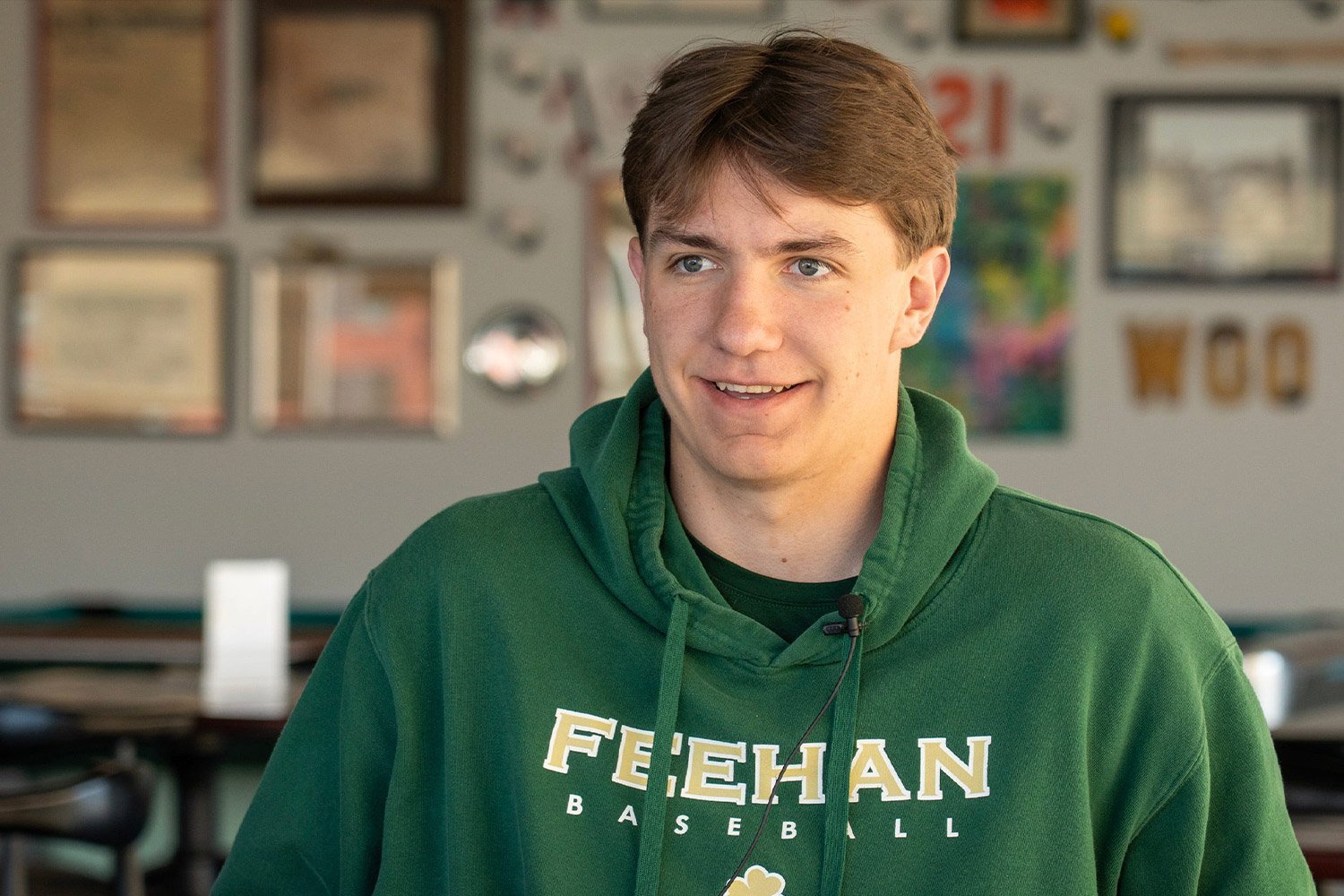 I take MLB mock draft rankings from major industry outlets like MLB Pipeline, ESPN, The Athletic (and many others) to form a consensus board, with a working hypothesis that using this approach will eliminate some of the noise and variance in MLB Draft mock rankings. The Chicago Cubs’ first five picks are: Round 1: 23rd Overall Round 2: 62nd Overall Compensation Round: 75th Overall Round 3: 98th Overall Round 4: 126th Overall Round 1: Brody Bumila, LHP, Bishop Feehan HS (MA) Draft aficionados will be used to the concept of a cold-weather arm rising throughout the cycle. They don't all look like Brody Bumila, though. The 6'9 two-sport star committed to Texas has been making waves this spring. As you might expect from such a unique frame, there's unique stuff to match. Bumila relies on a fastball that has been as high as 101 mph. It sits in the high 90s, coming at hitters from a drop and drive delivery and a lower launch, with good ride at the top of the zone, making it a nightmare for prep hitters in MA. There's plenty of work to do on the secondary arsenal. Bumila relies most heavily on a changeup, thrown in the low 80s, but he'll mix in a slider and a curveball, too. This is a size and stuff over polish prep arm in what could be one of the higher risk, higher reward plays of the entire class. Round 2: Blake Bryant, RHP, Citizens Christian Academy (GA) Bryant is a projectable prep righty standing 6'5, 180 pounds, currently committed to Clemson. He's jumped up boards throughout the cycle thanks to consistently outstanding performances on the summer circuit. Bryant's velocity has ticked up in the last 12 months. His fastball is up to 96 mph with run and ride. He pairs it with a sweeper in the low 80s, a curveball that sits in the high 70s, and a split change that's a bit firm currently. The command can come and go a bit with Bryant, which is typical for a lanky prep arm. It's a strong arsenal on which to build. It's easy to envision him being a problem when he fills out a bit more and polishes his repertoire. Compensation Round: Ruger Riojas, RHP, Texas Riojas pitched for two seasons at UTSA prior to transferring to Texas. He's continued to take steps forward in his two seasons with the Longhorns, capped by an excellent 2026 season. Riojas is undersized for a starter at 6'0, 195 pounds. He'll also be 23 on draft day, one of the older prospects selected in the entire class. His fastball sits 94-96 mph with good carry and will peak at 97-98 mph. It's backed up by a splitter that sits in the mid-80s, a cutter, a sweeper, and a curveball to round out a well-developed arsenal. Riojas managed a strikeout rate of 35.5% in 2026, combined with an impressive 6.2% walk rate in 81.2 innings. He'll be drafted in the first 3 rounds as a priority senior sign that will allow an organization some financial flexibility with other early picks. Round 3: Carson Kerce, SS, Georgia Tech Kerce is one of the most improved prospects in 2026. He's a good example of a collegiate prospect who has a ton of baseball skill and is light on top-end tools. Kerce hits from the right side, with a marginally open stance and a higher hand set. It's excellent bat-to-ball skills, with an overall contact rate in the mid-80s and an in-zone rate north of 90%. Add to this Kerce's lack of chase (~18%) and there's a ton of floor through his on-base ability. He's added extra base thump this year, barrelling up more pitches, resulting in his home run total jumping from 4 to 11. While it'll never be significant power at the next level (45 grade), Kerce managed 44 extra base hits for Georgia Tech in 2026. Kerce probably doesn't have the dynamism and explosiveness to stick at shortstop, but he's a sure-handed defender with a good arm and solid mobility. Second base might be a good fit. Kerce managed a .384/.473/.679 line with a 12.2 BB%, 13.3 K%, and 147 wRC+ in 278 plate appearances in 2026. Curious to see the players around the Chicago Cubs' picks in the draft? Click on the button below to view the entire mock draft board! View the full article
 -
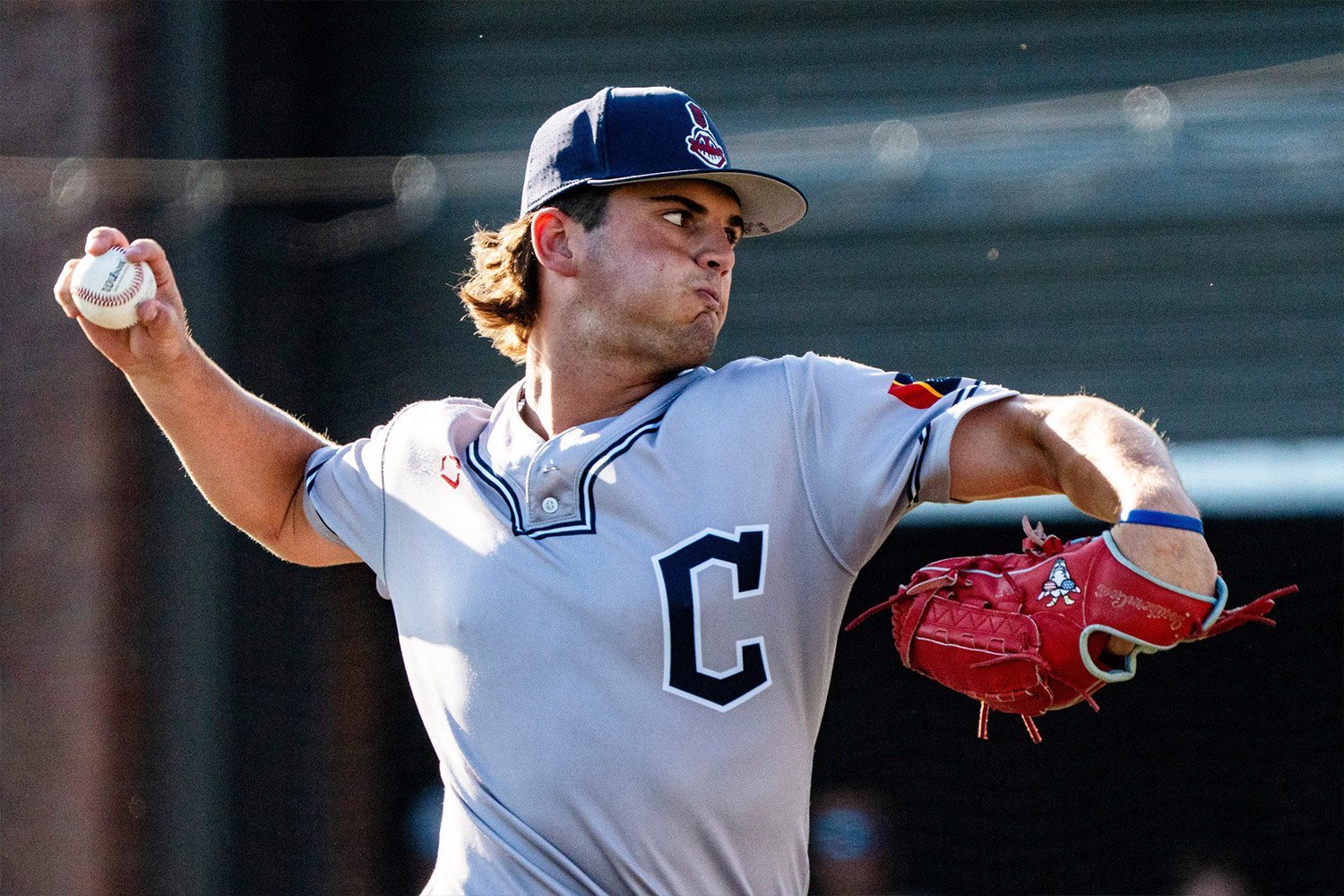 I take MLB mock draft rankings from major industry outlets like MLB Pipeline, ESPN, The Athletic (and many others) to form a consensus board, with a working hypothesis that using this approach will eliminate some of the noise and variance in MLB Draft mock rankings. The Toronto Blue Jays’ first five picks are: Round 2: 39th Overall Round 3: 103rd Overall Round 4: 131st Overall Round 5: 164th Overall Round 6: 193rd Overall Round 2: Cole Prosek, INF, Magnolia Heights HS (MS) Prosek is one of the most polished high school hitters in the class and is currently committed to Ole Miss. He hits from the left side of the plate, often starting deep in the batter's box, with a shoulder-high hand and minimal pre-swing movement. It's a long stride into his swing, but it's short, direct, and repeatable. This isn't simply a strong hit tool, however. Prosek can pull the ball in the air and may grow into ~20 home run power as a pro. Defensively, he's a bit more of a fringy athlete than some others in the class. He's not the most fleet of foot, but does have an above-average arm that should allow him to stick somewhere in the infield (second or third base) where his range limitations won't expose him. He’s also played increasingly as a catcher in recent months (including at the Draft Combine), a potential additional value add. Prosek will be a little older than some on draft day (19). He probably has one 60-grade tool, but it's the most important one. He'll be eligible again as a sophomore if he makes it to campus. Round 3: Elliot Lascelles, SS, Upper Canada College HS (Toronto) Lascelles is a Yale commit who is the best position player prospect out of Canada in the 2026 class. At 6'2, 190, he's grown and added size and strength in the last twelve months to a profile that has started to be more heavily scrutinized by scouts. Lascelles hits left-handed, with some pre-swing waggle in his stance and a slightly unorthodox look. His swing isn't the smoothest, and it doesn't look like Lascelles gets into his lower half as much as he might, potentially limiting his power output. What there's plenty of is bat-to-ball skills. Lascelles has exceptional hand-eye coordination and almost never strikes out, a tendency he combined with a ton of discipline in his at-bats. While he may move off shortstop long term due to a fringy arm, Lascelles should stick in the dirt, possibly at second base. He's a plus runner and a threat on the base paths. If he's to add more power, there's some swing work to do, but Lascelles has the most important tool in his bag. Curious to see the players around the Toronto Blue Jays View the full article
 -
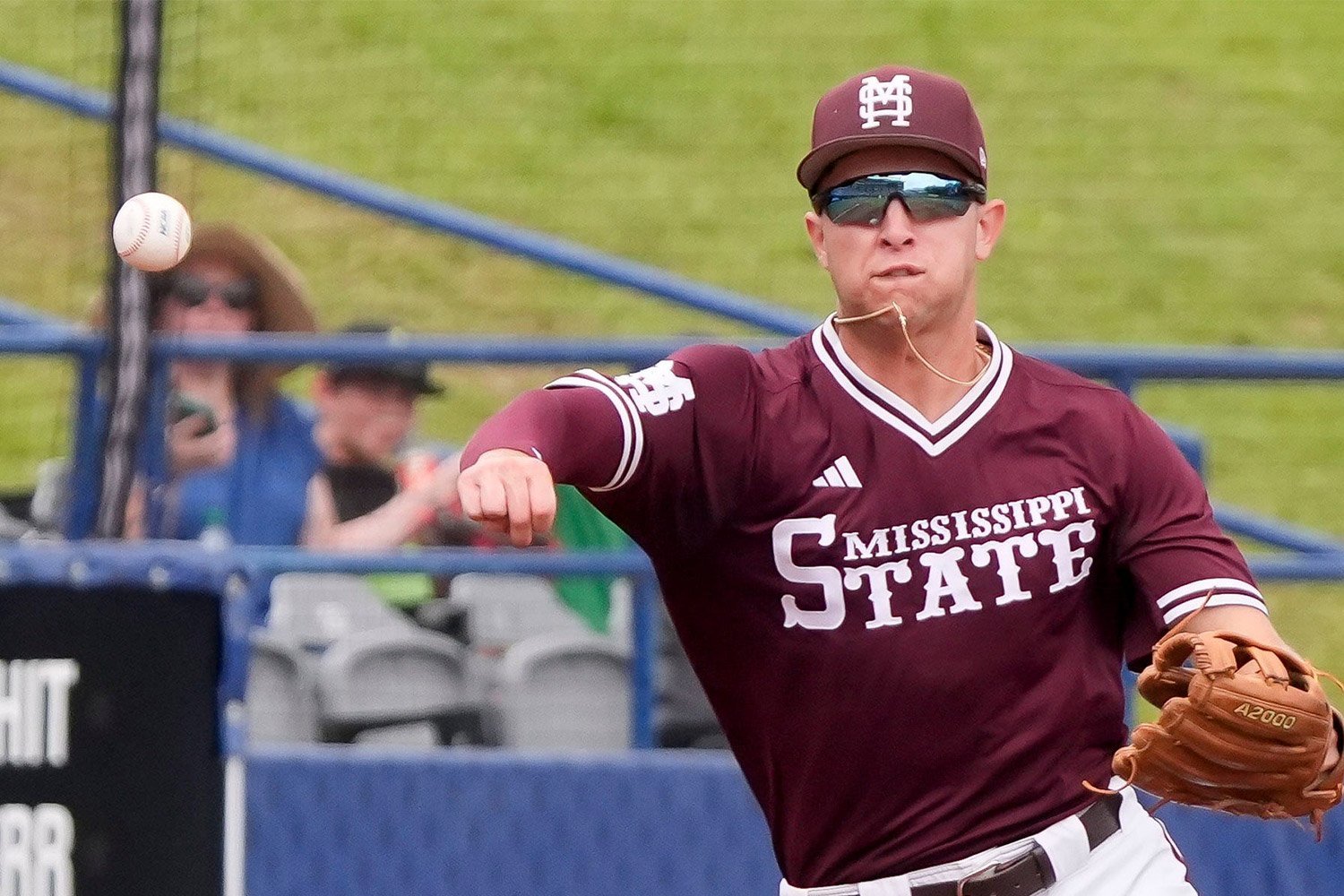 I take MLB mock draft rankings from major industry outlets like MLB Pipeline, ESPN, The Athletic (and many others) to form a consensus board, with a working hypothesis that using this approach will eliminate some of the noise and variance in MLB Draft mock rankings. The Boston Red Sox’s first five picks are: Round 1: 20th Overall Competitive Balance Round B: 67th Overall Round 3: 96th Overall Round 5: 156th Overall Round 6: 185th Overall Round 1: Ace Reese, 3B, Mississippi State Reese has raked for Mississippi State since transferring from Houston ahead of his sophomore campaign. He's one of the better dual hit/power threats in the class, with any ceiling on his value being placed by an uncertain defensive home and limited supplementary tools. Reese stands 6'4, 220, and has primarily played third base and first base in college. It's a solid arm, but fringe-to-average run and fielding tools. That might mean a long-term home at first base, which requires a greater level of offensive production. Offensively, Reese shines. It's good bat speed and excellent raw power. He can homer to any part of the park (21 in 2025). Reese displays good bat-to-ball skills, both in and out of the strike zone, and he takes plenty of walks. A slightly elevated strikeout rate is rooted in his propensity to chase and expand the zone. If he can rein that in, he'll be a nightmare at-bat. Reese finished 2026 with a .336/.432/.721 line with 24 home runs (27 XBH), a 14 BB%, a 21.6 K%, and a 144 wRC+. His approach and defensive home remain the only questions in an excellent, offensively driven profile. Competitive Balance Round B: Cole Koeninger, SS/RHP, Keller HS (TX) Cole Koeninger is a Tennessee commit on the older side for the prep class; he's also one of the most legitimate two-way prospects on the high school side of the class. A terrific athlete with plus speed at 6'3, 210 pounds, Koeninger has typically played shortstop, with a plus arm and above average actions in the infield that could lend themselves to any position on the dirt. Offensively, at his best, it's a clean, short right-handed stroke. He provides plenty of impact and extra base power. Occasionally, his swing can look off balance, leading to some questions about the hit tool, especially given a poor summer showcase in 2025. On the bump, Koeninger relies on a fastball that has taken a velo jump in the past year. It's been up to 97 mph but sits 93-94 mph. It's complemented by a big downer curveball and an emerging changeup. It remains to be seen which side of the ball Koeninger will focus on long term. As soon as he settles into one, the skills will likely jump forward with additional attention and focus. Round 3: Trey Ebel, SS, Corona HS (CA) Trey Ebel is the younger brother of Brady Ebel, drafted 32nd overall by the Brewers in 2025, and the son of Dino Ebel, the Dodgers' long-time third base coach. Ebel will be 17 years old on draft day, a face likely to make him pop on organizational models. Ebel is a right-handed hitter with what's currently a hit over power profile. He has an excellent approach and rarely chases pitches out of the zone. In the summer of 2025, he put together some of the best contact and approach numbers of any player on the summer circuit. In the last 12 months, Ebel has grown into more bat speed. That has translated to in-game, pull-side power, which can likely further develop to solid average power in time. Defensively, there are good infield actions and a solid arm. He's a high baseball IQ player whose intelligence and feel for the game will likely help him outperform his physical tools. Ebel is committed to Texas A&M and is one of the sharpest risers on the prep side of the draft in the last few months leading up to day one. Curious to see the players around the Boston Red Sox picks in the draft? Click on the button below to view the entire mock draft board! View the full article
 -
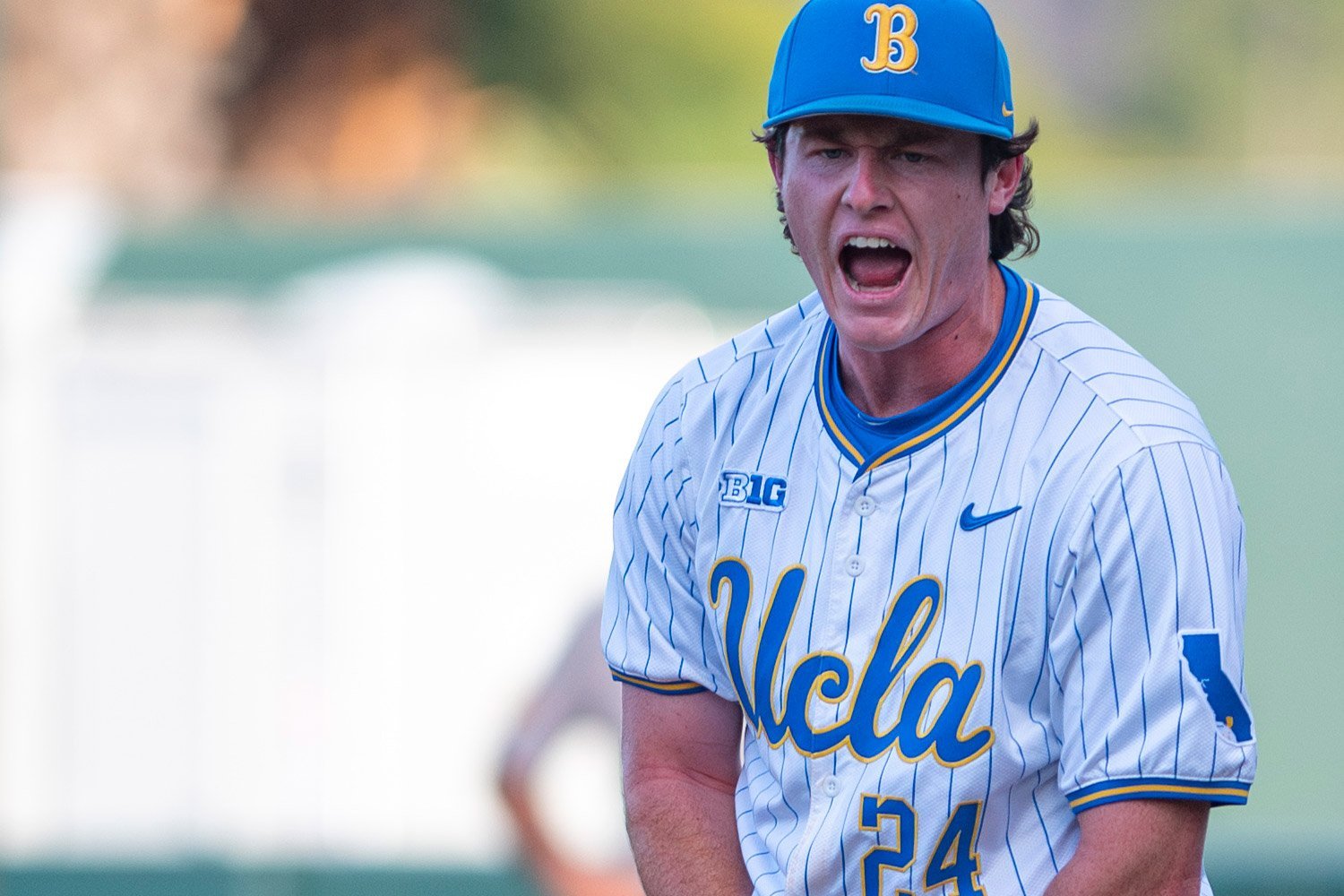 I take MLB mock draft rankings from major industry outlets like MLB Pipeline, ESPN, The Athletic (and many others) to form a consensus board, with a working hypothesis that using this approach will eliminate some of the noise and variance in MLB Draft mock rankings. The New York Mets’ first five picks are: Round 1: 27th Overall Round 3: 92nd Overall Round 4: 120th Overall Round 5: 152nd Overall Round 6: 181st Overall Round 1: Logan Reddemann, RHP, UCLA Reddemann has surged up draft boards after not featuring prominently on pre- or early-season lists. A transfer from San Diego, the 6'2 righty has turned a developmental corner for an outstanding UCLA team and is putting it all together in his draft-eligible junior season. Reddemann has a little bit of a jerky delivery to the plate. Even so, he keeps the baseball well hidden behind his plate until release, creating some deception for hitters and making the ball difficult to track. Reddemann is an excellent strike thrower, which, in concert with an uptick in velocity this year, has left B1G Ten hitters with little chance against his stuff. Reddemann relies on a fastball that sits 94-96 mph but can grab 98 mph. There's a sinker and a cutter too, to round out a trio of fastballs. Reddemann has a slider, which he throws in the low 80s, although it tends to blur with his cutter, and a high-70s curveball to round out a diverse arsenal of pitches. Reddemann managed a 2.68 FIP with a 35.7 K% and a stingy 4.7 BB% in 59.2 innings in 2026. A flexor strain prevented him from pitching down the stretch (including postseason play). If he can prove his health in pre-draft bullpens, he’s likely to still be a first-round pick. Round 3: Owen Hull, OF, North Carolina Owen Hull is a sharp riser on the college side of the draft after an impressive postseason run as part of North Carolina’s CWS squad. After spending his first two collegiate seasons at George Mason, the 6’4 outfielder made the transition to the ACC look seamless and has set himself up as a likely day one pick as a result. Hull hits from the left side and has a bit of an unorthodox-looking swing. There is some swing and miss in the profile, but the damage on contact is impressive. He controls his at-bats well and takes plenty of walks, rarely expanding the zone in collegiate ball. Hull has a chance to stick in center field with plus speed. It’s a fringe-average arm, but the range and glove will play in center, at least during the onset of his professional career. Hull hit .393/.500/.615 with 9 home runs (38 extra base hits), a 14.8 BB%, a 15.1 K%, and a 146 wRC+ in 2026. Curious to see the players around the New York Mets picks in the draft? Click on the button below to view the entire mock draft board! View the full article
 -
Twins vs. Yankees: Who Ya Got? Twins Territory Responds
DiamondCentric posted an article in Twins Daily
 The New York Yankees are mired in a seven-game losing streak. The Minnesota Twins, while not setting the world on fire, are keeping the .500 mark in view and are very much in the Wild Card hunt in a weak American League. Could this weekend’s series see a reversal in the Bronx Bombers’ decades-long chokehold on the rivalry? We asked Twins Territory for their thoughts: Butch Perry, 68, Alexandria “I expect the Twins to lead every game going into the 9th inning and to lose by five runs. I realize this is mathematically impossible. It doesn’t matter.” Lee Torgersen, 55, Willmar “It looks like the Yankees are missing Aaron Judge, Max Fried, Giancarlo Stanton and a number of other big names. I expect them to win by 30 the first two games and eke out an 8-run win on Sunday.” Allison Lemke, 41, Albert Lea “My partner and I are going to Home Depot to buy drywall after work today. We anticipate punching and kicking new holes all weekend long, and we both have Monday off to hang, tape, and mud the new stuff. I really like having these travel days to plan ahead for the sadness and rage.” Greg Zanoth, 35, Burnsville “It defies logic and any kind of analysis that the sins of past Twins squads would be visited on the 2026 team. Both the Twins and Yankees are dealing with injuries, the Yanks are really struggling right now, and you could argue the Twins are handling their misfortune better with a league-leading offense. "Oh, that’s right, you said you wanted a prediction. The Twins are definitely getting their heads caved in. Math hasn’t watched the last 25 years of Twins/Yankees. I have.” Darryl Ewing, 49, Minneapolis “I expect the Twins to steal two out of three games in the Bronx and wake up Monday morning to find they were given a red card by Rob Manfred and the two victories given to New York.” Rick Dunhill, 77, Maplewood “I’m already moving on to being mad at the Vikings for drafting J.J. McCarthy.” Colin Boyd, 20, St. Francis “Remember when Jason Kubel smoked that grand slam off Mariano Rivera to beat the Yankees in Yankee Stadium in 2010? Jim Thome was grinning like an idiot in the dugout, Gardy was hopping up and down? Remember that? Yeah, I don’t, I was 4. Everything is bad and I hate it. Yankees by a million and everyone who isn’t hurt gets hurt in a subway accident." View the full article
 -
 I take MLB mock draft rankings from major industry outlets like MLB Pipeline, ESPN, The Athletic (and many others) to form a consensus board, with a working hypothesis that using this approach will eliminate some of the noise and variance in MLB Draft mock rankings. The Kansas City Royals’ first picks are: Round 1: 6th Overall Competitive Balance Round A: 30th Overall Round 2: 56th Overall Round 3: 91st Overall Round 1: EJ Booth, OF, Oak Grove HS (MS) Booth is rapidly ascending draft boards. Starting from a pre-cycle ranking close to the back end of the first round, he has a chance to jump into the top three prep prospects and the top five of the cycle overall. Booth is a compact, twitchy, athletic outfielder committed to Vanderbilt. It's a bit of an unconventional swing from the left side that can look better in batting practice than games, but it's underpinned by serious bat speed and an emerging ability to do damage on contact. All told, Booth has a chance to have above-average hit and power tools. Booth is a nightmare on the base paths with 70-grade speed and is one of the fastest runners of the class. As one might imagine, this supports an excellent range in the outfield. While his arm is fringe average, he should have little challenge tracking down almost anything and could settle into any outfield spot defensively. Booth will turn 18 a few days before the draft. Competitive Balance Round A: Aiden Robbins, OF, Texas Robbins is representative of an emerging class of college prospects: smaller school players who transfer their draft-eligible year with a shot to dramatically increase their stock against more robust competition. Robbins put up insane numbers in 2025 at Seton Hall before transferring to UT ahead of the 2026 season. While the bat-to-ball numbers have taken a bit of a dip in 2026, Robbins has a good approach at the plate, taking plenty of walks. Where he excels, is doing damage on contact. Robbins routinely launches baseballs north of 110 mph and has EV90 and barrel% numbers north of the 90th percentile in 2026. There's above-average speed and athleticism to boot. Robbins has the legs to be a threat on the basepaths and the range to play all three outfield positions, at least at the onset of his pro career. He's one of the sharpest risers on the college side in 2026, managing a .333/.426/.696 line with 24 home runs (36 XBH), a 13.7 BB%, a 22.9 K%, and a 138 wRC+. Round 2: Landon Thome, 2B/3B, Nazareth Academy HS (IL) Landon Thome is the son of MLB Hall of Famer Jim Thome, who is currently an assistant coach with his son's Illinois high school team. Thome the younger is committed to Florida State. Landon sets up in the box in a relaxed, open stance. A shoulder-high hand set gives way to a smooth, loose swing. Thome has a chance to have above-average hit and power tools when it's all said and done. Right now, it's a hit over power profile, with strong bat-to-ball metrics, even as he has tapped into more pull-side power in the last 12 months. Thome's eventual defensive home is unclear. He has good defensive actions, but a fringy arm and lack of lateral quickness mean he will likely move off shortstop. Second base seems a likely long-term home. While the secondary tools aren't the loudest, Thome has a great feel to hit with the promise of additional power on the way. That's what I'd always prioritize in a prep hitter. He'll likely go in the first two rounds. Round 3: Ethan Wachsmann, RHP, Grandview HS (CO) Wachsman is a sharp riser on draft boards this spring. A CO prep arm hailing from the same high school program as Kevin Gausman, it's a fascinating blend of size and stuff, with plenty of rawness still present. Wachsman's fastball has touched triple digits already; it'll more routinely sit in the 94-96 mph range in the middle innings. He's added a cutter that sits in the high 80s this season as a bridge to the rest of his arsenal. While the velocity is excellent, there's work to do on both the control and command of his arsenal, which are currently fringe-average. Wachsman will fire off a breaking ball that can be slurvy but exhibits good spin rates. There's a changeup that he sells well with good arm speed and velocity separation from his fastball. It'll be worth monitoring the strike-throwing if a team can pry him away from his Wake Forest commitment, but if he can round out his arsenal with better breaking pitch shapes, he'll be a tough look for hitters. Curious to see the players around the Kansas City Royals' picks in the draft? Click on the button below to view the entire mock draft board! View the full article
 -
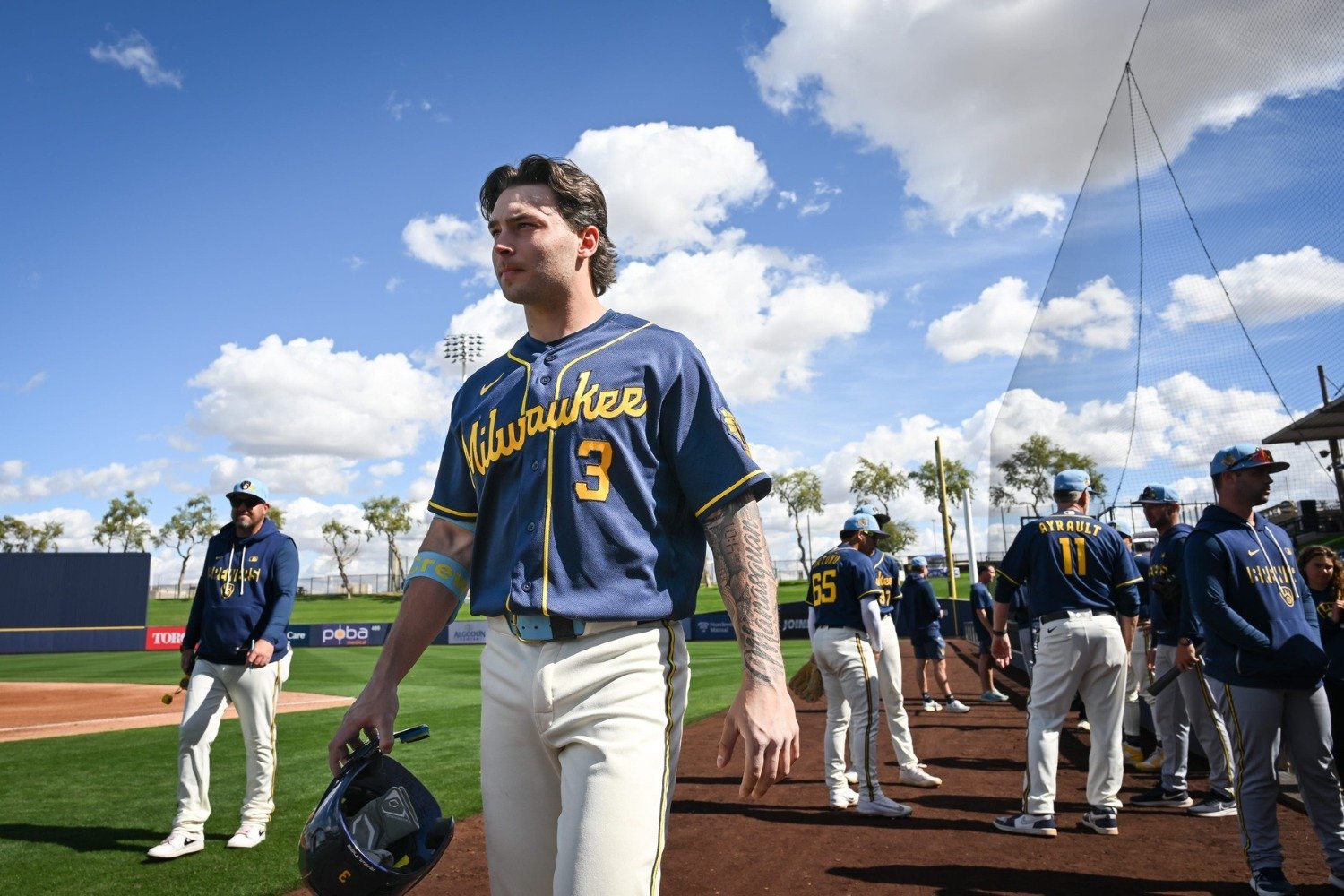 As you may have heard, Brewers top-10 prospect Andrew Fischer recently mashed his way to a promotion to Double-A Biloxi. For High-A Wisconsin, Fischer slashed an elite .298/.443/.675, with 20 home runs. That performance was good for a 170 wRC+, the second-highest (min. 200 PA) in the Midwest League’s history as a High-A league (since 2021). His .377 ISO, .675 SLG%, and 1.118 OPS are the highest marks in the league over that time. Since moving to the Southern League, Fischer has seemingly gotten even better, albeit in a tiny sample. At the time of writing, the lefty-swinging third baseman is slashing an otherworldly .282/.417/.846 with the Biloxi Shuckers, with 6 homers in 12 games. It's impossible not to get excited about a season like this. And when we get excited about a minor-league hitter, I feel it's sensible to understand how that player's profile has worked (or not worked) in the majors. When looking for major-league comps, we must also dig into the peripherals, and there are some stats in Fischer’s game that do not align with being a dominant, high-average hitter moving forward. First, for a college bat in High-A, he struck out a lot, at 33.3%. Currently, 33.3% is also his strikeout rate at Double A. His contact rate, per FanGraphs, was 62% in High-A and sits at 68% so far with Biloxi. These metrics throw some cold water on the Fischer hype, as contact rate is one of the things hitters can’t survive without. For reference, the lowest qualified contact rate in the majors in 2026 is Oneil Cruz's 64.6%. Still, Fischer's success so far should mean that his exit velocities (which are not publicly available at the levels at which he's played this year) are off the charts—much as Cruz's are. A recent example of a Brewers player with elite exit velocities but bottom-of-the-league contact is Keston Hiura. In his rookie campaign in 2019, Hiura ranked in the 96th percentile for exit velo, but the 3rd percentile for Whiff%. He didn't always have top-tier exit velos thereafter, but Hiura did always struggle with contact. At least for now, Hiura's big-league career is on hold, and he sits at a career 35.9% strikeout rate while he plays in the KBO. Fischer also had a cartoonishly high PullAir% in High-A (35%). That stat, appropriately, measures the percentage of a hitter's batted balls that are pulled in the air. In High-A this year, Fischer ranks first among all hitters in the metric, a full five percentage points higher than the next closest player. He also had a 0.46 GB/FB ratio, which would be good for the second-most extreme flyball tendency in the majors this year. While Fischer has hit for average so far in the minor leagues, hitters with this extreme pulled-flyball batted-ball profile generally do not hit even .240 in the majors. Let's take a look at some hitters with a pull rate over 50% (Fischer's was 56% in A+) and GB/FB under .70. Out of 859 qualified players since 2010, only 5 hitters qualify under those constraints. For now, we're including players with any strikeout rate. I’ve added their career slash lines from 2010-present: Cal Raleigh: .221/.310/.468 Joey Gallo: .194/.319/.456 Scott Hairston: .229/.285/.426 Chris Young: .236/.318/.423 Danny Jansen: .216/.308/.408 Broadly, the primary driver of these players' low batting averages is the number of flyballs they hit, though low contact (looking at Raleigh & Gallo) plays a significant role as well. While average launch angle matters here, the typical BABIP on flyballs is well under .200. This means hitters face an uphill battle if they're looking to hit a ton of flyballs and still hit for average. This year, Raleigh—by far the best hitter on this list—is struggling for the first time since his rookie year, and he's currently hitting .164. The next-best hitter on this list, Gallo, is still the poster child for mashing the baseball and whiffing constantly. His time in the majors came to an end after he hit .166 from 2022-24, though he had a remarkably productive career for a hitter who struck out 38% of the time. An example of a player who has pulled off the extreme pull-air profile with a league-average batting average is Byron Buxton. He hits a ton of fly balls, pulls the ball a lot, and has a career .304 BABIP. Of course, Buxton is also a top-of-the-league runner, which will always positively influence batting average on balls in play. After weeding out other speedy players and trying to focus more on high strikeout rates, I have a few more potential comps for Fischer, representing wildly different levels of optimism: Patrick Wisdom: .206/.288/.452 Matt Wallner: .223/.333/.461 Kyle Schwarber: .232/.348/.505 All three of these hitters have struck out a ton, and Wisdom and Wallner both struggled with Ks in the minors, as well. Like Buxton, all three were also very close to qualifying under my admittedly arbitrary pull% and GB/FB metrics above. The reason I like these three comps is that they embody three distinct tiers of "extreme pull-hitter who strikes out." Wisdom overcame his strikeout rate to an extent and has had a solid but unspectacular career. Wallner is struggling in 2026, but has great career numbers. Schwarber is arguably the best power hitter on the planet. Wisdom had a three-year peak with the Cubs from 2021-23 wherein he averaged a 109 OPS+ with 25 home runs per year, despite playing part-time in two out of three of those years. He was generally a third baseman and utility player. Then, in 2024, Wisdom hit .171 and was non-tendered at the end of the year. Wisdom is also a righty batter, which of course Fischer is not. Matt Wallner is currently my favorite comp for Fischer, even down to their origins. Here’s an excerpt from a 2023 article in which FanGraphs ranked Wallner as the Twins #8 prospect: That all sounds extremely familiar. Fischer is younger than Wallner was in 2021, having just turned 22, but hes still a college bat with a lot of experience (at least for High-A ball). And of course, like Wallner, Fischer has been absolutely striping the ball. Unfortunately for our attempt to confidently sketch a comp, Wallner has never played a full season, due to injuries. However, from 2023-25, he did accumulate 907 plate appearances with 49 home runs and a 129 OPS+. This year, Wallner got off to a tough start, and hes currently back in Triple-A. He was hitting .167 at the time of his demotion, with a 39.3% strikeout rate. Finally, of course, we know Schwarber, former Cub and one of the absolute premier power hitters in the league today. This year, Schwarber is mashing despite one of the worst strikeout rates in the league, with the second-highest PullAir%. He also leads the league in homers and slugging average. Schwarber should be viewed as the absolute peak of what we have seen from an extreme flyball masher. He also struck out just 21% of the time in his extremely short minor-league career. Fischer would need to have absolutely elite batted-ball numbers at the highest level to have a chance to hit anything like Schwarber, but we also haven't talked at all about defense. If Fischer can stick at the hot corner, his value will be significantly higher than if he ends up at first. For whatever it’s worth, FanGraphs late-2025 prospect write-up for the Brewers included optimism that Fischer would stick at third base. Offensively, Fischer looks to be your modern-classic lefty masher who walks, strikes out, and hits a lot of home runs. It will be key that his contact rates and strikeouts even out as he moves up, as he simply doesn’t have the wiggle room. And as with most mashers, Fischer will also need to hit for just enough average to let his power do the rest. View the full article
 -
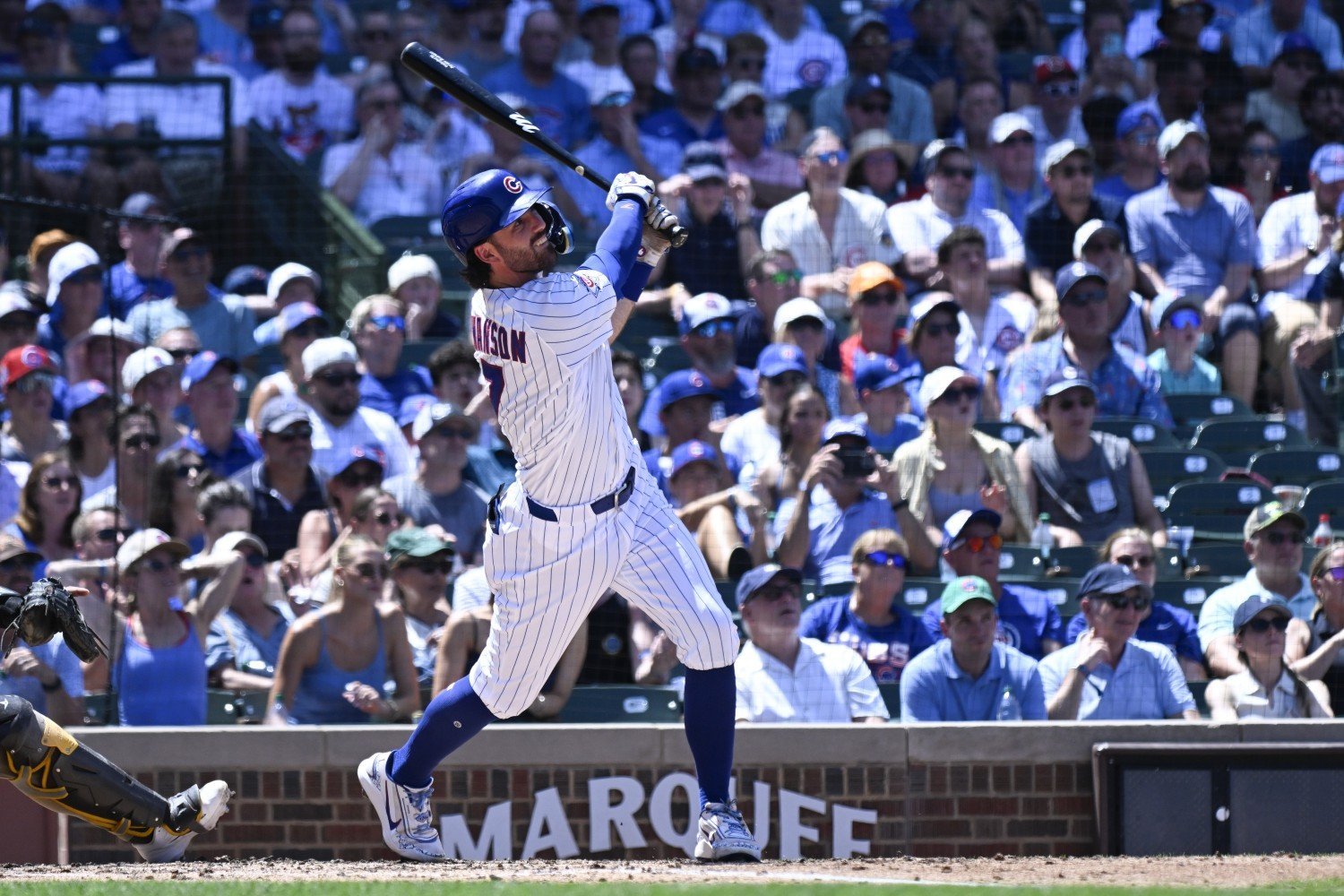 It's slightly inflated, this hot streak. It's easy to get a little carried away about it. Dansby Swanson is raking lately, to be sure, but the competition and the weather have conspired to make him look superhuman, instead of merely superb. He's hit five home runs in the last two games, taking ample advantage of the wind gusting out and the heat making everything carry at Wrigley Field. The ball is exceptionally lively lately. Walker Buehler came to town primed for some brutal regression. Last week in New York, the Mets inexplicably left their star rookie and ace on the mound to collapse, and Swanson hit a home run off Nolan McLean that was center-cut and missing about 3 MPH from McLeaan's usual fastball velocity. The last homer he hit Wednesday, which left his bat at 92.5 MPH and came against an eephus-lobbing backup catcher, was downright fraudulent. He's racked up an extraordinary number of RBIs, thanks mostly to coming up with runners on base constantly for the last fortnight. All of that, though, to say this: Swanson is also genuinely on fire. He's as hot as he's ever been, and that's saying something. Here's a graph tracking his rolling 50-plate appearance weighted on-base average (wOBA) throughout his career: Every hitter experiences fluctuations in production over the course of a season. Not every hitter experiences ones that look like this. Swanson has always been capably of running extremely hot and cold, for a player with such an average-looking overall stat line. When he first joined the Cubs in 2023, he brielfy reduced the magnitude of his ups and downs, but by early last season, he was back to being what he will probably always be, despite his best efforts: wildly inconsistent. Given how sharply and widely he's swung between delightful and disastrous for his whole career, it's jarring to say this, but it's irreefutable: Swanson is on an unbelievable hot streak right now, even for him. By contrast, just a few weeks ago, he was mired in a sustained funk as bad as anything he'd experienced since he still played his home games near Atlanta, Ga. What's changed? Well, there are a lot of ways to answer that question. We could start by saying that it's a good idea to adjust his raw numbers to account for the Rockies, Blue Jays, Mets and Padres throwing a lot of bad pitchers at the Cubs, on very hitter-friendly days. The fact that he's never been "better" over a span like this before partly reflects the fact that this particular heater has coincided with some very favorable circumstances that are beyond his control. Maybe, then, the better way to look at what's changed is to study process, rather than results. These days, though, 'process' is a term that catches several variables. Even 20 years ago, talking about process was simple: Instead of reading the baseball card, you checked a player's BABIP and their walk rate, or their out-of-zone swing rate. In fact, what the heck? Let's do that. This is a chart of Swanson's rolling 15-game averages for weighted on-base average (wOBA), which is the same stat being tracked above and just describes overall production; out-of-zone swing rate; and the percentage of pitches he saw that were four-seam fastballs. It won't shock you to see how the three things interact. Swanson started the season in an aggressive mode, but got hot when he started forcing pitchers into the smaller zone created by the implementation of the ABS system. Pitchers' answer to that development was to stop throwing him fastballs, and he reacted so badly to that that they kept reducing heater usage, dragging him to Hell for weeks with one breaking ball after another. Several weeks ago, though, Swanson started reducing that chase rate. Success didn't come right away, so we can say with some confidence that that's now why he's now hammering the ball without mercy. On we go, then, to a different tier of process-centered analysis. Let's talk about bat speed, and feel for the barrel, and timing. Firstly (and I'll spare you the graph, this time, but it's true), Swanson is swinging faster lately. His average bat speed is up a little over 1.0 MPH since he started to get hot; he rarely swings this fast over any prolonged period. One narrative we might construct, then, would have him going in the tank at the end of April when he developed some hip/glute soreness that took him off the field for two days, and getting hot again when he started to feel healthy in mid-June. The thing is, he didn't lose bat speed right away when his production disappeared at the beginning of May. In fact, that number rose a bit early in his rough spell, and dipped when he started stabilizing his approach—before exploding around the middle of last month. Bat speed matters, and the turbo boost in Swanson's is one component of his recent surge. Like his improving plate discipline, though, it's not enough to explain why he's suddenly searing. Let's forge on. It's time to get nitty-gritty. As you might guess, in addition to swinging harder, Swanson is making more solid contact lately. Since June 15, he's batting .333/.371/.895; you can't do that just by swinging for the fences and catching a few friendly zephyrs. Swanson's Squared Up Percent (the percentage of the maximum possible exit velocity on a given swing, based on the speed of the incoming pitch and of the swing itself that a batter produces) has risen sharply lately, returning to and then eclipsing the level he was at before things fell apart for him for six weeks. That's not an explanation, though. That's a dressed-up tautology. "Hey, you know the hot streak this guy is on? Guess what? Since it started, he's making more solid contact!" That's not insight. Let's seek some. Statcast's new swing timing metrics hold the key to really, deeply understanding what has changed for Swanson. First, keep in mind the chart (a couple charts back, now; sorry) in which we saw the rolling fastball rate against him; it's risen again recently. Essentially, Swanson was lost in the woods for so long that pitchers stopped feeding him as steady a diet of slop and decided they could probably beat him by throwing their four-seamer over his infamously steep swing, as he tried to sit on and attack the softer, spinnier stuff that had become his daily diet. Both when they're doing that and when they do go to the secondary offerings, though, Swanson is ready for them lately. Here's our control group. These are the distributions in each of the key swing timing metrics Statcast tracks for Swanson's swings through the end of April. This data is still new to all of us, so let's walk through it a little. The lefthand image tells us how often Swanson centers the ball on the barrel, versus hitting it off the label (in on the hands) or out on the end of the bat. The center image tells us how often he was (more or less) on time, based on the angle of his bat relative to the path of the incoming pitch at the point of contact (or non-contact, as the case may be). The righthand image tells us how often Swanson lines up the ball on his barrel, vertically, versus swinging over or under the ball or hitting either the top or bottom third of it. As you can see, relative to an average right-handed batter, Swanson got the ball off the end of the bat considerably more often; was on time slightly more often; and missed both above and below the barrel slightly more often. That's consistent with the profile of Swanson you're familiar with. He has a swing that leaves him running out of bat for soft stuff fairly often and whiffing fairly often, but he's fairly good at getting through the hitting zone in rhythm, and the swing is geared to do damage when he does achieve accuracy with the barrel. All of that was working (for better and for worse) in March and April. From the beginning of May (just after that glute issue cropped up) to the middle of June, however, it worked only for worse. With all those extra breaking and offspeed pitches, hurlers got him out on (or beyond) the end of the bat even more. They had him early more often, taking away his ability to use the whole field. And notice the righthand image, here. That dip in the middle of the high range on the distribution is a sign that Swanson was always a little bit fooled, always a hair off in what he was trying to accomplish. He hit the outside and top half of the baseball a lot. He also hit the inside and bottom half of the ball a lot. Neither is the right way to produce solid contact, especially if you're catching it on the end of the bat. Now, here's what those distributions look like since June 15. He's early in a good way (a little early, that is; just enough to pull the ball instead of spraying it) more often lately. He's also back to lining it up well on the barrel. But the biggest difference lies in how often (and how well) he centers the ball on the barrel. Over the last two weeks and change, nearly 70% of Swanson's swings put the sweet spot of his bat on a path through the ball. He's not getting it off the end nearly as often. He was under 60% accurate that way during his megaslump. Getting more aggressive with his swing—a slightly longer stride and a slightly later but faster shift of his weight from the back left to the front—has gotten Swanson through the ball better. He's longer through the hitting zone, which is leaving more lumber on either side of the ball when he squares one up. That's why he's pulling it more and producing the long fly balls that can benefit so handsomely from the heat and the wind. Here's a middle-middle changeup on which Swanson just missed, from last month in St. Louis. OTdQOXdfV0ZRVkV3dEdEUT09X0FBTUNVQVlCQUZFQUFRZFRWZ0FIQkFSU0FGaFFCVklBQjF3QlVRUU5BRkFHQ1ZGWA==.mp4 Now, here's one on which he (emphatically) did not miss, from this week against the Padres. VndQeDZfWGw0TUFRPT1fQkFWUkJ3QUdCd29BQVZBQlZ3QUhBUU5SQUFNRVZnY0FCbEFNVWdaWENBQmRCVllD.mp4 The extra length on the stride is important; it lets him sink into the swing more and not get stuck having to manipulate the barrel as much with his hands. The extra bat speed (which comes from the more energetic move in his lower half) is important; it lets him wait longer and get off a swing that can benefit from the subconscious but incredible hand-eye coordination that makes him a big-leaguer. He's on time, but more importantly, he's on time with a barrel he was able to load up and fire accurately. The difference between those two swings tells us much about why he's been red-hot lately. That doesn't mean he'll stay hot, though. Swanson is simply an inconsistent player, because the bad swing above just isn't that great a departure from the good one, and it never has been. Being a great hitter in the majors is extremely difficult, and never more so than now, with the high baseline of talent and development for pitching league-wide. Small defects that can creep into your approach or your swing—flaws in your physical and mental routine that are virtually inevitable—can have big effects, and those effects are bigger on Swanson than on most players. To answer the question of why Swanson has swung from as cold as he's been in years to as hot as he's been, ever, though, we can go a step further than simply acknowledging that he's inconsistent. He's done something material and impressive to get the sweet spot on the ball more often. That small tweak has played up in a big way for him, because he's already good at being on time. Though he's 32 (and players are always fighting off age-related decline at that point), he's showing signs of being smarter and organizing his physical and mental game better than ever, to make up for any creeping athletic shortcomings. For however long that lasts, it's sensationally valuable, especially from one of the game's best defenders at shortstop. View the full article
 -
Four Players in Omaha Who Deserve Shots in Kansas City Soon
DiamondCentric posted an article in Royals Keep
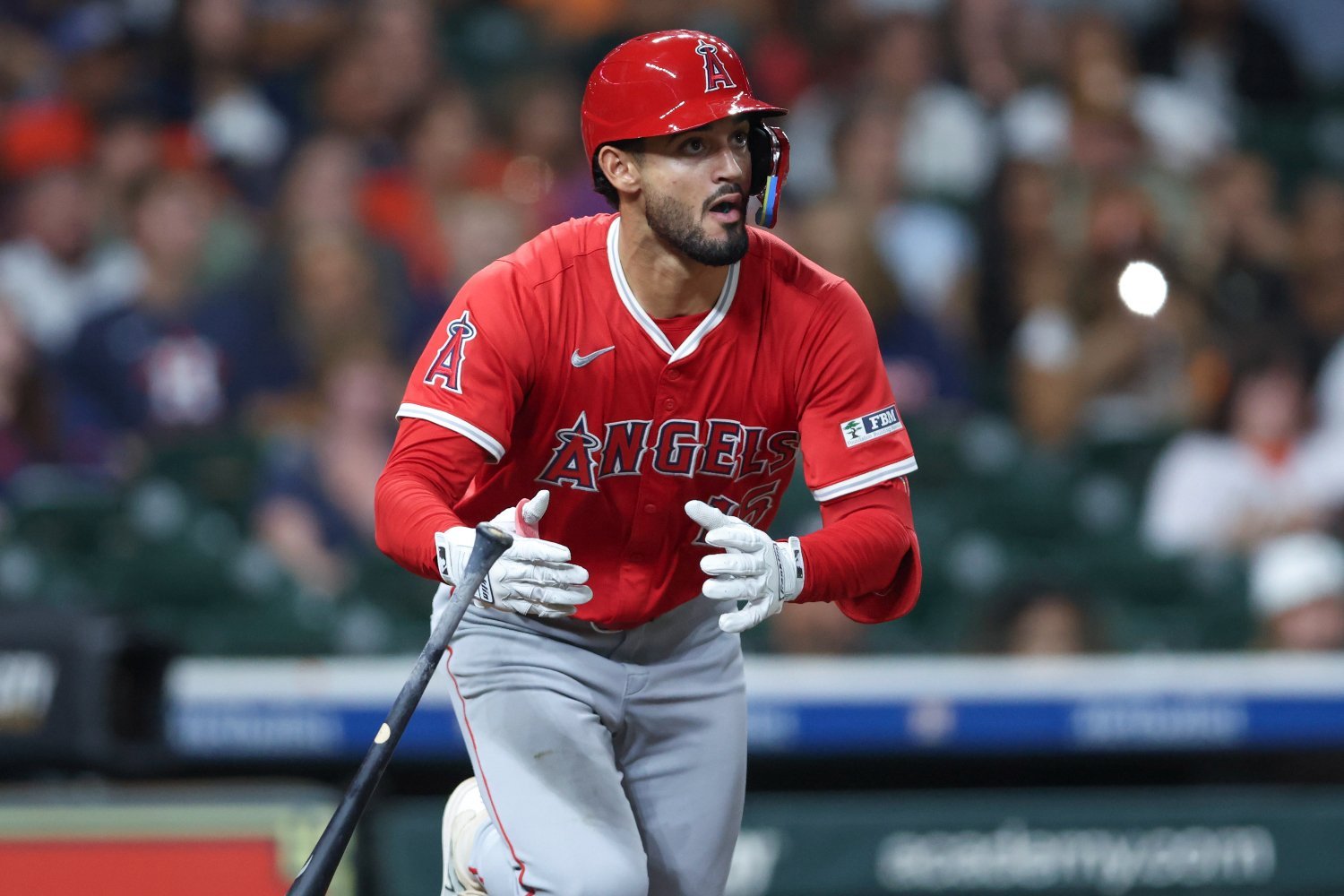 The Royals' season is plummeting fast, much to the chagrin of fans. Going into Thursday's game, Kansas City was 35-52, good for last in the AL Central. At the time of this writing, the Royals are losing 5-1 and are on the verge of being swept by the Tampa Bay Rays at home. That's not a good sign, especially with a tough weekend home series against the Philadelphia Phillies coming up. With 1.1% odds to make the postseason, according to Fangraphs, the Royals are clearly in rebuilding mode. They likely will bring in a lot of new pieces later in the month, especially as they near the August 3rd MLB Trade Deadline. For now, however, they have to rely on players on their 40-man roster or those up in Omaha who can make the transition from Triple-A to Major League competition. Right now, there isn't a lot of depth in the Royals system, both on the hitting and pitching end. However, the Royals really have nothing to lose at this point, especially being 17 games under .500. Therefore, Kansas City could benefit from bringing in some fresh faces from Omaha to help spark this club over the next few months. While they may not be long-term solutions to the Royals' roster problems, they deserve a shot to show the front office what they can do and whether or not they will be part of the Royals' roster in 2027 and beyond. Here are four players in Omaha (three hitters and one pitcher) who should get an opportunity for some playing time with the Royals at some point in the second half of this brutal season. Ryan Ramsey, LHP The Royals do not have much pitching depth, both on the 40-man roster and in Triple-A Omaha and Double-A Northwest Arkansas. The only pitcher who deserves a chance who isn't on the 40-man (and not injured) is Ramsey, who is in his second year with the Storm Chasers. Ramsey's surface-level metrics aren't eye-popping. In 15 outings (13 starts) and 69.2 IP, the former Maryland product is posting a 4.78 ERA, 1.44 WHIP, 5.57 FIP, and 9.2% K-BB%. That said, he seems to be trending positively recently, as he went five innings and only allowed one run on four hits in his most recent start on June 26th. Ramsey is not a strikeout (19.7% K%) or swinging-strike machine (9.7% SwStr%). However, he is efficient in generating called strikes, as evidenced by his 14.2% called-strike rate. The former 13th-round pick has also demonstrated an ability to limit hard hits and contact in the zone. That is illustrated in his Statcast percentiles summary from Triple-A this season via TJ Stats. When it comes to TJ Stuff+, Ramsey's overall 97 mark isn't impressive, but his slider and curveball rate as above-average offerings with 101 marks. He also has produced a decent whiff rate this year, with his 23.7% whiff rate ranking in the 59th percentile, according to TJ Stats. Ramsey may not be a long-term option for the Royals. That said, the former Terrapin could be a nice hybrid guy for the remainder of the season who could thrive if given the opportunity. Peyton Wilson, 2B/3B Wilson has not gotten much attention in Omaha because he's been overshadowed by veteran infielders like Josh Rojas, Abraham Toro, Kevin Newman, and Brandon Drury. Furthermore, he was hurt in mid-April and missed roughly a month of play. That said, since returning, Wilson has performed much better in his second stint in Omaha. Last year, the former Alabama product hit .223 with a 65 wRC+ in 319 plate appearances with the Storm Chasers. This season? He's hitting .294 with a 102 wRC+ in 186 plate appearances. He also has shown a strong ability to not just hit with more power in Omaha this year (.107 ISO compared to .086 last year), but hit fewer pop-ups and more line drives as well. Wilson is still striking out and whiffing a lot, but he's launching the ball better and hitting it hard, as illustrated by his TJ Stats Statcast percentiles summary from Omaha. Wilson has long been known for a solid glove at the keystone and hot corner, so he's the kind of player who at least would hold his own defensively in the infield. The biggest question mark with him has been his bat. That's been the primary reason he hasn't been added to the 40-man roster or picked up in the Rule 5 Draft. When looking at Wilson, his profile feels very similar to Michael Massey. While Massey has had a solid year (1.2 fWAR and 96 wRC+), he is also 28 and will be 29 next season. Furthermore, Massey could be a trade candidate. If Wilson can fill in for Massey adequately, then Royals president JJ Picollo may be tempted to trade the former Illinois product by August 3rd. Matthew Lugo, OF The Royals claimed Lugo off waivers after he was designated for assignment by the Angels. Since coming over to the Kansas City organization, he's done nothing but hit in Omaha. In 90 plate appearances with the Storm Chasers, Lugo is hitting .321 with a 151 wRC+. The former 2019 Red Sox draft pick has also shown tremendous home run power, with seven home runs in 22 games with Omaha. Lugo had a cup of coffee with the Angels last year, but didn't do anything earth-shattering in his rookie debut. In 31 games and 70 plate appearances, the 25-year-old hit .232 with an 89 wRC+. He flashed some power with the Halos with four home runs. However, he struck out 34.3% of the time and didn't draw a single walk in his MLB tenure last year. Thus, his free-swinging approach was a big reason why the Angels opted to part ways with him this year. Still, even though his profile is flawed, there's some big-fly and power potential with Lugo, who can reasonably play all three outfield positions. In Triple-A this year, with both the Angels and Royals organizations, he has demonstrated the ability to barrel and launch the ball consistently, per TJ Stats Statcast percentiles. The Royals have a dearth of right-handed bats on the 40-man roster right now. That has been obvious in this Rays series, as manager Matt Quatraro has had to bat lefty hitters like Kameron Misner and Michael Massey against lefty starters like Shane McClanahan and Ian Seymour. Misner has cooled off significantly after a strong start, and the Royals may opt to bring up Lugo to take Misner's place, especially since Lugo would give Kansas City a right-handed bat who can play multiple positions in the outfield. Brett Squires, 1B/3B I have talked about Squires before here on Royals Keep, as he's been the kind of player who's hit at every level in the Royals system. Since being called up to Omaha, the former Oklahoma product has hit .293 with a 131 wRC+ in 162 plate appearances. That includes 10 home runs in 40 games. The main issue preventing Squires from a possible promotion or addition to the 40-man roster is his lack of positional versatility. He is a corner infielder who primarily plays first base. Thus, he's been blocked by Maikel Garcia and Nick Loftin at third base and Vinnie Pasquantino, Salvador Perez, and Jac Caglianone at first. That said, those positions have become a lot more open. Garcia is currently on the IL, and Loftin has cooled at the plate, as he is hitless in his last 21 plate appearances. Vinnie is also on the IL, Salvy is hurt, and Caglianone seems to be rotating between right field and first base, depending on the pitching matchup. Thus, the Royals may have a spot for Squires, who is producing some of the most impressive batted-ball metrics in Omaha, as evidenced by his TJ Stats Statcast percentiles. It is hard to see Squires as a long-term answer, especially once Garcia and Pasquantino return healthy. Nonetheless, the Royals need some pop and consistency in the middle of the batting order, and Squires could provide that, even if there is some swing-and-miss risk with his hitting profile (15th percentile whiff rate, 12th percentile chase rate, and 26th percentile K rate). View the full article
 -
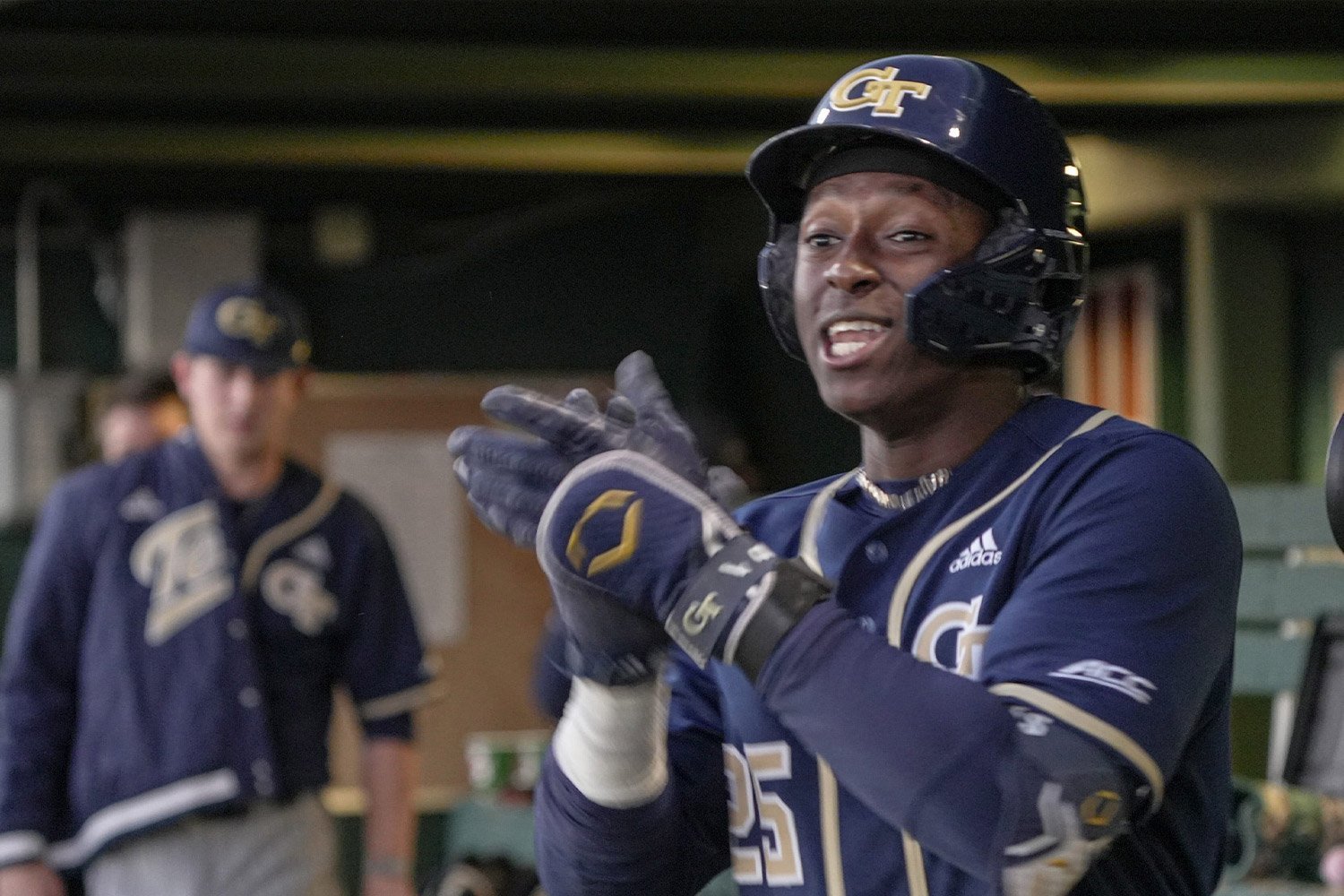 Each year, I endeavor to project the draft not by claiming to know every player who will be taken, but by standing on the shoulders of giants. I take MLB mock draft rankings from major industry outlets like MLB Pipeline, ESPN, The Athletic and many others to form a consensus board, with a working hypothesis that using this approach will eliminate some of the noise and variance in MLB Draft mock rankings. This year, that all feels especially important for the Twins, who pick high enough in the first round to make this draft a pivotal moment for the franchise. The Minnesota Twins’ first five picks are: Round 1: 3rd Overall Round 2: 43rd Overall Competitive Balance Round B: 74th Overall Round 3: 79th Overall Round 4: 107th Overall Here's a look at who might be available to them at each stop. Round 1: Vahn Lackey, C, Georgia Tech Every draft cycle seems to produce 2-3 first-round catchers, most of whom have warts offensively, defensively, or both. Georgia Tech's Vahn Lackey may be the most complete college catcher in recent seasons and has a case to make as college baseball’s most improved player in 2026. Lackey entered 2026 viewed as an excellent defensive catcher, with athleticism uncommon for the position, in addition to having strong bat-to-ball skills. He’s continued to look excellent behind the plate, with good receiving and blocking skills, an excellent arm and strong pop and transfer times. He has all the ingredients to be a plus defensive catcher. Offensively, his power has taken a step forward. After hitting 6 home runs in 60 games in 2025, he managed 20 in 61 games in 2026, with more walks than strikeouts, adding a high on-base floor to his profile. Lackey ended 2026 hitting .397/.519/.772, with 39 extra-base hits, a 17.7 BB%, a 13.4 K%, and 15 steals (94%). Simply put, he’s one of the most complete profiles in this draft class. Round 2: Aiden Ruiz, SS, The Stony Brook HS (NY) Ruiz is a diminutive, switch-hitting shortstop currently committed to Vanderbilt. He'll be a fascinating follow on draft day. He'll be 19 and is listed at 5-foot-10 and 170 pounds with limited power projection, so he'll test some of our assumptions about what prospect profiles and traits organizations will and won't lean into. Ruiz is arguably the best defensive shortstop in the entire class. He has a quick first step, soft hands, and a big arm. He can make any play from any spot in the infield, it's plus defense at one of the most important positions on the field. Offensively, Ruiz is a switch hitter, with a contact-oriented approach. It's exceptional bat-to-ball skills from both sides of the plate. Ruiz will expand the zone a little, at times, so there's some risk his quality of contact is diminished unless he tightens his approach. There's never going to be a ton of power, but Ruiz is an above-average runner and should be a pesky threat on the basepaths. The defense and contact skills headline this profile, it's a combination that can rack up plenty of value for a drafting organization. Competitive Balance Round B: Brett Renfrow, RHP, Virginia Tech Renfrow was previously a two-way player who began to focus solely on pitching when he got to campus at Virginia Tech. This is a classic draft 'type', a college starter where stuff and ingredients don't line up neatly with outcomes. I'd classify Renfrow as someone with a significant 'up arrow' this spring, though. It's a good frame, and he's about to surpass 70 innings for the third consecutive season. Renfrow has slowly ticked up his strikeout rate while reducing his walk rate—exactly what you want to see. In terms of stuff, the fastball is good. It sits 94 mph and has been up to 97 mph, playing well at the top of the zone. There's a slider/cutter hybrid he throws in the upper 80s, a curveball with plenty of depth that sits in the low 80s, and a changeup with good horizontal action. Renfrow is a pitcher you can see making significant strides in a pro organization. There are plenty of starter traits here. In 73.2 innings in 2026, Renfrow managed a 4.67 FIP, while striking out 27.7% of hitters and walking just 7.9%. Round 3: Beau Peterson, 3B, Mill Valley HS (KS) Peterson is one of the more physically imposing frames on the prep side in 2026. The Kansas prepster is committed to Texas and has played third base, corner outfield, catcher and pitcher in recent years. Peterson has a left-handed swing with good bat speed. He has easy raw power, while currently getting into more line drive power in games. When he learns to add loft with more consistency, he'll be a 25-home run threat as a pro hitter. He has good bat-to-ball skills, too, and controls the strike zone well, giving him a well-rounded offensive profile. Peterson projects to be an average runner (at best) as he continues to fill out. Despite the lack of foot speed, the glove will play just fine at third base. He's been up to 95 mph on the mound, so there's plenty of arm for the hot corner or a corner outfield spot. Curious to see the players around the Minnesota Twins picks in the draft? Click on the button below to view the entire mock draft board! View the full article
 -
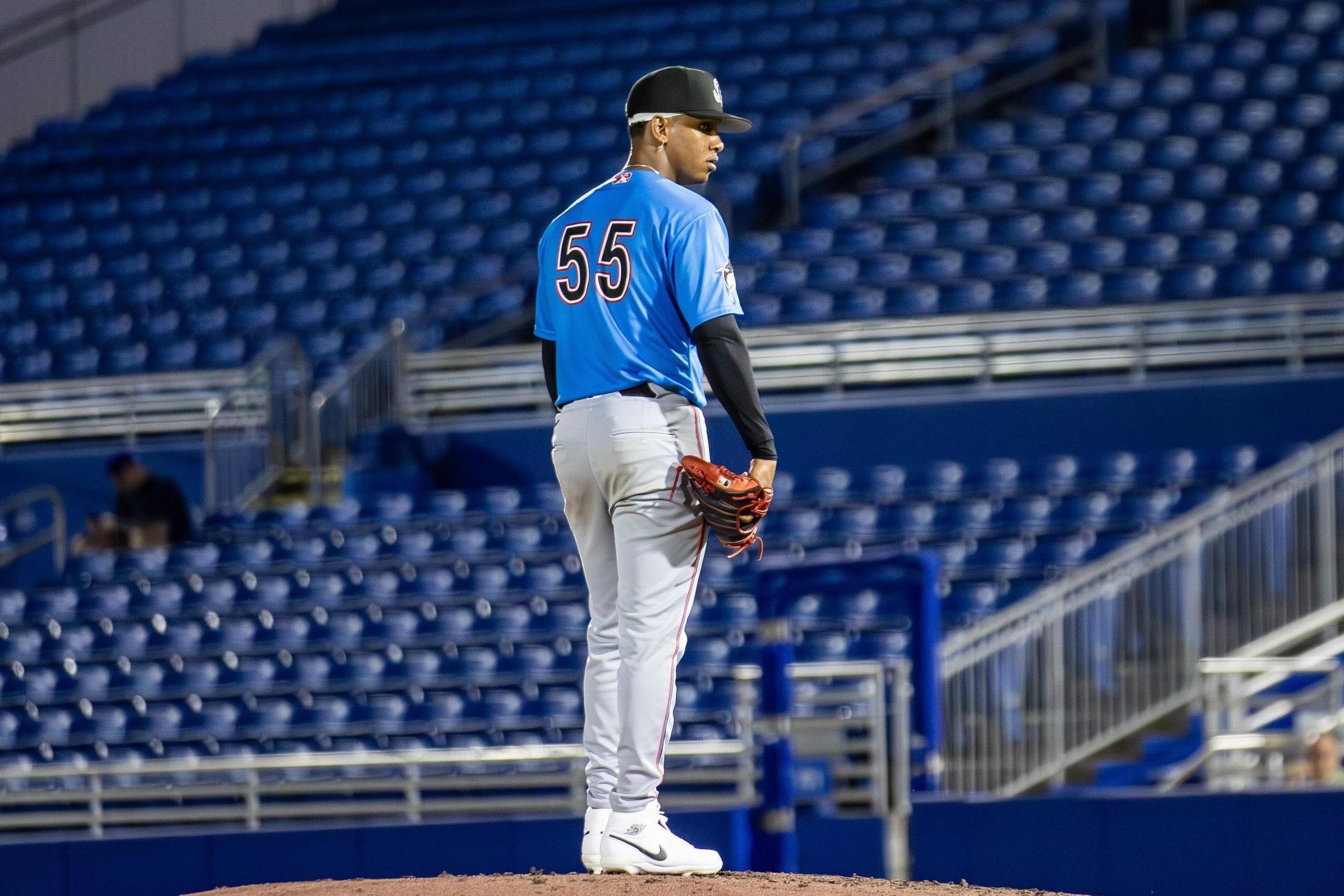 After being considered behind the times compared to other major league organizations, the Miami Marlins have invested heavily in player development in recent years. That includes opening a new academy in the Dominican Republic to serve their international signings. They are just beginning to see results in players like 20-year-old left-handed pitcher Elier Morillo. Morillo, who signed out of the DR back in 2023 for $100k, idolized Clayton Kershaw growing up because of how he played the game, but later on, he began to watch a lot of Cristopher Sánchez, trying to emulate the Phillies starting pitcher. He was expected to sign with the Baltimore Orioles initially before some talks with the agency of his training academy led him to the Marlins instead. Morillo spent his first three professional years down in the Dominican. He pitched in 2023 and 2025, but missed all of 2024 rehabbing from Tommy John surgery. Wakeup time is at 7:00 a.m. at the Marlins' academy, Morillo explains, and depending what time of the year it is, their schedule is different. Usually, when games aren't going on, they go to training soon after waking up, they go through defensive drills and after they go to the gym. They wrap their day up with English class at around 4:00 pm, they wrap up their day. "It helped me be a better person, better professional and a better player," Morillo told Fish On First in Spanish. "I went into the academy with little experience compared to what I walked out with. I walked out of there as a new person with tons of experience." As is the case for many others who were not born in the United States, transitioning to stateside life was "a bit tough" for Morillo. He was initially not a fan of the food available to him and at times would skip meals because he could not find something he liked. During his most recent stint in the Dominican Summer League, Morillo posted a 3.23 ERA, 2.96 FIP, 15.85 K/9 and 4.70 BB/9 in 30 ⅔ innings pitched in 2025. Going into 2026, Morillo's goal was simple: Have a strong spring training and try to begin at the highest level possible. "When I saw that the rosters were posted, I saw some players who were a bit down and some excited," Morillo said. "When I saw the Jupiter roster and saw that I wasn't there, I wasn't fazed by it and told myself that we are going to continue to work hard in extended spring training and when the FCL season starts, to have very little outings so I can get to Low-A. After throwing a bullpen in back-to-back days, I was getting out of the gym and I ran into our pitching coordinator and he tells me that I have been promoted to Jupiter." In 13 appearances (one start) this season for Morillo, he has a 4.30 ERA and 4.20 FIP. Most notably, he has struck out 42.2% of total batters faced, the highest rate in the entire Marlins organization (min. 20 IP). He wants to reach 100 strikeouts and is currently at 57. One of the main issues for Morillo have been the walks, which is something he admits he needs to improve on. Morillo has a four-pitch mix: four-seam fastball (63.7%), sweeper (20.3%), changeup (9.2%) and recently added gyro slider (6.8%). "When there is a left-handed hitter, I know he has no chance because the pitching coach will signal three straight fastballs and I will throw them with confidence, if he hits it or not," Morillo said. "I am also very confident in my defense, but I like to get outs on my own, striking guys out." Morillo says that his fastball has plenty of ride. It also averages 93.8 mph and in his most recent appearance on Thursday, it topped out at 96.0 mph. His best pitch is his sweeper, which happens to be his second-most-used pitch behind his fastball. It's got a 109 plus stuff and generates a 42.9% whiff rate. He said that the sweeper is a pitch that he has a lot of confidence in, where he can throw it behind the count to get back in at-bats. Morillo uses his changeup against right-handed hitters. Finally, the gyro slider, a new addition to his arsenal, has graded out well so far, with a 102 stuff plus rating. It averages 83.1 mph. Morillo who admitted the pitch isn't where it should be yet, has allowed a 75% hard-hit rate when using it. "They told me that for me to be a starter with a good arsenal, I needed to add a pitch that I can play off between the sweeper and fastball," Morillo said. "I can throw the gyro at about 87-88 mph. Little by little, I am getting the hang of it. I don't have a lot of confidence in it right now because I don't dominate with that pitch. I have allowed hits with it because I leave it hanging in the zone, but little by little I am going to begin getting the hang of that pitch." Morillo is part of a larger experiment. The Marlins under president of baseball operations Peter Bendix use "pitch design" sessions instead of bullpen session and call pitches from the dugout during games. These processes have been implemented from the Dominican Republic up through the majors. "The first time I saw the pitch design was 2024 in the Dominican Republic before I underwent my surgery," Morillo said. "I personally thought it was a good idea because you have the same system in a bullpen as in a game. What you do in the bullpen, you take to the game. You don't throw the pitch design with the same intensity, but you try to locate your pitches better, work on a specific pitch better, see the weakness of an opposing hitter and find the strike zone more." Morillo described calling pitches from the dugout as a good transition because of his relationship with pitching coach in the DSL. His numbers in 2025 back up what the Marlins are trying to do as well. Although his potential call-up is still years away, it is a thought that crosses Morillo's mind, calling it "the best news that I can receive." "It's a dream I've had since I was a kid," Morillo said. "Right now, what I hope is that I can stay healthy so I can continue to do my job on the field and just have fun." View the full article
 -
Blue Jays Prospect Nolan Perry Looked Untouchable in Double-A Debut
DiamondCentric posted an article in Jays Centre
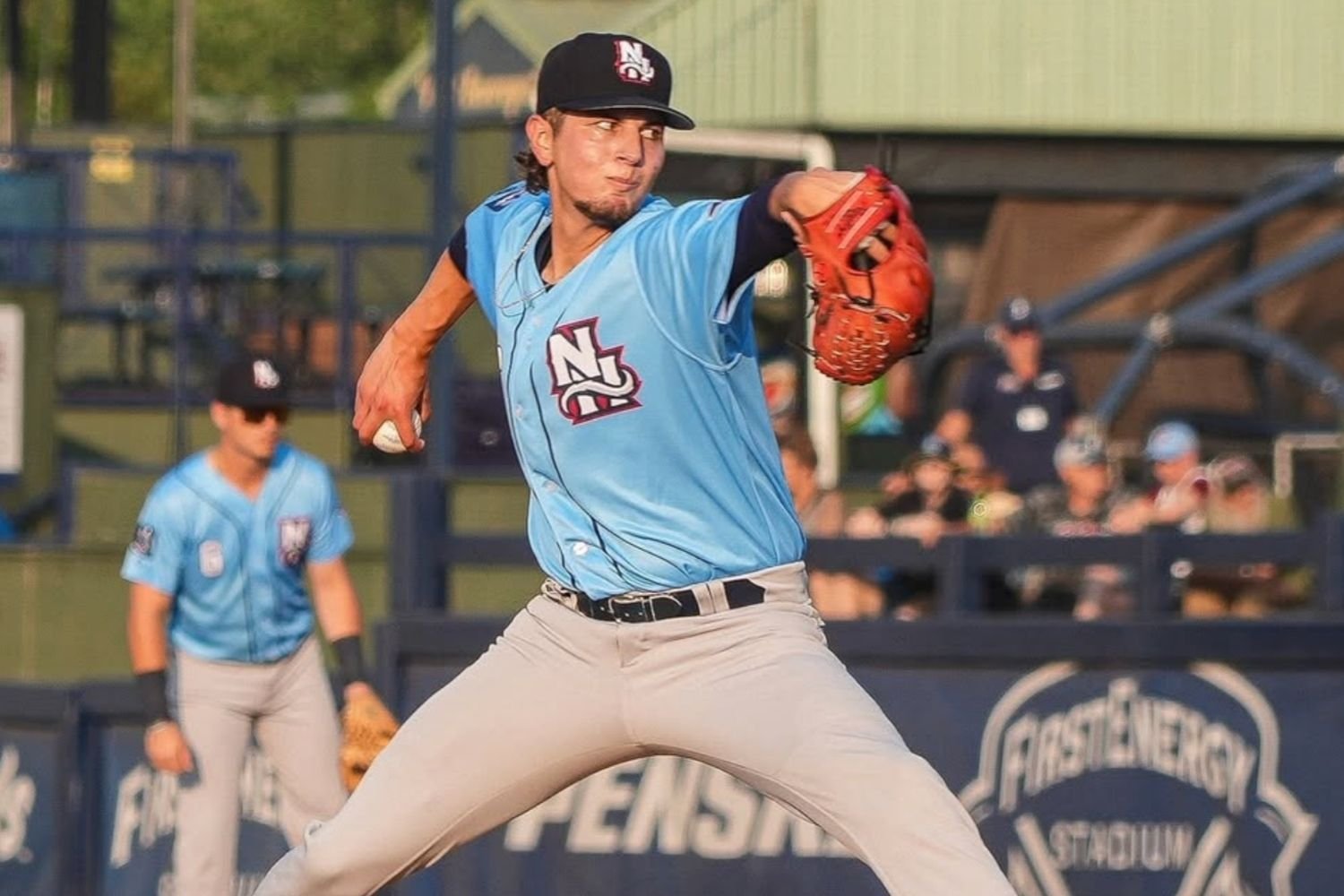 When you have an electric talent, it’s important to set them up for success. In the case of Jays Centre's No. 8 prospect, Nolan Perry, the blueprint for success is one of rapid progression. Perry is already pitching for the Double-A New Hampshire Fisher Cats after starting the season in Single-A, and he just logged a remarkable Double-A debut on June 30. As a broadcaster for the opposing team that day, the Reading Fightin Phils, I was blown away by his performance. Let’s dive into Perry’s journey, his arsenal and when to expect the Jays’ up-and-comer to debut. Nolan Perry’s Background Perry was a 12th-round pick in the 2022 MLB Draft, as Toronto selected the Texas Tech commit right out of high school and signed him for $200,000. The now 22-year-old right-handed pitcher features a well-rounded arsenal, and he would likely be further along in his professional journey if not for a torn UCL during the 2024 campaign. This sidelined Perry for all of last season, leaving questions pertaining to how quickly he could return to his original form. Rapid Ascension Fast forward to the 2026 season, and Perry is playing at his third level of affiliated ball just past the halfway point of the schedule. The righty appeared in five games, starting in four, for the Single-A Dunedin Blue Jays and logged a 1.71 earned run average with a ridiculous 0.67 WHIP over 21.0 innings of work. He produced more of the same with the High-A Vancouver Canadians, putting up a 3-3 record with a 3.23 earned run average and 46 punchouts in 30.2 frames. A Spectacular Double-A Debut That performance earned Perry his second promotion through just the first three months of the 2026 season, and I had the opportunity to broadcast his first Double-A start with the Fisher Cats. The first word that comes to mind after seeing him firsthand? He’s steady. A fastball that once lived in the 92-93 mph range was up a couple of ticks on the evening, and he finished his day with seven punchouts over three innings of shutout baseball. Perry peeled off a sharp, lateral-moving slider to supplement his mid-90s four-seamer, and it was arguably his best pitch. The 22-year-old was also effectively burying a splitter into the dirt, and after walking a pair of batters in the first inning, he looked in control against a lineup that featured three of the Phillies’ top 30 prospects (per MLB Pipeline). Perry utilized the curveball on occasion, but everything had intention. He consistently had opposing hitters guessing the wrong pitch, starting some at-bats off with breaking balls and even pitching backwards, with his firm fastball occasionally serving as the finisher. Controlling the New Weapons While the rising fastball velocity and ability to effectively mix the four-pitch arsenal are promising signs, the former Red Raiders commit did struggle with wavering command. He tossed 59 pitches in three innings and found himself in a cluster of three-ball counts, especially early on. It isn’t a groundbreaking discovery that someone with good stuff could occasionally struggle with locating it, but with fellow top pitching prospects like the Phillies' Gage Wood noting that the strike zone does shrink down in Double-A, it’s important for Perry to find the boundary. When Will Perry Reach the Majors? When will Perry rise up to the major leagues, and what will his role be? Considering he is still working back from a torn UCL, is on a pitch count and is a pair of levels away from the big leagues, I’d say 2027 is the right estimate for him to fill a starting role. Blue Jays No. 6 prospect Gage Stanifer is much further along in his development, generating a 4.29 ERA and 84 strikeouts over 65 innings in Double-A this year, so I’d assume he has promotional priority. If Perry were to convert to a reliever at any point, his timeline could be accelerated. View the full article
 -
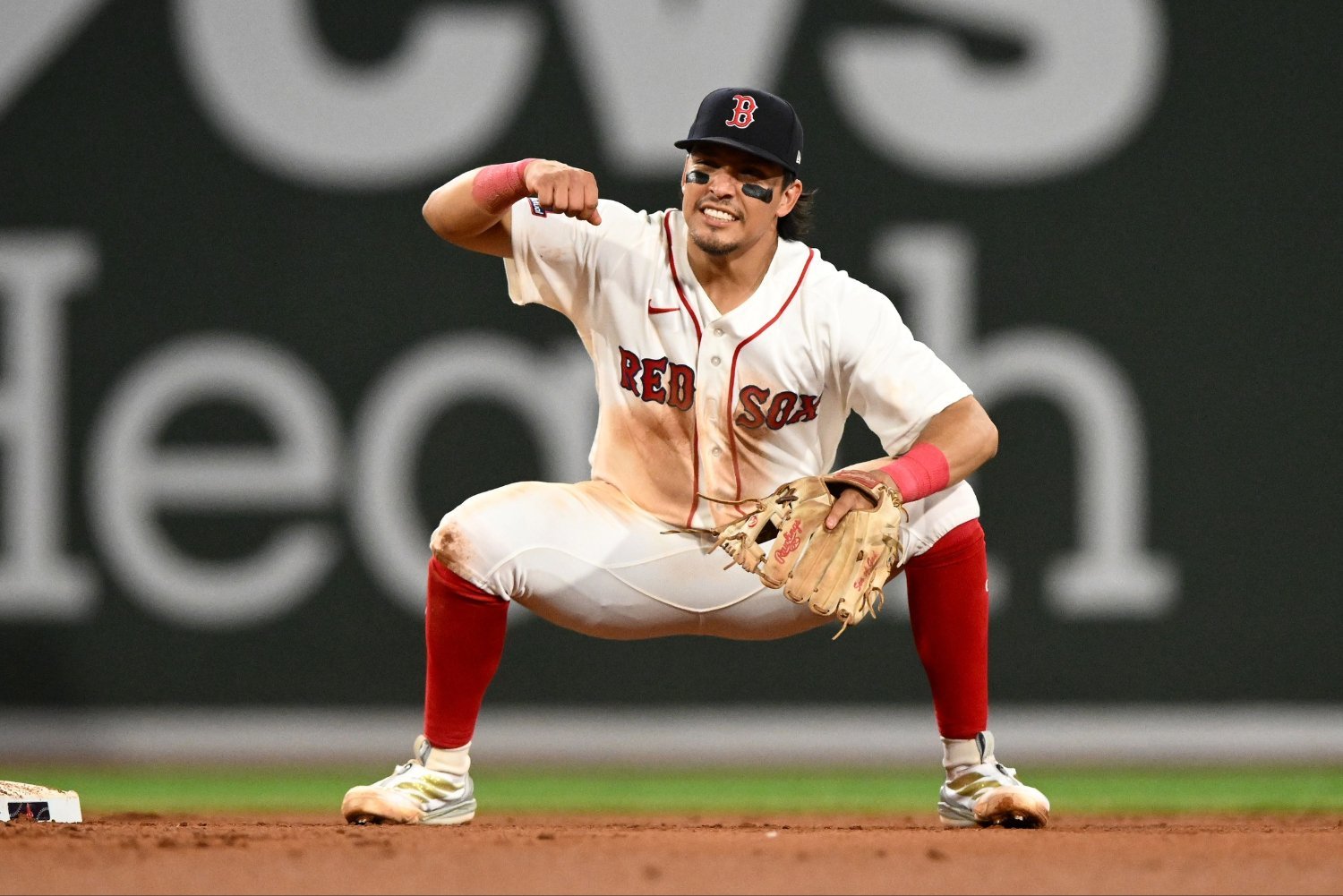 Second baseman Anthony Seigler has been a spark plug for an otherwise dormant Boston Red Sox offense. Is it just a hot stretch for the former first-rounder, or is there surprising staying power here that might help salvage a trade many Sox fans would like to forget? Seigler, of course, was acquired by the Red Sox in the infamous Kyle Harrison for Caleb Durbin trade, and he was never considered a player who could meaningfully contribute to the Red Sox in 2026. His road to the majors has been anything but easy. He was originally drafted 23rd overall by the New York Yankees in 2018 and spent six years in their farm system, peaking at Double-A Somerset before becoming a minor-league free agent and signing with the Brewers in 2025. Milwaukee assigned him to Triple-A Nashville, and he seized the opportunity, hitting .285 with an .892 OPS, eight home runs, and 23 steals in just 72 games. That earned him a July 1 call-up, but he struggled over 34 games, batting primarily in the bottom half of the order and slashing .194/..292/.210 It made sense for the Brewers to get what they could for Seigler this offseason. He was buried in their system behind a plethora of prospect talent, with Platinum Glove award winner in Brice Turang manning his primary position at the major-league level. So, he was shipped out along with Caleb Durbin and a competitive balance round B pick. Seigler didn't even get in spring training with the Red Sox, He landed on the 10-day IL in March and opened the season with patellar tendinopathy in his left knee. Once he returned from the IL, Seigler came out of the gates slow for Triple-A Worcester, hitting .222 with no home runs in April. But then he caught fire in May and hasn't looked back. The 27-year-old hit .344 with an 1.000 OPS that month, while walking more often than he struck out (17.7% walk rate vs. 12.7% strikeout rate). In a quote taken by our own @Nick John, Worcester manager Iggy Suarez explained why he thought Seigler was so much better in May: "I think it's just that he's finally starting to play now. Coming back, he did not really have a spring training, so now a month in, that is really his spring training. Now he's getting into the swing of things and getting his rhythm back. ... To see him comfortable and kind of out of that spring training mode, I think having that month under his belt when he was a month behind helps a lot." Seigler carried that momentum into Boston after his call-up in June, hitting .318/.388/.500 in his first 14 games and launching his first career home run. M3lNbnlfV0ZRVkV3dEdEUT09X1ZRUURBUVZWQjFZQVhsRlJYd0FIQnc5ZUFGa05CMUFBQ2xCWEExY05Bd1pTQ0FCZg==.mp4 Seigler has never been a power threat. His career-high exit velocity is 107.9 mph in 2025, But he has continued to profile as an above-average bat-to-ball hitter, keeping his chase and whiffs low. Arguably the most impressive aspect of his minor-league profile was his ability to limit strikeouts: He struck out just 19.2% of the time while walking 17.4% of the time. Combine that with a 91.4 average exit velocity in 2026 (in the 85th percentile in Triple-A), all while playing average defense, and it creates an intriguing second base option. One fascinating aspect of Seigler is that despite strong average exit velocity, his max and 90th-percentile exit velocities are weak. His average exit velocity in Triple-A is the same as Hunter Goodman and Ketel Marte this season. For reference, Goodman led all of the MLB in home runs in June with 13. Yet, Seigler has only one career barrel in the big leagues to go along with his lone home run. The explanation for this is found in bat speed, launch angle sweet spot percentage, and squared-up percentage. Seigler's bat speed is slow, sitting at 68 mph, which will inherently limit exit velocities. Thus one would think he provides an 85th percentile average exit velocity because he finds the ideal launch angle. And yet, Seigler's average launch angle is relatively low at 8.6 degrees, only 0.6 degrees above the requirement to be in the launch angle "sweet spot" according to Baseball Savant. In fact, Statcast defines any ball put in play with less than 10 degrees of launch angle to be a groundball. That led me to believe his success this season would be explained by a high line-drive rate. Lo and behold, I was correct! If Seigler qualified (he hasn't appeared in enough MLB games), his 25.8% line drive rate would rank sixth in the league, just behind breakout star Jac Caglianone. It's also worth noting that his groundball rate of 54.8% would rank third, just behind former teammate Garrett Mitchell. As you can see here, no matter the launch angle, Seigler does end up squaring up the ball. The larger circles illustrate the quantity of balls so far at each launch angle. So, he's squared up every ball in play in 2026 between the launch angles of 26 and 8, as seen in the graph above. That can't be expected to continue, but it's clear that Seigler knows what he does well and seeks to replicate that every at-bat. He's walking a narrow line of low bat speed paired with elite quality of contact. That's hard to sustain unless your name is Luis Arraez, whose Savant page actually looks remarkably similar to Seigler's -- though Arraez has lower average exit velocities. Seigler has also ticked up his bat speed from 66.9 mph to 68 mph since joining the Red Sox. If he wants to sustain his success as a high-contact, line-drive hitter, he will likely need to lift the ball slightly more. Even before making any tweaks, though, the former first-round pick has begun carving out a role in Boston. Assuming the Red Sox decide to sell, there will be room for Seigler in the dugout the remainder of the season, and the chance to improve what he already does well. View the full article
 -
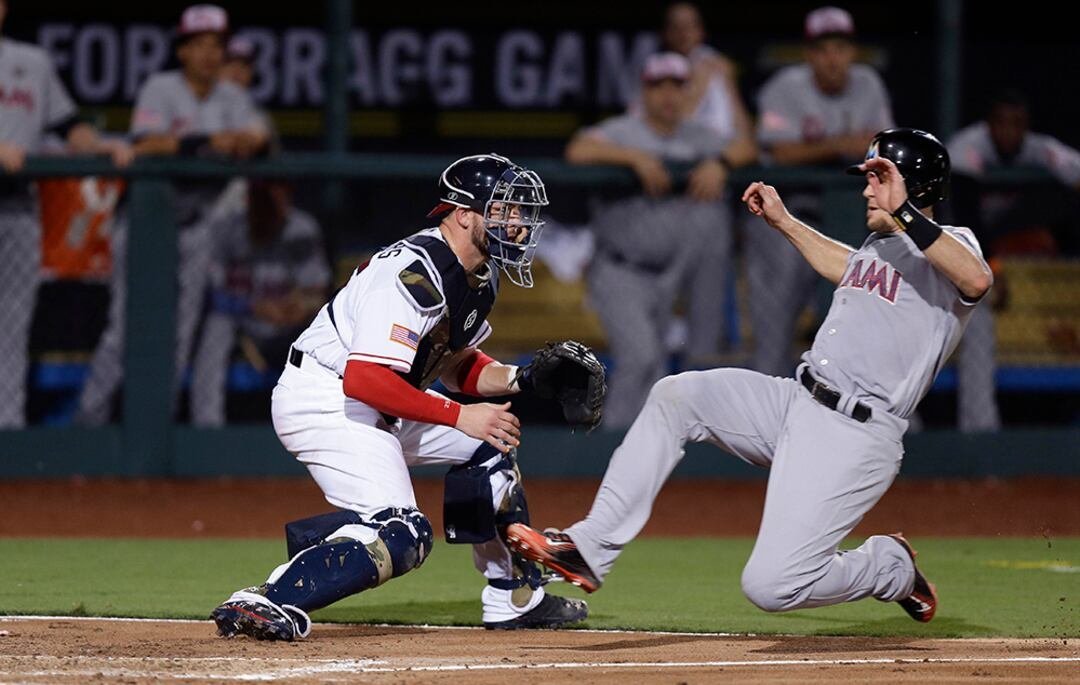 One of the youngest franchises in baseball, the Miami Marlins haven’t been a part of many “firsts” throughout Major League Baseball history. On this day, however, they did become the first team to win a sporting event on an active U.S. military base. On July 3, 2016, the Marlins drew the eyes on a nationally television audience for ESPN’s Sunday Night Baseball. The result was a 5-2 win over the Atlanta Braves at Fort Bragg Park on the U.S. base in North Carolina. For four innings, Miami’s Adam Conley and Atlanta’s Matt Wisler traded zeroes. The Marlins finally broke through in the top of the fifth. After Adeiny Hechavarría tripled on the first pitch of the inning, he came home for the first run on J.T. Realmuto’s RBI single. Realmuto, Martín Prado and Christian Yelich put together three straight singles to push the lead to 2-0. Conley capped his stellar start by working a 1-2-3 sixth inning. The Miami lefty allowed just four hits and one walk in six shutout innings to pick up the win. The Marlins added insurance runs over the next three innings. Prado singled home Realmuto in the seventh before Giancarlo Stanton tripled to lead off the eighth and scored on a Derek Dietrich sacrifice fly to push the lead to 4-0. Realmuto capped a three-hit, three-run, two-RBI night with a solo home run to lead off the ninth. After scoreless innings each from Marlins relievers David Phelps and Fernando Rodney, the Braves were able to break up the shutout with two runs off Miami close AJ Ramos in the ninth. Erick Aybar doubled in the first run before A.J. Pierzynski’s sacrifice fly scored Jeff Francoeur. The Marlins finished with 13 hits in the win to just five for Atlanta. Freddie Freeman and Aybar each had two hits for the Braves. At the top of the Marlins’ order, Realmuto, Prado and Yelich each had three hits. Hechavarría added two. The 5-2 triumph gave the Marlins the series victory. In addition to being the first sporting event ever played on an active U.S. military base, it was also the first MLB game played in the state of North Carolina. It ended in a Marlins victory on this day a decade ago. View the full article
 -
 Thursday saw the San Diego Padres' four full-season affiliates go 1-3 as the Triple-A El Paso Chihuahuas fell to Sacramento 9-7, the Double-A San Antonio Missions beat Amarillo 7-3, the High-A Fort Wayne TinCaps lost to Great Lakes 6-2 and the Low-A Lake Elsinore Storm were beaten by Stock 8-4. Padres Minor-League Transactions No roster moves Chihuahuas Can't Overcome Early Deficit, Fall to River Cats Left-handed starter Jackson Wolf gave up five runs in the first two innings and the host Triple-A El Paso Chihuahuas couldn't fully catch up in losing to the Sacramento River Cats 9-7. Nick Solak, Mason McCoy and Will Wagner homered for the Chihuahuas, with Solak and Nick Pratto each having two hits, while Solak and Wagner scored twice. This was Wagner's first game since being optioned back to the Chihuahuas. Wolf recovered from the rough first two innings to finish a season-high six innings in which he gave up six runs (five earned) on seven hits with three walks and five punchouts. Right-hander Andrew Moore followed, but allowed his first run in 11 appearances (since May 22) in 1⅔ innings on three hits and two walks. Moore did not strike out a batter for the first time since his second game of the season (April 14). This was his third Triple-A appearance after being promoted last week. Solak led off the bottom of the second with his 10th homer and first since returning to the Chihuahuas after being called up by the Padres and then designated for assignment to make it 5-1. McCoy belted his eight homer, a two-run shot, in the fourth to pull within 5-3. The River Cats scored once in the sixth and seventh to restore the four-run lead at 7-3, then Wagner drilled his fourth homer of the season in the eighth to make it 7-5. Again, the River Cats scored twice to go up 9-5, but the Chihuahuas clawed back on Pratto's RBI single and Luis Rengifo's run-scoring groundout, but that would be it. EP_0702.mp4 Player AB R H RBI BB K Bryce Johnson 4 0 0 0 0 1 Luis Rengifo 5 0 1 1 0 1 Luis Campusano 4 0 0 0 1 2 Nick Solak 4 2 2 1 0 0 Will Wagner 3 2 1 2 1 0 Mason McCoy 4 1 1 2 0 1 Carlos Rodriguez 4 1 1 0 0 1 Romeo Sanabria 3 0 1 0 1 2 Clay Dungan 0 1 0 0 0 0 Nick Pratto 4 0 2 1 0 0 Player IP H R ER BB K HR Jackson Wolf 6 7 6 5 3 5 0 Andrew Moore 1 2/3 3 1 1 2 0 0 Ty Adcock 2/3 1 2 2 1 0 0 Justin Yeager 2/3 1 0 0 0 0 0 Ethan Salas Back In Form, Kai Roberts Breaks Steals Mark Ethan Salas had two hits and snapped a tie with a two-run single to highlight a five-run sixth inning, while Kai Roberts stole three bases to break the Texas League record with his 28th consecutive as the host Double-A San Antonio Missions notched a 7-3 victory over the Amarillo Sod Poodles. Right-handed starter Victor Lizarraga led a strong effort by the Missions' pitching staff. Roberts, who had two hits, an RBI and scored twice, broke the record of 27 straight steals set by Jeff Cross of the Houston Buffaloes in 1942. He tied and broke the mark when he stole second and third in the eighth inning after being hit by a pitch. Ryan Jackson went 3-for-4 with a run scored, while Jake Cunningham (double, RBI) and Luis Verdugo (run scored) each had two hits. Tirso Ornelas tripled and had two walks. It was the second game for Salas, Padres Mission's No. 1 prospect, who just came off the seven-day injured list following a mild oblique injury. He went 0-for-3 in his first game, then sat out the game Wednesday, a typical day off when healthy for Salas. Lizarraga went five innings and gave up two runs on five hits with three walks and three strikeouts. Right-hander Sadrac Franco allowed a run in two innings, while right-handers Clark Candiotti and Johan Moreno each struck out three in their scoreless innings. Wyatt Hoffman's fourth-inning sacrifice fly and Cunningham's RBI double in the fifth had the game tied 2-2. In the six, the Missions broke it open with five runs. An error, a single and a hit by pitch preceded Salas' two-run single. Following a pitching change, Kai Roberts drove in another, then a walk led to Cunningham's run-scoring grounder. Braedon Karpathios, Padres Mission's No. 9 prospect, singled home the final run of the inning for a 7-2 lead. SA_0702.mp4 Player AB R H RBI BB K Ethan Salas 4 1 2 2 1 0 Kai Roberts 4 2 2 1 0 0 Tirso Ornelas 3 0 1 0 2 1 Jake Cunningham 5 0 2 1 0 1 Braedon Karpathios 5 0 1 1 0 2 Ryan Jackson 4 1 3 0 0 0 Albert Fabian 3 1 1 0 0 1 Luis Verdugo 4 1 2 0 0 1 Wyatt Hoffman 2 1 0 1 0 0 Player IP H R ER BB K HR Victor Lizarraga 5 5 2 2 3 3 0 Sadrac Franco 2 1 1 1 1 1 0 Clark Candiotti 1 0 0 0 1 3 0 Johan Moreno 1 0 0 0 0 3 0 TinCaps Can't Get Going Until It Is Too Late Against Loons Rosman Verdugo had a pair of doubles and an RBI and Alex McCoy had two hits, but the host High-A Fort Wayne TinCaps were blanked for the first eighth innings in a 6-2 setback against the Great Lakes Loons. For McCoy, Padres Mission's No. 14 prospect, it was his 20th multihit game of the year. TinCaps right-handed starter Carson Montgomery gave up four runs on four hits, including a pair of homers, and three walks while striking out two. Left-hander Braian Salazar (three strikeouts) and right-hander Will Koger each gave up a run in two innings. The Loons scored once in the second and third innings, then two more in the fifth and again in the seventh and eighth innings to build a 6-0 lead. In the ninth, the TinCaps mounted a rally. Carlos Rodriguez walked, Jack Costello singled him to third and Kasen Wells foiled the shutout with a single to center that sent Costello to third. After a pitching change and a flyout, Verdugo doubled home Costello. But the last two TinCaps struck out to end the game. FW_0702.mp4 Player AB R H RBI BB K Justin DeCriscio 5 0 0 0 0 1 Rosman Verdugo 5 0 2 1 0 1 Lamar King Jr. 4 0 0 0 0 2 Alex McCoy 4 0 2 0 1 1 Kavares Tears 3 0 0 0 1 2 Kerrington Cross 3 0 0 0 1 2 Carlos Rodriguez 2 1 0 0 2 1 Jack Costello 4 1 1 0 0 0 Kasen Wells 4 0 1 1 0 1 Player IP H R ER BB K HR Carson Montgomery 5 4 4 4 3 2 2 Braian Salazar 2 3 1 1 0 3 0 Will Koger 2 1 1 1 0 0 1 Storm Rallies, But Ports Pull Away Late The host Low-A Lake Elsinore Storm gave up two runs in the seventh and ninth innings as the Stockton Ports came away with an 8-4 victory. Storm starter Lan-Hong Su, in his second Low-A start after being promoted, gave up a four-run second inning in his three frames. He allowed four hits, including a homer, and two walks while striking out four. Left-hander Zack Qin then tossed three scoreless innings, yielding three hits and three walks with one strikeout. Left-hander Cal Riehl and right-hander Daichi Moriki each allowed two runs over the final three innings. Down 4-0, the Storm climbed back into the game in the middle innings. Jorge Quintana stole third and scored on a wild pitch in the fourth, Bradley Frye had a sacrifice fly and Yimy Tovar swiped home as part of a double steal in the fifth and Alcides Hernandez grounded a single to center in the sixth to tie it 4-4. Hernandez was on base four times as he also drew three walks. LE_0702.mp4 Player AB R H RBI BB K Yimy Tovar 4 1 1 0 1 1 Yoiber Ocopio 4 0 1 0 0 1 Dawson Willis 4 0 0 0 0 4 Bradley Frye 3 0 0 1 0 0 Jorge Quintana 2 1 0 0 2 1 George Bilecki 4 0 1 0 0 1 Conner Westenburg 3 1 0 0 0 1 Dylan Grego 4 0 0 0 0 1 Alcides Hernandez 1 1 1 1 3 0 Player IP H R ER BB K HR Lan-Hong Su 3 4 4 4 2 4 1 Zack Qin 3 3 0 0 3 1 0 Cal Riehl 1 1/3 2 2 2 0 1 1 Daichi Moriki 1 2/3 4 2 2 2 0 0 Padres Mission's Top 20 Prospect Performance Ethan Salas: 2-for-4, 2 RBI, BB Kash Mayfield: DNP Miguel Mendez: DNP Ryan Wideman: DNP Kruz Schoolcraft: DNP Jorge Quintana: 0-for-2, 2 BB, K Ty Harvey: On injured list Kale Fountain: Injured, out for season Braedon Karpathios: 1-for-5, RBI, 2 K Jagger Haynes: DNP Lamar King Jr.: 0-for-4, 2 K Tucker Musgrove: DNP Truitt Madonna: DNP Alex McCoy: 2-for-4, BB, K Jesus Castro: DNP Rosman Verdugo: 2-for-5, 2 2B, RBI, K Garrett Hawkins: DNP Eric Yost: DNP Michael Salina: DNP Winyer Chourio: DNP View the full article
