


DiamondCentric
-
Posts
2,631 -
Joined
-
Last visited
Never
Content Type
Profiles
Forums
Events
News
Tutorials & Help
Major League Baseball Videos
Guides & Resources
Store
Downloads
Gallery
Everything posted by DiamondCentric
-

 There were unique and surprising circumstances in the 11th and final inning in Nashville Friday night, and Manager Rick Sweet foretold things last Sunday. We'll explain. First up, our daily log of player moves involving the Crew's affiliates: Transactions: Milwaukee Brewers recalled RHP Coleman Crow from Nashville Sounds. Milwaukee Brewers optioned LHP Brian Fitzpatrick to Nashville Sounds. Milwaukee Brewers sent LF Akil Baddoo on a rehab assignment to Nashville Sounds. C Andrick Nava assigned to Wisconsin Timber Rattlers from Nashville Sounds. C Eric Martinez assigned to Nashville Sounds from Wilson Warbirds. Wisconsin Timber Rattlers placed SS Luis Peña on the 7-day injured list retroactive to May 14, 2026. Wisconsin Timber Rattlers placed RHP Bryce Meccage on the 7-day injured list. C Rylan Mills assigned to Wilson Warbirds from ACL Brewers. As much as Coleman Crow dazzled (again) for the big-league Brewers Friday night, the headliner here is the Luis Pena news, and Adam McCalvy was among those reporting on the young man's status: At this time, we don't know anything specific about Bryce Meccage's injury status. The 2024 2nd round pick out of a New Jersey high school had made his first four starts through April 24th and had been faring well enough, with progression to a five-inning, two-run outing with just two walks on that night. However, Meccage was not effective at all in a home start on April 30th, which was the last time we saw him on a mound - 1.1 IP, 3 H (1 HR), 7 R, 5 BB. He threw 52 pitches (only 23 strikes), and at the time, there was no reason to think his early exit was injury related. Here we are two weeks later with an IL stint. Rylan Mills is an exciting promotion to full-season ball, as we noted in our forum transaction thread here. Nashville Pre-Game Media Notes Final: Nashville 4, Iowa (Cubs) 3, 11 innings Box Score and Game Log Via the Sounds, game details, and we encourage readers to always review affiliate write-ups as part of their Link Report routine: Murray Walks Off Iowa for First Win as a Pitcher - Sounds Win Fifth Straight, Take Series from I-Cubs in Extras OK, please let me stop you right there. I'm going to more than encourage and tell you (politely) to view that game report linked above, like right now. See Cooper Pratt's home run. See Cooper Pratt's almost home run (a double). See how the game ended. Read amazing stuff on Craig Yoho. OK, you're back? We can proceed. Jake Lyman, a prominent broadcaster in Nashville, filled in very capably for usual Voice of the Sounds Jeff Hem Friday evening, and had himself quite a game to call. Back to Jeff for a moment, as we will ask you to now listen to last Sunday's pre-game interview with Rick Sweet - we'll save you a couple of minutes by having you begin at the 03:30 minute mark, Spotify, or if you prefer, Apple Podcast. Having heard Sweet on the state of his pitching staff, none of us, including those in the Brewers front office, should be surprised that Ethan Murray ended up with a night to remember. One video not included in the game summary shows us how Murray's scoreless frame ended: Each team scored once in the 10th inning, and we'll give Freddy Zamora his video props for tying the game with none out in that 10th. Tyler Black's grounder moved Zamora to third base, but Pratt fanned in a big spot for the second out, and Brock Wilken grounded out to send things to the 11th. So, we congratulate Pratt on his two extra-base knocks, but without that strikeout, Murray would not have had the night to remember for the rest of not only his pro career, but his life. I went to the game archive video to try and learn why Sweet pulled starter Tate Kuehner so early. Kuehner allowed one run in the 1st, as an opening double would come around on a sacrifice fly. OK, no big deal. Kuehner retired the first two men in the 2nd, but it took 13 pitches to do so, then it was walk, stolen base, RBI single, HBP, walk. The bases were thus loaded, still two down, but Kuehner was at 36 pitches for the inning, the last six of those pitches all out of the zone. The video confirmed Kuehner's exit was not injury-related, as Easton McGee was not awarded extra warm-up time. The parade of arms thus began, and we can't wait to hear Sweet talk about this in this Sunday's pre-game chat. Oh yeah, in addition to making that catch, Luis Lara reached base four times (two singles, two walks) and now sports a .344/.456/.523 line (.979 OPS). He doesn't turn 22 until November. Biloxi Pre-Game Media Notes Final: Biloxi 9, Montgomery (Rays) 7, 11 innings Box Score and Game Log Catch up with the latest Biloxi pre-game audio interview archives Via the Shuckers, game details: Coley II’s Grand Slam Spotlights Shuckers Extra-Innings Victory - Shuckers Secure Series Split in Extra-Innings Thriller with Biscuits More extra-inning drama! Might as well start discussing things with ghost runner implications. Neither team scored in the 10th in this Biloxi road contest. Jesus Made did double earlier in the game but was only 1-for-5 on the night when the Biscuits chose to walk him to open the 10th, joining speedster Dylan O'Rae on the basepaths. Blake Burke lined out to right, moving O'Rae to 3rd. Like Cooper Pratt in the Nashville game, an otherwise strong bat in Damon Keith then struck out in a big spot. Mike Boeve flied to center to close the chance. Bottom of the 10th, southpaw Mark Manfredi, Sr. remained in the game for his second inning of work. Old friend Jadher Areinamo sacrificed the ghost runner to 3rd base, but Manfredi struck out a RH bat for the huge 2nd out, walked another RH bat, and then: That set up: What a night for Coley, the newcomer as of mid-April after his release by the Marlins. Also, what a relief for Coley who had only one base hit in his last 28 at-bats (six walks) prior to Friday. Starting RHP Brett Wichrowski's 2026 game log and now 1.60 WHIP reflect plenty of traffic, and on Friday, he allowed six hits (including a home run and double), walked three and hit a batter. But the damage was limited for the most part, and the 23-year-old gave Manager Mike Guerrero 5.2 innings on 88 pitches, fanning seven. You'll find more video highlight via the Shuckers' "X" feed, including the previously noted Made double. Wisconsin Pre-Game Media Notes (download link) Final: South Bend (Cubs) 9, Wisconsin 0 Box Score and Game Log Via the Timber Rattlers, game details: South Bend’s Fast Start Slows Rattlers Just eleven pitches into RH starter Travis Smith's night, it was 4-0. As the game summary noted, Smith settled down nicely, but if you had a friend or family member who was delayed and didn't arrive at the ballpark until the 7th inning Thursday but came back Friday night, then that friend just watched four innings of a 23-0 whitewash, though we'll note six tallies with a position player on the mound. There was some defensive kudos thrown Juan Baez' way in that highlight package. Baez has seen a ton of action give Luis Pena's absence, hasn't taken advantage at the plate, but playing time is playing time. Andrew Fischer reached by HBP but was 0-for-3 with two strikeouts. It was the 15th time in 31 games played this season where Fischer has struck out at least twice. In seven of those 15 games, he has K'd at least three times. The incredible .574 SLG and duly noted swagger will only overcome so much of that issue as the ladder is climbed. Wilson Pre-Game Media Notes Final: Wilson 5, Hill City (Guardians) 1 Box Score and Game Log Pitching Powers Wilson Past Hill City - Walther Home Run Secures Victory Respectable attendance in the new ballpark, they saw a quick one to get to the postgame fireworks - T: 2:09. Att: 2,755. That game summary did a nice job spotlighting the only two arms Manager Eddy Morgan would need on this night. Southpaw Enderson Mercado only turned 19 years old in March. It's too bad the offensive output came one inning too late to get Mercado his first win since 2024 in the Dominican Summer League. He has an 0-9 record since, but clearly the Brewers are looking way past (as should we) that mostly meaningless mark. From the start of his pro career, the organization has given Mercado opportunities to start, and Friday was a wonderful showing for the Venezuelan native. Like recently-promoted-to-Wisconsin RHP Garrett Hodges, 23-year-old RHP Tanner Perry is deserving of his own bump. Fun fact: Perry's dad Pat Perry had a nice big-league career, a southpaw 1978 2nd round pick of the Astros, with 182 relief appearances over six seasons, seeing action with the Cardinals (he had been released by Houston), then Reds, Cubs and Dodgers. The Anderson and Walther blasts: Not sure if Jose Anderson can match Wisconsin's Andrew Fischer in confidence (we'll let Anderson's teammate Handelfry Encarnacion wear that mantle), but the power vs. strikeout profile is there. Two more K's here, and Anderson, who will play at age 19 all season, is at a 43.7% K rate. It stinks to note this on the night of a big Warbird win, but since he only sees sporadic action (no doubt contributing to his troubles), OF Nick Monile is now 1-for-39 in his pro career. As my fellow Link Reporter Daniel has pointed out on our forum, Monile, an undrafted signing, hit .340 with 84 walks and 42 Ks in his last two college seasons (at Niagara and North Florida) to catch the Brewers' eyes. Now, Monile has walked in 20.4% of his 49 plate appearances with Wilson, but I had to locate that lone hit. A scorching line drive, perhaps? (It's likely a few of those have been caught this season). No, it was a bunt base hit pushed to 3rd base that contributed to a two-run rally within a 5-3 victory back on April 19th. Final: ACL Guardians 17, ACL Brewers 8 Box Score and Game Log The A-Crew fell into a 7-0 hole after just an inning and a half but then scored seven runs of their own in the bottom of the 2nd, highlighted by a Malachai Halterman two-run double and a three-run home run off the bat of left fielder Kenny Fenelon. It was only the 5th game played for Halterman, who was the designated hitter. Continuing a theme for the night, Fenelon's blast was his lone hit and despite impressive season slug (.485), he struck out three times (41.4 K rate), though that sample is small here in 2026. Soon-to-be 19-year-old RHP Hayden Vucinovich's first career start (2nd appearance) did not go well. The 8th round draft pick out of a Minnesota high school allowed two runs in the 1st and was replaced prior to the inning ending. Under Arizona Complex League rules, Vucinovich was allowed to re-enter in the 2nd, but retired only one of the five batters he faced in that frame, with his night ending on his own throwing error handling a throw from the outfield. You would think one of the eight Maryvale pitchers to see action would have a line to be a bit proud of, but that's not the case, as your box score review will indicate. There were six Brewers errors, though only two of the 17 runs allowed were unearned. Brewer pitchers walked 17 and plunked two. The lone attempted Maryvale stolen base attempt failed. Given his power bat, we hope Jonathan Rangel can stick at catcher, though he had two passed balls Friday, giving him nine in 16 pro games behind the plate, and Guardian baserunners stole ten bases in 11 tries. Tough night... The Maryvale boys need to shake that contest off, as there is a day game Saturday. The Timber Rattlers front office loves scheduling their Saturday matinees, and that's the lone day game among the full-season squads. Hope everyone enjoys a fine spring day, thanks for reading. Organizational Scoreboard including starting pitcher info, game times, MiLB TV links, and box scores Current Milwaukee Brewers Organization Batting Stats and Depth Current Milwaukee Brewers Organization Pitching Stats and Depth View the full article
 -
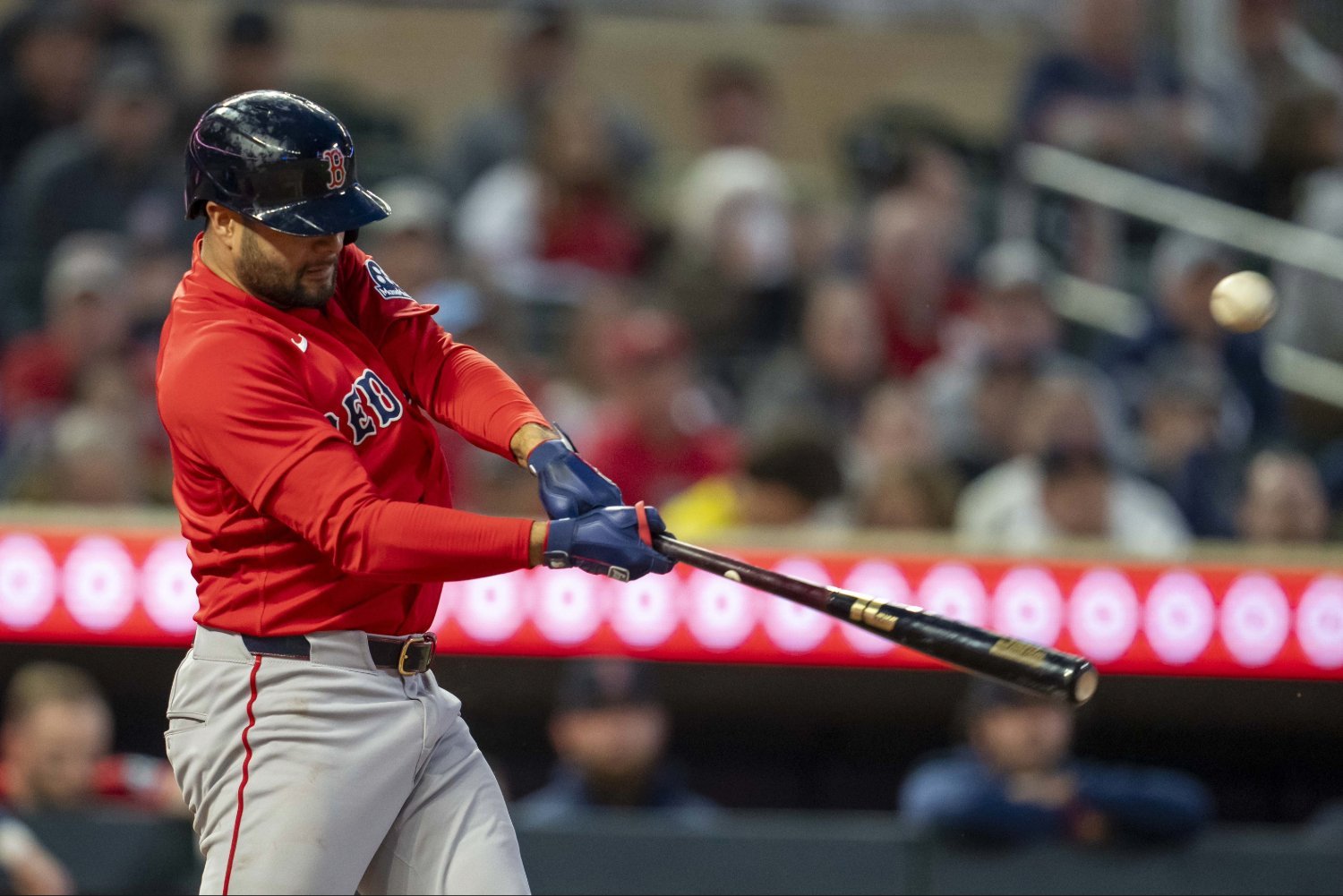 There was a lot of confusion around the league when the Boston Red Sox inked Isiah Kiner-Falefa to a one year, $6 million contract late in the offseason. The thought was that he didn’t make much sense as a veteran addition to a team that had rookie Marcelo Mayer, Caleb Durbin, Nate Eaton, and an injured Romy Gonzalez already under contract for the season. Sure, he’s a veteran presence in a very young clubhouse, but at what cost? Mayer needs to be playing at second every day, even against left-handed pitchers, and Gonzalez is looking to return in just over a month if Chad Tracy still believes that Mayer needs a platoon partner at the keystone. In other words, it’s time for the Red Sox to cut their losses and move on from Isiah Kiner-Falefa. If we just look at the numbers, they paint the picture of a veteran who is past his prime and struggling with the looks he’s given. He’s only played in 20 games with 44 plate appearances. He’s currently slashing .200/.256/.200 with a zero fWAR and a 27 wRC+. When he’s at the plate, he’s striking out just 18.2% of the time, but his walk rate is an abysmal 6.8%. His chase rate is 45.0% and he’s only barreling 3.1% of the pitches he puts in play. He’s as close to an automatic out as you can be at this point in his career. He’s starting against left-handed starters as Mayer is eased into the role of an everyday big leaguer, but Mayer has looked at least competent against most southpaws he’s been allowed to face. Any at-bat that Kiner-Falefa is taking from Mayer is doing a disservice to the top prospect's growth and the future of the organization. There was some hope, before the news of Garrett Crochet’s injury broke, that when Nate Eaton was called up at the end of April that maybe Kiner-Falefa would be DFA’d, but that wasn’t meant to be at the time. The saving grace in all of this is Romy Gonzalez is nearing his return to the club. He’s responded well to his shoulder surgery and has been playing catch and taking grounders during the most recent homestand. While he’s not close to game action yet, he’s started baseball activities and that means the next step should be a rehab assignment with a minor-league club. Once Gonzalez is big league ready, it’s likely safe to assume that a Kiner-Falefa DFA would be the most logical corresponding move. Gonzalez has been a contributor to this team in recent seasons and has both a higher floor and ceiling than Kiner-Falefa possesses at this point in his career. He mashes left-handed pitchers and plays valuable defense at all infield positions. His skillset makes Kiner-Falefa a redundant, and expensive, bench piece that will only see his playing time decrease once the season heats up in late June. Kiner-Falefa’s skillset is obviously diminishing, and he’s taking time away from younger players who need more exposure to at-bats in major-league action. It’s rare for Craig Breslow to admit when he made a mistake, but he can save a bit of face by releasing Kiner-Falefa the second Romy Gonzalez is ready to join the club. View the full article
 -
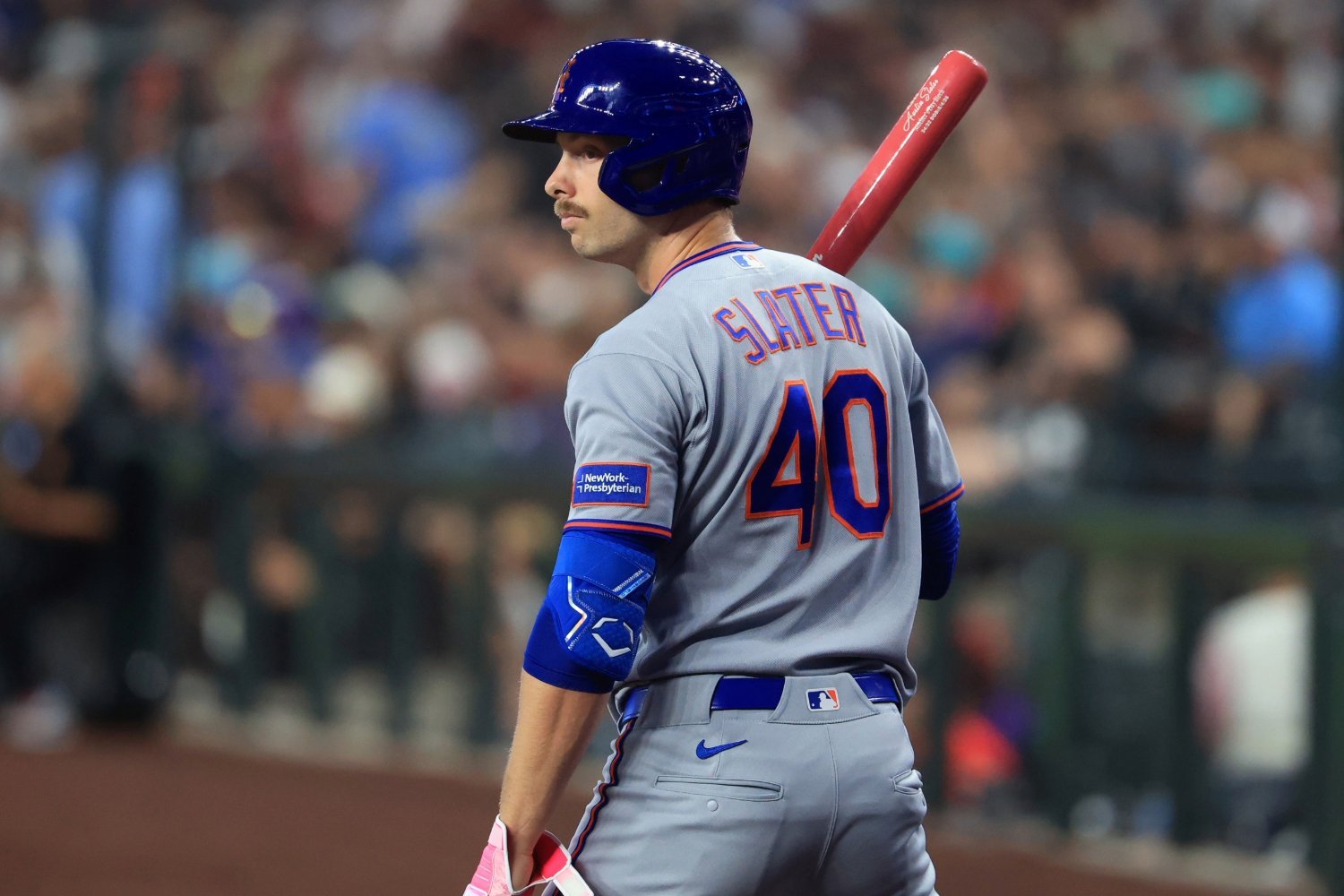 On April 26, after being designated for assignment by the Marlins, Austin Slater signed with the New York Mets. Given the team's struggles at the time of his signing, it made all the sense in the world to bring in a veteran like Slater. For most of his 10 year career, his number one priority has been to hit well vs LHP. The only problem is, he has not done so since 2023. Before 2024, Slater had consistent playing time for the San Francisco Giants. With consistent appearances brought consistent numbers versus left-handed pitching. Since then, Slater has bounced around. In 2024, he was an Oriole and a Re; in 2025, he was with the Chicago White Sox and New York Yankees. In his free agency, Slater was told he was the Sox's “top target” in their attempt to improve vs. southpaws. Since his departure from the Giants, Slater has struggled mightily with the platoon advantage. So far this season, in 38 at-bats vs LHP, Slater is batting .184 with 14 strikeouts. Slater has found most of his time this season in a platoon with MJ Melendez. When Manager Carlos Mendoza was asked why Slater would pinch hit for Melendez, who currently sports a 132 OPS+, Mendoza said, “he is here to hit lefties. obviously”. Some of the problems can be attributed to his struggles versus the fastball. When Slater was hitting well with the Giants, the fastball was the pitch he hit the best, consistently netting a +3 or above in run value. This season, his run value versus fastballs is a -3. As a team, the Mets rank 29th in fastball runs above average, hence why they hoped Slater would be able to help in that regard as well. Slater has also not shown much power at the plate. Within his nine hits this season, only one has been a true barrel. He has one extra-base hit on the season and yet to hit one out of the park. Slater’s hard-hit rate and slugging percentage are both near the bottom of the league as of the start of the Subway Series. To partner all of that with Slater never being a plus defender in the outfield, you start to question what value he brings to the roster. Barring a turnaround, it could be time for the Mets to take a look at Nick Morabito in Triple-A Syracuse, who currently sports a .333 batting average vs. left-handed pitching. For Slater to continue his time with the Mets, he'll have to rediscover a form that's seemingly been lost to time. View the full article
 -
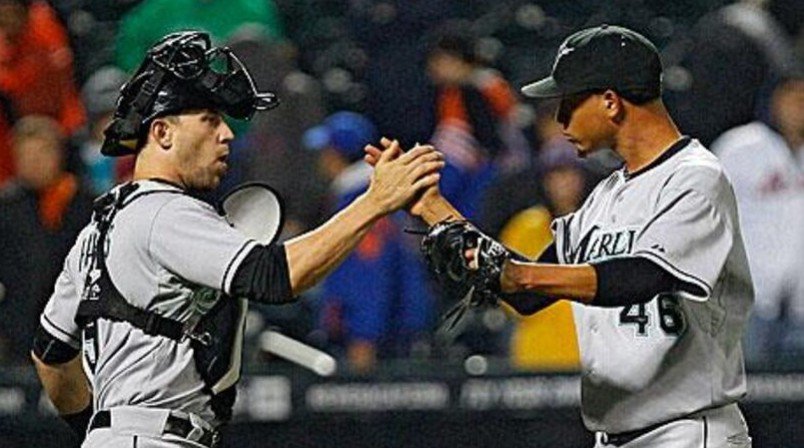 Over his eight years in the big leagues, pitcher Burke Badenhop had just three hits. On this day 15 years ago, however, he had the biggest hit of the night. Also the winning pitcher for the evening, Badenhop came through with the winning hit in the top of the 11th. His single up the middle lifted the Florida Marlins to a 2-1 win over the New York Mets. A solo home run by Giancarlo (then known as Mike) Stanton in the seventh inning had accounted for all the scoring for Florida as the contest at Citi Field went to the 11th on May 16, 2011. Against Ryota Igarashi, Stanton opened the top of the 11th with a single up the middle. Igarashi retired Brett Hayes and Omar Infante but after Emilio Bonifácio singled to put the go-ahead run in scoring position, the Marlins had a decision to make. Without any available position players, Badenhop was left in to hit. After working a scoreless 10th on the mound, the right-hander worked the count full at the plate before lining one up the middle to score Stanton and give Florida its first lead of the night. In the bottom of the 11th, Juan Carlos Oviedo, then known as Leo Núñez, opened the frame by retiring the first two Mets he faced. With New York out of position players, it had to turn to a pitcher to hit. Like Badenhop, Jon Niese worked the count full before belting a triple to centerfield to give the Mets life. Oviedo, however, was able to settle in and strike out All-Star José Reyes to end the game. Both teams finished with nine hits in the contest. Infante had three for Florida while Stanton added two and scored both Marlins runs. Reyes and Justin Turner each had two hits for the Mets. As for Badenhop, the victory would serve as his final road win as a member of the Marlins. His heroics at the plate accounted for the final RBI of his career. It came in the 11th inning on this day 15 years ago. View the full article
 -
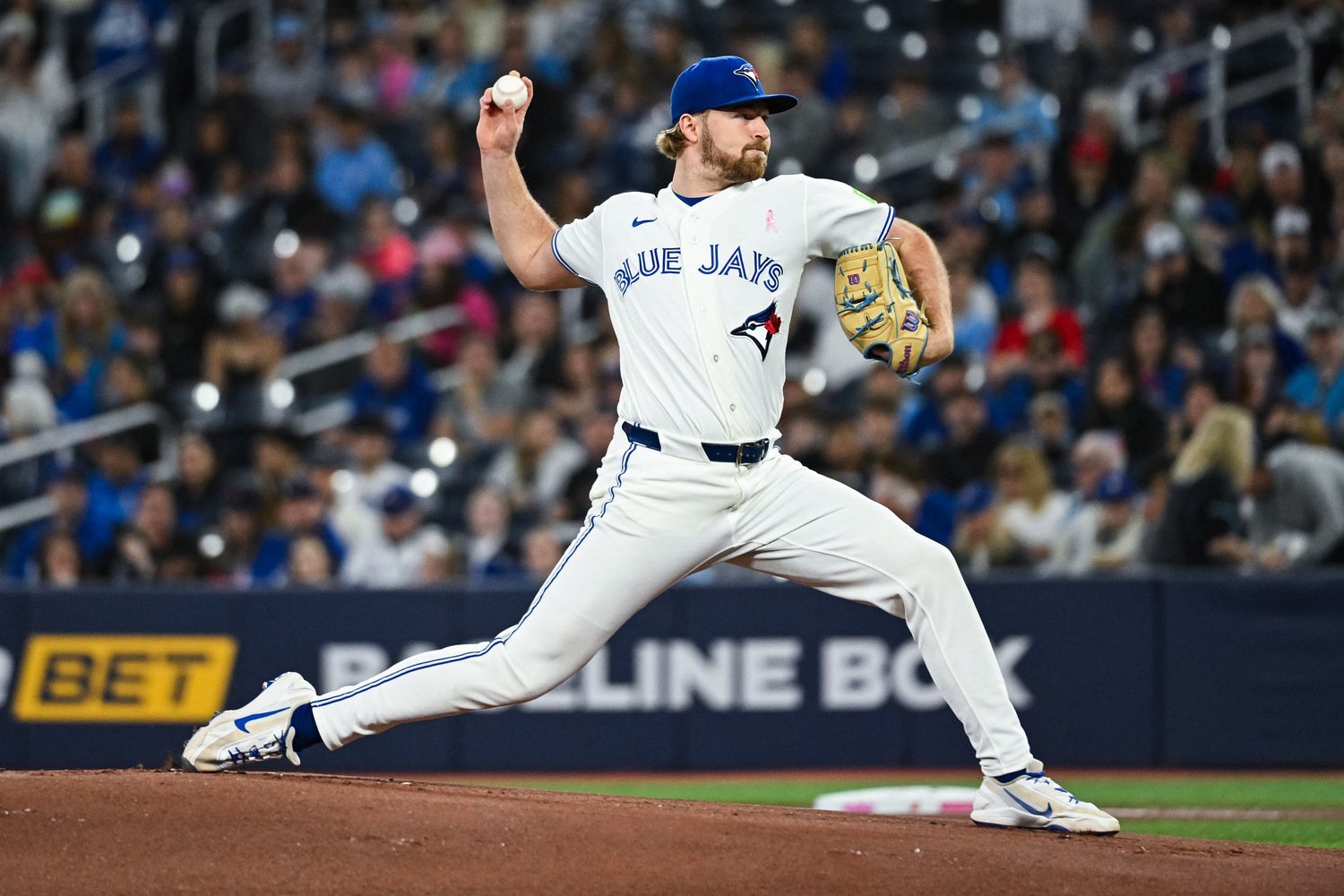 The Toronto Blue Jays have had unfortunate, unexpected bad luck with their starting rotation's health. José Berríos was expected to return to Toronto soon, but he has suffered a setback with his elbow injury. He recently met with Dr. Keith Meister, a renowned elbow surgeon, and they are continuing to discuss what approach they will take. Cody Ponce suffered an ACL injury in his first start back in MLB after four seasons overseas. Shane Bieber has been out all season recovering from elbow inflammation. He has thrown a few bullpens and is expected to face live hitters soon. This progress will allow his expected return in late May or early June, provided he continues taking steps in the right direction. Max Scherzer has made only five starts, and they were a roller coaster ride full of ups and downs. He's now on the injured list due to forearm tendinitis and swelling in his ankle. He received cortisone shots for both to see if he can return sooner rather than later. A timetable will be established once the team sees how his body reacts to the shots. Bowden Francis underwent UCL surgery in the offseason and won't return until next season. Eric Lauer was filling in the rotation void, but his performance was hideous. He has since been designated for assignment. There are no clear answers to address the opening in the rotation at the moment. The Blue Jays already hit the free agent market and added Patrick Corbin because they had no prospects that were ready to be called up. Ricky Tiedemann looked like an option for promotion during spring training, but he was shut down with elbow soreness. He's started throwing on a mound, but he's being eased in after missing all of 2025 recovering from Tommy John surgery. Tiedemann is unlikely to return until later in the second half of the season. However, there may be a solution to the rotation void currently on the Blue Jays roster. That option is Spencer Miles, who has been working as a long reliever this season. He's performed well in his rookie campaign, posting a 3.00 ERA over 21 innings with an 18:5 strikeout-to-walk ratio and a 3.36 FIP (entering play on May 15). Miles got the start on May 10 against the Los Angeles Angels, though he was really more of a "long opener" in that game. He threw 38 pitches over three scoreless innings, while allowing two hits and striking out two. The Blue Jays' coaching staff will have to tightly monitor his workload, as the Rule 5 draft pick only pitched 7.1 innings in each of his two seasons in the minors (2022 and '24). Miles missed the 2023 season due to back surgery and the 2025 season due to undergoing Tommy John surgery. With his success this season, Miles is the obvious choice to become the fifth starter, even if it's only for a few innings each outing before he turns things over to the bullpen. However, with his limited experience and production, the righty will need to be closely monitored. There have already been too many injuries to the starting rotation that the coaches and front office have had to try to solve. The season hasn't started the way the Blue Jays expected after a World Series trip last fall, but the beauty of Major League Baseball is that there are 162 games on the schedule, so the Jays have plenty of time to get their issues figured out. View the full article
 -
 Kash Mayfield fired five innings of one-hit ball with nine strikeouts in Fort Wayne's 12-3 win, and Kruz Schoolcraft tossed three scoreless for Lake Elsinore in a 14-0 rout. Jorge Quintana, Ty Harvey, and Kerrington Cross each drove in multiple runs for the Storm. Omar Cruz struck out nine over 3⅓ innings as San Antonio cruised 10-3. El Paso fell 10-5 in Salt Lake despite Mason McCoy's three RBIs. Padres Transactions San Diego Padres recalled RHP Alek Jacob from El Paso Chihuahuas. Pablo Reyes' Streak Ends As Chihuahuas Bitten By 6-Run Seventh Inning Mason McCoy drove in three runs and Nick Schnell homered, but the Triple-A El Paso Chihuahuas were doomed by a six-run seventh inning in a 10-5 loss to the host Salt Lake Bees. The Chihuahuas had a 5-4 lead when the Bees erupted in the decisive seventh. Pablo Reyes went 0-for-5 as his on-base streak ended at 30 games, every game he had played this year before Friday, for the Chihuahuas. Anthony Vilar had two hits and a walk for the Chihuahuas. The Chihuahuas jumped out to a 3-0 lead in the top of the first inning. With two outs, Samad Taylor walked and Will Wagner and Nick Solak singled to score Taylor, putting runners on the corners. After Solak stole second, McCoy lofted an opposite field single to score Wagner and Solak. It stayed 3-0 until the Bees scored twice in the bottom of the fifth, but Schnell got one of those back with a leadoff homer to open the sixth, his seventh blast of the year, for a 4-2 edge. Salt Lake, however, tied it with two more in the bottom of the sixth. The Chihuahuas reclaimed the lead in the top of the seventh. Wagner walked, Solak sacrificed him to second and McCoy delivered a go-ahead single to center. But things unraveled for the Missions in the bottom of the seventh with a six-run outburst, which included a grand slam. Missions left-handed starter Jackson Wolf went five innings, allowing two runs on five hits with a walk and two strikeouts. EP_0515.mp4 Player AB R H RBI BB K Pablo Reyes, DH 5 0 0 0 0 0 Clay Dungan, 2B 4 0 0 0 1 2 Samad Taylor, RF 3 1 0 0 2 0 Will Wagner, 3B 4 2 1 0 1 0 Nick Solak, LF 4 1 1 1 0 0 Mason McCoy, SS 4 0 2 3 0 0 Nick Schnell, CF 3 1 1 1 1 0 Marcos Castañon, 1B 3 0 1 0 0 0 Anthony Vilar, C 3 0 2 0 1 1 Player IP H R ER BB K HR Jackson Wolf 5 5 2 2 1 2 1 Garrett Hawkins 1 2 2 2 2 0 0 Logan Gillaspie (L) 1 5 6 6 1 0 1 Justin Yeager 1 0 0 0 0 1 0 Missions Strike Out 20 In Blowout Victory Over Wind Surge Left-handed starter Omar Cruz struck out nine and combined with three relievers to fan 20, while Ryan Jackson drove in three runs as the host Double-A San Antonio Missions rolled to a 10-3 victory over the Wichita Wind Surge. Tirso Ornelas had three hits, while Jackson, Carson Tucker, Leandro Cedeno and Braedon Karpathios each had two of the Missions' 16 hits. Romeo Sanabria reached base three times and scored three runs. The Missions also drew nine walks. Cruz made his first start of the season after 10 relief appearances between Triple-A and Double-A and allowed just one hit over 3⅓ innings, walking one and giving up a pair of unearned runs. His nine strikeouts were a season high and one shy of his career best, accomplished four times. He had not pitched more than two innings this year. Right-hander Sadrac Franco pitched 1⅔ hitless innings, striking out three, while right-hander Josh Mallitz struck out three in two innings, allowing a run, and right-hander Francis Pena finished by striking out five in two perfect innings. The Missions grabbed a 3-0 lead in the third inning. With two outs, Cedeno walked, Ornelas doubled him to third and Sanabria walked to load the bases. Karpathios drew a bases-loaded walk for a 1-0 lead, then Jackson singled home a pair for a 3-0 advantage. After Wichita scored twice in the top of the fourth, Cedeno had an RBI single in the fourth and a single and three walks in the fifth made it 5-0. Another Wind Surge run came in the sixth, but the Missions blew this one open with a four-run bottom of the sixth. Ethan Salas drew a leadoff walk and stole second with one out, his eighth steal of the year, before taking third on Ornelas' single. Sanabria, Karpathios and Jackson had consecutive RBI singles to make it 9-3. Ornelas capped the scoring with a run-scoring single in the seventh. SA_0515.mp4 Player AB R H RBI BB K Carson Tucker, SS 5 2 2 0 0 1 Ethan Salas, C 4 1 1 0 1 0 Leandro Cedeño, DH 2 1 2 1 1 0 Kai Murphy, DH 2 0 0 0 0 2 Tirso Ornelas, RF 5 2 3 1 0 0 Romeo Sanabria, 1B 3 3 1 1 2 1 Braedon Karpathios, CF 3 1 2 2 2 1 Ryan Jackson, 3B 4 0 2 3 1 0 Francisco Acuna, 2B 3 0 1 1 2 0 Albert Fabian, LF 5 0 0 0 0 3 Player IP H R ER BB K HR Omar Cruz 3 1/3 1 2 0 1 9 0 Sadrac Franco (W) 1 2/3 0 0 0 0 3 0 Josh Mallitz 2 2 1 1 1 3 0 Francis Peña 2 0 0 0 0 5 0 Kash Mayfield Scintillating As TinCaps Mash Kernels Left-handed starter Kash Mayfield struck out nine and allowed one hit over five innings, while Kavares Tears homered, had three hits and drove in four runs as the High-A Fort Wayne TinCaps cruised to a 12-3 victory over the Cedar Rapids Kernels. Mayfield retired the first 13 batters of the game. Kasen Wells finished 4-for-4 with two runs scored and an RBI, while Rosman Verdugo joined Tears by homering and having a three-hit night. Verdugo scored three times and drove in a pair, with Alex McCoy and Lamar King Jr. each having two hits. For King, it was his third straight two-hit game, extending his on-base streak to 26 games, the longest for the TinCaps since 2019 by Dwanya Williams-Sutton. In lowering his ERA to 1.52, this was the second outing in a row where Mayfield, Padres Mission's No. 2 prospect, went five shutout innings and allowed just one hit. It is also the fifth time in his seven starts this year that he has not allowed a run, allowing one hit or less in those same five outings. Mayfield has not allowed a run in his last 12 innings after starting the season with a 15-inning scoreless streak. Mayfield's nine strikeouts tied a career high, set last season with Low-A Lake Elsinore. He had 16 swings and misses, including all nine of his strikeouts. His ERA is second in the Midwest League. Mayfield got more than enough support thanks to the TinCaps scoring six runs before he took the mound. Zach Evans led off the game with a single and went to third on Verdugo's double. After an out, McCoy doubled off the third baseman, his Midwest League-high 12th two-bagger, and into left field to make it 2-0. After King singled McCoy to third, Tears hit a towering blast to right-center to make it 5-0. The three-run shot was his third homer this year. Jack Costello kept it going with a double and Wells followed with a two-out double for a 6-0 advantage as the TinCaps sent 10 hitters to the plate. Verdugo added a two-run homer in the fourth to put the TinCaps up 8-0, while Tears got his fourth RBI of the night in the fifth when he doubled home McCoy, who had singled and stolen second. In the sixth, Kasen Wells singled, Evans walked and Verdugo singled to load the bases. Rodriguez had an RBI groundout and a wild pitch made it 11-0. Following a walk to McCoy, King singled home Verdugo, giving the TinCaps a dozen runs. With Mayfield out of the game following a very efficient 56 pitches, including 43 strikes, the Kernels scored three in the bottom of the sixth. FW_0515.mp4 Player AB R H RBI BB K Zach Evans, 3B 4 2 1 0 1 0 Rosman Verdugo, 2B 5 3 3 2 0 0 Carlos Rodriguez, C 5 0 0 1 0 0 Alex McCoy, LF 4 2 2 2 1 1 Lamar King Jr., DH 5 1 2 1 0 1 Kavares Tears, RF 5 1 3 4 0 1 Jack Costello, 1B 5 1 1 0 0 3 Jonathan Vastine, SS 5 0 0 0 0 2 Kasen Wells, CF 4 2 4 1 0 0 Player IP H R ER BB K HR Kash Mayfield (W) 5 1 0 0 0 9 0 Braian Salazar 1 3 3 3 2 2 0 Will Varmette 2 1 0 0 2 1 0 Luis Germán 1 0 0 0 0 0 0 Storm Pitchers Blank Quakes While Hitters Erupt Kerrington Cross came off the bench to drive in three runs and four other players drove in a pair as the host Low-A Lake Elsinore Storm blew things open with a six-run sixth inning to subdue the Rancho Cucamonga Quakes 14-0. Storm left-hander starter Kruz Schoolcraft, Padres Mission's No. 4 prospect, pitched three hitless innings, but he did walk five and struck out four. Schoolcraft has allowed just one unearned run over his last seven innings to lower his ERA from 13.50 to 8.15. LE1_0515.mp4 Three relievers followed to complete the four-hit shutout. Right-hander Nick Falter, right-hander Vicarte Domingo, and left-hander Joseph Herrera combined for the final six innings, walking one and striking out four. The Storm slowly built a 5-0 lead through five innings. Ty Harvey doubled in a run in the first, Qrey Lott singled a run in the second and another in the fourth and Truitt Madonna doubled home a pair in the fifth. But the real fireworks came in the sixth. Four of the first five batters walked to bring in a run, then an error plated another before Cross finally got the first hit of the inning, a run-scoring single to make it 8-0. A wild pitch brought in another and Jorge Quintana capped the inning with a two-run single. There was one more outburst for the Storm. That came in the eighth as Cross hit a two-run homer, his second blast of the year, and Conner Westenburg had a bases-loaded single to make it 14-0. Jorge Quintana had three hits, while Harvey and Lott each had two hits and two RBIs and Westenburg two hits and an RBI. Ryan Wideman had a hit and stole his 28th base of the season while scoring twice. LE2_0515.mp4 Player AB R H RBI BB K Bradley Frye, 3B 4 2 0 0 2 0 Ty Harvey, C 3 1 2 2 1 0 Yoiber Ocopio, C 1 0 0 0 0 0 Ryan Wideman, CF 4 2 1 1 0 0 George Bilecki, RF 1 1 1 0 0 0 Luke Cantwell, 1B 2 1 0 0 0 0 Kerrington Cross, 1B 2 2 2 3 0 0 Truitt Madonna, DH 5 0 1 2 0 3 Jorge Quintana, SS 5 2 3 2 0 1 Jose Verdugo, 2B 3 1 0 0 1 0 Dylan Grego, 2B 0 0 0 0 1 0 Qrey Lott, LF 4 1 2 2 0 1 Conner Westenburg, CF 4 1 2 1 1 1 Player IP H R ER BB K HR Kruz Schoolcraft 3 0 0 0 5 4 0 Nick Falter (W) 3 2 0 0 0 1 0 Vicarte Domingo 1 0 0 0 1 2 0 Joseph Herrera 2 2 0 0 0 1 0 Top-20 Prospect Performance Ethan Salas: 1-for-4, BB, R, SB Kash Mayfield: 5.0 IP, 1 H, 0 R, 0 BB, 9 K (W) Miguel Mendez: DNP Kruz Schoolcraft: 3.0 IP, 0 H, 0 R, 5 BB, 4 K Ryan Wideman: 1-for-4, RBI, 2 R, SB Jorge Quintana: 3-for-5, 2B, 2 RBI, K Ty Harvey: 2-for-3, 2B, BB, 2 RBI Kale Fountain: DNP Braedon Karpathios: 2-for-3, 2 BB, 2 RBI, K Lamar King Jr.: 2-for-5, RBI, K Jagger Haynes: DNP Alex McCoy: 2-for-4, 2B, BB, 2 RBI, K Truitt Madonna: 1-for-5, 2B, 2 RBI, 3 K Tucker Musgrove: DNP Garrett Hawkins: 1.0 IP, 2 H, 2 R, 2 BB, 0 K (BS) Michael Salina: DNP Eric Yost: DNP Rosman Verdugo: 3-for-5, HR, 2B, 2 RBI Bryan Balzer: DNP Deivid Coronil: DNP View the full article
 -
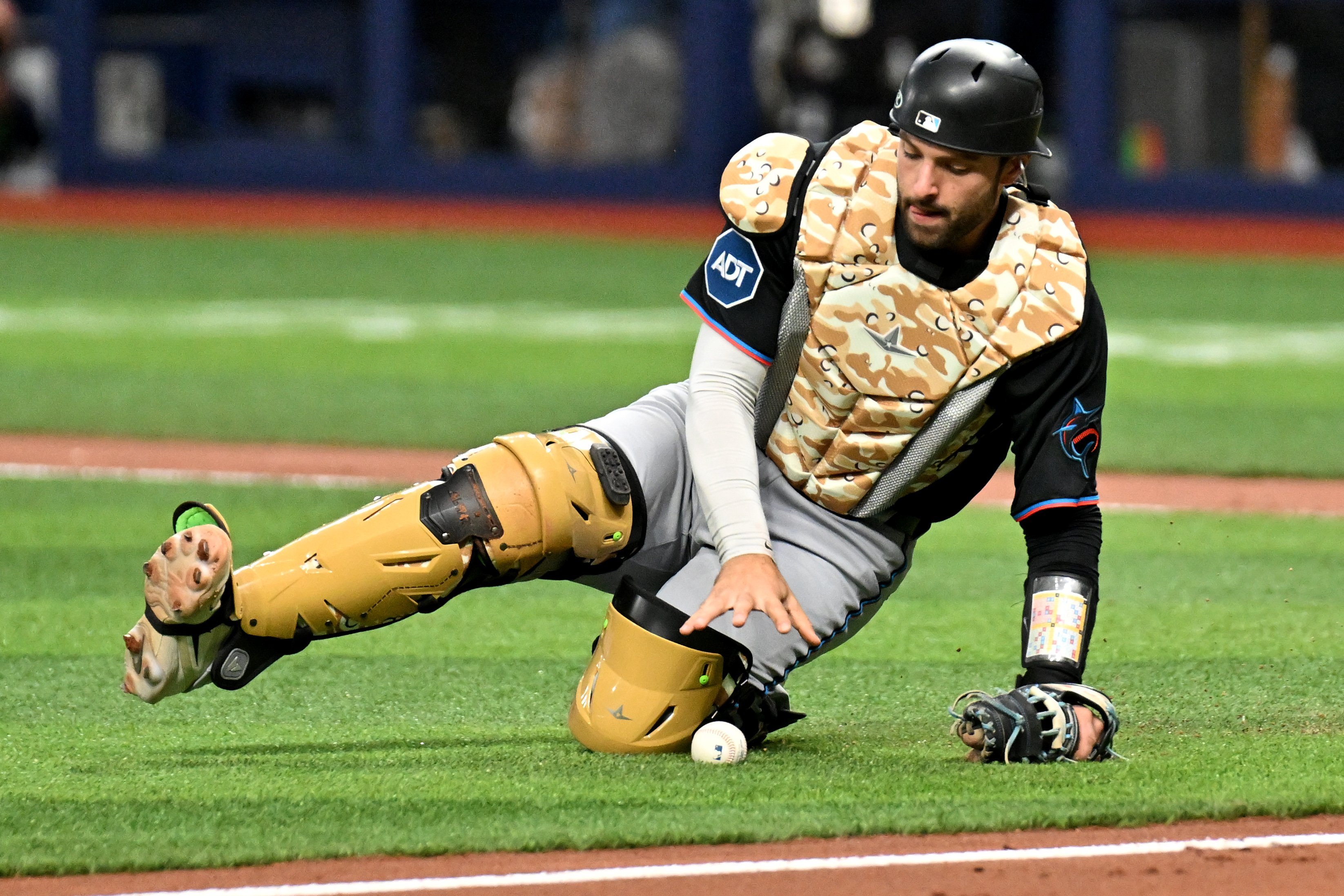 ST. PETERSBURG, FL - Although the Miami Marlins fell to the Tampa Bay Rays in the Citrus Series opener by a final score of 7-2, Joe Mack has been a bright spot defensively for the Marlins. In the bottom of the sixth inning, Mack threw out Chandler Simpson trying to steal second. Simpson, who entered Friday's game in the 98th percentile in sprint speed, had only been caught stealing four times, tied for second least in baseball. Thankfully for Mack, he had crossed paths with him in Triple-A last season and had some prior preparation. "I just know that he's going to be a guy that you have to look out for," Mack said postgame. "He's a very, very fast athlete. It's just something that you got to prepare for and be ready for at all times." Mack's pop time on the throw was 1.80 seconds, the fastest amongst any Marlins catcher this season and the seventh fastest this season in baseball. Mack also holds the three quickest pop times of the Marlins season, and he has only played in 10 games. The throw was clocked at 81.7 mph. "That throw tonight was impressive," Marlins manager Clayton McCullough said. "The exchange and the accuracy that he was able to get on it. Even though the one that Mullins stole, he did all he could. He made a good throw off the line and (Mullins) just beat it." Through 10 games in the majors, Mack already holds the 12th quickest average pop time in MLB. He is quickly climbing the Statcast leaderboards for Blocks Above Average and Catchers Caught Stealing Above Average as well. The Marlins may be struggling as a team, but ever since Mack joined the big league club, defense behind the plate has seen a massive improvement. The only downside has been the bat, slashing .200/.226/.300/.526 with two RBI. His biggest issue has been the strikeouts, with already eleven on the season and two more on Friday. "I know my bat can definitely wake up a little bit more," Mack said. "I definitely haven't shown much on that aspect. Maybe it's just trying to do too much, but other than that, defensively I feel pretty confident within my ability to receive, block and throw the ball, It's something they obviously brought me up for, and showing that off is a good thing. The bat I think just needs to wake up a little bit. When that starts to roll, then we just go." For Janson Junk, it is now back-to-back starts where he has struggled. On Friday night, Junk went 5 2/3 innings pitched allowing seven runs on 10 hits (two home runs) while walking three and striking out four. "I think everything that could have happened wrong, happened," Junk said. "It was very frustrating. I was trying to battle, and it just didn't go my way tonight." In the bottom of the first inning, Junk surrendered a first-pitch homer to Yandy Diaz, marking his sixth of the season to give Tampa an early 2-0 lead. For Diaz, it was his 105th homer as a member of the Rays, moving him past Carl Crawford on the Rays all-time home run list. Junk allowed the home run on a sweeper that he left middle-middle. The second home run that Junk allowed came in the bottom of the sixth inning, when free-agent signing Cedric Mullins hit his third of the season to right field. This time, Junk threw a slider which landed towards the top of the strike zone, but Mullins took advantage of it, extending the Rays lead, 7-2. "That one leaked a little," Junk said. "I think that was more out of frustration. I got to be better in that moment after the ball hits whatever that is up there. Just seeing that I kind of affected me a little bit." Rays manager Kevin Cash made the decision to have lefty Ian Seymour start the game as an opener. With the Marlins struggling against left-handed pitching (.666 OPS going into Friday), Tampa becomes the second team to use this strategy, with the Washington Nationals doing it during the weekend series at home. Unlike the first time when Washington did this, it did not work early on, as Connor Norby took Seymour deep for his fourth home run of the season, making it a 2-1 game. The ball left the bat at 105.1 mph and went 412 feet to left field. After struggling to start the season, Jakob Marsee finally seems to be turning a corner, as he notched his second three-hit game of the season, capped off by a solo homer in the top of the sixth inning. He is now slashing .190/.307/.294/.601 with three home runs, 14 RBI, 13 stolen bases and a 76 wRC+. With the loss, the Marlins drop to a season-worst five games under .500 at 20-25. Sandy Alcantara takes the mound tomorrow for Miami. Last time he pitched inside Tropicana Field, he tossed a complete game during the 2023 season. First pitch is at 4:10 pm. View the full article
 -
Brewers 3, Twins 2: Close Calls Sink Twins in Border Battle
DiamondCentric posted an article in Twins Daily
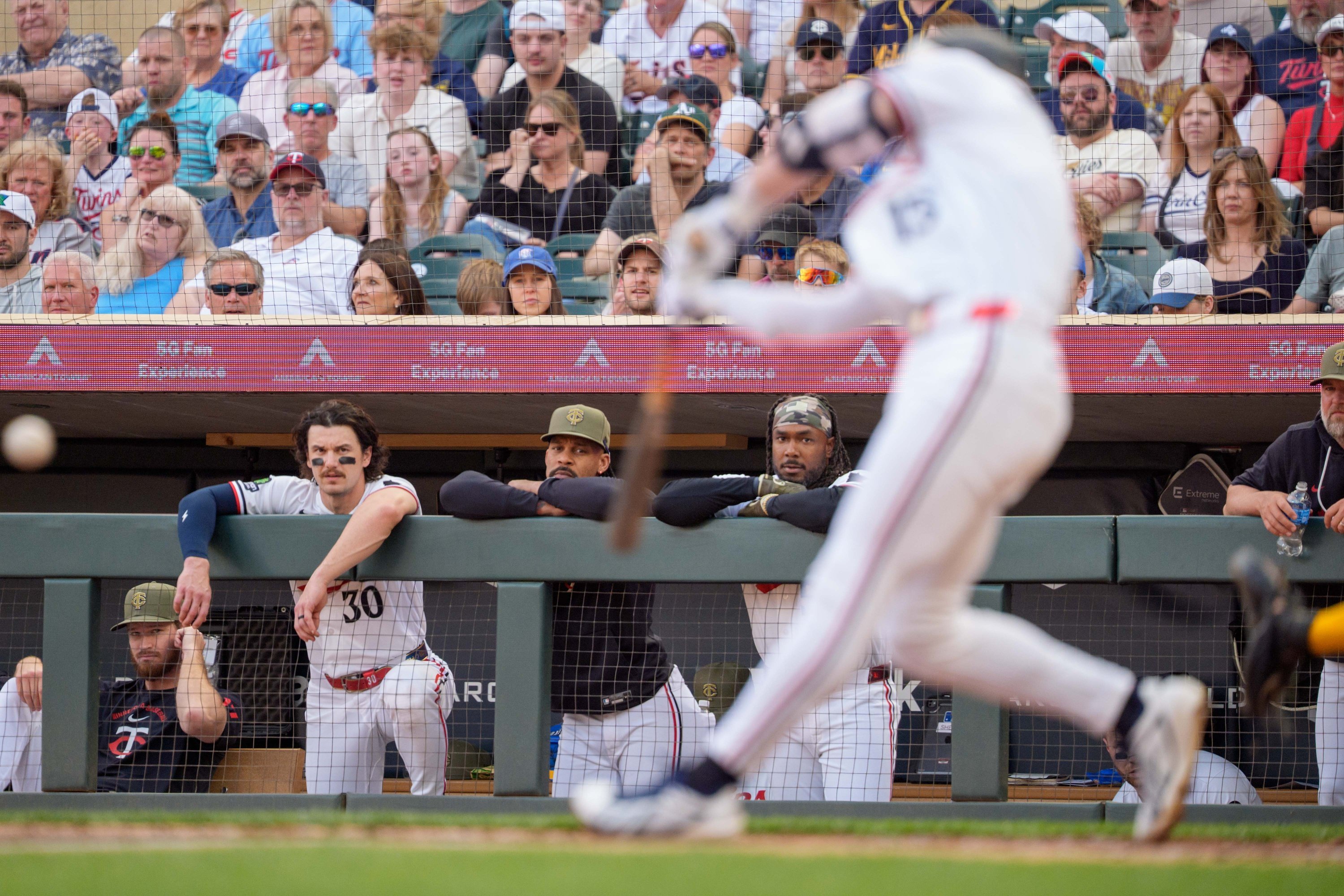 Box Score Joe Ryan: 6 IP, 4 H, 1 ER, 1 BB, 7 K Home Runs: None Bottom 3 WPA: Andrew Morris (-.500), Josh Bell (-.340), Luke Keaschall (-.100) Win Probability Chart (via FanGraphs) The border battle. The Midwestern rivalry. The matchup of two teams in two separate leagues, whose effect on each other is minimal beyond the outcomes of the few games they play every year. Whatever description you favor. We here at Twins Daily don’t judge. Joe Ryan started for the Twins. The eccentric righty shook off his elbow problems from two starts ago to put forth a Joe Ryan-y outing in Cleveland, working around the typically plucky Guardians for one earned run spread across six innings. Friday should be more of the same. A pitcher named Coleman Crow started for the Brewers. Though his name is more in line with a 90’s singer-songwriter, the righty possesses some spunk; he allowed just two earned runs over 5 ⅓ innings in his previous start. The game started inconspicuously for Minnesota, with Jackson Chourio jumping on a first-pitch fastball—how rude of him—for a double to center. He soon scored on an infield single deflected into the outfield by a diving Brooks Lee. The 25-year-old Crow proved an impressive force for the Twins’ batters. His finesse was overwhelming; soft contact and easy outs abounded, as batter after batter failed to reach base. Minnesota didn’t earn their first base hit until the fifth inning—and even he was quickly erased in an attempt to steal second. But runs did appear, even if the early efforts were meager. James Outman and Austin Martin singled off Crow to start the sixth; the lead-running Outman reached third. That was enough to call Pat Murphy from the dugout to change pitchers. The new hurler, Aaron Ashby, coaxed Brooks Lee into a run-scoring double play to tie the game, a bittersweet outcome for the Twins. Minnesota then took the lead outright in the seventh on an RBI single by Royce Lewis, possibly aided by Kody Clemens distracting the infield into cutting off the throw to home. Then, the drama. No, not the recent Robert Pattinson movie; rather, this drama was confusing and unresolved. With runners on second and third, William Contreras grounded a ball to short. Lee fielded and threw to Royce Lewis, as the runner had hesitated a step, allowing for a possible out. So it was. Lee nabbed the runner. Until the umpires conspired and sent the runner home on an obstruction call, believing that Lewis had blocked the bag with his foot in an unfair manner. Derek Shelton lasted about 10 seconds before being ejected. Was the call correct? That’s your call. Milwaukee added on with an RBI double by Jake Bauers to take the lead. The sudden change of fate proved deflating for the Twins, who succumbed to Abner Uribe in the eighth before coming up empty against Trevor Megill in the ninth to lose the game. Notes: Post-Game Interview: What’s Next? The Twins and Brewers play again on Saturday at 6:10 PM, with Logan Henderson set to pitch against Connor Prielipp. Bullpen Usage Spreadsheet MON TUE WED THU FRI TOT Rojas 0 0 0 0 41 41 Topa 0 0 35 0 0 35 Adams 0 0 29 0 0 29 Morris 0 0 0 0 24 24 Rogers 0 0 0 0 23 23 Garcia 0 0 18 0 0 18 Banda 0 0 0 0 8 8 Gómez 0 0 0 0 7 7 Orze 0 0 0 0 0 0 View the full article
 -
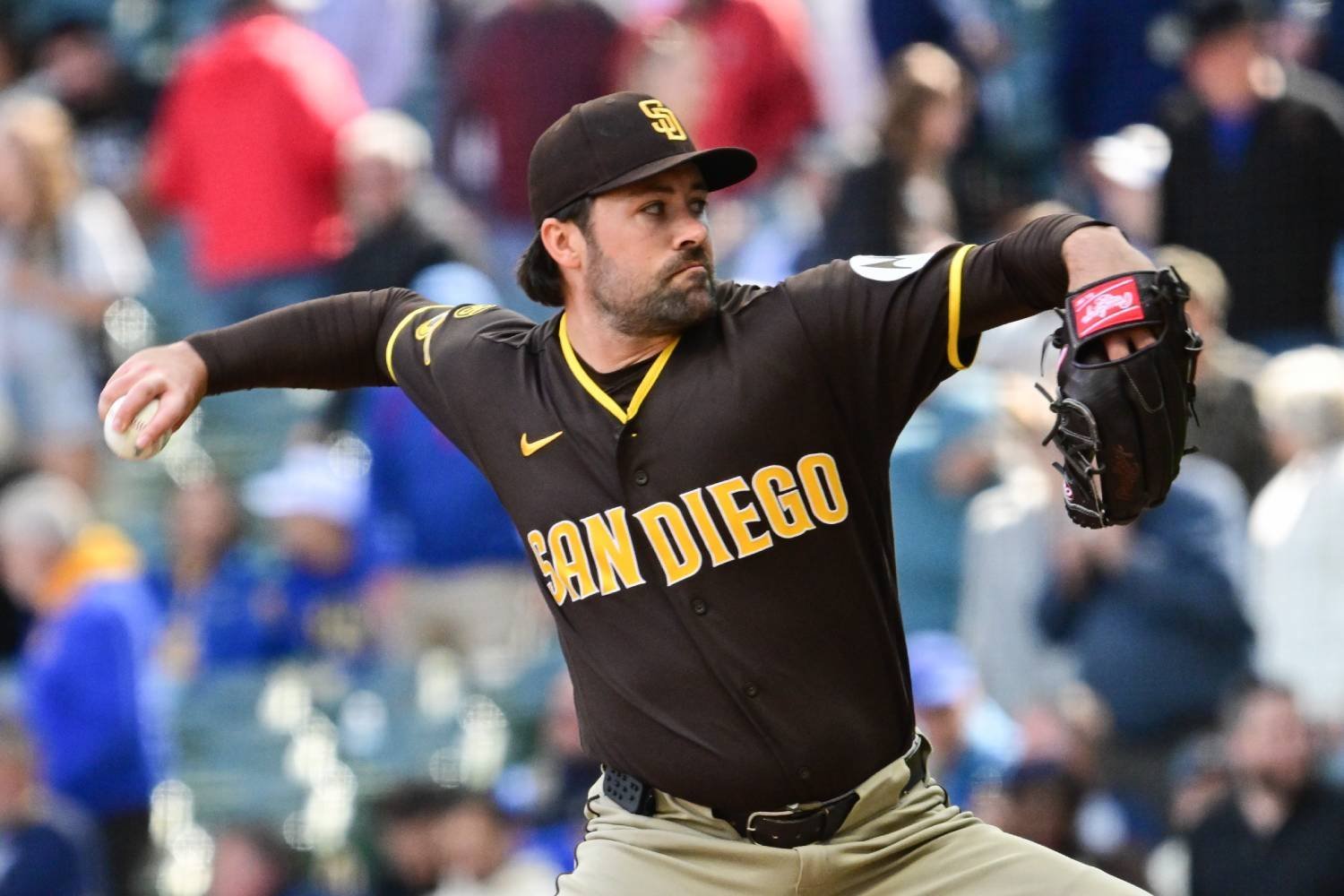 Right-hander Matt Waldron will not be pitching out of the San Diego Padres' bullpen this weekend. Instead, he will be sitting on the injured list. The Padres on Friday placed Waldron on the 15-day IL with a right brachialis muscle injury. Right-handed reliever Alek Jacob was called up from Triple-A El Paso. The brachialis muscle is a muscle located in the upper arm under the biceps and the injury is typically called climber's elbow from its repetitive use. Waldron's spot on the roster was in jeopardy with the impending addition of right-handed starter Lucas Giolito, who signed with the Padres last month and is set to start perhaps Saturday, when he needs to be added to the MLB roster per language in his contract. Waldron started Tuesday's series opener vs. the Milwaukee Brewers, but gave up six runs on eight hits and two walks in 2⅔ innings. He then came on in relief Thursday, pitching two scoreless innings. Manager Craig Stammen said after Thursday's game that Waldron would be in the bullpen this weekend vs. the Seattle Mariners. In six games this year, two coming as the bulk pitcher following an opener, Waldron has an 8.49 ERA with seven walks and 22 strikeouts over 23⅓ innings. Waldron had replaced injured Opening Day starter Nick Pivetta in the rotation. Waldron is out of minor-league options, which is why his roster status within the organization is so precarious. This now keeps Waldron, who started the season on the 15-day IL following hemorrhoid surgery in spring training, in the organization for the foreseeable future. Jacob was up for a couple days in mid-April and appeared in just one game, throwing two shutout innings. View the full article
 -
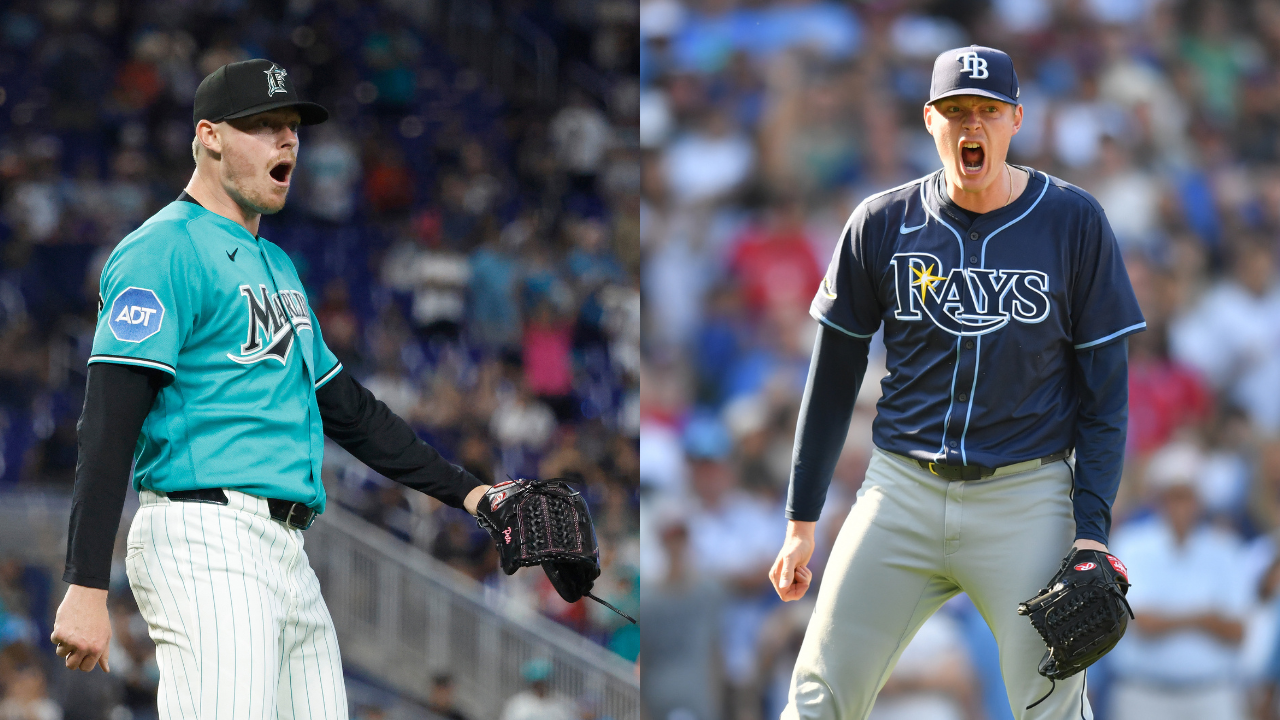 ST. PETERSBURG, FL — Miami Marlins closer Pete Fairbanks is no stranger to the Citrus Series. The difference this weekend is he will be experiencing it as a Tampa Bay Rays opponent for the first time after spending the previous six and a half seasons with the organization. "It was nice to get back, go to the house, see the family and everybody," Fairbanks told traveling media ahead of Friday's game. "Different jersey, same building and still baseball. I'm still trying to go out there and do a whatever I can do to go win games." Originally a member of the Texas Rangers, the Rays acquired Fairbanks in a one-for-one trade in July 2019, sending infielder Nick Solak to the Rangers. From 2020-25, the tall right-hander enjoyed a run as one of the best relievers in baseball. In his time with the Rays, Fairbanks posted a 2.98 ERA in 256 ⅔ innings pitched. He ranks third in the franchise's history in saves (90), 24th in strikeouts (317) and fourth in appearances (267). Fairbanks also saw plenty of postseason action, making 12 total appearances (3.65 ERA), with three of those coming in the 2020 World Series against the Los Angeles Dodgers. Fairbanks was asked to summarize what makes the Rays such an effective franchise despite their well-known payroll limitations. "I don't think that I can sum it up in a couple sentences," Fairbanks said. "From instilling confidence from the pitching side of things, forging relationships and making sure that the personal always trumps the business. There's so many things I've taken that I will take with me for wherever my career goes." Another former member of the Rays organization who has moved to Miami is Marlins president of baseball operations Peter Bendix. Fairbanks' one-year, $13M contract is the largest guarantee that Bendix has given to any free agent since taking the position in November 2023. The Marlins are trying to incorporate some of the Rays' best practices into their own operations, and Fairbanks is encouraged to see that. "Obviously when you have a POBO like Bendix come over, I think that people are influenced by where they came from," Fairbanks said. "You can look back for almost two decades now to really see how things have been built here in Tampa, and I don't think that there's a better comparison for the direction that he wants to take this." The 2026 Marlins have a couple of Fairbanks' former Tampa Bay teammates in Christopher Morel and Calvin Faucher. These teams have frequently done business with each other, making trades in six consecutive years, most recently a February exchange of Victor Mesa Jr. for minor league prospect Angel Brachi. "I think that if they're both very easy clubhouses to mesh with," Fairbanks said. "When you're able to make it easy for everybody to gel and to feel like they've always been there, that in itself is a conduct to success. Hopefully we continue to let that take shape here, and there's a good example over there." Fairbanks has had mixed results through 10 appearances with the Fish. He has converted five saves and posted a solid 3.33 FIP, but several ugly outings have bloated his ERA to 10.00. He was recently reinstated from the injured list on Wednesday. The Marlins and Rays kicked off a three-game set at Tropicana Field on Friday night. View the full article
 -
Schneider: Elbow Surgery "On the Table" for José Berríos
DiamondCentric posted an article in Jays Centre
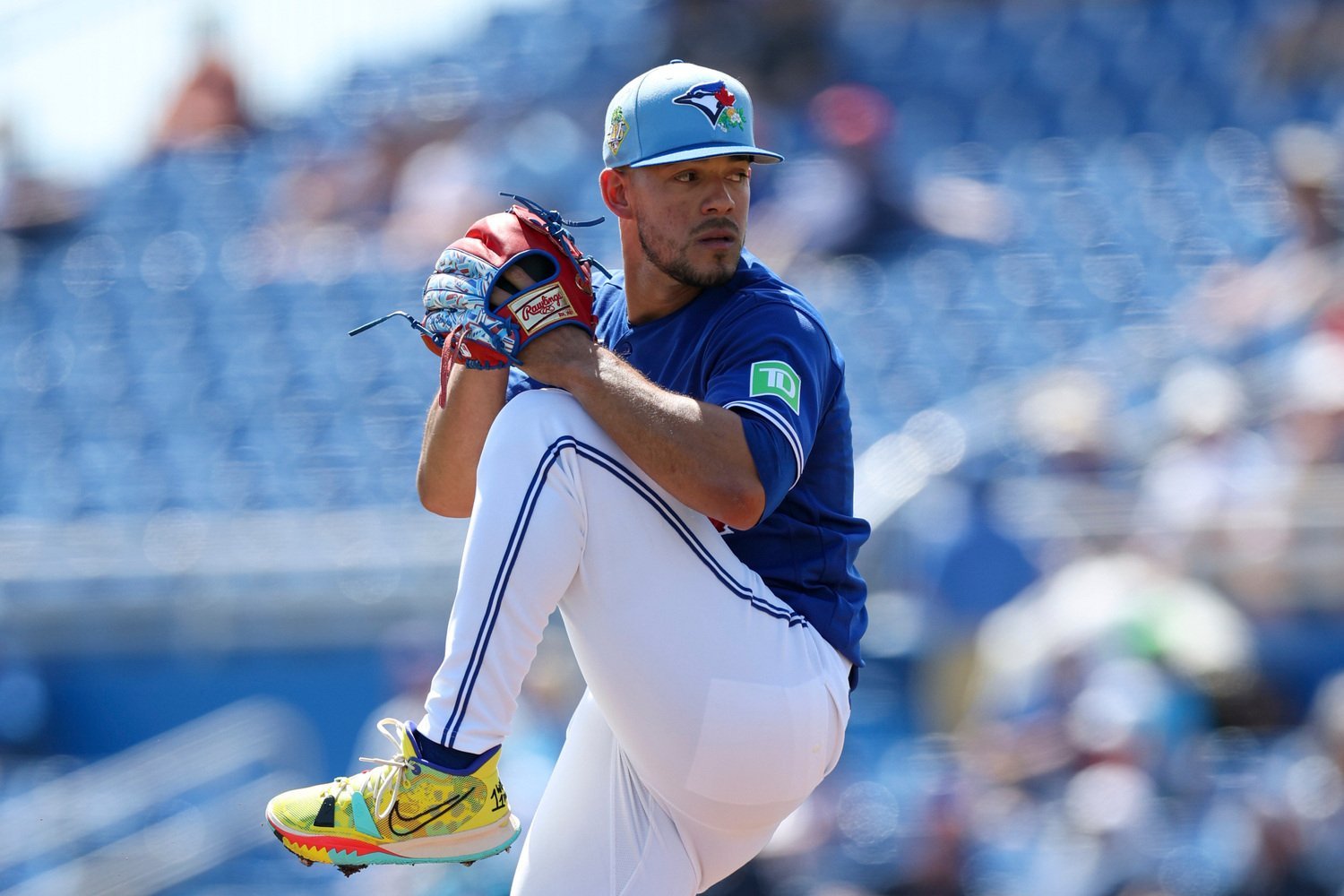 José Berríos has been on the injured list all season with a stress fracture in his right elbow. He seemed to be nearing a return until he suffered a setback after four rehab starts. He has since gone for imaging and met with Dr. Keith Meister. Today, John Schneider told reporters, including Sportsnet's Ben Nicholson-Smith, that "surgery is on the table" for Berríos. Given all the confusing details surrounding the right-hander's elbow health, it's hard to guess what kind of surgery it would be. However, at this point in the year, it's very likely that any kind of surgery would end his season. Rotation depth continues to be an issue for the Blue Jays, with Shane Bieber, Cody Ponce, and Max Scherzer joining Berríos on the IL. Eric Lauer was designated for assignment earlier this week, leaving just four fixtures on Toronto's starting staff: Kevin Gausman, Dylan Cease, Trey Yesavage, and Patrick Corbin. While the team has survived to this point, losing Berríos for the year could be tough to overcome. View the full article
 -
Cubs' Distinguished Running Game Is Finding Its Stride
DiamondCentric posted an article in North Side Baseball
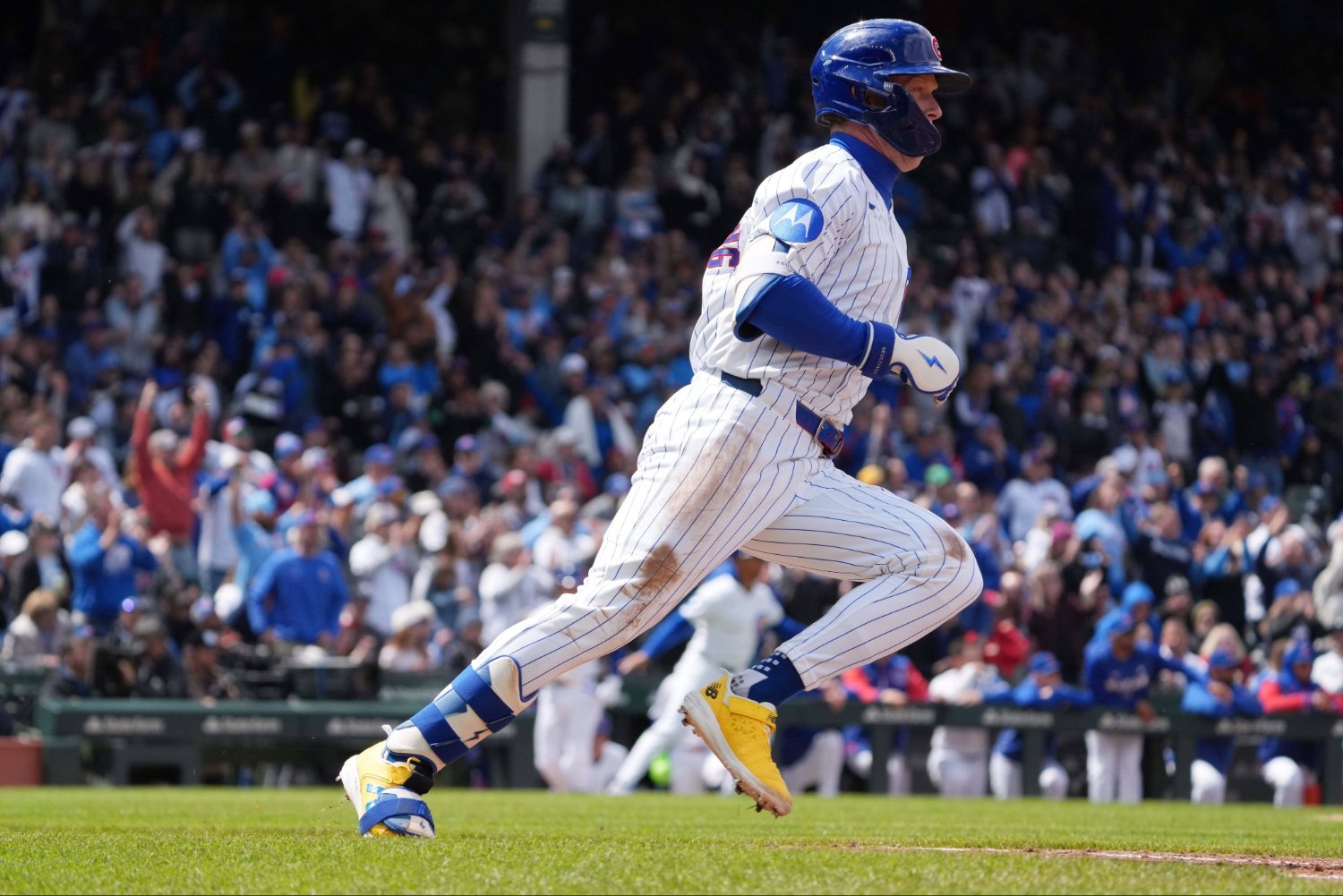 With a +43 run differential, Chicago's North Side baseball team is no stranger to getting and scoring its baserunners. Featuring a .347 team OBP, Craig Counsell's club is one of the best at stepping up to the dish and reaching base. Of course, as the skipper and all ardent supporters of this franchise will tell you, though, it's not about getting on base; it's about what you do once you get there. The squad's willingness and readiness to run on their opponents currently has them standing atop the toughest division in the game. If they continue their success at this level, they might stay there. As one peruses the matchup programs sold by vendors outside the Friendly Confines, they'll find that their Chicago Cubs aren't the best at running; they're just always ready to step up. The Cubs have 31 swipes to their name, with 11 (three times caught stealing) of those coming from Pete Crow-Armstrong, who is one of the fastest players in professional baseball. Gold Glove second baseman Nico Hoerner joins Crow-Armstrong in the top 25 with eight swipes and zero times caught stealing. After that, the numbers dwindle, but depending on the lineup on a given night, two-thirds of it has a player with either a stolen base or at least an attempt. The squad's young slugger, Moises Ballesteros, is the outlier in Chicago's aggressive baserunning strategy. With his build, "Mo Baller" could likely reach base faster on an escalator than with his own wheels. He's batting second in the lineup behind Hoerner, one of the most prolific lead-off batters in MLB. So the conceit then is that Ballesteros will not have to run, but simply drive in or advance the runner already on base. There are several benefits to having a stable of ball players capable of nabbing a base, but it once again speaks to the construction of this lineup, which suggests those tasked with leading this team understand the value of run-scoring opportunities. To the dismay of all of us Cubs fans, the glaring control in this grand experiment is the squad's performances from the last week or so. In their four consecutive losses, the North Siders tallied just three runs. In the week prior to their series finale victory over the Braves, Nico Hoerner and Michael Busch were the only two everyday players sporting a batting average above the Mendoza line. The idea, however, as Counsell pointed out previously, "it will turn". Turning the page quickly is a quality the North Siders have harnessed in spades. Should they hope to enjoy the type of sustained success that their duo of 10-game winning streaks suggested, they're going to have to stay in the running. With just enough speed and determination, this club will find its stride. View the full article
 -
Could a Kemp Alderman call-up ignite this Marlins offense?
DiamondCentric posted an article in Fish On First
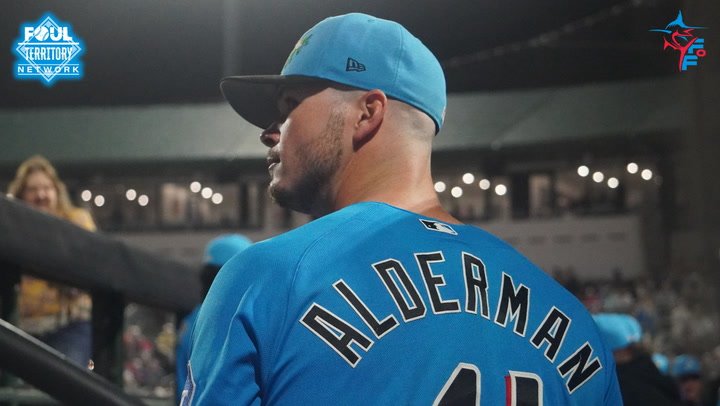 Fish On First LIVE discusses the special skill set of Marlins prospect Kemp Alderman. Slashing .308/.385/.503 with seven home runs for Triple-A Jacksonville, Alderman has begun playing first base this season in addition to his usual right field.View the full article
 -
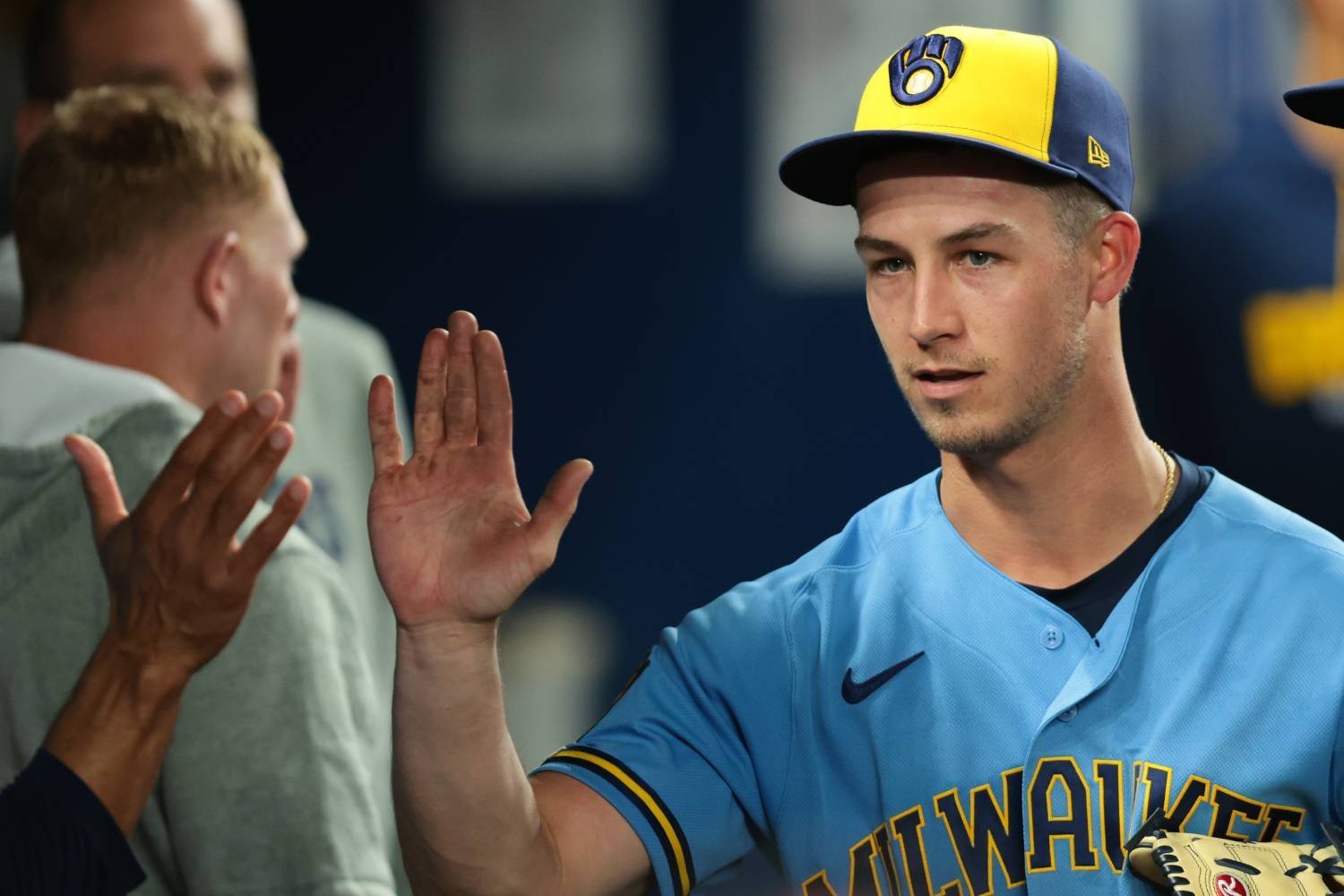 The Milwaukee Brewers have brought Coleman Crow back up. Now the question is: Will this be for more than one game? The right-hander was called up by the Brewers from Triple-A Nashville to start Friday's series opener against the Minnesota Twins. Left-handed reliever Brian Fitzpatrick was sent down to Nashville. Also, outfielder Akil Baddoo was sent to Nashville to begin a rehab assignment. Baddoo strained his left quad in spring training. For Crow, this will be his second start after making his MLB debut April 17 on the road against the Miami Marlins. He went 5⅓ innings, allowing two runs on four hits with a walk and four strikeouts. But that was a spot start and he went back down to Nashville the next day. This move could last at least a little while. Right-hander Chad Patrick was in the Opening Day rotation, but has made his last two appearances and three out of his last five out of the bullpen. Patrick proved very effective in that role in the postseason last year and still gives the Brewers some length out of the bullpen. Crow has made five starts and one relief appearance at Nashville, where he compiled a 4.70 ERA, walking 13 and striking out 34 in 30⅔ innings. Fitzpatrick also made his MLB debut with the Crew this year with very good results. Thus far, he has made four appearances out of the bullpen, covering 5⅔ innings with three walks and four strikeouts. Baddoo signed a split contract with the Brewers in the offseason after five seasons with the Detroit Tigers, where he had been a Rule 5 draft pick. He has a career .224/.305/.369 slash line, including a .259/.330/.436 mark with 13 homers, 55 RBIs and 18 steals as a rookie in 2021. But as the Tigers were infused with prospects, his playing time diminished to just seven games in the majors last year. View the full article
 -
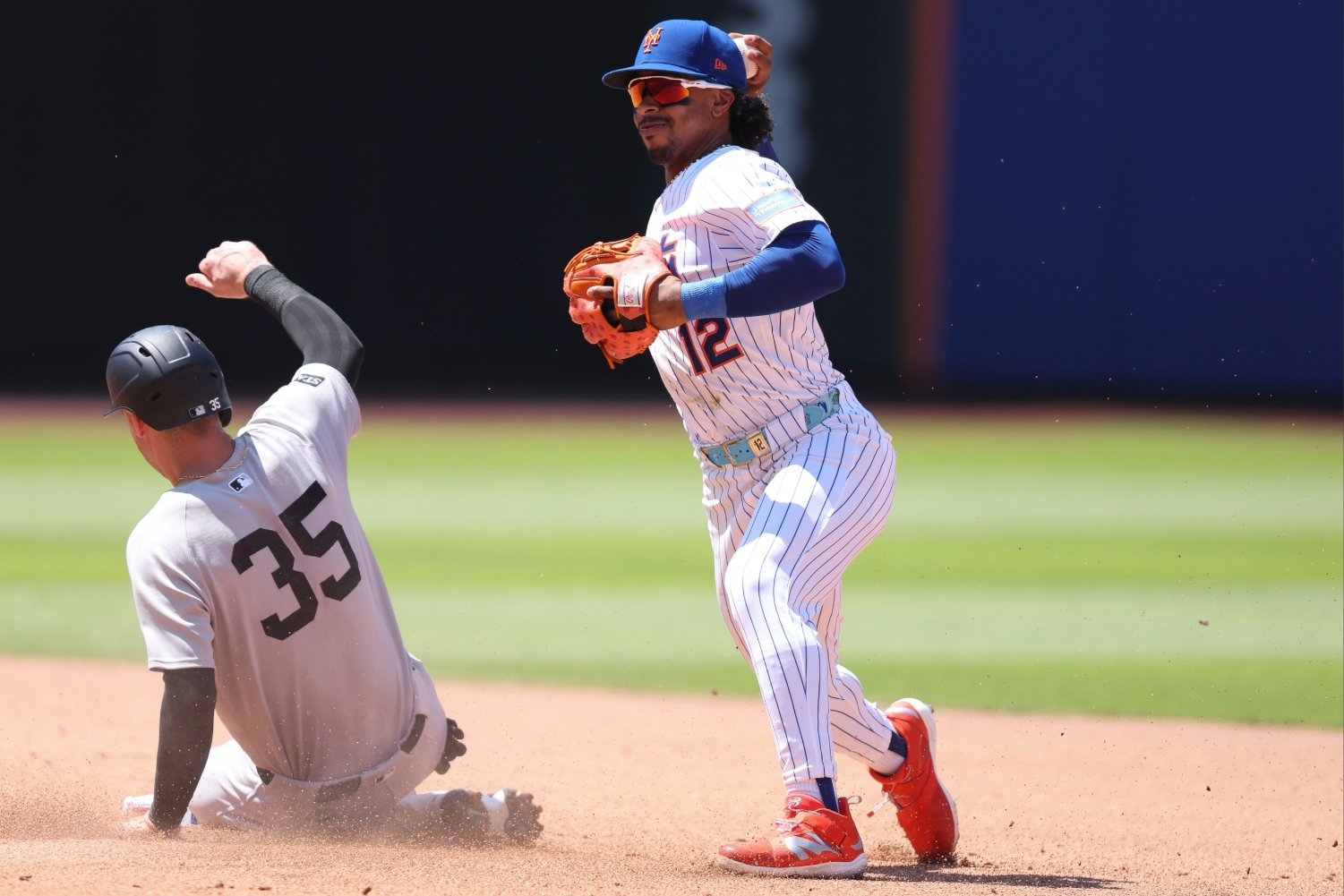 By mid-May, New York is still trying to figure out what kind of teams the Yankees and Mets actually are. The Yankees continue winning just enough games to remain firmly inside the American League conversation, but they arrive at the Subway Series carrying bullpen concerns and an offense that finished its series against the Baltimore Orioles with 15 consecutive scoreless innings. When Aaron Judge and Ben Rice are not producing, the Yankees’ offense has struggled badly to create runs. The Mets, meanwhile, are trapped between conflicting signals: Francisco Lindor, Luis Robert Jr., Jorge Polanco, Francisco Álvarez, Ronny Mauricio, and Kodai Senga are all on the injured list. Bo Bichette’s elite swing still looks disconnected—he currently owns the worst barrel rate of his career at just 3.4%. In the middle of the chaos, Juan Soto is enduring one of the worst offensive stretches of his recent career, yet around him, small signs of a more dangerous and less improvised lineup are beginning to emerge. That is what makes this edition of the Subway Series feel different. It does not arrive as a simple rivalry series on the calendar. It arrives at that uncomfortable point of the season when the first cracks start feeling real. When offensive struggles stop looking temporary. When teams begin understanding which parts of the roster truly work and which ones are still surviving more on reputation than production. And that is why this series feels far heavier than a typical May matchup. Because while the noise surrounding Juan Soto and Aaron Judge will dominate every headline, the true backdrop of this Subway Series feels deeper: two teams trying to prove there is still a more dangerous version of themselves hidden underneath all the inconsistency. The Yankees enter the series having lost five of their last six games, while the Mets just completed their first sweep of the season behind five home runs Thursday against the Detroit Tigers. Over the last decade, the Mets have controlled the Subway Series with a 25-23 record and a plus-33 run differential (253-220). If we narrow the sample to the last five seasons, the Mets own two series victories and three splits, including a 2024 sweep with wins at both Yankee Stadium and Citi Field, respectively. New York Mets vs. New York Yankees New York Mets New York Yankees Rk Season GP W L R R GP W L R R 1 2025 6 3 3 29 33 6 3 3 33 29 2 2024 4 4 0 36 14 4 0 4 14 36 3 2023 4 2 2 20 16 4 2 2 16 20 4 2022 4 2 2 13 13 4 2 2 13 13 5 2021 6 4 2 44 29 6 2 4 29 44 6 2020 6 3 3 29 29 6 3 3 29 29 7 2019 4 2 2 20 23 4 2 2 23 20 8 2018 6 3 3 27 25 6 3 3 25 27 9 2017 4 0 4 14 21 4 4 0 21 14 10 2016 4 2 2 21 17 4 2 2 17 21 11 2015 6 2 4 20 31 6 4 2 31 20 12 2014 4 2 2 21 19 4 2 2 19 21 13 2013 4 4 0 16 7 4 0 4 7 16 14 2012 6 1 5 21 32 6 5 1 32 21 15 2011 6 2 4 14 29 6 4 2 29 14 16 2010 6 3 3 19 18 6 3 3 18 19 17 2009 6 1 5 17 44 6 5 1 44 17 18 2008 6 4 2 38 25 6 2 4 25 38 19 2007 6 3 3 27 34 6 3 3 34 27 20 2006 6 3 3 30 35 6 3 3 35 30 21 2005 6 3 3 32 23 6 3 3 23 32 22 2004 6 4 2 43 38 6 2 4 38 43 23 2003 6 0 6 19 39 6 6 0 39 19 24 2002 6 3 3 29 27 6 3 3 27 29 25 2001 6 2 4 20 26 6 4 2 26 20 26 2000 6 2 4 24 25 6 4 2 25 24 27 1999 6 3 3 30 28 6 3 3 28 30 28 1998 3 1 2 8 16 3 2 1 16 8 29 1997 3 1 2 11 9 3 2 1 9 11 Totals 152 69 83 692 725 152 83 69 725 692 Heading into a promising weekend series that opens with a pitching matchup between Cam Schlittler and Clay Holmes, here are five storylines that could shape the direction of the Subway Series: 1. Juan Soto vs. Aaron Judge Everything starts, naturally, with Juan Soto and Aaron Judge, former teammates in 2024. Because while the marketing will sell this matchup as a battle between superstars, the interesting part is not simply who is performing—it is who will carry the heavier pressure. Judge still looks like the gravitational center of the Yankees lineup. Over the last ten days, he is slashing .278/.409/.583 with three home runs and a .992 OPS. Those numbers almost feel routine for him now, but behind the production lies a deeper issue: New York has needed virtually every Judge swing to keep the offense alive. Because around him, there are concerning signs. Paul Goldschmidt is probably enjoying his best offensive stretch of the season, posting a 1.256 OPS with three home runs—two of them leadoff shots—in eight games. But after that, the lineup collapses into a dangerous mixture of late swings, strikeouts, and rallies that never fully materialize. Jazz Chisholm Jr. has struck out 14 times in ten games. Ben Rice is hitting just .125. Austin Wells sits at .095. And then comes the statistic that changes the tone of the entire series: the Yankees enter without scoring a run over their last 15 innings. Since leaving Yankee Stadium, the offense has collapsed on the road, hitting .158 with runners in scoring position over the last six games. They have struck out 14 times while drawing only four walks. The only memorable productive swing was Trent Grisham’s three-run homer Tuesday that capped a five-run rally in the third inning. Since then, the Yankees have not scored again. On the other side, Soto is not arriving hot either. He is arriving under pressure. Although he hit his fifth home run of the season and drove in two runs Thursday during the Mets’ five-homer explosion to complete the sweep over Detroit, Soto is still searching offensively. His line over the last eight games stood at .138/.212/.310, far from the elite discipline and zone control that define his profile. But the context around Soto has started to change. The Mets do not look explosive offensively, yet they do appear to be finding a more functional structure. Carson Benge is beginning to look like a hitter finally understanding the rhythm of the major leagues. His .379 average and .971 OPS over the last eight games represent stability in front of Soto. His swings no longer look rushed. There is now intention behind them, especially against fastballs in the middle of the zone, and that changes the entire offensive dynamic for the Mets. The 21-year-old rookie A.J. Ewing has also made an impact in his recent debut with the Mets. After launching the first home run of his career Thursday against Tigers right-hander Keider Montero, Ewing has gone 3-for-9 with two extra-base hits, including a triple. He has also drawn four walks—more than his three strikeouts—and stolen a base. Mark Vientos has two home runs and seven RBIs over his last nine games, while Brett Baty, who homered Thursday, has also delivered quality at-bats. It is not a dominant offense. But it is one that seems to be searching for a more coherent identity. So once again, the expectation will center on how much impact Juan Soto and Aaron Judge can create, but the true turning point may depend on how hot the hitters around them become. 2. Can the Mets stop Cam Schlittler? One of the biggest arms to watch in the entire series is undoubtedly Cam Schlittler, who has posted a 0.57 ERA with 29 strikeouts and only one home run allowed across 31 2/3 innings over his last five starts. During that span, opposing hitters have slashed just .168/.223/.212 against Schlittler while generating 67 whiffs. But the interesting part is not only the ERA or the sheer volume of swing-and-miss. It is the way he controls at-bats. Some young pitchers survive by hiding on the edges of the strike zone. Schlittler appears to do the exact opposite: he challenges hitters. His fastball plays above the zone with late life, and that could become especially uncomfortable for this Mets lineup, which at times still depends too heavily on early-count contact. Against four-seam fastballs, the Mets have produced the worst on-base percentage (.304) in baseball and the second-worst ISO (.127), trailing only the Red Sox (.115). That is where one of the central conflicts of the series emerges, because Schlittler throws his four-seam fastball 44% of the time and attacks the upper part of the zone with 51% of those pitches. This advanced report probably will not surprise you: Lowest OBP against high four-seam fastballs this season Table context: The leaderboard is sorted by lowest OBP allowed among pitchers with at least 20 plate appearances ending on a high fastball, either inside or outside the strike zone. Behind Jacob deGrom, Schlittler owns the second-best whiff rate (32.3%) in this group of upper-zone fastball predators, as well as the second-best strikeout rate (38.3%), trailing only Paul Skenes (38.5%). That is not good news for the Mets lineup, because Soto is struggling. Bo Bichette arrives offensively lost, carrying a .369 OPS over recent days, although his .314 expected batting average against four-seamers and 61.8% hard-hit rate suggest he has also been somewhat unlucky. Without key hitters like Lindor, Robert, Polanco, and Álvarez, several secondary Mets bats still show problems adjusting to sustained velocity up around the hands. That is why Schlittler could completely control the rhythm of the game if he gets ahead in counts, especially while pairing the four-seamer with a devastating cutter that has held hitters to a .113 average without an extra-base hit in 57 plate appearances. The Yankees and Mets both arrive with inconsistent offenses, but Schlittler possesses the exact type of profile capable of turning a bad offensive week into a full-blown multi-day crisis. 3. Freddy Peralta and Clay Holmes could extend the Yankees’ offensive collapse Perhaps the most interesting matchup of the entire series is not Soto versus Judge. Perhaps it is Freddy Peralta versus the Yankees. Peralta represents exactly the kind of starter that has historically disrupted this lineup: elevated fastballs, hidden velocity, and enough slider usage to destroy aggressive swings. Now the question becomes whether Peralta will bring back his fastball the way he did in his last start, when he generated 13 whiffs against the Detroit Tigers on Tuesday. Eleven of those 13 misses (85%) came on the four-seam fastball. The rest were split between the changeup and slider. That was encouraging news for the Mets, although there is another layer here; the Yankees have crushed sliders all season, leading baseball with 14 home runs, a .260 ISO, and a 45.3% hard-hit rate against the pitch. So, which version of these Yankees will appear against Peralta? What adjustments will they make? We will find out soon enough. If we dive into the individual matchups, another fascinating detail appears immediately: Judge has faced Peralta three times and still does not have a hit against him, striking out twice. The sample is tiny, but it perfectly captures the visual conflict Peralta often creates for larger hitters. The ball seems to appear on top of them. Still, the history also carries warnings. Goldschmidt has hit two home runs against Peralta and owns an .887 OPS in the matchup. Cody Bellinger has also punished him historically with an OPS north of 1.100. That forces Peralta to pitch with more precision than aggression. Against this offensively limited version of the Yankees, he probably does not need to dominate the entire lineup—he simply needs to prevent Judge and Bellinger from changing the game with one swing, especially since Aaron Boone typically avoids starting Goldschmidt against right-handed pitching. On the Mets' side, Clay Holmes could quietly become one of the most important figures of the series. Holmes’ old problem has always been the same: when the sinker loses depth, everything unravels quickly. Early this season, opponents are finding the sinker more often. His whiff rate has dropped from 16.4% to 12.8%, and his strikeout rate has declined by 5.5%. The sinker remains the foundation of his mix, but now the sweeper has become the true put-away weapon, generating 52% of his strikeouts. If Holmes’ movement shows up, he could turn games into a sequence of weak grounders and uncomfortable swings. During this 15-inning scoreless streak, the Yankees look particularly vulnerable to that kind of pitching profile. New York is not simply enduring an offensive drought. The Yankees are also chasing too many pitches outside the zone and losing hard contact early in counts. Against an aggressive Holmes attacking below the strike zone, that can quickly turn into ten-pitch innings and easy outs. 4. Will the Yankees bullpen return to dominance? The Yankees bullpen enters the Subway Series with numbers that inspire both confidence and concern at the same time. The positive side is obvious enough: there is still plenty of swing-and-miss to finish important games. The group has recorded 17 strikeouts in 17 innings over the last six games, and arms like David Bednar and Fernando Cruz continue generating whiffs even when they do not look fully dominant. Bednar owns 13.5 strikeouts per nine innings during that stretch, while Cruz carries a 4.0 strikeout-to-walk ratio, signs that the Yankees still possess relievers capable of surviving traffic through pure stuff. But the problems emerge immediately afterward: too much hard contact and too many unstable innings. The bullpen owns a collective 4.76 ERA over the last six games, has allowed four home runs, and several relievers are living through outings where one mistake destroys the entire inning. Camilo Doval still does not look fully consistent inside the strike zone. Brent Headrick surrendered two home runs in just two innings. Paul Blackburn arrives especially vulnerable with three walks and a 2.25 WHIP in only 2 2/3 innings. Even the overall bullpen profile is starting to reveal something interesting: too many dangerous fly balls and not enough complete weak-contact suppression outside of what Tim Hill has provided, as he continues looking like the steadiest reliever in the group because of his ability to generate ground balls consistently. And that could matter greatly against the Mets. Because even if this offense is not exploding consistently, it is beginning to create offensive traffic ahead of Soto. If the Mets force games into the bullpen early—especially in situations where Aaron Boone must extend secondary relievers—the series could suddenly open the door to chaotic innings. The problem for the Yankees is that this no longer looks like a bullpen that simply enters and suffocates games automatically. Right now it looks more human. More vulnerable to the big inning. And in an emotional series like the Subway Series, that can change everything with one swing. The contrast between both bullpens could quietly become one of the defining themes of the weekend. While the Yankees enter with a 4.76 ERA over their last six games and several relievers vulnerable to hard contact, the Mets bullpen appears to be stabilizing at exactly the right moment. New York’s bullpen ERA sits at 3.16 over the last seven games, but the most revealing detail emerges once the disastrous outings from Tobias Myers and Craig Kimbrel are removed: the rest of the bullpen has combined for a microscopic 0.43 ERA. That completely changes the perception of the group. Devin Williams is once again generating uncomfortable swings with his changeup. Brooks Raley has been extremely stable. The Mets also enter with 30 strikeouts in 25 2/3 innings during that stretch. More than overwhelming dominance, the important detail is that the bullpen seems to be producing clean innings precisely when the Yankees are enduring one of their worst offensive stretches of the season. 5. Can the Mets solve the Yankees’ left-handed starters? The end of the series could ultimately be decided by a problem that has haunted the Mets for nearly the entire season: left-handed pitching. Behind Schlittler, Carlos Rodón and Ryan Weathers will close out the series. It just so happens that the Mets own the worst OBP in Major League Baseball against left-handed pitchers (.276). That turns Rodón and Weathers into massive threats for the final games of the weekend. Current Mets hitters have combined to hit just .203 (13-for-64) with 14 strikeouts across 72 plate appearances against them. Only three hitters have homered: Tyrone Taylor, Marcus Semien, and Luis Torrens. Soto is 0-for-4 with four walks and one strikeout. Bichette is 4-for-14 (.286) with two RBIs and three strikeouts. That is why names like Soto, Bichette, and Benge become so important in this matchup. The Mets do not need to destroy Rodón. But they do need to avoid the offensive pattern that has followed them for months: late swings, nonexistent offensive traffic, and rallies dying before they even begin. Meanwhile, Ryan Weathers could quietly play a major role in Sunday’s finale. Soto has gone 4-for-8 (.500) with a home run against Weathers, while Semien is 2-for-5 with a double. The rest of the projected lineup will mostly be facing him for the first time. For many of them, their struggles against left-handed pitching this season tell the story clearly: Player Split Year G PA BA OBP SLG OPS HR RBI K% BB% MJ Melendez vs LHP 2026 2 2 .000 .000 .000 .000 0 0 50.0% 0.0% Juan Soto vs LHP 2026 19 45 .146 .222 .293 .515 1 2 20.0% 8.9% Bo Bichette vs LHP 2026 24 53 .188 .264 .313 .577 1 8 15.1% 9.4% Brett Baty vs LHP 2026 12 21 .222 .333 .278 .611 0 1 38.1% 9.5% Tyrone Taylor vs LHP 2026 19 36 .235 .235 .441 .676 2 7 22.2% 0.0% Marcus Semien vs LHP 2026 20 39 .257 .333 .314 .648 0 1 20.5% 7.7% Mark Vientos vs LHP 2026 20 43 .268 .302 .415 .717 1 3 14.0% 2.3% Carson Benge vs LHP 2026 12 21 .278 .381 .278 .659 0 1 38.1% 14.3% A.J. Ewing vs LHP 2026 2 4 .333 .500 1.000 1.500 0 1 50.0% 25.0% Luis Torrens vs LHP 2026 11 19 .353 .389 .471 .859 0 4 10.5% 5.3% The numbers speak for themselves. Soto, Bichette, Baty, and Semien will need to make quick adjustments. Benge and Ewing bring some stability in small samples, although the strikeouts remain significant. So. the story here is not simply Soto versus Judge. It is about two teams trying to prove they still have a dangerous version of themselves hidden underneath all the inconsistency. The Yankees are searching for offense again. The Mets are trying to prove they can survive velocity and left-handed pitching after finally securing their first sweep of the season. And in the middle of all that, New York once again finds itself inside a series where every inning feels heavier than normal. View the full article
 -
Three Minor League Reliever Who Can Help The Twins Soon
DiamondCentric posted an article in Twins Daily
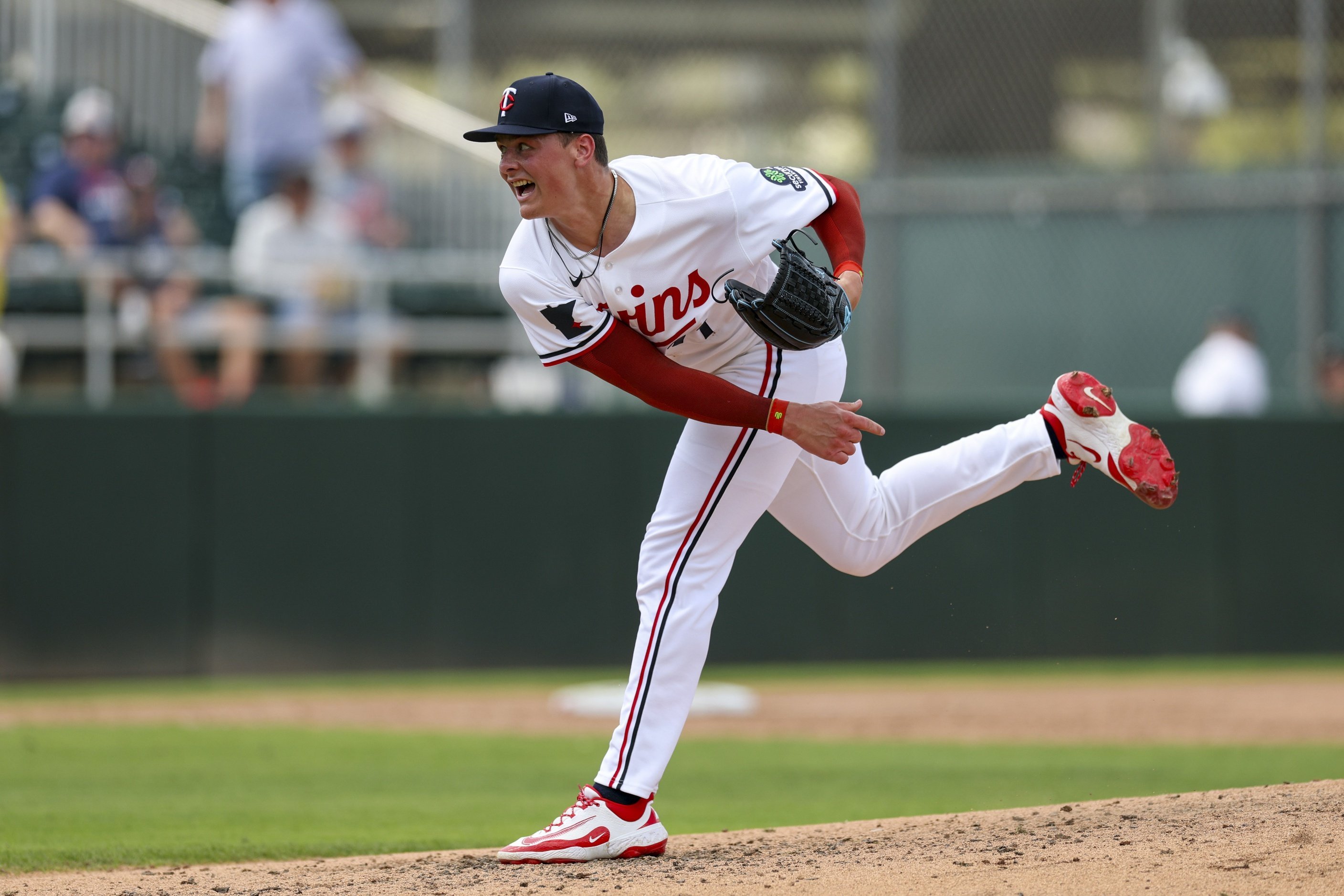 Plenty of damage has already been done by the bullpen, which is why the Twins need to stay diligent in cycling through arms in hopes that they can build a functional group as the season goes on. We’ve seen some debuts and roster claims, but it’s still very much a work in progress. Three names in the minor leagues could find themselves with the big league club in short order. John Klein We already saw Klein briefly, and it’s worth wondering exactly what the plan is for him. The Twins had him stuck in a bulk innings role, which neither prepared him to start games nor to serve as a traditional reliever, ultimately leading to his demotion last week, as he wouldn’t have been available for back-to-back outings. Upon his return to the minor leagues, the Twins stuck him in the same role. He wouldn’t be an option for the big league rotation, and if he were to get recalled any time soon, he would likely just serve as a mop-up reliever to be demoted the day after pitching again. If the Twins decide on a path for Klein that would actually be useful to an MLB roster, it’s easy to see him being an impact arm, especially in the bullpen. His mid to high-90s fastball, paired with a good-looking cutter and changeup combo, would play up in short stints and could help the Twins tremendously. If the Twins finally decide to go down this path with Klein, he could be up in short order. Marco Raya Drafted out of high school in 2020, Raya has disappointed thus far in his career, but his story is far from written. His days as a starting pitcher are over, and his body of work as a reliever is less than impressive, but if something clicks, Raya can still be an impact reliever out of the Twins’ pen. We may already be seeing signs. Raya’s stuff isn’t in question between his mid to high-90s fastball and devastating sweeper. Control and command are the bigger concerns, and have led to an ERA over 7.00 in St. Paul this season. Relievers are unpredictable, however, and in his last few outings, Raya has flashed his ability to be a dominant reliever. He’s already on the 40-man roster, so the Twins have no reason not to be quick to call him up if he’s showing signs of finally putting things together. C.J. Culpepper Injuries have derailed Culpepper’s hopes of sticking as a starting pitcher, but his stuff remains intact. After an injury-riddled 2025 season, the Twins saw this and fast-tracked him to St. Paul, immediately converting him to the bullpen upon his promotion. While they’ll surely give him time to get accustomed, Culpepper could find himself with the big league club in short order if he performs well in relief for the Saints. Some outlets had notched Culpepper in the Twins' top 10 prospects in the last few years. He had the stuff to navigate opposing lineups multiple times as a starter. Now that he’s settled into a bullpen role, he can focus on the best of his repertoire, which includes a cutter/sweeper combo. His fastball ticked down amid injuries, but he’s flashed 98 mph on the heater in the past. If he can stay healthy, Culpepper could find himself pitching out of the bullpen at Target Field later this summer. We’re approaching the point where the Twins should feel less concerned about what could go wrong with some of their younger arms should they be called up to the big league bullpen. As June approaches, it’s getting close to time to swap out some of the low upside, short-term veteran relievers and live with the results of whatever the younger arms have to offer. Do you disagree with any of the names listed? Are there any other minor leaguers that should be fast-tracked to the MLB bullpen? Let us know below! View the full article
 -
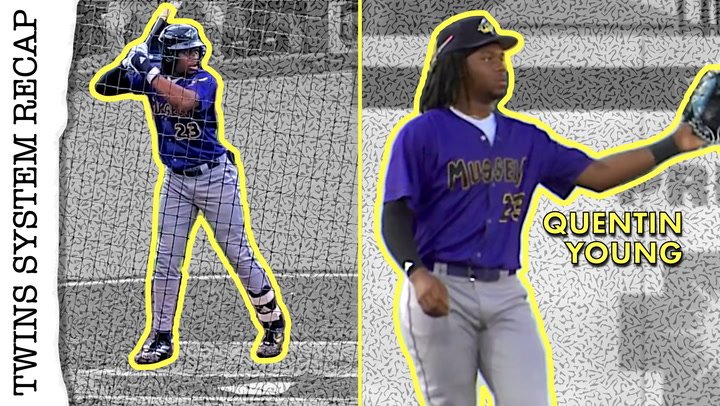 Twins System Recap: Quentin Young hit the ball harder than just about anybody in baseball early this week. Another guy blasting his way through is Billy Amick, who now has a system-leading 11 home runs. Also this week, Eli Jones impressed in his Double-A debut. Today's video features info on those players plus all the other top performers from Tuesday, Wednesday, and Thursday's games. View the full article
 -
 Chicago Cubs Transactions No Roster Moves Late Push Falls Short In Iowa Cubs' 6-5 Loss At Nashville The Iowa Cubs jumped on top in Nashville before the Sounds chipped back inning by inning, eventually taking the lead late and holding on for a 6-5 win. Pedro Ramírez had the standout day at the plate, going 4-for-5 with a stolen base. BJ Murray added three hits in four at-bats with a double, an RBI, and a walk. Jonathon Long collected two hits, leadoff hitter James Triantos doubled and drove in a run, and Christian Bethancourt added two hits. Iowa took the lead in the third. Triantos doubled to left, scoring Justin Dean. Murray followed with a single to center to plate Triantos, putting the Cubs ahead 2-1. The fifth produced two more runs. Cleanup hitter Kevin Alcántara grounded out to score Murray, then Scott Kingery drew a bases-loaded walk to score Ramírez, pushing the lead to 4-2. Starter Doug Nikhazy worked 3 1/3 innings, allowing two earned runs on two hits while walking seven and striking out four. Iowa pitching issued 11 walks in all. Nashville scored single runs in the fifth, sixth, seventh, and eighth, with one run unearned after a Bethancourt throwing error. Justin Dean's ninth-inning sacrifice fly scored Long to cut the deficit to 6-5, but the Cubs could not pull even. Iowa stranded 12 baserunners. Player AB R H RBI BB K James Triantos, 2B 5 1 1 1 0 0 BJ Murray, 3B 4 1 3 1 1 1 Owen Miller, LF 0 0 0 0 0 0 Pedro Ramírez, 3B 5 1 4 0 0 0 Kevin Alcántara, DH 4 0 0 1 1 2 Jonathon Long, 1B 5 1 2 0 0 2 Christian Bethancourt, C 4 0 2 0 1 2 Scott Kingery, SS 4 0 0 1 1 2 Justin Dean, RF 4 1 1 1 0 1 Brett Bateman, CF 4 0 0 0 0 1 Player IP H R ER BB K HR Doug Nikhazy 3 1/3 2 2 2 7 4 0 Yacksel Ríos 1 1/3 1 1 1 1 0 1 Corbin Martin 1 1/3 2 1 1 0 4 0 Luis Peralta 1 0 1 0 1 1 0 Gabe Klobosits 1 1 1 1 2 1 0 Three Home Runs Power Smokies Past Columbus 5-1 The Knoxville Smokies hit three home runs and got nine scoreless innings of relief on the way to a 5-1 win in Columbus. Right fielder Alex Ramírez had the biggest day, going 2-for-5 with a two-run home run and an RBI single for three runs batted in. Carter Trice and Ethan Hearn each added solo home runs. Leadoff man Karson Simas reached three times on a single and two walks, scored twice, and stole two bases. Cleanup hitter Jefferson Rojas added a hit and a walk, and Hearn finished 2-for-4. Trice opened the scoring in the first with a solo shot to right. Hearn went deep to right in the second, putting Knoxville ahead 2-0. The fifth was the biggest inning. Simas singled to right and stole second, then Ramírez launched a two-run home run to right that opened the game up at 4-0. Knoxville added another in the seventh when Simas walked and came home on a Ramírez single to center. Right-hander Jake Knapp started and worked 2 2/3 hitless innings with one walk and five strikeouts. Jace Beck followed with three innings, surrendering one unearned run on two hits with a walk and three strikeouts to pick up the win. Frankie Scalzo Jr. held the lead with 2 1/3 scoreless innings and three more strikeouts, and Evan Taylor finished with a scoreless ninth. Knoxville pitching combined for 13 strikeouts. Columbus scored its only run in the sixth, an unearned run set up by a throwing error. Player AB R H RBI BB K Karson Simas, CF 3 2 1 0 2 0 Alex Ramírez, RF 5 1 2 3 0 0 Carter Trice, LF 5 1 1 1 0 1 Jefferson Rojas, 3B 4 0 1 0 1 0 Ethan Hearn, C 4 1 2 1 0 0 Ariel Armas, DH 4 0 1 0 0 1 Edgar Alvarez, 1B 3 0 0 0 0 3 Devin Ortiz, 2B 3 0 1 0 0 0 Ed Howard, SS 3 0 0 0 1 1 Player IP H R ER BB K HR Jake Knapp 2 2/3 0 0 0 1 5 0 Jace Beck 3 2 1 0 1 3 0 Frankie Scalzo Jr. 2 1/3 1 0 0 0 3 0 Evan Taylor 1 1 0 0 0 1 0 South Bend Cubs Erupt For 25 Runs In Rout Of Wisconsin After falling behind 3-0 in the first, the South Bend Cubs answered with a 19-run flurry over the final three innings to bury the Wisconsin Timber Rattlers 25-6. Matt Halbach led the way with a 5-for-5 night that included a three-run home run, six runs batted in, five runs scored, and two walks. Leadoff hitter Kane Kepley reached six times with four hits, two walks, five runs scored, two RBI, and four stolen bases. Justin Stransky drove in five runs on a grand slam and a sacrifice fly. Alex Madera reached five times and drove in three. Cleanup hitter Kade Snell scored four times with two hits and two walks. Christian Olivo tripled and drove in two from the bottom of the order, and Leonel Espinoza added two hits and two RBI. South Bend trailed 6-4 heading to the seventh before the offense broke open. Kepley scored on a Snell forceout, and Halbach launched a three-run shot to left to make it 10-6. The eighth produced the biggest haul. Olivo and Kepley singled to start the inning, with Olivo scoring on Kepley's hit. After back-to-back walks, bases-loaded passes to Snell and Halbach forced in two more runs. A wild pitch scored Cole Mathis, Espinoza added a sacrifice fly, Madera doubled in another, Olivo tripled in two, and Kepley capped it with a second RBI single. Nine runs in all. Stransky's grand slam highlighted a six-run ninth. Starter Ethan Flanagan worked four innings, allowing three earned runs on five hits with two walks and five strikeouts. Kevin Valdez followed with three innings, two runs, one earned, two hits, and seven strikeouts to earn the win. Here's a recap of the wild last two innings of the game. You'll want to take a minute and check this out: Player AB R H RBI BB K Kane Kepley, LF 5 5 4 2 2 0 Ty Southisene, DH 5 2 1 0 2 3 Cole Mathis, 1B 5 1 1 1 1 1 Kade Snell, CF 5 4 2 2 2 1 Matt Halbach, 3B 5 5 5 6 2 0 Leonel Espinoza, RF 5 2 2 2 1 1 Alex Madera, 2B 3 2 2 3 3 0 Justin Stransky, C 3 2 1 5 2 1 Christian Olivo, SS 6 2 2 2 0 1 Player IP H R ER BB K HR Ethan Flanagan 4 5 3 3 2 5 0 Kenyi Perez 1 1 1 1 3 1 1 Kevin Valdez 3 2 2 1 2 7 0 JP Wheat 1 0 0 0 1 1 0 Hartshorn's Four RBI And Reid's Quality Start Lift Pelicans Past Augusta The Myrtle Beach Pelicans cruised to a 6-1 win over the Augusta GreenJackets behind a four-RBI day from Josiah Hartshorn and six strong innings from right-hander Dominick Reid. Hartshorn went 2-for-4 with a double, a home run, four runs batted in, and a run scored. Leadoff hitter Alexis Hernandez reached three times with two hits, a double, a walk, and two runs scored. Geuri Lubo went deep for two more RBI, Yahil Melendez singled, walked, and stole a base, and Darlyn De Leon chipped in a hit and a run. Myrtle Beach broke through in the second when Lubo launched a two-run home run to left center to score Melendez, putting the Pelicans up 2-0. The third doubled the advantage. After Hernandez and De Leon reached, Hartshorn ripped a two-run double to left that plated both runners for a 4-0 lead. Hartshorn closed the scoring in the seventh, lining a two-run home run to right center that brought home Hernandez and pushed the lead to 6-0. Reid turned in a quality start, throwing six innings of one-hit ball with no runs, no walks, and four strikeouts to earn the win. Aiden Moffett followed with two scoreless innings of relief, allowing one hit and a walk while striking out three. Daniel Avitia closed out the ninth and surrendered an unearned run on two hits. Player AB R H RBI BB K Alexis Hernandez, SS 3 2 2 0 1 0 Josiah Hartshorn, RF 4 1 2 4 0 0 Logan Poteet, C 3 0 0 0 0 1 Jairo Diaz, C 0 0 0 0 0 0 Jose Escobar, 2B 3 0 0 0 1 1 Derniche Valdez, DH 4 0 0 0 0 2 Yahil Melendez, 3B 3 1 1 0 1 0 Geuri Lubo, LF 4 1 1 2 0 1 Edward Vargas, 1B 4 0 0 0 0 3 Darlyn De Leon, CF 3 1 1 0 0 0 Player IP H R ER BB K HR Dominick Reid 6 1 0 0 0 4 0 Aiden Moffett 2 1 0 0 1 3 0 Daniel Avitia 1 2 1 0 0 1 0 Top-20 Prospect Performance Jefferson Rojas: 1-for-4, BB Jaxon Wiggins: DNP Pedro Ramirez: 4-for-5, R, SB Kevin Alcantara: 0-for-4, RBI, BB, 2 K Josiah Hartshorn: 2-for-4, 2B, HR, 4 RBI Ethan Conrad: DNP Kane Kepley: 4-for-5, 5 R, 2 RBI, 2 BB, 4 SB Jonathon Long: 2-for-5, 2 K James Triantos: 1-for-5, 2B, RBI Cole Mathis: 1-for-5, RBI, BB, K Owen Ayers: DNP Brooks Caple: DNP Juan Cabada: DNP Kaleb Wing: DNP Angel Cepeda: DNP Dominick Reid: 6 IP, 1 H, 0 R, 0 BB, 4 K, W Jostin Florentino: DNP Ty Southisene: 1-for-5, 2 R, 2 BB, 3 K Will Sanders: DNP Brandon Birdsell: DNP View the full article
 -
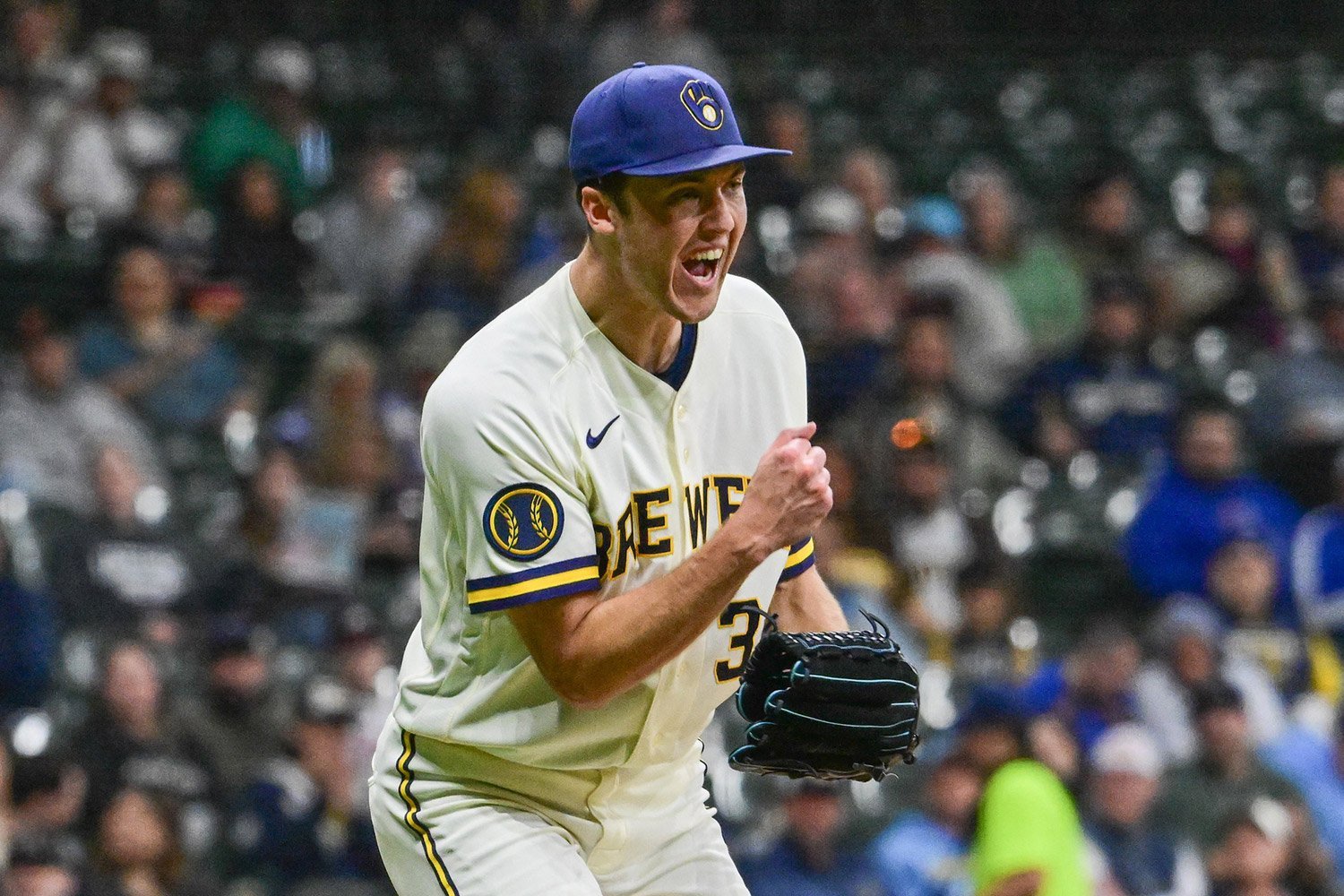 Milwaukee won five of six games against the New York Yankees and San Diego Padres, and the energy on Brewer Fanatic reflects it. The Brewers now turn their attention to the Minnesota Twins and Chicago Cubs as the community weighs in on three of the best thread topics from the past week. Brewers: What would it cost now to extend Miz? Jacob Misiorowski is the most electrifying pitcher in baseball, and the Brewer Fanatic community spent the week wrestling with an uncomfortable question: is there any realistic path to keeping him in Milwaukee beyond 2031? The thread opened with a 7-year, $150 million framework. The community quickly concluded it falls short, with the two buyout free agent years alone worth north of $50 million at current market rates. Posters noted that Misiorowski signed for $2.3 million out of the draft and has every incentive to bet on himself and reach free agency. There was substantive discussion around whether his injury risk is elevated beyond even a typical fireballing pitcher. Many posters agreed that the lower-dollar extensions provided to Freddy Peralta and Aaron Ashby worked precisely because the downside was manageable if injury struck, and a Miz deal at market rates carries a significantly different risk profile for a small-market club. In any case, Milwaukee is fortunate to have a "great, great, great young star" (according to Aaron Judge) for up to another five seasons. Brewers: 1/4 of the way analysis If the first quarter of the Brewers' season were a movie, the plot keeps changing, the stars are delivering award-winning performances, but the audience can't stop worrying about the supporting cast. There has been plenty of action, drama, and even horror. There is plenty to examine after 40 games. The most heated debate surrounded whether Garrett Mitchell has proven himself to be a mediocre 27-year-old after four partial seasons, or whether his 506 big-league at-bats essentially still make him a rookie. The offense has been a mystery, ranking dead last in home runs but third in all of baseball in runs scored per game. Would Luis Lara, Jett Williams, or even Eddys Leonard boost an unsettled Milwaukee outfield? The answers aren't straightforward, with options status, and even CBA lockout concerns all part of the conversation. Minors: 2026 Injury Updates - Answering Your Questions When Possible (ARobsBrewCrew Thread) Injuries have been an important part of the 2026 season, and Brewer Fanatic is fortunate to receive exclusive information from ARobsBrewCrew on how Milwaukee's minor league players are recovering. Our source invites the Brewer Fanatic community to "let me know what players you would like injury updates on, and I will do my best to deliver." ARobsBrewCrew most recently confirmed that Luis Pena is doing fine after his recent hospitalization. The Brewers are taking every precaution to determine if there is a deeper issue, prioritizing Pena's long-term health over his playing career. Pena recently posted photos in his Timber Rattlers uniform, hinting at a possible return in the near future. It's a great day to be a Brewers fan at Brewer Fanatic! View the full article
 -
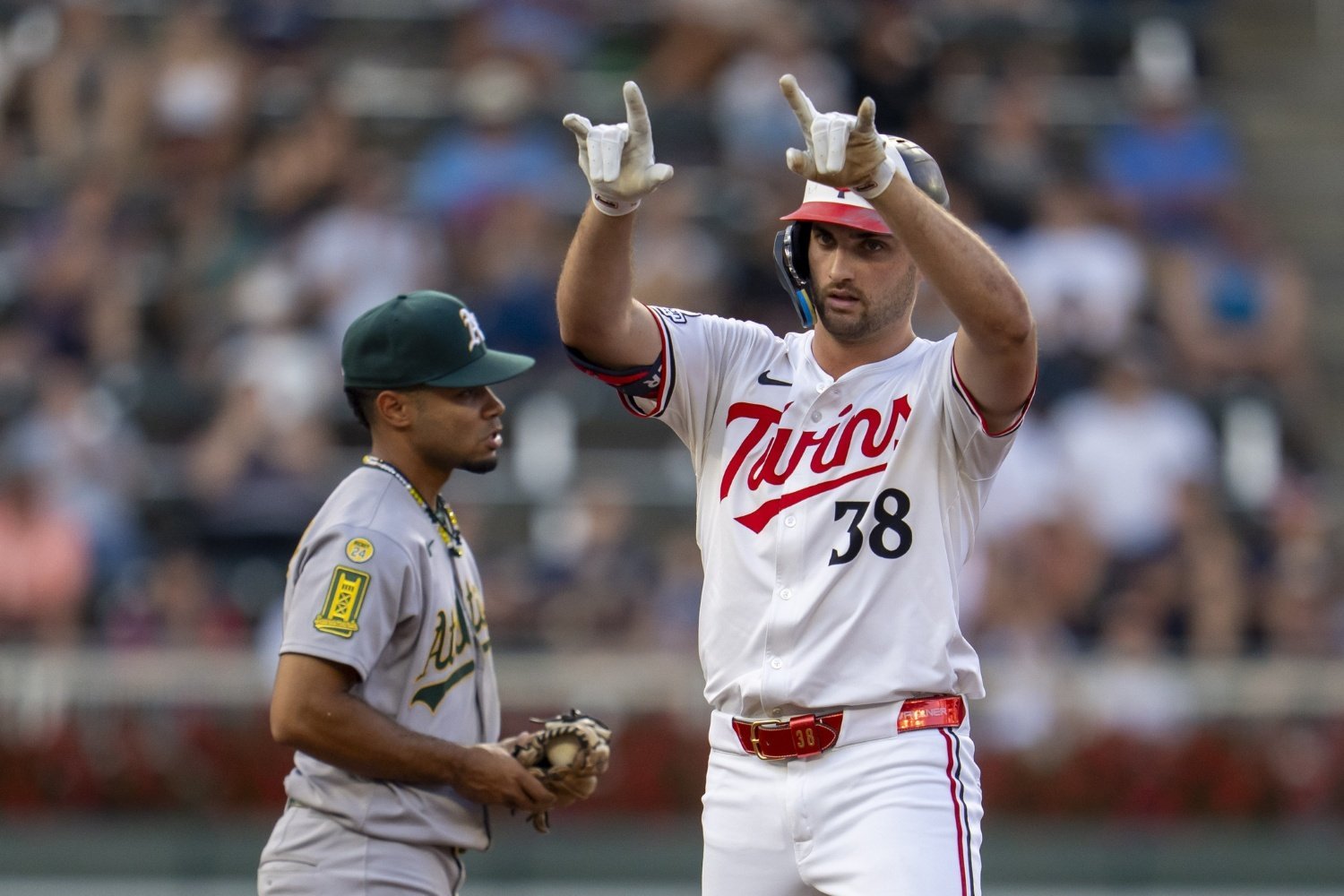 Will the Twins suffer another ramblin wreck with their #3 overall pick in the upcoming MLB amateur draft? Codie Christie adds to Twins Daily's excellent and thorough coverage with a look at a possible Georgia Tech catcher. Many good takes from readers here...what do you think? Forrest Lake's Matt Wallner struggled mightily through the first quarter of the season, both defensively and at the plate. Walks down, K's up, power virtually nonexistent. On this past Thursday, the Twins reached a no doubt painful decision and sent him on the green line to St Paul. Weigh in here: While Wallner is no longer with the big club, Royce Lewis remains. Are his problems at the plate fastball related? Betwixt the ears? Too much eyeblack? What say ye? View the full article
 -
 Boston Red Sox Affiliate Recap (May 14) Triple-A Worcester Red Sox The WooSox offense could not get anything going and somehow came up just short, losing 4-3 to the Buffalo Bisons. Nick Sogard, who’s slashing .310/.404/.548 so far in May, launched a lead-off home run in the first inning, putting Portland on top 1-0. That early lead didn't last as Jake Bennett ran into trouble in the bottom of the second. Buffalo strung together a single, a double, and a pair of RBI singles to score three runs. A fourth run scored on a fielding error by right fielder Allan Castro. Worcester was staring at a 4–1 deficit entering the third inning. The ninth inning brought a late spark for the WooSox, with two outs and nobody on, Seigler ripped a single to center. Mikey Romero followed up and crushed a two-run homer to right, cutting the deficit to 4–3, bringing the tying run to the plate. Unfortunately, Castro grounded out to end the game. Other than the rough start from Bennett, Worcester’s bullpen was outstanding the rest of the way. Seth Martinez tossed 1 ⅔ scoreless innings with two strikeouts. Noah Song had two scoreless frames of his own, and Tayron Guerrero worked a clean inning with two strikeouts. Over 4 ⅔ combined relief innings, they allowed zero runs, but the offense couldn't capitalize. Double-A Portland Sea Dogs The Portland Sea Dogs jumped on the Hartford Yard Goats early and never trailed in the game, taking a 5-3 victory. The Sea Dogs put up a three-spot in the second inning, Marvin Alcantara launched a solo homer to left-center, then Nelly Taylor and Max Ferguson worked a walk, Taylor stole a base, then Ahbram Liendo ripped a two-run double to the left field gap, scoring Taylor and Ferguson. They tacked on another run in the third when Ronald Rosario singled home Will Turner, making it 4-0 entering the fourth. Hartford got one back in the fourth with a solo shot, but Liendo answered back in the seventh with a solo homer of his own to push it to 5-1, giving Portland a comfortable lead. The Yard Goats chipped away with a run in the bottom half of the seventh and another run in the eighth, making it a 5-3 game. Blake Wehunt was the starter for Portland and dominated through 3 ⅓ innings, striking out seven while allowing just three hits and no runs. The bullpen held it together from there; each pitcher coming out of the bullpen gave up one run, but did not let anything crazy happen. Max Carlson earned the win working 1 ⅔ innings, Reidis Sena gave up a run over two innings, and Cooper Adams locked it down with a four-strikeout save over the final two innings. Key Performances: Ahbram Liendo: 3-for-4, R, 2B, 3 RBI Marvin Alcantara: HR, R, RBI Blake Wehunt: 3 ⅓ IP, 3 H, 0 ER, 7 K High-A Greenville Drive The Greenville Drive had a tough night, going scoreless up until the ninth inning in a 5-1 loss to the Bowling Green Hot Rods. Bowling Green did its damage in small doses: one run each coming in the third, fourth, and sixth off Greenville's pitching, then tacked on two more in the eighth to put it out of reach at 5-0. Despite collecting eight hits and drawing five walks on the night, the Drive never managed to string hits together in big moments, going 1-for-8 with RISP. Although he suffered a loss, Dylan Brown is still adjusting to Greenville since his promotion, but pitched well, striking out seven batters and giving up two runs in his five innings of work. Steven Brooks pitched two perfect innings and struck out three. At the plate, Henry Godbout led the way, going 3-for-5 with a double, and Antonio Anderson went 2-for-4 with a double as well, including the only RBI in the ninth inning that scored Yophery Rodriguez to break up the shutout. Key Performances: Henry Godbout: 3-for-5, 2B Antonio Anderson: 2-for-4, RBI Single-A Salem RidgeYaks It was down to the wire, but Salem had a two-run ninth inning and came away with the 6-3 win over the Nationals. Enddy Azocar was the catalyst for the RidgeYaks, earning his third multi-hit game in four games, including a solo homer in the third inning to break Salem off with a 1-0 lead. Azocar was not done, however, in the sixth, after Starlyn Nunez legged out a two-out triple to center, Azocar ripped a double to bring in Nunez and push it to 4-0. He finished 2-for-4 with a homer, a double, two RBIs, and a walk. Barrett Morgan was dominant on the mound, spinning five shutout innings on just 62 pitches while giving up three hits with three strikeouts. He earned the win and kept the Nationals in check. Fredericksburg worked a comeback in the eighth, making it a one-run 4-3 game by hitting two RBI singles and an RBI triple. Salem's lineup responded exactly when they needed to. In the top of the ninth, Skylar King and Ty Hodge got on base (King went 2-for-4 with a stolen base; Hodge was 2-for-3 with two walks and a double). Avinson Pinto singled in King to make it 5-3, and D'Angelo Ortiz followed with another RBI single to push it to 6-3 to seal it for Salem. Key Performances: Enddy Azocar: 2-for-4, HR, 2B, R, 2 RBI, BB Ty Hodge: 2-for-3, 2B, R, 2 BB Barrett Morgan: 5 IP, 1 H, 0 ER, 3 K View the full article
 -
 Boston Red Sox Affiliate Recap (May 14) Triple-A Worcester Red Sox The WooSox offense could not get anything going and somehow came up just short, losing 4-3 to the Buffalo Bisons. Nick Sogard, who’s slashing .310/.404/.548 so far in May, launched a lead-off home run in the first inning, putting Portland on top 1-0. That early lead didn't last as Jake Bennett ran into trouble in the bottom of the second. Buffalo strung together a single, a double, and a pair of RBI singles to score three runs. A fourth run scored on a fielding error by right fielder Allan Castro. Worcester was staring at a 4–1 deficit entering the third inning. The ninth inning brought a late spark for the WooSox, with two outs and nobody on, Seigler ripped a single to center. Mikey Romero followed up and crushed a two-run homer to right, cutting the deficit to 4–3, bringing the tying run to the plate. Unfortunately, Castro grounded out to end the game. Other than the rough start from Bennett, Worcester’s bullpen was outstanding the rest of the way. Seth Martinez tossed 1 ⅔ scoreless innings with two strikeouts. Noah Song had two scoreless frames of his own, and Tayron Guerrero worked a clean inning with two strikeouts. Over 4 ⅔ combined relief innings, they allowed zero runs, but the offense couldn't capitalize. Double-A Portland Sea Dogs The Portland Sea Dogs jumped on the Hartford Yard Goats early and never trailed in the game, taking a 5-3 victory. The Sea Dogs put up a three-spot in the second inning, Marvin Alcantara launched a solo homer to left-center, then Nelly Taylor and Max Ferguson worked a walk, Taylor stole a base, then Ahbram Liendo ripped a two-run double to the left field gap, scoring Taylor and Ferguson. They tacked on another run in the third when Ronald Rosario singled home Will Turner, making it 4-0 entering the fourth. Hartford got one back in the fourth with a solo shot, but Liendo answered back in the seventh with a solo homer of his own to push it to 5-1, giving Portland a comfortable lead. The Yard Goats chipped away with a run in the bottom half of the seventh and another run in the eighth, making it a 5-3 game. Blake Wehunt was the starter for Portland and dominated through 3 ⅓ innings, striking out seven while allowing just three hits and no runs. The bullpen held it together from there; each pitcher coming out of the bullpen gave up one run, but did not let anything crazy happen. Max Carlson earned the win working 1 ⅔ innings, Reidis Sena gave up a run over two innings, and Cooper Adams locked it down with a four-strikeout save over the final two innings. Key Performances: Ahbram Liendo: 3-for-4, R, 2B, 3 RBI Marvin Alcantara: HR, R, RBI Blake Wehunt: 3 ⅓ IP, 3 H, 0 ER, 7 K High-A Greenville Drive The Greenville Drive had a tough night, going scoreless up until the ninth inning in a 5-1 loss to the Bowling Green Hot Rods. Bowling Green did its damage in small doses: one run each coming in the third, fourth, and sixth off Greenville's pitching, then tacked on two more in the eighth to put it out of reach at 5-0. Despite collecting eight hits and drawing five walks on the night, the Drive never managed to string hits together in big moments, going 1-for-8 with RISP. Although he suffered a loss, Dylan Brown is still adjusting to Greenville since his promotion, but pitched well, striking out seven batters and giving up two runs in his five innings of work. Steven Brooks pitched two perfect innings and struck out three. At the plate, Henry Godbout led the way, going 3-for-5 with a double, and Antonio Anderson went 2-for-4 with a double as well, including the only RBI in the ninth inning that scored Yophery Rodriguez to break up the shutout. Key Performances: Henry Godbout: 3-for-5, 2B Antonio Anderson: 2-for-4, RBI Single-A Salem RidgeYaks It was down to the wire, but Salem had a two-run ninth inning and came away with the 6-3 win over the Nationals. Enddy Azocar was the catalyst for the RidgeYaks, earning his third multi-hit game in four games, including a solo homer in the third inning to break Salem off with a 1-0 lead. Azocar was not done, however, in the sixth, after Starlyn Nunez legged out a two-out triple to center, Azocar ripped a double to bring in Nunez and push it to 4-0. He finished 2-for-4 with a homer, a double, two RBIs, and a walk. Barrett Morgan was dominant on the mound, spinning five shutout innings on just 62 pitches while giving up three hits with three strikeouts. He earned the win and kept the Nationals in check. Fredericksburg worked a comeback in the eighth, making it a one-run 4-3 game by hitting two RBI singles and an RBI triple. Salem's lineup responded exactly when they needed to. In the top of the ninth, Skylar King and Ty Hodge got on base (King went 2-for-4 with a stolen base; Hodge was 2-for-3 with two walks and a double). Avinson Pinto singled in King to make it 5-3, and D'Angelo Ortiz followed with another RBI single to push it to 6-3 to seal it for Salem. Key Performances: Enddy Azocar: 2-for-4, HR, 2B, R, 2 RBI, BB Ty Hodge: 2-for-3, 2B, R, 2 BB Barrett Morgan: 5 IP, 1 H, 0 ER, 3 K View the full article
 -
Let’s Watch the Blue Jays’ Pitchers Struggle on Defense
DiamondCentric posted an article in Jays Centre
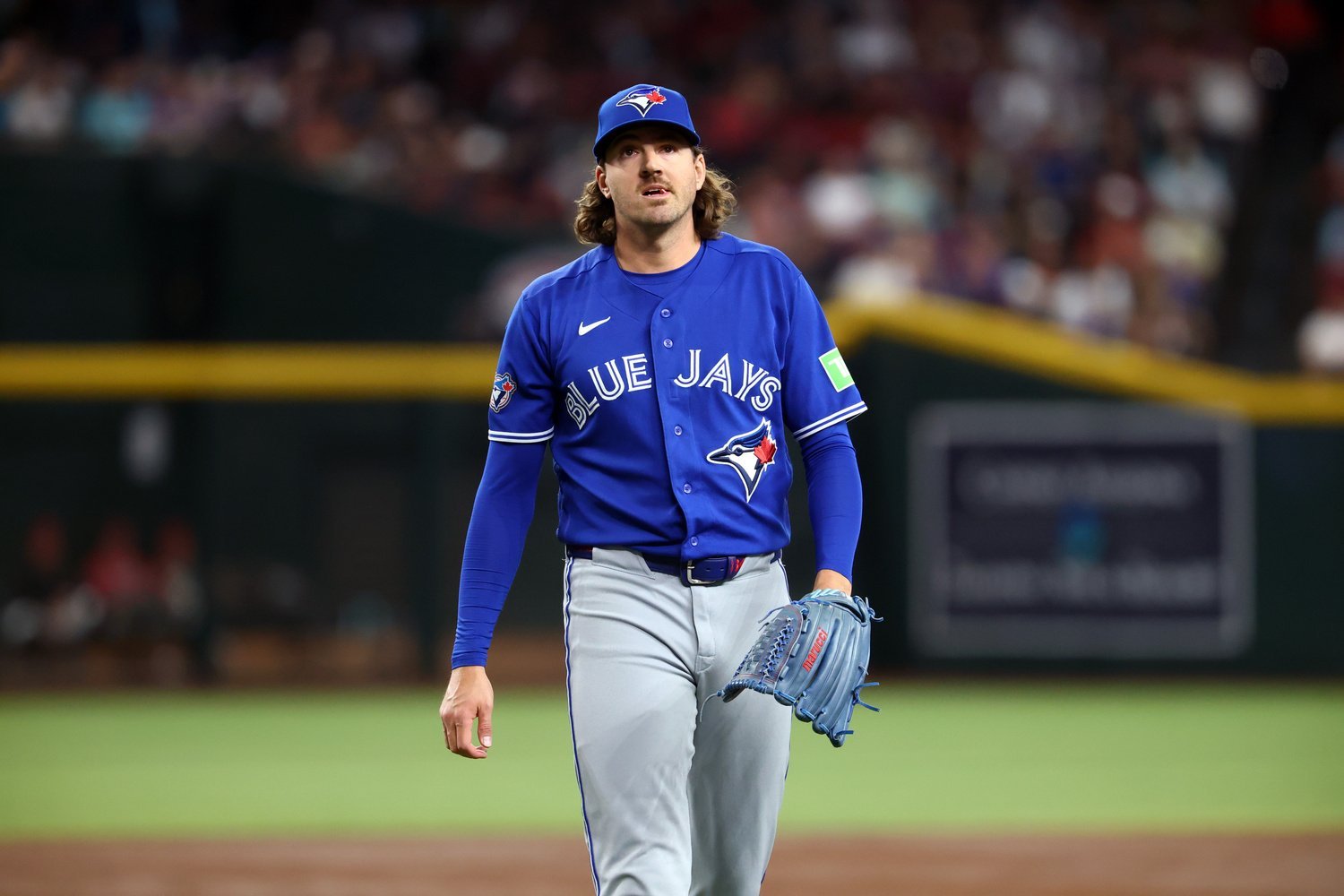 On Thursday, I wrote about the nine errors that the Blue Jays' pitchers have made in 2026. Instead of discussing the individual plays, I focused on the high total and how unusual it is – especially when errors, on the whole, have never been less frequent. Personally, I'm a glutton for statistical oddities. I love to research obscure major league records, and I love to figure out how many records a team or player might break if they continue at their current pace, even if I know there's no chance that pace will continue. Yet, I know that most people watch baseball for, you know, the actual baseball. So, I figured you might like to see the individual defensive misplays that I wrote about in the aggregate. Here are all nine errors the Blue Jays' pitchers have made in 2026, along with a little bit of my commentary. Error No. 1: Worst Is First - Cody Ponce, March 30 Oftentimes, errors are annoying in the moment and funny in retrospect. This one just sucked. Cody Ponce suffered a season-ending ACL sprain on this play. Let's move on. Error No. 2: Should've Had Him - Tommy Nance, April 1 This one was impossible to find a good clip of online, but it's definitely worth watching, so I GIF'd it. (Apologies for the quality. It's a little better at this link.) The biggest mistake here is that the Blue Jays let Troy Johnston get as far as he did toward second base before they reacted, but Tommy Nance still had plenty of time to make a better throw on this play. Even Johnston thought they had him at first; he almost stopped to run back to first before he realized Andrés Giménez didn't have a good handle on the ball. Error No. 3: That's Why You Keep Your Eye on the Ball - Dylan Cease, April 3 You know how I said errors can be funny in hindsight? This is what I'm talking about. At the time, it was frustrating. It was even more frustrating a few days later. If Dylan Cease had just caught that ball, maybe the Blue Jays wouldn't have suffered an embarrassing sweep at the hands of the White Sox. Yet, you have to admit it's funny to watch Cease swat the ball away, step on first base anyway, and then look at his glove as if he can't believe isn't in there. Error No. 4: Fleming's Best Pitch? - Josh Fleming, April 6 Josh Fleming made one appearance for Toronto this year. Half of the 18 batters he faced reached base, and four came around to score. It wasn't great. That's why it isn't that much of an exaggeration to call this his best pitch of the season. The only problem? It wasn't a pitch. It was a throw to first base. Fleming absolutely let loose on this one and sent it hurtling past first base. All Vladimir Guerrero Jr. could do was get out of the way and watch it sail to the wall. Error No. 5: Calling Canada's Funniest Home Videos - Kevin Gausman, April 7 You can watch the rest of the errors if you want, but this is the best one. Hands down. No contest. I could watch this again, and again, and again. (And I already have.) I only wish I had the filmmaking skills to add in a "boi-oi-oing" sound effect as Kevin Gausman's throw ricochets off of Alex Freeland's helmet. Errors No. 6-8: Ernie Clement Stares Into Center Field, Episodes I, II, III Braydon Fisher, April 17 Braydon Fisher, April 22 Dylan Cease, April 27 Toronto's next three pitcher errors were all botched pickoff attempts at second base, so I've combined them into one highlight reel. None of the clips does a great job of capturing the errors, but all of them show an exasperated Ernie Clement watching the ball roll to the center fielder. Error No. 9: At Least He Didn't Hit Anyone in the head - Kevin Gausman, May 5 After bobbling this one twice, Gausman had no choice but to eat the ball and let the Rays load the bases. Is it possible that the Blue Jays would have won this game if Gausman had made the play? Sure. But at least he didn't throw it straight into Cedric Mullins's helmet. Let's watch that one again, shall we? View the full article
 -
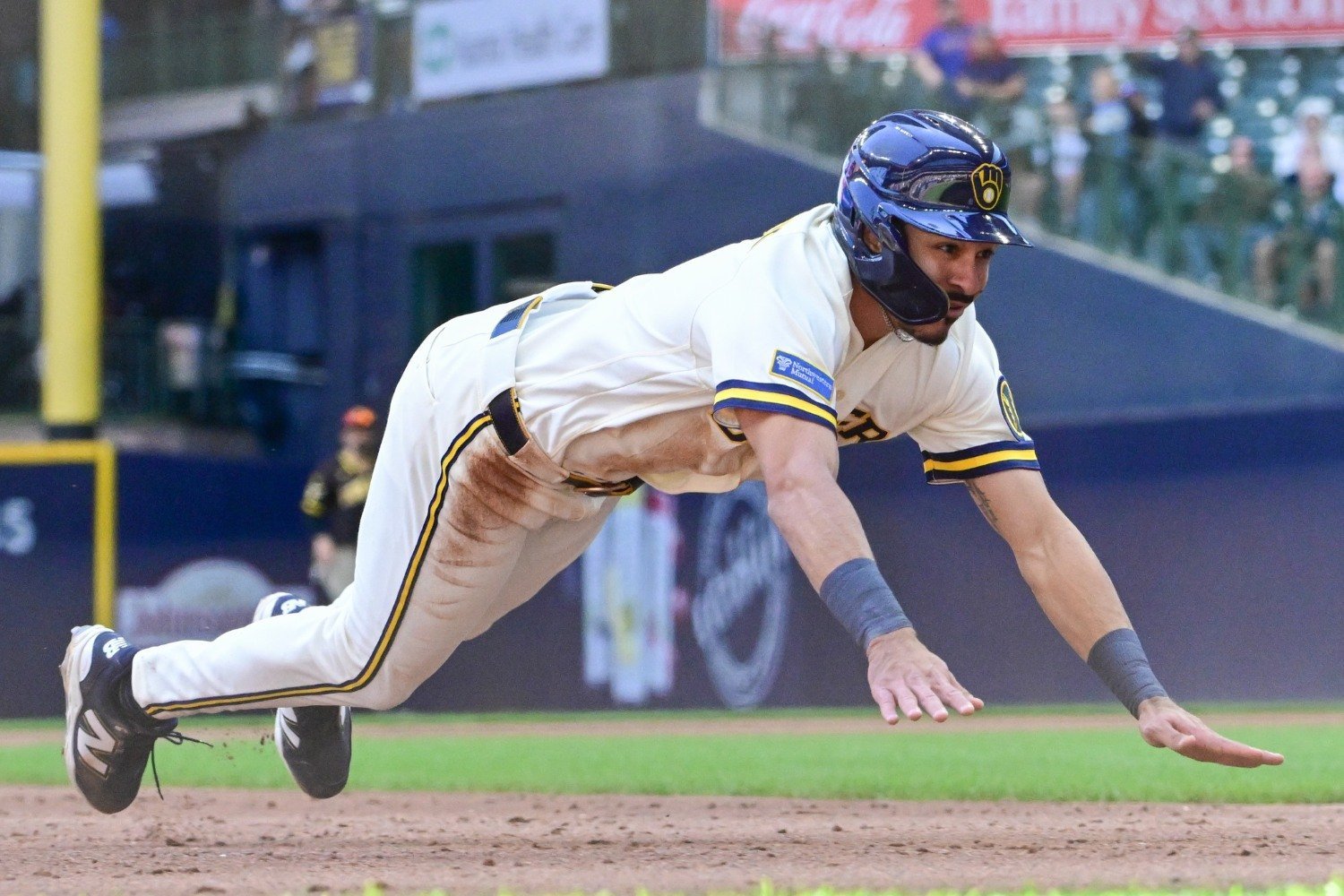 From the moment they reacquired him from the Boston Red Sox a few weeks before spring training, the Brewers have raved about David Hamilton’s athleticism. “From an ability standpoint and his work, I couldn't ask for anything more to work with,” third base and infield coach Matt Erickson said. “I think he’s a part of this for a while.” Compared to the headline return of left-handers Kyle Harrison and Shane Drohan, Hamilton may have looked like a throw-in piece in that Boston trade—a part-time player who could replace Andruw Monasterio in a utility role. The Brewers see him as anything but an afterthought. He’s appeared in 34 of the team’s 41 games, has taken the seventh-most plate appearances despite hitting near the bottom of the order, and has recently taken much of Joey Ortiz’s playing time at shortstop against right-handed pitchers. Hamilton’s track record as a 28-year-old doesn’t point to much upside. In 668 career plate appearances, he’s hit for a 76 wRC+, 80 DRC+, and .272 xwOBA, meaning both his results and process in the box have been extremely poor. But the Brewers see a player who can move quickly and explosively. Hamilton’s average sprint speed of 29.2 feet per second ranks in the 95th percentile of runners this year. That athleticism, they believe, gives him the potential to be an elite defender at any position and hit for more pop than he’s shown so far. “He's not even scratching the surface of what he's capable of,” Murphy said, “but there are some big, big adjustments he needs to make to be the player we think he can be. And I'm sure the Red Sox saw the same thing.” So far, the Brewers have not gotten much more out of Hamilton than the Red Sox. In 118 plate appearances this year, he owns a 75 wRC+, 86 DRC+, and .269 xwOBA. Each of those numbers nearly matches what he did in Boston. Baseball Prospectus has credited him with 0 Deserved Runs Prevented at both third base and shortstop, meaning he’s been an average defender instead of a plus one. There have been two noticeable changes to Hamilton’s offense this year: he’s walking 11% of the time, and he’s leveraging his speed by bunting, leading baseball with eight bunt hits. That approach has gotten him on base more often, but it’s tanked any semblance of power in his game. Hamilton’s .327 on-base percentage is easily a career high, but he has just one extra-base hit. That walk rate might not hold up, either, as he expands the zone much more than the average hitter with two strikes. Shrinking the field with bunts and making speed his defining attribute won’t help Hamilton unlock his upside. If anything, it discourages a breakthrough. The Brewers aren’t trying to pigeonhole him into playing that style of offense, Murphy said, but for him to be a helpful piece right now, he needs to reach base with walks and singles on the ground. “If he gets to first, wow, he's dangerous,” Murphy said, alluding to Hamilton’s base-stealing ability. “So we're trying to build it from there. The swing part, the amount of impact he can have, he's got some in there. He's got some bat speed, and his hands work. He can handle different pitches. He can hit the ball hard. But that's a process, though.” Behind the scenes, the Brewers are trying to make Hamilton’s swing—most specifically, how he rotates his torso—more nuanced. He’s always been a pull-happy hitter who has hit the ball hardest when it leaks back over the middle or is low and inside. Pitchers have countered that by pitching him away, where he often fails to stay on the ball. Because of his inclination to open up and pull the inside pitch, nearly all of Hamilton’s hard-hit fly balls this year have occurred on pitches around that low-and-in pocket. The problem is that he’s doing that same thing on most pitches, regardless of location. In both clips below, you can see Hamilton’s front side fly open as he swings. On the middle-in fastball, he rips a hard fly ball to center field. On the middle-away sinker, he rolls over to second base. hamilton_swings.mp4 If you freeze the video just as he’s about to make contact, his chest is similarly open toward right field on both swings, even though they’re on opposite sides of the plate. Hamilton keeps his eye on the ball and adjusts his swing path to make contact with both pitches, but he’s not in a position to work through the pitch away because his chest is already rotating toward right field. “Your direction is here,” Murphy said, gesturing toward a hypothetical right field before pointing in the opposite direction, “and that pitch is coming from here. You’re going to pull off it. You’re going to hit around it. You’re going to smother it, when it’s closer to him. So having him understand how to get on the ball line is a really tough process.” That process has yet to bear fruit. The results have been more mixed for Hamilton’s continued work with Erickson on the left side of the infield, where he has misplayed a handful of routine opportunities. Ortiz got off to a similarly unremarkable start as a full-time shortstop last year, and it took him months to develop a more explosive first step alongside his fluid hands and body control. Hamilton is the opposite: his first step and range are elite, but he struggles with controlling that explosiveness. According to Baseball Prospectus’s Attempt Range metric, he has fielded two more balls than the average shortstop would reach, but he has completed plays at a slightly below-average rate. “His metrics are unbelievable, but controlling the baseball, throwing accurately, redirecting the ball, tags, all that stuff, he's got a ways to go,” Murphy said. “But his movement and the ground he can cover, those metrics are unbelievable.” On some occasions, Erickson said, Hamilton has been so eager to complete a play that he’s taken his eye off the ball prematurely. It caused him to miss a catch on an attempted double play turn against the Pittsburgh Pirates last month. hamilton_field_error.mp4 Other times, Hamilton has gotten stuck in his fielding position after a grounder enters his glove, prompting him to urgently fire an errant throw to make up for that lost time. That also happened multiple times in that Pittsburgh series. hamilton_throws.mp4 In each instance, Hamilton struggled with the start-and-stop rhythm of completing certain plays. At times, his raw athleticism has outpaced his tempo on the infield. “I think that's something with all infielders in general, and especially ones that are super explosive and twitchy, not to play the game too fast,” Erickson said. “You want to break down and slow down for the catch, and then kind of keep that same rhythm through the catch and through the exchange and into your throw. And I think the guys that do that are the most consistent throwers with accuracy.” After still grading as a negative defender at shortstop a few weeks ago, Hamilton’s metrics have trended positively since the calendar flipped to May. There’s still work to be done (Erickson wants to see a more consistent arm action across throws), but he’s looked more comfortable lately. “He's a versatile piece, because he can play all three infield spots, and he can play them all very well,” Erickson said. “Now we’ve just got to get him to be consistent as much as possible.” Even if the Brewers remain bullish on his ceiling, the reality is that Hamilton has not progressed enough overall as the club nears a decision point on the left side of the infield. Milwaukee shortstops have combined for a 49 wRC+ so far this year, and prospects Cooper Pratt and Jett Williams have started adapting to Triple-A pitching within the last two weeks. Ortiz is more likely to lose his roster spot to one of those two, but their arrival would push Hamilton into more of a part-time role. For now, he’ll remain in the lineup against most right-handed pitchers as the Brewers keep trying to tap into his skill set. “This is a super valuable kid, but it's got to come together,” Murphy said. “He’s got to understand exactly who he is and what he can become, and understand what adjustments he needs to make and how to do it.” View the full article
 -
Minor League Roundup: A Look At The 2025 Draft Class Has Impressed
DiamondCentric posted an article in Talk Sox
 After missing a week due to technical difficulties, Nick is back with talk about the 2025 draft class. While Anthony Eyanson, Marcus Phillips, and Kyson Witherspoon have gotten most of the attention, other members of the draft class are also having good seasons. Guys like Ethan Walker, Dylan Brown, and Jason Gilman are putting up numbers that should have people watching them as well. Listen on Apple Podcasts: https://podcasts.apple.com/us/podcast/the-talk-sox-podcast/id1783204104 Listen on Spotify: https://open.spotify.com/show/3qPrPXEngu0CxgTmlf0ynm Listen on iHeartRadio: https://www.iheart.com/podcast/263-the-talk-sox-podcast-244591331/ Listen on Pocket Casts: https://pca.st/4tmd121v Watch on YouTube: https://www.youtube.com/@talksox View the full article
