


DiamondCentric
-
Posts
2,631 -
Joined
-
Last visited
Never
Content Type
Profiles
Forums
Events
News
Tutorials & Help
Major League Baseball Videos
Guides & Resources
Store
Downloads
Gallery
Everything posted by DiamondCentric
-
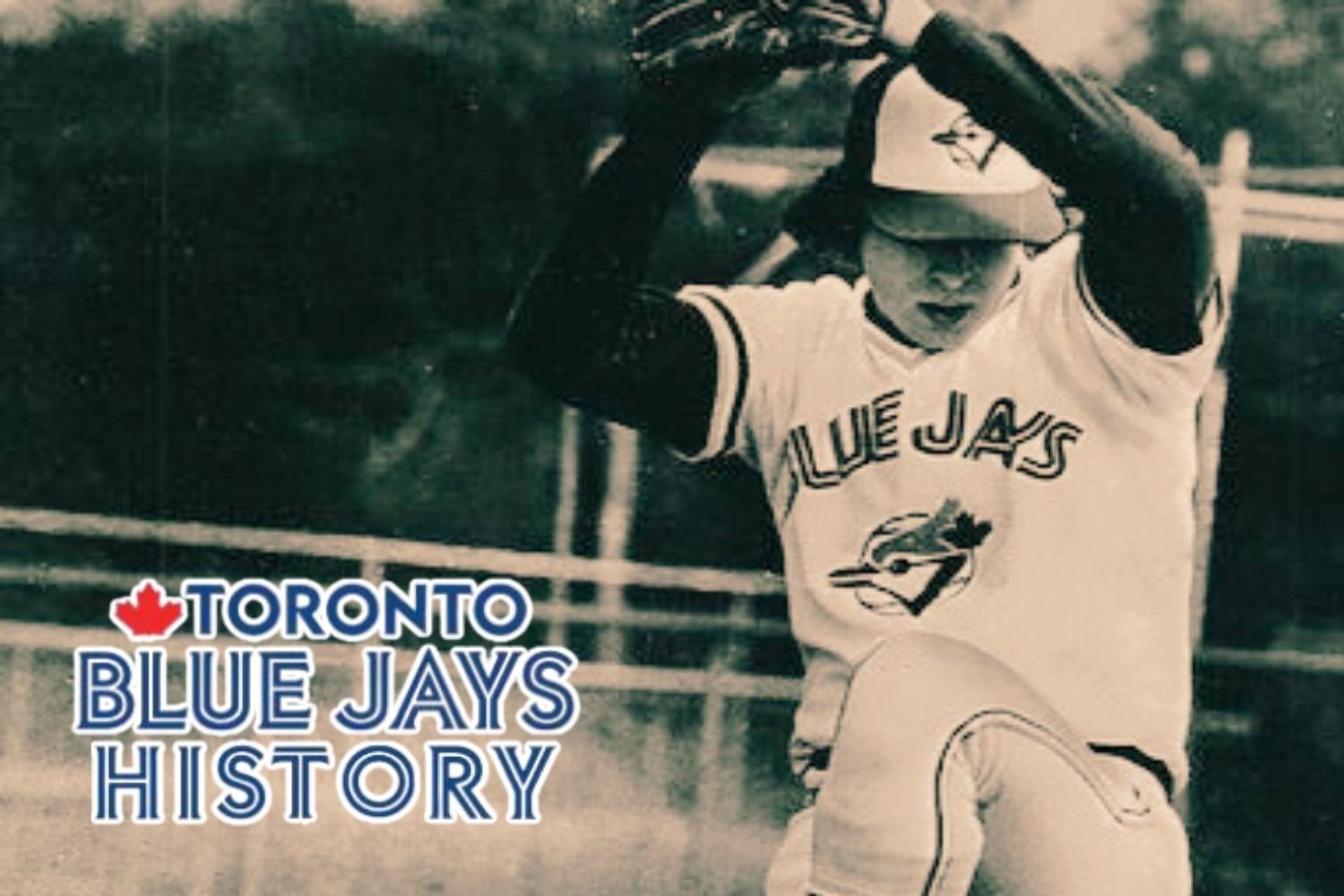 Fresh out of jail, Mark Lemongello went looking for work. After a year out of baseball, Lemongello called Toronto Blue Jays general manager Pat Gillick and asked for another shot with the organization. He had last pitched in the majors with the Blue Jays in 1979, and it was a disaster. The general manager told Lemongello they would talk once his legal issues were resolved, but Gillick must’ve known that the Pinellas County District Attorney’s case was pretty strong. There was no way Lemongello was going to pitch for the Toronto Blue Jays again. Lemongello couldn’t handle losing. He didn’t hate to lose like the average ballplayer; no, defeat turned Lemongello into a different being. He tore up clubhouses and destroyed their vending machines. He once took scissors to his uniform, shredding it to pieces. Following a particularly painful loss, he threw french fries at a waitress when he received them instead of a baked potato with his post-game steak. “If a little thing happens on the mound, he’ll go crazy,” said his former minor league teammate Frank MacCormack. “I’ve had to hold him down on the bed in hotel rooms so he wouldn’t tear sinks off the wall, smash the TVs, and rip the lamps apart. Even then, he managed to smash a few.” The stories grew, and they were mostly true. One scouting report took the myth of Lemongello to another level, but it contained one of the few allegations he denied. After a bad outing on the mound, he was said to have dove headfirst into the food table and, quote, “JUST LAY THERE in hot dogs, burritos, mustard, ketchup.” After another, he was said to have bit into his shoulder so hard it bled. Not so, said Lemongello, and he had a scarless torso to prove it. “I’m a colourful personality, and I’ve done some things that I wish I hadn’t done, but I’m not nuts, and I’m not crazy,” he said. If there was anything that rivaled how much Lemongello hated losing, it was finding out he had been traded to the Toronto Blue Jays. It had been over a month since the Blue Jays brought in Lemongello in an offseason trade with Houston, and the team had yet to speak with him. One of the three players acquired for catcher Alan Ashby, Toronto hoped Lemongello would slot third in their rotation behind Tom Underwood and Jim Clancy for the upcoming ‘79 season. Now, they were hoping that he would just show up to camp. “All we can do is send a registered letter to his home,” said personnel man Elliot Wahle. It stood little chance of being answered. Lemongello was in the wind, not thrilled with the idea of being a Blue Jay and having to live in Canada. Describing a move north as “10 steps backwards for me,” the Arizona-born Lemongello told the Ottawa Journal that he was not reporting to the organization and vanished. He took a long trip to the Grand Canyon, then took an even longer drive cross-country to New Jersey, unreachable the entire time. Scrambling, the Blue Jays tried reaching out to Lemongello’s mother, who said she had no idea where her son was, but he did have a question, one that was relayed to the team and no doubt gave them their next sign of the trouble ahead. “What’s a Toronto?” Undeterred, team president Peter Bavasi dug deep. He heard that Lemongello worked at Coca-Cola bottling plants in the offseason and tried to get word to the pitcher that, hey, lifting crates in a cool climate might be better than the sweltering heat in Phoenix. As the end of January closed in, Bavasi was able to make contact with Lemongello’s agent, Gary Walker, who had also received a call from his client. Earning his dues, Walker brought the sides together. There was only one problem: Lemongello didn’t work at the soda plants. Either way, the pitcher was touched by Bavasi’s efforts to comfort him, and any fears of playing in Toronto had been run off, for now. Lemongello signed a two-year deal as spring training closed in. Saying he heard nothing but good things about the city, Lemongello explained he had been reeling and in shock after the trade. After all, no one wants to find out they are unwanted by their previous team. And everything about Canada? Simple geographic confusion. “It would have been different if I was traded to Montreal because I would still be in the same league as I had been (in Houston),” he said. “I didn’t even know where Toronto was.” Pitcher that hates losing, meet the team that loses most of all. Toronto lost over 100 games in each of its first two seasons, and the ‘79 season would turn out no different. The Blue Jays started the season 0-3 when Lemongello failed to make it out of the fifth inning in his first turn through the rotation, an 8-3 loss to Kansas City. By the end of April, the Blue Jays were 7-15, with three of those losses on the winless Lemongello. The anger inside the pitcher was building. “Any time he had a bad outing, he’d blame it on Canada,” said teammate Bob Bailor. The potential flashed, then the rage. Lemongello earned his first win of the year on May 13, a complete game effort in a 3-1 win over Texas on 108 pitches. The success was short-lived. In his next start, Lemongello fell victim to the long ball and then himself. Having already been taken deep by Andre Thornton and Dave Rosello, Lemongello was taken out in the sixth inning after another home run, this by Toby Harrah. What he did next in the dugout, in the wonderfully descriptive words of Alison Gordon in the Toronto Star, was "alarmingly self-destructive in nature." Now 10-27 on the season, the Blue Jays and the self-battered Lemongello got a shot at Cleveland the next week at Exhibition Stadium. With one away in the third inning of Lemongello’s start, manager Roy Hartsfield ordered an intentional walk to load the bases for Thornton. A high fastball to the Cleveland slugger ended in the same fate as the last week’s pitch, the first ever grand slam surrendered by Lemongello in the majors. When Cleveland went ahead 7-5 on a sacrifice fly in the sixth, Hartsfield had seen enough. So had Lemongello. As the manager approached the mound to remove him from the game, Lemongello showed Hartsfield ultimate disrespect, flipping the ball past his outstretched hand on his way to the dugout. No one talked about the incident afterwards, but the crime committed was clear in the eyes of Hartsfield. The punishment was severe. When it came time for Lemongello to start again, he didn’t. Lemongello wasn’t pitching anywhere good enough (1-6, 6.46 ERA) to warrant more starts, but his outburst was the final straw. He was now the final man on the depth chart, pitching mop-up innings from the ‘pen or taking reluctantly-given spot starts around doubleheaders. He was supposed to start the first game of a double dip against Baltimore on June 29, but instead, Toronto called up Dave Stieb from Triple-A to make his first career start. Stieb would start 407 more games in his career for the Blue Jays; Lemongello would only pitch in another three. Lemongello pitched in relief later in the series, and six Orioles’ hitters got him for two runs on three hits. He wouldn’t pitch again until his birthday, 20 days later. He recorded eight outs against the Twins, and the outing was his final good major league appearance. The frustration over his non-existent role was reaching an apex. “I know I can pitch,” he said. “I was a regular starter on one of the best pitching staffs in baseball, and here I am not pitching on one of the worst.” Two nights later, on July 23, Lemongello would exit the majors in a way befitting him. With under 8,000 in attendance at Metropolitan Stadium, Lemongello entered a tied ballgame in the eighth inning and retired 9-1-2 in the Twins’ lineup. The Jays were held scoreless in the top half of the ninth, and Hartsfield left his pitcher in the game. After he got the first out, Bombo Rivera tripled off Lemongello to deep center. The winning run was 90 feet away, and Lemongello and Hartsfield would have their final disagreement on how to deal with it. Hartsfield intended to walk the next two hitters to set up a force at every base and signaled his pitcher to do so. When he saw the sign, Lemongello started shaking his head in disagreement towards the skipper in the dugout. He was already mad at Hartsfield for having him warm up on multiple occasions during the game, but when the phone rang in the bullpen, it was for Tom Buskey to enter and then for Tom Underwood. Each call down from the skipper for someone other than him felt like a slap in the face. Despite being tasked with a high-leverage situation, Lemongello entered the game pissed. With catcher Rick Cerone standing up for the first intentional pass, Lemongello sailed the first pitch well over his catcher’s head. Rivera couldn’t score from third, so the game continued, and Hartsfield had to be restrained from running onto the field after his pitcher. The next seven balls were uneventful, and the bases were now loaded. On the third pitch of the at-bat to Minnesota pinch-hitter Mike Cubbage, Lemongello uncorked a wild pitch, this time allowing Rivera to score, giving the Twins the walk-off victory. A few days later, the job of telling Lemongello he was being demoted fell on Gillick. As Bavasi sat outside of the meeting, Lemongello stormed out, shouting he would take vengeance. When Bavasi went into the room, he saw a shaken general manager. On his way out, Lemongello hurled one last one high and wide – an ashtray that would firmly implant itself into an interior wall at Exhibition Stadium. Verbal threats accompanied his tirade, and Bavasi reported the altercation to major league officials, who had a word with Lemongello before he reported to Triple-A Syracuse. Lemongello turned his season around in the minors. He won three of his four starts, threw a three-hit shutout in the first game of the playoffs, and started a crucial game five in the International League championship. Steve Grilli would get the win in relief, and Syracuse moved a game away from the title before losing the next two to Columbus, including a walk-off in 12 innings in game seven. Sadly, there is no record of how Lemongello took that loss, but his performance in the minors would keep him in the Blue Jays’ plans for 1980. Not in Toronto’s plans was Hartsfield, who was fired, and where most of the blame for the Lemongello situation was laid in the offseason. Sure, the guy punches himself in the face, but the manager was his downfall. Hartsfield was no peach, but that line of thought was cope for a front office hoping new manager Bobby Mattick would turn a new leaf with Lemongello, who entered spring training in competition for a roster spot. It didn’t go well. He was middling in some appearances at best and hit hard in others. Mattick rarely mentioned his name while talking about the Opening Day roster. In a last-chance game against the Twins, Lemongello was smacked around again, and his ERA for the spring ballooned over 10. In the press box, Twins public relations man Tom Mee joked that Lemongello’s line for the day was “one inning pitched, two hits, two runs, both earned, two hit batters, and a one-way ticket to Syracuse." A week later, Lemongello was gone, his contract unceremoniously sold to the Chicago Cubs organization. Gillick’s headache was a thing of the past. Lemongello reported to Double-A Wichita and sucked in his final professional season. He surrendered 11.1 hits per nine innings, pitching for the Aeros, where he met another wayward pitcher on the staff. Manny Seoane had pitched briefly in the majors a few years prior, and with neither him nor Lemongello headed back to the bigs, the duo looked for their next payday. Sources are linked throughout as usual, but I wanted to shout out two pieces in particular: Malcolm Allen and his Lemongello biography from the invaluable SABR, as well as the late Earl McRae and his feature on the pitcher in the May 12, 1979 edition of the Toronto Star and their invaluable archives. (photo credit: Toronto Star) One has to wonder what Joe Sambito was thinking. One of the best lefty relievers in the National League in the late 70s, Sambito was once roommates with Lemongello while the two were on the Astros. Despite intimate knowledge of his former teammate's erraticness, when it came to building a new home, Sambito entrusted Lemongello. After all we have read about Lemongello, why would you invest with him? But Sambito did. And now Sambito found himself on the wrong end of a gun being pointed by none other than Lemongello himself. The shadiness of the situation wasn’t entirely on Lemongello. It was, in fact, a family business. Lemongello’s cousins – Peter, a professional crooner, and Mike, a professional bowler – were building houses under Heron Development Corp. in Florida, and the ex-Wichita teammates joined the scheme. Lemongello had connected Sambito with his cousins, and now, neither party was happy. Cost overruns and shoddy worksmanship plagued Sambito’s property. On this day, he was meeting with the cousins at the construction site to discuss a few things. Sambito’s future home was also where Lemongello and Seoane were headed. They were feeling slighted as well, having not received a cent in commission for the referral of Sambito. Deciding to take it for themselves, they took the cousins at gunpoint. When Sambito tried to intervene, Lemongello aimed his revolver at him. Sambito wasn’t playing hero, and off the cousins went, forced into a bank to hand over $50,000 from a security box to Lemongello and Seoane, before they were dropped off in a wooded area. Lemongello would turn himself in, and before he made the call to Gillick, he blabbed to authorities. Based on what Lemongello said, Peter was arrested for arson and insurance fraud and ended up with 10 years’ probation. For the robbery, Lemongello received seven years’ probation, and by the time his sentence was over, the Blue Jays were on their way to their ‘90s successes. They were a long way from the organization that once employed Lemongello. View the full article
 -

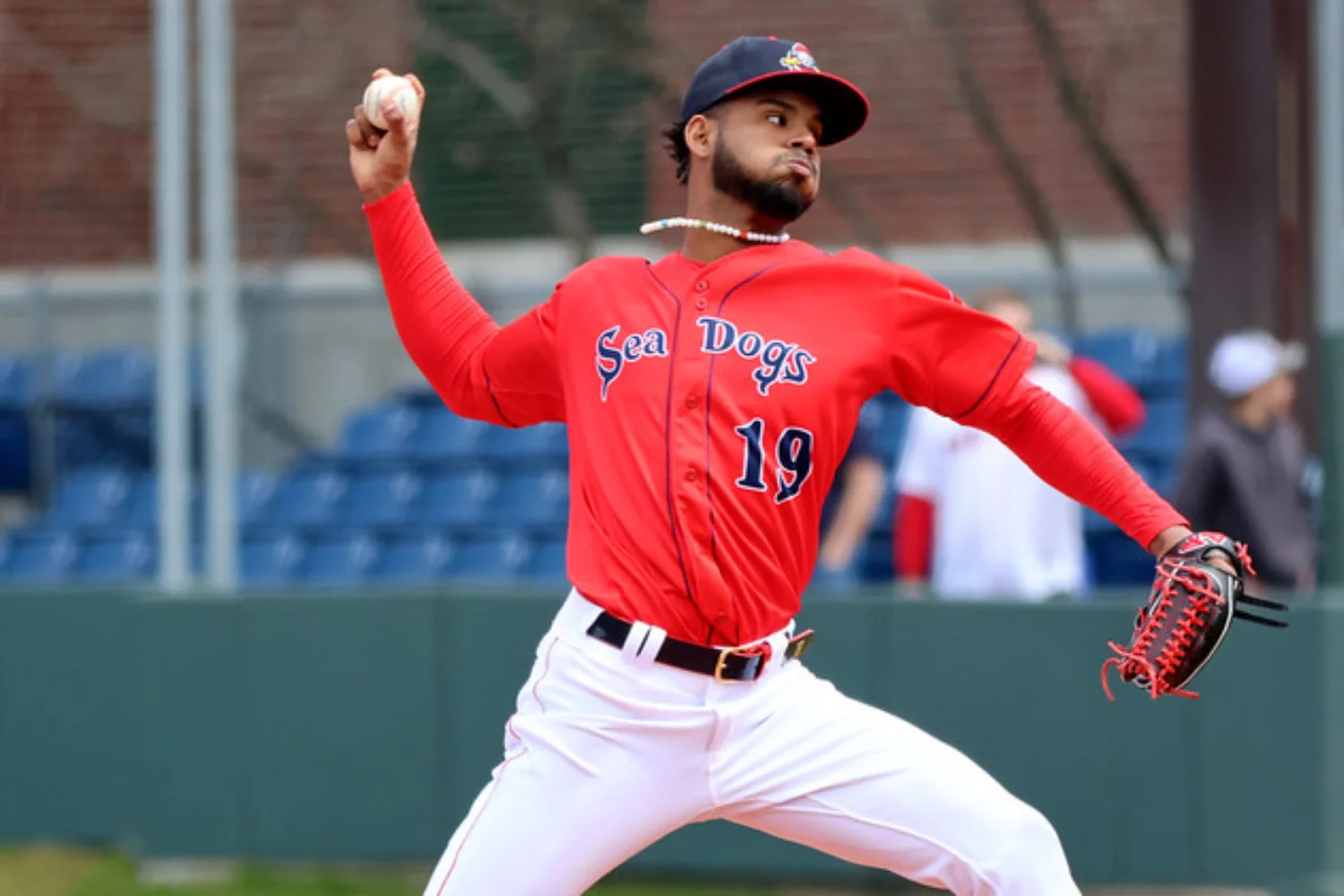 Following the 2024 Rule 5 Draft, there was little hope for Angel Bastardo to return to the Boston Red Sox organization. Despite having Tommy John surgery in June of 2024 and expected to miss all of 2025, the Blue Jays still took a flier on the right-hander. It was a surprise to some, as Bastardo had struggled since being promoted to Portland near the end of the 2023 season, having gone 0-6 with a 5.28 ERA in 13 starts between 2023 and 2024. The Blue Jays planned to have him potentially be in the bullpen for 2026, but after a spring training where he flashed potential but couldn’t quite put it all together for the defending American League champions, the team decided to return him to the Red Sox on April 1 after designating him for assignment. On April 21, he finally made his return to the mound as a member of the Red Sox. The right-hander tossed one inning out of the bullpen, walking two while striking out three batters. There were some moments of wildness from the pitcher, and by the end of the outing he had thrown 27 pitches. “The ball just jumps out of his hand, so I was pretty excited,” former Worcester manager Chad Tracy explained when asked if anything really stood out during Bastardo’s Triple-A debut. “The first hitter I was seeing a bunch of 97 [miles per hour]. I’m like, this is a great looking arm.” It wasn’t all positives for Bastardo, however, as rust was prevalent for the pitcher as noted by Tracy. Of the 27 pitches he threw, 12 of them were balls and he did end up throwing some non-competitive pitches. “He did lose some balls, like up arm side for some non-competitive fastballs. I mostly attribute that to it being his first outing, so we got to keep an eye on that as we go forward,” Tracy continued to explain about the young pitcher. In the outing, there were multiple opportunities to get out of the inning sooner than he did, but the young pitcher still managed to escape the frame without allowing a run to score. The Worcester manager was overall impressed with the outing, especially from a stuff standpoint along with the way the ball. If Bastardo can consistently throw strikes and have his stuff look as it did in his debut on a regular basis, there is a real shot he could make it to the major leagues one day. Despite it being over a year since he had his surgery, the team will be cautious with Bastardo. “He threw one inning [on Tuesday], Saturday we got him scheduled for a couple innings. I don’t think it’s gonna be 45 pitches or anything, but he will. We’re looking for multiple ups. I don’t have the full thing but I know initially a lot of his outings will be picked and scripted out, rather than like most of my bullpen where if they’re up we can use them whenever. We’ll lay out his [Bastardo’s] days right now,” Tracy detailed on April 24 when asked what the plan might be for Bastardo as he builds up his pitch count and gets stretched out. Don't expect him to immediately go back to starting, as Tracy turned down the idea. At least for right now. “I don’t know. I haven’t talked to our front office about that like, I think that could be possible, but I don’t think it’s in the immediate plans right now. It’s mostly just stretching out outings as a reliever and getting built up appropriately before we say now you can just be used as a normal reliever." Overall on the season, the young right-hander has appeared in five games, tossing 8 2/3 innings while allowing four earned runs. Over that span, he's struck out 13 batters while walking six. As a pitcher, Bastardo relies on a four-pitch mix with his four-seam fastball making up over half of his pitch usage at 52.3%. His changeup is used 32.6% of the time while the slider is used 12.8% and his curveball makes up the remaining 2.3%. Of the four pitches, his changeup may be his best pitch; through his first few outings this year, batters had a .187 xwOBA and a .150 xSLG against it. Despite making just a few appearances thus far while working back to full strength, Bastardo could be a valuable piece for the Worcester bullpen as they deal with a fluctuating roster. Should Bastardo continue to thrive in Triple-A while rediscovering the form that made him a Rule 5 pick in the first place, he could quickly be on the radar of Tracy in Boston. View the full article
 -
 Transactions: DSL Brewers Gold released RHP Linbel Jimenez. Game Action: Nashville pre-game media notes Nashville 4, Iowa (Cubs) 1 Box Score As always, you are encouraged to read the official round-up from the team’s site: Vihuelas Exercise Demonios with 4-1 Final The Nashville Sounds secured a 4-1 victory over the Iowa Cubs at First Horizon Park, propelled by a dominant collective effort on the mound and a balanced offensive effort. Offensively, the Sounds found their spark in the third inning when Ramon Rodríguez launched a solo home run to right-center, erasing an early Iowa lead. Highlight here courtesy of the Sounds X Account: The momentum stayed with Nashville in the fifth, as the team played some small ball to break the game open. A single, steal, walk, and hit by pitch loaded the bases for Cooper Pratt. Pratt drove in a run on a ground out, before Luis Lara socked a single to center (video) to make it 3-1 Nashville. Lara was once again the standout at the plate for Nashville, finishing with three hits and a run scored. Lara’s 50 hits on the season are second-most in the International League. Brock Wilken added some late-inning insurance in the eighth with a funky triple to plate a run (video), finishing the night with two hits and providing the pitching staff with more than enough cushion to close out the win. On the mound, Thomas Pannone delivered with a season-high four innings and four strikeouts. Easton McGee earned his fourth win of the season with two scoreless frames, followed by Peter Strzelecki and Blake Holub, who combined to allow just two hits over the final three innings. Holub’s clean ninth inning earned him his first save of the year, punctuated by a strikeout to end the contest. Coleman Crow takes the mound on Thursday for the Sounds, who now sit three games above .500. Biloxi pre-game media notes Biloxi 11, Montgomery (Rays) 3 Box Score Shuckers Burn Biscuits 11-3 The Shuckers picked up where they left off after Tuesday's late rally by toasting the Biscuits in a convincing 11-3 victory. The scoring started early with a and RBI ground out from Matthew Wood in the second. In the third, Damon Keith and Mike Boeve provided run scoring singles to pad the lead to 4-0. You can check out both singles here, courtesy of the Biloxi X account: The middle innings proved to be the breaking point for Montgomery, as Biloxi, aided by some defensive miscues, put up four runs in the sixth to effectively put the game out of reach. Blake Burke had an RBI single: While O’Rae and Jesus Made plated runs on a sac fly (video) and ground out. Boeve was once again the straw stirring the drink for the Shuckers, a night after his clutch two-run home run in the 9th inning. Boeve turned in a stellar 3-for-5 performance with two RBIs and a double. In the month of May, Boeve has a .355/.429/.613 (1.042 OPS) slash line with 11 RBI in nine games. Maybe more impressively, Boeve has cut down both on his whiff rate (32.6% in April to 16.4% in May) as well as his strikeout rate (27.5% in April to just 6.7% in May). Wood provided the finishing touches with a solo home run in the eighth inning, his third home run in his last six games: Nearly every starter contributed, with seven different Shuckers recording at least one RBI, showing the depth of this Biloxi roster. The Shuckers’ speed was also on full display as O’Rae, Made, Keith, and Boeve all swiped bases, On the mound, Manuel Rodriguez earned his third win of the season, delivering five solid innings and navigating through six hits to allow only two earned runs. The Shuckers’ bullpen was equally impressive as Jesus Broca, Cameron Wagoner, and Nick Merkel combined to shut the door over the final four frames, racking up four strikeouts and allowing just one run. With the win, Biloxi moves within two wins of the .500 mark. Tanner Gillis is slated to make his first start (eighth appearance) of the season on Thursday. Oh, and yes, with Konnor Griffin "graduating", this is now official (article link): Wisconsin pre-game media notes Wisconsin 11, South Bend (Cubs) 6 Box Score Wisconsin Outlasts South Bend Wisconsin put on an offensive clinic at Neuroscience Group Field, racking up 14 hits to overpower South Bend in an 11-6 victory. The Rattlers wasted no time asserting their dominance, erupting for five runs in the second inning to chase the Cubs' starter early. In total, five Rattlers starters had multi-hit days. Tayden Hall led the charge with a four RBI performance, including two doubles, while Josh Adamczewski stayed hot with a three-hit game and a steal. Braylon Payne doubled twice, walked twice, scored twice and stole a base. Eric Bitonti had two hits, two walks, three runs scored and a steal. Bitonti now has a .961 OPS in the month of May despite striking out 18 times in 36 at-bats, Juan Baez provided the exclamation point in the eighth, launching a two-run home run to left to put the game out of reach. You can check out all the highlights here: On the mound, Yorman Galindez (2IP 5H 4R 4ER 3BB 2) once again labored through a short start. The newly promoted Garrett Hodges earned his first win of the season despite walking four and hitting a batter in two innings in his first appearance for Wisconsin. However, it was Braylon Owens who stole the show in relief. Owens tossed five dominant frames, striking out six and allowing just one run to earn the rare five-inning save. Owens, a 10th round pick last year, now has 46 strikeouts in 31.1 IP at Wisconsin this season. With this win, the Timber Rattlers improve to 20-13, maintaining their hold on first place in the Midwest West division. Another 2025 draft pick, lefty J.D. Thompson will take the mound for Appleton on Thursday. Wilson pre-game media notes Hill City (Guardians) 7, Wilson 3 Box Score Warbirds Use Rally to Extend Game, Fall in Extras Despite a resilient late-inning comeback to force extra innings, Wilson ultimately fell 7-3 to Hill City in a 10-inning heartbreaker at Wilson Ballpark. Jayden Dubanewicz was a bright spot in his 2026 Carolina League debut. The 20-year-old righty threw three scoreless innings allowing just two singles while striking out five. The game was scoreless until the fifth, when a throwing error on a potential double play brought in the first run of the game off Tyler Renz (4.2 IP 3H 4R 3ER 4BB 1K). Renz has now issued 22 free passes in 31.1 IP on the season. Hill City added two more in the sixth inning to give them a 3-0 lead. The Warbirds finally got on the board in the seventh when Jose Anderson doubled, stole third, and scored on a Juan Ortuno single (video). The Anderson steal was the Warbirds’ only successful base thievery on a day that saw the team caught stealing three times. The score remained 3-1 until the bottom of the ninth. Brady Ebel started the rally by taking one for the team on an HBP. With one out, Frederi Montero doubled to put the tying runs into scoring position for Ortuno. After an Ortuno RBI ground out put Wilson on the brink of defeat, Pedro Ibarguen snuck a single through the infield to tie the game (video). Unfortunately, Hill City struck for four runs in the extra frame to squash any notion of a walk-off win for Wilson. With the loss, Wilson falls to 15-20 on the season. 2025 3rd round pick Jacob Morrison will look to snap the Warbirds’ three game losing streak when he takes the mound on Thursday. Morrison (7 IP 0 ER) will look to continue his scoreless streak to start his professional career in his third start. Organizational Scoreboard including starting pitcher info, game times, MiLB TV links, and box scores Current Milwaukee Brewers Organization Batting Stats and Depth Current Milwaukee Brewers Organization Pitching Stats and Depth View the full article
 -
 Jesus A. Castro struck out a career-high nine as Lake Elsinore beat Rancho Cucamonga 4-0. The San Antonio Missions got a ninth-inning sacrifice fly for a 4-3 walk-off victory. The Fort Wayne TinCaps gave up a lated lead for a 4-3 walk-off loss to the Cedar Rapids Kernels. The El Paso Chihuahuas gave up seven runs in the sixth inning en route to a 12-4 loss. Chihuahuas Surrender 7-Spot In Setback To Bees Box score Two errors contributed to another huge inning by the opposition as the Triple-A El Paso Chihuahuas gave up 11 runs over the last four innings in a 12-4 loss to the Salt Lake Bees. The Chihuahuas led 4-2 before coughing up a seven-run sixth inning that featured three consecutive doubles. Anthony Vilar went 3-for-4 with a pair of doubles and a run scored, while Pablo Reyes extended his on-base streak to 29 games by going 2-for-3 with a walk and an RBI. The Chihuahuas scored all their runs in the fifth inning. Trailing 1-0, Nick Schnell had a leadoff single and Vilar doubled him to third. Jase Bowen plated the first run with a sacrifice fly to tie it. After a strikeout for the second out, Will Wagner hit an opposite-field RBI single to left for a 2-1 lead. Nick Solak walked and Reyes grounded a single to left to bring in Wagner. Reyes and Solak pulled off a double steal, with Solak swiping home to cap the four-run rally. Salt Lake scored once in the fifth before erupting for seven in the sixth and three in the eighth. EP_0513.mp4 Missions Manufacture Walk-Off Victory Over Wind Surge Box score A walk, a steal and two sacrifices, including Francisco Acuna's fly to center field, produced the winning run as the Double-A San Antonio Missions rallied past the Wichita Wind Surge 4-3 for their fifth consecutive victory. Left-handed starter Jagger Haynes struck out seven in 6⅔ innings, the longest outing by a Missions pitcher this year. Haynes had gone a season-high six innings in each of his last two starts and fell one out shy of his career best, set in 2024 with Lake Elsinore. Haynes gave up three runs on five hits and didn't issue a walk. Haynes gave up a pair of runs in the top of the third on a homer, but the Missions came back to tie the game in the bottom half. Acuna singled, Carson Tucker had a one-out single and Kair Murphy reached on a throwing error by the catcher to load the bases. Leandro Cedeno hit a sacrifice fly to right to score Acuna and Tucker came home when the catcher threw wildly to second to tie it 2-2. Wichita took a 3-2 lead in the top of the seventh on a single off Haynes and three straight walks by Missions right-hander Francis Pena. The Missions tied it in the bottom of the eighth when Kai Murphy doubled, went to third on a groundout and scored on Tirso Ornelas' sac fly to right. In the bottom of the ninth, Braedon Karpathios walked and was replaced by pinch-runner Kai Roberts, who stole second. Luis Verdugo bunted Roberts to third and Acuna hit his walk-off sac fly to center. Romeo Sanabria went 3-for-4 with a double and a stolen base, while Tucker went 2-for-4 with a run scored. SA_0513.mp4 TinCaps Have All The Hits, But Not The Win In Walk-Off Loss Box score A standout start by High-A Fort Wayne TinCaps right-hander Maikel Mirrales was undone by a late rally by the host Cedar Rapids Kernels, who earned a 4-3 walk-off victory against closer Clay Edmondson. The TinCaps outhit the Kernels 13-5 and drew seven walks to Cedar Rapids' 1, which led to Fort Wayne stranding 17 runners on base, one shy of a club record. Miralles went a season-best five innings, allowing two hits on four hits and a walk while striking out six, including the final three batters he faced. Miralles, in fact, set down the final seven Kernels in a row. But he left the game trailing 2-1 after the Kernels scored twice in the second and the TinCaps once in the top of the fifth on a Zach Evans triple and Jack Costello's RBI single. Fort Wayne grabbed the lead in the top of the eighth as Lamar King Jr. hit his first triple of the season and Alex McCoy cranked his sixth homer of the season, an opposite-field two-run shot to right for a 3-2 edge. The TinCaps had an opportunity to tack on a run in the top of the ninth after Jack Costello had a leadoff double, but the next three batters were retired. Edmondson entered the game not having allowed a run in 14⅓ innings this season, notching seven saves. An error by Evans, the third baseman, opened the inning and the runner moved to second on a groundout. The next batter hit an RBI double to tie the game. A passed ball by King on a strikeout put runners on the corners, then a sacrifice fly won for the Kernels. King, Padres Mission's No. 10 prospect, did extend his on-base streak to 24 games, while McCoy—Padres Mission's No. 12 prospect—had his second three-hit game of the year. FW_0513.mp4 Jesus Castro Strikes Out 9 As Storm Blank Quakes Box score Right-handed starter Jesus A. Castro struck out a career-high nine and combined with three relievers on a nine-hit shutout as the host Low-A Lake Elsinore Storm blanked the Rancho Cucamonga Quakes 4-0. It was the second shutout of the season for the Storm, who had a 21-0 win over the Rancho Cucamonga Quakes on April 9. The 18-year-old Castro went 5⅔ innings, matching his last outing, giving up seven hits and a walk while surpassing his previous high of eight strikeouts in a game set last year in the Dominican Summer League. He has struck out 16 in his last two games. Castro's nine-strikeout performance came a day after right-hander Winyer Chourio struck out 10 in a 4-3 win over the Quakes. Right-hander Carson Swilling got four outs, striking out three, while left-hander Joseph Herrera and right-hander Vicarte Domingo each pitched a scoreless inning. It was a 0-0 game until the Storm scored in the sixth. Luke Cantwell drew a one-out walk and Ryan Wideman singled to center. Ty Harvey grounded to the third base, who got the forceout at second, but an errant throw by the second baseman trying to complete the double play allowed Cantwell to score. In the seventh, the Storm broke it open. With two outs, George Bilecki singled and Dylan Grego and Bradley Frye walked to load the bases. Cantwell lined a single to center to score Bilecki and Grego for a 3-0 lead and Wideman singled to right to bring in Frye for a 4-0 advantage. LE_0513.mp4 View the full article
 -
 TRANSACTIONS RHP Sam Armstrong activated from 7-day IL (AA Wichita) Saints Sentinel St. Paul 3, Columbus 8 Box Score Trent Baker: 3 IP, 1 H, 0 ER, 0 BB, 4 K HR: None Multi-hit games: Ryan Kre5dler (2-for-5, 2B, RBI), Orlando Arcia (2-for-4, R), Hendry Mendez (3-for-4, 2B, R, RBI) The Saints let one slip by them on Wednesday. Everything began wonderfully. Starter Trent Baker was in a deep groove, allowing just one hit in his three innings—a knock that was later erased by a double play. He struck out four. St. Paul also found three runs. Hendry Mendrez drove a double to center to plate the game’s first run, and Aaron Sabato quickly singled in his friend to push the lead to two. A Ryan Kreidler screaming double in the following frame brought in a third score. Unfortunately, the Saints' bullpen struggled in the matchup, as the three hurlers following Baker all allowed multiple runs. That successive—or, rather, unsuccessful—streak turned what was a 3-0 advantage into an 8-3 deficit the Saints could never recover from. Daniel Espino pitched in relief for the Clippers on Wednesday. Some of you more avid prospect followers may remember Espino as Cleveland’s first-round pick in the 2019 draft. He was the One With the Golden Arm: the type of talented youngster apparently blessed by the gods with the ability to throw a baseball unlike anyone his age. He struck out 152 across 91 2/3 innings in 2021. That was his final remotely full season: Espino suffered chronic shoulder problems not long after 2022 started and missed all of 2023 and 2024. He’s back, but the magic is gone. A tragedy of the limitations of the human body. Clippers shortstop Angel Genoa ranks as the 47th-best prospect in MLB. He singled once in four trips to the plate. Wind Surge Wisdom Wichita 3, San Antonio 4 Box Score Eli Jones: 5 IP, 5 H, 0 ER, 0 BB, 4 K HR: Billy Amick (10) Multi-hit games: Maddux Houghton (2-for-4, 2B, R) The Wind Surge were walked off on Wednesday. Tough luck for Eli Jones. The righty was excellent, striking out four in a hyper-efficient outing. Yet, his catcher—someone he’s supposed to be in cahoots with—committed a throwing error on back-to-back plays in the third, turning what could have been a ho-hum frame into a two-run quagmire that soiled an otherwise outstanding start. Wichita matched the runs with a gargantuan blast off Billy Amick’s bat in the bottom of the third. Good luck trying to see where the ball lands. Amick earned another RBI with a bases-loaded walk in the seventh, but San Antonio tied the game in the eighth. The ninth went no better. A walk begat a stolen base, which begat a sacrifice bunt, which begat a sacrifice fly to cap the rare no-hit run. Once again, this author is urging the good readers of this report to take notice of Alejandro Hidalgo. Yes, his ERA on the season is 6.75. So what. He now has 33 strikeouts in just 18 2/3 innings. That’s Hader-ish. There’s something happening here. What it is ain’t exactly clear. But it sure is fascinating. Though the Missions are the team of uber-prospect Ethan Salas, the best youngster in this match was outfielder Braedon Karpathios, ranked 10th in the system. He walked once in four plate appearances. Kernels Nuggets Cedar Rapids 4, Fort Wayne 3 Box Score Miguelangel Boadas: 2 IP, 2 H, 0 ER, 3 BB, 2 K HR: None Multi-hit games: None The Kernels inexplicably won on Wednesday. Inexplicable in that the team was thoroughly outhit; struck out 11 times while taking just one walk; and only enjoyed six opportunities with runners in scoring position while their opponent had 19 such tries. In all likelihood, they should have lost. Yet, runs aren’t theoretical, and the nerds with their algorithms and abacuses sometimes suffer while watching the chaos of competition overrule the conceptual. Cedar Rapids scored their first two runs off a Jay Thomason double in the second. Fort Wayne answered with a run in the fifth, then struck again in the eighth to plate a pair and take the lead. Khadim Diaw reached on an error to start the ninth, which ushered in the frame that would win the game for the Kernels. Yasser Mercedes hit a mild grounder beyond the grasp of the TinCaps first baseman—an RBI single for all players, a two-bagger for the electric Mercedes. Then, a bizzarity. TinCaps pitcher Clay Edmonson, a sidewinder, fooled two people with his pitch: the batter, Rayne Doncon, who struck out looking; and his catcher, Lamar King Jr., who expected a different pitch, and whose attempt to adjust to the unexpected offering resulted in a ricochet into no man’s land. And that’s how a backwards K results in a man standing on first (Mercedes also advanced to third.) Miguel Briceno sent a sacrifice fly to right to win the game. The aforementioned King Jr. ranks as the 14th-best prospect in the Padres system; he collected two hits in five at-bats, tripling once. Mussel Matters Fort Myers 10, Bradenton 6 Box Score Merit Jones: 4 IP, 6 H, 5 ER, 1 BB, 5 K HR: Quentin Young (4), Quinn McDaniel (1) Multi-hit games: Quinn McDaniel (3-for-5, HR, 2 3B, 3 R, 5 RBI), Jayson Bass (2-for-4, 2B, R, RBI, BB), Bryan Acuña (2-for-4, 2B, R, RBI, BB) The Mighty Mussels smothered the Murauders on Wednesday. The Twins added Quinn McDaniel to their organization on Sunday; on Wednesday, he authored one of the finest hitting performances we’re likely to see from a player this season. He tripled in the third off the wall (and the center fielder’s head). Then he tripled again in the sixth. And, finally, he homered in the ninth (albeit off a position player). That’s one way to make an impression on your new teammates. Though McDaniel enjoyed the better night, perhaps the single best swing came from Quentin Young, who obliterated a 111 MPH liner off the beer stand in center field. You don’t see many 23-degree launch angle shots to that part of any ballpark. Fort Myers pitchers struck out 14 in the game. Merit Jones whiffed five, then Jake Murray K’d two, Mitch Mueller beguiled four, and Mike McKenna ended matters by mowing down the side in the ninth. The Murauders are members of the Pirates system. Though Seth Hernandez sits one level higher, the team nonetheless offered their 17th-ranked prospect on Wednesday, third baseman Murf Gray. He singled once in five at-bats. TWINS DAILY PLAYERS OF THE DAY Twins Daily Minor League Pitcher of the Day – Eli Jones Twins Daily Minor League Hitter of the Day – Quinn McDaniel PROSPECT SUMMARY Here’s a look at how the Twins Daily Top 20 Twins Prospects performed: #2 – Kaelen Culpepper (St. Paul) - 1-3, R, 2 BB, 2 K #5 – Eduardo Tait (Cedar Rapids) - 1-4, 2B, 3 K #10 – Gabriel Gonzalez (St. Paul) - 0-5, 3 K #13 – Hendry Mendez (St. Paul) - 3-4, 2B, R, RBI #14 – Quentin Young (Fort Myers) - 1-5, HR, R, 2 RBI, 2 K #15 – Brandon Winokur (Cedar Rapids) - 0-4, 3 K #17 – C.J. Culpepper (St. Paul) - 1 IP, 3 H, 3 ER, 1 BB, 2 K #18 – James Ellwanger (Fort Myers) - DNP #19 – Khadim Diaw (Cedar Rapids) - 0-4, R, K #20 – Kyle DeBarge (Wichita) - 0-3, K THURSDAY’S PROBABLE STARTERS St. Paul @ Columbus (6:37 PM) - LHP Aaron Rozek (0-0, 0.00 ERA) Wichita @ San Antonio (7:05 PM) - RHP Sam Armstrong Fort Wayne @ Cedar Rapids (6:35 PM) - RHP Ivran Romero Fort Myers @ Bradenton (5:30 PM) - Ramiro Villanueva (0-0, 0.90 ERA) FCL Rays @ FCL Twins (11:00 AM) - TBD View the full article
 -
Bats breakthrough to soften blow of Max Meyer's homecoming labors
DiamondCentric posted an article in Fish On First
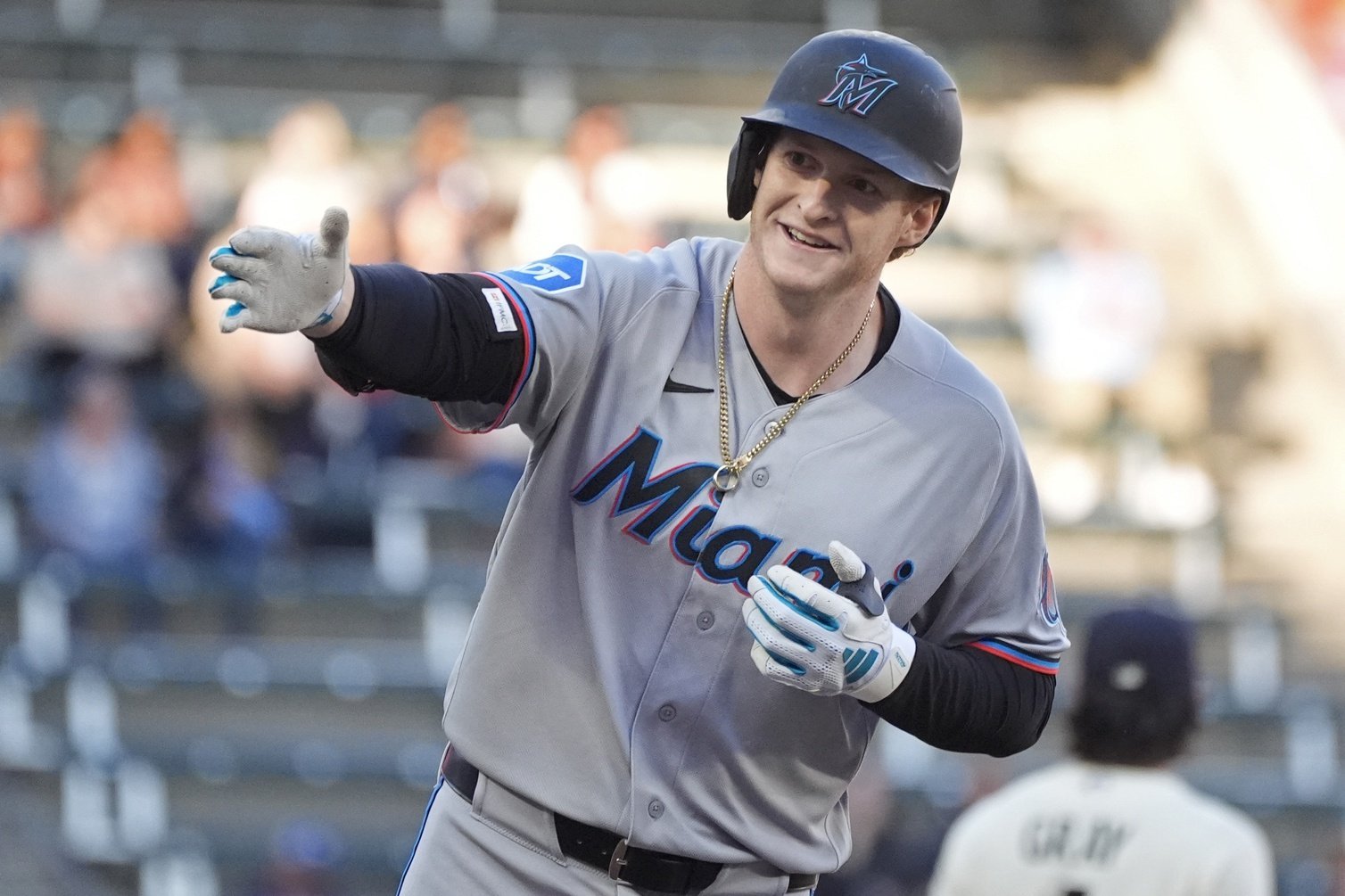 On the night when they learned they were likely to be without top pitching prospect Robby Snelling , the Marlins were in desperate need of a feel-good game to get back on the winning path. Snelling, currently the club's second-ranked prospect, would be placed on the injured list with a UCL sprain. It is yet to be determined whether he will undergo season-ending Tommy John surgery. Thanks to a nine-run outburst from the bats and a voluminous outing from Max Meyer, the Marlins got just that in their 9-5 win over the Minnesota Twins, a much-needed reprieve after being two-hit by Bailey Ober in the series opener. Making his first career Major League start in his home state and with Byron Buxton at his craw, Meyer gutted it through 5.2 innings of four-run ball in the winning effort. Now 3-0 to begin the season, Meyer has matched his previous career high in wins. "He grinded through this one a bit...he's come so far as a starter and now has many weapons in his arsenal," noted manager Clayton McCullough. On the evening, Meyer generated 22 whiffs on the 46 swings against him (48%), 11 of which came on behalf of his slider. As a result, the former first-round pick netted a season-high nine strikeouts. Four of Meyer's whiffs came on a retooled changeup, a pitch Meyer noted he and pitching coach Daniel Moskos were tinkering with pitch grips. "Felt like any other game this year, honestly," reflected Meyer on his first start in his home state. Facing the aforementioned Buxton, the first pitch Meyer threw in his home state landed in the left field stands of Target Field for Buxton's fourteenth home run of the season. Two innings later, again sitting on the first pitch, Buxton doubled up on Meyer for his fifteenth on the year, blasting his second home run in as many trips to the plate. At the plate, the Marlins got off to a fast start, with each of the first five Miami hitters reaching base against Simeon Woods-Richardson (3+ IP, 8 R). Of the 91 pitchers to throw at least 40 innings to this point in the season, none have a higher ERA than Woods-Richardson's 7.71, Following a two-run top of the first, Owen Caissie would break the game open for Miami when he sent his third home run of the season into the Twins bullpen in left-center in the top of the second. However, it would be the team's four-run fourth inning that proved the difference, as Joe Mack, Xavier Edwards, and Liam Hicks all authored run-scoring hits. Hicks became the fourth player in franchise history to collect at least 38 RBI in his first 40 games of the season. With the win, the Marlins improve to 20-23, even record-wise with third-place Philadelphia in the NL East. Notables - Pete Fairbanks, the club's closer and big-ticket free agent addition for the Marlins, was activated off the injured list (right thumb). - Leo Jiménez had three hits in the win on Wednesday, marking the second time in his career he's done so, Looking Ahead The Marlins will bid farewell to the Twins in 2026 in Thursday's season finale. Braxton Garrett (4.03 ERA) will make his first Major League appearance since June 17, 2024. First pitch from Target Field is slated for 1:40 EST. View the full article
 -
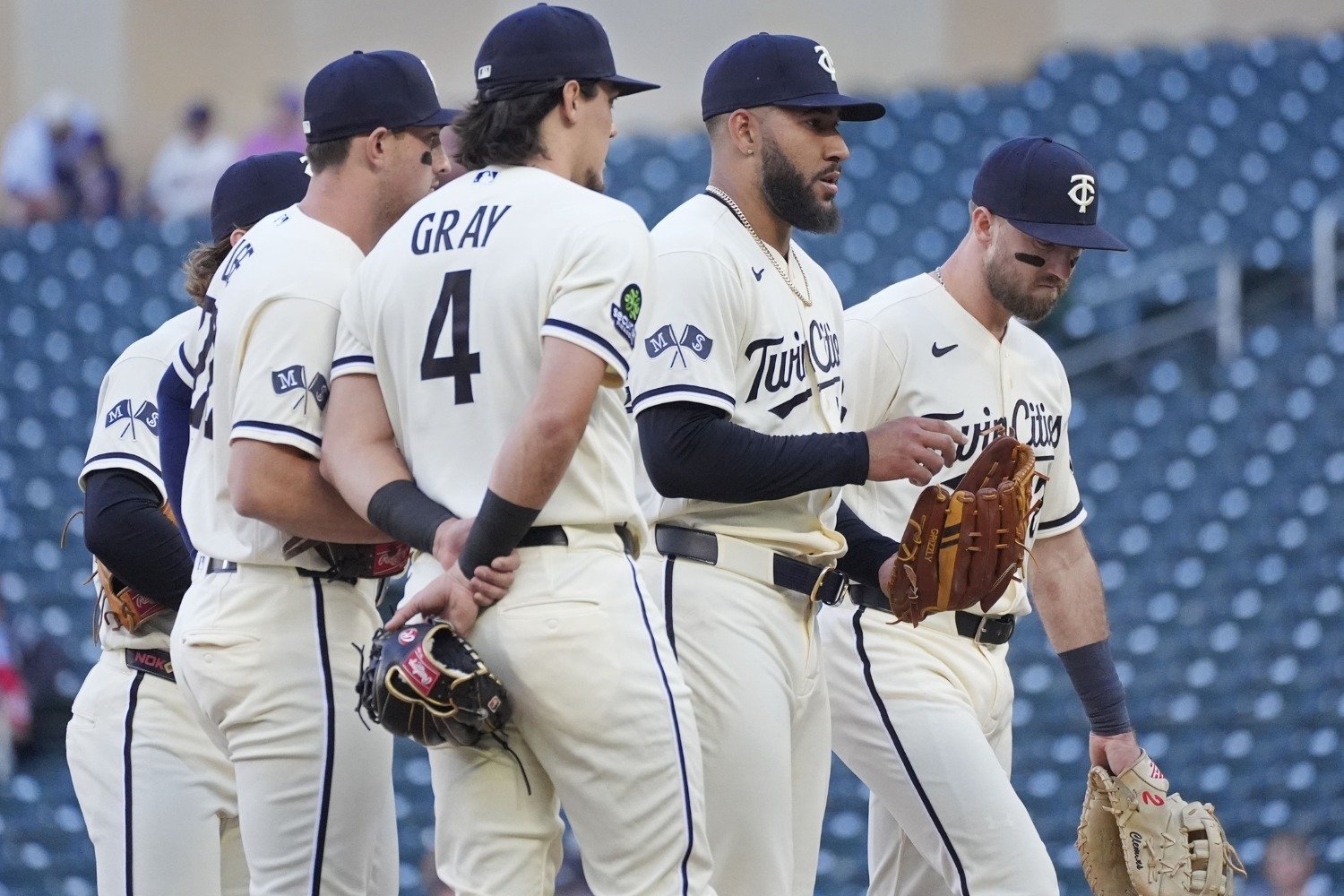 Box Score SP: Simeon Woods-Richardson - 3 IP, 7 H, 6 ER, 1 BB, 1 K (88 pitches, 48 strikes (49% strikes) Home Runs: Byron Buxton (15), Kody Clemens (4) 3 WPA: Simeon Woods-Richardson (-0.47), Luke Keaschall (-0.12), Matt Wallner (-0.07) Win Probability Chart (via FanGraphs) We’re in Our ‘Fix the Starter’ Era After an absolute gem from Bailey Ober on Tuesday, the Twins handed the ball to Simeon Woods-Richardson heading into the night, still searching for his first win. Almost immediately, you could tell this would not be that night. He issued a walk to Xavier Edwards, and an error by Luke Keaschall on a ground ball by Liam Hicks doubled the trouble. Otto Lopez followed with an RBI single that should also have produced an out, and Kyle Stowers walked to load the bases. Connor Norby then hit into a double play that still brought in a run, giving Miami an early 2–0 lead. Victor Caratini threw out Jakob Marsee on an attempted steal to end the inning, but the defense had let Woods Richardson down—and he had done nothing to help himself. Minnesota answered right away. Byron Buxton led off the bottom of the first with a first-pitch solo home run, cutting the deficit to 2-1. It was a skyscraper, a high pitch Buxton hit very hard but clipped the bottom half of, but which still easily carried into the bleachers down the left-field line. But Miami kept applying pressure in the second inning, breaking through again with a two-run homer that stretched the lead to 4-1. Woods Richardson never really found a groove, and in fact, he hasn't found one all season. While the pitching struggled to settle in, Buxton kept the Twins alive. He struck again in the third inning, launching another first-pitch home run, giving the Twins their second run. After being burned on a high four-seamer, Max Meyer tried a low sinker. The result was different, in that Buxton hit a screaming liner this time. It was the same, in that he circled the bases with his 15th dinger of the year. Could he hit 40 before 2026 is over? It's absolutely in play. New Pitchers, Same Old Problems The first four batters of the top of the fourth inning reached against Woods Richardson, with two more scoring. Derek Shelton turned to his much-rested bullpen, but not the way he'd hoped he might be able to. Travis Adams entered in relief, but could do little damage control. A single through the drawn-in infield scored two more runs. Adams closed the barn door, but the horses were long gone. The Twins scored twice in the bottom of the fifth, on a well-placed double by Josh Bell, but Adams couldn't keep the game within slam range. Edwards tripled past the hopelessly immobile Matt Wallner in the sixth and came home on a fielder's choice, stretching the lead to 9-4 Miami. Justin Topa took over and minimized damage, though he hardly looked dominant in his first outing since having his own doors blown off a week ago. So It Goes… By the time the game reached the later innings, what had been a long, grinding contest finally began to settle into a quicker rhythm as both sides cycled through the bullpen. Luis García came out in the eighth inning and mopped up the mess. Tristan Gray made the second of two good catches on pop-ups behind third base; he looks more like the team's short-term regular third baseman every day. Kody Clemens offered one last jolt of life in the bottom of the eighth with a garbage-time home run. If he and Bell can get going again at the plate, the team will have a moral victory to take away from the loss. What’s Next? The Twins will close out against the interleague series with a rubber match tomorrow in an afternoon game at 12:40 PM CT, before the Brewers come over to continue the nine-game homestand. The Twins are expected to promote Triple-A starter Zebby Matthews for his first outing of the year. After rookie Robbie Snelling landed on the injured list, the Marlins will also reach into their farm system, for Braxton Garrett. Postgame Interviews Coming soon. Bullpen Availability Chart View the full article
 -
Robby Snelling lands on injured list after one MLB start
DiamondCentric posted an article in Fish On First
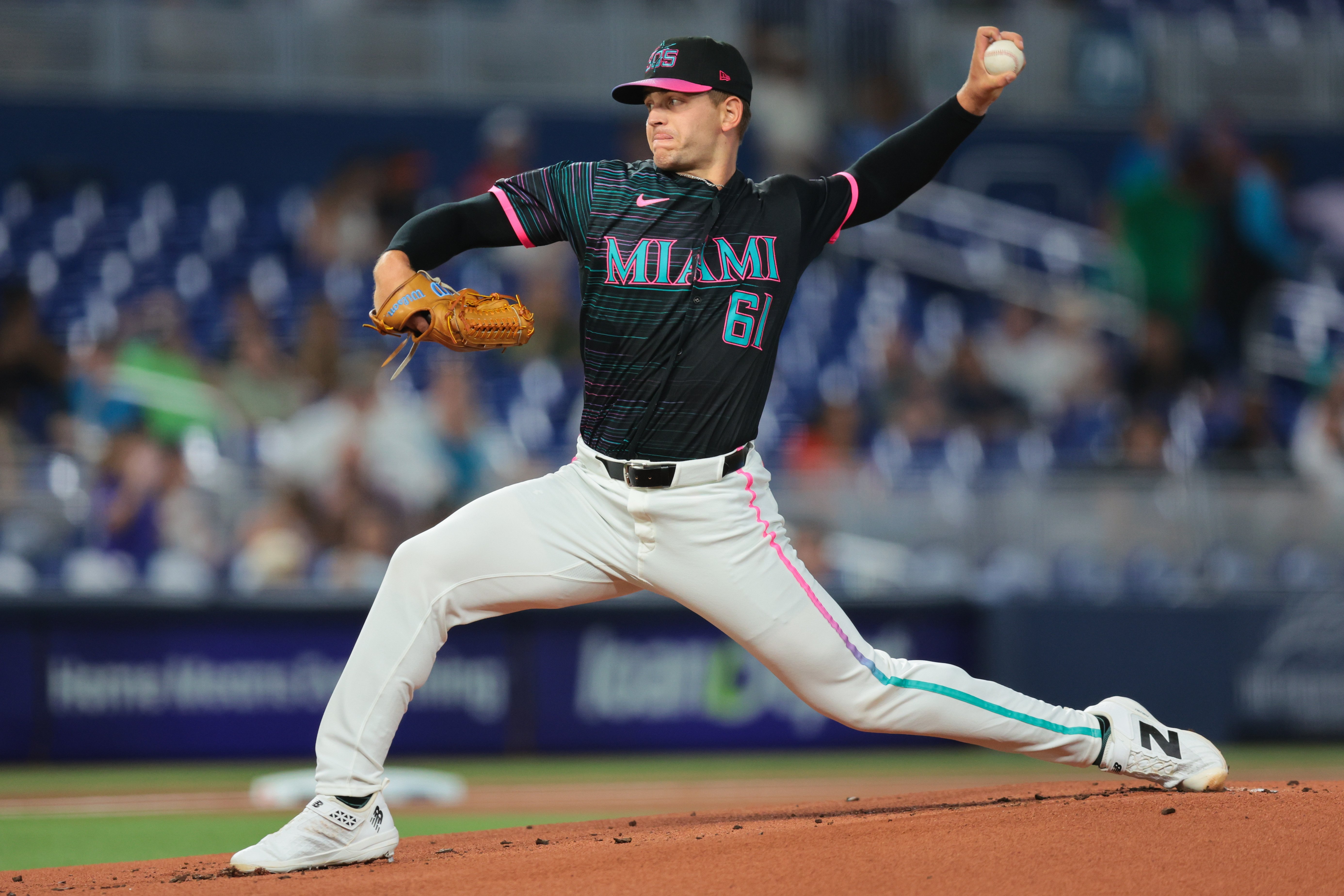 Miami Marlins starting pitcher Robby Snelling was placed on the injured list due to a left elbow UCL sprain, the team announced prior to Wednesday's game against the Minnesota Twins. The corresponding move was to activate closer Pete Fairbanks off the IL. Manager Clayton McCullough announced that Braxton Garrett, who was in Triple-A, will get the start for the series finale on Thursday in Snelling's place. Fish On First's No. 2 prospect, Snelling made just one start at the big league level, going five innings allowing three runs on five hits, four walks and one strikeout. All three runs came in the first inning, then proceeded to throw four shutout innings. Snelling threw his pitch design on Tuesday and reported discomfort, per McCullough. "You work your entire life for the opportunity to become a Major League player, you come up, make your Major League debut and then for something to pop up like this very shortly after, it's disappointing," McCullough told reporters in Minnesota. "Robby is a very hard and tough young man, and whichever way this goes, he'll come back for it." Someone who went through a similar sequence of events was Max Meyer in 2022. Meyer made his Major League debut against the Philadelphia Phillies and after facing just one hitter in his second start, landed on the injured due to a right elbow sprain, later resulting in undergoing Tommy John surgery and missing the 2023 season. Fairbanks, who landed on the injured list due to right nerve irritation, is activated as the corresponding move for Snelling. In 10 appearances this season, he has a 10.00 ERA, 3.34 FIP, 13.00 K/9, 4.00 BB/9 and five saves. He is just five saves away from reaching 100 in his career. Starting on Thursday will be Braxton Garrett, who was supposed to start for Triple-A Jacksonville on Wednesday, but was scratched. No corresponding move has been made and the move to call-up Garrett has not been made official yet. Garrett, who's 2024 season was cut short due to left elbow UCL surgery, competed for a spot in the Marlins rotation during spring training, but lost out on the final spot to Janson Junk. In six Triple-A starts this season, Garrett has a 2.30 ERA, 4.86 FIP, 9.19 K/9 and 4.31 BB/9. He also threw a no-hitter in his fourth start of the season. In his most recent start, he allowed four runs (three earned) on four hits, three walks and six strikeouts. Five of his six strikeouts were swinging. "Just kept his head down, continued to throw and get built up after a lengthy absence of his own," McCullough said. "Was throwing the ball well in Jacksonville and he certainly is no stranger to performing at the Major League level. While disappointed for Robby, Brax has certainly pitched well here in the past and earned the chance to come back up here and be part of our our rotation. Expect Brax to fill it up, compete very well. He knows how to pitch. He knows how to change speeds, move the ball around, so he'll get to start tomorrow." Overall, his fastball is averaging 91.7 mph, generating a 10.5% whiff rate. His breaking pitches on the other hand, have been great. The slider, which he is throwing 22.8% of the time, is generating 41.9% whiff and has the highest psStuff+ amongst his pitches, per Prospect Savant. For Garrett, this will mark his first start in the big leagues since June of 2024. Expect a Marlins reliever to be optioned on Thursday morning to make room for him on the active roster. View the full article
 -
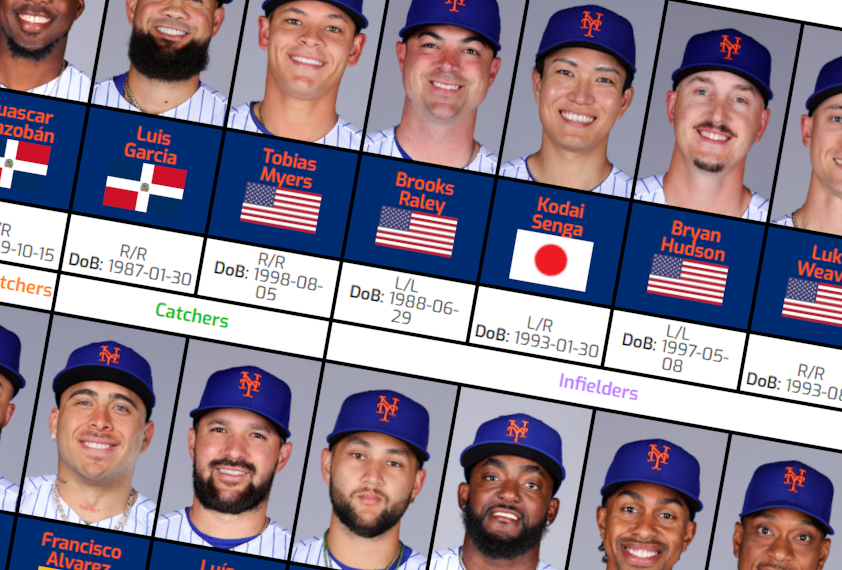 It was like A.J. Ewing reminded the Mets how to play last night — working counts, laying off sliders out of the strikezone, not overswinging, an in the end, letting the Tigers beat themselves. But all the rookie centerfielders in the world can't stop flesh from tearing, and that's what happened to the Mets catcher. Transactions, 5/6/2026 GOING COMING Placed on 10-Day Injured List with Torn Right Meniscus Promoted from Syracuse Catchers Francisco Alvarez Hayden Senger R/R DoB: 2001-11-01 High Level: MLB (2026) R/R DoB: 1997-04-03 High Level: MLB (2026) Francisco Álvarez overswings. He's a hell of a talent and you hate to boil down his lack of breakthrough performances to one problem, but man does he overswing. It makes him start early, it keeps him from breaking his swings on bad pitches, it leads him to top the ball, it slows his exit from the box, and now it has wounded his knee. The good news is he's a crazy fast healer and that he tends to return from injury refocused and on his game. Those are way too rubbery a set of patterns to rely on, but let's help they hold true nonetheless. Hayden Senger is his designated replacement during his IL stints the last few years, and while his defense has been rock solid, nobody is missing his .484 career OPS. That said, while his Syracuse performance this season has produced a typically low batting average and on-base percentage, he's somehow found his power bat, and his six homers in Salt City are already a career high, and they are more than any Met (the Flushing kind) has hit this season. Meanwhile, we wish 2022 #11 overall draft pick Kevin Parada our best as his struggles continue in Binghamton. It's a tough game to figure out. Your 2026 New York Mets Starting Pitchers Clay Holmes Nolan McLean Freddy Peralta David Peterson Christian Scott R/R DoB: 1993-03-27 R/R DoB: 2001-07-24 R/R DoB: 2996-06-04 L/L DoB: 1995-09-03 R/R DoB: 1999-06-15 Relief Pitchers Huascar Brazobán Craig Kimbrel Sean Manaea Tobias Myers Brooks Raley Austin Warren Luke Weaver R/R DoB: 1989-10-15 R/R DoB: 32291 R/L DoB: 1992-02-01 R/R DoB: 1998-08-05 L/L DoB: 1988-06-29 R/R DoB: 1996-02-05 R/R DoB: 1993-08-21 Relief Pitchers Catchers Infielders Devin Williams Hayden Senger Luís Torrens Bo Bichette Brett Baty Vidal Brujan MJ Melendez R/R DoB: 1994-09-21 R/R DoB: 1997-04-03 R/R DoB: 1996-05-02 R/R DoB: 1998-03-05 L/R DoB: 1999-11-13 S/R DoB: 1998-02-09 L/R DoB: 1993-11-29 Infielders Outfielders Marcus Semien Mark Vientos Carson Benge A.J. Ewing Austin Slater Juan Soto Tyrone Taylor R/R DoB: 1990-09-17 R/R DoB: 1993-12-11 L/R DoB: 2003-01-20 L/R DoB: 38209 R/R DoB: 33951 L/L DoB: 1998-10-25 R/R DoB: 34356 Also on 40-Player Roster Starting Pitchers Relief Pitchers Tylor Megill Kodai Senga Jonah Tong Alex Carrillo Reed Garrett Joey Gerber Justin Hagenman R/R DoB: 1995-07-28 L/R DoB: 1993-01-30 R/R DoB: 2003-06-19 R/R DoB: 1997-06-06 R/R DoB: 1993-01-02 R/R DoB: 1997-05-03 R/R DoB: 1996-10-07 On 60-Day Injured List with torn right UCL. On 15-Day Injured List with Lumbar Spine Inflammation With Syracuse With Syracuse On 60-Day Injured List — right UCL surgery and nerve relocation surgery. With Syracuse On 60 Day Injured List with fractured rib. Relief Pitchers Catchers Infielders A.J. Minter Dedniel Núñez Jonathan Pintaro Dylan Ross Francisco Alvarez Francisco Lindor Ronny Mauricio L/L DoB: 1993-09-02 R/R DoB: 1996-06-05 R/R DoB: 1997-11-07 R/R DoB: 2000-09-01 R/R DoB: 2001-11-01 S/R DoB: 1993-11-14 S/R DoB: 2001-04-04 With Syracuse on Rehab Assignment On 60-Day Injured List — right UCL surgery. With Syracuse With Syracuse On 10-Dayl IL with Torn Right Meniscus On 10-Day Injured List with Strained Left Calf On 10-Day Injured List with fractured right thumb. Infielders Outfielders Jorge Polanco Nick Morabito Luis Robert, Jr. Jared Young S/R DoB: 1999-11-13 R/R DoB: 2003-05-07 R/R DoB: 1997-08-03 L/R DoB: 1995-07-09 On 10-Day Injured List with right wrist contusion. With Syracuse On 10-Day Injured List with Lumbar Spine Disc Hernitaion On 10-Day Injured List with torn left meniscus. Designagted for Assignment Infielders Andy Ibáñez R/R DoB: 1993-04-03 DFA'd, 2026-05-12. View the full article
 -
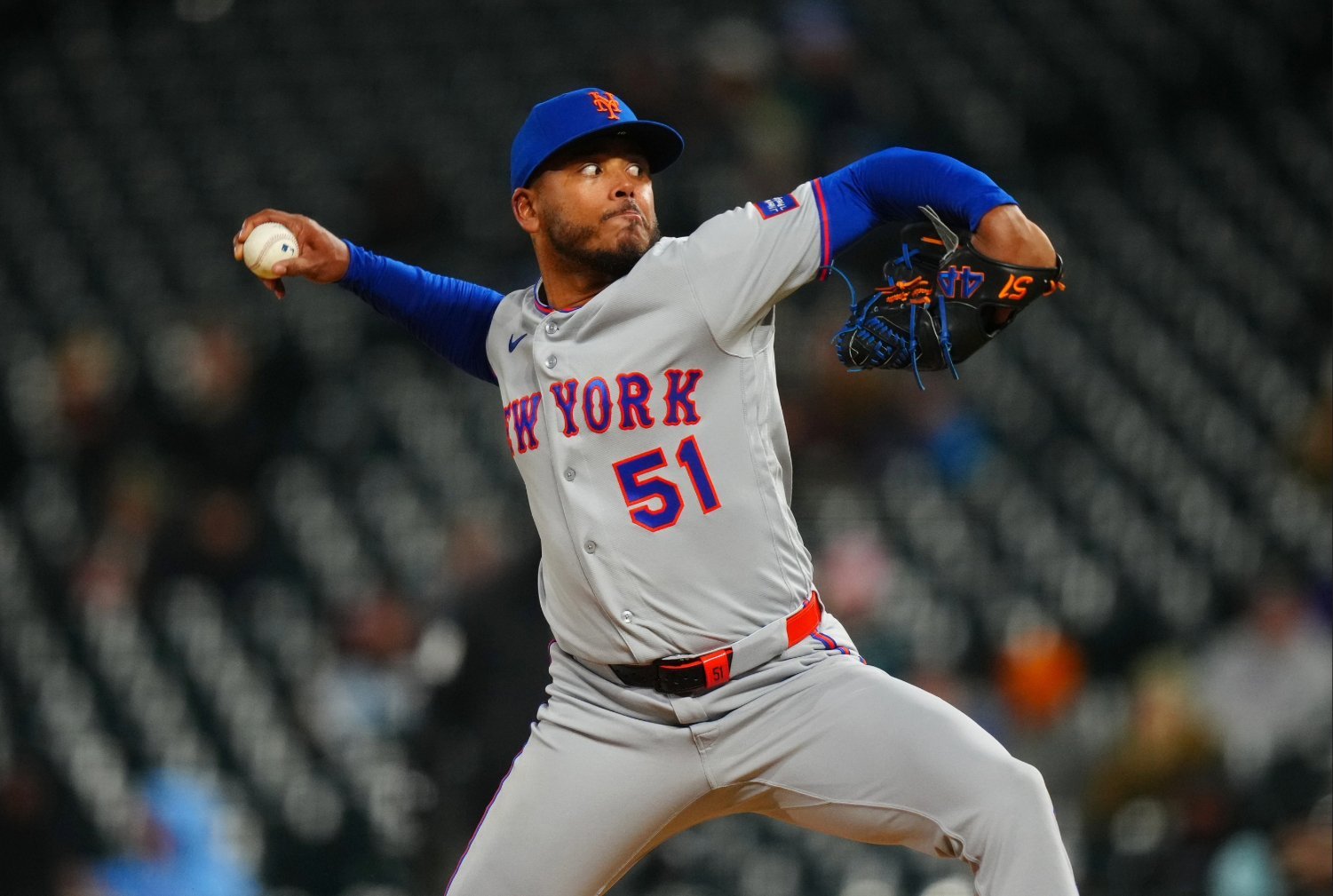 There are starts where a pitcher simply gets lucky. Others where hard contact goes directly into gloves. And then there are the starts where something genuinely changes — where the pitching itself starts to look different even before you check the box score. Such was the case when Freddy Peralta led the way in the Mets’ 10-2 win over the Detroit Tigers at Citi Field. The Mets had not scored at least 10 runs at home since April 23, when they beat the Minnesota Twins 10-8. Peralta delivered six strong innings on 100 pitches, struck out seven, and allowed two runs, including a solo homer by Dillon Dingler. His only shaky moment came in the second inning, when Dingler demolished a hanging curveball on an 0-2 count. That didn't stop Peralta's ruthless attack on the strike zone. Wenceel Pérez slapped a single while flailing at an 0-1 fastball, and Gage Workman doubled on a low-inside changeup. Spencer Torkelson capped the inning with a sacrifice fly to left field, giving Detroit a 2-0 lead. The only barrel Freddy allowed in the inning was Dingler’s 101.8 mph home run. The Mets responded quickly against the vulnerable mix of right-hander Jack Flaherty. Mark Vientos tied the game 2-2 with a single in the third, and Carson Benge gave New York a 3-2 lead with an RBI single to left in the fourth. The knockout blow came with a six-run fifth inning, followed by two more runs in the seventh, including a triple and top prospect A.J. Ewing’s first major-league RBI in his debut. The offensive support mattered for Peralta who regained his dominance while producing his best start of the season. Where did the difference show up? The adjustment in his pitch mix generated 13 whiffs, allowed just a 17.6% HardHit rate, and only a .118 expected batting average. He had not allowed a hard-hit rate below 20% in a start since September 4, 2025, when he was still pitching for the Milwaukee Brewers. That night, he faced 20 Philadelphia Phillies hitters — an elite lineup — striking out eight and generating 14 whiffs. From a pure dominance standpoint, the stuff looked sharp. But here’s the interesting difference: only six of those 14 whiffs in that 2025 outing came on his fastball. Last night at Citi Field, the story changed completely. Peralta generated 11 whiffs with his four-seamer alone. It was not about velocity. It was about command. His fastball touched 97.2 mph, but averaged 94.4. Peralta had not generated double-digit whiffs with his fastball since September 16, 2025. Across his previous 11 starts, including last night, his highest combined total of fastball whiffs over back-to-back outings had been only 12. He threw the fastball 69% of the time against Detroit’s lineup, mixing in his changeup (15%), slider (12%), and curveball (4%). The key detail here is that the veteran right-hander established the fastball without depending exclusively on the changeup or slider to finish hitters in two-strike counts. After the second inning, the Tigers never adjusted at the plate. Peralta was still averaging 94.8 mph on the fastball by the sixth inning. That is what makes this recent stretch from Freddy Peralta so interesting: the return of his confidence in the fastball. The reduction in command mistakes. The way his secondary pitches once again complement the entire arsenal by generating chase. These last four starts are not simply telling the story of a lower ERA. They are telling something more important: the gradual return of the dominant Freddy Peralta profile we saw in 2025. Not exactly the same pitcher, mind you. But the same identity. It's the same arm that generated weak contact in key moments. The same fastball that hitters struggled to elevate. Through nine starts this season, Peralta is generating ground balls at a rate 3.5% higher than last season (36.8%), while allowing his lowest hard-hit percentage (36.2%) since 2021. The same disappearing changeup underneath barrels has returned. And above all, the same feeling that opposing swings arrive late even when hitters know what is coming. For the Mets, that is encouraging news, especially after watching Peralta battle through his first five starts of the season. Dec IP H R ER HR BB IBB SO BF ERA SO% HR% XBH% GB% W-L:1-2 26.2 19 12 12 4 10 0 28 112 4.05 25.0% 3.6% 5.4% 34.1% W-L:2-1 22.2 22 7 5 1 9 0 22 98 1.99 22.4% 1.0% 5.1% 33.3% So, what stands out here? First, the innings are leaning more toward durability over these last four outings. Peralta has been resolving plate appearances more efficiently. The strikeout rate has dipped slightly, but he is dramatically reducing power damage and extra-base hits with runners on base. The extra-base-hit rate is nearly identical, yet he has allowed only one home run while maintaining a similar ground-ball profile. The other area where his season could truly turn is in his adjustments during two-strike counts. Last night, three of the seven hits he allowed came with two strikes: Kevin McGonigle single, 90 mph exit velocity (first inning, leadoff hitter, nine-pitch at-bat with seven pitches after two strikes). Dillon Dingler solo homer, 102 mph EV (second inning, leadoff hitter). Colt Keith double, 89 mph EV (third inning, leadoff hitter). Each situation came against the first hitter of the inning, which limited the overall damage somewhat. Still, it leaves an interesting question. Split Year G GS SO ERA SO/9 SO/BB Two Strikes 2018 16 14 96 2.67 16.0 4.4 Two Strikes 2019 39 8 115 4.03 17.8 4.3 Two Strikes 2020 15 1 47 1.99 18.7 6.7 Two Strikes 2021 28 27 195 1.62 18.5 7.2 Two Strikes 2022 18 17 86 1.50 16.1 4.5 Two Strikes 2023 30 30 210 3.10 18.1 6.8 Two Strikes 2024 32 32 200 2.10 16.8 4.9 Two Strikes 2025 33 33 204 1.72 16.0 5.2 Two Strikes 2026 9 9 50 3.07 15.3 3.6 This season, Peralta has posted the lowest SO/BB ratio (3.6) of his career in two-strike counts. His strikeout rate in those situations has also dipped to a career-low 15.3 K/9. Opponents’ on-base percentage (.252) in two-strike counts is his highest since 2019 (.267). But that could begin to change if these recent adjustments continue expanding. The 2025 Version of Freddy Peralta: Velocity, Elevation, and Broken Contact The Freddy Peralta of 2025 built one of the best seasons of his career around a relatively simple idea: never allow hitters to square up the fastball. His four-seamer was devastating: .209 batting average allowed .381 slugging percentage allowed 22.8% whiff rate Just a .239 BABIP But the real key was the quality of contact. Hitters produced hard contact only 41.6% of the time against the fastball. In isolation, that number may not sound elite, but compared to the rest of his recent arsenal, it represented near-total damage control. The changeup complemented the formula perfectly: .173 batting average allowed .271 slugging percentage allowed .242 wOBA 35.2% whiff rate And the slider quietly became one of the nastiest pitches in his arsenal: .176 batting average allowed .235 slugging percentage allowed 51.5% whiff rate Everything in the repertoire worked around the same principle: uncomfortable swings and harmless contact. That is exactly what disappeared early this season. The First Five Starts: Too Much Damage on Contact Peralta’s early numbers were not disastrous. He was still striking hitters out. He was still generating whiffs. But something underneath was broken. The fastball was getting hit far too hard: 52.9% hard-hit rate .428 xSLG .349 xwOBA The changeup, historically one of his best secondary pitches, looked even worse: 77% hard-hit rate .412 average distance allowed Only a 24.5% whiff rate And the slider lived in complete chaos: 100% hard-hit rate 50% barrels per batted ball event 1.416 xSLG That was not the Freddy Peralta of 2025. That was a pitcher surviving more on raw talent than execution. The velocity remained. The spin remained. Even the strikeouts remained. But the bad swings disappeared; opponents were arriving at the baseball with far too much authority. The Last Four Starts: The Return of Weak Contact This is where the analysis becomes fascinating. Peralta did not suddenly reinvent himself. He did not show up throwing 97 mph every inning. He did not overhaul his mechanics. What changed was subtler — and probably far more sustainable. The contact started dying again. The clearest evidence is the fastball: Hard-hit rate dropped from 52.9% to 36.8% xSLG dropped from .428 to .296 Slugging allowed dropped from .311 to .208 And all of it happened with virtually identical velocity: 93.6 mph over the first five starts, 93.9 mph over the last four. That usually points to one thing: location. Peralta's fastball is living above the zone again. It is getting on barrels late again. It is generating swings underneath the baseball instead of loud contact. The changeup has also started resembling the 2025 version of himself. Even though the batting average allowed remains elevated in the small sample, almost every underlying indicator improved: Hard-hit rate dropped from 77% to 23.5% Whiff rate climbed from 24.5% to 31% Contact quality collapsed dramatically That matters far more than an inflated .412 BABIP. In fact, it may be the clearest sign that Peralta is pitching better than some of the surface-level numbers suggest. The Most Important Detail: Peralta Looks Like Himself Again The surface numbers are not identical, but the profile is becoming familiar again. The dominant Peralta of 2025 was a pitcher who: Avoided barrels Limited dangerous launch angles Generated late swings Turned the fastball into the centerpiece of everything That is exactly what is reappearing now. His recent fastball is allowing even less slugging (.208) than it did in 2025 (.381). The changeup is generating empty swings again. And the slider, while still inconsistent, has stopped giving away catastrophic contact. The difference between April and May does not look physical. It looks like precision, execution, and command. And when a pitcher keeps the same stuff but suddenly slashes hard contact this aggressively, it usually means he has rediscovered the exact point where the entire arsenal starts working together again. Freddy Peralta has not fully returned to his 2025 form yet. But for the first time this season, the road back is finally starting to appear. View the full article
 -
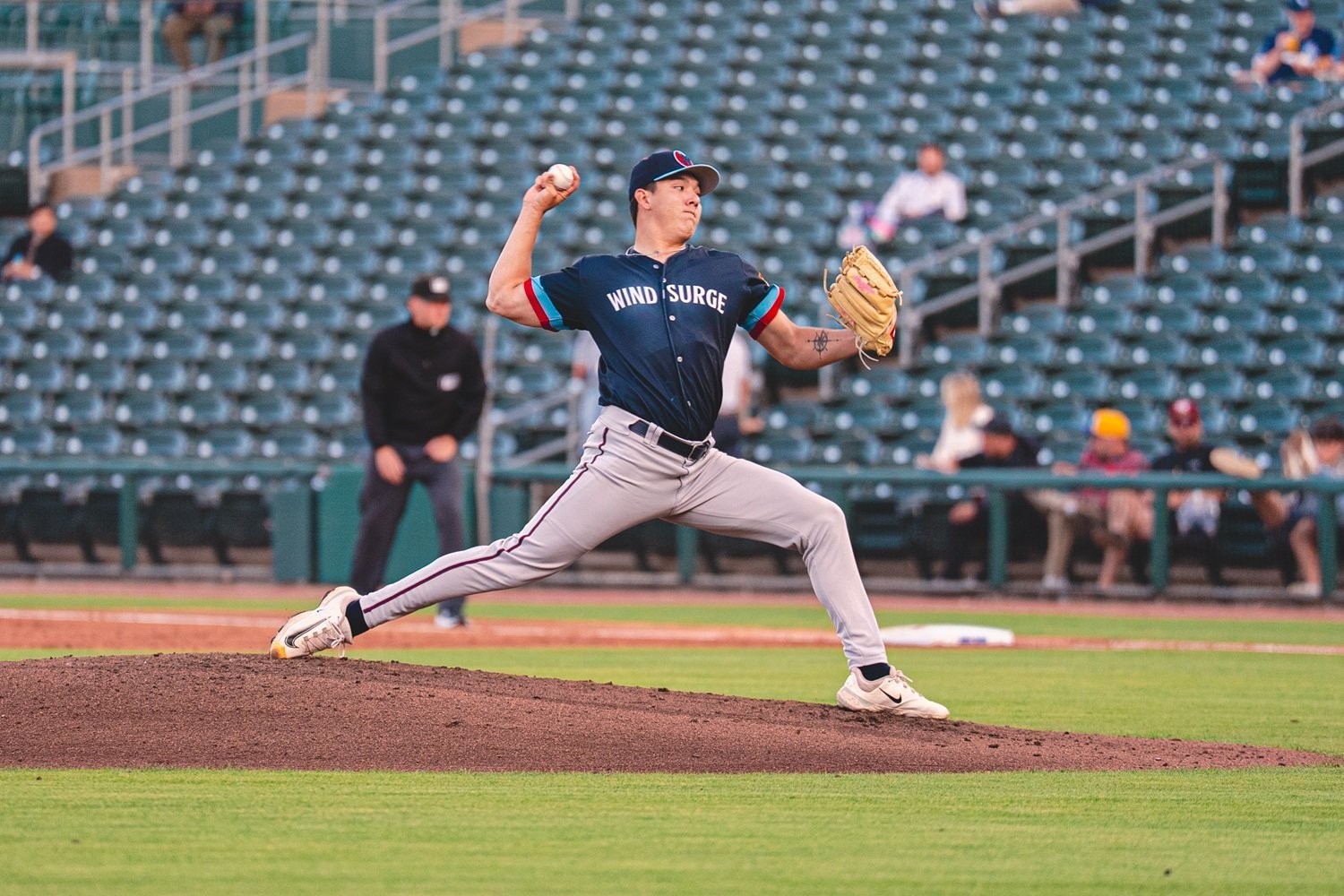 There are a few bigger changes to take a look at: specifically, who is moving up the rankings, who is moving down, and why that may be. The top three prospects, Walker Jenkins, Kaelen Culpepper, and Emmanuel Rodriguez, remain unchanged. The first change in the rankings is that Connor Prielipp and Eduardo Tait flipped spots from the first ranking of the season. Prielipp was previously ranked #5 and is now ranked #4, and Tait was previously #4 and is now ranked #5. This change is slight, and might mostly be because Prielipp has made his major league debut, and looked pretty good doing it. This does not mean Tait is not as good a prospect. He still has a very high ceiling, but is still a couple of years away from being seen at Target Field. There are some other changes to the top 20 list, but let’s take a look at the biggest risers, who may have dropped in the rankings, and who is on the outskirts of the list, but could make an appearance by years end, due to one of the guys losing their prospect status, or because they play their way into being ranked higher based on their performance. Biggest Risers The first riser that someone will notice on the list is 2025 first round pick Marek Houston. Houston has played this year at High-A Cedar Rapids and hit .306/.371/.441 so far this year. The biggest question about Houston as a prospect was whether his offense would be good enough since he is said to be ready for the majors defensively. If he can continue to develop offensively, he will continue to rise on these lists until he makes his major league debut. Another riser on the list is the other first-round pick from 2025, pitcher Riley Quick. At 22 years old, Quick started the year at Single-A and was called up to High-A after having three starts and giving up no runs. He threw eight innings and had 13 strikeouts at Single-A and was deemed ready to be called up to High-A Cedar Rapids. Quick has thrown eight more innings and struck out 11 hitters, so he has continued to look the part. Because of this strong start, Quick rose from the #11-ranked prospect to #8. He has the potential to continue moving up the minor league ladder, and moving up quickly, no pun intended. The last riser to highlight is pitcher Ryan Gallagher, who was not ranked in the top 20 when the year started and is now ranked #16. Gallagher was one of two prospects that came from the Cubs in the Willi Castro trade at last year’s trade deadline. Gallagher is currently with Double-A Wichita and has had a solid start to the season. He threw 18 innings over four starts, with a 3.50 ERA and 20 strikeouts, which earned him a call-up to Triple-A, where he has made two starts so far. He’s an intriguing arm and someone who fans could see at Target Field in the next year or so. Biggest Falls With Gallagher previously not being ranked, that means someone had to drop out. The unlucky prospect to drop off the list was Marco Raya. Previously a top pitching prospect in the system, Raya has struggled mightily in his transition to the bullpen this year. He has thrown 19.1 innings and struck out 20 hitters, but has an ERA of 7.91, with a decently high walk rate (12.6%), and has also given up five home runs. Another prospect that has slid on this list is outfielder Gabriel Gonzalez. As you may or may not remember, Gonzalez was acquired along with Justin Topa in the trade that sent Jorge Polanco to Seattle. Gonzalez has a slash line of .183/.255/.380 to start the year, which is not what he, or the Twins, hoped for. Still just 22 years old, Gonzalez is playing at Triple-A, so there is no reason to give up on him yet, but he will have to turn around offensively to not continue sliding on this list. The third player who slid on the list is second baseman Kyle DeBarge. Playing at Double-A, DeBarge has four home runs on the year, but his overall offensive numbers have been underwhelming, with a .593 OPS. Soon to be 23, DeBarge will look to turn his year around. One promising aspect of DeBarge’s season thus far is his 11 stolen bases over his first 29 games, so that’s something to keep an eye on if he is able to get on base at a higher clip. View the full article
 -
The Brewers' One Glaring Defensive Weakness: You Can Run on Them
DiamondCentric posted an article in Brewer Fanatic
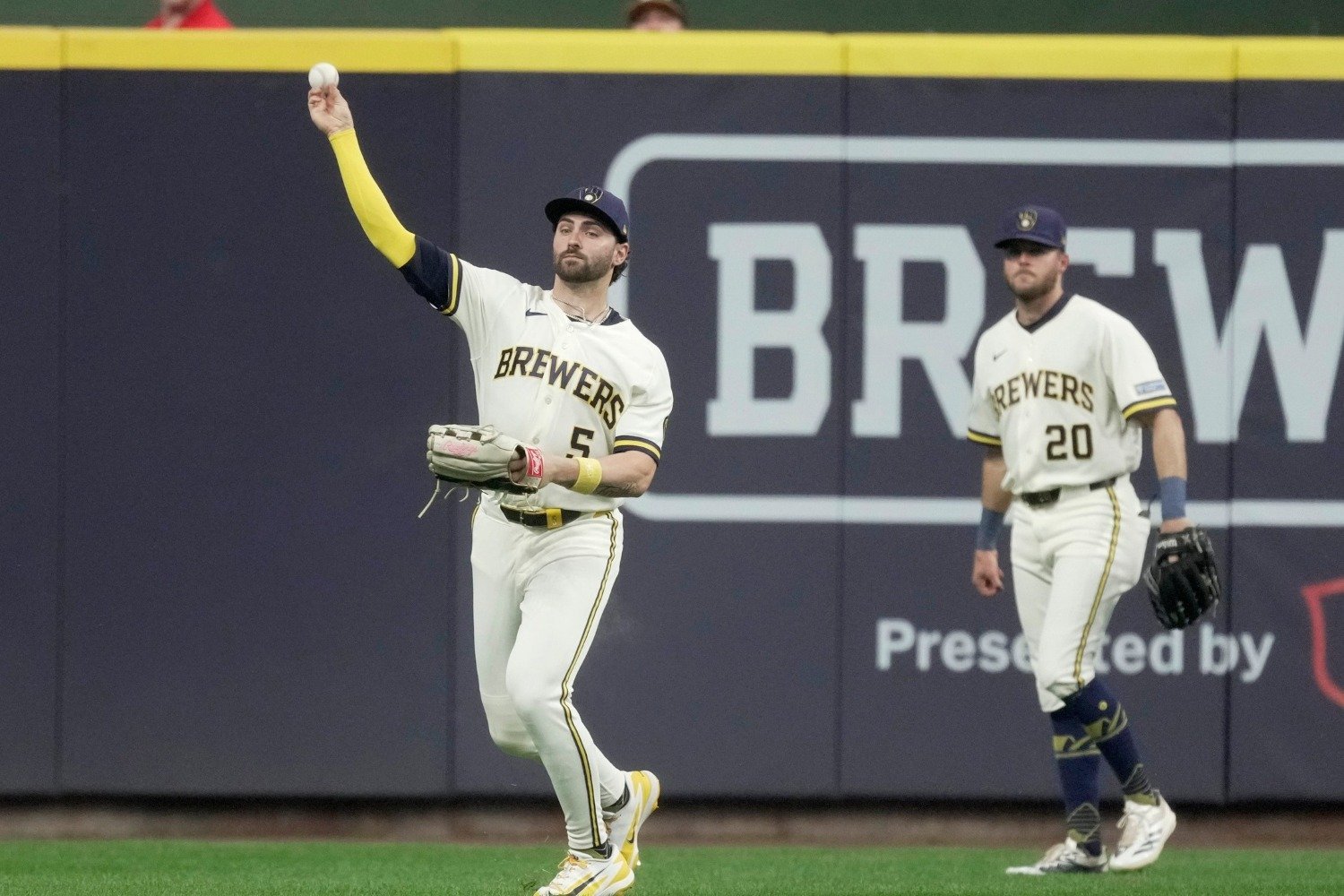 Visit Garrett Mitchell's Baseball Savant player card, and you'll see an impressive number next to Arm Strength. On competitive throws, Mitchell averages a velocity of nearly 94 miles per hour, according to Statcast. Outfielders can sometimes top 100 MPH when the circumstances are conducive, because they often get the luxury of a crow hop as they load up for the throw. On the other hand, they have to get off the throw under time pressure, so throws that hard are rare. Mitchell's average velocity on the throws Statcast uses for its measurements is in the 97th percentile, the way the system counts these things. Yet, Mitchell doesn't actually deliver positive value with his arm. On the contrary, runners take more bases against him on hits and flyouts than against an average outfielder. Ditto for Sal Frelick, whose arm is much less trong on average but who flashes the ability to make exceptionally accurate, strong pegs. He throws well, but he doesn't control the running game on balls in play well. As a team, the Brewers have lost 3 runs via opponent extra bases taken, relative to an average club. Only the Reds and Rockies have been worse this season. It's a rare detail-oriented aspect of the game in which the Crew do not excel, and it's worth asking: why do Mitchell and Frelick (the two most consistent pieces of the team's outfield firmament so far) lose value with their arms, despite throwing relatively well? The obvious answer, of course, is that some of Mitchell's throws look like this: NXk5VjBfVjBZQUhRPT1fRGxCWkJnQlhCRkFBRDFNRFhnQUhCVlZUQUFNRFVWTUFBMVZRVVFRRkJnUURBUVFG.mp4 Quantifying arm accuracy isn't easy, but occasionally, a glaring mistake like that one makes obvious the disconnect between sheer arm strength and arm value. Whether Mitchell should have thrown to the plate at all is an interesting call. As the 3D reconstruction of the play available on the MLB Gameday page for the game shows, Mitchell fielded the ball almost exactly as Jacob Young hit third base. When an outfielder with a strong arm is coming in on a ball with a head of steam and they field it just as the runner reaches third, a throw home is appropriate. The batter-runner, catcher Keibert Ruiz, is slow enough to make that throw relatively cost-free most of the time, and there's a real chance to get an out at the plate. On the other hand, Young has plus speed, so getting him was unlikely, even for the strong-armed Mitchell. The biggest problem, though, was how wide the throw went, leaving Young unthreatened as he scored and pulling William Contreras far up the line. It sailed, too, so that it couldn't even be cut off along the way. That was a lost opportunity to prevent one run, and it made another one slightly more likely. Ruiz didn't come around to score, as it turned out, but Mitchell hurt the Brewers' chances with that bad throw. Inaccurate pegs are just part of the problem, though, and not the biggest part, by any means. Much more often, arm utility comes down to the subtler aspects of playing the ball: positioning, how quickly you get to the ball, and the footwork you use when you do. Here's one example. d2VvcWxfVjBZQUhRPT1fRHdGWlVsY01Yd0FBRFFjRFVRQUhDQUFEQUFNTUFnSUFWRmNIVWxGVUFndFFDRmRW.mp4 On a long drive by the Nationals' Jose Tena, Mitchell got too close to the wall and had it bounce over his head. There was never a chance of catching the ball, and by chasing it too ardently, Mitchell ended up out of position to play the carom off the fence. That meant both that it took longer for him to corral it and that he couldn't even get off a strong throw once he did so. The way he played it turned a double into a triple. Here's another play where what was possible—what Mitchell didn't prevent—isn't immediately obvious, and where the reasons why he was unable to prevent the extra base is hard to see at first. bmJ3V3ZfVjBZQUhRPT1fQXdSVUFnVUVWRmNBV2xvR0FBQUhBQUpSQUFBQUFBTUFVRjBCQ0ZZREJBQlNVMWRm.mp4 Positioning was a huge piece of the equation here. Mitchell started the play 322 feet from home plate, which is about the average depth for a center fielder these days. Against Victor Scott II, though, you usually don't have to play that deep. Mitchell was there because, with two outs and an above-average runner aboard, the Brewers wanted to prevent a double, more than they wanted to thwart a single or stop Masyn Winn from taking third on one. In that sense, the fact that Winn did advance on this play is not a huge loss, and it's certainly not all on Mitchell. That's a team decision, made for strategic reasons. However, Mitchell still could have done more to prevent Winn from reaching third. Look at the way he fields the ball. Getting down on the ball well in that situation is critical. Letting it get past you turns a single into more and allows that run the team is hoping to forestall to score, needlessly. However, Mitchell got behind the ball, only to slow down and drop into a boxy infielder's crouch as he played what was a sharply hit ball. He might have read it as being hit more slowly than it really was. Had he read it right and taken a more aggressive tack with his charge, he could have been getting into a throwing position by the moment we see above, and there could have been more behind his throw to third. As you can see, Winn had just passed second base at this moment; there was a play to be made on him. Mitchell's failure to get into an aggressive throwing position early squandered the chance. One more play in which we'll pick on Mitchell a bit, before moving on. akR3ZGdfVjBZQUhRPT1fQkZRSEFnWUdWQVFBQ1FjSFh3QUhBMUJlQUZnQ0JsVUFVd1lOQkZJRVVsVldDVlpW (1).mp4 A portion of arm utility is simply knowing when to use it. Here, Mitchell conceded the run too easily. He doesn't charge the ball as aggressively as he could have, but even so, he gets to the ball just as Liam Hicks rounds third. Here, again, is the 3D rendering of the moment when Mitchell fields the ball. Hicks is a catcher by trade and a slow runner. With a player like him at this spot and a center fielder who can throw well holding the ball, it's worth a throw to the plate. Mitchell plays it safe—too much so. Now, let's talk about Sal Frelick. He's not working with the same kind of hose Mitchell has. He needs to use his speed and his footwork to get off the strongest throws of which he's capable, and he has to be on the money. Generally speaking, he does so. So why does he still come in below average when it comes to actually preventing runners from taking the extra base? Firstly, there's positioning. A bit too often, this year, the Brewers have had Frelick shaded toward the gap, only to see the ball go down the right-field line. The extra 20 feet Frelick has to run in such situations can often make the difference between a runner taking an extra 90 feet or not, and it's got little to do with Frelick himself. Depending on your mood, this can be construed as bad luck, poor implementation of the plan by the battery, or mistaken advance scouting by the coaches aligning the defense, but whatever the cause, the value leaks away. b0d3bERfWGw0TUFRPT1fQXdCVVVnWlJVbEVBQVFCVEFBQUhDQUFDQUZoVFUxTUFBRllGVkFSVEF3SlJCZ2NF.mp4 Frelick has been caught playing a bit too deep at times, too. Here's one hit on which he could have stopped a runner from reaching third, if he'd been in a better starting position or taken a better initial route when it left the bat. TUFYMjFfWGw0TUFRPT1fQUZJQ1hGTlFWUWNBQ2xjSEJBQUhDUTllQUZoV0FBY0FVRkZVQ0FZTlV3UUJBbGRS.mp4 In fairness to Frelick, this is another case wherein the Brewers' top priorities are not to prevent the runner from going first to third. Still, because he was playing deep and initially gave ground on the ball, the trailing runner was able to do just that. Here's the moment at which Frelick fielded the ball, in 3D rendering. You won't throw out even an average runner from this depth in right field to third base, if they're already up to speed and reaching second as you field the ball—not, at least, unless you have a Mitchell-caliber cannon. Frelick doesn't, so the play was over by the time he fielded the ball. Had he gotten a better read, though, Frelick could have met the ball earlier and shallower, with a pretty good angle to throw and an extra step's worth of time to get it to third. Here's where he might have intercepted the ball, had he not initially thought Konnor Griffin's slicing drive would force him to defend the corner. The animated version of Frelick here is the real one, and as you can see, he's about 15 feet from where the ball is, still running away from it a bit. That's only because he was playing so deep and took a banana route to the ball, though: first in, then over and back, bending into position. If his first step had been better or he'd been a step shallower in the first place, he could have had the ball at this point, changing the math of the play. There are lots of little things like this happening when the opponent finds grass in the outfield against the Brewers this year. Frelick and Mitchell don't communicate well on gappers; they've repeatedly gotten too close together and been in each other's way as one tried to quickly get off a strong throw after fielding the ball. Frelick and Brandon Lockridge each took their turns getting too close to the wall and having the ball squirt past them, just as we watched Mitchell do above. Lockridge has been more aggressive and more accurate with charges and throws, but has a weak spot down the left-field line where he made multiple mistakes of creating an angle or throwing to a target that led to an opponent getting an extra base. It's still early, and there have been an unusual number of disruptions to the team's plans for the outfield already. By the end of the season, Milwaukee's phalanx is likely to be restored, with coaches getting their players into better positions and communication improving. Still, Mitchell will have to be more aware and more accurate, and the team will have to be more on the ball down the stretch. Extra bases turn into extra runs, and the extra runs the Brewers don't allow are how they've been able to win three straight National League Central titles. View the full article
 -
Mets' Francisco Alvarez Has Torn Meniscus In Right Knee
DiamondCentric posted an article in Grand Central Mets
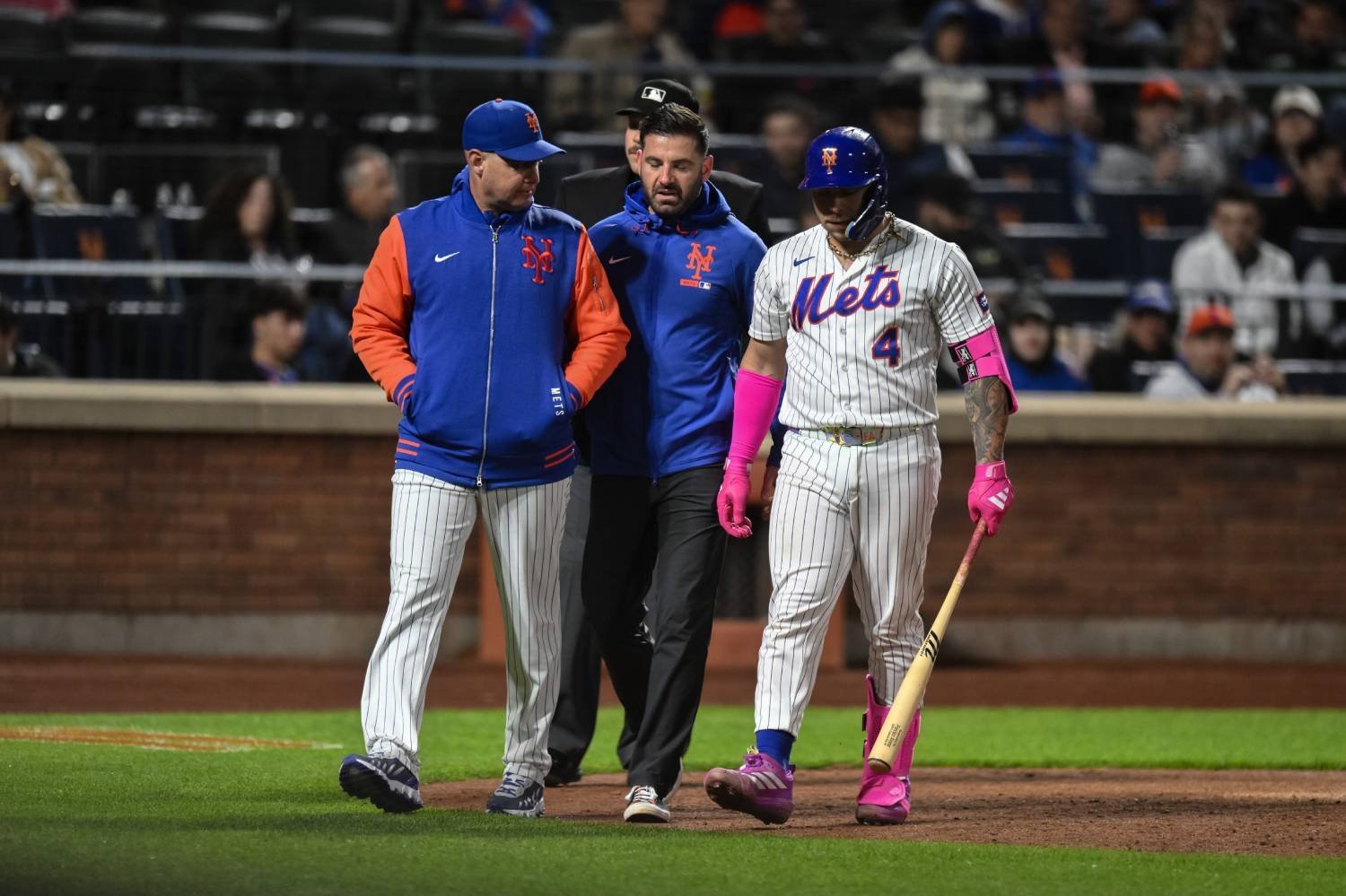 The New York Mets' season took another body blow Wednesdsay. Star catcher Francisco Alvarez was diagnosed with a torn meniscus in his right knee. Alvarez was placed on the 10-day injured list, with catcher Hayden Senger called up from Triple-A Syracuse. Luis Torrens is likely to see a bulk of the time behind the plate now. Alvarez was injured while hitting in the sixth inning of Tuesday's 10-2 win over the Detroit Tigers. Alvarez took a big swing at a 2-2 pitch when he got hurt. He did not finish the at-bat, with Torrens taking over. An MRI exam Wednesday revealed the scope of the injury. If he chooses not to have surgery, Alvarez could miss one or two months. If surgery is required, he could return in as few as three months or miss the rest of the season. The 24-year-old Alvarez has had a number of ailments since making his MLB debut in 2022, including torn ligaments in his thumb and a broken left hamate bone. He had a slash line of .241/.317/.393 this season with four homers and 10 RBIs in 37 games. Senger is up for the second time this season after a brief stint in April in which he did not play. In 22 games at Syracuse this year, Senger has a slash line of .209/.274/.507 with six homers and 15 RBIs. The Mets have one of the worst records in baseball at 16-25 entering play Wednesday. View the full article
 -
 Chicago Cubs Minor League Report - May 12 Affiliate Overview Triple-A Iowa Cubs Series at Nashville Sounds (Milwaukee Brewers): Sounds lead, 1-0 Season Record: 18–21 Double-A Knoxville Smokies Series at Columbus Clingstones (Atlanta Braves): Smokies lead, 1-0 Season Record: 19–15 High-A South Bend Cubs Series at Wisconsin Timber Rattlers (Milwaukee Brewers): Cubs lead, 1-0 Season Record: 17–14 Single-A Myrtle Beach Pelicans Series vs. Augusta GreenJackets (Atlanta Braves): GreenJackets lead, 1-0 Season Record: 16–16 Affiliate Highlights Triple-A: Iowa Cubs Season Record: 18–21 Series Opponent: Nashville Sounds (21–19) Series Standing: Trail, 1-0 May 12: The Iowa Cubs opened their series at the Nashville Sounds with a 9-3 defeat on Tuesday night at First Horizon Park. Pedro Ramírez (0-for-3) got the Cubs on the board in the first when he scored on a passed ball but the Sounds would even the score at 1-1 with a run in the second. Nashville went ahead with two runs in the third but James Triantos (1-for-3) would get Iowa back within one with a sacrifice fly in the fourth. The hosts plated a pair of runs in the bottom half of the inning to go up 5-2 and then would break the game open with four in the fifth to take a 9-2 lead. Justin Dean (1-for-5) tallied an RBI-single in the seventh but that was all for the I-Cubs offense in the contest, falling 9-3. Paul Campbell took the loss in the start, allowing five runs on seven hits over 3 2/3 innings of work, striking out four and issuing four walks. BJ Murray went 3-for-3 on the night to raise his batting average to .314 (11-for-35) in the month of May. Double-A: Knoxville Smokies Season Record: 19–15 Series Opponent: Columbus Clingstones (16–17) Series Standing: Lead, 1-0 May 12: The Knoxville Smokies opened their series at the Columbus Clingstones with an 8-2 victory on Tuesday night at Synovus Park. Karson Simas (1-for-4) led off the game with a solo blast, his fourth of the season, but the Clingstones evened the score with a run of their own in the bottom half of the frame. Alex Ramírez (2-for-4) went yard for the second time of the campaign, a solo shot, to give the Smokies a 2-1 lead. Knoxville scored again in third through a sacrifice fly from Ramírez but Columbus would get that run back later in the inning to make it 3-2. Andy Garriola’s (2-for-5) eighth home run of the year in the eighth made it 4-2 and the Smokies would put the game out of reach with four in the ninth. Ramírez would pick up RBI No.'s 3 and 4 with a single and Jordon Nwogu (1-for-4) would later swipe home. Edgar Alvarez’ (2-for-5) RBI-double would cap the scoring in the inning as Knoxville cruised to the 8-2 win. Yenrri Rojas started for Knoxville but did not factor into the decision. He allowed two runs, one earned, on three hits over 3 1/3 innings of work, striking out four. Tyler Ras picked up the win in relief to improve to 3-0 on the season. He retired all five of his batters faced, striking out two. Vince Reilly earned his third save of the season by tossing two scoreless frames to end the ballgame, whiffing four batters. High-A: South Bend Cubs Season Record: 17–14 Series Opponent: Wisconsin Timber Rattlers (19–13) Series Standing: Lead, 1-0 May 12: The South Bend Cubs opened their series at the Wisconsin Timber Rattlers with a dominant 10-1 victory on Tuesday night at Neuroscience Group Field. The two teams traded runs in their first trips to the plate, with Cole Mathis’ (3-for-5) RBI-double getting the Cubs on the board. Kane Kepley (2-for-5) gave South Bend the lead for good with a three-run blast in the second, his first of the season, to make it 4-1. Koen Moreno turned in another solid start but did not factor into the decision. He turned in four hitless innings, allowing one run, to go along with six strikeouts. Grayson Moore earned the win in relief to improve to 2-0 of the season. Moore worked two scoreless frames, allowing just one hit and striking out two. The Cubs used a six-spot in the seventh to put the game out of reach, thanks to a sacrifice fly from Cameron Sisneros (2-for-5), a bases-loaded walk drawn by Kade Snell (1-for-4), productive RBI-outs from Matt Halbach (0-for-5) and Leonel Espinoza (1-for-5), and Christian Olivo (1-for-3) getting plunked with the bases loaded. The South Bend pitching staff held Wisconsin to just three hits on the night while the Cubs’ offense had four batters record multi-hit efforts. Single-A: Myrtle Beach Pelicans Season Record: 16–16 Series Opponent: Augusta GreenJackets (18–16) Series Standing: Trail, 0-1 May 12: The Myrtle Beach Pelicans, back in action for the first time since Friday, dropped their series opener to the Augusta GreenJackets, 4-3. The Pelicans took a 2-0 lead in their first trip to the plate thanks to RBI-singles from Michael Carico (2-for-4) and Jose Escobar (1-for-4). The two teams traded runs in the second, with Myrtle Beach restoring their two-run advantage through Alexey Lumpuy’s (1-for-5) RBI-single in the home half of the inning. Augusta would plate a run in the fifth and later tie the game at 3-3 with another run in the seventh. The GreenJackets would score the go-ahead run in the ninth and keep the Pelicans off the board to earn the 4-3 win. David Bracho got the start for Myrtle Beach but did not factor into the decision. Bracho allowed one run, unearned, on two hits over four innings of work to go along with five strikeouts. Bracho recorded an immaculate inning in the third, marking the first time a Pelican has recorded such a feat, according to the team’s record book. View the full article
 -
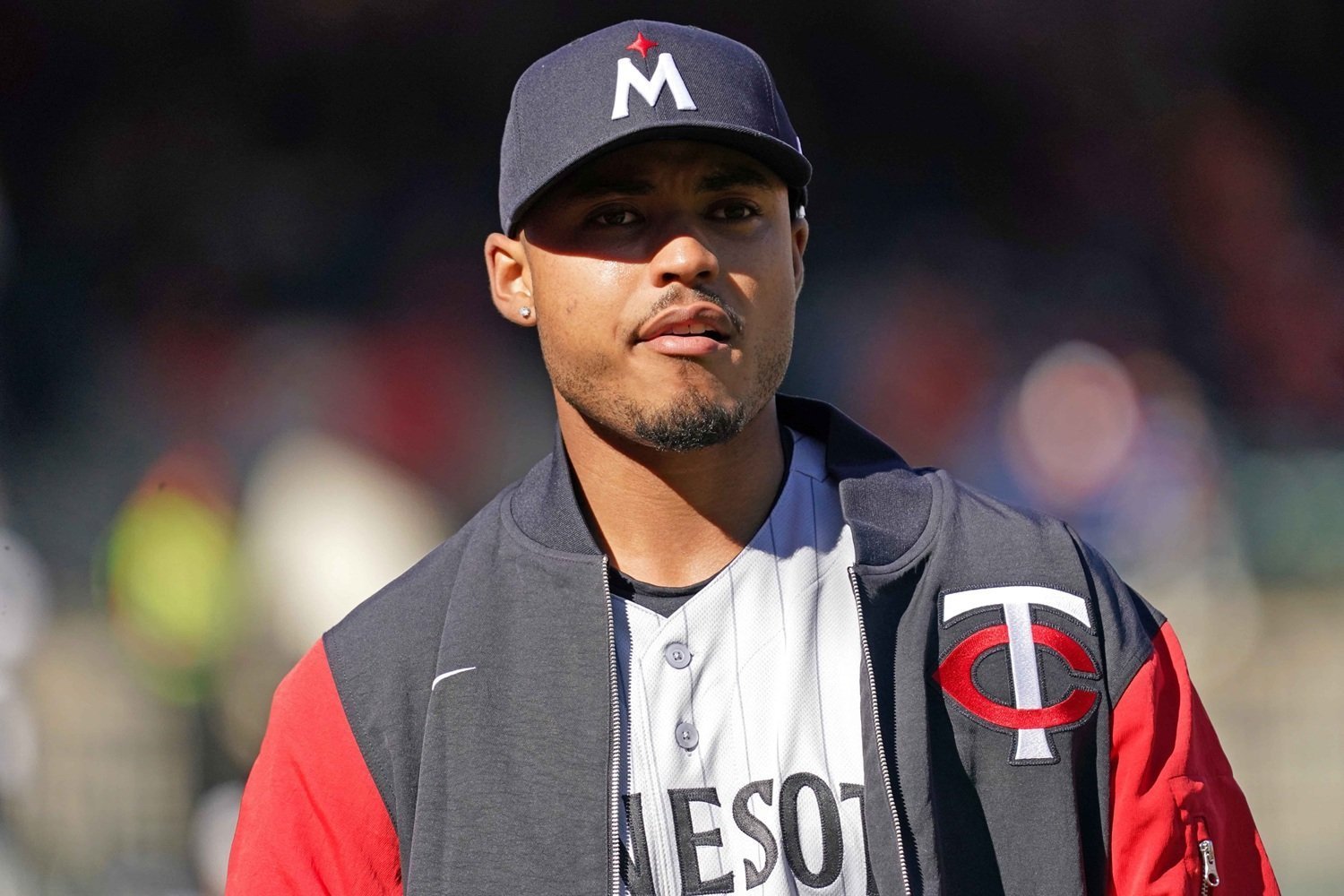 The Minnesota Twins have spent much of the early portion of the 2026 season trying to survive wave after wave of pitching injuries. From key starters to important bullpen contributors, the organization has rarely had its preferred staff intact for more than a few days at a time. Tuesday finally brought some encouraging news. Both Taj Bradley and Cole Sands made progress in their recoveries, offering some hope that reinforcements may not be too far away for a pitching staff that desperately needs stability. Bradley, who landed on the injured list Saturday with right pectoralis muscle inflammation, resumed throwing and played catch out to 90 feet. The 25-year-old also sought a second opinion from noted orthopedic surgeon Dr. Keith Meister after an MRI came back clean. That clean MRI result was already an encouraging development. Seeing Bradley begin throwing again only adds to the optimism surrounding his recovery timeline. “He played catch up to 90 feet today,” Twins manager Derek Shelton said. “So I think from there we’ll make sure we appropriately put the program together.” The Twins can hardly afford to lose him for an extended period. Bradley has been nothing short of electric in his first season with Minnesota, posting a 2.87 ERA and 52 strikeouts across 47 innings through his first eight starts. More importantly, he has brought a level of swing-and-miss dominance that the Twins' rotation has largely lacked in recent years. His raw stuff has consistently jumped off the screen. Earlier this season against the Kansas City Royals, Bradley became the first Twins starting pitcher to hit 100 mph since pitch tracking began in 2008. That type of velocity is rare anywhere in baseball, but especially within Minnesota’s pitching history. While any pectoral injury raises concern for a pitcher, there is at least some precedent for optimism. Bradley dealt with a similar injury while pitching for the Tampa Bay Rays in 2024. That strain sidelined him for roughly a month before he returned to make 25 starts and throw 138 innings by season’s end. The Twins will likely proceed cautiously this time as well, especially considering how valuable Bradley has become to the rotation almost immediately after arriving in Minnesota. The encouraging updates did not stop there. Sands also took an important step forward Tuesday by throwing a bullpen session as he works his way back from a right forearm strain. Sands has been sidelined since late April and could soon progress to facing live hitters if everything continues moving in the right direction. Even though Sands’ traditional numbers do not immediately stand out, the Twins' bullpen has clearly missed him. The right-hander owns a 4.63 ERA in 11 2/3 innings this season, but some of the underlying metrics paint a more favorable picture. Sands has posted a solid strikeout rate while carrying a 3.65 SIERA, suggesting he has pitched better than his ERA indicates. His final appearance before going on the injured list may have offered a clue that something was physically wrong. Sands allowed two runs against Seattle on April 28 in an outing where his stuff appeared noticeably diminished. Perhaps most concerning was the drop in velocity. After averaging roughly 95 mph on his fastball in 2025, Sands sat closer to 93.1 mph this season before landing on the injured list. Any time a pitcher experiences declining velocity alongside forearm discomfort, alarms naturally go off. That is why simply getting back on a mound for a bullpen session qualifies as meaningful progress. The Twins currently have eight pitchers on the injured list, including starters Bradley, Mick Abel, David Festa, and Pablo López. That level of attrition would challenge any organization’s depth, even one that had eight or more starting pitchers on their depth chart to start the year. For now, there is still no official timetable for either Bradley or Sands to return. The Twins will almost certainly remain cautious, particularly with Bradley, given both his importance to the rotation and the nature of his injury. Still, after weeks of increasingly discouraging injury news, Tuesday finally gave the organization something it has not had much of lately: optimism. If Bradley can continue to progress without setbacks and Sands can build toward live batting practice soon, the Twins may finally begin to see light at the end of what has been a brutally difficult stretch for their pitching staff. View the full article
 -
Cubs Add Liam Hendriks to Bullpen Mix on MiLB Deal
DiamondCentric posted an article in North Side Baseball
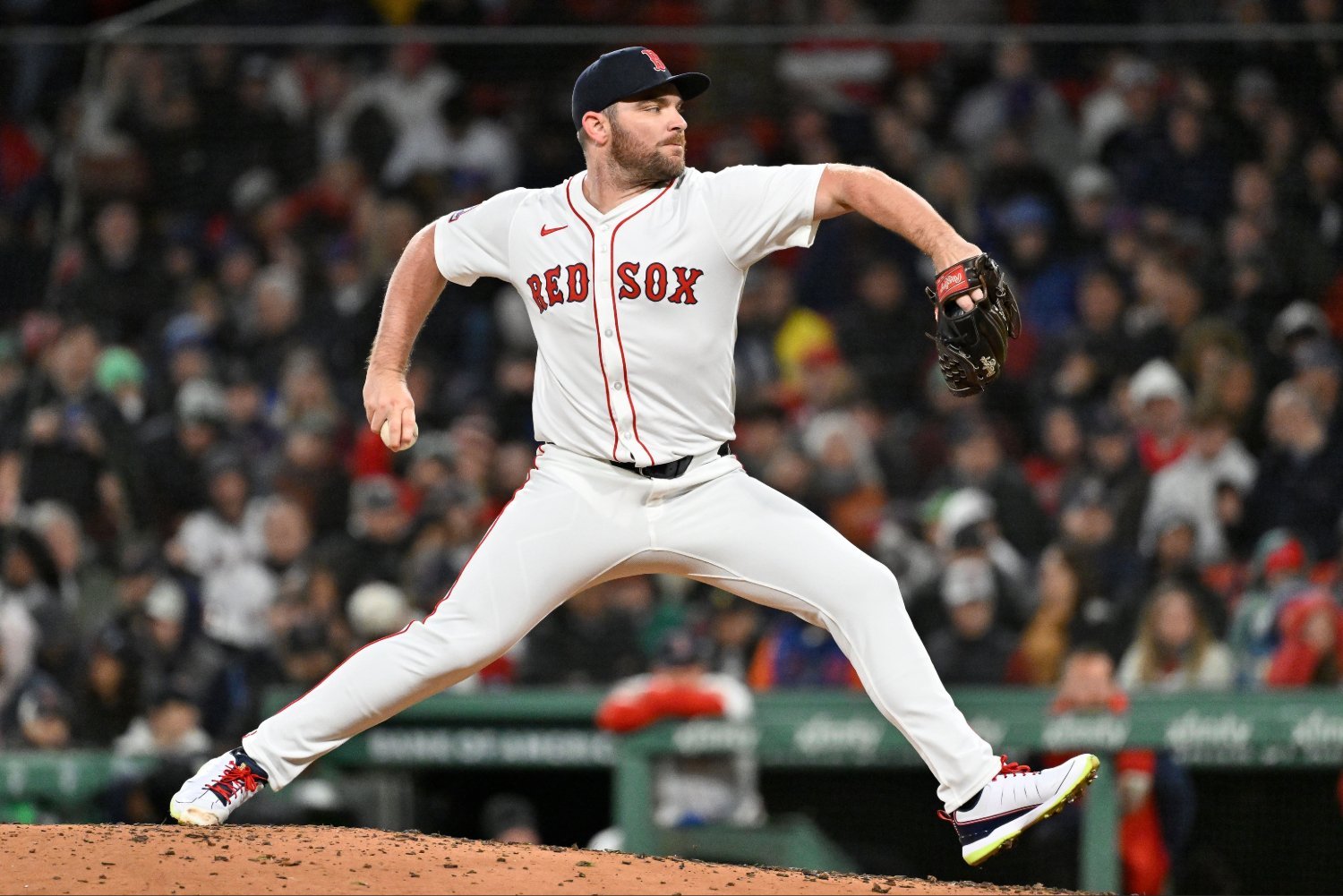 According to Britt Ghiroli of The Athletic, the Chicago Cubs are signing Liam Hendriks to a minor-league deal. Hendricks, now 37, has been a free agent since the Minnesota Twins granted his release. The righty pitcher's velocity was down to 93.4 miles per hour; it peaked in 2022 at 97. For Boston last year, he tallied a 6.59 ERA in 13.2 innings. It's purely an upside play that Hendricks has one more year to squeeze out of his arm. Since 2022, injuries and health have dominated Hendricks' story. He overcame cancer, only to succumb to Tommy John surgery in his return season. With numerous relievers on the shelf, the Cubs will look to catch lightning in a bottle with Liam Hendricks. He was one of the most dominant relievers in the sport from 2018-2022 and the Cubs will look to unlock some more magic for their late innings. View the full article
 -
Royce Lewis and the Fastball Problem the Twins Can No Longer Ignore
DiamondCentric posted an article in Twins Daily
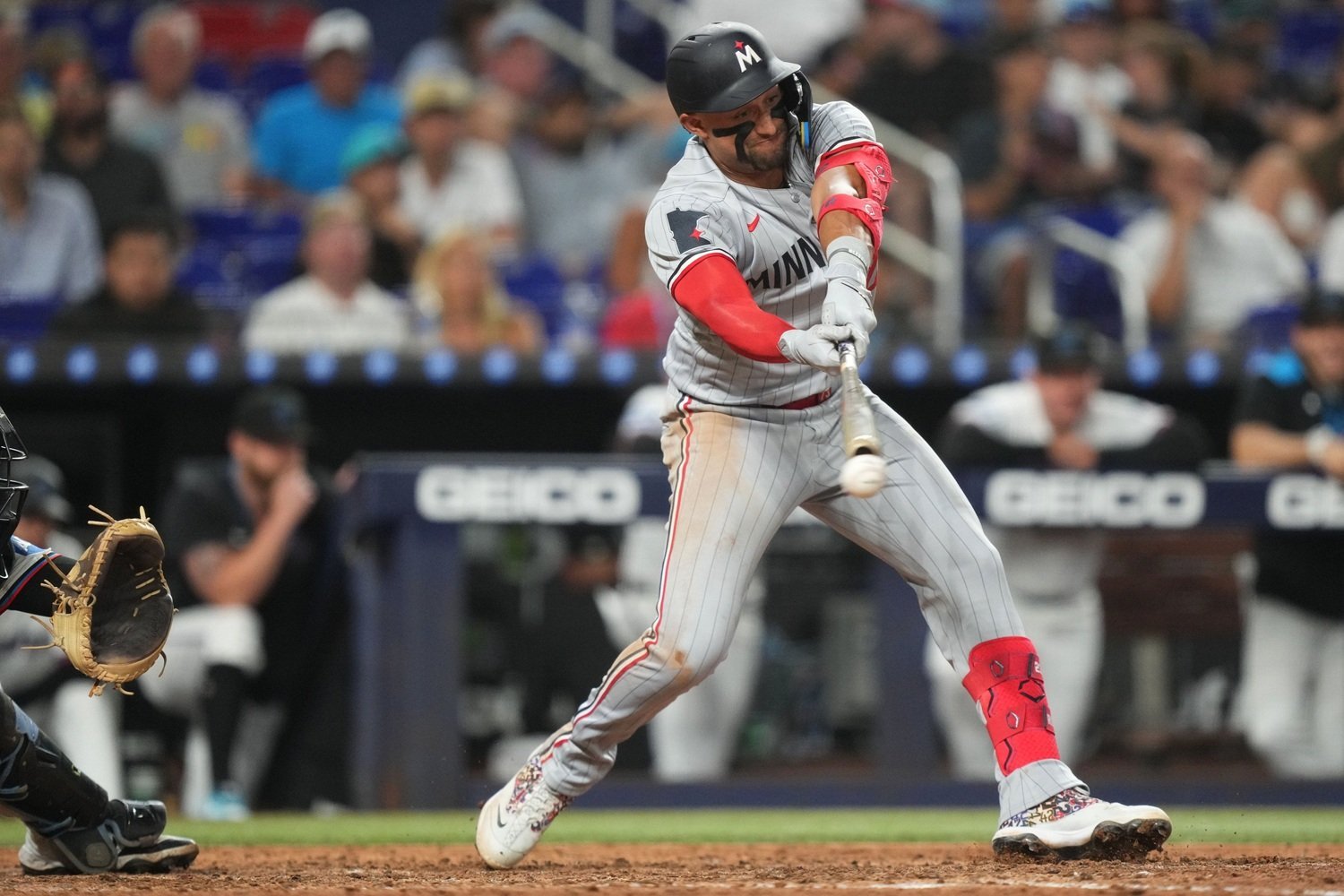 Royce Lewis was supposed to be one of the central figures of the Twins' season. Even after years of injuries and interrupted development, the organization still believed the former first overall pick was ready to take another step toward stardom. Throughout the winter, the Twins made that confidence public. Derek Shelton and multiple members of the front office openly discussed their expectations for Lewis entering 2026, presenting him as a foundational piece of the lineup and one of the players capable of carrying the offense. Instead, the season has turned into something far more uncomfortable. Lewis opened the year by engendering a bit of optimism, but the production disappeared almost immediately. The struggles became severe enough that the Twins dropped him to the ninth spot in the order, and more concerningly, he has regularly found himself losing playing time to Tristan Gray, a waiver claim who was never supposed to be part of this conversation. Since returning from the injured list on April 21, Lewis is hitting .130/.186/.204, with 19 strikeouts in 59 plate appearances. The numbers themselves are alarming, but the larger concern is how lost he has looked against velocity. “It can be really hard when you feel like your career is going in a different direction,” Lewis said. “It’s been tougher because obviously we know there’s always someone on your tail. There’s always someone ready to take your next job. Every day I’m here fighting and working as hard as I can to show that I’m giving it my all to keep my job because I love what I do. I’ve been smiling. I feel fine leaving the game. But I think what scares me most is like, ‘Oh, they might try to get me out of here.’ When I leave the field, that thought does creep into my head.” The Twins are attempting to slow things down for him. Derek Shelton recently described Lewis’s absence from the lineup similarly to the brief reset Matt Wallner received earlier this season. The organization wants Lewis to work on his swing mechanics without the pressure of immediate game results, while also allowing him a chance to mentally regroup. From the outside, the biggest issue is becoming impossible to ignore. Fastballs are beating Lewis consistently, especially in the upper part of the zone. During his electric rookie season, Lewis demolished four-seam fastballs to the tune of an .842 slugging percentage. Last season, that number cratered to .332, while his whiff rate against four-seamers climbed to 25.5%. The decline produced a -8 Run Value against fastballs and forced pitchers to attack him differently. The problem has continued into 2026. Lewis currently owns just a .349 slugging percentage against four seamers, with a 30.5% whiff rate. Perhaps even more concerning, his pulled air percentage has dropped from 31.4% during his rookie campaign to 24.1% this season. The explosive damage on pitches he once turned around with authority has largely vanished. When Lewis first arrived, his combination of bat speed and aggressiveness allowed him to punish velocity before pitchers could exploit weaknesses. Now the timing looks inconsistent, the swing decisions appear hesitant, and pitchers know they can challenge him in ways they could not just a few years ago. The Twins still believe the talent is there. “His work every day has been really consistent,” new Twins hitting coach Keith Beauregard said. “He’s focused with everything that he does. From a swing standpoint, as an athlete, we’re always trying to focus on getting guys into athletic positions and to feel flowy as a hitter. That’s always been the work with him.” The difficult reality is that patience becomes harder to maintain when the struggles continue for this long. Lewis has battled injuries throughout nearly every stage of his professional career, which have complicated his development timeline. At some point, though, the Twins need production instead of projection. Lewis understands that pressure better than anyone. “It feels like people around here sometimes are waiting for me to struggle so that they can write me off officially or get me out of here,” Lewis said. “It’s the first time in my career where it’s become a business instead of playing the game that I love.” That quote probably says more about Lewis's current state than any statistic can. For years, he was viewed almost entirely through the lens of potential. The injuries created sympathy and patience because everyone could still picture the superstar version of Lewis waiting on the other side. Now the conversation is changing. The Twins are trying to win games in the middle of a season that already feels fragile, and Lewis is no longer being judged on what he might become someday. He is being evaluated on whether he can help a major league lineup right now. The encouraging part is that fastball issues can sometimes be corrected quickly once timing and mechanics return. A small adjustment in posture, bat path, or swing decision-making can dramatically change how a hitter handles velocity. The discouraging part is that pitchers have clearly identified the weakness and will continue attacking it until Lewis proves he can beat it again. The Twins have invested years of belief in Lewis because the upside remains undeniable. But belief alone eventually stops mattering. This season was supposed to be about Lewis cementing himself as one of the faces of the franchise. Instead, he is fighting to hold onto everyday playing time. For both Lewis and the Twins, the clock is starting to feel much louder. Can the Twins fix Lewis’ swing? Leave a comment and start the discussion. View the full article
 -
Tyler Black Still Has Adjustments to Work Through in Triple-A
DiamondCentric posted an article in Brewer Fanatic
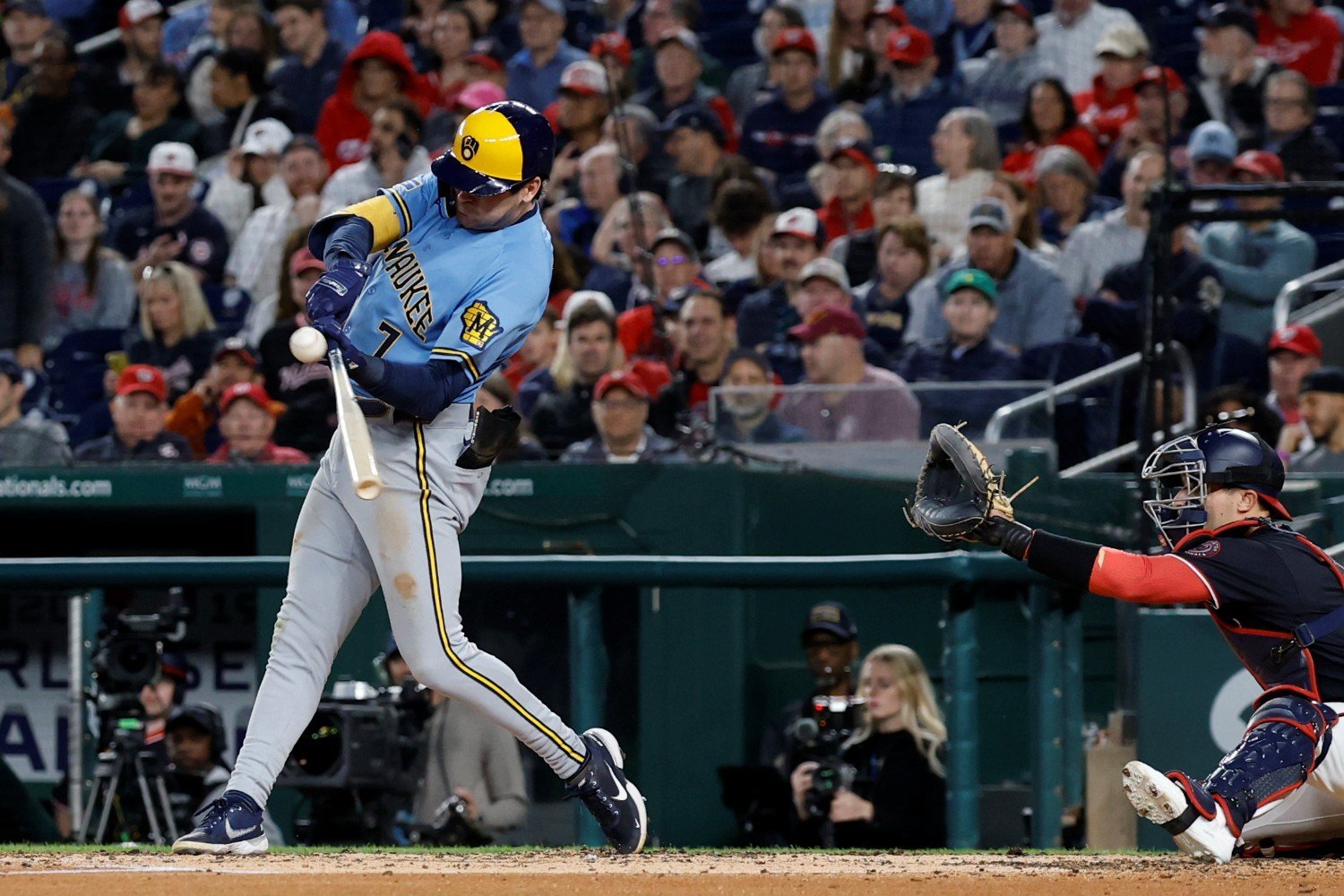 When the Brewers activated Christian Yelich from the injured list on Tuesday, it was not surprising that they optioned Tyler Black back to Triple-A Nashville as the corresponding move. If anything, it was expected. Black was effectively the Yelich replacement: a left-handed-hitting DH and occasional left fielder. He was going to lose most of his at-bats with the former NL MVP back in the fold. Furthermore, despite his productive .333/.357/.481 slash line, Black was not actually having quality plate appearances or putting good swings on the ball. His .369 wOBA was nearly double his .192 xwOBA, which was so low because he struck out 25% of the time and had just a 15% hard-hit rate. Baseball Prospectus evaluated his performance less harshly but still credited him with just an 86 DRC+, meaning he deserved to perform 14% worse than the average hitter based on the process of his plate appearances and the quality of pitching he faced. Black did, however, show a change that could make him a more viable hitter down the line. He's changed his bat path this year, decreasing his swing tilt from 37 degrees in 2024 and 39 degrees in 2025 to 35 degrees this year. Pat Murphy teased that modified swing when Black was recalled, saying he and the Brewers had worked on making his bat path less choppy to help him make more consistent contact. "He had that small margin for error this way in his swing," Murphy said last month, referring to Black's inability to get his barrel to pitches at different heights in the strike zone. "We're helping him try to [get] a little more on plane a little bit. Because it's hard to hit that other way, with that 'V,' you know? A lot of guys did, but you're going to mishit a lot of balls." With a swing tilt nearing 40 degrees, Black had one of the steeper, more vertical swings in baseball. Such a swing travels downward more before working its way back up as it makes contact with the pitch. Philadelphia Phillies outfielder Brandon Marsh has a similar 37-degree swing tilt this year as a left-handed hitter. Notice how his swing path forms a "U" shape as it travels through the hitting zone. marsh.mp4 There's no one right swing path for success – every hitter is different, and there's more to a swing than just its tilt – but a naturally steeper path can often put hitters in a better position to make the best kind of contact with different pitches, provided there's some adaptability to the swing based on pitch height. Murphy himself considers more vertical swings to be the most productive. Black's bat path didn't have that "U" shape, though. Instead of traveling in an arc, his bat often came straight down and then straight up. He makes contact very deep in the hitting zone – about 21 inches toward the pitcher from his center of mass, according to Statcast. With such a steep swing, you would expect his bat to still be coming down when he makes that deep contact, producing a negative attack angle. Instead, his attack angle last season was 9 degrees, meaning his bat was already coming back up by that time. That's the choppy "V" shape Murphy is referencing. If all of that sounds like a mouthful, here's what it looked like in real life back in 2024. You can see Black chop at a fastball down the middle, with his bat quickly traveling straight down and then straight up. It was a very hittable pitch, yet he was late on it and underneath it, producing a 77.6-mph bloop single to left-center. It was a hit, but it wasn't the kind of contact any hitter would hope to make with such a fastball. black 2024.mp4 In addition to lowering his swing tilt, Black's attack angle also decreased to 5 degrees in his brief time with the Brewers this year. His swing path is still pretty steep, but it's far less choppy. You can see how it's a more normal-looking path in one of Black's few hard-hit balls this year, a fastball he pulled off the right-field wall for a double against the Arizona Diamondbacks. black 2026.mp4 It's worth noting that those two swings occurred in different situations. One was a middle fastball, and the other was closer to the outside corner. The first was also a defensive two-strike swing, while the second came in a 1-1 count, where a hitter will usually look to do more damage with an in-zone pitch. Still, those two cuts illustrate the problem with Black's previous swing and how he and the Brewers are trying to correct it. The payoff hasn't come yet, though, with Black still looking overmatched by big-league pitching. His timing was still too late during his latest stint, and he chased too much and rarely made solid contact. Those mishit balls would have eventually found more gloves. Black is best off in Nashville for now, where he'll continue getting at-bats to grow more comfortable with that revamped swing. "Tyler knows that he's good enough to play in the big leagues," Murphy said. "He knows that he's wanted, and his time will come again." View the full article
 -
Why Bobby Cox Was the Most Influential Manager in Blue Jays History
DiamondCentric posted an article in Jays Centre
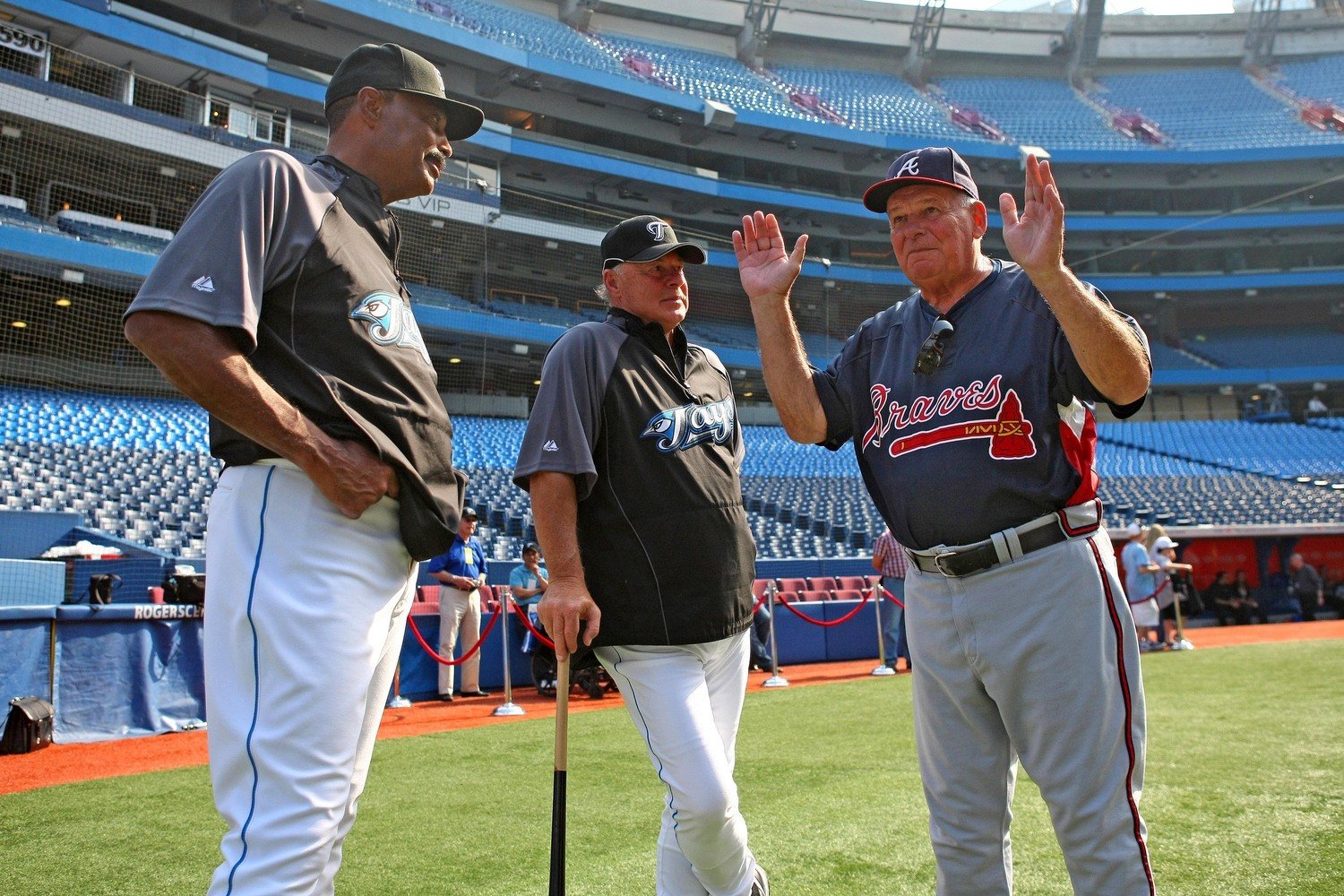 The success of the Toronto Blue Jays as a franchise has a lot to do with its past. If you go back to a time when winning was still theoretical in Toronto, the Blue Jays needed a particular type of manager to help guide them to legitimacy. That was Bobby Cox. He’s the one who convinced a bunch of expansion-era kids they were actually big leaguers. Without that shift in mindset, I'm not sure the team would be where it is today. This is not about diminishing Cito Gaston, John Gibbons or John Schnieder. It is quite the opposite. The connection between Cox and Gaston, for instance, as described in the “Ok Blue Jays: The Emergence of a Franchise” podcast, is central to understanding why Cox’s impact runs deeper than the results themselves. Gaston did not appear out of nowhere in the early 1990s as some perfectly timed managerial saviour. He was shaped by the environment Cox created more than a decade earlier. The roots of the Blue Jays’ golden era trace directly back to that relationship. When Cox arrived in Toronto before the 1978 season, the Blue Jays were still an expansion team in every sense of the word. They were young, undermanned, and largely anonymous around the league. Expansion teams are expected to lose, but Cox refused to let losing define who the Blue Jays were or who they would become. His focus was not on surviving seasons. It was on building a franchise. Cox immediately imposed structure. Practices were detailed. Fundamentals were prioritized. Standards were set long before the roster was capable of consistently meeting them. So it wasn’t that surprising for those around the ballclub to respond positively to this new approach. Gaston was the Blue Jays’ batting coach under Cox, working daily with young hitters who were being asked to learn major league pitching while playing for a team that rarely won. He preached patience, repetition, and trust. Gaston was following Cox’s lead. Cox believed that young teams required teachers more than tacticians, and Gaston fit that vision perfectly. As a former player, Gaston understood hitters from the inside. Under Cox, he learned how to translate that understanding into instruction, routine, and confidence. Hitters were not coached toward immediate results. They were coached toward approach. Situational and emotional awareness mattered. Cox set the tone. Gaston reinforced it. Players were allowed to struggle, but they were not allowed to be careless. That distinction became a defining trait of the Blue Jays well before they became contenders. Results during Cox’s tenure steadily improved. From 1978 through 1981, the Blue Jays never finished higher than fifth place. But focusing on that misses the larger truth. Each year, the team improved in ways that were not always visible in the win column. Defense got better, pitchers matured and hitters started to make a mark. The Blue Jays stopped beating themselves. Toronto was slowly moving away from being that “expansion team in another country.” Baseball started to notice. The Blue Jays were serious, structured, and intentional. That credibility came from consistency, and that consistency flowed directly from Cox’s leadership. As a manager, Cox was calm – except for when he wasn’t. He rarely managed with theatrics. He managed with clarity. Players knew their roles. Coaches knew expectations. Losing did not change the standard. That steadiness was invaluable in a young clubhouse, and it is impossible to separate that leadership model from what Gaston would later become as a manager. When Gaston eventually took over the team, his approach felt natural. He trusted his players. He avoided over-managing. He prioritized routine and preparation. That style only works in an organization that already believes in those values. The Blue Jays did, because they had been taught to do so long before Gaston was filling out lineup cards. The championship teams of 1992 and 1993 reflected this lineage clearly. They were composed, disciplined, and emotionally resilient. They did not rely on motivational theatrics. They trusted their work. They trusted each other. Gaston’s famous reluctance to tinker was only possible because the organization had been through a similar approach nearly a decade earlier under Cox. One of the most underappreciated aspects of Cox’s impact was how he protected his players during relentless losing. Expansion teams can collapse emotionally if leadership falters. Cox absorbed criticism. He owned failures publicly. That kind of leadership fosters resilience, a trait that would later define the Blue Jays in high-pressure moments. Cox also influenced the front office indirectly. By establishing a stable, credible environment, he gave the front office under Pat Gillick and Paul Beeston the confidence to think long term. The Blue Jays did not chase quick fixes. They invested in development. Cox left Toronto before the real payoff arrived, and that has always impacted how his tenure is remembered. But his fingerprints remained right up until the team's real success. In fact, he was there (granted in the opposing dugout) when the Jays won their first World Series. Gaston’s story is inseparable from that foundation. He was a coach shaped by a system that valued preparation, empathy, and trust. When he became manager, the Blue Jays did not need to reinvent themselves. They simply leaned into what they had already been taught. Cox went on to have a Hall of Fame career elsewhere, and that success only reinforces what Toronto experienced early on. He built winning cultures before winning followed. He elevated those around him. He thought beyond the next series, the next season, the next headline. Today, manager John Schneider shares some of those traits, but the game has changed. While there is no question that he is a players’ manager like Cox and Gaston, Schneider’s decision-making relies upon data that just wasn’t used back then. If you judge managers by wins, then Cox would sit behind Gaston and Gibbons. Schneider has a chance to leapfrog Cox this season. But, if you judge managers by impact, then there is no question that Cox set the table for every manager who followed him in Toronto. He set an example for them and for the organization. That is why Bobby Cox remains the best and most influential manager the Blue Jays ever had. Bobby Cox passed away on May 9, 2026. He was 84 years old. View the full article
 -
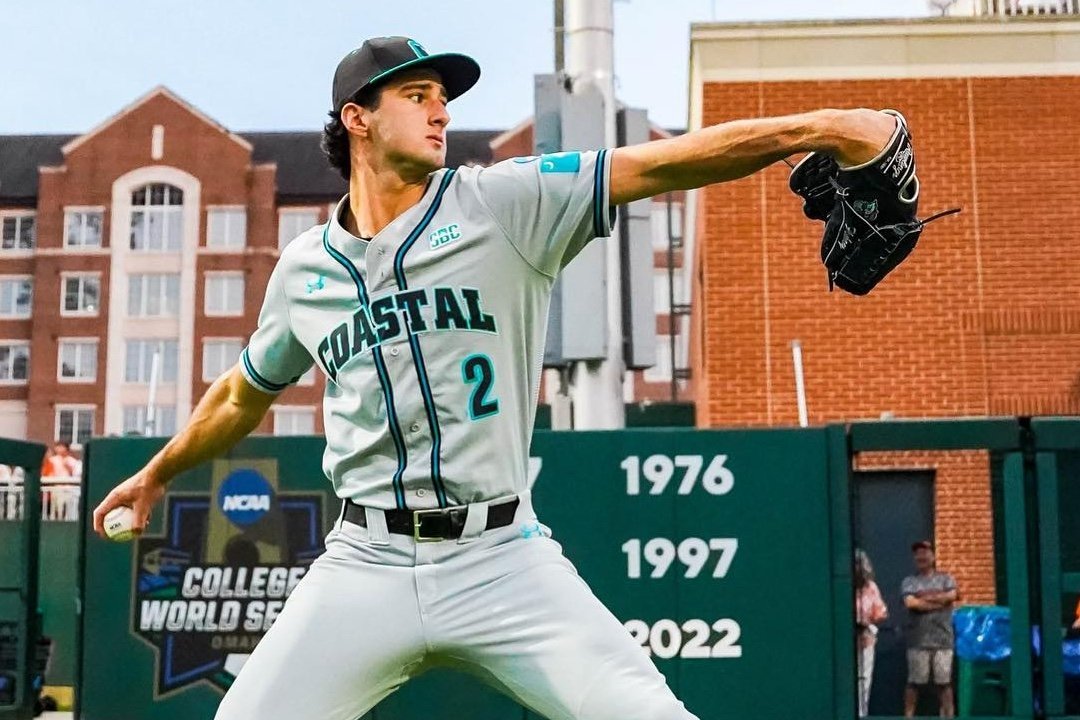 Leading up to the 2026 MLB Draft, Fish On First brings you a series of scouting reports on top prospects in this draft class who could realistically wind up in Miami. Overview Position: RHP Height: 6’6″ Weight: 210 pounds School: Coastal Carolina Cameron Flukey is a 6’6”, 210-pound right-handed pitcher who plays for the Coastal Carolina Chanticleers. Flukey has missed most of the 2026 season, but he’s one of the most talented arms in the 2026 MLB Draft class. He was originally the top-ranked pitching prospect, but has fallen on draft boards due to his injury. Coming out of high school, Flukey was a blue-chip prospect coming out of Egg Harbor Township High School in Egg Harbor Township, New Jersey. On Perfect Game, Flukey was the 128th-ranked prospect and the 39th-ranked right-handed pitcher in the Class of 2023. He was also the second-ranked prospect out of the Garden State. Flukey went undrafted and signed with Coastal Carolina University. In his freshman season, Flukey made an immediate impact for the Chanticleers. Flukey made nineteen appearances and ten starts. He posted a 3-3 record with a 5.73 ERA, 1.40 WHIP, one save, 5.27 FIP, a .242 opponent batting average, and struck out 83 batters in 55 innings pitched. During his sophomore season, Flukey had a major breakout season and was one of the best pitchers in all of college baseball. Flukey made eighteen appearances and seventeen starts. He posted a 7-2 record with a 3.28 ERA, 1.00 WHIP, one complete game shutout, a .210 opponent batting average, and 117 strikeouts in 101 ⅔ innings pitched. Flukey was named First Team All-Sun Belt Conference and was also a Third Team All-American on D1 Baseball. So far this season, Flukey has struggled with health and hasn’t pitched well, either. Flukey has missed most of the season with a rib stress fracture. He has only made four starts this season. He has a 0-2 record with a 6.39 ERA, 1.50 WHIP, 5.93 FIP, and 17 strikeouts in 12 ⅔ innings pitched. While his strikeout percentage has increased and walk percentage decreased, hitters have a .406 BABIP against the talented right-hander. On the mound, Flukey possesses a four-pitch arsenal including his fastball, 12-6 curveball, slider, and changeup. His fastball sits in the mid-90s and tops out at 98 with arm-side run and holds its plane well at the top of the zone. Flukey has confidence in both of his breaking pitches. His 12-6 curveball sits in the upper-70s and has a lot of vertical drop. His slider sits in the mid-80s with a plus spin rate and usually throws it against right-handed batters as an out pitch. Against left-handed hitters, Flukey will use his changeup, which fades away from the hitter's barrels. Strengths Plus fastball Legit four-pitch arsenal Great extension Projectable body type Has continued to improve on his control Weaknesses Having a bad 2026 season Leaving pitches too much in the zone Might need to tweak mechanics to hide the ball better Pro Comparison: Logan Gilbert Projection: Top 15 pick Bottom Line Cameron Flukey might be available later in the first round of the MLB Draft than originally projected entering the 2026 season. On Baseball America, Flukey is the seventh-ranked prospect in this draft class and the second-ranked pitching prospect. On MLB Pipeline, Flukey is the 13th-ranked draft prospect and second-ranked right-handed pitcher in the class. The Marlins will have the 14th overall pick in the 2026 MLB Draft and should be able to grab one of the top prospects in this draft class. Since Flukey's injury wasn’t arm-related, he could still be a great option for them if they're confident that they can fix his issues. More 2026 MLB draft profiles OF Eric Booth Jr. 3B Ace Reese LHP Carson Bolemon RHP Jackson Flora INF Jacob Lombard OF AJ Gracia View the full article
 -
 Boston Red Sox Affiliate Recap (May 12) Triple-A Worcester Red Sox The WooSox traveled to Buffalo to play the Bisons, taking a 7-2 defeat in the first game of the series as the bats were quiet. After Worcester went hitless in the first inning, the Bisons took advantage early in the bottom half of the first, racking up two hits and an RBI groundout to put them up 1-0. A badly timed error by the Sox cost them in the second inning as two runs would score from a bad throw to push Buffalo ahead 3-0. The WooSox showed life in the 3rd, Jason Delay drew a walk, Braiden Ward laced a double to keep it going, and Nick Sogard drove in Delay on a sacrifice fly to cut it to 3–1. But with runners on the corners and two outs, Nate Eaton grounded out to end the threat. Worcester manufactured a brief two-out rally in the fifth. Matt Lloyd walked to lead off the inning, after a couple of force outs and another Sogard walk, Vinny Capra ripped a single to right to bring in Ward, trimming it to 3–2. Unfortunately, Eaton left runners stranded on the corners with two outs once again. The game seemed to slip away for Worcester in the sixth after the bullpen immediately gave up a two-run homer to Buffalo, making it a 5-2 game. The WooSox bats were extremely cold the last three innings, only tallying one hit as the Bisons scored two more runs to make it a 7-2 final score. Double-A Portland Sea Dogs The Portland Sea Dogs suffered a defeat they would like to forget, having the lead for the first seven innings and blowing it in the eighth and getting walked off on in the ninth by the Hartford Yard Goats 7-6. The Sea Dogs' offense exploded in the 1st inning. Franklin Arias led off the inning with a single, then stole a base, Brooks Brannon walked, Johanfran Garcia followed and blasted a three-run homer to right-center to make it 3–0. Marvin Alcantara kept it going with a homer of his own, a solo shot to right field, and just like that, it was 4–0 Portland. The Yard Goats scraped a run across in the second inning on a strange play, with two outs, a runner who was caught stealing, and allowed another runner to score from third base. In the third, Hartford strung together three singles to cut it to 4–2. In the next at-bat, a wild pitch allowed another runner to score, making it a one-run game, 4-3. The Sea Dogs got some breathing room in the fifth inning after Will Turner smacked a solo homer, pushing their lead to 5-3, but the Yard Goats made it a one-run game once again after hitting an RBI single. In the seventh, Ahbram Liendo tripled and scored on an Arias groundout, extending the lead 6–4. Portland's bullpen had trouble finding the zone and lost the lead in the eighth inning. A wild pitch gave the Yard Goats a free run and a walk with the bases loaded, tying it up 6-6 entering the ninth, giving Hartford a chance to walk it off. In the ninth, the Sea Dogs drew a couple of walks, putting runners on first and second with two outs, but both runners ended up being stranded as a groundout ended their chance to get the lead back. That gave the Yard Goats a perfect chance to end it; they would then hammer a walk-off home run, putting an end to a 7-6 game in which Portland had the lead for seven straight innings. Hayden Mullins started on the mound for Portland and pitched well by limiting the damage, throwing five innings, allowing three earned runs, and striking out eight batters. Key Performances: Marvin Alcantara: 2-for-4: HR, 2B, R, RBI Franklin Arias: 2-for-5, R, RBI, SB Will Turner: HR, R, RBI, BB Johanfran Garcia: HR, R, 3 RBI Miguel Bleis: 3-for-4, SB Hayden Mullins: 5 IP, 3 ER, 8 K High-A Greenville Drive It was a rough night for the Greenville Drive in their 5-1 loss. Their bats were stifled all game by a dominant Bowling Green pitching staff. Top prospect Kyson Witherspoon continues to struggle this season, unable to find a good rhythm and find the strike zone. He gave up six hits, four runs, three walks, and only one strikeout in his 4 ⅔ innings of work. Greenville’s bats only recorded six hits, but they had plenty of chances to score, but could not capitalize, going 1-for-7 with RISP. Most of the top batters were shut down; the player who had two of the six hits was Jack Winnay The only score for the Drive came in the bottom of the fifth when Justin Gonzales was hit by a pitch, and Yoeilin Cespedes lined an RBI single to center to make it 4–1, but Isaiah Jackson grounded out to end the inning. Ben Hansen pitched well in his relief outing, throwing 3 ⅓ innings, giving up two hits, one earned run, and striking out five. Single-A Salem RidgeYaks It was a miserable night for the RidgeYaks; they were completely dominated by four Fredericksburg Nationals pitchers who combined for a nine-inning shutout 4-0, allowing just three hits and zero walks while striking out 12. Skylar King was the only bright spot on offense for the RidgeYaks; he tallied two of the three hits the team had the entire game. Starlyn Nunez had the only other hit. Salem’s bats were non-existent, getting no-hit through the first four innings. Finally, they recorded their first hit in the fifth when King hit a two-out single, but the RidgeYaks would not make anything out of it. The RidgeYaks' pitching staff was not necessarily bad, but the offense did not do them any justice. Madison Frias started on the mound, in 5 ⅓ innings of work, and he gave up only two hits, three earned runs, and struck out four. The bullpen started out with Adam Bates, who finished the sixth inning for Frias and came back out in the seventh and took care of business by throwing a hitless frame. Williams Rodriguez was the last pitcher in the game for Salem. In the bottom of the eighth, he walked a batter, and he ended up scoring on a throwing error, giving Rodriguez an unearned run at the end of his outing. View the full article
 -
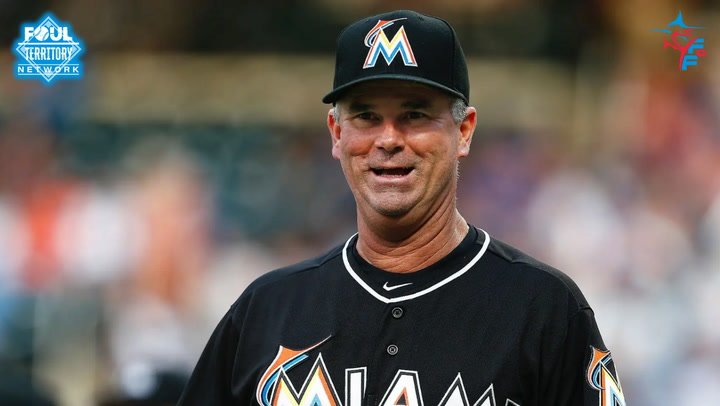 On Fish Unfiltered, former Marlins president David Samson explains what the franchise was thinking when they brought GM Dan Jennings down from the front office to the dugout in 2015. View the full article
 -
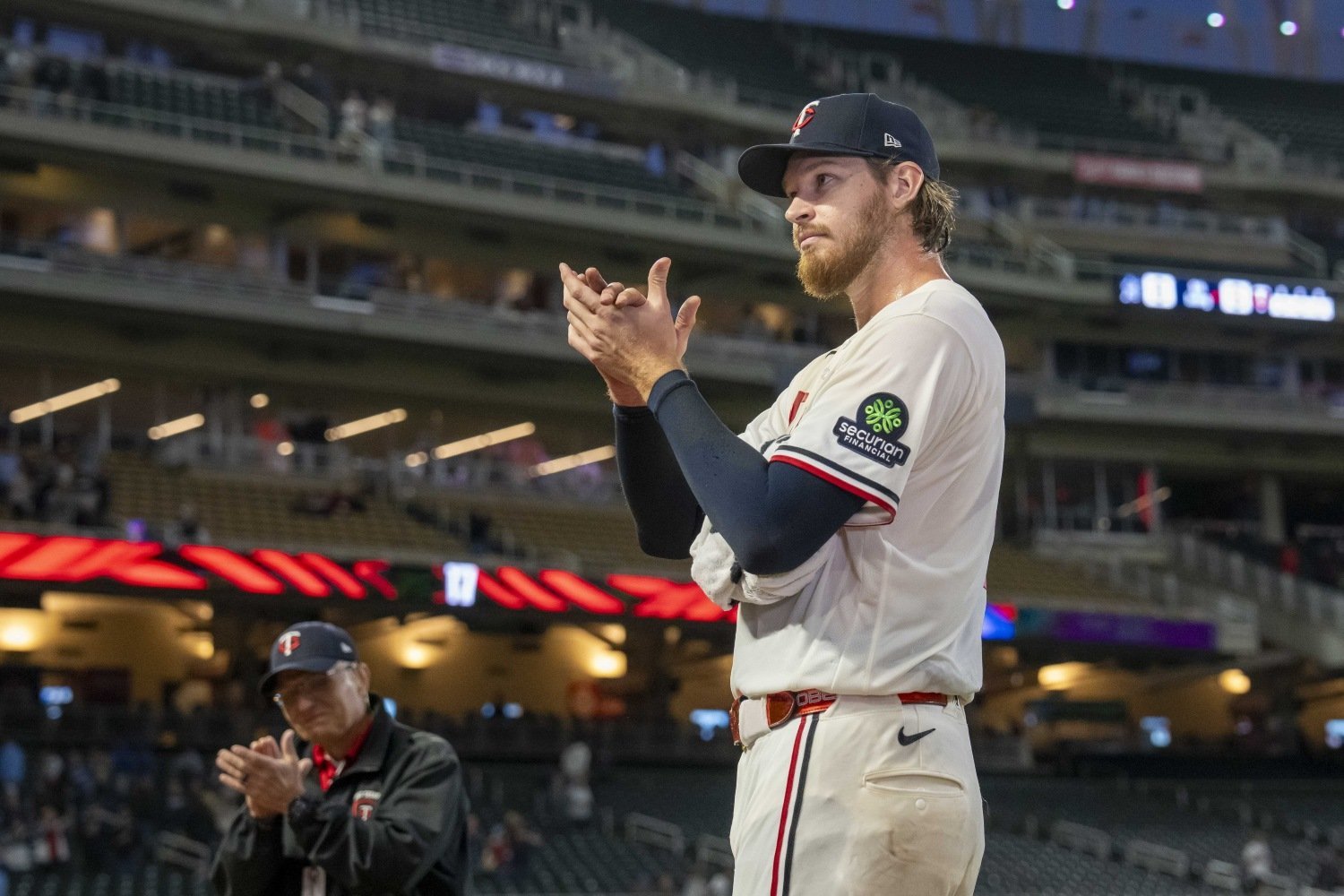 The Twins hosted Bark at the Park Night on Tuesday against the Marlins. It's a love-it-or-hate-it kind of event, and generally, I hate it. Dogs are wonderful creatures, of course, but the ballpark isn't a space built for them, and when things are good, the ballpark should be so full as to make the inclusion of dogs an unwelcome inconvenience. Often, that's exactly how it feels. Lately, of course, the Twins haven't had that problem. In fact, as it turned out, Bark at the Park was perfectly timed this spring. A crowd of just 13,471 (I don't care enough to check whether they do, but you have to actually buy a ticket for your dog now, so they should count, too) filed into Target Field, but by the end of the game, they were in full voice, sounding (for the first time since last July, and only a few times, even then) like more than their actual number and like a crowd with a real connection to its team. It was a great night for baseball, with a game-time temperature nearing 70°, with a stiff breeze to remind your it's still only mid-May in Minnesota. It was not a great night to be a hitter, however, especially in the early going. "The shadows are tough—tough on everyone, early," Twins catcher Ryan Jeffers acknowledged after the game. "I think both sides put some ugly swings on the ball the first few innings." Visiting players, especially, have long grumbled about the shadows for summertime 6:40 PM starts, when the sun is behind home plate and shines brightly off the batter's eye and the limestone above it. The shadow of the seating bowl and its roof stretches across the field slowly at first, leaving the plate in shadow right away but the mound in partial sunlight. This was the Twins' first home game in nine days and their first night game at home since May 1; it marked the first time this shadow effect played out at the venue this season. Both Eury Pérez and Bailey Ober took full advantage, though, in ways that go beyond simply profiting from hitters being distracted or scintillated. Pérez has some of the best raw stuff in the big leagues. "We have to stay on his fastball," manager Derek Shelton said of the team's plan against Pérez, before the game. "Because as hard as he throws, if you come off the fastball and you're looking for something else, you're not going to have a chance." Early on, whatever they were trying to do, that was exactly how it felt—like the team had no chance. Pérez carved through the top of the Twins lineup in the first inning, highlighted by a three-pitch dissection of Jeffers: Jeffers froze and watched Pérez's sweeper for strike one, then fouled off a sinker well up and in for strike two, almost in self-defense. After that, when Pérez dotted the outside corner with a four-seamer at 99.5 miles per hour, the at-bat was over before the ball hit catcher Joe Mack's mitt. Ober, of course, is the league's softest-tossing starting pitcher, which made for a sharp contrast with Pérez. Fairly quickly, though, it became clear that he wouldn't be easily outdueled. The young Marlins lineup has shown its upside this season, but they haven't seen a pitcher quite as in control as Ober was Tuesday night. Quickly, they got taken out of their game plan, and then they got taken out, period. After the game, Ober would talk a lot about being able to "get [his] hand in the right position" to throw all his pitches. This is a frequent refrain for Ober, whose huge frame and great extension make it both highly valuable and (at times) very difficult to manipulate the ball the way he needs to. He's at his best when he feels he can adjust his hand position at release without affecting the rest of his delivery, and often, that comes when the rest of his body is healthy and working correctly in sequence. It's remarkable, because it's something fans can't see with the naked eye, and that even turns to useless blur on replays, but when Ober can turn his wrist deftly in each direction and feel the ball coming off his fingers in just the right way, he knows that he has control of the action. In a world making fun of his lack of speed, he's assessing himself based on small adjustments being made at a speed faster than a TV camera's frame rate. All of that was happening Tuesday, and Ober talked about having good feel for all of his pitches—but the truth is that he barely needed three of them. Barely 20% of the pitches Ober threw Tuesday night were breaking balls. He has three flavors of breaker—slider, sweeper, curveball—and he utilized all three, but none were especially important. He got two outs on them almost by accident, with overeager 0-0 swings by Marlins batters when all Ober was really trying to do was steal a strike to start the at-bat. He also didn't throw his sinker at all. No, Ober cut through the Marlins with a simple mix: fastball high, changeup down. He left a few changeups up, but they missed the zone to his arm side, where they couldn't get him hurt. He brought a few fastballs down, but the hitters were sitting on the changeup in that area and couldn't punish those, either. Though Ober's fastball only sits at 88-89 MPH (he touched 90.6 Tuesday) and his changeup comes in at around 83, he can disrupt hitters' timing with the best of them, thanks to the exceptional shape on his four-seamer. Its vertical movement is extreme, considering how low his arm slot is. That's why models like Baseball Prospectus's StuffPro label it as an above-average pitch, despite his extreme dearth of velocity. When he can locate that fastball high and that changeup low, all the way across the plate, he becomes very tough to hit, because the shapes of the two pitches are so much more different than is typical of two offerings at relatively similar speeds. That's what was happening Tuesday night, which allowed Ober to sail through the first five innings with lots of weak, early contact. It was a scoreless tie at the game's halfway point. Ober was pitching masterfully, but Pérez was the one truly dominating. The Twins had cobbled together something almost like a rally twice in the early innings, thanks to walks by Pérez, a Luke Keaschall hit-by-pitch, a strikeout wild pitch, and a throwing error, but they didn't have a hit their first two times through the lineup. Pérez had two quick outs in the fifth, in fact, when Byron Buxton drew a walk to start the third turn for Twins batters. That turned out to be the pivot point of the game. Trevor Larnach hit a soft liner toward shortstop. In another world, it could have been an inning-ending groundout. In fact, under baseball's pre-2023 rules, it almost certainly would have been one. With Larnach ahead in the count 1-0, Buxton took off for second base with the pitch. Miami shortstop Otto Lopez broke to cover the bag, and Larnach's one-hopper floated through a vacant infield toward left fielder Heriberto Hernandez. If the Marlins had still been allowed to load the right side of their infield with three defenders, Lopez probably would have been coming to cover second from the other side, and third baseman Connor Norby would have been in position to field the ball. ek13MDlfWGw0TUFRPT1fVTFSVVVWRU5BRlFBQ0ZzRVZnQUhBZ01IQUZrRFdnVUFWMTFSVTFKVEFBTmNDUXRX.mp4 Because he wasn't, though, and because the ball was hit slowly with the play right in front of him, Buxton was able to hare around to third base. He and third-base coach Ramon Borrego even pondered trying to score. Hernandez fielded the ball and released it quickly, but his throw was an underhand wing to Lopez, near second. The Twins have scored more than once when an opponent underestimated their aggressiveness and threw too casually to the middle of the diamond, and they had it in mind to do it again. It would have been a dangerous play. However, in the context of the game, it would have been justifiable. With two outs in the inning and runs at such a premium, the opportunity to score one only needed to come with about a 25% expected success rate to be worth the attempt. Ultimately, Borrego and Buxton made the snap decision not to risk it, and they were probably right to eschew the try. Even with Buxton running, the ball being on the infield that early should have given the Marlins a four-in-five shot to nab him. Instead, things fell to Ryan Jeffers—but, on another 1-0 pitch, the Twins made things happen, instead of waiting for them to happen. Larnach and Buxton executed a double-steal, wherein Larnach's job was to draw a throw to second base and get in a rundown, allowing Buxton to score. That the Marlins threw through here speaks to the way the game was already tilting, and changing. The shadows had given way to the neutral golden shimmer that prevails when the sun is too low to cast shadows on the field but still bright enough to bounce its light off the mirror-windowed high-rise beyond left field, and off the white sign in center field. Buxton's speed had created a hit for Larnach and applied pressure to the Marlins, and the lineup was getting its third look at Pérez. Under that pressure, the rookie Mack made the wrong play, though he made it the right way. With Buxton as the lead runner, the visitors should have allowed Larnach to take second uncontested. Failing that, though, Mack's throw—immediate, without hesitation and right on the bag—was perfect. Xavier Edwards made the real error. He caught the ball and checked on Buxton, but when Buxton hesitated just long enough to fool him, Edwards turned to try to run down Larnach. That's when Buxton broke for home, just barely beating the throw. Had Edwards simply held the ball and forced Larnach back to first base, a lot of things might have been different. To Larnach's credit, he, too, set the trap well. He waited just far enough to avoid being tagged out easily, but close enough to demand that Edwards make a play on him. Had he retreated faster, Buxton probably would have had to hold. Had he been a half-step closer to Edwards, he might have been out before Buxton could score, one way or another. Larnach has messed up this very balance in the past, but he got it right this time. Buxton's speed had broken the game open, with a double-assist from the lefty slugger. Because the play at the plate was so close, Jeffers and Pérez had to wait out a replay review before the 2-0 offering could be thrown, with a runner now on second base. In those moments, the battle isn't between pitcher and batter, but between each player and themselves. Pérez lost his mental battle during the unwelcome downtime, lamenting the way a run had formed from almost nothing over the previous 10 pitches. Jeffers won his, and when Pérez made a mistake with a breaking ball on the first pitch after the interruption, Jeffers used it to triple the Twins' margin. The game was effectively over, right then. On Tuesday night, the Marlins weren't scoring three runs against Ober. For one thing, he had that fastball-changeup pairing going. For another, Marlins batters were anxious and unable to defend themselves. Miami challenges more aggressively with their catchers than any other team in baseball. As a counterbalance (and as a means of facilitating that strategy), though, they challenge less than all but one other team (the Red Sox) at the plate. Ober, who has now faced all three of the teams who most notably eschew hitter challenges (the Red Sox, the Reds and the Marlins), has a 29.6% strikeout rate in those three outings and an 11.7% mark in his other six games. He stole strikes at the edges of the zone four times, including one for a called third strike; no Marlins batter tapped his head. No matter. Ober's stuff was good enough to win even if those few calls had broken the other way. He was on his game, and despite the denigratiions of velocity lovers everywhere, Ober is still an above-average pitcher when he's on. His command and the contrasts in shape between the fastball and the changeup, with his great deception factored in, far outweigh his lack of power. He cruised so seamlessly through the sixth, seventh and eighth that there was little doubt he would start the ninth. He had only thrown 81 pitches to that point. However, when the towering righty climbed the dugout steps to head for the hill after the end of the eighth, a funny thing happened: the crowd erupted. Again, it was a small crowd. They didn't make an earsplitting roar; they weren't capable of that. But the volume and the passion of the pop that came from merely seeing Ober go out to finish what he'd begun was the perfect capstone to a great night of baseball. The outs Ober actually recorded to put the game away felt academic. They came easily. For one night, with the flair and cleverness of Buxton's speed, the thunder of Jeffers's bat, and Ober pitching an old-school masterpiece, the Twins' relationship with their fan base was repaired. No one left the park thinking the team's many ills were resolved, and no one is deluded about the heavy work still ahead as team and community try to weave themselves back together, but the fans were present and engaged on Tuesday night. The team rewarded them with beautiful baseball, and the fans gave that gift right back to Ober when his cleats hit the top step of the dugout. It might be only the brightest moment in another dark season, or the last flicker of what this team was a few years ago and arguably still should be. But it also might turn out to be a turning point. Ober, Buxton and Jeffers aren't the future of the Twins. Most of that future is currently at Triple-A St. Paul. They made the present bright and worthy of celebration, though, and they'll be the leaders to whom the next wave of talent looks when they arrive in Minneapolis this summer. If nothing else, Tuesday was a demonstration of how good the team's veterans can be for the players coming up behind them—and of how badly the fans still want to be there when it all happens. View the full article
 -
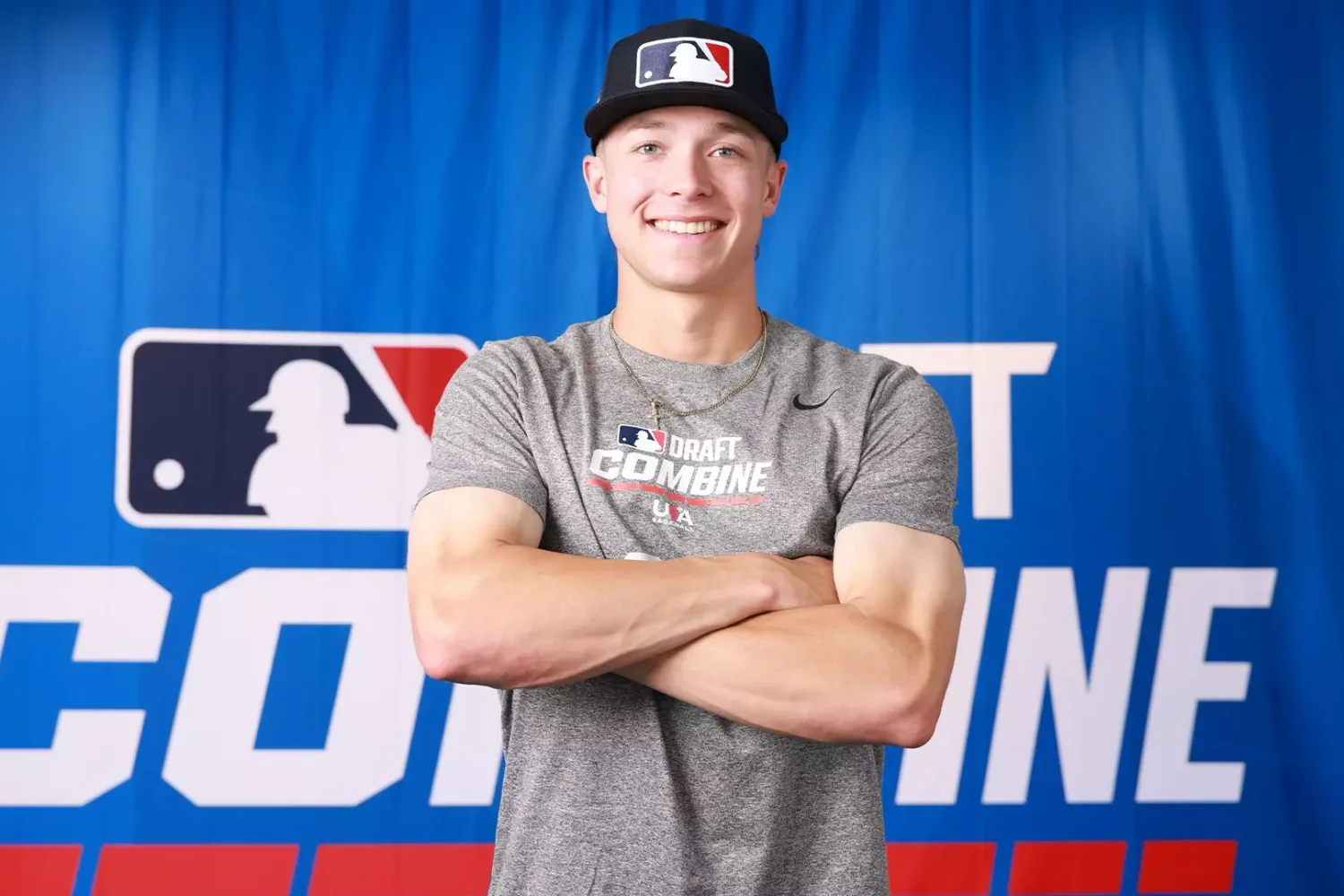 Checking in on the San Diego Padres prospects who made a mark in the last week: Ryan Wideman, CF, Low-A Lake Elsinore Season stats: 32 games, 9 2B, 4 3B, 3 HR, 26 RBI, 13 BB, 25 K, 27 SB, 6 CS If there is a player to dream on in the Padres' system, it just might be Wideman. Why? Take the center fielder's last game as a prime example. Wideman went 4-for-4 and stole five bases—yes, FIVE steals—in the Lake Elsinore Storm's 5-4 loss to the Inland Empire 66ers (Seattle Mariners). That put an exclamation point on a dynamic week for Padres Mission's No. 8 prospect. All the 22-year-old Wideman—the Padres' third-round draft choice last year out of Western Kentucky—did last week was go 10-for-19 (.526) with four runs, four RBIs and nine stolen bases. That came despite not playing in one game and going 0-for-1 as a pinch-hitter in another. So that line is really covering just four games. Last week accounted for one-third of his steals for the season. Sunday's five thefts marked the seventh game with multiple stolen bases and surpassed the four he swiped on April 23. Wideman's 27 steals are the most in all of Minor League Baseball by four and is 11 clear of the next-highest total in the Cal League. The Storm, not so coincidentally, lead the Cal League with 105 steals, with the No. 2 team at 54, and are second in all of MiLB. Based on the first 33 games of the season, Wideman is on pace to steal 118 bases. But the reason the 6-foot-4, 204-pounder is able to steal the quantity of bases he has been is due to an improved offensive approach. First, he has cut down on his strikeouts. In his debut season last year with the Storm, Wideman struck out 32 times in 112 plate appearances (28.6%) over 26 games. In 32 games this year, he has just 25 strikeouts in 144 plate appearances, a much more palatable 17.4% rate. That more selective approach has allowed his batting average to climb from .229 to .328, which ranks eighth in the Cal League and third on the Storm. He could still stand to draw a few more walks (9% walk rate this year), but that is something he can develop over time. Carson Montgomery, RHP, High-A Fort Wayne Season stats: 1-0, 1.64 ERA, 5 games (all starts), 22 IP, 16 H, 5 R, 4 ER, 8 BB, 18 K The 11th-round draft choice in 2023 out of Florida State turned in his second straight start of five scoreless innings Thursday in a 3-1 win over the Beloit SkyCarp. Montgomery, 23, allowed three hits and a walk with five strikeouts, nearly identical to his line in his previous outing (5 IP, 3 H, 0 R, 0 BB, 4 K). He now sports a 1.64 ERA in five starts, allowing four earned runs in 22 innings. Montgomery's ERA would be fourth in the Midwest League if he had enough innings to qualify. It is a good comeback story for Montgomery, who had 718 days between his previous appearance this season and his 2026 debut. He started 2024 at Low-A Lake Elsinore and appeared in three games (7 IP, 4 H, 3 ER, 6 BB, 10 K) before his elbow gave him problems. He took a little time before deciding on Tommy John surgery, which KO'd the rest of his 2024 and 2025 regular seasons. But the Padres gave Montgomery a look in the Arizona Fall League in 2025. There, he made four starts, pitching 10⅓ innings with a 1.74 ERA, allowing two runs on 11 hits with seven walks and 17 strikeouts. Pitching in the Arizona Fall League set him up to begin 2026 with confidence, which has shown in the results. Opponents are hitting just .213, which would rank in the top eight in the Midwest League if he had enough innings to qualify. His comeback is certainly a good turn for a Padres system needing some positive stories. Tyler Schmitt, RHP, Low-A Lake Elsinore Season stats: 2-2, 5.09, 1-0, 3.64 ERA, 6 games (5 starts), 23 IP, 16 H, 13 R, 13 ER, 18 BB, 27 K There isn't much room for statistical improvement following Schmitt's last two outings. The 17th-round draft choice in 2025 out of Illinois, Schmitt turned in his second consecutive shutout start, going six innings and allowing just one hit against the 66ers. He did walk three and struck out five. That game Saturday came after the 21-year-old went five shutout innings and gave up two hits with a walk and six strikeouts, giving him an 11-inning scoreless streak. On Monday, Schmitt was named the California League Pitcher of the Week for the second week in a row. Schmitt's ERA is a bloated 5.09 based on allowing seven runs in three innings April 18 vs the Stockton Ports (Athletics). But the promise is there. He has 27 strikeouts in 23 innings, which includes seven K's in 3⅓ innings in his pro debut April 4 against the Ontario Tower Buzzers (Los Angeles Dodgers). He has five or more strikeouts in four of his six games. Schmitt's one relief appearance came as the bulk guy in Lucas Giolito's rehab appearance April 25. Schmitt made the jump to Division I with Illinois in 2025 after playing two years at Division III Wisconsin-La Crosse. Carson Tucker, IF, Double-A San Antonio Season stats: 22 games, .352/.405/.507, 9 2B, 1 3B, 0 HR, 6 RBI, 7 BB, 21 K The 2020 first-round draft choice (23rd overall selection) by the Cleveland Guardians signed with the Padres in January after being released by Cleveland in July 2024 following some injuries and a lack of production. He didn't play at all in 2024. Now 23, Tucker is realizing some of that potential after spending 2025 playing independent ball. Tucker is the younger brother of infielder-outfielder Cole Tucker, who was a 2014 first-round selection (24th overall) of the Pittsburgh Pirates. Both were drafted out of Mountain Pointe High School in Phoenix. Tucker is coming off a week in which he played in four of the San Antonio Missions' six games and had a pair of three-hit games as part of an 8-for-15 showing with three doubles, a walk and an RBI against the Midland RockHounds (Athletics). Tucker went 3-for-4 Wednesday for his first three-hit game since June 14, 2023. After a hit and a walk Thursday, Tucker had another 3-for-4 performance, including his third straight game with a double. Tucker's nine doubles lead the Missions. He spent 2025 playing for the Ogden Raptors in the Pioneer League, an independent league. There, he slashed .323/.469/.452 with a homer, 12 RBIs and six stolen bases in 18 games. He also drew 16 walks. With the Guardians, for whatever reason, Tucker never got going offensively. He had slash lines of .150/.320/.300 in 2021 (six games, Arizona Complex League), .137/.257/.222 in 2022 (38 games, Low-A Carolina League) and .200/.296/.263 in 2023 repeating in the Carolina League. Zach Evans, 3B, High-A Fort Wayne Season stats: 24 games, .222/.278/.300, 4 2B, 0 3B, 1 HR, 7 RBI, 7 BB, 17 K, 3 SB, 0 CS Entering last week, the 23-year-old was having a rough season offensively, with a .188/.263/.232 slash line with three doubles and an RBI in 18 games. But something has changed recently as the ninth-round pick in 2024 out of Lenoir-Rhyne University has been more of a threat at the plate. Last week against the Beloit SkyCarp (Miami Marlins), Evans went 7-for-21 with a double, a homer and six RBIs with two stolen bases. A rainout Tuesday set up a Wednesday doubleheader. In the first game, Evans doubled his RBI total with an RBI double in his first at-bat, but he saved his biggest hit of the season for his next trip to the plate. That is when he drilled a 1-1 pitch for a two-run homer and a 4-0 lead. It was his fourth career homer after making his pro debut last year with Low-A Lake Elsinore and then coming up to Fort Wayne. The next day, Evans had a tie-breaking two-run single up the middle in the eighth inning in a 3-1 victory. Perhaps his most dramatic moment, though, came in Friday's 1-0. In the fifth inning, Evans had a leadoff single and went to third on a Jonathan Vastine double. The next two batters were unable to drive him in with a groundout and a popup. That prompted Evans to steal home against a left-handed pitcher in what would be the game's only run. Evans finished the game 2-for-3. Evans also had singles Saturday and Sunday to give him a modest four-game hitting streak and hits in 10 of his last 13 games. A year ago during his debut season, Evans had a .275/.343/.344 slash line with three homers, 72 RBIs and 15 stolen bases. Honorable Mentions Two other players are worth taking note of. One, of course, is Double-A San Antonio catcher Ethan Salas. Padres Mission's No. 1 prospect went 8-for-15 with a pair of three-hit games. While there were no homers, unlike the three he hit the previous week, Salas did have three doubles while scoring four times and driving in four. The other is catcher Rodolfo Duran, who went 4-for-4 with a double, a homer and four RBIs for Triple-A El Paso on Tuesday, then made his MLB debut with the Padres Thursday. He spent 11 years in the minors before finally getting the official call-up when Luis Campusano went on the 10-day injured list (he actually was on standby this season following Freddy Fermin's concussion scare). View the full article
 -
 The Syracuse Mets rallied for a 7-4 win in 13 innings at Scranton/Wilkes-Barre, with Christian Arroyo driving in two on a 13th-inning single and Hayden Senger homering earlier. Jack Wenninger struck out seven over five innings, allowing one hit. Binghamton fell 3-0 at Somerset despite Brendan Girton's seven-strikeout outing across five innings. Brooklyn lost 2-0 at Rome as Joel Díaz issued seven walks in four innings. St. Lucie's game was postponed. Mets Transactions New York Mets signed free agent 2B Nick Roselli to a minor league contract. New York Mets designated 2B Andy Ibáñez for assignment. New York Mets selected the contract of LF A.J. Ewing from Syracuse Mets. Syracuse Mets Survive 13 Innings To Beat Scranton/Wilkes-Barre Christian Arroyo's two-run single in the 13th inning lifted the Syracuse Mets past the RailRiders 7-4 in Scranton. The cleanup hitter went 3-for-7 with two RBI. Jihwan Bae added two hits and scored twice, Hayden Senger homered to left in the sixth for his sixth of the season, and Ryan Clifford doubled, drove in a run, and scored. Jack Wenninger turned in five innings of one-hit baseball, walking three and striking out seven without allowing a run. Anderson Severino picked up the win with two scoreless innings, and Mike Baumann worked a clean 13th for the save. Trailing 4-2 entering the ninth, Syracuse rallied. With one out, Bae reached on an error, Clifford doubled to right to score Bae, Arroyo singled, and Yonny Hernández singled through the left side to plate Clifford and tie the game at four. The Mets stranded the go-ahead runs at second and third when Hayden Senger struck out swinging. In the 13th, with Matt Rudick aboard as the zombie runner, leadoff man Nick Morabito laid down a sacrifice bunt that turned into a throwing error by the first baseman, scoring Rudick. Bae singled to put runners on the corners. After a Clifford strikeout, Arroyo singled to left to score Morabito and Bae. Syracuse left 20 runners on base. Player AB R H RBI BB K Nick Morabito 5 1 0 1 1 2 Ji Hwan Bae 7 2 2 0 0 4 Ryan Clifford 6 1 1 1 1 4 Christian Arroyo 7 0 3 2 0 0 Yonny Hernández 5 0 1 1 2 1 Cristian Pache 6 1 1 0 0 3 Jackson Cluff 3 0 0 0 4 2 Hayden Senger 4 1 1 1 1 2 Ben Rortvedt 2 0 0 0 0 0 Matt Rudick 5 1 0 0 0 1 Player IP H R ER BB K HR Jack Wenninger 5 1 0 0 3 7 0 Luke Jackson 1 0 1 1 2 0 0 Nate Lavender 1 2 2 2 1 1 1 Daniel Duarte 2 2 1 1 0 2 1 Alex Carrillo 1 0 0 0 1 1 0 Anderson Severino 2 1 0 0 2 2 0 Mike Baumann 1 0 0 0 0 0 0 Rumble Ponies Shut Out In 3-0 Loss At Somerset The Binghamton Rumble Ponies managed two hits in a 3-0 loss to the Somerset Patriots. Nick Lorusso and JT Schwartz each singled, and Wyatt Young drew two walks. Eli Serrano III and Jacob Reimer also walked. Binghamton struck out 12 times and left seven on base. Brendan Girton struck out seven over five innings, allowing three hits, one earned run, and one walk. The Patriots got to him in the first when a leadoff single and a one-out walk set up a two-out RBI single to left for the only run charged to Girton. Girton settled in afterward, working a perfect third and fourth and stranding lone runners in the second and fifth. Binghamton's best chance came in the eighth. Young walked, Serrano walked, but Chris Suero popped out, Reimer flew out, and Jose Ramos struck out to end the inning. Player AB R H RBI BB K Eli Serrano III 3 0 0 0 1 0 Chris Suero 4 0 0 0 0 2 Jacob Reimer 3 0 0 0 1 0 Jose Ramos 4 0 0 0 0 3 Kevin Parada 4 0 0 0 0 2 Nick Lorusso 4 0 1 0 0 2 TT Bowens 4 0 0 0 0 3 JT Schwartz 2 0 1 0 0 0 Wyatt Young 1 0 0 0 2 0 Player IP H R ER BB K HR Brendan Girton 5 3 1 1 1 7 0 Gabriel Rodriguez 1 0 0 0 1 1 0 Saul Garcia 1 2 2 2 1 1 0 Zach Peek 1 0 0 0 0 2 0 Cyclones Blanked 2-0 By Rome Emperors The Brooklyn Cyclones were shut out 2-0 by the Rome Emperors. Leadoff man Mitch Voit and Daiverson Gutierrez delivered the only hits, both singles, and Ronald Hernandez drew the team's lone walk. Brooklyn struck out 12 times and left three runners on base. Joel Díaz walked seven over four innings, allowing two earned runs on three hits with three strikeouts. The Emperors broke through in the fourth. Díaz walked the leadoff man, induced an inning-ending double play that instead stayed alive, surrendered a two-out single, and then issued three consecutive walks, the last forcing in a run with the bases loaded. The Cyclones' best look came in the seventh. With two outs, Hernandez walked, and Gutierrez singled him to second, but Corey Collins struck out swinging. Player AB R H RBI BB K Mitch Voit 4 0 1 0 0 0 Yonatan Henriquez 4 0 0 0 0 2 John Bay 4 0 0 0 0 2 Ronald Hernandez 2 0 0 0 1 2 Daiverson Gutierrez 3 0 1 0 0 0 Corey Collins 3 0 0 0 0 3 Colin Houck 3 0 0 0 0 1 Vincent Perozo 2 0 0 0 0 1 Yohairo Cuevas 3 0 0 0 0 1 Player IP H R ER BB K HR Joel Díaz 4 3 2 2 7 3 0 Felix Cepeda 2 1 0 0 0 0 0 Danis Correa 1 0 0 0 1 2 0 Hoss Brewer 1 0 0 0 0 1 0 St. Lucie Mets Game Postponed The St. Lucie Mets game was postponed. Top-20 Prospect Performance Nolan McLean: DNP Carson Benge: DNP A.J. Ewing: DNP Jonah Tong: DNP Ryan Clifford: 1-for-6, 2B, RBI, R, BB, 4 K Jacob Reimer: 0-for-3, BB Jack Wenninger: 5 IP, 1 H, 0 R, 3 BB, 7 K Elian Pena: DNP Mitch Voit: 1-for-4 Nick Morabito: 0-for-5, R, RBI, BB, SB, 2 K Jonathan Santucci: DNP Chris Suero: 0-for-4, 2 K Zach Thornton: DNP Wandy Asigen: DNP Will Watson: DNP Eli Serrano III: 0-for-3, BB Ryan Lambert: DNP Dylan Ross: DNP Antonio Jimenez: DNP R.J. Gordon: DNP View the full article
