


DiamondCentric
-
Posts
2,631 -
Joined
-
Last visited
Never
Content Type
Profiles
Forums
Events
News
Tutorials & Help
Major League Baseball Videos
Guides & Resources
Store
Downloads
Gallery
Everything posted by DiamondCentric
-
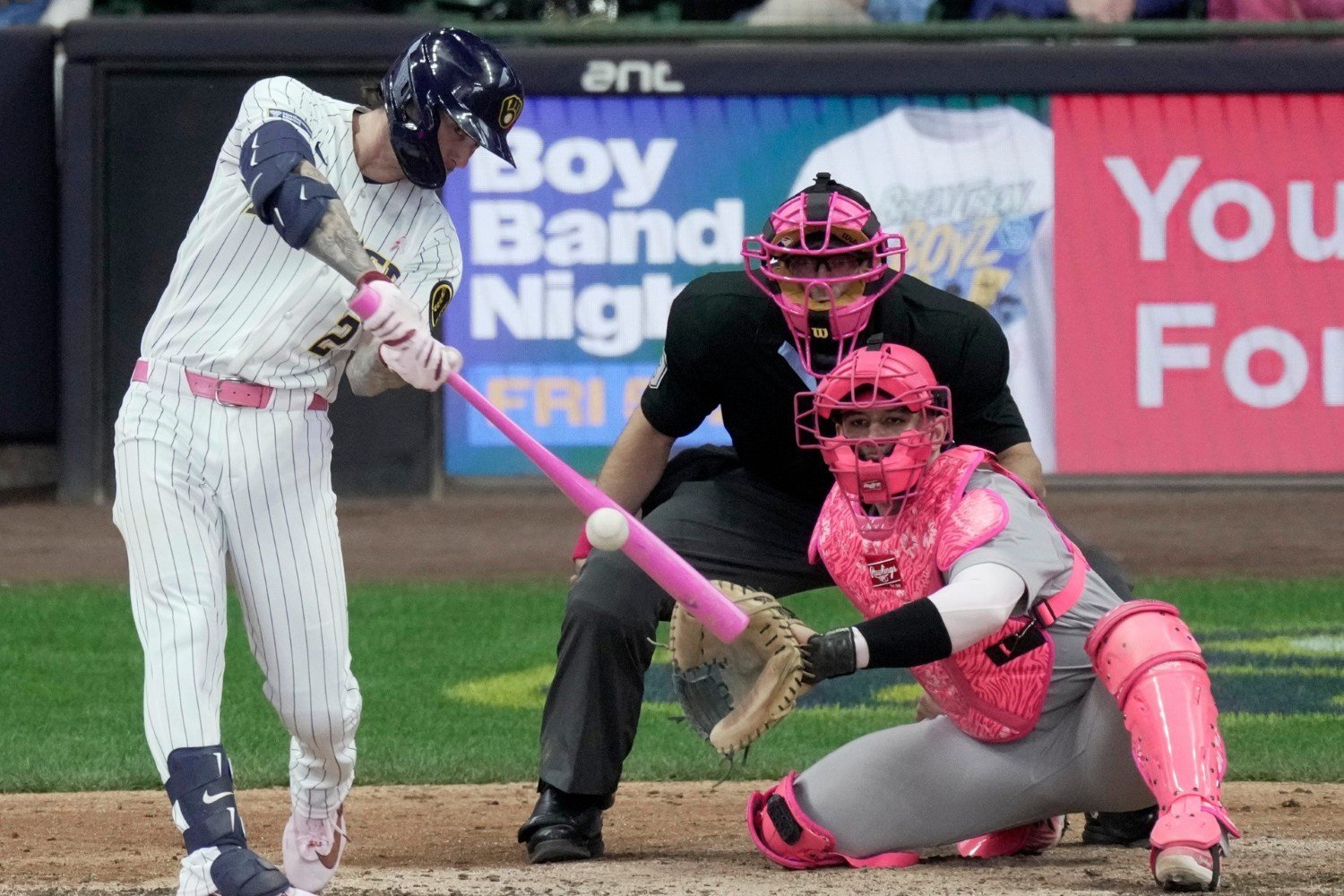 For many, many Brewers fans, Bill Hall's Mothers Day walkoff homer in 2006 was a watershed moment. It was very early in the days of players using pink bats for breast cancer awareness on that day; that made it visually interesting and memorable. For young fans who'd grown up in a household forever abuzz about the team's dramatic Easter win in 1987, it was a new springtime landmark to savor, one that belonged to the new generation. It also felt like a turning point—an announcement that the winds of positive change were pulling the organization out of the doldrums in which they'd been mired for the previous few years. Hall himself had been a nice find in 2005, and he blossoming into someone about whom to be downright excited. That team would ultimately win just 75 games, but it sowed the seeds that germinated the following year. In one sense, the franchise has not been the same since that game; they've become a perennially competitive team. There were no competitive doldrums to blow away for Brice Turang on Sunday, but beating the Yankees would mean sweeping the weekend series between the two teams. In an admittedly messy American League, the Bronx Bombers look as much like a juggernaut as anyone, and the Brewers had revenge to ponder after New York embarrassed them so badly in the great Torpedoing of the season-opening series in 2025. On so many levels, what Turang did in the bottom of the ninth inning was immensely satisfying. WERaMGFfWGw0TUFRPT1fQVZkU0JsZFFBMUVBRGxWUkJBQUhDQUlDQUZnR1VGUUFBZ01CQ1FJRVVnUlVWQXBS.mp4 One of the loveliest things about the homer, though, is the way its parallels with Hall's also highlight the important distinctions to be drawn. This team is vastly different from that one; so is its Mothers Day hero. Hall had a great 2006, with 35 homers and 78 total extra-base hits. Even then, though, it was pretty clear he was enjoying a career year. He'd never be anywhere near that good again; he lost his starting job by 2009. That's not going to happen with Turang. Whether he signs an extension with Milwaukee or is eventually traded, it's increasingly clear that the team's 2018 first-round pick is going to go down as one of the best players in franchise history. This homer won't be the Turang highlight; it'll just be one of several. We already have a handful of other candidates, in fact. Each year, Turang gets better at the plate. That can't go on forever, of course. In fact, it would be a major shock if he gets much better than this, at any point. Then again, try telling your mid-2023 self that Turang—the scrappy, slappy glove man demoted to Triple-A Nashville mid-year—would push his OPS+ to 86 in 2024; then 120 in 2025; then 163 in 2026. What he's doing is phenomenally improbable, and it's only possible because he's been assiduous and brilliant in his approach to improving at the plate. We've already talked at length about how Turang has altered his swing plane over the years. Just to update that a bit, though: his average swing tilt (as measured by Statcast) is now 37° this year, up from 31° last year. It was somewhat notable that he went from 29° in 2023 to that 31° figure in 2025. Remember about a decade ago, when the term "swing changer" came into vogue, as players leaned into the fly-ball revolution? When you see a 6° change in swing plane from one year to the next, that's a swing changer. Turang was a great hitter last year, but he overhauled what he's doing at the plate coming into this season. Here's an animated look at his swing from 2025. This is a digital visualization of a composite of swings, not an actual capture of a particular one, but it can make it easier to see several important things. Firstly, look at how far apart his feet are. (This is meant to show only the actual swing, so his stride is done at this point; the front foot is down already.) Note, too, the openness of his front foot and hip. From those elements of his lower-half operation comes a flatter-than-average swing, albeit one that covered the zone wonderfully well and produced plenty of hard contact to all fields. Turang 25.mp4 Now, compare that to this visualization of Turang for 2026. Check on the same things: distance between feet, the angle of the front foot and hip relative to the incoming pitch. But look, too, at the shoulders. Turang 26.mp4 Without dipping his back shoulder in a way that costs him bat speed or takes him off the plane of the pitch, Turang can now create more loft in his swing, because he's more upright as he swings. Being more upright—in other words, striding shorter—can mean generating less energy and (therefore) less power, but Turang's slightly more closed lower half lets him create torque by uncoiling with a bit more lift, the front shoulder rolling upward and outward more forcefully so that the top hand can steer the bat "underneath" his front side, as hitting people say. Torque and bat speed aren't the sources of Turang's improvements this year, though. Strength is certainly a component—getting into the right position to drive the ball out to the left of dead center on a pitch breaking down and in on you takes terrific strength—but Turang's bat speed is almost exactly where it was last year. The percentage of his swings topping 75 MPH in bat speed—what Statcast dubs Fast Swings—is actually down quite a bit, from 18.1% to 10.8%. Much of the added value comes, instead, from all that newfound tilt. Take two equally fast swings in terms of sheer Statcast speed measurements, and the one with more tilt is actually faster, in practical terms, so there's a kind of hidden bat speed bump in what Turang is doing this year. Another big chunk of his value comes from better swing decisions, and the league's smaller strike zone, especially for lefty batters. His walk rate is through the roof, which is why he's leading the National League in on-base percentage. However, there's also something to the way his swing speeds are distributed from which we can learn. Here are those distributions for each of Turang's big-league seasons (though bat-tracking data goes back only to the middle of his rookie year, 2023). He pushed the right edge of that distribution more in 2025, but look at how much more clustered his swing speeds are this year. Turang isn't trying to outguess pitchers and put his 'A+' swing on mistakes, but nor is he using a bimodal swing plan wherein he slows down or speeds up based on what he's looking for and what he sees as the ball leaves the pitcher's hand. This year, Turang is getting off his 'A-' swing at a much higher rate, because he knows it will work. With more tilt in the bat path and better swing decisions, he ends up with lots of ways to achieve a good outcome, if he can just take a representative swing every time he swings at all. Instead of comparing him only to himself, perhaps we can try comparing him to some relevant players who make natural foils. Here's Turang's distribution for this year, along with teammate Sal Frelick and fellow NL Central second basemen Nico Hoerner and Brandon Lowe. Few hitters in the game are more grip it-and-rip it than Lowe, which shows up here—not just in how many of his swings cluster into the small range at the right of his distribution, but in the visible rightward skew of that curve itself. He's pushing for maximum bat speed whenever he can lock onto a pitch. Frelick is the opposite end of the spectrum, very often decelerating his swing to make contact and using two different strokes based on what he's expecting or what the team needs. With his flatter, slower swing, that's necessary; it's the only way he can produce positive outcomes across a broad swath of situations. Hoerner is even more extreme than Turang in his effort to get off the same swing every time. As you can see, though, the swing he's repeating so diligently is slower. It's also flatter. Hoerner has a great feel for contact in his own right, but he hasn't figured out how to impact the ball the way Turang has—and if he ever did, it would probably have to come with the kinds of sacrifices Turang has found ways not to make this spring. Finding that sweet spot where he's maximizing per-swing output without losing consistency or adaptability is hugely valuable and impressive; Turang has threaded a needle. In the modern game, almost no one has a durable, true talent level of .298/.422/.511. Turang will probably come back to Earth a bit from this apex. He's been incredibly good, though, and he's been this way for 400 plate appearances, dating back to last August. To finish as well as he did last year and still make a major swing adjustment this year speaks to the plasticity and the ambition in Turang. He's a genuine superstar, and with William Contreras and Jackson Chourio hitting on either side of him, he could become the centerpiece of one of baseball's best offenses over the next year and a half. View the full article
 -

 For the week, Wisconsin (4-2) was the sole series winner, with Nashville and Wilson managing 3-3 draws and Biloxi (2-3) coming up a bit short. Transactions: OF Luis Matos placed on AAA Nashville’s 7-day injured list on May 9 Game Action: Nashville Pre-Game Media Notes Final: Nashville 8, Louisville (Reds) 0 Box Score and Game Log Via the Sounds’ website, game details and we encourage readers to review affiliate write-ups as part of their Link Report routine: Sounds Pitching Staff Tosses Combined Shutout to Split Series Nishant Brahme’s detailed game write-up covered the game highlights in detail, including the shutout by RHP Garrett Stallings (6 IP, 0 R, 3 H, 1 BB, 4 Ks) and three relievers, RBI hits by four Sounds’ players and two videos. While 3B Jett Williams (2-for-3, double, 2 walks, 2 RBIs) reached base 4 times and also contributed a sacrifice fly, the 28-year Stallings was truly the story of the game, not allowing any baserunner to reach scoring position until 2 outs in the 6th inning. His velocity peaked at 94.1mph in the 5th inning, with pitches exceeding 93mph in four of six frames. Eight Sounds’ batters collected at least one hit on this fine Sunday afternoon, including multi-hit games for OF Luis Lara (2-for-5, walk), OF Jordyn Adams (2-for-4) and OF Jacob Hurtubise (2-for-4, walk, RBI). Entering with a 5-0 lead in the 7th inning, RHP Craig Yoho allowed a first pitch rocket (109.9mph single) and had a pick-off error before getting down to business: pop out, 2 Ks. Through 8 games, he’s been solid with a 2.08 ERA, 0.69 WHIP, .138 AVG against and .564 OPS against. Sounds’ Extras: Adams’ 6th inning exit, after a single and force out at second base, was likely unplanned, pushing INF Ethan Murray (1-for-4, walk, RBI) to first base (first time in 2026) and Eddys Leonard to the outfield. Hopefully it was just precautionary though. RHP Peter Strzelecki’s 3-up, 3-down 8th inning featured peak velocity of 94.5mph, while RHP Blake Holub’s final pitch of the game touched 97.1mph. Next week’s outlook: Nashville return home to battle the Iowa Cubs for six games, commencing Tuesday night. Biloxi Pre-Game Media Notes Game One Final: Biloxi 9, Columbus (Braves) 6 (in 7 innings) Box Score and Game Log Game Two Final: Columbus 6, Biloxi 1 (in 7 innings) Box Score and Game Log Via the Shuckers’ website, game details: Shuckers Split Mother’s Day Doubleheader with Clingstones It was the best of times - 9 runs, 11 hits in Game One win to even the series. It was the worst of times - 2 runs, 1 hit in Game Two defeat to drop the series 3 games to 2. Game One: While 1B Blake Burke (3-for-4, HR, RBI, SB) homered yet again and 3B Mike Boeve (2-for-4, double, 3 RBIs) and SS Jesus Made contributed 2-out RBI singles, starting RHP Bishop Letson took a step in the right direction over 4 innings (2 R, 3 H, 2 BB, 4 Ks). Unfortunately, RHP Brett Wichrowski (3 IP, 4 R, 4 H, 2 BB, 3 Ks) coughed up the 3-2 advantage in the top of the 5th inning, but 2-out magic saved the Shuckers again: C Darrien Miller walk, OF Eduardo Garcia walk, DH Matt Wood grand slam on an 0-2 pitch for an 8-4 lead: Boeve’s RBI double pushed the lead to 9-4 in the penultimate inning, but the team could have used some of the hits and runs in the second contest. Game Two: Starting RHP Tyson Hardin (3 2/3 IP, 6 R, 8 H, 2 BB, 3 Ks) had entered the contest with 40 Ks in 25 2/3 IP, but he wasn’t fooling Clingstones’ batters at the start of this game: no strikeouts amongst first 12 batters faced, 6 earned runs allowed including the 2-out grand slam on an 0-2 pitch in the second inning. The sudden 6-0 hole magnified the importance of the Shuckers stranding 2 baserunners in the 1st inning (including OF Damon Keith’s double; 1.093 season OPS), but the team only produced one more hit the rest of the way. At least it was of the Burke 4-bag variety: Shuckers’ Extras: The relief corps of LHP Anthony Flores and RHPs Ryan Birchard and Cameron Wagoner got the job done in Game 2, in case a rally was on the cards: combined 3 1/3 IP, 0 R, 3 H - all singles, 1 BB, 1 HBP, 5 Ks. OF Mark Coley II (0-for-2, 2 Ks in Game 2) is mired in a 1-for-26 slump, which he’ll hopefully break out of next week. Next week’s outlook: Biloxi travel to Alabama to take on Ray’s affiliate Montgomery for six games, commencing Tuesday. Wisconsin Pre-Game Media Notes Final: Wisconsin 15, Peoria (Cardinals) 8 Box Score and Game Log Via the Timber Rattlers’ website, game details: Fischer & Bitonti Lead the Way to a Wisconsin Win Chris Mehring’s linked game report is chock-full of highlights and videos, covering Wisconsin’s 19-hit barrage led by 3B Andrew Fischer (4-for-6, 2 HR, triple, 5 RBIs) and 1B Eric Bitonti (5-for-5, HR, 2 doubles, walk, 2 RBIs). The Timber Rattlers scored runs in 6 of the first 7 innings, including multiple runs in four of the frames to build an unassailable 15-5 advantage. At least as important as the breakout offensive performances (e.g. OF Luis Castillo: 2-for-3, double, 3 walks, 2 RBIs) was the immediate return-to-health of starting RHP Jason Woodward (2 1/3 IP, 2 R, 2 H, 2 BB, 6 Ks; 46 pitches), who had exited a game one week earlier due to a ball off of his forearm. C Blayberg Diaz (2-for-5, double, walk, 3 RBIs) and SS Luiyin Alastre (3-for-5, double, triple, 2 RBIs) were happy to join Castillo in the 7-8-9 batter hit brigade. After playing no innings at shortstop in 2025, Alastre has now started 4 games there in Luis Pena’s absence, with no errors committed. Timber Rattlers’ Extras: After just 132 PAs in an injury-affected 2025 campaign (.466 OPS that season), Castillo has found a groove over his last 9 games: 10-for-31, 2 HR, 2 doubles, 5 walks. RHP Jose Nova (1 2/3 IP, 3 R, 1 K) managed to strand a baserunner for Woodward, but the hit-by-pitch and 7(!) wild pitches were not child-friendly viewing. RHP Chandler Welch covered long relief (4 IP, 3 R, 6 Ks; 66 pitches), with 2 runs coming on a homer as he sought the final out of the 8th inning. Fischer may have really wanted to complete the cycle (he needed a double), as he was ejected followed a called strikeout to start the 9th inning. Next week’s outlook: Wisconsin host Cubs’ affiliate South Bend for six games, with 21-year old LHP Wande Torres (6.35 ERA, 1.72 WHIP, 9.9 K/9 in 22 2/3 IP) listed as the schedule for the series opener on Tuesday. Wilson Pre-Game Media Notes Final: Fayetteville (Astros) 7, Wilson 6 Box Score and Game Log Via the Warbirds’ website, game details: Warbirds Rally Comes Up Short in Series Finale Our Low-A squad rallied from an early 5-1 deficit and then nearly rallied again with two outs and nobody on in the 9th inning, but ended up stranding 2 baserunners to fall just short. As he is so often, OF Handelfry Encarnacion (3-for-5, HR, RBI, 2 SBs) was the offensive catalyst, homering on the first pitch of the game, singling to spark the 4-run third inning rally and singling in the 9th inning to extend the contest. After a rough first seven batters faced (5 runs, 4 earned), starting RHP Jarrette Bonet dialed in to register 9 outs from the next 10 batters, exiting after 70 pitches (42 strikes). Two errors didn’t help him in that difficult first frame, but DH Luis Lameda’s game-tying, 2-out, 2-run single in the 3rd inning evened things up. RHPs Thomas Conrad and Tanner Perry were capable in relief, combining to cover 4 2/3 innings (2 R (1 ER), 3 H, 2 BB, 3 Ks), but the offense was unable to cash in on SS Brady Ebel’s leadoff 5th inning double or two walks in the 6th frame. The Warbirds’ 4th error of the game helped the Woodpeckers to an insurance run in the 7th inning. After Encarnacion, Ebel (1-for-3, double, 2 walks, SB) and 2B Juan Ortuno (1-for-4, walk, SB) refused to make the final out, C Kevin Garcia struck out on five pitches to end the game. Warbirds’ Extras: Garcia is now 1-for-24 to commence the 2026 campaign, starting slowly after missing spring training time due to an injury. Lameda (1-for-3, walk, 2 RBIs) and 3B Filippo Di Turi (1-for-3, walk, RBI) each reached base twice. While OF Nick Monile contributed an outfield assist to end the 6th inning, he’s unfortunately struggling on the offensive end, now 1-for-36 to start his minor league career. Next week’s outlook: Wilson return home to take on Guardian’s affiliate Hill City for six games, commencing on Tuesday. We hope that you enjoy the Minor League Link Report. On Monday, the sole affiliate in action is the ACL Brewers, who play at the ACL Reds at 8:00pm CST. The Milwaukee Brewers also have a day off on Monday, resting up before hosting the Padres on Tuesday. Organizational Scoreboard including starting pitcher info, game times, MiLB TV links, and box scores Current Milwaukee Brewers Organization Batting Stats and Depth Current Milwaukee Brewers Organization Pitching Stats and Depth View the full article
 -
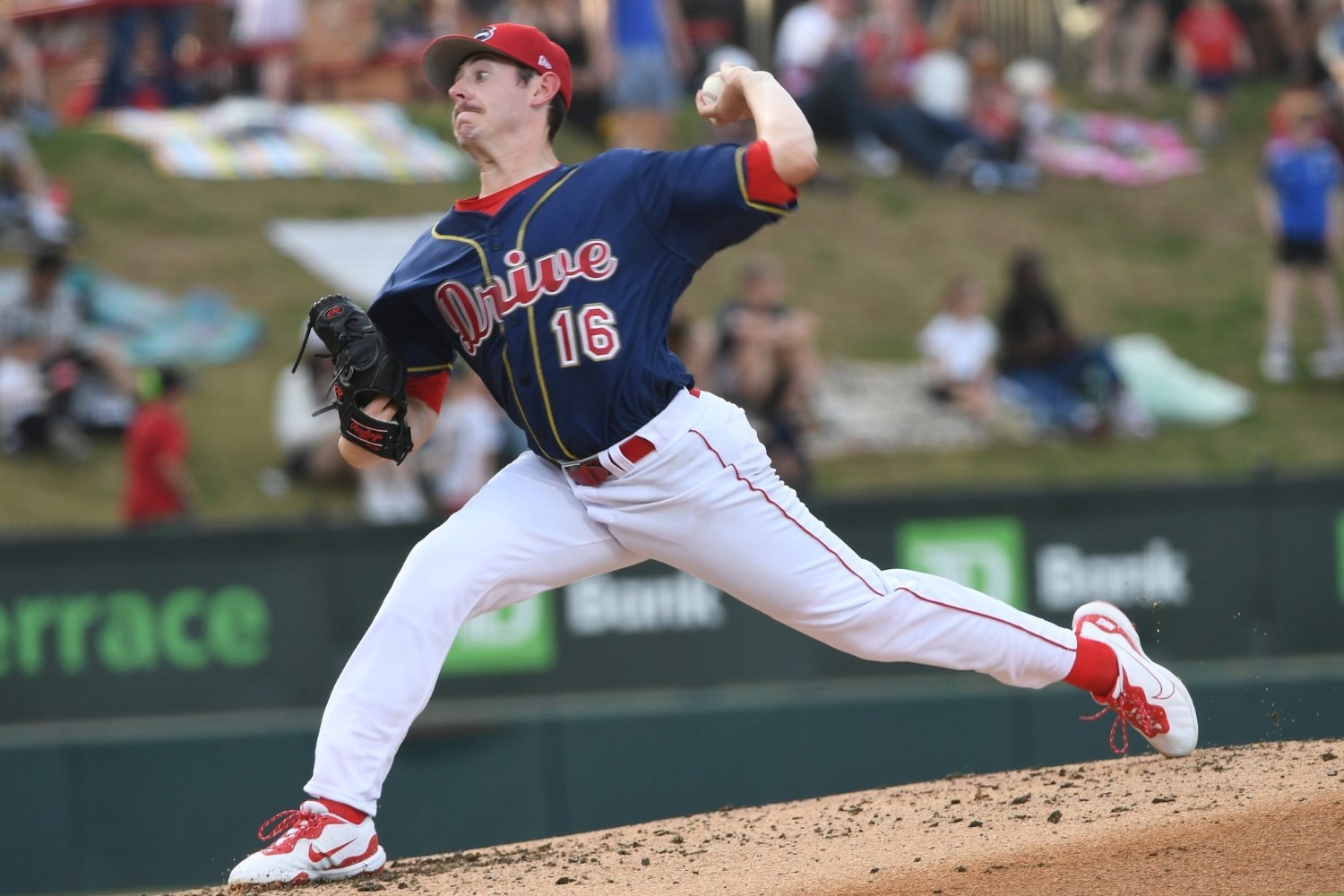 It’s that time of the year again, when TalkSox updates our Top 20 prospect rankings for the Boston Red Sx. Both staff and readers voted and after tabulating the votes, the reveal of the list is now ready. The Top 20 saw some notable changes from the preseason, including the addition of two new prospects which we will break down. Let’s jump into it below. Boston Red Sox Top 20 Prospect List Payton Tolle LHP MLB (40-man) (previously #1) Franklin Arias SS AA (previously #3) Kyson Witherspoon RHP A+ (previously #4) Anthony Eyanson RHP AA (previously #10) Justin Gonzales OF/1B A+ (previously #7) Juan Valera RHP A+ (previously #5) Jake Bennett LHP AAA (40-man) (previously #12) Mikey Romero INF AAA (previously #6) Marcus Phillips RHP A+ (previously #9) Dorian Soto INF FCL (previously #8) Henry Godbout 2B/SS A+ (previously #14) Tyler Uberstine RHP AAA (40-man) (previously #17) Yoeilin Cespedes 2B/SS A+ (previously #15) John Holobetz RHP AA (previously #20) Enddy Azocar OF A (previously unranked) Miguel Bleis OF AA (previously #11) Yophery Rodriguez OF A+ (previously #16) Johanfran Garcia C AA (previously #13) Hayden Mullins LHP AA (previously unranked) Conrad Cason TWP FCL (previously #19) The list retains many players from the previous Top 20, with Connelly Early and Nelly Taylor Jr. being the only players removed — Early due to his graduation from prospect status, while Taylor has struggled mightily in Double-A with Portland to the tune of a stat line of .098/.202/.195. The biggest rank improvements belong to Anthony Eyanson who went from 10th to 4th, Jake Bennett climbing from 12th to 7th, Tyler Uberstine rising from 17th to 12th, and John Holobetz who went from 20th to 14th. Their rise is a sign of the improvements that Craig Breslow made on the pitching development side of things. Though, it wasn’t just pitching that improved, as both Justin Gonzales and Henry Godbout saw their rankings improve, as well as the addition of Enddy Azocar to the Top 20. The biggest rank decreases belonged to catcher Johanfran Garcia falling from 13th to 18th and Miguel Bleis who went from being just outside of the top 10 at 11th down to 16th. Both players have shown flashes of their talent that has generated buzz and hope that they can reach their potential, but a combination of injuries and inconsistency has stifled the duo. The ranking is dominated in two specific areas. The first being that pitching very much makes up most of the Top 10 on the list. Of the 10 players, six are pitchers, including number one prospect Payton Tolle and the big three pitching prospects of Eyanson, Kyson Witherspoon, and Marcus Phillips all whom were drafted in 2025. Eyanson specifically has generated comparisons to a Tolle-esque season thanks to his hot start in Greenville (20 1/3 innings, seven hits, one earned run, three walks, 34 strikeouts) that led to a promotion to Portland after just five starts. The second area that dominates this list is that Greenville makes up the most players on the list with seven prospects. Portland finished second with six prospects, while Salem had the least with just a single prospect. Greenville at the start of the season was viewed as an exciting, young, team that could be showcasing the future of the franchise thanks to its pitching staff containing the likes of Eyanson, Witherspoon, Phillips, and Juan Valera along with their offense containing players like Rodriguez, Gonzales and Godbout. Yoeilin Cespedes’ great start to the season was a welcomed surprise too, as he’s beginning to showcase the offensive production that once made him a top prospect within the organization. Let's review the two new additions to our list to round things out. Enddy Azocar, OF (Single-A Salem): No. 15 Azocar is an interesting prospect, as he’s just 19 years old and breaking out in Salem. When signed as an amateur, Azocar was viewed as having good contact skills along with projections viewing him as eventually being a good hitter. However, he struggled in 2024 with just three extra-base hits while moving from the infield to the outfield full time. Entering 2025, the outfielder put on 25 pounds of muscle and increased his quality of contact which led to a quick promotion to Single-A where he was one of the youngest players in the league. If you looked at just his stats, you would think that there wasn’t much to like with Azocar, as he hit just .202/.273/.314 in 71 games. In that same span he had nine doubles, a triple, six home runs and 26 RBIs. Despite those numbers, there was a lot to like in the underlying data, including 90th percentile exit velocity. In the majors, a 90th exit velocity of 107 mph or higher is considered elite. Azocar’s 105.4 mph was the highest for all players of his age across the minors. To add to his power, he also showcased solid contact ability thanks to an in-zone whiff rate of just 18%. Azocar starts with a leg lift timing device while hitting and has showcased average bat speed so far in his young career. He can be aggressive at times but will make contact with pitches in the zone and does not chase often. He still needs to work on developing his pitch recognition for secondary pitches, but should that happen, he should take off as a prospect. He currently has average raw power, but as he fills out as he ages that should increase, as shown in 2026 (six home runs through 28 games vs. six home runs in 71 games in 2025). Azocar has been viewed as having slightly above average speed which helps in the outfield when paired with his plus range in center field. Often, he shows solid instincts on balls hit to the outfield while taking good routes to the ball. While he is likely capable of playing all three outfield positions at an above-average level, he is likely to stick in center field long term. His arm is also viewed as being above-average, which will only help his development. Overall, he should be viewed as an athletic, defensive outfielder with power potential. At the moment, his hit tool is what will determine if he truly breaks out into a great prospect or not, but the improvements have been seen so far in 2026. His outcome is anywhere from a starting outfielder to a minor-league bench role, a huge range laden with tantalizing upside. Hayden Mullins, LHP (Double-A Portland): No. 19 For some, it’s a surprise that Mullins remained in the organization after his 2025 season that saw him go 8-2 with a 2.21 ERA in 22 games (21 starts) between Greenville and Portland. He tossed 101 2/3 innings while striking out 123 batters. For his dominance, (7-2 record, 2.44 ERA, 84 2/3 innings, 96 strikeouts), he was named the 2025 Portland Sea Dogs Pitcher of the Year. Entering the Rule 5 Draft, there was a lot of concern that Mullins could be selected after his 2025 season, especially as many felt that his stuff could play well out of the bullpen a role. Instead, he was not selected and returned to the Boston organization for the 2026 season where he’s looked rather good so far including being part of a no-hitter on April 26. Mullins throws from a three-quarters slot and starts on the third base side of the rubber. His motion tends to involve a high leg kick and rotates his hips. He’s also viewed as having good extension, which we all know Craig Breslow loves. He has a five-pitch arsenal that is made up of a four-seam fastball, slider, sweeper, changeup and cutter. His fastball tends to average around 92 to 95 mph and can show life up in the zone. It’s been shown to have bat-missing ability so far through his minor-league career despite the command and control still being a work in progress. If he were in the bullpen, the velocity could potentially increase for shorter outings, which would place it in plus territory. The slider tends to be between 81 and 85 mph with a high spin rate. He has an advanced feel for it and when at a lower velocity, it sometimes takes on a shape similar to a sweeper. He can land it in the zone or throw it down and outside of the zone if he is hoping to get the batter to chase. The sweeper averages between 77 and 80 mph and has been a work in progress for Mullins. In 2025, he managed to make it more into its own pitch and has shown bat missing ability. The changeup and cutter are his weakest pitches, as the changeup sits between 81 and 83 mph. When the changeup is on, it flashes a late drop and thrown with an arm speed that makes it deceptive. When it isn’t on, the pitch doesn’t work as well and because of that it’s viewed as very inconsistent. The cutter is a pitch that he hasn’t used as much since 2024 but is viewed as having average traits. Mullins has battled injuries in his career, and even before his career started as he was drafted shortly after having Tommy John surgery. As such, being drafted in 2022, he would not make his organizational debut until August of 2023 and that would take place in the Florida Complex League. Last year, he also deal with a bout of shoulder fatigue that had him miss most of May. Due to the injury concerns and his command issues, there is belief he could work best out of the bullpen in a one- or two-inning role, especially if he focuses on a fastball/slider combination. However, due to a deep arsenal that can work against both left-handed and right-handed hitters, the organization will look to develop him as a starter until he struggles in that role. View the full article
 -
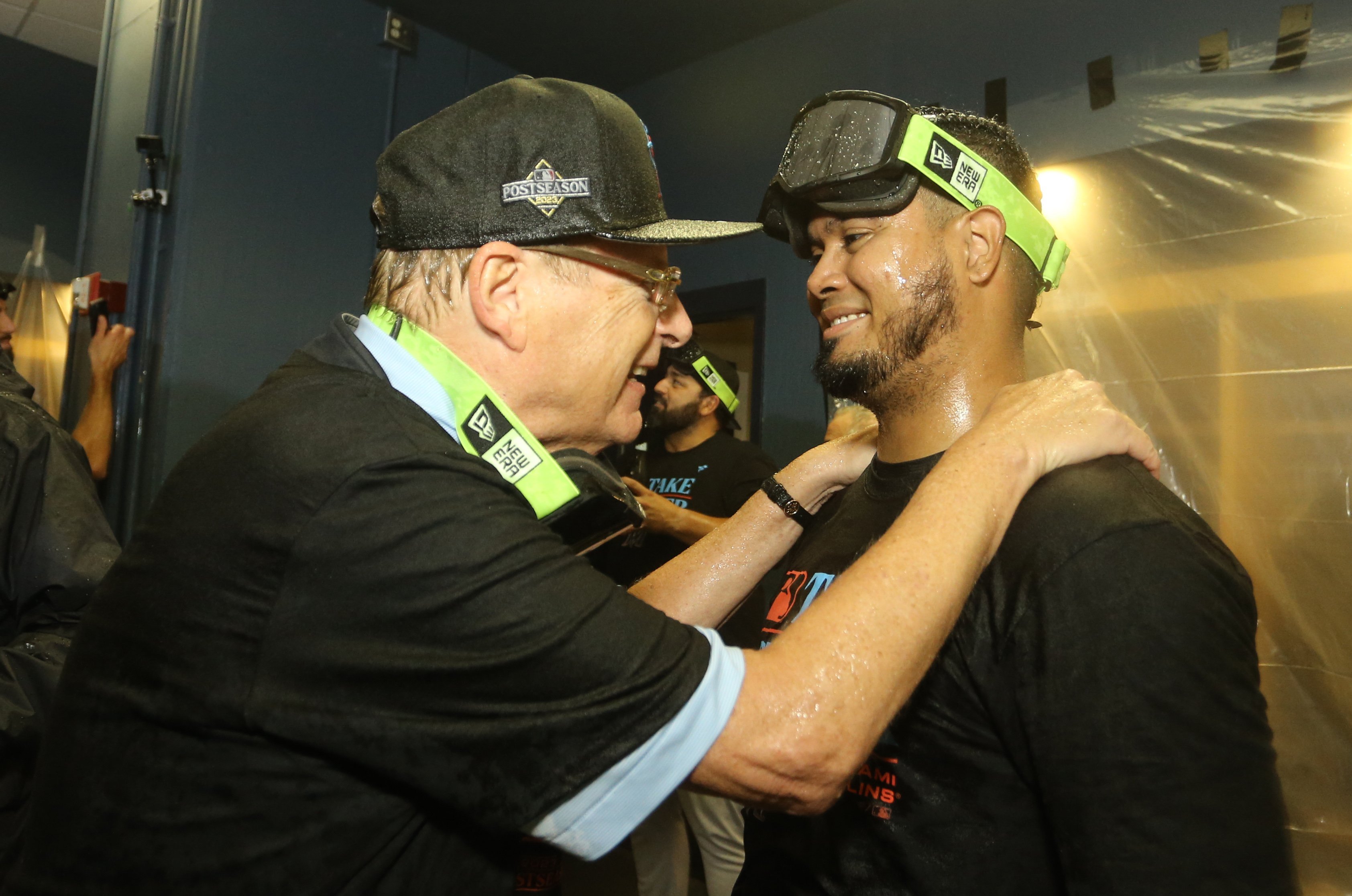 Outside of the teams that won World Series championships in 1997 and 2003, the 2023 edition of the Miami Marlins was perhaps the most adored in franchise history. Following consecutive seasons of 90-plus losses in 2021 and 2022, '23 was a breath of fresh air. Those fiery, resilient Fish blended both veterans and young stars with formidable pitching and hitting to clinch just Miami's third-ever playoff berth in a full season. You cannot tell the story of that team without a certain 5-foot-10 second baseman with fewer than forty career homers. Luis Arraez was the 2023 Marlins. Acquired from the Minnesota Twins a little less than a month away from spring training, "La Regadera" etched himself in team lore while simultaneously becoming a fan favorite. He achieved the first cycle in franchise history...in just his twelfth game. He proceeded to flirt with a .400 average deep into the season and set a franchise single-season record with his final .354 mark. Arraez was an All-Star, Silver Slugger and top-10 finisher in National League MVP balloting, the leader and face of a scrappy lineup that had Miami in the spotlight like they haven't been in years, with what seemed to be a promising future. On the heels of that prosperous season, Marlins ownership opted for a bold shake-up. General manager Kim Ng was out, replaced by new president of baseball operations Peter Bendix. There were wholesale changes to front office personnel, but Bendix largely kept the club's major league roster intact—the most notable departures were letting Jorge Soler and his 36 homers walk in free agency and flipping super utility man Jon Berti on the eve of Opening Day. Given the dire state of Miami's farm system, a rebuild seemingly loomed, but not imminently. To reference Murphy's Law, everything that could go wrong, did go wrong. On May 3, just 33 games into their 2024 campaign, the Marlins entered their cross-country trip to Oakland sitting at 9-24, set up by a brutal season-opening 0-9 skid. But hey, maybe this core could do the impossible again. Jesús Sánchez said it himself not even 24 hours ago following his walk-off that "Miami was back" and there were signs of stabilization with a 6-4 record in their last ten. Then, just like that, it was all over. Minutes before first pitch from the Coliseum, news broke that Arraez was headed to San Diego in exchange for a quartet of minor league talent. The reported blockbuster was met with shock and outrage, not just from Marlins faithful, but from all corners of the baseball world. Bendix had gutted the soul from his organization barely one month into his first regular season in Miami. He confirmed in the subsequent media session that this was waving the white flag on 2024, saying "we are unlikely to make the playoffs this year." Many more moves followed and the Marlins endured 100 losses that year. At the time of this article, two players that Bendix inherited from the 26-man postseason roster remain on the major league squad. Although the Marlins are not yet perennial contenders like Bendix aspires to be, their outlook is considerably brighter than it was two years ago. We now have the necessary context to evaluate the Arraez deal more fairly. It's fair to start with the man himself, whom after collecting another batting title in 2024 with San Diego, saw his name and what he brings to the table get more criticized amongst the general baseball population. The "one-tool player" label gained serious wheels following Arraez's first season as a Padre and a 2025 campaign that featured a league-lead in hits with 181, but an OPS of .719. Despite hitting free agency in the theoretical prime of his career (entering his age-29 season), Arraez lingered on the market until February. He ultimately moved north in to the division rival San Francisco Giants on a modest one-year, $12 million deal that literally any MLB team could've afforded (yes, even the frugal Fish). His first quarter of a season in the Bay has been mostly a continuation of his Padres tenure offensively—tons of singles and fewer strikeouts than any other qualified hitter. Interestingly, his defense has graded out brilliantly. Arraez still plays his role and does it better than anybody...except for one guy. We'll get to him later. The package sent to Miami included OF Jakob Marsee, RHP Woo-Suk Go, 1B Nathan Martorella and OF Dillon Head, with the final being considered the headliner. Thus far, Miami gets a 1.5/4. Go was the least desirable at the time of the swap and his stock only lowered since joining the Marlins organization. The Korean right-hander struggled as a low-leverage reliever in the minors and was cut 13 months after being acquired without ever tasting the majors. Martorella's hit tool had been a question mark when he came over and it's looking as questionable as ever now. He is OPS'ing .520 with a .135 average in Triple-A Jacksonville, a step down from an already discouraging .630 OPS a year ago. I'm giving Miami a generous half point for Dillon Head, the 70-grade speedster who was just 19 at the time of the deal. Head has been absolutely hampered by injuries ever since, including a season-ending hip injury a little over a month after joining the organization and has appeared in a limited nine games in 2026 after nursing a hand injury. It is entirely too early to write Head off, but this season in High-A will play a huge role when evaluating his future with the club. Finally-and most notably-Jakob Marsee, who was the first of the four to receive a call-up and did not miss his opportunity. The Dearborn, MI native went scorched earth in his debut month in the bigs, being honored with NL Rookie of the Month for August after posting a sensational .352/.430/.629 with eighteen extra-base hits and above-average defense. It's been a mixed bag since, most notably the start to Marsee's sophomore season—he currently holds a 67 wRC+ (league average is 100). What we do understand is that Bendix and the Marlins front office has supreme confidence in their potential franchise center fielder to figure things out, and there's reason to believe. Marsee boasts incredible plate discipline, still possessing an OBP over .307 with an average of .182. If you choose to view the trade simply based off the four players Miami received in return, it appears Bendix still won his first blockbuster, but not by a landslide. However, the true value of the deal can be seen when analyzing the other guy I was referring to earlier. Xavier Edwards, who had no way of finding consistent playing time with Arraez and Tim Anderson up the middle in 2024, was called up shortly after the departure of his predecessor. Instantly, the former first-round pick proved Bendix was right to deal Arraez in favor of his former Rays farmhand. While Edwards and Arraez both have elite hit tools, the former's value extends far beyond. An elite runner despite not swiping as many bags as one would expect, Edwards can take extra bases and keep balls in the infield at second base. In addition, since transitioning to the position full-time just halfway into 2025, Edwards proved to be elite, even being named a Gold Glove finalist. Perhaps most important to Bendix and Co., the switch-hitting Edwards is three years younger than Arraez and doesn't hit free agency until 2030. Edwards' production and future value chalks this trade up as a win for Miami already. Couple that with a potential franchise center fielder and an uber-athletic 21-year-old that simply needs to stay healthy? While Bendix took plenty of heat for getting rid of the fan favorite, he was just setting the tone for what was to come. View the full article
 -
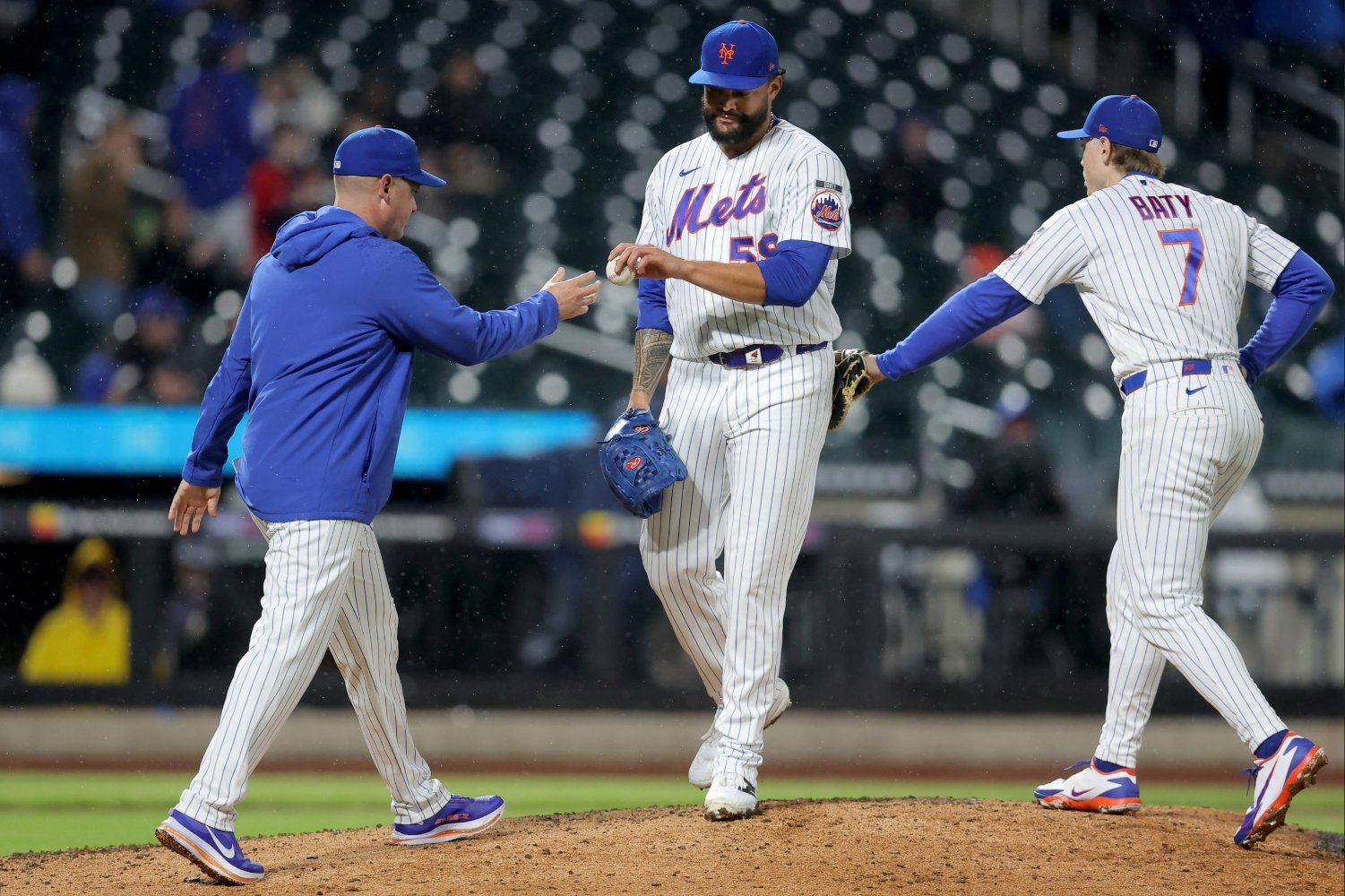 The 2024 New York Mets feel like a distant memory. While it hasn’t even been 24 months since Grimace’s first pitch turned the Mets into a juggernaut, it might as well have been the pivotal moment in the Revolutionary War. A late-season collapse in 2025, followed by the fast-moving ecological disaster to start 2026, has all but erased what felt like, for a fleeting moment, the beginning of something special. And no player has embodied the rollercoaster quite like Sean Manaea. Manaea was a revelation for the 2024 Mets. He made 32 starts, totaling 181.2 innings, and posted a 3.47 ERA. A season after being moved to the bullpen in San Francisco, Manaea earned the right to start four playoff games for the Mets, and it was in large part thanks to him lowering his arm slot. The truth about hitting is that it is fundamentally subconscious. There just isn’t enough time to see, think, and react to a pitch moving 90-plus MPH. What this means for pitchers is that being generic is the worst thing possible. The more generic a pitch is, the more times a hitter has seen it, and the easier it is for them to square it up or spit on it. Manaea always had a weird profile. His sinker and four-seam fastball might be the same pitch. The former has more horizontal movement and vertical drop than average, but is usually thrown at the top of the strike zone. The general rule is that sinking fastballs play best at the bottom of the zone, while high-spin ones dominate at the top. Despite all this, Manaea limited fly balls, threw enough strikes, and got hitters to chase his sweeper or changeup on his way to being a mostly league-average pitcher. It was an effective plan, but it was mostly generic, until all of a sudden, he wasn’t. With the Mets in 2024, Manaea made the bold decision to lower his arm angle and completely transformed his fastball into an unstoppable weapon. While pitch characteristics are important, they aren’t the only factor in determining how a pitch will play. A lower arm angle provides pitches with a flatter approach angle, which generally makes them play better at the top of the zone. The combination of a sinking-tailing fastball from a shallow approach angle at the top of the zone made Manaea’s fastball far more unique, and helped him and the Mets to a second-half surge. So, what has gone so wrong for Manaea since 2024 and, in particular, 2026? Well, it’s complicated. First, his 2025 wasn’t nearly as bad as it looked. His xERA was 4.00, his FIP was 4.39, and his xFIP was 3.30. In fact, he posted the best K% (28.5%) and K%-BB% (24%) of his career, but was undone by a career-worst home-run-to-fly-ball ratio of 19.4%, which is how he posted a 5.64 ERA, despite some solid indicators. Unfortunately, the same cannot be said of his 2026. There is no way around it: Manaea has legitimately been awful to start the season. His xERA is 5.52, his FIP is 4.48, and his xFIP is 4.58, despite throwing exclusively out of the bullpen. So, while he has been unlucky to have a 6.85 ERA, it’s not like he’s making a case to re-enter the Mets' rotation. The biggest concern facing Manaea has been his fastball. Usually, pitchers experience some form of velocity bump when throwing out of the bullpen, but Manaea’s average fastball velocity has dropped to 90.2 MPH, down from 91.7 in 2025 and 92.2 in 2024. No matter the secondary characteristics or the location, at a certain speed, any fastball is vulnerable. And to make matters worse, he’s locating it far worse. Manaea’s fastball has played relatively well at the top of the zone, and has characteristics where it could play near the bottom, but what you cannot do is throw a 90 MPH fastball down the middle, and that’s exactly what he has been doing this season. Sean Manaea 2026 Four Seam Heat Map Unsurprisingly, the pitch has surrendered an xSLG of .537 and has seen its whiff rate drop from 23.2% to 18.2%. The reality is that Manaea’s fastball velocity might never return. He’s 34, and his velocity has been trending down over the past few seasons, despite throwing more innings out of the bullpen. However, that doesn’t mean his fastball can’t play far better if he can manage to locate it more consistently at the top of the zone and out of the heart of the plate, and despite the awful results, there are still a few things under the hood that the southpaw is doing well. His infield fly ball percentage of 17.2%, which, when paired with a 41.4% fly-ball rate, means that 7% of all the batted balls he has allowed are infield fly balls. Infield fly balls are historically converted as outs at nearly the same rate as strikeouts. When added to his current 22% K%, he's still getting nearly automatic outs in 27.08% of plate appearances. That's not elite, but it's something to build upon. Manaea's first pitch strike percentage is also down to a career-low 59.3%, but in his excellent 2024, it was 59.8%. In all likelihood, his first pitch strike percentage should regress towards his career average of 63.1%, which will help cut into his career-high 9.3% BB%, and probably lead to slightly better strikeout figures and batted ball metrics. With the loss of velocity, Manaea’s days as anything but a spot starter might be over, but there’s a road map for him to be a viable member of a bullpen. All he needs to do is locate his fastball a bit better, and he should start to look like the league-average pitcher he has been for most of his career. That's not particularly exciting, but the Mets, and Manaea for that matter, need boring competence more than anything. View the full article
 -
 Welcome back to Blue Jays Clutch Plays, a recurring post that highlights the six most pivotal plays (three pitching, three hitting) from the past week of Blue Jays baseball, according to MLB's win probability model. Click here to read last week's edition. After recovering enough to undo their early-April struggles, the Blue Jays went down without much of a fight in St. Petersburg, getting swept in their first set at Tropicana Field since 2024. A series win against the Angels over the weekend may sound like a relief, but they let slip an opportunity to sweep them on Sunday afternoon. After jumping out to a 1-0 lead and forcing José Soriano to throw 25 pitches in the bottom of the first, the bats proceeded to shut down as Soriano only needed 78 pitches to get through the next 6.2 innings. The long ball continued to haunt Eric Lauer, who gave up six runs in five innings to take the loss. They're 18-22, the Rays are coming to town next, and the sense of urgency is climbing. Pitching 3. Patrick Corbin: Junior Caminero GIDP, Bot 1, 5/6 (+10.6% WPA) The offense once again squandered a respectable effort by Patrick Corbin, whose advanced metrics suggest his days with an ERA under 4.00 might be numbered. After getting into early trouble on Wednesday, he located this sinker beautifully off the outer half of the plate, getting Junior Caminero, the most dangerous power threat in the Rays' lineup, to ground into an easy unassisted 4-3 double play. 2. Trey Yesavage: Vaughn Grissom LIDP, Top 2, 5/9 (+11.0% WPA) Vaughn Grissom didn't put a bad swing on this Trey Yesavage fastball, turning it around on a line to right field, but Addison Barger ensured that no run would score on the play thanks to a dazzling 101-mph outfield assist. This clutch play might've come with a curse, though, as Barger was scratched with elbow soreness on Sunday, just a day after getting activated from the IL. He'll be getting an MRI on that elbow shortly. The injuries just keep piling onto each other. 1. Trey Yesavage: Sebastian Rivero GIDP, Top 4, 5/9 (+19.4% WPA) Yesavage exited Saturday's start without giving up a run, but he didn't have his best stuff, as the Angels knocked him out after he threw 87 pitches through four innings. Despite that, he continues to have a knack for well-timed double plays. On a full count with the bases loaded, Sebastian Rivero chased a fastball below the zone and grounded it harmlessly to Ernie Clement, who turned the inning-ender himself. According to win probability, this was the fifth-most clutch play by a Toronto pitcher this season so far. Hitting 3. Kazuma Okamoto: RBI Single, Bot 3, 5/8 (+12.0% WPA) Kazuma Okamoto's monstrous stretch (254 wRC+ in May) is showing no signs of slowing down, as this RBI single on Friday night proved to be the eventual winner in a 2-0 Blue Jays victory. It was one of only three hits they got on the night, which, along with his 26 RBIs being eight more than the next closest hitter on the team, indicates how much he has been carrying the lineup. 2. Yohendrick Piñango: RBI Single, Top 5, 5/5 (+12.3% WPA) This was an impressive piece of hitting from Yohendrick Piñango, who was unfortunately the odd man out when Barger returned on Saturday but is likely to be the first call-up if the MRI on Barger's elbow reveals any sort of bad news. Drew Rasmussen, who owns one of the best cut fastballs in the game, bunched him up with a first-pitch cutter in on the hands. Piñango fought it off and took it right back up the middle to score Clement and give the Blue Jays the lead, one they would not hold after the baseball gods conjured an evil force to hex Tyler Rogers in the bottom of the eighth. 1. Andrés Giménez: RBI Single, Top 2, 5/5 (+12.3% WPA) The Blue Jays went 2-4 this week. One of those wins was by a 2-0 score, in which they scored both runs early, and the other was a 14-1 rout. As such, it was a quiet stretch in terms of truly impactful swings, as this Andrés Giménez single doesn't even crack the top 40 biggest WPA changes on the season for the offense. Giménez's bouncing ball up the middle scored Daulton Varsho from second to put the Jays up 2-0, which was about as good as things got at any point during the Tampa series. They'll try to get their revenge at home this week. View the full article
 -
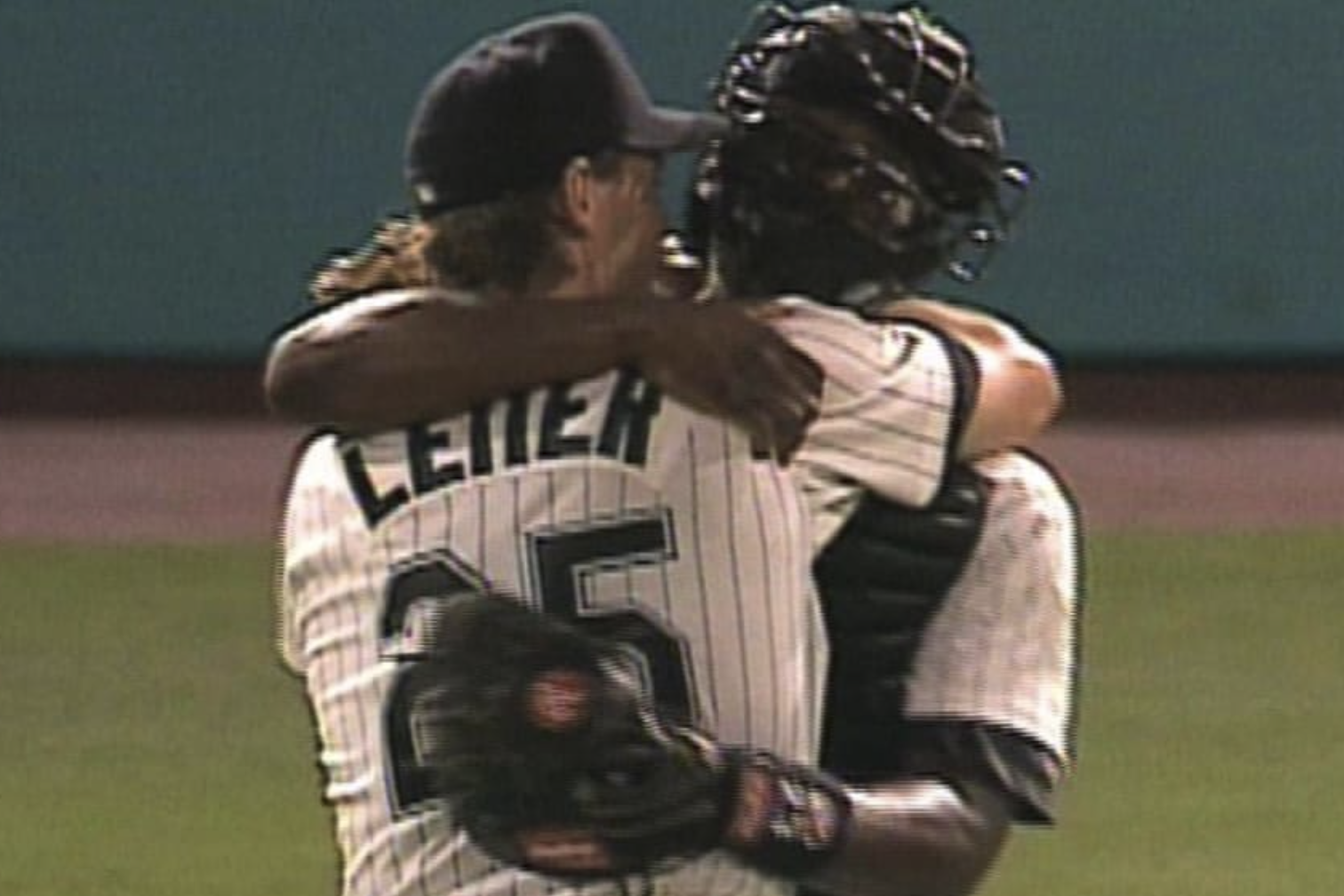 In nearly three and a half decades as a franchise, the Florida/Miami Marlins have had six different pitchers throw a no-hitter. The first came on this day 30 years ago. Left-hander Al Leiter needed 103 pitches to accomplish the feat at Joe Robbie Stadium on May 11, 1996. Leiter allowed just three baserunners in the Florida Marlins’ 11-0 win over the Colorado Rockies. In the first, Leiter needed just 10 pitches to work a 1-2-3 inning. The next time he took the mound, he had a big lead. After Jeff Conine drew a bases-loaded walk in the bottom of the first to get the scoring started, Terry Pendleton followed with a two-run single. Two pitches later, Charles Johnson’s three-run home run staked Florida to a 6-0 lead. The biggest threat for Colorado came in the top of the second. Leiter walked Andrés Galarraga to open the inning before hitting Ellis Burks. Leiter, however, bounced back by striking out Vinny Castilla and getting Trenidad Hubbard to hit into an inning-ending double play. Following a two-run double by Conine in the bottom of the second that pushed the lead to 8-0, the double-play ball was again Leiter’s friend in the third. Leiter walked Jayhawk Owens to open the frame, but got opposing pitcher John Habyan to bunt into a double play two pitches later. The Rockies never had another baserunner. The rest of the Florida offense came courtesy of Pendleton. The third baseman extended the lead to 9-0 with a solo home run to lead off the bottom of the fifth before plating two with a double in the sixth. As the game went on, Leiter appeared to be getting better. He struck out Galarraga and Dante Bichette on back-to-back 3-2 pitches in the seventh. As the contest went to the ninth, he was three outs away. Leiter got Owens and Quinton McCracken to each ground out on the first pitch of their at-bats in the ninth. After the count went full on Eric Young, Leiter got the speedy Colorado second baseman to swing through a fastball to complete the no-no and make Marlins history. While the Rockies were held without a hit, the Marlins had 11. Pendleton and Greg Colbrunn each had three knocks. Pendleton finished with five RBIs while Colbrunn scored three times. Conine and Johnson finished with three RBIs apiece. The night, however, would belong to Leiter. In what would be his first All-Star season, Leiter threw the first no-hitter in club history. It came on this day three decades ago. View the full article
 -
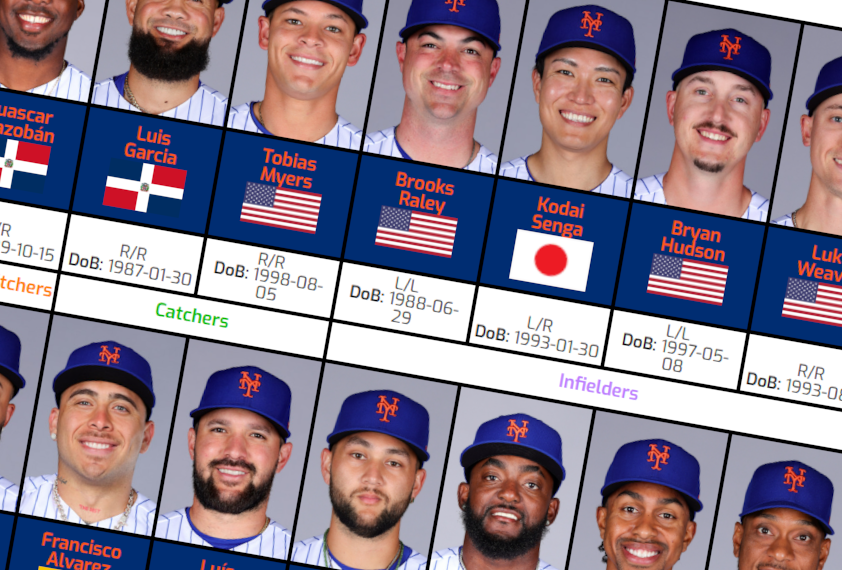 While the Mets have upgraded their standard level of offensive play from consistently disastrous to weak and insubstantial, their league-worst 15-25 record is well reflected by Mets Roster Central, who saw a database crash reflect recent updates as the Mets scrambled to restock their system for the summer ahead. Transactions, 5/5/2026 COMING Signed away from SEA to Minor-League Contract, Not Yet Assigned Relief Pitchers Guillo Zuñiga R/R DoB: 36078 High Level: MLB (2024) Guillo (short for Guillermo) Zuñiga last saw MLB action as an Angel in 2024. A native of Colombia who recently appeared for his country of origin in the World Baseball Classic (his second WBC), G-Money spent the spring with the Mariners organization, released at the end of training camp. Zu Station originally signed with the Braves back in 2016, but his contract was one of over a dozen voided by the league a year later in the aftermath of a broad scandal and investigation involving player bundling, under-the-table benefits and predraft deals that would lead to a lifetime ban for former Braves GM John Coppolella. A pitcher on the Mets after originally being signed by the Braves, only to see that contract voided due to rules violations? We're not going to say that Guillo Zuñiga is the second coming of Tom Seaver, but ... yes, actually, that's exactly what we're saying. Transactions, 5/6/2026 COMING Signed as International Amateur Free Agent out of Venezuela, Not Yet Assigned Relief Pitchers Josbel Torrez R/R DoB: 39177 High Level: Academy (2026) Josbel Torrez, like most foreign amateur teenagers not signed in the mid-season or mid-winter periods, comes with little known about him, but an Instagram image of him signing his contract comes with the caption "Lo que repites cada dia, define tu resultado" — That which you repeat every day defines your result. But here at Mets Roster Central, we have our doubts. That which we repeat daily sometimes just defines what part of our back is going to hurt a lot tomorrow. blah Zvon. Transactions, 5/8/2026 GOING Signed Away to Minor League Contract by DET Relief Pitchers Carl Edwards, Jr. R/R DoB: 1991-09-03 High Level: MLB (2026) We can't say enough about Carl Edwards, Jr., but we've largely said it already. It's a mistake to keep shuffling off bullpen backenders to keep arms fresh. Yes, the talent in that role often fungible from player to player, but it keeps players from finding their groove and/or establishing themselves as capable of doing more than the role at hand, and it keep the bonds of teams from establishing themselves. All that said, we wish Carl the best, and knowing that guys who get DFA'd tend to get DFA'd, we hope to see him in a Mets uni again. Transactions, 5/9/2026 COMING Signed Away from Quintana Roo (Mexican Summer League) to Minor-League Contract, Assigned to Syracuse Signed away from Monclava (Mexican Summer League) to Minor-League Contract, Assigned to Brooklyn Signed away from WAS to Minor-League Contract, Assigned to Syracuse Signed as International Amateur Free Agent out of The Dominican Republic Starting Pitchers Relief Pitchers Infielder Xzavion Curry Brady Miller Cionel Pérez Jesus Minaya R/R DoB: 36003 High Level: MLB (2025) R/R DoB: 36452 High Level: American Association (2025) R/R DoB: 35176 High Level: MLB (2026) L/R DoB: 39870 High Level: Academy (2026) Clearly, somebody has come home from scouting the Mexican league and brought with them two US exiles. Xzavion Curry has beaucoups MLB experience as a starter and reliever, and more importantly, has a name that is worth 36 raw points in Scrabble, before factoring in any multiplier squares. We haven't checked to see if that would be a Mets record, but we're just going to go ahead and assume that's a Mets record. One thinks of Zebulon Vermillion, who got released back on April 1. Even had Zebulon and his paltry 33 Scrabble points reached Citi Field, he would now stand to be eclipsed by Xzavion Curry. The X-Man pitched in multiple roles for Cleveland's staff, and so could find himself being a Tobias Myers-type — possibly an opener — should he wend his way to Citi Field, and probably don a really high number. Brady Miller has only appeared in unaffiliated ball since graduating with a finance degree from Western Michigan U., so he will be deployed to Brooklyn. Cionel Perez has appeared in nine different big league seasons. His bad starts the last two seasons has set him adrift, but he represents the kind of redeemable-if-not-recently-effective talent floating around that probably makes the Mets think the Carl Edwardses are replaceable. Sometimes, they are right, but the process is an ugly game. Cionel's perfectly symmetrical well-scaped beard and un-marred face make him look like a videogame NPC. Look at his thumbnail pic and tell us we are wrong. Transactions, 5/10/2026 NEUTRAL COMING Ended Rehab Assignment, Activated from 15-Day Injured List, Demoted to Syracuse Cleared Waivers and Assigned to Syracuse Relief Pitchers Infielders Joey Gerber Eric Wagaman R/R DoB: 1997-05-03 High Level: MLB (2026) R/R DoB: 35656 High Level: MLB (2026) Joey Gerber is someone we fully expect to see again, providing no disasters befall him. Extending his Injured List status out with a long rehab assignment was clearly the Mets just playing roster games, trying to keep him in their back pocket if needed. Eric Wagaman is more likely someone we can imagine joining the list of ghost Mets, having been activated on the big league roster for a single game last week. Now being off the 40, and expecting perhaps the return to health of other Met infielders and the expected activation of top prospect A.J. Ewing, one would expect several dominoes would have to fall before we see a return of Eric, but William Butler Years will tell you — things do fall apart. Transactions, 5/6/2026 GOING Released Relief Pitchers Kevin Gowdy R/R DoB: 35750 High Level: AAA (2025) The Mets are (or more correctly, were) the fifth MLB organization for Kevin Gowdy. When he joined the team toward the end of spring training, we had guessed he might be a relation to Sports Broadcasting Hall-of-Famer Curt Gowdy, Jr., longtime executive vice president for SNY, as well as the even-more-famous Curt Gowdy, Sr., — and maybe he got a courtesy look from the Mets — but we have found no evidence to back that up. Kevin is just a journeyman reliever, and now he journeys on, his second-round-draft-pick (Phillies) status from back in 2016 is well in the past, but maybe somebody pulls their old 2016 scouting reports and decides to give him a tumble. Stranger things have come to pass in this game. And heck, maybe he is one of those Gowdys after all. Your 2026 New York Mets Starting Pitchers Clay Holmes Nolan McLean Freddy Peralta David Peterson Christian Scott R/R DoB: 1993-03-27 R/R DoB: 2001-07-24 R/R DoB: 2996-06-04 L/L DoB: 1995-09-03 R/R DoB: 1999-06-15 Relief Pitchers Huascar Brazobán Craig Kimbrel Sean Manaea Tobias Myers Brooks Raley Austin Warren Luke Weaver R/R DoB: 1989-10-15 R/R DoB: 32291 R/L DoB: 1992-02-01 R/R DoB: 1998-08-05 L/L DoB: 1988-06-29 R/R DoB: 1996-02-05 R/R DoB: 1993-08-21 Relief Pitchers Catchers Infielders Devin Williams Francisco Alvarez Luís Torrens Bo Bichette Vidal Brujan Andy Ibáñez MJ Melendez R/R DoB: 1994-09-21 R/R DoB: 2001-11-01 R/R DoB: 1996-05-02 R/R DoB: 1998-03-05 S/R DoB: 1998-02-09 R/R DoB: 1993-04-03 L/R DoB: 1993-11-29 Infielders Outfielders Marcus Semien Mark Vientos Brett Baty Carson Benge Austin Slater Juan Soto Tyrone Taylor R/R DoB: 1990-09-17 R/R DoB: 1993-12-11 L/R DoB: 1999-11-13 L/R DoB: 2003-01-20 R/R DoB: 33951 L/L DoB: 1998-10-25 R/R DoB: 34356 Also on 40-Player Roster Starting Pitchers Relief Pitchers Tylor Megill Kodai Senga Jonah Tong Alex Carrillo Reed Garrett Joey Gerber Justin Hagenman R/R DoB: 1995-07-28 L/R DoB: 1993-01-30 R/R DoB: 2003-06-19 R/R DoB: 1997-06-06 R/R DoB: 1993-01-02 R/R DoB: 1997-05-03 R/R DoB: 1996-10-07 On 60-Day Injured List with torn right UCL. On 15-Day Injured List with Lumbar Spine Inflammation With Syracuse With Syracuse On 60-Day Injured List — right UCL surgery and nerve relocation surgery. With St. Lucie on Rehab Assignment On 60 Day Injured List with fractured rib. Relief Pitchers Catchers Infielders A.J. Minter Dedniel Núñez Jonathan Pintaro Dylan Ross Hayden Senger Francisco Lindor Ronny Mauricio L/L DoB: 1993-09-02 R/R DoB: 1996-06-05 R/R DoB: 1997-11-07 R/R DoB: 2000-09-01 R/R DoB: 1997-04-03 S/R DoB: 1993-11-14 S/R DoB: 2001-04-04 With Syracuse on Rehab Assignment On 60-Day Injured List — right UCL surgery. With Syracuse With Syracuse With Syracuse On 10-Day Injured List with Strained Left Calf On 10-Day Injured List with fractured right thumb. Infielders Outfielders Jorge Polanco Nick Morabito Luis Robert, Jr. Jared Young S/R DoB: 1999-11-13 R/R DoB: 2003-05-07 R/R DoB: 1997-08-03 L/R DoB: 1995-07-09 On 10-Day Injured List with right wrist contusion. With Syracuse On 10-Day Injured List with Lumbar Spine Disc Hernitaion On 10-Day Injured List with torn left meniscus. Your Mets Coaching Staff Manager Bench Coach Pitching Coach Hitting Coordinator Third Base Coach First Base Coach Bullpen Coach Ass't Pitching Coach Carlos Mendoza Kai Correa Justin Willard Jeff Albert Tim Leiper Gilbert Gomez José Rosado Dan McKinney DoB: 1979-11-27 DoB: 1989-07-14 DoB: 1990-09-09 DoB: 1992-08-16 DoB: 1996-07-19 DoB: 1992-03-08 DoB: 1974-11-09 DoB: 1989-06-06 Hitting Coach Strategy Coach Catching Coach Coaching Assistant Bat'g Prac. Pitcher Equipment Manager Bullpen Catchers Bullpen Catchers Troy Snitker Danny Barnes J.P. Arencibia Rafael Fernandez Kevin Mahoney Kevin Kierst Eric Langill Dave Racaniello DoB: 1988-12-05 DoB: 1989-10021 DoB: 1986-01-05 DoB: 1988-08-03 DoB: 1987-05-11 DoB: 1964-07-09 DoB: 1979-04-09 DoB: 1978-06-03 Your Mets Training Staff Director of Player Health Head Athletic Trainer Assistant Athletic Trainer Reconditioning Coordinator Reconditioning Therapist Head Performance Coach Assistant Performance Coach Performance Coordinator Soft Tissue Specialist Brian Chicklo Joseph Golia Bryan Baca Sean Bardanett Josh Bickel Dustin Clarke Tanner Miracle Jeremy Chiang Hiroto Kawamura DoB: 1972-07-17 DoB: 1978-??-?? DoB: Circa 1980 DoB: 1988-06-23 DoB: 1996-??-?? DoB: 1987-??-?? DoB: 1991-??-?? DoB: ????-??-?? DoB: 22846 View the full article
 -
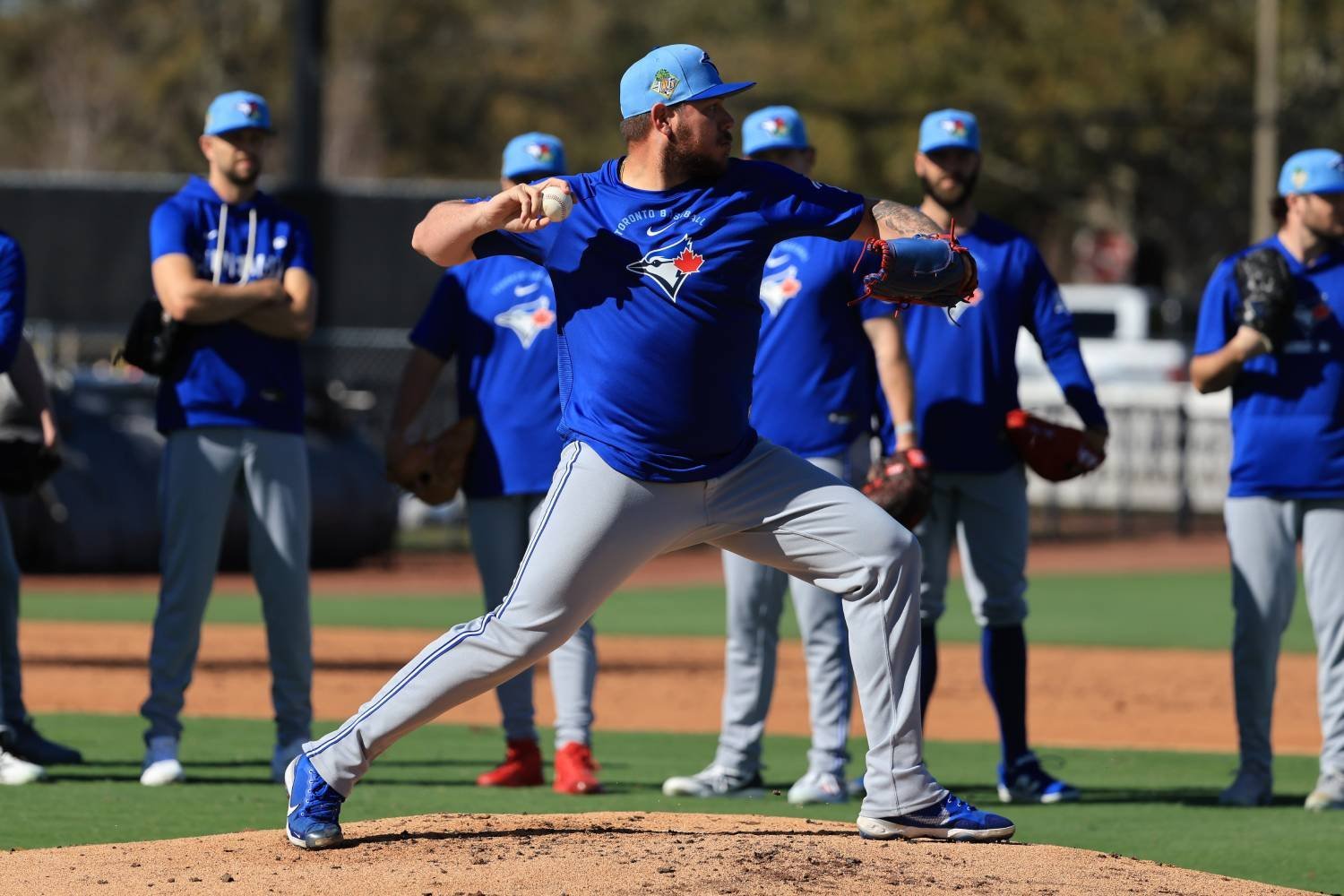 The Toronto Blue Jays are ready to give Yariel Rodriguez another shot. The right-handed reliever will be called up from Triple-A Buffalo by the Blue Jays on Monday, according to MLB insider Francys Romero. The Jays have an open spot on their 40-man roster, so only a move involving the 26-man roster will be necessary. Rodriguez signed a five-year, $24 million contract with the Jays before the 2024 season, but has had issues with walks, causing him not to stick on the major-league roster. Rodriguez made 21 starts in 2024 with a 4.34 FIP (4.47 ERA), then 66 appearances in 2025, all but one out of the bullpen, posting a 4.40 FIP (3.08 ERA). While Rodriguez has had strikeout rates of 23.1% and 22.1% the last two years (22.4% is the MLB average), respectively, his walk rates have been below average at 10.9% and 11.9%. The MLB average is 8.3%. In 11 appearances, including one start, this year at Buffalo, Rodriguez has walked nine and struck out 25 in 13⅔ innings, giving up four runs for a 2.63 ERA. View the full article
 -
 El Paso walked off Tacoma 7-6 in 10 innings as Nick Solak went 4-for-5 with three runs scored. San Antonio rallied past Midland 3-2 on a Lucas Giolito quality start and a walk-off single by Carson Tucker. Fort Wayne fell 9-7 to Beloit in extras despite six strong innings from Jamie Hitt. Lake Elsinore dropped a 5-4 decision to Inland Empire after Carlos Medina worked four scoreless and Ryan Wideman went 4-for-4 with five stolen bases. Padres Minor-League Transactions No roster moves Mason McCoy, Chihuahuas Rally For Win In 10th Mason McCoy's opposite-field line-drive single to right scored Nick Solak from third base with no outs in the bottom of the 10th inning as the Triple-A El Paso Chihuahuas overcame a three-run deficit to beat the Tacoma Rainiers 7-6. The walk-off win was the second of the series and fourth of the season for the Chihuahuas (19-20), who won the series 4-2. Solak, who went 4-for-5, led off the 10th by bouncing an RBI single up the middle past a diving shortstop to score zombie runner Nick Schnell from second. Solak went to third on Clay Dungan's bunt single and a throwing error by the pitcher, then scored when McCoy hit the first pitch for the game-winner. Solak also scored three times, while Dungan went 3-for-4 with a run scored and an RBI and Samad Taylor had a pair of hits and has reached base seven times in the last two games. Pablo Reyes had a first-inning single to extend his on-base streak to all 27 games he has played this year. Chihuahuas right-handed starter Evan Fitterer bounced back from a subpar last outing to allow two runs 4⅔ innings, yielding seven hits and two runs with three strikeouts. Right-hander Logan Gillaspie pitched a perfect 2⅓ innings of relief, striking out two. Tacoma took a 4-1 lead with three runs in the top of the sixth, but the Chihuahuas got two back in the bottom half on back-to-back one-out doubles by Solak and Dungan and Marcos Castanon's two-out single to make it 4-3. El Paso tied it in the bottom of the eighth as Solak, Dungan and Jose Miranda getting one-out singles, with Miranda's plating Solak. In the 10th, Tacoma scored once in the top, before the Chihuahuas rallied for the win in the bottom half. El Paso's Jase Bowen had a first-inning triple, his fourth, which is tied for the Pacific Coast League lead. EP_0510.mp4 Player AB R H RBI BB K Jase Bowen 5 1 1 0 0 1 Samad Taylor 4 0 2 0 1 1 Pablo Reyes 3 0 1 2 1 0 Nick Schnell 5 1 0 0 0 2 Nick Solak 5 3 4 1 0 0 Clay Dungan 4 1 3 1 1 0 Jose Miranda 4 0 1 1 0 1 Mason McCoy 1 0 1 1 0 0 Marcos Castañon 4 0 1 1 0 0 Colton Vincent 4 1 1 0 0 1 Player IP H R ER BB K HR Evan Fitterer 4 2/3 7 2 2 2 3 1 Triston McKenzie 1/3 0 0 0 1 1 0 David Morgan 2/3 4 3 3 0 0 0 Logan Gillaspie 2 1/3 0 0 0 0 2 0 Alek Jacob (W) 2 2 1 0 1 1 0 Lucas Giolito Shines, Missions Walk It Off For First Series Win Kai Murphy and Carson Tucker had back-to-back RBI singles with one out in the bottom of the ninth as the Double-A San Antonio Missions pulled out a 3-2 walk-off victory over the Midland RockHounds. With their second straight walk-off, the Missions (11-22) won their first series of the season 4-2. It is also their first series victory since July 8-13 last season against Wichita. San Diego Padres right-handed starter Lucas Giolito, in what is likely to be his final tuneup before joining the major-league rotation, allowed one run on three hits with no walks and three strikeouts in six innings. He threw 74 pitches, 52 for strikes. In four starts since signing a one-year contract April 22, Giolito has thrown 17 innings, allowing 11 runs (nine earned) on 18 hits with six walks and 15 strikeouts. He has a clause in his contract that requires him to be added to the MLB roster by Saturday. Midland had grabbed a 2-1 lead in the top of the ninth before Braedon Karpathios led off the bottom with a walk, was bunted to second, pinch-hitter Leandro Cedeno intentionally walked and replaced by pinch-runner Luis Verdugo. Murphy lined the tying single to right, easily scoring Karpathios, and Tucker won it by going the other way with a single down to right, driving in Verdugo from second. After Giolito, right-hander Victor Lizarraga went the final three innings, giving up a run on three hits and a pair of walks with one strikeout. Ethan Salas had an RBI single in the third inning for the Missions. SA_0510.mp4 Player AB R H RBI BB K Carson Tucker 5 0 1 1 0 3 Ethan Salas 3 0 1 1 1 1 Tirso Ornelas 3 0 1 0 1 0 Romeo Sanabria 4 0 1 0 0 0 Ryan Jackson 4 0 1 0 0 1 Braedon Karpathios 2 1 2 0 2 0 Francisco Acuna 3 0 0 0 0 2 Albert Fabian 3 1 2 0 0 0 Kai Roberts 0 0 0 0 0 0 Leandro Cedeño 0 0 0 0 1 0 Luis Verdugo 0 1 0 0 0 0 Kai Murphy 4 0 2 1 0 1 Player IP H R ER BB K HR Lucas Giolito 6 3 1 1 0 3 0 Victor Lizarraga (W) 3 3 1 1 2 1 0 TinCaps Squander Lead, Fall To Sky Carp In Extras The High-A Fort Wayne TinCaps gave up three runs in the top of the ninth and three more in the 10th to drop a 9-7 decision to the Beloit SkyCarp. The TinCaps (16-17), who lost for the first time in extra innings this year, won four of the six games in the series. The TinCaps scored once in the bottom of the 10th on Alex McCoy's sac fly, but couldn't get anyone else on base. Fort Wayne had a 6-2 lead after the sixth and 6-3 after the top of the seventh before the SkyCarp tied it up with three runs in the top of the ninth. Left-hander Jamie Hitt, the Padres' eighth-round pick in 2025 who is making his pro debut this year, turned in the TinCaps' first quality start of the season, allowing two runs on five hits and two walks with five strikeouts in a season-high six innings. The outing is the longest by a TinCaps pitcher this year. The TinCaps' bullpen had been instrumental in Fort Wayne winning nine of its last 10. Over that stretch, the relief corps led the entire minors in wins, saves, ERA and opponent batting average, but faltered in the ninth and 10th innings. Carlos E. Rodriguez had his first three-hit game in 25 games with the TinCaps, driving in two and scoring once. FW_0510.mp4 Player AB R H RBI BB K Kasen Wells 4 1 1 0 1 1 Rosman Verdugo 4 3 1 1 1 0 Carlos Rodriguez 4 1 3 2 1 1 Alex McCoy 3 0 0 1 0 0 Jake Cunningham 5 0 1 0 0 3 Jack Costello 4 0 0 0 1 1 Zach Evans 4 1 1 0 0 0 Jonathan Vastine 4 0 0 0 0 1 Oswaldo Linares 4 1 2 1 0 1 Player IP H R ER BB K HR Jamie Hitt 6 5 2 2 2 5 0 Igor Gil 1 1 1 1 1 2 0 Kleiber Olmedo (H) 1 3 3 3 0 0 0 C.J. Widger (BS) 1 1 0 0 1 3 0 Isaiah Lowe (L) 1 2 3 2 0 1 1 Ryan Wideman Has 4 Hits, 5 Steals, But Storm Falter Late Ryan Wideman went 4-for-4 and stole a career-best five bases, but the Low-A Lake Elsinore Storm let a late lead slip away, losing in walk-off fashion to the Inland Empire 66ers 5-4. The Storm (19-14) went 2-4 in the series. Wideman, Padres Mission's No. 9 prospect, has 27 steals in 33 attempts in the 32 games he has played. He had a four-steal game April 23 vs. Visalia and has eight games with multiple stolen bases. Nine of his steals came in this series. Lake Elsinore scored three times in the top of the eighth to take a 4-2 lead. But the 66ers tied it in the bottom of the eighth and won it in the ninth. Storm right-handed starter Carlos Medina matched his season high with four innings, not allowing a run while giving up three hits and a walk with five strikeouts, one shy of his season high. Luke Cantwell had a pair of hits and scored once for the Storm. Wideman got the Storm on the board in the fourth when he singled, then stole second and third. After Kerrington Cross was hit by a pitch and stole second, Jorge Quintana had an RBI groundout to bring in Wideman and put the Storm up 1-0. Inland Empire went up 2-1 in the bottom of the seventh, but the Storm regained the lead in the eighth. Cantwell had a leadoff double and went to third on a Wideman single. Wideman stole his fifth base of the day and Truitt Madonna singled home Cantwell. Wideman, now on third, scored on Cross' squeeze bunt and, with two outs, Jose Verdugo singled home Madonna from second. LE_0510.mp4 Player AB R H RBI BB K Qrey Lott 3 0 0 0 0 1 George Bilecki 2 0 0 0 0 0 Luke Cantwell 5 1 2 0 0 2 Ryan Wideman 4 2 4 0 0 0 Truitt Madonna 4 1 1 1 0 2 Kerrington Cross 2 0 0 1 0 0 Jorge Quintana 4 0 1 1 0 1 Jose Verdugo 3 0 1 1 0 0 Yoiber Ocopio 4 0 1 0 0 1 Conner Westenburg 3 0 1 0 1 1 Player IP H R ER BB K HR Carlos Medina 4 3 0 0 1 5 0 Cal Riehl 1 1/3 0 0 0 2 3 0 Carson Swilling (BS) 1 2/3 1 2 2 2 2 0 Joseph Herrera (L) 1 1/3 2 3 3 2 0 1 Top-20 Prospect Performance Ethan Salas: 1-for-3, RBI, BB, K Kash Mayfield: DNP Kruz Schoolcraft: DNP Bradgley Rodriguez: DNP Miguel Mendez: DNP Humberto Cruz: DNP Jagger Haynes: DNP Ty Harvey: DNP Ryan Wideman: 4-for-4, 2B, 2 R, 5 SB Kale Fountain: DNP Romeo Sanabria: 1-for-4 Jorge Quintana: 1-for-4, RBI, K Lamar King Jr.: DNP Garrett Hawkins: DNP Tirso Ornelas: 1-for-3, BB Kavares Tears: DNP Truitt Madonna: 1-for-4, R, RBI, 2 K Deivid Coronil: DNP Eric Yost: DNP Francis Pena: DNP View the full article
 -
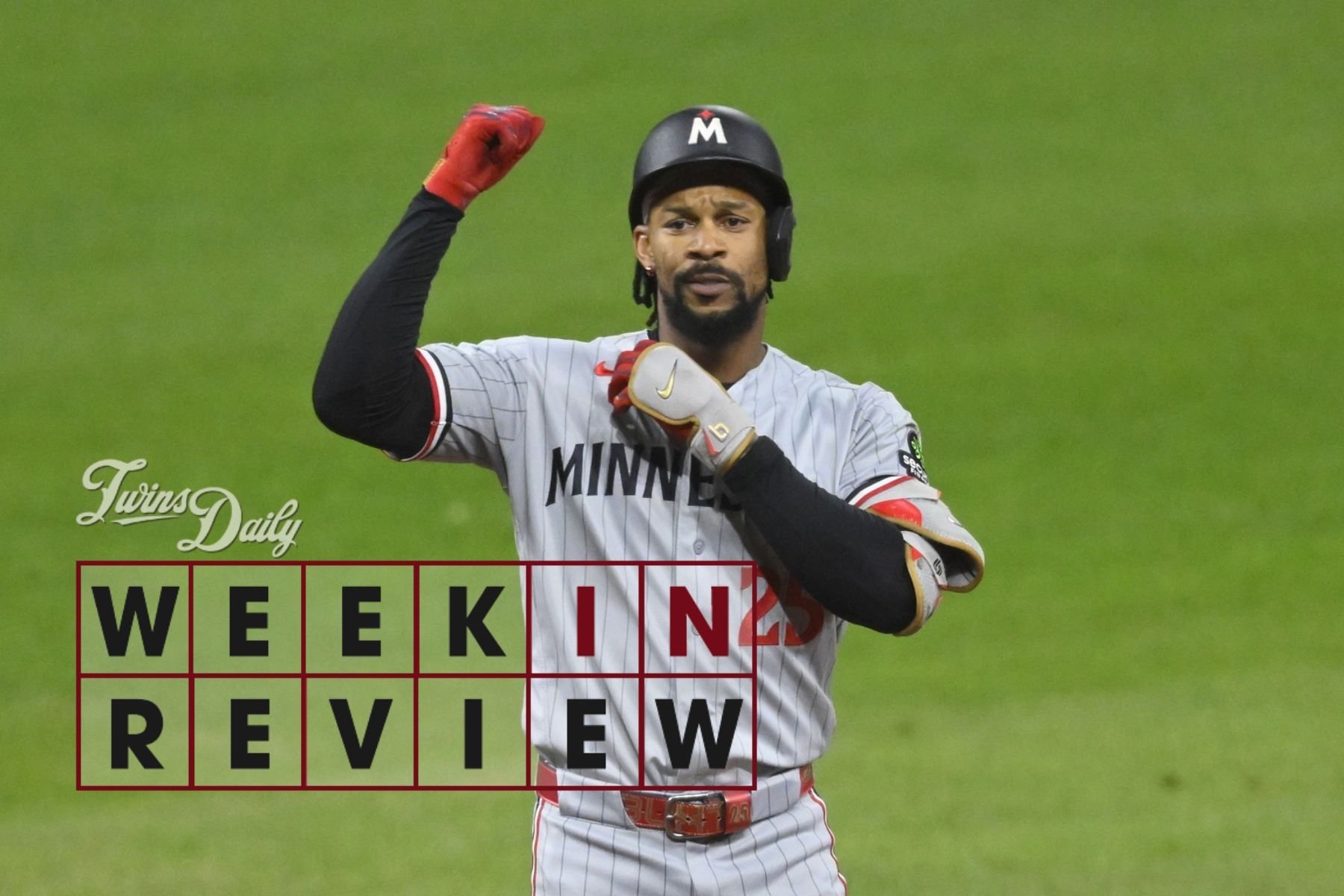 The Weekly Nutshell: It's becoming a weekly trend for the Minnesota Twins: they start and finish strong, with a whole lot of ugliness in between. This time around, they kicked off the week with an 11-3 win over Washington before dropping three in a row and then rebounding over the weekend with rare back-to-back one-run wins in Cleveland. The Twins are in last place but are hanging around in a closely grouped AL Central, currently led by Cleveland with a .500 record. Though they're far from out of the running, it's tough to feel much belief in this team's outlook as the bullpen continues to bleed and the hits keep coming from an injury standpoint. But Minnesota's star center fielder is doing all he can to single-handedly keep things interesting. Weekly Snapshot: Mon, 5/4 through Sun, 5/10 *** Record Last Week: 3-3 (Overall: 18-23) Run Differential Last Week: -7 (Overall: -12) Standing: 5th Place in AL Central (2.5 GB) Latest Game Results Game 36 | MIN 11, WAS 3: Twins Beat Up on Brutal Nats Pitching Staff in Rout Lee: 3-5, 3 RBI Game 37 | WAS 15, MIN 2: Ober Struggles, Bullpen Gets Nuked in Late Innings Topa, García: 1.1 IP, 8 ER, 3 HR allowed Game 38 | WAS 7, MIN 5: Mental Mistakes, Missed Chances Cost Twins Series Woods Richardson: 4.1 IP, 5 ER, 4 H, 2 BB, 2 K Game 39 | CLE 6, MIN 4: Four-Run First Carries Guardians to Win in Opener Buxton: 3-5, HR, 2 RBI Game 40 | MIN 2, CLE 1 (11): Buxton Provides All the Offense Epic Pitching Duel Buxton: 2-5, HR, 2 RBI Game 41 | MIN 5, CLE 4: Twins Scrape Out Another Rare One-Run Win at Cleveland Clemens: 2-4, 2 R NEWS & NOTES The week opened with some much-needed good news: Joe Ryan's MRI showed no structural damage in his elbow, eliciting a collective sigh of relief after his early exit last week set off major alarm bells. Not only was Ryan able to avoid a trip to the injured list, but he didn't even miss a start, returning to the mound for his scheduled turn in Cleveland on Saturday. It went very well. More on that below. But it wasn't all good news on the pitching health front. Mick Abel, who's trying to work his way back from elbow inflammation, experienced a setback and received a cortisone shot in his triceps. He's still probably multiple weeks away at least. This comes on the heels of David Festa being shut down on his own rehab journey due to renewed soreness in his shoulder, leaving his season somewhat in limbo. And on Saturday, the Twins placed Taj Bradley — who's been easily the biggest bright spot on the pitching staff — on the injured list with right pec muscle inflammation. Travis Adams was recalled to take his spot on the roster. Hopefully this is a minor issue for Bradley but it unfortunately should be noted that the same injury cost him two months in 2024. Word is that imaging came back clean, but Bradley was headed to see Dr. Keith Meister (famed pitching surgeon) for a second opinion, which suggests some level of concern. We'll see what comes next. While Adams replaced him immediately on the roster, it looks like it'll be Kendry Rojas — recalled on Sunday with Kody Funderburk heading down — counted on to fill the bulk innings lost from Bradley, who's been a workhorse for this staff. Rojas threw 3 ⅓ innings in relief of opener Andrew Morris in the series finale against Cleveland. Finally, Yoendrys Gómez was acquired from Tampa Bay for cash considerations. The Twins designated Christian Roa for assignment to make room on the 40-man and optioned John Klein to make room on the active roster. HIGHLIGHTS This was a fairly solid week for the offense, all in all, with some of the lineup's top performers contributing and building on their successful starts to the season. As usual, Byron Buxton was the driving force. At times it's felt like he IS the Twins offense, and that became literal on Saturday night when Buxton's leadoff homer in the first and RBI double in the 11th represented the entirety of Minnesota's production in a 2-1 victory. The home run was Buxton's third of the week, pushing his season total to 13. Entering play on Sunday he was tied for fourth in the majors behind Aaron Judge, Munetaka Murakami and Kyle Schwarber. Ryan Jeffers went 6-for-17 with a home run, four doubles and four runs scored. Austin Martin was 7-for-20 with a double and a stolen base. Buxton, Jeffers and Martin rank first, second and fourth among Twins position players in fWAR this season, respectively. Brooks Lee has risen to fifth on that list, ascending steadily in recent weeks after pulling clear of a season-opening lull. He tallied four multi-hit games and six RBIs, and on Saturday played perhaps his best defensive game of the season at shortstop. In extra innings, Lee made a couple of stellar, high-stakes plays, including a game-ending putout on a diving play to his left in the 11th, following an almost miraculous stab of a hot liner with the infield in. Luke Keaschall is also rising on the WAR leaderboard following his own slow start. He had four hits including a double, but also drew eight walks with no strikeouts. In his past 14 games, Keaschall is 13-for-43 (.317) with five doubles and three stolen bases, lifting his OPS by over 100 points. On the pitching side, Ryan looked to be in top form on Saturday, which was a huge relief. There were no signs of discomfort or hindrance from the elbow that forced him out of his previous start, and in fact Ryan's velocity was actually up a tick over his season norm. He held the Guardians to one over six innings and finished with 107 pitches, his highest total in an outing since June of 2023. Never a dull moment when it comes to the Joe Ryan Experience. LOWLIGHTS Another horrendous week for the bullpen. Wednesday's game was the clear low point, with four relievers combining to allow 10 earned runs in three innings after Bailey Ober's exit. That included six charged to Justin Topa, who now has a 7.88 ERA and has been one of the most-used relievers in baseball despite his lack of capability. Luis García followed Topa and gave up home runs to two of the four batters he faced; García has now surrendered eight earned runs in 4 ⅔ innings since being signed to a minor-league contract after the Mets jettisoned him. Anthony Banda continues to look erratic and unreliable. He issued two walks and hit two batters in his four appearances. His ERA sits at 7.64 on the season, making him one of four Twins pitchers seeing regular use despite an ERA over six. Joining Banda, Topa and García in that category is Simeon Woods Richardson, who is getting knocked around every fifth day with no end in sight. The Nationals jumped on him for five earned runs in 4 ⅓ innings on Thursday, marking the third straight start in which he's been unable to get through the fifth. The Twins are 1-7 in games started by Woods Richardson, whose 6.92 ERA is tied for the worst in baseball. There haven't been many redeeming aspects in the right-hander's performance so far. He has the lowest strikeout rate in the majors at 10.7%. Opponents are slashing .323/.390/.544 against him, and they have a .440 wOBA against the splitter that's supposed to be a neutralizing weapon. Yet the Twins have little choice but to keep trotting him out there as a member of their rotation. Injuries to Festa, Abel and now Bradley have decimated Minnesota's starting depth, so even if they wanted to make a move with Woods Richardson — tricky in and of itself since he's out of options and doesn't seem to offer much potential as a reliever — their hands are essentially tied. Honestly, I can live with it. In an increasingly lost season, letting a 25-year-old starter work through his struggles is acceptable. He's not giving the Twins much chance to win when he's on the mound but that doesn't really matter a whole lot. In the bigger picture there is still a purpose in running him out there. The bullpen situation is far more difficult to tolerate. Klein also wasn't pitching well either, allowing two earned runs over 2 ⅓ innings during his brief stint with the Twins, but at least he's a semi-legitimate prospect who could possibly be a factor for the bullpen going forward. Instead, he's back in Triple-A, while the Twins trot out veterans like Topa, García and now Gómez with no current or future value. This isn't a rebuilding bullpen, it's just a bad bullpen offering no compelling reason to tune in. Finally, we've got to talk about Royce Lewis. It's getting late early for the Twins third baseman. He sat consecutive games on Wednesday and Thursday as Derek Shelton sought to give Lewis — hitting .133 with a 15-to-1 K/BB ratio since coming off the injured list — a bit of a soft reset. The 26-year-old now routinely finds himself batting ninth in the order, with an OPS that has dropped well below .600. Despite efforts to reduce the pressure and get him right, Lewis just can't find his way out of a funk that essentially extends back to the middle of the 2024 season. Where to go from here? In some sense you can make a similar argument as the one above with Woods Richardson — as a hopeful building block, let him take the lumps and try to figure things out — but this slump has lasted far longer and unlike with SWR, Lewis has a minor-league option remaining, as well as credible options in the minors to replace him. TRENDING STORYLINE If you're looking for a vibe lift, you might turn your attention to the super-slugging St. Paul Saints. Yes, there's cause for dismay on this roster too, with top prospects Walker Jenkins and Emmanuel Rodriguez both landing on the injured list last week, but there's still plenty of juice in this lineup. The Saints tweeted last week that they lead all of professional baseball in home runs, outpacing even the New York Yankees who were leading the majors. Among the power bats fueling St. Paul's prolific long-ball prowess are Gabriel Gonzalez, Kyler Fedko, Orlando Arcia and Kaelen Culpepper with eight home runs apiece. The latter two stand out as potential promotion candidates, with the capability to displace Lewis at third base. Understandably, the Twins might want to keep playing it slow with Culpepper, prioritizing his development as he continues acclimating to the Triple-A level. But Arcia, who is slashing .316.372/.579 through 34 games with the Saints, sure looks like a candidate for a relatively imminent call-up. LOOKING AHEAD Following a 2-3 road trip [thru sat], the Twins are coming back to Target Field for a pair of interleague showdowns. First they'll be welcoming the Marlins, with Woodbury native Max Meyer slated to make his Target Field debut on Wednesday. Over the weekend it'll be the cross-border rival Brewers, with plenty of Wisconsinite fans surely in tow. Should be some nice weather as long as it stays dry. TUESDAY, MAY 12: MARLINS @ TWINS — RHP Eury Perez v. RHP Bailey Ober WEDNESDAY, MAY 13: MARLINS @ TWINS — RHP Max Meyer v. RHP Simeon Woods Richardson THURSDAY, MAY 14: MARLINS @ TWINS — LHP Robby Snelling v. LHP Connor Prielipp FRIDAY, MAY 15: BREWERS @ TWINS — LHP Kyle Harrison v. RHP Joe Ryan SATURDAY, MAY 16: BREWERS @ TWINS — RHP Logan Henderson v. TBD SUNDAY, MAY 17: BREWERS @ TWINS — RHO Chad Patrick v. RHP Bailey Ober View the full article
 -
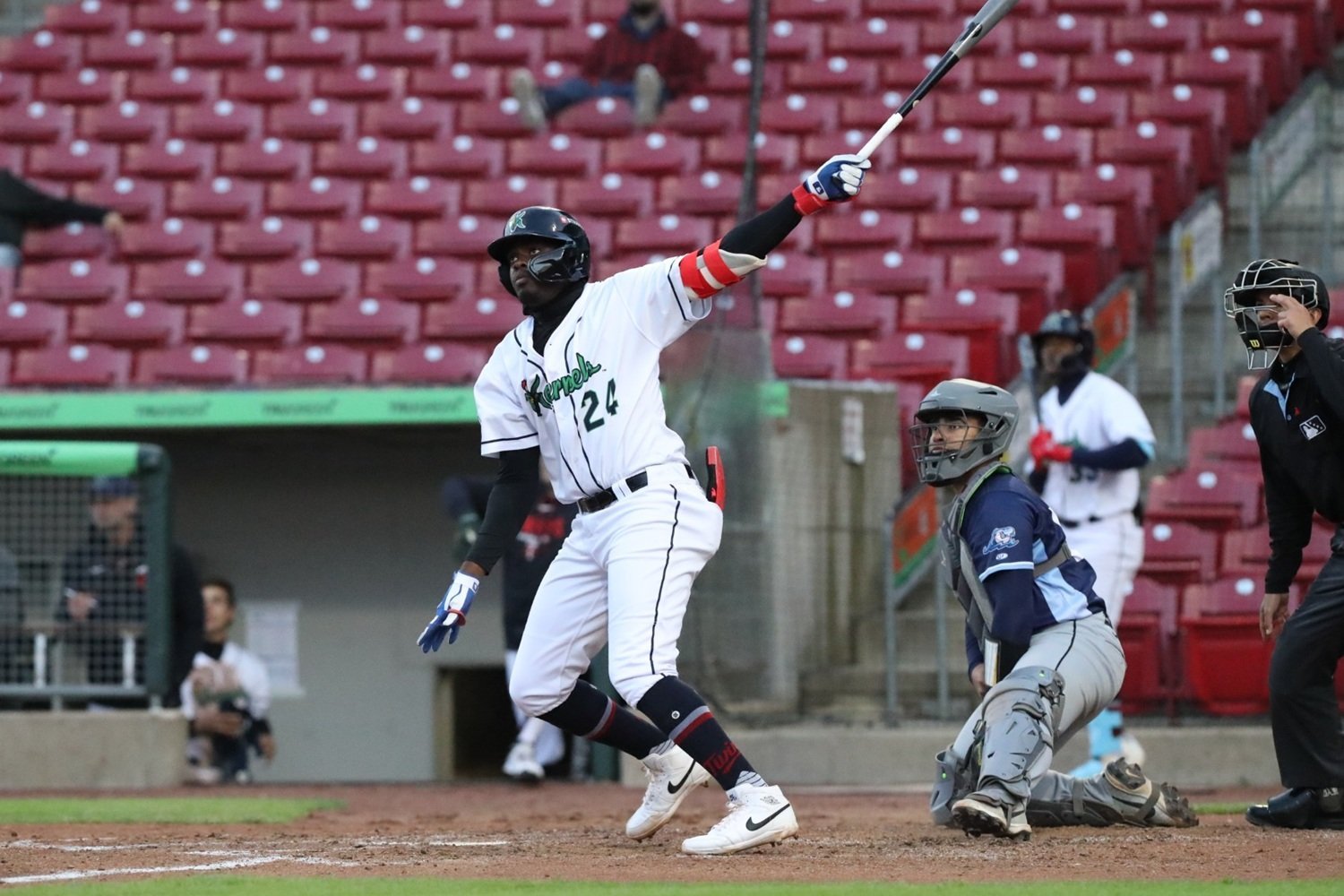 TRANSACTIONS LHP Kody Funderburk optioned to AAA St. Paul LHP Kendry Rojas recalled INF Quinn McDaniel signed* Another Indy Ball Star? On Sunday, news broke that the Twins plucked Quinn McDaniel from the Southern Maryland Blue Crabs. A 5th-round 2023 draftee, McDaniel spent two forgettable seasons in Eugene, Oregon, for the Giants' A+ ball squad before striking a path to indy ball. He obliterated the competition. McDaniel was hitting the days in the year, .365 in 14 games before the Twins handed him a minor-league contract. Saints Sentinel St. Paul 4, Las Vegas 2 Box Score Ryan Gallagher: 3 ⅔ IP, 2 H, 1 ER, 2 BB, 6 K HR: David Bañuelos (1) Multi-hit games: Kaelen Culpepper (2-for-5, 3 RBI), Ryan Kreidler (2-for-3, 2B, BB), Ben Ross (2-for-4, 2B, R) “This is bat country.” Perhaps, Mr. Thompson, but the bats of this series aren’t from the hallucinations of a drug-fueled madman: rather, the Saints’ wooden cylinders were as real and potent as the mescaline favored by Raoul Duke and his associate. And no one made a beast of himself (except for maybe Aaron Sabato on Tuesday.) Ryan Gallagher earned the start for the Saints. Though the high-flying ways of the PCL clipped the wings of others before him, the UC Santa Barbara product proved to possess a steeled mettle: he overcame a minor kerfuffle in the first to give his team 3 ⅔ effective frames, punching out six. He threw 74 pitches. St. Paul supported their hurler early, scoring three in the second inning. Every run came off a rare bases-clearing single from Kaelen Culpepper. Credit goes to Harry Genth for busting it from first with a speed and vigor unseen outside a Mint 400 Motorcycle race. Because no Saints game can exist without a blast these days, David Bañuelos shot one over the left-center wall in the ninth off former Twin Who Got Away, Nick Anderson. It’s a mystery what Brian Schales is up to these days. The Aviators are an affiliate of the Team Formerly Known as the Oakland Athletics. Their fifth-ranked prospect, Henry Bolte, singled once in four at-bats, a notable outcome given he entered the day 12 for his last 12 with nine extra-base-hits, five of them homers. Wind Surge Wisdom Unending rain canceled the Wichita game on Sunday. Kernels Nuggets Cedar Rapids 10, Quad Cities 5 Box Score Dasan Hill: 3 ⅔ IP, 2 H, 0 ER, 3 BB, 7 K HR: Rayne Doncon 2 (4, 5), Jay Thomason (4), Jaime Ferrer (9), Brandon Winokur (3) Multi-hit games: Brandon Winokur (2-for-4, HR, 2 R, 2 RBI, BB), Miguel Briceno (2-for-4, R), Rayne Doncon (2-for-5, 2 HR, 2 R, 4 RBI) The Kernels bashed their way to victory on Sunday. Rayne Doncon started matters with a second-inning blast, soon followed by Jay Thomason, whose homer was so powerful it emitted an “outfielder stopper” 15 feet away from the track. A confused fisherman will find the ball in the coming days. Jaime Ferrer’s three-run blast in the third gave Cedar Rapids a 5-0 advantage. The Kernels allowed the River Bandits to tie the game—how generous of them—before unleashing a second barrage upon their pitchers. Brandon Winokur joined the fun with his third homer of the season, before Doncon gave the left-field children another souvenir. Christman-born starter Dasan Hill put forth his best start of the season. The talented lefty suffered a dreadful April, allowing 15 runs in 16 innings, but evidently remained sanguine. On Sunday, he earned seven of his 11 outs on whiffs in his first scoreless outing of the year, though control remained an issue, as he walked three. The start was nonetheless a positive outcome for the youngster from Grapevine. Catcher Blake Mitchell is ranked as the 58th-best prospect in MLB, according to the league’s website. He went 0-3, with three strikeouts, a sacrifice fly, and a walk. Mussel Matters Fort Myers 5, Tampa 3 Box Score Matthew Dalquist: 4 IP, 2 H, 1 ER, 2 BB, 2 K HR: None Multi-hit games: Dameury Pena (2-for-4, R, 2 RBI), Jayson Bass (2-for-3, R, RBI), Byron Chourio (2-for-4) The Mighty Mussels took an early lead and never looked back on Sunday. Has Matthew Dalquist turned a corner? The 18th-round righty found April cold, chilly, and unforgiving; his ERA in the month sat at 5.40, and his WHIP neared 2.00. Through two May starts, though, he has allowed just two runs across nine frames, pushing his ERA down to a serviceable 4.03 mark. That’ll do just fine. Fort Myers’ offense started immediately. Dameury Pena—after taking a strike on a pitch timer violation—chopped an infield single, and Bruin Agbayani walked. A Ramiro Dominguez flyout did nothing to stop the momentum: Hungry Kusiak shot a single into left field to draw Pena home. Agbayani then scored on a wild pitch. Pena proved to be a magnet for scoring runs, as he singled in another score the following frame. Spoiler: Pena earned a second RBI on a fielder’s choice in the fourth. Even Rickey Henderson would have been impressed by his leadoff production (he also stole a base!) A middle-innings Tampa skirmish brought the score within one, yet Fort Myers plated an insurance run in the eighth off a Jayson Bass sacrifice fly. The Tarpons never scored again. The Tarpons are a part of the Great Yankees Talent Machine, the development system that pumps out major leaguers with brutal efficiency. On Sunday, they sent forth lefty Henry Lalane, their 14th-ranked prospect. He surrendered four earned runs in 3 ⅓ innings. TWINS DAILY PLAYERS OF THE DAY Twins Daily Minor League Pitcher of the Day – Dasan Hill Twins Daily Minor League Hitter of the Day – Rayne Doncon PROSPECT SUMMARY Here’s a look at how the Twins Daily Top 20 Twins Prospects performed: #2 – Kaelen Culpepper (St. Paul) - 2-5, 3 RBI #4 – Eduardo Tait (Cedar Rapids) - 0-2, K #6 – Dasan Hill (Cedar Rapids) - 3 ⅔ IP, 2 H, 0 ER, 3 BB, 7 K #7 – Gabriel Gonzalez (St. Paul) - 1-4 #8 – Kendry Rojas (Twins) - 3 ⅓ IP, 5 H, 1 ER, 3 BB, 5 K #9 – Marek Houston (Cedar Rapids) - 0-4, R, K #12 – Andrew Morris (Twins) - 1 IP, 0 H, 0 ER, 0 BB, 0 K #13 – Brandon Winokur (Cedar Rapids) - 2-4, HR, 2 R, 2 RBI, BB, 2 K #14 – Quentin Young (Fort Myers) - 0-4, 2 K #18 – C.J. Culpepper (St. Paul) - 1 IP, 0 H, 0 ER, 1 BB, 1 K #19 – Khadim Diaw (Cedar Rapids) - 0-0 #20 – James Ellwanger (Fort Myers) - IL MONDAY’S PROBABLE STARTERS FCL Twins @ FCL Orioles (11:00 AM) - TBD View the full article
 -
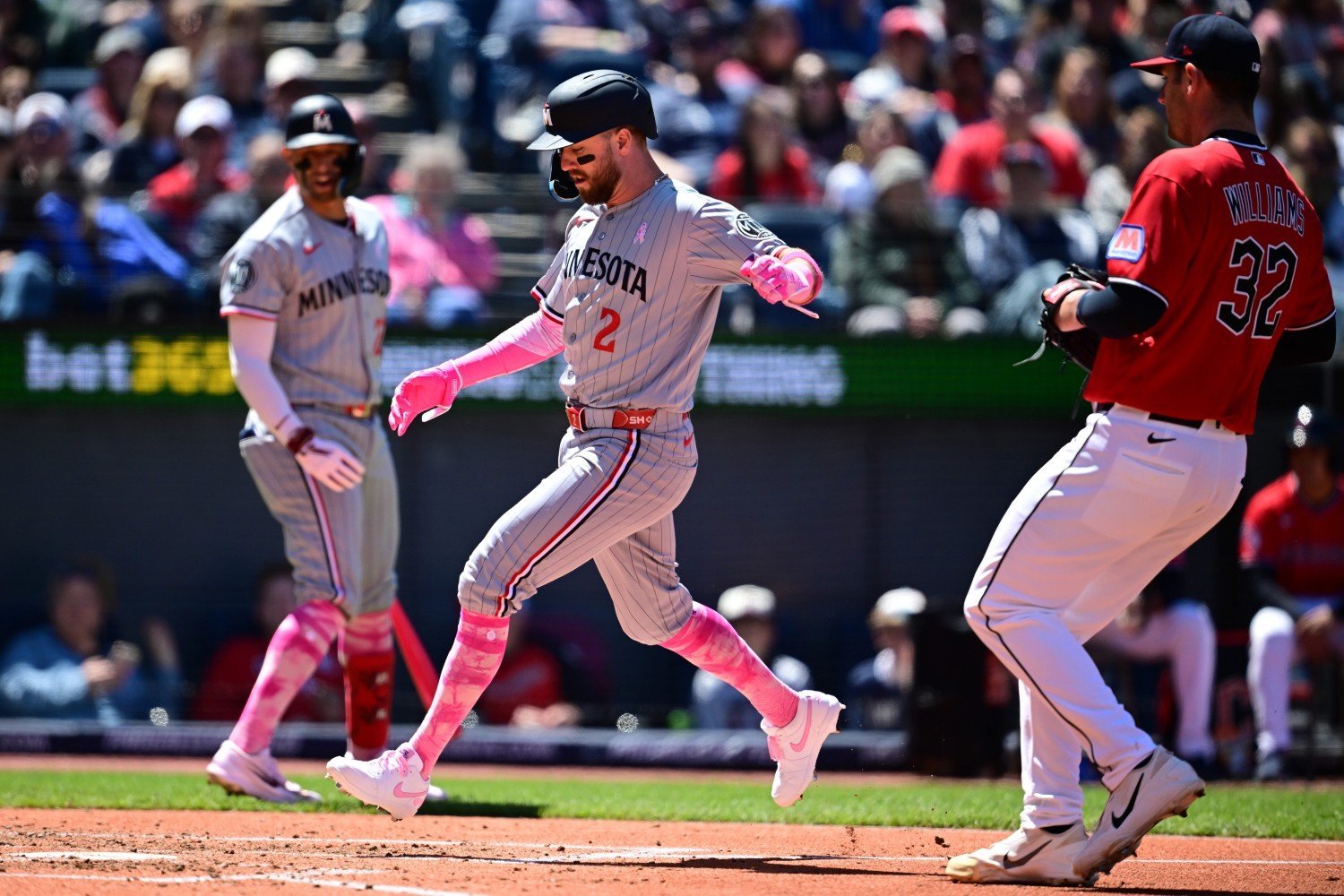 Box Score: Bulk Pitcher: Kendry Rojas: 3 1/3 IP, 5 H, 1 ER, 3 BB, 5 K (60 Pitches, 34 Strikes, 56.6%) Home Runs: None Top 3 WPA: Kody Clemens (0.23), Brooks Lee (0.18), Anthony Banda (0.11) Win Probability Chart (Via BaseballSavant): Well, the Twins won a close game in extra innings in Cleveland yesterday. That, alone, was a revelation, given the past four or five years of results. It also gave them a chance to take a series at Progressive Field for the first time since the 1990s (or so it's felt). The starter would be Andrew Morris, but the bulk assignment fell on rookie Kendry Rojas. Morris, for his part, pitched an easy six-pitch scoreless first, with Rojas coming in to face the lefty-heavy Guardians lineup to start the second. Rojas has trouble throwing strikes, and that trend continued today, but he did show some reasons for optimism, including a nice changeup to strike out Angel Martínez in the second. His slider was sliding, and his sinker has some pop to it, so he has the makings of an effective major-league pitcher, but can he deliver on that promise in his rookie year? The Twins lineup had to deal with big Gavin Williams, who has built upon his 2025 breakout. Hes always looked the part of a big-time prospect, but injuries and some poor luck delayed his takeoff for a couple of years. Last year', he was able to make 31 starts, and while he led the league in walks, he was extremely hard to hit, posting a 129 OPS+ with a .211 batting average against. His heavy sinker/four-seam combo kept the Twins off-balance early, but Kody Clemens dunked a ball down the third-base line in the second for a Guardians Double™ and scored on a wild pitch for the game's first run. Ryan Jeffers scalded a ball through the middle that ended up getting all the way to the warning track for a leadoff double. Unfortunately, the Twins now employ Cold Josh Bell™ (not to be confused with the legendary Cool Papa Bell), who struck out in his sixth straight plate appearance to derail that potential rally. Meanwhile, Rojas gave up three singles and a walk in the third, but managed to give up just a single run on a José Ramírez tapper up the middle. He was wobbly with his command, but showed some composure pitching in a tough environment, including striking out All-Star Steven Kwan with two men on to end the third. It was probably the worst swing I've seen Kwan take. The fifth inning was the pivot point. Clemens led off with a more legitimate double, to the gap in right-center field at 105 MPH. Brooks Lee singled to bring home Clemens, and Royce Lewis showed some life by roping a double down the left-field line. Byron Buxton legged out a tapper to third base, and Bell broke out of his slump with a single up the middle to make the score 4-1. Austin Martin then continued his hot streak by staying with a fastball and flipping it to the opposite field to make it a four-run lead. Travis Adams took over for Rojas with one out in the fifth and got the second out pretty quickly. But he walked Kyle Manzardo, fell behind hitters, and allowed two more hits and a walk before striking out new catcher acquisition Patrick Bailey (who looked rough in his Guardians debut) with the bases full. Those bad Giants vibes will follow you, I guess. Adams allowed another run in the sixth, but got Ramírez to pop out as the tying run before giving way to Anthony Banda, who was able to retire pinch-hitter Rhys Hoskins on a fly ball. There was some Guardians Ball in the eighth, with David Fry singling and Bryan Rocchio dumping a broken-bat single into center off of righty Luis García. Kwan then bunted them over (on a 3-1 count, ouch) before Chase DeLauter grounded out to trim the lead to one. García was able to get Hoskins to ground out to preserve the lead. Clemens led off the ninth inning with an opposite-field single, and was bunted to second by Lee (somewhat surprisingly). Clemens then stole third, but was left stranded with Lewis striking out and pinch-hitter Victor Caratini flying out to deep right field. Yoendrys Gómez got the ninth, which speaks to some level of concern for Justin Topa, who hasn't pitched since Wednesday. Gómez, who has not had any sustained major-league success, threw strikes and looked good, working a 1-2-3 inning to secure the victory. Things I'm Tracking: -Brooks Lee looks like he may truly be part of the solution, delivering a couple hits with runners in scoring position. He even stole a base, despite looking like he was pumping his legs through molasses. -Travis Adams made his debut and threw some good changeups, but was largely ineffective in allowing four hits and two walks in 1 1/3 innings. -Jeffers is setting himself up for a big payday this offseason, with his OPS now over .900 and having built a reputation as an elite ABS challenger. -The Guardians may have found yet another demon in their relief corps, with Franco Aleman making his debut and pumping 99 MPH with deception. He allowed two singles but also went two scoreless in relief of Williams. -The Twins' bullpen hierarchy is a mess, with two recent waiver claims taking the eighth and ninth innings protecting a slim lead. The options Derek Shelton has late in games are pretty brutal right now. What’s Next: The Miami Marlins are in town, with electric young righty Eury Perez (2-4, 5.01 ERA) taking the mound against Bailey Ober (3-2, 4.19 ERA). It might be one of the tallest combined pitching matchups ever, with Perez standing 6'8", an inch shorter than Ober. The Marlins are league average on both sides of the ball in contrast to their recent past of being dependent on dominant pitching to sustain a nothing offense. They also are feisty, leading baseball in steals, so it will be an interesting test for the Twins at home. Postgame Interviews: Bullpen Usage Chart: WED THU FRI SAT SUN TOT Banda 0 20 22 0 19 61 Funderburk 17 0 22 10 0 49 Garcia 14 0 0 13 20 47 Rogers 0 26 0 17 0 43 Adams 0 0 0 0 43 43 Topa 32 0 0 0 0 32 Orze 0 0 16 15 0 31 Morris 14 0 0 11 6 31 Gómez 0 0 2 5 10 17 View the full article
 -
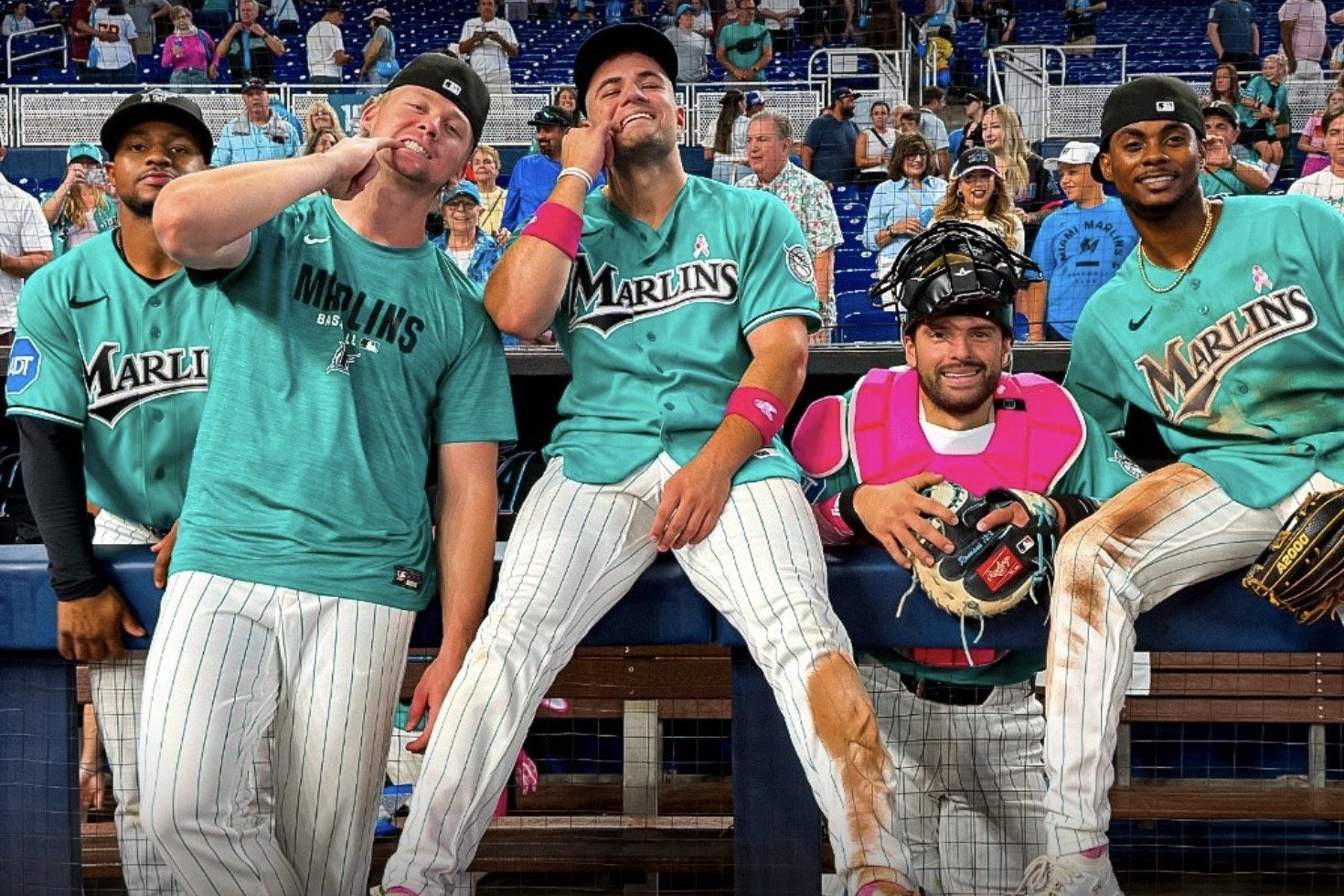 MIAMI — The month of May had not been kind to the Marlins, early. Entering Sunday, 3-6 in a stretch that saw them play their tenth game in as many days, it would be up to Sandy Alcantara to be the tone-setter if they were to look to win this series against the Washington Nationals. Making his 90th career start at loanDepot park on this Mother's Day Sunday, Alcantara twirled six innings of two-run ball in Miami's 5-2 win over the Nationals, ultimately coming away with a no-decision. Upon completing a 1-2-3 top of the sixth, Alcantara, at 89 pitches, appeared as if a seventh inning wasn't out of the question. However, after throwing a season-high 106 pitches in his previous outing, manager Clayton McCullough deferred to his bullpen to slam the door. "I thought I was going back out there for the seventh," said Alcantara, whose workhorse mentality has garnered him league-wide respect. Through nine starts this season, only Max Fried (58.2) has thrown more innings than Alcantara's 57.2, with the latter's total pacing the senior circuit. "We felt like, at six and right at 90 pitches, a couple runs, he really did his job," noted McCullough, now just two wins shy of 100 in his young managerial career. In relief of Alcantara, the Marlins bullpen tandem of Calvin Faucher, Andrew Nardi, and Josh Ekness pitched in to throw three scoreless innings. Pitching in just his fourth career big league game, Ekness would be called on with two outs in the ninth in what would result in his first career save. Miami's offense would open the scoring in the bottom of the third, hanging a two-spot on Washington starter and former top prospect Cade Cavalli (5.2, 4 H, 2 R, 4 K), started by Joe Mack's first career walk. Liam Hicks would single Mack home before a routine ground ball hit by Otto Lopez went right through the legs of Nasim Nuñez, allowing Xavier Edwards to plate the Marlins' second run. Washington would begin to claw back, though, as they quickly turned a Luis Garcia Jr. leadoff triple into their first run in the top of the fourth. They would eventually tie the scoring at 2-2 when James Wood's fielder's choice plated second baseman Jorbit Vivas. Heading into the bottom of the eighth with the score unchanged, Kyle Stowers worked a walk after starting down 0-2. With Esteury Ruiz pinch-running, Jakob Marsee reached base via a walk before executing, with Ruiz, a double steal to get the pair into scoring position. It would be the unlikeliest of heroes to provide the deciding blow, as Christopher Morel, who entered that at-bat hitting just .148, scraped a single just in front of centerfielder Jacob Young to give the Marlins the lead. Immediately following Morel, Heriberto Hernandez, not in the starting lineup until some thirty minutes ahead of first pitch due to Owen Caissie experiencing right triceps soreness, laced a single down the third base line to give the Marlins some added insurance. Hernandez was previously with the club before being optioned to AAA following a start to the season that saw him hit .159 over his first 22 games. Miami improved to 19-22, concluding their 10-game homestand 4-6, sharing a three-way tie with Washington and Philadelphia for second place in the National League East. Looking Ahead Off Monday, the Marlins will resume play on Tuesday, beginning a six-game road trip against the Minnesota Twins. Eury Pérez (2-4, 5.01 ERA) will take the ball in the series opener. In his lone career start against them on July 3 last season, Pérez twirled six innings of one-hit ball. First pitch from Target Field is slated for 7:40 EST. View the full article
 -
Kendry Rojas Back Up As Twins' Bullpen Needs A Refresh
DiamondCentric posted an article in Twins Daily
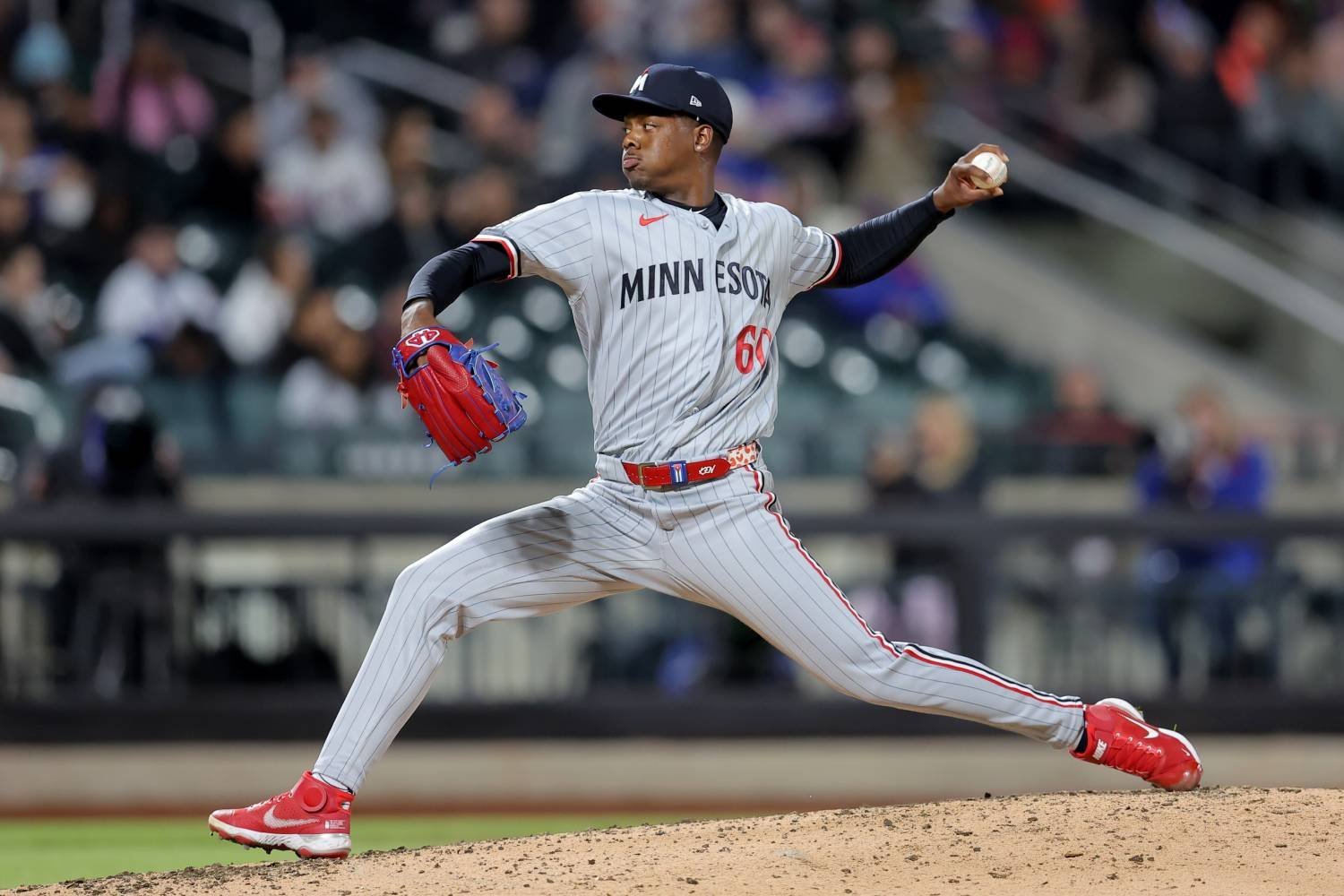 The Minnesota Twins needed a fresh arm after an exhausting day for the bullpen. The Twins on Sunday called up left-hander Kendry Rojas from Triple-A St. Paul and sent left-hander Kody Funderburk down to the Saints. The Twins used six relievers following Joe Ryan's six-inning start in Saturday's 2-1 win over the Cleveland Guardians in 11 innings. Rojas made his MLB debut April 22, pitching two shutout innings with two hits, three walks and no strikeouts. He was sent back to Triple-A a couple days later. At St. Paul this season, Rojas has made five appearances, including a start, allowing four runs and 14 hits with five walks and 15 strikeouts in 15 innings for a 2.40 ERA. Funderburk has been a key part of the Twins' bullpen. He has made 19 appearances covering 16 innings, with 13 walks and 10 strikeouts for a 2.81 ERA. Coincidentally, Rojas' debut came as Funderburk was on paternity leave for the birth of his child. View the full article
 -
 Blue Jays Affiliate Overview (May 7-May 8) Triple-A Buffalo Bisons Series vs Lehigh Valley IronPigs (Philadelphia Phillies): 2-2 Season Record: 17-20 Double-A New Hampshire Fisher Cats Series vs Portland Sea Dogs (Boston Red Sox): 4-0 Season Record: 19-10 High-A Vancouver Canadians Series vs Eugene Emeralds (San Francisco Giants): 2-1 Season Record: 13-17 Single-A Dunedin Blue Jays Series vs Bradenton Marauders (Pittsburgh Pirates): 1-3 Season Record: 12-19 FCL Blue Jays Week Record: 3-0 Season Record: 5-0 Triple-A Buffalo Bisons Season Record: 17-20 Series Opponent: Lehigh Valley IronPigs (Philadelphia Phillies) May 7: RJ Schreck followed up his monster game Wednesday with another big game on Thursday. He led the offensive barrage from the Buffalo bats, as they broke through against Lehigh Valley with 13 runs, eight of them coming in a crazy fifth inning. Schreck started the scoring off in the top of the first inning with a two-run home run to right field, his fourth of the season. The lead was short-lived, with Otto Kemp connecting for a three-run home run off of Grant Rogers in the bottom half of the inning. After adding a couple of runs to take the lead back, Buffalo began the fifth inning with a lead-off walk and a single. Schreck then roped a ball to right center that scored a run. Later in the inning, Rafael Lantigua drew a bases-loaded walk to get another run across home plate, and then Carlos Mendoza was hit by a pitch to get the third run of the inning home. Buffalo wasn't done though. Ryan McCarty, Ismael Munguia, and Charles McAdoo all drew bases-loaded walks as well. Schreck would come back up in the inning and get a two-RBI single to cap off the big, eight-run inning. On the day, Schreck was 3-for-4, with five RBI, and three runs scored. Pat Gallagher was the best pitcher for Buffalo, going 2.2 innings, giving up just one hit, one walk, and striking out four. He brought his ERA down to 1.42 for the season and could be someone the big league club looks to if there comes a need for a relief pitcher over the summer. Buffalo took the game 13-5 and could have potentially started a win streak. May 8: With Chad Dallas on the mound Friday night as the bulk pitcher, Buffalo had a real shot to have a three-game winning streak heading into the final two games of the series this weekend. Dallas proved up to the task, coming in following Hayden Juenger's poor start. He gave up two runs in the bottom of the first inning. Dallas was cooking through four innings, giving up one unearned run. Other than that one blemish, he was great, striking out six and surrendering a measly two hits. He sat around 93 with his fastball and sinker, looking better the further out he gets from his Tommy John surgery. With the pitching keeping the game within reach, it was ultimately the bats that fell woefully short, only managing five hits in the night, only one going for extra bases. Buffalo was shut out on the offensive side of things, taking the loss 4-0 and falling to three games under .500 for the season. Double-A New Hampshire Season Record: 19-10 Series vs. Portland Sea Dogs (Boston Red Sox) May 7, Game 1: Gage Stanifer was on the mound for the first game of the doubleheader against the Portland Sea Dogs on Thursday. He started out strong, getting six of the first seven batters out, three via the strikeout. In the third and fourth innings, he gave up four baserunners, but made it through without giving up a run. He got a couple of pop-ups, a couple weak fly outs, and a groundout. Stanifer would work his way around a single in the fifth inning to cap off his best Double-A start: 5 IP, 4 H, 0 ER, 2 BB, 3 K. He also battled a very small strike zone on the day. On the offensive side of things, Adrian Pinto doubled in two runs in the third inning, and a groundout and error gave New Hampshire two more. They would go on to win game one by a score of 4-2. May 7, Game 2: In the second game of the day, Portland took the quick lead on a home run and an RBI single from Richard Gallardo. Gallardo would power through, though, and make it five innings, striking out eight batters without allowing another run. The New Hampshire offense picked it up, with two RBI groundouts and then an RBI single from Arjun Nimmala to tie the game at three. The game went to extra innings, and in the eighth and ninth frames, both teams traded runs. In the 10th inning, Nick Goodwin put New Hampshire up one with a sacrifice fly, and Eddie Micheletti Jr. laced an RBI single to give the Fisher Cats a two-run lead. It was enough, as Irv Carter held the Sea Dogs to nothing and New Hampshire won 7-5. May 8: In the Friday night game, pitching was truly optional. New Hampshire took a seven-run lead over the first two innings. The big hits were a Jay Harry three-run triple and a Harry RBI double. In the fourth, Jace Bohrofen launched his ninth home run of the season to put New Hampshire up seven runs again. Things went south the next few innings as Portland crushed two home runs. Eddie Micheletti Jr. would put the Fisher Cats up six runs with a three-run blast in the seventh inning. An Arjun Nimmala RBI double gave the Fisher Cats a three-run lead in the ninth, but the pitching again faltered, and Portland tied it up at 13 to go to extra innings. Thankfully, Portland was out of pitchers and brought in a position player to pitch. Sean Keys teed off on a pitch and crushed his 10th home run of the season. New Hampshire would finish off the Sea Dogs and win this wild one, 15-13. High-A Vancouver Season Record: 13-17 Series vs Eugene Emeralds (San Francisco Giants) May 7: The dual-headed monster of Johnny King and Holden Wilkerson shut down the Eugene Emeralds. King struggled with his command again, walking four batters, but was still able to keep the runners on base from scoring, allowing only a single run in three innings pitched. Dub Gleed excelled in the lead-off spot, as he got on base four times. He ended up being the first run, as Alexis Hernandez hit a sac fly to score him to put the Canadians up one. Manuel Beltre hit his second homer of the year to add on to the lead. Peyton Williams had his seventh RBI for the Canadians this season with a single in the fourth. Wilkerson once again dominated in relief, pitching five innings of one-hit baseball, striking out five and lowering his season ERA to 1.52. Jonathan Todd gave up a run in the ninth but still got the save as the Canadians got a close win. May 8: The Canadians had another great pitching performance, this time from the recently promoted Nolan Perry, who’s been excellent since returning from injury. Other than a solo homer given up to Lisbel Diaz in the bottom of the third inning, Perry was nearly untouchable. He gave up only three hits and one walk, while striking out eight batters and generating 18 swings and misses. Tucker Toman and Jacob Sharp led the way for the offense, as both hitters had two-RBI nights; they turned a tied game in the top of the eighth into a three-run lead with two clutch singles. Kelena Sauer got his second save of the season, allowing a run but guaranteeing the win with two innings of solid pitching. Single-A Dunedin Season Record: 12-19 Series vs Bradenton Marauders (Pittsburgh Pirates) May 7: Brandon Barriera’s velocity was down a bit, sitting only 93 mph, but he relied heavily on his slider to strike out four batters in three innings, allowing one earned run. A big night from Yorman Licourt led the way for Dunedin’s offense, as the slugger hit his fifth homer of the season and drove in five of the Jays’ nine runs. Oakville kid Owen Gregg got his first hit as a Dunedin Blue Jay as well, as the Jays ran away with this one early. Mason Davenport allowed four runs in the seventh inning to make it a bit more interesting, but a Licourt double took the lead back to three, and Lluveres Severino got his first save of the season to get the Jays their first win of the series. May 8: The Jays had to face the talented Seth Hernandez for the second time this season, and the 2025 sixth-overall pick one-upped his last outing against the Jays by striking out nine batters in six innings. Troy Guthrie struggled to put hitters away, allowing nine hits and five runs while only striking out three. Noah Palmese had his longest appearance of the season, going 3.1 innings in relief, allowing a run on a solo homer to the “Password.” The Jays' only runs of the game came in the bottom of the ninth inning, with Juan Sanchez finally showing some of the power that he was known for in the Florida Complex League, hitting his first homer of the season. Yorman Licourt ended up scoring on a balk that same inning, but they couldn’t get any closer than that. FCL Blue Jays Season Record: 5-0 May 7: Thursday's game for the Rookie ball Blue Jays featured Sann Omosako pitching in his first game of the season. Yimi García started the game on his rehab assignment and got two outs before allowing two singles. Omosako came in for him and gave up a single himself, which would score a run. After that, he was solid, going 4.1 innings, not allowing another run to score, walking just one, and striking out one. With the game still up for grabs, Renyel Campos knocked in a run in the bottom of the second inning on an RBI single, and then Jake Cook did the same in the bottom of the fourth. Cook would give the Jays the win with another RBI single in the sixth, capping off his 2-4 game, with two RBI. The Jays won 3-2, but Tim Piasentin is still searching for a groove, as he went 0-3, with a walk and dropped his batting average down to .071 through the first week of the season. May 8: The FCL Jays started the game against the FCL Yankees hot. Tim Piasentin drew a walk and then scored on Franklin Rojas’ RBI double. Two batters later, Kennew Blanco doubled home Rojas and gave the FCL Jays a quick 2-0 lead. In the next inning, the Jays added two more runs with a double from Angel Guzman that scored Pascual Archila and Rafael Flores, who had reached via walks. The Jays didn't score any more runs the rest of the game, but Piasentin did collect a single on a line drive to right field in the top of the fourth inning. The FCL Jays won 4-3 and stayed perfect on the season with a 5-0 record. View the full article
 -
 Aaron Sanchez fired six scoreless, one-hit innings with eight strikeouts as Omaha split its doubleheader at Indianapolis. Jorge Alfaro homered twice and drove in four to lead Northwest Arkansas past Frisco 8-7 in 10 innings, with Dennis Colleran Jr. striking out four for the win. Max Martin recorded a hitless 2 1/3 frames for Columbia, while Yandel Ricardo and Stone Russell powered a 5-2 win. Ramon Ramirez tripled and homered in a Quad Cities loss. Royals Transactions No Roster Moves Storm Chasers Drop Walk-Off Despite Sanchez's Quality Start The Storm Chasers dropped the first game of the doubleheader 2-1 in nine innings on a walk-off sacrifice fly by Indianapolis. The contest was scoreless through seven innings, anchored by a Quality Start from Aaron Sanchez. Elih Marrero accounted for the only Omaha run with a 1-for-3 day that included a double and the team's lone RBI. The Storm Chasers managed just one hit on the day. Sanchez went six scoreless innings, allowing one hit and one walk while striking out eight. The game stretched to extra innings, and the scoring opened in the top of the eighth with Drew Waters as the zombie runner. After a Josh Rojas sacrifice bunt advanced Waters to third, Marrero followed with an RBI double to right field that scored him for a 1-0 lead. In the bottom of the eighth, Mason Black surrendered a one-out RBI double to right that allowed the Indianapolis zombie runner to come home and tie the game at 1-1. In the bottom of the ninth, with Beck Way on the mound and the Indians' zombie runner at second, a sacrifice bunt was mishandled on a Way throwing error to put runners at the corners. Two batters later, the winning run scored on a sacrifice fly to right fielder Drew Waters. Black allowed one earned run on two hits in 1 2/3 innings. Way was charged with the loss after an unearned winning run. Player AB R H RBI BB K John Rave 4 0 0 0 0 0 Tyler Tolbert 4 0 0 0 0 0 Kameron Misner 4 0 0 0 0 3 Drew Waters 3 1 0 0 0 3 Josh Rojas 1 0 0 0 1 0 Elih Marrero 3 0 1 1 0 1 Gavin Cross 2 0 0 0 0 2 Luca Tresh 1 0 0 0 0 1 Abraham Toro 0 0 0 0 0 0 Luke Maile 2 0 0 0 0 0 Kevin Newman 3 0 0 0 0 1 Player IP H R ER BB K HR Aaron Sanchez 6 1 0 0 1 8 0 Mason Black 1 2/3 2 1 1 1 1 0 Beck Way 1 0 1 0 0 0 0 Storm Chasers Take Game Two Behind Four-Run Third The Storm Chasers lost the second game of a doubleheader at Indianapolis with a 4-1 victory thanks to a four-run third inning. Tyler Tolbert paced the offense, going 2-for-4 with a two-RBI single, a stolen base, and a run scored. John Rave doubled and scored as part of a 2-for-4 day, and Kevin Newman added a hit, a walk, a double, and a run. Elih Marrero went 1-for-1 in his lone at-bat. Indianapolis grabbed a 1-0 lead in the bottom of the first when an Indians runner came home on a wild pitch from Shane Panzini. Omaha answered emphatically in the third. Newman drew a walk to start the inning, John Rave followed with his seventh double of the season, and Tolbert lined a single to left field that scored both to put Omaha ahead 2-1. After two strikeouts and a Luca Tresh hit-by-pitch, Colton Becker reached on a fielder's choice, and a throwing error by the Indians' shortstop on the play allowed Tolbert and Tresh to come around to push the lead to 4-1. Panzini went 2 2/3 innings, allowing one run on two hits with a walk and three strikeouts. Ben Sears followed with 2 1/3 scoreless innings on two hits and a walk, fanning three to earn the win. Andrew Pérez and Eli Morgan combined for two scoreless frames to close it out, with Morgan striking out two for the save. Player AB R H RBI BB K John Rave 4 1 2 0 0 1 Tyler Tolbert 4 1 2 2 0 0 Kameron Misner 3 0 1 0 1 1 Drew Waters 4 0 0 0 0 1 Luca Tresh 3 1 0 0 0 2 Elih Marrero 1 0 1 0 0 0 Colton Becker 2 0 0 0 0 0 Abraham Toro 1 0 0 0 2 1 Dustin Dickerson 3 0 0 0 0 3 Kevin Newman 2 1 1 0 1 0 Player IP H R ER BB K HR Shane Panzini 2 2/3 2 1 1 1 3 0 Ben Sears 2 1/3 2 0 0 1 3 0 Andrew Pérez 1 1 0 0 0 1 0 Eli Morgan 1 0 0 0 0 2 0 Alfaro's Two Homers Lift Naturals Past Frisco In 10 Innings The Naturals topped the RoughRiders 8-7 in 10 innings on the strength of a two-homer, four-RBI day from Jorge Alfaro. Alfaro hit a solo shot in the sixth inning and a three-run blast in the 10th, his third and fourth home runs of the season. Spencer Nivens added a solo home run as part of a 3-for-5, two-RBI day. Sam Kulasingam went 3-for-4 with a double, Daniel Vazquez had two hits, including a double, and leadoff man Carson Roccaforte scored a run. Henry Williams started and went five innings, allowing three runs on six hits with no walks and three strikeouts. Trailing 2-0 in the top of the fourth, Northwest Arkansas tied the game when Spencer Nivens delivered an RBI single off the pitcher to score Sam Kulasingam, and Omar Hernandez followed with a sacrifice fly to score Brett Squires. After Frisco answered with a run in the bottom half, Roccaforte scored on a Brett Squires sacrifice fly in the fifth, and back-to-back solo homers from Alfaro and Nivens in the sixth pushed the lead to 5-3 before the RoughRiders tied it up. The Naturals broke through in the top of the 10th. With Brett Squires at second as the zombie runner, Daniel Vazquez singled to right field, and Alfaro followed with a three-run home run to left center for an 8-5 lead. Brandon Johnson surrendered two runs in the bottom half but recorded his third save. Player AB R H RBI BB K Carson Roccaforte 5 1 1 0 0 3 Jack Pineda 4 0 0 0 1 1 Sam Kulasingam 4 1 3 0 0 1 Brett Squires 4 2 0 1 0 1 Daniel Vazquez 5 1 2 0 0 2 Jorge Alfaro 4 2 2 4 1 1 Spencer Nivens 5 1 3 2 0 0 Omar Hernandez 3 0 0 1 0 1 Justin Johnson 5 0 1 0 0 0 Player IP H R ER BB K HR Henry Williams 5 6 3 3 0 3 2 Caden Monke 0 1 2 2 3 0 0 Augusto Mendieta 2 0 0 0 0 2 0 Dennis Colleran Jr. 2 1 0 0 0 4 0 Brandon Johnson 1 2 2 1 0 1 0 River Bandits Fall To Kernels Despite Ramirez's Power The River Bandits dropped a 6-3 decision to the Kernels at home. Ramon Ramirez and cleanup hitter Luke Pelzer accounted for the bulk of the offense, each leaving the yard. Ramirez went 2-for-3 with a triple, a solo home run, two runs, an RBI, and a walk. Pelzer added a 1-for-3 day with a two-run home run, two RBI, a walk, and a run scored. Tyriq Kemp and Erick Torres each added a single. Emmanuel Reyes took the loss, going six innings and giving up four runs on eight hits with three walks, four strikeouts, and one home run allowed. Quad Cities jumped ahead 2-0 in the bottom of the first when Pelzer drilled a two-run home run to right-center to score Ramirez. The Kernels grabbed the lead back with a four-run third, capped by a three-run home run, to lead 4-2. Ramirez closed the gap with a solo home run to left field in the bottom of the sixth, his fifth of the season, but Cedar Rapids tacked on two more in the eighth on a two-run shot. Cory Ronan allowed two runs on a hit in two innings of relief, and Hunter Alberini struck out one over a scoreless inning to close. Player AB R H RBI BB K Nolan Sailors 4 0 0 0 0 1 Asbel Gonzalez 4 0 0 0 0 1 Ramon Ramirez 3 2 2 1 1 1 Luke Pelzer 3 1 1 2 1 1 Jose Cerice 4 0 0 0 0 2 Tyriq Kemp 4 0 1 0 0 1 Erick Torres 3 0 1 0 0 1 Trevor Werner 2 0 0 0 1 1 Angel Acosta 3 0 0 0 0 1 Player IP H R ER BB K HR Emmanuel Reyes 6 8 4 4 3 4 1 Cory Ronan 2 1 2 2 1 0 1 Hunter Alberini 1 2 0 0 0 1 0 Fireflies Top Cannon Ballers Behind Bullpen And Russell The Fireflies took a 5-2 win at Kannapolis behind a strong bullpen effort and a deep offensive lineup. Stone Russell led the way with a 3-for-4 day that included a triple, two runs, and a stolen base. Daniel Lopez went 1-for-4 with a two-RBI double and a stolen base. Josh Hammond added a 1-for-3 day with a double, a walk, a run, and a stolen base. Yandel Ricardo went 1-for-5 with an RBI, and Hyungchan Um added an RBI single in a 1-for-4 effort. Kendry Chourio started and went four innings, allowing two runs (one earned) on three hits with a walk, three strikeouts, and a home run allowed. Columbia struck first in the top of the first when Hyungchan Um singled to right field to score Josh Hammond. After the Cannon Ballers tied it in the second, the Fireflies retook the lead 2-1 in the third on a Yandel Ricardo RBI groundout that scored Jhosmmel Zue. The visitors then broke the game open in the top of the fourth when Daniel Lopez doubled to right field with two on, scoring Stone Russell and JC Vanek for a 4-1 advantage. Columbia tacked on an insurance run in the eighth on a Roni Cabrera sacrifice fly that scored Russell. Brandon Herbold and Max Martin handled the middle innings without allowing a run, with Martin striking out two over a hitless 2 1/3 frames to earn the win. Yeri Perez worked a one-hit ninth to record his first save. Player AB R H RBI BB K Henry Ramos 4 0 1 0 1 1 Yandel Ricardo 5 0 1 1 0 2 Josh Hammond 3 1 1 0 1 1 Hyungchan Um 4 0 1 1 0 1 Stone Russell 4 2 3 0 0 0 JC Vanek 2 1 0 0 2 1 Roni Cabrera 3 0 0 1 0 1 Daniel Lopez 4 0 1 2 0 1 Jhosmmel Zue 4 1 1 0 0 2 Player IP H R ER BB K HR Kendry Chourio 4 3 2 1 1 3 1 Brandon Herbold 1 2/3 2 0 0 1 4 0 Max Martin 2 1/3 0 0 0 0 2 0 Yeri Perez 1 1 0 0 0 1 0 Top-20 Prospect Performance Carter Jensen: DNP Blake Mitchell: DNP David Shields: DNP Kendry Chourio: 4 IP, 3 H, 2 R, 1 ER, BB, 3 K, HR Ben Kudrna: DNP Sean Gamble: DNP Josh Hammond: 1-for-3, 2B, BB, R, SB, K Ramon Ramirez: 2-for-3, 3B, HR, RBI, 2 R, BB, K Drew Beam: DNP Asbel Gonzalez: 0-for-4, K Yandel Ricardo: 1-for-5, RBI, 2 K Felix Arronde: DNP Luinder Avila: DNP Daniel Vázquez: 2-for-5, 2B, R, 2 K Steven Zobac: DNP Carson Roccaforte: 1-for-5, R, 3 K Blake Wolters: DNP Michael Lombardi: DNP Warren Calcaño: DNP Frank Mozzicato: DNP View the full article
 -
Remember When the Twins Had Too Much Starting Pitching?
DiamondCentric posted an article in Twins Daily
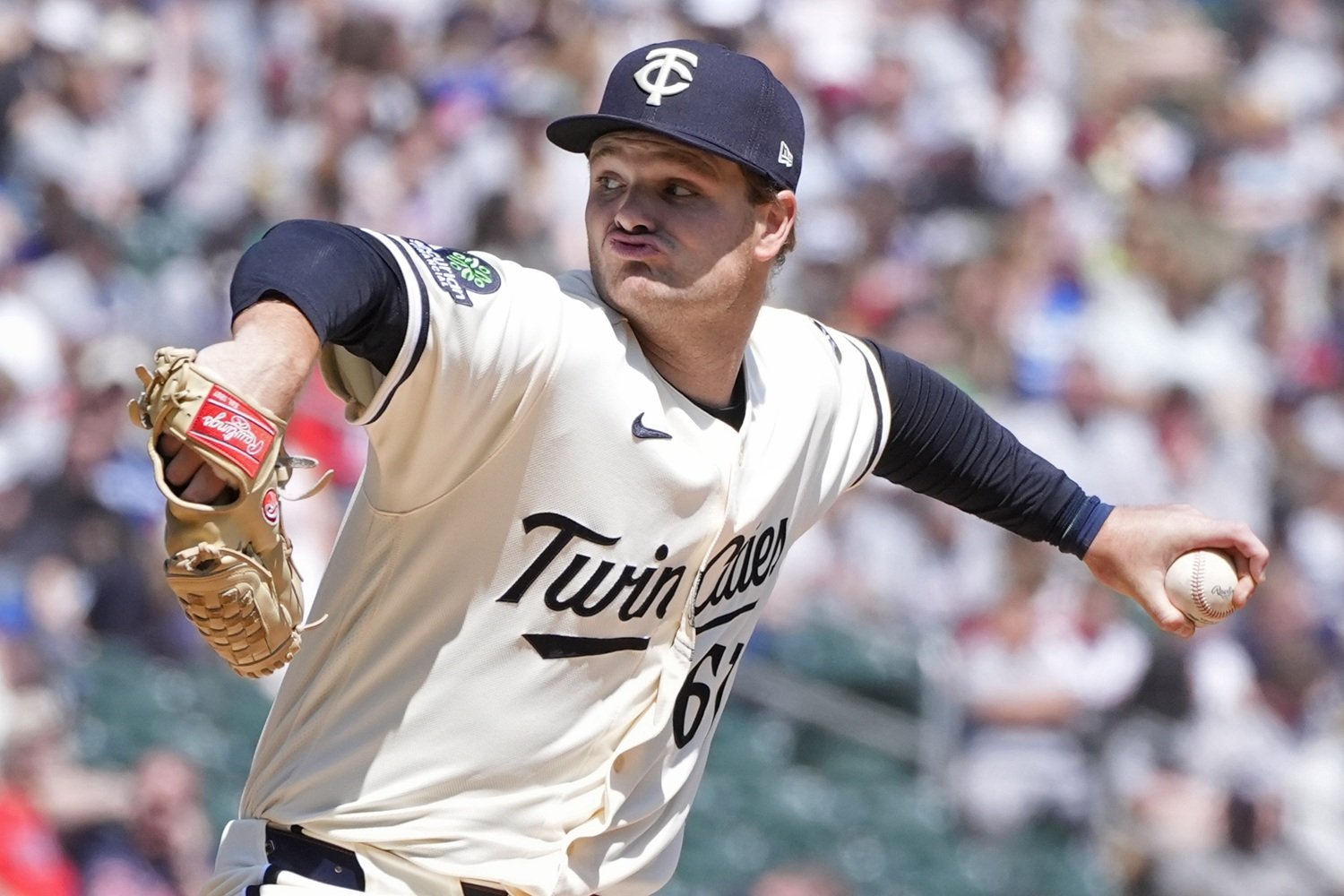 During the offseason, there was constant discussion about the Twins having too much starting pitching depth. Minnesota looked like a team with eight legitimate rotation options before even mentioning some of the team's top starters in the upper minors, who were viewed more as a long-term development projects than an immediate contributors. At the time, it felt reasonable to wonder whether the Twins should trade from that depth. Injuries happen, but few teams carry that many realistic starting options into a season. A few months later, that conversation feels almost impossible to believe. What once looked like one of the deepest pitching staffs in baseball has quickly unraveled. One starter is out for the season following Tommy John surgery. Another recently landed on the injured list after pitching like the staff ace. Multiple depth options have battled significant arm injuries, while another has struggled badly enough that a move to the bullpen may be necessary. Suddenly, the Twins are no longer talking about a pitching surplus. They are simply trying to piece together enough healthy innings to survive. Looking back at the preseason expectations compared to the current reality shows just how quickly pitching depth can disappear. Pablo Lopez Preseason Expectation: Ace of the staff. Helping the Twins stay on the fringes of contention. Current Reality: Lopez is out for the season following Tommy John surgery. Losing the team’s most dependable starter completely changed the outlook of the rotation and forced everyone else into bigger roles. Joe Ryan Preseason Expectation: Build off his first All-Star season and continue establishing himself as one of the American League’s best pitchers. Current Reality: Ryan briefly terrified the organization after leaving last Sunday’s start following just nine pitches because of elbow soreness. Fortunately, he returned for last night's outing without needing an injured list stint. At this point, simply having Ryan healthy feels critical to keeping the rotation together. Bailey Ober Preseason Expectation: There was optimism that a healthy offseason could help Ober regain some of the velocity he lost last year. Current Reality: The velocity still has not returned, with his fastball averaging just 88.6 mph. However, Ober has adapted by leaning more heavily on his changeup and sequencing effectively enough to remain productive. Taj Bradley Preseason Expectation: The Twins spent the offseason trying to determine which version of Bradley they acquired from Tampa Bay at last year’s trade deadline. His inconsistency with the Rays made it difficult to project his role. Current Reality: Bradley looked like the team’s ace before landing on the injured list with right pectoral muscle inflammation. With the state of the rotation, the Twins desperately need him back and pitching well as quickly as possible. Simeon Woods Richardson Preseason Expectation: Woods Richardson had developed a reputation as one of the organization’s steadier pitching options and looked like a reliable back-end starter. Current Reality: He has been one of baseball’s least effective starters with a 64 ERA+ while allowing an MLB-leading 30 earned runs. Since he is out of minor league options, if the Twins want to reset him, it would need to be in the bullpen. Mick Abel Preseason Expectation: One of the key pieces acquired at last year’s trade deadline, Abel entered the spring with expectations that he could eventually force his way into the major league rotation. Current Reality: Abel impressed early before right elbow inflammation landed him on the injured list. A setback later required a cortisone shot, adding even more uncertainty to his timeline. David Festa Preseason Expectation: Festa was expected to fight for a rotation spot this spring. Even if he began the season at Triple-A, he remained one of the first starters called upon when the Twins needed reinforcements. Current Reality: Festa has spent the entire season on the injured list due to a shoulder injury that has resulted in multiple setbacks. At this point, if he returns this year, it may only be as a reliever. Zebby Matthews Preseason Expectation: Matthews gave the Twins another valuable layer of Triple-A depth. Current Reality: He struggled early in Triple-A but has shown recent improvement. Given Minnesota’s current situation, Matthews may soon become the next starter called upon. Connor Prielipp Preseason Expectation: Prielipp entered the year as the organization’s top pitching prospect; he wasn't supposed to be one of the eight major league-ready starters. There was speculation (both internally and externally) about whether his long-term future belonged in the bullpen. Current Reality: He arrived in the majors earlier than expected when Abel was injured and, with Bradley sidelined, will likely continue to receive every opportunity to establish himself in the rotation. The Twins entered the season believing they had enough starting pitching depth to withstand almost anything. Instead, they have learned the same lesson every organization eventually learns. There is never such a thing as too much pitching. What once looked like an organizational strength has quickly become one of the biggest reasons this season feels so fragile. Injuries, setbacks, and inconsistency have thinned out a group that once seemed overflowing with options. Now, every healthy start feels important, every injury update carries added weight, and young pitchers are being asked to contribute earlier than expected. Back in March, the conversation centered around whether the Twins could afford to trade from their pitching depth. By May, that depth is already gone. What stands out about the preseason projections and current reality? Leave a comment and start the discussion. View the full article
 -
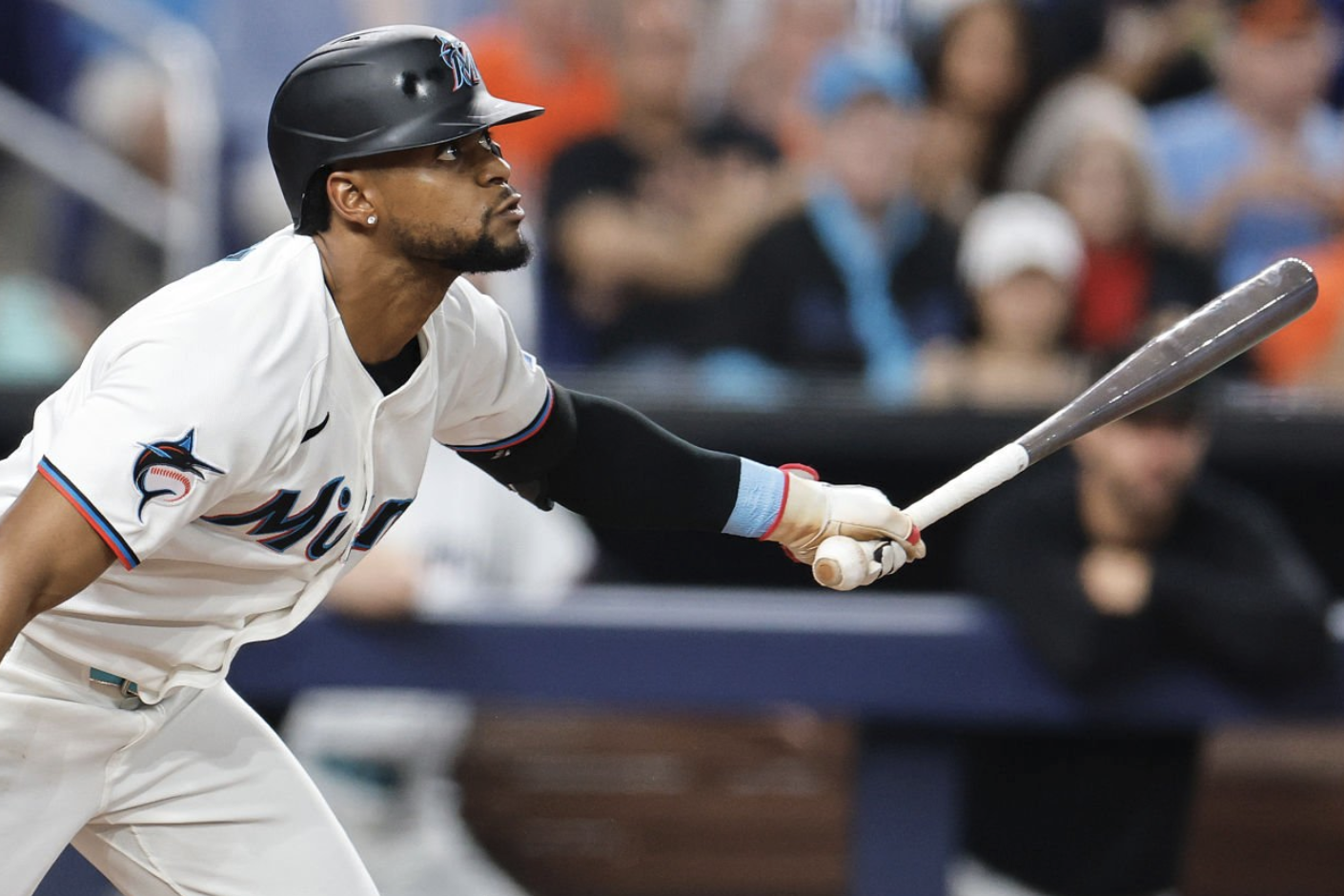 As of Sunday morning, we are approximately 25% of the way through this Miami Marlins season. Relative to expectations, the results have been underwhelming. They are on pace for a 73-89 record, which would be worse than anybody on the Fish On First staff predicted. If you're like me, you can find entertainment value in both victory and defeat when encountering extreme stats. Gotta give the Marlins some credit for overdelivering in that department. Here are five single-season franchise records that are currently on pace to be rewritten, ordered from least sustainable to actually plausible. Highest ERA in a single inning (team) Marlins record: 6.67 ERA in the seventh (1999) 2026 Marlins pace: 7.65 ERA in the first If it feels like these Marlins constantly find themselves playing from behind, it's because they are. Through 40 games, they have allowed 36 first-inning runs (34 of them earned). Every member of the club's starting rotation has contributed to the problem, even newcomer Robby Snelling, who immediately fell behind 3-0 in his major league debut. But overall, the Marlins have a solid pitching staff with an ERA no higher than 4.50 in any other inning. Let's chock up this extreme split to early-season randomness. Most hits in a single season (player) Marlins record: 221 (Juan Pierre, 2004) 2026 Otto Lopez pace: 222 Nobody has come particularly close to challenging Pierre's record over the last two-plus decades. The speedy center fielder played every inning of every game in 2004, starting in the leadoff spot the vast majority of the time—that allowed him to accrue 748 plate appearances, which is another franchise record. Otto Lopez is on pace to edge past JP by the slimmest of margins. Historically, Lopez has been inexplicably lousy against left-handed pitching, but that has completely flipped this season with a 21-for-47 start (.447 BA). The immense workload required to keep this up makes Lopez a longshot. He's also being buoyed by a record-worthy .411 batting average on balls in play. Even with great hustle out of the batter's box and frequent hard-hit contact, that mark is unsustainable. Regardless, Lopez is establishing himself as the most well-rounded shortstop that the Marlins have ever had. Lowest caught stealing rate (team) Marlins record: 11.2% (2025) MLB record: 9.6% (San Diego Padres, 2007) 2026 Marlins pace: 8.3% Controlling the running game has been a serious ongoing issue for the Fish dating back to early last season. Opponents are unafraid to challenge the arms of Liam Hicks and Agustín Ramírez, and they're able to get huge jumps against a heavily right-handed pitching staff that's generally slow to the plate. Recent prospect promotions should go a long way toward addressing this vulnerability. Joe Mack will deter thieves with his arm strength and accuracy. Robby Snelling adds a lefty to the rotation with a great minor league track record of limiting steals. Mack has started at catcher in five of his first seven games on the active roster. If he comes close to maintaining that workload moving forward, both the league and team CS% records should be out of reach. Most stolen bases (team) Marlins record: 177 (2003) 2026 Marlins pace: 178 Although not with the same efficiency, the Marlins have run the bases just as aggressively as their opponents have. This trend has more staying power. The addition of speed demon Esteury Ruiz is working exactly as intended—through only 12 games, he already ranks second on the Fish with six steals. Once Jakob Marsee (10 SB) reaches base with the regularity he's capable of, that will create more opportunities to pad the team's total. At the very least, the Marlins will probably eclipse last season's mark of 138 steals. Highest strikeout rate in a qualified season (player) Marlins record: 28.7% (Preston Wilson, 1999) 2026 Connor Norby pace: 31.4% Brian Anderson struck out 28.8% of the time in 2020, but I'm not counting that because the season was limited to 60 games due to COVID. This was supposed to be an opportunity to lament the struggles of Owen Caissie, who is striking out over forty percent of the time. However, the rookie's propensity to whiff has appropriately limited his playing time. It's difficult to envision him sticking in the big leagues for the entire season, and even if he does, reaching the 502 plate appearances needed to qualify is unlikely. I was not expecting to find Connor Norby here considering that his 2026 campaign has been an overall improvement from the year before. Quietly, though, his K rate has been Caissie-like over the last 30 days. In two-strike counts, changeups and splitters are especially problematic for him. Norby's newfound patience at the plate and solid transition to first base should keep him in the lineup frequently despite being strikeout-prone. View the full article
 -
 Transactions: Milwaukee Brewers recalled LF Blake Perkins from Nashville Sounds. RHP Jayden Dubanewicz assigned to Wilson Warbirds from ACL Brewers. Dubanewicz turned 20 in May. The 2024 16th round Florida high school pick split his debut 2025 season between Maryvale and Carolina and impressed as a Mudcat - 14 appearances (seven starts) with a 2.30 ERA and 1.09 WHIP. Nashville Pre-Game Media Notes Final: Louisville (Reds) 10, Nashville 8 Box Score and Game Log Via the Sounds, game details, and we encourage readers to always review affiliate write-ups as part of their Link Report routine: Sounds Fall in Late Frames Despite Two-Run Homer from Pratt - Pratt Earns Second Career Triple-A Homer; Wilken Extends On-Base Streak to 27 Games It's been an offensive showcase (or middling pitching) since Thursday: 9-6 Nashville win 9-6 Louisville win 10-8 Louisville win That linked game summary (you know the routine) contains video of the Cooper Pratt home run, Jeferson Quero's RBI double, Pratt and Jett Williams executing a double steal for a run, and Luis Lara's then-game-tying two-run opposite-field single. In the 4th inning, Pratt delivered an RBI single which can be seen here. About that single: Catcher Ramon Rodriguez (DH'ing in this game) singled twice (see one driving in a run here) and walked, lifting his line to .328/.430/.403 (.833 OPS in 20 games). It was in his 21st game last season that Rodriguez tore his Achilles tendon, ending his campaign with a .941 OPS at Biloxi. It would take a combination of a big-league injury and Quero being unavailable for Rodriguez to net an MLB debut in 2026, but the 27-year-old would be a reasonable emergency call-up and should prove to be an extremely popular target on the minor league free agent market this fall, as he would have been last October if not for the devastating injury. As for the Brewers' other AAA Rodriguez, this was not starter Carlos' night. His WHIP is up to 2.43 through six Nashville appearances (five starts). As his game log shows, Rodriguez is doing Manager Rick Sweet zero favors in terms of depth into his outings. In his final option season, the two-time Milwaukee Minor League Pitcher of the Year is only functioning as a break-glass-in-emergency bulk option for the big-league club where, to be fair, his two outings in 2026 have been effective. One does wonder how tenuous Rodriguez' hold on a 40-man spot is becoming. With rapidly decreasing trade value, he's looming as a non-tender this fall even if he holds his spot all season. The Junior Fernandez trade acquisition experiment (from AZ for cash) is not providing immediate results. Fernandez is scored upon in five consecutive outings after a scoreless frame in his first appearance (game log). Eddys Leonard, playing left field, reached three times via double, single and walk, lifting his OPS to 1.033. This isn't the Pacific Coast League, folks, so that figure is duly impressive, but at this point, keyboard strokes on Leonard are sailing against the wind. Perhaps Leonard's biggest beefs at this point should be with the Dodgers in 2023 and then (after a deadline deal that August 1st with Detroit) with the Tigers in 2024 for burning all his minor league options without a sniff of a big-league dugout. Columbus (Braves) at Biloxi, doubleheader postponed, rain As per the Shuckers, one of the two games will be made up as part of a doubleheader Sunday afternoon. The other game will be made up during the Clingstones next visit to Keesler Federal Park, between June 16-21. Those circumstances at least make for an enticing planned pitching tandem of starters today in Bishop Letson and Tyson Hardin. Weather forecast looks just fine. Wisconsin Pre-Game Media Notes (download link) Final: Wisconsin 7, Peoria (Cardinals) 5 Box Score and Game Log Via the Timber Rattlers, game details, and enjoy the three embedded video highlights within: Dinges Delivers a Wisconsin Win with Late Home Run - Rattler DH hits two-out, three-run, go-ahead homer in seventh It's been a bit since we did a standings check, and at 18-12 (and a very entertaining 18-12 at that), the T-Rats are indeed atop the division currently. Off the top of my head, not sure if the club has previously used the tag line associated with the Marco Dinges video tweet as seen in the summary, but if they hadn't broken it out yet, you know they've been itching to. As Chris Mehring rightfully pointed out in the recap, youngster Ethan Dorchies (just 19 all season) was cruising until a hit-by-pitch set the stage for a stat-wrecking three-run blast - by the way, get your "Dorchies" pronunciation lesson on the call. Not uncommon for a random plunking to rattle (pun intended I guess) a pitcher into a bigger inning. Still going to note this as a solid start for the 10th round find from the '24 draft. Other game video: Double steal includes a daring steal of 3rd by Eric Bitonti Luiyin Alastre adds to his two prior singles with a bases-loaded RBI on a walk for an insurance run Wisconsin posts seven runs with Andrew Fischer and Josiah Ragsdale getting the day off, all the more impressive. Second baseman Daniel Dickinson joined Alastre by reaching base three times (all by bases on balls). 23-year-old RHP Quinton Low missed all of 2024 and 2025 with Tommy John surgery, and after opening this season with two scoreless outings, had been scored upon in four consecutive appearances before shining here. The former two-way player must be so pleased to be healthy and contributing. Yay for effective Yerlin Rodriguez on this day, super-effective in this one to be sure. Wilson Pre-Game Media Notes Final: Wilson 8, Fayetteville (Astros) 6 Box Score and Game Log Warbirds Hold Off Fayetteville Rally for Second Straight Win Are you kidding, Pedro Ibarguen? 110.5 MPH?! Ibarguen, despite being only 19 years old until July 2nd, is in is 4th pro season. He dabbled at second and third base in his rookie 2023 Dominican season but has split time among the three outfield spots since. This was his 8th professional home run in 144 games. Outside of a 2024 introduction to stateside ball that did not go well at all (MiLB Player Page) after which the organization wisely stood by him despite having invested only a modest $60,000 bonus, the young man has posted respectable numbers. Not sure how much can be attributed to the play of the 12-20 Woodpeckers, but the Warbirds have made their way to a 15-17 record while showing some newfound pop. Second baseman Juan Ortuno and Jadyn Fielder (12 of Fielder's 20 games as the designated hitter, ironic given the last name) each doubled. Fielder's lack of positional value may be a concern for his future path. Both Fielder and Ortuno were on base three times. Wilson ran wild again, with seven stolen bases in nine attempts. Fayetteville pitchers walked 11, and outside of Jose Anderson's three strikeouts (43.7 K-rate), only one other K was registered by Woodpeckers pitchers. Southpaw starter Enderson Mercado has issued 26 free passes in as many innings (23 BB, 3 HBP), something that had not been an issue prior for the 19-year-old Venezuela native. Two non-drafted RHP's are making the most of their opportunities, as the Warbirds are likely losing this game without the work of Garrett Hodges and Peyton Niksch. More video fun: Ortuno just barely avoids a GIDP to open the scoring Shortstop Brady Ebel puts the ball in play, nets an RBI Ebel steals third base on the front end of a double steal First baseman Frederi Montero's looper finds the grass for an RBI Third baseman Luis Lameda lines an RBI single Warbirds, Shorebirds, Woodpeckers, it's the Aviary League. Final: ACL Guardians 9, ACL Brewers 2, seven innings as scheduled Box Score and Game Log On the bright side, the Crew won the final four innings by a 2-0 score, highlighted by the mound effort of 18-year-old Nicaraguan native Diustin Mayorquin dazzling out of the bullpen in just his second stateside appearance, as our Jake McKibbin revealed some statcast data analysis. Other arms struggled, and when they make their eventual MLB debuts, they will look back on this entry and chalk it up as part of the learning journey experience. The only two position players to see action in all six games are SS Cristopher Acosta and CF Brailyn Antunez, who have combined to go just 4-for-43 (six walks, 19 K's). C/1B Jonathan Rangel, a LH bat, has shown pop throughout his brief pro run, and his 100 MPH opposite field fly ball double was the only XBH for Maryvale in this game. Two early standouts played - CJ Hughes played second base and singled for one of the four A-Crew hits, though he was caught stealing for the first time in four tries. Catcher Rylan Mills singled and walked. Their early respective OPS marks are 1.365 and 1.758, as your box score perusal indicated. Only one of the seven Arizona Complex League games played Saturday was scheduled for nine innings, seven for all the rest. Boo to this trend, especially with the league having a full day off each and every Sunday. With Biloxi finally able to begin play again with a double dip, there are five games on tap for Mother's Day, staggered start times as the link below will show, in case you and Mom decide to tune in. Hope it's a wonderful day for all. Organizational Scoreboard including starting pitcher info, game times, MiLB TV links, and box scores Current Milwaukee Brewers Organization Batting Stats and Depth Current Milwaukee Brewers Organization Pitching Stats and Depth View the full article
 -
 Jose Chirinos delivered a quality start, and Ryan Dollar locked down the save as Branny De Oleo's go-ahead ninth-inning double lifted St. Lucie past Lakeland 3-2. Zach Thornton's six-inning outing was wasted in Syracuse's 7-4 loss to Rochester. Brooklyn dropped both ends of a doubleheader to Bowling Green, falling 7-6 in 10 innings despite John Bay's home run, then 6-5 as Yonatan Henriquez, Ronald Hernandez, and Trace Willhoite each homered. Binghamton's game was postponed. Mets Transactions New York Mets signed free agent RHP Xzavion Curry to a minor league contract. New York Mets signed free agent RHP Brady Miller to a minor league contract. Two Home Runs Not Enough As Syracuse Falls 7-4 To Rochester Syracuse fell 7-4 to the Rochester Red Wings despite home runs from Christian Arroyo and Jackson Cluff. Yonny Hernández led the offense with a pair of singles and two RBI, both driving in Cristian Pache, who reached three times and scored twice. Cluff added a hit and a run on his solo blast, and Arroyo finished 1-for-4 with his ninth-inning shot. Zach Thornton turned in a quality start, working six innings and allowing three runs on five hits with two walks and four strikeouts. Rochester scratched out a run in the first on a leadoff RBI double, then took a 3-0 lead in the third on a two-run home run. Syracuse responded in the bottom of the fifth. Pache reached on a hit by pitch, advanced on a single by Ben Rortvedt, and scored when Hernández singled to center to make it 3-1. Cluff cut the deficit further with a solo home run in the sixth. Rochester pulled away in the seventh with a pair of solo home runs off Ryan Lambert, who finished his lone inning with two earned runs allowed. Hernández brought home Pache once more in the bottom of the seventh. The visitors broke the game open in the top of the ninth when Jonathan Pintaro gave up a single and walked a batter, and a Cluff throwing error allowed two runs to score on a fielder's choice. Arroyo's solo home run in the bottom of the ninth capped the scoring. Syracuse stranded only two runners and committed one error. Player AB R H RBI BB K A.J. Ewing 4 0 0 0 0 1 Nick Morabito 4 0 0 0 0 0 Ryan Clifford 4 0 0 0 0 2 Christian Arroyo 4 1 1 1 0 0 Ji Hwan Bae 4 0 0 0 0 1 Cristian Pache 3 2 1 0 0 2 Yonny Hernández 3 0 2 2 0 0 Ben Rortvedt 3 0 1 0 0 1 Jackson Cluff 3 1 1 1 0 1 Player IP H R ER BB K HR Zach Thornton 6 5 3 3 2 4 1 Ryan Lambert 1 2 2 2 0 1 2 Nate Lavender 1 0 0 0 0 0 0 Jonathan Pintaro 1 1 2 0 2 2 0 Binghamton Game Postponed The Binghamton Rumble Ponies' scheduled game was postponed. Brooklyn Falls 7-6 To Bowling Green In Walk-Off 10th The Brooklyn Cyclones lost 7-6 to the Bowling Green Hot Rods in 10 innings on a walk-off single. John Bay finished 3-for-5 with a home run, two RBI, and two runs scored, while Vincent Perozo went 3-for-4 with a home run, three RBI, and a run. Colin Houck reached twice and scored twice, and Sam Biller and Yonatan Henriquez each added a hit. Noah Hall worked four innings as the starter, allowing four runs on four hits with four walks, six strikeouts, and two home runs. Bowling Green struck for a leadoff RBI double in the first, a solo shot in the third, and a three-run blast in the fourth. Hoss Brewer followed with two scoreless innings of relief, striking out three. The Cyclones rallied behind their bullpen. Bay's solo home run in the sixth cut the deficit to 4-2, and Perozo's two-run home run in the seventh tied it at four after Houck reached on a single. Brooklyn grabbed the lead in the eighth when Bay singled in Henriquez, and Perozo's RBI single in the ninth scored Houck for a 6-5 advantage. Hunter Hodges walked two and hit a batter in the bottom of the eighth, allowing the tying run to come around to score on the hit by pitch. Felix Cepeda surrendered an RBI double in the ninth that knotted the game at six, and the zombie runner came home in the bottom of the 10th on a leadoff single off Cepeda for the walk-off. Brooklyn stranded seven runners. Player AB R H RBI BB K Mitch Voit 5 0 0 0 0 3 Yonatan Henriquez 5 1 0 0 0 2 John Bay 5 2 3 2 0 0 Corey Collins 5 0 1 0 0 3 Ronald Hernandez 4 0 0 0 0 0 Colin Houck 4 2 1 0 0 2 Trace Willhoite 4 0 0 0 0 1 Vincent Perozo 4 1 3 3 0 1 Sam Biller 4 0 1 0 0 1 Player IP H R ER BB K HR Noah Hall 4 4 4 4 4 6 2 Hoss Brewer 2 0 0 0 1 3 0 Hunter Hodges 2 1 1 0 3 3 0 Felix Cepeda 1 3 2 0 0 0 0 Walk-Off Homer Sinks Brooklyn 6-5 In Game Two The Brooklyn Cyclones dropped game two of the doubleheader 6-5 to the Bowling Green Hot Rods on a leadoff walk-off home run in the bottom of the seventh. Yonatan Henriquez, Ronald Hernandez, and Trace Willhoite each launched home runs for the visitors. Sam Biller went 3-for-3 with a double from the bottom of the order, and Daiverson Gutierrez added a double, scored a run, and reached on a single. Danis Correa worked a clean first inning with two strikeouts, but Parker Carlson took the brunt of the damage out of the bullpen. Carlson surrendered four runs on five hits in 1 2/3 innings, including a three-run home run in the second that put Bowling Green up 3-0. The Hot Rods added another in the third on a wild pitch. Henriquez homered to right in the fourth to break the shutout. Tanner Witt followed Carlson and finished 2 1/3 innings, allowing one earned run on a fifth-inning double-play groundout while striking out three and issuing three walks. Hernandez ripped a two-run home run in the sixth that brought home Henriquez and trimmed the deficit to 5-3. Willhoite tied the contest 5-5 in the seventh with a two-run home run that scored Gutierrez. Juan Arnaud took the mound in the bottom of the seventh and yielded a leadoff solo home run on his first batter, ending the contest. Brooklyn collected eight hits and three home runs, stranded only three runners, and did not commit an error. Mitch Voit, Henriquez, Hernandez, Gutierrez, Willhoite, and Biller each contributed hits. Player AB R H RBI BB K Mitch Voit 4 0 1 0 0 2 Yonatan Henriquez 4 2 1 1 0 1 Ronald Hernandez 3 1 1 2 0 2 Corey Collins 3 0 0 0 0 3 Daiverson Gutierrez 3 1 1 0 0 1 Trace Willhoite 3 1 1 2 0 1 Colin Houck 3 0 0 0 0 2 Yohairo Cuevas 3 0 0 0 0 3 Sam Biller 3 0 3 0 0 0 Player IP H R ER BB K HR Danis Correa 1 0 0 0 0 2 0 Parker Carlson 1 2/3 5 4 4 0 2 1 Tanner Witt 2 1/3 2 1 1 3 3 0 Juan Arnaud 1 1 1 1 1 1 1 De Oleo's Ninth-Inning Double Lifts St. Lucie 3-2 Over Lakeland Branny De Oleo's go-ahead double in the top of the ninth gave the St. Lucie Mets a 3-2 win over the Lakeland Flying Tigers. JT Benson collected two hits, including a triple, and De Oleo finished 1-for-4 with the game-winning extra-base hit. Sam Robertson, Chase Meggers, Randy Guzman, and Simon Juan each contributed a hit. Leadoff man Elian Peña reached three times on a single and two walks. Jose Chirinos turned in a quality start, working six innings and allowing one run on four hits with no walks and two strikeouts. The Mets opened the scoring in the top of the fourth when Guzman doubled with one out and came around to score on Meggers's RBI single. They added another in the fifth as Jamari Baylor reached on a throwing error and scored from third on Juan's RBI single to center. Lakeland chipped one back in the sixth on a leadoff triple, and a sacrifice fly off Chirinos, then tied the contest in the eighth on a wild pitch by Emilio Obispo with the bases loaded. The decisive frame came in the top of the ninth. Robertson singled to right, and De Oleo doubled to center to bring him home for a 3-2 lead, though De Oleo was caught stealing home for the third out before Peña could come up. Ryan Dollar closed out a clean ninth for the save. Obispo earned the win with two innings of relief. St. Lucie left eight runners on base and committed one error. Player AB R H RBI BB K Elian Peña 3 0 1 0 2 0 Edward Lantigua 0 0 0 0 1 0 Simon Juan 4 0 1 1 0 1 Randy Guzman 4 1 1 0 0 2 Julio Zayas 4 0 0 0 0 1 JT Benson 4 0 2 0 0 1 Chase Meggers 4 0 1 1 0 1 Sam Robertson 4 1 1 0 0 1 Branny De Oleo 4 0 1 1 0 2 Jamari Baylor 4 1 0 0 0 2 Player IP H R ER BB K HR Jose Chirinos 6 4 1 1 0 2 0 Emilio Obispo 2 3 1 1 2 2 0 Ryan Dollar 1 0 0 0 0 0 0 Top-20 Prospect Performance Nolan McLean: DNP Carson Benge: DNP A.J. Ewing: 0-for-4, K Jonah Tong: DNP Ryan Clifford: 0-for-4, 2 K Jacob Reimer: DNP Jack Wenninger: DNP Elian Peña: 1-for-3, 2 BB Mitch Voit: 1-for-9 in DH (0-for-5, 3 K and 1-for-4, 2 K) Nick Morabito: 0-for-4 Jonathan Santucci: DNP Chris Suero: DNP Zach Thornton: 6 IP, 5 H, 3 R, 2 BB, 4 K, HR Wandy Asigen: DNP Will Watson: DNP Eli Serrano III: DNP Ryan Lambert: 1 IP, 2 H, 2 R, 0 BB, K, 2 HR Dylan Ross: DNP Antonio Jimenez: DNP R.J. Gordon: DNP View the full article
 -
 Triple-A Worcester Red Sox Series vs. Scranton/Wilkes-Barre (New York Yankees): 4-1 Season Record: 21-15 Worcester’s game was postponed due to rain. No make-up date has been provided yet. Double-A Portland Sea Dogs Series vs. New Hampshire Fisher Cats (Toronto Blue Jays): 0-4 Season Record: 13-18 Portland’s game was canceled due to rain and won’t be made up. High-A Greenville Drive Series @ Greensboro Grasshoppers (Pittsburgh Pirates): 1-5 Season Record: 14-18 The Drive fell for the second night in a row, 10-4, as they struggled on the mound. The start of Marcus Phillips’ professional career has been less than ideal. The righty has struggled through 17 and ⅔ innings so far this season, posting a 7.64 ERA through six appearances. This negative trend continued through Phillips' start on Saturday as he gave up five runs on six hits through two and ⅓ innings. He let up two home runs as he hasn’t quite found his footing in Greenville. Shea Sprague was back in Greenville after a one-game stint in Portland, pitching three and ⅓ innings. He let up four runs (two unearned) on five hits and two homers. Calvin Bickerstaff took the final two and ⅓ innings as he continued to build on his solid season. Across his outing, he let up one more run on a solo homer, and K’d two. Despite Bickerstaff’s solid outing, the Greenville pitching staff didn’t do enough to keep the Drive in the game. It was a poor offensive showing by Greenville on Saturday. Only four hitters recorded a hit, and the offense started late, with Antonio Anderson hitting his first homer of the season in the sixth to get the Drive on the board. Later in the inning, Mason White drew a bases-loaded walk to drive in Justin Gonzales. The Drive’s other two runs came on a two-run homer from Henry Godbout with Justin Gonzales on first. Gonzales drew three walks but was hitless at the plate. Isaiah Jackson and Mason White drew two walks apiece. The Drive struck out 13 times and were hitless with runners in scoring position. Low-A Salem RidgeYaks Series vs. Delmarva Shorebirds (Baltimore Orioles): 2-3 Season Record: 14-18 The RidgeYaks won 7-4 on a walk-off blast by Starlyn Nunez. Cole Tolbert made his first appearance of the season, and it was a strong one. The 23-year-old struck out four and didn’t allow a hit over one and ⅔ innings of work. It was Tolbert’s first appearance since 2024, as he missed the entirety of the 2025 season with injury. Jason Gilman took the next two and ⅓ innings. Of the 12 batters he faced, he sent seven back to the dugout on strikes. He allowed one run on four hits but put together an excellent outing. Wuilliams Rodriguez came in next, giving up two runs on four hits over three innings and getting the blown save. Harry Blum pitched the last two innings to close out the game, earning the win for his work. He allowed one run on one hit and a walk, punching out three as he gave the offense a chance to walk it off. And walk it off they did. After a back-and-forth contest, Starlyn Nunez crushed a three-run, walk-off homer to give the RidgeYaks the victory. Before the walk-off in the first inning, Luke Heyman drove a two-run homer to left field to give Salem an early lead. Then in the fourth inning, D’Angelo Ortiz drove in Avinson Pinto on a groundout to second base. With the game tied 3-3, Anderson Fermin stepped to the plate with Ortiz on third. He hit a short chop to the pitcher's mound as Ortiz raced home. The pitcher made an errant throw home, allowing Ortiz to score and letting Anderson advance to second. Then, tied 4-4 in the ninth, Nunez came up clutch, snagging the victory for Salem. View the full article
 -
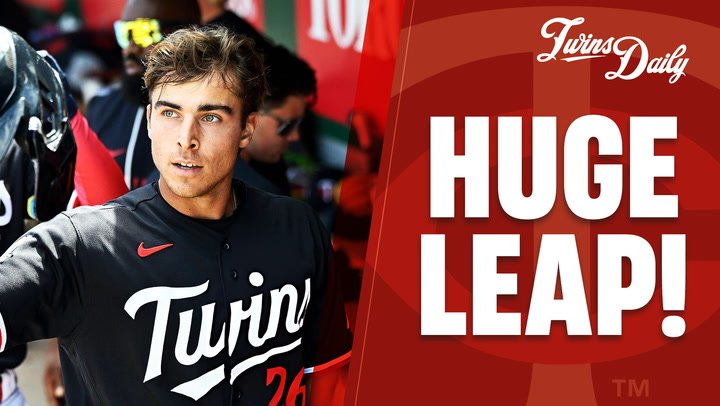 Marek Houston is off to a phenomenal start to the 2026 season and has made strides in every facet of his game. The Wake Forest product has the makings of a future star. View the full article
 -
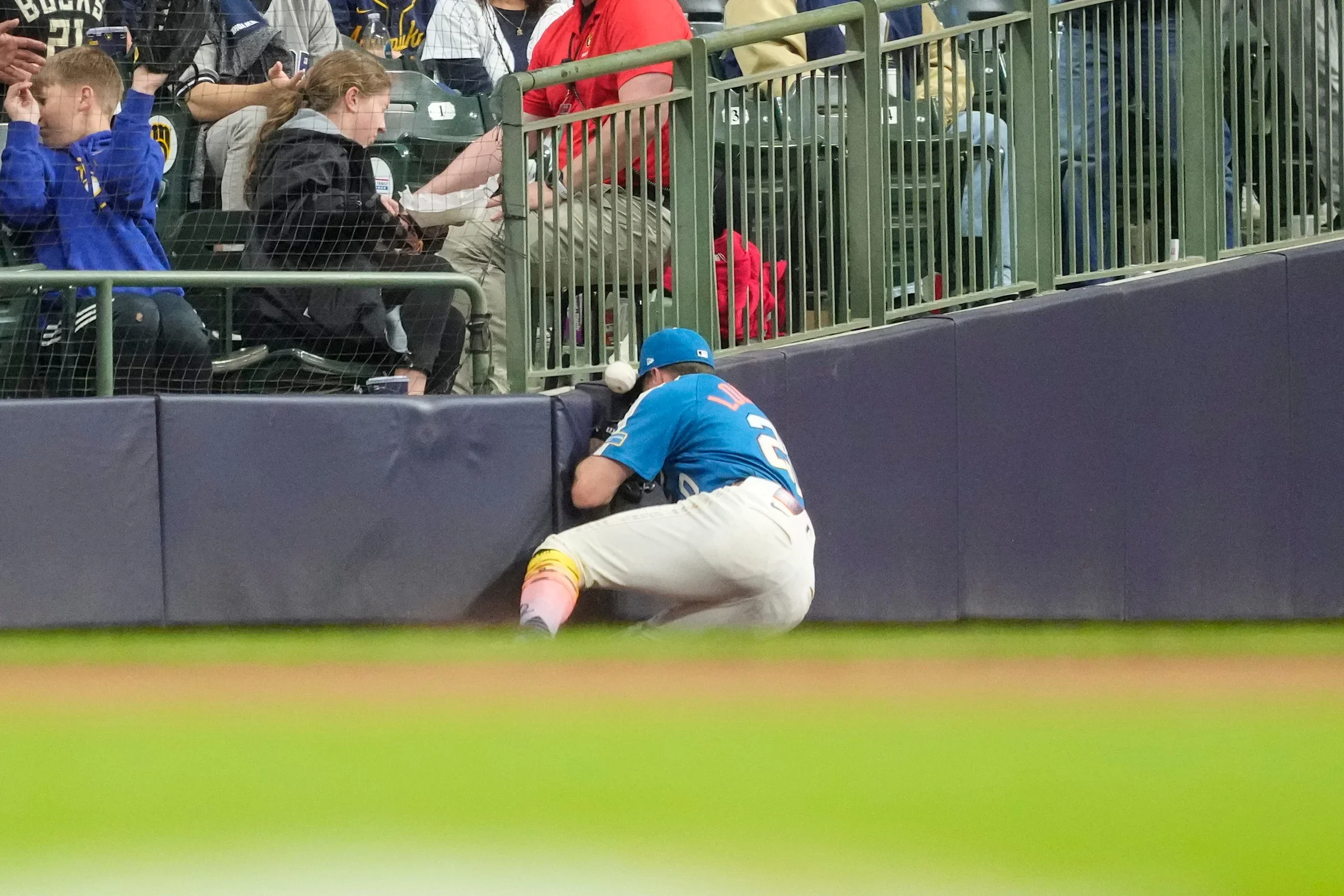 In agate font in newspapers across the country on August 1, 2025, the following transaction was whispered: The San Diego Padres acquired LHP Nestor Cortes, SS Jorge Quintana, and cash considerations from the Milwaukee Brewers in exchange for OF Brandon Lockridge. I'm not sure how anybody else felt about this, but my initial thought was 'meh.' Lockridge appeared in 20 games (13 starts) in the month of August, posting a below-average slash line of .261/.308/.370 across 53 plate appearances before getting demoted to Triple-A Nashville in September. He reappeared in the playoff run against Chicago and Los Angeles but only batted twice, going hitless in four games. During the offseason, Lockridge was considered to be in the outfield mix in Milwaukee, either as a possible starter or, most likely, the fourth or fifth OF. I was not a fan, but felt like he could get a couple of starts each week and enter contests as a pinch-runner or defensive replacement as needed. But as a full-time starter? No way. Way. Lockridge has played in three-quarters of the Brewers' games this season, starting 23 of the 28 games he has been involved in. His slash line (through May 8) reads like the line of a solid major league starter: .294/.368/.341. Lockridge will never be mistaken as a power hitter, but has been 'clutch' with two outs and runners in scoring position (RISP), slashing .533/.588/.667 in a small sample of 15 at-bats. To put it into perspective, those numbers are far better than the 'clutch' numbers this year of both Aaron Judge and Shohei Ohtani, each widely considered as fearsome batters when the game is on the line. But all that success has been temporarily put on hold after Lockridge suffered a horrific injury in Friday night's game against the New York Yankees at Uecker Field. Playing full-bore as he always does, Lockridge, playing left field, ran full speed in an attempt to corral a foul drive off the bat of Cody Bellinger in the fourth inning. Realizing he was rapidly running out of real estate, Lockridge dropped into a slide, which resulted in his slamming his right knee into the unpadded section of wall, one made of concrete. Lockridge tossed off his glove and lay face down for a couple of moments before the training staff and manager Pat Murphy arrived to offer assistance. After being helped to his feet, Lockridge was carted off the field by medical personnel, disappearing through a gate in the left field fence. So what is known? Lockridge suffered a deep laceration down to the bone, as evidenced by blood on his sanitary sock. X-rays were negative for broken bones, but further tests will be performed as the swelling in his leg decreases. Saturday, the Brewers placed Lockridge on the 10-day injured list, recalling Blake Perkins from Triple-A Nashville to replace the fallen Brewer. This injury begs the question: when will the Milwaukee Brewers organization pad the wall from top to bottom? I seem to remember this type of injury happening to a Brewer outfielder (Sal Frelick, maybe?) in right field foul territory not that long ago. C'mon, Mark Attanasio, spend a couple of grand to protect your players! Brandon Lockridge, please forgive me for doubting you. I hope you can quickly return and keep up the great play that you have shown us for the first quarter of the season. I want to dedicate this column to my good friend Bob Garski, who passed away on April 30 at age 69. He was a bigger Brewer fan than I am. Rest In Peace, Bob, and keep cheering on the Crew in Heaven. View the full article
 -
 Affiliate Overview Triple-A Iowa Cubs Series vs. Columbus Clippers (Cleveland Guardians): Tied, 2–2 Season Record: 17–19 Double-A Knoxville Smokies Series vs. Birmingham Barons (Chicago White Sox): Smokies lead, 3-0 Season Record: 16–15 High-A South Bend Cubs Series vs. Lansing Lugnuts (Athletics): Cubs lead, 4-0 Season Record: 16–12 Single-A Myrtle Beach Pelicans Series at Hickory Crawdads (Texas Rangers): Pelicans lead, 3-1 Season Record: 16–15 Affiliate Highlights Triple-A: Iowa Cubs Season Record: 17–19 Series Opponent: Columbus Clippers (19–18) Series Standing: Tied, 2-2 May 8: The Iowa Cubs evened their series against the Columbus Clippers with a 13-12 victory on Friday night at Principal Park. The Clippers took a 6-0 lead with two runs in the first and four in the second before the Cubs were able to plate two in the second. Iowa’s offense erupted with six runs in the fourth to take an 8-6 lead. Jonathon Long (3-for-4) drew a walk with the bases loaded, and James Triantos (2-for-5) then followed with a two-run single. Owen Miller’s (3-for-5) first home run of the season, a three-run blast, gave the I-Cubs the lead. Iowa added to their advantage with three more in the fifth, with Justin Dean (2-for-5) launching a two-run shot and Kevin Alcántara (1-for-5) and Long picking up RBI-singles. Eric Yang (1-for-5) made it 12-6 in the sixth with a solo home run, his third of the season. The two teams traded runs in the eighth, with Miller hitting his second home run of the campaign. Columbus scored five times in the ninth and would put the go-ahead run on first, but Iowa was able to hold on for the 13-12 win. Double-A: Knoxville Smokies Season Record: 16–15 Series Opponent: Birmingham Barons (14–17) Series Standing: Lead, 3-1 May 8: The Knoxville Smokies earned at least a series split by sweeping their doubleheader over the Birmingham Barons, winning the opener, 8-1, before escaping with a 3-2 victory in the nightcap. Game 1: Despite being held to just one hit in the ballgame, the Smokies were able to come away with an 8-1 victory to open the twinbill, benefitting from 10 walks at the plate. Knoxville took a 1-0 lead in the third when Jefferson Rojas (0-for-3) drew a walk with the bases loaded. The Smokies took a commanding 8-0 lead with a seven-run fourth, scoring once on a wild pitch, drawing four walks with the bases loaded, and Owen Ayers (1-for-2) clearing the bases with a three-run double. The Barons finally got on the board in the sixth, but the hosts would prevent them from rallying further and cruise to a 1-0 lead. Brooks Caple took no decision in his start, firing 3 2/3 innings of scoreless baseball, allowing just two hits and striking out six. Marino Santy picked up the win in relief, tossing 2 1/3 frames of one-run ball, yielding two hits and whiffing four. Game 2: Knoxville rode their dominant pitching in game 1 into game 2, with the pitching staff allowing just two runs on three hits to help the squad to a 3-2 win and a doubleheader sweep. After the two teams traded zeroes through two, the Smokies took the lead in the third on Jordan Nwogu’s (2-for-3) RBI-single, with another run scoring on an error during the play. Nwogu would eventually collect his second RBI of the contest in the fifth, giving Knoxville a 3-0 lead. The Barons would score twice in the seventh and bring the go-ahead run to the plate, but Tyler Santana was eventually able to shut the door and convert his first save of the season in multi-inning fashion. Dawson Netz improved to 2-0 on the campaign by firing five scoreless innings in his start, allowing no hits and striking out eight. High-A: South Bend Cubs Season Record: 16–12 Series Opponent: Lansing Lugnuts (11–20) Series Standing: Lead, 4-0 May 8: The South Bend Cubs extended their winning streak to four games and clinched a series win over the Lansing Lugnuts with a 14-6 comeback victory on Friday night at Four Winds Field. The Lugnuts took a 2-0 lead after the first and added another run in the third. The Cubs got on the board in the bottom half of the frame when Christian Olivo (4-for-4) raced home on a passed ball. Olivo would pull South Bend within a run by drawing a walk with the bases in the fourth, and Kane Kepley (0-for-5) followed by getting hit by a pitch to tie the game at 3-3. The Cubs took control of the game by scoring five times in the fifth to take an 8-3 lead. Matt Halbach (1-for-2) and Leonel Espinoza (2-for-5) plated runs with RBI singles, and Olivo slugged a three-run blast, his third of the season. Six more runs from South Bend put the game well out of reach, with Alex Madera (3-for-5) and Justin Stransky (1-for-4) each having hits that drove in two runs and Olivo going yard again, this time a two-run shot. Lansing scored three in the ninth and was eventually handed the 14-6 defeat. Kenyi Perez picked up the win in relief to improve to 1-0 on the season. He allowed no runs and no hits over 1 2/3 innings of work, striking out five. Ethan Flanagan converted a four-inning save, his second of the year, allowing three runs on seven hits and whiffing five batters. Single-A: Myrtle Beach Pelicans Season Record: 16–15 Series Opponent: Hickory Crawdads (17–14) Series Standing: Lead, 3-1 May 8: The Myrtle Beach Pelicans clinched at least a series split with a 6-2 victory, in 10 innings, over the Hickory Crawdads at L.P. Frans Stadium. Darlyn De Leon’s (1-for-3) first home run of the year in the second gave the Pelicans the lead, and Josiah Hartshorn (2-for-4) followed with a solo shot of his own in the third to put Myrtle Beach up 2-0. Dominick Reid, who did not factor in the decision, posted five scoreless innings in his start, allowing just one hit and striking out six without issuing a walk. The Crawdads evened up the contest in the eighth, and the ballgame would eventually head to extras. In the top of the 10th, Alexey Lumpuy (2-for-5) put the Pelicans in front with an RBI-single, and Michael Carico (0-for-4) added to the lead with an RBI-groundout. Jose Escobar (2-for-5) delivered the decisive blow with a two-run double to make it 6-2. Jordan Henriquez retired the side in order in the bottom half of the frame to improve to 2-1 on the season. Henriquez retired all six of the batters he faced, striking out four. View the full article
