


DiamondCentric
-
Posts
2,631 -
Joined
-
Last visited
Never
Content Type
Profiles
Forums
Events
News
Tutorials & Help
Major League Baseball Videos
Guides & Resources
Store
Downloads
Gallery
Everything posted by DiamondCentric
-

Brooks Lee Might Be Part of the Next Good Twins Team After All
DiamondCentric posted an article in Twins Daily
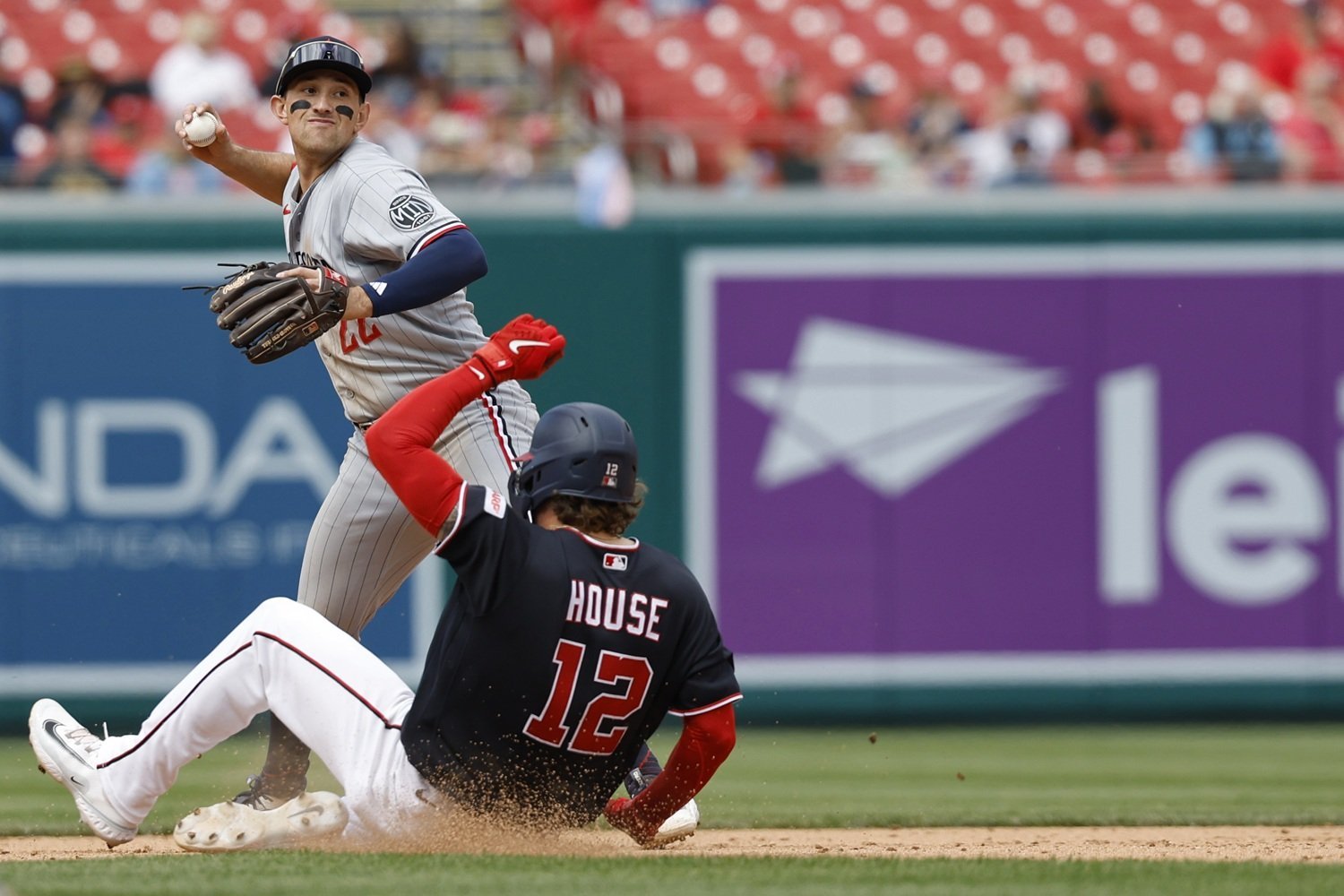 Brooks Lee hit the ground running faster than Cole Thomas Allen down a Washington Hilton hallway over the first week of his major league career, hitting .458/.462/.625 with a 206 wRC+ over 26 plate appearances. The switch-hitting infielder quickly cooled off, however, hitting a far less impressive .182/.233/.270 in 159 plate appearances over the final three months of the season. The eighth overall pick in the 2022 MLB Amateur Draft sputtered last season, too, hitting a modest .236/.285/.370 over 527 plate appearances. Netting a well-below-league-average 75 wRC+ over his first season-and-a-half in the majors, Lee also struggled in the field, netting -6 Outs Above Average (OAA) during that stretch, causing those who follow the club to question if he was playing his way out of the Minnesota Twins' long-term plans. Through 36 games played this season, however, the 25-year-old has broken out at the plate, rekindling the flame of optimism surrounding the former top prospect. Over 136 plate appearances, Lee is hitting .278/.331/.437 with a 114 wRC+. The Cal Poly product has also hit five home runs, continuing the plus-power profile he flashed during his sophomore campaign last season, in which he hit 16 dingers. Some of the same weaknesses remain in Lee’s player profile, particularly defensively, despite last night's heroics. Minnesota’s shortstop has netted -4 OAA, making him the fifth-worst defender at the position this season. He also has one of the weaker arms of all middle infielders in baseball, continuing a career-long trend. Still, Lee performing like one of the best offensive shortstops in the sport has largely offset his defensive shortcomings, making him one of Minnesota’s steadiest presences early this season. The past two seasons, Lee struggled from the left side of the plate, posting a 68 wRC+ over 482 plate appearances. The switch-hitting shortstop has performed dramatically better while hitting left-handed in 2026, hitting .291/.333/.456 with a 119 wRC+ over 84 plate appearances against righties this season. Right-handed pitchers are throwing Lee more strikes this season. At the same time, Lee has been more aggressive on balls in the zone than in the past two seasons, often pulling the ball hard and in the air. Lee excelling as a left-handed hitter while holding his own from the right-handed batter’s box (106 wRC+ over 52 plate appearances) has resulted in the best month-and-a-half stretch of his young career, signaling he has finally blossomed into an above-average regular. The 2026 Twins are not a good baseball club. In fact, they might be one of sport’s worst. Still, there will be a time when the seeds of the next Good Twins Team poke their head out of the dirt, germinate, and blossom into a postseason-contending 26-player collective. It just won’t be this season—or next; and maybe not even the next after that. Yet, if the progress Lee has demonstrated at the plate this season proves sustainable, he could be a core member of that club. View the full article
 -
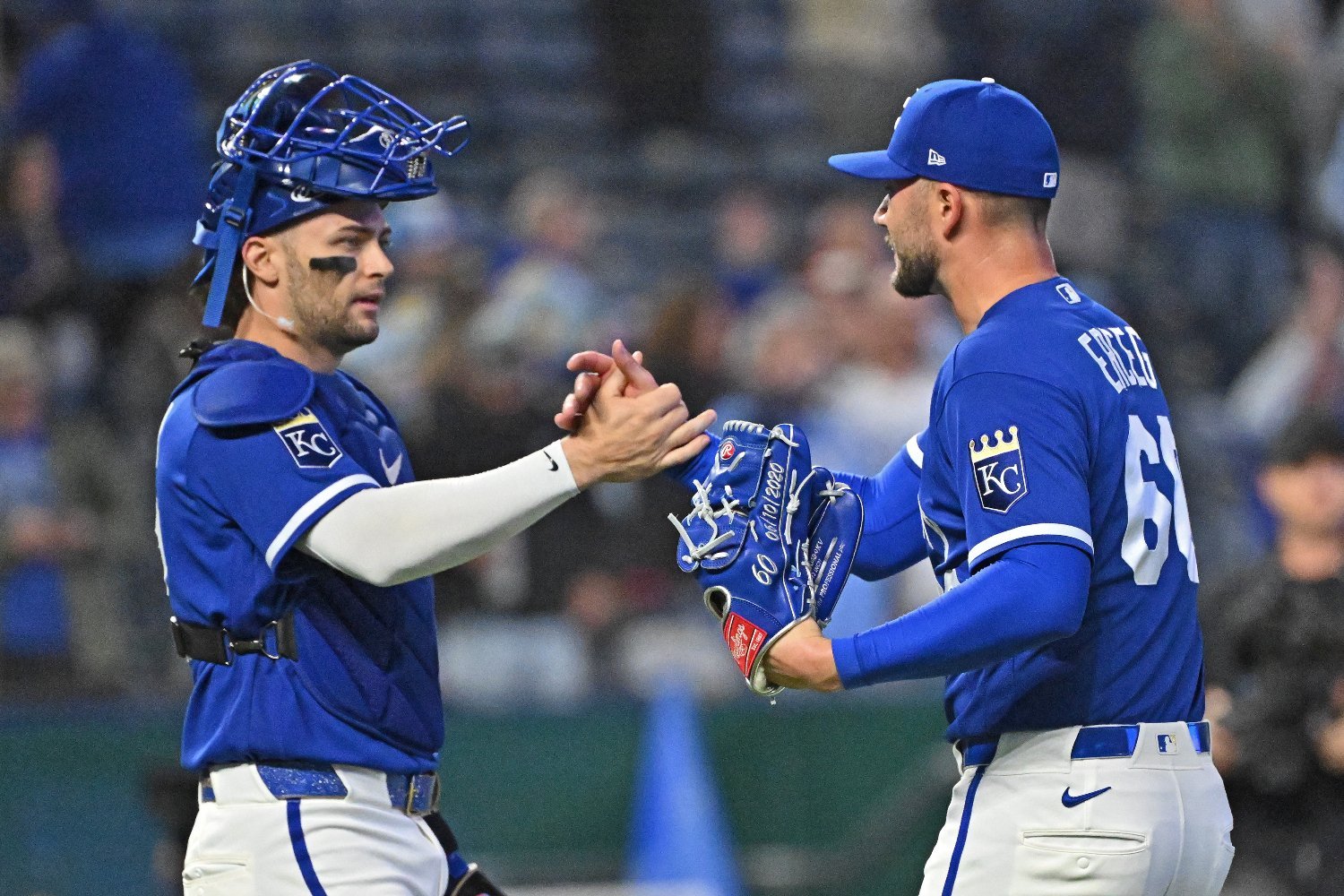 Initially seen as a backup going into the 2026 MLB season, Carter Jensen has ended up receiving most of the catching duties recently due to minor injury issues to Salvador Perez. While Perez's issues haven't required a stint on the IL, Jensen has actually surpassed Salvy in catcher innings this season, as seen in the fielding data table below. It's interesting to see the kind of plays where Jensen has struggled. In addition to having a higher BAA/G this year (-0.41) compared to a season ago (-0.38), he has particularly struggled on easy and tough pitches. His BAA on easy and tough pitches is a combined -6. His BAA on medium pitches has been slightly better at -2, but that mark isn't good either. An interesting comparison is Melendez, who was poor as a blocker as well in 2022, when he played the most catcher at the MLB level. According to Savant, he posted a -26 BAA mark and a -0.35 BAA/G mark in 2,932 block opportunities. That lackluster blocking ability was a big reason why the Royals opted to move Melendez to the outfield full-time in 2023. The main difference between Jensen and Melendez is that Jensen was a much better framer. In 2022, Melendez produced -16 catcher framing runs and had a 41.7% shadow strike rate. That's a far cry from Jensen's framing numbers this year. Thus, it made more sense to move Melendez to the outfield based on his framing and blocking struggles, while Jensen really only struggles in blocking. What Does the Future Look Like for Jensen Behind the Plate? Jensen is getting all the opportunities to show he can be the Royals catcher long-term. While Salvy isn't a 100 percent, he's been showing his age this season. After another 0-for-3 performance, the Royals captain is hitting .191 with a .555 OPS, and the Statcast percentiles don't look encouraging either. As for Jensen, he's been on a bit of a cold streak, as he's hitting only .111 with a .374 OPS in 31 plate appearances in May. However, he's been trending up this weekend in the series against the Tigers, and his Statcast percentiles have been much better than Perez's this season, especially in terms of bat speed and exit-velocity ability. What will be key for Jensen going forward and succeeding Perez as the full-time catcher will rest on his blocking and how that develops. I know some have pointed out that pitchers have had a better ERA with Perez than Jensen, which some say points to his game-calling. However, catcher ERA is not a sticky metric and is often influenced more by pitcher quality than by a catcher's game-calling ability (this Reddit thread provides a good breakdown of the topic). In terms of blocking, I do believe part of that is due to form and just adjusting to being an MLB catcher. There are some blocks that seem more mental, resulting from losing concentration in key moments. We saw during the Tigers game on Friday that Jensen was unable to make an out because the ball popped out of his glove on a throw from Bobby Witt Jr. Below is a video example. I believe many of Jensen's passed balls and struggles with blocking stem from issues similar to those seen in the clip above. He can physically do it. It's just having the concentration and mental fortitude to do it night after night, which is easier said than done. That said, the only way for Jensen to get better at blocking is to get more experience and innings behind the plate. With Salvy out, that's happening. While that's causing some struggles now, it will help him blossom more as a player when he gets older. With his hitting, throwing, and framing ability, can Jensen be at least an average blocker in the next 2-3 years? If so, he could be an All-Star catcher sooner rather than later. View the full article
 -
Struggling Marlins power largest comeback win of the season
DiamondCentric posted an article in Fish On First
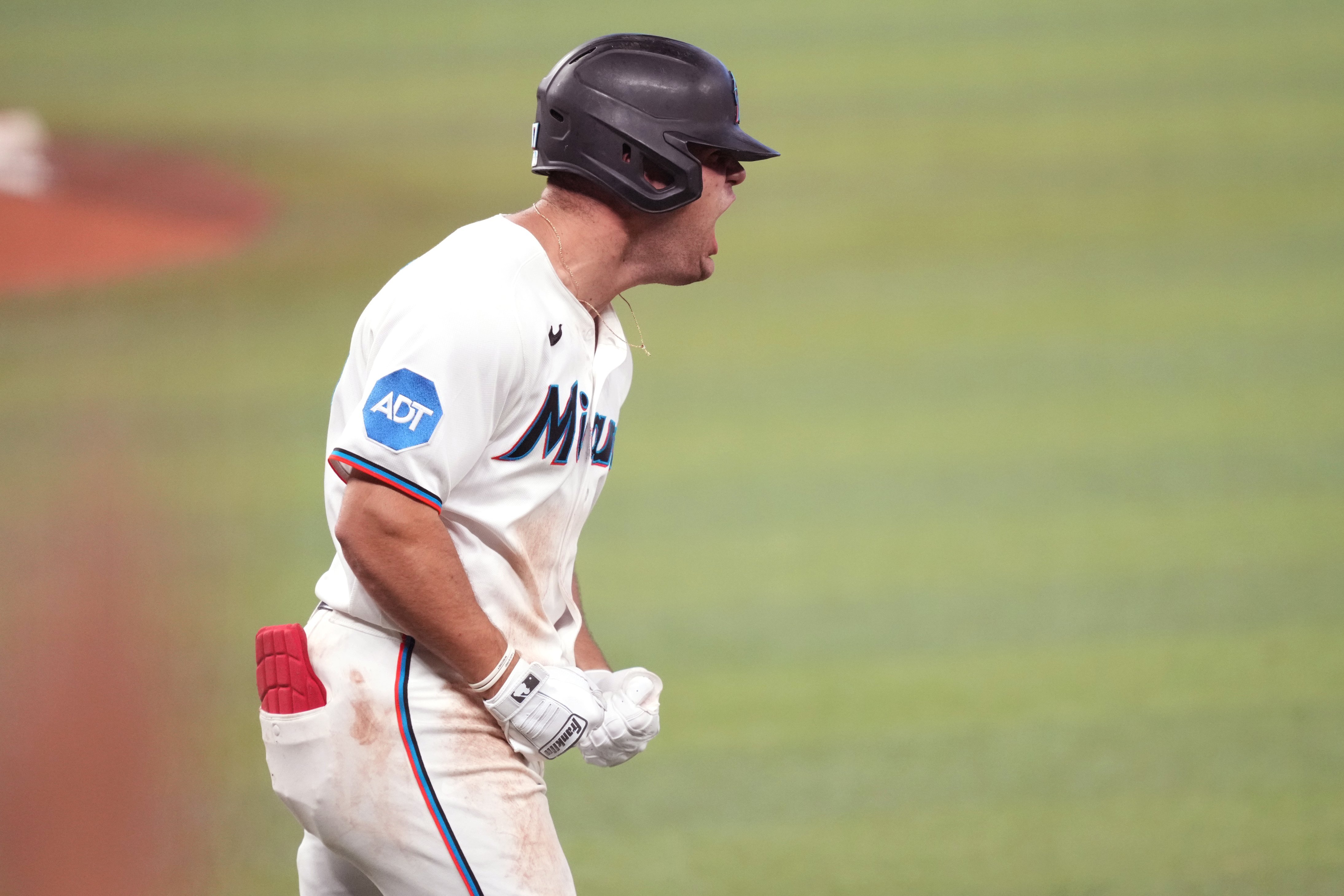 MIAMI, FL — Game two against the Washington Nationals began to look like a repeat of game one, as the visitors took an early 4-0 lead. The Miami Marlins climbed back to tie the game at 4-4 thanks to home runs from Kyle Stowers and Xavier Edwards. It was unlikely hero Jakob Marsee who hit the go-ahead homer in the bottom of the eighth inning. Despite some stress in the top of the ninth, the Marlins held on for an 8-7 win, marking their largest comeback win of the season. Stowers, the Marlins' 2025 All-Star, suffered a right hamstring strain during spring training that kept him out for the 20 games of the season. He entered Saturday slashing .206/.296/.254/.550 with one RBI and a 56 wRC+. Stowers went 0-for-4 with three strikeouts in the first game of the series, but Marlins manager Clayton McCullough felt like his final at-bat was "an encouraging one." Kyle Stowers hit his first home run of the season in the bottom of the fourth inning. He took Nationals pitcher Zack Littell deep to the second deck in right field. "He seemed like less in between," McCullough said after Friday's game. "He got some swings off and I think the Kyle that we know is someone who's incredibly convicted in his approach. Kyle is smart, and he goes into an at-bat generally knowing what he's looking for, where he's looking for it. Trust his eyes to lay off and just feeling for it a little bit to me. Looked like early on and then the last one, I think he got in there and got off some much more aggressive and convicted swings." He finished the game going 3-for-4 with a home run and two RBI. It was his second three-hit performance of the season. "I think just coming in with a plan was the difference for me," Stowers said. "When it comes to committing to a plan, there are areas in which you're still gonna give up, so once you get beat, it's making sure that there's a hill that you're willing to die on." In what looked like a replay of Edwards' third home run of the season from Friday night, he took Nationals reliever Mitchell Parker 422 feet deep to left field, tying the game at four apiece. It was his longest MLB homer in terms of distance and set a new career-high for most homers in a single season. It also marked the first time in his career that he has hit a homer in back-to-back games. Right-handed hitting was a weakness in 2025 for the switch-hitting Edwards. This year, he has an incredible .342/.405/.526 slash line from that side. "I like to treat both sides like two different hitters, so that's what I'm trying to do," Edwards said. "Got rid of my toe tap on the right-hand side, and kind of freed me up a little bit. My body moves different on the right-hand side, so let's try to treat it like that." With the game tied in the bottom of the eighth inning, Stowers knocked in his third hit and Connor Norby worked a walk. Jakob Marsee, who many have been calling for him to be sent back down to Triple-A as he entered Saturday's game with a 67 wRC+, hit a go-ahead three-run homer to give the Marlins a 7-4 lead. "Confidence is a weird thing," Clayton McCullough said postgame. "You're never quite sure where it's going to come from. Hopefully having some moments and coming through will certainly help spark that. I think also that is going to getting back to what we believe and what they think will lead to the opportunity to have success, and that's just getting there with some conviction in the box and being ready to go. If you get something that you like to get some swings off and not be so worried about it needing to be the perfect pitch, or what the pitch is—just having a plan and letting it go." For Marsee, his faith and his support system have helped him get through this slump to begin 2026. "Just trusting that everything happens for a reason," Marsee said. "It's all gonna work how it's supposed to, so that's been huge. These guys here every day have been huge for me. Then people back home that care and support me, so to have them is huge." Esteury Ruiz hit a double in the ensuing at-bat, stole third (sixth stolen base of the season) and Leo Jimenez drove him in on a sac fly to center field, extending he lead, 8-4. In six innings of work, Junk allowed four runs on seven hits, two walks and six strikeouts. Three of the four runs Junk allowed came in the top of the first inning when James Wood hit his 11th home run of the season and CJ Abrams knocked in his league-leading 36th RBI of the season. Four of Junk's sixth strikeouts came on his fastball, which he threw 37% of the time. All of those four strikeouts came looking. He also landed his fastball six out of 10 times for a first-pitch strike (60%). Where Junk struggled was surrendering a season-high 10 hard-hit balls. Of those 10, four of them came on the fastball. Michael Petersen, who entered into a pretty comfortable situation, leading 8-4, allowed three runs in the top of the ninth inning. After finally getting two outs, McCullough summoned lefty John King out of the bullpen to get the final out of the game. King earned his first career save in what was his 11th consecutive scoreless outing. With the win, the Marlins improve to 18-22 on the season while the Nationals drop to 19-21. Sandy Alcantara will get the nod for Miami in the rubber match on Mother's Day. First pitch is at 12:15 pm and the game will be aired exclusively on Peacock. It'll be the first of back-to-back Sunday games aired on that streaming service. View the full article
 -
 TRANSACTIONS The Twins placed RHP Taj Bradley on the Injured List with a sore right pectoralis muscle. Taking his place on the roster is RHP Travis Adams. In addition, Dan Hayes reports that LHP Kendry Rojas is with the team, on the taxi squad, and could be activated before Sunday’s game. The Twins have now signed their third player from Lew Ford’s Long Island Ducks. They have signed catcher Caleb Roberts. In 15 games this season for the Ducks, the 26-year-old is hitting .339 with an OPS of .948. He is expected to report to the Wichita Wind Surge. Roberts was the fifth-round pick of the Arizona Diamondbacks in 2021 out of North Carolina. He ended the 2022 season with nine games in Double-A Amarillo. In 2023, he hit .278/.382/.523 (.906) with 23 doubles, eight triples and 17 homers. He played 42 games in left field, caught 30 games and made starts at first base (7) and right field (6). He went to the Arizona Fall League that season. He returned to Amarillo in 2024, and in 113 games, he hit .243/.339/.454 (.793) with 20 doubles, four triples, and 20 homers. In that season, he caught 62 games and played one game each at first base and left field. Then for some reason, he returned to Amarillo in 2025. In 104 games, he hit .237/.327/.388 (.715) with 21 doubles, three triples, and 10 homers. He only caught one game (and just two innings) that season. He started 64 games in left and a dozen in right field. RHP Yael Retituyo was released from the DSL Twins roster. SAINTS SENTINEL St. Paul 13, Las Vegas 8 Box Score It was a bullpen game for the Saints on Saturday, but as they have been most games of late, the Saints offense continues to put up big numbers. In fact, the Saints scored at least two runs in five of the first six innings. In the first inning, Gabriel Gonzalez walked with one out. With two outs, Orlando Arcia remained hot, driving his ninth double of the season off the wall in left field to drive in Gonzalez with the game’s first run. Arcia scored when Kyler Fedko reached on an error. The first two batters in the third inning got out, but Ryan Kreidler and Orlando Arcia followed with singles. An errant pickoff throw allowed both runners to advance. Fedko lined a single to center to drive in both runners and make it 4-1. The top of the fourth inning began with an Aaron Sabato home run. It was his seventh home run of the season and fifth this week in Las Vegas. With one out, Kaelen Culpepper doubled and went to third on a fly out. Ryan Kreidler drilled his fifth home run of the season to give the team a 7-3 lead. Trent Baker started and went the first two innings. He gave up a solo home run to Michael Stefanic in the second inning. Raul Brito pitched the next two innings. He gave up two runs (1 earned) on three hits (including a solo home run by Henry Bolte). The top of the fifth inning began with walks by Kyler Fedko and Hendry Mendez. Alex Jackson drove in Fedko with a single to center. With one out, Ben Ross drove a double off of the wall in the left center field gap to drive in two more runs and make it 10-3. Aaron Sabato came to the plate with the bases loaded in the top of the sixth inning. He muscled a soft liner into center field to drive in Fedko and Mendez. Marco Raya worked the fifth and sixth innings. He gave up one hit over two scoreless innings. He had three strikeouts. Grant Hartwig gave up four runs on five hits and a walk in 1 1/3 innings. Jon Brebbia got the final five outs, though he gave up a run on three hits. He struck out three. The Saints added one run in the eighth inning on Alex Jackson’s sixth home run. Aaron Sabato went 2-for-5 with his seventh home run and three RBI. He has had 12 RBI in these five games in Vegas. He is 10-for-22 this week with two walks, two doubles, five home runs and 12 RBI. When the week began, he was hitting .229/.296/.458 (.754). Following Saturday night’s game, he is now hitting .300/.359/.700 (1.059). Ben Ross went 2-for-3 with two walks and his fifth double. Alex Jackson went 2-for-4 with a walk and his sixth homer. Ryan Kreidler went 2-for-5 with a walk and his fifth home run. Orlando Arcia went 2-for-4 with his ninth double. Hendry Mendez went 2-for-4 with a walk. Kyler Fedko went 1-for-4 with two walks and stole his fifth base. Gabriel Gonzalez also walked twice. Last night, I wrote about A’s prospect Henry Bolte. On Friday night, he went 5-for-5 with two doubles, a triple, and two home runs. On Saturday night, he went 5-for-5 with two doubles, two home runs and five RBI. He had singles in his final two at-bats on Thursday night. He set the franchise record with hits in 12 straight at-bats. WIND SURGE WISDOM Wichita 7, Amarillo 9 (10 innings) Box Score The Wind Surge jumped out to an early lead in this game. A five-run first inning is always helpful, but they also scored a sixth run in the top of the second for an early 6-0 lead. What could go wrong? With one out in the first, Kyle DeBarge walked and stole second base. He advanced to third base on a wild pitch, but there were two outs. Billy Amick came up and grounded to third base, but a fielding error allowed Amick to reach and DeBarge to score the first run. More importantly, the inning continued and the Wind Surge took advantage. Jake Rucker lined a single. Andrew Cossetti singled to center to drive in Amick with the second run. Murphy Stehly reached on a throwing error. Rucker scored on the play. Cossetti scored on a Jorel Ortega single. Then Maddux Houghton singled in Stehly and the Surge had a 5-0 lead. The second inning began with a DeBarge walk. Ricardo Olivar singled. They each advanced on a double steal. DeBarge scored the sixth run on a sacrifice fly by Jake Rucker. The Sod Poodles fought their way back with two runs in their half of the second and single runs in the third and fourth innings. The Wind Surge added a run in the top of the fifth frame. Rucker singled and stole second. Cossetti walked. After a pitching change, the runners advanced on a wild pitch. Rucker scored on a Jorel Ortega sacrifice fly to bump the lead to 7-4. Ricky Castro started and gave up three runs on five hits and three walks in 2 1/3 innings. He struck out four. Jacob Wosinski came on and gave up just one run on two hits over 2 2/3 innings. Alejandro Hidalgo pitched a scoreless sixth inning, but he gave up three runs (2 earned) in the seventh inning. He gave up five hits and walked two over his two innings. Jaylen Nowlin struck out two batters over two perfect innings. Tied at seven, the game went to the 10th inning. The Wind Surge were unable to even move the Manfred Man to third base. In the bottom of the 10th, Kyle Bischoff came on and gave up a leadoff, two-run homer to end the game. The Wind Surge had nine hits in the game. Ricardo Olivar, Jake Rucker, Andrew Cossetti, and Maddux Houghton each had two hits. DeBarge walked twice and stole his 10th and 11th bases. KERNELS CHRONICLE Cedar Rapids 6, Quad Cities 3 Box Score There was a lot of good pitching in this game. Of the 18 half-innings, 14 of them resulted in zero runs. The River Bandits started the scoring with two runs in the bottom of the first inning. The Kernels got on the board with four runs in the top of the third inning. Brandon Winokur was in the leadoff spot for the Kernels for the first time. He led off the first inning with a single and then led off the third inning with a single. Eduardo Tait singled, and Khadim Diaw walked to load the bases. Jaime Ferrer grounded out but Winokur scored the first run. Danny De Andrade followed with the game’s biggest hit. He launched his third home run of the season to the berm beyond the fence in left field. Quad Cities cut the lead to 4-3 with a run in the bottom of the sixth inning. Young Ramon Ramirez hit his fifth home run. The 20-year-old backstop was 2-for-3 with a walk, a triple, and a home run. He is the #7 prospect at Royals Keep. In the top of the eighth, Khadim Diaw led off with a walk. Jaime Ferrer stayed hot, hitting his eighth home run of the season. Eli Jones tossed the first five innings. He gave up two runs on four hits. He walked one and had six strikeouts. Nolan Santos went three innings and gave up just one run on one hit, a solo home run. He walked one and struck out three batters. Eston Stull came on and had one walk and one strikeout to earn his second save. Winokur led the way by going 4-for-5. De Andrade had a single to go with his huge home run. Tait went 2-for-4 with a walk. Khadim Diaw went 1-for-3 with two walks. MIGHTY MATTERS Ft. Myers 11, Tampa 9 Box Score For the second time this week, the Mussels used a big inning late to claim a lead and secure a win. Tampa scored a run in the top of the first inning, but the Mussels responded with three runs in the bottom of the first. Dameury Pena led off with a single and went to second on a passed ball. Ramiro Dominguez walked. After a successful double steal, Yasser Mercedes walked to load the bases. After a strikeout, Ryan Sprock walked to tie the game at 1-1. Quentin Young followed with a single to left field to drive in two runs and make it 3-1. Justin Mitrovich started and gave up just an unearned run on one hit and one walk. He had four strikeouts. Brian Zeldin came on and gave up four runs on four hits and a walk in 1 1/3 innings. Jake Murray came on and got five outs. He gave up one run on one hit and one walk. He had three strikeouts. Michael Hilker was next. He gave up two runs on four hits and a walk. He had three strikeouts. The Mussels scored a run in the seventh inning on a balk. Going to the bottom of the eighth inning, the team was down 8-5. The bottom of the eighth inning started with singles by Dameury Pena and Ramiro Dominguez. Yasser Mercedes drove in both runners with his second triple. Henry Kusiak walked. Then Ryan Sprock singled to left to drive in Mercedes with the game-tying run. With two outs and after a pitching change, Jayson Bass came to the plate and untied the game with a two-run triple. Byron Chourio singled to drive in Bass and give the Mussels an 11-8 lead. Mitch Mueller came in for the ninth. He gave up one run on one hit and a walk. He struck out two and earned his second save. Quentin Young went 2-for-5 with three RBI. Jayson Bass went 3-for-5 with his fifth double, first triple, and two RBI. Ryan Sprock went 2-for-4 with a walk. Dameury Pena went 2-for-6. Yasser Mercedes went 1-for-3 with two walks, a triple, and two RBI. The team also has seven stolen bases. Chourio and Dominguez each had two steals. COMPLEX CHRONICLE FCL Twins 2, FCL Red Sox 9 Box Score The Twins fell behind early on Saturday. Miguelangel Boadas made the rehab start. He gave up four runs (3 earned) on six hits over two innings. He had three strikeouts. Rainer Marin came on and gave up three runs on five hits over 1 1/3 innings. He left the game with two runners on, and Nick McAuliffe allowed both to score. He allowed two more unearned runs to score on two hits before getting out of that fourth inning. Yoel Roque came in and had three strikeouts over two scoreless innings. The Twins avoided being shutout with two runs in the seventh inning. With one out, Ricardo Pena reached on an error. Daiber De Los Santos walked, and Pena advanced to third on a wild pitch. Pena scored on another wild pitch. With two outs, De Los Santos went to third on a wild pitch. Miguel Caraballo walked. After a pitching change, De Los Santos scored on a balk for the second run. But that was it. The Twins had just two hits, and five walks is a pretty solid number. They struck out 13 times in seven innings. PLAYERS OF THE DAY Hitter of the Day Jayson Bass (Fort Myers): 3-for-5, 2B(5), 3B(1), R, 2 RBI, K Brandon Winokur (Cedar Rapids): 4-for-5, R Pitcher of the Day Marco Raya (St. Paul): 2 IP, H, 0 R, 0 BB, 3 K, 21 pitches, 15 strikes (71.4%) PROSPECT SUMMARY Check out the Prospect Tracker for much more on our Twins Top 20 prospects after seeing how they did today. #1 - OF Walker Jenkins (St. Paul) - 7 Day Injured List (left shoulder) #2 - IF Kaelen Culpepper (St. Paul) - 1-for-6, 2B(7), R, 4 K (batted first, played 2B) #3 - OF Emmanuel Rodriguez (St. Paul) - 7 Day Injured List (thumb) #4 - C Eduardo Tait (Cedar Rapids) - 2-for-4, BB (batted second, played catcher). #5 - LHP Connor Prielipp (Minnesota) - Did Not Pitch #6 - LHP Dasan Hill (Cedar Rapids) - Did Not Pitch #7 - OF Gabriel Gonzalez (St. Paul) - 0-for-4, 2 BB, R (batted second, played DH) #8 - LHP Kendry Rojas (St. Paul) - On Twins taxi squad. Could be activated Sunday. #9 - SS Marek Houston (Cedar Rapids) - Did Not Play. Missed fourth straight game. #10 - RHP Charlee Soto (Cedar Rapids) - Injured List #11 - RHP Riley Quick (Cedar Rapids) - Did Not Pitch #12 - RHP Andrew Morris (Minnesota) - 2/3 IP, 0 H, 0 R, BB, K, 11 pitches, 7 strikes (63.6%) - Will also start for the Twins on Sunday. #13 - 3B/CF Brandon Winokur (Cedar Rapids) - 4-for-5, R, (batted first, played CF) #14 - 3B/SS Quentin Young (Ft. Myers) - 2-for-5, 3 RBI, K (batted sixth, played SS). #15 - RHP Marco Raya (St. Paul) - 2 IP, 1 H, 0 R, 0 BB, 3 K, 21 pitches, 15 strikes (71.4%) #16 - OF Hendry Mendez (St. Paul) - 2-for-4, BB, 2 R, K (batted sixth, played LF) #17 - 2B/SS/CF Kyle DeBarge (Wichita) - 0-for-4, BB, 2 R, 2 K, 2 SB(11), (batted second, played SS) #18 - RHP C.J. Culpepper (St. Paul) - Did Not Pitch. #19 - C/OF Khadim Diaw (Cedar Rapids) - 1-for-3, 2 BB, 2 R (batted third, played DH) #20 - RHP James Ellwanger (Ft. Myers) - 60 Day Injured List (right elbow sprain) UPCOMING PROBABLES Sunday, May 10: St. Paul @ Las Vegas (2:05 pm CT) - RHP Ryan Gallagher (0-0, 6.14 ERA) Wichita @ Amarillo (1:05 pm CT) - RHP Ty Langenberg (0-2, 4.08 ERA) Cedar Rapids @ Quad Cities (1:00 pm CT) - LHP Dasan Hill (0-3, 8.44 ERA) Tampa @ Ft. Myers (11:05 am CT) - RHP Matthew Dalquist (0-1, 5.40 ERA) FCL Twins - No Game Scheduled. CURRENT W-L Records Minnesota Twins: 17-23 St. Paul Saints: 19-18 Wichita Wind Surge: 16-16 Cedar Rapids Kernels: 17-15 Fort Myers Mighty Mussels: 18-14 FCL Twins: 3-3 DSL Twins: 0-0 (season begins Monday, June 1) Please feel free to ask questions about the teams, the rosters, and discuss today’s games, or anything else Twins minor-league related! View the full article
 -
 Braedon Karpathios hit a walk-off homer to lift the San Antonio Missions to a 3-2 win over Midland. Clay Dungan hit a three-run homer as the El Paso Chihuahuas lost 6-3 to Tacoma. Five Fort Wayne pitchers allowed just five hits in a 3-1 TinCaps win over Beloit. Tyler Schmitt allowed one hit over six innings as the Lake Elsinore Storm hung on for an 8-6 victory over Inland Empire. Clay Dungan's 3-Run Homer Not Enough As Chihuahuas Fall Box score Clay Dungan's three-run homer in the fourth inning was the lone offense for the Triple-A El Paso Chihuahuas, who dropped a 6-3 decision to the Tacoma Rainiers. Samad Taylor went 3-for-4 to raise his batting average to .325, but the rest of the Chihuahuas combined for five hits. One of those came from Dungan, drove his three-run shot out to center for his fourth homer of the season. Nick Solak had singled and Carlos Rodriguez drew a one-out walk before Dungan drilled a 2-2 pitch over the fence. Chihuahuas left-handed starter Jackson Wolf struck out nine over five innings, but he also gave up five runs on seven hits and a walk. His nine strikeouts were the most by an El Paso pitcher this year and two shy of his career high of 11, done twice. Wolf's previous high this year was five on April 15. Right-hander Garrett Hawkins, left-hander Kyle Hart and right-hander Ethan Routzahn combined to allow just one run over the final four innings. For Hart, it was his first game with the Chihuahuas after his demotion from the San Diego Padres this week. Patrick Wisdom hit a pair of home runs for the Rainiers, his 10th and 11th for the Rainiers, and drove in three while on a rehab assignment from the Seattle Mariners. EP_0509.mp4 Braedon Karpathios Drills Walk-off Homer In Ninth For Missions Box score Braedon Karpathios crushed a two-out walk-off solo home run in the bottom of the ninth inning as the Double-A San Antonio Missions pulled out a 3-2 victory over the Midland RockHounds. Karpathios took a center-cut 2-1 pitch and drilled it over the wall in left-center field for a no-doubter, his first homer of the season. He has been off to a slow start this season after hitting three homers in 21 games with the Missions last year. His homer leaves him with a slash line of .206/.283/.318 in 30 games. Leadoff hitter Carson Tucker had three of the Missions' six hits and scored once. Missions right-handed Eric Yost yielded two runs on four hits with a pair of walks and two strikeouts over a season-high six innings. Left-hander Harry Gustin and right-hander Sadrac Franco combined to allow two hits and a walk with three strikeouts over the final three innings. Both teams scored a pair of runs in the fourth inning, with Midland getting a two-run homer in the top half. Tucker and Ethan Salas led off the inning with singles and Leandro Cedeno's walk loaded the bases. Tirso Ornelas then tied the game when he laced a double to the gap in left-center that rolled to the wall, easily scoring both runs. Both pitching staffs controlled things from there until the bottom of the ninth. Ornelas grounded out and Luis Verdugo struck out before Karpathios' heroics, his second walk-off of the season. SA_0509.mp4 TinCaps Pitchers Shine, Zach Evans Drives In Go-Ahead Run In Victory Box score Lamar King Jr. went 3-for-4 and five pitchers combined on a five-hitter as the High-A Fort Wayne TinCaps edged the Beloit SkyCarp 3-1, their ninth win in 10 games. Zach Evans continued his big series with the go-ahead single in a two-run fifth inning. Right-handed starter Abraham Parra, right-hander Luis German, right-hander Will Varmette, left-hander Braian Salazar and right-handed closer Clay Edmondson shut the SkyCarp down. Parra allowed the only run on four hits and three walks with four strikeouts in 3⅔ innings. From there, the TinCaps bullpen was virtually unhittable as German, Vermette, Salazar and Edmondson allowed just one hit and three walks while striking out five. Four of those strikeouts came from Edmondson, who got the final four out for his seventh save in as many chances. He leads all of Minor League Baseball with seven saves. He threw 18 pitches, 15 for strikes. After Beloit grabbed a 1-0 advantage in the second inning, Fort Wayne came back to take the lead in the bottom of the fifth. Jonathan Vastine had a leadoff single and Kasen Wells doubled him home with one out to tie the game. Evans then grounded a single past the shortstop and into center to drive in Wells with the go-ahead run. In the sixth, Jack Costello had a one-out double and Oswaldo Linares looped a single to shallow center that bounded away from the fielders, allowing Costello to beat the throw home for a 3-1 lead. King had his fourth game this season of three or more hits and also stole a pair of bases to give him eight this year. He also extended his on-base streak to 22 games, surpassing the longest by a TinCap this season set by Alex McCoy. Wells had two hits and a steal out of the leadoff spot. FW_0509.mp4 Tyler Schmitt Allows 1 Hit In 6 Innings As Storm Prevail Box score Right-hander Tyler Schmitt turned in his second straight standout start, allowing just one hit over a season-high six innings as the Low-A Lake Elsinore Storm jumped out to a huge lead and had to withstand a furious ninth-inning rally to beat the Inland Empire 66ers 8-6. Conner Westenberg hit a three-run homer and Jose Verdugo a two-run shot in a five-run fifth inning for the Storm. A 17th-round draft choice out of Illinois last year, Schmitt is making his pro debut this season and has turned in his best starts in his last two outings. The 6-foot-3, 200-pounder walked three and struck out five—tying his third-best K total—while throwing 73 pitches, including 47 strikes. Last week, he struck out six over five shutout innings, giving up a pair of hits, giving him 11 consecutive shutout innings. Ryan Wideman got the Storm offense going when he tripled with two outs in the top of the first inning, scoring on Justin DeCriscio's single. DeCriscio stole second and scored on Luke Cantwell's RBI single for a 2-0 lead. Then came the big five-run fifth featuring the first homers of the season for Westenberg and Verdugo to make it 7-0. In the sixth, Cantwell singled, stole second, went to third on a wild pitch and scored on Kerrington Cross' two-out single to left for an 8-0 cushion. Behind Schmitt, the Storm had the 66ers baffled. Right-handed reliever Daichi Moriki pitched a hitless seventh, with a walk and two strikeouts, and right-hander Nick Falter a hitless eighth with a strikeout. The Storm took a one-hit shutout into the bottom of the ninth, but the 66ers struck for six runs, four credited to right-hander Sean Barnett, who didn't record an out, giving up a pair of hits and two walks. Right-hander Brandon Langley eventually got the final three outs, giving up two runs. LE_0509.mp4 View the full article
 -
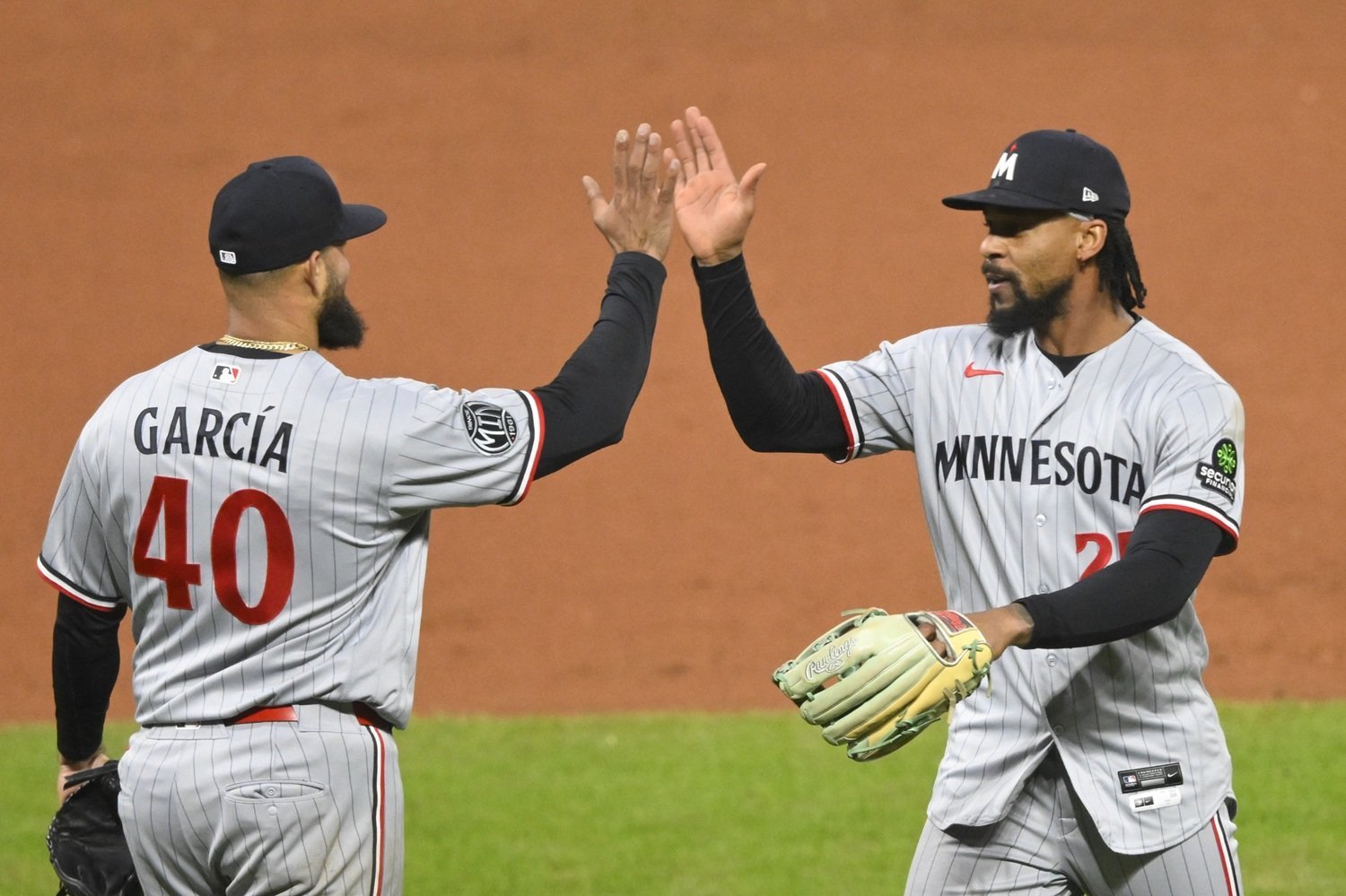 Box Score SP: Joe Ryan 6 IP, 2 H, 1 ER, 3 BB, 5 K (107 pitches, 66 strikes (62%)) Home Runs: Byron Buxton (13) Top 3 WPA (via FanGraphs): Eric Orze (0,48), Ryan (0.22), Luis Garcia (0.20) Win Probability Chart (via BaseballSavant) On the day that Taj Bradley found his way onto the IL, the Twins hoped that Joe Ryan's return to the rotation and avoidance of the IL wasn't just a mirage. After losing three in a row and finding themselves once again in the basement of the AL Central, Minnesota could not afford to lose another winnable game to the Guardians on Saturday night against a winless Tanner Bibee. The chance of thunderstorms delayed the inevitable by two hours, but baseball was played, and a result that no Twins fans expected transpired in Rock and Roll City. Buxton Rocks Byron Buxton waited and waited to get his chance to lead off against Bibee, but it only took three pitches before Byron and the Twins were out in front 1-0. Lead off homerun number 22, and homerun number 13 on the season, for number 25! Ryan Also Rocks, Even on the Rocks With the Twins' offense silenced after Buxton's homer, the pressure fell on the ace shoulders of Ryan to keep Cleveland off the board. Joe delivered consistently and efficiently in the early innings, allowing just a walk over the first three frames on only 41 pitches. The fourth inning was less efficient and definitely not as clean, as Jose Ramirez golfed a one-out single into center, stole second base, and scampered home to tie the game on a Kyle Manzardo single. A walk and a beanball created a bases loaded situation, but Ryan was able to deliver two straight strike outs to escape the inning with minimal damage. The elevated pitch count of the fourth ended up limiting Ryan to six innings on a whopping 107 pitches, but he kept the score knotted at one, which was necessary due to the fact that the Twins didn't muster any more hits after Buxton's blast. The Twins bullepn held serve through the seventh and eighth innings, with a couple of mammoth fly balls causing small panic attacks, but without any actual injury. Rocking and Rolling Into the Ninth After eight innings, the two squads had combined for three hits, two runs, and 21 strikeouts. To say the action was limited would be an understatement. The Twins hoped that red-hot Brooks Lee would be their key to the top of the ninth, but Brooks watched a 3-2 fastball go down the heart of the plate, and pinch-hitting Austin Martin and Josh Bell couldn't do anything to break the tie. Kody Funderburk started off the bottom of the ninth with two walks, and almost disasterously missed a chance to get the first out on a bunt. The Twins successfully challenged the call, and found themselves facing runners at second and third with only one out. Derek Shelton pulled Funderburk for Eric Orze, brought in Martin as a fifth infielder, and intentionally walked David Fry to load the bases. Orze induced a grounder to Luke Keaschall, and he nabbed the lead runner at the plate. Steven Kwan was next man up, and Orze was miraculously up to the challenge! Kody Clemens secured yet another three unassisted on the night to send us to bonus baseball! Extra Innings, Twins In the top of the tenth, the Twins were still looking for their second hit of the ballgame. They headed to the bottom of the tenth without finding it. Orze stayed in, and got the first out on a liner to Clemens. After intentionally and wisely walking Ramirez, Orze unintentionally walked Rhys Hoskins to load the bases. Again, Shelton brought in the fifth infielder, and this time it was Lee's turn to save the game. Orze still had to get rookie phenom Travis Bazzana to keep the Twins alive, and he did just that by inducing a fly out to a left-field-playing-again Martin to send us to the eleventh. Buxton still had the only hit of the night for the visiting team. Matt Wallner started out the eleventh as the ghost runner, and advanced to third on a "get him over" grounder by Royce Lewis. This brought up the aforementioned Buxton in a big spot. By the end of the at-bat, Buxton was still the only Twin with a hit on the night...but now it was "two." 2-1 Twins on a booming Buxton double off the left-field wall! Buxton was stranded in scoring position, and Twins fans hoped that this wouldn't come back to bite them as the much-maligned Luis Garcia got "last man standing" duty in the bottom of the eleventh with the speedy Bazzana on second as the ghost runner. Garcia got the first man with a shallow fly ball, but Bazzana stole third anyways. Fry flew out to an even shallower left field for the second out, and Garcia got Rocchio to two strikes. But Rocchio hit the kind of back-breaking seeing-eye grounder up the middle that Twins fans have seen year, after year, after year, after...oh wait! Brooks Lee equals Ballgame now! Postgame Interviews Bullpen Usage Spreadsheet TUE WED THU FRI SAT TOT Banda 19 0 20 22 0 61 Funderburk 0 17 0 22 10 49 Orze 16 0 0 16 15 47 Rogers 0 0 26 0 17 43 Garcia 13 14 0 0 13 40 Topa 0 32 0 0 0 32 Morris 0 14 0 0 11 25 Gómez 0 0 0 2 5 2 Adams 0 0 0 0 0 0 View the full article
 -
Brandon Lockridge Placed On Injured List By Brewers
DiamondCentric posted an article in Brewer Fanatic
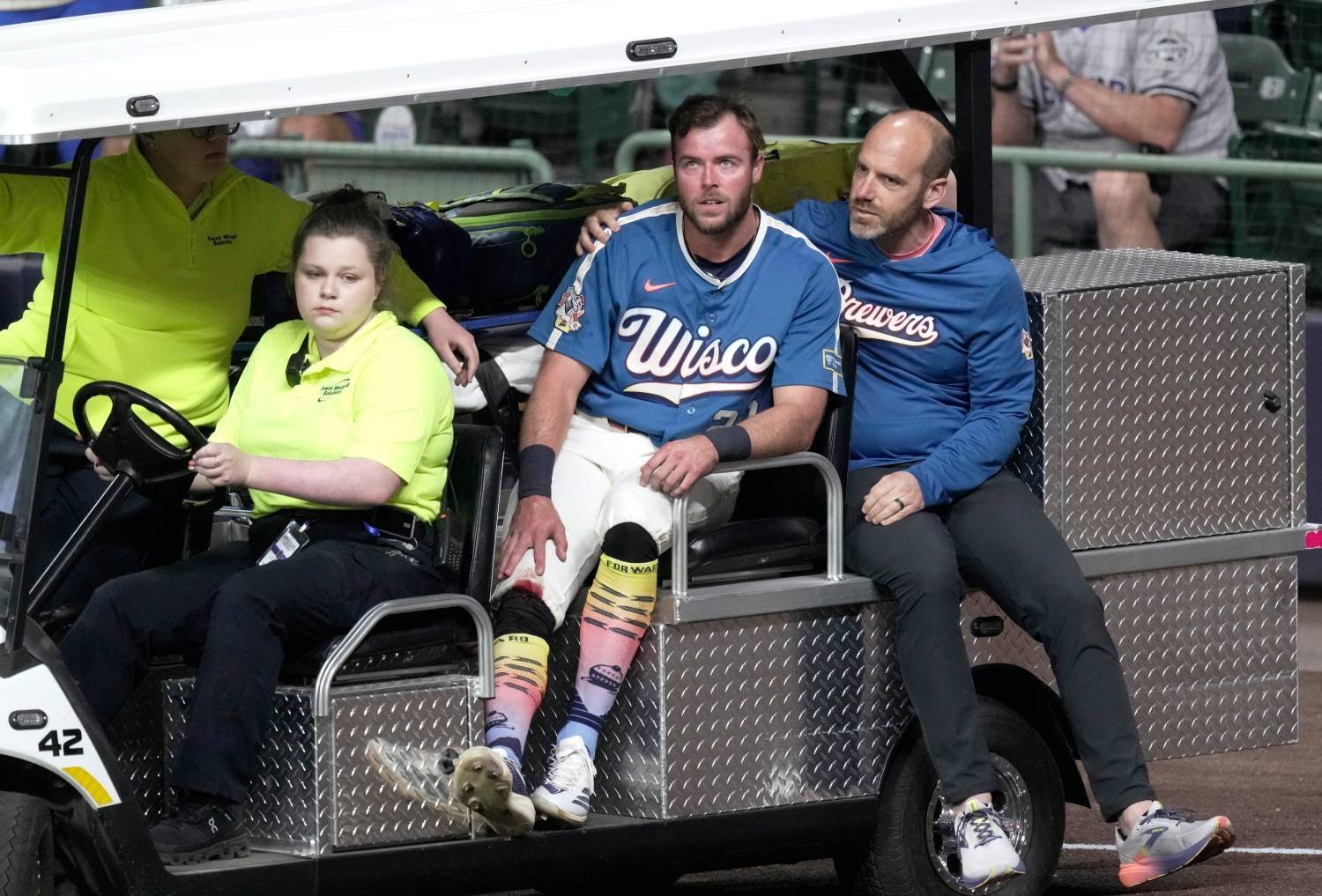 While the Milwaukee Brewers await a more definitive diagnosis, they are losing a key outfielder. Brandon Lockridge was placed on the 10-day injured list with a right knee laceration and contusion, while fellow outfielder Blake Perkins was promoted from Triple-A Nashville. Lockridge sustained a deep laceration to his right knee during Friday's game when he slid while trying to catch a foul ball and his knee slammed into the cement wall just underneath the protective padding. When asked about Lockridge's status, Brewers manager Pat Murphy said: "It’s going to be a while." The swelling in Lockridge's knee must subside before he can undergo an MRI exam to determine the extent of the injury. An X-ray did not reveal any breaks, but Murphy said the laceration went down to the bone. Since coming over at last year's trade deadline from the San Diego Padres for left-hander Nestor Cortes and shortstop Jorge Quintana, Lockridge has fit right into the Brewers' style and quickly made himself a fan favorite with his speed and aggressive pursuit of foul balls. Only this time, this one cost him. In 28 games this year, Lockridge has a slash line of .294/.368/.341 with no homers, 12 RBIs and five stolen bases. He made the Opening Day roster over Perkins, who had been the starting center fielder most of the second half of 2025 after returning from an injury. Perkins was sent down this week following the return of superstar outfielder Jackson Chourio from his fractured hand. Perkins came up when Chourio went on the IL the morning of Opening Day. While a standout defender, Perkins has struggled mightily at the plate with a .109/.212/.174 slash line. View the full article
 -
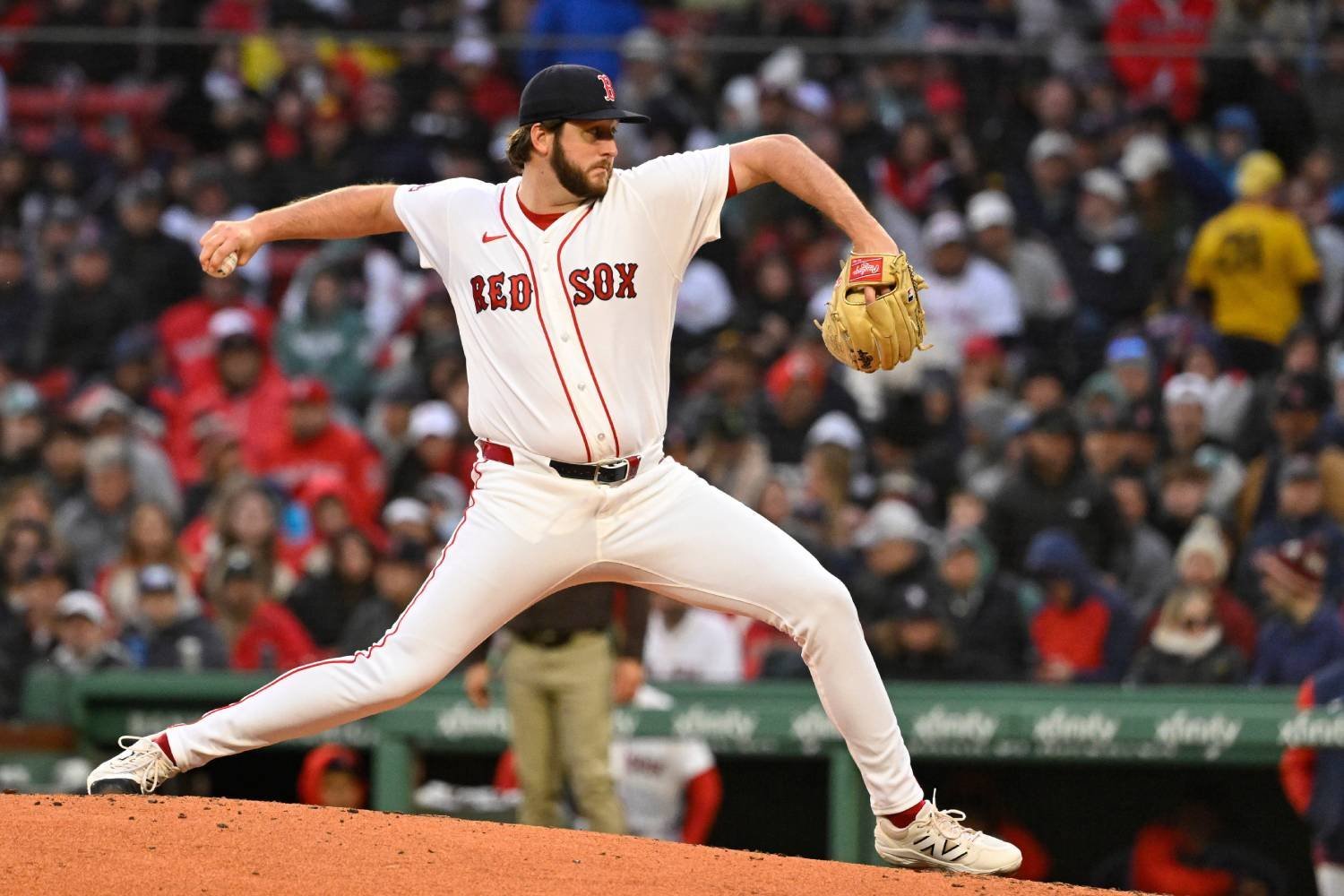 In what promises to be a busy weekend for bullpen moves, the Boston Red Sox have swapped out another arm. The Red Sox on Saturday activated right-handed reliever Justin Slaten from the 15-day injured list and optioned right-handed reliever Jack Anderson to Triple-A Worcester. Slaten was on the IL since April 8 with a strained right oblique. Anderson had just been called up Friday and didn't pitch in a 2-0 win over the Tampa Bay Rays. The Red Sox entered the weekend without a designated starter for the Saturday and Sunday games. Left-hander Payton Tolle is starting today. Slaten appeared in four games and didn't allow an earned run in 3⅓ innings, walking two and striking out five. He posted a 4.24 ERA in 36 appearances with the Red Sox last year after a 2.93 ERA in 44 games in 2024. View the full article
 -
 Jonathan Santucci spun a quality start for Binghamton, striking out seven over 6 1/3 innings, but the Rumble Ponies still fell 4-2 to Hartford. Jonah Tong fanned eight across five innings before Syracuse's bullpen faltered in a 7-5 loss to Rochester. Mitch Voit drove in four runs, and Channing Austin struck out 10 to power Brooklyn past Bowling Green 7-2. St. Lucie dropped an 11-4 decision despite Jamari Baylor's two-run homer off Lakeland. Mets Transactions No Roster Moves Bullpen Falters As Syracuse Drops 7-5 Decision To Rochester The Syracuse Mets jumped on top early but could not hold the lead in a 7-5 loss to the visiting Rochester Red Wings. Ryan Clifford led the offense with three hits in five at-bats, while Nick Morabito chipped in a hit, two RBI, and a walk. Hayden Senger collected a hit and scored a run, and leadoff man A.J. Ewing also reached on a walk and a hit. Jonah Tong worked five innings and struck out eight, allowing two runs on two hits and four walks. Syracuse had taken a 3-0 advantage out of the bottom of the fifth after Yonny Hernández walked, Senger singled, and Morabito drove both home with a two-out single to left. Rochester answered emphatically in the top of the sixth. The first batter Tong faced clubbed a leadoff home run, and Carlos Guzman entered after a Tong free pass. Guzman issued a pair of walks around a base hit, then surrendered a sacrifice fly, an RBI groundout, and a two-run home run, putting the Red Wings up 5-3 in the five-run frame. Syracuse pulled within one in the bottom of the sixth on a Hernández groundout that scored Ji Hwan Bae, and tied it in the seventh on a Christian Arroyo sacrifice fly that plated Ewing. The bullpen could not preserve the deadlock. Dan Hammer issued three walks and surrendered a two-RBI single in two-thirds of an inning, and the Red Wings carried the 7-5 lead through the ninth. Syracuse stranded seven runners. Player AB R H RBI BB K A.J. Ewing 4 1 1 0 1 1 Nick Morabito 3 1 1 2 1 1 Ryan Clifford 5 0 3 0 0 0 Christian Arroyo 3 0 0 1 0 1 Ji Hwan Bae 2 1 0 0 2 0 Cristian Pache 4 0 0 0 0 3 Yonny Hernández 3 1 0 1 1 1 Hayden Senger 4 1 1 0 0 3 Jackson Cluff 4 0 0 0 0 3 Player IP H R ER BB K HR Jonah Tong 5 2 2 2 4 8 1 Carlos Guzman 1 3 3 3 1 1 1 Luke Jackson 1 0 0 0 1 0 0 Dan Hammer 2/3 1 2 2 3 0 0 Ofreidy Gómez 1 1/3 1 0 0 1 2 0 Reimer Solo Shot Cannot Lift Binghamton Past Hartford In 4-2 Loss A quality start from Jonathan Santucci was wasted as the Binghamton Rumble Ponies fell 4-2 to the Hartford Yard Goats. Santucci pitched 6 1/3 innings, struck out seven, and allowed just one earned run on four hits without issuing a walk. He left after surrendering a leadoff home run in the seventh, and Saul Garcia retired both batters he faced to keep the deficit at one. The Rumble Ponies countered immediately. Jacob Reimer launched a solo home run to left in the bottom of the seventh to even the game. Chris Suero followed with a double, his second of the night, and came around to score on a Nick Lorusso fielder's choice that gave Binghamton a 2-1 lead. The rally ended when JT Schwartz lined into an inning-ending double play with the go-ahead runner on base. Hartford regained the lead in the top of the eighth. Ben Simon retired the first two batters before a fielding error by Lorusso put a runner on. The next hitter sent a two-run home run to right, both runs unearned but enough to pin the loss on Simon. The Yard Goats added an insurance run in the ninth on a leadoff homer off Zach Peek. Suero finished 2-for-4 with two doubles, while Reimer accounted for both Binghamton runs. Eli Serrano III collected a leadoff double, but the offense managed only four hits, and Hartford homered three times. Binghamton committed two errors that contributed to a pair of unearned runs late, and Santucci's strong outing went unrewarded. Player AB R H RBI BB K Eli Serrano III 4 0 1 0 0 1 Jacob Reimer 4 1 1 1 0 1 Chris Suero 4 1 2 0 0 1 Jose Ramos 4 0 0 0 0 2 Nick Lorusso 3 0 0 1 0 1 JT Schwartz 3 0 0 0 0 0 TT Bowens 3 0 0 0 0 1 Matt Rudick 3 0 0 0 0 0 Wyatt Young 3 0 0 0 0 0 Player IP H R ER BB K HR Jonathan Santucci 6 1/3 4 1 1 0 7 1 Saul Garcia 2/3 0 0 0 0 1 0 Ben Simon 1 1 2 0 0 1 1 Zach Peek 1 2 1 1 1 2 1 Mitch Voit Drives In Four As Brooklyn Tops Bowling Green 7-2 Mitch Voit collected two hits and four RBI to lead the Brooklyn Cyclones past the Bowling Green Hot Rods 7-2. Brooklyn struck early in the top of the second when John Bay launched a solo home run to left, and Trace Willhoite followed with a back-to-back blast to left center to put the Cyclones up 2-0. Colin Houck added a solo shot in the fourth. The decisive frame came in the sixth. Antonio Jimenez singled with two outs, Yonatan Henriquez drew a walk, and Voit doubled to right to score both. Voit struck again in the eighth with a two-run single that plated Yohairo Cuevas and Henriquez and pushed the lead to 7-2. Channing Austin worked 4 1/3 innings, allowing two runs on five hits with three walks and 10 strikeouts. He surrendered RBI doubles in the third and the fourth before leaving with two outs in the fifth. Gregori Louis followed with 1 2/3 hitless innings and picked up the win, Bryce Jenkins worked a clean seventh for a hold, and Cristofer Gomez closed out the final two innings while striking out five. Henriquez reached base three times, walking twice and singling, while Cuevas finished 2-for-4 with a double. Houck added two hits, and Bay finished with a hit, a run, and an RBI. Brooklyn collected 10 hits and three home runs but stranded nine runners. The Cyclones did not commit an error. Player AB R H RBI BB K Antonio Jimenez 5 1 1 0 0 2 Yonatan Henriquez 3 2 1 0 2 1 Mitch Voit 4 0 2 4 0 1 Corey Collins 4 0 0 0 1 2 Daiverson Gutierrez 4 0 0 0 1 2 Colin Houck 5 1 2 1 0 2 John Bay 5 1 1 1 0 3 Trace Willhoite 3 1 1 1 1 1 Yohairo Cuevas 4 1 2 0 0 0 Player IP H R ER BB K HR Channing Austin 4 1/3 5 2 2 3 10 0 Gregori Louis 1 2/3 0 0 0 0 2 0 Bryce Jenkins 1 0 0 0 0 1 0 Cristofer Gomez 2 0 0 0 0 5 0 Eight-Run Third Sinks St. Lucie In 11-4 Loss At Lakeland The St. Lucie Mets fell 11-4 to the Lakeland Flying Tigers after surrendering an eight-run third inning. Cam Tilly was lifted with two outs in the third, finishing with 2 2/3 innings, nine hits allowed, eight earned runs, two strikeouts, and two home runs. Lakeland strung together a leadoff double, two singles, a three-run home run, a triple, an RBI single, another single, and a three-run homer to chase Tilly and put the contest out of reach early. The Mets cut into the deficit in the top of the fifth. Chase Meggers singled and Branny De Oleo doubled him to third. Francisco Toledo grounded out to short to plate Meggers, and Jamari Baylor followed with a two-run home run to right center to bring his club within 9-3. AJ Salgado added an RBI groundout in the sixth that scored Edward Lantigua, but the offense produced no other runs. Lakeland tacked on two more in the eighth on a double and a triple off Christian Rodriguez to set the final margin at 11-4. Lantigua and Meggers each finished with two hits, while Baylor's lone hit accounted for two of his team's four runs. Outside of Tilly, the bullpen was steadier. Miguel Mejias worked two scoreless innings with two strikeouts, and Tyler McLoughlin added a clean inning in relief. Zack Mack surrendered Lakeland's third home run in 1 1/3 innings of work. St. Lucie left only three runners on base and committed one error in center field. Player AB R H RBI BB K Elian Peña 4 0 0 0 0 1 Edward Lantigua 4 1 2 0 0 0 Randy Guzman 4 0 0 0 0 2 AJ Salgado 3 0 0 1 1 2 Simon Juan 4 0 0 0 0 2 Chase Meggers 4 1 2 0 0 0 Branny De Oleo 4 1 1 0 0 3 Francisco Toledo 3 0 1 1 0 1 Jamari Baylor 3 1 1 2 0 1 Player IP H R ER BB K HR Cam Tilly 2 2/3 9 8 8 0 2 2 Zack Mack 1 1/3 2 1 1 0 2 1 Miguel Mejias 2 0 0 0 1 2 0 Tyler McLoughlin 1 1 0 0 2 1 0 Christian Rodriguez 1 2 2 2 1 1 0 Top-20 Prospect Performance Nolan McLean: DNP Carson Benge: DNP A.J. Ewing: 1-for-4, R, BB, K Jonah Tong: 5 IP, 2 H, 2 R, 4 BB, 8 K, HR Ryan Clifford: 3-for-5 Jacob Reimer: 1-for-4, HR, R, RBI, K Jack Wenninger: DNP Elian Peña: 0-for-4, K Mitch Voit: 2-for-4, 2B, 4 RBI, K Nick Morabito: 1-for-3, R, 2 RBI, BB, K Jonathan Santucci: 6 1/3 IP, 4 H, 1 R, 0 BB, 7 K, HR Chris Suero: 2-for-4, 2 2B, R, K Zach Thornton: DNP Wandy Asigen: DNP Will Watson: DNP Eli Serrano III: 1-for-4, 2B, K Ryan Lambert: DNP Dylan Ross: DNP Antonio Jimenez: 1-for-5, R, 2 K R.J. Gordon: DNP View the full article
 -
Cubs Minor League Report: Affiliates Sweep The Slate
DiamondCentric posted an article in North Side Baseball
 The Iowa Cubs survived a 13-12 slugfest behind Owen Miller's two homers and three hits each from Pedro Ramírez and Jonathon Long. Brooks Caple struck out six over 3 2/3 scoreless innings in Knoxville's 8-1 win. South Bend pounded out a 14-6 victory behind Christian Olivo's two-homer, six-RBI night. Myrtle Beach erupted for four runs in the 10th to beat Hickory 6-2, with Dominick Reid spinning five scoreless innings of one-hit ball. Cubs Transactions Chicago Cubs activated RHP Ethan Roberts from the 15-day injured list. Chicago Cubs optioned RHP Gavin Hollowell to Iowa Cubs. Iowa Cubs Outlast Columbus In 13-12 Slugfest The Iowa Cubs scored in five different innings to outlast the Columbus Clippers 13-12. Iowa fell behind 6-2 through two innings, then exploded for six runs in the fourth and three more in the fifth before holding off a five-run Columbus rally in the ninth. Owen Miller went 3-for-5 with two home runs and four runs batted in to lead the offense. Pedro Ramírez and Jonathon Long each finished with three hits, with Long driving in two and walking once. James Triantos went 2-for-5 with two runs and two RBI, and Justin Dean homered as the leadoff hitter while going 2-for-5 with two runs scored. Scott Kingery added two hits, a walk, a run, and a stolen base, while Eric Yang also homered. The fourth inning produced the biggest swing. Scott Kingery walked, Justin Dean reached on a bunt single, and Pedro Ramírez singled to load the bases. After a lineout and a strikeout, Jonathon Long walked to push a run across, James Triantos singled home two more, and Owen Miller capped the rally with a two-run homer to left center to put Iowa ahead 8-6. Doug Nikhazy struggled in his start, allowing six runs on six hits over four innings with three walks, three strikeouts, and three home runs surrendered. Ryan Jensen tossed a clean fifth to earn the win, Vince Velasquez worked three innings while picking up a hold, and Gabe Klobosits closed it out despite allowing two runs in the ninth. Player AB R H RBI BB K Justin Dean 5 2 2 1 1 1 Pedro Ramírez 4 2 3 1 0 0 BJ Murray 5 0 0 0 0 0 Kevin Alcántara 5 1 1 1 0 2 Jonathon Long 4 2 3 2 1 0 James Triantos 5 2 2 2 0 1 Owen Miller 5 2 3 4 0 0 Eric Yang 5 1 1 1 0 4 Scott Kingery 4 1 2 0 1 1 Player IP H R ER BB K HR Doug Nikhazy 4 6 6 6 3 3 3 Ryan Jensen 1 0 0 0 1 2 0 Vince Velasquez 3 2 4 4 5 4 0 Gabe Klobosits 1 3 2 2 0 2 0 Knoxville Smokies Walk Their Way Past Birmingham The Knoxville Smokies drew 10 walks, scored eight runs, and beat the Birmingham Barons 8-1 in a seven-inning game. Knoxville managed only one hit on the night but reached base often enough to break the game open in the fourth. Owen Ayers had the lone hit, a bases-clearing triple in the fourth, and finished 1-for-2 with three runs batted in, a run scored, a walk, and a stolen base. Jefferson Rojas drew a walk and drove in a run. Andy Garriola walked twice, scored a run, and drove in another. Hayden Cantrelle, Ethan Hearn, and Devin Ortiz each scored twice while reaching base multiple times via walks. Jordan Nwogu drew two walks, scored a run, and drove in another. The fourth inning produced all of the heavy damage. Owen Ayers, Edgar Alvarez, and Hayden Cantrelle each walked to load the bases, then Ethan Hearn drew a walk that forced in the first run. Devin Ortiz walked to bring home another. After a strikeout, Jordan Nwogu walked in a third run. After another strikeout, Andy Garriola drew a fourth bases-loaded walk. Owen Ayers then cleared the bases with a triple to right field to make it a seven-run inning. Brooks Caple turned in a strong start, throwing 3 2/3 innings while allowing two hits and no runs with two walks and six strikeouts. Marino Santy followed with 2 1/3 innings of one-run ball to pick up the win, and Tyler Ras worked a clean seventh. Player AB R H RBI BB K Carter Trice 4 0 0 0 0 3 Jordan Nwogu 2 1 0 1 2 1 Jefferson Rojas 3 0 0 1 1 2 Andy Garriola 2 1 0 1 1 0 Owen Ayers 2 1 1 3 1 0 Edgar Alvarez 2 1 0 0 1 0 Hayden Cantrelle 2 1 0 0 1 1 Ethan Hearn 1 2 0 0 1 1 Devin Ortiz 1 1 0 1 2 1 Player IP H R ER BB K HR Brooks Caple 3 2/3 2 0 0 2 6 0 Marino Santy 2 1/3 2 1 1 1 4 0 Tyler Ras 1 0 0 0 1 1 0 Christian Olivo's Historic Two Homers Power South Bend Past Lansing The South Bend Cubs hit four home runs and beat the Lansing Lugnuts 14-6 at Four Winds Field. South Bend trailed 2-0 after the first but scored in five separate innings to take control of the game. Christian Olivo led the offense with a 4-for-4 night that included two home runs, six runs batted in, three runs scored, and a walk, a history making evening as he and Kevin Alcántara are the only South Bend Cubs to achieve this feat. Alex Madera went 3-for-5 with two runs and two RBI, while Ty Southisene added two hits and a run. Justin Stransky doubled, walked, and drove in two runs while crossing the plate twice. Matt Halbach reached base four times with a hit and three walks, scoring twice and driving in a run. Cole Mathis doubled, walked, and scored twice. Leonel Espinoza had two hits and an RBI, and Cameron Sisneros added a hit, a walk, and a run. The fifth and sixth innings broke it open. In the fifth, Cameron Sisneros singled, Cole Mathis doubled, Matt Halbach singled in a run, and Leonel Espinoza singled to bring home another. After two outs, Christian Olivo drilled a three-run homer to left to make it 8-3. The sixth started with Ty Southisene reaching on an error and two walks loading the bases. Alex Madera then singled in two runs, Justin Stransky doubled in two more, and Christian Olivo followed with a two-run home run to push the lead to 14-3. Kevin Valdez allowed three runs over 3 1/3 innings as the starter, giving up seven hits and two home runs with two walks and a strikeout. Kenyi Perez followed with 1 2/3 hitless innings, walking one and striking out five to earn the win. Ethan Flanagan worked four innings, allowing three runs while striking out five for the save. Player AB R H RBI BB K Kane Kepley 5 0 0 1 0 1 Ty Southisene 5 1 2 0 0 0 Cameron Sisneros 4 1 1 0 1 1 Cole Mathis 4 2 1 0 1 2 Matt Halbach 2 2 1 1 3 1 Leonel Espinoza 5 1 2 1 0 3 Alex Madera 5 2 3 2 0 0 Justin Stransky 4 2 1 2 1 0 Christian Olivo 4 3 4 6 1 0 Player IP H R ER BB K HR Kevin Valdez 3 1/3 7 3 3 2 1 2 Kenyi Perez 1 2/3 0 0 0 1 5 0 Ethan Flanagan 4 7 3 3 1 5 1 Myrtle Beach Pelicans Erupt In 10th To Top Hickory The Myrtle Beach Pelicans broke a 2-2 tie with four runs in the 10th inning to beat the Hickory Crawdads 6-2. Myrtle Beach had taken a 2-0 lead through three innings before Hickory tied it with a two-run home run in the eighth, but the offense responded in extras to put the game away. Josiah Hartshorn went 2-for-4 with a solo home run, an RBI, a stolen base, and a run scored. Darlyn De Leon finished 1-for-3 with a home run, two runs, an RBI, and a walk. Alexis Hernandez led off with a 3-for-5 night and a run scored. Jose Escobar went 2-for-5 with a double and two RBI, and Alexey Lumpuy added two hits and an RBI. Edward Vargas reached twice and scored a run. Michael Carico walked once and drove in a run. The 10th inning broke the game open. With Edward Vargas placed at second base as the zombie runner, Darlyn De Leon walked, and Alexis Hernandez singled to put runners at the corners. After a strikeout, Alexey Lumpuy singled to bring home Vargas. Michael Carico then grounded out to plate De Leon, and Jose Escobar followed with a two-run double to right field to push the lead to four. Dominick Reid was sharp in his start, throwing five scoreless innings on one hit with no walks and six strikeouts. Daniel Avitia worked three innings and allowed two runs on a home run in the eighth, taking a blown save. Jordan Henriquez closed it out with two hitless innings, striking out four to pick up the win. Player AB R H RBI BB K Alexis Hernandez 5 1 3 0 0 0 Josiah Hartshorn 4 1 2 1 0 1 Alexey Lumpuy 5 1 2 1 0 0 Michael Carico 4 0 0 1 1 0 Jose Escobar 5 0 2 2 0 1 Derniche Valdez 5 0 0 0 0 3 Jairo Diaz 2 0 0 0 2 0 Edward Vargas 4 1 2 0 0 2 Darlyn De Leon 3 2 1 1 1 0 Player IP H R ER BB K HR Dominick Reid 5 1 0 0 0 6 0 Daniel Avitia 3 3 2 2 1 5 1 Jordan Henriquez 2 0 0 0 0 4 0 Top-20 Prospect Performance Moises Ballesteros: DNP Jaxon Wiggins: DNP Jefferson Rojas: 0-for-3, RBI, BB, 2 K Kevin Alcántara: 1-for-5, R, RBI, 2 K, SB Jonathon Long: 3-for-4, 2 R, 2 RBI, BB Ethan Conrad: DNP Pedro Ramírez: 3-for-4, 2B, 2 R, RBI Kane Kepley: 0-for-5, RBI, K Josiah Hartshorn: 2-for-4, HR, R, RBI, K, SB James Triantos: 2-for-5, 2 R, 2 RBI, K Brandon Birdsell: DNP Cole Mathis: 1-for-4, 2B, 2 R, BB, 2 K Angel Cepeda: DNP Kaleb Wing: DNP Will Sanders: DNP Juan Cabada: DNP Jostin Florentino: DNP Dominick Reid: 5 IP, H, 0 R, 0 BB, 6 K Ty Southisene: 2-for-5, R Erian Rodriguez: DNP View the full article
 -
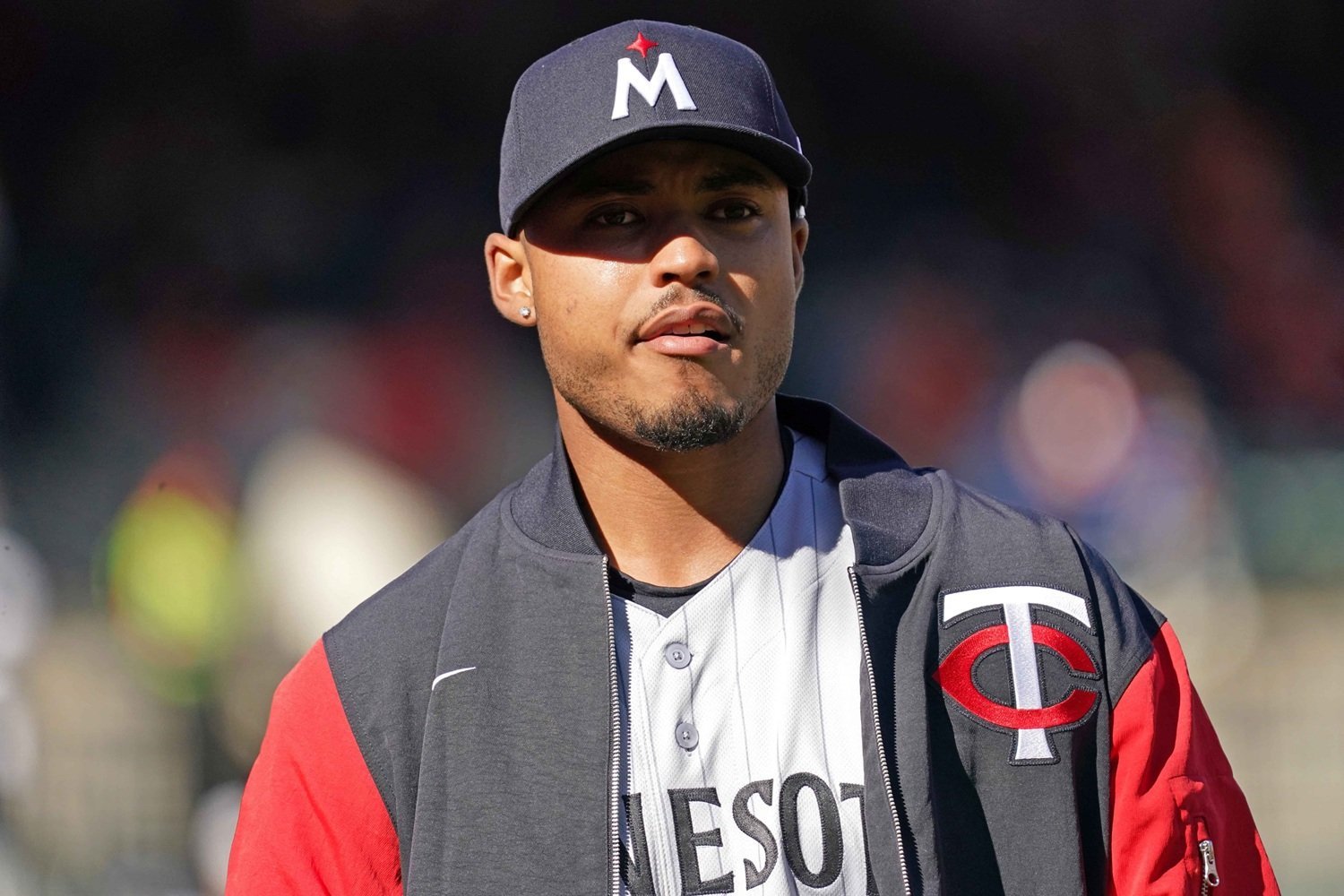 The Athletic’s Dan Hayes reports t reports that the Twins are placing right-handed starting pitcher Taj Bradley on the 15-day injured list with right pectoral muscle inflammation, and recalling right-hander Travis Adams from Triple-A St. Paul to take his roster spot. Bradley had been scheduled to start on Sunday. It's a frustrating setback for a pitcher who has been the bright spot of Minnesota's rotation. Through eight starts, Bradley owns a 2.87 ERA with 52 strikeouts in 47 innings, having gone at least six innings in six of his last seven outings and allowing more than two earned runs just once all year. His fastball has touched 99 mph and averaged better than 96.5, a tick up from where he sat a year ago. On Tuesday in Washington, he carved up the Nationals over six innings while generating 13 swings and misses, the latest in a string of dominant starts that have him pitching like a frontline starter. The injury is also unwelcome history. Bradley missed the start of the 2024 season with a right pec strain as a member of the Rays, costing him two months. The Twins have not yet announced a timetable for his return. Bradley was acquired from Tampa Bay minutes before the end of last summer's trade deadline, with the Twins sending All-Star reliever Griffin Jax to the Rays in exchange. Jax was one of the Twins' best relievers, and under team control through 2027, so the deal was widely criticized. Bradley’s breakout this April and May has completely flipped that narrative. Adams, recently activated from his own triceps injury, could provide bullpen length or could play a part in how the Twins backfill Sunday's start. Zebby Matthews, who pitched for the Twins last year, struggled early this year in AAA-St. Paul, but has recently refound velocity and success there, and could be a longer term replacement as well. But he would not be an option for Sunday, as he pitched Friday night for the Saints. View the full article
 -
Addison Barger Activated By Jays, Hitting Second In Today's Lineup
DiamondCentric posted an article in Jays Centre
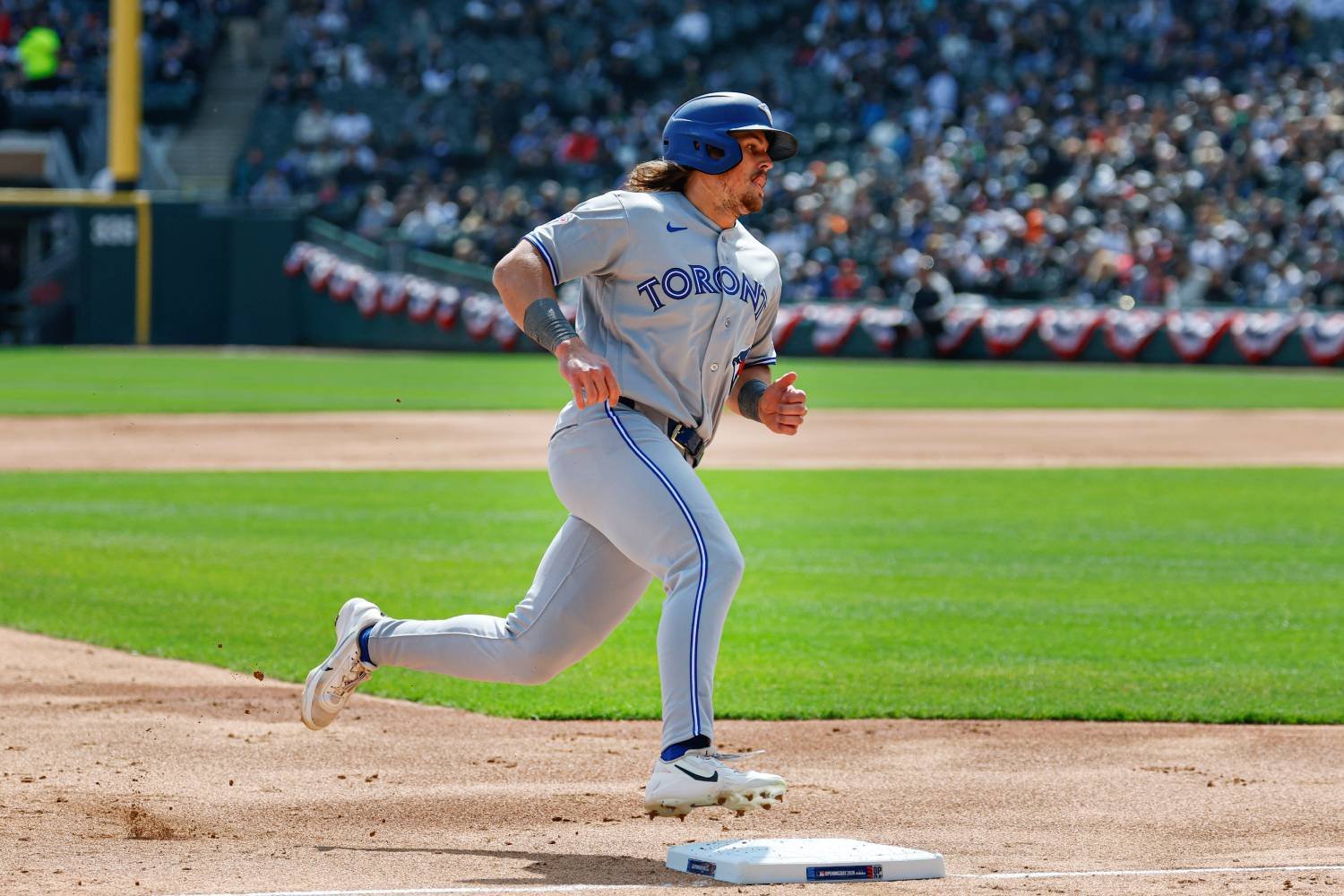 He is officially back. The Toronto Blue Jays activated right fielder Addison Barger from the 10-day injured list Saturday and optioned outfielder Yohendrick Pinango to Triple-A Buffalo. Barger is hitting second in the Jays' lineup against the Los Angeles Angels. Barger had been expected to be activated Friday, but his travel delayed that from happening. Barger has been out since going on the IL April 7 with a sprained left ankle. He had been off to a slow start to the season, going 1-for-19 in eight games. His presence in the lineup will bolster a lineup that needs some good news. The Jays entered Saturday ranked 27th out of 30 teams in runs and 25th in OPS (.683). Pinango has been a boon to the Jays' offense since his promotion April 25 to make his MLB debut. Pinango has a .423/.444/.462 slash line in 10 games with four RBIs. View the full article
 -
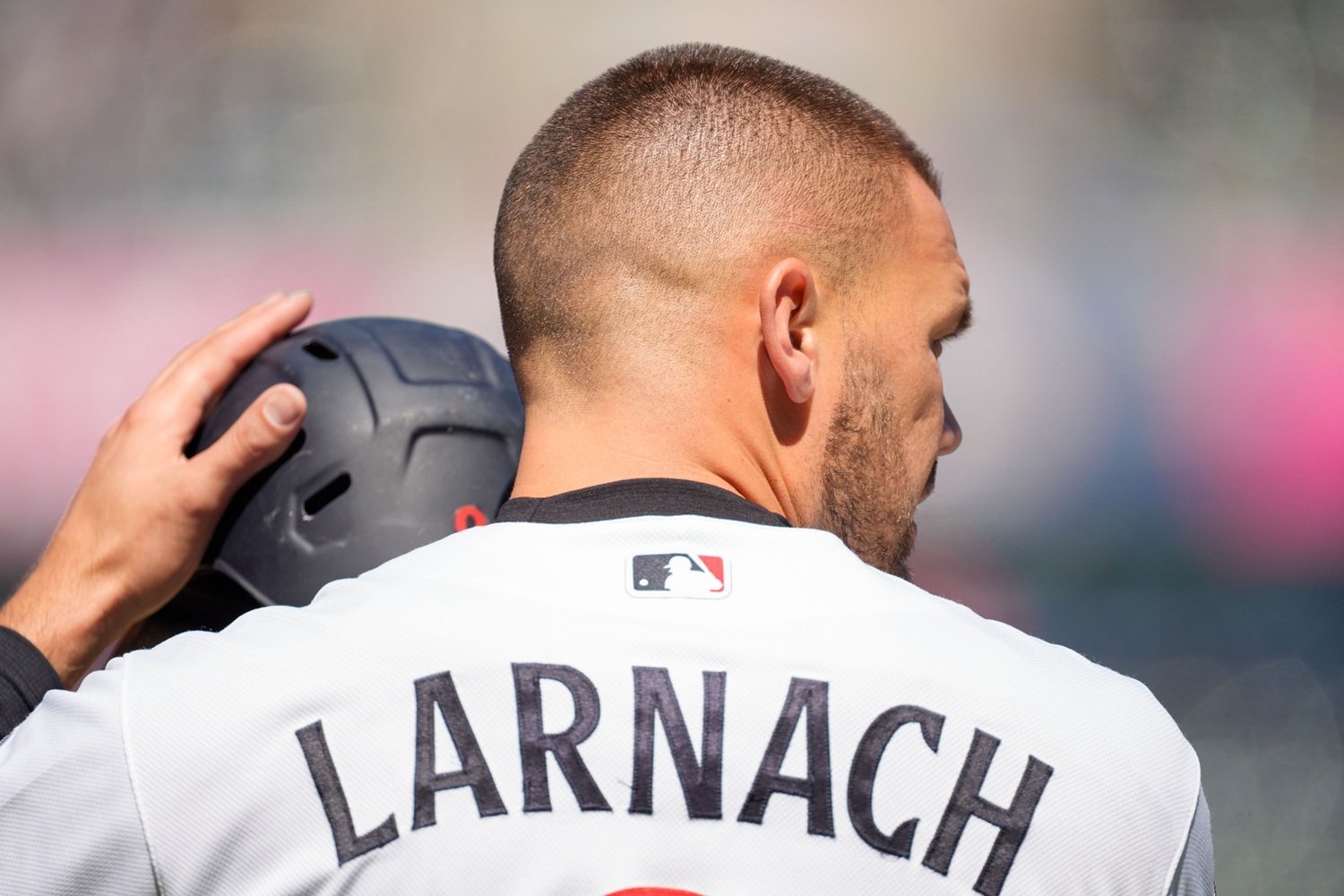 There were plenty of raised eyebrows when Minnesota tendered Trevor Larnach a $4.5 million arbitration deal this past offseason. He was coming off one of the least impactful seasons of his big league career. Across 142 games, he posted a 100 OPS+ and finished with just 0.1 WAR, dragged down almost entirely by his defensive limitations. The Twins limited him to just 53 starts in the outfield, a clear indication they were trying to hide the glove while keeping his bat in the lineup. That decision looked even more questionable when factoring in roster construction. The Twins already had a crowded mix of left-handed hitting outfielders, including Matt Wallner, James Outman, and Alan Roden. On top of that, high-end prospects like Walker Jenkins and Emmanuel Rodriguez loom as long-term fixtures. It was fair to wonder where Larnach fit, and whether his role would shrink even further. For much of his career, Minnesota treated Larnach carefully on defense, in part because of injury concerns and in part because of his performance. The organization continued to bet on the bat that once made him a first-round pick out of Oregon State, and there were flashes that justified that belief. He posted a 116 OPS+ in 2024 and delivered 1.3 rWAR, while his 2022 campaign produced a career best 1.4 rWAR in just 51 games. So what is different now is not just the bat. It is the glove. According to Cory Provus on a recent Twins radio broadcast, Larnach has made a meaningful change to his daily routine. In previous seasons, his extensive stretching program was largely reserved for the offseason. Once the grind of the regular season began, that routine faded. This year, it has become a consistent part of his pregame work, helping him stay loose, improve mobility, and better prepare his body for the demands of the outfield. That physical preparation has been paired with focused defensive instruction. Larnach has spent significant time working with new outfield coach Grady Sizemore, honing fundamentals that had previously lagged behind. The emphasis has been on first-step quickness, reading the ball off the bat, and improving routes. It is not about turning Larnach into a Gold Glove defender, but about eliminating the plays he used to miss. The results have been noticeable. Over the last three seasons, Larnach has graded out as a below-average defender, but this season, he has been a positive contributor in left field. He already has three Defensive Runs Saved, a sharp turnaround from prior seasons. The underlying metrics support the eye test. Larnach sits at 1 Outs Above Average and 2 Fielding Run Value in 2026. A year ago, those numbers were deep in the negative at -4 OAA and -7 FRV. Even marginal gains in range and efficiency are making a real difference. Part of that improvement shows up in his athleticism. His sprint speed has ticked up from 26.1 feet per second to 26.6, which moves him from the 19th percentile to the 34th percentile. It is not a dramatic leap, but it is enough to help him close gaps and finish plays he previously could not reach. While the defensive growth is the headline, Larnach has also been productive at the plate. Over the team’s last 16 games, he owns a .300/.407/.420 (.827) slash line across 59 plate appearances. On the season, he is hitting .288/.418/.425 (843) with a 135 OPS+, and he recently pushed his on-base streak to a career-best 19 games. His approach has taken a clear step forward. Larnach is walking at an 18.4% clip, a significant jump from his 10.2% career-rate, while trimming his strikeout rate down to 17.3% from where it sat at 34% during the 2023 season. The improved discipline is allowing his offensive floor to rise, even without a surge in power. The combination of steadier offense and improved defense is changing the conversation around Larnach. What once looked like a questionable arbitration decision is starting to resemble a quiet win for the Twins front office. If Larnach can continue to pair league-average or better offense with a playable defense in left field, he no longer looks redundant. He looks useful. And in a crowded outfield picture, that might be the difference between fighting for a roster spot and holding onto one. Sometimes the biggest changes are not mechanical overhauls or swing reinventions. Sometimes they start with something as simple as stretching. What has stood out about Larnach so far this season? Leave a comment and start the discussion. View the full article
 -
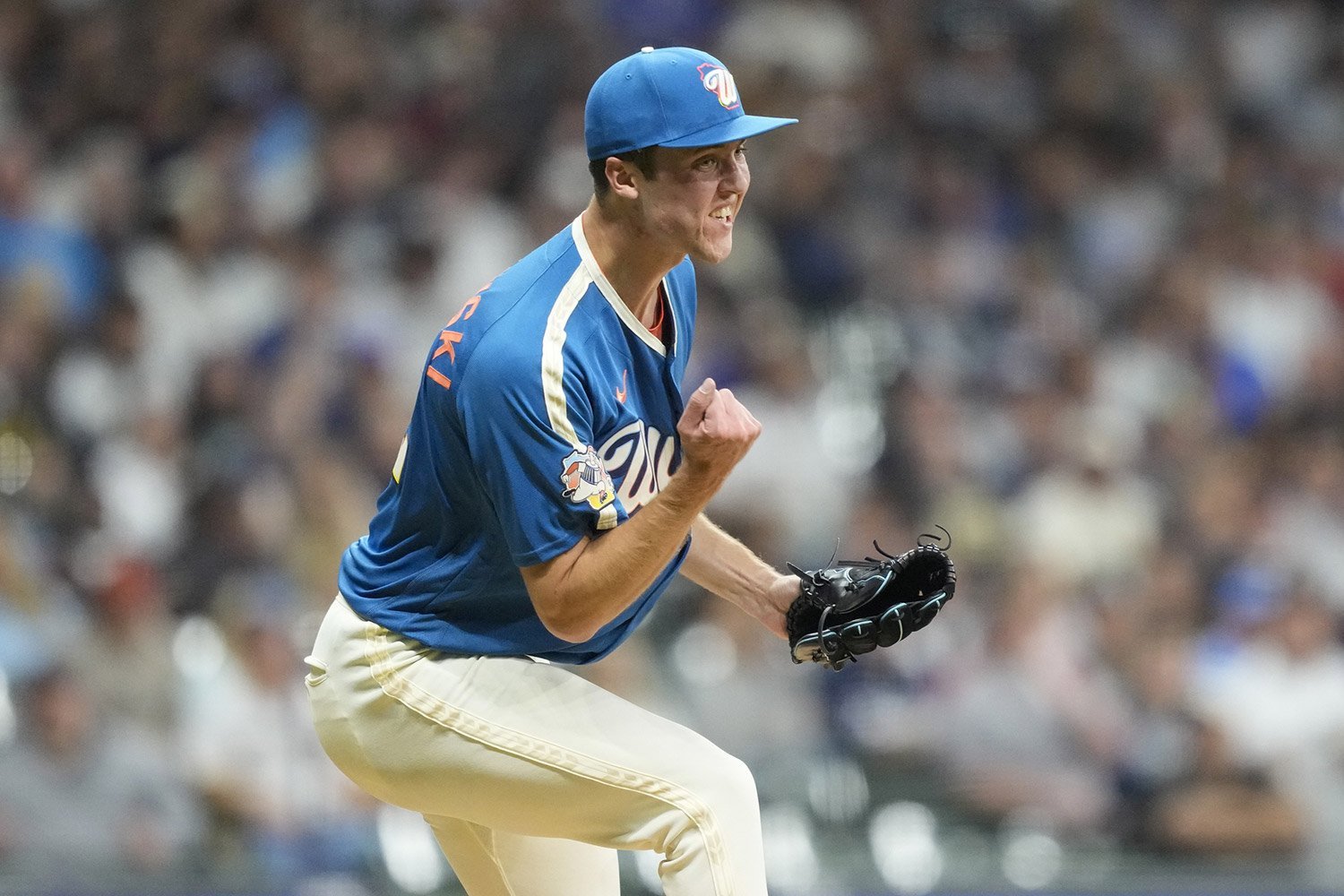 After taking a no-hitter into the sixth inning against the Washington Nationals last week before a cramp ended his night early, Jacob Misiorowski's follow-up start was arguably more dominant. The right-hander held the New York Yankees -- who entered Friday as the third-best offense in baseball, by measure of wRC+ -- to two hits and two walks over six scoreless innings, striking out 11. Throughout the night, he shattered records on the radar gun. In the first inning, Misiorowski threw the five fastest pitches thrown by a starting pitcher in the pitch-tracking era (which began in 2008), hitting at least 103 mph seven times. He fell one strike short of opening his outing with an immaculate inning when his ninth pitch was a ball just below the zone to Aaron Judge. "I had no clue," Misiorowski said postgame. "I got told in the dugout. I went back and looked and thought it was close, but yeah." Misiorowski didn't sit 103 the entire night, but he held triple-digit velocity throughout, averaging north of 100 mph in every inning but the fourth. In the sixth, his final fastball of the night and 94th pitch overall was 102.7 mph. "Never seen that," said Shane Drohan, who picked up his first big-league save with three innings of relief behind Misiorowski. "That was a first." "I've had games in the past where you get that sudden burst of adrenaline in the fifth or sixth somewhere, and you find it back," Misiorowski said. "But this was a first for the big leagues." Misiorowski leaned heavily on that signature fastball, throwing it 60% of the time and recording seven of his strikeouts with it. Sitting at 101.1 mph, it was the highest recorded average fastball velocity (four-seamers and two-seamers) in any outing of at least 90 pitches. It was actually the third time he's set that record in his last four starts. Misiorowski's start against the Pittsburgh Pirates on April 25 (100.5 mph) ranks second on that list, and his start before that on April 19 (99.7 mph) is third. As the weather has warmed up, so has Misiorowski's velocity. More impressively, he's maintaining it deeper into games, a product of the lanky 24-year-old adding strength and learning to better use his body since debuting in the big leagues last summer. "If you look at his legs and you look at his body, he's working," Pat Murphy said. "He's got guys like [Brandon Woodruff], our strength staff, they're showing him, 'Look, man, this is how you've got to maintain. You want to be a major-league pitcher, you've got to work in between those five days.' And he's in there working." In his current form, Misiorowski could establish himself as the hardest-throwing starting pitcher that baseball has ever reliably documented. His average fastball velocity of 99.7 mph would be the highest of any qualified starting pitcher season in the pitch-tracking era, a full tick above Jacob deGrom's 98.6-mph average in 2020 and Paul Skenes's 98.2-mph mark last year. A pitcher's best velocity and command usually go hand in hand. When his body is moving most effectively, he's putting himself in the best position to generate energy at release and throw the ball accurately. That's been the case for Misiorowski. His fastball averaged 98.5 mph through his first four starts, and he threw just 45.2% of them in the zone. In his last four, his fastball has averaged 100.5 mph with a 56.1% in-zone rate. In those outings, he's cut his walk rate to 8.9% while striking out 41.6% of batters faced. "It's not just velo," Murphy said. "There's a lot more to it." That has included Misiorowski's poise on the mound and his handling of physical and mental adversity. Some of his outings as a rookie (and a couple last month) were derailed by one rough inning or fatigue near the end of starts. On Friday, he remained sharp through a long break during a four-run second inning for the Brewers' offense and an injury delay in the fourth for Brandon Lockridge, who suffered a right knee laceration in a collision with the left-field wall. Misiorowski still looked strong as he neared 100 pitches in the sixth. "You saw it in Boston, his legs got really tired," Murphy said. "His legs were tired today, and he said that. He said, 'Hey, I'm not done, but my legs are getting tired.' So with that, he maintained his composure and didn't walk people, or whatever. He got right back on the horse." Misiorowski is breaking out. His stuff is better than ever. His control is better than ever. His mound presence is improving. He leads baseball in strikeouts. Misiorowski quickly put himself on baseball's radar last season, but his two latest outings checked every box of a pitcher who has arrived as one of the game's elite starters. "I think he's learning day in and day out what it takes to be a big-time guy," Murphy said. View the full article
 -
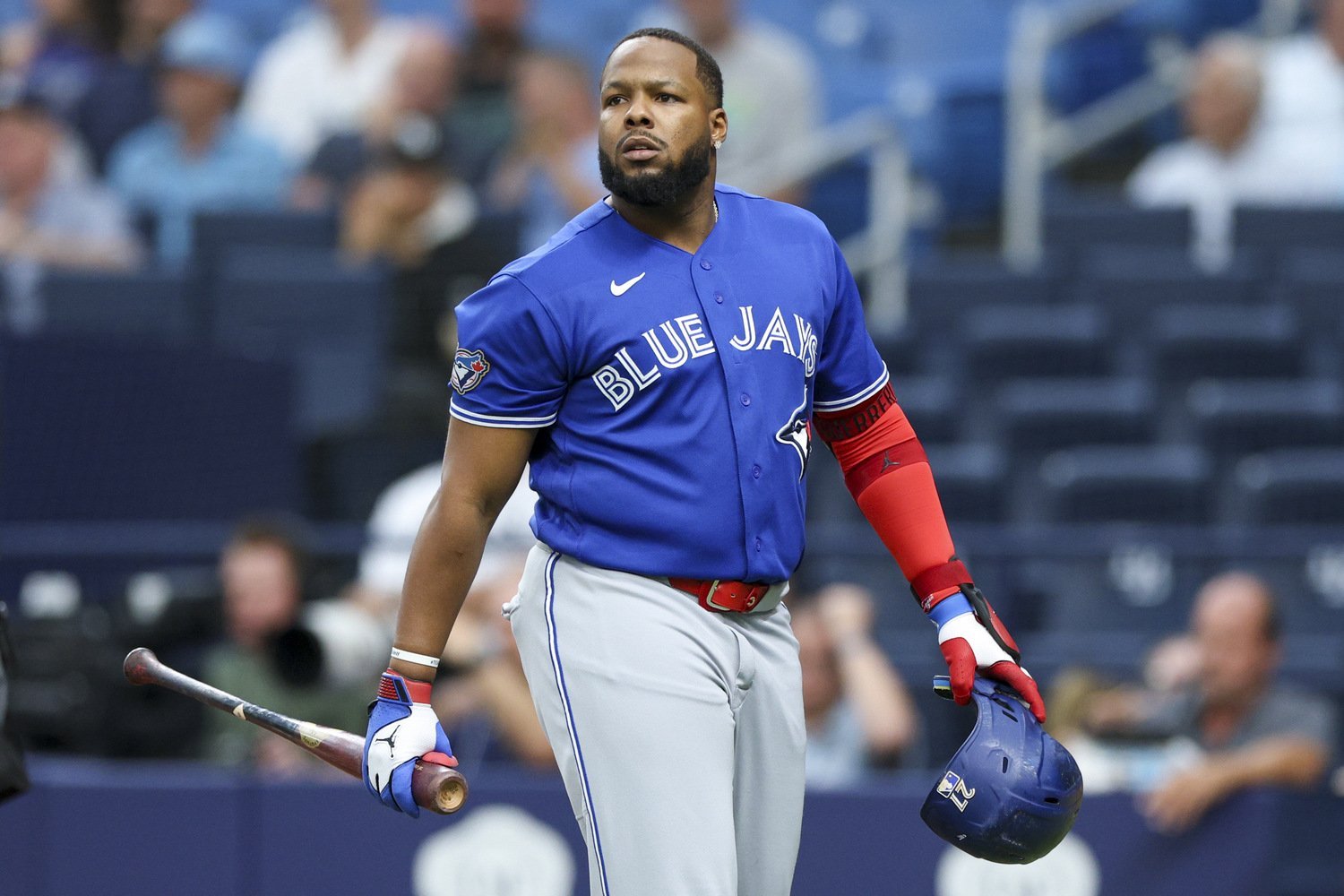 Stats updated prior to play on May 8. After sitting seven games out of the division lead and fourth in the American League East late last May, the Blue Jays pushed close to .500 by month’s end. Around that point, fans had grown accustomed to a team that never caved to deficit. Somebody was going to get on base. Somebody else was going to drive them in. Late innings belonged to Toronto more often than not, and opposing pitchers managed games knowing a single mistake would flip the score. That version of the lineup has not shown up so far this season. What has taken its place is an offense sitting uncomfortably close to the bottom of Major League Baseball in runs scored, struggling to do much of anything and failing to capitalize on the chances it does create. Bad luck alone does not explain how a team ends up here. Injuries have mattered, but this did not unfold because pitchers simply woke up one morning with a new scouting analysis on how to attack Toronto. Teams do not drift into the bottom tier of scoring because of a short cold stretch. After Wednesday’s loss to Tampa Bay, manager John Schneider summed it up plainly in speaking with Sportsnet’s Hazel Mae. “It’s not Vlad, it’s not Kaz, it’s not George,” Schneider said. “It has to be everybody. The quality up and down, one through nine...just needs to be a bit more in-depth. There were some quick outs there.” Too many plate appearances are ending without impact, and the overall effect shows up on the scoreboard. Toronto is scoring just under four runs per game. That places the Jays alongside teams either rebuilding or waiting for July to reset priorities. For a club constructed to contend, this was never the plan. Runs scored is a simple measure, and that is exactly why it matters. It does not evaluate swing decisions or exit velocity in isolation. It tallies what crossed the plate, and whether those moments ever added up to sustained pressure. Look beyond the totals, and the offense looks and feels fragmented inning by inning. The Blue Jays still reach base at a reasonable rate, but they rarely create traffic. Walks often end where they began. Singles are followed by routine outs instead of additional contact. Vladimir Guerrero Jr. sits at the centre of what is going on, or isn’t. His numbers remain strong. A batting average over .300 and an on-base percentage over .400 represent legitimate production. The issue is not whether he is getting on base, but what happens after he does. His slugging percentage has dipped to the point where pitchers can live with him reaching safely, especially if the threat behind him is inconsistent. The result is a hitter who looks the part statistically but isn’t anchoring rallies the way he did last season. That burden has fallen most heavily on Kazuma Okamoto. He leads the team in home runs and runs batted in, carrying a disproportionate share of the offense’s impact. When one bat accounts for that much damage, the surrounding lineup is not doing its share to extend innings or multiply mistakes. The middle layers of the order have failed to bridge that gap. Andrés Giménez has delivered occasional stretches of offense, but the sustained contribution the organization hoped for has not taken hold. Pitchers challenge him early and often, and without consistent punishment, those approaches stick. The outfield has deepened the problem. George Springer’s line does not read as disastrous, but the decline is noticeable. Fewer extra-base hits and less authoritative contact have narrowed his margin for error. Already dealing with nagging injuries early in the season, his at-bats have become more about survival than changing the shape of a game. Daulton Varsho’s struggles have been harder to work around. A .316 on-base percentage, combined with limited power, has left pitchers free to attack him without fear. High velocity continues to give him trouble, and opponents consistently exploit it in leverage spots. The bottom of the order has quietly compounded these issues. Several players taking regular turns own OPS marks south of .650. Those plate appearances rarely threaten more than a routine out, rarely advance runners and shorten games for opposing pitchers. The team numbers reflect it plainly. Toronto ranks in the lower third of the league in both walk rate and isolated power, reflecting an offense that is neither consistently driving the ball nor creating enough free baserunners. The Blue Jays have a team ISO below .140 and a walk rate of 7.5 percent. They are not forcing pitchers to make mistakes frequently, and when mistakes do happen, they are not being amplified. Compounding the quiet bats is that the Blue Jays are neither fast nor particularly aggressive. Stolen base attempts are infrequent. Hit and runs have largely disappeared. Last season, first-to-third advancement was a regular feature. This year, runners stop and wait. Without movement, double plays increase and defenses settle. Last year’s success got fans dreaming of what would be this season. Timely hits clustered together. Close games tilted Toronto’s way. Bullpens around the league broke at the wrong times. After a full season, that kind of stuff can feel sustainable. It would be one thing if we could pinpoint one or two problem players, but the failure to launch this offense is a failure across the whole lineup. Last year, in post-game interviews, every player would talk about how they were just one part of a bigger picture. They all seemed to have bought into that philosophy. This year, despite similar sentiments shared in spring training, this team has lost that vibe. Pitching has kept the Blue Jays close for long stretches this season, often holding opponents to manageable totals. That has mattered less and less as run support has vanished. Players are beginning to return from the injured list, and there have been brief reminders of what this lineup looked like at its best. Those flashes have not turned into consistency. If last year served as a blueprint, then a turnaround remains possible. But this 2026 team will not rediscover its offense by chasing the past version of itself. At some point, the Jays need to score runs. Until they do, everything else remains secondary. View the full article
 -
Kyle Hart's Salvation Lies In His Reworked Splitter
DiamondCentric posted an article in Padres Mission
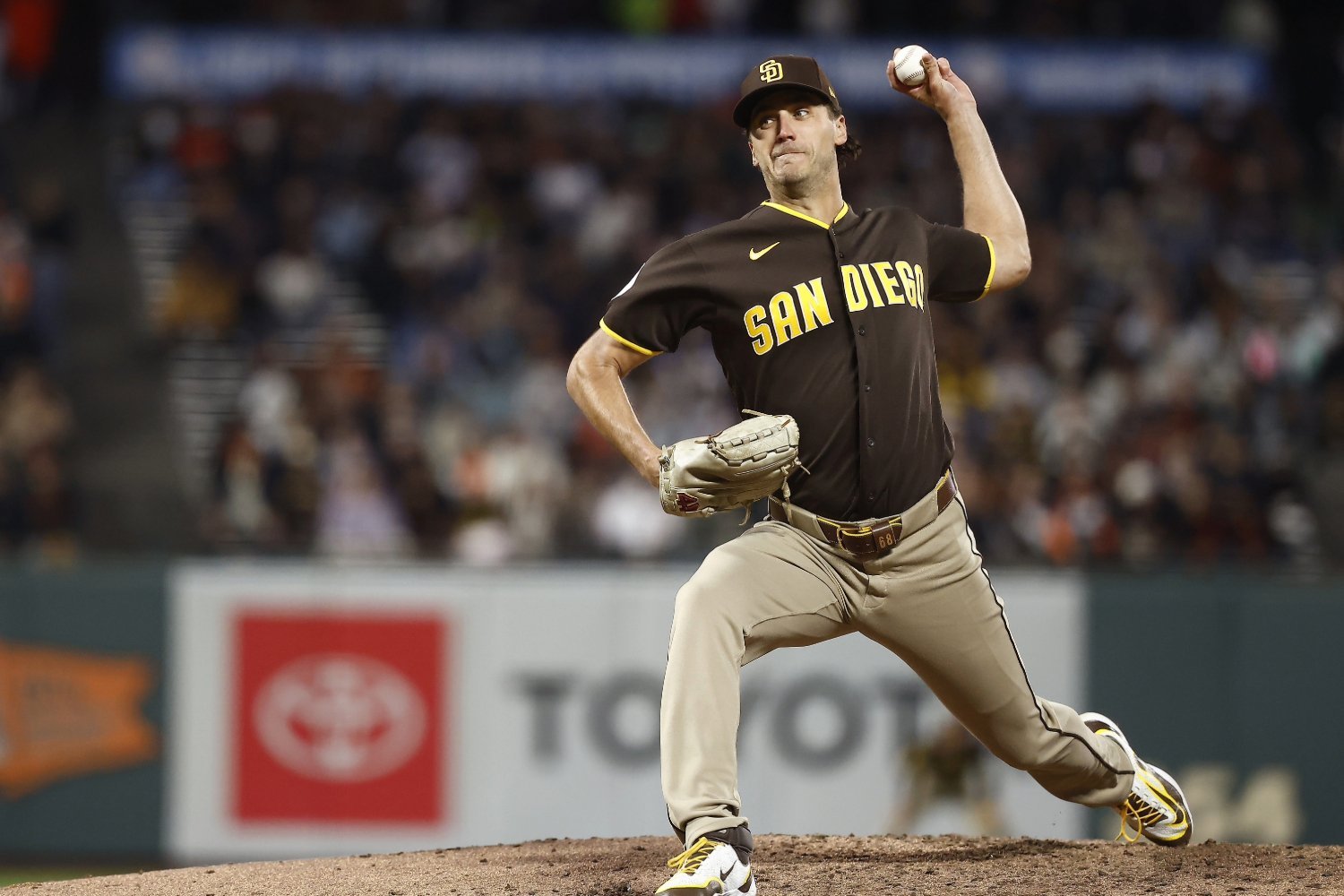 When Kyle Hart struggled through six starts out of the gate for the San Diego Padres in 2025, the remainder of his appearances came in relief. Even short on rotation depth to start this year, that’s where Hart has spent all of his time in 2026. The results? A 5.40 ERA, a plummeting 14.7 K%, and an 8.8 percent walk rate that sits above last year’s mark through 16 2/3 innings. That work earned him a demotion to Triple-A upon the return of Yuki Matsui. And yet, there’s something enticing about this iteration of Kyle Hart (even if his recent minor-league option will put a pin on the anticipation). Last year’s version of Hart didn’t offer anything particularly inspiring. He pitched to a 5.86 ERA, a 5.18 FIP, and was only particularly strong in his ability to mitigate free passes (7.3 BB%). For a pitcher without upper-tier stuff, he also wasn’t particularly adept at mixing things up depending on the handedness of opposing hitters. This is Hart’s pitch distribution in 2025: There was a favoring of the sweeper against lefties that was balanced out by the changeup to right-handed hitters. Other than that, he was evenly spreading things out regardless of opposing hitters. Worse yet is the fact that deploying the change against righties didn’t make a bit of difference, as he was touched for a .359 opposing wOBA and 42.5 percent hard hit rate against that handedness. In 2026, however, there has been a stark change to Hart’s repertoire. Note that splitter down at the bottom of the distribution, thrown a mere five percent of the time in total. That’s where things get interesting: Hart’s splitter usage has taken off. He’s now throwing it 22.4 percent of the time, in line with each of his sweeper and sinker usage. Not only that, the changeup has become a thing of memory; he has yet to throw one in 2026. While the results haven’t been there in terms of run prevention, there’s something very interesting happening with that splitter in particular. Opposing hitters are swinging at the split 56.1 percent of the time. That’s the most of any pitch Hart is throwing. They’re whiffing at a 21.9 percent, also the tops of any component in his arsenal. It’s gone for a 25.0 Hard-Hit% and has yet to find a barrel. Even more importantly, it’s righties that are most heavily impacted by each of these trends. Not only are they following each one, they’re putting the splitter into the ground at a 66.7 percent rate. The value of this development cannot be overstated given that it’s a tool designed for right-handed hitters (and he’s throwing it to said hitters more than any other pitch at 31 percent of the time). It’s been an imperfect process given that Hart still has a .328 wOBA against righties on his ledger. Within that context, though, it’s notable that he continues to walk righties at a much higher rate, with five of his six walks coming against hitters of the opposite handedness. Nevertheless, the fact that the process is there speaks to an evolution that could be tremendously beneficial to the middle innings for the Padres. The strikeout numbers don’t look good. The walk rate looks just okay. But when you are working with a hard-hit rate in the 95th percentile and a groundball rate in the 96th, then you offer plenty to be a regularly utilized arm in relief. If Hart is able to gain enough of a grip on his command to right-handed hitters, there’s a real viability here that removes any thought of a restriction over which handedness he could face. The splitter is the springboard. He just needs to harness it. View the full article
 -
 Before a default reaction to bring back Blake Perkins (don't be out too long, Brandon Lockridge), with an open spot on the 40-man roster, is it time for Eddys Leonard's overdue big-league debut? Transactions: Milwaukee Brewers sent LF Greg Jones outright to Nashville Sounds. Nashville Sounds activated C Andrick Nava from the Development List. Nashville Pre-Game Media Notes (unavailable) Final: Louisville (Reds) 9, Nashville 6 Box Score and Game Log Via the Sounds, game details, and we encourage readers to always review affiliate write-ups as part of their Link Report routine: Sounds Unable to Overcome Big Third Inning for Louisville Following up my initial thought from the Transaction section above, copying a key section of the Nashville write-up you just read: "Eddys Leonard recorded his ninth multi-hit game over his last 16 games played dating back to April 17th with a 2-for-4 day at the plate Friday night that included his sixth home run of the season. He's hitting .436 over his last 16 games with four homers, three doubles, and 16 RBI. His .436 AVG ranks second in all Triple-A over the span, and he ranks second in OBP (.516), third in OPS (1.225), and seventh in SLG (.709). His 15 XBH on the season lead all Nashville hitters in 2026 and are tied for the most XBH through his first 30 games of a season in his professional career. He also had 15 XBH through 30 games with Triple-A Gwinnett last season. Since the start of the 2021 season, he ranks eighth in hits (609), sixth in doubles (135), and fifth in XBH (244) across all full-season minor leaguers." But the Brewers ivory tower might say, "oh, Perkins has four singles in his two games back in Nashville". Do the bold thing, ivory tower. Hopefully Manager Rick Sweet gave Leonard good news after the game. Sleeping in his own Louisville bed this week has been a most-likely pleasure for southpaw starter Tate Kuehner, though it didn't pay dividends in this start. Yes, this grounder was drilled to Jett Williams at 100.2 MPH, but it seems to me that whenever an announcer uses the phrase "right between the wickets", it shouldn't be ruled a base hit, as this was: One batter later, Kuehner didn't leave this pitch in a favorable spot and the last of the seven runs in the frame had come across: But wait, this is the BrewerFanatic Link Report, dang it! Emphasizing the positive since 2001! Thankfully the Sounds "X" feed did that for us tonight with five clips, including this one: Likely just a one-game night off, but any box score minus a Luis Lara appearance gets a sad-face automatically . Speaking of the Nashville bench, rarely does Rick Sweet have this flexibility - five extra position bodies on his bench, none an MLB rehabber. It appears Greg Jones didn't truly go live on the roster until postgame, so expect 3rd catcher Andrick Nava to yo-yo back to Development List-land Saturday. Stop the presses, Cooper Pratt committed his very first error of 2026, a fielding error in the 2nd, though we don't believe it without visual evidence. Since it did not involve a score, there's no reply video, and as it was in the 2nd inning when Kuehner was rightfully off to a fine start and easily pitched around it, we have difficulty believing the miscue actually happened. Pratt singled in five trips but also K'd twice and grounded into a double play. Postponed, Columbus (Braves) at Biloxi, rain The teams play twice on Saturday, beginning at 4:35 Central. Catch up with the latest Biloxi pre-game audio interview archives Actually, that archive page doesn't include the latest individual chat, found here for catcher Matthew Wood. Plus, even though these notes ended up getting soggy, you can still read your way through multiple updates. By the way, does that sentence look familiar? I used it in this exact spot last Saturday AM as well after a rainout. Copy and paste, baby! Wisconsin Pre-Game Media Notes (download link) Final: Wisconsin 12, Peoria (Cardinals) 7 Box Score and Game Log Via the Timber Rattlers, game details, and enjoy the four embedded video highlights within: Big Inning Propels Rattlers to Victory in Peoria - Rattlers rally with three in tenth inning to beat Quad Cities Is sending 14 men to the plate in an inning good? That seems good. Our Spencer Michaelis provided additional commentary on the Josh Adamczewski double you just saw. We want to thank Josh for being outstanding throughout his brief pro career. We've typed his name so often now we don't have to think twice about spelling, it just flows off the keyboard like water. Well, a wet keyboard would not be good, but you get the idea. LHP J.D. Thompson's 2nd pro start opened walk, wild pitch, walk, home run. Ouch. After a very strong 2nd inning for Thompson, he was in the dugout for that very long Timber Rattler offensive onslaught. Thompson opened the 3rd inning, allowed a line drive single, and was lifted. Seems a bit of an odd choice to bring Thompson out for one batter there, but it may have been about making sure RHP Travis Smith was warmed up fully. And my, do we like Travis Smith right now. Check out his 2026 game log, with five of his six outings strong and his most recent three bulk relief appearances in particular providing Manager Nick Stanley quite the bullpen luxury. One Smith oddity, however - 2025: 102.1 IP, 1 HR allowed (wow!) 2026: 28.2 IP, 5 HR allowed Shoutout to LHP Bjorn Johnson for combining with Smith on seven innings of three-run ball to otherwise spare the pen. This Wisconsin season has been all about the top of the order, and indeed there were good moments there Friday (two singles, no K's for Andrew Fischer among them), how about the bottom four - Tayden Hall, Juan Baez, David Garcia, Luiyin Alastre - reaching base nine times with Baez adding a sacrifice fly. It sure seems at this point the next Luis Pena update from the organization will come next week - maybe we'll get a surprise appearance this weekend, no IL stint at this time. If you need to activate your ears as well as your eyes this AM, enjoy the full pod, but Spencer's "Minor League Sandbox" commences approximately at the 01:21:00 hour/minute mark. Wilson Pre-Game Media Notes Final: Wilson 10, Fayetteville (Astros) 4 Box Score and Game Log Warbirds Slug Way Past Fayetteville - Four Extra Base Hits Lift Wilson Hey, this Warbirds squad may provide us with more entertainment than we thought! Looked rough there for a couple of weeks, didn't it? Not only have the boys won five of seven, but they have also scored double digits in three of those wins. Well, at the plate, it's still a strikeout factory, 17 times in this contest. But the slug as of late has been consistent (four XBH's here, as the game summary noted), and Wilson stole ten bases in 11 tries here with some double-steal fun along the way. How many box scores do you see where four players had multiple stolen bases? When it comes to defensive catcher statistics, it's so inherently unfair that catchers get charged with allowing two stolen bases on plays like that above, skewing their season-long throwing percentages. At least the good guys were on the proper side of justice for this game. More bottom-of-the-order production! Filippo Di Turi, Luis Lameda, Pedro Ibarguen and Jadyn Fielder were on base a combined 12 times, with Fielder (thrice) and Ibarguen (once) playing the roles of pincushion or magnet, whichever HBP-related term you prefer. This box score had it all - pitch timer violations, three errors for each squad, three outfield assists (Fielder being on each end once), three wild pitches, a balk, and a partridge in a pear tree. 2025 6'8" Coastal Carolina 3rd rounder Jacob Morrison has towered over seven scoreless two-hit innings in his two starts to date (3 BB, 6 K). You know it means a lot to a struggling reliever when they can aid the cause by closing out the game with three one-hit scoreless innings while facing the minimum. Thanks to Quezada, the Clayton Andrews trade tree lives! One final Spencer appearance: Nice job, Warbirds media team, grabbing road game video for these blasts: Final: ACL Brewers 6, ACL Cubs 5, seven innings as scheduled Box Score and Game Log My fellow Link Reporter Daniel ("Ro") provided coverage for us (THANK YOU!), and I lied, yet more Michaelis contributions: That’s a jam-packed box score for the ACL Brewers in their victory over the ACL Cubs, all in just 7 innings. In his first opportunity in the leadoff spot, OF Kenny Fenelon ambushed the first pitch of the game for a solo homer (99mph exit velocity, 394 feet). RHP Josh Knoth made his second start (2 IP, 1 R, 1 H, 2 BB, 1 K), as he builds up strength after missing the 2025 campaign. His velocity peaked at 97.8mph, tossing 33 pitches (22 strikes). 2B Juan Martinez (1-for-2, walk, 2 SB) singled and scored on an error to grab a 2-1 lead in the top of the 5th inning, followed by DH Malachai Halterman’s 105.7mph RBI single to center. 1B Jonathan Rangel (1-for-2, HR, walk, 3 RBIs) clubbed a 2-out, 3-run shot the next inning to extend the advantage to 6-1. The game featured a professional debut (and win) for 2025 eighth round pick, 18-year old RHP Hayden Vucinovich, who didn’t allow a hit against 11 batters faced (2 2/3 IP, 0 R, 0 H, 3 BB, 3 Ks), as well as stateside debuts for RHPs Jhosep Ospino (1/3 IP, 1 K) and Bryan Regalado (2/3 IP, 4 R, 4 H, 1 BB, 2 Ks). Regalado’s struggles allowed the Cubs to cut the deficit to 6-5 with 2 baserunners on in the penultimate frame, but Manager Rafael Neda called on RHP Cesar Espinal to escape the inning (ground out) and ultimately deliver a 4-out Save (3 straight Ks). The 20-year-old Espinal is already on his 3rd MLB team in his 5th MILB season, so Promotion Watch definitely applies to him. As with life, the team balanced the good (4 stolen bases, 2-for-5 with RISP) with the not-so-good (2 errors, 12 strikeouts). C Freider Rojas (1-for-2, walk) made his 2026 debut and is the fourth catcher the squad has used in 5 games played. The team (3-2) is right back in action at 1:00pm CST on Saturday, hosting the ACL Guardians (3-2). Bonus from Thursday's game: Six games on tap Saturday with the lone early start in Maryvale for you rookie league box score breaker-downers (is that a word?), although the Biloxi twinbill gets underway at 4:35 Central. Enjoy your spring day, everyone! Organizational Scoreboard including starting pitcher info, game times, MiLB TV links, and box scores Current Milwaukee Brewers Organization Batting Stats and Depth Current Milwaukee Brewers Organization Pitching Stats and Depth View the full article
 -
The Twins Aren't Serious About Rebuilding The Bullpen
DiamondCentric posted an article in Twins Daily
 Any time you unload three or four controllable, high-leverage relievers, it’s safe to assume that the bullpen being bad will transcend multiple seasons, as Twins fans did following last year’s trade deadline. Despite their choice to do so, the Twins insisted 2026 was a continued push to contend. We all know they didn’t do enough to address the bullpen in the offseason, but it’s the way they operated in-season following the deadline, and how they continue to operate, that is the real problem. When the Twins unloaded their controllable bullpen at the trade deadline, a big talking point from the front office was how many of the names they traded away had been developed internally, and how they would look to do so again. This was a fair point, as Jhoan Duran, Griffin Jax, and Louie Varland were all developed internally after coming up through the system as starting pitchers. This strategy became even more important when they invested less than $5M in the bullpen in the offseason. Unfortunately for all of their talk of rebuilding the bullpen internally, their actions haven’t backed it up. It was far from an infusion of youth following the trade deadline as many had hoped. The team looked like they were running out the clock on the season rather than using that valuable time to evaluate for the following year. Innings were allocated to pitchers like 35-year-old Erasmo Ramirez and Michael Tonkin. Waiver claims were made on players like 31-year-old Brooks Kriske. A few younger names, like Travis Adams, were called up, but many bullpen spots were dedicated to veterans who had no chance to stick on the roster for 2026. This, paired with a quiet winter, led to an underwhelming Opening Day bullpen, and they’ve performed as expected. As the team has continued to lose games on the backs of their relievers, they’ve made a few moves and call-ups to shake things up, but a lot of their behavior remains the same. Thursday, the Twins demoted John Klein to make room for waiver claim Yoendrys Gómez (who, to their credit, could have some multi-year upside at 26 years old). The right-hander may not have had a good season thus far, but at 24 years old with a mid to high 90s fastball and intriguing offspeed pitches, Klein is the exact type of arm the Twins should want around if they’re serious about internally rebuilding the bullpen. Instead, he was sent back to St. Paul, while several veterans who look like they have nothing to offer now or in the future remain on the roster. The Twins' continued deferral to veterans is one problem, but the way they’re preparing some of their arms in Triple-A is another. Klein was on the growingly common pitching plan of throwing around 65 pitches every four days in Triple-A, in a sort of hybrid bulk-inning role. In theory, this is meant to keep pitchers ready to pitch 3-4 innings if they are called upon to start, while also limiting exposure to opposing lineups. The problem is that this plan leaves many pitchers ill-prepared for whatever role they may be needed in if they get called up to the Twins. Klein is unable to pitch back-to-back days, just as Andrew Morris is after he was on a similar plan. As a result, the Twins can’t afford to hamstring themselves by carrying both after Klein pitched yesterday. It’s been difficult to foresee Klein finding himself in the MLB rotation for some time now, but because the Twins have kept him in the “just in case” role, he’s now headed back to St. Paul despite being one of the prime candidates to help them achieve their self-stated goal of internally rebuilding the bullpen. This hybrid plan makes sense in some cases, such as limiting innings and exposure for arms like Connor Prielipp. For pitchers like Klein or Travis Adams, who was one of the first in this role last season, it just doesn’t make much sense. Unless they’re called up to be a long reliever, they aren’t prepared to enter the rotation or serve as a traditional reliever. They’re essentially only prepared to be long relievers who are likely to be sent back down after they pitch. The result is that interesting arms like Klein can’t stick at the MLB level for an extended period because he can’t pitch on back-to-back days like someone such as Luis Garcia, even if the latter is allowing runs in both outings. If the Twins send Klein back to his hybrid role in Triple-A to keep him stretched out but unable to pitch on back-to-back days, they’re doing him and themselves a disservice. For high-pedigree arms such as Kendry Rojas, this role can be justified. For pitchers like Klein, who have little chance of being even a back-end starter, they’re simply failing to prepare him for any role at the MLB level other than fungible long reliever. It’ll keep interesting young arms in limbo while keeping veteran arms with no upside in the bullpen. It’s a lose-lose situation. The Twins have failed to back up their talk over the last year. It’s time to start doing so when it comes to internally rebuilding the bullpen. Give the young guys a shot so we don’t wind up with this situation again in 2027. View the full article
 -
The Underrated Blue Jays Prospect Dominating Double-A Pitching
DiamondCentric posted an article in Jays Centre
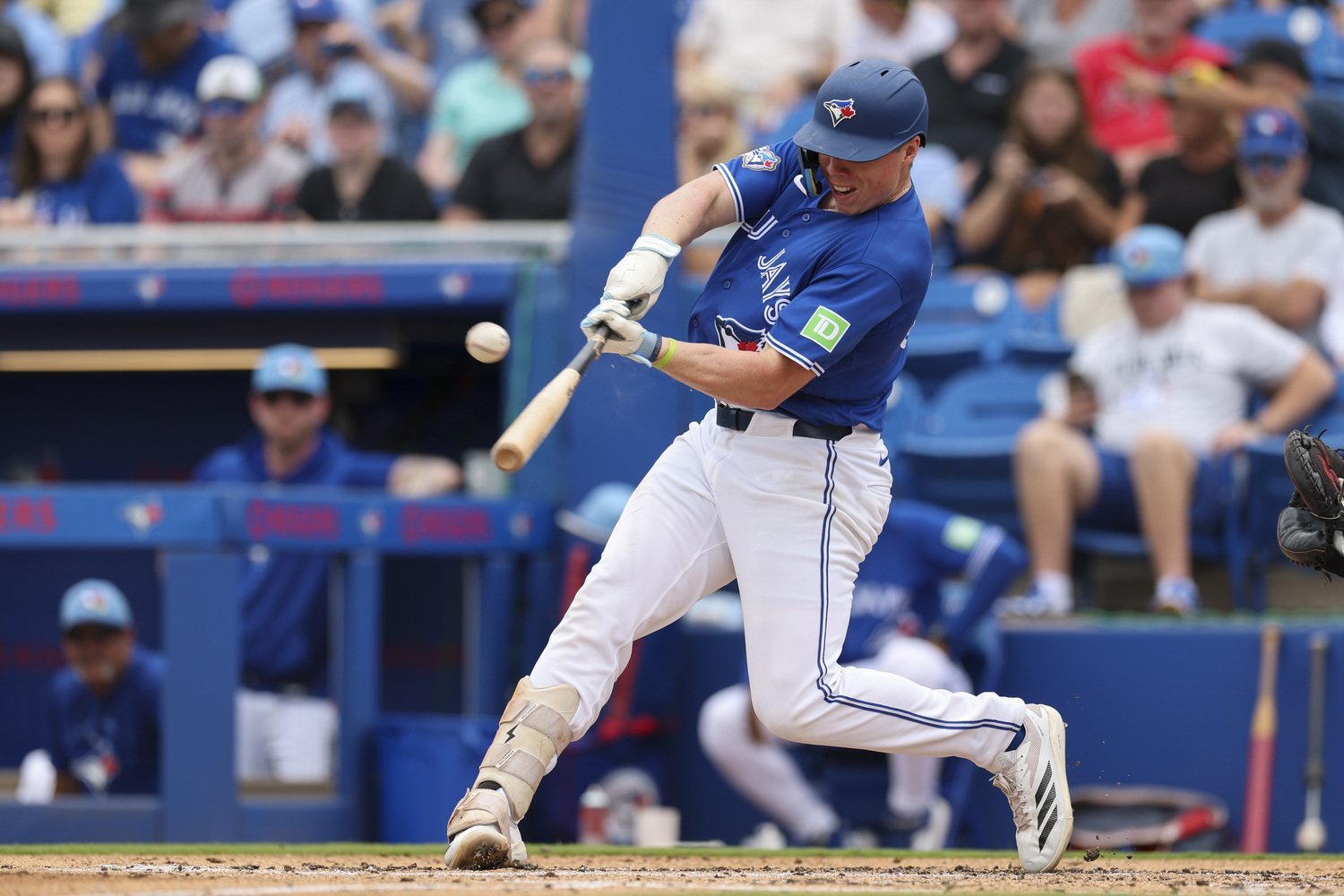 The Toronto Blue Jays are around the middle of the pack in terms of farm system rankings. As a result, they don't have many players expected to make their MLB debuts soon. Fans know the names of the team's top prospects, including Trey Yesavage, who is thriving early in his MLB career, JoJo Parker, and Arjun Nimmala, but a few lesser-known prospects are starting to make a name for themselves. One of those players is Sean Keys, the No. 17 prospect in the Blue Jays organization. Keys is a left-handed power hitter who plays third base, but his 6-foot-2, 232-pound frame may be better suited for first base, due to his limited range. The Blue Jays selected him in the fourth round of the 2024 MLB Draft. In his first minor league season, he debuted at Single-A Dunedin, where the left-handed hitter displayed excellent plate vision and contact skills. He slashed .293/.378/.451 over 98 plate appearances with 11 runs, one home run, and 20 knocked in. His next year didn't go as smoothly, but he still showed promising skills. Keys was promoted to High-A Vancouver, where we got a glimpse of the power he possessed; he hit 19 home runs over 529 plate appearances. However, his slash dropped across the board to .217/.365/.408. Still, the slugger posted a 119 wRC+. Vancouver isn't known as a hitters' park, so it was encouraging to see him impact the ball solidly, even though they didn't always drop for hits. This season, Keys received an invitation to major league spring training, but he was never considered a serious contender to make the Opening Day roster. The 22-year-old was sent to Double-A New Hampshire, where he has been crushing the ball. It is a small sample, with him playing in only 27 games (entering play on May 8), but Keys has slashed .309/.427/.629 over 117 plate appearances. He has added 29 runs, 23 RBIs, and nine home runs to his totals, as well as a 167 wRC+. The fast start to his season has definitely helped this underrated player become a household name among Blue Jays fans. It's likely a long shot that Keys can make his MLB debut this season. The Blue Jays would want to see how he performs in Triple A before calling him up, as he is only 22. However, if he gets promoted to Buffalo sometime this summer, it increases the chances that the prospect could be a September call-up. Blue Jays fans, keep an eye on Keys. If he keeps tearing the hide off the ball, he may be one of the next promising prospects to make an MLB appearance. With the Blue Jays' power numbers down this season (they're tied for 23rd in home runs), the team could use more sluggers on its roster. We may not see Keys in the big leagues this season, but it will be sooner rather than later if he keeps performing the way he has. View the full article
 -
 Kash Mayfield held Beloit to one hit over five innings as Fort Wayne edged the SkyCarp 1-0. Kruz Schoolcraft worked four innings of one-run ball as Lake Elsinore beat Inland Empire 4-1, with Ryan Wideman driving in three. Ian Koenig spun a quality start as San Antonio rolled past Midland 8-4 behind three hits each from Ethan Salas and Tirso Ornelas. El Paso fell 17-2 to Tacoma despite Jase Bowen's two homers. Padres Minor-League Transactions No moves made. Chihuahuas Routed By Rainiers; Jase Bowen Homers Twice Jase Bowen hit a pair of solo homers, but the Triple-A El Paso Chihuahuas couldn't muster any other offense in a 17-2 loss to the Tacoma Rainiers. Bowen, who homered Thursday to give him three in two games, also had a leadoff single in the bottom of the first inning to account for three of the Chihuahuas' nine hits. El Paso right-handed starter Sean Boyle was tagged for six runs on seven hits and two walks in 3⅓ innings. It didn't get much better after that as left-hander Miguel Ciengfuegos (three runs in 2⅔ innings) and right-hander Misael Tamarez (two runs in 1⅓ innings) couldn't keep it semi-close before Justin Yeager opened the floodgates by surrendering six runs on seven hits and two walks in 1⅓ innings). Carlos Rodriguez had two hits for El Paso. EP_0508.mp4 Player AB R H RBI BB K Jase Bowen 4 2 3 2 0 0 Carlos Rodríguez 4 0 2 0 0 0 Will Wagner 4 0 0 0 0 3 Pablo Reyes 4 0 1 0 0 2 Nick Solak 4 0 1 0 0 1 Mason McCoy 3 0 0 0 1 1 Nick Schnell 3 0 1 0 1 2 Marcos Castañon 3 0 0 0 0 1 Anthony Vilar 3 0 1 0 0 1 Player IP H R ER BB K HR Sean Boyle (L, 2-4) 3 1/3 7 6 6 2 3 0 Miguel Cienfuegos 2 2/3 5 3 2 0 3 2 Misael Tamarez 1 1/3 3 2 2 1 1 0 Justin Yeager 1 1/3 7 6 6 2 0 2 Clay Dungan 1/3 0 0 0 0 0 0 Missions Launch 18-Hit Attack To Dispatch RockHounds Francisco Acuna and Kai Roberts each drove in a pair of runs early as the Double-A San Antonio Missions jumped out to a 5-0 lead and pulled out an 8-4 victory over the Midland RockHounds. Ethan Salas, Padres Mission's No. 1 prospect, went 3-for-6 with a pair of runs scored and an RBI and Tirso Ornelas also had three hits as the Missions pounded out a season-best 18 hits. Five other players, including Acuna and Roberts, had a pair of hits for the Missions. Acuna had a two-run double just inside the left-field line in the second and Roberts a two-run single in the third. Braedon Karpathios also had an RBI single in the third as the Missions went up 5-0. But the RockHounds scored one in the fourth and three in the fifth to pull within 5-4. But the Missions got two of those runs back in the bottom of the fifth. Acuna had a leadoff single and Salas a one-out RBI double. After two walks sandwiched a forceout at second, Ryan Jackson hit a grounder that was knocked down in shallow center by the shortstop for a run-scoring single and a 7-4 advantage. In the seventh, Salas had a leadoff single and went to third on Leandro Cedeno's one-out hit before scoring on Ornelas' single to right. Cedeno extended his on-base streak to 20 games. Missions right-handed starter Ian Koenig allowed four runs (three earned) on five hits with no walks and five strikeouts in a season-high six innings. Right-hander Andrew Moore struck out five in two hitless innings with a walk, while right-hander Michael Flynn pitched a perfect ninth. SA_0508.mp4 Player AB R H RBI BB K Ethan Salas 6 2 3 1 0 1 Romeo Sanabria 4 0 1 0 1 0 Leandro Cedeño 5 0 2 0 0 1 Tirso Ornelas 4 1 3 1 1 0 Ryan Jackson 4 1 2 1 1 1 Braedon Karpathios 5 1 1 1 0 2 Luis Verdugo 4 2 2 0 1 0 Francisco Acuna 5 1 2 2 0 1 Kai Roberts 4 0 2 2 1 1 Player IP H R ER BB K HR Ian Koenig (W, 1-3) 6 5 4 3 0 5 0 Andrew Moore (H, 1) 2 0 0 0 1 5 0 Michael Flynn 1 0 0 0 0 1 0 Kash Mayfield's Goes 5 Shutout, Zach Evans Steals Home For TinCaps The Kash Mayfield shutout streak is back on. The left-handed starter allowed just one hit in five shutout innings and Zach Evans stole home for the game's only run as the High-A Fort Wayne TinCaps edged the Beloit SkyCarp 1-0. Four Fort Wayne pitchers combined on a three-hitter. Mayfield, Padres Mission's No. 2 prospect, began the season with a 15-inning scoreless streak, then gave up five runs over three innings bridging two games. His outing Friday, which included retiring the first 10 batters of the game, gives him a new streak of seven straight innings without allowing a run. Mayfield walked one and struck out three. The only hit he allowed was a one-out double in the fourth inning. Mayfield now has 1.82 ERA. FW1_0508.mp4 The only run of the game came in the bottom of the fifth inning. Evans had a leadoff single and went to third on Jonathan Vastine's double to right. After a groundout and a popout, Evans stole home, leading to the ejection of Beloit's manager. Evans had two hits and is 5-for-13, including his first homer of the year, in the first four games of the series. FW2_0508.mp4 Right-hander Clark Candiotti struck out four in two hitless innings, left-hander C.J. Widger pitched a hitless eighth and right-hander Tucker Musgrove allowed two hits but struck out two to finish with his first career save. Lamar King Jr., Padres Mission's No. 13 prospect, walked and doubled, extending his on-base streak to 21 consecutive games, matching the longest of the season for the TinCaps by Alex McCoy. Kavares Tears went 2-for-3. Player AB R H RBI BB K Jake Cunningham 2 0 0 0 2 0 Rosman Verdugo 4 0 0 0 0 2 Carlos Rodriguez 4 0 0 0 0 2 Alex McCoy 3 0 0 0 1 2 Kasen Wells 0 0 0 0 0 0 Lamar King Jr. 3 0 1 0 1 0 Jack Costello 3 0 1 0 0 0 Kavares Tears 3 0 2 0 0 0 Zach Evans 3 1 2 0 0 0 Jonathan Vastine 2 0 1 0 0 0 Player IP H R ER BB K HR Kash Mayfield (W, 2-1) 5 1 0 0 1 3 0 Clark Candiotti (H, 1) 2 0 0 0 0 4 0 C.J. Widger (H, 2) 1 0 0 0 0 0 0 Tucker Musgrove (S, 1) 1 2 0 0 2 2 0 Ryan Wideman Has 3 RBIs As Storm Topple 66ers Ryan Wideman had three hits and drove in three runs, including a go-ahead double in the fifth inning, as the Low-A Lake Elsinore Storm beat the Inland Empire 66ers 4-1. Leadoff hitter Bradley Frye also had three of the Storm's 10 hits and drove in the other run. Storm left-handed starter Kruz Schoolcraft, Padres Mission's No. 3 prospect, allowed one unearned run on three hits and two walks while striking out a pair in four innings. Right-hander Rordy Mejia followed Schoolcraft with two shutout innings, right-hander Vicarte Domingo struck out five in two innings and right-hander Will Koger struck out a pair in the ninth for his second professional save. Frye's single in the top of the third drove in the first run of the game after Qrey Lott singled and was bunted to second. Inland Empire tied it in the bottom of the third. In the fifth, there were two outs when Frye singled and went to third on Justin DeCriscio's 13th double of the season. Wideman then doubled to left-center to snap the tie for a 3-1 lead. Wideman made it a three-RBI night in the seventh. Lott had a leadoff single and stole second with one out. Frye's single moved Lott to third and Wideman hit a slow chopper to third that he used his speed to beat out without a play, scoring Lott. Player AB R H RBI BB K Bradley Frye 5 1 3 1 0 2 Justin DeCriscio 5 1 1 0 0 0 Ryan Wideman 4 0 3 3 1 1 Truitt Madonna 5 0 0 0 0 4 Victor Duarte 3 0 0 0 1 0 Jorge Quintana 4 0 1 0 0 2 George Bilecki 3 0 0 0 1 1 Qrey Lott 4 2 2 0 0 2 Conner Westenburg 3 0 0 0 0 2 Player IP H R ER BB K HR Kruz Schoolcraft 4 3 1 0 2 2 0 Rordy Mejia (W, 2-1) 2 1 0 0 3 1 0 Vicarte Domingo (H, 1) 2 2 0 0 1 5 0 Will Koger (S, 2) 1 0 0 0 0 2 0 Top-20 Prospect Performance Ethan Salas: 3-for-6, 2B, RBI, K Kash Mayfield: 5 IP, 1 H, 0 R, 1 BB, 3 K (W) Kruz Schoolcraft: 4 IP, 3 H, 1 R, 0 ER, 2 BB, 2 K Bradgley Rodriguez: DNP Miguel Mendez: DNP Humberto Cruz: DNP Jagger Haynes: DNP Ty Harvey: DNP Ryan Wideman: 3-for-4, 2B, 3 RBI, BB, K, 3 SB Kale Fountain: DNP Romeo Sanabria: 1-for-4, BB Jorge Quintana: 1-for-4, 2 K Lamar King Jr.: 1-for-3, 2B, BB Garrett Hawkins: DNP Tirso Ornelas: 3-for-4, 2 2B, RBI, BB Kavares Tears: 2-for-3 Truitt Madonna: 0-for-5, 4 K Deivid Coronil: DNP Eric Yost: DNP Francis Pena: DNP LE_0508.mp4 View the full article
 -
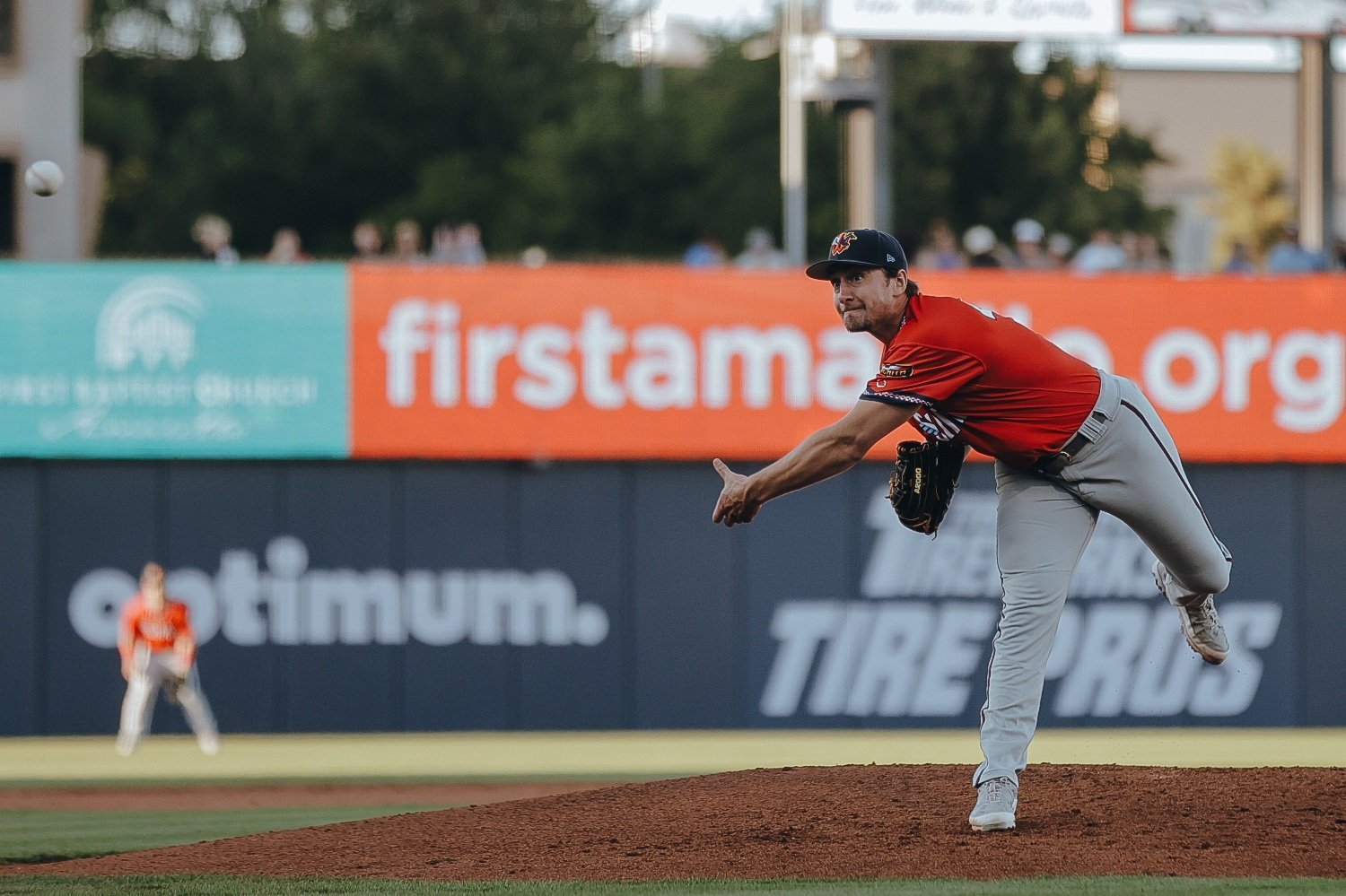 TRANSACTIONS Fort Myers placed RHP Eric Hammond on the 7-Day Injured List with a right eye contusion. SAINTS SENTINEL St. Paul 6, Las Vegas 7 Box Score Zebby Matthews was strong and efficient on Friday night. Orlando Arcia led the offense. Overall, this was a very nice win for the Saints. For the Aviators, lefty Gage Jump (a Top 60 overall prospect in baseball) started. He went 4 2/3 innings and gave up six runs (5 earned) on six hits and five walks. He had eight strikeouts. The Saints got ahead in the top of the first inning. With one out, Gabriel Gonzalez and Kyler Fedko walked. Arcia singled to right to drive in Gonzalez and give the team the 1-0 lead. The third inning began with Tanner Schobel reaching on a two-base error. Kaelen Culpepper singled to left with Schobel advancing to third base. Gonzalez drove in the second run with a sacrifice fly. Kyler Fedko just missed a home run and had to settle for an RBI triple. Arcia followed with his seventh homer of the season to give the Saints a 5-0 lead. Let’s jump to the top of the fifth inning. Arcia led off the inning by crushing a ball well beyond the fencing in left field. It was his second homer of the game and eighth of the season. It also gave the Saints a 6-2 lead. With two outs in the eighth inning, Fedko singled and went to second on a wild pitch. Arcia followed with an RBI single to left giving him four RBI in the game. Zebby Matthews was really good, and he was very efficient. Overall, he tossed eight innings. He was charged with three runs on 10 hits and two walks. He had five strikeouts including getting two strikeouts to end a threat in the bottom of the eighth inning, both on 96+ mph fastballs. Through six innings, he had thrown just 65 pitches. Through seven innings, he had thrown 74 pitches. Through eight innings, he threw 95 pitches, and 69.5% of them were strikes. Drew Smith gave up one run on two hits in the ninth inning. Not a Twins guy, but I have to write about the game that A’s top ten prospect Henry Bolte had. Leading off for the Aviators, he went 5-for-5 with two doubles, a triple, and two home runs. He played in 34 games for Las Vegas last season and hit .300/.404/.433 (.837) with six doubles, two triples and two homers. He was also 13-for-13 in stolen base attempts. Friday night was Bolte’s 35th game with the Aviators in 2026. He is hitting .329/.401/.604 (1.005) with five doubles, three triples, and 10 homers. He is also 16-for-17 in stolen base attempts. He was the A’s second round pick in 2022 out of Palo Alto High School in northern California. Bolte and Blue Jays prospect Josh Kasevich (currently with Triple-A Buffalo) are racing to become the high school’s fifth major-league player. Brothers Mike Brewer (Royals) and Tony Brewer (Dodgers) and Stu Pederson (Dodgers) combined to play in 44 MLB games between 1984 and 1986. The fourth player from the high school to play in the big leagues is Joc Pederson who is playing in his 13th MLB season in 2026. He is the son of the aforementioned Stu Pederson. Based on his Triple-A numbers, it looks like the Bolte family might be the third Palo Alto High School family to have big-league service time. The Kasevich’s may just need to accept being fourth. WIND SURGE WISDOM Wichita 5, Amarillo 4 Box Score A night after the offense set several franchise records for runs scored, hits, homers, and more. On Friday night, they showed they can slowly and methodically come back from a deficit to win a close game. As was generally the theme of the night, there was some really solid pitching throughout the system on Friday. Lefty Aaron Rozek started and tossed four scoreless innings. He gave up one hit, walked one, hit one, and struck out five batters. He’s been terrific since rejoining the Twins organization. His ERA with the Surge is down to 2.45. Wichita got on the board in the top of the fourth inning. With one out, Kyle Debarge singled. He stole second and then third base. And then Billy Amick drove him in with his fourth double of the year. In the top of the sixth, the Wind Surge added on. Garrett Spain led off with a walk. With two outs, he had moved to second base. Amick came to the plate and hit his ninth home run of the season to give his team a 3-0 lead. Jarret Whorff came in and pitched a scoreless fifth inning. However, he was charged with four runs on three hits and two walks, and he recorded just one out in the bottom of the sixth. He left the game with the bases loaded and a 3-2 lead. William Fleming came on and allowed two of the three inherited runners to score and give the Sod Poodles a 4-3 lead. The tying run scored when he hit a batter. The second scored on a soft ground out. Fleming’s pitching line doesn’t look bad. He tossed 1 2/3 scoreless, hitless innings. With two outs in the top of the eighth, Ricardo Olivar notched his seventh double of the season. Guess who followed with an RBI single to tie the game at 4-4? Of course, it was Billy Amick. With one out in the top of the ninth inning, Andrew Cossetti homered to center, his first homer of the season. It couldn’t have come at a better time! Sam Ryan struck out three batters over the final two innings. He faced the minimum. Amick went 3-for-4 with his fourth double and ninth homer and the team’s first four RBI of the game. He has seven homers in his past 13 games. KERNELS CHRONICLE Cedar Rapids 4, Quad Cities 2 Box Score The Kernels were shoutout in Quad Cities on Thursday night, and they didn’t exactly start Friday night on fire. However, some late runs were not only good for their psyche but led them to a win. The Kernels got on the scoreboard first in this game. With two outs in the top of the third inning, Jacob McCombs singled. He went to second on a balk and scored when Brandon Winokur reached on an errant throw. The Kernels have pitched well and did so again on Friday. Ivran Romero got the start and worked three scoreless innings. He gave up three hits, but he didn’t hurt himself with any walks. He had four strikeouts. Yehizon Sanchez came in and had three strikeouts over two scoreless, one-hit innings. Cole Peschl threw the sixth inning. He gave up one run on two hits and a walk. The game was tied 1-1 through seven innings. Jump to the top of the eighth inning, and the first two Kernels batters struck out. McCombs was hit by a pitch, and he scored from first on Winokur’s seventh double of the season. Nick Trabacchi put zeroes on the board in the bottom of the seventh and eighth innings. He walked one, but he gave up no hits and struck out four batters. The top of the ninth started out well. Khadim Diaw led off with his fourth double. Jaime Ferrer followed with his seventh home run of the season. That gave the Kernels a little cushion, a 4-1 lead heading to the bottom of the ninth. Paulshawn Pasqualotto gave up one run on one hit in the ninth to record a relatively stress-free fourth save of the year thanks to the insurance runs. Winokur went 2-for-4 with a double. Cedar Rapids had just five hits in the game and no walks. They were helped by three hit batters. MIGHTY MATTERS Ft. Myers 2, Tampa 6 Box Score This was a really well pitched game for both teams, especially through five innings. Tampa took the lead in the sixth. They put together a big inning and held on to win game four of this series. Again, we will start with the pitching. Ramiro Villanueva is back and healthy and pitching like he wants to move into Twins Top 40 rankings! After missing the 2025 season due to Tommy John surgery, he has impressed in his first few Mighty Mussels starts. That held true on Friday night. The right-hander tossed three scoreless innings. He gave up one hit, walked three and had four strikeouts. Of course, it’s no surprise what his one issue has been in his return so far. It’s common for control to come back a little slower for some. In 10 innings so far though, he’s given up one earned run on six hits. He has walked nine and struck out 12 batters. Not bad for a 19-year-old with three professional innings pitched (in the DSL in 2024) under his belt. Kolten Smith came in and worked the middle three innings. He started with two scoreless innings (two hits, four strikeouts), but he was charged with the four runs in the sixth inning (four runs, four hits, two walks, two strikeouts). It likely won’t surprise you to see how the Mussels scored their two runs in the bottom of the seventh inning. Bruin Agbayani led off with a double. He came around to score on Yasser Mercedes' sixth home run of the season. It cut the deficit in half, but Fort Myers was unable to complete a comeback. Xavier Kolhosser pitched the final three innings. He gave up two unearned runs on two hits and no walks. He struck out four batters. Five Mussels hitters had one hit. Agbayani’s double and Mercedes’ home run were the only extra base hits. Ramiro Dominguez had both a single and a walk, and he stole his second base of the season. COMPLEX CHRONICLE FCL Twins 3, FCL Red Sox 0 Box Score The FCL Twins jumped ahead with two runs in the bottom of the first inning. They added one more run in the fourth. Three pitching prospects combined for the seven-inning shutout. Let’s start with the pitching, as I really think all three pitchers are legitimate prospects (each ranks in my current Top 65 Twins prospects.). Melvin Rodriguez started and gave up two hits and a walk over two scoreless innings. He had one strikeout. Geromy Villoria came on and gave up two hits and a walk over two scoreless innings. He struck out two batters. Hendry Chivilli finished the game with three scoreless innings. He gave up two hits, walked one, and had two strikeouts to earn the save. Yovanny Duran led off the bottom of the first inning with a triple. After two strikeouts, Joyner Perez singled to center to drive him in. After a wild pitch, Daiber De Los Santos singled to right to make it 2-0. Perez and De Los Santos each finished their day 1-for-2 with a walk. With two outs in the bottom of the fourth, Ricardo Paez knocked his first home run of the season to make it 3-0. It marked his first home run in the States. Last year in 39 games in the FCL, he hit .242 and got on nearly 40% of the time, but he had no home runs. In 2024, he had two home runs in 36 games for the DSL Twins. PLAYERS OF THE DAY Hitter of the Day Orlando Arcia (St. Paul): 4-for-5, 2 HR(8), 2 R, 5 RBI. Billy Amick (Wichita): 3-for-4, 2B(4), HR(9), R, 4 RBI. Pitcher of the Day Aaron Rozek (Wichita): 4 IP, H, 0 R, BB, 5 K, 63 pitches, 38 strikes (60.3%) PROSPECT SUMMARY Check out the Prospect Tracker for much more on our Twins Top 20 prospects after seeing how they did today. #1 - OF Walker Jenkins (St. Paul) - 7 Day Injured List (left shoulder) #2 - IF Kaelen Culpepper (St. Paul) - 1-for-5, R, 2 K (batted first, played 2B) #3 - OF Emmanuel Rodriguez (St. Paul) - 7 Day Injured List (thumb) #4 - C Eduardo Tait (Cedar Rapids) - 0-for-4 (batted third, DH). #5 - LHP Connor Prielipp (Minnesota) - 5 IP, 4 H, 4 R, 1 ER, 2 BB, HBP, 6 K. 93 pitches, 61 strikes (65.6%) #6 - LHP Dasan Hill (Cedar Rapids) - Did Not Pitch. Scheduled to start Sunday. #7 - OF Gabriel Gonzalez (St. Paul) - 0-for-2, 2 BB, R, SF RBI, K (batted second, played 1B) #8 - LHP Kendry Rojas (St. Paul) - Did Not Pitch. #9 - SS Marek Houston (Cedar Rapids) - Did Not Play. Missed third straight game. #10 - RHP Charlee Soto (Cedar Rapids) - Injured List #11 - RHP Riley Quick (Cedar Rapids) - Did Not Pitch #12 - RHP Andrew Morris (Minnesota) - Did Not Pitch #13 - 3B/CF Brandon Winokur (Cedar Rapids) - 2-for-4, 2B(7), RBI, CS(2) (batted second, played SS) #14 - 3B/SS Quentin Young (Ft. Myers) - 0-for-4, 3 K, E(13) (batted sixth, played 3B). #15 - RHP Marco Raya (St. Paul) - Did Not Pitch. #16 - OF Hendry Mendez (St. Paul) - 0-for-4, BB, 3 K (batted fifth, played LF) #17 - 2B/SS/CF Kyle DeBarge (Wichita) - 1-for-4, R, K, 2 SB(9) (batted second, played SS) #18 - RHP C.J. Culpepper (St. Paul) - Did Not Pitch. #19 - C/OF Khadim Diaw (Cedar Rapids) - 1-for-3, 2B(4), R, HBP (batted first, played Catcher) #20 - RHP James Ellwanger (Ft. Myers) - 60 Day Injured List (right elbow sprain) UPCOMING PROBABLES Saturday, May 9: St. Paul @ Las Vegas (9:05 pm ET) - RHP Trent Baker (2-2, 9.42 ERA) Wichita @ Amarillo (7:05 pm CT) - RHP Ricky Castro (1-0, 4.63 ERA) Cedar Rapids @ Quad Cities (5:30 pm CT) - RHP Eli Jones (1-1, 4.70 ERA) Tampa @ Ft. Myers (5:05 pm CT) - RHP Justin Mitrovich (0-0, 0.00 ERA) FCL Twins @ FCL Red Sox (9:00 am CT) - TBD CURRENT W-L Records Minnesota Twins: 16-23 St. Paul Saints: 18-18 Wichita Wind Surge: 16-15 Cedar Rapids Kernels: 16-15 Fort Myers Mighty Mussels: 17-14 FCL Twins: 3-2 DSL Twins: 0-0 (season begins Monday, June 1) Please feel free to ask questions about the teams, the rosters, and discuss today’s games, or anything else Twins minor-league related! View the full article
 -
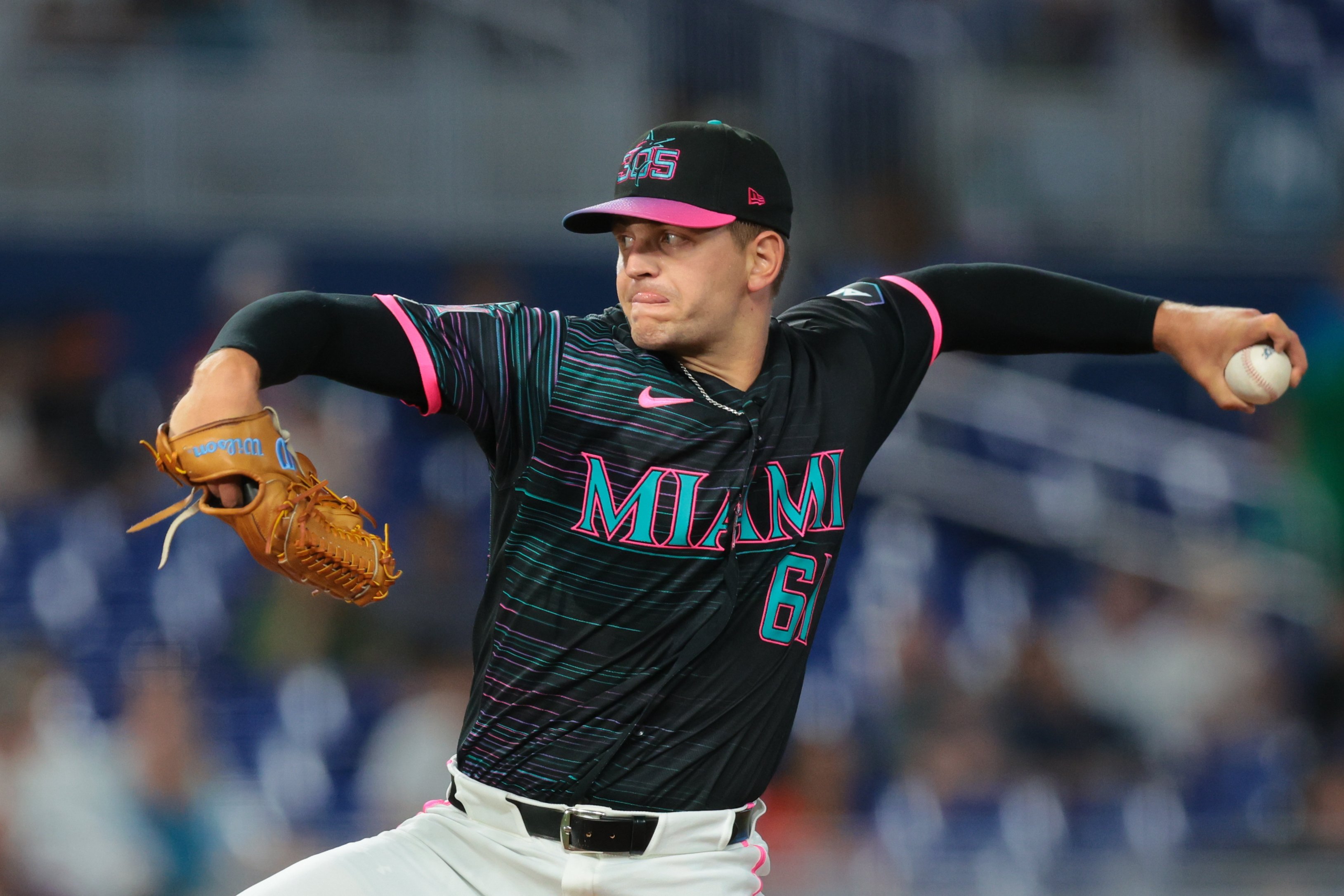 MIAMI, FL - Friday's series opener against the Washington Nationals marked one of the most highly anticipated major league debuts in a long time, as Fish On First's No. 2 prospect Robby Snelling took the mound. Unfortunately, the Marlins offense went ice cold, including going 0-for-6 with runners in scoring position, falling by a final score of 3-2. "He's made really tremendous strides since we've acquired him," said president of baseball operations Peter Bendix before the game. "It's a testament to Robby, how hard he works, the kind of competitor that he is. It's also a testament to our pitching group from top to bottom, Bill Hezel, our director of pitching, and everybody who's been involved in Robby's development. The great thing about Robby is he's really good right now. We're really excited about tonight, and he still has a lot of improvements that he can make. He has true top-of-the-rotation upside." Usually, a starting pitcher keeps to himself before an outing and is not spoken to, but Snelling took a different approach, and has throughout his whole career. During Marlins batting practice, Snelling was hanging out, chatting up teammates and staff just outside the Marlins dugout. Part of his reasoning is to keep things "super light" and doesn't want his start day to feel different from any other day. "Come in, try and chop it up with the guys," Snelling said. "My thing is kind of going out, and I was joking about the roof being closed today. I try and go out and roam around the outfield barefoot and walk around, and usually BP is not going on. There was no sun out today, so it's kind of like being able to just be outside of the clubhouse and interact with people. I don't want to feel isolated on any day. I want to treat it just like a normal day. Kind of gets my mind right." In five innings of work, Snelling allowed three runs on five hits, four walks and only two strikeouts. All three runs he allowed came in the top of the first inning with two outs. An RBI single from CJ Abrams and then a two-run homer from Jacob Young. He finished the game throwing 86 pitches, with 54 landing for strikes. He averaged about 17 pitches per inning. "For him to really navigate himself through five, maybe not the cleanest innings, but he really grinded well, showed a lot of moxie today," Marlins manager Clayton McCullough said. Snelling's fastball topped out at 97.2 mph and averaged 95.3 mph. Although the velocity of the fastball was up, the usage was down. Snelling threw his fastball 51.4% of the time in Triple-A, and on Friday, he threw it 33% of the time, his second most used pitch. "Everybody's geared up for 100 miles an hour up here," Snelling said. "I used my fastball in good spots where I needed to, and utilized my sinking fastball in really good spots to left-handed hitters. That got me a couple of groundouts tonight that I really needed." Some of the positives to take away from a start like this was his curveball playing well, generating five whiffs, including All-Star James Wood for his first career strikeout. Snelling suspected that Wood would be sitting on his fastball in that situation. "That guy is going to be geared up, expecting me to come out firing. and I was able to execute three really good pitches." The curveball was Snelling's most-used pitch on the night (34% usage). Another plus was landing 16 of 22 pitches for first-pitch strikes (73%), which he had told the media the day before he had been trying to work on at Triple-A. Although Snelling had a lot of traffic on the bases, the defense behind him helped him, turning two double plays (one in the second and another in the fifth). In total, Snelling had six groundouts. "Obviously, having runners on base as much as I did tonight, that's not what starting pitchers want," Snelling said. "Being able to continue to attack the zone, attack each hitter that stepped into the box, proud of myself about." Catching Snelling was Joe Mack, who spent a lot of time with him in the minor league after being traded from the Padres. When asked what he will remember the most from his debut, immediately went to "throwing to Joe." "Being able to go up through the minor leagues with him after I got traded, and create that dialogue with him and the relationship that I have, it's pretty cool." The Marlins scored twice off former KBO pitcher Foster Griffin in the bottom of the first inning. Xavier Edwards, who was leading off, took Griffin deep to left-center. It marked his first home run as a right-handed hitter and his third career leadoff homer. Kyle Stowers reached first on a fielder's choice and Otto Lopez, who was at second, scored on a throwing error. Unfortunately for the Marlins, Griffin was dominant after that. In seven innings of work, he allowed two runs (one earned) on four hits, one walk and struck out nine. His cutter generated nine whiffs, with four of his nine strikeouts coming on that pitch. "We just didn't put a whole lot of good passes on (the cutter) and he was able to crowd a lot of guys there," McCullough said. "He's having a really nice season, been throwing the ball well. I think just that combo of trying to bully guys in with action running into 'em and then go play the changeup off of it has been successful. Dump enough curveballs early in count to steal some strikes. He pitched a good game." With the loss, the Marlins drop to 17-22. Janson Junk gets the start on Saturday with a 4:10 pm first pitch. View the full article
 -
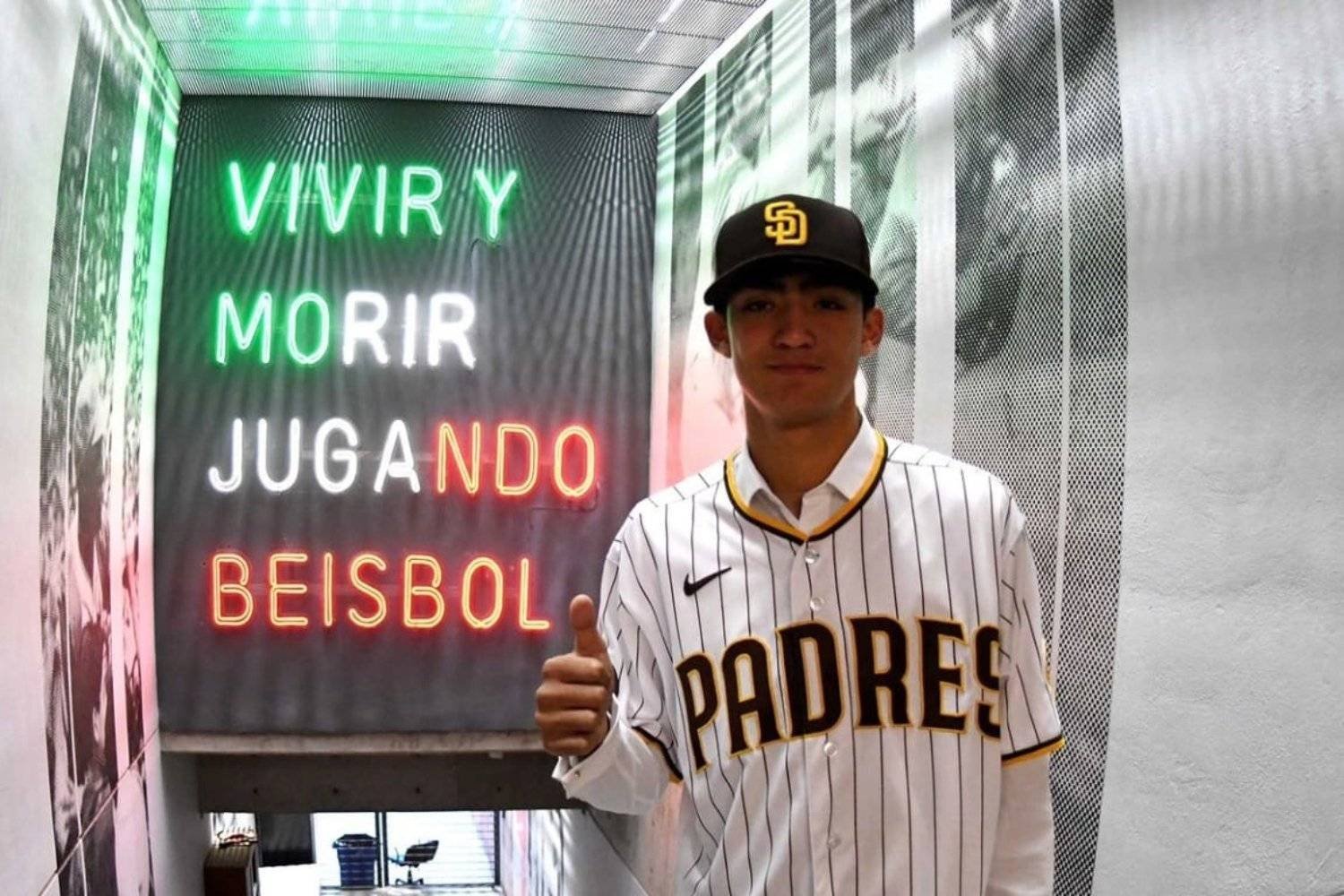 The dream of pitching in MLB is on hold, if not over, for San Diego Padres pitching prospect Humberto Cruz. The 19-year-old right-hander pleaded guilty to a misdemeanor charge related to transporting undocumented immigrants within the U.S. for money, according to a report Friday by the San Diego Union-Tribune. That report said the Padres believe Cruz has lost his work visa for 10 years, although he can reapply after five years by showing good behavior. Cruz is Padres Mission's No. 6 prospect. Cruz was arrested near the U.S.-Mexico border in Arizona in October after picking up a two individuals in exchange for money, $1,000 each. He had been working out at the team's complex in Peoria, Ariz., after having Tommy John surgery in late August. Cruz was signed out of Mexico in February 2024. The Padres placed Cruz on the restricted list in March. He was originally charged with a felony, but Cruz agreed to plead guilty in exchange for the more serious charge being dropped. In November, a judge sentenced him to 30 days in prison with credit for time served. View the full article
 -
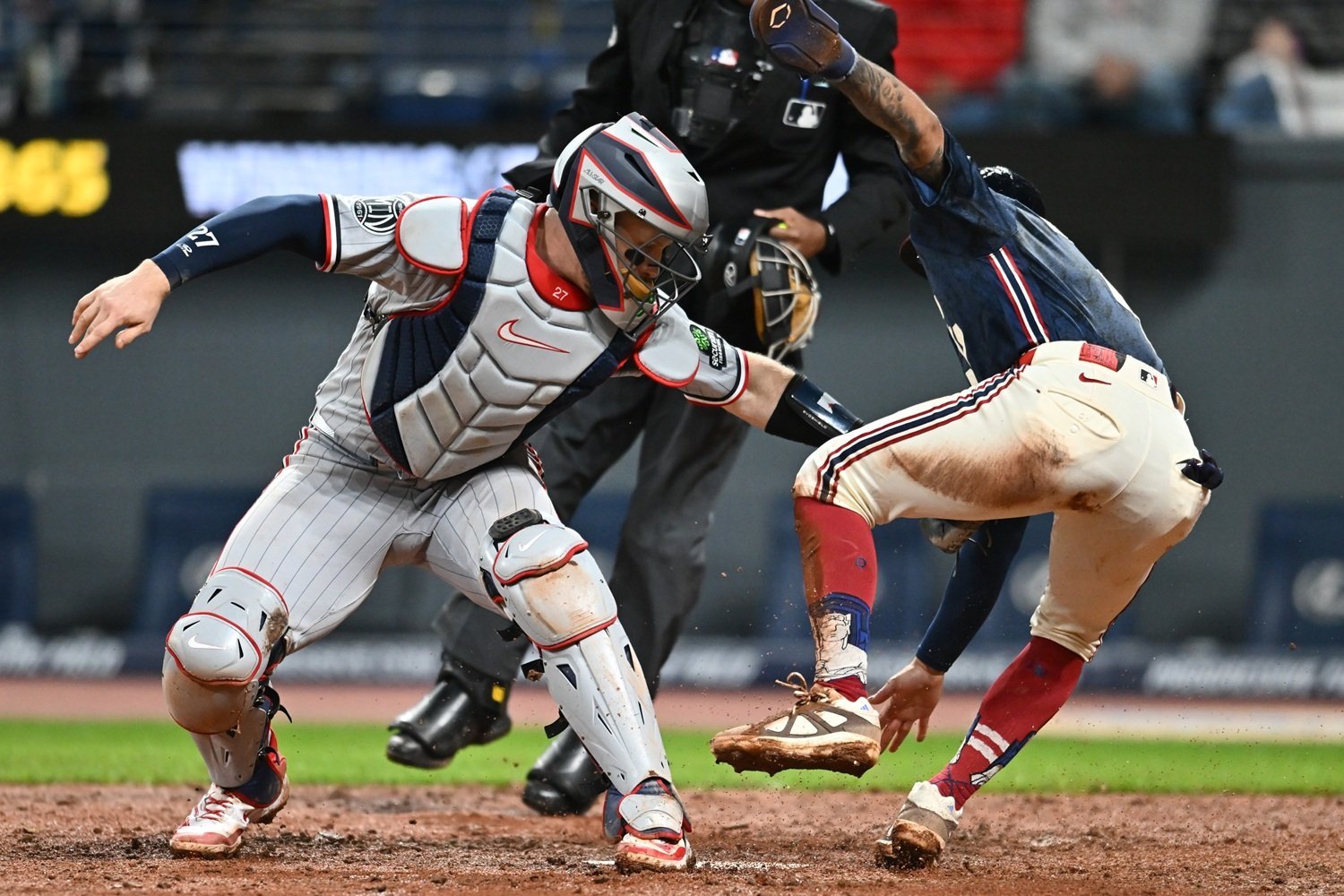 Box Score Connor Prielipp: 5 IP, 4 H, 4 ER, 2 BB, 6 K Home Runs: Byron Buxton (12) Bottom 3 WPA: Connor Prielipp (-.240), Ryan Jeffers (-.190), Matt Wallner (-.160) Win Probability Chart (via FanGraphs) Ah, the first Apple TV game of the year. How well did you do in finding a way to watch the game? This author—who is 27 years old, by the way—struggled to use their fiancé’s email to sign up for a free trial solely for this game. The process took ten minutes. We needed her face ID three times. The dinosaurs feel more relatable with each passing day. At least we were rewarded with baseball played by the 2026 Twins. Byron Buxton doubled to lead off the game—a false hope, as he remained at the base, cursed to watch his teammates fail to even advance him to third. In poetic juxtaposition, the Guardians scored their first baserunner—and many more (man, two em dashes so early seem a little aggressive, but we’ll work with it). Steven Kwan singled, and Connor Prielipp doinked a slider off Angel Martínez’s foot. José Ramírez chopped a grounder that should have netted at least one out, yet Luke Keaschall positioned himself too close to the dashing Martínez, who blinded the young second baseman, allowing the ball to escape him entirely and roll softly, harmlessly into the outfield, scoring one. Rhys Hoskins added on with a sacrifice fly. The damage would have been rationalized if Travis Bazzana didn’t soon clobber a hanging Prielipp slider to make the first an Officially Disastrous frame™. Cleveland led 4-0. And Cleveland starter Parker Messick was in no mood to relinquish that advantage. The 25-year-old Mark Buehrle impersonator tore through the Twins lineup. No runner again reached second base until the sixth; he simply didn’t allow it. Rather, the lefty worked at his accelerated pace, changed speeds, and kept Minnesota’s batters guessing, often incorrectly. But fortune changed in the sixth. Austin Martin “doubled” on a 56-degree chip shot over the first baseman’s head, enabling Ryan Jeffers to shoot an RBI single to right field. Impossibly, the Twins totaled three more consecutive hits without scoring another run; the lethargic Jeffers was thrown out at home following a Keaschall knock. “You know how to avoid getting thrown out at home? By blasting one out of the park?” -Byron Buxton, probably. The homer brought the game within one. Which was as close as things would get. Cleveland added on in the seventh and eighth to stretch things to a 6-3 advantage over the Twins. Minnesota put men on the corners with no one out in the ninth to spice matters up late, but a Jeffers double play neutered the rally. They fell one batter later. Notes: Post-Game Interview: What’s Next? The Twins and Guardians will meet on standard TV for an early-evening Saturday affair. Joe Ryan is scheduled to start opposite Tanner Bibbee. First pitch is at 5:10 PM. Bullpen Usage Spreadsheet MON TUE WED THU FRI TOT Banda 0 19 0 20 22 61 Funderburk 0 0 17 0 22 39 Orze 0 16 0 0 16 32 Topa 0 0 32 0 0 32 Klein 0 0 0 31 0 31 Garcia 0 13 14 0 0 27 Rogers 0 0 0 26 0 26 Morris 0 0 14 0 0 14 Gómez 0 0 0 0 2 2 View the full article
 -
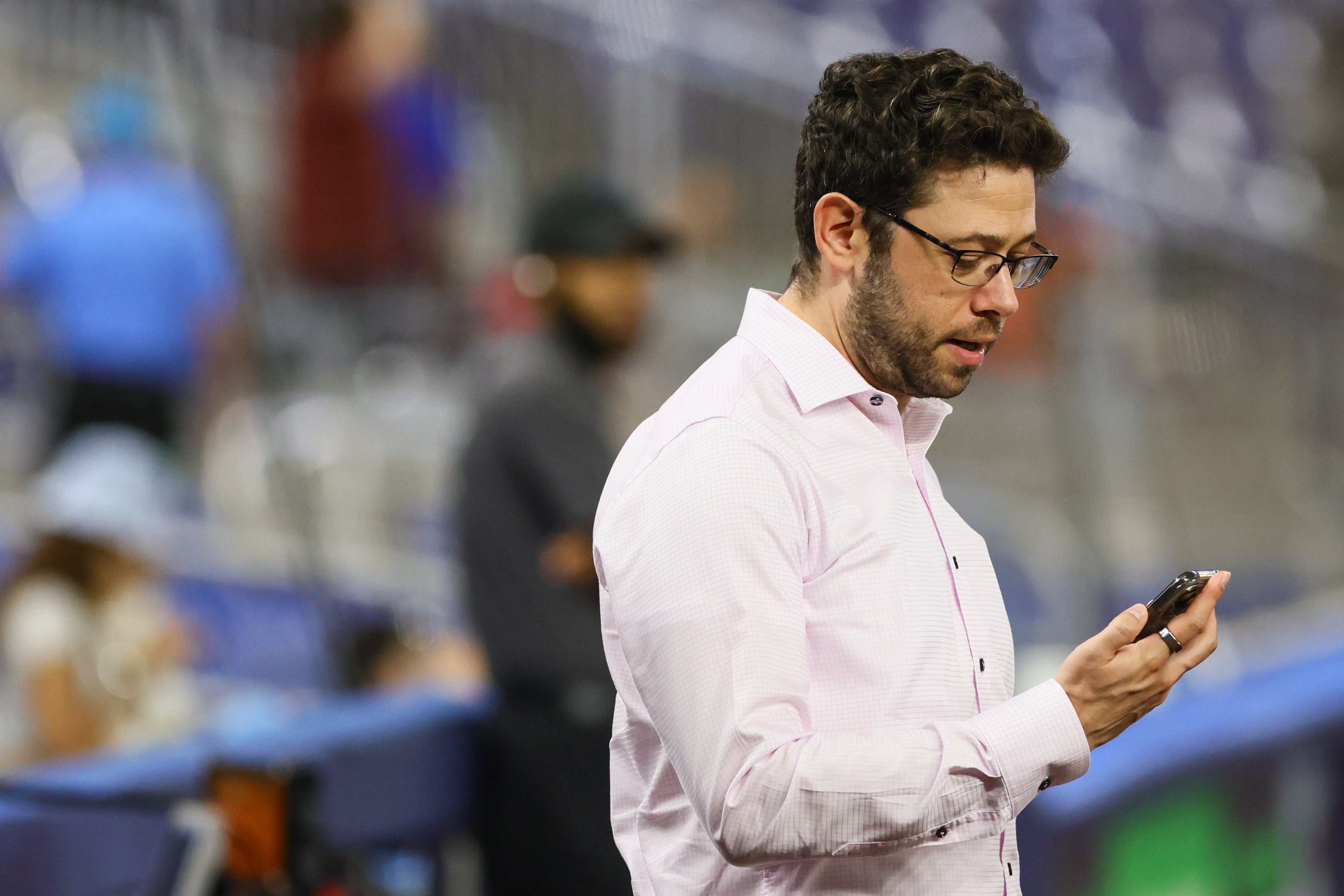 MIAMI, FL — On Friday, just under two hours before Robby Snelling made his major league debut, Miami Marlins president of baseball operations Peter Bendix spoke to local media for about 10 minutes, discussing a variety of topics. His most notable responses are featured below, along with some additional context and statistics. What are you seeing with Owen Caissie, and how much longer of a leash do you give in at the big league level? "Adjusting to major league pitching is the hardest thing a player is ever going to do. With guys like Owen (Caissie), he has never failed at any point in his career. So what happens when you get punched? What happens when you get knocked down? You have to figure out a way to get back up and adjust. Players do that at different points in their career. It takes them different amounts of time. We saw Kyle Stowers get punched in the face every single night at the end of 2024 and then he was able to use that to make an adjustment. I'm optimistic that Owen can do the same thing." Through 34 games this season, Caissie is slashing .202/.261/.323/.584 with two home runs, 16 RBI and a 60 wRC+. The biggest issue for Caissie has been his strikeout rate, which is at 41.4%, highest in baseball (min. 100 PA). His last home run was hit on April 1 against the New York Yankees. Starting pitching leash and bullpen management. Does Clayton McCullough make all the moves? "Before every game, there is a meeting that involves a lot of different people that is run by Clayton to talk through as many different scenarios as we can imagine coming up in that game. I think the best decisions are the decisions that are made ahead of time, in the sense that you don't want to be caught off guard. You want to be prepared for anything that might happen. What's option A, option B and option C. That's not to say it's scripted a predetermined, it's just thought about ahead of time. There's a lot of time spent on that. A lot of it is managing both to win today and to get through 162 games." What are you seeing with Eury Pérez? "Eury is still one of the youngest pitchers in baseball. He's got as good stuff as anybody, and he's still learning how to utilize it and best deploy it. The path to being a superstar is not always linear, and so I think that's what we're seeing." In eight starts, Pérez is sporting a 5.01 ERA, 4.90 FIP, 9.80 K/9 and 4.57 BB/9. In his most recent start, Pérez went five innings, allowing five runs on four hits (one home run), five walks and struck out six. At the moment, there is no plan to send Pérez down to Triple-A. How do you navigate that type of situation where you want Agustin Ramírez to develop up here, but you also don't want to take reps away from guys that are contributing? "I will sign up for the scenario in which we have three really good catchers. I think that very well could happen. If it does, then we'll deal with it. But that's the kind of problem we want to have." Since being sent down to Jacksonville, Ramírez is slashing .250/.333/.250/.583. The Marlins called up Joe Mack ahead of Monday's series finale against the Philadelphia Phillies, and since then, he is slashing .300/.300/.400/.700 with one RBI and a 92 wRC+. Liam Hicks is slashing .319/.372/.584/.956 with a team-leading nine home runs and MLB leading 34 RBI. "What Liam is doing is incredible. The fact that he set out this offseason to add power and improve his bat speed. He clearly did that and somehow also lowered his strikeout rate to be one of the best strikeout rates in all of baseball. He's hitting lefties, hitting guys who throw hard. He's hitting guys who throw breaking balls. He's hitting for power. He's hitting for average. Like, absolutely incredible." Why was Ramírez sent down? "He was called up after several other guys back here went down. He was called up relatively early in the year, and to his credit, he hit the ground running and took advantage of that, but didn't have the level of development, especially defensively in the minor leagues with us that we may have been planning for him. I think getting him down to Triple-A where he can really worry about getting better without all of the noise that comes with being at the major league level, I think is really going to do him a lot of things." Thoughts on Braxton Garrett and when we can see him back up at the big league level? "He's been great. I think the fact that Braxton is in Triple-A really speaks to the depth of pitching that we have. There will be an opportunity for him. I'm sure of it. He will be ready for it. I'm sure of that, too. The fact that he's healthy and throwing the ball well, that's what's important." View the full article
