


DiamondCentric
-
Posts
2,631 -
Joined
-
Last visited
Never
Content Type
Profiles
Forums
Events
News
Tutorials & Help
Major League Baseball Videos
Guides & Resources
Store
Downloads
Gallery
Everything posted by DiamondCentric
-

Padres' Minor-League Hitter of the Month, April 2026: Alex McCoy
DiamondCentric posted an article in Padres Mission
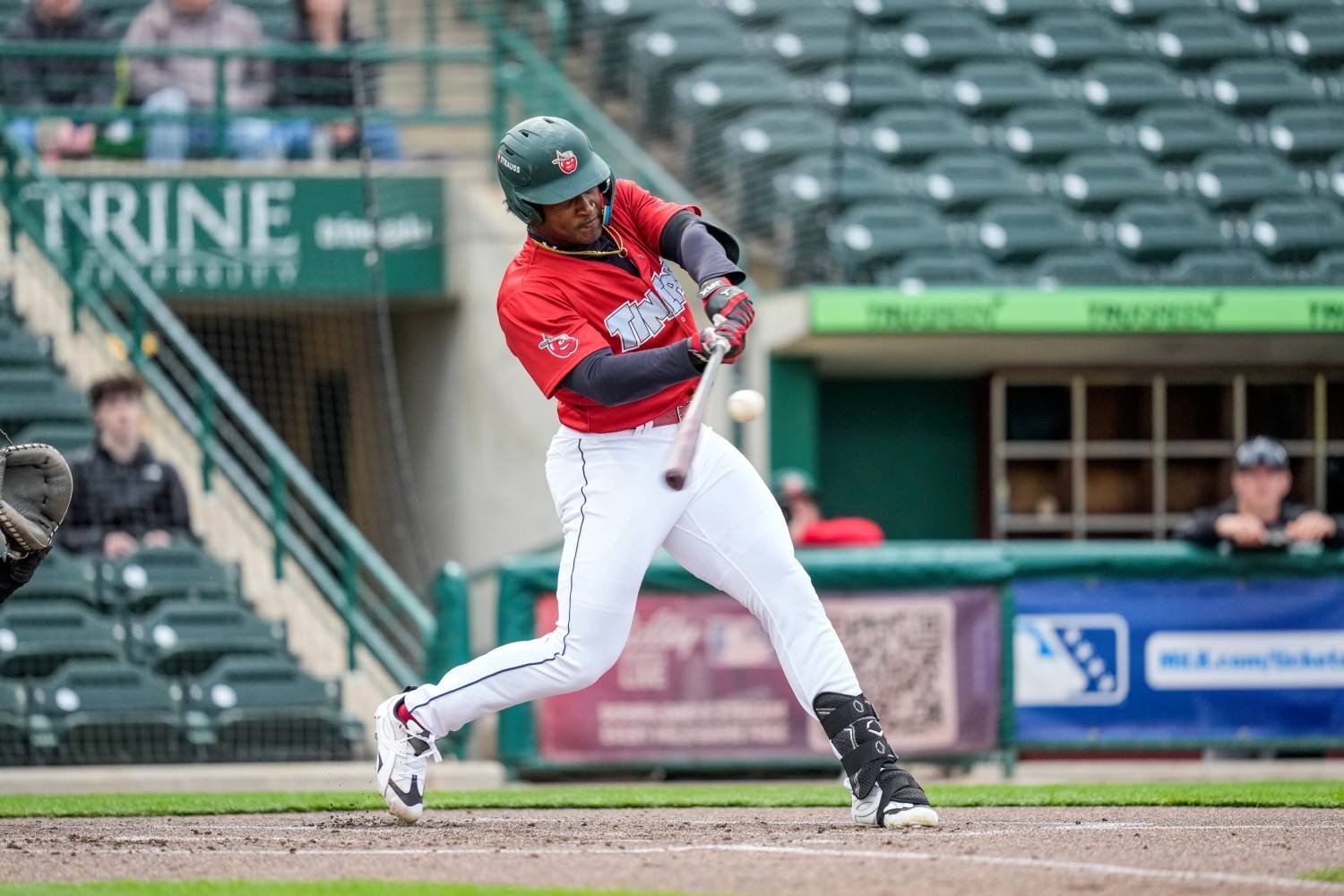 It's hard to miss Alex McCoy. After all, he is listed at 6-foot-5 and 260 pounds. While looking more like a football or basketball player, the outfielder is standing out for other reasons on the baseball diamond. Signed as an undrafted free agent out of college in 2024, McCoy has thrived in his brief time in the San Diego Padres' organization. Building off a good 2025, his first season in pro ball, McCoy, the left fielder for the High-A Fort Wayne TinCaps, has been the best overall hitter in the farm system through the first month of the season, making him an easy choice for Padres Mission's Minor-League Player of the Month for April. The 24-year-old had a 15-game hitting streak that was snapped last weekend and had a 19-game on-base to finish the month. His hitting streak was the longest by a TinCap since a 15-gamer by Fernando Tatis Jr. in 2017. During that run, McCoy had a .339/.354/.645 slash line (.999 OPS) with seven doubles, four homers and nine RBIs. That was the core of his April production. McCoy finished April with a .354/.386/.683 slash line, with a Midwest League-leading 10 doubles to go along with five homers and 14 RBIs in 21 games. He has stolen five bases in seven attempts. He concluded the month with his first three-hit game of the season, including his first triple. Since April 7 among players with as many at-bats, he leads the league in doubles, slugging percentage, OPS and total bases. His five homers thus far are two shy of what he hit in 58 games last season. McCoy doesn't currently rank among Padres Mission's Top 20 prospects, but that could change in our next update. MCCOY_MILB_POM.mp4 As with any young slugger, McCoy has struggled to draw walks, with a 3.4% walk rate (three walks in 88 plate appearances), and his 23.9% strikeout rate is slightly above what the MLB average is. Nevertheless, McCoy has some of the best power in the system. Last season with the Low-A Lake Elsinore Storm, McCoy had a peak exit velocity of 118 mph, a figure that would look elite even at the MLB level. His emergence is definitely a win for the Padres' player development at a time the farm system could use a few. The Friars are universally ranked last among the 30 farm systems due to the way president of baseball operations A.J. Preller has traded prospects to bolster the major-league roster in recent years. The Padres signed him in 2024 as an undrafted free agent out of Hofstra, where he played after three seasons at Maryland-Eastern Shore. McCoy hit 11 homers in 56 games, mainly as a center fielder, at Hofstra with 44 RBIs and 22 stolen bases while putting up a .306/.384/.509 slash line. In 80 games At Maryland-Eastern Shore, first base was his primary position, hitting four homers, driving in 29 and stealing 36 bases in 43 attempts combined in his two playing seasons (his freshman year was wiped out by the COVID-19 pandemic). His slash lines were .294/.388/.368 in 2022 and .253/.357/.347. His evolution as a hitter at Hofstra could be attributed to the Pride's head coach, former MLB infielder Frank Catalanotto. McCoy didn't play professionally after signing in July 2024 until making his debut with Lake Elsinore in April 2025. With the Storm, he had a .318/.394/.513 slash line with six homers and 33 RBIs in 53 games, with 14 steals in 16 attempts. McCoy also had 12 doubles and three triples. He had a brief rehab assignment in the Arizona Complex League, posting a .278/.381/.611 slash line in five games with three doubles, a homer and seven RBIs. McCoy had eight- and nine-game hitting streaks with Lake Elsinore. As a 24-year-old in High-A, McCoy is a bit old for the level (he is about 18 months older than the average player), so it wouldn't be surprising to see him move up to Double-A San Antonio soon if he continues to hit like this. His ability to hit and hit for power will need to be maintained if his ascent is to continue. Defensively, McCoy should be able to stick in left, but he also does have experience at first base, giving him positional flexibility. View the full article
 -
Royals Hitter of the Month, April 2026: Carter Jensen
DiamondCentric posted an article in Royals Keep
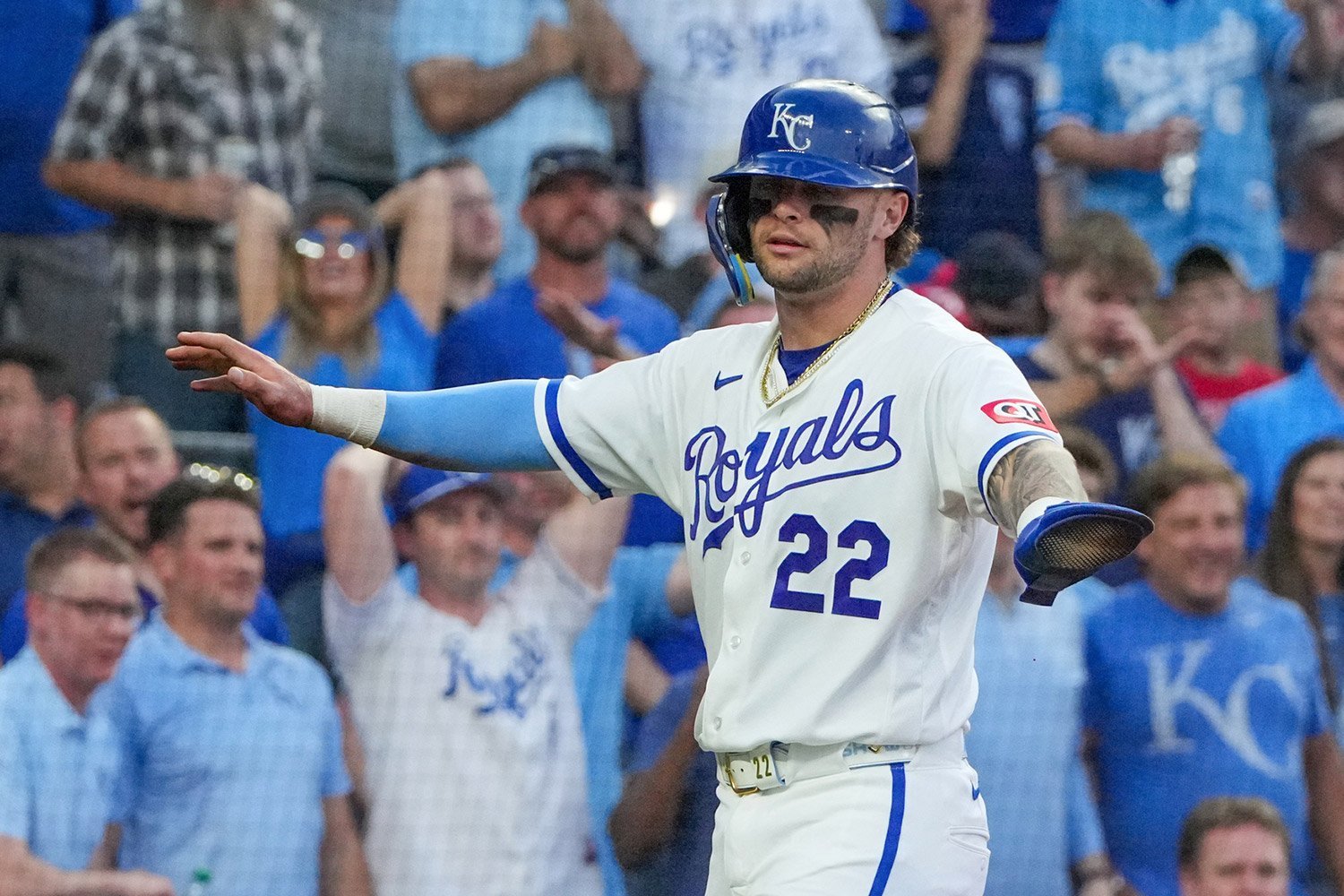 The Royals’ offensive start to the 2026 campaign has been a frustrating one. Packed with talent, the offense was expected to have no trouble overcoming the struggles it is currently facing. Yet, there are some positive notes on the future of the KC battalion. As we wrap up an action-packed first month of baseball, one name stands above the rest in the Royals’ lineup: Carter Jensen. While the young catcher is still establishing his footprint in the big leagues, his performance over the last month has been nothing short of elite. With the Royals’ offense struggling to produce, Jensen has been one of the more productive hitters in the American League. The headline of Jensen’s breakout month is his .233 ISO (Isolated Power). To put that in perspective, he’s leading the team by a wide margin, with Kyle Isbel sitting in second place at .167. Jensen’s ability to drive the ball for extra bases has vaulted him into the AL’s top producers, ranking as the 10th best ISO in the American League. He isn't just hitting doubles, either. Jensen hammered a team-high six home runs this month, proving that he has the raw strength to be a middle-of-the-order mainstay for years to come. With a wRC+ of 134, Jensen is performing 34% better than the league-average hitter. When you combine that offensive production with the physical demands of the catching position, you get a player who is quickly becoming the heartbeat of this roster. His 0.7 WAR for the month ranks him third on the team, proving he is a winning ingredient in the Royals' formula. No young player is perfect, and if there is one human element to Jensen’s game right now, it’s the swing-and-miss. He posted a 27.3% strikeout rate over the month, roughly five percentage points higher than the league average. While the strikeouts are a point of focus for Jensen's development, it's important to keep perspective: there are actually three other regulars on the roster with higher strikeout rates. When you're slugging .500, a few extra whiffs are a trade-off most managers will take any day of the week. Carter Jensen has officially arrived. Leading the team in Slugging, wOBA, and wRC+, he is quickly transitioning from a prospect to watch to a legitimate MLB professional. If he continues to refine his contact skills while maintaining this elite power, the league will need to start paying very close attention to the man behind the mask in Kansas City. Congratulations to Carter Jensen, our Royals Hitter of the Month! View the full article
 -
 This past offseason, Dylan Cease signed a 7-year, $210 million deal with the Toronto Blue Jays. So far in 2026, he has continued to be one of the dominant strikeout pitchers in all of baseball. How does he do it? In this video, we dive into everything from otherworldly strikeout and whiff rates to a wizard-like arsenal. View the full article
 -
 Minnesota native Matt Wallner is off to a brutal start, and the same concerns keep resurfacing. It's fair to wonder if the Twins are running out of patience. View the full article
 -
Twins Lean Into Innovation With Pitching Development Overhaul
DiamondCentric posted an article in Twins Daily
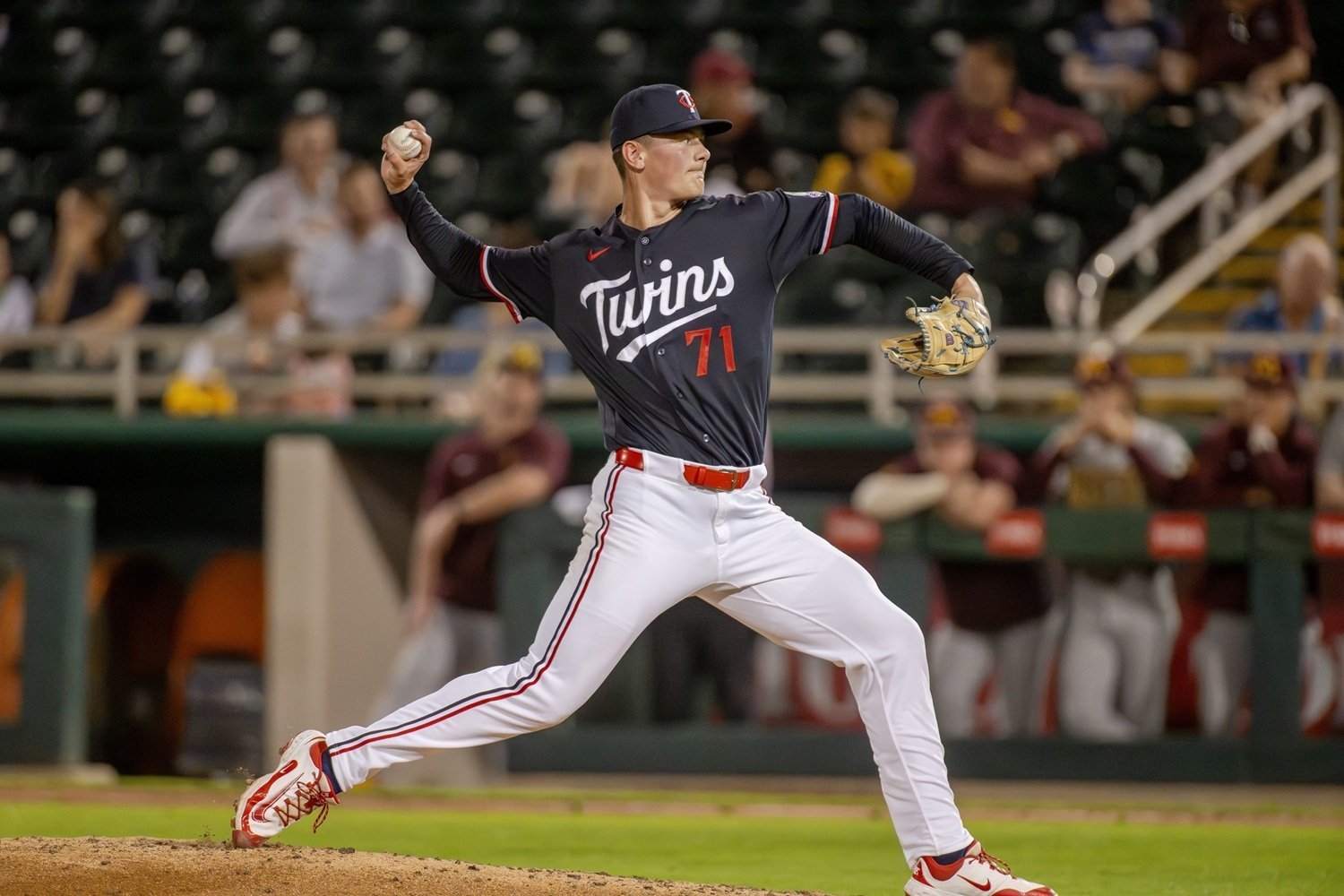 Player development is often where organizations separate themselves, and the Minnesota Twins are making sure they are not standing still. In a recent appearance on Inside Twins, Director of Player Development Drew MacPhail offered a detailed look into how the organization is rethinking pitching usage and in-game strategy across the minor leagues. What emerged from the conversation was a clear theme. The Twins are not just tweaking around the edges. They are actively challenging long-held norms about how pitchers are deployed and how information flows during a game. The goal is not only better performance today, but a more adaptable and durable pitching pipeline for the future. One of the most notable changes centers on how starting pitchers are used. Traditionally, starters work every five days and build toward 100 pitch outings. Minnesota is pushing against that model by experimenting with a four-day rotation paired with shorter outings. Last year, the Twins tried it with a handful of guys, but this year, it's expanded to about a dozen pitchers. “Honestly, we've been doing a lot of research and talking a lot about this for a long time,” said MacPhail. “We experimented with it in 2025 in a smaller group, and we saw a ton of success. I think the idea behind it…was basically the idea that some of your starting pitcher type guys, some of your best pitchers in the organization, if you put them on a four-day, there's actually some interesting research that they could actually bounce back a little bit quicker if kept under a certain pitch count.” MacPhail continued, “And the benefit of that was they'd actually be able to accrue more innings over the course of a season on that schedule. So we sort of started with a pilot program, and what we saw was the guys that we put on that program having more success in that four-day type role than they had in the previous year, as well as taking down more innings. The group was excited about kind of rolling it out to a bigger group this year, and that's what you're seeing so far in the 2026 season.” The early results gave the Twins confidence to expand the program, and the structure has already produced meaningful workloads. Pitchers like John Klein approached the 100-inning mark last season, a significant benchmark for developing arms. That shift, however, creates logistical challenges. With a mix of four-day and five-day starters and a universal off day, overlap is inevitable. Instead of viewing that as a problem, Minnesota is turning it into an advantage through piggyback outings. “I think what you ultimately see is you have some of your best starting pitchers sort of piggybacking each other,” said MacPhail. “So, an example of that that happened recently was Connor Prielipp and Kendry Rojas. Kendry was on that four-day schedule, Connor was in a true five-day starter type role. Those guys piggybacked each other and ended up taking down eight plus innings of incredible baseball and Triple-A.” “So I think what it ultimately means is you have sort of more of your starter type guys pitching on top of each other more, but ultimately that's sort of one of the benefits as well, is you kind of have two guys going back and forth, giving you a lot of innings, actually more than a starter pro typically would, is the idea and some two of your best pitchers taking over that workload.” Beyond the immediate results, the approach also creates flexibility in how pitchers transition to the majors. Instead of forcing a binary choice between starter and reliever, the Twins are building pitchers who can handle multiple roles depending on need. The Twins are not stopping with pitcher usage. They are also experimenting with coaches calling pitches during games, a responsibility that has traditionally been the catcher's at the professional level. This is the norm in college baseball, with nearly every program having the coaches call the pitches. “The first is our pitching coaches spend a ton of time going over the advanced process game planning for hitters,” said MacPhail. “Our catchers do as well. But I think if you broke down that time a lot, then the pitching coaches are really the ones that are digging into it and putting in the most work and effort on that front and then helping educate the catchers on that.” MacPhail discussed how the pitching coaches have the information in front of them during the game, making it easier to call pitches. The catcher is relying on recall and memory, which can be challenging with in-game batter changes, different matchups, etc. “I think if you think about it from the outside looking in, it makes sense, just like you see an offensive coordinator or defensive coordinator in the NFL or college football calling plays, that the pitching coach would be calling plays, right? So I think it's a copycat league. We've seen some other organizations do that this past year.” So, what are the benefits of coaches calling pitches? “I think there's an ancillary benefit of our lower-level catching prospects, learning the pitch coach calling process from our pitching coaches, kind of spurring more dialogue there. Additionally, I think those games when they're not calling pitches, it helps free them up, and we're interested in do they perform better offensively? Do they perform better from a receiving standpoint, from a blocking and throwing standpoint?” “There's so many things they have to worry about during the course of a game. If we take this sort of mental workload off them, well, we actually see their performance take up some too. So, you know, I'm not going to pretend like we know for sure that it's going to be a huge success, but it's something that we want to experiment with in the minor leagues, and ultimately, you know, it's a testing ground to bring these concepts to the major league team.” For an organization that has consistently emphasized development, these changes represent a willingness to rethink the blueprint. Not every experiment will stick, and MacPhail was clear that there are tradeoffs worth evaluating. Still, the Twins are leaning into the idea that the minor leagues should be a proving ground for innovation. If the early returns hold, Minnesota may not just be developing pitchers. It may be reshaping how they are developed across the game. Will these changes be successful in the minors? How will this impact the big-league level? Leave a comment and start the discussion. View the full article
 -
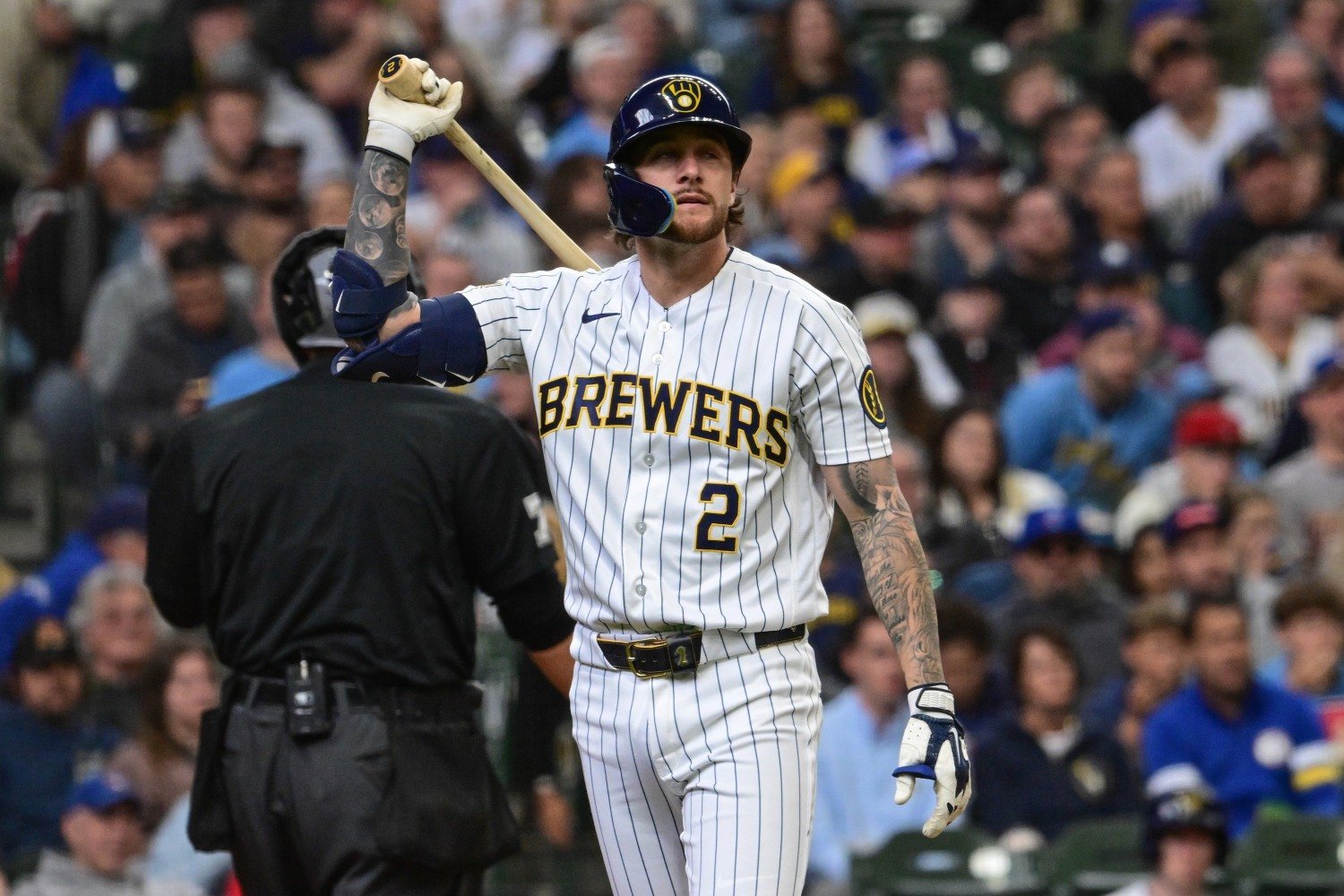 As is true of most teams, Brewers catchers have been far more successful in using baseball’s new ABS challenge system than their hitters have been. According to Statcast, catchers across the league (plus a small handful of pitchers) have won 59% of challenges, while hitters have won just 46%. That’s not surprising; catchers have a much better view of the strike zone from behind the plate than hitters do in the batter’s box. “People were saying back in spring training, like, it's going to take a while for the hitters, because they have, all of a sudden, the new strike zone,” said Pat Murphy, referring to the the system not using the rulebook 3D strike zone, but a 2D zone above the middle of the plate, determined based on percentages of the batter’s measured height. “Catchers do, too, but they've obviously got the view [behind the plate] that no one has.” What has been surprising, though, is just how poorly the Brewers have utilized their challenges on offense. Their catchers have combined to win a nearly average 57% of challenges, but their hitters have won just 33%, which ranks 28th among 30 teams. Overturn rate alone does not supply context for those challenges, nor does it measure whether the Brewers have a sound strategy that they’re executing well enough. More than anything, the club evaluates challenge decisions on the situation, wanting hitters and catchers to use it in the most impactful moments. “I think you could say leverage or non-leverage,” Murphy said last week of challenge situations. “If it’s a pitch that alters the at-bat—so strike three, ball four, something like that—look at those things. Guys in scoring position make it a bigger situation.” Statcast uses a pitch’s location and run probability to determine which are reasonable challenge opportunities. Using data on the types of pitches and situations in which most players across the league challenge, it also estimates how many runs a team has gained from its challenges, compared to expected runs gained. On average, 66% of challenges initiated by hitters have qualified as reasonable challenges. Milwaukee hitters are slightly above that mark at 67%, yet they’ve gained 0.5 fewer expected runs from overturns than expected, which ranks 23rd in the league. The Brewers have made some noticeably poor challenges lately. Greg Jones exhausted their final challenge in the fourth inning last week on a called strike almost entirely in the zone, and Garrett Mitchell lost it in the second inning over the weekend on a pitch on the outside corner. The real issue, though, is that they have not challenged enough at opportune times; their 15% challenge rate on reasonable opportunities ranks 27th. “It’s when you don’t challenge on a ball that’s clearly incorrect in an opportune time or a leverage time,” Murphy said. “We call them ‘fives.’ When you get a five, if you don’t challenge, you’re hurting your club. Even if it’s this much off.” The Brewers have such a low success rate because they decline to challenge more pitches that would be overturned. They’ve taken 90 called strikes outside the zone this year, the sixth-most in baseball. That hesitancy has been a theme throughout their lineup. With the exception of Gary Sanchez, who has been one of baseball’s most aggressive challengers, the team doesn't have anyone on the active roster who is proactive in suing for their rights at the edges of the zone. Whether it’s a fear of losing a challenge or a lack of discernment on pitches around the edges, it’s been a surprising weakness for a lineup that prides itself on knowing the strike zone. The Brewers have become known for winning on the margins, but they’re currently losing on this one. Murphy noted that there could be some understandable growing pains for hitters who have not used the challenge system before, but they must improve over time. “As long as our catchers are trending in the right direction, I think that’s equally as important,” Murphy said. “The hitters now [have] to get a little more comfortable with it.” View the full article
 -
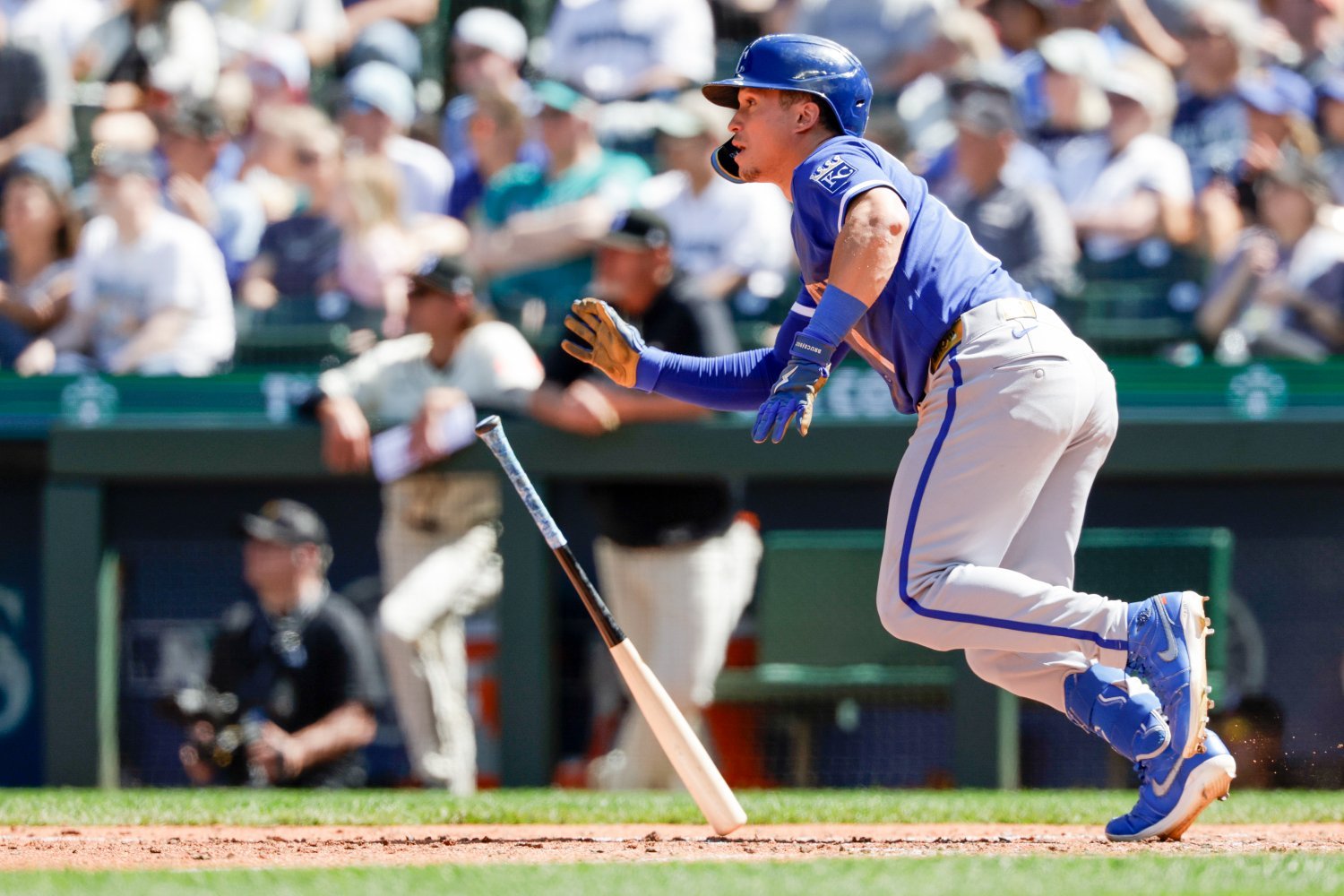 It shouldn't work this way, but there always tends to be a "winner" and a "loser" in a trade between two teams. The ideal should be a "win-win" for both sides. However, in reality, there's always a team that seems to get a little more value in a trade, whether in the short term or the long term. When the Royals traded away reliever Angel Zerpa to the Brewers for outfielder Isaac Collins and reliever Nick Mears, it seemed to make sense for both the Brewers and Royals. The Royals not only got some bullpen depth, but also an outfielder who could get on base and play decent defense. As for the Brewers, they got a lefty reliever with some high-leverage setup man upside. Jack Stern of Brewers Fanatic seemed more optimistic about the Brewers' return in the deal, even though they gave up two MLB players to Kansas City. Here's what he said about Zerpa in his piece. Unfortunately, the Brewers received some difficult news today regarding Zerpa. It was announced that he would be receiving Tommy John surgery. data:image/gif;base64,R0lGODlhAQABAPABAP///wAAACH5BAEKAAAALAAAAAABAAEAAAICRAEAOw== Not only will surgery end Zerpa's 2026 season, but it will also cause him to start the 2027 season late. That's not exactly what the Brewers envisioned when they acquired the Venezuelan pitcher from Kansas City. On the flip side, Mears and Collins both contributed to the Royals' 5-3 win over the Guardians, Kansas City's fifth straight. Mears pitched an inning in relief and struck out one while allowing no hits and no walks on eight pitches. As for Collins, he went 3-for-3 with two runs scored and hit his third home run of the season. data:image/gif;base64,R0lGODlhAQABAPABAP///wAAACH5BAEKAAAALAAAAAABAAEAAAICRAEAOw== While we know Zerpa is out for the rest of the year, what have the Royals gotten in Mears and Collins so far this season? Furthermore, what could Royals fans expect from them for the remainder of the year, and perhaps in 2027? Let's break down those questions and why the Royals have come out well in this trade. Collins Heating Up After A Slow Start Things weren't initially looking good for Collins at the plate, prompting many Royals fans to ask whether Milwaukee knew a serious decline was on the horizon for the former Creighton product. After his April 21st game against the Orioles, Collins was hitting .183 with a .513 OPS. The latter was his lowest OPS of the season. Over the past 15 days, Collins has been hitting .288 with a .397 OBP and .462 slugging in 52 at-bats. Over that time frame, he has 15 hits, two home runs, eight RBI, nine walks to 17 strikeouts, and two stolen bases. Over the past seven days, his numbers have been even better. In his last 22 at-bats, he is hitting .364 with a .444 OBP and .636 slugging. He also has four walks to five strikeouts over the past seven days, showing that he's locked onto opposing pitchers better than ever. For the season, Collins is hitting .255 with a .366 OBP and .760 OPS in 94 at-bats. He has also seen a strong upward trend in xwOBA, as shown below via Savant. When looking at his Statcast percentiles, the 28-year-old outfielder has been questionable in a few categories, especially when it comes to whiff and Z-Contact%. That said, he's been excellent in O-Swing% and BB%, and has been showing promising trends in bat speed, pull air%, and max EV. Those trends can all be seen via his TJ Stats Statcast summary. While the 90th EV and Max EV rank in the 63rd and 69th percentiles, respectively, his barrel rate ranks in the 43rd percentile, and his hard-hit rate ranks in the 38th percentile. Furthermore, Collins' .301 xwOBA ranks in the 38th percentile, and his TJBat+ of 89 ranks in the 47th percentile. Thus, Collins has been good, but he's probably not much more than a good bottom-of-the-order hitter. Thankfully, the Royals have been utilizing him just as that. 97 of his 111 plate appearances have come in the 7th or 8th spot in the batting order. Mears Getting By With Solid Stuff (And Batted-Ball Luck) Mears has been an interesting bullpen arm for manager Matt Quatraro this season. On one end, the former Brewers reliever is posting a 2.13 ERA and 1.03 WHIP in 14 appearances and 12.2 IP. However, he has a .182 BABIP, and his K% and K-BB% have been lackluster, evidenced by rates of 20% and 6.0%, respectively. Thus, it's no surprise that Mears' 3.18 FIP is much higher than his ERA, and his Stacast percentiles haven't been too great either, per TJ Stats. When looking at this Statcast profile, it's easy for Royals fans to get discouraged and think that major regression is on the way for Mears. And honestly, some regression is probably to be expected. That said, there are two categories that should make Royals fans hopeful: GB% and TJ Stuff+. Mears is generating a GB% of 48.4%, which ranks in the 71st percentile. That ability is key for a reliever like him to get out of jams when the whiffs and strikeouts aren't happening. Based on his 27th percentile whiff rate and 31st percentile K rate, he will need to keep that GB% high to remain effective as a reliever, especially in medium to high leverage opportunities. Even though the whiff, K%, and CSW% (25th percentile) aren't impressive, there's reason to believe that they could get better, especially considering his TJ Stuff+, which ranks in the 74th percentile with a 105 mark. When looking at his overall TJ Stuff+ summary this year, even though the chase and whiff haven't been great, all his pitches have sported great TJ Stuff+ marks so far with the Royals. Mears' four-seamer, slider, and changeup have been borderline elite in terms of TJ Stuff+. They all sport marks of 106 or higher, which is solid, especially for a reliever. That said, he's struggled to throw those pitches in the zone. The four-seamer has a zone rate of 44.3%, his slider has a 38.6% zone rate, and his changeup has a 20.7% zone rate. If Mears is able to improve the control on those three pitches and find the strike zone more, it's likely that his chase and whiff will improve as a result. Here's an example of Mears pumping the four-seamer on the edge of the strike zone to generate a swing-and-miss from the White Sox's Colson Montgomery back on April 12th. It's obvious in the video clip below that the four-seamer has good enough shape and velocity to be successful. TDY1Tk9fWGw0TUFRPT1fQndjRVhGMVFBZ1lBREZVR1VnQUhWd0lIQUZsVVd3TUFCbEFDQmd0UkFsRlRCd0VD.mp4 Let's hope that Mears is starting to gain some much-needed control over those three pitches going forward. If he does, he could be in line to get some more setup innings in the near future. Looking at Zerpa and Overall Thoughts From the Deal Even before the injury, Zerpa's first season in Milwaukee wasn't looking good. In 12.2 IP, he had a 6.39 ERA and 1.74 WHIP. His K% was just 14.5%, and his K-BB% was 3.6%. In terms of his Statcast percentiles, he did a good job of flooding the strike zone and generating groundballs, which is what he did well in Kansas City, too. Unfortunately, that was just two of the few areas where he succeeded with the Brewers pre-injury. The positive aspect of Zerpa for the Brewers is that he isn't arbitration-eligible until next year, and his price tag should be low thanks to injury. He also won't be a free agent until 2029, so the Brewers still have some time to see what Zerpa could turn into post-Tommy John surgery. Still, it isn't exactly the start the Brewers were hoping for with the talented lefty reliever. Conversely, the Royals are probably happy that they didn't just trade Zerpa at the peak of his value, but have received two players who have made an immediate impact on this Royals roster. Granted, not every Royals trade has turned out like this under GM JJ Picollo. While Brady Singer has struggled this year (5.57 ERA and 5.74 FIP in 32.1 IP), the Royals have gotten one sub-par full season from Jonathan India (-0.3 fWAR in 2025) and another season cut short by injury (only 58 PA this season before getting surgery on his shoulder). The Royals may have preferred the innings Singer would have given them instead of the lackluster production from India, even if Singer may never be more than a No. 3 or 4 starter at the MLB level. Still, it's nice to see a trade like the one for Collins and Mears working out. It's also nice to see a former Royal NOT demonstrate their best self after they left Kansas City. Seeing players like Ryan O'Hearn, Brent Rooker, Gabe Speier, and Brad Keller find success with other teams is bittersweet, especially since their talent never felt fully realized with the Royals (I'm not ready to put MJ Melendez in that category). Maybe Zerpa will add to that list by bouncing back from injury in 2027 or 2028. For now, Royals fans can enjoy the production the club received from Collins in the outfield and Mears in the bullpen. View the full article
 -
Red Sox Report Cards: Grading Every Boston Hitter for March/April
DiamondCentric posted an article in Talk Sox
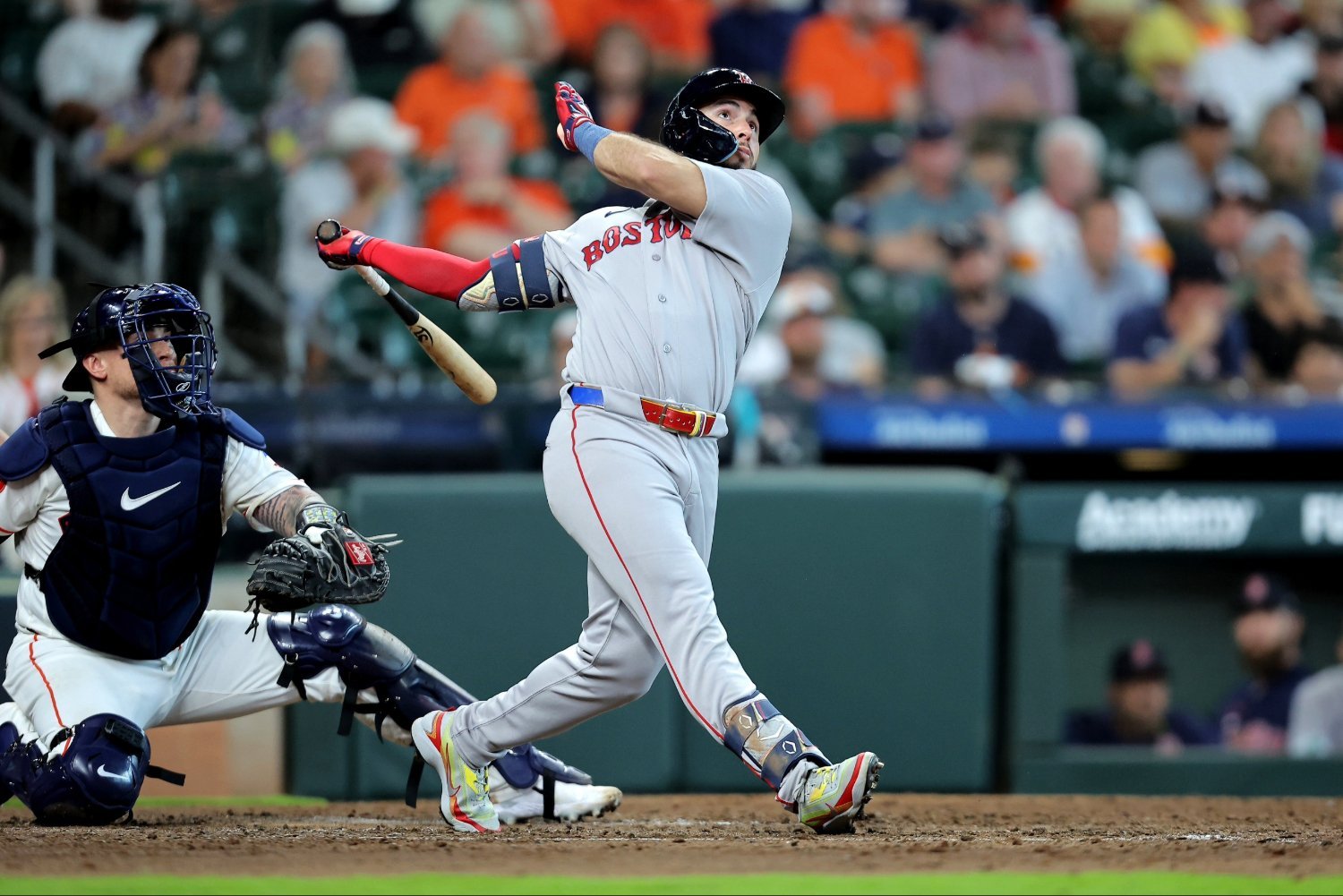 Heading into the 2026 season, the common questions surrounding this version of the Boston Red Sox were: “Does this team have enough to hit?” and “Where is the power going to come from in this lineup?” Well, outside of seemingly just Wilyer Abreu and Willson Contreras, both viable answers to those questions, the jury still seems to be out on the other 11 hitters on the roster. And as if their 12-19 start wasn’t bad enough, the offense has gotten off to a dreadful start ranking near or at the bottom of both the AL and MLB, including: 12th in K% (9th worst in AL) 24th in Runs Scored (4th worst in AL) 24th in Batting Average (4th worst in AL) 25th in On Base Percentage (worst in AL only ahead of NY Mets) 29th in Home Runs (worst in AL, only ahead of San Francisco) 29th in Slugging Percentage (worst in AL only ahead of NY Mets) 29th in wRC+ (worst in AL, only ahead of NY Mets) The positive takeaway is there’s plenty of time to turn things around just one month into the season, and an attempt to do so has already been made with the dismissal of former hitting coach Pete Fatse. The concern, though, is that the team may have already dug itself a hole too deep to climb out of. Here’s a look at grades for all 13 of Boston’s hitters for March and April. (Note, all players who appeared in at least one game in March/April have been listed in alphabetical order by last name to help easily review.) Grading Every Red Sox Hitter from April 2026 Wilyer Abreu 30 Games, .307/.373/.482/.855, 4 HR, 13 RBI, 11 XBH, 142 OPS+, 136 wRC+, 7 DRS, 1.7 WAR The decision to make Wilyer Abreu an everyday staple of Boston’s lineup as opposed to one who usually sits versus lefties seems to have paid off so far, as the two-time Gold Glove winner has blossomed into the Red Sox best all-around hitter through the first month and change. Abreu has seen his numbers against lefties jump so significantly from 2025, where he slashed .230/.299/.377/.676, to now hitting .375/.444/.438/.882, that he’s actually performing better against them than righties in all categories except slugging percentage, making him a consistently tough out in Boston’s otherwise struggling lineup. Abreu has been on a tear right from the jump, hitting .400 through the first five games of March and continuing that success right through April where he did not see his average fall below .280. The biggest contributing factors to this success so far can be traced back to the fact that Abreu has cut back on his Chase% from 29.0% to 27.2%, Whiff% from 24.0% to 20.7%, and K% from 24.2% to 17.5% which has allowed him to drastically increase the number of balls he’s squaring up, from 21.9% (16th percentile) in 2025 to 26.6% (60th percentile) so far this season. In an offense that has struggled tremendously so far, and has looked for any signs of consistency, Abreu has been one of the few bright spots. Couple that with his continuously stellar defense with 7 Defensive Runs Saved already and his superb all-around play nets him an A+ grade. Roman Anthony 26 Games, .208/.339/.292/.631, 1 HR, 5 RBI, 5 XBH, 82 OPS+, 80 wRC+, 3 DRS, 0.4 WAR Prior to the 2026 campaign, the stage was set for the pressure to be immense on Roman Anthony as not only was he garnering MVP predictions from some, but was already being looked at as the next face of the organization at only 21 years old. Now with a full month plus to look back on it seems like you can add de facto clubhouse leader to the list of things on Anthony’s plate as he continues to be one of the first players in front of the cameras & microphones night after night, and you’re left to wonder if that is starting to take a toll on the budding star. To say Anthony’s start to the year has fallen short of expectations would be an understatement. After a strong opening series in Cincinnati, Anthony has been hit with looking caught in between at the plate (24th percentile in K% and 21st in Whiff%), troubles throwing in the outfield, and a back injury that further derailed an already underwhelming season. Anthony is still managing to find his way on base (91st percentile in BB%) and hitting the ball hard (75th percentile), but with just a single home run, five RBI, and currently sitting with the third most strikeouts on the team with 32, the production hasn’t been there nearly enough and is one of the biggest reasons why the Red Sox offense has looked as anemic as it has, earning Anthony a D grade. Willson Contreras 30 Games, .262/.375/.486/.861, 7 HR, 20 RBI, 10 XBH, 143 OPS+, 138 wRC+, 3 DRS, 1.3 WAR Things got off to a bit of a slow start for Willson Contreras in a Red Sox uniform, as he was saddled with a rather unlucky 2-for-17 start with his new club. They say patience is a virtue though, and boy did that ever ring true, as Contreras now leads the Red Sox in: Slugging Percentage, OPS, Home Runs, Runs Batted In, OPS+, and wRC+, while not being too far behind Wilyer Abreu for the team lead in WAR as well. While everyone will point to Contreras’ production at the plate and strong veteran presence in the dugout as his biggest contributions since coming over from St. Louis, an overlooked aspect of his game that has made a significant difference thus far is how he has stabilized a first base position that has been crying out for just that for what has felt like ages, tallying three Defensive Runs Saved and, once again, and team-high five Outs Above Average. If it wasn’t for the aforementioned Abreu, Contreras may take the title as Boston’s best hitter in the lineup so far, but with a little bit more swing and miss in his game (team high 36.1 Whiff%), he falls just behind his fellow Venezuelan teammate. All things considered, Contreras’ well-rounded game still passes this first month plus with flying colors, granting him an A grade on the report card. Jarren Duran 26 Games, .170/.231/.250/.481, 1 HR, 11 RBI, 6 XBH, 37 OPS+, 31 wRC+, 2 DRS, -0.1 WAR The start to Jarren Duran’s 2026 has been anything but ideal whether you want to focus on his underperformance on the field, his run-in with a fan in Minnesota who he flipped off in retaliation for shouting derogatory comments towards him according to Duran, or his standoffish treatment of the media when asked to comment on the recent firing of Alex Cora, which he met with a side-eye and dismissive backhanded wave away. For the sake of this grade though, I’ll choose to focus on the on-field play that has been anything but up-to-expectations so far. Through his first 26 games, Duran ranks dead last among Boston’s hitters in batting average, on-base percentage, slugging, OPS, OPS+, and wRC+ with a -0.1 WAR that is second worst only behind Carlos Narvaez’s -0.3. Similarly to Roman Anthony, Duran has looked lost at the plate numerous times this season, so much so that he has begun shuffling through different stances, hand positions, and toe-taps/strides at the plate on a nightly and sometimes at-bat to at-bat basis. None of his adjustments seem to be making a mark though, as he has found himself well below league average in numerous advanced statistics as well, most notably his Whiff% (6th percentile), Chase% (22nd) and Squared-Up% (33rd) which may be contributing to his lack of power so far, with just six extra-base hits, and what undoubtedly hands him an F grade through the first month plus. At least he seems to be turning things around in May. Caleb Durbin 29 Games, .172/.261/.263/.524, 1 HR, 11 RBI, 7 XBH, 50 OPS+, 46 wRC+, 4 DRS, 0.3 WAR Much like fellow newcomer from the NL Central Willson Contreras, Caleb Durbin’s Red Sox career got off to a bit of a slow start, just of a more extreme variety beginning the year on a 1-for-22 skid, and at one point 0 for his first 19. While his turnaround doesn’t come close to the resurgence that Contreras has had, there have been some things to like about Durbin’s game that may start to win over the fanbase if he can continue in the right direction. To start, Durbin was able to close out the month of April hitting safely in five of the final six games, helping bring his batting average up to .172. Still not ideal, but significantly better than his .045 mark to begin the month. When it comes to his approach at the plate, while he is still struggling to barrel the ball up (1.2%, 4th percentile), Durbin isn’t really chasing (78th percentile), or swinging-and-missing (95th in Whiff%, 87th in K%) all that much, leading one to believe the continuation of good at-bats will lead to better outcomes. Where he has shined brightest without question, though, is in the field where he has looked solid at third base, accumulating four Defensive Runs Saved, two Outs Above Average, and a few solid highlights, including most recently a diving stop to preserve Ranger Suarez’s no-hit bid at the time against Toronto. While it hasn’t been a superb start for Durbin by any means, there have been enough improvements through the first month to grant him a (generous) D+ grade. Isiah Kiner-Falefa 14 Games, .229/.270/.229/.499, 0 HR, 3 RBI, 0 XBH, 44 OPS+, 38 wRC+, 1 DRS, 0.0 WAR When the Red Sox surprisingly (and questionably) gave Isiah Kiner-Falefa $6 million this offseason, the belief was he’d come in and be a platoon option at second-base with Marcelo Mayer against lefties, be an option to get Trevor Story some rest if needed at short, and be a veteran presence in the clubhouse that was lost when Alex Bregman was kicked out the door. Through just 14 games, second fewest on the team only ahead of Connor Wong, it seems like Kiner-Falefa is only doing one of those things, and not even all that well. While he has looked slightly better at the dish of late, coming up with some clutch hits and producing all three of his RBIs to the tune of a .286 average and .571 OPS in the final five games of April, the results haven’t justified the investment with Kiner-Falefa. His defense, bunting, and base running abilities, all supposed strengths of his game, haven't been average to below at best. And when he is making contact, there aren’t many fireworks there either with zero extra base hits and an Average Exit Velocity of 81.7, exponentially below league average. His end to April is the only thing that truly saves him from an F grade on his first report card of the season, coming out with a D grade. That being said, one wonders how many more report cards he may even be a part of with the likes of Nate Eaton, Nick Sogard, Kristian Campbell, Mickey Gasper, and even spring training roster invitee Vinny Capra all off to better starts in Worcester, ready to replace him if given the opportunity. Marcelo Mayer 27 Games, .253/.321/.373/.695, 1 HR, 7 RBI, 7 XBH, 97 OPS+, 91 wRC+, 0 DRS, 0.2 WAR If Masataka Yoshida was the leader in the clubhouse on questions of where he would fit into the construction of this Red Sox roster, then Marcelo Mayer was the leader whether he would even be on it. Between offseason trade rumors for Diamondbacks second baseman Ketel Marte, to former manager Alex Cora directly saying Mayer had to earn his roster spot leading some to believe a trip to Worcester was on the table for Mayer, there wasn’t much certainty for the second-year pro. Despite all the noise, Mayer put together a strong spring training and earned that Opening Day roster nod, and despite not being in the lineup to start, was able to come through with two clutch at-bats to help secure Boston’s 3-0 victory. Mayer did cool off quite a bit after a hot start in Cincinnati but has seemed to turn a corner once again as in his final 10 games of April, slashed .417/.462/.542/1.003 with 10 hits and four RBI. Through March/April, defense has continued to be Mayer’s calling card, fully taking over the second base role and racking up two Defensive Runs Saved, good for an elite level 89th percentile. Where Mayer has shown tremendous strides though is his approach at the plate, as he’s not only decreased his Chase% from 29.6% in 2025, to 23.7% this season, but cut his K% practically in half from 30.1% to 16.3%, which is good enough to spot him a B- grade out of the gate. Andruw Monasterio 15 Games, .227/.292/.386/.678, 1 HR, 8 RBI, 5 XBH, 91 OPS, 84 wRC+, 0 DRS, 0.1 WAR After being acquired as part of the package that brought Caleb Durbin to Boston from Milwaukee, Andruw Monasterio’s opportunity to make the roster came thanks to an offseason injury to lefty-killer utility man Romy Gonzalez. It seemed like that would be the role Monasterio, who slashed .273/.360/.477/.837 with two home runs and 10 RBI last year, would be taking on heading in to 2026. As we turn the calendar to May, it seems that might not necessarily be the case. Monasterio actually has more plate appearances against righties (26) than lefties (22) and has seen far more success against them too, owning a .280/.308/.400/.708 line with seven hits against them, compared to his .158/.273/.368/.641 one with just three hits against lefties. While the numbers don’t jump off the page by any means, Monasterio has been a fine utility bench option who has worked counts and fill in wherever the Red Sox have needed him to so far with at least one appearance at every infield spot — netting him with a C grade to start the 2026 campaign. Carlos Narvaez 19 Games, .234/.258/.359/.617, 2 HR, 3 RBI, 4 XBH, 74 OPS+, 65 wRC+, -2 DRS, -0.3 WAR After a breakout campaign in 2025, expectations were high for fan-favorite catcher Carlos Narvaez to build off an impressive all-around rookie campaign both offensively and behind the plate. While Narvaez has still been elite behind the plate in terms of Blocks Above Average (97th percentile) and Framing (98th percentile), he has seen his Caught Stealing Above Average drop from the 98th percentile to the 70th percentile as well as his Pop Time increase from 1.92 to 1.98. Perhaps the most surprising aspect of Narvaez’s early season struggles, apart from a slow start at the plate that he started to turn around at the end of April (.763 OPS with two homers and three RBI in the final 10 games), has to be his poor ABS performance. A spot where many figured Narvaez would shine due to his excellent command of the strike zone behind the plate has been anything but as he’s won just 33% of his challenges (4/12) on a meager 1.1% Challenge Rate. If there is a positive takeaway to be had with Narvaez and the ABS Challenge System, it’s that four of them led to a strikeout being gained as a result of challenging with one also resulting in a walk being taken away. While his start hasn’t been as poor as others, Narvaez definitely has not lived up to the expectations set for him before the season, leading to a C- grade. Ceddanne Rafaela 29 Games, .263/.333/.379/.712, 1 HR, 10 RBI, 7 XBH, 102 OPS+, 98 wRC+, 0 DRS, 0.3 WAR When it comes to Ceddanne Rafaela, you have a pretty good understanding of what you’re going to get, elite defense in centerfield and a bat that will be as hot as a pistol when he’s locked in and cold as ice when he’s chasing out of the strike zone. Or perhaps, that might be pre-2026 Rafaela, as so far this season it’s been his defense that has taken a slight backseat out of the gate in favor of a much better approach at the plate that includes a surprising amount of patience through his first 29 games. Now while there have been a couple of miscues in center field, there have still been plenty of outstanding catches that suggest nothing drastic has changed in that aspect of his game. What’s worth noting specifically in Rafaela’s hitting is he has drastically improved two areas of his game that plagued him tremendously in 2025, that being Chase% (2nd percentile), and BB% (7th percentile), both of which have climbed to the 16th and 15th percentiles in their respective categories. And while the power hasn’t come just yet, one other improvement to his game offensively is Rafaela appears to be having more success at squaring up the ball this year, as that percentage has climbed from the 39th percentile in 2025 to the 62nd in 2026. There’s a lot to like about where Rafaela’s game is at right now with hope that his offensive numbers continue to improve and defense stays at its elite level, securing himself a B grade. Trevor Story 30 Games, .197/.237/.295/.532, 2 HR, 17 RBI, 8 XBH, 50 OPS+, 41 wRC+, -1 DRS, 0.0 WAR Coming off his best season in a Red Sox uniform, one where he was finally healthy, slugging 25 home runs and 96 RBI with an OPS of .741 in 157 games, many wondered if Trevor Story had an encore performance in him, with the added pressure of starting the year as Boston’s No. 2 hitter with the exit of Alex Bregman. Some doubted this belief and as we sit here now 30 games into Story’s season, those doubters may be able to take a victory lap. Outside of a two-week stretch from April 6th to the 17th, where he was coincidentally removed from the two-hole in the lineup and slashed .282/.302/.436/.738 with one home run and 15 of his 17 RBI this season, Story has been simply abysmal. Not only seeing his decline in the field continue to deteriorate with a Range and Arm Strength in the 31st and 22nd percentiles to go along with a team high four errors, but at the plate as well with extremely low Whiff (27th percentile), K (16th), BB% (12th) and Chase (2nd) percentages along with again a team-high 40 strikeouts. Factor in that Story was one of the most vocal and visibly upset members of the club when asked about Alex Cora’s dismissal, going so far as to publicly request a meeting with Chief Baseball Officer Craig Breslow and question the direction of the franchise along with his struggles and you begin to see why he earns a D- grade to begin the season, with his only saving grace from a F being that two week stretch where he seemed to carry Boston’s offense at times. Connor Wong 13 Games, .243/.333/.378/.712, 0 HR, 5 RBI, 5 XBH, 102 OPS+, 98 wRC+, 2 DRS, 0.6 WAR After an injury-riddled 2025 saw him lose his starting role to rookie newcomer Carlos Narvaez and an offseason that saw the Red Sox seemingly put an emphasis on catching depth with the amount of names they brought in via trade and free agency, there was a lot of uncertainty surrounding Connor Wong. Even after a lackluster spring training, Wong still managed to win a roster spot as Boston’s backup and through his first 13 games, has looked at times like there should be a conversation about him winning the starting gig back. In just 43 plate appearances, Wong’s five RBI and extra-base hits apiece have already come close to surpassing his totals in those two categories (seven & eight) than he had in all of 2025. What’s been encouraging from Wong, who has not been shy about noting how hampered he was a season ago at the plate due to nagging hands and finger injuries, is driving the ball with more authority as shown by his increased Hard-Hit and Squared-Up percentages. Wong has also been quite successful in utilizing MLB’s new ABS challenge system behind the dish, winning four out of his five challenges while also flipping a strikeout call in Boston’s favor. Even with a resurgence at the plate, where Wong still struggles — and where his grade takes a hit — is defensively behind the plate, where he owns a below-league-average Pop Time of 1.98 seconds and a -2 Blocks Above Average rate (15th percentile). Still, his strong contributions are worthy of a B- grade at the very least. Masataka Yoshida 18 Games, .265/.390/.327/.716, 0 HR, 5 RBI, 3 XBH, 106 OPS+, 109 wRC+, -2 DRS, 0.0 WAR There may not be a player on the Red Sox roster that had a bigger question mark on them than Masataka Yoshida heading into the 2026 season. Not necessarily because of his ability, but where exactly was he going to play with Boston’s outfield logjam never truly addressed in the offseason? As the calendar turns to May, those same questions still haven’t really been answered as Yoshida has appeared in 18 games so far, only starting 13 (11 DH / 2 LF) and being used as a pinch hitter in five. When Yoshida has seen the field, he continues to show excellent patience (13.6% Whiff% and 15.3% BB%) and command of the strike zone (23.3% Chase% and 11.9% K%), something the rest of some of his teammates haven’t been so lucky with. There have been plenty of times so far this season where the Red Sox could have used Yoshida’s professional approach at the plate to help a slumping lineup, but with no end in sight to the outfield dilemma, and the fact he’s seen as a defensive liability there (-2 DRS) constantly limiting him to mainly DH duties, it doesn’t feel like he’s going to see any consistent playing time anytime soon to fully showcase those offensive talents. Add it all up, and he seems worthy of perhaps a generous and respectable B- grade to round out the March/April report card for Boston’s hitters. View the full article
 -
New York Mets Hitters Of The Month: April 2026
DiamondCentric posted an article in Grand Central Mets
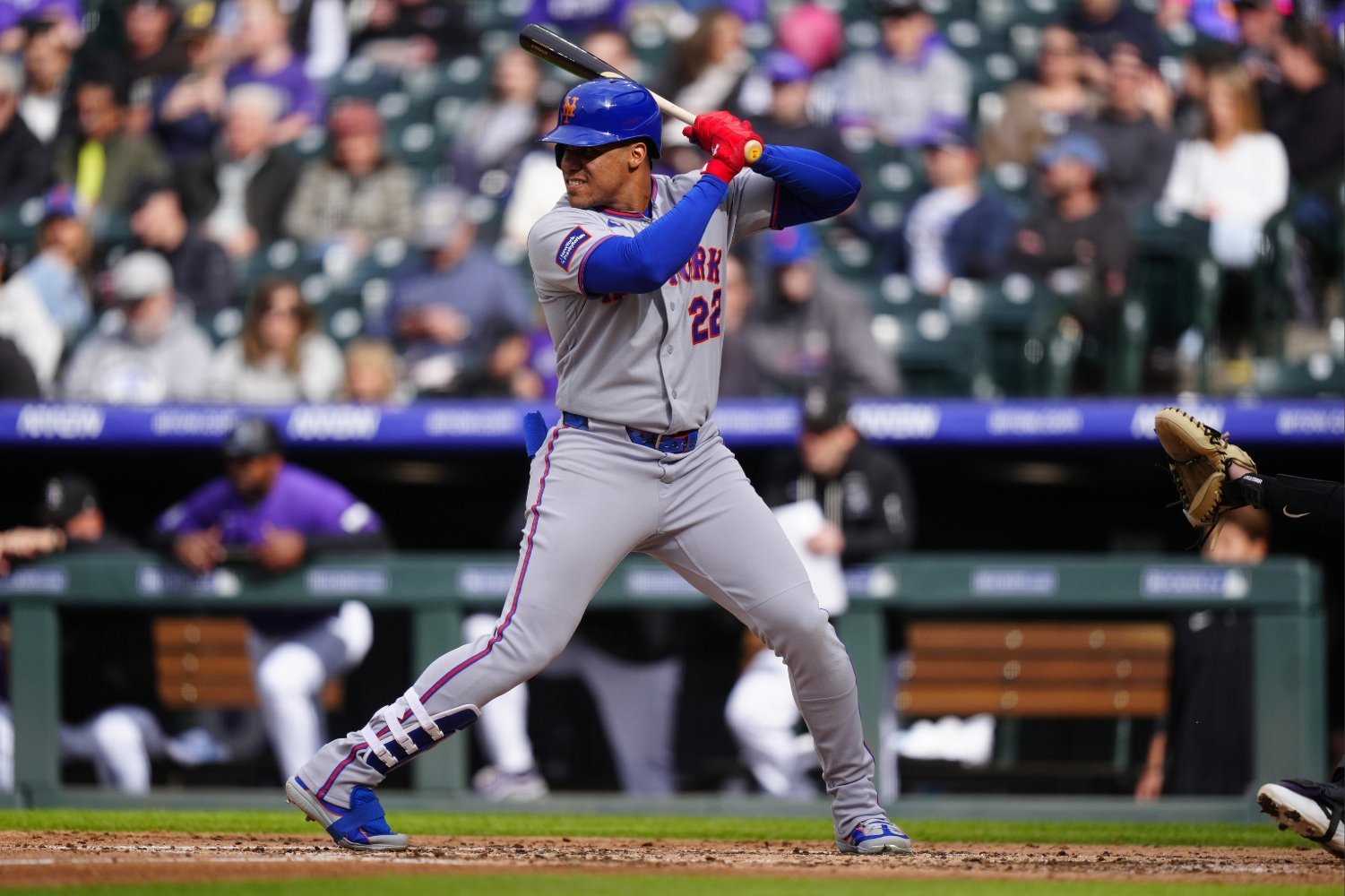 The New York Mets' top offensive performer during the first month-plus of the 2026 season was obvious:. he was the one guy who hit in March/April. Choosing the two runners-up in our rankings was the real challenge. The decision came down to the few players who produced just middling wRC+ numbers. An uninspired method of sorting out an uninspiring group. With that process now complete, here's Grand Central Mets' inaugural Hitters of the Month list: Ranking Mets' Best Hitters In April 3. Francisco Lindor March/April stats: .226 AVG, .314 OBP, 18.1 K rate, 10.5 BB rate, .129 ISO, 94 wRC+ Lindor got off to an odd start at the plate. He walked 10 times in the club's first eight games and had twice as many bases on balls as hits. He looked like an old-school leadoff hitter. But then, the patience ran out. Lindor walked just once more in his next 16 games before he went down with a calf injury April 22 vs. the Minnesota Twins. His selectiveness (a career-low 45.3 percent swing rate) didn't translate to better outcomes. His contact rate was a career-low 76.9 percent and his line-drive rate was a career-low 17.6 percent. Still, his overall performance was good enough to rate a place on this list. 2. Francisco Alvarez March/April stats: .226 AVG, .313 OBP, 21.4 K rate, 9.2 BB rate, .179 ISO, 105 wRC+ The catcher was one of just two Mets regulars to produce an above-average wRC+ in the first month-plus. That was enough to put him on this list. He tallied four home runs and three doubles, but his overall batted-ball stats weren't exceptional: a 34.4 percent hard-hit rate, a 14.1 percent line-drive rate and a 50.0 percent ground-ball rate. But there were also signs that he was maturing as a hitter. He was on pace to post career highs in overall contact rate and zone contact rate prior to a late-month slump. 1. Juan Soto March/April stats: .345 AVG, .441 OBP, 11.8 K rate, 14.7 BB rate, .224 ISO, 185 wRC+ Soto did what he could to breathe life into the offense, both before and after missing 15 games due to a calf strain. He slugged .569 and got on base at a .441 clip in 68 plate appearances. He also smacked three home runs; his opposite-field blast vs. the Washington Nationals on April 28 punctuated a seven-run inning in an 8-0 win. At the time, it felt like the hit that would get everyone going. As usual, he was unwilling to expand the strike zone, no matter the situation. He walked at a 26.3 percent rate with runners in scoring position as opponents avoided pitching to the club's lone threat. And, he avoided becoming pull-happy with the club lacking in slug. His center-field batted ball rate was 42 percent, compared to a 40 percent pull rate. In other words, he remained Juan Soto, one of the best hitters in MLB. View the full article
 -
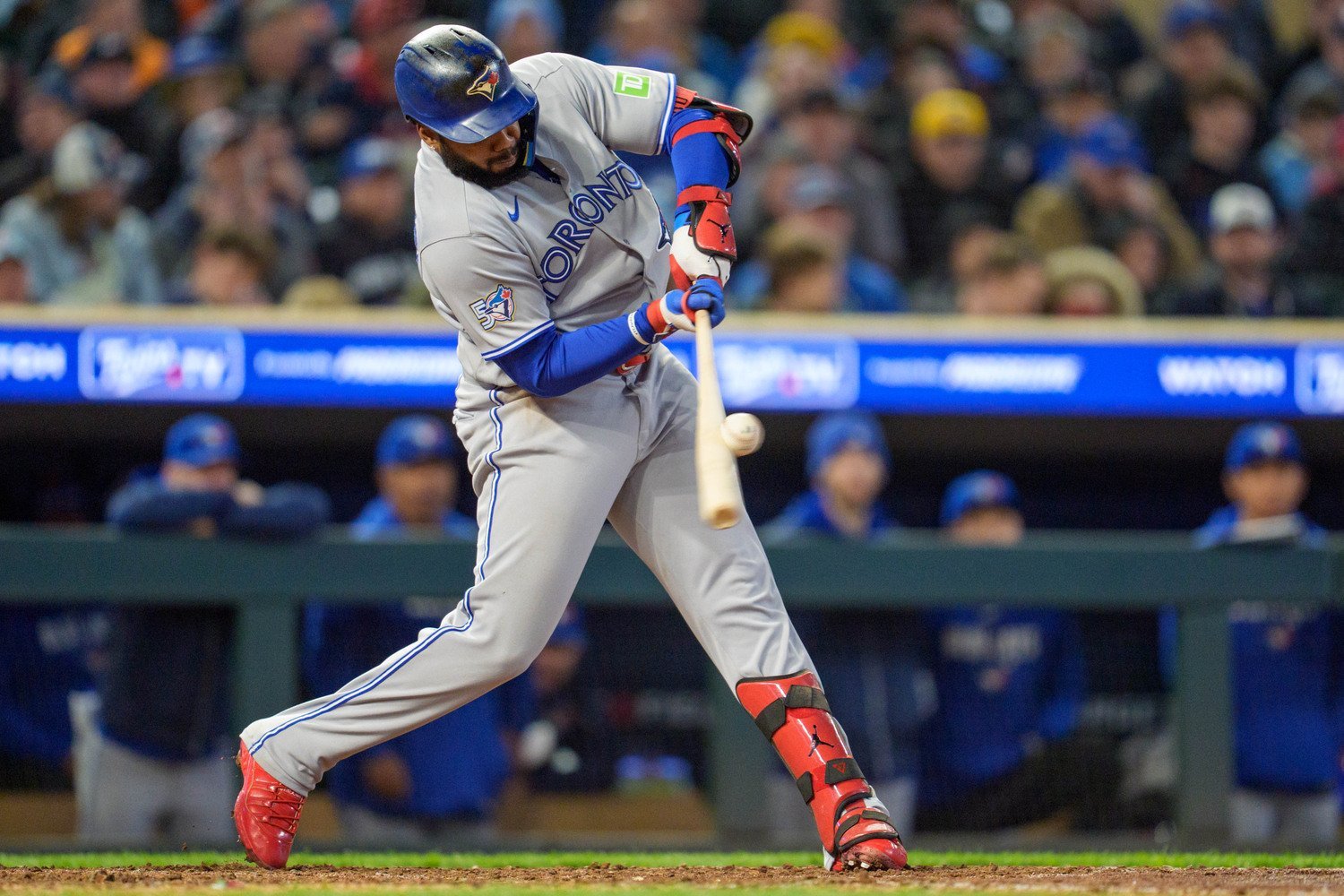 All statistics from before first pitch on May 5. Vladimir Guerrero Jr. has been a productive offensive weapon for the Toronto Blue Jays, but his power numbers are near the worst of his eight-year career. This season, Guerrero is slashing .333/.421/.437 with 21 runs and 15 knocked in, but only two home runs. That number of home runs is fewer than Brandon Valenzuela's three, and he's a defense-first catcher who started the season in Triple-A. Vladdy is the face of the Blue Jays franchise and the team's $500 million man, even though he has never matched the 48 home runs he hit in 2021, ranging from 23 to 32 each season following. One of the main reasons for the power decrease since his breakout is that the righty batter has exceeded that season's 9.4-degree average launch angle only once. That one season was 2023, when Guerrero hit 26 home runs with a 10.5-degree average angle. Since then, he hasn't exceeded 8.2 degrees, which is his current mark. His fly ball rate is also the lowest it's been in several years. What's even more concerning is that Vladdy is posting some of his worst quality-of-contact numbers since his 2019 rookie season. His hard-hit rate (43.8 percent), barrel percentage (10.7 percent), and average exit velocity (91.2 mph) are his lowest since 2019 or 2020, his first two MLB seasons. These decreases, combined with his failure to elevate the ball, have led to Guerrero's struggles to hit home runs. While taking a deep dive into his statistics, it's important to remember that although his declines in some areas are concerning, the season is only a few weeks old, so the sample is small. Where the Blue Jays first baseman is thriving is in the contact department, with a career-best 12.1% strikeout rate. His expected batting average of .316 ranks in the 97th percentile and would tie his career high set in 2024. This metric is backed by his high line-drive rate and noticeable up-the-middle approach. The Blue Jays' highest-paid player has been more content driving the ball to center than pulling it, with a straightaway rate nearly 10 percentage points higher than his pull rate. With this strategy, it's harder to hit a home run, but it shows that his timing is near perfect. It seems his mentality at the plate is to be a top-of-the-order hitter trying to get on base, instead of a three or four-hole hitter who will use power to drive in runs. Though the mindset and mentality might be concerning, none of it means that Vladdy isn't an exceptional player. What's frustrating is that he is only 27 and has the natural talent to produce more power. The fix could be as simple as a slight mechanical change in his swing to pull the ball more often and generate more fly balls. If not, the Blue Jays will need to move forward with a plan to add power around Guerrero, as the current roster ranks 22nd in MLB in home runs. Kazuma Okamoto is carrying the load, with nine of the team's 33 home runs, but hopefully, answers are on their way. Addison Barger has begun a rehab stint in Single A, where he homered in his first game. The slugger struggled mightily to start the season, posting a .279 OPS and -16 wRC+ before he hit the injured list. The Blue Jays desperately need Barger to overcome his struggles and bring power to a roster that has no one besides Okamoto with more than four home runs this season. For Blue Jays fans, it may be time to change your expectations for the $500 million man. He might no longer be the slugger you once knew. Now, he looks like the "get on-base guy" that he used to drive in. He's still to be appreciated and cheered for, as he's the team's offensive leader and will be for many years to come. View the full article
 -
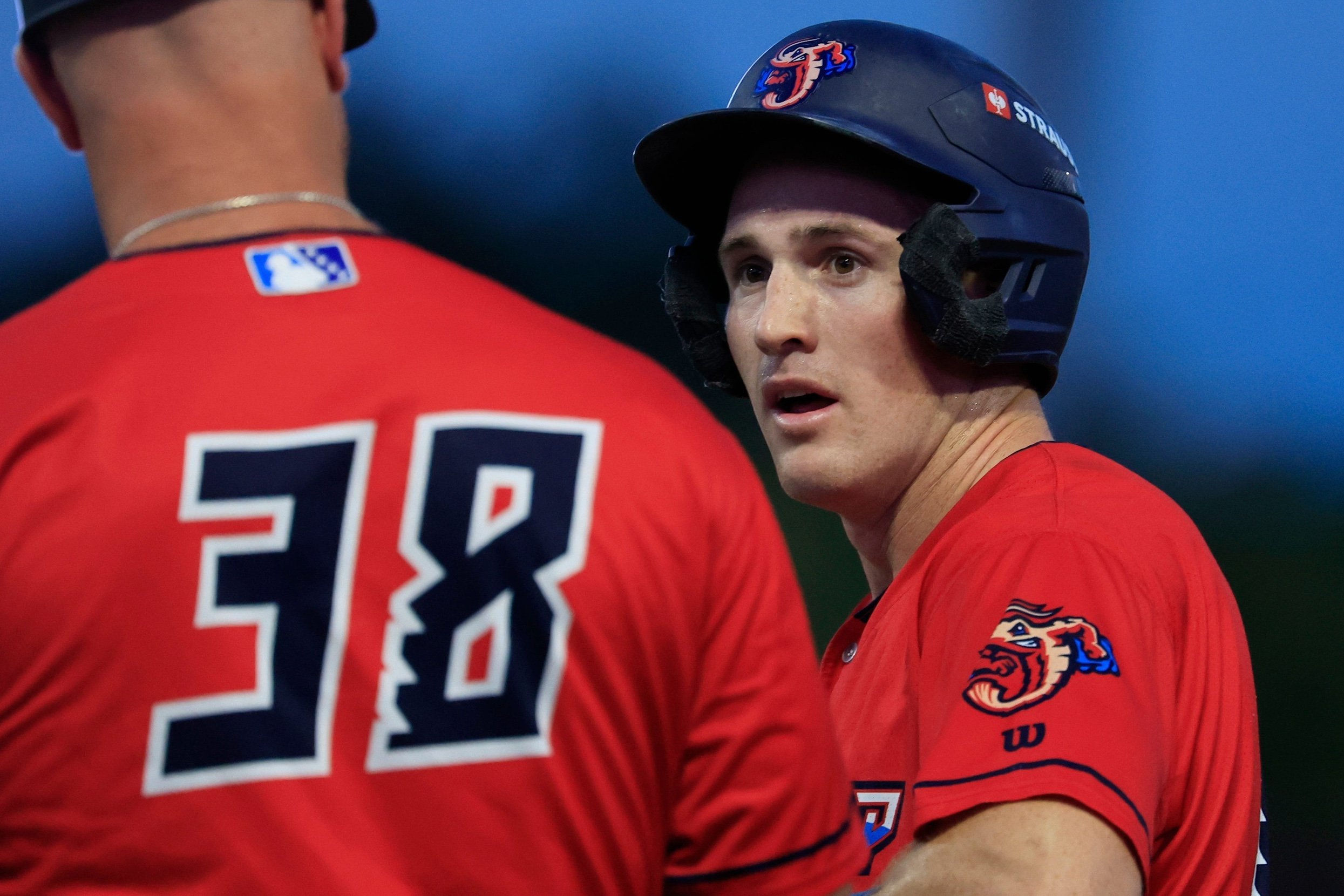 For the 2026 season, Fish On First will provide weekly reports on the Miami Marlins farm system, covering all levels. Here's the first May edition of our Fish On First Prospects Report. This report covers the games played from April 28-May 3. Triple-A Jacksonville Our Fish On First Prospect of the Week is Jacob Berry, who going into Sunday's series finale against the Durham Bulls was slashing .313/.427/.458/.885 with two home runs, 16 RBI and a 143 wRC+. In this series against the Bulls, Berry was 7-for-26 with one home run and five RBI. Through 24 games, Berry leads the Jacksonville Jumbo Shrimp in OPS, on-base percentage, slugging and is second in batting average. He is eighth in the International League in OBP. Unfortunately, a big league call-up is being held back because of his defense, where he continues to not have a definitive home. He has played third base—where he has committed six errors—and the corner outfield spots. If Graham Pauley continues to struggle at the plate, maybe the Marlins will be left with no choice but to call up the former first-round pick. Kemp Alderman through 28 games is slashing .287/.379/.455/.835 with four home runs, 13 RBI and a 126 wRC+. The big downside thus far has been the increased strikeout rate, now at 34.5% going into Sunday's game, but he is walking at a career-high 10.3% rate. This past week, Alderman started a game at first base, the only time he has ever done that throughout his Marlins minor league career. With the current first base situation and so much depth in the outfield, it gives Alderman an easier path to making it to the big leagues. The only unfortunate part is that you would be limiting his arm, that grades out as above average. On the mound, Robby Snelling continues to dominate. He is now tied with New York Mets' Jonah Tong for the most strikeouts in Triple-A this season. For the season, he now has a 1.86 ERA, 2.90 FIP, 13.66 K/9 and 4.66 BB/9 in 29 innings pitched. In this most recent start, Snelling tossed five no-hit innings, striking out nine in the process. His fastball topped out at 96.1 mph and averaged 94.7 mph. His curveball continues to be his best pitch, generating six of his 11 total whiffs and four of his five strikeouts came on that pitch. At this point, there is nothing left for Snelling to prove in the minor leagues. He is more than ready for a Marlins call-up, which could come as soon as Friday against the Washington Nationals. Bradley Blalock, who the Marlins acquired from the Colorado Rockies, tossed six innings against Durham, striking out a season-high 12. Despite the high strikeout number, he has a 3.09 ERA and 4.96 FIP on the season. The main reasoning for his high FIP is the amount of elevated contact that he has allowed. In his start against Durham, his fastball topped out at 96.0 mph and averaged 94.2 mph. With the fastball, he generated 10 whiffs and collected seven of his 12 strikeouts on that pitch. His splitter was also a good pitch, generating six whiffs and struck out three. The Marlins likely will not need to call-up Blalock any time soon with the pitching depth that they do have on their hands, but it is worth noting that they will have to make a choice on if they want him on the big league team or not in 2027 with his final minor league option being burnt. Relievers William Kempner and Jack Ralston continue to be workhorses out of the Jumbo Shrimp bullpen. Kempner was called up to Miami on Tuesday. Ralston has been the more effective one with a 1.10 ERA, 2.45 FIP and 13.78 K/9. The only downside is the 6.06 BB/9. Like Kempner just did. Ralston should make his big league debut at some point this season. Pensacola Blue Wahoos The Wahoos enjoyed success this week as well at home against Biloxi. After dropping the first game of the series, Pensacola charged back to win out the rest of the week, improving to one game under .500 on the season. Gage Miller had a great series for Pensacola, starting four games and going 5-for-13 including home runs in each of his first two appearances. He finished his week with a 2-for-4, two-double effort. Altogether, he drove in seven runs. Miller came out of college as a third-round pick in 2024 highly heralded for his offensive skills, namely his bat speed and intelligence in controlling the strike zone. He was also lauded for good raw strength as scouts saw within him the possibility for 20+ homers. Miller’s patience and ability to limit strikeouts followed him to the pro level in his first full season last year, as he walked nearly as much as he struck out (65/55 K/BB), but he had trouble finding the barrel as he hit just .211 with a .313 slug. So far at Double-A this season, Miller has solved what ailed him last year and appears to be adjusting well to pro stuff as he is currently slashing .278/.355/.500. Defensively, Miller has split time between third base and second base. Because of his limited arm strength, he's probably a better fit for the latter. Miller is not a name talked about a lot, but if he keeps hitting and sticks at a premium position, that could and should soon change. It was another great week for Marlins’ trade return piece Brendan Jones, who continues to surge on both sides of the ball. This series, Jones went 8-for-22 including a triple and two doubles. Jones lit it up in the running game, stealing six bases. Currently slashing .241/.359/.483 with 10 steals, early returns from Jones in his tenure as a Marlin could not be much better. One area in which Jones could improve is with strikeouts as he’s striking out a career high 28% of the time, but he’s also still walking at a solid 14% clip. One of the most encouraging parts of Jones’ game is his ability to spray the ball to all fields—he’s gone pull 38% of the time and to center and left 31% each. Mostly entrusted with left field, Jones has covered all necessary ground and then some, putting his 70-grade speed to even better use. If Jones continues hitting at this clip and gets the strikeouts further in check, he may not be far away from contributing to the big league team either late this year or out of camp in 2027. Beloit Sky Carp Despite struggling mightily for pitching depth, the Sky Carp’s series in Lake County was a success as they won it four games to two. The series was highlighted by an explosive offensive performance on Sunday in which Beloit plated 16 runs. Driving the Sky Carp’s 16-run barrage in the final game of their series was Colby Shade, Miami’s ninth-round pick from 2023. Coming into the game after having hit just one home run across two levels in 2025, Shade laid the hammer down on the Captains, homering three times and driving in a whopping eight runs. Shade now has four homers in his past five games. The performance was extremely eye-popping for the 6’, 205-pound outfielder, but Shade is 24 playing at the High-A level for a third straight season. He does own remarkable speed which has alotted him 104 stolen bases in 223 career games and he also owns good patience, which has earned him a career .370 OBP, including .382 this season. However, Shade hasn’t done enough with the bat in term of contact rates and hard-hit rates to warrant consideration in what has become a crowded outfield situation at the higher levels of the minors. If this game was the start of that changing, Shade, who will be Rule 5-eligible this winter, could garner a longer look at Double-A. Aiva Arquette, the Marlins’ first-round pick from this past year, made his long-awaited season debut with the Sky Carp after he underwent core muscle surgery during spring training. Arquette played the first two games of the series and showed well, going 3-for-8 with all three of his hits being doubles. He drove in five runs. Also, Arquette performed well in the field, showing smooth actions and a strong arm at shortstop, proving that, despite unusual size for the position, he can hold it down well. That in conjunction with his whippy line-drive bat with moderate uppercut and quiet mechanics behind it give Aiva a high floor and a pretty high ceiling as a plus offensive threat that can play premium positions. At 22, he could be challenged rather quickly to the upper minors. With continued success in Beloit, a second-half promotion is likely. The only bad news for Arquette: he got injured again. After the third game of the series, he did not play again the rest of the week. The update on Aiva was encouraging though: Fish On First has learned that Arquette’s ailment is simple wrist soreness and he plans to play again in Beloit’s next series this week. Low-A Jupiter Emilio Barreras was drafted by the Marlins in the eighth round of the most recent draft. After a slow start, he has picked it up and is slashing .271/.435/.458/.894 with two home runs, nine RBI and a 153 wRC+. He hit home runs in back-to-back games. 21-year-old catcher Carlos Sánchez is off to a hot start this season, slashing .225/.340/.525/.865 with four home runs, 10 RBI and a 132 wRC+. Sánchez, who was an international signing in 2022, was successful in 2025 in his first taste of the Low-A level, but repeated the level going into this season. He is also working great at-bats, striking out only 14.9% of the time and walking 12.8% of the time. A promotion to Beloit could be in the cards soon. This week's MiLB schedule Triple-A Jacksonville vs. Charlotte Double-A Pensacola vs. Rocket City High-A Beloit at Fort Wayne Low-A Jupiter vs. Palm Beach FCL Marlins vs. FCL Mets, FCL Astros and FCL Nationals View the full article
 -
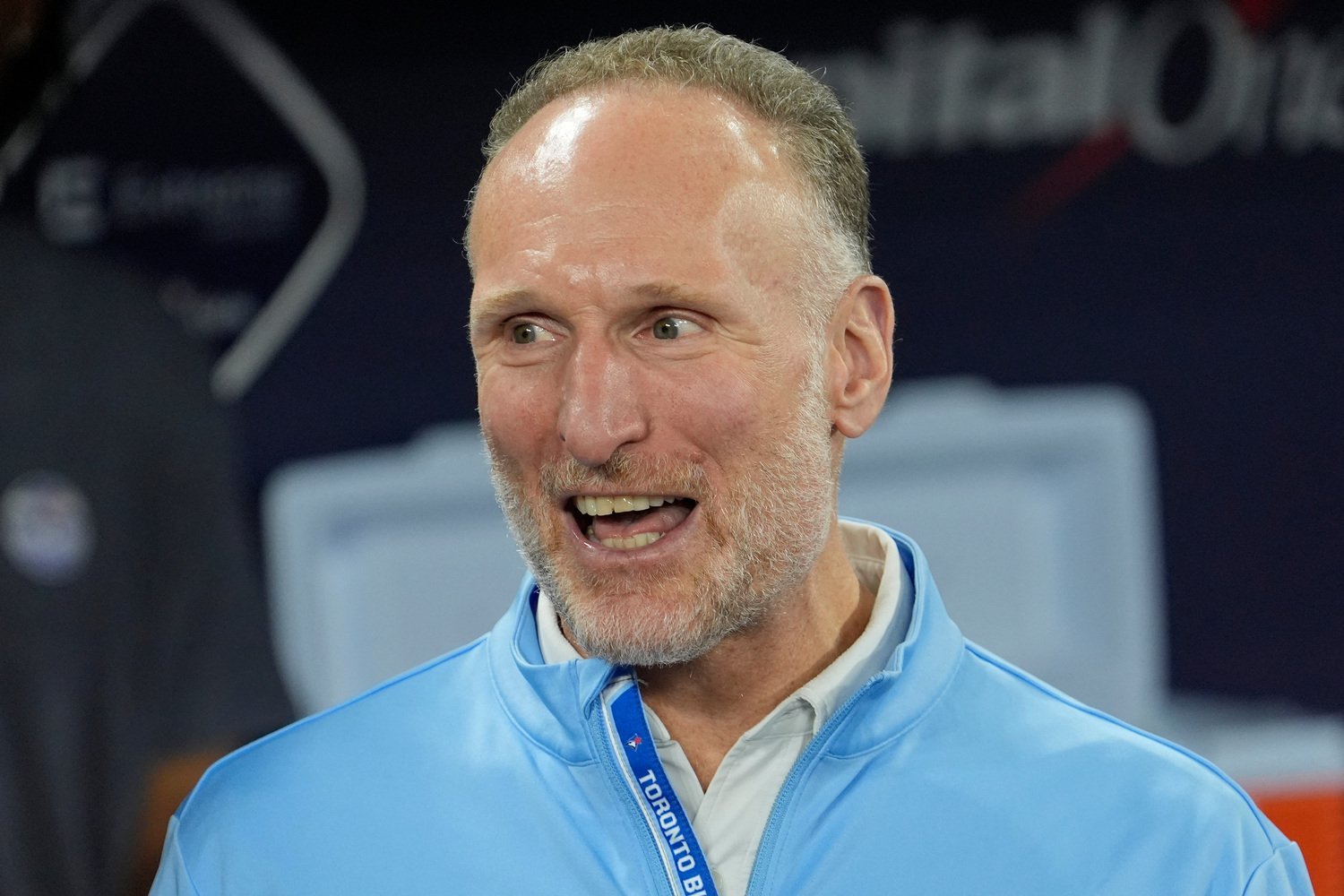 Toronto Blue Jays team president Mark Shapiro sat down for an interview on BNN Bloomberg earlier this week. While introducing Shapiro, anchor Merella Fernandez mentioned that the team brought in a record $445 million of revenue in 2025. This is the first time I've heard that $445 million figure, although I later checked and found it lines up with the team's 2025 revenue estimate from Forbes. While Shapiro did not personally confirm the number, the framing of the interview ("Blue Jays CEO Mark Shapiro shares how the team brought in $445 million revenue") certainly makes it seem like the executive is endorsing its accuracy. I can't say I'm all that invested in the particulars of Rogers' financials, but every further detail about how much freaking money the team made last season is a good sign that ownership will continue to invest in the Blue Jays' roster – and I'm all for that. View the full article
 -
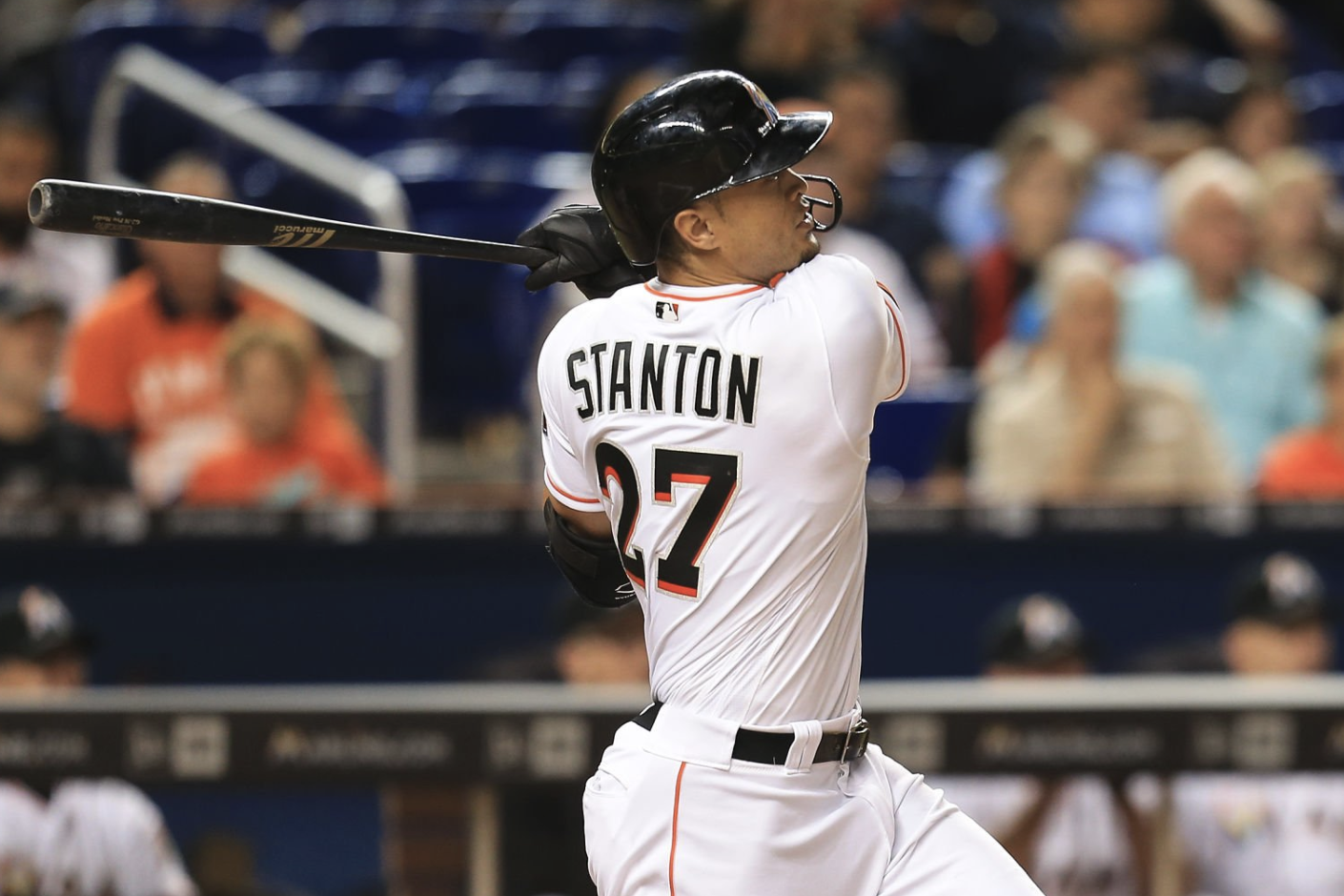 In each of his eight seasons with the Florida/Miami Marlins, Giancarlo Stanton belted at least 22 home runs. On this day 10 years ago, he reached double digits for the seventh straight year with a dramatic blast. Against the Philadelphia Phillies, Stanton’s blast broke the tie and lifted the Miami Marlins to a thrilling 6-4 victory. After racing to a 4-0 lead, the Marlins had not scored since the second inning as they came to bat in the bottom of the eighth at Marlins Park on May 6, 2016. Following a scoreless seventh from Andrew Bailey, Philadelphia turned to hard-throwing Héctor Neris. Neris had gotten Martín Prado to ground out to open the inning. After a one-out single from Christian Yelich, Stanton came to the plate. Stanton took the first pitch for a ball. The second, he sent into orbit. Neris left an 87-mph pitch out over the plate and Stanton was able to send it beyond the home run sculpture in left-centerfield for the go-ahead blast. The home run was his 10th of the year and capped the scoring. David Phelps worked a 1-2-3 ninth to record the save. Prior to the eighth, all the Miami offense came early. Yelich got the scoring started with a two-run homer of his own in the first inning. In the second, J.T. Realmuto and Prado put together consecutive RBI singles to double the lead to 4-0. Maikel Franco’s RBI double off Wei-Yin Chen got Philadelphia on the board in the third. After Peter Bourjos’ two-run double cut the lead to 4-3 in the fourth, Franco tied the game with a solo shot to lead off the fifth. Franco, Bourjos and Freddy Galvis each had two of the 12 hits for the Phillies. Prado, Yelich and Marcell Ozuna each had two knocks for Miami. Kyle Barraclough faced the minimum during a scoreless eighth to earn the win. Limited to 119 games by injury, Stanton would go on to hit 27 home runs during the 2016 season, including 10 in May. His second bomb of the month served as the game-winner for the Marlins. It came on this day 10 years ago. View the full article
 -
 The El Paso Chihuahuas walked off Tacoma 10-9 in 10 innings on a wild pitch, with Rodolfo Durán going 4-for-4 with four RBIs. The San Antonio Missions beat Midland 10-5 behind three consecutive home runs, and Victor Lizarraga delivered five scoreless innings of relief of Lucas Giolito. The Lake Elsinore Storm dropped an 8-6 game at Inland Empire after a five-run fifth. Fort Wayne was postponed. Padres Minor-League Transactions Padres optioned LHP Kyle Hart to El Paso Chihuahuas. Padres recalled IF Sung-Mun Song from El Paso Chihuahuas. RHP Lucas Giolito assigned to San Antonio Missions from Lake Elsinore Storm. San Antonio Missions transferred RHP Andrew Dalquist to the Development List. RHP Bernard Jose assigned to ACL Padres from Fort Wayne TinCaps. LHP Javier Chacon assigned to Fort Wayne TinCaps from Lake Elsinore Storm. LHP Cal Riehl assigned to Lake Elsinore Storm from ACL Padres. Lake Elsinore Storm sent C Ty Harvey on a rehab assignment to ACL Padres. Chihuahuas Blow Lead, But Rally For 10th-Inning Victory Over Rainiers Jase Bowen scored on a wild pitch with one out in the bottom of the 10th as the Triple-A El Paso Chihuahuas overcame a five-run eighth inning by Tacoma to hand the Rainiers a 10-9 loss. El Paso blew a 7-1 lead after three innings, but came up with its third walk-off win and snapped a three-game losing streak. Rodolfo Duran homered as part of a four-hit, four-RBI performance, Pablo Reyes went 3-for-5 with a homer and four RBIs and Nick Solak had three hits and scored twice for the Chihuahuas. Reyes has reached base safely in all 23 games he has played this year. Mason McCoy singled in the second inning to extend his hitting streak to a career-high 13 games. Trailing 1-0 in the bottom of the second, Reyes had an RBI double, Clay Dungan a sacrifice fly and Duran a run-scoring single to put the Missions up 3-1. In the third, Reyes hit an opposite-field three-run homer, his third of the season and Duran had a two-out RBI double for a 7-1 advantage. Tacoma scored twice in the fourth and once in the fifth to make it 7-4. Duran led off the bottom of the sixth with his fourth homer and then, in the seventh, singled home another for a 9-4 lead. But the Rainiers scored five times in the top of the eighth to tie it. In the 10th, Bowen was the zombie runner at second, went to third on Samad Taylor's weak groundout to third and scored on a wild pitch on the second pitch to Nate Mondou. Missions right-handed starter Evan Fitterer allowed four runs on five hits and five walks with one strikeout in 4⅓ innings. Right-hander Alek Jacob got the win after striking out five in 2⅓ innings. EP_0505.mp4 Player AB R H RBI BB K Jase Bowen, CF 6 1 0 0 0 3 Samad Taylor, LF 6 0 0 0 0 2 Will Wagner, 2B 4 1 2 0 1 0 Nate Mondou, 1B 0 0 0 0 0 0 Nick Solak, DH 4 2 3 0 1 0 Pablo Reyes, 3B 5 2 3 4 0 1 Nick Schnell, RF 4 2 1 0 1 2 Mason McCoy, SS 5 0 1 0 0 2 Clay Dungan, 2B 3 1 1 1 1 0 Rodolfo Durán, C 4 1 4 4 1 0 Player IP H R ER BB K HR Evan Fitterer 4 1/3 5 4 4 5 1 1 Miguel Cienfuegos 2/3 1 0 0 0 1 0 Logan Gillaspie (H, 2) 2 0 0 0 1 1 0 Eli Villalobos 2/3 3 3 3 0 1 1 Alek Jacob (W, 2-0; BS, 2) 2 1/3 1 2 2 1 5 1 Giolito Struggles, Missions Hit Back-To-Back-To-Back HRs In Win Leandro Cedeno, Tirso Ornelas and Ryan Jackson hit consecutive homers in a five-run third inning as the Double-A San Antonio Missions pulled away late for a 10-5 victory over the Midland RockHounds. San Diego Padres right-hander Lucas Giolito had his third tune-up as he prepares to return to the majors, taking a step up to Double-A after two games at Low-A Lake Elsinore. It was the roughest of the three outings, although some shaky defense didn't help. Giolito pitched three scoreless innings before giving up a five-spot in the fourth. Giolito gave up a leadoff homer and four singles, along with an error and a catcher's interference, leading to the five runs (three earned), trimming the Missions' lead to 6-5. Overall, Giolito gave up eight hits and two walks while striking out a pair. SA1_0505.mp4 Ethan Salas went 3-for-5 with an RBI and run scored for the Missions, while Cedeno, Jackson and Luis Verdugo each had a pair of hits. The fireworks for the Missions came in the third inning. Up 1-0, Salas and Romeo Sanabria walked to lead off the frame when Cedeno unloaded on the first pitch, sending a towering shot to center for his fourth homer of the season to make it 4-0. His other three homers came during last week's road trip, including one Sunday. Ornelas hit the next pitch off the scoreboard in right field and Jackson sent a 1-1 pitch over the wall in right for the hat trick of homers. It was Ornelas' fifth homer and Jackson's first of the year. After the RockHounds pulled with 6-5 vs. Giolito, the Missions secured the win with a four-run seventh inning. Cedeno doubled, Ornelas and Jackson walked and Braedon Karpathios' groundout to second plated Cedeno. Verdugo had an RBI single, Francisco Acuna a run-scoring groundout and Salas an RBI single. Right-hander Victor Lizarraga relieved Giolito and pitched five scoreless innings, allowing three hits and a walk with two strikeouts. Since it was Cinco de Mayo, both teams played as their Copa de la Diversion alter egos, the Flying Chanclas de San Antonio and the Midland Amigos. SA2_0505.mp4 SA3_0505.mp4 SA4_0505.mp4 Player AB R H RBI BB K Ethan Salas, C 5 1 3 1 0 0 Romeo Sanabria, 1B 4 1 0 0 1 1 Leandro Cedeño, DH 4 2 2 3 0 2 Tirso Ornelas, LF 4 2 1 1 1 1 Ryan Jackson, 2B 3 2 2 1 2 1 Braedon Karpathios, RF 4 1 1 1 1 0 Luis Verdugo, 3B 4 1 2 1 1 0 Francisco Acuna, SS 5 0 1 2 0 2 Kai Murphy, CF 4 0 1 0 0 2 Kai Roberts, CF 0 0 0 0 0 0 Player IP H R ER BB K HR Lucas Giolito 4 8 5 3 2 2 1 Victor Lizarraga (W, 1-3) 5 3 0 0 1 2 0 TinCaps Postponed, Will Play Two Wednesday; McCoy Honored The High-A Fort Wayne TinCaps were rained out in their series opener against the Beloit Snappers. The two teams will play a doubleheader Wednesday. Right-hander Matt Watson had been scheduled to start for the TinCaps. Also, outfielder Alex McCoy was named Midwest League Player of the Month for April. McCoy led the league in hits (29), doubles (10) and slugging percentage (.683), while being second in batting average (.354), total bases (56) and OPS (1.069). His five home runs were fifth in the league. McCoy had nine games with multiple hits, including three with multiple extra-base hits. Walks Haunt Storm In Loss to 66ers Despite racking up 14 strikeouts, Low-A Lake Elsinore Storm pitchers issued eight walks and allowed two eighth-inning runs in an 8-6 loss to the Inland Empire 66ers. Jorge Quintana went 3-for-5, Truitt Madonna hit a two-run homer and Justin DeCriscio had two hits for the Storm, which outhit the 66ers 11-8. The Storm jumped out to a 4-1 lead. Madonna got things going in the top of the first when he followed Bradley Frye's walk and 10th stolen base by crushing his first homer of the season to left. After the 66ers tied it in the bottom of the first, Jose Verdugo, with one out, reached on a two-base error, Qrey Lott walked and Frye had an RBI single to center for a 3-1 lead. Quintana led off the fourth with a single to center and Verdugo attempted to bunt him over, but the pitcher threw the ball away and Quintana scored all the way from first to make it 4-1, with Verdugo ending up at third. Inland Empire scored five times in the sixth to take a 6-4 lead, but the Storm came back with a run in the sixth on Verdugo's sacrifice fly and another in the seventh on Conner Westenburg's leadoff triple and DeCriscio's one-out single to center to tie it 6-6. But the 66ers reclaimed the lead in the eighth on a pair of bases-loaded walks. Storm right-hander Winyer Chourio turned in another strong start, allowing one run on two hits but walking four and striking out six in four innings. LE_0505.mp4 Player AB R H RBI BB K Bradley Frye, 3B 4 1 1 1 1 1 Justin DeCriscio, RF 5 0 2 1 0 2 Truitt Madonna, C 5 1 1 2 0 1 Luke Cantwell, 1B 3 0 1 0 2 1 Kerrington Cross, PR 0 0 0 0 0 0 Victor Duarte, DH 4 1 0 0 0 1 Jorge Quintana, SS 5 1 3 0 0 0 Jose Verdugo, 2B 3 1 1 1 0 1 Qrey Lott, LF 3 0 1 0 1 0 Conner Westenburg, CF 3 1 1 0 0 2 Player IP H R ER BB K HR Winyer Chourio 4 2 1 1 4 6 0 Brandon Langley 2/3 3 5 3 1 2 0 Cal Riehl 2 1/3 2 0 0 1 4 0 Sean Barnett (L, 0-1) 1 1 2 2 2 2 0 Top-20 Prospect Performance Kash Mayfield: DNP Ethan Salas: 3-for-5, 2B Kruz Schoolcraft: DNP Bradgley Rodriguez: DNP Humberto Cruz: DNP Miguel Mendez: DNP Ty Harvey: DNP Jorge Quintana: 3-for-5 Kale Fountain: DNP Ryan Wideman: DNP Jagger Haynes: DNP Lamar King Jr.: DNP Romeo Sanabria: 0-for-4, BB, K Truitt Madonna: 1-for-5, HR, K Michael Salina: DNP Garrett Hawkins: DNP Kavares Tears: DNP Deivid Coronil: DNP Francis Pena: DNP Bryan Balzer: DNP View the full article
 -
 Transactions: Nashville Sounds released RHP Jacob Waguespack. Wilson Warbirds placed RHP Miqueas Mercedes on the 7-day injured list. Game Action: Nashville Pre-game media notes Nashville and Louisville were postponed on Tuesday and will be replayed as part of a doubleheader on Thursday this week. Biloxi Pre-game media notes Columbus (Braves) 7, Biloxi 4 Box Score As always, you are encouraged to read the official round-up from the team’s site: Miller and O’Rae Tally 3-Hit Nights in Shuckers 7-4 Loss to Clingstones Biloxi dropped a tough one to Columbus on Tuesday night, falling 7-4 for the Shuckers' sixth consecutive loss. The Shuckers had a late lead and some offensive bright spots from Darrien Miller and Dylan O'Rae, but a late charge by Columbus was too much for Biloxi to overcome. Tyson Hardin provided a solid outing striking out six over five innings and allowing just two runs. After falling behind 1-0 in the first Hardin kept his team in the game with his performance, before exiting after the fifth. That’s when the Biloxi offense would finally breakthrough with a two run single from Mike Boeve, courtesy of the Biloxi X account: The Shuckers later took the lead on a Dasan Brown steal attempt and a blooper reel from the Columbus defense: in the top of the 8th, Columbus rallied and took the lead, but in the bottom of the 8th, Darrien Miller tied the score with this blast: Miller collected three hits on the night including that home run. He is currently sporting a massive 1.217 OPS. Columbus responded in the ninth with a three run rally off of Sam Garcia, and then shut the Shuckers down to seal the win. Other notes: Dylan O’Rae continues to be a table-setter, finishing 3-for-4 with a walk. He raised his season average to .311. Top prospect Jesus Made grounded into two double plays and narrowly avoided a third by legging out ground ball fielder’s choice. Made is 6 for 41 (.146 average) since April 24. Tanner Gillis struck out three in two perfect innings of relief after Hardin left the game. The Shuckers were a perfect 5/5 on the base paths. Biloxi will look to snap their losing streak on Wednesday with RHP Jaron DeBerry (2-2, 5.12 ERA) on the hill. Wisconsin pre-game media notes Peoria (Cardinals) 5, Wisconsin 3 Peoria Pounces in Fourth Inning and Pulls Away from Wisconsin Box Score The Timber Rattlers (15-11) fell short against Peoria on Tuesday morning, dropping a 5-3 decision at Dozer Park despite an early lead and some late-inning pressure. Wisconsin jumped out to an early 1-0 lead in the second inning thanks to a solo home run by Josh Adamczewski, his sixth of the season. It was the fifth home run by Adamczewski against Peoria this season, which you can view below, courtesy of the Wisconsin X account: The Chiefs' offense came alive in the middle frames, scoring three in the fourth and adding insurance runs in the fifth and sixth. Starter Chandler Welch (3-1) suffered his first loss of the season, yielding three earned runs over four innings. The Timber Rattlers slithered back with runs in the fifth and seventh inning. The highlights were a Tayden Hall RBI double and a Braylon Payne single with some wonky defense. However, the comeback effort was stifled by a dominant Peoria pitching staff that racked up 16 strikeouts on the day. Josiah Ragsdale, who we highlighted in in a post earlier on Tuesday, went one for three, with a walk, and two stolen bases. We’ll hold our breath as we await word on why Marco Dinges left the game early, as noted by Jim in the minors forum. Looking ahead to Wednesday, LHP Wande Torres (1-1, 5.82 ERA) will look to get the Rattlers back on track. Wilson pre-game media notes Fayetteville (Astros) 6, Wilson 0 Box Score After an exciting homestand last week, the Warbirds offense crashed back to earth on Tuesday in their shutout loss at Fayetteville. The offense managed just two singles by Luis Lameda and Juan Ortuno, while striking out 10 times. Starter Jarrette Bonet allowed season-highs with three homeruns and five earned runs in his 4.1 innings of work. Tanner Perry relieved Bonet and struck out six in 3.2 innings. The only blemish on the ledger for Perry was a solo home run. The Warbirds will look to shake this one off quickly and get back on track Wednesday morning when RHP Carlos Carra (0-5, 11.74 ERA) will take the mound. ACL Dodgers 7, ACL Brewers 3 F/8 Innings Box Score The ACL Dodgers handed the ACL Brewers their first loss of the Complex League season, with a final score of 7–3 on Tuesday night. Starting on the mound for the Brewers’ was 2024 13th round pick Joey Broughton in his professional debut. Broughton had missed all of 2025 after undergoing Tommy John in July of 2024. I dug up this profile on Broughton as well as this rundown on his repertoire for those of you who (like me) may be unfamiliar with the 20 year old lefty. It was a bit of a shaky outing for Broughton (2.1IP 2H 1R 1ER 3BB 2K 2WP), but hopefully smoother sailing ahead now that the debut is out of the way. Offensively, catcher Jonathan Rangel provided the biggest offensive spark for the Brewers, going two for three with a two-run home run in the 7th inning that tied the game. 2B CJ Hughes, an 11th round pick last year, has been off to a hot start in his first two professional games. Hughes didn't record a hit, but he drew two walks, scored a run, and stole his 3rd base of the season. Juan Martinez, one of the standout hitters in the Brewers DSL squads last year, was one base twice and stole a bag as well. Joan Pena put on a dominant display pitching out of the bullpen. Making his stateside debut, he threw 3.1 innings, allowing zero earned runs and striking out six batters. Organizational Scoreboard including starting pitcher info, game times, MiLB TV links, and box scores Current Milwaukee Brewers Organization Batting Stats and Depth Current Milwaukee Brewers Organization Pitching Stats and Depth View the full article
 -
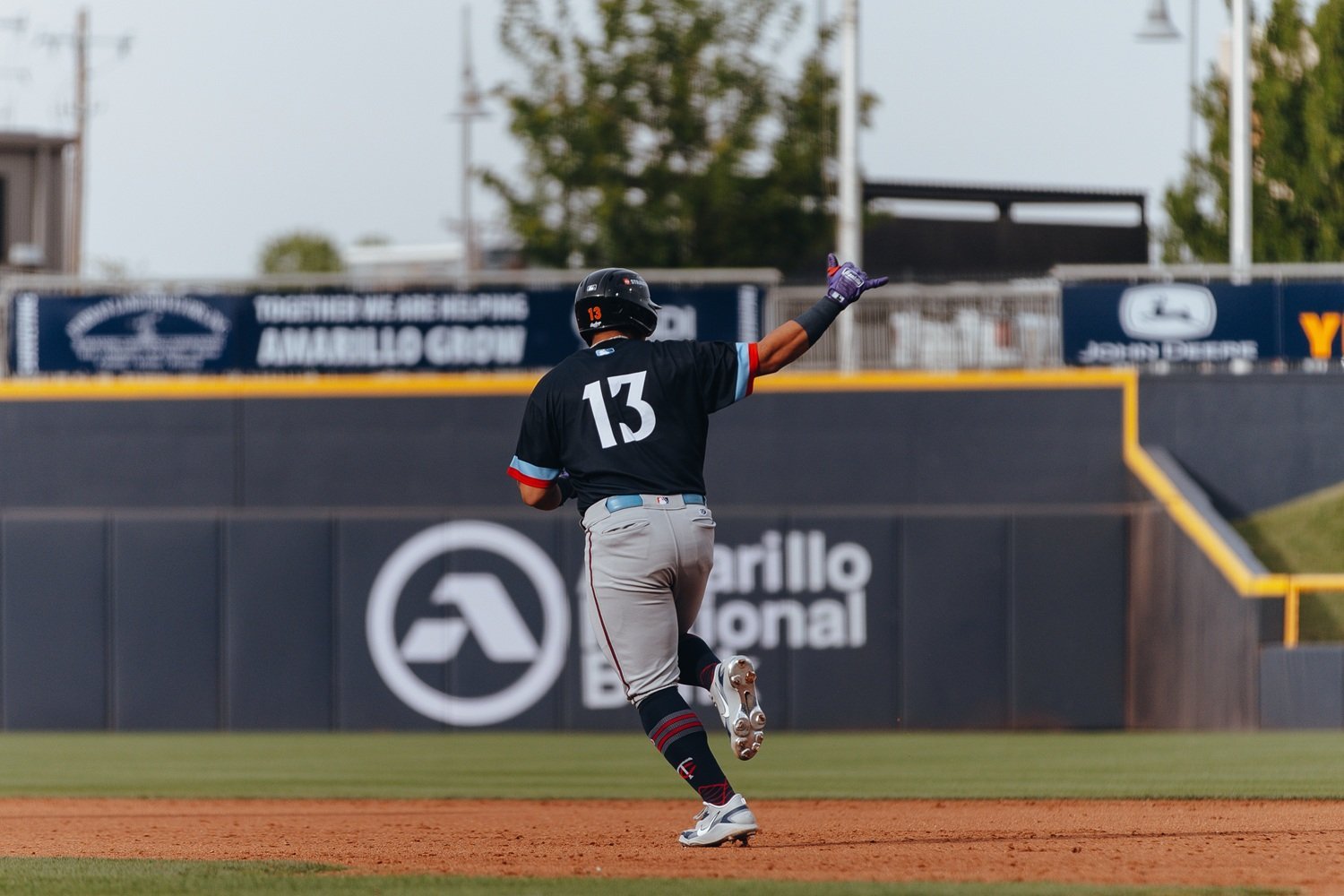 At Twins Daily, we agree with the "What happens in Vegas stays in Vegas" phrase, but we have been given the OK from both the St. Paul Saints and the Las Vegas Aviators to write about what happens this week at Last Vegas Ballpark this week. And trust me, you're going to want to see what the minor league leading home run-hitting Saints did on Tuesday night. Specifically, check out Aaron Sabato's performance! TRANSACTIONS There was a bunch of movement in the Minnesota Twins farm system in advance of games this week. The St. Paul Saints received OF/1B Hendry Mendez and RHP C.J. Culpepper from the Wichita Wind Surge. They also transferred RHP Grant Hartwig to the Development List and placed OF Walker Jenkins on the 7-day injured list after his crash into the wall at CHS Field over the weekend. RHP Julian Merryweather was sent on a rehab assignment with the FCL Twins. The Wind Surge received a pitching reinforcement from the Cedar Rapids Kernels in RHP Jacob Wosinski, who had a 2.51 ERA and 0.84 WHIP with 19 K’s and 2 BB’s in 14 1/3 innings thus far. Down in the Midwest League, the Kernels were assigned RHP Adam Falinski from the Fort Myers Mighty Mussels to take Wosinski’s place on their pitching staff. On Monday they placed OF Caden Kendle on the 7-day injured list and sent RHP Miguelangel Boadas on a rehab assignment in the FCL. The Mighty Mussels were assigned SS Henry Kusiak, who they just signed from the out of the Atlantic League. He was playing for the Long Island Ducks who are coached by #OldFriend and Twins legend, Lew Ford, before the Twins signed him. He hit .474 with two home runs, two doubles, eight RBI, with two stolen bases and a 1.395 OPS in five games for the Ducks on the season. SAINTS SENTINEL St. Paul 15, Las Vegas 7 Box Score A couple of weird things in this one, as it is an International League team playing a Pacific Coast League one and also coincides with the start of the experiment with the “check-swing challenge” system in the PCL. In addition, about 20 minutes before first pitch, outfielder and leadoff man Kyler Fedko was replaced in the lineup by Kaelen Culpepper as the DH, and Alex Jackson took his spot in left field on defense. Could mean something, could mean nothing. All that said, Aaron Sabato, my friends. That’s it, that’s the summary. I kid. But really, when your first four at-bats in a game have you sitting at 4-for-4 with four runs scored, a double, three home runs, seven RBI, and you have only seen five total pitches, it might as well end there. In the top of the second Sabato got it started for the Saints with a bases clearing double on the first pitch that made it 3-2. Later in the inning Kaelen Culpepper lined a double the other way to bring in Sabato for the 4-2 lead. In the top of the fourth Sabato crushed a first pitch slider 440 feet to left center to lead off the inning. His next time up he took a first-pitch slider for a strike but clubbed the next one that caught more of the plate out to left for his second homer of the night to tie the game at six. After a Ben Ross double in the fourth, Sabato green lit himself again and took the first pitch over the fence in left for his third bomb of the night. The entire Saints lineup then started catching the vibe. Culpepper led off the eight with his seventh home run of the year. Two batters later Gabriel Gonzalez launched a 434-foot shot for his eighth of the season. Two batters after that Alex Jackson launched his fifth homer of 2026. Sabato did go down swinging to end the eighth (with some healthy cuts), but you don’t forget those first five pitches. I guess there was some pitching in the game as well. Ryan Gallagher made his second start with St. Paul and finished the first 4 1/3 innings. He was charged with four runs (two earned) on four hits and three walks. He struck out one. Lefty Kendry Rojas went the next 2 2/3 frames, allowing two earned runs of his own on four hits and a walk while striking out two. Trent Baker finished off the final two innings, allowing one run on three hits while striking out two. Four other hitters in the Saints lineup finished with multiple knocks (Culpepper, Gonzalez, Orlando Arcia, and Ben Ross) as they racked up 15 as a team. They were 7-for-12 with runners in scoring position and left only four men on base. As for Sabato, I’ll leave you with this stat: he started the game with a .754 OPS on the season. He finished it with a mark of 1.018. WIND SURGE WISDOM Wichita 9, Amarillo 4 Box Score The Wind Surge struck first and loudly in the second inning against the Sod Poodles on the road. Appropriate for the team leading the Texas League in home runs early in the season. Kala’i Rosario led off the frame with his sixth home run of the season for the 1-0 lead. After a pair of walks and a wild pitch, Jose Salas made it 2-0 with a sac fly. Ricardo Olivar blasted his eighth home in the top of the third to put Wichita up 3-0. Making the start for the Wind Surge was right-hander Sam Armstrong and he delivered a hitless first four innings. He walked only two hitters and struck out three. He threw 58 pitches in those four innings, with 33 going for strikes (57%). Ricky Castro was the first call to the bullpen, and Amarillo finally got their first hits of the game. Castro finished two innings but was charged with two earned runs on five hits and a walk. He struck out two. In the top of the seventh the Wind Surge used some more power to take control of the game. Salas led off with a double, stole third base, and scored on a sac fly from Jake Rucker to make it 4-2. Garrett Spain followed with a triple, then Kyle DeBarge clubbed his third home run of the season to make it 6-2. Jaylen Nowlin picked up his first win of the season by pitching the seventh inning. He allowed one run on one hit and a walk and struck out one. William Fleming (1 IP, H, ER, BB, K) and Sam Ryan 1 IP, K) finished off the final two innings. Wichita tacked on three more in the top of the ninth to make the final score. Sapin got it started with a double, DeBarge drew a walk, and Olivar hit his second homer of the game to make it 9-4. Check out the tear Olivar is on: The Wind Surge got multiple hits from Spain and Olivar, and DeBarge joined them by scoring two runs apiece as the top 3 hitters of the lineup. Andrew Cossetti (0-for-2, 3 BB, 2 K) and Billy Amick (0-for-3, R, 2 BB) reached base multiple times without a hit. KERNELS NUGGETS Cedar Rapids 3, Quad Cities 2 (10 innings) Box Score The Kernels and River Bandits went to extra innings after most of the game played out as a classic pitcher’s duel. Eli Jones made the start for Cedar Rapids and was solid through the first four innings. He had scattered five hits over those scoreless frames, but a pair of singles in the fifth finally put an end to his outing, and he was on the hook for both runners. An RBI single and wild pitch from reliever Nick Trabacchi led to those runs being charged to Jones. In total, he finished 4 2/3 innings and those two earned runs on seven hits, while striking out four. Cedar Rapids got on the scoreboard first in the top of the third inning when Brandon Winokur delivered a two-out RBI single for a 1-0 lead at the time. In the top of the fifth singles from Winokur and Khadim Diaw and a wild pitch gave them their second run of the game. The score would stay tied at two through the ninth, as Trabacchi (2 1/3 IP, 2 H, BB, 3 K), Paulshawn Pasqualotto (2 IP, H, BB, 4 K) kept any further River Bandits shenanigans from occurring. The Kernels had a shot to retake the lead in the sixth after a one-out triple from Jay Thomason, but he would end up being thrown out at home on a double-steal attempt. In the top of the 10th the Manfred Man for the Kernels was Marek Houston, and with one out it was Winokur again who delivered another single to drive in Houston for a 3-2 lead. In the bottom-half Quad Cities moved the ghost-runner up to third with a sac bunt but were unable to move him any further as Christian Becerra retired the final two hitters after an intentional walk. Winokur (3-for-5, R, 2 RBI, BB) and Thomason (2-for-4, 3B, K) had multiple hits to pace the offense. Eduardo Tait added his sixth double of the season. Both teams combined to go 3-for-22 with runners in scoring position and left 19 men on base for the game. The win was the Kernels seventh in a row and improves their record to 15-13 on the season. MUSSEL MATTERS Tampa 9, Fort Myers 8 Box Score The Tarpons jumped all over Mighty Mussels starting pitcher Eric Hammond in the first, with a leadoff double being followed by an RBI triple for a 1-0 lead before an out was recorded. A wild pitch later in the inning made it 2-0, then in the second errors around a pair of singles and a walk led to three more runs and a 5-0 Tampa lead. Fort Myers got two of those runs back in the bottom of the second thanks to the powerful bat of Quentin Young, who launched a two-run shot the opposite way for his second home run of the season. Hammond went on to finish 3 2/3 innings, being charged with six runs (four earned) on five hits and three walks, while striking out three. Brian Zeldin went the next 2 1/3 innings and reeled in the Tarpons, striking out five and allowing his only baserunner on a hit-by-pitch. Down 6-2 in the bottom of the fifth, Jayson Bass and Harry Genth drew walks to start the inning, executed a double-steal, and then both scored on a wild pitch when the catcher's throw back toward home also went for an error. Tampa was able to pull away again in the top of the seventh against Mussels right-hander Mitch Mueller. In his lone inning he gave up three runs on three hits and a walk to make it 9-4 Tarpons. They needed all those runs as Fort Myers nearly batted around in the bottom half. Genth, Dameury Pena, and Bruin Agbayani loaded the bases with walks. Yasser Mercedes then shot a laser-beam of a single into left field to score the first run of the inning. Ramiro Dominguez followed with an RBI groundout in front of a JP Smith 2-run single to close the lead to one. Michael Hilker delivered two scoreless innings to give the Mighty Mussels chances. He struck out two and walked one. Mercedes delivered a two-out double in the bottom of the ninth to get the tying run in scoring position, but Dominguez grounded out to end the comeback attempt. Mercedes went 3-for-4 with a run scored, double, RBI, walk, and two stolen bases. His three hits matched the total of the rest of his team, but they did draw eight total walks and stole five bases in the game. Unfortunately, their four errors as a defense also loomed large. COMPLEX CHRONICLES Monday: FCL Pirates 11, FCL Twins 2 (7 innings) Box Score Twins hitters were unable to find many hits on Monday, being held to just three on the day as a team. Two of those came from Yovanny Duran, who finished 2-for-2 with a run scored and stolen base. Miguel Caraballo added his first double of the season to account for all of them. Santiago Rojas made the start and pitched into the third inning. He was charged with one earned run on one hit and three walks, while striking out three. Hendry Chivilli was the first reliever summoned after two batters reached base in the third, and retired all five hitters he faced, including inducing a double-play ball. Miguelangel Boadas made his first rehab appearance and finished two innings. He allowed four runs (two earned) on two hits and four walks. He struck out two. Omar Montano gave up six earned runs in his lone inning on five hits and three walks. He struck out one. Tuesday: FCL Twins 4, FCL Pirates 8 Box Score Right-hander Julian Merryweather made his first rehab appearance with the FCL Twins by starting this one. He allowed single runs in both the first and second innings and finished 1 2/3 innings total. He gave up three hits and struck out three. Cristian Hernandez took the brunt of the Pirates' damage in the game, allowing six earned runs on four hits and three walks in his 1 2/3 innings, striking out two. Relievers Nick McAuliffe (1 2/3 IP, H, BB, 2 K), Yoel Roque (2 IP, H, BB, 2 K), and Rainer Marin (1 IP) kept the Pirates off the scoreboard over the final 4 2/3. The Twins scored their first runs of the game in the top of the third, tying it two briefly. Miguel Caraballo hit his first home run which also drove in Victor Leal, who had singled earlier. They added one in the fifth on a bases loaded sac fly from Telon Serrano, and their final run in the seventh thanks to a homer from Daiber De Los Santos. He led the way for the lineup by finishing 2-for-4 with two runs scored. TWINS DAILY MINOR LEAGUE PLAYERS OF THE DAY Pitcher of the Day – Sam Armstrong, Wichita Wind Surge (4 IP, 0 H, 2 BB, 3 K) Hitter of the Day – Ricardo Olivar, Wichita Wind Surge (2-for-4, 2 R, 2 HR (9), 4 RBI, BB, K) Aaron Sabato, St. Paul Saints (4-for-5, 4 R, 2B, 3 HR (5), 7 RBI, K) PROSPECT SUMMARY Check out the Prospect Tracker for much more on our Twins Top 20 prospects after seeing how they did today. #2 - IF Kaelen Culpepper (St. Paul): 2-for-5, 2B, HR (7), 2 RBI, BB #4 - C Eduardo Tait (Cedar Rapids): 1-for-5, 2B #7 - OF Gabriel Gonzalez (St. Paul): 2-for-6, R, HR (8), 2 RBI, K #8 - LHP Kendry Rojas (St. Paul): 2 2/3 IP, 4 H, 2 ER, 1 BB. 2 K, 53 pitches, 34 strikes (64.2%) #9 - SS Marek Houston (Cedar Rapids): 1-for-5, R, K #13 - 3B/CF Brandon Winokur (Cedar Rapids): 3-for-5, R, 2 RBI, BB #14 - 3B/SS Quentin Young (Fort Myers): 1-for-4, R, HR (2), 2 RBI, 2 K #17 - 2B/OF Kyle DeBarge (Wichita): 1-for-4, 2 R, HR (3), 2 RBI, BB #19 - C/OF Khadim Diaw (Cedar Rapids): 1-for-5 WEDNESDAY’S PROBABLE STARTERS St. Paul @ Las Vegas (9:05 PM CDT) - RHP Mike Paredes (1-1, 4.76 ERA) Wichita @ Amarillo (11:05AM CDT) - RHP Ty Langenberg (0-2, 4.08 ERA) Cedar Rapids @ Quad Cities (6:30 PM CDT) - RHP Riley Quick (0-0, 0.00 ERA) Tampa @ Fort Myers (5:35 PM CDT) - RHP Matthew Dalquist (0-1, 5.40 ERA) Please feel free to ask questions and discuss Tuesday’s games! View the full article
 -
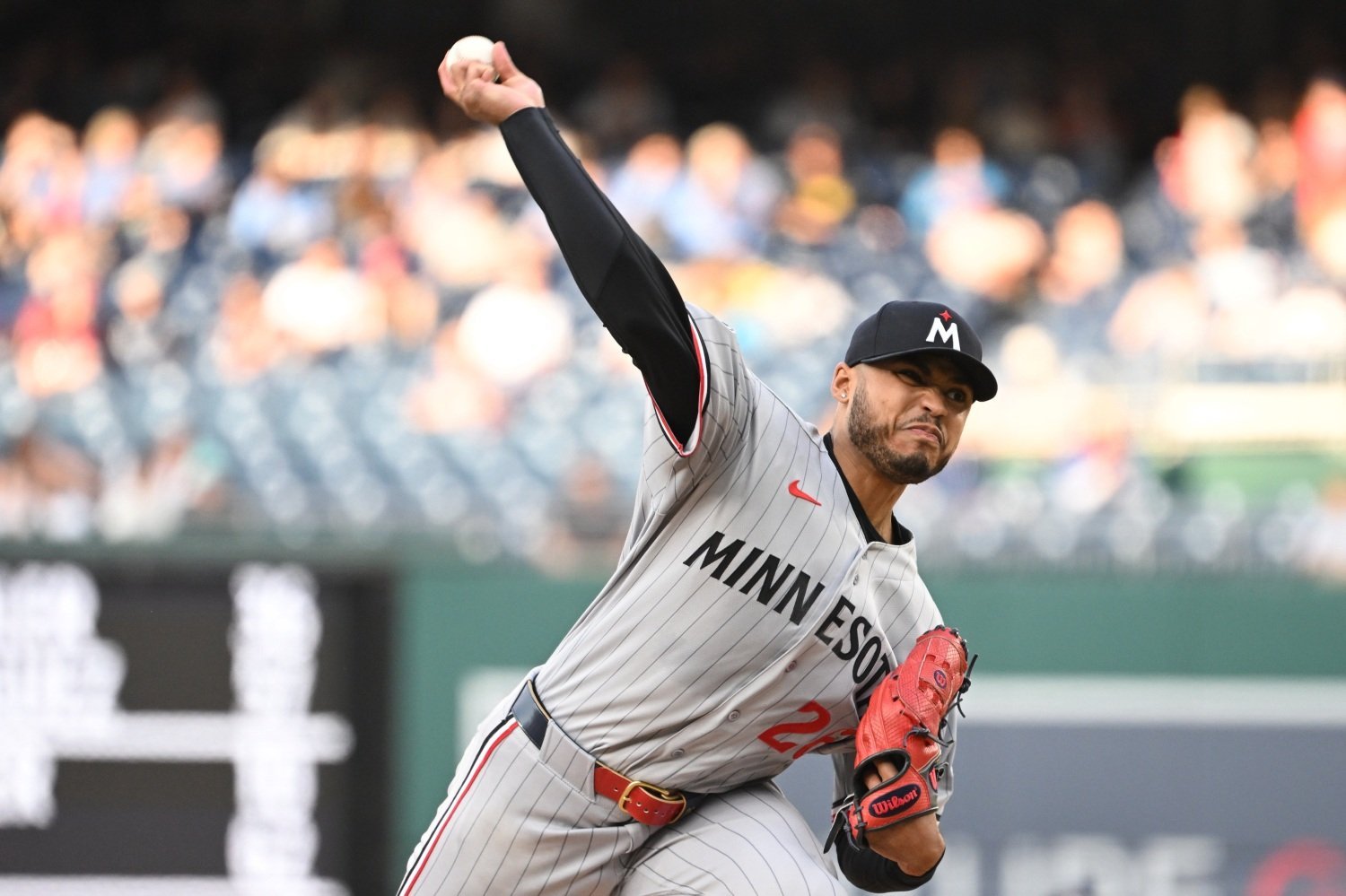 Box Score SP: Taj Bradley 6.0 IP, 4 H, 2 ER, 2 BB, 8 K (96 pitches, 63 strikes (66%)) Home Runs: Byron Buxton (11) Top 3 WPA (via FanGraphs): Brooks Lee (0.27), Bradley (0.12), Trevor Larnach (0.11) Win Probability Chart (via BaseballSavant) The Twins traveled to the nation's capital for a showdown with the team who lives in their old place. Minnesota received good news regarding Joe Ryan's injury, and hoped that this positive momentum could carry into a very winnable series. Fireballer Taj Bradley took the hill for the visiting Twins, while young righty Cade Cavalli looked to match Bradley's heat pitch for pitch. Catching Up to the Heat Both young hurlers lived in the upper 90s throughout the first few innings of the game, but both offenses found a way to break through when they went offspeed. The Nationals struck first in the bottom of the first inning, when Curtis Mead sent a Bradley splitter to the left field wall for a double that placed runners at second and third with only one out. CJ Abrams couldn't handle a Bradley fastball, but his weak dribbler towards Luke Keaschall was too slow to let the drawn-in infielder make a successful throw home to nab the speedy Daylen Lile to put the Nationals up 1-0. The Twins quickly handed Cavalli two outs in the top of the second, but Cavilli got wild and hit Kody Clemens, and Keaschall got his dribbler revenge on a soft roller to third to put runners at first and second. Brooks Lee came up next, and he turned around 97.6 mph in a lead-taking fashion. The Twins weren't done there, as Cavilli ran into trouble toward the bottom of the lineup once again in the top of the fourth. Austin Martin got the start instead of Matt Wallner, and he rewarded his manager's trust with a leadoff single. Clemens solicited a walk, and Keaschall legitimately worked a 10-pitch walk to load the bases with nobody out. Lee came up again in an RBI spot, and this time his contact only traveled 40 feet, but Cavilli booted the ball into foul territory to plate Martin and to keep the bases loaded with nobody out. Royce Lewis, number one pick but number nine in the order, hit one just short of the right field fence for a sacrifice fly to make it 4-1 Twins. Byron Buxton popped straight up to home plate, leaving Trevor Larnach in a position to pile on more runs in preparation for the Twins' bullpen coming in. Trevor fell behind 0-2 on two straight knuckle curves. Cavalli tried one more, though, and Larnach un-knuckled it to the right field gap to up the lead to 6-1. Bradley Gets Back on Track The off day on which the team traveled from Minneapolis to Washington looked to be extremely important, as Bradley needed 51 pitches just to survive the first two innings. However, he managed to rediscover the strike zone, and coerced the Nationals into making outs early in the count. Bradley mowed down eight batters in a row until Lile laced a two-out double in the fifth. Then it was Mead striking again, surviving fastballs, splitters, and cutters until he finally could poke a splitter into left field to creep a run closer, at 6-2. Bradley's night was done after six innings, but he left his team in a great position for victory—as Twins starters have been doing for weeks. Bloops and Bullpens The Nationals turned to righty Andre Granillo to start the top of the seventh, and Ryan Jeffers hit a pop fly to the right-center gap. Both fielders converged, but the ball found grass and rolled away for a gift double. Josh Bell immediately made the Nationals pay by stroking a single into right to plate Jeffers and widen the lead to 7-2 Twins. Before Twins fans could get too excited, the Twins turned to their own bullpen in the bottom of the seventh, and Eric Orze immediately gave up a booming double to Jose Tena. Two batters later, James Wood missed a home run by inches, and his double instead plated Tena to close the gap to 7-3. As fears began to mount, Jeffers rightly challenged what would have been a walk to Mead to put two men on. Then Orze, the Twins bullpen's most consistent workhorse in thick or thin, took that second chance to induce a grounder to himself to end the threat. The Twins' bats also could feel the threat looming, and they took the game back, thanks to the fact that the Nationals bullpen hasn't been much better in this young season. Granillo stayed in for the top of the eighth, and he started the inning by giving up a single to a red-hot Lee, plunking Lewis in the shoulder, then getting hit by a speeding Buck Truck. As the sparse crowd tried to chant "Throw it Back!" while heading for the exits, Buxton rounded the bases for his 11th home run of the season. Anthony Banda is still in the Twins bullpen, and in the eigth inning, he showed why that is by retiring the Nats in order (albeit on 19 pitches). Lee got another RBI on a double in the ninth, thanks to some Orlando Ribalta walks. In the bottom of the ninth, Luis Garcia got the next turn of the May 2 Implosion Redemption Tour, and surrendered a walk but wiped it away with a double play to face the minimum and to end the evening with only smiles. What’s Next? The Twins look to continue their winning ways in Washington, D.C., on Wednesday evening. Twins righty Bailey Ober (3-1, 3.55 ERA) will attempt to continue to eat six innings of quality mound time in hopes the offense keeps on attacking. The Nationals will counter with the floundering righty Miles Mikolas (0-3, 8.23 ERA). First pitch is scheduled for 5:45 pm CDT. Postgame Interviews Coming Soon! Bullpen Usage Spreadsheet FRI SAT SUN MON TUE TOT Orze 33 0 24 0 16 73 Morris 0 0 57 0 0 57 Rogers 8 0 32 0 0 40 Garcia 9 18 0 0 13 40 Banda 0 18 0 0 19 37 Topa 0 10 17 0 0 27 Funderburk 0 14 3 0 0 17 Klein 0 12 0 0 0 12 View the full article
 -
Marlins comeback comes up short against struggling Orioles
DiamondCentric posted an article in Fish On First
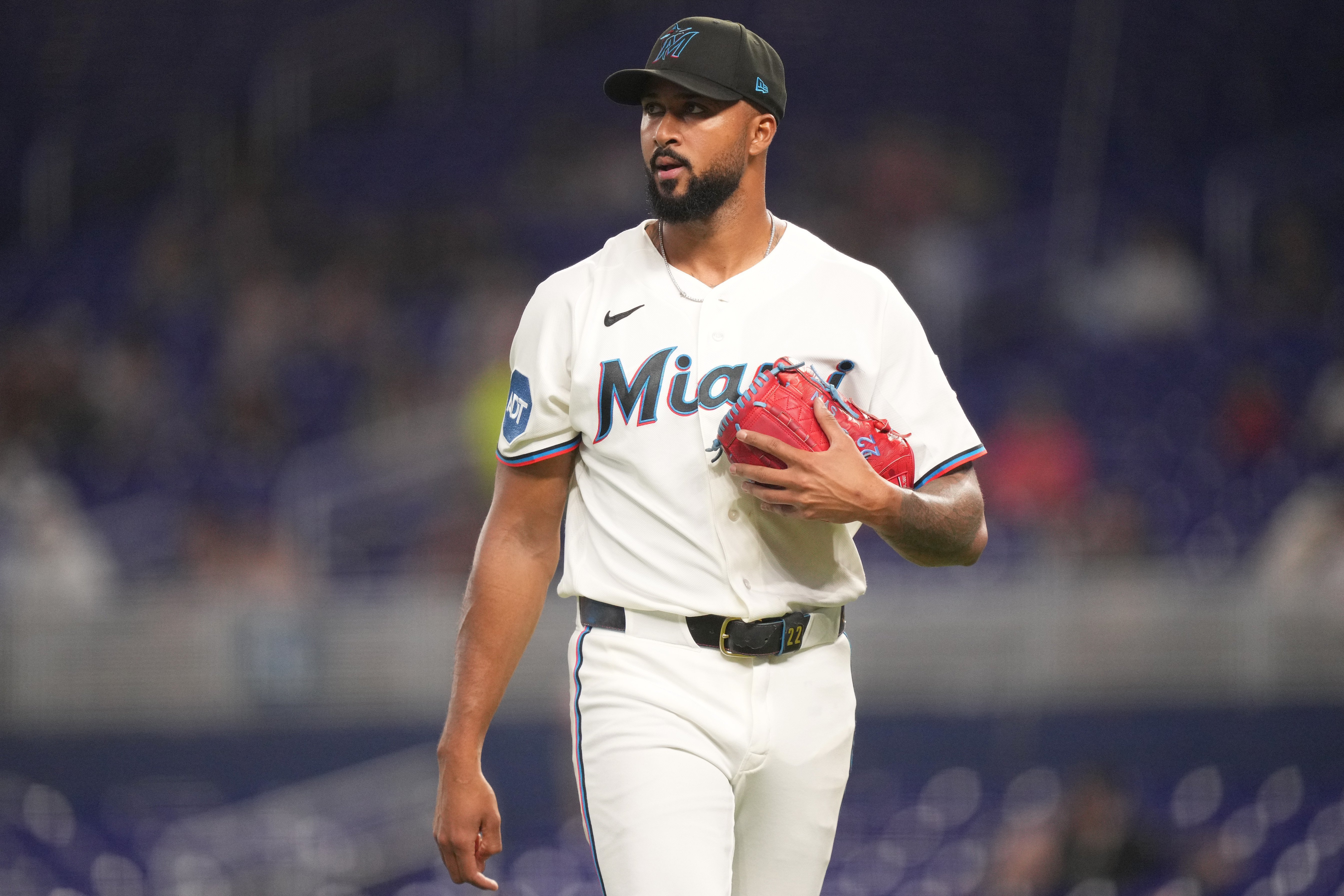 MIAMI, FL - Despite the visiting Baltimore Orioles taking an early 3-0 in the top of the first, the Miami Marlins continued to fight back, but fell by a final score of 9-7, dropping to 16-20 on the season. Sandy Alcantara, who made his eighth start of the season, struggled on Tuesday night, going 4 1/3 innings, allowing a season-high seven runs on eight hits, three walks and five strikeouts. Tuesday's start raised Alcantara's overall numbers to a 4.01 ERA, 3.86 FIP, 6.27 K/9 and 3.14 BB/9 in eight starts this season. Not known for allowing a lot of hard-hit balls, Alcantara allowed nine of them, with three of them coming off both of his fastballs (sinker/four-seam). The 47.1% ground ball rate, which for Alcantara, who has a career 49.6% GB rate, was low. In the top of the first inning, the Orioles wasted no time ambushing the Marlins ace, knocking in three runs. The first came on a Pete Alonso two-run RBI double (moved to third on an error). Catcher Samuel Basallo drove Alonso in, capping off a 34-pitch inning for Alcantara. Basallo knocked in two more runs on an RBI single in the top of the third. In the fifth, Basallo hit an RBI triple, making it 6-4. Basallo scored on a fielders choice from Colton Cowser, making it 7-4. In Alcantara's defense, there was some luck involved, as he had a 2.91 FIP in his start. One positive is that his changeup was as dominant as always, generating eight whiffs and four of his five strikeouts came on that pitch. "I think that first inning, the (Dylan) Beavers at-bat just got really elongated," Marlins manager Clayton McCullough said. "Pitch count ran up, Pete (Alonso) hooks the ball down the line for a couple of runs and we have a little trouble handling down there. Get another guy to third base and just some times today where he had some counts in his favor, he just didn't execute well enough with 2k." The Marlins offense was highlighted by Liam Hicks, who finished with a four-hit performance, capped off by a solo homer in the bottom of the seventh inning, making it a 7-5. His 431-foot shot to the second deck in right field marked his longest home run of the season. Otto Lopez made it back-to-back home runs, cutting the Orioles lead, 7-6. It was his fourth of the season. Joe Mack, who made his major league debut on Monday night against the Philadelphia Phillies, caught Alcantara, but the story was his bat, notching his first major league hit, which was an RBI single in the bottom of the third inning. In the bottom of the eighth inning, he had his second hit of the game. "He's a young catcher with good talent," Alcantara said. "Everybody he been waiting for him for a long time. Now, he's finally here, so you gotta keep working the same way that he was working in Triple-A. Just gotta be out there, enjoy time with us and take advantage of all the opportunities." After Mack got on base, McCullough sent out speedster Esteury Ruiz to pinch-run for Mack. The former stole second, then stole third, but a bad throw from Basallo allowed Ruiz to score and tie the game. So far, Ruiz is slashing .267/.267/.733/1.000 with two home runs and three stolen bases. "I hope this guy leads the league in pinch-running stolen base attempts," McCullough said. "Whoever we had up that inning, first guy to get on base like, we had Ruiz going there. We're down, and certainly felt like his ability to do that and go take a chance to go steal a base there and then he caused them to rush a little bit and was able to tie it up with some aggressive base running. We'll continue to try to find as many ways we can use Ruiz to impact games even when he's not starting." Right-handed reliever Willian Kempner was called-up ahead of Tuesday's game to replace the roster spot that Chris Paddack once held before being designated for assignment. In his major league debut, Kempner tossed a 1-2-3 inning, striking out Colton Cowser. "I think it went well," Kempner said. "I think the best part is that I felt really good out there. I felt like I was just being myself, and that's all I can ask for at this point in my career. I have this promise to myself that I need to be that guy out there that just doesn't care what people think. I did that today and I'm very happy for myself." The Marlins will look to bounce back on Wednesday night with Eury Pérez taking the mound. First pitch is at 6:40 pm. View the full article
 -
Hendry Mendez Might Be The Twins’ Most Underrated Prospect
DiamondCentric posted an article in Twins Daily
 While Hendry Mendez doesn't generate the same buzz as other Twins outfield prospects, his talent is undeniable, and it's gotten to a point where he feels criminally underrated. View the full article
 -
Mets Roster Central: The Reliever Depth Chart Shrinks by Two
DiamondCentric posted an article in Grand Central Mets
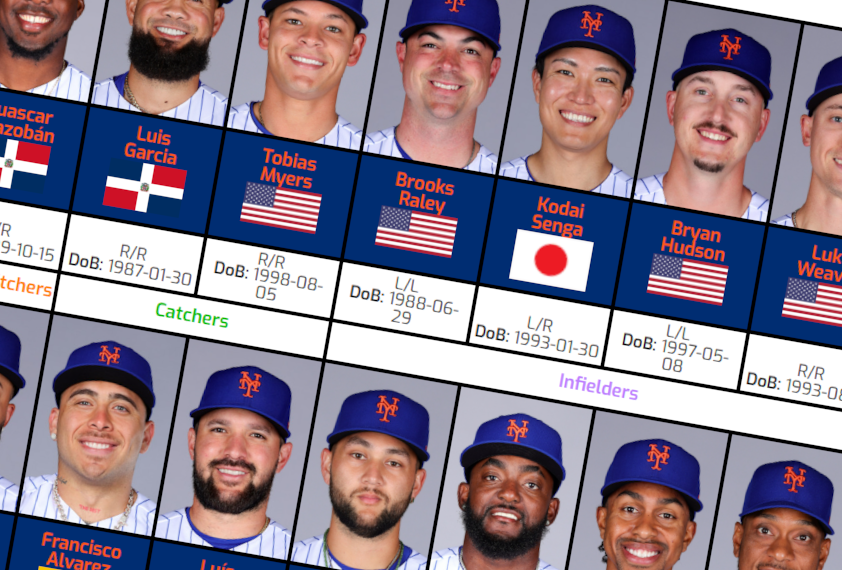 Always looking for more-more-more MLB-ready relievers, the Mets and teams like them stock up on bullpenners with MLB histories at AAA. Something happened — an injury or a performative downturn — that has kept them from getting MLB deals, but if you stockpile enough, and do it thoughtfully, you are going to find a few guys to help you. The problem is, that the guys who rebound from whatever adversity want to be treated like MLB players, and the ones who don't fall away. Either way, attrition abounds. Transactions, 5/3/2026 GOING Cleared Waivers and Assigned to Syracuse Relief Pitchers Carl Edwards, Jr. R/R DoB: 33484 High Level: MLB (2026) Carl Edwards, Jr. pitched two and two-thirds (more) impressive innings on April 29 in an otherwise largely ugly game, stretching himself to keep the Mets from deploying any other pitchers. The very next day the Mets decided they needed fresh arms for the next game more than they needed Carl to stick around and potentially build on his excellent performance to date. Well, they added Austin Warren, who himself has been no slouch despite getting yo-yo-ed between AAA and Flushing, but Warren was not needed, and Edwards DFA was a waste. He cleared waivers, and was sent to Syracuse, but he — quite justifiably — opted for free agency instead, hoping some team will see in his 12 solid big-league seasons and excellent work for the Mets this year that he is still a big-leaguer who deserves to stop getting pink-slipped in exchange for good work. Transactions, 5/5/2026 GOING Retired Relief Pitchers Nick Burdi R/R DoB: 33988 High Level: MLB (2025) Nick Burdi knows a thing or two about being yo-yo-ed. He has been up and down since 2018, back when First Lady Melania Trump was visiting a child detention center while declaring "I DON'T REALLY CARE DO U?" on her back. In all that time, good Nick never logged more than 9 2/3 innings. Bone bruises, UCL surgery, thoracic outlet surgery, the lost season of the Covid-19 epidemic, platelet-rich injections, a second UCL surgery, hip inflammation, more platelet-rich injections, more stuff with his hip ... Nick has seemingly seen it all. What he never got to see was life as a New York Met. Off to a strong start in Syracuse (one run in 4 1/3 innings), he hit the Injured List yet again, and ultimately decided to pack it in. It's tough waiting for a break, when your patience is only giving life one more chance to punch you in the face. His younger brother Zack pitched in parts of three MLB seasons as well, while his older brother Drew was an NCAA quarteback, which leaves them plenty of stories to tell around the Thanksgiving table. Fair play to our lost relievers. May they remember their ephemeral Metliness fondly. Next up, we get to see if Eric Wagaman gets claimed ... . Your 2026 New York Mets Starting Pitchers Clay Holmes Nolan McLean Freddy Peralta David Peterson Christian Scott R/R DoB: 1993-03-27 R/R DoB: 2001-07-24 R/R DoB: 2996-06-04 L/L DoB: 1995-09-03 R/R DoB: 1999-06-15 Relief Pitchers Huascar Brazobán Craig Kimbrel Sean Manaea Tobias Myers Brooks Raley Austin Warren Luke Weaver R/R DoB: 1989-10-15 R/R DoB: 32291 R/L DoB: 1992-02-01 R/R DoB: 1998-08-05 L/L DoB: 1988-06-29 R/R DoB: 1996-02-05 R/R DoB: 1993-08-21 Relief Pitchers Catchers Infielders Devin Williams Francisco Alvarez Luís Torrens Bo Bichette Vidal Brujan Andy Ibáñez MJ Melendez R/R DoB: 1994-09-21 R/R DoB: 2001-11-01 R/R DoB: 1996-05-02 R/R DoB: 1998-03-05 S/R DoB: 1998-02-09 R/R DoB: 1993-04-03 L/R DoB: 1993-11-29 Infielders Outfielders Marcus Semien Mark Vientos Brett Baty Carson Benge Austin Slater Juan Soto Tyrone Taylor R/R DoB: 1990-09-17 R/R DoB: 1993-12-11 L/R DoB: 1999-11-13 L/R DoB: 2003-01-20 R/R DoB: 33951 L/L DoB: 1998-10-25 R/R DoB: 34356 Also on 40-Player Roster Starting Pitchers Relief Pitchers Tylor Megill Kodai Senga Jonah Tong Alex Carrillo Reed Garrett Joey Gerber Justin Hagenman R/R DoB: 1995-07-28 L/R DoB: 1993-01-30 R/R DoB: 2003-06-19 R/R DoB: 1997-06-06 R/R DoB: 1993-01-02 R/R DoB: 1997-05-03 R/R DoB: 1996-10-07 On 60-Day Injured List with torn right UCL. On 15-Day Injured List with Lumbar Spine Inflammation With Syracuse With Syracuse On 60-Day Injured List — right UCL surgery and nerve relocation surgery. With St. Lucie on Rehab Assignment On 60 Day Injured List with fractured rib. Relief Pitchers Catchers Infielders A.J. Minter Dedniel Núñez Jonathan Pintaro Dylan Ross Hayden Senger Francisco Lindor Ronny Mauricio L/L DoB: 1993-09-02 R/R DoB: 1996-06-05 R/R DoB: 1997-11-07 R/R DoB: 2000-09-01 R/R DoB: 1997-04-03 S/R DoB: 1993-11-14 S/R DoB: 2001-04-04 With Syracuse on Rehab Assignment On 60-Day Injured List — right UCL surgery. With Syracuse With Syracuse With Syracuse On 10-Day Injured List with Strained Left Calf On 10-Day Injured List with fractured right thumb. Infielders Outfielders Jorge Polanco Nick Morabito Luis Robert, Jr. Jared Young S/R DoB: 1999-11-13 R/R DoB: 2003-05-07 R/R DoB: 1997-08-03 L/R DoB: 1995-07-09 On 10-Day Injured List with right wrist contusion. With Syracuse On 10-Day Injured List with Lumbar Spine Disc Hernitaion On 10-Day Injured List with torn left meniscus. Deslgnated for Assignment Eric Wagaman R/R DoB: 35656 DFA'd, 2026-05-02. Your Mets Coaching Staff Manager Bench Coach Pitching Coach Hitting Coordinator Third Base Coach First Base Coach Bullpen Coach Ass't Pitching Coach Carlos Mendoza Kai Correa Justin Willard Jeff Albert Tim Leiper Gilbert Gomez José Rosado Dan McKinney DoB: 1979-11-27 DoB: 1989-07-14 DoB: 1990-09-09 DoB: 1992-08-16 DoB: 1996-07-19 DoB: 1992-03-08 DoB: 1974-11-09 DoB: 1989-06-06 Hitting Coach Strategy Coach Catching Coach Coaching Assistant Bat'g Practice Pitcher Equipment Manager Bullpen Catchers Bullpen Catchers Troy Snitker Danny Barnes J.P. Arencibia Rafael Fernandez Kevin Mahoney Kevin Kierst Eric Langill Dave Racaniello DoB: 1988-12-05 DoB: 1989-10021 DoB: 1986-01-05 DoB: 1988-08-03 DoB: 1987-05-11 DoB: 1964-07-09 DoB: 1979-04-09 DoB: 1978-06-03 Your Mets Training Staff Director of Player Health Head Athletic Trainer Assistant Athletic Trainer Reconditioning Coordinator Reconditioning Therapist Head Performance Coach Assistant Performance Coach Performance Coordinator Soft Tissue Specialist Brian Chicklo Joseph Golia Bryan Baca Sean Bardanett Josh Bickel Dustin Clarke Tanner Miracle Jeremy Chiang Hiroto Kawamura DoB:1972-07-17 DoB:1978-??-?? DoB:Circa 1980 DoB:1988-06-23 DoB:1996-??-?? DoB:1987-??-?? DoB:1991-??-?? DoB:????-??-?? DoB:22846 View the full article
 -
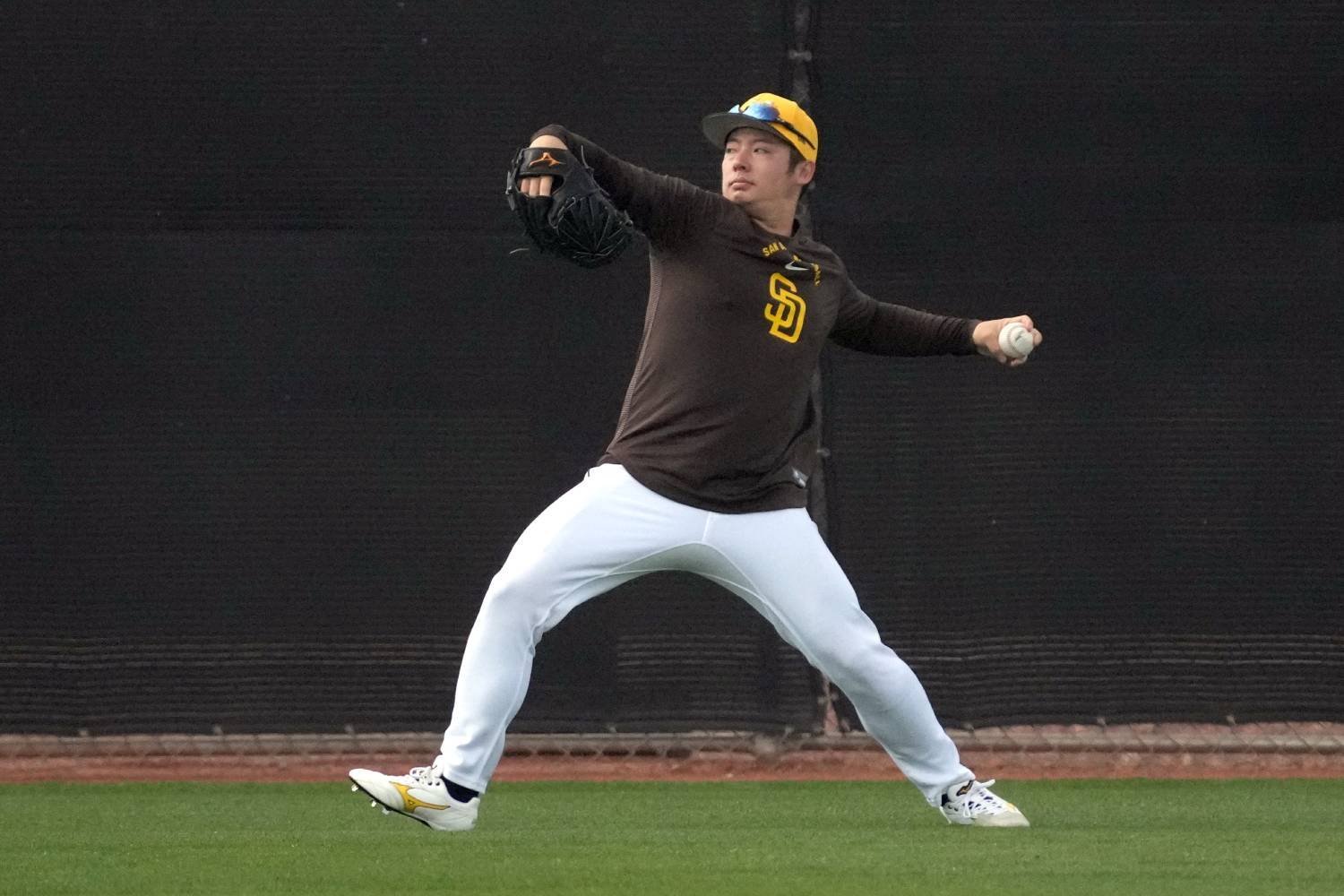 Yuki Matsui is finally back with the San Diego Padres. But Jake Cronenworth is out for a brief period. Matsui, the left-handed reliever, who has been out since spring training with a strained left groin, was activated off the 15-day injured list Tuesday, while Cronenworth, the starting second baseman, went on the seven-day concussion list. Left-handed reliever Kyle Hart was optioned to Triple-A El Paso and infielder Sung-Mun Song was called up. Cronenworth's concussion is the most surprising of these moves. He did not appear to be injured in Monday's series opener against the San Francisco Giants. Matsui had seemed close to being ready for Opening Day during spring training, but he did not appear in a Cactus League game. So he began the season on the 15-day injured list and began a rehab assignment with the Triple-A El Paso Chihuahuas a week later. At El Paso, Matsui made 11 appearances, allowing seven runs on 17 hits with three walks and 14 strikeouts in 17⅔ innings. In two of his final three games, he went two innings. In his two years in MLB, Matsui has a 3.86 ERA in 125 appearances, with an 11.3% walk rate and 24.6% strikeout rate. Song was called up as the extra player for the two-game Mexico City Series two weekends ago, but made only one pinch-running appearance. He was still recovering from an oblique injury at the start of the season and, once healthy, there wasn't room for him on the major-league roster, so he was optioned to El Paso. Now, he will fill in for Cronenworth at second base and make a case for him to remain on the roster. In 25 games at El Paso, Song had a .293/.364/.354 with one homer and 15 RBIs. His homer came in Sunday's game for the Chihuahuas. Hart had a 5.40 ERA in 12 appearances, walking six and striking out 10 in 16⅔ innings. View the full article
 -
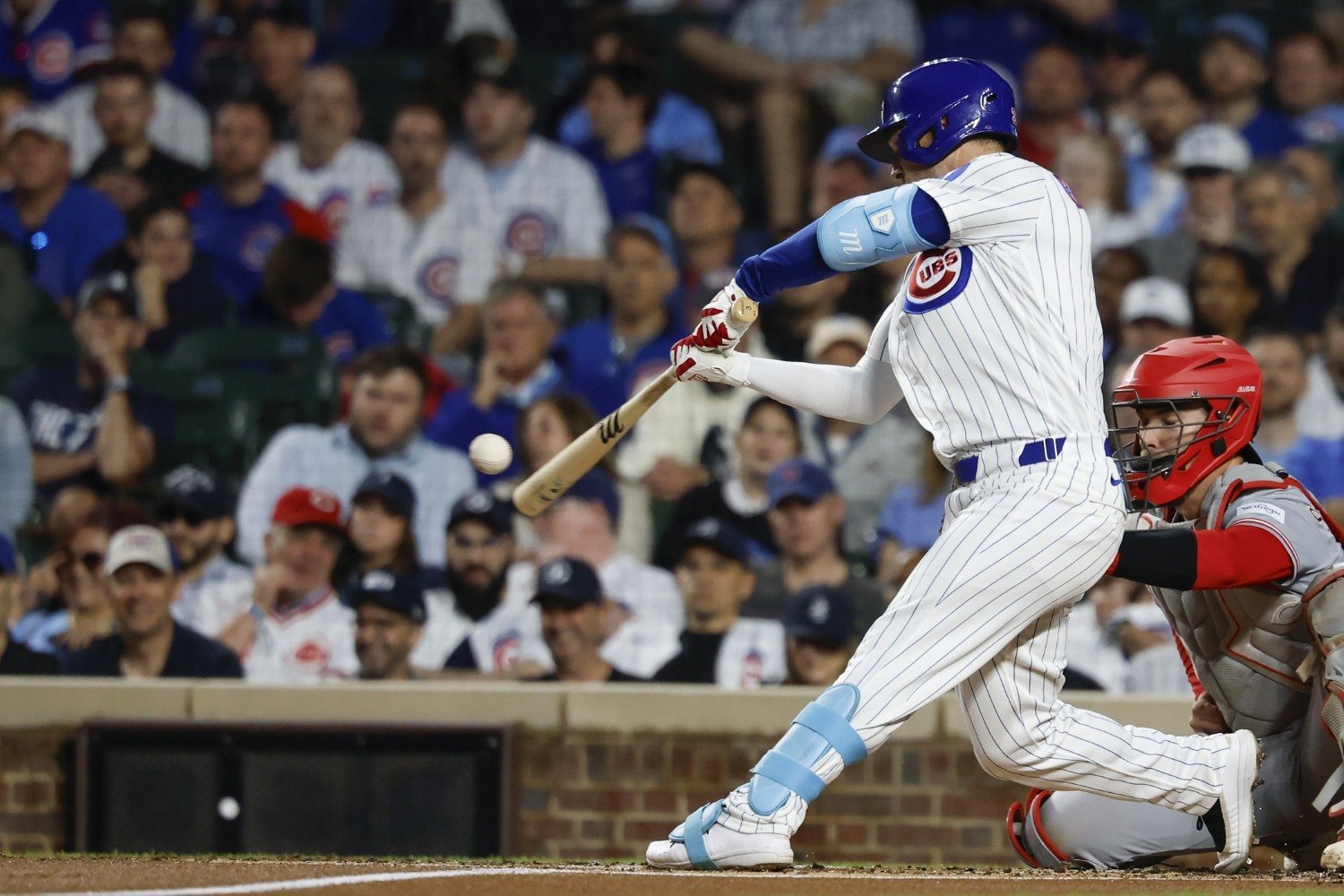 When the Chicago Cubs signed Alex Bregman this winter, much of the narrative centered around his intangibles. Teams that employ Bregman simply win baseball games. While we may never know the extent to which this effect permeates through the clubhouse, it's hard to argue with the results. As the Cubs have ascended in the standings, though, Bregman's name is one we've heard little about. That brings us to the concrete. From a more tangible standpoint, the book on Bregman was that he'd provide value based firstly on his approach. He doesn't walk a ton, but he doesn't strike out, either. He works a keen eye to hit himself on base, more so than to generate a free pass, with modest power in the offing. Through a touch more than 150 plate appearances, that's exactly what the Cubs have seen. Bregman has struck out just 15.4 percent of the time, which is better than every Cub regular not named Nico Hoerner (even if it is just a touch above his career average of 13.5%). He's walked at a steady 11.5% clip, too. The approach element of his game has remained intact, as Bregman's chase rate (18.2%) is elite and each of the whiff (17.5%) and strikeout rates are just a hair less than that. His 4.01 pitches per plate appearance sits comfortably above league average (3.90) and trails only Dansby Swanson's 4.21 P/PA for the top spot in the group. Yet, one (ok, at least this writer) can't help but feel a sense of disappointment surrounding Bregman's performance in the early going. Perhaps that's something to do with the fact that he's still a below-average hitter by wRC+ (97) and has yet to demonstrate any semblance of power (.110 ISO). There's a touch of misfortune reflected in a .273 batting average on balls in play, but it otherwise feels like there's far more impact to be unlocked from the team's marquee signing of the offseason. A bit of extra elevation may be the key. We already know that Wrigley Field is not a friendly environment for a right-handed hitter looking for power. But Bregman isn't looking for power in the traditional sense. He's looking for the gaps. However, it's hard to find the gaps when you're putting the ball on the ground more than 45 percent of the time, as Bregman has through his 156 plate appearances. Some of that is due less to the zone in which Bregman's swinging, and more to the types of pitches at which he's swinging. For the last four seasons, offspeed pitches yielded Bregman's highest ground-ball rates. That number has grown even higher this season, with a GB% of 64.3 against that pitch grouping. He's also swinging at offspeed stuff 45.5 percent of the time. Not only has he gone for an increase in volume of swings against the offspeed offerings, but he's also swinging less against each of the fastball and breaking pitch groups. There may also be a slight zone issue at play. This is Bregman's zone chart in 2026, illustrating Swing%: It's a decent enough distribution around various portions of the zone, but there's certainly a focus on the inner portion of it. Which becomes problematic when you consider where the groundballs are coming from: There's an easy conclusion to be drawn here: a higher volume of swings in a certain zone is going to beget a higher volume of groundballs. But one doesn't have to lead to the other. When you factor in the number of offspeed pitches at which Bregman is swinging versus his history of outcomes against that pitch type (and get to the fact that he's pulling ground balls at a rate that is currently a career high (24.8%)), it starts to feel like there's something in the approach that's pinning him down. Simply put, he's not in a groove and on time, just yet. While Bregman may very well be offering what the Cubs were hoping to get in the broad scheme of things, there's another level to be attained, and they need to see him attain it. Bregman isn't here to drive the offense from strictly a power standpoint, but eventually, they need him to deliver a bit more power. Once he reaches that point, whether by this adjustment or another, the Cubs will get closer to seeing a fully-realized version of Alex Bregman in their lineup. View the full article
 -
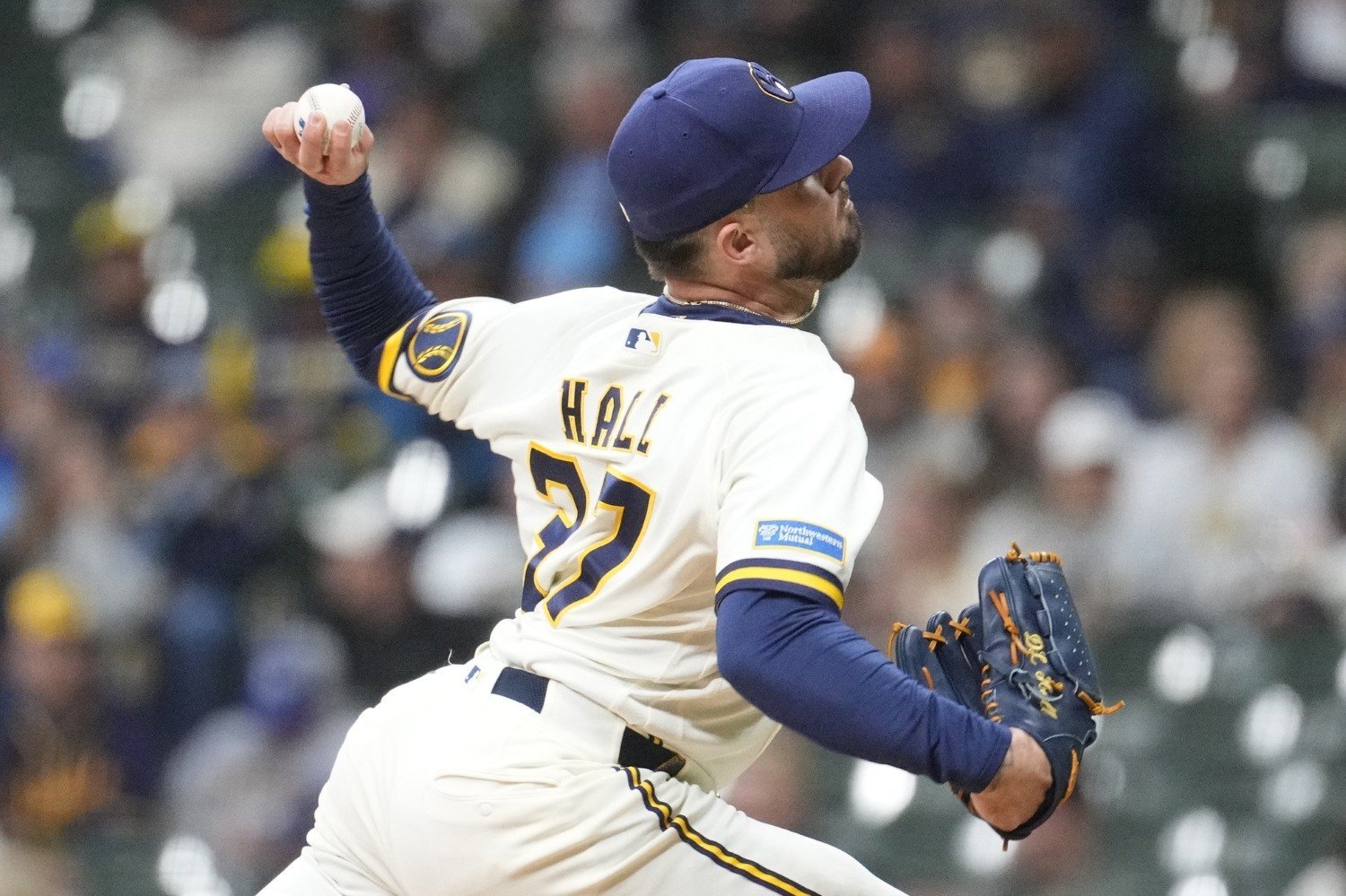 In a perfect world, the Brewers would suddenly start asking DL Hall to do an easier version of his job, and he would simply do it. Hall, 27, is in his third season with the Brewers, and he's enjoying the longest uninterrupted period of health and availability he's had during that span. Injury disruptions slowly took him out of the team's starting rotation plans, and he's become a versatile piece of their bullpen picture this spring. The Brewers have asked him to do everything from bridging gaps between short starts and the high-leverage arms in close midgame situations to sponging up innings in blowouts, and ultimately, he's succeeded in that work. He's even been used for one-batter matchup work a time or two. Now, all the team needs is for him to get three outs at a time, in the seventh or eighth inning. What Hall hasn't yet done, though, is consistently throw strikes with enough of his offerings to be reliable in that role. That was unfortunate when he was working as a roving long man, but now, it's starting to look more like a fatal flaw. Fellow left-handed reliever Ángel Zerpa will undergo Tommy John surgery next week, the Brewers announced Tuesday, making him the second southpaw reliever facing elbow woes. Jared Koenig is trying to rehab his own damaged ulnar collateral ligament, but it's not clear that he'll be back with the team this season, either. The Brewers don't need Hall just to keep them in games and lighten the load of other, better relievers anymore; they need him to be a sturdy setup man. Alternatively, of course, Shane Drohan could step up and claim the same mantle. Drohan, also 27, arrived this offseason in a way similar to the one in which Hall arrived before 2024, and might have a smoother path to a rotation spot—but so far, he's been needed mostly in relief. The two have sufficiently similar arsenals to make either a candidate to complement Aaron Ashby at the back end of the Brewers pen, but each also has the same issue: finding the zone. Hall's sinker and changeup can fill up the zone tolerably well, but his four-seamer, slider and cutter now seem entirely beyond his command. He's not around the zone with his sweeper, either, though he can at least induce some chases from lefties with it when he sets them up for that pitch with well-located sinkers. Drohan, by contrast, throws a four-seamer as his primary fastball, and his changeup is one of the pitches he simply can't command at a big-league level. But he can find the zone with his cutter and slider consistently enough to get by, if he can just pare down to those two pitches and the four-seamer. Right now, the Brewers should be asking both Hall (sinker, changeup, sweeper) and Drohan (fastball, cutter, slider) to streamline their arsenals and prepare for a shorter-burst, standard-issue high-leverage relief role. One of the two is likely to take well to it; the other can be reassigned to the longish, flexible role each has filled at times this year. One way or another, the team needs to replace the work it won't get from Zerpa the rest of the year, and it's not likely that either Koenig or the also-injured Rob Zastryzny is up to the task. Hall and Drohan have the stuff to be above-average one-inning relievers in the big leagues, especially if deployed against left-leaning pockets of opposing lineups. They haven't yet shown they can throw enough strikes to thrive, but that's partially because each has been developed and has prepared each day with one eye on an eventual return to the rotation or the knowledge that they might see a batter a second time or throw 50 pitches on a given day. In this hour of need, the team should see which of them can improve by getting rid of the extra arrows in their quiver and firing the ones with which they can hit the target most consistently. View the full article
 -
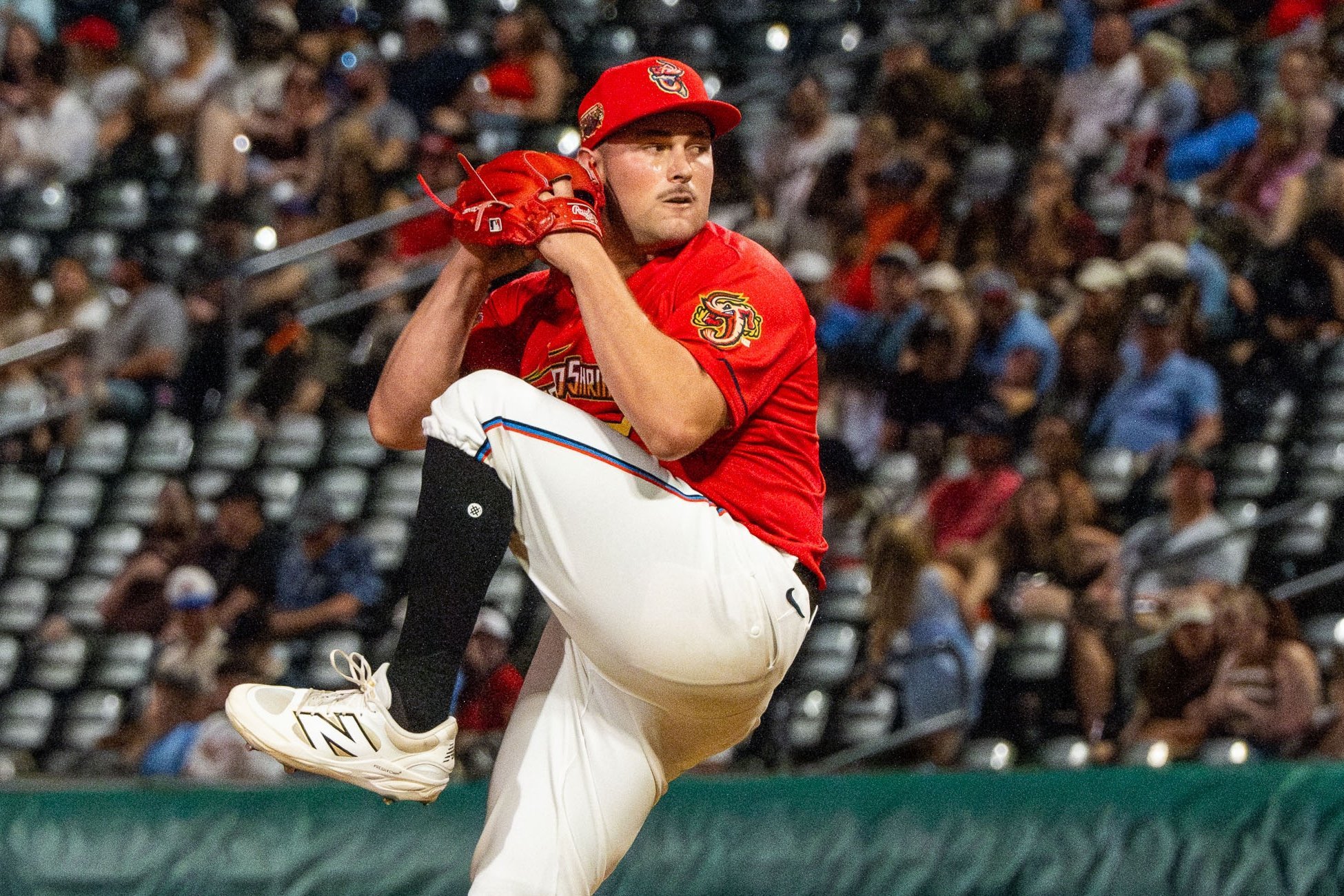 MIAMI, FL — The Miami Marlins designated starting pitcher Chris Paddack for assignment on Tuesday following a short and difficult tenure with the club. In seven appearances (six starts), Paddack had an 0–5 record and an ERA above seven. In a corresponding move, Miami recalled right-handed pitcher William Kempner, who is now in line to make his MLB debut during this series against the Baltimore Orioles. Kempner was acquired from the San Francisco Giants in January 2025 in exchange for international bonus pool money. This season with Triple-A Jacksonville, he has posted a 6.46 ERA and a 4.15 FIP, along with an eye-popping 19.96 K/9. His 47.9 percent strikeout rate ranks second in the International League. However, control issues have prevented him from reaching his full potential, as Kempner acknowledged when speaking with reporters. “I get a little erratic sometimes, but I’m working on it. If I can get the strikeouts with the walks, then we’re going to be okay,” Kempner said. In his most recent appearance on May 1, Kempner threw two innings of no-hit baseball with two strikeouts and touched 96.0 mph on his fastball. It was only the third time in 12 games this season that he didn't allow any baserunners. Kempner also shared that he was pranked by his coaches when they shared the news of his promotion to the big leagues. “I was on the phone with my pitching coach [Jerad Eickhoff]. I missed his call, and then I called him back, and he told me to come in and throw a bullpen tomorrow. Then he said he was just messing with me and that I was going to the big leagues. There’s no one I’d rather get that call from than him and our manager, (David Carpenter). Two amazing dudes.” Marlins manager Clayton McCullough spoke highly of Kempner’s arsenal. “I think it’s going to be a tough look for hitters. It’s a big fastball with movement both ways, and he has a very good breaking ball. We know he has the ability to miss bats. He’s shown that in Triple-A. Ultimately, his ability to fill up the strike zone consistently is going to determine how well he performs here.” McCullough confirmed that the Marlins will be calling up a starting pitcher on Friday (most likely Robby Snelling) to fill Paddack's rotation spot. Barring a sudden injury to somebody on the pitching staff, Kempner is the main candidate to go back down to AAA at that time. Between now and then, Kempner looks to fill a role in the bullpen, specifically against right-handed batters. I am optimistic about Kempner as his arsenal has lots of potential, with just walks hindering him. View the full article
 -
For Marsee and King, everything will sort itself out
DiamondCentric posted an article in Fish On First
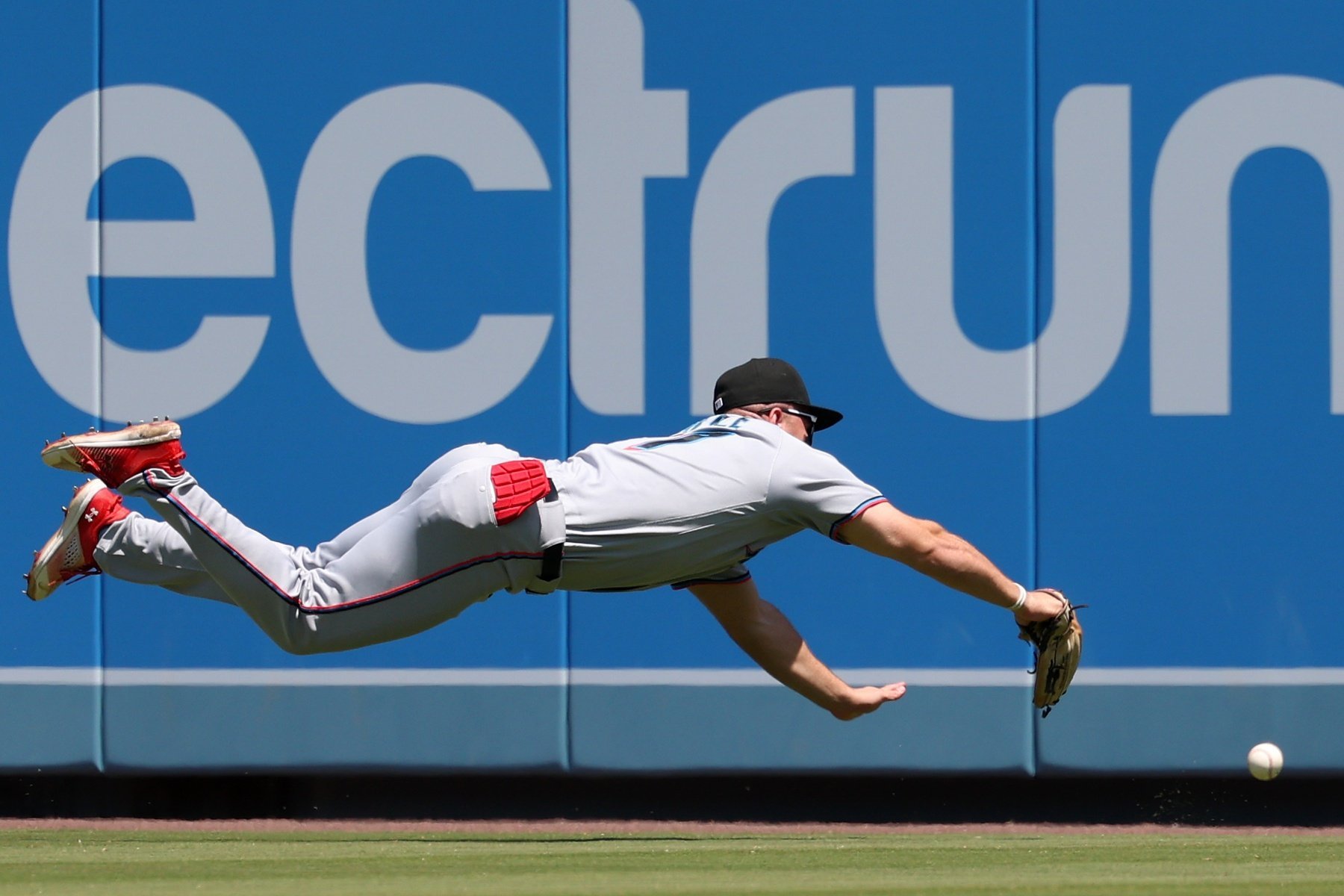 With the dawn of each new baseball season comes expectations for how players will perform. Those expectations could be shaped by what they've done in previous seasons or how their raw talents are projected to translate to on-field production. In the early going, randomness runs rampant. Former All-Star Cedric Mullins has an OPS 300 points below his career average and he ranks dead last among all qualified MLB hitters. Veteran right-hander Luis Castillo, who hasn't posted an ERA above 4.00 since 2018, is tied for the most runs allowed in the American League. However, the length of the MLB schedule is immense and regression is inevitable. The impetus for this piece is actually a Marlin: second-year outfielder Jakob Marsee. For a team so long deprived of premium, homegrown talent, the addition of Marsee was a welcome sight to the Marlins and their future. In his 55-game debut in 2025, Marsee slashed .292/.363/.478/.842, all while playing a premium defensive position in center field, where he was worth five total zone runs. The beginning of his 2026 has paled in comparison to his previous year's work. Through 34 games played, Marsee has hit a mere .185/.305/.262/.567 for a paltry 66 wRC+. While the Marlins have shown a willingness to demote (and outright cut) other underachievers this season, Marsee's job doesn't appear to be in any jeopardy as his process should portend better results. Despite his sub-Mendoza line batting average, Marsee is walking in 13.5 percent of his plate appearances. Through play on May 2, only 31 of the qualified 179 hitters are walking at that clip, and only two are hitting below .200. In 2025, merely nine players walked north of 14 percent of the time, a list that included Aaron Judge, Juan Soto, Mike Trout, and Shohei Ohtani—not to say that Marsee will ascend to those heights, but enough to tell you that his ability to work counts will eventually pay dividends. The 24-year-old has raised his average launch angle from 10.9 to 18.9 degrees, the same as the Dodgers' Will Smith and just below Cody Bellinger (19.1) and Yordan Alvarez (19.2). Marsee's teammate, Xavier Edwards, himself off to a strong start, for context, has an average launch angle this season of 10.8 degrees, reinforcing that a steeper angle correlates to more power potential. Should Marsee sustain this, we could see him knock a few more balls out of the yard in due time. For the time being, the Marlins have taken a small step to lighten Marsee's responsibility within their offense. On Tuesday, he was dropped to the fifth spot in the starting lineup for the first time in 2026. To be consistent, we ought to similarity call out unsustainable success when we see it. Reliever John King is the poster child for that. Inking a 1-year/$1.5M deal, King had proved himself a serviceable middle reliever, sporting a 3.80 ERA in parts of six seasons pitched with Texas and St. Louis to secure a one-year, $1.5 million deal from Miami in free agency. In 17 games since joining the club, King has arguably been the Marlins best pitcher on a per-inning basis, posting a minuscule 0.57 ERA and allowing just a trio of hits across 15 ⅔ innings pitched. King entered Tuesday with a 2.36 xERA, good enough for a 93rd percentile ranking among MLB pitchers. Hitters are seldom squaring him up as reflected in a mere 25.7% hard-hit rate (96th percentile) and a .167 xBA (also 96th). Kevin Barral spoke with King recently about how unpredictability in pitch usage has been vital to his success. However, let's not ignore that King's 3.52 FIP and 3.87 xFIP are closely aligned with his pre-Marlins track record. Scouting reports will catch up to how he has de-emphasized his sinker this season. He's a capable arm in a big league bullpen, not the utterly dominant force he's been to this point. Even if he is what the underlying metrics say he is, Peter Bendix and Co. got a bargain of a deal. View the full article
