


DiamondCentric
-
Posts
2,631 -
Joined
-
Last visited
Never
Content Type
Profiles
Forums
Events
News
Tutorials & Help
Major League Baseball Videos
Guides & Resources
Store
Downloads
Gallery
Everything posted by DiamondCentric
-

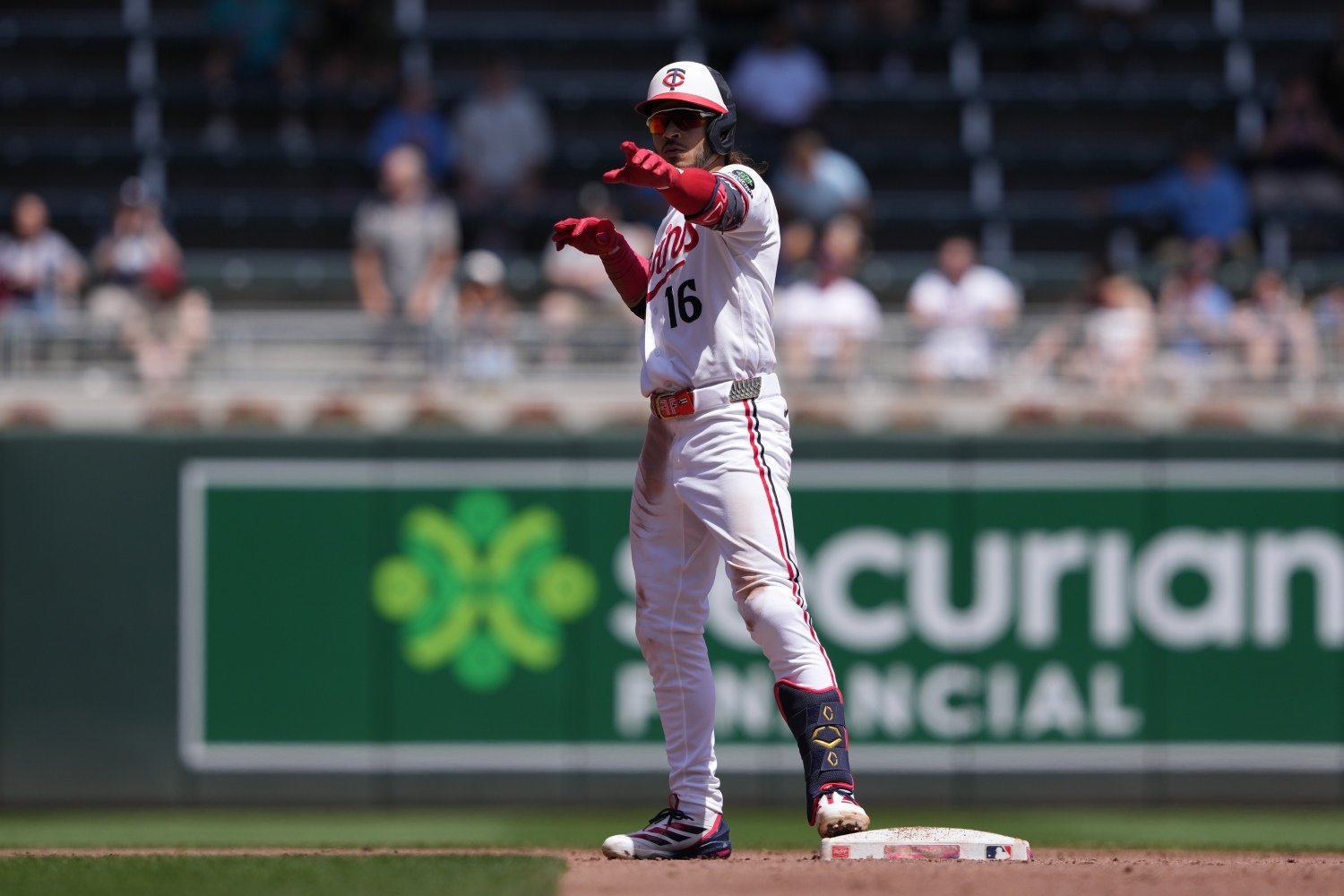 Box Score SP: Zebby Matthews - 7 IP, 4 H, 0 R, 1 BB, 5 K (83 pitches, 56 strikes (67% strikes)) Home Runs: None Top 3 WPA: Zebby Matthews (0.18), Austin Martin (0.18), James Outman (0.09) The Twins entered Thursday’s rubber match against Miami looking to secure the series after splitting the first two games. Behind a brilliant season debut from Zebby Matthews and a much more opportunistic offensive performance, they did exactly that. Minnesota jumped on the Marlins early, backed Matthews with plenty of run support, and cruised to a comfortable 9-1 victory at Target Field. The win secured the series for the Twins and improved them to 20-24 on the season. ZEBBY MATTHEWS SHINES IN SEASON DEBUT Making his first major league start of the season after being called up earlier in the day to replace Travis Adams, Zebby Matthews looked completely in control for most of the afternoon. Miami put a pair of runners on base in the opening inning after singles from Liam Hicks and Otto Lopez, but Matthews stayed composed and escaped the frame without damage. He needed just 12 pitches to get through the inning, throwing nine strikes and immediately showing an aggressive approach in the zone. From there, he only got sharper. Matthews struck out Jakob Marsee and Owen Caissie in a dominant second inning, and through two frames had thrown only 25 pitches, 19 of them for strikes. He continued to pound the zone throughout the afternoon, mixing his fastball and changeup effectively while consistently getting ahead in counts. By the middle innings, Miami had no answers. Matthews retired the side in order in the third, worked around a two-out double from Christopher Morel in the fourth, and erased a fifth-inning single with an inning-ending double play. Through six innings, the Marlins still hadn’t had a leadoff hitter reach base. The only bit of trouble came in the seventh, when Kyle Stowers drew a leadoff walk, but Matthews calmly worked around it to finish off seven scoreless innings. In total, Matthews allowed just three hits across seven shutout innings while striking out five. He threw 83 pitches in the outing and looked every bit like a pitcher capable of giving the Twins rotation a significant boost moving forward. THE TWINS CAPITALIZE AFTER EARLY FRUSTRATION Minnesota threatened immediately against Miami left-hander Braxton Garrett, but nearly let a golden opportunity slip away. Austin Martin opened the bottom of the first with a four-pitch walk and quickly stole second base. Brooks Lee followed with a double off the wall in left field, and Ryan Jeffers worked a walk to load the bases with nobody out. What followed felt painfully familiar. Josh Bell, Victor Caratini, and Luke Keaschall all struck out swinging, allowing Garrett to escape the inning completely unscathed despite needing 34 pitches to get through it. This time, though, the Twins responded instead of spiraling. Royce Lewis opened the second inning with a walk, Ryan Kreidler singled in his first start since being called up earlier in the day, and James Outman drew another walk to once again load the bases with nobody out. Martin made sure this opportunity didn’t go to waste. The Twins outfielder ripped a two-run double down the left field line to give Minnesota a 2-0 lead, and after Brooks Lee grounded out, Bell delivered a huge bounce-back moment. The veteran first baseman chopped a ball off third base that brought home two more runs and gave the Twins a 4-0 advantage, while also recording the 700th RBI of his career. Caratini later added an RBI groundout, and just like that, the Twins had turned an inning of frustration into a five-run outburst. THE OFFENSE KEEPS ADDING ON The Twins didn’t stop there. In the third inning, Kreidler reached again on a sharply hit ball that deflected off Otto Lopez’s glove, then advanced to second after a throwing error from reliever Calvin Faucher on a pickoff attempt. Moments later, Outman lined a two-strike single into right field to score Kreidler and extend the lead to 6-0. Outman wasn’t done contributing. After Miami finally broke through for its first run against Kendry Rojas in the eighth inning, the Twins immediately answered in the bottom half. Keaschall singled through the right side and later stole second base, his tenth stolen base of the season, before Kreidler worked a walk. Outman then ripped a double into the left-center field gap, scoring both runners and pushing the lead to 8-1. Martin followed with another RBI single to cap off the scoring and finish off a huge afternoon offensively for the Twins lineup. After entering the game without an RBI on the season, Outman finished with three RBIs, while Martin reached base three times and drove in three runs of his own. A MUCH-NEEDED COMPLETE PERFORMANCE For a team that’s struggled to put together complete games this season consistently, Thursday looked much closer to the formula the Twins envisioned coming into the year. The offense capitalized with runners on base after an ugly first inning, the defense played clean baseball throughout most of the afternoon, and Matthews gave Minnesota exactly the efficient, stabilizing start the rotation desperately needed. Even with another shaky inning from Kendry Rojas in relief, the outcome never truly felt in doubt. The Twins controlled the game from the second inning on and closed out an emphatic 9-1 win to take the series from Miami. What’s Next? The Twins will kick off a three-game weekend series at Target Field against the Brewers, starting tomorrow. Neither pitcher for the series opener has been announced. First pitch is scheduled for 6:10 PM. Postgame Interviews Coming Soon! Bullpen Availability Chart View the full article
 -
Twins Hold Their Breath After Byron Buxton's Late Scratch
DiamondCentric posted an article in Twins Daily
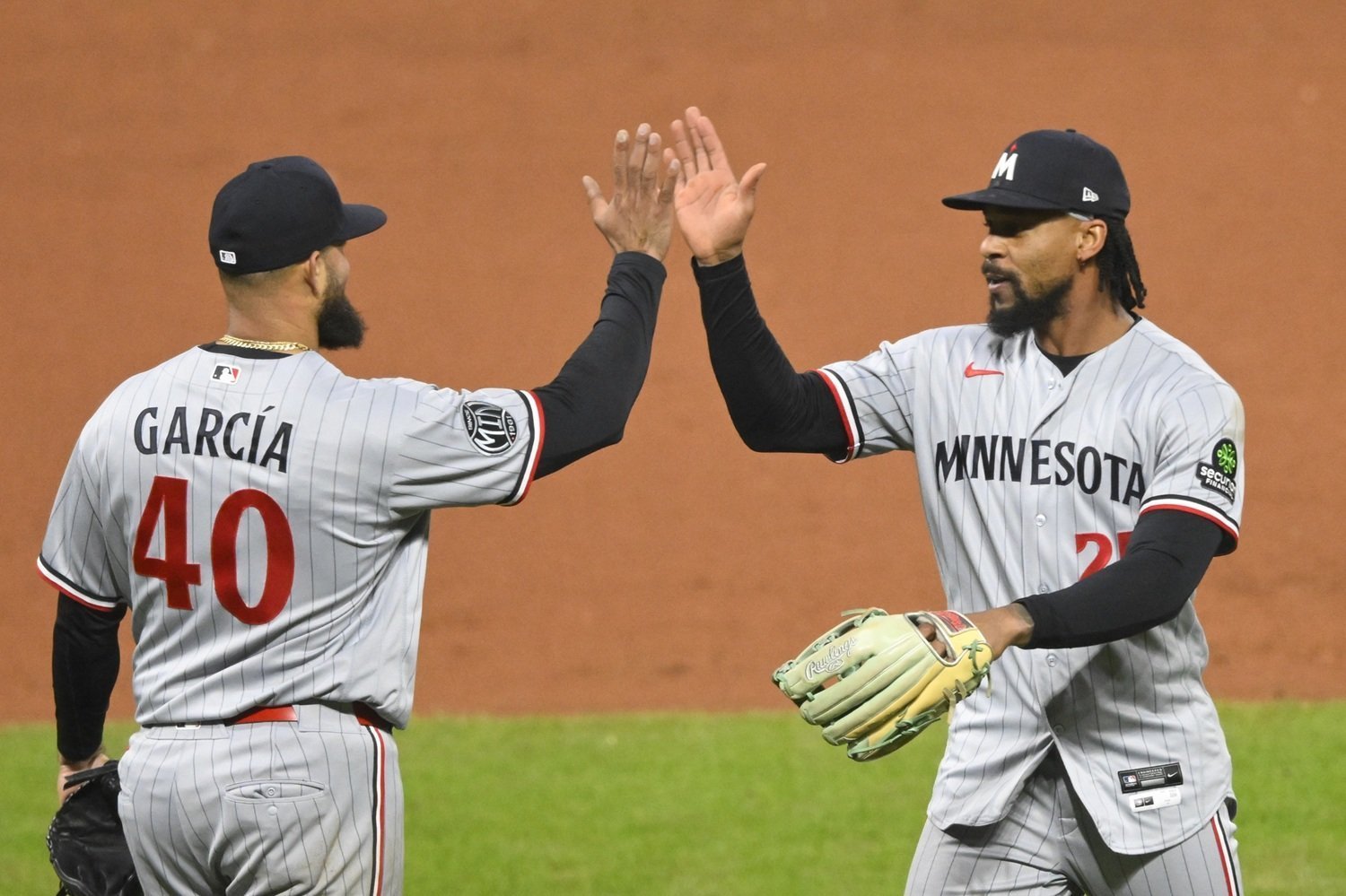 The Twins made multiple roster moves on Thursday, but one came much later than expected. Just a couple of hours before first pitch against the Marlins, Minnesota scratched center fielder Byron Buxton from the lineup because of soreness in his right hip flexor. Buxton had originally been scheduled to serve as the designated hitter and hit leadoff before the club made the late change. With Buxton unavailable, Austin Martin moved into the leadoff spot while Josh Bell stepped in as the designated hitter. Given how important Buxton has become to Minnesota’s offense over the last month, any injury concern immediately grabs attention. The timing is especially unfortunate because Buxton is in the middle of arguably the best power stretch of his career. After launching another leadoff home run on Wednesday night, he now has 15 home runs in his last 26 games dating back to April 13. No player in baseball has hit more homers during that stretch, with Buxton sitting two ahead of Kyle Schwarber. Even with a relatively quiet opening couple of weeks to the season, Buxton’s 15 home runs still rank tied for second in the American League and tied for third in all of baseball entering Thursday’s games. What has made the run even more impressive is the consistency. Since April 21, Buxton has not gone more than three games without leaving the yard. Wednesday’s blast was the 23rd leadoff homer of his career and his third already this season. The Twins have leaned heavily on his ability to create instant offense at the top of the lineup, especially with injuries and inconsistency affecting other parts of the roster. Over a larger sample, the production becomes even more eye-opening. Since May 14, 2025, Buxton has hit 41 home runs in just 128 games. Expanding the sample to his last 162 games dating back to April 1, 2025, he has clubbed 50 home runs. He is also currently on pace for 56 home runs this season, which would easily surpass his previous single-season career high of 35 set in 2025. That is superstar-level production from a player who has often battled injuries throughout his career. That is why Thursday’s scratch immediately raises concern, even if the Twins are initially calling it soreness. Minnesota has already dealt with a wave of pitching injuries this season, and the lineup looks entirely different when Buxton is unavailable. The Twins are already adjusting to life without Matt Wallner after his surprising option to Triple-A St. Paul earlier in the day. That move opened the door for Martin to take over as the club’s primary right fielder, making Buxton’s absence even more noticeable in an already reshuffled lineup. For now, the Twins will hope the move was simply precautionary and not something that lingers. Because over the last month, few players in baseball have been more dangerous than Byron Buxton. View the full article
 -
Missed By a Foot: Abner Uribe and the Fragility of Brilliance
DiamondCentric posted an article in Brewer Fanatic
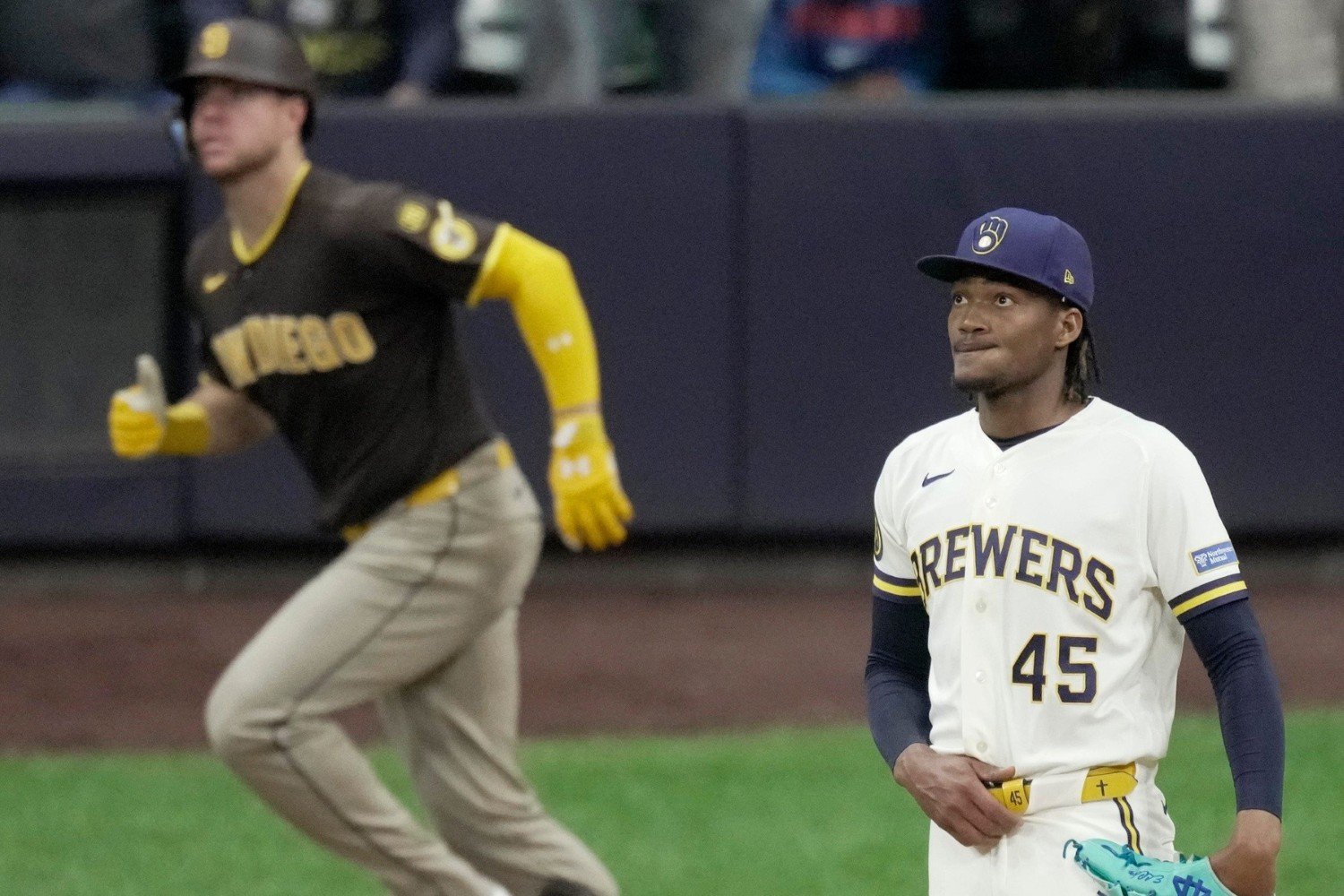 It's always jarring to realize, after all the money spent finding elite athletes and turning them into optimized baseball machines, that their excellence remains so fragile. Tiny grains of sand can interfere with the vast, otherwise beautiful construction. There is no such thing as a small mistake. That's the takeaway from the Brewers' loss Wednesday night against the Padres. An offense still trying to find its groove scored just one run, but Jacob Misiorowski and Aaron Ashby made that tally stand tall through eight frames. Abner Uribe came on to close out the win, but he simply didn't have it—and the problem all came down to a patch of dirt a few inches wide, at the front of the mound. Here's what it looks like when Uribe executes his slider exactly as he intends to. QndSNnJfWGw0TUFRPT1fVUFSVVZ3ZFNWMUFBQ2x0VVZRQUhVbE1EQUFNSEJsTUFBd0FBVVFFQVV3VldCbEJT.mp4 There's a ton of violence in Uribe's delivery, from the ground up. His arm works exceptionally quickly—he's what pitching coaches call "whippy". He gets much of the energy for that whiplike action from his long legs, though. He flies down the mound and spins off to the first-base side of it after he releases the ball; that's just how his body operates. The intensity and immensity of his limbs in motion create deception for the batter, and are part of both why his stuff is so good and why hitters struggle against it so badly. Nothing comes without costs, though. Sometimes, moving that fast means a loss of stability or consistency. In Uribe's case, that chaos can be both productive and dangerous. Here's a slight variation on the pitch above, from his appearance last night against the Padres. QndSNmRfWGw0TUFRPT1fQndSWlUxTUNWUW9BVzFjRkJBQUhVbFJlQUZsUUFsVUFDMWNEQ1FOVEExSlVCbE5m.mp4 Everything is almost the same, but Uribe lands slightly more closed with his left foot. He has to get around his front side a bit more, which flattens out the break on the pitch. He's also a hair early with his arm, which (in combination with the alteration in the landing spot) makes it easier for Xander Bogaerts to see that the ball will break out of the zone. This kind of variation from pitch to pitch is very much the norm, but its effects are no less real because everyone experiences them. Here's another pitch from last night, with a better result for Uribe. QndSNmRfWGw0TUFRPT1fVWxSWVVWSUVVZ1VBWFFOWEJ3QUhWRlFFQUFBSEJRVUFBbE1DVlZJREFRRUdDQXBW.mp4 This one is a lot like the ball thrown to Bogaerts later in the inning, in that Uribe lands almost undetectably farther toward third base than when he snaps off his very best, two-plane sliders. This time, he's on time with the arm, which creates a pitch with lots of sweep and power—but it stays up. That works in Uribe's favor, rather than against him, because he locates well and the horizontal movement takes the pitch away from Fernando Tatis Jr.'s barrel. Now, here's what trouble looks like. QndSNmRfWGw0TUFRPT1fVXdBRUFWTUFWMUVBRGxZRUJRQUhCd1pTQUFBQVYxVUFWQUFHQ0FZREFnWmNWRkZR.mp4 I bet you thought that would be Gavin Sheets's home run. We'll get there. No, this pitch worked, in that it stole a strike for Uribe to start the at-bat. But he missed his landing spot by a bit more this time, and it carried his release point rightward. He couldn't get depth on the pitch, and this time, he couldn't steer it across the plate, either. Sheets was frozen, but not for long. QndSNmRfWGw0TUFRPT1fVWdOVVZBVUFBd1FBRGdjSFZBQUhBRkpVQUZnR0JsSUFDMU5RQVZBRkFRc0dVbGND.mp4 Same mechanical mistake—a small but noticeable change in stride direction that leads to a pitch with more carry. This one turns the corner just a little, horizontally, but it runs right into Sheets's bat. He had just seen the exact same pitch. He was ready for it. Not all mistakes get punished. Not all of them even should be punished, by a smart and talented hitter. Some backup sliders are good pitches. They fool the hitter, because all that happens is that the pitcher slightly errs in the spin direction by releasing the pitch a tiny bit wrong. It's impossible to read that kind of mistake, and often, it's maddeningly hard to hit it. WU81ZzlfWGw0TUFRPT1fQmxCUlhRRUZCQW9BREZ0V0J3QUhCRmRWQUZrTkJWVUFVd0FOQWxjRkJsQlFCd05X.mp4 However, when a pitcher puts a foot wrong—when the stride is a bit off, forcing a different arm path and/or throwing off the hurler's timing—it gets easier to spot and to attack the resulting meatball. Here's where Uribe was at foot strike (the moment when the front foot first engages with the ground) on four of the pitches above. On the left, we have the best version of a Uribe slider. His stride is direct, or slightly open. His hip-shoulder separation is huge, which gives the resulting pitch speed and snap and makes the hitter instinctively gear up for a fastball. The arm is on time; that's the position you want it in. Next, we have the Bogaerts pitch, on which you can just see the front foot having landed farther to the right and the arm being slightly early in coming around. Second from right, we see the pitch with which he beat Tatis: stride a little closed, but the arm on time, creating more of a sweeper and less of a depth-oriented slider than his usual but still making it hard for the same-handed batter. Finally, at right, you see the pitch on which Sheets homered. The stride is slightly closed, but this time, the arm is also late. That results in a miss both high and arm-side, but because of the stride direction and its effects on his mechanics, it's more the former than the latter. If he'd been on time, he would have thrown a vicious pitch, perhaps down on the lower third of the outer edge for another called strike. If he'd been similarly late with the arm but strode more directly, he'd have produced a pitch that looked more like a mistake than the actual one did—but it would have been more deceptive to Sheets, who might well have whiffed on it like Jose Tena did in the final video above. Pitches spun the way Uribe's was spinning are also more prone to backspin off the bat than better-executed ones. That's why mistake breaking balls often carry so well, and why Sheets's liner managed to stay up long enough to clear the wall in right-center field. It was a confluence of things that, had any of them not been true, would have resulted in a more manageable result for the Brewers. Unfortunately, success in this game is fragile, and Uribe's almost imperceptible mistakes turned into game-altering damage on Wednesday night. View the full article
 -
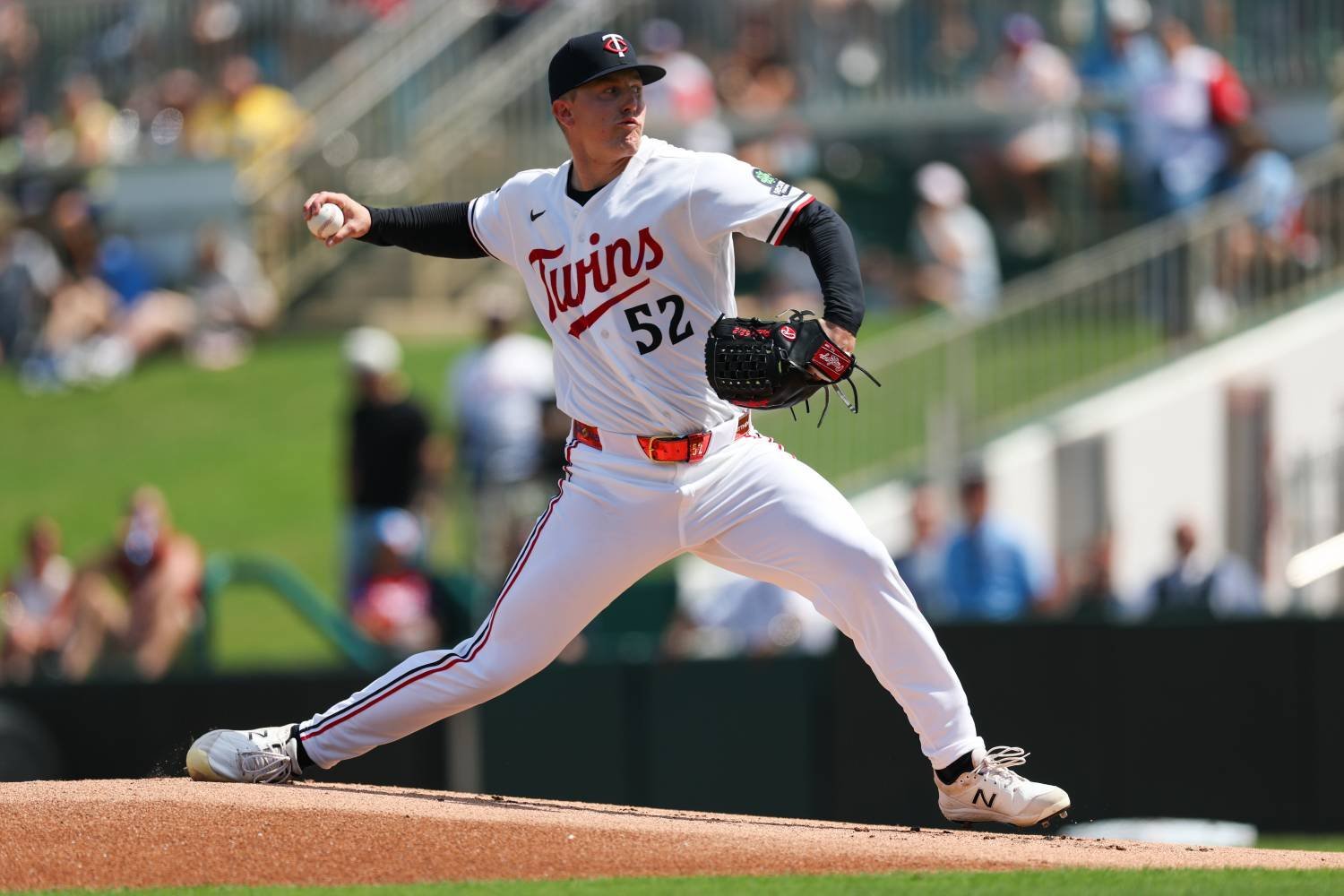 Ready or not, Zebby Matthews is set for his next opportunity at the MLB level. The right-handed starter was promoted from Triple-A St. Paul on Thursday to start the series finale against the Miami Marlins. Outfielder-infielder Ryan Kreidler was also called up from the Saints, with outfielder Matt Wallner and right-hander Travis Adams sent to Triple-A. The 25-year-old Matthews has made 25 starts over the last two years, including 16 in 2025. But Matthews has posted a 4.41 FIP, which is a stark contrast to his 5.56 ERA, during his time in the majors. His walk (6.6%) and strikeout rates (24.7%) are both a couple points above the MLB average. In seven starts at Triple-A this year, Matthews has a 4.72 ERA with 11 walks and 33 strikeouts in 34⅓ innings. But he has given up nine homers. Wallner was coming off a breakthrough 22-homer season in 2025, but was scuffling to begin 2026 with a slash line of .167/.259/.292 with two homers and 10 RBIs in 34 games. Kreidler is up for the second time this season. He went 3-for-14 in five games with two homers and four RBIs. At St. Paul, Kreidler had a .266/.389/.500 slash line with five homers, 15 RBIs and three steals. Adams made two relief appearances, giving up three runs in 3⅔ innings with two walks and five strikeouts. View the full article
 -
 Owen Hill and Jesse Burrill are back to break down another series loss against the Tampa Bay Rays, but are encouraged by their series-salvaging win powered by Daulton Varsho's walk-off grand slam. They compare the Rays to the Jays as a team and talk about Vladimir Guerrero Jr.'s career-worst slump before getting into the rest of the offense, including Yohendrick Pinango's continued hot start to his big league career. The guys touch on Kevin Gausman's lack of strikeouts and Dylan Cease's gem in the finale before previewing the upcoming series in Detroit against the Tigers. Listen on Apple Podcasts: https://podcasts.apple.com/us/podcast/the-jays-centre-podcast/id1846108462 Listen on Spotify: https://open.spotify.com/show/3Bi7SzfpcqMo5xYWnbCeoL Listen on iHeartRadio: https://www.iheart.com/podcast/263-the-jays-centre-podcast-300304824/ Listen on Pocket Casts: https://pca.st/2qk9wqxd Watch on YouTube: https://www.youtube.com/@jayscentre View the full article
 -
 Blue Jays Affiliate Overview (May 12-May 13) Triple-A Buffalo Bisons Series vs Worcester Red Sox (Boston Red Sox): 1-1: Season Record: 20-21 Double-A New Hampshire Fisher Cats Series vs Reading Fighting Phils (Philadelphia Phillies): 2-0 Season Record: 21-11 High-A Vancouver Canadians Series vs Everett AquaSox (Seattle Mariners): 1-1 Season Record: 14-21 Single-A Dunedin Blue Jays Series vs Tampa Tarpons (New York Yankees): 0-2 Season Record: 13-22 FCL Blue Jays Week Record: 1-0 Season Record: 8-0 Triple-A Buffalo Bisons Season Record: 20-21 Series vs Worcester Red Sox May 12: It was the start of a new series for Buffalo on Tuesday, but the hot bats stayed sizzling, as they jumped on the Worcester Red Sox early in the game. Ismael Munguia has been a giant bright spot for the Bisons and he kept it going on Tuesday, leading off with a single and then, a couple of batters later, he came around to score on Josh Kasevich's groundout. In the bottom of the second, two more runs would score after Worcester catcher Jason Delay had a passed ball and a throwing error on the same play. After the Red Sox cut the lead to one, Carlos Mendoza extended the lead by two with a 104.3 mph two-run home run in the bottom of the sixth. Buffalo would get some insurance runs in the seventh and eighth from RBI singles by Kasevich and Rafael Lantigua. The bullpen pitched well after relieving Austin Voth, once he completed five innings, giving up only two runs. Adam Macko had his best game, going 2.1 innings and surrendering just one walk and one hit, no runs. It would be Tanner Andrews for the ninth inning, and he was perfect, having a 1-2-3 inning and lowering his ERA to 1.65. Buffalo rolled in this one to a 7-2 win and finally reached the elusive .500 mark on the season. May 13: Well, it was a short-lived stay at the .500 mark for the Bisons, as the bats went with the weather in Buffalo. Much like the big league club, it was a singles factory on Wednesday, and Buffalo couldn't really get any runs across home plate. In the fifth inning, Jonatan Clase laced a single to right field, which would score the only runs of the game for Buffalo. The pitching wasn't great for Buffalo, but Worcester did a great job of manufacturing runs and scoring opportunities. In the first inning, Grant Rogers surrendered a run on a sacrifice fly, and then two innings later, another run on a single following a stolen base. Later in the inning, a Josh Kasevich error would allow a third run to cross home plate. In the eighth, Hayden Juenger gave up back-to-back singles before Michael Plassmeyer came into the game and hit the first batter to load the bases. From there, a passed ball by catcher Willie MacIver and another sacrifice fly would add two insurance runs for Worcester. Buffalo fell 6-2 in a lackluster game and fell back below the .500 mark. Double-A New Hampshire Season Record: 19-11 Series vs Reading Fighting Phils (Philadelphia Phillies) May 12: New Hampshire kicked off their week series with Reading on Tuesday. The Fightin Phils struck first with a home run by Bryan Rincon. In the bottom of the first, Jay Harry pinch-hit for Jace Bohrofen and crushed a two-run home run to right field. In the top of the second inning, Raylin Heredia launched a home run of his own for Reading. Patrick Winkel would have the answer for the Fisher Cats, a three-run homer to put them up two in the fourth inning of this back-and-forth contest. Kehden Hettiger homered in the sixth to bring Reading within one, but Adrian Pinto continued being an RBI machine with a bases-clearing double that brought in three runs for New Hampshire. Harry would add another RBI late for the Fisher Cats, who went on to win this one 9-5. May 13, Game 1: In the first game of the doubleheader, Richard Gallardo was on the mound for New Hampshire and continued his hot stretch. This time, he went six innings and only allowed two runs on five hits, while striking out four batters. He gave up two runs in the fourth inning on an RBI double and an RBI single. The Fisher Cats quickly answered, though, when Victor Arias crushed his second home run at Double A this season. In the sixth, Jay Harry tripled in a run, and Jackson Hornung had an RBI single for New Hampshire to take the lead. Yondrei Rojas came on for the seventh and got the last three outs for the save and the Fisher Cats victory, 3-2. Game 2: Postponed High-A Vancouver Season Record: 14-21 Series vs Everett AquaSox (Seattle Mariners) May 12: Danny Thompson Jr. has started to be figured out by Northwest League hitters, as this was his third start giving up two or more runs, and he lost his control, giving up four walks in 3.1 innings. This gave the AquaSox an early four-run lead as they were able to take advantage of the baserunners with extra-base hits. The Canadians clawed their way back, as Jacob Sharp got them on the board with his second homer of the season, and Kendry Chirinos brought the lead within two on an RBI double that same inning. The score didn’t change until the bottom of the seventh inning, when Dub Gleed and Maddox Latta both got on base, and Peyton Williams drove them both in on a two-RBI double to even it up. A throwing error from Luis Suisbel allowed Williams to score, and Vancouver finally had the lead. The Canadians kept the lead with good innings from Kelena Sauer and Jay Schueler, but in the bottom of the ninth, Schueler allowed a game-tying homer, which sent the game to extras. Trace Baker struck out two batters without allowing a baserunner in the 10th, and Jacob Sharp walked it off with a single for Vancouver. May 13: The second game of the series was a little anticlimactic, as the Canadians could not string together any hits, with only two on the night. It spoiled Johnny King’s best start as a professional, where he went five shutout innings, allowing only one walk and three hits while striking out eight batters, lowering his season ERA to just 0.81. Holden Wilkerson didn’t have his best appearance, going four innings and allowing three runs, but even if he was near perfect, it wouldn’t have mattered as there were only three baserunners all game for the Canadians in a quick 3-0 loss. Single-A Dunedin Season Record: 13-22 Series vs Tampa Tarpons (New York Yankees) May 12: The Dunedin Blue Jays fought the Yankees' affiliate for the first time this season, and despite a run scoring in the first inning on a groundout, the score remained close thanks to strong pitching from Brayden Heidel and new signee Jack Nedrow, who pitched four scoreless innings with six Ks in his professional debut. JoJo Parker was also able to even it up in the fourth with an absolutely crushed homer to centerfield at 109 mph that went 406 feet. The game remained tied heading into the ninth inning, but Lluveres Severino faced trouble and loaded the bases with two outs. He gave up a single to Jackson Lovich that Juan Sanchez wasn’t able to get a glove on, leading to a walkoff win for the Tarpons. May 13: Jake Cook was called up from the FCL and led off, playing center field. Brandon Barriera took the mound and was effective, allowing only one unearned run, but he had to be removed due to what looked like an oblique injury in the third inning. Diego Dominguez was sent in to replace him and immediately gave up a homer to put the Jays down two. The Jays had a big fourth inning, as after a Blaine Bullard double and a JoJo Parker walk, Juan Sanchez took the lead with his second homer of the season, an oppo shot 96.6 mph off the bat. Edward Duran started his rehab assignment and hit a single, then David Beckles hit a single, before Cook had his first hit as a D-Jay for a 2-RBI double to make it 5-2. Dominguez allowed another run, so he was replaced by Franly Urena, who didn’t allow a run despite four walks in 1.2 innings. Ramon Suarez blew the save after a fielding error from Sanchez, as Suarez couldn’t recover, giving up two home runs and a triple to put the Jays behind by two. The offense couldn't get a run in even after loading the bases in the seventh inning, leading to the second loss of the series. https://x.com/DunedinBlueJays/status/2054687327176298963?s=20 FCL Blue Jays Season Record: 8-0 May 12: The FCL Blue Jays took on the FCL Phillies on Tuesday, and Jake Bloss was on the mound for a rehab start. Bloss looked pretty good for his first rehab start, going 2.1 innings and striking out four, while giving up two hits and no runs. He mixed his pitches well and had his fastball working north of 95 mph most of the time. Carson Messina came on after him and was looking equally good. He sat mostly 93-95 mph on the fastball but frequently ran it up to 97 and 98 mph. He had a big curveball that was really good, which he dropped in there for two of his three strikeouts. He lost his command in his third inning and left the bases loaded. Those three runs would come in to score after he was pulled. On the offensive side, the FCL Blue Jays were hitting everything or getting on base via walk. They punched 15 hits and took 10 walks on their way to a 12-5 victory. Tim Piasentin had two hits and three walks, while Franklin Rojas went 5-for-6 with five RBIs. Transactions 05/13/26 Vancouver Canadians sent C Edward Duran on a rehab assignment to Dunedin Blue Jays. 05/13/26 OF Jake Cook assigned to Dunedin Blue Jays from FCL Blue Jays. 05/12/26 Buffalo Bisons sent RHP Jake Bloss on a rehab assignment to FCL Blue Jays. 05/12/26 Buffalo Bisons activated RF Je'Von Ward from the Development List. 05/12/26 C Adam Hackenberg assigned to Dunedin Blue Jays from Buffalo Bisons. 05/12/26 RHP Josbel Garcia assigned to Dunedin Blue Jays from FCL Blue Jays. View the full article
 -
 Boston Red Sox Affiliate Recap (May 13) Triple-A Worcester Red Sox The WooSox jumped on top early and never let the lead go, defeating the Buffalo Bisons (Toronto Blue Jays) 6-2. In the first inning, Nick Sogard led the game off with a single and came around to score on a Nate Eaton sacrifice fly, giving the WooSox a 1–0 lead. The third inning blew the game open for Worcester. Braiden Ward worked a walk, then immediately stole his 20th bag of the season and scored on a Vinny Capra line-drive single to left. Eaton ripped a ground ball to Buffalo’s shortstop, drawing a fielding error that let Capra score. Jason Delay capped the rally with an RBI single to center, hitting in Mikey Romero and making it 4–0. Worcester tacked on two insurance runs in the eighth on a passed ball by the Bisons catcher to make it 5-2, then a Ward sacrifice fly made it 6–2 and put the game well out of reach. Worcester's pitching staff was dominant. Six pitchers combined to hold Buffalo to just two runs while racking up 12 strikeouts. Devin Sweet started on the mound and threw two perfect innings. Eduardo Rivera picked up the win, tossing two scoreless innings with three strikeouts. The middle relief was outstanding as well. Tommy Kahnle, Wyatt Olds, and Angel Bastardo combined for four innings of shutout ball, surrendering just one hit total. Bastardo was particularly sharp with three strikeouts and no hits allowed in two spotless innings. The standout hitters for the WooSox were Sogard and Delay, who each racked up two-hit games, while Capra, Romero, and Eaton all reached base multiple times as well. Double-A Portland Sea Dogs Finding themselves down three runs in the seventh, the Sea Dogs rallied and came back to win it 9-6 against the Hartford Yard Goats (Colorado Rockies). Portland came out aggressively in the first inning, Franklin Arias and Nate Baez both drew walks, and Marvin Alcantara singled to load the bases. Miguel Bleis poked a grounder into left to score Arias, but Baez was gunned down at home. It still gave the Sea Dogs an early 1-0 lead. In the second, Tyler McDonough roped a leadoff double, and Max Ferguson laid down a bunt single; the Hartford pitchers' throw went wide, allowing McDonough to race home and put Portland back on top 2-1. The Yard Goats crushed a two-run homer in the bottom half, flipping the lead to 3-2 Hartford. Baez led off with a double in the third, Bleis followed up and continued his hot hitting streak with a line-drive single to center, driving in Baez to knot the score at 3-3. The fifth inning got out of hand for Gage Ziehl, who got roughed up in his five innings of work. Ziehl gave up two singles right away and gave up another single with one out; this time, it scored a run. With two outs, two runners on, and hopes of getting out of the inning with a one-run deficit, the Yard Goats cleared the bases with a two-run triple that gave them a comfortable 6-3 lead over Portland. Brooks Brannon, who is coming off the Eastern League Player of the Week, continues to hammer the ball, launching a solo homer to left-center in the seventh inning, his sixth of the season and fourth in his last four games. It cut the deficit to 6-4 and shifted the energy. The eighth inning is where the Portland bats exploded. Bleis drew a lead-off walk, and McDonough instantly crushed a two-run homer to left-center, tying it 6-6. Nelly Taylor kept the line moving with a double, Ferguson came up to the plate and belted a two-run homer, the second two-run homer in the inning, without recording an out as Portland leads 8-6. Arias walks, and Hartford changes pitchers. Arias stole second base right away and reached third due to a throwing error. Baez blooped a double to shallow right, scoring Arias. That would be the end of Portland's five-run eighth inning, making the score 9-6 and putting the game out of reach for the Yard Goats. Cade Feeney, who entered in the eighth and retired the side in order, came back out and did it again in the ninth: Six up and six down across two innings, earning his first save of the season. Although Ziehl had a rough outing, the bullpen behind him stepped up and kept Portland in the game until the end. Patrick Halligan was first out of the bullpen, throwing two hitless innings in the sixth and seventh. Feeney came in for the last two innings and shut the door. Key Performances: Tyler McDonough: 2-for-5, HR, 2 R, 2 RBI Miguel Bleis: 2-for-4, R, 2 RBI, BB Brooks Brannon: HR, R, RBI Nate Baez: 2-for-4, 2 2B, R, RBI, BB High-A Greenville Drive It was a rough night for Greenville, finding trouble hitting in runs with runners on base in their 10-4 loss to the Bowling Green Hot Rods (Tampa Bay Rays). Bowling Green scratched across a run in the second with an RBI single, then launched a solo homer in the third to make it 2-0. The Drive went quietly through the first three innings. The Drive’s bullpen struggled all game, especially in the fourth inning. The Hot Rods roped an RBI single then blasted a three-run homer, putting Greenville in a hole 6-0. Greenville showed signs of life. Freili Encarnacion drove in the first run with an RBI double in the fourth. In the 6th, Jack Winnay blasted a solo homer to left-center. A few batters later, Natanael Yuten brought in another run with an RBI single to pull it to 7-3. There were some bright spots for Greenville. Justin Gonzales, Henry Godbout, and Mason White all had multi-hit games. Key Performances: Justin Gonzales: 2-for-5 Henry Godbout: 2-for-5, SB Mason White: 2-for-4, 3B, R Jack Winnay: HR, 2 R, RBI, BB Single-A Salem RidgeYaks The RidgeYaks defeat the Fredericksburg Nationals (Washington Nationals) 3-1 in a very uneventful game for Salem up until the eighth inning. 19-year-old Red Sox top prospect Enddy Azocar could be seeing a promotion to Double-A soon, collecting another multi-hit game while slashing .273/.322/.485 with five homers in the season. Salem trailed 1-0 for most of the game, but the eighth inning changed everything. Andruw Musett got hit by a pitch to lead off the inning, and suddenly the floodgates opened. Starlyn Nunez singled, Azocar ripped an RBI single to tie it at 1-1, he ended up getting picked off, but Andrews Opata drew a walk then got to second base on a wild pitch to put runners on second and third. Luke Heyman followed and delivered the dagger, a two-run double to center that scored Nunez and Opata, putting Salem up 3-1. Nicolas De La Cruz shut it down, striking out four over 2 ⅔ innings of relief, closing it out in the ninth to earn the win. The RidgeYaks’ pitching staff was outstanding. Christian Foutch gutted through a tough 2 ⅔ inning start; he walked five batters and gave up the lone run in the third, but he limited the damage and kept it at 1-0. Ethan Walker came in after and delivered 1 ⅔ scoreless innings to stabilize the game. Harry Blum was dominant with four strikeouts over two clean innings. Key Performances: Enddy Azocar: 2-for-4, RBI Luke Heyman: 2B, 2 RBI View the full article
 -
 Chicago Cubs Transactions No Roster Moves Alcántara's Solo Shot The Lone Run In Iowa's Loss At Nashville The Iowa Cubs fell 4-1 at Nashville. The Cubs' only run came on a solo home run from cleanup hitter Kevin Alcántara in the top of the second inning, his 14th of the season. The lead lasted until the bottom of the third, when the Sounds answered with a solo home run to tie the game. Connor Noland (L, 2-3) started and allowed three runs on six hits over five innings, walking two and striking out two. The fifth inning broke the tie. After a leadoff lineout to Alcántara in left, Noland gave up a single to center, a walk, and a hit by pitch to load the bases. A force out scored the go-ahead run, and a single to center brought home another to make it 3-1. Tyler Ferguson and Gavin Hollowell each threw a scoreless inning out of the bullpen. Collin Snider gave up a single and a triple in the eighth, allowing one run. Jonathon Long led the offense by going 2-for-3 with a double and a walk. Christian Bethancourt, Scott Kingery, and Brett Bateman each added a single. Iowa stranded eight. Player AB R H RBI BB K James Triantos 3 0 0 0 1 2 Pedro Ramírez 3 0 0 0 0 1 BJ Murray 4 0 0 0 0 2 Kevin Alcántara 4 1 1 1 0 0 Jonathon Long 3 0 2 0 1 0 Chas McCormick 4 0 0 0 0 2 Christian Bethancourt 4 0 1 0 0 0 Ben Cowles 2 0 0 0 0 1 Scott Kingery 2 0 1 0 0 0 Brett Bateman 4 0 1 0 0 2 Player IP H R ER BB K HR Connor Noland (L, 2-3) 5 6 3 3 2 2 1 Tyler Ferguson 1 0 0 0 1 0 0 Gavin Hollowell 1 1 0 0 0 1 0 Collin Snider 1 2 1 1 0 2 0 Smokies Drop High-Scoring Affair To Columbus The Knoxville Smokies dropped a 9-5 decision at Columbus. Karson Simas opened the game with a leadoff double, advanced on a fly out, and scored on an RBI double from Alex Ramírez to give the Smokies a 1-0 lead. Columbus answered with three runs in the home half against Grant Kipp on a triple, a fielder's choice, and a double. Knoxville tied the score in the third. Simas doubled again to lead off, and after a fly out and a strikeout, Andy Garriola lined a double to right that scored Simas. Ramírez followed with an RBI single to make it 3-3. Columbus pulled ahead 6-3 with a sacrifice fly in the fourth and a two-run home run in the fifth. The Smokies got two back in the sixth. Carter Trice led off with his fourth home run, and Simas later added an RBI double that scored Ariel Armas. Columbus put the game away with three runs in the eighth. Grant Kipp (L, 2-3) took the loss after allowing six runs on seven hits over 4 2/3 innings, walking two and striking out five. Tyler Santana followed with 2 2/3 innings, allowing one run on four hits with one walk and six strikeouts. Jackson Kirkpatrick walked two and gave up the decisive hit in the eighth. Simas finished 2-for-4 with two doubles, a walk, two runs scored, and an RBI. Ramírez added two hits and two RBI. Garriola reached three times on a double and two walks. The Smokies stranded eight. Player AB R H RBI BB K Karson Simas 4 2 2 1 1 0 Jefferson Rojas 5 0 0 0 0 0 Owen Ayers 4 0 1 0 1 3 Andy Garriola 2 1 1 1 2 0 Hayden Cantrelle 1 0 0 0 0 1 Alex Ramírez 4 0 2 2 0 0 Jordan Nwogu 4 0 1 0 0 2 Carter Trice 4 1 1 1 0 0 Edgar Alvarez 3 0 0 0 0 2 Ariel Armas 4 1 1 0 0 2 Player IP H R ER BB K HR Grant Kipp (L, 2-3) 4 2/3 7 6 6 2 5 1 Tyler Santana 2 2/3 4 1 1 1 6 0 Jackson Kirkpatrick 2/3 1 2 2 2 1 0 Cubs Plate Three Early But Wisconsin Roars Back Past South Bend The South Bend Cubs jumped out to a 3-0 lead in the top of the first inning, but the Wisconsin Timber Rattlers answered with five runs in the bottom of the second to take control of an eventual 11-6 win. The Cubs' opening rally produced RBIs from Ty Southisene on a double and Drew Bowser on a single, with another run scoring on a Leonel Espinoza double play. Eli Jerzembeck (L, 0-1) lasted only 1 2/3 innings, allowing six earned runs on seven hits while walking two and striking out two. Jackson Brockett relieved with 3 1/3 innings, giving up one run on four hits and one walk. Alfredo Romero followed with three innings, surrendering four runs on three hits and five walks, including a three-run home run in the bottom of the eighth that pushed Wisconsin's lead to five. South Bend kept chipping. Southisene added an RBI single in the second and another in the fifth to finish 3-for-5 with three RBI, two stolen bases, and a double. Leadoff hitter Kane Kepley reached four times, drawing three walks, scoring twice, and stealing three bases. Christian Olivo grounded out for an RBI in the third. Drew Bowser and Leonel Espinoza each added a hit. The Cubs stranded 12 runners and committed two errors. Player AB R H RBI BB K Kane Kepley 2 2 1 0 3 0 Ty Southisene 5 1 3 3 0 0 Cameron Sisneros 4 1 0 0 1 3 Kade Snell 4 0 1 0 1 2 Leonel Espinoza 4 1 1 0 0 0 Drew Bowser 5 0 1 1 0 3 Alex Madera 3 0 1 0 2 0 Miguel Useche 3 0 0 0 1 0 Christian Olivo 4 1 0 1 1 2 Player IP H R ER BB K HR Eli Jerzembeck (L, 0-1) 1 2/3 7 6 6 2 2 0 Jackson Brockett 3 1/3 4 1 1 1 1 0 Alfredo Romero 3 3 4 4 5 2 1 Pelicans Pitching Strikes Out 15 In Loss To Augusta The Myrtle Beach Pelicans collected only two hits in a 3-1 home loss to the Augusta GreenJackets. Augusta took a 2-0 lead in the top of the second inning on an RBI single and a bases-loaded walk against starter Pierce Coppola, and a solo home run in the seventh provided the eventual winning margin against Mason McGwire. Coppola (L, 0-1) was charged with the loss after allowing two runs on four hits over 3 2/3 innings, walking two and striking out six on 72 pitches. McGwire followed with 4 1/3 innings, striking out eight without issuing a walk while allowing just the solo home run. Edwardo Melendez closed out the game with a scoreless ninth. The Pelicans' lone run came in the bottom of the sixth. Leadoff hitter Alexis Hernandez reached on an error, stole second base, and came home on an RBI single by Michael Carico. Carico finished 1-for-4 with the team's lone RBI, and Jose Escobar accounted for the only other hit. Josiah Hartshorn drew two walks, while Eli Lovich, Logan Poteet, and Hartshorn collectively reached five times on free passes. Myrtle Beach stranded six. Player AB R H RBI BB K Alexis Hernandez 4 1 0 0 0 1 Josiah Hartshorn 2 0 0 0 2 1 Michael Carico 4 0 1 1 0 3 Logan Poteet 3 0 0 0 1 3 Jose Escobar 4 0 1 0 0 0 Eli Lovich 3 0 0 0 1 2 Derniche Valdez 4 0 0 0 0 0 Geuri Lubo 3 0 0 0 0 1 Darlyn De Leon 3 0 0 0 0 2 Player IP H R ER BB K HR Pierce Coppola (L, 0-1) 3 2/3 4 2 2 2 6 0 Mason McGwire 4 1/3 3 1 1 0 8 1 Edwardo Melendez 1 2 0 0 0 1 0 Top-20 Prospect Performance Moises Ballesteros: DNP Jaxon Wiggins: DNP Jefferson Rojas: 0-for-5 Kevin Alcántara: 1-for-4, HR, RBI, R Jonathon Long: 2-for-3, 2B, BB Ethan Conrad: DNP Pedro Ramírez: 0-for-3, K Kane Kepley: 1-for-2, 2 R, 3 BB, 3 SB Josiah Hartshorn: 0-for-2, 2 BB, K James Triantos: 0-for-3, BB, 2 K Brandon Birdsell: DNP Cole Mathis: DNP Angel Cepeda: DNP Kaleb Wing: DNP Will Sanders: DNP Juan Cabada: DNP Jostin Florentino: DNP Dominick Reid: DNP Ty Southisene: 3-for-5, 2B, 3 RBI, 2 SB Erian Rodriguez: DNP View the full article
 -
Ryan Jeffers Has Quietly Become One Of Baseball's Best Catchers
DiamondCentric posted an article in Twins Daily
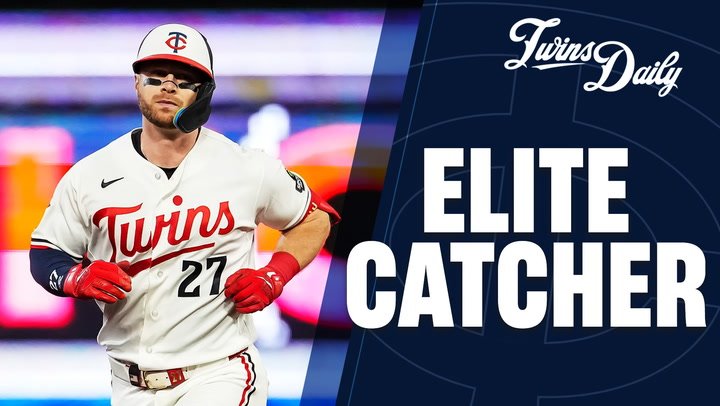 Ryan Jeffers has been phenomenal to start the season, emerging as one of the best all-around catchers in baseball. Right now, he looks every bit like a truly elite backstop. View the full article
 -
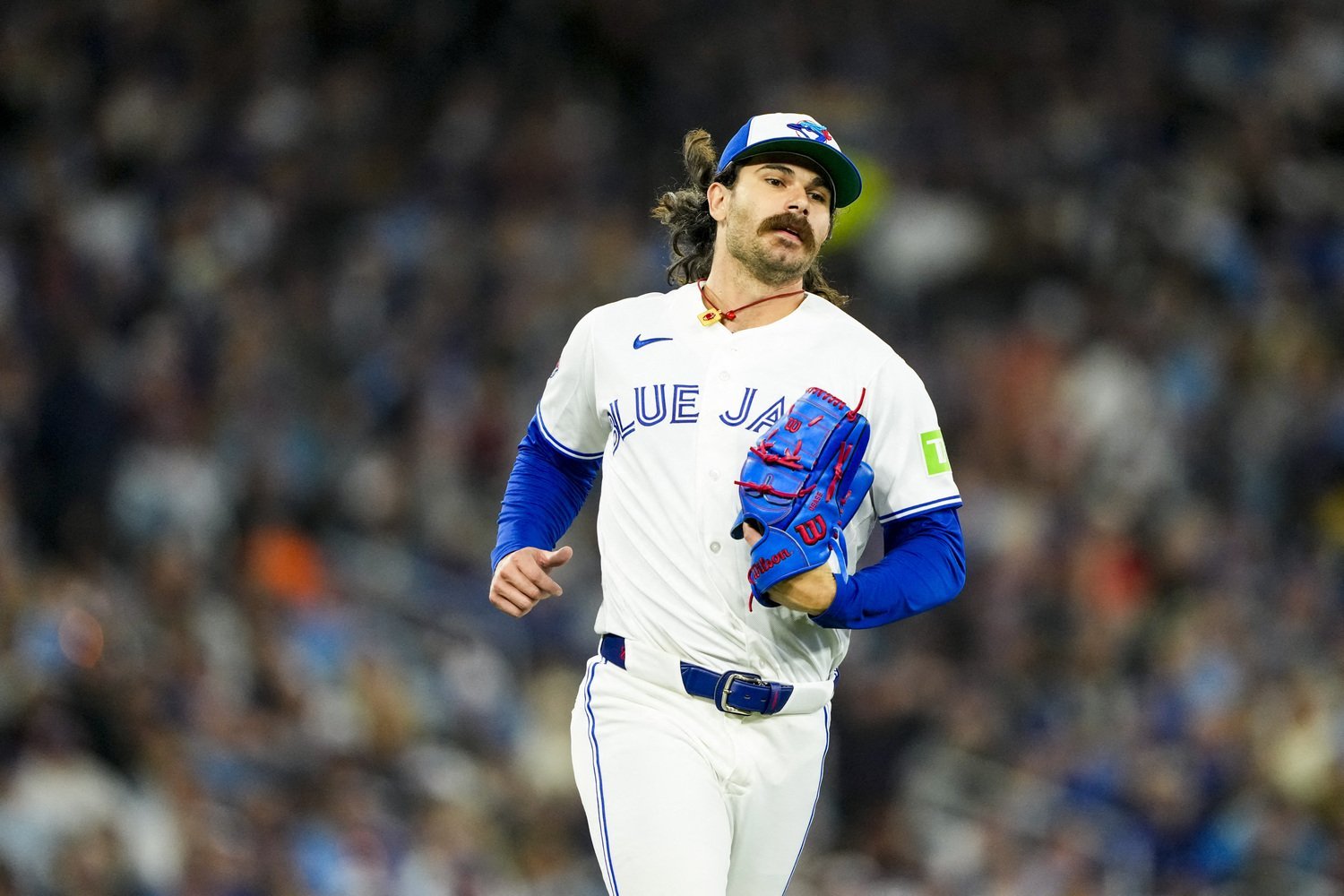 Earlier this week, Jays Centre's Owen Hill wrote about the Blue Jays' defense. He pointed out that the Jays are one of the best teams in the league according to Baseball Savant's Fielding Run Value (FRV), despite ranking as one of the worst in errors and fielding percentage. After reading Owen's article, I went down a bit of a rabbit hole. I was watching clips of all the errors the Blue Jays have made this season when it occurred to me how many of them were on the pitchers. Toronto has made 27 errors in 2026, the fifth-most in MLB. Of those 27 errors, nine belong to the arms. My gut reaction? That's a lot of pitcher errors. My gut was right. Pitchers aren't usually the best fielders. That's not a dig. They just have other priorities. What's more, by nature of where they stand on the field, the batted balls they have to work with are often moving very slowly or very fast. In either case, those can be tough to deal with. However, pitchers are limited in the number of errors they can make because they don't handle the ball all that much. They make errors at a higher rate than players at any other position, but even so, they're typically only responsible for 12-13% of errors league-wide. That's why I was surprised that pitchers have made one-third of the Blue Jays' errors in 2026. This year's pitching staff has already compiled more errors than the team's pitchers have in 13 separate seasons of Blue Jays history. Three of those were shortened seasons (1981, 1994, and 2020), but the other 10 were full 162-game (or even 163-game) campaigns. In 1988 and again in '92, Toronto's pitchers made a full-season franchise-record-low five errors; this year, they passed that total 11 games into the schedule. As a more recent comparison, the 2022 and '23 staffs only made six errors each year. That's an average of one per month. This year's pitchers already had eight errors by the end of April. Looking around the league, there are almost always a handful of pitching staffs that don't top nine errors all year. The last time that every single team's pitchers made more than nine errors was in 1974, before the Blue Jays even existed. Let that sink in. It's not unusual for a team's pitchers to make nine or fewer errors all season. The Jays' arms have already hit that mark by mid-May. For more historical context, the Blue Jays' pitchers are on pace for 34 errors this season. That would surpass the franchise record, held by the inaugural 1977 team; their pitchers made 30 errors. In fact, it would be the highest number of errors by any pitching staff in the live ball era; the record (33) currently belongs to the pitchers of the 1976 San Francisco Giants. So, at the rate they're mishandling the ball, Toronto's pitchers have a chance to break records that have stood for 50 years. But that might be underselling it. You see, errors are less frequent than they used to be. As Owen mentioned in his piece, MLB's official scorers have been getting more lenient in recent years, classifying fewer and fewer plays as errors. The league's .986 fielding percentage in 2026 is the highest it's been at any point in major league history. We're on pace to see 2,370 errors by the end of this season. In contrast, MLB fielders made 3,458 errors in 1976 – when there were only 24 teams. Fifty years ago, teams averaged almost an error per game. In 2026, it's more like one every other game. The rate has nearly been cut in half. Here's another way to think about it. The Blue Jays' pitchers are on pace to make 34 errors this year, and their nine errors account for just under 1.5% of all errors in MLB. However, if they were making errors at the same rate compared to league average in 1976, they would be on pace for 50. Fifty! If their current pace holds – which, to be clear, is unlikely, but we're having fun here – the Blue Jays would also set a record for the highest "pitcher error-to-position player error ratio" in major league history. One in three of Toronto's errors this year was committed by a pitcher. Right now, the full-season record belongs to the 2024 New York Mets, whose pitchers were responsible for about one in four of the team's errors (23 out of 94). And in case you're interested, the record in the opposite direction belongs to the 2021 Washington Nationals. The team made 96 errors that year (third-most in the NL), but only one of those errors was by a pitcher. It bears repeating that I don't actually expect the Blue Jays' pitchers – or the rest of their fielders – to maintain their current error pace. Errors are always unpredictable, and a quarter of a season is a tiny sample. I'm only bringing up full-season paces and historical records to contextualize how unusual it is that we've already seen so many pitcher errors at this early point in the year. Indeed, the real story here is the high number of errors the Blue Jays' pitchers have made to this point in the year. So, please check back tomorrow morning, because I'm putting together a piece where you can watch all of those misplays in all of their glory. View the full article
 -
 The Binghamton Rumble Ponies were the lone Mets affiliate to win, edging Somerset 5-4 behind home runs from Jose Ramos and Nick Lorusso, while Bryce Conley earned the win across five innings. Syracuse was shut out 7-0 by Scranton/Wilkes-Barre, with Dylan Ross and Ryan Lambert contributing scoreless relief. Brooklyn dropped a 4-3 decision at Rome despite Mitch Voit's solo homer and Jonathan Jimenez's five scoreless. St. Lucie was swept by Jupiter. Mets Transactions New York Mets placed C Francisco Alvarez on the 10-day injured list. Right meniscus tear. New York Mets recalled C Hayden Senger from Syracuse Mets. Mets Bats Held To Two Hits In Scranton Shutout The Syracuse Mets managed just two hits and struck out 15 times in a 7-0 loss to the Scranton/Wilkes-Barre RailRiders. Jihwan Bae singled and walked, and cleanup hitter Christian Arroyo added the team's other hit. Ryan Clifford and Cristian Pache each struck out three times. Starter Jack Weisenburger took the loss, going 3 2/3 innings while allowing eight hits and seven runs, six earned, with two strikeouts and no walks. He surrendered one home run. The damage came in the bottom of the fourth. The RailRiders opened the inning with three straight singles to load the bases. A two-run single to center pushed the score to 3-0, and after a fielder's choice that included a Weisenburger throwing error reloaded the bases, a grand slam to left center capped the six-run rally at 7-0. The RailRiders had opened the scoring in the first when a runner doubled, advanced no further on a flyout, and came home on an RBI single. The Syracuse bullpen kept the game from getting further out of hand. Jonathan Pintaro, Joey Gerber, Dylan Ross, and Ryan Lambert combined for 4 1/3 scoreless innings, allowing two hits and two walks while striking out three. Syracuse left three runners on base and committed two errors. Player AB R H RBI BB K Nick Morabito (CF) 4 0 0 0 0 2 Ji Hwan Bae (DH) 3 0 1 0 1 1 Ryan Clifford (LF) 4 0 0 0 0 3 Christian Arroyo (3B) 3 0 1 0 0 1 Eric Wagaman (1B) 3 0 0 0 0 2 Yonny Hernandez (2B) 3 0 0 0 0 0 Cristian Pache (RF) 3 0 0 0 0 3 Ben Rortvedt (C) 3 0 0 0 0 2 Jackson Cluff (SS) 3 0 0 0 0 1 Player IP H R ER BB K HR Jack Weisenburger 3 2/3 8 7 6 0 2 1 Jonathan Pintaro 1 1/3 1 0 0 0 1 0 Joey Gerber 1 0 0 0 0 0 0 Dylan Ross 1 0 0 0 1 1 0 Ryan Lambert 1 1 0 0 1 1 0 Ramos And Lorusso Power Binghamton Past Somerset The Binghamton Rumble Ponies edged the Somerset Patriots 5-4 on the strength of two long balls. Jose Ramos hit a three-run homer in the third, his fifth of the year, and Nick Lorusso added a go-ahead solo shot in the sixth, his third. Leadoff hitter Eli Serrano III went 2-for-4 with a walk and two stolen bases. Jacob Reimer added two hits, a walk, a stolen base, and two runs scored. Cleanup hitter Kevin Parada doubled in a first-inning run, and JT Schwartz added a double of his own. Starter Bryce Conley earned the win, going five innings while allowing five hits, four runs, four earned, with four strikeouts, two walks, and one home run allowed. Binghamton struck first in the top of the first. Reimer walked, stole second, and scored on Parada's double to right. The Rumble Ponies pulled away in the third when Serrano walked, Reimer singled, and Ramos followed with his three-run homer to center, pushing the lead to 4-1. After Somerset rallied for three runs in the fifth to tie it at 4-4, Lorusso led off the sixth with his solo homer to left center to take the lead back. From there, Ben Simon worked two scoreless frames, Matt Turner struck out the side in the eighth, and Brian Metoyer recorded the save with one inning of work in the ninth. Binghamton left six runners on base. Player AB R H RBI BB K Eli Serrano III (DH) 4 1 2 0 1 0 Jacob Reimer (3B) 4 2 2 0 1 1 Jose Ramos (CF) 4 1 1 3 0 2 Kevin Parada (C) 4 0 1 1 0 2 Nick Lorusso (1B) 4 1 1 1 0 1 TT Bowens (RF) 4 0 0 0 0 3 JT Schwartz (LF) 4 0 1 0 0 2 Wyatt Young (SS) 4 0 0 0 0 0 Diego Mosquera (2B) 4 0 1 0 0 2 Player IP H R ER BB K HR Bryce Conley 5 5 4 4 2 4 1 Ben Simon 2 1 0 0 1 1 0 Matt Turner 1 0 0 0 0 3 0 Brian Metoyer 1 1 0 0 1 0 0 Voit Homer Not Enough As Brooklyn Falls In Rome The Brooklyn Cyclones fell 4-3 to the Rome Emperors, dropping a game in which their starter could not escape the first inning. Leadoff hitter Mitch Voit went 1-for-3 with a solo home run, a sacrifice fly, and two runs batted in. Sam Biller had a run-scoring single, and Trace Willhoite singled and scored. Brooklyn struck out 16 times as a team, including four times by John Bay and three by Colin Houck. Starter Cristofer Gomez took the loss, lasting just two-thirds of an inning while allowing three hits, four runs, four earned, with one walk and no strikeouts. Jonathan Jimenez followed with five scoreless innings of relief, scattering five hits and four walks while striking out two. The bottom of the first ended the game before it really began. Rome strung together a leadoff single, a run-scoring double, a sacrifice fly, and another double for three runs against Gomez. Jimenez took over with two outs and a runner on, then issued a walk and surrendered a run-scoring single that pushed the score to 4-0. Brooklyn answered with two in the third on Biller's RBI single and Voit's sacrifice fly to left, then trimmed it to one in the fifth when Voit homered to left, but the Cyclones could get no closer. Dakota Hawkins, Parker Carlson, and Garrett Stratton each tossed scoreless relief innings to keep it within reach. Brooklyn left three runners on base. Player AB R H RBI BB K Mitch Voit (SS) 3 1 1 2 0 1 John Bay (CF) 4 0 0 0 0 4 Ronald Hernandez (C) 3 0 0 0 1 1 Corey Collins (LF) 3 0 0 0 1 2 Daiverson Gutierrez (DH) 4 0 0 0 0 1 Colin Houck (2B) 4 0 0 0 0 3 Trace Willhoite (1B) 3 1 1 0 0 2 Nick Roselli (3B) 2 1 0 0 1 1 Sam Biller (RF) 3 0 1 1 0 1 Player IP H R ER BB K HR Cristofer Gomez 2/3 3 4 4 1 0 0 Jonathan Jimenez 5 5 0 0 4 2 0 Dakota Hawkins 1/3 0 0 0 0 0 0 Parker Carlson 1 1 0 0 0 1 0 Garrett Stratton 1 0 0 0 1 2 0 Zayas Homer Cannot Lift St. Lucie In Game One Loss The St. Lucie Mets dropped the opener of a doubleheader to the Jupiter Hammerheads 5-2. Leadoff hitter Elian Pena went 1-for-3 with a walk, a run-scoring single, and two stolen bases. Julio Zayas tied the game with a solo home run in the fourth, his first of the year. Randy Guzman, AJ Salgado, Chase Meggers, and Sam Robertson each added one hit. JT Benson walked and stole a base. Starter Conner Ware lasted four innings, allowing five hits and two runs, both earned, with five strikeouts, two walks, and two home runs surrendered. Adbert Alzolay took the loss in one inning of work, giving up three hits and two runs, both earned, with a strikeout and a home run allowed. Christian Rodriguez followed with two innings, two hits, one earned run, and two strikeouts. The Mets tied the game at 2-2 across the third and fourth. Kevin Villavicencio reached on an error, advanced, and scored on Pena's single to right. An inning later, Zayas drove a ball to left center for his solo homer. The Hammerheads regained control in the fifth, when a two-run homer off Alzolay made it 4-2, and Jupiter tacked on a fifth run in the sixth on a bases-loaded walk off Rodriguez. Player AB R H RBI BB K Elian Pena (SS) 3 0 1 1 1 1 JT Benson (LF) 2 0 0 0 1 0 Randy Guzman (RF) 3 0 1 0 0 1 AJ Salgado (1B) 3 0 1 0 0 1 Julio Zayas (DH) 3 1 1 1 0 0 Chase Meggers (C) 3 0 1 0 0 0 Sam Robertson (2B) 3 0 1 0 0 1 Simon Juan (CF) 3 0 0 0 0 1 Kevin Villavicencio (3B) 3 1 0 0 0 0 Player IP H R ER BB K HR Conner Ware 4 5 2 2 2 5 2 Adbert Alzolay 1 3 2 2 0 1 1 Christian Rodriguez 2 2 1 1 1 2 0 St. Lucie Bullpen Falters In Late Game Two Loss The St. Lucie Mets fell 5-4 to the Jupiter Hammerheads in the second game of the doubleheader, surrendering three runs in the seventh after taking a one-run lead the inning before. Julio Zayas went 2-for-3 with his second home run of the day. Branny De Oleo added two hits, JT Benson tripled in a run, Sam Robertson doubled, walked, and scored, and Jamari Baylor had a hit and a walk. Leadoff hitter Elian Pena went 0-for-4 with two strikeouts but drove in a run on a groundout in the seventh. Starter Joel Lara went four innings, allowing three hits and one run, with four strikeouts and one walk. St. Lucie pulled ahead 3-2 in the bottom of the sixth. Robertson led off with a double, JT Benson followed with an RBI triple to right, and Guzman lifted a sacrifice fly to center to bring Benson home. The lead did not hold. In the top of the seventh, Ernesto Mercedes entered, hit a batter, walked another, and gave up a bunt single to load the bases. A run-scoring single tied it at 3-3. A wild pitch then scored a run during a strikeout to push the lead to 4-3, and after an intentional walk, Miguel Mejias relieved Mercedes and walked in another run to make it 5-3. St. Lucie answered with one in the bottom half. De Oleo and Baylor opened with consecutive singles, and Pena drove in De Oleo on a groundout, but Robertson flied out to end the game. St. Lucie left four runners on base. Player AB R H RBI BB K Elian Pena (DH) 4 0 0 1 0 2 Sam Robertson (CF) 3 1 1 0 1 1 JT Benson (RF) 3 1 1 1 0 2 Randy Guzman (1B) 2 0 0 1 0 1 Julio Zayas (1B) 3 1 2 1 0 0 Simon Juan (LF) 0 0 0 0 0 0 Kevin Villavicencio (3B) 3 0 0 0 0 1 Francisco Toledo (C) 3 0 0 0 0 2 Branny De Oleo (SS) 3 1 2 0 0 1 Jamari Baylor (2B) 2 0 1 0 1 0 Player IP H R ER BB K HR Joel Lara 4 3 1 1 1 4 0 Ryan Dollar 2 1 1 0 1 2 0 Ernesto Mercedes 1/3 2 3 3 2 1 0 Miguel Mejias 2/3 0 0 0 1 1 0 Top-20 Prospect Performance Nolan McLean: DNP Carson Benge: DNP A.J. Ewing: DNP Jonah Tong: DNP Ryan Clifford: 0-for-4, 3 K Jacob Reimer: 2-for-4, BB, K, SB, 2 R Jack Wenninger: DNP Elian Pena: Game 1: 1-for-3, BB, K, RBI, 2 SB; Game 2: 0-for-4, 2 K, RBI Mitch Voit: 1-for-3, HR, K, 2 RBI Nick Morabito: 0-for-4, 2 K Jonathan Santucci: DNP Chris Suero: DNP Zach Thornton: DNP Wandy Asigen: DNP Will Watson: DNP Eli Serrano III: 2-for-4, BB, 2 SB, R Ryan Lambert: 1 IP, 1 H, 0 R, BB, K Dylan Ross: 1 IP, 0 H, 0 R, BB, K Antonio Jimenez: DNP R.J. Gordon: DNP View the full article
 -
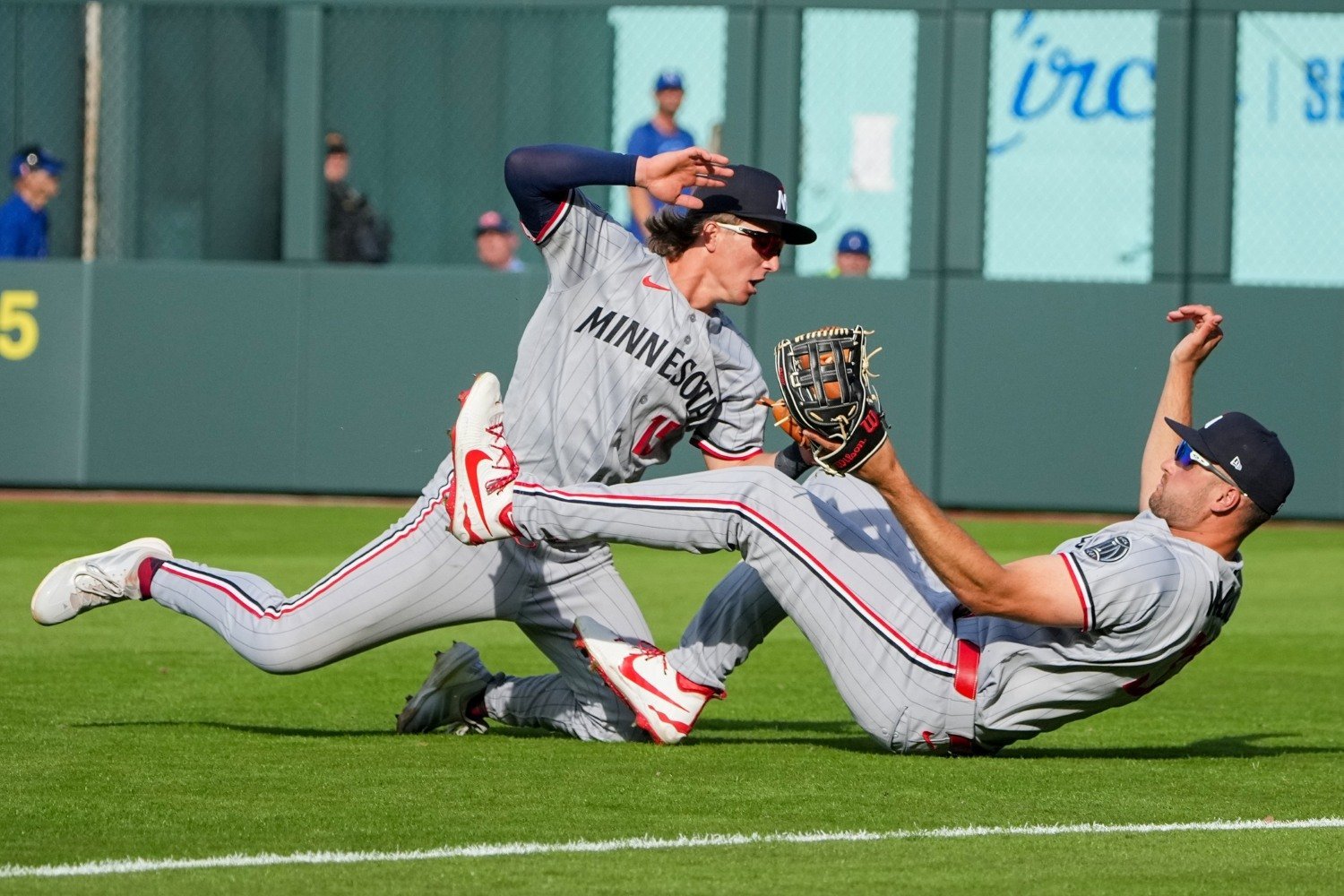 The Twins will option struggling outfielder Matt Wallner to Triple-A St. Paul on Thursday, two sources with knowledge of the team's plans told Twins Daily, Taking Wallner's place on the roster will be utilityman Ryan Kreidler, who made his Twins debut during Royce Lewis's stint on the injured list earlier this season. Kreidler is expected to serve in the same roving backup role he filled in Lewis's absence, as the team gives Austin Martin a fuller opportunity as a regular corner outfielder. By now, there should be little suspense or surprise around that move. Wallner's demotion is overdue. The massive Forest Lake native is batting .167/.259/.292 on the year. His last two starts came Wednesday night against the Marlins and Saturday in Cleveland, and in each, he went 0-for-4 with four strikeouts. He's been slowly phased out of the team's plans over the last four weeks, with Martin gaining an ever greater share of the playing time in the outfield and Trevor Larnach becoming the left-handed batter manager Derek Shelton kept in the lineup even against left-handed opposing starters. Compounding the negative value of his bat, Wallner has been the worst defensive outfielder in baseball this season. He's lost speed; takes bad routes on fly balls; is too slow to field balls that fall in and to get off throws back to the infield; and doesn't communicate well with the infielders or with Byron Buxton on balls hit between defenders. He has no business playing in the major leagues right now; the team will hope that a hard reset in the minors can fix that. Right-hander Zebby Matthews is also coming over from St. Paul Thursday, and that promotion has portent, too. All the team is saying so far is that Matthews is making a spot start to facilitate the team bumping back Connor Prielipp's next one by a day, as they monitor and mete out the latter's workload for the year. However, Matthews looks likely to stick around and take over the starting rotation spot occupied (until now) by Simeon Woods Richardson, who was knocked out early again Wednesday and has an untenable 7.71 ERA for the year. Wednesday night's game was also the latest indication of a more gradual change. Tristan Gray made his fourth start at third base in the last 10 games. Two of those starts came one week ago, when Shelton gave Royce Lewis back-to-back days off as a reset. So far, however, Lewis has shown little to give the team renewed hope since then, and he's only batting .167/.269/.300 for the year. His two-day benching came one week after Wallner's, and now, Wallner is heading for the other end of the Green Line. The clock is ticking on Lewis, too, with Gray threatening to take his job even before the prospects about whom he's so worried are ready to come to the big leagues. The 2025 trade deadline amounted to a reckoning for the previous year's worth of failures—for the collapse that led the 2024 Twins to miss the playoffs and for an offseason in which they were hamstrung by the Pohlads' attempts to sell the team, preventing them from sufficiently addressing the causes of that collapse. As roster overhauls go, though, it was actually relatively small, and when a Derek Falvey-led front office once again plodded most of the way through the winter without proactively moving on from any of the players who'd dragged them down over the previous year-plus, they began this season in something eerily similar to the same place they were in before that so-called fire sale. Falvey's conservative approach and belief in the core he'd assembled led the team to hold onto Wallner, Lewis, Larnach and Woods Richardson over the winter, when there were strong arguments for moving on from any or all four of them. In fact, those arguments were also there last July, and even the previous offseason. The team went 1-for-4 in its long-running series of gambles on those young players. Larnach might not be a long-term piece for the club, but if nothing else, he's boosted his trade value substantially this spring. The other three are now being proactively replaced by a front office that still bears Falvey's fingerprints but has departed from his plans in some key aspects, and at the behest of a manager who isn't inclined to be especially patient with players at this phase of their careers. Shelton lost half a decade of his life in Pittsburgh, making no progress toward winning because he was handed a parade of players on whom the organization was placing doomed bets a year after they should have stopped. He's been quick to try new things and shake up the way he deploys his roster, and slow to trust anyone. He and Jeremy Zoll are reshaping the big-league roster relatively early in the season, both because the utter ineptitude of the AL Central has allowed them to hold onto a dream of competing this year and because they agree that it's no longer reasonable to keep expecting Lewis, Wallner and Woods Richardson to turn things around. Thursday marks the dawn of an interesting interstitial period. Martin, 27, will continue to get regular playing time, something he just achieved for the first time after last year's deadline. He's batting an extraordinary .327/.448/.416 in 125 plate appearances so far, though that's still distorted by platoon effects. Martin has faced left-handed pitchers in 49% of his plate appearances, almost twice as much as a full-time right-handed batter can expect to see them over a full season. As his role expands, he'll be tested, and could be exposed. Gray has been less impressive at the plate since his hot start, and looks like an inconsistent, Kody Clemens-style offensive contributor. However, he plays plus defense at third base, separating him from Lewis. Both players will get a real chance to earn an even longer look, but each is also holding down a spot that could soon pass into the hands of one of the team's top prospects. Kaelen Culpepper needs a bit more time at St. Paul, but were Emmanuel Rodríguez healthy, he would already be in the majors, according to one team source. Culpepper's arrival could move Brooks Lee off shortstop and over to the hot corner. This shakeup could also result in Lee moving to second, if Gray shows enough to merit sustained playing time, with Luke Keaschall sliding to the outfield to soak up some of the playing time vacated by Wallner's demotion. For now, Lewis remains on the big-league roster, so he'll play third base at least as often as Gray. The timeline of the Wallner phaseout is a reminder, though, that time is short. The Twins' new chairman, Tom Pohlad, expects the team to win and is evaluating the front office and manager on that criterion. Neither Zoll nor Shelton is as invested in Wallner, Lewis, Woods Richardson or several other players on this roster as Falvey was, even if Zoll has been around for several years and was part of bringing in and developing much of the team. Change is afoot, and while the only unequivocal handoff of playing time marked by Thursday's moves is from Wallner to Martin, the writing is on the wall for several pieces of a core that was once the team's future—but is now being tossed onto the junkheap of the past. View the full article
 -
Yasser Mercedes May Be Turning a Corner in a Long Development Path
DiamondCentric posted an article in Twins Daily
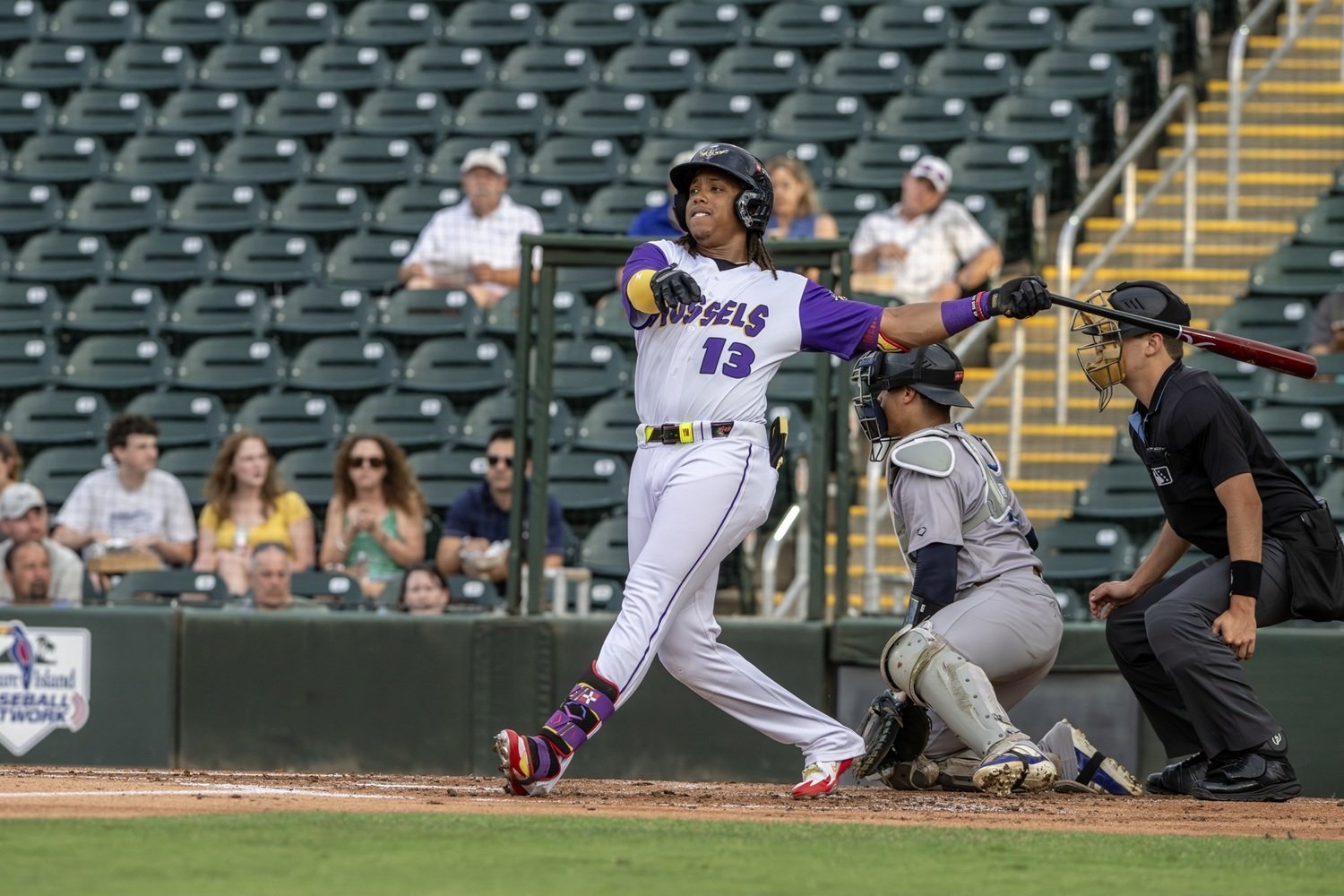 For much of the past four years, Yasser Mercedes has been one of those names that scouts and development staff could not quite let go of. The tools were always impressive. The results were not. Signed by the Minnesota Twins in January 2022 for $1.7 million, Mercedes arrived as a highly-regarded international outfielder with impact potential. He ranked among the top 20 international prospects in his class. The expectation was not immediate production, but rather gradual growth built on loud raw tools. However, that growth has taken longer than expected. In his pro debut in the Dominican Summer League, Mercedes showed flashes of offensive ability that validated the investment. But when he reached the Florida Complex League in 2023, the transition exposed the gaps in his game. Pitch recognition wavered, timing slipped, and the strikeout totals climbed. Even so, the organization stayed patient. A return to the Complex League in the following season brought improvement—enough to earn a brief look at full-season ball in Fort Myers. That stint, however, was too small to draw firm conclusions, and the results were uneven at best. The underlying traits have never been in question. When Mercedes is right at the plate, he looks like a completely different hitter. The bat speed is well above average, and the raw power shows up in every part of the strike zone. When his approach is disciplined, he is capable of controlling at-bats, working deep counts, and drawing walks at a strong clip. At his best in the Dominican Summer League and again in stretches in the Complex League, he showed an ability to shrink the zone and force pitchers into uncomfortable spots. The challenge has always been sustaining that version of himself. Injuries have played a major role in the stalled development. A hamstring issue, a quad strain, and a shoulder problem all interrupted his progression across 2023 and into 2024. Those setbacks did not just limit playing time. They also disrupted rhythm, which is critical for a hitter still learning to translate raw ability into consistent performance. Defensively, Mercedes has split time in center field while also profiling as a potential right fielder long term, thanks to a strong throwing arm. The defensive versatility has helped keep him on the field, but the organization’s priority has remained clear. He needs uninterrupted at-bats. That opportunity finally came in 2025 at Fort Myers, but the results were difficult. Across 94 games, Mercedes slashed .186/.296/.307 (.603) and produced 10 home runs and 13 doubles, but the strikeout rate climbed to 25.1% while the game power came in streaks rather than sustained stretches. Even a winter ball assignment in Puerto Rico did not provide a reset, as strikeouts again outweighed contact. That is what makes the start of 2026 so notable. Returning once more to the Florida State League, Mercedes has finally looked like a hitter who is putting the entire skill set together. Through 21 games, he has produced a .321/.439/.642. The power has been real with six home runs, two triples, and four doubles. He has also added value on the bases, converting 11 steals in 13 attempts. Perhaps most encouraging is not the stat line itself, but how it is being built. The strikeout rate has dropped by more than three percentage points, while the walk rate has climbed above 17%. That combination suggests a more controlled approach rather than a simple hot streak. The Twins have been searching for more impact talent developed through the international market in recent years. While Emmanuel Rodriguez remains one of the organization’s premier success stories from that pipeline, the overall list of high-end international contributors beyond him is thin. That reality has placed added importance on players like Mercedes finding their footing. In response, the Minnesota Twins have restructured parts of their international scouting and development operation over the past several seasons. Those changes are still too recent to evaluate in full, but players already in the system are often the first indicators of whether adjustments are working. Mercedes is one of those early test cases, even if his signing predates the overhaul. Now assigned to Cedar Rapids, where Mercedes is over a year younger than the average age of the Midwest League competition, he is stepping into a new challenge at an accelerated pace. The question is no longer whether the tools are real. That has never been in doubt. The question is whether the adjustments he is showing in Fort Myers can hold against better pitching and over a longer sample. For the first time in a while, the answer feels at least somewhat open. The development path has been uneven, interrupted, and at times discouraging. But players with this kind of bat speed and raw power do not disappear quietly from prospect lists. They either adjust or they stall. Early signs in 2026 suggest Mercedes may finally be moving toward the former. The next test is consistency over a full season against real competition. If that arrives, the Twins may finally be seeing the version of Yasser Mercedes they envisioned when they made the investment four years ago. What stands out about Mercedes in 2026? Leave a comment and start the discussion. View the full article
 -
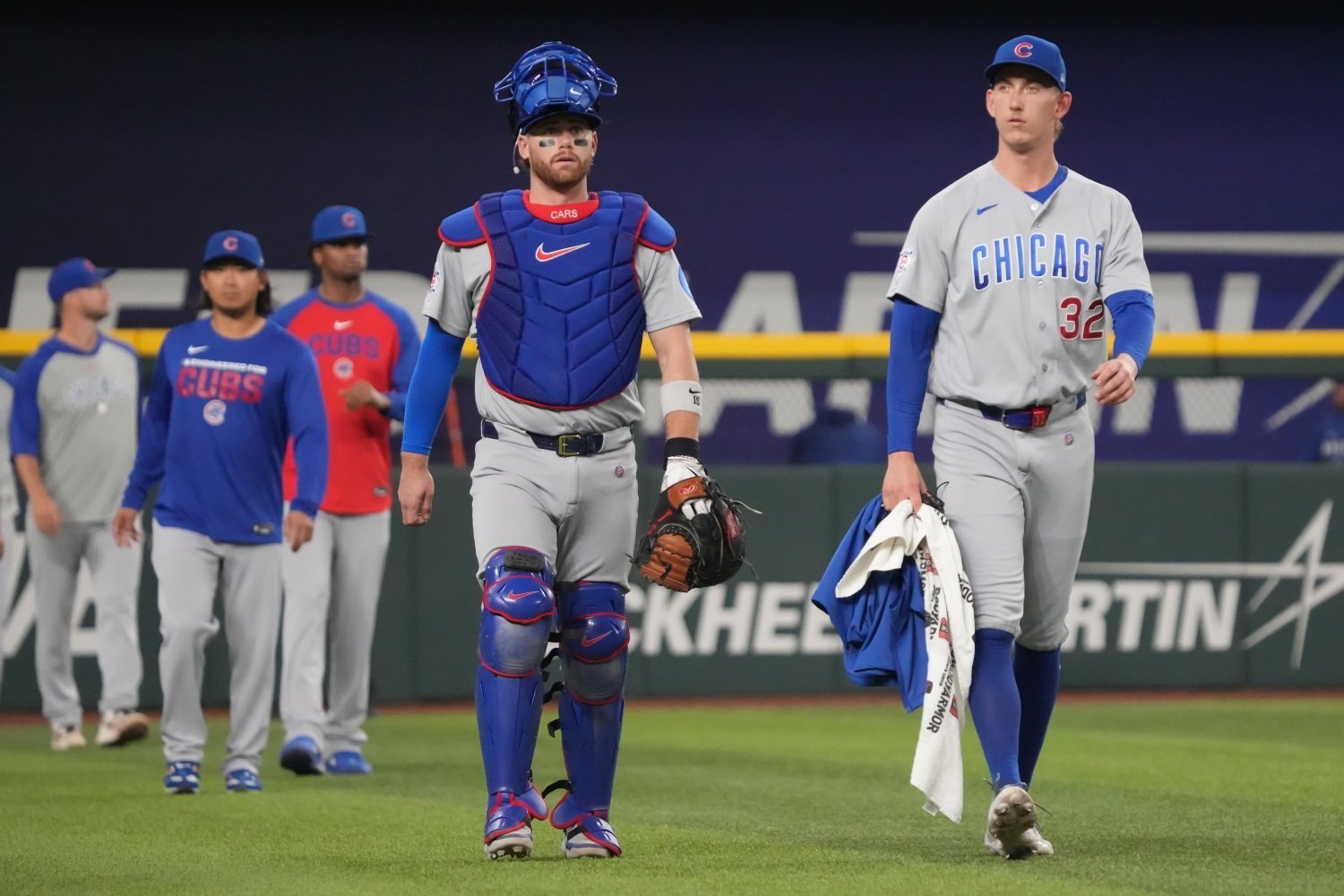 Ben Brown will start for the Cubs Thursday evening at one of the more successful attractions on The Battery, a suburban entertainment district in the northwest suburbs of Atlanta. It's his second turn in the starting rotation since the team lost left-hander Matthew Boyd to a torn meniscus in his knee, and Brown will be hoping to play stopper, opposite future Hall of Famer Chris Sale. The Cubs are in danger of losing five games in a row; their last win came in Brown's last start. In that outing, Brown managed four scoreless, hitless innings against the Texas Rangers, though he did issue one walk. Working on three days' rest after spending most of the season in the bullpen, he threw 46 pitches. Presumably, this time around, he will have a longer leash, and he might need to pace himself more. Normally, that would spell trouble for Brown. His fastball has sat comfortably around 96.5 miles per hour this season, which is where he's always needed it to be in order to find success. The shape of his heater has always been pretty much what a hitter would expect, based on his high three-quarter arm slot, so the only ways for him to avoid getting hurt on the pitch were to locate well and to throw very hard. For almost no pitcher is there a bigger difference between throwing 95 and throwing 98 than for Brown, as we've known him dating back to 2024. There's also his limited arsenal to consider. For most of his career, Brown has functionally been a two-pitch pitcher. He's tinkered with a cutter, a slider and multiple flavors of changeup, but he's only ever been able to rely on his four-seamer and a sharp (though short) knuckle-curve. Starting has tended to strain his capacity for fooling hitters with only two options at his disposal. Everything is different, now. That doesn't mean the results will follow, or that Brown is now set up to enjoy a long run of success as a starter, but to the hard questions posed by those past problems, Brown now has pretty robust answers. First, let's tackle that dead-zone fastball problem. The solution there (if, indeed, it turns out to be one): lower the arm angle, and change the profile. Arm Angle Pitch Type 2025 Apr. 2026 May 2026 Four-Seamer 44.1 42.6 39 Curveball 46.5 45.1 42.8 Kick-Change 42.7 41.5 37.3 Sinker - 41.7 40.7 From last year to this year, Brown made one slight downward move in his arm angle. Since the season began, he's made another. You can see the progression, below, in the way his arm works at release. A lower slot has meant a bit less carry on his four-seamer, but it's also given his curveball a bit more depth. The kick-change he's developed has more depth on it than it would from the higher slot, too. His sinker can run to the arm side more. The change takes his fastball slightly out of the dead zone, but more importantly, it frees up his arm to work more naturally. His other pitches have improved because of the tweak. That, of course, also answers the other problem. Brown's sinker is exclusively a weapon against righties, giving him two different heaters to work two different lanes horizontally and three different levels of vertical movement to force the hitter to cover a bigger zone. The kick-change is used exclusively against lefties, and it, too, rounds out his arsenal just enough. The fleshing-out of each as part of his attack has been made possible by the change in his arm angle. Brown's command and variety of shapes still aren't good enough for him to succeed as a starter without throwing hard, but the mechanical changes he's made appear to have helped him maintain his velocity better. The Cubs need to stop suffering losses to their rotation, but for the moment, there's reason to hope that they've found another good solution at the back end of it. Brown has shown more adaptability over the last several months, as he's discovered the limits of the simple, unrefined approach he used in the past, and he's been healthy enough to implement some new things. They're working. View the full article
 -
The Real Reason Ben Brown Is Succeeding In 2026
DiamondCentric posted an article in North Side Baseball
 Ben Brown's 2026 numbers are night and day from what we saw last season. He has gone from being one of the hardest hit hurlers in baseball to sporting a sub-2 ERA and keeping hitters off balance. What's his key to newfound productivity this season? We dive into it all in this video. View the full article
 -
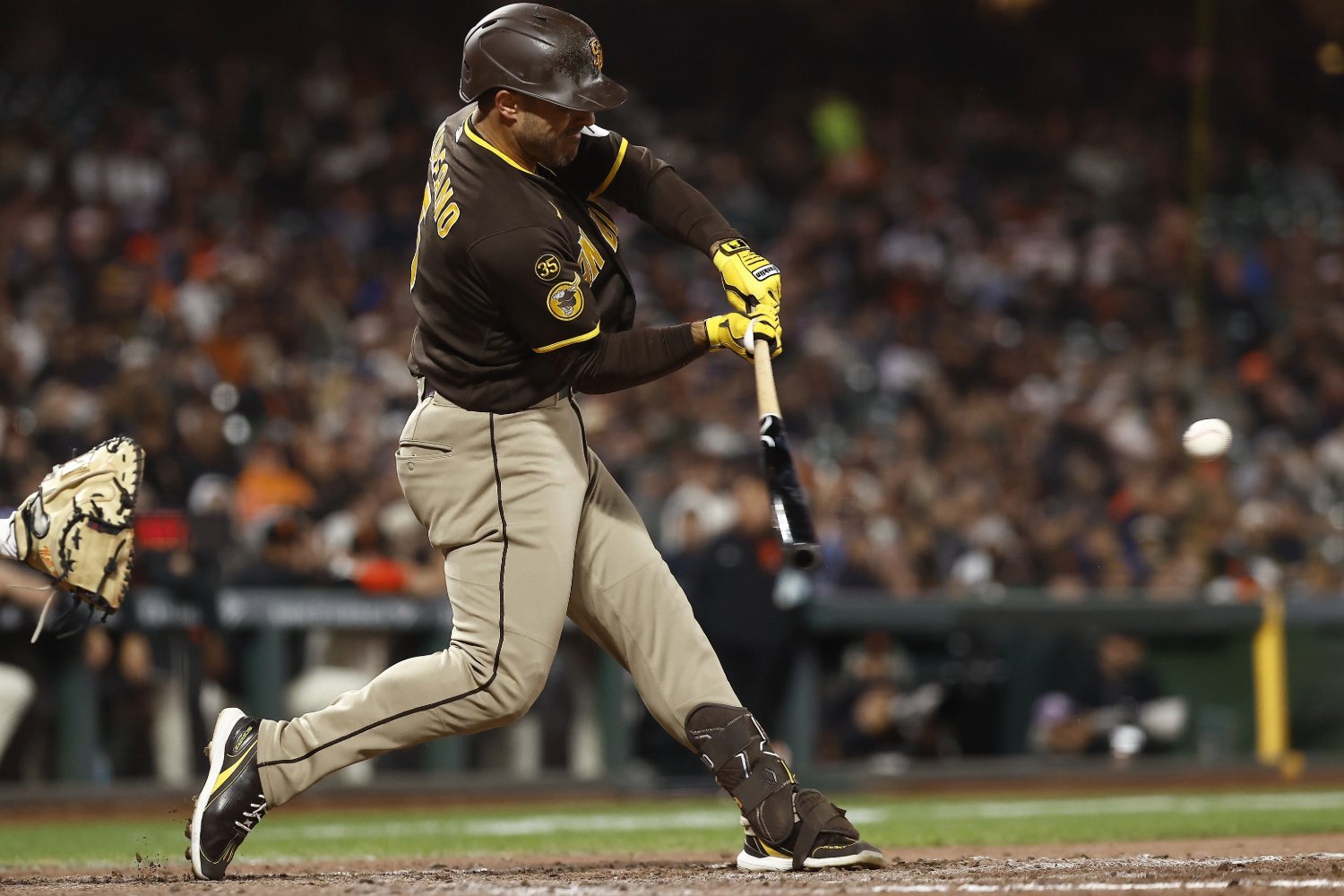 Very few players excel at everything. Sure, there are the Shohei Ohtanis and Bobby Witt Jr.s of the world who seemingly do it all, but the key to success for most players is that they do one thing extremely well and tread water everywhere else. Ramon Laureano was one of those players, and he still kind of is, except he is doing it in the complete opposite way as before. After parts of nine seasons in the bigs and at 31 years old, there isn’t a ton of mystery as to what makes Laureano tick. He plays solid outfield defense, holds his own against right-handed pitching, and crushes lefties. Just about every team would sign up for his career wRC+ of 108 against right-handed pitching and 123 wRC+ against lefties from a guy who can fake it in center for a game or two. It’s why the San Diego Padres traded for him last year, and he more than lived up to the billing in 2025, posting a wRC+ of 139 against left-handed pitching and a career-best 137 against right-handers. Heading into 2026, the expectation was that Laureano would cool off a tad against right-handers but would continue to mash lefties. And while he has cooled off a tad against same-handed pitching, he has cratered when he has the platoon advantage, just like no one expected. It’s still early, but heading into a mid-May clash with the Milwaukee Brewers, Laureano has a wRC+ of 113 against right-handed pitching and a wRC+ of 45 against lefties. While Laureano has had extended stretches where he has hit right-handed pitching well, the last time he finished a season with a wRC+ below 100 against left-handed pitching was the truncated 2020 season. If you exclude 2020 for the obvious reason that it was 60 games long, the lowest full-season mark of his career against left-handers is 108. Simply put, a wRC+ of 45 is beyond uncharted territory. Ramon Laureano Career Platoon Splits *Stats as of May 12, 2026 Early in his career, Laureano did hit right-handed pitching better than left-handed pitching, but he was still wildly productive against lefties. However, starting in 2021, he began showing more conventional platoon splits, but the degree to which it has flipped this season is jarring. The easy answer to his struggles is that he is running a BABIP of .250 against lefties, against a career figure of .338, but there’s far more to it than just bad luck. Laureano is struggling against left-handed pitching because he hasn’t been able to turn on it. Stop me if you’ve heard this before, but Laureano’s offensive profile is driven by power. He doesn’t possess monster bat speed or exit velocities, but when he does make contact, it’s usually hard, in the air, and to the pull side. For his career, he has a pulled air rate of 19.4%, against the league average of 16.7%, and it was 21.8% in 2025. Unfortunately, in 2026, his pull air rate is down to a near career-low of 15.9%, and it has come largely against left-handed pitching. For his career, Laureano owns a fly ball rate of 37.1% and a pull rate of 43.6%. Against right-handed pitching, his career fly ball rate is 38.5% with a pull rate of 43.3%, and when facing left-handed pitching, his fly ball rate clocks in at 33.9% with a pull rate of 44.3%. In 2026, his fly-ball rate against left-handed pitching is up to 45%, but his pull rate is down to 30%. That's a lot of numbers to throw at you, but the point of the data is thus: Throughout his career, the more he has lifted the ball against left-handed pitching, the worse the results have been (-0.83 linear correlation to wRC+), but the more he has pulled the ball, the better they have been (0.836 linear correlation to wRC+). With that in mind, his 2026 spray map shows exactly why he has cratered. Most of his elevated contact has been to right field, while the vast majority of his pulled contact has been on the ground. This isn’t an unusual split, but the trade-off for pulled grounders needs to be elevated-and-celebrated pulled contact. To be a successful hitter with Laureano’s raw thump, you need to lift and pull, not lift or pull. It’s difficult to parse exactly why Laureano has struggled to turn on left-handed pitching, but I doubt that he has suddenly become Derek Zoolander. It’s very likely that this is a small sample quirk, which has been exacerbated by him facing better-than-average left-handed pitching. He has already faced Tarik Skubal, Framber Valdez, Ranger Suarez, Aroldis Chapman, and Gregory Soto, among others. Upon pulling the data, the average left-hander he had faced up to that point had a 3.17 ERA and 3.44 FIP, against league averages of 3.82 and 3.97. At the end of the day, Laureano’s struggles against left-handers have only come in 32 plate appearances. I trust his track record of pulling the ball with authority when he has the platoon advantage more than what he has done in the early going. Now, if this continues, it’ll be worth examining, but we’ll also have more information to really figure things out. And considering how well he has hit right-handers, there’s a good chance he goes from being a league-average bat (99 wRC+) to the middle of the order thumper he was last season (138 wRC+), which the Padres could desperately use. View the full article
 -
Brewers Prospect Andrew Fischer Is Only Getting Scarier
DiamondCentric posted an article in Brewer Fanatic
 The Milwaukee Brewers' 8th-ranked prospect, Andrew Fischer, is tearing the cover off the ball in 2026. His OPS lives above .900, he's among his respective league leaders in home runs, and the confidence is already there. What does he need to polish, and when will he break into the big leagues? We answer those questions in this breakdown video. View the full article
 -
 How much of a ripple effect can one person have on a struggling baseball team? Today, we are doing a deep dive into A.J. Ewing and how he can help a stumbling New York Mets squad. We break down everything from Ewing's advanced, contact-oriented approach to the 70-grade speed that jumps off the page among his fellow prospects. View the full article
 -
 Kevin Gausman just checked off the 2,000 career strikeouts milestone, and at the age of 36, he's still one of the most reliable arms in Major League Baseball. In this video, we dive into the varying factors that contribute to the right-handed veteran's long-term success. View the full article
 -
 Before the 2026 season began, Payton Tolle was considered a prime candidate for a contract extension. Since being called up in late April, Tolle has cemented himself in the Red Sox rotation. In this video, we revisit a possible Tolle extension, due to not only what he brings on the mound, but the clubhouse as well. View the full article
 -
Incredible Facts from Bailey Ober’s Historic Maddux Shutout
DiamondCentric posted an article in Twins Daily
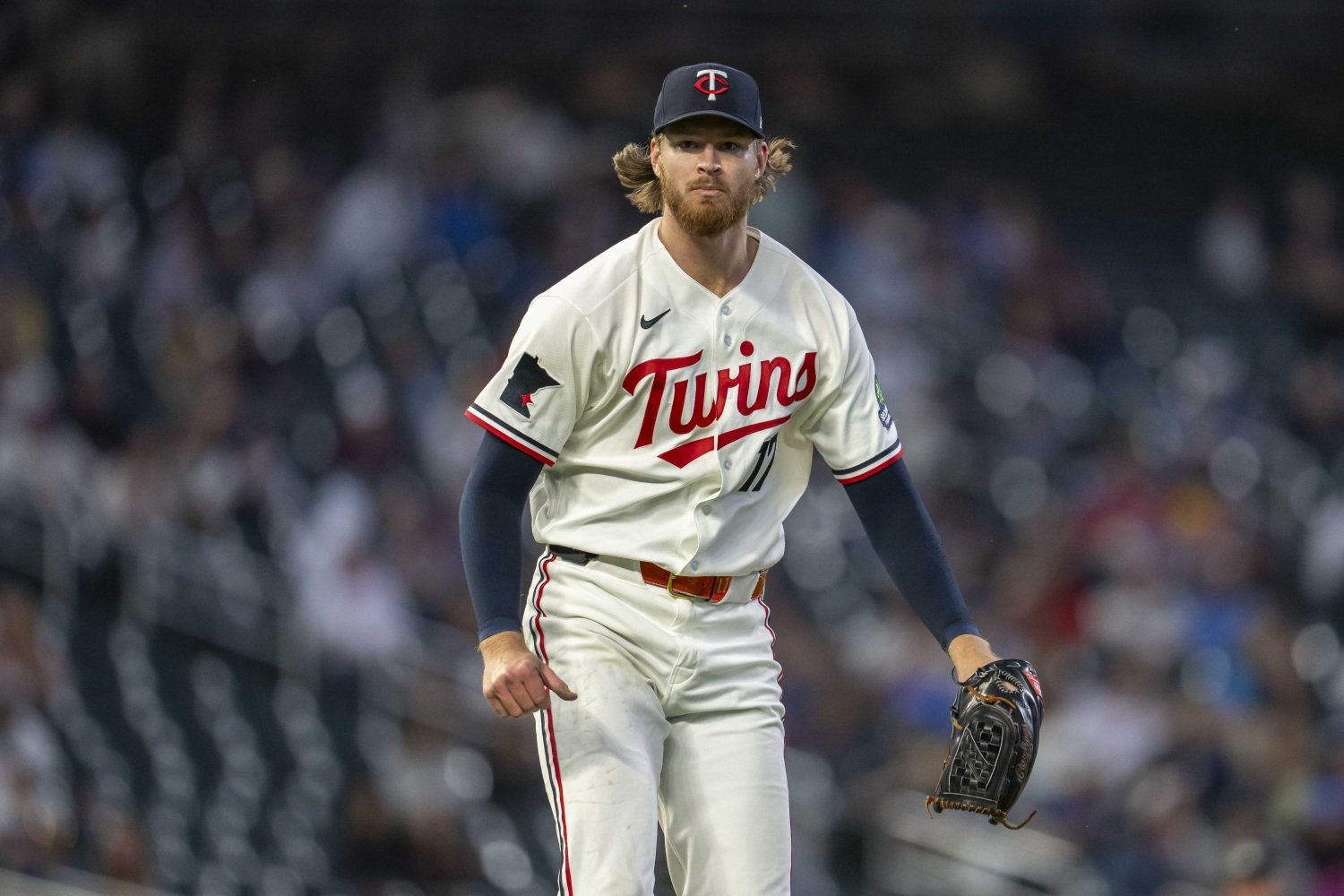 There are dominant pitching performances, and then there are outings that feel almost impossible in the modern game. Bailey Ober’s complete-game shutout against the Marlins somehow managed to be both. At a time when pitchers are judged by velocity, strikeout rates, and wipeout stuff, Ober carved through Miami with precision and efficiency instead. He needed only 89 pitches to complete nine scoreless innings. The performance also came at the perfect time with questions swirling about other parts of the Twins’ starting staff. Instead, he responded with one of the most memorable starts by a Twins pitcher in years. Here are the most amazing facts from Ober’s historic night. It was the first shutout of Ober’s career Ober had thrown complete games before, but Tuesday marked the first time he finished all nine innings without allowing a run. It instantly became the signature outing of his major league career. He threw the first Twins Maddux since 2017 Ober’s outing qualified as a Maddux, the baseball term for a complete game shutout thrown on fewer than 100 pitches. The Twins had not seen one since Ervin Santana shut out the Giants on June 9, 2017. The term is named after Hall of Famer Greg Maddux and was coined by baseball writer Jason Lukehart. Ober only needed 89 pitches Not 99. Not 95. Just 89 pitches to complete nine shutout innings. That level of efficiency feels almost impossible in today’s game, especially with teams working deep counts and prioritizing patience at the plate. “We were talking if under 100 is a Maddux, we’re going to have to name under 90 an Ober,” Twins catcher Ryan Jeffers said. “He was just under control. He was executing pitches.” His fastball averaged just 88.8 mph That might be the most shocking part of the outing. Velocity has become one of the defining conversations around modern pitching, and Ober dominated an entire lineup while sitting below 89 mph with his fastball. He threw only three fastballs above 90 mph all night and totaled only nine pitches faster than 89 mph. He snapped a recent strikeout slump Coming into Tuesday, Ober had gone three straight starts with three strikeouts or fewer, leading to questions about whether his low velocity was starting to catch up to him. Instead, he struck out seven Marlins hitters. That total tied for his second-highest strikeout game of the season, behind only his 10 strikeouts against Cincinnati on April 19. It also matched his seven strikeouts against Boston on April 13. The 89-pitch total was somehow familiar Oddly enough, the last time Ober threw a nine-inning complete game, he also threw exactly 89 pitches. That outing came on June 22, 2024, against Oakland in a 10 to 2 Twins win over the A’s. Ober joined an exclusive group in Twins history Ober now has two of the six complete games by a Twins pitcher since 1988 thrown on 90 pitches or fewer. The other names on that list include Carlos Silva, John Smiley, Bill Krueger, and Rick Aguilera. Before Tuesday night, Krueger had been the only pitcher in that group to record a complete game shutout. Ober finished stronger than he started Ober never lost command late in the game. He struck out the final two batters in the eighth inning, then needed only eight pitches to complete the ninth inning and finish off the shutout. Complete games barely exist in modern baseball. Complete game shutouts are even rarer. A complete game shutout in fewer than 90 pitches almost feels impossible in today’s version of the sport. What makes Ober’s performance even more memorable is how rare this style of pitching has become across baseball. Modern starters are often trained to chase velocity and strikeouts above all else. Teams monitor pitch counts aggressively, complete games have nearly disappeared, and many pitchers are pulled before even reaching the seventh inning. Ober not only finished the game himself, but he did it with a level of efficiency that feels pulled from another era of baseball. There was no overpowering 98 mph fastball or unhittable wipeout pitch carrying him through the night. Instead, Ober relied on command, sequencing, confidence, and an ability to consistently stay one step ahead of hitters. Every inning seemed to move faster than the last as Miami struggled to square anything up against him. By the end of the game, the crowd at Target Field understood they were watching something special. The outing also served as an important reminder about Ober’s value to the Twins rotation. Even when the velocity readings spark concern or the strikeout totals dip for a few starts, Ober continues finding ways to succeed against major league hitters. His margin for error may look smaller than many modern pitchers, but Tuesday showed just how effective he can still be when everything is working together. For Twins fans, it was the type of performance that will be remembered for years because of how unusual it felt. A complete game shutout on 89 pitches almost sounds impossible in today’s game. Bailey Ober made it look effortless. What stood out about Ober on Tuesday night? Leave a comment and start the discussion. View the full article
 -
 The Brewers' farm system continues to impress despite several big-time graduations over the last few years. Some trades have brought new names in, and one of them is currently helping the big-league team out of the bullpen, which led to our lone brand-new addition to the list. You can find the full list here! #17 LHP Shane Drohan Milwaukee acquired Drohan in the Caleb Durbin trade after spending most of his time in the Red Sox organization, as well as a spring with the White Sox. Injuries have impacted much of his professional career, including a 2024 Rule 5 stint with Chicago that resulted in his return to Boston. When healthy, however, he features a polished, deep pitch mix that seems scalable between the bullpen and the rotation. In Nashville, Drohan was being stretched out as a starter, and he made his MLB debut against Boston as a starter as well. After being sent down, he made one more start in Nashville before injury forced Drohan back up to the big-league club. Since then, he's pitched exclusively out of the bullpen, both in single-inning and multi-inning roles. His fastball typically sits 92-94 MPH as a starter and plays effectively enough to support the rest of the arsenal, though the secondary pitches are the foundation of the profile. Since moving into the bullpen role with the Brewers' big-league team, the fastball has averaged 95.3 MPH, and he has touched 97 at times. He also mixes in a cutter in the low-90s, and a sinker thrown about a tick slower than his four-seam. They both are best used against left-handed hitters, but the cutter can work as a bridge pitch for him against righties as well. The slider is Drohan's best pitch and his primary swing-and-miss weapon. Since his move to the bullpen, the pitch has averaged 86 MPH, with a spin rate of nearly 2900, and a 33.3% whiff rate. He also mixes in a solid curveball in the 78-80 MPH range, also spinning around 2900 RPM as a reliever, and also with a 33.3% whiff rate against it. His changeup has always been a reliable option against right-handed hitters with roughly 8-10 MPH of separation off the fastball. However, he seems to have switched to a splitter lately, as the spin rate has gone from ~1500 to ~990 on average. Drohan's command showed improvement in 2025, and since his move to the bullpen, he's only walked 3.2% of batters he's faced. There is still legitimate rotation upside if he can stay healthy enough, though the arsenal and bat-missing ability are showing that they can translate very well in the bullpen right now. Drohan appears firmly entrenched in the Brewers' future pitching plans right now, though the role beyond 2026 is still up for debate. Biggest Risers #6 OF Luis Lara -- Up five spots from #11 Lara has shown some improvements in the power department, already nearly doubling his career high of four home runs, with seven at the time of this article. There is some reason to doubt the power output as of this moment, playing in some of the bandbox ballparks Nashville plays at and posting a wOBA of .409, compared to an xwOBA of .313. Despite that, there does still appear to be real growth in the power department as well, as evidenced by his 109 MPH max exit velocity. His 13.9% whiff rate is elite, and he’s limited strikeouts extremely well, while walking at a high rate as well. Lara is 15 of 18 on stolen base attempts, and he’s a plus defender who could be elite in center field at the big league level. Lara looks like a player who will make his MLB debut at some point this season. #16 Coleman Crow -- Previously Not Ranked (#19 in 2025) Crow made his big-league debut in April and immediately put his ability to spin the ball on display. His spin rates rank among the highest in MLB on all of his offerings. The breaking balls are his best pitches, but his cutter has made nice strides from where it was in 2025 and is now a strong offering for him. Neither his four-seam nor sinker is a great pitch on its own, but they work well with the cutter to create enough hesitation for batters to struggle to square them up regularly. Crow is a big-league arm that is waiting for his chance in Triple-A right now. Much like the next guy on this list had to do in 2025. #3 RHP Logan Henderson -- Up three spots from #6 Henderson worked his way up to number three by significantly improving what has always been the biggest question mark in his game, his glove-side secondaries, this offseason. His slider is now thrown more like a slurve, and it has played pretty well in MLB games so far. The cutter has been inconsistent, but as a “bridge pitch,” it has fared pretty well against right-handed batters. Henderson has the look of a pitcher who may have graduated from this list next time the voting takes place, because he appears to have grabbed hold of a rotation spot, with Chad Patrick moving into more of a bullpen role. #9 OF Josh Adamczewski -- Up three spots from #12 Adamczewski has been destroying Midwest League pitching this season. After a slow start at the level in a small sample to close out the 2025 season, Adamczewski has returned with a vengeance. He’s currently posting a .992 OPS and a 150 wRC+. He has already surpassed his career high in home runs with seven (previously five in 2025), and he’s also kept his strikeout rate under 20%. His move to left field has also gone well, showing instincts that are better than expected, given his relative inexperience out there. Having just been added to Baseball America’s Top 100 this week, Adamczewski could continue his climb up this list over the course of this season. He could also continue his climb through the system, as a Double-A call-up feels like it can’t be too far away if he keeps up this production for much longer. #13 OF Braylon Payne -- Up three spots from #16 Payne got off to a really hot start this season. He’s cooled off a bit over the last couple of weeks, but has still settled into an .863 OPS and a 118 wRC+ for the Timber Rattlers. His season has been highlighted by his ability to tap into even more raw power, both in terms of his exit velocities and his ability to hit the ball in the air. His PullAir% of 20.0% is in the 85th percentile for High-A hitters. One of his home runs left the bat at 115 MPH earlier this season. He’s also a plus-plus runner, though his 8/11 success rate on stolen bases leaves something to be desired. The defense has taken a step forward in center, where his athleticism is always on display. The reads and jumps still need some work, but they are better than in 2025. Payne has the tools to be a power and speed threat, though he will still need to curb his whiffs (33.2%) and limit his strikeouts (27.4%) as much as possible. Biggest Fallers #18 3B Brock Wilken -- Down three spots from #15 Wilken got off to a very slow start in 2026, though he is currently in the midst of a 28-game on-base streak. During that stretch, he is posting a 118 wRC+ and has walked almost as much as he has struck out. The overall numbers are far less encouraging, though, as evidenced by his 77 wRC+ and his 28.5% strikeout rate. We will likely find out which version of Wilken is closest to the real version over the next couple of months. #11 RHP Bishop Letson -- Down two spots from #9 Letson has gotten off to a tough start in Double-A this season. The walks have skyrocketed this season, rising from 7.5% in 2025 to 15.7% in 2026. The ERA is at 6.75, and the FIP is over 6 as well. The strikeouts are down nearly 10% as well. All that said, Letson’s stuff looks to be in a similar spot to where it was in the past, even getting the velocity up a bit higher than in the past. Letson’s drop is likely due more to the players below him forcing their way up the list, but he will need to rein in the command moving forward and limit walks at a much higher level to reach his full potential. Thank you to all of you who voted! View the full article
 -
 It's difficult to overstate the value that Michael Conforto has brought to the Chicago Cubs early in 2026. A minor-league signing coming off a brutal season with the Los Angeles Dodgers, the original perception of Conforto's role was, at best, as temporary depth while Seiya Suzuki worked his way back to full health. Instead, he's gained an increased role in recent weeks on the heels of a torrid stretch of play. As of the series in Atlanta, Conforto is carrying a slash of .340/.448/.617 with a gaudy 198 wRC+. He's striking out more than the Cubs would probably like (25.9 percent), but he's also walking more than 17 percent of the time. Add it all up, and he has been worth 0.6 fWAR for the Cubs in barely 60 plate appearances. It's all a far cry from where he sat last year with the Dodgers when his line read .199/.305/.333 with a wRC+ of just 83 (-0.6 fWAR) across more than 480 PA. What's particularly important in the case of Conforto is that this isn't a player merely flashing despite questionable peripherals. Sure, he's due for some regression on the merit of his .452 batting average on balls in play by itself, but he's also driving the baseball. His 54.5 percent hard-hit rate exceeds his career average by about 13 percent while his 15.2 Barrel% is nearly five full percent better than his career mark. We know good things happen when hitters pull the ball in the air, and Conforto is deploying those contact metrics to the tune of a 30.3 PullAIR%. In short, it's not blind luck driving the start. He's been legitimately good. In general, this performance seems to be driven by his approach. Conforto's swing rate is down, with a 40.2 percent number that would be the lowest of his career if it holds up over the full season. What's more is that his chase rate has fallen to just 20.5 percent (also the lowest of his career). Perhaps most importantly, as the chase rate has plummeted, the in-zone swing rate has remained steady. He's working with a 64.2 percent swing rate on pitches inside the zone that represents just a two percent decrease from last season. It's not solely about the eye, though. There are also mechanical tweaks at play. Conforto's attack angle is up to 13 degrees in 2026 after falling to 10 degrees last season. It's a steeper swing and one that reads around league average (10 degrees), but when you combine the improved approach with a swing generating fly ball contact, you're able to find the type of early results that Conforto is producing. Of course, it's important to note the managerial component within all of this as well. While a recent scuffling from the Cubs' offense at large has forced Craig Counsell to insert Conforto into the lineup with greater regularity, he's also shielding him entirely from left-handed pitching. Conforto isn't as drastically bad against pitchers of the same handedness as some lefty hitters may be, but he did go for a wRC+ of just 76 against them last year. As such, Counsell has sent Conforto to the plate against a left-handed pitcher just a single time this season. That's certainly something not to be overlooked in matters of his early run. As impressive as Michael Conforto has been, the regression monster is something that's going to continue to loom, especially in the case of a player that hasn't experienced sustained offensive success since, realistically, 2019. In short, that regression is going to come at some point. The batted ball fortune alone is indicative of that inevitability. However, the trends which Conforto has demonstrated to date do offer some encouragement that he can continue to be a regular contributor to the offensive output. When you put a player in a position to succeed, as Counsell has, while said player demonstrates a command of the strike zone and uses that command toward making meaningful contact with the baseball, it's going to yield positive results. Given those two factors, it isn't a surprise that Conforto has good; it's merely a pleasant turn of events that he's been such an uplifting force in the lineup. View the full article
 -
Bailey Ober's Success Is a Throwback to a Bygone Era
DiamondCentric posted an article in Twins Daily
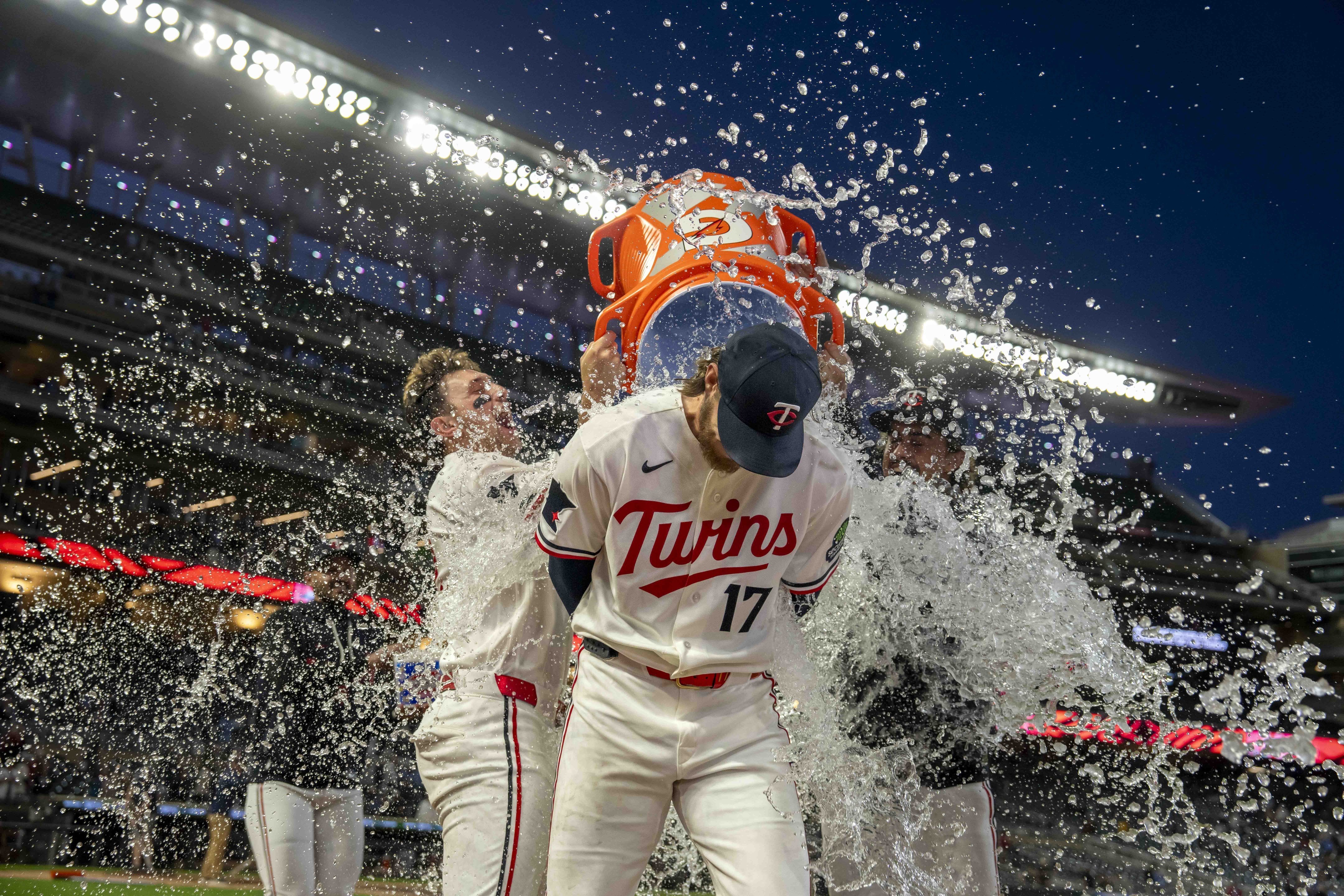 On Tuesday night at Target Field, Bailey Ober threw a complete shutout on just 89 pitches against the Miami Marlins. It was a rarity in its own right — Twins starters don't complete a game very often — but the efficiency of his performance was almost unheard of in these times. The only starter in Twins history to throw a shutout on fewer pitches, per Aaron Gleeman, was Bill Krueger (85) back in 1992. It was around that time, the first of Greg Maddux's four consecutive Cy Young seasons, that the term "Maddux" was being coined in reference to a shutout recorded on a double-digit pitch total. The Hall of Famer would also gain repute for his ability to dominate with relatively sub-par velocity. Coincidentally, earlier in the day on Tuesday I happened to be dinking around on Baseball Reference and looking through Carlos Silva's 2005 game log. The backstory is that I've been piecing together a list of my most vivid personal memory from each of the past 25 Twins seasons, and for '05 it was Silva's 74-pitch shutout against the Brewers in May. This was the pinnacle outing from Silva's career — a perfect encapsulation of the strike-throwing groundballer at his best — and the epitome of Twins pitching philosophy from that era. Silva debuted in the majors in 2002, the same year as Rick Anderson became Minnesota's pitching coach, and two years later he was acquired by the Twins alongside Punto in the Eric Milton trade. Silva's stylistic alignment to Anderson's "pitch-to-contact" prototype undoubtedly played a role in the Twins targeting him. And sure enough, the right-hander mostly served as a proof point for the wisdom of such an approach at the time. With the exception of his ugly 2006 campaign, Silva was mostly a reliable, ultra-efficient innings eater with above-average ERAs for the Twins. That 2005 season was his best: he posted a 3.44 ERA (130 ERA+) in 188 ⅓ innings while issuing just nine walks all year. Silva achieved this success with a 9.5% strikeout rate (3.4 K/9) — just 71 strikeouts in 27 starts. The lowest strikeout rate in baseball today belongs to Adrian Houser at 12.2%. To look back through his game log now is almost incomprehensible up against the context of modern-day pitching. Deep counts just really didn't exist against Carlos Silva. He threw it over the plate and said, "Come get it," knowing that the movement on his middling 90ish-MPH fastball and oft-used changeup would succeed in inducing weak contact most of the time. As a result, his pitch counts were shockingly low. In 2005, Silva completed seven or more innings in 21 of his 27 starts, but surpassed 100 pitches in an outing only twice all year. You contrast that with the current environment, where starters rarely venture into the seventh or eighth because their pitch counts have already piled up on longer, strikeout-chasing ABs, and it feels like almost a different game. And in many respects, it was. Baseball has changed in fundamental ways over the past 21 years. A pitcher like Silva probably could not succeed in 2026, and would likely be unable to even tread water. Ober is doing it though. Granted, his traits are not as extreme as Silva or some of the other standard-bearers from the pitch-to-contact era like Brad Radke and Nick Blackburn, but Ober leverages similar ingredients in his recipe. Throw strikes, hit your spots, induce ground balls, lean on the offspeeds. "The lost art of pitching," as Ober calls it. Ober's 35.5% GB rate is not conventionally high but it's the highest of his career. He's attacking the fringes of the zone with the highest called-strike rate of his career (17.3%). And he's throwing more (better) changeups than ever before: 36.2% of the time, with a .167 batting average allowed. The economical pitch usage enables Ober to routinely pitch deeper into games than other starters, which has ancillary positive effects on the bullpen. The Twins as a team have had three complete games thrown over the past three seasons and Ober was behind all of them. This year, he's gotten through at least six innings in five of his past six starts, and he's on pace to reach 200 innings. A throwback, indeed. Time will tell if Ober can keep rolling like this, especially given the quality of the defense backing up all this contact — he definitely has his skeptics — but it's already gone on long enough that it's difficult to characterize his success is a total fluke. As long as he can stay on track, I'm just going to enjoy the ride and bask in the nostalgia. View the full article
 -
 The Florida/Miami Marlins have won a franchise-record nine straight games on five separate occasions. It was first achieved on this day 30 years ago. Against the St. Louis Cardinals at Joe Robbie Stadium on May 14, 1996, the Florida Marlins used a six-run eighth to break the tie and cruise to victory, 11-5. The Marlins had taken a 5-4 lead with three runs in the bottom of the seventh. In the top of the eighth, however, Ray Lankford drew the Cardinals even with a solo home run off Florida’s Terry Mathews. Jeff Parrett remained on the hill for St. Louis in the bottom of the inning. After getting Jeff Conine to line out to open the inning, Parrett issued three straight walks to load the bases and end his night. The Cardinals turned to Rick Honeycutt, but the left-hander fared no better in getting outs. Joe Orsulak rolled Honeycutt’s second pitch of the night up the middle for a two-run single. Devon White followed with an RBI double on the seventh pitch of the at-bat to extend the lead to 8-5. Alex Arias followed with an RBI single of his own to make it 9-5 before Greg Colbrunn was safe on a fielder’s choice to extend the lead to 10-5. Conine made two of the three outs in the inning for Florida, but his second plated White to cap the scoring. Yorkis Pérez retired the Cardinals in order in the ninth to end the contest and run Florida’s winning streak to nine. White and Arias each finished 3-for-5 with two runs scored and two RBIs. Colbrunn went 2-for-4 with a home run and three RBIs. Lankford and Ozzie Smith each had two hits for St. Louis. With the victory, Florida improved to 20-21 but missed the opportunity to get to .500 for the first time that season as it fell to the Cardinals the following day, 6-0. The Marlins would briefly get over .500 in 1996 before finishing 80-82 – their best season ever at the time. Although they’ve never hit double digits, the Marlins also won nine straight games in 2004, twice in 2006 and in 2008. It was first achieved, thanks in part to a six-run eighth inning, on this day three decades ago. View the full article
