


DiamondCentric
-
Posts
2,631 -
Joined
-
Last visited
Never
Content Type
Profiles
Forums
Events
News
Tutorials & Help
Major League Baseball Videos
Guides & Resources
Store
Downloads
Gallery
Everything posted by DiamondCentric
-

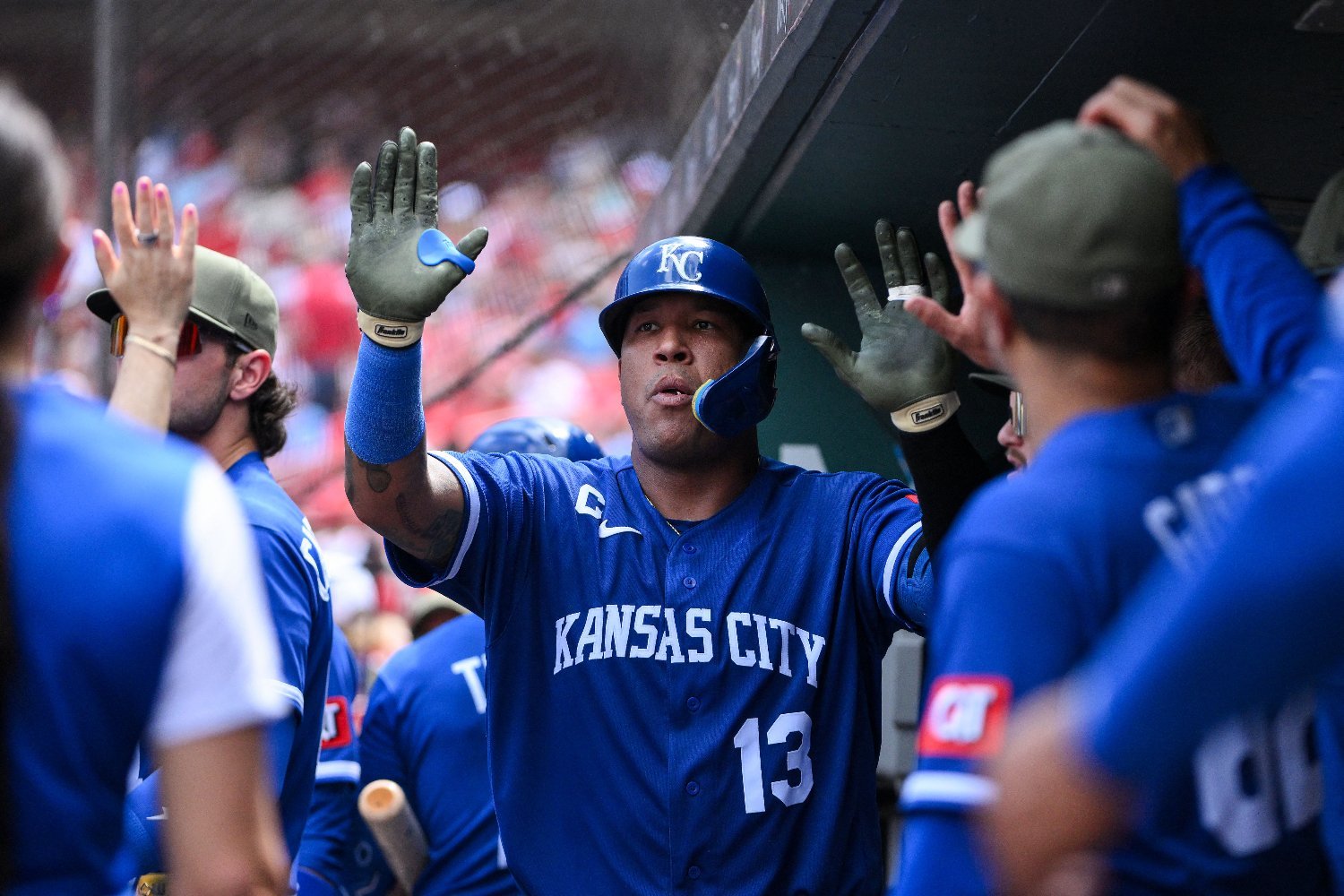 Week in a Nutshell The Royals' woes on the road continued this week in their travels to Chicago and St. Louis. Kansas City went 1-5 on this Midwest road trip, bringing their road record to 7-17 (they are 13-10 at home). Their seven road wins are tied with the Tigers and Marlins for the fewest road wins in baseball, and only the Tigers have a worse road record (7-19) than the Royals. It wasn't necessarily one thing that hurt the Royals on this recent road trip, which has been the story of this frustrating season through 47 games. Against the White Sox, it was the pitching that let the team down, as they gave up 18 runs in their three losses (the Royals scored 12 runs). Against the Cardinals, it was the offense, as the pitching staff allowed only 9 runs, but the offense scored only 8. On a positive note, it felt like the Royals were in all these games, despite going 1-5. Hopefully, the positive momentum from winning the series finale in St. Louis can carry over into their upcoming nine-game homestand. Record this Week: 1-5 Run Differential for the Week: -7 Record for the Year: 20-27 Run Differential for the Year: -21 Standing: Tied for 4th in the AL Central Game 42: CHW 6, KC 5 Early solo home runs by Bobby Witt Jr. and Salvador Perez in the first inning set the tone, but a five-run fifth took away all that momentum (Stephen Kolek was cruising until that fifth inning). The Royals tied it up in the sixth thanks to RBI base hits by Nick Loftin and Maikel Garcia. Unfortunately, a pinch-hit Derek Hill home run in the bottom of the eighth ended up being the nail in the coffin for Kansas City in game one. Game 43: CHW 6, KC 5 The White Sox got off to an early lead in this one, leading 3-0 after three. However, a two RBI single by Vinnie Pasquantino tied the ball game in the 5th. Despite getting a fresh game in the fifth, Seth Lugo couldn't keep it tied, as a two-run double by Jarred Kelenic gave them a two-run lead, which was padded on by a run in the sixth. A two-run home run by Witt in the ninth made it close, but Kansas City couldn't complete the comeback. Game 44: CHW 6, KC 2 It was a Randal Grichuk revenge game as the former Royals outfielder had two hits, including a home run and four RBI. Starter Kris Bubic, who was sensational against the White Sox at Kauffman, struggled at The Rate, as he gave up five runs on five hits and three walks while striking out four in just four innings of work. Despite getting seven hits, just one less than the White Sox, they were 0-for-5 in RISP situations and stranded eight. Game 45: STL 5, KC 4 (11) It was a back-and-forth slugfest between the two Missouri-based ballclubs. Kansas City and St. Louis traded leads at different points in the game and actually answered one another in the 10th inning with one run each in their frame. Witt and Carter Jensen both had two hits each, while Isaac Collins had two RBI, despite not getting a hit. The Royals also got a quality start from Michael Wacha. Unfortunately, after coming up empty in the top of the 11th, the Cardinals ended the game in the bottom of the 11th, as pinch-hitter Yohel Pozo had a game-winning single that drove in Nathan Church with two outs. Game 46: STL 4, KC 2 The Royals got a much-needed bounce-back game from Noah Cameron on Saturday. The St. Joseph, Missouri, product delivered a quality start, allowing three runs on five hits and no walks while striking out four over six innings. Unfortunately, Cameron didn't get much run support, as Cardinals starter Kyle Leahy held the Royals offense to one run on five hits and three walks while striking out two in six innings of work. Jac Caglianone had a nice day with two hits and a mammoth 428-foot home run in the top of the ninth. Game 47: KC 2, STL 0 Kolek proved to be the "stopper" for the Royals on Sunday in St. Louis, as he added another quality start to his Kansas City resume. In 6.1 IP, the 29-year-old righty allowed no runs, four hits, one walk, and struck out three. Daniel Lynch IV and Lucas Erceg shut the door on the Cardinals in the final two innings, as they received the hold and save, respectively. The offense had nine hits, but went 0-for-6 in RISP situations and stranded eight. Salvy launched his seventh home run of the season. News and Notes The Royals only made one move this week, but it was a big one that affected their bullpen. Matt Strahm pitched on Friday, going 0.2 IP and allowing no runs, one hit, one walk, and striking out one. However, he was visited by manager Matt Quatraro in the middle of the inning, as they noticed him wincing. On Saturday, the Royals confirmed that he had injured his right knee and would be placed on the 15-Day IL due to right knee inflammation. Bailey Falter was recalled from Omaha as a result, where he had been on a rehab outing after suffering a minor elbow injury earlier in the year. Highlights Witt continued his solid pace this season on this road trip. In 23 at-bats, he hit .304 with a 1.016 OPS. That included two home runs, four RBI, three runs scored, and a stolen base. He also walked four times and struck out four times, showing excellent plate discipline and pitch recognition on this road trip. While the rest of the Royals' lineup has been inconsistent, Witt has been a rock for this Kansas City offense. The AL MVP candidate also showed some incredible baseball IQ on Saturday by deking St. Louis' Ivan Herrera on a passed ball that kept Herrera at third base (he should've scored). Perez and Jensen also had nice road trips, which is good as they were less-than-stellar in the previous homestand. In 23 at-bats this week, Salvy hit .292 with an .850 OPS. That also included two home runs, three RBI, and three runs scored. He also walked once and struck out four times. Perez got a lot of heat for still being in the cleanup spot despite his struggles this year. However, he helped silence the critics a bit with a big homer on Sunday. As for Jensen, he had been struggling going into this road trip, but he seemed to turn it around away from Kauffman Stadium this week. In 16 at-bats, he hit .375 with a .944 OPS, and he walked twice while striking out four times. He didn't hit a homer and had two RBI and two runs scored, which isn't a massive amount. However, he looked a lot more comfortable and locked in at the plate, something that wasn't really the case in the last homestand. Kyle Isbel has struggled on the road this year, but he had an encouraging road trip this week. In 20 at-bats, he hit .300 with an .833 OPS. That included two doubles and a triple. He struck out five times and walked only once. However, he has a .641 OPS on the road (compared to an .864 OPS at home). Thus, to see him hit well away from the K this week should be a good sign for him going forward. Isbel also flashed his signature leather, with an amazing catch in game one in the bottom of the ninth that sent the game to extra innings. On the pitching end, Lynch was absolutely nails on this road trip. In three outings and 3.2 IP, he didn't allow a single run, gave up only three hits, walked one, and struck out five batters. He's becoming the Royals' most important reliever beyond Lucas Erceg, and that role should only grow with Strahm on the IL. The Royals also got quality starts from Cameron and Kolek in St. Louis, which shouldn't be dismissed, as they were coming off rough outings in their previous starts. In his one outing this week, Cameron not only produced a quality start but also generated some solid TJ Stuff+, impressive whiff and chase rates, and induced a lot of weak contact in six innings of work. As for Kolek, he had a brutal outing against the White Sox, though that was primarily due to a nightmarish fifth inning where he gave up home runs to Drew Romo and Chase Meidroth. He was much more settled against St. Louis, throwing only 82 pitches in 6.1 IP. With six pitches, Kolek looked very Lugo-esque on Sunday. He didn't generate a ton of whiff, but he lived on the edges, generated a good amount of chase and strikes, and kept the ball on the ground. As a result, he earned another quality start for the Royals and helped get them a much-needed win. Luinder Avila also had a good week, allowing no runs on no hits in two outings and 3.1 IP. He walked three, but he also struck out four. Avila may also be pushing for more high-leverage opportunities soon, especially with Strahm's return questionable. Lowlights It was not a great road trip for the "Michaels": Maikel Garcia hit .143 with a .379 OPS in 28 at-bats, while Michael Massey hit .143 with a .286 OPS in 14 at-bats. Both hitters have struggled on the road this year. Garcia has a 57 wRC+ away from Kauffman Stadium, while Massey has a -36 mark. Unfortunately, that trend didn't change much this week. Collins has had his issues away from the K as well. His 28 wRC+ on the road is the second-worst mark among Royals hitters with five or more plate appearances this season. This week was more of the same, as he hit .158 with a .531 OPS in 19 at-bats. On a positive note, he at least walked three times and struck out just three times. Lane Thomas didn't get a whole lot of action this week, as he only received nine at-bats. Unfortunately, he struggled in his limited opportunities this week, hitting .111 with a .419 OPS. While he walked three times, he struck out five times, which was tied with Isbel for the most this week (Isbel had 11 more at-bats). On the pitching end, Bubic and Isbel had forgettable outings this week in Chicago. Not only did Bubic go four innings of work, but he also struggled with command and didn't generate a whole lot of chases or whiffs. He also was hit around hard, as illustrated below via his TJ Stuff+ summary from his Thursday outing against the White Sox. Lugo's outing felt very similar to Bubic's. The 36-year-old veteran struggled with efficiency and command, producing just a 59.8% strike% in five innings of work and 92 pitches. His zone, whiff, and chase rates were subpar, and he allowed not only a lot of hits (eight) but also hard contact, as evidenced by his xwOBACON below. Lugo and Bubic are allowed to have bad outings. On one end, Lugo has been solid on the road this season. He has a 3.00 ERA and 1.93 FIP in 24 IP away from Kauffman Stadium. Thus, this outing against the White Sox may have just been a blip on the radar. As for Bubic, he's been a much worse pitcher on the road this year. In 20.2 IP on the road, he has an 8.8% K-BB%, 5.23 ERA, and 3.68 FIP. In 29.2 IP at the K? He has a 14.7% K-BB%, 3.34 ERA, and 3.74 FIP. Thus, Bubic may be looking forward to this upcoming nine-game homestand, and hopefully, he can build some positive momentum during this stretch to carry over into his next road trip. The bullpen was fine for the most part in this series, with only John Schreiber (6.75 ERA) and Strahm (5.40 ERA) sporting ERA marks over five this week. Strahm is on the IL, so he won't be a factor for at least this upcoming homestand, maybe longer depending on how his knee heals. As for Schreiber, he's been better recently, but he's still struggling to generate chase and whiffs, collect strikes consistently, and limit hard contact. Unless something dramatic happens, Schreiber may be pitching himself out of Kansas City sooner rather than later. Looking Ahead The Royals have a nine-game homestand, with the first two series against the Boston Red Sox and Seattle Mariners, two playoff teams from a year ago that have gotten off to disappointing starts this year as well. The Red Sox are 19-27 with a -20 run differential and are 11.5 games behind the division-leading Tampa Bay Rays. Boston has struggled on offense, as many of its key players have gotten off to brutal starts. Three of the 10 worst-qualified players in OPS happen to be Red Sox players, as TJ Stats shared on Twitter. The Royals will face the Mariners a second time, after sweeping them in Seattle during the first weekend in May. Unlike the Red Sox, the Mariners have a positive run differential at +11. That makes them a tougher opponent than their 22-25 record suggests, and the Royals can't afford to overlook them because they took three in Seattle. One of their hottest hitters has been Randy Arozarena, who is slashing .440/.500/.640 in his last 25 at-bats. After the weekend series against the Mariners, the Royals begin a three-game slate against the rival New York Yankees starting on Memorial Day. The Yankees swept the Royals back in April in the Bronx, and Kansas City is 0-11 against the Yankees since beating them in Game 2 of the 2024 ALDS in Yankee Stadium. The Royals will have to do a lot to avoid going 0-14 against the Yankees since that Game 2 ALDS victory. New York is one of the best teams in the league with a 28-19 record and +68 run differential, the third-best run differential in baseball (only the Atlanta Braves and Dodgers have better marks at +98 and +94, respectively). View the full article
 -
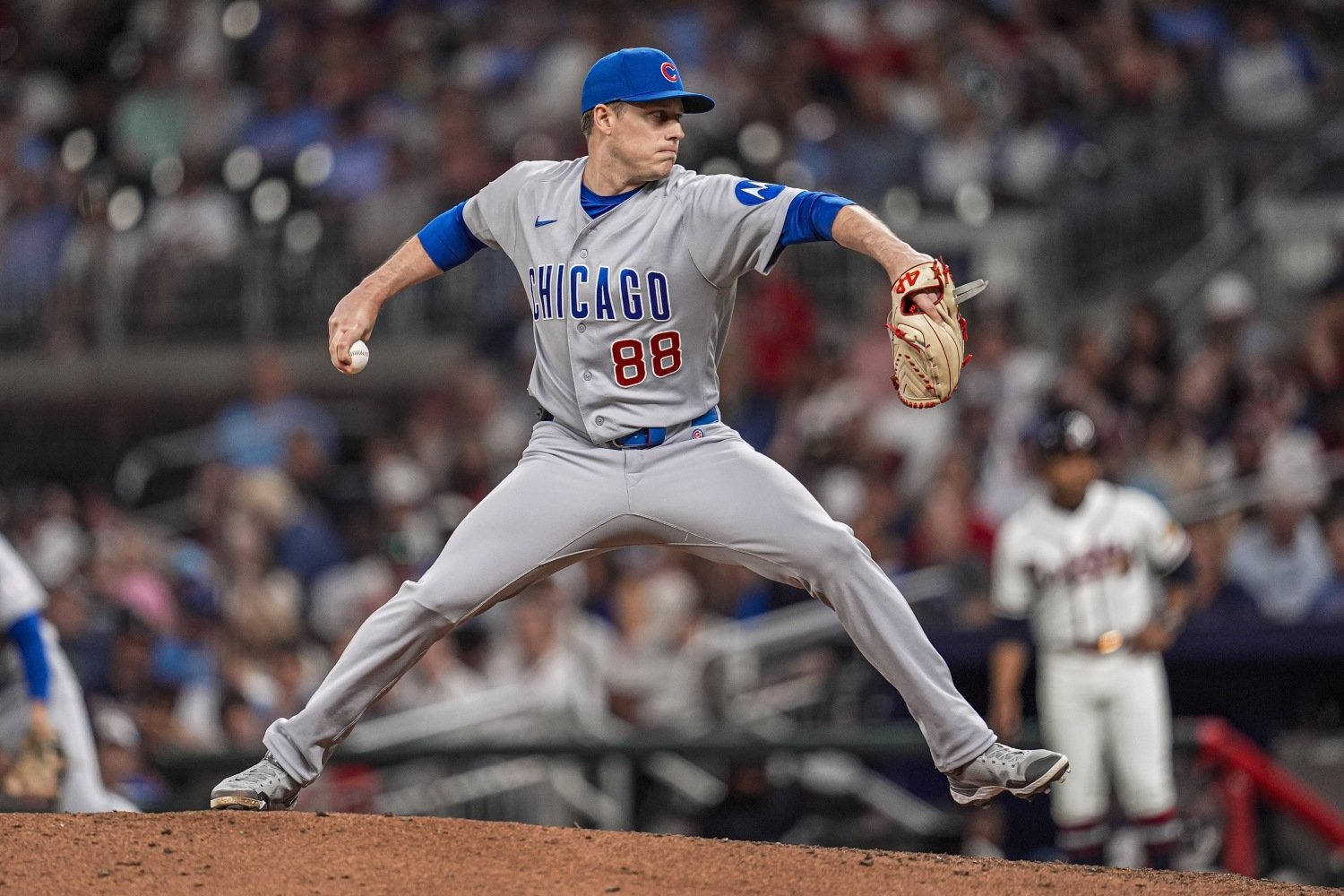 There are little things. The cutter that the team loved is coming in a tick slower this year, putting more pressure on every other facet of his game. It also has a bit less ride than it did last year, which gives it less separation from his sweeper. The curveball has a bit less of the extreme horizontal movement it's showed in the past. But mostly, Phil Maton looks like himself. That's what's worrying everyone. When the Cubs signed Maton to a two-year deal worth $14.5 million this winter, many lamented that the team was investing in yet another reliever who doesn't throw hard. That was unfair, though. What teams should really prioritize isn't velocity itself, but the two things that tend to correlate with velocity when it comes to results: whiffs, and weak contact. Maton was excellent in both regards in 2025. He's spent a long career consistently inducing weak contact because of a deceptive delivery and that peculiar cutter, and last season, he also sported an excellent strikeout rate. So far, though, his Cubs tenure has been an unmitigated disaster. He's struggled mightily on both sides of a three-week stint on the injured list, and it just doesn't look like he's fully healthy, even now that he's back on the mound. Already, he's put up a Win Probability Added of -0.288 or worse in three games for the Cubs. He cost them 29.7% of a win in their 4-1 loss to the team from suburban Atlanta Wednesday, and 40.8% of one on the South Side on Sunday. He's killing the team, especially because they need him even more than they'd planned to, with Hunter Harvey (unsurprisingly) sidelined for the long haul by arm trouble; Daniel Palencia being used carefully after his own stint on the IL; and Ben Brown dragooned into starting again because of injuries to the team's top two starters. Here's the thing: Maton can still miss bats. His whiff rate is down, but still above average, and when he executes properly, you can see how he keeps hitters so defensive. Unfortunately, he's not executing with any consistency—and, in particular, he's leaving a lot of balls in the fat part of the strike zone. Here are Maton's heatmaps for location by pitch type for 2025. This is what an elite contact manager-slash-whiff guy looks like. His curveball consistently hit the edge on the glove side; his cutter stayed at the top of the zone, tending toward the arm side to tunnel with his breaking stuff; and his sweeper was used to generate chases and the poor results that come with them. His sinker tucked into the one quadrant of the zone untouched by his other pitches, forcing righty batters to defend a big zone and inviting more weak contact. Here's the same visual for 2026. Wwwh, uh-oh. Everything is missing arm-side, with predictable results. The cutter has gone for a ball way too often, putting him behind in counts. You can (sort of) live with that, though. If the main problem were that the cutter is getting lost off the arm-side edge, we'd expect Maton's problems to be taking the shape of lots and lots of walks. That's not what's happening. Maton only has one walk in his last six appearances, but in the aforementioned pair of clunkers last week, he gave up two homers and a double. That's because of what's happening to the two breaking balls. Missing arm-side with the cutter has put him behind in counts; missing arm-side with the curveball and sweeper have brought those pitches right into the middle of the zone to be hammered. That's what happened on Mike Yastrzemski's double and Mauricio Dubón's home run in the armpit of the Atlanta interstate nexus. It's what happened when Tristan Peters took him deep for a three-run gut punch on Sunday. Patterned misses like this tell a story. In Maton's case, it's one of lost athleticism, either due to injury or due to age. Maton is only 33, though, and he's tall and thickly built. It looks like he's nursing an injury, be it the tendinitis in his right knee that shelved him earlier this season or something in his lower back. Either way, he's not getting through his front side as well when he delivers; he looks creakier and stiffer. It's not surprising, then, that he's missing in the same direction over and over. The question is whether he can fix that. If so, he'll go right back to being a good reliever, and the Cubs' most important setup man. The stuff, as we said, is essentially intact. If player and team can't find a way to get him moving better down the mound again, though, that won't matter. Right now, Craig Counsell can't trust Maton, which is a huge problem for a team that doesn't enjoy a big margin for error. View the full article
 -
 For the week, Nashville (6-0) and Wilson (4-2) were series winners, Biloxi (3-3) managed a draw and Wisconsin (1-4) struggled. Transactions: RHP Peter Strzelecki designated for assignment by MLB Brewers LHP Robert Gasser recalled to MLB Brewers from AAA Nashville C Eric Martinez transferred to Development List from AAA Nashville RHP Tyson Hardin promoted to AAA Nashville from AA Biloxi RHP Ayendy Bravo assigned to High-A Wisconsin from ACL Brewers RHP Argenis Aparicio assigned to High-A Wisconsin from ACL Brewers RHP Bryan Rivera placed on High-A Wisconsin’s 7-day injured list Game Action: Nashville Pre-Game Media Notes Final: Nashville 4, Iowa (Cubs) 3 Box Score and Game Log Via oursportscentral.com, game details: Sounds Walk off Iowa to Secure Series Sweep Starting 24-year-old RHP Tyson Hardin’s AAA debut did not disappoint, as he struck out 3 of the first 4 batters faced and only allowed 2 runs (1 earned) in 7 strong innings (4 H, 3 BB, 6 Ks). Hardin’s velocity peaked at 96.1mph in the 2nd inning and he looked like he might be spent at 89 pitches after conceding a 104mph single, 9-pitch RBI double and 5-pitch walk to consecutive batters with one out in the 7th inning, but he buckled down to induce two ground outs to strand 2 critical baserunners and finish at a season-high 94 pitches. The Sounds saved the best for last for 6,513 home fans, plating 3 runs in the bottom of the 9th for a series sweep. That final half-inning, which commenced with a 4-pitch walk drawn by substitute OF Jacob Hurtubise (one of 3 free passes in the frame), was highlighted a 106.4mph first pitch single by OF Luis Lara to load the bases and of course DH Eddys Leonard’s walk-off 105.4mph single to win it. 3B Jett Williams (2-for-3, HR, triple, walk, RBI) was Nashville’s offensive star, tripling (101.9mph) but picked off in the 1st inning, smacking a solo homer (101.4mph) to tie the game 1-1 in the 6th inning and using an ABS challenge to help draw a walk in the 9th inning comeback. Sounds’ Extras: Hurtubise entered the game for rehabbing OF Akil Baddoo in the 6th inning, gunning down speedy James Triantos (3 stolen bases in the game) at home on a fly ball double play to end the top of the 9th inning, then starting the walk-off rally. LHP Rob Zastryzny made his second rehab appearance of the week, needing just 10 pitches complete the 8th inning (walk, pick-off, K, ground out). C Jeferson Quero (7 stolen bases allowed) wasn’t able to match his counterpart Eric Yang defensively (one pick-off, one caught stealing; no stolen bases allowed), but he did have a base hit and contributed the game-tying sacrifice fly in the 9th inning. The Sounds got some help in the 4th inning by an Iowa baserunner forgetting to tag up from 3rd base as part of an inning-ending double play. Next week’s outlook: Nashville (26-19) travels eight hours due east for a six-game set against Ray’s affiliate Durham (19-26), with the series beginning at 10:05 AM CST on Tuesday. Biloxi Pre-Game Media Notes Final: Montgomery (Rays) 7, Biloxi 4 Box Score and Game Log Via the Shuckers’ website, game details and we encourage readers to review affiliate write-ups as part of their Link Report routine: DeBerry Continues to Dazzle in Shuckers Setback to Biscuits Despite outhitting the Biscuits 9 to 7, Biloxi fell short in their quest for a road series win, done in by stranding nine baserunners (vs. 4 for Montgomery), including a runner at third base in each of the final three innings. After starting RHP Jaron DeBerry threw well but was hurt by the long ball (3 homers – 6 IP, 5 R, 6 H, 2 BB, 8 Ks), C Matt Wood (2-for-3, triple, walk) started a comeback with a 1-out, 5th inning triple, with SS Jesus Made driving in 2 runs with 2 outs to cut the deficit to 4-3. 1B Mike Boeve (2-for-4, HR, RBI) briefly tied the game in the 6th inning with his 4th homer of 2026 and 2B Dylan O’Rae valiantly tried to tie it again by manufacturing a run an inning later (bunt single, SB, passed ball), but was left stranded. Trailing 5-4 in the 8th inning, OF Damon Keith singled to open the frame and later stole 3rd base, but the team could not cash in. An inning later, Keith was at the plate with 2-on, 2-out, trailing 7-4, but flew out for the final play. Shuckers’ Extras: RHP Ryan Birchard once again recorded his 3 relief outs via strikeout (31 Ks in 22 IP this year), but also allowed a walk and 2-run homer this time out. The blast came on a 1-2 pitch which likely got too much of the plate. OF Mark Coley II put his recent slump further behind him with a 2-for-4 game, including an infield RBI single in the 5th inning. 3B Eduardo Garcia went 0-for-4 with 3 Ks, but it was nice to have him return to action after exiting Thursday’s game early. RHP Cameron Wagoner retired 3 of 4 batters faced in the 7th inning, but also hit old friend Jadher Areinamo with a pitch. Another old friend Gregory Barrios put the first run on the board with his 2nd inning solo shot. Next week’s outlook: Biloxi (17-21) returns home for six games against White Sox affiliate Birmingham (16-23), commencing on Tuesday. Wisconsin Pre-Game Media Notes Postponed: South Bend (Cubs) at Wisconsin Via the Timber Rattlers’ website, rainout details: Sunday’s Timber Rattlers Game with South Bend Rained Out After giving up 74 runs in 5 games this week, which included 3 2/3 innings tossed by Timber Rattlers’ position players, perhaps a rain out cleanse and re-set were truly in order. Next week’s outlook: Wisconsin (20-16) heads over to Midland, Michigan to play six games against Dodgers’ affiliate Great Lakes (25-13), with LHP Wande Torres scheduled to start the series opener at 10:05 AM CST on Tuesday. Wilson Pre-Game Media Notes Final: Wilson 7, Hill City (Guardians) 4 Box Score and Game Log Via the Warbirds’ website, game details: Warbirds Fly to Series Win With Four in the First 19-year-old C Rylan Mills’ full season affiliate debut was an immense success as he earned an RBI walk in the 1st inning for a 4-2 lead, then homered on a 2-2 pitch in the 3rd inning to give Wilson some important breathing room (6-3 at that point). An 18th round draft pick in 2025 ($247,500 signing bonus), Mills also threw out attempted base stealers in the 7th and 8th innings. Starting RHP Carlos Carra (4 2/3 IP, 4 H, 2 BB, 4 Ks) allowed 3 runs to the first 12 batters faced as Wilson’s advantage was cut to 4-3 but did well to ultimately retire the last 6 hitters in order. The team’s early patient eye allowed the Warbirds to draw 5 first inning walks and a hit-by-pitch, chasing the Howlers’ starting pitcher after he conceded 4 runs and only recorded one out. DH Brady Ebel (2-for-4, double, RBI, 2 SBs) recorded the team’s sole hit in that 1st inning, then tag-teamed with OF Handelfry Encarnacion (2-for-4, double, HBP) on back-to-back doubles (video) in the 7th inning. RHP Peyton Niksch (3.12 ERA) and LHP Anfernny Reyes (2.41 ERA) were solid in relief, combining on 4 1/3 innings (1 R, 3 H, 3 BB, 4 Ks). Warbirds’ Extras: Reyes did struggle initially (back-to-back walks and a wild pitch to open the 8th inning), but delivered a 3-up, 3-down 9th inning to close out the series victory. Each of OF Pedro Ibarguen (single, walk, RBI), 3B Filippo Di Turi (single, walk, SB), SS Juan Ortuno (2 walks, SB) and 2B Luis Lameda (2 walks) reached base twice to keep the pressure on Hill City pitchers. Next week’s outlook: Wilson (19-20) remains home this week to take on Orioles’ affiliate Delmarva (14-25) for six games, beginning on Tuesday. We hope that you enjoy the Minor League Link Report. On Monday, the Milwaukee Brewers (26-18) start their critical series at Wrigley (29-18) at 6:40 PM, while the ACL Brewers (4-7) play at the ACL Mariners (7-4) at 8:00 PM CST. Organizational Scoreboard including starting pitcher info, game times, MiLB TV links, and box scores Current Milwaukee Brewers Organization Batting Stats and Depth Current Milwaukee Brewers Organization Pitching Stats and Depth View the full article
 -
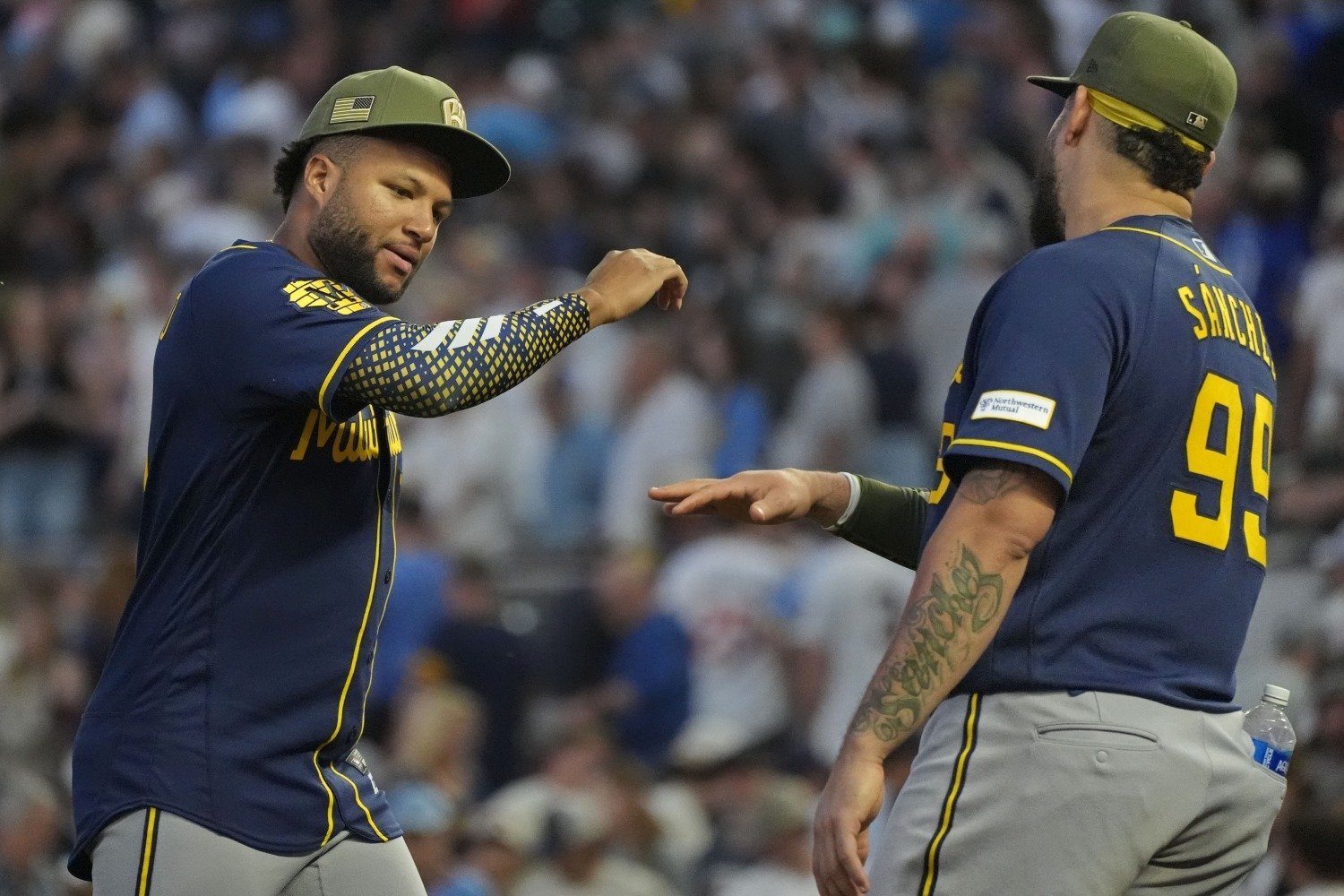 Weekly Snapshot: Record Last Week: 4-2 (Overall: 26-18) Run Scored Last Week: 23 Runs Surrendered Last Week: 16 Standing: 2nd in NL Central Game 39 (5/12) | MIL 6, SDP 4 Game 40 (5/13) | SDP 3, MIL 1 Game 41 (5/14) | MIL 7, SDP 1 Game 42 (5/15) | MIL 3, MIN 2 Game 43 (5/16) | MIL 2, MIN 1 Game 44 (5/17) | MIN 5, MIL 4 Game 39 | Brewers 6, Padres 4 MIL Starter: Brandon Sproat (5.1 IP, 6 H, 2 BB, 3 ER, 6 K) Top Performers: Joey Ortiz (2 H, HR, 2 RBI) Brice Turang (2 H, 2B, 2 RBI) Jake Bauers (2 H, 2B, RBI) Brandon Sporat kicked off the week battling through traffic in his start against an NL West-leading Padres team, powering through 5.1 innings of three-run baseball. Against the Friars hurlers, the Brewers got to Matt Waldron, tagging him for eight hits and six runs in just 2.2 innings, which would be enough to take game one as the bullpen behind Sproat surrendered only a single run. Joey Ortiz goes deep (+12.1 WP%) Game 40 | Padres 3, Brewers 1 MIL Starter: Jacob Misiorowski (7.0 IP, 4 H, 0 BB, 0 ER, 10 K) Top Performers: Luis Rengifo (3 H) Sal Frelick (2 H) Aaron Ashby (1.0 IP, 0 H, 0 ER, 2 K) The Brewers let Wednesday’s contest slip through their fingers, as a dominant start by Misiorowski was pushed aside when Gavin Sheets tagged Abner Uribe for a 2-out, 3-run homer in the 9th to snatch back a game that saw the Brewers lead 1-0 for most of the contest. Misiorowski’s dominant outing Game 41 | Brewers 7, Padres 1 MIL Starter: Kyle Harrison (5.0 IP, 5 H, 0 BB, 0 ER, 7 K) Top Performers: Luis Rengifo (2 H, 3 RBI) Andrew Vaughn (2 H, BB, 2B, RBI) Brice Turang (H, 2 BB, 2B, RBI) No comeback was in store for the Padres on Thursday, as the Brewers claimed the series Rubber match in comfortable fashion. It all started by getting to San Diego starter Griffin Canning, with the Brewers putting up a pair of 3-spots in the first and second innings to chase him from the game. Kyle Harrison kept the Padres bats quiet on the other side, throwing a scoreless outing of his own. No dramatics followed the hot start, with the final being 7-1. Rengifo drives in a pair (+11.3 WP%) Game 42 | Brewers 3, Twins 2 MIL Starter: Coleman Crow (5.0 IP, 3 H, ER, 3 K) Top Performers: Jackson Chourio (2 H, 2B) Jake Bauers (2 H, 2B, RBI) Trevor Megill (1.0 IP, 0 H, 0 ER, K, SV) Coleman Crow earned himself another spot start for game one in Minnesota, and was excellent. Through five innings, Crow allowed just three hits, walked none, and surrendered only a single run. That was enough to match Twins ace Joe Ryan, who settled in after allowing a first-inning run, and after his exit, the Brewers would plate the two deciding runs in the eighth, capped by a go-ahead double from Jake Bauers. Jake Bauers’ RBI double (+21.1 WP%) Game 43 | Brewers 2, Twins 1 MIL Starter: Logan Henderson (Pitching Line) Top Performers: Chad Patrick (4.0 IP, 1 H, 0 BB, 0 ER, 3 K, SV) Jackson Chourio (2 H, 2B, HR, RBI) Andrew Vaughn (H, BB) Logan Henderson was on the slab for the Brewers in game two, and behind his five strong innings, they secured the series. Following Henderson’s strong start was an even stronger outing from Chad Patrick, who threw four scoreless innings and earned his first career save. With the bats, the decisive blow came from Jackson Chourio's first home run of the season, giving the Brewers a 2-1 win. Jackson Chourio’s first home run of the season (+16.0 WP%) Game 44 | Twins 5, Brewers 4 MIL Starter: Robert Gasser (4.0 IP, 3 H, 2 BB, 2 ER, 3 K) Top Performers: Jake Bauers (2 H, BB, 2B, RBI) Sal Frelick (2 H, 2B, RBI) DL Hall (1.1 IP, 0 H, 0 BB, 0 ER, 2 K) The series finale saw Robert Gassar make his return to the major leagues, and the Brewers' power bats come alive. For his part, Gasser was admirable working around significant traffic and an error in his four innings, while the offense saw both Garett Mitchell and Christian Yelich go deep. That wouldn't be enough, though, as it was the Twins who'd manage to hold a one-run lead and avoid the sweep 5-4. Christian Yelich's home run (+14.1 WP%) Transactions: 05/17/26 - Designated RHP Peter Strzelecki for assignment. 05/17/26 - Recalled LHP Robert Gasser from AAA Nashville. 05/16/26 - Sent RHP Quinn Priester on a rehab assignment to High-A Wisconsin. 05/16/26 - Optioned RHP Coleman Crow to AAA Nashville. 05/16/26 - Selected the contract of RHP Peter Strzelecki from AAANashville. 05/15/26 - Sent LF Akil Baddoo on a rehab assignment to AAA Nashville. 05/15/26 - Recalled RHP Coleman Crow from AAA Nashville. 05/15/26 - Optioned LHP Brian Fitzpatrick to AAA Nashville. 05/14/26 - Sent LHP Rob Zastryzny on a rehab assignment to AAA Nashville. 05/12/26 - Activated LF Christian Yelich from the 10-day injured list. 05/12/26 - Optioned DH Tyler Black to AAA Nashville. Looking Ahead: Monday, 5/18 - Brewers @ Cubs - 6:40 PM CDT Tuesday, 5/19 - Brewers @ Cubs - 6:40 PM CDT Wednesday, 5/20 - Brewers @ Cubs - 6:40 PM CDT Friday, 5/22 - Dodgers @ Brewers - 6:40 PM CDT Saturday, 5/23 - Dodgers @ Brewers - 6:15 PM CDT Sunday, 5/24 - Dodgers @ Brewers - 1:10 PM CDT View the full article
 -
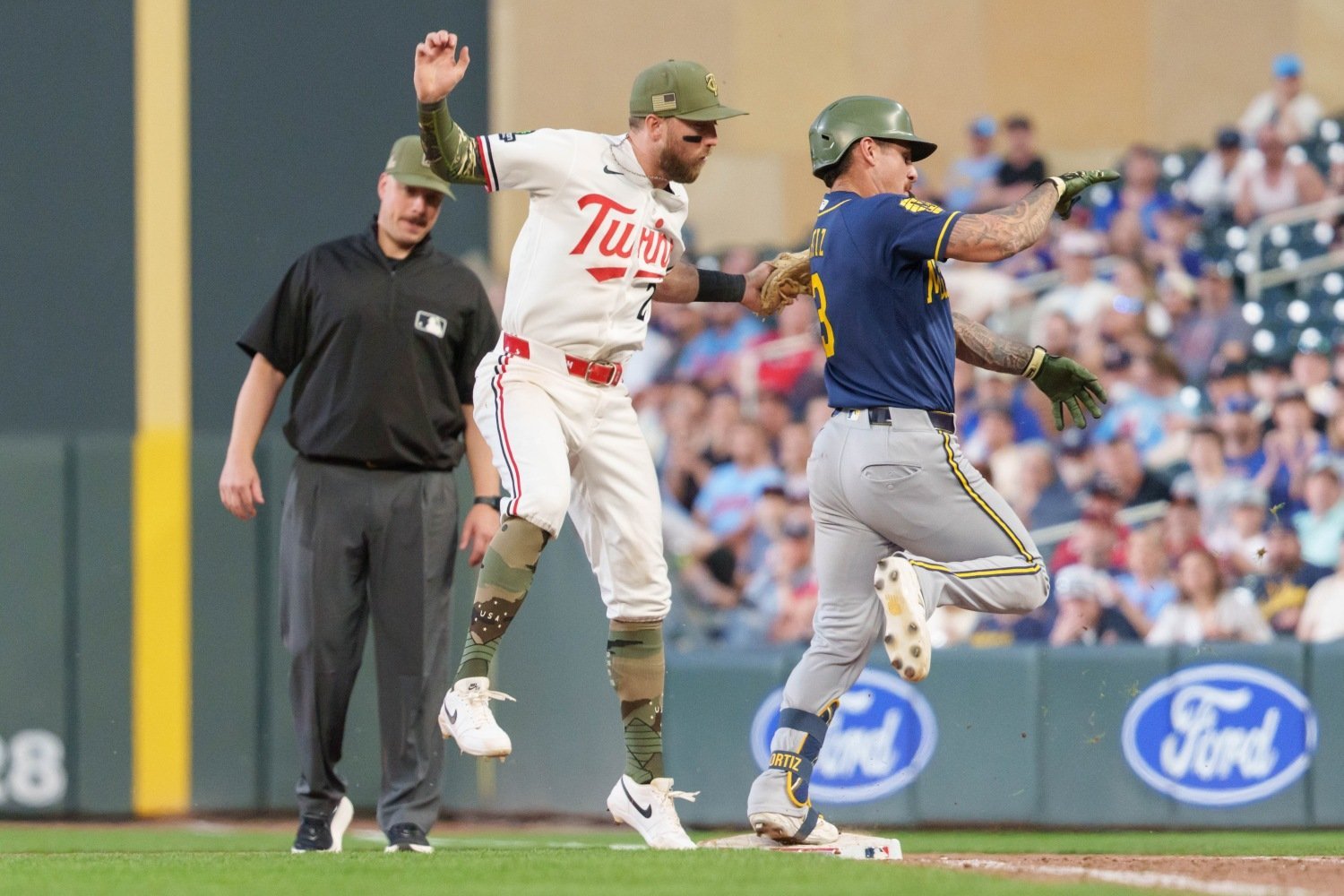 Coming out of the 2025 season, first base looked like one of the weaker positions on the Twins’ roster. The front office added veteran bats in Victor Caratini and Josh Bell to provide depth and offensive production, while also hoping to solidify the designated hitter role. Despite that, the position has become another question mark for a team searching for consistency early in the season. While the free agent additions have largely underperformed, a bright spot has emerged in Kody Clemens, whose strong two-way play has given the Twins stability both offensively and defensively. With prospects beginning to heat up in St. Paul and pressure mounting to improve the lineup, the Twins now face important decisions about how to handle first base moving forward. Clemens leads the way for this first base group. In 128 plate appearances, he's batting .245/.345/.441, with 14 extra-base hits. He's been worth 3 runs above average at the plate and a whopping 5 in the field, according to Baseball Reference. Advanced metrics back up Clemens’s raw numbers, too. He hits the ball hard in the air at a solidly above-average rate; that's a sustainable way to generate above-average offense. He's continued (and even improved upon) his performance from last season. He should be the starter moving forward, as he has been most of the season. The main issue with that, at the moment, is the two free-agent signings the Twins made who have made starts at first base this season. Victor Caratini was signed as the backup catcher this offseason and has played first base 13 times so far. Caratini has been around a league-average bat the past few seasons, but so far this year, the same can’t be said. He’s currently slashing .192/.294/.231 in 126 plate appearances. A little bit of that is bad luck—he has the same .329 xwOBA he had last season, but last year, his actual wOBA was .318, and this year, it's .249. However, we're also seeing the risks of signing a switch-hitter away from Houston, one of the best parks in the league for finding extra-base hits down the lines. Here are Caratini's batted balls so far this year, mapped onto his new home park in Minnesota. Now, here are the same batted balls overlaid onto the dimensions of Daikin Park in Houston, which Caratini called home for the last two years. Four balls that have been flyouts this season would clearly have been extra-base hits of some kind had he hit them in Houston. Factor in weather, and another three or four might have been, too. That's the difference between Caratini's more productive recent past and his current dreadfulness, right there. He's still controlling the strike zone reasonably well, and the weather will be more conducive to hitting as the weather warms, so Caratini also belongs in the mix. In all likelihood, though, he'll spend a good chunk of that time at catcher. Josh Bell is another story. The 33-year-old slugger has been 11 runs below average so far in 2026, according to Baseball Reference, and his advanced numbers back that up. He’s slashing .210/.275/.315, with 3 home runs in 178 plate appearances. Signed in December, Bell hasn’t been great defensively and hasn’t been the past few seasons either, but it appears the Twins know that and are using him there sparingly: he only has 8 appearances at the position so far, compared to 34 at DH. Given that his deal is a one-year contract worth $7 million (with a mutual option for 2027), Bell is the most likely candidate to be moved on from at some point this season. There are two prospects in St. Paul who’ve been spending time at first base, though neither is knocking very loudly on the door to the majors. Aaron Sabato has been especially hot of late, slashing .319/.396/.830 so far in May, bringing his slash line this year to .281/.343/.652 with 8 homers. Sabato was the Twins’ first-round pick back in 2020 out of the University of North Carolina, and the 26-year-old could see some time with the big-league club this year if he continues hitting (though it's a long shot). Gabriel Gonzalez hasn’t been nearly as good at the plate, slashing .207/.280/.396 in 182 plate appearances. First base is a new experience for the 22-year-old, who didn’t appear in a game at the position before this season. Acquired in the Jorge Polanco trade with the Mariners, Gonzalez will look to get back to his offensive numbers from last year to factor into the first base conversation this year. Although the Twins entered the season expecting their veteran additions to strengthen the lineup, the results at first base have largely fallen short of expectations. Clemens has certainly earned the opportunity to remain the everyday starter, thanks to his strong defense, improving offensive profile, and encouraging underlying metrics. Caratini’s struggles may not be permanent, but his new home park will never permit him to put up the numbers he managed in Houston. Bell’s continued decline makes him the most likely candidate to lose playing time or eventually be moved. Ultimately, the Twins’ best path forward may be trusting Clemens at first base, while remaining flexible with the rest of the position as the summer months rapidly approach. View the full article
 -
 The Omaha Storm Chasers earned the lone Royals system win Saturday, holding off Toledo 6-3 behind Brett Squires' 3-for-4 night with a home run and three RBI. Ben Sears earned the win with 2 2/3 hitless innings, and Hunter Owen logged seven strikeouts over five frames in Northwest Arkansas' 9-5 loss. Frank Mozzicato gave up seven runs and David Shields six, while Hiro Wyatt took the loss in Columbia's 10-0 defeat at Hickory. Royals Transactions No Transactions Squires Powers Storm Chasers Past Mud Hens The Omaha Storm Chasers held off the Toledo Mud Hens, 6-3, behind a big day from Squires. The first baseman finished 3-for-4 with two doubles, a home run, two runs scored, and three RBI as the cleanup hitter. Omaha jumped on Toledo in the home half of the first. Tyler Tolbert worked a leadoff walk and came around to score on a Luca Tresh RBI double. Tresh then came home when Squires followed with an RBI double of his own, giving the Storm Chasers a 2-1 lead after one. The third inning provided the decisive blow. Tolbert again drew a walk, John Rave singled, and Kameron Misner walked to load the bases. A Tresh grounder turned into a run-scoring double play that brought Tolbert in, and Squires followed by lifting a two-run home run to center field that scored Rave. Gavin Cross added an insurance run in the sixth with an RBI double that scored Squires. Starter Henry Williams labored through 3 1/3 innings, allowing three runs on six hits with three walks and three strikeouts. He surrendered two home runs and was charged with all of Toledo's damage. Ben Sears collected the win in relief, working 2 2/3 hitless innings with four strikeouts and no walks to improve to 2-0. Beck Way, Eli Morgan, and Jose Cuas combined to bridge the game to Mason Black, who closed it out with a clean ninth for his third save. Player AB R H RBI BB K Tyler Tolbert 2 2 0 0 2 1 John Rave 4 1 1 0 0 1 Kameron Misner 3 0 0 0 1 0 Luca Tresh 4 1 1 1 0 1 Brett Squires 4 2 3 3 0 1 Abraham Toro 3 0 0 0 0 1 Gavin Cross 3 0 1 1 0 0 Dustin Dickerson 3 0 1 0 0 1 Josh Rojas 3 0 0 0 0 1 Player IP H R ER BB K HR Henry Williams 3 1/3 6 3 3 3 3 2 Ben Sears 2 2/3 1 0 0 0 4 0 Beck Way 1 0 0 0 1 0 0 Eli Morgan 2/3 1 0 0 1 1 0 Jose Cuas 1/3 0 0 0 0 0 0 Mason Black 1 0 0 0 0 0 0 Mozzicato Tagged Early In Naturals' Loss To Travelers The Northwest Arkansas Naturals fell to the Arkansas Travelers, 9-5, on a day when Mozzicato struggled to keep the ball in the yard. The left-hander was charged with seven runs on six hits over three innings, walking three and striking out three, and surrendered two home runs in a four-run first. Sam Kulasingam led the offense, finishing 2-for-5 with two RBI and two runs scored. He answered the early deficit with a solo home run in the first, then added an RBI single in the fifth. Spencer Nivens reached safely all four times he came to the plate, going 3-for-3 with a double, a walk, and two RBI. His two-run double in the fifth, which also scored Kulasingam and Jorge Alfaro, pulled the Naturals within three. Colton Becker chipped in a 2-for-4 line with an RBI single in the second that scored Daniel Vazquez. Vazquez added a walk, a stolen base, and a run scored, and Rudy Martin Jr. also swiped a bag in his 1-for-5 night. Mozzicato exited after three innings and was tagged with the loss to fall to 0-2. Brandon Johnson allowed a two-run home run in his lone inning of work. Owen provided the staff's lone bright spot, working five innings of one-run baseball with seven strikeouts, no walks, and a home run allowed. Cleanup hitter Alfaro went 1-for-4 with a run scored, while Carson Roccaforte went 0-for-5 with three strikeouts. Player AB R H RBI BB K Carson Roccaforte 5 0 0 0 0 3 Rudy Martin Jr. 5 1 1 0 0 1 Sam Kulasingam 5 2 2 2 0 0 Jorge Alfaro 4 1 1 0 0 0 Daniel Vazquez 3 1 0 0 1 0 Spencer Nivens 3 0 3 2 1 0 Colton Becker 4 0 2 1 0 0 Connor Scott 3 0 0 0 0 2 Canyon Brown 3 0 0 0 0 1 Player IP H R ER BB K HR Frank Mozzicato 3 6 7 7 3 3 2 Brandon Johnson 1 1 1 1 0 1 1 Hunter Owen 5 6 1 1 0 7 1 Shields Struggles As River Bandits Fall To Lugnuts The Quad Cities River Bandits dropped an 8-2 decision to the Lansing Lugnuts, with Shields taking the loss. The left-hander allowed six runs on six hits over three innings, walking two and striking out one. He surrendered a solo home run in the second and was tagged for five more in the third on four straight hits, including a two-run double, before exiting after 65 pitches. Shields fell to 3-3. The damage piled up quickly in the third, when four consecutive one-out hits put five on the board. Quad Cities was held off the scoreboard through four innings before breaking through in the fifth, when Tyriq Kemp lined an RBI double to left that scored Derlin Figueroa. Lansing answered in the bottom half with a two-run home run off Mason Miller, who allowed two runs on two hits over 2 1/3 innings while walking three. Trevor Werner provided the final tally for the visitors in the eighth, lifting a solo home run to right. Figueroa reached three times in his 2-for-3 night, also drawing a walk and scoring a run. Asbel Gonzalez added a 2-for-4 effort with a stolen base. Top prospect Blake Mitchell went 1-for-4 with two strikeouts, and Ramon Ramirez was held hitless in four trips. Yimi Presinal contributed an inning of hitless relief, and Kamden Edge struck out one over 1 2/3 scoreless frames to finish the game. Player AB R H RBI BB K Nolan Sailors 4 0 0 0 0 1 Asbel Gonzalez 4 0 2 0 0 1 Blake Mitchell 4 0 1 0 0 2 Ramon Ramirez 4 0 0 0 0 2 Derlin Figueroa 3 1 2 0 1 1 Austin Charles 3 0 1 0 0 0 Angel Acosta 1 0 0 0 0 1 Erick Torres 3 0 0 0 0 0 Tyriq Kemp 3 0 1 1 0 0 Trevor Werner 3 1 1 1 0 1 Player IP H R ER BB K HR David Shields 3 6 6 6 2 1 1 Yimi Presinal 1 0 0 0 1 0 0 Mason Miller 2 1/3 2 2 2 3 1 1 Kamden Edge 1 2/3 1 0 0 0 1 0 Fireflies Shut Out By Crawdads The Columbia Fireflies were blanked by the Hickory Crawdads, 10-0, mustering five hits but never crossing the plate. Brooks Bryan and Stone Russell each finished with two hits, and Connor Rasmussen added a single. The lineup combined to leave five runners on base. Hickory broke through in the second against Wyatt. The Crawdads loaded the bases on a single, a walk, and a hit by pitch, then plated runs on a bases-loaded walk, a hit by pitch, and a two-RBI double, putting four on the board in the frame. Wyatt was charged with the loss after three innings, allowing four runs on two hits with three walks and one strikeout to fall to 1-2. The fifth inning unraveled similarly. Yeri Perez allowed a bases-loaded hit by pitch and a two-RBI single before Andy Basora entered with the bases loaded. Basora walked in a run and gave up a two-run single, completing a six-run inning. Perez was tagged with six runs in 1 2/3 innings. Basora settled in to finish his 2 1/3 innings without allowing a run, striking out two and walking three. Randy Ramnarace tossed a scoreless frame, and Max Martin closed the game with a clean ninth. Top prospects Sean Gamble, Josh Hammond, and Yandel Ricardo combined to go 0-for-12, with Gamble striking out twice. Bryan's double in the eighth accounted for Columbia's lone extra-base hit. Player AB R H RBI BB K Henry Ramos 3 0 0 0 0 0 Josi Novas 1 0 0 0 0 1 Yandel Ricardo 4 0 0 0 0 0 Josh Hammond 4 0 0 0 0 1 Brooks Bryan 3 0 2 0 1 0 Sean Gamble 4 0 0 0 0 2 Stone Russell 3 0 2 0 0 0 Daniel Lopez 3 0 0 0 0 1 Jhosmmel Zue 3 0 0 0 0 2 Connor Rasmussen 3 0 1 0 0 1 Player IP H R ER BB K HR Hiro Wyatt 3 2 4 4 3 1 0 Yeri Perez 1 2/3 2 6 6 3 0 0 Andy Basora 2 1/3 1 0 0 3 2 0 Randy Ramnarace 1 0 0 0 1 0 0 Max Martin 1 0 0 0 0 0 0 Top-20 Prospect Performance Kendry Chourio: DNP David Shields: three IP, 6 H, 6 R, 6 ER, 2 BB, 1 K, 1 HR Sean Gamble: 0-for-4, 2 K Blake Mitchell: 1-for-4, 2 K Josh Hammond: 0-for-4, 1 K Ramon Ramirez: 0-for-4, 2 K Drew Beam: DNP Asbel Gonzalez: 2-for-4, SB, 1 K Ben Kudrna: DNP Carson Roccaforte: 0-for-5, 3 K Yandel Ricardo: 0-for-4 Felix Arronde: DNP Blake Wolters: DNP Michael Lombardi: DNP Luinder Avila: DNP Steven Zobac: DNP Frank Mozzicato: three IP, 6 H, 7 R, 7 ER, 3 BB, 3 K, 2 HR Daniel Vazquez: 0-for-3, BB, R, SB Warren Colcano: DNP Shane Panzini: DNP View the full article
 -
Carson Benge Is Finding His Rhythm After A Turbulent Start
DiamondCentric posted an article in Grand Central Mets
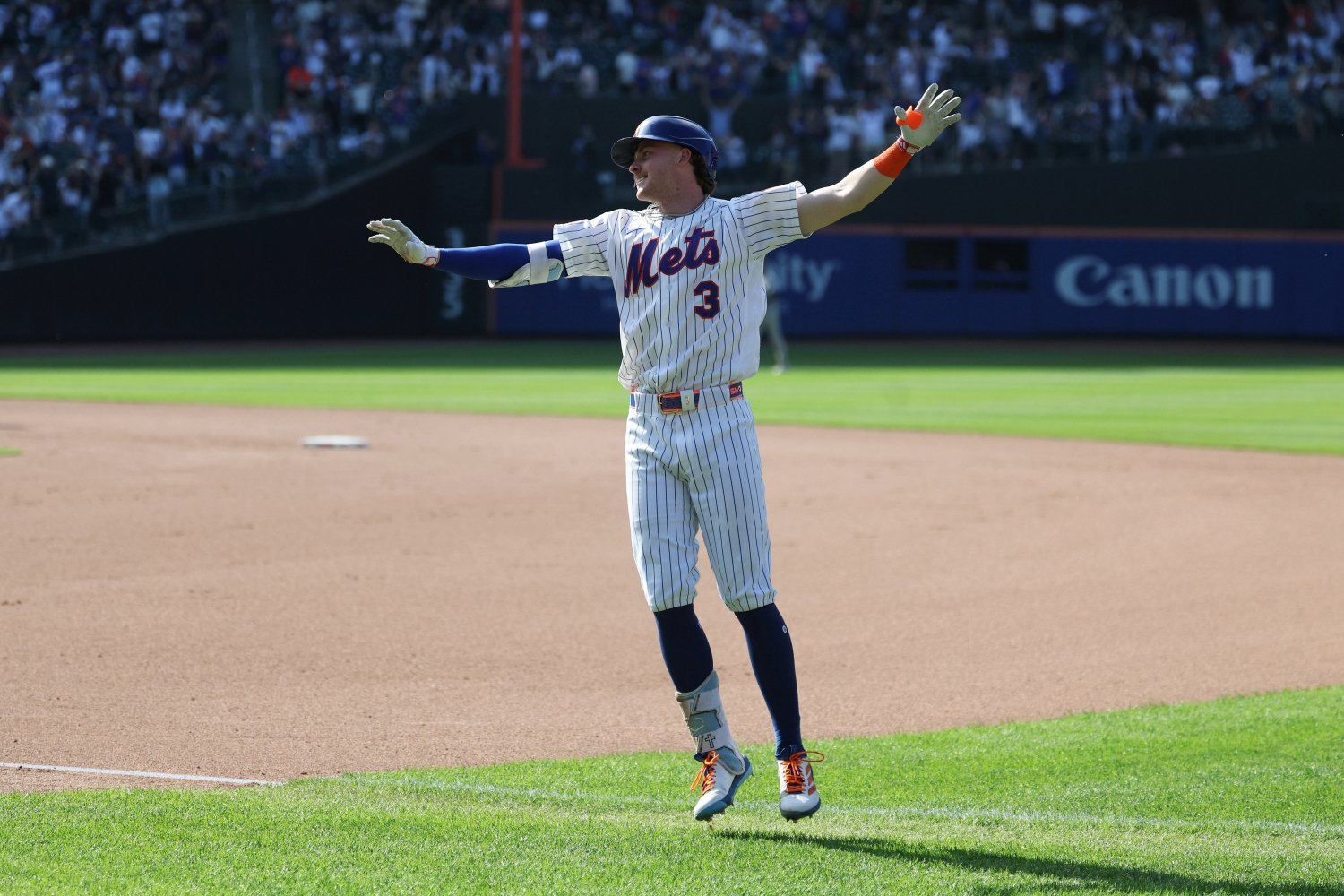 At times, baseball feels like a memory test. On Mat 13, Carson Benge started passing it. The ball that came off his bat in the 10th inning barely cleared the infield, a low, sharp line drive that split the middle of the diamond before the Detroit Tigers could react. From second base, A.J. Ewing never looked back. By the time he touched home plate, the New York Mets had won another improbable game, 3-2 at Citi Field, and Benge had his first major-league walk-off hit. But the single was not really the beginning of the story. It was the response. Hours earlier, Benge had endured the kind of night that perfectly captures how difficult it is to be a rookie in New York. He misplayed a line drive in right field that sparked Detroit’s early rally. Later, in the seventh inning, he was thrown out at the plate after getting a late break on a double steal attempt. In the decisive moment of the play, his first reaction was a step backward. Two visible mistakes. Two moments where the game seemed to move faster than he did. And yet, he still ended up deciding the game. That is precisely what makes his May performance so interesting. Roughly two weeks ago, Benge woke up carrying a .498 OPS and an offense that looked trapped somewhere between mechanical adjustments and recognition issues. Across March and April, he hit just .189 with a .278 slugging percentage. He went 2-for-18 (.111) against breaking pitches and 3-for-19 (.158) against off-speed offerings. His combined whiff rate climbed to 31.3%. The clearest positive sign was that he had homered against every pitch type. When he connected, his swing still generated average exit velocities above 90 mph. But pitchers had already started discovering the blueprint for attacking him. First came the mix of breaking balls and changeups. Then came the finishing touch: the fastball. That became the real stress test. In April, 48% of Benge’s strikeouts came against fastballs. At times, his swing looked late. Other times, his hands and pitch recognition appeared too delayed to attack pitches in the zone. The breaking point arrived on April 26 and 27, when Benge struck out four times in eight plate appearances to close the month during a series against the Washington Nationals. Since then, Benge has started solving the problem. The results are beginning to look encouraging. The samples remain small, but meaningful. Just look at the evolution of his walk and strikeout rates: March/April: 5 walks (5.1 BB%), 17 strikeouts (17.1 K%) in 97 plate appearances. May: 4 walks (10 BB%), 6 strikeouts (15 K%) through that May 13 walk-off Benge made his MLB debut on March 26 with a two-walk game. His next multi-walk performance did not arrive until May 3. Since the recent adjustments, his .240 on-base percentage from April has jumped to a near-.400 mark this month. In other words: he has renewed his approach at the plate, he is selecting pitches more effectively, and the success is finally beginning to follow. Those are exactly the kinds of signs the Mets were hoping to see, especially during this difficult stretch in which the club is dealing with injuries to several key players. Beyond Benge’s clutch hit, let’s take a closer look at the surprisingly rapid offensive growth he is beginning to show at the plate. Sign #1: He Can Now Compete Against MLB Velocity Pitchers usually challenge rookies with one simple question: “Can you hit MLB fastballs?” During April, the answer still felt incomplete. But May has changed the conversation. Against fastballs, Benge now looks like a hitter capable of sustaining quality at-bats. He is hitting .294 against heaters, while the expected metrics suggest even more production ahead: a .335 xBA and a .596 xSLG. The quality of contact supports the adjustment as well. His average exit velocity against fastballs is now above 92.3 mph. That explains a significant portion of his recent offensive surge. The clearest example came in the matchup that ended Wednesday’s game and sent Citi Field into chaos. Tigers right-hander Drew Anderson tried to challenge him with a 97 mph fastball over the plate. You already know what happened. Benge was ready to punish velocity. But Anderson’s mistake was not just the pitch selection. The fastball leaked directly into a danger zone against this newer version of Benge. “Simply don’t throw it there.” That has been Benge’s recent message to the league. His swing has dominated pitches in the upper part of the zone, showing notable improvement compared to some of the breakdowns visible earlier in the season. If Benge starts solving pitches on the outer edge, his offensive evolution could accelerate even further. The improvement in his slugging percentage, barrel rate, and hard-hit rate all originates from the same place: he is getting to the fastball much better now. He no longer looks like a hitter merely trying to survive major-league reaction time. Now, he looks prepared to punish it. When a rookie starts winning that battle, the entire at-bat changes. Sign #2: The Real Test Is Still Spin The crack still exists. And the numbers practically underline it. Against breaking balls, Benge is hitting just .167, with a .204 xwOBA and a 25.6% whiff rate. Visually, the issue shows up too: uncomfortable swings, late contact, and too many sliders that begin in the zone before disappearing beneath his hands. That is probably where much of his difficult April was born. Once the scouting reports spread around the league, pitchers stopped attacking him exclusively with fastballs. They began expanding the zone with spin, forcing him to make decisions later in the count. The game sped up on him. But even within that problem, there is an important sign hiding underneath: he has probably experienced some bad luck against certain breaking pitches. Because although the results remain poor, his xSLG against breaking balls (.277) is noticeably better than the overall quality of contact suggests. The limited extra-base production and inconsistent contact indicate that some of the contact he is producing has not yet fully translated into sustainable offensive damage. And there is an even more interesting detail against off-speed pitches. He is hitting only .185 against them, but his xBA approaches .300 and his xSLG climbs to .455. That usually means one thing: the recognition is beginning to arrive before the results do. And for a young hitter, that is often the most important frontier in development. The key point that should stay in perspective? Entering Wednesday’s game, Benge had already reduced his whiff rate against breaking balls from 31.3% down to 9.1%. Better fastball damage. More contact against breaking pitches. Improved balance against changeups. That is where the turn begins. Sign #3: The Game Has Stopped Breaking Him Inning by Inning That May 13 game was probably the clearest evidence of that, because baseball goes far beyond swings, tablet reviews, and hours spent studying advanced scouting reports on video. A month ago, a night like that might have consumed him. An early defensive mistake. A poor read at home plate. Citi Field growing tense around him. The classic environment where rookies begin chasing heroic swings in an attempt to erase previous mistakes. But Benge did not do that. His at-bat in the 10th inning was small, simple, and mature. He did not try to lift the ball. He did not chase the emotional home run. He simply took the pitch and shot a line drive back through the middle of the field. That is development too. Because the Mets are no longer watching only an athletic prospect trying to survive rookie turbulence. They are beginning to see something more interesting: a hitter who has already answered the first Major League question — the fastball — and is now entering the real offensive chess match of this league. Learning to recognize the slider that looks like a strike for twenty feet before vanishing. The devastating changeup. That is where many rookies break. And that is exactly where Carson Benge appears to be growing. Need further proof? How about this: Mere days later, the budding star delivered his second walk-off hit of the week to close out the Subway Series. View the full article
 -
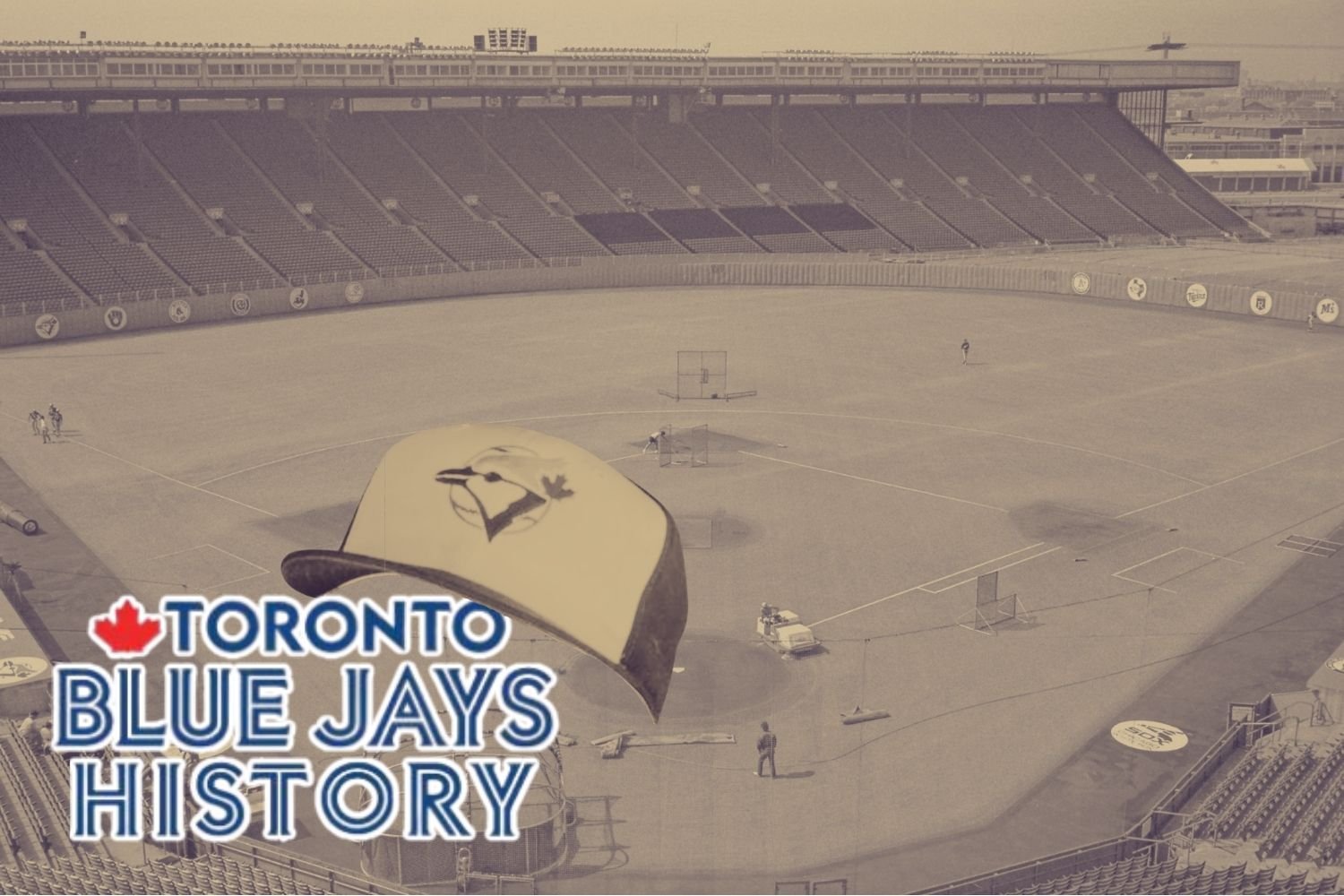 Victoria Day baseball was once a thing in Toronto. Before it was just another day on the major league calendar, one the team now fills with a road game here, an off day there, and the occasional home game, the Blue Jays hosted some holiday afternoon baseball in their early years. They welcomed Oakland for a night game on the holiday in 1977 before holding a stretch of nine straight day games on Victoria Day at Exhibition Stadium. It was in the sixth of these games, in 1983, that the Blue Jays achieved a franchise high mark. Toronto started the long weekend with success against the division-leading Baltimore Orioles. The Blue Jays dropped the opener of the four-game series on Thursday, 2-1, wasting a terrific starting pitching performance from Mike Morgan. He pitched into the eighth but didn’t see an ounce of run support, with Cliff Johnson’s solo blast in the ninth the only run Toronto could muster. It was the first run the Orioles surrendered in 32 innings, and the victory kept them four games up on the Blue Jays in the American League East. The win dropped Baltimore’s team ERA to a sparkling 3.31 to date, and Toronto’s staff would take note of what was needed to be top dog in the AL East. Blister problems had plagued Jim Gott so far this season. The accompanying control problems had seen the sophomore starter walk 24 batters in 30 innings and suffer a brief demotion from the rotation. Having lost his previous three starts, Toronto played it safe and removed Gott after five solid innings of one-run baseball on Friday. This time, Toronto’s bats hoisted their starter with three runs in the third inning and two in the fourth, allowing them to hang onto a 7-5 win after a shaky bullpen performance. More importantly for a guy who said he felt “scared to death” about this start, he walked none. In his next start, Gott was blister-free but walked five after being rushed into his start following a rain delay. Gott didn’t get a chance to fully warm up but also struck out a then-career high nine as he pitched into the seventh inning of a 6-2 loss to Detroit. (photo credit: Toronto Star archives/The Athletic) The two runs Baltimore scored in the ninth inning would be the last the O's scored all series, as Toronto pitching started its own scoreless streak, powered by the team's two top arms. Dave Stieb threw a complete-game, four-hit shutout on Saturday to drop his ERA to 1.04 on the season, and Jim Clancy followed that up with a three-hit complete game on Sunday in a 5-0 win. The pair of victories moved Toronto to just a game back of Baltimore for first. “We’re a better team this year than we were last year,” said manager Bobby Cox, who celebrated his 42nd birthday on Saturday. Over 35,000 would show up to Exhibition Stadium for the holiday matinee against the Detroit Tigers. Sparky Anderson’s club would win 92 games in ‘83, but at that point, the Tigers sat last in the AL East at 17-20. Anderson would send Milt Wilcox to the mound to start against Toronto, to the chagrin of Ernie Whitt. The Blue Jays catcher had trouble against Wilcox in his career, 2-for-11 lifetime coming into the season. “He changes speeds, and he throws that forkball,” said Whitt. “He's always tough." If Stieb and Clancy started the scoreless streak, Luis Leal was the best person to attempt to keep it going. After a slow start to his season, Leal pitched back-to-back complete-game victories to start May. He was less sharp in his last start, a no-decision against Milwaukee, which he threw on three days’ rest. Leal and Wilcox got through the first three innings unscathed, and a double play started by Leal in the fourth ended the frame and brought the Blue Jays’ streak of not surrendering a run to 22 innings. Toronto would provide Leal some breathing room in a historic fourth inning. Willie Upshaw led off and hit his seventh home run of the season to deep right field to put the Blue Jays on the board. Two batters later, Whitt finally got a hold of Wilcox, taking a spinning slider over the wall in right to give Toronto a 2-0 lead. On the very next pitch, Wilcox made another mistake, this time leaving the ball well over the plate to Lloyd Moseby. The Toronto center fielder took advantage and drilled it out of the park. The three home runs in the fourth set a franchise high for most in an inning and would be all the support the Blue Jays needed to give their starter. Leal walked a batter in the fifth and sixth innings, but the baserunners wouldn’t advance past first base. With one away in the bottom of the sixth, Whitt would hit his second home run of the game off Wilcox, his first-ever multi-homer game in the major leagues. As Moseby stepped up next, he knew Wilcox would not make a second straight mistake. Expecting to be brushed off, Moseby watched the pitch come inside, just missing his knee. In response, he took a few steps towards Wilcox, holding his bat. Briefly, the dugouts emptied. There was nothing to be riled up about. Moseby would return to the box, and curious players on both sides returned to their benches. Moseby worked a walk, but Wilcox got the last laugh, catching the speedster leaning towards second base and picking him off for the second out of the inning. Hosken Powell would ground out to end the sixth, but powered by solo home runs, Toronto now had a 4-0 lead. "Right now, our confidence is sky high," said Moseby after the game, "We're getting great pitching, our offence is going good, and so is our defence." (photo credit: Toronto Star archives) It was a lead that was safe with Leal. He surrendered an inconsequential single in the seventh and ended the eighth inning with back-to-back strikeouts. With three outs to go, Leal started the ninth with back-to-back walks, leading to Cox walking to the mound to remove his starter. Randy Moffitt emerged from a sleepy Toronto bullpen and put an end to the Tigers on five pitches: He got a double play ball off the bat of Lance Parrish before striking out Glenn Wilson to end the game. The win eeked the Blue Jays ahead of Baltimore on percentage points and moved them into a share of first place in the division with Boston. It was the latest in the season that Toronto had ever had a share of the division lead. On the same afternoon, the Jays set a franchise high mark for home runs in an inning and for consecutive scoreless innings. "Three straight shutouts in a bandbox like this," lamented Anderson afterwards. "That's really something.” "A shutout is great any time," said Cox. "Three in a row, with the conditions like they have been the last three games, wet turf and the wind blowing out, it makes it that much more difficult." The scoreless streak wouldn't last much longer. Morgan gave up four runs to the Tigers the following evening, but the Blue Jays would rally with a pair of big innings in a 7-6 win. The division lead was now Toronto’s. The Jays would continue to stay in the division picture until late July, when a split doubleheader knocked them out of first place for good. They would finish nine back of the division, but the 89-win season was a turning point, and the team would eventually win its first division title two years later. View the full article
 -
Why Roman Anthony Still Looks Like a Star Beneath the Surface
DiamondCentric posted an article in Talk Sox
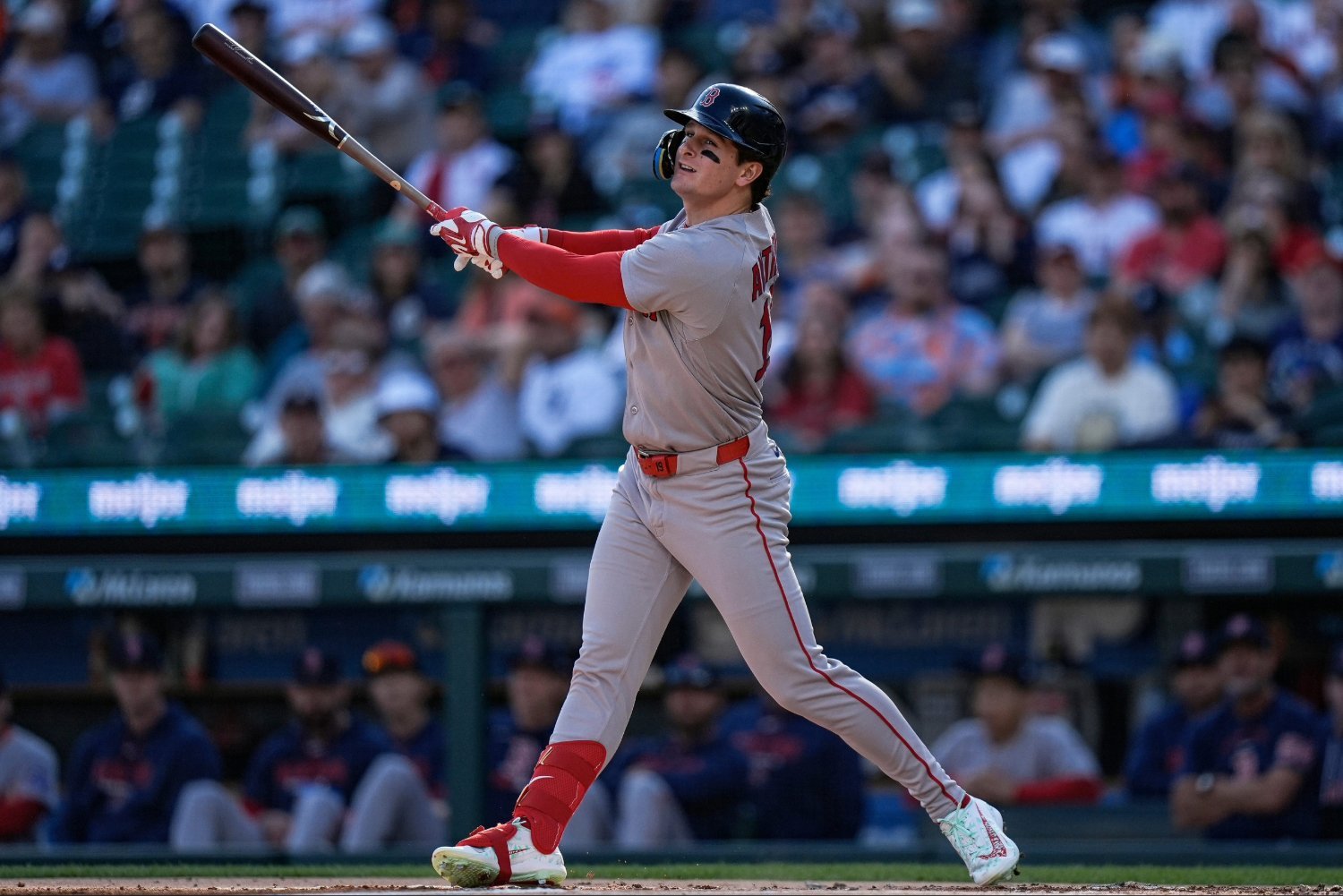 Roman Anthony has gotten off to a slow start in 2026 after lighting it up in the World Baseball Classic this March. Prior to the start of the season, Anthony was a staple in Top 100 players lists across all platforms and many, including myself, assumed continued to ascension into the upper echelon of hitters that MLB has to offer. The high expectations were deserved. Only 11 rookies since the Wild Card Era began have posted a higher OBP than Roman Anthony did in 2025. Some of the names on that list include Aaron Judge, Juan Soto, Albert Pujols, among others. And, since 1947, only three rookies accumulated more than Anthony's 3.1 bWAR in 71 games or fewer. It's rare air for Anthony to be sitting in, and he did not get there by accident. A month and change is no reason to wave the white flag on a 22-year-old's career, but the slow start has been well below the expectations set on him in the spring. There has not been major regression across the board and, in fact, Anthony was improving in some key categories up until his right wrist injury. Roman Anthony: 109 AB, .229/354/.321, 1 HR, 5 RBI, 33 K, 20 BB As you can see above, Anthony's percentiles, especially in the power department, remain bright red. He ranks in the 91st percentile in average exit velocity, the 86th percentile in maximum exit velocity, and the 93rd percentile in bat speed. Not only is he hitting the ball harder on average, but he is also striking out less and walking more than he did in his rookie year, improving from a 27.7% strikeout rate to 25.4% and 13.2% walk rate to 15.4%. His expected batting average remains around where it was last season, sitting at a .262 mark compared to last year's .258; based off of quality of contact and launch angle, Anthony has gotten better this year, Looking at his batted ball metrics, we see that further improvements may be in store: What we do not like to see is a sharp decrease in PullAir%, with Anthony showing a drop of more than three percent. This comes despite improvements this season in AIR% and Pull%. At face value, a drop like this doesn't add up. But another look at the batted ball data shows us why the decrease is happening. He has increased his pulled groundball percentage from 24.1% in 2025 to 27.6% this year. Along with that, he's hitting more balls in the air either back up the middle or the other way, going from an Oppo AIR% of 14.9% to 18.4% and a Straight AIR% of 20.7% to 22.4%. The latter half of this approach may be a little league coach's dream, but pulling the ball in the air will naturally lead to more home runs. As of May 13, according to Baseball Savant, there had been 1,347 home runs hit this season. Of those, 163 of them were hit to the opposite field, 248 of them were hit to the middle third of the field, and the other 936 were pulled. That is a stark contrast and one that should be noted when evaluating Roman Anthony's season thus far. One thing that was harped on as a problem for Anthony last season was his propensity to hit the ball on the ground, and he has worked to improve that. His average launch angle has moved from 6.9 degrees to 8.3 degrees. Statcast defines the "sweet spot" for launch angle to be between eight and 32 degrees, as that is where most hits are found. Eight is just high enough to avoid being a routine ground ball, and 32 is just low enough to avoid being a routine fly ball or pop-up. But while Anthony has improved his launch angle and maintained solid exit velocities, he's not hitting the ball in a way that is taking advantage of all of that power. Above is a chart of all Roman Anthony's total balls in play contrasted with balls in play that have a launch angle of 15 or more degrees, along with a rough field sketch for visualization purposes. The blue dots indicate low exit velocities and red is his higher-end exit velocities. The spray chart plot is thanks to @jonpgh on X/Twitter. What is interesting to see is how many balls in play vanish after increasing the minimum threshold and, more importantly, how many of those balls on the left image were hit with launch angles below 15 degrees. Cutting the field in half will give an approximate value of how many balls in play were pulled. By my count on the right image, Anthony pulled nine balls compared to the 17 that went the opposite way, including his lone home run this season. TUFYOFlfVjBZQUhRPT1fQmdOUUFsRlhCQVlBWEZZRVh3QUhBZzREQUFCVEJnVUFBVlZSQ0FBSFVBTURWUVJV.mp4 The intangibles for the Roman Empire are still there. He still crushes the baseball and draws walks like he had before. He has even made improvements in lifting the ball more consistently, which is a better step forward than continuing to hit groundballs at an unsustainable rate. Now, it's time for him to start ripping baseballs into right field instead of center or left. There is so much upside in him and, as I'm sure you have heard before, he is only 22 years old. A bad April won't mean anything if he can start hitting like we've seen him do before. His expected metrics, like xBA (.229 -> .262) and xwOBA (.323 -> .379) all indicate brighter days are ahead. This seems much more like a continued adjustment period than a collapse. His underlying skills remain the same, if not largely better than before. All of his natural power needs to be used to deposit the baseball into seats. Upon his eventual return from the injured list, should he begin pulling AND elevating, the season we expected out of Roman Anthony may very well be on the horizon. View the full article
 -
What are your Marlins vs. Braves series predictions?
DiamondCentric posted an article in Fish On First
 Once again in 2026, I will be monitoring Miami Marlins predictions from our valued SuperSubs, Fish On First staffers and livestream guests. Individual article pages like this one will be created prior to every Marlins series and featured prominently on the FOF site. Consistent participation is key if you want to win this annual contest. Submissions only take a few seconds. Scoring system A "perfect" series is worth three points: Earn one point for predicting which team will win the upcoming series Earn one point for predicting the precise number of victories for each team Earn one point for predicting the “Series MVP” who accumulated the highest win probability added (WPA) during the series as calculated by FanGraphs (could pick a player from either team) FOF SuperSub Nicholas Milton and FOF staffer Jeremiah Geiger are currently tied atop the 2026 season leaderboard, which will be updated between every Marlins series. If you are a SuperSub, leave a comment with your Prediction Time picks on this page, or join the Marlins Discord Server and submit there. We'll feature them on the upcoming Fish On First LIVE episode and track your points throughout the season! Any picks submitted prior to the first pitch of the series opener will be counted. If you are not a SuperSub, please consider signing up here to support the FOF staff. Series preview notes Probable starting pitchers: RHP Max Meyer (MIA) vs. RHP JR Ritchie (ATL) on Monday LHP Braxton Garrett (MIA) vs. LHP Martin Pérez (ATL) on Tuesday RHP Janson Junk (MIA) vs. LHP Chris Sale (ATL) on Wednesday RHP Sandy Alcantara (MIA) vs. RHP Spencer Strider (ATL) on Thursday The Marlins rank 18th in MLB with a 97 wRC+ and 12th in MLB with a 3.85 FIP. They are 5-5 in their last 10 games and have a 14-12 record at home this season. The following Marlins players are on the injured list: Griffin Conine (10-day IL), Ronny Henriquez (60-day IL), Adam Mazur (60-day IL) and Robby Snelling (15-day IL). The Braves rank second in MLB with a 115 wRC+ and 11th in MLB with a 3.85 FIP. They are 7-3 in their last 10 games and have a 16-7 record on the road this season. The following Braves players are on the injured list: Ronald Acuña Jr. (10-day IL), Dylan Dodd (15-day IL), Joe Jiménez (60-day IL), Sean Murphy (10-day IL), Spencer Schwellenbach (60-day IL), AJ Smith-Shawver (60-day IL), Hurston Waldrep (15-day IL), Joey Wentz (60-day IL), Eli White (7-day IL) and Danny Young (60-day IL). View the full article
 -
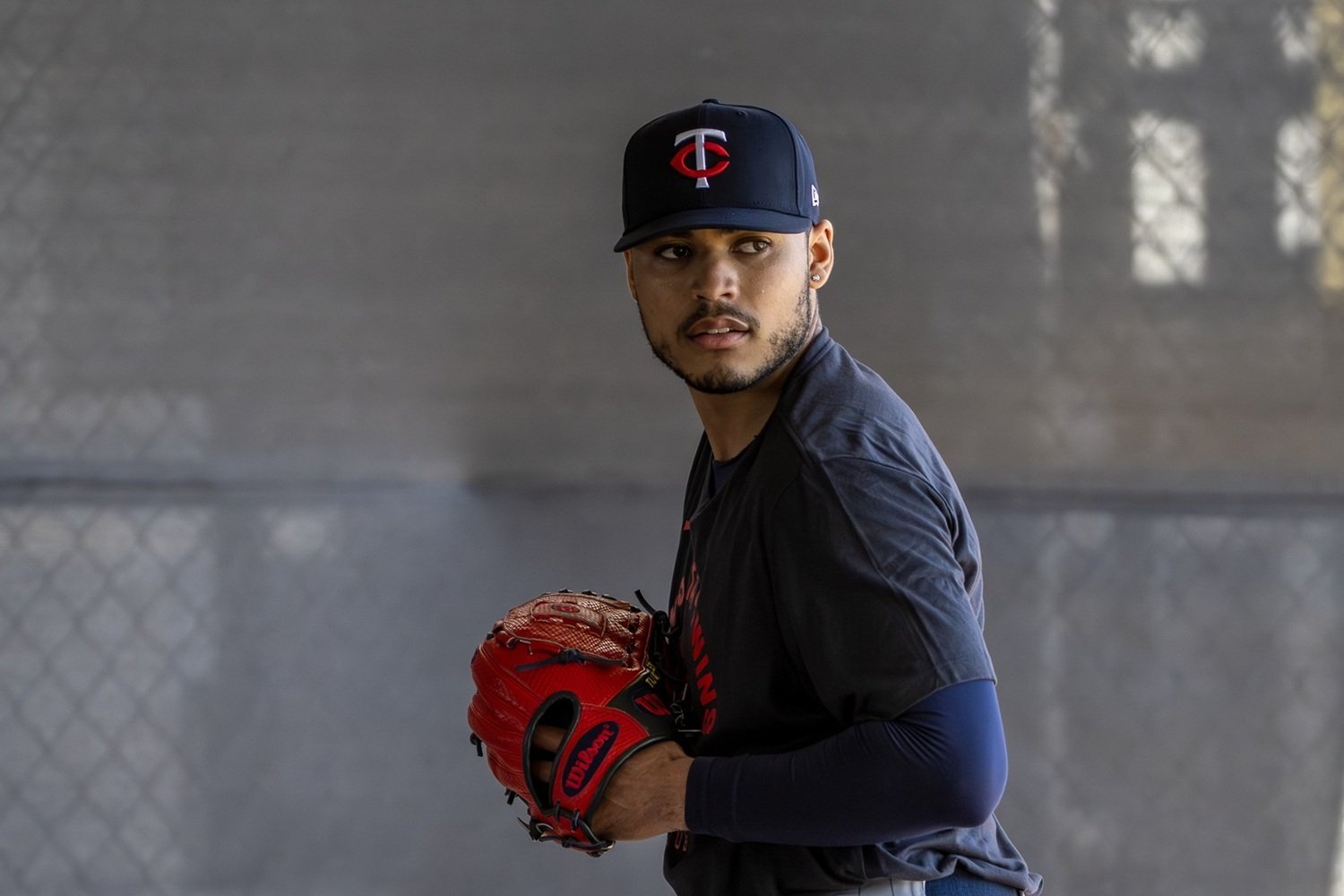 TRANSACTIONS Twins RHPs Taj Bradley and Cody Laweryson were both sent to start their rehab assignments with the Saints in Columbus. Fort Myers placed infielder Bruin Agbayani on the 7-Day Injured List. Previously, he had missed about a month with a thumb injury. RHP Dylan Questad began his rehab assignment with the FCL Twins. Saints Sentinel St. Paul 2, Columbus 3 Box Score Taj Bradley: 1 ⅔ IP, 2 H, 1 ER, 2 BB, 3 K HR: None Multi-hit games: Hendry Mendez (2-for-5, RBI), Aaron Sabato (2-for-4, 2B) The Saints lost a frustrating endeavor on Sunday. Runners left on base—the ire of players, coaches, and fans alike. That mysterious curse struck the Saints once more on Sunday, as the team went just 2-for-12 with runners in scoring position, and only plated two runs, despite putting a runner on base to start a frame in six of their nine innings. On-base madness took a backseat to the starter. Taj Bradley pitched for the first time since his May 5th outing in Washington. With his pectoral injury evidently under control, the righty worked 1 2/3 inefficient innings, walking two while allowing a pair of hits. He threw 42 pitches and topped out at 97.8 MPH with his fastball. Hendry Mendez continues to wallop AAA pitching, as his two hits pushed his batting average at the level to .395. Perhaps even more fascinating has been the lefty’s ability to walk more than strikeout (currently at a nine-to-eight rate). He completed this trick across all of 2025; can he repeat it at the highest level of the minors? So far, the results have been encouraging. And he won’t turn 23 until after the season ends. The Clippers are an affiliate in the Guardians system. Known to specialize in switch-hitting middle-infielders, Cleveland once again claims a youngster with such skills: Angel Genoa. The 47th-overall prospect in MLB singled once in four at-bats. Wind Surge Wisdom Wichita 6, San Antonio 3 Box Score Eli Jones: 4 IP, 4 H, 2 ER, 2 BB, 3 K HR: Garrett Spain (10) Multi-hit games: None The Wind Surge needed just four hits to win on Sunday. You, the attentive reader, may wonder how they did so, while scoring six runs along the way. Here’s how: walks and errors. Nine and three of them, respectively. Evidently, one of San Antonio’s Missions was not to play clean, orderly baseball. Jhony Brito started for San Antonio on MLB rehab. He breezed through three clean frames before starting trouble in the fourth. A pair of walks begat a run-scoring fielding error, which was soon worsened when Brito threw away a pickoff attempt, scoring a second unearned run. Should a pitcher’s fielding error count as an earned run? The argument both ways makes sense. We’re digging deep into the technicalities of what “earned” should mean in this context, yet it does feel right that a pitcher should be penalized for a mistake under his control. Garrett Spain homered in the eighth to put a third run on the board; Andrew Cossetti doubled in Jorel Ortega to quickly make it a fourth score. The final two runs score in the ninth when wunderkind prospect Ethan Salas fired a ball wildly into left field in an attempt to nab Spain stealing third. Instead, both Spain and the trailing runner, Caleb Roberts, safely trotted home. The aforementioned Salas is not the uber-prospect he once was, but he still ranks as the 52nd-best youngster in baseball, according to MLB.com. He singled twice in five plate appearances. Kernels Nuggets Cedar Rapids 8, Fort Wayne 11 Box Score Miguelangel Boadas: 2 IP, 6 H, 6 ER, 1 BB, 4 K HR: Brandon Winokur (5), Yasser Mercedes (1) Multi-hit games: Marek Houston (3-for-4, 2B, 2 R, BB), Brandon Winokur (2-for-5, HR, R, 5 RBI), Yasser Mercedes (2-for-5, HR, 2B, 3 RBI) The Kernels lost a high-scoring affair on Sunday. Brandon Winokur continued his hot-hitting ways with a two-run homer in the first. The 21-year-old hit a paltry .198/.323/.358 in April before exploding to hit .364/.453/.564 in May, with just three hitless days in the month. That’ll play. Cedar Rapids’ second homer of the day off the certainly not Nominative Determinist Jamie Hitt, was a three-run shot by Yasser Mercedes, his first as a Kernel. Mercedes has actually improved his OPS since his promotion, jumping from 1.081 as a Mighty Mussel to 1.198 as a Kernel. It’s been a tremendous season for the 21-year-old in his 40-man decision year. On a day not for faint-hearted hurlers, Paulshawn Pasqualotto authored a fantastic relief outing. The righty whiffed four across 2 ⅓ scoreless innings. His season ERA is now 1.59. A.J. Preller’s dealing ways have left the Padres’ system weak on talent. As a result, the best prospect in the game for the TinCaps was Kavares Tears, ranked 26th in their system. He doubled and singled in four trips to the plate. Mussel Matters Fort Myers 9, Bradenton 2 Box Score Justin Mitrovich: 2 IP, 0 H, 0 ER, 0 BB, 5 K HR: Jayson Bass (4) Multi-hit games: Quinn McDaniel (2-for-5, 2B, R, RBI), Bryan Acuña (2-for-4, RBI) The Kernels erupted in the ninth to win on Sunday. Quinn McDaniel, hitting machine, scored the first run with a double cracked into the right-center gap. Then? Nothing. Perhaps an odd baserunner. A rain delay. Bradenton took the lead in what felt like one of those times a team simply ran out of gas before they could repeat their scoring ways. Their first hit since McDaniel’s double didn't arrive until the ninth inning. But what an inning it was. JP Smith II singled and was pinch-run for by Jayson Bass—remember this. Ramiro Dominguez sent Bass to third but was thrown out at second attempting to stretch his hit as far as possible. No matter: Ryan Sprock walked, Irvin Nunez singled, Quentin Young walked, and Bryan Acuña singled to give Fort Myers the lead. A Harry Genth walk and Dameury Pena single made it a 5-2 game. That ushered Bass to the plate with the bases loaded. He was brought in for his legs, but he made the biggest impact with his bat: the lefty demolished one so thoroughly that even the pitcher had no choice but to stand on the mound and watch in pained awe as the ball flew over the fence. Marauders’ third baseman Murf Gray is ranked as the Pirates’ 17th-best prospect. He singled once in three at-bats. TWINS DAILY PLAYERS OF THE DAY Twins Daily Minor League Pitcher of the Day – Paulshawn Pasqualotto Twins Daily Minor League Hitter of the Day – Yasser Mercedes PROSPECT SUMMARY Here’s a look at how the Twins Daily Top 20 Twins Prospects performed: #5 – Eduardo Tait (Cedar Rapids) - 0-1, K #7 – Marek Houston (Cedar Rapids) - 3-4, 2B, 2 R, BB, K #10 – Gabriel Gonzalez (St. Paul) - 1-4, BB, 2 K #12 – Andrew Morris (Twins) - 1 IP, 0 H, 0 ER, 0 BB, 1 K #13 – Hendry Mendez (St. Paul) - 2-5, RBI, K #14 – Quentin Young (Fort Myers) - 0-3, R, BB, K #15 – Brandon Winokur (Cedar Rapids) - 2-5, HR, R, 5 RBI #19 – Khadim Diaw (Cedar Rapids) - 1-5, 2B, K #20 – Kyle DeBarge (Wichita) - 0-4, 2 K MONDAY’S PROBABLE STARTERS FCL Braves @ FCL Twins (11:00 AM) - TBD View the full article
 -
 Justin DeCriscio launched a three-run homer and finished 3-for-6 with three RBIs as the Fort Wayne TinCaps held off Cedar Rapids 11-8, with Clay Edmondson collecting his eighth save over two innings. Ethan Routzahn worked three innings for a save of his own in El Paso's 12-7 win at Salt Lake, where Jase Bowen drove in four. Ethan Salas reached three times for San Antonio in a 6-3 win, while Ryan Wideman went 3-for-3 with a steal in Lake Elsinore's loss. Jase Bowen Comes Up Big As Chihuahuas Prevail Jase Bowen was on base four times and drove in four, including a go-ahead two-run double in the seventh inning as the Triple-A El Paso Chihuahuas scored 10 runs over the final four innings to pull out a 12-7 triumph over the host Salt Lake Bees. El Paso went 2-4 in the series. Marcos Castanon and Victor Duarte homered and had two hits, as did Samad Taylor, Nick Solak and Carlos Rodriguez for the Chihuahuas, who pounded out 16 hits. Castanon drove in three and Rodriguez and Duarte a pair. Rodriguez had a pair of doubles. Solak extended his on-base streak to 24 games. Duarte had just been promoted this week from Low-A Lake Elsinore. Trailing 1-0, Taylor and Will Wagner singled to open the fourth and Solak walked to load the bases before Bowen singled home a pair for a 2-1 Chihuahuas lead. Salt Lake tied it in the bottom of the fourth and scored four times in the fifth for a 6-2 advantage. El Paso began the comeback in the sixth. Solak had a leadoff single and Bowen walked before the next two batters were retired. Castanon came up with his fifth homer of the season to pull the Chihuahuas with 6-5. In the seventh, Taylor had a one-out walk and Solak singled before Bowen hit a liner to left-center for a double that scored both to take a 7-6 lead. Bowen was caught in a rundown heading to third after the ball was fumbled in the outfield. The Chihuahuas tacked on four runs in the eighth on as Jose Miranda and Rodriguez had RBI doubles and Duarte blasted his first homer at Triple-A, a two-run shot, to make it 11-6. Each team added a run in the ninth, with El Paso getting a Rodriguez run-scoring double. Chihuahuas right-hander Ethan Routzahn pitched the final three innings to pick up his second save of the series. EP_0517.mp4 Player AB R H RBI BB K Samad Taylor 3 2 2 0 1 0 Will Wagner 5 1 1 0 0 1 Nick Solak 4 2 2 0 1 0 Jase Bowen 3 1 2 4 2 1 Mason McCoy 5 1 1 0 0 0 Jose Miranda 4 0 1 1 0 1 Clay Dungan 1 2 1 0 0 0 Marcos Castanon 5 1 2 3 0 1 Carlos Rodriguez 5 1 2 2 0 0 Victor Duarte 5 1 2 2 0 1 Player IP H R ER BB K HR Marco Gonzales 3 1/3 6 2 2 1 2 1 Misael Tamarez 1 1/3 2 4 4 2 1 0 Logan Gillaspie 1/3 1 0 0 1 0 0 Sean Boyle 1 1 0 0 0 0 0 Ethan Routzahn 3 2 1 1 2 2 0 Jhony Brito Stellar In First Game Since Surgery In Missions' Loss San Diego Padres right-hander Jhony Brito made his first appearance in a game since undergoing Tommy John surgery in April 2025 and turned in a very positive performance. Brito didn't allow an earned run in four innings of the host Double-A San Antonio Missions' 6-3 loss to the Wichita Wind Surge. The teams split the six-game series. Brito only allowed two hits and did give up two unearned runs thanks to some poor Missions defense, but he did walk two and struck out one in his 53-pitch performance that included 29 strikes. Both hits Brito gave up came to the second and third hitters he faced. The No. 2 hitter doubled and the No. 3 hitter singled, with the runner being thrown out at the plate. Brito settled in and retired the next eight batters before giving up back-to-back one-out walks. After another out, Brito looked to be getting out of the mess but a throwing error by shortstop Francisco Acuna allowed a run to score and kept the inning alive. Brito then made an errant pickoff attempt, allowing the second run to score. That erased what had been a 2-0 lead that the Missions took in the bottom of the first. Ethan Salas had a leadoff single and Braedon Karpathios' one-out single moved him to third. Back-to-back walks to Tirso Ornelas and Romeo Sanabria and a wild pitch brought in the two runs. After the Wind Surge tied the game, the Missions retook the lead in the fifth. Salas again had a leadoff single and then stole second, his ninth steal of the year. An errant pickoff attempt put Salas at third and he came home on Kai Roberts' single to right. It stayed 3-2 until the eighth, when the Wind Surge got a leadoff homer, a walk and an RBI double to grab a 4-3 lead. In the ninth, the Wind Surge added two more thanks to no hits and two walks, with both runs scoring on a Salas throwing error to third base on a double steal. Salas, Padres Mission's No. 1 prospect, and Roberts each had two hits, with Salas scoring twice and Roberts also drawing a walk and driving in a run. SA_0517.mp4 Player AB R H RBI BB K Ethan Salas 5 2 2 0 0 1 Kai Roberts 3 0 2 1 1 1 Braedon Karpathios 5 1 1 0 0 3 Tirso Ornelas 3 0 1 0 1 0 Romeo Sanabria 3 0 1 1 1 2 Carson Tucker 0 0 0 0 0 0 Ryan Jackson 4 0 0 0 0 1 Francisco Acuna 3 0 0 0 1 0 Luis Verdugo 4 0 1 0 0 1 Kai Murphy 3 0 1 0 1 0 Player IP H R ER BB K HR Jhony Brito 4 2 2 0 2 1 0 Michael Flynn 2 0 0 0 1 3 0 Andrew Thurman 1 2/3 2 2 2 3 1 1 Andrew Moore 1 1/3 0 2 1 3 2 0 Newcomer Justin DeCriscio Sparks TinCaps To Win, Series Split Justin DeCriscio had three hits—including his first High-A homer, a three-run shot—as the Fort Wayne TinCaps notched an 11-8 victory over the host Cedar Rapids Kernels to earn a split of the six-game series. Jack Costello and Oswaldo Linares each had a pair of hits, with Linares also driving in two runs and scoring once and Costello scoring twice and driving in one. Kasen Wells drew three walks and singled, scoring twice. Kavares Tears had a double and a walk with two RBIs. Just promoted from Low-A Lake Elsinore to Fort Wayne at the beginning of the week, was 1-for-12 in the series before erupting for his big game out of the leadoff spot. He singled to begin the game and came around to score on a Tears sacrifice fly. A five-run TinCaps second inning featured a run-scoring wild pitch before DeCriscio's three-run blast restored the lead at 5-2. He hit three homers in 28 games at Lake Elsinore. Tears added his RBI double in the frame. Cedar Rapids scored once in the bottom of the second to make it 6-3, then rallied for four runs in the fourth to go up 7-6. But Fort Wayne came back in the fifth and sixth innings to take control. In the fifth, Costello tripled and scored on Zach Evans' sac fly to tie it. Wells walked and stole second before going to third on a flyout and coming home on Jonathan Vastine's go-ahead single. Rosman Verdugo and Tears sandwiched walks around a strikeout to begin the sixth, then Costello doubled home Verdugo. A fielder's choice and a walk preceded Linares singling home a pair for an 11-7 lead. TinCaps left-handed starter Jamie Hitt gave up seven runs (six earned) in five innings. Right-handed closer Clay Edmondson pitched the final two innings, including coming into the eighth with the bases loaded and only allowing one run to score, to pick up his eighth save, which leads all of Minor League Baseball. FW_0517.mp4 Player AB R H RBI BB K Justin DeCriscio 6 2 3 3 0 0 Rosman Verdugo 3 2 1 0 1 1 Jake Cunningham 5 0 0 0 0 4 Kavares Tears 3 0 1 2 1 2 Jack Costello 5 2 2 1 0 2 Zach Evans 4 2 1 1 0 0 Kasen Wells 2 2 1 0 3 1 Oswaldo Linares 4 1 2 2 0 0 Jonathan Vastine 5 0 1 1 0 4 Player IP H R ER BB K HR Jamie Hitt 5 7 7 6 2 5 2 C.J. Widger 1 1 0 0 1 0 0 Igor Gil 1 1 1 1 3 1 0 Clay Edmondson 2 1 0 0 0 2 0 Ryan Wideman Goes 3-for-3 With 29th Steal, But Storm Thumped The host Low-A Lake Elsinore Storm watched as the Rancho Cucamonga Quakes scored runs in the first five innings en route to a 16-7 victory. The Storm won four of the six games in the series. Ryan Wideman—Padres Mission's No. 5 prospect—went 3-for-3, including a double and a triple, with a walk and his 29th stolen base of the season for the Storm, while Kerrington Cross and Truitt Madonna each had a pair of hits, with Madonna and Yoiber Ocopio driving in a pair of runs. Ocopio, who just joined the team this week, hit his first homer. Rancho Cucamonga scored five times in the first, one each in the second and third and three each in the fourth and fifth innings to grab a 13-2 cushion. LE_0517.mp4 Player AB R H RBI BB K Ryan Wideman 3 1 3 0 1 0 George Bilecki 0 1 0 0 1 0 Qrey Lott 4 0 0 0 0 2 Bradley Frye 4 1 1 1 0 2 Kerrington Cross 4 1 2 1 1 0 Truitt Madonna 3 1 2 2 1 0 Ty Harvey 0 0 0 0 1 0 Jorge Quintana 3 0 0 1 0 1 Jose Verdugo 2 0 0 0 0 1 Conner Westenburg 4 1 1 0 0 1 Yoiber Ocopio 3 1 1 2 0 1 Dylan Grego 4 0 0 0 0 1 Player IP H R ER BB K HR Carlos Medina 2/3 4 5 5 2 0 1 Rordy Mejia 2 2 2 2 1 2 1 Daichi Moriki 2/3 0 3 3 3 1 0 Brandon Langley 1 1/3 4 3 2 1 1 1 Sean Barnett 2 1/3 2 0 0 1 2 0 Cal Riehl 1 2 3 3 2 2 0 Kerrington Cross 1 1 0 0 0 0 0 Padres Transactions Padres sent RHP Jhony Brito on a rehab assignment to San Antonio Missions. Top 20 Prospect Performance Ethan Salas: 2-for-5, 2 R, 1 K, 1 SB Kash Mayfield: DNP Miguel Mendez: DNP Kruz Schoolcraft: DNP Ryan Wideman: 3-for-3, 2B, 3B, 1 R, 1 BB, 1 SB Jorge Quintana: 0-for-3, 1 RBI, 1 K Ty Harvey: 0-for-0, 1 BB Kale Fountain: DNP Braedon Karpathios: 1-for-5, 1 R, 3 K Lamar King Jr.: DNP Jagger Haynes: DNP Alex McCoy: DNP Truitt Madonna: 2-for-3, 2B, 3B, 1 R, 2 RBI, 1 BB Tucker Musgrove: DNP Garrett Hawkins: DNP Michael Salina: DNP Eric Yost: DNP Rosman Verdugo: 1-for-3, 2 R, 1 BB, 1 K, 2 SB Bryan Balzer: DNP Deivid Coronil: DNP View the full article
 -
 Fish On First staffers react to the latest Miami Marlins series and prepare you for what lies ahead. Sunday's show was hosted by Ely Sussman and featured panelists Nate Karzmer, Louis Addeo-Weiss, Sean Millerick, Alex Carver and Isaac Azout. The following topics were covered: Marlins on verge of falling into last place Eury Pérez showing no signs of turnaround Jakob Marsee's best series yet Joe Mack's control of the running game Elite production from middle infield of Xavier Edwards and Otto Lopez Previewing and predicting the next series against the Atlanta Braves You can find Fish Unfiltered and Fish On First LIVE on the Fish On First YouTube channel, Apple Podcasts, Spotify or wherever else you get your pods. Our next FOF LIVE episode will be Thursday at approximately 10:00 p.m. ET following the Marlins-Braves series finale. View the full article
 -
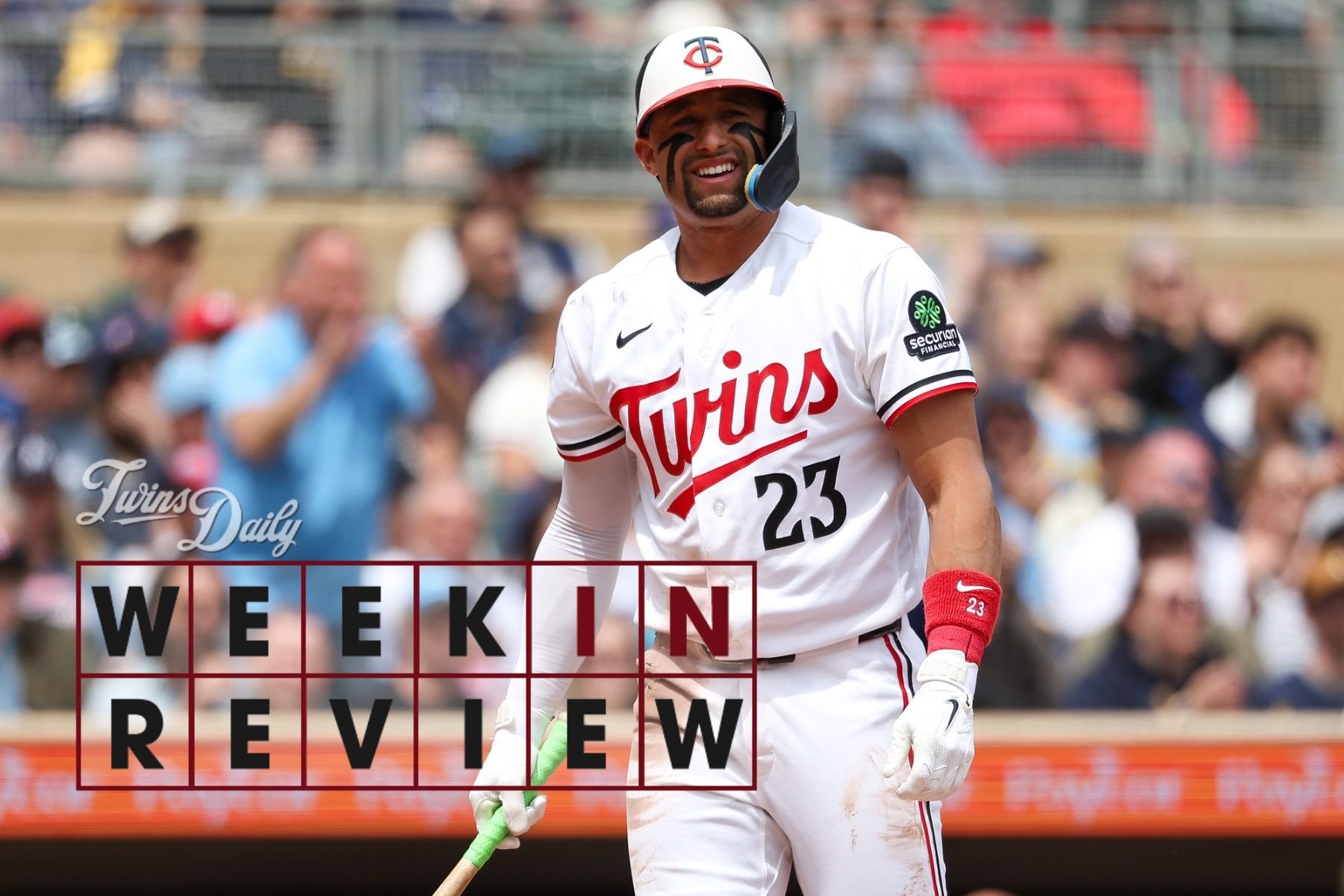 The Weekly Nutshell: We've reached the second half of May, and that's where things start coming into focus. Samples are growing more substantial, and patience is wearing thin for struggling players who are derailing the team's results. The Twins haven't had a winning week since early April and are 10-19 in their last 29 games. They've been constantly hanging around five-to-seven games below .500, which mostly lines up to preseason expectations. (They're currently on about a 70-win pace after winning 70 games in 2025.) What makes it frustrating though, is that the bar for relevance does not feel out of reach. You see the Cleveland Guardians leading the division with an unspectacular 26-22 record, you see some of the pitching performances being put forth by Minnesota's starters, and it really doesn't feel like Tom Pohlad's stated goal of competitiveness is out of the realm. As unimpressive as they've looked for the most part, the Twins are currently within two games of a wild-card position in the American League. However, they are being held back and dragged down by too many dreadful performances that go well beyond merely "bad" and as we approach the season's one-third marker in the schedule, the time for action is upon us. We saw that begin to unfold this past week and there could be more to come. Let's dig in. Weekly Snapshot: Mon, 5/11 through Sun, 5/17 *** Record Last Week: 3-3 (Overall: 21-26) Run Differential Last Week: +7 (Overall: -6) Standing: 3rd Place in AL Central (4.5 GB) Latest Game Results Game 42 | MIN 3, MIA 0: Ober Throws a Maddux, Shutting Out Marlins on 89 Pitches Ober: 9 IP, 0 R, 2 H, 0 BB, 7 K Game 43 | MIA 9, MIN 5: Two Buxton Homers Not Enough to Overcome SWR Clunker Woods Richardson: 3 IP, 8 R (6 ER), 7 H, 4 BB, 1 K Game 44 | MIN 9, MIA 1: Twins Take Series with Blowout Win in Zebby's Return Matthews: 7 IP, 0 R, 4 H, 1 BB, 5 K Game 45 | MIL 3, MIN 2: Lead Slips Away on Iffy Ruling in One-Run Loss to Brewers Ryan: 6 IP, 1 R, 4 H, 1 BB, 7 K Game 46 | MIL 2, MIN 1: RISP Woes Prove Costly as Twins Come Up Just Short Again Twins offense: 10 K, 1 BB, 0-8 RISP Game 47 | MIN 5, MIL 4: Twins Steal One from Brewers Behind Bullpen and Bats Twins bullpen: 4 IP, 1 R, 4 H, 3 BB, 4 K IF YOU'D RATHER LISTEN TO THE WEEK IN REVIEW THAN READ IT, YOU CAN GET IT IN AUDIO FORM! FIND THE LATEST EPISODE ON OUR PODCAST PAGE, AS WELL AS ON APPLE AND SPOTIFY. SUBSCRIBE TO OUR CHANNELS SO YOU DON'T MISS OUT! NEWS & NOTES The morning after going 0-for-4 with four strikeouts in Wednesday's loss to Miami, his second golden sombrero in a row, Matt Wallner was optioned to Triple-A for a much-needed reset. Heading back to the minors is a devastating setback for the 28-year-old with more than 1,100 plate appearances in the majors, but his increasingly untenable performance left the Twins with little choice. An 0-for-14 slump (with 11 Ks) had dropped his OPS to .551, and the defense was somehow worse than the offense. He'll look to get back on track with the Saints and return with renewed confidence, similar to his journey in the 2024 season. Recalled to replace Wallner on the roster was glove-first utilityman Ryan Kreidler. In terms of day-to-day utility, we're seeing Austin Martin step into a true everyday role in right field. He has been the starter there in all four games since Wallner was sent down. Also on Thursday, the Twins called up Zebby Matthews and sent down Travis Adams. Matthews steps into the vacant spot opened up by Taj Bradley's pectoral injury, chiseling away the final piece of remaining rotation depth in Triple-A. Any further attrition would put the Twins in a tough spot. Luckily, Bradley appears to be moving toward a somewhat imminent return. He made a rehab start for the Saints on Sunday, although it didn't go especially smoothly (42 pitches in 1.2 IP with 2 H, 2 BB allowed). Cody Laweryson, recovering from a forearm strain, also initiated a rehab at Triple-A over the weekend, and tossed a 1-2-3 inning in his return to action on Saturday. HIGHLIGHTS The starting rotation, with one glaring exception, continues to carry weight for this team. Bailey Ober opened the week with the best performance of his career: a complete-game shutout on just 89 pitches, with just two hits allowed. He retired the last 16 batters he faced consecutively. His second start on Sunday wasn't nearly as brilliant, with the righty surrendering three runs over five innings, but he exited with a lead and a 3.63 ERA on the season. Ober's velocity remains the lowest in all of baseball, but he's demonstrating major resilience and adaptability by harnessing every other strength in his repertoire — command, intelligence, extension — to keep hitters off balance and give his team a fighting chance. Matthews took a page out of Ober's book in his return to the rotation on Thursday. He was throwing much harder than Ober, albeit down from his 2025 norm, but efficiency and execution were the name of the game for Zebulon in a crisp seven innings of one-run ball. He struck out five and walked one, displaying the strike-throwing prowess that needs to be his signature. You'd like to see a bit more swing-and-miss (just five on 83 pitches), but all in all it was an encouraging return to the big-league stage. Connor Prielipp continues to look very good in his own introduction to the MLB level, allowing just one earned run over six innings against Milwaukee in his latest turn. He struck out eight and yielded just three hits. One day earlier, Joe Ryan delivered another quality start with six innings of one-run ball. In two outings since the elbow scare on May 3rd, Ryan has allowed just two runs on six hits in 12 innings with 12 strikeouts. It's starting to feel safe to say a bullet was dodged. Speaking of bullets, Byron Buxton launched a couple more into the seats on Wednesday against Miami, pushing his total to 15 in 26 games since starting the season in a modest dry spell. Unfortunately, he started feeling soreness in his (historically pesky) right hip after that contest, and sat out the finale against the Marlins as well as the entire Brewers series. You don't love to see it, but Buxton is reportedly trending in the right direction and could be back in the lineup Monday. If not, I'd expect to see him land on the injured list. A couple of other hitting performances of note: Kody Clemens was 8-for-19 with a home run, four doubles and some solid glovework at first — he's quietly ranked as the best fielder in baseball at the position, per Defensive Runs Saved. Kreidler had multiple hits in his first two starts after rejoining the fold, and now has a .997 OPS in extremely limited action, which certainly does not match up to his offensive rep. James Outman, who figures to see more playing time in Wallner's absence, had his best week of the season with four hits including a double and a triple. Finally, we've got to give some props to the bullpen. I still have very little faith in this unit as a general rule, but to give credit where it's due, the relievers were collectively very solid against Miami and Milwaukee, allowing only four runs in 18 innings (2.00 ERA). That included a pair of scoreless appearances from newcomer Yoendrys Gómez and solid rebounds from Justin Topa and Luis García. LOWLIGHTS Start after start, Simeon Woods Richardson can't seem to figure it out. In fact, he's trending in the wrong direction, with Wednesday's clunker against the Marlins representing a new low. The same lineup that got carved up on surrounding days by Ober and Matthews was able to feast on the struggling Woods Richardson, who lasted just three innings while coughing up eight runs (six earned) on seven hits and four walks with just one strikeout. He fell to 0-6 on the year and saw his ERA inflate to 7.71. Too often, Woods Richardson is simply giving the Twins no chance to win, as evidenced by the team's 1-8 record with him on the mound. But there is scant action the team can take at this juncture. It sounds like they'll go with a bullpen game led by Kendry Rojas on Monday, which is Woods Richardson's next scheduled start, but that doesn't feel like a sustainable solution going forward. Matthews was the last layer of starting depth and he's now been called upon to fill in for Bradley. Until injured starters get healthy, the Twins are sort of stuck with Woods Richardson, but with Bradley on the comeback trail, decision time may soon be upon us. How safe Royce Lewis' roster spot? He could be next in line for a St. Paul demotion, with numbers that look equally bad to Wallner's and a broken plate approach that feels just as hopeless. Lewis was 2-for-16 with eight strikeouts on the week and his slash line for the season now sits at .163/.261/.279. He also had some brutal moments at third base, drawing an obstruction call on Friday and then botching a routine grounder on Saturday, with both leading to unearned runs in one-score losses. Lewis has an option left and unlike Woods Richardson, there are viable candidates in the minors to replace him, as we'll cover shortly. Tristan Gray has been kept busy by giving breaks to Lewis and Luke Keaschall, the latter of whom is probably not in danger of a demotion but has been almost equally unproductive. Gray started in place of Lewis, mired in a 2-for-27 slump, at third base on Wednesday and in place of Keaschall, mired in a 3-for-21 slump, at second base on Saturday. Keaschall, like Wallner and Lewis, has been a liability on both ends, and this was another rough week for him defensively. Keaschall did have a solid game on Sunday to get his OPS back over .600, but before that, he was among four Twins regulars with an OPS below .600, not counting Wallner who is now in Triple-A. Also included in that group are both of the front office's "big" veteran offseason additions, Josh Bell and Victor Caratini, who have been well below replacement level while earning $7 million apiece. TRENDING STORYLINE Help is on the way via the St. Paul pipeline. As mentioned, Bradley and Laweryson both have rehab assignments underway and could be back as soon as this week. More interesting to track are the standout hitters who are making cases to unseat Minnesota's lineup laggards. If the team is getting close to making a move on Lewis, there are two compelling options to step in as his replacement on the left side of the infield: Orlando Arcia and Kaelen Culpepper. Arcia is hitting .318 with a .932 OPS for the Saints and of course brings the benefit of a lengthy MLB track record. I'm not going to make too much out of his production as a 31-year-old in Triple-A, but I also don't know what more the Twins could want to see from the minor-league signing to convince them he's capable of at least filling in during a short-term reset for Lewis. Culpepper would be more of a long-term commitment, and probably a bleaker sign for Lewis if he were the one swapped in. His performance in St. Paul has been more good than great but he's more than holding his own, both at the plate and in the field, and is viewed as a big part of the Twins' future. He hit his ninth homer of the season on Friday. A couple of other noteworthy players to monitor in St. Paul as potential offensive reinforcements in the near future: Hendry Mendez, who hit his first Triple-A homer on Saturday and is batting 395 through nine games with the Saints. He's not the cleanest fit as a lefty-swinging corner outfielder, but the bat looks legit. Gabriel Gonzalez is shaking off a slow start and finding his groove. He went 8-for-13 with a homer and a double over the weekend, looking more like the dominant hitter we saw throughout the 2025 campaign. Gonzalez has been splitting time pretty evenly between right field and first base. Former first-rounder Aaron Sabato has homered six times with 17 RBIs in his past 11 games. He's a 26-year-old non-prospect and the slugging success in a favorable environment should be taken with a grain of salt, but it'd be a lot of fun to see him get a shot at some point. LOOKING AHEAD The Astros are coming to town, which is a series many were circling on the schedule at the beginning of the season: Carlos Correa's return to Target Field. But a season-ending injury to Correa has zapped that storyline, and in fact the entire Houston lineup is ravaged, which should theoretically make life easier for Twins pitching. Following on off day on Thursday, the Twins will head to Boston to face another struggling big-market team, kicking off a 10-game road trip at Fenway. Can Minnesota capitalize against two of the AL's most disappointing clubs? MONDAY, MAY 18: ASTROS @ TWINS — RHP Lance McCullers Jr. v LHP Kendry Rojas TUESDAY, MAY 19: ASTROS @ TWINS — RHP Mike Burrows v. RHP Zebby Matthews WEDNESDAY, MAY 20: ASTROS @ TWINS — RHP Spencer Arrighetti v. RHP Joe Ryan FRIDAY, MAY 22: TWINS @ RED SOX — LHP Connor Prielipp v. LHP Payton Tolle SATURDAY, MAY 23: TWINS @ RED SOX — RHP Bailey Ober v. TBD SUNDAY, MAY 24: TWINS @ RED SOX — TBD v. RHP Brayan Bello View the full article
 -
How speedster Esteury Ruiz has found his perfect role in Miami
DiamondCentric posted an article in Fish On First
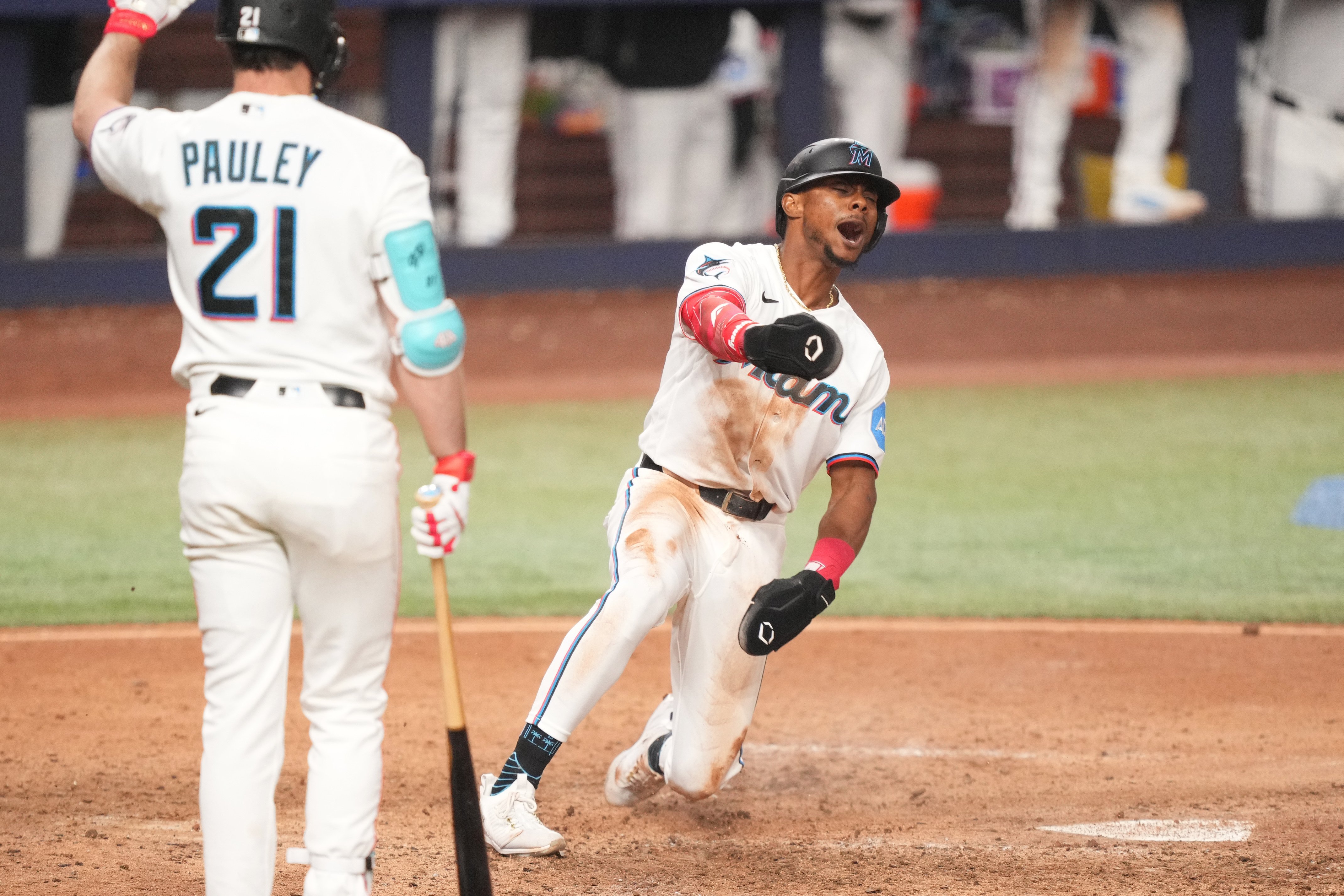 ST. PETERSBURG, FL — Good role players are hard to find. They're the ones who provide defensive versatility, speed or clutch hits even when there isn't room for them in the starting lineup. Outfielder Esteury Ruiz so far is taking advantage of his limited opportunities with the Miami Marlins. "We'll try each day looking at how to best utilize the 13-man position player group in one way, and those guys that aren't starting to be ready for whether they come off the bench to play defense in a game, pinch-hit, pinch-run, whatever it may be," Marlins manager Clayton McCullough said. "Do something that day. Be ready for your moment that may come." The Marlins acquired Ruiz over the offseason from the Los Angeles Dodgers in a trade where Miami sent international pitching prospect Adriano Marrero the other way. He has been limited to 17 games since then because of a left oblique strain that he suffered late in spring training. Since coming off the injured list on April 23, Ruiz is slashing .222/.222/.519/.741 with two home runs, four RBI, seven stolen bases and a 99 wRC+. On Saturday against the Rays, Ruiz entered a tie game as a pinch-runner in the top of the 10th inning. He scored the go-ahead run, and later in the same inning, he helped seal a Marlins win by knocking in an RBI single. "He has swung the bat well," McCullough said. "He put together some good at-bats and handled himself well versus left thus far. It's a nice dynamic to have him on our team, and he's a great guy." Ruiz was already an accomplished base-stealer before joining the Marlins, most notably getting 67 steals as a rookie with the 2023 Oakland Athletics. The 27-year-old still has blazing speed, ranking in the 100th percentile of MLB players this season with a 30.1 feet per second Sprint Speed, according to Baseball Savant. He ranks second on the Marlins with seven stolen bases despite making only seven starts. He has yet to get caught on any of his attempts. Catching instructor and first base coach Craig Driver previously coached Ruiz with the Los Angeles Dodgers in 2025. Driver described him as "easy to work with" and compared him to Billy Hamilton. Hamilton, who had a brief stint with the Marlins, stole 326 bases in 951 career games. "I think that they're both elite runners, where you kind of just like let them go," Driver said. "I feel like probably (Ruiz) is a little bit more refined in terms of how he studies and prepares than Billy was. Billy was just really fast, and so is Ruiz, but I think it helps. It helps make his life a little bit easier, because of the amount of homework that he's done. He knows exactly what he's looking for when he gets out there." Following Sunday's series finale against the Tampa Bay Rays, the Marlins lead Major League Baseball with 57 stolen bases. They're on pace to set a franchise record in that department, though they have also been caught stealing 17 times (second only to the Rays). As much as the Marlins aim to find fast players, they need to get on base to fully utilize their speed. Ruiz still has work to do there with a .222 OBP and no walks drawn yet this season. View the full article
 -
Twins 5, Brewers 4: Twins Out-Gas Gasser, Hold On To Salvage Series
DiamondCentric posted an article in Twins Daily
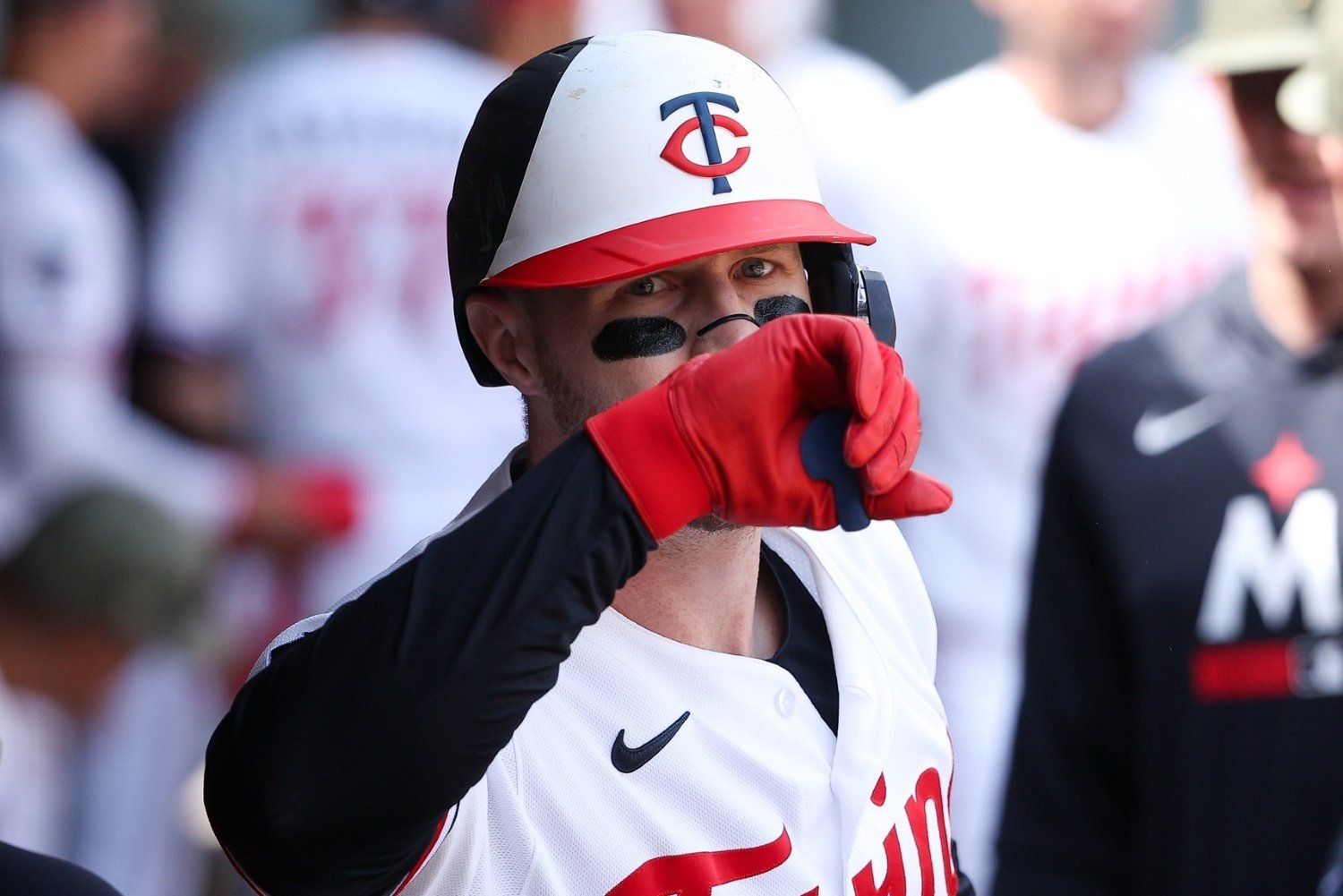 Box Score: Starting Pitcher: Bailey Ober: 5 IP, 6 H, 3 ER, 2 BB, 1 K (77 Pitches, 46 Strikes, 59.7%) Home Runs: Ryan Jeffers (7) Top 3 WPA: Kody Clemens (0.24), Justin Topa (0.17), Ryan Jeffers (0.17) Win Probability Chart (Via BaseballSavant): Injuries have decimated the Twins of late, with Byron Buxton, Trevor Larnach, Joe Ryan and Taj Bradley all missing time recently. They entered Sunday having lost two consecutive one run games against the Brewers featuring good pitching and anemic hitting with runners in scoring position. Fortunately, the Twins were starting the streaking Bailey Ober, who pitched a "Maddux" his last time out against the Marlins. I'd go as far as to call it a Carlos Silva, since his pitch count in completing the shutout was less than 90 pitches, with the Maddux criteria having the threshold of 100. In any case, Ober has been great this year, with his change-up somehow getting even better as his fastball velocity has settled into the upper 80's at best. Today Ober was a little floaty with his command and had to fight hard to keep the Brewers from putting up crooked numbers against him. He began the second inning by allowing a walk, double, fly out and another walk before getting the next two hitters on lineouts. He began the fourth by allowing a fly out, then a rocket home run to Garrett Mitchell (115.5 MPH). Joey Ortiz then rifled a double past Austin Martin in right. Again, Ober righted the ship, striking out David Hamilton and getting the electric Jackson Chourio to pop out. Meanwhile the Twins were making lefty Robert Gasser work. Austin Martin led off the first with a walk, and with two outs Kody Clemens doubled him home. After Luke Keaschall walked, Victor Caratini was hit by a pitch, loading the bases for Royce Lewis. That is no longer as exciting as it once was, and despite making Gasser throw ten pitches to him, never seemed close to squaring anything up and ended up striking out on a high change-up. Gasser needed 40 pitches to complete the frame but was allowed to continue. Gasser mostly held it together, his only additional blemish occurring in the third. Ryan Jeffers singled to lead off the inning, and Clemens got yet another extra base hit off a lefty, launching just over the head of Chourio in left. Chourio struggled to collect it and the relay from shortstop Joey Ortiz was pretty terrible, allowing both Jeffers and Clemens to score. The fifth began with consecutive great defensive plays from Lewis and Martin. Good thing, too, because Christian Yelich followed with a moonshot off an Ober change-up to tie the game at three. Although that would be Ober's last inning, he left in line for the win thanks to the continued heroics of Jeffers. The catcher/DH got all of a Grant Anderson sweeper and hit it 389 feet to retake the lead. The teams traded zeroes for a few innings before Jake Bauers led off the eighth inning with a double off of Taylor Rogers. After retiring Sal Frelick without Bauers advancing, Justin Topa was brought in, and despite being Justin Topa, got a couple of grounders to escape the jam. The Brewers would rue that missed opportunity to tie the game. Keaschall led off the bottom of the eighth with a fly ball to deep center that Chourio appeared to catch up to, but couldn't close his glove on it, allowing Keaschall to reach third with a leadoff triple. Caratini then popped a ball up to shallow left, but Keaschall challenged the arm of Bauers and scored easily, stretching the lead to two. That was key, because Luis Garcia and his 9.00 ERA would come on to close the game. He got Chourio to start the frame, but walked Turang and allowed an infield hit to Contreras. He got Yelich to swing through three consecutive pitches for the second out, but the hot-hitting Bauers rifled a single past Clemens at first to cut the lead to one. Garcia then got ahead of Frelick 0-2 before retiring him on a pop-up to the catcher Caratini. Things I'm Tracking: -Clemens briefly got his OPS over .800 after his second double of the game. Considering his slow start and unimpressive track record prior to last year's serviceable contributions, it was fair to question if the 30 year-old would revert to being Denny Hocking with late career Joey Gallo swing outcomes rather than reaching his upside of, I don't know, David Murphy? He's been a good find, and if he keeps his OPS over .750 he might even have some trade value this summer. -I was thinking Jeffers might secure a three year, 45M sort of contract this offseason, and not from the Twins. Now it's looking more like 75-80M over four years and it still won't be from the Twins. Hopefully he stays healthy and secures said bag. -Lewis couldn't lay off the high fastball today and struck out three times. If he doesn't figure it out over the summer he might not be offered a contract this offseason. If you think Lewis gives weird quotes now, imagine what he would say in that scenario. -I see the vision with Andrew Morris. He got Anthony Banda out of a jam in the sixth by retiring Chourio on a weak chopper, than buzz-sawed through Brice Turang and William Contreras in the seventh before giving way to Taylor Rogers. He threw mainly fastballs, hit 97 and located well. What’s Next: The Twins welcome the Houston Astros to Target Field for a three game set. Tatsuya Imai (1-1, 9.24 ERA) will pitch the opener Monday against a pitcher-yet-to-be-determined in what was Simeon Woods Richardson's spot. The Astros have struggled this year as their dynastic roster continues to wither under the pressures of aging and injuries. Postgame Interviews: Coming soon Bullpen Usage Chart: WED THU FRI SAT SUN TOT Topa 35 0 0 0 11 46 Rojas 0 0 41 0 0 41 Garcia 18 0 0 0 22 40 Morris 0 0 24 0 12 36 Rogers 0 0 23 0 8 31 Adams 29 0 0 0 0 29 Orze 0 0 0 26 0 26 Banda 0 0 8 0 18 26 Gómez 0 0 7 11 0 18 View the full article
 -
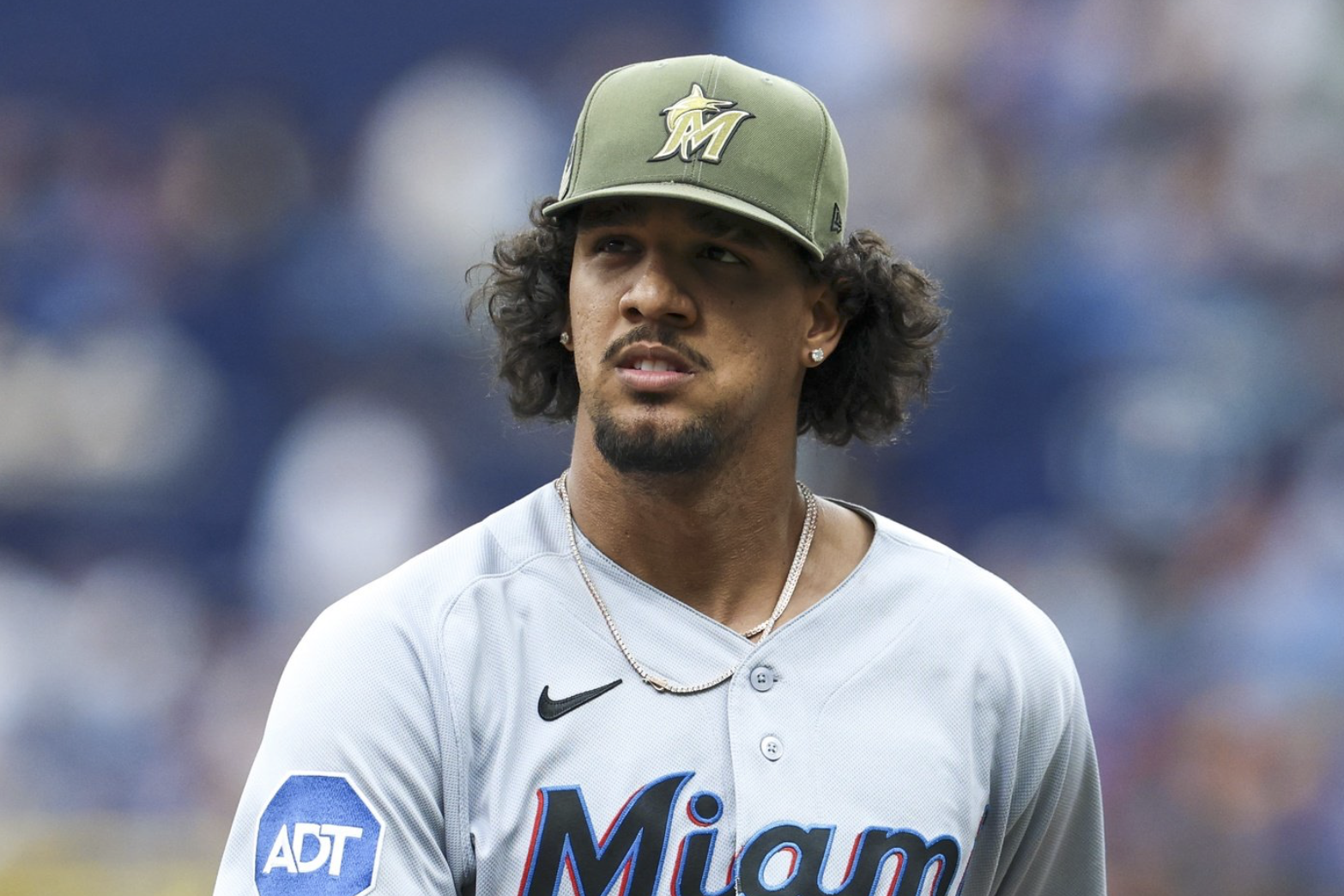 ST. PETERSBURG, FL — Eury Pérez is an enigma on the mound. At 23 years old, Pérez has some of the best pure stuff in the sport, boasting a fastball that routinely touches triple digits and secondary stuff that, when working, looks almost impossible to square up. The problem, however, is that Pérez is much more of a thrower than a pitcher at this stage of his career. Sunday's latest outing against the Tampa Bay Rays echoed the same sentiments. Topping out at 100.5 mph with his four-seam fastball, Pérez threw first-pitch strikes to 74 percent of hitters faced. And yet, when he needed said command the most, it abandoned him like a thief at the sound of sirens. He walked four across five innings in the Marlins' 6-3 loss. In four starts to begin the month of May, Pérez has walked a total of 14 batters. Overall, his 28 free passes this season nearly match last season's total of 32 even though he's only made half as many starts. When asked about these control issues, Pérez—speaking through interpreter Luis Dorante—seems unable to find a reason for said crux. "I think it's a mix of things—good at-bats that they've been taking, a lot of foul balls...and sitting down in a long inning, getting a little cold." "Inconsistency with the strike-throwing. He worked hard for 15 outs today...Right now, it's the start where there is one inning that gets going a bit, and a crooked number goes up," stated Marlins manager Clayton McCullough. Another bug in the Dominican's game has been limiting the long ball. Pérez seemingly got Junior Caminero to loose his balance swinging at a 2-2 sweeper in the bottom of the first, but the All-Star third baseman was strong enough to convert it into his twelfth home run of the season. The Marlins evened the score and eventually took the lead in a two-run second inning, thanks to run-scoring hits from Xavier Edwards and Otto Lopez. With another multi-hit performance on Sunday, Lopez extends his MLB lead with 64 hits. Four innings later, and now facing Yandy Díaz, Pérez left a changeup low and inside that wound up 426 feet from home plate for Díaz's seventh home run. In 239 career innings, Pérez owns a HR/9 of 1.4. Beyond the pair of long balls surrendered, the most crushing blow to Pérez and the Marlins' fortunes came when Taylor Walls, the light-hitting, slick-fielding shortstop, put the Rays up for good with a bases-clearing, three-run triple. Miami's bats did attempt a comeback, highlighted by an eighth-inning rally that saw the team have bases loaded with one out. Leo Jiménez would strike out for out number two. Heriberto Hernández, whose pinch-hit, solo home run started a 10-run outburst for the Marlins on Saturday, lined out to the aforementioned Walls for the third out. With the loss, the Marlins fall to 21-26. They have not won a series in Tampa since 2018 despite visiting there annually. The New York Mets are only half a game behind Miami for last place in the NL East. Looking Ahead The Marlins return home, where they are set to begin a four-game series against the division-leading Atlanta Braves. Max Meyer (3-0, 3.21 ERA) will make his second career start versus Atlanta in Monday's series opener. Opposing Meyer, JR Ritchie (1-0, 3.32), will make his first career start against Miami, and just the fifth of his major league career. First pitch from loanDepot park is slated for 6:40 EST. View the full article
 -
 The Lucas Giolito era with the San Diego Padres is here. The Padres called up Giolito, a right-handed starter, from Double-A San Antonio to make his season debut with Sunday's start vs. the Seattle Mariners. Right-hander Alek Jacob was optioned to Triple-A El Paso to make room. Giolito was already on the Padres' 40-man roster after signing with the team April 22 for one year and $2.8 million. Since Giolito was not injured, he was optioned to the minors to get ready to join the rotation. Also, right-hander Jhony Brito began a rehab assignment at Double-A. The 31-year-old Giolito was the last of the major free agents from the offseason to sign and joins a Padres rotation that needs an upgrade. Following the injuries and setbacks to right-handers Nick Pivetta and Joe Musgrove, the Friars have mostly done fine in muddling through the first quarter of the season, but Giolito brings quality to the rotation. With the Boston Red Sox last season, Giolito posted a 3.41 ERA in 26 starts and 141 innings in which he had a 9.1% walk rate and 19.7% strikeout rate. Giolito missed all of the 2024 season following Tommy John surgery and didn't make his season debut until the end of April The Padres also had right-hander Matt Waldron go on the 15-day IL Friday with a right brachialis muscle injury. Waldron apparently had been dealing with the injury for the last few weeks but did not tell the team about it with his roster spot in jeopardy. Waldron replaced Pivetta, the Opening Day starter, in the rotation. Giolito made four starts in the minors, two with Low-A Lake Elsinore and two with Double-A San Antonio. Between the four, he pitched 17 innings and had a 4.76 ERA, allowing 11 runs (nine earned) on 18 hits with six walks and 18 strikeouts. Jacob came up Friday and pitched in Saturday's 7-4 victory over the Mariners, allowing two runs without recording an out. It was his second one-game call-up this year. View the full article
 -
 Barring something unexpected happening, Jesus Made will sit atop the MLB prospect lists from now until he makes his MLB debut for the Milwaukee Brewers, which could very well be Opening Day 2027. And with that, comes the pressure of living up to being No. 1. Made, a 19-year-old shortstop, ascended to that lofty perch Wednesday when Pittsburgh Pirates shortstop Konnor Griffin, who was the consensus No. 1 prospect in baseball when he was promoted to the majors April 3, accumulated enough at-bats (130) to lose that status. Made began the season at No. 3 on most lists and has watched as Griffin and Detroit Tigers shortstop Kevin McGonigle got their much-anticipated calls to the majors. That decision doesn't appear to be imminent for Made. The Brewers, while not afraid of promoting players from one level to the next during the season, don't like to rush their prospects. It is one reason they currently have the best farm system in MLB. Take outfielder Jackson Chourio, for instance. Chourio played for the Brewers in the Dominican Summer League in 2021 as a 17-year-old. He made his U.S. debut as an 18-year-old in 2022, playing 62 games for the Low-A Carolina Mudcats, then being promoted to the High-A Wisconsin Timber Rattlers for 31 games. With time left in the season, Chourio got six games with the Double-A Biloxi Shuckers. His prospect stock skyrocketed as the season progressed, putting up a combined slash line of .288/.342/.538 with 20 homers, 75 RBIs and 18 stolen bases. Originally signed as a shortstop, Chourio blossomed when moved to the outfield in the DSL. Being able to play a premier position such as center field made him that much more valuable. He returned to Biloxi for much of the 2023 season, showing his dynamic potential with a .280/.336/.467 slash line. He hit 22 homers, drove in 89 and stole 43 bases. He played the final week with the Triple-A Nashville Sounds, going 7-for-21 (.333). That offseason, Chourio made history by signing a record eight-year, $82 million contract extension with team options for two more years. He didn't go to Nashville for the start of 2024, instead making the team out of spring training, making his MLB debut as a 20-year-old. All he has done since is put up nearly identical slash lines: 2024: .275/.327/.464, 21 HRs, 79 RBIs, 22 SBs 2025: .270/.308/.463, 21 HRs, 78 RBIs, 21 SBs That is roughly the plan the Brewers have for Made. Having turned 19 this month, Made began this season at Double-A Biloxi after playing at three levels as an 18-year-old. In 2025, he went from Low-A Carolina to High-A Wisconsin and then a cameo at Biloxi, putting out a combined slash line of .285/.379/.413 with six homers and 47 stolen bases. Entering the weekend, Made had a .257/.340/.400 slash line with three homers, 20 RBIs and 15 steals in 34 games. It wouldn't be surprising to see Made promoted to Triple-A Nashville before the end of June, which would give him three months at that level. It's very unlikely he'll force his way past the several players in front of him on the depth chart to debut this season. Cooper Pratt and Jett Williams, who are No. 4 and No. 5 on Brewer Fanatic's prospect rankings, would be the better call-up choices for this year, and of course, the team has two shortstops in the majors right now, in Joey Ortiz and David Hamilton. That could always change if Made goes on a tear and leaves the Brewers with no choice, of course. But considering Made plays the most important defensive position and still has a little work to do on that side of the ball, the more experience he gets, the better. He split time the past two years with Luis Pena, Brewer Fanatic's No. 2 prospect. Most of the analysts say Made has the ability to stick at shortstop, but third base or second base could be an option, too. A switch-hitter, Made differs from Chourio in that he doesn't currently present much in terms of power, but that is something that could come as his body matures. He does appear to be an advanced hitter. Made had a 20.6% strikeout rate last year and a 12.8% walk rate, which is really good when you consider his age and that the MLB averages are 22.4% and 8.4%. Through Saturday, Made was at 16.4% for his strikeout rate and 11.3% for his walk rate this year. Baseball America has put a 70 grade (on the 20-80 scouting scale) on Made's hit tool, which means it's plus-plus. He hits to all fields with authority, due to a compact swing from both sides of the plate. It would be easy to project Made batting leadoff with Chourio second once Made gets acclimated to the majors. Remember that Chourio struggled mightily and had a .207 batting average on June 1 of his rookie season before figuring things out. But Made will also have someone like Chourio to lean on whenever he does make his debut. Will his newfound status as baseball's No. 1 prospect affect how he performs on a daily basis? You wouldn't think so. The Brewers pursue players who typically have the sort of comportment that something like this wouldn't play mind games with the teenager. He will face more heckling when the Shuckers play on the road, but nothing he hasn't heard thus far as one of the game's elite prospects. Brewers fans will no doubt get impatient knowing Made is waiting in the wings, especially if Ortiz doesn't improve offensively, but the patience the Brewers are showing with their young shortstop is the same thing the fanbase needs to exercise. Made will be ready when he is ready and the Brewers will know when that time comes. View the full article
 -
 The quest for Ty Blach to return to the majors is complete. The left-hander was called up from Triple-A Iowa on Sunday. Right-hander Javier Assad was optioned to Triple-A and reliever Hunter Harvey was transferred from the 15-day injured list to the 60-day IL to make room for Blach on the 40-man roster. Blach has not pitched in the majors since the 2024 season, the last of his three years with the Colorado Rockies. At Triple-A this year, Blach made five appearances, including three starts. In 20⅔ innings, he walked seven and struck out 14 for a 5.23 ERA. He signed a minor-league deal with the Cubs this offseason. In 2025, Blach pitched in the Texas Rangers' organization, making 11 starts at Triple-A and posting a 3.88 ERA, walking 13 and striking out 40 in 51 innings. Assad has struggled this season. After making three starts that included giving up nine runs in one game, he was moved to the bullpen. His five relief appearances have mainly been good, although he did give up six runs in 2⅓ innings in one game. View the full article
 -
 Syracuse rallied for four runs in the 10th to win 6-2, with Christian Arroyo's go-ahead double and Dylan Ross collecting two scoreless innings for the win. St. Lucie held off Jupiter 7-6 behind Randy Guzman's three-run homer and Chase Meggers' three-RBI night, with Jose Chirinos earning the win across 5 2/3 frames. Brooklyn fell 1-0 in a pitcher's duel despite Irving Cota's three hitless innings. Binghamton dropped 12-3 at Somerset behind Nick Lorusso's solo homer. Mets Transactions New York Mets placed RHP Clay Holmes on the 15-day injured list. Right fibula fracture. New York Mets recalled RHP Joey Gerber from Syracuse Mets. Syracuse Erupts For Four In The 10th To Top RailRiders Syracuse pulled away in extras for a 6-2 win at Scranton/Wilkes-Barre, breaking a tie with a four-run 10th inning. Christian Arroyo led the way at 2-for-5 with a double and two RBI, delivering both the tying hit in the eighth and the go-ahead double in the 10th. Eric Wagaman went 2-for-4 with a double and a walk, and Yonny Hernández added a 2-for-5 night with an RBI. Jihwan Bae singled, walked twice, drove in a run, and stole a base. Xzavion Curry made the start and worked five innings, allowing two runs on six hits with three strikeouts and no walks. Dylan Ross handled the final two innings, striking out three and walking one without allowing a hit to pick up the win and improve to 2-0. The decisive stretch began in the eighth, when Arroyo singled in Bae to even the score at 2. After Curry surrendered a two-run home run in the second, Bae had pulled Syracuse within one in the third by singling home Jackson Cluff. In the 10th, zombie runner Matt Rudick scored on a Nick Morabito single, Arroyo doubled in Morabito, a Wagaman walk and a wild pitch brought home Ryan Clifford, and Hernández singled in Arroyo. Syracuse stranded eight runners and collected 11 hits without an error. Player AB R H RBI BB K Nick Morabito 5 1 1 1 0 1 Ji Hwan Bae 3 1 1 1 2 0 Ryan Clifford 4 1 0 0 1 2 Christian Arroyo 5 1 2 2 0 0 Eric Wagaman 4 0 2 0 1 1 Yonny Hernández 5 0 2 1 0 0 Cristian Pache 5 0 1 0 0 2 Jackson Cluff 4 1 1 0 0 1 Kevin Parada 4 0 1 0 0 3 Matt Rudick 0 1 0 0 0 0 Ben Rortvedt 0 0 0 0 0 0 Player IP H R ER BB K HR Xzavion Curry 5 6 2 2 0 3 1 Jonathan Pintaro 2 0 0 0 0 2 0 Nate Lavender 1 1 0 0 0 1 0 Dylan Ross 2 0 0 0 1 3 0 Rumble Ponies Routed At Somerset Binghamton dropped a 12-3 decision at Somerset, undone by two big innings from the home club. Nick Lorusso led the offense at 2-for-5 with a solo home run and two RBI. Chris Suero went 2-for-3 with two walks and a run, working the leadoff spot, and Jose Ramos went 2-for-3 with a double, an RBI, and a walk. Starter Jordan Geber struggled with command, allowing four runs on three hits and three walks across 1 2/3 innings with four strikeouts and a home run to take the loss and fall to 1-4. The damage piled up early. Somerset put up four runs in the second inning, capped by a grand slam, then broke things open with four more in the fifth on a string of three singles and a two-run double. Binghamton's first run came in the sixth when Lorusso connected for a solo shot to left, and the visitors plated two more in the seventh on Ramos' RBI double, which scored Diego Mosquera, and Lorusso's run-scoring single. Felipe De La Cruz and Jefry Yan combined for four innings of relief work, with Yan striking out two without allowing an earned run. Brian Metoyer absorbed five hits and four runs across 1 1/3 innings. Binghamton stranded 10 runners and committed one error. Player AB R H RBI BB K Chris Suero 3 1 2 0 2 1 Jacob Reimer 4 0 0 0 1 0 Jose Ramos 3 0 2 1 1 0 Nick Lorusso 5 1 2 2 0 1 JT Schwartz 3 0 0 0 1 2 TT Bowens 4 0 0 0 0 2 Wyatt Young 4 0 0 0 0 0 Vincent Perozo 4 0 0 0 0 0 Diego Mosquera 3 1 0 0 1 1 Player IP H R ER BB K HR Jordan Geber 1 2/3 3 4 4 3 4 1 Felipe De La Cruz 2 1 1 1 0 3 1 Brian Metoyer 1 1/3 5 4 4 0 1 0 Jefry Yan 2 1 0 0 1 2 0 Wyatt Young 1 2 3 0 0 0 1 Cyclones Blanked At Rome In Tight Pitcher's Duel Brooklyn was shut out 1-0 at Rome, managing just three hits and striking out 13 times without drawing a walk. Leadoff hitter Mitch Voit went 1-for-4 with a double, Sam Biller added a 1-for-3 night with a double, and John Bay singled to account for the Cyclones' three hits. Brooklyn pitching surrendered just two hits across eight innings and combined for eight strikeouts. Irving Cota was sharp at the start, working three hitless innings with three strikeouts and no walks. Parker Carlson followed and absorbed the loss, charged with the lone run on one hit and three walks across two innings, though the run was unearned. The decisive inning came in the bottom of the fourth. Carlson walked two with one out, and a groundout to second plated the eventual game-winning run for Rome. Cristofer Gomez settled the game with 1 1/3 innings of one-hit relief and three strikeouts, and Garrett Stratton finished with 1 2/3 hitless innings and one strikeout. Brooklyn left three runners on base and committed one error, which proved costly in the only inning Rome reached the scoreboard. The Cyclones never advanced a runner past second. Player AB R H RBI BB K Mitch Voit 4 0 1 0 0 1 Yonatan Henriquez 4 0 0 0 0 3 Ronald Hernandez 4 0 0 0 0 2 Corey Collins 3 0 0 0 0 2 Daiverson Gutierrez 3 0 0 0 0 1 John Bay 3 0 1 0 0 1 Sam Biller 3 0 1 0 0 1 Nick Roselli 3 0 0 0 0 1 Yohairo Cuevas 3 0 0 0 0 1 Player IP H R ER BB K HR Irving Cota 3 0 0 0 0 3 0 Parker Carlson 2 1 1 0 3 1 0 Cristofer Gomez 1 1/3 1 0 0 0 3 0 Garrett Stratton 1 2/3 0 0 0 0 1 0 St. Lucie Holds Off Jupiter Behind Guzman And Meggers St. Lucie outlasted Jupiter 7-6 thanks to a five-run first and two more in the fifth. Randy Guzman went 1-for-4 with a three-run home run, three RBI, and a run scored, and Chase Meggers went 2-for-4 with three RBI on a pair of two-run singles. AJ Salgado added a 2-for-4 effort, leadoff hitter Elian Peña reached three times with a hit, a walk, and a run, and cleanup hitter Julio Zayas walked twice and scored twice. Starter Jose Chirinos worked 5 2/3 innings, allowing four runs, three earned, on six hits with two strikeouts and no walks to pick up the win and move to 2-1. The first inning broke the game open. Peña singled, JT Benson walked, and Guzman launched a three-run shot to left field. After Salgado singled, Sam Robertson reached, and Meggers cleared the bases with a two-run single to put St. Lucie up 5-0. Jupiter clawed back with three in the third on a sacrifice fly and a two-run homer, but Robertson reached on a fielder's choice in the fifth to score Zayas, and Meggers brought home Salgado for a 7-3 cushion. Jupiter pushed three more across in the sixth, including two on a single deflected by Peña, before Christian Rodriguez closed it out with a perfect ninth for his second save. St. Lucie left seven on base. Player AB R H RBI BB K Elian Peña 4 1 1 0 1 1 JT Benson 3 1 1 0 2 2 Randy Guzman 4 1 1 3 0 0 Julio Zayas 2 2 1 0 2 0 AJ Salgado 4 1 2 0 0 1 Sam Robertson 4 1 1 1 0 0 Chase Meggers 4 0 2 3 0 1 Simon Juan 4 0 0 0 0 1 Jamari Baylor 4 0 1 0 0 2 Player IP H R ER BB K HR Jose Chirinos 5 2/3 6 4 3 0 2 1 Ryan Dollar 1/3 3 2 0 0 0 0 Justin Armbruester 1 1 0 0 0 2 0 Adbert Alzolay 1 0 0 0 0 0 0 Christian Rodriguez 1 0 0 0 0 1 0 Top-20 Prospect Performance Nolan McLean: DNP Carson Benge: DNP A.J. Ewing: DNP Jonah Tong: DNP Ryan Clifford: 0-for-4, BB, 2 K Jacob Reimer: 0-for-4, BB Jack Wenninger: DNP Elian Pena: 1-for-4, BB, K Mitch Voit: 1-for-4, 2B, K Nick Morabito: 1-for-5, RBI, K Jonathan Santucci: DNP Chris Suero: 2-for-3, 2 BB, K Zach Thornton: DNP Wandy Asigen: DNP Will Watson: DNP Eli Serrano III: DNP Ryan Lambert: DNP Dylan Ross: 2 IP, 0 H, 0 R, BB, 3 K, W Antonio Jimenez: DNP R.J. Gordon: DNP View the full article
 -
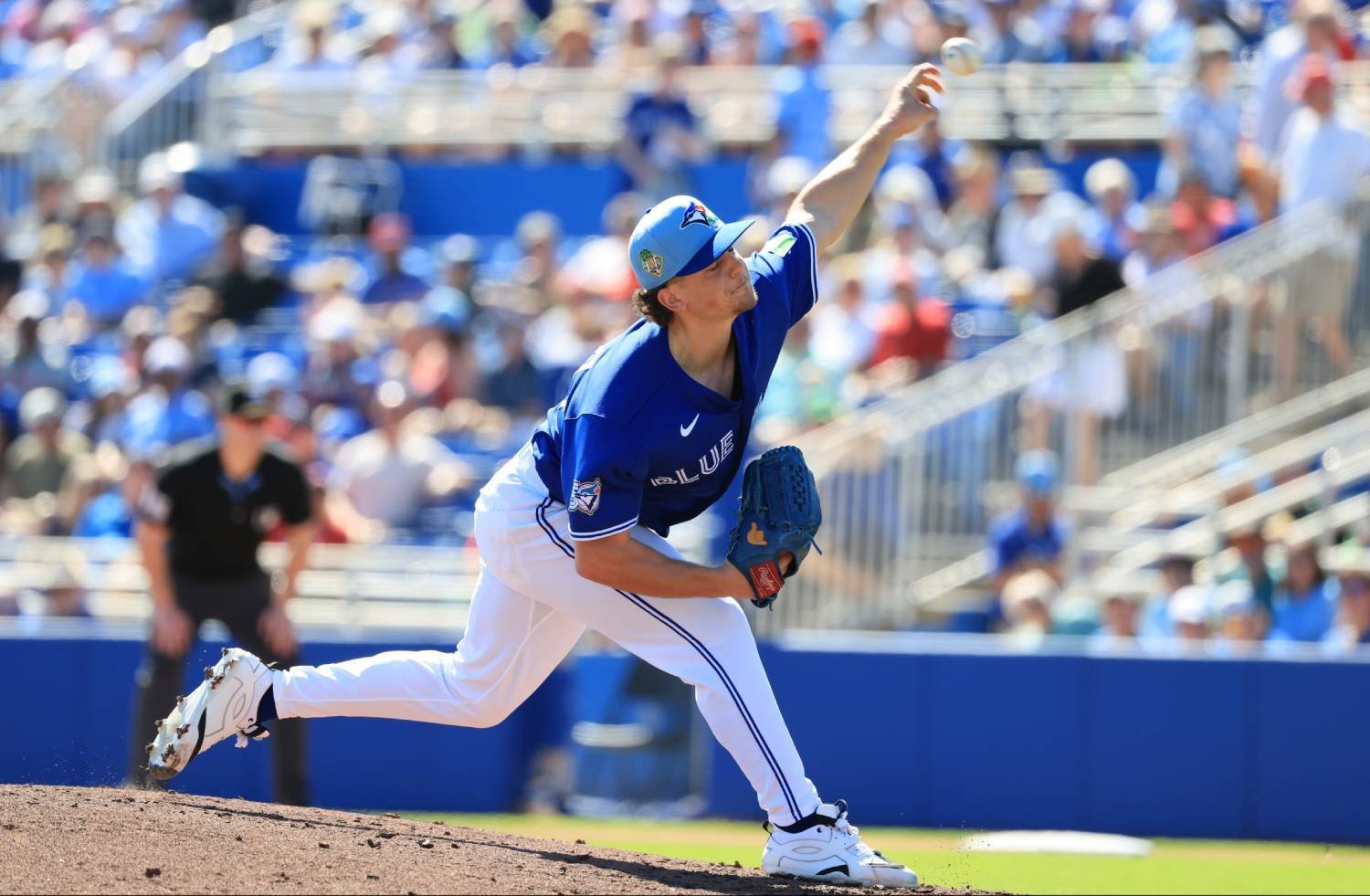 Another pitching injury has opened the door for a prospect. Right-handed reliever Tommy Nance was placed on the 15-day injured list Sunday with right forearm discomfort by the Toronto Blue Jays. Left-handed reliever Adam Macko was called up from Triple-A Buffalo to make his MLB debut. Nance has made 20 appearances this year with a 3.86 ERA over 21 innings, walking eight and striking out 25. Macko was a seventh-round draft choice of the Seattle Mariners in 2019 and acquired by the Jays in November 2022 as part of the Teoscar Hernandez trade. At Triple-A this season, Macko pitched in 13 games covering 18 innings with eight walks and 19 strikeouts. View the full article
 -
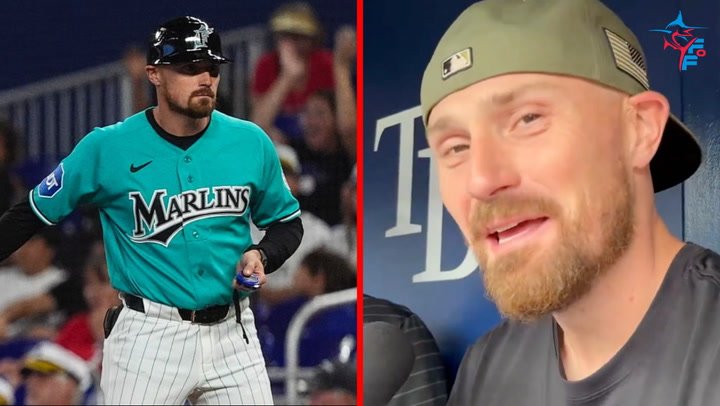 Marlins first base coach and catching instructor Craig Driver speaks with the media about the preparation that goes into stealing bases and what he's seen from Joe Mack, Esteury Ruiz, Liam Hicks and other Marlins players this season.View the full article
 -
Robert Gasser Brought Up By Brewers To Start Against Twins
DiamondCentric posted an article in Brewer Fanatic
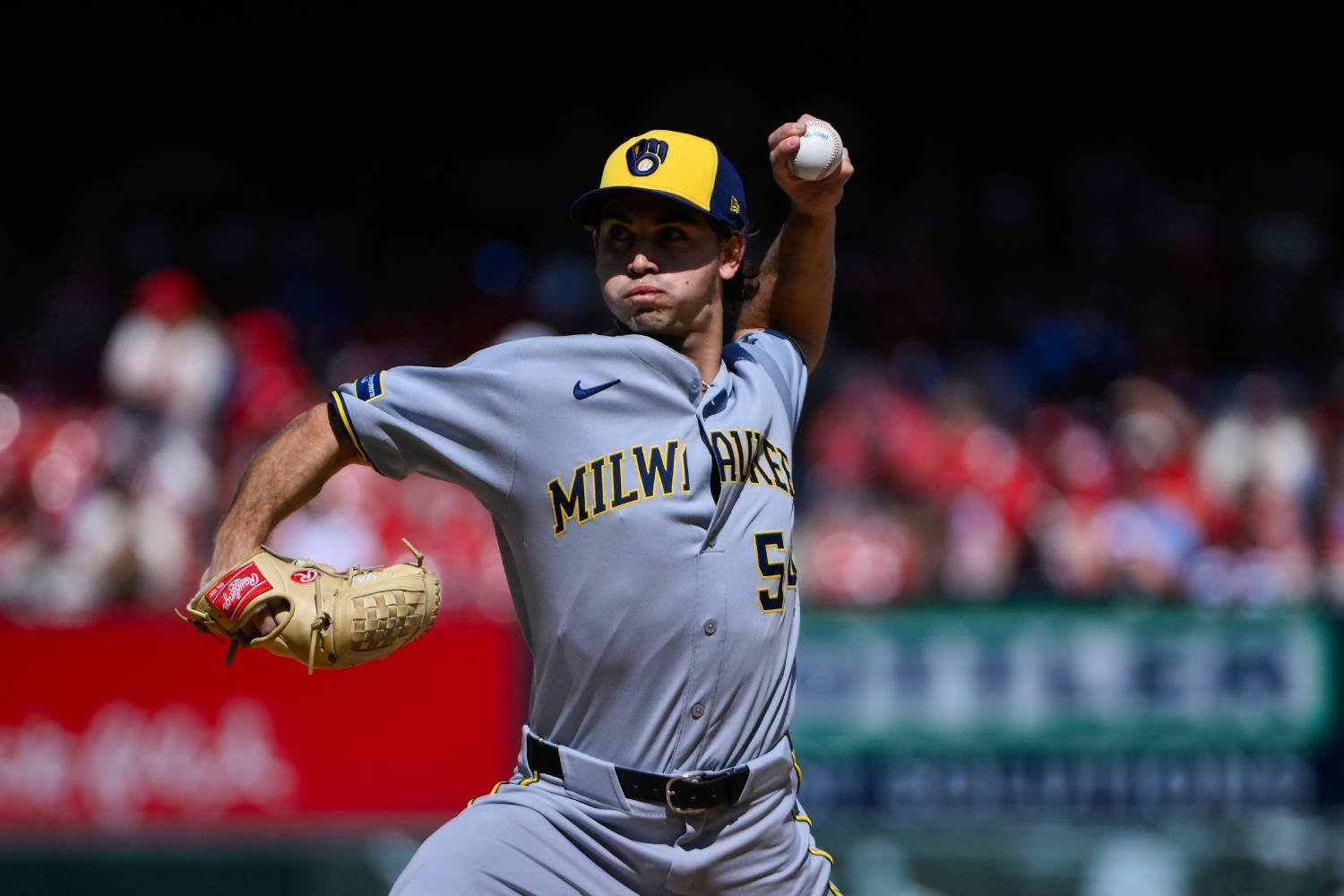 It won't be a bullpen day after all. Left-handed starter Robert Gasser was called up Sunday by the Milwaukee Brewers from Triple-A Nashville and will start the series finale against the Minnesota Twins. Right-hander Peter Strzelecki was designated for assignment, leaving the Crew's 40-man roster at 39. Gasser will be making his first appearance with the Brewers this season. He dealt with arm soreness during spring training, which set him back slightly, and then into the regular season at Triple-A after not making the Opening Day roster. But Gasser has now made six starts and pitched 21⅔ innings at Nashville, putting up a 3.74 ERA with eight walks and 32 strikeouts. He made two abbreviated starts for the Brewers at the end of the 2025 season in his comeback from Tommy John surgery and was on the postseason roster. Strzelecki was called up Saturday when right-hander Coleman Crow was optioned back to Triple-A following Friday's spot start. Strzelecki didn't pitch in Saturday's game. View the full article
 -
 Abraham Toro's grand slam capped a three-homer attack as Omaha cruised 11-3 in a rain-shortened win over Toledo, with Brett Squires and Luke Maile also going deep. Emmanuel Reyes spun a six-inning, no-earned-run gem with eight strikeouts to lead Quad Cities to an 8-2 victory. Northwest Arkansas was shut out 4-0 despite a sharp 4 1/3-inning, no-run effort from Hunter Patteson. Jhosmmel Zue's two-run double walked off Columbia's 8-7 win over Hickory in 11 innings. Royals Transactions Kansas City Royals placed LHP Matt Strahm on the 15-day injured list with right knee inflammation. Kansas City Royals activated LHP Bailey Falter from the 15-day injured list. Toro's Grand Slam Caps Three-Homer Rout In Rain-Shortened Win The Omaha Storm Chasers cruised to an 11-3 win over the Toledo Mud Hens in a game called by rain after the top of the eighth inning. Cleanup hitter Brett Squires went 3-for-4 with a home run and three RBI, and Abraham Toro added a grand slam, finishing 1-for-2 with four RBI and two walks. Luke Maile also went deep, going 2-for-4 with three RBI, while Gavin Cross had two hits and a stolen base. The Storm Chasers turned the game on its head in the bottom of the first, scoring six runs after Toledo had taken a 1-0 lead in the top half. Leadoff hitter Tyler Tolbert reached on an error, John Rave singled, and Squires followed with a three-run homer to right center, scoring Tolbert and Rave. Two batters later, with Cross and Dustin Dickerson aboard via walks, Maile launched a three-run shot to left field to make it 6-1. Omaha widened the gap in the bottom of the fourth. With the bases loaded on a Kevin Newman double and walks to John Rave and Drew Waters, Toro crushed a grand slam to right center, extending the lead to 11-3. Starter Aaron Sanchez allowed three earned runs on five hits, walking three and striking out four across 3 2/3 innings. Ethan Bosacker and Anthony Gose combined for 4 1/3 scoreless innings in relief before rain forced the early conclusion. Player AB R H RBI BB K Tyler Tolbert (CF) 5 1 0 0 0 1 John Rave (RF) 3 2 1 0 1 0 Drew Waters (DH) 3 1 0 0 1 1 Brett Squires (1B) 4 1 3 3 0 1 Abraham Toro (3B) 2 2 1 4 2 0 Gavin Cross (LF) 4 1 2 0 0 0 Dustin Dickerson (2B) 2 1 1 1 1 0 Luke Maile (C) 4 1 2 3 0 1 Kevin Newman (SS) 4 1 1 0 0 1 Player IP H R ER BB K HR Aaron Sanchez 3 2/3 5 3 3 3 4 1 Ethan Bosacker 2 1/3 1 0 0 0 1 0 Anthony Gose 2 3 0 0 1 1 0 Patteson Sharp, But Bullpen Falters In Seventh As Naturals Get Shut Out The Northwest Arkansas Naturals were shut out 4-0 by the Arkansas Travelers, who broke open a scoreless game with a four-run seventh inning. The Naturals managed only five hits, with Jack Pineda leading the way at 2-for-4. Leadoff hitter Rudy Martin Jr. added a double, and Carson Roccaforte and Connor Scott each drew walks. For six innings, the game was a pitcher's duel. Starter Hunter Patteson worked 4 1/3 scoreless innings, allowing four hits and four walks while striking out four. Oscar Rayo followed with 1 2/3 scoreless innings of his own, walking two and striking out three. Things unraveled in the top of the seventh. Dennis Colleran Jr. issued back-to-back walks to begin the inning, threw a wild pitch, and then surrendered an RBI double. The next batter launched a three-run homer to left center to put Arkansas up 4-0. Colleran walked two more before Augusto Mendieta entered with the bases loaded. Mendieta allowed a single but induced a flyout to escape further damage without surrendering a run. Colleran was charged with four earned runs in only 1/3 of an inning, walking four and giving up the home run. Mendieta finished with 2 2/3 scoreless innings, allowing two hits and striking out three. The Naturals' bats could not generate a rally, leaving six runners on base across the night. Player AB R H RBI BB K Rudy Martin Jr. (LF) 4 0 1 0 0 1 Colton Becker (3B) 4 0 0 0 0 3 Sam Kulasingam (1B) 4 0 1 0 0 1 Carson Roccaforte (CF) 3 0 0 0 1 2 Jack Pineda (SS) 4 0 2 0 0 0 Omar Hernandez (C) 2 0 0 0 0 1 Canyon Brown (DH) 3 0 1 0 0 1 Connor Scott (RF) 2 0 0 0 1 1 Justin Johnson (2B) 3 0 0 0 0 0 Player IP H R ER BB K HR Hunter Patteson 4 1/3 4 0 0 4 4 0 Oscar Rayo 1 2/3 0 0 0 2 3 0 Dennis Colleran Jr. 1/3 2 4 4 4 0 1 Augusto Mendieta 2 2/3 2 0 0 0 3 0 Reyes' Quality Start, Figueroa's Three-Run Homer Lead River Bandits Past Lansing The Quad Cities River Bandits notched an 8-2 road win over the Lansing Lugnuts behind a quality start from Emmanuel Reyes and a three-run homer from Derlin Figueroa. Catcher Blake Mitchell led the hitting attack, going 3-for-4 with two doubles, an RBI, a walk, and a stolen base. Leadoff hitter Nolan Sailors also went 3-for-4 with a double, a walk, two runs scored, and a stolen base. Figueroa finished with four RBI on his home run, and cleanup hitter Luke Pelzer added a triple and an RBI. The River Bandits jumped on Lansing in the top of the third. With one out, Sailors singled, Asbel Gonzalez walked, and Mitchell ripped an RBI single to right to score Sailors. After Pelzer reached, Figueroa unloaded a three-run home run to center field, giving Quad Cities a 4-0 lead. The Bandits kept adding on. Gonzalez delivered an RBI sacrifice fly in the fifth, and an unearned run in the seventh scored Figueroa on a throwing error. In the ninth, Pelzer tripled home Mitchell and later scored on a sacrifice fly by Figueroa. Reyes turned in a quality start, going six innings and allowing four hits and one unearned run while walking one and striking out eight. Aiden Jimenez followed with three innings, allowing two hits and one earned run with two walks and two strikeouts. Player AB R H RBI BB K Nolan Sailors (RF) 4 2 3 0 1 0 Asbel Gonzalez (CF) 3 1 0 1 0 1 Blake Mitchell (C) 4 1 3 1 1 0 Luke Pelzer (LF) 5 2 1 1 0 1 Derlin Figueroa (3B) 4 2 1 4 0 1 Jose Cerice (1B) 4 0 2 0 1 1 Tyriq Kemp (SS) 5 0 0 0 0 1 Erick Torres (DH) 3 0 0 0 1 0 Angel Acosta (2B) 4 0 0 0 0 3 Player IP H R ER BB K HR Emmanuel Reyes 6 4 1 0 1 8 0 Aiden Jimenez 3 2 1 1 2 2 0 Jhosmmel Zue Walks Off Fireflies' 8-7 Win Over Hickory In 11 The Columbia Fireflies outlasted the Hickory Crawdads 8-7 in 11 innings, walking off on a two-run double by Jhosmmel Zue. Leadoff hitter Henry Ramos paced the offense, going 3-for-5 with a double, two RBI, and a walk. Stone Russell added two hits, a double, and two RBI, and Connor Rasmussen reached base five times on a 2-for-2 day with a double, three walks, and two runs scored. Zue finished with three RBI on his game-winning double. Hickory took a 1-0 lead in the first inning before Columbia answered with two runs in the third on an RBI double by Ramos and an RBI single by Russell. The Fireflies added two more in the fourth on RBI singles by Ramos and Josh Hammond to lead 4-1. The lead held until the seventh, when Hickory cut it to 4-3 with a two-run double. In the ninth, a solo home run tied the game at 4-4 and forced extra innings. Hickory pushed across its zombie runner in the top of the 10th, but Zue's sacrifice fly plated Columbia zombie runner Daniel Lopez to tie the game again at 5-5. Hickory scored two more in the top of the 11th to take a 7-5 lead. In the bottom half, Russell doubled home zombie runner Josh Hammond to make it 7-6. Two more baserunners reached on walks, and with two outs, Zue laced a two-run double down the right-field line, scoring Russell and pinch runner Josi Novas to walk off the win. Starter Jordan Woods worked four innings, allowing three hits and one earned run with one walk and three strikeouts. Henson Leal followed with three innings, allowing three hits and two earned runs with two walks and two strikeouts. Jhon Reyes gave up the game-tying solo homer in the ninth across two innings of work, and Dash Albus earned the win with two innings, allowing three runs but only one earned with three strikeouts. Player AB R H RBI BB K Henry Ramos (LF) 5 1 3 2 1 0 Josh Hammond (SS) 6 1 1 1 0 2 Stone Russell (1B) 6 1 2 2 0 1 Hyungchan Um (C) 4 0 1 0 2 0 Josi Novas (PR) 0 1 0 0 0 0 Sean Gamble (CF) 5 0 2 0 0 1 JC Vanek (1B) 3 0 0 0 1 1 Daniel Lopez (PR) 0 1 0 0 0 0 Yandel Ricardo (2B) 0 0 0 0 1 0 Roni Cabrera (RF) 4 1 1 0 0 0 Jhosmmel Zue (DH) 5 0 1 3 0 0 Connor Rasmussen (3B) 2 2 2 0 3 0 Player IP H R ER BB K HR Jordan Woods 4 3 1 1 1 3 0 Henson Leal 3 3 2 2 2 2 0 Jhon Reyes 2 3 1 1 0 2 1 Dash Albus 2 3 3 1 0 3 0 Top-20 Prospect Performance Kendry Chourio: DNP David Shields: DNP Sean Gamble: 2-for-5, K Blake Mitchell: 3-for-4, 2 2B, RBI, BB, SB Josh Hammond: 1-for-6, RBI, 2 K, SB Ramon Ramirez: DNP Drew Beam: DNP Asbel Gonzalez: 0-for-3, RBI, K Ben Kudrna: DNP Carson Roccaforte: 0-for-3, BB, 2 K Yandel Ricardo: 0-for-0, BB Felix Arronde: DNP Blake Wolters: DNP Michael Lombardi: DNP Luinder Avila: DNP Steven Zobac: DNP Frank Mozzicato: DNP Daniel Vazquez: DNP Warren Colcano: DNP Shane Panzini: DNP View the full article
