


DiamondCentric
-
Posts
2,631 -
Joined
-
Last visited
Never
Content Type
Profiles
Forums
Events
News
Tutorials & Help
Major League Baseball Videos
Guides & Resources
Store
Downloads
Gallery
Everything posted by DiamondCentric
-

Twins’ Byron Buxton Voted As All-Star Starter; Joe Ryan Also In
DiamondCentric posted an article in Twins Daily
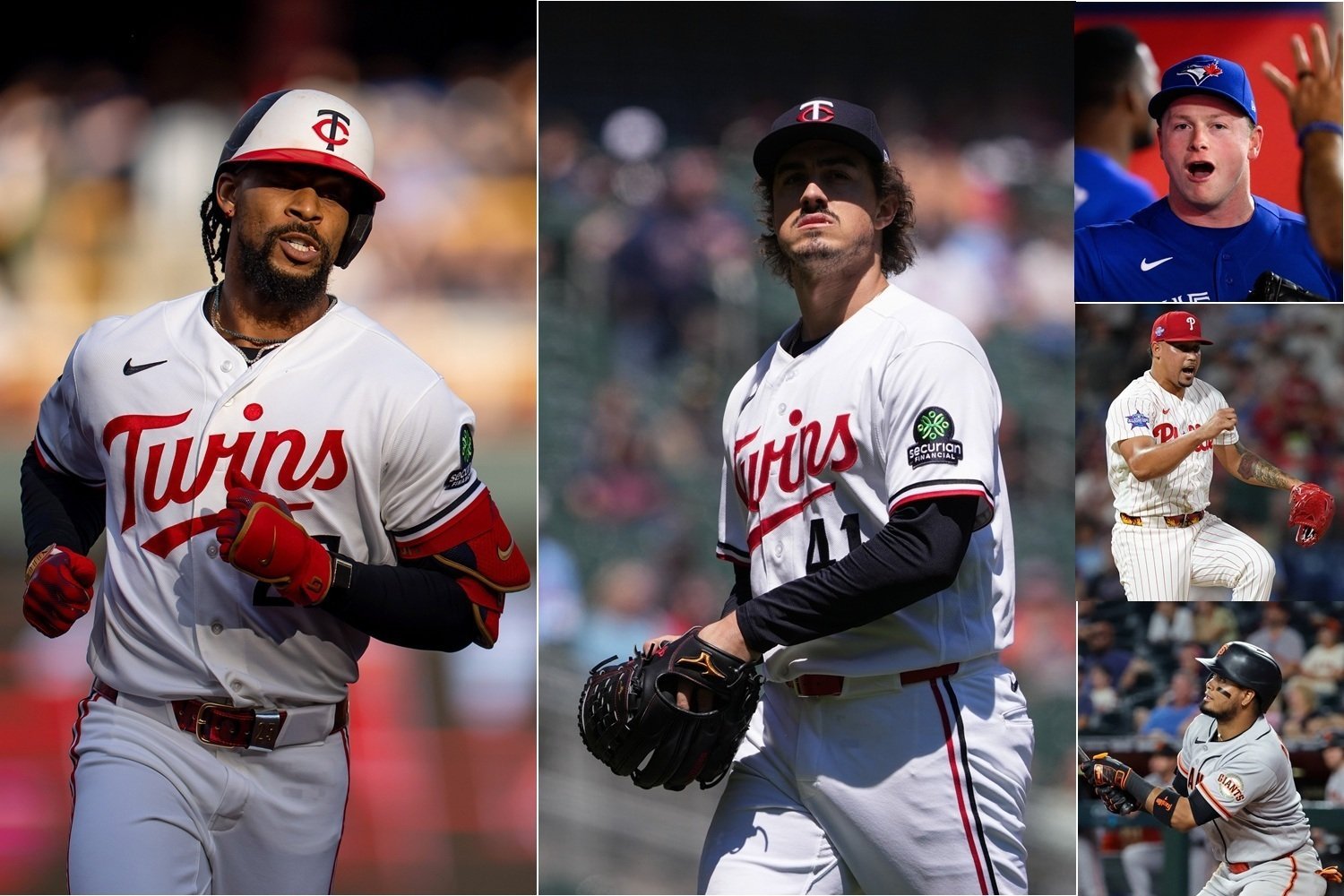 Make that All-Star starting outfielder Byron Buxton. The Minnesota Twins’ center fielder and right-handed starter Joe Ryan on Saturday were named to the AL team for the July 14 All-Star Game at Citizens Bank Park in Philadelphia. Buxton was voted in as a starting outfielder. Buxton and Ryan will be joined by manager Derek Shelton, in his first season leading Minnesota and who was selected to be on the coaching staff for the AL by John Schneider of the Toronto Blue Jays. This is Buxton’s third selection, having also had the honor in 2022 and last year. Buxton, who missed four games with a hip injury before returning to the Twins’ lineup Saturday, is having one of his best seasons of his 12-year career, putting up a slash line of .268/.325/.573 with 25 homers and 45 RBIs entering play Saturday. Buxton’s 25 homers are tied for fourth in MLB. Ryan is making his second straight appearance in the All-Star Game. He has a 3.61 ERA in a MLB-leading 18 starts over 97⅓ innings, with a 5.5% walk rate and 28.3% strikeout rate. Former Twins also making the trip to the All-Star Game are Philadelphia Phillies right-handed closer Jhoan Duran, San Francisco Giants second baseman Luis Arraez, Toronto Blue Jays right-handed reliever Louis Varland and Miami Marlins right-handed starter Max Meyer. Buxton was a reserve last year, too, when the game was played in Atlanta, near his hometown of Baxley, Ga. He went 1-for-2 with a ninth-inning double off Robert Suarez and scored a run as the AL tied the game 6-6 and forced a decisive swing-off, won by the NL. The nine starters for each team were determined by two rounds of fan balloting, with Los Angeles Dodgers designated hitter Shohei Ohtani and Blue Jays second baseman Ernie Clement getting automatically selected to start by virtue of leading the first round in the NL and AL, respectively.The 23 reserves, which includes 12 pitchers as that position is not up for voting, are selected by player voting and the Commissioner's Office, which ensures that each team has a representative in the game. View the full article
 -
Otto Lopez Reacts to First Career All-Star Selection
DiamondCentric posted an article in Fish On First
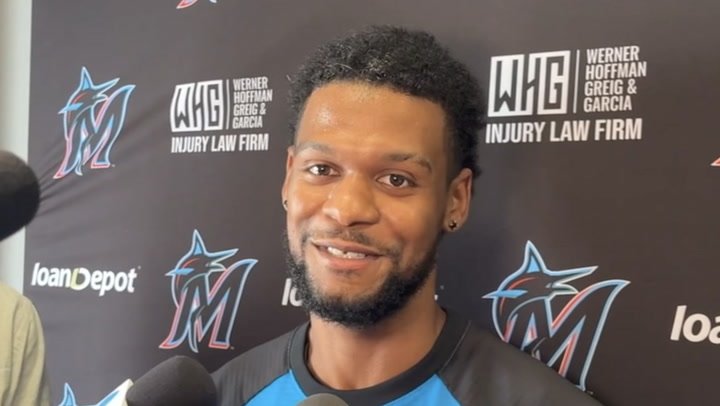 Another first-time All-Star, Marlins shortstop and MLB hits leader Otto Lopez speaks with the media about his career turnaround and excitement for all of the festivities in Philadelphia.View the full article
 -
Max Meyer Reacts to First Career All-Star Selection
DiamondCentric posted an article in Fish On First
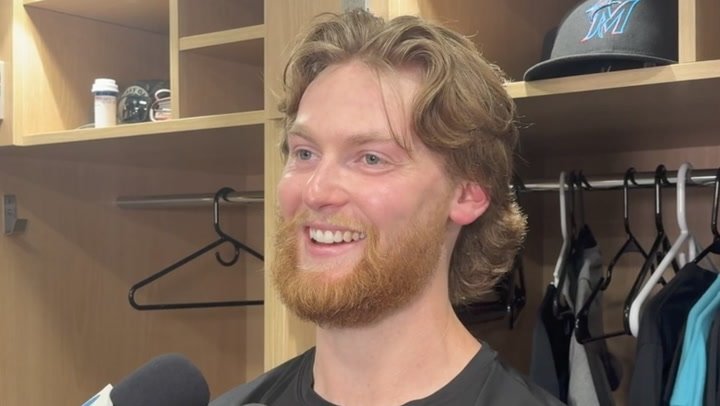 Right after learning that he's been selected to the National League All-Star roster, Marlins right-hander Max Meyer speaks with the media about the mental and physical journey that's taken him to this milestone.View the full article
 -
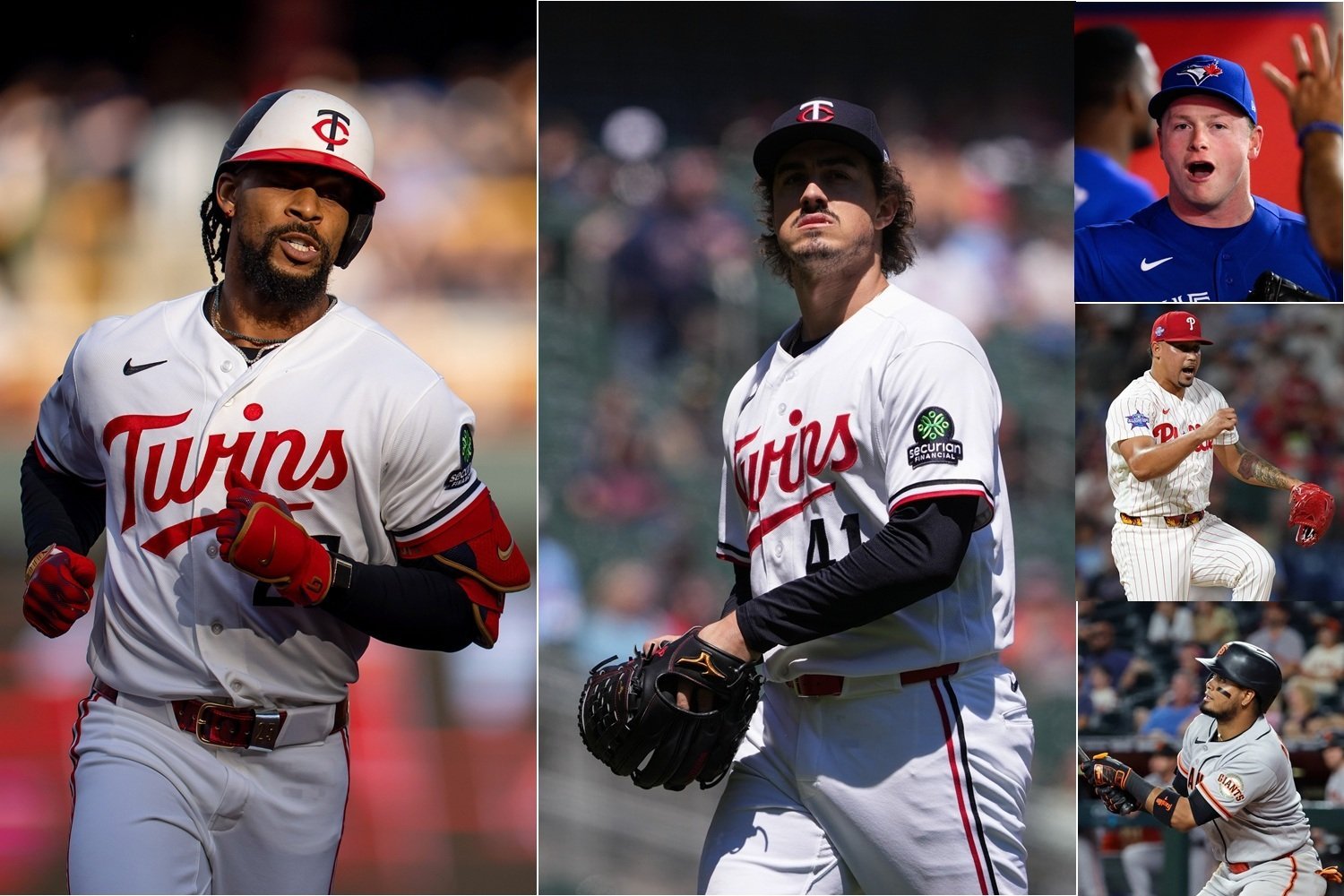 Make that All-Star starting outfielder Byron Buxton. The Minnesota Twins’ center fielder and right-handed starter Joe Ryan on Saturday were named to the AL team for the July 14 All-Star Game at Citizens Bank Park in Philadelphia. Buxton was voted in as a starting outfielder. Buxton and Ryan will be joined by manager Derek Shelton, in his first season leading Minnesota and who was selected to be on the coaching staff for the AL by John Schneider of the Toronto Blue Jays. This is Buxton’s third selection, having also had the honor in 2022 and last year. Buxton, who missed four games with a hip injury before returning to the Twins’ lineup Saturday, is having one of his best seasons of his 12-year career, putting up a slash line of .268/.325/.573 with 25 homers and 45 RBIs entering play Saturday. Buxton’s 25 homers are tied for fourth in MLB. Joe Ryan is making his second straight appearance in the All-Star Game. He has a 3.61 ERA in an MLB-leading 18 starts over 97 1/3 innings, with a 5.5% walk rate and 28.3% strikeout rate. Former Twins also making the trip to the All-Star Game are Philadelphia Phillies right-handed closer Jhoan Duran, San Francisco Giants second baseman Luis Arraez, Toronto Blue Jays right-handed reliever Louis Varland and fellow Minnesotan and former Gopher pitcher Max Meyer of the Miami Marlins. Buxton was a reserve last year, too, when the game was played in Atlanta, near his hometown of Baxley, Ga. He went 1-for-2 with a ninth-inning double off Robert Suarez and scored a run as the AL tied the game 6-6 and forced a decisive swing-off, won by the NL. The nine starters for each team were determined by two rounds of fan balloting, with Los Angeles Dodgers designated hitter Shohei Ohtani and Blue Jays second baseman Ernie Clement getting automatically selected to start by virtue of leading the first round in the NL and AL, respectively. The 23 reserves, which includes 12 pitchers as that position is not up for voting, are selected by player voting and the Commissioner's Office, which ensures that each team has a representative in the game. View the full article
 -
Twins’ Byron Buxton Voted As All-Star Starter; Joe Ryan Also In
DiamondCentric posted an article in Twins Daily
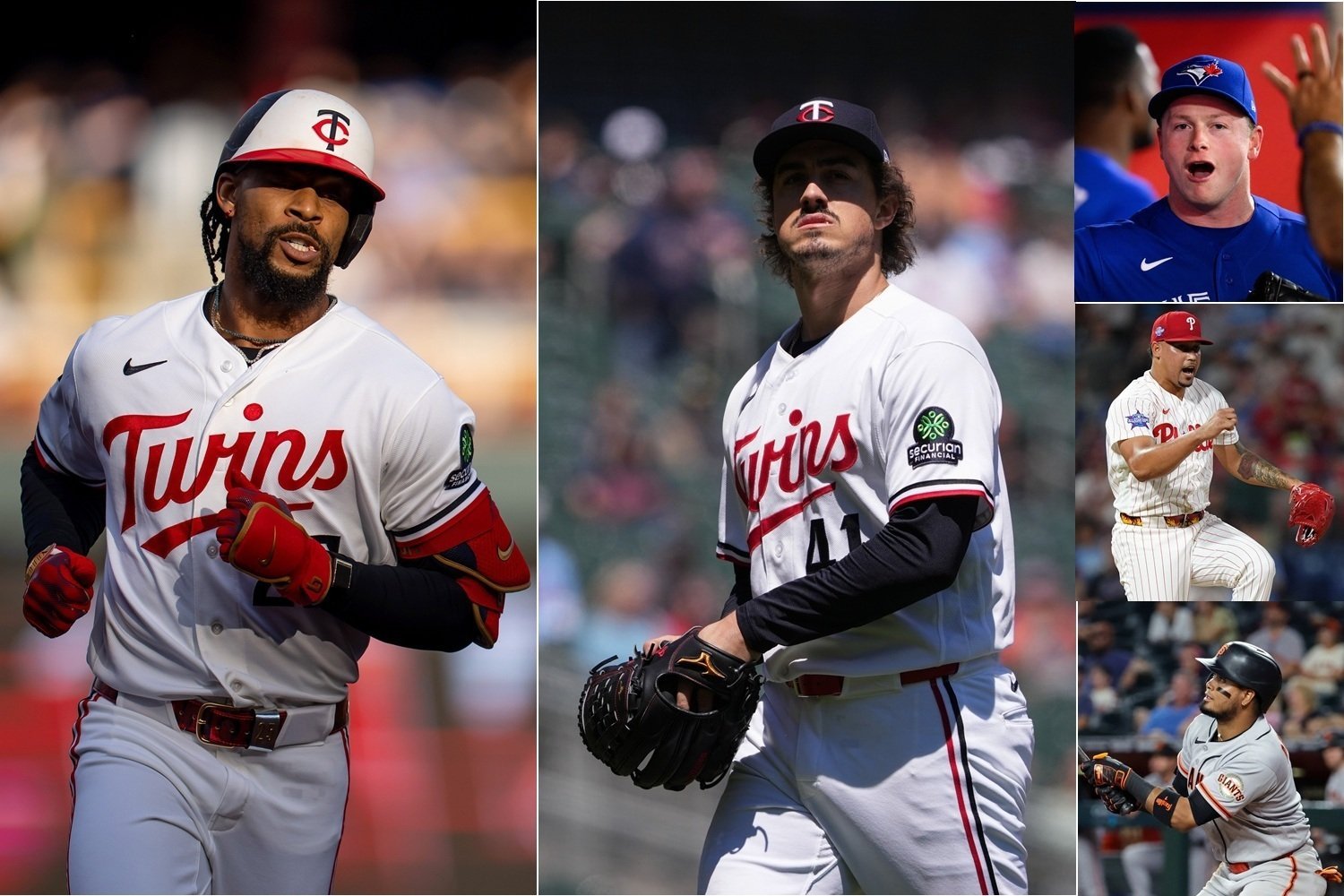 Make that All-Star starting outfielder Byron Buxton. The Minnesota Twins’ center fielder and right-handed starter Joe Ryan on Saturday were named to the AL team for the July 14 All-Star Game at Citizens Bank Park in Philadelphia. Buxton was voted in as a starting outfielder. Buxton and Ryan will be joined by manager Derek Shelton, in his first season leading Minnesota and who was selected to be on the coaching staff for the AL by John Schneider of the Toronto Blue Jays. This is Buxton’s third selection, having also had the honor in 2022 and last year. Buxton, who missed four games with a hip injury before returning to the Twins’ lineup Saturday, is having one of his best seasons of his 12-year career, putting up a slash line of .268/.325/.573 with 25 homers and 45 RBIs entering play Saturday. Buxton’s 25 homers are tied for fourth in MLB. Ryan is making his second straight appearance in the All-Star Game. He has a 3.61 ERA in a MLB-leading 18 starts over 97⅓ innings, with a 5.5% walk rate and 28.3% strikeout rate. Former Twins also making the trip to the All-Star Game are Philadelphia Phillies right-handed closer Jhoan Duran, San Francisco Giants second baseman Luis Arraez, Toronto Blue Jays right-handed reliever Louis Varland and Miami Marlins right-handed starter Max Meyer. Buxton was a reserve last year, too, when the game was played in Atlanta, near his hometown of Baxley, Ga. He went 1-for-2 with a ninth-inning double off Robert Suarez and scored a run as the AL tied the game 6-6 and forced a decisive swing-off, won by the NL. The nine starters for each team were determined by two rounds of fan balloting, with Los Angeles Dodgers designated hitter Shohei Ohtani and Blue Jays second baseman Ernie Clement getting automatically selected to start by virtue of leading the first round in the NL and AL, respectively.The 23 reserves, which includes 12 pitchers as that position is not up for voting, are selected by player voting and the Commissioner's Office, which ensures that each team has a representative in the game. View the full article
 -
Twins’ Byron Buxton Voted As All-Star Starter; Joe Ryan Also In
DiamondCentric posted an article in Twins Daily
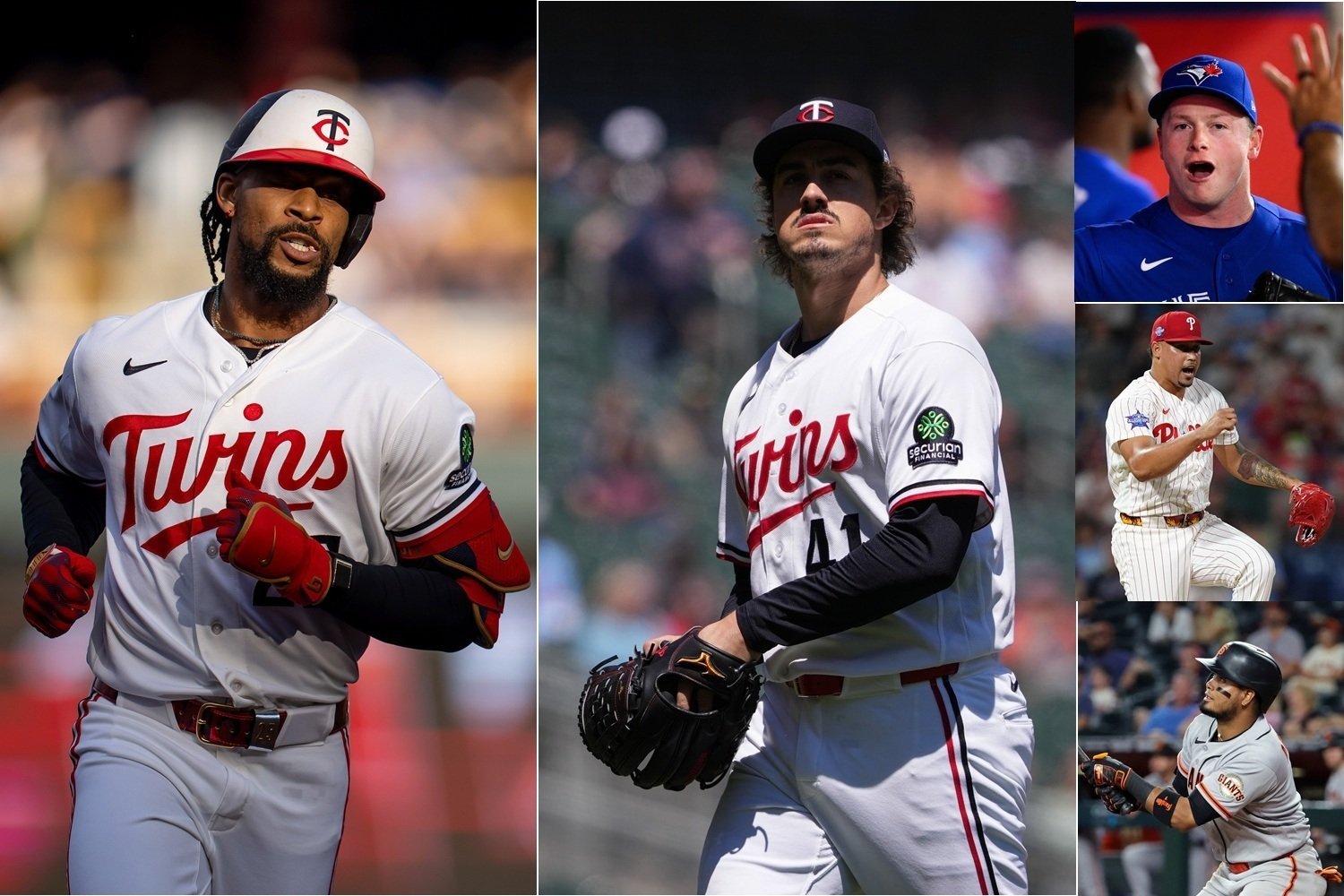 Make that All-Star starting outfielder Byron Buxton. The Minnesota Twins’ center fielder and right-handed starter Joe Ryan on Saturday were named to the AL team for the July 14 All-Star Game at Citizens Bank Park in Philadelphia. Buxton was voted in as a starting outfielder. Buxton and Ryan will be joined by manager Derek Shelton, in his first season leading Minnesota and who was selected to be on the coaching staff for the AL by John Schneider of the Toronto Blue Jays. This is Buxton’s third selection, having also had the honor in 2022 and last year. Buxton, who missed four games with a hip injury before returning to the Twins’ lineup Saturday, is having one of his best seasons of his 12-year career, putting up a slash line of .268/.325/.573 with 25 homers and 45 RBIs entering play Saturday. Buxton’s 25 homers are tied for fourth in MLB. Ryan is making his second straight appearance in the All-Star Game. He has a 3.61 ERA in a MLB-leading 18 starts over 97⅓ innings, with a 5.5% walk rate and 28.3% strikeout rate. Former Twins also making the trip to the All-Star Game are Philadelphia Phillies right-handed closer Jhoan Duran, San Francisco Giants second baseman Luis Arraez, Toronto Blue Jays right-handed reliever Louis Varland and Miami Marlins right-handed starter Max Meyer. Buxton was a reserve last year, too, when the game was played in Atlanta, near his hometown of Baxley, Ga. He went 1-for-2 with a ninth-inning double off Robert Suarez and scored a run as the AL tied the game 6-6 and forced a decisive swing-off, won by the NL. The nine starters for each team were determined by two rounds of fan balloting, with Los Angeles Dodgers designated hitter Shohei Ohtani and Blue Jays second baseman Ernie Clement getting automatically selected to start by virtue of leading the first round in the NL and AL, respectively.The 23 reserves, which includes 12 pitchers as that position is not up for voting, are selected by player voting and the Commissioner's Office, which ensures that each team has a representative in the game. View the full article
 -
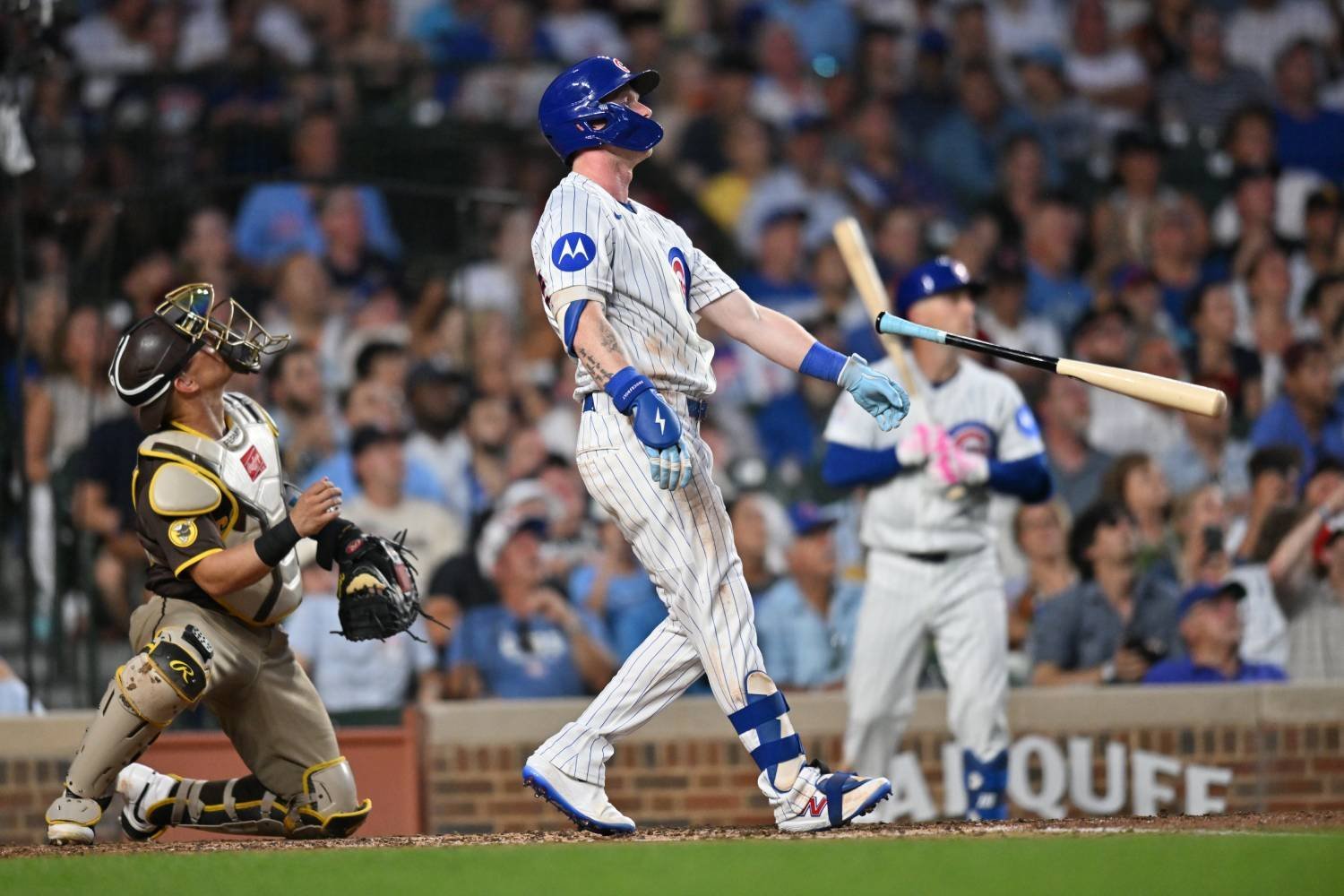 The dynamic talent of Pete Crow-Armstrong is going back to the All-Star Game. The Chicago Cubs' center fielder was voted in as an NL reserve to the July 14 game at Citizens Bank Park in Philadelphia. Crow-Armstrong also went last year. Crow-Armstrong is a highlight machine, whether it is with his range and glove covering gap to gap (with the occasional miscue) or his bat booming home runs. He has a slash line of .287/.374/.526 entering play Saturday with 19 home runs and 49 RBIs. He also has a 5.1 bWAR, which is the best in MLB and near the 5.9 he posted last year. The nine starters for each team were determined by two rounds of fan balloting, with Los Angeles Dodgers designated hitter Shohei Ohtani and Toronto Blue Jays second baseman Ernie Clement getting automatically selected to start by virtue of leading the first round in the NL and AL, respectively. The 23 reserves, which includes 12 pitchers as that position is not up for voting, are selected by player voting and the Commissioner's Office, which ensures that each team has a representative in the game. View the full article
 -
Red Sox Land Aroldis Chapman, Ranger Suarez In All-Star Game
DiamondCentric posted an article in Talk Sox
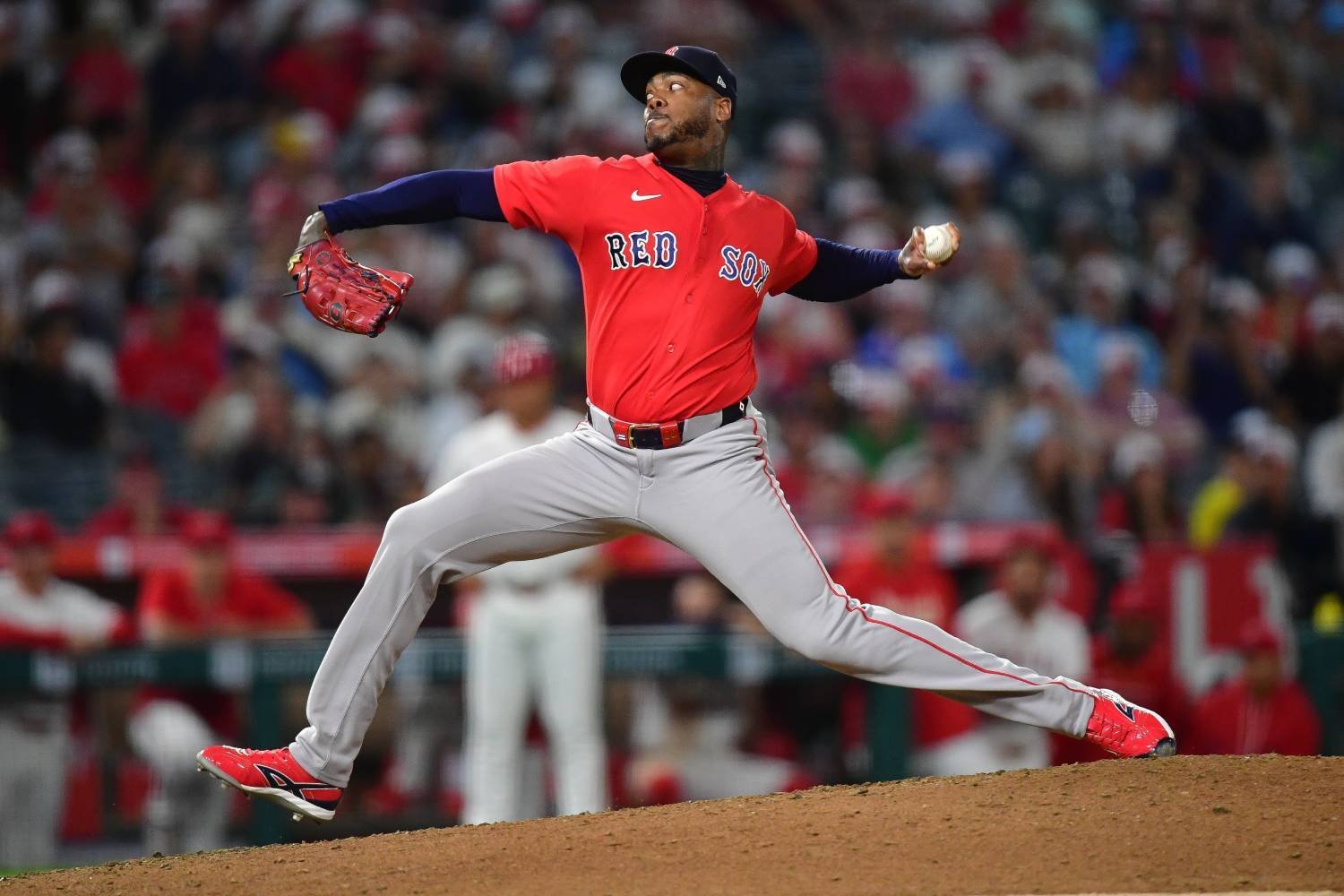 Despite being in last place in the AL East, the Boston Red Sox are sending two players to the All-Star Game. Left-handed closer Aroldis Chapman and left-handed starter Ranger Suarez were named to the AL roster for the July 14 All-Star Game at Philadelphia's Citizens Bank Park. It is the ninth trip to the All-Star Game for Chapman and the second for Suarez, who played his first eight seasons for the Philadelphia Phillies. Chapman, a two-time AL Reliever of the Year, has 17 saves in 27 appearances this season with a 2.10 ERA. Chapman just surpassed Hoyt Wilhelm record for career strikeouts by a reliever with his 1,364th. Suarez will be heading back to Philadelphia sporting a 2.94 ERA in 16 starts, posting a 7.2% walk rate and 25.5% strikeout rate. The nine starters for each team were determined by two rounds of fan balloting, with Los Angeles Dodgers designated hitter Shohei Ohtani and Toronto Blue Jays second baseman Ernie Clement getting automatically selected to start by virtue of leading the first round in the NL and AL, respectively. The 23 reserves, which includes 12 pitchers as that position is not up for voting, are selected by player voting and the Commissioner's Office, which ensures that each team has a representative in the game. View the full article
 -
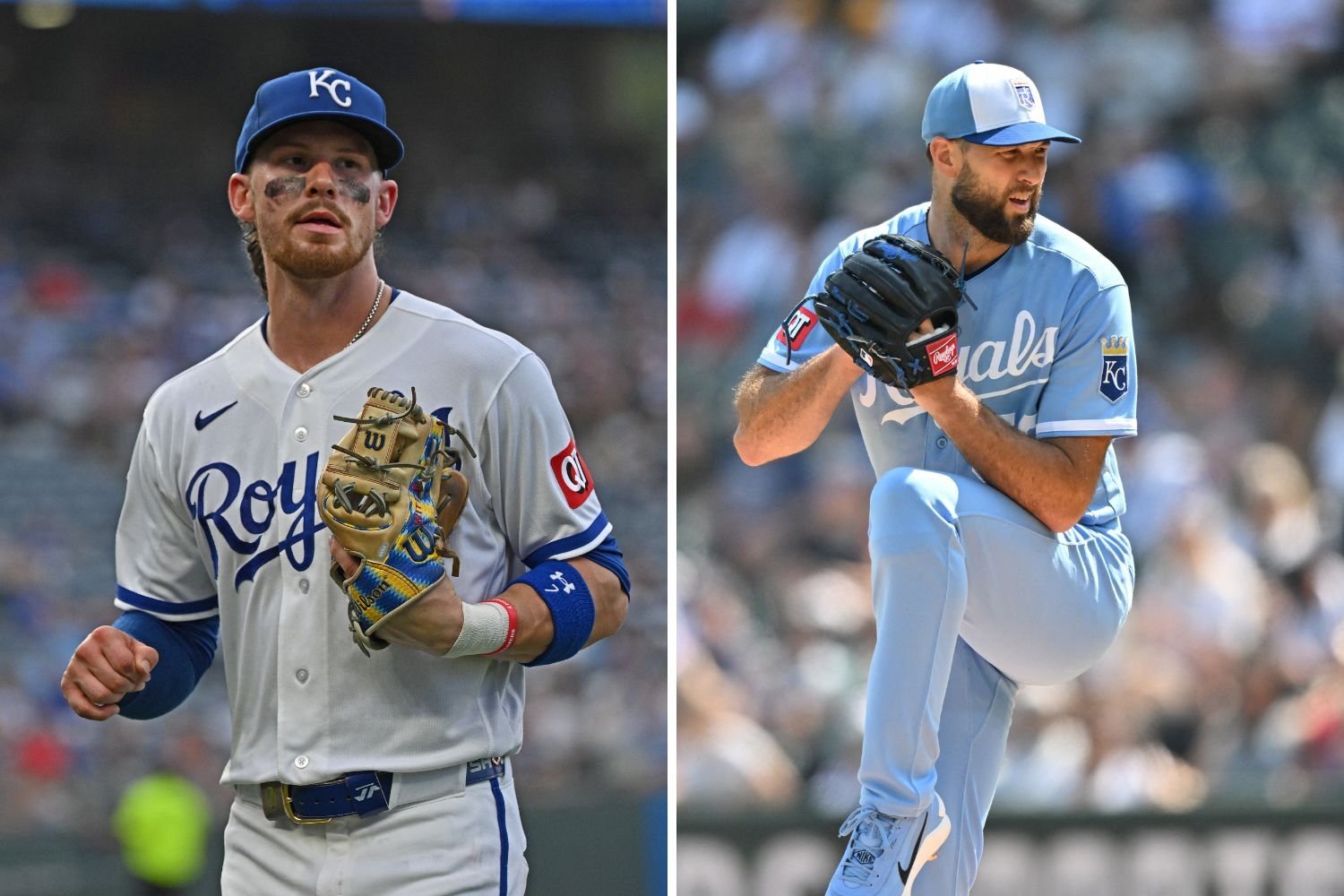 On Saturday, Major League Baseball named the All-Star rosters for the 2026 All-Star Game in Philadelphia. The Kansas City Royals were fortunate to have two players make the American League roster. Bobby Witt Jr. not only made his third consecutive All-Star team, but he was named the AL starting shortstop, the first time he's been named a starter in the Midsummer Classic. Witt leads all American League players in fWAR with a 4.6 mark. Only the Cubs' Pete Crow-Armstrong is ahead of Witt in the Majors with a 5.2 mark. The Kansas City shortstop is also hitting .289 with an .830 OPS. That includes 12 home runs, 36 RBI, 44 runs scored, and 29 stolen bases. He also has a .358 wOBA, .395 xwOBACON, and 130 TJ Bat+, which rank in the upper percentiles of the league, according to his TJ Stats Statcast summary. The other Royals player to make the All-Star team was pitcher Michael Wacha. Wacha has been the Royals' best starting pitcher this year, much-needed considering the injuries to Cole Ragans and Kris Bubic. As of Saturday, Wacha has a 3.46 ERA, 1.18 WHIP, 3.88 FIP, and 12.3% K-BB% in 112 IP. Even though he's not a strikeout machine (19.1% K%) and his stuff isn't eye-popping (96 overall TJ Stuff+), he's been efficient on the mound for the Royals. He's produced 12 quality starts, which leads all AL starting pitchers and is second in baseball to Philadelphia's Cristopher Sanchez, a favorite for the NL Cy Young award. Though Wacha has been prone to giving up home runs (he gave up two on Saturday to the Phillies), he has been solid this season when it comes to limiting hard contact and generating strikes. Wacha ranks in the 75th percentile in Zone%, 90th percentile in Barrel%, and 87th percentile in Hard-Hit% and Average EV allowed. The 35-year-old is producing these metrics despite having only two pitches in his arsenal with TJ Stuff+ marks of 100 or higher. This is the second All-Star appearance for Wacha, who last made the All-Star team in 2015 when he was a member of the St. Louis Cardinals. That season, he posted a 3.38 ERA, 1.21 WHIP, and 3.87 FIP in 181.1 IP with the Cardinals. View the full article
 -
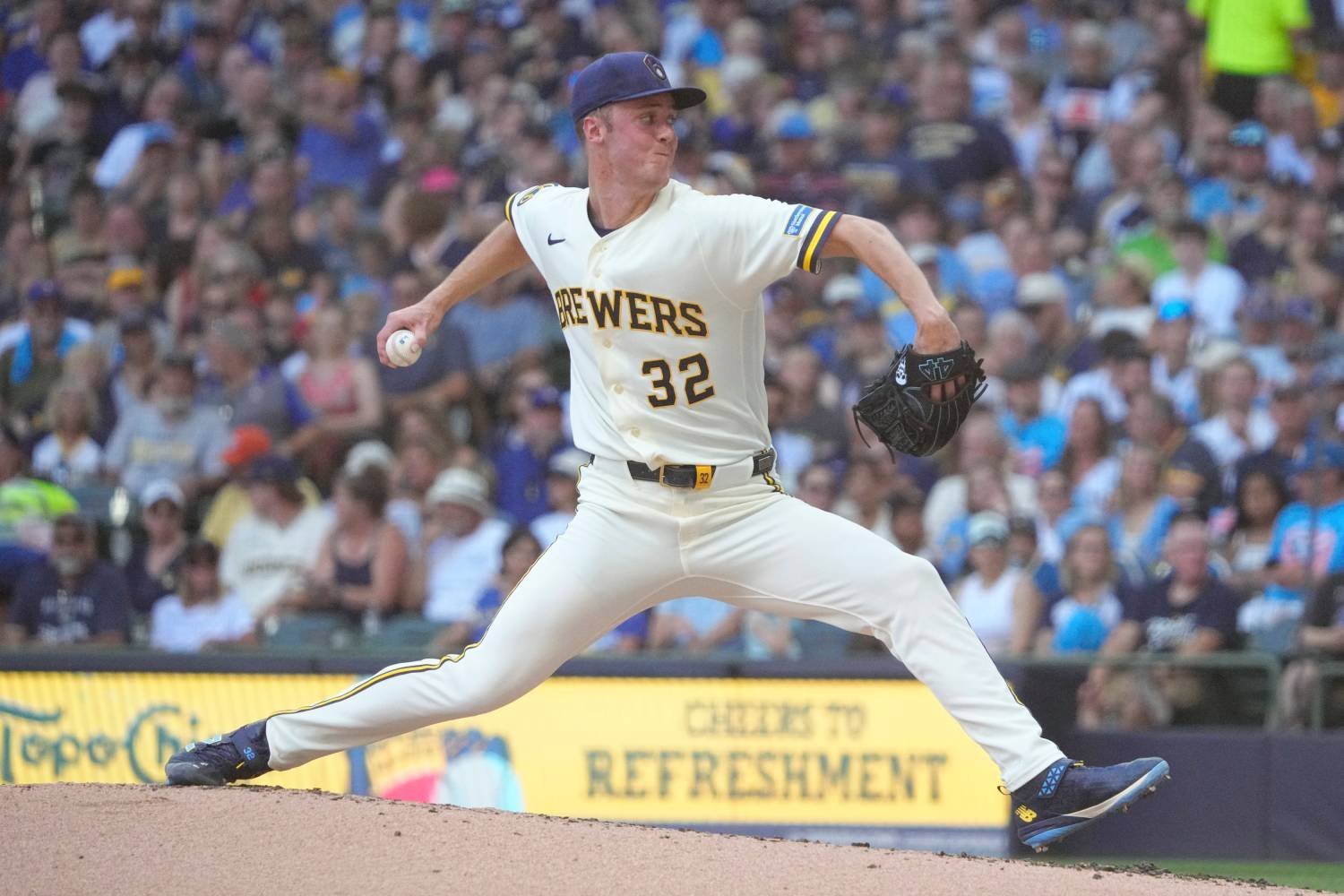 One of the most electric pitchers in MLB and one of the top two-way catchers will represent the Milwaukee Brewers in the All-Star Game. Right-handed starter Jacob Misiorowski and catcher William Contreras were selected to the All-Star Game, which will be played July 14 at Citizens Bank Park in Philadelphia. It is the second appearance for Misiorowski, who debuted just weeks before the 2025 game, while Contreras is going for the third time and second with the Brewers. He also went in 2024. Misiorowski is a far cry from a controversial pick this year and has an outside chance to start this year's game, although he is currently scheduled to pitch the Sunday before the All-Star Game. The Miz leads MLB with a 1.47 ERA and 156 strikeouts and has a shutout in his 17 starts and 104 innings. He has a 6.8% walk rate and an amazing 39.3% strikeout rate. Contreras has a slash line of .293/.358/.416 while playing virtually every day with nine homers and 51 RBIs. His .293 batting average is the highest of his seven-year career. He has made the All-Star Game every other year since becoming an MLB regular in 2022 with Atlanta. The nine starters for each team were determined by two rounds of fan balloting, with Los Angeles Dodgers designated hitter Shohei Ohtani and Toronto Blue Jays second baseman Ernie Clement getting automatically selected to start by virtue of leading the first round in the NL and AL, respectively. The 23 reserves, which includes 12 pitchers as that position is not up for voting, are selected by player voting and the Commissioner's Office, which ensures that each team has a representative in the game. View the full article
 -
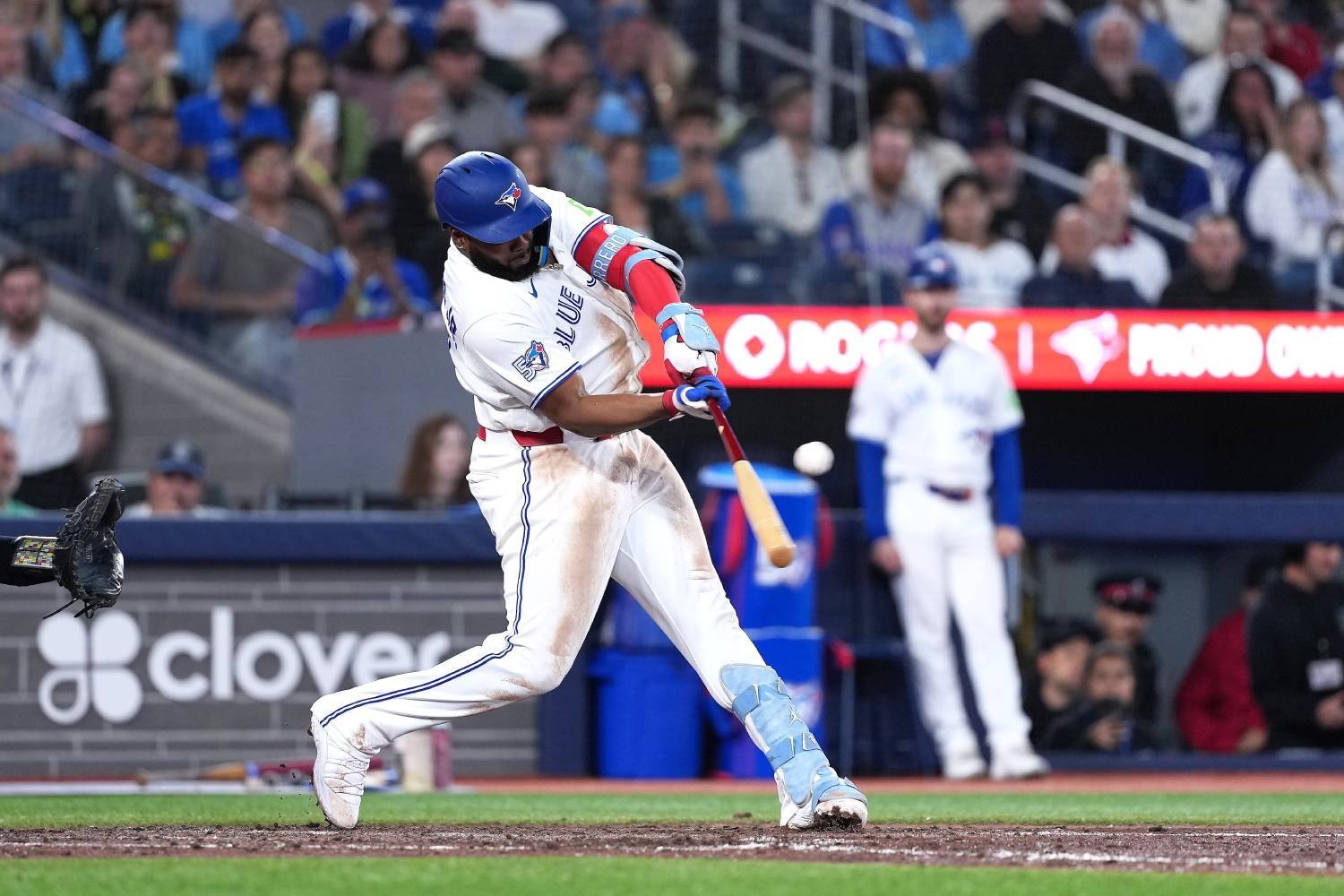 Despite a first half filled with struggles, the defending AL champion Toronto Blue Jays will have two players starting in the All-Star Game. Two pitchers are going, too. With second baseman Ernie Clement having punched his ticket as the top vote-getter among AL players in the first round of voting, first baseman Vladimir Guerrero Jr. was also voted in by the fans in results announced Saturday. Right-handed starter Dylan Cease and right-handed reliever Louis Varland were also named to the team. The All-Star Game is July 14 at Citizens Bank Park in Philadelphia. While Guerrero is in for the sixth straight time, Clement, Cease and Varland are first-time All-Stars. Guerrero said he will sit out the game to rest his lower back, which has been hurting him. Jays manager John Schneider will manage the AL team. Clement, a Blue Jays fan favorite, entered Saturday with a slash line of .295/.319/.434 with seven homers and 29 RBIs. He leads the AL with 22 doubles. Guerrero has had a subpar first half with a slash line of .268/.349/.350 and just four homers and 35 RBIs. His career slash line is .287/.364/.484 and has hit at least 23 homers in the previous five seasons. Cease has a 2.79 ERA in 16 starts and 90⅓ innings with an 11% walk rate and career-best 36.7% strikeout rate. Varland, acquired at last year’s trade deadline from the Minnesota Twins and a key bullpen component as they made their World Series run, has a 0.96 ERA in 47 innings over 42 games. He has a 7.2% walk rate and career-best 35.9% strikeout rate. The nine starters for each team were determined by two rounds of fan balloting, with Los Angeles Dodgers designated hitter Shohei Ohtani and Clement getting automatically selected to start by virtue of leading the first round in the NL and AL, respectively. The 23 reserves, which includes 12 pitchers as that position is not up for voting, are selected by player voting and the Commissioner's Office, which ensures that each team has a representative in the game. View the full article
 -
Twins’ Byron Buxton Voted As All-Star Starter; Joe Ryan Also In
DiamondCentric posted an article in Twins Daily
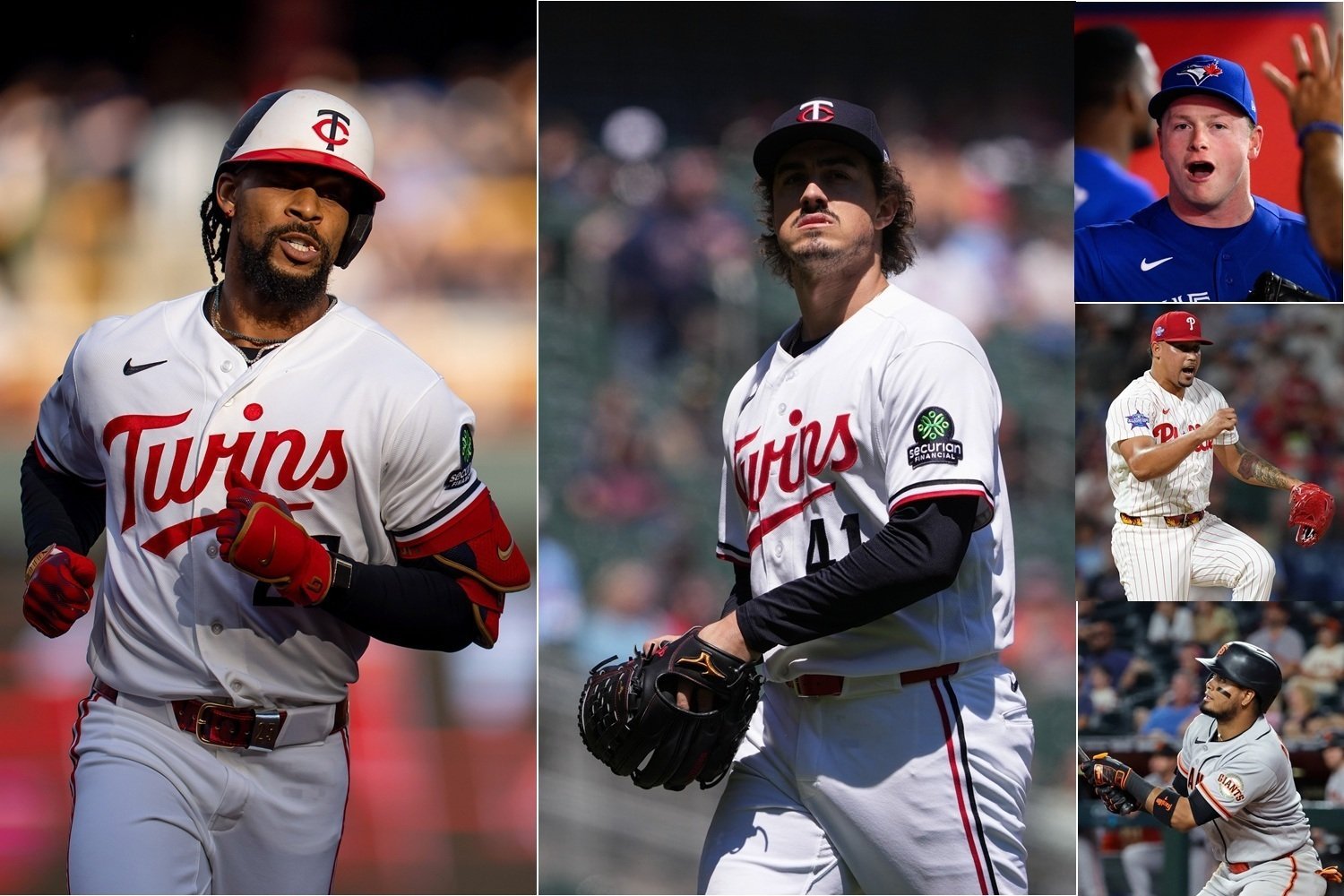 Make that All-Star starting outfielder Byron Buxton. The Minnesota Twins’ center fielder and right-handed starter Joe Ryan on Saturday were named to the AL team for the July 14 All-Star Game at Citizens Bank Park in Philadelphia. Buxton was voted in as a starting outfielder. Buxton and Ryan will be joined by manager Derek Shelton, in his first season leading Minnesota and who was selected to be on the coaching staff for the AL by John Schneider of the Toronto Blue Jays. This is Buxton’s third selection, having also had the honor in 2022 and last year. Buxton, who missed four games with a hip injury before returning to the Twins’ lineup Saturday, is having one of his best seasons of his 12-year career, putting up a slash line of .268/.325/.573 with 25 homers and 45 RBIs entering play Saturday. Buxton’s 25 homers are tied for fourth in MLB. Ryan is making his second straight appearance in the All-Star Game. He has a 3.61 ERA in a MLB-leading 18 starts over 97⅓ innings, with a 5.5% walk rate and 28.3% strikeout rate. Former Twins also making the trip to the All-Star Game are Philadelphia Phillies right-handed closer Jhoan Duran, San Francisco Giants second baseman Luis Arraez, Toronto Blue Jays right-handed reliever Louis Varland and Miami Marlins right-handed starter Max Meyer. Buxton was a reserve last year, too, when the game was played in Atlanta, near his hometown of Baxley, Ga. He went 1-for-2 with a ninth-inning double off Robert Suarez and scored a run as the AL tied the game 6-6 and forced a decisive swing-off, won by the NL. The nine starters for each team were determined by two rounds of fan balloting, with Los Angeles Dodgers designated hitter Shohei Ohtani and Blue Jays second baseman Ernie Clement getting automatically selected to start by virtue of leading the first round in the NL and AL, respectively.The 23 reserves, which includes 12 pitchers as that position is not up for voting, are selected by player voting and the Commissioner's Office, which ensures that each team has a representative in the game. View the full article
 -
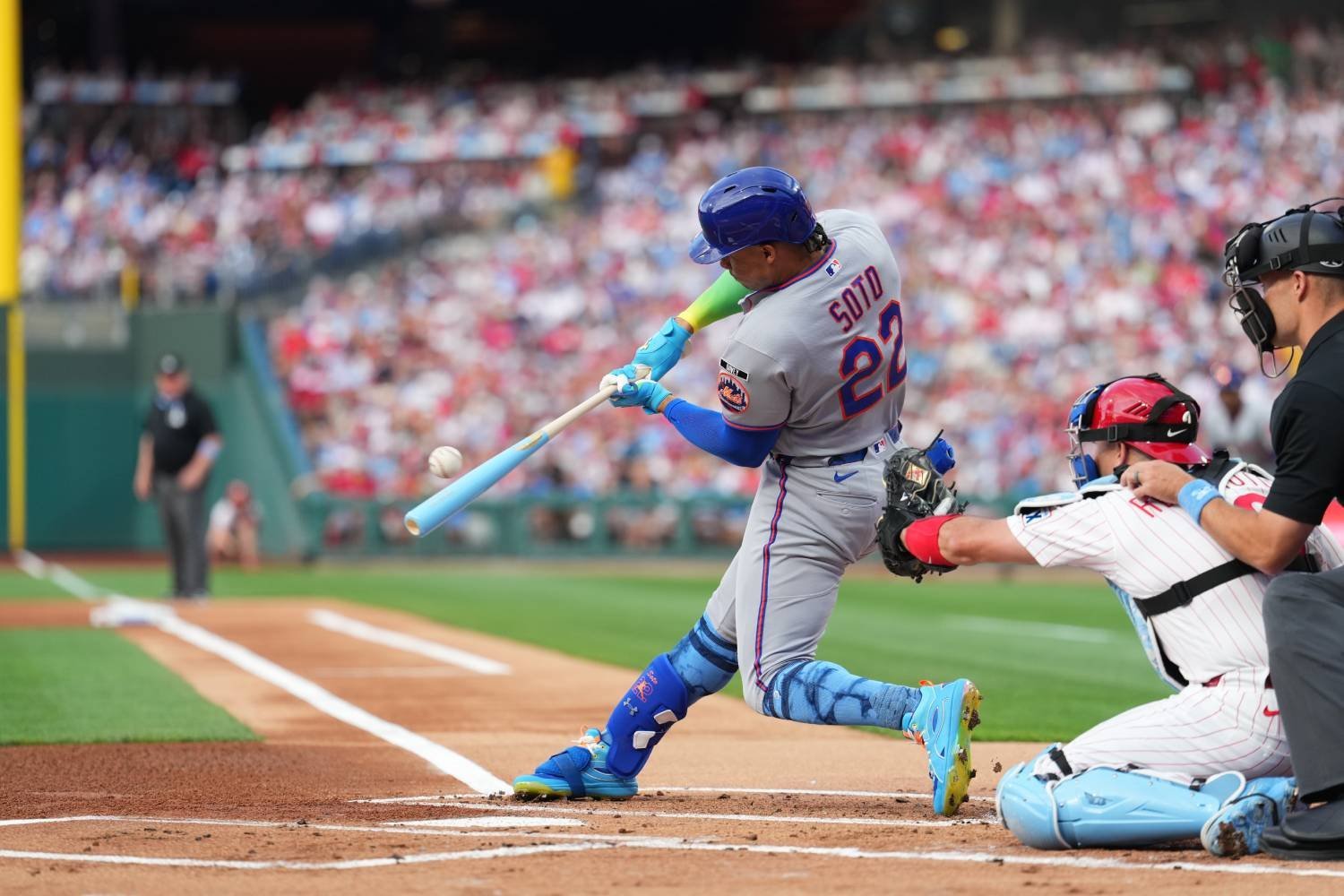 The fans made Juan Soto an All-Star again. The New York Mets’ left fielder was voted in as a starter for the NL in the July 14 All-Star Game at Philadelphia’s Citizens Bank Park. This is Soto’s fifth All-Star selection and third in four years after missing in 2025, his first season with the Mets. Soto, who missed a chunk of April with a strained right calf, entered Saturday with a slash line of .297/.406/.565 with 18 homers and 41 RBIs. His .406 on-base percentage and .971 OPS is tops in the NL. Soto was the only Mets player named to the team with the dismal performance by the team thus far. The nine starters for each team were determined by two rounds of fan balloting, with Los Angeles Dodgers designated hitter Shohei Ohtani and Toronto Blue Jays second baseman Ernie Clement getting automatically selected to start by virtue of leading the first round in the NL and AL, respectively. The 23 reserves, which includes 12 pitchers as that position is not up for voting, are selected by player voting and the Commissioner's Office, which ensures that each team has a representative in the game. View the full article
 -
Mason Miller Is Only Padres Player Picked For All-Star Game
DiamondCentric posted an article in Padres Mission
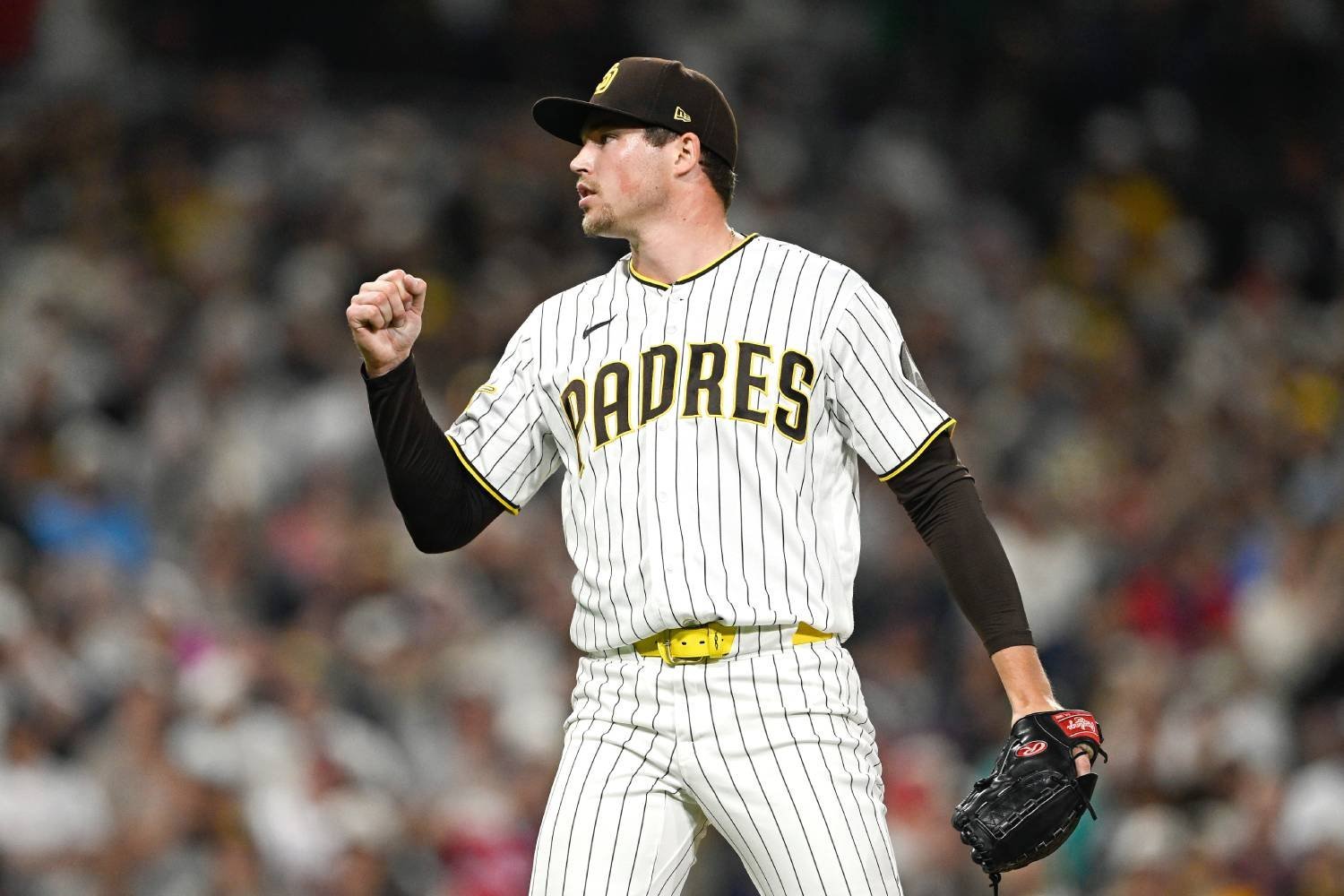 The Reaper is heading to the All-Star Game. Right-handed closer Mason Miller was the only San Diego Padres player selected Saturday to the NL roster for the All-Star Game on July 14 at Philadelphia’s Citizens Bank Park. Miller, in his first full season with the Padres after being acquired at last year’s trade deadline, is an All-Star for the second time in his four-year career, having also been picked in 2024. Miller is tied for the NL lead in saves with 21 without blowing a save. Jhoan Duran of the Philadelphia Phillies and Riley O’Brien of the St. Louis Cardinals also had 21 entering Saturday. Miller has struck out an amazing 50% of the hitters he has faced. Miller has not allowed an extra-base hit all season and has five of his 14 career four-out saves this year. He has a 0.78 ERA and a .136 opponent batting average in 34⅔ innings. The nine starters for each team were determined by two rounds of fan balloting, with Los Angeles Dodgers designated hitter Shohei Ohtani and Toronto Blue Jays second baseman Ernie Clement getting automatically selected to start by virtue of leading the first round in the NL and AL, respectively. The 23 reserves, which includes 12 pitchers as that position is not up for voting, are selected by player voting and the Commissioner's Office, which ensures that each team has a representative in the game. View the full article
 -
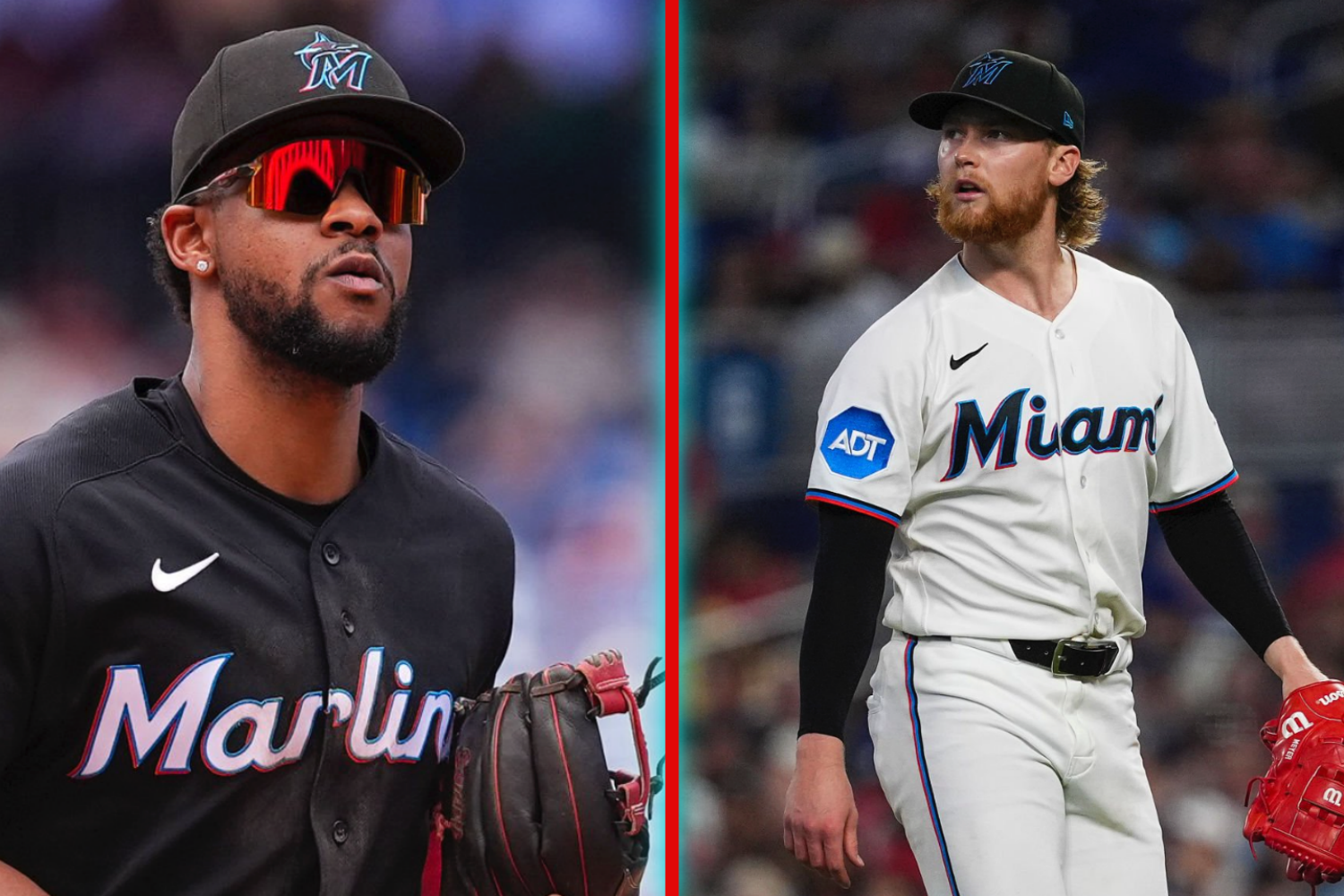 Major League Baseball announced the 2026 MLB All-Star Game rosters on Saturday night. For the first time since 2023, multiple Miami Marlins players have made the National League roster: shortstop Otto Lopez and right-hander Max Meyer. Lopez, who was acquired via waivers from the San Francisco Giants in 2024, now becomes the first All-Star Marlins shortstop since Hanley Ramírez (2010). He also joins Álex González (1999) and Édgar Rentería (1998) as the fourth different Marlins shortstop to make the All-Star game. Lopez has been the best acquisition of the Peter Bendix era thus far, amounting 10.5 bWAR in parts of three seasons to easily lead all Marlins players in the category. This season alone, Lopez already has 4.1 bWAR, which is fifth-most by a Marlins shortstop in a single season behind four different Hanley Ramírez seasons. In 87 games this season, Lopez is slashing .337/.368/.493/.861 with seven home runs, 37 RBI, 17 stolen bases and a 135 wRC+. Lopez leads MLB in batting average and hits. He also is tied for second in doubles (23), tied for third in triples (five) and ranks sixth among National League hitters in total bases (171). Amongst all shortstops, Lopez ranks first in OPS (.861), second in on base percentage (.368) and fourth in stolen bases (17). Lopez also set the franchise record for most multi-hit games (37) before the All-Star break, surpassing Miguel Cabrera. The Marlins selected Meyer with the third overall pick in the 2020 draft out of the University of Minnesota. After battling multiple injuries that have kept him off the field and struggling even when he was healthy, Meyer has taken a huge leap in 2026, posting a 2.53 ERA, 3.45 FIP, 9.79 K/9 and 3.15 BB/9 in 18 starts (103.0 IP). Meyer had a 9-0 record prior to his last outing, tying Liván Hernández (1997) for the best start to a season in Marlins history. He set a club record for longest undefeated streak by a starter in a single season. A main reason for Meyer's success was the addition of a sweeper and sinker to his arsenal. The sweeper, which is now his most-used pitch (30.8%), has a plus-four run value, generating 38.2% of his strikeouts. The sweeper has been a good compliment to his already nasty slider, which has a plus-nine run value. Meyer becomes the fourth first-round pick in franchise history to be named an All-Star while with the Marlins, joining Charles Johnson, José Fernández and Trevor Rogers. He also becomes the 11th different Marlins starter to be named an All-Star and the first since Sandy Alcantara in 2022. The Midsummer Classic will take place at Citizens Bank Park, home of the Philadelphia Phillies, on Tuesday, July 14. View the full article
 -
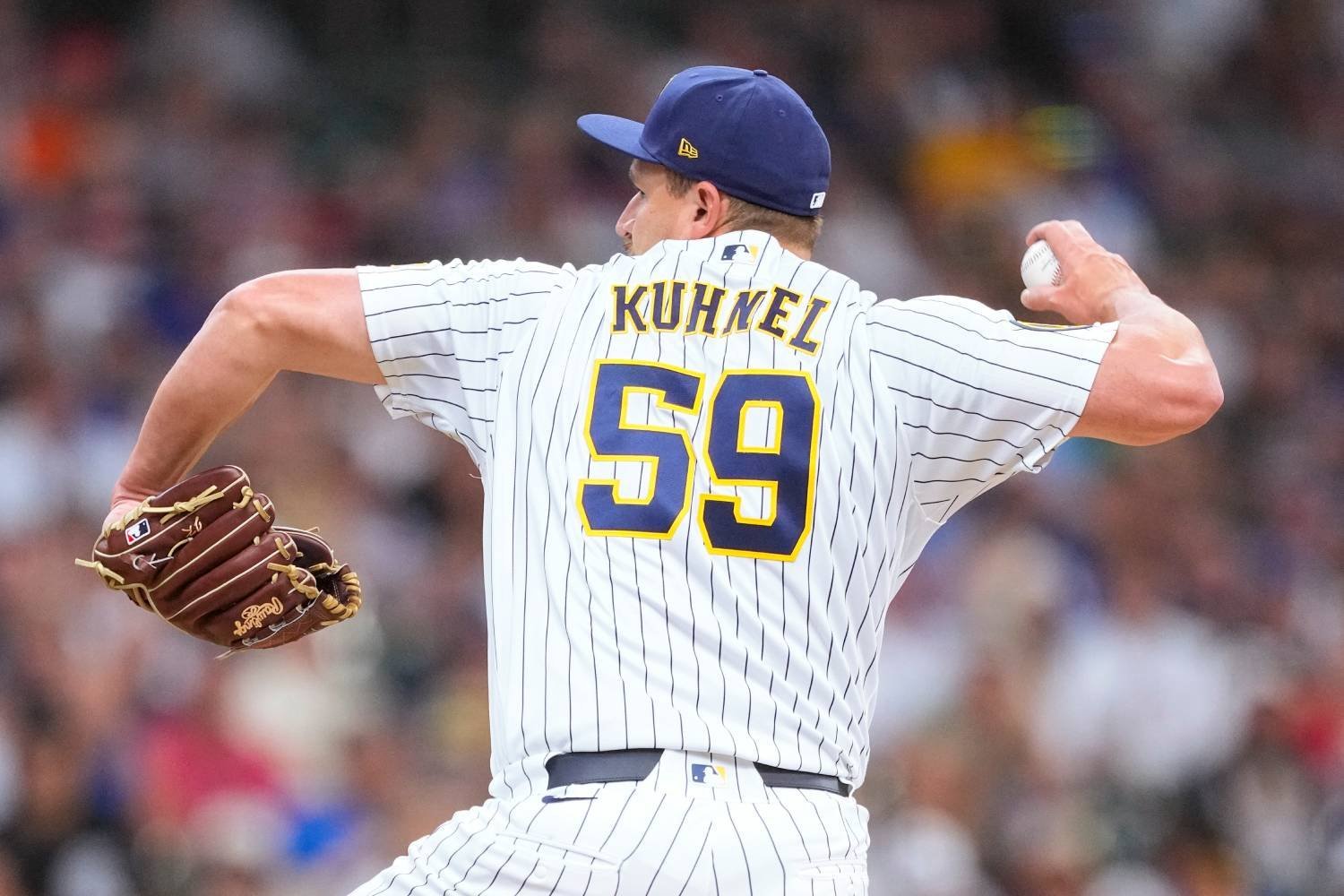 A recent addition to the Milwaukee Brewers' bullpen has been sidelined for at least two weeks. Right-handed reliever Joel Kuhnel was placed on the 15-day injured list Saturday by the Brewers due to a right shoulder impingement. Right-handed reliever Craig Yoho was called up from Triple-A Nashville. Also, right-handed starter Coleman Crow, on the 15-day IL with a strained right forearm flexor, began a rehab assignment at Nashville on Saturday. Kuhnel, acquired June 6 from the A's after he was designated for assignment, has appeared in 10 games for the Brewers and posted a 6.52 ERA over 9⅔ innings. He has walked six and struck out eight while allowing a .317 opponent batting average, including four home runs. Kuhnel's last game was Thursday in the series finale against the Cincinnati Reds in which he gave up three runs (two earned) on one hit and two walks with a strikeout in one inning. Yoho is up with the Crew for the third time this year. He has pitched six innings over five games, giving up four runs on five hits, including two homers, with three walks and eight strikeouts for 6.00 ERA. View the full article
 -
Twins 11, Yankees 4: Six Twins' Rockets Leave Yankees Glaring Red
DiamondCentric posted an article in Twins Daily
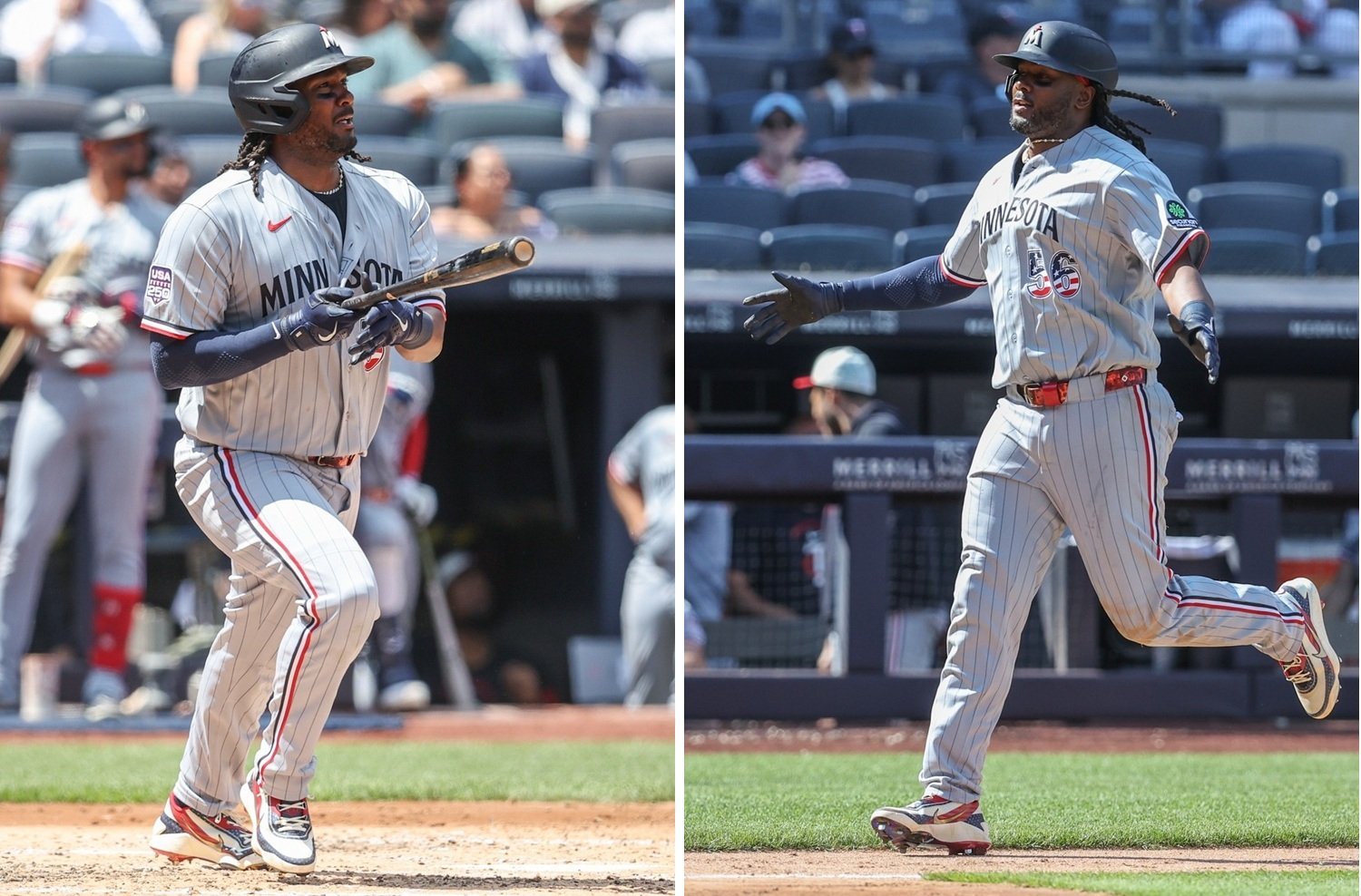 Box Score SP: Zebby Matthews 4.2 IP, 3 H, 4 ER, 4 BB, 5 K (79 pitches, 45 strikes (57%)) Home Runs: Kody Clemens (16), Luke Keaschall (4), Alex Jackson (1), Trevor Larnach (6), Josh Bell 2 (12, 13) Top 3 WPA: Larnach (0.11), Taylor Rogers (0.11), Byron Buxton, Kody Clemens, Luke Keaschall (0.10) Win Probability Chart (via FanGraphs) The Twins entered Saturday afternoon's game at Yankee Stadium in need of a quality start and some offensive fireworks. Friday's loss afforded them neither, and simultaneously woke up the stumbling giants in the Bronx. The Yankees called up young righty Brendan Beck to replace an injured Carlos Rodon for the Independence Day start, while Zebby Matthews took the hill for the Twins in hopes of evening up the series. The Twins started off with what they needed, but the script unraveled in the fifth. In the 104 degree heat, the Twins kept lighting up the scoreboard and managed to win an otherwise losable game. Early Explosions for the Twinkies The Twins sure enjoyed spending their holiday with Beck. Trevor Larnach worked a leadoff walk to start things off, and the newly returned and soon to be minted All-Star Byron Buxton smoked a non-sliding Beck slider off of the wall in left to plate Larnach for an early 1-0 lead. The Rocket's kid, Kody Clemens, came up next. His patriotic blast made it 3-0. Staked to a 3-0 lead before he even threw a pitch, Matthews started out on cruise control and took down the Yankees in order in the bottom of the first. In the top of the second, Minnesota continued to feast on Beck's efforts, this time with Luke Keaschall and Alex Jackson launching back-to-back blasts to push the lead up to 5-0! Matthews continued to scatter a runner here and there, while continuing to keep the scoreboard clean until the Twins launched yet another bomb in the top of the fourth. Lefty Tim Hill had been brought into the game to face Larnach, and Trevor hit a rope missile into the second row to put his team up 6-0. The Perfect Script Unravels Zebby continued to roll in the fourth, but the Martian, Jasson Dominguez, hit a moon shot of his own to get the Yankees on the board. The Twins didn't respond in the top of the fifth, and the game completely fell apart for Matthews in the bottom of the fifth. After walking the light-hitting Ryan Matthews on four pitches with one out, Zebby left a center-cut sinker in Max Schuemann's red-zone, and it was suddenly a 6-3 ballgame. Ali Sanchez grounded out, but Matthew's lost Grisham to a walk and then lost himself to an injury during the Ben Rice at bat. Rice eventually walked, and that was enough to have Derek Shelton reach for his explosive bullpen. Zebby couldn't finish five innings in a game during which he was given a six run lead, and now his status for his next start is also at risk with a "right foot laceration" injury at play. Travis Adams was the first man up out of the powder keg that is Twins relief pitching, and he threw a changeup down the plate for his first pitch to Cody Bellinger. Thank the Founding Fathers that Bellinger's launch angle was only 22 degrees, because his three-run homer became a one-run double instead. Dominguez came up with a chance to tie the game, but Adams threw a cutter this time for his first pitch which induced the inning-ending ground out. The Twins headed into the sixth inning with a 6-4 lead, but the tide in the battle had significantly switched back to the Yankees. The Implosion Continues...Right? After the Twins failed to capitalize on a hit batter and a walk in the top of the sixth, New York went single, bunt single, walk to load the bases with one out. The Yankees went to their bench for Amed Rosario because they are the Yankees, you've gotta give it to Adams. He stood up there and gave it his best and managed to get Rosario to go fishing for a fastball out of the zone for the second out. With the bases still loaded and the Twins still ahead by two, Shelton then brought in Taylor Rogers to face Grisham. Because the Yankees are the Yankees, their bench move was All-Star Paul Goldschmidt. Twins' fans of all generations knew what would happen next, Rogers told those fans to just calm down, pour a drink, and watch Goldschmidt's pop-up land harmlessly in Larnach's glove for out number three! Implosion Yes...We Just Got the Team Wrong! After barely surviving the Yankees in the sixth, Josh Bell stepped into the box against Yankee reliever Ryan Yarbrough. Bell brought his top-shelf fireworks, and this rocket made it 7-4! What ensued was Yankee blasts with warning track payloads. The launches caused initial excitement around the stadium and angst within the hearts of Twins Territory, but ultimately Rogers and Andrew Morris did their job while the Twins exploited the New York gloves for an insurance run in the seventh, and four more runs in the eighth. Some highlights included a Jazz Chisholm boot at second, a Clemens RBI chopper that neither Chisholm nor Rice made any effort to catch, and another Bell top-shelf missile to make it 11-4. How much did this game change between the sixth and eighth innings? The Twins went from "on the ropes" to "utilizing Marco Raya" in just two innings. Turns out the Independence Day laugher was indeed still in order, and Twins fans everywhere could celebrate a day of fireworks worth celebrating for once. What’s Next? The Twins look to steal yet another series win on the road versus an annually frustrating opponent. Twins ace Joe Ryan (5-5, 3.61 ERA) looks to rebound from his poor outing against the Astros earlier in the week, while Yankees lefty Ryan Weathers (3-6, 4.08 ERA) looks to overcome the inertia of a 1-3 June. The weather should bring some light rain and cooler temps, but the Twins' need to keep climbing back towards the .500 mark remains red hot. First pitch is scheduled for 12:35pm CDT. Postgame Interviews Bullpen Usage Spreadsheet TUE WED THUR FRI SAT P Raya 25 0 0 0 35 60 Orze 23 0 0 28 0 51 Rogers 0 15 0 0 12 27 Laweryson 0 23 0 0 0 23 Morris 0 17 0 0 5 22 Funderburk 0 0 0 21 0 21 Adams 0 0 0 0 19 19 Gómez 0 18 0 0 0 18 View the full article
 -
San Diego Padres Minor-League Hitters of the Month: June 2026
DiamondCentric posted an article in Padres Mission
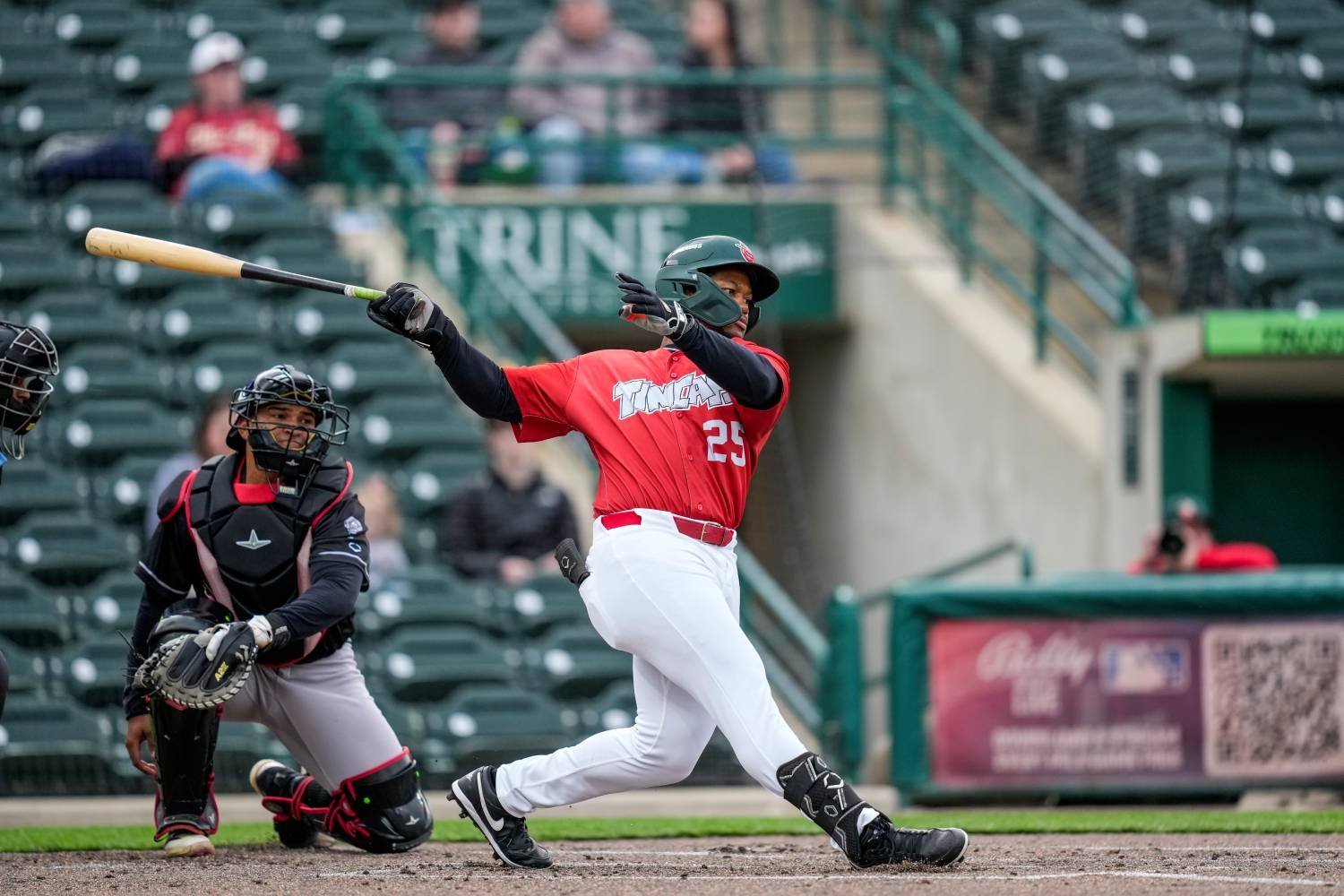 Although June wasn't the most promising month for the big-league club, the San Diego Padres did get some positive developments down on the farm. Assuming A.J. Preller continues his aggressive approach at the trade deadline to upgrade a deeply flawed roster, it's possible that some of these players could be playing elsewhere come August. For now, let's rank the prospects who had the best months at the plate in the Friars' organization. Ranking Padres' Best Minor-League Pitchers In June Honorable mention: Bradley Frye, 3B, Low-A Lake Elsinore Storm June stats: .305/.438/.441, 19 games, 16 R, 6 2B, 1 3B, 0 HR, 6 RBI, 12 BB, 12 K, 4 SB, 1 CS An undrafted free agent out of Georgia Tech, the third baseman who turns 24 next week has been one of the unsung players on a Low-A Lake Elsinore Storm team that won the California League's South Division first-half championship. Frye came on strong following the midseason promotions last week, going 9-for-16 in the final four games of June with three of his six RBIs for the month. That brought his season slash line up to .282/.371/.380 with two homers and 33 RBIs. He also has 17 steals. Honorable mention: Dawson Willis, 3B-1B, Low-A Lake Elsinore Storm June stats: .280/.341/.537, 22 games, 16 R, 6 2B, 0 3B, 5 HR, 20 RBI, 7 BB, 34 K, 5 SB, 0 CS The 22-year-old undrafted free agent who played collegiately at Oklahoma and LSU split June, his first full month in pro ball, between the Arizona Complex League and the Cal League with Lake Elsinore. He did not disappoint offensively. The 6-foot-4 corner infielder had a .300/.373/.617 slash line with four homers and 13 RBIs in 16 ACL games, beginning in mid-May, before joining the Storm and put together a .295/.347/.500 slash line, hitting two homers and driving in 11 with three steals at each stop. One issue is he has a combined 38 strikeouts in 28 games, though the rest of his production is hard to poke holes in. No. 3: Carlos Rodriguez, OF, Triple-A El Paso Chihuahuas June stats: .323/.385/.398, 23 games, 10 R, 4 2B, 0 3B, 1 HR, 16 RBI, 10 BB, 6 K, 5 SB, 2 CS The 25-year-old outfielder hasn't stopped hitting just because his career-best hit streak came to an end. The left-handed hitter, who signed with the Padres on a minor-league deal in the offseason, had a 22-game run that ended in mid-June. He has hits in seven of the nine games since. He is more contact-oriented as only five of his 30 hits went for extra bases, with four doubles and a homer. But that also meant he struck out just six times in 93 June at-bats. He finished June by reaching base in 34 of his previous 35 games and led the team with 16 RBIs in the month. Rodriguez had a slow start in the first two weeks of the season, with his average at .212 on April 10. But then he had three hits in two of the next three games to set him on his way to a .303/.372/.390 slash line as he enters July. Thus far, this is Rodriguez's best season since signing out of Venezuela in 2018 aside from short-season ball in 2018 and 2019. It is perhaps telling that in the hitter-friendly Pacific Coast League, Rodriguez hasn't tried to hit more homers. He hit a career-high eight last year in the Atlanta organization, but has two just past the halfway point this year. No. 2: Kerrington Cross, 1B, High-A Fort Wayne TinCaps June stats: .294/.450/.588, 24 games, 20 R, 7 2B, 0 3B, 6 HR, 22 RBI, 23 BB, 25 K, 11 SB, 2 CS The 24-year-old first baseman continues to be an interesting hitter to watch. A seventh-round draft choice last year out of Cincinnati, the Hawaii native slashed .313/.467/.608 with 11 homers, 46 RBIs and 17 steals in 58 games at Low-A Lake Elsinore, earning a promotion to High-A Fort Wayne. Surprisingly, the TinCaps, with a number of hitter promotions, have struggled to begin the second half offensively with Cross among them. He is off to a 5-for-23 start (.217/.419/.348) with a homer and three RBIs in seven games. One of Cross' best abilities is getting on base. After 43 walks and 56 strikeouts with the Storm, Cross has eight walks and four strikeouts with the TinCaps. That has allowed him to score four runs for Fort Wayne after 49 with Lake Elsinore. Before his promotion, he had hits in 10 of 12 games and RBIs in six of eight. An advanced hitter, he should get acclimated to the Midwest League pretty soon. No. 1: Kavares Tears, OF, High-A Fort Wayne TinCaps June stats: .300/.364/.717, 17 games, 11 R, 5 2B, 1 3B, 6 HR, 14 RBI, 6 BB, 23 K, 0 SB, 1 CS After a rough start to his season, the 23-year-old outfielder has turned things on since mid-May. Since homering as part of a 3-for-5, four-RBI game on May 15, the 2024 fourth-round draft choice out of Tennessee has put up a .272/.346/.576 slash line, which brought his numbers up from .176/.330/.341 to .236/.344/.489. He has hit seven of his nine homers in that span. It has been a steady climb for Tears. Following that initial three-hit game May 15, he has only had one more since then. That came June 24 when he came a triple shy of the cycle. Power was his big tool coming out of college as he hit 20 for Tennessee en route to a national championship in his draft year. He had an 106.4 mph max exit velocity in 2025, which was the third-best in the Padres' system, but the question for Tears was whether he would be able to make contact consistently. He has a 32.1% strikeout rate this season after being at 29.1% last year when he spent the full season at Lake Elsinore, which bears monitoring as his breakout season continues. View the full article
 -
 Blue Jays Affiliate Overview (July 2-3) Triple-A Buffalo Bisons Series vs St. Paul Saints (Minnesota Twins): 2-2 Season Record: 40-43 Double-A New Hampshire Fisher Cats Series vs Reading Fightin Phils (Philadelphia Phillies): 2-2 Season Record: 38-35 High-A Vancouver Canadians Series vs Eugene Emeralds (San Francisco Giants): 2-2 Season Record: 32-45 Single-A Dunedin Blue Jays Series vs Jupiter Hammerheads (Miami Marlins): 3-1 Season Record: 35-41 FCL Blue Jays Week Record: 1-3 Season Record: 29-16 DSL Blue Jays Blue Week Record: 1-2 Season Record: 10-14 DSL Blue Jays Red Week Record: 3-1 Season Record: 10-13 Triple-A Buffalo Bisons Season Record: 41-44 Series vs St. Paul Saints (Minnesota Twins) July 2: Buffalo sent CJ Van Eyk to the mound on Thursday against the St. Paul Saints. He did more than what was expected, going five innings and completely shutting down the Saints bats. St. Paul only managed to get three hits off of Van Eyk and didn't even draw a walk. It was mostly contact pitching for Van Eyk, though, as he struck out just three batters in the game. It was a completely different story for Buffalo and their hitters. They continued a recent string of putting up huge run totals on the scoreboard, all backed by a ton of hits and home runs. Four Buffalo hitters had multiple hits, and two ended the game with four hits: Charles McAdoo and Eloy Jiménez. The home runs came from Ismael Munguia and Davis Schneider. Munguia had a solo home run to open up the game, while Schneider's came in the top of the ninth, with a runner on. Willie MacIver also had himself a big game, having two two-RBI doubles and a sacrifice fly, leading the Bisons with five RBI. The only two Buffalo bats without a hit were Je'Von Ward and Josh Rivera, but both did reach base on walks. To top it off, every batter in the lineup scored at least one run, five scored two, and Munguia paced everyone by scoring three times. Buffalo blew out St. Paul, 16-3. July 3: Friday was the second straight game that Buffalo sent a pitch-to-contact style player to the mound against St. Paul. Grant Rogers had the task of keeping Buffalo's offense close enough to strike and pull out a win, and he did his job. He scattered eight hits, gave up three runs, and struck out five. With Buffalo down 3-0 in the seventh inning, their bats finally decided to make an appearance in the game. Charles McAdoo opened up the half inning with a blast, a 106.8 mph, 435-foot solo home run. After a Willie MacIver double and a Davis Schneider walk, Eloy Jiménez shot a line drive to right field to score MacIver. C.J. Stubbs then ripped a double that forced a play at the plate, where Schneider was out on the play. St. Paul got one of the runs back in their half of the seventh, a solo home run by Matt Wallner off of Pat Gallagher. Je'von Ward would cut into the St. Paul lead in the ninth, with an RBI single that scored Stubbs. Unfortunately for Buffalo, it was all they could score in their last comeback attempt. The Bisons fell 4-3, in a game where their bats were far off from recent offensive explosions. Double-A New Hampshire Season Record: 40-37 Series vs Reading Fightin Phils (Philadelphia Phillies) July 2: In the Thursday game between New Hampshire and Reading, Austin Cates was on the mound for the Fisher Cats and had some early trouble. He allowed an RBI groundout in the second inning and then a three-run home run from Riley Tirotta in the third inning. In the fifth inning, Jorge Burgos and Hedbert Perez went back-to-back with home runs to get New Hampshire on the board. In the fifth though, Raider Tello hit a grand slam for the Fightin Phils, followed by a home run from Kehden Hettiger in the seventh inning. Nick Goodwin would answer with a home run of his own in the ninth, but it wasn't enough, as New Hampshire lost 10-4. July 3: In Friday's matchup between New Hampshire and Reading, the Fisher Cats dominated beginning to end with their bats. In the second inning, Carter Cunningham started things with an RBI double to bring in one run. The next inning, Jorge Burgos hit his fifth Double-A home run to bring the lead to three. In the fourth inning, Nick Goodwin and Victor Arias added RBI doubles. By the sixth inning, Reading had hit two home runs and brought the lead down to one. In the eighth inning though, Victor Arias cleared the bases with a three-run double, which was followed by an Eddie Micheletti Jr. home run in the ninth inning. New Hampshire would add three more runs and win this one easily, 12-4. High-A Vancouver Season Record: 33-46 Series vs Eugene Emeralds (San Francisco Giants) July 2: Postponed July 3, Game 1: Max Scherzer returned to the mound on rehab assignment at Nat Bailey Stadium, and the future Hall of Famer struck out three batters over three innings of work. Where he faced some trouble in the third inning, giving up two runs and the lead. Landen Maroudis pitched in relief and had a solid outing for the first time in a while, as the righty went four innings, giving up only one run in the fourth on a sac fly. Jake Casey couldn’t be denied, as he hit one of his two extra-base hits of the game with a solo homer to bring the score within one. Sam Shaw evened it up with a sac fly in the fifth inning, and in the bottom of the sixth inning, Eric Snow has shown to be the opposite of his last name and has been red hot, with his fifth double as a Canadian to score two runs, which eventually were the winning runs. Maroudis earned his first win after losing seven games so far this season, and hopefully this is a turnaround for him. July 3, Game 2: The second game of the doubleheader did not go as well for the Canadians, as immediately in the first inning Holden Wilkerson gave up a solo shot to Gavin Kilen. Wilkerson was unable to get out of the second inning as he allowed a few baserunners into a three-run homer that knocked him out of the game. Jonathan Todd replaced him and wasn’t much better, as he gave up his own three-run homer in the third inning, putting the Canadians down eight to nothing very early. The offense could not touch Jacob Bresnahan, as he only gave up two hits and two walks all game. Jack Nedrow saved the pen, as he only gave up one run in four innings of work, as he’s finally settling down in Vancouver. Bresnahan pitched until the ninth inning before the Canadians were done away by Matt Dunaway in a 9-0 loss. Single-A Dunedin Season Record: 36-42 Series vs Jupiter Hammerheads (Miami Marlins) July 2: The Italian lefty from Rovigo took the bump, and Giacomo Taschin pitched three innings of two-run baseball, but he struggled with his command, walking four batters despite striking out five batters. The Jays were in striking distance after a Dariel Ramon RBI-single, but Luis Victorino gave back that run in the fourth inning, and in the fifth inning, he allowed three more runs, which made it a six-run deficit. That didn’t prevent the D-Jays from roaring back, as Raimundo De Los Santos pinch-hit for the rehabbing Arjun Nimmala and drove in two runners with a double in the seventh. Austin Smith and Diego Dominguez both pitched scoreless innings to prevent the lead from getting out of hand. In the ninth inning, the Jays loaded the bases, and Giaconino Lasaracina hit a sac fly, then Jean Joseph hit a liner to bring it within two. A wild pitch allowed another run to score, but unfortunately for the Jays, Jake Cook flew out to center to stop the comeback attempt in the top of the ninth. July 3: Troy Guthrie had another quality start, which was his fourth of the season. JoJo Parker once again drove in a run in the first inning for an early lead. Guthrie allowed a pair of homers in the fourth inning, putting the D-Jays down two, but the inning after, a bunt single from Austin Smith led to a throwing error from the third baseman Edgardo De Leon, allowing Owen Gregg to score. Parker had his second RBI of the game to even it up in the fifth. The bullpens of both teams kept it close, with Angel Obando striking out six batters in three no-hit innings, only allowing a walk, taking the game to extra innings. Adam Hackenberg grounded into a double play in the top of the 10th, but a wild pitch allowed Dariel Ramon to score, and Franly Urena came in and shut the door with two strikeouts in the 10th for his third save of the season. FCL Blue Jays Season Record: 29-16 July 2: In the Thursday game between the FCL Blue Jays and FCL Phillies, the game came down to the fourth inning. May Viera hit a sacrifice fly for the Blue Jays in the top of the inning. In the bottom of the inning, though, things went south. Miguel Pantoja, who had a good game, allowed a triple, single, and a walk before coming out of the game. He pitched 3.1 innings, gave up four hits, three runs (two scoring after he left), walked three, and struck out five. He used a good mix of pitches, including a promising fastball between 92 and 94 mph, with mostly 19 inches of induced vertical break, which was up to 22 inches at one point. He had a good curveball and slider that generated most of the whiffs in the game. The Phillies would go on to score six in the fourth inning and add a seventh run in the fifth. Denzer Guzman had the Blue Jays' biggest hit in the seventh inning, a solo home run to right-center. The Blue Jays would lose this one 7-2. July 3: Things didn't go well on Friday for the FCL Blue Jays either. They faced off against the FCL Tigers and were down big early. Cristian Rodriguez started the scoring with an RBI single for the Tigers, which was followed by a two-run home run, an RBI double, and another RBI double. The Tigers added a run in the second inning as well. The Blue Jays scored their first run on a throwing error on a pickoff attempt in the fifth inning. Renyel Campos hit an RBI single in the bottom of the sixth inning to cut the deficit to five. The game ended in the bottom of the seventh due to some bad weather. DSL Blue Jays Blue Season Record: 10-14 July 2: Tomoya Kinjo was on the mound for BJB, and he continued to struggle in the DSL. He threw 2.2 innings, gave up four runs, and had no control while he walked six. Thankfully for BJB, their bats were dialed in, even if it was just singles. BJB racked up nine singles and seven walks, leading to 12 runs. Sebastian Casanova led the way with three hits, stealing a base, and scoring two runs. Cristopher Polanco was also a menace; he had a single, two stolen bases, and scored three runs. BJB won big 12-6. July 3: Sebastian Casanova had another really good game on Friday; he tallied three more hits, his second three-hit game in a row. BJB started the scoring in the second, getting RBI singles from Juarlin Soto and Fabian Gonzalez. Cristopher Polanco added a two-RBI single before the inning was over, giving BJB a 4-0 lead. After scoring two runs on a wild pitch in the fourth, BJB's pitching failed them, giving up six runs down the stretch. BJB would drop this one 7-6. DSL Blue Jays Red Season Record: 10-13 July 2: Postponed July 3: Elaineiker Coronado and Luis Nunez led the charge for BJR. Coronado was perfect at the plate, going 3-3, with a solo home run and an RBI single. Nunez was a standout as well. He tallied two singles and a walk, while also being a menace on the base paths, stealing three bags and scoring two runs. Rodrigo Ramirez had a good game on the mound, pitching 2.2 innings and striking out five without giving up a run. BJR won the game 4-2. View the full article
 -
Red Sox Minor League Report: Greenville’s Losing Streak Reaches Eight
DiamondCentric posted an article in Talk Sox
 Let’s check in on the Red Sox farm through Friday’s action. Triple-A Worcester Red Sox Series @ Syracuse Mets (New York Mets): 3-1 Season Record: 40-41 Worcester fell 8-7 in a close game amid a poor day from the WooSox bullpen. Jack Anderson impressed through five shutout frames. Anderson allowed three hits and walked two, but struck out three before his night came to a close following the fifth inning. Zack Kelly followed Anderson and struggled. Kelly didn’t record an out, instead conceding five runs on three hits. Caleb Bolden replaced Kelly, getting thrust into a high-stakes situation in his first appearance in Triple-A. Bolden spent three years in Double-A before getting the long-awaited call-up on Thursday. Bolden pitched through two complete frames, striking out three but allowing Syracuse to tack on three more runs (one unearned) on two hits. In Bolden’s first appearance with Worcester, he was dealt the loss. Sam McWilliams, another Worcester newcomer, took over in the eighth inning and closed the loss for the WooSox. He allowed two walks and struck out one in his first appearance. McWilliams was signed to a minor league deal on July 2 following a stint in Mexico. Worcester went an impressive 5-for-14 with runners in scoring position on Friday, but came up just short. Mikey Romero led the way with three RBIs as Kristian Campbell tallied three hits. Tyler McDonough got the scoring started for Worcester in the third inning, doubling on a fly ball to right field and driving in Campbell. Later in the inning, newly acquired infielder Brett Harris scored Nathan Hickey on a groundball back to the pitcher. With a two-run advantage in the fourth, Campbell smacked a line drive to center, good for an RBI single as Allan Castro crossed home. One inning later, Romero drove in Braiden Ward on a line drive single to left, adding to the lead. Romero smacked another RBI single in the seventh, driving in McDonough and Ward and tying the ballgame. Down by two in the ninth, Mickey Gasper attempted to start a comeback, singling to center and driving in Vinny Capra. However, it was too little too late as Worcester fell by one run. Double-A Portland Sea Dogs Series vs. Altoona Curve (Pittsburgh Pirates): 2-2 Season Record: 41-37 The Sea Dogs went home victorious 9-3, behind another strong start from John Holobetz. Holobetz has recorded six strikeouts in each of his last three starts but on Friday he one-upped himself, punching out seven batters. Holobetz lasted 5⅓ innings, allowing two runs on four hits and walking just one batter as he earned the win. Reidis Sena took over in the sixth inning and lasted through the eighth. Over the 2⅔ innings, Sena allowed one run on four hits and sent three batters down on strikes. Eduardo Rivera allowed one hit as he shut the door on Altoona’s offense and sealed the Friday night victory for Portland. Brooks Brannon turned in a three-hit night, contributing two RBIs in the win. Johanfran Garcia and Ronald Rosario also added two RBIs as the trio helped the Sea Dogs to a win. With the bases loaded in the third, Garcia turned on a ball high in the zone and hit it back to the wall in right center. Franklin Arias and Miguel Bleis scored as Garcia opened the scoring. Portland wasn’t finished as later in the third, Rosario drove in Brannon and Garcia on a ground ball single to center as Portland took an early four-run lead. In the fifth, Ahbram Liendo hit a single to left field, driving in Jack Winnay and sending Caden Rose to third. Two batters later, Rose took advantage of a wild pitch and crossed home. In the seventh, the Sea Dogs scored again on a wild pitch as Matt Frazier scored. To add to the lead later in the inning, Brooks Brannon scored Arias and Rose on a ground-rule double as Portland put the game firmly out of reach. High-A Greenville Drive Series @ Winston-Salem Dash (Chicago White Sox): 0-3 Season Record: 30-46 Greenville lost their eighth straight game 7-1 as its struggles on both sides of the ball continued. Despite Winston-Salem tallying seven runs, the Drive’s pitching staff only allowed one earned run on Friday night. Alex Bouchard took the bump to start the game and allowed the only earned run for the staff. Bouchard was pulled in the third, finishing with two walks, two strikeouts, one run, and no hits, earning the loss. The inherited runner scored on a triple allowed by Tyler Davis. Davis took the 2⅔ innings following Bouchard’s exit. He allowed two hits but struck out four before Danny Kirwin took over. Kirwin allowed three unearned runs as he walked four batters and allowed one hit. He struck out four but was replaced by Steven Brooks after just 1⅓ innings. Brooks took the next inning, allowing three more unearned runs on three hits as Greenville truly fell apart. Catcher Hudson White took the eighth and final frame, allowing two walks but staving off any further offense from the Dash. It was an embarrassing night for the Drive at the dish as they only totaled three hits. They drew six walks, but they were far from effective as they only scored one run. The Drive’s lone run came in the top of the eighth, facing a seven-run deficit. With the bases loaded, Isaiah Jackson drew a walk and drove in Antonio Anderson. While the Drive avoided being shut out, there was nothing more to write home about regarding Friday’s poor performance. Low-A Salem RidgeYaks Series @ Augusta GreenJackets (Atlanta Braves) : 2-2 Season Record: 31-47 The RidgeYaks rode early offense and solid pitching to a 7-4 win. Christian Foutch got the start on Friday night for Salem and turned in an excellent 4⅔ inning performance. Foutch allowed one run on three hits and one walk, but struck out eight. It was the most strikeouts he’s recorded in a game since May 1 as Foutch lowered his ERA to 6.18. Yermain Ruiz split Friday’s game with Foutch, entering in the fifth and closing the game. Ruiz allowed three runs on five hits as he struck out four batters as he staved off Augusta’s offense to give Salem the win. After allowing two runs in the eighth, Ruiz pitched a clean ninth inning to seal the win for Salem. The RidgeYaks totaled ten hits and seven runs at the plate, going a respectable 2-for-8 with RISP. D’Angelo Ortiz led the way with three RBIs, and Andrews Opata and Louis Andujar followed suit with two RBIs apiece. Opata struck early, going yard in the first inning and driving in Starlyn Nunez as Salem established a quick lead. With runners on second and third in the fourth inning, Ortiz hooked a ball past third base and into the corner in left field. Andujar and Adonys Guzman scored easily as Salem’s lead rose to four runs. Ortiz added another RBI in the sixth, driving in Andujar once more on a sac fly. Andujar then joined the party, tacking on two more runs in the eighth as Salem took a commanding four-run lead. Guzman and Franklin Primera scored as Andujar advanced to second on a fielding error. Andujar capped off a successful night for Salem as they left the ballpark victorious. View the full article
 -
 Yohairo Cuevas is on one huge heater. He stayed scorching Friday night with a three-run home run in Brooklyn's 8-7 loss to Frederick. It was his fifth round-tripper in the past five games and his seventh in 12 games dating to June 16. Strangely, he had hit no home runs before then this season. Cuevas, 22, was promoted to Brooklyn from Single-A St. Lucie on June 18 after homering in back-to-back games. He's in his sixth pro season after being signed for $500,000 as an international free agent in January 2021. His path to the Mets' system was circuitous: He was born in New York and raised in the Bronx and Manhattan (find out more in this Amazin' Avenue piece), but his family sent him to the Fernando Tatis Baseball Academy in the Dominican Republic (per Brooklyn Reporter) to accelerate his development. Former Met Juan Samuel is Cuevas' uncle. Now, he's back home (he played in 30 games for the Cyclones last year, as well), and trying to hit his way to upstate New York and the upper levels of the farm system. Brooklyn's loss was part of a 1-3 night for the Mets' full-season affiliates. Syracuse notched the lone win, a rain-soaked 8-7 triumph over Worcester. M.J. Melendez homered for a second consecutive night, a go-ahead two-run blast in the seventh. Binghamton dropped a 5-4 decision to Chesapeake. R.J. Gordon threw five scoreless innings before the bullpen blew up. Brooklyn came back from a 6-0 deficit and took a 7-6 lead in the sixth before Chesapeake answered with two in the seventh. John Bay and JT Benson also homered for the Cyclones. St. Lucie was shut out for the third time in four games, this time losing, 1-0, to Tampa. The Mets left the bases loaded in the bottom of the ninth and wasted a 16-strikeout effort by Mets pitchers. The FCL Mets-Marlins game was suspended after 3 1/2 innings because of lightning with the teams tied, 1-1. Roberto Pena worked the first three innings for the Mets. Their run scored on a wild pitch. DSL Mets Blue's ninth-inning rally ended a run short in the club's 13-12 loss to DSL Rangers. The Mets scored seven in the frame to get close. DSL Mets Orange lost, 5-4, to DSL Giants Black. Wandy Asigen played five innings and went 0-for-1 with two walks. He made his pro debut this week after missing the first month of the DSL season with a hamstring injury. Mets Transactions No Roster Moves Melendez Blast Pushes Syracuse Past Worcester Syracuse won a wild back-and-forth game in the driving rain in Central New York. The Mets scored six times in the bottom of the sixth to erase a 4-0 deficit. Zack Short's two-run double put the Mets up, 5-4, and a Worcester throwing error to give them a two-run cushion. The Red Sox tied the game with two runs in the seventh, but Melendez answered in the bottom half with his fifth homer of the season. Jihwan Bae reached base three times, going 2-for-4 with a walk. He also scored twice and stole a base. Tobias Myers (three innings) and Xzavion Curry (3 1/3 frames) piggybacked the starting pitching, Neither one was overly effective. Daniel Duarte earned the win with 1 1/3 innings of relief, and Jefry Yan closed it out for the save, striking out three over 1 1/3 innings and escaping a one-out, bases-loaded jam in the ninth. Player AB R H RBI BB K Nick Morabito 5 0 1 0 0 1 Jorge Polanco 3 1 0 0 1 0 Christian Arroyo 0 0 0 0 1 0 Jihwan Bae 4 2 2 0 1 0 MJ Melendez 5 2 2 3 0 0 Ryan Clifford 3 1 1 0 1 2 Yonny Hernández 2 1 1 1 2 0 Ben Rortvedt 3 0 0 0 1 1 Cristian Pache 4 0 0 0 0 2 Zack Short 3 1 1 2 1 1 Player IP H R ER BB K HR Tobias Myers 3 2 2 2 1 3 0 Xzavion Curry 3 1/3 4 3 3 1 2 0 Daniel Duarte 1 1/3 3 1 1 0 2 0 Jefry Yan 1 1/3 2 1 0 0 3 0 Gordon Dazzles, But Baysox Rally Sinks Rumble Ponies R.J. Gordon was in line for a win after working five scoreless innings. He scattered five hits, walked one and struck out two. The right-hander left the game with Binghamton up, 2-0. But the bullpen couldn't protect that lead. In fact, the 'pen gave up two leads. First, Zach Peek surrendered three runs in the seventh as Chesapeake tied the game, 3-3. Second, Felipe De La Cruz gave up two runs in the ninth for a blown save after Binghamton had taken a 4-3 lead in the bottom of the eighth. No. 9 hitter Nick Lucky paced the offense, going 3-for-4 with three RBIs. Matt Rudick reached base four times with three walks and a hit.. Player AB R H RBI BB K Chris Suero 5 0 1 0 0 3 Jose Ramos 5 0 1 0 0 1 JT Schwartz 4 0 1 0 1 1 Kevin Parada 5 0 1 0 0 1 Vincent Perozo 3 0 0 0 0 3 Matt Rudick 1 3 0 0 3 0 Wyatt Young 4 0 0 0 0 0 Kevin Villavicencio 3 1 1 1 0 0 Nick Lucky 4 0 3 3 0 1 Player IP H R ER BB K HR R.J. Gordon 5 5 0 0 1 2 0 Justin Armbruester 1 1 0 0 0 2 0 Zach Peek 1 4 3 3 1 2 1 Felipe De La Cruz 2 2 2 2 2 0 0 Cyclones' Homers Not Enough In Loss To Frederick Cuevas, Bay and Benson powered Brooklyn's rally with their long balls. The latter two went back-to-back in the sixth to put the Cyclones in front. Cuevas' homer, a three-run shot, came in the third and halved Brooklyn's deficit to 6-3. Starter Dakota Hawkins put the Cyclones in a hole early, giving up six runs (five earned) on five hits with three walks and a strikeout over two innings. Parker Carlson and Juan Arnaud combined for three scoreless innings of relief, before Gregori Louis allowing two runs in the seventh for the loss. It was an all-or-nothing night for the Brooklyn offense. Cyclones hitters struck out 14 times to go with the home runs. Colin Houck fanned once, but he also reached base three times with a hit and two walks. layer AB R H RBI BB K Mitch Voit 5 0 0 0 0 2 Yonatan Henriquez 4 1 1 0 0 3 Ronald Hernandez 4 0 1 0 0 2 Corey Collins 3 1 0 0 1 1 Daiverson Gutierrez 3 0 0 0 1 1 John Bay 4 1 1 3 0 1 JT Benson 3 2 1 1 1 2 Colin Houck 2 1 1 0 2 1 Yohairo Cuevas 3 1 2 3 1 1 Player IP H R ER BB K HR Dakota Hawkins 2 5 6 5 3 1 2 Parker Carlson 2 1 0 0 0 1 0 Juan Arnaud 1 0 0 0 0 2 0 Gregori Louis 2 2 2 2 1 3 0 Ryan Dollar 1 0 0 0 0 1 0 St. Lucie Pitching Shines But Bats Blanked By Tampa St. Lucie managed just five hits as it lost for the eighth consecutive time. Trey Snyder had two of the hits, one of them a double. He also stole a base. The best part of the night was the Mets' pitching. Starter Christian Rodriguez struck out seven and walked none over 3 2/3 innings. He allowed just the one run despite giving up seven hits. Tyler McLoughlin followed with 2 1/3 scoreless innings and five strikeouts, Kevin Herget added two scoreless innings, and Ernesto Mercedes closed with a scoreless inning and two strikeouts. St. Lucie's hitters did a fair amount of punching out, too, fanning 13 times. They loaded the bases in the ninth, but Branny De Oleo grounded back to the pitcher to end the game. Player AB R H RBI BB K Elian Peña 4 0 0 0 0 2 Trey Snyder 4 0 2 0 0 0 Chase Meggers 4 0 1 0 0 3 Julio Zayas 3 0 1 0 1 0 Branny De Oleo 4 0 0 0 0 1 Simon Juan 2 0 0 0 0 2 Jeremy Rodriguez 3 0 0 0 0 1 Jackson Hauge 3 0 0 0 0 2 Jack Scanlon 2 0 0 0 0 2 Antonio Jimenez 1 0 1 0 0 0 Player IP H R ER BB K HR Christian Rodriguez 3 2/3 7 1 1 0 7 0 Tyler McLoughlin 2 1/3 0 0 0 0 5 0 Kevin Herget 2 1 0 0 0 2 0 Ernesto Mercedes 1 0 0 0 0 2 0 Top-20 Prospect Performance Carson Benge: MLB A.J. Ewing: MLB Jonah Tong: DNP Elian Pena: 0-for-4, SB, 2 K Jack Wenninger: DNP Ryan Clifford: 1-for-3, BB, 2 K Jacob Reimer: DNP Nick Morabito: 1-for-5, SB, K Mitch Voit: 0-for-5, 2 K Jonathan Santucci: DNP Chris Suero: 1-for-5, SB, 3 K Zach Thornton: DNP Wandy Asigen: 0-for-1, 2 BB Will Watson: DNP Eli Serrano III: DNP Randy Guzman: DNP Ryan Lambert: DNP Dylan Ross: DNP Antonio Jimenez: 1-for-1 R.J. Gordon: 5 IP, 5 H, 0 R, 0 ER, 1 BB, 2 K View the full article
 -
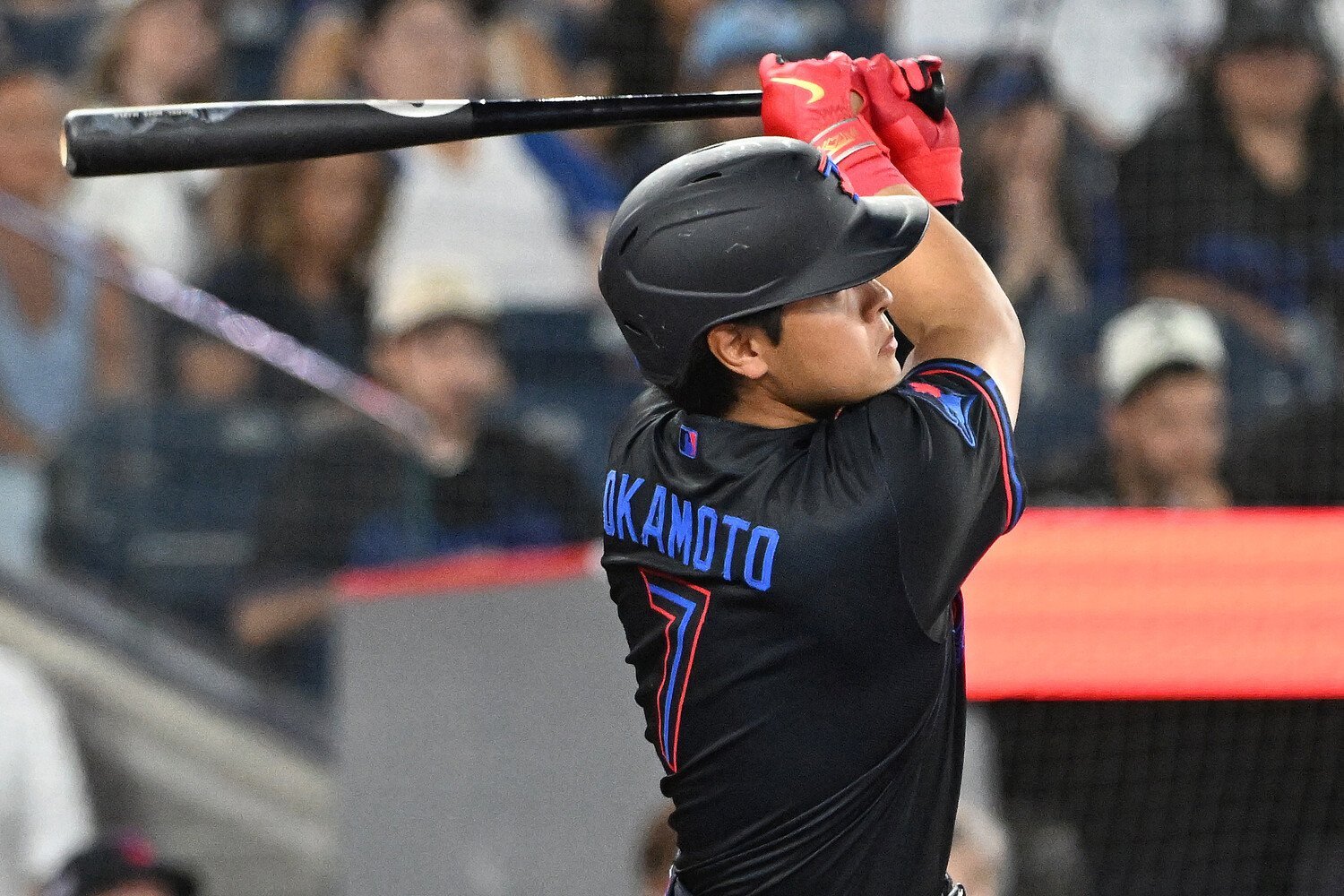 The Blue Jays' struggle to score runs has been a disheartening storyline this season. They're 25th in runs scored, 23rd in home runs hit, and are in the bottom five in SLG%, ISO, and xwOBA. In June, there was a small step forward. They’re still 25th in runs scored, but their 30 home runs were tied for 20th in baseball, and both their SLG% and ISO climbed into the bottom third in the league instead of the bottom sixth. Here are some of the players that helped spark the Blue Jays offensively in June, with one of them being crowned the Jays Centre hitter of the month. Honourable Mentions George Springer Stats in June: .239/.340/.398, 3 HR, 7 RBI, 3 SB, 109 wRC+ It's safe to say his 2026 season hasn't been what George Springer envisioned coming into the year. But June was his best month yet. Now well recovered from the toe injury that saw him miss 15 games earlier in the season, it looks like he’s turning things around. His average exit velocity increased to a season-best 88.8 mph this month, which helped him set season highs in hits (21), home runs (3), and OPS (.738), all while taking more walks (12.5% BB%). Add in that he stole three bags as well, and Springer is starting to look like he’s turning a corner. Even if the 166 wRC+ season he put up in 2025 is out of reach, June showed there may still be plenty left in the tank. Brandon Valenzuela Stats in June: .250/.327/.500, 3 HR, 9 RBI, 127 wRC+ Brandon Valenzuela continues to be one of the Blue Jays’ best hitters. Now that Alejandro Kirk has returned, Valenzuela’s playing time has been cut, and that's what prevents him from being higher on this list. But when he’s been playing, he’s been hitting. His 127 wRC+ was second on the Blue Jays for the month. His .827 OPS and 10.9% walk rate also ranked second. The Blue Jays only had three offensive players produce a positive WPA in June, and Valenzuela was one of them, highlighted by a game-winning, go-ahead double in Fenway Park earlier this month. He just keeps getting the job done. 3) Andrés Giménez Stats in June: .301/.342/.425, 1 HR, 6 RBI, 4 SB, 115 wRC+ It hasn’t always been pretty, but Andrés Giménez quietly put together a quality month in June. He was the only Blue Jay to hit over .300 during the month (albeit with a .396 BAPIP), and he has been doing his job setting the table for the top of the order. His 30% line drive rate led the team in June, with his six doubles also leading the Blue Jays during that time. He’s already matched his 2025 home run total (7), and on Friday, he matched last year's RBI total in 17 fewer games. Add in his elite defence at shortstop and the fact that he stole a team-high four bases in June, and Giménez has quietly been a very productive player. He deserves a spot on this list, coming in at number three. 2) Nathan Lukes Stats in June: .292/.344/.449, 4 HR, 8 RBI, 123 wRC+ Another day, another hit for Nathan Lukes. Lukes ended June second on the team in home runs and on-base percentage, and he led the team in hits. He had six multi-hit games and recorded hits in 19 of his 26 games in June He’s been using his all-fields approach and just putting together productive at-bats all month long. He’s turning more into an everyday regular instead of just being in a platoon; he’s started nine games in a row, including two of them against left-handed pitching. Since returning from vertigo on May 25, Lukes has produced a 130 wRC+. Even with an inflated .359 BAPIP, he’s maintained his production, and as a result, he comes in second place. 1) Kazuma Okamoto Stats in June: .286/.353/.560, 7 HR, 20 RBI, 152 wRC+ Where would this Blue Jays team be without Kazuma Okamoto? Kaz was the team leader in virtually every batting stat for the month: home runs, RBI, runs scored, OPS, Win Probability Added, barrels... You name it, he did it. Okamoto was our hitter of the month in May, and his June was even better. His wOBA jumped by 55 points, and his line drive rate was up. The strikeout issue has been a talking point since early in the season, but the third baseman made an improvement in June, and his production at the plate rose with it. He was just named AL Rookie of the Month for June, and more importantly, he is Jays Centre's Hitter of the Month as well. View the full article
 -
 Chicago Cubs Minor League Report Affiliate Overview Triple-A Iowa Cubs Series at Toledo Mud Hens (Detroit Tigers): Tied, 2-2 Season Record: 35–47-1 Double-A Knoxville Smokies Series vs. Columbus Clingstones (Atlanta Braves): Tied, 2-2 Season Record: 45–34 High-A South Bend Cubs Series at Beloit Sky Carp (Miami Marlins): Sky Carp lead, 3-0 Season Record: 44–30 Single-A Myrtle Beach Pelicans Series vs. Hickory Crawdads (Texas Rangers): Tied, 2-2 Season Record: 33–44 Affiliate Highlights Triple-A: Iowa Cubs Season Record: 35–47-1 Series Opponent: Toledo Mud Hens (40-44) Series Standing: Tied, 2-2 July 3: The Iowa Cubs evened their series at the Toledo Mud Hens with a 5-4 victory on Friday night at Fifth Third Field. BJ Murray’s (3-for-4) RBI-single in the first gave the Cubs an early lead before the Mud Hens made it 1-1 with a run in the third. Murray’s solo blast, his 11th of the season, restored Iowa’s lead but Toledo answered with two runs in the home half of the frame to go up 3-2. Owen Miller (1-for-4) and James Triantos (2-for-4) picked up run-scoring singles in the sixth that put the I-Cubs ahead 4-3 and Brett Bateman’s (2-for-4) solo shot in the ninth gave Iowa an important insurance run. The Mud Hens would push a run across in their last trip to the plate in the ninth but Luis Peralta was able to leave the tying run on the basepaths to earn his second save of the season. Ty Blach got the start for the Cubs and got the win to improve to 4-4. Blach allowed three runs on six hits over five innings of work to go along with four walks and six strikeouts. Vince Reilly (2.0 IP) and Jayden Murray (1.0 IP) both made scoreless relief appearances, combining to allow just one hit and whiff five batters. Double-A: Knoxville Smokies Season Record: 45–34 Series Opponent: Columbus Clingstones (34–40) Series Standing: Tied, 2-2 July 3: The Knoxville Smokies were held to just six hits as they fell to the Columbus Clingstones, 9-1, on Friday night at Covenant Health Park. The Clingstones scored once in both the third and fourth innings and pushed two more across in the sixth to make it 4-0. Columbus broke the game open with five runs in the eighth before the Smokies grabbed their lone tally of the contest in the ninth on Ariel Armas’ (1-for-4) RBI-triple. Dawson Netz got the start for Knoxville and was handed the loss, falling to 5-2 on the season. Netz allowed two runs on four hits over five innings of work, whiffing four batters without issuing a walk. Owen Ayers snapped his brief 0-for-7 skid by going 2-for-3 with a double and a walk. High-A: South Bend Cubs Season Record: 44–30 Series Opponent: Beloit Sky Carp (35–41) Series Standing: Trail, 3-0 July 3: The South Bend Cubs had their contest at the Beloit Sky Carp suspended in the top of the second, trailing 1-0. Jaxon Wiggins, who was making his second rehab appearance with the Cubs, allowed a run on two hits in his inning of work, including one home run. Single-A: Myrtle Beach Pelicans Season Record: 33–44 Series Opponent: Hickory Crawdads (44–33) Series Standing: Tied, 2-2 July 3: The Myrtle Beach Pelicans evened their series vs. the Hickory Crawdads with a 4-2 victory on Friday night at Pelicans Ballpark. The Pelicans jumped out to a 3-0 lead in the third thanks to Alexey Lumpuy’s (1-for-3) three-run blast, his fifth homer of the season. Alexis Hernandez (3-for-4) made it 4-0 with an RBI-double in the fifth before the Crawdads got on the board with a run in the sixth. Myrtle Beach starter Daniel Avitia picked up the win to improve to 2-1 on the season, tossing five innings of scoreless ball, allowing just four hits to go along with one walk and four strikeouts. Hickory picked up a run in the ninth but Sam Mettert was able to close out the game to earn his first save of the season and give the Pelicans the win. View the full article
 -
Remembering When Royals Fans Broke MLB All-Star Voting
DiamondCentric posted an article in Royals Keep
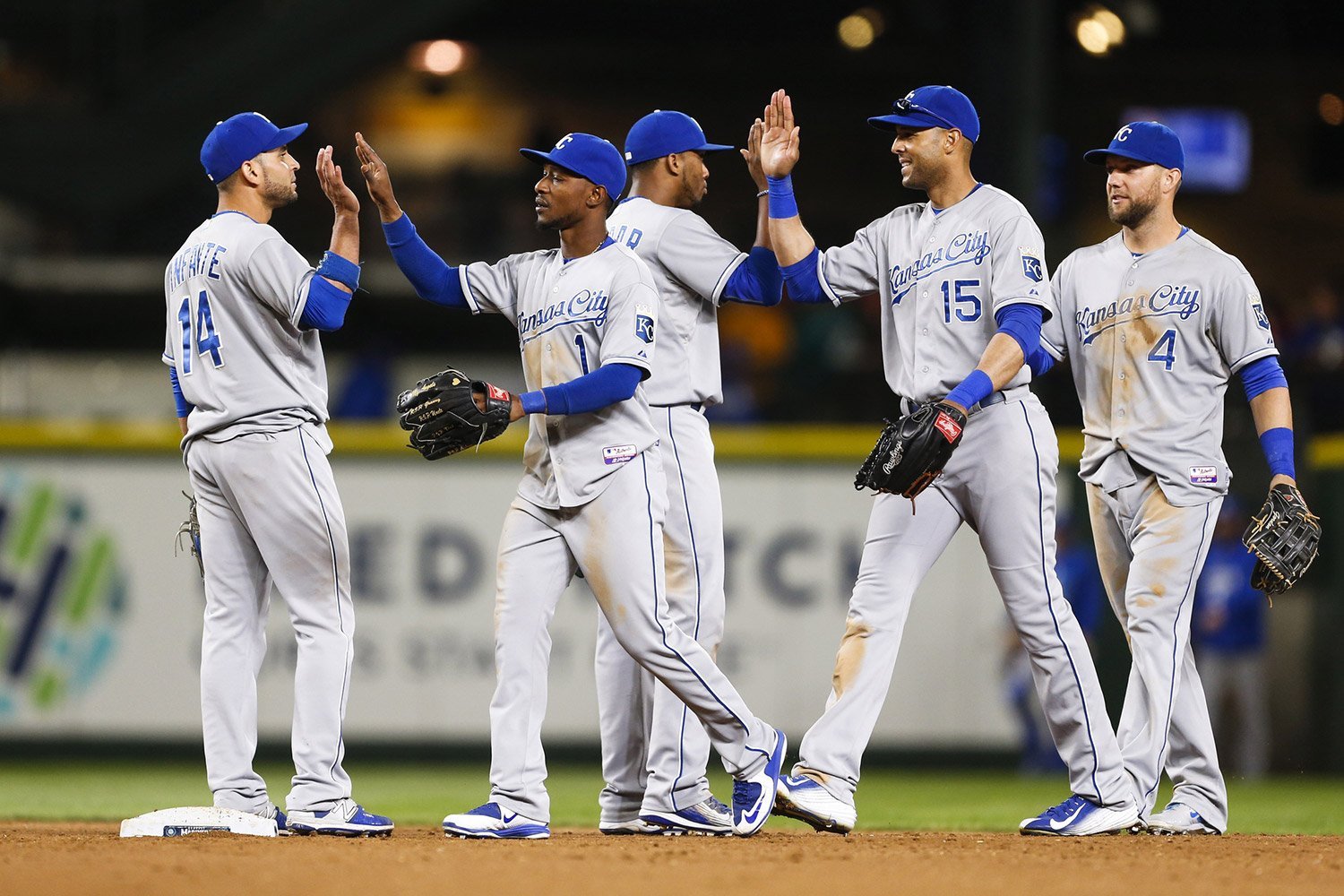 This season, the Toronto Blue Jays fans have taken over the American League All-Star voting. After the first round of votes, Blue Jays players occupy a spot in each position’s phase 2 vote, with second baseman Ernie Clement earning an automatic spot in the starting lineup for receiving the most phase 1 votes in the American League. This is not the first time MLB has seen fans of one team stuff the ballot box for their favorite team. In 2015, Royals fans voted early and often to get their players on the All-Star roster. While Toronto and Kansas City have different media market sizes (Toronto's nationwide fan base gives it one of the largest voting pools), the teams' profiles are quite similar. Much like this year’s Blue Jays, the 2015 Royals were coming off a close seven-game World Series loss while trying to overcome lengthy playoff droughts; 30 years for the Royals at the time and 33 years for the Blue Jays. One key difference is that the Royals were 14 games above .500 and leading their division at the end of June 2015, and finished the season with the best record in the AL. Conversely, the Blue Jays are finishing June six games below .500 and outside of the playoff picture. In 2015, the All-Star voting was simpler. Whichever player got the most votes at their position was the starter in the All-Star game. No phases and unlimited votes per person. The excessive ballot stuffing by Royals fans ultimately led MLB to change the voting process to include two phases to help prevent one team from dominating the outcome. Below are the AL vote results in phase 2 as of 12:30 pm on June 30, including the number of days left to vote. While only one Blue Jay is leading in the final phase of voting, all positions are represented with a Blue Jays player in phase two. Relievers Wade Davis and Kelvin Herrera were also selected to the All-Star team, and Mike Moustakas won the vote for the final roster spot. How deserving was each Royal in battling for their All-Star spot? Below is an initial look at key stats to see how the top vote getters compared to each other. This is not a perfect method to determine who is more “deserving” since the All-Star Game was never intended to reward only the statistically best players. Fan voting has always been as much about popularity as production. All stats used will be from the start of 2015 through July 5, the day voting results were announced. Catcher Salvador Perez ultimately won the vote at catcher, his third all-star selection at the time. Perez was battling with Russell Martin and Stephen Vogt. According to Fangraphs, Perez was the least productive of the three. Among AL catchers with at least 100 plate appearances, Perez ranked 11th in fWAR, 9th in wOBA, and 8th in wRC+. Martin and Vogt were top two in each of those metrics. wRC+ wOBA fWAR Salvador Perez 92 .307 0.6 Russell Martin 124 .354 2.9 Stephen Vogt 140 .373 2.1 First Base Eric Hosmer lost out to Miguel Cabrera, who was fresh off two consecutive AL MVPs, and was clearly more deserving, not to say Hosmer wasn’t having a good year at the time. wRC+ wOBA fWAR Eric Hosmer 115 .342 1.3 Miguel Cabrera 179 .434 3.6 Second Base Omar Infante was not having a good season in 2015 despite his second-place finish in votes. He ultimately became the poster child while ballot stuffing was a problem in 2015. He was the worst performer among qualified AL second basemen. Winner Jose Altuve was a much better option from the young and upcoming Astros, with Jason Kipnis also having a strong season. The Royals notably traded for Ben Zobrist later that season to replace Infante at second base. wRC+ wOBA fWAR Omar Infante 42 .236 -0.8 Jose Altuve 109 .325 1.6 Jason Kipnis 153 .397 4.0 Third Base Moustakas was having a strong season in 2015 and was deserving of his selection to the All-Star reserves, but Josh Donaldson, the eventual AL MVP, had a stronger case for votes. wRC+ wOBA fWAR Mike Moustakas 118 .346 1.8 Josh Donaldson 139 .376 3.8 Shortstop Escobar ultimately held on to the starting spot, and the decision between him and Jose Iglesias was close based on fWAR. wRC+ wOBA fWAR Alcides Excobar 82 .293 1.3 Jose Iglesias 110 .334 1.3 Outfield Mike Trout joined Cain and Gordon as the voted starters. Trout and Cain would both finish the season in the top three of MVP voting. Gordon was also having a strong season, though other players may have had a stronger case for selection. Alex Rios, on the other hand, was not having a good season in Kansas City; he ranked third-worst among all outfielders in fWAR at the time with -0.7. wRC+ wOBA fWAR Mike Trout 163 .404 4.5 Lorenzo Cain 125 .355 3.0 Alex Gordon 122 .352 1.9 Jose Bautista 150 .391 2.6 Yoenis Cespedes 114 .340 2.2 Alex Rios 34 .224 -0.7 Designated Hitter Kendrys Morales was brought in to replace long-time Royal Billy Butler and was a key bat in the middle of the order in 2015. While he ultimately lost out to Nelson Cruz in the All-Star voting, his performance in 2015 earned him a Silver Slugger as DH. wRC+ wOBA fWAR Kendrys Morales 116 .343 0.5 Nelson Cruz 153 .389 2.3 Despite MLB’s attempts to prevent ballot stuffing for All-Star voting, fans will still find a way to show their enthusiasm for their favorite team, even when some of the players are less deserving. While the All-Star Game is a meaningless exhibition that has always been a popularity contest, All-Star appearances can have an impact on player bonuses, impact on arbitration and free agent contracts, and possibly future Hall of Fame voting. Ultimately, the starters for the All-Star game are a representation of the league as a whole, and fans will want to make sure players are deserving of that honor. View the full article
 -
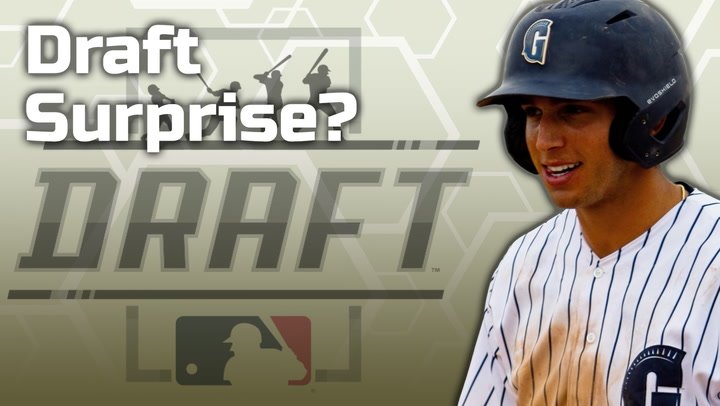 Right behind Grady Emerson as the top prep bats in the 2026 MLB Draft Class are Jacob Lombard and Eric Booth Jr. Both are also top 10 consensus prospects, but highly unlikely to overshadow one of the top three in Roch Chowlowsky, Vahn Lackey, or Emerson. However, on the off chance the Twins decide to take a flyer on them, how would they fit into the Twins' current farm system? View the full article
