


DiamondCentric
-
Posts
2,631 -
Joined
-
Last visited
Never
Content Type
Profiles
Forums
Events
News
Tutorials & Help
Major League Baseball Videos
Guides & Resources
Store
Downloads
Gallery
Everything posted by DiamondCentric
-

Padres Minor League Report: Affiliates Experience A Rough Night
DiamondCentric posted an article in Padres Mission
 It was a rough Thursday for the top four San Diego Padres affiliates, which all lost. The Triple-A El Paso Chihuahuas were blanked by Sugar Land 11-0, the Double-A San Antonio Missions fell to Arkansas 12-7, the High-A Fort Wayne TinCaps didn't score in an 8-0 loss to Lake County and the Low-A Lake Elsinore Storm came up short vs. Fresno 8-7. Padres Minor-League Transactions San Diego Padres sent 1B Nick Solak outright to El Paso Chihuahuas. 1B Nick Solak elected free agency. San Diego Padres sent 2B Jake Cronenworth on a rehab assignment to El Paso Chihuahuas. Matt Waldron Walks Four In Rehab Outing As Chihuahuas Lose Padres right-hander Matt Waldron made his third rehab start, turning in a rocky 2⅔ innings, and the Triple-A El Paso Chihuahuas gave up nine runs late in an 11-2 setback to the Sugar Lane Space Cowboys. Padres second baseman Jake Cronenworth was scheduled to make his first rehab appearance following a concussion, but the paperwork was finished in time to allow him to play, according to Jeff Sanders of the San Diego Union-Tribune. Croenworth will be in Friday's game. Sugar Land had a rehabber of its own in Houston Astros right-hander Lance McCullers Jr., who struck out four and allowed two hits in three shutout innings. Waldron walked four and allowed two hits and two runs while striking out four. Right-hander Misael Tamarez followed Waldron with a career-best 3⅓ shutout innings. Marcos Castanon and Nick Schnell each had two of the Chihuahuas' seven hits. Carlos Rodriguez had a single and a walk to keep his on-base streak alive at 33. The Chihuahuas had runners on in eight of the nine innings. Player AB R H RBI BB K Mason McCoy 4 0 0 0 0 1 Clay Dungan 4 0 0 0 0 1 Pablo Reyes 4 0 1 0 0 1 Carlos Rodríguez 3 0 1 0 1 0 Marcos Castañon 4 0 2 0 0 1 Bryce Johnson 4 0 0 0 0 0 Romeo Sanabria 3 0 0 0 0 1 Nick Schnell 3 0 2 0 0 0 Anthony Vilar 2 0 0 0 0 1 Blake Hunt 1 0 1 0 0 0 Totals 32 0 7 0 1 6 Player IP H R ER BB K HR Matt Waldron 2 2/3 2 2 2 4 4 0 Misael Tamarez 3 1/3 1 0 0 1 1 0 Ty Adcock 1 2 2 2 2 1 0 Michael Flynn 2/3 2 6 6 4 1 1 Triston McKenzie 0 0 1 1 4 0 0 Victor Duarte 1/3 0 0 0 0 0 0 Totals 8 7 11 11 15 7 1 Missions Throttled By Early Travelers Surge The Double-A San Antonio Missions gave up nine runs in the first three innings en route to a 12-7 loss to the host Arkansas Travelers. Kai Roberts went 4-for-5, Ryan Jackson had two hits and three RBIs and Chris Sargent Jr. had a homered, had a pair of hits, two RBIs and two runs scored for the Missions. Tirso Ornelas also had two hits, while Kai Murphy homered and scored three times. Missions right-handed starter Ian Koenig was lit up for seven runs (six runs), including a pair of homers, in two innings on nine hits with a walk and a strikeout. Arkansas scored three in the first and four in the second before the Missions got a pair back in the top of the third on a Ryan Jackson double, then the Travelers got two more in the bottom of the third. SA_0625.mp4 Player AB R H RBI BB K Ryan Jackson 6 0 2 3 0 1 Francisco Acuna 5 0 1 0 0 2 Tirso Ornelas 4 0 2 0 1 0 Jake Cunningham 5 0 1 0 0 1 Braedon Karpathios 5 0 1 0 0 1 Luis Verdugo 4 1 0 0 1 2 Kai Murphy 5 3 1 1 0 0 Kai Roberts 5 1 4 1 0 0 Chris Sargent 3 2 2 2 2 0 Totals 42 7 14 7 4 7 Player IP H R ER BB K HR Ian Koenig 2 9 7 6 1 1 3 Andrew Thurman 3 3 2 2 1 4 0 Clark Candiotti 2 2 2 2 1 3 0 Francis Peña 1 1 1 1 1 2 1 Totals 8 15 12 11 4 10 4 TinCaps Bottled Up, Blanked By Captains The combination of a poor start and a punchless offense led the High-A Fort Wayne TinCaps to drop an 8-0 decision to the Lake County Captains. Three Captains pitchers combined to limit the TinCaps to two hits. Kavares Tears had a leadoff single in the third inning and Justin DeCriscio a two-out single in the sixth for the TinCaps' only hits. TinCaps right-handed starter Carson Montgomery gave up five runs in just 1⅔ innings on four hits and three walks with two strikeouts. Right-hander Nick Falter followed by allowing three runs in two-thirds of an inning on five hits and a walk. Player AB R H RBI BB K Ryan Wideman 4 0 0 0 0 1 Justin DeCriscio 4 0 1 0 0 2 Luke Cantwell 4 0 0 0 0 4 Kerrington Cross 3 0 0 0 1 1 Lamar King Jr. 3 0 0 0 0 1 Zach Evans 3 0 0 0 0 1 Kavares Tears 3 0 1 0 0 1 Oswaldo Linares 3 0 0 0 0 0 Jack Costello 3 0 0 0 0 0 Totals 30 0 2 0 1 11 Player IP H R ER BB K HR Carson Montgomery 1 2/3 4 5 5 3 2 1 Nick Falter 2/3 5 3 3 1 1 1 Bernard Jose 1 2/3 0 0 0 0 3 0 Ryan Och 2 1 0 0 0 2 0 Javier Chacon 2 0 0 0 1 3 0 Totals 8 10 8 8 5 11 2 Storm Rally Comes Up Shy Against Grizzlies Yoiber Ocopio and Jose Verdugo each drove in a pair of runs, but the host Lake Elsinore Storm came up short in an 8-7 loss to the Fresno Grizzlies. Storm right-hander Lan-Hong Su, a 19-year-old international signing in October from Taiwan, gave up four runs in 2⅔ innings in his Lake Elsinore debut. He allowed four hits, while walking one and striking out two. Fresno scored once in the top of the first, but the Storm came back in the bottom half on a Dylan Grego one-out double, Jose Verdugo was hit by a pitch with two outs and Ocopio brought them both home with a double. The Grizzlies tied it in the top of the second, scored twice in the third, two more in the fifth and one more in the sixth and seventh for an 8-2 lead. But the Storm made a furious comeback in the bottom of the seventh. With two outs, Yimy Tovar singled, Dawson Willis walked and Grego hit a grounder to short that was booted, allowing Tovar to score. Qrey Lott struck out, but reached on a wild pitch with Willis scoring and Grego going to third. Verdugo followed with a two-run double to make it 8-6, went to third on a wild pitch and scored on a passed ball to pull within 8-7. LE_0625.mp4 Player AB R H RBI BB K Dawson Willis 4 1 0 0 1 2 Dylan Grego 4 2 1 0 1 0 Qrey Lott 4 1 0 0 0 3 Jorge Quintana 1 0 0 0 0 1 Jose Verdugo 4 2 1 2 0 1 Yoiber Ocopio 3 0 1 2 1 1 Bradley Frye 2 0 0 0 2 2 Truitt Madonna 4 0 0 0 0 2 George Bilecki 4 0 0 0 0 2 Yimy Tovar 3 1 1 0 1 1 Totals 33 7 4 4 6 15 Player IP H R ER BB K HR Lan-Hong Su 2 2/3 4 4 4 1 2 1 Cal Riehl 2 1/3 3 2 2 1 1 0 Zack Qin 3 3 2 2 1 4 0 Rordy Mejia 1 1 0 0 0 2 0 Totals 9 11 8 8 3 9 1 Padres Mission's Top 20 Prospect Performance Ethan Salas: On injured list Kash Mayfield: DNP Miguel Mendez: DNP Kruz Schoolcraft: DNP Ryan Wideman: 0-for-4, K Jorge Quintana: 0-for-1, K Ty Harvey: On injured list Kale Fountain: Injured, out for season Braedon Karpathios: 1-for-5, 2B, K Lamar King Jr.: 0-for-3, K Jagger Haynes: DNP Alex McCoy: DNP Truitt Madonna: 0-for-4, 2 K Tucker Musgrove: DNP Garrett Hawkins: DNP Michael Salina: DNP Eric Yost: DNP Rosman Verdugo: DNP Bryan Balzer: DNP Deivid Coronil: DNP View the full article
 -
Two Twins Catching Prospects Move Up The Affiliate Ladder
DiamondCentric posted an article in Twins Daily
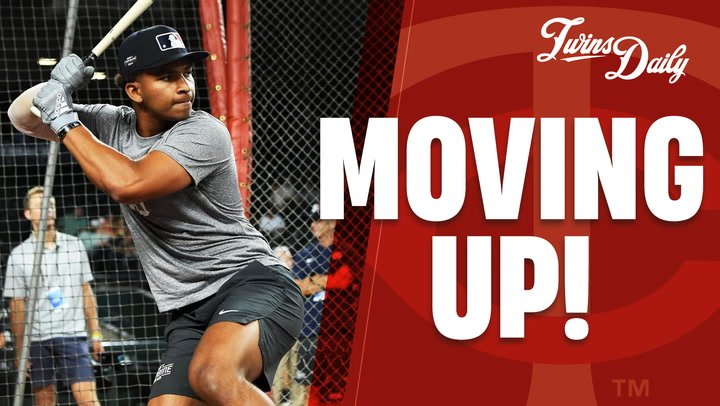 The Twins moved two of their top catching prospects up a level in the Minors last week. Khadim Diaw was promoted from Cedar Rapids to Double-A Wichita, and Enrique Jimenez took his vacant spot on the Kernels roster. Both are serious contenders to play roles in the Twins' MLB catching depth in the future. Jamie and Jeremy go over their promotions and what they mean for the top catching prospect, Eduardo Tait. View the full article
 -
What are your Marlins vs. Cardinals series predictions?
DiamondCentric posted an article in Fish On First
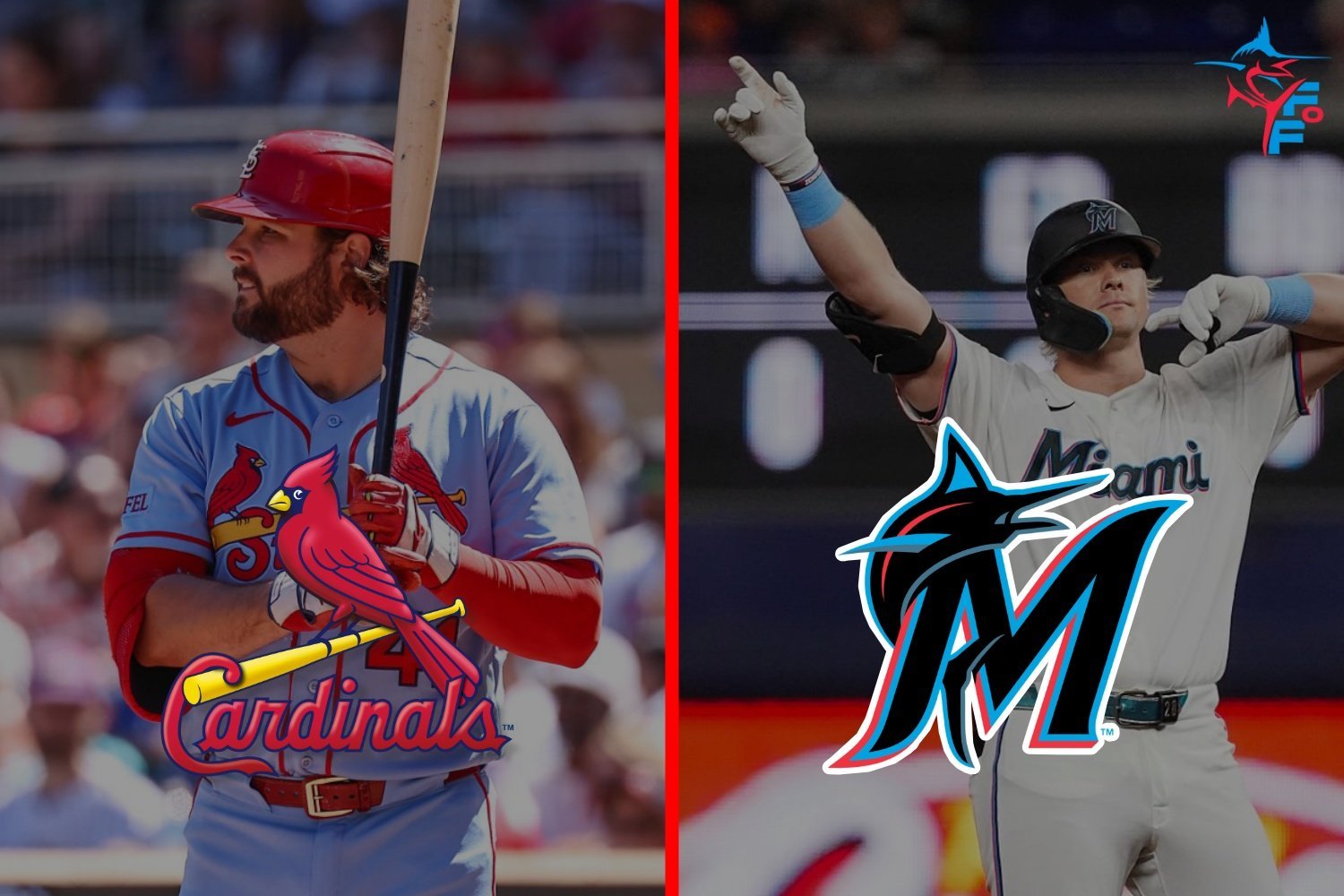 Once again in 2026, I will be monitoring Miami Marlins predictions from our valued SuperSubs, Fish On First staffers and livestream guests. Individual article pages like this one will be created prior to every Marlins series and featured prominently on the FOF site. Consistent participation is key if you want to win this annual contest. Submissions only take a few seconds. Scoring system A "perfect" series is worth three points: Earn one point for predicting which team will win the upcoming series Earn one point for predicting the precise number of victories for each team Earn one point for predicting the “Series MVP” who accumulated the highest win probability added (WPA) during the series as calculated by FanGraphs (could pick a player from either team) FOF staffer Jeremiah Geiger is currently atop the 2026 season leaderboard, which will be updated between every Marlins series. If you are a SuperSub, leave a comment with your Prediction Time picks on this page, or join the Marlins Discord Server and submit there. We'll feature them on the upcoming Fish On First LIVE episode and track your points throughout the season! Any picks submitted prior to the first pitch of the series opener will be counted. If you are not a SuperSub, please consider signing up here to support the FOF staff. Series preview notes Probable starting pitchers: RHP Max Meyer (MIA) vs. RHP Dustin May (STL) on Friday TBA (MIA) vs. RHP Andre Pallante (STL) on Saturday Ryan Gusto likely to pitch bulk innings TBA (MIA) vs. TBA (STL) on Sunday The Marlins rank 19th in MLB with a 97 wRC+ and 12th in MLB with a 3.97 FIP. They are 7-3 in their last 10 games and have a 14-22 record on the road this season. The following Marlins players are on the injured list: Josh Ekness (60-day IL), Ronny Henriquez (60-day IL), Liam Hicks (10-day IL), Janson Junk (15-day IL), Adam Mazur (60-day IL), Andrew Nardi (60-day IL) and Robby Snelling (60-day IL). The Cardinals rank seventh in MLB with a 104 wRC+ and 20th in MLB with a 4.35 FIP. They are 4-6 in their last 10 games and have a 18-22 record at home this season. The following Cardinals players are on the injured list: Ryan Fernandez (15-day IL) and Ramón Urias (60-day IL). View the full article
 -
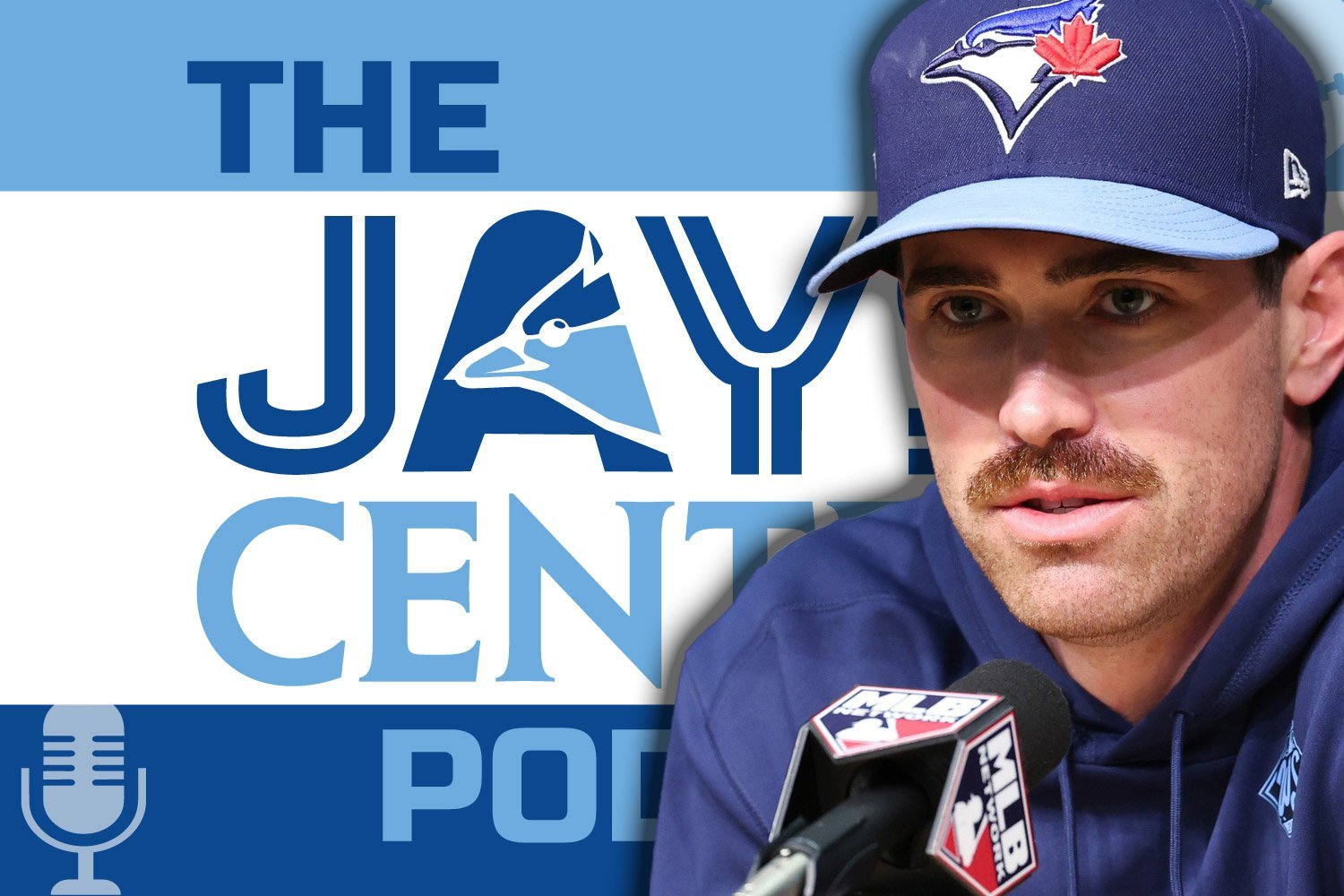 Owen Hill is joined by Matt Creally to talk about the Blue Jays' meltdown and fumbling another chance to get to and above .500. They talk about the puzzling pick-off attempt towards third base by Jeff Hoffman, Luis Urias' confounding baserunning error, and George Springer's lack of execution in extra innings in a wide-ranging conversation about the importance of execution. Matt brings analysis to Shane Bieber's disappointing season debut before the guys get to a positive Dylan Cease performance and preview the upcoming four-game set against the Texas Rangers. Listen on Apple Podcasts: https://podcasts.apple.com/us/podcast/the-jays-centre-podcast/id1846108462 Listen on Spotify: https://open.spotify.com/show/3Bi7SzfpcqMo5xYWnbCeoL Listen on iHeartRadio: https://www.iheart.com/podcast/263-the-jays-centre-podcast-300304824/ Listen on Pocket Casts: https://pca.st/2qk9wqxd Watch on YouTube: https://www.youtube.com/@jayscentre View the full article
 -
Sandy Alcantara etches his name in Marlins history
DiamondCentric posted an article in Fish On First
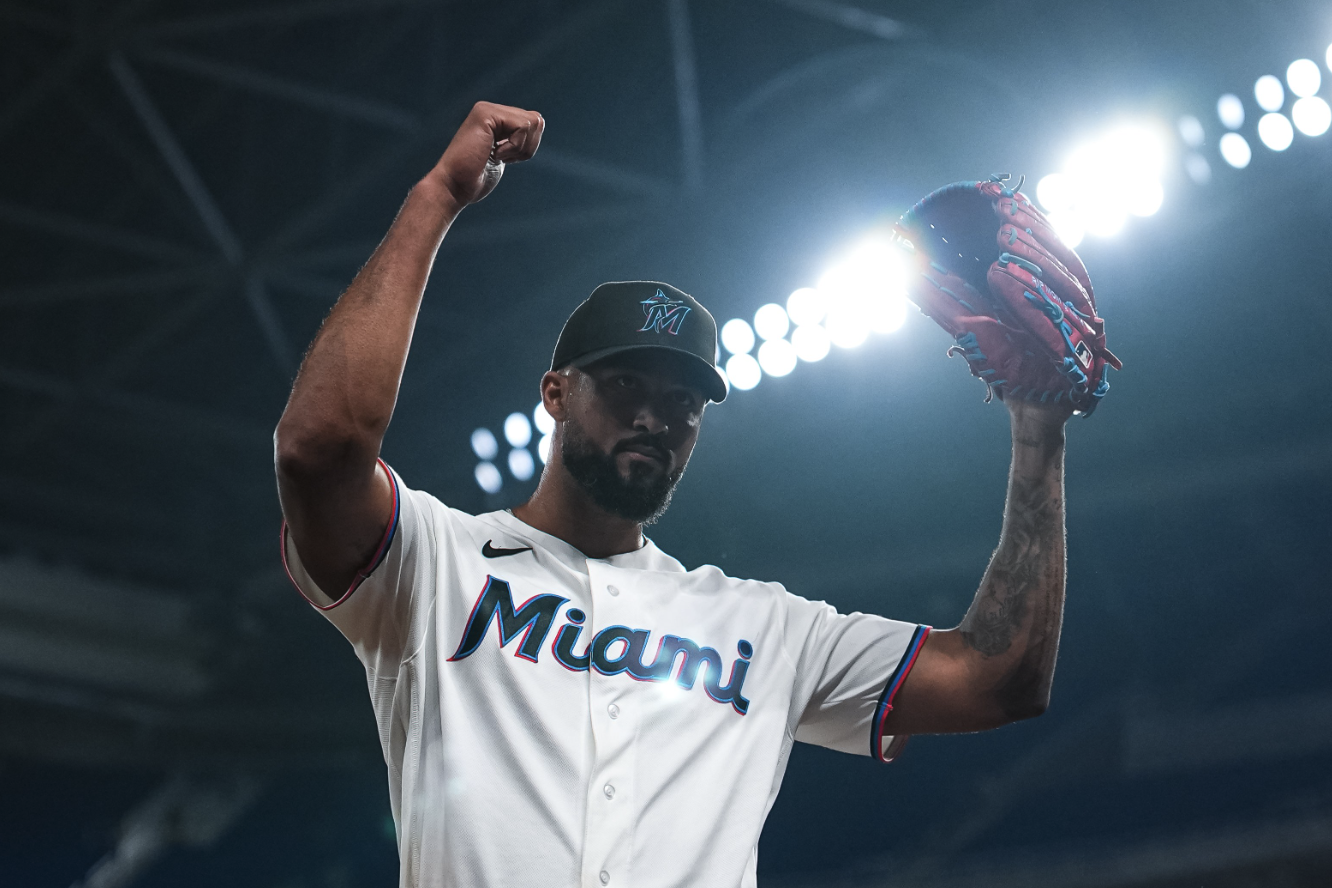 MIAMI—On a memorable Tuesday night at loanDepot park, Marlins ace Sandy Alcantara etched his name into franchise history, becoming the Miami Marlins’ all-time strikeout leader. The 30-year-old Dominican right-hander recorded career strikeout No. 1,002 with Miami, surpassing franchise icon Ricky Nolasco’s previous record of 1,001. Alcantara, along with big performances from youngsters Joe Mack and Owen Caissie, helped lead the Marlins to a comfortable 6-1 victory over the Texas Rangers. Miami improved to 41-39, moving back to two games above .500. Entering Tuesday’s start, Alcantara sat at 998 career strikeouts with the Marlins, three shy of Nolasco’s franchise record. After not recording a single strikeout through the first two innings, Alcantara won an 11-pitch battle against longtime Marlin-killer Brandon Nimmo to record No. 999 in the third inning. A couple of innings later, Alcantara recorded strikeouts No. 1,000 and 1,001 by getting Wyatt Langford looking and Nimmo swinging once again. The right-hander entered the sixth inning needing just one more strikeout to stand alone atop the franchise leaderboard. Before he took the mound in the sixth, Owen Caissie provided some extra insurance with a three-run home run that extended Miami’s lead to 6-1 and gave Alcantara some breathing room. “After I had made my latest strikeout, maybe I got a little bit nervous because I knew what was happening, but I just stayed aggressive and did my thing.” After a quick 1-2-3 sixth inning without a strikeout, Marlins manager Clayton McCullough sent the right-hander back out for the seventh with 90 pitches. When asked if he purposely left Alcantara in the game to chase the record, McCullough admitted that the moment was important. “We knew where he was. We wanted him to do this at home. It’s more special if we had the chance, knowing what was at stake. We said to go back out there, get the strikeout, while also being as responsible as I could with how many pitches he was going to throw in that inning. Luckily, he did it quickly.” With one out, Alcantara got Kyle Higashioka swinging through a slider low and away for strikeout No. 1,002. The crowd rose to its feet, catcher Joe Mack stepped in front of the plate to let the moment breathe, and Alcantara tipped his cap to the Miami faithful. While the scoreboard was slightly delayed in announcing the milestone, a large portion of the fans knew exactly what had just happened. After walking the next batter, McCullough trotted out to the mound to take the ball from his ace. Alcantara dapped up each of his infield teammates and hugged his manager before taking a walk he usually loathes: back to the dugout in the middle of an inning. “I told him to enjoy this walk because tonight should be one of those that you enjoy and soak it all in,” McCullough said. In addition to setting the strikeout record, Alcantara also recorded his fifth consecutive quality start in June, allowing just one run over 6.2 innings pitched. His season ERA has dropped to 4.01 thanks to his dominant month. He also surpassed the late José Fernández with the all-time wins in loanDepot park with his 30th. The Marlins acquired the now-30-year-old right-hander in the winter of 2017-18 in one of the first trades made during the Bruce Sherman era. Miami sent outfielder Marcell Ozuna to the St. Louis Cardinals in exchange for Zac Gallen, Magneuris Sierra, Dan Castano and Alcantara. The deal was completed just two months after Sherman and Derek Jeter purchased the team. Since making his team debut on June 29, 2018, the 6-foot-7 flamethrower has appeared in 186 games for the Marlins—all of them starts. He has accumulated 1,177 innings pitched (second-most in franchise history), 13 complete games (third-most), five shutouts (third-most), a Cy Young Award and multiple All-Star appearances. When former president of baseball operations Michael Hill completed the infamous five-player trade with St. Louis, he likely would have been thrilled with even half of what Alcantara has become. To say he has exceeded expectations would be a massive understatement, as he is in the conversation to be on the Marlins' all-time Mount Rushmore. “Very proud of myself, the way that I’ve been growing here in this organization, and grateful for all the opportunities that this team gives to me every day,” Alcantara said. View the full article
 -
 Fish On First staffers react to the latest Miami Marlins series and prepare you for what lies ahead. Thursday's show was hosted by Jeremiah Geiger and featured panelists Ely Sussman, Nate Karzmer, Isaac Azout and Kevin Barral. You can find Fish Unfiltered and Fish On First LIVE on the Fish On First YouTube channel, Apple Podcasts, Spotify or wherever else you get your pods. Our next FOF LIVE episode will be Sunday at approximately 6:30 p.m. ET following the Marlins-Cardinals series finale. View the full article
 -
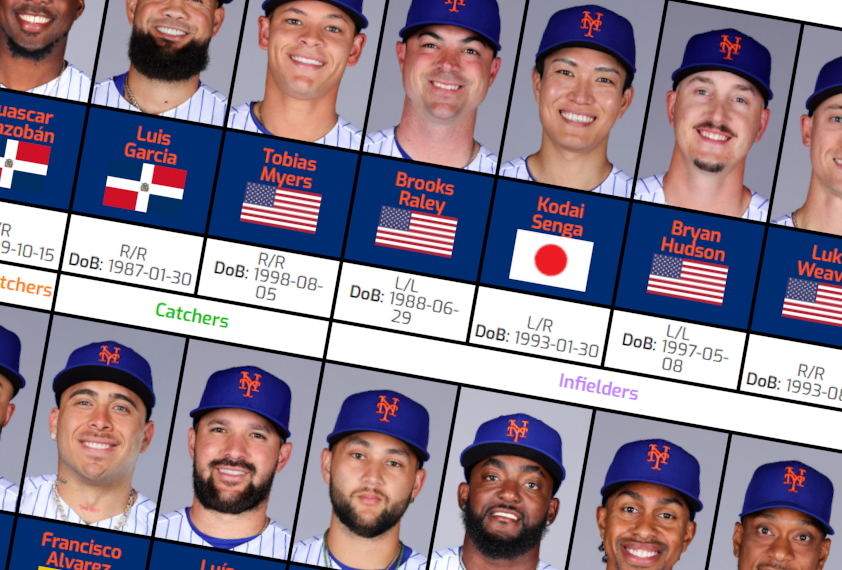 There are a thesaurus of words to describe the Mets' effort yesterday — harrowing, ghastly, appalling, alarming, heinous, scandalous, and biotoxic are only some. Alone, none suffice. Together ... well, we're getting there. We knew there'd be changes to the roster by today. What we get is more than the cynical heart suspected (everything is fine, nothing to see here), but far less than the angry heart may have demanded (a mass exile). Everything is not fine, but everything does continue. Transactions, 6/24/2026 GOING NEUTRAL COMING Designated for Assignment Transferred from Rotation Ended Rehab Assignment, Activated from Injured List Ended Rehab Assignment, Activated from Injured List, Demoted to Syracuse Infielders Relief Pitchers Infielders Zack Short Kodai Senga Francisco Lindor Ronny Mauricio R/R DoB: 34848 High Level: MLB (2026) L/R DoB: 1993-01-30 High Level: MLB (2026) S/R DoB: 1993-11-14 High Level: MLB (2026) S/R DoB: 2001-04-04 High Level: MLB (2026) Yesterday's Game Two was so bad that it is almost easy to forget how very bad Game One was also. But Game One came with the virtue of the assumption that the cavalry was on its way between games. Whatever horror the fates and Cubs conspired to bestow (and bestow they did), Francisco Lindor was expected to be activated between games, Zack Short to end his second Mets tenure and maybe Ronny Mauricio and Tyrone Taylor. As bad as things are, these were never really the Mets without LIndor, we could tell ourselves. It's a child's denial, but a tiny echo of it resounded through many a reasoning adult's head. (You have to hang your hat on something, right?) Short checks out with a .250 OPS in 9 plate appearances in his second Mets go-around, an actual step down from the .384 in 12 plate appearances he filed in 2024. Such is the unlikely but all too true level of failure on the 2026 Mets. At least Short's leaving opened a door for Jose Iglesias and an enormous turnaround in 2024, right? RIGHT? You have to hang your hat on something. Beyond that, the day's dealings included an announcement that Kodai Senga — who has shown promise in short bursts, and calamity in longer ones — is bullpen bound. By the end of the day, the Mets would be down to three starting pitchers. Transactions, 6/25/2026 GOING COMING Traded to CHC for Cole Mathis Demoted to Syracuse Placed on 10-Day Injured List with Left Hip Flexor Strain Promoted from Syracuse Starting Pitchers Relief Pitchers Infielders Relief Pitchers David Peterson Jonathan Pintaro Marcus Semien Daniel Duarte L/L DoB: 1995-09-03 High Level: MLB (2026) R/R DoB: 1997-11-07 High Level: MLB (2026) R/R DoB: 1990-09-17 High Level: MLB (2026) R/R DoB: 1996-12-04 High Level: MLB (2026) COMING Sent to St. Lucie on Rehab Assignment Acquired from CHC for David Peterson, Assigned to Brooklyn Promoted from Syracuse Relief Pitchers Infielders Dedniel Núñez Cole Mathis Ronny Mauricio R/R DoB: 1996-06-05 High Level: MLB (2026) R/R DoB: 2003-07-25 High Level: A+ (2026) S/R DoB: 2001-04-04 High Level: MLB (2026) The other starting pitcher shed is David Peterson, dean of the Mets staff, and now the third former Mets first-round draft choice to join the 2026 Cubs. The Mets have a history of sending senior staffers who have outlived their current utility Cubward — Aaron Heilman and Ed Lynch come to mind. One only hopes that Cole Mathis brings back some small part of the value the Cubs swindled the Mets of in the person of Pete Crow-Armstrong. Not bloody likely? Again, you have to hang your hat on something. Jonathan Pintaro is unsurprisingly swapped again for Daniel Duarte, who will perhaps soon risk a near perfect line in 2026 by pitching mopup innings in some future misbegotten game as desultory moods plague his team and fans. Or maybe not. Hats must hang. Hang they must. Take, for instance, the launching of Dedniel Núñez upon the 2026 season. Steady Deddy last pitched on July 2 of 2025 before getting sentenced to a year in Tommy Johnville, and now he has completed his sentence a week early. Them's good news, right? Hats and hopes. They've got to hang somewhere. Your 2026 New York Mets Starting Pitchers Relief Pitchers Relief Pitchers Sean Manaea Nolan McLean Freddy Peralta Huascar Brazobán Daniel Duarte R/L DoB: 1992-02-01 R/R DoB: 2001-07-24 R/R DoB: 2996-06-04 R/R DoB: 1989-10-15 R/R DoB: 1996-12-04 Relief Pitchers A.J. Minter Tobias Myers Cionel Pérez Brooks Raley Kodai Senga Austin Warren Luke Weaver L/L DoB: 1993-09-02 R/R DoB: 1998-08-05 R/L DoB: 35176 L/L DoB: 1988-06-29 L/R DoB: 1993-01-30 R/R DoB: 1996-02-05 R/R DoB: 1993-08-21 Relief Pitchers Catchers Infielders Devin Williams Francisco Alvarez Luís Torrens Bo Bichette Brett Baty Francisco Lindor Ronny Mauricio R/R DoB: 1994-09-21 R/R DoB: 2001-11-01 R/R DoB: 1996-05-02 R/R DoB: 1998-03-05 L/R DoB: 1999-11-13 S/R DoB: 1993-11-14 S/R DoB: 2001-04-04 Infielders Outfielders Mark Vientos Eric Wagaman Carson Benge A.J. Ewing MJ Melendez Juan Soto Jared Young R/R DoB: 1993-12-11 R/R DoB: 1997-08-14 L/R DoB: 2003-01-20 L/R DoB: 2004-08-10 L/R DoB: 1993-11-29 L/L DoB: 1998-10-25 L/R DoB: 1995-07-09 Also on 40-Player Roster Starting Pitchers Relief Pitchers Clay Holmes Tylor Megill Christian Scott Zach Thornton Jonah Tong Alex Carrillo Reed Garrett R/R DoB: 1993-03-27 R/R DoB: 1995-07-28 R/R DoB: 1999-06-15 L/L DoB: 2002-01-17 R/R DoB: 2003-06-19 R/R DoB: 1997-06-06 R/R DoB: 1993-01-02 Relief Pitchers Catchers Infielders Joey Gerber Joey Gerber Justin Hagenman Dedniel Núñez Dylan Ross Hayden Senger Francisco Lindor R/R DoB: 1997-05-03 R/R DoB: 1997-05-03 R/R DoB: 1996-10-07 R/R DoB: 1996-06-05 R/R DoB: 2000-09-01 R/R DoB: 1997-04-03 S/R DoB: 1993-11-14 Infielders Outfielders Marcus Semien Jorge Polanco Nick Morabito Jared Oliva Luis Robert, Jr. Tyrone Taylor R/R DoB: 1990-09-17 S/R DoB: 1999-11-13 R/R DoB: 2003-05-07 R/R DoB: 1995-11-27 R/R DoB: 1997-08-03 R/R DoB: 1994-01-22 Designated for Assignment Infielders Zack Short R/R DoB: 34848 Your Mets Coaching Staff Manager Bench Coach Pitching Coach Hitting Coord. Third Base Coach First Base Coach Bullpen Coach Ass't Pitch. Coach Carlos Mendoza Kai Correa Justin Willard Jeff Albert Tim Leiper Gilbert Gomez José Rosado Dan McKinney DoB: 1979-11-27 DoB: 1989-07-14 DoB: 1990-09-09 DoB: 1992-08-16 DoB: 1996-07-19 DoB: 1992-03-08 DoB: 1974-11-09 DoB: 1989-06-06 Hitting Coach Strategy Coach Catching Coach Coaching Assistant Bat'g Pract. Pitcher Equip. Manager Bullpen Catcher Bullpen Catcher Troy Snitker Danny Barnes J.P. Arencibia Rafael Fernandez Kevin Mahoney Kevin Kierst Eric Langill Dave Racaniello DoB: 1988-12-05 DoB: 1989-10021 DoB: 1986-01-05 DoB: 1988-08-03 DoB: 1987-05-11 DoB: 1964-07-09 DoB: 1979-04-09 DoB: 1978-06-03 Your Mets Training Staff Director of Player Health Head Athletic Trainer Assistant Athletic Trainer Recond. Coordinator Recond. Therapist Head Performance Coach Assistant Performance Coach Performance Coordinator Soft Tissue Specialist Brian Chicklo Joseph Golia Bryan Baca Sean Bardanett Josh Bickel Dustin Clarke Tanner Miracle Jeremy Chiang Hiroto Kawamura DoB: 1972-07-17 DoB: 1978-??-?? DoB: Circa 1980 DoB: 1988-06-23 DoB: 1996-??-?? DoB: 1987-??-?? DoB: 1991-??-?? DoB: ????-??-?? DoB: 1962-07-19 View the full article
 -
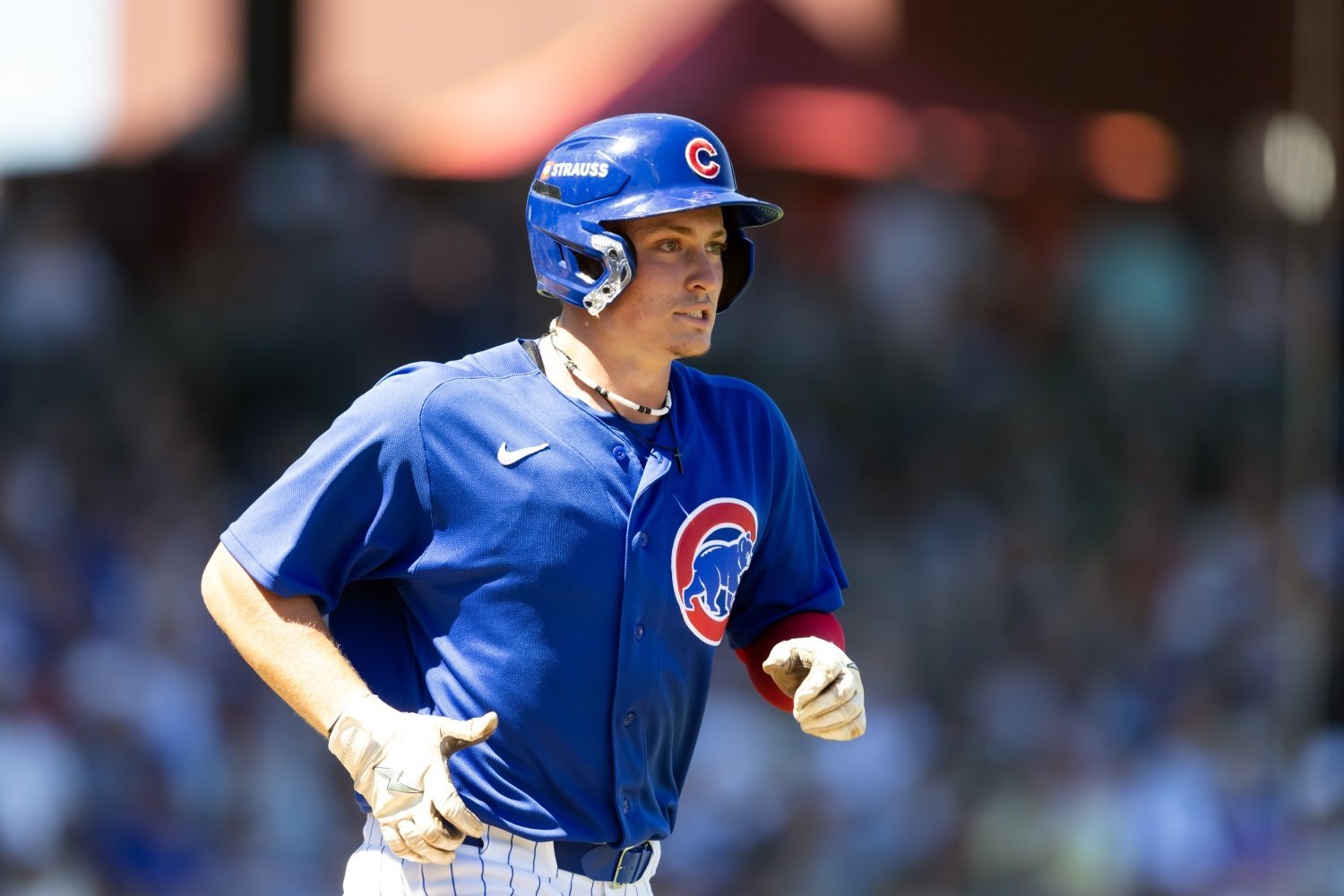 One of the Cubs' most impressive prospects is just starting his professional career. At this rate, we should be keeping tabs on Josiah Hartshorn anytime he steps to the plate, because he has been remarkable to watch and could help out the big-league club sooner than you think. Let's dive into Hartshorn’s story, his strengths, weaknesses and overall projected time to crack into the big leagues. Background For starters, Hartshorn is currently the fifth-ranked prospect in the Chicago Cubs’ farm system, according to our rankings here at North Side Baseball—and that stock is rising. Four of his five tools are a 50 grade or better, and at just 19 years of age, he has all of the tools to be a big-leaguer one day. Chicago saw this promise after he participated in the All-Star High School Home Run Derby a couple of years ago, and they selected him in the 6th round of last year’s draft. How is this guy breaking out in his first full season as a pro? Early on this season, Hartshorn was in Low-A Myrtle Beach with the Pelicans. His numbers there were strong. He posted a .273 batting average, .424 on-base percentage and .460 slugging average, crushing five home runs and 15 extra-base hits in total over the course of just 39 games played. He walked more times than he struck out, 34 to 27. The Cubs, liking what they saw, promoted the 19-year-old to High-A with the South Bend Cubs, who just claimed a first half title and will be heading to the playoffs. Here's where things get wild: Through 26 contests there, Hartshorn is hitting .348, with nine home runs, 34 runs batted in and a ridiculous 1.113 OPS. The power is even more lethal, and he’s punishing baseballs three levels removed from the major leagues before his 20th birthday. It's no surprise that he can generate plenty of power from that 220-pound frame, and his 55-grade power attribute and 13 homers through half a season back that up. This all comes from a switch-hitter, excelling at something that’s quickly turning into a lost art of modern baseball. Almost all his power comes from the left side, but he's running a .468 OBP as a right-handed batter, showing a good approach against southpaws. The one weakness to watch out for—and this is nitpicking, given his age and all the other things he's doing well—is that his strikeout rate is starting to spike. After walking more than he struck out in Myrtle Beach, Hartshorn has punched out 23 times in 113 plate appearances for South Bend. This isn’t an awful strikeout rate by any means, but the rise is something to keep an eye on as he faces off against better and better pitching. The plate discipline, ability to identify pitching from a high-level arm and everything that comes with that process should come naturally, as Hartshorn gets more reps. When can we expect to see him in the major leagues? In the best-case scenario, it could be late next year. More realistically, he could stake a claim to a corner outfield job come 2028, but even at that point, he'd be 21 years old. We’re a long way from that. He has to play well for the balance of this season, and eventually, he has to pass the stern test of Double-A pitching. Right now, though, he looks like the best mid- to late-round pick the Cubs have made in some time. View the full article
 -
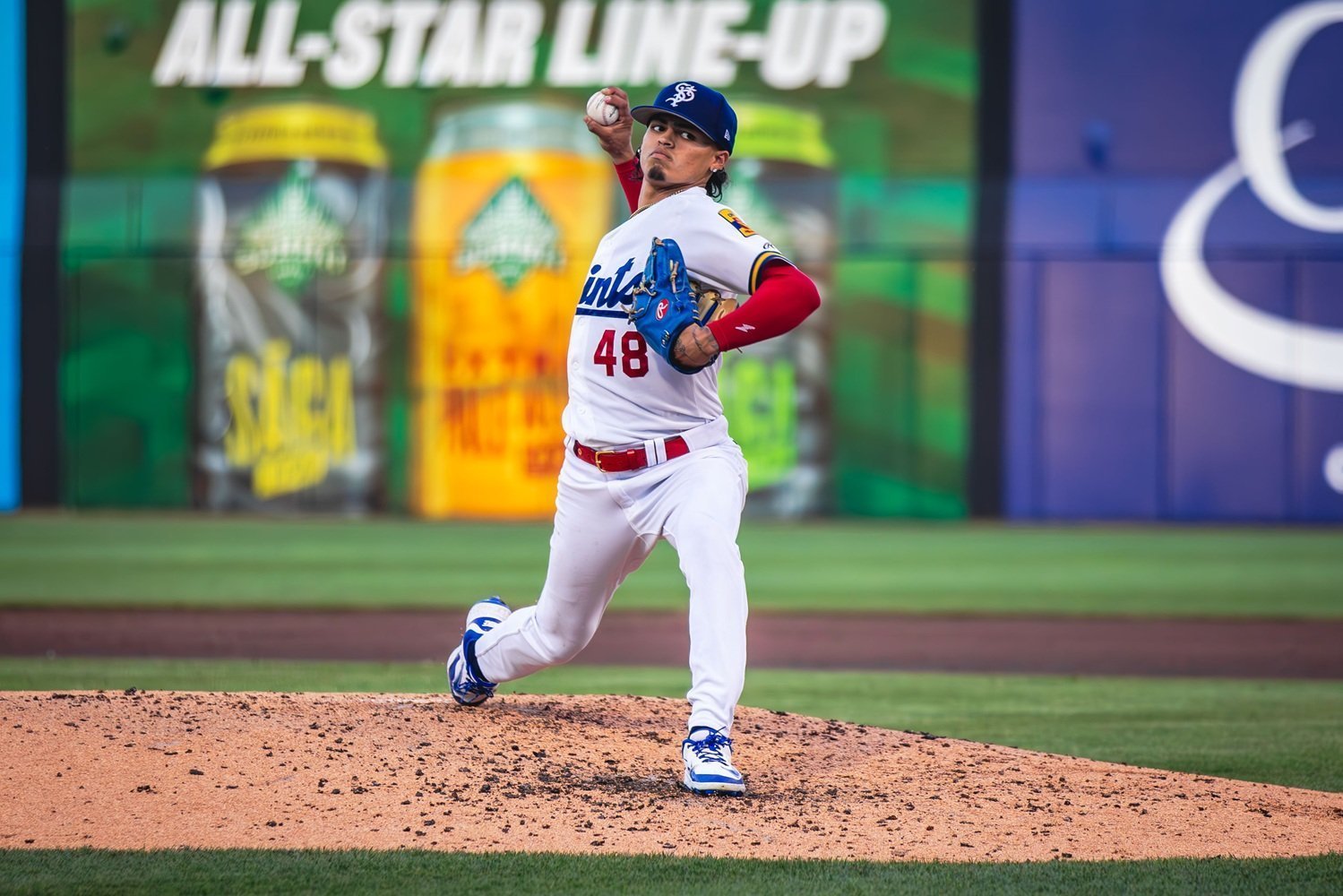 Marco Raya has never followed a conventional development path. Selected by the Twins in the fourth round of the 2020 MLB Draft out of high school in Texas, Raya immediately encountered obstacles. The pandemic delayed his professional debut after signing, and a shoulder strain cost him the entire 2021 season. Before he ever threw an official professional pitch, the right-hander had already lost two critical years of development. What followed was a prospect journey defined by patience, flashes of brilliance, and constant questions about what Raya would ultimately become. Electric Stuff From the Beginning When Raya finally debuted in 2022, the talent was obvious. The results were often inconsistent, but evaluators couldn't ignore the quality of his arsenal. In 65 innings, he posted a 3.05 ERA, a 1.08 WHIP, 28.9 K%, and 8.7 BB%. Minnesota pushed him to High-A and Double-A during the 2023 season, where he continued to strike out over 25% of batters and kept his walk rate below 9%. Throughout his climb through the system, Raya featured one of the more intriguing collections of pitches in the Twins organization. His fastball sat comfortably in the mid-90s, while his high-spin breaking balls consistently generated ugly swings from hitters who often had no business being fooled by someone several years younger. As a result, Raya became a fixture near the top of Twins prospect rankings despite concerns that never seemed to disappear. His workload was carefully managed, his command could be erratic, and his statistical production rarely matched the quality of his raw stuff. Still, the upside was difficult to ignore. By 2024, everything appeared to be coming together. A Breakthrough Season Raya took a significant step forward in 2024, climbing all the way to Triple-A St. Paul and forcing his way onto Minnesota's 40-man roster. For the first time in his professional career, it looked like he could be a legitimate homegrown starting pitcher capable of impacting the major-league rotation immediately. In 97 2/3 innings, he posted a 4.05 ERA with a 24.6 K% and a 10.5 BB%. As a 21-year-old, he faced older batters in all but 41 plate appearances for the year, making his performance even more impressive. He held younger batters to a .502 OPS with 10 strikeouts and two walks in 39 at-bats. Even then, however, some warning signs remained. The organization continued to handle him cautiously. Since being drafted, Raya had never reached the 100-inning mark in a season. Durability questions lingered, and command remained a work in progress. The raw ingredients were there, but the profile still required significant refinement. Then came 2025. Triple-A Reality Check Raya's return to St. Paul last season proved to be the most difficult stretch of his career. Instead of building on his momentum, he struggled to consistently throw strikes and put hitters away. Walks mounted, wild pitches became common, and outings frequently turned into labor-intensive battles. By season's end, Raya posted a 6.02 ERA with a 12.6 BB%, the highest mark of his career. For the first time since entering professional baseball, he looked overwhelmed, rather than overpowering. The struggles shouldn't completely overshadow the context. Raya spent much of the season as a 22-year-old facing older, more experienced hitters at Triple-A. Few pitchers move as aggressively through the Twins system, and development is rarely linear. Still, the season reinforced what many scouts and evaluators had suspected for years. His future may not be in a starting rotation. The Bullpen Transition The Twins began moving Raya toward relief work late last season, and all indications suggest that transition is now complete. Frankly, the move makes sense. Raya's combination of stuff, durability concerns, and inconsistent command has long pointed toward a bullpen role. Shorter outings should allow him to focus on his strengths while minimizing some of the weaknesses that surfaced as a starter. His fastball already sits in the 95-97 mph range and has climbed higher as he has moved to a more consistent relief role. The sweeper, thrown around 86 mph, remains his signature weapon and continued to generate swings and misses even during last year's struggles. He’s thrown that pitch nearly 30% of the time at Triple-A this year. His mid-80s curveball gives him another legitimate bat-missing offering, particularly against left-handed hitters, while his cutter sits around 90-91 mph and provides another useful look. As a starter, Raya experimented with as many as six pitches. As a reliever, he'll likely need only a handful. Why There's Still Reason for Optimism Despite the disappointing results in 2025, it's important to remember what hasn't changed. Raya is still just 23 years old, even though Twins fans have heard about him for multiple seasons. Raya's overall numbers at Triple-A in 2026 will look poor: a 5.54 ERA and a 1.26 WHIP. Most of the damage done against him came in April, when he allowed a 1.129 OPS and had an 11.68 ERA. Over the last 28 days, he has a 1.64 ERA and 0.64 WHIP, with 11 strikeouts and no walks in 11 innings. The Twins remain convinced he has major-league talent, which is why they've continued to invest in his development and protected him on the 40-man roster. The quality of his stuff has never been in question. The challenge has always been finding the role that maximizes it. Raya's prospect stock may have taken a hit after a difficult season in St. Paul, but his story is far from finished. In many ways, his transition to the bullpen may represent less of a setback and more of a beginning. For years, the Twins have searched for the best way to unlock his talent. Now they may finally have found it. What role do you envision for Raya in Minnesota's bullpen: middle reliever, setup man, or someone capable of eventually closing games? Leave a comment and start the discussion. View the full article
 -
Matthew Boyd Officially Back, Will Start For Cubs Today
DiamondCentric posted an article in North Side Baseball
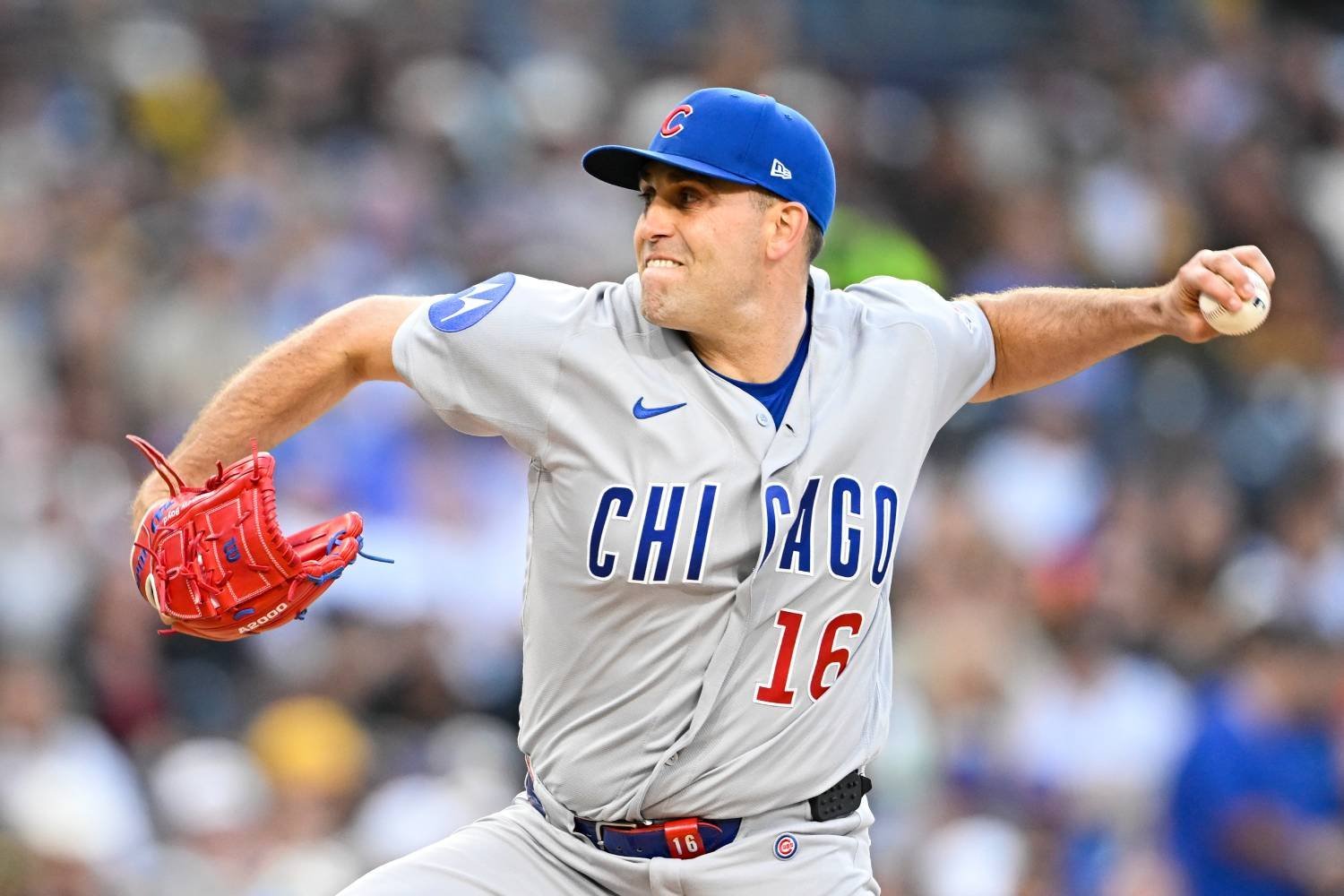 After a few days of mainly bad news regarding the health of the starting rotation, the Chicago Cubs made official what everyone had been anticipating: Matthew Boyd is back. The Cubs activated the left-hander from the 15-day injured list so he could start Thursday's series finale against the New York Mets. Right-handed reliever Gavin Hollowell was optioned to Triple-A Iowa. Boyd had gone on the injured list May 6 after an incident at home where he was playing with his kids and tore his left meniscus, which was immediately repaired via surgery. That came after he missed a good chunk of April with a strained left biceps. Boyd's return comes a couple days after the Cubs placed two starters, Edward Cabrera and Ben Brown, on the 15-day IL. Brown's injury, originally called a neck strain, actually ends up being more serious than first thought, with manager Craig Counsell calling it a stress reaction in his neck and keeping Brown sidelined at least a month. The Cubs also claimed right-hander Bryse Wilson off waivers from the Philadelphia Phillies on Wednesday. That led the Cubs to make a trade with the Mets following their doubleheader Wednesday in which Chicago acquired left-handed starter David Peterson for prospect first baseman Cole Mathis, who is currently injured. Hollowell has been Yo-Yo'd recently. Called up June 16, he was sent down Tuesday, called up Wednesday and sent back to Iowa on Thursday. He appeared in a total of three games for 2⅔ innings in that span. After the Mets series, the Cubs begin a big three-game series on the road against the Milwaukee Brewers, who lead the NL Central. View the full article
 -
 Cole Mathis, aged-22 (and under one month from turning 23) was acquired by the New York Mets early Thursday morning in return for left-handed starting pitcher David Peterson. Mathis, a former second-round selection out of the College of Charleston in the 2024 draft, had a bit of a rocky start to his professional career, but 2026 has been a year in which the right-handed hitter has gotten on track. At Myrtle Beach, the Chicago Cubs' Low-A affiliate, the first base prospect hit seven home runs in just 66 plate appearances, earning a promotion. At South Bend, the Cubs' High-A affiliate, Mathis posted a 116 wRC+ and even started a pair of games at the hot corner. Now a member of the Mets, what can fans expect out of the slugging prospect? Cole Mathis' Strengths: The thing that the burly first base prospect does best is in his plate approach. Mathis has a discerning eye and is not the kind of hitter to allow pitchers to get him out with chase pitches. So far, he's posted walk rates north of 13% at every level with no signs of slowing down. In Baseball America's preseason scouting report, they mentioned that, "He rarely expands the zone and does a good job of staying fairly aggressive on pitches in the strike zone." On top of that, his strikeout rate remains more than acceptable and bordering on "good." He did post an inflated 27% K-rate in 14 games to start the year in Myrtle Beach, but has since dropped below 23% in South Bend. You can expect a professional, hard-working plate appearance when the right-handed hitter steps into the box. Mathis also has some raw-power potential. Back in college, he posted some of the best batted ball data in the entire 2024 draft class and succeeded as well with wood bats in the Cape League. This is imperative, as Mathis just doesn't look like he's going to move off the 1B/DH pathway, so having raw power in his arsenal is a big thing. Lastly, the former second-round pick has had some decent success this year. He's posted a 116 wRC+ in South Bend so far, and while it's true he's only hit three round-trippers since his early-season promotion, his ISO of .229 and nine doubles suggests that he's not far from turning his solid production into something more as he taps into that raw-power potential. Doubles can quickly become home runs with the right adjustments. Cole Mathis' Weaknesses: Mathis was drafted originally by the Cubs as a third baseman, as the team hoped that they could convert him from first to third. On paper, this makes sense; he was a two-way player in college and he had the arm strength to do move across the diamond. One caveat; when the Cubs' selected him, he was already hurt and required Tommy John surgery. TJS doesn't affect position players like they do pitchers; Mathis missed the two months of post-draft time with Chicago but was immediately in the system last year. However, his transition to third has not occurred and it's safe to say he's likely no more than first baseman at any level. What this means is that his pathway is incredibly limited. He has to not only hit, but mash at every level. A 116 wRC+ is not terrible, but you need your first base prospects to be hitting better than 16% over league average if you want a chance to be noticed. It's the nature of the beast; first base is just a really hard life if you aren't a killer at the plate. For him to break out, those doubles have to start turning into dingers and he's got to tap into the power potential more. Another issue is that Mathis was drafted with the idea that he could be a fast-moving prospect. With success with wood bats in his history, there was a belief in the Cubs' circles that he could be in Knoxville, Tennessee by the end of 2025, their Double-A affiliate. Instead, complications from TJS limited his season and he never made it above Low-A and an appearance in the Arizona Fall League. To date, he's still only in High-A. While that doesn't kill his stock by any means, his "fast-mover" status just never materialized and he's on a more normal pathway to the major leagues. Cole Mathis Outlook With Mets Cole Mathis is a prospect who has probably more value in his draft pedigree than on paper, but that isn't necessarily a bad thing. There's a really fun player in there, one who's shown real pop with wood bats (albeit in college) and has some excellent batted-ball data in the past. He's proven in the past that there's real upside, he just hasn't always had a chance to show the same upside as a professional... yet. Because of that, you can look a this in two ways with skepticism and pessimism or with an eye to the future with optimism. If you're a glass-half-empty type, Mathis is an underwhelming first base prospect. His pathway to the MLB is narrow because of his position to begin with, and even with a mature approach, right-handed-hitting prospects who don't play anything other than first aren't great on paper. Perhaps the TJS surgery robbed him of some power in his elbow and it won't come back. This outcome puts him squarely in the second-division tier of upside and he still has to master a few levels before we think about him as an MLB option. However, if you're a glass-half-full type, you're in luck because there is upside. He's a player who's spent time hurt which may have not sapped his power forever, but instead, temporarily. He did hit seven bombs in Myrtle Beach, which is an famously tricky place to hit in April. With nine doubles in 25 games in South Bend, you only need three of those to get over the wall before he looks far more interesting. This could be ability to get into an undervalued prospect who's on the precipice of breaking out and becoming (mostly) the guy the Cubs thought they drafted in the second round. Generally speaking, this seems like fair value for David Peterson on both ends. The Cubs get a pitcher underperforming his peripherals and who will add a lot of ground ball ability to an elite defensive infield. The Mets get a prospect who has a narrow, but possible MLB pathway and who may still offer untapped upside as he works his way back to being healthy. It's likely that Mathis heads to Brooklyn to join the Met's High-A team to get acclimated. With a strong start, or when the team feels as though he's advanced enough, there's a realistic chance he ends the year in Binghamton with the Rumble Ponies. Mathis may never garner top-100 hype because it's just hard to do as a first baseman, but he does offer MLB upside and for David Peterson in what feels like a lost season, that's a win for the Mets. View the full article
 -
Evaluating Chad Tracy's First 50 Games as Red Sox Interim Manager
DiamondCentric posted an article in Talk Sox
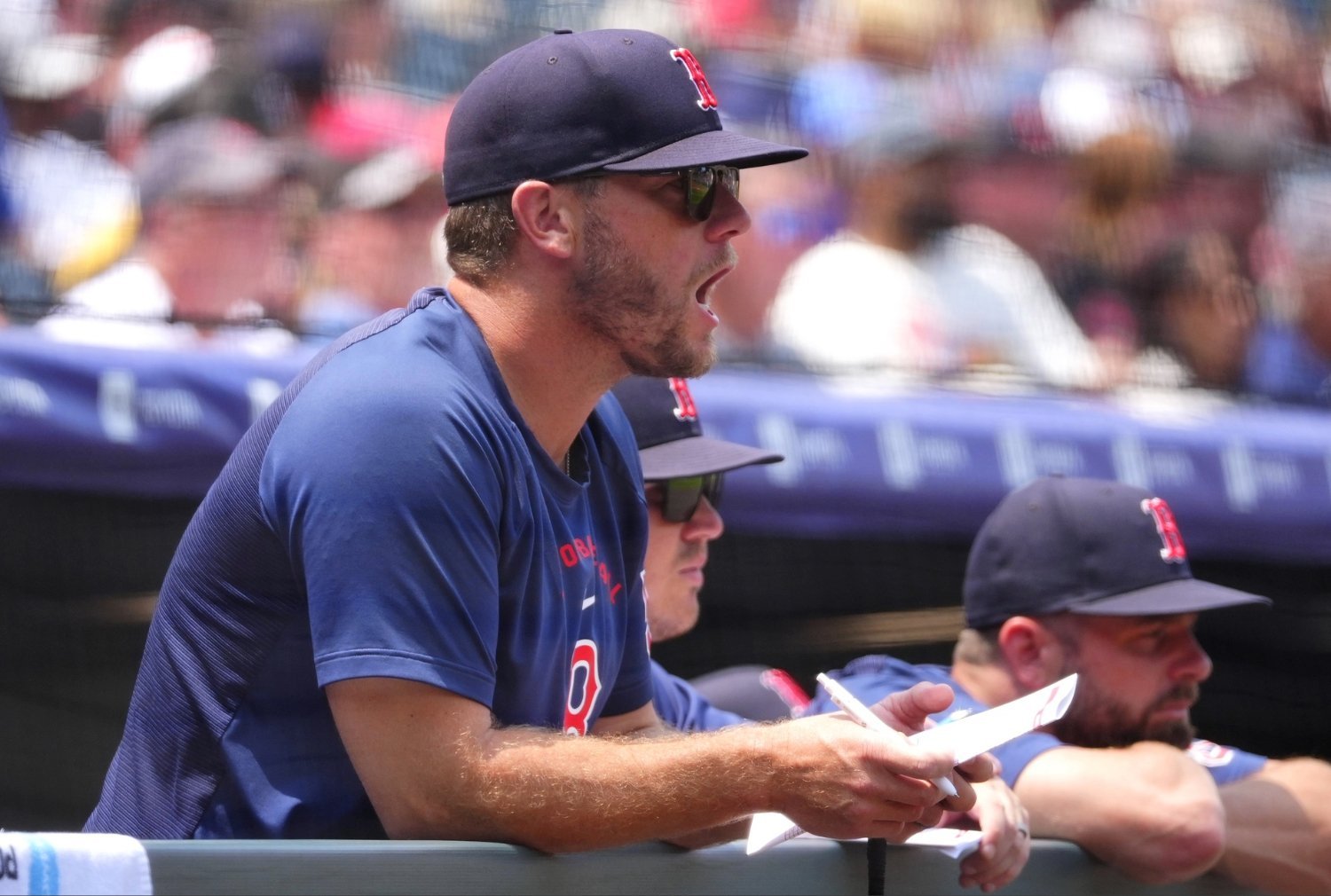 The Boston Red Sox have reached the 50-game mark under interim manager Chad Tracy, and while the team has shown signs of progress, they remain near the bottom of the American League standings. With the trade deadline looming, the organization must decide whether he has done enough to lead the team moving forward. Tracy inherited a difficult situation. Before his promotion, his predecessor, Alex Cora, was released after starting the season with a 10-17 record and sitting at the bottom of the American League East standings. While Cora's roster dealt with some injuries, it was the regression of his offense that was really the nail in the coffin. Expected to build off of last season’s breakout prospects, like Roman Anthony and Marcelo Mayer, the lineup instead saw a complete decline, with the team having the second-lowest team wRC+ of 84 during this span. This regression, along with disagreement of philosophies with Chief Baseball Officer Craig Breslow, caused Cora, along with six of his staff, to be fired. Previously managing the Triple-A Worcester Red Sox, Tracy's familiarity with several of the struggling young prospects made him a natural choice to take over. This familiarity, along with a more analytical approach to the team’s struggles, helped bring stability to the Red Sox lineup. After just over 50 games, the team is 22-29 under him, but has shown flashes of better times to come. The offense as a whole has seen the most improvement under Tracy. Since taking over, the team ranks in the top 10 in the MLB in batting average in large part due to Tracy’s rebuilt hitting staff, which has helped several struggling players find their footing. No turnaround has been more noticeable than that of third baseman Caleb Durbin. After an underwhelming start to the season, Durbin has flourished under the guidance of Tracy’s staff. The skipper's public support of Durbin fixing his mechanics with a private hitting coach has sparked results for the 26-year-old. Over the past month, Durbin is batting .325/.341/.610 with a .952 OPS while hitting four home runs. Tracy also used his familiarity with the farm system to address some weaknesses on the roster. In May, Tracy called up catcher Mickey Gasper after getting underwhelming production from Carlos Narváez and Connor Wong. Since his call-up, Gasper has carved himself a starting role, batting .255/.319/.324 and slotting into the leadoff spot while Jarren Duran continues to work out his swing. But although the individual improvements have been welcomed, they have yet to translate to wins. The team currently has a record of 32-46 and has the worst record American League. While as a group they have improved their individual batting averages, as a team, they rank in the bottom five of the MLB in runs and home runs under Tracy’s tenure, still not taking advantage of the solid production from their pitching staff. This inconsistency leaves the Red Sox front office with a difficult decision. Is the development of young players enough to justify allowing Tracy and his staff to continue leading the team's growth, or should immediate results be the organization's top priority? With the trade deadline approaching, the next month may determine not only which players stay, but whether Tracy has done enough to remain part of the organization's long-term plans. View the full article
 -
Mets' Marcus Semien Makes Rare Trip To Injured List
DiamondCentric posted an article in Grand Central Mets
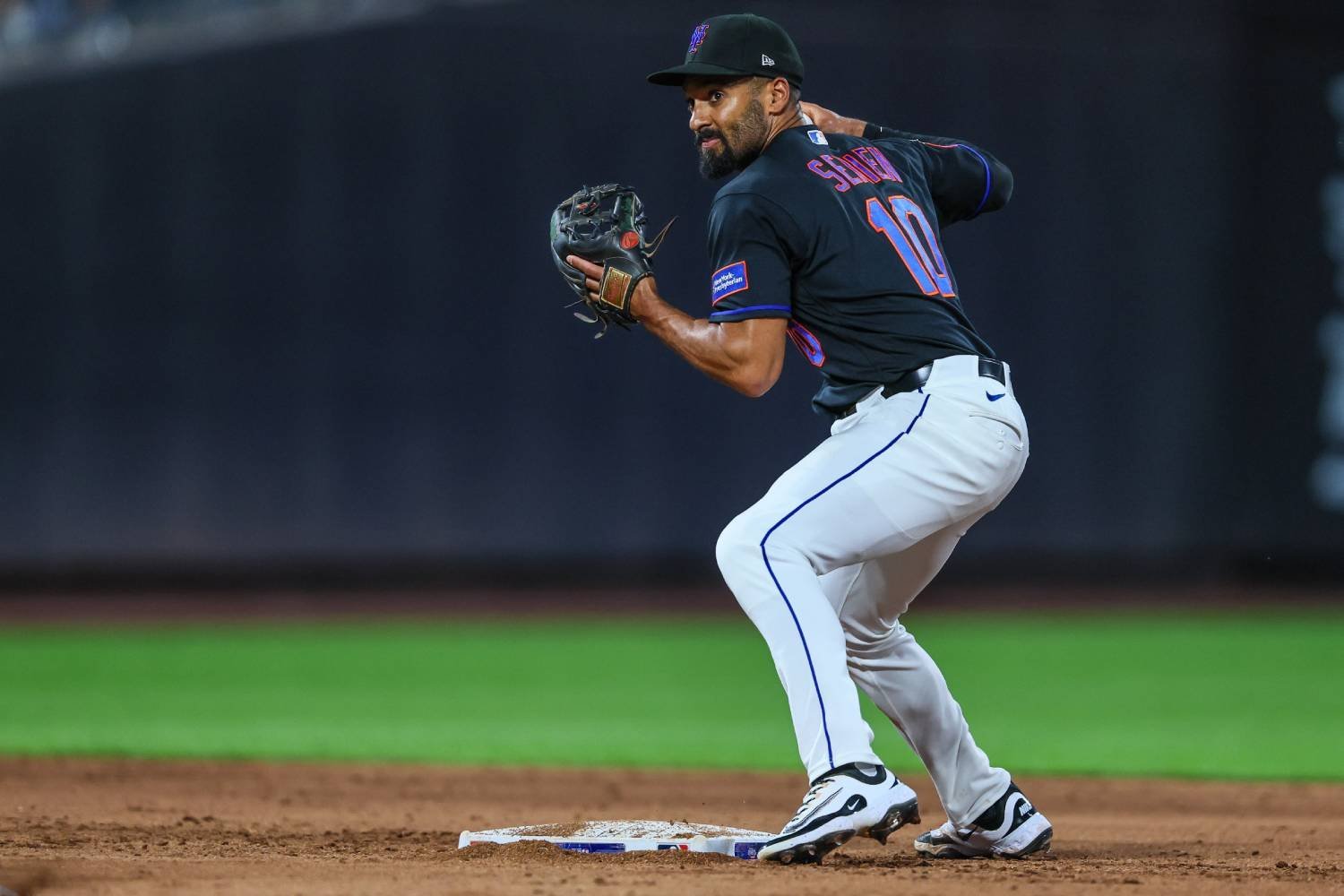 With one infielder back, another has gone down. The New York Mets on Thursday placed second baseman Marcus Semien on the 10-day injured list with a strained left hip flexor. Infielder Ronny Mauricio was called up from Triple-A Syracuse a day after coming off the 60-day IL and being sent down. Semien played both ends of Wednesday's doubleheader sweep at the hands of the Chicago Cubs, going 1-for-8. Going on the IL is a rare occurrence for Semien. When he fractured a bone in his left foot on a foul ball in August, it sent him to the IL for the first time since 2017. But Semien is also having one of his worst offensive seasons, putting up a .214/.271/.341 slash line with nine homers and 29 RBIs while playing all 80 games. Semien's exit comes a day after shortstop Francisco Lindor returned from a strained left calf that kept him sidelined since April 23. Mauricio was supposed to be Lindor's replacement, but he broke his left thumb May 5 and had been out since then. Now he will get a chance to fill in for Semien. Mauricio was 7-for-32 with a homer and two RBIs in 10 games before being injured. View the full article
 -
Grading Milwaukee Brewers' Top Picks in the MLB Draft Since 2018
DiamondCentric posted an article in Brewer Fanatic
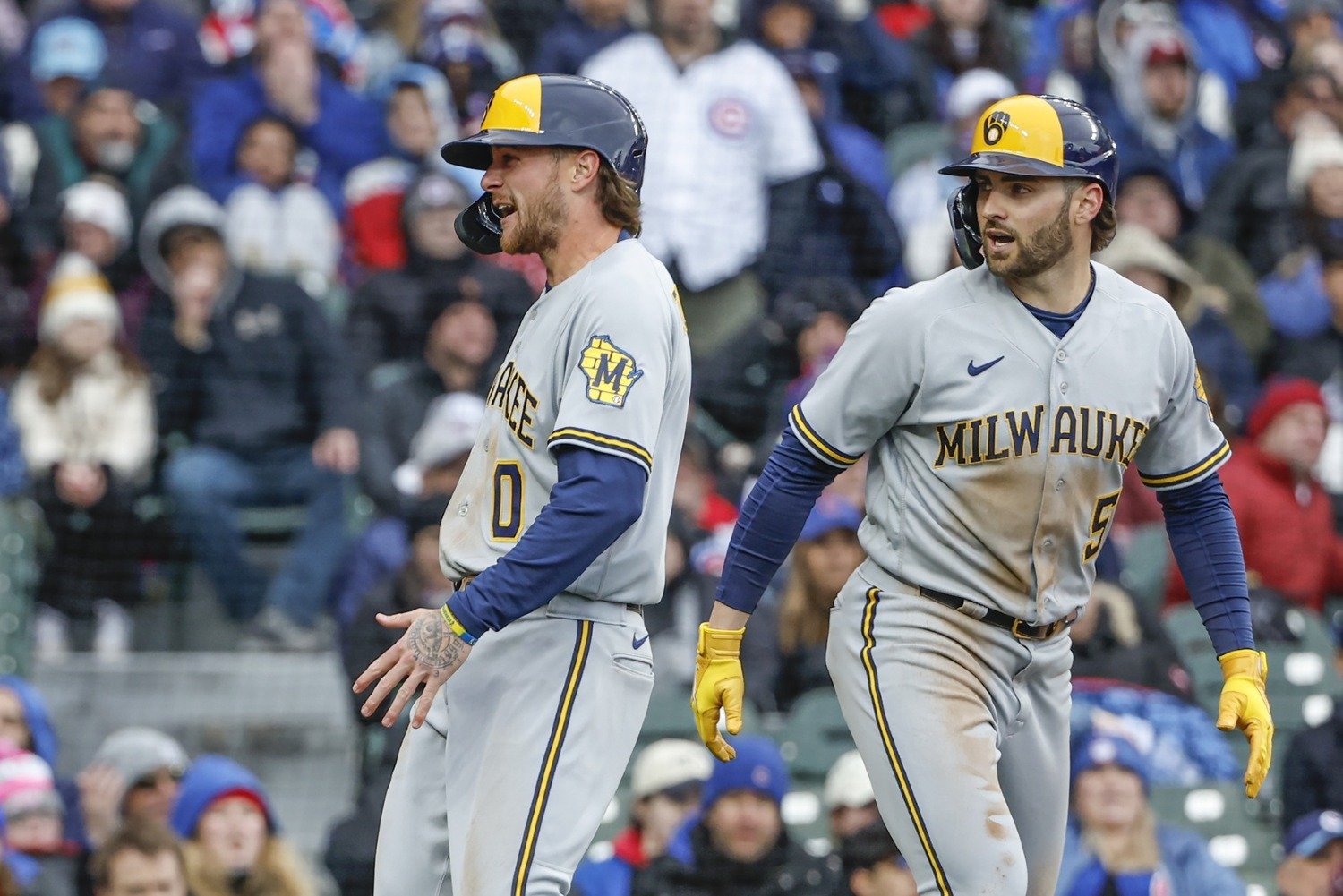 For the Milwaukee Brewers, the 2018 season wasn’t just the culmination of building a team that came within a game of the World Series. It was the beginning of a golden era. One of the big reasons for this is their farm system, which they've built by hitting on a lot of their top picks each June. The current Brewers active roster features three first-round picks, with another one that has seen a few cups of coffee. So, how have the Brewers’ first-rounders (including Competitive Balance A and compensation picks) fared? Let’s grade them. 2B Brice Turang, 2018 1st-round pick GRADE: A+ In 2018, as the Brewers made big memories with a Game 163 win over the Cubs to secure the NL Central title and top seed in the playoffs, they also drafted Brice Turang in the first round and gave him a little over $3.4 million as a signing bonus. In three-plus seasons, he’s arguably become the best second baseman in franchise history. The real question is how long he will be in Milwaukee. LHP Ethan Small, 2019 1st-round pick GRADE: D+ Ethan Small’s signing bonus was only $1.8 million, but early on, he rose rapidly through the system, earning a spot in the 2021 Futures Game. However, he also started having injury trouble. In 2022 and 2023, he wasn’t quite the same, and after four games with Milwaukee, he was purchased by the San Francisco Giants, but never got to the majors with them. OF Garrett Mitchell, 2020 1st-round pick GRADE: B Garrett Mitchell’s got talent; that is undeniable. But he’s also missed large parts of two seasons with injuries, and there is an offensive vulnerability to strikeouts. Still, he is under team control through 2028. With a lot of prospects in the minors, the Brewers may need to make a decision about whether to hold onto him for the longer term, but he's been productive—especially this year. OF Sal Frelick, 2021 1st-round pick GRADE: A- Frelick was selected in the first round of the 2021 draft and collected a cool $4 million as a bonus. He first made the majors in 2023, earned a Gold Glove in 2024, took an offensive step up in 2025, and has been solid (though far from spectacular) in 2026. Like Mitchell, there is a fair bit of team control left, and the Brewers may need to make a similar hold-or-deal decision on Frelick, but not quite yet. OF/1B/DH Tyler Black, 2021 CB-A pick GRADE: C+ After his breakout 2023 season at Double-A Biloxi and Triple-A Nashville, Black seemed poised to make inroads with the team in 2024. He started getting reps at the hot corner, and at first base. Then the Brewers acquired Oliver Dunn and Joey Ortiz, while his path at first base was blocked by Rhys Hoskins and Jake Bauers. Since then, he’s been on the Nashville-Milwaukee shuttle, and his last option year has been used. In fairness, though, he also hasn't seized the few chances he's gotten. IF/OF Eric Brown Jr., 2022 1st-round pick GRADE: C- Eric Brown Jr. was seen as an exciting pick when selected in 2022, but he missed significant chunks of the 2023 and 2025 seasons with injuries and struggled at Double-A Biloxi in 2024. He’s seen a bit of a resurgence since, even as he was caught behind Jesus Made and Dylan O’Rae, but he’s still showing enough to make his way to Milwaukee as a more potent version of Andruw Monasterio, who became a cult hero out of nowhere. Still, the Brewers could have had Dalton Rushing at that spot, setting up a nice 1-2 punch behind the plate with William Contreras and/or Jeferson Quero through the rest of this decade. 3B Brock Wilken, 2023 1st-round pick GRADE: D+ Brock Wilken looked like a very potent right-handed slugger at the hot corner when selected in 2023. The next April, he suffered facial fractures when he was hit by a pitch, and his career seems to have never really recovered. After a decent 2024 at Double-A Biloxi, he missed more time with a knee injury in 2025. In Triple-A Nashville, he’s hitting 25 points below the Uecker line. Colt Emerson and Kevin McGonigle were drafted later, and both are contributing in the majors. OF Braylon Payne, 2024 1st-round pick GRADE: B Braylon Payne was one of the youngest prospects in the 2024 MLB draft, and the Brewers managed to sign him for a $3.44 million bonus. Although he had some relatively high strikeout totals in 2025 at Single-A Carolina, he’s had an offensive breakout at Advanced-A Wisconsin, and looks to be ready to make his climb to the majors relatively quickly. 1B Blake Burke, 2024 CB-A pick GRADE: B+ The pick the Brewers used to select Blake Burke was acquired in the Corbin Burnes trade, and there’s a chance it may be the best asset they got in that deal. Burke has a chance to be a better version of Bauers at the plate, which could enable him to provide Milwaukee the most stability at first base since Prince Fielder came up to the majors for good. That's not yet likely, but it's possible, which is impressive. 3B/1B Andrew Fischer, 2025 1st-round pick GRADE: B Andrew Fischer just got a promotion to Double-A Biloxi in his first full season of pro ball, after he mashed 20 homers for Advanced-A Wisconsin, posting a 1.118 OPS there. That, in turn, came after he made a name for himself in the 2026 World Baseball Classic. If there is a concern, it’s his high strikeout total, but so far, he’s looking very good. SS Brady Ebel, 2025 compensation pick (for SS Willy Adames) GRADE: B Ebel had a rough start, but has since taken his season OBP to .401 as of June 24. He’s adding some speed, a little pop, and proving to be a solid defender. So far, he’s also working out well for the Brewers, who have several other talented players in the middle infield in the system. 2025 CB-A Pick (Traded to Boston for RHP Quinn Priester) GRADE: A+ While the trade for Quinn Priester was a worst-case scenario for the 2025 Brewers due to the rotation's injury situation, Priester broke out for the team, becoming a stopper in their rotation. While he will miss the rest of 2026 with thoracic outlet syndrome, he remains under team control through 2030, and given the track record the Brewers have shown in helping pitchers revitalize their careers after various forms of adversity, the Brewers can feel good about the use of this pick. If you think about it as a draft pick that actively helped the team win that year's division title, the deftness of the move comes into focus. How would you grade the Brewers’ top picks since 2018? Let us know in the comments below! View the full article
 -
 Blue Jays Affiliate Overview (June 23 - June 24) Triple-A Buffalo Bisons Series vs Iowa Cubs (Chicago White Sox): 1-1 Season Record: 36-41 Double-A New Hampshire Fisher Cats Series vs Somerset Patriots (New York Yankees): 1-1 Season Record: 35-34 High-A Vancouver Canadians Series vs Hillsboro Hops (Arizona Diamondbacks): 0-1 Season Record: 29-42 Single-A Dunedin Blue Jays Series vs Tampa Tarpons (New York Yankees): 0-2 Season Record: 32-38 FCL Blue Jays Week Record: 1-0 Season Record: 27-11 DSL Blue Jays Blue Week Record: 0-1 Season Record: 6-11 DSL Blue Jays Red Week Record: 0-1 Season Record: 5-12 Triple-A Buffalo Bisons Season Record: 36-41 Series vs Iowa Cubs (Chicago Cubs) June 23: The Buffalo Bisons had themselves a power surge on Tuesday to open up a new series against the Iowa Cubs. Jay Harry was moved into the lead-off spot in the batting order and rewarded Buffalo with a big game. He went 3-5, scoring two runs, and knocking in four runs. His big hit came in the fifth inning, when he crushed a pitch up and away to right for a three-run home run. Je'Von joined him with a big blast of his own, a solo shot to center field in the seventh, which was smoked at 110 mph off the bat. While the bats were scoring left and right, the pitching was an utter disappointment. Richard Gallardo gave up two runs as the starting pitcher, CJ Van Eyk coughed up five in just 0.2 innings pitched, and then Justin Topa and Chase Lee each surrendered runs as well. The Bisons found themselves down two in the top of the ninth inning, when Carlos Mendoza came to the plate, following a Josh Rivera double. Mendoza lofted a pitch, at 38° launch angle, over the right field wall for a game-tying two-run home run. In the tenth, Sean Keys and Charles McAdoo each had RBI doubles, then Willie MacIver tacked in a big shot of his own. He roped a fastball 108.8 mph off the bat for a solo home run, giving the Bisons a three-run lead headed into the bottom of the tenth. Lee would get touched up in the tenth for the two runs he allowed, before giving way to Matt Bowman, who came up clutch for Buffalo. Up just one, with two on and nobody out, Bowman got a double play and a groundout to end the threat and the game. Buffalo squeaked out an 11-10 win in a game with a ton of fireworks and excitement. June 24: Wednesday's game against Iowa had just as many, if not more, fireworks on the field. Jonatan Clase joined the fun, smacking a two-run home run in the first inning. C.J. Stubbs would get one of his own in the ninth, a solo shot to center. It was the hardest hit home run for the Bisons over the last two days, a 111.8 mph rope that went 426 feet. Jay Harry even added two more hits out of the lead-off spot, chipping in two RBI, and scoring once. The standout of the day at the plate wouldn't be any of those Bisons, though; it would be Sean Keys. He continues to push towards a call-up to the big league club, knocking two more home runs in this game, both of the two-run variety. While the bats were alive and thriving for Buffalo, their pitching was even worse than on Tuesday. Jake Bloss surrendered five runs over his 3.1 innings, Devereaux and Conor Larkin each gave up six, and Yariel Rodriguez also coughed up a run. The Bisons scored a ton, but Iowa dropped 18 runs on them to take the win 18-11. Double-A New Hampshire Season Record: 35-34 Series vs Somerset Patriots (New York Yankees) June 23: Tuesday saw New Hampshire kick off a series against the Somerset Patriots. Jackson Wentworth was on the mound and put up one of his best starts at Double-A. He pitched six innings, only allowed three hits, didn't give up a run, walked three, and struck out five. Victor Arias broke open a 0-0 game in the sixth inning with a long home run to right field, his sixth of the year at Double-A. In the eighth inning, it was Arias again, this time with a two-run double. Later in the inning, Nick Goodwin brought Arias home with a single to right field. New Hampshire won this one 4-0. June 24: In the Wednesday game between New Hampshire and Somerset, it was the Patriots who got out to an early lead in the second inning. Jackson Castillo brought in two runs on a line drive double to left field. In the bottom half of the inning, Nick Goodwin hit a deep fly ball off the right field wall, which he was able to turn into a triple, scoring a run for New Hampshire. Somerset went on a scoring run after that, though, scoring eight straight on an RBI double, two home runs, and an RBI single. Cutter Coffey singled on a fly ball to right field in the ninth inning to make it an eight-run game. New Hampshire only managed three hits and two runs in the game, as they lost this one 10-2. High-A Vancouver Season Record: 29-42 Series vs Hillsboro Hops (Arizona Diamondbacks) June 23: Nolan Perry had his second mediocre start in a row, as he allowed five hits and a walk in just three innings to allow three runs. Jack Eshelman also gave up three runs, but one of them was unearned due to a throwing error by him. Down six to nothing, the Canadians fought back, with Alexis Hernandez with his 10th homer of the season to get it within four. Peyton Williams added another homer in the seventh inning, but a fielding error from Kendry Chirinos led to an unearned run scoring for the second time this game. That run turned out to be the difference between a loss and extra innings, as Alexis Hernandez’s second homer of the game brought it within one as he drove in three runners in the eighth inning. Unfortunately for the Canadians, they couldn’t score in the ninth, which led to a loss caused by some shaky defense. June 24: Johnny King once again faced traffic in the first inning, allowing the first two runners to get on with singles. He was able to get a groundout to shortstop, but after Maddox Latta threw it to second to get the forceout, Eric Snow made an ill-advised throw that skipped past the first baseman and allowed a run to score. King once again settled in, going five strong innings, only allowing that one run in the first inning to score, to go with six strikeouts. Jack Nedrow replaced King in the sixth, and allowed two runs to score on a triple. He gave up another triple in the eighth inning, and the runner ended up scoring, which was three runs given up by the righty. The Canadians loaded the bases in the top of the ninth, and Sam Shaw was able to put Vancouver on the board with a bases-loaded walk. Alexis Hernandez battled back from a 0-2 count with an eight-pitch walk to score another run. Peyton Williams couldn’t keep it going as he struck out, ending the game. Single-A Dunedin Season Record: 32-36 Series vs Tampa Tarpons (New York Yankees) June 23: The Tarpons ruined Carson Messina’s strong start, as Messina pitched four no-hit innings, with a run scored only due to Lenyn Sosa making a fielding error in the second inning. The Jays' offense didn’t do Messina any favors either, as they scored their only run of the ballgame with Adam Hackenberg’s RBI single in the second. Denis Samudio replaced Messina in the fifth inning, and although he allowed two runs, he settled in, striking out five batters in less than four innings pitched. Ricky Tiedemann was supposed to pitch in relief, but was not able to due to neck soreness. Samudio ended up with the loss, as no one else was able to score despite the Jays out-hitting the Tarpons five to four. June 24: It was a tough day for Dunedin Pitching, as Blake Purnell and Bradley Wilson combined for seven runs given up in just the first five innings, with Purnell giving up three homers. It was a total shellacking as the Tarpons doubled the Jays' hit total with fifteen compared to just seven. JoJo Parker was one of the lone bright spots for the D-Jays as he hit a homer in the sixth for his eighth of the year and fifth of just this month. Luis Victorino allowed two more runs, and Blaine Bullard was able to get those back with a two-run double, but there was nothing else for the Jays. FCL Blue Jays Season Record: 27-11 June 23: The FCL Blue Jays and FCL Phillies squared off against each other on Tuesday. Seojun Moon was on the mound for the Blue Jays, and he had one of his best games. He finished with 3.2 innings, gave up three hits, one run, walked one, and struck out six batters. Austin Marozas came in for Moon and pitched 1.1 innings and didn't give up a hit or run. Sann Omosako was next, and he put up a hitless performance. He went three perfect innings and struck out three batters. Nosh Palmese finished off the game with one inning; he gave up one hit and struck out one batter. Offensively, the Blue Jays scored all five of their runs in the fourth inning. A bases-loaded walk scored one run, and then David Guzman crushed a grand slam. The Blue Jays only had two hits in the game, but they made them count, as they won this one 5-1. DSL Blue Jays Blue Season Record: 6-11 June 23: BJB was facing off against the Arizona Black team on Tuesday. Sebastian Casanova and Juan Caricote each had two singles, and each scored a run. Daret Gonzalez also had a single and scored a run. Gonzalez is someone to keep an eye on; he has just 22 at-bats for the season, but he does have one of the biggest bodies in the DSL, being listed at 6-foot-5 and 225 pounds. He has the type of frame scouts dream of for a 17-year-old. He will need to start hitting, though; his single today was just his second hit of the short season. While the bats slept at the plate, the pitching surrendered 13 runs, en route to the 13-3 loss. DSL Blue Jays Red Season Record: 5-12 June 23: On Tuesday, BJR had a very forgettable game against the Arizona Red team in the DSL. Jose Gori had a single and Alex Linares drew a walk; that was it for the offense, just two baserunners for the entirety of the game. They would take the loss 1-0, in a game that neither team had more than two hits. Transactions 06/24/26 Dunedin Blue Jays activated CF Jean Joseph from the 7-day injured list. 06/23/26 Buffalo Bisons sent LHP Ricky Tiedemann on a rehab assignment to Dunedin Blue Jays. 06/23/26 Buffalo Bisons sent LF Ismael Munguia on a rehab assignment to Dunedin Blue Jays. 06/23/26 Toronto Blue Jays sent 2B Lenyn Sosa on a rehab assignment to Dunedin Blue Jays. 06/23/26 C Giaconino Lasaracina assigned to Dunedin Blue Jays from FCL Blue Jays. 06/23/26 C Juan Rosas assigned to FCL Blue Jays from Dunedin Blue Jays. View the full article
 -
The Twins' Next Star Outfielder Might Not Be Who You Think
DiamondCentric posted an article in Twins Daily
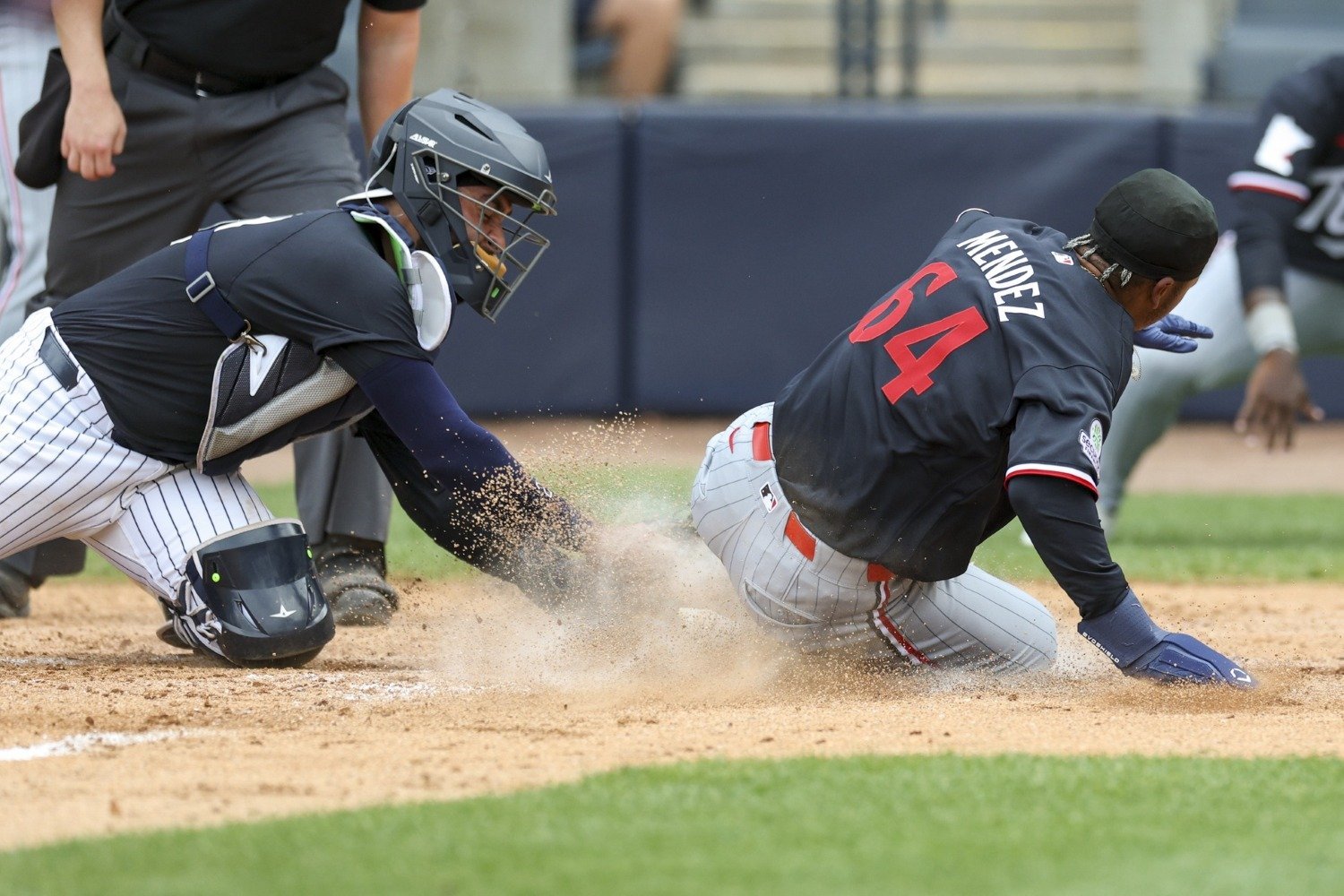 It blows my mind. Hendry Mendez still doesn't get enough recognition for just how good he actually is. When people talk about the Twins' farm system, the conversation usually starts with names like Walker Jenkins and Kaelen Culpepper. Those are tremendous prospects, and they deservedly get a lot of attention. But somehow, Mendez continues to fly under the radar, despite doing nothing but produce and thrive wherever he's sent. Since earning a promotion to Triple-A earlier this season, Mendez has been one of the most impressive hitters in the entire organization. Through his first 130 plate appearances with the St. Paul Saints, the 22-year-old is hitting .330 with an absurd .438 on-base percentage. He's added eight extra-base hits, three stolen bases, and more walks than strikeouts. That’s elite production at the highest level of the minors, and yet he’s not even mentioned as a potential Top-100 prospect. I think it's time that that changes. The ceiling outcome for Hendry Mendez isn't that he becomes a useful big leaguer or settles in as a complementary piece. However improbable it might feel, the ceiling outcome is that Mendez is simply a star for the Twins. For starters, it's important to remember just how young he is. Mendez is doing all of this at 22 years old. It would be one thing if he were a 26- or 27-year-old beating up on Triple-A pitching. There have been plenty of older players who put up gaudy numbers at that level. But most 22-year-olds aren't even in Triple-A yet, let alone hitting .330. Some regression is likely coming, but the underlying numbers still paint an extremely encouraging picture. His expected batting average sits at .291, which is lower than his actual mark but still highly impressive for a player his age facing advanced pitching. The biggest reason for that success is that Mendez is an incredibly disciplined hitter. He’s chasing just 19 percent of pitches outside the strike zone. That's an elite mark, and one that speaks volumes about his approach. Young hitters often get themselves into trouble by expanding the zone and helping pitchers out. Mendez does the exact opposite; he forces pitchers to come after him. And when they do, he makes them pay. He's currently sporting a 51% hard-hit rate, which is an outstanding number. The ball is coming off his bat with authority, and he's consistently making quality contact. The interesting part, however, is that it hasn't translated into as much extra-base damage as you might expect, and I think that's one of the reasons Mendez doesn't get talked about quite as much as some of the Twins' other top prospects. He doesn't have Emmanuel Rodriguez-type power. Mendez hit 11 home runs across 118 games last season. This year, he has eight homers through his first 52 games. Over a full 162-game season, that's roughly a 20-home run pace. For a corner outfielder, that's solid. But it's not necessarily the kind of power production that makes you stand out. Still, I think there's another level available here. Despite how hard Mendez is hitting the baseball, a significant portion of that contact is resulting in singles. The primary reason is that he hits a ton of ground balls. More than half of the balls Mendez puts in play—54%, to be precise—are hit on the ground. Ground balls can certainly find holes, especially for a hitter with his bat-to-ball skills, but they aren't typically the best path to unlocking power. It's difficult to drive the ball into the gap when you're pounding it into the dirt. And even when Mendez does elevate the baseball, he's not consistently hitting the type of fly balls that generate significant damage. His pulled fly-ball rate sits at just 5.5%. That's a notable number, because pulled fly balls are one of the easiest ways for hitters to create extra-base production. When players pull the ball in the air, that's where a large percentage of doubles and home runs come from. When you're not doing that very often, the power output naturally lags behind. To be perfectly clear, I don't think the Twins should try to completely overhaul Mendez's approach. The last thing anyone wants is to take a hitter who’s producing at a high level and start tinkering too much. His plate discipline is excellent, his contact quality is excellent, and his ability to control the strike zone is excellent. Those are traits worth preserving. But I do think there's room for some natural growth. Mendez is plenty strong enough to produce more power than he currently does. If he can turn some of those ground balls into line drives and fly balls, the extra-base production could take a significant step forward. It doesn't need to be a dramatic change. Even a modest increase in his launch angle could unlock another level offensively, which would say a lot considering where he’s already at. That's a really exciting possibility, which is why I firmly believe Mendez has the upside of a future star. Rodriguez and Jenkins receive most of the attention when discussing Twins outfield prospects, and for good reason--they're exceptional talents. But at the exact same level, Mendez has out-produced both of them so far this season. Whether that continues remains to be seen, but the performance deserves recognition. It's unclear when he'll make his major-league debut, or whether that opportunity comes later this season or sometime in 2027. The good news for Mendez is that he's already on the 40-man roster, meaning he won't have to clear another hurdle before getting his chance. He feels like the type of hitter who would hit the ground running the moment that opportunity arrives. His discipline is advanced, his approach is advanced, and he hits the ball hard. And because of those traits, whenever the time inevitably comes, Hendry Mendez has the ceiling of a star. View the full article
 -
 Chicago Cubs Transactions Chicago Cubs designated RHP Eduarniel Núñez for assignment. Chicago Cubs placed RHP Edward Cabrera on the 15-day injured list. Left hamstring strain. Chicago Cubs placed RHP Ben Brown on the 15-day injured list retroactive to June 21, 2026. Neck strain. Chicago Cubs designated RHP Christian Roa for assignment. Chicago Cubs recalled RHP Gavin Hollowell from Iowa Cubs. Chicago Cubs sent LHP Luis Peralta outright to Iowa Cubs. Chicago Cubs selected the contract of RHP Vince Velasquez from Iowa Cubs. Chicago Cubs claimed RHP Bryse Wilson off waivers from Philadelphia Phillies. Chicago Cubs recalled RHP Tyler Ferguson from Iowa Cubs. Iowa Plates 11 In The Fifth To Bury Buffalo The Iowa Cubs piled up 19 hits and 18 runs in a rout of the Buffalo Bisons. Kevin Alcántara led the way, going 4-for-5 with a grand slam, a double, and four runs batted in. Owen Miller added a home run, a double, and three RBI, James Triantos homered and drove in three, and Brett Bateman reached base four times with three runs scored. The decisive frame was the fifth, when Iowa sent a parade of hitters to the plate and scored 11 times. Owen Miller doubled home a run, Bateman singled in another, and back-to-back bases-loaded walks to Moisés Ballesteros and Jonathon Long pushed across two more. Alcántara then cleared the bases with his grand slam, and Triantos followed with a two-run homer to cap the outburst. Will Sanders started and worked five innings, allowing four hits and three runs, all earned, with three walks and four strikeouts. The bullpen had a rougher time, as Vince Reilly and Kenten Egbert combined to allow eight runs over the final three and a third innings, but the early cushion was more than enough. Player AB R H RBI BB K Brett Bateman 5 3 3 2 1 2 BJ Murray 4 2 3 0 1 1 Moisés Ballesteros 5 1 1 2 1 1 Jonathon Long 3 2 1 1 2 0 Kevin Alcántara 5 3 4 4 0 0 Owen Miller 4 2 3 3 1 0 James Triantos 4 2 3 3 0 1 Christian Bethancourt 3 1 0 0 2 0 Ben Cowles 4 2 1 1 0 1 Player IP H R ER BB K HR Will Sanders 5 4 3 3 3 4 1 Vince Reilly 1 2/3 3 4 4 3 0 2 Kenten Egbert 2 1/3 5 4 2 2 1 1 Rojas Homers Twice And Drives In Five To Pace Knoxville The Knoxville Smokies jumped on the Birmingham Barons early and held on for a 10-4 win. Jefferson Rojas was the catalyst, going 3-for-5 with two home runs and five runs batted in. Alex Ramírez chipped in three hits, and Andy Garriola added a home run and three RBI. Knoxville built its lead across the first three innings. Rojas opened the scoring with a solo homer in the first, and Ramírez doubled home another run that frame. In the second, Rojas struck again with a three-run blast that scored Hayden Cantrelle and Karson Simas, and Garriola's two-run homer in the third pushed the margin to 7-1. Nick Dean turned in the standout pitching performance, working five innings and allowing three hits and one run, with one walk and five strikeouts. Evan Taylor followed with two scoreless innings and four strikeouts to help close it out. Knoxville left 10 runners on base but did enough damage early to never trail. Player AB R H RBI BB K Karson Simas 5 1 0 0 1 2 Jefferson Rojas 5 2 3 5 1 1 Owen Ayers 4 2 2 0 1 1 Alex Ramírez 5 2 3 1 0 0 Andy Garriola 5 1 2 3 0 0 Edgar Alvarez 4 0 0 0 1 0 Carter Trice 4 0 2 0 1 0 Ariel Armas 4 0 0 0 1 2 Hayden Cantrelle 3 2 1 0 2 0 Player IP H R ER BB K HR Nick Dean 5 3 1 1 1 5 0 Yenrri Rojas 1 1 2 2 3 1 0 Evan Taylor 2 2 0 0 1 4 0 Kenyi Perez 1 2 1 1 1 2 0 Florentino And Hartshorn Lead South Bend Past Quad Cities The South Bend Cubs got a dominant start from Jostin Florentino and a big day from Josiah Hartshorn in an 8-1 win over the Quad Cities River Bandits. Hartshorn went 3-for-5 with a home run and three runs batted in, Ty Southisene added two hits and two runs scored, and leadoff man Kane Kepley reached base four times and scored three runs. South Bend struck immediately in the first, scoring three times. Hartshorn singled home Kepley, Matt Halbach reached on an error that brought in Southisene, and Jose Escobar's sacrifice fly scored Hartshorn. The lead held until the seventh, when Southisene and Escobar delivered run-scoring singles to extend the margin, and Hartshorn capped the night with a two-run homer in the eighth. Florentino set the tone on the mound, throwing four scoreless innings with one hit, two walks, and seven strikeouts. Brayden Spears followed with three and two-thirds innings, allowing one run while striking out six, and Ethan Bell recorded the final out. Player AB R H RBI BB K Kane Kepley 2 3 0 0 2 0 Ty Southisene 4 2 2 1 1 0 Josiah Hartshorn 5 2 3 3 0 0 Matt Halbach 5 0 1 1 0 1 Angel Cepeda 4 0 2 0 1 1 Jose Escobar 3 0 1 2 1 1 Justin Stransky 3 0 0 0 1 0 Alex Madera 4 0 1 0 0 2 Christian Olivo 3 1 0 0 1 0 Player IP H R ER BB K HR Jostin Florentino 4 1 0 0 2 7 0 Brayden Spears 3 2/3 3 1 1 0 6 0 Ethan Bell 1/3 0 0 0 0 1 0 Pelicans Rally Falls Short In One-Run Loss At Salem The Myrtle Beach Pelicans could not overcome an early deficit and dropped a 5-4 decision to the Salem Red Sox. Geuri Lubo led the offense, going 3-for-4, and Eli Lovich drove in two runs with a triple. The Pelicans dug themselves a hole behind starter Hayden Frank, who allowed six hits and five runs, all earned, with two home runs over three innings while striking out two. Myrtle Beach answered in the third, when Lovich tripled home Lubo and Alexis Hernandez to cut into the lead. Derniche Valdez doubled in a run in the sixth, and a sacrifice fly from Hernandez in the seventh brought the Pelicans within one. The bullpen kept them in it, as Jordan Henriquez and Sam Mettert combined for five scoreless innings out of relief, but the offense stranded six runners and could not push across the tying run. Player AB R H RBI BB K Alexey Lumpuy 3 0 0 0 1 2 Alexis Hernandez 3 1 0 0 1 1 Eli Lovich 4 0 1 2 0 1 Logan Poteet 4 1 1 0 0 1 Michael Carico 4 0 1 0 0 2 Derniche Valdez 4 0 1 1 0 3 Yahil Melendez 4 0 1 0 0 2 Edward Vargas 0 0 0 0 0 0 Geuri Lubo 4 2 3 0 0 0 Darlyn De Leon 4 0 0 0 0 1 Player IP H R ER BB K HR Hayden Frank 3 6 5 5 1 2 2 Jordan Henriquez 3 2 0 0 0 2 0 Sam Mettert 2 0 0 0 1 1 0 Top-20 Prospect Performance Jefferson Rojas: 3-for-5, 2 HR, 5 RBI, 1 BB, 1 K Jaxon Wiggins: DNP Pedro Ramirez: DNP Kevin Alcántara: 4-for-5, 2B, HR, 4 RBI Josiah Hartshorn: 3-for-5, HR, 3 RBI Ethan Conrad: DNP Kane Kepley: 0-for-2, 3 R, 2 BB Jonathon Long: 1-for-3, 2B, RBI, 2 BB James Triantos: 3-for-4, HR, 3 RBI, 1 K Cole Mathis: DNP Owen Ayers: 2-for-4, 2 R, 1 BB, 1 K Brooks Caple: DNP Juan Cabada: DNP Kaleb Wing: DNP Angel Cepeda: 2-for-4, 1 BB, 1 K Dominick Reid: DNP Jostin Florentino: 4 IP, 1 H, 0 R, 2 BB, 7 K Ty Southisene: 2-for-4, 2 R, RBI, 1 BB Will Sanders: 5 IP, 4 H, 3 R, 3 ER, 3 BB, 4 K, 1 HR Brandon Birdsell: DNP View the full article
 -
Trading Trevor Larnach Is The Easiest Trade Deadline For The Twins
DiamondCentric posted an article in Twins Daily
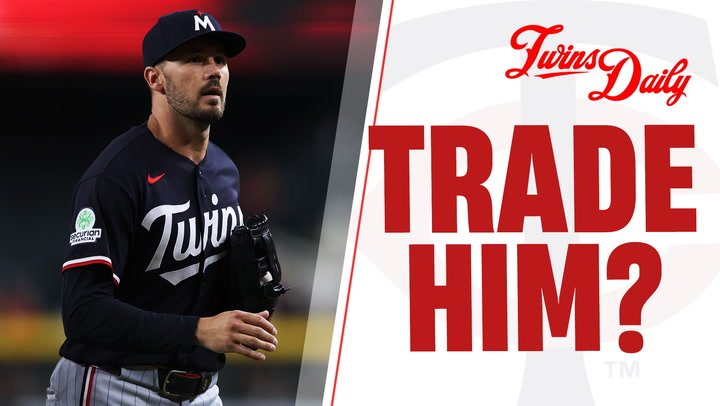 A career year, one season of team control remaining, and a wave of outfield prospects on the way might just make Trevor Larnach the Twins' most obvious trade candidate. View the full article
 -
 Boston Red Sox Affiliate Recap Triple-A Worcester Red Sox Season Record: 36-37 Worcester failed to hold an early 4-1 lead, losing 5-4 to the Mud Hens (Detroit Tigers). Worcester came out swinging, scoring four runs in the first three innings. Matt Thaiss had a strong night, going 1-for-3 with an RBI single in the first and scoring twice. Allan Castro was the big bat, driving in two with a double in the first, and added another RBI in the third with an RBI groundout. Braiden Ward set the table with a 2-for-3 effort with two stolen bases and a run scored. After three innings, the WooSox led 4-1. Then it unraveled. Starter Raymond Burgos was solid for stretches (five strikeouts in four innings) but got tagged for four runs (one unearned), though the defense hurt him, as a throwing error by Romy Gonzalez let two runs score to tie it 4-4 in the fourth. Toledo’s solo homer in the fifth put them ahead for good, 5-4, and the WooSox bats went cold the rest of the way. Tyler Samaniego took the loss, giving up the solo shot. The bullpen pitched well overall; Eduardo Rivera and Tyler Uberstine combined for three shutout innings and six strikeouts, but Worcester couldn't push another run across. Standout Performances: Braiden Ward: 2-for-3, R, BB, 2 SB Allan Castro: 1-for-4, 2B, 2 RBI Tyler Uberstine: 2 IP, 1 H, 0 ER, 4 K Double-A Portland Sea Dogs Season Record: 36-34 The Sea Dogs broke a scoreless game wide open, giving the Yard Goats (Colorado Rockies) no chance to come back in their 10-4 victory. It was scoreless through three innings, but the fourth inning did the damage. Marvin Alcantara started it with an RBI single, Matt Fraizer cleared the bases with a two-run double, Franklin Arias added another run with an RBI single, and Nate Baez capped it with an RBI double, five runs before Hartford could respond. The Yard Goats mustered four runs throughout the game, but Portland kept it coming: a two-run fifth (Caden Rose two-run single), one in the sixth (Alcantara RBI single), and two more in the seventh (Jack Winnay bases-loaded walk and Brooks Brannon scored on an error) to keep the lead comfortable. Just like he has been all season in Portland, Franklin Arias is on an impressive run once again. In his last three games, he’s collected three knocks in each of them. Now he tallied two hits, keeping his multi-hit streak alive, extending it to four games while batting .550 in that span. Hartford's runs came in pairs in the fifth and seventh, two runners came in on singles in the fifth, and a two-run single in the seventh closed the scoring. On the mound, Hayden Mullins started for Portland, finishing his outing after 4 ⅔ innings, giving up two runs and punching out six batters. Michael Sansone got the win in relief, finishing the rest of the game with a 4 ⅔ outing while giving up two runs. The two combined for 10 strikeouts. Standout Performances: Matt Fraizer: 3-for-4, 2B, 2 R, 2 RBI, BB Franklin Arias: 2-for-5, 2B, RBI, BB Marvin Alcantara: 2-for-5, R, 2 RBI Jack Winnay: 2-for-4, 2B, 3 R, RBI, 2 BB High-A Greenville Drive Season Record: 30-38 A dominant pitching performance and elite plate discipline were the keys to Greenville’s 5-0 victory. Dylan Brown was the story on the mound: The 21-year-old threw seven scoreless innings, allowed two hits with no walks and 11 punchouts to pick up the win. P.J. Labriola slammed the door with two great innings, striking out three with one hit allowed, capping a combined three-hit shutout with 14 strikeouts and zero walks allowed. At the plate, Luke Heyman did the heavy lifting with three RBIs, a sacrifice fly in the first, plus a two-run homer (his 5th of the season) in the third, giving the Drive a 3-0 lead. Greenville managed just five hits as a team, but they drew an astonishing 12 walks, turning Asheville's wildness into runs. Gerardo Rodriguez delivered the two-run single in the seventh to make it 5-0. Antonio Anderson had the lone multi-hit night (2-for-3, double), and leadoff man Enddy Azocar reached base three times (three walks) and scored twice. Justin Gonzales, Yoeilin Cespedes, and Heyman drew two walks each. Standout Performances: Dylan Brown: 7 IP, 2 H, 0 ER, 11 K Luke Heyman: 1-for-1, HR, R, 3 RBI, 2 BB Yoeilin Cespedes: 1-for-2, 2 R, 2 BB, SB Antonio Anderson: 2-for-3, 2B, BB Gerardo Rodriguez: 1-for-4, 2 RBI Low-A Salem RidgeYaks Season Record: 27-43 After going on top early, Salem held on just enough in their tight 5-4 victory over the Pelicans (Chicago Cubs). The power came early for the Yaks. Adonys Guzman got it started with a two-run bomb in the first (and added a double for a 2-for-3, two-RBI day), and Andruw Musett launched a solo shot in the second to make it 3-0. Myrtle Beach clawed back with a two-run triple in the third, making it a one-run game, 3-2. Kleyver Salazar capped the scoring with a two-run double in the third, bringing in Andrews Opata and Skylar King, extending Salem’s lead to 5-2. King chipped in with two hits, including a double, as the leadoff man. All five runs came off the Pelicans starter. On the mound, Leighton Finley was excellent in the win, tossing five innings, allowing two runs, and striking out 10 batters. Griffin Kilander bridged the gap for a hold, giving up two runs (one unearned due to an error) through 1 ⅔ innings, while Wuilliams Rodriguez closed it out with 2 ⅓ scoreless innings for his third save. Myrtle Beach made it interesting late, scoring a run in the sixth and seventh to make it a 5-4 game, while also getting the tying run aboard in the ninth, but Rodriguez slammed the door. Standout Performances: Leighton Finley: 5 IP, 4 H, 2 ER, 2 BB, 10 K Adonys Guzman: 2-for-3, HR, 2B, R, 2 RBI Kleyver Salazar: 2-for-3, 2B, R, 2 RBI, BB View the full article
 -
David Peterson Traded For Cubs Prospect Cole Mathis
DiamondCentric posted an article in Grand Central Mets
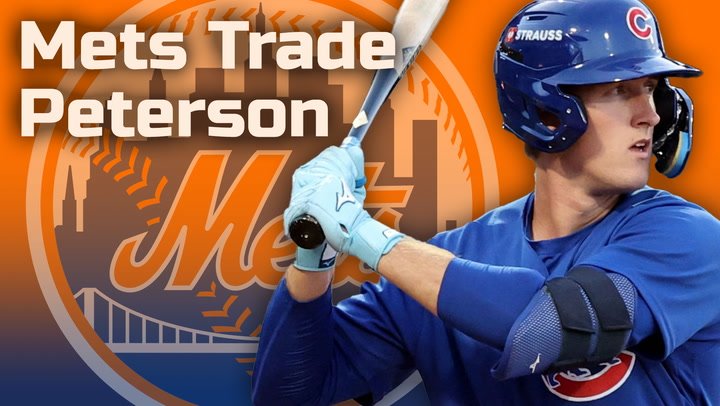 The Mets' David Peterson has been traded to the Chicago Cubs for Cole Mathis, a right-handed bat in High-A. This trade marks a push for the Cubs as they sit 7 games out of their division. Peterson provides the injury-riddled Cubs with a flexible arm that can both start and come out of the bullpen. View the full article
 -
The Brewers’ Biggest Need This Trade Deadline is Clear
DiamondCentric posted an article in Brewer Fanatic
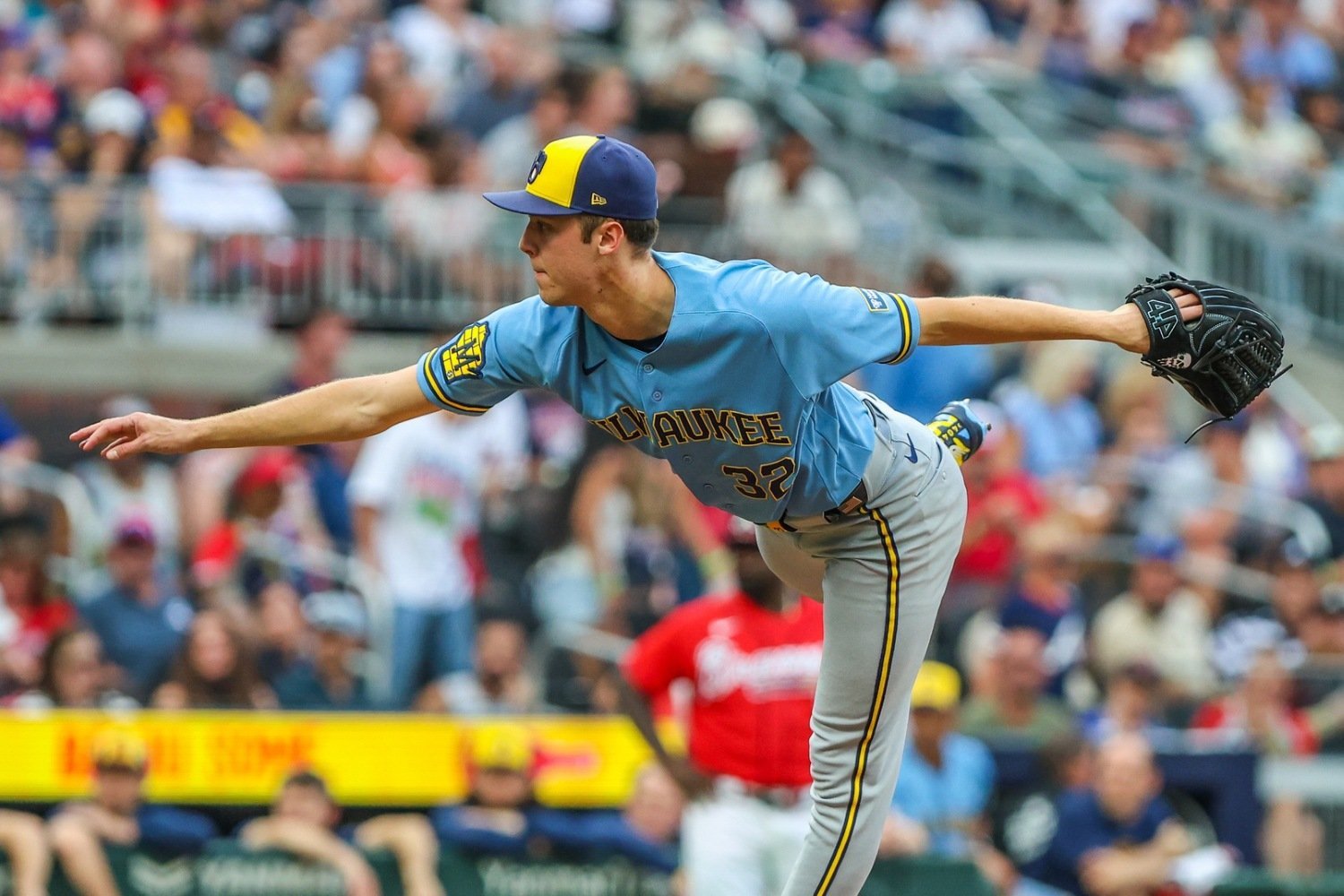 The Milwaukee Brewers have a dire need at this year's MLB trade deadline. Even though they’re dominating the National League Central and look to be well-positioned pennant contenders yet again, they have an obvious hole in their roster that must be addressed to be taken seriously. They need one more starting pitcher. While they have a couple of elite starters—one from each side—the quality of their mid-rotation depth is a looming potential issue that could come back to bite the Crew in a five- or seven-game series. Let’s start with the promising part of the rotation. Jacob Misiorowski continues to wow the baseball world every time he toes the rubber. The hard-throwing right-handed pitcher has clocked his fastball at 105 miles per hour, with above-average extension. He's building a resume that may lead to a National League Cy Young Award at season’s end. Logging an 8-3 record with a minuscule 1.45 ERA and 138 strikeouts over just 93 innings pitched, the former second-round draft selection is truly in a league of his own. Kyle Harrison has been spectacular in his own right, and he’d be an ace on the majority of MLB teams right now. The former Boston Red Sox southpaw is currently sporting an 8-1 record with a remarkable 2.50 ERA, a mark that would be substantially lower if not for an odd start in a hitter-friendly environment in Las Vegas. Harrison’s four-pitch arsenal has proved to be effective, with his fastball (.221) and slurve (.141) both garnering very low opponent batting averages. While these two starters have been in the top tier league-wide, though, a playoff series typically demands four quality arms. They might have that many; they might not. Brandon Sproat was a pivotal piece in the return package the Brewers got in exchange for Freddy Peralta. While he has had his fair share of impressive starts (including a six-inning sscoreless outing and 10 strikeouts on June 23), the struggles have been there. Sproat possesses a six-pitch mix, but his only above-average Baseball Savant metrics are his strikeout rate (24.7%) and average fastball velocity (96.4 MPH). The former Mets farmhand is 2-4 with a 5.43 earned run average over 13 starts. While he has the arsenal to be part of this pitching staff for years to come, there’s plenty of work to be done before he can be trusted in a playoff-like atmosphere. Logan Henderson had a great start to this season, becoming the first pitcher in the Stathead database (dating back to 1898) to allow two runs or fewer in each of his first 10 career starts. While his game is more based on an expanded pitch arsenal than sheer velocity, he’s on the 15-day IL with a lower back strain. If he can come back healthy, he could be a solid third starter in a playoff series—but that's a huge 'if' right now. Speaking of huge 'if's, Brandon Woodruff, when healthy, is one of the best pitchers in the bigs. In his first start in just over two months, he fired six shutout innings with just one hit allowed, no walks and a season-high 10 punchouts. The problem? He was recovering from a classic case of “dead arm”, and his fastball velocity is down drastically. We've all watched him pitch brilliantly since returning last July from 21 months of rehab on his shoulder, despite that diminished velocity. We've also seen him rendered unavailable right on the cusp of the postseason over and over. While Sproat has the intangibles, Henderson had a red-hot start and Woodruff is reliable as they come when healthy, the Brewers do not have four reliable postseason starters at the moment. They're remarkably deep, with the likes of Shane Drohan, Robert Gasser and Chad Patrick also showing flashes of being above-average starters, but those guys come with at least as many questions as Sproat, Henderson and Woodruff do. The drop-off behind Misiorowski and Harrison is drastic. If the Brewers get a chance to acquire a third surefire stud to round out the playoff rotation, they should strongly consider it. View the full article
 -
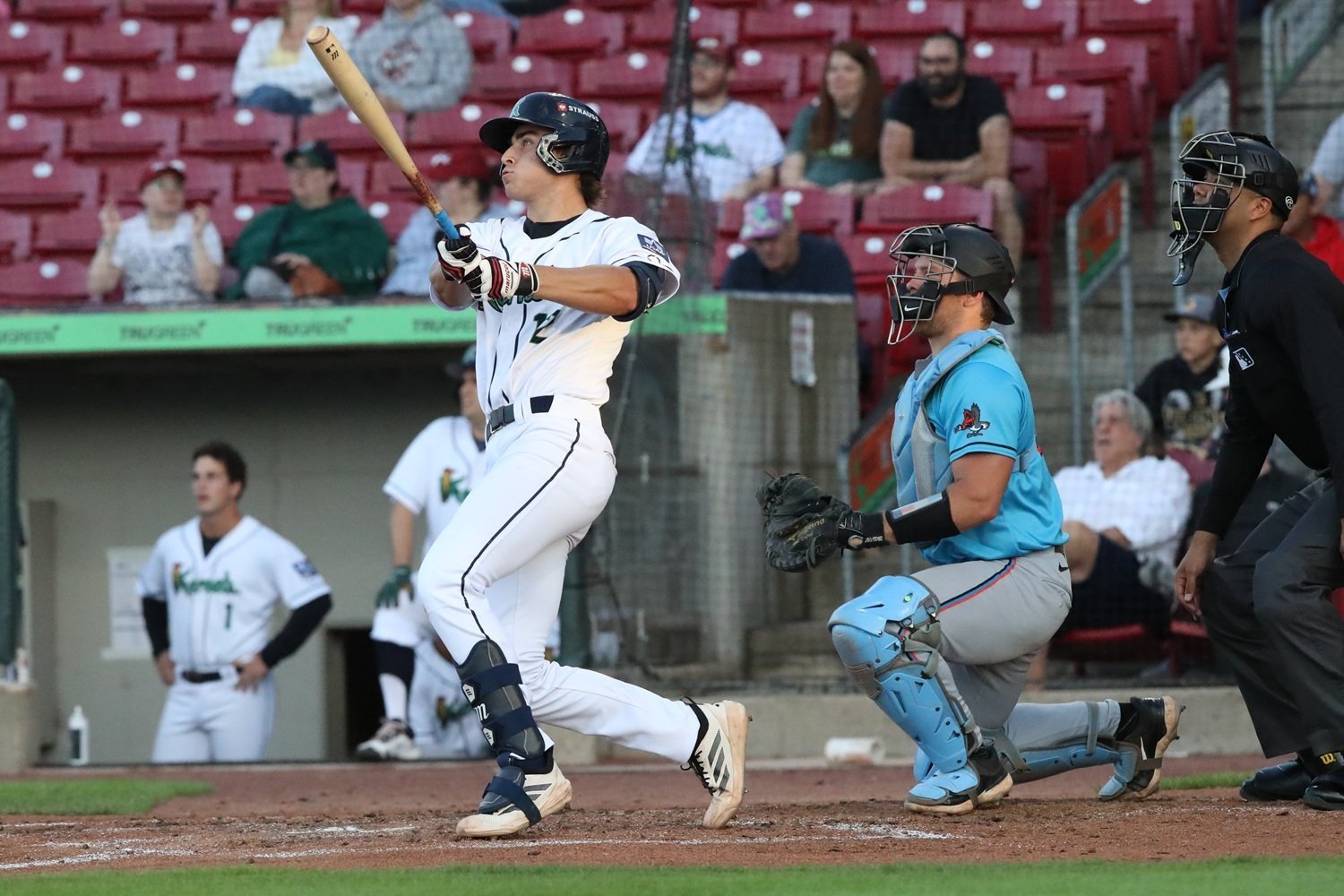 The Minnesota Twins will be on the clock with the third overall selection in next month's MLB Draft. If recent history is any indication, there's reason to believe another top-tier talent could soon be joining the organization's growing collection of premium prospects. Recent first-round picks have seen varying levels of success during their professional careers. Brooks Lee, the eighth overall pick in 2022, endured his share of growing pains early in his major-league career but has emerged as an everyday contributor in Minnesota. Walker Jenkins, selected fifth overall in 2023, remains the organization's top prospect and one of the most highly regarded young players in baseball, despite battling injuries. Kaelen Culpepper, the club's first-round selection in 2024, quickly established himself as one of the best prospects in the system and was named the Twins' Minor League Player of the Year. Now, Marek Houston appears ready to continue that trend. The Twins promoted Houston to Double-A Wichita this week after an outstanding first half with High-A Cedar Rapids. The move represents another significant milestone for the 2025 first-round pick and reinforces the organization's recent success in identifying impact talent at the top of the draft. Viewed by many evaluators as the best defensive shortstop in the 2025 draft class, Houston entered professional baseball with a reputation built largely around his glove. The former Wake Forest standout has certainly validated that assessment. What's been even more encouraging has been his offensive development. After struggling through a brief 12-game introduction to High-A following last year's draft, Houston returned to Cedar Rapids this season looking like a completely different player. Before his promotion, he slashed .325/.406/.461 with five home runs, 23 RBIs, and 24 stolen bases in 26 attempts across 268 plate appearances. His approach at the plate has been particularly impressive. Houston consistently controls the strike zone, makes frequent contact, and creates value on the bases. Those traits forced the Twins' hand and earned Houston a promotion to Wichita just one year after being drafted. The next challenge will be considerably tougher. Double-A is often viewed as the biggest developmental jump in minor-league baseball, and it wouldn't be surprising if Houston experiences an adjustment period similar to the one he encountered during his pro debut last summer. Still, his performance to this point has been difficult to ignore. The Kaelen Culpepper Comparison What makes Houston's start even more intriguing is how closely it mirrors what Culpepper accomplished at the same level. Before his promotion last summer, Culpepper posted a .274/.368/.440 slash line in 318 plate appearances for Cedar Rapids. Houston's overall Cedar Rapids numbers are remarkably similar: Kaelen Culpepper (High-A Cedar Rapids) .274/.368/.440 16.7% strikeout rate 10.7% walk rate 147 wRC+ 17-for-19 on stolen-base attempts Marek Houston (High-A Cedar Rapids) .296/.377/.423 17.9% strikeout rate 11.0% walk rate 126 wRC+ 25-for-29 on stolen-base attempts Both players demonstrated advanced strike-zone awareness, strong contact skills, and enough athleticism to impact games on the bases. Culpepper showed a little more power, while Houston offered slightly better speed production and defensive value at shortstop. Considering Culpepper entered professional baseball with more offensive upside, Houston producing nearly identical numbers at the same level is a significant accomplishment. A Future Infield Taking Shape The Twins have already seen Culpepper establish himself as one of the top prospects in baseball. If Houston continues along a similar trajectory, Minnesota could soon face an enviable problem. Houston's defensive reputation gives him a realistic path to becoming the organization's everyday shortstop. If his bat remains productive against upper-level pitching, the Twins may ultimately decide his glove is too valuable to move elsewhere. That possibility could create a domino effect throughout the infield. A future alignment featuring Royce Lewis at first base, Culpepper at third base, Houston at shortstop, and Brooks Lee at second base is no longer difficult to envision. Luke Keaschall's long-term defensive home remains a question, but Minnesota suddenly has an abundance of talented young infielders capable of forcing their way into the conversation. Another First-Round Success Story? Houston's promotion arrives at an important time for the organization. Following last year's trade deadline sell-off, the Twins have leaned heavily on player development to replenish the system. Jenkins, Culpepper, Houston, and fellow 2025 first-rounder Riley Quick have quickly become central pieces of that effort. Quick has already reached High-A and continues to develop as a starting pitching prospect. Jenkins and Culpepper are returning from injury and remain on the doorstep of the major leagues. Now, Houston has reached Double-A less than a year after being drafted. The Twins still have plenty of work to do before they can declare their recent drafting success a complete turnaround. Prospects must eventually produce in the majors for draft classes to be remembered favorably. But as Minnesota prepares to make another top-three selection next month, Houston serves as the latest reminder that the organization's recent first-round track record looks dramatically different from what it did just a few years ago. How will Minnesota’s infield look in two seasons? Can Houston continue to follow in Culpepper’s footsteps? Leave a comment and start the discussion. View the full article
 -
An Early Look At The Blue Jays' Trade Deadline Needs
DiamondCentric posted an article in Jays Centre
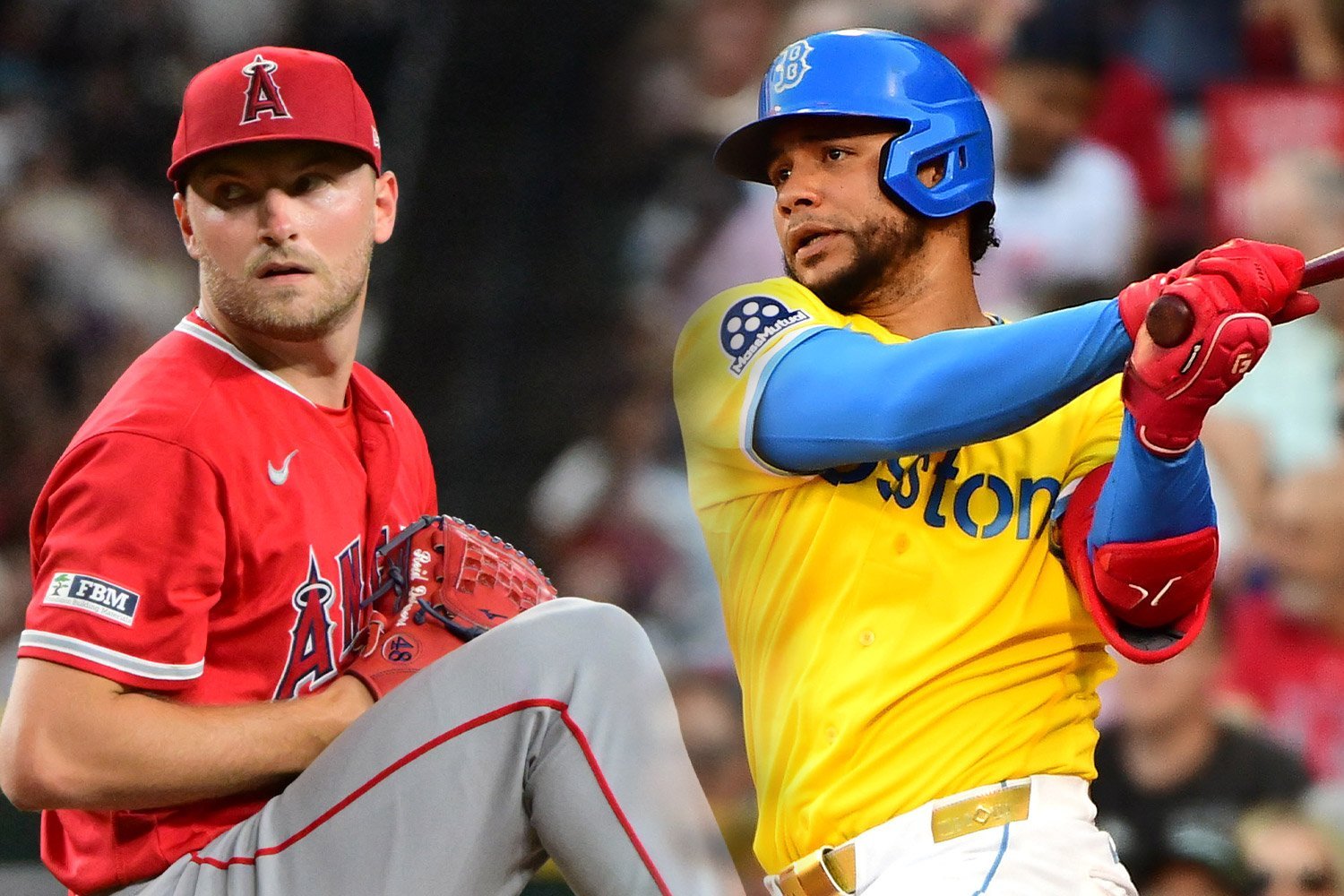 All stats are prior to the June 24 game. With the trade deadline a month away, the Toronto Blue Jays find themselves 8.5 games behind the New York Yankees in the AL East, but have a game lead for the last Wild Card spot. The Blue Jays' unexpectedly slow start isn’t only performance-based; injuries in the first half of the season have also decimated them. The starting rotation has seen José Berríos and Bowden Francis undergo Tommy John surgery, Cody Ponce tear his ACL in his first start, and Max Scherzer has already made two injury list stints this season, but has been abysmal in his six starts. Luckily, Shane Bieber made his season debut on June 23; however, the depth is depleted. That makes starting pitching a must-need to target at the trade deadline. Ross Atkins has already stated in a recent media interview that “he likes the current group, but has interest in more because you can never have enough starters." The good thing about how the standings look now is that it may be a seller's market. Many division leaders already have a sizeable lead, and though the Wild Card looks congested, teams likely won’t want to be buyers chasing a Wild Card spot with so many teams vying. The Blue Jays don’t need a Tarik Skubal-type front-end starter; they need a back-end inning eater that can be productive. They’ve shown in the past a preference for targeting controllable pitchers, which makes the Los Angeles Angels’ Reid Detmers a name to watch. He turns 27 a few weeks before the trade deadline and is under team control through the 2028 season. Another trade-deadline need is a power bat. Anthony Santander needed left shoulder labral surgery late in the offseason, which will keep him out until possibly late September or October. Though he struggled, hitting only six home runs over an injury-plagued 2025 season, the Blue Jays were hoping he’d be healthy and would show a glimpse of his 2024 form. That season, Santander hit 44 home runs with the Baltimore Orioles. Not having Santander isn’t the only issue for the Blue Jays, who rank 22nd in home runs. Vladimir Guerrero Jr. is going through a massive power drought with only four long balls through 318 plate appearances. His barrel percentage (6.9 percent) is a career low, and his 42.9 percent hard-hit rate is his lowest since Vladdy’s 2019 rookie season. Kazuma Okamoto is the only Blue Jay to have more than nine homers. His 17 is nine more than the second-best total from George Springer. There are five players with seven home runs, but everyone else has fewer than five. Addressing the power deficiency would greatly help a team that also ranks 22nd in runs per game (4.14). ESPN insider Jeff Passan has linked Toronto to a few different sluggers, who would add an instant boost. He has predicted a connection to CJ Abrams, who is under team control through the 2028 season; Willson Contreras, who is signed through the 2027 season with a club option for 2028; and Christian Walker, who is under contract through the 2027 season. Abrams and Contreras would be the ideal power threats to target because their team control exceeds 2027 when there’s a threat of a lockout, depending on how the Collective Bargaining Agreement is handled during the offseason. One thing is for sure: the Blue Jays need improvements at the trade deadline if they want to make another deep postseason run. View the full article
 -
The 2026 Cubs, Baseball Narratives, and Story Archetypes
DiamondCentric posted an article in North Side Baseball
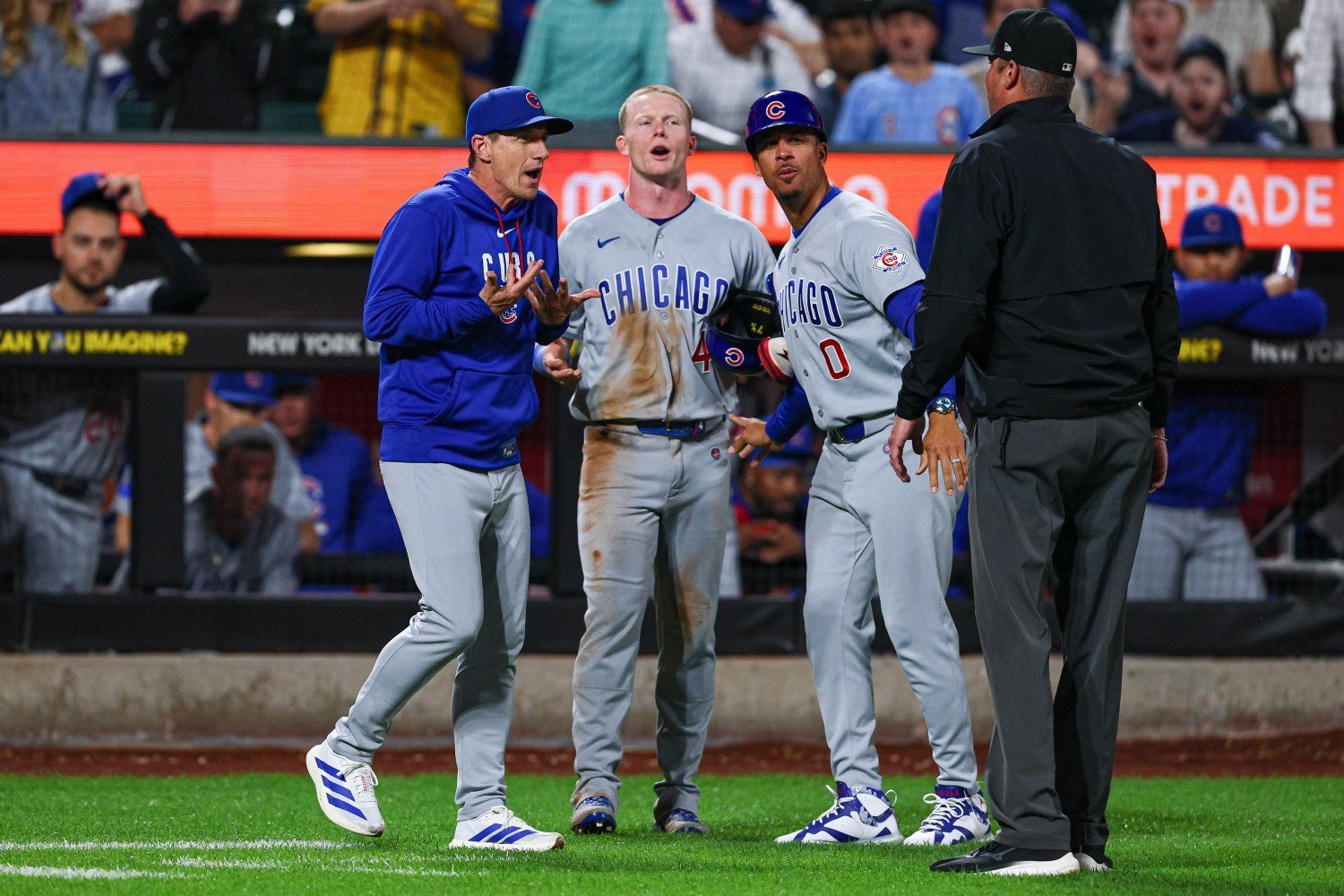 I took a philosophy course in college once to fulfill a breadth requirement, and only really did AP Psychology in high school, but some things really stick with me and enrich my view of the world—even though the rest of my coursework and career was basically science and math. It does speak to how we need more arts and culture to enliven us beyond the "hard stuff", particularly when everyone craves new content (but often don't want to pay for it, ironic right?). Anyway, despite us nerds understanding that baseball is a marathon full of hills and valleys throughout the months-long grind, every win and loss brings with it a narrative shift, overanalysis of someone's swing or pitch mix, and thoughts on what's going on in our sports heroes' minds as they try to find some "consistency" in their baseball work (whatever that means, with the inherent chaos that is a baseball put in play). Aside from the philosophy of baseball that I tried to address in the previous entry, which is oddly prescient knowing that a few wins have been pissed away by poor bullpen performance exacerbated by the myriad injuries the Cubs have to navigate, I was thinking about a Maslow's hierarchy piece but for Cubs (though that may be more appropriate for the upcoming offseason, if we don't have a protracted lockout, or perhaps for the trade deadline). However, something more fitting for the day-to-day grind of baseball is the story archetypes, or basic plots, that sports writers probably draw from unknowingly as they pen their postgame pieces or character sketches. I'll do it in a slightly different order than the Wiki article, but I think the basic plots really encapsulate all the emotions we've felt in what's only been half of the season so far. The Quest Some of us may rationalize our baseball fandom as just wanting a competitive team year in and year out, but the ultimate goal isn't just to make the playoffs, but to win the whole thing. If the Cubs make it to October (and right now there are so many games remaining and the National League and MLB as a whole have so many middling teams that we can't rule it out) and pull off what right now may seem like an improbable victory (and really, even the teams with the best World Series odds are in the realm of "improbable"), there will be multiple books written about the journey of this team to the promised land. This is more of a whole-season narrative, but every day of the 162-game grind is a part of the main quest. There will be side quests with the All-Star Game and Happ's podcast and the Lovable Reunion and all that, but the primary focus is to make it to October and grab the prize. Rags to Riches Far be it for me to say that a young superstar-in-the-making who got a pretty sizable draft bonus can be considered "rags," but we've already seen this with both Nico Hoerner and Pete Crow-Armstrong signing surprising but sensible extensions. Perhaps later on, we might see others showing out in the minors and proving their mettle in the Show to secure that big payday, but if they do get into October, those postseason shares could add up, too! Ooh, here's a true rags-to-riches: Pedro Ramirez only signed for $75,000 over five years ago. Now, he looks like a big-leaguer with staying power, making $75,000 every fortnight or so. Voyage and Return This more applies to key prospects (or at least we hope so) like Moisés Ballesteros, who was recently optioned to Iowa to get more playing time and reset his bat. While Ballesteros doesn't have to fend off Sirens and fight a Cyclops (at least I don't think Iowa is that bad), the journey should be helpful for him to get the bat right again, plus get more time behind the dish, where he's shown enough proficiency for the Cubs to want him to continue as a catcher. Hopefully, it's a situation similar to when a struggling Happ was sent down and then came back to become the infuriatingly boring but consistent player he is for the Cubs now—though we also hope Ballesteros shows some extra oomph from that quick bat! Comedy/Tragedy Famously the two sides of the universal symbol of drama and theater, the struggles the Cubs have experienced are a combination of both comedy and tragedy. It's been simultaneously hilarious and painful to wonder which Cub will pop up on the infield or strike out or line into a double play because the BABIP luck dragon hates their guts when the bases are loaded, but we know that simple regression will let them finally cash in all those baserunners they're racking up. And just when the offense looks like it's getting on track again, the bullpen finally shows cracks. It's confirmation bias and self-fulfilling prophecy and all the jargon rolled into one for this conundrum of a Cubs team, but still we soldier on to see what happens for the remainder of this season's story. Rebirth As Matthew Boyd is slated to come off the injured list Thursday and Justin Steele eventually (hopefully) makes his way back to contributing to the club, the name of the game is survival until key pieces return and the pitching staff is, in a sense, reborn to what we hoped their potential would be before the season began and the injury demon destroyed all the depth. Then we could get better performances, as we also hoped, with Alex Bregman, awakening bats such as Seiya Suzuki, some batted-ball luck for Hoerner, and even average production from Dansby Swanson, among others, to get the offense humming again. Like Superman coming back from the dead or Batman recovering to defeat Bane or the Avengers finally defeating Thanos, this could be a fun narrative should the Cubs find enough strong performances (and some luck) to come all the way back, which leads us to... Overcoming the Monster| ...why are the Milwaukee Brewers always so good at racking up wins? It defies logic, and yet there they are again, with a comfortable lead in the division and finding ways to snatch victories from the jaws of defeat over and over again. The Cubs have a chance to put a dent in their devil magic armor to end the month of June, and a huge part of completing their quest may come down to defeating said Brewers in October, something they couldn't quite pull off last year. Barring the heat death of the universe or MLB and ownership killing baseball as we know it, at least this story will have a sequel, but I sure would love a happy ending to this chapter before the cliffhanger. View the full article
 -
Mets Minor League Report: Brooklyn Cruises Behind Hurtado
DiamondCentric posted an article in Grand Central Mets
 Syracuse rallied for five runs to edge Lehigh Valley, 5-4, with Ronny Mauricio and Yonny Hernández each driving in runs, and Felipe De La Cruz tossing 2 1/3 scoreless. Daviel Hurtado dealt six innings of one-run ball with six strikeouts as Brooklyn rolled, 12-2, behind home runs from John Bay, JT Benson, and Trace Willhoite. Jonathan Santucci struck out five for Binghamton in an 8-4 loss, and St. Lucie fell, 12-8, despite Chase Meggers reaching base five times. Mets Transactions New York Mets activated SS Francisco Lindor from the 10-day injured list. New York Mets activated SS Ronny Mauricio from the 10-day injured list. New York Mets designated SS Zack Short for assignment. New York Mets optioned SS Ronny Mauricio to Syracuse Mets. New York Mets recalled RHP Jonathan Pintaro from Syracuse Mets. Syracuse Storms Back Late To Stun Lehigh Valley Syracuse scored all five of its runs from the seventh inning on to overcome an early deficit and beat the Lehigh Valley IronPigs, 5-4. Yonny Hernández led the offense, going 3-for-4 with a double, a walk, a run, and an RBI. Ronny Mauricio added two hits and two RBIs, and Nick Morabito reached base twice with two stolen bases. Starter Jack Weisenburger struggled, allowing three runs on one hit with four walks and one strikeout across 1 2/3 innings. The bullpen held firm behind him, with Felipe De La Cruz throwing the 2 1/3 scoreless innings, allowing one hit with three strikeouts. The IronPigs built a 3-0 lead in the second inning. Syracuse answered in the eighth, when Grae Kessinger grounded out to score Cristian Pache, and Ronny Mauricio followed with a two-run single that brought home Yonny Hernández and Jihwan Bae for a 4-3 lead. In the ninth, Yonny Hernández singled home Nick Morabito to push the margin to 5-3. Syracuse left 11 runners on base but held on after Lehigh Valley scored once in the bottom of the ninth. Player AB R H RBI BB K Ronny Mauricio 5 0 2 2 0 0 Tyrone Taylor 4 0 1 1 0 1 Nick Morabito 5 1 2 0 0 2 Ryan Clifford 5 0 0 0 0 2 Cristian Pache 5 1 1 0 0 1 Yonny Hernández 4 1 3 1 1 0 Ben Rortvedt 3 0 0 0 1 1 Jihwan Bae 1 1 0 0 0 0 Grae Kessinger 3 0 0 1 1 1 Hayden Senger 3 1 0 0 1 1 Player IP H R ER BB K HR Jack Weisenburger 1 2/3 1 3 3 4 1 0 Felipe De La Cruz 2 1/3 1 0 0 0 3 0 Adbert Alzolay 1 0 0 0 0 0 0 Ofreidy Gómez 2 1 0 0 1 3 0 Ben Simon 2 1 1 1 0 1 1 Binghamton Bats Quiet As Erie Pulls Away Late Binghamton dropped an 8-4 decision to the Erie SeaWolves, falling behind for good late in the game. JT Schwartz led the offense with two hits and two RBIs, while Matt Rudick homered and drove in a run. Nick Lorusso added a double and a walk, and Wyatt Young reached base twice with two stolen bases. Starter Jonathan Santucci was charged with four runs, three earned, on four hits across 3 1/3 innings, walking three and striking out five. Gabriel Rodriguez followed with 1 1/3 scoreless innings, walking three and striking out two. The teams traded early runs before Erie pulled away. Binghamton drew within 4-2 in the third on Schwartz's RBI single. The Rumble Ponies tied the game in the sixth, when Rudick led off with a home run, and Nick Roselli grounded out to score Wyatt Young, making it 4-4. Erie answered immediately in the seventh, scoring twice, and added two more in the eighth to take an 8-4 lead. Binghamton left seven runners on base. Player AB R H RBI BB K Chris Suero 2 0 0 0 0 2 Vincent Perozo 3 0 0 0 0 1 Jose Ramos 4 1 1 0 1 1 Nick Lorusso 3 1 1 0 1 0 JT Schwartz 4 0 2 2 0 1 Matt Rudick 4 1 1 1 0 0 Wyatt Young 3 1 1 0 1 0 Jaylen Palmer 3 0 0 0 1 0 Nick Lucky 2 0 0 0 2 1 Nick Roselli 4 0 0 1 0 0 Player IP H R ER BB K HR Jonathan Santucci 3 1/3 4 4 3 3 5 0 Gabriel Rodriguez 1 1/3 0 0 0 3 2 0 Garrett Stratton 2 1/3 3 2 2 0 0 1 Carlos Guzman 1 1 2 2 3 1 0 Brooklyn Erupts With 12 Runs To Bury Jersey Shore Brooklyn pounded out 17 hits and three home runs in a 12-2 rout of the Jersey Shore BlueClaws. Yonatan Henriquez went 4-for-5 with two doubles, two runs, and an RBI, while John Bay homered, doubled, and scored three times. JT Benson and Corey Collins each drove in three runs, with Benson and Trace Willhoite also going deep. Daviel Hurtado was dominant, allowing one run on two hits over six innings with one walk and six strikeouts. Joe Jacques opened with a scoreless inning, and Juan Arnaud added a scoreless frame with two strikeouts. The Cyclones broke the game open in the fourth inning. Corey Collins singled home two runs, Trace Willhoite followed with a three-run homer, and Yonatan Henriquez doubled in another to build a 6-1 lead. Brooklyn added three more in the sixth on John Bay's two-run homer and a Collins RBI single, then three more in the seventh on Benson's three-run homer. Brooklyn left nine runners on base. Player AB R H RBI BB K Mitch Voit 4 0 2 0 1 2 Yonatan Henriquez 5 2 4 1 0 1 John Bay 3 3 2 2 1 0 JT Benson 5 3 2 3 0 1 Ronald Hernandez 4 1 2 0 1 0 Corey Collins 5 1 2 3 0 0 Colin Houck 5 0 1 0 0 3 Trace Willhoite 4 1 1 3 1 3 Yohairo Cuevas 4 1 1 0 1 3 Player IP H R ER BB K HR Joe Jacques 1 0 0 0 1 2 0 Daviel Hurtado 6 2 1 1 1 6 0 Josh Blum 2/3 0 1 1 5 0 0 Gregori Louis 1/3 0 0 0 0 0 0 Juan Arnaud 1 1 0 0 1 2 0 St. Lucie Falls Short In Slugfest At Fort Myers St. Lucie battled through a back-and-forth game but fell to the Fort Myers Mighty Mussels, 12-8. Chase Meggers went 1-for-2 with a home run, two walks, three runs, and an RBI. Simon Juan, Jeremy Rodriguez, and Jackson Hauge each collected two hits and two RBIs. Starter Cam Tilly allowed two runs on four hits over three innings, walking two and striking out three. The relief corps could not hold the lead, as Joe Charles was charged with four runs on two hits while recording just one out, and Luis Alvarez gave up two runs over 1 2/3 innings despite five strikeouts. St. Lucie surged ahead in the fourth, scoring four times on Simon Juan's two-run double and Jeremy Rodriguez's two-run single for a 5-2 lead. Fort Myers tied it in the fifth, and the teams remained close into the eighth, when Jackson Hauge's two-run single gave St. Lucie an 8-7 edge. Fort Myers answered with five runs in the bottom of the eighth to pull away. St. Lucie left five runners on base. Player AB R H RBI BB K Elian Peña 5 0 1 1 0 2 Trey Snyder 5 0 0 0 0 1 Antonio Jimenez 3 0 1 0 2 2 Julio Zayas 4 1 1 0 1 1 Branny De Oleo 3 1 0 0 1 0 Chase Meggers 2 3 1 1 2 1 Simon Juan 4 2 2 2 0 0 Jeremy Rodriguez 4 1 2 2 0 2 Jackson Hauge 3 0 2 2 1 0 Player IP H R ER BB K HR Cam Tilly 3 4 2 2 2 3 0 Elwis Mijares 2 4 3 3 3 1 0 Luis Alvarez 1 2/3 3 2 2 1 5 0 Joe Charles 1/3 2 4 4 3 1 1 Joe Scarborough 1 3 1 1 0 0 0 Top-20 Prospect Performance Carson Benge: DNP A.J. Ewing: DNP Jonah Tong: DNP Elian Pena: 1-for-5, RBI, SB, 2 K Jack Wenninger: DNP Ryan Clifford: 0-for-5, 2 K Jacob Reimer: DNP Nick Morabito: 2-for-5, 2 SB, 2 K Mitch Voit: 2-for-4, BB, 2 K Jonathan Santucci: 3 1/3 IP, 4 H, 4 R, 3 ER, 3 BB, 5 K Chris Suero: 0-for-2, 2 K Zach Thornton: DNP Wandy Asigen: DNP Will Watson: DNP Eli Serrano III: DNP Randy Guzman: DNP Ryan Lambert: DNP Dylan Ross: DNP Antonio Jimenez: 1-for-3, 2B, 2 BB, SB, 2 K R.J. Gordon: DNP View the full article
