


DiamondCentric
-
Posts
2,631 -
Joined
-
Last visited
Never
Content Type
Profiles
Forums
Events
News
Tutorials & Help
Major League Baseball Videos
Guides & Resources
Store
Downloads
Gallery
Everything posted by DiamondCentric
-

 Fish On First staffers react to the latest Miami Marlins series and prepare you for what lies ahead. Sunday's show was hosted by Ely Sussman and featured panelist Kevin Barral. The following topics were covered: Taking care of business in sweeping the San Francisco Giants The end of Christopher Morel's Marlins tenure How Griffin Conine fits with the current roster Liam Hicks (low back strain) lands on injured list Skip Schumaker and Jake Burger making first visits to loanDepot park since leaving Marlins Scotland's "Tartan Army" buying up all of the tickets to Monday's game Previewing and predicting the next series against the Texas Rangers You can find Fish Unfiltered and Fish On First LIVE on the Fish On First YouTube channel, Apple Podcasts, Spotify or wherever else you get your pods. Our next FOF LIVE episode will be Wednesday at approximately 7:00 p.m. ET following the Marlins-Rangers series finale. View the full article
 -
Week in Review: Offense Comes Alive During .500 Week
DiamondCentric posted an article in Royals Keep
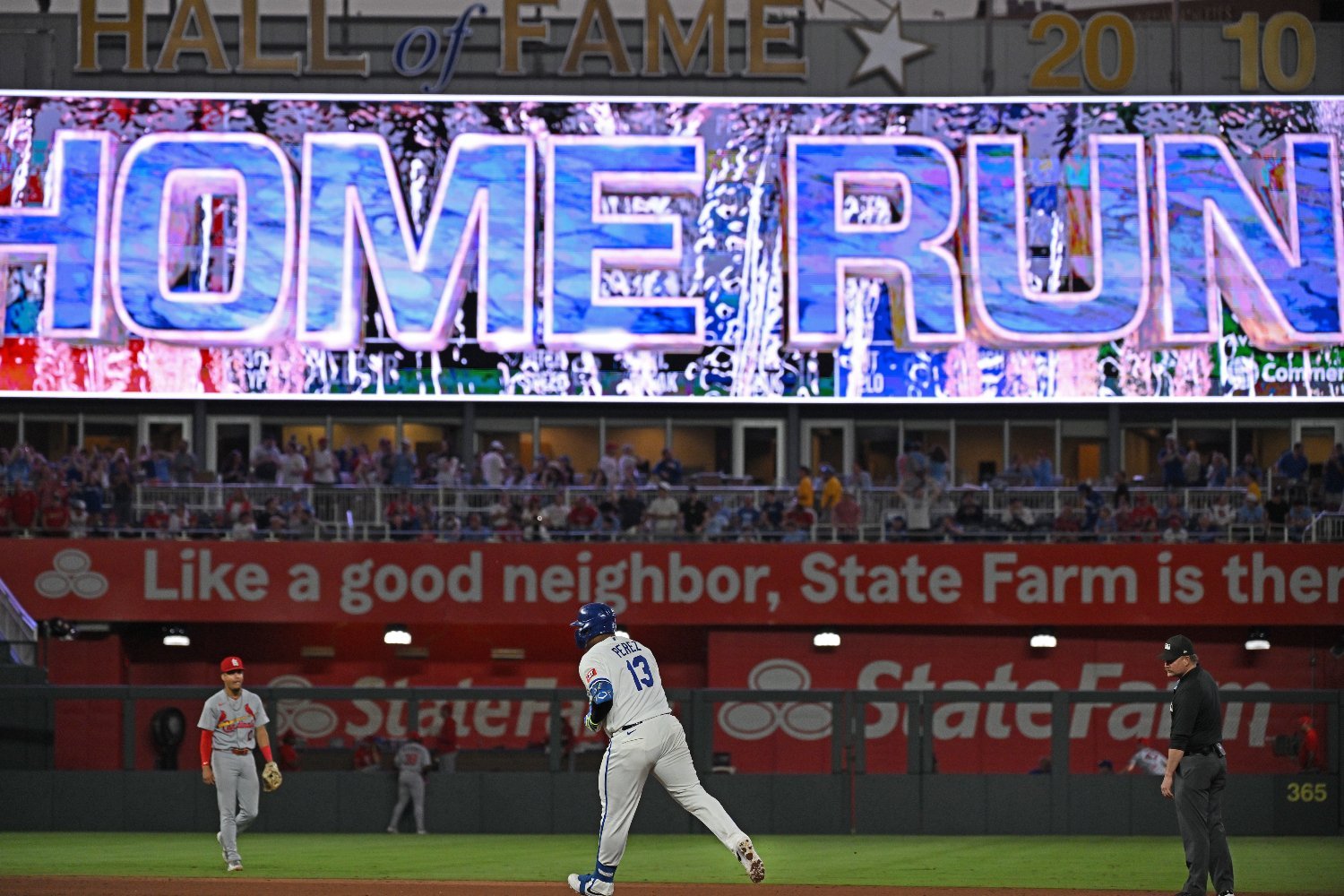 Week in a Nutshell It wasn't a great start for the Kansas City Royals last week. They lost their first two games against the Washington Nationals in D.C. However, the Royals salvaged the series against Washington with a win in the third game and went on to win two straight against their I-70 rival back at Kauffman Stadium. While they were unable to complete the sweep over the weekend, the offense came alive with 10 runs and had a chance to tie the game in the bottom of the ninth. The Royals' offense was the most potent in baseball over the past week. They tied for second in home runs and ranked first in OPS over the past seven days. Unfortunately, they ranked 28th in ERA and 27th in WHIP, which explains their .500 record in this most recent stretch of games. Record this Week: 3-3 Run Differential for the Week: +5 Record for the Year: 32-46 Run Differential for the Year: -44 Standing: 5th in the AL Central One Sentence Game Summaries Game 73: WSH 7, KC 3 Mitch Spence, predictably, is not sharp enough in the series opener against the Nationals. Game 74: WSH 6, KC 4 Former Royal Foster Griffin and Nine-hole hitter Nasim Nunez carry the day for the Nationals. Game 75: KC 6, WSH 2 Luinder Avila strikes back in the Nation's Capital. Game 76: KC 14, STL 6 Royals bombard Cardinals pitching early, and Salvador Perez becomes the new HR King of Kauffman, but Bobby Witt Jr. is injured. Game 77: KC 6, STL 5 Cardinals nearly come back in the ninth, but Alex Lange closes it out. Game 78: STL 12, KC 10 It's all about runs and home runs, baby! News and Notes The week started out with an acquisition, as the Royals acquired some much-needed pitching depth on June 15th. Kansas City traded low-level Minor League reliever Denis Samudio for Toronto's Connor Seabold, who was recently designated for assignment. Additionally, the Royals also promoted Spence to make the start on Monday against the Nationals. After Spence's start, the Royals promptly optioned him to Omaha and called up the recently acquired Seabold to add depth to the Royals bullpen. A Minor League move that got some attention was the promotion of No. 1 Royals prospect Kendry Chourio to High-A. Chourio posted a 1.88 ERA in Low-A Columbia as an 18-year-old. In his Quad Cities debut, Chourio gave up seven runs (five earned) in 4.2 IP, but he struck out 10 hitters. Those strikeouts are nice to see, even if the High-A debut was mixed. The Royals continued to add to their pitching depth this week with a couple of acquisitions of arms. On June 17th, Kansas City added former Twins pitcher Randy Dobnak, who was pitching in the Seattle Mariners organization. The Mariners received cash in exchange for the 31-year-old pitcher who is currently in Omaha (he made his Storm Chasers debut on Friday). On June 20th, the Royals signed left-handed pitcher Matt Moore to a Minor League deal. Moore was once a top prospect in the Rays system who made an All-Star team with Tampa Bay. He also found success as a reliever with the Giants and Angels. However, he hasn't pitched since 2024 due to arm injuries. Lastly, after going on the 7-Day IL for concussion protocol after getting hit in the head by a line drive, Seth Lugo made his return to the Royals rotation on Friday, April 19th. Mason Black was optioned to Omaha to make room for Lugo on the active roster. In the Royals' 6-5 win over the Cardinals, Lugo went six innings and allowed two runs (one earned) on five hits and three walks with no strikeouts. He not only produced a quality start but also earned the win. The worst Royals news of the week came on Thursday, as Witt tweaked his knee during a tough play in the hole with the bases loaded. On Friday morning, it was reported that Witt had suffered a grade 1 MCL sprain. Manager Matt Quatraro kept Witt out of the lineup on Friday and Sunday against the Cardinals, but they have not added Witt to the 10-Day IL. They want to continue to monitor him and re-evaluate before the trip to Tampa Bay, especially since he's walking around okay. The Royals play against the Rays on Monday. Thus, it's likely that they will announce a decision with Witt in the morning, whether it's an IL stint or just regular days off in between games until he's 100 percent. Highlights Like last week, the Royals' offense carried the club over this past week of games. Kansas City thrived in nearly every offensive category as a team over the past seven days. Their .956 OPS was tops in the league this week. Their .313 batting average was the second-highest mark by a team this week, and they also tied for second in home runs with 13 (only the Angels had more, and they played this week in Sacramento). The Royals also ranked third in runs scored with 43, and their 38 strikeouts were the seventh-fewest in baseball over the past seven days. There has been a much more aggressive approach in June, but it still seemed to pay off in a decent number of walks and a solid OBP this week. Their 20 walks were the 10th-most in baseball, and their .375 OBP ranked 4th as well. While the Royals certainly received a ton of grief earlier in the year for their struggles and inconsistency, they have put that behind them in June, despite the injuries. For context, over the past 30 days, the Royals rank 11th in OPS, are tied for 2nd in batting average (with Milwaukee), are tied for 9th in runs scored, rank 4th in stolen bases, and rank 8th in OBP. The only downside for this team has been home runs, as they rank 23rd in home runs over the past 30 days. However, they certainly added to that total on Sunday with four against the Cardinals. Individually, it was the Carter Jensen and Jac Caglianone Show this week. Jensen had the best week overall, with 10 hits in 20 at-bats, good for a .500 average. He also posted a 1.515 OPS, a .565 OBP, and launched two home runs, including one on Sunday against St. Louis lefty JoJo Romero. In addition to power, Jensen flashed an excellent eye at the plate this week. He had three walks to only two strikeouts. The former Park Hill High School product is looking more comfortable in the leadoff spot. He is currently slashing .279/.333/.554 with an .877 OPS in 68 at-bats at leadoff. Cags had a great week in our last Week In Review, and it was more of the same from him in the past seven days. In 25 at-bats this week, the former Florida product had eight hits, the second-most of any Royals hitters this week. He slashed .323/.393/.840 with 1.233 OPS. That included four home runs, seven runs scored, and seven RBI. On Sunday, Caglianone launched two bombs, with both home runs making their way into the fountains. His second home run of the game got the Royals within three and came off of Cardinals closer Riley O'Brien, who's been struggling over the past two months with ERA marks of 6.30 in May and 7.71 in June. With Vinnie Pasquantino on the IL and Witt and Maikel Garcia going through their own injury issues, the Royals are depending on Caglianone to keep up this production in the No. 3 spot in the batting order. He is now hitting .275 with an .829 OPS in 272 plate appearances, and he has 12 home runs to boot. Furthermore, his Statcast percentiles have been impressive this year, especially in barrels, exit velocity, and hard-hit rate. Nick Loftin also had a strong week for the Royals, primarily filling in at third base with Garcia still going through some issues with his hand. In 22 at-bats, he hit .318 with a 1.036 OPS, and he launched his second home run of the year on Sunday against the Cardinals. Lane Thomas has also been trending in the right direction offensively. He had two home runs in the Nationals series (his former team), and he hit .269 with a .922 OPS in 26 at-bats. He also had three walks to three strikeouts, continuing to show the plate approach that this Royals lineup needs. Lastly, Salvy made history this week with his 10th home run of the year on Thursday against the Cardinals. His homer made him the all-time leader in home runs at Kauffman Stadium. He was previously tied with Hall of Famer George Brett. It hasn't been the best year for Salvy, but it seems like his power is finally coming around (.462 slugging this week), which means that he could be closing in on being the Royals' all-time home run champ sooner rather than later. Lowlights Notice how I didn't mention any pitching in the highlights? That's because it was a brutal week for the Royals pitching staff as a whole. Stephen Kolek had a nightmare outing on Sunday, as he gave up nine runs on nine hits (including three home runs) and one walk in 1.2 IP. When looking at his TJ Stuff+ from his outing against the Cardinals, nothing went right for Kolek: he couldn't find the strike zone, he couldn't generate chases or whiffs, and his stuff, which rated as subpar (95 TJ Stuff+), got hit hard. On a positive note, Avila had a nightmare outing on Friday, June 12th, at home, and he ended up having a great outing against the Nationals on Wednesday (5.2 IP, 3 H, 1 R, 1 BB, 5 K). Let's hope that this was just an example of a bad outing on a hitter-friendly day (May for St. Louis only lasted two innings as well and allowed six runs). Matt Strahm's freefall continued this week. In three outings and 2 IP, he allowed four runs on five hits and two walks. While he didn't give up any home runs, he didn't generate any strikeouts, and his TJ Stuff+, chase, and whiff rates this week looked pretty paltry, according to TJ Stuff+ data. Strahm didn't give up a run on Sunday, but he didn't look too crisp either. He allowed one hit and one run and had runners in scoring position. While he got out of the jam, his command struggles continued to varying degrees on Sunday (he had two wild pitches). Daniel Lynch IV also had a tough week on the mound for the Royals. In two outings, he gave up three runs on two hits (one home run) and two walks. He had only one strikeout, an ERA of13.50, and his WHIP was 2.00. The TJ Stuff+ wasn't too out of character for him this week, but he struggled in all the major categories, including zone rate, chase rate, whiff rate, and xwOBACON. Lynch remains one of the Royals' best trade chips. That said, he's seen his ERA go from 0.87 in April to 3.00 in May to 4.15 in June. He's not been trending in the right direction, and he's showing that he may not be able to handle those "closer" opportunities either, as Quatraro has preferred Lange in ninth-inning spots. Looking Ahead The Royals hit the road again for seven games in seven days, a tough stretch that will test their pitching depth (which wasn't helped today by the Royals only getting 1.2 innings from Kolek). Kansas City first visits the Tampa Bay Rays, who are second in the AL East with a record of 43-31. The Ratys rank last in the league in home runs, but they rank third in batting average and fourth in OBP. Despite high totals, runs have been inconsistent. They rank 18th in runs scored. Nonetheless, they have some talented hitters in the lineup, such as Junior Caminero and Yandy Diaz. The Rays' pitching staff is solid, and the Royals will face Drew Rasmussen and Shane McClanahan to begin the series. They don't strike out a ton of batters (they rank 20th in K%), but they don't walk batters (they rank 4th in BB%), and they take advantage of their stellar defense. The Rays' .273 BABIP is fourth-lowest in the league. An Achilles' heel for this pitching staff is its propensity to allow the long ball. They are allowing a 1.21 HR/9, which ranks 20th. Hence, if the Royals can continue to hit the ball hard as they did against St. Louis, they could put pressure on this Tampa Bay pitching staff. After a four-game series with the Rays, the Royals travel to the South Side for a three-game series against the White Sox. Chicago is having a breakout season. They are 39-37, good for second in the AL Central. They don't hit for a high average (23rd), but they draw walks (13th in OBP) and hit bombs. They rank second in the league in home runs, and they have two players with 20 home runs this year already (including one on the IL). That said, the White Sox pitching staff isn't much better than the Royals'. They rank 20th in ERA and 21st in FIP. Furthermore, their 4.47 FIP is only four points better than the Royals' FIP. Thus, it could be a case of which pitching staff breaks first this weekend at Rate Field. While the Royals won two of three this past weekend, the White Sox were swept by the Tigers in Detroit, who are 33-44 and second-to-last in the AL Central. Thus, the White Sox are trending in the wrong direction after building so much momentum earlier in June. That gives an opportunity for the Royals to surprise in Chicago, especially if the White Sox can't make up any ground in a three-game series with the Cleveland Guardians from June 22nd to the 24th at the Rate. View the full article
 -
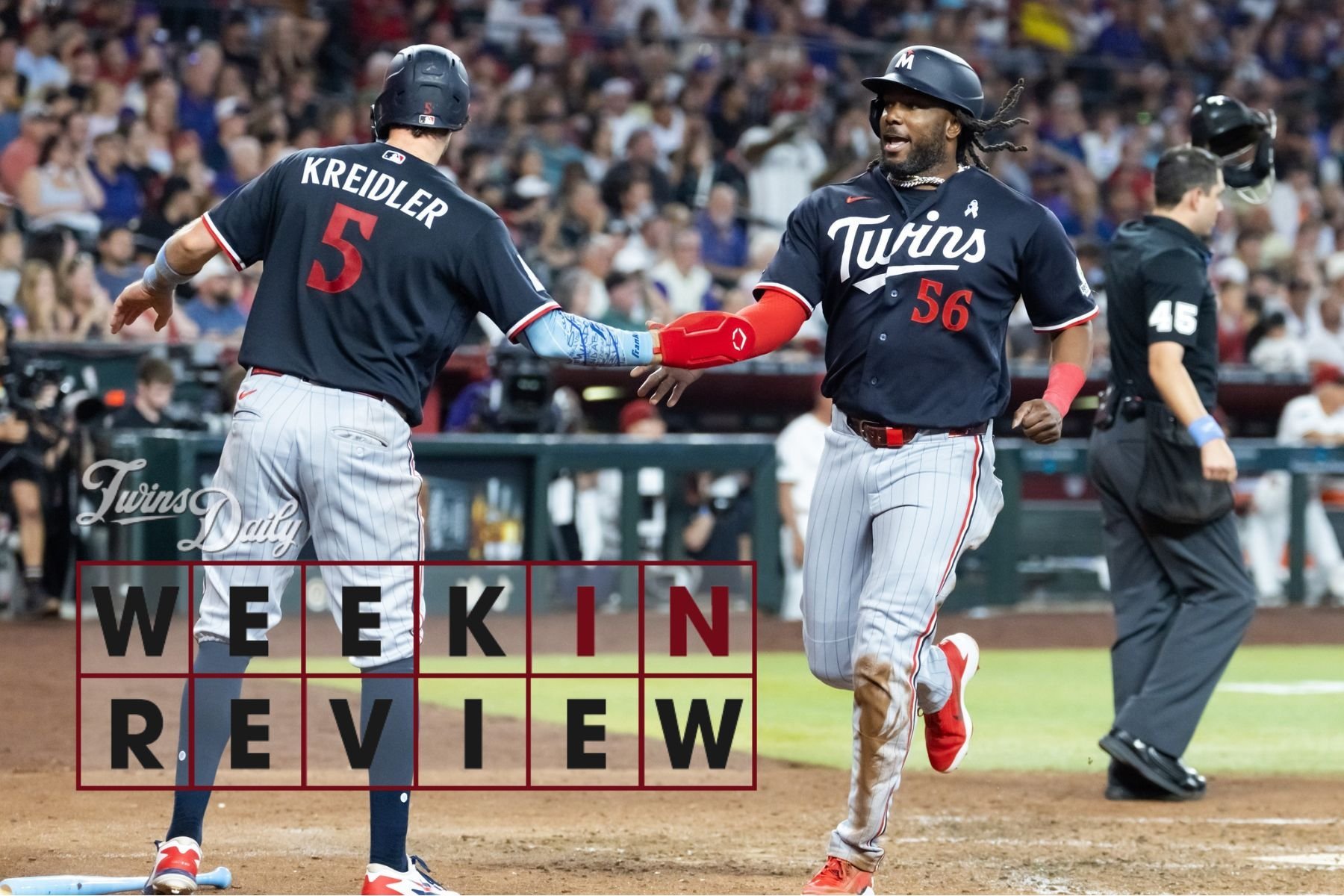 The Weekly Nutshell: The Twins have battled their way back to relevance. Twelve days ago they were 30-38, seemingly slipping into also-ran territory, but they've since won eight of 11 to charge back into the wild-card picture and even the AL Central contention mix. The past week saw Minnesota take five of six behind dominant offensive showings in Texas and Arizona, moving within a few games of first place while complicating their status six weeks ahead of the trade deadline. Weekly Snapshot: Mon, 6/15 through Sun, 6/21 *** Record Last Week: 5-1 (Overall: 38-41) Run Differential Last Week: +24 (Overall: -18) Standing: 3rd Place in AL Central (3.5 GB) Latest Game Results Game 74 | MIN 4, TEX 2: Pitchers Pull Through in Bullpen Game, Buxton and Bell Homer Bell: 2-4, HR, 3 RBI Game 75 | MIN 12, TEX 2: Twins Notch Season-High 17 Hits in Front-to-Back Blowout Clemens: 2-4, HR, 3 RBI Game 76 | MIN 9, TEX 3: Offense Keeps Adding to Early Lead, Securing 4th Straight Win Larnach: 3-5, HR, 3 RBI Game 77 | ARI 9, MIN 5: Sloppy Play in the Middle Innings Leads to Streak-Snapping Loss Adams: 1.1 IP, 3 ER, 4 H, 1 BB, 4 K Game 78 | MIN 16, ARI 8: Twins Separate with 10-Run 4th Inning in Another Lopsided Rout Lee: 4-6, 3B, 2 RBI Game 79 | MIN 4, ARI 2: Late Offensive Surge Turns the Tides and Locks Up Series Victory Jackson: 2-3, RBI NEWS & NOTES With a pair of successful rehab outings in the books, Mick Abel appeared on track to return to the Twins rotation. He was lined up to make Sunday's start in Arizona. Then ... the dreaded setback. Abel experienced renewed elbow soreness following a Friday bullpen session, and now will go for an MRI on Monday when the Twins are back in town. A brutal turn of events with ominous implications. The pitching staff did however receive a different boost on Sunday, with Kendry Rojas being activated from the injured list. He slots back into the bullpen and will likely resume the multi-inning role he was filling before going down. In order to make room on the roster, Justin Lawrence was designated for assignment after allowing 12 earned runs in six innings as a Twin. That's a massive upgrade in talent, and the Twins would love to see some more flashes from Rojas as Louis Varland lights the world on fire as Toronto's bullpen ace. HIGHLIGHTS It was a monster week for the Twins offense, which produced some of its most prolific performances of the season in close succession. They set a season high with 17 hits in Tuesday's 12-2 demolishing of Texas, then surpassed that total within the first five innings of Saturday's game against Arizona, a 16-run onslaught. Plenty of hitters got in on the action, including a few who loudly broke out of extended slumps: Trevor Larnach was batting .176 with just one RBI in his past 12 games before notching four hits, including a long home run, on Tuesday night against the Rangers. He added three more hits and another homer in Thusday's series finale, posted two hits and a walk on Saturday, and sprinkled on two more doubles Sunday. Overall, the 12-for-24 week raised Larnach's OPS by 76 points. Victor Caratini's bat is coming alive here in June. He entered the month with a .538 OPS but is now up over .700 after going 7-for-11 with a homer, four RBIs and three walks in three games last week. He went deep just once in his first 45 games but has now launched three homers in his past 11, lifting his slugging percentage by more than 100 points in the process. Fellow free-agent signing Josh Bell is also finding his groove, with multiple hits in five of his past six starts. He finished the past week 10-for-22 with two home runs, two doubles and eight RBIs. It looks like we're getting the typical Bell experience: lackluster production through the first couple of months, followed by a midsummer breakout. If last year was any indication, he's only getting started. Brooks Lee enjoyed a four-hit night on Saturday and finished the week with two doubles, a triple and a homer. He's got five walks and two strikeouts in his past 12 games. Luke Keaschall went 8-for-22 with four walks and is batting .310 over the past month. Ryan Kreidler drove in four runs as part of a three-hit game on Saturday, then singled three times on Sunday; he's got a .920 OPS through 89 plate appearances and is making a strong case to be the regular at shortstop. Byron Buxton hit two more homers, including a grand slam, and with 24 on the season he trails only Yordan Alvarez (by one) in the American League. Buxton is building a case as a legit MVP contender. Everywhere you looked, up and down the lineup, hitters were clicking. As a team, the Twins scored 50 runs on 74 hits in these six games, and that tends to be a pretty safe winning formula. Among American League teams, only the Yankees have scored more runs (389) than the Twins (388), and in fact no one else is even remotely close to those two. (The Orioles are third, with 369.) Pitching took a back seat in this stretch but there were a few notable showings from the staff. Zebby Matthews fired seven innings of two-run ball on Tuesday and Yoendrys Gómez solidified his grasp on the closer role with three scoreless appearances, including his seventh save in seven attempts. Mike Paredes is quietly getting the job done as a fill-in at the back of the rotation, and that should not be overlooked. He came out of nowhere to deliver some really valuable innings for this team. Shades of Randy Dobnak? (Now a Kansas City Royal, by the way.) LOWLIGHTS Tough to know what to make of Royce Lewis. On the one hand, he homered, doubled and tallied a two-run single, settling into his new role as primary starter at first base with the occasional big swing. On the other hand, he was 1-for-22 with nine strikeouts otherwise, including a 4-K game on Thursday that included some really baffling swing decisions. The power is certainly still there, but Lewis continues to look like a guy who's guessing his way through at-bats, hoping to run into a mistake rather than forcing one. That said, there's no reason not to stick with the current script and see if he can eventually develop some improved control of the zone. His overall numbers since returning to the majors remain good, and Derek Shelton is demonstrating a striking amount of confidence by routinely batting Lewis fourth or fifth in the lineup, a departure from his early-season tendency. The biggest rough patches from the past week came in the form of relief landmines. Lawrence was disastrous before getting designated for assignment on Sunday, surrendering seven earned runs in just 1 ⅔ innings of work. He came into Saturday's contest with a 14-run lead and proceeded to walk the bases loaded, allowing five runs and compelling the Twins to burn extra relievers. It was ugly. Now that he's been sent out, we'll see if he makes it through waivers and heads to Triple-A — very possible given his $1.2 million guaranteed salary. Maybe there's something there, but we didn't see it during this initial stint with the club. Friday night's game got away from the Twins under Travis Adams' watch. Shortly after the offense drew within one on solo homers from Bell and Lewis, Adams gave up a three-run triple to Corbin Carroll to blow the game open. Adams was arguably left in too long, throwing 42 pitches while facing nine batters, but it's really just a sign of how short this bullpen is on credible options in close games. Rojas re-entering the mix could give the relief corps a little more firepower to work with. TRENDING STORYLINE Has the Tristan Gray experiment run its course? He's not showing the kind of power or patience you want to see in a lineup regular, and his defense at shortstop has been quite unimpressive. Gray homered and drove in five runs against the White Sox on June 1st, but since then he has one extra-base hit (a double) and a 10-to-1 K/BB ratio in 38 plate appearances. Meanwhile, Kreidler has looked legitimately great on both ends. It seems noteworthy that Kreidler got the starting nod against right-handed starters on both Saturday and Sunday. He helped his case by contributing three hits in each game. In the field, Kreidler has made plays at short that are simply out of Gray's range of capability. I find myself in agreement with Gregg Masterson: let's see what Kreidler can do with some extended run. Of course, this all might be window dressing, because the real question is when Kaelen Culpepper will enter the mix. He was on the verge before suffering a hip injury that landed him on the injured list last week, but Culpepper appears to be on the mend with all signs pointing toward a relatively short-term absence. Once he's healthy, I see little reason to have him spend much more time at Triple-A before getting a big-league audition. From there, Kreidler can still play a valuable bench role thanks to his defensive aptitude and versatility. As for Gray? I'm not sure where he will fit in at that point. LOOKING AHEAD Fascinating week ahead. You won't often see this much of a talent differential in consecutive opponents. First, the Twins will host the Dodgers, who unsurprisingly have the most wins in baseball with their ultra-expensive, star-studded roster. Shohei Ohtani is scheduled to start Wednesday's game, making it a priority ticket for fans. Following Los Angeles into town over the weekend will be the Colorado Rockies, who conversely have the fewest wins in baseball. A good opportunity for the Twins to measure themselves against the very best and the very worst competition that MLB has to offer. If they can go toe-to-toe with the Dodgers in these next few days, it'd make a statement. MONDAY, JUNE 21: DODGERS @ TWINS — LHP Eric Lauer v. RHP Zebby Matthews TUESDAY, JUNE 22: DODGERS @ TWINS — LHP Justin Wrobleski v. RHP Joe Ryan WEDNESDAY, JUNE 23: DODGERS @ TWINS — RHP Shohei Ohtani v. LHP Connor Prielipp FRIDAY, JUNE 25: ROCKIES @ TWINS — RHP Tomoyuki Sugano v. RHP Taj Bradley SATURDAY, JUNE 26: ROCKIES @ TWINS — RHP Michael Lorenzen v. RHP Mick Abel SUNDAY, JUNE 27: ROCKIES @ TWINS — RHP Ryan Feltner v. RHP Zebby Matthews View the full article
 -
![More information about "[COPY] - Week in Review: Injuries Amplify a Tough Homestand for the Royals"](//d317trerw33y7b.cloudfront.net/monthly_2026_06/rssImage-1c9d59d13fb46cba47eea33e37a92022.jpeg.efb8d5b7b2ec256eff8c2b40acfdbc3e.jpeg) Week in a Nutshell The Royals came back to Kauffman this week to face the two Texas teams from the AL West: the Rangers and the Houston Astros. After a solid stretch in Cincinnati and Minnesota, Kansas City was hoping to build on that momentum and put on a good showing back home this week against two winnable opponents. While the Royals won the first and last games of the homestand, they lost four in a row in the middle, including two losses to Texas and two to Houston. However, while another losing homestand was difficult enough, the Royals were also beset by multiple injuries to key players this week, which only makes their slim playoff chances appear even bleaker. Record this Week: 2-4 Run Differential for the Week: -1 Record for the Year: 29-43 Run Differential for the Year: -49 Standing: 5th in the AL Central Game 67: KC 5, TEX 3 Game 68: TEX 6, KC 4 Game 69: TEX 4, KC 2 Game 70: HOU 10, KC 8 Game 71: HOU 8, KC 7 Game 72: KC 4, HOU 0 News and Notes In addition to the losses, the Royals' injuries piled up this week. In addition to many key players going on the IL, Kansas City also called up several players from Omaha to fill their spots. On June 9th, Stephen Kolek was activated off the Family Emergency list, and in a corresponding move, the Royals optioned Josh Rojas back to Omaha. Because Rojas has more than five years of service time, he had to accept an option to Triple-A. He decided to take the assignment back to the Storm Chasers rather than opt for free agency. Also on June 9th, pitcher Kris Bubic began a rehab assignment in Omaha. It was a rough outing for Bubic, as he gave up eight runs on nine hits in 1.2 IP. After the rehab outing, manager Matt Quatraro remarked that Bubic didn't recover well, as he was experiencing shoulder soreness. As a result, Bubic was taken off the rehab assignment and underwent further tests, which have been inconclusive so far. During the Royals' win over the Rangers on Tuesday, Kyle Isbel injured himself while rounding first base on a base hit. Tests revealed that he had a grade 3 tear of a portion of his left plantar fasciitis. As a result, Isbel will miss quite a bit of time, as reported by Jaylon Thompson of the Kansas City Star. In his place, the Royals promoted Kameron Misner, whom the Royals acquired from the Tampa Bay Rays this offseason. Misner has gotten off to a solid start in Kansas City this past week, as he collected six hits in 12 at-bats. On Wednesday, the Royals had a major scare as Seth Lugo was hit by a line drive batted ball by former Mets teammate Brandon Nimmo. Lugo was taken out of the game and placed on the 7-Day Concussion Protocol IL. CT scans were encouraging, but he was experiencing some headaches and worsening symptoms, which explained why he was placed on the IL. The Royals called up Eli Morgan to replace Lugo's spot on the roster. That said, Morgan was optioned back to Omaha on Sunday, and it is reported that Mitch Spence will replace Morgan. Spence, a starter acquired from the Athletics this offseason, is listed as the probable starter for Monday's road game against the Washington Nationals. Lastly, the Royals got another huge injury blow on Saturday, as Vinnie Pasquantino was removed from Saturday night's game after an awkward swing. It was reported that Pasquantino suffered a hamate bone injury. On Sunday, the Royals announced that he had a right hamate bone fracture and would miss approximately 4-6 weeks. John Rave was called up on Sunday to replace Pasquantino on the active roster, but Jac Caglianone is expected to receive a majority of the at-bats at first base. He made the start on Sunday at first base in the Royals' 4-0 win in the series finale against the Astros. Rave hit .196 with a .590 OPS, four home runs, and seven stolen bases in 72 games and 175 plate appearances with the Royals last year. Highlights Even though the Royals lost four games this week, the offense actually held its own. Kansas City's .293 team batting average was the 4th-best mark in baseball over the past week (unsurprisingly, the Rockies and the Athletics were the top two thanks to the hitter-friendly conditions of Las Vegas). They also scored 30 runs and were only outscored by one run. In the Astros series alone, they outscored Houston 19-18 over the three-game series (too bad it's not an aggregate scoring like soccer). The Royals also showed some ability to come back in spots this week, especially over the weekend. They nearly tied the Astros on Friday in their 10-8 loss, despite giving up nine runs in the top of the first. Furthermore, they had a 7-5 lead on Saturday before Jose Altuve tied things up with a two-run home run in the 8th before the rain delay. Individually, Caglianone was the Royals' top offensive performer. He collected 10 hits in 23 at-bats and hit .435 with a 1.239 OPS and two home runs and five RBI. He seemed to be key with runners on base, as he had a lot of moments in this homestand where he drove in runs, something he wasn't doing earlier in the year. The only blemish for Cags was the swing-and-miss this week. The former first-round pick had eight strikeouts, which led all Royals hitters this week. While Caglianone was the Royals' top performer offensively in this homestand, Bobby Witt Jr. wasn't far behind. The Royals shortstop had 9 hits, the second-most this week by a Kansas City hitter. He also hit .360 with an .847 OPS, stole three bases, and only struck out once. Witt particularly had a good game on Sunday, which also happened to be his 26th birthday. Maikel Garcia has been beset by injuries recently, but he started to get back into form in this homestand. He hit .286 with a .747 OPS and had a three-hit performance on Sunday, which included a couple of key RBI base knocks. Misner had a great Royals debut, and he's hitting .500 with a 1.038 OPS. The former Mizzou product also stole a base and had three RBIs. He will likely get a lot of opportunities in centerfield against right-handed starting pitchers with Isbel on the shelf due to his foot injury. Lastly, after a slow start at the leadoff spot, Carter Jensen had a strong week at the K. In 21 at-bats, he hit .286 with a .794 OPS, four doubles, four RBIs, and four runs scored. Manager Matt Quatraro has opted to utilize Jensen as the Royals' leadoff hitter against right-handed starting pitchers, and it seems like he's getting more comfortable in the spot with each start. Jensen also had a clutch double on Saturday night that helped the Royals overcome a 5-4 deficit in the bottom of the sixth inning. On the pitching end, it was another strong week from Stephen Kolek. He posted a 0.73 ERA and 1.22 WHIP in 12.1 IP with seven strikeouts to two walks. Kolek gave up a lot of hits, with 13 hits allowed, but he was able to escape trouble with runners on base. He only allowed two runs total in his two starts and only one earned run to boot. On Sunday, he had another masterful performance at the K, allowing no runs and only five hits in 7.1 innings of work in the victory over Houston. Safe to say, Kolek has emerged as the Royals' most valuable starter since the beginning of May. After a rough start to the season, which included getting optioned to Triple-A Omaha, Steven Cruz emerged as the Royals' most dependable reliever this week. In four outings and 5.0 IP, Cruz didn't allow a run, and he posted a 0.60 WHIP and 1.75 FIP. He also produced a 29.4% K% and a 23.5% K-BB% with a 72.4% strike%. When looking at his TJ Stuff+ summary from this week, not only did Cruz have excellent TJ Stuff+ marks, but he also flooded the strike zone, induced a lot of chases and whiffs, and limited hard contact, as evidenced by his xwOBACON. With the Royals' bullpen so shaky right now, Cruz may start to get more high-leverage opportunities in the future, especially with his ability to generate excellent stuff and a lot of whiffs, which is key in those pressure-packed situations. Another key reliever for the Royals this week was John Schreiber, who may be the Royals' best trade asset at this time. In three outings and 3.1 IP, he posted a 2.70 ERA, a 0.60 WHIP, struck out five batters, and didn't walk a single batter. The TJ Stuff+ wasn't as good as Cruz's, and his xwOBACON was slightly below average. That said, Schreiber was generating strong chase and whiff rates this week, which is encouraging. With many teams looking for bullpen help, Schreiber could be a key asset that could net the Royals some good value in return by the Trade Deadline. Lowlights While Kolek, Cruz, and Schreiber were strong contributors to the Royals pitching staff this week, it wasn't the best homestand for this group, especially the bullpen. The pitching staff gave up 10 home runs, which was the seventh-most by a pitching staff this week. The worst offender in this category was Matt Strahm. Not only did he give up three home runs this week, but he has also given up a home run in his last four outings and in six of his last eight appearances. In three outings and 2.1 IP this week, Strahm posted a 15.43 ERA and 1.71 WHIP. In addition to three home runs allowed, he gave up four earned runs and blew two save opportunities (i.e., he lost the lead for the Royals). While Strahm threw strikes this week and generated a strong chase rate, his whiff rate, xwOBACON, and TJ Stuff+ were all lackluster, as illustrated in his TJ Stuff+ summary below. The worst Royals pitching performance of the week probably belonged to Luinder Avila, who absolutely imploded in his Friday start against the Houston Astros. Avila failed to get out of the first inning, as he only went 0.2 IP. In that small sample, he allowed eight earned runs on five hits and three walks. He didn't record a strikeout, and he allowed two home runs, including a two-run bomb to Yordan Alvarez, who had two in the inning (with his other being a grand slam). In his TJ Stuff+ summary, nothing went right for Avila. He didn't throw strikes. He couldn't generate many chases. He got hit HARD. He did post a solid whiff rate, and his TJ Stuff+ wasn't bad considering the number of pitches he threw in the inning (49). That said, it was an outing to forget for the talented, but inconsistent Venezuelan pitcher. With Bubic and Cole Ragans on the IL and not a lot of reinforcements in Omaha (Ryan Bergert is also on the IL), Avila will continue to get starts. Hopefully, he can put this horrid outing behind him and bounce back in this short road trip against the Nationals (he's projected to start on Wednesday). Noah Cameron had a tough outing this week, as he allowed seven hits and four earned runs in 4.1 IP. Cameron didn't walk any batters, but he only had one strikeout, and he gave up two home runs. Looking at his TJ Stuff+ summary, it just wasn't a good day for Cameron, as his TJ Stuff+, zone rate, chase rate, whiff rate, and xwOBACON were all subpar. Lucas Erceg looked a little better this week, as he had a 3.86 ERA in three outings and 2.1 IP. However, his WHIP was 1.71, and he allowed three walks, hit a batter, and only struck out one. The chase, whiff rate, and xwOBACON were all encouraging this week, but his zone rate numbers were lackluster, and his K% was 8.3%, which resulted in a -16.7% K-BB%, not something Royals fans want to see from a pitcher who's supposed to be in high-leverage spots. On the hitting side, it was another brutal week for Salvador Perez. In 22 at-bats, he hit .182 with a .364 OPS, and he struck out five times while only walking once. All four of his hits were singles, and not only is he not producing in the power category, but he looks off-balance in the box as well. Whether it's nagging injuries or pressure from trying to break the Royals' all-time home run record, Perez just hasn't looked right in the box this year, and his Statcast percentiles only confirm that. Another Royals position player with a tough week was Nick Loftin. The former Baylor product hit .125 with a .597 OPS in eight at-bats. However, his biggest issue was a throwing error on Saturday night that gave the Astros the lead and, eventually, the win. Loftin has been atrocious in the field, especially at second base. He has a -8 OAA at second base, which is one of the worst OAA marks in all of baseball. Loftin is only hitting .221 with a .688 OPS this year in 116 plate appearances. While he can draw a walk (12.1% BB%), he doesn't provide much pop (32.9% hard-hit rate). Thus, his offensive profile is average at best, and his defense is a major liability. The Royals may be more apt to give new acquisition Matthew Lugo a chance in his spot, especially with Lugo absolutely tearing up Triple-A pitching. At 27 years old, Loftin doesn't have a whole lot of time to prove that he can be a long-term option in Kansas City. He may only have a couple of more weeks to prove himself in Kansas City, especially with the Royals 14 games under .500 and clearly building for 2027 at this point in the year. Loftin will be out of Minor League options next year, which makes him a non-tender candidate next offseason. Looking Ahead The Royals have a split week coming up with three games in Washington, D.C., against the Nationals and three games back at home against their I-70 rival, the St. Louis Cardinals. Due to the World Cup game on Saturday at the Truman Sports Complex, the Royals-Cardinals series will be played on Thursday, Friday, and Sunday. Though expectations weren't high in the preseason, the Nationals are 37-35 and in third in the NL East. They have a dynamic offense, as they are first in runs scored, second in stolen bases, fifth in OPS, and seventh in home runs. The offense has been led by James Wood and CJ Abrams, who had wRC+ marks of 162 and 150, respectively. Wood hit his 20th home run of the season on Sunday. The pitching has been a little weaker for the Nationals, as their rotation ranks 24th in starter ERA and their bullpen ranks 26th in reliever ERA. However, the Nationals have a profile similar to that of the Astros, who just took two of three from the Royals at Kauffman Stadium this past weekend. The Cardinals took two of three from the Royals in St. Louis back in Mid-May, though the Royals only lost both games by a combined three runs. St. Louis is a balanced team with a solid offense (12th in OPS; 13th in runs scored), a strong rotation (11th in ERA), and a decent bullpen that has a mediocre ranking in reliever ERA (17th), but has one of the game's more dynamic closers. Riley O'Brien has a 3.86 ERA and 17 saves this year in 30.1 IP. However, he's been shaky in June with a 7.20 ERA, 2.40 WHIP, and -3.7 K-BB% in 5.0 IP. If the game is close, the Royals could perhaps get to the rattled closer at Kauffman. O'Brien has still generated chases and whiffs, but he has gotten hit hard and has struggled to find the strike zone. The Royals' approach has been much better as of late, and they are working pitchers better than a year ago, as evidenced by their 9.2% BB%, which ranks 13th in baseball. Getting to O'Brien, in front of a Kauffman crowd that will be at least half Cardinals fans, could be the momentum boost this Royals team needs. View the full article
Week in a Nutshell The Royals came back to Kauffman this week to face the two Texas teams from the AL West: the Rangers and the Houston Astros. After a solid stretch in Cincinnati and Minnesota, Kansas City was hoping to build on that momentum and put on a good showing back home this week against two winnable opponents. While the Royals won the first and last games of the homestand, they lost four in a row in the middle, including two losses to Texas and two to Houston. However, while another losing homestand was difficult enough, the Royals were also beset by multiple injuries to key players this week, which only makes their slim playoff chances appear even bleaker. Record this Week: 2-4 Run Differential for the Week: -1 Record for the Year: 29-43 Run Differential for the Year: -49 Standing: 5th in the AL Central Game 67: KC 5, TEX 3 Game 68: TEX 6, KC 4 Game 69: TEX 4, KC 2 Game 70: HOU 10, KC 8 Game 71: HOU 8, KC 7 Game 72: KC 4, HOU 0 News and Notes In addition to the losses, the Royals' injuries piled up this week. In addition to many key players going on the IL, Kansas City also called up several players from Omaha to fill their spots. On June 9th, Stephen Kolek was activated off the Family Emergency list, and in a corresponding move, the Royals optioned Josh Rojas back to Omaha. Because Rojas has more than five years of service time, he had to accept an option to Triple-A. He decided to take the assignment back to the Storm Chasers rather than opt for free agency. Also on June 9th, pitcher Kris Bubic began a rehab assignment in Omaha. It was a rough outing for Bubic, as he gave up eight runs on nine hits in 1.2 IP. After the rehab outing, manager Matt Quatraro remarked that Bubic didn't recover well, as he was experiencing shoulder soreness. As a result, Bubic was taken off the rehab assignment and underwent further tests, which have been inconclusive so far. During the Royals' win over the Rangers on Tuesday, Kyle Isbel injured himself while rounding first base on a base hit. Tests revealed that he had a grade 3 tear of a portion of his left plantar fasciitis. As a result, Isbel will miss quite a bit of time, as reported by Jaylon Thompson of the Kansas City Star. In his place, the Royals promoted Kameron Misner, whom the Royals acquired from the Tampa Bay Rays this offseason. Misner has gotten off to a solid start in Kansas City this past week, as he collected six hits in 12 at-bats. On Wednesday, the Royals had a major scare as Seth Lugo was hit by a line drive batted ball by former Mets teammate Brandon Nimmo. Lugo was taken out of the game and placed on the 7-Day Concussion Protocol IL. CT scans were encouraging, but he was experiencing some headaches and worsening symptoms, which explained why he was placed on the IL. The Royals called up Eli Morgan to replace Lugo's spot on the roster. That said, Morgan was optioned back to Omaha on Sunday, and it is reported that Mitch Spence will replace Morgan. Spence, a starter acquired from the Athletics this offseason, is listed as the probable starter for Monday's road game against the Washington Nationals. Lastly, the Royals got another huge injury blow on Saturday, as Vinnie Pasquantino was removed from Saturday night's game after an awkward swing. It was reported that Pasquantino suffered a hamate bone injury. On Sunday, the Royals announced that he had a right hamate bone fracture and would miss approximately 4-6 weeks. John Rave was called up on Sunday to replace Pasquantino on the active roster, but Jac Caglianone is expected to receive a majority of the at-bats at first base. He made the start on Sunday at first base in the Royals' 4-0 win in the series finale against the Astros. Rave hit .196 with a .590 OPS, four home runs, and seven stolen bases in 72 games and 175 plate appearances with the Royals last year. Highlights Even though the Royals lost four games this week, the offense actually held its own. Kansas City's .293 team batting average was the 4th-best mark in baseball over the past week (unsurprisingly, the Rockies and the Athletics were the top two thanks to the hitter-friendly conditions of Las Vegas). They also scored 30 runs and were only outscored by one run. In the Astros series alone, they outscored Houston 19-18 over the three-game series (too bad it's not an aggregate scoring like soccer). The Royals also showed some ability to come back in spots this week, especially over the weekend. They nearly tied the Astros on Friday in their 10-8 loss, despite giving up nine runs in the top of the first. Furthermore, they had a 7-5 lead on Saturday before Jose Altuve tied things up with a two-run home run in the 8th before the rain delay. Individually, Caglianone was the Royals' top offensive performer. He collected 10 hits in 23 at-bats and hit .435 with a 1.239 OPS and two home runs and five RBI. He seemed to be key with runners on base, as he had a lot of moments in this homestand where he drove in runs, something he wasn't doing earlier in the year. The only blemish for Cags was the swing-and-miss this week. The former first-round pick had eight strikeouts, which led all Royals hitters this week. While Caglianone was the Royals' top performer offensively in this homestand, Bobby Witt Jr. wasn't far behind. The Royals shortstop had 9 hits, the second-most this week by a Kansas City hitter. He also hit .360 with an .847 OPS, stole three bases, and only struck out once. Witt particularly had a good game on Sunday, which also happened to be his 26th birthday. Maikel Garcia has been beset by injuries recently, but he started to get back into form in this homestand. He hit .286 with a .747 OPS and had a three-hit performance on Sunday, which included a couple of key RBI base knocks. Misner had a great Royals debut, and he's hitting .500 with a 1.038 OPS. The former Mizzou product also stole a base and had three RBIs. He will likely get a lot of opportunities in centerfield against right-handed starting pitchers with Isbel on the shelf due to his foot injury. Lastly, after a slow start at the leadoff spot, Carter Jensen had a strong week at the K. In 21 at-bats, he hit .286 with a .794 OPS, four doubles, four RBIs, and four runs scored. Manager Matt Quatraro has opted to utilize Jensen as the Royals' leadoff hitter against right-handed starting pitchers, and it seems like he's getting more comfortable in the spot with each start. Jensen also had a clutch double on Saturday night that helped the Royals overcome a 5-4 deficit in the bottom of the sixth inning. On the pitching end, it was another strong week from Stephen Kolek. He posted a 0.73 ERA and 1.22 WHIP in 12.1 IP with seven strikeouts to two walks. Kolek gave up a lot of hits, with 13 hits allowed, but he was able to escape trouble with runners on base. He only allowed two runs total in his two starts and only one earned run to boot. On Sunday, he had another masterful performance at the K, allowing no runs and only five hits in 7.1 innings of work in the victory over Houston. Safe to say, Kolek has emerged as the Royals' most valuable starter since the beginning of May. After a rough start to the season, which included getting optioned to Triple-A Omaha, Steven Cruz emerged as the Royals' most dependable reliever this week. In four outings and 5.0 IP, Cruz didn't allow a run, and he posted a 0.60 WHIP and 1.75 FIP. He also produced a 29.4% K% and a 23.5% K-BB% with a 72.4% strike%. When looking at his TJ Stuff+ summary from this week, not only did Cruz have excellent TJ Stuff+ marks, but he also flooded the strike zone, induced a lot of chases and whiffs, and limited hard contact, as evidenced by his xwOBACON. With the Royals' bullpen so shaky right now, Cruz may start to get more high-leverage opportunities in the future, especially with his ability to generate excellent stuff and a lot of whiffs, which is key in those pressure-packed situations. Another key reliever for the Royals this week was John Schreiber, who may be the Royals' best trade asset at this time. In three outings and 3.1 IP, he posted a 2.70 ERA, a 0.60 WHIP, struck out five batters, and didn't walk a single batter. The TJ Stuff+ wasn't as good as Cruz's, and his xwOBACON was slightly below average. That said, Schreiber was generating strong chase and whiff rates this week, which is encouraging. With many teams looking for bullpen help, Schreiber could be a key asset that could net the Royals some good value in return by the Trade Deadline. Lowlights While Kolek, Cruz, and Schreiber were strong contributors to the Royals pitching staff this week, it wasn't the best homestand for this group, especially the bullpen. The pitching staff gave up 10 home runs, which was the seventh-most by a pitching staff this week. The worst offender in this category was Matt Strahm. Not only did he give up three home runs this week, but he has also given up a home run in his last four outings and in six of his last eight appearances. In three outings and 2.1 IP this week, Strahm posted a 15.43 ERA and 1.71 WHIP. In addition to three home runs allowed, he gave up four earned runs and blew two save opportunities (i.e., he lost the lead for the Royals). While Strahm threw strikes this week and generated a strong chase rate, his whiff rate, xwOBACON, and TJ Stuff+ were all lackluster, as illustrated in his TJ Stuff+ summary below. The worst Royals pitching performance of the week probably belonged to Luinder Avila, who absolutely imploded in his Friday start against the Houston Astros. Avila failed to get out of the first inning, as he only went 0.2 IP. In that small sample, he allowed eight earned runs on five hits and three walks. He didn't record a strikeout, and he allowed two home runs, including a two-run bomb to Yordan Alvarez, who had two in the inning (with his other being a grand slam). In his TJ Stuff+ summary, nothing went right for Avila. He didn't throw strikes. He couldn't generate many chases. He got hit HARD. He did post a solid whiff rate, and his TJ Stuff+ wasn't bad considering the number of pitches he threw in the inning (49). That said, it was an outing to forget for the talented, but inconsistent Venezuelan pitcher. With Bubic and Cole Ragans on the IL and not a lot of reinforcements in Omaha (Ryan Bergert is also on the IL), Avila will continue to get starts. Hopefully, he can put this horrid outing behind him and bounce back in this short road trip against the Nationals (he's projected to start on Wednesday). Noah Cameron had a tough outing this week, as he allowed seven hits and four earned runs in 4.1 IP. Cameron didn't walk any batters, but he only had one strikeout, and he gave up two home runs. Looking at his TJ Stuff+ summary, it just wasn't a good day for Cameron, as his TJ Stuff+, zone rate, chase rate, whiff rate, and xwOBACON were all subpar. Lucas Erceg looked a little better this week, as he had a 3.86 ERA in three outings and 2.1 IP. However, his WHIP was 1.71, and he allowed three walks, hit a batter, and only struck out one. The chase, whiff rate, and xwOBACON were all encouraging this week, but his zone rate numbers were lackluster, and his K% was 8.3%, which resulted in a -16.7% K-BB%, not something Royals fans want to see from a pitcher who's supposed to be in high-leverage spots. On the hitting side, it was another brutal week for Salvador Perez. In 22 at-bats, he hit .182 with a .364 OPS, and he struck out five times while only walking once. All four of his hits were singles, and not only is he not producing in the power category, but he looks off-balance in the box as well. Whether it's nagging injuries or pressure from trying to break the Royals' all-time home run record, Perez just hasn't looked right in the box this year, and his Statcast percentiles only confirm that. Another Royals position player with a tough week was Nick Loftin. The former Baylor product hit .125 with a .597 OPS in eight at-bats. However, his biggest issue was a throwing error on Saturday night that gave the Astros the lead and, eventually, the win. Loftin has been atrocious in the field, especially at second base. He has a -8 OAA at second base, which is one of the worst OAA marks in all of baseball. Loftin is only hitting .221 with a .688 OPS this year in 116 plate appearances. While he can draw a walk (12.1% BB%), he doesn't provide much pop (32.9% hard-hit rate). Thus, his offensive profile is average at best, and his defense is a major liability. The Royals may be more apt to give new acquisition Matthew Lugo a chance in his spot, especially with Lugo absolutely tearing up Triple-A pitching. At 27 years old, Loftin doesn't have a whole lot of time to prove that he can be a long-term option in Kansas City. He may only have a couple of more weeks to prove himself in Kansas City, especially with the Royals 14 games under .500 and clearly building for 2027 at this point in the year. Loftin will be out of Minor League options next year, which makes him a non-tender candidate next offseason. Looking Ahead The Royals have a split week coming up with three games in Washington, D.C., against the Nationals and three games back at home against their I-70 rival, the St. Louis Cardinals. Due to the World Cup game on Saturday at the Truman Sports Complex, the Royals-Cardinals series will be played on Thursday, Friday, and Sunday. Though expectations weren't high in the preseason, the Nationals are 37-35 and in third in the NL East. They have a dynamic offense, as they are first in runs scored, second in stolen bases, fifth in OPS, and seventh in home runs. The offense has been led by James Wood and CJ Abrams, who had wRC+ marks of 162 and 150, respectively. Wood hit his 20th home run of the season on Sunday. The pitching has been a little weaker for the Nationals, as their rotation ranks 24th in starter ERA and their bullpen ranks 26th in reliever ERA. However, the Nationals have a profile similar to that of the Astros, who just took two of three from the Royals at Kauffman Stadium this past weekend. The Cardinals took two of three from the Royals in St. Louis back in Mid-May, though the Royals only lost both games by a combined three runs. St. Louis is a balanced team with a solid offense (12th in OPS; 13th in runs scored), a strong rotation (11th in ERA), and a decent bullpen that has a mediocre ranking in reliever ERA (17th), but has one of the game's more dynamic closers. Riley O'Brien has a 3.86 ERA and 17 saves this year in 30.1 IP. However, he's been shaky in June with a 7.20 ERA, 2.40 WHIP, and -3.7 K-BB% in 5.0 IP. If the game is close, the Royals could perhaps get to the rattled closer at Kauffman. O'Brien has still generated chases and whiffs, but he has gotten hit hard and has struggled to find the strike zone. The Royals' approach has been much better as of late, and they are working pitchers better than a year ago, as evidenced by their 9.2% BB%, which ranks 13th in baseball. Getting to O'Brien, in front of a Kauffman crowd that will be at least half Cardinals fans, could be the momentum boost this Royals team needs. View the full article -
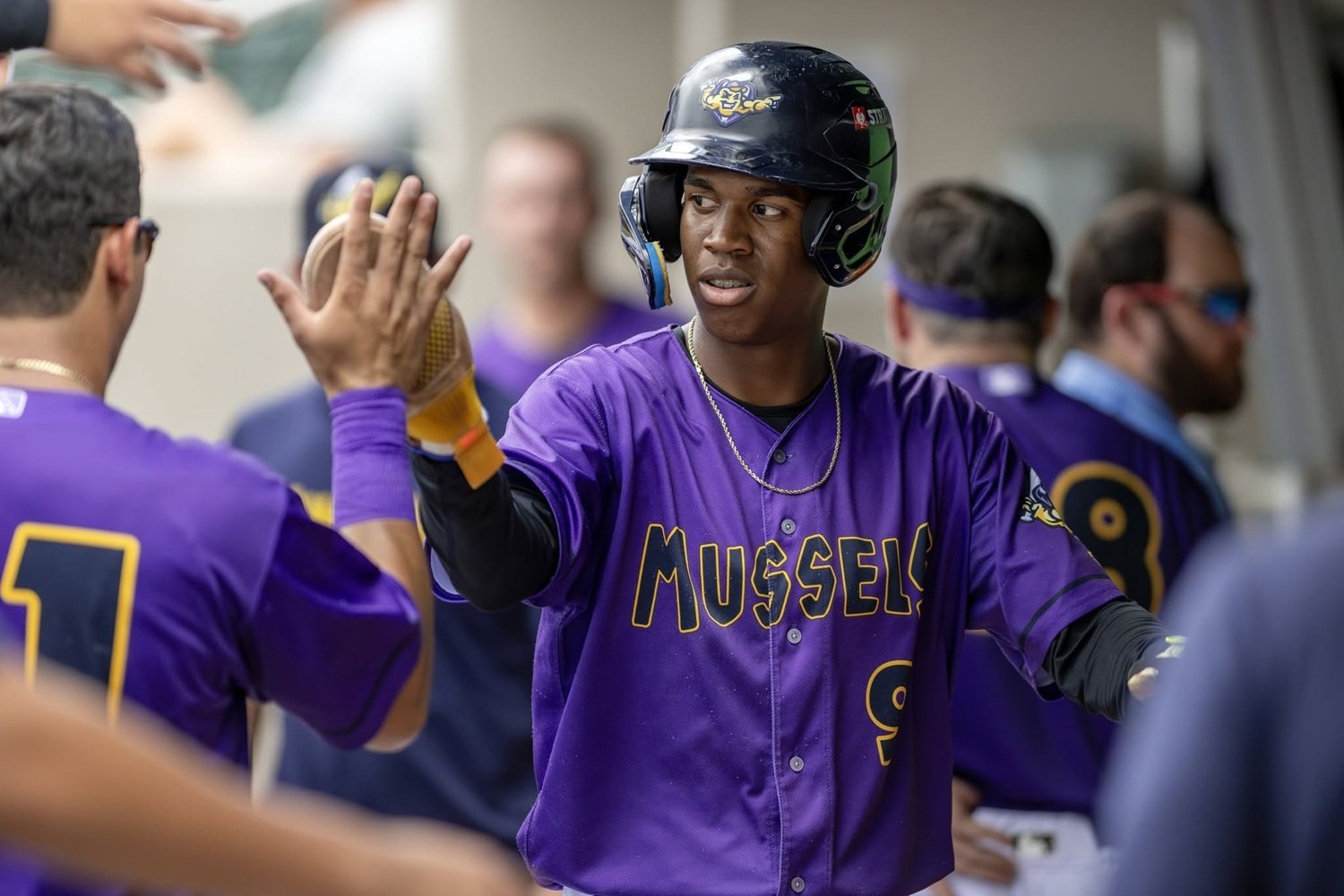 TRANSACTIONS LHP Kendry Rojas returned to Twins Saints Sentinel St. Paul 12, Omaha 15 (12 Innings) Box Score Trent Baker: 1 1/3 IP, 4 H, 3 ER, 1 BB, 3 K HR: Alan Roden 2 (6, 7), Matt Wallner (11), Orlando Arcia 2 (9, 10) Multi-hit games: Alan Roden (4-for-6, 2 HR, 3 R, 2 RBI), Orlando Arcia (2-for-6, 2 HR, 2 R, 4 RBI), Aaron Sabato (2-for-6, R), Ben Ross (2-for-4, 2 RBI, BB) The Saints lost a high-scoring affair on Sunday. You don’t see many games where a team with a nine-run inning loses. Then again, there was nothing ordinary about what occurred in this game. St. Paul racked up 12 runs across 15 hits, had two players crack two homers, and lost in the 12th after sending Tanner Schobel to the mound as a human white flag. Pitching in a game that was tied. These things happen in the minors. Alan Roden led off the game with a homer, which served as the team’s lone run until their vigorous fourth inning assault on Aaron Sanchez. And what a frame it was. Matt Wallner and Orlando Arcia bombed back-to-back, and Ben Ross drove in two with a single. A short two-out sequence threatened to cut the rally short, yet the Saints continued to clobber, as Gabriel Gonzalez plated two more with a double before Arcia concluded things with a three-run homer, his second long ball of the inning. That proved to be the zenith of the game. The Saints’ pitching simply couldn’t hold up. Five of the team’s “pitchers”—we’re air-quoting the word because it includes Tanner Schobel’s gift of an outing—allowed at least two runs, as St. Paul’s lead slowly whittled away until it became Omaha’s lead. Roden cracked a second homer in the eighth off former Saint Dan Altavilla. He’s slashing .333/.463/.632 at AAA this year. Storm Chaser Abraham Toro hit for the cycle in the game. No member of the Royals’ Top 20 prospects (per Royals Keep) list played in the game. Wind Surge Wisdom Wichita 2, Springfield 5 Box Score Cory Lewis: 4 IP, 4 H, 1 ER, 3 BB, 3 K HR: Jaime Ferrer (2) Multi-hit games: Khadim Diaw (2-for-5, RBI), Jaime Ferrer (2-for-3, HR, 2B, R, RBI) The Wind Surge failed to find much offense on Sunday. Jaime Ferrer collected the only two extra-base hits for the team, a double in the fifth, and a homer in the ninth. That’s quite the opposite-field shot; even Ferrer was probably surprised that left the field. Has Cory Lewis figured something out? The righty owns a 2.25 ERA in the month of June, though that comes with a 1.40 WHIP, fueled in part by 12 walks in 20 innings. The sustainability of a stretch like this is perhaps dubious, but the deflated ERA after being pulverized to start the season is probably a nice respite. Jose Olivares collected two scoreless innings in his second appearance out of the Wichita bullpen this season. 2026 has been a struggle for him. The walk bugaboo that has followed him throughout his career morphed into a full-blown walk monster; he’s offered 28 free passes over 33 2/3 innings with the Wind Surge this year. No walks were offered on Sunday, though. The Cardinals played MLB’s 22nd-ranked prospect, catcher Rainel Rodriguez. He singled once in five at-bats. Kernels Nuggets Rain follows where Walker Jenkins goes. Why Mother Nature has beef with the top Twins prospect is unclear. The Kernels will make up this game on July 18th. Mussel Matters Fort Myers 13, Tampa 3 Box Score Hendry Chivilli: 4 IP, 2 H, 0 ER, 0 BB, 2 K HR: Jayson Bass (8), Luis Fragoza (6), Byron Chourio (3) Multi-hit games: Ryan Sprock (2-for-5, 2 2B, 2 R, 2 RBI, BB), Quentin Young (2-for-5, 2B, R, 2 RBI, BB), Luis Fragoza (2-for-4, HR, R, 4 RBI, BB), Byron Chourio (4-for-5, HR, 2B, 2 R, 2 RBI) Inspired by the parent club, the Mighty Mussels rode a fifth-inning crooked number to a blowout win. And what a frame it was. Fort Myers entered with two already on the board. A Byron Chourio single and a Merphy Hernandez hit by pitch started the onslaught. Innocuous enough. Ryan Sprock cracked a long double to center to score both men. The Mighty Mussels then loaded the bases and pushed across their fifth run when Quintin Young took four pitches outside the zone for the easiest RBI of his life. At this point, the DNA of this rally was of an ordinary ilk. Simply a few runs. Nothing unusual in the context—especially in the minors where momentum and avalanches are commonplace. But then, Luis Fragoza stepped to the plate, took a mighty hack, and walloped a hanging slider for a grand slam. Oh, and Chourio tacked on a solo shot. Oh, and they concluded the inning with a final run scored off a double steal/throwing error combo. Hendry Chivilli enjoyed his best outing as a Mighty Mussel, tossing four shutout innings with a pair of strikeouts, a mammoth improvement over his woeful appearances on May 23rd and June 16th. Chivilli might be the most unique story in the Twins system this year: Minnesota handed him over $2 million as a part of their international haul in 2023, and after a pair of dreadful seasons at the plate, moved him to the mound where he has pitched shockingly well. He carries a 3.77 ERA and a 1.26 WHIP in 28 2/3 innings this year. The Tarpons are a part of the vaunted Yankees farm system. A talented bunch, they did not reveal so in this game, as no member of their Top 30 prospect list appeared in the game. TWINS DAILY PLAYERS OF THE DAY Twins Daily Minor League Pitcher of the Day – Hendry Chivilli Twins Daily Minor League Hitter of the Day – Alan Roden PROSPECT SUMMARY Here’s a look at how the Twins Daily Top 20 Twins Prospects performed: #10 – Gabriel Gonzalez (St. Paul) - 1-5, 2B, R, 3 RBI, BB #13 – Khadim Diaw (Wichita) - 2-5, RBI #14 – Quentin Young (Fort Myers) - 2-5, 2B, R, 2 RBI, BB, 2 K #19 – Billy Amick (Wichita) - 0-3, BB, K #20 – Kyle DeBarge (Wichita) - 0-4, 3 K MONDAY’S PROBABLE STARTERS FCL Rays @ FCL Twins (11:00 AM) - TBD DSL Miami @ DSL Twins (10:00 AM) - TBD View the full article
 -
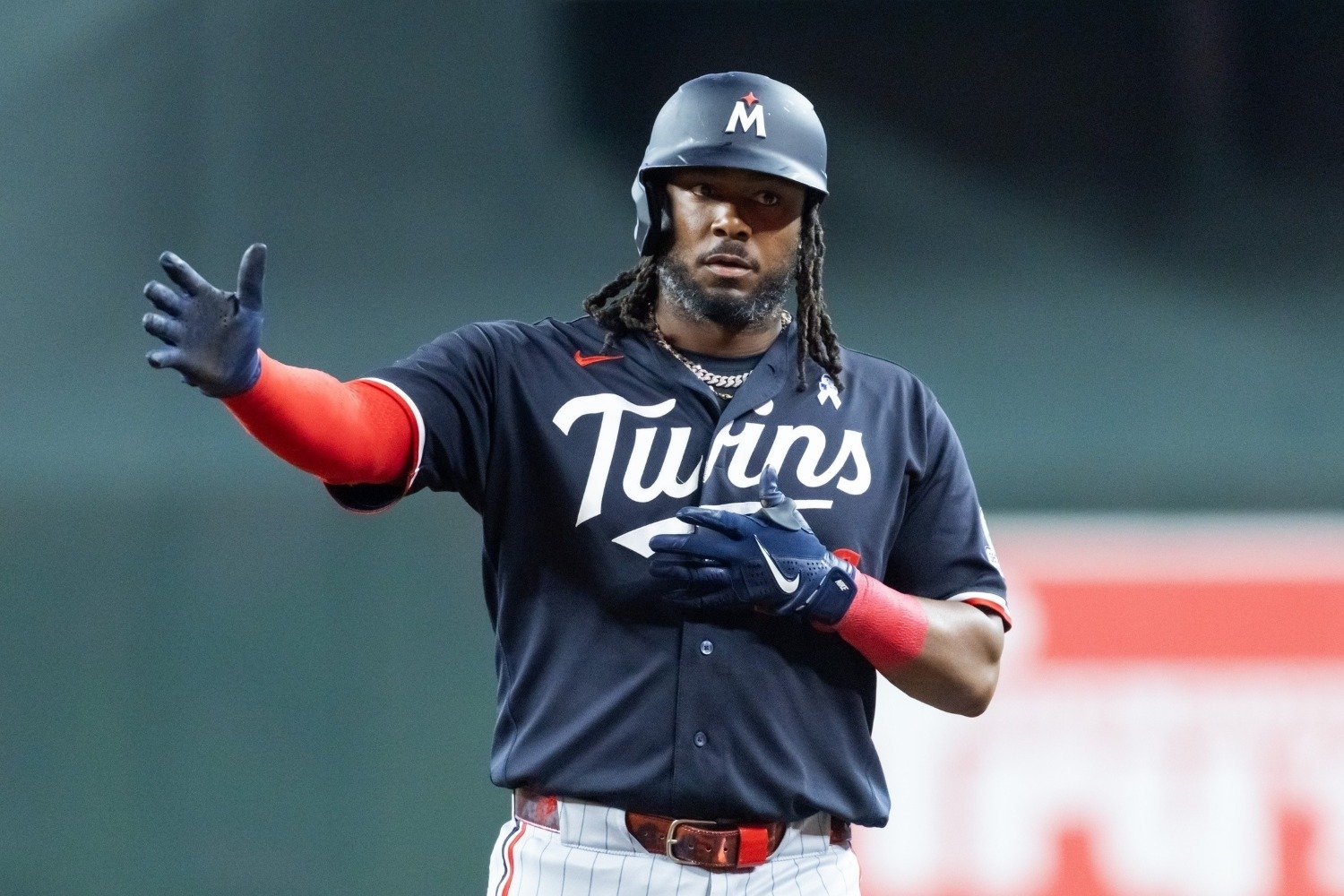 Box Score: Starting Pitcher: Mike Paredes: 5 IP, 6 H, 2 ER, 3 BB, 1 K (75 Pitches, 47 Strikes, 62.6%) Home Runs: None Top 3 WPA: Alex Jackson (0.42), Yoendrys Gómez (0.14), Josh Bell (0.12) Win Probability Chart (Via BaseballSavant): , The Twins are cooking offensively, and as a result, they have a 7-3 record in their past 10 games. Their 384 runs scored are second to the Yankees in the American League, and they are 1.5 games out of a Wild Card spot. Royce Lewis posting a .900 OPS since his return from a demotion has certainly helped, but Brooks Lee, Trevor Larnach, Luke Keaschall and Kody Clemens have also played out of their minds to support a pitching staff that has been neither healthy nor effective. On that note, Mike Paredes made his third career start today, against the Diamondbacks, and was in trouble from the jump, pitching behind in counts and unable to control his sweeper. He emerged from the first inning unscathed after walking Corbin Carroll and allowing a single to Geraldo Perdomo, but wasn't so lucky in the second. He walked Nolan Arenado to start the frame, then walked Ildemaro Vargas. After a sacrifice bunt (a charitable gesture from Arizona manager Torey Luvullo), Paredes struck out rookie Tommy Troy on a backup sweeper. One out away from escaping yet again, however, the unheralded rookie made one mistake too many. Ketel Marte struck a hanging sweeper pure out to the right-center field gap to score the game's first two runs. Meanwhile, the Twins were having all sorts of issues with Jose Cabrera, a right-handed starter making his major-league debut. He stayed in the zone and commanded a nice changeup and sweeper, spiced with a plethora of different fastball shapes. The first six Twins hitters went down easily, and it didn't get much better from there. A hit-by-pitch to Alex Jackson and a bloop double from Larnach put two on for Byron Buxton, but he flailed away at sweepers to keep the Twins scoreless. Paredes scuttled along, taking advantage of a weak back half to the Diamondbacks order. Facing Marte for the third time in the fifth, he allowed a laser single to lead off the inning. Perdomo then grounded sharply to Lewis at first, and Lewis made a great relay to second to start a key double play—especially key because Carroll and Gabriel Moreno both singled thereafter. Fortunately, Pavin Smith lined out to left field to end the threat. Somehow, Paredes ended up just giving up the two runs while completing five innings, something all of us would have signed up for. Cabrera was done after allowing a leadoff bunt single by Twins catcher Alex Jackson in the sixth. Facing lefty Brandyn Garcia, Larnach also attempted a bunt, a curious decision but one he almost beat out. After Buxton grounded out on the first pitch, Clemens struck out, and the Twins had nine outs to figure out something against the D-Backs bullpen, the strength of their team. These Twins aren't super talented, but they are gritty. Facing 100 MPH heat from reliever Juan Morillo, the Twins followed a Lewis single with two quick outs, with Lee striking out on a fastball at his eyes. Ryan Kreidler singled, though. Then Josh Bell pinch-hit for Kyler Fedko and singled to the gap, scoring Lewis. Jackson reached base for the third straight plate appearance, singling through the right side to score Kreidler. Bell tried for third base for some reason, and the throw from Carroll hit Bell's hand, kicking the ball out of play and allowing Bell to score the go-ahead run. Andrew Morris got the seventh against the top of the Arizona lineup. He allowed a rocket off the bat of Marte that Clemens made a leaping catch on in center, then walked Perdomo. But Perdomo was caught stealing on a great throw from Jackson, and Carroll struck out to end the inning. The Twins got Buxton and Lewis in scoring position in the eighth, but Keaschall was unable to capitalize with two outs, grounding out weakly to keep the lead at one run. This was, of course, no issue for Yoendrys Gómez, who pitched around a leadoff walk to retire the middle of the D-Backs order. He's beginning to look like a revelation. Kreidler led off the ninth with a single, followed by a failed Austin Martin pinch-hit bunt attempt in which Kreidler was cut down at second. No matter, as with two outs, Larnach roped a hanging slider into the right-center field gap to score Martin for a much-needed insurance run. Anthony Banda was given the save chance, sat 96-97 MPH, and threw strikes for the most part. He's looked a lot better since early May. Stuff I'm Tracking: Larnach made such a good diving play to end the second inning, I wanted to mention that his defense isn't great but is serviceable, and he isn't a total butcher out there. Then he misplayed a liner in the sixth that almost led to a crucial third run. In any case, his OBP is .377, and his move to the leadoff spot has paid dividends. Jackson is hitting .317 and contributed the biggest hit of the game. He also caught Perdomo stealing in the eighth, which may have been an even bigger play. Maybe he was worth the half-lavish contract he got, because he's turning out to be more than the emergency backup warm body that contract seemed to buy. Keaschall made a number of diving stops at second base and converted most of them into outs. Hard to say whether he gets better as he gets more reps, or if he will lose range as he gets older. He has posted an OBP-heavy .790 OPS in both May and June, though, and that plays. Kreidler had three more hits, lifting his OPS back above .900. You kinda have to start him every game at this point. If Paredes' game plan was to not touch the zone with anything, he succeeded, and the Diamondbacks had no counter-punch. The only ball that really said "hit me" was the sweeper to Marte. Maybe Paredes has some guile to his game; he'll need it. What’s Next: The Twins welcome the World Series champion Dodgers to Target Field, as Zebby Matthews (3-4, 4.78 ERA) faces lefty Eric Lauer (2-5, 5.37 ERA). Lauer has been pretty good since being acquired by L.A. in May, after burning bridges on his way out of Toronto. Matthews has had some encouraging starts and some clunkers, typical of his career thus far, and he will have his work cut out for him facing the Dodgers, who have scored the second-most runs in all of baseball (The Nationals are first??). Postgame Interviews: Coming Soon Bullpen Usage Chart: WED THU FRI SAT SUN TOT Paredes 0 0 0 0 75 75 Lawrence 0 18 0 40 0 58 Laweryson 20 17 5 0 14 56 Adams 13 0 42 0 0 55 Orze 0 12 0 24 0 36 Gómez 0 0 0 7 20 27 Morris 0 8 0 0 17 25 Banda 0 0 0 12 10 22 Rogers 0 15 0 0 0 15 View the full article
 -
Miguel Andujar Back With Padres After Stay On Injured List
DiamondCentric posted an article in Padres Mission
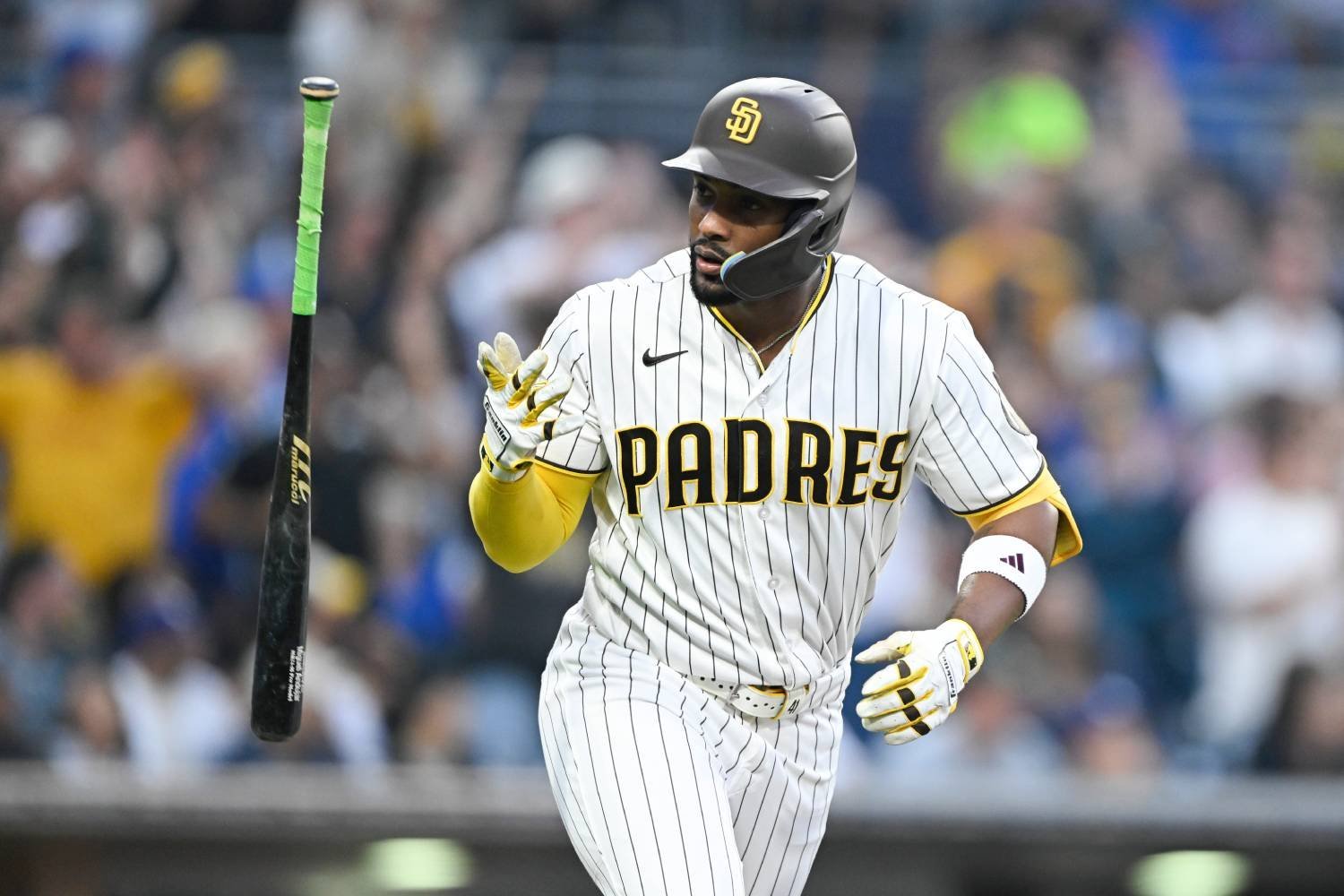 Just as the San Diego Padres' offense appears to be picking up steam, they get back one of their key bats. Designated hitter Miguel Andujar was activated off the 10-day injured list Sunday by the Padres, with outfielder Nick Solak designated for assignment. Andujar missed the minimum time while dealing with a minor strain of his left hamstring. Andujar, a key right-handed bat, was slashing .254/.288/.418 with five homers and 17 RBIs when he went on the IL. His 12 doubles are just one off the team lead, shared by Fernando Tatis Jr., Jackson Merrill and Gavin Sheets, despite playing 20 fewer games than two of those players. Solak came up from Triple-A El Paso when Andujar went on the IL. He appeared in four games and went 1-for-7 with a walk and an RBI. View the full article
 -
Kendry Rojas Activated By Twins Following Injury List Stint
DiamondCentric posted an article in Twins Daily
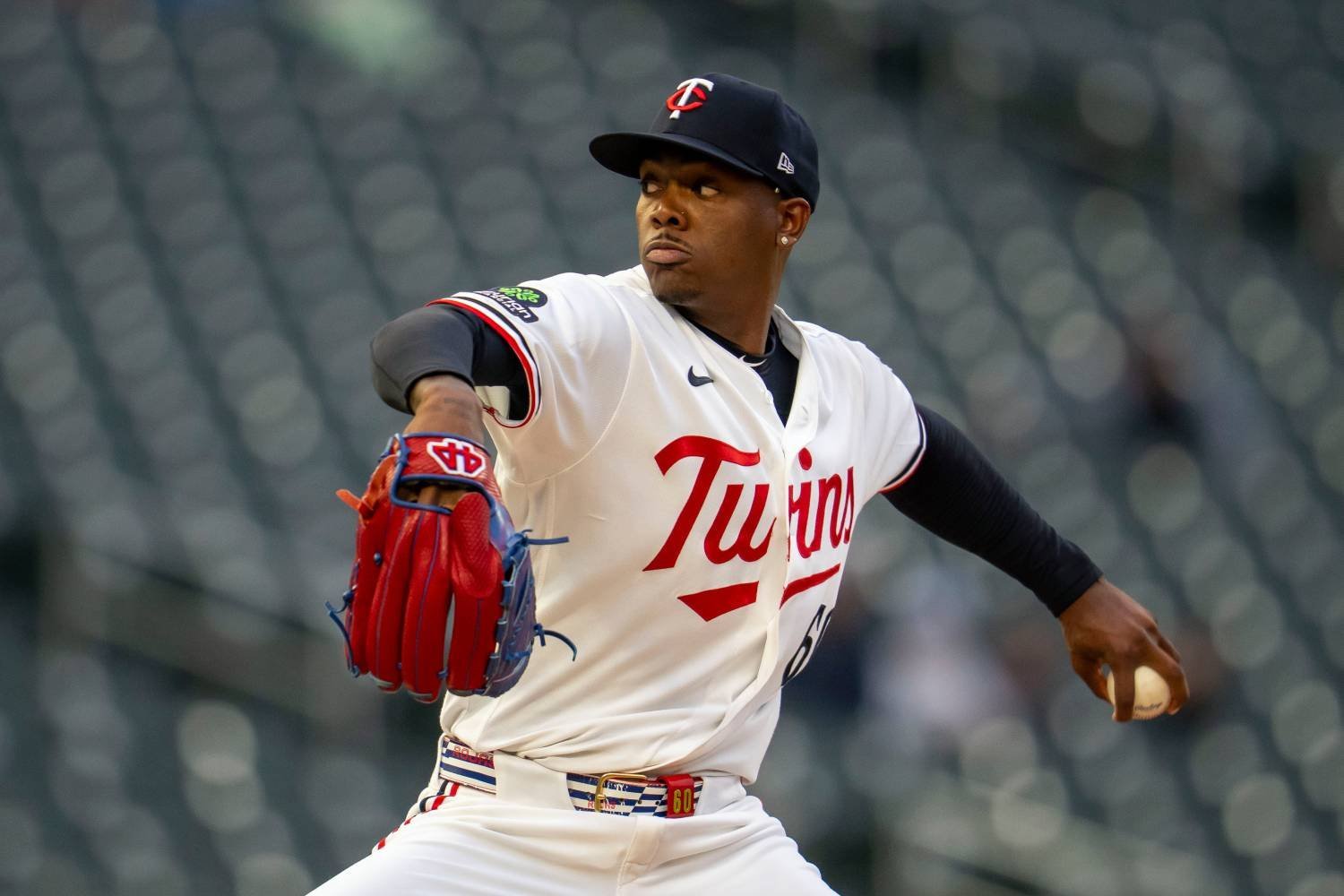 The setback sustained by right-hander Mick Abel has a trickle-down effect. The Minnesota Twins on Sunday activated left-hander Kendry Rojas from the 15-day injured list, with right-handed reliever Justin Lawrence designated for assignment. Rojas, Twins Daily's No. 9 prospect, had been out since May 29 with inflammation in his left elbow. Abel, on the 15-day IL with right elbow inflammation, threw a bullpen session Friday in anticipation of him starting Sunday, but woke up Saturday with a sore elbow, forcing the Twins to come up with an alternate plan. That will be right-hander Mike Paredes starting the series finale against the Arizona Diamondbacks. Rojas could be a relief option for Sunday. He has made five appearances (one start), including his MLB debut, and been very good. Rojas has a 1.26 ERA in 14⅓ innings, walking 10 and striking out 14. Lawrence has been DFA'd for the second time this season. The Twins acquired Lawrence for cash considerations from the Pittsburgh Pirates on June 2 after he was DFA'd. His brief time with the Twins did not go well. In six innings across seven appearances, Lawrence had an 18.00 ERA, getting tagged for 12 runs on 10 hits with nine walks and 12 strikeouts. This came after a 5.32 ERA in 22 games with the Pirates. View the full article
 -
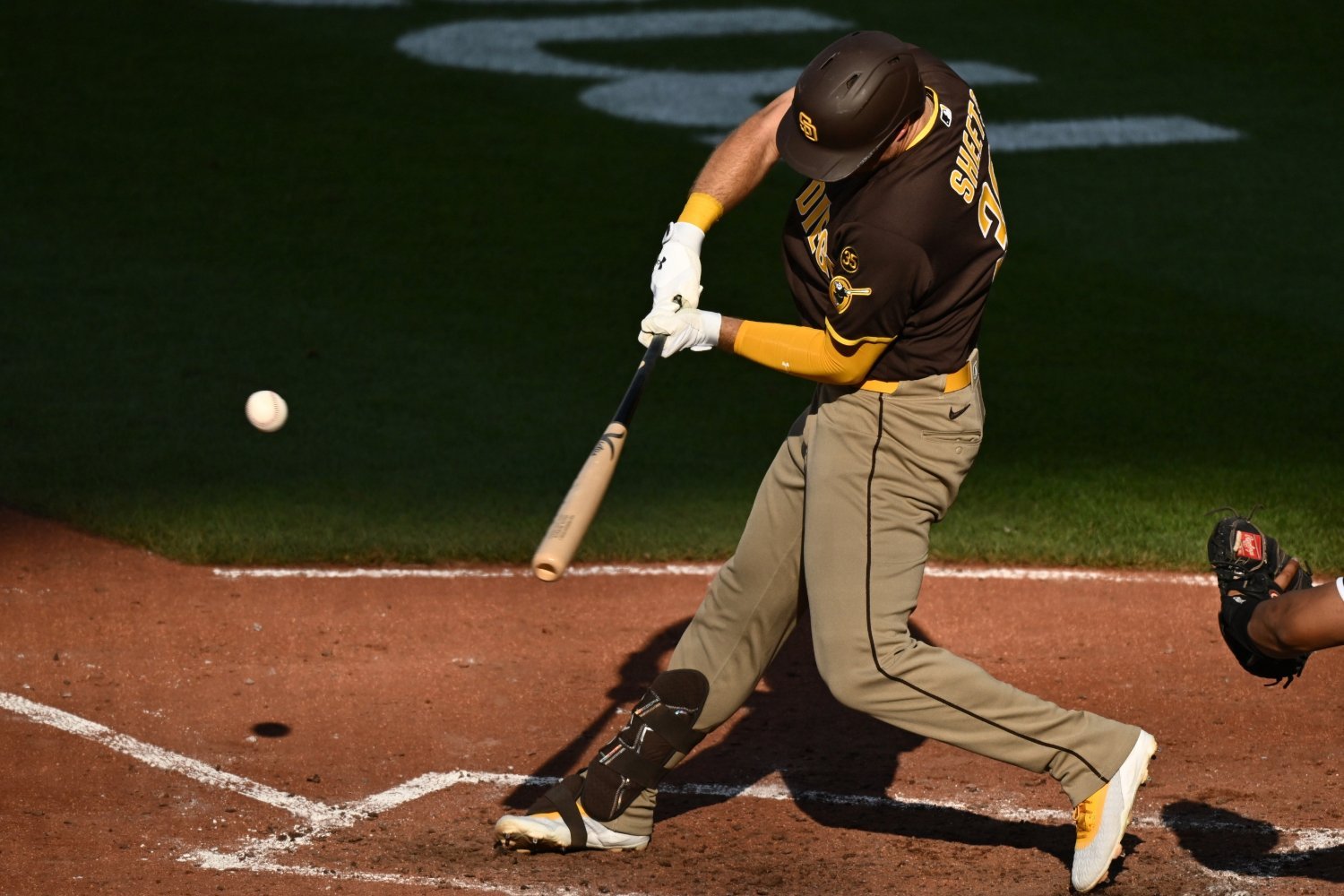 Gavin Sheets has always possessed one trait that can change a game in an instant: the ability to impact the game with one swing. His combination of size, strength, and barrel control allows him to turn pitches that other hitters might only put in play into hard, productive contact. When he finds the right location, Sheets does not need many opportunities to show the offensive value of his bat. The challenge for a hitter with that profile comes when those ideal pitches become harder to find. Pitchers know they cannot simply attack him with fastballs in the strike zone. Instead, they throw the kitchen sink at him. During May, Sheets found an answer to that problem. The improvement was not just reflected in his offensive numbers; the biggest difference came in the quality of his at-bats. He maintained his power while adding a skill that changes the way opponents must approach him: improved recognition and better discipline against secondary pitches. His season has unfolded in three distinct phases. The difference between May and the surrounding periods was not only the final production, but the way Sheets created those results. During March and April, he was already a dangerous hitter, but he still depended heavily on finding the right pitch to maximize his impact. His raw power kept his offensive value high, but pitchers could still exploit certain locations and velocity patterns to limit his best opportunities. May showed a different version of Sheets. His walk rate climbed significantly, and his expected metrics reflected a real improvement in his decision-making. A 149 wRC+ indicated a true evolution as an offensive weapon. The question was whether that version could survive once opponents adjusted. May’s production map showed a hitter with greater control of the strike zone. Sheets had multiple areas where he could consistently generate offense, reducing the number of locations pitchers could attack with confidence. The clearest evidence came against the pitch types typically used to disrupt the rhythm of power hitters. During May, Sheets turned several secondary pitches into opportunities. Against sliders, a pitch often designed to disrupt timing and induce weak contact, he produced a .396 xwOBA. The changeup showed an even more significant transformation. After limiting him earlier in the season, the pitch became something Sheets could punish in May, as he hit .385 with a .615 slugging percentage against it. That was the biggest step forward of the month: pitchers no longer had a simple formula built around changing speeds and waiting for a mistake. Now, here in June, we've seen a reversion of course. The offensive decline this month is not simply a matter of results. The biggest issue appeared in the same pitch types where Sheets had gained an advantage during May, when he was consistently winning those battles. The most important warning signs came against sliders and changeups. Against sliders: May: .222 AVG, .667 SLG, .396 xwOBA. June: .000 AVG, .000 SLG, .168 xwOBA. Against changeups: May: .385 AVG, .615 SLG, .375 xwOBA. June: .000 AVG, .000 SLG, .125 xwOBA. Pitchers regained the ability to use those offerings as tools to disrupt his approach. And yet, that adjustment does not mean Sheets suddenly became vulnerable to velocity. Against four-seam fastballs, the evolution has been: The following chart provides a clearer look at how Sheets’ swing has performed inside the strike zone throughout the first half of the season. When he receives a fastball in a favorable location, Sheets still has the ability to produce impact. His strongest xwOBA results remain concentrated inside the strike zone, with success against pitches over the middle, on the inner half, and even toward the outer edge. The difference comes on pitches where he must identify the pitcher’s intent earlier. Once he lost his timing against sliders and changeups, the fastball became significantly more effective within the overall pitching mix, contributing to a notable decline in his power production. June’s struggles are also accompanied by a drop in contact quality. His most dangerous batted balls became less frequent, and his expected production declined. May revealed a version of Sheets capable of controlling his at-bats and punishing a wider range of approaches. June has shown that this progress still needs to hold against game plans specifically designed to disrupt him. If Sheets continues improving his discipline against sliders, changeups, and other secondary offerings, his offensive profile could continue trending upward. May revealed the level he can reach. June has become the next challenge in proving that version of himself can last. View the full article
 -
 Let’s check in on Saturday’s action from the Boston Red Sox affiliate teams. Triple-A Worcester Red Sox Series @ Lehigh Valley IronPigs (Philadelphia Phillies): 2-3 Season Record: 35-35 Worcester lost 4-3, its third straight loss, falling to .500 on the season. Osvaldo Berrios has made five appearances for Worcester in the month of June, and it wasn’t until Saturday that he allowed his first run to score. The righty opened Saturday’s contest with two innings of one-run ball, striking out three. Eduardo Rivera took the next two innings, allowing one more run to cross home. He struck out two before turning the ball over to Alec Gamboa. Gamboa completed the longest stint of the night for Worcester, turning in three innings. He let up one more run and struck out three. Kyle Keller took over in the eighth and quickly allowed the go-ahead run to score. Wyatt Olds took the final two outs of the eighth, allowing one more hit but keeping the score the same. Worcester’s bats were on fire, led by Allan Castro’s three hit night. However, the bats faltered with runners in scoring position. Going just 1-for-10 with RISP, the WooSox left seven runners on base as they squandered plenty of opportunities. Mikey Romero put the WooSox on the board with a first-inning sac fly, scoring Braiden Ward. Allan Castro collected an RBI of his own, hitting his sixth homer of the season, a solo blast, in the fourth. Later in the inning, Tyler McDonough drove in Tsung-Che Cheng on a line drive single to grab a brief lead. Double-A Portland Sea Dogs Series vs. Somerset Patriots (New York Yankees): 4-1 Season Record: 35-32 Portland won in walk-off fashion, collecting its sixth win in the last eight games by a score of 7-6. John Holobetz took the mound to start Saturday’s contest for the Sea Dogs. However, he saw mediocre results. Over four innings, Holobetz allowed four runs on seven hits as his consistency struggles persisted. He struck out six before Jedixson Paez took over. Paez was better, but not by much. Over the next four innings Paez allowed two more runs on five hits, striking out two. Cooper Adams took the ninth inning for Portland, allowing one hit but sealing the one run victory. Franklin Arias made his first start of the season at second base on Saturday, leading the way for the offense with a 3-for-5 performance. Whether or not the position change was due to Romy Gonzalez’s injury or perhaps preparation for a more permanent role is yet to be seen. Additionally, Johanfran Garcia extended his recent hit streak to 13 games and his on-base streak to 20 games. It was Brooks Brannon who sparked the offense, hitting a solo homer in the second inning to take a 1-0 lead. Down by two runs in the third, Caden Rose scored on a wild pitch to lessen the deficit. In the fourth, Matt Fraizer drove in Nelly Taylor with his first double of the season, cutting the lead to one. Down by three in the ninth, Brooks Brannon got drilled with the bases loaded, scoring Arias. Garcia stepped to the plate next and nearly hit a walk-off grand slam, instead settling for a game-tying two-RBI single that scored Will Turner and Miguel Bleis. With the game in reach, Marvin Alcantara smoked a ball to the shortstop who bobbled the flip to second as Ahbram Liendo raced around third. Liendo crossed home safely as Portland capped off the three-run comeback. High-A Greenville Drive Series @ Jersey Shore BlueClaws (Philadelphia Phillies): 3-2 Season Record: 28-37 Greenville rode two dominant pitching performances to victory, winning 4-1. Alex Bouchard claimed his first win of the season for his performance on Saturday. It was well deserved as Bouchard turned in an excellent five-inning performance. He allowed one run on three hits, striking out five in one of his best starts of the season. Ben Hansen took the final four innings, turning in a gem of his own. He allowed just one hit and two walks but prevented Jersey Shore from scoring again. He struck out an additional five batters as he sealed Greenville’s second straight victory. Justin Gonzales got the offense going early, crushing his eighth homer of the season. It was a two-run shot that scored Enddy Azocar as well. Gonzales scored again in the fifth on a fielding error to widen the lead. Mason White drove in Greenville’s final run in the eighth on an RBI single that scored Isaiah Jackson. Despite the win, the Drive went an abysmal 1-for-15 with RISP and left nine runners stranded. Still, it was an encouraging game for a team that has struggled in close games throughout the season. Low-A Salem RidgeYaks Series @ Fredericksburg Nationals (Washington Nationals): 3-2 Season Record: 26-41 Salem’s season-long woes continued on Saturday night as the RidgeYaks fell 10-2. Christian Foutch lost his fifth game of the season, starting the night for Salem. Over a short two-inning outing, Foutch walked five and allowed four runs on three hits. Foutch was quickly replaced by Yermain Ruiz, who wasn’t any better. Over the next three innings Ruiz allowed five more runs on four hits and four walks before turning the ball over to Griffin Kilander. Kilander was the best pitcher of the night for Salem by far. He allowed three hits and an unearned run over two and ⅔ innings, but he struck out seven of the 13 batters he faced. Nicolas De La Cruz took the final ⅓ inning of the night, allowing a walk but shutting the Nationals down before the score got any worse. Salem collected eight hits, but didn’t do enough damage to challenge Fredericksburg. Kleyver Salazar, Louis Andujar, and Anderson Fermin had two hits apiece, and Ilan Fernandez and Justin Barry accounted for the RidgeYaks runs. The runs came late and with little impact. In the sixth, Barry drove in his first RBI for Salem, driving in Andujar on a single to left field. In the eighth, Fermin scored on a Fernandez groundout. It was a sharp turnaround for Salem, who scored at least seven runs in its last two games. View the full article
 -
 Cubs Transactions Chicago Cubs designated LHP Luis Peralta for assignment. Chicago Cubs sent LHP Matthew Boyd on a rehab assignment to South Bend Cubs. Houston Astros traded RHP Jayden Murray to Chicago Cubs for 1B Cameron Sisneros. Late Indianapolis Rallies Sink Iowa In 7-4 Loss The Iowa Cubs battled back to tie the game before the Indianapolis Indians pulled away late in a 7-4 home loss. Ty Blach turned in the longest outing, working five innings and allowing three runs on six hits with one walk and one strikeout. Iowa drew even in the sixth inning, when Ben Cowles scored on a Brett Bateman groundout and Moisés Ballesteros came home on a bases-loaded walk to Owen Miller. Iowa then took the lead in the seventh, when Bateman doubled to right field to score James Triantos and Cowles. The advantage did not hold. Doug Nikhazy struggled in relief, allowing four runs on five hits with two walks, three strikeouts, and two home runs across 2 2/3 innings, taking the loss. Indianapolis erupted for three runs in the ninth inning, capped by a two-homer sequence and an Enmanuel Valdez double, to break the game open. Bateman led the offense with three RBI, and Ballesteros added two hits. Triantos doubled and scored a run, while Cowles reached three times and scored twice. Iowa left six runners on base. Player AB R H RBI BB K Brett Bateman 5 0 1 3 0 1 Moisés Ballesteros 4 1 2 0 0 2 BJ Murray 4 0 2 0 0 1 Owen Miller 2 0 0 0 1 0 Chas McCormick 3 0 0 0 1 0 Jonathon Long 4 0 1 0 0 2 James Triantos 4 1 1 0 0 1 Casey Opitz 4 0 0 0 0 2 Ben Cowles 3 2 1 0 1 0 Player IP H R ER BB K HR Ty Blach 5 6 3 3 1 1 1 Antoine Kelly 1 0 0 0 1 2 0 Doug Nikhazy 2 2/3 5 4 4 2 3 2 Tyler Ferguson 1/3 0 0 0 0 0 0 Kipp And Cantrelle Lift Knoxville Past Chattanooga The Knoxville Smokies edged the Chattanooga Lookouts 3-1 at home, getting a strong start and a timely late hit. Grant Kipp set the tone over four scoreless innings, allowing no hits, walking none, and striking out two. Knoxville built its early lead in the first inning. Jefferson Rojas singled and Owen Ayers walked ahead of an Alex Ramírez double that scored Rojas, and Andy Garriola followed with a groundout that brought home Ayers for a 2-0 edge. The score held until the eighth inning, when both clubs traded runs. After Chattanooga answered with a solo home run in the top half, Knoxville responded in the bottom of the inning, as Hayden Cantrelle singled to right field to score Edgar Alvarez and restore the two-run cushion. Tyler Santana closed it out over the final two innings, allowing two hits and striking out one to pick up the win. Rojas led the offense with two hits, a run, a walk, and a stolen base. Ramírez, Garriola, and Cantrelle each drove in a run. Knoxville stranded eleven runners on base but did enough early to hold on. Player AB R H RBI BB K Karson Simas 3 0 0 0 2 1 Jefferson Rojas 4 1 2 0 1 0 Owen Ayers 2 1 0 0 2 1 Alex Ramírez 4 0 1 1 0 0 Andy Garriola 4 0 0 1 0 3 Edgar Alvarez 3 1 1 0 1 2 Carter Trice 4 0 1 0 0 1 Ariel Armas 3 0 1 0 1 0 Hayden Cantrelle 4 0 1 1 0 2 Player IP H R ER BB K HR Grant Kipp 4 0 0 0 0 2 0 Tyler Santana 2 2 0 0 0 1 0 Marino Santy 2 1 1 1 0 3 1 Evan Taylor 1 0 0 0 0 0 0 Eighth-Inning Rally Doomed South Bend In 3-2 Loss The South Bend Cubs carried a lead into the late innings before the Fort Wayne TinCaps rallied for a 3-2 home win. Matthew Boyd was excellent on a rehab assignment, throwing four scoreless innings, allowing two hits, walking none, and striking out seven. South Bend grabbed the lead in the sixth inning. Kane Kepley singled and scored on a Ty Southisene triple, and Southisene then came home on a sacrifice fly by Josiah Hartshorn for a 2-0 edge. The bullpen could not hold it. Alfredo Romero entered and surrendered three runs on four hits with one walk in one inning, taking the loss and blowing the save. Fort Wayne struck for all three runs in the eighth inning, when a Kasen Wells single scored two and a Lamar King Jr. single drove in the go-ahead run. Nazier Mulé was sharp in his three innings, allowing one hit and striking out three. Kepley led the way with three hits and a double. Southisene tripled and drove in a run, and Hartshorn added a hit, a triple, and an RBI. South Bend left four runners on base. Player AB R H RBI BB K Kane Kepley 4 1 3 0 0 0 Ty Southisene 4 1 1 1 0 1 Josiah Hartshorn 2 0 1 1 1 1 Matt Halbach 4 0 0 0 0 1 Angel Cepeda 3 0 0 0 1 1 Jose Escobar 4 0 0 0 0 0 Justin Stransky 3 0 0 0 0 0 Alex Madera 1 0 0 0 2 0 Christian Olivo 3 0 0 0 0 2 Player IP H R ER BB K HR Matthew Boyd 4 2 0 0 0 7 0 Nazier Mulé 3 1 0 0 0 3 0 Alfredo Romero 1 4 3 3 1 1 0 Delmarva Jumps Early To Bury Myrtle Beach 8-1 The Myrtle Beach Pelicans fell behind early and never recovered in an 8-1 road loss to the Delmarva Shorebirds. Pierce Coppola took the loss after a difficult start, allowing four runs on four hits with three walks and four strikeouts over three innings. Delmarva jumped on Coppola in the first inning, scoring three runs on a two-run triple and a run that came home on a wild pitch. The Shorebirds tacked on another in the second inning. Edwardo Melendez steadied things with two scoreless relief innings, allowing one hit while striking out three. Myrtle Beach got on the board in the sixth inning, when Logan Poteet homered to left field. Henry Cone then ran into trouble over his three innings, surrendering four runs, three earned, on four hits with two walks and six strikeouts, as Delmarva pulled away with late runs in the seventh and eighth innings. Poteet led the offense with two hits, a home run, an RBI, and a run scored. Alexis Hernandez and Derniche Valdez each added two hits. Myrtle Beach stranded ten runners on base. Player AB R H RBI BB K Alexis Hernandez 4 0 2 0 1 0 Eli Lovich 5 0 0 0 0 2 Logan Poteet 4 1 2 1 0 1 Michael Carico 2 0 0 0 2 2 Derniche Valdez 4 0 2 0 0 0 Jairo Diaz 4 0 1 0 0 1 Geuri Lubo 4 0 0 0 0 0 Ezequiel Pena 4 0 0 0 0 1 Darlyn De Leon 3 0 1 0 1 2 Player IP H R ER BB K HR Pierce Coppola 3 4 4 4 3 4 0 Edwardo Melendez 2 1 0 0 2 3 0 Henry Cone 3 4 4 3 2 6 0 Top-20 Prospect Performance Jefferson Rojas: 2-for-4, R, BB, SB Jaxon Wiggins: DNP Pedro Ramirez: DNP Kevin Alcantara: DNP Josiah Hartshorn: 1-for-2, 3B, RBI, BB, K Ethan Conrad: DNP Kane Kepley: 3-for-4, 2B, R Jonathon Long: 1-for-4, 2 K James Triantos: 1-for-4, 2B, R, K Cole Mathis: DNP Owen Ayers: 0-for-2, R, 2 BB, SB, K Brooks Caple: DNP Juan Cabada: DNP Kaleb Wing: DNP Angel Cepeda: 0-for-3, BB, K Dominick Reid: DNP Jostin Florentino: DNP Ty Southisene: 1-for-4, 3B, RBI, K Will Sanders: DNP Brandon Birdsell: DNP View the full article
 -
Marlins designate Christopher Morel for assignment
DiamondCentric posted an article in Fish On First
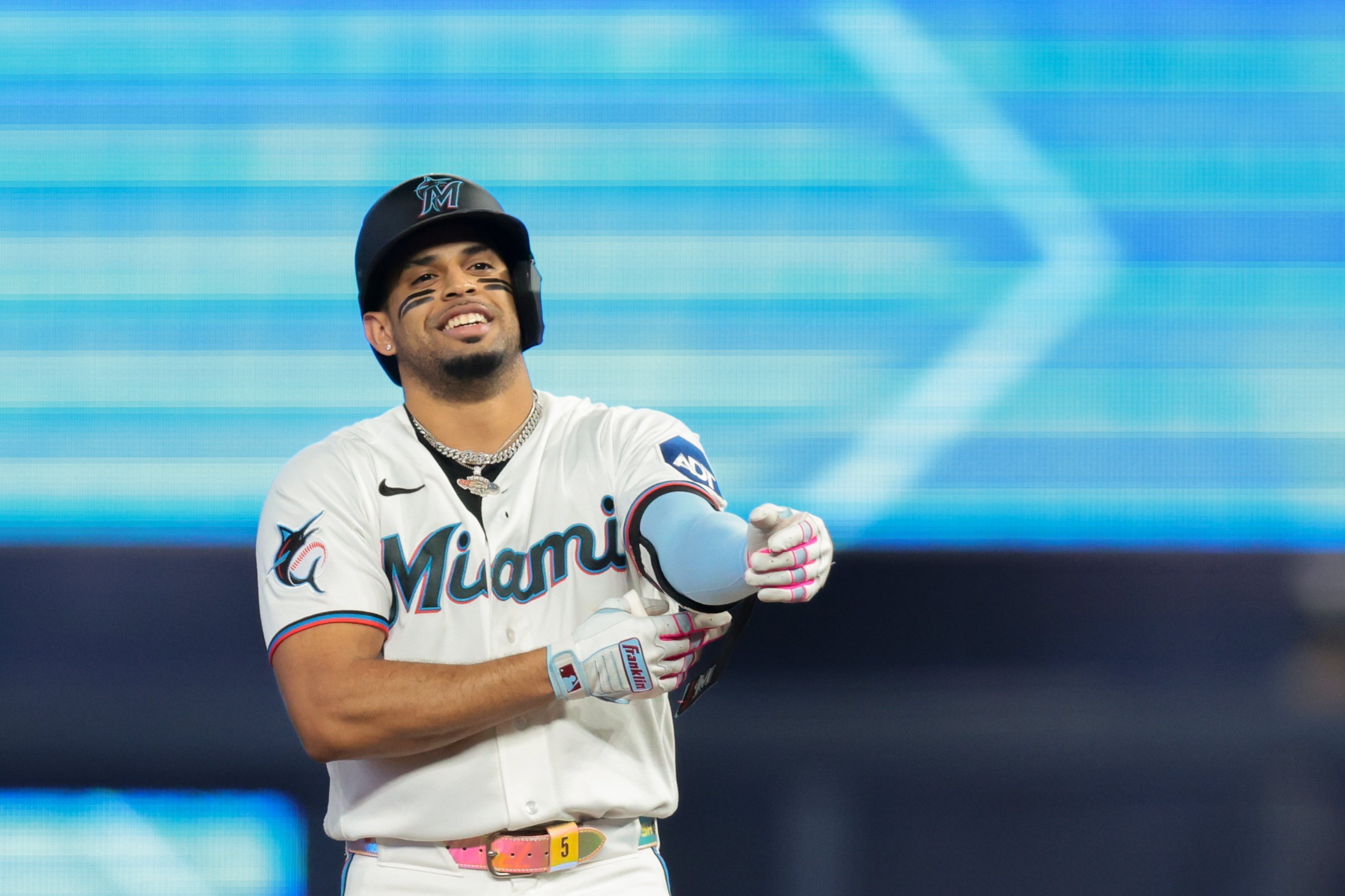 MIAMI, FL—Sources tell Fish On First that the Miami Marlins are designating Christopher Morel for assignment in advance of Sunday's game. The club has yet to make the news official and no corresponding move has been made. Morel, who the Marlins signed to a one-year deal worth $2M, suffered an oblique strain in the hours leading up to Opening Day, delaying his regular season debut until April 28. Once reinstated from the injured list, he slashed .162/.219/.206/.425 with one RBI in 22 games. His 18 wRC+ was the fourth-lowest among all MLB hitters with a minimum of 70 plate appearances this season. Speaking about Morel on June 10, Marlins manager Clayton McCullough acknowledged that" it's been a bit of a struggle to this point...Chris is a real pro. He's continued to work and trying to problem solve and get himself going." However, Morel never played another game for the Marlins after that day despite remaining on the active roster and the club matching up with multiple left-handed starting pitchers. In 2023 with the Chicago Cubs, Morel clubbed 26 home runs and posted a 120 wRC+. He slugged below .400 in each of the next two seasons, though, and the Marlins bought low on Morel after he had been non-tendered by the Tampa Bay Rays. Along with hoping to find a bounce-back candidate offensively—the Marlins moved him to first base, a position he had never played in his professional career—trying to see if maybe a less stressful position would benefit him. Very early on in spring training, he actually looked fine at the position, but as the sample size grew, he struggled with both the physical elements and intangibles. Used exclusively at first base during his Marlins tenure, he finished with a minus-two Outs Above Average, but plus-one Defensive Runs Saved. Morel will now go through waivers. The Marlins are on the hook for the remainder of his $2M salary unless another team surprisingly claims him. In all likelihood, he will clear waivers, get released by the team and enter free agency. View the full article
 -
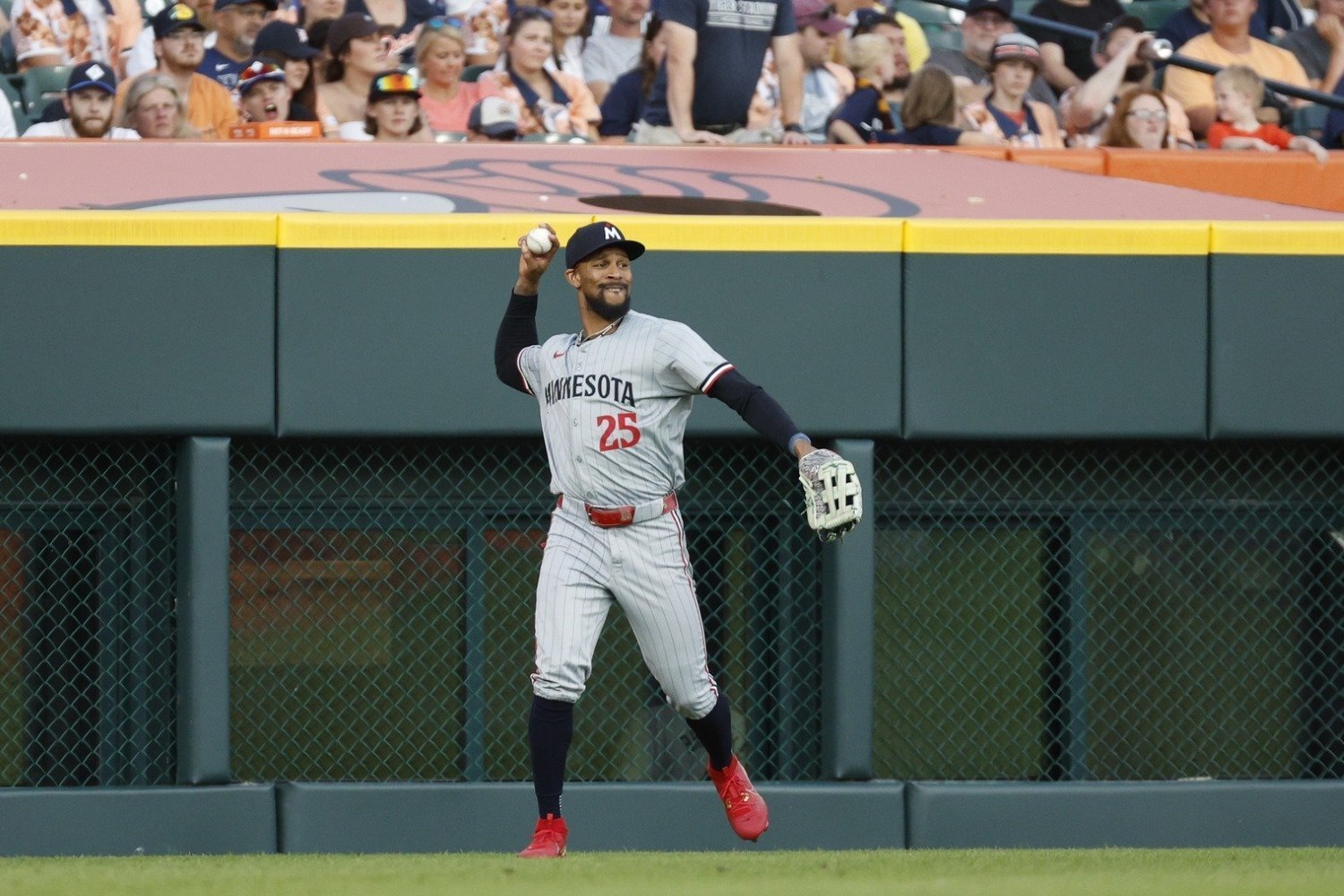 Health has become a little less of a concern for Byron Buxton in recent years. After spending much of the previous decade navigating injuries, Buxton has played more than 100 games in back-to-back seasons and is on pace to do it again in 2026. Please find the nearest piece of wood and knock on it immediately. Still, Father Time remains undefeated. The good news for Minnesota is that Buxton's offensive profile has evolved in ways that should help him age gracefully. Last week, I wrote about how his declining bat speed may have actually contributed to some of the best power production of his career. He can still handle premium velocity, but he's also doing a better job adjusting to breaking balls and offspeed pitches. Unfortunately, aging doesn't just impact players in the batter's box. It eventually shows up everywhere else. One area where the decline is becoming increasingly noticeable is Buxton's throwing arm. The Numbers Tell a Clear Story For most of his career, Buxton possessed one of the most complete defensive skill sets in baseball. His elite speed allowed him to cover massive amounts of ground, and his arm gave runners a reason to think twice before taking an extra base. That second part is becoming less true. In 2024, Buxton averaged 90.3 mph on his throws from the outfield, ranking in the 88th percentile across baseball. His arm value measured one run above average, placing him in the 74th percentile. The following season, his average arm strength dipped to 88.6 mph, still a respectable mark that ranked in the 77th percentile. His arm value, however, fell to exactly average. This season, the decline has accelerated. Buxton is averaging 85.1 mph on his throws, which ranks in just the 57th percentile. His arm value has dropped to -1 run, placing him in the 19th percentile. Those aren't catastrophic numbers, but they represent a dramatic change from the player Twins fans have watched for most of the last decade. Opposing Teams Have Noticed Baseball teams are exceptionally good at identifying weaknesses, especially in a world where organizations have seemingly unlimited data at their fingertips. When a pitcher loses velocity, opponents attack. When a hitter struggles against breaking balls, pitchers adjust. The same principle applies to outfield arms. Runners are becoming increasingly aggressive against Buxton. He has been worth -3 runs on baserunner advances this season after posting a -6 mark in 2025. Opponents have challenged him 49 times this year, and he has yet to record a single outfield assist. That doesn't necessarily mean Buxton has become a liability. It does mean the intimidation factor is gone. For years, runners often looked at the name on the back of the jersey and slammed on the brakes. Now they're testing him and finding little reason not to keep going. How Does the Rest of His Defense Stand Up? Before anyone starts preparing a farewell ceremony for Buxton in center field, it's important to remember that his overall defensive performance remains solid. Statcast credits him with three Outs Above Average this season, indicating he's still making plays that many center fielders cannot. Defensive Runs Saved paints a slightly less favorable picture, grading him at minus-one run overall. The biggest culprit is his throwing arm. Buxton's arm has cost him two Defensive Runs Saved this season, the second-worst mark among major-league center fielders. Only Miami's Jakob Marsee has graded lower at -3 runs. What's notable is that the decline isn't coming from his range. The athleticism is still there. The reads are still there. The closing speed remains above average. The arm simply isn't the weapon it used to be. What Does This Mean for the Future? The timing is worth monitoring because Minnesota's long-term outfield picture is beginning to take shape. Walker Jenkins is back in action at Triple-A after recovering from a shoulder injury and could make his major league debut sometime in 2026. Emmanuel Rodriguez remains sidelined with a thumb injury, but he also has significant experience in center field and possesses the athleticism to handle the position. Neither player is pushing Buxton out of center field today. However, both represent future options should the Twins eventually decide that Buxton's best fit is in a corner outfield spot. That's not a conversation Minnesota needs to have immediately. Buxton's speed and instincts still allow him to provide value in center. But it is becoming easier to envision a future in which preserving his health and maximizing his remaining skills mean asking him to cover a little less ground. How Worried Should the Twins Be? The answer is probably somewhere between "not at all" and "slightly." Buxton's arm strength decline is real. The numbers support it, opposing teams have recognized it, and the defensive metrics reflect it. At the same time, this isn't a player whose overall defensive value has collapsed. He's still making plays in center field that few players can make. His legs remain more important than his arms, and those legs continue to carry significant defensive value. What we're seeing is likely the first visible sign of the aging curve beginning to arrive. That's normal. It happens to every player, even the special ones. Kirby Puckett and Torii Hunter moved from center to a corner outfield spot in the later years of their career. Father Time eventually collects his debt from everyone. For Buxton, it appears he has started by taking a few miles per hour off the radar gun in center field. The encouraging part for the Twins is that, for now, that's all he's taken. Should the Twins be worried about Buxton’s decline in arm strength? Will 2026 be his final year in center field? Leave a comment and start the discussion. View the full article
 -
 Four Royals affiliates fell on the same night despite individual standouts. Drew Beam dominated for Northwest Arkansas, allowing one run over 7 1/3 innings with five strikeouts before the bullpen faltered in extras. Matthew Lugo and Drew Waters homered for Omaha in a 10-inning loss. Blake Wolters struck out six for Quad Cities, and Josh Hammond collected three hits for Columbia. Shane Van Dam logged 5 2/3 innings in the Fireflies' shutout defeat. Royals Transactions No Roster Moves Lugo And Waters Go Deep, But Storm Chasers Fall In Ten The Omaha Storm Chasers traded blows with the Iowa hosts before losing 7-6 in ten innings. Lugo led the offense, going 2-for-5 with a double and a solo home run, his fifth, in the third inning. Waters followed immediately with a solo shot of his own, his ninth, to give Omaha a 4-2 lead in that third frame. The early scoring came in bunches, as both clubs plated runs in each of the first three innings. Brett Squires singled home Lugo in the first, and Kevin Newman doubled home Gavin Cross in the second. Mitch Spence carried the bulk of the work on the mound, allowing four runs on five hits over six innings with one walk and four strikeouts. Omaha kept fighting late, with Abraham Toro doubling home Josh Rojas in the seventh and Rojas delivering a sacrifice fly that scored Cross to tie the game 6-6 in the eighth. The hosts walked it off with a run in the tenth. Cross reached three times on a hit and two walks and scored twice, while Brandon Drury added two hits. Omaha left ten runners on base, a tally that loomed large in a one-run defeat. The Storm Chasers generated plenty of traffic and timely power but could not push across the deciding run in the extra frame. Player AB R H RBI BB K Josh Rojas 3 1 1 1 1 0 Matthew Lugo 5 2 2 1 0 0 Brett Squires 5 0 1 1 0 1 Abraham Toro 4 0 1 1 0 1 Drew Waters 4 1 1 1 1 1 Brandon Drury 4 0 2 0 1 0 Gavin Cross 4 2 1 0 1 2 Luke Maile 4 0 1 0 0 2 Elih Marrero 1 0 0 0 0 0 Kevin Newman 5 0 1 1 0 2 Player IP H R ER BB K HR Jose Cuas 2/3 3 2 2 0 1 0 Ben Sears 1 2 0 0 1 0 0 Mitch Spence 6 5 4 4 1 4 3 Génesis Cabrera 1 1 0 0 0 1 0 Anthony Gose 1 1 1 0 0 3 0 Naturals Bullpen Squanders Beam's Gem In Extra-Inning Loss Drew Beam was excellent for the Northwest Arkansas Naturals, working 7 1/3 innings and allowing one run on two hits with one walk and five strikeouts. The Naturals broke a scoreless game in the seventh. Omar Hernandez reached on a sacrifice bunt and a throwing error that let Jack Pineda score, then Justin Johnson doubled home Hernandez, and Colton Becker doubled home Johnson for a 3-0 lead. Canyon Brown added a two-run double in the eighth, scoring Pineda and Hernandez to push the lead to 5-1. The bullpen could not hold it, however. Zachary Cawyer allowed two runs over two innings, and after a scoreless frame from Caden Monke, Dennis Colleran Jr. surrendered four runs while recording just one out in the eleventh. The Tulsa visitors plated four in the ninth and two in the eleventh to win 7-5. Brown finished 2-for-5 with two RBIs, Carson Roccaforte reached three times on a hit and two walks, and Pineda walked three times and scored twice. The Naturals stranded 12 runners on the night, repeatedly failing to add insurance. Beam's outing was the clear highlight, as he carried a no-hit bid deep before the offense and bullpen could not deliver the finish his start deserved. Player AB R H RBI BB K Carson Roccaforte 4 0 1 0 2 0 Colton Becker 5 0 1 1 0 1 Sam Kulasingam 5 0 0 0 1 4 Spencer Nivens 5 0 1 0 0 2 Daniel Vazquez 4 0 1 0 0 1 Jack Pineda 2 2 1 0 3 0 Omar Hernandez 4 2 1 0 0 0 Canyon Brown 5 0 2 2 0 1 Justin Johnson 5 1 1 1 0 3 Player IP H R ER BB K HR Drew Beam 7 1/3 2 1 1 1 5 1 Zachary Cawyer 2 1 2 1 2 5 1 Caden Monke 2/3 0 0 0 0 0 0 Dennis Colleran Jr. 1/3 3 4 4 1 0 2 Brandon Johnson 2/3 0 0 0 0 1 0 River Bandits Buried By Big Fourth In Lopsided Loss The Quad Cities River Bandits managed only one run in a 14-1 loss to the Wisconsin hosts. Wolters got the start and absorbed the most damage, working 4 2/3 innings and allowing six runs on five hits with three walks and six strikeouts. The visitors broke through against him with a four-run fourth, capped by a run-scoring single, an RBI double, a run-scoring fielder's choice, and a sacrifice fly that built a 4-0 lead. Nick Conte followed and gave up two more across the fifth and sixth, including a two-run double in the sixth. Cory Ronan then surrendered home runs in the seventh and eighth, and Angel Acosta allowed a solo shot in the ninth as the hosts steadily pulled away. Quad Cities avoided the shutout in the sixth, when Tyriq Kemp lifted a sacrifice fly to left field that scored Ramon Ramirez. That was the lone bright spot on the scoreboard for the River Bandits, who otherwise found little traction against Wisconsin pitching. Nolan Sailors paced the offense with a 3-for-4 night that included a triple, and Ramirez added a hit and scored the team's only run. Quad Cities drew eight walks but stranded 11 runners, repeatedly failing to convert chances into runs. Blake Mitchell walked once but struck out three times, and Diego Guzman also struck out three times. Wolters generated swings and misses in volume with his six strikeouts, but the damage on the scoreboard piled up around him as the visitors continued to add on through the late innings. Player AB R H RBI BB K Nolan Sailors 4 0 3 0 1 0 Blake Mitchell 4 0 0 0 1 3 Ramon Ramirez 4 1 1 0 0 1 Chris Brito 1 0 0 0 0 1 Luke Pelzer 3 0 1 0 1 1 Derlin Figueroa 3 0 0 0 1 1 Tyriq Kemp 3 0 0 1 0 0 Erick Torres 4 0 0 0 0 2 Connor Rasmussen 2 0 1 0 2 0 Diego Guzman 4 0 0 0 0 3 Player IP H R ER BB K HR Blake Wolters 4 2/3 5 6 6 3 6 0 Nick Conte 1 1/3 3 2 2 2 3 0 Cory Ronan 2 5 5 4 1 0 2 Angel Acosta 1 3 1 1 0 0 1 Hammond's Three Hits Wasted In Fireflies Shutout Loss The Columbia Fireflies were blanked 6-0 by the Hickory hosts despite a strong individual day from Josh Hammond, who went 3-for-4. Van Dam handled the bulk of the pitching, working 5 2/3 innings and allowing six runs, five earned, on 11 hits with three walks and no strikeouts. The hosts opened the scoring with a single run in the third and then broke the game open with five runs in the sixth, the decisive frame that put the game out of reach. Columbia's offense generated little, managing six hits and drawing no extra-base hits on the night. Hammond's three singles accounted for half of the team's hit total. Yandel Ricardo reached three times on a hit and two walks from the leadoff spot, and Sean Gamble added a hit and a walk. The rest of the lineup combined to strike out repeatedly, with Stone Russell and Gabriel Silva each striking out three times. Yeri Perez and Henson Leal combined for 2 1/3 scoreless innings in relief, with Leal allowing one hit and recording a strikeout. The Fireflies stranded four runners and could not string together enough offense to capitalize on the few opportunities they created. Van Dam absorbed heavy contact throughout his start as Columbia fell on the road. Player AB R H RBI BB K Yandel Ricardo 4 0 1 0 0 2 Josh Hammond 4 0 3 0 0 0 Stone Russell 4 0 0 0 0 3 JC Vanek 4 0 1 0 0 1 Sean Gamble 2 0 1 0 1 1 Roni Cabrera 3 0 0 0 0 0 Jhosmmel Zue 3 0 0 0 0 2 Angel Ramirez 3 0 0 0 0 0 Gabriel Silva 3 0 0 0 0 3 Player IP H R ER BB K HR Shane Van Dam 5 2/3 11 6 5 3 0 0 Yeri Perez 1 0 0 0 2 0 0 Henson Leal 1 1/3 1 0 0 0 1 0 Top-20 Prospect Performance Kendry Chourio: DNP David Shields: DNP Sean Gamble: 1-for-2, BB, K Blake Mitchell: 0-for-4, BB, 3 K Josh Hammond: 3-for-4 Ramon Ramirez: 1-for-4, R, K Drew Beam: 7 1/3 IP, 2 H, 1 R, 1 ER, 1 BB, 5 K, 1 HR Asbel Gonzalez: DNP Ben Kudrna: DNP Carson Roccaforte: 1-for-4, 2 BB Yandel Ricardo: 1-for-4, 2 BB Felix Arronde: DNP Blake Wolters: 4 2/3 IP, 5 H, 6 R, 6 ER, 3 BB, 6 K Michael Lombardi: DNP Luinder Avila: DNP Steven Zobac: DNP Frank Mozzicato: DNP Daniel Vazquez: 1-for-4, K Warren Colcano: DNP Shane Panzini: DNP View the full article
 -
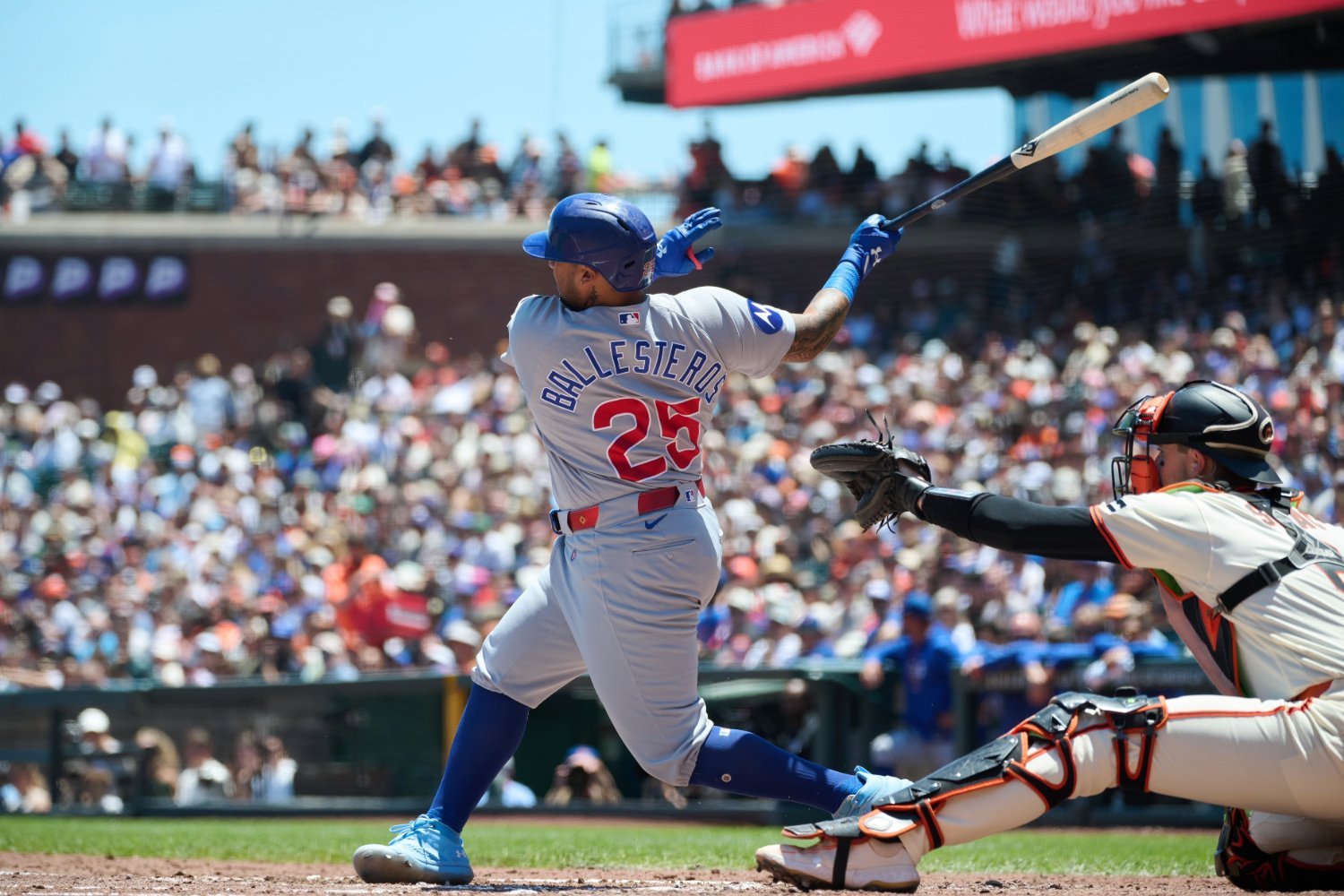 Moisés Ballesteros' second-half audition in 2025 was so impressive that the Chicago Cubs felt comfortable handing him the reigns to the designated hitter spot full-time in 2026. Through 66 plate appearances, he posted a .298/.394/.474 line with proportionally-appropriate 18.2 percent strikeout and 13.6 percent walk rates and a 143 wRC+. The power remained fairly modest (.175 ISO), but he showcased enough of his steadiness that the role was his ahead of this season. Unfortunately, that small sample has not translated into increased success for Ballesteros. He's gotten his opportunity and even the occasional assignment behind the plate, but the iteration of "Mo Baller" the team is seeing over a much more expanded sample in 2026 is a far cry from last year's version. Prior to his gut-punch of a demotion, Ballesteros accrued 175 plate appearances to his name. His line reads a disappointing .231/.303/.385, with a 20.6 percent strikeout rate and a 9.7 percent walk rate. The power that did manifest last season has basically evaporated so far this year, with an ISO of just .154. There's a bit of bad luck baked in there, with a .259 batting average on balls in play, but it otherwise adds up to a hitter that has been below average as illustrated by his 93 wRC+. Much of the reason for this has come as a result of Ballesteros' inability to adjust to how opposing pitchers are working him. Part of what made Ballesteros such an appealing hitter for this group was his contact-oriented profile, supplemented by his ability to make adjustments. He's a mature hitter with fluid mechanics capable of handling various parts of the zone with good efficiency. That combination of factors is what had many believing he could stave off regression after a hot start to the season. Yet the regression monster has, nevertheless, come for Ballesteros due to declining battled ball luck working in conjunction with a deliberate approach on the part of opposing pitchers. The waning luck in his batted-ball fortunes is a little bit less in his control, of course. Ballesteros went for a .345 BABIP in April before it plummeted to just .122 in May. It's rose back up to .300 in June, but that leads us into the second issue with Ballesteros' performance at the plate: Ballesteros' bat path is leading to him both leaning a bit on the late side and consistently under fastballs. Despite above-average bat speed (73.3 MPH), he's working with a 9 degree attack angle that lands close to the flatter side. The former can't compensate for the latter. Which is why we're seeing this kind of trend from opposing arms: In kind of an inverse from what the rest of the Cub hitters are getting, Ballesteros is getting a steady diet of fastballs rather than an increase in breaking pitches. His 51.8 percent rate of fastballs seen represents a seven-percent increase from the season's opening month. That's problematic for Ballesteros, given his run value of -3 against four-seam fastballs and a -1 run value against sinkers. That distinction is important, too. Because while the overall fastball rate has jumped as the months have progressed, sinkers have become an especially relied-upon pitch for opposing hurlers. The nature of his flat bat means that the sinker is going to yield the type of groundball contact that it's designed to. That's when you get something like the obscene 65 percent groundball rate we saw from Ballesteros this month. Of course, the breaking pitches still play their role in all of this. Once pitchers get ahead of Ballesteros via the fastball, whether four-seam or sinker, they're able to get him with a pitch type against which he has a 29.6 percent swing-and-miss rate. That's his highest against any of the three primary pitch groups, which also fails to mention that breaking balls generate the lowest rate of hard contact of any pitching against Ballesteros (36.1 percent). This all means that a significant adjustment must be made on the part of Ballesteros for him to begin to reach the levels of success he demonstrated last year. Either he needs to adjust his swing to get out on the fastball quicker, or adjust the plane of the swing so that he can generate more positive contact against the increasing amount of sinkers and the steady amount of breaking pitches. Luckily, it appears that at least one of those adjustments was beginning to manifest just before his trip back to Iowa. Ballesteros had an intercept point just three inches in front of the plate from March to May that has since progressed to 6.5 inches in June. That could help him to combat fastballs, at least early in counts. The mechanical adjustment likely remains the more paramount one, however, considering his rapidly rising groundball rate. Regardless, that the Cubs have let their young bat go this far into the season without mechanical adjustments does look like something of an indictment of this coaching staff. As opposing pitchers adjust to a young hitter, there's a certain onus on the staff to aid in making the proper adjustments. Craig Counsell quipped about not messing with Ballesteros given his natural IQ. Perhaps some time in Triple-A will allow the organization to revisit that approach. View the full article
 -
The Pitch That Could Take Connor Prielipp To Another Level
DiamondCentric posted an article in Twins Daily
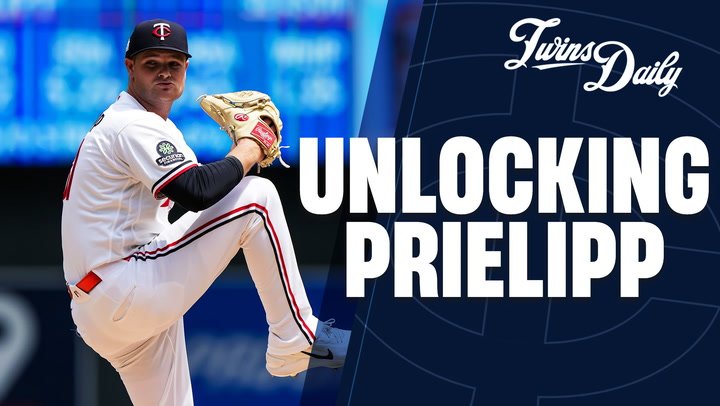 Connor Prielipp already possessed one of the best sliders in the organization. Now he may have an even better breaking ball. View the full article
 -
 Don't let giant offensive outputs overshadow strong mound work for Nashville and Wisconsin. Wilson's consistent ability to walk off its opponents is unreal. Transactions: Nashville Sounds placed RHP Brett Wichrowski on the 7-day injured list. Wisconsin Timber Rattlers activated C Marco Dinges. No word on the nature or severity of Wichrowski's injury. The 23-year-old has made three starts since his promotion from Biloxi. Dinges comes off the suspended list after serving time for his part in a dust-up last week. Nashville Pre-Game Media Notes (unavailable) Final: Nashville 17, Memphis (Cardinals) 3 Box Score and Game Log Via the Sounds, game details, and we encourage readers to always review affiliate write-ups as part of their Link Report routine: Baddoo Ignites Sounds Offense in 14-Run Monstrous Win - Baddoo sets career-high with 7-RBI night; Tyson Hardin earns fourth Triple-A quality start Click here to review a report regarding a serious Akil Baddoo injury in the 8th inning A true shame for Baddoo, as the game summary so clearly details just how productive the 27-year-old veteran has been. It's easy to get caught up in the football score and all the crooked numbers in the box you'll devour, but 24-year-old RHP Tyson Hardin deserves his proper due. We just published our annual Rule 5 projection analysis on Saturday, and you'll note that Hardin is not among the players mentioned. The Brewers don't have to add Hardin to the 40-man roster this calendar year and could preserve that 40-man spot through the offseason. However, if Hardin continues to post (game log here, focus on the seven AAA spots) and the front office believes he can contribute to a playoff push, he'll get the spot early. Amid all the offense, Luis Lara didn't get a chance to pad his numbers, day off. Jett Williams also sat this one out, though that may have been more of a reset. Speaking of the Rule 5, Luke Adams doubled, singled, and walked four times, pushing his OBP to .421, nearly matching his professional career OBP of .423. I've been dismissive of Tyler Black as of late, but he finished a double shy of a cycle, added a walk, and stole his 9th base, yet to be caught stealing in 2026. You saw four videos in the linked game summary above; other clips are available: Black's home run leading off the game Jeferson Quero homered immediately after the Baddoo injury exit Brock Wilken's third hit was an RBI single, and was the lone damage Nashville did vs. a position player Nashville at least has a chance to play big-time spoiler on Sunday. The loss for Memphis places the Redbirds on the brink of elimination heading into the first half finale. The Redbirds must defeat Nashville and Rochester must lose to Toledo for the Redbirds to win the International League first half championship. Go Sounds! Shuckers, Clingstones Postponed Due to Unplayable Field Conditions Resumption of Friday’s game two moved to Sunday as doubleheader, Saturday's regularly scheduled game canceled I kicked off our daily forum thread as follows, alluding to Brock Wilken's unfortunate injured knee during the 2025 clubhouse first-half celebration: If Shuckers Clinch, Nobody Slip in the Clubhouse Celebration, Please The canceled game essentially handed the Shuckers a reduction of one for their magic number, which is now down to one. As for the weather, the Biloxi pre-game media notes indicated; HITTING FOR THE CYCLE (THE WATER CYCLE): Over the last 5 days, the Biloxi/Gulfport/Ocean Springs area has received 14.7” of rain, including 3.7” on Friday night... The average amount for the area for the month of June is 4.2” ... Since May 1, the area has received 29.7” of rain, over 3 times the average rainfall for the two-month span... June 2026, has been the rainiest month on record (15.9”) since June 2017, when the area received 25.8” of rain. So, it's not as though this is a yearly issue, 2026 is a big and annoying outlier in baseball terms. For those in the area truly impacted, it's a serious situation. Wisconsin Pre-Game Media Notes (download link) Final: Wisconsin 14, Quad Cities (Royals) 1 Box Score and Game Log Via the Timber Rattlers, game details: Wisconsin Blitzes Bandits - Rattlers pound sixteen hits in 14-1 win over Quad Cities The T-Rats now have a 26-3 positive run differential two games into the second half standings. Hope you enjoyed the six videos included in the linked game summary. The only video from the team's Saturday 'X' feed not included there was this one, and I'm a sucker for that river view in Davenport, Iowa: Even with all that video, you can watch even more with these four RBI plays off the bats of Andrick Nava, Luiyin Alastre, Josiah Ragsdale and Luis Castillo. All that offense, and Braylon Payne had the night off. It is remarkable the parallels this game had to Nashville's own rout. Please gorge yourself on a breakfast feast of crooked numbers in the Wisconsin box. But like Tyson Hardin at AAA, we have to shine a spotlight on 20-year-old RHP Jayden Dubanewicz, another late-round heist from the 2024 draft (16th round out of a Florida high school). In his two Wisconsin starts since a deserved promotion from Wilson, Dubanewicz has walked none while striking out eleven. Look for the youngster to make the cut the next time our user community votes on the BrewerFanatic Top 20 Prospects Wilson Pre-Game Media Notes Final: Wilson 6, Charleston (Rays) 5 Box Score and Game Log Wilson Capitalizes on Mistakes, Walks Off Charleston - Healy Shuts Down RiverDogs for Win That's as detailed a game summary from Wilson as we've seen, please review and save me a bit of typing recapping a busy night on the farm. There are no direct social media video posts to link to, but MiLB provides: Well, we have to go to the final play, as the Walkoff Warbirds are just insane. Old friend Tom Haudricourt would say this is eleventy-ninth walkoff of the Wilson season. It's close to that figure! From earlier: Handelfry Encarnacion ropes an RBI double Luis Lameda sacrifice fly Filippo Di Turi RBI fielder's choice Kevin Garcia's pop-up sacrifice fly to tie the game Catcher Yannic Walther sat this one out, but you can hear him discuss his German upbringing within our dedicated Warbirds thread. Brady Ebel had a sacrifice fly and walked three times, our Spencer Michaelis' latest feature profile: It wasn't teenage RH starter Carlos Carra's best outing, but it was solid enough. 2025 9th round RHP Andrew Healy out of Duke is starting to stack effective outings. Final: ACL Brewers 4, ACL White Sox 1, seven innings as scheduled Box Score and Game Log We didn't get Statcast data in Glendale for this one, so we can't tell you how hard RF Alexander Frias' two singles were hit, though they were listed as a fly ball to center and a ground ball to center. This was the first scoreless appearance of 19-year-old Bryan Regalado's career. He was a surprise stateside bump after only appearing in two DSL games in 2025. Regalado walked three and hit a batter here but didn't allow a hit and fanned four over his four innings of work. Very effective in a different way was 18-year-old Diustin Mayorquin, who did not walk a batter and limited the damage to one run while scattering six hits. Mayorquin gave up a home run in the final frame before closing things out. Final: DSL Brewers Blue 7, DSL Brewers Gold 4, seven innings as scheduled Box Score and Game Log Blue improves to 10-4, Gold falls to 4-11. Game was scoreless through four innings as Gold RHP Raymond Sarmiento tossed four frames of hitless ball (two walks). Fellow 18-year-old Blue RHP Alejandro Bustamante walked four in three innings but likewise kept his camp complex mates off the board. All heck broke out in the 5th when 17-year-old 6'3" RHP Adrian Bello entered to make his 3rd pro appearance for Gold. Bello retired only one of the eight batters he faced as Blue took a 7-0 lead. (3.46 makes for a decent ERA, but not a WHIP, and Bello's figure represents the latter.) Not only did Gold batters earn 11 walks in the loss, but they were spread among all nine men in the lineup, that's a rarity. So, it's not as though Blue pitching coaches were pleased despite the win. Talk about a vulture, Gold 17-year-old RHP Jesus Vasquez has earned the win in each of his first three professional appearances despite his own 9.53 ERA and 2.82 WHIP. Five errors combined (four by Gold), so as the coaches seek cleaner efforts, this one fell short in that regard. Summer is officially here, everyone, enjoy the five scheduled games on tap, including a hopeful two completed contests in Biloxi wrapped around a first-half title. Organizational Scoreboard including starting pitcher info, game times, MiLB TV links, and box scores Current Milwaukee Brewers Organization Batting Stats and Depth Current Milwaukee Brewers Organization Pitching Stats and Depth View the full article
 -
 Don't let giant offensive outputs overshadow strong mound work for Nashville and Wisconsin. Wilson's consistent ability to walk off its opponents is unreal. Transactions: Nashville Sounds placed RHP Brett Wichrowski on the 7-day injured list. Wisconsin Timber Rattlers activated C Marco Dinges. No word on the nature or severity of Wichrowski's injury. The 23-year-old has made three starts since his promotion from Biloxi. Dinges comes off the suspended list after serving time for his part in a dust-up last week. Nashville Pre-Game Media Notes (unavailable) Final: Nashville 17, Memphis (Cardinals) 3 Box Score and Game Log Via the Sounds, game details, and we encourage readers to always review affiliate write-ups as part of their Link Report routine: Baddoo Ignites Sounds Offense in 14-Run Monstrous Win - Baddoo sets career-high with 7-RBI night; Tyson Hardin earns fourth Triple-A quality start Click here to review a report regarding a serious Akil Baddoo injury in the 8th inning A true shame for Baddoo, as the game summary so clearly details just how productive the 27-year-old veteran has been. It's easy to get caught up in the football score and all the crooked numbers in the box you'll devour, but 24-year-old RHP Tyson Hardin deserves his proper due. We just published our annual Rule 5 projection analysis on Saturday, and you'll note that Hardin is not among the players mentioned. The Brewers don't have to add Hardin to the 40-man roster this calendar year and could preserve that 40-man spot through the offseason. However, if Hardin continues to post quality starts (game log here, focus on the seven AAA spots) and the front office believes he can contribute to a playoff push, he'll get the spot early. Amid all the offense, Luis Lara didn't get a chance to pad his numbers, day off. Jett Williams also sat this one out, though that may have been more of a reset. Speaking of the Rule 5, Luke Adams doubled, singled, and walked four times, pushing his OBP to .421, nearly matching his professional career OBP of .423. I've been dismissive of Tyler Black as of late, but he finished a double shy of a cycle, added a walk, and stole his 9th base, yet to be caught stealing in 2026. You saw four videos in the linked game summary above; other clips are available: Black's home run leading off the game Jeferson Quero homered immediately after the Baddoo injury exit Brock Wilken's third hit was an RBI single, and was the lone damage Nashville did vs. a position player Nashville at least has a chance to play big-time spoiler on Sunday. The loss for Memphis places the Redbirds on the brink of elimination heading into the first half finale. The Redbirds must defeat Nashville and Rochester must lose to Toledo for the Redbirds to win the International League first half championship. Go Sounds! Shuckers, Clingstones Postponed Due to Unplayable Field Conditions Resumption of Friday’s game two moved to Sunday as doubleheader, Saturday's regularly scheduled game canceled I kicked off our daily forum thread as follows, alluding to Brock Wilken's unfortunate injured knee during the 2025 clubhouse first-half celebration: If Shuckers Clinch, Nobody Slip in the Clubhouse Celebration, Please The canceled game essentially handed the Shuckers a reduction of one for their magic number, which is now down to one. As for the weather, the Biloxi pre-game media notes indicated; HITTING FOR THE CYCLE (THE WATER CYCLE): Over the last 5 days, the Biloxi/Gulfport/Ocean Springs area has received 14.7” of rain, including 3.7” on Friday night... The average amount for the area for the month of June is 4.2” ... Since May 1, the area has received 29.7” of rain, over 3 times the average rainfall for the two-month span... June 2026, has been the rainiest month on record (15.9”) since June 2017, when the area received 25.8” of rain. So, it's not as though this is a yearly issue, 2026 is a big and annoying outlier in baseball terms. For those in the area truly impacted, it's a serious situation. Wisconsin Pre-Game Media Notes (download link) Final: Wisconsin 14, Quad Cities (Royals) 1 Box Score and Game Log Via the Timber Rattlers, game details: Wisconsin Blitzes Bandits - Rattlers pound sixteen hits in 14-1 win over Quad Cities The T-Rats now have a 26-3 positive run differential two games into the second half standings. Hope you enjoyed the six videos included in the linked game summary. The only video from the team's Saturday 'X' feed not included there was this one, and I'm a sucker for that river view in Davenport, Iowa: Even with all that video, you can watch even more with these four RBI plays off the bats of Andrick Nava, Luiyin Alastre, Josiah Ragsdale and Luis Castillo. All that offense, and Braylon Payne had the night off. It is remarkable the parallels this game had to Nashville's own rout. Please gorge yourself on a breakfast feast of crooked numbers in the Wisconsin box. But like Tyson Hardin at AAA, we have to shine a spotlight on 20-year-old RHP Jayden Dubanewicz, another late-round heist, this one from the 2024 draft (16th round out of a Florida high school). In his two Wisconsin starts since a deserved promotion from Wilson, Dubanewicz has walked none while striking out eleven. Look for the youngster to make the cut the next time our user community votes on the BrewerFanatic Top 20 Prospects Wilson Pre-Game Media Notes Final: Wilson 6, Charleston (Rays) 5 Box Score and Game Log Wilson Capitalizes on Mistakes, Walks Off Charleston - Healy Shuts Down RiverDogs for Win That's as detailed a game summary from Wilson as we've seen recently, please review and save me a bit of typing recapping a busy night on the farm. There are no direct social media video posts to link to, but MiLB provides: Well, we have to go to the final play first, as the Walkoff Warbirds are just insane. Old friend Tom Haudricourt would say this is the eleventy-ninth walkoff of the Wilson season. It's close to that figure! From earlier in the game: Handelfry Encarnacion ropes an RBI double Luis Lameda sacrifice fly Filippo Di Turi RBI fielder's choice Kevin Garcia's pop-up sacrifice fly to tie the game Catcher Yannic Walther sat this one out, but you can hear him discuss his German upbringing within our dedicated Warbirds thread. Brady Ebel had a sacrifice fly and walked three times, our Spencer Michaelis' latest feature profile: It wasn't teenage RH starter Carlos Carra's best outing, but it was solid enough. 2025 9th round RHP Andrew Healy out of Duke is starting to stack effective outings. Final: ACL Brewers 4, ACL White Sox 1, seven innings as scheduled Box Score and Game Log We didn't get Statcast data in Glendale for this one, so we can't tell you how hard RF Alexander Frias' two singles were hit, though they were listed as a fly ball to center and a ground ball to center. This was the first scoreless appearance of 19-year-old Bryan Regalado's career. He was a surprise stateside bump after only appearing in two DSL games in 2025. Regalado walked three and hit a batter here but didn't allow a hit and fanned four over his four innings of work. Very effective in a different way was 18-year-old Diustin Mayorquin, who did not walk a batter and limited the damage to one run while scattering six hits. Mayorquin gave up a home run in the final frame before closing things out. Final: DSL Brewers Blue 7, DSL Brewers Gold 4, seven innings as scheduled Box Score and Game Log Blue improves to 10-4, Gold falls to 4-11. Game was scoreless through four innings as Gold RHP Raymond Sarmiento tossed four frames of hitless ball (two walks). Fellow 18-year-old Blue RHP Alejandro Bustamante walked four in three innings but likewise kept his camp complex mates off the board. All heck broke out in the 5th when 17-year-old 6'3" RHP Adrian Bello entered to make his 3rd pro appearance for Gold. Bello retired only one of the eight batters he faced as Blue took a 7-0 lead. (3.46 makes for a decent ERA, but not a WHIP, and Bello's figure represents the latter.) Not only did Gold batters earn 11 walks in the loss, but they were spread among all nine men in the lineup, that's a rarity. So, it's not as though Blue pitching coaches were pleased despite the win. Talk about a vulture, Blue 17-year-old RHP Jesus Vasquez has earned the win in each of his first three professional appearances despite his own 9.53 ERA and 2.82 WHIP. Five errors combined (four by Gold), so as the coaches seek cleaner efforts, this one fell short in that regard. Summer is officially here, everyone, enjoy the five scheduled games on tap, including a hopeful two completed contests in Biloxi wrapped around a first-half title. Organizational Scoreboard including starting pitcher info, game times, MiLB TV links, and box scores Current Milwaukee Brewers Organization Batting Stats and Depth Current Milwaukee Brewers Organization Pitching Stats and Depth View the full article
 -
 New York Mets prospect Mitch Voit is showing some promise in High-A Brooklyn with the Cyclones. While it’s been a rough start to the season for the big-league ball club, their young nucleus could be a sign of brighter days ahead. Today, we’ll dive into what separates Voit from most prospects and when to expect his big league debut. Mitch Voit's Updated Mets Scouting Report Voit is a 6-foot, 201 lb middle infielder and the eighth-ranked prospect in the Mets pipeline, per GrandCentralMets.com. He was the team’s first-round draft pick last summer, going 38th overall after playing three years for the Michigan Wolverines in the Big Ten. The speedy right-handed hitter was a two-way talent his first two years of college, chalking up a similar profile to recent Mets prospect graduates Nolan McLean and Carson Benge. However, Voit had internal brace surgery in the summer of 2024 and decided to go the same route as Benge by specializing as a hitter. Channeling that focus on just one side of the game helped Voit’s hitting, as he logged a .346 batting average and .668 slugging percentage with 14 home runs in 56 games with Michigan. After his selection in last year’s draft, Voit wasted no time to get professional reps, as he played 22 contests for the Single-A St. Lucie Mets to cut his teeth. Voit's 60-Grade Run Tool The first aspect of Voit’s game that jumps off of the page is his speed. The 60-grade run tool was on full display last year, as he stole 20 bases in 22 contests and has 43 swipes in 74 total minor-league contests so far. After getting caught just once in the Florida State League last year, it’s clear that Voit has a combination of raw speed and the ability to read a pitcher’s cadence to perfection. While the 21-year-old has been getting most of his work in at second base heading into this year, the speed could come in handy at the shortstop position when it comes to chasing down a ball deep in the hole. Another one of Voit’s strengths is that he’s just a pure athlete. While he may not pitch anymore, he contorted his body and prepared like a pitcher for so long, he’s become more athletic and is used to tweaking his motion. If he needs to fix something in his batting stance, swing path or something else with his fundamentals needs to change, this is someone who has been toying with his game twofold until very recently. Pristine Discipline The discipline also jumps off of the page for Voit. It’s one thing to be naturally athletic or to build up strengths within a skillset, but Voit is drawing walks at a near-10% clip this season. He’s standing at 49 punchouts to 22 walks in his first 237 plate appearances this year, giving him another path to get his chaos-creating speed on the basepaths. If this plate discipline trend stands as he elevates up the Mets’ minor-league system, his floor will rise as a result. Outlook with Mets Voit may only be in High-A, but it’s fair to ask when he’ll ultimately debut in the major leagues. The 21-year-old is projected, per MLB pipeline, to get into the big leagues in 2028. I’d say he’s in line for a late 2027, early 2028 arrival if the power develops. The plate discipline and speed are there; now it’s just about generating some more hard contact to round out what’s already a very impressive skillset. View the full article
 -
 The Brewers have a history of drafting infielders with good gloves, strong baseball IQ to set a high floor, and offensive traits that need patience and development, but if they come together, they can provide a high ceiling. Brice Turang has evolved into one of the best examples of that model, turning elite defensive ability, speed, and contact skills into major league value early on, and then growing into impactful power at the plate, which has elevated him into a different tier. More recently, Cooper Pratt made his big league debut and is already showing similar traits. Brady Ebel may be the latest player attempting to follow a similar path. In fact, the parallels to Turang go pretty deep. They went to different high schools, but both are from the same city (Corona, CA), both are left-handed-hitting shortstops, and both were drafted, and signed, away from LSU commitments out of high school. While Ebel has not received quite the same level of attention or prospect status as Turang and Pratt did at similar stages, there are enough similarities in their profiles to make the comparison worth looking at. He brings a solid defensive floor, a high baseball IQ (Ebel grew up around MLB players, with his father being a coach for the Angels and now the third-base coach for the Dodgers since 2019), and budding offensive ability. Unlike the two before him, there's less certainty that he will stick at an up-the-middle defensive position, though if he winds up at third base, he will likely be above-average or better at the spot. Looking first at a surface level, Ebel has 287 plate appearances this season. How does his production compare to Turang and Pratt through the same sample size in Low-A? Player Season Age PA H 2B 3B HR K% BB% AVG OBP SLG OPS wRC+ SB CS Brice Turang 2019 18.5 288 71 9 3 1 15.60% 14.90% .295 .399 .369 .769 129 15 4 Cooper Pratt 2024 19.7 288 72 10 3 3 19.10% 12.50% .298 .394 .401 .795 133 23 2 Brady Ebel 2026 18.9 287 53 11 2 4 22.60% 18.50% .236 .394 .356 .749 111 21 2 Ebel has gotten off to a slower start than his predecessors, especially when normalized for the offensive environment (wRC+). However, Ebel got off to an especially slow start to the season. He posted a 68 wRC+ through the end of April but has taken off since then. What if we compare the same numbers from Pratt and Turang with the numbers Ebel's been putting up since the start of May? Player Season Age PA H 2B 3B HR K% BB% AVG OBP SLG OPS wRC+ SB CS Brice Turang 2019 18.5 288 71 9 3 1 15.60% 14.90% .295 .399 .369 .769 129 15 4 Cooper Pratt 2024 19.7 288 72 10 3 3 19.10% 12.50% .298 .394 .401 .795 133 23 2 Brady Ebel (since 5/1) 2026 18.9 187 40 9 1 4 23.50% 18.70% .272 .422 .429 .851 134 16 2 He compares much more favorably when you take the April results out of the equation. It should be noted that Ebel is doing it a little differently from those two. Since May 1st, Ebel has a .157 ISO, compared to the .074 Turang was posting in Low-A and the .103 Pratt was showing. He's also walking at a higher clip than those two were, while they were striking out less and had a higher batting average. Turang's power gains came in MLB, and the hope is that Pratt will be able to do the same. Ebel, meanwhile, already seems to be adding legitimate power compared to what he showed in high school. One adjustment he's made has been to the finish of his swing. Ebel looks to be extending through his swing more consistently now, and also finishing higher, which can be a cue that helps the bat path have more loft to it for some hitters. Video from his debut in 2025, compared to a swing from 2026, shows the difference pretty clearly. eycme4.mp4 The other thing that stands out in the comparison video above is that he seems to have already added some good weight to his frame. Brice Turang is listed at 190 pounds now, but he was only 170 pounds when he debuted in MLB, and even that seemed generous. Ebel is already listed at 195 pounds, and that was his weight at draft time. Looking at the difference in his lower half from last season to this season, he is likely over 200 pounds already. Another way to illustrate the power Ebel shows compared to the other two is in his exit-velocity data. According to Baseball America, thus far Ebel has a "102 mph 90th percentile exit velocity along with a league-average hard-hit rate, barrel rate, and air-pull percentage." Pratt's 2025 90th percentile exit velocity in Double-A was 100.7 MPH, and Turang's was 100.8 in MLB, as recently as 2024. While they were facing tougher competition, they were also multiple years older than Ebel at that time. As mentioned earlier, Turang and Pratt had lower strikeout rates than Ebel does at the same level. However, his swing decisions and contact skills are still well above average. There's a strong argument that Ebel is actually further ahead of those two offensively at the same stages of their career. If you look only at the power part of the equation, there's not much of an argument for the other two. Defense is where it's a bit of a different story. Ebel is no slouch with the glove. He's grading out well at shortstop this season, and in a lot of organizations, he'd likely have a chance to stick at the position in the long term. In fact, he likely will remain there as he continues to climb the ladder. To continue the comparison with the other two, Ebel has a .970 fielding percentage this season, while Turang had a .949 fielding percentage at shortstop in Low-A, and Pratt was at .973. Fielding percentage is a bit of a misleading stat, however, and the other two showed better range and more fluid actions, which are extremely important traits for middle infielders and tend to translate into better defensive metrics at the big-league level. Ebel has a cannon of an arm, garnering a 70 on the scouting scale from Baseball America, which would play extremely well at third base if that is where he eventually winds up. That arm helped make up for a couple of bobbles in the Spring Breakout game earlier this year. Jesse Borek of MLB Pipeline wrote that, "All three assists came with a throw that exceeded 88 mph, including the final out of the frame, which clocked in at 91.8 mph." ivqlte.mp4 Pratt is probably the best comparison for Ebel when it comes to running the bases. It's more about instincts and IQ than pure speed for both of them. They have both shown an ability to steal bases at a very efficient clip, and both show a good ability to read balls off the bat, go first to third on singles, and take advantage of defensive mistakes or laziness. Turang is a good baserunner, but he relies a bit more on his pure speed than on the intangibles that Pratt and Ebel have. Ebel seems to be paving a slightly different path than Turang and Pratt, or perhaps he's just ahead of schedule in the power development portion of the blueprint. Either way, there are still two recent, shining examples of high school infielders for him to look to when envisioning his path to an MLB debut in the future. Given his background, his advanced profile, and his early power gains, Ebel has the looks of a player who could rise through the system pretty quickly, much like Cooper Pratt did. What are your thoughts on Ebel? Do you think he's the next in line? View the full article
 -
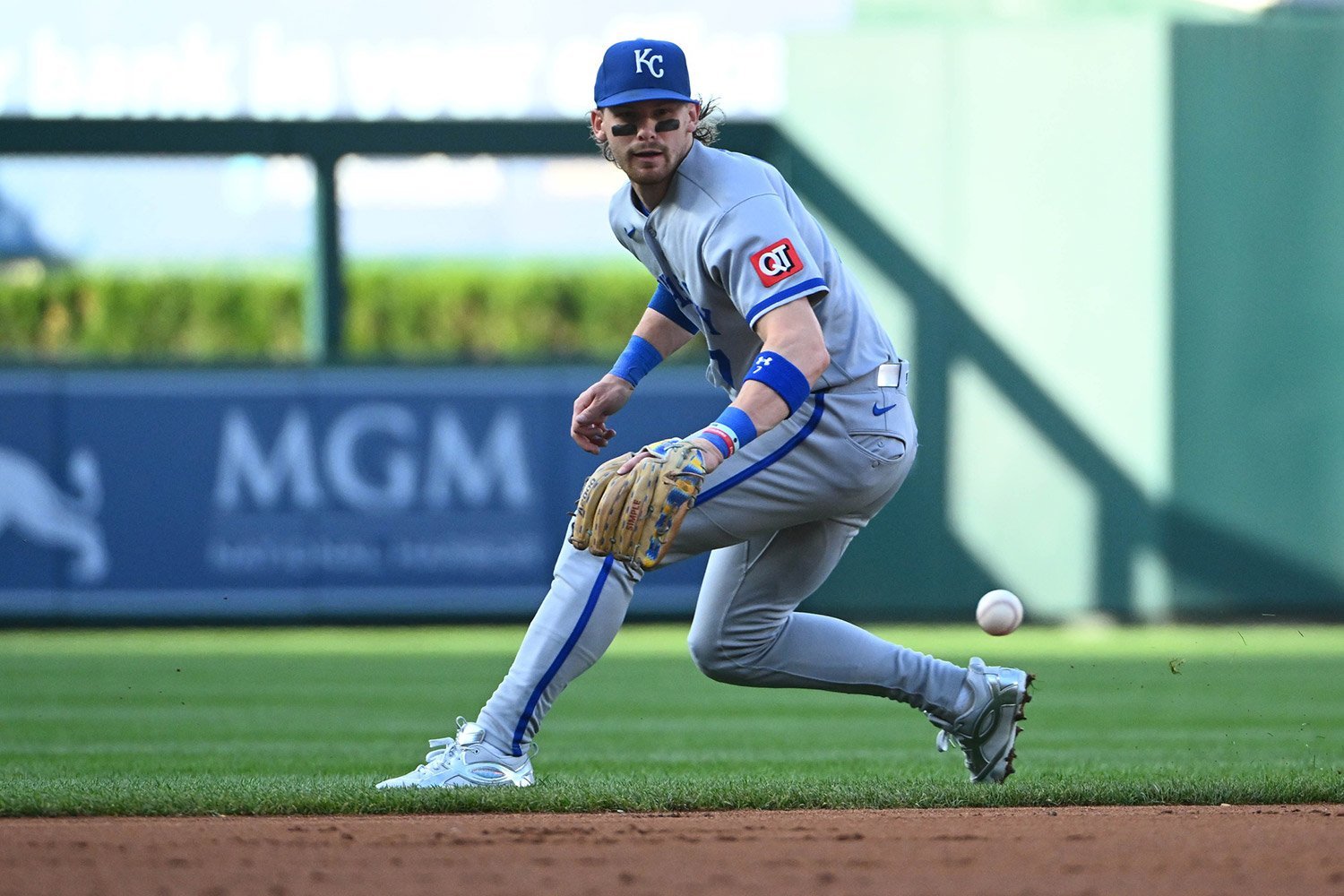 The easiest way to describe Bobby Witt Jr.’s defense is to call him the best defensive shortstop in baseball. The more accurate way is to say he has become the centerpiece of something much bigger. Over the past several years, the Royals have searched for different ways to build a sustainable contender around Witt. Some of those answers have come on the mound. Others have involved improving an offense that has struggled at times to score consistently. Yet one of the organization’s most significant accomplishments has largely flown under the radar: building a defensive core capable of preventing runs at an elite level. That story begins with Witt, but it does not end with him. Since the start of the 2024 season, no player in Major League Baseball has accumulated more Outs Above Average than Kansas City’s shortstop. His +58 OAA leads all defenders, regardless of position. Player Position OAA Since 2024 Bobby Witt Jr. SS 58 Pete Crow-Armstrong CF 52 Jacob Young CF 44 Andrés Giménez 2B 39 Mauricio Dubón 2B 37 The numbers are impressive on their own, but they only tell part of the story. Great defenses rarely depend on a single player. An exceptional defender can steal a few hits. A complete defensive structure can change the way an entire pitching staff operates. That is exactly what Kansas City has built. More Than One Elite Defender The Royals are one of the few organizations that can claim elite defenders at multiple premium positions at the same time. Since 2024, Witt ranks first among all shortstops. Kyle Isbel has established himself as one of the sport’s top defensive center fielders. Maikel Garcia has emerged as one of the most valuable defensive third basemen in the majors. Michael Massey, meanwhile, has become one of the American League’s steadiest second basemen. Together, they form the backbone of nearly everything Kansas City does defensively. Player Position OAA Since 2024 Positional Rank Bobby Witt Jr. SS 58 1st Kyle Isbel CF 25 T-4th Maikel Garcia 3B 23 2nd Michael Massey 2B 12 T-7th Combined, the group has accumulated +118 Outs Above Average. That total becomes even more impressive when you consider what it represents. It is not simply a measure of speed or athleticism. It reflects range, anticipation, positioning, reads off the bat, and consistency across thousands of defensive opportunities. What makes the group fascinating is that each player arrives at that value in a different way. Witt stands out because of the amount of ground he covers. His first step is exceptional, allowing him to reach balls that are simply out of range for most shortstops. Many of the plays that look routine on a highlight reel are only possible because Witt got to a ball that another defender never would have touched. Isbel brings something different. Center field demands speed, instincts, and the ability to process information quickly. Those are precisely the traits that make Isbel valuable. His routes are efficient, his reactions are quick, and his ability to convert difficult opportunities into outs has placed him among the game’s most effective defenders. Perhaps the most interesting case, however, is Garcia. When people think of elite third-base defense, they often picture diving stops down the line or spectacular throws across the diamond. Garcia is capable of both, but his greatest value shows up elsewhere. Since 2024, he has accumulated +24 Outs Above Average on balls hit in front of him, an extraordinary number even among the position’s elite defenders. His ability to attack slow rollers, anticipate choppers, and charge aggressively has become a genuine competitive advantage. Garcia does not wait for the play to come to him. He attacks it before it has a chance to become a problem. Then there is Massey. Unlike his teammates, he rarely generates headlines. His value comes from stability. Second base demands constant versatility: moving in both directions, turning double plays under pressure, providing support on defensive rotations, and serving as the bridge between shortstop and the corners. Massey has developed a rare ability to do all of those things consistently. He may not make the most spectacular play on the field. What he does is prevent routine plays from becoming problems. A Defense Built to Win Games The Royals have not assembled four standout defenders operating independently. They have built talent across some of the most important positions on the field. Witt anchors the defense at shortstop, Garcia has become one of the game’s premier defensive third basemen, and Massey provides stability at second base. Isbel ranks among the most valuable defensive center fielders in the majors. And the story does not end there. Kansas City has also ranked among MLB’s leaders in outfield assists, with Jac Caglianone and Lane Thomas adding another dimension to a defense that not only reaches difficult balls but also prevents extra bases. That combination has helped the Royals establish a clear identity. While much of modern baseball searches for advantages through offensive firepower, Kansas City has turned run prevention into one of its defining strengths. There are still questions that will shape the franchise’s future. The defense, however, is not one of them. When a team features the best defensive shortstop in baseball and elite talent throughout the rest of its defensive spine, it possesses a foundation few organizations can match. View the full article
 -
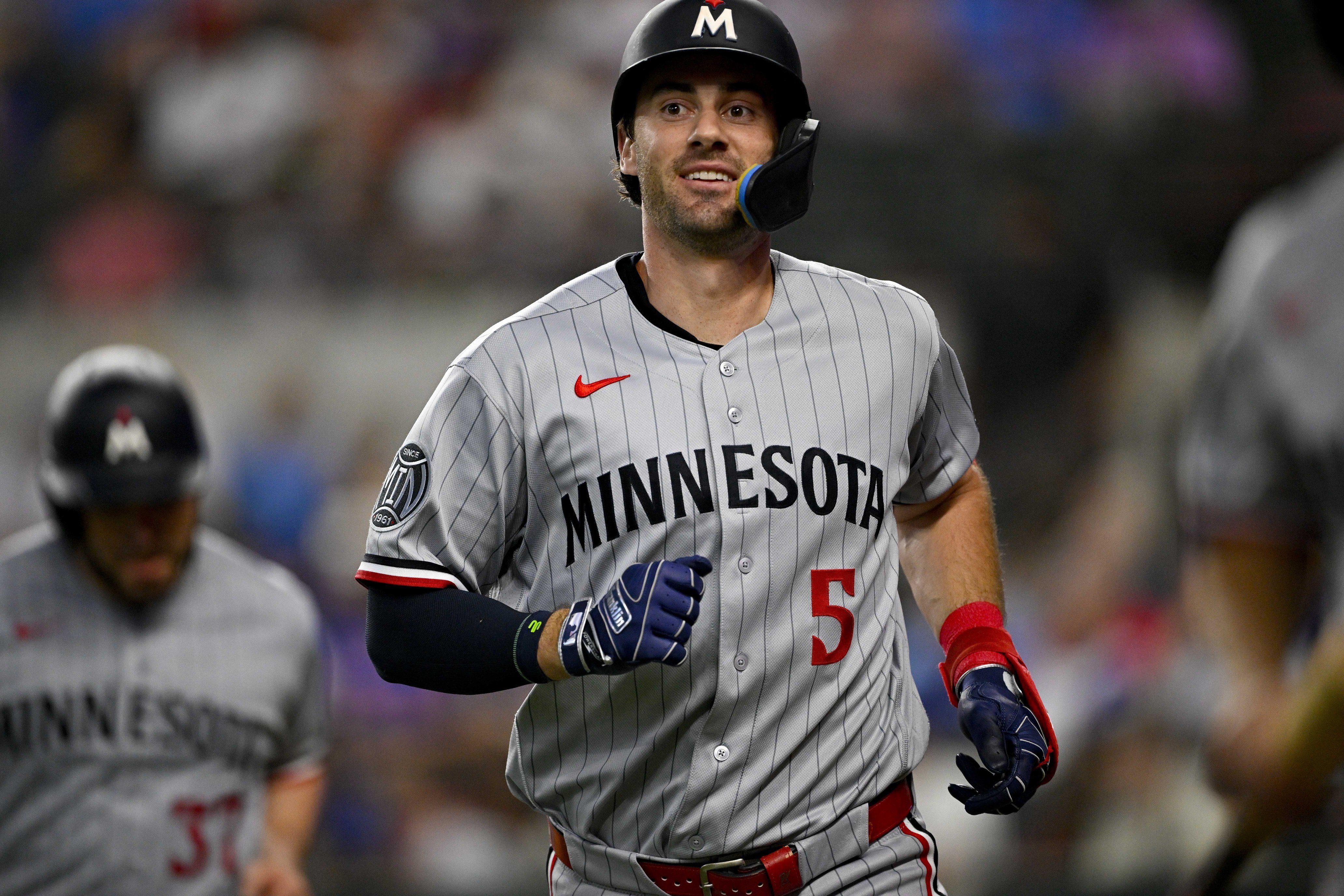 Since Opening Day, the Twins’ shortstop position has been in flux. The club has already had four players play shortstop more than 10 times this season: Brooks Lee, Tristan Gray, Ryan Kreidler, and Orlando Arcia. Lee was the team’s Opening Day shortstop, but he played his way off the position and has not appeared there for over a month. Gray, Kreidler, and Arcia have been fighting for time there since, though Arcia has been designated for assignment and returned to St. Paul, effectively creating a timeshare between Gray and Kreidler at the position. The two inexperienced, though not young, form a natural platoon—Gray is a lefty and Kreidler is a righty—and the Twins have held firm to that setup. They have played Gray at shortstop in every game a righty started since May 23, a game he missed on paternity leave. I’m not one to call for sweeping changes, but is it time to end this type of usage? Gray is not playing like an everyday shortstop. Kreidler probably isn’t an everyday shortstop either, but he can at least defend like one. In May, Lee was moved off the position he had held since last July (when Carlos Correa was traded) due to his defense. And rightly so—Lee was, by some metrics, the worst defensive shortstop in baseball. Even if you don’t trust defensive metrics, which is justifiable, watching him told you that, at a minimum, he was not a good defender. At the time of his move off of shortstop, by defensive runs saved (DRS), he was a league-worst -7. His outs above average (OAA) and fielding run value (FRV) told a similar story, -6 and -5, respectively. The average is 0 on these metrics. In 44 games, he’d only committed two errors, but there were head-scratching plays galore, and many balls he simply could not get to because of his range. Gray has played 24 games at shortstop this season (184 innings), and wouldn’t you know, after Friday night’s game, he’s accumulated -8 DRS, -6 OAA, and -6 FRV. Those figures are as bad or worse than Lee’s, but they’re counting stats. He would be on pace to have accumulated -17 DRS, -13 OAA, and -13 FRV by the time he reached Lee’s 390 total innings (that’s not exactly how it works, but you get the point). If you’re an errors person, he’s already racked up six this season, committing one for every four games he plays at shortstop. Part of the reason Lee was moved to third base was that he isn’t a long-term shortstop, so it was sensible to move him to a place that better suited his skillset. Another part of that move was to help improve the team’s defense today. And they replaced Lee with an even worse defender at shortstop. Kreidler is clearly the superior defender out of the group of four Twins shortstops. He’s made a couple of mistakes defensively this season, including miscommunicating on a pop-up that resulted in Luke Keaschall knocking the ball from his glove, but he remains an at minimum average defender. He’s had only 61 innings at the position this season, but he has been an average defender by DRS and has accumulated 1 OAA and 1 FRV. He came to the Twins with a reputation for excellent play in the field, and compared to Lee and Gray, it’s a night-and-day difference. The issue with Kreidler is his hitting, though. Or, at least, that was the issue with his reputation. Kreidler has not played terribly often this season. He’s only accumulated 80 plate appearances. But he’s hit well enough in that time, slashing .243/.338/.486 (.823), about 20% better than league average. A lot of that is buoyed by his four home runs and 10 walks, and his .383 OPS (yes, OPS, not OBP) casts a cloud over anyone who wants to believe that he’s a competent hitter. But he’s hit enough to at least give him a look at more regular playing time. Kreidler has been slightly better against lefties than righties this season (.821 vs. .809 OPS), though his performance against righties is a bit inflated because three of his four home runs have come against same-handed pitchers (he has a .256 OBP but a .553 SLG against right-handed pitchers). In reality, he’s probably meaningfully better against lefties than righties, which isn’t great for an everyday shortstop candidate whose performance against southpaws also probably isn’t sustainable. However, it’s not as if Gray has lit the world on fire in his platoon-aided appearances. Gray has 126 plate appearances against righties this season, and he’s slashed .252/.294/.365 against them. He had a hot start to the year and was one of the early-season fun stories, slashing .269/.316/.462 (.777) overall through the end of April with three home runs and 13 RBI in 58 plate appearances. Since then, though, he’s cooled off considerably, slashing .222/.261/.296 (.558) overall, and his performance against righties has been just higher, his .608 OPS about 35% below league average. Twins fans (and managers, and front office members) should be under no impression that either Gray or Kreidler is a good hitter, or even an average hitter over a full season. But if neither of them is going to be good, why not play the only player on the team who wouldn’t be in competition for the worst defensive shortstop in baseball? Shortstop is an incredibly important defensive position, and the Twins have largely played poor defenders there. At some point, you have to give the guy who can field the position a shot. Of course, hopefully at some point within the next month, Twins Daily’s #2 prospect, Kaelen Culpepper, will be in that spot. But for now, I feel like I speak for a lot of people when I say that I’m growing weary of watching what’s going on at shortstop. Gray could have a role as a utility infielder, giving the Twins’ bevy of right-handed infielders a day off against same-sided pitching, but we’ve probably seen enough from him as the primary shortstop. Please, just play the sure glove. View the full article
 -
 During the Atlanta Braves’ run of success in the late 1990s and early 2000s, lefty reliever John Rocker was an important but controversial figure. On this day 25 years ago, however, Derrek Lee and the Florida Marlins helped send him packing. In the final game of a four-game set, Lee’s two-run home run in the ninth would end Rocker’s tenure with the Braves. It also gave the Marlins a thrilling 3-2 victory and the series win. After taking two of the first three games from Atlanta, the Marlins were down to their last out at Turner Field on June 21, 2001. With the Braves leading 2-1 after eight innings, Rocker was given the ball to open the inning. The Atlanta lefty had retired Preston Wilson and Charles Johnson but a one-out walk to Kevin Millar put the tying run on base. With two outs and Millar at first, Lee was called upon to pinch hit. Lee was able to get ahead in the count against Rocker before turning on his 2-1 pitch. Lee’s shot cleared the wall in left-centerfield for the go-ahead two-run blast. Chipper Jones singled off Florida closer Antonio Alfonseca to lead off the bottom of the ninth, but the hefty right-hander was able to get Keith Lockhart to pop up before Rico Brogna grounded into a double play to end the game. Braden Looper retired Andruw Jones to end the eighth to earn the win. Prior to Lee’s shot, the Marlins never led. The Braves used productive outs in the second and fourth innings to take a 2-0 lead. Florida broke up the shutout in the fifth when Johnson’s sacrifice fly scored Wilson. Brian Jordan was 2-for-3 and scored both Atlanta runs. Eric Owens had two hits for Florida. As for Rocker, he posted a sub-three ERA in each of his first three seasons with the Braves. One day after giving up the go-ahead home run to Lee, however, the lefty was traded to the Cleveland Indians. He never would return to his early form. As a member of the Indians, Texas Rangers and Tampa Bay Devil Rays over his final three seasons, Rocker went just 5-10 with a 6.00 ERA. His final game as a member of the Braves ended with Rocker blowing the save, taking the loss and giving up the go-ahead home run. It came on this day a quarter-century ago. View the full article
 -
This Might Be Anthony Santander’s Last Real Chance in Toronto
DiamondCentric posted an article in Jays Centre
 Anthony Santander is about to start over again, but not in the way the Jays hoped when they signed him in January 2025. Santander was supposed to be a middle-of-the-order presence with real power. Instead, as he inches back toward a bat-in-hands routine, he feels more like a question mark than an answer. MLB’s Keegan Matheson relayed what John Schneider told reporters on Thursday: Santander is scheduled to start hitting “either this weekend or next,” and “there’s a shot he could definitely be a factor.” That doesn’t really tell us much, other than he is able to swing a bat. Like we’ve seen with some of the pitching staff, the Jays are not in a hurry to get players back on the field. Instead, they are taking a safer, health-first approach. That is especially true with Santander, who might have returned a bit too quickly last year, eventually landing him back on the injured list. Before signing with the Jays, Santander was one of baseball’s more productive switch-hitting sluggers. Across eight seasons in Baltimore, Santander was both consistent and quietly elite in bursts. He hit 33 home runs in 2022, 28 in 2023, and then exploded for 44 in 2024. That year, he also drove in 102 and had an .814 OPS, placing him among the game’s most dangerous hitters. He made the All-Star team. He won a Silver Slugger. He did it as a switch-hitter, joining an exclusive historical group to ever reach that home run total. When he was signed, the Jays were expecting a middle-of-the-lineup bat to force opposing pitchers to give Vladimir Guerrero Jr. some pitches to hit. Santander has a .241 average over his career with 161 home runs and a .763 OPS. Santander signed a five-year, $92.5 million deal. It carries an average annual value of $18.5 million, with options and deferrals that stretch the commitment even further. There clearly was an expectation that he could keep up his later-career breakout. So far, in limited action, he has stumbled. In his first season with the Blue Jays, he struggled immediately. In 54 games, he hit .175 with six home runs and a .565 OPS. Most of his woes have been attributed to injury. As a Jay, Santander has never looked fully right, even before the injuries were made public. His bad shoulder eventually required labral surgery earlier this year. There’s no question the Jays would dearly love the 44-home-run version of Santander to show up tomorrow, but it is late June, and his ramp-up, in the best-case scenario, wouldn’t culminate in a major league at-bat until August. And while the focus has understandably been on health, the bigger question is harder to answer. If Anthony Santander comes back, can he even be that impact player? The last version of Santander was one of the least productive stretches of his career. His 2025 OPS sat at .565, far below his career .762 mark, and his power output cratered. Is this recovering version of Santander his last real chance to return to form? Or does his contract guarantee that the Blue Jays will keep giving him runway, no matter how crowded things get? The 2026 Blue Jays are not desperate for outfield help. They are juggling it. George Springer has shifted into a regular DH role, and Daulton Varsho has returned to a mix that already included Nathan Lukes, Myles Straw, and others. Even before factoring in Santander’s absence, this was a roster where spots in the outfield were at a premium. Santander doesn’t provide a lot of versatility. If his bat doesn’t materialize, then does the team need a below-average fielder and runner in the outfield? Yohendrick Piñango and Jesús Sánchez have more speed and have demonstrated they have pop too. Don’t forget that Addison Barger is also nearing a return. So if Santander comes back and looks like the 2025 version of himself, where exactly does he play? When a team commits nearly $100 million to a player, it tends to create opportunity. The Blue Jays did not sign Santander to be a bench piece or a situational bat. They signed him to make an impact. The Jays will be in a bind if he returns as the 2025 version. He is owed significant money through 2029, and there won’t be a market for his services. His return will not just put pressure on his (recovering) shoulders to perform, but also on the team to figure out what to do. If there is any positive in this situation, it is that Santander needs a long runway to work himself into shape. There is no rush for anyone, and that might push a potential return beyond this season. Santander is not just working towards 2026; he’ll also be working toward 2027 and beyond. If he flashes the old power, even inconsistently, this could be a happy story. The Blue Jays can point to health as the missing piece, trust the track record, and plan accordingly. If he does not, his deal will go down as one of the worst in team history. Santander is not returning to a team waiting for him to save them. He is returning to a team that has learned to survive without him. When Schneider says there is a shot Santander could be a factor, the wording was probably deliberate. A shot. Because right now, that is exactly what this is. A shot that the player who hit 44 home runs not long ago can show up again. A shot that the shoulder heals cleanly, that the swing returns, that the timing clicks before the season runs out. A shot that the contract is worth it. The Jays will continue to give him a shot. His contract guarantees that. Whether he turns it into something more will decide everything. View the full article
 -
6 candidates to represent Marlins at 2026 Futures Game
DiamondCentric posted an article in Fish On First
 There has been plenty of discourse lately about this year's potential Miami Marlins All-Stars. Don't forget that on July 12, two days prior to the Midsummer Classic, there will be another exhibition at Citizens Bank Park, featuring ballplayers who aren't household names yet, but have the talent to become ones. A handful of Marlins minor leaguers are deserving of participating in the 2026 Futures Game, though the most likely scenario is the organization will be limited to two reps. The Futures Game is not solely about rewarding minor league production. With all due respect to the strong statistical first halves that Carter Johnson, Emilio Barreras and Luis Palacios have had, their perceived upside as prospects is not high enough to get them into this conversation. Selections are usually young relative to their current level of competition. Another complicating factor is that MLB orgs themselves have a say in the process. Some have ulterior motives beyond simply sending their top-rated prospects. I'm fairly confident that the Marlins delegation will be a combination of the following names. RHP Karson Milbrandt FOF Top 30 rank: No. 9 2026 MiLB levels: Double-A/Triple-A MLB ETA: early 2027 Milbrandt is the most qualified Futures Game rep that the Marlins have had in a long time. His case begins with having limited opponents to nine earned runs in 12 starts for a jaw-dropping 1.31 ERA. The homegrown right-hander ranks second in the Marlins system in innings pitched (62) and strikeouts (85). Milbrandt entered 2026 with substantial long-term reliever risk. His improvement against left-handed batters, who have gone 13-for-99 off him with 46 Ks this season, now gives him a brighter outlook. SS Aiva Arquette FOF Top 30 rank: No. 6 2026 MiLB levels: High-A/Double-A MLB ETA: mid-2027 Arquette, on the other hand, has the weakest statistical case among my handpicked Futures Game "finalists." He posted an 80 wRC+ through his first 21 games with Double-A Pensacola (100 represents league average). However, he was the Marlins' top draft pick last year, makes plenty of hard contact and looks like a viable defender at shortstop. OF Dillon Lewis FOF Top 30 rank: No. 4 2026 MiLB levels: Double-A MLB ETA: mid-2027 Lewis is a new addition to the Marlins after headlining January's Ryan Weathers trade package. He has fully met expectations thus far with a very consistent campaign in Pensacola. The athletic right-handed hitter paces all Marlins prospects with 15 home runs while slashing .238/.318/.502 and going 14-for-16 on stolen base attempts. His speed and batted ball angles have kept him out of double plays (only 1 GIDP in 258 PA). A yellow flag: his strikeout rate has jumped from 23.5% last year to 30.6% this year. Health permitting, Lewis will get a taste of Triple-A competition before season's end. SS Starlyn Caba FOF Top 30 rank: No. 5 2026 MiLB level: High-A MLB ETA: early 2028 Caba had a lousy debut season in the Marlins org in 2025. Thankfully, he recalibrated during the Arizona Fall League and has sustained that high level of play with the Beloit Sky Carp. Caba is the best fielder in this article, if not the best in Miami's system, period. We already knew that a year ago. The most exciting change has been the 20-year-old's maturation in the power department, slugging .437 after previously owning a career mark below .300. A switch-hitter, he's been dominant against right-handed arms (slashing .300/.462/.527 with 5 HR). Caba's well-rounded game and the obvious step forward he has taken from the previous year make him the most deserving Marlins position player, in my opinion. OF/1B Kemp Alderman FOF Top 30 rank: No. 7 2026 MiLB level: Triple-A MLB ETA: late 2026 Alderman is Miami's reigning Minor League Player of the Year, though he wasn't a 2025 Futures Game selection because his best stretches of production occurred during the second half of the season. His 2026 campaign was interrupted by an elbow injury. He returned from the IL earlier this week. Alderman's power to the opposite field is awe-inspiring, as is his arm strength in the corner outfield spots. He has been learning to play first base on a part-time basis, which should hasten his arrival to the majors. Like Milbrandt, Alderman is doubtful to be eligible for another Futures Game after this one, so that element of urgency may get him the nod. OF Cam Cannarella FOF Top 30 rank: No. 10 2026 MiLB levels: High-A/Double-A MLB ETA: mid-2027 Cannarella has missed the most time due to injury among the serious candidates (limited to 34 games), but he's been elite at the plate while primarily patrolling center field defensively. He leads all full-season Marlins farmhands in batting average (.366) and on-base percentage (.434). View the full article
![More information about "[COPY] - Week in Review: Injuries Amplify a Tough Homestand for the Royals"](http://d317trerw33y7b.cloudfront.net/monthly_2026_06/rssImage-1c9d59d13fb46cba47eea33e37a92022.jpeg.efb8d5b7b2ec256eff8c2b40acfdbc3e.jpeg)
