


DiamondCentric
-
Posts
2,631 -
Joined
-
Last visited
Never
Content Type
Profiles
Forums
Events
News
Tutorials & Help
Major League Baseball Videos
Guides & Resources
Store
Downloads
Gallery
Everything posted by DiamondCentric
-
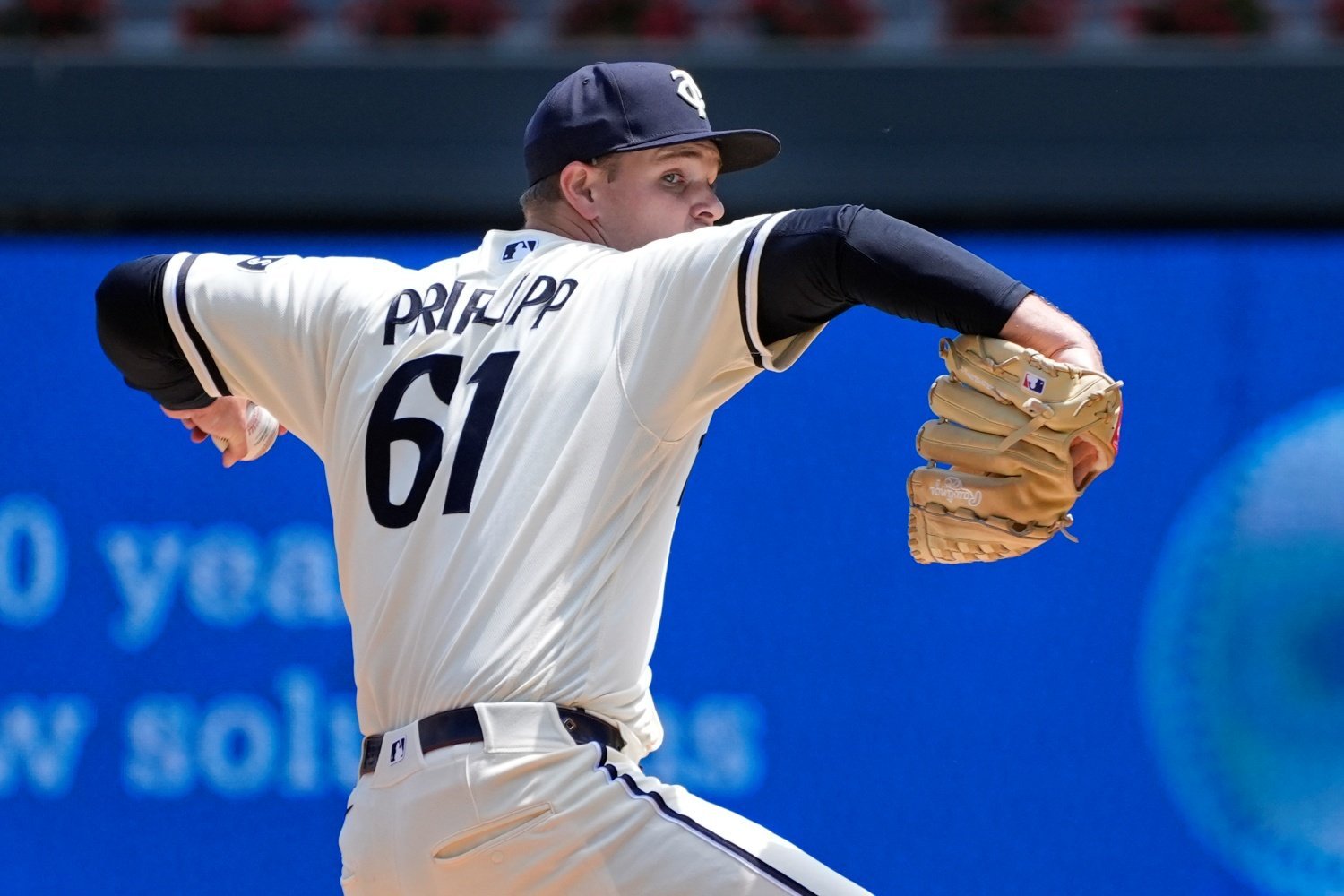 There are few pitchers in the Twins' organization whose raw stuff can match Connor Prielipp's. Ever since his freshman season at the University of Alabama, it was obvious the left-hander possessed the upside of a frontline major-league starter. Injuries altered that path considerably, but now that he's finally healthy and pitching in the big leagues, we're getting a better look at what his arsenal actually looks like against major-league hitters. And thanks to Statcast's new swing timing data, we're also getting a better idea of which pitches are working, and which ones aren't. At first glance, Prielipp's overall whiff rate doesn't look particularly impressive. His 22.2% mark would rank in just the 28th percentile among major-league pitchers, hardly the profile of a dominant swing-and-miss arm. But part of being a young pitcher is figuring out what plays at the highest level. The pitches that made you successful in college or the minor leagues aren't always the ones that generate the best results at the highest possible level of competition. For Prielipp, that learning process has been fascinating to watch unfold. Let's start with the fastball. Coming through the minors, Prielipp's fastball-slider combination was viewed as the foundation of his arsenal. The slider earned 70-grade projections from scouts, while the fastball's velocity and characteristics gave hitters plenty to think about. While the slider has largely held up, the fastball has been a different story. Interestingly enough, the swing timing data isn't entirely negative. Hitters have been late against Prielipp's four-seamer at times, suggesting the pitch still has enough life to disrupt timing. The problem is what happens when they actually connect. Opposing hitters own a .558 slugging percentage on fastballs put in play, and the pitch has generated just a 14% whiff rate. That's the lowest mark among his entire arsenal. Hitters aren't consistently missing the pitch, and when they do make contact, they're doing damage. That's shown up in the batted-ball profile as well. A significant portion of the hard contact Prielipp has allowed this season has come against the fastball, which has tended to play more as a fly-ball pitch than a true bat-misser. It needs to be that, too, because based on the way hitters are centering the ball on the barrel (in the left-hand image), they're going to hit it hard when they connect. (Centering the ball on the barrel controls exit velocity more than lining it up vertically or timing it perfectly.) The good news is that Prielipp hasn't relied on the fastball as a put-away pitch. That's where the breaking balls come in. His slider remains a weapon. Hitters are whiffing on roughly 28% of their swings against the pitch, and the swing timing data paints a pretty clear picture of why. Opposing hitters are frequently early and have given some ugly swings, off in multiple dimensions. It's still every bit the plus pitch scouts thought it could be. But oddly enough, it may not even be his best breaking ball anymore. That distinction belongs to the curveball. Added to his arsenal ahead of the 2026 season, the curveball has quickly emerged as one of the most effective pitches he throws. Hitters are whiffing on 34.4% of their swings against it, making it his best swing-and-miss offering by a comfortable margin. The swing timing data is even more encouraging. Unlike the fastball (which hitters occasionally square up despite being late) or the slider (which they're often way off on, but which they also meet perfectly surprisngly often), opposing hitters look completely uncomfortable against the curveball. They're frequently committing too early, swinging over the top of it, and generating exactly the kind of ugly swings pitchers love to see. Quite frankly, it's been a better pitch than the slider, which is saying something. The underlying characteristics help explain why. Prielipp's curveball is averaging nearly 3,200 RPMs of spin, a truly elite number. Not only is it generating more whiffs, but Prielipp has increasingly trusted it in put-away counts as the season has progressed. That evolution has become evident in his pitch usage. Early in the season, Prielipp leaned heavily on the slider. In his first couple of starts, he threw it more than 50% of the time, while the curveball accounted for less than 10% of his pitches. Those numbers have since gradually converged. In his most recent start, he threw only one more slider than curveball, and it’s hard to imagine that’s a coincidence. Pitchers adjust based on results, and right now the results are telling Prielipp that his curveball deserves a larger role. None of this means the fastball can't improve, nor does it mean the slider has taken a step back. Both pitches have shown flashes of being highly effective major league offerings. But if the swing timing data is telling us anything, it's that Prielipp may have discovered something even better. If he can consistently throw the curve for strikes (or for convincing strike-to-ball chases), it might be the most lethal arrow in his quiver. He was already a fascinating pitcher with a fastball-slider combination capable of overpowering hitters. Now he's pairing those pitches with a curveball that has quickly become one of the nastiest offerings in his arsenal. And if that pitch continues to perform the way it has so far, the path to becoming a frontline starter becomes a whole lot easier to envision. View the full article
 -

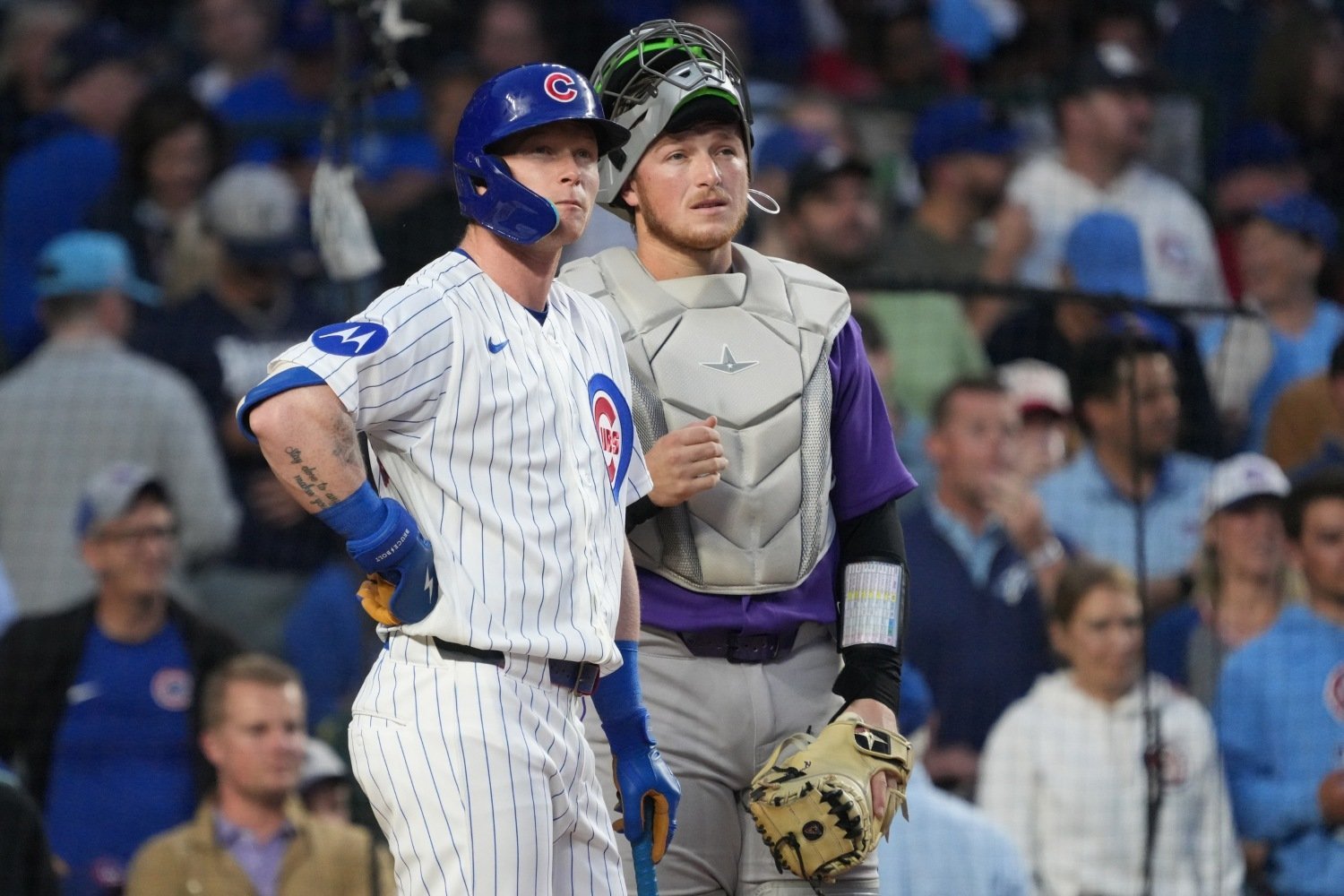 There's no more lethal offensive player in the majors right now than Pete Crow-Armstrong. He's not at all likely to stay this hot, and to maintain an edge in batting and baserunning brilliance over the likes of Shohei Ohtani and Bobby Witt Jr., but over the last four weeks, Crow-Armstrong has been raking at a historic rate. He homered in his third straight game Wednesday night—a batted ball that both affirmed how locked-in he is and reminded everyone that any good hot streak requires a bit of good luck. For those who didn't see it, here is the homer Crow-Armstrong hit in the bottom of the fourth inning. It's equal parts majestic and silly. ZU53MW9fWGw0TUFRPT1fQVFZQVVWUUZVUVVBQVZWVFVBQUhVZ1lBQUZrQVZRY0FCRkZRQTFaV1ZRSmRBbEVD.mp4 Believe it or not, this isn't the highest homer of Crow-Armstrong's career. Last April, he hit a pair of skyscrapers with launch angles similar to the 41° on this one during the same April road trip to the West Coast, and he added another in Detroit last June. However, as you can see, it's reasonable to debate whether he really even hit a homer this time. The ball sure appears to be foul, doesn't it? It's very close, and after a crew chief review and consultation with the league's replay center in New Jersey, the call stood. But I mean, it looks foul. We didn't get a great camera angle on it, or at least, not a steady enough one to see what really happened, but even Crow-Armstrong seemed surprised when he got to keep his dinger. First, let's talk about this looked so much like a foul ball, but really might have been fair. As you probably know, Wrigley Field has the deepest foul poles of any park in the majors, which is part of why this was in question—but which also might turn out to be why he got the call. According to Statcast, this only would have been a homer in 20 parks—not because it wasn't hit far enough, but because in the other 10, it would have twisted foul before reaching the pole. Statcast's flight tracking on batted balls like this is less precise than the league would like you to believe, but its story is (in brief) that the ball flew foul, but managed not to do so until after reaching the pole. Crow-Armstrong hit another ball on which that was the case earlier this year, in Tampa, but because the foul pole is much closer to home at Tropicana Field, that homer was uncontroversial. Ok, but Statcast's eyes aren't human ones, and you and I are sometimes smarter than it is. This one can't have been fair because it waited long enough before twisting foul, because it was foul before it got to the pole. If anything—there really is a chance this happened, but we can't prove it either way based on the video feeds we've seen—the ball was foul as it passed the front of the pole, but was coming back toward the field and kissed the back side of the pole on its way by. Here's the first frame (from the Marquee broadcast) in which the ball appears as it falls steeply from its great height, already quite close to the pole. That looks foul, but just to reassure you that it's not merely a camera-angle or still-frame confusion, here's another moment in its descent, wherein it's clearly getting closer to the pole, taking an unusual angle for a batted ball headed to either corner—but especially to a batter's pull field. Now, here's the moment that I would guess led both to the initial call and to its being upheld, though not confirmed outright. The ball pretty clearly hits the line on which the flags atop the pole are flown, and although I'm not sure whether those lines count as part of the pole, it also looks like it probably hits the pole itself, anyway. It's an extremely difficult call, because it's such an unusual batted ball. Either way, I don't think you can blame the umpires or the video center for what they decided. Few balls come down that steeply, right at the pole, like a tee shot on a Par 3. Even fewer start foul, then come back toward fair territory. Let's talk a little about how that happened. The wind was in Crow-Armstrong's favor here. At that very moment in the evening, a storm was brewing to the west, and the wind was gusting pretty impressively at times, from the south-southwest. That pushed this ball toward fair territory, and because Crow-Armstrong hit it so high and not overwhelmingly hard (under 100 MPH off the bat), the wind had lots of time to act on it. But the way Crow-Armstrong met the ball was also a factor. He caught this thing 53.6 inches—near four and a half feet!—in front of his center of mass. His attack direction (the horizontal angle of the barrel at the point of contact) was 21° toward his pull field. He flattened out his swing gorgeously to handle a sweeper that stayed up, but he still caught it off the end of the bat and got under it. If his bat speed weren't an eye-popping 85 MPH on the swing, the ball wouldn't have come anywhere near being fair, or a homer. Since he did clip it that way, though, Crow-Armstrong produced a ball that wasn't destined to hook, the way most pulled fly balls do. In fast, the combination of attack direction, attack angle, ball and bat speed and placement of ball on bat better mimicked a fly ball hit to center or left-center by the lefty batter; everything was just turned about 45° to the right. So, while it seems absurd, yes, this ball probably was fair—and while the elements helped, so did Crow-Armstrong's unique ability to produce huge bat speed and catch the ball well even when his timing is slightly off. Statcast's rendering of the ball's flight, by the way, shows it hitting the pole—though again, the precision of the data isn't good enough to call that conclusive, and anyway, the ball is not as wide as the tracer on this visual. Whatever help you think he got—from the umps, or from Zephyrus, or from a truly lousy pitch by Ryan Sullivan—Crow-Armstrong hit his third homer in as many nights, and now has 10 bombs (en route to a 1.203 OPS) since May 22, which we've identified as the start of his historic heater because of the changes he made then to his stance and setup. To wrap this conversation, let's look at the way those changes have affected his ability to be on time—and what happens when he isn't. As you surely remember, Crow-Armstrong was tremendous in the first half of 2025, but he slumped badly over the final two months. He also started this season sluggishly, despite his boost in bat speed. Unlike superficially similar hitters who go into similar slumps, though, Crow-Armstrong never did have a big strikeout binge in there. From August 1 through the end of last year, he only struck out 51 times in 200 plate appearances. That's more than you'd like, but it's not far from his baseline at all. Crow-Armstrong's problems, when he's had them, have been about getting himself out by swinging at bad pitches and hitting them weakly. As such, the best way to tell whether he's locked in is by how well he's timing and squaring up the balls he does put in play. Here are the numbers, drawn from Statcast's new swing timing metrics, on Crow-Armstrong being on time (as opposed to early or late) and centering the ball on the barrel of his bat (as opposed to finding the end or the label/handle), over four spans: the first half of last year, the second half, and before and after that May 21 off day we've talked about as his moment of turning it on this spring. Span On Time % Centered % 1st Half, 2025 83 78 2nd Half, 2025 76 81 2026 thru 5/20 83 74 2026 since 5/22 88 79 It's pretty straightforward, in that first column. Crow-Armstrong started to mishit a lot of balls late last year, because he was often early even when he put the ball in play. That's a problem. He got it fixed to begin this year, but has really turned it on since changing his setup in the box to make himself more selective and better able to adapt his swing to what he sees out of the hand. The second column tells a messier story. Where on the bat you hit the ball, horizontally, broadly controls how hard you hit it. Almost all hard contact comes when the ball is centered on the barrel. Pitchers get ground balls with sinkers not by making you hit the top of the ball, but by getting in on your handle. Guys whose fastballs are straight give up more power than those with some wiggle, because the ball tends to crawl just off the sweet spot. Yet, Crow-Armstrong was centering it on his barrel as often during his struggles late last season as he ever has. Why didn't he come up with better results? Well, firstly, we come back to the timing question. He was often early on the balls he did center, which meant that he sometimes hit the top of the ball: QndvTWJfWGw0TUFRPT1fVkFZQ1VnY01CMUFBQ1FRTFVnQUhBUU1IQUZnQlVsSUFDZ0FFQWdJTUNRUmRCd29F.mp4 But even when he stayed beneath it, he was often running out of barrel, and would hit it off the end of the lumber. WEQybDJfWGw0TUFRPT1fQkZNRUFnVlNBQWNBVzFOWFh3QUhWQTVUQUZoUVYxY0FBQUFGQ1FkUlVGWmRVUUpS.mp4 This comes back, in a strange little way, to last year's hot topic: the torpedo bat. Not everyone has the same sweet spot on the bat. When Crow-Armstrong is on, he will sometimes be tied up slightly, and have the ball run up his bat toward the label. Broadly speaking, the centered stat still tells us something useful about Crow-Armstrong's contact profile, but it's not telling us the same thing as the same number would tell us about another hitter. If Crow-Armstrong is centering it on the barrel more often than usual, he's probably doing so on balls that belong slightly up the barrel toward his hands, and he's probably wasting too many of his best swings by catching it off the end of the bat. But there's another key reason why he's been more productive this year, while centering the ball on the barrel less often. It's the other main variable in the equation for exit velocity. If the degree to which you center the ball on the barrel decides the "mass" in the force equation, then it should be obvious what else we need to look at: "acceleration," or bat speed. So let's do that previous table again. Span On Time % Centered % Bat Speed 1st Half, 2025 83 78 74.3 2nd Half, 2025 76 81 73.9 2026 thru 5/20 83 74 77.9 2026 since 5/22 88 79 76.3 Swinging much, much faster this year has allowed Crow-Armstrong to thrive even when he slightly mishits the ball, in terms of horizontal barrel location. He got way, way faster this year, and once he learned to rein that in just enough to also be on time, it didn't matter that much whether he found the very center of the barrel or not. Those already getting familiar with these numbers might wonder where the usual third column for them is. The way Statcast reports the data on whether hitters are over the ball, under it or lined up with it vertically, we can't get much out of looking at that for balls in play. Virtually all balls in play count as Lined Up, by Statcast's reckoning, so I left out a couple of 99% and 100% figures to ease our collective numerical digestion. However, teams and players can use this data differently, and in a way, so can we. Here are the timing distributions in all three dimensions for Crow-Armstrong's swings in the second half of 2025, and for all of 2026 to date. With Statcast's tolerances, the area described as Lined Up is 4 inches wide. That's wider than both a ball and the barrel of an actual bat. Naturally, then, anything you hit into the 90° wedge that is fair territory was probably met solidly enough to count as Lined Up. But that also means that there are more and less valuable ways to be Lined Up. I've drawn boxes to show that, late last year, Crow-Armstrong was slightly above the center of the ball slightly more often than he has been this year, even isolating the balls he lined up well enough to put in play. I've also shown how he's more often very slightly below the center of the ball this year. Thence come the hard fly balls and line drives. You can also spot some of the things we've already discussed in these plots. Crow-Armstrong is much less prone to be early on balls in play than he was last year, even though he was very early on the one Wednesday night. He's also living more in his sweet spot, just off the technical center of the barrel, whereas in the second half of last year, he was less likely to miss the barrel by a big margin but had a more diffuse distribution along the bat, because he just wasn't locked in and delivering his well-engineered pull-it-in-the-air stroke consistently. The winds of fortune are blowing Crow-Armstrong's way right now, but he's also making his own luck. This is as good as any Cubs hitter has looked over this long a period since before the pandemic, and yes, the echoes of Sammy Sosa's 1998 are only getting easier to spot. Wednesday's homer was just the latest reminder that Crow-Armstrong can do things on a diamond that no one else can do, right now. View the full article
 -
 Blue Jays Affiliate Overview (June 13-15) Triple-A Buffalo Bisons Series vs Charlotte Knights (Chicago White Sox): 1-1 Season Record: 34-37 Double-A New Hampshire Fisher Cats Series vs Birmingham Rumble Ponies (New York Mets): 2-0 Season Record: 33-30 High-A Vancouver Canadians Series vs Spokane (Colorado Rockies): 0-1 Season Record: 26-39 Single-A Dunedin Blue Jays Series vs Lakeland Flying Tigers (Detroit Tigers): 2-0 Season Record: 30-34 FCL Blue Jays Week Record: 0-1 Season Record: 22-10 DSL Blue Jays Blue Week Record: 0-1 Season Record: 3-9 DSL Blue Jays Red Week Record: 0-1 Season Record: 4-8 Triple-A Buffalo Bisons Season Record: 34-37 Series vs Charlotte Knights (Chicago White Sox) June 16: Buffalo faced off against a Charlotte Knights squad on Tuesday that featured a number of major league players on rehab assignments. Noah Schultz, Kyle Teel, and Jordan Hicks would all be in the game for the Knights, but Buffalo had an answer for most of them. Teel did get a hold of a pitch from Lazaro Estrada in the top of the first inning for a two-run home run, but Buffalo answered with a two-run blast of their own from Sean Keys off of Schultz in the bottom half of the inning. Jonatan Clase then unloaded on a pitch from Hicks in the fourth inning for a three-run home run. C.J. Stubbs got in on the home run party in the bottom of the fifth with a solo home run to left, his first of the season at Triple-A. The Knights got two solo home runs as well in the top of the sixth inning that cut the Buffalo lead down to 6-4. Buffalo would pull away, though; they scored three more runs in the bottom of the sixth, highlighted by Keys’ RBI single to left. Buffalo ran away with this game and won 9-5 against some of the Chicago White Sox's major league players. June 17: Shane Bieber was on the mound Wednesday for Buffalo, in a start that will hopefully be the last of his rehab assignment. He looked serviceable in the first inning, getting a fly out and a double play, following a lead-off walk. It went south in the second, he gave up an RBI single and a three-run home run, putting Buffalo in a big 4-0 hole early in the game. In the third, Bieber again needed a double play to wipe out a walk. In the fourth, Bieber loaded up the bases before getting a strikeout to end the inning. While in the fifth, it was again a double play that aided him in working around runners on base. Buffalo did send Bieber out to start the sixth inning, but yanked him after he gave up a lead-off home run to Ryan Gelanie. The bats were about as bad as Bieber was on the mound. They only managed six hits and one run, the lone run being a Sean Keys solo shot to right. Buffalo fell in a game that was rough all around, 5-1. Double-A New Hampshire Season Record: 33-30 Series vs Birmingham Rumble Ponies (New York Mets) June 16: Danny Thompson Jr. was on the mound for New Hampshire as they kicked off their series against the Binghamton Rumble Ponies on Tuesday. It was his first Double-A start, and he was fantastic, going four innings and not allowing a hit, with one walk holding him back from being perfect over those innings. He also struck out three batters. Alex Amalfi came in for Thompson and was almost equally good. He threw four innings as well and only allowed one hit, a solo home run, while striking out five. The double great pitching performance set the tone for New Hampshire, who hit two home runs in the fourth inning. A solo home run from Aaron Parker and a two-run shot from Hedbert Perez in his first Double-A game. Carter Cunningham doubled home a run in the seventh, as New Hampshire held on to win this one 4-1. June 17: New Hampshire found themselves in an early hole in the Wednesday game against Binghamton. Vincent Perozo hit a solo home run to right field in the bottom of the second inning, which was answered in the next half inning by Jorge Burgos’ RBI single for the Fisher Cats. In the bottom of the third, Binghamton took the lead again, this time by a two-run double to center field. Dub Gleed responded with a solo home run to bring New Hampshire within one run. In the fifth inning, Victor Arias and Cade Doughty teamed up to bring in three runs for the Fisher Cats, when Arias hit an RBI single, and Doughty drove in two runs on an infield single and an error. JT Schwartz drove in a run for Binghamton the next half inning, but that is where the scoring halted. New Hampshire held on for the 5-4 victory. High-A Vancouver Season Record: 26-39 Series vs Spokane (Colorado Rockies) June 16: It was a high-scoring affair between Spokane and Vancouver in the first game of the series. Nolan Perry skipped his last start due to workload reasons, and he must have felt rusty. He had his first bad start of the season, allowing six hits and five runs in 2.1 innings, striking out only two batters. Jack Nedrow wasn’t much better, as he replaced Perry in the third inning, striking out five batters, but also giving up five runs in three innings, including two homers. The Canadians were able to get three runs in, but when Reece Wissinger came in, he also gave up three runs to make it 13-3. The Canadians roared back in the eighth inning, as Kendry Chirinos and Manuel Beltre hit two RBI singles before Sam Shaw hit his second homer of the season to make it 13-8. Matt Scannell then joined Shaw with another three-run homer to bring the game within two runs. Unfortunately for the Canadians, the comeback was spoiled as Jay Schueler gave up a two-run homer to make it a four-run game, and the offense couldn’t score in the ninth for a tough 15-11 loss. June 17: Johnny King had yet another solid start for Vancouver, although he yet again had a shaky first inning, allowing two runs. The Canadians kept it close with some extra base hits, however, as Maddox Latta hit a run-scoring double in the second to bring it within one, and Peyton Williams and Eric Snow both hit homers in the fourth inning to take the lead. King gave up a homer in the fifth inning, which evened it up again, but still struck out seven batters in the five innings he pitched. Sam Shaw hit a clutch go-ahead homer in the eighth inning for his third homer in just eight games back in Vancouver, but Jonathan Todd couldn’t close the game out in the ninth inning, allowing a run-scoring single, which sent the game to extras. The Canadians couldn’t get the ghost runner in, and Carson Myers was unable to prevent the ghost runner from scoring in another close loss for Vancouver. Single-A Dunedin Season Record: 30-34 Series vs Lakeland Flying Tigers (Detroit Tigers) June 16: Jake Casey made his return to Dunedin, as he was out at the beginning of the season due to injury. The Jays were able to get on the board early, with Blaine Bullard hitting his 10th double of the season to score Jake Cook in the first and Aldo Gaxiola hitting his ninth homer of the season in the second inning. Troy Guthrie had an excellent start for Dunedin, allowing only one run in the fourth inning after allowing runners on the corners with no outs, but was able to limit the damage, giving up a run for a double play. Guthrie went six innings, getting his second quality start of the season, but Angel Obando blew the save in the seventh, giving up a three-run homer to Nick Dumesnil, giving Guthrie a no-decision. Casey immediately made his presence known, as with runners on second and third, he hit a two-run double to tie the game up in the eighth, then scored to take the lead as Yendy Gomez balked him in. Will Cresswell gave them an insurance run in the ninth, and Franly Urena got the save for a solid 6-4 win. June 17: The D-Jays rallied off another win with strong performances from their two, three and four hitters, as Blaine Bullard, JoJo Parker, and Juan Sanchez each knocked in two runs and had at least two hits each. Parker hit his fifth homer of the season in the third inning to give the Jays the lead in the third. On the pitching end, Carson Messina hasn’t had the velocity that he displayed in Rookie ball, but he showed strong stuff despite allowing three runs in just over three innings pitched. Denis Samudio also made his debut for the Jays organization, as he just came over from the Pirates in exchange for Connor Seabold. He went four innings and struck out seven batters, but also allowed two homers. He ended up getting the win in his first appearance with Dunedin, as the Jays had a big five-run inning in the seventh, with Bullard, Sanchez, and Adam Hackenberg each hitting singles that drove in runs that inning. The Jays would maintain that lead thanks to Samudio, and Lluveres Severino closed it out with a scoreless ninth inning. FCL Blue Jays Season Record: 22-10 June 16: It was Ricky Tiedemann day for the FCL Blue Jays, and that was the biggest story there was in the organization on Tuesday. Tiedemann pitched the first inning for the Blue Jays squad, and it was his first time on the mound in 706 days. He gave up a double to the first batter, struck out star prospect Cris Rodriguez, gave up a run-scoring double, then finished the inning with a groundout to himself and another strikeout. The results weren't that significant for his first appearance, but two strikeouts are a good sign, and the fact that he is pitching again. Offensively, Giaconino Lasaracina had a double and a solo home run for the Blue Jays. Alex Stone had two hits as well, but the Blue Jays were looking up at the scoreboard most of the game, as they gave up 15 runs and 17 hits on their way to losing 15-2. DSL Blue Jays Blue Season Record: 3-9 June 16: BJB faced off against Cubs Red (CUR) on Tuesday in the Dominican Summer League. Michael Mesa continues to be a bright spot for the team; he went 3-for-3 with a double and three RBI in the game. He had an RBI single in the third and a two-RBI single in the fourth. In that fourth inning, BJB scored four runs: Mesa's single scored two, Samuel Orellana had a double that scored one, and Cristopher Polanco had an RBI single. Unfortunately for BJB, their bullpen got tagged in the last inning again. They gave up a walk-off two-run home run in the bottom of the seventh to lose 6-5. DSL Blue Jays Red Season Record: 4-8 June 16: BJR had a very forgettable game on Tuesday against the Nationals DSL team. They only had three hits in the game and were shut out until they got a rally going in the bottom of the seventh inning. Alex Linares doubled and then scored on Elian Reyes’ single. Unfortunately for BJR, Fabian Gonzalez popped out to end the game, with BJR losing 2-1 in a lackluster game. Transactions 06/17/26 Toronto Blue Jays recalled RHP Chad Dallas from Buffalo Bisons. 06/16/26 Buffalo Bisons activated C C.J. Stubbs from the 7-day injured list. 06/16/26 Buffalo Bisons transferred RHP Conor Larkin to the Development List. 06/16/26 Buffalo Bisons sent LHP Ricky Tiedemann on a rehab assignment to FCL Blue Jays. 06/16/26 Buffalo Bisons released SS Ryan McCarty. 06/16/26 Buffalo Bisons released RHP Nate Garkow. 06/16/26 Dunedin Blue Jays activated RHP Denis Samudio. 06/16/26 Dunedin Blue Jays placed CF Jean Joseph on the 7-day injured list. 06/16/26 Vancouver Canadians sent OF Jake Casey on a rehab assignment to Dunedin Blue Jays. 06/16/26 LHP Giacomo Taschin assigned to Dunedin Blue Jays from FCL Blue Jays. 06/16/26 RHP Dylan Watts assigned to Vancouver Canadians from Dunedin Blue Jays. 06/16/26 Buffalo Bisons sent LHP Ricky Tiedemann on a rehab assignment to FCL Blue Jays. 06/16/26 FCL Blue Jays placed RHP Michael De La Cruz on the 7-day injured list. 006/16/26 New Hampshire Fisher Cats activated LF Hedbert Perez from the 7-day injured list. 06/16/26 New Hampshire Fisher Cats transferred OF Jackson Hornung to the Development List. 06/16/26 New Hampshire Fisher Cats activated 2B Cade Doughty from the 7-day injured list. 06/16/26 New Hampshire Fisher Cats placed RHP Austin Cates on the temporarily inactive list. 06/16/26 RHP Danny Thompson Jr. assigned to New Hampshire Fisher Cats from Vancouver Canadians. 06/16/26 Vancouver Canadians sent OF Jake Casey on a rehab assignment to Dunedin 06/15/26 Buffalo Bisons sent LF Ismael Munguia on a rehab assignment to FCL Blue Jays. View the full article
 -
Brewers' Quinn Priester To Have Season-Ending Surgery
DiamondCentric posted an article in Brewer Fanatic
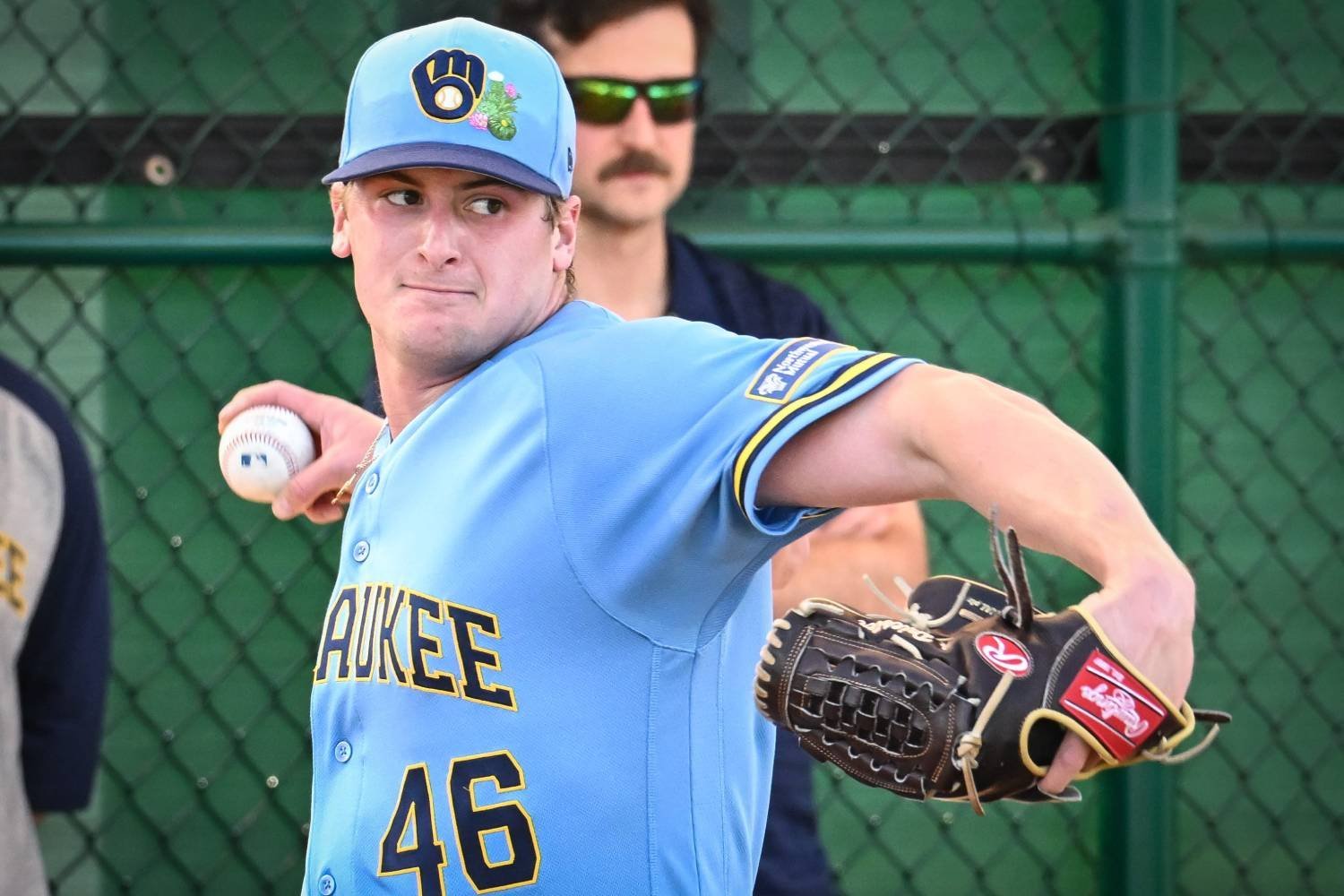 The expected bad news is now official: Quinn Priester's season is over. The Milwaukee Brewers' right-handed starter will have surgery to repair his thoracic outlet syndrome. Priester told reporters Thursday that he will have surgery Monday. Priester is expected to miss eight to 10 months, meaning the early portion of that timeline would have him completely healthy in spring training. Priester was diagnosed with thoracic outlet syndrome in spring training and had tried a number of things in an attempt to return to the mound. Priester pitched in eight minor-league games on rehab assignments, including the last two in the Arizona Complex League. "I'm excited because this is a plan forward," Priester said. Priester was a revelation after being acquired by the Brewers in April 2025. Picked up in a trade with the Boston Red Sox when the Brewers were desperate for starting pitching, Priester, who had been at Triple-A with Boston, jumped right into the major-league rotation and went 13-3 with a 4.01 FIP (3.32 ERA), walking 7.7% of batters and striking out 20.2% View the full article
 -
 Boston Red Sox Affiliate Recap (June 17) Triple-A Worcester Red Sox Season Record: 35-32 An extra-inning thriller ended with a 7-4 victory for the WooSox while facing the Lehigh Valley IronPigs. The WooSox jumped out fast in the first inning. Braiden Ward led off the game with a single, then showed how much of a threat he is on the basepaths, stealing second and third base (his 31st and 32nd of the season). Vinny Capra followed with a single, bringing in Ward, then Kristian Campbell added a sacrifice fly to score Capra, giving his team a 2-0 lead. The Sox extended their lead to 3-0 in the fourth with a Nathan Hickey solo shot (his fourth of the season) to right-center. Lehigh Valley got on the board in the bottom of the fifth with a solo homer of their own, cutting the lead to 3-1. Worcester once again extended their lead 4-1 in the sixth after Tyler McDonough singled in Allan Castro, restoring the three-run cushion. The IronPigs stormed back in the sixth, stunning the Woosox. Lehigh Valley doubled in a run, then tied it 4-4 with a two-run homer. It was a pitchers' duel through the next three innings, pushing the tied game to extra innings. The WooSox broke it open in extras. Hickey singled in the go-ahead run (Castro), McDonough followed with an RBI single, and Capra capped it with another RBI single for the 7-4 final. Worcester pounded out 12 hits. Hickey was the star, going 2-for-4 with a homer, the go-ahead hit in the 10th, two RBIs, and two runs. Capra went 2-for-6 with two RBIs (including the early RBI single and the 10th-inning insurance run), McDonough chipped in two hits and two RBIs off the bench, and Castro reached base three times and scored twice, including a stolen base. On the mound, Osvaldo Berrios started and tossed three shutout innings with two strikeouts. Eduardo Rivera followed after, giving up one run in two innings of work. Seth Martinez was charged with the blown save after giving up three runs in the sixth. Alec Gamboa tossed two perfect innings with two strikeouts. Kyle Keller got the win with two scoreless innings, including the 10th inning, while striking out four. Standout Performances: Kyle Keller: 2 IP, 0 H, 0 ER, 1 BB, 4 K Nathan Hickey: 2-for-4, HR, 2 R, 2 RBI, BB Vinny Capra: 2-for-6, R, 2 RBI Allan Castro: 2-for-4, 2 R, BB, SB Double-A Portland Sea Dogs Season Record: 32-32 The Sea Dogs suffered a heartbreaker, blowing a lead in the ninth, then losing in extra innings 5-4 to the Patriots. The first run of the game came in the fourth when Somerset launched a solo homer to left-center, giving them a 1-0 lead. The Sea Dogs flipped it in the sixth. Ronald Rosario tripled in two runs (Romy Gonzalez and Brooks Brannon), then Miguel Bleis singled in Rosario to make it 3-1. Portland extended its lead in the seventh with an Ahbram Liendo double, bringing in Stanley Tucker for a 4-1 cushion. It seemed that the Sea Dogs had the game in control once they entered the ninth, but that was not the case; Somerset rallied to tie it. The Patriots doubled in two runs, then another came around to score after a wild pitch. Just like that, the Patriots pushed across three in the inning to knot it at 4-4. With the game now in extras and the ghost runner on second, a groundout forced the runner over to third base, then another grounder forced the runner to score, putting them up 5-4. Portland had a chance to walk it off, Tucker worked a walk, then a sacrifice bunt by Nelly Taylor, with some help from a throwing error, moved the ghost runner to third, loading the bases with no outs. But somehow, the Sea Dogs' best bats could not capitalize, going three up and three down. On the mound, Patrick Sandoval turned in a strong three-inning outing in his rehab start (one earned run with four K’s), then Dalton Rogers followed with four scoreless innings. But the bullpen faltered late: Reidis Sena coughed up the 4-1 lead with three runs in the ninth, and Cooper Adams took the loss after the 10th-inning run. Standout Performances: Dalton Rodgers: 4 IP, 3 H, 2 BB, 4 K Patrick Sandoval: 3 IP, 1 H, 1 ER, 1 BB, 4 K High-A Greenville Drive Season Record: 26-36 The Drive took a lopsided 11-2 defeat to the BlueClaws, splitting the series 1-1. Greenville’s bats could not get anything going; their first run came in the fourth when they were down 4-0. Justin Gonzales drew a lead-off walk, then advanced to second base after a balk from the pitcher. Yoeilin Cespedes followed up with a double to right, scoring Gonzales for the Drive's first run, 4-1. The second and final run Greenville recorded happened in the eighth inning on a Yophery Rodriguez single that brought in Gerardo Rodriguez, making the score 6-2. The BlueClaws made it an embarrassing blowout in the bottom half with a five-run eighth inning. For Greenville at the plate, it was a quiet night: just five hits as a team. Rodriguez led the way with a 2-for-4 day (the Drive’s only batter with multiple hits) and an RBI. Cespedes added the RBI double, and Gonzales reached base three times and scored a run. Starting on the mound for Greenville, Dylan Brown got knocked around, getting charged with six earned runs over four innings while taking the loss. Calvin Bickerstaff was sharp in his relief appearance, tossing three scoreless innings with three K’s. But it unraveled once again after that: Danny Kirwin gave up five runs in the disastrous eighth. Low-A Salem RidgeYaks Season Record: 24-40 A rough night at the plate for Salem led to a shutout loss to the Nationals, 3-0. It was a scoreless game through six innings. The bright spot for Salem was Leighton Finley, who pitched outstandingly, throwing five shutout, one-hit innings while striking out six batters. The bullpen couldn't hold the line: Adam Bates took the loss after surrendering the first run of the game (sacrifice fly) in the seventh, while Griffin Kilander gave up two runs in relief (two-run homer) in the eighth. At the plate, Salem tallied just five hits and was held off the board despite drawing some walks, going 0-for-8 with RISP. Avinson Pinto had the lone extra-base hit (a double), Adonys Guzman and Anderson Fermin each had a hit and reached twice via walks, but the RidgeYaks never strung together enough to push a run across. View the full article
 -
 Let's check in on everything that happened down on the Chicago Cubs' farm system last night. Cowles Grand Slam, Triantos Walk-Off Lift Iowa The Iowa Cubs erased an early deficit and won it in the 10th, beating the Indianapolis Indians 6-5. The decisive blow came in the fourth inning. After Indianapolis scratched out a run in the top half, Chas McCormick singled home Kevin Alcántara to tie the game. Two batters later, Ben Cowles launched a grand slam to right field, scoring Jonathon Long, McCormick, and Eric Yang to put Iowa ahead 5-1. Cowles finished 2-for-3 with four runs batted in, and McCormick added a hit, a walk, and an RBI. Indianapolis chipped away with two runs in the sixth and one in the eighth to tie the game at five, sending it to extras. In the bottom of the 10th, James Triantos singled to right field to score zombie runner BJ Murray for the walk-off win. Triantos went 2-for-4 with the game-winning RBI. Starter Paul Campbell turned in a steady outing, working 5 2/3 innings and allowing four runs on eight hits with two walks and three strikeouts. Vince Reilly closed the door with a scoreless 10th, walking one and striking out one to earn the result. Iowa left nine runners on base. Player AB R H RBI BB K Brett Bateman 4 0 1 0 1 1 Owen Miller 5 0 1 0 0 0 BJ Murray 4 1 0 0 1 1 Kevin Alcántara 5 1 1 0 0 2 James Triantos 4 0 2 1 0 0 Jonathon Long 4 1 1 0 0 1 Justin Dean 0 0 0 0 0 0 Christian Bethancourt 0 0 0 0 0 0 Chas McCormick 3 1 1 1 1 1 Eric Yang 3 1 0 0 1 2 Ben Cowles 3 1 2 4 1 0 Player IP H R ER BB K HR Paul Campbell 5 2/3 8 4 4 2 3 0 Antoine Kelly 1 1/3 0 0 0 1 0 0 Tyler Ferguson two 3 1 0 1 0 0 Vince Reilly one 0 0 0 1 1 0 Knoxville Bats Go Quiet In Loss To Chattanooga The Knoxville Smokies managed just five hits in a 5-2 loss to the Chattanooga Lookouts. Chattanooga jumped ahead with a three-run homer in the second inning. Knoxville answered in the third. Jefferson Rojas singled to left field to score Hayden Cantrelle, and Andy Garriola followed by grounding into a double play that allowed Alex Ramírez to score, trimming the deficit to 3-2. That was as close as the Smokies would get. Chattanooga added a run on a sacrifice fly in the fourth and another on a bases-loaded walk in the ninth. Rojas finished 1-for-4 with an RBI, and Hayden Cantrelle reached base three times, going 2-for-2 with a walk. Starter Frankie Scalzo Jr. struggled, allowing three runs on two hits and two walks while recording four outs, surrendering the second-inning home run. The bullpen was strong behind him. Nick Dean worked 3 2/3 innings and allowed one run, and Tyler Santana was dominant, striking out five over three scoreless innings without allowing a hit. Luke Little finished with two strikeouts but gave up a run in the ninth. Knoxville left 10 runners on base, repeatedly failing to cash in scoring opportunities. Player AB R H RBI BB K Alex Ramírez 3 1 0 0 1 2 Jefferson Rojas 4 0 1 1 0 1 Owen Ayers 4 0 1 0 0 2 Andy Garriola 3 0 0 0 0 0 Cameron Sisneros 4 0 0 0 0 2 Carter Trice 4 0 0 0 0 1 Karson Simas 3 0 1 0 0 0 Edgar Alvarez 3 0 0 0 0 1 Hayden Cantrelle 2 1 2 0 1 0 Player IP H R ER BB K HR Frankie Scalzo Jr. 1 1/3 2 3 3 2 1 1 Nick Dean 3 2/3 5 1 1 0 2 0 Tyler Santana three 2 0 0 0 5 0 Luke Little one 2 1 1 2 2 0 High-A South Bend Cubs: Postponed South Bend's game was postponed. They'll close the first half with a doubleheader against Fort Wayne. Myrtle Beach Builds Early Lead, Survives Late Charge The Myrtle Beach Pelicans scored seven runs in the first three innings and held on for an 8-6 win over the Delmarva Shorebirds. The decisive frame was the second inning, when the Pelicans batted around for five runs. Geuri Lubo and Alexey Lumpuy delivered run-scoring singles, Alexis Hernandez doubled home another and advanced on an error, and Eli Lovich singled in a run to make it 5-0. Myrtle Beach tacked on two more in the third when Edward Vargas singled home a pair. The lead was needed, as Delmarva rallied for three runs in the seventh and two more in the ninth. Lumpuy reached base four times, going 1-for-2 with three walks, three stolen bases, and an RBI. Vargas finished 1-for-3 with two runs batted in. Starter Noah Edders worked two scoreless innings with two strikeouts. Riely Hunsaker followed with a strong four-inning stint, allowing one run on four hits with two walks and two strikeouts. Aiden Moffett struggled in relief, recording one out while walking four and allowing three runs. Jhon Rosario closed it out, allowing two runs over 2 2/3 innings but securing the final outs. Myrtle Beach left seven runners on base. Player AB R H RBI BB K Alexey Lumpuy 2 2 1 1 3 1 Alexis Hernandez 4 1 1 1 1 1 Eli Lovich 5 0 1 1 0 3 Logan Poteet 5 0 0 0 0 3 Michael Carico 5 2 2 0 0 1 Derniche Valdez 5 1 1 0 0 0 Yahil Melendez 3 0 0 0 1 2 Geuri Lubo 4 1 1 1 0 1 Edward Vargas 3 1 1 2 0 2 Player IP H R ER BB K HR Noah Edders two 1 0 0 0 2 0 Riely Hunsaker four 4 1 1 2 2 0 Aiden Moffett 1/3 0 3 3 4 0 0 Jhon Rosario 2 2/3 2 2 2 0 1 0 Cubs Transactions Chicago Cubs sent LHP Doug Nikhazy outright to Iowa Cubs. Top-20 Prospect Performance Jefferson Rojas: 1-for-4, RBI, K Jaxon Wiggins: DNP Pedro Ramirez: DNP Kevin Alcántara: 1-for-5, R, 2 K Josiah Hartshorn: DNP Ethan Conrad: DNP Kane Kepley: DNP Jonathon Long: 1-for-4, R, K James Triantos: 2-for-4, RBI Cole Mathis: DNP Owen Ayers: 1-for-4, 2 K Brooks Caple: DNP Juan Cabada: DNP Kaleb Wing: DNP Angel Cepeda: DNP Dominick Reid: DNP Jostin Florentino: DNP Ty Southisene: DNP Will Sanders: DNP Brandon Birdsell: DNP View the full article
 -
Four Players The Royals Could Move If They Sell At Trade Deadline
DiamondCentric posted an article in Royals Keep
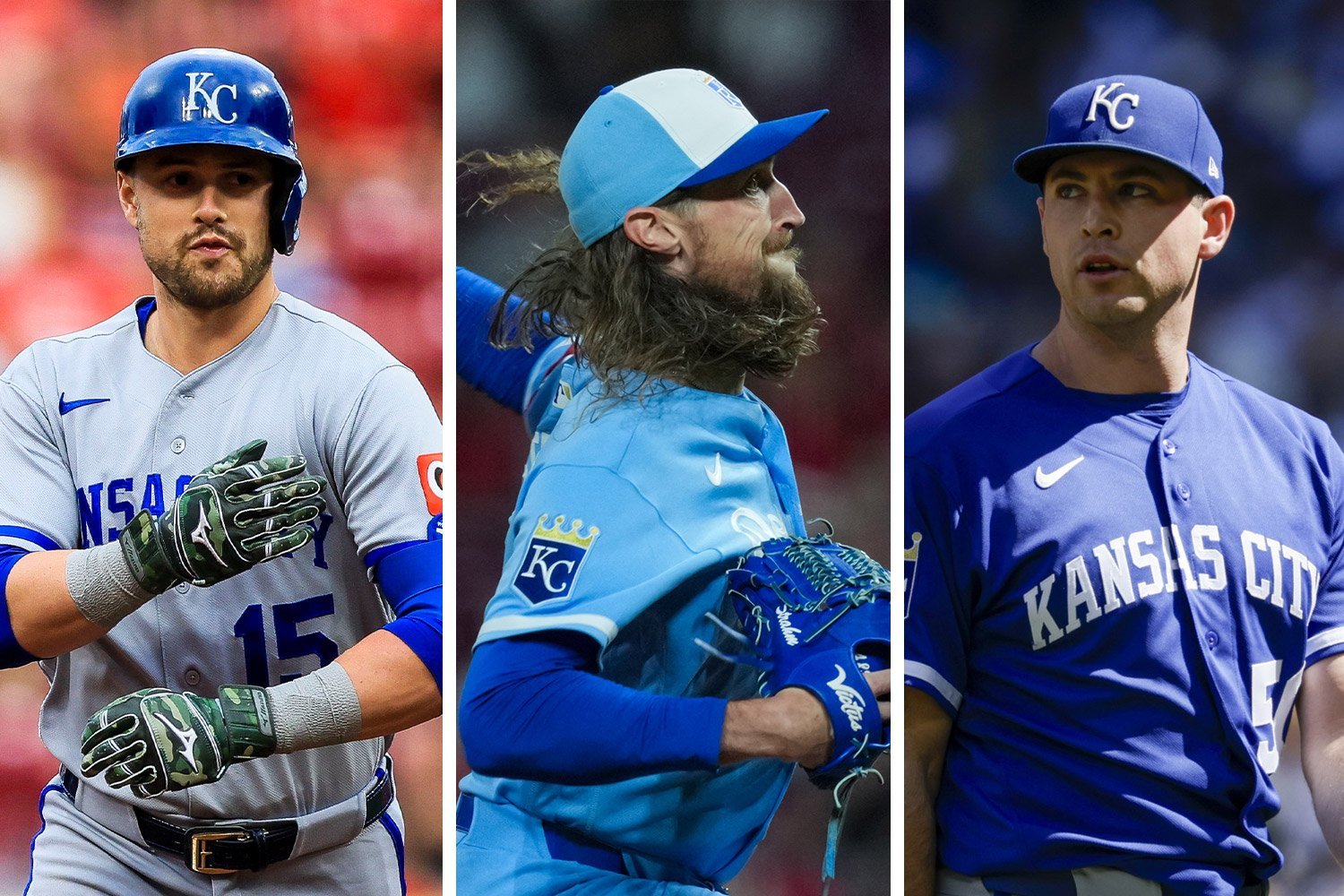 Any team that sees itself out of contention at the trade deadline will often be a seller, and unless the season turns around quickly, the Royals will be a team looking to trade pieces to be more competitive in future years. Which players the team decides to deal will depend on how the organization feels about the pieces they have going into next season and the following seasons. If they sell only players on expiring contracts, this will likely indicate that the organization sees the team as competitive as early as 2027. Now, if the team trades players with multiple years of control, this could signify a larger rebuild (or the organization might use the team re-tool). Players with more control tend to yield a better return, but will hurt the team’s chances of being competitive in the near future. There are some players the Royals have that are untouchable in trades for a variety of reasons, such as Bobby Witt Jr. or Salvador Perez. However, there are plenty of other players the team could look to deal near the August 3rd trade deadline. Here’s a look at four possible trade candidates and what they offer a team looking to acquire them. I’ll also include a list at the end of players that could be dealt if they are looking to shake things up on a larger scale. Lane Thomas - OF, 50 G, 99 wRC+, 0.5 fWAR Thomas is no stranger to being in the rumor mill as a possible trade deadline target for a contending team. He has been traded twice near the trade deadline. He was first traded in 2021, which sent him from St. Louis to Washington in a one-for-one swap for Jon Lester. The second time he was traded at the deadline was in 2024 when the Nationals traded him to the Cleveland Guardians in return for two minor leaguers, and infielder Alex Tena, who has served as a utility player for the Nationals the past few years. Now, why would a team want to acquire Thomas? The most obvious being that he is a right-handed hitter who has historically crushed lefties, with a career .850 OPS vs lefties. He hasn’t been quite that stellar against lefties this year, but has still hit for a solid .759 OPS against southpaws on the year. With the ability to play all three outfield spots, Thomas offers the ability to be a fourth outfielder with the ability to jump into a starting role against lefties in particular. He also has above-average arm strength in the outfield and has positive baserunning value as well. He also has a solid walk rate, which would contribute to a team looking for more on-base ability during a playoff run. While the return the Royals would get might be seen as minimal, Thomas is on an expiring contract, so the possibility of getting a minor leaguer who may contribute in the future would be better than letting him walk at the end of the year for no return. Matt Strahm - LHP, 23 G, 7.48 FIP, -1.0 fWAR Strahm is another impending free agent that a contending team may look to acquire at the trade deadline. His numbers on the year have not been great, but a team may look to buy low and use him as a lefty out of the bullpen, especially if they are looking for someone to get a tough lefty out in a key spot in a tight situation. Lefties are hitting .208 off of Strahm this year, while righties are hitting .246. Over his career, he has actually been better against right-handed batters, which shows he can hold his own in a middle relief role, especially with the three-batter minimum rule. If he can look a bit better than his 7.49 FIP between now and the trade deadline, the Royals could look to get something in return for him, especially since he is on an expiring contract. Kris Bubic - LHP, 9 GS, 3.71 FIP, 0.8 fWAR Bubic might be the most coveted trade target on the Royals roster in the next couple of months. He has pitched to a 4.11 ERA over 50 ⅓ innings, recording 51 strikeouts with a 1.23 WHIP on the year. Similar to Thomas and Strahm, Bubic is on an expiring contract. Bubic was an All-Star in 2025 prior to being shut down in late July with a rotator cuff injury. He made 20 starts, throwing 116 ⅓ innings with a 2.55 ERA and 116 strikeouts. He was healthy to start the 2026 season, but has been sidelined since May 18 after experiencing soreness in his left elbow. Unfortunately, he had a setback during his rehab stint, this time with a shoulder issue. If Bubic can come back healthy and throw a few good starts for the Royals, a contending team may look to acquire him for a postseason push of their own, with the Royals looking like a likely seller. How he looks in his potential return could dictate what type of return the Royals get for him if he is dealt come late July or early August. John Schreiber - RHP, 31 G, 5.15 FIP, -0.3 fWAR Schreiber is also an impending free agent and has been very solid out of a Royals bullpen that has struggled on the year. Schreiber has thrown 28 ⅔ innings, recording 21 strikeouts with a 2.83 ERA and 5.16 FIP. While those numbers don’t jump off the page at you, contending teams are always looking for reliable bullpen help, even if they see their bullpen as a strength. Schreiber is not necessarily a reliever that a contending team will toss into a high-leverage role, but is someone who could, in the right situation, get some key outs in tight situations. A low to mid leverage reliever who is an impending free agent may not get a return that will catch headlines, but it gives the organization an opportunity to see if they can find a diamond in the rough type prospect and turn a couple of months of Schreiber into a contributor in the future. While this focused on impending free agents, if the Royals decide to sell on players with more team control, the deadline could get much more interesting. They won’t trade any players they deem as part of the core of the next contending team in Kansas City, but here is a list of players that could interest contending teams, and the Royals may move if they deem the return is too good to pass up. Who do you think the Royals should, or shouldn’t, trade? Any other names not mentioned that the team should look to sell on? View the full article
 -
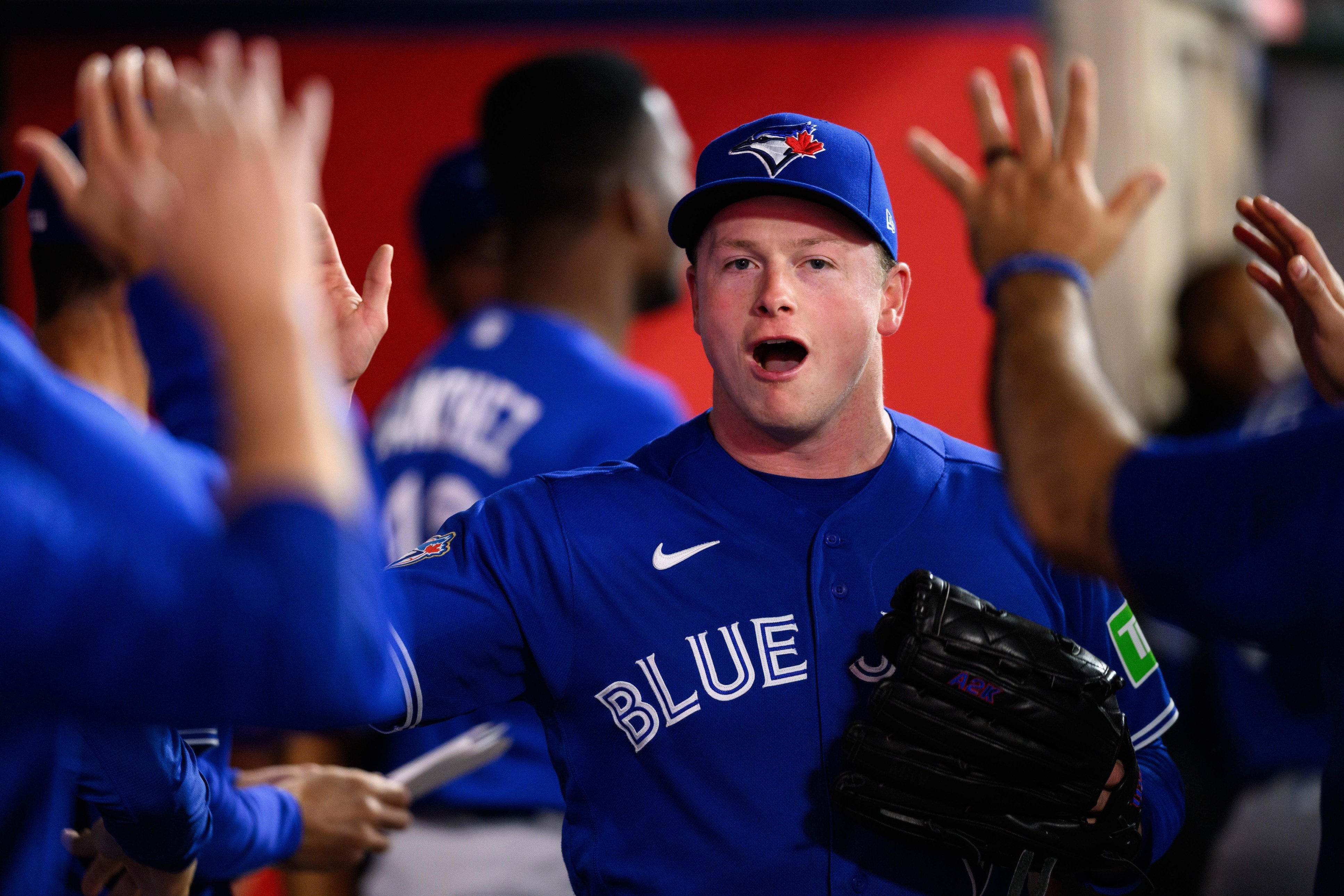 Delusional Minnesota sports fans worry about their own teams winning championships. Now they're worried about everyone else's. The panic began in February, when former Vikings quarterback Sam Darnold signed a massive contract with Seattle and promptly led the Seahawks to a 29-13 Super Bowl victory over New England. Four months later, Karl-Anthony Towns helped deliver the Knicks their first NBA championship since 1973, defeating San Antonio in five games and cementing himself as the latest former Minnesota star to discover the magical secret ingredient known as "not playing in Minnesota." Naturally, Twins fans immediately shifted their attention to the only question that matters: Which former Twin is going to win the World Series this year? The possibilities are horrifying. The Toronto Blue Jays Have Become Public Enemy No. 1 Many Twins fans have turned their attention north of the border. The Blue Jays already acquired Louis Varland at last year’s trade deadline and picked up Simeon Woods Richardson in recent weeks. That combination has many Minnesota fans convinced that Toronto is quietly assembling the baseball equivalent of the 1992 Dream Team. "Varland is basically the best reliever in baseball now," said lifelong Twins fan Randy from Woodbury. "He'll have a 0.41 ERA, throw 104 mph, develop three new pitches, and finish second in Cy Young voting despite pitching only 62 innings." Another fan was even less optimistic. "The Twins spent years trying to figure out what Simeon Woods Richardson was," said Melissa from St. Cloud. "Toronto is going to unlock something in a bullpen session, and he'll suddenly become 1968 Bob Gibson during October. The fact they got him for cash considerations means he'll probably throw four complete-game shutouts in the playoffs." Many fans point to the long-standing Minnesota Sports Law, which states that any player traded away for a minimal return immediately gains Hall of Fame abilities upon crossing state lines. Scientists have been unable to disprove this theory. The Nightmare Philadelphia Scenario Of course, there is another possibility. Imagine a winner-take-all Game 7 of the World Series. The Phillies lead by one run. The bullpen door opens. Out jogs Jhoan Duran. The television broadcast immediately cuts to a montage of every 104-mph fastball he threw in a Twins uniform while Minnesota fans collectively stare into the void. Three outs later, Duran strikes out the side and dog-piles with Philadelphia teammates while national broadcasters discuss how the Phillies acquired "the final piece of a championship roster." According to several Twins fans, this scenario has already played out in their nightmares approximately 17 times. "My therapist says I need to stop imagining Duran closing out the World Series," said one fan who resembled Joe Pohlad wearing a cheap fake mustache. "Unfortunately, my therapist is also a Twins fan, so our sessions usually end with both of us crying." At Least Carlos Correa Can't Hurt Us This Year There is one small silver lining. Carlos Correa is out for the season. As a result, Twins fans can rest easy knowing that Correa will not be leading another organization to a championship in 2026 (while the Twins still pay him $10 million). Unfortunately, that peace only lasts until 2027. Everyone already knows how this story goes. Correa will return healthy. The Astros will magically develop three rookie stars nobody has heard of. Then they'll win another World Series while Minnesota fans spend the winter debating whether a 79-win season represents progress. The script practically writes itself. Searching for the Next "Victim" Some fans have expanded their search beyond the obvious names. They're monitoring former Twins throughout baseball. They're checking playoff odds. They're studying championship probabilities. They're preparing emotionally. Because if Darnold can win a Super Bowl and Towns can win an NBA title after leaving Minnesota, then surely baseball has its own cruel punchline waiting around the corner. Maybe it's Varland. Maybe it's Woods Richardson. Maybe it's Duran. Maybe it's someone nobody is paying attention to yet. Whatever happens, Minnesota sports fans are preparing for the possibility that the next championship parade involving a former Twin is already being planned somewhere else. And when that moment arrives, it won't be viewed as a coincidence. It will simply become the latest piece of evidence in the ever-growing case file known as the Minnesota Curse. At this point, the only mystery remaining is who gets fitted for the championship ring first. View the full article
 -
 St. Lucie powered past Daytona 8-2 behind a four-homer night and five strong innings from Emilio Obispo, who struck out six. Syracuse and Binghamton both pushed back-and-forth games to the brink before falling 6-5 and 5-4, respectively, with Jose Ramos collecting three hits and Nick Lorusso driving in two for Binghamton. Brooklyn managed five hits in a 6-0 shutout loss at Wilmington, with Mitch Voit accounting for two of them. Syracuse Falls Short As Bullpen Surrenders Late Homer The Syracuse Mets erased a two-run deficit but fell 6-5 to the Norfolk Tides. Cristian Pache led the offense with two hits, a stolen base pair, and an RBI, while Jackson Cluff reached base three times with a triple, two walks, and two runs scored. Jihwan Bae drove in two runs, and Nick Morabito added a double, two walks, and two runs. Starter Jack Wenninger struggled, allowing four runs on four hits across four innings, walking three and striking out six, but the damage came on three home runs. Syracuse trailed 4-2 entering the bottom of the fifth before a three-run inning tied and briefly took the lead. Bae singled home Cluff, Pache singled in Bae, and Yonny Hernández drew a bases-loaded walk that scored Morabito for a 5-4 advantage. The bullpen kept it close, as Joey Gerber struck out four over two scoreless innings, but Ben Simon surrendered a two-run homer in the top of the eighth that put Norfolk ahead for good. Dylan Ross allowed one run in his lone inning. Syracuse left nine runners on base, stranding the tying run and ending the comeback bid. Player AB R H RBI BB K Ji Hwan Bae 4 1 1 2 0 1 Nick Morabito 3 2 1 0 2 2 Ryan Clifford 3 0 0 0 2 2 Cristian Pache 4 0 2 1 1 0 Yonny Hernández 4 0 0 1 1 3 Grae Kessinger 4 0 0 0 0 1 Ben Rortvedt 3 0 0 0 0 1 Hayden Senger 1 0 0 0 0 1 Kevin Parada 2 0 0 0 2 2 Jackson Cluff 2 2 1 0 2 1 Player IP H R ER BB K HR Jack Wenninger 4 4 4 4 3 6 3 Joey Gerber 2 0 0 0 1 4 0 Dylan Ross 1 0 1 1 1 2 0 Ben Simon 2 1 1 1 1 2 1 Binghamton Comeback Stalls In One-Run Loss The Binghamton Rumble Ponies dropped a 5-4 decision to the New Hampshire Fisher Cats despite outhitting their opponent 10 to 9. Jose Ramos led the attack with three hits, while Nick Lorusso doubled and drove in two runs. Vincent Perozo homered, and Matt Rudick added a double among the team's ten hits. Starter Bryce Conley took the loss, allowing five runs, four earned, on seven hits over 4 2/3 innings with three walks and five strikeouts. The decisive frame was the top of the fifth, when New Hampshire scored three times to turn a 3-2 deficit into a 5-3 lead, with the rally aided by a throwing error. Binghamton answered in the bottom of the fifth as JT Schwartz singled home Jaylen Palmer to make it 5-4, but the Rumble Ponies could not push across the equalizer. The bullpen was sharp the rest of the way, as Zach Peek, Saul Garcia, and Brian Metoyer combined for 4 1/3 scoreless innings, with Garcia and Metoyer each striking out three. Binghamton stranded seven runners. Player AB R H RBI BB K Jacob Reimer 3 0 1 0 0 1 Jaylen Palmer 2 1 0 0 0 1 Matt Rudick 5 1 1 0 0 0 Jose Ramos 4 1 3 0 0 1 Nick Lorusso 4 0 2 2 0 0 JT Schwartz 4 0 1 1 0 1 Vincent Perozo 4 1 1 1 0 0 Wyatt Young 3 0 1 0 1 0 Diego Mosquera 2 0 0 0 0 0 Kevin Villavicencio 2 0 0 0 0 1 Nick Lucky 4 0 0 0 0 2 Player IP H R ER BB K HR Bryce Conley 4 2/3 7 5 4 3 5 1 Zach Peek 1 1/3 1 0 0 2 0 0 Saul Garcia 1 2/3 1 0 0 1 3 0 Brian Metoyer 1 1/3 0 0 0 1 3 0 Brooklyn Bats Silenced In Shutout Loss At Wilmington The Brooklyn Cyclones were held to five hits in a 6-0 loss to the Wilmington Blue Rocks. Mitch Voit collected two of those hits, including a double, while Daiverson Gutierrez added a double and a walk. The Cyclones never solved Wilmington pitching and struck out 13 times as a team. Starter Nicolas Carreno absorbed the loss, allowing six runs, five earned, on five hits over four innings with four walks and one strikeout. Wilmington built its lead early, plating three runs in the bottom of the first inning, with one run scoring on a throwing error. The home team tacked on single runs in the third and a two-run homer in the fourth to extend the margin to 6-0. Brooklyn's bullpen settled things down, as Ryan Dollar, Juan Arnaud, and Cristofer Gomez combined for four scoreless innings and seven strikeouts, but the offense could not capitalize, leaving 11 runners on base. Player AB R H RBI BB K Mitch Voit 5 0 2 0 0 1 Ronald Hernandez 4 0 0 0 1 1 Corey Collins 3 0 0 0 1 3 Daiverson Gutierrez 3 0 1 0 1 0 Yonatan Henriquez 4 0 1 0 0 0 John Bay 3 0 0 0 1 2 Colin Houck 4 0 0 0 0 3 Trace Willhoite 4 0 1 0 0 2 Sam Biller 2 0 0 0 1 1 Player IP H R ER BB K HR Nicolas Carreno 4 5 6 5 4 1 1 Ryan Dollar 2 3 0 0 1 3 0 Juan Arnaud 1 1 0 0 0 2 0 Cristofer Gomez 1 0 0 0 0 2 0 St. Lucie Powers Past Daytona With Three-Homer Outburst The St. Lucie Mets cruised to an 8-2 win over the Daytona Tortugas with homers and a strong start from Emilio Obispo. Elian Peña led off and went 3-for-5 with a double and two runs scored, while Antonio Jimenez drove in three runs on a three-run homer. Yohairo Cuevas and Francisco Toledo also homered, and Branny De Oleo doubled and drove in a run. Obispo earned the win, allowing one run on six hits over five innings, walking one and striking out six. St. Lucie scored twice in the third on RBI singles from Julio Zayas and a Branny De Oleo double, then added a Trey Snyder run-scoring double in the fourth. The decisive blow came in the bottom of the sixth, when St. Lucie erupted for five runs. Toledo homered to open the inning, Jimenez followed with his three-run shot, and Cuevas capped the outburst with a solo homer to make it 8-1. Miguel Mejias tossed two scoreless innings of relief, and the Mets stranded seven runners while striking out eight at the plate. Player AB R H RBI BB K Elian Peña 5 2 3 0 0 0 Trey Snyder 5 0 1 1 0 1 Antonio Jimenez 4 1 1 3 1 2 Yohairo Cuevas 2 2 1 1 2 0 Julio Zayas 3 0 1 1 1 1 Branny De Oleo 4 0 1 1 0 2 Francisco Toledo 4 1 1 1 0 0 Simon Juan 4 1 1 0 0 1 Jeremy Rodriguez 3 1 0 0 1 1 Player IP H R ER BB K HR Emilio Obispo 5 6 1 1 1 6 0 Miguel Mejias 2 0 0 0 0 0 0 Franyel Diaz 1 2/3 0 1 1 5 2 0 Tyler McLoughlin 1/3 0 0 0 1 0 0 Mets Transactions No Roster Moves Top-20 Prospect Performance Carson Benge: DNP A.J. Ewing: DNP Jonah Tong: DNP Elian Pena: 3-for-5, 2B, 2 R Jack Wenninger: 4 IP, 4 H, 4 R, 4 ER, 3 BB, 6 K, 3 HR Ryan Clifford: 0-for-3, 2 BB, 2 K Jacob Reimer: 1-for-3, K Nick Morabito: 1-for-3, 2B, 2 BB, 2 R, SB, 2 K Mitch Voit: 2-for-5, 2B, K Jonathan Santucci: DNP Chris Suero: DNP Zach Thornton: DNP Wandy Asigen: DNP Will Watson: DNP Eli Serrano III: DNP Randy Guzman: DNP Ryan Lambert: DNP Dylan Ross: 1 IP, 0 H, 1 R, 1 ER, 1 BB, 2 K Antonio Jimenez: 1-for-4, HR, 3 RBI, R, BB, 2 K R.J. Gordon: DNP View the full article
 -
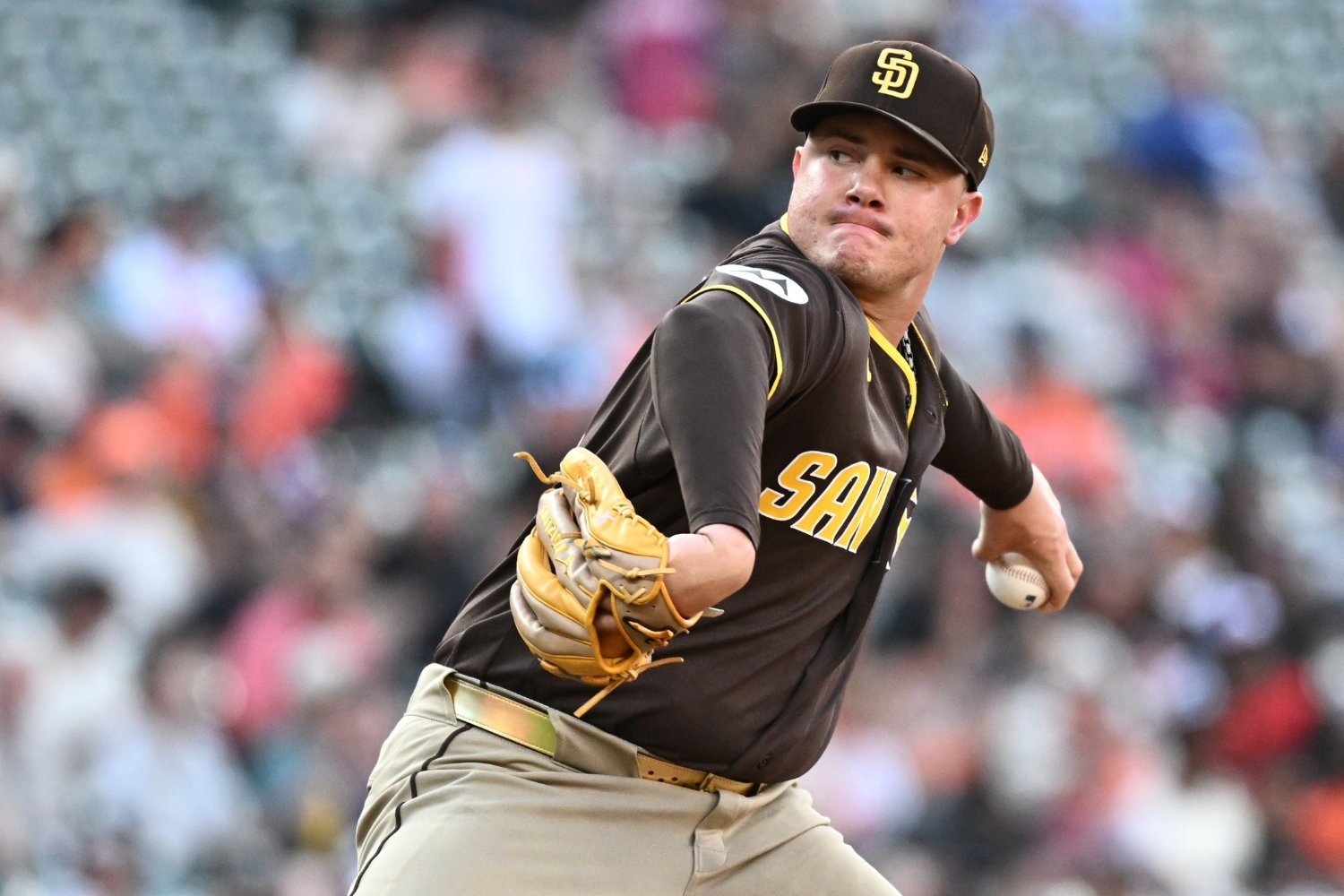 The San Diego Padres have what is perhaps the most impressive pitcher in baseball in Mason Miller. At worst, they have its most impressive pitch in the form of his slider. But while his slider and obscene velocity compound to grab most of the narrative around the stability of the team's relief corps, it shouldn't overshadow the work being done by Adrian Morejon. That Morejon is having an excellent season is hardly surprising. He's coming off a pair of impressive campaigns, including a 2025 season in which he posted a 2.08 ERA, 2.2 fWAR, and made an appearance in Atlanta as a National League All-Star. That excellence is a bit overlooked, however, given the first number to which one always points when examining a pitcher's quality: the ERA. Morejon has a 4.00 ERA through his first 33 appearances of 2026. That number itself ranks only 119th among qualifying relief pitchers. It's a number that makes his overall performance somewhat easy to overlook. It's also incredibly deceptive. Despite that figure sitting atop the stat sheet, Morejon has thrived everywhere else. His percentile distribution alone is indicative of a pitcher that has been much better than such a number would indicate; he ranks in the top 10 percent league-wide in xERA, fastball velocity, average exit velocity allowed, barrel rate allowed, hard-hit rate, chase rate, whiff rate, walk rate, and ground-ball rate. In other words, he's one of the best pitchers in the sport at basically anything you can do on the mound. Not only has Morejon brought elite velocity, he's been dominant in forcing opposing hitters to chase and look foolish in doing so, as illustrated by his whiff rate (34.2 percent). In those rare instances in which hitters do make contact, they're not doing it to any meaningful extent. As such, it becomes easy to attribute the ERA to a blend of bad luck (.305 opposing BABIP) and a pair of isolated clunky outings (one on April 7 in Pittsburgh and one on June 4 in Philadelphia). Otherwise, he's been genuinely excellent. Beyond the ERA itself, Morejon has posted a 2.21 FIP and strikeout (28.1 percent) & walk (4.8 percent) rates that would stand as a career best if the season ended today. He's already turned in a 1.3 fWAR figure, putting him on pace to at least match the total he posted in his standard-setting 2025 season. That Morejon is posting these numbers speaks to what the stuff is doing this year. He's thrown the sinker as a primary pitch at 47 percent of the time, with each of his slider (21 percent), changeup (18 percent), and four-seam (14 percent) serving as consistently-used secondary offerings. Stuff+ loves all four pitches, as they carry figures of 133, 127, 129, and 121, respectively. That means that not only his pitches above average in their physical characteristics but comfortably above. Only Mason Miller's slider ranks higher on the season among Padre pitchers and nobody (not even Miller) has a better pitch by that measure since the start of June. For what it's worth, all four pitches also sit above average on the Location+ side with the changeup leading the way at 115, indicating he's not only maximizing his pitches in their shape but in their situational value as well. Statcast's new data around swing timing and miss distance helps to further emphasize the work being done by Morejon: In general, the pitches are doing what they're supposed to be doing. Hitters are late on the four-seam and early on each of the changeup & slider. Two of Morejon's pitches, the change and the four-seam, rank in the top eight of individual Padre pitches in their ability to generate flawed swings (20 and 16 percent, respectively). That Morejon's avoiding bats in this way speaks to not only the stuff itself but his ability to locate. It's an effective supplement to what each of Stuff+ & Location+ tell us. Regardless of metric, though, it all tells us the same thing: Adrian Morejon has been one of the best pitchers in Major League Baseball in 2026. If anything, his ability to mix four pitches this effectively rather than the relief industry standard of two or maybe three only adds to the lore. It's easy to overlook the season he's having; the Padres are struggling, his ERA looks below average, and he shares a bullpen seat with baseball's objectively best reliever. None of that, though, should lead to an underestimation of just how good Adrian Morejon has been this season. View the full article
 -
Jacob Misiorowski & Kyle Harrison Are The Best Duo In Baseball
DiamondCentric posted an article in Brewer Fanatic
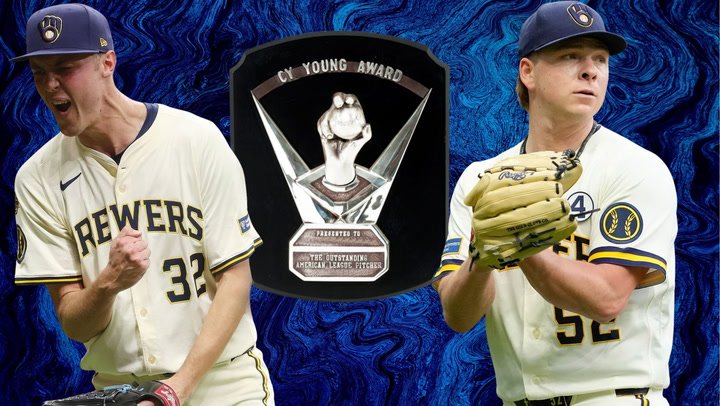 Jacob Misiorowski is the best pitcher in baseball, officially proven after Blake Perkins and the Brewers hit Cristopher Sanchez while the Miz threw arguably the best game in the history of the franchise. But will he win the Cy Young Award? Kyle Harrison may not be quite as good as the Miz, but that doesn't mean he can't finish higher in the voting than some of the best pitchers in the National League. If it's Shohei Ohtani, Yoshinobu Yamamoto, Paul Skenes, or others, Harrison will have his work cut out for him, but his numbers still stack up among the best. View the full article
 -
What Will The Twins' 2027 Starting Rotation Look Like?
DiamondCentric posted an article in Twins Daily
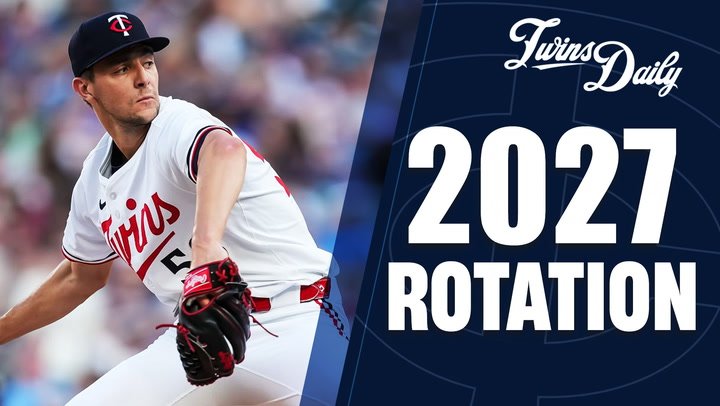 Pablo López, Taj Bradley, Mick Abel, and more. Here's an early prediction for how the Twins' 2027 starting rotation could shake out. View the full article
 -
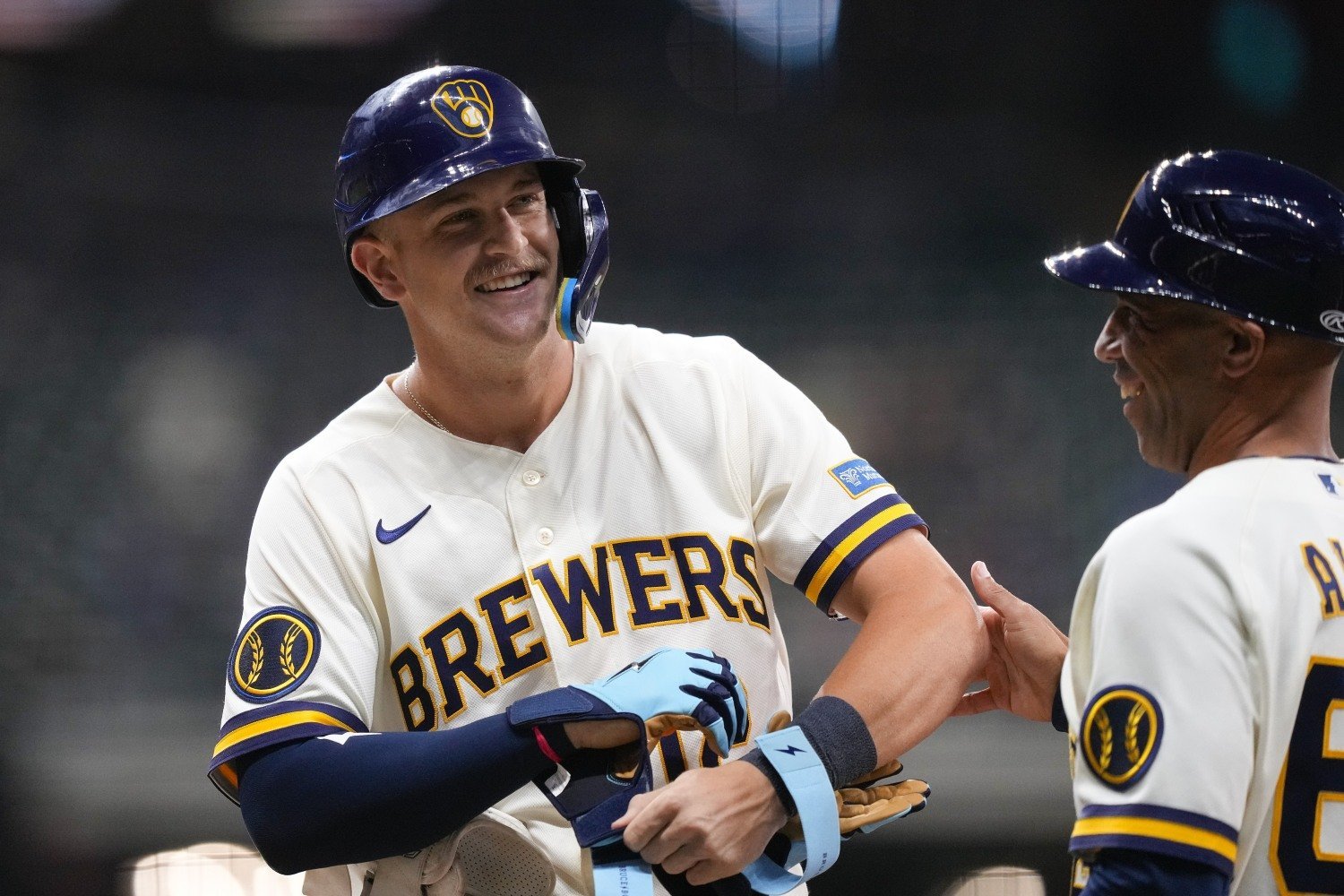 It's best to keep expectations for Cooper Pratt in his debut season a bit muted. That's not a knock on his abilities or physical ceiling, but a reminder that a player's development is rarely complete when he reaches the big leagues. There's maturation—both physical and mental—that can only take place at the game's highest level. That's especially true for Pratt, who is just 21 years old and playing in his third full professional season. It might be tempting to think that a,s one of the Brewers' top prospects (including Brewer Fanatic's No. 4), Pratt could transform the left side of the infield from anemic to dynamic by replacing Luis Rengifo and Joey Ortiz. In reality, the left side will probably remain the weakest portion of the lineup. Pratt helps by raising the floor there. He can be a well-below-average hitter and still exceed the combined 58 wRC+ of Rengifo and Ortiz. He'll be a better defensive shortstop than David Hamilton, and Hamilton and Ortiz will field better at third base than Rengifo. "The pieces fit easily," Pat Murphy said ahead of Pratt's debut on Tuesday, also noting that the realigned infield would allow for more days off for Brice Turang, who has appeared in 67 of Milwaukee's first 71 games. Murphy similarly sees Pratt's impact this year as more about floor than ceiling. He has a solid foundation as a player that will make the Brewers better right now. Murphy praised his defense and baseball IQ in spring training, and has done so again multiple times in the two days since Pratt's promotion. However, the whole coaching staff knows they won't see the best version of him until later, after continued development at the big-league level. "He's not going to come into his power until later on in his career, in my opinion, but I think right now we can expect him to be an on-base guy, a guy that can do some things offensively for us," Murphy said. For now, that's the best approach for Pratt to have. At 6-foot-4 and 210 pounds, he's prompted scouts to dream about the potential power in his build, but it hasn't yet developed at this stage of his career. In Triple-A Nashville this year, his 34.6% hard-hit rate and 84.4-mph average exit velocity were well below average. The current version of Pratt won't be productive if he hits the ball in the air, so maximizing his high contact rate makes much more sense. That means seeing the ball deep to make good swing decisions, with a focus on hitting low line drives and using the opposite field. The Brewers are nearing the tail end of a similar development process with Pratt's new double-play partner. After struggling early, Brice Turang minimized his swing to become an on-base-oriented hitter. Paired with his defense, that was enough to make him a solid player. Since he established that base, a stronger, more mature Turang has eased back into a longer, steeper swing and unlocked more in-game power. "With Brice, you didn't know for sure he could be this as a hitter," Murphy said. "But by his second time around, you could just see it, like, 'This guy's ready to go, he's ready to take off.' And then it doesn't always happen on your terms, because the game deals you what the game deals you. But I think it's the same way with Cooper." Pratt's at-bats in his first two games have reflected the on-base approach. He went hitless in his debut, hitting two of his three groundouts to the right side of the infield. On Wednesday, the first two hits of his career (a ground-ball single and a line-drive, RBI base hit) were both to right field. "He'll tell you it was predicted by some great swami that his first hit would be between the three and four hole," Murphy joked postgame. "I was afraid he was going to dive or something and throw me out," Pratt said. "Once I saw it go through, I was like, 'Oh, yeah.' I heard the crowd, and it was sick." Pratt's baserunning, which drew positive reviews in the minor leagues as part of his high-IQ makeup, was tested quickly. After advancing on a sacrifice bunt by David Hamilton, Christian Yelich lined a base hit just over the head of Cleveland Guardians shortstop Brayan Rocchio. Pratt read it well and got a good jump, allowing him to score from second base. "I knew once [Yelich] hit it, it was over his head," he said, "so I just freaking ran as hard as I could." After his second hit, Pratt stole his first career base. Despite not having great speed, he swiped 27 bases in 2024 and 31 last season due to his awareness. Two days in, Murphy continues to see the little things that led him to believe Pratt can be a meaningful player this year, even if he only scratches the surface of his long-term potential. "He had two great at-bats where he stayed in the zone and didn't try to do too much," Murphy said. "Really proud of him." View the full article
 -
Is Andrew Morris the Minnesota Twins' Next Relief Success Story?
DiamondCentric posted an article in Twins Daily
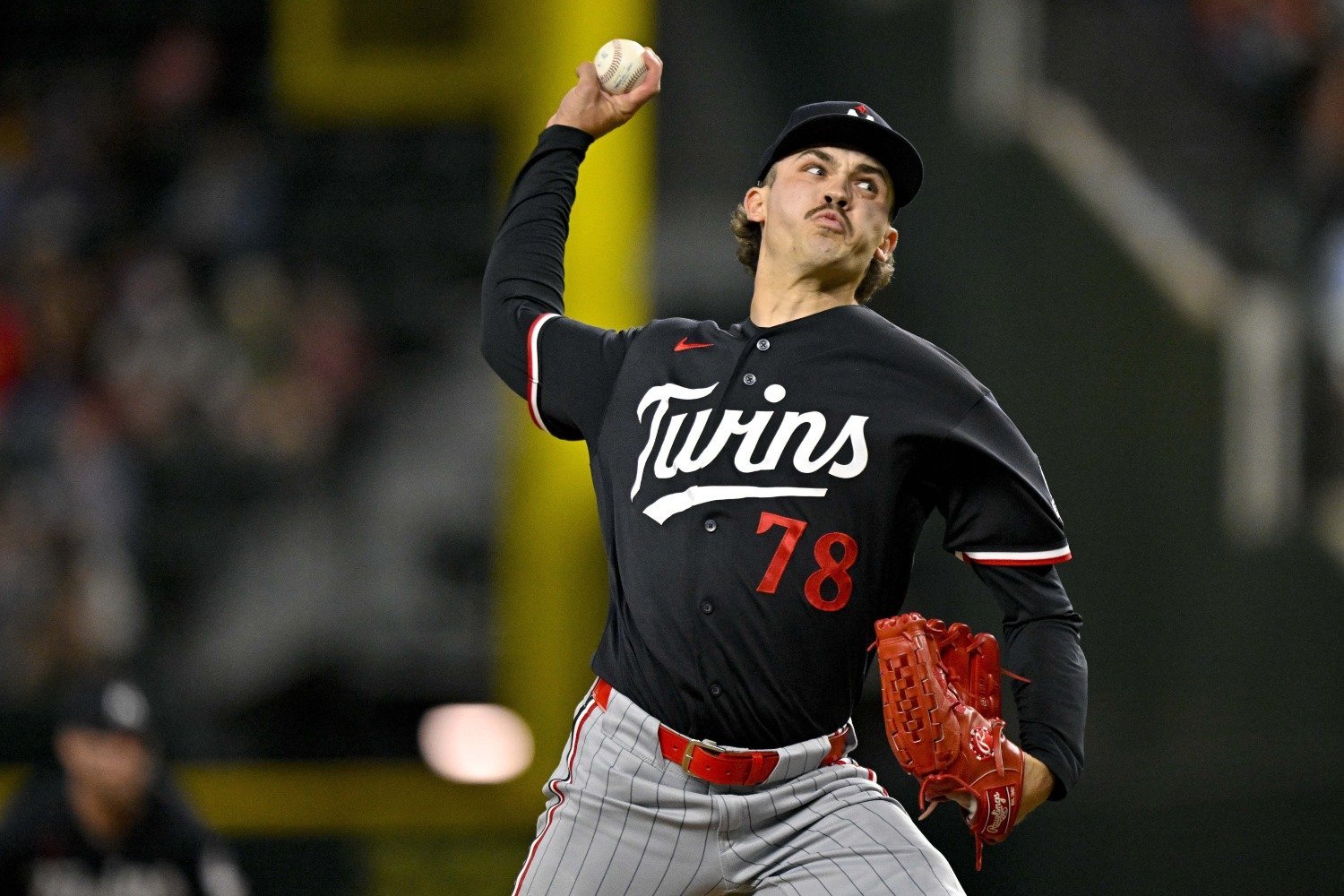 Perhaps in a different timeline, Andrew Morris is in the back end of the Twins’ rotation, filling in for their many starting pitching injuries. Instead, he was one of the first starting pitching prospects to pivot to a bullpen role, where the team has been desperate for help all season. As the sample size grows, he looks like he can be the next great internal reliever the Twins develop. Morris has posted an unimpressive ERA so far, just below 5.00. Taking a look under the hood, however, there's much more to like. From xERA to FIP to xFIP, he looks like a pitcher with a low-2s to mid-3s ERA in his first taste of bullpen action. An unfortunately high batting average on balls in play, as well as a below-average stranded runner rate, have held him back, but he’s still posted a solid performance with even more to like the deeper you dig. Morris still uses what would be considered a starting pitcher’s repertoire, with five pitches he throws at least 10% of the time. Each of these pitches has drawn a whiff rate of at least 20%, giving him the ability to turn to them in all counts. Only his sinker has been truly punished by opposing hitters, and we’ve already seen him decrease the usage from almost 15% in April to under 9% so far in June. The four-seamer remains his most used pitch, and we’ve seen him dial it up to 100 mph when he’s needed it. The most interesting development in his repertoire is the increase in cutter usage. So far in June, it’s Morris’s second-most-used pitch and has drawn a 30% whiff rate. When hitters do connect, an average launch angle of -12 degrees allowed has resulted in plenty of ground balls. If this pitch can continue getting the whiffs and weak contact, Morris has a legitimate plus offering to build the rest of his repertoire around. Once considered a low-ceiling starting pitching prospect, Morris is already flashing signs of being a true impact, late-inning reliever. Forming his pitch mix around his new role, drawing more whiffs than ever, and showing increased velocity, this is exactly what you hope for when you drop a starting pitcher in the bullpen. Time will tell whether Morris can become the next Taylor Rogers, Griffin Jax, Louis Varland, etc., but what he’s already shown has been plenty for this Twins team that quite simply had nothing in the way of upside relievers headed into 2026. There’s still a chance that the Twins chose to move him back to the rotation at some point, but as things currently stand, Morris can spend the rest of this season positioning himself as one of the Twins’ high-leverage relievers in 2027. It’s been a strong debut for Andrew Morris. He has an opportunity to position himself atop the Twins’ 2027 bullpen with more development down the stretch in 2026. Do you agree? View the full article
 -
Five Reasons Why the I-70 Series Matters to Royals Fans
DiamondCentric posted an article in Royals Keep
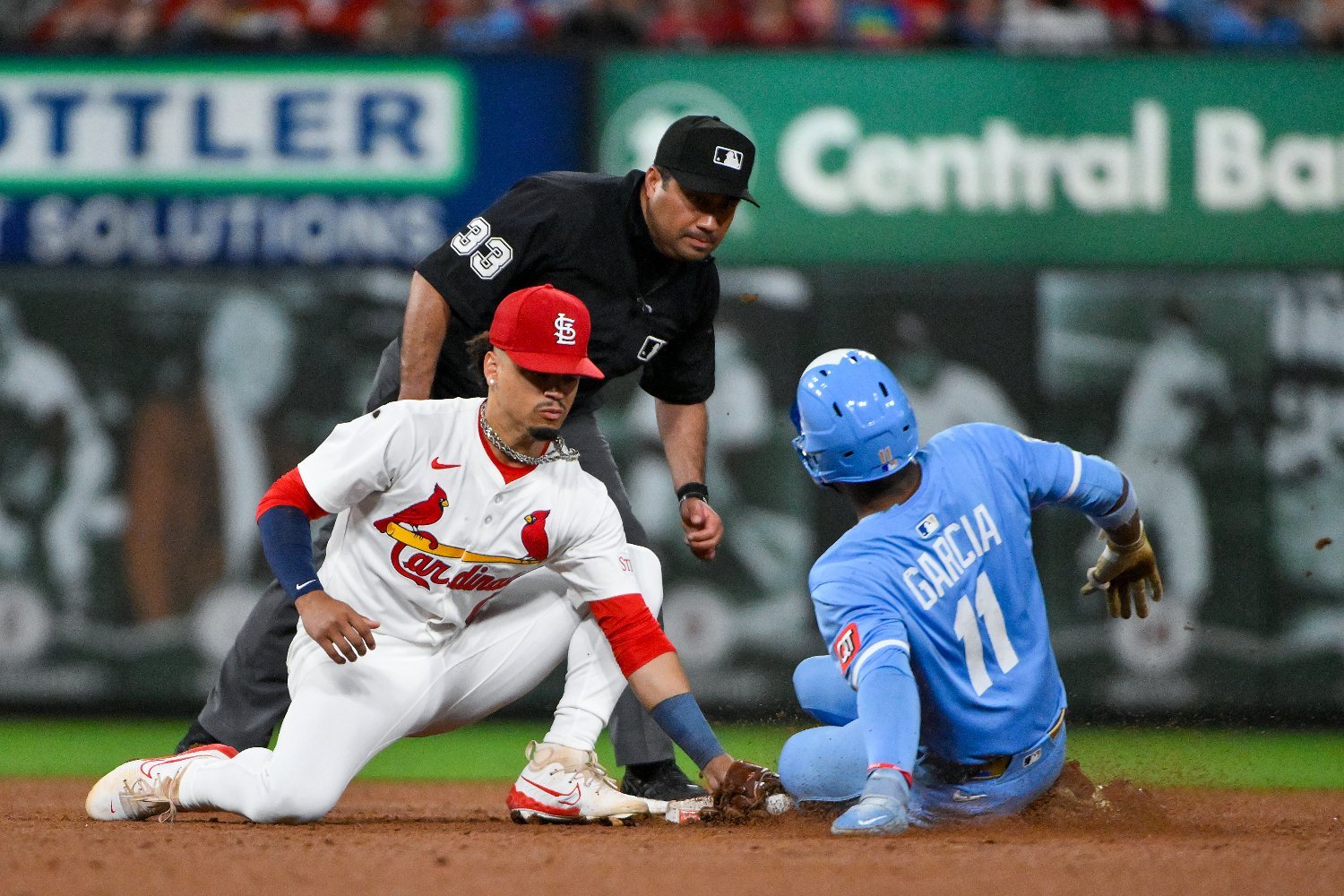 Since the dawn of MLB Interleague play in 1997, the I-70 Series between the Kansas City Royals and St. Louis Cardinals has been one of the more heated Interleague rivalries in baseball. Part of it is due to the 241-mile distance between Kansas City's Kauffman Stadium and St. Louis' Busch Stadium. Part of it is due to the history between the two clubs, especially in the postseason. Regardless, when the Cardinals come to town, it tends to be one of the more heavily attended series of the season at the K. If you ask any Royals fans which team they hate the most, if it isn't the Yankees, it's the Cardinals. That only adds more juice to any series at Kauffman series between the Birdos from Eastern Missouri. Hence, in this article, with the Cardinals coming for a three-game series this weekend (Thursday, Friday, and Sunday), I will highlight five reasons why Royals fans care so much about the I-70 Series, even if the same sentiment is not shared by the "other" baseball team in Missouri. Cardinals Fans Don't Look at the Royals as Their True "Rivals" One of the biggest reasons the I-70 series matters more to Royals faithful than to Cardinals fans is that the Cardinals already have a traditional rival: the Chicago Cubs. The Cubs play in the same division as the Cardinals and hold a 1,293-1,237 advantage over their St. Louis rival. They have also played each other much more in the postseason, with the Cubs holding a 3-1 record in modern postseason history (they beat the Cardinals 3-1 in the 2015 NLDS). When it comes to which shade of blue Cardinals fans dislike, it's the Cubbie blue, not the Royals blue. And Cubs fans share similar disdain for the Cardinals, with even the stadium staff partaking in the hate. Furthermore, the Cardinals and Cubs have much more in common. Wrigley Field and Busch Stadium are in the heart of each team's respective downtowns (unlike Kauffman, which is on the outskirts). The Cubs have been around for 157 years, while the Cardinals have been around for 144 years. The Royals? They've been in Kansas City for 57 years, 100 years less than the Cubs in Chicago. Because of that, there's a sense of arrogance among Cardinals fans when it comes to how they view the Royals and their fanbase. They don't see the Royals as a "rival" baseball club because the Royals are in the American League, and they only see each other six times a year (unlike the Cubs, whom they see 12). The Cardinals Have An Advantage in Wins (But the Gap is Smaller at the K) The Cardinals are not just an older organization than the Royals. They also have the advantage in the head-to-head record as well. St. Louis leads the I-70 Series with an overall record of 86-64. The Cardinals are especially dominant at Busch Stadium against the Royals, as they have a 49-33 record against their Western Missouri neighbor. This season, the Royals lost two of three against the Cardinals at Busch Stadium in mid-May, though Kansas City was competitive in each game (the aggregate score of all three games was 9-8 in favor of the Cardinals). At Kauffman Stadium, the Royals have historically been a much tougher team against their I-70 rival. In 68 games in Kansas City, the Cardinals lead the series 37-31. That is a .544 winning percentage for the Cardinals compared to a .597 winning percentage at Busch Stadium. However, the Royals haven't had much success recently at Kauffman against the Cardinals, despite having overall winning records in the past two years. The Royals have gone 3-4 against the Cardinals at Kauffman in 2024 and 2025, including 1-2 in 2025 (they played only a two-game series at the K in both 2024 and 2025, and split both times). There Are Cultural Differences Between Kansas City and St. Louis In addition to the baseball reasons, the rivalry between the cities themselves only amplifies the bad blood among Royals fans in the I-70 Series. St. Louis is an older city with much more history. St. Louis has been around for 262 years, while Kansas City has only been around for 188 years. Thus, the St. Louis metro seems to have a larger footprint in Missouri than the KC Metro, which has a large footprint in Kansas outside of sports (though that may change with the Chiefs moving to Wyandotte County in Kansas soon). Furthermore, St. Louis feels more Metropolitan, especially when one is visiting downtown. It's easier to walk between sites and use public transportation in St. Louis than in Kansas City, though the growth of the Streetcar in KC is helping. Still, while there are great landmarks to visit in Kansas City, the landmarks in St. Louis feel more accessible, especially if one doesn't have a car. On the other hand, there is an "elite" attitude of St. Louis denizens that drives Kansas City folks crazy. While Kansas City folks are excited to show visitors their city, St. Louis natives seem more apt to ask, "What High School Did You Go To?" (It's a code that can be interpreted in a bunch of ways, both good and bad.) Furthermore, Kansas City takes pride, and rightfully so, in their BBQ culture, while St. Louis lags behind, but thinks it's on the same level. And soccer? Each city thinks it's the soccer capital of the Midwest, and arguably, America. However, based on the World Cup, there is a true winner in that category. I guess St. Louis holds the advantage in "regional" pizza style (there is no KC-style pizza)? Even then, however, the St. Louis pizza delicacy has its fair share of detractors, especially in Kansas City. The "Best Fans in Baseball" Moniker One of the characteristics of Cardinals fans that drives Royals fans insane is their pride in being the "Best Fans in Baseball" (or at least in their own eyes). Part of that is due to the Cardinals and their strong ties to being "Midwest Nice". For those unfamiliar, it's the stereotype that people in the Midwest are "friendlier" than their East and West Coast counterparts. Cardinals fans seem to have embraced that in the baseball sense, and others have taken notice and recognized them, even though the origin of the phrase is up for debate, as discussed in this SB Nation article from 2013. Here's a quote of the early "supposed" origins of the title. That said, the Cardinals being the "Best Fans in Baseball" irritates Royals fans because they share the same characteristics with Cardinals fans, but get little recognition for it. Royals fans are known for being friendly and welcoming to other baseball fans. And they do this despite seeing many losses on the field over the years, unlike the Cardinals, who have had a much better record. It's easy to be gracious when a club wins, but a harder thing to do when one is losing, especially as much as Kansas City in the post-Ewing Kauffman era. (An example of this is Coach K from Duke, who is classy when he wins, but petulant when he loses.) Lastly, Royals fans don't have a Twitter account that's dedicated to retweeting Tweets that contrast the BFIB moniker. Things changed a bit in the Royals' favor after the 2015 World Series win. In 2016, Kansas City earned the title of "Most Liked" fans in baseball, and the Cardinals got the "Least Liked" fans title in a poll by USA Today. Ten years later, however, the Royals have faded a bit in the eyes of the national baseball world, with only one playoff appearance since 2015. The 1985 World Series is Something Royals Fans Can Hold Over Cardinals Fans The Cardinals have more World Series titles as a franchise, with 11 compared to the Royals' 2 (though the Royals have a more recent World Series title than the Cardinals; St. Louis' last World Series title was in 2011). That said, in the one World Series matchup between the two Missouri teams, the Royals won in seven games. That win was the first title for the Royals in franchise history after they fell short in the 1980 World Series against the Phillies. Even though it was a joyous moment for Kansas City, the championship is still met with apprehension among angry Cardinals fans, who refer to umpire Don Denkinger's missed call in Game 6 of the World Series, with the Cardinals leading the series three games to two. A weak groundball hit by Kansas City's Jorge Orta to first baseman Jack Clark caused a close play where pitcher Todd Worrell had to cover first base. Worrell covered in time and received the ball from Clark, but Denkinger, the first-base umpire, ruled Orta safe. If replay had existed, the Royals might not have won that 1985 World Series title. Below is a clip of the infamous call. Even though the Cardinals have 11 titles, fans will wax poetic about how they were "screwed" over by Denkinger, Major League Baseball, and the Royals. That attitude grinds the gears of Royals fans because it dims the franchise's one crowning achievement until 2015. Royals fans could say "Hey, we beat you in 1985" to Cardinals fans, and they would always respond with "Yeah, because of Denkinger!" Thankfully, the 2015 World Series wasn't nearly as controversial, as the Royals beat the Mets in five games. Furthermore, the Cardinals won titles in 2006 and 2011. Thus, the wounds from that Denkinger incident have healed a bit. Still, when they want to, Cardinals fans can be salty about 1985. And when they do, it remains as annoying now as it was over 40 years ago. View the full article
 -
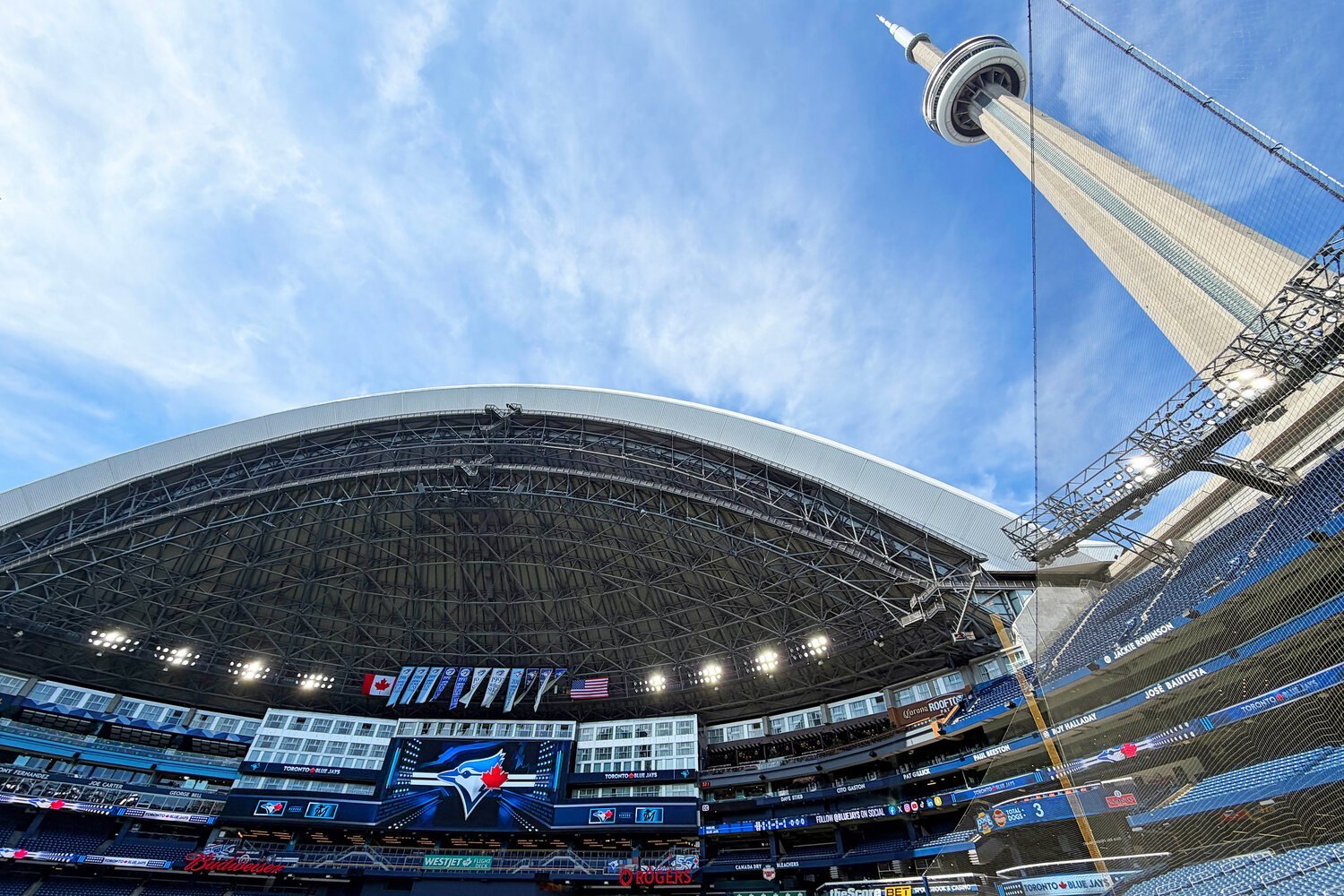 There is something beautiful about afternoon baseball. It is how the game used to be played, and whether it is “work from dome” or just a weekend matinee, afternoon baseball has a different feel than the version under the lights. Don’t get me started about playoff baseball starting at 8:07 pm or 8:37 pm… 7:07 pm starts are what we are pretty well used to. Yet, every season, the Blue Jays play about 70 of their 162 games earlier in the day. Over the next six days, the Jays will play five games starting before 6:00 pm, including three straight against the Cubs at Wrigley. Like every team, the Jays are creatures of habit. Get to the dome when gates open, and you’ll likely see the visiting team taking batting practice. Once the grounds crews have prepped the field for the game, you’ll see several Jays come out with the strength and conditioning support staff to stretch and toss the ball around. What fans don’t often see is the work being done hours beforehand under the stands in the batting cages or on the field before the public is allowed in. Repetition is pivotal to success for professional athletes. Break those routines, and cracks can form in the foundation. Meals and rest need to be moved. Prep time reviewing opposing pitchers or batters shifts. Literally, the view changes for batters and fielders. From losing the ball in the sun as a fielder to losing it in the shadows as a batter, daytime games are different. The Jays have an advantage, or disadvantage depending on how you look at it, of playing at the dome. They can control the roof to alleviate some of those issues. Road environments can be even more challenging. In Boston, shifting shadows at Fenway Park can complicate both hitting and fielding. In Chicago, wind patterns at Wrigley Field can dramatically alter how the ball travels. Looking across its history, the Jays’ relationship with afternoon baseball has fluctuated. Some seasons have seen the club thrive under bright skies, while others have exposed vulnerabilities that seem tied as much to routine disruption as to talent gaps. The Jays tend to hover around a .500 record in day games. This mirrors not only the team’s overall quality in any given season but also reflects the broader challenges Major League Baseball teams face when playing outside their preferred schedules. The Blue Jays’ strongest performances in afternoon games came during seasons when they were already among the league’s better teams. In 1993, a year they won the World Series, the club handled day games with authority (38-16), winning roughly 70 percent of them. A more recent example came in 2021, when the Blue Jays again approached that 70 percent mark in daytime contests (42-18). In weaker seasons, such as the late 1970s when the club was still in its infancy, the results could be much worse. In 1978 and 1979, Toronto won just over 30 percent of its day games, but those results aligned with a team that struggled overall, not just in afternoon settings. Outside of those standout years, the Blue Jays have generally been average in afternoon games. That is not a coincidence. The Blue Jays typically play their daytime games in three predictable windows. Midweek getaway games are perhaps the most common. These games are usually scheduled on Wednesdays or Thursdays, allowing teams to wrap up a series and travel to their next destination later in the day. Weekend matinees are also standard, particularly on Saturdays and Sundays. Then there are occasional hybrid start times, such as weekday games that begin in the late afternoon. Even a quick glance at an upcoming schedule illustrates how concentrated these games can be. A Thursday afternoon game in Boston, followed by travel to Chicago for a full series of day games against the Cubs, represents a classic example of how quickly routines can be disrupted. Adding a 4:07 p.m. home game immediately after such a road stretch on Tuesday against the Astros creates a sequence where players are constantly adjusting their internal clocks. For athletes who rely heavily on routine, that kind of inconsistency can have an impact. The Jays then finish off their homestand against the Rangers and Mets before hitting the West Coast for series against the Mariners, Giants and Padres. The folks who make the schedule for the MLB try to provide teams an opportunity to adjust to shifts in routine. When the Jays wrap up their series with the Mets, it will be a Wednesday 3:07 start in Toronto. The team will be at the airport around 8:00 or 9:00 pm for the five-hour flight to Seattle. If all goes well, and adding the three-hour time change into the equation, they are at the hotel around 12:00 am Pacific. They won’t need to get to the ballpark until around 11:00 am or 12:00 pm to prep for their evening game that night. Despite these challenges, day games remain an essential part of Major League Baseball. Their continued presence comes down to a blend of logistics, tradition, and commercial considerations. Travel is one of the biggest factors. With 162 games spread across North America, teams need to move between cities. Afternoon getaway games allow players to leave at a reasonable hour and arrive at their next destination without sacrificing sleep or preparation time entirely. There is also a historical element that cannot be ignored. Baseball was built on daytime play. For many fans, especially those who grew up attending summer games, afternoon baseball represents a connection to the sport’s roots. The Blue Jays’ tendency to settle around a .500 record in day games ultimately might not tell us much. Throughout a season of ups and downs, this team is keeping itself in the fight but needs to find a stretch where they can build some breathing room either in the Wild Card race or the division. Between these upcoming series, the expanded homestand and the West Coast road trip, they need to overcome the elements, schedules and time zones to pick up wins. When the Blue Jays have exceeded expectations in day games, it has usually been because they have a roster that can perform at or above expectations. Deep lineups, reliable pitching, and positive momentum can carry a team through any time slot. When they have struggled, it has typically been part of a broader pattern of inconsistency rather than a problem limited to daytime play. Somewhere in the dizzying schedule over the next few weeks, by breaking routines and adapting to circumstances, the Jays might find the consistency they have been lacking all season. If not, this might be a frustrating stretch of games. View the full article
 -
The Definitive Case For the Red Sox to Trade Jarren Duran
DiamondCentric posted an article in Talk Sox
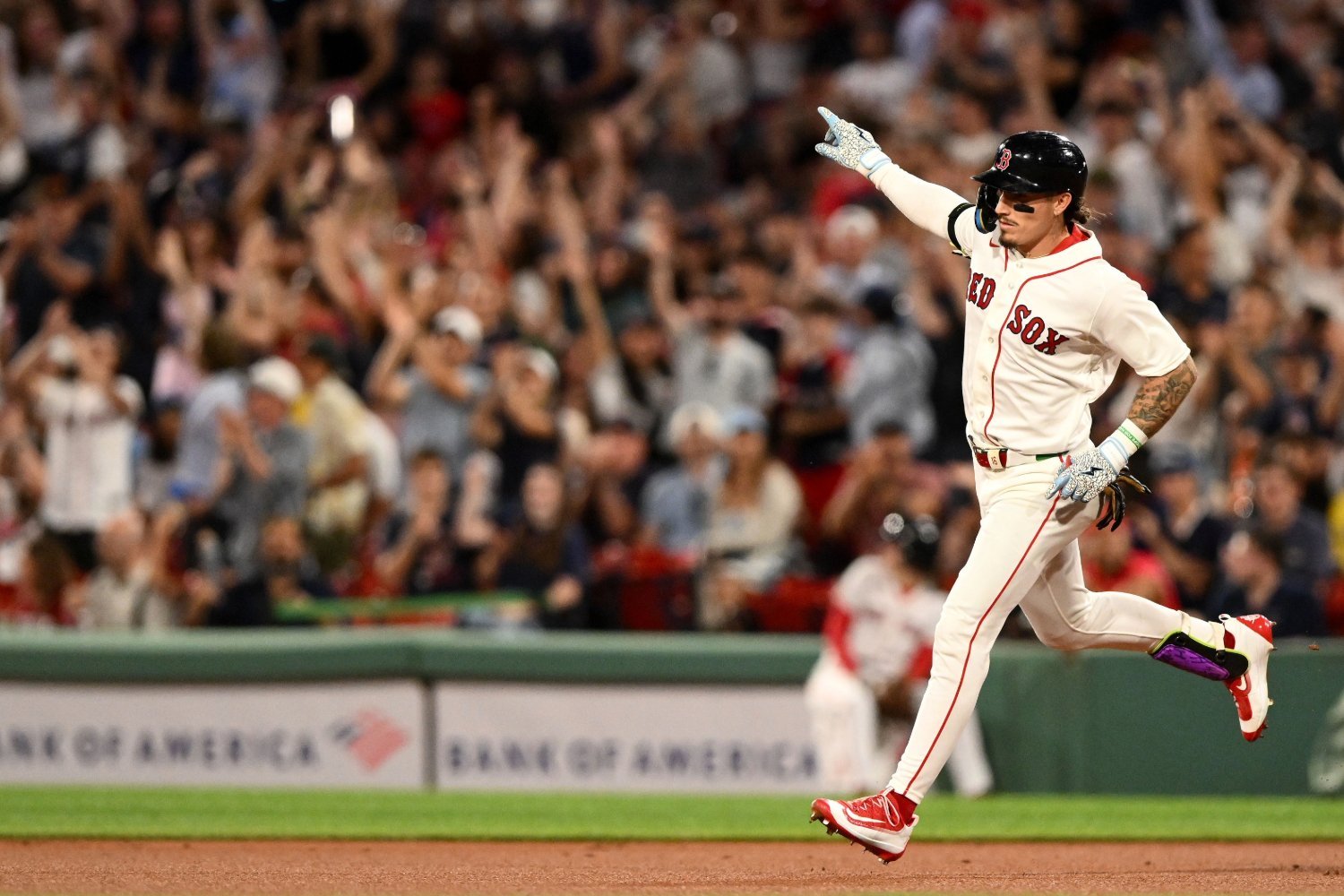 I know, I know. We’ve been here before. I’ve discussed trading Jarren Duran here on Talk Sox more than maybe any other topic. There’s sound reasoning behind it, though. Ever since 2024, there has been reason after reason to offload Duran. Now, we sit in the 2026 season mired in mediocrity and not even within sniffing distance of a playoff spot in a weak American League. So now, dear friends, the time has come to make the definitive case for finally trading Jarren Duran away from the Boston Red Sox. In short, Jarren Duran has been awful this season. I recently talked about his struggles during the month of June but it’s no secret that the entirety of 2026 has been abysmal for Duran. He’s slashing .214/.270/.398 with 12 home runs, 37 RBIs, and 11 stolen bases. To go along with that awful slash line, he’s striking out 29.4% of the time and is only posting a 79 wRC+, hence his meager 0.7 fWAR. The power is nice, but it's hardly been impactful in an otherwise struggling lineup. He’s tinkered more with his batting stance and leg kick this season than he ever has in the past and it’s messed with his timing so much that he's striking out more than ever. The stolen bases also look good, but Duran also isn’t getting any younger. He’s 29 right now and turns 30 in September. Speed is the first tool to deteriorate as a player ages, and although there hasn't been a massive decline in his sprint speed, it’s been a downward trend for the last two years. Eventually, he'll age out of elite territory in that regard, too. But you all know what I think of him by this point. Leave it to the man himself to succinctly sum up his season in a recent postgame conversation: "Absolutely terrible. I’m gonna be honest with you, I’ve felt terrible. Playing like s*** at the plate. But just got to figure it the f*** out, you know?" And he’s right, he does need to figure it out. There’s no question about that, but he doesn’t need to figure it out in Boston past this trade deadline. The outfield is still jammed, even though Roman Anthony’s injury has allowed Duran ample playing time in left field. When Anthony returns, will Duran go back to primarily playing at designated hitter? The results there have been less than stellar this season. You could argue that Anthony should spend the majority of his starts at DH, but the team didn’t guarantee him a nine-figure sum to just take swings. He needs to be in the outfield on a daily basis. Duran is going to be squeezed back out of his every-day playing time because you’re not going to bench Gold Glovers Ceddanne Rafaela or Wilyer Abreu. Once the entire outfield is healthy again, and that should come right around the trade deadline, Duran is once again the odd man out. If we move away from the actual baseball side of things though, Duran likely just needs a change of scenery to unlock what’s next for him. Boston is a difficult market to perform in and he has struggled with it from time to time throughout his career. He’s used derogatory language and made lewd gestures towards fans, refused to speak to the media in the wake of Alex Cora’s dismissal, and has eschewed a leadership role within the clubhouse. While leadership isn’t for everyone, Duran is now one of the longest tenured players in the organization and there’s a certain expectation that comes along with that in professional sports. He may not ever be a true leader of men, but since the roster is currently constructed with such a focus toward younger players, that’s a role he has to step into more as he gets older. Obviously, the elephant in the room is that every other team can see his terrible numbers as well. What the Red Sox are likely hoping for is that there is a team that is willing to take a chance on him turning things around once he leaves Boston. It’s a gamble worth making, but the return for him is going to be lower than it would have been during the offseason or at the trade deadline last year when the Padres were offering both Dylan Cease and Ethan Salas in return. I'll end with this: Jarren Duran is a good baseball player. I've always believed that, and none of his struggles over the years have ever convinced me otherwise. At the same time, it's clear to me that he's overextended his welcome in Boston. A breakup can be painful, but also healing. It's best to rip that band-aid off now and deal with the fallout later. View the full article
 -
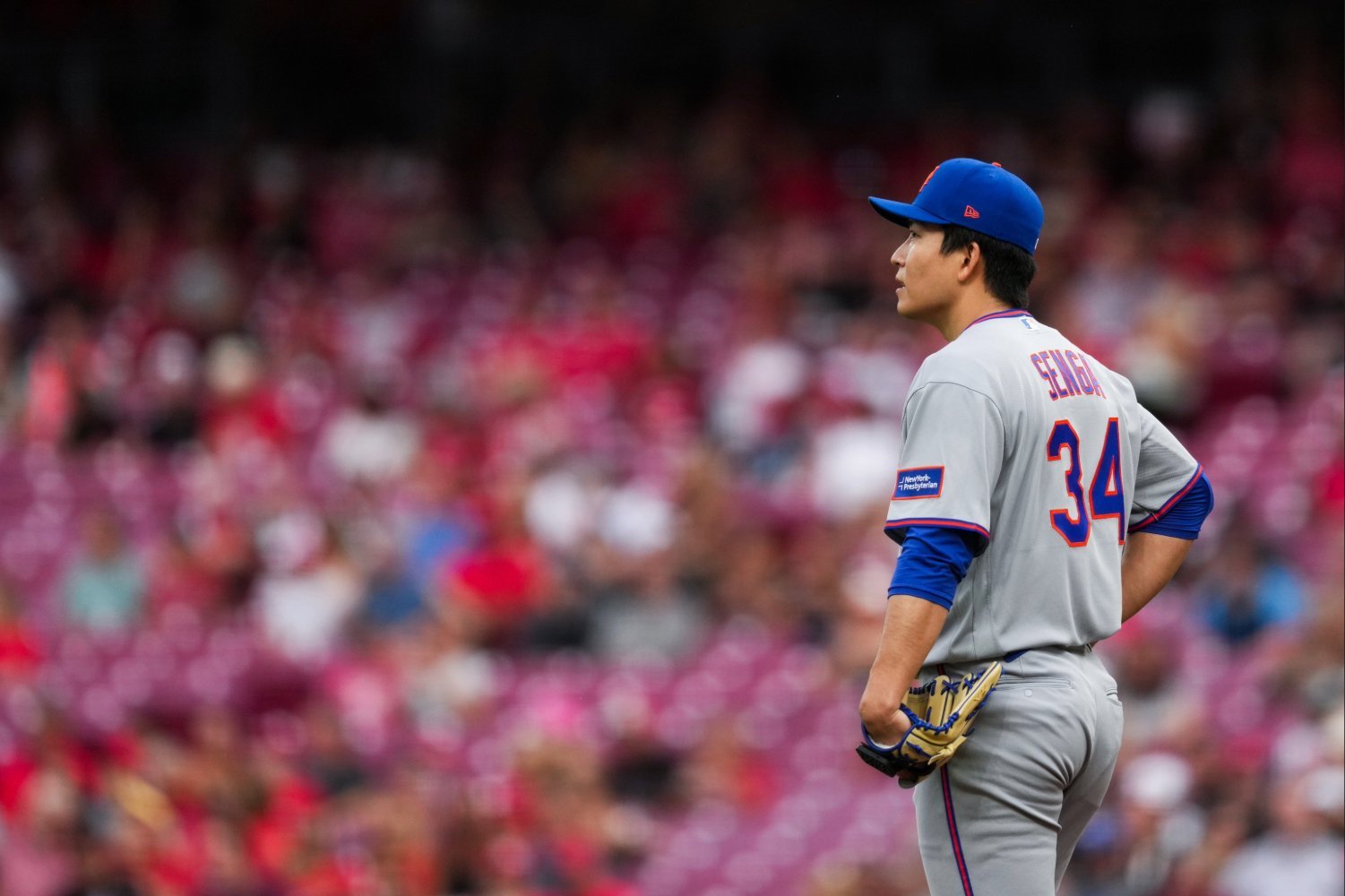 The New York Mets' rotation is in shambles in early June. Consistency is key with any pitching staff, and so far the Mets have not had that, especially when it comes to Kodai Senga. The one-time All-Star was placed on the injured list at the end of April with lumbar-spine inflammation. He made his return on Tuesday and started the Mets' 5-3 loss to the Cincinnati Reds, offering little hope as a solution to the team's longstanding pitching problems. Kodai Senga's Future With Mets Is On Shakier Ground Than Ever Senga started his night in this sequence: walk, walk, three-run home run, lineout, strikeout, and home run. Those were the only two hits Senga gave up during his outing. He only allowed one more baserunner, a walk in the third inning that was erased on a double play. He only went four innings because his first inning was 36 pitches long. Interestingly, Senga cut down the usage of the forkball from 23% to 14% in the outing and raised the usage of his cutter from 22% to 33% and got four whiffs. His slider and forkball velocity were a slight tick down. The home runs came off one cutter and one fastball, which could explain the pivot to his slider as a primary offering after the first inning. "I noticed that they weren't swinging up much down in the zone, so I pivoted over to the slider. " Senga said after the game via interpreter. "There were a lot of sliders, and that was effective, because those last three innings were effective. That first inning is frustrating." The right-hander has been very ineffective this season, and that showed up early; his .417 wOBA allowed is in the bottom 1% in baseball. In other words, batters are hitting Senga at a Hall of Fame level in 2026. That is not sustainable for the Mets to have in their rotation long term. No one is going to win games with pitchers who can't get out of the first inning. The Mets could, of course, consider an opener, but that would mean three-fifths of the rotation would be on such a plan. It goes without saying that this plan would kill the Mets' already-taxed bullpen. When asked postgame, Mets manager Carlos Mendoza said he's "pretty sure" that Senga will get another start. Mendoza added that he needs to confirm with the president of baseball operations, David Sterns, and the coaching staff before making that decision official. It's important to note that Senga will need to accept an option to the minor leagues as per a clause in his contract. Senga did strike out five batters in the outing, so that is a positive. It’s also good that he was able to lock in after a poor start, but throwing 36 pitches in the first inning and 82 over four innings is not a recipe for success. If he is granted another opportunity to pitch, his leash will be short. It's difficult to believe given how good he's been in the past, but we may be coming up on the end of Senga's tenure in New York. View the full article
 -
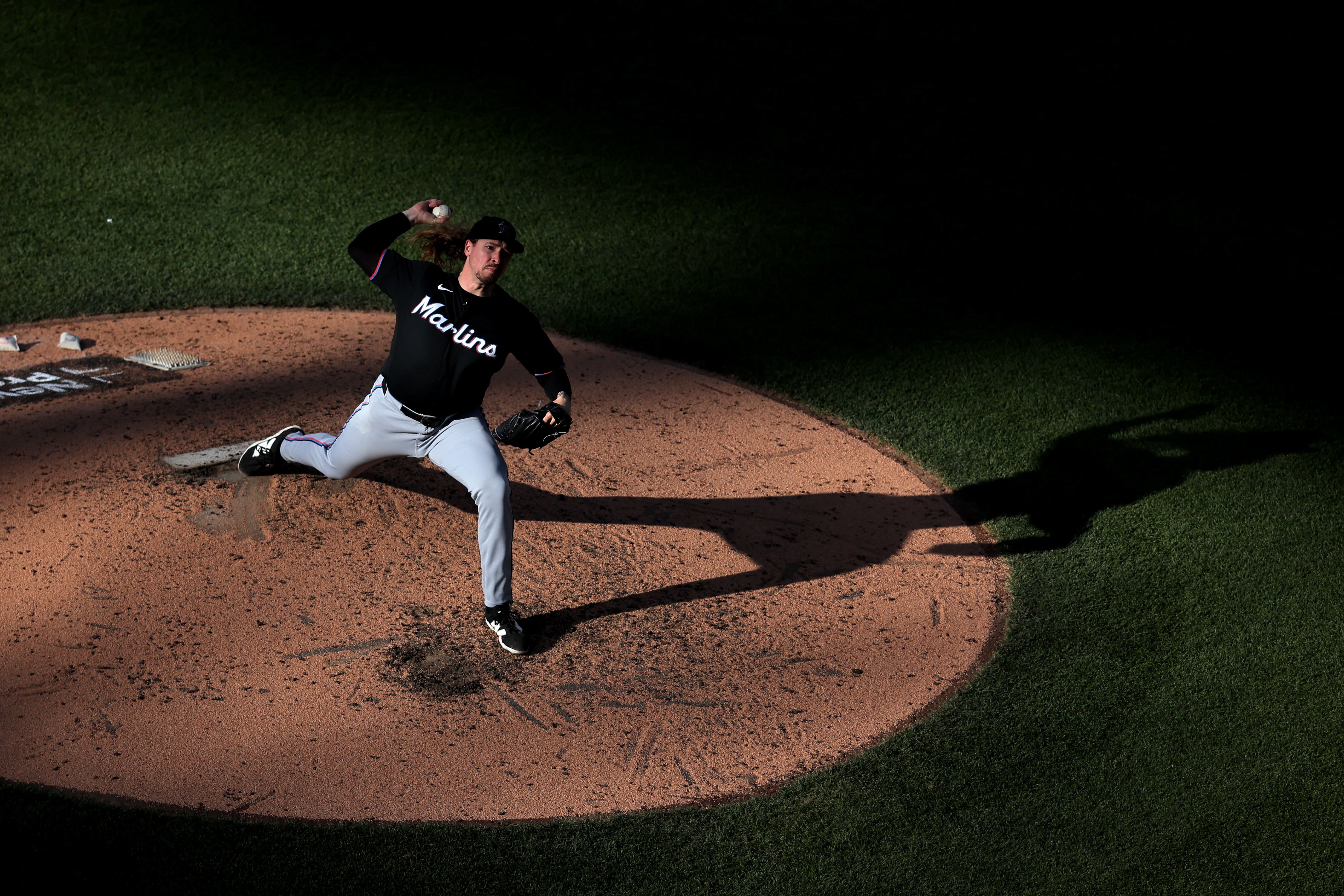 Lake Bachar has been successful out of the Marlins bullpen for parts of three seasons since being claimed off waivers from San Diego. Bachar has been one of the steadiest arms out the ‘pen in 2026. Through 39.1 innings, he has a 2.97 ERA, 3.68 FIP, 20.5 K-BB%. Bachar has seen his pitch mix expand every season with the Fish. Coming into 2025, he only threw a four-seam fastball, split-finger, and sweeper. Adding a slider in 2025, and now both a curveball and sinker this year has expanded his mix from three pitches to six. Baseball Savant’s movement profile, illustrates how Bachar can throw many different shapes and attack batters in a plethora of ways, how many top starting pitchers attack hitters in today’s game. Bachar ideally fits into how the Marlins approach pitching: off-speed and breaking ball heavy. All of Bachar's non-fastballs have an xAVG under .208 with a xWOBA under .260 and 37.5 whiff% or more, throwing those 4 pitches 10% or more, evenly distributing his mix to keep hitters off balance. a0RsWUtfVjBZQUhRPT1fQUZBQ1VsTUFWbEVBQVZGVUFnQUhVZ1VIQUFBQkFBQUFDbDBOQ1FvRVVGZFNBZ0pX.mp4 Bachar has already been used in multi-innings efforts out the ‘pen this season, 13 out of his 23 appearances have been two or more innings, Bachar has also been used as an opener 3 times this season. If that continues, do not be shocked if Bachar gets more opportunities to go past 2-3 innings. The addition of the sinker may be pivotal for Bachar's development as a pitcher. Bachar's four-seam struggles against vs. LHB, compared to righties, a CSW% 8% less vs. lefties, and a 57.1% hard-hit rate. The addition of the sinker will be strong vs. RHB, like his four-seam, experimenting with a cutter, like many other pitchers have, may be a ideal addition for Bachar to have a variation of fastball to attack lefties with. Adding a cutter would continue a league-wide trend of three fastball shapes for pitchers, 49% of the league has 3 fastballs they utilize, compared to 32% ten years ago. Due to Bachar's lack of extension and league-average velocity on the four-seam it will be more likely to regress more stretched out compared to how the pitch has performed overall, which admittedly has been solid. The longer Bachar's outings are, the more plausible that his velo will drop, which is common when players move from the ‘pen to the rotation. TzA0TDRfWGw0TUFRPT1fQjFJSEFnSlJCd2NBRFZFQUFnQUhDRlJVQUZrQlVBQUFCQUVCVmxJREExSlZVbEZU.mp4 Lastly, like with any starter, Bachar's command would be tested. So far out the pen, Bachar has a 8.3% BB%. Fangraphs Location+ metric, gives Bachar overall a 99 Location+ score (100 being average), although this score is severely hindered by his split-finger which registers a 52 Location+. (Heat map via Fangraphs) Overall, Bachar's expanded pitch-mix, lack of intensity pitching which bods well for players moving from the bullpen to rotation, and Bachar's ability to utilize all his pitches in different quadrants of the zone, could allow him to move to the rotation for the Marlins if needed as the 2026 season continues. View the full article
 -
 Transactions: Wisconsin Timber Rattlers activated RHP Michael Fowler from the 7-day injured list. Wisconsin Timber Rattlers activated RHP Daniel Corniel from the 60-day injured list. Nashville Pre-Game Media Notes (unavailable) Nashville 10, Memphis (Cardinals) 8 Box Score & Game Log Via the Sounds, game details, and we encourage readers to always review affiliate write-ups as part of their Link Report routine: Sounds Jump out to Early Lead, Hold off Redbirds Another day, another slugfest between the top two teams in the standings. After losing Tuesday, the Sounds flipped the scoreboard on Wednesday, while both teams stayed hot at the plate with 28 total hits and six home runs. Jett Williams followed up his two-homer game with his ninth home run of the season (108.5 MPH exit velo) on a 1-5 night. Akil Baddoo added two home runs, proving that he can hit them against teams other than the Durham Bulls. In 88 PAs for Nashville this season, Baddoo is sporting a .955 OPS with six home runs, giving the Brewers the roster depth that he was brought in to provide. Jefferson Quero hit three singles following his home run yesterday. Greg Jones and Ethan Murray also added three hits apiece with a double for each. VIDEO: Greg Jones RBI double caps the scoring Rehabbing Jared Koenig got the win, giving up two hits, a walk and one earned run while striking out two. Biloxi pre-game media notes Columbus (Braves) 9, Biloxi 4 Box Score & Game Log Adamczewski, Fischer Drive in Runs in Double-A Debuts, Shuckers Fall to Clingstones - New Shuckers Shine in Loss to Clingstones Welcome to Double-A Andrew Fischer! Fischer hit a home run in his first AA at-bat. Stay hot! Josh Adamczewski also got a hit in his first game with Biloxi, ripping a double to the wall in left center. Unfortunately, Adamczewski collided with Jesús Made in the sixth inning and Made exited the game with a left quad contusion. (video of collision posted with story) Catcher Matthew Wood went 1-3 with a double and now has an .841 OPS on the season. Quietly having a solid year, Wood sports a walk rate above 20 percent, almost double his 11.7 percent strikeout rate. After pitching a clean six innings last week, Tanner Gillis gave up four earned runs and two homers this week. Wisconsin pre-game media notes Quad Cities (Royals) 3, Wisconsin 2 Box Score & Game Log Small Ball Bandits Beat Wisconsin - Quad Cities back-to-back bunts in sixth inning pushes go-ahead run across the plate Braylon Payne stayed hot going 3-4 with an RBI, a steal and a caught stealing. With the promotion of Fischer and Adamczewski, Payne has taken over as the lineup anchor batting in the 3-hole. Wisconsin took a 2-1 lead in the 5th, first set up by Daniel Dickinson with this double: VIDEO: Payne then drove in Dickinson with a dive into first base for an RBI single, as Dickinson was on the move with two outs and did not stop. Josiah Ragsdale provided the rest of the offense going 2-4 with a home run, while extending his on-base streak to twenty-three games. Josh Knoth took another step forward, setting a season high for innings with 4.2 and strikeouts with seven. Knoth gave up two runs but only allowed 3 hits, one walk and no home runs. Wilson pre-game media notes Wilson 12, Charleston (Rays) 3 Box Score & Game Log Wilson Blasts Off to Victory Over Charleston - Warbirds Mash Four Homers Of the Warbirds four home runs, two were by lead-off hitter Handelfry Encarnacion. Infielder Juan Ortuna had a home run as part of a 3-3 night with two walks and a steal. Jadyn Fielder hit the final home run for Wilson. VIDEOS: Find contributing RBI from Filippo Di Turi, Frederi Montero and Jose Anderson Brady Ebel missed the party with an 0-5 game. Jarrette Bonet came on in relief to earn the win, pitching five innings with three strikeouts, allowing one run, 3 hits and two walks. DSL Blue 12, DSL Astros Orange 11 Box Score & Game Log Brewers Blue scored 12 runs on 12 walks with only four hits. Astros Orange came up just short with 11 runs on 12 walks and eight hits. Luckily for team Blue, three of the four hits were home runs and the fourth was a double. Top winter signing ($1.6MM bonus) Diego Frontado went 1-2 with a grand slam, two walks, two steals and three runs. The 17-year-old shortstop now has four home runs on the season. Gerlyn Payano also hit his fourth home run of the season and catcher Johanderson Tarazona hit his first. If you had to pick a pitcher to highlight, Jean Rodriguez didn’t allow a run over two innings, while striking out two and giving up a hit and three walks. There are eight games scheduled Thursday as Biloxi hopes to complete two. The Arizona Brewers play a rare weekday afternoon game. Organizational Scoreboard including starting pitcher info, game times, MiLB TV links, and box scores Current Milwaukee Brewers Organization Batting Stats and Depth Current Milwaukee Brewers Organization Pitching Stats and Depth View the full article
 -
 San Diego Padres affiliates went 3-1 with a rainout as the Triple-A El Paso Chihuahuas downed Reno 9-6, the Double-A San Antonio Missions split a doubleheader with Corpus Christi, winning 4-3 and then losing 7-4, while the High-A Fort Wayne TinCaps and South Bend were rained out and the Low-A Lake Elsinore Storm prevailed 7-4. Padres Minor-League Transactions El Paso Chihuahuas released LHP Marco Gonzales. San Diego Padres sent RHP Ty Adcock outright to El Paso Chihuahuas. RHP Kleiber Olmedo assigned to ACL Padres from Fort Wayne TinCaps. Carlos Rodriguez's Streak At 22 As Chihuahuas Triumph Carlos Rodriguez went 2-for-4 to send his career-high hitting streak to 22 games and Bryce Johnson doubled home a pair of runs to snap a fifth-inning tie as the host Triple-A El Paso Chihuahuas bounced the Reno Aces 9-6. Rodriguez also has a 26-game on-base streak. Padres right-hander German Marquez, in his fourth rehab appearance with the Chihuahuas as he makes his way back from right forearm nerve inflammation, gave up his first runs on this assignment. Marquez allowed three runs in five innings on five hits, including a homer, and three walks with three strikeouts. Marquez threw 73 pitches, including 43 strikes. Mason McCoy and Anthony Vilar homered for the Chihuahuas. McCoy hit his seventh homer, a solo shot, in the first inning and the Aces tied it in the top of the third. Rodriguez singled to extend his hitting streak in the bottom of the third, driving in Nate Mondou, who had walked and been bunted to second. The Aces took a 3-2 lead in the top of the fourth. But the Chihuahuas would take control in the fifth and sixth innings. Mondou doubled home the tying run and Johnson doubled home a pair to put the Chihuahuas up 5-3. Johnson was in his first game back at Triple-A after being designated for assignment by the Padres and outrighted to El Paso. Reno scored once in the top of the sixth, but the Chihuahuas put up another three-spot in the bottom half. Vilar hit a two-run homer, his third this season, Johnson walked, stole second and came home on Rodriguez's double for a 8-4 lead. EP_0617.mp4 Player AB R H RBI BB K Bryce Johnson 4 1 1 2 1 2 Carlos Rodríguez 4 0 2 2 1 1 Mason McCoy 3 1 1 1 1 1 Marcos Castañon 4 0 0 0 0 2 Nick Pratto 4 1 1 0 0 1 Clay Dungan 3 1 1 0 0 1 Nick Schnell 4 1 1 0 0 2 Nate Mondou 2 2 1 1 2 1 Anthony Vilar 2 2 1 2 1 1 Player IP H R ER BB K HR Germán Márquez 5 5 3 3 3 3 1 Sean Boyle 1 1 1 1 1 2 1 Logan Gillaspie 1 3 2 1 0 1 0 Alek Jacob 2 1 0 0 0 1 0 Late Walk, Strong Pitching Helps Missions Get Doubleheader Split Tirso Ornelas hit a first-inning three-run homer and Braedon Karpathios drew a bases-loaded walk to snap a seventh-inning tie as the Double-A San Antonio Missions beat the host Corpus Christi Hooks 4-3 in the first game of a doubleheader. Karpathios, Padres Mission's No. 9 prospect, and Francisco Acuna homered in the nightcap, which the Missions dropped 7-4. In the opener, Missions right-hander Eric Yost matched his season best with six innings, allowing three runs on just two hits and a walk with two strikeouts. Right-hander Josh Mallitz picked up the save, his third this year, by pitching a perfect seventh inning. Ryan Jackson opened the game with a single, Ethan Salas walked and, after a one-out double steal, Ornelas lined a three-run homer, his seventh of the season, deep to right field. The Hooks tied the game with a three-run second inning. It stayed 3-3 until the top of the seventh. With two outs, Salas, Padres Mission's No. 1 prospect, drew his third walk of the game and went to third on Romeo Sanabria's single to right. Ornelas walked on four pitches to load the bases for Karpathios, who drew a walk on 3-2 pitch to push home Salas with the tiebreaking run. SA1_0617.mp4 In the second game, Karpathios hit his fifth homer of the season, a two-run shot, back-to-back with Acuna's fourth this year for a 3-0 lead in the second inning. But the Hooks countered with two runs in the bottom of the second, then two more in the fourth and three in the seventh to go up 7-3. Acuna tripled with one out in the sixth and scored on Kai Murphy's groundout. Missions right-handed starter Miguel Mendez, Padres Mission's No. 3 prospect, went just three innings, giving up a pair of runs on two hits with three walks and five punchouts. Missions right-hander Johan Moreno gave up two runs on a hit and three walks in the fourth inning and right-hander Harry Gustin allowed three runs (one earned) on three hits while striking out three in the fifth. Right-hander Clark Candiotti struck out two in a perfect sixth. SA2_0617.mp4 FIRST GAME Player AB R H RBI BB K Ryan Jackson 4 1 1 0 0 2 Ethan Salas 1 2 0 0 3 1 Romeo Sanabria 4 0 1 0 0 2 Tirso Ornelas 3 1 1 3 1 1 Braedon Karpathios 3 0 1 1 1 1 Luis Verdugo 3 0 0 0 0 3 Albert Fabian 1 0 0 0 2 0 Francisco Acuna 3 0 1 0 0 1 Kai Roberts 2 0 0 0 0 1 Player IP H R ER BB K HR Eric Yost 6 2 3 3 1 2 0 Josh Mallitz 1 0 0 0 0 1 0 SECOND GAME Player AB R H RBI BB K Ryan Jackson 4 0 0 0 0 3 Albert Fabian 3 0 1 0 1 0 Romeo Sanabria 2 0 1 0 2 0 Tirso Ornelas 4 1 2 0 0 2 Braedon Karpathios 3 1 1 2 0 0 Luis Verdugo 3 0 0 0 0 1 Francisco Acuna 3 2 2 1 0 0 Kai Murphy 3 0 0 1 0 2 Brendan Durfee 2 0 0 0 1 0 Player IP H R ER BB K HR Miguel Mendez 3 2 2 2 3 5 0 Johan Moreno 1 1 2 2 3 1 0 Harry Gustin 1 3 3 1 0 3 0 Clark Candiotti 1 0 0 0 0 2 0 TinCaps Rained Out, Will Play Two Thursday The second game of the High-A Fort Wayne TinCaps' home series against the South Bend Cubs was postponed due to rain. The game will be made up as part of a doubleheader Thursday, with a pair of seven-inning games. Newcomer Dawson Willis, Qrey Lott Spark Storm Victory Dawson Willis doubled home the go-ahead run in the seventh inning of his Low-A debut and Qrey Lott tacked on a two-run homer as the Lake Elsinore Storm turned back the host San Jose Giants 7-4. The Storm on Tuesday wrapped up the first-half championship in the California League's South Division. Willis, an infielder, was promoted from the Arizona Complex League, where he slashed .300/.373/.617 with four homers and 13 RBIs in 16 games. He made his Storm debut one to remember as he went 3-for-5 with a pair of doubles and three RBIs. He also stole a base and scored twice. Willis and Lott did damage early, with Willis doubling home a pair of runs and Lott singling him home in a three-run third inning for a 3-2 lead. George Bilecki added an RBI single in the fourth inning, before the Giants tied it with a pair of runs in the fifth. In the seventh, Alcides Hernandez, in his fourth game since coming up from the ACL, singled with one out and went to second on a groundout. Willis then lined a double that ricocheted off third base and into left field, scoring Hernandez with the go-ahead run. Two pitches later, Lott launched his fifth homer of the season to left to make it 7-4. Hernandez went 2-for-4 with two runs scored. Storm right-handed starter Jesus Castro surrendered four runs (three earned) in five innings on seven hits and a walk with three strikeouts. LE_0617.mp4 Player AB R H RBI BB K Bradley Frye 5 0 0 0 0 1 Dawson Willis 5 2 3 3 0 2 Qrey Lott 4 1 2 3 1 1 Yoiber Ocopio 4 0 0 0 0 1 Truitt Madonna 2 0 0 0 1 0 Kerrington Cross 1 0 0 0 0 0 Yimy Tovar 4 1 1 0 0 1 George Bilecki 3 0 1 1 0 1 Conner Westenburg 4 1 1 0 0 0 Alcides Hernandez 4 2 2 0 0 1 Player IP H R ER BB K HR Jesus A. Castro 5 7 4 3 1 3 0 Joseph Herrera 1 1 0 0 0 0 0 Daichi Moriki 2 3 1 0 0 1 0 Will Koger 1 0 0 0 1 0 0 Padres Mission Top 20 Prospect Performance Ethan Salas: 0-for-1, K Kash Mayfield: DNP Miguel Mendez: 3 IP, 2 H, 2 R, 3 BB, 5 K Kruz Schoolcraft: DNP Ryan Wideman: DNP Jorge Quintana: DNP Ty Harvey: On injured list Kale Fountain: Injured, out for season Braedon Karpathios: 1-for-3, K (Game 1); 1-for-3, HR (Game 2) Lamar King Jr.: DNP Jagger Haynes: DNP Alex McCoy: DNP Truitt Madonna: 0-for-2 Tucker Musgrove: DNP Garrett Hawkins: DNP Michael Salina: DNP Eric Yost: 6 IP, 2 H, 3 R, 1 BB, 2 K, W Rosman Verdugo: DNP Bryan Balzer: DNP Deivid Coronil: DNP View the full article
 -
 Frank Mozzicato earned the win with two scoreless innings of four-strikeout relief as the Northwest Arkansas Naturals beat Tulsa 7-2. Emmanuel Reyes worked six innings of two-run ball with five strikeouts to lift the Quad Cities River Bandits past Wisconsin 3-2, with Tyriq Kemp collecting three hits. For Columbia, Darwin Rodriguez struck out seven over six innings in a 9-5 loss, while Sean Gamble went 2-for-3 with a double and Josi Novas homered. Omaha's game against the St. Paul Saints was postponed due to weather or Ghostbusters-esque conditions. Royals Transactions Kansas City Royals activated RHP Connor Seabold. Kansas City Royals optioned RHP Mitch Spence to Omaha Storm Chasers. Naturals Pile On In The Fourth To Down Tulsa 7-2 The Northwest Arkansas Naturals scored in three different innings to take a 7-2 win over the Tulsa Drillers, whom the Naturals have not beaten this season until tonight (They lost all their games in Tulsa back in May). Jack Pineda led the offense, going 2-for-4 with two RBIs, and Rudy Martin Jr. reached three times with two hits, two runs scored, and two stolen bases. Northwest Arkansas struck first in the first inning when Pineda singled home leadoff man Carson Roccaforte, and Spencer Nivens followed with a sacrifice fly to score Pineda for a 2-0 lead. The decisive frame came in the fourth, when the Naturals plated four runs. Connor Scott singled home Martin, Roccaforte added a sacrifice fly, and Pineda capped the inning with a two-run single that scored Alberto Rodriguez and Justin Johnson to push the lead to 6-2. Rodriguez added an insurance run with a sacrifice fly in the eighth. Felix Arronde, our No. 12 prospect at Royals Keep, started and allowed two runs on two hits with two walks, three strikeouts, and a home run over three innings. He held his own despite facing a Drillers lineup stacked with Top-100 prospects from the Dodgers system. Mozzicato, our No. 17 prospect at Royals Keep, earned the win, striking out four over two scoreless innings while allowing one hit and three walks. Andrew Morones, Caden Monke, and Dennis Colleran Jr. combined for the final four innings. Northwest Arkansas left seven runners on base and went 3-for-10 with runners in scoring position. They are now 28-35. Player AB R H RBI BB K Carson Roccaforte 2 1 0 1 1 1 Jack Pineda 4 1 2 2 1 1 Sam Kulasingam 2 0 1 0 2 0 Spencer Nivens 3 0 0 1 0 0 Omar Hernandez 4 0 0 0 0 0 Rudy Martin Jr. 3 2 2 0 1 1 Connor Scott 4 1 1 1 0 2 Alberto Rodriguez 2 1 0 1 1 2 Justin Johnson 2 1 0 0 2 0 Player IP H R ER BB K HR Felix Arronde 3 2 2 2 2 3 1 Frank Mozzicato 2 1 0 0 3 4 0 Andrew Morones 1 1 0 0 0 1 0 Caden Monke 2 1 0 0 0 2 0 Dennis Colleran Jr. 1 1 0 1 1 1 0 Reyes Goes Six As River Bandits Edge Wisconsin 3-2 The Quad Cities River Bandits manufactured just enough offense to slip past the Wisconsin Timber Rattlers 3-2. The Dutch-born Kemp paced the lineup, going 3-for-3 with a double, an RBI, two stolen bases, and a walk, and Ramon Ramirez added a double, two runs scored, and a stolen base. Quad Cities scored single runs across three innings, breaking through in the second when Kemp singled home Ramirez. In the fifth, Connor Rasmussen doubled to drive in Kemp, and the eventual winning run came in the sixth when Derlin Figueroa laid down a sacrifice bunt that scored Ramirez. Reyes turned in the night's strongest pitching performance, working six innings and allowing two runs on seven hits with one walk, five strikeouts, and a home run to earn the win. The 22-year-old now has a 3.64 ERA and 1.38 WHIP in 12 starts and 59.1 IP. Jordan Woods followed with two scoreless innings, striking out two, and Yimi Presinal struck out two in a scoreless ninth for the save. The River Bandits left nine runners on base and went 3-for-10 with runners in scoring position. With the win over the Rattlers, Quad Cities improved their record to 29-33. Player AB R H RBI BB K Nolan Sailors 3 0 1 0 0 0 Asbel Gonzalez 3 0 0 0 1 1 Blake Mitchell 4 0 1 0 0 1 Ramon Ramirez 3 2 1 0 1 1 Luke Pelzer 4 0 1 0 0 2 Derlin Figueroa 3 0 0 1 0 3 Tyriq Kemp 3 1 3 1 1 0 Connor Rasmussen 3 0 1 1 1 0 Angel Acosta 3 0 0 0 1 1 Player IP H R ER BB K HR Emmanuel Reyes 6 7 2 2 1 5 1 Jordan Woods 2 1 0 0 1 2 0 Yimi Presinal 1 0 0 0 0 2 0 Fireflies Undone By Seventh-Inning Rally In 9-5 Loss At Hickory The Columbia Fireflies could not hold an early lead and fell to the Hickory Crawdads 9-5. Gamble, our No. 3 prospect, led the offense, going 2-for-3 with a double, an RBI, a walk, and a stolen base. Angel Ramirez reached three times with a hit, two walks, two runs scored, and a stolen base. Columbia built a 4-2 advantage in the third inning, getting an RBI groundout from JC Vanek that scored Yandel Ricardo, a Novas solo home run, and a run-scoring single from Gamble. The lead did not last. Hickory plated two in the fifth to tie the game, then broke it open with four runs in the seventh to take command. Rodriguez was strong in his outing, striking out seven over six innings while allowing four runs on six hits and a walk. Jhon Reyes took the loss after retiring just one batter and surrendering four runs on five hits, and Yeri Perez allowed one run over 1 2/3 innings. Ivan Sosa drove in Gamble in the eighth for Columbia's final run. The Fireflies left seven runners on base and went 3-for-11 with runners in scoring position. They are 33-32 this season. Player AB R H RBI BB K Yandel Ricardo 5 1 0 0 0 1 Angel Ramirez 3 2 1 0 2 0 Stone Russell 5 0 1 0 0 2 JC Vanek 4 0 0 0 0 1 Sean Gamble 3 1 2 1 1 1 Roni Cabrera 3 0 0 0 1 1 Ivan Sosa 4 0 1 1 0 1 Gabriel Silva 4 0 0 0 0 3 Josi Novas 3 1 1 1 1 2 Player IP H R ER BB K HR Darwin Rodriguez 6 6 4 4 1 7 0 Jhon Reyes 1/3 5 4 4 0 0 1 Yeri Perez 1 2/3 1 1 1 1 0 0 Top-20 Prospect Performance Kendry Chourio: DNP David Shields: DNP Sean Gamble: 2-for-3, 2B, RBI, BB, K, SB Blake Mitchell: 1-for-4, K Josh Hammond: DNP Ramon Ramirez: 1-for-3, 2B, BB, K, SB Drew Beam: DNP Asbel Gonzalez: 0-for-3, BB, K Ben Kudrna: DNP Carson Roccaforte: 0-for-2, RBI, BB, K Yandel Ricardo: 0-for-5, K Felix Arronde: 3 IP, 2 H, 2 R, 2 ER, 2 BB, 3 K, HR Blake Wolters: DNP Michael Lombardi: DNP Luinder Avila: DNP Steven Zobac: DNP Frank Mozzicato: 2 IP, 1 H, 0 R, 0 ER, 3 BB, 4 K, 0 HR Daniel Vazquez: DNP Warren Colcano: DNP Shane Panzini: DNP View the full article
 -
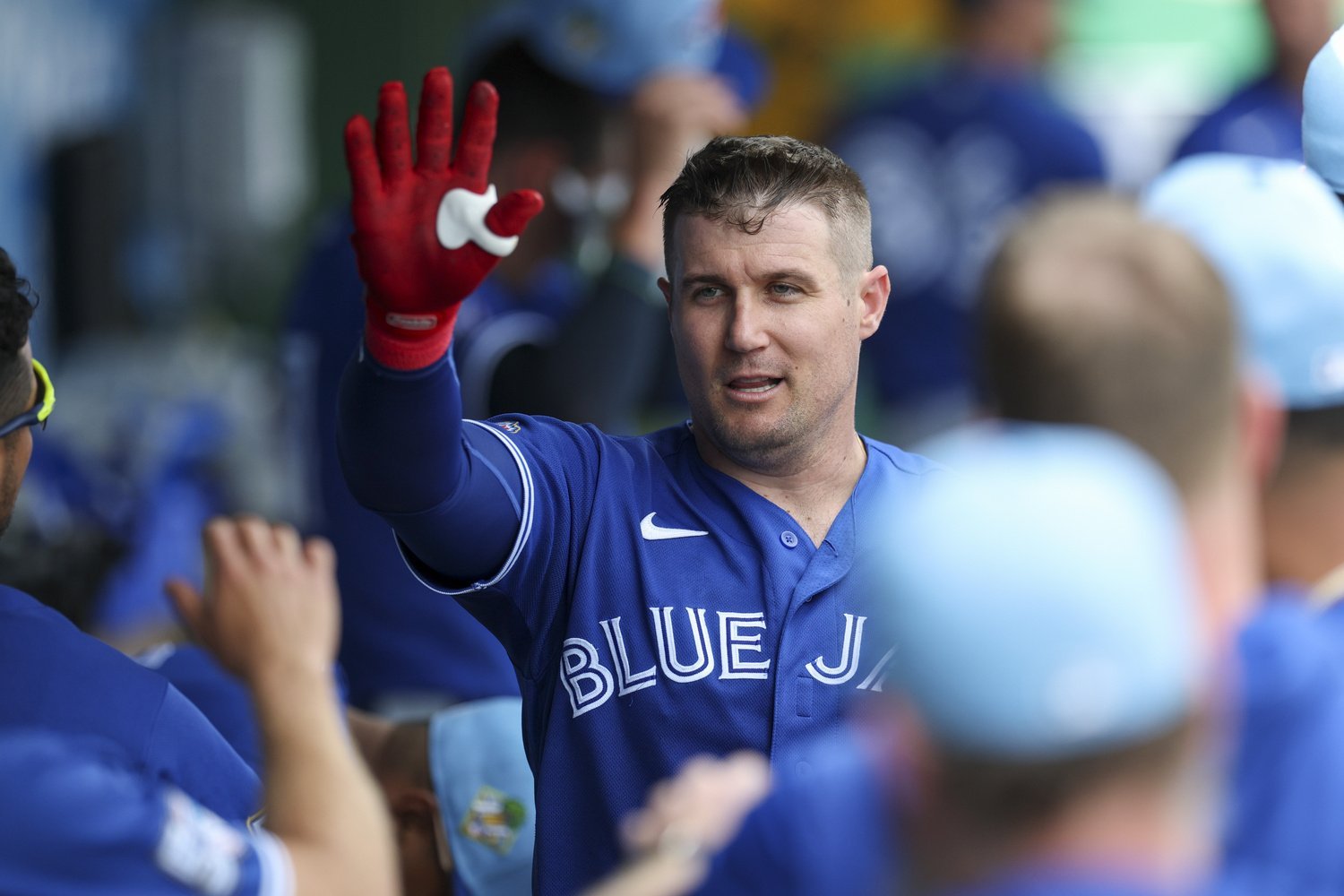 Last week, the Blue Jays designated Tyler Heineman for assignment when they activated Alejandro Kirk from the injured list. Today, they traded him to the Angels for cash considerations. Heineman, 34, spent parts of the past five seasons with Toronto. In that time, he played 126 games over numerous stints with the Jays, hitting .242 with a .663 OPS, while consistently playing superb defense. He was a surprisingly important contributor to the 2025 AL pennant-winning team, enjoying an unusually productive season for a backup catcher. While his defense in 2026 has been as excellent as ever, his offense has been poor. Considering Brandon Valenzuela's success on both sides of the ball, it wasn't surprising when the Blue Jays decided to DFA Heineman last Friday. However, considering how many times they have re-acquired Heineman in the past, it also wouldn't be surprising to see the journeyman backstop back in a Blue Jays uniform someday. View the full article
 -
Twins Minor League Report (6/17): Marek Houston Can't Stop Hitting
DiamondCentric posted an article in Twins Daily
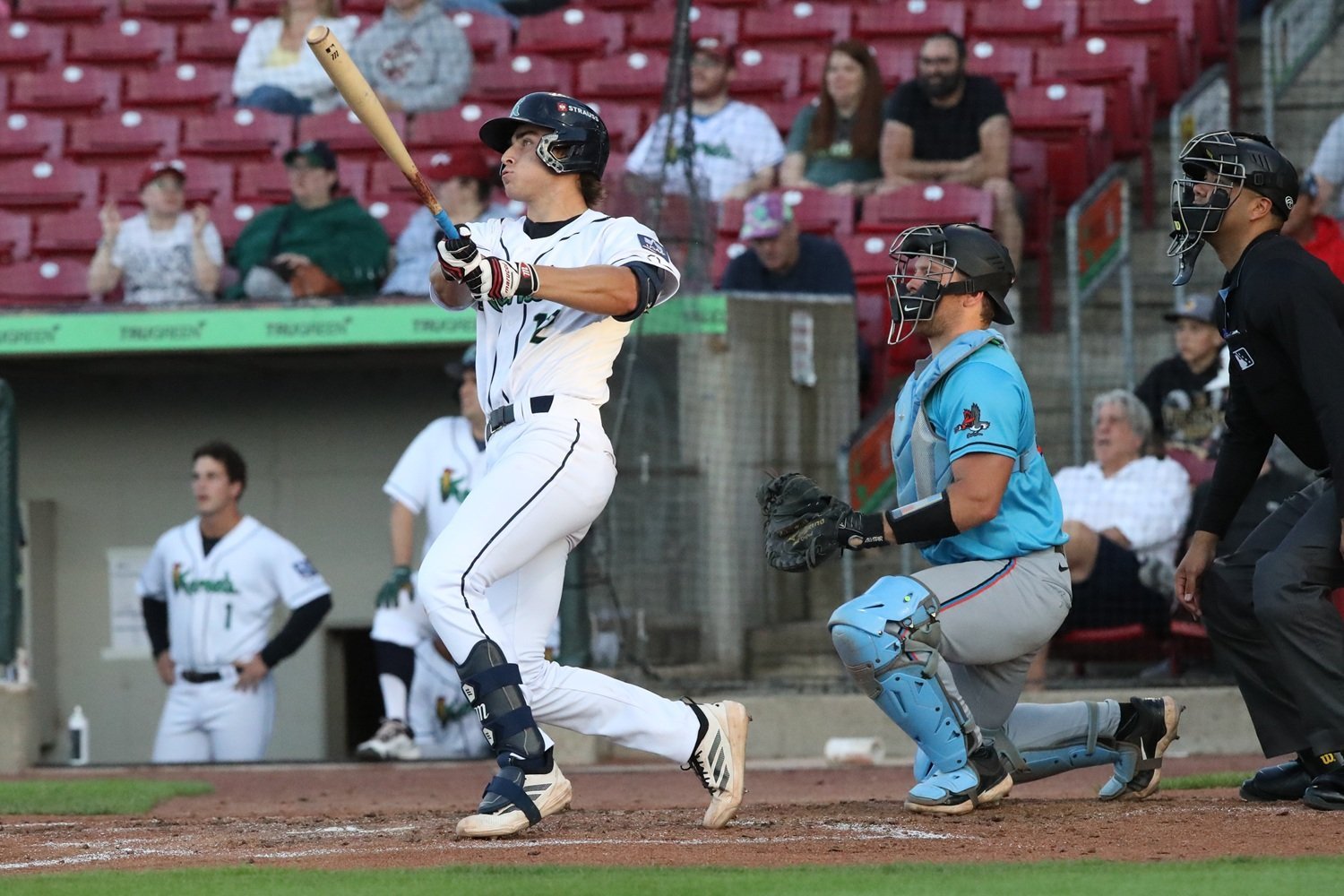 TRANSACTIONS LHP Kendry Rojas sent to AAA St. Paul on rehab. Saints Sentinel The 1952 film with Gene Kelly and Debbie Reynolds taught us that one can sing in the rain; however, the movie mentions nothing about the impossibility of playing baseball in it. Indeed, the Saints learned this the hard way, and will play a doubleheader on Thursday because of the precipitation. Wind Surge Wisdom Wichita 10, Springfield 9 Box Score SP: Cory Lewis: 4 IP, 4 H, 0 ER, 3 BB, 1 K HR: Kala’i Rosario (11) Multi-hit games: Andrew Cossetti (3-for-4, 3B, R, 3 RBI, BB), Kala’i Rosario (2-for-4, HR, R, 3 RBI, BB), Khadim Diaw (2-for-4, 2 R, BB) The Wind Surge won a thriller on Wednesday. The typical wasn’t cutting it, so why not try the atypical? Cory Lewis dabbled in effectively wild territory, walking three while allowing four hits. That’s almost a 2.00 WHIP—deadly endeavors for any pitcher. Yet, Lewis walked away without an earned run to his name and given the season he was having coming into the game, he’ll certainly take it. The “zero-earned runs” thing befalls a terrible truth of this game: the Wind Surge couldn’t field for squat. They committed four errors. A particularly brutal stretch occurred in the fifth when a Quinn McDaniel mishap added a second runner to the bases, a Jaime Ferrer botch scored a run and put men on the corners, and an Andrew Cossetti throwing error turned a double steal attempt into a run. That’s how poor Ruddy Gomez could only be credited with one earned run while five scored in the inning. Fortunately, the bats were ready to make up for what the gloves couldn’t do. Wichita was in a hitting mood. Shoot, they were in a walking mood, too. They collected 10 knocks and nine free passes; everyone outside Garrett Spain reached base at least once. Two touched home in the third off an Andrew Cossetti triple. A third arrived in the fifth when McDaniel cleverly dashed home on the front-end of a strikeout/double-steal attempt. Then the point became moot when Kala’i Rosario clobbered a homer one batter later. At least McDaniel has bragging rights. Springfield swapped pitchers and did nothing to stop the run avalanche started by the Wind Surge in the fifth. A lineup-wide flurry—the kind of piranha production that would make Ron Gardenhire smile—ambushed the new hurler for three more runs. RBIs went to McDaniel, Billy Amick, and Rosario. Unsatisfied and ravenous proved to be a Wichita lineup dead-set on swooning ERAs and bludgeoning pitcher egos: they once-again loaded the bases in the seventh and pushed a pair of runs across thanks to a hit by pitch and a walk. A good day indeed when a lineup plates a run four separate times without needing a hit. Khadim Diaw singled twice and walked in his AA debut. Springfield’s unique “switch-pitcher” started on Wednesday. Jurrangelo Cijntje, ranked as the 84th-best prospect in baseball, according to MLB.com, tossed 4 2/3 innings, allowing five earned runs. He only pitched right-handed. Life is often boring. Kernels Nuggets Cedar Rapids 4, Beloit 8 Box Score Riley Quick: 4 2/3 IP, 5 H, 3 ER, 3 BB, 5 K HR: Miguel Briceno (5) Multi-hit games: Marek Houston (2-for-3, 2 2B, 2 R, 2 BB), Miguel Briceno (2-for-4, HR, R, RBI) The Kernels were solidly bested on Wednesday. Riley Quick’s regal dominance at Fort Myers has dissipated into an ordinary muck. The righty who once appeared incapable of allowing runs has not only surrendered them at consistent rate, but he’s also allowed free passes far more often than one would expect given his raw ability. These are the common traits of a player figuring things out, learning more about himself as an athlete. He’s less than 40 innings into his professional career, after all. It seems inevitable he’ll figure it out. Marek Houston has commanded his level. It’s too easy for him now. The 2025 first round pick is slashing an unbelievable .442/.561/.651 since June started with 13 walks to six strikeouts. That’s dominance. He also stole two bases. That’s dominance. He should be driving to Wichita soon. Miguel Briceno provided the lone big blast for Cedar Rapids, homering in the fourth. The infielder was a Minor League Rule-5 pick before the 2025 season, a fact you may need to know as he’s now slashing .324/.380/.577 with the Kernels. OF Brandon Compton slots in as the 12th-best prospect in the Marlins system, and he collected three hits, including two homers. Perhaps he’s ranked too low. Mussel Matters Fort Myers 9, Tampa 7 Box Score Justin Mitrovich: 4 1/3 IP, 3 H, 4 ER, 3 BB, 6 K HR: Quentin Young (7) Multi-hit games: Quentin Young (2-for-5, HR, 2B, 2 R, RBI), Byron Chourio (2-for-4, 3B, 2R, RBI) The Mighty Mussels hit their way to a win on Wednesday. “It’s about scoring them in bunches,” espoused Fort Myers, probably. They only scored in three frames, but made them worth their while, plating a trio in the fifth thanks to a rally started by a Jayson Bass hit by pitch turned not-pickoff when the second baseman dropped the ball that should have nabbed the running Bass. So it goes. And so it be, sometimes. Byron Chourio and Ryan Sprock reaped the rewards with RBI knocks later in the inning. We do it again. This time in the seventh. Chourio tripled. Ricardo Pena walked. Dameury Pena singled. Two outs nearly neutered the rally. Then, an error on a Quentin Young batted ball. Floodgates and such. The error, a wild pitch, and oncoming singles by Luis Fragoza and Merphy Hernandez put a five-run capitalization on the matter. And, for good measure, Young returned in the ninth to pop an opposite-field moonball that may have punctured a cloud before returning to land. Callan Fang—which sounds like the name of a horror movie villain from the 90s—debuted for the Mighty Mussels, tossing 2 2/3 effective innings with zero earned runs and three strikeouts. He looks to join the fraternity of the 35 Harvard men who have become big leaguers. The Tarpons are an affiliate of the nefarious—yet undeniably awesome—Yankees farm system. They sent forward their ninth-ranked prospect, starter Thatcher Hurd, who racked up eight strikeouts across 4 1/3 innings while allowing just one earned run. TWINS DAILY PLAYERS OF THE DAY Twins Daily Minor League Pitcher of the Day – Cory Lewis Twins Daily Minor League Hitter of the Day – Quentin Young PROSPECT SUMMARY Here’s a look at how the Twins Daily Top 20 Twins Prospects performed: #5 – Eduardo Tait (Cedar Rapids) - 1-5, 3 K #7 – Marek Houston (Cedar Rapids) - 2-3, 2 2B, 2 R, 2 BB #8 – Riley Quick (Cedar Rapids) - 4 2/3 IP, 5 H, 3 ER, 3 BB, 4 K #10 – Gabriel Gonzalez (St. Paul) - 1-3, 2 RBI #14 – Quentin Young (Fort Myers) - 2-5, HR, 2B, 2 R, RBI, 2 K #15 – Brandon Winokur (Cedar Rapids) - 1-3, R, RBI, 2 BB, K #19 – Khadim Diaw (Wichita) - 2-4, 2 R, BB MONDAY’S PROBABLE STARTERS Omaha @ St. Paul (5:07 PM) - RHP Ricky Castro Omaha @ St. Paul (Game Two) - TBD Springfield @ Wichita (6:35 PM) - RHP Preston Johnon Beloit @ Cedar Rapids (6:35 PM) - LHP Cesar Lares Fort Myers @ Tampa (10:00 AM) - RHP Charlee Soto FCL Twins @ FCL Rays (11:00 AM) - TBD DSL Arizona Red @ DSL Twins (10:00 AM) - TBD View the full article
 -
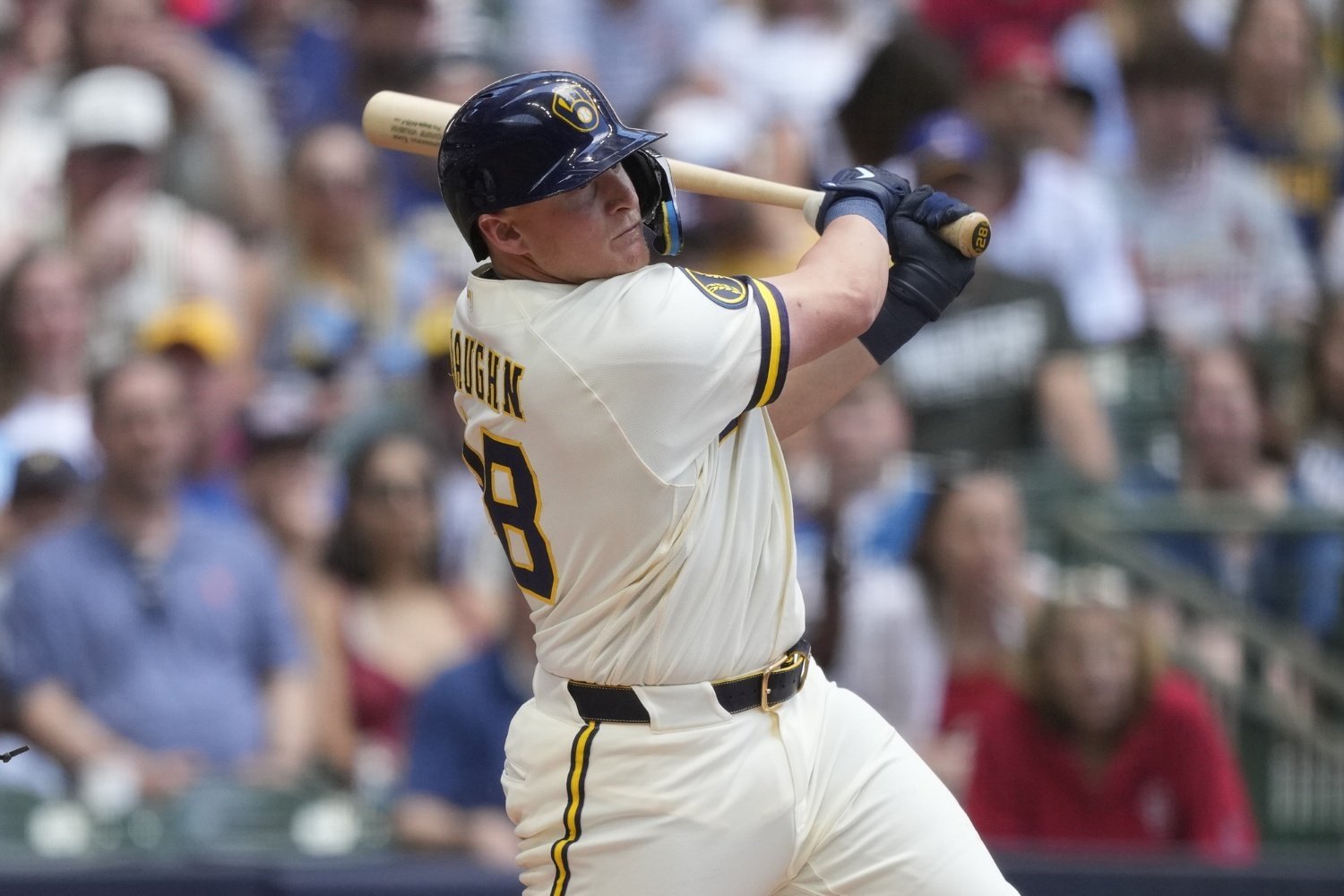 When Pat Murphy and the Brewers staff sits down to fill out the lineup card each day, they have a wealth of good options. Frustrating though it might be for fans to watch some of the weak hitters at the bottom of the order bat, Joey Ortiz, David Hamilton, Cooper Pratt and Blake Perkins each have considerable defensive and baserunning value. Ditto for Sal Frelick, when he's right. And even among their more offense-focused personnel, they have several good guys from whom to choose. Murphy has loved having such flexibility all season. Even during spring training, he was effusive about the improved depth of his team. It does make the choices on which they settle more interesting, though. For instance, against a starter without stark platoon splits—and with different approaches based on the handedness of the opposing batter—how do you choose between Jake Bauers and Andrew Vaughn at first base? Earlier this week, our Jack Stern wrote about the team's tendency to default to Bauers, even since Vaughn returned from the injured list at the beginning of May. Jack couched that daily dilemma largely in terms of the platoon advantage, and indeed, with right-handed starter Gavin Williams taking the ball for Cleveland on Wednesday night, it's Bauers starting over Vaughn. But there's a bit more to that decision, too. Firstly, Williams is one of an increasingly common breed of pitcher who essentiually workessentially from two distinct arsenals. Against righties, he leans heavily on a sinker and sweeper, moving east and west to find outs. Against lefties, he switches gears, going mostly with a four-seamer and a curveball and mixing in a cutter. Thus, when evaluating which hitters match up best against him, the Brewers almost have to ask which hitter they trust against the type of pitcher Williams is in those specific matchups—while baking in the demonstrated value of having at least a couple of same-handed batters in a lineup to force a pitcher to switch back and forth between approaches or pitch mixes. Because of the way the team's lineup works right now, this means assessing Vaughn, Bauers, Jackson Chourio, William Contreras and Frelick. In theory, the Brewers could sit any of them, or start all five, but mostly, Contreras's days at catcher and the imperative to use Christian Yelich when he's available will set up a short series of real dilemmas: Is Bauers or Vaughn better-suited to hit the opponent? If it's Bauers, should he go play the outfield for the night, at the expense of either Chourio or Frelick, making way for Vaughn? The Brewers gave us their answer when they issued the night's lineup card. Bauers is in there. So are Frelick, Garrett Mitchell and David Hamilton, over possible right-handed alternatives like Gary Sánchez and Joey Ortiz. Contreras and Chourio made the cut from the right side, but Vaughn didn't. The interesting question is: Why those guys? And now, we can furnish some answers to ourselves, using new Statcast data. Simply put, Vaughn struggles with the sinker-sweeper righty. That might be his toughest matchup. Looking at the distributions of his swing timing in all three dimensions against sinkers and sweepers from right-handed hurlers, you can see that Vaughn is often off the center of the barrel, often early or late, and unable to line up the barrel with the ball vertically as much as the average batter. This data is quite new, so I'm not expecting you to have contextualized the above already. Hopefully, though, you can see the difference between those distributions and these, for Chourio: Chourio can cover both pitches from a righty much better than Vaughn can. Even some of the times on which he's slightly off—early on the sweeper, for instance—result in hard contact in the air, because of his bat path and the way he adapts based on what he sees. Vaughn's best swing takes him through the ball on the inner third, and he struggles to connect cleanly if a pitch appears to be headed there and then ends up on the outer edge, instead. Chourio is much better at it. Starting Chourio over Vaughn, then, would be an easy choice, but that's not really the choice the Brewers faced. They first had to decide whether to give the nod to Vaughn or Bauers at first base, and that meant evaluating Bauers's ability to handle a righty who throws a four-seamer, a curveball and a cutter. The curve is awfully tough on Bauers, truth be told, but he's unexpectedly excellent at covering the four-seamer from a righty—especially up, His ability to line up the barrel with the ball vertically is far superior to that of the average batter, and with his elite bat speed, he's able to punish mistakes on either the cutter or the curve. In the past, we could have shrugged and said that a lefty is likely to hit a righty better than a righty is. Now, we can see clearly that Bauers is better able to stay on time and make solid contact against a pitcher like Williams than Vaughn is. The final option for the team would be to bench Frelick at Vaughn's expense, by moving Bauers out to right field. That's a decision they need to weigh a bit more seriously, unless and until Frelick shows more than he has of late either at bat or in the field. When it comes to hitting a righty like Williams, though, Frelick is much better equipped to make solid contact than is Vaughn. Frelick is superb at staying on time and finding the barrel against this suite of pitches, in this kind of matchup. His very low bat speed and tendency to let the ball get too deep on him are real concerns, but he's still much better against this type of pitcher than Vaughn is against the type of pitcher Williams is against righties. That's not to mention that a defensive configuration with Frelick in right field and Bauers at first is more robust than one with Vaughn at first and Bauers in right. Not all starting pitchers pose such interesting problems. Not all teams have such an array of possibilities when building a lineup. Thankfully, though, we now have some insight into how the Brewers can choose between those options on a fascinating night like Wednesday. Vaughn doesn't belong in the lineup initially, but that doesn't mean there won't be a pitcher later in the game against whom he's the right bat. And the Brewers are armed with terrific data to tell when and whether that moment comes. View the full article
